1. Introduction
Natural hazards such as earthquakes or floods pose significant threats to infrastructure, including transportation networks. Additionally, climate change has worsened the effects of relevant natural hazards on all aspects of society, from physical structures to the economy and financial systems, therefore affecting transportation networks [
1,
2,
3]. Recent studies have also highlighted the increasing exposure of critical infrastructure systems in Europe to climate-related extreme events and cascading impacts [
4]. In this context, the reliability of transportation networks and their components, exposed to multiple natural hazards, has been at the forefront of engineering research during the last decades, since potential damage to their critical components is strongly related to important direct and indirect economic losses.
In recent years, increasing attention has been given to the assessment of transportation infrastructure under multi-hazard conditions, recognizing the potential for sequential, combined, or interacting hazard events to significantly amplify structural damage and system-level impacts. Several studies have highlighted the importance of accounting for hazard interactions, cumulative damage, and interdependencies between infrastructure components when evaluating vulnerability and risk. In this context, probabilistic fragility-based approaches have been extended to multi-hazard environments, incorporating aspects such as infrastructure vulnerability under natural hazards, deterioration effects, resilience-based assessment, and multi-hazard interactions, including damage accumulation and uncertainty in structural performance [
5,
6,
7,
8,
9,
10,
11,
12,
13,
14,
15,
16]. Recent studies have also proposed spatial-temporal frameworks for the analysis of multi-hazard impacts and interactions [
17]. Other studies have also investigated transportation infrastructure systems from a resilience and performance perspective under natural hazard conditions, highlighting the importance of efficient and resilient transportation networks in urban environments [
18]. The complexity associated with interacting and cascading hazard events has been widely discussed in the multi-hazard risk literature [
19]. Recent review studies have further emphasized the increasing importance of resilience-based methodologies and computational tools for infrastructure systems exposed to natural hazards [
20]. Despite these advances, the integration of such concepts into practical and user-oriented tools for infrastructure resilience assessment remains limited.
Several tools and software have been recently developed for risk analysis of networks against natural hazards at a large scale [
20]. For example, a tool for seismic risk assessment of road networks was developed within the Retis-Risk research project [
21]. Ergo-EQ is an open-source platform for seismic risk assessment. It is worth noting that while there are several tools and software for risk analysis, there are very few focusing on resilience analysis. One of these is the MATLAB-based toolkit ResMapper [
22], which performs a probabilistic resilience evaluation on a network scale. The toolkit was developed specifically to handle large-scale networks and can evaluate a resilience metric for each district of an examined network. In addition to the tools mentioned above, several other platforms have been developed in recent years for infrastructure risk and resilience assessment, such as IN-CORE (Interdependent Networked Community Resilience Modeling Environment) and the R2D (Regional Resilience Determination) framework developed by SimCenter, for large-scale community resilience assessment and probabilistic risk analysis [
20]. These platforms provide advanced capabilities for large-scale community resilience assessment and probabilistic risk analysis. Most existing tools in the literature are designed for broad multi-infrastructure or community-scale applications and typically require advanced modeling workflows and specialized computational environments. The INFRARES tool focuses specifically on transportation assets (bridges and tunnels) and aims to provide a simplified and easily accessible implementation of resilience assessment methodologies for practitioners and infrastructure operators. In addition, most open-source software might require a higher level of technical expertise to operate effectively, limiting accessibility for users who are not familiar with complex simulation approaches and tools related to resilience assessment.
This paper presents the INFRARES tool, which has been developed aiming at assessing the resilience of critical assets of transportation networks in Greece, i.e., bridges and tunnels, to various scenarios of single or multiple natural hazards, focusing on earthquakes and floods. The VBA-based tool is developed in Excel and allows for the easy application of a comprehensive methodology developed through the INFRARES research project (
www.infrares.gr) [
23,
24,
25] by operators, stakeholders, contractors, and designers. It should be noted that the current implementation of the INFRARES tool focuses on transportation infrastructure located in Greece, as hazard models and fragility functions incorporated in the tool have been developed based on representative structural typologies and hazard conditions relevant to the Greek territory. Nevertheless, the methodological framework implemented in the tool is generic and can be adapted to other regions, provided that appropriate hazard models, fragility functions, and restoration models are available.
The novel aspects of the proposed tool are summarized in the following:
New fragility functions for various typologies of bridges and tunnels, developed in the framework of the INFRARES research project, are incorporated in the proposed tool [
23,
24,
25], considering various scenarios of single or multiple hazards.
Damage states (DSs) are defined in a manner that is specific to the examined case and hazard, incorporating the relevant failure modes and damage mechanisms in order to address existing gaps in current knowledge.
Resilience of each examined asset is quantified by means of a resilience index, as well as a resilience grade.
While individual components of the methodology have been previously explored in the literature, the novelty of the INFRARES tool lies in the integration of these components into a single, user-friendly platform specifically tailored for transportation infrastructure resilience assessment under multi-hazard scenarios. In particular, the tool combines newly developed fragility functions for representative bridge and tunnel typologies in Greece with restoration modeling and GIS-based visualization of resilience metrics, enabling rapid scenario-based resilience evaluation.
It should be noted that extensive studies exist on multi-hazard assessment methodologies and hazard interaction modeling, as also reflected by recent studies included in this work. However, the present study focuses on the implementation of such methodologies within a practical tool; therefore, the review herein is limited to existing tools and platforms. A more detailed discussion on multi-hazard modeling approaches and interactions can be found in papers [
23,
24,
25], which form the methodological basis of the proposed tool.
In this context, the proposed tool may facilitate decision-making processes related to retrofit actions, prioritization of actions to minimize risk and potential losses, as well as post-event risk management. Enhancing the resilience of transportation infrastructure is a key component of sustainable development, as it directly relates to the reduction in economic losses, improved system reliability, and long-term infrastructure performance under extreme events. The core steps of the methodology that is employed in the tool are presented in the following sections, followed by a discussion of the main architecture of the tool and some representative application examples.
The remainder of this paper is structured as follows.
Section 2 presents the proposed methodology and the overall workflow implemented in the INFRARES tool for resilience assessment under single and multiple hazards.
Section 3 and
Section 4 describe the architecture and functionalities of the developed tool.
Section 5 presents representative case studies for bridges and tunnels, while
Section 6 discusses the main findings, limitations, and potential future developments of the proposed framework.
2. Methodology
The individual components of the proposed methodology are based on a combination of previously published approaches and newly developed models within the INFRARES project. In particular, fragility analysis is based on analytical frameworks developed in the INFRARES, restoration modeling relies on established sources in the literature (e.g., HAZUS [
26], Argyroudis et al. [
27]), while the resilience index approach is adopted from Huang et al. [
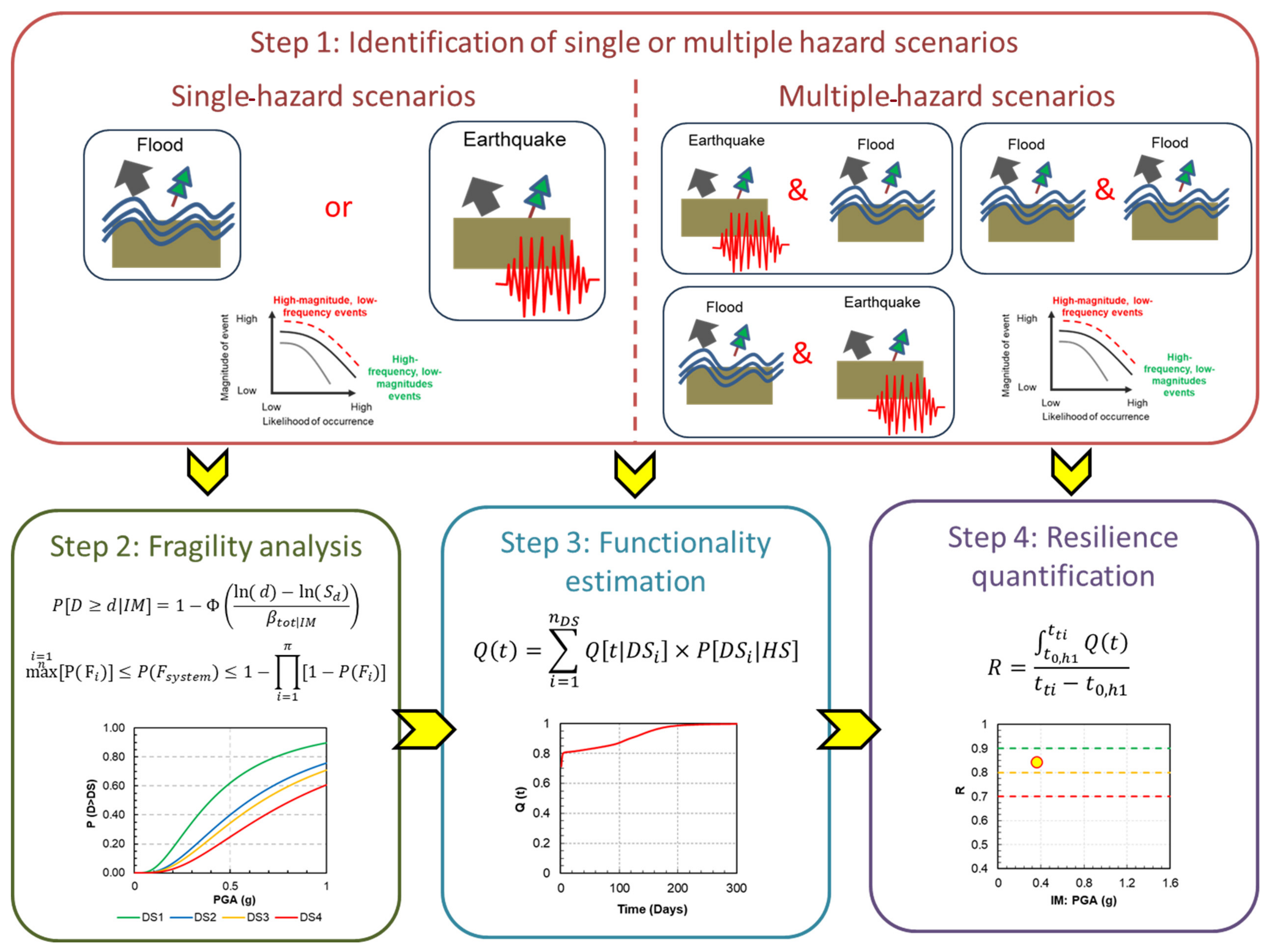
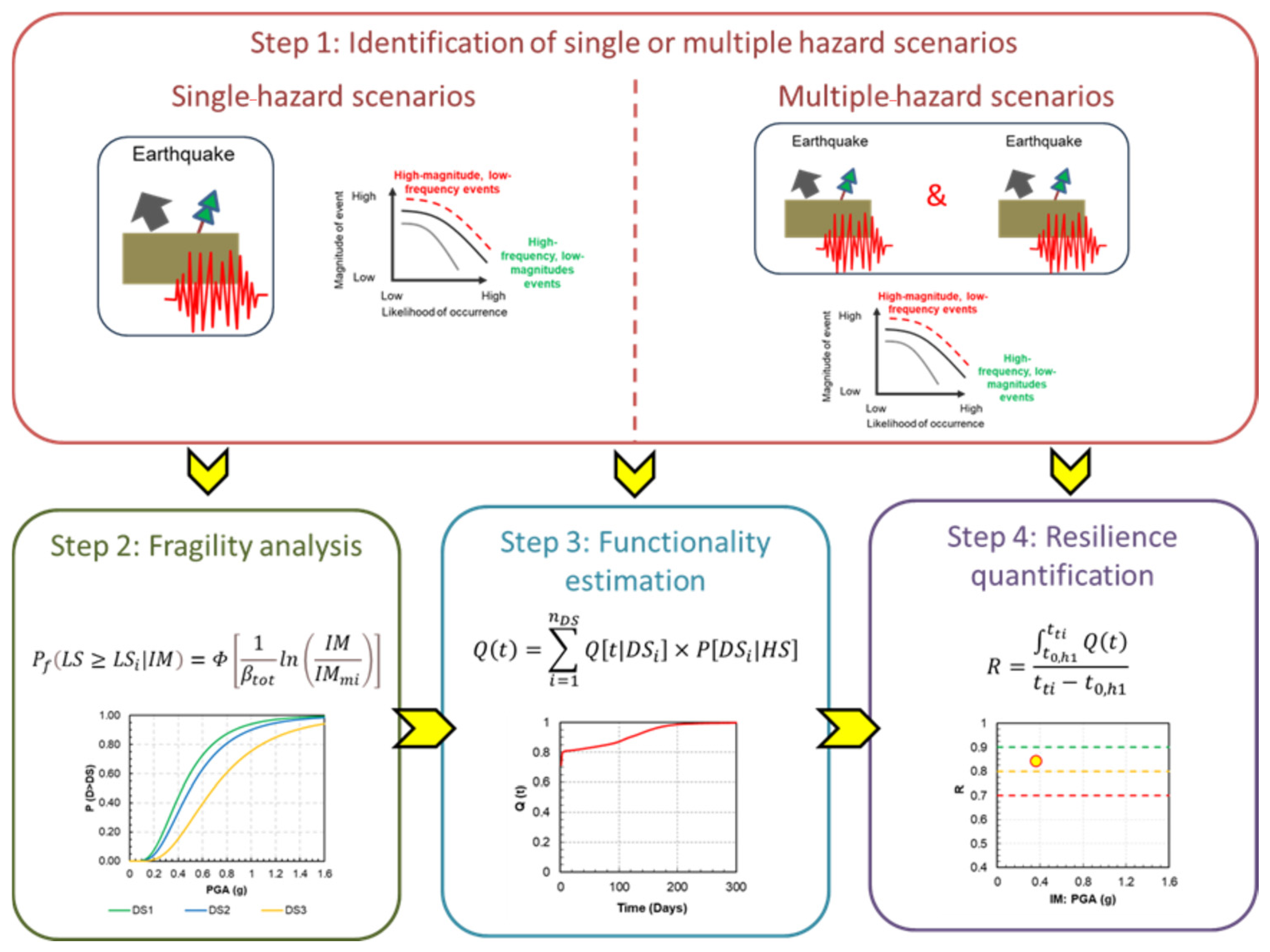
28]. The main contribution of this study lies in the integration and implementation of these components within a unified and user-oriented platform. The tool employs an analytical methodology for the resilience assessment of bridges and tunnels under single and multiple-hazard scenarios. The framework is structured to ensure a comprehensive representation of multi-hazard conditions by considering a range of critical hazard scenarios relevant to the Greek context. The corresponding methodological workflows for the resilience assessment of bridges and tunnels under single and multiple hazards are presented in
Figure 1 and
Figure 2, respectively. The methodology follows a sequential procedure consisting of four main steps. Initially, the relevant hazard scenarios are defined, including both single-hazard and sequential multi-hazard events. Subsequently, fragility analysis is performed to estimate the probability of exceeding predefined damage states for the examined asset. Based on the derived fragility functions, the functionality of the asset is evaluated over time, considering the corresponding recovery process. Finally, the resilience of the asset is quantified through resilience indicators combining damage, functionality loss, and restoration duration. Although the overall framework is similar, separate figures are provided to highlight differences between bridge and tunnel analyses. The four main steps of the methodology are described in detail in the following sections.
Step 1: Identification of single- or multiple-hazard scenarios
This step involves the identification of the primary hazards at the asset location and the formulation of corresponding single- and multi-hazard models for resilience evaluation. In this context, seismic and flood hazards are considered the most critical for bridges and tunnels within transportation networks in Greece.
In particular, for bridges, both seismic and flood hazards are considered the most critical for their assessment, whereas for tunnels, only seismic hazard is regarded as a critical hazard for structural integrity. The methodology of Karatzetzou et al. [
25] is used to develop the appropriate single- and multiple-hazard scenarios.
For each critical hazard, appropriate intensity measures (IMs) are defined, primarily based on their computability and availability. For the assessment of both bridges and tunnels subjected to earthquake effects, peak ground acceleration (PGA) at the ground surface is used as the appropriate intensity measure to associate seismic hazard with structural damage. As regards the assessment of bridges to flood hazard, discharge (Q) is used as an adequate intensity measure. It should be noted that the present methodology accounts for either single flood or seismic hazard events or subsequent hazard events that are assumed to be statistically independent, occur consecutively over time, and no correlation between them is considered. This assumption is commonly adopted for hazards occurring at different timescales. However, it may influence the results in cases where interdependencies between hazards are significant. Flood effects on both the substructure (scour) and superstructure (hydrostatic and debris loads) are considered through simplified force-based formulations.
Step 2: Fragility analysis
In this study, four damage states are considered to represent increasing levels of structural damage and functionality loss: slight damage (DS1), moderate damage (DS2), extensive damage (DS3), and complete damage or collapse (DS4). These damage states correspond to commonly adopted classifications in fragility analysis and are defined based on component deformation or performance thresholds derived from the analytical models used in the study.
Fragility analysis of bridges is based on fragility functions derived from an analytical framework presented in Stefanidou et al. [
24]. Numerical analyses were carried out using refined finite element models of representative bridge typologies in Greece. These analyses were performed either for a single natural hazard (flood or earthquake) or for multiple-hazard scenarios (e.g., flood–flood, earthquake–flood, etc.) across various intensities. The core methodology remained the same, regardless of the hazard scenario considered.
The analysis begins with the identification of the critical structural components of the bridge, followed by the estimation of their capacity and corresponding limit state thresholds. For each component, an appropriate Engineering Demand Parameter (EDP) is defined, and damage is evaluated based on the component capacity curves obtained through nonlinear pushover analysis. The estimation of structural demand is performed in relation to the considered hazard type. In the case of seismic loading, nonlinear dynamic analyses are carried out using selected ground motion records, whereas for flood conditions, static analyses are conducted based on representative discharge values. The corresponding demand is evaluated at predefined control points of the bridge components. To account for uncertainties in both capacity and demand, material and modeling parameters are treated as random variables, defined by appropriate statistical distributions. Sampling is performed using the Latin Hypercube Sampling (LHS) method, enabling the execution of multiple analyses for the derivation of fragility functions, as expressed in Equation (1).
where
P[ ] is the conditional probability that the component will be damaged to damage state
i-th or a more severe damage state as a function of demand parameter
D;
Φ denotes the standard normal (Gaussian) cumulative distribution function;
denotes the median value of the probability distribution, and
denotes the logarithmic standard deviation. For the derivation of bridge system fragility curves (
), the fragility of all critical components was considered (
) and Equation (2) was applied (upper and lower bound)
As stated, fragility functions, in the form of fragility curves, were derived based on the above approach for various scenarios of single or multiple (uncorrelated and separated in time) hazard events. It should be noted that the events were applied subsequently. Therefore, cumulative damage was considered in all examined multi-hazard scenarios. The alternative to use “user-defined” fragility functions based on the existing literature was also considered in the tool.
Following a similar approach, fragility analysis of tunnels is based on fragility functions derived based on numerical analyses of representative tunnel-ground configurations that were conducted, assuming either a single earthquake (single-natural-hazard scenario) or a sequence of independent earthquakes (multi-hazard scenario). The main steps of the proposed methodology focused on (a) the determination of the capacity of the examined tunnel, and (b) the estimation of the demand, which was related to the expected response of the tunnel for the selected ground motions. Two-dimensional numerical models of the examined ground tunnel configurations were employed to perform nonlinear static pushover analyses, aiming at estimating the capacity of the tunnels and defining case-specific limit-state thresholds, using a displacement-based EDP, i.e., the (normalized over the diameter) diagonal distortions of the examined tunnels. Two-dimensional numerical models of the examined ground tunnel configurations were also employed to perform dynamic analyses, aiming at defining the demand of the examined tunnels (expressed based on the aforementioned EDP) in the frame of a cloud analysis. Repeated analyses were performed to quantify capacity and demand, forming the basis for the development of fragility curves as defined in Equation (3).
where
is the probability of exceeding a given limit state for a given level of intensity of seismic hazard (the latter expressed via an IM),
Φ is the standard cumulative probability function,
is the median threshold value of the intensity measure required to cause the
i-th limit state, and
is the total lognormal standard deviation, describing the aleatory and epistemic uncertainties related to the definition of the fragility function.
For the fragility assessment against multiple seismic events, i.e., two independent earthquakes in the lifetime of the tunnel, the same methodology was applied. For these scenarios, hazards are applied sequentially, and cumulative damage effects on the tunnel are explicitly incorporated. Similar to the bridges, user-defined fragility functions based on the existing literature can be introduced in the tool as discussed in the following.
Step 3: Functionality estimation
Functionality is assessed immediately after the hazard event and at subsequent time steps during the restoration phase based on fragility analysis results and computed according to Equation (4) [
28]:
where
Q(
t) is the functionality level of the examined asset (bridge or tunnel) at time t (after the event) for a selected hazard scenario (HS) (single or multiple),
nDS is the number of damage (limit) states used in fragility analysis, and
is the functionality level of the asset when at damage state
(defined based on restoration models).
tti is the time in the restoration process that is investigated, and
is the time at which the hazard occurs (single or the second hazard in case of a multi-hazard scenario).
represents the probability of the occurrence of a damage state
, computed using the fragility functions for a given IM level, as defined in the following equations:
is obtained from the selected fragility functions; is the probability of no damage after the event, hence in Equation (5), it is multiplied by unity (1), which represents full functionality.
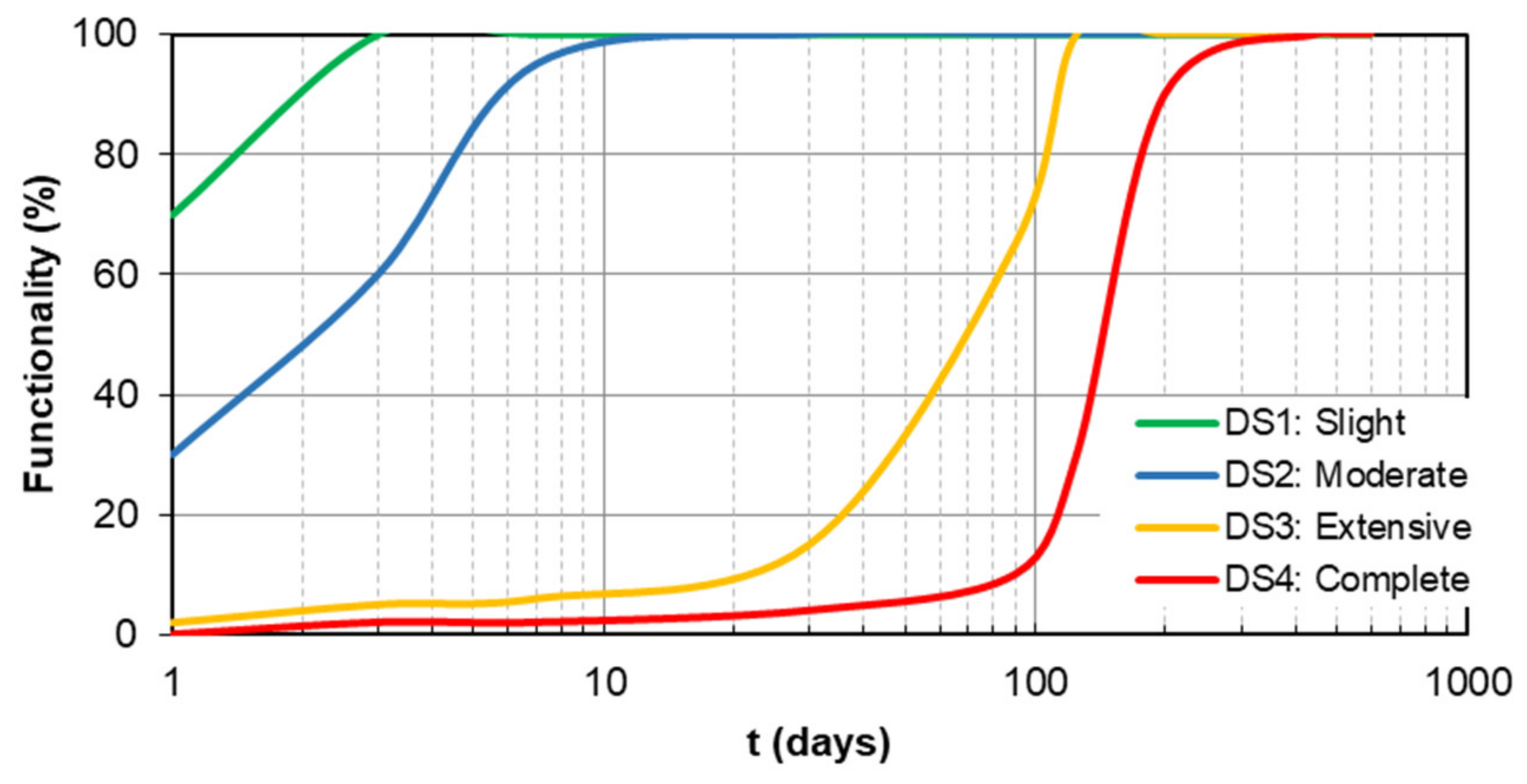
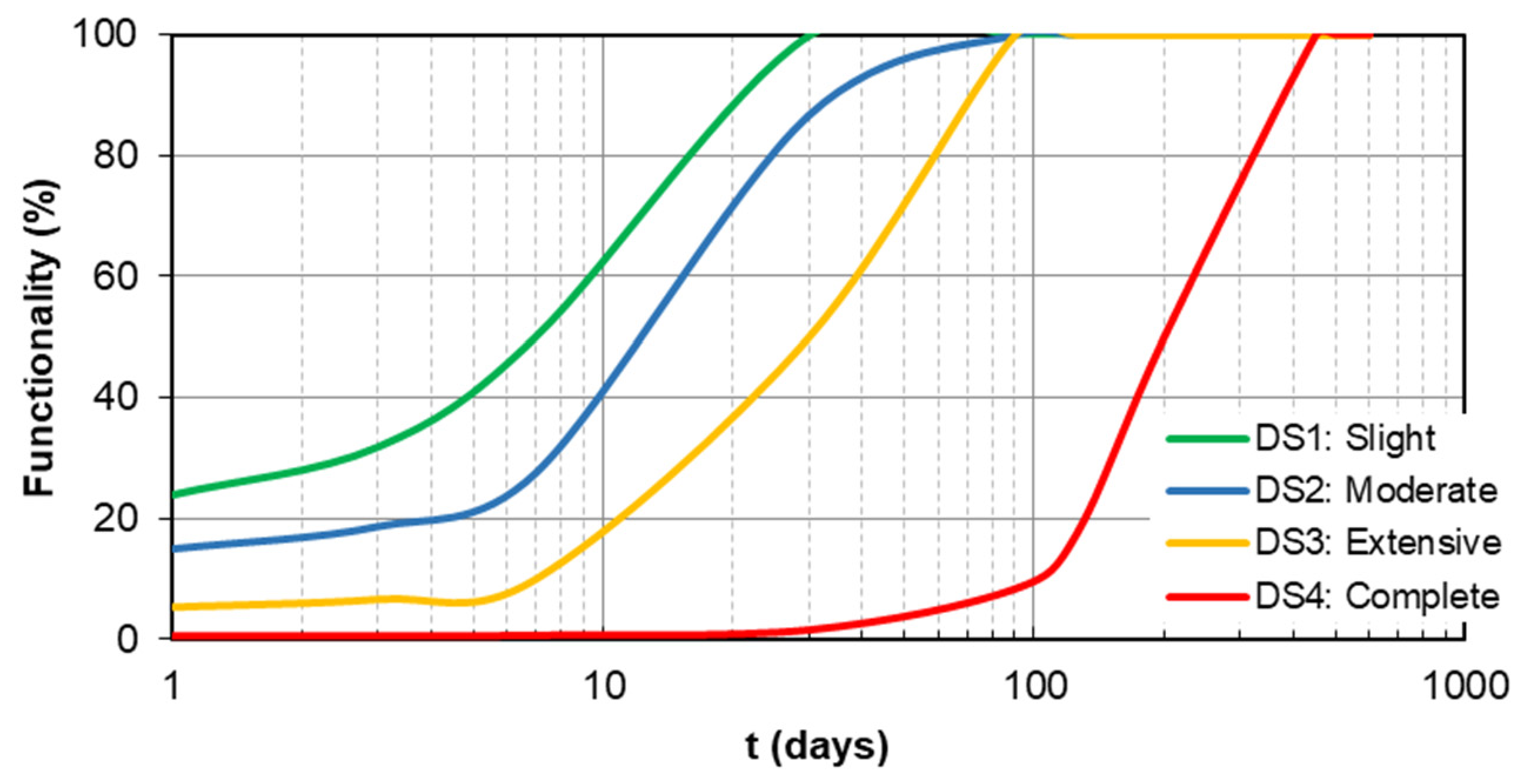
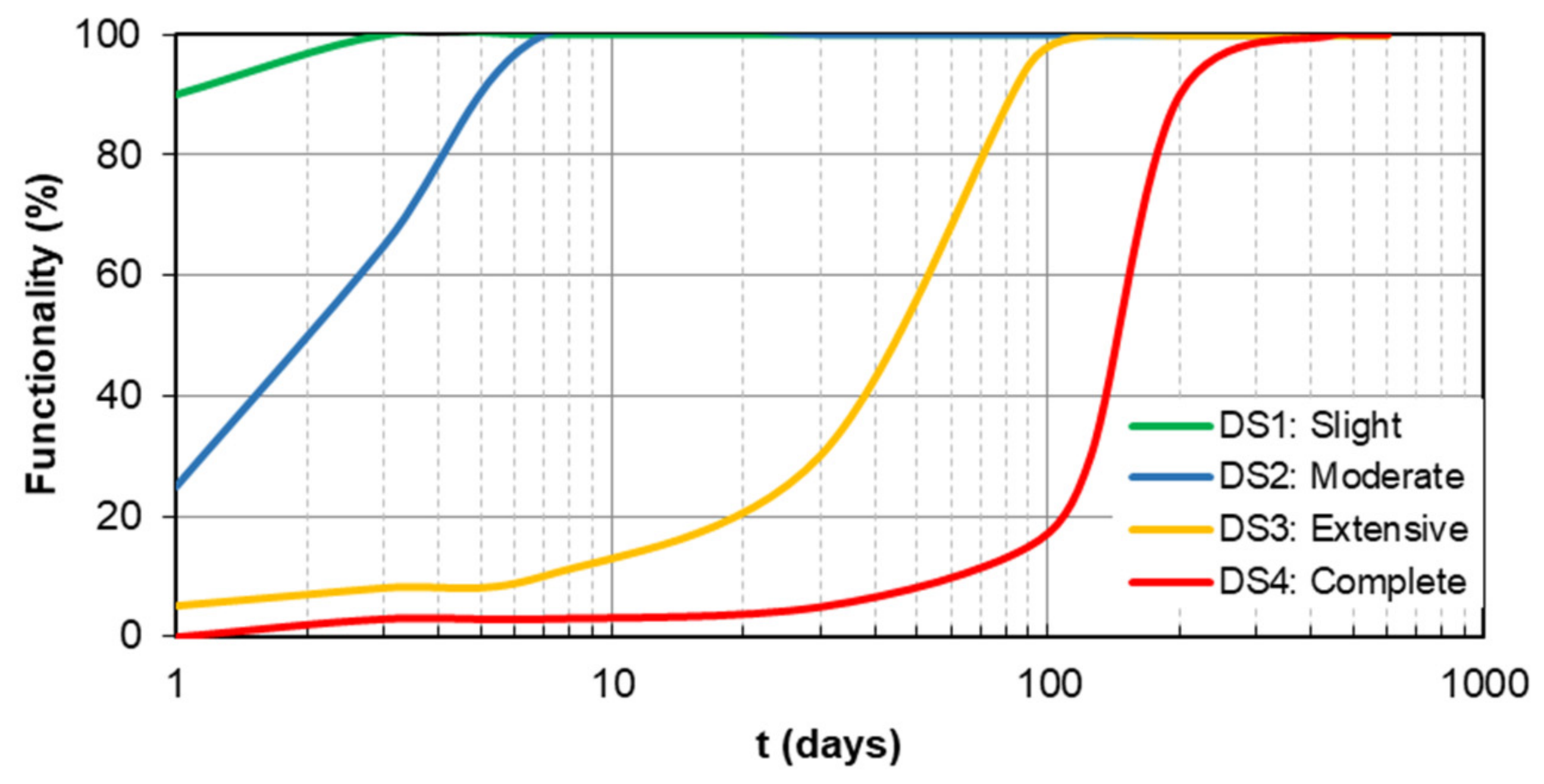
Restoration functions for critical transportation infrastructure assets are rarely available in the literature. Due to a lack of reliable data on post-event restoration of single assets within networks in Greece, restoration functions in the form of restoration curves are selected based on the existing literature.
The restoration functions proposed by HAZUS [
26] (
Figure 3 and
Table 1) and Argyroudis et al. [
27]
Figure 4 and
Table 2) are adopted to assess the functionality of bridges under seismic and flood hazards, respectively.
Due to the lack of reliable data referring to the restoration of tunnels of transportation networks in Greece, the restoration functions proposed by HAZUS [
26] are considered herein (
Figure 5 and
Table 3).
Regardless of the examined asset (bridge or tunnel), in analysis scenarios involving sequential natural hazards, such as an earthquake followed by a flood for bridges, or successive earthquakes for tunnels, it is assumed that no restoration efforts take place between the two events. This assumption is deemed valid when the initial hazard results in low to moderate damage, allowing the asset to remain at least partially functional, albeit with reduced performance. However, if the first hazard causes severe damage or collapse, subsequent resilience assessment without prior restoration of the asset becomes irrelevant. The assumption of “no restoration” between the events also reflects scenarios of closely spaced hazard events, where restoration actions are not feasible within the available time interval between events. Under these assumptions, the same restoration functions used for single-hazard scenarios are applied in multi-hazard cases, with the functions selected based on the second (i.e., latter) hazard event. It is worth noting that in cases of multiple-hazard scenarios, the effects of the damage caused by the first natural hazard are explicitly accounted for in the resilience analysis by employing relevant fragility functions in the fragility analysis step, as discussed above (i.e., fragility curves that account for the cumulative effects of both hazards).
Step 4: Resilience quantification
The final step integrates fragility results, functionality losses, and recovery duration estimates to determine the resilience of the asset under single and multi-hazard conditions. A resilience index R is introduced for this purpose, calculated using Equation (6) [
28].
where
Q(
t) is the functionality level at the time
is the time in the restoration process that is investigated,
is the time that the natural hazard event occurs. In the case of multiple-hazard analysis, t
0,h1 refers to the time when the second hazard event occurs.
The resilience index adopted in this study follows the formulation proposed in previous works on infrastructure resilience assessment [
28]. This index quantifies resilience as the normalized area under the functionality curve during the recovery period after the hazard event. The index was selected because it captures both the immediate functionality loss and the duration of the recovery process, which are key aspects of infrastructure resilience.
To facilitate decision-making processes related to retrofit actions, prioritization of actions to minimize risk and potential losses, as well as for post-event risk management, a resilience grade is set following [
28] and expert judgment, by introducing quantitative thresholds to a resilience index, R, as shown in
Table 4.
The resilience grade thresholds presented in
Table 4 were defined based on the framework proposed by Huang et al. [
28] and further refined through expert judgment within the INFRARES research project. The objective of this classification is to provide an intuitive qualitative interpretation of the computed resilience index, facilitating communication of results to infrastructure managers and decision-makers.
4. Tool Functionalities
Input data
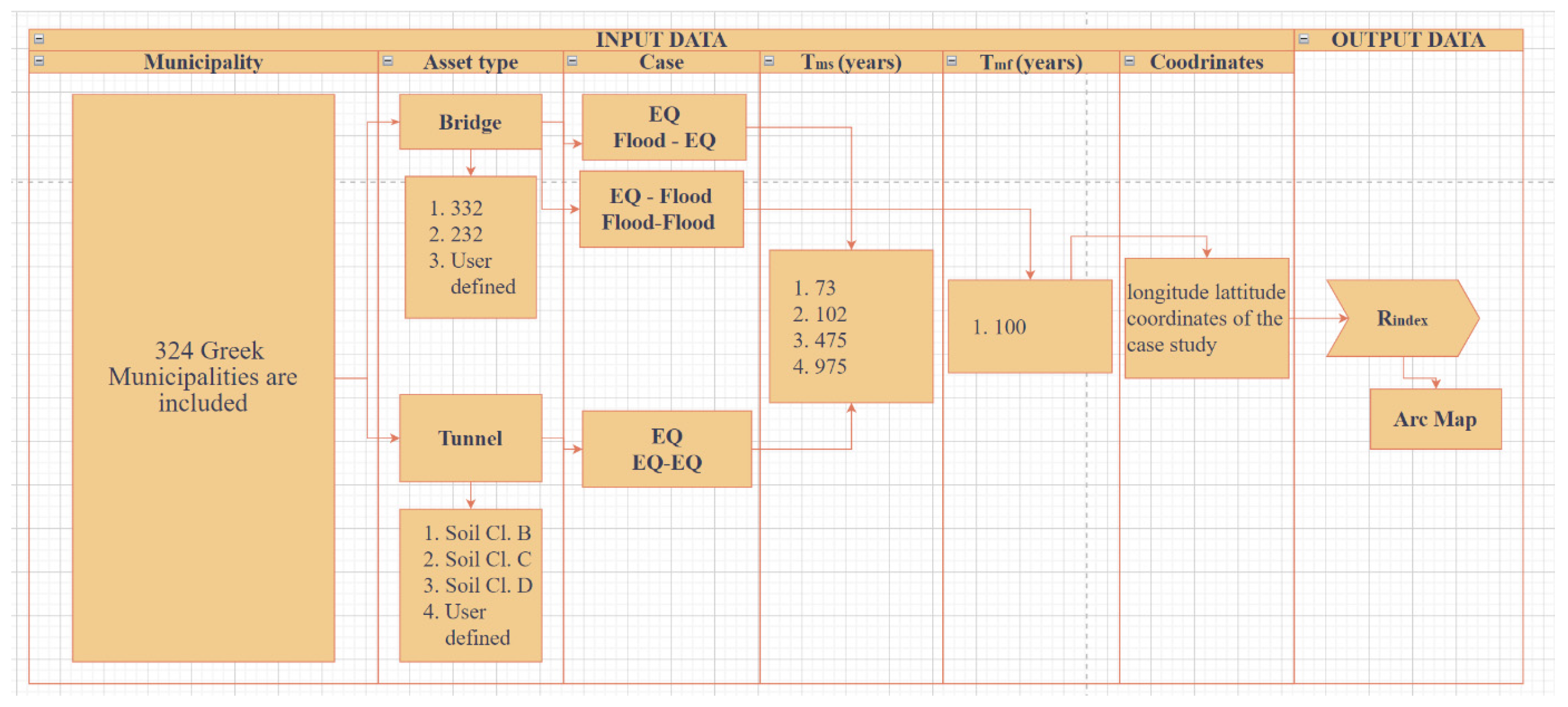
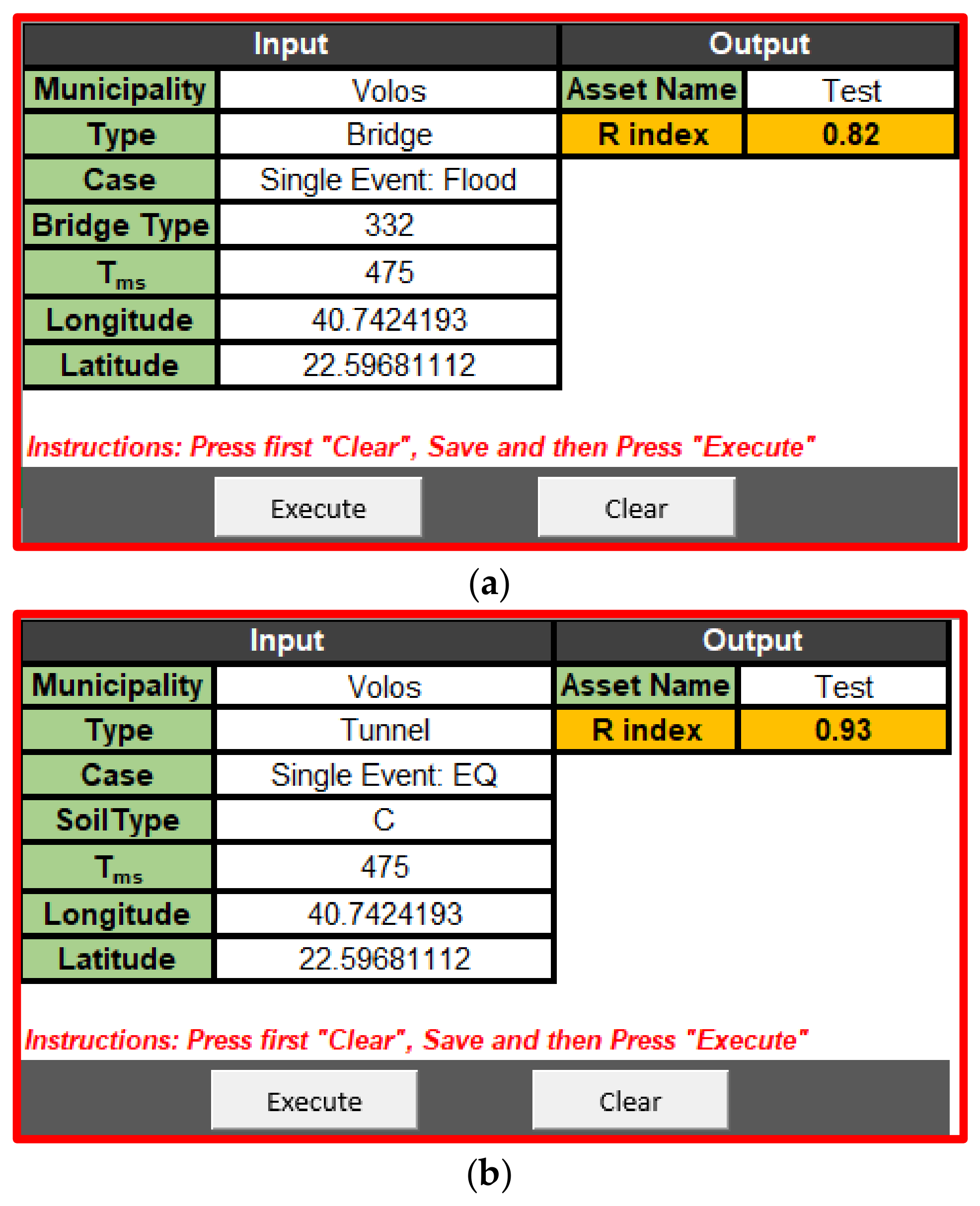
Figure 7 shows the input data environment of the tool. A series of drop-down lists appear depending on the selections of the user to complete the input data required in the analysis.
As stated, users are required to input specific data related to the examined asset. This includes the “Asset Name”, which refers to the name of the asset under consideration, such as the name of a bridge. Additionally, users must select the “Municipality” from a drop-down list indicating the name of the municipality in the Greek terrain where the asset, be it a bridge or a tunnel, is located. The “Type” field specifies the nature of the asset, distinguishing between a bridge and a tunnel. Lastly, the “Case” field refers to the selection of the scenario of natural hazard or hazards, providing context for resilience assessment within the tool.
When the “Bridge” option is selected in the INFRARES tool, users may choose from several natural hazard scenarios for the resilience assessment. These include the “Single Event: EQ” which considers the impact of a single earthquake event, and various multi-event scenarios such as “Multi Event: EQ-Flood” where an earthquake is followed by a flood, “Multi Event: Flood-EQ” which involves a flood event preceding an earthquake, and “Multi Event: Flood-Flood” where two independent flood events occur consecutively in an examined period of time. Depending on the selection, the tool employs adequate fragility functions and restoration models following the methodology presented in
Section 2. The INFRARES tool supports different bridge typologies for fragility assessment and resilience analysis (based on the classification system described in [
26]. The bridge typology is defined by the pier type, the pier-to-deck connection and the deck type, providing a code number in the form X1X2X3 for each bridge typology. Fragility curves for bridges classified within the “332” category, i.e., bridges with precast-prestressed beams simply supported on multi-column piers, and the “232” category, i.e., bridges with precast-prestressed beams simply supported on hollow rectangular piers, are included in the tool since they are the most common typologies of riverine bridges in Greece. Additionally, the tool allows the implementation of “user-defined” fragility functions, referring to different types of bridges, enabling users to input custom parameters for fragility function definition, with additional input fields activated upon selection of this option.
When the “Tunnel” option is selected in the INFRARES tool, users can choose from specific natural hazard scenarios for analysis. These include “Single Event: EQ” which considers the impact of a single earthquake event and “Multi Event: EQ-EQ”, a multiple-hazard scenario that involves an earthquake event followed by an independent subsequent earthquake event. In addition to hazard scenarios, the INFRARES tool incorporates various soil types for tunnels, each associated with specific fragility functions developed within the INFRARES project. These include soil types “C” and “D”, corresponding to circular tunnels embedded in soil classes C and D, respectively, as defined in Eurocode 8 [
29]. Furthermore, the tool supports “user-defined” fragility functions, allowing users to input custom parameters for defining fragility functions, referring to different types of tunnel-ground configurations, with additional input fields activated upon selecting this option.
Output data
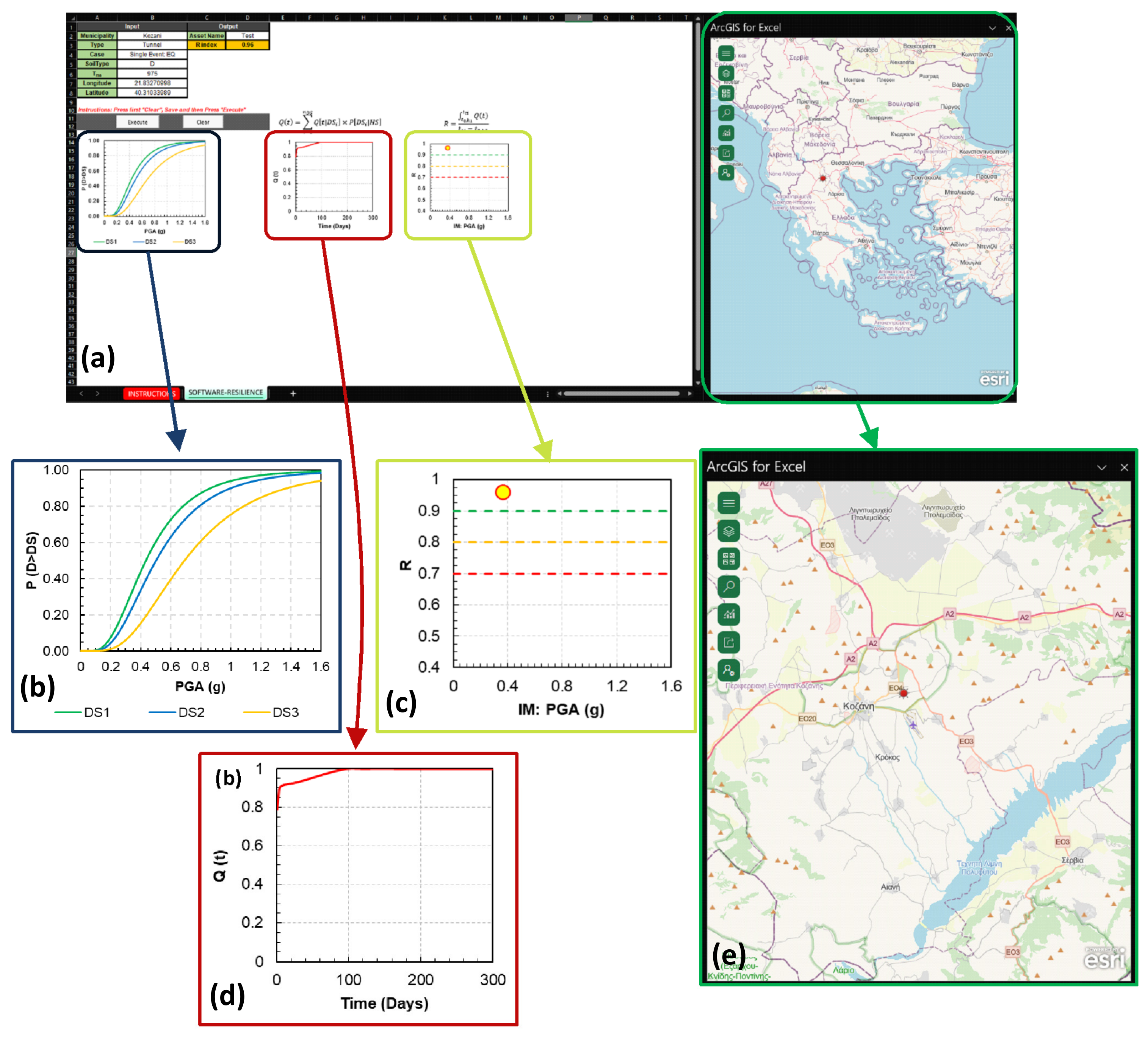
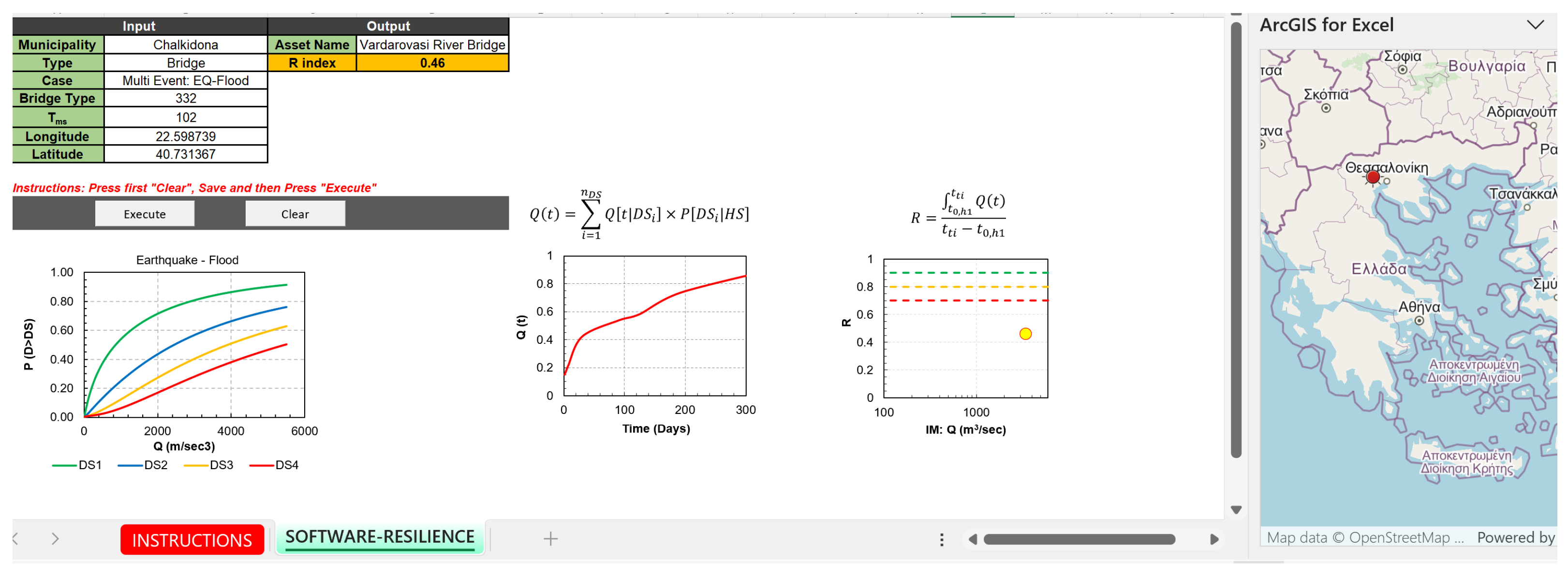
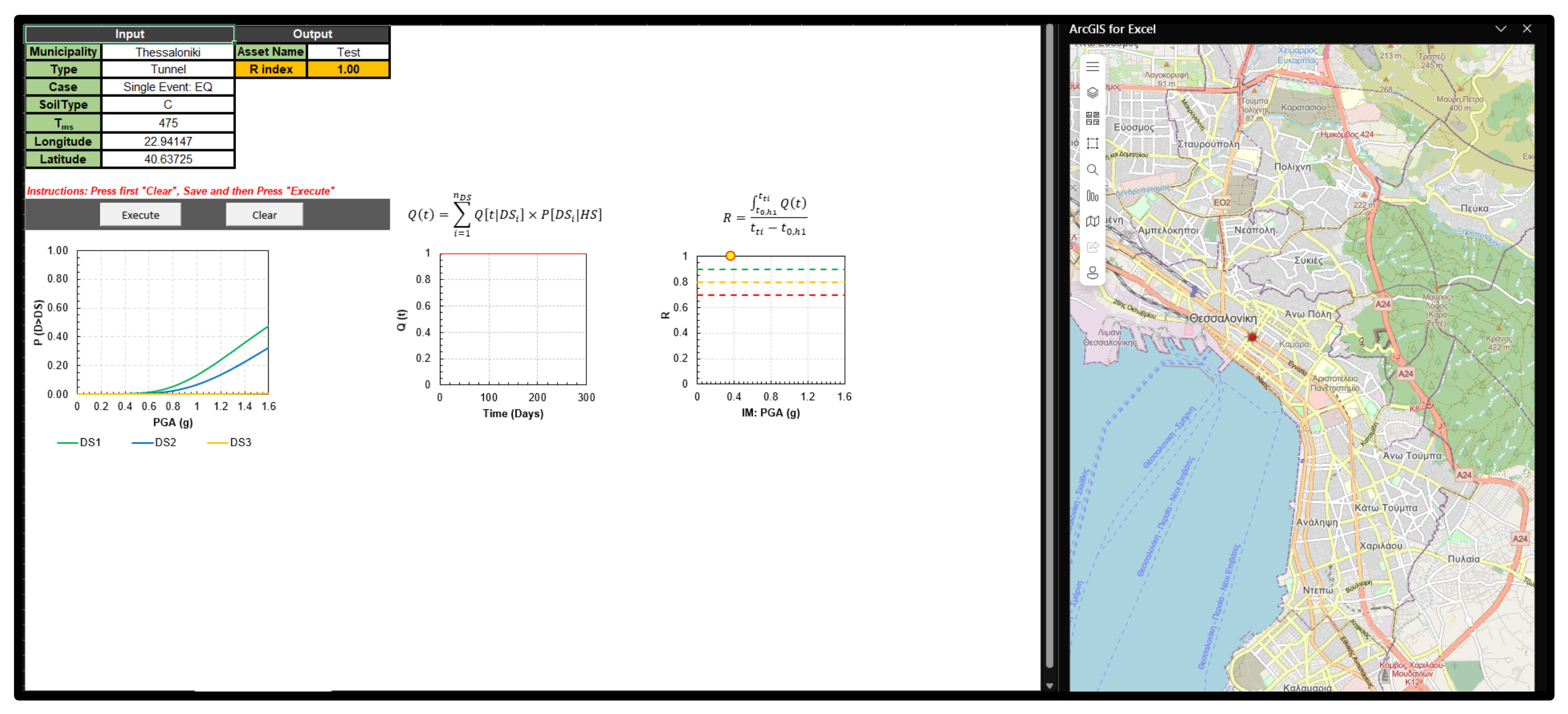
Upon executing the analysis, the INFRARES tool provides a comprehensive set of output data that represent visually and quantitatively the resilience performance of the examined asset for the selected hazard scenario (
Figure 8).
The tool provides a graph of the selected fragility functions (
Figure 8b), which illustrates the probability of the asset reaching or exceeding specific damage states under different levels of hazard intensity. In parallel, the software generates a resilience curve (
Figure 8d), showing the evolution of the asset’s functionality over time following the hazard event, which helps in understanding the recovery process. Additionally, a graph of the resilience index (R) is provided, where the index is plotted against the intensity measure of the selected hazard (or the second hazard in multi-event scenarios) (
Figure 8c). This graph includes boundaries for resilience grades—such as high, relatively high, moderate, or low resilience—offering an at-a-glance evaluation of the asset’s performance and is accompanied by a resilience grade, categorized as high resilience (0.9 ≤ R ≤ 1), relatively high resilience (0.8 ≤ R < 0.9), moderate resilience (0.7 ≤ R < 0.8), and low resilience (R < 0.7), as per
Table 4. Finally, the specific value of the “R index” is provided. The numerical value of the resilience index R which is displayed explicitly, provides a direct quantification of resilience. These outputs are further enhanced by the use of ArcGIS mapping, where the resilience index is plotted on the actual geographic location of the asset, enabling spatial visualization. This functionality is available if the ArcGIS Add-in has been installed in Excel and allows the user to view analysis layers directly within the tool environment. Together, these outputs offer a rich, multi-dimensional insight into both the structural vulnerability and recovery capacity of the asset, facilitating informed decision-making for risk mitigation and infrastructure management.
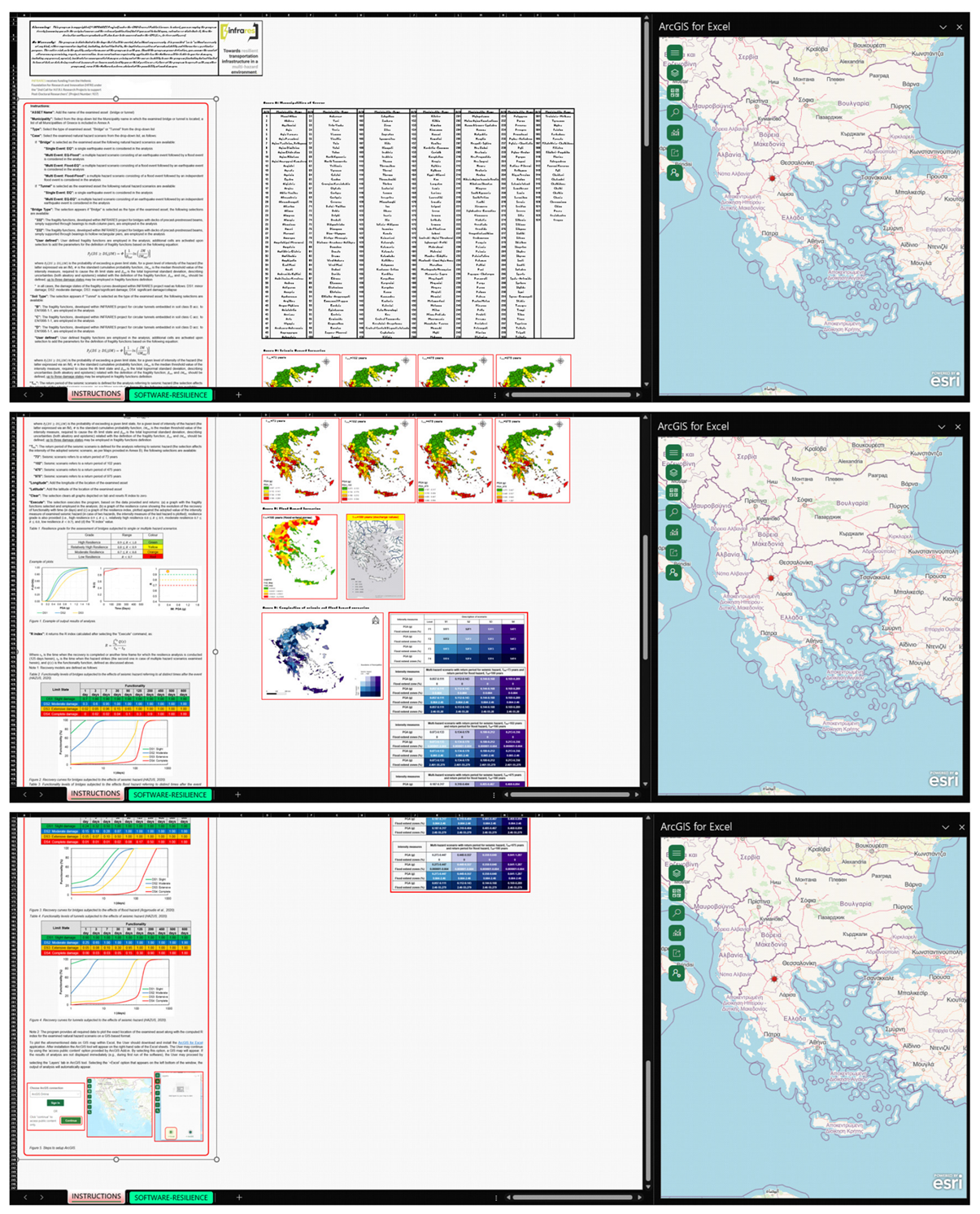
Additional technical information regarding the implementation and functionalities of the developed INFRARES tool is provided in
Appendix A.
5. Case Study Applications
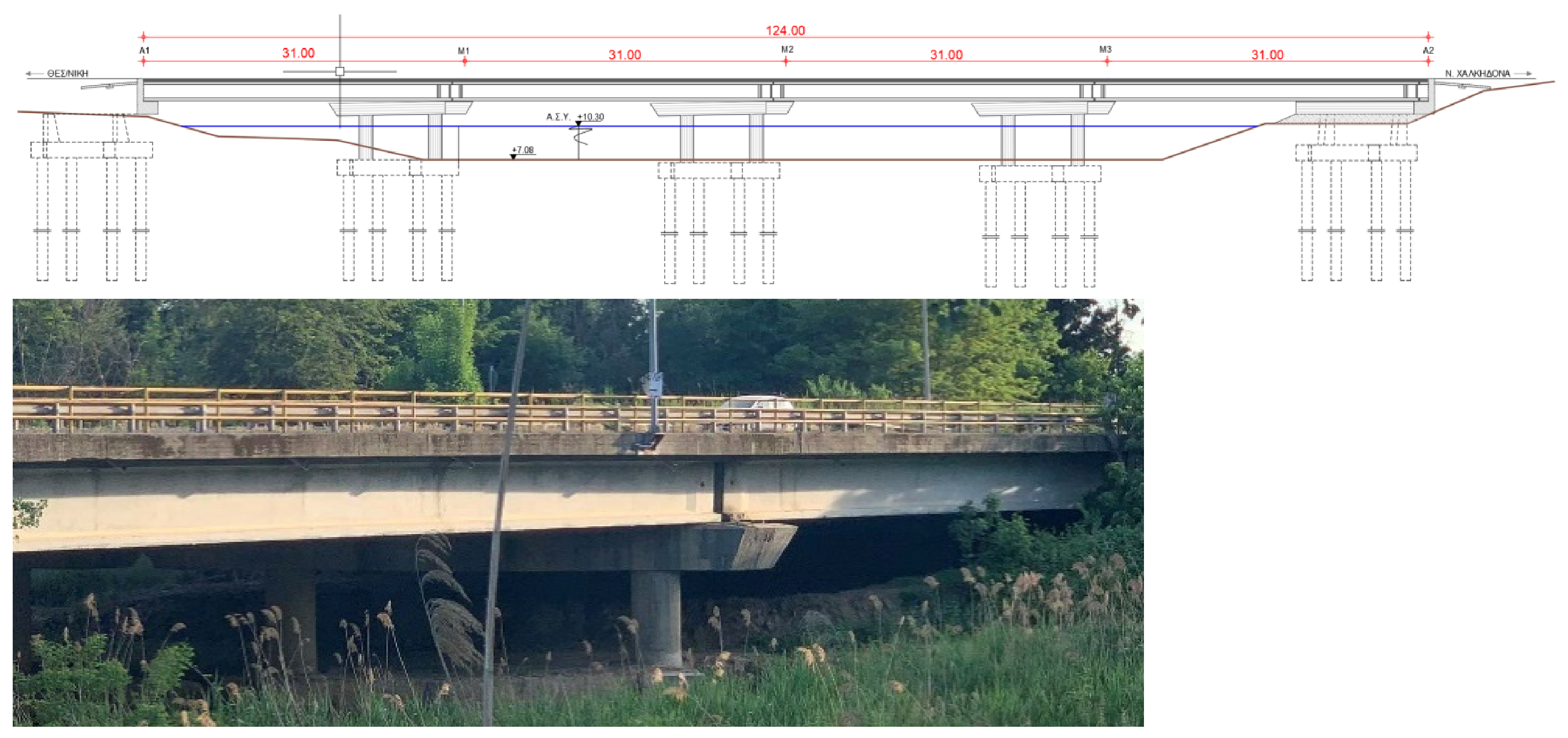
This section presents a case study demonstrating the core functions of the INFRARES tool in case of resilience assessment of a road bridge. The bridge, constructed in 1985, is a typical river bridge with a deck of precast/prestressed beams, simply supported on three multicolumn piers with two cylindrical columns of diameter d = 1.3 m each. The piers are founded on soil class C according to Eurocode 8 [
29] by means of pile foundations, comprising four reinforced concrete piles (length, l = 33 m, diameter d = 1.0 m) (
Figure 9).
Table 5 summarizes the selected hazard scenarios examined herein. Scenario S-1 considers the occurrence of a single earthquake event, with various return periods analyzed—Tms = 73 years, Tms = 102 years, Tms = 475 years, and Tms = 975 years—and Scenario S-2 focuses on the occurrence of a single flood event, with a return period of Tmf = 100 years. Regarding multiple-hazard events, two different scenarios are studied. Scenario MH-1 involves two subsequent and independent events, where the first is a flood event followed by an earthquake event. The return period for the flood event is set at Tmf = 100 years, while the earthquake events are analyzed with return periods of Tms = 73 years, Tms = 102 years, Tms = 475 years, and Tms = 975 years. Scenario MH-2 examines two subsequent and independent events, starting with an earthquake event followed by a flood event. The return period of the earthquake event is fixed at Tms = 475 years, with the flood event set at a return period of Tmf = 100 years. Finally, Scenario MH-3 considers two subsequent and independent flood events, accounting for the scour at bridge piers resulting from the previous flood. The return period for both flood events is set at Tmf = 100 years. The corresponding intensity measure values (peak ground acceleration PGA for seismic hazard and discharge Q for flood hazard) are defined by the tool for the selected return periods of the examined hazard events based on the selection of the municipality where the bridge is located, following Karatzetzou et al. [
25] (
Table 6).
According to the bridge classification system outlined in [
24,
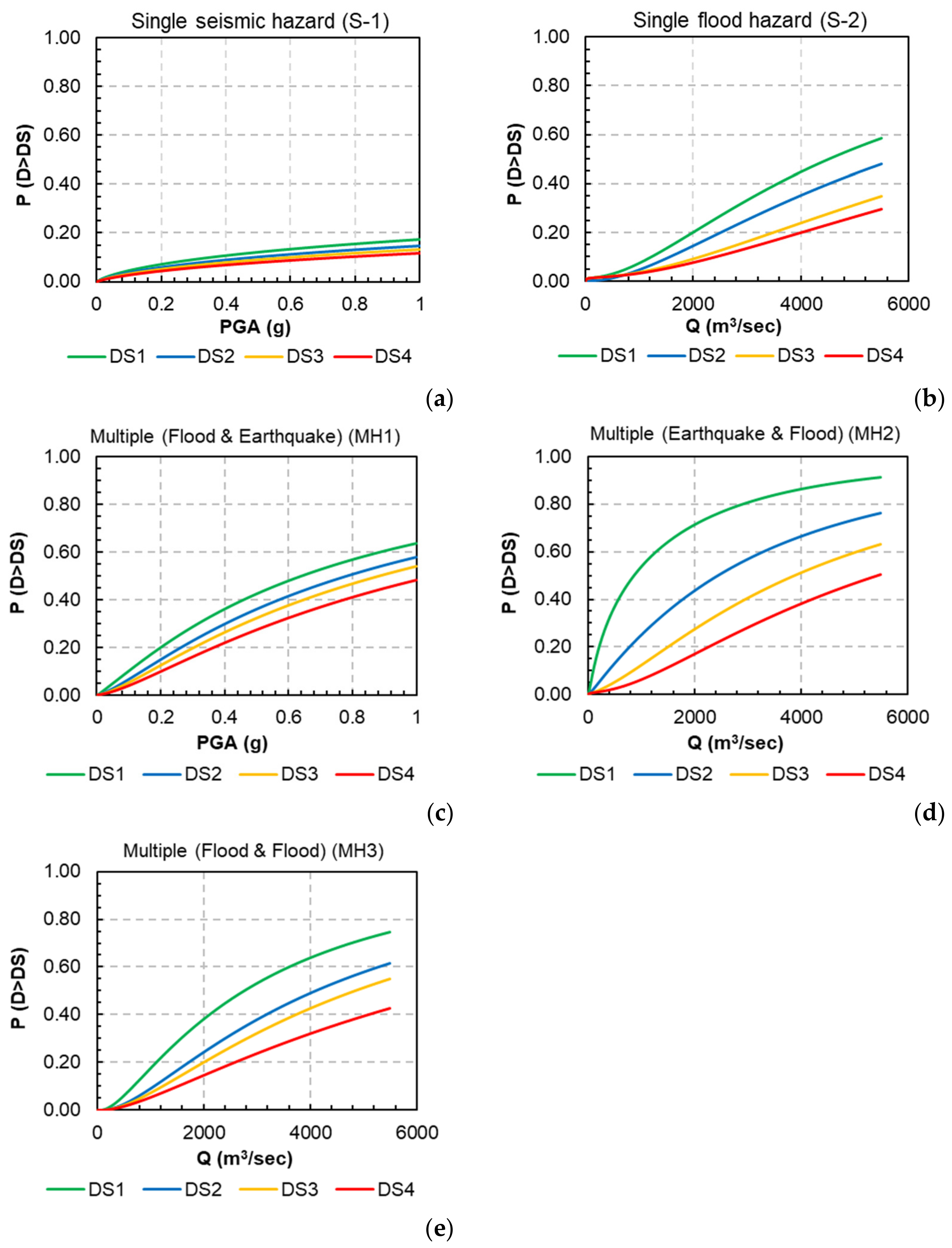
26], the Vardarovasi Bridge falls under typology “332”, which is characteristic of riverine bridges in Greece. Since the tool provides predefined fragility for this bridge type, the user-defined option is not used. The fragility functions used herein are presented in
Figure 10.
The restoration curves presented in
Section 2 are used in the resilience analysis (
Figure 3 and
Figure 4). It should be outlined that the functionality of the examined bridge is computed automatically by the tool for various time steps after the events. In the case of multiple-hazard scenarios, time steps refer to time after the second event.
By employing the methodology presented in
Section 2, the resilience index R and the resilience grade are estimated for each hazard scenario examined.
Figure 11 presents a snapshot of a representative analysis case of the examined bridge with the INFRARES tool, whereas
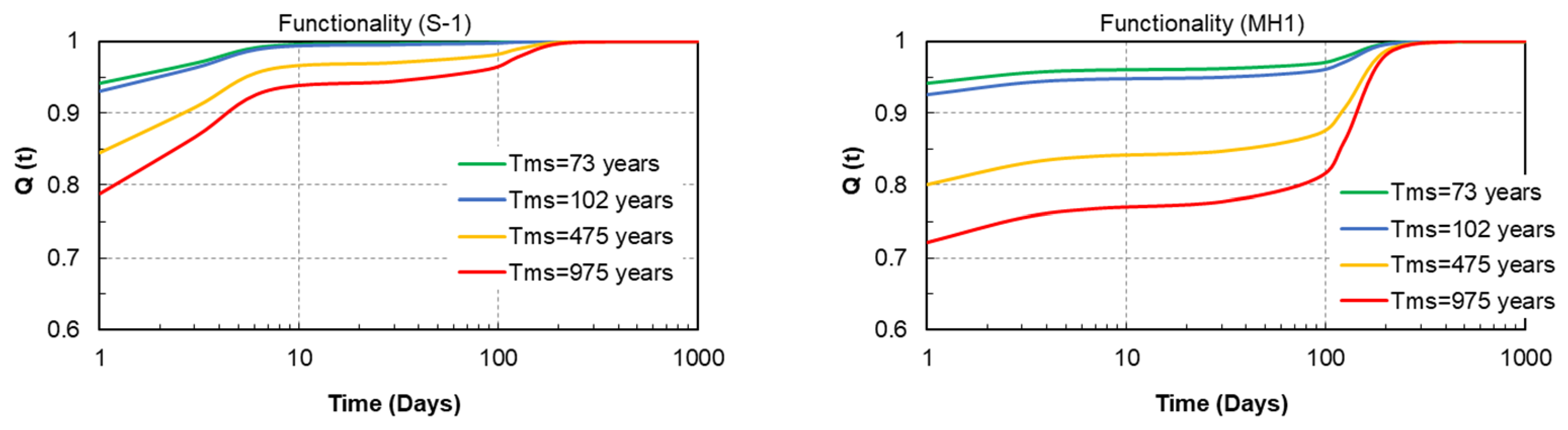
Figure 12 depicts representative resilience curves derived by the analysis, showing the evolution of the recovery of functionality of the examined bridge with time (in days) for the single seismic hazard scenario S-1 and the multiple flood–earthquake scenario MH-2, with the curves referring to the examined return periods. As expected, the functionality decreases further, and the restoration process takes longer, as the intensity of the hazard(s) increases.
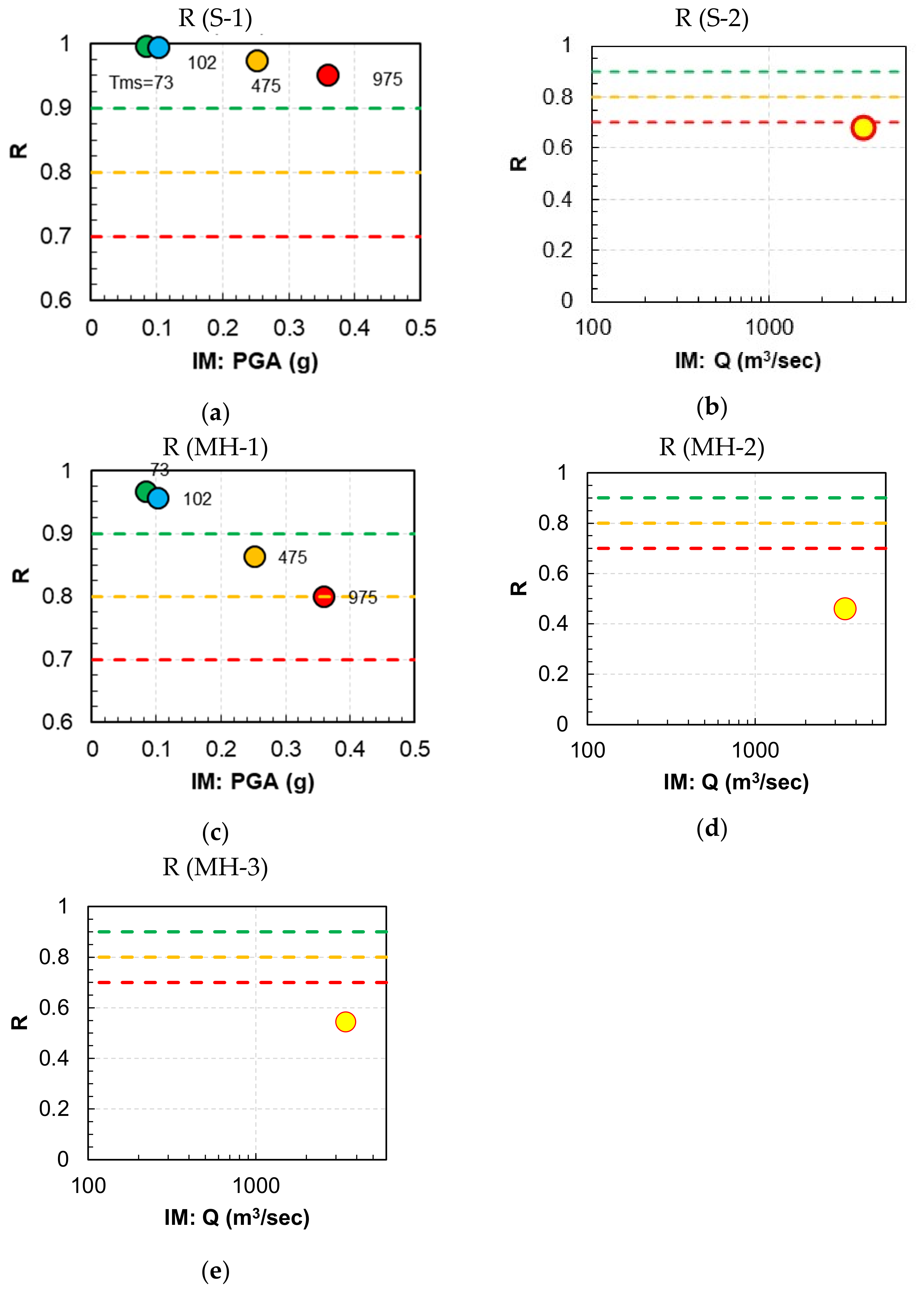
The resilience index values R computed using the INFRARES tool for each examined hazard scenario are presented in
Figure 13. The resilience grades estimated for each examined hazard scenario are provided in
Table 7. The resilience index decreases with the increase in the intensity of the seismic hazard (S-1 and MH1 hazard scenarios), as well as for cases where the cumulative damage effects of successive hazards are considered (compared to the cases where only one hazard is accounted for). Based on the resilience grade system introduced in cases of seismic hazards (both single and multiple events), the bridge reveals a high to relatively high resilience. In contrast, the bridge reveals low resilience to the effects of flood hazards. This behavior is mainly attributed to the increased vulnerability of bridge foundations to scour effects under flood loading, as reflected in the corresponding fragility curves, leading to higher probabilities of severe damage states and reduced functionality.
The trends observed in the resilience index (
Figure 13 and
Table 7) are consistent with the corresponding fragility curves, where increased probabilities of higher damage states directly affect the recovery process and overall system performance.
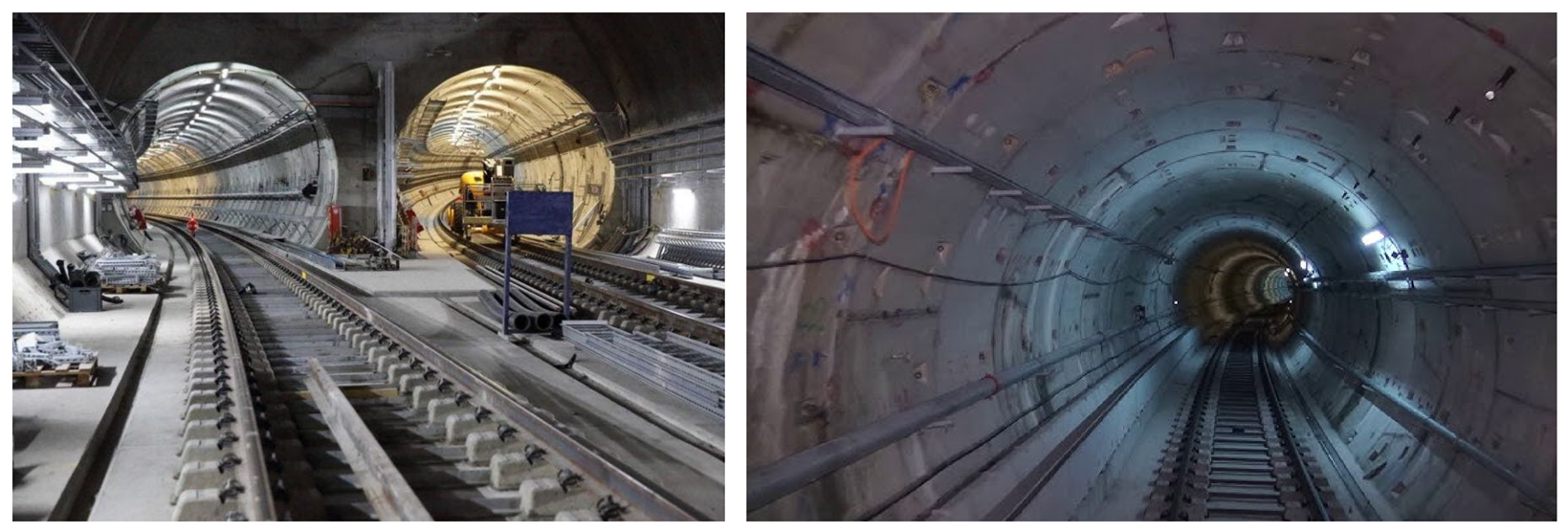
The Thessaloniki Metro is a state-of-the-art underground rapid transit system that officially began operations in November 2024 in Thessaloniki, Greece. The inaugural line stretches 9.6 km, connecting 13 stations, including key stops such as Aghia Sofia, Venizelou, and the New Railway Station. The line comprises a main section of twin circular tunnels, each 7.5 km in length, constructed using the Tunnel Boring Machine (TBM) method (
Figure 14), as well as a 1.8 km section built with the cut-and-cover method. The tunnels beneath the historical center of Thessaloniki pass through soft soils, some of which are classified as soil type C according to Eurocode 8 [
28]. The resilience analysis presented here focuses on the tunnel segment connecting the Aghia Sofia and Venizelou stations (twin tunnels).
The assessment is carried out for a single earthquake event, considering different return periods, i.e., Tms = 73 years, Tms = 102 years, Tms = 475 years, and Tms = 975 years. The corresponding peak ground acceleration (PGA) values for each return period are calculated by the tool based on the municipality in which the tunnels are located, as outlined in [
10] (
Table 8).
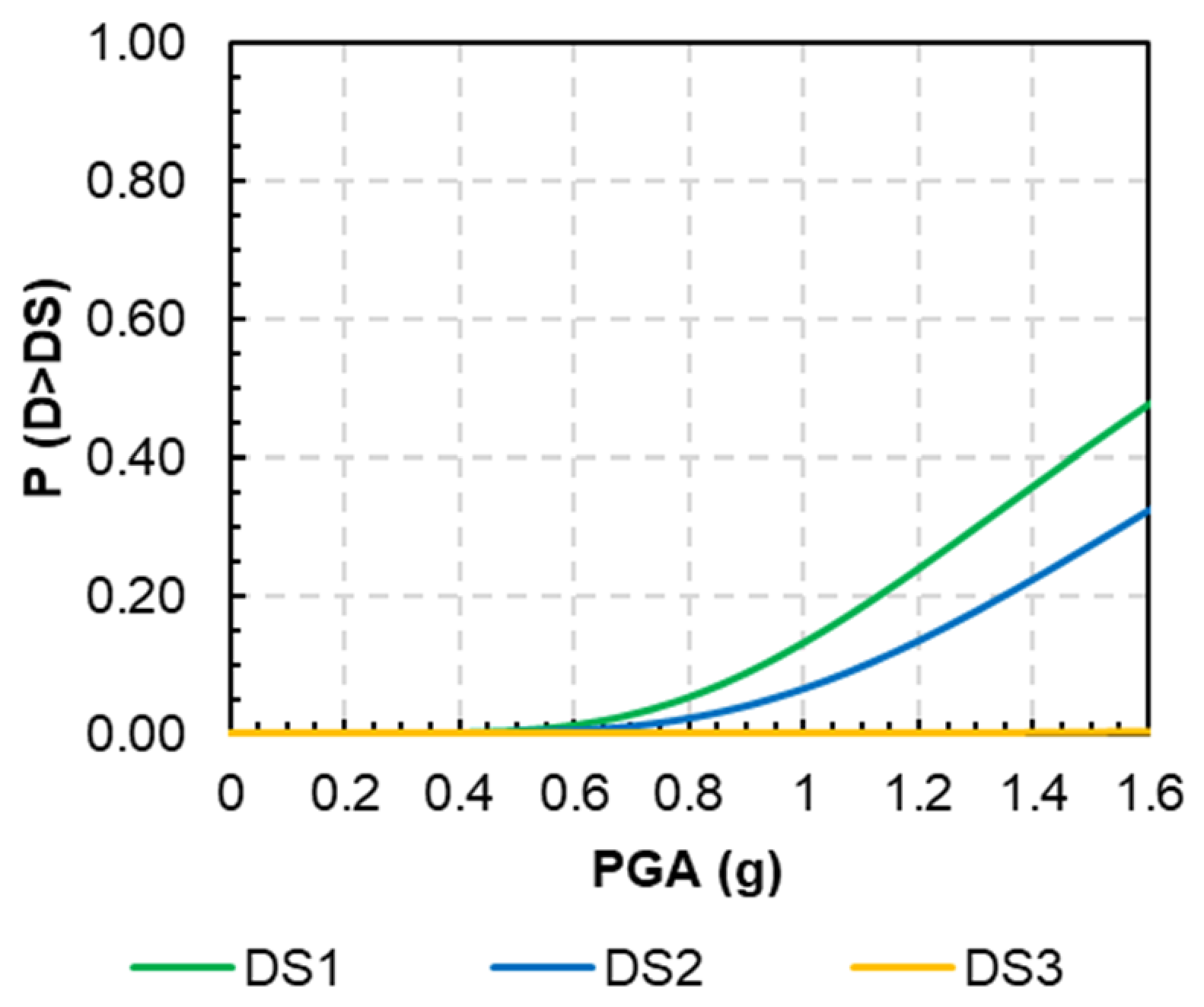
The fragility functions used herein are presented in
Figure 15. These curves refer to circular tunnels embedded in soil class C, according to EN1998-1-1 [
29].
The restoration curves presented in
Section 2 are used in the resilience analysis (
Figure 5). It should be outlined that the functionality of the examined tunnels is computed automatically by the tool for various time steps after the event.
By employing the methodology presented in
Section 2, the resilience index R (
Figure 16) and the resilience grade are estimated for each hazard scenario examined. The resilience grades estimated for each examined hazard scenario are provided in
Table 9. The analysis indicates a high resilience of the examined tunnels for all selected hazard scenarios.
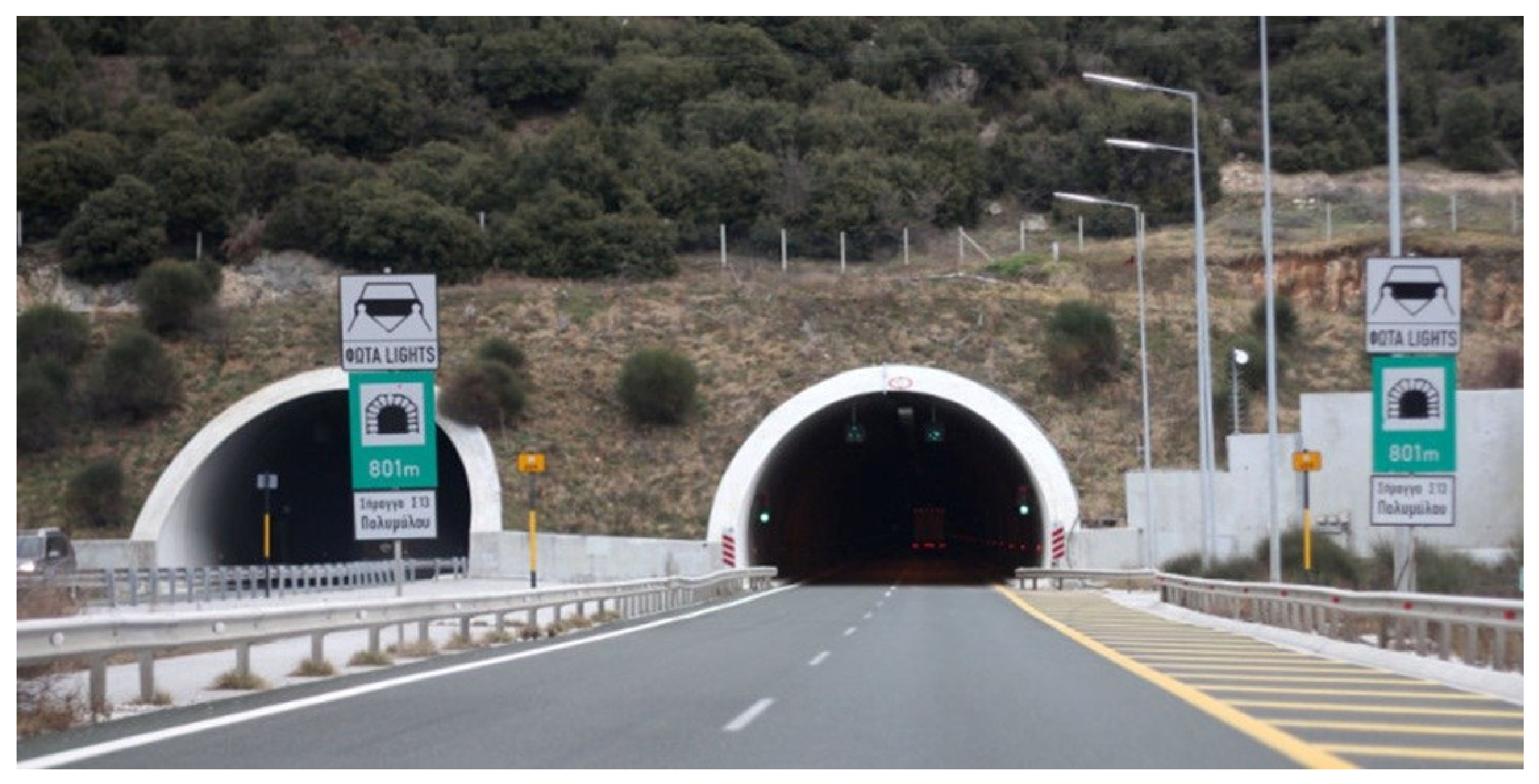
Polymilos twin tunnels (S13 tunnel) of Egnatia Motorway in Kozani, Greece, are selected as a case study (
Figure 17) in which user-defined fragility functions are used to assess the vulnerability of the asset. The tunnels have lengths ranging between 797.5 m and 521.7 m. The analysis is conducted assuming a section of the tunnels embedded at a depth of 25 m, i.e., closer to the portals of the tunnels, which normally are more vulnerable to ground seismic effects.
The assessment is conducted for a single earthquake event, assuming various return periods, i.e., Tms = 73 years, Tms = 102 years, Tms = 475 years, and Tms = 975 years. The corresponding peak ground acceleration (PGA) values are determined by the tool for the selected return periods, based on the municipality where the tunnels are located, following [
10] (
Table 10).
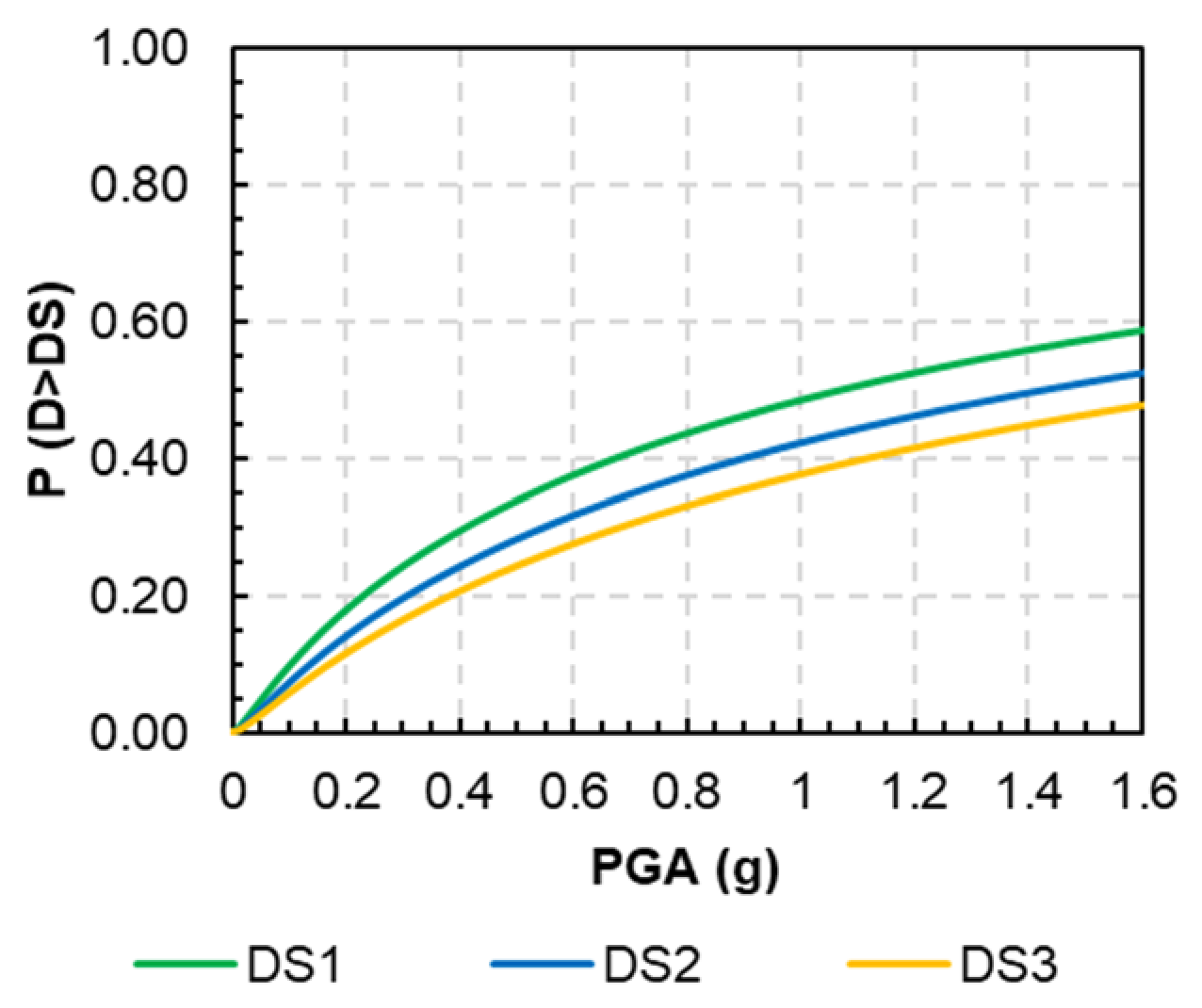
User-defined fragility functions are employed in the analysis of the tunnels. In particular, the fragility curves proposed by Sarkar & Pareek [
30] for the assessment of tunnels against a single earthquake event are selected (
Figure 18). The restoration curves presented in
Section 2 are used in the resilience analysis (
Figure 5). It should be noted that the functionality of the examined tunnel is computed automatically by the tool for various time steps after the events.
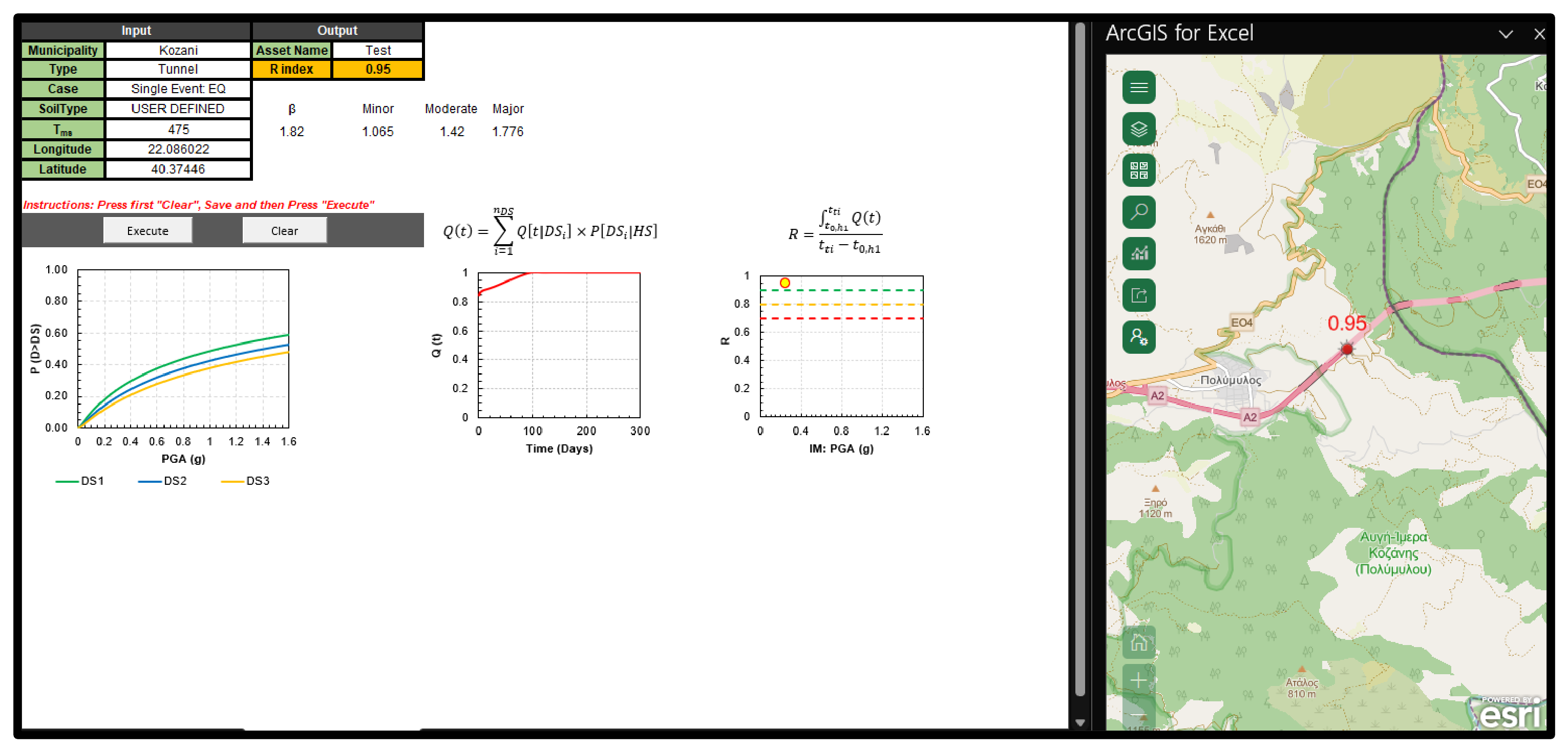
Representative results of the resilience analysis of the tunnels with the INFRARES tool are provided in
Figure 19.
Table 11 summarizes the R index values of the Polymilos tunnels computed for the examined hazard scenarios. The tunnels exhibit a high resilience grade for all examined hazard scenarios.
The individual methodological components implemented in the INFRARES tool (hazard modeling, fragility analysis, and resilience assessment) have been previously validated in the literature [
23,
24,
25]. The case studies presented herein provide an initial verification of the integrated tool, while further validation through comparison with other platforms and real-world data is part of ongoing research. The results obtained are consistent with expected structural performance trends reported in the literature for similar bridge and tunnel typologies under seismic and flood hazards.
6. Conclusions
This paper presented the INFRARES tool, a fully parameterized and interactive platform for the resilience assessment of bridges and tunnels subjected to single and multiple natural hazards. The tool enables the practical implementation of a comprehensive resilience assessment methodology developed within the INFRARES research project, combining hazard modeling, fragility analysis, functionality estimation, and resilience quantification within a unified framework. The resilience of the examined assets is quantified through a resilience index (R) and corresponding resilience grades, while GIS-based visualization capabilities allow the spatial representation of resilience performance within transportation networks.
The presented case studies demonstrated that the resilience of transportation infrastructure is strongly influenced by the type, sequence, and intensity of the considered hazard scenarios. In particular, bridge structures exhibited lower resilience under flood-related hazards due to increased vulnerability to scour effects and longer restoration periods, whereas tunnel resilience was mainly affected by cumulative damage under sequential seismic events. The results further underline the importance of considering hazard interactions, cumulative damage, and recovery processes within resilience assessment frameworks in order to support more effective mitigation planning and sustainable transportation infrastructure management.
The proposed tool enables parametric analyses and comparative evaluation of different hazard scenarios, providing valuable insights into the performance and recovery capacity of transportation assets. In contrast to conventional approaches that typically focus on single hazards, the INFRARES tool incorporates multi-hazard fragility assessment and resilience-based evaluation within a practical and user-oriented environment. In this context, the proposed framework goes beyond a simple software implementation by integrating analytical modeling, probabilistic fragility analysis, restoration modeling, and resilience quantification into a scientifically consistent methodology.
Nevertheless, the proposed methodology is subject to certain limitations. Hazard events are assumed to be statistically independent, while restoration processes are represented using literature-based models due to the limited availability of post-event restoration data. In addition, uncertainties are partially considered through probabilistic fragility analysis; however, their full propagation to the final resilience index is not explicitly implemented. These aspects should be further investigated in future developments of the methodology.
Overall, the INFRARES tool may support researchers, infrastructure operators, and decision-makers in identifying vulnerabilities, prioritizing mitigation measures, and improving emergency planning and resource allocation. Its open-source and expandable structure also supports future collaborative developments and integration of additional models and datasets. Although the current implementation focuses on individual assets, future extensions toward network-scale applications could incorporate additional infrastructure elements and their interdependencies. The proposed framework contributes to sustainable transportation infrastructure management by supporting risk-informed decision-making, optimized resource allocation, reduced lifecycle impacts, and improved long-term adaptability under multi-hazard conditions.