Article

Valuation of Pollination Ecosystem Services—Willingness to Pay Among Visitors to an Agricultural Fair in Hungary for the Protection of Bee Population


by
Aliz Feketéné Ferenczi
1,*,
Andrea Bauerné Gáthy
1 and
Angéla Kovácsné Soltész
2
1
Institute of Economics, Faculty of Economics and Business, University of Debrecen, Böszörményi Str. 138, 4032 Debrecen, Hungary
2
Institute of Methodology and Business Digitalization, Faculty of Economics and Business, University of Debrecen, Böszörményi Str. 138, 4032 Debrecen, Hungary
*
Author to whom correspondence should be addressed.
Sustainability 2026, 18(12), 5800; https://doi.org/10.3390/su18125800
Submission received: 24 April 2026 / Revised: 31 May 2026 / Accepted: 3 June 2026 / Published: 6 June 2026
(This article belongs to the Special Issue Evaluation of Landscape Ecology and Urban Ecosystems)

Abstract

Protecting bee populations is essential to ensuring the sustainability of pollination as a unique ecosystem service. In this study, the authors used a questionnaire survey to examine how and to what extent visitors to an agricultural event in Hungary value bee pollination, as well as which factors influence decision-making in this regard. The authors treated willingness to pay as a binary outcome and used logistic regression to identify its determinants. All explanatory variables were categorical, including sociodemographic factors and consumer attitude variables. Robustness checks were conducted using bootstrap estimation and an alternative probit specification, both of which confirmed the results. Based on the results, respondents’ average willingness to pay is 3.45 EUR/household/month, which amounts to 41.40 EUR/year. This amount indicates public support for financing the protection of ecosystem services provided by bees and can be considered an estimate of such support. Among the explanatory variables, gender, household size, and attitudes toward the consumption of bee products were statistically significantly related to willingness to pay. At the same time, income and respondents’ awareness were only marginally significant. The authors have proposed measures to strengthen environmental responsibility among both consumers and producers, which would represent long-term progress in the preservation of ecosystem services.

1. Introduction

The services provided by ecological systems and the natural resources that generate them are essential to the functioning of the Earth’s life-supporting systems. They contribute both directly and indirectly to human well-being and therefore form part of the planet’s total economic value [1,2]. Among the regulatory functions of ecosystem services, pollinator diversity and pollination services are of paramount importance [3]. Pollination is one of the most important elements of the complex processes that ensure ecosystem functioning [4], a key agroecological service that supports sustainable agricultural production, food and nutrition security, and environmental and landscape protection [5,6]. A significant proportion of plants that provide essential dietary micronutrients—such as vegetables, fruits, nuts, and seeds—rely on insect pollination to ensure high-yield and high-quality crops [7,8,9,10]. The 105 most widely cultivated animal-pollinated plant species worldwide represent a gross economic value of over $800 billion [11]. However, many crop species are indirectly dependent on pollination; pollination’s value is approximately 33% higher when seed production is also considered [12]. The total economic value of pollination, however, may be significantly higher [6]. Three-quarters of the world’s food crops rely at least partially on pollination, which is estimated to contribute $235–577 billion to global annual food production [5]. According to a model simulating the collapse of pollinator communities, a 30% increase in crop prices resulting from pollinator loss would lead to a global welfare loss of $729 billion, equivalent to 15.6% of the value of agricultural production in 2020 [13].
According to research, 40% of the yield of the plants studied can be attributed to bee pollination, and wild bees account for more than 99% of this benefit [14]. According to another study, 74% of plants pollinated by animals are highly dependent on pollinators, and more than 40% of their yield is linked to animal pollination. The high proportion of pollen deficiency observed in research suggests that values calculated based on individual pollination studies underestimate plants’ dependence on pollinators and therefore do not reflect pollinators’ true contribution to food production [15]. At the same time, people’s attitudes toward and valuation of biodiversity are shaped by various personal, cultural, and social factors and incentives [16,17,18].
Fruit production proved to be the most vulnerable to a decline in pollinator numbers (with a 34% yield reduction), followed by vegetable production (with a 30% yield reduction) and oilseed production (with a 24% yield reduction) [6]. The role of bees in pollination is undeniable, but numerous other insect and animal species (flies, beetles, moths, butterflies, birds, and bats) are also important pollinators. In agricultural areas, pollination is primarily ensured by the combined presence of honeybees and wild insects [19,20]. According to some studies, the fruit-setting efficiency of wild bees is 1.6 times higher [21], whereas other studies report it to be 10 times higher [20]. At the same time, the occurrence and density of wild pollinators in a given area vary greatly [6].
The global decline of wild and farmed pollinators is a growing cause for concern, driven by multiple anthropogenic stressors [5,22,23]. The intensification of agriculture, habitat loss and fragmentation, pesticide poisoning, the presence of parasites and pests, and climate change are the main causes of this decline. All of this leads to a decline in the number and diversity of pollinators, resulting in an imbalance between the supply and demand for pollination in agricultural areas [5,23,24].
In addition to these environmental, chemical, nutritional stresses, and biologically derived threats, sectoral problems weighing on beekeepers who keep domestic bees (e.g., declining profitability and competitiveness) also pose a huge challenge to the sustainability of beekeeping activities and, consequently, pollination services [23].
The total economic value of an ecosystem is the sum of the value components derived from it, which can be divided into two main groups: use-related and non-use values [25,26]. Since there is no efficient market for these resources, economists have developed numerous monetary valuation techniques to assess the value of these non-market goods [22,25,27,28,29,30].
Qualitative assessments of pollination services provided by insects are relatively simple and generally subjective, whereas quantitative assessments can be costly and time-consuming [29]. Assessment methods measure different aspects of the value of pollination services and can be applied at various scales [26,30]. An additional challenge in determining the economic value of pollination as an ecosystem service is the coexistence of native wild bees and beekeeper-kept bees (honey bees, bumblebees) [20]. The valuation to be determined within the total economic value can be based on estimates of changes in crop productivity attributable to insect pollination, estimates of changes in producer and consumer surplus (production function), the replacement cost method, as well as contingent valuation and choice modelling [31,32]. Among the most commonly used methods, the cost-based, stated-preference, and revealed-preference methods should be mentioned, within which further valuation procedures can be distinguished [31]. One common method for the economic valuation of ecosystem services, specifically pollination, is the contingent valuation procedure within revealed-preference methods, which is widely used for non-market goods [29,33]. Monetary valuation highlights the economic contribution of pollinators to the benefits they provide to agriculture and society [26]. Furthermore, this allows for the assessment of the impact of changes in pollinator populations on the economic well-being of various groups, such as farmers or consumers [22].
In this study, the authors drew on a questionnaire survey conducted as part of a British research project, in accordance with the recommendations of the National Oceanic and Atmospheric Administration (NOAA) Committee [30,34]. Using the contingent valuation (CV) method, the questionnaire survey aimed to estimate the public’s willingness to pay (WTP) for measures to preserve bee populations in Hungary. The survey was conducted among people who are aware of the importance of bee pollination as an ecosystem service and of its externalities. Furthermore, they examined the characteristics and reasons of respondents who refused to pay or expressed opposition. The scientific literature in Hungary is considered limited regarding the monetary valuation of pollination as an ecosystem service. A recent study applied the productivity change and substitute market goods methods, which fall under cost-based valuation [26]. It is important to note that no research has yet been conducted in Hungary to examine public perceptions of the value of bee pollination. This study serves as a starting point for research on this topic and can provide decision-makers with information.

2. Materials and Methods

The research includes both primary data collection and secondary analysis. The literature review conducted as part of the secondary research was based on the Clarivate Web of Science and Elsevier ScienceDirect databases. The statistical data used in the analysis are drawn from the databases of the Central Statistical Office [35,36,37]. The research results are based on the 2025 HUF/EUR exchange rate published by the Hungarian National Bank (397.91 HUF/EUR) [38]. The primary research was conducted using a questionnaire survey. Data processing was performed using Microsoft 365 Excel version 2410 16.0.18129.20158, Microsoft Power BI Deskpot version 2.128.952.0 64-bit, IBM SPSS version 27. The authors used basic statistical tools to describe the data, including frequencies and means. The study applied the CV method to examine respondents’ WTP.

2.1. The Questionnaire Survey

The study used a questionnaire survey to examine the public’s WTP for measures to prevent a potential decline in bee populations in Hungary. The questionnaire consisted of three main sections (Appendix A). The first section explained the purpose and background of the survey to respondents. It provided information on the importance of pollinating bees and the population decline they have experienced in recent years. Interviewers were available to answer questions raised by respondents and to clarify the constructed market verbally. The second part contained specific questions about WTP, namely, whether survey participants would be willing to pay for bee protection. If so, they were asked to indicate the maximum monthly amount they would be willing to allocate to this purpose to determine the extent of their WTP. If not, they were asked to specify the reasons for their stance. The final section of the survey included questions regarding the respondents’ background variables, such as gender, age, place of residence, household size, education level, monthly household income, consumption of beekeeping products, and membership in beekeeping associations.
The interviewers verbally presented the constructed market and the survey-related scenario to the respondents. After a presentation on the status and importance of bee populations in Europe and Hungary, respondents were asked whether they were willing to pay for the preservation of bee populations and, if so, what their maximum willingness to pay was. Using the payment card tool, each respondent had to choose from the specified amounts. In addition to explaining the scenario, the interviewers also drew respondents’ attention to the fact that funding for protecting the bee population would take the form of a tax-like contribution, so respondents representing households would be mindful of their budgetary constraints. A summary of the scenario and the questions regarding willingness to pay:
“According to numerous studies, bee populations have been declining in recent years in both Europe and Hungary due to pesticides, land-use changes detrimental to them, various diseases, and climate change. In Europe alone, 84% of 264 crop species are pollinated by animals, and more than 4000 plant species owe their existence to bees. We aim to assess the level of public awareness of the threats facing bees and other pollinators, as well as public attitudes towards funding measures to prevent further declines in bee (and other pollinator) populations and to conserve and sustain bee populations in Hungary.”
Q3. Would you be willing to pay a ‘contribution’ to support measures aimed at saving bee populations? Please tick your answer! ___ Yes ____ No ____ Don’t know/No answer
Q4. If you answered “Yes” to question 3, please indicate how much of a “contribution” you would be willing to pay to support measures aimed at maintaining bee populations at their current levels!
per Month (HUF)per Month (EUR)
less than 100 less than 0.25
100 0.25
150 0.38
200 0.50
300 0.75
500 1.25
600 1.50
1000 2.50
5000 12.50
10,000 25.1
more than 10,000 more than 25.1
The scale used (from <0.25 EUR to >25.1 EUR) ensures respondents can choose from a wide range of payment amounts. The use of open-ended lower and upper categories accurately reflects willingness to pay and spans the expected range [39]. The use of non-uniform ranges is also consistent with the consumption structure of Hungarian households [40].
The questionnaire was validated through preliminary testing, which confirmed that the information and questions included in the survey were understandable and relevant. The distribution of the test data was not examined. University students majoring in economics were involved in the preliminary testing. Data collection took place from 28 August 2025 to 30 August 2025 at the Farmer-Expo event in Debrecen, Hungary. The survey could be completed on paper or via a smartphone QR code. The Farmer-Expo in Debrecen is an annual, three-day international agricultural and food industry trade fair that attracts more than 20,000 visitors. The exhibition provides a forum for domestic and international companies and organisations directly involved in agricultural production or related to the sector to showcase their products and services. Additionally, professional events present the latest research and production results, as well as practical insights that can be directly applied in the field.
200 people completed the questionnaire; 8 were excluded because they were under 18, leaving a sample of n = 192. The main rationale for selecting the sample was to ensure that event visitors were sufficiently informed about biodiversity, ecosystem services, and the importance of bees’ pollination work, and could confidently express opinions on financial issues affecting their households. At the same time, it should be noted that the event’s visitors do not represent the entire population, so the research results can only be interpreted in relation to the given sample. Data collection took place on all three days of the event: on the first two days in the afternoon (on weekdays) and on the third day (a Saturday) in the morning.

2.2. The Contingent Valuation Method

The core of the contingent valuation (CV) method, which is widely used to assess non-market goods, is that it measures respondents’ WTP in a hypothetical market for the use of a given natural resource [41,42,43,44,45,46]. CV is a practical method that describes the preferences of individuals and society in various areas, such as environmental protection, transportation, education, and healthcare; CV studies can provide information on the value of goods and services for which there is either no market or market prices do not reflect the actual costs of those goods or services [47]. In this study, the authors used willingness-to-pay measures to explore consumers’ valuation of non-market goods such as pollination provided by bees. In this study, non-market values stem from the benefits individuals derive from observing pollinators (use value), from awareness of their presence, and from the aesthetic value of wildflowers that rely on pollination (non-use or existence value) [48]. In the CV method, responses indicating a willingness to pay of zero (WTP = 0) can be divided into two groups. In the case of so-called “true zeros,” the respondent reports a zero amount because the good in question has no value to them. In contrast, “protest zeros” are responses in which the respondent assigns a positive value to the good but reports 0 due to the payment situation or the institutional framework for payment. It is advisable to treat these latter responses separately or exclude them from the analysis, as they do not reflect actual willingness to pay [49,50].
The questionnaire, structured according to the recommendations of the NOAA Committee [34] and based on other research results [30], included a dichotomous-choice question to measure WTP, supplemented by second-round questions contingent on the response to the first offer (double-bounded) [51]. Since the willingness to pay decision was measured as a binary outcome (1 = willing to pay, 0 = not willing to pay), binary logistic regression was employed to identify the determinants of WTP. The formula of the logistic model is written as follows:
P r o b a b i l i t y ( Y = 1 ) = 1 1 + e z = e z 1 + e z = e β 0 + β 1 X 1 + β 2 X 2 + β i X i 1 + e β 0 + β 1 X 1 + β 2 X 2 + β i X i
where Y = 1 shows that event will occur, βi is the coefficient of the variable and Xi shows each variable (predictor). Logit is also can be shown as follows [52]:
l o g ( P r o b ( Y = 1 ) P r o b ( Y = 0 ) ) = β 0 + β 1 X 1 + + β i X i
The probabilities changes between 0 and 1 and odds can be bigger than 1. Since it is hard to interpret model because of exponential calculations, the odds are usually used.
O d d s   r a t i o = P r o b ( Y = 1 ) P r o b ( Y = 0 )
Odds ratios (Exp(B)) indicate how the odds of the outcome variable change as a result of belonging to a given category compared to the reference category. In this study each explanatory variable was categorical variable including socio-demographic factors (gender, age, living area, qualification, household size, income) and variables related to consumer attitudes (awareness of declining bee populations, honey consumption, membership in a beekeeping organization). Variables were entered into the model using dummy coding, where the first category of each variable served as the reference category. The collinearity between the explanatory variables is ensured by computing Variance Inflation Factor (VIF).
To obtain the best binary logistic regression model we considered Akaike Information Criterion (AIC) which is defined as:
A I C = 2 ( l n ( l i k e l i h o o d ) ) + 2 K
where likelihood is the probability of the data given a model and K is the number of free parameters in the model [53]. The procedure is to select best of the best subsets regression models with minimum AIC value.
The overall statistical significance of the logistic regression model was evaluated using the likelihood-ratio (Omnibus) test. Model explanatory power was assessed using the Nagelkerke pseudo-R2 statistic, while goodness-of-fit was examined using the Hosmer–Lemeshow test [54]. The significance of individual regression coefficients was evaluated using Wald tests [55]. All statistical analyses were conducted at a 5% significance level.

2.3. Comparative Framework

The questionnaire was designed in part based on a survey structure used in the United Kingdom; however, it employed a different methodology. Nevertheless, it is worth comparing a few key factors. WTP values may be influenced not only by perceptions of ecosystem services but also by institutional and social factors.
The basis for the international applicability of the CV method is a preference-based framework that enables the monetary valuation of non-market goods in hypothetical decision-making contexts. Standardized procedures—such as questionnaire design, payment mechanisms, and the handling of hypothetical biases—enable the application of prior empirical research across diverse contexts.
The role of social trust in public institutions and environmental regulation varies significantly across European countries. For example, levels of trust in public institutions are generally lower in Central and Eastern European countries than in Western Europe, which may influence the social acceptance of payments for environmental protection and support for nature conservation measures [56]. Previous comparative studies have shown that environmental attitudes, trust in institutions, and eco-friendly behaviours vary significantly across European countries, and these differences are partly linked to economic, institutional, and social factors [57,58].
In the United Kingdom, there is a stronger emphasis on individual responsibility in addressing environmental issues, whereas in Hungary, state involvement tends to dominate [59]. Cultural differences (e.g., uncertainty, risk management) also influence the interpretation of hypothetical decision-making scenarios. According to some studies, a higher proportion of people in Hungary prioritize economic growth over environmental protection, show a lower willingness to pay for environmental goals, and exhibit a lower general level of trust. Additionally, a stronger orientation toward material values and a more pronounced expectation of government responsibility are evident. In the United Kingdom, the importance of non-material values, the priority of environmental protection, and willingness to pay are all higher [60]. This further underscores the importance of presenting the research accurately and of formulating and explaining the scenario clearly and understandably.
Agricultural and nature conservation support schemes may also influence WTP values. In the United Kingdom, agri-environmental programs and pollinator protection measures have long been integral to agricultural policy and biodiversity conservation strategies [61]. Similarly, in the European Union’s agricultural and biodiversity policies, support schemes to protect pollinators have become increasingly prominent in recent years. Measures introduced under the 2023–2027 Common Agricultural Policy support farming practices that contribute to the conservation of biodiversity, the maintenance of natural habitats, and the creation of an agricultural environment favourable to pollinators, such as through the use of flower strips, agroecological features, and reduced input use (Eco-schemes). The central elements of the EU’s pollinator protection policy are monitoring, habitat restoration, and awareness-raising measures, aimed at mitigating the decline in pollinator populations. In addition, the European Union’s beekeeping sector has a separate support scheme (Pollinators). In Hungary, support for the beekeeping sector under the CAP Strategic Plan encompasses three main areas of intervention and fourteen sub-measures [23,62]. The varying intensity of support structures across member states, as well as their public awareness and level of support, can also influence the degree of WTP for nature conservation measures.
Within similar frameworks, economic and income disparities between countries, such as differences in GDP per capita or wages, are also reflected in variations in WTP levels [35,63,64,65,66]. The payment card thresholds were determined based on the distribution of pilot test data (n = 10), which indicated that the majority of respondents’ WTP clustered below 3000 HUF, with few responses exceeding 5000 HUF. The upper limit of 10,000 HUF was set to capture potential high-value outliers while avoiding excessive range bias. Compared to the payment card used in Mwebaze et al. (2018) [30] for the UK study, the Hungarian version maintains a similar relative structure but adjusts absolute values to reflect purchasing power parity: the UK card ranged from 1 GBP to 50 GBP, while the Hungarian card spans from <100 HUF to >10,000 HUF, corresponding to approximately 0.25–25 EUR at 2025 exchange rates. This conversion accounts for the roughly 2:1 ratio in median wages between the two countries (Table 1).

3. Results

3.1. Discriptive Statistics

Table 2 presents the main demographic characteristics of the sample. Respondents were divided into four age groups, with the majority (60%) falling into the 18–29 age group, followed by those aged 30–45 (25.5%) and the oldest age group (10.5%). The smallest group (4%) consisted of respondents under 18 (excluded responses). The aforementioned age groups were established based on the frequency of respondents’ ages to evaluate the variables under study; when interpreted together with other characteristics (e.g., education level, place of residence, income, household size), these groups allow for a clear determination of the sample’s sociodemographic characteristics. Based on respondents’ gender, 62% of the sample were women and 38% were men; that is, women were slightly overrepresented in the sample compared to the national average [37].
In response to the segmenting question regarding the type of residence, nearly half of the respondents (46%) indicated a city (population of at least 10,000, with other criteria regulated by Government Decree 321/2012. (XI. 16.) [67]), followed by “village” (a settlement smaller than a city) at 33.5%, “county-level city” (19%) (population of over 50,000 or county seat), and finally “capital city” (1.5%) (Budapest). Respondents were asked to indicate which of Hungary’s 19 counties their place of residence belongs to. Based on this, the majority live in Hajdú-Bihar (48.5%, the event’s location) and the neighbouring Szabolcs-Szatmár-Bereg (17%) counties, which are located in eastern Hungary.
In terms of the highest level of education, respondents with a secondary school diploma (62.5%) and a college or university degree (32%) made up the largest proportion of those who completed the questionnaire; a smaller proportion had completed traditional vocational training (8%) or had only a primary school education (5%). Nationally, those with a secondary education (34%) also represent the largest proportion, followed by citizens with a higher education degree (26%) [36].
Respondents’ household sizes present a varied picture, with most coming from three-person (30%), two-person (24%), and four-person (19%) households. The average household size in Hungary is 2.3 persons [35]. Regarding the sample, the distribution of monthly household income is wide. The largest proportions reported incomes of over 2061 EUR (18.5%) and between 1058 and 1307 EUR (18%). Respondents from the lowest-income households accounted for approximately 7%.
Regarding awareness of threats to bee populations, the vast majority of respondents (84.5%) were aware of the decline in bee populations. Awareness of this issue is also reflected in respondents’ recognition of the role of bees in preserving flora, native vegetation, and sustainable crop production; furthermore, 74.5% of respondents are regular consumers of different bee products.

3.2. WTP Results

The analysis of WTP was conducted to determine whether respondents were willing to pay to protect the bee population (the WTP principle). On the other hand, it examined, among those who responded positively to this question, the maximum amount they were willing to pay monthly for this purpose.
During the analysis, 8 of the 200 respondents were excluded because they were under 18 years old. Based on this, 117 of 192 respondents indicated they were willing to pay; this means that 61% answered positively to the question regarding the willingness-to-pay principle. Regarding WTP, 39% of the evaluated responses were negative, yet all respondents considered the role of bees in pollination to be important. These were classified into the “protest zero” category. There were no respondents who could be classified into the “true zero” category—that is, those who are unwilling to pay because bees represent no value to them, meaning their willingness to pay is 0. To filter out inconsistent responses, the survey included an additional question for those who answered “no” to the payment principle, asking why they had made that decision. Based on an analysis of the reasons given for refusing to pay, three main factors can be identified. 40.5% of the protesters stated that “I need more information and time to respond,” while 22.8% believed that “The extra money is not enough to bring about any change,” and 21.5% of those who answered “no” stated that “My household cannot afford to pay for this.” The majority of those who answered “no” to the willingness-to-pay question are women (69%), urban residents (69.2%), and 92.3% live in the eastern counties of the country; for most of them, the household consists of 3 people (32.1%). In terms of education, 67.9% have at most a secondary education, and more than 50% earn less than the average monthly income of 1307 EUR, calculated based on the specified income brackets. The majority of these respondents belong to the younger age group (18–29 years).
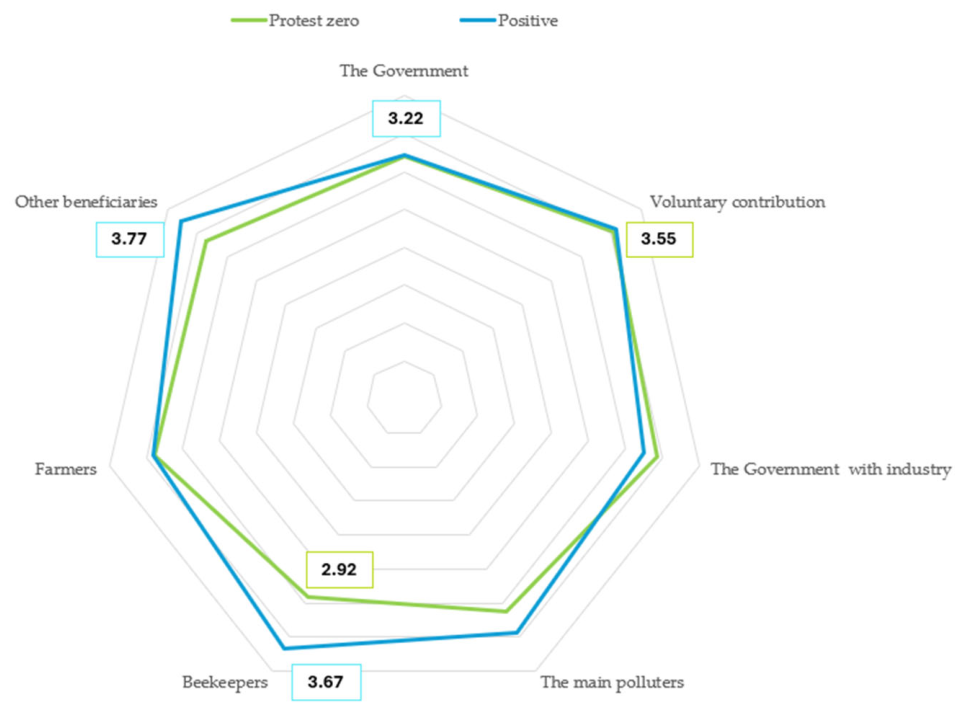
The survey also examined respondents’ views on who should finance the implementation and enforcement of measures to maintain bee populations at current levels. For this question, respondents were allowed to select multiple answers; in such cases, they were required to rank their selections. Figure 1 shows how the average scores of each group’s responses changed after ranking, highlighting the highest and lowest average scores. The values on the graph’s axes indicate the average rank respondents assigned to each participant. According to respondents who rejected the WTP concept (those who indicated “zero willingness to pay”)—based on the lowest average (2.92)—beekeepers should be the primary ones to pay for the protection of the bee population. They are the least likely to believe this should be financed voluntarily (3.55). According to those who expressed a WTP, financial funding is primarily the government’s responsibility (3.22), and they are the least likely to believe that support is the responsibility of those beneficiaries (e.g., rural tourism, hospitality) who benefit from other ecosystem services provided by bee pollination (3.77). The only significant difference between the two groups was in their assessment of the role of beekeepers (average scores 2.92 vs. 3.67) (Mann–Whitney U = 3197.000, p = 0.042).
Table 3 contains descriptive statistics of WTP for all respondents (including respondents who refused to pay, whose true WTP is zero) and for positive respondents. The average WTP amount for all relevant respondents was 2.10 EUR per household per month (95% CI: 1.40–2.80). Among respondents willing to pay, the mean WTP increased to 3.45 EUR per month (95% CI: 2.36–4.54). The medians (0.38 and 1.26) are much lower than the means, indicating a right-skewed distribution with a small number of relatively high payment values.
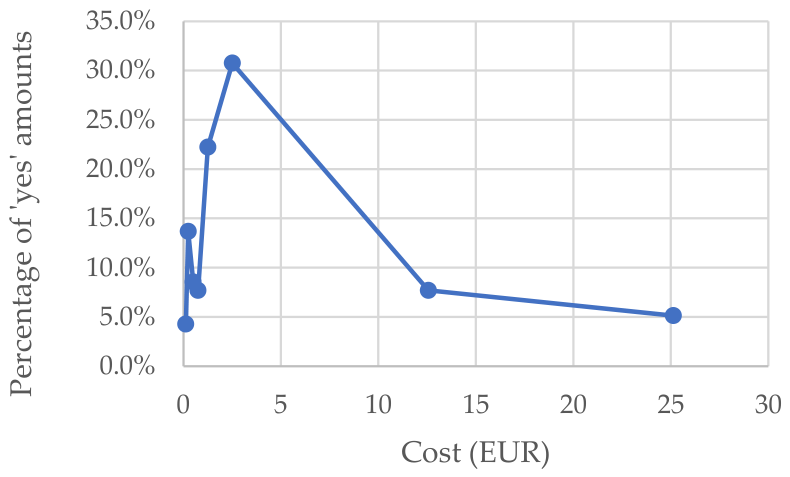
Table 4 shows the distribution of maximum WTP in case of ‘yes’ respondents. The largest group, 30.8% of respondents, indicated a monthly amount of 3.45 EUR; the smallest groups were those who indicated the minimum amount (4.3%) and those who said “yes” to the highest amount (5.1%). The WTP value is not normally distributed (Kolmogorov–Smirnov test, p < 0.001) and exhibits right skew (WTP skewness of 3.119).
The use of a denser set of categories in the lower range and a sparser set in the higher range proved sufficient, a finding supported by the right-skewed distribution of WTP. However, no responses were received for the amounts of 0.38 EUR/month and 1.50 EUR/month included in the questionnaire, so they are not included in Table 4. Furthermore, the highest categories (25.1 and >25.1 EUR/month) were combined due to the low number of observations, and in Table 4, they are represented as the open-ended category >12.50 EUR/month. The empirical result (average WTP of 3.45 EUR) further confirms that this structure is consistent with Hungarian consumption habits and the distribution of WTP.
The relationship shown in Figure 2 can be interpreted as the empirical distribution of WTP for bee conservation. In other words, it represents how the proportion of “yes” responses changes as bid amounts increase. The contribution level (price) on the horizontal axis, together with the proportion of respondents on the vertical axis, shows what percentage of the surveyed population is willing to contribute at least to some extent to the maintenance of bee populations. The downward trend in the curve, starting at approximately 2.5 EUR, reflects the price sensitivity observed thereafter. The proportion of “yes” responses peaks at the mid-range offer (approx. 0.75–2.5 EUR), with a significant increase to 31%. In other words, willingness to pay is highest in this range. For higher offer amounts (12.50 EUR and above), the proportion of “yes” responses decreases (approx. 5–8%), indicating that higher amounts already deter willingness to pay. All of this suggests that there is an optimal bid amount at which respondents are most willing to say yes to funding measures to protect the bee population.
Table 5 reports the results of the binary logistic regression model. The baseline logit model incorporated the full set of explanatory variables (all VIF values were below 2, suggesting the absence of problematic multicollinearity). Model simplification was subsequently performed through the stepwise exclusion of statistically non-significant covariates. Since the reduced models did not result in a substantial decrease in AIC values (ΔAIC < 4), indicating no meaningful improvement in model performance, the complete model was retained for interpretation and reporting purposes.
Based on the likelihood-ratio statistic, the estimated model is statistically significant (Chi2 = 32.264, df = 12, p = 0.001), so the explanatory variables together significantly improved the prediction of willingness to pay. The explanatory power of the model was 0.210 (Nagelkerke Pseudo R2), indicating that the model explains approximately 21% of the variance in the dependent variable. Hosmer and Lemeshow test statistic showed Chi2= 8.954 (df = 8) and p = 0.346, indicating that the model can be considered as an adequate fit.
Coding of categorical variable in Appendix B Table A1.
Table 5 shows that gender had a statistically significant effect on willingness to pay (p = 0.030, OR = 0.463). The coefficient for Gender is negative (B = −0.769), therefore the OR is below 1. This means that female respondents had significantly lower odds of willingness to pay than males. Specifically, the odds of willingness to pay were approximately 54% lower for this group.
Respondents living in two-person households were significantly more likely to show willingness to pay compared to the reference category (OR = 2.951, p = 0.043). This indicates that the odds of willingness to pay were nearly three times higher among respondents from two-person households than in single-person households.
Honey and other bee products consumption had the strongest significant effect in the model (OR = 3.161, p = 0.002). Respondents who consume honey (and other bee products) had more than three times higher odds of willingness to pay compared to non-consumers.
Age, living area, qualification, income, awareness of declining bee populations, and membership in a beekeeping organisation did not show statistically significant effects at the 5% significance level. However, income and awareness showed marginal significance, suggesting a possible tendency that may deserve further investigation. In the highest income bracket and regarding knowledge, the sig-value exceeds 0.05; therefore, the results are for informational purposes only. In the highest income category, p = 0.079. Exp(B) = 2.4, which means that the odds of willingness to pay among those in the highest income bracket are 2.4 times that of the group of respondents in the lowest income category. For awareness, p = 0.066, Exp(B) = 2.3, meaning that those who considered themselves informed about the decline in bee populations are 2.3 times more likely to be willing to pay than those who are not informed.
Robustness checks were conducted using bootstrap estimation and an alternative probit specification. The bootstrap results (Appendix B Table A2) confirmed the stability of the estimated coefficients, while the probit model (Appendix B Table A3) yielded substantively similar results to the logit model, with the same explanatory variables remaining statistically significant.
When the logistic regression is rerun as a sensitivity analysis (with protest zeros coded as “yes”), no significant association is found (Chi2 = 15.571, df = 12, p = 0.212); the explanatory variables do not explain the model.
The estimated WTP indicates public support for funding bee conservation measures but should not be interpreted as a substitute for cost–benefit analysis.

4. Discussion

The value of pollination provided by pollinating insects as an ecosystem service can be assessed using a variety of methods. Determining the average WTP is a method used to monetise the value of numerous ecosystem services, such as improving water quality or wildlife habitats, as well as conserving urban green spaces and forests [2,68]. In Germany, the annual WTP of citizens for initiatives to protect wild bees was estimated at 227–447 EUR/household using random-parameter logit and latent class models. Based on these results, respondents prefer initiatives implemented in their home state, and a greater distance from initiatives in other states results in a slight decrease in willingness to pay, with differing preferences also emerging across the eastern and western regions [69]. An Italian case study examined the average WTP for establishing urban apiaries that sustainably balance increased honey production with the preservation of urban biodiversity. The results highlighted that, for the majority of respondents, the main benefits of urban apiaries are linked to awareness-raising and educational activities related to the role of honeybees in the urban environment, and that they are willing to contribute to the establishment of a municipal apiary through a one-time donation. In this case, the average WTP was estimated at 22.21 EUR/person, totaling 48,742.24 EUR for the municipality in question [70]. WTP for protecting pollination by insects can vary significantly across countries and regions; for example, in regions affected by severe drought, both farmers and consumers reported higher WTP for this purpose [71].
Regarding Hungary, few relevant studies are available on the financial valuation of pollination, and no study has yet been conducted on the population’s WTP. In Hungary, the value component related to the direct use of pollination services has so far been determined using a cost-based valuation method based on changes in productivity and on substitute market goods. These components of the total economic value were estimated based on a model farm with 300 bee colonies; for sunflowers, the value was estimated at 50,270 EUR/100 ha/year, and for rapeseed, at 54,000 EUR/100 ha/year. Furthermore, using the substitute goods method, the replacement value of the honey produced in one year under the outlined production conditions would be approximately 18,000 EUR/year [26]. However, the monetary value determined in this way does not account for the fact that pollination not only yields higher yields for farmers but also better-quality produce.
Furthermore, in addition to its sweetening function, natural honey contains numerous components that have beneficial effects on health and the immune system [72,73,74]. Since these calculations determined only the value components related to direct use, and given these limitations, the authors considered the results to be a significant underestimate; they defined the results as a starting point for determining a fair pollination fee to be paid to Hungarian beekeepers, thereby contributing to the sustainability of beekeeping. If farmers are unwilling to pay beekeepers for pollination services (currently, there is no functioning market for pollination in Hungary), state intervention is necessary. They also point out that people’s willingness to pay must be assessed in order to estimate the additional market value for producers and consumers. This study aims to contribute to the scientific examination of this issue and to broaden the possibilities for evaluating pollination as an ecosystem service from economic, social, and environmental perspectives in Hungary.
In this study, the average WTP per household per month was 3.45 EUR (41.4 EUR/year). It is important to note that our results refer to the study population and cannot be generalized to the entire Hungarian population. In the logistic regression model used to estimate the maximum WTP, the explanatory variables were demographic characteristics such as gender, age, household size, type of residence, educational attainment, and income; and as attitude variables, awareness of the decline in the bee population, consumption of honey and beekeeping products, and membership in beekeeping organisations. According to the results, male respondents are more willing to pay than female respondents, and the same is true for two-person households compared to single-person households. The willingness to pay among respondents who consume beekeeping products is more than three times higher than among those who do not. The results regarding income and respondents’ knowledge are for informational purposes only, as the significance level is slightly above 0.05. Income and the number of dependents—which fundamentally determine household budgets and, consequently, their willingness to pay—generally show a positive correlation in other studies. In the United Kingdom, there are both similar and differing trends regarding willingness to pay to support policies aimed at protecting bees. The authors estimate that the average WTP per household in the UK was £43 per year [30], which, when calculated for 2025, is about 1.7 times higher than the WTP result of this study. However, taking into account economic and income ratios (GDP per capita, average income 2 times, and median wage 2.7 times higher in the United Kingdom than in Hungary), it can be said that visitors to the Hungarian agricultural fair determined their willingness to pay at a similar level to that of respondents in the United Kingdom. In this case, the authors applied an interval regression model, which indicated that respondents’ income was positively correlated with WTP. A negative correlation was found between middle-aged individuals (30–45 years) and household size, while older individuals (46–60+ years), women, members of conservation organizations, and those with higher levels of education showed a positive correlation with higher willingness to pay. According to a previous study, also conducted in the United Kingdom using discrete choice modeling, the willingness to pay for the benefits of pollination amounted to £13.40 per taxpayer [75]. In this case, respondents’ WTP was assessed using a choice experiment questionnaire to prevent losses in the end products of various pollination services. General environmental concern was closely linked to positive attitudes toward bee conservation, acceptance of taxation, and pro-environmental ethical stances. Acceptance of environmental taxation showed a positive correlation with education level and income. Attitudes toward bee protection, meanwhile, showed a positive correlation with age and a negative correlation with the number of dependents.
It should be noted that different methods can lead to varying results, which can also be explained by other methodological differences, such as sample size and composition [30]. Some studies indicate that the influence of demographic characteristics is often weak [34,76]. In contrast, certain behavioral, attitudinal, or individual perceptual factors, such as concern for the environment, play a more decisive role [77,78,79]. Other studies have concluded that WTP is determined more by psychological and attitudinal characteristics, as well as cultural and social factors, than by traditional demographic variables [80,81], and that these effects are inconsistent, with individual preferences and values overshadowing them [82].

5. Policy Implications

Pollination, as an ecosystem service, plays a key role in agricultural production; however, it is not fully compensated through market mechanisms [26]. As a positive externality, the benefits of pollination extend beyond individual economic actors; if we interpret these results in conjunction with the findings of current research examining WTP—taking into account its limitations—an argument in favor of government intervention emerges, one that may also be supported by a degree of public backing.
These WTP-based results complement the cost-based valuation by [26] Feketéné Ferenczi et al. (2023), which estimated pollination values at 50,270 EUR/100 ha/year for sunflowers and at 54,000 EUR/100 ha/year for rapeseed. While their approach captures producer-side values through productivity changes, our contingent valuation captures consumer-side public preferences. The convergence of these two methodological perspectives—supply-side cost-based and demand-side stated-preference—strengthens the case for state intervention to internalize the social benefits of pollination.
From an economic policy perspective, the cost-based valuation and the WTP results together indicate the existence of a double market failure. On the supply side, beekeepers do not receive adequate compensation for the ecosystem services they provide. On the demand side, while for the population under study demonstrates a demonstrable willingness to pay to preserve these services, these preferences do not translate into actual market demand. This discrepancy may justify the introduction of environmental policy instruments that internalize the social benefits of pollination.
An important consequence of this may be the need to rethink agricultural support systems, particularly the Common Agricultural Policy, which undervalues the role of pollination. Financial incentives should be directly linked, for example, to pollinator populations or the quality of their habitats, which are measurable. Another regulatory issue is the extreme sensitivity of pollination services—particularly to pesticide use and habitat loss—and in this case, market-based solutions alone are insufficient. Restricting the use of environmentally harmful pesticides and promoting pollinator-friendly land-use practices are key. Furthermore, from a rural development perspective, supporting beekeeping and pollination-related activities can simultaneously serve economic, social, and environmental goals [23,83,84,85].
Based on all this, pollination is a resource of strategic importance not only from an ecological perspective but also from an economic policy perspective. In a broader sense, policy measures must therefore adopt a comprehensive approach that accounts for economic incentives, regulatory options, and social preferences to ensure the long-term sustainability of this vital ecosystem service.

6. Conclusions

The study used a questionnaire survey of visitors to a Hungarian agricultural fair to examine their willingness to pay to help prevent the decline of bee populations. Therefore, the results can only be interpreted in the context of this sample and cannot be generalized to the entire Hungarian population. Based on this, respondents would be willing to pay 3.45 EUR/household/month —which amounts to 41.40 EUR/year— for measures aimed at preserving the bee population, which is similar to the willingness to pay estimated for the United Kingdom and adjusted to Hungarian conditions in the study, which was 43 pounds per household per year [30], but higher than the earlier estimate of 13.4 pounds per taxpayer [75]. This indicates public support for bee conservation measures among respondents, which aligns with international trends. Among the explanatory variables, gender, household size, and attitudes toward the consumption of beekeeping products were statistically significantly related to willingness to pay. At the same time, the strong significance of income and respondents’ awareness indicated a positive trend. All of this is certainly indicative from the consumer side and is consistent with the results of other studies. At the same time, no statistically significant relationship with WTP was found for age, type of residence, education level, or membership in a beekeeping association.
Based on the results of the willingness-to-pay analysis conducted in this study, we recommend that ‘bee-friendly’ and ‘pollinator-friendly’ labels appear on as wide a range of products in the consumer market as possible, thereby promoting informed purchasing decisions and consideration of environmental factors. Additionally, a transparent financing system should be established to ensure that the additional revenue generated from the sale of such products is allocated directly to pollinator protection measures, such as habitat restoration programmes, organic farming subsidies or awareness campaigns. This would strengthen the environmental responsibility of both consumers and producers and represent significant long-term progress in maintaining the essential ecosystem services that benefit society as a whole and preserving biodiversity. The study’s results contribute to the Hungarian scientific literature on the subject [26] and provide an initial indication of how important informed visitors consider the protection of the bee population to be. All of this suggests that it is necessary to prioritise public education programs to raise awareness of the role of bee populations and other pollinators, and their significance.
Among the limitations of the study is that the results are fundamentally tied to the sample and are primarily exploratory in nature, as they apply only to a specific population—visitors to the FarmerExpo agricultural fair in Hungary—and, in addition to sociodemographic factors, took attitude variables into account only to a limited extent. Due to the specific nature of the method used, the results can be considered significantly underestimated, since, on the one hand, it focused exclusively on pollination by bees, even though numerous other animal species also contribute to plant reproduction, and there are also wind- and self-pollinating plants that are vital to humanity [86]. Another limiting factor was the inability to perform the absence of scope and starting-point tests due to the method of payment card design.
On the other hand, this study does not take into account the significance of beekeepers’ activities in terms of the social and economic role of the beekeeping sector, nor does it include assessments of the total economic value of pollination related to direct use (e.g., increased crop yield and quality, healthy food production, educational and cultural roles, rural development) [87,88,89,90]. The timing of data collection during the late August Farmer-Expo may introduce seasonal bias. Agricultural fairs in late summer coincide with harvest season, potentially attracting visitors with stronger agricultural interests and higher environmental awareness than the general population. Data collection occurred on both weekday afternoons and Saturday, which may introduce temporal sampling bias: weekday visitors might include more professionals and exhibitors with stable incomes, while Saturday visitors may represent more recreational attendees with different WTP profiles. Although the sample distribution across days was not systematically analyzed, these temporal factors likely exert upward pressure on WTP estimates, as agricultural event visitors during harvest season may exhibit higher valuation of pollination services than the general Hungarian population. Based on the above, it is recommended that these limitations be taken into account in future research extensions.

Author Contributions

Conceptualization, A.F.F. and A.B.G.; methodology, A.K.S.; software, A.K.S.; validation, A.F.F., A.B.G. and A.K.S.; formal analysis, A.F.F.; investigation, A.B.G. and A.K.S.; resources, A.F.F.; data curation, A.F.F. and A.K.S.; writing—original draft preparation, A.F.F., A.B.G. and A.K.S.; writing—review and editing, A.F.F. and A.B.G.; visualization, A.K.S.; supervision, A.B.G.; project administration, A.F.F.; funding acquisition, A.F.F. All authors have read and agreed to the published version of the manuscript.

Funding

This research was funded by the EKÖP-25-0 University Research Scholarship Program of the Ministry for Culture and Innovation from the source of the National Research, Development and Innovation Fund. The APC was funded by the University of Debrecen Program for Scientific Publication.

Institutional Review Board Statement

The study was conducted in accordance with the Research Ethics Committee of the Faculty of Business and Economics of the University of Debrecen, and the protocol was approved by the Ethics Committee of GTK-KB 005/2025 on 30 July 2025. No animals (bees) were involved in the survey.

Informed Consent Statement

Informed consent was obtained from all subjects involved in the study.

Data Availability Statement

The raw data supporting the conclusions of this article will be made available by the authors on request.

Conflicts of Interest

The authors declare no conflicts of interest.

Abbreviations

The following abbreviations are used in this manuscript:
WTPWillingess to pay
CVContingent valuation
NOAANational Oceanic and Atmospheric Administration

Appendix A

The monetary valuation of pollination as an ecosystem service in Hungary
The aim of the survey
According to numerous studies, bee populations have been declining in recent years in both Europe and Hungary due to pesticides, land-use changes detrimental to them, various diseases, and climate change. In Europe alone, 84% of 264 crop species are pollinated by animals, and more than 4000 plant species owe their existence to bees. We aim to assess the level of public awareness of the threats facing bees and other pollinators, as well as public attitudes towards funding measures to prevent further declines in bee (and other pollinator) populations and to conserve and sustain bee populations in Hungary.
The questionnaire is completed anonymously; your answers are strictly confidential and will be used solely for the scientific research of this study. You cannot be identified in any way. Completing the questionnaire takes approximately 5 min. Thank you for contributing to our research with your answers!
1. 
Before taking part in this survey, were you aware that bee populations are in decline? Please tick your answer!
____ Yes ____ No ____ Don’t know/No answer
2. 
In your opinion, are bees crucial for maintaining garden flora, native plants and proper crop production? Please tick your answer!
____ Yes ____ No ____ Don’t know/No answer
3. 
Would you be willing to pay a ‘contribution’ to support measures aimed at saving bee populations? Please tick your answer!
____ Yes ____ No ____ Don’t know/No answer
4. 
If you answered “Yes” to question 3, please indicate how much of a “contribution” you would be willing to pay to support measures aimed at maintaining bee populations at their current levels!
per Month (HUF)
less than 100
100
150
200
300
500
600
1000
5000
10,000
more than 10,000
5. 
If you answered ‘No’ to question 4, please state your reason! You may select more than one answer!
I do not consider bees to be of particular importance. ___
I would be satisfied with the future situation even without them. ___
I am not interested in this question. ___
I need more information/time to answer. ___
My household cannot afford to pay for this. ___
The extra money is not enough to make any difference. ___
Other reason, namely: ______________________________
6. 
In your opinion, who should pay for the implementation of measures aimed at maintaining bee populations at their current levels? You may select more than one answer; in that case, please rank your answers!
The government. ___
Anyone, voluntarily. ___
The government, in partnership with industry stakeholders. ___
Those considered responsible for the decline in bee populations, i.e., the main polluters (e.g., the construction industry). ___
Beekeepers. ___
Farmers. ___
Other stakeholders who benefit from bees (e.g., rural tourism). ___
7. 
Do you regularly consume honey or other bee products? Please tick your answer!
___ Yes ___ No
8. 
Please tick your answer!
No: ____ Male ____ Female
9. 
Please tick your answer!
Your age: __
10. 
Are you a member of any beekeeping organisation? Please tick your answer!
___ Yes ___ No
11. 
Type of place of residence:
___ capital city
___ county town
___ town
___ village
12. 
Which county does your place of residence belong to? Please tick your answer!
___ Bács-Kiskun          ___ Komárom-Esztergom
___ Baranya              ___ Nógrád
___ Békés             ___ Pest
___ Borsod-Abaúj-Zemplén     ___ Somogy
___ Csongrád-Csanád         ___ Szabolcs-Szatmár-Bereg
___ Fejér               ___ Tolna
___ Győr-Moson-Sopron          ___ Vas
___ Hajdú-Bihar             ___ Veszprém
___ Heves               ___ Zala
___ Jász-Nagykun-Szolnok
13. 
Number of people living with you in the household:
___ I live alone ___ 1 ___ 2 ___ 3 ___ 4 ___ 5+
14. 
What is your highest level of education? Please tick your answer!
__ basic
__ secondary-vocational
__ secondary-high school
__ college or university degree
__ academic degree
15. 
Please indicate your household’s monthly income! Please tick your answer!
___ less than 120,000 HUF
___ HUF 120,000–220,000
___ HUF 220,000–320,000
___ HUF 320,000–420,000
___ 420,000–520,000 HUF
___ 520,000–620,000 HUF
___ 620,000–720,000 HUF
___ 720,000–820,000 HUF
___ more than 820,000 HUF
Thank you for contributing to our research with your answers!
Researchers at the Faculty of Economics, University of Debrecen
Sustainability 18 05800 i001

Appendix B

Table A1. Coding of categorical variables.
FrequencyParameter Coding
(1)(2)
Gendermale740
female1181
Age18–2912000
30–455110
46–60+2101
Living areavillage660
city1261
Qualificationsecondary1350
university571
Household sizesingle3200
two4810
more than 211201
Income<805 EUR/month3100
805–1558 EUR/month8210
>1559 EUR/month7901
Awarenessno290
yes1631
Honey consumptionno550
yes1371
Membershipno1810
yes111
Table A2. Bootstrap for Variables in the Equation.
BBootstrap a
BiasStd. ErrorSig.BCa 95% Confidence Interval
LowerUpper
Step 1Gender−0.769−0.0840.4000.039−1.496−0.269
Age (30–45)−0.1480.0120.5150.723−1.1421.006
Age (46–60+)−0.741−0.0670.7030.224−2.2000.442
Living area0.2000.0180.4120.602−0.6531.104
Qualification−0.333−0.0410.5300.465−1.4210.583
Household size (2 people)1.0820.0830.6020.046−0.2712.611
Household size (>2 people)0.5580.0550.5380.240−0.6351.868
Income (805–1558 EUR/month)0.2580.0080.5540.607−0.7641.352
Income (>1558 EUR/month)0.8740.0850.5720.091−0.2342.276
Honey consumption1.1510.1090.4330.0030.2322.532
Membership1.2546.9039.4680.148−1.11121.068
Awareness0.8330.0620.5750.104−0.3382.218
Constant−1.567−0.1290.9620.067−3.373−0.148
a. Unless otherwise noted, bootstrap results are based on 1000 bootstrap samples.
Table A3. Parameter Estimates—Probit model.
ParameterBS.E.95% Wald CIHypothesis Test
LowerUpperWald Chi-SquaredfSig.
Intercept−0.9730.4764−1.906−0.0394.16810.041
Gender (female)−0.4700.2129−0.887−0.0534.87310.027
Gender0 a
Age (46–60+)−0.4510.3653−1.1670.2651.52310.217
Age (30–45)−0.0640.3006−0.6540.5250.04610.830
Age0 a
Living area (city)0.1350.2247−0.3050.5750.36010.548
Living area0 a
Qualification (university)−0.2330.3000−0.8210.3560.60010.438
Qualification0 a
Household size (>2 people)0.3440.2803−0.2050.8941.51010.219
Household size (2 people)0.6770.32350.0431.3114.37710.036
Household size0 a
Income (>1558 EUR/month)0.5270.3007−0.0621.1173.07710.079
Income (805–1558 EUR/month)0.1620.2916−0.4100.7330.30710.580
Income0 a
Honey consumption (yes)0.7110.22680.2671.1569.83010.002
Honey consumption0 a
Membership (yes)0.5890.5419−0.4731.6511.18110.277
Membership0 a
Awareness (yes)0.5120.2735−0.0241.0483.51010.061
Awareness0 a
(Scale)1 b
Dependent Variable: “Yes”. Model: (Intercept), Gender, Age, Living area, Qualification, Household size, Income, Honey consumption, Membership, Awareness. a. Set to zero because this parameter is redundant. b. Fixed at the displayed value.

References

  1. Costanza, R.; d’Arge, R.; De Groot, R.; Farber, S.; Grasso, M.; Hannon, B.; Limburg, K.; Naeem, S.; O’Neill, R.V.; Paruelo, J.; et al. The Value of the World’s Ecosystem Services and Natural Capital. Nature 1997, 387, 253–260. [Google Scholar] [CrossRef]
  2. Jamean, E.S.; Abas, A. Valuation of Visitor Perception of Urban Forest Ecosystem Services in Kuala Lumpur. Land 2023, 12, 572. [Google Scholar] [CrossRef]
  3. Barbosa, D.B.; Crupinski, E.F.; Silveira, R.N.; Limberger, D.C.H. As Abelhas e Seu Serviço Ecossistêmico de Polinização. Rev. Eletrôn. Cient. Uergs 2017, 3, 694–703. [Google Scholar] [CrossRef]
  4. Abrahão, M.; Henrique Dos Santos Ferreira, B.; Couto Garcia, L.; Maura Torezan-Silingardi, H. The Role of Agroforestry Systems on Pollinator Diversity and the Provision of Pollinator Services. Discovery 2025, 61, e1d1493. [Google Scholar] [CrossRef]
  5. IPBES. The Assessment Report of the Intergovernmental Science-Policy Platform on Biodiversity and Ecosystem Services on Pollinators, Pollination and Food Production; Potts, S.G., Imperatriz-Fonseca, V., Ngo, H.T., Eds.; Zenodo: Geneva, Switzerland, 2016. [Google Scholar] [CrossRef]
  6. Devkota, K.; Dos Santos, C.F.; Ferreira, A.B.; Timberlake, T.P. Assessing the Economic and Nutritional Value of Pollination Services in Nepal. Sci. Rep. 2024, 14, 25037. [Google Scholar] [CrossRef]
  7. Klein, A.-M.; Steffan-Dewenter, I.; Tscharntke, T. Pollination of Coffea Canephora in Relation to Local and Regional Agroforestry Management. J. Appl. Ecol. 2003, 40, 837–845. [Google Scholar] [CrossRef]
  8. Klein, A.-M.; Vaissière, B.E.; Cane, J.H.; Steffan-Dewenter, I.; Cunningham, S.A.; Kremen, C.; Tscharntke, T. Importance of Pollinators in Changing Landscapes for World Crops. Proc. R. Soc. B 2007, 274, 303–313. [Google Scholar] [CrossRef]
  9. Potts, S.G.; Imperatriz-Fonseca, V.; Ngo, H.T.; Biesmeijer, J.C.; Breeze, T.D.; Dicks, L.V.; Garibaldi, L.A.; Hill, R.; Settele, J.; Vanbergen, A.J. The Assessment Report on Pollinators, Pollination and Food Production: Summary for Policymakers. 2016. Available online: https://nora.nerc.ac.uk/id/eprint/514356 (accessed on 30 January 2026).
  10. Stein, K.; Coulibaly, D.; Stenchly, K.; Goetze, D.; Porembski, S.; Lindner, A.; Konaté, S.; Linsenmair, E.K. Bee Pollination Increases Yield Quantity and Quality of Cash Crops in Burkina Faso, West Africa. Sci. Rep. 2017, 7, 17691. [Google Scholar] [CrossRef] [PubMed]
  11. Rader, R.; Cunningham, S.A.; Howlett, B.G.; Inouye, D.W. Non-Bee Insects as Visitors and Pollinators of Crops: Biology, Ecology, and Management. Annu. Rev. Entomol. 2020, 65, 391–407. [Google Scholar] [CrossRef]
  12. Feuerbacher, A.; Herbold, T.; Krumbe, F. The Economic Value of Pollination Services for Seed Production: A Blind Spot Deserving Attention. Environ. Resour. Econ. 2024, 87, 881–905. [Google Scholar] [CrossRef]
  13. Feuerbacher, A. Pollinator Declines, International Trade and Global Food Security: Reassessing the Global Economic and Nutritional Impacts. Ecol. Econ. 2025, 232, 108565. [Google Scholar] [CrossRef]
  14. Kasina, J.M.; Mburu, J.; Kraemer, M.; Holm-Mueller, K. Economic Benefit of Crop Pollination by Bees: A Case of Kakamega Small-Holder Farming in Western Kenya. J. Econ. Entomol. 2009, 102, 467–473. [Google Scholar] [CrossRef]
  15. Siopa, C.; Carvalheiro, L.G.; Castro, H.; Loureiro, J.; Castro, S. Animal-pollinated Crops and Cultivars—A Quantitative Assessment of Pollinator Dependence Values and Evaluation of Methodological Approaches. J. Appl. Ecol. 2024, 61, 1279–1288. [Google Scholar] [CrossRef]
  16. Wang, Y.; Schaub, S.; Wuepper, D.; Finger, R. Culture and Agricultural Biodiversity Conservation. Food Policy 2023, 120, 102482. [Google Scholar] [CrossRef]
  17. Date, M.; Fukano, Y.; Farkhary, S.I.; Uchida, K.; Soga, M. Beyond Bees: A Cross-Country Investigation into Public Perceptions of Insect-Mediated Crop-Pollination Services. Biol. Conserv. 2024, 292, 110524. [Google Scholar] [CrossRef]
  18. Joaquim Bergamo, P.; Rito, K.F.; Agostini, K.; Deodato Da Silva E Silva, F.; Maués, M.M.; Rech, A.R.; Garibaldi, L.A.; Nic Lughadha, E.; Saraiva, A.M.; Tsukahara, R.Y.; et al. Identifying Changes in the Drivers of Ecosystem Services: Socioeconomic Changes Underlie Reduced Provision of Pollination Service. J. Environ. Manag. 2025, 373, 123466. [Google Scholar] [CrossRef] [PubMed]
  19. Zariman, N.A.; Omar, N.A.; Nurul Huda, A. Plant Attractants and Rewards for Pollinators: Their Significant to Successful Crop Pollination. Int. J. Life Sci. Biotechnol. 2022, 5, 270–293. [Google Scholar] [CrossRef]
  20. Drummond, F.A.; Hoshide, A.K. An Economic Cost/Benefit Tool to Assess Bee Pollinator Conservation, Pollination Strategies, and Sustainable Policies: A Lowbush Blueberry Case Study. Sustainability 2024, 16, 3242. [Google Scholar] [CrossRef]
  21. Asare, E.; Hoshide, A.K.; Drummond, F.A.; Criner, G.K.; Chen, X. Economic Risk of Bee Pollination in Maine Wild Blueberry, Vaccinium Angustifolium. J. Econ. Entomol. 2017, 110, 1980–1992. [Google Scholar] [CrossRef]
  22. Potts, S.G.; Imperatriz-Fonseca, V.; Ngo, H.T.; Aizen, M.A.; Biesmeijer, J.C.; Breeze, T.D.; Dicks, L.V.; Garibaldi, L.A.; Hill, R.; Settele, J.; et al. Safeguarding Pollinators and Their Values to Human Well-Being. Nature 2016, 540, 220–229. [Google Scholar] [CrossRef]
  23. Feketéné Ferenczi, A. A Hazai Méz Termékpálya Fenntarthatóságának és Versenyképességének Gazdasági és Társadalmi Elemzése. Doctoral Dissertation, Debreceni Egyetem, Debrecen, Hungary, 2025. (In Hungarian) [Google Scholar]
  24. Blettler, D.C.; Biurrun-Manresa, J.A.; Fagúndez, G.A. A Review of the Effects of Agricultural Intensification and the Use of Pesticides on Honey Bees and Their Products and Possible Palliatives. Span. J. Agric. Res. 2022, 20, e03R02. [Google Scholar] [CrossRef]
  25. Brander, L. Guidance Manual on Value Transfer Methods for Ecosystem Services; Publishing Services Section, UNON: Nairobi, Kenya, 2013. [Google Scholar] [CrossRef]
  26. Feketéné Ferenczi, A.; Szűcs, I.; Bauerné Gáthy, A. Evaluation of the Pollination Ecosystem Service of the Honey Bee (Apis mellifera) Based on a Beekeeping Model in Hungary. Sustainability 2023, 15, 9906. [Google Scholar] [CrossRef]
  27. Winfree, R.; Gross, B.J.; Kremen, C. Valuing Pollination Services to Agriculture. Ecol. Econ. 2011, 71, 80–88. [Google Scholar] [CrossRef]
  28. Stevens, T.; Hoshide, A.K.; Drummond, F.A. Willingness to Pay for Native Pollination of Blueberries: A Conjoint Analysis. Int. J. Agric. Mark. 2015, 2, 68–77. [Google Scholar]
  29. Upadhyaya, N.; Bhandari, K. A Review: Pollinator Services and Its Economic Evaluation. Int. J. Food Agric. Nat. Resour. 2022, 3, 11–15. [Google Scholar] [CrossRef]
  30. Mwebaze, P.; Marris, G.C.; Brown, M.; MacLeod, A.; Jones, G.; Budge, G.E. Measuring Public Perception and Preferences for Ecosystem Services: A Case Study of Bee Pollination in the UK. Land Use Policy 2018, 71, 355–362. [Google Scholar] [CrossRef]
  31. Marjainé Szerényi, Z.; Csutora, M.; Harangozó, G.; Krajnyik, Z.; Kontár, R.; Nagypál, N. A Természetvédelemben Alkalmazható Közgazdasági Értékelési Módszerek; Környezevédelmi és Vízügyi Minisztérium Természetvédelmi Hivatala–Budapesti Corvinus Egyetem Környezetgazdaságtani és Technológiai Tanszék: Budapest, Hungary, 2005. (In Hungarian) [Google Scholar]
  32. Bauer, D.M. Valuing Pollination Services: A Comparison of Approaches. In Valuing Ecosystem Services; Ninan, K.N., Ed.; Edward Elgar Publishing: Cheltenham, UK, 2014. [Google Scholar] [CrossRef]
  33. Penn, J.; Hu, W. Benefit-Cost Analysis of Becoming Certified Pollinator Friendly. J. Environ. Manag. 2023, 326, 116679. [Google Scholar] [CrossRef] [PubMed]
  34. Arrow, K.; Solow, R.; Portney, P.R.; Learner, E.E.; Radner, R.; Schuman, H. Report of the NOAA Panel on Contingent Valuation. Federal Register US, 11 January 1993; pp. 4602–4614.
  35. Központi Statisztikai Hivatal. Gyorstájékoztató Keresetek. 2025. Available online: https://www.ksh.hu/gyorstajekoztatok/ker/ker2512.html (accessed on 10 April 2026). (In Hungarian)
  36. Központi Statisztikai Hivatal. A Népesség Száma Legmagasabb Iskolai Végzettség Szerint, Nemenként [Ezer Fő]*. 2025. Available online: https://www.ksh.hu/stadat_files/mun/hu/mun0006.html (accessed on 10 April 2026). (In Hungarian)
  37. Központi Statisztikai Hivatal. Magyarország Népességének Száma Nemek És Életkor Szerint. 1 January 2025. Available online: https://www.ksh.hu/interaktiv/korfak/orszag.html?lang=hu (accessed on 10 April 2026). (In Hungarian)
  38. Magyar Nemzeti Bank. HUF/EUR Átlagárfolyam. 2025. Available online: http://mnbkozeparfolyam.hu/arfolyam-2025.html (accessed on 15 April 2026). (In Hungarian)
  39. Rowe, R.D.; Schulze, W.D.; Breffle, W.S. A Test for Payment Card Biases. J. Environ. Econ. Manag. 1996, 31, 178–185. [Google Scholar] [CrossRef]
  40. Központi Statisztikai Hivatal. A Háztartások Életszínvonala. 2024. Available online: https://www.ksh.hu/kiadvanyok/helyzetkep/2024/#/kiadvany/a-haztartasok-eletszinvonala/fogyasztasszerkezet-a-ket-szelso-jovedelmi-otodben-2024 (accessed on 20 February 2026).
  41. Klose, T. The Contingent Valuation Method in Health Care. Health Policy 1999, 47, 97–123. [Google Scholar] [CrossRef]
  42. Boyle, K.J. Contingent Valuation in Practice. In A Primer on Nonmarket Valuation; Champ, P.A., Boyle, K.J., Brown, T.C., Eds.; The Economics of Non-Market Goods and Resources; Springer: Dordrecht, The Netherlands, 2017; Volume 13, pp. 83–131. [Google Scholar] [CrossRef]
  43. Wijnen, W.; Weijermars, W.; Schoeters, A.; Van Den Berghe, W.; Bauer, R.; Carnis, L.; Elvik, R.; Martensen, H. An Analysis of Official Road Crash Cost Estimates in European Countries. Saf. Sci. 2019, 113, 318–327. [Google Scholar] [CrossRef]
  44. Odihi, D.; De Broucker, G.; Hasan, Z.; Ahmed, S.; Constenla, D.; Uddin, J.; Patenaude, B. Contingent Valuation: A Pilot Study for Eliciting Willingness to Pay for a Reduction in Mortality From Vaccine-Preventable Illnesses for Children and Adults in Bangladesh. Value Health Reg. Issues 2021, 24, 67–76. [Google Scholar] [CrossRef]
  45. Ko, S.; Kim, S.; Cho, J.; Maeng, K. Measuring Public Willingness to Pay for Urban Air Mobility: A National Contingent Valuation Study in South Korea. Transp. Policy 2026, 179, 104007. [Google Scholar] [CrossRef]
  46. Moon, H.; Choi, H. Public Willingness to Pay for Government-Funded Seawater Desalination for Industrial Water Security: A Contingent Valuation Study in South Korea. J. Environ. Manag. 2026, 398, 128496. [Google Scholar] [CrossRef]
  47. Carson, R.T. Contingent Valuation: A Practical Alternative When Prices Aren’t Available. J. Econ. Perspect. 2012, 26, 27–42. [Google Scholar] [CrossRef]
  48. Hanley, N.; Breeze, T.D.; Ellis, C.; Goulson, D. Measuring the Economic Value of Pollination Services: Principles, Evidence and Knowledge Gaps. Ecosyst. Serv. 2015, 14, 124–132. [Google Scholar] [CrossRef]
  49. Meyerhoff, J.; Liebe, U. Protest Beliefs in Contingent Valuation: Explaining Their Motivation. Ecol. Econ. 2006, 57, 583–594. [Google Scholar] [CrossRef]
  50. Szerényi, Z. Környezeti Javak Értékelésének Módszertani Kérdései. Doctoral Dissertation, Budapesti Corvinus Egyetem, Budpest, Hungary, 2005; p. 58. (In Hungrian) [Google Scholar]
  51. Hanemann, M.; Loomis, J.; Kanninen, B. Statistical Efficiency of Double-Bounded Dichotomous Choice Contingent Valuation. Am. J. Agric. Econ. 1991, 73, 1255–1263. [Google Scholar] [CrossRef]
  52. Peng, C.-Y.J.; Lee, K.L.; Ingersoll, G.M. An Introduction to Logistic Regression Analysis and Reporting. J. Educ. Res. 2002, 96, 3–14. [Google Scholar] [CrossRef]
  53. Lawless, J.F.; Singhal, K. ISMOD: An All-Subsets Regression Program for Generalized Linear Models. I. Statistical and Computational Background. Comput. Methods Programs Biomed. 1987, 24, 117–124. [Google Scholar] [CrossRef]
  54. Hosmer, D.; Lemeshow, S.; Hosmer, D.; Lemeshow, S. Applied Logistic Regression, 2nd ed.; John Wiley and Sons, Inc.: Hoboken, NJ, USA, 2000. [Google Scholar]
  55. Kleinbaum, D.G.; Klein, M. Logistic Regression: A Self-Learning Text; Springer: New York, NY, USA, 2002. [Google Scholar]
  56. European Social Survey. Trust in Institutions and Environmental Attitudes in Europe; European Social Survey ERIC. 2023. Available online: https://www.europeansocialsurvey.org (accessed on 20 February 2026).
  57. Franzen, A.; Vogl, D. Two Decades of Measuring Environmental Attitudes: A Comparative Analysis of 33 Countries. Glob. Environ. Change 2013, 23, 1001–1008. [Google Scholar] [CrossRef]
  58. Deák, Z.; Vaznonienė, G.; Wojewódzka-Wiewiórska, A. Understanding the Attitudes towards Climate Change in the Context of Trust in Selected Countries of Central and Eastern Europe. Serbian J. Manag. 2024, 19, 449–470. [Google Scholar] [CrossRef]
  59. Attitudes of Europeans Towards the Environment. 2024. Available online: https://europa.eu/eurobarometer/surveys/detail/3173 (accessed on 20 February 2026).
  60. Haerpfer, C.; Inglehart, R.; Moreno, A.; Welzel, C.; Kizilova, K.; Diez-Medrano, J.; Lagos, M.; Norris, P.; Ponarin, E.; Puranen, B. World Values Survey Wave 7 (2017–2022); Cross-National Data-Set; World Values Survey Association: Vienna, Austria, 2022. [Google Scholar] [CrossRef]
  61. Department for Environment; Food & Rural Affairs (Defra). National Pollinator Strategy for Bees and Other Pollinators in England; UK Government: London, UK, 2023. Available online: https://www.gov.uk/government/publications/national-pollinator-strategy-for-bees-and-other-pollinators-in-england?utm (accessed on 30 January 2026).
  62. European Commission. The New Common Agricultural Policy: 2023–2027. 2023. Available online: https://agriculture.ec.europa.eu/common-agricultural-policy/cap-overview/cap-glance/key-policy-objectives-cap-2023-27_en (accessed on 30 January 2026).
  63. Statista. Gross Domestic Product (GDP) per Capita in Hungary from 1980 to 2031. 2026. Available online: https://www.statista.com/statistics/339875/gross-domestic-product-gdp-per-capita-in-hungary/ (accessed on 30 January 2026).
  64. Statista. Gross Domestic Product (GDP) per Capita in the United Kingdom from 1980 to 2031. 2026. Available online: https://www.statista.com/statistics/263600/gross-domestic-product-gdp-per-capita-in-the-united-kingdom/ (accessed on 30 January 2026).
  65. Statista. Median Annual Earnings for Full-Time Employees in the United Kingdom from 2004 to 2025, by Age Group. 2026. Available online: https://www.statista.com/statistics/802196/full-time-annual-salary-in-the-uk-by-age-group/ (accessed on 30 January 2026).
  66. Statita. Median Annual Earnings for Full-Time Employees in the United Kingdom from 1999 to 2025. Available online: https://www.statista.com/statistics/1002964/average-full-time-annual-earnings-in-the-uk/ (accessed on 20 February 2026).
  67. 321/2012. (XI. 16.) Korm. Rendelet a Területszervezési Eljárásról. Available online: https://net.jogtar.hu/jogszabaly?docid=a1200321.kor (accessed on 30 January 2026). (In Hungarian)
  68. Ureta, J.C.; Motallebi, M.; Vassalos, M.; Seagle, S.; Baldwin, R. Estimating Residents’ WTP for Ecosystem Services Improvement in a Payments for Ecosystem Services (PES) Program: A Choice Experiment Approach. Ecol. Econ. 2022, 201, 107561. [Google Scholar] [CrossRef]
  69. Moreaux, C.; Jacobsen, J.B.; Meyerhoff, J.; Dalsgaard, B.; Rahbek, C.; Strange, N. Distance and Regional Effects on the Value of Wild Bee Conservation. Environ. Resour. Econ. 2023, 84, 37–63. [Google Scholar] [CrossRef]
  70. Notaro, S.; Paletto, A.; Mira, A.; Grilli, G. Citizens’ Perceptions and Willingness to Pay for Urban Beekeeping: A Case Study in Northern Italy. Urban. Ecosyst. 2025, 28, 72. [Google Scholar] [CrossRef]
  71. Salles, J.-M.; Gallai, N. Economics of Pollination in Drylands: Farmers’ and Consumers’ Perspectives in a Middle-Income Country. 2023. Available online: https://theses.hal.science/tel-03986658v1 (accessed on 30 January 2026).
  72. Bilsel, Y.; Bugra, D.; Yamaner, S.; Bulut, T.; Cevikbas, U.; Turkoglu, U. Could Honey Have a Place in Colitis Therapy? Effects of Honey, Prednisolone, and Disulfiram on Inflammation, Nitric Oxide, and Free Radical Formation. Dig. Surg. 2002, 19, 306–312. [Google Scholar] [CrossRef]
  73. Vallianou, N.G.; Gounari, P.; Skourtis, A.; Panagos, J.; Kazazis, C. Honey and Its Anti-Inflammatory, Anti-Bacterial and Anti-Oxidant Properties. Gen. Med. (Los Angel) 2014, 2, 132. [Google Scholar] [CrossRef]
  74. Martinello, M.; Mutinelli, F. Antioxidant Activity in Bee Products: A Review. Antioxidants 2021, 10, 71. [Google Scholar] [CrossRef] [PubMed]
  75. Breeze, T.D.; Bailey, A.P.; Potts, S.G.; Balcombe, K.G. A Stated Preference Valuation of the Non-Market Benefits of Pollination Services in the UK. Ecol. Econ. 2015, 111, 76–85. [Google Scholar] [CrossRef]
  76. Mitchell, R.C.; Carson, R.T. Using Surveys to Value Public Goods: The Contingent Valuation Method; Resources for the Future: Washington, DC, USA, 1989. [Google Scholar]
  77. Husted, B.W.; Russo, M.V.; Meza, C.E.B.; Tilleman, S.G. An Exploratory Study of Environmental Attitudes and the Willingness to Pay for Environmental Certification in Mexico. J. Bus. Res. 2014, 67, 891–899. [Google Scholar] [CrossRef]
  78. Istamto, T.; Houthuijs, D.; Lebret, E. Multi-Country Willingness to Pay Study on Road-Traffic Environmental Health Effects: Are People Willing and Able to Provide a Number? Environ. Health 2014, 13, 35. [Google Scholar] [CrossRef]
  79. Myung, E. Environmental Knowledge, Attitudes, and Willingness to Pay for Environmentally Friendly Meetings—An Exploratory Study. J. Hosp. Tour. Manag. 2018, 36, 85–91. [Google Scholar] [CrossRef]
  80. Paudel, U.; Adhikari, S.R.; Pant, K.P. Willingness to Pay for Environmental Quality Improvement Programs and Its Determinants: Empirical Analysis in Western Nepal. Sustainability 2023, 15, 2176. [Google Scholar] [CrossRef]
  81. Yu, L.; Wang, W.; Cui, Y.; Zhou, W.; Fu, Z.; He, L. Influence of Capital Endowment on Rural Households’ Willingness to Pay for Rural Human Settlement Improvement: Evidence from Rural China. Appl. Econ. 2023, 55, 3980–3995. [Google Scholar] [CrossRef]
  82. Fan, D.; Tong, L. Impact of Capital Endowment and Environmental Literacy on Farmers’ Willingness to Pay and Level of Payment for Domestic Waste Management. Sustainability 2025, 17, 5308. [Google Scholar] [CrossRef]
  83. Feketéné Ferenczi, A.; Bauerné Gáthy, A.; Szűcs, I.; Kovácsné Soltész, A. The Beekeeping Practice of Transhumance Bee Colonies—Quantitative Study of Honey Production Characteristics Based on a Questionnaire Survey in Hungary. Agriculture 2025, 15, 1405. [Google Scholar] [CrossRef]
  84. Feketéné Ferenczi, A.; Kovácsné Soltész, A.; Szűcs, I.; Bauerné Gáthy, A. Current Situation of Honey-Producing Apiaries—Quantitative Study of Honey Production Characteristics Based on a Questionnaire Survey in Hungary. Agriculture 2024, 14, 2100. [Google Scholar] [CrossRef]
  85. Feketéné Ferenczi, A.; Szűcs, I.; Bauerné Gáthy, A. Economic Sustainability Assessment of a Beekeeping Farm in Hungary. Agriculture 2023, 13, 1262. [Google Scholar] [CrossRef]
  86. Discover Life’s Bee Species Guide and World Checklist. Available online: http://www.discoverlife.org/mp/20q?guide=Apoidea_species&flags=HAS (accessed on 30 January 2026).
  87. Klein, A.-M.; Boreux, V.; Fornoff, F.; Mupepele, A.-C.; Pufal, G. Relevance of Wild and Managed Bees for Human Well-Being. Curr. Opin. Insect Sci. 2018, 26, 82–88. [Google Scholar] [CrossRef]
  88. Lemelin, R.H. Entomotourism and the Stingless Bees of Mexico. J. Ecotourism 2020, 19, 168–175. [Google Scholar] [CrossRef]
  89. Amulen, D.R.; D’Haese, M.; D’Haene, E.; Okwee Acai, J.; Agea, J.G.; Smagghe, G.; Cross, P. Estimating the Potential of Beekeeping to Alleviate Household Poverty in Rural Uganda. PLoS ONE 2019, 14, e0214113. [Google Scholar] [CrossRef]
  90. Mill, G.A.; van Rensburg, T.; Hynes, S.; Dooley, C. Willingness-To-Pay and Consumer Versus Citizen Values: Evidence from Ireland; Department of Economics, National University of Ireland, Galway: Galway, Ireland, 2007. [Google Scholar]
Figure 1. Responsibilities for funding bee protection by respondent groups in Hungary (n = 186).
Sustainability 18 05800 g001
Figure 2. WTP distribution.
Sustainability 18 05800 g002
Table 1. Comparison of main features.
ParametersUnited Kingdom
[30]
Hungary
FarmerExpo 2025 *
Research topicMaintaining bee colony sizeMaintaining bee colony size
Methodologycontingent valuation
interval regression
contingent valuation
LOGIT model
GDP per capita (USD/év)57,61025.830
Average income (GBP/év)36.53118.203
Median wage (GBP/év)39.03914.201
* sampling.
Table 2. Socio-economic characteristics of the sample.
ParametersSample’s Distribution
(%)
National Distribution
(%)
Sex ratio
Male38.048.3
Female62.051.7
Age (year)
<184.017.4
18–2960.013.1
30–4525.521.4
46–60+10.548.1
Level of education
Basic4.018.0
Secondary-vocational3.022.0
Secondary-high school64.534.0
University28.526.0
Household income (EUR/month) *
<5537.0
554–80410.5
805–105512.0
1056–130718.0
1308–155812.0
1559–180911.0
1810–206111.0
>206118.5
* Comparable national distribution data for the income categories used in the present study were not available. National income statistics are reported using different income quantiles/categories by the Hungarian Central Statistical Office.
Table 3. Descriptive statistics of WTP amount.
nNMedianMeanSE95% CI for Mean
LowerUpper
WTP amount of all respondents (EUR/month)1920.382.100.361.402.80
WTP amount of ‘yes’ respondents (EUR/month)1171.263.450.552.364.54
Table 4. Distribution of maximum WTP.
Amount (EUR/Month)FrequencyDistribution (%)
<0.2554.3
0.251613.7
0.50108.5
0.7597.7
1.252622.2
2.503630.8
12.5097.7
>12.5065.1
N117100.0
Table 5. Estimated logistic regression model of WTP.
BStd. ErrorWalddfSig. *Exp(B)95% CI for Exp(B)
LowerUpper
Gender−0.7690.3554.70510.0300.4630.2310.928
Age 1.58220.453
Age (30–45)−0.1480.4910.09110.7630.8620.3302.256
Age (46–60+)−0.7410.6031.50910.2190.4770.1461.555
Living area0.2000.3710.29210.5891.2220.5912.527
Qualification−0.3330.4870.46710.4940.7170.2761.861
Household size 4.14920.126
Household size (2 people)1.0820.5344.10510.0432.9511.0368.406
Household size (>2 people)0.5580.4621.45810.2271.7470.7064.323
Income 4.23620.120
Income (805–1558 EUR/month)0.2580.4820.28510.5391.2940.5033.328
Income (>1559 EUR/month)0.8740.4973.09310.0792.3960.9056.343
Awareness0.8330.4539.35210.0662.3000.9465.589
Honey consumption1.1510.3761.31510.0023.1611.5126.610
Membership1.2541.0943.37710.2513.5060.41129.911
Constant−2.3370.8093.91810.0040.097
* p = 0.05.
Disclaimer/Publisher’s Note: The statements, opinions and data contained in all publications are solely those of the individual author(s) and contributor(s) and not of MDPI and/or the editor(s). MDPI and/or the editor(s) disclaim responsibility for any injury to people or property resulting from any ideas, methods, instructions or products referred to in the content.