Coupling Coordination and Sustainable Improvement Path of Digital Village and Rural Economic Resilience at County Level in Hunan Province

Abstract
1. Introduction
2. Literature Review
2.1. Digital Village Development and Rural Economic Resilience
2.2. Research Methods, Spatial Scale, and Research Content of Existing Studies
2.3. Review of the Literature
3. Study Area and Research Methods
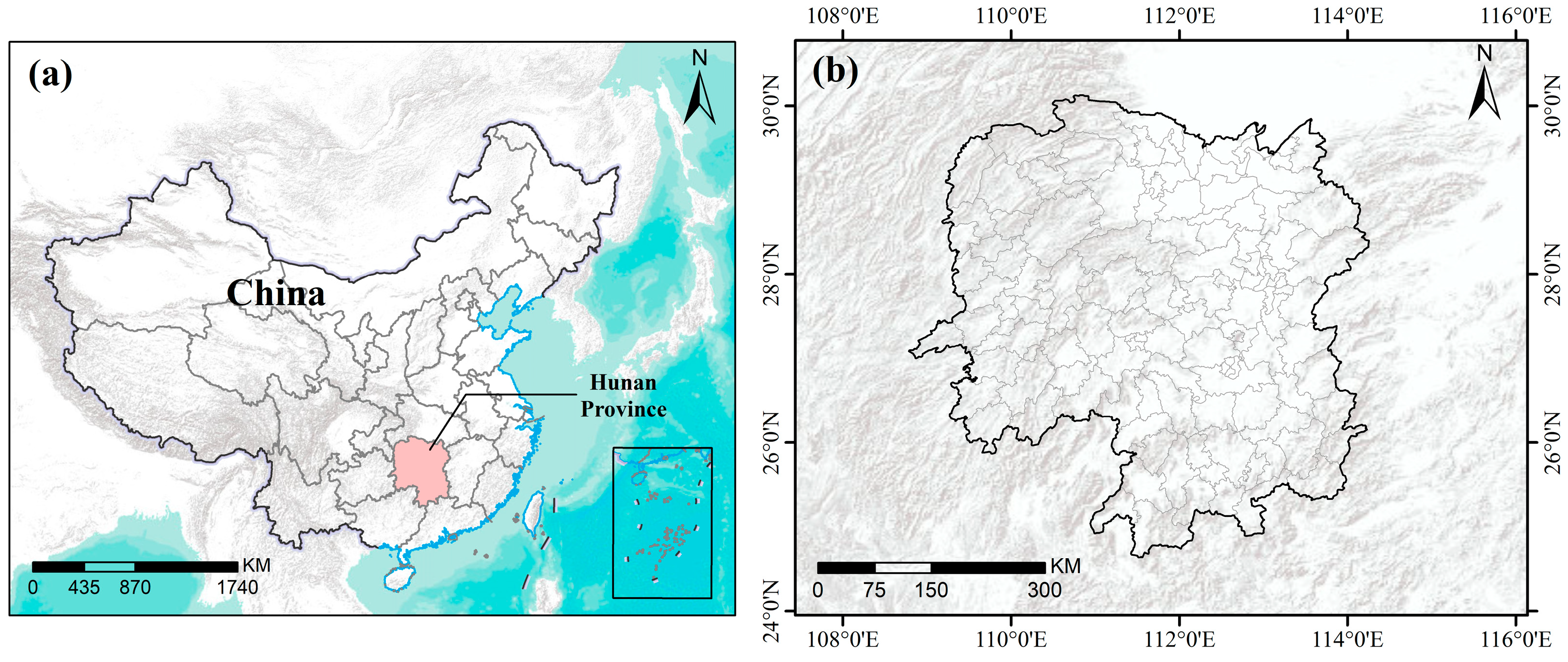
3.1. Overview of the Study Area
3.2. Data Sources and Evaluation Indicators
3.2.1. Evaluation Index System for Digital Village Development
3.2.2. Evaluation Index System for Rural Economic Resilience
3.3. Research Methods
3.3.1. Vertical and Horizontal Scatter Degree Method
3.3.2. Improved Coupling Coordination Model
3.3.3. Spatial Autocorrelation
3.3.4. Spatial Panel Model
4. Results Analysis
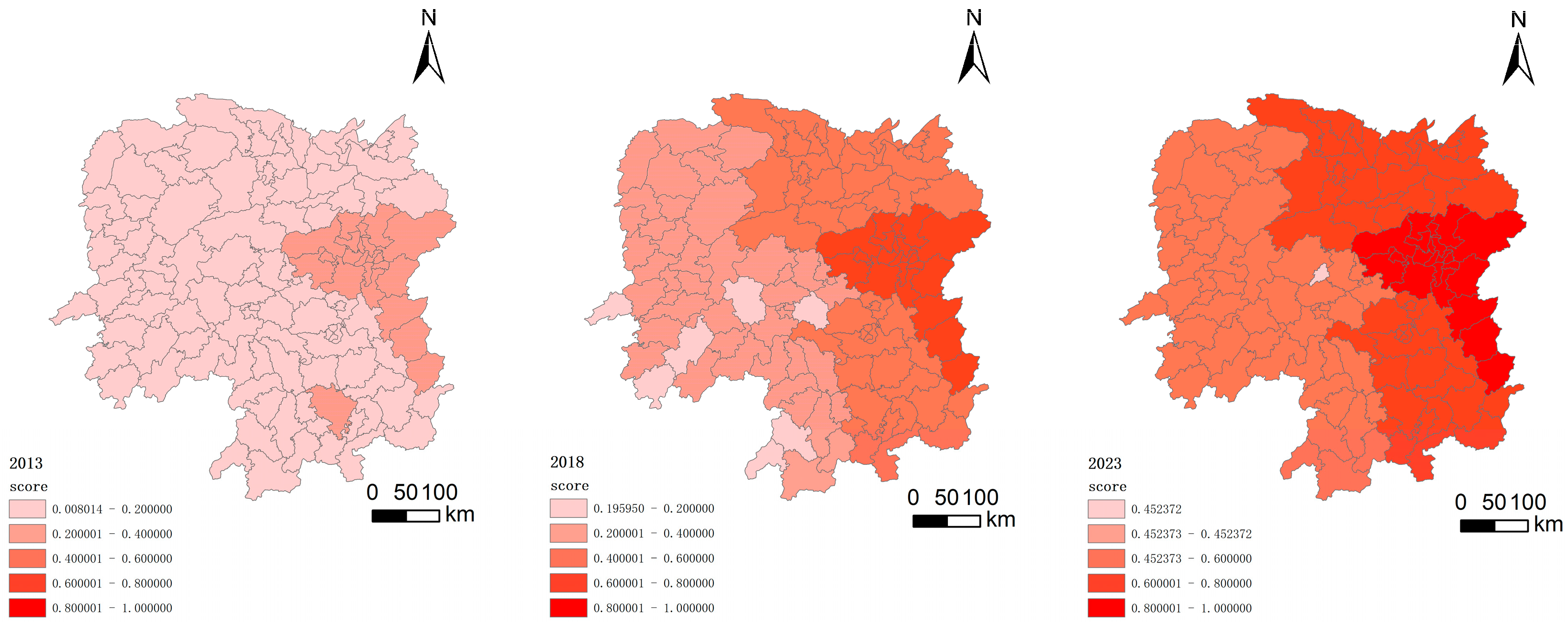
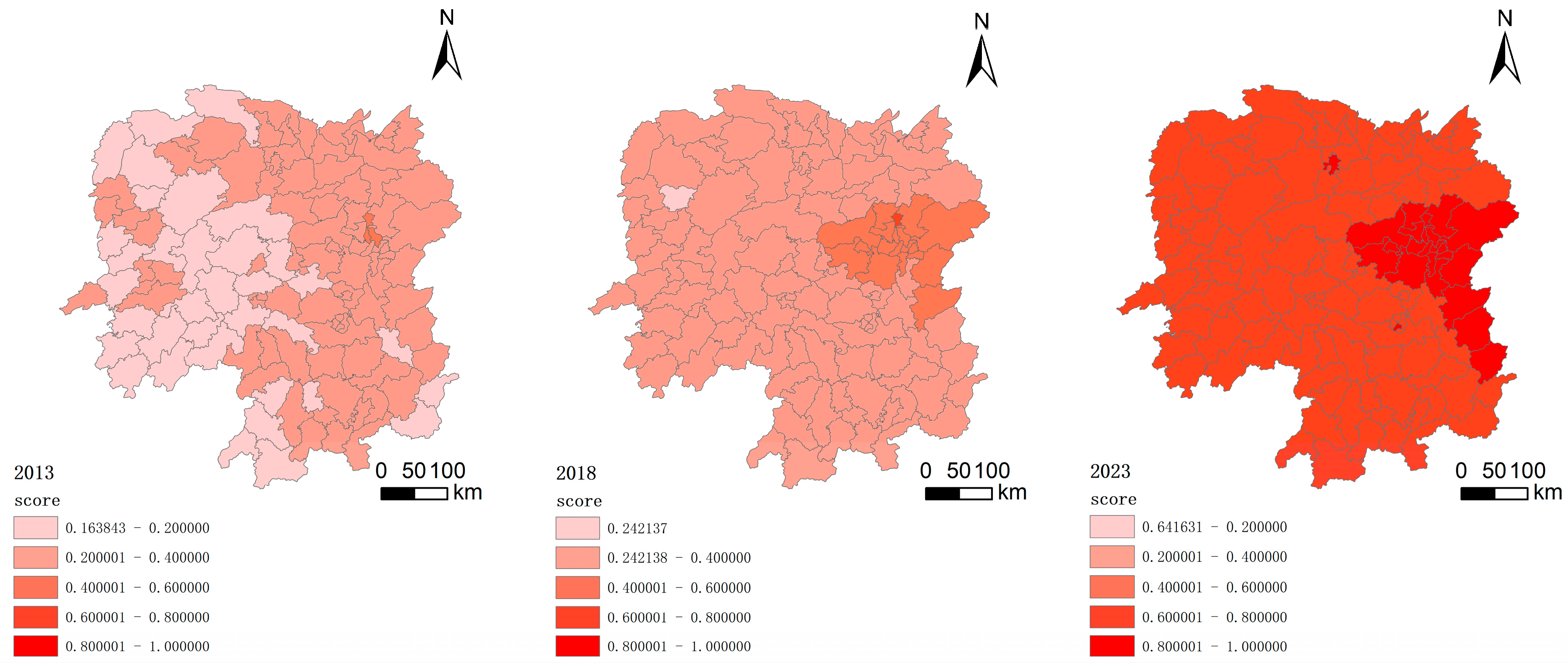
4.1. Spatiotemporal Evolution of Digital Village Development and Rural Economic Resilience
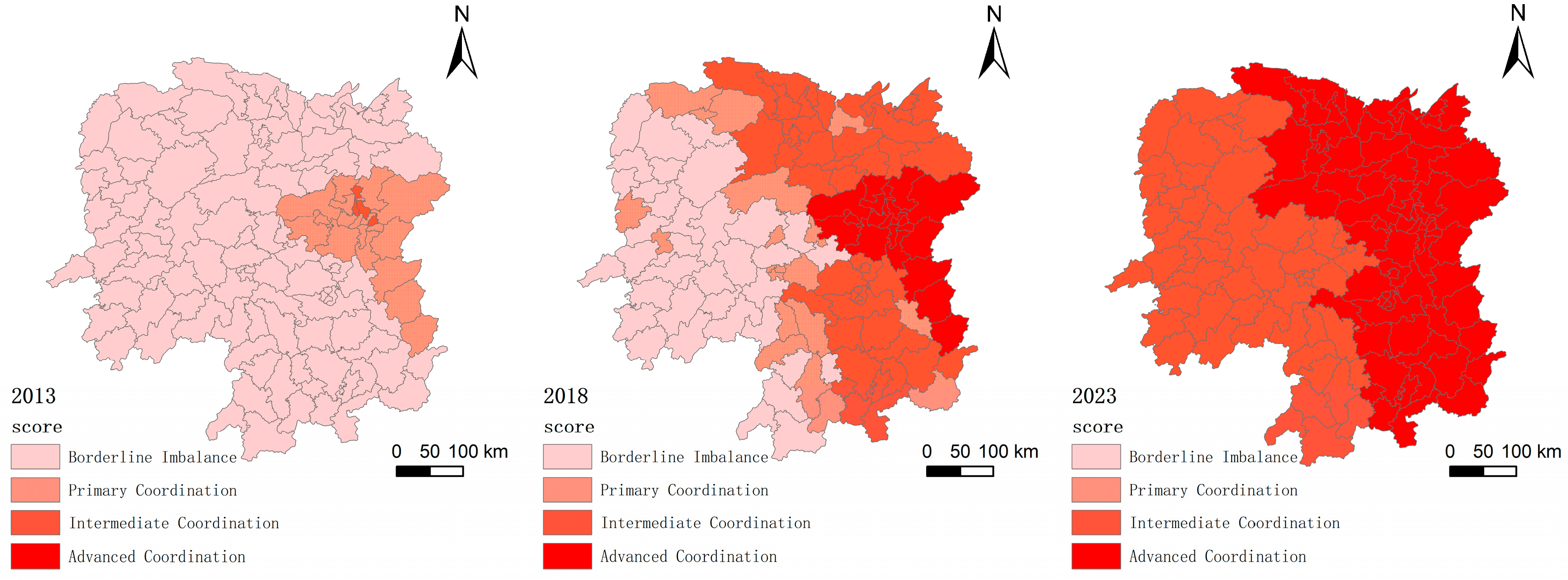
4.2. Spatiotemporal Evolution of the Coupling Coordination Between Digital Village Development and Economic Resilience
4.3. Spatial Clustering Characteristics
5. Analysis
5.1. Baseline Regression Analysis Based on Panel OLS
5.2. Spatial Effect Analysis Based on the GWR Model
6. Conclusions and Policy Implications
6.1. Conclusions
6.2. Discussion
6.3. Policy Implications
6.4. Research Limitations and Future Prospects
Author Contributions
Funding
Institutional Review Board Statement
Informed Consent Statement
Data Availability Statement
Acknowledgments
Conflicts of Interest
References
- Nizam, D.; Tatari, M.F. Rural revitalization through territorial distinctiveness: The use of geographical indications in Turkey. J. Rural Stud. 2022, 93, 144–154. [Google Scholar] [CrossRef]
- Li, Z. Digital rural development and agricultural economic resilience. Int. Rev. Econ. Financ. 2026, 106, 104851. [Google Scholar] [CrossRef]
- Zhu, C.; Luo, W. An Empirical Study on the Coupling Coordination and Driving Factors of Rural Revitalization and Rural E-Commerce in the Context of the Digital Economy: The Case of Hunan Province, China. Sustainability 2024, 16, 3510. [Google Scholar] [CrossRef]
- Hou, X.; Zhang, D.; Fu, L.; Zeng, F.; Wang, Q. Spatio-Temporal Evolution and Influencing Factors of Coupling Coordination Degree between Urban–Rural Integration and Digital Economy. Sustainability 2023, 15, 9718. [Google Scholar] [CrossRef]
- Liu, Y.; Qiao, J.; Xiao, J.; Han, D.; Pan, T. Evaluation of the Effectiveness of Rural Revitalization and an Improvement Path: A Typical Old Revolutionary Cultural Area as an Example. Int. J. Environ. Res. Public Health 2022, 19, 13494. [Google Scholar] [CrossRef]
- Liu, Y.; Zang, Y.; Yang, Y. China’s rural revitalization and development: Theory, technology and management. J. Geogr. Sci. 2020, 30, 1923–1942. [Google Scholar] [CrossRef]
- Yu, T.; Zhang, Y.; Jia, S.; Cui, X. Spatio-temporal evolution and drivers of coupling coordination between digital infrastructure and inclusive green growth: Evidence from the Yangtze River economic belt. J. Environ. Manag. 2025, 376, 124416. [Google Scholar] [CrossRef]
- Habibi, F.; Zabardast, M.A. Digitalization, education and economic growth: A comparative analysis of Middle East and OECD countries. Technol. Soc. 2020, 63, 101370. [Google Scholar] [CrossRef]
- Chen, J.; Ma, H.; Yang, S.; Zhou, Z.; Huang, J.; Chen, L. Assessment of Urban Resilience and Detection of Impact Factors Based on Spatial Autocorrelation Analysis and GeoDetector Model: A Case of Hunan Province. ISPRS Int. J. Geo-Inf. 2023, 12, 391. [Google Scholar] [CrossRef]
- Zhong, Y.; Ma, L.; Zhang, W.; Wu, S.; Li, J. Evaluation of Coupling Coordination of Rural Economic and Social Resilience and Identification of Obstacle Factors: A Case Study of Jinchang City, China. Chin. Geogr. Sci. 2025, 35, 882–899. [Google Scholar] [CrossRef]
- Li, P.; Xue, Y.; Liang, J.; Tan, S. Research on the coupling and coordination of urbanization and flood disasters based on an improved coupling coordination model: A case study from the pearl river delta in China. Sustain. Cities Soc. 2025, 130, 106564. [Google Scholar] [CrossRef]
- Yu, Z.; Lin, J.; Zhao, Y.; Liu, W. Spatiotemporal dynamics and driving mechanisms of coupled coordination between rural–urban integration and rural resilience in Southwest China. Sci. Rep. 2025, 15, 23944. [Google Scholar] [CrossRef]
- Liu, Z.; Zhao, J.; Chen, B.; Yao, Y.; Zhao, M. The Spatiotemporal Characteristics and Spatial Linkages of the Coupling Coordination Between Economic Development and Ecological Resilience in the Guizhou Central Urban Agglomeration. Systems 2025, 13, 776. [Google Scholar] [CrossRef]
- Niu, Y.; Zhao, L.; Xie, J.; Zhou, H.; Zang, J.; Zhao, C. Population–Land–Industry–Facility System Coupling Coordination and Influencing Factors in Hebei Province. Land 2025, 14, 2043. [Google Scholar] [CrossRef]
- Yang, Y.; Lin, Z.; Xu, Z.; Liu, S. The impact of digital finance on regional economic resilience. Pac.-Basin Financ. J. 2024, 85, 102353. [Google Scholar] [CrossRef]
- Yuan, K.; Hu, B.; Li, X.; Niu, T.; Zhang, L. Exploration of Coupling Effects in the Digital Economy and Eco-Economic System Resilience in Urban Areas: Case Study of the Beijing-Tianjin-Hebei Urban Agglomeration. Sustainability 2023, 15, 7258. [Google Scholar] [CrossRef]
- Wang, Y.; Geng, Q.; Si, X.; Kan, L. Coupling and coordination analysis of urbanization, economy and environment of Shandong Province, China. Environ. Dev. Sustain. 2020, 23, 10397–10415. [Google Scholar] [CrossRef]
- Yang, J.; Xu, C.; Fang, Z.; Shi, Y. Spatial Distribution Characteristics and Driving Factors of Rural Revitalization Model Villages in the Yangtze River Delta. Land 2022, 11, 1935. [Google Scholar] [CrossRef]
- Wang, K.; Ding, B.; Huang, X.; Pang, H.; Hu, J. The coupling coordination between digital village construction and rural healthcare service efficiency in China: Dynamic evolution, spatial difference and driving factors. Front. Public Health 2025, 13, 1669695. [Google Scholar] [CrossRef]
- Xu, X.; Dai, M. Evaluation of Local Government Digital Governance Ability and Sustainable Development: A Case Study of Hunan Province. Sustainability 2024, 16, 6084. [Google Scholar] [CrossRef]
- Tian, Y.; Guo, L. Digital development and the improvement of urban economic resilience: Evidence from China. Heliyon 2023, 9, e21087. [Google Scholar] [CrossRef]
- Liu, F.; Wang, C.; Luo, M.; Zhou, S.; Liu, C. An investigation of the coupling coordination of a regional agricultural economics-ecology-society composite based on a data-driven approach. Ecol. Indic. 2022, 143, 109363. [Google Scholar] [CrossRef]
- Wang, S.; Kong, W.; Ren, L.; Zhi, D.; Dai, B. Research on misuses and modification of coupling coordination degree model in China. J. Nat. Resour. 2021, 36, 793–810. (In Chinese) [Google Scholar] [CrossRef]
- Cheng, M.; Li, Q.; Wen, Z. Coupling coordination degree analysis and driving factors of innovation network and eco-efficiency in China. Environ. Impact Assess. Rev. 2023, 99, 107008. [Google Scholar] [CrossRef]
- DeWitt, T.J.; Fuentes, J.I.; Ioerger, T.R.; Bishop, M.P. Rectifying I: Three point and continuous fit of the spatial autocorrelation metric, Moran’s I, to ideal form. Landsc. Ecol. 2021, 36, 2897–2918. [Google Scholar] [CrossRef]
- Song, Y.; Song, J. Analysis of surface temperature in an urban area using supervised spatial autocorrelation and Moran’s I. Earth Sci. Inform. 2022, 15, 2545–2552. [Google Scholar] [CrossRef]
- Zhang, M.; Chen, X.; Yang, G. Coupling coordination degree and influencing factors of green science and technology innovation efficiency and digital economy level: Evidence from provincial panel data in China. Front. Environ. Sci. 2023, 11, 1104078. [Google Scholar] [CrossRef]
- Dong, S.; Zheng, J.; Li, Y.; Li, Z.; Li, F.; Jin, L.; Yang, Y.; Bilgaev, A. Quantitative Analysis of the Coupling Coordination Degree Between Urbanization and Eco-environment in Mongolia. Chin. Geogr. Sci. 2019, 29, 861–871. [Google Scholar] [CrossRef]
- Wang, D.; Jiang, D.; Fu, J.; Lin, G.; Zhang, J. Comprehensive Assessment of Production–Living–Ecological Space Based on the Coupling Coordination Degree Model. Sustainability 2020, 12, 2009. [Google Scholar] [CrossRef]
- Chen, J.; Li, Z.; Dong, Y.; Song, M.; Shahbaz, M.; Xie, Q. Coupling coordination between carbon emissions and the eco-environment in China. J. Clean. Prod. 2020, 276, 123848. [Google Scholar] [CrossRef]
- Sun, J.; Zhai, N.; Mu, H.; Miao, J.; Li, W.; Li, M. Assessment of urban resilience and subsystem coupling coordination in the Beijing-Tianjin-Hebei urban agglomeration. Sustain. Cities Soc. 2024, 100, 105058. [Google Scholar] [CrossRef]
- Zhang, R. Fintech-driven green economy leapfrog: An exploration of jiangsu province paths based on entropy weighted TOPSIS-coupled coordination models. Environ. Dev. Sustain. 2024. [Google Scholar] [CrossRef]
- Tian, L.; Sun, F.; Zhang, Z.; Zhang, S. Coupling coordination and driving mechanism of tourism industry, urbanization, and ecological environment: A case study of Shandong, China. Environ. Dev. Sustain. 2023, 26, 28367–28388. [Google Scholar] [CrossRef]
- Guo, L.; Liu, K. Spatiotemporal patterns and drivers of coupling coordination between digital technological innovation and economic resilience in the Yangtze river economic belt. Sci. Rep. 2025, 15, 30975. [Google Scholar] [CrossRef] [PubMed]
- Chen, X.; Huang, X.; Yu, T.; Zhang, Y.; Cui, X. From Imbalance to Synergy: The Coupling Coordination of Digital Inclusive Finance and Urban Ecological Resilience in the Yangtze River Economic Belt. Land 2024, 13, 1617. [Google Scholar] [CrossRef]
- Yang, L.; Lin, Y.; Zhu, J.; Yang, K. Dynamic coupling coordination and spatial–temporal analysis of digital economy and carbon environment governance from provinces in China. Ecol. Indic. 2023, 156, 111091. [Google Scholar] [CrossRef]
- Guo, X.; Li, J.; Ma, Y.; Chen, X.; Li, Y. Study on the Coupling and Coordination between Urban Resilience and Low-Carbon Development of Central Plains Urban Agglomeration. Sustainability 2023, 15, 16748. [Google Scholar] [CrossRef]
- Tu, S.; Long, H.; Zhang, Y.; Ge, D.; Qu, Y. Rural restructuring at village level under rapid urbanization in metropolitan suburbs of China and its implications for innovations in land use policy. Habitat Int. 2018, 77, 143–152. [Google Scholar] [CrossRef]
- Tong, X.; Wang, R. Research on the characteristics of spatial and temporal differentiation and driving factors of green development—From the perspective of the counties in China. Front. Environ. Sci. 2026, 13, 1737684. [Google Scholar] [CrossRef]
- Ni, J.; Zheng, X.; Zheng, Y.; Zhang, Y.; Li, H. Coupling Coordination Development of the Ecological–Economic System in Hangzhou, China. Sustainability 2023, 15, 16570. [Google Scholar] [CrossRef]
- Zou, F.; Wang, B. Research on allocation efficiency of ecological tourism resources in Hunan Province. Environ. Dev. Sustain. 2022, 24, 12813–12832. [Google Scholar] [CrossRef]
- Lundgren, A.S.; Johansson, A. Digital rurality: Producing the countryside in online struggles for rural survival. J. Rural Stud. 2017, 51, 73–82. [Google Scholar] [CrossRef]
- Han, S.; Wang, B.; Ao, Y.; Bahmani, H.; Chai, B. The coupling and coordination degree of urban resilience system: A case study of the Chengdu–Chongqing urban agglomeration. Environ. Impact Assess. Rev. 2023, 101, 107145. [Google Scholar] [CrossRef]
- Huang, Z.; Xu, H.; Li, J.; Luo, N. Has highway construction narrowed the urban–rural income gap? Evidence from Chinese cities. Pap. Reg. Sci. 2020, 99, 705–723. [Google Scholar] [CrossRef]
- Zhang, D.; Yu, L.; Wang, W. Promoting Effect of Whole-Region Comprehensive Land Consolidation on Rural Revitalization from the Perspective of Farm Households: A China Study. Land 2022, 11, 1854. [Google Scholar] [CrossRef]
- Han, J. How to promote rural revitalization via introducing skilled labor, deepening land reform and facilitating investment? China Agric. Econ. Rev. 2020, 12, 577–582. [Google Scholar] [CrossRef]
- Cui, X.; Fu, B.; Chen, Y.; Bai, S. Bridging digital and ecological resilience: Spatiotemporal dynamics and coordinated development paths in the Yellow River Inverted U-Shaped Belt Metropolitan Area. J. Environ. Manag. 2025, 388, 125990. [Google Scholar] [CrossRef]
- Xing, Z.; Zhao, S.; Wang, D.; Wang, D. Performance and sustainability evaluation of rural digitalization and its driving mechanism: Evidence from Hunan province of China. Front. Environ. Sci. 2023, 11, 1326592. [Google Scholar] [CrossRef]
- Zhang, W.; Zhang, L. Research on the coupling and coordination of harmonious rural construction and integration of agriculture and tourism. Sci. Rep. 2025, 15, 33804. [Google Scholar] [CrossRef] [PubMed]
- Zhang, Q.; Ye, B.; Shen, X.; Zhu, Y.; Su, B.; Yin, Q.; Zhou, S. Coupling coordination evaluation of ecology and economy and development optimization at town-scale. J. Clean. Prod. 2024, 447, 141581. [Google Scholar] [CrossRef]





| Dimension | Criterion | Indicator | Unit | Weight |
|---|---|---|---|---|
| Digital infrastructure | Rural telephone penetration rate | Average mobile phones per 100 rural households | sets/100 households | 0.155049 |
| Rural fiber-optic accessibility | Rural broadband users/total rural population | % | 0.187142 | |
| Digital application level | Rural digital transaction level | Per capita rural e-commerce transaction value | CNY/person | 0.305247 |
| Rural online payment penetration rate | Rural residents able to use online payments/total rural population | % | 0.174992 | |
| Digital service support | Rural digital service level | Density of rural digital service stations | stations/1000 persons | 0.17757 |
| Dimension | Criterion | Indicator | Unit | Weight |
|---|---|---|---|---|
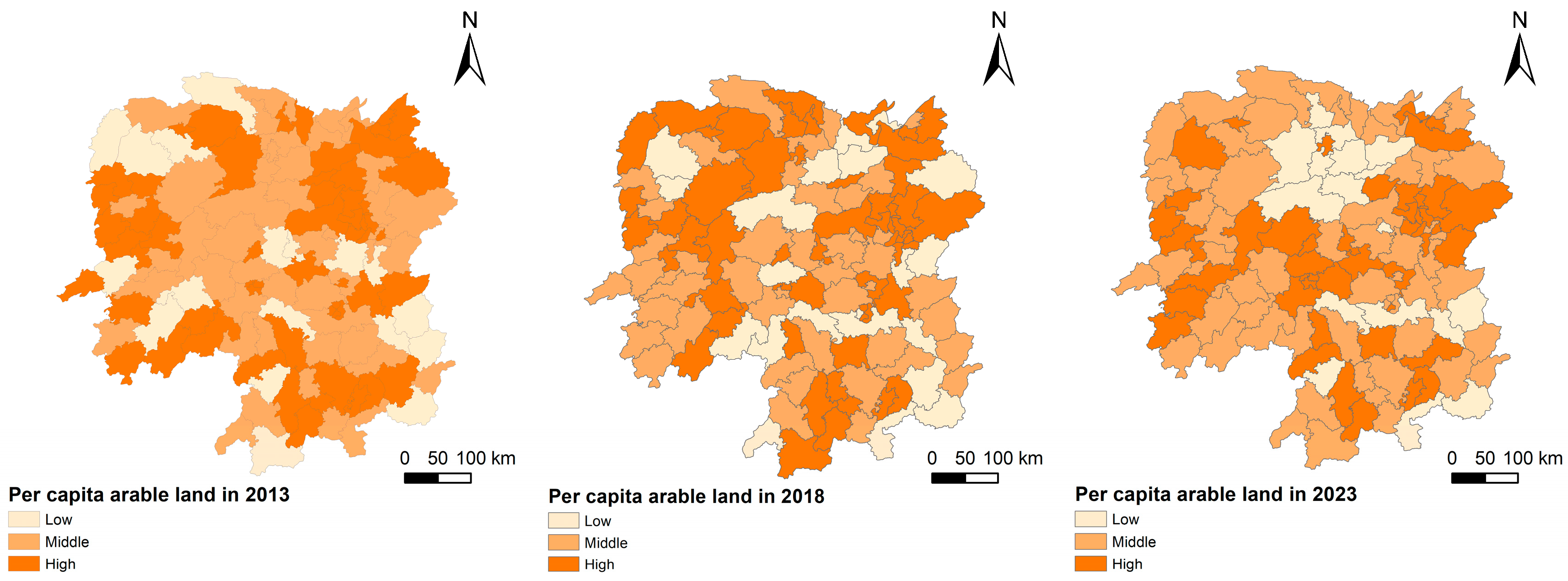
| Resistance | Agricultural land scale | Per capita cultivated land area | 1000 hm2/10,000 persons | 0.14877 |
| Farm household economic status | Per capita disposable income of rural residents | CNY | 0.232527 | |
| Adaptability | Share of non-agricultural industries | Output of secondary and tertiary industries/GDP | % | 0.052532 |
| Rural labor force scale | Rural employed population/total rural population | % | 0.139993 | |
| Transformation capacity | Rural educational development level | Average years of schooling in rural areas | years | 0.185148 |
| Rural technological innovation | Agricultural intellectual property creation index | 1–100 | 0.24103 |
| Dimension | Variable | Coefficient | Std. Error | t Statistic | p | VIF |
|---|---|---|---|---|---|---|
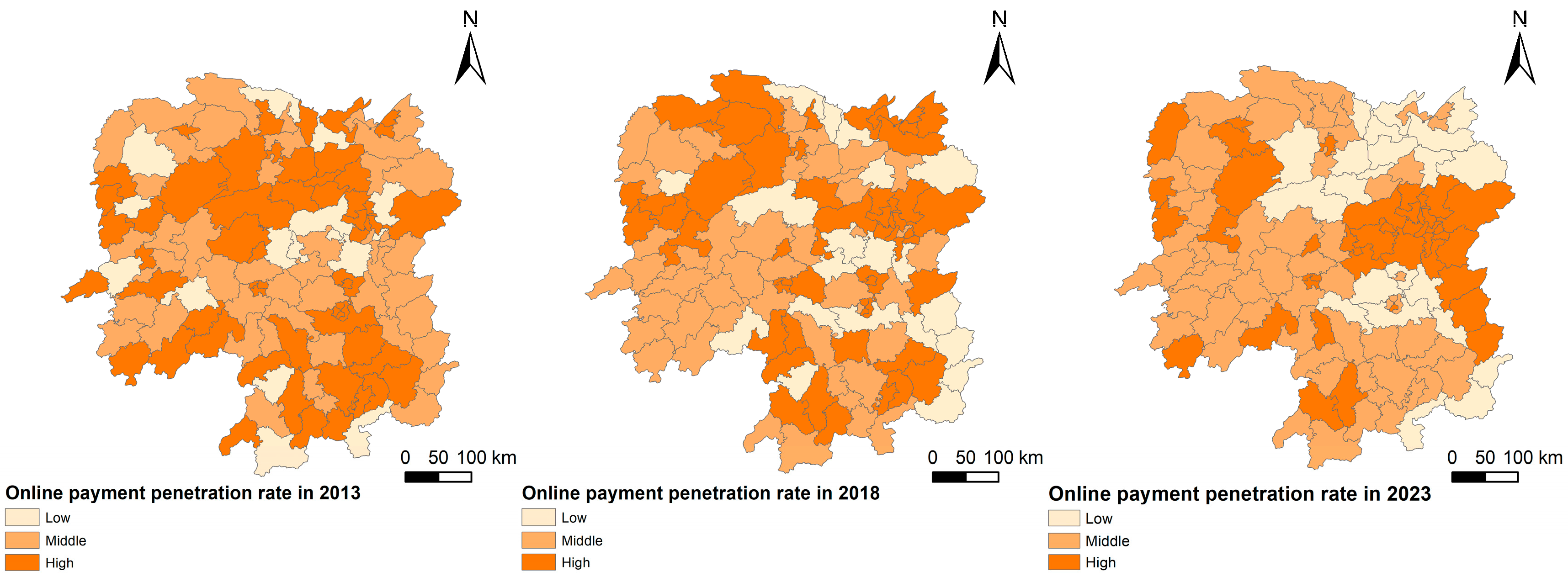
| Digital foundation | Online payment penetration rate | 0.4078066 | 0.0088977 | 45.83 | 0.000 | 2.68 |
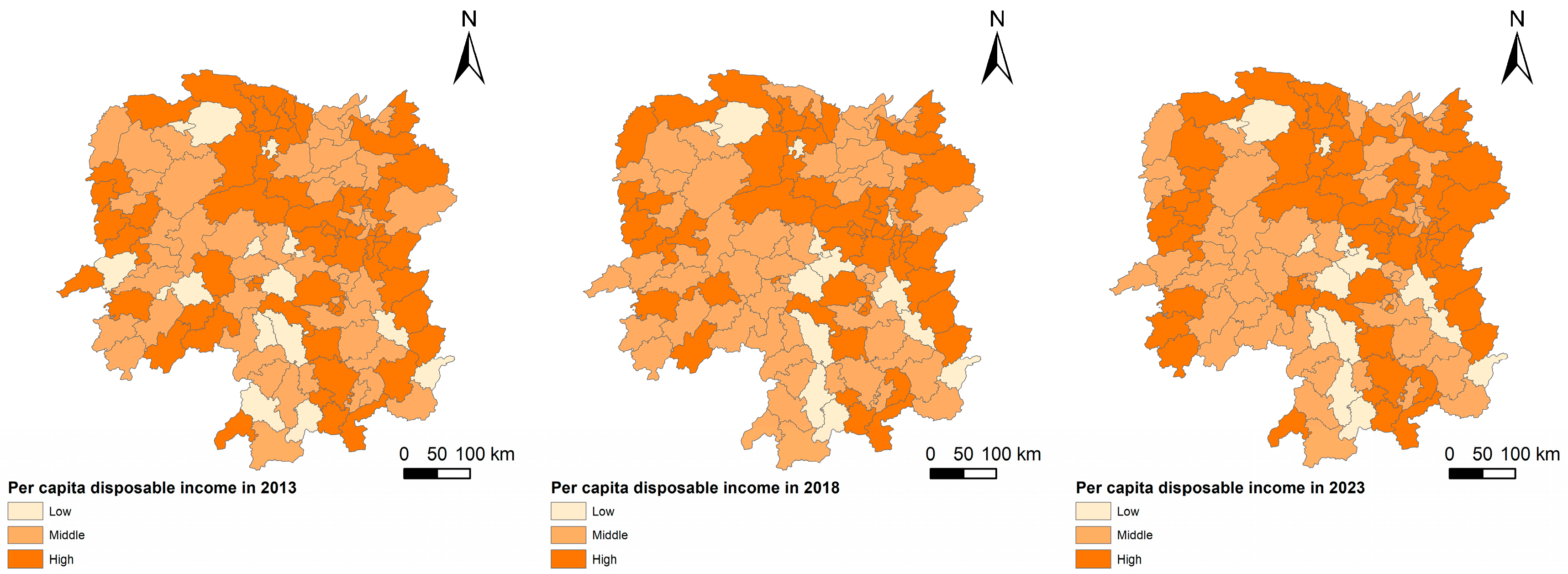
| Economic foundation | Per capita income | 0.1740875 | 0.0161126 | 10.80 | 0.000 | 2.73 |
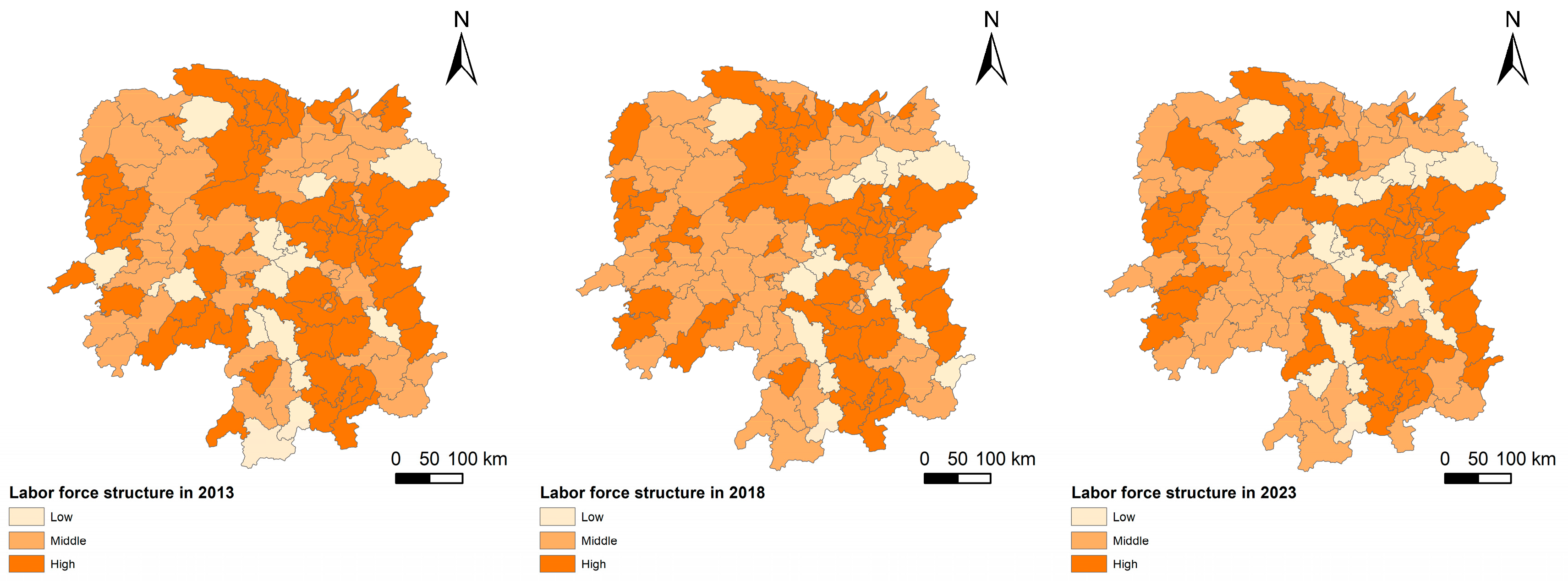
| Labor scale | Labor structure | 0.0390527 | 0.0229445 | 1.7 | 0.09 | 1.21 |
| Resource endowment | Per capita cultivated land area | −0.0290475 | 0.0085487 | −3.4 | 0.001 | 1.9 |
| Intercept | 0.3097422 | 0.0088228 | 35.11 | 0.000 | - |
| Year | Model | Bandwidth | Adjust | AICc | |
|---|---|---|---|---|---|
| 2013 | Online payment penetration rate | 0.56 | 0.94 | 0.90 | −473.17 |
| 2018 | 1.20 | 0.98 | 0.98 | −667.50 | |
| 2023 | 1.96 | 0.77 | 0.76 | −417.54 | |
| 2013 | Per capita income | 0.57 | 0.93 | 0.90 | −391.18 |
| 2018 | 0.57 | 0.94 | 0.91 | −487.45 | |
| 2023 | 0.58 | 0.94 | 0.91 | −509.17 | |
| 2013 | Labor structure | 0.56 | 0.92 | 0.87 | −366.52 |
| 2018 | 0.56 | 0.94 | 0.90 | −473.17 | |
| 2023 | 0.56 | 0.94 | 0.90 | −491.51 | |
| 2013 | Per capita cultivated land area | 1.40 | 0.97 | 0.97 | −571.21 |
| 2018 | 1.12 | 0.95 | 0.95 | −582.90 | |
| 2023 | 1.35 | 0.94 | 0.94 | −587.42 |
Disclaimer/Publisher’s Note: The statements, opinions and data contained in all publications are solely those of the individual author(s) and contributor(s) and not of MDPI and/or the editor(s). MDPI and/or the editor(s) disclaim responsibility for any injury to people or property resulting from any ideas, methods, instructions or products referred to in the content. |
© 2026 by the authors. Licensee MDPI, Basel, Switzerland. This article is an open access article distributed under the terms and conditions of the Creative Commons Attribution (CC BY) license.
Share and Cite
Deng, S.; Zheng, W. Coupling Coordination and Sustainable Improvement Path of Digital Village and Rural Economic Resilience at County Level in Hunan Province. Sustainability 2026, 18, 5269. https://doi.org/10.3390/su18115269
Deng S, Zheng W. Coupling Coordination and Sustainable Improvement Path of Digital Village and Rural Economic Resilience at County Level in Hunan Province. Sustainability. 2026; 18(11):5269. https://doi.org/10.3390/su18115269
Chicago/Turabian StyleDeng, Shilin, and Weimin Zheng. 2026. "Coupling Coordination and Sustainable Improvement Path of Digital Village and Rural Economic Resilience at County Level in Hunan Province" Sustainability 18, no. 11: 5269. https://doi.org/10.3390/su18115269
APA StyleDeng, S., & Zheng, W. (2026). Coupling Coordination and Sustainable Improvement Path of Digital Village and Rural Economic Resilience at County Level in Hunan Province. Sustainability, 18(11), 5269. https://doi.org/10.3390/su18115269