1. Introduction
Agricultural carbon emissions are a central issue in the transition toward low-carbon agriculture. At the same time, rural e-commerce is reshaping agricultural markets by improving market access, reducing transaction costs, and strengthening price signals for farm products. These changes may affect not only agricultural sales and income, but also farmers’ production decisions and, consequently, agricultural carbon emissions. However, whether rural e-commerce reduces or increases agricultural carbon emissions remains unclear.
Despite the growing literature on rural e-commerce, its impact on agricultural carbon emissions remains largely unexplored. The existing studies mainly examine the economic effects of rural e-commerce [
1,
2,
3], while paying limited attention to environmental outcomes. Among the few related studies, most examine total emissions [
4,
5,
6,
7], with much less emphasis on carbon emission intensity and carbon emission efficiency [
8,
9]. Moreover, the literature often treats rural e-commerce as an exogenous technological shock and emphasizes its emission-reducing effects through improved resource allocation, fertilizer reduction, technological progress, and industrial upgrading [
10,
11]. In this framework, rural e-commerce is mainly understood as a digital tool that improves production efficiency, while its environmental consequences are discussed largely in terms of input optimization and potential emission reduction [
12]. However, rural e-commerce not only changes production conditions through digital technology, but also expands farmers’ access to broader markets and strengthens the transmission of demand and price signals. The existing evidence shows that better market access can improve farmers’ selling opportunities, raise effective output prices, and can also affect farmers’ marketing channel choices and market participation [
13]. Some studies suggest that improved market access and e-commerce participation can encourage greener production behavior by strengthening price incentives, information access, and market recognition for environmentally differentiated products [
14,
15]. Under such conditions, farmers may be more willing to adopt green technologies and resource-saving practices, which may help to reduce agricultural carbon emissions [
16,
17]. Other studies show that better market opportunities can also stimulate farm investment, output growth, input use, and a shift toward more commercialized or high-value production [
18]. These production responses may promote scale expansion and production concentration [
19], which can in turn increase agricultural carbon emissions [
20]. Taken together, the existing literature suggests that the effect of rural e-commerce on agricultural carbon emissions may be related to how market access reshapes farmers’ production decisions. Therefore, the relationship between rural e-commerce and agricultural carbon emissions cannot be fully understood through the technological-shock perspective alone. Instead, it is necessary to incorporate a mechanism chain linking market demand, production decisions, and carbon outcomes.
This paper contributes in three respects. First, it incorporates market demand into the analysis of agricultural carbon emissions, emphasizing how shifts in demand driven by rural e-commerce influence agricultural production choices and, consequently, carbon emissions. This perspective enhances the understanding of the mechanisms behind agricultural carbon emissions by highlighting demand-side drivers. Second, the study examines not only the total volume of agricultural carbon emissions but also their intensity and efficiency, revealing a dual phenomenon where e-commerce expansion may increase the total emissions while simultaneously improving carbon performance. This broadens the analytical focus beyond emission totals and provides a more nuanced view of how rural e-commerce affects agricultural carbon outcomes. Third, the heterogeneity analysis is extended to explore not only regional and developmental differences but also the moderating effects of environmental regulations and green technology innovation. These insights offer a more refined basis for aligning e-commerce growth with the goals of low-carbon agricultural transformation.
The paper proceeds as follows.
Section 2 develops the analytical framework and sets out the hypotheses.
Section 3 describes the data, variables, and empirical approach.
Section 4 presents the main findings together with additional analyses.
Section 5 concludes.
2. Theoretical Analysis and Hypothesis
As a core policy initiative for promoting the rural digital economy, the Rural E-commerce Comprehensive Demonstration (RECD) program was launched by the Chinese government to support the development of rural e-commerce through policy pilots. The program mainly aims to improve rural e-commerce infrastructure, strengthen county- and village-level logistics and distribution systems, cultivate rural e-commerce business entities, and expand market access for agricultural products. This reduces search and transaction costs and gives farmers access to larger markets [
21,
22]. Transaction cost theory predicts that lower costs raise net prices and expected returns, which in turn changes farmers’ optimal production choices [
23]. In this setting, farmers are likely to expand production and reallocate resources toward more market-oriented products. These responses can improve economic performance, but they may also affect agricultural carbon emissions.
To formalize this logic, we develop a simple theoretical model (
Appendix A) that treats agricultural carbon emissions as a derived outcome of farmers’ production decisions. The model highlights two effects. The scale effect arises when lower transaction costs and stronger price incentives stimulate production expansion, which may increase emissions. The structural effect arises when rural e-commerce changes the relative returns across agricultural products [
24], which shifts the production mix and can either raise or reduce emissions depending on the carbon intensity of expanding products. This framework clarifies the carbon implications of the RECD program and guides our hypotheses and empirical analysis.
2.1. Agricultural Production Expansion
By improving market infrastructure and information flows, the RECD policy may expand demand for agricultural products and strengthen price incentives, enabling farmers to access broader and more integrated markets with greater sales certainty and higher expected returns [
25]. In the theoretical framework, changes in market demand and product prices are the key signals shaping farmers’ production decisions. When demand expands and expected returns rise, farmers are more likely to increase output, which corresponds to the scale effect in the theoretical analysis. This scale effect may be reflected in several dimensions of agricultural production.
First, farmers may expand land input by increasing the cultivated area. Higher demand and stronger price incentives increase the return to land, making land expansion a direct response to improved market conditions. This expansion of the production base increases the output and total agricultural carbon emissions [
26,
27].
Second, land expansion is often associated with higher machinery use. As production scale grows and demand becomes more stable, mechanization becomes an efficient way to manage larger areas and ease labor constraints. While mechanization improves labor productivity and reduces unit costs, it also increases fossil energy use and may raise agricultural emissions [
28].
Third, scale expansion may also occur through investment in facility agriculture, such as greenhouses and other controlled-environment systems. These investments ease land and seasonal constraints while increasing cropping intensity, allowing output to expand even without additional cultivated land. However, under the current technologies, facility agriculture tends to have higher carbon emissions due to its greater reliance on energy and material inputs [
29,
30].
2.2. Agricultural Production Restructuring
In addition to the scale effect, rural e-commerce may influence agricultural carbon emissions through an important structural effect. By expanding market demand and improving price signals, rural e-commerce not only encourages production expansion but also reshapes production structure [
31]. In the theoretical framework, this corresponds to the structural effect. The key point is that demand signals do not only determine how much to produce, but also influence what to produce.
Importantly, the carbon implications of such structural adjustment are not uniform. They depend on the types of products favored by market demand. On the one hand, rural e-commerce may induce farmers to reallocate resources toward cash crops with higher market prices, which can also be more carbon-intensive [
32,
33]. These crops typically rely on more intensive use of fertilizers, pesticides, irrigation, and energy inputs [
34,
35]. When rising demand and higher price premiums make such production more attractive, resource reallocation toward these crops may increase agricultural carbon emissions, even without further expansion in the total output.
On the other hand, rural e-commerce may also steer agricultural production toward greener and low-carbon products. As consumer preferences shift toward organic, eco-labeled, and environmentally sustainable foods, the economic returns to greener farming practices improve. This creates incentives for farmers to transition away from high-input crops and adopt production systems characterized by reduced chemical use and more sustainable management [
11,
17,
36]. In such cases, demand-driven structural adjustment can reduce per-unit carbon emissions and contribute to better agricultural carbon performance [
37,
38,
39].
However, certified green and organic products still occupy only a limited space in China’s agricultural market. Organic certification covers merely about 0.5 percent of the country’s arable land, and the share of organic food in total food sales remains below 2 percent. Consumer demand is also relatively weak, with per capita spending on organic products standing at only about 10.7 euros: well under the world average [
40]. At present, demand-driven structural adjustment is unlikely to shift agricultural production toward greener and potentially lower-carbon products. Instead, farmers may be more inclined to reallocate resources toward higher-return cash crops, rather than low-carbon production. Under these conditions, the structural effect is unlikely to offset the scale effect of production expansion and may instead further increase agricultural carbon emissions.
2.3. Further Analysis
2.3.1. Heterogeneous Effects
The two mechanisms discussed above may not operate with the same intensity across counties. Local agricultural functions, development conditions, and initial endowments may shape how strongly improved market access and stronger price incentives are translated into production expansion and production restructuring. Therefore, heterogeneity analysis is needed to identify the county conditions under which the RECD policy is more likely to affect agricultural carbon emissions. First, differences in agricultural functional orientation may shape the transmission of the policy effect. Counties with different agricultural functions often face different production objectives, adjustment constraints, and crop allocation patterns. Under this condition, the same policy shock may lead to different effects on production expansion, product restructuring, and input use [
5,
41]. It is therefore necessary to examine heterogeneity across major grain-producing areas, major grain-consuming areas, and balanced areas. Second, differences in development conditions influence how farmers adopt green technologies and transition to low-carbon production [
42]. Farmers in high-income counties often have stronger capital bases and higher risk tolerance. These advantages help them cover the high initial costs of green innovations. As a result, these areas can transition more easily to low-carbon production models. By contrast, farmers in low-income counties face tighter budget constraints and survival pressures [
43]. These farmers prefer traditional high-carbon patterns to ensure stable returns. These traditional methods rely heavily on intensive chemical inputs. Therefore, the RECD policy may produce different carbon effects based on regional development. It is necessary to distinguish counties by their income and development status. Third, the carbon effect of the RECD policy may vary with counties’ initial endowments. On the one hand, the policy effect may show diminishing marginal returns across counties with different e-commerce foundations. Counties with weak initial e-commerce foundations usually lack logistics capacity, platform services, digital skills, and online market channels. The RECD policy may bring larger marginal changes in these counties because it helps to improve basic e-commerce conditions. In contrast, counties with strong initial e-commerce foundations may already have mature market networks and service systems. The additional effect of the policy may therefore be smaller. On the other hand, counties with different initial carbon-emission levels may also differ in their policy responses. High-emission counties may have greater potential for emission reduction, but they may also be more constrained by carbon-intensive production lock-in and higher marginal abatement costs. Therefore, initial e-commerce foundations and initial carbon-emission levels are important sources of heterogeneity in the carbon effect of the RECD policy.
2.3.2. Moderating Effects
In practice, production decisions are shaped not only by market signals but also by regulatory pressure and technological conditions. In the theoretical framework, environmental regulation can be incorporated into the cost function
. Stronger environmental regulation raises the compliance cost of pollution-related activities and the cost of high-emission inputs, and thus increases the marginal cost of production expansion and carbon-intensive structural adjustment [
44,
45,
46]. Under this condition, although the RECD policy may improve effective output prices, its scale effect and structural effect on agricultural carbon emissions may be weakened. Green technology can be linked to the carbon-saving efficiency term
in the theoretical framework. By improving the efficiency of the fertilizer, machinery, energy, and other production factors, green technology helps to reduce emissions generated in agricultural production [
47,
48]. A higher level of green technology implies a higher
, which lowers carbon emissions under a given production scale and structure. Therefore, green technology may weaken the carbon effect of the RECD policy by reducing the emission intensity per unit of output.
2.3.3. Carbon Emission Intensity and Efficiency
In addition to total emissions, it is also necessary to consider carbon performance. An increase in total agricultural carbon emissions does not necessarily mean a decline in production performance. In the theoretical framework, farmers make production decisions with the goal of profit maximization. Rural e-commerce reduces transaction costs and improves sales conditions, which may encourage farmers to expand output and adjust production structure in order to obtain higher returns. Under this condition, the total agricultural carbon emissions may rise, but the agricultural output may also increase. By broadening market access and improving sales conditions, rural e-commerce can encourage greater agricultural output and higher farm income. Although this process may increase the total emissions as production expands, the emissions per unit of output may still decline. In that case, the carbon emission intensity can fall and carbon emission efficiency can improve [
49,
50]. This means that growth in aggregate emissions should not be interpreted as a direct sign of worsening carbon performance.
2.3.4. Spatial Spillover Effects
The two mechanisms discussed above may also extend beyond pilot counties because rural e-commerce development is not only a local process, but also a spatial process shaped by inter-county market linkages, spillover effects, and agglomeration effects. As improved market access, logistics connections, and demand signals diffuse across space, the production-expansion and production-restructuring channels may spill over to surrounding areas. Since neighboring counties often have closer economic connections, more integrated product circulation networks, and similar agricultural backgrounds, the policy shock may be transmitted outward through logistics organization, information flows, and factor mobility, thereby affecting production decisions and agricultural carbon emissions in nearby areas. At the same time, the RECD policy may also generate agglomeration effects by concentrating the market transactions, logistics resources, and production factors in pilot counties. Such concentration may strengthen the operation of the two mechanisms within pilot areas, but it may also weaken the transmission of policy benefits to more distant counties or even divert market opportunities and production factors away from them. Therefore, from a theoretical perspective, the spatial effect of the RECD policy is likely to depend on the interaction between spillover and agglomeration forces, rather than remain spatially uniform.
On this basis, five hypotheses are put forward.
H1: The RECD policy may increase total agricultural carbon emissions while potentially improving carbon emission efficiency.
H2: The RECD policy may increase agricultural carbon emissions through production scale expansion and production structure adjustment.
H3: Green technological innovation and environmental regulation may weaken the impact of the RECD policy on agricultural carbon emissions.
H4: The impact of the RECD policy on agricultural carbon emissions may show significant heterogeneity across counties with different agricultural functional orientations, development conditions, and initial endowments.
H5: The RECD policy on agricultural carbon emissions may generate spatial effects, which depend on the interaction between spillover and agglomeration forces.
3. Research Design
3.1. Model Specification
Given the staggered implementation of the RECD policy across counties, this study adopts a multi-period DID model to examine its impact on agricultural carbon emissions. The model compares pilot and non-pilot counties before and after policy implementation within a unified framework. Equation (1) is specified as follows:
where
denotes agricultural carbon emissions for county
in year
.
is the main explanatory variable and identifies whether a county is subject to the RECD policy. Specifically, it equals 1 for counties included in the RECD policy in year
, and 0 otherwise.
captures the estimated impact of the policy.
is a vector of controls.
and
stand for county and year fixed effects, while
denotes the disturbance term.
To examine whether pilot and non-pilot counties followed comparable trends prior to policy adoption, Equation (1) is extended into an event-study specification. Equation (2) is specified as follows:
In Equation (2), denotes a set of indicators for the timing of the RECD policy relative to county ’s initial inclusion in the program. It takes the value of 1 when year is periods from the first treatment year, and 0 otherwise. The year just before policy adoption is omitted as the reference group. The coefficients describe the pattern of the policy effect over time. In particular, the estimates for the periods before treatment show whether pre-policy trends differed systematically between treated and untreated counties. Insignificant coefficients in these periods provide evidence that is consistent with the parallel-trend assumption.
To further explore how the RECD policy affects agricultural carbon emissions, this study introduces mechanism variables related to agricultural production expansion and production restructuring. We then examine whether the policy influences these variables and whether they are associated with agricultural carbon emissions. Equations (3) and (4) are specified as follows:
In Equation (3), denotes a mechanism variable. The coefficient captures whether the RECD policy is associated with changes in that mechanism. In Equation (4), is a dummy variable constructed by grouping counties according to whether the mechanism variable is above its sample mean. The interaction term is used to examine whether the policy effect differs between counties with higher and lower levels of the corresponding mechanism-related characteristic. The coefficient captures the differential effect of the RECD policy in the high-mechanism group, while reflects the average difference in agricultural carbon emissions between the two groups.
Environmental regulation and green technological innovation are introduced to examine whether county-level contexts condition the effect of the RECD policy. For this purpose, an interaction term between the RECD indicator and the corresponding moderating variable is added to the baseline specification. Equation (5) is specified as follows:
where
reflects county-level environmental regulation and green technological innovation. The coefficient
indicates whether the impact of the RECD policy on agricultural carbon emissions changes with local regulatory and technological conditions.
To examine the spatial spillover effect of the RECD policy, this study further extends the baseline model by introducing a set of distance-band indicators for neighboring treated counties. Equation (6) is specified as follows:
In Equation (6), the key part of this model is
. Here,
is a distance-band dummy, which equals 1 if county
is located within distance band
of a treated county in year
, and 0 otherwise. Thus,
measures the spillover effect of the RECD policy within a specific geographic range. This design allows for the spatial effect of the RECD policy to vary across different distance bands, rather than assuming a uniform spatial impact. Considering the typical geographic scale of county-level administrative units in China [
51], this study uses 30 km and 50 km as the main bandwidths.
3.2. Variable Definitions
3.2.1. Key Independent Variable
Given the staggered rollout of the RECD policy, the policy variable is constructed as the interaction term . Here, identifies whether a county ever entered the RECD pilot program, and indicates whether a given year is the policy year or a subsequent year for that county. The interaction term therefore captures the treatment status of each county–year observation under staggered policy adoption.
3.2.2. Dependent Variable
The dependent variables measure agricultural carbon emissions and their intensity and efficiency. Agricultural carbon emission (ACE) data are sourced from the Emissions Database for Global Atmospheric Research (EDGAR). Consistent with previous studies, we use GIS-based spatial matching to allocate gridded emission data to county administrative units and aggregate emissions within each county to obtain county-level agricultural carbon emissions.
We further construct the agricultural carbon emission intensity (ACEI) to capture emissions per unit of agricultural output. Equation (7) is specified as follows:
where
denotes total agricultural carbon emissions in county
and year
, and
denotes the value of agricultural production. A higher
indicates higher carbon emissions per unit of agricultural output.
To further evaluate agricultural carbon emission performance, we measure the agricultural carbon emission efficiency (ACEE) using the super-efficiency slack-based measure (Super-SBM) model with undesirable outputs, following Tone’s (2004) approach [
52]. Equation (8) is specified as follows:
In Equation (7), , , and denote the input, desirable output, and undesirable output of county in year , respectively. Specifically, the input variables include agricultural labor, cultivated land, agricultural machinery, and fertilizer use, which are used to reflect the major factor inputs in agricultural production. The desirable output is measured by the agricultural output value, which captures the economic output of agricultural production. The undesirable output is measured by agricultural carbon emissions, which reflect the environmental cost generated in the production process. Therefore, the ACEE indicator evaluates the agricultural production performance by considering both economic output and carbon emissions under given factor inputs.
As a robustness check, this study further constructs an alternative measure of agricultural carbon emissions based on the production-input accounting method. This method estimates agricultural carbon emissions from major agricultural input sources, including fertilizer, pesticide, agricultural film, diesel, irrigation, and agricultural machinery [
53,
54]. Since production-input data at the county level are limited, this study refers to the share of county-level agricultural output in provincial agricultural output to allocate provincial agricultural input use to the county level. Equation (9) is specified as follows:
where
denotes the total agricultural carbon emissions;
denotes the carbon emissions from source
;
denotes the quantity of the
-th agricultural input or activity; and
denotes its corresponding carbon emission coefficient (the corresponding coefficients are reported in
Appendix B).
3.2.3. Mechanism Variables
Following the theoretical framework, the empirical analysis represents the two mechanisms through variables that reflect different dimensions of production expansion and production restructuring at the county level. Since neither mechanism can be directly observed in a single aggregate indicator, the selected variables are intended to capture their most representative manifestations under existing data constraints.
For the scale effect, three variables are used. First, the logarithm of total cultivated land area is employed to reflect land expansion. In the context of the scale-expansion mechanism, an increase in cultivated land indicates that improved market access and stronger price incentives are translated into a larger production base. Using the logarithmic form helps to capture proportional changes in land use and is more suitable for reflecting the growth tendency of land expansion than the absolute level alone. Second, the agricultural machinery intensity is used to capture the increase in capital input associated with output expansion. As the production scale grows, machinery becomes an important means of managing larger cultivated areas and easing labor constraints, so higher machinery intensity reflects another key dimension of scale expansion. Third, the share of facility agriculture is included to capture expansion through controlled-environment and high-intensity production. Unlike simple land enlargement, facility-based production raises the output by increasing the cropping intensity and relaxing seasonal and land constraints. It therefore reflects another form of scale expansion under improved market conditions. Taken together, these three variables respectively represent land expansion, capital intensification, and facility-based production expansion, and thus provide complementary evidence for the scale effect.
For the structural effect, three variables are also used. First, the proportion of cash crops is employed to capture the degree to which agricultural production shifts toward more market-oriented and higher-value products. A higher share of cash crops indicates that farmers respond to market demand and price incentives by reallocating production away from subsistence- or staple-oriented activities, toward commercialized production. Second, the ratio of food crop output to cash crop output is used to reflect changes in the allocation between food production and commercial crop production. Compared with the cash crop share alone, this indicator more directly captures the relative balance between the two major production orientations and therefore provides additional information on structural adjustment. Third, the share of green products is included to capture whether market development is accompanied by a shift toward products with stronger environmental or quality attributes. Although green products are not equivalent to low-carbon production, they reflect one possible direction of demand-driven restructuring under rural e-commerce development. Taken together, these variables characterize structural change from the perspectives of commercial crop orientation, food–cash allocation, and greener product development.
3.2.4. Moderator Variables
This study introduces two moderators, namely environmental regulation and green technological innovation. At the county level, environmental regulation is represented by environmental administrative penalty cases, whereas green technological innovation is measured by authorized green patents.
3.2.5. Control Variables
To control for additional influences on agricultural carbon emissions, this study incorporates several county-level covariates. Following previous studies, climatic conditions, agricultural production intensity, factor endowments, production structure, and fiscal capacity are controlled for to mitigate potential confounding effects [
5,
55,
56]. Specifically, the annual mean temperature, annual total precipitation, and annual sunshine duration are used to capture the climatic conditions. The multiple cropping index and fertilizer application intensity are included to reflect land-use intensity and chemical input use. Fiscal support is measured by the logarithm of per capita fiscal expenditure on agriculture. Cultivated land per agricultural worker and agricultural output per agricultural worker are included to capture land–labor allocation and production intensity. In addition, the share of agricultural services in the total agricultural output value and the share of agricultural labor in the total labor force are used to control for agricultural structure and labor allocation. Finally, the logarithm of GDP per capita and the logarithm of rural per capita disposable income are included to capture regional development and rural income conditions.
The initial sample covers all county-level units for which relevant data are available during 2010–2022. The final sample is not randomly drawn, but is obtained through data cleaning and matching procedures. Specifically, counties are retained if they can be consistently matched across the policy list and statistical data sources, and if the key variables required for the empirical analysis are available after data processing. Missing values for a small number of observations are filled by linear interpolation for continuous variables. To reduce the influence of extreme values, all continuous variables are winsorized at the 1st and 99th percentiles. After these procedures, the final balanced panel includes 2152 counties observed over 2010–2022, yielding 27,976 county–year observations. Among them, 1126 counties are pilot areas and 1026 are non-pilot areas. The sample is therefore constructed on the basis of data availability and consistency, rather than random sampling. China had about 2844 county-level administrative units around the end of 2022, excluding Hong Kong, Macao, and Taiwan. Against this background, the sample used in this study covers a large share of China’s county-level units and therefore has broad representativeness at the county level, although it does not include all counties in China.
Table 1 reports the descriptive statistics; detailed variable definitions and calculations are provided in
Appendix B.
3.3. Data Sources
The county-level panel used in the empirical analysis is constructed from a range of official documents and database sources. Information on the RECD policy, the National Rural Industrial Integration Demonstration Parks (RIDP), the Low-Carbon City Pilot (LCCP), the Whole-Process Mechanization Demonstration Counties (WPMDC), the National Agricultural Sustainable Development Experimental Demonstration Zones (NASDEDZ), the Key Counties for Water-Saving Conservation (KCFWC), and the Digital Village Pilot Counties (DVPC) is collected from official documents issued by relevant central government agencies. Agricultural carbon emissions are derived from the EDGAR database, while climate variables are obtained from the China Meteorological Data Service Center. Nighttime light data are obtained from the National Oceanic and Atmospheric Administration (NOAA), including both DMSP-OLS and NPP-VIIRS data. Data on certified green and organic agricultural products are drawn from the CCAD database of Zhejiang University, and green patent information comes from the China National Intellectual Property Administration. County-level environmental regulation is measured using official records of environmental administrative penalties. Information on Taobao Villages is taken from the annual China Taobao Village Development Report published by the Alibaba Research Institute. The remaining socioeconomic variables are mainly compiled from the China County Statistical Yearbooks, the China Statistical Yearbook, the China City Statistical Yearbook, and the CSMAR database.
4. Empirical Analysis
4.1. Baseline Estimation
Table 2 shows the baseline DID estimates for the effect of the RECD policy on agricultural carbon emissions at the county level. All specifications control for county and year fixed effects, with standard errors clustered at the county level. Columns (1)–(4) sequentially add climatic and economic control variables. Across all specifications, the coefficient of RECD is positive and statistically significant, indicating that the RECD policy is associated with higher agricultural carbon emissions. After controlling for the county and year fixed effects as well as other covariates, the estimated coefficient of RECD in Column (4) is 0.011, implying an increase of about 110 tons in agricultural carbon emissions.
4.2. Robustness Checks
4.2.1. Parallel Trend Test
The DID strategy is credible only if treated and control counties followed similar trends before the policy was introduced. An event-study design provides a direct way to examine this condition by estimating policy effects at different points in time before and after implementation.
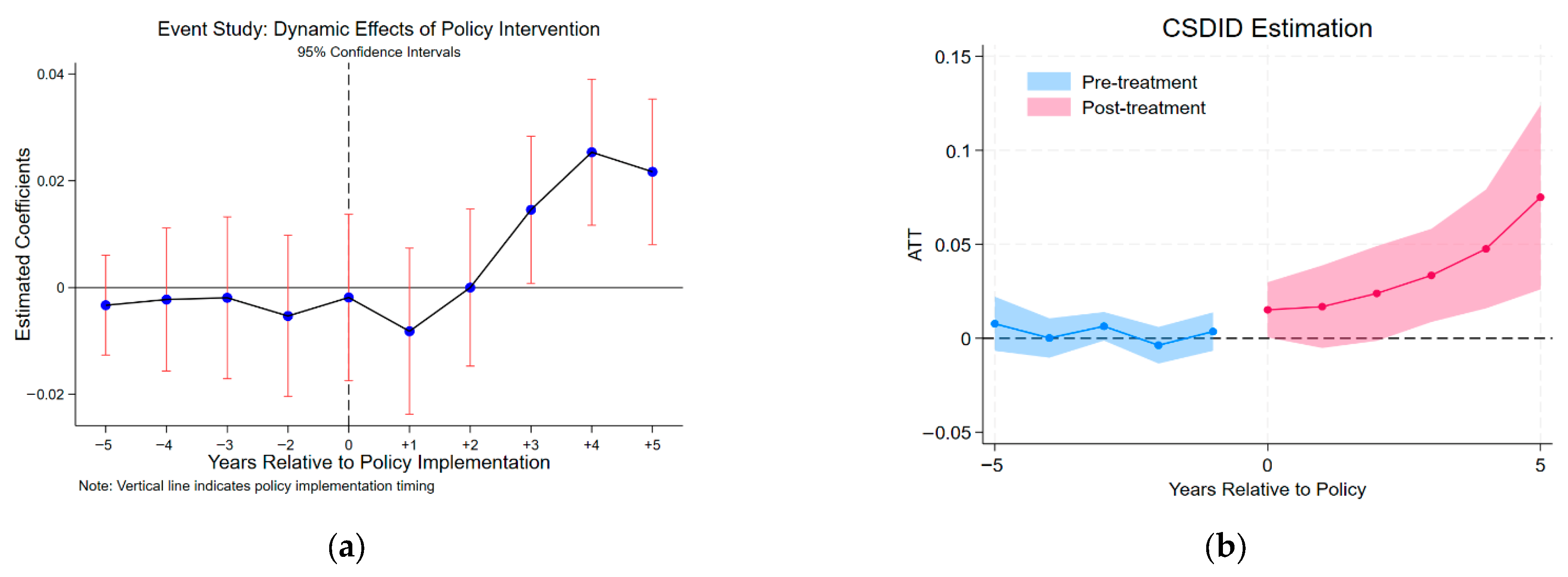
Figure 1a reports the event-time coefficients and their 95% confidence intervals for the RECD policy. Before the policy is introduced, the estimated coefficients stay close to zero and are not statistically significant, suggesting that the treated and control counties did not differ systematically in the pre-policy period and that the parallel-trend assumption is satisfied. After implementation, the coefficients rise clearly and remain significantly positive in the following years. The size and persistence of these post-policy estimates indicate that the RECD policy is associated with a sustained increase in agricultural carbon emissions, pointing to a lasting policy effect after implementation. The coefficients begin to decline after the fourth year, possibly because the initial expansion effect of the policy weakens over time, while improvements in the production efficiency and green adjustment gradually offset part of the emission-increasing effect.
4.2.2. CSDID Estimation
The traditional two-way fixed effects (TWFE) estimator may produce biased estimates when treatment effects differ across groups and periods, because the policy adopts a staggered rollout across counties. Therefore, this study uses the Callaway and Sant’Anna difference-in-differences (CSDID) method, which is more appropriate for staggered DID settings and provides more reliable estimates [
57].
Figure 1b presents the event-study estimates based on the CSDID estimator under staggered treatment timing.
Table 3 reports the CSDID results from four aggregation methods. Column (1) reports the simple ATT. Column (2) reports the dynamic ATT, including the average pre-treatment effect and average post-treatment effect. Column (3) reports the calendar ATT, which averages treatment effects by calendar time. Column (4) reports the group ATT, which averages treatment effects by treatment cohort. The estimated effects are consistently positive across the simple, post-treatment, calendar, and group average specifications, and most of them are statistically significant at the 5% level. The pre-treatment average effect is insignificant. These results support the absence of obvious pre-treatment effects and confirm a robust positive policy effect after implementation.
4.2.3. Placebo Test
To verify that the baseline DID results are not driven by random variation or unobserved factors, a placebo test is performed using randomly assigned treatment status. Following the existing studies [
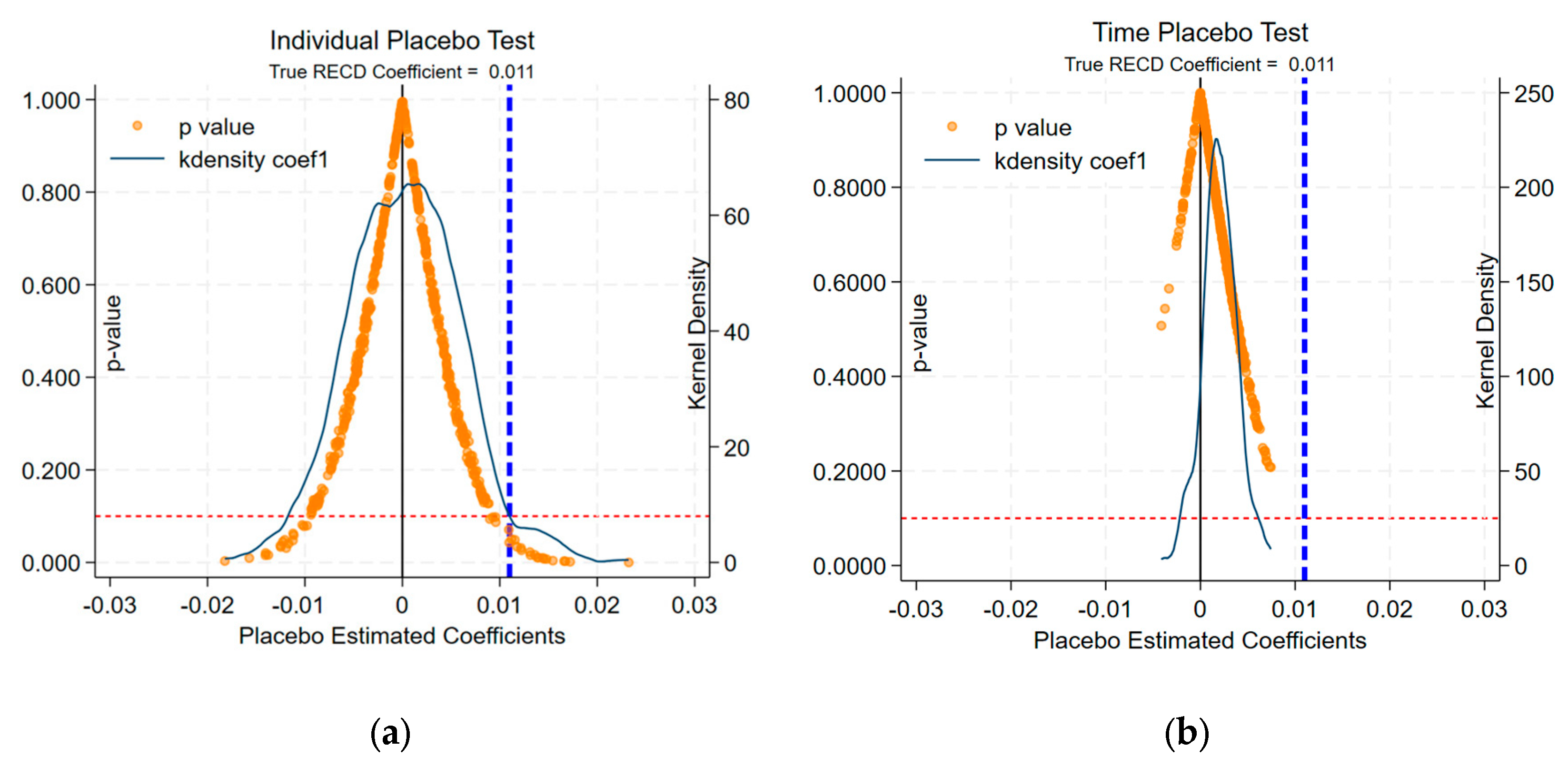
58], this paper further conducts both an individual placebo test and a time placebo test to examine whether the baseline DID results are driven by random shocks or other unobserved factors. The individual placebo test randomly assigns the treatment status across counties while keeping the number of treated counties unchanged, and then re-estimates the DID model repeatedly to obtain the distribution of placebo coefficients under the null of no treatment effect. The time placebo test keeps the actual treated counties unchanged but artificially moves the policy timing forward, thereby testing whether a significant effect would still appear before the actual policy implementation.
Figure 2 reports the results. In Panel (a), the placebo coefficients from the individual placebo test are centered around zero, and most
p-values are insignificant. In Panel (b), the placebo coefficients from the time placebo test also cluster around zero. In both panels, the true policy coefficient is clearly separated from the placebo distribution. These results suggest that the baseline finding is not driven by random shocks or false policy timing.
4.2.4. PSM-DID
To further address potential selection bias in the designation of RECD counties, this study re-examines the baseline results using the PSM-DID approach. Different from the standard DID method, PSM-DID first matches treated and untreated counties based on pre-policy observable characteristics and then applies DID estimation to the matched sample. This helps to improve comparability and reduce bias from observable differences.
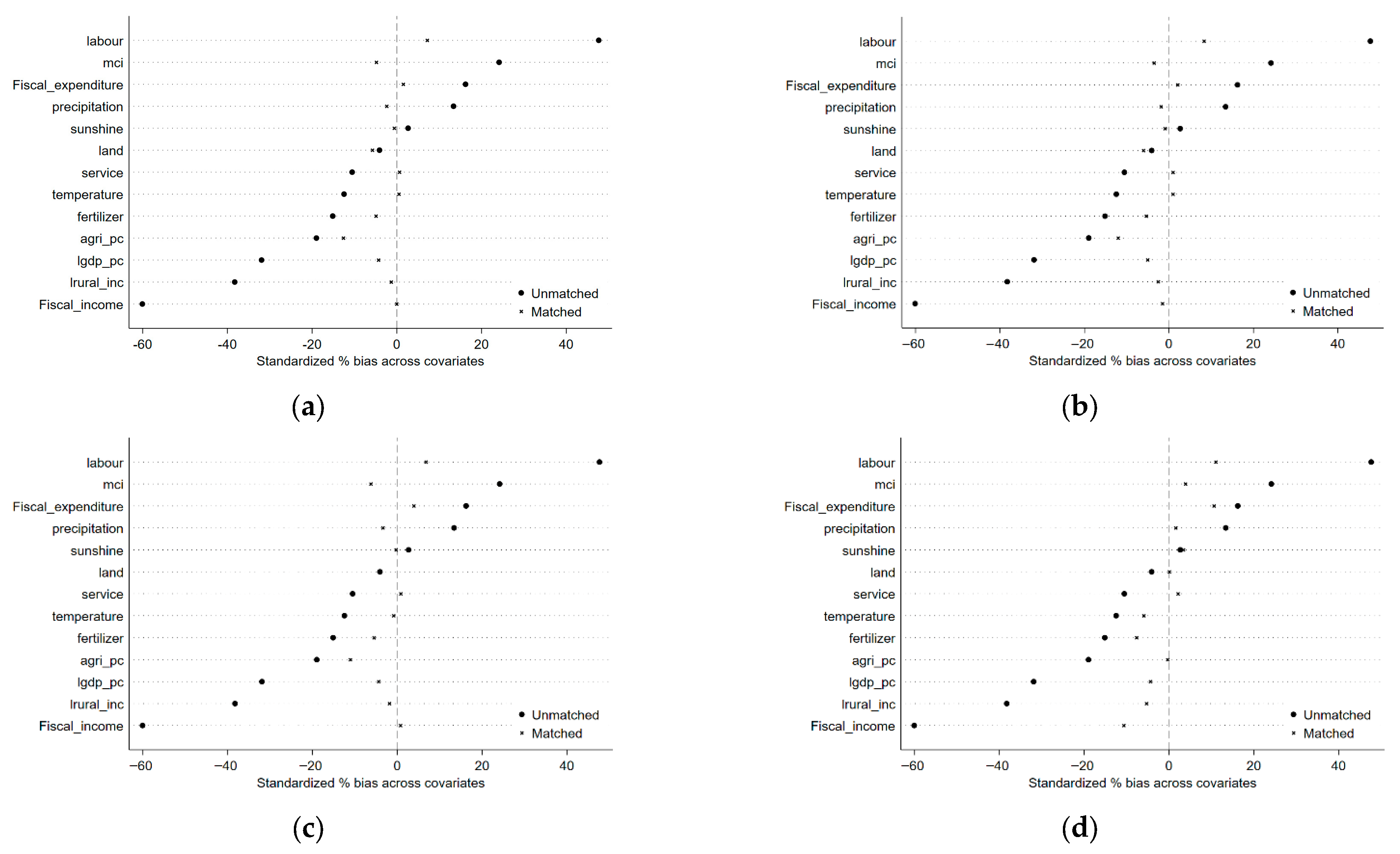
In this study, all control variables are used for matching. Four matching methods are adopted, including nearest neighbor matching, kernel matching, local linear regression matching, and Mahalanobis distance matching (the balance test results are reported in
Appendix B).
Table 4 presents the PSM-DID estimates. Across all four methods, the coefficients of RECD remain positive and statistically significant. This suggests that the baseline result is robust and not driven by observable selection bias.
4.2.5. Excluding Interference from Concurrent Policies
To rule out the possibility that the estimated effect of the RECD policy is confounded by other concurrent policy interventions, we additionally control for several major policies that may also influence local agricultural carbon emissions. These policies may overlap with RECD in time or space and may therefore affect the identification of its policy effect.
Table 5 reports the corresponding results.
Column (1) controls for the National Rural Industrial Integration Demonstration Parks (RIDP). This policy encourages closer links between agriculture, processing, and services, and may affect agricultural carbon emissions through production upgrading and adjustments in input use [
59]. The coefficient of RIDP is significantly negative, which suggests that rural industrial integration is linked to lower agricultural carbon emissions. After controlling for RIDP, the coefficient of RECD remains positive and significant, indicating that the estimated increase in emissions is not driven by rural industrial integration policies.
Column (2) further controls for the Whole-Process Mechanization Demonstration Counties (WPMDC). This program promotes standardized and efficiency-oriented mechanization through technical support and coordinated production practices. The negative and significant coefficient of WPMDC suggests that policy-driven mechanization is linked to lower agricultural carbon emissions, possibly through higher production efficiency and less redundant input use. Importantly, including WPMDC does not alter the sign or significance of the RECD coefficient, supporting the robustness of the baseline results.
Column (3) incorporates the Low-Carbon City Pilot Policy (LCCP), which targets energy-structure optimization and low-carbon transition at the city level. Although it is not targeted specifically at agriculture, it may still affect agricultural emissions through changes in regional energy use and the diffusion of technology [
60]. The estimated coefficient of LCCP is negative but not statistically significant. Controlling for LCCP does not change the sign or significance of the RECD coefficient.
Column (4) adds the National Agricultural Sustainable Development Experimental Demonstration Zones (NASDEDZ), which are intended to promote greener agricultural practices [
61]. The coefficient of NASDEDZ is significantly negative, indicating that these programs are associated with lower agricultural carbon emissions. After accounting for this policy, the positive and significant effect of RECD remains unchanged, further supporting the robustness of the baseline results.
Column (5) further controls for the Key Counties for Water-Saving Conservation (KCFWC). This policy mainly improves water-saving irrigation infrastructure and promotes more efficient agricultural water use. It may affect agricultural carbon emissions by reducing the irrigation water demand, lowering pumping-related energy use, and improving the allocation efficiency of water and other agricultural inputs. The coefficient of KCFWC is significantly negative, suggesting that water-saving policies are associated with lower agricultural carbon emissions. After controlling for this policy, the coefficient of RECD remains positive and significant.
Column (6) controls for the Digital Village Pilot Counties (DVPC). This policy promotes rural digital infrastructure, digital governance, and the digital application of rural industries, and may therefore overlap with the RECD policy in improving rural digital development [
62]. The estimated coefficient of DVPC is negative but not statistically significant. Controlling for DVPC does not affect the sign or significance of the RECD coefficient.
Overall, the results show that the estimated RECD effect remains stable after controlling for several concurrent policy interventions. This suggests that the observed increase in agricultural carbon emissions is unlikely to be driven by overlapping policy shocks.
4.2.6. Endogeneity Analysis
Potential endogeneity may arise from omitted variables, reverse causality, or measurement error. To address this concern, this study further conducts endogeneity tests using both two-stage least squares (2SLS) and a system-generalized method of moments (GMM).
This study constructs a Bartik (shift-share) instrumental variable by interacting the local historical communication base with the annual national express delivery volume. Specifically, Iv1 is defined as the average fixed telephone coverage rate during 2010–2013 multiplied by the annual national express delivery volume, and Iv2 is defined as the average broadband coverage rate during 2010–2013 multiplied by the annual national express delivery volume. In terms of relevance, counties with better historical communication infrastructure were more favorable conditions for the development of rural e-commerce [
58]. In terms of exogeneity, the historical communication base is predetermined, and the growth in national express delivery is driven by nationwide changes rather than county-specific agricultural carbon emissions. Therefore, the interaction term is unlikely to affect local agricultural carbon emissions directly, except through its effect on rural e-commerce development.
Table 6 reports the endogenous results. In the first stage, both Iv1 and Iv2 are significantly positively related to RECD, and the first-stage F statistics are well above the conventional threshold, indicating strong instrument relevance. In the second stage, the coefficients of RECD remain significantly positive in both specifications, suggesting that the positive effect of RECD on agricultural carbon emissions still holds after addressing endogeneity. The K–P LM and K–P Wald F statistics also support the validity and strength of the instruments. Column (5) further reports the system GMM result, and the coefficient of RECD remains significantly positive. Overall, both the IV and system GMM results support the baseline conclusion.
4.2.7. Additional Robustness Checks
To further assess the robustness of the baseline results, we conduct a series of additional checks.
Table 7 reports the corresponding results. First, consider alternative explanatory variables. Panel A replaces the baseline explanatory variable: the column (1) uses the number of Taobao Villages, while the column (2) uses a dummy variable indicating whether a county has at least one Taobao Village. In both cases, the estimated coefficients remain positive and statistically significant, indicating that the baseline findings are not sensitive to the measurement of rural e-commerce development.
Second, perform sample robustness checks. Since differences in sample coverage may affect the estimated policy effect, Panel B examines the sensitivity of the results to alternative sample definitions. The column (1) restricts the sample period to 2012–2020, while the column (2) excludes municipalities directly under the central government and municipal districts. These areas differ substantially from ordinary counties in administrative rank, economic scale, urbanization level, and industrial structure [
63]. In both cases, the coefficients of RECD remain positive and significant. This indicates that the baseline findings are not sensitive to changes in the sample definition.
Third, employ alternative dependent variables. Since the baseline results may be sensitive to the measurement of the dependent variable, Panel C replaces the baseline dependent variable with alternative measures. The column (1) uses agricultural carbon emissions calculated by the production-input method. The column (2) uses the logarithm of nighttime light intensity, which has been widely validated as an effective proxy for carbon emissions in spatial analyses [
64]. The coefficients of RECD remain significantly positive in both columns. These results further confirm the robustness of the baseline findings.
4.3. Mechanism Analysis
Table 8 reports the mechanism correlation evidence on scale expansion. In Columns (1) and (2), the RECD policy significantly increases cultivated land area, and the interaction term between the RECD policy and the high-land-scale group is significantly positive. This suggests that the carbon effect of the RECD policy is stronger in counties with higher land scale. In Columns (3) and (4), the RECD policy significantly increases machinery use, and the interaction term with the high-mechanization group is significantly positive. This suggests that the carbon effect of the RECD policy is stronger in counties with higher mechanization intensity. In Columns (5) and (6), the RECD policy significantly promotes facility agriculture, and the interaction term with the high-facility group is significantly positive. This suggests that the carbon effect of the RECD policy is stronger in counties with higher facility-agriculture intensity.
The RECD policy improves market access and strengthens production incentives, encouraging output expansion and greater use of land, machinery, and facility-based production. This may encourage output expansion and greater use of land, machinery, and facility-based production [
65]. In counties with stronger scale-expansion characteristics, such policy effects may be more likely to be accompanied by higher use of fertilizers, irrigation, machinery, electricity, heating, and transport inputs. This may in turn be associated with higher agricultural carbon emissions.
Table 9 reports the mechanism correlation evidence on structural transformation. In Columns (1) and (2), the RECD policy significantly increases the share of cash crops, and the interaction term between the RECD policy and the high-economic-crop group is significantly positive. This suggests that the carbon effect of the RECD policy is stronger in counties with a higher degree of cash crop orientation. In Columns (3) and (4), the RECD policy significantly reduces the food-to-cash crop ratio, and the interaction term is also significant. This suggests that the carbon effect of the RECD policy is stronger in counties with a stronger shift toward cash crop production. In Columns (5) and (6), the RECD policy is not significant in promoting green products, and the interaction term is also insignificant. This suggests that green production has not become an important channel at the current stage.
The RECD policy strengthens market demand and price signals, pushing local production toward more commercialized and cash crop-oriented activities. Existing studies have revealed a significant association between rural e-commerce development and the non-grain conversion of cultivated land [
32,
33]. In counties with stronger structural transformation characteristics, such policy effects may be more easily reflected in more intensive use of fertilizers, pesticides, irrigation, and transport services. This may help explain why the carbon effect of the RECD policy is more evident in these counties. By contrast, the coefficients of green products are not significant. This may suggest that the RECD policy has not yet effectively promoted green product development. Rural e-commerce currently plays a stronger role in market expansion and product commercialization, while its effect on green certification, green branding, and green production transformation may still be limited.
4.4. Heterogeneous Effects Analysis
To further examine whether the carbon effect of the RECD policy differs across counties, this study conducts a heterogeneity analysis from three aspects: agricultural production orientation, economic development status, and initial conditions.
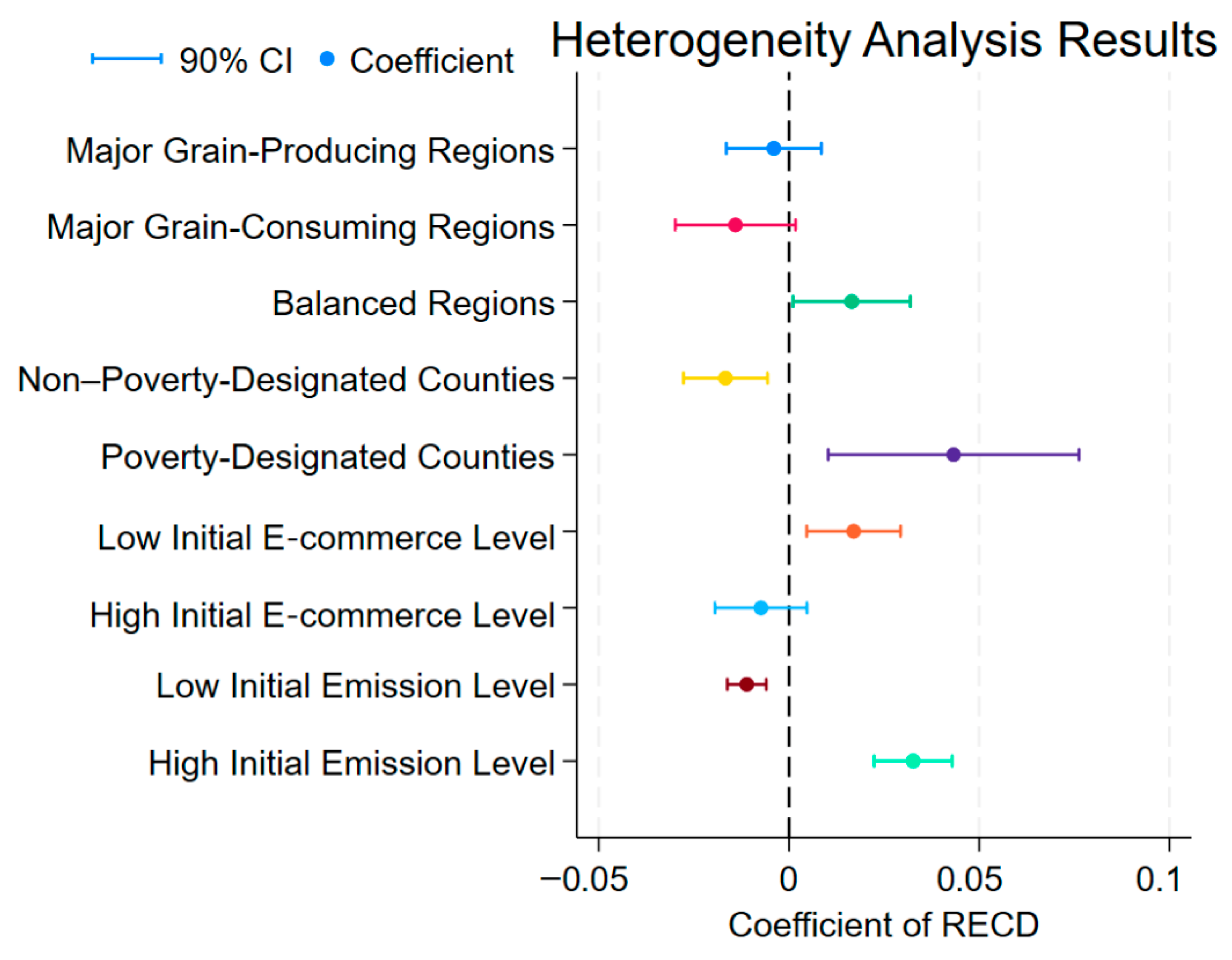
Figure 3 reports the heterogeneity analysis results.
First, counties are divided by agricultural production orientation, because differences in production systems may shape how the RECD policy affects agricultural activities and carbon emissions. Following the literature, the sample is classified into major grain-producing regions, major grain-consuming regions, and balanced regions [
66]. The results show that the effect of the RECD policy is insignificant in major grain-producing regions, insignificant in major grain-consuming regions, and significantly positive in balanced regions. Major grain-producing regions are subject to stronger grain production constraints [
67], so the RECD policy is less likely to induce substantial changes in production structure. In major grain-consuming regions, the agricultural production scale is relatively small and local demand relies more on external supply, so the policy effect on local agricultural carbon emissions is also limited. By contrast, balanced regions face fewer grain-production constraints and have greater flexibility in production adjustment. As discussed earlier, the RECD policy may strengthen market access and price signals in these areas, promote more market-oriented production, and increase the use of agricultural inputs. This makes the carbon effect more evident in balanced regions.
Second, counties are divided by economic development status, because farm households in poorer areas may respond differently to market access and policy incentives. Based on the official national list, the sample is divided into poverty-designated counties and non-poverty-designated counties. The results show that the effect of the RECD policy is significantly positive in poverty-designated counties, but significantly negative in non-poverty-designated counties. Farm households in poorer areas respond more strongly to improved market access and price incentives. With fewer non-agricultural opportunities and tighter income constraints, farmers in these counties are likely to be more sensitive to policy-induced market expansion [
68]. Under such conditions, the RECD policy may encourage faster production expansion and more intensive input use, leading to higher agricultural carbon emissions. By contrast, non-poverty-designated counties usually have more diversified income sources and a more mature economic structure. In these counties, the RECD policy may be less likely to induce agricultural production expansion, thereby contributing to lower agricultural carbon emissions.
Third, counties are divided by initial e-commerce conditions, because the policy effect may vary with the original e-commerce foundation. Based on the pre-policy level of e-commerce sales, the sample is divided into high initial e-commerce counties and low initial e-commerce counties. The results show that the effect of the RECD policy is significantly positive in low initial e-commerce counties, but insignificant in high initial e-commerce counties. Counties with a low initial e-commerce base have more room for improvement in market access, information transmission, and sales channels after the policy is introduced [
69]. Under this condition, the RECD policy may produce a stronger marginal effect on production expansion and resource reallocation, and may therefore lead to a more evident increase in agricultural carbon emissions.
Fourth, counties are divided by initial carbon emission conditions, because the policy effect may also depend on the original production path. Based on the pre-policy level of agricultural carbon emissions, the sample is divided into high-initial-emission counties and low-initial-emission counties. The results show that the effect of the RECD policy is significantly positive in high-initial-emission counties, but significantly negative in low-initial-emission counties. High-emission counties rely on input-intensive production and existing high-carbon paths. Duan et al. (2024) find that these counties typically have weak environmental regulations and ecologically fragile conditions, which exacerbate the environmental cost of the RECD policy [
70]. Under this condition, the RECD policy may further strengthen production expansion and input use, and thus increase agricultural carbon emissions. By contrast, low-emission counties may have relatively cleaner or less input-intensive production systems. In these counties, the policy may be more likely to improve market efficiency and factor allocation without causing a large increase in carbon-intensive inputs, and may even help to reduce agricultural carbon emissions.
4.5. Further Empirical Analysis
4.5.1. Moderating Effects Analysis
Table 10 reports the moderating effect results. Columns (1) and (2) examine the moderating role of environmental regulation, while Columns (3) and (4) examine the moderating role of green technology. To reduce potential endogeneity, Columns (2) and (4) further use the lagged moderating variables.
The results are highly consistent. In Columns (1) and (2), the interaction terms between RECD and environmental regulation are significantly negative, and environmental regulation itself is also significantly negative. This indicates that stronger environmental regulation weakens the positive effect of RECD on agricultural carbon emissions. In Columns (3) and (4), the interaction terms between RECD and green technology are also significantly negative, while the coefficients of green technology are negative as well. This suggests that green technology development can also mitigate the emission-increasing effect of RECD. Overall, both environmental regulation and green technology play a significant moderating role and help to restrain the carbon expansion associated with rural e-commerce development.
4.5.2. Carbon Emission Intensity and Efficiency Analysis
Table 11 reports the results for agricultural carbon emission intensity and carbon emission efficiency. Columns (1) and (2) use ACEI and ACEE as the dependent variables. The coefficient of RECD is significantly negative in Column (1) and significantly positive in Column (2). These results show that the RECD policy reduces agricultural carbon emission intensity and improves carbon emission efficiency.
This study further uses the LMDI decomposition method to distinguish the technical effect from the scale effect. LMDI is a complete decomposition method. According to the identity ln C = ln(C/GDP) + ln GDP, changes in carbon emissions can be decomposed into a technical effect and a scale effect [
71]. Based on this method, Columns (3) and (4) examine these two channels. Column (3) uses Ln_ACEI to measure the technical effect, and the coefficient of RECD is significantly negative. Column (4) uses Ln_Output to measure the scale effect, and the coefficient of RECD is significantly positive. These results indicate that the RECD policy generates both a technical effect and a scale effect. On the one hand, the significantly negative coefficient of Ln_ACEI suggests that the policy improves the carbon performance per unit of output, reflecting the presence of a technical effect. On the other hand, the significantly positive coefficient of Ln_Output indicates that the policy also expands the scale of agricultural production. The two effects therefore operate in opposite directions with respect to the total emissions. The technical effect tends to reduce emissions by lowering the carbon intensity, whereas the scale effect tends to increase emissions by expanding the output. At the current stage, however, the scale effect is stronger than the technical effect. As a result, the increase in emissions associated with output expansion outweighs the reduction generated by improved carbon performance, leading to an overall rise in agricultural carbon emissions.
4.5.3. Spatial Spillover Effects Analysis
To examine the spatial spillover effect of the RECD policy,
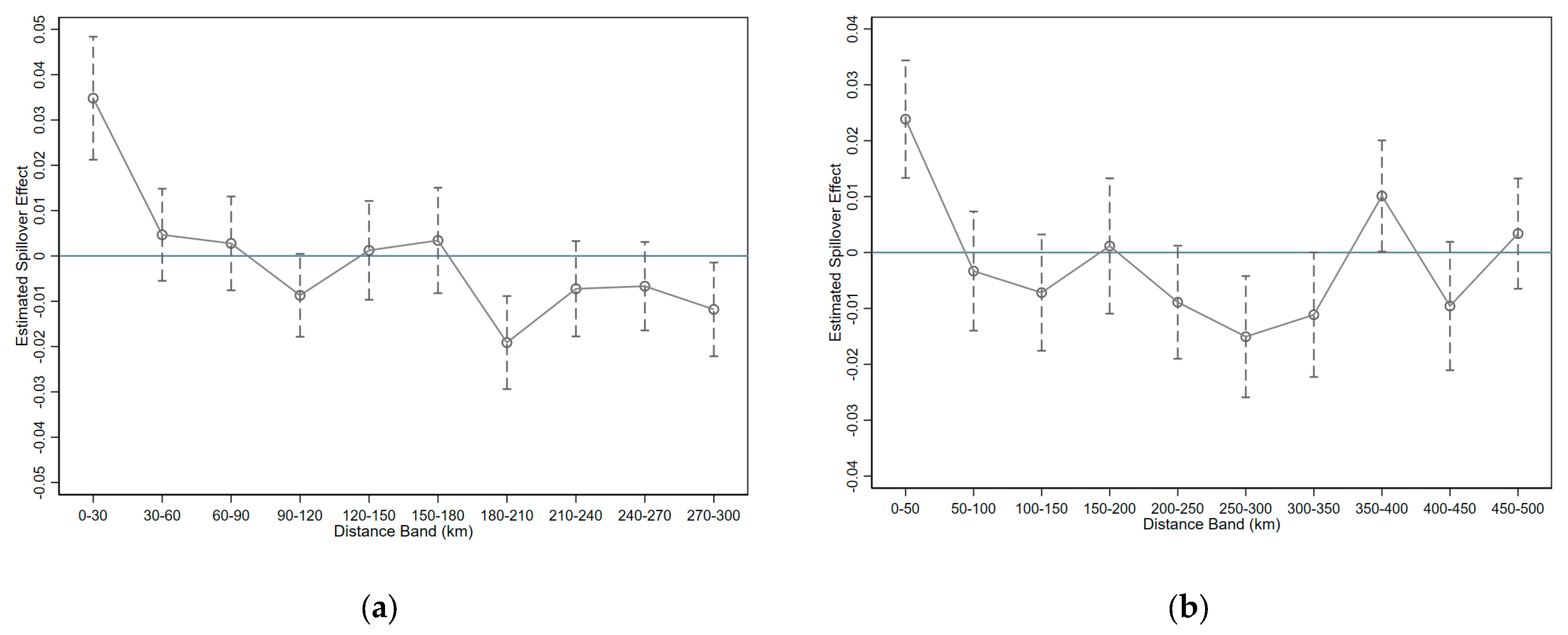
Figure 4 reports the estimated spillover effects across different distance bands. Taken together,
Figure 4a,b show a positive spillover effect within neighboring counties located about 30 km to 50 km from the treated counties. The estimated coefficients are significantly positive within this range, but gradually decline as the distance increases further. In more distant areas, the coefficients turn negative. This suggests that the spatial effect of the RECD policy may weaken with distance. Neighboring counties are more likely to share similar agricultural production structures, logistics conditions, market connections, and factor flows with pilot counties [
72]. Under this condition, the expansion effect of rural e-commerce may be more easily transmitted to nearby areas and may also raise agricultural carbon emissions there. In more distant areas, these linkages may become weaker, while pilot counties may also attract orders, capital, and labor from farther counties, which may reduce local production activities and lower agricultural carbon emissions in those areas.
5. Discussion
This study examines how the RECD policy affects agricultural carbon outcomes and explores the mechanisms and conditions underlying this effect. In addition to the overall carbon effect, the analysis considers the production expansion, production restructuring, heterogeneity, moderating effects, and spatial spillovers. The following discussion addresses the implications of these analyses, their connection with the existing literature, and the limitations of the present study.
First, the RECD policy increases total agricultural carbon emissions. This result differs from studies that emphasize the emission-reducing effects of digital development, and two reasons are especially important. The first concerns the scale of observation. County-level data capture local production responses more directly. By contrast, larger-scale data, such as provincial or prefecture-level data, may conceal substantial intra-regional heterogeneity. Once the analysis returns to the county level, the estimated effects may therefore point in a different direction [
73]. Moreover, previous studies on digital economy policies have mainly focused on urban contexts. In these settings, the effect of digital development on carbon emissions is often intertwined with technological upgrading and structural transformation, both of which tend to reduce emissions [
74]. This makes it difficult to isolate the emission dynamics that are specific to rural areas. These differences help to explain why this study is more likely to identify a carbon-increasing effect of rural e-commerce at the county level.
Second, the RECD policy reduces carbon emission intensity and improves carbon emission efficiency. These findings do not contradict the increase in total agricultural carbon emissions, because they refer to different dimensions of carbon outcomes. Higher total emissions reflect the expansion of overall agricultural production and carbon-emitting activities. Lower carbon intensity and higher carbon efficiency reflect improved carbon performance per unit of output. The two results can therefore coexist. However, better per-unit carbon performance should not be taken to mean that rural e-commerce has already achieved a green transformation, since the total emissions still increase at the current stage. Their policy implications should also be distinguished. The total emissions capture the overall environmental pressure, while the carbon intensity and carbon efficiency capture the performance gains in production organization and resource use. Policy design therefore needs to balance gains in market integration and production efficiency against the carbon cost of production growth.
Third, the mechanism analysis provides evidence that is broadly consistent with the two channels proposed in the theoretical framework: namely, production expansion and production restructuring. The results show that the RECD policy is associated with larger cultivated land use, greater machinery intensity, and stronger facility-based production. This suggests that improved market access and stronger price incentives may be translated into output expansion through multiple dimensions of agricultural production. At the same time, the policy is also associated with stronger crop commercialization and changes in the allocation between food crops and cash crops. This is consistent with the idea that rural e-commerce reshapes the production structure by altering expected returns across products. These findings help to explain why the policy is accompanied by an increase in the total agricultural carbon emissions.
Fourth, stronger environmental regulation and higher levels of green technological innovation significantly weaken the carbon-increasing effect of the RECD policy. This result suggests that the carbon consequences of rural e-commerce are not determined by market expansion alone. They also depend on the institutional and technological conditions under which market signals are translated into production responses. From a theoretical perspective, stronger environmental regulation may raise the cost of carbon-intensive inputs and constrain high-emission production adjustments. This weakens the expansionary and restructuring effects on emissions. Green technological innovation works through a different channel. By improving the input efficiency and reducing the emission cost of production, it can lower the carbon intensity associated with output growth. In this sense, neither factor changes the basic market-expansion logic of rural e-commerce, but both can alter its carbon consequences. The moderating-effect results therefore show that the carbon impact of rural e-commerce is conditional rather than fixed. They also indicate that the trade-off between market expansion and environmental pressure is not immutable. With stronger regulatory constraints and better green technological conditions, part of the carbon cost associated with rural e-commerce development can be contained.
Fifth, this non-fixed carbon impact is further reflected in the heterogeneity and spatial-spillover results. The stronger carbon-increasing effects observed in balanced agricultural areas, poverty-designated counties, counties with weaker initial e-commerce foundations, and counties with higher initial emission levels indicate that local production conditions and development contexts shape how strongly improved market access is translated into production expansion and market-oriented restructuring. The spatial results point in the same direction. Spillover effects within 50 km suggest that the relevant market signals and production responses may extend beyond treated counties through logistics linkages, product circulation, and information transmission. By contrast, the weakening and eventual reversal of the effect in more distant areas indicate that agglomeration and crowding-out forces also matter. Taken together, these findings show that the carbon consequences of rural e-commerce are conditional, rather than spatially uniform. In some counties, rural e-commerce may generate stronger expansionary pressure and higher environmental cost. In others, the same policy may be accompanied by a weaker carbon response or stronger mitigating conditions.
Several limitations should be acknowledged. First, the analysis is based on county-level data and therefore cannot directly observe how farmers, cooperatives, or agribusinesses adjust their crop choice, land allocation, input use, or technology adoption in response to rural e-commerce development. Second, the dependent variable is constructed from EDGAR gridded agricultural emission data matched to county administrative boundaries through GIS. This approach makes large-scale county-level analysis feasible, but it also introduces uncertainty. Emissions identified from gridded data may not fully correspond to actual county-level agricultural activity, especially where ecological production zones do not align closely with administrative boundaries. Measurement error may also arise when a grid cell overlaps multiple counties. The overlay of county boundaries on gridded emissions may also introduce allocation bias in assigning emissions across administrative units. These limitations point to several directions for future research. Micro-level data would help to identify more directly how market signals are translated into changes in land use, input application, crop choice, and technology adoption. More direct measures of demand structure, such as product-level e-commerce transaction data, consumer surveys, or regional consumption statistics, would also help to clarify how changing demand affects agricultural restructuring. In addition, although EDGAR gridded data make national county-level analysis possible, future research could compare gridded estimates with alternative accounting methods based on agricultural input coefficients, local energy-use records, or more disaggregated spatial emission data. This would further assess the robustness of county-level agricultural emission measurement.
6. Conclusions
This study evaluates the environmental impact of the RECD policy from the perspective of agricultural carbon emissions. The results show that rural e-commerce development increases the total agricultural carbon emissions on average. At the same time, the policy reduces the carbon emission intensity and improves the carbon emission efficiency. These findings suggest that rural e-commerce may increase aggregate emissions while improving carbon performance per unit of output. Further analysis shows that the carbon-increasing effect is stronger in balanced agricultural areas, poverty-designated counties, counties with weaker initial e-commerce foundations, and counties with higher initial emission levels. Stronger environmental regulation and higher levels of green technological innovation weaken this effect, and the policy also generates spillover effects on neighboring counties within 50 km.
This study makes several substantive contributions. First, it provides evidence that rural e-commerce can simultaneously increase total agricultural carbon emissions and improve carbon performance, thereby offering a more nuanced understanding of its environmental consequences. Second, it highlights the role of market demand in shaping agricultural carbon outcomes by showing that rural e-commerce may affect emissions not only through efficiency-related channels, but also through production expansion and production restructuring. Third, it shows that the carbon effect of rural e-commerce is conditional rather than fixed. Its magnitude varies across local production contexts, regulatory environments and technological conditions, which provides a more differentiated basis for understanding the relationship between rural digital development and low-carbon agricultural transformation.
Taken together, these findings suggest that policy design should start from the fact that rural e-commerce has become an important foundation of rural digital transformation. Its continued expansion is likely to remain a long-term trend. The key policy issue, therefore, is not whether rural e-commerce should keep developing, but how this process can be better aligned with low-carbon agricultural transformation. First, the market-guiding function of rural e-commerce should be strengthened to support greener production. This study finds that rural e-commerce is more likely to reinforce incentives for market-oriented and input-intensive production, while incentives in green-product markets remain weak. Green certification, low-carbon production records, and traceability systems should therefore be improved and more effectively incorporated into platform display, recommendation, and evaluation mechanisms. Second, more targeted and coordinated regional governance is needed. This study finds that the carbon-increasing effect is stronger in some areas and can spill over to neighboring counties, while stronger environmental regulation and green technological innovation can weaken this effect. Areas with higher emission risks and their neighboring regions should therefore strengthen environmental regulation, green technology extension, and low-carbon production services while improving cross-regional coordination in environmental regulation, green technology diffusion, and logistics planning.