1. Introduction and Theoretical Framework
The construction of new buildings using modern or traditional techniques depends on the constant development of innovative materials that can satisfy contemporary performance requirements while also being compatible with vernacular or even historical materials and technologies.
One of the most challenging materials is the lime-based mortar, which has always been used for its breathability and compatibility with masonry but has shown durability issues, especially when exposed to aggressive environmental conditions, such as repeated freeze–thaw cycles, acid rain, or biological degradation [
1,
2,
3]. To overcome these challenges, an innovative eco-material has been developed using hydroxyapatite (HAp), a calcium phosphate compound inspired by biomineral structures. Lime-based mortars incorporating HAp have shown performance improvements compared with traditional lime-based mortars, such as increased durability under environmental conditions, reduced microbial colonization, and minimal visual alteration of the treated surfaces [
4].
In the context of architectural education and experimentation, the Apoș Summer School offers students an opportunity to integrate knowledge of hands-on building practice, vernacular materials and techniques, and innovative eco-materials research. The participating students not only learn traditional techniques for burnt brick and tile making to build a micro-museum, but also engage in material experimentation, applying HAp-modified mortar to real architectural objects, thereby highlighting the opportunity to learn from both laboratory research and architectural applications [
5].
The durability and behavior of HAp-modified mortars are stabilized under real climatic conditions. Thus, HAp helps to block cracks or stabilize pores over time by exposing the material to cyclic freeze–thaw cycles. Microstructural monitoring by SEM, confocal microscopy, or µCT frequently reveals that mortars containing HAp have better structural coherence, reduced microcrack propagation, and better preservation of intergranular contact. This behavior is particularly important for monuments located in hydroclimatically vulnerable areas, such as those along river systems, where corrosion is accelerated by frequent moisture intrusion and thermal stress.
Owing to its markedly enhanced mechanical properties and microstructures, recent research has shown that hydroxyapatite (HAp), which is found in cementitious materials or on the surfaces of architectural and cultural heritage, is an effective treatment method [
6,
7,
8,
9]. When HAp was added to a mortar, the compressive strength of the treated specimens increased by 35% and their water absorption decreased by 50% compared to untreated cementitious specimens [
10].
XRD, TGA, and FTIR test results supported these findings [
6,
7,
8]. Wang and others [
11] claimed that recycled concrete aggregates’ pores and cracks were sealed by HAp, which was produced when DAP reacted with calcium-rich hydration products in the aggregates. This resulted in a compact microstructure with increased mechanical strength. The formation of HAp may be triggered by the presence of calcium ions, according to prior research [
6,
12]. This mostly happens when the calcium ions (Ca
2+) in the stone react with the phosphate ions that are supplied. The goal is to create a cohesive and long-lasting layer that enhances the specimens’ mechanical strength and microstructural characteristics [
6,
12], and the measured pH of 10 encouraged this [
13].
Inspired by the success of the aforementioned studies, this work proposes the incorporation of HAp inside porous mortar specimens to enhance the bulk mechanical properties and pore structures [
14]. Although several studies have addressed the phosphate treatment of existing concrete structures, the mechanism is still not known in detail and therefore further studies are needed, especially for cementitious materials with incorporated HAp [
15,
16]. Therefore, this study aims to promote HAp inside the specimens and reveal the mechanisms of operation, which are much less studied in the literature. Different concentrations and reaction times for the HAp solution treatment were considered and the results were compared with untreated specimens (UTs). Compressive strength, voids, and water penetration were evaluated. Equally important is the feedback loop between laboratory research and architectural implementation. Parameters like particle size, concentration, dispersion, and interaction with lime or hydraulic binders can all be optimized in lab experiments with HAp. On the other hand, the practical limitations of workability, adhesion, aesthetic integration, and long-term performance are revealed in actual architectural applications. Further laboratory refinement will allow new formulations that more closely resemble the mechanical, hygric, and mineralogical properties of historic substrates [
17,
18,
19].
Correlating experimental studies with real-life applications leads to the transformation of the hydroxyapatite-modified mortars from a promising experimental solution into a validated material in the conservation field [
20,
21]. This integrated research ensures the transfer of the enhancements noticed at the microstructural level, such as reduced porosity, increased adhesion, and upgraded durability, to the overall performance of the architectural heritage structure. Thus, by reducing the gap between basic studies in the science of materials and the practice of protection interventions, mortars based on HAp are becoming a compatible and scientifically substantiated solution for improving the longevity and resistance of historic substrates.
It has been demonstrated that adding HAp improves the pore structure, reduces overall porosity, and strengthens the interfacial bond between the aggregate and binder in lab settings. The feedback loop between laboratory research and architectural implementation is equally significant. Parameters like HAp particle size, concentration, dispersion, and interaction with lime or hydraulic binders can be optimized through laboratory experiments.
This strategy aligns with current conservation science concerns about eco-materials that can be utilized for both new and old buildings. The primary benefit of establishing a connection between material science and sustainable architecture is the use of such materials in regions with vernacular-specific architecture. Innovative materials serve as a pedagogical tool in educational settings like the Apoș Summer School, allowing students to comprehend how cutting-edge material solutions can complement traditional interventions while honoring the local culture.
The mechanisms described above are directly reflected in the experimental design of the present study. The interaction between hydroxyapatite and the lime matrix is investigated through a combination of laboratory testing and in situ observations, including compressive strength measurement, water absorption and capillarity tests, freeze–thaw resistance evaluation, and microstructural analyses (SEM-EDS, FTIR, and pseudo-CT).
These methods allow the assessment of how HAp influences pore structure, interfacial bonding, and durability under environmental stress conditions, providing a direct link between the theoretical mechanisms and the observed material performance.
These findings are consistent with recent studies on hydroxyapatite-modified cementitious materials, which report improvements in microstructural densification, interfacial bonding, and durability under environmental stress [
22,
23].
Despite recent advances in hydroxyapatite-modified mortars, there is still a lack of studies investigating their performance under real-scale conditions and their integration into applied conservation and educational frameworks.
Therefore, the objective of this study is to evaluate the performance of HAp-modified lime mortars through laboratory testing and in situ application in a heritage context.
According to Kolb (2001) [
24], experiential learning has the advantage of linking abstract conceptualization with hands-on experimentation, real experience, and critical observation, leading to a cyclic learning process that can help architecture students not only learn, but also understand concepts and notions. The architectural design process is highly dependent on knowledge and understanding of material and structural behavior, as well as environmental impacts and cost-benefit analysis. In this case, the importance of critical thinking and practice in professional education is highlighted [
25]. Projects based on real contexts, such as summer schools based on practice and real interaction with materials, offer the students a good opportunity to be involved in the construction of small-scale objects in order to understand the physical constraints and limitations of materials and structural systems [
26]. These experiences that allow students to understand the real implications of their design proposals, such as hands-on construction practices, are important tools in architectural education [
27], linking theoretical learning, critical thinking, and professional practice.
Another important aspect of experiential learning is the cultural context that might come with the heritage context project. When students are involved in projects with a heritage or cultural dimension, they can learn better about traditional materials and building techniques and the processes of material ageing and decay factors, but also about the principles of restoration, compatibility, reversibility, and minimal intervention, an essential aspect for responsible architectural intervention in heritage sites [
28]. Projects based on working with traditional materials and techniques, even if they are not related to existing heritage buildings but instead focus on understanding the vernacular architecture principles characteristic of a specific area, are important for understanding that traditional solutions can offer long-term sustainability.
Architectural summer schools represent a mediator between academic theoretical knowledge, real construction aptitudes, craftsmanship, and, in some cases, the cultural environment, allowing students to also understand the physical, financial, and socio-cultural implications of their project proposals.
The evaluation of the environmental impact of architectural projects represents another challenge in architectural education, going beyond the concepts of energy efficiency and looking at the durability of the materials and the sustainability of the project [
29].
Eco-materials, especially those that are compatible not only with modern building materials but also with historical substrates, are becoming relevant alternatives to industrial products. The advantages of such materials are found not only in terms of their mineral-based and bio-inspired composition, but also in terms of their durability, compatibility, chemical affinity with various materials, including historical ones, and low production energy required. Having the opportunity to participate in hands-on activities with innovative materials, such as mortars incorporating hydroxyapatite [
4], represents a useful experience for architectural students, teaching them the importance of understanding the chemical properties of materials and environmental behavior.
The Apoș Summer School eco-material intervention can be regarded as a holistic educational model that brings together architectural design, heritage preservation, sustainability, and material science. The highlight of the summer school is the students’ involvement in real, hands-on, experimental buildings, followed by the observation of material failure under various environmental conditions. This approach serves as a living laboratory, where students can learn about eco-material performance in vernacular contexts and understand the implications of their design projects in terms of sustainability and responsibility, for a long-term learning experience.
The in situ performance assessment of hydroxyapatite (HAp)-modified lime mortars has been carried out in order to evaluate their behavior under real exposure conditions specific to vernacular architecture and heritage interventions. The analysis focused on essential criteria for durability and material-substrate compatibility, including water absorption, adhesion to brick substrates, resistance to freeze–thaw cycles, time-dependent performance, and comparative behavior with respect to traditional lime mortars.
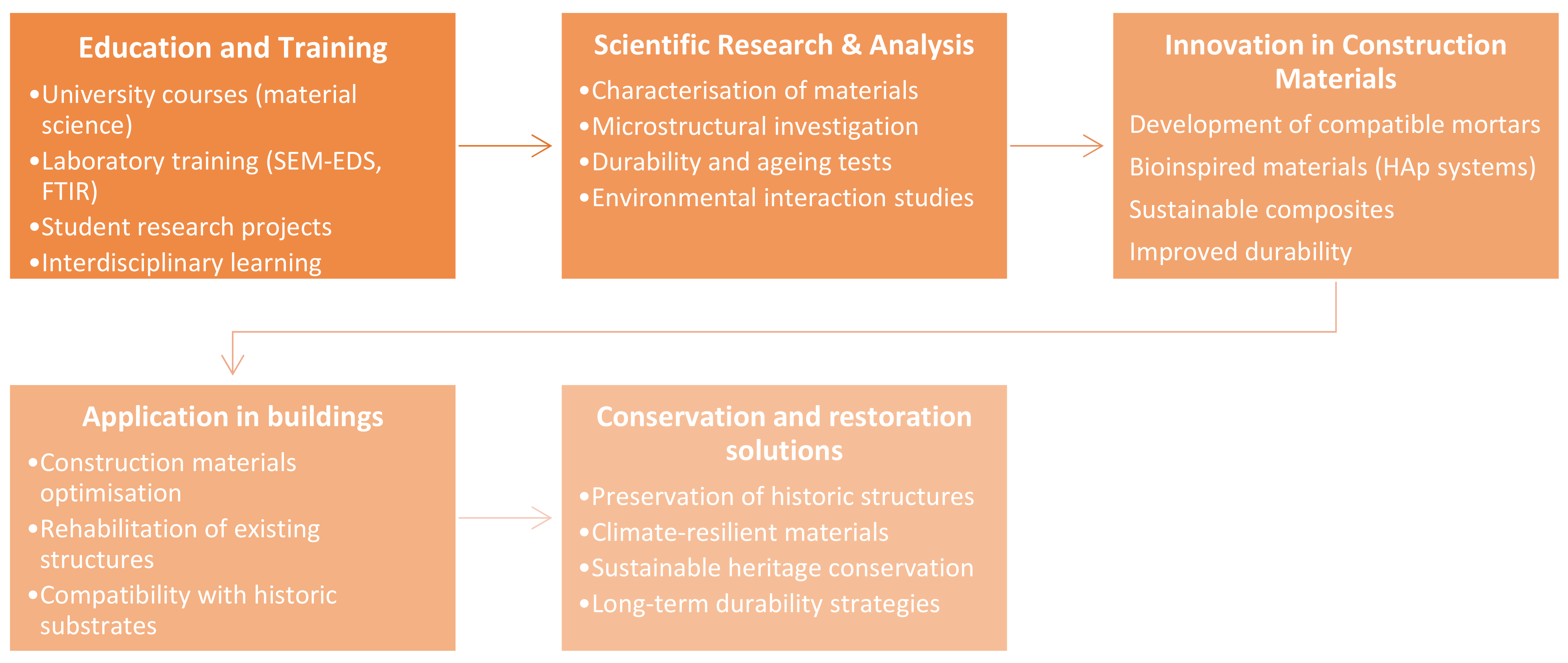
This is an integrated case study, combining the educational aspect with the practical one, as well as innovation aspects in construction and building materials, and, not to mention, for sustainable cities and societies (
Figure 1) [
30].
2. Materials and Methods
2.1. CASE Study: The Apoș Summer School—Eco-Materials Intervention on a Student-Built Micro-Museum
2.1.1. Cultural and Architectural Context: Student Involvement and Building Process
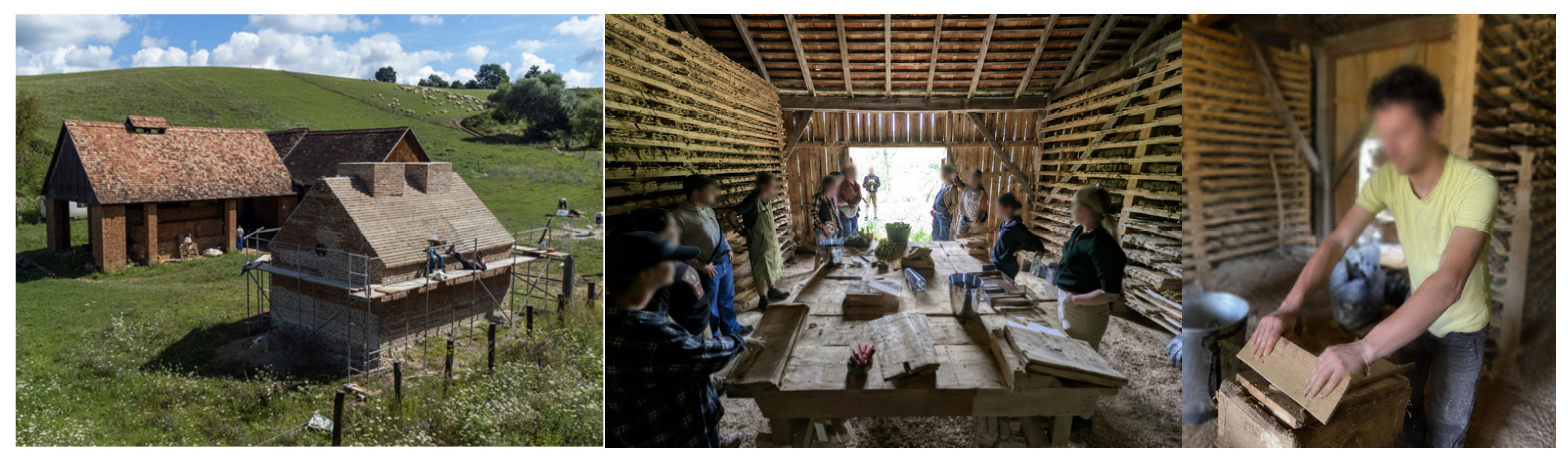
The architectural summer school located in Apoș, Sibiu County, Romania, represents a cultural initiative for long-term education focused on building knowledge of traditional craftsmanship and vernacular architecture, an activity that emerged, on location, out of a traditional tile workshop organized by the Monumentum Asociation in 2015, as presented in
Figure 2 [
31].
Apoș, first mentioned in the chronicles in 1322, is a remote village with a rich historical background in Southern Transylvania, which has strong ties with the Cistercian Order, being linked to the possessions of the medieval Abbey of Cârța. A couple of minutes away from the medieval church in Apoș, in 2015, a traditional tile kiln was established by Asociația Monumentum and inaugurated in June by His Royal Highness King Charles III (then Prince of Wales), with its main purpose being to safeguard the endangered Transylvanian vernacular roofscape against industrial substitution by reviving the traditional craft of handmade ceramic production. The ever-increasing and wide-scale substitution of historic roofing with industrial alternatives disrupts the coherent integration of villages into the agrarian landscape through aggressive visual dissonance and loss of historical evidence. Conversely, handmade tiles demonstrate superior durability, with a proven lifespan exceeding a century, whereas industrial counterparts often degrade rapidly.
The kiln, based on a traditional XIXth-century design, is one of the few European kilns with a sustainable and fully manual workflow.
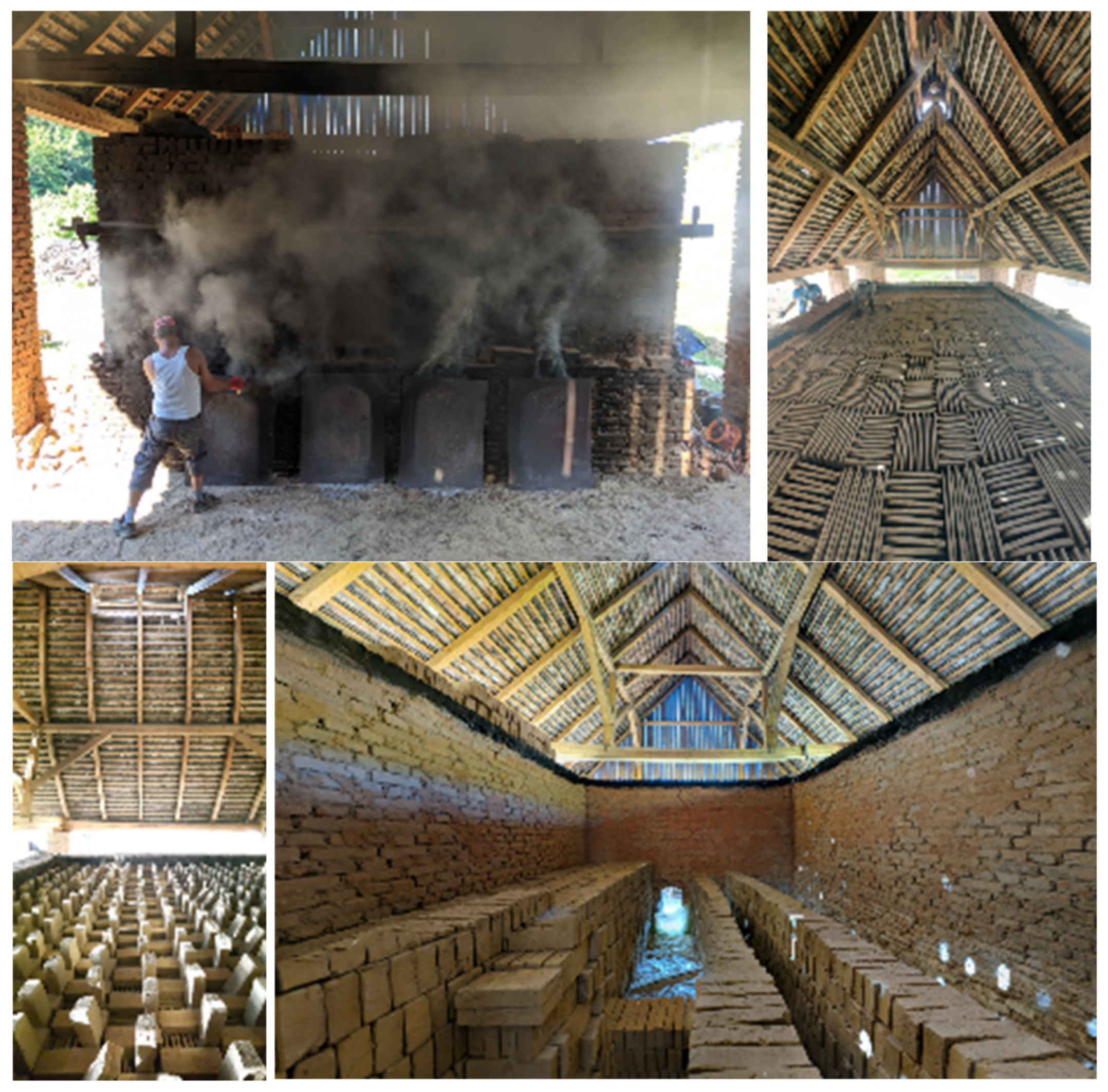
In the 20th century, almost every village had its own kiln, providing building materials for local demand. Nowadays, the Apoș workshop is the only traditional workshop of Southern Transylvania, being one of the few remaining in Romania. Operated by the Bartha family, the workshop produces traditional roof tiles and bricks of certified quality, and is able to fire four kilns per year, summing up to 10,000 roof tiles and 5000 bricks per batch. Made entirely by hand on the worktables inside the dryer, the process is temperature- and humidity-dependent and involves continuous work in the spring and summer periods (
Figure 3).
In this context, the Apoș Summer School was initiated as a strategic educational response to the accelerated degradation of the Transylvanian vernacular landscape, specifically targeting the critical loss of historic roofscapes due to industrial substitution. Conceived by Asociația Monumentum and the Faculty of Architecture and Urbanism in Timișoara, the program aims to counteract acculturation by re-anchoring architectural pedagogy in material reality. It seeks to revive the endangered craft of traditional tile-making and foster a sustainable preservation ethos among future architects through direct, haptic engagement with local materials and heritage structures.
The micro-museum represents a conceptual link between production, education, and exhibition, being seen as not only an architectural product, but also as a didactic tool and cultural symbol of the importance of the Transylvanian rural architectural landscape.
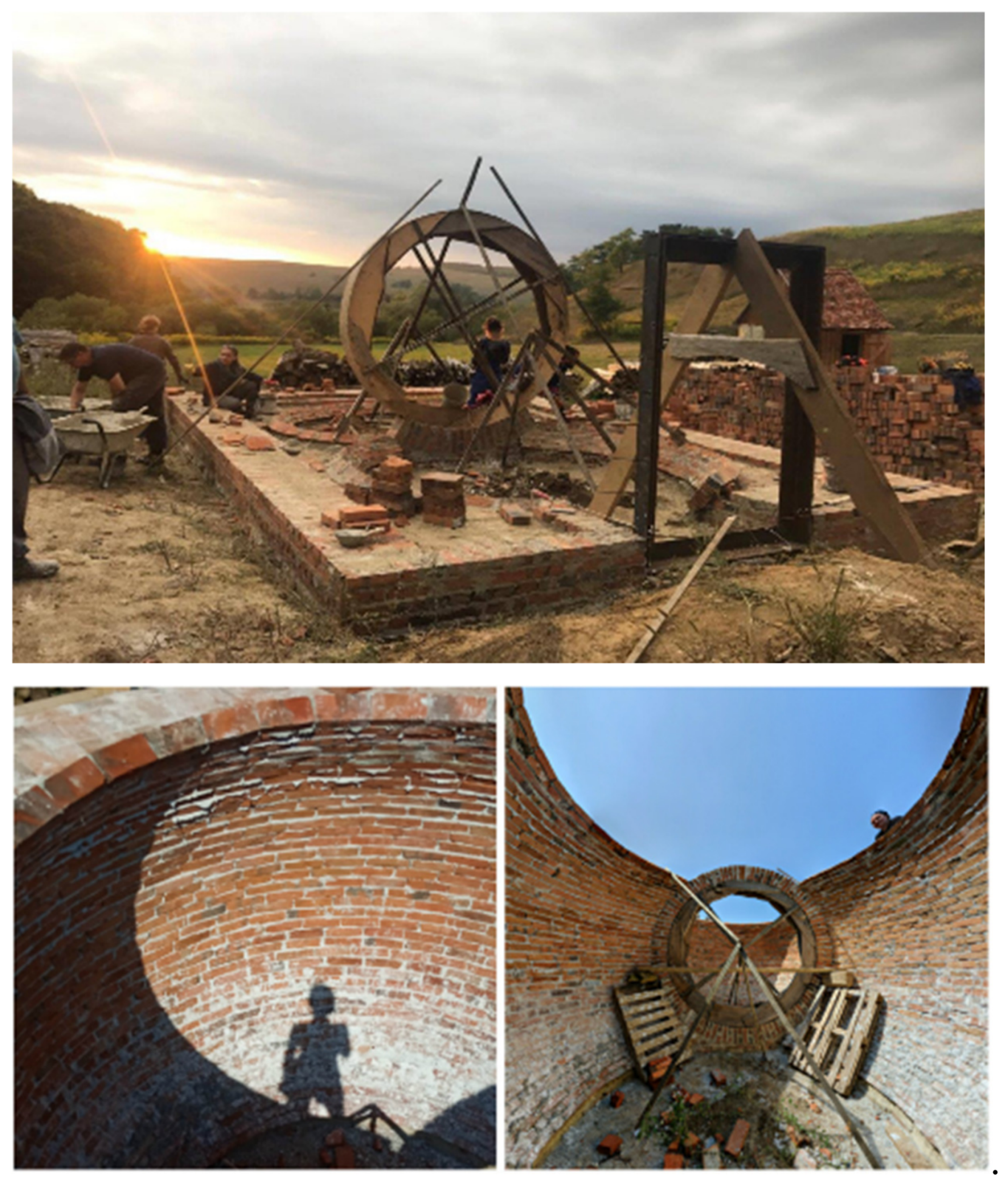
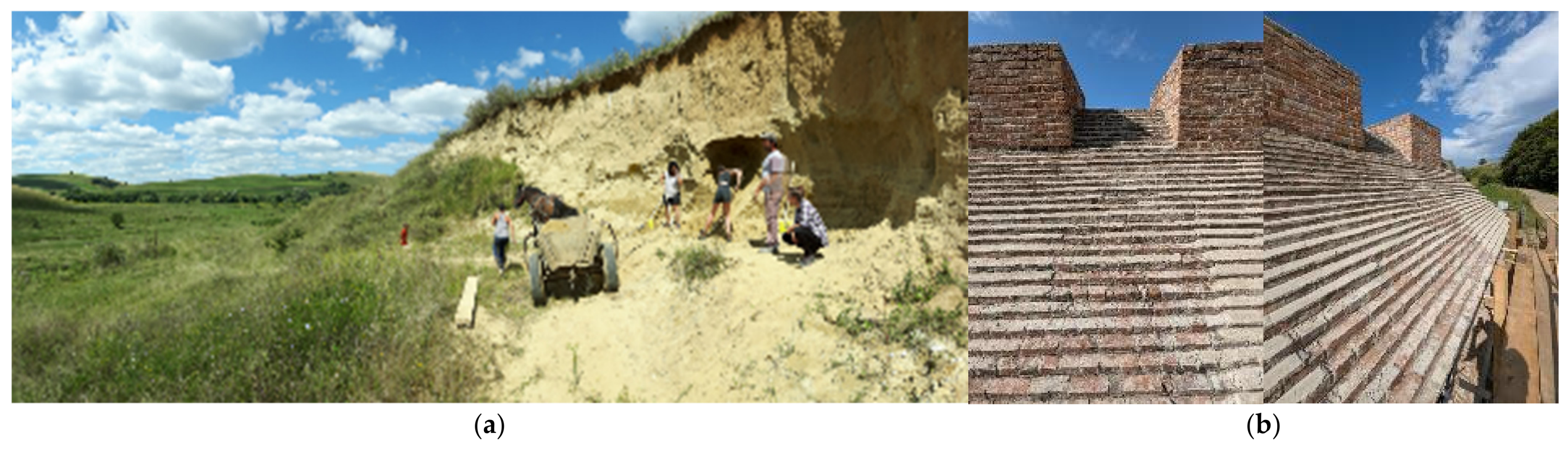
The students who attend Apoș Summer School are involved in all stages of the project, from the process of design to the last stage of execution. They participate in the processes of clay extraction, manual brick and tile production based on traditional techniques, masonry work, lime-based mortar preparation, and building and coordinating (
Figure 4).
The entire structure of the building is made of locally fired bricks that are laid on a stone foundation bonded with clay-sand mortar, based on vernacular building techniques and using local materials collected from the neighborhood of the site.
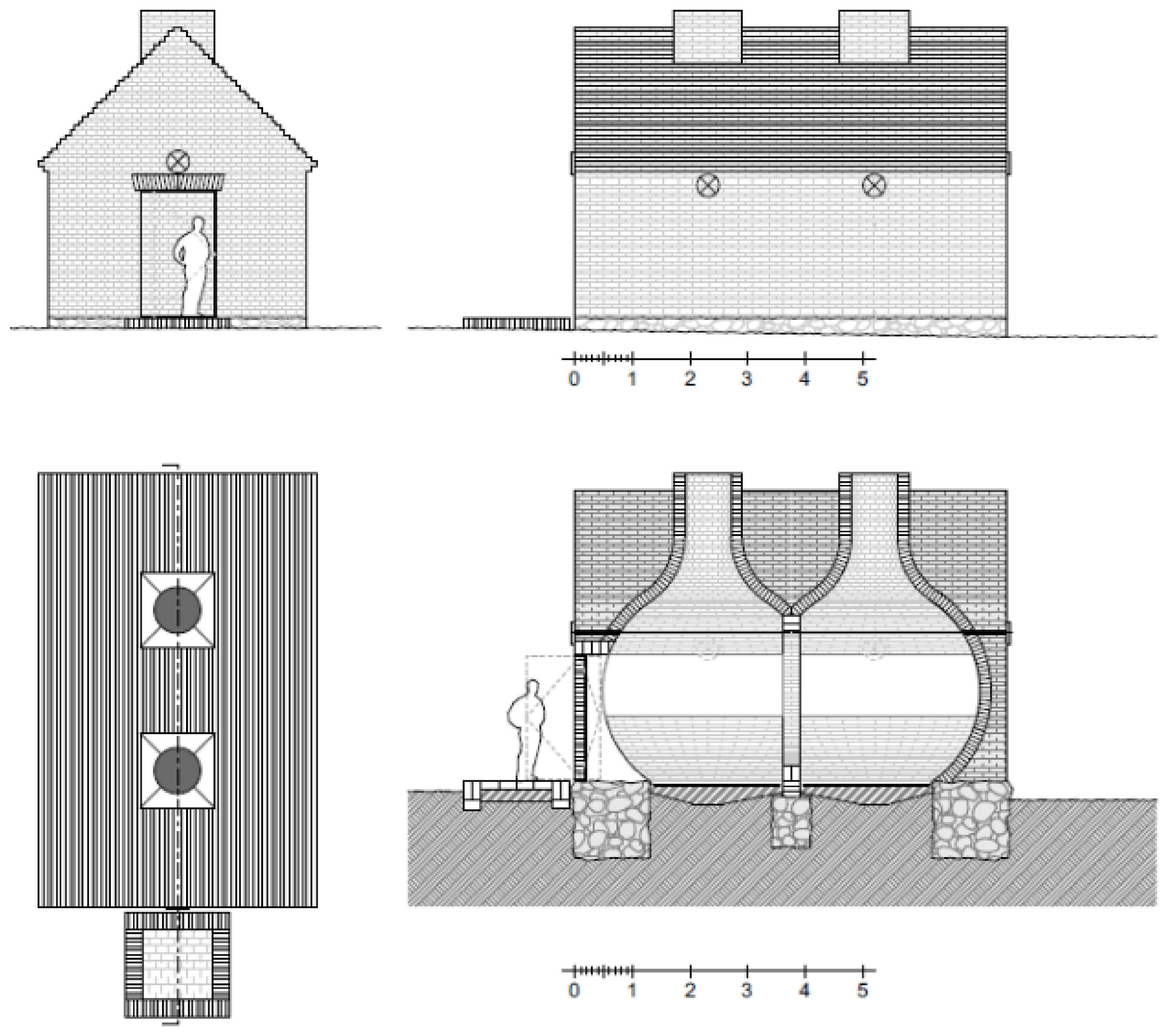
The micro-museum was designed as a compact structure made of brick, with thick masonry walls, a masonry-vaulted interior space, and a masonry-inclined roof. The organisation of the interior space follows a central-circular exhibition niche surrounded by brick arches and protected by a brick dome, with an oculus for natural light and ventilation, as presented in
Figure 5.
The symbolic component of the micro-museum lies in the architectural language inspired by the traditional kilns and storage buildings in the area, highlighting the symbolic relationship between the newly built building and the exhibited tiles. Acting as a crucible that distills the local building techniques, the pure form resulted from the concept contest started in the first summer school and was built over almost a decade by numerous students and supervisors.
The micro-museum provided a suitable real-scale learning environment for evaluating the behaviour of tested materials and addressing practical construction aspects.
Within the present study, the architectural summer school functioned primarly as a real-scale experimental platform for testing the in situ performance of HAp-modified mortars under environmental exposure conditions specific to vernacular architecture and heritage interventions.
2.1.2. Eco-Materials Intervention Strategy at Roof Level
The building materials for the construction are sourced entirely locally, starting from the sandstone, clay, and bricks and including the sand and the lime. Initially, the mortar mixture included fine sand with limited clay content, sourced from the village sandpit. This mixture proved to work well for the foundations and the main part of the building, yet triggered the need for a different approach.
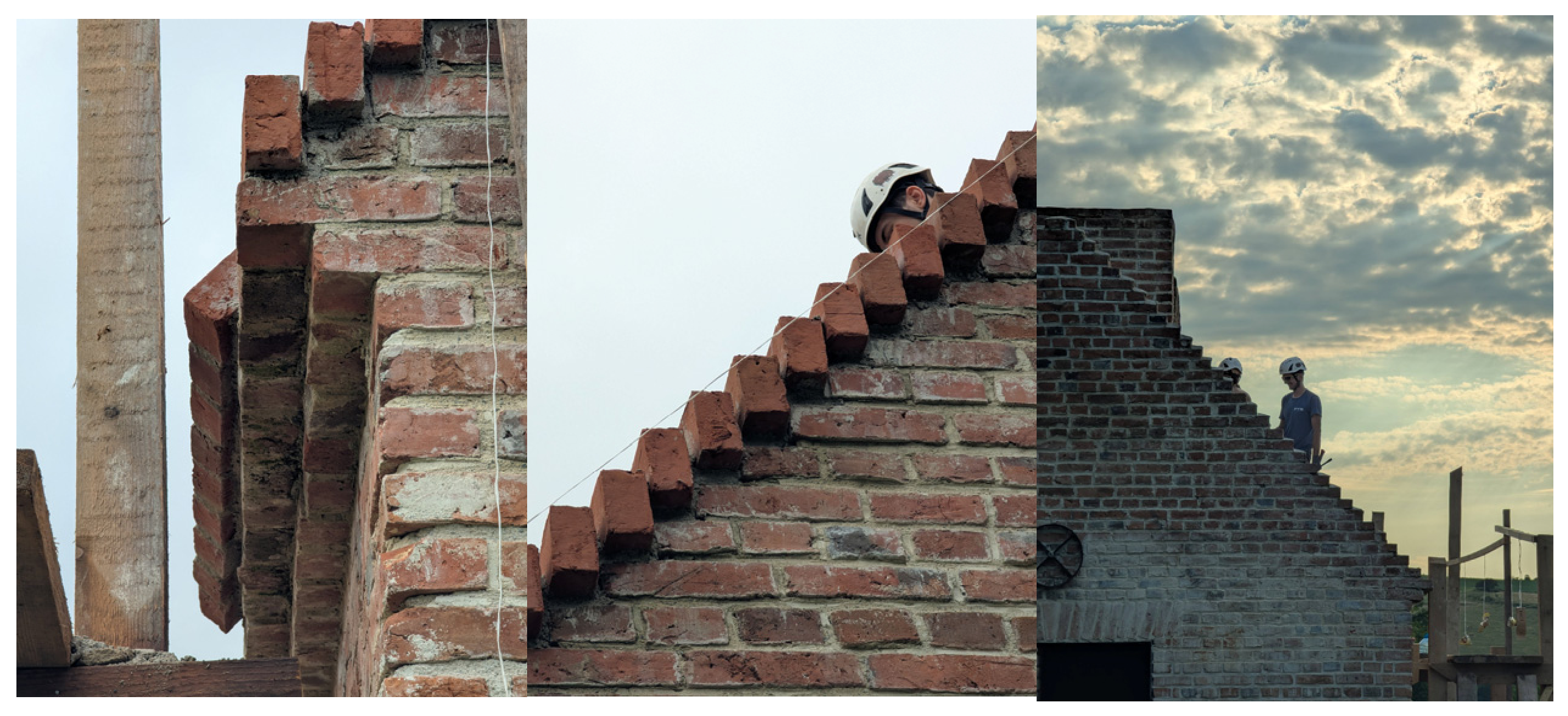
Because the micro-museum was intended to be a space for learning for the architecture students, only vernacular building techniques were used, as well as some experiential methods, which were not always successful. In previous years of the summer school, on the surface of the inclined masonry roof, a hydraulic lime mortar was applied, aiming to improve water resistance without affecting the compatibility with the masonry substrate. However, after just one winter with several freeze–thaw cycles, partial detachments were observed, and visible degradation was noticed in large areas (
Figure 6). This situation happened because of the lack of adaptation of the material to the environmental particularities, and the lack of consideration of lime-based mortars’ limitations when it comes to long-term performance [
28], representing a valuable learning experience for the students.
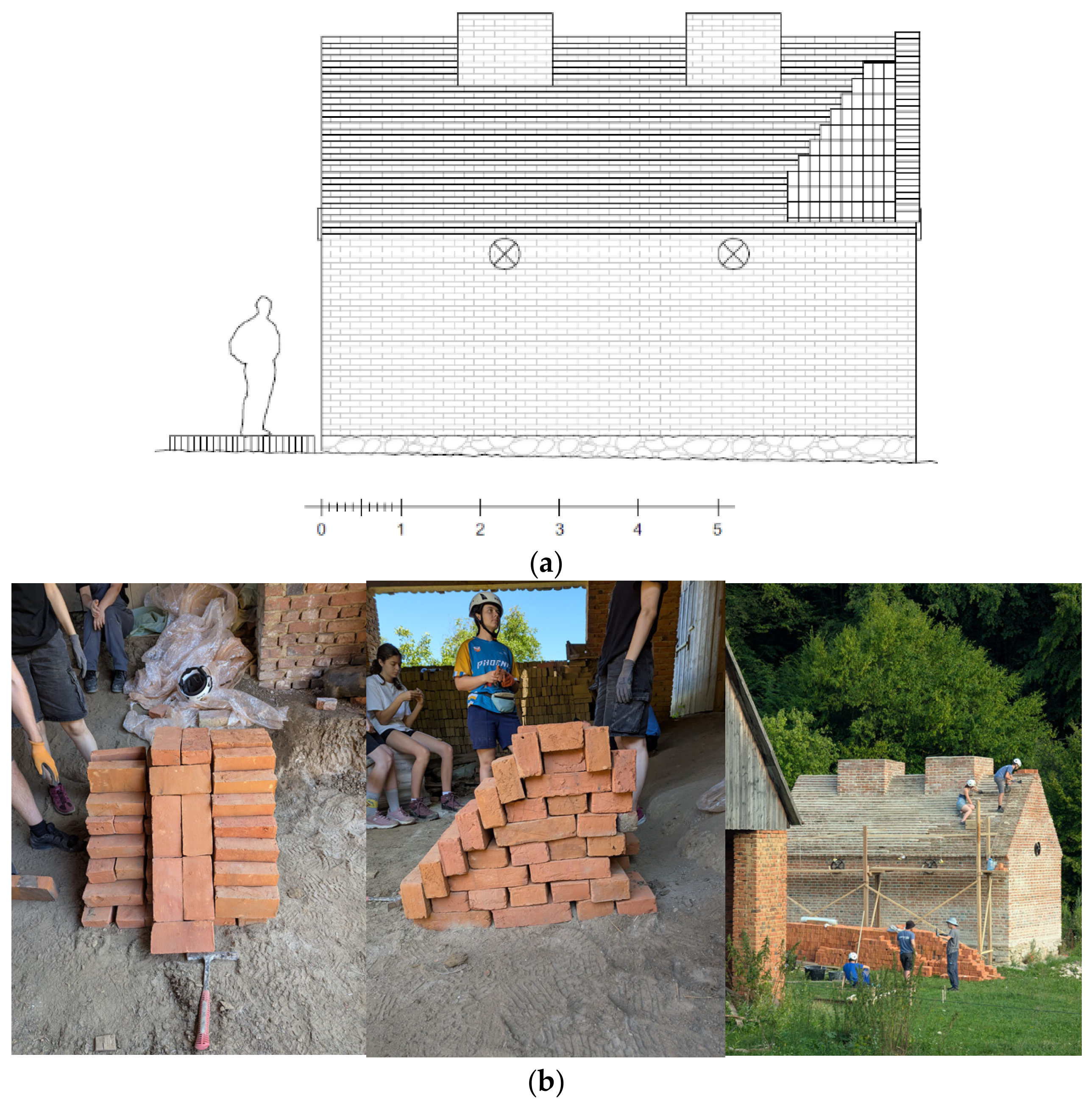
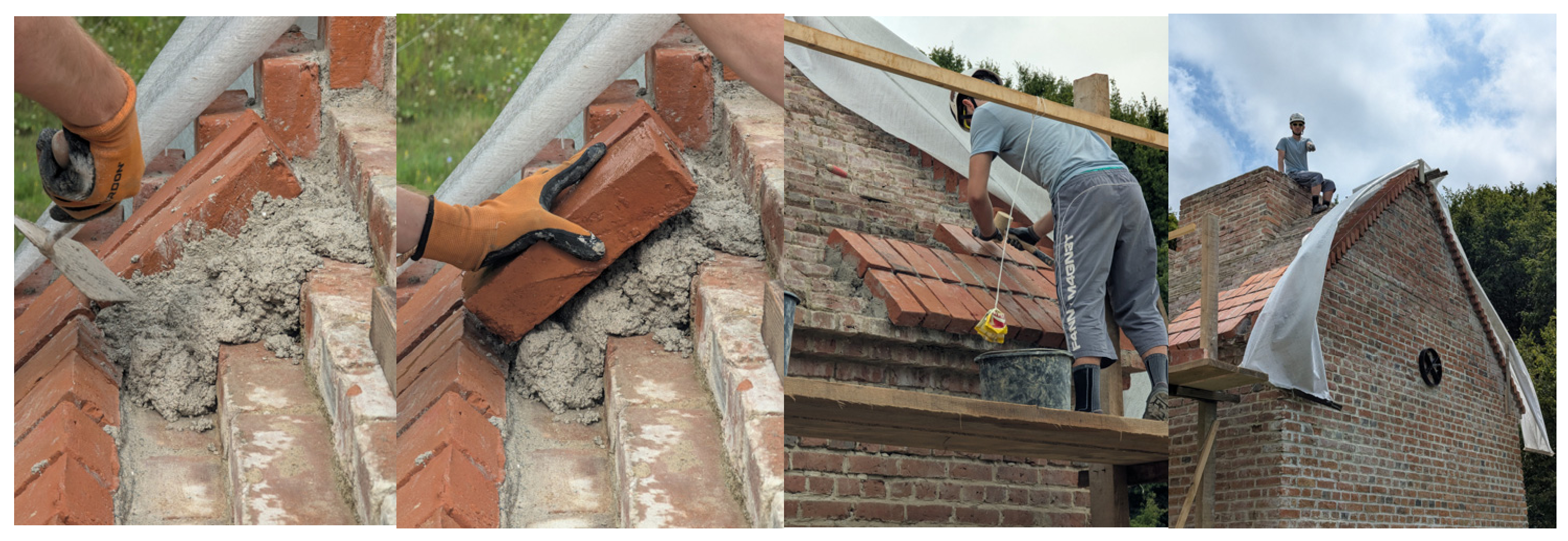
To address this challenge, the last edition of the summer school came with a new intervention strategy for the masonry roof, based on a different modular brick construction (
Figure 7) and a hydroxyapatite-based eco-material, which is described in the next chapter, used as a lime and protective treatment (
Figure 8). Adding hydroxyapatite to the surface mortar components represents a contemporary research direction that has already shown good results, especially in terms of improved surface cohesion and durability of the materials [
4,
32,
33].
The integration of such an innovative eco-material into a real architectural context represents an important achievement of the Apoș Summer School, offering students the opportunity to learn from innovative materials construction while respecting traditional building systems and materials (
Figure 9).
2.2. Lime Mortars Based on Hydroxyapatite: Material Properties, Testing Procedures, and Application Techniques
Hydroxyapatite (HAp) is a calcium phosphate compound with the chemical formula Ca
10(PO
4)
6(OH)
2. Because of its mineral nature, chemical stability, and compatibility with calcareous substrates, HAp was chosen as a functional additive for lime-based mortars. As a consolidating and protective agent that does not disrupt the physicochemical equilibrium of historic materials, hydroxyapatite is being studied more and more in the field of cultural heritage conservation. The reference mortar was made with locally sourced natural aggregates and air lime as a binder. These ingredients were chosen to match the granulometry, porosity, and mineral composition of conventional mortars that have historically been used in vernacular architecture. This strategy guaranteed compatibility with the micro-museum’s existing roofing and brick masonry. Hydroxyapatite was introduced into the mortar matrix in controlled proportions, which were determined during preliminary laboratory trials aimed at ensuring adequate dispersion and workability. The additive was homogeneously distributed within the dry binder-aggregate mixture before water addition to prevent particle agglomeration and to promote uniform interaction with the lime matrix. The mixing procedure followed a standardized sequence, beginning with the dry blending of all solid components and followed by gradual water addition under continuous mechanical mixing until the desired consistency was achieved [
34,
35,
36].
With special attention to plasticity, adhesion during application, and open working time, the properties of the fresh mortar were modified to mimic those of the traditional lime mortars frequently used in vernacular construction. To maintain the formulations’ eco-friendliness and heritage compatibility, no artificial polymers or incompatible chemical admixtures were utilized. The student-built micro-museum, which has a brick roofing system built using conventional methods, had the HAp-modified mortar applied at the roof level. The early deterioration of a traditional lime mortar layer used in a previous stage of construction, which showed inadequate resistance to environmental exposure, served as the impetus for the intervention. Under academic supervision, students applied the new mortar by hand while adhering to traditional workmanship techniques, layer thickness, and curing conditions. This guaranteed methodological coherence and applicability to actual conservation situations. Natural environmental conditions were used for curing, and precautions were taken to prevent the lime matrix from drying out too quickly and to ensure that it carbonated properly. In compliance with recommended practices for lime-based materials, the applied surfaces were shielded from direct sunlight and excessive moisture during the initial curing period [
37,
38,
39,
40].
During the summer school activities, representative mortar samples were taken straight from the application site for experimental evaluation. To guarantee comparability, more reference specimens were created under carefully monitored circumstances. In accordance with standardized protocols modified for lime-based mortars and conservation materials, the samples were conditioned and made ready for laboratory testing. The experimental testing framework was created to evaluate performance indicators related to heritage compatibility and durability, such as resistance to environmental stressors like freeze–thaw cycles, adhesion to brick substrates, and water absorption behavior. In order to maintain methodological consistency across all samples, testing methods were chosen to reflect both laboratory-based characterization and in situ performance requirements. Only the material selection, formulation procedure, application methodology, and experimental protocols used in the study are covered in this section. The following section on in situ performance assessment and heritage compatibility presents the material performance evaluation, a comparison with conventional lime mortars, and an interpretation of the findings.
Compared to air lime mortars, natural hydraulic lime (NHL) mortars offer superior mechanical performance, reduced shrinkage, and enhanced resistance to moisture damage, making them popular for use in the preservation of historic masonry. Because of atmospheric conditions, they are a binder that combines carbonation and hydration. Unlike Portland cement, NHL does not protect against salt-induced damage by retaining high vapor permeability and mechanical compatibility with old substrates. The use of silica or hydroxyapatite (HAp) in natural hydraulic lime (NHL) mortars, which promote favorable microstructural and chemical changes, is an attempt to get around these drawbacks. For instance, NHL-SiO
2 systems are based on pozzolanic reactions that produce more C-S-H phases that densify the matrix and boost compressive strength when Ca/Si ratios decrease [
41,
42]. On the other hand, through Ca-phosphate interfacial interactions, NHL-HAp systems favor chemical affinity with calcareous substrates, resulting in decreased microcrack propagation without an excessive increase in stiffness. NHL-HAp systems provide better compatibility, vapor permeability, and chemical stability in environments with salt or varying humidity, while NHL-SiO
2 mortars show superior mechanical performance and freeze–thaw resistance due to densification [
43,
44,
45,
46].
A system that combines hydraulic hydration, pozzolanic densification, and calcium-phosphate interfacial bonds is created when hydroxyapatite (HAp) and silica are added to natural hydraulic lime (NHL) mortars. A microstructure with decreased pore connectivity, decreased crack density, and enhanced freeze–thaw resistance can be produced by employing such a system. Consequently, the NHL-HAp-SiO
2 ternary formulation is an appropriate composite for conservation that can boost durability without sacrificing historic masonry. Additionally, because HAp is natural, has low toxicity for indoor use, is suitable for indoor plaster or insulation layers, provides healthy indoor air quality (VOC absorption), is biodegradable, and is renewable, it could be used as a bio-based mortar with hydroxyapatite (for indoor eco-design) [
47,
48].
In order to preserve Romanian architectural heritage, this research paper will introduce new mortar formulations that incorporate hydroxyapatite. According to the study, mortars containing 20% hydroxyapatite had the best mechanical and antimicrobial qualities, making them appropriate for restoration. The selection of 20% hydroxyapatite content was selected based on previous experimental results obtained in the Banloc heritage case study, in which this concentration showed the best balance between mechanical improvement, reduced water absorption, adhesion, and compatibility with historic substrates. The present study focuses specifically on validating the transferability of this formulation under real-scale application conditions in the Apos micro-museum case study. Finding the composition with the best mechanical and physical qualities for possible future use in architectural heritage restoration and regeneration was the goal. The physical, chemical, and mechanical characteristics of the newly prepared specimens, the characterization of HAp, its incorporation into the mortars and preparation of some specimens, and the financial aspects of this new solution that uses HAp as a green alternative in conservation and restoration will be investigated.
The experimental workflow is based on three interconnected steps:
- (1)
the identification process of the degradation stage observed after previous roof work;
- (2)
the laboratory development and characterization of HAp-modified formulations under controlled conditions;
- (3)
the in situ validation through the application process of the material on the masonry roof system.
This approach aims to establish a direct correlation between architectural considerations, laboratory testing parameters, and long-term material performance assessment under environmental exposure, creating the context for a ‘research by design’ learning process.
2.3. Materials
This section describes exclusively the material selection, formulation process, application methodology, and experimental protocols adopted in the study. The evaluation of material performance, comparative analysis with traditional lime mortars, and interpretation of results are presented in the following section dedicated to in situ performance assessment and heritage compatibility.
Hydroxyapatite (HAp), a calcium phosphate compound with the chemical formula Ca10(PO4)6(OH)2, was selected as a functional additive for lime-based mortars due to its mineral nature, chemical stability, and compatibility with calcareous substrates. Hydroxyapatite has been increasingly investigated in the field of cultural heritage conservation as a consolidating and protective agent that does not interfere with the physicochemical equilibrium of historic materials.
Hydroxyapatite [HAp, Ca10(PO4)6(OH)2], was a commercial powder provided by ACROS ORGANICS, Germany. The hydroxyapatite has a particle size of 50–70 nm, 45–60 mass % CaO content, and 30–50 mass % P2O5 content.
Oxide-based SEM–EDS analysis (
Table 1) indicates a quartz-rich composition for the coarse sand (SiO
2 ≈ 71 wt%), while the fine fraction exhibits elevated Al
2O
3 and Fe
2O
3 contents, consistent with increased clay mineral contributions and higher loss on ignition values.
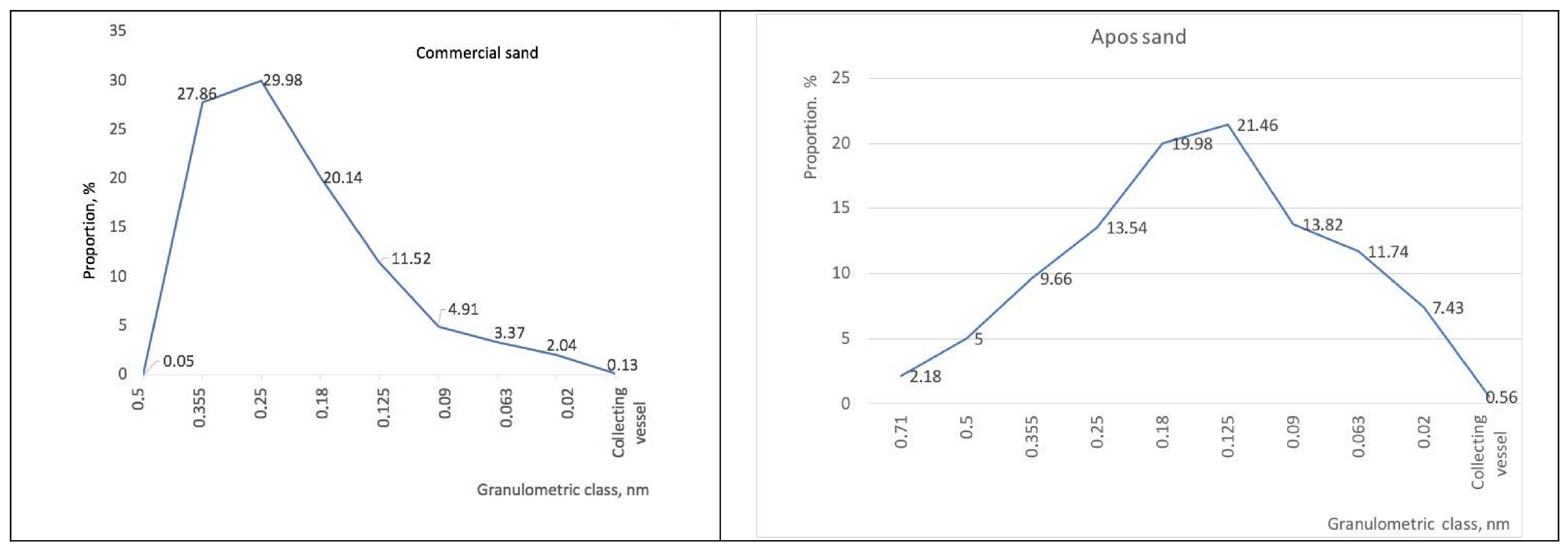
The experimental program was based on air-lime mortars prepared using traditional lime binders and siliceous aggregates with controlled granulometric distribution, as presented in
Figure 10.
The size distribution of the sand particles was evaluated using the high-performance vibrating sieve machine 3 pro Sieve Shaker from FRITSCH GmbH, with the address: Mommsenstraße 57, 10629 Berlin, Germany, which offers the rapid determination of quantitative particle size distribution in the laboratory. As a rotary sieve machine with an electromagnetic drive, it is suitable for sample quantities of up to 2 kg and for particle-size analysis within a measuring range from 20 μm to 63 mm. The test sieves used for this range should comply with ISO 3310-1:2016 [
49].
A total of 20 mortar specimens (5 cm × 5 cm × 5 cm) were prepared from a mixture of NHL and limestone paste, sand (commercial or Apoș type), and water with the ratio 3:2.5:1; subsequently, hydroxyapatite (HAp) (10–30%) was added and mixed until a homogeneous composition was obtained.
2.4. Equipment
Stereomicroscopy was performed using an Euromex StereoBlue binocular (PeplerOptics, Cheshire, GB) (magnification of 40×).
For scanning electron microscopy (SEM), a FESEM-FIB (field-emission scanning electron microscope for electronics and focused ion beam) workstation—the Auriga model (Carl Zeiss SMT, Oberkochen, Germany)—was used. Elemental analysis was conducted with an energy-dispersive X-ray spectroscopy (EDS) device on a TESCAN VEGA3 LMU (Tescan, Brno–Kohoutovice, Czech Republic), equipped with an Oxford X-act EDS detector (15–20 kV). Samples were coated with a 5–7 nm Au/Pd film before imaging. Secondary electron (SE) topography images were taken and analyzed in the sample chamber using the Everhart–Thornley secondary electron detector with a Faraday cup (SESI)/column annular type SE detector (InLens) (acceleration voltages of 5 kV and 10 kV for EDS for the compositional analysis of the investigated samples).
Simulated computed tomography (pseudo-CT) was carried out by image segmentation performed with ImageJ software for Mac v1.54 (Softonic International S.A., © 1997–2025, Barcelona, Catalonia, Spain). ImageJ is an open-source software used to process and analyze pores, voids, and cracks distributed throughout the matrix [
50,
51,
52].
The chromatic parameters were measured using a CR-410 colorimeter from Konica Minolta, Tokyo, Japan. The color coordinates and color differences were interpreted according to the CIELAB color space and ASTM D2244-16 [
53]. The analyzed parameters included L* for lightness, ranging from 0 for black to 100 for white, a* for the red/green coordinate, where +a* denotes red and −a* denotes green, and b* for the yellow/blue coordinate, where +b* denotes yellow and −b* denotes blue.
An accelerated aging process was simulated when the paint samples were introduced into the climate chamber KK150 for 3 days at T = 50°C and RH = 15%, as well as for 30 days. The KKS series of climate chambers (up to 100 °C) (POL-EKO® sp. k., Wodzisław Śląski, Poland) are advanced units designed for precise control of temperature and humidity in laboratory and industrial settings. Equipped with a SMART PRO controller with a 7 inc-touch screen and remote monitoring and programming capabilities (LabDesk software 1.32.0), they enable the accurate reproduction of a wide range of environmental conditions—from low temperatures up to 100 °C, and humidity from 10% to 90% RH. Thanks to steam humidification and forced-air circulation, these chambers ensure stable conditions, which are crucial for the repeatability of research and testing. Standard features include automatic defrosting (NO FROST), open-door alarms, communication ports (Wi-Fi, LAN, USB), and data-download capabilities.
The water absorption test was performed according to STAS 6200/12-73, following the main steps: total immersion of the samples in distilled water for 24 h and a drying step at 40 °C for 8 h until constant mass (W1). The mass (W2), was weighed after immersion. The value of water absorption was determined using Equation (1):
Water repellency (WR) was determined using a procedure adapted from [
45], considering the water-drop absorption (WA) and Equations (2) and (3). First, the mortar specimens were dried dried to constant mass, for approx. 8 h at 60 °C, and then cooled at room temperature. A total of 1 mL of distilled water was dropped onto the specimen’s surface and the time for the total absorption of the water (WA) was measured in minutes (tn and tx—absorption time into the specimen’s surface).
The freeze–thaw test was conducted following the STAS 6200/15-83, and was used for evaluation of the frost susceptibility, i.e., the specimen’s gelivity, using Formula (4):
where the mass (m
1) is the point where the weight difference between two consecutive measurements was less than 0.1% of the previous value. All the measurements were carried out using specimens dried at 105 ± 5 °C for one hour. After that, the samples were immersed for 15 min in distilled water at room temperature and weighed again (m
2). Then, the specimens were kept in a freezer at −18 ± 5 °C for 3 h, then removed and immersed in distilled water at room temperature for thawing. The cycle was closed by thawing the frozen samples in water. The test consisted of 20 complete cycles. Using the final weight (m
3), the frost resistance was calculated as the gelivity coefficient (μg)—Equation (4).
The capillarity test consisted of measuring the absorption of water by capillarity and allowed the evaluation of the amount of water absorbed by capillary growth in a certain time; it was carried out on artificial stones in the shape of a parallelepiped with a size of 2 × 2 × 7 cm. The artificial specimens were placed in a Petri dish and then water was added at a height of 1 cm from the base of the sample. The height (H) was measured every minute for 5 min, every 5 min for 25 min, and then every 30 min. The results were recorded.
The contact angle was measured for each wood specimen in order to evaluate the hydrophobicity improvement. The test was made at 21 °C, in triplicate, and reported as an average. The droplet was photographed after placing it on the straight wood surface and the values were obtained using the DropAnalysis plugin LB-ADSA from ImageJ (version 1.54t) according to [
54,
55]. The test was made at a constant temperature of 21 °C, in duplicate, and reported as an average.
The compressive strength was estimated in compliance with ASTM C805, with a Silver Schmidt Hammer (Proceq, type L) with an impact energy of 0.735 Nm and a testing range of 10–100 N/mm2. Each specimen was measured ten times, with a minimum of 25 mm between testing points and from the sample edges. The rebound number (Q-value) was measured and reported as an average while the hammer was held vertically (90° downward). Equation (5), the instrument calibration curve, and the specific constant (2.77) were taken into consideration when estimating the in situ compressive strength.
The results were studied using the one-way ANOVA repeated measures test. Statistical analyses were conducted using GraphPad Prism Software, v. 9.2. The obtained results were compared by Tukey’s test (p < 0.05).
3. Results. In-Situ Performance Assessment and Heritage Compatibility of HAp-Modified Mortars
The methodology followed in the paper is structured in clearly defined subsections, experimentally presenting the material formulations and testing procedures in a structured manner. The transition from the educational framework to the experimental investigation is directly anchored in the structural and environmental requirements of the micro-museum.
In this sense, in order to understand the consolidation mechanism as well as the materials used, before starting the tests, some analysis of the individual components was carried out. In
Table 2, we collect the most frequently used techniques in the qualitative analytical characterization of each of the components, without repeating what our group has previously reported [
4].
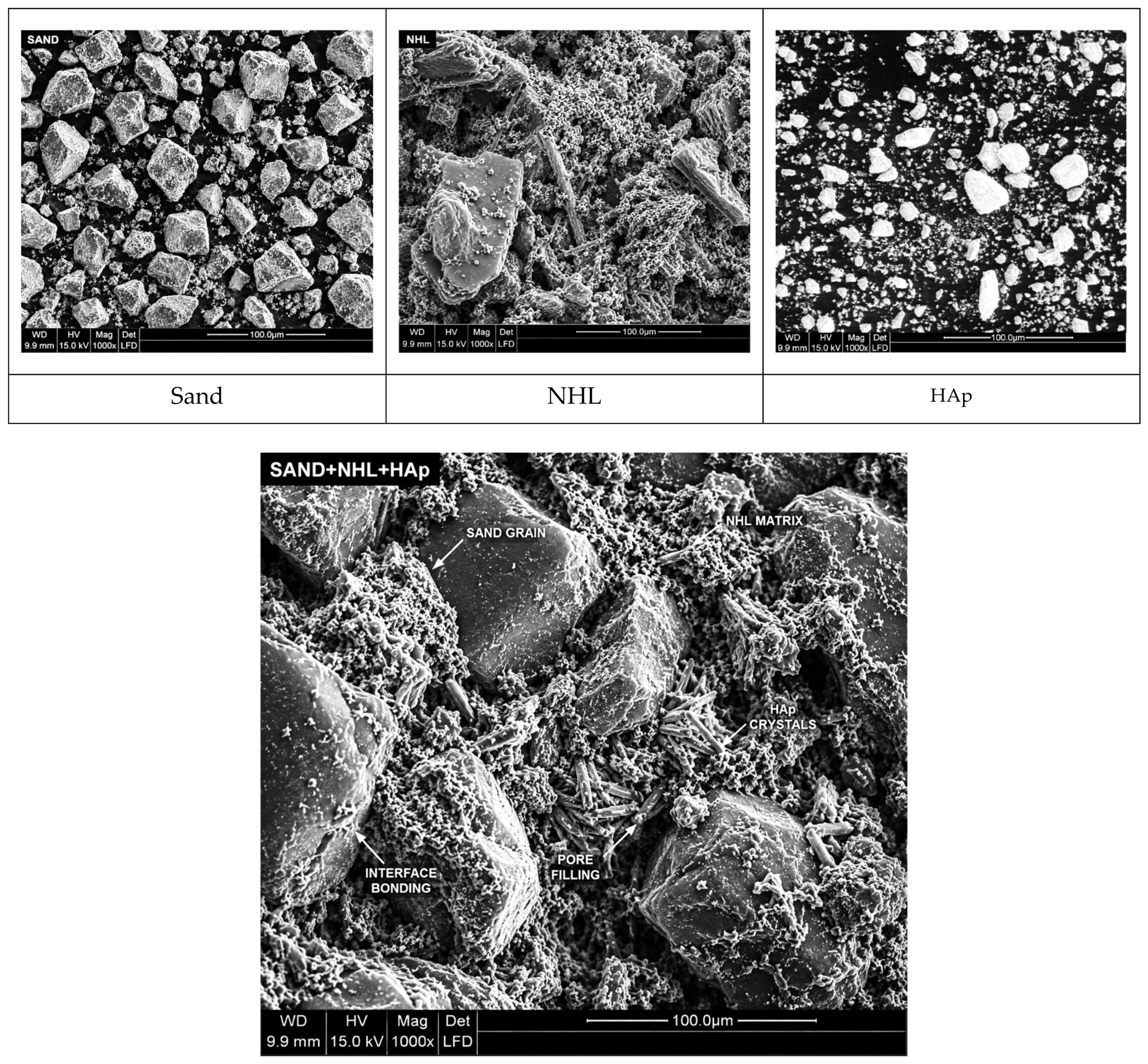
In order not to repeat the previously published results of our group, only SEM images at the same magnification for sand, NHL, and HAp, as well as for their mixture (
Figure 11), were selected. All these images are the most representative for the subsequent tests.
The premature degradation observed in the initial lime-based mortar applied at the roof level highlighted the need for a more durable and compatible material solution under conditions of direct exposure to humidity, thermal variations, and freeze–thaw cycles. Consequently, the laboratory testing program was not designed as an isolated analytical process, but as a response to real architectural constraints identified during the construction and monitoring phases of the summer school. Parameters such as water absorption, adhesion, freeze–thaw resistance, and microstructural stability were specifically selected to meet the functional requirements of the masonry pitched roof system.
In this sense, the experimental methodology reflects a feedback-based approach, where in situ observations inform laboratory investigations, and laboratory results are subsequently validated through full-scale application. This integrated framework ensures coherence between architectural education and materials science.
The in situ performance assessment of hydroxyapatite (HAp)-modified lime mortars aimed to evaluate their behavior under real exposure conditions specific to vernacular architecture and heritage interventions. Water absorption, adhesion to brick substrates, resistance to freeze–thaw cycles, time-dependent performance, and comparative behavior with respect to conventional lime mortars were among the crucial durability and material-substrate compatibility criteria that were examined.
3.1. Water Absorption Behavior
Water absorption is a key parameter in evaluating mortars used for heritage buildings, as it directly influences the degradation processes associated with soluble salts, humidity, and freeze–thaw cycles. The results of tests carried out on samples taken in situ revealed a decrease in the absorption capacity in the case of mortars modified by HAp compared to the traditional lime mortar previously used on the same structure. This evolution can be explained by the formation of a more compact and coherent microstructure of the lime matrix induced by the presence of hydroxyapatite, which reduces the active capillary porosity without significantly affecting the vapor permeability. From a conservation perspective, this behavior is advantageous, as it limits the accumulation of water in the liquid state while maintaining the vapor diffusion capacity and the hygroscopic balance of the material.
3.2. Adhesion to Brick Substrate
For consolidation and protective interventions to be stable and effective, adhesion to the brick substrate is essential. Improved adhesion in the case of HAp-modified mortars was observed in the treated areas. This was demonstrated by a more intimate and consistent bond between the mortar layer and the ceramic support, with no signs of early detachment or cracking. Enhanced interfacial cohesion was a result of the hydroxyapatite and lime matrix’s beneficial interaction as well as their chemical compatibility with the brick substrate. Because mechanical and environmental stresses are more noticeable in roof-level applications and exposed elements, this factor is especially important.
3.3. Freeze–Thaw Resistance (Gelivity)
Resistance to freeze–thaw cycles is a determining factor for ensuring the durability of mortars used in outdoor conditions. The analyses carried out have highlighted the fact that mortars modified by HAp exhibit superior behavior compared to traditional mortars based on lime, characterized by increased structural stability and the lack of visible degradation even after repeated exposure to such environmental stress.
This improved performance can be correlated with the reduced water uptake and a more homogeneous pore structure, which limits internal stresses generated by water freezing within the material. From a heritage conservation standpoint, such behavior is essential for ensuring durability under variable climatic conditions. The relatively low gelivity values recorded for the HAp-modified mortars are considered plausible and are associated with the improved resistance of the material to freeze–thaw cycles. This behavior can be explained by the reduced water absorption and the refinement of the pore structure, which limit internal stresses generated during freezing.
This interpretation is supported by the experimental results presented in
Table 3, where a significant decrease in gelivity is observed for specimens incorporating hydroxyapatite.
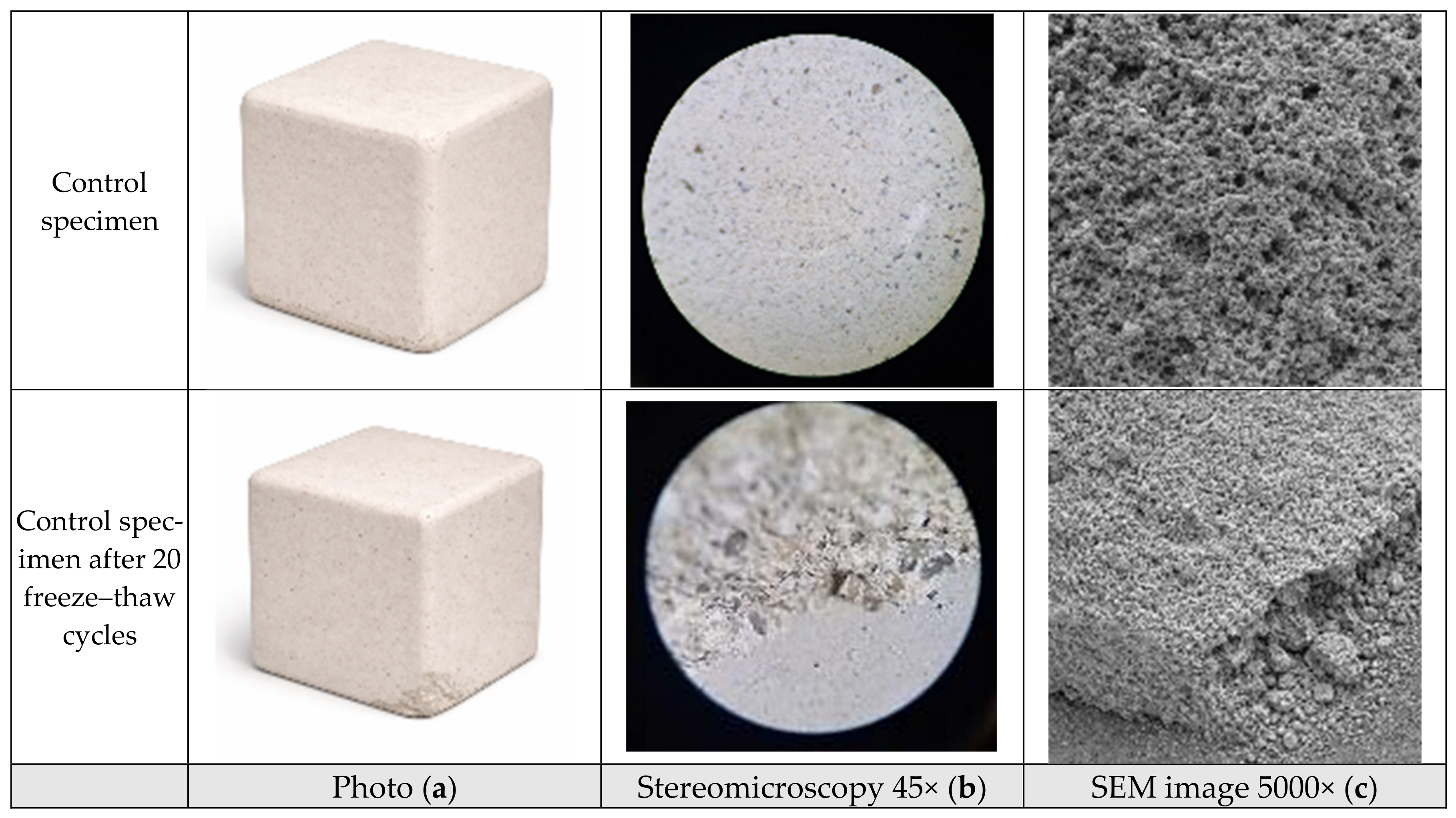
The control sample with commercial sand (initial and after 20 freeze–thaw cycles) was investigated by stereomicroscopy and SEM (
Figure 12).
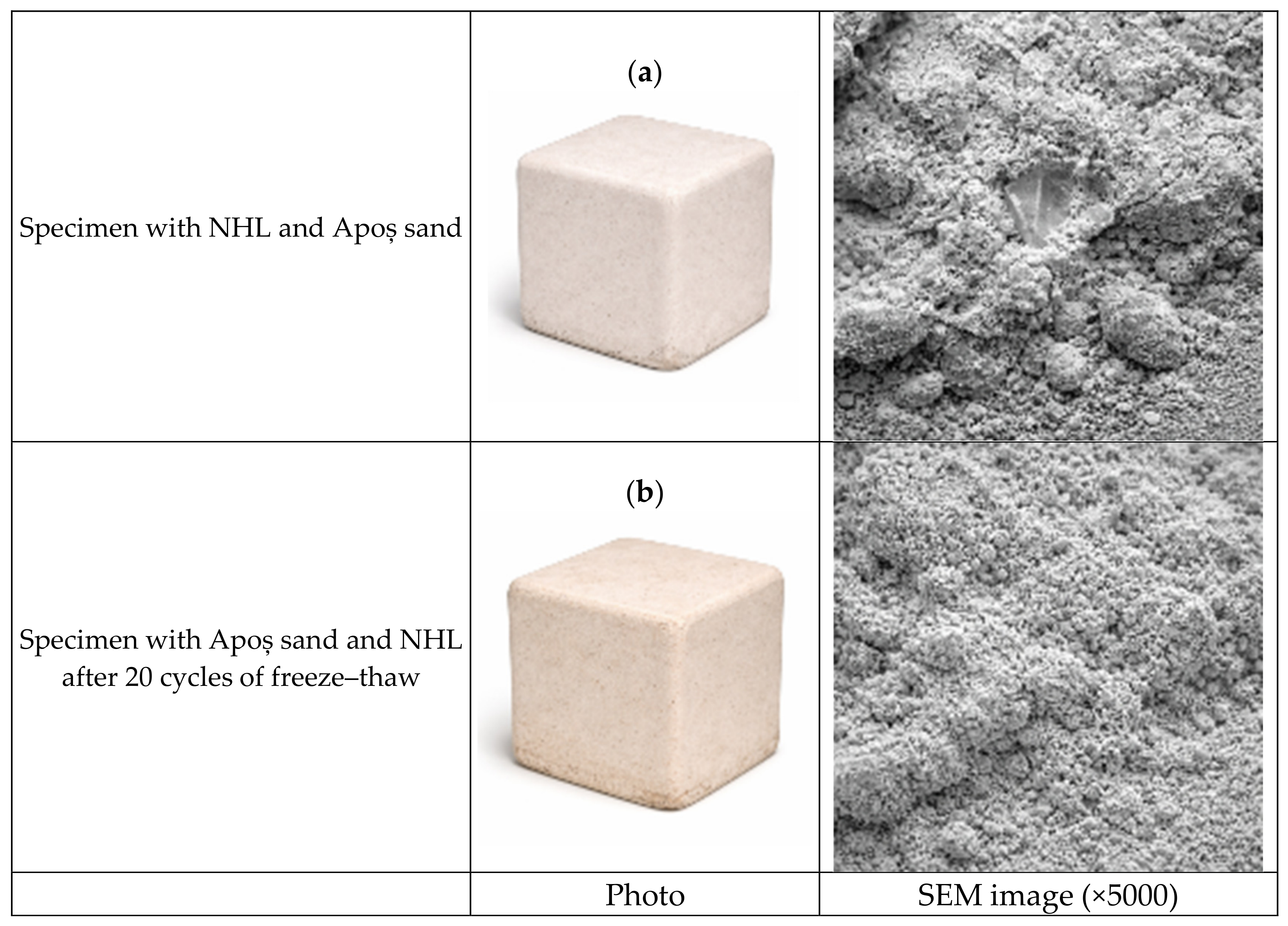
The initial control sample is relatively uniform, with a pore size mostly <10–20 µm. After freeze–thaw cycles, the sample became highly heterogeneous, friable, and displayed a wide range (micro to >100 µm).
The samples generated with Apoș sand look more homogeneous, and the behavior after 20 freeze–thaw cycles is less significant. The dark zones are typically pores/voids and opaque minerals, or isotropic phases (e.g., glassy fragments/amorphous binder pockets (
Figure 13).
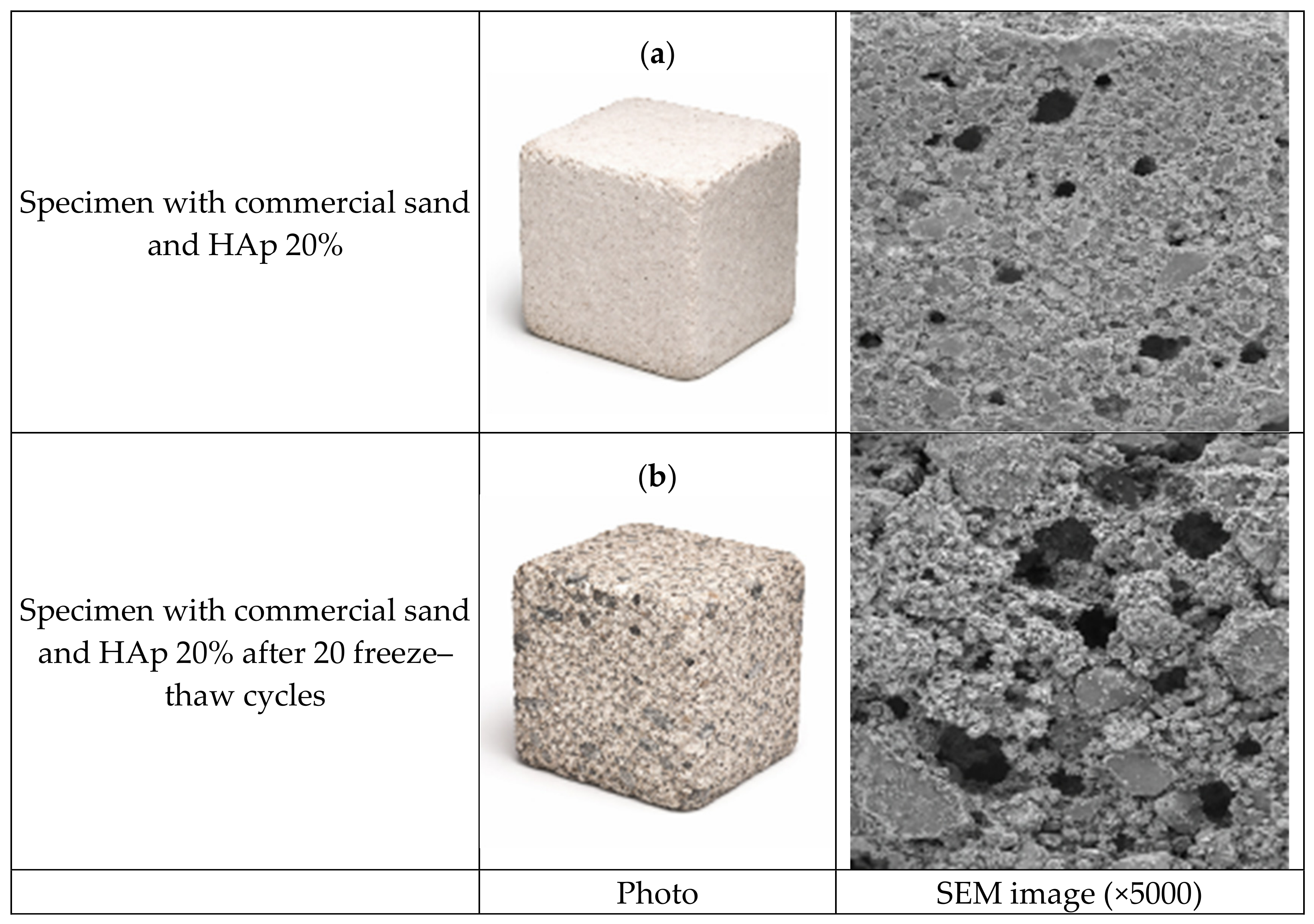
By adding 20% HAp in the specimens, the heterogeneity increases, as can be observed in
Figure 14. The pores become larger and have asymmetric sizes and shapes.
Due to the large granulometric distribution, commercial sand cannot be consolidated with HAp, and the high porosity proves this. Also, the composition (high concentration of SiO2) determined by EDS supports this statement.
SEM–EDS observations typically reveal the formation of calcium-phosphate bridges at grain boundaries and within microcracks, suggesting that HAp acts not only as a passive filler but also as an active mineral phase capable of enhancing structural continuity. These effects are often accompanied by improved mechanical resistance, reduced water absorption, and enhanced resistance to salt crystallization.
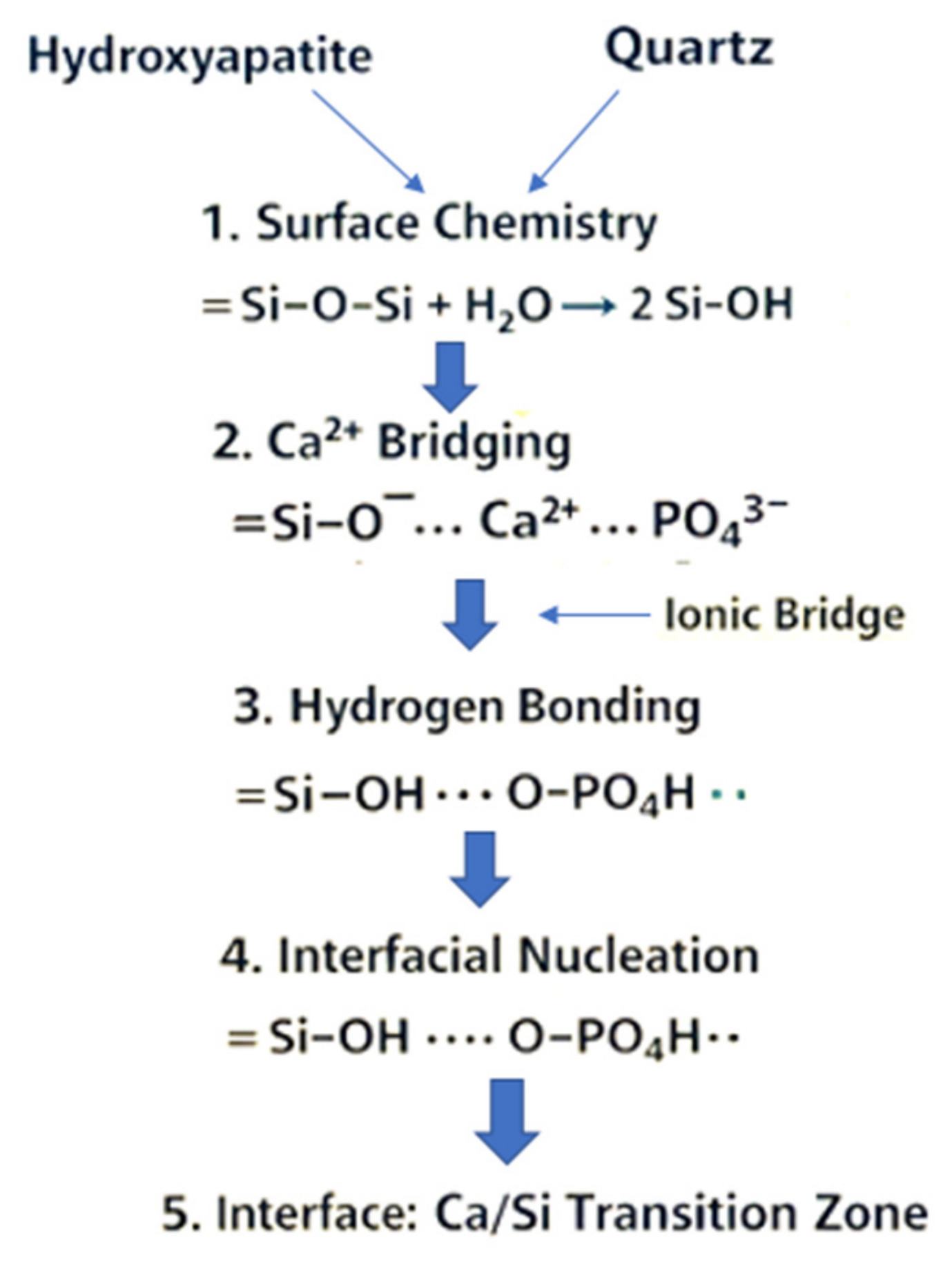
Analyzing the investigated samples, it was found that electron microscopy revealed a strongly heterogeneous microstructure characteristic of historical mortars. A porous network was observed, with fine capillary pores in the binder matrix and some voids formed during aggregate packing. Also, an incomplete compaction or degradation process was observed after investigation. The interaction between hydroxyapatite and silica in the composite matrix involves bonding between calcium ions in hydroxyapatite and negatively charged silica positions and phosphate groups over time. The hydroxyl groups from the silica surface facilitate the absorption and nucleation of hydroxyapatite crystallites. These contribute to the cohesion and intergranular bonding by creating a coherent demineralized network in which quartz grains are successively encapsulated in the fine hydroxyapatite matrix. This produces a heterogeneous structure that can contribute to the decrease in vapor permeability.
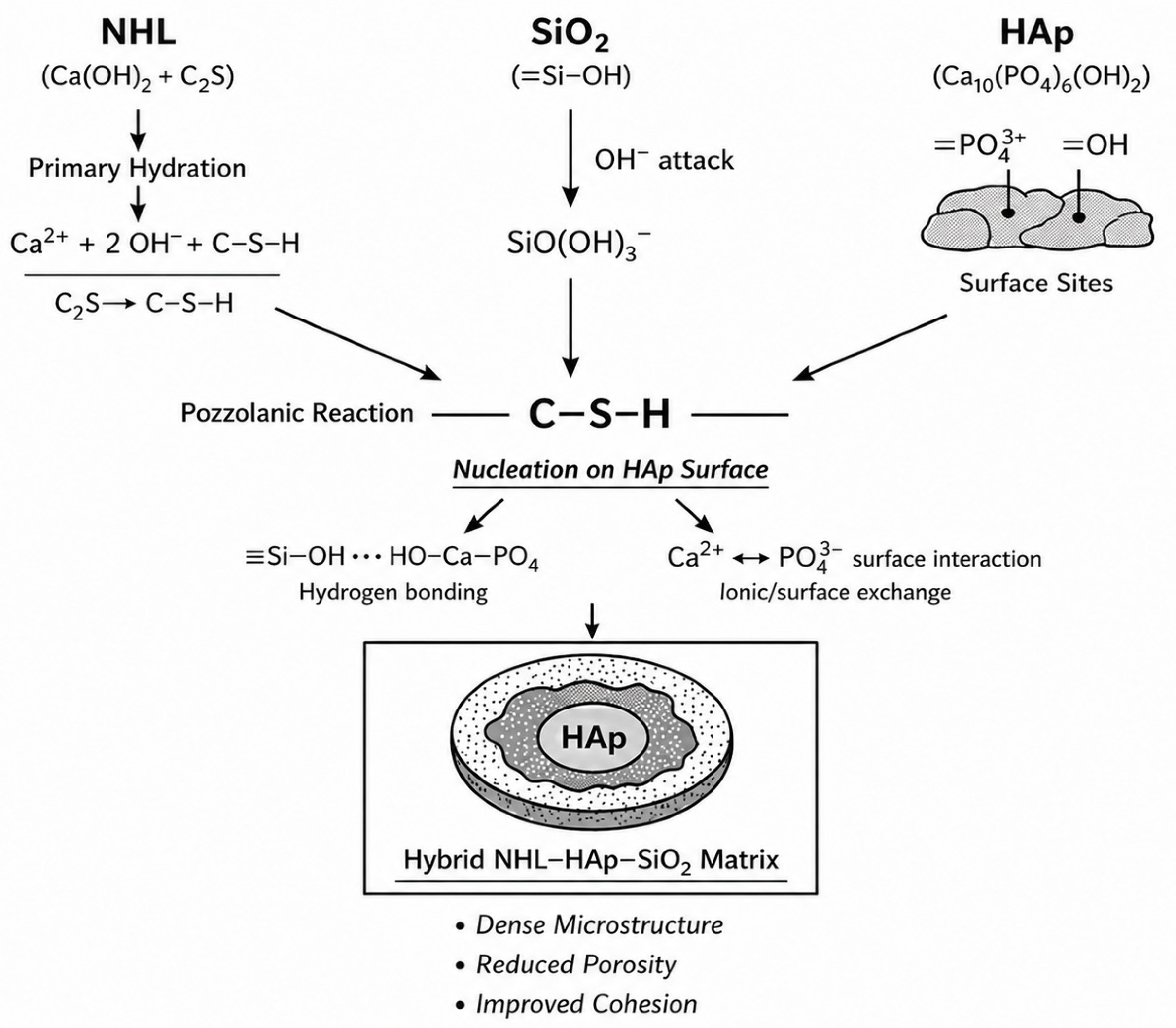
To explain this behavior, the pathway mechanism is necessary. This could be evaluated by starting from their structures and observing the chemical groups present in each compound, as shown in
Figure 15.
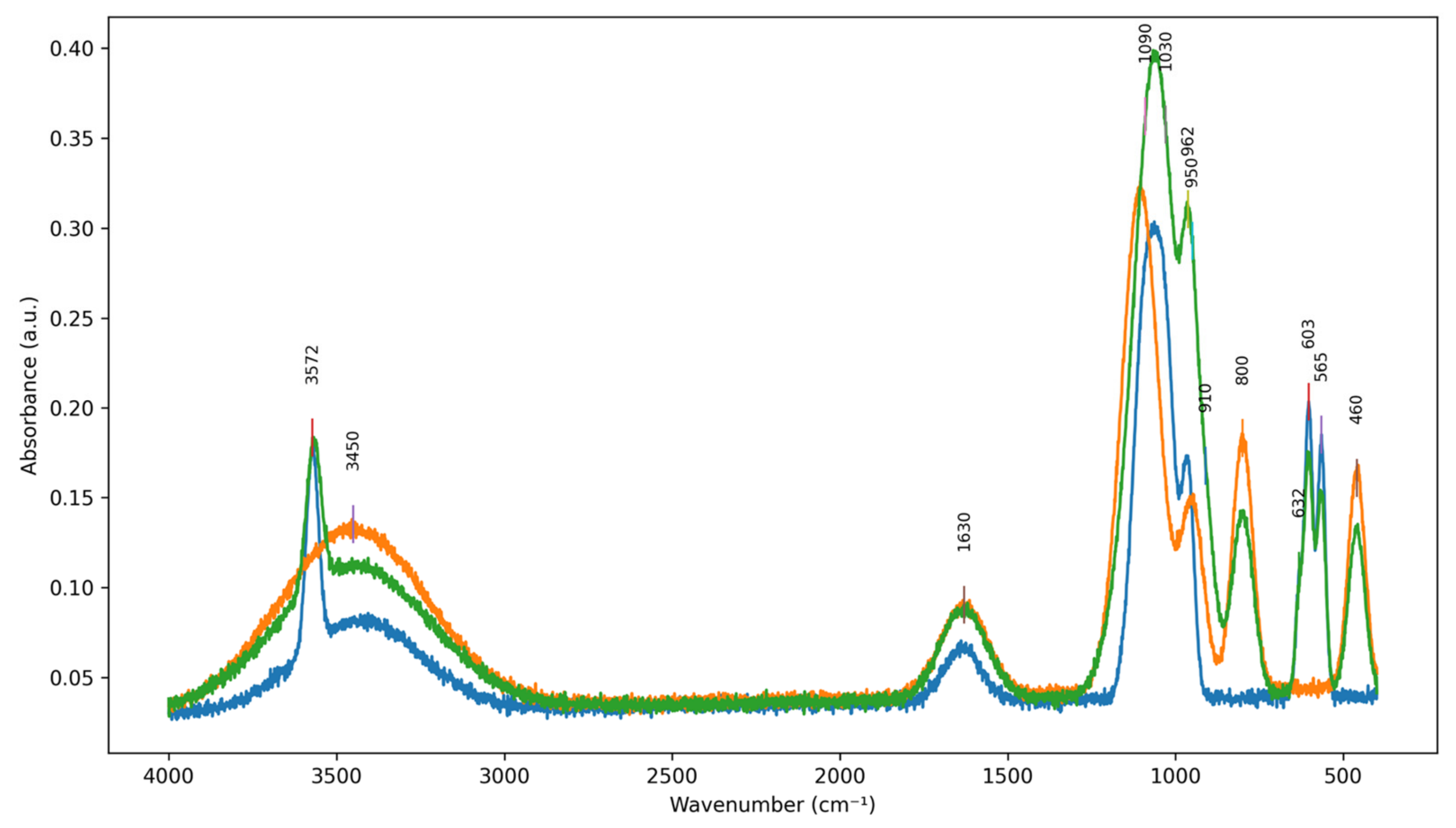
To highlight these specific bonds, FTIR spectra were recorded, and the main deconvolution band peaks are indicated, as shown in
Figure 16.
Ionic interactions can be identified through the lattice vibrations of Ca2+ and PO43− groups. The PO43− bands assigned to the HAp ionic framework can be identified by means of the strong bands at ~1030–1090 cm−1 (ν3 PO43−), ~962 cm−1 (ν1 PO43−), and ~560–600 cm−1 (ν4 PO43− bending). These are the Ca2+–PO43− lattice interactions.
The hydrogen bonds (H-bonding) can be visualized and localized in the following region: 3572 cm−1 (HAp) → structural OH− in hydroxyapatite; broad band (3200–3500 cm−1) → hydrogen-bonded OH groups; and a slight shift in the composite → interaction between HAp–OH and Si–OH (silanol groups). The hydrogen bonds present here—≡Si–OH ··· HO–Ca–PO4—can be identified through the small red-shift assigned to the =3600–3200 cm−1 region.
Nucleation is not a bond, and can be identified from the following mechanism: silanol groups attract Ca2+ electrostatically, Ca2+ accumulates at the silica surface, PO43− coordinates, and HAp nuclei form on the SiO2 surface. Peak shift is simultaneously observed with the band broadening at 1000–1100 cm−1.
The energy of a hydrogen bond (H-bond) depends strongly on its geometry and environment, but for systems like HAp–SiO2 interfaces (OH···O–Si or OH···H2O···O–Si) it is typically in the moderate hydrogen-bond regime.
For a very weak H-bond (C–H···O), the energy is 2–10 kJ/mol (0.02–0.10 eV); for a moderate H-bond (O–H···O), the energy is 10–40 kJ/mol (0.10–0.40 eV), and for a strong H-bond (short O–H···O), the energy is 40–60 kJ/mol (0.40–0.60 eV) [
56,
57].
For HAp–SiO2, the relevant interaction is Ca–OH (HAp)···O–Si (silica), or via silanol groups; OH (HAp)···HO–Si has an energy of 15–35 kJ/mol (≈0.15–0.35 eV), which is assigned to moderate hydrogen bonds. By analyzing the FTIR spectra (HAp, SiO2, and HAp–SiO2), the H-bond energy can be estimated from FTIR shift, the hydrogen bonding weakens the O–H bond, and causes a red shift (Δν) in the OH stretching frequency.
The OH stretching frequency decreases (red shifts) as hydrogen bond strength increases. These correspond to the following: OH-HAp···O–Si, which are typically weak (van der Waals-assisted H-bonds).
The idea of hydrogen bond energy estimation from experimentally measurable spectral parameters (e.g., shift of stretching frequency ν
XH) was first introduced by Badger and Bauer in 1937 (Badger–Bauer rule, BB) [
58].
By using the empiric formula Badger–Bauer, the strength of the hydrogen bond can be determined: EHB = k⋅Δν, where EHB în kcal/mol and k ≈ 0.01–0.02 kcal·mol−1·cm; Δν = ν0 − ν = 122 cm−1, where ν0 = frequency of OH free (unbound) (~3600–3650 cm−1 for OH from HAp structural); ν = frequency of OH involved in hydrogen bond; and Δν = shift to lower frequencies (red shift). In our case, Δν = ν0 − ν = 122 cm−1, which corresponds to a moderate bond. The energy is less than 30 Kj/mol.
The main way in which freeze–thaw cycles affect the mineral interface and its durability is through moisture migration and volumetric stress caused by ice crystallization inside the pore network in the interfacial bond responsible for surface absorption and mineral bonding, which shows great resistance to the stress of thermal cycles.
The main way in which freeze–thaw cycles affect the durability of the mineral interface involves moisture migration and volumetric stresses caused by ice crystallization within the pore network. The hydroxyapatite is chemically stable and maintains cohesion with quartz grains and microporosity of the entire composite to stop moisture and form mineral bridges in hydroxyapatite–silica systems that exhibit high resistance to freeze–thaw cycles. For this reason, no occurrence of cracks and interfacial delamination during freeze–thaw episodes is observed. Hydroxyapatite-based composites exhibit better resistance to freeze–thaw cycles than conventional lime–silica systems, especially in wet historical masonry environments. After the 20 freeze–thaw cycles, the hydroxyapatite–silica composite does not exhibit significant interfacial microcracking and the fine hydroxyapatite crystals remain uniformly distributed around the quartz grains. This is why the EDS analysis shows a high concentration in silica from quartz and a stable enrichment of calcium-phosphorus in the binder phase, suggesting the lack of reaction byproducts.
Beyond the compositional differences highlighted by SEM–EDS analyses, the superior performance of the Apoș river sand can also be attributed to its physical characteristics. The heteregeneous granulometric distribution promotes denser particle packing and reduced void connectivity within the mortar matrix.
In addition, the natural angularity and surface roughness of the river aggregates improve mechanical interlocking with the lime-based binder, facilitating stress transfer and enhancing adhesion at the aggregate–binder interface. Compared to the more uniform and often smoother commercial sand, the locally sourced Apos sand contributes to a more stable and mechanically eficient microstructure, which supports the formation of stable calcium-phosphate interfacial bonds in the presence of hydroxyapatite.
These combined effects explain the enhanced resistance to freeze–thaw cycles and reduced microstructural degradation observed in the specimens prepared with local sand, highlighting the importance of aggregate morphology in addition to chemical composition.
3.4. Time-Dependent Performance and Durability
Monitoring of the treated areas over time demonstrated satisfactory stability of the HAp-modified mortars under real service conditions. No significant cracking, exfoliation, or material loss was observed, and the overall appearance of the treated surfaces remained compatible with the architectural character of the structure.
These observations confirm that the incorporation of hydroxyapatite does not adversely affect the natural maturation and carbonation processes of lime-based materials. On the contrary, it contributes to strengthening the internal cohesion of the mortar matrix, supporting the suitability of the material in time and protection interventions.
3.5. Comparative Analysis with Traditional Lime Mortars
Compared to the control specimens, the HAp-modified mortars show a significant performance improvement, particularly at a 20% concentration. Conventional mortar showed a heightened sensitivity to humidity and an accelerated rate of degradation under the action of environmental stress, which imposed the need for corrective interventions. The comparative analysis carried out between mortars based on HAp and traditional mortar previously used at the micro-museum level highlighted the benefits of introducing this mineral additive.
In contrast, HAp-modified mortars presented a more equalized hygroscopic behavior, superior adhesion, and improved resistance to climatic factors, while maintaining the fundamental principles of conservation, such as the reversibility of interventions and the compatibility of materials used. This comparative evaluation supports the potential of hydroxyapatite as a sustainable additive for optimizing the performance of traditional mortars in real heritage applications.
4. Discussion
The observed improvements in mechanical and durability properties can be explained by pore structure refinement and enhanced interfacial bonding induced by hydroxyapatite.
Sand: Angular to sub-angular sand particles with irregular morphologies and varying particle sizes were visible in SEM micrographs (×1000). Rough textures and sharp edges were characteristic of quartz-rich grains that favor mechanical interlocking with the binder. Denser particle packing was facilitated by the filling of intergranular spaces with dust particles and fine silicate fractions. Overall, the morphology is typical of silicate aggregates that are dominated by quartz.
Natural Hydraulic Lime (NHL): Compact mineral fragments within a fine-grained reaction matrix make up the heterogeneous and porous NHL microstructure, according to SEM analysis. At ×1000 magnification, lamellar, flaky, and needle-like formations linked to carbonation and hydration products were seen. The dual carbonation–hydration mechanism of NHL is reflected in the coexistence of dense and porous domains, whereas vapor permeability and breathability in heritage mortars are supported by interconnected capillary networks. The hydraulic phases C-S-H and C-A-S-H are probably represented by fine granular deposits.
Hydroxyapatite (HAp): SEM pictures revealed elongated, locally acicular, fine-crystalline HAp particles. Strong interparticle interactions and high surface activity were demonstrated by closely spaced granular clusters and nanostructured domains at ×1000 magnification. The rough surfaces and small crystal size promote crack bridging, interfacial adhesion, and penetration into porous substrates. Reduced capillary absorption and increased durability are suggested by HAp morphology, which also suggests a consolidating effect through pore filling and improved internal cohesion.
Sand–NHL–HAp Composite Mixture: Strong interfacial bonding between sand aggregates, NHL phases, and HAp crystals was visible in SEM micrographs of the highly integrated composite microstructure. While fine HAp particles were dispersed in pores and intergranular areas, encouraging densification and pore filling, quartz-rich sand grains were still discernible within a continuous NHL matrix. Increased cohesion and microstructural refinement were demonstrated by improved aggregate–binder adhesion, decreased open porosity, and localized crack bridging. The composite’s suitability for sustainable heritage conservation is supported by the coexistence of hydration, carbonation, and HAp-mediated stabilization processes, which imply enhanced durability and resistance to moisture, salt crystallization, and freeze–thaw cycles.
4.1. Physical and Hygric Properties of HAp-Modified Lime Mortars
The experimental results indicate that mortars based on hydroxyapatite retain their mechanical compatibility with conventional substrate materials, while recording a controlled increase in compressive strength compared to the reference lime-mortars. Capillary absorption tests revealed a moderate level of water assimilation, suggesting a more efficient regulation of moisture transport, without affecting vapor permeability (
Table 4).
From a conservation perspective, this balance of performance of the lime-HAp system represents a significant advance compared to traditional materials used in repair interventions. Studies on historical composite mortars, such as those carried out by Mitropoulos et al. [
59], underlines the importance of developing materials compatible with the original substrates, demonstrating that an adequate integration of the binder and aggregate phases points to durable solutions, which respect physicochemical and mechanical compatibility with the existing system (
Table 3).
As shown in
Figure 17, mortars enhanced with hydroxyapatite showed improved resistance to environmental actions, such as freeze–thaw cycling and moisture-related degradation, more pronounced in control specimens than in specimens of commercial NHL + sand + HAp. These results are in line with earlier research showing improved durability of lime-based systems exposed to harsh environmental conditions [
60], where it was demonstrated that optimizing pore structure and matrix composition improved resistance to long-term environmental stressors and freeze–thaw cycles in lime mortars [
61,
62,
63,
64,
65,
66].
From the analysis of hydroxyapatite-based mortars, we observed a good-quality adhesion between the binder and the aggregate, as well as a pore network that contributes to this adhesion. The hydroxyapatite improves microstructural densification as well as interfacial bonds in lime-based materials, and natural hydraulic lime is a very good example in this sense. Parameters such as durability and compactness are improved as well. The Apoș sand plays an important role in the properties of the mortar and water, and is a conclusive example due to the high concentration of quartz identified in the investigated specimens.
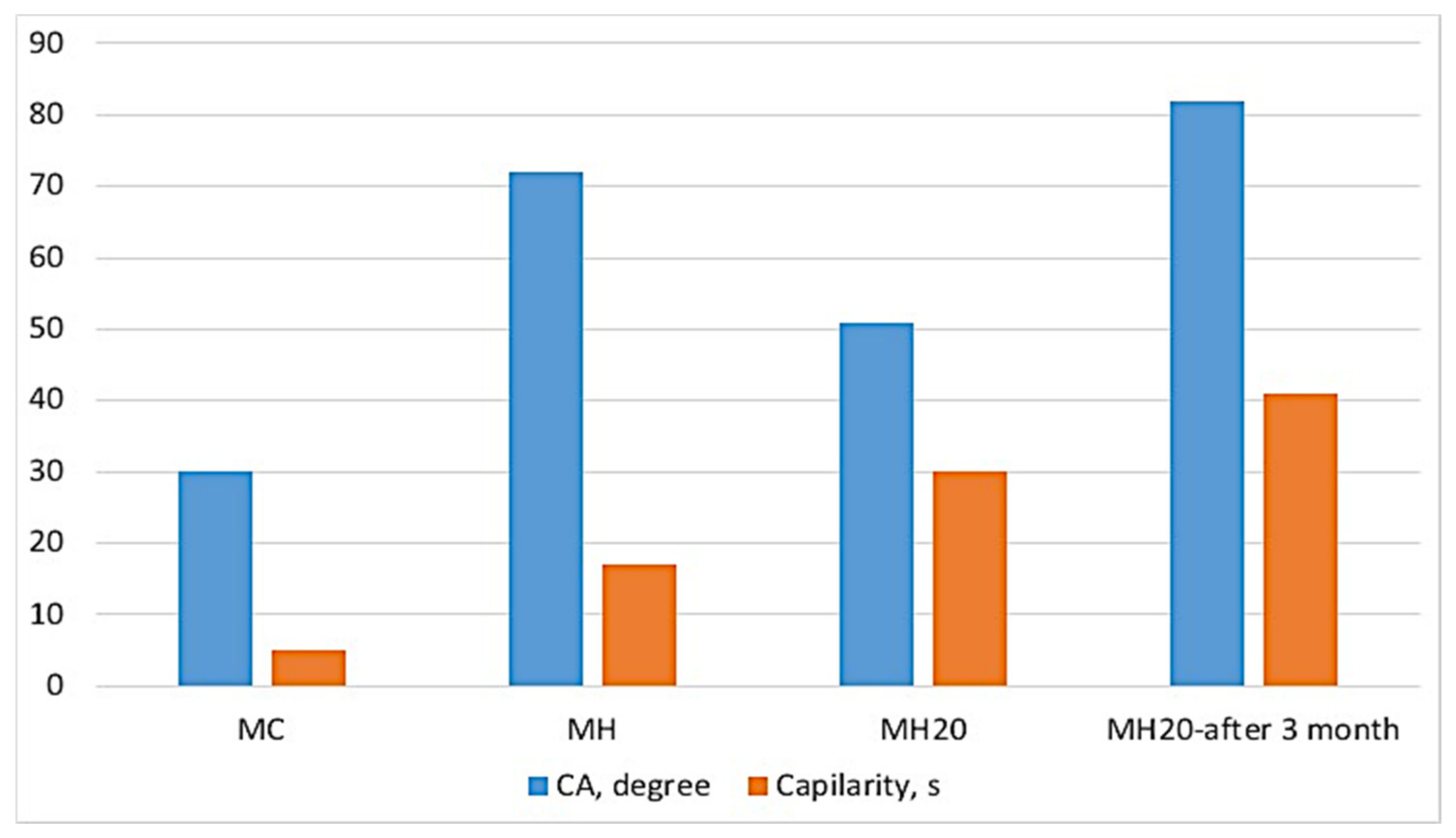
It is interesting to note that freeze–thaw cycles and hydroxyapatite contribute to maintaining the compact structure and the essential properties of this mortar. We could say that it is a much more pronounced densification, the pores become smaller, and, in this context, the contact angle improves from 52° to 82°. Further, the results of water absorption tests conducted in the laboratory indicate that mortars based on natural hydraulic lime modified with hydroxyapatite exhibit superior hybrid properties compared to the reference mortar based on lime [
67].
At the same time, applications under real conditions provide relevant information on functional behavior and durability of mortars additivated with HAp in the context of specific climatic demands. For example, exposure to cyclical wetting–drying and freeze–thaw processes can reveal whether HAp contributes to pore stabilization or crack arrest over time. Microstructural monitoring using SEM, µCT, or confocal microscopy often shows that HAp-containing mortars exhibit improved structural coherence, with reduced microcrack propagation and better preservation of intergranular contacts.
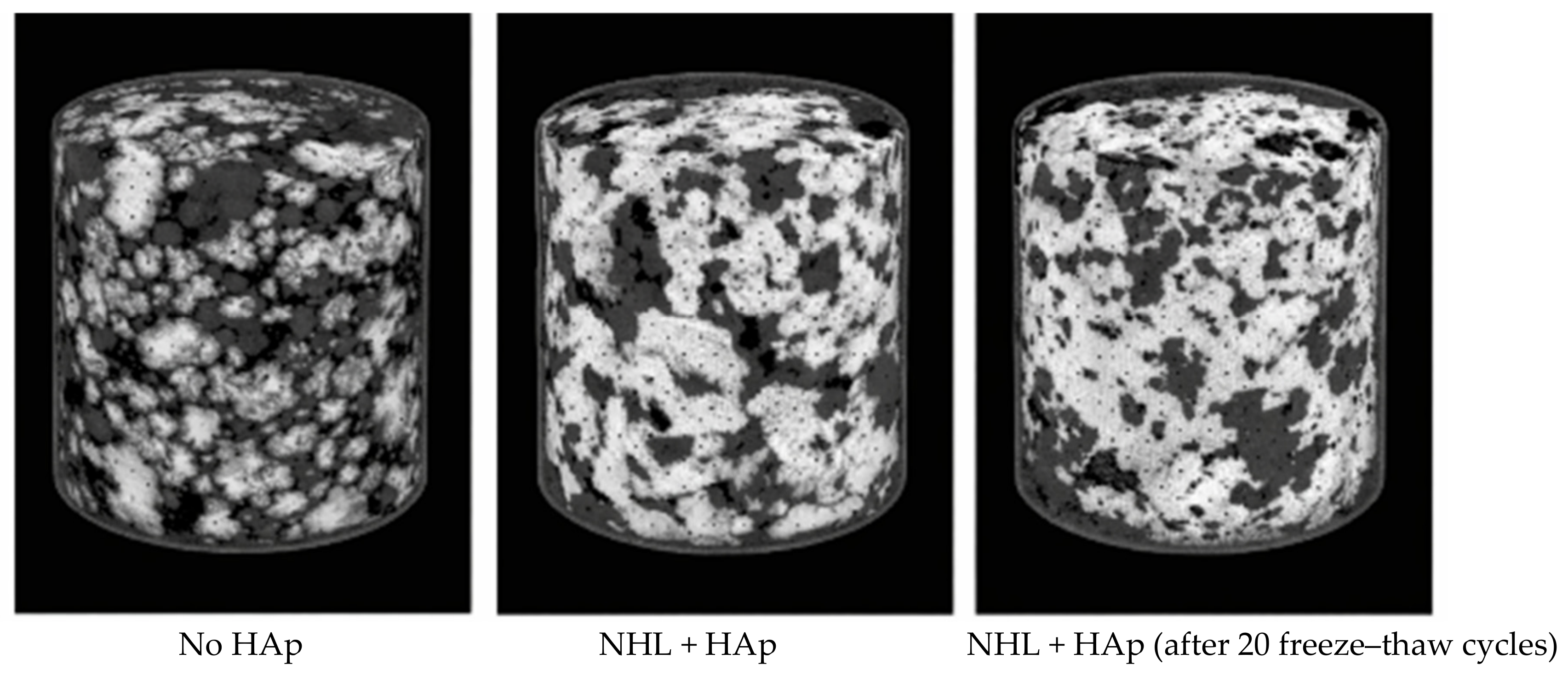
Microstructural observations support the macroscopic test results, indicating a denser and more coherent lime matrix in the presence of hydroxyapatite, as m-CT proved (
Figure 18).
The interaction between all these components is evidenced by FTIR spectroscopy. Measuring the main components, they are identified either by hydrogen bonds (in the region of 3400–3600 cm
−1), Si-O-Si bonds, phosphate groups from hydroxyapatite, and carbonated groups; see
Figure 19.
The main groups identified in these spectra are shown in
Table 5, with the corresponding assignments.
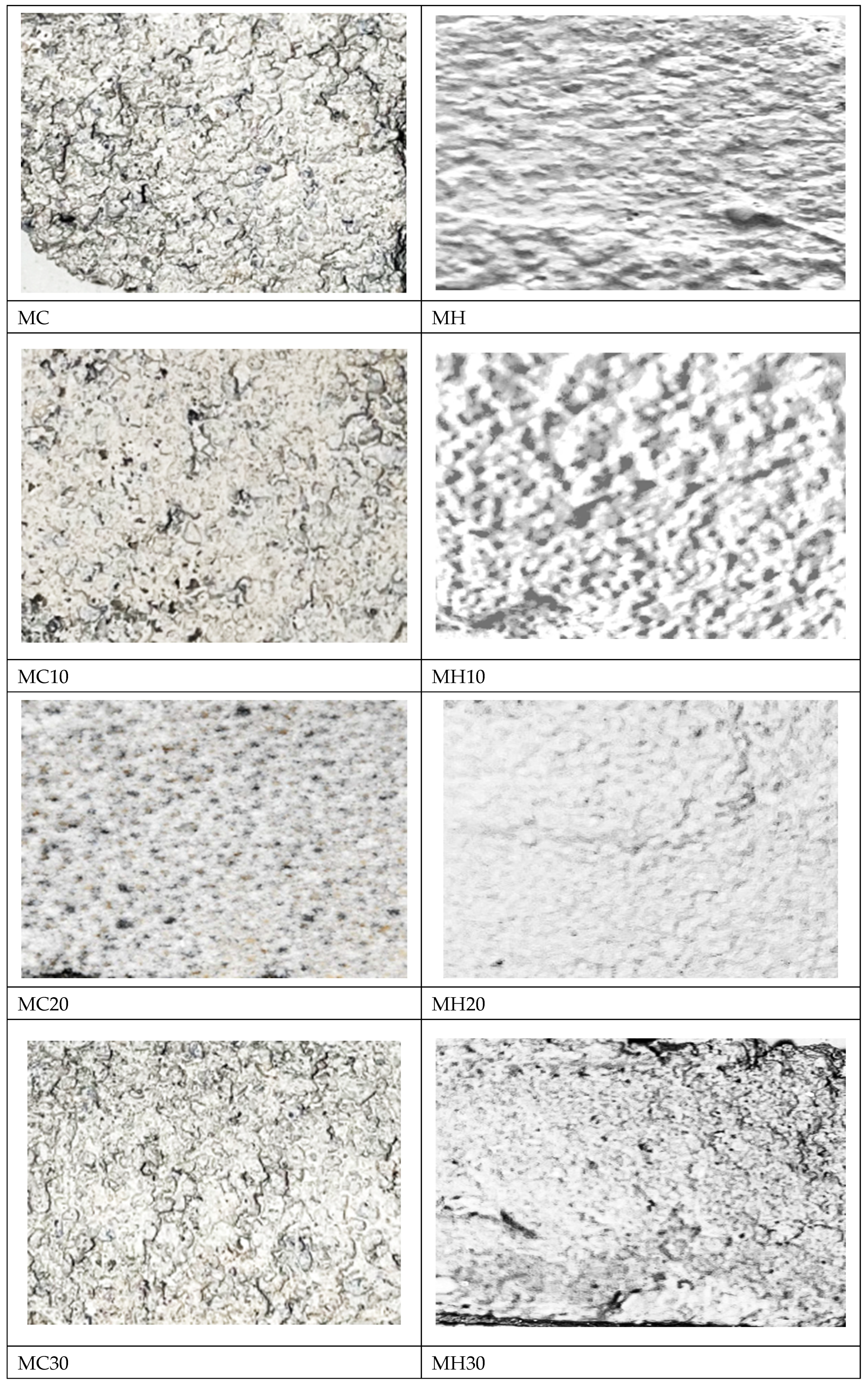
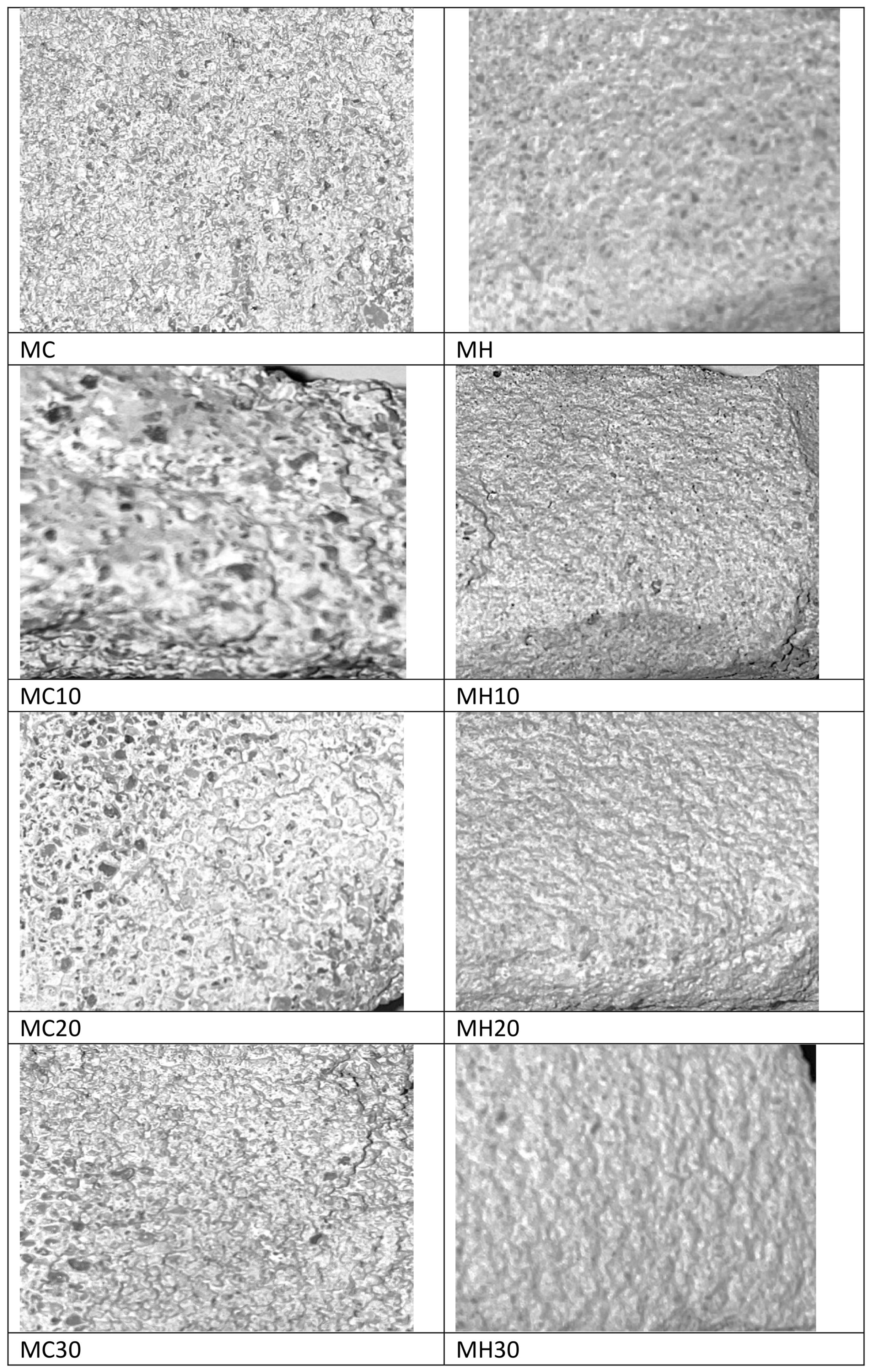
To study the durability of the specimens with HAp, they were treated for 30 days in a climatic chamber (RH = 65%, T = 35°C, 1000 lux); the aspect of these specimens is presented below (left: initial, right: after treatment in the climatic chamber). The images are for both MC and MH. In these images, the same trend can be observed: the optimum concentration is 20% HAp, but the durability is better for MH than for MC (
Figure 20).
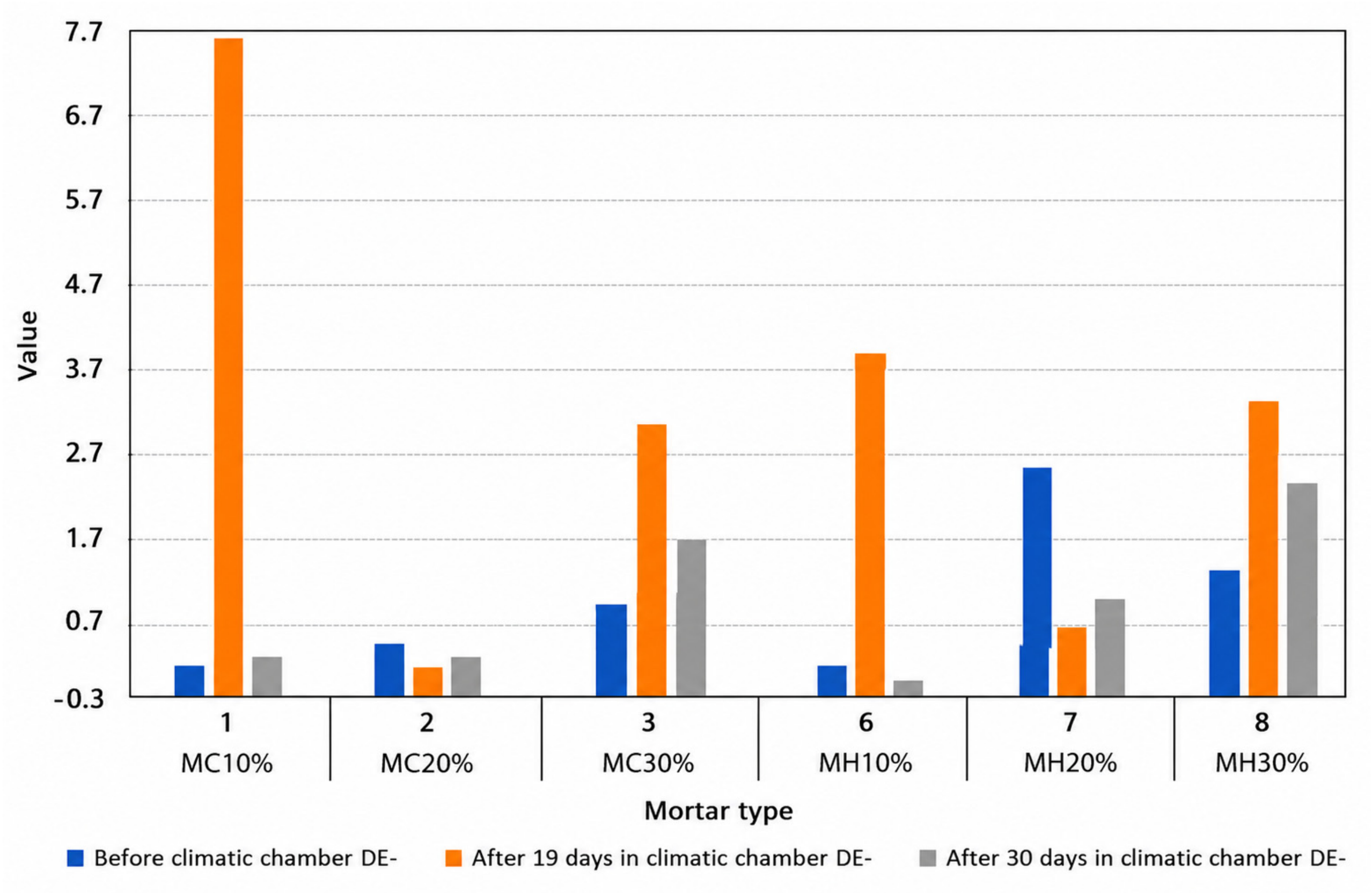
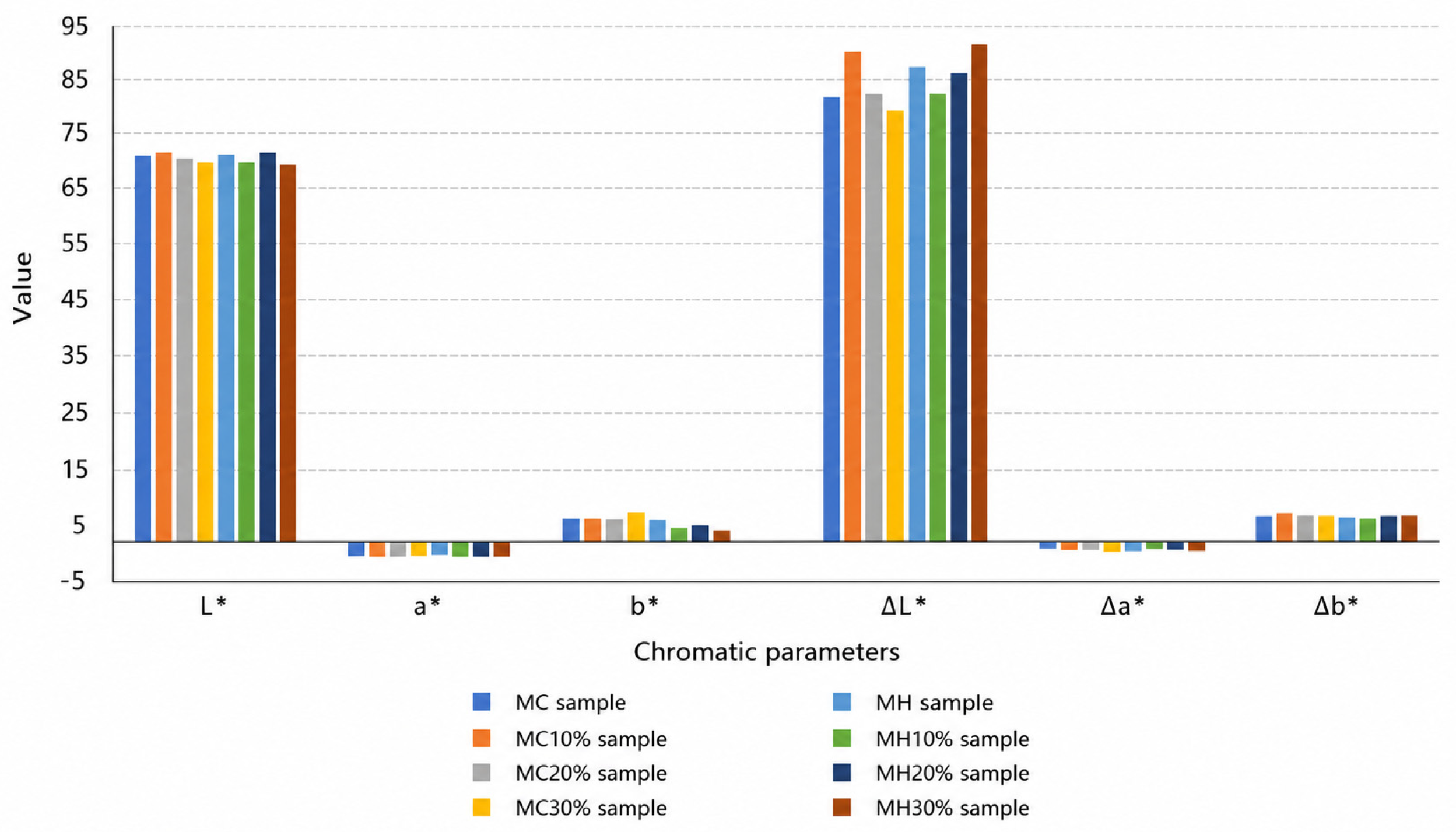
As can be seen in the figures below (
Figure 21,
Figure 22 and
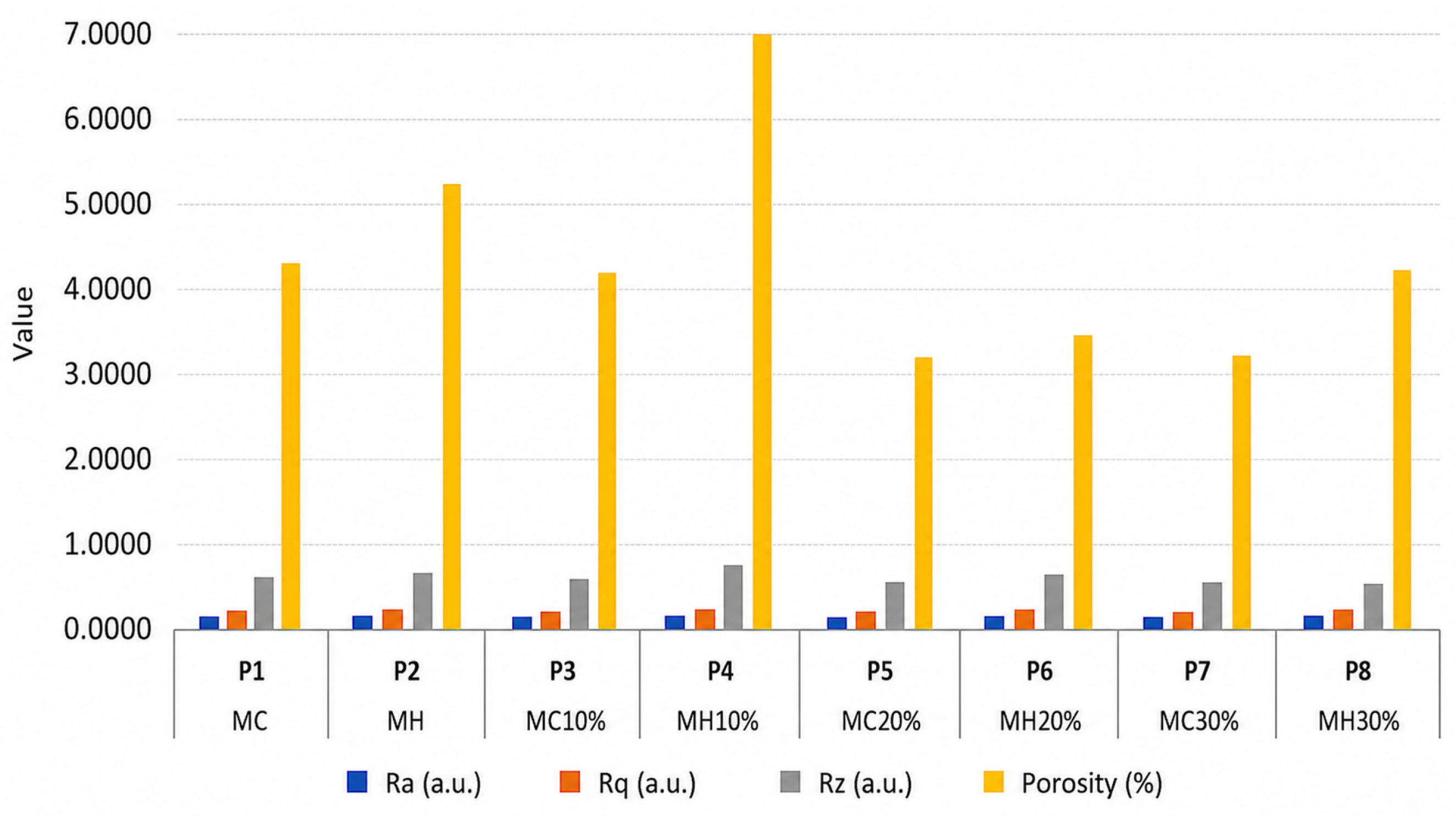
Figure 23), the DE* chromaticity parameter is higher for MC, but is very good for MH; it is less than 3 for 20% MH. CA is best after three months, which is evidence of the formation of the Ca/Si/P transition phase. Porosity is lowest and roughness is lowest for 20% HAp. Brightness is almost constant before the climatic chamber and very variable after the climatic chamber [
68,
69,
70,
71,
72,
73,
74,
75,
76,
77,
78,
79].
4.2. Implications for Heritage Conservation and Architectural Education
The educational framework presented in this study is not addressed as a separate topic, but as a validation environment for the experimental investigation of material performance under real conditions. The integration of laboratory testing within a real scale educational context provides a unique opportunity to validate the performance of HAp-modified mortars under actual environmental exposure conditions. From a conservation perspective, the observed improvements align with current requirements for compatible and sustainable repair materials in heritage contexts. Moreover, the integration of laboratory testing within an educational framework reinforces the role of experiential learning in architectural education.
4.3. Failure as a Learning Tool
The observed degradation of the initial lime mortar layer represents not only an educational experience but also a critical experimental reference point, highlighting the limitations of traditional materials under specific environmental conditions [
80]. Instead of being perceived as a failure, this situation was capitalized on as a learning opportunity, stimulating critical reflection on material selection, sustainability, and intervention strategies. In the educational context of the summer school, the non-conforming behaviour of the material thus became an integral part of the training process, intensifying the importance of decisions based on evidence and stable performance evaluation.
These findings focus on the essential role of direct experience with materials in architectural education. In the context of experiential learning, failure situations can function as triggers for deep understanding, as direct interaction with materials and construction processes favors reflective observation. The literature shows that practical activities, based on experiments, contribute significantly to the development of sensitivity to the material and problem-solving skills; this is in line with experiential learning theories, which place concrete experience and reflection at the center of the educational process.
4.4. Ethics of Material Choice
From a material science perspective, the selection of compatible and sustainable materials is directly linked to a conservation ethic, particularly in terms of durability, reversibility, and long-term performance. The choice of materials for interventions in ordinary and heritage architecture goes beyond the strictly technical dimension, implying a fundamental ethical component. Conservation practice is guided by principles such as respect for authenticity, compatibility, minimal interventions, reversibility, and stable sustainability [
81]. In educational contexts such as the Apos Summer School, the use of innovative materials acquires pedagogical valences, facilitating the understanding of how present solutions can support traditional interventions without compromising the identity and authenticity of the place. By directly involving themselves in the process of selecting and using materials in a real heritage background, students are determined to develop a critical reflection on the ethical implications of interventions, especially in terms of environmental impact, sustainability, and responsibility for stable conservation. Thus, material innovation is correlated with international conservation principles in an educational structure that favors the formation of responsible and informed thinking.
Therefore, the educational component should be understood as an applied research framework that support the validation of material performance, rather than as an independent narrative.
5. Conclusions and Educational Implications
The results of the study focus on the potential of lime mortars based on hydroxyapatite as a compatible and sustainable solution for interventions on heritage architecture. The experimental application carried out in a comprehensive educational setting demonstrates that integration of hydroxyapatite into a traditional formulation based on lime leads to improved performance parameters, without affecting material compatibility or compliance with principles of conservation.
Following the premature degradation of a conventional lime mortar layer, HAp-modified formulations were applied to the roof as a protection and consolidation solution. The experimental results demonstrated a reduction in water absorption from approximately 22% to 12%, an increase in compressive strength from 6.57MPa to 19.95 MPa, and a significant improvement in freeze–thaw resistance, reflected by a decrease in gelivity from 61.2% to 5.73% for mortars incorporating hydroxyapatite. Also, the increase in contact angle from 36° to 82° indicates enhanced resistance to water penetration. These improvements are directly associated with pore structure refinement, reduced capillary water uptake, and enhanced interfacial bonding within the mortar matrix.
The in situ evaluation indicates a series of significant advantages compared with conventional mortars: increased adhesion to basic substrates, reduced water absorption, improved resistance to freeze–thaw cycles, and stable behavior over time. These characteristics reflect an increased capacity to respond to environmental demands and are particularly relevant for exposed architectural elements, such as masonry roofs, where climatic factors have a major impact on material deterioration.
From a conservation perspective, the results confirm the role of hydroxyapatite as a compatible mineral additive, capable of improving the microstructural coherence of lime-based mortar, while maintaining the physicochemical balance of the system and respecting fundamental conservation principles such as compatibility and durability.
The integration of experimental research within a real-scale educational environment further supports the validation of these material properties under actual exposure conditions. The educational component should not be understood as a separate narrative, but as an applied research framework that enables the validation of material performance under real conditions. The involvement of students in the preparation, application, and monitoring of HAp-modified mortars provides a controlled yet realistic environment for testing material behavior beyond laboratory conditions. This approach supports the integration of experimental research and real-scale application, facilitating the validation of material performance and contributing to a better understanding of sustainability, compatibility, and long-term behavior of lime-based mortars.
A limitation of the study is related to the scale and duration of monitoring, which may influence long-term performance assessment. Future research should focus on long-term monitoring and the optimization of HAp content under different environmental conditions.
The proposed methodology has strong transferability and replicability and can be adapted in similar educational and conservation contexts as a scalable model for the development and validation of sustainable materials, in accordance with the principles of green interventions and the protection of tangible architectural heritage.





 ,
,