4.1. Common Method Bias and Multiple Covariance Tests
Since the data in this study were self-reported, common method bias (CMB) may exist, which could potentially affect measurement validity and the relationships between constructs [
83]. To mitigate this, both procedural and statistical controls were applied.
Procedurally, respondents were encouraged to provide honest feedback and were informed that there were no right or wrong answers. The questionnaire was also carefully designed to reduce bias by optimizing question wording and removing ambiguous or confusing items.
Statistically, Harman’s single-factor test was conducted using SPSS 26.0. The results indicated that a single factor accounted for 34.45% of the total variance, well below the 50% threshold [
84]. Multicollinearity was assessed using the variance inflation factor (VIF), following Kock [
85] guidelines that a VIF below 3.3 indicates no severe multicollinearity or CMB issues [
86]. In this study, VIF values ranged from 1.015 to 1.850, confirming that the dataset meets the assumptions required for subsequent statistical analyses and that no significant CMB or multicollinearity problems were present.
4.2. Measurement Model
Before evaluating the structural model, the measurement model was assessed for reliability and validity using Partial Least Squares Structural Equation Modeling (PLS-SEM) standards. Convergent validity was evaluated through factor loadings and average variance extracted (AVE). As shown in
Table 2, factor loadings for all items ranged from 0.711 to 0.862, exceeding the recommended threshold of 0.6 [
87]. AVE values for all constructs were above 0.5, confirming adequate convergent validity.
Internal consistency and composite reliability were assessed using Cronbach’s α and composite reliability (CR). Cronbach’s α values ranged from 0.851 to 0.904, and CR values ranged from 0.889 to 0.926. All values exceeded the recommended threshold of 0.7 [
88], indicating that all constructs demonstrated acceptable convergent validity and reliability.
Discriminant validity was assessed using the Fornell–Larcker criterion and the heterotrait–monotrait ratio (HTMT). According to the Fornell–Larcker criterion, the square root of the AVE for each latent variable must exceed its correlations with other variables [
89]. As shown in
Table 3, this requirement was met, indicating acceptable discriminant validity.
The HTMT analysis requires that all HTMT values do not exceed 0.90 [
88].
Table 4 shows that all values met this criterion, further supporting the discriminant validity of the constructs in this study.
4.3. Structural Model Evaluation
To test the structural model, the PLS-SEM algorithm and PLSpredict tool were employed to calculate the coefficient of determination (R
2) and predictive relevance (Q
2), thereby evaluating the model’s explanatory power and predictive accuracy. R
2 reflects the proportion of variance in endogenous variables explained by the model. Following the guidelines of Hair et al. [
90], R
2 values of 0.25, 0.50, and 0.75 indicate small, medium, and large effect sizes, respectively. Analysis revealed that the R
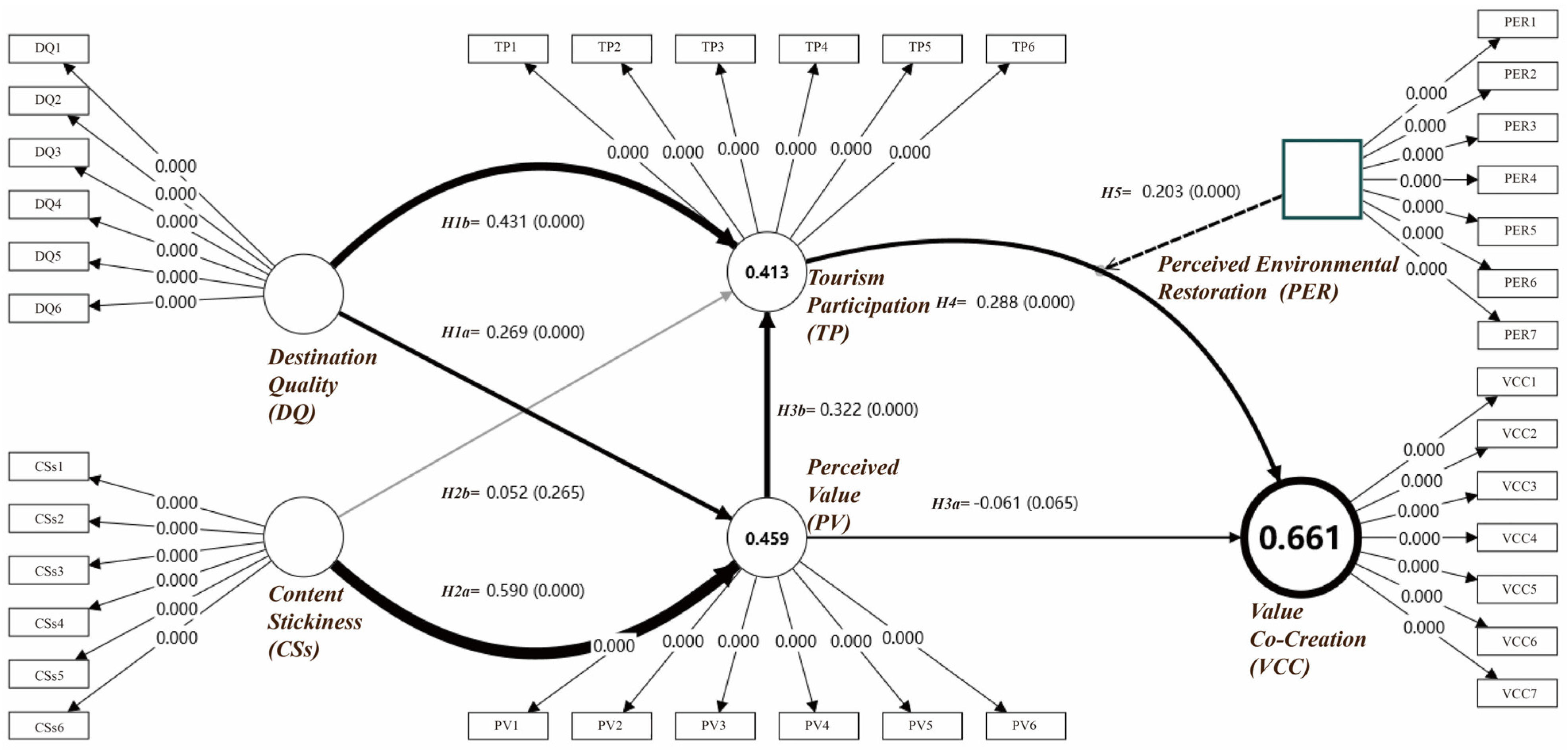
2 values for perceived value (PV, 0.459), tourism participation (TP, 0.413), and value co-creation (VCC, 0.661) fall within the medium effect size range, suggesting that the model possesses adequate explanatory power.
Predictive relevance was assessed using Q
2 values, which were 0.450 for PV, 0.347 for TP, and 0.613 for VCC. All values exceeded the reference threshold of 0.15, indicating satisfactory predictive relevance [
88]. Model fit in SmartPLS was further evaluated using the standardized root mean square residual (SRMR), an absolute goodness-of-fit measure. An SRMR below 0.10 is considered acceptable, and values below 0.08 indicate a good fit [
91]. The SRMR for this model was 0.048, confirming a good fit.
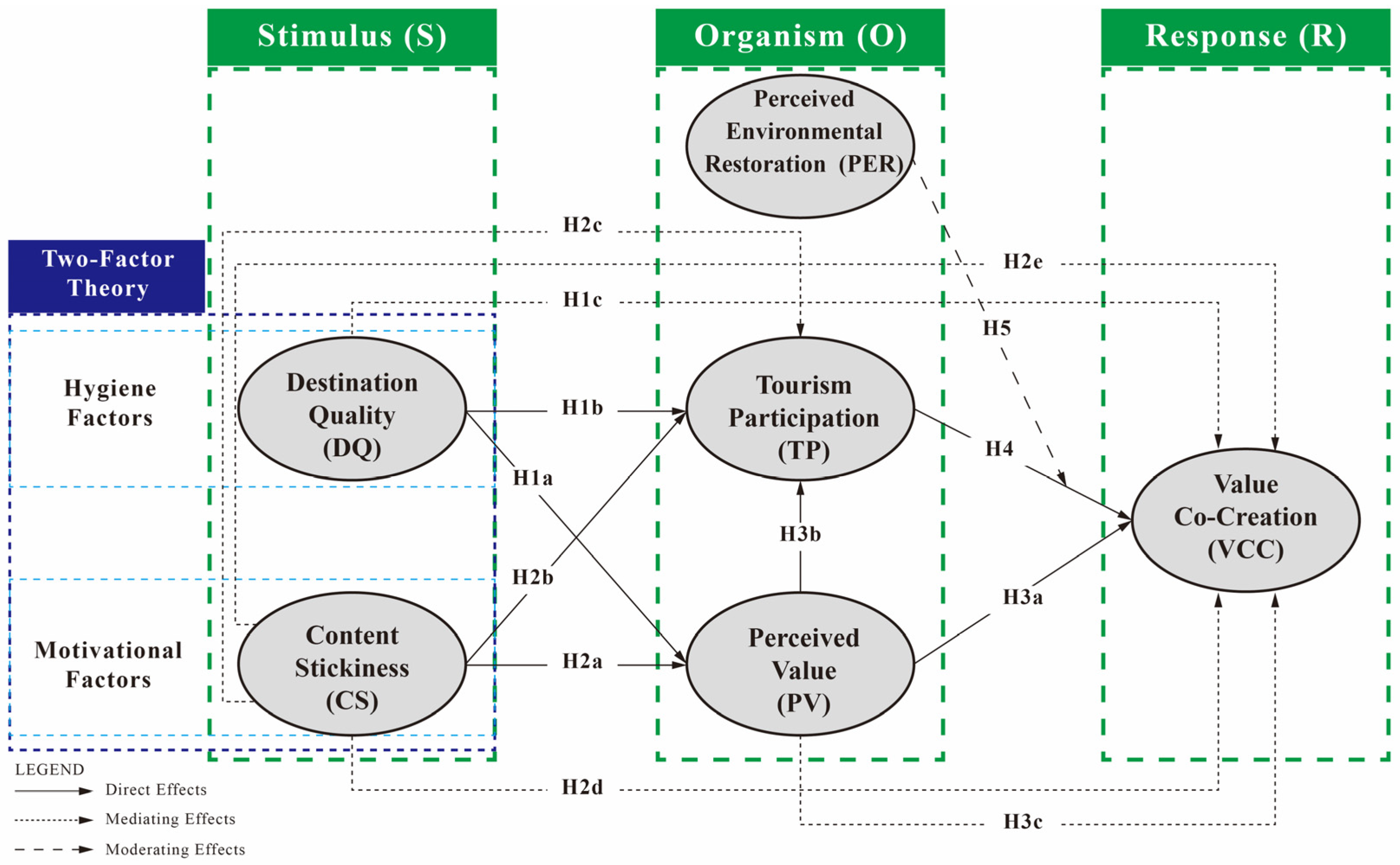
Hypotheses were tested via a bootstrap algorithm with 5000 resamples (
Figure 5). Confidence intervals were calculated using the bias-corrected and accelerated (BCa) method [
92]. As shown in
Table 5, destination quality had a significant positive effect on perceived value (
β = 0.269,
p < 0.001) and tourism participation (
β = 0.431,
p < 0.001), supporting H1a and H1b. Content stickiness significantly influenced perceived value (
β = 0.590,
p < 0.001), supporting H2a, but its effect on tourism participation was not significant (
β = 0.052,
p = 0.265), leading to the rejection of H2b. Perceived value did not significantly affect value co-creation (
β = −0.061,
p = 0.065), so H3a was not supported; however, it positively affected tourism participation (
β = 0.322,
p < 0.001), supporting H3b. Tourism participation, in turn, had a significant positive impact on value co-creation (
β = 0.288,
p < 0.001), confirming H4.
These findings align with Dwyer et al. [
93], who highlighted that strong attachments enhance emotional connections between individuals and specific locations, underscoring the importance of destination quality and content stickiness in shaping perceived value and tourism participation. Unlike prior studies that primarily examined how destinations meet activity needs or are socially accepted [
94], this study emphasizes indirect pathways to value co-creation, particularly through the mediating role of tourism participation. Moreover, while prior research on restorative environmental perception has focused on direct environmental factors, the present study demonstrates how destination quality and content stickiness influence value co-creation via perceived value and tourism participation. Notably, environmental quality has been recognized as a key driver of tourism experiences [
15]; thus, this study measures restorative environmental perception through destination quality and content stickiness, both of which significantly impact tourism engagement and value co-creation.
4.4. Mediation Effects Testing
Mediation effects in the model were tested using the bootstrap method with 5000 resamples. Mediation was assessed based on the variance accounted for (VAF), following the framework of Nitzl et al. [
95]. A VAF above 80% indicates full mediation, 20–80% indicates partial mediation, and below 20% indicates no significant mediation. The results are presented in
Table 6.
Destination quality fully mediated value co-creation through tourism participation (β = 0.124, p < 0.001, VAF = 93.94%), supporting H1c. Content stickiness partially mediated tourism participation through perceived value (β = 0.190, p < 0.001, VAF = 78.51%), supporting H2c. However, content stickiness did not significantly mediate value co-creation through perceived value (β = −0.036, p = 0.072) or through tourism participation (β = 0.015, p = 0.275), leading to the rejection of H2d and H2e. Perceived value significantly mediated the effect of tourism participation on value co-creation (β = 0.093, p < 0.001). Given the nonsignificant direct effect, H3c is supported as a case of full mediation.
These results indicate that destination quality indirectly influences value co-creation through tourism participation, while content stickiness indirectly affects tourism participation through perceived value. Notably, content stickiness does not significantly impact the mediating pathways leading to value co-creation, suggesting that its influence is primarily focused on tourism participation as an intermediary, rather than extending to value co-creation.
These findings align with the two-factor theory applied in this study [
37]. Destination quality, as a hygiene factor, serves as a foundational prerequisite for motivating individual activities. In contrast, content stickiness, as a motivation factor, cannot realize its full effect in isolation. Perceived value and tourism participation, which reflect on-site experience and behavioral engagement, more directly produce positive outcomes. Individuals assess perceived gains and losses, and when positive motivation is experienced, they are more willing to actively engage in rural land art festivals and contribute to value co-creation.
4.5. Moderation Effects Testing
To examine the moderating effect of restorative environmental perception, the self-help confidence interval method was employed, and the results are presented in
Table 7. The analysis indicated that the interaction between restorative environmental perception and tourism participation had a significant positive effect on value co-creation (
β = 0.203,
SE = 0.025, 95% CI [0.151, 0.249]), supporting H5.
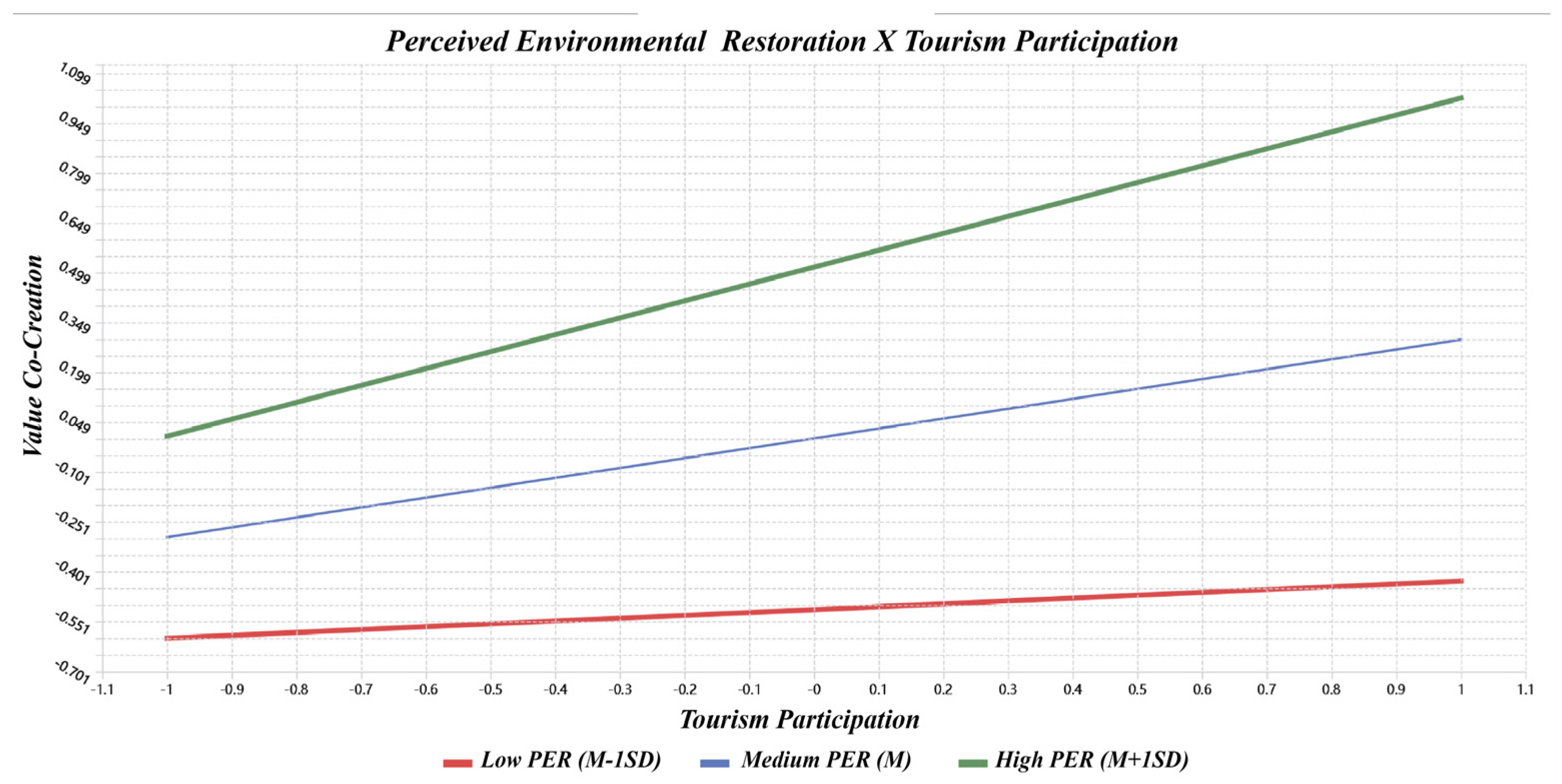
A simple slope analysis was conducted to clarify the nature of this moderation (
Table 8). When restorative environmental perception was high (+1 SD), tourism participation strongly promoted value co-creation (
β = 0.490, 95% CI [0.398, 0.570]). At an average level, the effect was moderate
(β = 0.288, 95% CI [0.217, 0.356]). When perception was low (−1 SD), the positive effect, though still significant, was weak (
β = 0.085, 95% CI [0.002, 0.176]). These results indicate that a stronger perceived restorative environment amplifies the impact of tourism participation on value co-creation. This aligns with previous research showing that destination environmental quality can enhance the influence of tourist participation on behavioral intentions [
96]. H5 extends this mechanism to value co-creation, confirming the reinforcing role of restorative environmental perception (
Figure 6).
Unlike prior studies that treated environmental perception as a direct antecedent of tourist behavior [
97] or as a mediator between experience quality and satisfaction [
98], this study highlights its moderating role. Restorative environmental perception does not directly drive co-creative behavior. Instead, it enhances the effectiveness of tourism participation, indirectly promoting value co-creation. In rural land art festival settings, the restorative qualities of natural and cultural environments not only replenish psychological resources but also provide a contextual boost, facilitating the transformation of participation into co-creative outcomes.
4.6. Multi-Group Analysis
To examine differences in psychological mechanisms among tourists with varying participation experiences, a multi-group analysis was conducted. Two non-parametric methods were employed: the measurement invariance of composite models (MICOM) proposed by Henseler et al. [
99] and the permutation test recommended by Hair Jr et al. [
100]. These methods are widely recognized for assessing inter-group differences in PLS-SEM path coefficients.
Based on prior experience with the Rural Land Art Festival, respondents were divided into an experienced group (Stage 1, n = 189) and an inexperienced group (Stage 2, n = 248). Measurement invariance was first tested using the three-step MICOM procedure [
101]. Results showed that all constructs satisfied configuration invariance, and most satisfied compositional invariance. Although full scalar invariance was not achieved, meaningful exploratory analysis of inter-group path differences is still permissible according to PLS-SEM guidelines, as the first two steps of invariance were satisfied (
Table 9).
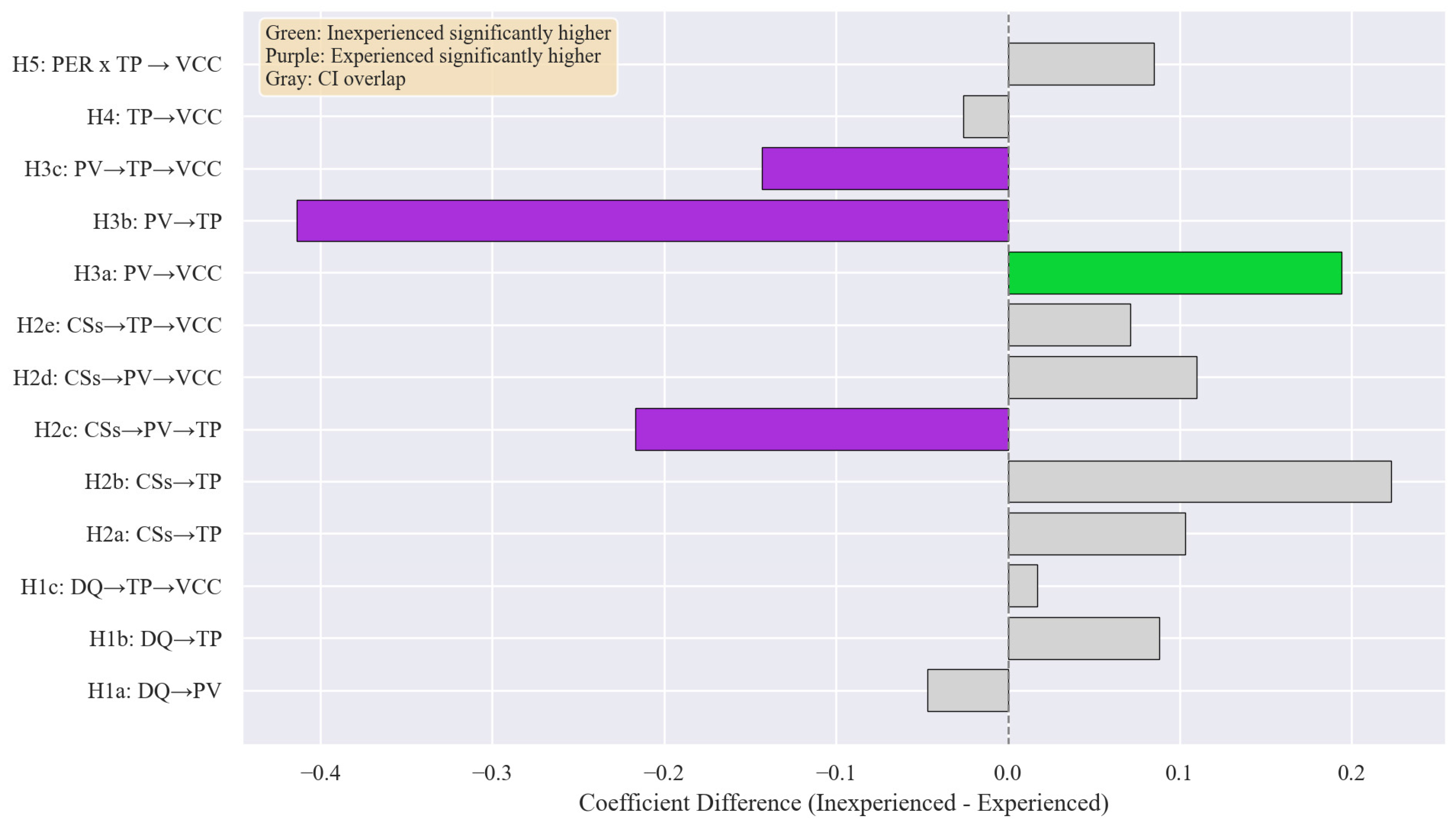
Permutation testing was then conducted to assess differences in inter-group path coefficients. Results (
Table 10) show that all relevant permutation
p-values were below 0.05, indicating significant differences between groups in several pathways: H2b (
p = 0.019), H2c (
p = 0.001), H2d (
p = 0.011), H2e (
p = 0.010), H3a (
p = 0.007), H3b (
p = 0.000), and H3c (
p = 0.000). These findings suggest that tourists’ prior participation experience significantly moderates the core transmission mechanism from “content perception” to “value assessment,” then to “tourism participation,” and finally to “value co-creation.” The remaining pathways—including all destination quality effects, the direct effects of tourism participation, and the moderating effect of restorative environmental perception—did not differ significantly across groups, indicating relative stability in these mechanisms.
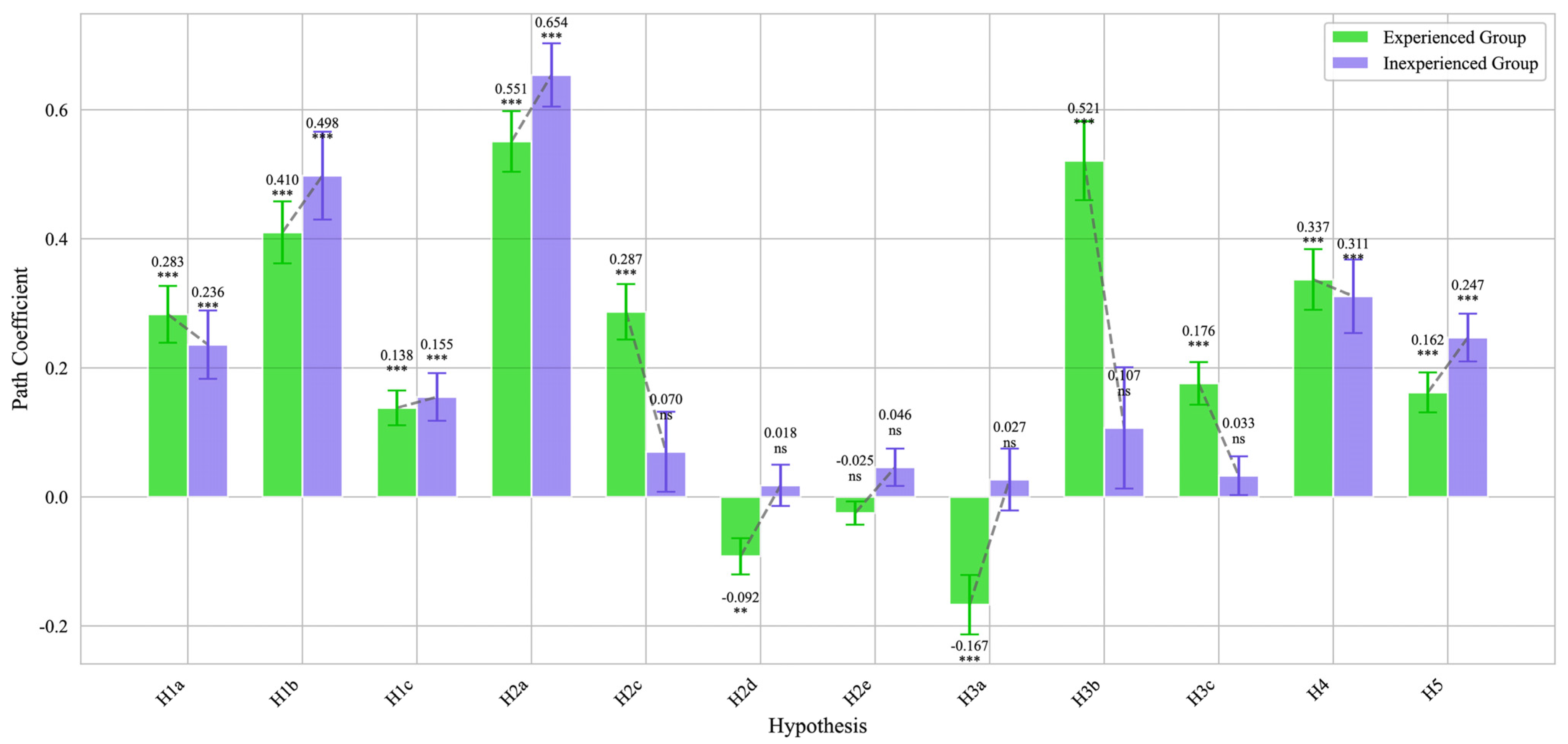
Bootstrapping analysis of the PLS-MGA further revealed the direction, magnitude, and significance of pathway coefficients within each group (
Table 11). Destination quality pathways demonstrated cross-group stability, showing consistent positive effects. Specifically, H1a was significant in both the experienced (
β = 0.283,
p < 0.001) and inexperienced groups (
β = 0.236,
p < 0.001), H1b was significant in both groups (
β = 0.410,
p < 0.001;
β = 0.498,
p < 0.001), and the indirect effect H1c was significant in both groups (
β = 0.138,
p < 0.001;
β = 0.155,
p < 0.001). These results indicate that destination quality serves as a fundamental driver of subsequent cognition and behavior for both experienced and inexperienced tourists.
Significant inter-group differences were observed in pathways related to content stickiness and perceived value. H2a was significant in both groups (
β = 0.551,
p < 0.001 for experienced tourists;
β = 0.654,
p < 0.001 for inexperienced tourists). H2b was nonsignificant and negative in the experienced group (
β = −0.075,
p = 0.143) but nearly significant and positive in the inexperienced group (
β = 0.148,
p = 0.094). H2c and H2d were significant only in the experienced group (
β = 0.287 and −0.092, both
p < 0.01) and not significant in the inexperienced group. Among pathways related to perceived value, H3a, H3b, and H3c were significant only in the experienced group (
β = −0.167, 0.521, 0.176, all
p < 0.001) and nonsignificant in the inexperienced group. H4 remained significant in both groups (
p < 0.001), and H5 showed that restorative environmental perception positively reinforced the effect of tourism participation on value co-creation regardless of prior participation experience (
Figure 7).
These results highlight systematic differences in the value co-creation mechanism between tourists with and without prior festival experience. Prior experience and perceived value emerge as key factors influencing subsequent behavior [
102]. Specifically, in the context of the Rural Edo Art Festival, the influence of digital content characteristics (e.g., IP image, thematic changes) and destination attributes on tourists’ value co-creation behavior varies depending on prior participation experience.
A core finding is that experienced tourists rely more on internalized value cognition, whereas inexperienced tourists respond more directly to external cues [
103]. For experienced tourists, perceived value fully mediates the relationship between content stickiness and tourism participation (H2b nonsignificant, H2c significant), and it strongly drives tourism participation (H3b,
β = 0.521). In contrast, for inexperienced tourists, content stickiness shows a nearly significant direct effect on tourism participation (H2b,
p = 0.094), but perceived value exerts no significant effect (H3b nonsignificant). These results indicate that experienced tourists translate content information into value judgments, guiding their participation, while inexperienced tourists respond more impulsively to content without the support of value cognition (
Figure 8).
Prior research in rural cultural tourism has emphasized the importance of place attachment and past experiences. This study used “prior participation experience” as a grouping criterion, hypothesizing that it shapes information processing and behavioral decision-making. The empirical results support this: participation experience not only influences path strength but can alter the existence of specific paths, as seen in the disappearance of the perceived value–tourism participation link among inexperienced tourists. Thus, prior participation experience serves as a key moderating variable in understanding the psychological mechanisms underlying tourist value co-creation, reflecting a shift from “novice” to “experienced” behavior patterns.
The moderating effect of restorative environmental perception (H5) did not differ significantly between groups (
p = 0.091) and was significantly positive in both. This aligns with prior research showing that pro-nature environments support individual restoration [
104]. Regardless of prior experience, restorative environments enhance the positive impact of tourism participation on value co-creation, particularly when tourists resonate with the cultural attributes of the environment. This suggests that restorative environmental perception operates as a stable psychological mechanism, relatively unaffected by past experience.
4.7. Artificial Neural Network (ANN) Construction and Analysis
To improve prediction accuracy and capture the potentially nonlinear relationships among variables, an Artificial Neural Network (ANN) approach was introduced following the structural equation modeling (SEM) analysis [
105]. Based on the relationships identified in the SEM results, an integrated analytical framework was developed to further examine tourist perception and value co-creation behavior.
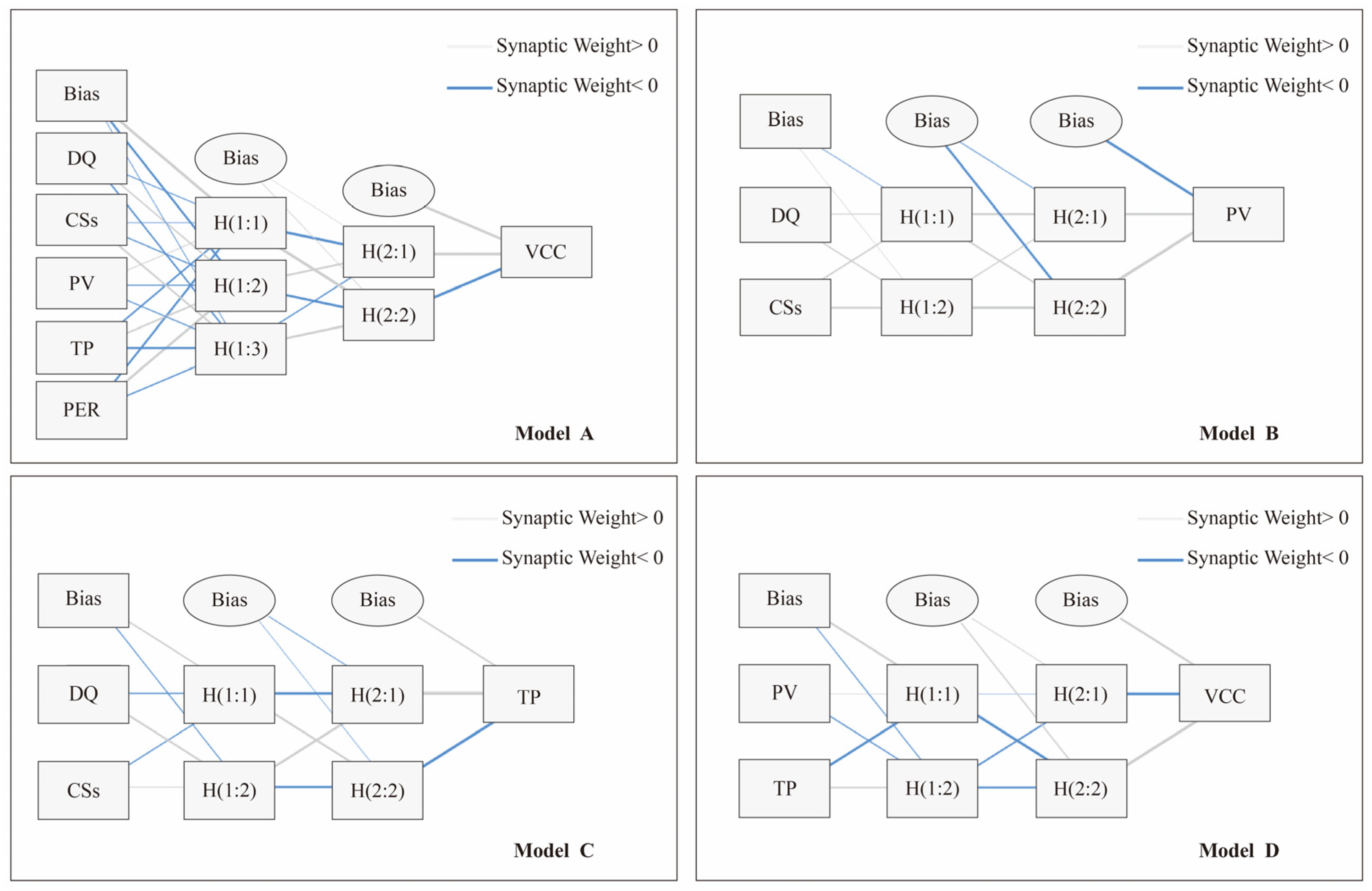
Four ANN models (Models A, B, C, and D) with different input–output structures were constructed, as illustrated in
Figure 9. In Model A, Destination Quality (DQ), Content Stickiness (CS), Perceived Value (PV), Perceived Restorative Environment (PER), and Tourism Participation (TP) were used as input neurons, while Value Co-creation (VCC) was specified as the output neuron. This model was designed to examine the combined influence of multiple antecedent variables on value co-creation behavior.
Models B and C used Destination Quality (DQ) and Content Stickiness (CS) as input neurons but differed in their output variables. In Model B, Perceived Value (PV) was defined as the output variable, whereas Tourism Participation (TP) served as the output variable in Model C. These two models were developed to explore the formation mechanisms of perceived value and tourism participation. Model D used Perceived Value (PV) and Tourism Participation (TP) as input variables and Value Co-creation (VCC) as the output variable, allowing the direct and combined effects of these factors on value co-creation behavior to be examined.
4.7.1. Model Fitting and Root Mean Square Error Validation
To ensure the effectiveness of ANN training and the robustness of the results, ten-fold cross-validation was employed to evaluate the predictive performance of the four models [
106]. In this procedure, the dataset was randomly divided into ten subsets. During each iteration, 70% of the samples were used as the training set, while the remaining 30% served as the test set [
107]. The process was repeated until each subset had been used as the test set at least once.
This validation strategy helps reduce the risk of overfitting and provides a reliable estimate of the model’s generalization ability. The root mean square error (RMSE) and the coefficient of determination (R
2) for each model across the ten iterations are presented in
Table 12.
Overall, the mean RMSE values of the four models ranged from 0.0799 to 0.1334, while the mean R
2 values ranged from 0.5716 to 0.9001. These results indicate that the models achieved relatively low prediction errors. Moreover, the differences between the training and testing results were small, and the standard deviations remained within a narrow range. These findings suggest that none of the models experienced significant overfitting and that strong out-of-sample generalization ability was achieved. Therefore, the ANN models provide a reliable basis for subsequent analysis [
108].
4.7.2. Sensitivity Analysis
Sensitivity analysis was conducted to assess the relative importance of each input variable and to identify the contribution of different factors to the prediction of the output variables. The normalized importance results are reported in
Table 13. For Model A, the Perceived Restorative Environment (PER) showed the highest importance (100%), indicating that it played the most influential role in predicting value co-creation behavior. Tourism Participation (TP) ranked second with a normalized importance of 52.48%, followed by Destination Quality (DQ) at 42.97%. In contrast, Content Stickiness (CS) and Perceived Value (PV) exhibited relatively lower importance values of 19.58% and 8.28%, respectively.
In the other models, different factors were found to dominate the prediction results. In Model B, Content Stickiness (CS) showed the highest importance (100%), substantially exceeding Destination Quality (DQ), which had a normalized importance of 67.87%. In Model C, Content Stickiness (CS) again emerged as the most influential predictor with a normalized importance of 100%. In Model D, Tourism Participation (TP) demonstrated the highest importance (100%), whereas the contribution of Perceived Value (PV) was considerably lower, with a normalized importance of 23.79%.
4.7.3. Cross-Method Comparison and Interpretation
To obtain a more comprehensive understanding of tourist value co-creation mechanisms, the results of structural equation modeling (SEM) and artificial neural network (ANN) analyses were compared. Specifically, SEM path coefficients were examined alongside the normalized relative importance values derived from ANN sensitivity analysis. As shown in
Table 14, the two methods show strong consistency in identifying the key determinants of value co-creation, while ANN additionally reveals nonlinear effects that cannot be captured by linear SEM models.
SEM results indicate that Tourism Participation (TP) is the only variable with a significant direct positive effect on Value Co-creation (VCC) (β = 0.288, p < 0.001). In contrast, Perceived Value (PV) shows no significant direct effect (β = −0.061, p = 0.065), while Destination Quality (DQ) and Content Stickiness (CS) influence VCC only indirectly through mediating paths. Consistent with these findings, ANN Model A shows that TP has substantial predictive importance for VCC (52.48%), whereas PV (8.28%) and CS (19.58%) contribute relatively little. These results indicate that tourism participation functions as the core direct driver of value co-creation, while the influence of perceived value mainly operates through participation.
The mechanisms underlying perceived value and tourism participation also show strong consistency across the two methods. SEM results show that Content Stickiness (CS) has a stronger effect on Perceived Value (PV) (β = 0.590, p < 0.001) than Destination Quality (DQ). ANN Model B confirms this pattern, with normalized importance values of 100% for CS and 67.87% for DQ. For Tourism Participation (TP), SEM indicates that Destination Quality (DQ) has a significant positive effect (β = 0.431, p < 0.001), while the direct effect of CS is not significant. ANN Model C further supports this result, showing the highest importance for DQ (100%) compared with CS (43.22%). Model D also confirms the dominant role of TP in predicting VCC (100%), whereas PV shows a much smaller contribution (23.79%). Together, these results consistently support the SEM conclusion that tourism participation plays the central role in driving value co-creation.
Additional insights are revealed in the analysis of restorative environmental perception (PER). In SEM, PER was modeled as a moderating variable and was found to significantly strengthen the relationship between tourism participation and value co-creation (β = 0.203, p < 0.001). However, ANN results indicate that PER has the highest predictive importance for VCC (100%), suggesting that its influence may extend beyond moderation and include a strong nonlinear predictive effect.
A similar pattern is observed for Destination Quality (DQ). Although the SEM results show no significant direct path from DQ to VCC, the ANN analysis indicates a relatively high importance value (42.97%), ranking third among all predictors. This finding suggests that the influence of destination quality on value co-creation may be nonlinear and may become significant only when destination quality reaches a certain threshold.
Overall, the combined SEM–ANN analysis provides strong support for the theoretical framework proposed in this study. While SEM identifies the linear causal relationships among variables, ANN reveals additional nonlinear predictive patterns, particularly for restorative environmental perception and destination quality. These findings suggest that relying solely on linear models may underestimate the influence of certain key factors in explaining tourist value co-creation behavior.