
Article

Selective Attributes and Purchase Behavior for Black Sesame (Sesamum indicum L.) Seolgi: An Empirical Study of South Korean Consumers

1
Major of Rice Cake Manufacturing Management, Department of Business Administration, Graduate School, Sungkyul University, Gyeonggi-do 14097, Republic of Korea
2
College of General Education, Kookmin University, Seoul 02707, Republic of Korea
*
Author to whom correspondence should be addressed.
†
These authors contributed equally to this work.
Sustainability 2025, 17(24), 10930; https://doi.org/10.3390/su172410930
Submission received: 4 October 2025 / Revised: 3 December 2025 / Accepted: 5 December 2025 / Published: 7 December 2025

Abstract

The purpose of this study is to examine how the selective attributes of Heugimja Seolgi, a traditional Korean food, influence consumers’ purchasing behavior. Data were collected through an online survey of adults in their 20s to 60s residing in the Republic of Korea who had previously consumed Heugimja Seolgi. Most respondents were in their 30s (34.5%) and 60s (25.7%). A total of 342 valid responses were analyzed using SPSS 25.0. Diversity and image, as sub-factors of the selective attributes for Heugimja Seolgi, were found to have a significantly positive impact on repurchase behavior, whereas quality did not show a statistically significant effect. This finding suggests that to increase repurchase rates, these factors must be considered, as Heugimja Seolgi is commonly chosen as a meal replacement, snack, or gift. Consumers also place great importance on the hygiene, cleanliness, and image of the stores selling the product. Ongoing research in this area is essential for the sustainable development of the Korean rice cake industry and is expected to contribute significantly to promoting the cultural and nutritional significance of traditional Korean rice cakes.

1. Introduction

The tradition of Tteok has continued into modern society. Likewise, Tteok is drawing attention because it is being developed as a sustainable slow food item with nutrition and healthfulness that does not affect the environment [1]. Tteok is a nutritionally balanced food made by using rice as well as glutinous rice, other grains, and various soybeans, chestnuts, jujube, dried pumpkin, nuts, mugwort, and others as sub-ingredients [2]. Ideal as a meal replacement and a snack, Tteok is a recommended food item. In addition, Tteok is Korea’s unique cultural heritage that has been handed down to the present era.
The Sikryochanyo, compiled in 1460, documents that the daily intake of roasted black sesame was considered beneficial for improving gait and speech in patients with zhongfeng, a traditional term describing conditions resembling paralysis [3]. According to Rituals and Food of Head Families compiled by the National Research Institute of Cultural Heritage [4] and the study by Lee et al. [5], all head families in the Chungcheong-do region made Tteok by using Heugimja as a coating. The Tanong Head Family in Seo-gu, Daejeon Metropolitan City, also makes Heugimjapyeon as a tall, layered Tteok by following the traditional method of alternately stacking layers of Tteok and Heugimja coating. In 2010, the Rural Development Administration defined Heugimjapyeon as Tteok made with non-glutinous rice flour and pine nut powder with sliced jujube as a garnish. This indicates that there are different methods of making Heugimjapyeon other than the traditional method used by head families.
Wonheng Ulmyo Jungri Euigwae, compiled in 1795, records details about royal banquets. According to this book, Tteok and Hangwa (traditional Korean confections) play an important role in feasts and daily meals. This book records the use of Heugimja Dasik, or a traditional Korean pressed tea cookie, for feasts; Dasik and Tteok were stacked high as colorful ornaments to brighten up the atmosphere of the feasts [6,7]. In addition, Heugimja is recorded as a coating ingredient for Gangjeong (candy bar-like confection) [8]. In Gyuhapchongseo, published in 1809, the use of Heugimja as a coating for Dasik, Gangjeong, and buckwheat Sanja (flat version of Gangjeong) is recorded [9]. As such, Heugimja has been used in various recipes. In particular, Heugimja Tteok is a traditional rice cake handed down to the present era that has been used in various events including parties and rituals. Therefore, Heugimja Tteok has important cultural value that merits its continuous maintenance and handing down in Korea.
Black sesame (Sesamum indicum L.) is an annual dicotyledon from the family Pedalium murex. The black seed in powdered form is called Heugimja. In China and Korea, black sesame seeds have been known as food for longevity for their health benefits since the old days [10,11,12]. In addition, Dongeuibogam records black sesame as Homa and refers to it as herbal medicine. The text specifies that Homa has a sweet taste, a neutral nature, and is non-toxic. According to this book, long-term intake of black sesame lightens the body, prevents aging, improves resilience against hunger and thirst, and extends life. As such, black sesame was valued as a precious medicinal herb in oriental medicine [13]. Black sesame is not only high in nutrients but can also be used as a treatment for various diseases [14]. The nutrient composition of roasted black sesame seeds (per 100 g) is presented in Appendix A (Table A1) [15].
According to the study by Shi et al. [16], black sesame has higher protein, lignan, sesamin, and sesamolin contents than other sesame varieties. The amounts of active ingredients were found to vary by sesame seed variety. Lignan, a key active ingredient, produces powerful anti-oxidant activity [17]. Black sesame seed powder intake by pre-hypertensive subjects had anti-hypertensive effects to reduce oxidative stress and improve anti-oxidant status, which are beneficial for the prevention of cardiovascular diseases [18]. In addition, black sesame seed was found to have beneficial effects in regulating blood lipid levels and improving liver function [19]. Moreover, sesamol, sesaminol, and phenol as the key functional ingredients of black sesame seeds were found to have the effects of strengthening the myocardium, promoting the oxidation of fatty acids, and preventing hypertension [10,11,12,20]. They were found to reduce total cholesterol, low-density lipoprotein, and blood lipid levels [21]. Also, anti-inflammation [22] and neuroprotection effects in relation to hypoxemia and brain damage were reported [23].
Sesame seed production volume increased from 6795 tons in 2020 to 10,090 tons in 2021 and 11,679 tons in 2022 [24]. In addition, according to statistical data, there were 13,154 Tteok makers in Korea as of 2019, and the number increased to 13,789 in 2020 [25]. The increase in preference for sesame seeds and Tteok can be said to have led to a rise in the production volume and number of Tteok makers. As a result, various products using sesame seeds and Tteok products are being released. The number of consumers purchasing Tteok has increased over time. Tteok and Hangwa used to be traditional sweets enjoyed mainly by people in the old age group. With the newtro trend spreading, however, Tteok has established itself as a main trend in the food industry under the concept of “Halmaenial,” a newly coined word created by combining “Halmae”, the dialect for grandmother, and “millennial” due to its popularity among Gen Z. In keeping with the current trend, Tteok is being made as a new-concept snack through the reinterpretation of the traditional version using various toppings. With its position in the dessert market rising, Tteok has been established as a K-dessert loved by people of all ages. In Korea, Heugimja has been used as an ingredient for porridge, Tteok, Gangjeong, yugwa, Yeot (taffy), Gangjeong, and Dasik since the old days. It is also used in sauces and toppings, pastes, cookies, cakes, ice cream, shaved ice desserts, beverages, and others.
According to the study by Choi et al. [26], tests on the ABTS, DPPH, polyphenol, and flavonoid contents of Seolgi made using Heugimja indicated anti-oxidant activity. Fruits and vegetables are referred to as natural anti-oxidants because of their high polyphenol content. They also contain flavonoids and anthocyanins, which are types of polyphenols. Polyphenols have been reported to have anti-cancer, anti-aging, and anti-inflammation effects because of their various biological characteristics [27]. The DPPH (2,2-diphenyl-1-picrylhydrazyl) assay is a spectrophotometric method that quantifies a sample’s free-radical-scavenging (antioxidant) capacity by measuring the extent to which the 517 nm absorbance of a DPPH radical solution is decolorized by antioxidants. The reagent is typically used in organic solvents such as methanol and ethanol [28,29]. The ABTS (2,2′-azinobis (3-ethylbenzothiazoline-6-sulfonic acid)) assay generates ABTS+ radical cations with potassium persulfate, and the degree of decolorization (decrease in absorbance) is quantified at 734 nm to evaluate both hydrophilic and lipophilic antioxidant constituents; the results are expressed as TEAC equivalents [29,30].
Despite the long history and growing market of Tteok and black sesame products, most previous studies have focused on product development, sensory evaluation, or the analysis of functional components such as antioxidants and other bioactive compounds. However, relatively few studies have examined how consumers perceive the choice attributes of Heugimja Seolgi as a sustainable traditional food and how these attributes influence their purchase-related behaviors, such as repurchase and recommendation intentions. In particular, empirical research that links the functional and cultural value of Heugimja Seolgi to consumer behavior in the context of sustainable slow food remains limited. Thus, it is still unclear which specific attributes of Heugimja Seolgi are most salient to consumers and how their evaluations of these attributes are translated into repurchase and recommendation intentions. Therefore, the present study aims to identify and define the key choice attributes of Heugimja Seolgi, namely diversity, quality, and image, and to empirically examine how these attributes affect consumers’ purchase behavior, specifically their repurchase intention and intention to recommend the product to others. This study makes two key contributions. Theoretically, it provides empirical evidence on the consumer evaluation of Heugimja Seolgi as a sustainable traditional food; at an applied level, it offers practical implications for product positioning and marketing strategies for Heugimja Seolgi and related traditional rice cake products.
Accordingly, Heugimja Seolgi is expected to gain popularity for its value as a functional Tteok and safety as it can be enjoyed by people of all ages. Such health functionality strengthens consumers’ value perceptions of traditional foods and, ultimately, provides an important theoretical basis for explaining the cognitive pathway that leads to attitudes and behavior. To conceptualize these relationships, this study draws on attribute-based choice theory and the Value Attitude Behavior (VAB) framework. Attribute-based choice theory suggests that consumers evaluate products based on specific attributes (e.g., diversity, quality, and image) and choose alternatives that maximize their perceived value. The VAB framework posits that perceived value influences attitudes, which in turn drive behavioral intentions such as repurchase and recommendation. Applied to Heugimja Seolgi, consumers’ knowledge of its functional and cultural benefits is expected to enhance value perceptions, which are reflected in their evaluations of selective attributes and ultimately in their repurchase and recommendation intentions.

2. Literature Review and Hypotheses

2.1. Value Attitude Behavior (VAB) Framework

The Value Attitude Behavior (VAB) framework posits that individual values influence attitudes, which in turn drive behavioral intentions [31]. Recent studies have confirmed the robustness of this cognitive pathway in diverse food contexts. Park and Namkung [32] found that health and environmental values indirectly affect purchase intention via attitudes in the plant-based food context. Similarly, Leyva-Hernández et al. [33] provided evidence consistent with the VAB pathway in organic food purchases. Huang et al. [34] reported that health-related values strengthen positive attitudes toward upcycled foods, thereby enhancing purchase intentions. These studies collectively indicate that values play a pivotal role in shaping attitudes and behaviors related to sustainable and traditional foods. These prior studies show that the VAB framework operates consistently in contemporary food-consumption contexts, yet its application to traditional foods remains limited. Prior research on rice cake consumption has focused on evaluating product attributes such as taste, freshness, hygiene, and packaging. However, these studies have primarily addressed functional or sensory attributes, while affective and symbolic factors such as product image or diversity of use have received limited attention. Despite growing consumer interest in traditional foods, little research has examined how the Value Attitude Behavior (VAB) model operates in the context of Korean rice cakes. In particular, the mechanisms through which perceived image and product diversity affect purchase and repurchase intentions remain underexplored. Therefore, in the context of traditional rice cake (Tteok) consumption, it is necessary to examine not only functional attributes but also affective and symbolic attributes (e.g., image, diversity) and how they influence attitudes and behavioral intentions.

2.2. Literature Review on Choice Attributes and Purchasing Behavior

Choice attributes can be classified in various ways. In consumer perception, they are commonly distinguished as intrinsic attributes (product-inherent characteristics) and extrinsic attributes (e.g., price, packaging, store image, service) [35]. Choice attributes are defined as the set of characteristics that consumers primarily consider when evaluating alternatives and making a final choice. The concept also encompasses post-consumption satisfaction and denotes the criteria that decisively influence preference formation, purchase decisions, and revisit/repurchase across the attributes of products, brands, stores, and services [36,37]. Furthermore, choice attributes operate as the central criteria in decision-making and ultimately determine the final choice [38]. And how consumers recognize them is important because their purchase behaviors vary depending on the attributes [39]. In particular, selective attributes for Tteok are an important element because consumers, even if they have not eaten Tteok, make the final choice by estimating the shape, taste, quality, and other factors based on their past experiences and feelings about Tteok [40]. Therefore, the decision-making process to make a choice for a food item by placing importance on certain attributes is the most fundamental element to consider in analyzing purchase behaviors, which can vary depending on the choices made.
In addition, as identification of selective attributes has a direct relation to and determinant impact on the actual purchase activity, it is very important to understand consumers’ purchase behaviors [41]. In a number of previous studies, including those by Choi [42], Han and Lee [43], purchase behavior is used in the same concept as intention to purchase, intention to repurchase, intention to pass on word of mouth, and intention to recommend. In addition, data collected on purchase behaviors can be very helpful in predicting the demand for a product, segmenting the market, and consequently developing sales promotion strategies [44].
Intake of healthy food is being recommended across the world, and the importance of this increases year by year. The popularity of K-food has placed Korean food in the limelight. In particular, consumers’ interest in Tteok is showing an increasing trend. Heugimja Tteok is a traditional food. It is also a safe food made with plant ingredients, a nutritious food with anti-oxidant function, and a sustainable food. With its health benefits, intake of Tteok is recommended. Therefore, continuous study on Tteok, a traditional Korean food, is needed. This study is aimed at investigating the selective attributes and purchase behaviors for Heugimja Seolgi. As a traditional Korean food handed down to the present era, Heugimja Tteok has a positive impact not only on people’s health but also the environment. Therefore, it must be maintained and handed down to future generations.
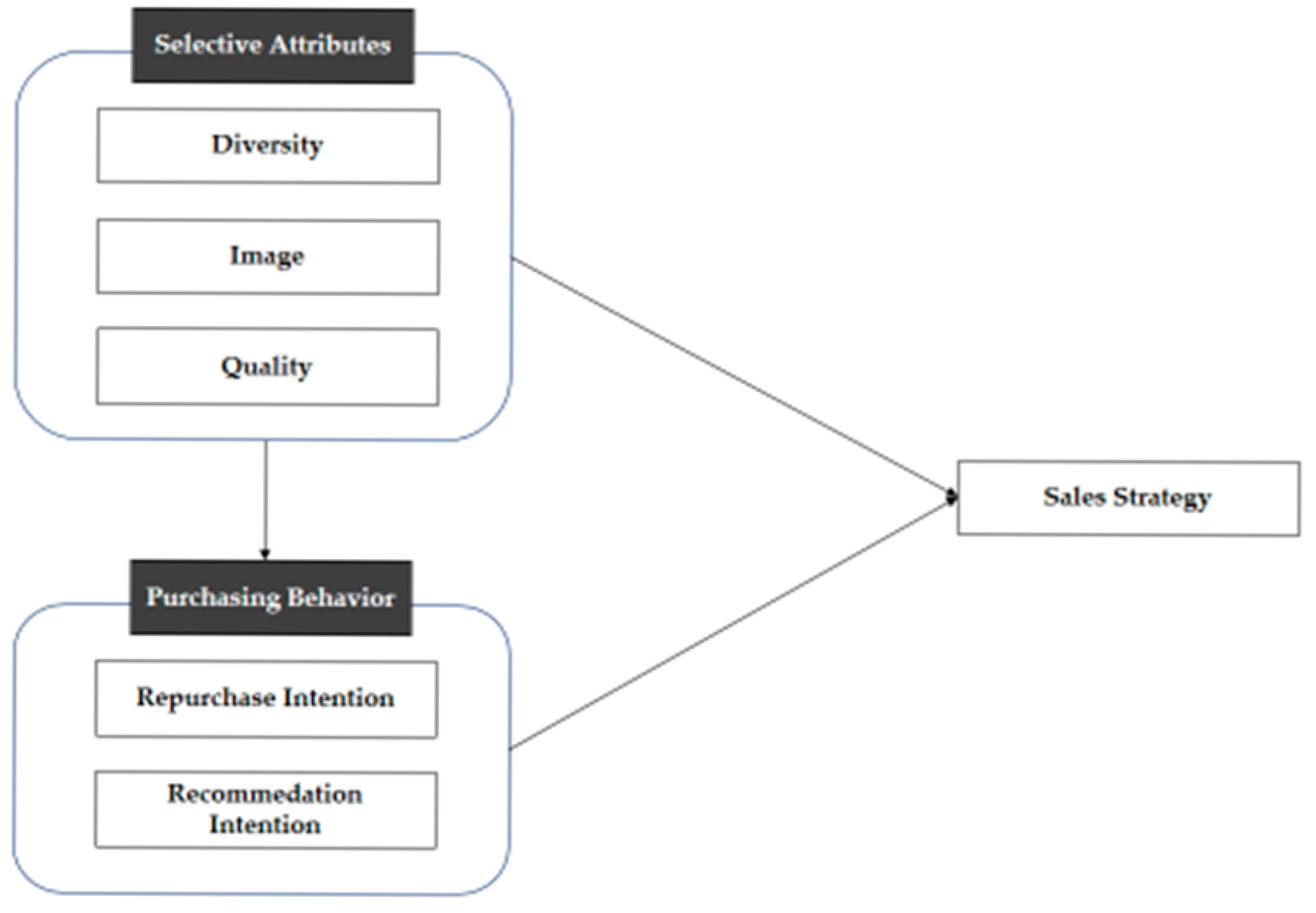
Figure 1 shows a study model to analyze selective attributes, purchase behaviors, and sales strategies for Heugimja Seolgi.

2.3. Research Model and Hypotheses

Guided by the Value Attitude Behavior (VAB) framework, this study tests how the choice attributes of Heugimja Seolgi quality, image, and variety affect purchasing behavior (repurchase intention and recommendation intention). Accordingly, we conducted a theory-informed, hypothesis-driven explanatory cross-sectional survey, and, based on prior research, we propose the following hypotheses.
In prior research, Shin [45] analyzed the causal relationships between Tteok (Korean rice cake) choice attributes, satisfaction, and relationship-continuity intention, and reported that choice attributes had a positive and significant effect on satisfaction. Likewise, An [46] found that product selection attributes in Tteok cafés significantly influenced product satisfaction. Oh [47] also showed that Tteok choice attributes exerted a positive and significant effect on both satisfaction and relationship-continuity intention. On the basis of these studies, the present research proposes the following hypotheses.
Hypothesis 1 (H1).
The choice attributes of Heugimja Seolgi will significantly influence purchasing behavior.
Hypothesis 2 (H2).
The purchasing behavior for Heugimja Seolgi will significantly affect the sales strategy.

2.4. Description and Measurement of Variables

Heugimja Seolgi is a traditional Korean rice cake made primarily with black sesame (black sesame seeds) and is consumed as a meal substitute or snack. In this study, choice attributes are operationally defined as the characteristics that consumers consider when evaluating and deciding to purchase Heugimja Seolgi, and are specified as three dimensions: diversity, quality, and image. Diversity is an attribute that indicates the situations and purposes for which Heugimja Seolgi can be used, and refers to the extent to which consumers can choose Heugimja Seolgi in various consumption situations and for different purposes, such as perceiving it as convenient to eat as a meal substitute, choosing it to add variety to everyday meals, using it as a snack, or purchasing it for celebrating anniversaries and events, for entertaining guests, or as a gift. Quality is consumers’ evaluation of the overall product performance of Heugimja Seolgi, and includes perceptions of the color and appearance of the rice cake, the appropriateness of its price, the consistency of its quality, and the belief that they can consume the antioxidant and nutritional components of black sesame. In other words, it refers to perceived product quality encompassing appearance, price fairness, quality consistency, and health-related functionality. Image is the external impression related to the store and packaging through which Heugimja Seolgi is offered, and refers to the overall image of the product and the store formed by aspects such as the store’s interior design, level of cleanliness, quality of service, and the neatness of the packaging. Meanwhile, purchase behavior is defined as future behavioral intentions toward a given product. In this study, it is defined as repurchase intention for Heugimja Seolgi and the intention to recommend it to others.
This study’s questionnaire comprised 15 items on selective attributes, 15 items on purchasing behavior, 15 items on sales strategy, and 6 items on demographic characteristics. The survey items were adapted from established instruments in prior studies and refined to fit the objectives and methods of the present research; only items with verified reliability and validity were retained. Except for the demographic questions, all items were measured on a five-point Likert scale. The composition of the measurement instrument is presented in Table 1.

3. Materials and Methods

3.1. Participants and Survey Period

An online questionnaire survey was conducted from 1 to 5 October 2021 using a non-probability convenience sampling method. The target population consisted of men and women in their 20s to 60s residing in the Republic of Korea who had previously consumed Heugimja Seolgi. Participation was voluntary and anonymous. Informed consent was obtained from all respondents, and no incentives were provided. A total of 350 questionnaires were collected. After excluding incomplete or invalid responses, 342 valid cases were included in the final analysis.

3.2. Questionnaire and Statistical Analysis

The questionnaire items used in this study were developed with reference to established instruments from previous studies [45,48,49,50,51,52,53] and were adapted to the context of Heugimja Seolgi. The survey included items on selective attributes, purchasing behavior, sales strategy, and demographic characteristics. Selective attributes, purchasing behavior, and sales strategy were measured using five-point Likert-type scales (1 = strongly disagree; 5 = strongly agree), whereas demographic questions were measured using categorical response options.
Data from the 342 valid questionnaires were analyzed using SPSS 25.0. First, frequency analysis was conducted to identify the general characteristics of the respondents. To examine the construct validity and internal consistency of the items related to the selective attributes of Heugimja Seolgi, exploratory factor analysis (EFA) and reliability analysis (Cronbach’s α) were performed. Descriptive statistics (means and standard deviations) were then calculated for selective attributes, purchasing behavior, and sales strategy. Finally, multiple regression analyses were conducted to identify the effects of selective attributes on purchasing behavior and the effects of purchasing behavior on sales strategy. Statistical significance was evaluated at the levels of p < 0.05, p < 0.01, and p < 0.001.

4. Results

Statistical Analysis

Table 2 lists the results of the frequency analysis conducted to identify the characteristics of the 342 subjects.
Among them, 183 (53.5%) were female and 159 (46.5%) were male. By age, the largest group was those in their 30s (118, 34.5%). In terms of education, 159 (46.5%) had graduated from junior colleges or universities, 107 (31.3%) from high school, and 76 (22.2%) were in graduate school or higher. By monthly income, 96 (28.1%) earned KRW 2–2.99 million and 41 (12.0%) earned KRW 4–4.99 million. By occupation, professionals were the largest group (90, 26.3%), followed by the self-employed (82, 24.0%), others (80, 23.4%), office/administrative workers (63, 18.4%), and students (27, 7.9%).
The frequency analysis characteristics of study subjects are shown in Table 2.
The results of the validity and reliability testing for the purchasing behavior scale are presented in Table 3. After removing three items (Items 6, 8, and 15) that impaired the psychometric properties of the scale, an exploratory factor analysis (EFA) was conducted. The Kaiser–Meyer–Olkin (KMO) measure was 0.865, indicating adequate sampling adequacy for factor analysis. Bartlett’s test of sphericity was significant, χ2 = 3711.904, p < 0.001, confirming that the correlation matrix was suitable for factor analysis. Principal component analysis (PCA) was used for factor extraction, and the solution was rotated using varimax (orthogonal) rotation.
The two-factor solution accounted for approximately 73.51% of the total variance. Factor 1 had an eigenvalue of 4.462 and explained 37.18% of the variance, whereas Factor 2 had an eigenvalue of 4.359 and explained 36.33% of the variance, indicating that the instrument is composed of meaningful subdimensions. Accordingly, Factor 1 was labeled “Repurchase” and Factor 2 “Recommendation Intention.” Cronbach’s α for the overall scale was 0.916; the reliability coefficients for the subscales were 0.927 for Repurchase and 0.917 for Recommendation Intention, all exceeding the conventional criterion of 0.60, suggesting very high internal consistency among the items.
The results of basic analysis on the means, standard deviations, skewness, and kurtosis of the selective attributes, purchase behaviors, and sales strategies for Heugimja Seolgi are listed in Table 4. The overall mean of the selective attributes for Heugimja Seolgi was 3.72 (SD = 0.62) points. As for the sub-factors of diversity, quality, and image, the means were found to be 3.64 (SD = 0.87), 3.53 (SD = 0.84), and 4.00 (SD = 0.69), respectively. The overall mean of the purchase behaviors for Heugimja Seolgi was 4.02 (SD = 0.72) points. As for the sub-factors of repurchase and intention to recommend, the means were found to be 4.09 (SD = 0.90) and 3.96 (SD = 0.81), respectively. Lastly, for sales strategy, the mean was 3.35 (SD = 0.86) points.
Finch and West [54] proposed that the assumption of normal distribution was met when absolute values of the skewness and kurtosis for the measured variables did not exceed 2 and 7, respectively. Considering the fact that skewness and kurtosis were calculated as –1.53 through −0.06 and –0.61 through 2.32, respectively, the absolute values did not exceed 2 and 7 for all variables; thus meeting the assumption of normality. As the assumption of normal distribution was met for all variables, significance verification of the study model using maximum likelihood estimation was determined to be suitable.
The results of the multiple regression analysis conducted to identify the impact of selective attributes for Heugimja Seolgi on repurchase are presented in Table 5. The explanatory power of the final model with sub-factors of selective attributes applied as independent variables and repurchase (a sub-factor of purchase behavior) as the dependent variable was 26.8% (R = 0.268), and the model was found to be suitable (F = 9.302, p < 0.001). In addition, the Durbin–Watson statistic value was 1.925, which is close to 2, indicating no problem in the assumption of independence. Furthermore, the variance inflation factor (VIF) was less than 10, indicating no problem in multicollinearity. As for variables affecting repurchase, diversity (t = 2.536, p < 0.05) and image (t = 2.728, p < 0.01) were found to have a significantly positive (+) impact on repurchase. The effects on repurchase were larger for image (β = 0.162) than for variety (β = 0.159). However, quality did not have a significant impact on repurchase. This means that improvement of diversity and image leads to an increase in repurchase.
The result of multiple regression analysis conducted to identify the impact of selective attributes for Heugimja Seolgi on the intention to recommend is presented in Table 6. The explanatory power of the final model with sub-factors of selective attributes applied as independent variables and intention to recommend (a sub-factor of purchase behavior) as the dependent variable was 37.2% (R = 0.372), and the model was found to be suitable (F = 24.561, p < 0.001). In addition, the Durbin–Watson statistic value was 2.148, which is close to 2, indicating no problem in the assumption of independence. Moreover, the variance inflation factor (VIF) was less than 10, indicating no problem in multicollinearity. As for the variables affecting the intention to recommend, quality (t = 2.379, p < 0.05) and image (t = 5.732, p < 0.001) were found to have a significantly positive (+) impact on the intention to recommend. The effects on Recommendation Intention were larger for image (β = 0.322) than for quality (β = 0.131). However, diversity did not have a significant impact on the intention to recommend. This indicates that improved quality and image lead to an increase in the intention to recommend.
The results of the multiple regression analysis conducted to examine the effect of purchasing behavior on sales strategy are presented in Table 7. When the sub-dimensions of purchasing behavior were entered as independent variables and sales strategy as the dependent variable, the explanatory power of the final model was approximately 33.5% (R = 0.335), indicating that the model was acceptable (F = 7.191, p < 0.001).
In addition, the Durbin–Watson statistic was 1.869, a value close to 2, suggesting no violation of the independence assumption. The variance inflation factor (VIF) values were all below 10, indicating that multicollinearity was not a concern.
With regard to the variables influencing sales strategy, recommendation intention (t = 2.927, p < 0.01) had a significant positive effect on sales strategy, whereas repurchase did not have a significant effect. Therefore, an increase in recommendation intention can be interpreted as leading to an increase in sales strategy.

5. Discussion

People across the world are concerned about the nutritional values of the food they are eating [55]. The food industry is in need of various studies as eco-friendly, sustainable, anti-oxidant, and immunity-boosting foods with nutrition, healthfulness, safety, and convenience are gaining popularity [56]. The result of an anti-oxidant test conducted on Heugimja Seolgi indicated a significant impact, verifying that Heugimja Seolgi is a food with traditional value and nutrition [26]. The Heugimja Tteok available today has been modified slightly from the traditional version according to the tastes of modern people. However, this is a valuable, much-loved food handed down from the past. Therefore, this study was conducted to explore plans to increase the purchase rate of Heugimja Seolgi in the future by examining selective attributes and purchase behaviors for Heugimja Seolgi with traditional and nutritional value targeting adults in the Republic of Korea.
To understand consumer purchasing behavior, it is necessary to consider the cognitive hierarchy among values, attitudes, and behavior, beyond simple evaluations of product attributes [31]. That is, prior to purchase, consumers form attitudes based on internal value judgments (e.g., health consciousness, traditionality, sustainability), and positive attitudes ultimately lead to purchase and repurchase behavior [32,57]. The underlying mechanism of the study’s findings is consistent with the established consumer behavior framework that posits a hierarchical sequence from values, attitudes, and behavior.
Recent studies have shown that this cognitive pathway operates consistently across diverse food-consumption contexts. For example, Park and Namkung [32] reported that health and environmental values indirectly influence purchase intention via attitudes toward plant-based foods. Additionally, Huang et al. [34] showed that health values strengthen positive attitudes toward upcycled foods, which in turn increase behavioral intentions. Similarly, Jakubowska et al. [58] reported that, in sustainable food purchasing, Generation Z places greater emphasis on value-centered attitudes, and such attitudes significantly predict purchase intention. Kim and Park [59] found that traditionality, healthfulness, sensory appeal, and credibility significantly affected consumers’ perceived value and purchase intention; moreover, higher perceived consumption value was associated with stronger purchase intention. This is contextually consistent with a VAB-based interpretation, and similar patterns have been reported in studies on the choice attributes of rice cake (Tteok) products. Shin and Park [60] reported that, in a consumer analysis of health-premium Seolgi (a type of rice cake), nutritional value, an intrinsic attribute, was classified as relatively low in importance, whereas hygiene, an extrinsic attribute, emerged as a key factor with high levels of both importance and satisfaction. This suggests that, when choosing Seolgi, consumers tend to prioritize image- and psychologically oriented cues such as hygiene and cleanliness over nutritional value. From this perspective, the quality of Heugimja Seolgi is likely perceived as a baseline attribute (e.g., healthfulness, nutrition) and thus may not have functioned as a differentiating factor in the formation of behavioral intentions. By contrast, image cues (hygiene/cleanliness, store interior/ambience, service, packaging) and diversity of use (meal replacement, snack, special occasions, gifting) are extrinsic factors that directly shape the emotional and symbolic value consumers perceive from the product, thereby likely strengthening the connection between attitude formation and behavioral intentions. Accordingly, the finding that image and diversity significantly predict repurchase intention whereas quality does not is contextually consistent with the VAB perspective, which links evaluative attributes (image, diversity) to behavioral intentions.
The result indicated that diversity and image of Heugimja Seolgi had a significant impact on repurchase, but quality did not have any impact. In this regard, An [46] reported that, among choice attributes, taste and nutrition did not have a significant effect on product satisfaction, whereas product variety did. This shows a similar pattern to the findings of the present study. Moreover, in the food and foodservice industries, quality, healthfulness, and nutrition are not differentiating factors but baseline requirements that consumers naturally expect and that must be satisfied. Therefore, even if they do not reach statistical significance, they should not be overlooked.
This trend is closely linked to changes in modern lifestyles. The number of consumers who prefer convenience foods is increasing due to the rise of single-person households, dual-income households, and older adults living alone. Accordingly, the consumption of Tteok, which is convenient to eat and is also nutritious, is increasing, and Baekseolgi was found to be the most preferred type of Tteok [61]. Additionally, Yoon [62] reported that consumers purchase Tteok primarily as a meal substitute and for gifting. Therefore, Heugimja Seolgi in this study is considered to have a significant impact because it is popular as a meal replacement and snack and is also ideal as a gift for anniversaries and events, among others.
According to the study by Yim [63], the image of Tteok (packaging) has an impact on the intention to repurchase, which corresponds to the result of this study. In the study by Yoon and Oh [64], however, quality (taste, freshness) was considered an important factor, contrary to the result of this study. However, hygiene emerged as a factor of high importance. In Shin’s study [60], among the extrinsic choice attributes of Seolgi Tteok, hygiene showed the highest perceived importance. This is consistent with the present study’s finding that the image factor among choice attributes had a significant effect. Hygiene is a core dimension that consumers evaluate sensitively, and inadequate management can directly lead to a loss of trust. Accordingly, sanitary production of Tteok, clean operation of retail food service outlets, and maintenance of freshness require substantial resource investment and systematic management. Kim and Lee [65] found that Tteok is consumed as healthy food and that the health benefits of Heugimja have become known among the public through news articles. Therefore, it appears that greater importance is placed on the diversity and image rather than the quality of Heugimja Tteok. Therefore, it is important to keep stores hygienic and clean. Friendly service is also important because it affects the image. In addition, keeping the product packaging and the area of display clean is another way of increasing the repurchase rate.
The quality and image of Heugimja Seolgi were found to have a significant impact on the intention to recommend, but diversity did not have any impact. In the study by Han [66], image (facility, service) was also found to have a significant impact on the intention to recommend. In addition, according to the study by Shin in [45], consumers with a high level of satisfaction with Tteok have a higher intention to purchase than to recommend, which shows relevance to the result of this study. With people’s interest in health growing each year, Korea’s traditional food has come into the limelight as healthy food.
People living busy lives in today’s world eat Tteok as a meal replacement or snack, and also enjoy it as a dessert together with beverages [44]. Promotion is important to increase the purchase rate of Heugimja Seolgi further. As an effective means of promotion, the largest number of respondents selected program advertising, followed by a Tteok festival, promotion on social networks, Tteok store promotion posters, advertising (banner, pop-up, video), and promotion by salespeople at supermarkets and department stores. In addition, as indirect advertising through movies and TV shows was found to have an effect, using mass media is also considered a good option [48].
By linking the significant findings from the antioxidant assay of Heugimja Seolgi with the consumer survey, we present multi-layered empirical evidence supporting the relationships among functionality, choice attributes, and behavior in traditional foods. In doing so, we provide an explanatory framework applicable to traditional Tteok and related products, thereby offering an empirical basis for future cross-category comparisons and replication studies. Although Korea’s Tteok industry is continuously growing, studies on this area have not been conducted sufficiently. In addition, as an issue directly related to the sales rate of Tteok, this study suggests that the promotion of further studies is very important and necessary. Considering the fact that the selective attributes for Heugimja Seolgi were found to have a significant impact on the purchase behaviors, for Heugimja Seolgi, which is a food item of tradition to be handed down to future generations, the quality of Heugimja Seolgi must be maintained, and attention must be paid to cleanliness, hygiene, and service quality in stores. One limitation of this study is that the sales strategy scale was operationalized and measured as a single-factor construct. As a result, it was difficult to disentangle and identify the differential effects of subdimensions such as price, distribution (channel), promotion, product packaging, and hygiene standardization. Future research should therefore conceptualize sales strategy as a multidimensional scale and empirically compare and test the effects of each subdimension on repurchase behavior and recommendation intention, thereby providing more concrete and practically effective strategic implications.
This study has limitations in representing all adults of the Republic of Korea as it was conducted using a small quantity of data through convenience sampling among non-probability sampling methods. Accordingly, future research should expand sample diversity and take demographic variables into account to conduct more systematic and in-depth analyses. As for the studies to be promoted in the future, a study on selective attributes for Tteok will be necessary for comparative analysis as there are many types of Tteok in Korea. Studies to explore various techniques and detailed purchase behaviors will also be necessary.

6. Conclusions

This paper is expected to contribute to studies on traditional, anti-oxidant, and sustainable foods. The data have been further enriched through studies on the knowledge of Heugimja in ancient documents, nutrition and efficacy of Heugimja, and selective attributes and purchase behaviors for Heugimja Tteok. In this respect, a multiple regression analysis was conducted to identify the selective attributes and purchase behaviors for Heugimja Seolgi and, as a result, the diversity and image of Heugimja Seolgi were found to have a significantly positive (+) impact. This study drew the conclusion that Heugimja Seolgi of Korea is popular as a food item of tradition and nutritional value that is suitable for meal replacement, snack, and gift, and the image of stores selling Heugimja Seolgi wields a significant impact. In addition, the result of this study is original because the selective attributes and purchase behaviors for Heugimja Seolgi have not been studied targeting adults in Korea. Moreover, as Heugimja Seolgi has a positive impact not only in the present but also in the future, it will play an important role in promoting Korea’s Tteok culture and value.

Author Contributions

Writing—original draft preparation, J.A.H.; methodology, C.H.C.; investigation, C.H.C.; writing—review and editing, J.A.H.; supervision, K.H.K. All authors have read and agreed to the published version of the manuscript.

Funding

This research received no external funding.

Institutional Review Board Statement

Ethical review and approval were waived for this study by Institution Committee due to Legal Regulations Pursuant to Article 15 (2) of the Bioethics and Safety Act and Article 13 of its Enforcement Rules (promulgated by the Ministry of Health and Welfare, Republic of Korea, and administered by the Korea Ministry of Government Legislation).

Informed Consent Statement

Informed consent was obtained from all subjects involved in the study.

Data Availability Statement

Data sharing not applicable. The data are not publicly available due to privacy issues.

Conflicts of Interest

The author declares no conflicts of interest.

Appendix A

Table A1. Nutrient composition of roasted black sesame seeds (per 100 g).
ProximatesValueFatty AcidValue
Energy (kcal)
Water (g)
Protein (g)
Fat (g)
Carbohydrates (g)
Total Dietary Fiber (g)
Water-Soluble Dietary Fiber (g)
Water-Insoluble Dietary Fiber (g)
Ash (g)
539
3.3
21.28
42.30
27.42
19.3
1.2
18.1
5.7
Total fatty acids (g)
Total essential fatty acids (g)
Saturated fatty acids (g)
Mysistic (14:0) (mg)
Palmitic (16:0) (mg)
Heptadecanoic (17:0) (mg)
Stearic (18:0) (mg)
Arachidic (20:0) (mg)
Begenic (22:0) (mg)
Tricosanoic (23:0) (mg)
Lignoceric (24:0) (mg)
Monounsaturated fatty acids (g)
Palmitoleic (16:1) (mg)
Oleic (18:1(n-9)) (mg)
Vaccenic (18:1(n-7)) (mg)
Gadoleic (20:1) (mg)
Nervonic (24:1) (mg)
Total polyunsaturated fatty acids (g)
Linoleic (18:2(n-6)c) (mg)
α-linolenic (18:3(n-3)) (mg)
Eicosadienoic (20:2(n-6)) (mg)
Total n-6 polyunsaturated Fatty acid (g)
Trans fatty acid (g)
Trans oleci (18:1(n-9)t) (mg)
Trans linoleic (18:2 t) (mg)
Trans linolenic (18:3 t) (mg)
Total unsaturated fatty acid (g)
40.47
18.52
6.27
8.89
3890.88
21.01
2013.65
237.85
55.84
8.05
29.84
15.6
54.5
15,072.17
385.1
79.98
5.81
18.55
18,327.28
194.17
25.65
18.35
0.05
17.57
26.22
7.73
34.15
Amino acidValueMineralsValue
Sum of 19 amino acids (mg)
Total essential amino acids (mg)
Isoleucine (mg)
Leucine (mg)
Lysine (mg)
Methionine (mg)
Phenylalanine (mg)
Threonine (mg)
Tryptophan (mg)
Valine (mg)
Histidine (mg)
Arginine (mg)
Tyrosine (mg)
Cystine (mg)
Alanine (mg)
Aspartic acid (mg)
Glutamic acid (mg)
Glycine (mg)
Proline (mg)
Serine (mg)
17,338
8275
649
1287
499
544
831
628
264
835
475
2263
587
386
882
1436
3355
953
666
798
Calcium (mg)
Iron (mg)
Magnesium (mg)
Phosphorus (mg)
Potassium (mg)
Sodium Chloride Equivalent (mg)
Zine (mg)
Copper (mg)
Manganese (mg)
Selenium (μg)
Molybdenum (μg)
1316
5.32
406
828
457
1
5.65
1.28
2.03
0.85
49.71
VitaminValue
Vitamin A (μg)
β-Carotene (μg)
Total Vitamin E (mg)
α-tocopherol (mg)
γ-tocopherol (mg)
δ-tocopherol (mg)
Total Vitamin K (μg)
Phylloquinone (μg)
Thiamin (mg)
Riboflavin (mg)
Total Niacin (mg)
Total niacin equivalents (mg)
Nicotinic acid (mg)
Nicotinamide (mg)
Pantothenic acid (mg)
Folate (μg)
Food Folate (μg)
2
27
3.37
0.16
31.86
0.75
2.64
2.64
0.123
2.20
3.78
8.19
3.65
0.13
0.97
113
113
Note: Rural Development Administration National Institute of Agricultural Sciences [15].

References

  1. Han, J.A.; Kwon, K.H. Potential Anti-oxidative Properties and Quality Characteristics of Korean Traditional Rice Cake Added with Pistachio (Pistacia vera L.) as Inner Beauty Material. Emir. J. Food Aagric. 2022, 34, 1012–1019. [Google Scholar] [CrossRef] [Scilit]
  2. Ministry of Food and Drug Safety. Food Code: Full Text of Standards and Specifications for Foods, 5th ed.; MFDS: Cheongju, Republic of Korea, 2020; p. 81.
  3. Jeon, S.U. Sikryochanyo; Korea Institute of Oriental Medicine: Daejeon, Republic of Korea, 1460; p. 9. [Google Scholar]
  4. National Research Institute of Cultural Heritage (Ed.) Jongga-ui Jerye wa Eumsik. 9: Hadong Jeongssi Ildu Jeong Yeochang Jongga; Andong Gwonsi Tanong Gwon-si Jongga [Rituals and Foods of Lineage Houses, Vol. 9: Ildu Jeong Yeochang Lineage House (Hadong Jeong Clan); Tanong Gwon-si Lineage House (Andong Gwon Clan)]; Worin Publishing: Seoul, Republic of Korea, 2006; p. 221. [Google Scholar]
  5. Lee, C.; Kim, Y.; Park, Y.; Kim, Y. Study on Pyeon (tteok) of Jong-ga Ancestral Ritual Food. J. Korean Soc. Food Cult. 2015, 30, 502–544. [Google Scholar] [CrossRef] [Scilit]
  6. Korea Heritage Service. Gungjung Gobaesang: Majestic Court Cuisine Transformed into Art; Korea Heritage Service: Seoul, Republic of Korea, 2014. Available online: https://www.khs.go.kr/cop/bbs/selectBoardArticle.do?nttId=17237&bbsId=BBSMSTR_1008&pageIndex=1&mn=NS_01_09_01 (accessed on 15 November 2025).
  7. Park, E.H.; Kim, M. A Study of Byung-Gwa-Ryu (Korean Rice Cake and Cookie) in WonHeng Ulmyo Jeongri Euigwae. J. East Asian Soc. Diet. Life 2018, 28, 56–65. [Google Scholar] [CrossRef] [Scilit]
  8. Park, E.H. A Literature Study of Byung-Kwa-Ryu (Korean Rice Cake and Cookie) on Won Hang UulmyoJungli Euiguae. Master’s Thesis, Kyonggi University, Seoul, Republic of Korea, 2016. [Google Scholar]
  9. Kim, M.H.; Chung, H.K. A Study for the Inheritance Food Case of the Head Family in Gyeonggi-do. J. Korean Soc. Food Cult. 2016, 31, 515–540. [Google Scholar] [CrossRef] [Scilit]
  10. Ide, T.; Iwase, H.; Amano, S.; Sunahara, S.; Tachihara, A.; Yagi, M.; Watanabe, T. Physiological effects of γ -linolenic acid and sesamin on hepatic fatty acid synthesis and oxidation. J. Nutr. Biochem. 2017, 41, 42–55. [Google Scholar] [CrossRef] [Scilit] [PubMed]
  11. Tenyang, N.; Ponka, R.; Tiencheu, B.; Djikeng, F.T.; Azmeera, T.; Karunam, M.S.L.; Prasad, R.B.N.; Womeni, H.M. Effects of boiling and roasting on proximate composition, lipid oxidation, fatty acid profile and mineral content of two sesame varieties commercialized and consumed in Far-North Region of Cameroon. Food Chem. 2017, 221, 1308–1316. [Google Scholar] [CrossRef] [Scilit]
  12. Tian, H.; Guo, R. Cardioprotective potential of sesamol against ischemia/reperfusion injury induced oxidative myocardial damage. Biomed. Res. 2017, 28, 2156–2163. [Google Scholar]
  13. Donguibogam, Tangyeokpyeon, Homa. National Library of Korea Digital Collection. Available online: https://www.nl.go.kr/seoji/contents/S80100000000.do (accessed on 3 October 2025).
  14. Normile, D. Asian medicine: The new face of traditional Chinese medicine. Science 2003, 299, 188–190. [Google Scholar] [CrossRef] [Scilit]
  15. Rural Development Administration, National Institute of Agricultural Sciences. RDA Food Composition Database. 2024. Available online: https://koreanfood.rda.go.kr/eng/fctFoodSrchEng/list (accessed on 10 August 2024).
  16. Shi, L.K.; Liu, R.J.; Jin, Q.Z.; Wang, X.G. The Contents of Lignans in Sesame Seeds and Commercial Sesame Oils of China. J. Am. Oil Chem. Soc. 2017, 94, 1035–1044. [Google Scholar] [CrossRef] [Scilit]
  17. Dar, A.A.; Verma, N.K.; Arumugam, N. An Updated Method for Isolation, Purification and Characterization of Clinically Important Antioxidant Lignans—Sesamin and Sesamolin, from Sesame Oil. Ind. Crops Prod. 2015, 64, 201–208. [Google Scholar] [CrossRef] [Scilit]
  18. Wichitsranoi, J.; Weerapreeyakul, N.; Boonsiri, P.; Settasatian, C.; Settasatian, N.; Komanasin, N.; Sirijaichingkul, S.; Teerajetgul, Y.; Rangkadilok, N.; Leelayuwat, N. Antihypertensive and antioxidant effects of dietary black sesame meal in pre-hypertensive humans. Nutr. J. 2011, 10, 82. [Google Scholar] [CrossRef] [Scilit] [PubMed]
  19. Rural Development Administration, National Institute of Agricultural Sciences. Glossary of Traditional Local Food Terms; Gyomoon 501; Rural Development Administration, National Institute of Agricultural Sciences: Seoul, Republic of Korea, 2010. [Google Scholar]
  20. Pathak, N.; Rai, A.K.; Kumari, R.; Bhat, K.V. Value Addition in Sesame: A Perspective on Bioactive Components for Enhancing Utility and Profitability. Pharmacogn. Rev. 2014, 8, 147–155. [Google Scholar] [CrossRef] [Scilit]
  21. Namiki, M. Nutraceutical Functions of sesame: A review. Crit. Rev. Food Sci. Nutr. 2007, 47, 651–673. [Google Scholar] [CrossRef] [Scilit]
  22. Gouveia, L.D.V.; Cardoso, C.A.; de Oliveira, G.M.M.; Rosa, G.; Moreira, A.S. Effects of the intake of sesame seeds (Sesamum indicum L.) and derivatives on oxidative stress: A systematic review. J. Med. Food 2016, 19, 337–345. [Google Scholar] [CrossRef] [Scilit]
  23. Cheng, F.C.; Jinn, T.R.; Hou, R.C.; Tzen, J.T. Neuroprotective effects of sesamin and sesamolin on gerbil brain in cerebral ischemia. Int. J. Biomed. Sci. 2006, 2, 284–288. [Google Scholar]
  24. Korean Statistical Information Service (KOSIS). Crop Production Survey. 2023. Available online: https://KOSIS.kr (accessed on 9 August 2024).
  25. Korean Statistical Information Service (KOSIS). National Business Survey. 2022. Available online: https://KOSIS.kr (accessed on 25 July 2024).
  26. Choi, C.H.; Kim, Y.B.; Kwon, K.H. Quality Characteristics and Antioxidant Activities of Sulgidduck with Black Sesame. Culin. Sci. Hosp. Res. 2021, 27, 151–159. [Google Scholar]
  27. Xu, D.P.; Li, Y.; Meng, X.; Zhou, T.; Zhou, Y.; Zheng, J.; Zhang, J.J.; Li, H.B. Natural Antioxidants in Foods and Medicinal Plants: Extraction, Assessment and Resources. Int. J. Mol. Sci. 2017, 18, 96. [Google Scholar] [CrossRef] [Scilit] [PubMed]
  28. Baliyan, S.; Mukherjee, R.; Priyadarshini, A.; Vibhuti, A.; Gupta, A.; Pandey, R.P.; Chang, C.M. Determination of Antioxidants by DPPH Radical Scavenging Activity and Quantitative Phytochemical Analysis of Ficus religiosa. Molecules 2022, 27, 1326. [Google Scholar] [CrossRef] [Scilit] [PubMed]
  29. Sadowska-Bartosz, I.; Bartosz, G. Evaluation of the Antioxidant Capacity of Food Products: Methods, Applications and Limitations. Processes 2022, 10, 2031. [Google Scholar] [CrossRef] [Scilit]
  30. Ilyasov, I.R.; Beloborodov, V.L.; Selivanova, I.A.; Terekhov, R.P. ABTS/PP Decolorization Assay of Antioxidant Capacity Reaction Pathways. Int. J. Mol. Sci. 2020, 21, 1131. [Google Scholar] [CrossRef] [Scilit]
  31. Homer, P.M.; Kahle, L.R. A structural equation test of the value-attitude-behavior hierarchy. J. Pers. Soc. Psychol. 1988, 54, 638. [Google Scholar] [CrossRef]
  32. Park, C.I.; Namkung, Y. Consumer Values, Attitudes, and Behavior towards Plant-Based Alternatives. Foods 2024, 13, 2561. [Google Scholar] [CrossRef] [Scilit] [PubMed]
  33. Leyva-Hernández, S.N.; Toledo-López, A.; Hernández-Lara, A.B.; Arango-Ramírez, P.M.; Avendaño-Rito, M.d.C. Values, attitude, and desire in organic food purchase intention in Mexico. Front. Sustain. Food Syst 2025, 8, 1516788. [Google Scholar] [CrossRef] [Scilit]
  34. Huang, W.S.; Tsai, T.Y.; Lai, K.L.; Chen, H.S. Analyzing Consumer Motivations and Behaviors Towards Upcycled Food from an Environmental Sustainability Perspective. Agriculture 2024, 14, 1967. [Google Scholar] [CrossRef] [Scilit]
  35. Lee, Y.J. Effect of Pet Food Selection Attributes on Purchase Attitude, Satisfaction, and Repurchase Intention: Focusing on the Pet Attachment as a Control Variable. Ph.D. Thesis, Wonkwang University, Jeonbuk, Republic of Korea, 2024. [Google Scholar]
  36. Jeon, Y.J.; Kim, S.H. The Meal Kit Selection Attribute is Impact on Consumer Satisfaction and Repurchase Intention. JNCTA 2024, 8, 1636–1649. [Google Scholar] [CrossRef] [Scilit]
  37. Lee, J.E. The Impact of Selection Attributes of Rice Bakeries on Customer Satisfaction and Loyalty. Culin. Sci. Hosp. Res. 2024, 30, 68–82. [Google Scholar] [CrossRef] [Scilit]
  38. Lee, S.; Song, K. Effect of Food Involvement, HMR Selection Attributes and Repurchase Intention: Focused on female consumers. J. Tour. Leis. Res. 2018, 30, 157–175. [Google Scholar] [CrossRef] [Scilit]
  39. Jeon, K.C.; Jung, J.W.; Park, B.G. The effect of selection attributes of Japanese restaurant customerson sales promotion customer satisfaction, and customer loyalty. J. Foodserv. Manag. 2005, 8, 107–124. [Google Scholar]
  40. Jeon, E. A Study on Recognition, Motivation of Purchase and Selection Attribute of Tteok (Rice-Cake). Master’s Thesis, Gyeongju University, Gyeongju, Republic of Korea, 2014. [Google Scholar]
  41. Park, M.Y. A Study on Activation Measures for Coffee Houses: Focusing on Coffee Franchise Outlets in Daegu City. Master’s Thesis, Keimyung University, Daegu, Republic of Korea, 2009. [Google Scholar]
  42. Choi, K.H. An Effects of Evaluation on the Satisfaction and Behavioral Intention in Tourism Education. J. Consum. Cult. 2005, 8, 135–152. [Google Scholar]
  43. Han, J.S.; Lee, H.J. Effects of Corporate Image on HMR Brand Image, HMR Product Attitude and HMR Behavioral Intention. Culin. Sci. Hosp. Res. 2017, 23, 77–88. [Google Scholar]
  44. Joung, Y.S. The Influence of Characteristics of SMS Sender of Catering Products and Oral Information on Attitudes of Consumers and Intension of Purchase and Oral Transmission-Focusing on the Moderating Effect of Characteristics of SNS Receivers. Ph.D. Thesis, Kyonggi University, Kyonggi, Republic of Korea, 2016. [Google Scholar]
  45. Shin, K. The Effects of Rice Cake Product Choice Attributes on Satisfaction, Relationship Persistence: Focusing on the Mediating Effects of Health Involvement. Ph.D. Thesis, Dongbang Culture University, Seoul, Republic of Korea, 2019. [Google Scholar]
  46. An, S.L. A Study on the Effects of Rice Cake Cafe Selection Attributes on Product Satisfaction and Intention for Relationship Continuance. J. Hosp. Tour. Stud. 2013, 15, 365–383. [Google Scholar]
  47. Oh, S.K. A Study on the Causal Relationship between Saeteomin’s Criteria and Contentment of Selecting Rice Cakes and their Intention of Sustaining the Relationship for Tourism Revitalization. J. Tour. Enhanc. 2023, 11, 233–254. Available online: https://www.earticle.net/Article/A438352 (accessed on 10 August 2024). [CrossRef] [Scilit]
  48. Lee, D.H.; Lee, H.H. The effect of food service consumers’ organic selection attributes on satisfaction. Int. J. Tour. Hosp. Res 2016, 30, 97–109. [Google Scholar] [CrossRef] [Scilit]
  49. Lee, W.Y. A Study on the Effect of the Selection Attribute and the Buying Intention of Natural Fermentation Bakery on Customer Loyalty. Master’s Thesis, Soonchunhyang University, Asan, Republic of Korea, 2018. [Google Scholar]
  50. Choi, H.D. Impact on the Attitudes of Selected Properties to Buy Rice Cakes Shop. Master’s Thesis, Kyonggi University, Kyonggi, Republic of Korea, 2015. [Google Scholar]
  51. Kang, S.O. A Study on the Relationship Between Wine Selection Attributes, Wine Brand Image, Brand Attitude and Wine Brand Loyalty of Hotel Users. Ph.D. Thesis, TongMyong University, Busan, Republic of Korea, 2022. [Google Scholar]
  52. Park, C.H. The Effect of Consumption Value of Rice Cake and Korean Food on Purchasing Behavior According to Satisfaction. Master’s Thesis, Kyonggi University, Kyonggi, Republic of Korea, 2021. [Google Scholar]
  53. Kim, M.S. A Study on the Impact of Market Segmentation, Attitude, Satisfaction, and Purchase Intention According to the Consumption Value of Rice Cakes: Focusing on the Control Effect of Food Involvement. Ph.D. Thesis, Sangmyung University, Seoul, Republic of Korea, 2021. [Google Scholar]
  54. Finch, J.F.; West, S.G. The Investigation of Personality Structure: Statistical Models. J. Res. Pers. 1997, 31, 439–485. [Google Scholar] [CrossRef] [Scilit]
  55. United States Department of Agriculture (USDA). Agriculture Fact Book 2001–2002; Profiling Food Consumption in America; United States Department of Agriculture (USDA): Washington, DC, USA, 2003. Available online: https://assets.documentcloud.org/documents/2461300/usda-chapter2.pdf (accessed on 15 November 2025).
  56. Han, J.A.; Kwon, K.H. Purchase Behavior According to the Development of Sustainable Pistachio (Pistacia vera L.) Rice Cake: For Korean Consumers. Sustainability 2023, 15, 7608. [Google Scholar] [CrossRef] [Scilit]
  57. Yan, C.; Siddik, A.B.; Masukujjaman, M.; Dong, Q.; Hamayun, M.; Guang-Wen, Z.; Ibrahim, A.M. Bi-dimensional values and attitudes toward online fast food-buying intention during the COVID-19 pandemic: An application of VAB model. Front. Nutr. 2022, 9, 894765. [Google Scholar] [CrossRef] [Scilit] [PubMed]
  58. Jakubowska, D.; Dąbrowska, A.Z.; Pachołek, B.; Sady, S. Behavioral Intention to Purchase Sustainable Food: Generation Z’s Perspective. Sustainability 2024, 16, 7284. [Google Scholar] [CrossRef] [Scilit]
  59. Kim, S.I.; Park, J.I. Effects of Tteok․Hangwa Image on Consumption Value and Consumer Buying Intention as Dessert. JFM 2016, 19, 51–74. [Google Scholar]
  60. Shin, H.R.; Park, S. Importance and Satisfaction of Consumer Selection Attributes and Demand for the Development of Health Premium Seolgitteok. J. Korean Soc. Food Sci. Nutr. 2021, 50, 1137–1144. [Google Scholar] [CrossRef] [Scilit]
  61. Kim, Y.G. A Study on the Developmental Backgrounds of Representative Food and Future Prospect in Korean Traditional Holidays. Ph.D. Thesis, Chonnam National University, Gwangju, Republic of Korea, 2019. [Google Scholar]
  62. Yoon, H.S. The Study on the Feasibility for Modernization of Traditional Rice Cake According to Sustainable Dietary Lives: Focusing on Consumers in Cheongj. Master’s Thesis, Sookmyung Women’s University, Seoul, Republic of Korea, 2020. [Google Scholar]
  63. Yim, H.R. Effect of Rice Cake’s Attributions on Consumer’s Satisfaction and Repurchasing Intention. Master’s Thesis, Dong Eui University, Busan, Republic of Korea, 2008. [Google Scholar]
  64. Yoon, S.J.; Oh, I.S. Usage Status of Traditional Rice Cake as a Meal Substitute and Analysis on the Selection Attributes Affecting Purchase. Korean J. Culin. Res. 2014, 20, 38–53. [Google Scholar] [CrossRef] [Scilit]
  65. Kim, C.H.; Lee, J.H. The Study on the Consumers’ Perception and Purchasing Behavior of Rice Cake as a Meal. Culin. Sci. Hosp. Res. 2007, 13, 59–68. [Google Scholar] [CrossRef] [Scilit]
  66. Han, D. A study on the effects of rice cake café service quality on post transaction activities. Master’s Thesis, The Graduate school, Kyunggi University, Kyunggi, Republic of Korea, 2008. [Google Scholar]
Figure 1. Research model.
Sustainability 17 10930 g001
Table 1. Measurement items and constructs.
ConstructsDescriptions
Quality
Lee and Lee [48]
I intend to purchase Heugimja Seolgi when I perceive its quality to be consistent.
I intend to purchase Heugimja Seolgi to
obtain its nutritional components.
Diversity
Lee [49]
I intend to purchase Heugimja Seolgi to
celebrate anniversaries or special occasions.
I intend to purchase Heugimja Seolgi to
serve guests or give it as a gift.
Image
Choi [50]
I intend to purchase Heugimja Seolgi based on the store’s cleanliness.
I intend to purchase Heugimja Seolgi because of its clean/neat packaging.
Repurchase
Shin [45], Kang [51]
I will continue to visit to purchase Heugimja Seolgi.
I will continue to purchase Heugimja Seolgi to enjoy it as a health food.
Recommendation Intention
Choi [50]
I will purchase Heugimja Seolgi together with people around me.
I will continue to purchase Heugimja Seolgi to give as gifts to people around me.
I will purchase Heugimja Seolgi for
promotional purposes.
Sales Strategy
Park [52], Kim [53]
Heugimja Seolgi is made with high-quality ingredients.
If Heugimja Seolgi is sold through social
media (SNS), I will purchase it.
Table 2. Frequency analysis characteristics of research subjects.
DivisionItemn%
GenderMan15946.5
Female18353.5
Age20s4814.0
30s11834.5
40s3510.2
50s5315.5
60s8825.7
EducationLess than high school10731.3
Graduated from junior college and University15946.5
Graduate school
of higher
7622.2
Marital StatusSingle12436.3
Married21863.7
Average monthly incomeLess than 2 million won5315.5
2 million won–less than 3 million won9628.1
3 million won–less than 4 million won9126.6
4 million won–less than 5 million won4112.0
Over 5 million won6117.8
JobStudent277.9
Office job and
management position
6318.4
Profession9026.3
Self-employment8224.0
Etc8023.4
Total342100100
Table 3. Validity and reliability of the purchasing behavior scale.
FactorFactor 1
(Repurchase)
Factor 2
(Recommendation Intention)
Cronbach’s α
Item 50.9400.1250.927
Item 90.8850.219
Item 10.8830.216
Item 100.8300.221
Item 40.7770.036
Item 120.6860.358
Item 20.1610.9190.917
Item 140.1660.868
Item 110.2010.817
Item 30.3630.800
Item 130.1070.797
Item 70.1230.727
Eigenvalue4.4624.3590.916
Explained Variance (%)37.18436.328
Cumulative Variance (%)37.18473.512
Kaiser–Meyer–Olkin Measure = 0.865
Bartlett’s Test of Sphericity [x2 = 3711.904, df = 66, p < 0.001]
Table 4. Descriptive statistics of related variables.
FactorMSDSkewnessKurtosis
Selective
Attributes
Diversity3.640.87−0.890.87
Quality3.530.84−0.680.53
Image4.000.69−0.25−0.61
All3.720.62−0.210.06
Purchase
Behavior
Repurchase4.090.90−1.532.32
Recommendation
Intention
3.960.81−1.232.09
All4.020.72−0.891.02
Sales strategy3.350.86−0.06−0.28
Table 5. Impact of selective attributes for Heugimja Seolgi on repurchase behavior.
Dependent VariableIndependent VariableBSEβtpVIF
Repurchase(A constant)2.6450.303 8.744 *** 0.000
Diversity0.1640.0650.1592.536 *0.0121.444
Quality0.0020.0630.0020.0360.9711.252
Image0.2100.0770.1622.728 **0.0071.298
Durbin–Watson = 1.925, R2 = 0.276, Adj.R2 = 0.268, F = 9.302 ***
* = p < 0.05, ** = p < 0.01, *** = p < 0.001.
Table 6. Impact of the selective attributes for Heugimja Seolgi on the intention to recommend.
Dependent
Variable
Independent
Variable
BSEβtpVIF
Recommendation Intention(A constant)1.7830.257 6.947 *** 0.000
Diversity0.0620.0550.0671.1340.2581.444
Quality0.1270.0530.1312.379 * 0.0181.252
Image0.3750.0650.3225.732 *** 0.0001.298
Durbin–Watson = 2.148, R2 = 0.379, Adj.R2 = 0.372, F = 24.561 ***
* = p < 0.05, *** = p < 0.001.
Table 7. Effects of purchasing behavior on sales strategy.
Dependent
Variable
Independent
Variable
BSEβtpVIF
Sales Strategy(A constant)2.4230.258 9.374 *** 0.000
Repurchase0.0490.0570.0520.8710.3841.242
Recommendation
Intention
0.1840.0630.1742.927 **0.0041.242
Durbin–Watson = 1.869, R2 = 0.341, Adj.R2 = 0.335, F = 7.191 ***
** = p < 0.01, *** = p < 0.001.
Disclaimer/Publisher’s Note: The statements, opinions and data contained in all publications are solely those of the individual author(s) and contributor(s) and not of MDPI and/or the editor(s). MDPI and/or the editor(s) disclaim responsibility for any injury to people or property resulting from any ideas, methods, instructions or products referred to in the content.