Review

Research Progress in Sustainable Mechanized Processing Technologies for Waste Agricultural Plastic Film in China

1
Nanjing Institute of Agricultural Mechanization, Ministry of Agriculture and Rural Affairs, Nanjing 210014, China
2
College of Mechanical Engineering, Nanjing Institute of Technology, Nanjing 211167, China
*
Author to whom correspondence should be addressed.
Sustainability 2025, 17(24), 10926; https://doi.org/10.3390/su172410926 (registering DOI)
Submission received: 29 October 2025 / Revised: 26 November 2025 / Accepted: 2 December 2025 / Published: 6 December 2025

Abstract

The mechanized processing of waste agricultural film is a crucial technical pathway for addressing agricultural-film pollution. Achieving resource recovery through mechanized waste-film processing—and thereby promoting the sustainable management of agricultural-film pollution—remains a major challenge for green agricultural development. This study systematically reviews the progress and limitations of shredding and film–impurity separation technologies deployed in China’s mechanized waste-film treatment. Based on multi-database searches and citation tracking of the literature published between 2000 and 2025, it comparatively evaluates key unit operations, including cutterhead/blade kinematics, specific energy-consumption (SEC) control, and airflow (air-classification) separation, complemented by engineering analyses of representative machinery. The findings indicate that integrated mechanized recovery lines have become the mainstream approach, although the recovered fraction still contains a high impurity load. Drum-type and shear-type shredding exhibit trade-offs between energy efficiency and mitigation of film wrapping/entanglement. Airflow separation and drum-screen or vibrating-screen modules show reduced separation efficiency and process stability at high moisture contents or when impurities have particle sizes comparable to the film; system complexity and maintenance burdens also warrant consideration. To address these issues, a process framework is proposed that integrates drum pre-crushing, shear fine shredding, air classification, and multi-stage screening, together with variable-frequency drive (VFD) speed control, torque monitoring, and modular design, providing a sustainable pathway for the clean separation and resource recovery of agricultural plastic film waste.

1. Introduction

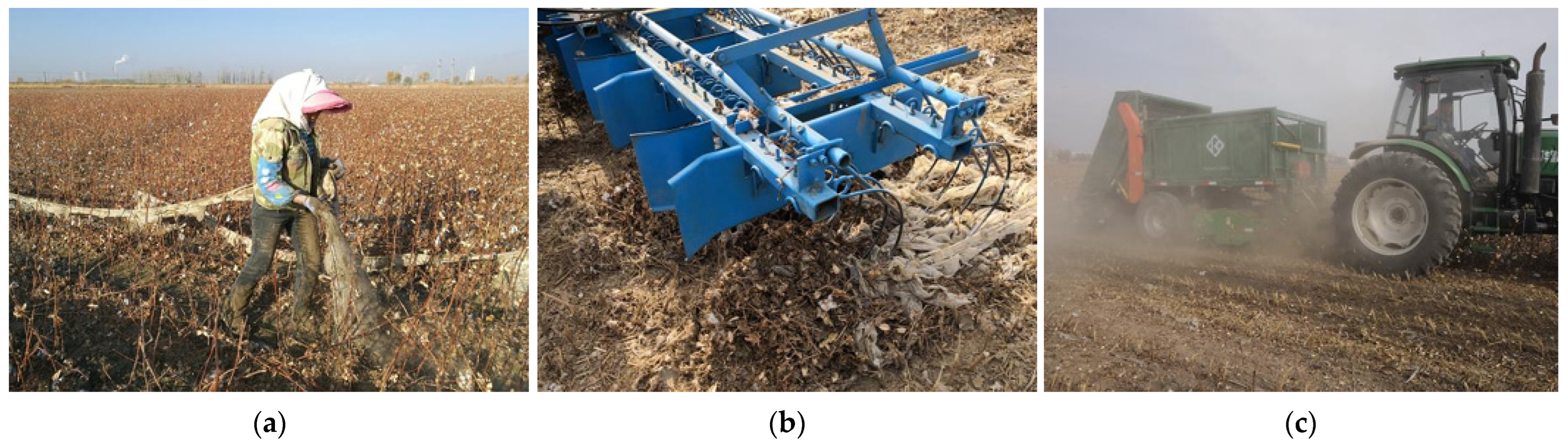
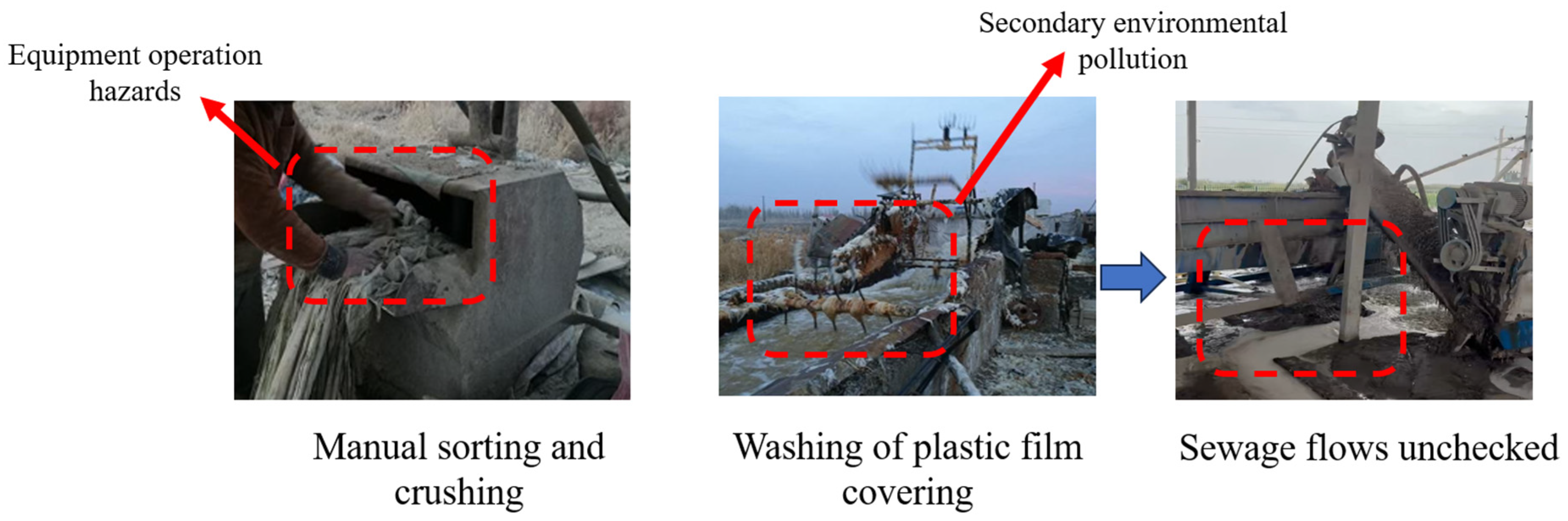
Since its introduction from Japan to China in 1978, plastic mulching has been rapidly adopted across agricultural production because of its demonstrated benefits in suppressing soil-moisture evaporation, regulating soil temperature and humidity, promoting nutrient cycling, and enhancing crop growth [1,2,3]. Owing to its simple operation, low cost, and substantial yield gains, this technique has become a key measure for ensuring efficient and stable agricultural production in China. Since the 1980s, it has been extensively promoted nationwide, showing particularly notable benefits for soil and water conservation and yield stabilization in arid and semi-arid regions [4]. However, the polyethylene (PE) mulch film predominantly used in Chinese agriculture is non-biodegradable, with a natural decomposition timeframe of approximately 200–400 years [5,6]. As mulch use has continued to rise—reaching 1.342 million tonnes across 17.2822 million hectares in China in 2022, with regions such as Xinjiang exceeding 200,000 tonnes annually—significant challenges have emerged [7,8,9]. Large quantities of discarded mulch film remain unrecovered in the soil, leading to degradation of soil structure, increased compaction, reduced aeration, and microplastic pollution. These impacts impair the operational efficiency of agricultural machinery and hinder crop growth while causing serious ecological harm (as illustrated in Figure 1; Photographer: Peng Zhang; Jiayong Pei) [10,11,12]. Consequently, achieving efficient mechanized recovery and resource utilization of waste mulch film has become a critical research focus for addressing agricultural plastic-film pollution and advancing green, sustainable agricultural development.
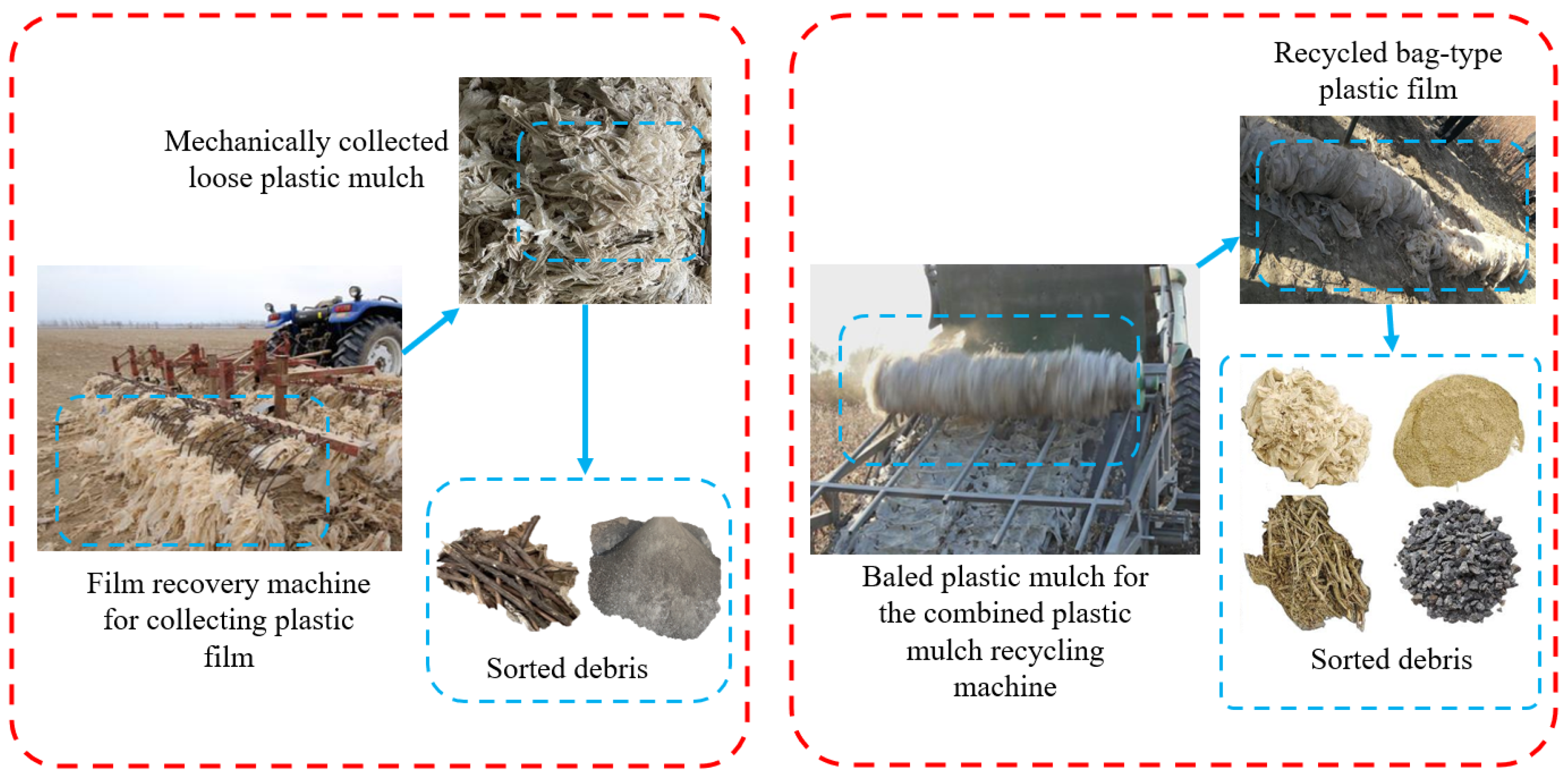
The primary methods for recycling waste agricultural film comprise three approaches—manual collection, semi-mechanized collection, and mechanized combined recovery [4,5,6] (as illustrated in Figure 2; Photographer: Peng Zhang; Feng Wu). Manual collection relies on traditional agricultural tools for multistage operations, which present issues including high labor intensity, low efficiency, elevated costs, and incomplete removal of residual film [7,8,9]. Semi-mechanized methods, such as rake-type film collectors and rod-type film retrievers, improve operational efficiency but are limited by the performance of their lifting and collection mechanisms, often leading to film tearing and scattering and thereby causing secondary pollution [10,11,12]. In contrast, mechanized combined recovery integrates recovery modules with agricultural machinery (e.g., straw shredders for in-field incorporation), enabling simultaneous film collection and centralized recovery during integrated field operations. This approach substantially reduces labor intensity and operating costs, increases recovery efficiency and collection completeness, and minimizes secondary-pollution risks from film fragmentation and scattering [4,13,14]. Following mechanized combined recovery, the recovered mulch primarily occurs in two forms—bundled and loose. Owing to its high compaction and ease of transport, bundled mulch has become the dominant practice in recovery technology [6,15].
Although mechanized combined recovery offers significant advantages in operational efficiency and scalability, the recovered plastic mulch often contains substantial impurities such as cotton stalks and soil, rendering it unsuitable for direct resource utilization (as illustrated in Figure 3; Photographer: Peng Zhang; Jiayong Pei) [16,17,18,19]. Therefore, developing efficient post-processing methods for mechanically recovered plastic film represents an urgent engineering challenge. Shredding technology and film–impurity separation techniques can effectively address the challenges posed by the film’s large size, high compaction, and mixed contaminants, thereby providing a sustainable pathway for the resource recovery and recycling of waste plastic mulch film [20,21,22,23].
To obtain a comprehensive understanding of the research progress in shredding and film–contaminant separation technologies for mitigating waste agricultural film pollution, both domestically and internationally, this study conducted a systematic literature review and screening process, with particular emphasis on the performance and application outcomes of different shredding and separation methods.
This study aims to systematically summarize the current state of development in waste agricultural film shredding technologies and film–impurity separation techniques. Specifically, it conducts a comparative analysis of the effects of different shredder-blade configurations on shredding performance and energy consumption (specific energy consumption, SEC), and it evaluates differences in separation efficiency and equipment adaptability between drum-type and centrifugal separators. Based on a comprehensive literature review, this study identifies existing research gaps in shredding performance, energy-consumption control, separation-efficiency improvement, and equipment optimization. It further highlights the technological and research needs for developing a mechanized treatment system to address agricultural plastic mulch pollution in China, thereby providing theoretical support for future innovation and engineering applications. The literature search primarily utilized the following databases and platforms: (1) CNKI, to access Chinese research outcomes on waste plastic mulch recycling; (2) Google Scholar, for retrieving multilingual and multidisciplinary research; and (3) Web of Science and MDPI, for collecting cutting-edge international research and equipment-optimization outcomes. The search covers the period from 2000 to May 2025, with particular emphasis on research and engineering advancements from the past decade (2015–2025). The search includes both Chinese- and English-language materials, with reference to authoritative technical reports and industry standards.
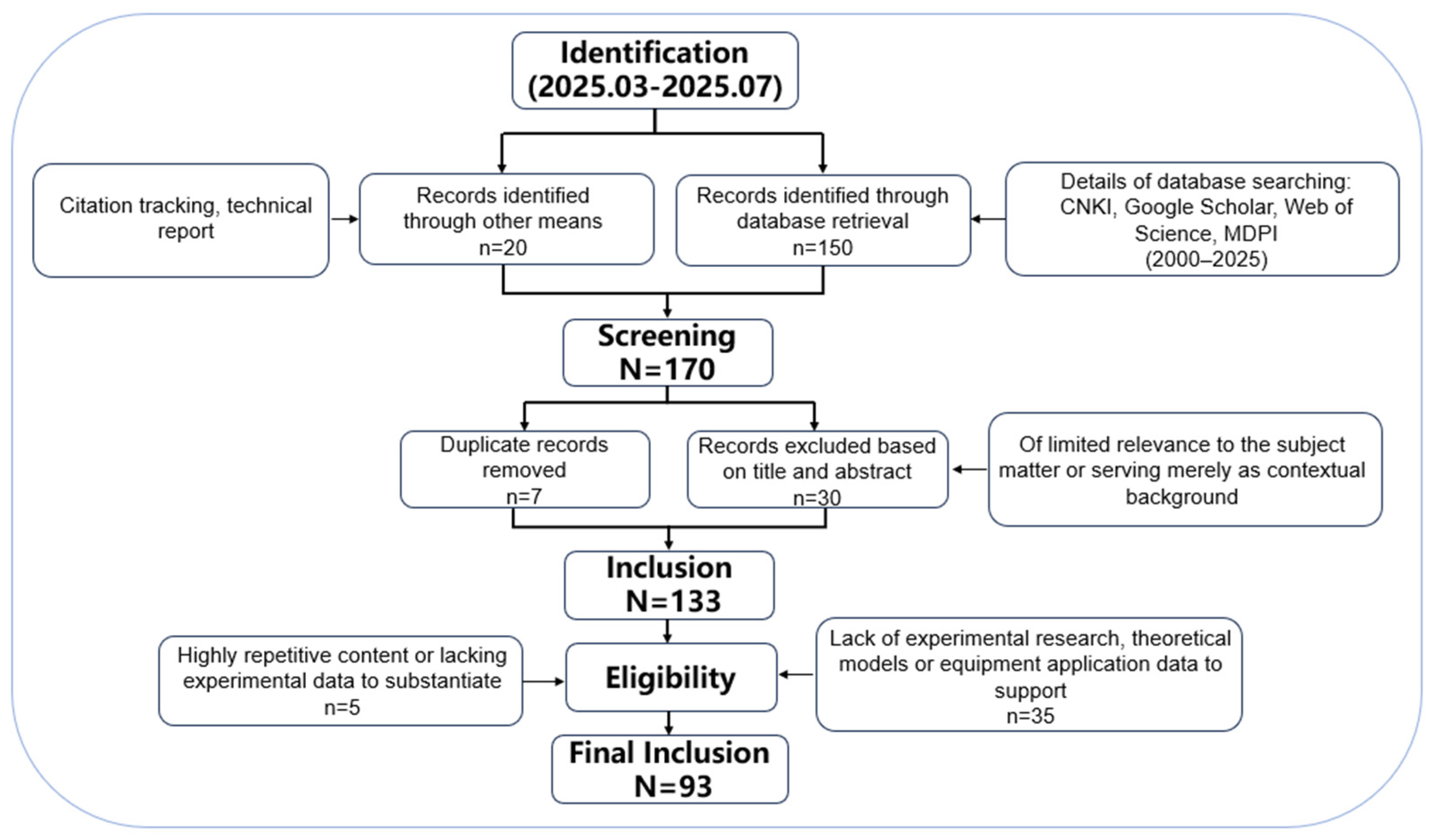
From March to July 2025, this study conducted a PRISMA-compliant literature search and selection: databases queried were CNKI, Web of Science, Google Scholar, and the MDPI platform, with a search window of 2000–2025; Boolean logic (AND/OR), synonym substitution, and truncation were applied to title, abstract, and keyword fields. Core search terms included “agricultural plastic mulch residue”, “resource utilization of waste plastic mulch”, “plastic mulch recovery”, “plastic mulch shredding”, “film–impurity separation technology”, “Xinjiang plastic mulch”, and “plastic mulch pollution control”, supplemented by citation tracking and related literature links/technical reports to broaden coverage. In the identification stage, database records numbered n = 150 and other sources n = 20 (total N = 170); after de-duplication (n = 7), N = 163 records underwent title/abstract screening, with n = 30 excluded for limited relevance or background-only content, yielding N = 133 for full-text assessment. Using predefined inclusion criteria (close relevance to film recovery, mechanized size reduction, and film–impurity separation; publication in peer-reviewed journals or authoritative conference proceedings; priority to highly cited papers and their core references; evidence from experimental data, theoretical modeling, or equipment applications; primarily within the past 20 years with emphasis on the most recent decade) and exclusion criteria (low topical relevance or background-only descriptions; non–peer-reviewed items; high redundancy or lack of experimental data), the eligibility review excluded n = 35 (insufficient experimental/model/equipment evidence) and n = 5 (high redundancy or inadequate substantiation), resulting in a final inclusion of N = 93 studies for qualitative synthesis. This workflow ensured breadth and methodological rigor, focusing the review on two key technical stages—mechanized size reduction (drum pre-loosening/pre-breaking and shear fine shredding) and film–impurity separation (air classification, trommel/drum and vibrating screens)—and underpinning a proposed dry, integrated process train of “drum pre-shredding—shear fine crushing—air classification—multistage screening”, equipped with variable-frequency drive speed control, torque monitoring, and modular design to balance separation purity, energy-consumption control, and maintainability (PRISMA flow diagram, Figure 4).
In summary, to systematically grasp the current state of research on waste agricultural film treatment technologies, this paper conducts a systematic literature review of domestic and international studies from 2000 to 2025, with particular emphasis on technological advances over the past decade. Searches were performed in CNKI, Web of Science, Google Scholar, and MDPI using keywords such as “plastic mulch recovery”, “mulch shredding”, “film–impurity separation”, and “waste plastic mulch resource utilization”, and citation tracking was applied to broaden the scope. The literature selection adhered to primary criteria of research relevance, data reliability, and peer-reviewed status to ensure the scientific rigor and systematic nature of this review. The findings indicate that current waste plastic mulch recovery primarily employs three approaches: manual, semi-mechanized, and mechanized combined recovery; among these, mechanized combined recovery has emerged as the dominant approach due to its high operational efficiency and high collection rate [13,14,15,22,24]. However, the recovered plastic mulch often contains significant impurities, such as cotton stalks and soil, which hinder direct resource utilization. Accordingly, this review compares differences in shredding performance and energy-consumption control across various shredder-blade structures and evaluates separation efficiency and equipment adaptability between drum-type and centrifugal separators. Current research shows that shredding processes still suffer from high energy consumption and severe film entanglement, whereas separation stages remain inadequate in precision control and dust management. Future research should enhance multi-mechanism coupling and process-parameter optimization, and establish comprehensive evaluation and standardization systems to advance efficient recycling and clean resource utilization of waste plastic mulch, thereby providing technological support for green and sustainable agricultural development.

2. Key Technologies for the Resourceful Utilization of Waste Agricultural Plastic Sheeting

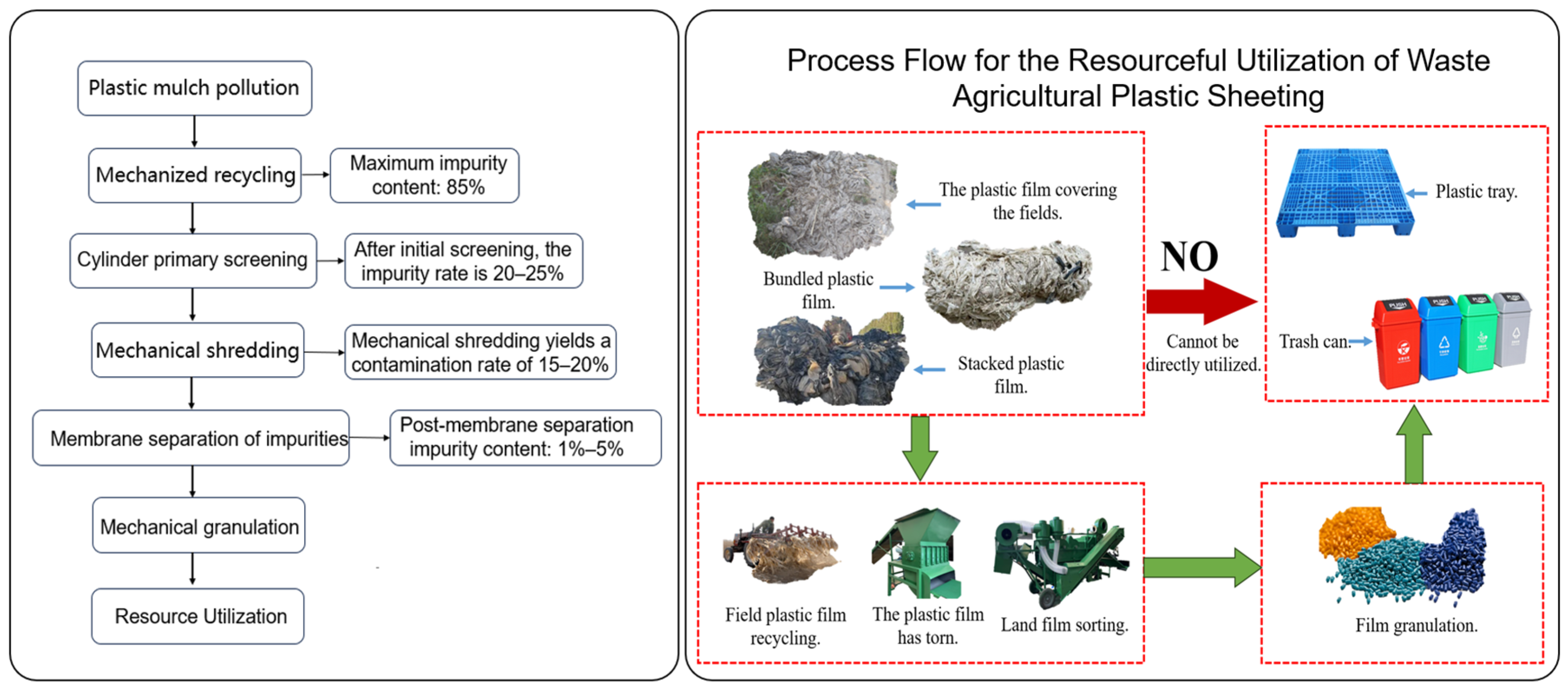
From a sustainable development perspective, the mechanized processing of waste plastic mulch film is a pivotal step toward achieving synergistic progress in both the improvement of the agricultural ecological environment and the circular plastics economy. Its core objective extends beyond mitigating agricultural “white pollution”; rather, it seeks to establish a resource-utilization system that converts waste mulch film into renewable feedstocks or recycled products, thereby delivering concurrent gains in environmental protection and economic benefits [23]. Currently, recovered waste mulch film primarily occurs in two forms: bundled and loose. Bundled mulch requires cutting and shredding for volume reduction and to facilitate subsequent sorting and cleaning, whereas loose mulch can proceed directly to the crushing stage [25,26,27]. Following shredding, separation equipment exploits differences in physical properties—such as density (specific gravity) and morphology—between the film and contaminants (e.g., soil and cotton stalks) to achieve efficient separation, yielding relatively clean film fragments [28]. The separated fragments are then processed via melt extrusion and pelletization to produce recycled plastic pellets, which are subsequently used to manufacture recycled products such as pallets, waste bins, and flower pots, thereby enabling higher-value utilization of waste plastic mulch film (as illustrated in Figure 5; Photographer: Jiayong Pei) [29,30].
Kwabena A. Sarpong et al. [25] note that the mechanized recovery of agricultural plastic mulch film is a multi-step physical process whose core operations convert waste film into a renewable resource through washing and regranulation (pelletization). The process typically includes film shredding, soaking, mechanical agitation, high-pressure water-jet rinsing, and the use of detergents to remove soil and organic contaminants, followed by final rinsing and dewatering. The washed film fragments are then melt-extruded and pelletized into recycled plastic granules. Successful recovery generally requires impurity levels to be maintained below 5%; however, the resulting recycled plastic is typically of lower quality relative to virgin PE and is therefore primarily suited to downcycled applications, such as wood–plastic composites, plastic pallets, or as additives in concrete and asphalt. Furthermore, despite the relative maturity of these processes, the high costs associated with intensive cleaning, the secondary pollution generated, and stringent feedstock-purity requirements continue to pose significant environmental and economic challenges.
O. Horodytska et al. [26] report that the mechanized recycling of plastic films is a multi-stage processing system, with core operations including pre-sorting based on physicochemical properties, shredding, mechanical cleaning, dewatering and drying, and melt-extrusion pelletization. Through these steps, discarded films are processed into high-purity recycled plastic pellets, providing a standardized recycled feedstock for circular resource flows.
Akemareli Bulati et al. [27] emphasize that resolving the “white pollution” caused by polyethylene mulch film depends on establishing an end-to-end recycling process. At the front end, mechanized, low-energy pretreatment should enable efficient collection and impurity-removal operations, thereby reducing labor costs and resource losses. The intermediate stage should focus on resource-recovery technologies centered on pyrolysis and modified regranulation (pelletization) to enhance the quality and added value of recycled materials. The downstream stage requires integrated equipment systems for coordinated treatment and regeneration, enabling continuous, automated operations from collection and separation through regeneration. Overall, this system not only significantly increases the recycling rate of waste plastic mulch but also provides a sustainable pathway for the environmentally sound treatment and high-value utilization of agricultural plastic waste.
In summary, the mechanized processing of waste plastic mulch film is a pivotal step toward advancing both the improvement of the agricultural ecological environment and the coordinated development of the circular plastics economy. Its objective extends beyond mitigating agricultural “white pollution”; it also seeks to establish a circular resource-utilization system that converts waste film into high-value recycled resources. This system typically comprises size reduction (shredding and crushing), separation, melt extrusion, and pelletization. The crushing stage ensures standardized fragment dimensions and process adaptability, while the separation stage leverages differences in physical properties—such as density and morphology—between the film and contaminants to remove impurities efficiently, yielding relatively clean film fragments. These fragments are subsequently processed by melt extrusion and pelletization to produce high-quality recycled plastic pellets. Establishing this mechanized processing system for waste plastic mulch not only reduces the pollution risks posed by plastic residues to agricultural ecosystems but also drives the green transformation of agricultural production, providing essential technical support and practical pathways for achieving a circular economy and sustainable development within the agricultural sector.

2.1. Plastic Mulch Shredding Technology

Agricultural plastic mulch, as a typical flexible polyethylene (PE) material, exhibits shredding behavior that fundamentally arises from the coupled interaction between changes in mechanical properties induced by material aging and the external loading conditions imposed by shredding equipment [27,28,29,30]. Under prolonged exposure to sunlight, temperature fluctuations, and soil friction, the molecular chains of the plastic film undergo varying degrees of photo-oxidative degradation, manifested as chain scission and localized cross-linking. This process reduces the material’s ductility while increasing its brittleness. The chemical aging process can be characterized by Fourier transform infrared (FTIR) spectroscopy. For instance, an increase in the carbonyl index (CI)—evidenced by enhanced absorption bands at 1715–1740 cm−1—and the emergence of an absorption peak associated with unsaturated bonds at ~910 cm−1 both indicate degradation of polyethylene chains [31,32]. As these characteristic peaks intensify, the film’s tensile strength and tear resistance decrease markedly.
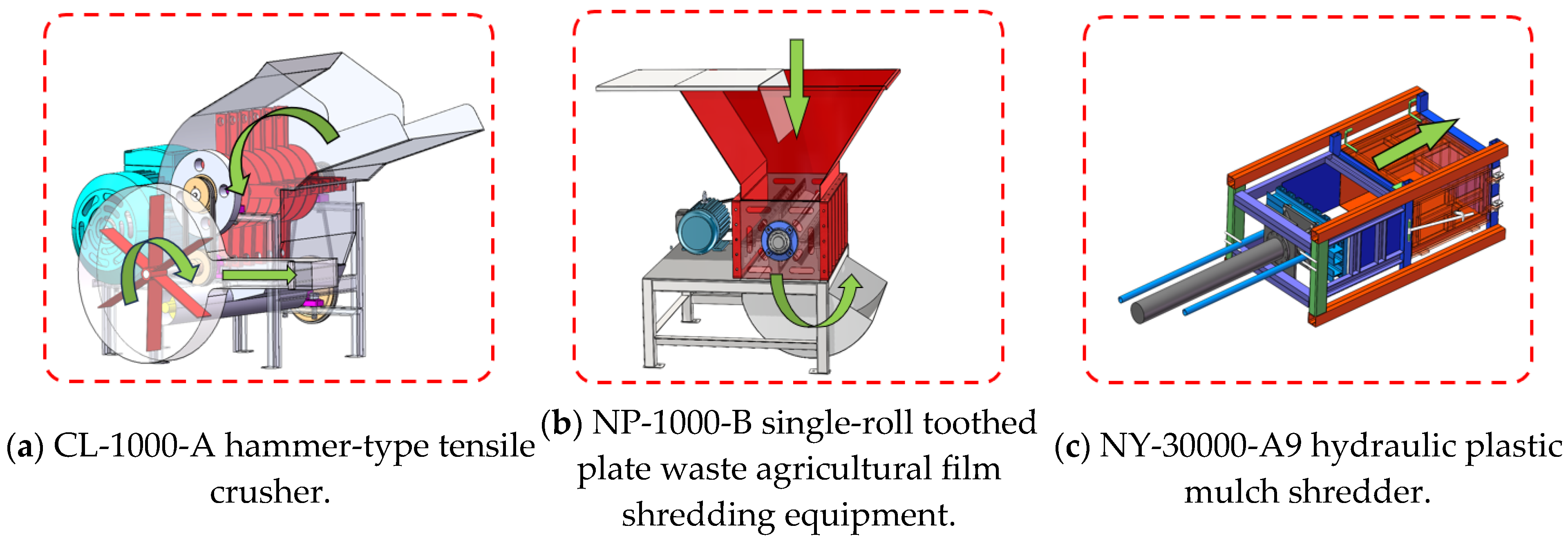
Under the combined external actions of tension, shear, and compression exerted by shredding equipment, stress concentrations at pre-existing defects are more likely to occur, leading to rapid fracture and the formation of smaller fragments with a higher proportion of flakes. Currently, the recycling of agricultural waste film primarily employs three methods—tensile shredding, shear shredding, and compression crushing (as shown in Figure 6)—thus forming an operational mode characterized by “instant shredding upon collection” [33,34]. However, several issues persist, including inconsistent fragment-size distributions and film wrapping/entanglement around the blade shaft. Consequently, future shredding technologies need to evolve toward higher precision and controllability: on the one hand, by enhancing shear-dominated fragmentation and increasing blade linear velocity to overcome residual toughness; on the other hand, by integrating aging characteristics obtained from FTIR analysis to enable coordinated adjustment of shredding parameters according to the material’s degradation state. Furthermore, the development and deployment of integrated shredding–sorting equipment should be promoted to provide more robust technical support for the resource recovery of waste agricultural film and the mitigation of agricultural plastic pollution [35,36].

2.2. Film–Impurity Separation Technology

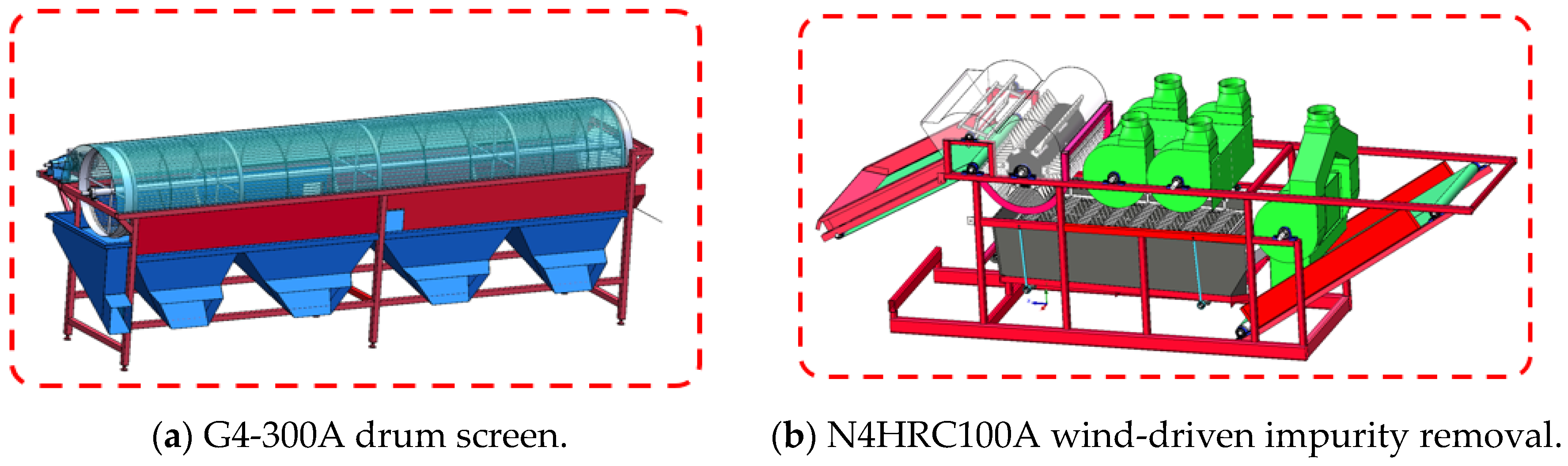
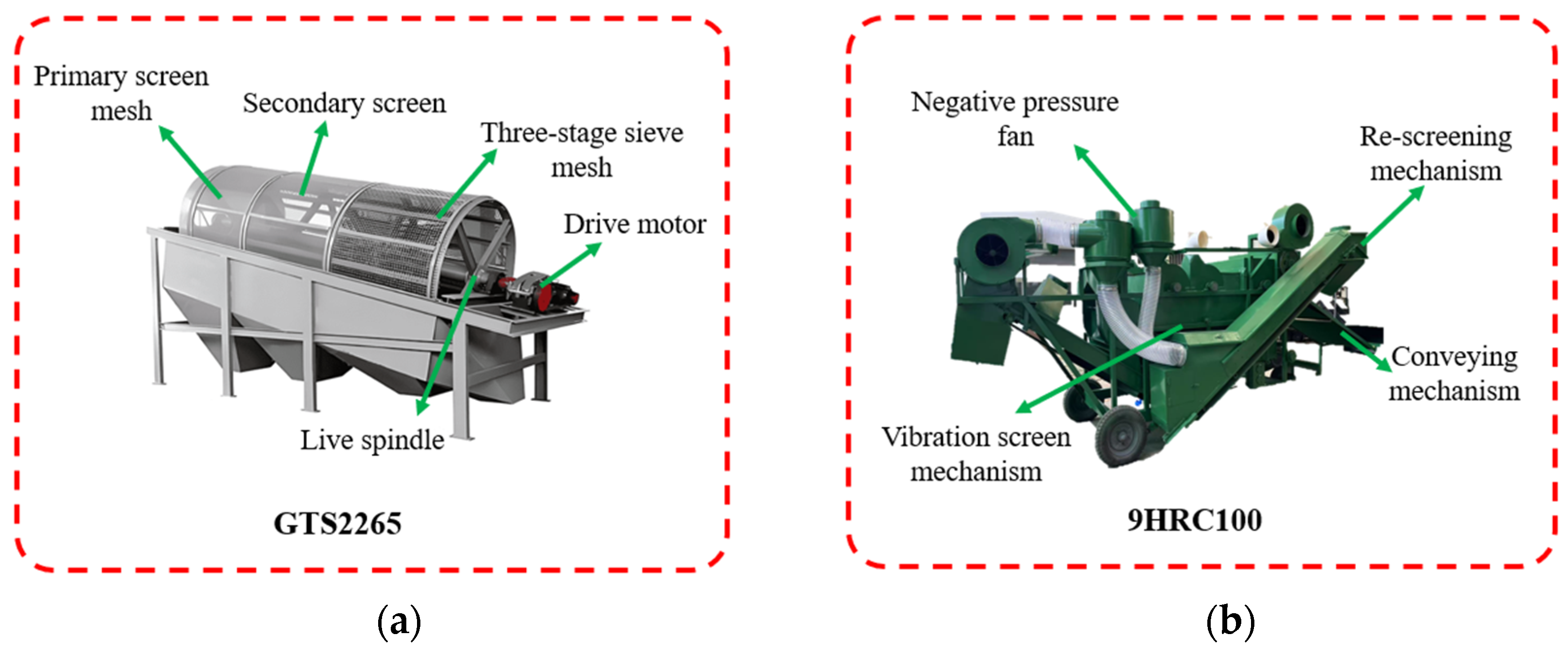
The core mechanism of film–impurity separation technology is based on differences in mass, density, and aerodynamic properties between the film and impurities [35,36,37,38,39]. Mechanically recovered waste plastic mulch film (hereafter, film) typically contains substantial quantities of contaminants, including cotton stalks, soil, plastic twine, cotton fluff, and stones, making efficient separation a key technical challenge in resource recovery. Current mainstream film–impurity separation technologies rely on two methods: drum screening and centrifugal-fan sorting (as illustrated in Figure 7; Photographer: Jiayong Pei) [40,41,42,43].
(1) Drum screening method: This method operates by exploiting differences in particle size, density, flexibility, and morphology between the film and impurities. Separation is achieved through drum rotation, sieve-aperture classification, and the combined actions of gravity and inertia. When supplemented with airflow, this method further improves the collection efficiency and separation purity of lightweight film fragments [44,45].
(2) Centrifugal-fan separation method: This method functions on differences in density, weight, surface area, and shape between the film and impurities. By controlling aerodynamic parameters (e.g., air velocity and volumetric flow rate), lightweight film is lifted by the airflow, whereas heavier impurities settle or are discharged through ducts, thereby achieving efficient separation [35].

3. Current Status of Development in Waste Agricultural Film Shredding and Separation Technology

3.1. Current Status of Shredding Technology Development

Current status of waste agricultural film shredding and separation technologies: Early recovery of waste agricultural film primarily relied on manual labor, which was highly labor-intensive. Moreover, the simple accumulation or incineration of waste film readily released toxic gases, causing secondary environmental pollution. This clearly contravened the principles of sustainable development [46]. Upon transitioning to mechanized recovery, initial methods typically involved film cutting, manual sorting, and washing for reuse. However, wastewater generated during washing also imposed environmental burdens [47,48] (as illustrated in Figure 8; Photographer: Feng Wu; Fengwei Gu). With deepening research into material fracture mechanisms, film-shredding technology has evolved toward a refined fragmentation model combining roller-type cutterheads with high-power motors, significantly improving the uniformity of film-fragment size. In recent years, the application of new materials and intelligent control technologies has further propelled the development of film shredding and film–impurity separation equipment toward higher precision and automation [49,50,51].
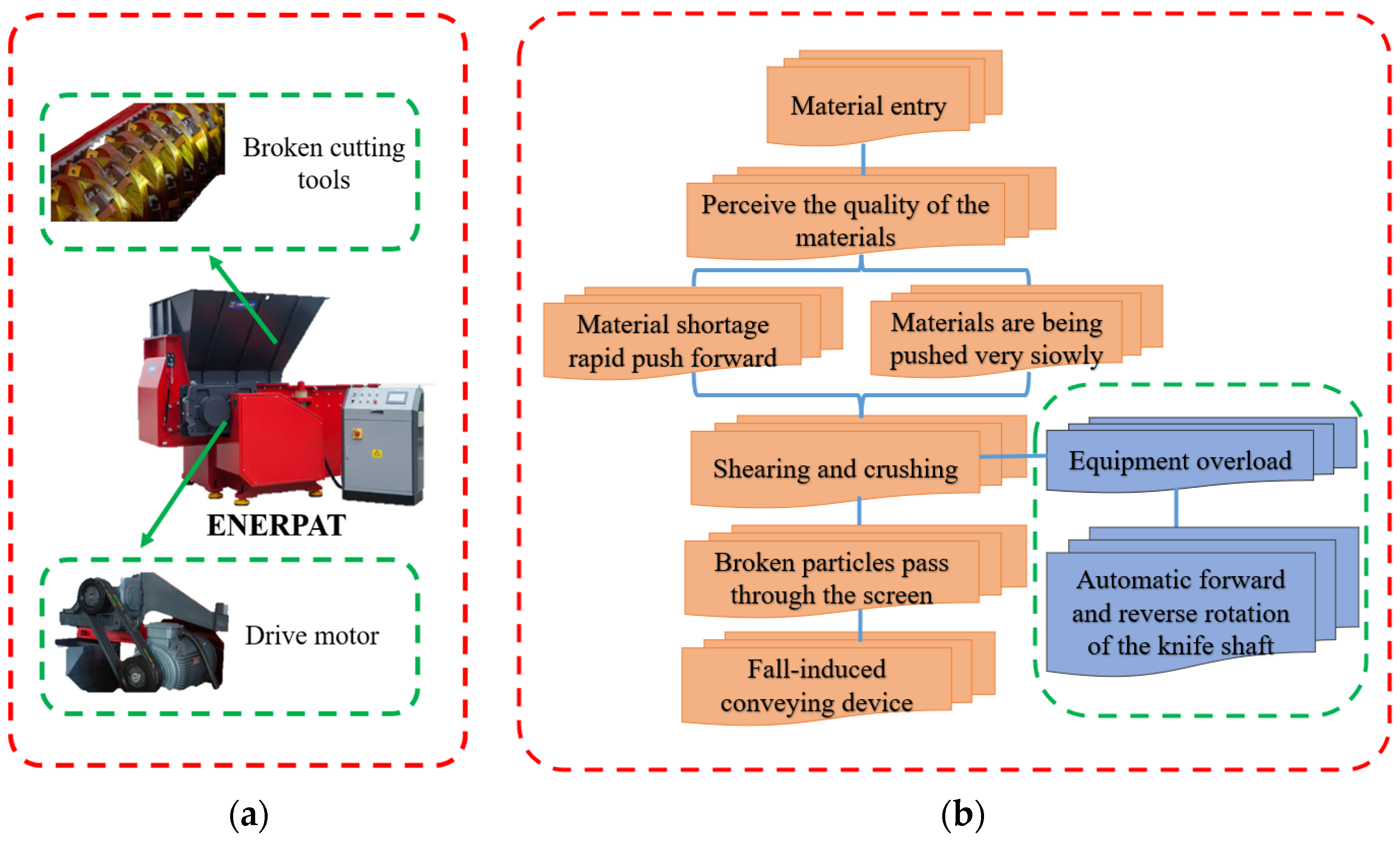
For instance, the MSA-F series single-shaft shredder produced by ENERPAT operates on a shear–tear principle (Figure 9a; Photographer: Jiayong Pei) [52]. Driven by an electric motor, its herringbone rotor rotates against fixed blades to shred medium-hardness materials such as waste plastic film and bottle flakes. The machine integrates DC53 tool-steel blades that can be indexed for four-way rotation, a swing-arm feeding mechanism, and a PLC-based automated control system. It provides a high degree of automation, high blade wear resistance, high throughput (approximately 300–12,000 kg·h−1), and stable, continuous operation. However, its capability is limited when processing ultra-hard or oversized materials, and the system’s complex structure entails relatively high maintenance costs (the operational workflow is shown in Figure 9b; Flowchart creation: Jiayong Pei).
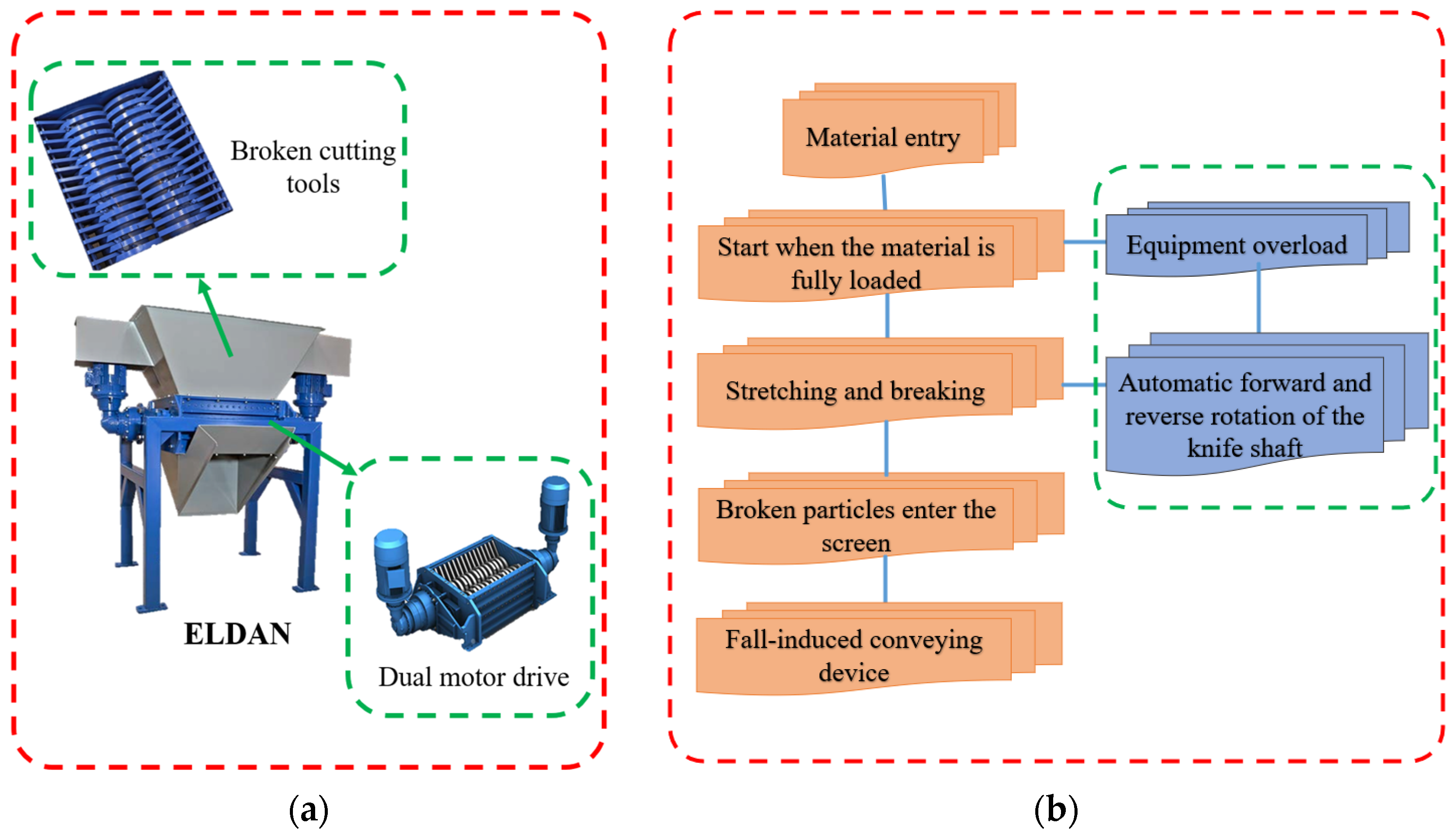
The Multi Chopper MC1348 FD150/FD220 twin-shaft shredder, manufactured by the Danish company ELDAN [53] (Figure 10a; Photographer: Jiayong Pei), employs a high-torque dual-rotor design. Each rotor is equipped with an independent motor, a high-torque gearbox, and a hydraulic drive system. The shredder efficiently pre-shreds materials such as aluminum cans, cables, plastics, textiles, and various solid wastes, operating on the combined principles of shearing, tearing, and compression. It utilizes variable-frequency drives (VFDs) to independently regulate the rotational speeds of both rotors, enabling high-torque output from standstill. The machine also incorporates an automatic overload–reverse protection system and a hook-knife replacement design, offering advantages including broad material applicability, high operational safety, ease of maintenance, and adjustable output particle size. However, limitations persist when processing extremely hard or oversized materials, and its complex system structure may lead to higher energy consumption and maintenance costs (its operational workflow is illustrated in Figure 10b; Flowchart creation: Jiayong Pei).
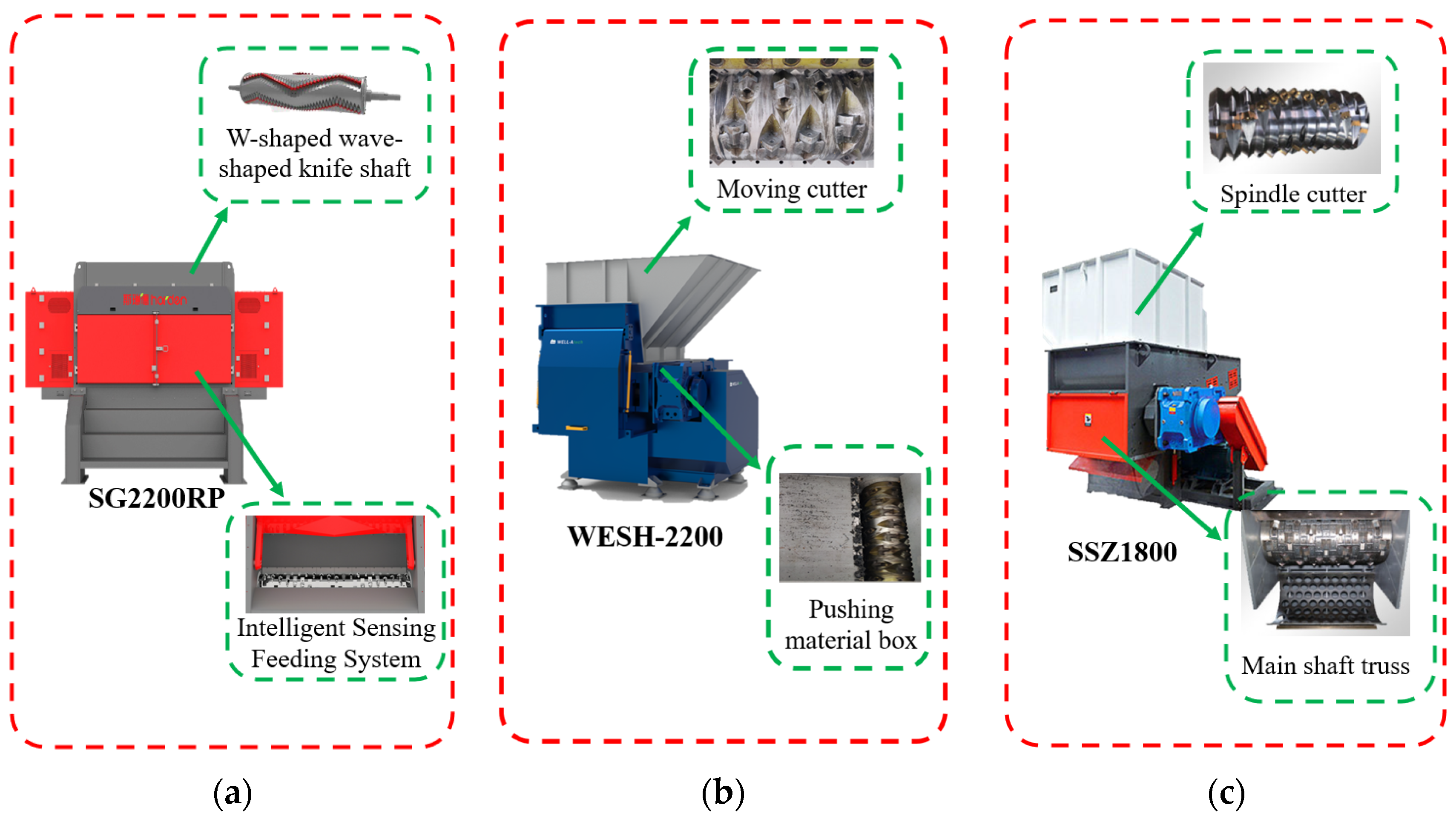
The SG2200RP series single-shaft shredder (Figure 11a; Photographer: Jiayong Pei) developed by China’s Zhongshan Srid Company [54] employs a W-shaped, wave-blade shaft, an intelligent sensing feed system, and a hexagonal static screen. Operating on a shear–tear principle, it efficiently processes heterogeneous materials such as leather offcuts, municipal solid waste, and plastic scrap. Shear torque is enhanced via a curved-blade geometry, combined with variable-frequency, stepless speed regulation and dynamic adjustment provided by a large-radius pusher. The machine offers advantages including high shredding efficiency, strong anti-entanglement capability, comprehensive intelligent anti-jamming functions, and a broad processing-capacity range (5–35 tonnes per hour). However, owing to the relatively complex hydraulic and intelligent sensing systems, maintenance costs and technical requirements remain relatively high. Furthermore, limitations may persist when processing exceptionally hard or oversized materials.
The WESH-2200 horizontal single-shaft shredder, manufactured by Anhui Weier Environmental Technology Co., Ltd., Wuhu, China [55] (Figure 11b; Photographer: Jiayong Pei), features design elements including an extended crushing chamber, a curved swing-arm feed press, an inclined feed hopper, and high-hardness alloy blades. Operating on a shear–tear principle, it efficiently processes solid waste such as baled plastics, industrial waste, and RDF-/SRF-type fuels. Through an optimized blade arrangement and integration with a PLC-based automated control system, the equipment offers high processing capacity (15–20 tonnes per hour), high blade wear resistance, a flexible, easily replaceable screen configuration, and straightforward maintenance. However, its system structure is relatively complex, initial investment costs are relatively high, and limitations persist when processing extremely hard or highly ductile materials.
The SSZ1800 series single-shaft crusher manufactured by Shengzhong Heavy Industry Machinery Co., Ltd., Ma’anshan City, China [56] (Figure 11c; Photographer: Jiayong Pei), employs a high-strength, heavy-duty steel frame, precisely arranged hardened-steel cutting disks, an intelligent hydraulic feeding mechanism, and a variable-speed, stepless rotor (0–60 rpm). Operating on a shear–tear principle, it efficiently crushes diverse materials, including tires, metal components, electronic waste, rubber, textiles, and plastic films. The equipment utilizes a Siemens PLC-based monitoring system with automatic overload-protection control. It offers high shredding efficiency (capacity up to 25 tonnes per hour), low maintenance requirements, precise particle-size control (0.5–100 mm), comprehensive safety-protection systems, and convenient blade replacement. However, the relatively complex system architecture can lead to higher initial investment and maintenance costs, and performance may be limited when processing extremely hard or highly viscous materials.
To comparatively evaluate the processing capacity and energy-consumption characteristics of heavy-duty solid-waste shredders, representative models, including the MSA-F1500, MC1348 FD220, SG2200RP, WESH-2200, and SSZ1800, were selected. A comparative analysis was performed with respect to motor power, rated throughput under heavy-duty conditions, production efficiency, specific energy consumption (energy consumption per unit mass of material), and applicable material types. The results indicate that each machine exhibits distinct levels of energy efficiency and adaptability when processing conventional plastics, mixed waste plastics, and bulky industrial solid waste. This analysis provides a technical reference for the selection and optimization of agricultural waste-film shredding equipment, and the detailed specifications are summarized in Table 1.
To quantitatively characterize shredding uniformity and analyze its impact on the efficiency of downstream impurity separation from recovered films, this study systematically summarizes the particle-size distributions of fragments generated by two distinct shredding mechanisms. The analysis is based on representative equipment, including the ENERPAT MSA-F series single-shaft shredder, the ELDAN MC1348 twin-shaft shredder, and domestic models WESH-2200, SG2200RP, and SSZ1800, and integrates prototype testing with data obtained under typical operating conditions. The results indicate that single-shaft shear shredders equipped with 40–50 mm screens produce predominantly flake-shaped fragments with a narrow particle-size distribution and stable morphology. These fragments are characterized by D10 = 8–15 mm, D50 = 25–35 mm, and D90 values approaching the screen aperture (40–50 mm), and exhibit favorable aerodynamic uniformity. They enable stable separation of light and heavy fractions at air velocities of 3–4 m·s−1 and show good compatibility with 50 mm drum screens. In contrast, twin-shaft shredders, which typically adopt low-speed, high-torque designs with either unscreened or coarse-mesh screening configurations, produce significantly broader particle-size distributions. The characteristic ranges are D50 = 60–90 mm and D90 = 120–180 mm, with a higher proportion of strip-like and agglomerated film fragments. This readily leads to entanglement, bridging, and misclassification during air classification and drum screening, thereby compromising separation stability and accuracy. Consequently, twin-shaft shredding is more suitable as a debundling–loosening–coarse-crushing pretreatment unit. Conversely, single-shaft shear shredding, which realizes controlled particle-size output through screen restriction, plays a crucial role in enhancing the separation efficiency of downstream air-classification and screening processes, as well as improving the overall operational reliability of the system; the particle-size distribution is shown in Table 2.
In summary, current shredding machinery generally suffers from core issues, including insufficient processing capacity when handling ultra-hard and highly viscous materials, complex system architectures with high operational costs, substantial energy consumption, and significant maintenance demands. Furthermore, shredding waste agricultural film presents specific challenges, such as the film’s tendency to wrap around the cutting shaft, adhesion of shredded material to blades, and accelerated tool wear caused by contaminants. To address these issues, targeted improvement strategies should be developed, including the application of anti-adhesion coatings and specially designed cutting tools to reduce material entanglement; enhancement of pre-crushing sorting for impurity removal; integration of intelligent sensors and PLC control to achieve load-adaptive operation; and development of dedicated modular components to improve processing efficiency and maintenance accessibility. This integrated approach will enable efficient, stable, and low-energy agricultural film-shredding operations, thereby promoting sustainable and high-performance waste-film recycling.

3.2. Separation Technology

The continuous rise in plastic production, coupled with inadequate disposal practices, has led to severe environmental pollution and resource wastage [57,58]. At the same time, the widespread application of plastics in agriculture has made pollution from waste agricultural films increasingly prominent. High-efficiency plastic film–impurity separation technologies have become a critical component of the resource recovery of waste agricultural films. To address the challenge of separating films from contaminants, countries in Europe and North America have developed advanced separation equipment—including air classifiers, vacuum-extraction systems, and pneumatic graders—by leveraging advances in high-speed fans, variable-frequency drives, and precise flow-field control. However, the existing literature provides insufficient descriptions of the operating parameters of these devices and, in particular, lacks quantitative reports on critical operating conditions affecting classification performance, such as airflow velocity, static pressure (pressure drop), and material residence time within the equipment. In typical air classifiers, film separation relies on ascending air velocities of 2.5–4.0 m·s−1 and pressure drops across the classification channel of 180–350 Pa, with effective residence times generally ranging from 0.4 to 1.2 s. Conversely, the screening performance of drum screens is directly correlated with rotational speed, inclination angle, and material residence time [59,60]. The absence of systematic quantification of these parameters hinders direct comparisons of energy consumption, selectivity, and applicability across different technologies. This limitation also restricts in-depth research on equipment structural optimization and on operational adaptability across different regions.
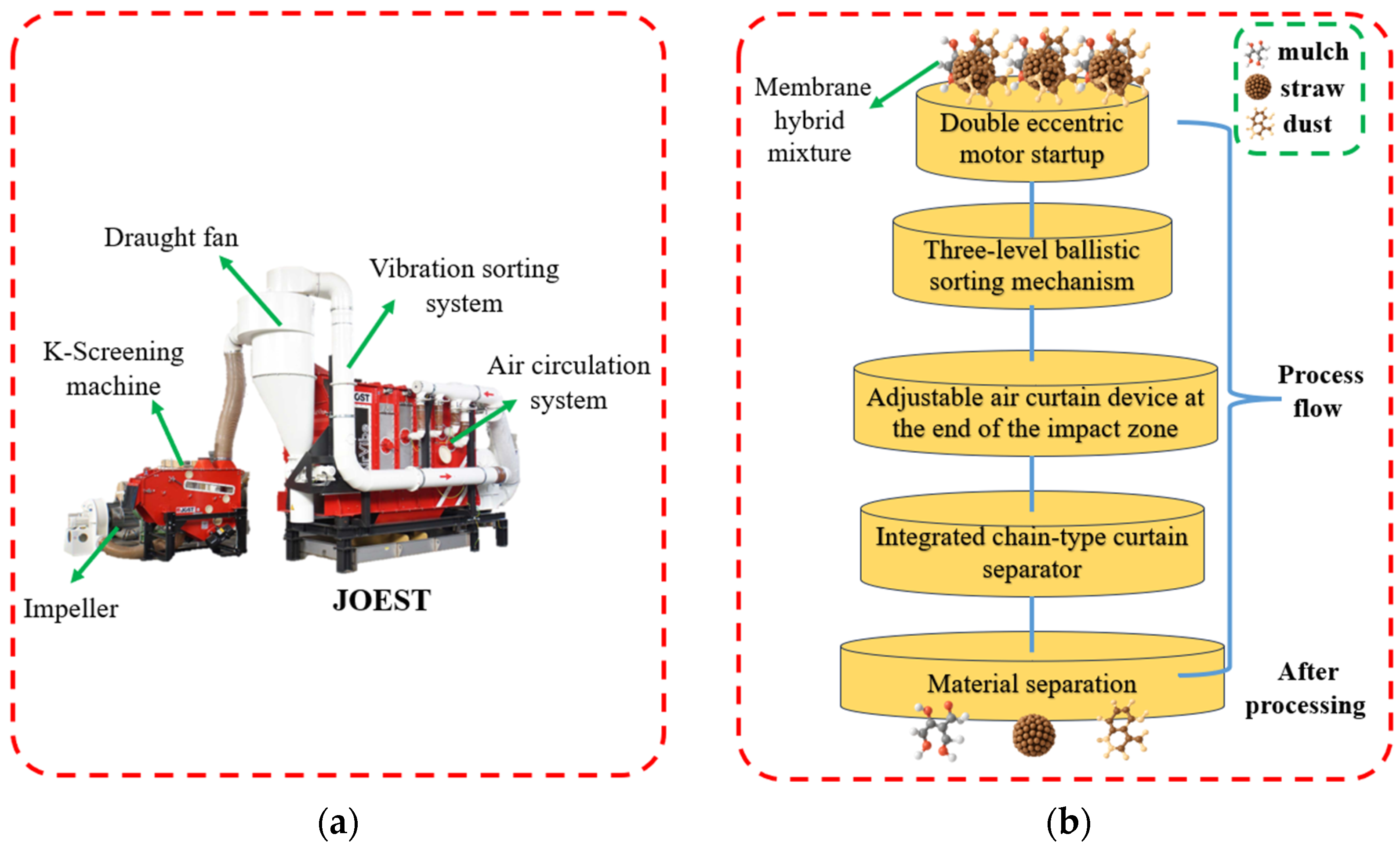
The AirVibe series vibratory air separators from the JOEST Group, Germany [61], employ a linear-vibration system driven by a dual-eccentric drive and incorporate multistage adjustable air curtains, separation baffles, and chain-curtain separators (Figure 12a; Photographer: Jiayong Pei). Their operating principle leverages differences in material density, surface characteristics, and shape, combining vibratory sorting with crossflow air separation to efficiently segregate complex mixed streams containing metals, plastics, paper, and other components. The equipment offers high separation accuracy (≥95%), substantial processing capacity (up to 15 tonnes per hour), a wide tunable parameter range, low energy consumption (≤22 kw), and a compact footprint. However, the system architecture is relatively complex—potentially incurring higher maintenance costs—and performance is limited when sorting excessively wet or very fine materials (the operating principle is illustrated in Figure 12b; Flowchart creation: Jiayong Pei).
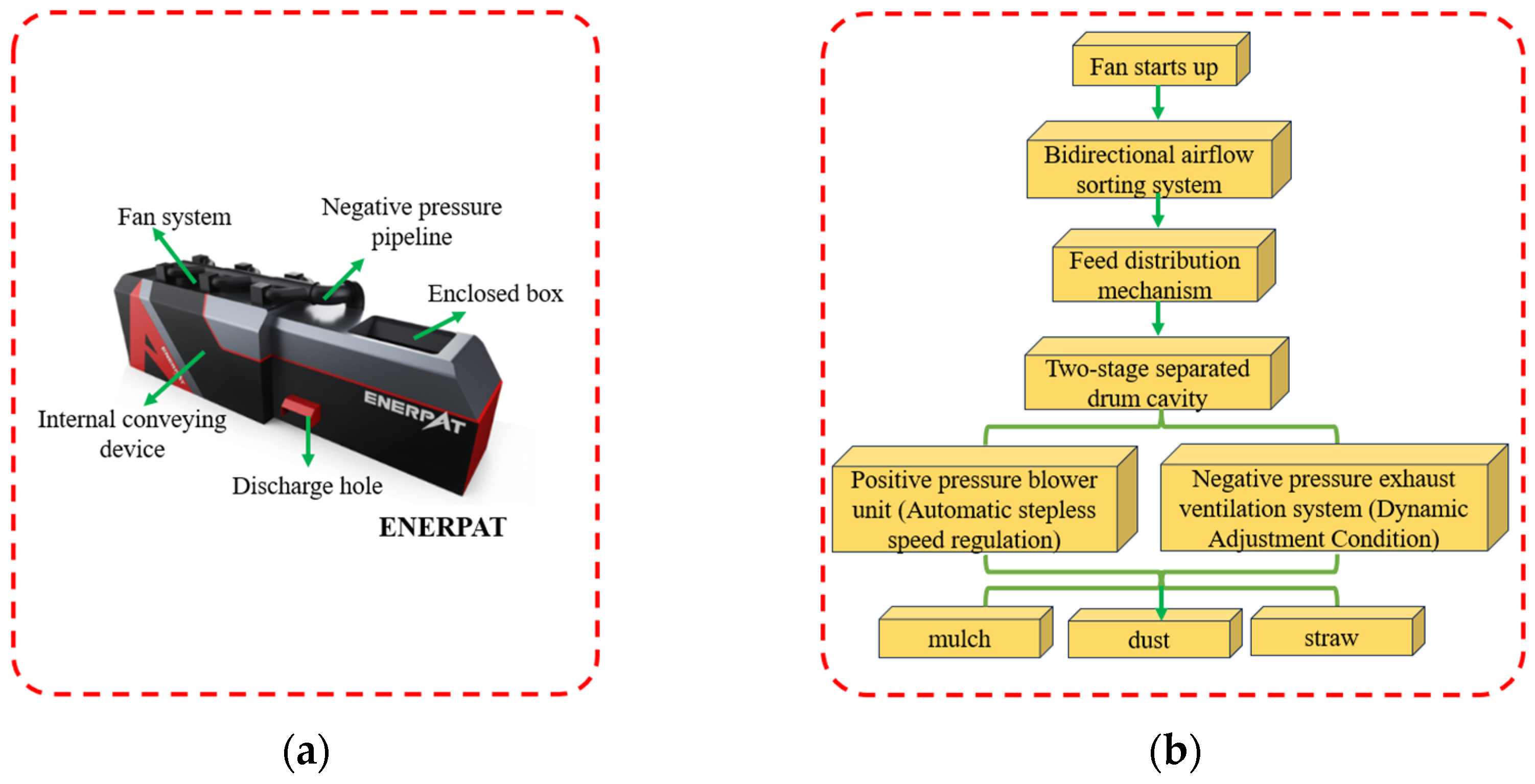
The ES-WSM1600 air classifier, manufactured by the British company ENERPAT [62] (Figure 13a; Photographer: Jiayong Pei), features a dual-flow-field structure that combines positive-pressure forced airflow with negative-pressure suction. It integrates components such as a two-stage separation drum chamber, a cyclonic settling chamber, a horizontal pneumatic conveying channel, and a gravity settling trough. Operating on the principles of gas–solid two-phase flow dynamics, this equipment effectively separates mixed materials into three fractions—light (e.g., waste paper and film), medium (e.g., broken glass and flake plastics), and heavy (e.g., stones and metals)—by exploiting differences in drag force and terminal settling velocity. The ES-WSM1600 air classifier offers high separation efficiency, strong adaptability (adjustable airflow accommodates high-moisture materials), sealed, dust-free operation, and overall reliability. However, its system architecture is relatively complex, resulting in higher initial investment and maintenance costs. Furthermore, separation effectiveness may be limited when processing extremely fine particles or materials with minimal density differences (its operating principle is illustrated in Figure 13b; Flowchart creation: Jiayong Pei).
The GTS2265 series drum screen from Dingbo Heavy Industry Co., Ltd., Shanghai, China [63] (Figure 14a; Photographer: Jiayong Pei), features a structural design with a three-section drum, main-shaft drive, and integrated feed system. Operating on the principle of particle-size differentiation, the drum rotates at a constant speed, causing material to tumble continuously within the cylinder and move axially. Utilizing gravity and inertia, undersize particles pass through the screen apertures, while oversize particles are retained and conveyed to the discharge end. The GTS2265 drum screen offers advantages including continuous, efficient screening, stable and reliable operation, reduced risk of screen clogging, and ease of cleaning and maintenance. However, because it relies primarily on particle size for separation, effectiveness is limited for impurities with dimensions similar to agricultural film. Furthermore, when processing highly moist or easily adhering materials, there is an increased risk of screen clogging.
The Nanjing Institute of Agricultural Mechanization, affiliated with the Ministry of Agriculture and Rural Affairs of China, developed a waste plastic film–impurity separation device (Figure 14b; Photographer: Jiayong Pei) [35] based on the 9HRC100 peanut-stalk shredder and film remover. The equipment incorporates a conveyor system, a shredding mechanism, a two-layer vibrating screen, and multiple centrifugal fans operating in tandem. It operates on a combined principle of vibratory screening and airflow separation: the vibrating screen performs preliminary grading of cotton stalks and waste plastic mulch while removing soil, whereas the centrifugal fans generate airflow to further separate residual film fragments mixed within the material. This equipment exhibits high functional integration, enabling continuous separation of film and debris alongside material recycling and re-crushing, demonstrating strong adaptability. However, its system architecture is relatively complex and highly sensitive to material moisture content; in high-humidity environments, the screen becomes prone to clogging, and airflow-separation efficiency declines. Additionally, the equipment’s energy consumption and maintenance costs remain comparatively high.
The AirVibe, GTS2265, and 9HRC100 equipment exhibit distinct differences in motor power, typical throughput, production efficiency, and energy consumption per unit. The AirVibe and GTS2265 are primarily employed for coarse separation, with the GTS2265 offering high single-unit throughput and low energy consumption, making it suitable for large-scale continuous operations. The AirVibe features intermediate throughput and energy-consumption levels, rendering it appropriate for medium-scale applications. The 9HRC100 is a fine-separation device with lower throughput but higher energy consumption. It is better suited for deployment in finishing stages where product-quality requirements are stringent, providing parameter references for rational process-line configuration. For details, see Table 3.
Environmental humidity and temperature exert significant influences on the comminution behavior of waste agricultural films and on the performance of subsequent air-classification processes. Under high-humidity conditions, water films on the surfaces of residual films and adhered soil particles enhance the tendency of the material to agglomerate and become entangled. This increases tool–material contact resistance during the shear-comminution process and reduces the effective shear action, resulting in a broader particle-size distribution and a higher proportion of elongated fragments. Variations in moisture content also change the effective density and aerodynamic equivalent diameter of film particles relative to those of the associated impurities, thereby shifting the separation window in air classification. Previous experimental studies on wet wastes and lightweight plastics have demonstrated that, when the material moisture content increases from 5% to 15%, the separation efficiency for lightweight components decreases by approximately 8–15%, whereas the misclassification rate increases by 5–12%. Temperature variations primarily affect airflow characteristics through changes in air density and viscosity. For example, an increase in ambient temperature from 10 °C to 35 °C reduces air density by approximately 8–10%. Under constant static-pressure air-supply conditions, this reduction leads to an increase in air velocity, causing the floating height of films to shift relative to the separation boundary. In addition, drum screens are more prone to aperture clogging in high-humidity environments, and the screen-penetration rate may decrease by 10–20% [64,65]. Consequently, humidity and temperature jointly influence the stability and efficiency of film-separation systems through a cascade of effects, namely, “material-state alteration → deviation of aerodynamic parameters → variation in the separation window”. In engineering practice, it is therefore necessary to implement appropriate pre-drying and dehumidification measures, as well as fan-control strategies based on variable-frequency drives, to enhance the adaptability of the equipment under varying seasonal and regional environmental conditions.
In summary, the core development of film–impurity separation equipment lies in the integrated application of vibratory screening, air classification, and their hybrid configurations to achieve efficient separation based on differences in material density, size, and surface characteristics. Current waste agricultural film-separation technology faces several primary challenges: first, poor performance in wet-material processing—many devices exhibit markedly reduced sorting efficiency under high-humidity conditions, with a tendency toward screen clogging or suboptimal air-classification results; second, complex equipment structures and high maintenance costs increase operational burdens; third, suboptimal separation for materials with similar size distributions limits high-precision sorting; and fourth, diminished equipment efficiency in high-humidity environments compromises overall process stability. To address these issues, we recommend optimizing airflow-channel design and enhancing humidity control to improve wet-material processing efficiency and reduce blockages; simplifying system architecture through modular design to lower maintenance costs; combining multiple separation techniques (e.g., air classification with vibrating screens) to improve sorting precision for similarly sized materials; and improving adaptability to high humidity by refining screen-cleaning and airflow-regulation mechanisms to enhance operational stability and overall separation efficiency.

4. Key Components for the Treatment of Waste Agricultural Plastic Film Pollution

4.1. Shredding Key Component Tools

The cutting tool constitutes the core component of bale-type waste-film shredding systems, serving not only to cut baled agricultural film but also to fragment materials such as plastics and crop residues. Cutting tools commonly used for agricultural-film shredding are generally categorized into two types: drum-type and shear-type cutting tools [66,67,68].
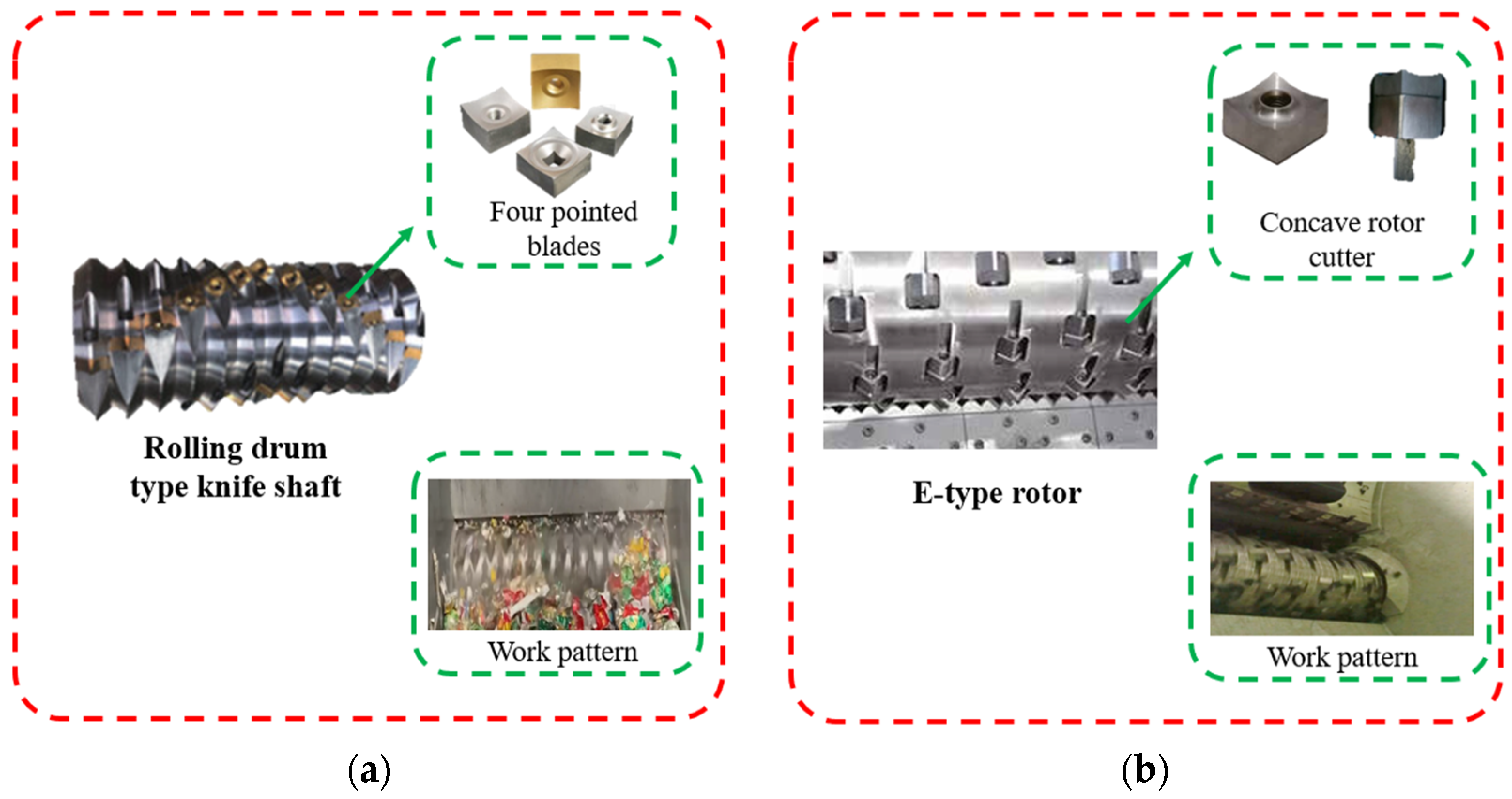
Roller-type (drum-type) cutting tools typically consist of a spindle and a roller, with metal blades embedded in the roller. When the motor drives the spindle via a V-belt, the roller rotates in tandem with the spindle, thereby propelling the blades to cut the plastic film [69]. This tool type is employed by Shengzhong Heavy Industry, China (Figure 15a; Photographer: Jiayong Pei), and ZERMA, Germany (Figure 15b; Photographer: Jiayong Pei). Cutting plastic film with roller blades tears it into small particles because, at any given moment, the contact area between the blade edge and the material is extremely small—theoretically a point or a very short line—thus requiring high local pressure to penetrate and sever the film. During continuous cutting, the resulting small particles generate frictional heat and subsequently adhere to the blades, which degrades cutting performance. This effect is amplified when processing thicker or harder materials, where roller blades tend to “gnaw” at the workpiece rather than produce a clean, decisive shear. Nevertheless, because the blades are embedded within the roller, replacement of individual alloy blades is relatively straightforward, obviating the need to change the entire cutting assembly and thereby simplifying maintenance.
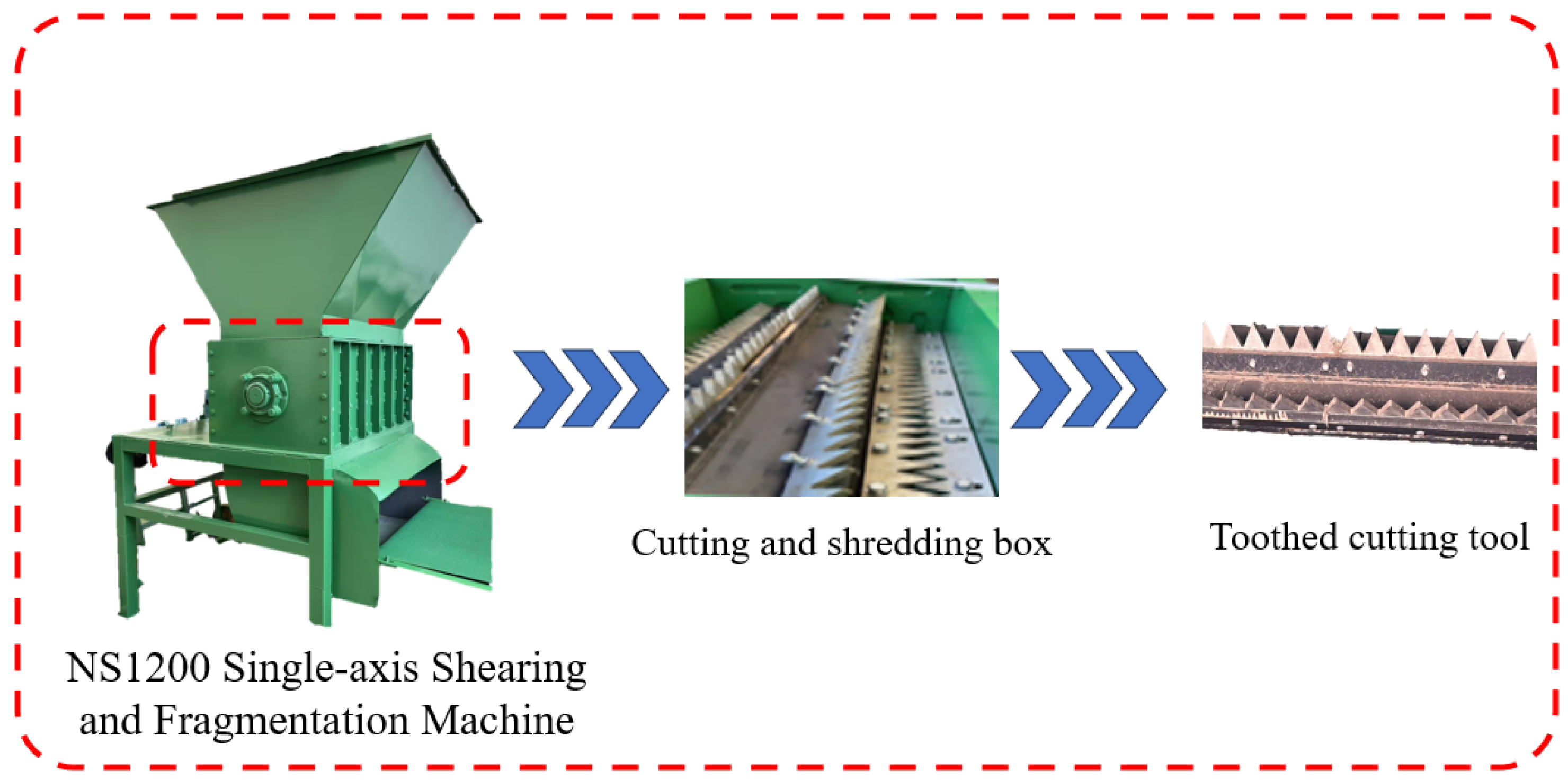
Shear-type blades comprise a moving blade and a fixed blade that operate in tandem to cut plastic mulch [29,65,67]. Taking the NS1200 single-shaft shear shredder developed by the Nanjing Agricultural Machinery Research Institute as an example (Figure 16; Photographer: Jiayong Pei), it utilizes an adjustable blade gap to control the shredded size of the plastic film [33,68,69,70]. For ease of maintenance, the moving blade is designed as a segmented assembly mounted on the main shaft, allowing individual replacement when localized damage occurs. However, the shearing process frequently encounters cases in which the film does not cut cleanly, necessitating repeated shearing passes. Concurrently, this design places stringent rigidity requirements on the equipment, demanding exceptionally robust frames and transmission systems, which in turn leads to increased machine bulk and higher production costs. Furthermore, because the single-pass shearing width is constrained by the effective blade length, wider materials require preliminary slitting before processing.
Roller-type and shear-type cutting tools differ in their structural design, cutting performance, material adaptability, and energy-consumption characteristics. A comparative analysis of their key performance metrics is shown in Table 4.
In summary, blades play a pivotal role in bale-type plastic-film shredding systems, whose structure and type directly influence shredding efficiency and material adaptability. Existing blades are primarily categorized into drum-type (roller-type) and shear-type: the former offers high cutting speed and convenient maintenance but exhibits high energy consumption and is unsuitable for ductile films; the latter features low power consumption and excellent anti-entanglement performance but is prone to clogging under high-humidity conditions. To address the material-adaptability limitations of both blade types, the NS1200 model from the Nanjing Agricultural Machinery Research Institute (NAMRI) employs a segmented, modular cutting-blade design. This innovation combines the maintenance convenience of drum-type (roller-type) blades with the flexible processing capability of shear-type blades. By optimizing blade geometry and clearance parameters, it achieves simultaneous improvements in shredding efficiency and material adaptability, meeting the shredding requirements for diverse materials.

4.2. Separate the Key Component Fan

As a pivotal component in the separation of plastic debris from shredded mulch, the blower not only expels shredded material through the conveying pipelines but also entrains suspended particulate matter in the airflow while simultaneously providing the necessary flow velocity within the system. Currently employed blowers are primarily categorized into axial-flow and cross-flow types [23,25,77].
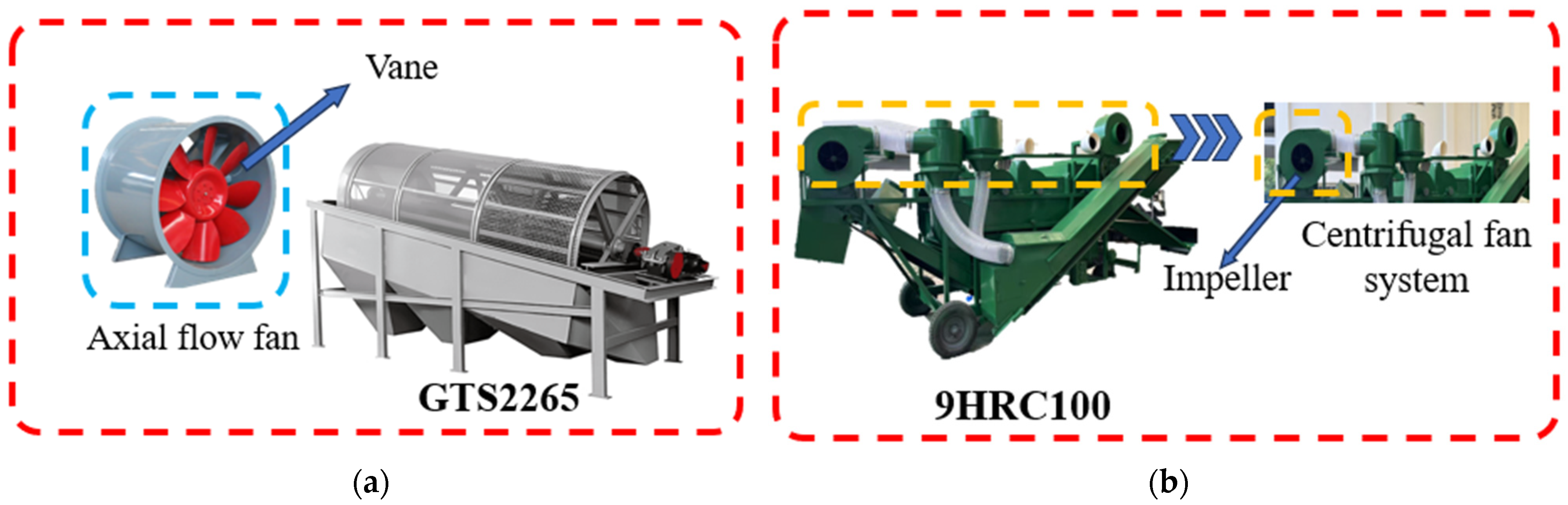
Axial-flow fans primarily consist of blades, hubs, bearings, front and rear diffusers, motors, and casings (Figure 17a; Photographer: Jiayong Pei) [78,79,80,81]. Their operating principle is based on aerodynamic impeller theory: rotating impellers exert axial forces on the airflow, producing directed air conveyance and thereby generating axial aerodynamic thrust through rotating airfoil-shaped blades. During film–debris separation processes, axial fans are typically used in conjunction with drum screens. As the drum screen rotates and tumbles fragmented plastic film and debris, the axial fan continuously discharges the agitated fragments. The resulting airflow carries the plastic fragments out of the drum, where they fall into a collection port at the base, while heavier contaminants, such as soil, pass through the drum-screen apertures and descend.
Centrifugal fans primarily consist of blades, hubs, cylindrical casings, and axial collectors (Figure 17b; Photographer: Jiayong Pei). Their operating principle is as follows: air enters the impeller axially and then undergoes radial acceleration; within the volute, kinetic energy is converted to static pressure, thereby producing high-pressure airflow for discharge. The rotating blades eject the gas radially while increasing its kinetic energy [82,83,84]. A characteristic of centrifugal fans is the inverse relationship between pressure and flow rate (surge may occur under certain high-flow conditions). By creating negative pressure, centrifugal fans draw in surrounding air and convey plastic film fragments. For example, the 9HRC100 peanut-stalk shredder and film remover developed by the Nanjing Agricultural Machinery Research Institute employs this principle [35]. In practical operation, large-area, lightweight films are prone to clogging at fan inlets, necessitating pre-shredding to suitable dimensions. Wet films or those coated with soil exhibit markedly increased adhesion, causing shredded fragments to accumulate on duct walls. Nevertheless, this device (the 9HRC100) incorporates a secondary shredding blade assembly at the feed inlet that performs fine fragmentation, helping ensure thorough separation of mulch and debris by the vacuum airflow.
Axial-flow and centrifugal fans exhibit significant differences in their debris-handling capability, structural characteristics, pressure–flow behavior, and airflow direction. These distinctions constitute key criteria for selecting the appropriate fan type. A comparative analysis of the key performance characteristics of both fan types is shown in Table 5.
In summary, axial-flow and centrifugal fans exhibit clear differences in air pressure, air volume, and airflow-direction characteristics, leading to distinct advantages and disadvantages across various application scenarios. Axial-flow fans are suitable for conditions requiring low-to-medium air pressure and high air volume, providing uniform airflow that effectively reduces film entanglement and offers high energy efficiency. They are well-suited for large-scale plastic-film blowing operations and the processing of plastic-film–straw mixtures. Their compact structure facilitates system integration, while robust anti-clogging design and adjustable performance enable real-time optimization of airflow velocity to ensure stable operation. In contrast, centrifugal fans excel in high-pressure straw-ejection applications, efficiently conveying straw and achieving ejection rates exceeding 85% in high-pressure models. However, their high air pressure may damage plastic film, and their bulky, heavy construction leads to poorer adjustability compared with axial fans. Overall, axial-flow fans demonstrate greater advantages in handling plastic sheeting and mixed film–straw materials, whereas centrifugal fans are better suited for applications requiring high air pressure, such as straw processing.

5. Issues and Discussions

5.1. Existing Problems

5.1.1. Issues with Shredding Technology

(1) High energy consumption and low efficiency. Drum shredders consume substantial energy when processing high-moisture, high-hardness straw and frequently suffer from material adhesion/fouling, thereby reducing throughput. Shear shredders, while exhibiting lower specific energy consumption, often employ cumbersome system architectures that constrain overall operational efficiency.
(2) Severe blade entanglement and wear. Fibrous contaminants—such as straw and cotton stalks entrained within waste agricultural film—readily wrap around the cutting elements, causing mechanical jams. Accelerated blade wear and elevated maintenance costs further compromise long-term stable operation.
(3) Poor adaptability. The mechanical properties of waste plastic mulch (film) vary markedly with exposure to sunlight, humidity, and soil conditions (some films become brittle, whereas others retain ductility), rendering any single shredding mode insufficient. Impurity types and loadings in recovered film vary substantially across regions, yet existing equipment lacks adaptive parameterization and modularity to accommodate differing impurity profiles.
(4) Insufficient operational reliability. Existing shredding equipment typically has complex, bulky architectures, making it prone to overload events and blockages. Automation and condition/health monitoring are inadequate, lacking the capability for real-time, state-aware control and fault-tolerant adjustment during operation.

5.1.2. Issues with Membrane Separation Technology

(1) Insufficient separation purity. When waste plastic mulch (film) and impurities (e.g., straw, cotton stalks) have similar weight, size, or aerodynamic properties, single-stage airflow or screening methods struggle to achieve high separation efficiencies. Existing film–impurity separation techniques are further limited when the film is co-mingled with fine soil particles, pebbles, and similar contaminants.
(2) Poor adaptability to moisture and operating conditions. Wet films or films heavily contaminated with soil significantly reduce the efficiency of air classification and screening. Air-separation technology is poorly suited to high-moisture feeds, while drum screens are prone to aperture clogging under high-humidity conditions.
(3) High energy consumption and complex systems. Although multistage combined separation can improve performance, the overall system is energy-intensive, occupies substantial floor area, and is complex to maintain. Fan operation can generate considerable noise, and thin films are prone to clogging the fan intake, thereby compromising system stability.
(4) High maintenance and operational costs. Critical components such as fans and screens are susceptible to blockage and wear, necessitating frequent servicing. The complexity of separation systems further elevates operating and maintenance expenditures, hindering widespread adoption of the technology.

5.2. Recommendations

5.2.1. Recommendations for Shredding Technology Improvements

(1) Reducing energy consumption and enhancing efficiency. Employ a roller–shear combined shredding unit that executes staged size reduction according to material moisture and hardness, thereby alleviating the load on individual cutters. Integrate variable-frequency drive (VFD) speed control and torque monitoring to enable adaptive adjustment of cutter rotational speed, preventing excessive energy consumption when processing high-moisture or exceptionally hard materials.
(2) Mitigating tool entanglement and wear. Incorporate anti-entanglement features (e.g., helical arrangements, self-cleaning teeth) into cutter design to minimize fiber-based debris wrapping. Utilize high-strength, wear-resistant tool materials or surface coatings (e.g., carbide coatings, ceramic thermal-spray coatings) to extend service life, complemented by automatic reverse-rotation or self-cleaning mechanisms to rapidly clear blockages during jams.
(3) Enhancing adaptability. Establish a material-properties database. Deploy sensors to monitor film moisture content and apparent hardness, enabling automatic selection of appropriate shredding modes. Employ modular cutter assemblies for rapid replacement or adjustment of cutter geometry and clearances according to regional variations and impurity loads.
(4) Improving operational reliability. Optimize the drivetrain and structural design to reduce the number of wear-prone components and improve system stability. Incorporate automatic overload protection and real-time condition monitoring (temperature, torque, current, etc.) to enable state-aware control and intelligent adjustment of operating conditions, thereby preventing blockages and equipment damage.

5.2.2. Recommendations for Improving Membrane Separation Technology

(1) Enhancing separation purity. Employ a multistage combined separation train (air classification + drum screen + vibrating screen), leveraging complementary mechanisms to improve film–impurity separation efficiency. Introduce an adjustable airflow-field architecture (with controllable airflow velocity and negative-pressure distribution) to enable flexible regulation tailored to different impurity characteristics.
(2) Enhancing humidity and operational adaptability. Incorporate pre-drying or pre-crushing units upstream of sorting to reduce mud content and moisture in film feeds. Refine drum-screen design with anti-clogging features (e.g., self-cleaning balls, conical apertures) to improve suitability for wet films.
(3) Reducing energy consumption and system complexity. Optimize airflow pathways and fan configurations to minimize flow-resistance losses and improve energy efficiency. Promote integrated separation modules that combine air classification and screening, reducing footprint and power demand. Implement intelligent control systems that automatically adjust fan power based on material flow, preventing unnecessary energy expenditure.
(4) Reducing maintenance and operational costs. Use wear-resistant screen materials (e.g., high-strength stainless steel, polyurethane screens) to extend component service life. Implement modular maintenance designs enabling rapid replacement of critical components to minimize downtime. Integrate automated cleaning mechanisms (e.g., air-intake deplugging devices, screen-vibration systems) to reduce manual maintenance frequency.

5.3. Discussion

Plastic mulch has been shown to significantly improve soil moisture retention and crop yields in agricultural production. Existing studies consistently indicate that mechanical processing systems based on a “crushing–separation–recycling” configuration can mitigate the problems of low operational efficiency, severe equipment wear, and unstable recycling quality caused by mulch that is highly fragmented, contaminated, damp, and heterogeneous. In comparison, a more systematic processing route centered on “shredding–separation–resource recovery” requires higher initial capital investment and operating costs (including energy and water consumption) across field collection machinery, shredding and separation units, and washing and granulation stages. However, by increasing residual film recovery rates and sorting accuracy, while reducing manual sorting requirements and abnormal equipment wear, the unit processing cost tends to decrease under large-scale operation, thereby exhibiting clear cost advantages. Economic evaluations in the literature further suggest that, under conditions of stable recovery volumes, reasonable transportation radii, and the ability of recycled pellets to enter mid- to low-end markets (e.g., drip irrigation tape, agricultural film) and when complemented by subsidies and green finance instruments, the payback period of such systems falls within an acceptable range. This represents a marked improvement over traditional small-scale workshop models that rely on “manual sorting + stand-alone crushing”. Life cycle assessment results indicate that extending the use of agricultural film to a “recovery–regeneration” pathway, although increasing resource consumption and wastewater treatment loads during the collection and washing stages, is overall superior to extensive disposal pathways in terms of greenhouse gas emissions, resource depletion, and ecological impacts. This improvement is primarily achieved through the substitution of virgin resin with recycled plastics and the reduction in agricultural film incineration, uncontrolled disposal, and soil contamination, thereby achieving a better balance among cost, economic returns, and environmental performance.
From a materials perspective, polyethylene mulch exhibits increased brittleness and reduced ductility after prolonged aging, making it more susceptible to stress concentration and crack propagation under external loads. Consequently, a synergistic size-reduction strategy that combines drum pre-loosening + shear fine shredding enables particle-size control and efficient fragmentation while lowering energy consumption [26,28,29]. The front-end drum performs pre-separation and loosening, converting clumped waste film into flakes, whereas the downstream shear unit completes fine fragmentation to produce fragments with stable particle-size distributions. With variable-frequency drive (VFD) speed control and torque monitoring, the system can automatically adjust rotor speed and load in response to changes in material resistance, achieving a dynamic balance between energy consumption and impact intensity. Optimized blade geometries and anti-entanglement designs, together with high-wear-resistant alloys and surface coatings, further reduce wear, extend equipment service life, and enhance operational stability.
After size reduction, waste mulch film typically retains significant contamination by silt, cotton stalks, and debris. Because the density and aerodynamic behavior of these impurities can be close to those of the film, achieving high-purity separation is challenging. A multistage integrated separation system—combining air classification, drum (trommel) screening, and vibratory screening—leverages differences in aerodynamics and particle size among contaminants to realize stratified purification [26,37,40,42]. Adjustable airflow structures and automated control enable real-time tuning of air velocity and direction based on moisture content and particle-size characteristics, balancing separation precision with energy use. For highly moist or mud-laden films, adding a pre-drying stage and self-cleaning screen decks (e.g., ball-deck screens) effectively prevents clogging and increases impurity throughput. Further optimization of duct–fan matching, coupled with closer integration of shredding and separation, establishes a robust mechanized-processing pathway for waste agricultural mulch film.
After shredding and separation, waste agricultural films can be converted into recycled polyethylene pellets via melt extrusion and pelletization [25,26]. These pellets are then utilized in the production of agricultural films, trays, packaging materials, and horticultural products, thereby achieving high-value utilization of plastic resources [93]. In this process, the purity and particle-size uniformity of the film feedstock directly influence the physical properties, processing stability, and market applicability of the recycled pellets. The implementation of a multistage mechanized-processing system not only enhances the accuracy of film–impurity separation and reduces energy consumption in washing and screening but also mitigates melt instabilities caused by residual contaminants. Nevertheless, certain residual fractions—highly contaminated, irregularly sized, or intrinsically unsuitable for recycling—are still generated during processing. Relying solely on mechanical recycling is therefore insufficient to realize a closed-loop recycling system. To maximize resource utilization, it becomes essential to integrate thermochemical upgrading technologies into the overall processing framework. Research indicates that pyrolysis of polyethylene mulch films at 450–550 °C yields approximately 70–90 wt.% recoverable liquid oil, which can be further utilized as fuel or as a chemical feedstock. In parallel, gasification processes convert non-recyclable residual films and associated biomass impurities into hydrogen-rich synthesis gas (H2/CO), suitable for power generation, hydrogen production, or downstream synthesis. As a vital complement to mechanical recycling, pyrolysis and gasification effectively treat non-recyclable residues and enhance overall resource utilization. Taken together, these technologies establish an integrated “material recycling–energy recovery” treatment model, thereby strengthening the integrity and sustainability of waste plastic film management systems within a circular-economy framework.

6. Outlook

The mechanized processing of agricultural plastic-film waste in China is transitioning from end-of-pipe treatment to end-to-end optimization. Future development should adopt an integrated approach encompassing greening, intelligentization, and circularity, establishing a sustainable technological system that balances resource efficiency with environmental benefits. Given the complex characteristics of waste film—high silt content, elevated impurity levels, and a thin yet brittle structure—traditional wet washing and shredding processes exhibit high energy consumption, substantial water use, and significant wastewater-treatment burdens. These methods are increasingly incompatible with the requirements of green agricultural development under the dual-carbon goals. Going forward, intelligent dry-crushing technologies featuring high torque and low energy consumption will become central. By optimizing blade geometry and feed pathways, multistage composite crushing—involving tearing, shearing, and disentangling—can maintain throughput while reducing energy use and pulverization rates. Integrating air classification with de-dusting and vibratory screening enables simultaneous crushing and preliminary removal of soil and other impurities, yielding cleaner, more energy-efficient front-end operations. Such dry-processing equipment provides substantial advantages in water conservation, reduced consumables, minimized wastewater discharge, and extended equipment service life, thereby supplying a greener raw-material base for waste-film recycling.
In downstream impurity removal, technological development will focus on multiphysics coupling and intelligent recognition. The combined application of air classification, electrostatic (tribo-electric) separation, and near-infrared spectroscopy (NIR) identification will shift sorting from experience-based control to data-driven operation. Air classification separates materials by aerodynamic response related to density and shape; electrostatic separation exploits surface-charge differences to remove non-plastic contaminants; and NIR identification discriminates among polymer types, enabling precise sorting of multi-component mulch films. This dry-sorting paradigm reduces the energy required for subsequent washing and drying while substantially lowering secondary-pollution risk, thereby providing technical assurance for high-purity, stable recycled feedstocks. As intelligent sensing and machine-vision technologies mature, automated film–impurity identification and quality-assessment systems will further advance waste-film separation toward intelligent, closed-loop operation.
From a systemic perspective, the future evolution of plastic-mulch recovery and processing systems is expected to advance along both technological and institutional dimensions. On the technological side, intelligent sorting technologies based on spectral imaging, machine vision, and multi-source sensor fusion can be introduced to enable online identification and precise separation of plastic mulch from soil, crop residues, metals, and other contaminants during collection and sorting. Such advancements not only enhance front-end separation efficiency in shredding and washing units, thereby reducing equipment wear and energy consumption, but also provide a data foundation for the development of tiered recycling processes tailored to different contamination levels and material categories. At the material-substitution level, biodegradable mulches and reusable functional covering materials will complement mechanical-recycling technologies. A combined strategy of source reduction and efficient end-of-life recycling is expected to alleviate pressure on conventional polyethylene mulch with respect to recycling costs, the quality of recycled materials, and environmental risks. On the institutional side, refining supporting policies and market mechanisms remains crucial. Relevant measures include targeted subsidies for high-efficiency recycling equipment and intelligent sorting systems; green certification and preferential government procurement for products incorporating recycled materials; and the integration of plastic-film life-cycle management into agricultural non-point-source pollution control and carbon-reduction assessment frameworks. Such measures are expected to incentivize broader stakeholder participation and to drive a closed-loop, full-cycle model of “field collection—mechanical processing—recycling—product reintroduction”. In combination with sensor-based intelligent collection and the gradual substitution of biodegradable materials, this approach will accelerate the transition of agricultural production toward digitalization, low-carbon operation, and ecological sustainability.
Overall, the sustainable development pathway for the mechanized treatment of agricultural plastic-film pollution in China should follow the technical framework of dry, high-efficiency shredding—multistage intelligent sorting—systematic closed-loop recycling, with core objectives of energy conservation, consumption reduction, clean regeneration, and circular utilization. By advancing equipment intelligence, process digitalization, and industrial coordination, the sector can achieve efficient, resource-oriented management of agricultural plastics—providing robust technical support for a low-carbon, green, and efficient modern agricultural production system. This approach constitutes not only a practical solution to agricultural “white pollution” but also a critical pathway for China’s agriculture to achieve high-quality development in the era of carbon peaking and carbon neutrality.

7. Conclusions

This paper addresses the critical challenges in managing agricultural plastic-film pollution in China. Employing a literature-review methodology, it systematically examines two core aspects of mechanized plastic-film processing—shredding technology and film–impurity separation—over the period 2000–2025. This review spans CNKI, Web of Science, Google Scholar, and the MDPI platform. Through citation tracking and keyword-based searches, it analyzes the mechanisms, process pathways, and engineering practices reported in relevant studies. Building on a comparative synthesis of existing research, this paper proposes a dry, integrated processing framework centered on the sequence “drum pre-shredding—shear fine crushing—air classification—multistage screening”. This framework incorporates variable-frequency drive (VFD) speed control, torque monitoring, and modular design to balance separation purity, energy-consumption control, and equipment maintainability.
(1) This study first delineates the overarching technical pathway for resource recovery of waste agricultural film: collection—shredding—separation—regeneration. Collected bales or loose film undergo shredding for size standardization, followed by separation of film from impurities based on density, particle size, flexibility, and aerodynamic properties. This yields clean film fragments, which are then converted into pellets via melt extrusion and pelletization. Although mechanized combined recovery has become the mainstream approach, recovered film commonly exhibits high silt content, elevated impurity levels, and thin, brittle characteristics. Without lowering silt and moisture content while reducing energy use at the processing stage, achieving both economic and environmental benefits is difficult. Consequently, the research focus is shifting from enhanced wet washing toward improving dry-separation efficiency and optimizing energy consumption.
(2) The literature indicates that the primary bottlenecks in mechanized processing lie in two areas: (i) in the shredding stage—high specific energy consumption, entanglement of film and fibrous debris with cutting tools, insufficient equipment adaptability, and poor operational reliability; (ii) in the separation stage—difficulty achieving high purity using single-airflow or single-screening processes, poor adaptability to high-moisture materials and near-size impurities, and systems characterized by high energy consumption, complex architectures, and substantial maintenance costs. These issues recur across operating conditions and process combinations, restricting clean processing and resource recovery.
(3) A technological synthesis indicates that the core of mechanized waste plastic-film processing lies in synergistic optimization between size reduction and film–impurity separation. Size reduction should leverage the increased brittleness and reduced ductility of aged film by combining drum pre-crushing for loosening/disentangling with shear-based fine crushing under controllable particle size. Shearing should be prioritized and supplemented by tensile/compressive actions, with VFD speed control and torque monitoring for adaptive load management. Equipment stability and service life should be enhanced through structural optimization and wear-resistant design. Film–impurity separation should exploit density and aerodynamic differences via a multistage integrated system comprising air classification, trommel (drum) screening, and vibratory screening. Separation precision is improved through adjustable airflow fields and self-cleaning screens; for high-moisture or near-size materials, additional pre-drying and pre-crushing are required. Future integration of electrostatic separation and near-infrared (NIR) identification could enable high-purity, intelligent routing, forming a green closed-loop system of “dry separation—clean recycling—circular utilization”.
In summary, this paper clarifies the technological advances, outstanding challenges, and sustainable-development trends in China’s mechanized processing of waste agricultural film, focusing on the two key stages of shredding and film–impurity separation. The findings conclude that future efforts should prioritize dry, low-energy, and intelligent approaches to promote the systematic integration and standardization of shredding and separation technologies. This will enable efficient recovery, clean recycling, and circular utilization of waste agricultural film, providing sustainable technical support for agriculture’s green and low-carbon transformation.

Author Contributions

Conceptualization, P.Z. (Peng Zhang); methodology, P.Z. (Peng Zhang) and M.C.; software, J.P.; validation, H.Y., F.W., F.G., and M.G.; formal analysis, M.G.; investigation, P.C. and C.Z.; resources, J.P.; data curation, J.P.; writing—original draft preparation, J.P.; writing—review and editing, J.P.; visualization, F.G.; supervision, F.W.; project administration, P.Z.; funding acquisition, P.Z. All authors have read and agreed to the published version of the manuscript.

Funding

This research was funded by the National Key R&D Program of China (Grant No. 2023YFD1701904) and the “Unveiling List for Leadership” Project of Xinjiang Uygur Autonomous Region (Grant No. 12-2321).

Institutional Review Board Statement

Not applicable.

Informed Consent Statement

Not applicable.

Data Availability Statement

No new data were created or analyzed in this study. Data sharing is not applicable to this article.

Conflicts of Interest

The authors declare no conflicts of interest.

References

  1. Zhao, Y.; Chen, X.; Wen, H.; Zheng, X.; Niu, Q.; Kang, J. Research status and prospects of technologies for controlling farmland residual plastic-film pollution. Trans. Chin. Soc. Agric. Mach. 2017, 48, 1–14. [Google Scholar] [CrossRef]
  2. Cai, Z.; Yang, X.; Liu, R.; Wu, T.; Huang, B. Research on residual plastic film in farmland and its prevention technologies. Green Sci. Technol. 2020, 24, 89–91. [Google Scholar] [CrossRef]
  3. Ding, F.; Lv, J.; Liu, Q.; Guo, Y.; He, W.; Wang, L.; Yan, C. Changes in major cotton-producing areas in China and residual plastic film pollution. J. Huazhong Agric. Univ. 2021, 40, 60–67. [Google Scholar] [CrossRef]
  4. Chen, X.; Zhao, Y. Development of a precision seeder with double-film mulching for cotton. Trans. Chin. Soc. Agric. Eng. 2010, 26, 106–112. [Google Scholar]
  5. Sun, C.; Shan, N.; Yang, Z.; Wu, Z.; Wang, Y. Analysis of influencing factors of farmland residual plastic film in Xinjiang. J. Environ. Eng. Technol. 2024, 14, 1627–1634. [Google Scholar] [CrossRef]
  6. Shu, F. Research on the Utilization and Recycling of Agricultural Plastic Film and Related Fiscal Support Policies. Master’s Thesis, Chinese Academy of Agricultural Sciences, Beijing, China, 2014. [Google Scholar]
  7. Cui, W.; Jin, Y.; Yao, J. Effects of residual plastic film on agricultural environment and countermeasures. Hubei Agric. Sci. 2024, 63, 10–13. [Google Scholar] [CrossRef]
  8. Cao, Y. Reduction and efficiency improvement effects of high-strength plastic film in controlling agricultural non-point source pollution. Agric. Technol. 2023, 43, 34–37. [Google Scholar] [CrossRef]
  9. Liang, Z.; Wang, Y. Review on residual plastic film pollution and prevention in Chinese farmland. China Cotton 2012, 39, 3–8. [Google Scholar]
  10. Wang, J.; Zhao, W.; Liu, X.; Dai, F.; Shi, R.; Zhang, K.; Wang, X.; Zhang, W.; Liang, J. Design and testing of a combined operation machine for corn straw crushing and residual film recycling. Agriculture 2025, 15, 916. [Google Scholar] [CrossRef]
  11. Hu, C.; Wang, X.; Chen, X.; Tang, X.; Zhao, Y.; Yan, C. Current situation and control strategies of farmland residual film pollution in Xinjiang. Trans. Chin. Soc. Agric. Eng. 2019, 35, 223–234. [Google Scholar] [CrossRef]
  12. Yang, H.; Hu, Z.; Wu, F.; Guo, K.; Gu, F.; Cao, M. The use and recycling of agricultural plastic mulch in China: A review. Sustainability 2023, 15, 15096. [Google Scholar] [CrossRef]
  13. Cao, S. Research on the Mechanism and Key Technologies of Cotton Stalk Returning and Residual Film Recovery Combined Operation Impurity Removal. Ph.D. Thesis, Xinjiang Agricultural University, Ürümqi, China, 2024. [Google Scholar]
  14. Dai, X. Suggestions on mechanized recycling and comprehensive utilization of farmland residual film. China Agric. Mach. Equip. 2024, 6, 34–36. [Google Scholar]
  15. Wen, H.; Chen, X.; Chen, H.; Gou, H. Current status and development of farmland residual film recovery machinery application. J. Agro-Environ. Sci. 2024, 43, 1271–1277. [Google Scholar] [CrossRef]
  16. Yasenjiang, B.; Zhang, J.; Guo, G.; Airepati, M. Review and development trend of mechanized cotton stalk harvesting technology in Xinjiang cotton areas. J. Agric. Mechaniz. Res. 2025, 47, 292–300. [Google Scholar] [CrossRef]
  17. Liang, R.; Chen, X.; Zhang, B.; Meng, H.; Jiang, P.; Peng, X.; Kan, Z.; Li, W. Residual film recovery methods and resource utilization in Xinjiang cotton fields: Current problems and countermeasures. Trans. Chin. Soc. Agric. Eng. 2019, 35, 1–13. [Google Scholar]
  18. Pan, L.; Yang, H.; Xu, H.; Shen, H.; Gu, M.; Luo, W.; Wu, F.; Gu, F.; Ren, G.; Hu, Z. Mechanized recycling of residual film from typical ridge and mulching crops in China: Current status, problems, and recommendations for sustainable agricultural development. Sustainability 2024, 16, 8989. [Google Scholar] [CrossRef]
  19. Jiang, D.; Yan, L.; Chen, X.; Mo, Y.; Zhang, J.; Wu, T. Design and experiment of longitudinal nail-tooth chain-type plastic film picking device. Trans. Chin. Soc. Agric. Mach. 2025, 56, 267–281. [Google Scholar]
  20. Gou, H.; Wen, H.; Chen, X. Design and experiment of a secondary nail-tooth chain-plate type residual film recovery device. Trans. Chin. Soc. Agric. Eng. 2024, 40, 1–11. [Google Scholar]
  21. Zhou, X.; Liu, X.; Jiang, Y.; Zhang, H.; Yang, Y.; Yierbolati, T.; Jiang, Y.; Zhang, L. Current situation and development trend of mechanized recycling and resource utilization of waste plastic film in Xinjiang cotton fields. Xinjiang Agric. Sci. 2024, 61, 131–141. [Google Scholar] [CrossRef]
  22. Liu, Y. Current situation of residual plastic film pollution in rural China and countermeasures. Master’s Thesis, Northwest A&F University, Xianyang, China, 2014. [Google Scholar]
  23. Cui, J.; Xu, J.; Bai, R.; Liu, Q.; He, W.; Yan, C. Survey on farmers’ application and recycling behaviors of plastic film in typical regions of China. J. Agric. Resour. Environ. 2024, 41, 175–186. [Google Scholar] [CrossRef]
  24. Xie, J.; Zhang, Y.; Cao, S.; Zhang, Y.; Zhou, J.; Meng, Q. Design and experiment of a stalk-pressing cotton field residual film recovery machine. Trans. Chin. Soc. Agric. Eng. 2023, 39, 51–63. [Google Scholar] [CrossRef]
  25. Sarpong, K.A.; Adesina, F.A.; DeVetter, L.W.; Zhang, K.; DeWhitt, K.; Englund, K.R.; Miles, C. Recycling agricultural plastic mulch: Limitations and opportunities in the United States. Circ. Agric. Syst. 2024, 4, e005. [Google Scholar] [CrossRef]
  26. Horodytska, O.; Valdés, F.J.; Fullana, A. Plastic flexible films waste management—A state of art review. Waste Manag. 2018, 77, 413–425. [Google Scholar] [CrossRef]
  27. Bulati, A.; Zhan, L.; Xu, Z.; Yang, K. Obtaining the Value of Waste Polyethylene Mulch Film through Pretreatment and Recycling Technology in China. Waste Manag. 2025, 197, 35–49. [Google Scholar] [CrossRef]
  28. Guo, K.; Yang, H.; Cao, M.; Shen, H.; Chen, X.; Gu, F.; Wu, F.; Hu, Z. Design and optimization of a toothed-plate single-roller crushing device for waste plastic film. Appl. Sci. 2023, 13, 11650. [Google Scholar] [CrossRef]
  29. Pan, F.; Hu, B.; Luo, X.; He, H.; Guo, M.; Wang, C. Experimental study on shear characteristics of film-stalk mixture. J. Agric. Mechaniz. Res. 2023, 45, 163–167. [Google Scholar] [CrossRef]
  30. Xie, J.; Hong, J.; Cao, S.; Zhang, Y.; Zhao, Y.; Zhang, Y.; Guo, J. Design and experiment of a cotton stalk crushing and film-following strip-gathering machine. Trans. Chin. Soc. Agric. Eng. 2022, 38, 1–11. [Google Scholar] [CrossRef]
  31. Wang, T.; Ma, Y.; Ji, R. Aging Processes of Polyethylene Mulch Films and Preparation of Microplastics with Environmental Characteristics. Bull. Environ. Contam. Toxicol. 2021, 107, 736–740. [Google Scholar] [CrossRef]
  32. Hsu, Y.-C.; Weir, M.P.; Truss, R.W.; Garvey, C.J.; Nicholson, T.M.; Halley, P.J. A Fundamental Study on Photo-Oxidative Degradation of Linear Low Density Polyethylene Films at Embrittlement. Polymer 2012, 53, 2385–2393. [Google Scholar] [CrossRef]
  33. Yang, S.; Wang, B.; Ru, S.; Chen, X.; Yan, L.; Wu, J. Review of agricultural plastic film recycling equipment from China. INMATEH Agric. Eng. 2024, 74, 683–698. [Google Scholar] [CrossRef]
  34. Xie, J.; Hou, S.; Zhang, X.; Zhang, T. Contact analysis and experiment of elastic tooth film-picking based on mechanical properties of residual film. J. Agric. Mechaniz. Res. 2016, 38, 177–181. [Google Scholar] [CrossRef]
  35. Zhang, Y. Design and Experiment of a Stalk-Pressing Cotton Field Residual Film Recovery Machine Based on Soil–Film Adhesion Analysis. Master’s Thesis, Xinjiang Agricultural University, Ürümqi, China, 2023. [Google Scholar]
  36. Yan, Y.; Kanzha; Wang, J.; Chen, S.; Yang, C.; Li, J.; Zhang, B.; Yan, W.; Feng, Z.; Li, Y. Design and experiment of a multi-stage crusher for film–impurity bundles. Trans. Chin. Soc. Agric. Eng. 2024, 40, 187–195. [Google Scholar]
  37. Yang, C.; Zhang, B.; Wang, X.; Feng, Z.; Li, J.; Kanzha; Bai, Q.; Meng, H. Design and experiment of a single-roller square-blade crushing device for machine-harvested cotton film–impurity round bales. Trans. Chin. Soc. Agric. Eng. 2025, 41, 11–21. [Google Scholar] [CrossRef]
  38. Yang, M. Research on Peanut Film–Seedling Separation Technology with Wind–Sieve Combination and Mechanism Optimization. Master’s Thesis, Chinese Academy of Agricultural Sciences, Beijing, China, 2021. [Google Scholar]
  39. Chen, K.; Han, Y.; Han, Y.; Zhu, B. Research progress on waste plastic film separation technology. Contemp. Petrochem. 2024, 32, 37–42. [Google Scholar]
  40. Liu, Y.; Li, J. Discussion on dry-cleaning technology for recycling waste agricultural plastic film. Rubber Plast. Resour. Util. 2024, 55, 14–16. [Google Scholar]
  41. Zhao, Y.; Yang, C.; Liu, X.; Wen, H. Recycling and reprocessing technologies of agricultural residual film. Xinjiang Agric. Mechaniz. 2021, 28–30, 32. [Google Scholar] [CrossRef]
  42. Wang, P.; Chen, X.; Wen, H. Research and experiment on the removal mechanism of light impurities of the residual mulch film recovery machine. Agriculture 2022, 12, 775. [Google Scholar] [CrossRef]
  43. Zhang, J.; Xu, J.; Huang, Y. Research status of separation machinery for residual film–impurity mixtures after mechanical harvesting. Mod. Agric. Mach. 2022, 4, 119–121. [Google Scholar]
  44. Shi, X.; Niu, C.; Wang, X.; Zhang, H.; Yang, H. Design of a drum screen wind-sorting device for waste plastic film and impurities. Trans. Chin. Soc. Agric. Eng. 2017, 33, 19–26. [Google Scholar]
  45. Huang, Z. Study on density separation method for polyethylene (PE) in waste plastics. Sichuan Chem. Ind. 2023, 26, 1–3. [Google Scholar]
  46. Fang, Z.; Zhang, Y.; Huang, C.; Tian, B.; Nie, F.; Zhang, S.; Li, W. Research progress on waste plastic sorting technology. Chem. Miner. Process. 2024, 53, 76–87. [Google Scholar] [CrossRef]
  47. Kang, J.; Xie, C.; Wang, X.; Chen, Y.; Wang, C.; Peng, Q. Design and experiment of a sieve-hole unclogging device for a drum-type film–impurity wind separator. Trans. Chin. Soc. Agric. Mach. 2022, 53, 91–98. [Google Scholar]
  48. Zhou, P.; Chen, X.; Meng, H.; Liang, R.; Zhang, B.; Kanzha. Design and experiment of a drum-type soil-removal device for machine-harvested film–impurity mixtures. J. Jilin Univ. (Eng. Technol. Ed.) 2023, 53, 2718–2731. [Google Scholar] [CrossRef]
  49. Wang, L.; Zuo, B.; Huang, R. Research on recycling and industrialization progress of PET plastic resources. Guangdong Chem. Ind. 2024, 51, 67–69. [Google Scholar]
  50. Zheng, X.; Guo, H.; Wu, S.; Wu, M.; Zhu, X. Problems and countermeasures in mechanized recovery of residual film. Hebei Agric. Mach. 2024, 23, 43–45. [Google Scholar] [CrossRef]
  51. Tian, L.; Ji, C.; Chen, X.; Wu, J. Parameter optimization of farmland residual film compression molding. J. China Agric. Univ. 2019, 24, 139–146. [Google Scholar]
  52. Enerpat Single Shaft Shredder. Available online: https://www.enerpat.com.cn/danzhouposuijixin.html (accessed on 12 July 2025).
  53. Eldan Recycling Shredders. Available online: https://www.eldan-recycling.com/shredders/ (accessed on 15 July 2025).
  54. Siruide Single Shaft Shredder. Available online: https://www.siruide.com/danzhouposuiji.html (accessed on 12 July 2025).
  55. Welle Single Shaft Shredder. Available online: http://wellepa.com/ (accessed on 12 July 2025).
  56. Single Shaft Shredder. Available online: http://www.ishredder.cn/Singleshaftshredder.html (accessed on 12 July 2025).
  57. Liu, Z. Progress of the world plastics industry (2020–2021, Part I: General Plastics). Plast. Ind. 2022, 50, 1–16. [Google Scholar]
  58. Meng, K. Progress of the world plastics industry (2021–2022, Part I: General Plastics). Plast. Ind. 2023, 51, 1–18. [Google Scholar]
  59. Chokin, K.; Yedilbayev, B.; Chokin, T.; Medvedev, A. Air Classification of Crushed Materials. Evergreen 2023, 10, 696–705. [Google Scholar] [CrossRef]
  60. Zinurov, V.; Kharkov, V.; Pankratov, E.; Dmitriev, A. Numerical Study of Vortex Flow in a Classifier with Coaxial Tubes. Int. J. Eng. Technol. Innov. 2022, 12, 336–346. [Google Scholar] [CrossRef]
  61. JOEST China. Available online: https://www.joestchina.com/ (accessed on 12 July 2025).
  62. Enerpat. Air Separator, Airflow Separator, Horizontal Air Separator. Available online: https://www.enerpat.com.cn/pd42073372.html (accessed on 12 July 2025).
  63. Shanghai Dingbo. GS Trommel Screen. Available online: https://www.shdbzg.com/1388.html/ (accessed on 12 July 2025).
  64. Politiek, R.G.A.; He, S.; Wilms, P.F.C.; Keppler, J.K.; Bruins, M.E.; Schutyser, M.A.I. Effect of Relative Humidity on Milling and Air Classification Explained by Particle Dispersion and Flowability. J. Food Eng. 2023, 358, 111663. [Google Scholar] [CrossRef]
  65. Smith, Z.; Isaac, B.; Tumuluru, J.S.; Yancey, N. Grinding and Pelleting Characteristics of Municipal Solid Waste Fractions. Energies 2024, 17, 29. [Google Scholar] [CrossRef]
  66. Wang, T.; Kan, Z.; Li, J.; He, Q.; Wen, B.; Li, J. Effects of different elements on the wear performance of horizontal TMR mixer blades. Chin. J. Agric. Mech. 2019, 40, 89–93, 228. [Google Scholar] [CrossRef]
  67. Xue, Y.; Li, J.; Wen, B.; Kan, Z. Analysis of rubbing–cutting mechanism and parameter optimization of an auger-type straw chopping device. J. Agric. Mechaniz. Res. 2018, 40, 157–161, 167. [Google Scholar] [CrossRef]
  68. Zhang, J.; Xie, J.; Du, Y.; Huang, W.; Liu, Y.; Yue, Y. Design and experiment of a rotary-knife and axial-flow drum combined crushing–separating device for film–impurity mixtures. Trans. Chin. Soc. Agric. Mach. 2025, 56, 409–421, 456. [Google Scholar]
  69. Zerma. ZSS Single Shaft Shredder. Available online: https://zerma.com/chinese/machinery/shredder.html#id_zss (accessed on 12 July 2025).
  70. Tian, X.; Zhao, Y.; Chen, X.; Yan, L.; Wen, H.; Gou, H. Design and experiment of key components for a cotton stalk crushing and film-raking combined operation machine. J. Gansu Agric. Univ. 2019, 54, 190–198. [Google Scholar] [CrossRef]
  71. Huang, K. Analysis of tool wear and control in shear-type municipal solid waste shredders. Low Carbon World 2020, 10, 27–28. [Google Scholar] [CrossRef]
  72. Tang, X.; Zhang, Y. Three-dimensional modeling design and computer simulation machining of roller-cutting knife edge. J. Liaoning Univ. Petrol. Chem. Technol. 2005, 25, 58–60. [Google Scholar]
  73. Wang, L.; Guan, H.; Peng, X.; Mu, G. Optimization study on shear-type shredder cutter parameters. Constr. Mach. 2022, 9, 51–54. [Google Scholar]
  74. Feng, Z. Cause analysis of cracking in the chopping drum cutter disk of a self-propelled silage harvester. Equip. Manag. Maint. 2023, 2, 150–152. [Google Scholar] [CrossRef]
  75. Tang, Q.; Yuan, Y.; Zhu, S. Simulation analysis and design of cutting edge angle of chemical fiber cutting knives. Tool Eng. 2010, 44, 68–70. [Google Scholar] [CrossRef]
  76. Guo, K. Key Technology Research on Pre-Treatment (Crushing) for Recycling Waste Plastic Film. Master’s Thesis, Chinese Academy of Agricultural Sciences, Beijing, China, 2024. [Google Scholar]
  77. Zhang, J.; Xie, J.; Xue, D.; Han, J.; Hou, S. Development status of plastic film application and recycling equipment at home and abroad. J. Agric. Mechaniz. Res. 2013, 35, 237–240. [Google Scholar] [CrossRef]
  78. Liu, X.; Wang, S.; Ji, J.; Chen, P.; Zhao, S.; Zhao, M. Design and experiment of a dual-air-duct cross-flow fan. J. Agric. Mechaniz. Res. 2025, 47, 155–161. [Google Scholar] [CrossRef]
  79. Bai, Y.; Li, J.; Xu, S. Design and experiment of a peanut harvester cleaning device based on EDEM simulation. J. Agric. Mechaniz. Res. 2025, 47, 99–105. [Google Scholar]
  80. Yue, Y. Research on Rapid Design Method of Combine Harvester Cleaning Device. Master’s Thesis, Jiangsu University, Zhenjiang, China, 2022. [Google Scholar]
  81. Ding, T.; Qiu, M.; Liu, Z.; Li, S.; Shi, Z. Numerical simulation and optimization of collector parameters of agricultural axial-flow fans. Trans. Chin. Soc. Agric. Mach. 2022, 53, 342–353. [Google Scholar]
  82. Wang, S. Modal and dynamic response analysis of axial fan blades. Coal Mine Mach. 2024, 45, 83–85. [Google Scholar] [CrossRef]
  83. Pan, T. Numerical Analysis of Low-Pressure Axial Fan Flow Field and Blade Structure Optimization. Master’s Thesis, Harbin Engineering University, Harbin, China, 2024. [Google Scholar]
  84. Cui, T. Experimental Study on Air-Suction Impurity-Removal Components of a Tiger Nut Harvester. Master’s Thesis, Jilin Agricultural University, Changchun, China, 2022. [Google Scholar]
  85. Chen, Y. Optimization of Aerodynamic Performance and Internal Flow Characteristics of High-Speed Centrifugal Fans for Vacuum Cleaners. Master’s Thesis, Zhejiang Sci-Tech University, Hangzhou, China, 2023. [Google Scholar]
  86. Man, C.; Zhou, H.; Luo, L.; Xue, M.; Jiang, A. Aerodynamic performance and noise optimization of centrifugal fan impellers. Fan Technol. 2022, 64, 17–21. [Google Scholar] [CrossRef]
  87. Chen, N.; Tian, L.; Zhang, Z.; Li, L.; Wang, Z.; Chen, D. Design and experiment of a dual-cone centrifugal cleaning fan for half-feed combine harvesters. Trans. Chin. Soc. Agric. Mach. 2022, 53, 193–202. [Google Scholar]
  88. Ye, X.; Li, J.; Wang, S.; Li, C.; Qian, H. Aerodynamic characteristics of variable-pitch axial ventilation fan blades under abnormal installation angle conditions. Proc. Chin. Soc. Electr. Eng. 2009, 29, 79–84. [Google Scholar]
  89. Wang, M.; Zheng, X. Structure and installation of industrial centrifugal fans. World Nonferrous Met. 2024, 1, 26–28. [Google Scholar]
  90. Tang, C.; Zhang, X.; Ouyang, Z.; Luo, H.; Fang, Y.; Wu, B. Experimental study on a centrifugal–axial combined cleaning fan. Trans. Chin. Soc. Agric. Eng. 2007, 23, 117–120. [Google Scholar]
  91. Zhang, S.; Huang, X.; Xiang, Y. Effects of blade installation angle on internal flow field and performance of axial ventilation fans. Min. Saf. Environ. Prot. 2013, 40, 114–117. [Google Scholar]
  92. Xu, Q.; Yang, X. Study on a method of use for centrifugal fan impellers. Shandong Chem. Ind. 2024, 53, 199–201. [Google Scholar] [CrossRef]
  93. Dong, H.; Yang, G.; Zhang, Y.; Yang, Y.; Wang, D.; Zhou, C. Recycling, Disposal, or Biodegradable-Alternative of Polyethylene Plastic Film for Agricultural Mulching? A Life Cycle Analysis of Their Environmental Impacts. J. Clean. Prod. 2022, 380, 134950. [Google Scholar] [CrossRef]
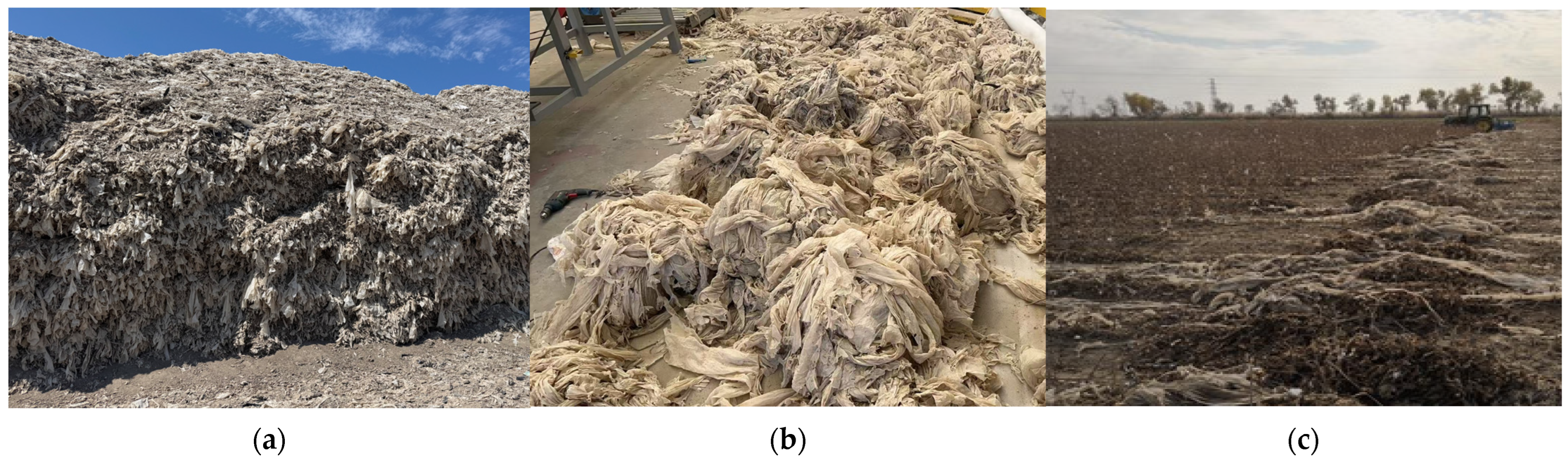
Figure 1. Contamination from discarded agricultural plastic sheeting: (a) piles of mulch; (b) unprocessed plastic mulch; (c) mulch scattered in the field.
Sustainability 17 10926 g001
Figure 2. Forms of resource recovery for waste agricultural plastic sheeting: (a) manual plastic mulch recovery; (b) semi-mechanized plastic mulch recovery; (c) combined mechanized recovery of plastic mulch.
Sustainability 17 10926 g002
Figure 3. Different forms of plastic mulch recovery and impurities.
Sustainability 17 10926 g003
Figure 4. PRISMA flowchart for the literature search.
Sustainability 17 10926 g004
Figure 5. Technical route for resource utilization of waste mulch.
Sustainability 17 10926 g005
Figure 6. Shredding machinery: (a) Stretch shredding machinery. (b) Shearing and shredding machinery. (c) Extrusion mulch film machinery.
Sustainability 17 10926 g006
Figure 7. Separation equipment: (a) Drum-type sorting machinery. (b) Air-classifying machinery.
Sustainability 17 10926 g007
Figure 8. Simplified recycling and processing of waste agricultural plastic sheeting.
Sustainability 17 10926 g008
Figure 9. ENERPAT UK Crushing Plant: (a) MSA-F single-shaft shredder; (b) MSA-F workflow.
Sustainability 17 10926 g009
Figure 10. ELDAN crushing plant, Denmark: (a) FD220 dual-shaft shredder; (b) FD220 workflow.
Sustainability 17 10926 g010
Figure 11. China shredding machinery: (a) SG2200RP single-shaft crusher; (b) WESH-2200 horizontal single-shaft crusher; (c) SSZ1800 single-shaft crusher.
Sustainability 17 10926 g011
Figure 12. JOEST, Germany: (a) AirVibe air classifier. (b) AirVibe workflow.
Sustainability 17 10926 g012
Figure 13. ENERPAT sorting equipment: (a) ES-WSM1600 air classifier. (b) ES-WSM1600 workflow.
Sustainability 17 10926 g013
Figure 14. China mainstream screening machinery: (a) GTS2265 drum screen; (b) 9HRC100 wind–sieve combined separator.
Sustainability 17 10926 g014
Figure 15. Roller tools and spindles: (a) Shengzhong Heavy Industry Machinery Co., Ltd., Ma’anshan City, China, cylindrical cutting tools; (b) ZERMA GmbH roller cutters.
Sustainability 17 10926 g015
Figure 16. Shear cutting tools.
Sustainability 17 10926 g016
Figure 17. Axial and centrifugal fans: (a) Axial-flow fan. (b) Centrifugal fan.
Sustainability 17 10926 g017
Table 1. Comparison of crushing equipment.
Equipment ModelMotor Power(kw)Heavy-Duty Throughput
(t/h)
Production Efficiency (t/h/kw)Energy Consumption per Unit (kwh/t)Applicable Materials
MSA-F1500 [52]7550.06715Conventional plastics, lightweight solid waste (PE, PP, thin-walled plastics, etc.)
MC1348 FD220 [53]30060.02050Municipal solid waste (MSW), plastics and plastic packaging, textiles, wind turbine blade segments, etc.
SG2200RP [54]32060.01953.3Mixed waste plastics, industrial solid waste, refuse-derived fuel (RDF), paper mill waste, biomass straw and other solid waste materials
WESH-2200 [55]26450.01952.8Volume reduction in bulky and industrial solid waste: textiles, leather, plastic film, industrial paper, RDF/SRF pre-treatment, aluminum cans/shavings
SSZ1800 [56]11060.054518.33Plastic products, films, woven sacks, paper products, timber, light metal foils, domestic/industrial solid waste, etc.
Table 2. Particle size comparison.
IndicatorSingle-Shaft Shear Crushing (with Screen)Dual-Shaft Shredding (without Screen)Separation Effects
D10 (mm) [52,53,54,55,56]8–1530–45Single-shaft design for finer processing, suitable for wind-sorting preliminary screening.
D50 (mm) [52,53,54,55,56]25–3560–90Single-axis particle size is more stable and offers greater controllability.
D90 (mm) [52,53,54,55,56]40–50120–180The twin-shaft cannot be directly employed for air separation/screening.
Particle size distribution widthNarrowBroadSingle-axis operation facilitates more stable sorting.
Flake proportion70–85%40–55%Flat pieces are more conducive to air separation.
Strip ratio<3%10–25%The dual-axis strip configuration causes entanglement and complicates sorting.
Subsequent sorting efficiencyHighLowSingle-axis is preferable to dual-axis.
Blade typeBlock-shaped cutting tool + fixed tool, single-axis machiningHook-shaped/claw-shaped double-axis interlocking bladesBlade shape determines particle form: Single-axis blades more readily form flakes, facilitating separation.
Power consumptionGenerally employed for fine crushing, with relatively high power consumption per unit outputPrimarily employed for coarse crushing, with relatively low power consumption per unit output (though individual units typically feature substantial motor power ratings)Power consumption impacts operational costs and the overall energy efficiency of the sorting line.
Entanglement riskLow, with material predominantly cut into short segments, resulting in a low likelihood of entanglementTall, prone to causing long, strip-like materials to become entangled around the cutter shaft and conveying equipmentWrapping may result in downtime for cleaning, affecting continuous sorting and equipment reliability.
Table 3. Separation and Contrast.
Equipment ModelMotor Power
(kw)
Throughput
(t/h)
Production
Efficiency (t/h/kw)
Energy Consumption per Unit (kwh/t)Applicable
Scenarios
AirVibe [62]2210–150.455–0.6821.5–2.2Rough separation
GTS2265 [63]30802.6670.375Rough separation
9HRC100 [35]221–1.50.046–0.06814.7–22Precise separation
Table 4. Comparison of roller tool and shear tool performance.
Comparison DimensionRoller CutterShear CutterApplicability Analysis
Core structureRotating drum body + helical surface/flat blade (30–45° cutting edge angle) [71]Double-edged parallel blades + bolt-on U-groove (thickness 1.6–4.5mm) [72]Roller type complex structure (need to throw components), shear type compact and easy to maintain
Cutting MechanismSliding cut with movable and stationary knives (sliding cut angle 12–18°) [71]Double-edge bite shear [72]Roller slide cut to reduce hard impact, shear to avoid stretching of flexible materials
Cutting performance
Efficiency30–48 m/s high speed cutting (drum speed 1400–1800 r/min) [72]Low-speed layered shear [73]Roller type 40% more efficient (hard straw), shear type for continuous film processing
Power wastageHigh power consumption (rotational kinetic energy required)Low energy consumption (rated 120–540 W)Hard materials choose roller type (e.g., corn stalks), film and other flexible materials choose shear type
Crushing qualityUniformity of broken sections (load-balanced design)Flat cuts (edge shot peening)Roller type for green feed (good palatability of broken pieces), shear type for plastic recycling
Damage resistanceWear-resistant with large cutting angles (30–45°) [74]Stress concentration in the bolt (max. 1.5 × 10⁷ Pa) [75]Roller type lasts 3 times longer (hard conditions), shear type requires regular bolt replacement
Special designHerringbone moving knife configuration (reduces sidewall friction)
[70]
Compaction mechanism + sieve plate (anti-film entanglement)
[76]
Priority is given to roller type (anti-clogging) for high humidity materials, and shear type is necessary for highly ductile films.
Typical applicationSilage harvesting (JAGVAR 830 model)
[72]
Waste mulch recycling (42° optimal edge angle)
[74]
Hard straw: roller (>90% crushing)
Flexible mulch: shear attachment loss
Table 5. Comparison of axial and centrifugal fan performance.
Performance IndicatorsAxial FansCentrifugal FansApplicability Analysis
Wind pressure range≤15 kPa (low to medium pressure) [80]Up to 6.7 kPa (7 kPa for high-pressure models)
Low to medium flow rate (specific speed < 100) [85]
Centrifugal type with high air pressure is more suitable for straw conveying
Airflow characteristicsHigh flow rate (specific speed > 100)Low to medium flow rate (specific speed < 100)Axial flow type is suitable for large area film blowing and floating
Airflow directionAxial flow (parallel flow) [86]Radial flow (worm gear expansion) [87]More uniform axial airflow reduces film entanglement
Sundry handling capacity
Mulch blown-out effectWide coverage of 7–10 m/s wind speeds [83]Localized high-pressure airflow tends to tear filmAxial low-velocity winds reduce mulch breakage
Straw handling capacityInsufficient wind pressure (weak fiber penetration) [88]Effective throwing with high wind pressure (e.g., 6664 Pa model) [88]Centrifugal straw blowing clean rate > 85
Energy efficiency performanceHigh efficiency (average > 80%)Lower efficiency (up to 85.5% for backward curved blade type)Higher power density for axial flow
Structural properties
Volume/weight ratioSmall size/light weight (small mass-to-power ratio)Bulky construction (high mass-to-power ratio)Axial flow for easier integration of mobile devices
Anti-blocking designStraight runners are less prone to clogging [89]Fibrous debris tends to accumulate in the worm’s shell [90]Preferred axial flow for mulch-straw mixtures
Adjustment performanceGood economy (adjustable moving/guiding vanes) [91]Poor regulation economy [92]Axial flow for real-time optimization of scavenging air velocity
Disclaimer/Publisher’s Note: The statements, opinions and data contained in all publications are solely those of the individual author(s) and contributor(s) and not of MDPI and/or the editor(s). MDPI and/or the editor(s) disclaim responsibility for any injury to people or property resulting from any ideas, methods, instructions or products referred to in the content.