Article

Can Virtual Influencers Drive Online Consumer Behavior? An Applied Examination of ELM Model Investigating the Marketing Effects of Virtual Influencers

1
Department of Business Management, National Taichung University of Science and Technology, Taichung 40851, Taiwan
2
Department of Marketing and Logistics Management, Ling Tung University, Taichung 40851, Taiwan
*
Author to whom correspondence should be addressed.
Sustainability 2025, 17(23), 10721; https://doi.org/10.3390/su172310721
Submission received: 15 October 2025 / Revised: 21 November 2025 / Accepted: 25 November 2025 / Published: 30 November 2025

Abstract

With the rapid advancement of social media and AI technologies, influencer marketing has evolved significantly. Virtual influencers have emerged as alternatives to traditional human influencers. Grounded in the Elaboration Likelihood Model (ELM), this study examines how virtual influencers’ source credibility dimensions (expertise, attractiveness, and trustworthiness) affect consumer attitudes and purchase intentions. Using the case of virtual influencer Imma, this study collected 344 valid online survey responses. The empirical results show that, along the central route, perceived product value has a significant and positive effect on purchase intention. Along the peripheral route, the trustworthiness, attractiveness, and expertise of the virtual influencer all exert significant positive effects on purchase intention. However, product involvement moderates these effects differently: for high-involvement consumers, the effects of trustworthiness and attractiveness on purchase intention are significantly strengthened, while the moderating effects on expertise and perceived value remain non-significant. This study contributes to the emerging literature on virtual influencer marketing by demonstrating how source credibility dimensions and perceived value interact with product involvement to shape consumer responses. Additionally, virtual influencers offer sustainability benefits by minimizing carbon emissions from travel and physical production inherent in traditional influencer campaigns. The findings offer practical implications for marketers: virtual influencers can effectively enhance brand exposure, but their persuasive impact varies by product involvement requiring tailored content strategies for high- versus low-involvement products. Furthermore, future research could extend this work by examining the effects of different product categories and cultural contexts on the effectiveness of virtual influencer marketing.

1. Introduction

In recent years, influencer marketing has become a prominent focus in marketing research, with numerous studies highlighting the role of influencers in shaping consumer behavior and purchase decisions [1]. Prior research has explored influencer effects through psychological traits [2,3,4,5], social media dynamics [6,7], and persuasion mechanisms [8,9]. Collectively, these studies underscore influencers’ pivotal role in promotional strategies and consumer engagement.
With the advancement of digital technology and social media, influencer marketing has evolved from celebrity endorsements to social media influencers, and more recently, to virtual influencers. Early studies demonstrated that human influencers affect consumer behavior primarily through authenticity and social trust [10]. However, the emergence of AI-powered virtual influencers such as Lil Miquela and Imma has introduced a new paradigm in digital marketing communication [11]. These digital entities deliver highly consistent brand messages and controlled imagery, yet simultaneously raise challenges related to authenticity, transparency, and ethics, forming the theoretical foundation for this study.
Despite their growing prominence, empirical research that applies robust theoretical frameworks to validate virtual influencers’ effects on consumer behavior remains limited [11]. Studies suggest that virtual influencers’ personal characteristics effectively attract consumer attention and foster acceptance [11,12]. Owing to their controllability, brand image consistency, and reduced reputational risk compared with human endorsers, virtual influencers represent a promising marketing innovation. However, they also face significant challenges in terms of authenticity, ethical transparency, and credibility, which may lead consumers to process their messages differently. Given their lack of physical reality and limited cognitive depth, consumers may question their authenticity—making virtual influencers fundamentally distinct from human influencers [13]. Accordingly, investigating the psychological mechanisms that shape consumers’ responses to virtual influencers can fill theoretical gaps in consumer behavior research and provide managerial insights for brand communication strategies.
Traditionally, influencer marketing has been conceptualized as a process of attracting and persuading consumers to make purchase decisions [1]. Whether the same persuasive mechanisms apply to virtual influencers remains uncertain. Specifically, it is unclear whether consumer decision-making is primarily driven by rational evaluations (e.g., perceived product value) or heuristic cues derived from AI-generated agents. To address this gap, this study adopts the Elaboration Likelihood Model (ELM) as its theoretical foundation. Widely used in consumer behavior research, the ELM proposes two distinct information-processing routes: the central route, guided by rational arguments, and the peripheral route, shaped by affective or heuristic cues [14,15]. Previous studies have demonstrated the utility of this framework in analyzing influencer marketing’s effects on purchase intentions [16,17,18]. Building upon this foundation, the current study incorporates perceived product value as the central-route factor and source credibility cues—trustworthiness, expertise, and attractiveness—as the peripheral-route factors.
Endorser effects have long been examined in marketing research. Firms leverage endorser credibility, expertise, and attractiveness to shape favorable brand attitudes and enhance purchase intentions. According to Source Credibility Theory [19], these attributes serve as key drivers of persuasion, and prior studies have validated their influence across both traditional and digital contexts [20,21,22]. Extending this perspective, the present study conceptualizes virtual influencers as AI-enabled endorsers and investigates how their trustworthiness, expertise, and attractiveness influence consumer purchase intentions. This also links to the discourse on trustworthy AI, emphasizing the importance of credibility and transparency in fostering consumer trust within algorithmically mediated interactions.
While virtual influencers can shape purchase decisions through such peripheral cues [23], rational consumers often prioritize product value when making evaluations. Existing research shows that consumers anchor their decisions in product quality, performance, and utility [24,25]. Thus, perceived product value represents a rational factor that directly shapes purchase intention [26,27]. Understanding the interplay between these peripheral cues and central evaluations is essential for developing both effective marketing practices and responsible AI-driven communication systems.
Consumers, however, are not passive recipients of persuasion. According to involvement theory, they actively process product-related information based on personal relevance and interest [28]. Product involvement, defined as the degree of personal engagement with a product [29], influences attention allocation, message evaluation, and purchase behavior [30,31]. High involvement reflects deeper cognitive engagement and intrinsic relevance, whereas low involvement makes consumers more susceptible to heuristic cues. Prior advertising research confirms that persuasion effectiveness varies significantly with involvement level [32,33]. Generally, involvement can be viewed from two dimensions: level (high vs. low) and nature (rational vs. affective). According to the Foote, Cone, and Belding (FCB) model [34], different product categories trigger either rational or affective decision processes, complementing the dual-route logic of the ELM. This study focuses on the level of involvement as a moderating variable while treating the FCB model as a supplementary framework to contextualize involvement phenomena.
In summary, although virtual influencers are widely used in digital marketing, research on how consumers process AI-driven endorser messages remains limited. By integrating the Elaboration Likelihood Model (ELM) with source credibility theory, this study examines: (1) how rational factors (perceived product value) and (2) affective factors (trustworthiness, expertise, attractiveness) influence purchase intentions, and (3) whether product involvement moderates these relationships.
This research enhances understanding of virtual influencer marketing effectiveness from the consumer perspective and provides empirical evidence for developing targeted marketing strategies. Furthermore, given the limited empirical validation of virtual influencer effects on consumer behavior [11,35], this study contributes to extending the ELM and Source Credibility Theory to AI-mediated communication contexts, while also offering insights into sustainable and responsible digital marketing practices.

2. Theoretical Review and Hypothesis

2.1. From Real Influencers to Virtual Influencers: Evolution and Distinctions

Traditional research on social media influencers has predominantly applied the Elaboration Likelihood Model (ELM) to examine how expertise, credibility, and attractiveness influence persuasive outcomes [16]. However, virtual influencers differ significantly from human influencers in terms of controllability, authenticity perception, and interaction patterns. Virtual influencers are entirely computer-generated, enabling them to maintain consistent brand images and avoid behavioral risks associated with human endorsers [9]. Yet, their “non-human existence” raises concerns regarding trust and emotional connection [11]. Therefore, this study aims to extend prior ELM research—which has primarily focused on human influencers—by examining whether the same persuasion mechanisms apply to virtual influencer contexts.
Multiple companies worldwide now specialize in developing and operating virtual influencers. Notable examples include: Brud (Los Angeles, CA, USA), which created the prominent virtual influencer Lil Miquela, who has amassed over 3 million Instagram followers and collaborated with brands such as Prada, Calvin Klein, and Samsung; Aww Inc. (Tokyo, Japan), which developed Imma, Asia’s first virtual fashion influencer, who actively engages on Instagram and participates in virtual fashion events; Superplastic (Burlington, VT, USA), which created virtual characters Janky and Guggimon and partnered with Gucci to launch limited-edition NFTs; and Code Miko Studio, which employs real-time motion capture and AI technology to create interactive virtual streaming personalities. These cases demonstrate that virtual influencers have not only emerged as novel marketing tools for brands but also prompted researchers to reconsider the applicability of traditional persuasion theories in digital human contexts.
In recent years, with the rapid advancement of artificial intelligence and generative technologies, virtual influencers have become an emerging focal point in marketing and brand communication. Beyond traditional persuasive elements such as attractiveness, expertise, and trustworthiness, scholars have begun examining challenges related to perceived authenticity, algorithmic transparency, and ethical issues with AI in marketing in virtual endorser contexts [36]. These emerging issues highlight a research trend extending from technology acceptance and communication effectiveness toward ethical and societal trust dimensions.
While virtual influencer research has evolved from early emphases on physical attractiveness and endorsement effectiveness to encompass emerging domains such as authenticity perception, transparency, and ethical risks, the theoretical focus of this study remains anchored in the Elaboration Likelihood Model (ELM). Specifically, this research examines how virtual influencers influence consumer attitudes and behavioral intentions through central and peripheral persuasion routes under varying levels of product involvement. Therefore, although perceived authenticity, algorithmic transparency, and AI marketing ethics represent important topics for future investigation, this study treats them as part of the theoretical background and research limitations rather than as primary operationalized variables. This approach maintains the focus and theoretical consistency of our research model.

2.2. Elaboration Likelihood Model (ELM)

The Elaboration Likelihood Model (ELM) is a dual–route model of persuasion that explains how individuals process persuasive messages with different levels of cognitive elaboration [37]. When recipients are highly involved and motivated, and possess sufficient ability to process information, they tend to engage in the central route, forming attitudes through careful evaluation of message content such as argument quality and diagnostic information. Under low involvement or limited ability, individuals are more likely to follow the peripheral route, relying on simple contextual cues (e.g., message format, visual style, or the presence of an appealing endorser) rather than systematically scrutinizing the arguments [28,33]. This distinction between high- and low-involvement processing is consistent with Vaughn’s [34] FCB Grid model, which differentiates consumer decisions along rational versus affective dimensions.
ELM has been widely applied in advertising, eWOM, online shopping, and online review research. For example, Cheung, Sia, and Kuan [38] showed that consumers interpret product reviews either by analyzing the informational content of the review (central route) or by relying on peripheral cues related to the reviewer. Similarly, Tang and Yeh [33] found that both argument quality and influencer-related cues shape travel intentions, and that consumers’ involvement moderates the relative impact of these cues. Recent studies further indicate that central cues such as informativeness and originality directly affect purchase intention, whereas peripheral cues associated with endorsers and platform features complement these effects in shaping consumer decisions [16,39].
In the context of influencer marketing, ELM provides a useful lens for understanding how different characteristics of the message and the endorser jointly influence persuasion outcomes [10,15]. Prior research on traditional (human) influencers generally treats message- or product-related factors as central cues, while characteristics of the influencer are conceptualized as peripheral cues that guide heuristic judgments. However, virtual influencers possess several features that distinguish them from human endorsers. Their appearance, content, and interaction patterns are fully controlled by algorithms and creative teams, allowing them to maintain consistent brand images and highly curated self-presentations in digital environments [11]. As a result, attributes such as the “attractiveness” of a virtual influencer may reflect an algorithmic esthetic that blends visual design, narrative coherence, and brand positioning, thereby blurring the boundary between central and peripheral information and potentially triggering both rational and affective responses simultaneously [13].
Given that virtual influencers function as persuasive communicators, ELM offers an appropriate overarching framework for this study. Following recent calls to focus directly on behavioral intentions as key persuasion outcomes [15,40], we apply ELM to examine how central- and peripheral-route factors shape consumers’ purchase intentions in virtual influencer marketing. In our conceptual model, perceived product value is treated as a central-route variable that reflects consumers’ systematic evaluations of the promoted products, whereas the characteristics of virtual influencers are conceptualized as peripheral cues. These characteristics are further specified through the three dimensions of source credibility—trustworthiness, expertise, and attractiveness—whose theoretical definitions and empirical support are elaborated in the next subsection. Given that virtual influencers function as persuasive communicators, ELM offers an appropriate overarching framework for this study. Following recent calls to focus directly on behavioral intentions as key persuasion outcomes [15,40], we apply ELM to examine how central- and peripheral-route factors shape consumers’ purchase intentions in virtual influencer marketing. In our conceptual model, perceived product value is treated as a central-route variable that reflects consumers’ systematic evaluations of the promoted products, whereas the characteristics of virtual influencers are conceptualized as peripheral cues. These characteristics are further specified through the three dimensions of source credibility—trustworthiness, expertise, and attractiveness—whose theoretical definitions and empirical support are elaborated in the next subsection.

2.3. Source Credibility Theory

Source credibility theory posits that the persuasiveness of a message depends largely on the receiver’s perception of the communicator’s credibility [41,42,43]. Credibility is typically conceptualized through three key dimensions: trustworthiness, expertise, and attractiveness. Trustworthiness reflects the extent to which the communicator is perceived as honest, sincere, and reliable; expertise refers to perceived competence and knowledge in the relevant domain; and attractiveness captures the communicator’s physical appeal as well as symbolic characteristics that make the source likable or appealing. When these attributes are evaluated positively, audiences are more inclined to accept the message, leading to more favorable brand attitudes, stronger purchase intentions, and higher advertising effectiveness [44].
Recent studies have highlighted the central role of source credibility in social media and influencer marketing contexts. Colliander and Marder [45], for instance, demonstrated that perceived credibility of Instagram influencers enhances followers’ engagement with branded content, while Sokolova and Kefi [46] showed that credibility effects extend across different online platforms. Empirical findings consistently indicate that higher trust in influencers strengthens consumers’ willingness to follow their recommendations and increases purchase intentions [47]. Perceived expertise likewise encourages consumers to rely on influencers as informational sources when evaluating products and services. Emerging research on virtual influencers further suggests that they can be perceived as trustworthy and competent communicators, and in some cases may rival human influencers in shaping consumer preferences and brand evaluations [35].
In sum, the credibility of virtual influencers—rooted in their perceived trustworthiness, expertise, and attractiveness—functions as an important form of endorsement and quality assurance in digital environments. Building on source credibility theory, the present study therefore examines how these three dimensions of perceived source credibility influence consumers’ purchase intentions toward products endorsed by virtual influencers. In our conceptual model, trustworthiness, expertise, and attractiveness are treated as distinct, yet related, attributes that capture consumers’ overall assessment of a virtual influencer’s credibility.

2.4. Perceived Product Values

Zeithaml [48] defined perceived value as the consumer’s overall assessment of a product’s utility based on perceptions of what is received versus what is given—essentially, the net benefits relative to costs [49]. Extensive research has established perceived value as a robust predictor of purchase intention [50].
Empirical evidence across diverse contexts supports this relationship. Sawitri and Hasin [51] found that higher perceived value toward online music streaming services strengthened purchase intentions. Similarly, in product markets, when consumers’ performance and functionality expectations are met or exceeded, their perceived value increases, subsequently enhancing purchase willingness [52,53].

2.5. Product Involvement

Product involvement refers to the degree of personal interest and relevance a consumer attaches to a product, shaping their information processing and decision-making [54]. High involvement is characterized by deeper engagement and stronger emotional responses [55]. Therefore, understanding the impact of product involvement is critical for explaining consumer behavior. Product involvement not only influences the extent of consumers’ attention to messages but also determines their rational versus affective orientation when processing information [56]. For high-involvement products (e.g., health technology, financial services), consumers tend to adopt rational thinking and central route processing; conversely, low-involvement products (e.g., fashion, cosmetics) are more likely to elicit affective engagement and reliance on peripheral cues (e.g., physical attractiveness) in attitude formation. Based on this theoretical rationale, this study positions product involvement as a key moderating variable to examine differences in virtual influencer persuasive effectiveness across involvement contexts.

2.6. Conceptual Framework and Research Hyphotheses

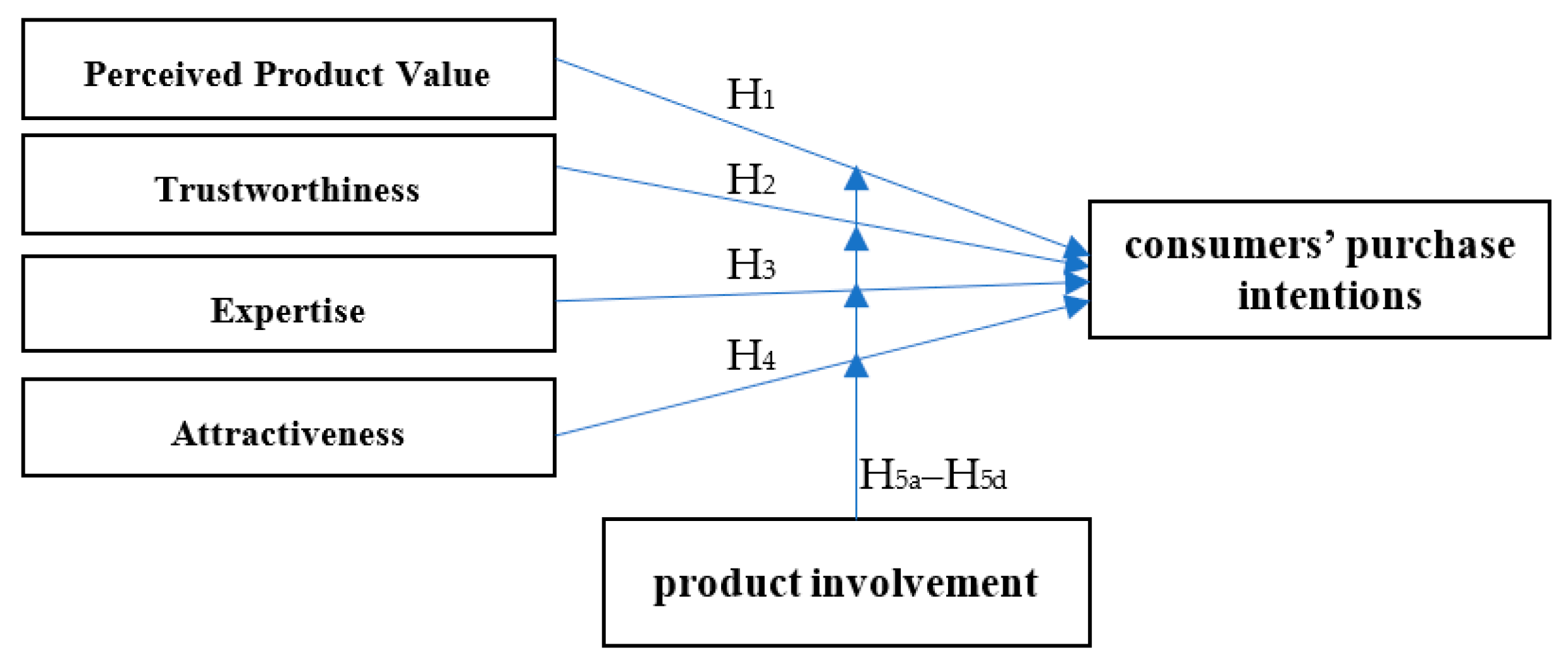
Based on the aforementioned theoretical foundations, this study employs the Elaboration Likelihood Model (ELM) as the overarching framework to examine virtual influencer persuasion effectiveness. The conceptual model integrates three core theoretical components: (1) central route processing, operationalized through perceived product value, representing consumers’ rational cost–benefit evaluation; (2) peripheral route processing, operationalized through three source credibility dimensions—trustworthiness, expertise, and attractiveness—functioning as heuristic cues; and (3) product involvement as a moderating variable that amplifies persuasion effects by increasing consumer motivation and cognitive elaboration. Figure 1 presents the complete research model with all hypothesized relationships.
Building on Zeithaml’s [48] framework, this study conceptualizes perceived product value as the consumer’s overall evaluation of functional benefits relative to sacrifices (e.g., price, effort, time). Within the Elaboration Likelihood Model (ELM), perceived product value represents a central-route factor, reflecting consumers’ systematic evaluation of product merits.
H1. 
Perceived product value significantly and positively influences consumers’ purchase intentions.
Research shows that endorsers with higher Trustworthiness generate stronger endorsement effects and positively influence purchase intentions [57]. Credibility fosters buyer–seller interaction [58], strengthens customer loyalty [59], and enhances engagement [60], ultimately boosting consumers’ purchase decisions. Compared with human influencers, virtual influencers are less exposed to image-related risks and can more effectively manage their personas, making it easier to gain consumer trust. Thus, this study pro-poses:
H2. 
The Trustworthiness of virtual influencers significantly and positively influences consumers’ purchase intentions.
Congruity Theory suggests that expertise enhances consumers’ identification with products [61]. When consumers perceive endorsers as knowledgeable, they are more likely to develop favorable brand attitudes and purchase intentions [62]. Expertise has also been linked to stronger brand satisfaction, pos-itive word-of-mouth, and loyalty [63]. Extending this perspective, virtual influencers who demonstrate expertise can strengthen consumer perceptions of endorsed products, thereby increasing purchase inten-tions. Accordingly, this study proposes:
H3. 
The expertise of virtual influencers significantly and positively influences consumers’ purchase intentions.
Advertisers often select endorsers for their attractiveness, as visual appeal can capture attention and enhance advertisement effectiveness [64,65]. Attractive influencers are more likely to resonate with consumers, who may regard them as role models and follow their activities closely. Research on Insta-gram further shows that esthetically appealing content increases influencer popularity and strengthens the persuasiveness of their recommendations [66,67]. Based on this, the study proposes:
H4. 
The attractiveness of virtual influencers significantly and positively influences consumers’ purchase intentions.
Prior research consistently highlights the moderating role of product involvement. Consumers with high involvement are more likely to engage in extensive information searches, evaluate products as higher quality, and exhibit stronger purchase intentions [68,69]. Involvement theory further suggests that high involvement can alter attitudes, enhancing purchase behavior [70]. For example, Chen [71] showed that consumers with greater involvement in organic food displayed stronger purchase intentions. Building on this, this study posits that product involvement strengthens the effect of perceived product value on purchase intentions.
H5a. 
Higher levels of product involvement strengthen the positive relationship between perceived product value and consumers’ purchase intentions.
Consumer involvement shapes attitudes toward advertisements, brands, and purchase intentions [30]. According to Expectancy-Value Theory, highly involved consumers allocate greater cognitive resources to evaluate product information and are more attentive to endorser characteristics such as trustworthiness, expertise, and attractiveness [72].
Trustworthiness reduces message risk and decision-making uncertainty [32]. Expertise provides consumers with relevant knowledge, reducing information asymmetry. Attractiveness enhances emotional connections and strengthens product image when the endorser–product fit is high. Together, these characteristics are expected to have stronger effects on highly involved consumers. Accordingly, the following hypotheses are proposed:
H5b. 
Higher product involvement strengthens the positive relationship between virtual influencers’ trustworthiness and consumer purchase intentions.
H5c. 
Higher product involvement strengthens the positive relationship between virtual influencers’ expertise and consumer purchase intentions.
H5d. 
Higher product involvement strengthens the positive relationship between virtual influencers’ attractiveness and consumer purchase intentions.

3. Methodology

3.1. Data Collection and Sampling

This study employed an online survey targeting individuals with prior exposure to virtual influencers, specifically those who had followed or interacted with related social media accounts or live streaming channels. The questionnaire utilized a five-point Likert scale for measurement. While seven-point scales are commonly used in marketing research, five-point scales are equally widely adopted and have demonstrated strong performance in response stability and data quality [73,74]. Moreover, five-point scales help reduce respondent burden and option fatigue [75], particularly in online survey contexts.
Before completing the survey, participants were required to watch endorsement videos featuring Imma, a leading Japanese virtual influencer selected for several strategic reasons. Imma is one of the most prominent virtual influencers in Asia, with substantial followings on Instagram and TikTok and collaborations with major international brands such as BMW, VIVO, Adidas, IKEA, Coach, Nike, and Shiseido. Her neutral, modern, and approachable visual style minimizes potential cultural or gender biases, while her authentic commercial partnerships enhance the study’s ecological validity and contextual realism.
Two endorsement videos were selected to represent distinct marketing appeals aligned with the Elaboration Likelihood Model (ELM). The IKEA video (2.5 min) focuses on home living and environmental consciousness, emphasizing sustainable design and lifestyle convenience, representing a rational-oriented marketing appeal corresponding to a high-involvement context. The COACH video (1 min) features Imma collaborating with Youngji Lee, highlighting fashion styling and personal expression to emphasize emotional value, representing an affective-oriented marketing appeal corresponding to a low-involvement context. This selection aligns with prior research indicating that industries such as fashion, electronics, and luxury marketing benefit significantly from virtual influencer campaigns [23], and enables examination of whether consumer responses vary by product involvement level.
Participants were first screened to confirm prior exposure to virtual influencers and whether they had purchased virtual influencer-endorsed products. After watching the selected videos, they completed a questionnaire assessing Imma’s trustworthiness, attractiveness, and expertise, along with perceived product value, product involvement, and purchase intention. This design facilitates comprehensive examination of Imma’s influence and effectively evaluates the moderating role of involvement level in consumer decision-making, while utilizing real-world brand partnerships to validate whether virtual influencers can drive online consumer behavior.

3.2. The Measurement of the Constructs

All constructs were measured using established scales adapted from prior research. Each item was rated on a five-point Likert scale (1 = strongly disagree, 5 = strongly agree). Perceived Product Value was defined as consumers’ evaluation of a product’s worth based on perceived benefits relative to costs. Three items were adapted from [76,77,78]. Trustworthiness of virtual influencers referred to their perceived honesty and integrity. Six items were adapted from Rosenberg [79]. Expertise captured influencers’ perceived proficiency and product-related knowledge. Three items were adapted from Rosenberg [79]. Attractiveness reflected influencers’ physical appeal and charm. Five items were adapted from Ohanian [21]. Product Involvement was defined as the degree of personal relevance and information-seeking related to a product. Four items were adapted from Schiffman and Kanuk [80]. Purchase Intention represented consumers’ willingness to buy or pay for a product. Four items were adapted from [16].

4. Empirical Results

4.1. Descriptive Statistics of Demographic Variables

A total of 344 valid questionnaires were collected. Table 1 presents the demographic characteristics of the respondents, including gender, age, education level, monthly income, and frequency of weekly interactions with AI virtual influencer content. Overall, the sample was predominantly female (62.2%), with most respondents aged 21–30 years (53.5%) and holding a university degree (72.1%). Additionally, 83.1% reported interacting with AI virtual influencer content once or less per week, suggesting that engagement with such content remains at an early stage.
Although the sample is primarily composed of young adults aged 21–30, with a higher proportion of female and university-educated participants, this demographic composition aligns closely with the principal audience profile of virtual influencers. Prior research has shown that this cohort represents the key market segment for virtual influencer engagement and purchase intentions [81]. Moreover, young digital consumers tend to exhibit greater responsiveness to online interactions and immersive marketing experiences. Therefore, the sample composition appropriately reflects the characteristics of the target consumer segment and is well-suited for the theoretical objectives of this study.

4.2. Reliability and Validity Analysis of Research Variables

In this study, constructs with a Cronbach’s α value greater than 0.7 were considered to have acceptable. The reliability of the constructs was assessed using Cronbach’s α, with values above 0.7 considered acceptable. In this study, α values ranged from 0.714 to 0.930, indicating strong internal consistency across all constructs.
Validity was examined through confirmatory factor analysis (CFA), focusing on convergent and discriminant validity. Convergent validity was evaluated following Fornell and Larcker’s [82] criteria: (1) average variance extracted (AVE) should exceed 0.5, and (2) all factor loadings should be greater than 0.5, ensuring that items within each construct adequately represent their intended factor.
The CFA results (Table 2) indicated that all factor loadings ranged from 0.707 to 0.954 and all AVE values ranged from 0.605 to 0.792, exceeding the threshold of 0.5, thereby confirming convergent validity. The model fit was also satisfactory, with χ2/df = 1.509, GFI = 0.881, AGFI = 0.838, RMSEA = 0.055, and CFI = 0.966, all within recommended standards [80,82]. These results demonstrate that the measurement model is well-fitted and possesses adequate validity.
Before conducting SEM, both convergent and discriminant validity were assessed. Discriminant validity was examined using two approaches. First, the bootstrap method in AMOS was applied, and the confidence intervals of construct correlations did not include 1, confirming discriminant validity [83]. Second, following Fornell and Larcker’s [84] criterion, the square root of each construct’s AVE was compared with its correlations; the diagonal AVE square roots exceeded the inter-construct correlations, further supporting discriminant validity [85]. The results are summarized in Table 3.

4.3. Common Method Bias of Research Variables

This study employed the common method factor analysis proposed by Liang et al. [86] to assess whether common method bias posed a threat to the validity of the findings. The results, presented in Table 4, indicate that the issue of common method bias is not severe in this study.

4.4. SEM Model Fit and Hypothesis Testing

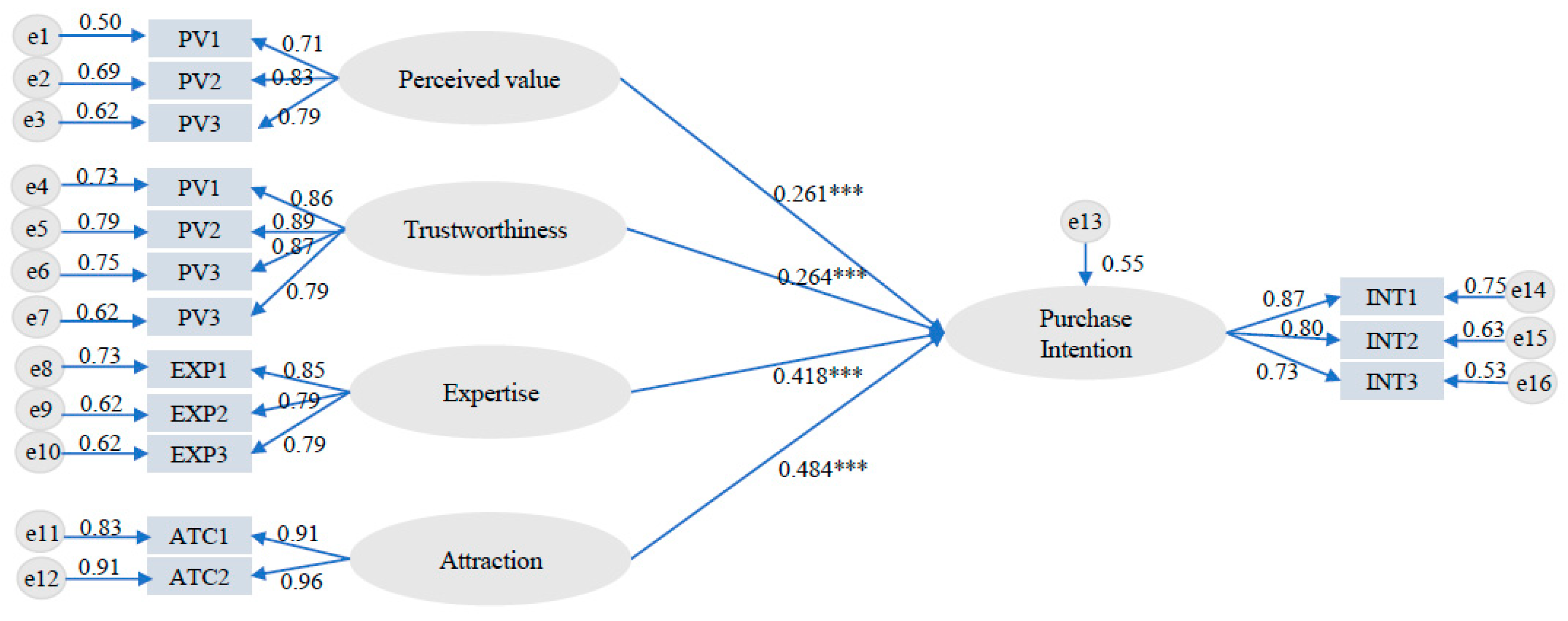
Figure 2 presents the SEM model and its model fit indices. The model’s goodness-of-fit was evaluated, yielding χ2/df = 1.961, GFI = 0.851, AGFI = 0.818, RMSEA = 0.072, and CFI = 0.937. All indices meet the recommended thresholds [83,84], indicating that the SEM model is well-fitted to the data.
After confirming that all model fit indices met the recommended thresholds, further analysis was conducted using AMOS structural equation modeling (SEM) to assess whether the hypothesized path coefficients were statistically significant. The results presented in Table 5 indicate that all structural paths were positive and significant, demonstrating the existence of causal relationships among the variables.
Specifically, perceived product value positively influences purchase intentions (β = 0.261, t = 3.568, p < 0.001), supporting H1. Virtual influencer trustworthiness also has a significant positive effect on purchase intentions (β = 0.264, t = 3.913, p < 0.001), thus supporting H2. Additionally, virtual influencer expertise demonstrates a strong positive impact on purchase intentions (β = 0.418, t = 5.711, p < 0.001), confirming H3. Finally, virtual influencer attractiveness exerts the strongest positive effect on purchase intentions (β = 0.484, t = 6.929, p < 0.001), providing support for H4.
Together, these results offer robust empirical evidence for the proposed conceptual model, confirming that perceived value and all three dimensions of virtual influencer credibility significantly enhance consumers’ purchase intentions.

4.5. Moderation Effect Analysis and Hypothesis Testing

To examine the moderating effect of product involvement, a multi-group analysis was conducted using AMOS structural equation modeling (SEM). The sample was divided into high- and low-involvement groups based on the moderating variable, and the path coefficients across the two groups were compared.
Table 6 presents the results of the chi-square difference tests, indicating whether the path coefficients significantly differ between the two involvement groups. Table 7 reports the standardized path coefficients for each group. The results show that when the independent variables were perceived product value and virtual influencer expertise, the corresponding SEM path coefficients did not differ significantly between high- and low-involvement groups, and the effects were non-significant in both cases. Therefore, Hypotheses H5a and H5c were not supported.
In contrast, when the independent variables were virtual influencer trustworthiness and virtual influencer attractiveness, the path coefficients significantly differed across involvement levels, and the effects were statistically significant in both subgroups. Hence, Hypotheses H5b and H5d were supported. These results suggest that product involvement moderates the effects of trustworthiness and attractiveness, but not perceived product value or expertise, indicating that affective cues play a stronger role under varying involvement conditions.

5. Conclusions, Implications, Limitations, and Future Research

5.1. Conclusions

This study situates virtual influencers within the broader evolution of influencer marketing, illustrating how persuasion theories originally developed for human influencers have been extended and reinterpreted in the context of AI-driven digital marketing. The results indicate that hypotheses H1–H4 were supported, whereas H5a and H5c were not, and H5b and H5d were supported.
First, regarding the central route, perceived product value was found to have a significant and positive effect on consumers’ purchase intentions. This suggests that from a rational perspective, the higher consumers’ perceived value of a product, the stronger their purchase intention. This finding is consistent with Zeithaml’s [48] conceptualization that perceived value is a key determinant of consumer behavior, and it aligns with evidence that perceived value exerts a stronger influence on purchase intention in online shopping contexts [87].
Second, along the peripheral route, the characteristics of virtual influencers—trustworthiness, attractiveness, and expertise—all significantly enhanced consumers’ purchase intentions. This demonstrates that virtual influencers’ positive image attributes can effectively shape consumers’ purchase decisions. The result regarding trustworthiness supports the assumptions of Source Credibility Theory [41], which posits that highly credible sources exert stronger persuasive influence. From the perspective of AI-generated influencers, this study extends the applicability of source credibility theory to non-human endorsers. These results are also consistent with Sokolova and Kefi [46] and Lou and Yuan [88], who found that influencer credibility increases consumer purchase intentions on social media platforms.
Regarding attractiveness, the findings confirm a significant positive relationship between virtual influencers’ attractiveness and purchase intention, consistent with McGuire’s [89] attractiveness model. This suggests that the visual appeal of the source can enhance attitude change and, consequently, increase purchase intention. Similarly, this result aligns with previous research on human influencers, showing that attractiveness, content value, and credibility are key factors that enhance brand exposure and consumer trust [88]. Concerning expertise, the results indicate that when virtual influencers demonstrate higher professional knowledge, they are more persuasive in promoting products, consistent with Ohanian’s [21] conceptualization that expertise fosters consumer trust and influences purchase intention.
In terms of moderation effects of product involvement, the findings reveal differential levels of significance across peripheral-route factors. As theoretically expected, product involvement strengthened the positive effects of trustworthiness and attractiveness on purchase intention. However, its moderating effect on expertise was not significant. One possible explanation is that the influence of expertise on purchase intention did not vary significantly with involvement level because of cognitive dissonance between the virtual influencer’s perceived expertise and consumers’ pre-existing knowledge [28]. Even when the influencer exhibits high expertise, highly involved consumers may perceive incongruence and remain skeptical. Additionally, highly involved consumers may rely more on self-collected information rather than influencer recommendations, especially for experiential or high-consideration products such as cosmetics and skincare.
The key academic contribution of this study lies in extending the Elaboration Likelihood Model (ELM) to the context of virtual influencers and contrasting it with prior findings on human influencers. The results reveal the unique persuasive mechanisms of virtual influencers, showing that trustworthiness and attractiveness transcend the conventional boundaries between the central and peripheral routes, significantly influencing consumer attitudes under both high- and low-involvement conditions. This suggests that AI-driven virtual characters may operate through a hybrid persuasion pathway, challenging the traditional dual-route assumption of ELM. The findings thus reinforce the applicability of ELM in new media environments, suggesting that the technological and esthetic attributes of virtual influencers blur the distinction between central and peripheral cues. As a result, consumers may be simultaneously persuaded by both rational and affective appeals, even in high-involvement contexts. This theoretical insight expands the understanding of moderation effects and provides new directions for applying ELM in AI-driven marketing research.
Finally, regarding the moderation effect within the central route, product involvement did not significantly moderate the relationship between perceived product value and purchase intention. Three possible explanations are proposed.
(1)
Based on dual-system theory, consumer decisions are guided by both intuitive and analytical processes. Low-involvement consumers may rely on intuitive judgments of value, whereas high-involvement consumers engage in deeper analysis—yet both ultimately depend on perceived value as the primary determinant of purchase intention, resulting in a non-significant moderating effect.
(2)
Product involvement itself may directly influence purchase decisions, leaving little variance for additional moderation [90]. Moreover, Zeithaml [48] argued that consumers universally rely on cognitive evaluations of value—such as price-performance ratio and perceived quality—when making purchase decisions, a mechanism that operates largely independent of involvement level. When perceived value is sufficiently high, both high- and low-involvement consumers perceive the product as “worth buying”.
(3)
Product category differences may also explain this finding. The products featured in the experimental stimuli (furniture and handbags) are utilitarian in nature, for which cognitive value tends to be the dominant determinant of purchase behavior, while involvement plays a secondary role [91]. Even highly involved consumers, after extensive consideration, are ultimately guided by perceived value in their purchase decisions.

5.2. Theoretical Implications

This study contributes to the literature by integrating the Elaboration Likelihood Model (ELM) and Source Credibility Theory into a unified research framework, examining both rational and affective factors that influence consumers’ purchase intentions toward virtual influencers. Multiple key variables—including trustworthiness, attractiveness, expertise, perceived product value, and product involvement—were incorporated and empirically tested. The findings demonstrate that these variables exert varying degrees of influence on consumer purchase decisions, depending on the persuasion route and involvement level.
From a theoretical perspective, virtual influencers have recently emerged as a significant phenomenon in digital marketing, entertainment, and social media ecosystems. With technological advancements in artificial intelligence, animation, and image generation, virtual influencers have become increasingly prevalent, particularly among younger consumers and brand communication strategies. While prior studies have primarily focused on how the personal traits and appeal of human influencers affect consumer behavior, empirical research on the anthropomorphic characteristics and perceived attractiveness of virtual influencers remains limited.
By integrating the ELM and Source Credibility frameworks, this study provides empirical evidence that virtual influencers—like their human counterparts—can effectively influence consumer behavior through perceived credibility and attractiveness. The results fill a theoretical gap by demonstrating that AI-generated virtual endorsers can evoke persuasion mechanisms similar to those triggered by human endorsers. Accordingly, the study extends the application of both ELM and Source Credibility Theory to the AI-driven endorsement context, confirming that anthropomorphic and esthetic cues in virtual influencers can serve as effective persuasion signals that drive consumer attitudes and behavioral intentions.
Furthermore, this research extends the ELM into the AI-mediated virtual influencer environment, comparing how central and peripheral persuasion routes operate in this novel context. The findings reveal that virtual influencers’ digital esthetics and algorithmic representations may form a new type of hybrid persuasive cue, blurring the boundary between cognitive and affective processing routes. This theoretical insight not only bridges a gap in influencer marketing research but also advances understanding of how persuasion theory applies to AI-driven communication and digital embodiment, providing a conceptual foundation for future investigations of virtual endorsement mechanisms.
Finally, the study offers implications for marketing theory by highlighting that virtual influencers represent an evolution of endorsement mechanisms in the age of AI, where credibility and esthetics are jointly constructed through technology. This contributes to expanding the theoretical scope of both ELM and Source Credibility Theory, supporting their continued relevance in the emerging era of AI-enhanced digital marketing.

5.3. Practical Implications

From a managerial perspective, this study provides several practical insights for firms considering the integration of virtual influencers into their marketing strategies.
First, given that human influencers often entail potential risks such as personal misconduct, reputation crises, and uncontrollable behaviors, companies should also explore virtual influencer endorsements as an alternative promotional strategy. By selecting virtual influencers that align with different product attributes—for example, functional, luxury, or experiential goods—brands can enhance consumers’ purchase intentions while maintaining greater control over message consistency and image management.
Second, marketers should design differentiated virtual influencer personas tailored to target audiences’ preferences. These can range from fashion-oriented and technology-driven characters to friendly, approachable figures that strengthen emotional connections between the brand and consumers. Integrating augmented reality (AR) and virtual reality (VR) technologies can further enhance interaction realism and create immersive brand experiences that deepen consumer engagement.
Third, the findings indicate that when consumers exhibit high product involvement, the effects of a virtual influencer’s credibility and attractiveness on purchase intention tend to diminish. This suggests that brands should avoid overemphasizing a single characteristic when designing virtual influencer personas. For high-involvement products such as electronics or luxury goods, achieving a balance between esthetic appeal and perceived expertise is crucial—virtual influencers should not only capture attention but also convey meaningful product information. In addition, for highly involved consumers, brands may complement virtual influencer endorsements with authentic user reviews or professional certifications to compensate for potential deficiencies in perceived authenticity and authority.
Overall, these insights provide actionable guidance for practitioners seeking to leverage AI-driven virtual influencers effectively, ensuring that virtual endorsement strategies enhance brand value, consumer trust, and marketing efficiency across diverse product categories.

5.4. Limitations and Future Research

Despite its theoretical and empirical contributions, this study has several limitations that offer opportunities for future research. First, regarding sample representativeness, most participants in this study were university students, while other occupational groups were underrepresented. According to Calder, Phillips, and Tybout [92] and Peterson and Merunka [93], focusing on theoretically relevant populations is appropriate for exploratory and theory-testing studies as it enhances internal validity. Nevertheless, future research should aim to include a more diverse sample across age, profession, and socioeconomic background to improve representativeness and generalizability. Such diversity would strengthen the external validity of the findings and enhance their practical applicability.
Second, the study’s findings may be limited by the narrow range of product categories examined. The chosen cases—IKEA (home furnishing) and COACH (fashion)—represent utilitarian and hedonic product types. However, consumer responses to virtual influencer endorsements may differ across search goods, experience goods, or credence goods. Future studies could include additional product categories to test the robustness of the proposed model across different consumption contexts. Third, although the experimental design allowed for controlled conditions that minimized external interference—thereby strengthening internal validity—it inevitably differs from the real-world social media environment, where consumers are exposed to multiple simultaneous stimuli. Actual purchase decisions are influenced by more complex situational, social, and contextual factors. Future studies should incorporate these variables or adopt field experiments to capture more ecologically valid insights.
Fourth, this study focused on consumers in Taiwan, and cultural or regional differences were not considered. Since attitudes toward virtual influencers, perceived value, and purchase intentions may vary across cultures, the absence of cross-cultural comparison limits the generalizability of findings to the global marketplace. Future research should conduct comparative analyses across different cultural and geographic contexts to better understand how cultural values shape responses to AI-generated influencers. Fifth, this study adopted two virtual influencer–brand pairings—Imma (IKEA and COACH) and Youngji Lee (COACH)—as stimulus materials. Future research may expand the scope by including virtual influencers of different nationalities, personalities, or stylistic orientations, as well as diverse brands, to explore how cultural variation and brand–influencer congruence affect persuasion effectiveness. Sixth, while this study primarily focused on persuasion routes and attitude formation, it did not examine emerging factors such as perceived authenticity, algorithmic transparency, and ethical concerns. Future studies could investigate how these social and technological dimensions influence consumer trust, acceptance, and perceived credibility of virtual influencers. Such extensions would enrich the theoretical scope of the ELM framework within AI-driven marketing contexts.
Building upon these limitations, several promising directions are proposed for future research. First, cross-cultural comparisons would provide valuable insights into how consumers in different cultural contexts perceive and engage with virtual influencers. Examining cultural orientations may help reveal how cultural values influence perceived authenticity, brand attachment, and purchase behavior. Second, as AI and digital media technologies continue to evolve, future studies could explore the effects of next-generation AI agents—such as AGI- or ASI-based virtual influencers [94]—on marketing effectiveness and consumer engagement across emerging media ecosystems.
Third, future research could conduct comparative studies between virtual and human influencers to examine differences in credibility, attractiveness, and expertise, providing deeper insights into their relative persuasive effectiveness. Such comparisons would help firms identify appropriate endorser types and develop more targeted strategies for different product categories and consumer segments. Fourth, scholars could further explore the nature of product involvement, extending this study by distinguishing between rational and emotional involvement. Integrating the Foote, Cone, and Belding (FCB) grid model could clarify how different types of involvement influence persuasion mechanisms and cognitive–affective processing in AI-driven marketing contexts.
Fifth, future studies could incorporate emotional and social influence factors, such as emotional attachment, social identity, and consumer–influencer identification, to construct a more comprehensive model of consumer decision-making in virtual influencer environments. Finally, future research could include additional control and moderating variables, such as time pressure, peer influence, and competing product information, to better simulate real-world consumer settings. Such efforts would yield a more realistic and multidimensional understanding of virtual influencer effectiveness, contributing to both theoretical refinement and managerial application.
Collectively, these future research avenues will further validate and expand the theoretical applicability of the Elaboration Likelihood Model within AI-driven virtual influencer contexts.

Author Contributions

Conceptualization, methodology, and final version preparation, W.-K.T.; formal analysis, writing—review and editing, C.-C.O. All authors contributed equally to this work. All authors have read and agreed to the published version of the manuscript.

Funding

This research received no external funding.

Institutional Review Board Statement

According to the guidelines of National Taiwan University’s “Determination Process for Ethical Review Requirements” and the NTNU REC Q&A, such low-risk social science survey research may be considered exempt from full ethical review. (Reference: https://ord.ntu.edu.tw/w/ordntuEN/EthicsNews_25072814314316741, accessed on 29 November 2025).

Informed Consent Statement

This study involved an anonymous online survey of adult participants. According to the institutional guidelines for low-risk social science research, formal ethics approval was not required. Nevertheless, all participants provided informed consent before completing the questionnaire, and their responses were collected anonymously and stored securely.

Data Availability Statement

The data that support the findings of this study are available from the corresponding author upon reasonable request. The dataset consists of anonymized responses collected through a structured questionnaire survey from 344participants.

Conflicts of Interest

The authors declare no conflicts of interest.

References

  1. Kanaveedu, A.; Kalapurackal, J.J. Influencer marketing and consumer behaviour: A systematic literature review. Vis. J. Bus. Perspect. 2024, 28, 547–566. [Google Scholar] [CrossRef]
  2. Delbaere, M.; Michael, B.; Phillips, B.J. Social media influencers: A route to brand engagement for their followers. Psychol. Mark. 2020, 38, 101–112. [Google Scholar] [CrossRef]
  3. Ki, C.W.; Cuevas, L.M.; Chong, S.M.; Lim, H. Influencer marketing: Social media influencers as human brands attaching to followers and yielding positive marketing results by fulfilling needs. J. Retail. Consum. Serv. 2020, 55, 102133. [Google Scholar] [CrossRef]
  4. Jin, S.V.; Ryu, E. I’ll buy what she’s wearing: The roles of envy toward and parasocial interaction with influencers in Instagram celebrity-based brand endorsement and social commerce. J. Retail. Consum. Serv. 2020, 55, 102121. [Google Scholar] [CrossRef]
  5. Sokolova, K.; Perez, C. You follow fitness influencers on YouTube. But do you actually exercise? How parasocial relationships, and watching fitness influencers, relate to intentions to exercise. J. Retail. Consum. Serv. 2021, 58, 102276. [Google Scholar] [CrossRef]
  6. Argyris, Y.A.; Wang, Z.; Kim, Y.; Yin, Z. The effects of visual congruence on brand communication effectiveness in social media. J. Bus. Res. 2020, 111, 170–182. [Google Scholar]
  7. Tafesse, W.; Wood, B.P. Followers’ engagement with Instagram influencers: The role of influencers’ content and engagement strategy. J. Retail. Consum. Serv. 2021, 58, 102303. [Google Scholar] [CrossRef]
  8. Djafarova, E.; Trofimenko, O. ‘Instafamous’—Credibility and self-presentation of micro-celebrities on social media. Inf. Commun. Soc. 2018, 22, 1432–1446. [Google Scholar] [CrossRef]
  9. Thomas, V.L.; Fowler, K. Close encounters of the AI kind: Use of AI influencers as brand endorsers. J. Advert. 2021, 50, 11–25. [Google Scholar] [CrossRef]
  10. Casaló, L.V.; Flavián, C.; Ibáñez-Sánchez, S. Influencers on Instagram: Antecedents and consequences of opinion leadership. J. Bus. Res. 2020, 117, 510–519. [Google Scholar] [CrossRef]
  11. Jhawar, R.; Kumar, R.; Varshney, S. Impact of social media influencers on consumer buying behavior. Vis. J. Bus. Perspect. 2023, 27, 96–108. [Google Scholar]
  12. Kádeková, Z.; Holienčinová, M. Influencer marketing as a modern phenomenon creating a new frontier of virtual opportunities. Commun. Today 2018, 9, 90–105. [Google Scholar]
  13. Fan, F.; Fu, L.; Jiang, Q. Virtual idols vs online influencers vs traditional celebrities: How young consumers respond to their endorsement advertising. Young Consum. 2023, 25, 329–348. [Google Scholar] [CrossRef]
  14. Petty, R.E.; Cacioppo, J.T.; Schumann, D. Central and peripheral routes to advertising effectiveness: The moderating role of involvement. J. Consum. Res. 1983, 10, 135–146. [Google Scholar] [CrossRef]
  15. Petty, R.E.; Cacioppo, J.T. The elaboration likelihood model of persuasion. Adv. Exp. Soc. Psychol. 1986, 19, 123–205. [Google Scholar]
  16. Farivar, S.; Wang, F.; Yuan, Y. Influencer marketing: A perspective of the elaboration likelihood model of persuasion. J. Electron. Commer. Res. 2023, 24, 127–145. [Google Scholar]
  17. Kim, D.Y.; Kim, H.Y. Trust me, trust me not: A nuanced view of influencer marketing on social media. J. Bus. Res. 2021, 134, 223–232. [Google Scholar] [CrossRef]
  18. Shin, M.; Lee, Y. The effect of social media influencer characteristics on consumer trust and brand attitude. Asia Pac. J. Mark. Logist. 2021, 33, 698–715. [Google Scholar]
  19. Hovland, C.I.; Janis, I.L.; Kelley, H.H. Communication and Persuasion; Yale Univ Press: New Haven, CT, USA, 1953. [Google Scholar]
  20. Croes, E.A.; Antheunis, M.L.; Schouten, A.P.; Krahmer, E.J. Social attraction in video-mediated communication: The role of nonverbal affiliative behavior. J. Soc. Pers. Relatsh. 2019, 36, 1210–1232. [Google Scholar] [CrossRef] [PubMed]
  21. Ohanian, R. Construction and validation of a scale to measure celebrity endorsers’ perceived expertise, trustworthiness, and attractiveness. J. Advert. 1990, 19, 39–52. [Google Scholar] [CrossRef]
  22. Tzoumaka, E.; Tsiotsou, R.H.; Siomkos, G.J. Delineating the role of endorser’s perceived qualities and consumer characteristics on celebrity endorsement effectiveness. J. Mark. Commun. 2016, 22, 307–326. [Google Scholar] [CrossRef]
  23. Jhawar, A.; Kumar, P.; Varshney, S. The emergence of virtual influencers: A shift in the influencer marketing paradigm. Young Consum. 2023, 24, 468–484. [Google Scholar] [CrossRef]
  24. Abou Ali, A.A.; Ali, A.A.; Mostapha, N. The role of country of origin, perceived value, trust, and influencer marketing in determining purchase intention in social commerce. BAU J. Soc. Cult. Hum. Behav. 2021, 2, 10. [Google Scholar] [CrossRef]
  25. Hanifah, B.; Ramdan, A.M.; Jhoansyah, D. Analysis of social media influencers on purchase intention through perceived value as a mediating variable. Dinasti Int. J. Econ. Financ. Account. 2024, 5, 2364–2371. [Google Scholar] [CrossRef]
  26. Woodruff, R.B. Customer value: The next source for competitive advantage. J. Acad. Mark. Sci. 1997, 25, 139–153. [Google Scholar] [CrossRef]
  27. Sanchez, J.; Callarisa, L.; Rodriguez, R.M.; Moliner, M.A. Perceived value of the purchase of a tourism product. Tour. Manag. 2006, 27, 394–409. [Google Scholar] [CrossRef]
  28. Petty, R.E.; Cacioppo, J.T. Communication and Persuasion: Central and Peripheral Routes to Attitude Change; Springer: New York, NY, USA, 1986. [Google Scholar]
  29. Goldsmith, R.E.; Emmert, J. Measuring product category involvement: A multitrait–multimethod study. J. Bus. Res. 1991, 23, 363–371. [Google Scholar] [CrossRef]
  30. Arora, N.; Prashar, S.; Parsad, C.; Vijay, T.S. Mediating role of consumer involvement between celebrity endorsement and consumer evaluation: Comparative study of high and low involvement product. Asian Acad. Manag. J. 2019, 24, 113–142. [Google Scholar] [CrossRef]
  31. Halin, J. The Effect of Influencer Marketing in a Highly Involved Product: An Experiment Conducted in the Golf Industry. Master’s Thesis, Luleå University of Technology, Luleå, Sweden, 2020. [Google Scholar]
  32. Munnukka, J.; Uusitalo, O.; Toivonen, H. Credibility of a peer endorser and advertising effectiveness. J. Consum. Mark. 2016, 33, 182–192. [Google Scholar] [CrossRef]
  33. Tang, J.H.; Yeh, Y.J. Marketing effectiveness on travel blogs: The perspective from elaboration likelihood model. Sun Yat-Sen. Manag. Rev. 2011, 19, 517–555. [Google Scholar]
  34. Vaughn, R. How advertising works: A planning model. J. Advert. Res. 1980, 20, 27–33. [Google Scholar] [CrossRef]
  35. Gerlich, M. Perceptions and acceptance of artificial intelligence: A multi-dimensional study. Soc. Sci. 2023, 12, 502. [Google Scholar] [CrossRef]
  36. Dwivedi, Y.K.; Pandey, N.; Currie, W.; Micu, A. Leveraging ChatGPT and other generative artificial intelligence (AI)-based applications in the hospitality and tourism industry: Practices, challenges and research agenda. Int. J. Contemp. Hosp. Manag. 2024, 36, 1–12. [Google Scholar] [CrossRef]
  37. Petty, R.E.; Cacioppo, J.T. Attitudes and Persuasion: Classic and Contemporary Approaches; William C. Brown: Dubuque, IA, USA, 1981. [Google Scholar]
  38. Cheung, C.M.K.; Sia, C.L.; Kuan, K.K.Y. Is this review believable? A study of factors affecting the credibility of online consumer reviews from an ELM perspective. J. Assoc. Inf. Syst. 2012, 13, 618–635. [Google Scholar] [CrossRef]
  39. Geng, S.; Yang, P.; Gao, Y.; Tan, Y.; Yang, C. The effects of ad social and personal relevance on consumer ad engagement on social media: The moderating role of platform trust. Comput. Hum. Behav. 2021, 122, 106834. [Google Scholar] [CrossRef]
  40. Kitchen, P.J.; Kerr, G.; Schultz, D.E.; McColl, R.; Pals, H. The elaboration likelihood model: Review, critique and research agenda. Eur. J. Mark. 2014, 48, 2033–2050. [Google Scholar] [CrossRef]
  41. Hovland, C.; Weiss, W. The influence of source credibility on communication effectiveness. Public Opin. Q. 1951, 15, 635–650. [Google Scholar] [CrossRef]
  42. Ohanian, R. The impact of celebrity spokespersons’ perceived image on consumers’ intention to purchase. J. Advert. Res. 1991, 31, 46–54. [Google Scholar] [CrossRef]
  43. Wang, S.W.; Scheinbaum, A.C. Enhancing brand credibility via celebrity endorsement: Trustworthiness trumps attractiveness and expertise. J. Advert. Res. 2018, 58, 16–32. [Google Scholar] [CrossRef]
  44. Phua, J.; Jin, S.V.; Hahm, J.M. Celebrity-endorsed e-cigarette brand Instagram advertisements: Effects on young adults’ attitudes toward e-cigarettes and smoking intentions. J. Health Commun. 2018, 23, 550–560. [Google Scholar] [CrossRef]
  45. Colliander, J.; Marder, B. Snap happy brands: Increasing publicity effectiveness through a snapshot aesthetic when marketing a brand on Instagram. Comput. Human. Behav. 2018, 78, 34–43. [Google Scholar] [CrossRef]
  46. Sokolova, K.; Kefi, H. Instagram and YouTube bloggers promote it, why should I buy? How credibility and parasocial interaction influence purchase intentions. J. Retail. Consum. Serv. 2020, 53, 101742. [Google Scholar] [CrossRef]
  47. Cheng, Y.-H. Does a Good Endorser Need to be Perfect? The Influence of Actual–Ideal Self-Congruence on Endorsement Effectiveness and Followership: The Mediating Roles of Credibility, Expertise, and Attractiveness. Master’s Thesis, National Taipei University, New Taipei, Taiwan, 2023. [Google Scholar]
  48. Zeithaml, V.A. Consumer perceptions of price, quality, and value: A means-end model and synthesis of evidence. J. Mark. 1988, 52, 2–22. [Google Scholar] [CrossRef]
  49. Walsh, G.; Shiu, E.; Hassan, L.M. Replicating, validating, and reducing the length of the consumer perceived value scale. J. Bus. Res. 2014, 67, 260–267. [Google Scholar] [CrossRef]
  50. Zauner, A.; Koller, M.; Hatak, I. Customer perceived value—Conceptualization and avenues for future research. Cogent Psychol. 2015, 2, 1061782. [Google Scholar] [CrossRef]
  51. Sawitri, S.; Hasin, A. Online music business: The relationship between perceived benefit, perceived sacrifice, perceived value, and purchase intention. Int. J. Res. Bus. Soc. Sci. 2022, 11, 111–126. [Google Scholar] [CrossRef]
  52. Bao, Y.; Bao, Y.; Sheng, S. Motivating purchase of private brands: Effects of store image, product signatureness, and quality variation. J. Bus. Res. 2011, 64, 220–226. [Google Scholar] [CrossRef]
  53. Salehzadeh, R.; Pool, J.K. Brand attitude and perceived value and purchase intention toward global luxury brands. J. Int. Consum. Mark. 2016, 29, 74–82. [Google Scholar] [CrossRef]
  54. Novak, T.P.; Hoffman, D.L.; Yung, Y.F. Measuring the customer experience in online environments: A structural modeling approach. Mark. Sci. 2000, 19, 22–42. [Google Scholar] [CrossRef]
  55. Taheri, B.; Jafari, A.; O’Gorman, K. Keeping your audience: Presenting a visitor engagement scale. Tour. Manag. 2014, 42, 321–329. [Google Scholar] [CrossRef]
  56. Park, C.W.; Young, S.M. Consumer response to television commercials: The impact of involvement and background music on brand attitude formation. J. Mark. Res. 1986, 23, 11–24. [Google Scholar] [CrossRef]
  57. Hu, M.; Chaudhry, S.S. Enhancing consumer engagement in e-commerce live streaming via relational bonds. Internet Res. 2020, 30, 1019–1041. [Google Scholar] [CrossRef]
  58. Chang, H.H.; Sokol, D. How incumbents respond to competition from innovative disruptors in the sharing economy—The impact of Airbnb on hotel performance. Strat. Mgmt J. 2022, 43, 425–446. [Google Scholar] [CrossRef]
  59. Bidmon, S. How does attachment style influence the brand attachment–brand trust and brand loyalty chain in adolescents? Int. J. Advert. 2017, 36, 854–878. [Google Scholar] [CrossRef]
  60. Guo, L. Cross-border e-commerce platform for commodity automatic pricing model based on deep learning. Electron. Commer. Res. 2022, 22, 1–20. [Google Scholar] [CrossRef]
  61. Till, B.D.; Busler, M. Matching products with endorsers: Attractiveness versus expertise. J. Consum. Mark. 1998, 15, 576–586. [Google Scholar] [CrossRef]
  62. Jin, C.; Sung, Y. The roles of spokesperson and endorser credibility in consumer evaluation of advertising. J. Advert. 2010, 39, 75–92. [Google Scholar]
  63. Rojas-Méndez, J.I.; Papadopoulos, N.; Alwan, M. Testing self-congruity theory in the context of nation brand personality. J. Prod. Brand. Manag. 2015, 24, 18–27. [Google Scholar] [CrossRef]
  64. Thomas, V.L.; Johnson, J.W. The impact of celebrity expertise on advertising effectiveness: The mediating role of trust. Int. J. Advert. 2017, 36, 168–188. [Google Scholar]
  65. Schouten, A.P.; Janssen, L.; Verspaget, M. Celebrity vs. influencer endorsements in advertising: The role of identification, credibility, and product-endorser fit. Int. J. Advert. 2020, 39, 258–281. [Google Scholar] [CrossRef]
  66. Lee, J.E.; Watkins, B. YouTube vloggers’ influence on consumer luxury brand perceptions and intentions. J. Bus. Res. 2016, 69, 5753–5760. [Google Scholar] [CrossRef]
  67. Djafarova, E.; Rushworth, C. Exploring the credibility of online celebrities’ Instagram profiles in influencing the purchase decisions of young female users. Comput. Human. Behav. 2017, 68, 1–7. [Google Scholar] [CrossRef]
  68. Rahman, K. Consumer behavior and brand attachment in the digital age. J. Bus. Retail. Manag. Res. 2018, 13, 188–198. [Google Scholar]
  69. Bian, X.; Moutinho, L. The role of brand image, product involvement, and knowledge in explaining consumer purchase behaviour of counterfeits. Eur. J. Mark. 2011, 45, 191–216. [Google Scholar] [CrossRef]
  70. Drossos, D.; Giaglis, G.M.; Lekakos, G.; Kokkinaki, F.; Stavraki, M.G. Determinants of effective SMS advertising: A cross-cultural study. J. Interact. Advert. 2007, 7, 16–27. [Google Scholar] [CrossRef]
  71. Chen, C.H. The Effects of Involvement, Price Acceptance, and Perceived Value on Purchase Intention of Organic Food. Master’s Thesis, National Chung Hsing University, New Taipei, Taiwan, 2004. [Google Scholar]
  72. Blackwell, R.D.; Miniard, P.W.; Engel, J.F. Consumer Behavior; Harcourt College Publishers: Fort Worth, TX, USA, 2001. [Google Scholar]
  73. Dawes, J. Do data characteristics change according to the number of scale points used? An experiment using 5-point, 7-point and 10-point scales. Int. J. Mark. Res. 2008, 50, 61–104. [Google Scholar] [CrossRef]
  74. Joshi, A.; Kale, S.; Chandel, S.; Pal, D. Likert scale: Explored and explained. Br. J. Appl. Sci. Technol. 2015, 7, 396–403. [Google Scholar] [CrossRef]
  75. Preston, C.C.; Colman, A.M. Optimal number of response categories in rating scales: Reliability, validity, discriminating power, and respondent preferences. Acta Psychol. 2000, 104, 1–15. [Google Scholar] [CrossRef] [PubMed]
  76. Dodds, W.B.; Monroe, K.B.; Grewal, D. Effects of price, brand, and store information on buyers’ product evaluations. J. Mark. Res. 1991, 28, 307–319. [Google Scholar] [CrossRef] [PubMed]
  77. Grewal, D.; Monroe, K.B.; Krishnan, R. The effects of price-comparison advertising on buyers’ perceptions of acquisition value, transaction value, and behavioral intentions. J. Mark. 1998, 62, 46–59. [Google Scholar] [CrossRef]
  78. Teas, R.K.; Agarwal, S. The effects of extrinsic product cues on consumers’ perceptions of quality, sacrifice, and value. J. Acad. Mark. Sci. 2000, 28, 278–290. [Google Scholar] [CrossRef]
  79. Rosenberg, M. Society and the Adolescent Self-Image; Princeton Univ Press: Princeton, NJ, USA, 1965. [Google Scholar]
  80. MacCallum, R.C.; Hong, S. Power analysis in covariance structure modeling using GFI and AGFI. Multivar. Behav. Res. 1997, 32, 193–210. [Google Scholar] [CrossRef]
  81. Djafarova, E.; Bowes, T. ‘Instagram made me buy it’: Generation Z impulse purchases in the fashion industry. J. Retail. Consum. Serv. 2021, 59, 102345. [Google Scholar] [CrossRef]
  82. McDonald, R.P.; Ho, M.R. Principles and practice in reporting structural equation analysis. Psychol. Methods 2002, 7, 64–82. [Google Scholar] [CrossRef] [PubMed]
  83. Tokzadeh, G.; Koufteros, X.; Pflughoeft, K. Confirmatory analysis of computer self-efficacy. Struct. Equ. Model. 2003, 10, 263–275. [Google Scholar] [CrossRef]
  84. Fornell, C.; Larcker, D.F. Structural equation models with unobservable variables and measurement error: Algebra and statistics. J. Mark. Res. 1981, 18, 382–388. [Google Scholar] [CrossRef]
  85. Gaski, J.F.; Nevin, J.R. The differential effects of exercised and unexercised power sources in a marketing channel. J. Mark. Res. 1985, 22, 130–142. [Google Scholar] [CrossRef]
  86. Liang, H.; Saraf, N.; Hu, Q.; Xue, Y. Assimilation of enterprise systems: The effect of institutional pressures and the mediating role of top management. MIS Q. 2007, 31, 59–87. [Google Scholar] [CrossRef]
  87. Chiu, C.M.; Wang, E.T.; Fang, Y.H.; Huang, H.Y. Understanding customers’ repeat purchase intentions in B2C e-commerce: The roles of utilitarian value, hedonic value and perceived risk. Inf. Syst. J. 2014, 24, 85–114. [Google Scholar] [CrossRef]
  88. Lou, C.; Yuan, S. Influencer marketing: How message value and credibility affect consumer trust of branded content on social media. J. Interact. Advert. 2019, 19, 58–73. [Google Scholar] [CrossRef]
  89. McGuire, W.J. Attitudes and attitude change. In Handbook of Social Psychology, 3rd ed.; Lindzey, G., Aronson, E., Eds.; Random House: New York, NY, USA, 1985; Volume 2, pp. 233–346. [Google Scholar]
  90. Zaichkowsky, J.L. Measuring the involvement construct. J. Consum. Res. 1985, 12, 341–352. [Google Scholar] [CrossRef]
  91. Mittal, B. Measuring purchase-decision involvement. Psychol. Mark. 1989, 6, 147–162. [Google Scholar] [CrossRef]
  92. Calder, B.J.; Phillips, L.W.; Tybout, A.M. Designing research for application. J. Consum. Res. 1981, 8, 197–207. [Google Scholar] [CrossRef]
  93. Peterson, R.A.; Merunka, D.R. Convenience samples of college students and research reproducibility. J. Bus. Res. 2014, 67, 1035–1041. [Google Scholar] [CrossRef]
  94. Kelly, S.; Kaye, S.A.; Oviedo-Trespalacios, O. What factors contribute to the acceptance of artificial intelligence? A systematic review. Telemat. Inform. 2023, 77, 101925. [Google Scholar] [CrossRef]
Figure 1. Conceptual Framework.
Sustainability 17 10721 g001
Figure 2. Research Framework and Model Fit. Note: χ2/df =1.961, GFI = 0.851, AGFI = 0.818, RMSEA = 0.072, CFI = 0.937. p < 0.001 ***.
Sustainability 17 10721 g002
Table 1. Demographic Variables.
DimensionItemFrequencyPercentageDimensionItemFrequencyPercentage
GenderMale13037.8%Education LevelUniversity24872.1%
Female21462.2%Graduate school or above349.9%
Age20 or below9627.9%Average Monthly Income≤30,000 TWD24470.9%
21~3018453.5%30,001–50,000 TWD4412.8%
31~40102.9%50,001–70,000 TWD267.6%
41~50308.7%≥70,000 TWD308.7%
51 or above247.0%Weekly Interaction with AI Virtual Influencers1 time28683.1%
Education LevelJunior high school or below144.1%2–3 times3811.0%
High school/vocational school4814.0%≥4 times205.8%
Table 2. Confirmatory Factor Analysis.
ConstructItemUnstandardized LoadingC.R.
(t-Value)
p-ValueStandardized
Loading
CRAVE
Perceived Product ValuePV11.000 0.7070.8200.605
PV21.3569.070***0.813
PV31.3289.039***0.808
TrustworthinessTR11.000 0.8450.9130.723
TR20.94914.379***0.871
TR30.99414.702***0.883
TR40.86512.574***0.800
ExpertiseEXP11.000 0.8520.8520.658
EXP20.94411.312***0.789
EXP30.95611.334***0.791
AttractivenessATC11.000 0.9140.9190.792
ATC21.09718.617***0.954
ATC30.97612.936***0.793
Product InvolvementPI11.000 0.7500.8690.624
PI20.99610.238***0.800
PI31.08210.665***0.835
PI40.9849.866***0.772
Purchase IntentionsINT11.000 0.9050.8950.739
INT20.91415.368***0.849
INT30.85514.491***0.823
Model Fit: χ2/df = 1.509, GFI = 0.881, AGFI = 0.838, RMSEA = 0.055, CFI = 0.966
Note: p < 0.001 ***.
Table 3. Pearson Correlation Coefficients for Research Constructs.
Perceived Product ValueTrustworthinessExpertiseAttractivenessProduct InvolvementPurchase Intentions
Perceived Product Value0.605
Trustworthiness0.463 ***0.723
Expertise0.350 ***0.607 ***0.658
Attractiveness0.484 ***0.532 ***0.393 ***0.792
Product Involvement0.394 ***0.378 ***0.363 ***0.466 ***0.624
Purchase Intentions0.541 ***0.662 ***0.598 ***0.639 ***0.621 ***0.739
Note: p < 0.001 ***. Diagonal values represent the square roots of the AVE for each construct.
Table 4. Common Method Bias Analysis.
ConstructIndicatorSubstantive Factor Loading (R1)R12Method Factor Loading (R2)R22
Perceived Product ValuePV10.707 ***0.4990.1420.02
PV20.813 ***0.6610.1110.012
PV30.808 ***0.653−0.1390.019
TrustworthinessTR10.845 ***0.7140.0930.009
TR20.871 ***0.7590.0830.007
TR30.883 ***0.780.1840.034
TR40.800 ***0.640.199 +0.039
ExpertiseEXP10.852 ***0.7260.1280.016
EXP20.789 ***0.623−0.1770.031
EXP30.791 ***0.6260.1890.036
AttractivenessATC10.914 ***0.8350.0490.002
ATC20.954 ***0.910.0210.001
ATC30.793 ***0.6290.1830.033
Product InvolvementPI10.750 ***0.5630.271 *0.073
PI20.800 ***0.6410.1640.027
PI30.835 ***0.6970.1850.034
PI40.772 ***0.596−0.238 *0.057
Purchase IntentionsINT10.905 ***0.8190.0460.002
INT20.849 ***0.7210.1090.012
INT30.823 ***0.6770.1360.018
Average 0.8280.6880.0870.024
Note: p < 0.1 +, p < 0.05 *, p < 0.001 ***.
Table 5. Path Coefficients of the Model.
RelationshipUnstandardized EstimateStandardized EstimateC.R.
(t-Value)
p-Value
Purchase Intentions ← Perceived Product Value0.3610.2613.568***
Purchase Intentions ← Virtual Influencer Trustworthiness0.2420.2643.913***
Purchase Intentions ← Virtual Influencer Expertise0.3750.4185.711***
Purchase Intentions ← Virtual Influencer Attractiveness0.3660.4846.929***
Note: p < 0.001 ***.
Table 6. Multi-Group SEM Path Coefficients Equality Test Results. (Moderator: Product Involvement).
Independent VariableModelDescriptionχ2Degrees of FreedomΔχ2
Perceived Product ValueModel 1Baseline Model53.56232
Model 2Moderated Model53.682330.12
TrustworthinessModel 3Baseline Model113.12652
Model 4Moderated Model115.992532.866 *
ExpertiseModel 5Baseline Model39.60832
Model 6Moderated Model40.596330.988
AttractivenessModel 7Baseline Model60.99232
Model 8Moderated Model73.0293311.037 *
Note: p < 0.05 *.
Table 7. Standardized Path Coefficients for High and Low Product Involvement Groups.
ModeratorPathLow Involvement GroupHigh Involvement Group
Product InvolvementPurchase Intentions ← Perceived Product Value0.5250.621
Purchase Intentions ← Virtual Influencer Trustworthiness0.549 ***0.866 ***
Purchase Intentions ← Virtual Influencer Expertise0.5860.716
Purchase Intentions ← Virtual Influencer Attractiveness0.515 ***0.750 ***
Note: p < 0.001 ***.
Disclaimer/Publisher’s Note: The statements, opinions and data contained in all publications are solely those of the individual author(s) and contributor(s) and not of MDPI and/or the editor(s). MDPI and/or the editor(s) disclaim responsibility for any injury to people or property resulting from any ideas, methods, instructions or products referred to in the content.