


Abstract
In the current soil erosion control efforts, the lack of collaboration among multiple stakeholders is a major problem that restricts governance performance. Based on carbon trading and the Public–Private Partnership model, this paper constructs a tripartite differential game model involving the government, enterprises, and farmers, focusing on the government subsidy and the enterprise–farmer benefit-sharing mechanism. It systematically analyzes the dynamic evolution process of multi-stakeholder collaborative governance behavior under the collaborative mechanism. Through numerical simulation, the impacts of key variables such as benefit-sharing ratio, synergy effect of measures, and unit carbon sequestration on the optimization of enterprise governance measures, effort level, government fiscal expenditure, and tripartite benefits were analyzed. The results indicate that (1) the benefit-sharing ratio has a significant bidirectional regulatory effect on the system, with both excessively high and excessively low ratios weakening the collaborative governance effect; (2) the synergistic effect between governance measures significantly enhances the enthusiasm of enterprise governance and promotes the allocation of resources towards measure with better carbon sequestration benefits; and (3) the unit carbon sequestration significantly affects governance structure and government subsidy strategies, with the government being more sensitive to carbon sink responses of afforestation measures. The research results provide a theoretical basis for optimizing the ecological governance system under the “dual carbon” goal and also provide policy references for promoting the transformation of governance model from “government-led” to “multi-stakeholder collaboration”.
1. Introduction
China is one of the countries with the most severe soil erosion in the world. For a long time, soil erosion has not only caused the destruction of the soil tillage layer, the decline of fertility, and the degradation of farmland quality but has also exacerbated surface runoff scouring, leading to problems such as river siltation, reservoir siltation, and the reduction in the effectiveness of water conservancy projects, thus seriously restricting the construction of national ecological civilization and sustainable development strategies [1]. In response to the increasingly severe issue of soil erosion, the government has continuously increased fiscal investment and set up special funds to support soil erosion control. After years of effort, China has made significant progress in soil and water conservation, with effective curtailment of soil erosion in key areas and steady improvement in the ecological environment. According to the 2024 China Soil and Water Conservation Bulletin [2], the area of soil erosion is 2.6019 million square kilometers, accounting for 27.1% of the country’s land area, and the rate of soil and water conservation has reached 72.83%. Both the area and intensity of soil erosion have continued to decrease in a “double reduction.”
Although soil and water conservation work has achieved certain results, the traditional soil erosion control model dominated by financial investment of government still exposes deep-seated contradictions. On the one hand, constrained by the level of economic and social development, some regions have limited fiscal capacity, resulting in long-term insufficient funding for soil erosion control and slow progress in governance [3]. On the other hand, there are still problems within the existing governance system, such as inadequate financial support mechanisms, insufficient allocation of human resources, and weak technical service systems, which further constrain the continuous promotion and consolidation of governance work [4]. Under the background of the “dual carbon” strategy, the ecological function of soil and water conservation is expanding from the traditional “erosion reduction and soil protection” to the “carbon sink and stabilization” function [5], which puts forward higher requirements for the coordination of ecological protection and carbon sink. The limitations of the single actor-driven model are more prominent. It provides an effective way to solve this dilemma by adopting the Public–Private Partnership model to attract social capital to participate in soil and water ecological governance [6].
In fact, China has already issued formal guidelines for PPP implementation, such as the Guidelines for Concession Scheme Preparation of Government–Social Capital Cooperation Projects (Trial Version, 2024) by the General Office of the National Development and Reform Commission [7]. These guidelines define mechanisms for government subsidies, risk sharing, and investment–financing arrangements, which offer institutional mechanisms closely aligned with the PPP framework proposed in this study. PPP mechanisms have also been successfully applied in other sectors, particularly in toll road construction and operation, with detailed regulations provided in the Guidelines on New Mechanisms for Government–Social Capital Cooperation in Toll Roads jointly issued by the General Office of the Ministry of Transport and General Office of the National Development and Reform Commission [8]. Although toll roads rely on user fees, these cases illustrate the flexibility of PPP frameworks to accommodate diverse revenue structures. Extending PPP to soil and water conservation, where revenues stem from agricultural returns and carbon trading, therefore represents a logical and policy-supported adaptation of established principles to ecological restoration. At the same time, the carbon trading market established under the “dual carbon” strategy expands the benefit channels for social capital in soil erosion control and provides strong support for the smooth implementation of the PPP model. Moreover, recent developments in China’s carbon trading practices have shown that soil and water conservation has been recognized as a source of tradable carbon sequestration credits. For example, in November 2024, Qujing City in Yunnan Province completed the province’s first soil and water conservation carbon sink transaction, transferring 11.56 million tons of sequestration credits valued at RMB 3.81 million [9]. At the national level, the Ministry of Water Resources has reported pioneering cases such as the Yellow River Basin’s first judicially recognized soil and water conservation carbon trading project [10], and Heilongjiang Province’s first transaction of soil conservation ecological products (carbon sinks) in black soil regions [11]. These developments demonstrate that carbon market mechanisms for soil and water conservation are not only technically feasible but are already being piloted in practice, thereby providing solid institutional and market-based support for integrating PPP frameworks with carbon trading in ecological governance.
As typical soil erosion control measures, terracing and afforestation differ significantly in ecological and economic effects. Terracing provides both economic benefit and carbon sequestration benefit through land consolidation and crop cultivation, offering considerable potential for economic returns. However, it is often accompanied by high implementation costs, extended construction periods, and complex technical requirements. Afforestation focuses on vegetation carbon sequestration as the core, emphasizing long-term ecological restoration. Although it has the advantages of easy implementation and low cost, it is difficult to effectively attract widespread participation from farmers and social capital due to the lack of short-term economic benefit. This structural difference between “high input–high return” and “low input–long cycle” makes it difficult to balance ecological benefits and economic returns in the practice of soil and water ecological governance [3,12].
To address the structural differences in functional focus and input–output of different governance measures, some regions have attempted to achieve organic integration of multiple measures through spatial collaborative layout, in order to enhance governance adaptability and overall effectiveness [13]. During a typical experience exchange on comprehensive land consolidation in December 2024, the Chongqing Municipal People’s Government proposed that a three-dimensional agricultural spatial pattern of “forests on the mountains, fruits at the hillsides, and grains in the valleys” should be established, to promote the organic integration of ecological protection and industrial development [14]. As shown in Figure 1, this layout reduces the risk of water erosion and maintenance cost of terracing in the middle and lower reaches by planting trees on the upper slopes to conserve water sources and weaken slope runoff and developing economic crops on the mountainside to achieve both ecological and economic benefits. The reserved farmland at the foot of the mountain is used for grain production and carbon sequestration enhancement, forming a space coupling system of “ecological protection—industrial development—carbon sequestration enhancement”, demonstrating the governance potential of resource conservation, functional complementarity, and synergistic benefit.
Figure 1.
Spatial layout and functional synergy of ‘mountainside forests, hillside fruits, and valley crops’.
Therefore, under the PPP model of carbon trading mechanisms, social capital has a large initial investment scale, long return cycle, high risks, and significant benefit pressure. Farmers also have the demand to increase the income of land transfer. Hence, this has become an urgent issue to address in current soil and water governance by constructing a reasonable mechanism to promote collaborative participation of multiple stakeholders, effectively stimulating the intrinsic motivation and participation enthusiasm of enterprise and farmer, and continuously improving the performance of soil erosion control.
This study aims to design a PPP mechanism that combines a cost–subsidy mechanism with a benefit-sharing mechanism under a carbon-trading context so as to simultaneously motivate enterprises to participate, optimize the mix of measures, and encourage farmers to supply land and labor. To that end, we develop a dynamic differential-game framework that jointly integrates terracing and afforestation, from which we derive the optimal subsidy interval that sustains collaboration among governments, enterprises, and farmers and improves governance efficiency. We also conduct sensitivity analyses on key factors such as the benefit-sharing ratio, synergy effect of measures, and unit carbon sequestration to discuss the influencing laws.
The main contributions are as follows: First, based on the differences in ecological benefits and economic returns of terracing measures and afforestation, a dynamic game model involving the government, enterprises, and farmers under the PPP model is developed, systematically revealing the linkage mechanism between enterprise governance measure optimization and farmers’ participation response under a cost subsidy mechanism. It identifies the optimal subsidy range for achieving collaborative governance among multiple stakeholders, providing a theoretical basis for improving the incentive system for soil erosion control. Secondly, based on numerical simulation, the system analyzes the impact of parameters such as the benefit-sharing ratio, measures’ synergistic effect, and unit carbon sequestration on effort levels, the terracing measure proportion, the cost subsidy ratio, and the benefits of all parties involved. This provides empirical reference for improving the efficiency of multi-stakeholder collaborative governance and policy adaptability.
Finally, the remainder of this paper is organized as follows: Section 2 reviews the relevant literature; Section 3 develops the model and methods, including the assumptions, formulation, and solution procedure; Section 4 presents and discusses the results; and Section 5 summarizes the key findings and presents future research directions.
2. Literature Review
2.1. Incentive Methods for Soil and Water Erosion Control
The effectiveness of soil erosion control largely depends on the active involvement of various participating parties, but in reality, the responsibility for governance is scattered and the cost is high, leading to weak participation willingness. Existing studies highlight the role of policy incentives in stimulating engagement: Mao et al. [15] have found that policy incentive significantly promote farmers’ adoption of technology. Bandara et al. [16], using Sri Lanka as a case, proposed that differentiated fiscal incentives can effectively internalize environmental cost and enhance farmers’ governance enthusiasm. Sun et al. [17] argued that a clear property right structure and income distribution mechanism help stimulate the participation willingness of multiple stakeholders. Prager et al. [18] emphasized the use of policy incentives and institutional arrangements to guide farmers in adopting practices favorable to soil and water conservation to mitigate land degradation issues. However, the effective implementation of incentive measures needs to consider the differential characteristics of participating actors, especially farmers who have a decisive influence on governance outcomes as suppliers of land resources.
2.2. Farmers’ Participation in Soil Erosion Control
As key participants in soil and water governance, the level of farmers’ participation affects the expansion of governance area and the achievement of governance effectiveness. Previous studies have systematically analyzed the key factors influencing farmers’ willingness to participate in soil erosion control from both external incentives and internal motivations. In terms of external incentives, government financial support and subsidies have been shown to increase farmers’ enthusiasm for participation [19,20,21,22,23]. Beyond financial assistance, the characteristics of agricultural technologies drive farmers’ participation behavior [20]; the scale of farmers’ operations affects their willingness to participate [21]; and government technical support also provides an additional boost to engagement [22].
On the intrinsic motivation side, factors such as ecological awareness [20], risk perceptions [21], environmental awareness [22], and expectations for land sustainability [23] constitute important determinants of farmers’ willingness to participate. However, while individual farmers’ proactive behavior serves as the foundation, it is difficult to independently address the systemic challenges in governance processes such as organizational coordination, capital investment, and long-term operation and maintenance. Therefore, it is urgent to establish a diversified collaborative governance mechanism to compensate for the structural deficiency of single-actor participation.
2.3. Multi-Party Collaboration in Soil and Water Erosion Control
Soil erosion control is characterized by strong systemic complexity and long-term requirements, making the traditional model dominated by a single actor insufficient to sustainably meet governance demand. In recent years, research has increasingly emphasized multi-stakeholder collaboration, involving governments, enterprises, farmers, communities, and non-governmental organizations. Studies from different contexts highlight that effective soil erosion control requires clear role coordination and benefit-sharing mechanisms among these actors to enhance governance synergy and sustainability [24,25,26]. This marks a paradigm shift from technology-driven “coercion–control” to “partnership–participation” [25].
Case studies from multiple regions reveal a range of collaborative arrangements. Government–community partnerships in Indonesia and Iran demonstrate that joint responsibility and community engagement can strengthen soil erosion control and ecological interventions [24,26]. Multi-level cooperations involving NGOs and international organizations, as in Kenya and Changting, China, have improved grassroots participation, ecological restoration, and poverty alleviation [27,28]. Private capital involvement through large-scale investment, professional cooperation, and enterprise assistance—such as in small watershed management—has been associated with higher governance standards but requires policy incentives and institutional support [29]. These studies offer models and institutional insights on how to attract multiple parties to participate in soil erosion control, but they mainly present discussions and suggestions based on social practice, with limited arguments for the mechanisms and models.
2.4. The Application of the PPP Model
The PPP model, as an institutionalized cooperation mechanism, has gradually demonstrated its application advantages in certain fields due to its clear contract, defined responsibility, and controllable risk. Previous studies have shown that the PPP model has accumulated extensive practical experience in many fields. For example, in urban sewage and water environment projects, the PPP model has been demonstrated to optimize performance linkage, enhance risk-sharing mechanisms, stimulate social capital participation, and improve governance efficiency while easing fiscal constraints [30,31,32]. In infrastructure construction, PPP financing models supported by emerging technologies have improved investment efficiency, project management, and service quality while reducing investment risks [33,34,35]. In waste management, PPP-based approaches to landscaping waste recycling have enhanced resource utilization efficiency [36].
PPP applications have further extended to environmental and low-carbon initiatives, energy resource development, and information technology. Specifically, in the green and low-carbon sector, PPP projects have promoted urban carbon reduction and community green transformation through collaborative governance and incentive strategies [37,38]. In the energy sector, cases such as shale gas development in China and wind power in Portugal demonstrate the model’s role in easing investment pressure and promoting renewable energy investment [39,40]. In digital infrastructure, PPP-based port information systems have improved operational efficiency and spurred technological innovation [41].
2.5. Differential Game Method
In recent years, the differential game method has been increasingly applied for its capacity to dynamically capture multi-party behavioral interactions and determine optimal decision paths over time. Within environmental governance, it has been utilized in watershed pollution control, air pollution prevention, industrial emission reduction, water resource allocation, forestry carbon sink development, desertification control, waste management, low-carbon technology innovation, and carbon trading. This approach enables the simulation of strategic behaviors under both cooperative and non-cooperative settings, providing theoretical support for designing incentive mechanisms, optimizing governance efficiency, and promoting sustainable environmental management.
In the domain of water-related governance, Yang et al. [42] developed a tripartite differential game for Yellow River basin pollution control to coordinate cost- and responsibility-sharing under regional disparity, while Yi et al. [43] introduced an ecological compensation mechanism into an upstream–downstream government game to enhance cross-border water pollution management. Similarly, Di et al. [44] integrated carbon emission constraints with multi-objective programming to coordinate watershed water allocation and environmental protection. In air pollution control, Yu et al. [45] compared cooperation strategies among regional governments, highlighting that cost compensation and collaborative governance reduce emissions and improve fairness.
For industrial pollution and waste management, Huang et al. [46] constructed a two-region model under heterogeneous conditions, showing that taxation and differentiated payment allocation enhance abatement efficiency, and Li et al. [47] applied a cross-regional waste treatment game to analyze benefit distribution under different ecological compensation scenarios. In the carbon and low-carbon sectors, Sun et al. [48] formulated a Stackelberg game for forestry carbon sinks integrating blockchain to improve carbon pricing, efforts, and coordination, while Sun et al. [49] compared cooperative and non-cooperative modes in government–enterprise emission reduction, assessing the role of tax incentives. Zhang et al. [50] explored value co-creation mechanisms in low-carbon technology innovation, and Zheng et al. [51] analyzed how market structure heterogeneity affects the interaction between government carbon quota policies and enterprise strategies.
In summary, existing research mostly focuses on the design of policy incentive mechanisms and the discussion of factors influencing farmer’s participation behavior in soil erosion control. However, there is still a relative lack of exploration on how to effectively attract social capital to participate in governance practice, especially the application of PPP mechanism in the field of soil erosion. Moreover, based on the PPP model in the carbon trading market, the behavioral interaction and interest coordination mechanism among governance actors require further research. Considering the carbon trading market, government subsidy mechanism, and benefit-sharing mechanism, this paper constructs a differential game model for soil erosion control among the government, enterprises, and farmers under the PPP model to analyze the collaborative mechanism for soil erosion control.
3. Methods
3.1. Analysis Framework and Basic Assumptions
In the current practice of comprehensive control of soil and water ecological governance, the achievement of the dual goals of ecological protection and economic development has promoted the transformation of governance measures from single engineering measures to multiple composite measures. Especially in areas with severe soil erosion, such as sloped farmland, the integrated governance strategy of “planting trees on the slopes and farming in the valleys” is often employed in practice. This not only effectively reduces surface runoff and controls erosion but also achieves a synergistic enhancement of ecological and economic benefits. To fully realize the ecological and economic benefits of this spatial layout, implementation must rely not only on the scientific integration of governance measures but also on the effective collaboration among diverse governance actors.
In the context of the transition from “government-led” to “multi-stakeholder” in soil erosion control, key actors include the government, enterprises, and farmers in the governance system. As the designers of the system and providers of incentive, the government subsidizes the governance costs of enterprises and farmers to guide their participation in governance practice. On the other hand, it invests in the construction of infrastructure such as reservoirs, drainage ditches, and tractor roads to improve governance conditions and lower participation threshold. As the primary implementers of governance measures, enterprises optimize the combination of terracing and afforestation to achieve maximum ecological and economic benefits. Moreover, since the outcomes of governance are visible and the ecological externalities are significant, enterprises can also enhance their environmental image and social responsibility by actively participating, thus gaining reputational benefit. Farmers, as the primary providers of land and labor, are motivated by both the level of government subsidy and the proportion of benefit-sharing from enterprises. The analytical framework is presented in Figure 2.
Figure 2.
Analysis framework.
Based on the above framework, the following assumptions are proposed:
Assumption 1.
In keeping with prior differential-game studies [42], effort costs are assumed to be convex and quadratic. Assume that the investment cost of government on infrastructure construction is given by , where denotes the cost coefficient of infrastructure construction, and indicates the government’s effort level in infrastructure input, reflecting its investment in fiscal expenditure, facility coverage, and project execution. Enterprises control soil erosion through two measures, terracing and afforestation, with the cost for each measure being and , where and are the cost coefficients for the two measures, , while and represent the effort levels of the enterprise for each measure, reflecting its investment in technology, capital, and human resources. The cost of participating in soil erosion control is , where represents the cost coefficient for farmers’ participation, and indicates the level of farmer efforts in soil erosion control, reflecting their investment in land resources, labor, and enthusiasm for participation.
Assumption 2.
Assume the carbon sequestration of the terracing measure is , and the carbon sequestration of the afforestation measure is . The carbon price is . The terracing measure combines economic benefits and carbon sink benefits through land consolidation and crop cultivation, while afforestation focuses on vegetation carbon sequestration. For the terracing measure, the crop yield per hectare of land is , the price of crops is , and the unit area crop production cost is .
Assumption 3.
The area of soil erosion control is the result of joint efforts by the government, enterprises, and farmers and evolves dynamically over time [49]. Therefore, it can be described by the following dynamic differential equations:
Among them, represents the coefficient of the impact of government governance efforts on the area of soil erosion control, represents the coefficient of the impact of enterprise governance efforts on the area of soil erosion control, represents the coefficient of the impact of farmers’ participation in governance efforts on the area of soil erosion control, and indicates the coefficient of degradation of the governance area due to natural or other factors.
Assumption 4.
The proportion of the terracing measure, denoted by , is defined as the ratio of the terracing measure control area to the total soil erosion control area, that is .
Assumption 5.
To incentivize farmers to participate more actively in soil erosion control, enterprises share with farmers a proportion of the agricultural benefits and carbon sinks benefit from the terracing measure, as well as the carbon sequestration benefits from afforestation. Meanwhile, farmers lease their land to enterprises, with a rental payment of per hectare.
Assumption 6.
The government provides financial subsidies to enterprises and farmers at respective rates of and to reduce their governance costs, thereby encouraging active participation from all parties. According to [52], the subsidy ratios are assumed to be set in a linear form.
Assumption 7.
It is assumed that the governance actions of the government, enterprises, and farmers can improve local social welfare, specifically reflected in aspects such as increased economic benefits, expanded employment opportunities, improvement of the ecological environment, improved farmer incomes, and enhanced regional investment attractiveness. Following prior differential-game models of environmental governance [53], social welfare can be expressed as
Among them, represents the initial social welfare status of the region, , , and , respectively, represent the impact coefficients of the efforts of the government, enterprises, and farmers on social welfare, and represents the impact coefficient of the governance area on social welfare.
Assumption 8.
The coefficients of the effects of regional social welfare on the income of the government, enterprises, and farmers are , , and , respectively.
Assumption 9.
According to [54], the participants have the same discount rate , with .
3.2. Model Construction and Solution
The game situation in this study is as follows: the government, as the leader and incentive provider for soil erosion control, offers cost subsidies to both enterprises and farmers based on their governance efforts, thereby encouraging their active participation in conservation activity. Enterprises, as the main implementers of governance, optimize and invest efforts between two measures: terracing and afforestation. Farmers, as providers of land resources and participants in governance, engage in soil erosion control through land transfers and labor contributions. All parties in the game are bounded rational actors. The decision-making sequence is as follows: the government first determines the level of infrastructure investment effort and the cost subsidy ratios for enterprises and farmers, after which enterprises and farmers decide their own effort levels based on the government subsidy and benefit-sharing ratio.
Using the reverse solving method, the optimal strategies of enterprises and farmers are first derived. Their respective payoff functions are as follows:
The benefit function of enterprises is
is the coefficient representing the impact of the company’s level of effort on its reputation enhancement; and is the synergy effect parameter of the terracing measure and afforestation measure.
The income function of farmers is
In order to obtain unique and continuous solutions and for (1) and (2), continuous bounded differential functions and are constructed. The HJB equations for enterprises and farmers are as follows:
By solving the first-order condition for maximization with respect to , , and in the equation, we obtain
The government determines the cost subsidy ratio based on the levels of effort of enterprises and farmers, and the government’s benefit function is
is the coefficient of the impact of carbon sequestration on the ecological benefit of the government.
The benefit function satisfies the HJB equation:
Substituting Equations (10)–(12) into the government’s HJB equation and taking the first-order conditions for maximization with respect to , , and , we can obtain
Assuming that the expressions for , , and are in linear form, the equilibrium solution of the game can be obtained:
Under this equilibrium condition, the optimal benefits for enterprises, farmers, and the government are as follows:
3.3. Analysis of Balanced Results
From Equations (18)–(28), the following conclusions can be drawn:
Conclusion 1.
As the carbon price rises, carbon sink benefits increase, and the marginal governance benefits for enterprises and farmers rise, thereby motivating them to improve their efforts.
The derivative of the cost subsidy ratio for farmers with respect to the carbon price is calculated as follows:
As both the numerator and the denominator are positive, the derivative takes a negative value. This indicates that as the carbon price increases, the government’s cost subsidy ratio for farmers shows a downward trend, suggesting that the market carbon price mechanism can alleviate the government’s fiscal burden to some extent, while strengthening farmers’ incentives for autonomous participation. Comparatively, the derivative of the government’s cost subsidy ratio for enterprise with respect to carbon price involves multiple nested variables and nonlinear relationships, complicating analytical derivation. Thus, numerical simulation will be employed in the following section to further explore its variation pattern and impact mechanism.
Conclusion 2.
As the land transfer rent increases, the effort level of enterprises shows a downward trend, while the effort level of farmers shows an upward trend.
The reason is that the increase in land rent raises the governance costs for enterprises, shrinking their net benefit space and thereby suppressing their willingness to invest in governance. Meanwhile, farmers, benefiting from higher rental incomes, exhibit a stronger incentive to participate in governance, with their effort levels increasing accordingly.
The cost subsidy ratio of farmers with respect to the derivative of the land transfer rent is calculated as follows:
As both the numerator and the denominator are positive, the derivative is therefore negative. This indicates that with the increase in rent, farmers’ marginal benefits from participating in governance rise due to higher rental income, allowing the government to appropriately reduce the subsidy intensity. Similarly, the impact of the transfer of land rent on will be analyzed through numerical simulation in the following text.
Conclusion 3.
As the per-hectare crop yield increases, both enterprise’ and farmer’s effort level exhibit an upward trend.
The rise in marginal agricultural benefit resulting from higher yields enhances the expected payoffs and participation incentives of the governance actors. The derivative of the government’s cost subsidy ratio concerning the crop yield per hectare is calculated as follows:
As both the numerator and the denominator are positive, the derivative is therefore negative. This means that as production capacity improves, the income levels of farmers increase, leading to a gradual reduction in their dependence on government subsidy. Consequently, the government can appropriately reduce the intensity of subsidies to achieve efficiency optimization in resource allocation. In addition, the impact of crop price is similar to that of yield . The impact of and on the government’s cost subsidy ratio to enterprises will be further discussed in the numerical simulation section below.
4. Results and Discussion
Based on the aforementioned solution results, numerical simulation is performed. Here, taking the soil erosion control of sloping farmland in Chongqing, China, as an example for analysis, the parameter settings are based on the following:
According to the compilation of national agricultural product cost–benefit data in 2024, soil erosion on sloping farmland in Chongqing is representative. takes the average vegetable yield in Chongqing in 2023 as 43,803.3 , and takes the average vegetable production cost in 2023 as 5.5605 . According to [17], select vegetables for agricultural products. Based on the Chongqing Agricultural Products and Agricultural Materials Price Weekly Report, takes the average price at the vegetable production site in 2023 as 0.000369 . According to the transaction announcement released on the official website of Chongqing Land Exchange, is set to 0.33 . According to [55], is taken as 1.67 . According to [56,57], is set to 4.8 . Referring to recent soil and water conservation carbon sequestration trading projects, is set at 0.0081 . According to [58], is taken as 0.3. The remaining parameter values and their references are summarized in Table 1.
Table 1.
Parameter values and references used in the numerical simulation.
4.1. The Influence Law of Benefit-Sharing Ratio
4.1.1. The Impact of the Benefit-Sharing Ratio on the Government’s Cost Subsidy Ratio
As shown in Figure 3a, with the increase in the benefit-sharing ratio , the government’s cost subsidy ratio for enterprises rises, while the cost subsidy ratio for farmers continues to decrease. This indicates that as the proportion of benefit=sharing increases, enterprises need to transfer more benefits to farmers, which compresses their benefit space. In order to maintain its governance incentive, the government needs to increase financial support for enterprises. As farmers’ incomes and willingness to participate increase, the government can correspondingly reduce subsidies to them, and especially after , there may even be no financial subsidy. Further observation shows that when , the enterprises’ benefits change from positive to negative (see Figure 4c). To prevent a decline in enterprises’ governance motivation, the government is compelled to significantly increase the intensity of cost subsidies for enterprises. When the subsidy coefficient exceeds 1, the fiscal subsidy per unit of governance costs surpasses the enterprise’s own input, reflecting a “bottom-line guarantee” characteristic of the subsidy policy. However, despite the continuous increase in the subsidy ratio, enterprise benefits still show a declining trend. This phenomenon reveals the diminishing marginal utility of financial subsidy, and appropriately setting the benefit-sharing ratio between enterprises and farmers can help achieve savings in government fiscal expenditure, avoiding excessive dependence on and redundancy of subsidy policies.
Figure 3.
Impact of benefit-sharing ratio : (a) the impact of on the government’s cost–subsidy ratios; (b) the impact of on the government’s cost–subsidy ratios ( = 0).
Figure 3a,b present the results under the normal carbon price scenario and the extreme case, with the carbon price set to zero, respectively. The two curves are nearly identical, suggesting that carbon price fluctuations exert only a marginal influence on the government’s cost–subsidy policy. This consistency highlights the robustness of the observed trend and underscores that appropriately determining the benefit-sharing ratio between enterprises and farmers is the key lever for reducing fiscal expenditure and mitigating excessive dependence on subsidy policies.
4.1.2. The Impact of Benefit-Sharing Ratio on Benefit
As shown in Figure 4a, the increase in the benefit-sharing ratio has a significant nonlinear impact on the total benefits of the three parties, exhibiting a dynamic evolution characteristic of “steady decline—phase rebound—sharp decline—brief rebound—decline again”. At interval , in response to the gradually increasing benefit-sharing ratio, enterprises significantly reduce their governance efforts, leading to reduced governance input and a subsequent decline in carbon sequestration output. As a result, the total payoff among the three parties shows a steady downward trend. After entering the interval , in order to alleviate net benefits pressure, enterprises tend to choose the lower-cost afforestation measure and significantly increase governance input for this measure, improving the ecological output efficiency of unit investment and driving a brief rebound in total income. However, at interval , enterprise benefits turn negative (see Figure 4c), and to avoid further loss, their governance input sharply contracts, leading to a decrease in carbon sink and output; meanwhile, government subsidies for enterprise costs continue to rise, with its own benefits also significantly declining (see Figure 4b). Farmers’ share in the distributed benefits also declines accordingly (see Figure 4d), and the collaborative dynamics among the three stakeholders lead to a sudden and substantial drop in total payoff. In the interval , although the level of governance efforts by enterprises remains weak, the effort level of farmers continues to rise, gradually restoring ecological and economic outputs, which leads to a brief rebound in total benefits. Ultimately, within the interval, fiscal subsidies for enterprise costs continue to rise, while enterprise governance enthusiasm fails to rebound effectively. The diminishing marginal returns of governance combined with cost pressure lead to the total benefits of the three parties entering a slow decline once again, highlighting the dual restrictive effect of an imbalanced benefit-sharing mechanism on both governance performance and fiscal efficiency.
The comprehensive simulation results indicate that the benefit-sharing ratio from enterprise to farmer plays a key role in regulating the distribution of benefits among the three parties and governance performance. When the government’s cost subsidy ratio for enterprises is controlled within the range of [0.37, 0.8], enterprises tend to choose the benefit-sharing ratio . Under this incentive structure, not only can enterprise governance incentives be maintained, but farmers also show stronger willingness to participate due to the increased level of benefit-sharing. Further observation reveals that the government’s subsidy ratio for farmers becomes negative, indicating that the benefits obtained by farmers through the sharing mechanism at this stage are sufficient to cover their own participation cost and do not require additional financial support. At this point, the overall benefit level of the three parties is relatively good, with the government, enterprises, and farmers maintaining their respective incomes in a relatively ideal state. The governance system as a whole demonstrates strong synergistic effects and operational stability.
As shown in Figure 5, under the extreme scenario of a carbon price of zero, the variation in total benefits, government benefits, enterprise benefits, and farmer benefits with respect to the benefit-sharing ratio generally follows a pattern consistent with the baseline scenario. However, when the government provides no cost subsidies to enterprises (see Figure 6), the observed trends differ markedly. Specifically, the total benefits of the three parties, as well as government and enterprise benefits, decrease linearly with an increasing benefit-sharing ratio, indicating that in the absence of fiscal support, enterprises significantly reduce governance efforts due to cost pressures, resulting in diminished governance performance and a corresponding decline in overall benefits. In contrast, farmer benefits exhibit a convex pattern, initially increasing with the benefit-sharing ratio as farmer captures a larger share of returns but subsequently declining when the ratio becomes sufficiently high, reflecting the insufficient enterprise input and reduced ecological output. These two extreme scenarios clearly illustrate the critical role of government subsidy in sustaining enterprise governance incentives and maintaining a balanced distribution of benefits among stakeholders.
Figure 4.
Impact of benefit-sharing ratio : (a) the impact of on the total benefits of the three parties; (b) the impact of on government benefits; (c) the impact of on enterprise benefits; (d) the impact of on farmers benefits.
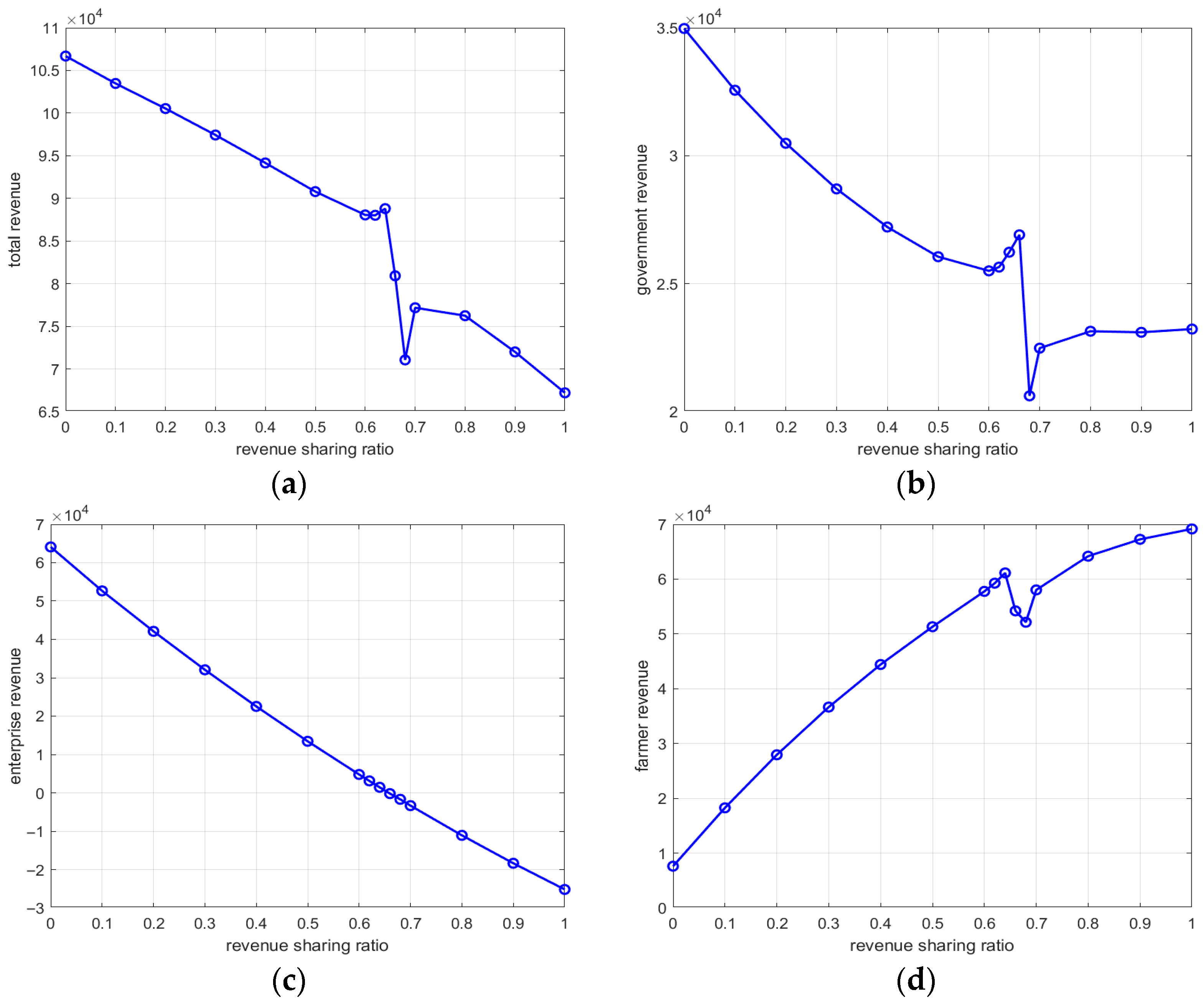
Figure 5.
Impact of some parameters ( = 0): (a) the impact of on the total benefits of the three parties; (b) the impact of on government benefits; (c) the impact of on enterprise benefits; (d) the impact of on farmers benefits.
Figure 6.
Impact of some parameters ( = 0): (a) the impact of on the total benefits of the three parties; (b) the impact of on government benefits; (c) the impact of on enterprise benefits; (d) the impact of on farmers benefits.
4.1.3. The Impact of Benefit-Sharing Ratio on the Level of Effort of Enterprises and Farmers
As shown in Figure 7a, with the gradual increase in the benefit-sharing ratio , the overall effort level of enterprises towards the two types of governance measures shows a downward trend. This change reflects the weakening effect of high benefit-sharing ratios on the marginal benefit of enterprises, thereby suppressing their willingness to invest in governance. Specifically, within the interval, the enterprises’ effort levels towards afforestation show a phase of increase, reflecting their attempt to ease the pressure of sharply reduced net benefits under a high benefit-sharing ratio by increasing investment in low-cost measures. However, immediately afterward, at point , a sharp drop occurs, marking a turning point at which the enterprises’ net benefits turns negative (see Figure 4c). Although fiscal subsidy has a “bottom-line guarantee” increase, its incentive effect has become ineffective, and the enterprise’s efforts in both governance measures have significantly decreased. In addition, within interval , effort levels show a slight rebound, which may result from the lagged feedback of increasing subsidy intensity and the short-term adaptive adjustment mechanism of enterprise. However, beyond point , as the marginal effect of subsidies continues to diminish, enterprises; incentive responses to governance weaken significantly, and the effort level for both measures exhibit a renewed downward trend.
Figure 7.
Impact of benefit-sharing ratio : (a) the impact of on the level of effort for two measures taken by enterprises; (b) the impact of on the level of effort for two measures taken by enterprises ( = 0); (c) the impact of on the level of effort for two measures taken by enterprises ( = 0); (d) the impact of on farmers effort levels; (e) the impact of on farmers effort levels ( = 0); (f) the impact of on farmers effort levels ( = 0).
Furthermore, the results under extreme scenarios provide additional insights. As shown in Figure 7b, when the carbon price is set to zero, the change trend of enterprises’ effort levels for both governance measures remains almost identical to the normal case, suggesting that carbon price has only a minor effect on enterprise decision-making. This indicates that the enterprises’ governance behavior is primarily driven by benefit-sharing and fiscal support, while the contribution of carbon revenue to its net benefit is relatively limited. In contrast, as shown in Figure 7c, when the government provides no cost subsidies to enterprises, the patterns diverge significantly from the normal case. The effort levels of enterprises toward afforestation and terracing no longer show phased fluctuations but instead collapse into nearly overlapping, linearly decreasing trajectories. This indicates that without governmental support, enterprises lack the incentive to differentiate between low-cost and high-cost measures, and their governance input declines monotonically as the benefit-sharing ratio increases. Such a result underscores the irreplaceable role of government subsidies in sustaining enterprise participation and in maintaining a balanced allocation of governance efforts between different measures.
It is worth noting that, under the baseline scenario, as well as in cases where the carbon price is set to zero (see Figure 7e) or the government’s cost subsidies to enterprise (see Figure 7f) is removed, the variation trend of farmers’ effort remains essentially consistent. As shown in Figure 4d, with the gradual increase in the benefit-sharing ratio , the effort level of farmers also exhibits a steady upward trend. This change is primarily driven by the increase in farmers incomes brought about by , which promotes the continuous improvement of their level of effort.
4.1.4. The Impact of Benefit-Sharing Ratio on the Proportion of Terracing Measure
As shown in Figure 8a, within interval , the proportion of terracing measures changes relatively slowly, indicating that enterprises maintain a stable structure of governance measure choices under low-to-medium-level benefit-sharing. Despite its higher cost, the terracing measure remains relatively attractive due to its combined advantages in economic return and carbon sequestration benefit. At interval , the proportion of terracing measures drops rapidly, while the effort level for afforestation rises significantly (see Figure 7a). This indicates that, as net benefits approach the break-even point (see Figure 4c), enterprise proactively shifts toward lower-cost governance option to reduce expenditures and mitigate pressure on returns. In the interval, the proportion of terracing measures increases significantly, accompanied by a sharp decline in the level of afforestation efforts by enterprises (see Figure 7a). At this point, the enterprises have entered a state of negative net benefits (see Figure 4c), and to slow the continued decline in benefits, enterprises tend to reallocate resources to terracing measures with higher comprehensive returns, achieving a relatively optimal marginal governance effect. At interval , the proportion of terracing measures slightly recedes, and the governance structure gradually tends towards a rebalance state. Under the dual constraint of diminishing marginal utility of subsidies and sustained loss, the enterprises reweigh governance costs and benefits, adjust resource allocation, and form a relatively stable investment structure.
Figure 8.
Impact of benefit-sharing ratio : (a) the impact of on the proportion of terracing measures; (b) the impact of on the proportion of terracing measures ( = 0); (c) the impact of on the proportion of terracing measures ( = 0).
As shown in Figure 8b, when the carbon price is set to zero, the pattern of change in the proportion of the terracing measure remains nearly identical to that in the baseline scenario. This indicates that the carbon price mainly influences the absolute magnitude of the payoffs from afforestation and terracing, rather than altering their relative attractiveness or the overall structure of governance measures. With no carbon pricing incentive, enterprises do not significantly shift their governance structure choices based solely on carbon sequestration benefits. Instead, the changes in governance structure continue to be primarily driven by the benefit-sharing ratio and the relative cost–benefit analysis between the two measures.
As shown in Figure 8c, compared with the baseline scenario, setting the government’s cost subsidies to enterprises to zero fundamentally alters the adjustment pattern of the terracing measure proportion. Instead of the multi-phased fluctuations observed under baseline conditions, the proportion follows a smooth, downward-curving trajectory, and decreases steadily as the benefit-sharing ratio increases. This pattern is consistent with the nearly overlapping effort levels of terracing and afforestation (see Figure 7c), suggesting that the absence of fiscal support eliminates the asymmetric incentives between the two measures and leads enterprise to allocate resources in a uniform, proportionate manner.
4.2. Impact Law of Synergistic Effect Parameters of Measures
4.2.1. The Impact of Measures Synergy Effect Parameter on the Level of Enterprise Effort
As shown in Figure 9a, with the increase in the synergistic effect parameter , the levels of effort of enterprises in the terracing measure and afforestation measure continue to show a rising trend, especially when , where both growth rates accelerate significantly, displaying a nonlinear upward characteristic. In comparison, the effort level for the afforestation measure rises more rapidly, exhibiting a higher marginal response intensity. This phenomenon suggests that the synergistic effect reduces the marginal governance costs when two types of measures are implemented jointly, effectively unleashing the potential of enterprise resource allocation. In scenarios where the synergistic effect is significant, enterprises tend to shift resources toward governance measures with higher response elasticity, particularly afforestation measures, which have lower governance costs and substantial synergistic benefits, leading to accelerated investment growth. This not only reduces unit governance cost but also improves enterprise profitability and optimizes input–output efficiency. Therefore, in order to achieve a higher level of ecological governance performance in policy design, this can help improve overall enterprise governance enthusiasm and guide enterprises to optimize their resource allocation structure by appropriately enhancing the synergistic incentive mechanism between governance measures.
Figure 9.
Impact of some parameters: (a) the impact of on the level of enterprise effort; (b) the impact of on the level of enterprise effort ( = 0); (c) the impact of on the level of enterprise effort ( = 0); (d) the impact of on the level of enterprise effort ( = 0).
In the extreme scenario where the carbon price is zero (see Figure 9b), the benefit-sharing ratio is zero (see Figure 9c), and the government provides no cost subsidies to enterprises (see Figure 9d), the trend in the enterprises’ effort levels is largely consistent with the baseline scenario, although the numerical values differ. When the carbon price is zero, the enterprises’ effort level is similar to that in the baseline scenario. However, with a benefit-sharing ratio of zero, enterprises are able to directly capture greater benefits from governance, leading to a slightly higher effort level compared to the baseline. This indicates that, under such circumstances, enterprises are more inclined to increase their governance efforts to maximize their own returns. On the other hand, when the government provides no cost subsidies to enterprises, their effort level is significantly lower than the baseline, reflecting the weakening of the incentive mechanism due to the lack of government subsidy. This results in reduced governance input, particularly under conditions of increased governance cost pressure.
4.2.2. The Impact of Synergistic Effect Parameters on the Proportion of Terracing Measure
As shown in Figure 10a, as the synergy effect parameter increases, the proportion of the enterprise investment in the terracing measure continues to decrease, indicating that under the condition of the enhanced cost synergy effect, enterprises are more inclined to allocate resources towards afforestation measures, which have higher responsiveness and better cost-effectiveness. This trend reflects that the synergy effect plays a guiding role in optimizing governance measures.
Figure 10.
Impact of some parameters: (a) the impact of on the proportion of terracing measures; (b) the impact of on the proportion of terracing measures ( = 0); (c) the impact of on the proportion of terracing measures ( = 0); (d) the impact of on the proportion of terracing measures ( = 0).
In the extreme scenario where the carbon price is zero (see Figure 10b), the benefit-sharing ratio is zero (see Figure 10c), and the government provides no cost subsidies to enterprises (see Figure 10d), the trend in the proportion of investment in the terracing measure as the synergy effect parameter changes is largely consistent with the baseline scenario.
4.2.3. The Impact of the Synergy Effect Parameter on the Government’s Cost Subsidy Ratio to Enterprise
As shown in Figure 11a, with the enhancement of the synergy effect parameter of measures, the government’s cost subsidy ratio to enterprises also shows an increasing trend. In this context, the government observes that the marginal governance benefits brought by unit fiscal subsidy continue to rise, reflecting better subsidy output efficiency. To further motivate enterprises to improve their governance efforts, the government tends to simultaneously increase the cost subsidy ratio to enhance incentive intensity. Thus, it can be seen that the stronger the synergistic effect of the measures, the closer the alignment of interests between the government and enterprises becomes, with subsidy policy and enterprise behavior advancing in tandem, jointly promoting an increase in the subsidy ratio and enterprise governance efforts and .
Figure 11.
Impact of some parameters: (a) the impact of on the proportion of government cost subsidies to enterprises; (b) the impact of on the proportion of government cost subsidies to enterprises ( = 0); (c) the impact of on the proportion of government cost subsidies to enterprises ( = 0).
In the extreme scenario where the carbon price is zero (see Figure 11b) and the benefit-sharing ratio is zero (see Figure 11c), the trend in the government’s cost subsidy ratio to enterprises follows a pattern similar to the baseline. However, under the condition of zero benefit-sharing ratio, despite the increase in the synergy effect parameter, the government’s cost subsidy remains negative. This is because enterprises are already incentivized by their own high returns, eliminating the need for additional financial support from the government.
4.3. Impact Law of Unit Carbon Sequestration
4.3.1. The Impact of Unit Carbon Sequestration on Enterprise Effort Level
From Figure 12a,b, it can be seen that the effort levels and of enterprises significantly increase with the corresponding unit carbon sequestration and , indicating that the enhancement of carbon sequestration capacity effectively stimulates the governance investment of enterprise. Moreover, the two types of measures also show some interactive effect: for instance, an increase in the carbon sequestration value of the terracing measure also leads to a rise in the afforestation effort , and vice versa. Specifically, the improvement in carbon sink benefits strengthens the marginal returns of a particular governance measure, prompting enterprise to increase its investment in that measure. On this basis, influenced by the synergy effect term of the measures, the investment increase in the measure can reduce overall governance costs, thereby releasing more resources for investment in another measure, achieving a coordinated improvement in the governance level of both measures and the endogenous optimization of resource allocation.
Figure 12.
Impact of unit carbon sequestration: (a) the impact of and on the effort level of enterprise terracing measures; (b) the impact of and on the effort level of enterprise afforestation.
As shown in Figure 13 and Figure 14, in the extreme scenario where the benefit-sharing ratio is zero and the government provides no cost subsidies to enterprises, the trend in the effort levels of the two measures follows a similar pattern to the baseline, with the only difference being in the numerical values. In this case, despite the consistent trend in the effort levels for both measures, the effort levels are higher than in the baseline scenario when the benefit-sharing ratio is zero. This is because, in the absence of a benefit-sharing mechanism, enterprises are able to directly capture more returns from governance, thus incentivizing them to increase their efforts. On the other hand, when the government provides no cost subsidies to enterprises, the effort levels are lower than in the baseline scenario. This suggests that, without government support, enterprises are influenced by cost pressures and reduce their investment, leading to a decrease in governance efforts.
Figure 13.
Impact of some parameters ( = 0): (a) the impact of and on the effort level of enterprise terracing measures; (b) the impact of and on the effort level of enterprise afforestation.
Figure 14.
Impact of some parameters ( = 0): (a) the impact of and on the effort level of enterprise terracing measures; (b) the impact of and on the effort level of enterprise afforestation.
4.3.2. The Impact of Unit Carbon Sequestration on the Proportion of Terracing Measure
As shown in Figure 15a, with the increase in carbon sequestration per unit of afforestation , the proportion of terracing measures exhibits a clear downward trend, with a relatively large decline, whereas when the carbon sequestration per unit of terracing measures increases, the terracing proportion shows an upward trend, but the increase is relatively small. The essence of this phenomenon lies in the difference in the cost–benefit structures between the two types of measures. Terracing measures have higher unit governance costs, so even if the carbon sequestration per unit improves, the marginal increase in governance benefits remains limited, leading enterprises to maintain a cautious investment attitude during strategic adjustment. In contrast, afforestation measures inherently have stronger carbon sequestration capacities and relatively lower governance costs; as their carbon sequestration capacities improve, their marginal returns increase more significantly, making it easier to attract a tilt in enterprise resource allocation.
Figure 15.
Impact of some parameters: (a) the impact of and on the proportion of terracing measures; (b) the impact of and on the proportion of terracing measures ( = 0); (c) the impact of and on the proportion of terracing measures ( = 0).
As shown in Figure 15b, under the condition of a zero benefit-sharing ratio, the trend is consistent with the baseline. However, under the condition of a zero benefit-sharing ratio, Figure 15c shows that the proportion of terracing remains largely unchanged as the unit carbon sequestration of terracing increases. This stability occurs because the relatively high cost of terracing constrains enterprises, leading them to adopt a steady strategy in the absence of government subsidies.
4.3.3. The Impact of Unit Carbon Sequestration on Government Subsidy Ratio
Figure 16a and Figure 17a illustrate the impact trend of the carbon sequestration per unit of different governance measures on the proportion of government cost subsidies. As shown in Figure 16a, with the increase in the carbon sequestration per unit of afforestation , the government’s cost subsidy proportion to enterprises exhibits a more pronounced upward trend. In contrast, the improvement in the carbon sequestration per unit of terracing also drives an increase in , but the magnitude was relatively small. This indicates that the government prefers to provide subsidy support for governance measures with higher carbon sequestration efficiency and more significant marginal governance benefits. Especially when the carbon sequestration capacity per unit of afforestation measures strengthens, enterprises are more willing to increase resource investment in them, and the government has a stronger incentive to simultaneously raise the subsidy proportion to enterprises, thereby leveraging more governance resources toward measure with better carbon sequestration benefits.
Figure 16.
Impact of some parameters: (a) the impact of and on the proportion of government subsidies to enterprises; (b) the impact of and on the proportion of government subsidies to enterprises ( = 0).
Figure 17.
Impact of unit carbon sequestration: (a) the impact of and on the proportion of government subsidies to farmers; (b) the impact of and on the proportion of government subsidies to farmers ( = 0); (c) the impact of and on the proportion of government subsidies to farmers ( = 0).
As shown in Figure 16b, under the condition of a zero benefit-sharing ratio, the trend follows that of the baseline, but the government’s cost subsidies to enterprises are lower than in the baseline scenario and may even be nonexistent. This is because, with a zero benefit-sharing ratio, enterprises recei higher returns from their governance efforts, eliminating the need for additional financial support from the government.
Figure 17a shows that the unit carbon sequestration capacity of both the terracing measure and afforestation measure has a positive impact on the government’s cost subsidy ratio to farmers, with relatively small differences in the degree of influence. On one hand, this stems from the fact that farmers tend to take on a more passive role in governance investment, and the government needs to provide universal subsidies to ensure their willingness to participate. On the other hand, it also reflects that under the policy orientation to improve overall carbon sequestration performance, the government’s support strategy for farmers implementing different governance measures shows a relatively balanced adjustment trend.
As shown in Figure 17b, in the extreme scenario where the carbon price is zero, the trend follows that of the baseline, but with values higher than the baseline. This is because, with limited income sources for farmers, the government needs to increase subsidies to enhance farmers’ incentives to provide land for governance. In the scenario where the government provides no cost subsidies to enterprises (see Figure 17c), the trend remains consistent with the baseline, as government subsidies to enterprises do not influence the subsidies provided to farmers.
4.4. The Impact of Some Parameters on the Proportion of Government Cost Subsidies to Enterprise
As shown in Figure 18a, with the increase in carbon price, the proportion of government subsidies to enterprises costs shows a linear downward trend. The reason is that the rise in carbon price enhances the marginal returns for enterprises from carbon sink benefits, thereby boosting their willingness for spontaneous governance. Consequently, the government does not need to provide high subsidies to maintain its effort levels.
Figure 18.
Impact of some parameters: (a) the impact of on the proportion of government subsidies to enterprises; (b) the impact of on the government’s subsidy ratio to enterprises; (c) the impact of on the proportion of government subsidies to enterprises; (d) the impact of on the proportion of government subsidies to enterprises.
As shown in Figure 18b, with the increase in land rent for transfer, the proportion of government cost subsidies to enterprises increases. Because higher land use costs have raised the marginal governance costs of enterprises, the government needs to increase subsidy intensity to maintain its governance participation and ensure that the governance scale is not compressed due to the increase in land rent.
As shown in Figure 18c, with the increase in crop yield per hectare of land, the proportion of government cost subsidies to enterprises continue to decrease. The reason is that higher output level improves the governance returns for enterprises, strengthening their intrinsic incentive mechanism and thus reducing the fiscal burden on the government in promoting governance.
Figure 18d reflects the inhibitory effect of rising crop prices on the proportion of government cost subsidies to enterprises and exhibits a certain marginal diminishing effect. The price increase expands agricultural economic benefits, strengthening the expected benefits from enterprise governance participation and allowing the government to correspondingly lower the subsidy ratio.
5. Conclusions and Management Implications
In response to the current challenges of a single governance model, insufficient investment, imperfect incentive mechanisms, and insufficient collaboration among multiple stakeholders in soil erosion control, developing a collaborative mechanism of soil and water ecological governance is an urgent problem to be solved. Based on carbon trading and the PPP model, considering the government’s cost subsidy mechanism for enterprises and farmers, and the benefit-sharing mechanism between enterprises and farmers, a differential-game model for soil and water ecological governance is constructed, involving the interactions of the government, enterprises, and farmers. An equilibrium solution is derived, and numerical simulation is carried to explore the effects of parameters such as the benefit-sharing ratio, collaborative measures’ synergy effect, and unit carbon sequestration capacity on effort levels, the proportion of terracing measures, the cost subsidy ratio, and the benefits for all parties. The conclusion is as follows:
- (1)
- The benefit-sharing ratio between enterprises and farmers has a significant bidirectional regulatory effect in the governance system. When the benefit-sharing ratio is too high, enterprise benefits quickly turn negative, and the governance incentive mechanism tends to fail, leading to a significant decline in effort levels, which in turn causes the government’s cost subsidy burden for enterprises to surge. When the benefit-sharing ratio is too low, the income space of farmers is limited, and its participation enthusiasm is suppressed, which is not conducive to forming a stable collaborative governance pattern. When the government provides cost subsidies to enterprises within the range of [0.37, 0.8], it can effectively guide enterprises to set the sharing ratio within a reasonable range of [0.4, 0.6], thereby achieving coordinated optimization of benefits for enterprises, farmers, and the government. To enhance the overall efficiency of the governance system, the government can reasonably set subsidy levels in policy design and promote enterprises to set moderate benefit-sharing ratios.
- (2)
- The enhancement of the synergy coefficient of measures has significantly improved the level of effort for two types of governance measures in enterprises, with an especially significant incentive effect on afforestation measures. The governance structure is gradually shifting from terracing to afforestation with higher carbon sequestration efficiency, thereby promoting the synergistic improvement of overall governance cost reduction and carbon sink benefits. Under these circumstances, the government can strengthen the synergy between governance measures in policy design, guiding enterprise resource allocation toward options with better carbon efficiency, thereby ensuring that ecological benefits improve while increasing the marginal efficiency of fiscal expenditure.
- (3)
- The higher the unit carbon sequestration of a governance measure, the more significantly enterprises’ willingness to invest in that measure increases. Moreover, under the synergistic effect of these measures, this also slightly drives up the effort level of another governance measure. Although the increase in the unit carbon sequestration of both terracing and afforestation measures can enhance the government’s incentive willingness, the government is more sensitive to increases in the unit carbon sequestration of afforestation, showing a tendency toward subsidy adjustment and policy preference guidance.
This study provides a theoretical basis for optimizing soil erosion control measures under the background of a ‘dual carbon’ strategy, also offering policy insights for transitioning the governance model from ‘government-led’ to ‘multi-party co-governance’. However, the model in this paper abstracts the farming population as a single rational farmer, failing to fully reflect the heterogeneity and risk preference differences among farmers in real-world governance. Additionally, actual soil erosion control measures are diverse, encompassing various engineering and ecological measures. This paper only selects two typical measures, terracing and afforestation, for analysis. Although they have certain representativeness, they simplify the complexity of the governance strategy structure to a certain extent. Subsequent research can further expand the dimensions of behavioral characteristics and types of governance paths to enhance the explanatory power and adaptability of the model to reality.
Author Contributions
Conceptualization, Y.Y. and X.Y.; methodology, Y.Y.; software, X.Y.; validation, X.Y., J.Z., and R.J.; formal analysis, Y.Y.; investigation, X.Y.; resources, Y.Y.; data curation, X.Y.; writing—original draft preparation, Y.Y. and X.Y.; writing—review and editing, J.Z., R.J., and W.J.; visualization, X.Y.; supervision, Y.Y.; project administration, W.J. All authors have read and agreed to the published version of the manuscript.
Funding
This research received no external funding.
Institutional Review Board Statement
Not applicable.
Informed Consent Statement
Not applicable.
Data Availability Statement
Data are contained within this article.
Conflicts of Interest
The authors declare no conflicts of interest.
References
- Jing, X.D.; Tian, G.L.; Zhang, Y.N. Exploration of water ecological compensation practice and policy suggestions in China under new thinking of water governance. J. Econ. Water Resour. 2024, 42, 50–57. [Google Scholar] [CrossRef]
- Ministry of Water Resources of the People’s Republic of China. China Soil and Water Conservation Bulletin. 2024. Available online: http://swcc.mwr.gov.cn/gonggao/202503/t20250321_1878440.htm (accessed on 10 June 2025).
- Cheng, D.B.; Zhao, Y.L.; Sun, B.Y.; Liu, J.G.; Chen, D.; Zheng, R.W.; Ding, W.F. Evaluation and application of the management priority of soil erosion in small watersheds. Trans. Chin. Soc. Agric. Eng. 2023, 39, 104–111. [Google Scholar] [CrossRef]
- Wang, S.Y. The dilemma and solution of ecological governance under government leadership. North. Econ. Trade 2021, 07, 8–11. [Google Scholar]
- Li, X.Y.; Li, Z.G.; Cheng, H.; Lu, S.F.; Wu, J.; Zhong, X.J. Ecological mechanisms of carbon sinks in soil and water conservation. J. Fujian Norm. Univ. Nat. Sci. Ed. 2025, 41, 53–58. [Google Scholar] [CrossRef]
- Wu, N.D. Reflections and recommendations on encouragement and support for social capital’s participation in soil erosion and water loss control. China Water Resour. 2023, 10, 20–23. [Google Scholar] [CrossRef]
- General Office of the National Development and Reform Commission. Guidelines for Concession Scheme Preparation of Government–Social Capital Cooperation Projects (Trial Version, 2024). Available online: https://www.gov.cn/zhengce/zhengceku/202404/content_6943053.htm (accessed on 14 August 2025).
- General Office of the Ministry of Transport and General Office of the National Development and Reform Commission. Guidelines on New Mechanisms for Government–Social Capital Cooperation in Toll Roads. Available online: https://xxgk.mot.gov.cn/2020/jigou/cwsjs/202504/t20250410_4166702.html (accessed on 14 August 2025).
- Water Resources Department of Yunnan Province. 2024 Soil and Water Conservation Bulletin of Yunnan Province. Available online: https://wcb.yn.gov.cn/html/2025/shuitubaochigongbao_0714/3061457.html (accessed on 16 August 2025).
- Ministry of Water Resources of the People’s Republic of China. The First Judicially Recognized Soil and Water Conservation Carbon Trading Project in the Yellow River Basin Was Successfully Concluded. Available online: http://swcc.mwr.gov.cn/sbnews/202504/t20250414_1882901.htm (accessed on 16 August 2025).
- Ministry of Water Resources of the People’s Republic of China. Heilongjiang Province Realizes the First National Transaction of Soil Conservation Ecological Products (Carbon Sink) in Black Soil Areas. Available online: http://swcc.mwr.gov.cn/sbnews/202503/t20250328_1879615.htm (accessed on 16 August 2025).
- Li, Z.G.; Wang, H.Y.; Wang, J.X. Mechanisms, pathways and characteristics of carbon sinks related to soil and water conservation from perspective of carbon peak and carbon neutralization. Bull. Soil Water Conserv. 2022, 42, 312–317,380. [Google Scholar] [CrossRef]
- Wang, W.; Yao, W.Y.; Zhang, P.; Xu, J.Z. Research progress and review of ecological management and ecological economy coordinated development model in the Yellow River Basin. Yellow River 2024, 46, 129–134,141. [Google Scholar] [CrossRef]
- Chongqing Planning and Natural Resources Bureau. Chongqing: Typical Experience of Comprehensive Land Consolidation Across the Country for National Exchange. Available online: https://www.cq.gov.cn/zjzq/lszq/ltbsjtbwz/202412/t20241227_14028521.html (accessed on 17 June 2025).
- Mao, H.; Chen, S.J.; Fu, Y. Policy incentives and farmers’ adoption of water and soil conservation technology: An empirical analysis of the farmer households in Shaanxi Province in the Yellow River Basin. J. Jiangxi Univ. Financ. Econ. 2024, 03, 91–101. [Google Scholar] [CrossRef]
- Bandara, J.S.; Chisholm, A.; Ekanayake, A.; Jayasuriya, S. Environmental cost of soil erosion in Sri Lanka: Tax/subsidy policy options. Environ. Model. Softw. 2001, 16, 497–508. [Google Scholar] [CrossRef] [Scilit]
- Sun, J.; Li, F.P.; Cao, L.Y. Experience and enlightenment of equity reform in slope farmland management in Tongnan District, Chongqing. Yellow River 2021, 43, 109–111. [Google Scholar]
- Prager, K.; Schuler, J.; Helming, K.; Zander, P.; Ratinger, T.; Hagedorn, K. Soil degradation, farming practices, institutions and policy responses: An analytical framework. Land Degrad. Dev. 2011, 22, 32–46. [Google Scholar] [CrossRef] [Scilit]
- Jia, R.; Lu, Q. Can land transfer promotes the implementation of soil and water conservation measures in the loess plateau?An analysis based on mediation effect of collective action and moderation effect of government compensation. Chin. Rural Econ. 2018, 06, 38–54. [Google Scholar] [CrossRef]
- Abadi, B.; Yadollahi, A.; Bybordi, A.; Rahmati, M. The contribution of diverse motivations for adhering to soil conservation initiatives and the role of conservation agriculture features in decision-making. Agric. Syst. 2020, 182, 102849. [Google Scholar] [CrossRef] [Scilit]
- Liu, L.; Shangguan, D.Y.; Wu, L. Effects of operation scale and risk perception on farmers’willingness to adopt conservation tillage technology. J. Arid Land Resour. Environ. 2021, 35, 77–83. [Google Scholar] [CrossRef]
- Huang, X.H.; Wang, L.L.; Lu, Q. Farmers’ cognition, government support and farmers’ soil and water conservation technology adoption in Loess Plateau. J. Arid Land Resour. Environ. 2019, 19, 133–141. [Google Scholar] [CrossRef]
- Biratu, A.A.; Asmamaw, D.K. Farmers’ perception of soil erosion and participation in soil and water conservation activities in the Gusha Temela watershed, Arsi, Ethiopia. Int. J. River Basin Manag. 2016, 14, 329–336. [Google Scholar] [CrossRef] [Scilit]
- Fulazzaky, M.A.; Gany, A.H.A. Challenges of soil erosion and sludge management for sustainable development in Indonesia. J. Environ. Manag. 2009, 90, 2387–2392. [Google Scholar] [CrossRef] [Scilit]
- Pretty, J.N.; Shan, P. Making soil and water conservation sustainable: From coercion and control to partnerships and participation. Land Degrad. Dev. 1997, 8, 39–58. [Google Scholar] [CrossRef] [Scilit]
- Amiraslani, F.; Caiserman, A. Multi-stakeholder and multi-level interventions to tackle climate change and land degradation: The case of Iran. Sustainability 2018, 10, 2000. [Google Scholar] [CrossRef] [Scilit]
- Qi, X.H.; Ye, S.L. Function mechanism of stakeholders in the process of soil and water conservation: A case study of Changting County, Fujian Province. Sci. Soil Water Conserv. 2012, 10, 55–59. [Google Scholar] [CrossRef]
- Peterson, R.B.; Kapiyo, R.A.; Campbell, E.M.; Nyabua, P.O. Gully rehabilitation trusts: Fighting soil erosion through community participation in western Kenya. J. Rural Stud. 2018, 58, 67–81. [Google Scholar] [CrossRef] [Scilit]
- Feng, W. Patterns and experiences of current private capital participating in comprehensive control of soil and water loss at small watershed. Bull. Soil Water Conserv. 2016, 36, 231–234. [Google Scholar] [CrossRef]
- Yang, T.; Long, R.Y.; Cui, X.T.; Zhu, D.D.; Chen, H. Application of the public–private partnership model to urban sewage treatment. J. Clean. Prod. 2016, 142, 1065–1074. [Google Scholar] [CrossRef] [Scilit]
- An, X.W.; Li, H.M.; Wang, L.Y.; Wang, Z.F.; Ding, J.Y.; Cao, Y.C. Compensation mechanism for urban water environment treatment PPP project in China. J. Clean. Prod. 2018, 201, 246–253. [Google Scholar] [CrossRef] [Scilit]
- Zheng, S.; Tiong, R.L.K. First public-private-partnership application in Taiwan’s wastewater treatment sector: Case study of the Nanzih BOT wastewater treatment project. J. Constr. Eng. Manag. 2010, 136, 913–922. [Google Scholar] [CrossRef] [Scilit]
- Yang, T.; Long, R.Y.; Li, W.B.; Rehman, S. Innovative application of the public–private partnership model to the electric vehicle charging infrastructure in China. Sustainability 2016, 8, 738. [Google Scholar] [CrossRef] [Scilit]
- Liu, T.T.; Wilkinson, S. Large-scale public venue development and the application of Public–Private Partnerships (PPPs). Int. J. Proj. Manag. 2014, 32, 88–100. [Google Scholar] [CrossRef] [Scilit]
- Wang, X.F.; Cui, X.Y. PPP financing model in the infrastructure construction of the park integrating artificial intelligence technology. Comput. Intell. Neurosci. 2022, 2022, 6154885. [Google Scholar] [CrossRef] [Scilit]
- Wang, Y.F.; Cao, J.J.; Jiang, Y. The application of PPP in urban landscaping waste recycling projects. Iss. For. Econ. 2023, 43, 521–529. [Google Scholar] [CrossRef]
- Yang, Y.H.; Sun, R.C.; Wang, Y.H.; Zhu, M.J.; Yang, P.S. Evolutionary analysis of resident groups’ intention to participate in green retrofit PPP projects of traditional apartment complexes. Sci. Rep. 2023, 13, 1039. [Google Scholar] [CrossRef] [Scilit] [PubMed]
- Wang, S.X.; Liu, C.; Zhou, Z. Government-enterprise green collaborative governance and urban carbon emission reduction: Empirical evidence from green PPP programs. Environ. Res. 2024, 257, 119335. [Google Scholar] [CrossRef] [Scilit]
- Martins, A.C.; Marques, R.C.; Cruz, C.O. Public–private partnerships for wind power generation: The Portuguese case. Energy Policy 2010, 39, 94–104. [Google Scholar] [CrossRef] [Scilit]
- Luo, Z.H.; Yang, K.; Cen, K.; Pan, H.Z.; He, J.; Han, T. A study on the application of public–private partnership mode in shale gas development industry in China. J. Renew. Sustain. Energy 2018, 10, 045902. [Google Scholar] [CrossRef] [Scilit]
- Bagchi, P.K.; Paik, S.K. The role of public-private partnership in port information systems development. Int. J. Public Sect. Manag. 2001, 14, 482–499. [Google Scholar] [CrossRef] [Scilit]
- Yang, Y.H.; Liu, Y.; Yuan, Z.; Dai, J.; Zeng, Y. Analyzing the water pollution control cost-sharing mechanism in the Yellow River and its two tributaries in the context of regional differences. Water 2022, 14, 1678. [Google Scholar] [CrossRef] [Scilit]
- Yi, Y.X.; Wei, Z.J.; Fu, C.Y. A differential game of transboundary pollution control and ecological compensation in a river basin. Complexity 2020, 2020, 1–13. [Google Scholar] [CrossRef] [Scilit]
- Di, D.Y.; Shi, Q.; Wu, Z.N.; Wang, H.L. Sustainable management and environmental protection for basin water allocation: Differential game-based multiobjective programming. Water Resour. Manag. 2022, 37, 1–20. [Google Scholar] [CrossRef] [Scilit]
- Yu, C.Y.; Tu, G.P.; Yu, F.L. Research on transboundary air pollution control and cooperative strategies based on differential game. Atmosphere 2024, 15, 1528. [Google Scholar] [CrossRef] [Scilit]
- Huang, X.; He, P.; Zhang, W. A cooperative differential game of transboundary industrial pollution between two regions. J. Clean. Prod. 2016, 120, 43–52. [Google Scholar] [CrossRef] [Scilit]
- Li, M.D.; Han, C.F.; Meng, L.P.; Shao, Z.G.; Liu, P.H. Ecological compensation for cross-regional domestic waste treatment: A stochastic differential game perspective. Waste Manag. Res. 2025, 43, 1301–1320. [Google Scholar] [CrossRef] [Scilit]
- Sun, R.; He, D.Y.; Yan, J.J.; Tao, L. Mechanism analysis of applying blockchain technology to forestry carbon sink projects based on the differential game model. Sustainability 2021, 13, 11697. [Google Scholar] [CrossRef] [Scilit]
- Sun, J.Y.; Tan, D.Q. Desertification control mode based on differential game theory. J. Syst. Eng. 2023, 38, 630–642. [Google Scholar] [CrossRef]
- Zhang, R.-J.; Tai, H.-W.; Cao, Z.-X.; Cheng, K.-T.; Wei, C.-C. Innovation ecosystem based on low-carbon technology: Value co-creation mechanism and differential game analysis. Soc. Change 2025, 210, 123852. [Google Scholar] [CrossRef] [Scilit]
- Zheng, J.L.; Zhou, Y.; Li, K.Q.; Zeng, Y.; Wang, R.N.; Zhang, C.M. The study of differential game on government carbon trading policy and firms’ production strategies under different market competition levels. Sustainability 2024, 16, 11036. [Google Scholar] [CrossRef] [Scilit]
- Shenzhen Bao’an District Development and Reform Bureau. Regulations on Encouraging Social Capital to Participate in the Construction and Management of Public Infrastructure within the Scope of Urban Renewal in Bao’an District. Available online: https://www.baoan.gov.cn/gkmlpt/content/10/10036/post_10036036.html#1294 (accessed on 14 August 2025).
- Yang, Y.H.; Yang, Y.; Yang, S.W.; Zhang, J.H. Pollution control mechanism of national water network with water quality differences based on differential game and case study. Sci. Rep. 2025, 15, 5588. [Google Scholar] [CrossRef] [Scilit] [PubMed]
- Dockner, E.J.; Jorgensen, S.; Long, N.V.; Sorger, G. Differential Games in Economics and Management Science; Cambridge University Press: Cambridge, UK, 2000. [Google Scholar]
- Yu, K.Y.; Cheng, H.; Li, Z.G.; Zhang, X.P.; Feng, H.; Ma, H.B.; Bai, Y.B. Functions and characteristics of terrace carbon sinks in loess hilly and gully regions. Bull. Soil Water Conserv. 2024, 44, 287–293. [Google Scholar] [CrossRef]
- IPCC. 2019 Refinement to the 2006 IPCC Guidelines for National Greenhouse Gas Inventories. Available online: https://www.ipcc-nggip.iges.or.jp/public/2019rf/index.html (accessed on 17 June 2025).
- Ministry of Ecology and Environment. Technical Guidelines for Accounting Gross Domestic Product (GEP) of Terrestrial Ecosystems. Available online: http://www.caep.org.cn/zclm/sthjyjjhszx/zxdt_21932/202101/W020210122402035975103.pdf (accessed on 17 June 2025).
- Sun, R.; He, D.Y.; Yan, J.J. Risk resolution mechanism for the development of forestry carbon sink projects based on stochastic differential game. Syst. Eng. Theory Pract. 2024, 44, 2273–2292. [Google Scholar] [CrossRef]
- Yang, Y.H.; Liu, Y.; Dai, J.; Zeng, Y. Cost-sharing mechanism of water pollution control in main and subbasins based on stackelberg game model. Math. Probl. Eng. 2022, 2022, 1–14. [Google Scholar] [CrossRef] [Scilit]
- Ding, J.P.; Chen, L.X.; Deng, M.H.; Chen, J.F. A differential game for basin ecological compensation mechanism based on cross-regional government-enterprise cooperation. J. Clean. Prod. 2022, 362, 132335. [Google Scholar] [CrossRef] [Scilit]
- Wei, J.Y.; Wang, C.X. Improving interaction mechanism of carbon reduction technology innovation between supply chain enterprises and government by means of differential game. J. Clean. Prod. 2021, 296, 126578. [Google Scholar] [CrossRef] [Scilit]
- Song, H.; Wang, R.M. Study on the game of rural domestic waste treatment under the background of rural revitalization. Ecol. Econ. 2021, 37, 193–198,229. [Google Scholar]
- Wang, L.; Wang, D.; Wang, X.Q. Subsidizing and pricing PPP transportation projects based on two-period quality. J. Ind. Eng. Eng. Manag. 2021, 35, 173–183. [Google Scholar] [CrossRef]
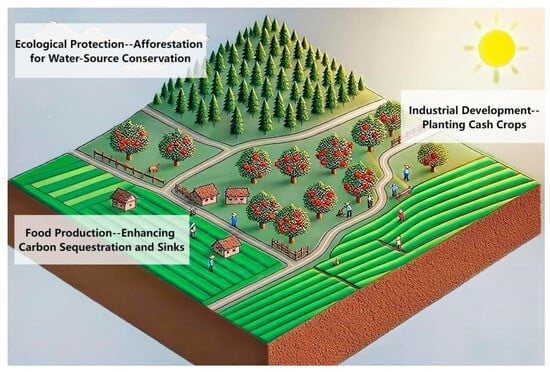
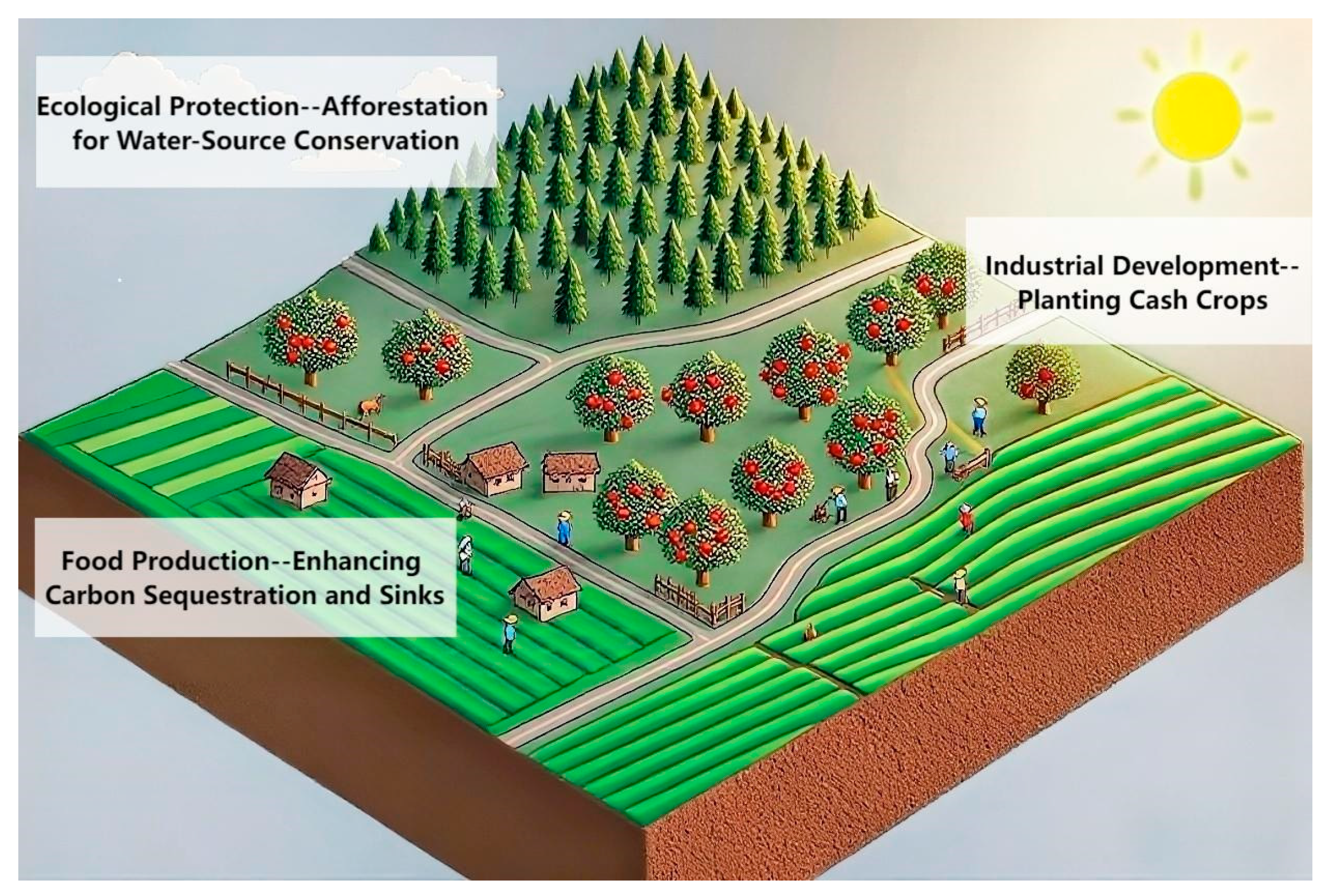
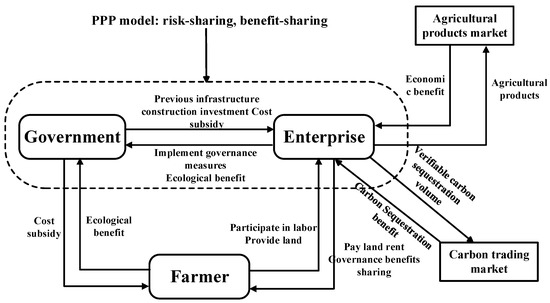
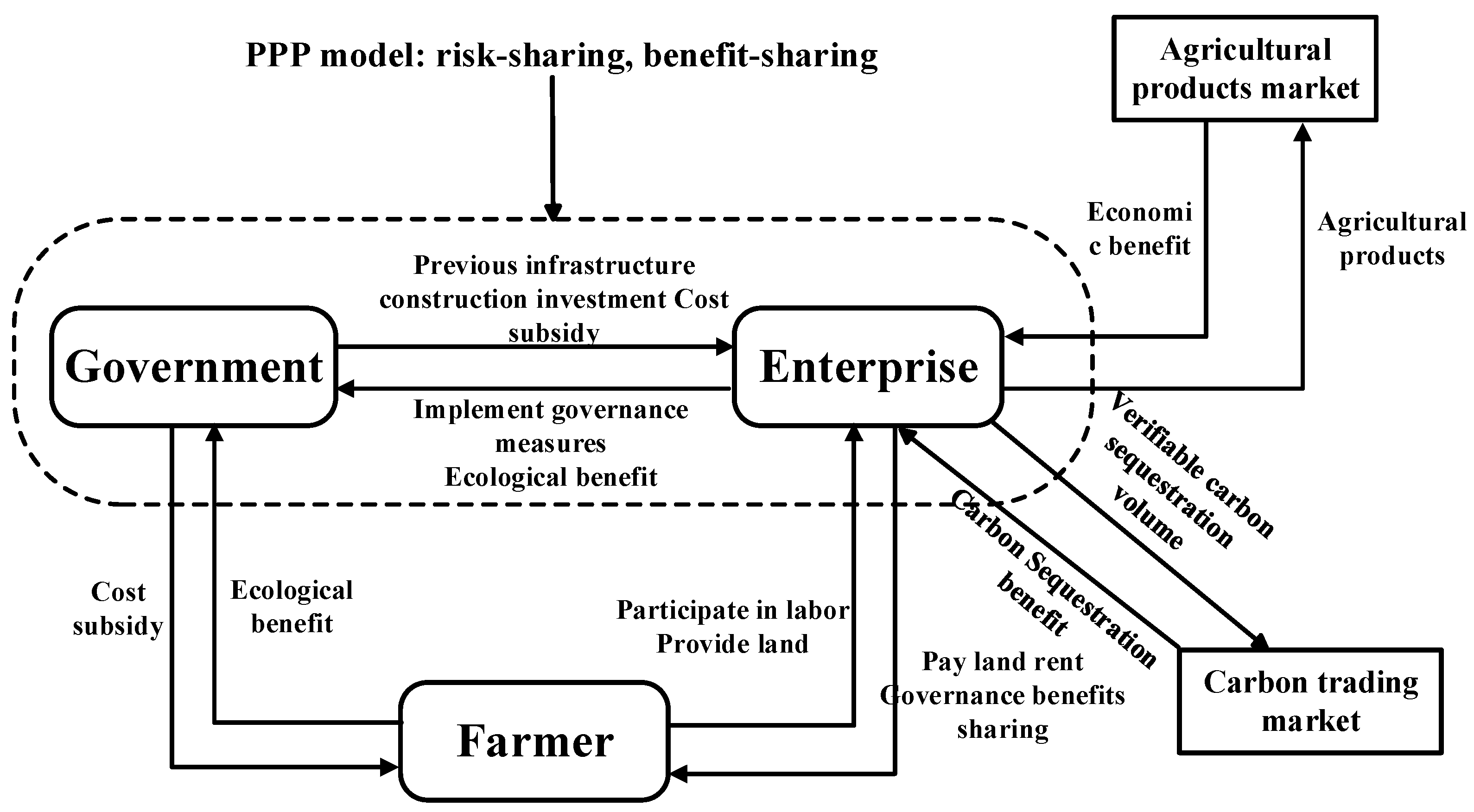
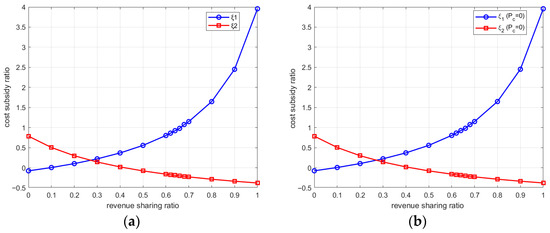
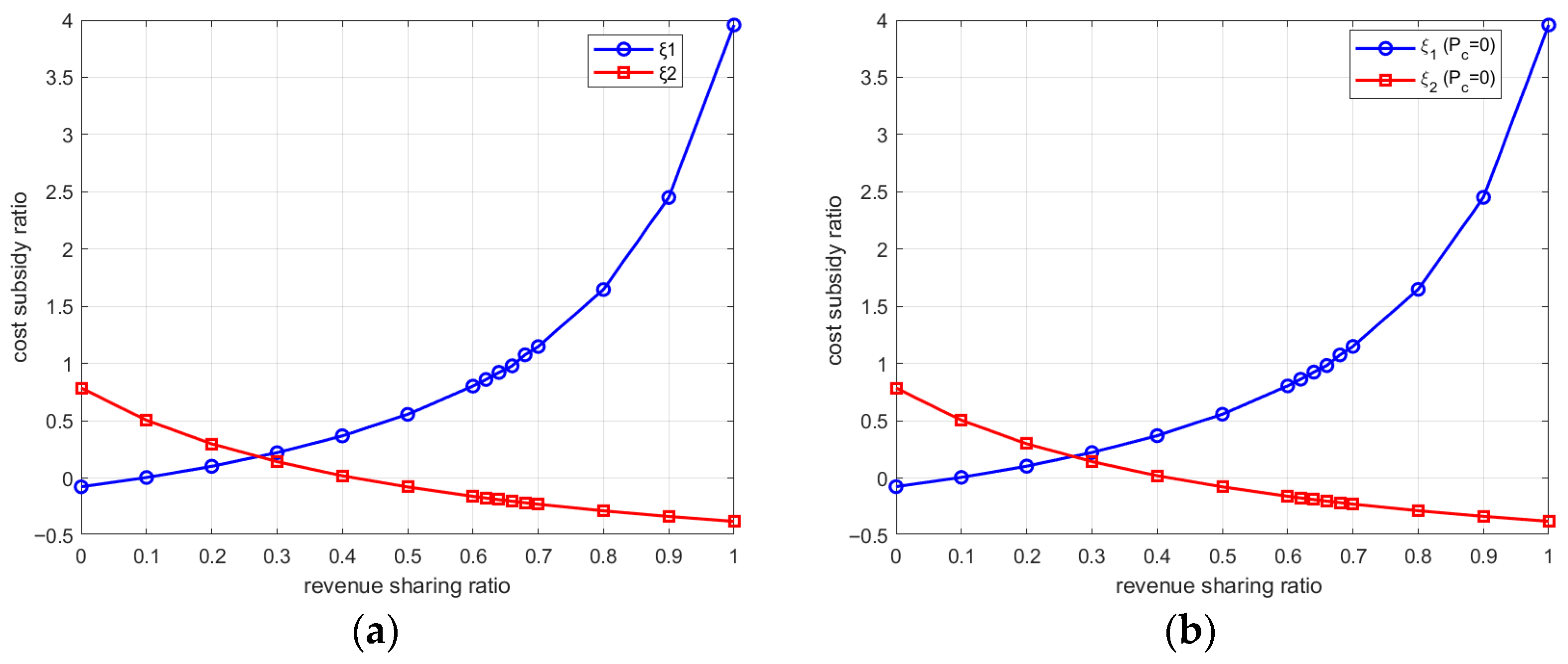
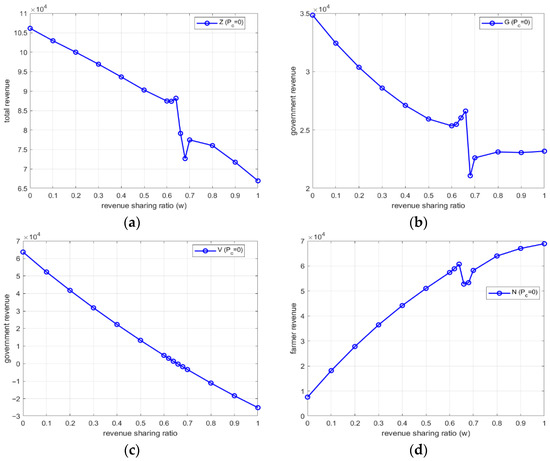
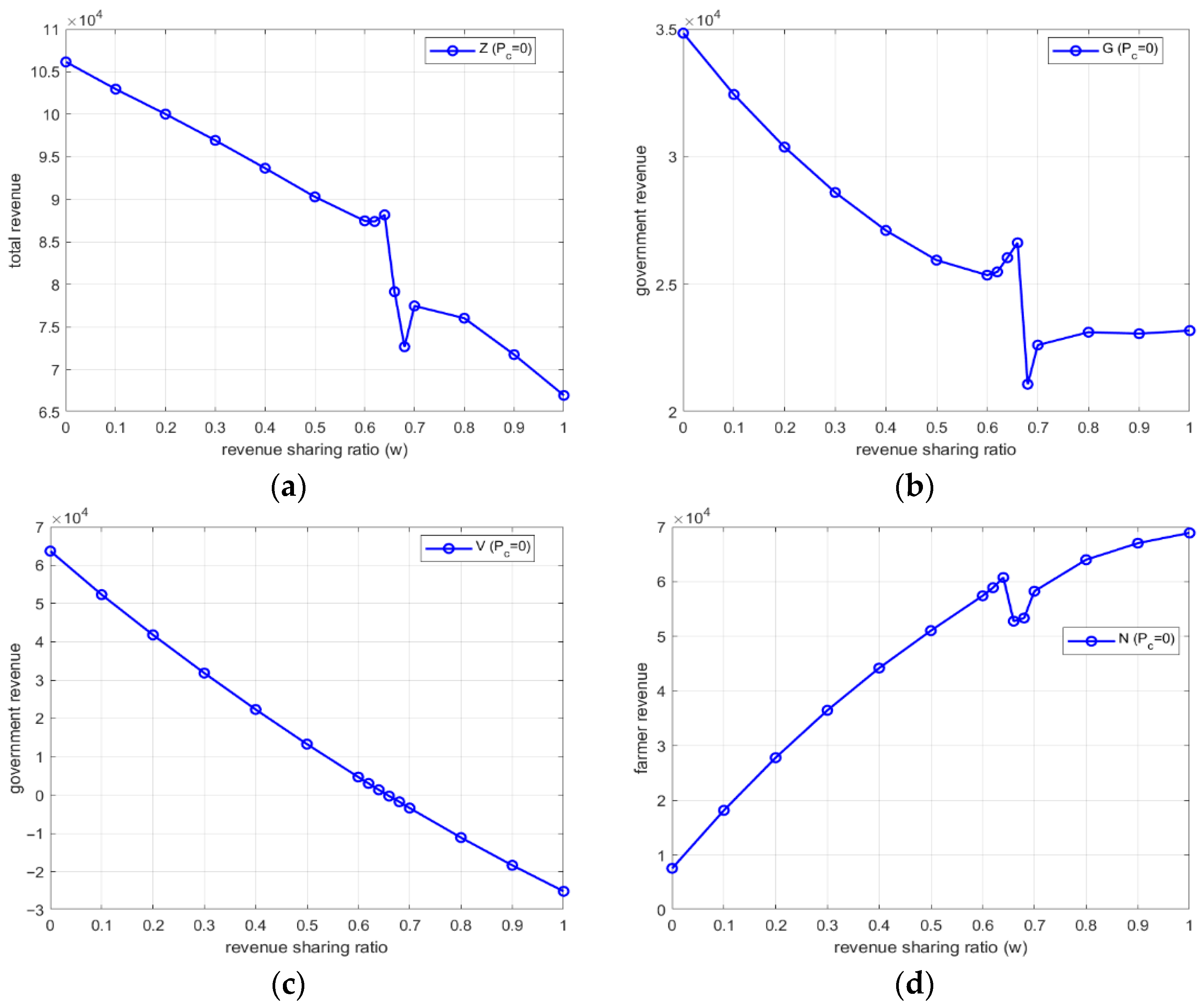
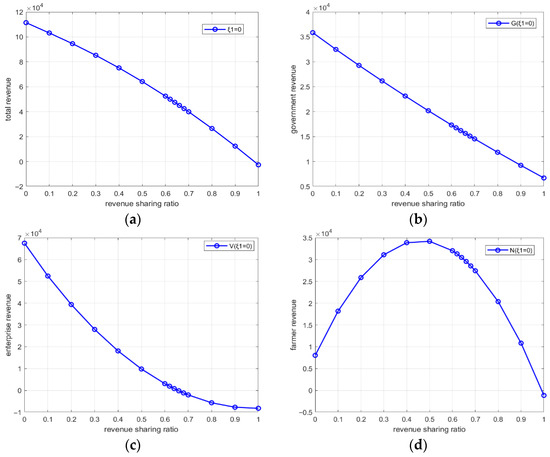
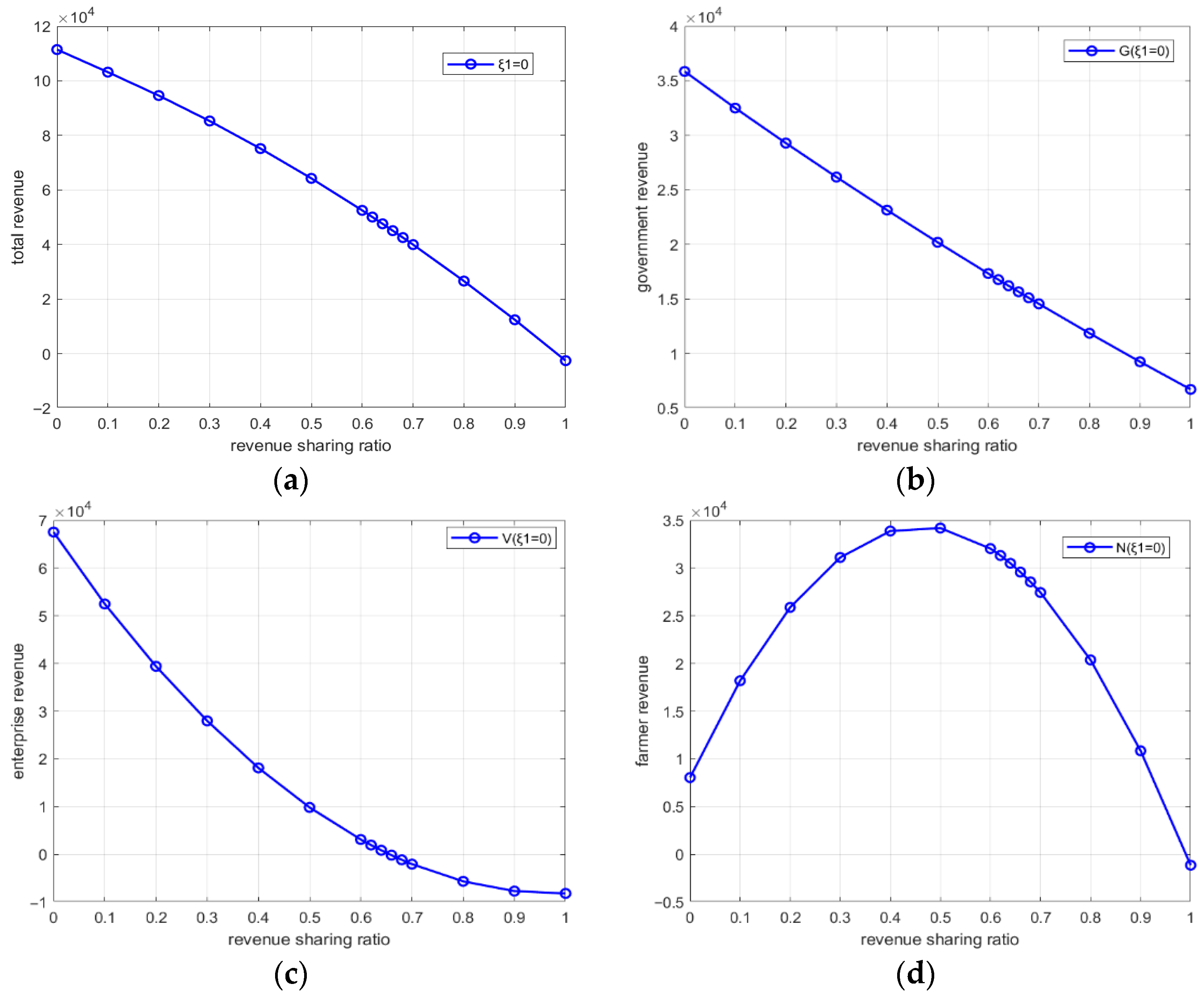
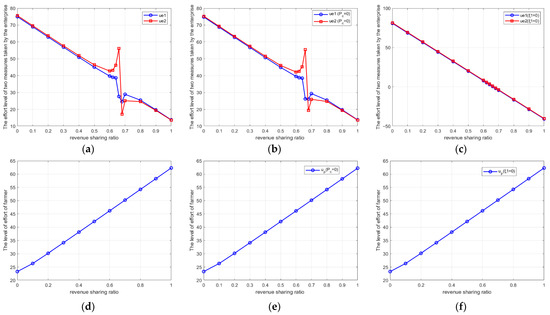
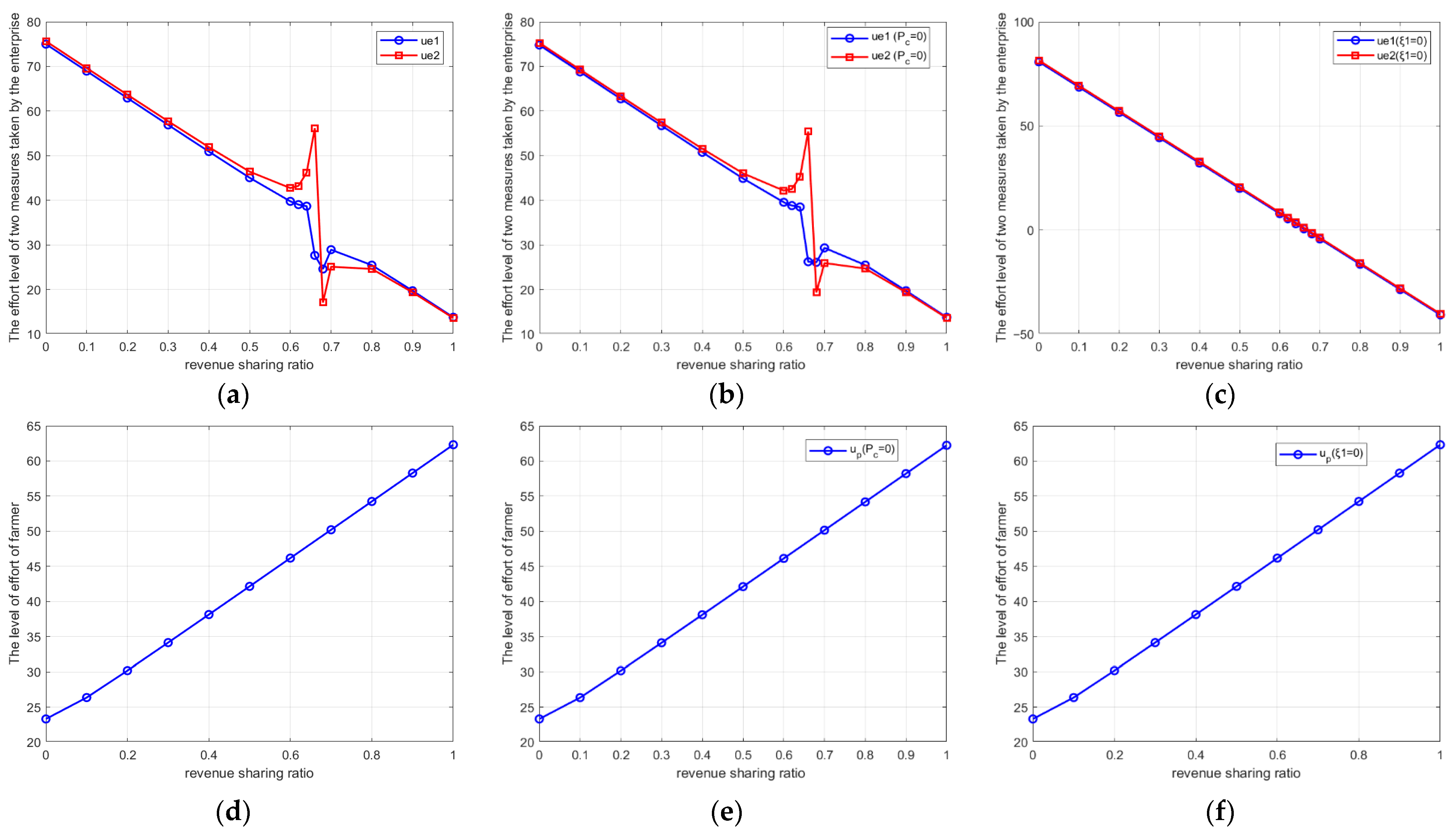
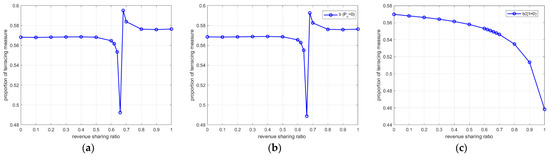
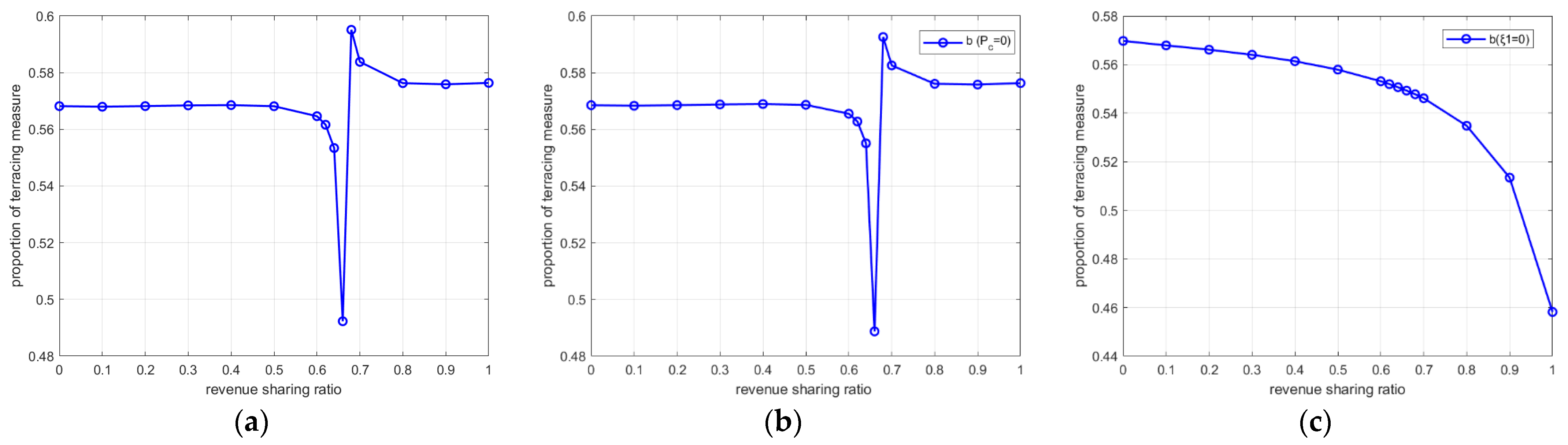
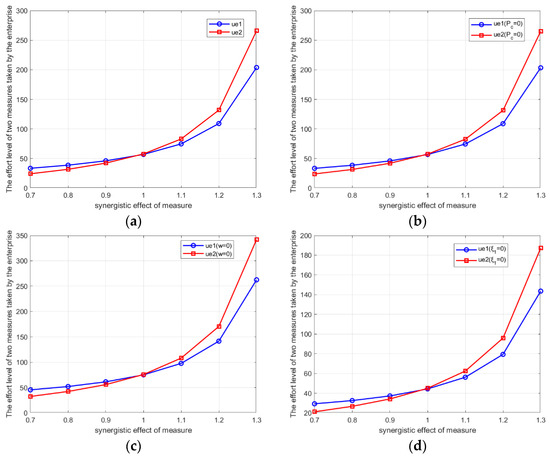
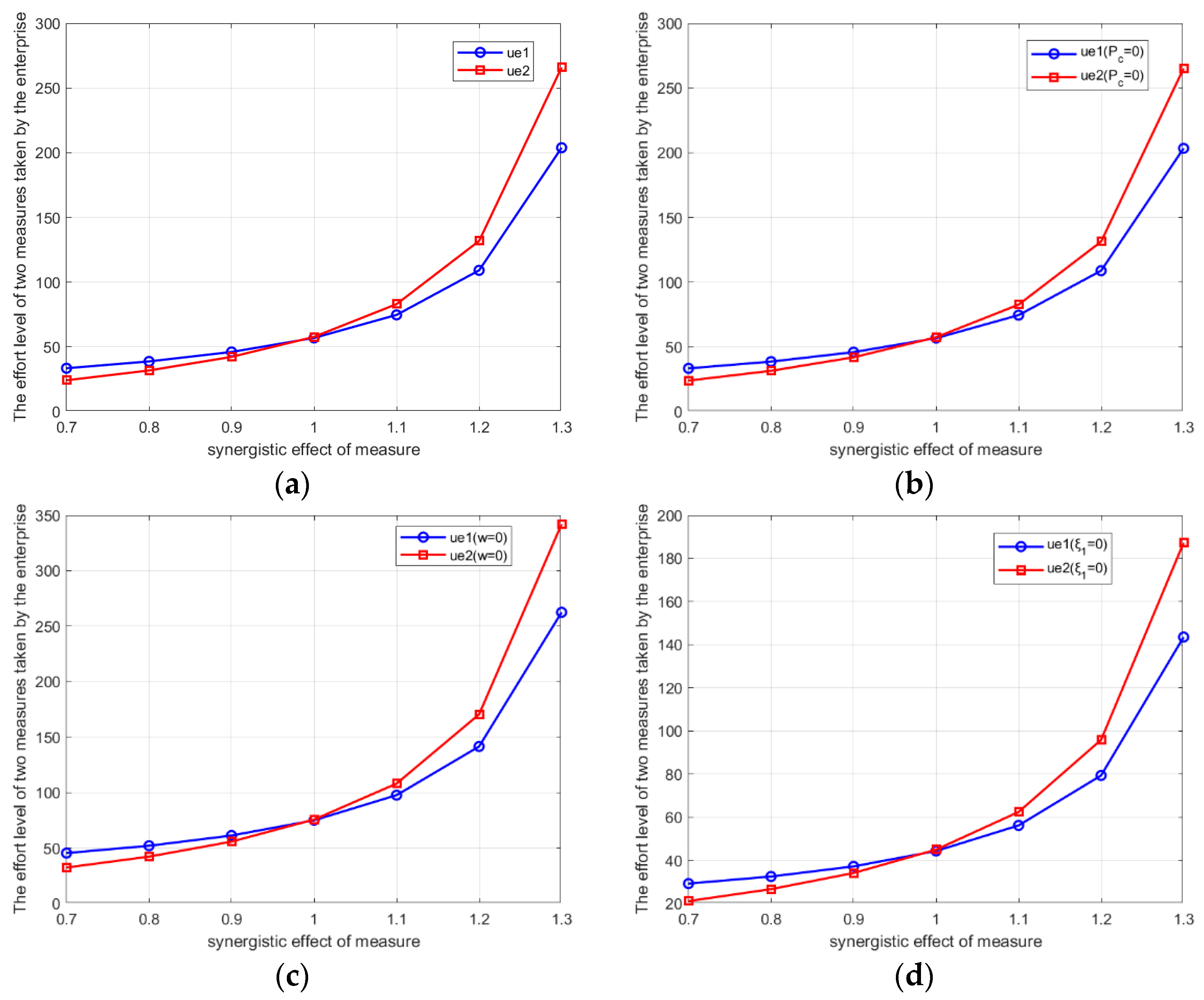
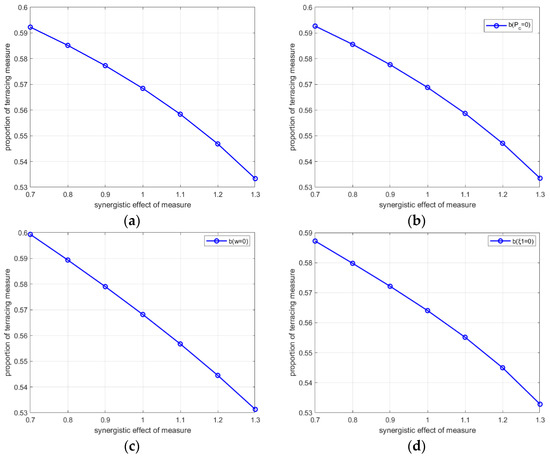
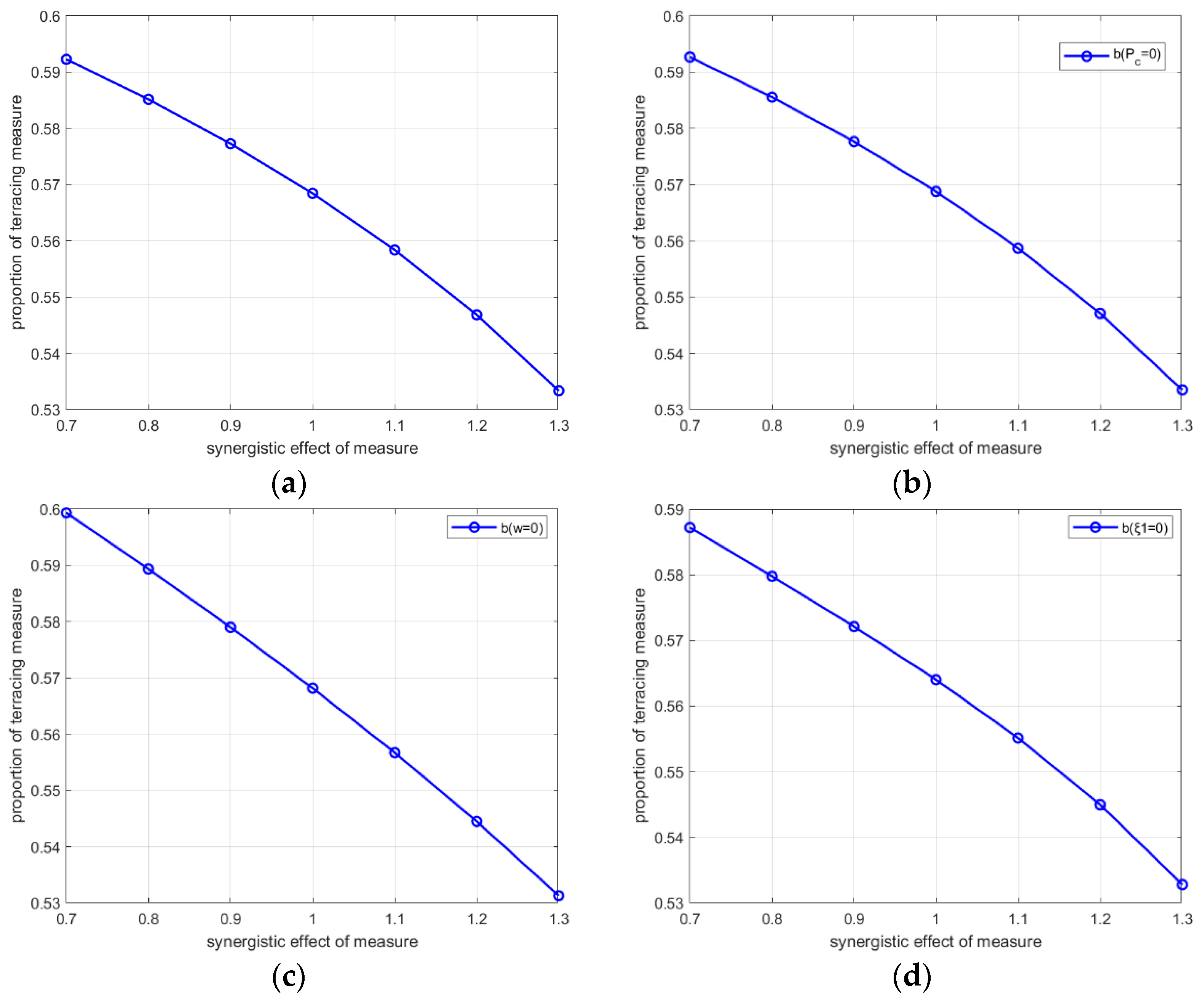
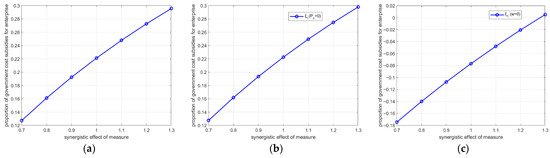
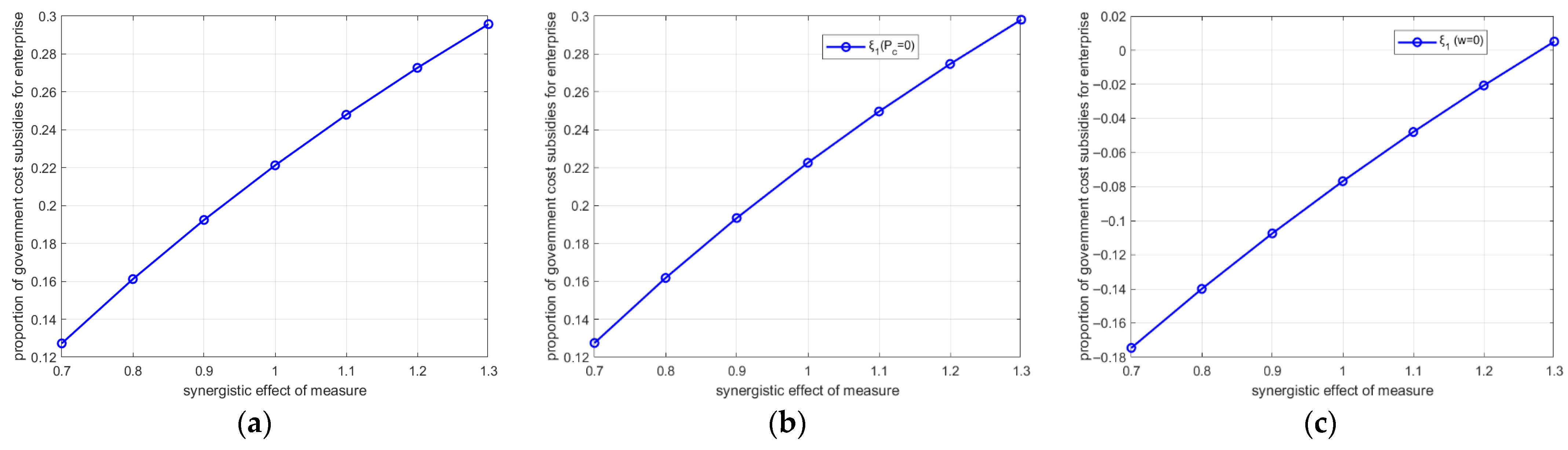
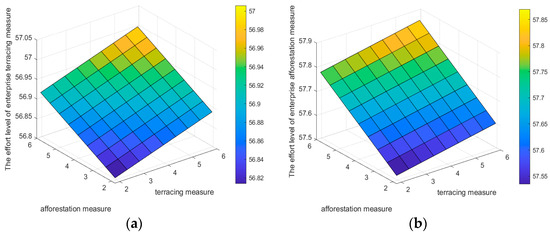
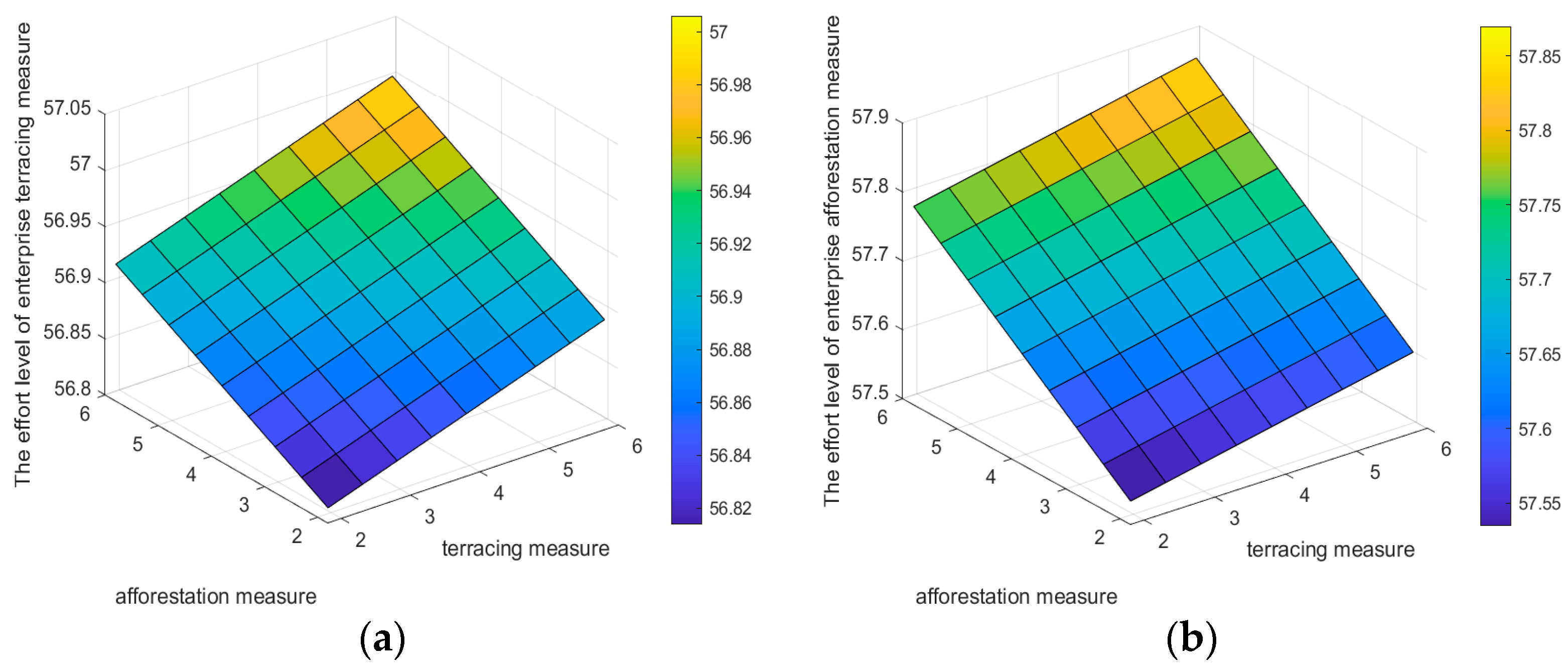
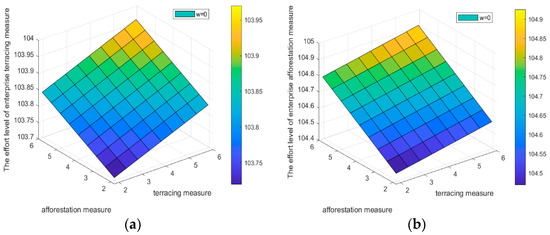
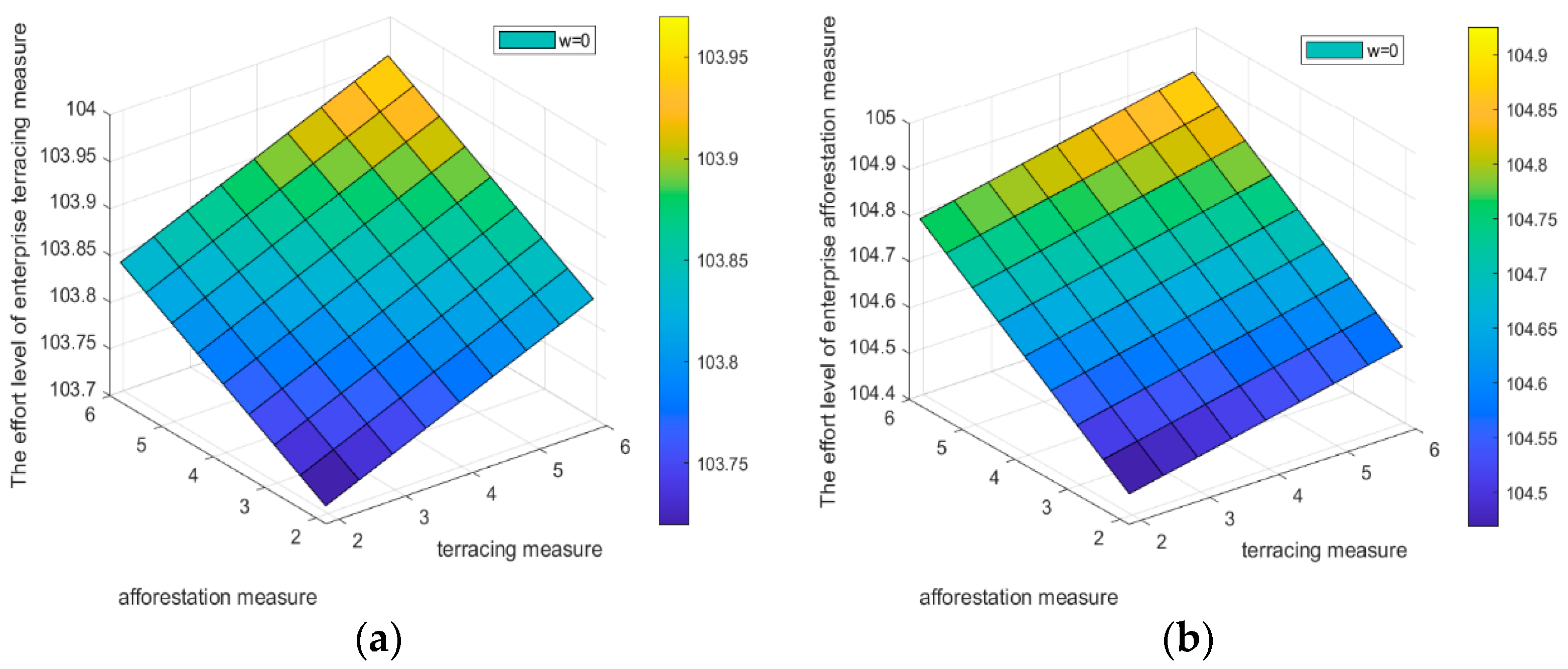
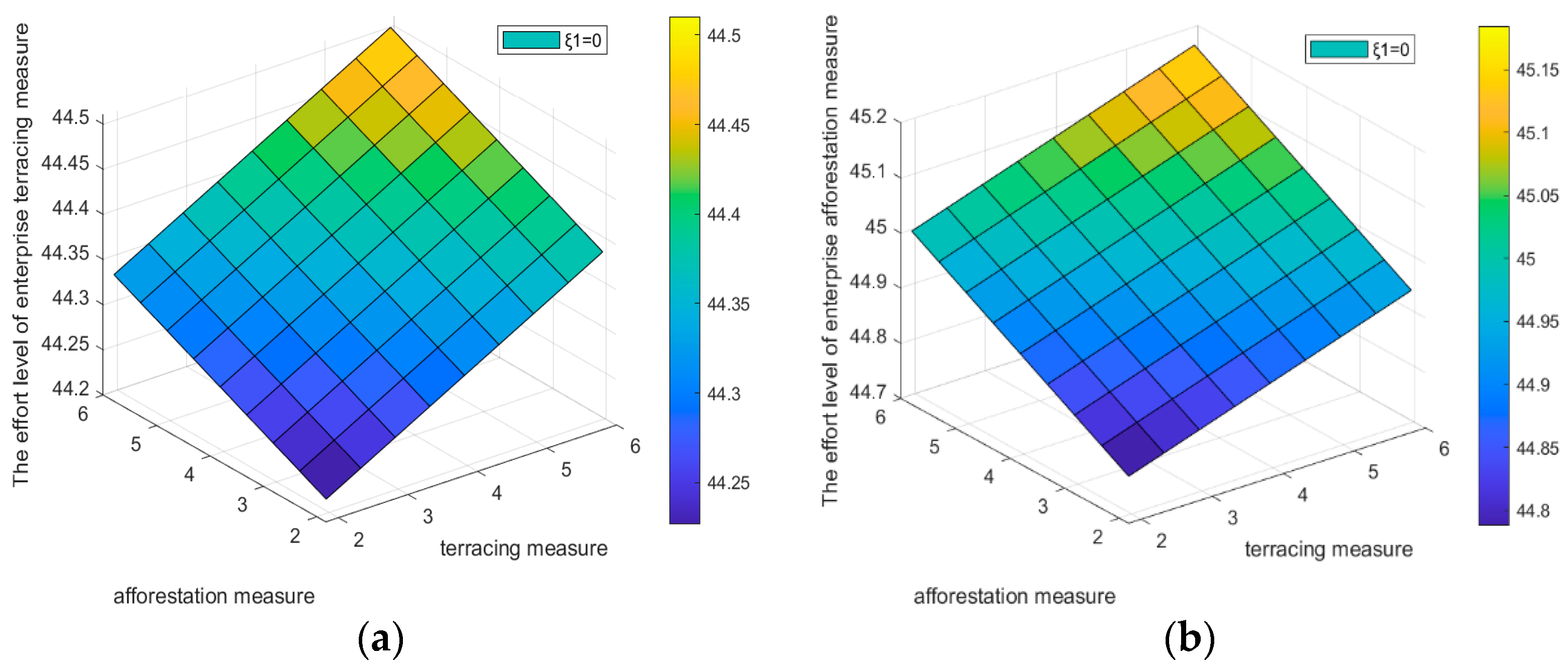
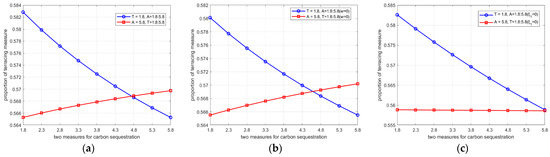
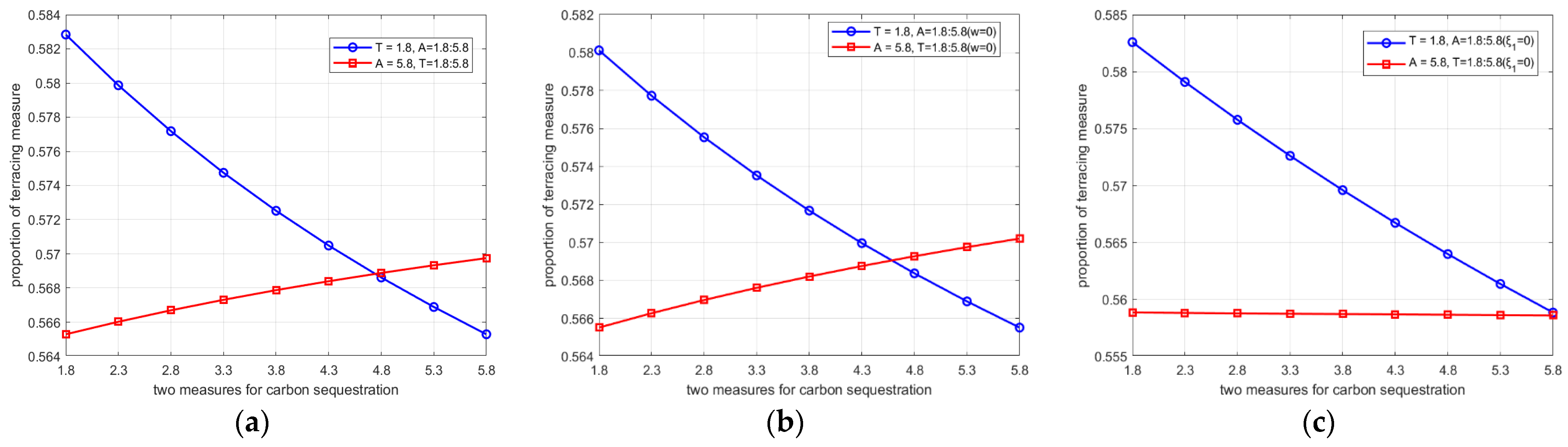
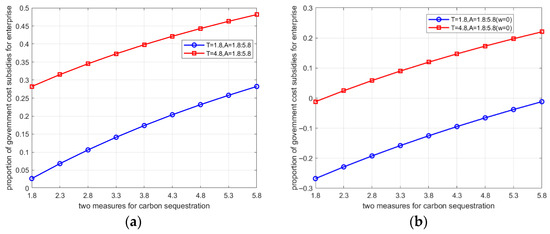
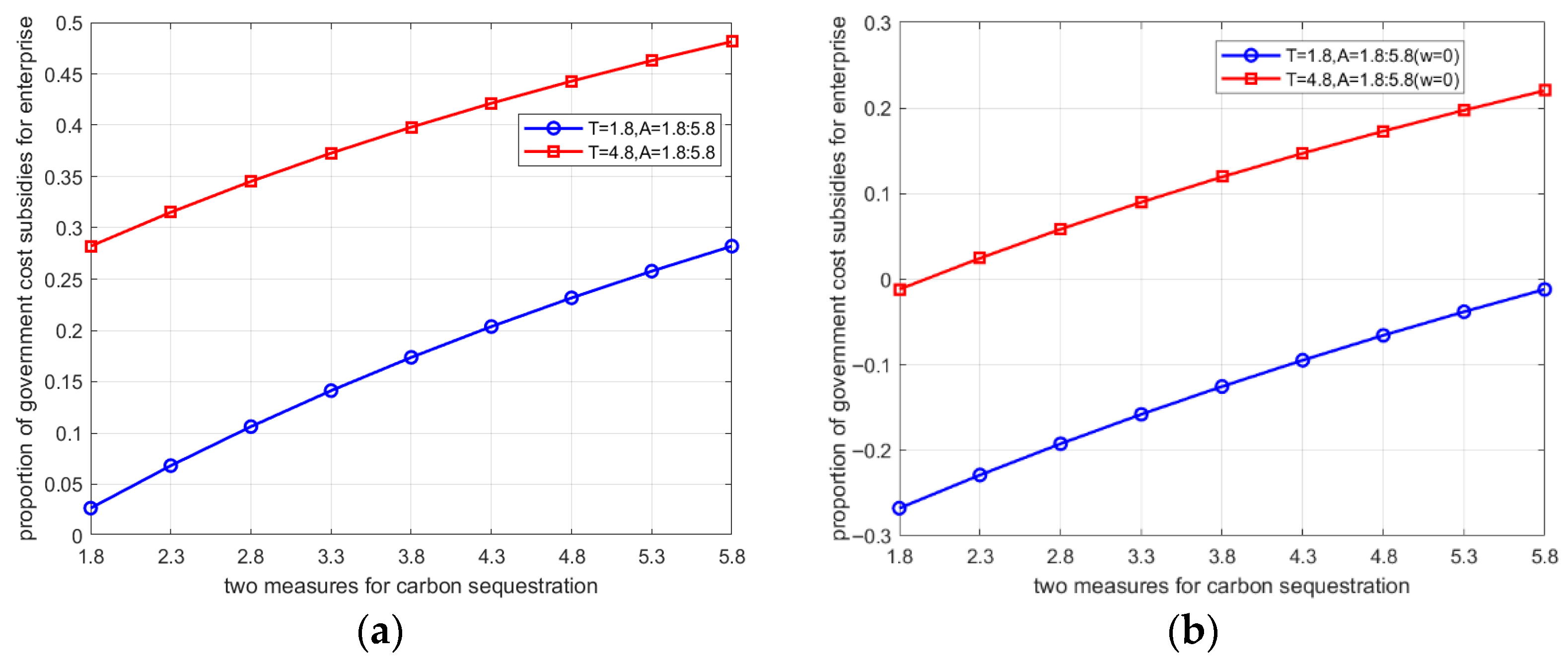
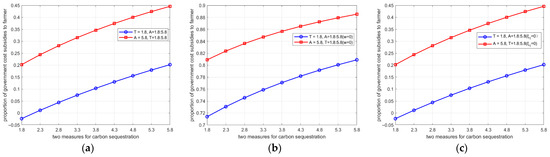
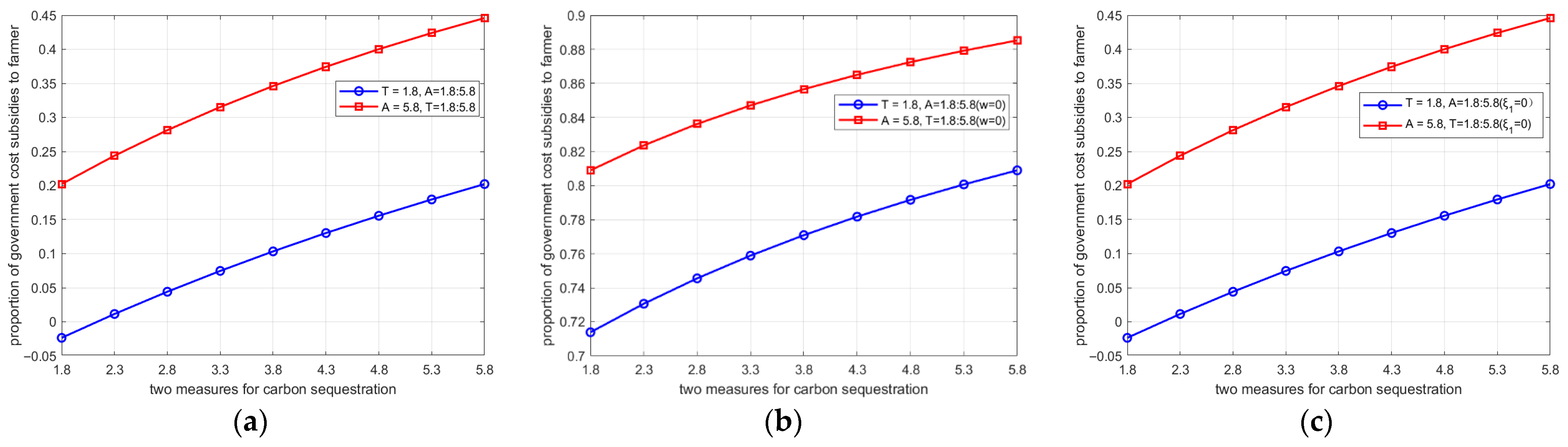
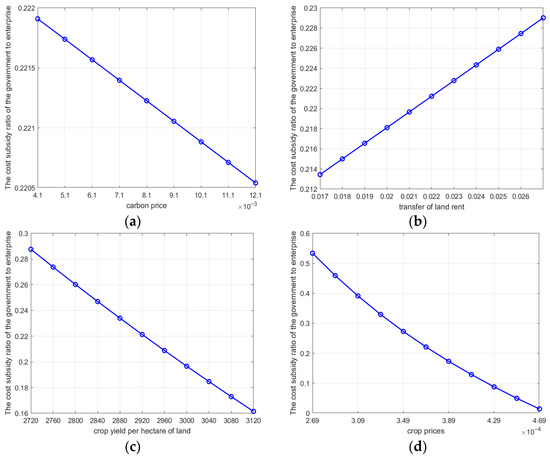
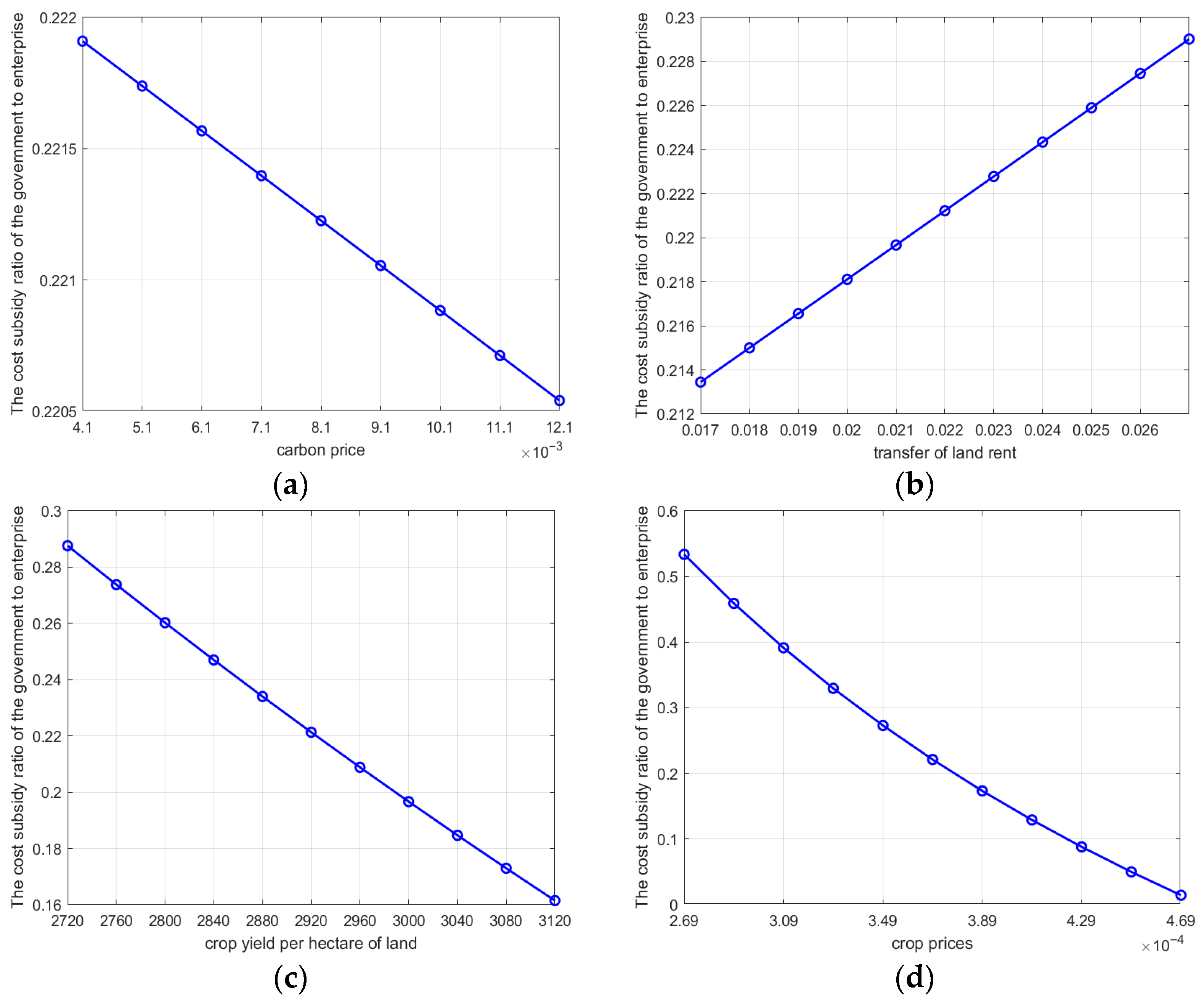

Disclaimer/Publisher’s Note: The statements, opinions and data contained in all publications are solely those of the individual author(s) and contributor(s) and not of MDPI and/or the editor(s). MDPI and/or the editor(s) disclaim responsibility for any injury to people or property resulting from any ideas, methods, instructions or products referred to in the content. |
© 2025 by the authors. Licensee MDPI, Basel, Switzerland. This article is an open access article distributed under the terms and conditions of the Creative Commons Attribution (CC BY) license (https://creativecommons.org/licenses/by/4.0/).