


Abstract
The marine environment has long been affected by chronic operational oil pollution, leading to the deaths of hundreds of thousands of seabirds. In many countries Beached Bird Survey programmes have been established, in which dead birds with oil-contaminated plumage are counted along shorelines. This study analyses data from Beached Bird Surveys conducted in the western Gulf of Gdańsk (southern Baltic Sea) between 1965/66 and 2024/25 to assess long-term trends in oil pollution. Over a total of 55 seasons, 12,264 dead birds representing 49 different species were recorded, of which 2748 individuals (22%) had oiled plumage. The oil rate was very high up to the 1977/78 season, ranging from 58% to 95%. During that period, the highest densities of oiled birds were also recorded, with values exceeding 20 individuals. A significant decline in the number of oiled birds occurred in the early 1980s, and, apart from two anomalous seasons in the mid-1990s, numbers have remained low since then. This sharp drop coincides with the enforcement of MARPOL regulations and the introduction of regular aerial surveillance to detect oil spills and identify violators. The resulting reduction in ship-based pollution has supported more sustainable use of this ecologically important marine region. The findings highlight the effectiveness of international regulations and monitoring efforts in reducing chronic oil pollution and improving the health of the Baltic Sea ecosystem.
Keywords:
oil pollution; oiled wildlife; avian mortality; marine birds; southern Baltic; HELCOM; MARPOL 1. Introduction
The largest spills from damaged tankers into the marine environment have caused the deaths of tens of thousands, or even hundreds of thousands, of birds [1,2,3,4,5]. These highly publicized oil tanker disasters have drawn significant public attention to the effects of oil pollution on coastal and oceanic ecosystems. The impacts of these disasters on birds remained evident many years later in the form of reduced population numbers and altered habitat use [6,7]. However, there are no significant correlations between the volume of oil spilled and the number of seabirds affected during such events [8], suggesting that other factors, such as spill location, timing, and bird density, play a critical role. While catastrophic spills receive the most public attention, routine and often unreported discharges, such as those from normal shipping operations, tank washing, and bilge water disposal, introduce even larger cumulative volumes of oil into marine ecosystems over time. Moreover, sources of oil pollution include land-based runoff, originating from cities, highways, and vehicles, as well as natural oil seeps [9,10,11]. These small but frequent releases, known as chronic oil pollution, pose significant risks to seabirds and other marine wildlife worldwide [12]. Across large ocean regions and extended time frames, chronic oil pollution has been shown to cause sustained mortality with greater long-term impacts on seabird populations than occasional large-scale spills [12,13,14].
Reports of dead, oiled seabirds stranded on beaches first appeared in the late 19th and early 20th centuries [15]. Since then, oil spills and operational discharges resulting in bird mortality have been widely documented, e.g., [15,16,17], and the number of oiled birds found along coastlines has begun to be reported worldwide, e.g., [18,19,20,21,22]. Oil pollution has also affected the Baltic Sea, one of the world’s largest brackish seas [23]. Despite covering only 0.1% of the global ocean surface, it is one of the most intensively used seas in the world, handling 15% of global maritime trade [24]. Both oil spills following shipwrecks, resulting in the death of thousands of birds, and chronic pollution of marine waters with petroleum products have been recorded here, with the first published reports dating back to 1910 [15,25]. Currently, along with oil spills from Crude Oil Tanker-, Chemical Oil Tanker-, and Bunkering Oil Tanker-class vessels, oils used in the food and chemical industries, such as vegetable oils (palm, coconut, rapeseed), also pose a threat when they enter the sea [26].
Oil and its derivatives floating on the water’s surface can easily adhere to a bird’s feathers, damaging the feather structure and causing a rapid drop in body temperature. However, the effects of oil on birds are not limited to thermoregulatory disorders due to the loss of this protective layer; they also include systemic poisoning caused by toxic hydrocarbons. Contaminated birds instinctively attempt to clean their plumage and reapply secretions from the uropygial gland. During this process, the oil is transferred to the bill and ingested. The swallowed oil can cause inflammation throughout the digestive tract. The intestinal villi clump together, impairing nutrient absorption. Hypothermia increases the bird’s energy demands, which it cannot meet due to its compromised digestive function [27]. In addition, vapours from spilled oil are toxic. Benzene, toluene, and other light hydrocarbons are rapidly absorbed into the bloodstream through the lungs [28]. This can lead to the destruction of red and white blood cells, as well as disruptions to the reproductive system, immune system, liver, spleen, and kidneys [29,30,31]. Although oil can be washed off feathers using appropriate detergents [32,33], systemic poisoning and inflammation of the gastrointestinal tract result in a very low survival rate for birds, even with intensive treatment in wildlife rescue centres, [34] but see [35].
Most often, the first sign of an oil spill at sea is the presence of oil-covered birds on beaches. Therefore, in many countries, regular counts of bird carcasses along the coast were implemented as a simple tool for monitoring seabird mortality caused by oil pollution, known as the Beached Bird Survey (BBS) [15,36]. The results of the counts are expressed as densities, that is, the number of birds found per kilometre surveyed, and as the oil rate, defined as the proportion of oiled birds among all birds collected [36]. Species-specific oiling rates reflect the risk of birds becoming oil-fouled at sea and can be analysed separately for species that occur primarily offshore and those that remain in the coastal zone [37].
Additionally, the species composition of oiled birds indicates differences in exposure risk, as oiling rates are usually much higher in pelagic seabirds, which spend much of their time on the water and often dive and swim rather than fly. In contrast, species that remain predominantly near the coast and move mainly by flying are oiled less frequently [37,38,39]. The proportion of birds from these two groups can indicate the area of the sea where the birds encountered the oil slick drifting on the surface [25]. Although only a small proportion of birds that die at sea wash up on shore, as many sink, are scavenged, or drift away from land [40,41,42,43], this cost-effective method still allows for the detection of long-term trends in oil pollution, e.g., [42,44,45,46,47].
Beached Bird Surveys were also implemented along the Polish Baltic coast, with regular surveys covering a significant part of the coastline beginning in the 1970s [25]. However, these counts have continued to the present day only along the western coast of the Gulf of Gdańsk. The aim of this study is to analyse BBS results from this part of the Polish coast, focusing on long-term changes in the density and proportion of oiled birds, as well as the proportion of typical marine species and those associated with coastal waters.
2. Materials and Methods
2.1. Study Area
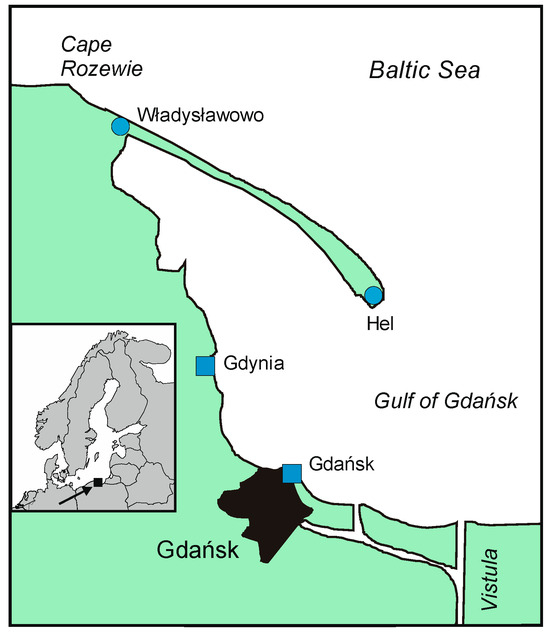
The Gulf of Gdańsk is a part of the southern Baltic Sea, with its western part hosting industrial centres, shipyards, sea and fishing ports, and a naval base. As a result, this area is particularly vulnerable to adverse impacts on various elements that contribute to its high natural value, including the large numbers of waterbirds that winter here, and there is significant conflict between marine space use and nature conservation [48,49]. There are two large seaports on the western coast of the Gulf of Gdańsk: Gdańsk and Gdynia (Figure 1). Together, they account for over 60% of the total cargo handled in Polish seaports, more than 66 million tons, and serve over 8000 vessels annually [50]. More than 34% of this traffic comprises chemical tankers, gas tankers, and oil tankers [50,51]. The intensity of ship traffic in the Baltic Sea region is expected to increase in the coming years [52]. This growth of shipping traffic increases the risk of accidents, especially the risk of oil pollution. A noticeable increase in the transport of hazardous and environmentally harmful goods to ports in the Gulf of Gdańsk occurred after the opening of the Northern Port in Gdańsk in 1975, which included a petroleum product transhipment terminal accessible to ships with a draft of up to 15 m [50]. Therefore, the Gulf of Gdańsk is one of two areas within the Polish Baltic zone with the highest number of oil spills detected [14,53].
Figure 1.
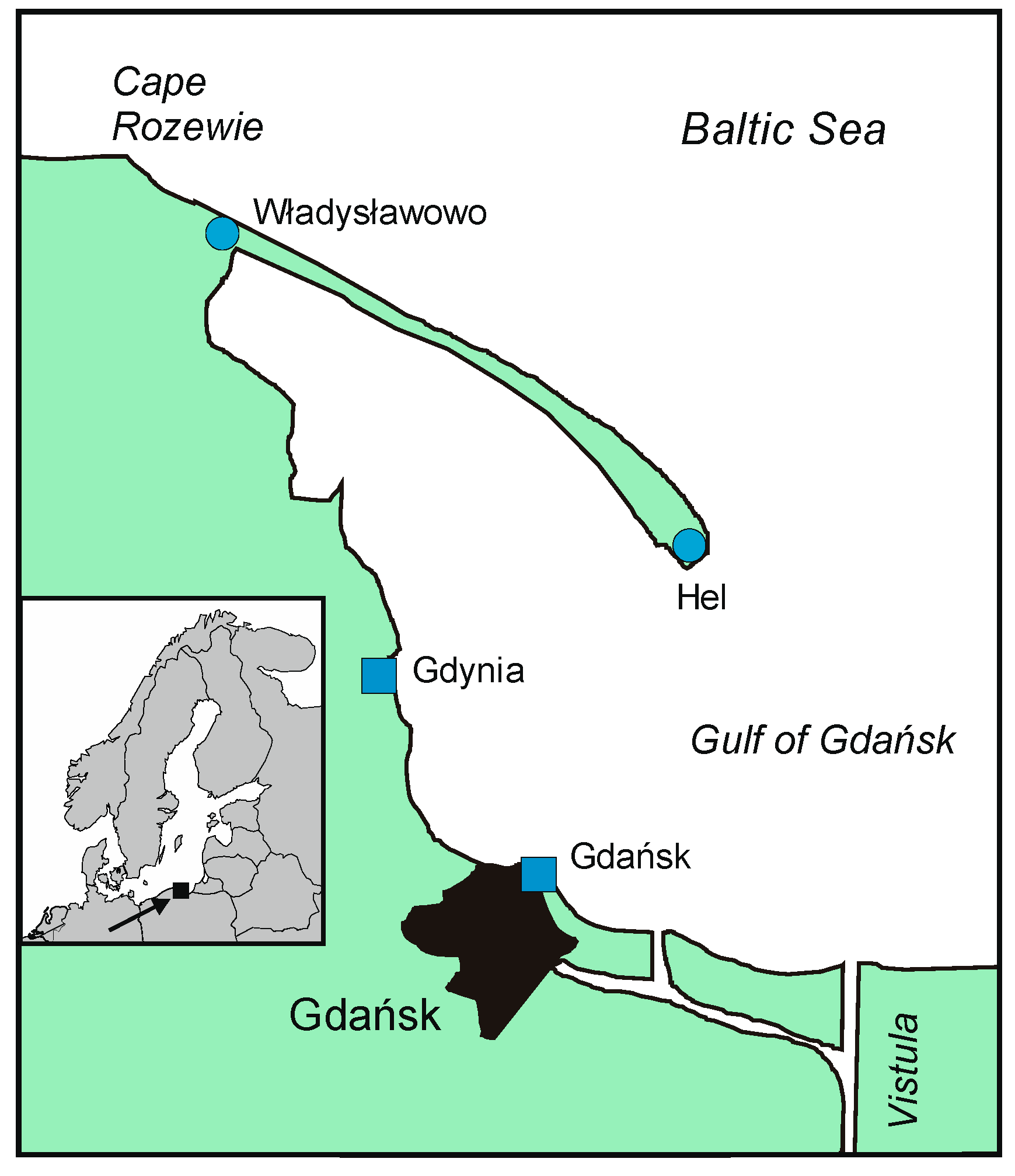
Study area with surveyed section of coastline in the western part of the Gulf of Gdańsk, between the mouth of the Vistula River and Cape Rozewie. Large seaports are marked with a blue square, large fishing ports with a blue circle.
2.2. Field Study
Surveys were conducted in the western part of the Gulf of Gdańsk between the mouth of the Vistula River to the east and Cape Rozewie to the west (Figure 1). The coastline in this area is mainly characterized by sandy beaches, with only small patches of reedbeds, which makes it easier to spot dead birds. Dead birds were collected along the coast during seasonal surveys conducted once per month between September and April, covering the period between the 1987/88 and 2024/25 seasons. In the previous three seasons, counting was carried out between November and April at three-week intervals (Table 1). Data from other seasons come from counts organised by students of the University of Gdańsk (unpublished data from seasons 1979/80, 1980/81, and 1982/83) and from the literature sources (Table 1). Therefore, this study includes a total of 60 seasons, spanning from 1965/66 to 2024/25, excluding five seasons for which no data were available (Table 1). In this study, a season is defined as the period from autumn to the following summer, reflecting the phenology of most waterbirds in the southern Baltic, which arrive in large numbers in autumn, remain through the winter, and depart for their breeding grounds in spring [49,54].
Table 1.
Length of coastline surveyed and number of surveys across subsequent seasons.
Dead birds were counted according to standard procedures used in Beached Bird Surveys [36]. During each survey, the coastline was patrolled in search of dead and dying birds. Species were identified, and the birds were examined for traces of oil pollution on their feathers. Birds with plumage contaminated with petroleum substances were classified as oiled birds, while the rest were classified as non-oiled birds. The carcasses were then removed from the shore to prevent repeated counts during subsequent inspections. Birds found in fishing harbours that had drowned in fishing nets were excluded from analyses. In total 12,264 birds found in the western part of the Gulf of Gdańsk were included in the analysis (Table A1).
2.3. Data Analysis
The length of the patrolled coastline varied significantly from season to season, especially before 1984 (Table 1). Therefore, the number of birds found was expressed per kilometre surveyed. In addition, as in other analyses of BBS results, the oil rate, i.e., the proportion of oiled birds among all birds collected, was also reported.
There is species-specific variation in oiling rates observed in Beached Bird Surveys. Therefore, the 49 identified species and 10 birds identified only to the genus level in this study were grouped into three categories: (1) ichthyophagous and benthophagous species that forage mainly by diving (e.g., divers, auks, and sea ducks), which winter predominantly in the open sea, far from the coast; (2) waterbirds that primarily remain near the coastline (e.g., dabbling ducks, swans, coots, and diving ducks not classified as sea ducks); and (3) gulls, which may forage and reside in both offshore waters and coastal areas, including ports and urbanised zones. In the latter group, unidentified grebes were included, as different grebe species may inhabit either offshore or coastal zones during the non-breeding season (Table A1). In the analysis of species-specific variability in oiling rates over time, gulls and unidentified grebes were excluded, allowing the focus to remain on two groups of species that differ markedly in their primary areas of concentration.
3. Results
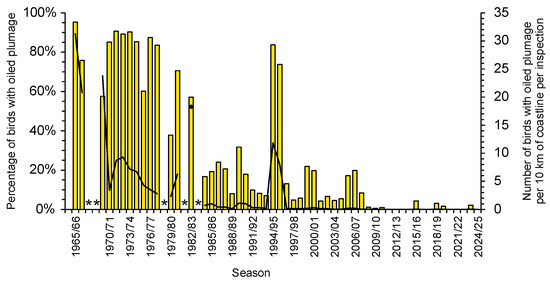
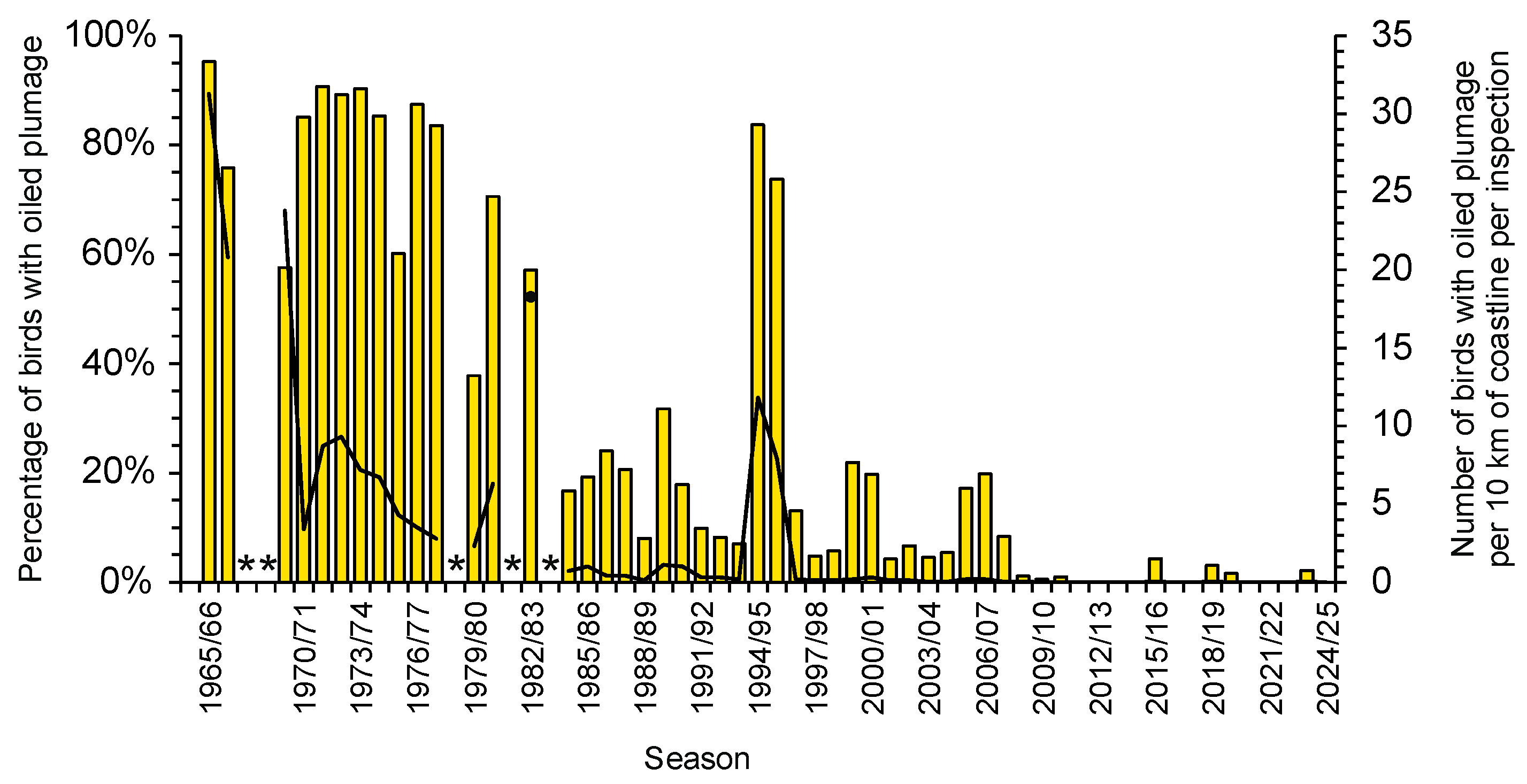
Over a total of 55 seasons, 12,264 dead birds representing 49 different species were recorded along the western coast of the Gulf of Gdańsk (Table A1). Among them, 2748 individuals (22%) had oiled plumage. The oil rate was very high up to the 1977/78 season, ranging from 58% to 95% (Figure 2). During that period, the highest densities of oiled birds were also recorded, with values exceeding 20 individuals and a maximum of 31 individuals per 10 km, observed before the 1970/71 season. As late as the 1982/83 season, high densities of dead birds were recorded, amounting to 19 individuals per 10 km, 57% of which had oiled plumage (Figure 2). From the 1984/85 season onward, both the density of oiled birds and the oil rate declined substantially. Notably, the density did not exceed four individuals per 10 km. An exception occurred during the 1994/95 and 1995/96 seasons, when 78% and 88% of birds were oiled and densities reached 8 and 12 individuals per 10 km, respectively. During these two seasons, an exceptionally high number of oiled coastal birds was documented, primarily due to one species, the Mute Swan, which alone accounted for 35% of all oiled individuals. The next most affected species was the Long-tailed Duck, a species typical of the open sea zone, with a 26% share. Since the 2007/08 season, the density of oiled birds has been very low, with no oiled individuals found in 10 of the seasons (Figure 2).
Figure 2.
Percentage (bars) of birds with oiled plumage (based on total number of birds found) and number of oiled birds per 10 km of coastline per survey (line) across seasons. Asterisks denote seasons with missing data.
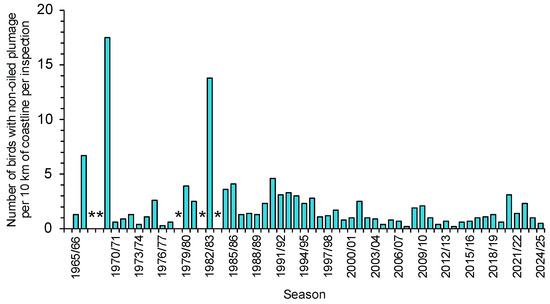
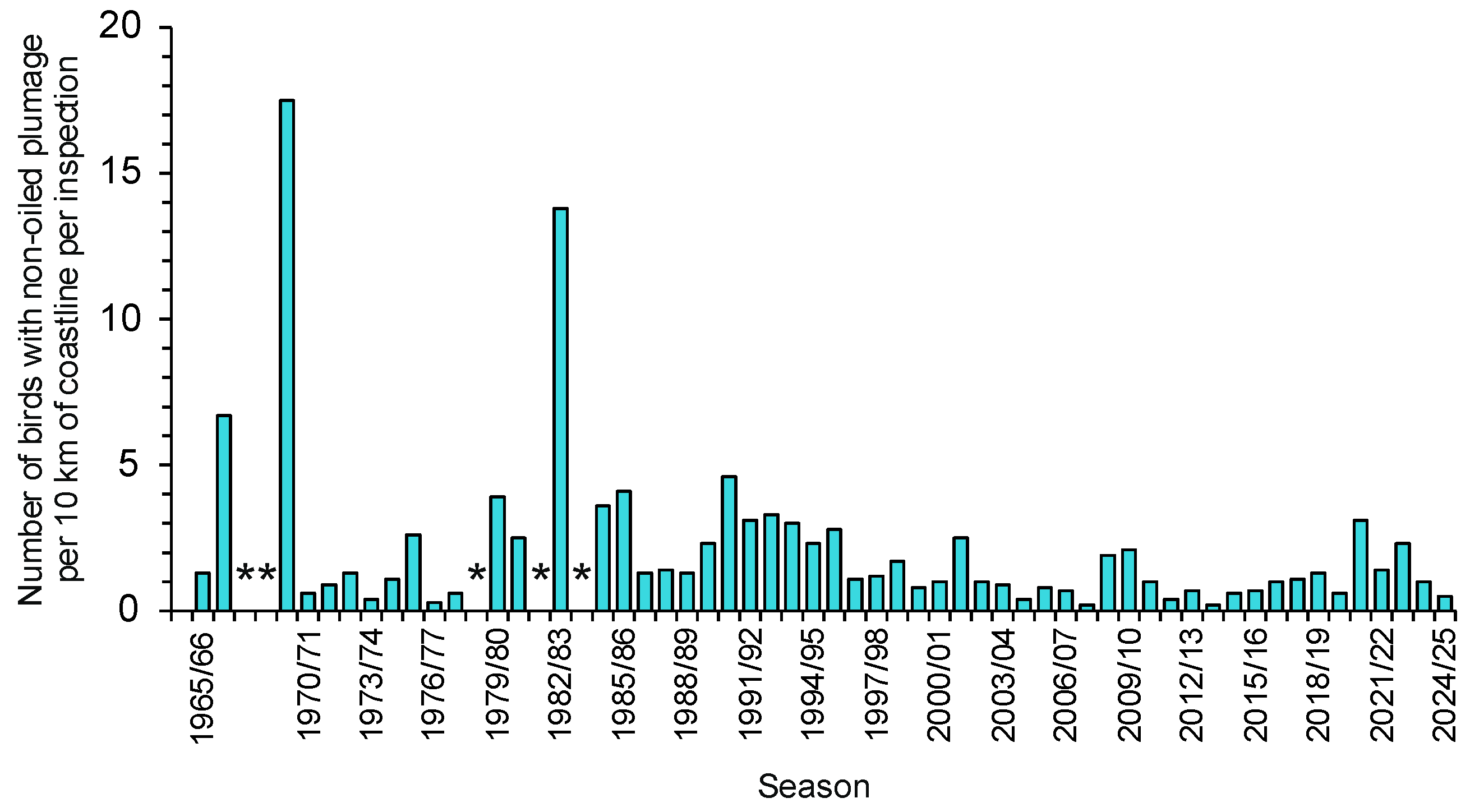
Only in three seasons did the density of non-oiled birds exceed 5 individuals per 10 km, with the highest values of 18 and 14 recorded in 1969/70 and 1982/83, respectively (Figure 3). In the remaining seasons, values ranged from 0.2 to 4.6, with no clear decreasing trend in later seasons, unlike the pattern observed in the density of oiled birds.
Figure 3.
Number of birds with non-oiled plumage per 10 km of coastline per survey across seasons. Asterisks denote seasons with missing data.
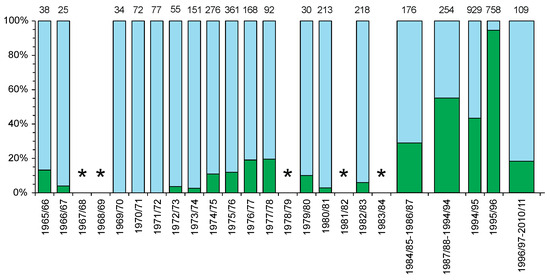
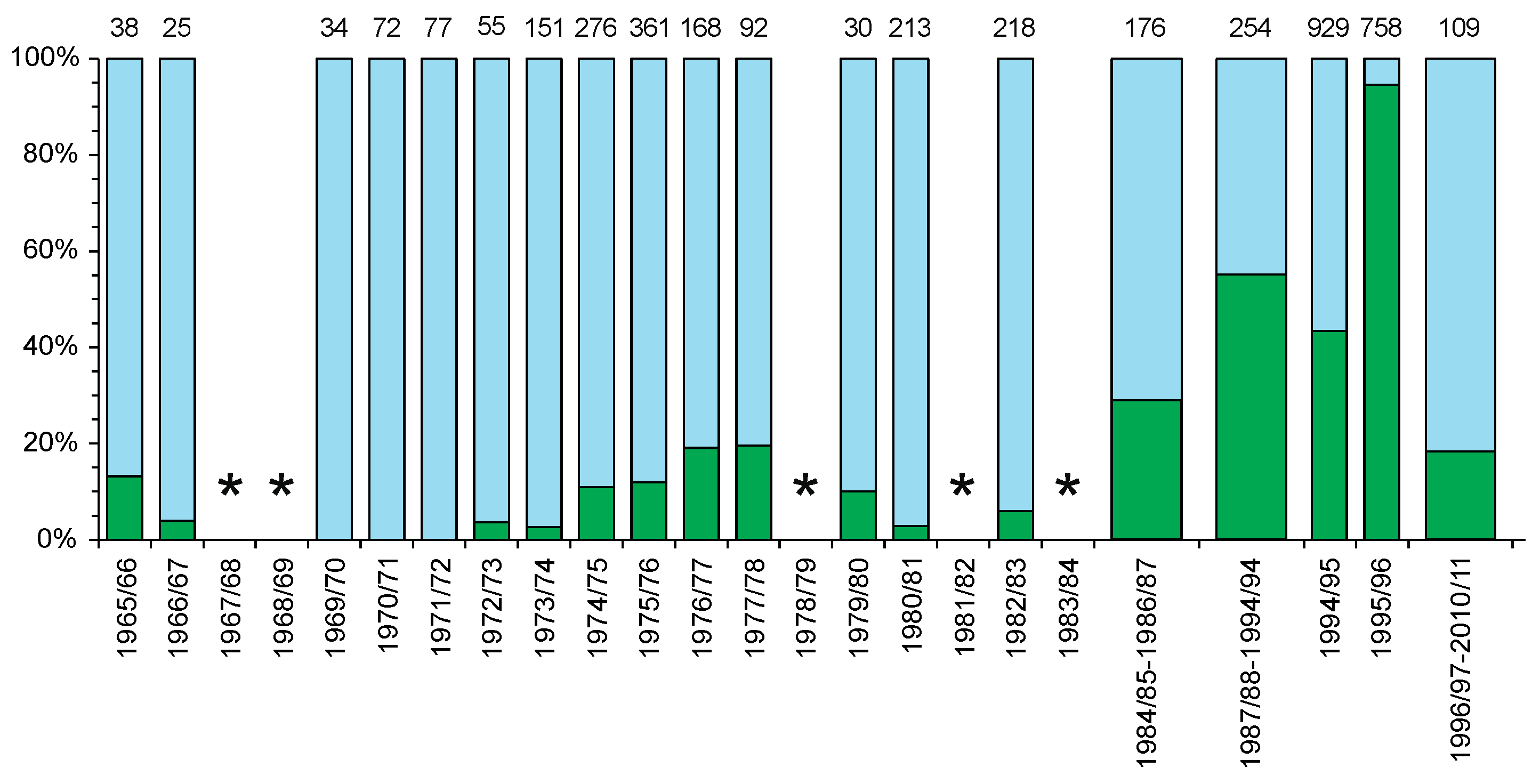
Among the oiled birds found in the Gulf of Gdańsk in most seasons, species associated with the open sea predominate (Figure 4). The proportion of birds associated with the coastal zone has increased clearly since the 1984/85 season, reaching as much as 95% in the 1995/96 season, when oiled Mute Swans accounted for as much as 87% of all birds with oiled plumage. During the last 29 seasons (1996/97–2024/25), when the number of oiled birds was very low, the proportion of birds associated with the open sea was once again high, reaching 82% (Figure 4).
Figure 4.
Proportion of birds with oiled plumage among coastal zone species (green) and offshore zone species (blue) across seasons. Consecutive seasons with low numbers of oiled birds were combined. Sample sizes are indicated above. Asterisks denote seasons with missing data.
4. Discussion
For centuries, economic concerns were the primary focus of the maritime economy, with little attention paid to sustainable development. It was only after several widely publicized tanker disasters, which were extensively reported in the media, that the public began to realize the impact of oil pollution on the maritime environment. In general, there has been a decline in the proportion of oiled birds found on the beaches of the North Sea [37,61] and the southern Baltic (this study). However, local oil rates remained high in both areas [47,62]. The conspicuous decrease in oiling rates and the density of oiled birds found on the coast of the Gulf of Gdańsk began in the mid-1980s, whereas on the southern coasts of the North Sea, the number of birds washing ashore with very high oil rates increased dramatically during this period [46,61]. Significant decreases in the number of oil slicks detected in the North Sea were observed much later, at the beginning of the 21st century [61,63]. Outside Europe, the situation varies considerably. A decline in the number of oiled birds has been reported along the central California coast [64]. In some parts of British Columbia, a similar decline has been observed, though not in others [65]. Beached Bird Surveys conducted between 1984 and 1999 indicate that chronic oil pollution along the southeast coast of Newfoundland was among the highest in the world during a comparable time period [20]. It is estimated that between 1998 and 2000, approximately 300,000 seabirds were killed annually in this region due to illegal oil discharges from ships [66].
The decline in oil pollution in the western part of the Gulf of Gdańsk occurred despite a strong increase in ship traffic [67], amount of oil transported [68], and increase in the number of shipping accidents in the Baltic Sea [69]. However, only 7% of these accidents resulted in some kind of pollution, usually containing not more than 0.1–1 tons of oil [69]. The number of detected illegal oil spills in the Baltic also decreased [68]. This drop coincides with the implementation of the MARPOL Convention in 1983, which designated the Baltic Sea as a Special Area under Annex I (the oil pollution annex), establishing it as a zero-discharge zone. In contrast, the same regulation entered into force in the North Sea much later, in 1999 [61], resulting in a correspondingly later decline in the number of oiled birds compared to the Baltic. Additionally, in 2000, the European Community adopted the EU Directive on Port Reception Facilities for ship-generated waste and cargo residues (2000/59/EC), obliging ships to deliver their oily waste to adequate reception facilities before leaving a port within the European Community [70]. Moreover, in 1992, MARPOL was amended to make it mandatory for tankers of 5000 dwt to be fitted with double hulls (regulation 19 in Annex I of MARPOL), which also contributes to reducing marine pollution.
An important factor contributing to the sharp reduction in illegal oil discharges from ships was the introduction of regular aerial patrols to detect oil spills and identify violators. Cooperation on aerial surveillance in the Baltic Sea region began in the 1980s under the framework of HELCOM. The parties to this agreement have since developed and implemented surveillance measures covering the entire Baltic Sea to detect and monitor oil and other substances entering the marine environment. This primarily involves aircraft patrolling their respective economic zones, with extensive cooperation starting in 1988 [53]. The Polish sector of the Baltic Sea has been regularly patrolled for oil spills since 1985 [71]. In 2004, daily satellite-based remote sensing for pollution detection was introduced [72], significantly enhancing the system for identifying oil spills and their sources. This should be followed by effective enforcement of penalties for oil pollution, which are considered insignificant compared to the profits of most firms involved [73,74]. In the southern North Sea, regular aerial surveys were introduced in the early 1990s, later than in the Baltic Sea [75,76], which likely contributed to the later recorded decrease in oil pollution in that region.
A BBS based on standardized protocols is a cheap and easy method for monitoring the degree of marine oil pollution, but it raises some doubts, as changes in the rate at which seabirds are beached are a complex function of bio-physical coupling in the coastal marine environment [43,77]. The number of birds at sea at a given location depends on the quality of the food base, which may change seasonally [78,79,80]. Moreover, surface currents and local winds affect the likelihood of bird carcasses drifting ashore [43,77]. Therefore, the number of bird corpses on the coast, to some extent, reflects the interannual variability of prevailing weather conditions [77]. Furthermore, birds that die at sea may sink, drift away from shore, be scavenged, decompose at sea, or be washed back out to sea, which means that the number of bird carcasses found on beaches will always be lower than the actual number of birds that died at sea. Without detailed analyses based on data on sea currents and wind strength and direction, it is not possible to determine how many birds are affected by this problem [43,77]. Despite these limitations, the BBS is a widely used method that is considered to accurately reflect the state of marine oil pollution and allows for tracking changes over long periods of time [15,19,21,47].
In the western part of the Gulf of Gdańsk, a sharp decline in the number of oiled birds occurred in the early 1980s. After the 1984/85 season, the proportion of oiled birds sometimes reached higher values, reaching up to 20–30%. However, during this period, with the exception of the seasons 1994/95 and 1995/96, the number of dead birds found on beaches was very low. After this sharp decline in the number of oiled birds, a short increase was recorded only during the 1994/95 and 1995/96 seasons. In the first season, the main victim of oil pollution was the Mute Swan, a species that stays exclusively close to the coast. In the following season, both Mute Swans and typical offshore species, such as Long-tailed Ducks, were most frequently oiled. This reflects the various locations where oil pollution enters the sea. In recent seasons, however, very few oiled birds have been recorded, and when they are, they are predominantly species from the open sea. This suggests that oil spills are not as frequent as they were fifty years ago, and when they do occur, they tend to happen farther from the shore.
The density of dead, oil uncontaminated birds during this period varied only slightly, which probably corresponded to natural mortality. The high number of dead, uncontaminated birds in the 1969/70 and 1983/83 seasons is probably due to the inclusion of birds drowned in fishing nets, which were omitted from the data from the 1984/85 season onwards. The lack of established rules for data collection in earlier years of this research has already been pointed out [58].
The Baltic Sea is one of the world’s busiest seas, with around 15% of the world’s cargo traffic passing through the region [24]. Approximately 20% of the ships in the Baltic Sea are tankers carrying a combined total of over 200 million tonnes of oil [81]. This indicates that the Baltic Sea is particularly vulnerable to oil pollution, which in the past has led to mass mortality events among seabirds in the area [25,82,83]. Results from the BBS conducted in the western part of the Gulf of Gdańsk clearly indicate a sharp decline in bird mortality due to oil pollution, attributable to a reduction in chronic water pollution levels in this region. This decline coincides with Poland’s introduction of aerial patrols to detect oil slicks at sea and to hold responsible parties accountable. Over recent decades, HELCOM’s efforts have produced several concrete and successful regulatory proposals that reduce pollution from ships in the Baltic Sea, promoting a more sustainable use of this critically important marine area, which holds great significance for both the natural environment and human well-being. Therefore, the Beached Bird Surveys programme should be continued in this area of the Polish Baltic coast, as it will enable ongoing monitoring of bird mortality and of the currently low levels of marine pollution by petroleum products. It will also facilitate a rapid response to any deterioration in seawater quality following oil spills.
5. Conclusions
Chronic pollution of marine waters with petroleum products and oil spills following shipwrecks has historically resulted in the death of thousands of birds. To monitor seabird mortality caused by oil pollution, regular counts of bird carcasses along the coast were implemented as a simple tool, known as the Beached Bird Survey. This method has certain limitations, as surface currents and local winds influence the likelihood of bird carcasses being washed ashore. Birds that die at sea may sink, drift offshore, be consumed by scavengers, decompose in the water, or be washed back out to sea. Consequently, the number of carcasses found on beaches will always underestimate the actual number of birds that have died at sea. Furthermore, the number of birds present in a given area depends on food availability, which can vary seasonally. Nevertheless, this method is widely used in many countries because it provides comparable results within a given area. Based on 55 years of data from dead birds found along the coastline of the western Gulf of Gdańsk, this study shows that both the density of oiled birds and the oiling rate declined substantially despite marked increases in ship traffic, the volume of oil transported, and the number of shipping accidents in the Baltic Sea. Most oiled birds recorded were species associated with the open sea, although a short-term rise in mortality during the 1994/95 and 1995/96 seasons affected both coastal and offshore species. Since 2007/08, the density of oiled birds has remained very low, with no oiled individuals recorded during 10 seasons. This sharp decline coincides with the enforcement of MARPOL regulations and the introduction of regular aerial surveillance to detect spills and prosecute offenders. Overall, the results demonstrate that regulatory measures coordinated by HELCOM have been effective in reducing oil pollution in the Baltic Sea. This publication presents the results of one of the longest series of long-term studies on birds washed ashore. The findings indicate the need for continued research to confirm that oil pollution levels in the western part of the Gulf of Gdańsk are not increasing.
Funding
This research received no external funding.
Institutional Review Board Statement
Not applicable.
Informed Consent Statement
Not applicable.
Data Availability Statement
The data are available upon request to the author.
Acknowledgments
I would like to thank everyone who participated in counting dead birds along the beaches of the Gulf of Gdańsk, especially former biology students from the University of Gdańsk.
Conflicts of Interest
The author declares no conflicts of interest.
Appendix A
Table A1.
List and number of individuals of taxa found during BBS included in this study, belonging to three groups of species associated with different marine zones. Taxa are arranged in alphabetical order.
References
- Bourne, W.; Parrack, J.; Potts, G. Birds killed in the Torrey Canyon disaster. Nature 1967, 215, 1123–1125. [Google Scholar] [CrossRef] [Scilit]
- Piatt, J.F.; Lensink, C.J.; Butler, W.; Kendziorek, M.; Nysewander, D.R. Immediate impact of the ‘Exxon Valdez’ oil spill on marine birds. Auk 1990, 107, 387–397. [Google Scholar] [CrossRef] [Scilit]
- Cadiou, B.; Riffaut, L.; McCoy, K.D.; Cabelguen, J.; Fortin, M.; Gélinaud, G.; Le Roch, A.; Tirard, C.; Boulinieret, T. Ecological impact of the “Erika” oil spill: Determination of the geographic origin of the affected common guillemots. Aquat. Living Resour. 2004, 17, 369–377. [Google Scholar] [CrossRef] [Scilit]
- Munilla, I.; Arcos, J.M.; Oro, D.; Álvarez, D.; Leyenda, P.M.; Velando, A. Mass mortality of seabirds in the aftermath of the Prestige oil spill. Ecosphere 2011, 2, 83. [Google Scholar] [CrossRef] [Scilit]
- Haney, J.C.; Geiger, H.J.; Short, J.W. Bird mortality from the Deepwater Horizon oil spill. I. Exposure probability in the offshore Gulf of Mexico. Mar. Ecol. Prog. Ser. 2014, 513, 225–237. [Google Scholar] [CrossRef] [Scilit]
- Day, R.H.; Murphy, S.M.; Wiens, J.A.; Hayward, G.D.; Harner, E.J.; Lawhead, B.E. Effects of the Exxon Valdez oil spill on habitat use by birds along the Kenai Peninsula, Alaska. Condor 1997, 99, 728–742. [Google Scholar] [CrossRef] [Scilit]
- Irons, D.B.; Kendall, S.J.; Erickson, W.P.; Mcdonald, L.L.; Lance, B.K. Nine years after the Exxon Valdez oil spill: Effects on marine bird populations in Prince William Sound, Alaska. Condor 2000, 102, 723–737. [Google Scholar] [CrossRef]
- Wiese, F.K. Seabirds and Atlantic Canada’s Ship-Source Oil Pollution; WWF: Toronto, ON, Canada, 2002. [Google Scholar]
- Dahlmann, G.; Timm, D.; Averbeck, C.; Camphuysen, C.; Skov, H.; Durinck, J. Oiled seabirds—Comparative investigations on oiled seabirds and oiled beaches in the Netherlands, Denmark and Germany (1990–1993). Mar. Pollut. Bull. 1994, 28, 305–310. [Google Scholar] [CrossRef] [Scilit]
- GESAMP Estimates of Oil Entering the Marine Environment from Sea Based Activities; International Maritime Organization: London, UK, 2007.
- Tornero, V.; Hanke, G. Chemical contaminants entering the marine environment from sea-based sources: A review with a focus on European seas. Mar. Pollut. Bull. 2016, 112, 17–38. [Google Scholar] [CrossRef] [Scilit]
- Oka, N.; Takahashi, A.; Ishikawa, K.; Watanuki, Y. The past and present impact of oil pollution in seabird mortality world-wide. J. Yamashina Inst. Ornithol. 1999, 31, 108–133. [Google Scholar] [CrossRef] [Scilit]
- Wiese, F.K.; Robertson, G.J.; Gaston, A.J. Impacts of chronic marine oil pollution and the murre hunt in Newfoundland on thick-billed murre Uria lomvia populations in the eastern Canadian Arctic. Biol. Conserv. 2004, 116, 205–216. [Google Scholar] [CrossRef] [Scilit]
- Camphuysen, C.J. Chronic Oil Pollution in Europe, a Status Report; IFAW: Brussels, Belgium, 2007. [Google Scholar]
- Camphuysen, C.J.; Heubeck, M. Marine oil pollution and beached bird surveys: The development of a sensitive monitoring instrument. Environ. Pollut. 2001, 112, 443–461. [Google Scholar] [CrossRef] [Scilit]
- Veitch, C.R. Seabirds found dead in New Zealand in 1974. Notornis 1976, 23, 168–178. [Google Scholar] [CrossRef] [Scilit]
- National Research Council. Oil in the Sea; National Academy Press: Washington, DC, USA, 1985. [Google Scholar]
- Ohata, K.; Nemoto, S.; Murai, M. Mortality of seabirds due to oil contamination along the Tomakomai coast, Hokkaido. Strix 1993, 12, 214–218. [Google Scholar]
- Seys, J.; Offringa, H.; Van Waeyenberge, J.; Meire, P.; Kuijken, E. An evaluation of beached bird monitoring approaches. Mar. Pollut. Bull. 2002, 44, 322–333. [Google Scholar] [CrossRef] [Scilit]
- Wiese, F.K.; Ryan, P.C. The extent of chronic marine oil pollution in southeastern Newfoundland waters assessed through beached bird surveys 1984–1999. Mar. Pollut. Bull. 2003, 46, 1090–1101. [Google Scholar] [CrossRef] [Scilit] [PubMed]
- Harris, R.J.; Tseng, F.S.; Pokras, M.A.; Suedmeyer, B.A.; Bogart, J.S.H.; Prescott, R.L.; Newman, S.H. Beached bird surveys in Massachusetts: The seabird ecological assessment network (SEANET). Mar. Ornithol. 2006, 34, 115–122. [Google Scholar] [CrossRef] [Scilit]
- Golubev, S. Seabirds in conditions of local chronic oil pollution, Davis Sea, Antarctica. Birds 2021, 2, 275–284. [Google Scholar] [CrossRef] [Scilit]
- Snoeijs-Leijonmalm, P.; Andrén, E. Why is the Baltic Sea so special to live in? In Biological Oceanography of the Baltic Sea; Snoeijs-Leijonmalm, P., Schubert, H., Radziejewska, T., Eds.; Springer: Dordrecht, The Netherlands, 2017; pp. 23–84. [Google Scholar]
- Madjidian, J.; Björk, S.; Nilsson, A.; Halén, T. CLEANSHIP—Clean Baltic Sea Shipping, Final Report; Port of Trelleborg: Trelleborg, Sweden, 2013. [Google Scholar]
- Meissner, W. Birds as victims of marine oil pollution. Wiad. Ekol. 2005, 51, 17–34, (In Polish with English Summary). [Google Scholar]
- Bucas, G.; Saliot, A. Sea transport of animal and vegetable oils and its environmental consequences. Mar. Pollut. Bull. 2002, 44, 1388–1396. [Google Scholar] [CrossRef] [Scilit]
- Leighton, F.A. The toxicity of petroleum oils to birds. Environ. Rev. 1993, 1, 92–103. [Google Scholar] [CrossRef] [Scilit]
- Bodziach, K.; Staniszewska, M.; Falkowska, L.; Nehring, I.; Ożarowska, A.; Zaniewicz, G.; Meissner, W. Gastrointestinal and respiratory exposure of water birds to endocrine disrupting phenolic compounds. Sci. Total Environ. 2021, 754, 142435. [Google Scholar] [CrossRef] [Scilit]
- Briggs, K.T.; Gershwin, M.E.; Anderson, D.W. Consequences of petrochemical ingestion and stress on the immune system of seabirds. ICES J. Mar. Sci. 1997, 54, 718–725. [Google Scholar] [CrossRef] [Scilit]
- Troisi, G.; Barton, S.; Bexton, S. Impacts of oil spills on seabirds: Unsustainable impacts of non-renewable energy. Int. J. Hydrogen Energy 2016, 41, 16549–16555. [Google Scholar] [CrossRef] [Scilit]
- King, M.D.; Elliot, J.E.; Williams, T.D. Effects of petroleum exposure on birds: A review. Sci. Total Environ. 2020, 755, 142834. [Google Scholar] [CrossRef] [Scilit]
- van Kampen, D.M. Successful cleaning of oiled birds in Holland. Mar. Pollut. Bull. 1971, 2, 140–142. [Google Scholar] [CrossRef] [Scilit]
- Basseres, A.; Verschuere, B.; Holtzinger, G.; Jacques, J.-P.; Tramier, B. A new cleaning product for oiled birds and an integrated automated process. Int. Oil Spill Conf. Proc. 1995, 1995, 171–175. [Google Scholar] [CrossRef] [Scilit]
- Sharp, B.E. Post-relase survival of oiled, cleaned seabirds in North America. Ibis 1996, 138, 222–228. [Google Scholar] [CrossRef] [Scilit]
- Whittington, P.A. The contribution made by cleaning oiled African Penguins Spheniscus demersus to population dynamics and conservation of the species. Mar. Ornithol. 1999, 27, 177–180. [Google Scholar] [CrossRef] [Scilit]
- Camphuysen, C.J.; van Franeker, J.A. The Value of Beached Bird Surveys in Monitoring Marine Oil Pollution; Vogelbescherming Nederland: Zeist, The Nederland, 1992; Volume 10, p. 191. [Google Scholar]
- Camphuysen, C.J. Beached bird surveys indicate decline in chronic oil pollution in the North Sea. Mar. Pollut. Bull. 1998, 36, 519–526. [Google Scholar] [CrossRef] [Scilit]
- Clarck, R.B. Impact of oil pollution on seabirds. Environ. Pollut. (Ser. A) 1984, 33, 1–22. [Google Scholar] [CrossRef] [Scilit]
- Fox, C.H.; O’Hara, P.D.; Bertazzon, S.; Morgan, K.; Underwood, F.E.; Paquet, P.C. A preliminary spatial assessment of risk: Marine birds and chronic oil pollution on Canada’s Pacific coast. Sci. Total Environ. 2016, 573, 799–809. [Google Scholar] [CrossRef] [Scilit] [PubMed]
- Fowler, A.C.; Flint, P.L. Persistence rates and detection probabilities of oiled King Eider carcasses on St. Paul Island, Alaska. Mar. Pollut. Bull. 1997, 34, 522–526. [Google Scholar] [CrossRef] [Scilit]
- Hlady, D.A.; Burger, A.E. Drift-block experiments to analyze the mortality of oiled seabirds off Vancouver Island, British Columbia. Mar. Pollut. Bull. 1993, 26, 495–501. [Google Scholar] [CrossRef] [Scilit]
- Wiese, F.K. Sinking rates of dead birds: Improving estimates of seabird mortality due to oiling. Mar. Ornithol. 2003, 31, 65–70. [Google Scholar] [CrossRef] [Scilit]
- Chrastansky, A.; Callies, U.; Fleet, D.M. Estimation of the impact of prevailing weather conditions on the occurrence of oil-contaminated dead birds on the German North Sea coast. Environ. Pollut. 2009, 157, 194–198. [Google Scholar] [CrossRef] [Scilit]
- Stowe, T.J.; Underwood, L.A. Oil spillages affecting seabirds in the United Kingdom, 1966–1983. Mar. Pollut. Bull. 1984, 15, 147–152. [Google Scholar] [CrossRef] [Scilit]
- Camphuysen, C.J. Beached bird surveys in the Netherlands, 1915–1988. In Seabirds Mortality in the Southern North Sea Since the Early Days of Oil Pollution; Werkgroep Noordzee: Amsterdam, The Nederland, 1989; Volume 1, pp. 1–322. [Google Scholar]
- Vauk, G.; Hartwig, E.; Reineking, B.; Schrey, E.; Vauk-Hentzelt, E. Langzeituntersuchung zur Auswirkung der Ölverschmutzung der deutschen Nordseeküste auf Seevögel. Seevögel 1990, 11, 17–20. [Google Scholar]
- Larsen, J.L.; Durinck, J.; Skov, H. Trends in chronic marine oil pollution in Danish waters assessed using 22 years of beached bird surveys. Mar. Pollut. Bull. 2007, 54, 1333–1340. [Google Scholar] [CrossRef] [Scilit] [PubMed]
- Węsławski, J.M.; Urbański, J.; Kryla-Staszewska, L.; Andrulewicz, E.; Linkowski, T.; Kuzebski, E.; Meissner, W.; Otremba, Z.; Piwowarczyk, J. The different uses of sea space in Polish Marine Areas: Is conflict inevitable? Oceanologia 2010, 52, 513–530. [Google Scholar] [CrossRef] [Scilit]
- Meissner, W.; Kośmicki, A.; Stępniewska, K.; Ściborski, M. Waterbird abundance in the Gulf of Gdańsk in the period September 2024–April 2025. Ornis Pol. 2025, 66, 153–159. [Google Scholar]
- Wawruch, R. Ships’ routes to Polish ports of the Gulf of Gdańsk. TransNav 2021, 15, 583–590. [Google Scholar] [CrossRef] [Scilit]
- Rojek, B.; Wawruch, R. Traffic separation schemes and mandatory ship reporting system in the Baltic for the approaches to the Polish ports in the Gulf of Gdańsk. TransNav 2007, 1, 387–391. [Google Scholar]
- Czermański, E. Baltic shipping development in maritime spatial planning aspect. Stud. Mater. Inst. Transp. Handlu Morsk. 2017, 14, 48–64. [Google Scholar] [CrossRef] [Scilit]
- HELCOM. Annual Report on Discharges Observed During Aerial Surveillance in the Baltic Sea, 2023; HELCOM: Helsinki, Finland, 2024. [Google Scholar]
- Sonntag, N.; Mendel, B.; Garthe, S. Distribution of seabirds and waterbirds in the German Baltic Sea throughout the year. Vogelwarte 2006, 44, 81–112. [Google Scholar]
- Halba, R. Birds Are Dying in the Baltic Sea from the ‘Oil Plague’. Chrońmy Przyr. Ojcz. 1969, 25, 54–55. (In Polish) [Google Scholar]
- Manikowski, S. Studies on the mortality of birds sending the winter on the Baltic Sea. Chrońmy Przyr. Ojcz. 1971, 27, 32–39, (In Polish with English Summary). [Google Scholar]
- Górski, W.; Jakuczun, B.; Nitecki, C.; Petryna, A. The investigations on the oil pollution on the Polish coast of the Baltic Sea in the 1970–1974. Przegl. Zool. 1976, 20, 81–87, (In Polish with English Summary). [Google Scholar]
- Górski, W.; Jakuczun, B.; Nitecki, C.; Petryna, A. Study on waterbird mortality due to oil pollution along the Polish Baltic coast during the 1974/1975 season. Przegl. Zool. 1977, 21, 20–23. (In Polish) [Google Scholar]
- Górski, W.; Jakuczun, B.; Nitecki, C.; Petryna, A. The investigation on the oil pollution caused mortality of waterfowl on Polish Baltic coast 1975/76. Not. Orn. 1979, 20, 35–44, (In Polish with English Summary). [Google Scholar]
- Górski, W.; Jakuczun, B.; Nitecki, C.; Petryna, A. Mortality of waterfowl on Polish Baltic coast in the seasons 1976/77 and 1977/78. Not. Orn. 1980, 21, 23–32, (In Polish with English Summary). [Google Scholar]
- Camphuysen, C.J. Mission accomplished: Chronic North Sea oil pollution now at acceptable levels, with Common Guillemots Uria aalge as sentinels. Seabird 2022, 34, 1–32. [Google Scholar] [CrossRef] [Scilit]
- Larsson, K.; Tydén, L. Effects of oil spills on wintering Long-tailed Ducks Clangula hyemalis at Hoburgs bank in central Baltic Sea between 1996/97 and 2003/04. Ornis Svec. 2005, 15, 161–171, (In Swedish in English Summary). [Google Scholar] [CrossRef] [Scilit]
- Carpenter, A. Oil pollution in the North Sea: The impact of governance measures on oil pollution over several decades. Hydrobiologia 2019, 845, 109–127. [Google Scholar] [CrossRef] [Scilit]
- Roletto, J.; Mortenson, J.; Harrald, I.; Hall, J.; Grella, L. Beached bird surveys and chronic oil pollution in Central California. Mar. Ornithol. 2003, 31, 21–28. [Google Scholar] [CrossRef] [Scilit]
- O’Hara, P.D.; Davidson, P.; Burger, A.E. Aerial surveillance and oil spill impacts based on beached bird survey data collected in southern British Columbia. Mar. Ornithol. 2009, 37, 61–65. [Google Scholar] [CrossRef] [Scilit]
- Wiese, F.K.; Robertson, G.J. Assessing seabird mortality from chronic oil discharges at sea. J. Wildl. Manag. 2004, 68, 627–638. [Google Scholar] [CrossRef] [Scilit]
- Rytkönen, J.; Siitonen, L.; Riipi, T.; Sassi, J.; Sukselainen, J. Statistical Analyses of the Baltic Maritime Traffic; Finnish Environment Institute and Ministry of Traffic and Communications: Helsinki, Finland, 2022. [Google Scholar]
- Brusendorff, A.C.; Korpinen, S.; Meski, L.; Stankiewicz, M. HELCOM Actions to Eliminate Illegal and Accidental Oil Pollution from Ships in the Baltic Sea. In Oil Pollution in the Baltic Sea; Kostianoy, A.G., Lavrova, O.Y., Eds.; Springer: Berlin/Heidelberg, Germany, 2012; pp. 15–40. [Google Scholar]
- HELCOM. Maritime Activities in the Baltic Sea—An integrated thematic assessment on maritime activities and response to pollution at sea in the Baltic Sea Region. Balt. Sea Environ. Proc. 2010, 123, 1–65. [Google Scholar]
- Carpenter, A.; Macgill, S.M. The EU directive on port reception facilities for ship-generated waste and cargo residues: Current availability of facilities in the North Sea. Mar. Pollut. Bull. 2003, 46, 21–32. [Google Scholar] [CrossRef] [Scilit]
- Kaptur, G. The Use of Aerial Resources for Marine Environmental Protection. In Proceedings of the Symposium: Cooperation in the Protection of the Marine Environment Against Extraordinary Threats, Gdynia, Poland, 19 June 1995. (In Polish) [Google Scholar]
- Kostianoy, A.; Litovchenko, K.; Lavrova, O.; Mityagina, M.; Bocharova, T.; Lebedev, S.; Stanichny, S.; Soloviev, S.; Sirota, A.; Pichuzhkina, O. Operational satellite monitoring of oil spill pollution in the southeastern Baltic Sea: 18 months experience. Environ. Res. Eng. Manag. 2006, 38, 70–77. [Google Scholar] [CrossRef] [Scilit]
- Rousseau, S. Empirical analysis of sanctions for environmental offenses. Int. Rev. Environ. Resour. Econ. 2009, 3, 161–194. [Google Scholar] [CrossRef] [Scilit]
- van Erp, J.; Spapens, T.; van Wingerde, K. Legal and Extralegal Enforcement of Pollution by Seagoing Vessels. In Hazardous Waste and Pollution; Wyatt, T., Ed.; Springer International Publishing: Cham, Switzerland, 2016; pp. 163–176. [Google Scholar]
- Lagring, R.; Degraer, S.; de Montpellier, G.; Jacques, T.; Van Roy, W.; Schallier, R. Twenty years of Belgian North Sea aerial surveillance: A quantitative analysis of results confirms effectiveness of international oil pollution legislation. Mar. Pollut. Bull. 2012, 64, 644–652. [Google Scholar] [CrossRef] [Scilit]
- Camphuysen, C.J.; Vollaard, B. Oil Pollution in the Dutch Sector of the North Sea. In Oil Pollution in the North Sea; Carpenter, A., Ed.; Springer International Publishing: Cham, Switzerland, 2015; pp. 117–140. [Google Scholar]
- Parrish, J.K.; Bond, N.; Nevins, H.; Mantua, N.; Loeffel, R.; Peterson, W.T.; Harvey, J.T. Beached birds and physical forcing in the California Current System. Mar. Ecol. Prog. Ser. 2007, 352, 275–288. [Google Scholar] [CrossRef] [Scilit]
- Kaiser, M.J.; Galanidi, M.; Showler, D.A.; Elliot, A.J.; Caldow, R.W.G.; Rees, E.I.S.; Stillman, R.A.; Sutherland, W.J. Distribution and behaviour of Common Scoter Melanitta nigra relative to prey resources and environmental parameters. Ibis 2006, 148, 110–128. [Google Scholar] [CrossRef] [Scilit]
- Fauchald, P.; Skov, H.; Skern-Mauritzen, M.; Hausner, V.H.; Johns, D.; Tveraa, T. Scale-dependent response diversity of seabirds to prey in the North Sea. Ecology 2011, 92, 228–239. [Google Scholar] [CrossRef] [Scilit] [PubMed]
- Cervencl, A.; Troost, K.; Dijkman, E.; de Jong, M.; Smit, C.J.; Leopold, M.F.; Ens, B.J. Distribution of wintering Common Eider Somateria mollissima in the Dutch Wadden Sea in relation to available food stocks. Mar. Biol. 2015, 162, 153–168. [Google Scholar] [CrossRef] [Scilit]
- Matczak, M.; Meyer, N.; Ooms, E.; Schröder, L.; Vološina, M.; Warmelink, H.; Zaucha, J.; Czermański, E.; Coornaert, C.; Koch, A. Quo Vadis: Exploring the future of shipping in the Baltic Sea. Available online: https://vasab.org/wp-content/uploads/2018/08/20180730_FutureShippingQuoVadis.pdf (accessed on 5 August 2025).
- Noskiewicz, J. The tragedy of ducks on the Baltic Sea. Chrońmy Przyr. Ojcz. 1958, 14, 32–34. (In Polish) [Google Scholar]
- Górski, W.; Jakuczun, B.; Nitecki, C.; Petryna, A. The mortality of aquatic birds on the Polish coast as a result of oil pollution. Studia Mat. Oceanol. 1978, 28, 41–58, (In Polish with English Summary). [Google Scholar]

Disclaimer/Publisher’s Note: The statements, opinions and data contained in all publications are solely those of the individual author(s) and contributor(s) and not of MDPI and/or the editor(s). MDPI and/or the editor(s) disclaim responsibility for any injury to people or property resulting from any ideas, methods, instructions or products referred to in the content. |
© 2025 by the author. Licensee MDPI, Basel, Switzerland. This article is an open access article distributed under the terms and conditions of the Creative Commons Attribution (CC BY) license (https://creativecommons.org/licenses/by/4.0/).