


Abstract
Ten years after the Paris Agreement the escalating global geopolitical turmoil and waning interest in climate change’s effects, posit cities again as critical arenas for addressing the global energy transition. Drawing on the concept of the city as a living entity, the role of energy at the urban scale is considered not only as a technical infrastructure but as a complex system embedded in the spatial, political, and social fabric. The energy transition is situated within the broader context of urban governance and spatial planning, arguing that energy should be considered a foundational urban good essential to everyday life and ensuring equitable development. The study adopts a conceptual and literature-based approach, synthesizing insights from urban studies, energy geography, and climate governance literature. Special attention is given to the Italian context, where a lack of coordination across European, national, and regional political levels hinders energy transition efforts. Key references include theoretical frameworks on urban metabolism, socio-technical systems, and planning innovation, focusing on the intersection of infrastructure, policy, and local agency. The findings highlight the need to reframe energy planning as an integral part of urban and territorial governance. While grounded in Italy, the study’s insights reveal how governance fragmentation and multi-level coordination barriers resonate with European urban energy challenges, offering transferable lessons for territories with complex political and spatial systems. This would help integrate energy concerns into urban design, reduce consumption through spatial organization, and foster civic and institutional cooperation for rapid, often unplanned local energy actions to respond more swiftly to crises than traditional planning mechanisms. As a result, embedding energy within urban policy and spatial design fosters co-evolution between energy production, behavioral change, and infrastructural transformation. Recognizing this is vital for global urban policy and planning to drive resilient, equitable transitions in a rapidly changing energy landscape.
1. Introduction
The Paris Agreement, established at COP21 in December 2015 [1], marked a global turning point in climate governance, elevating the role of cities—hosting over half the global population and generating nearly three-quarters of greenhouse gas emissions—as pivotal actors in localizing climate action through bottom-up, everyday urban leadership [2]. Even before this global pact, urban authorities had begun embracing integrated approaches that link climate mitigation with economic growth and public health. This urban climate protagonism is clear, as more than 75% of cities in the Covenant of Mayors initiative have set climate targets that exceed national commitments, with many aiming for accelerated timelines. At the same time, cities within the C40 network achieved an average per capita emissions reduction of 7.5% between 2015 and 2024 [2,3].
Yet, despite evident urban leadership, 2024 stands as the warmest recorded year globally, surpassing the critical +1.5 °C threshold, highlighting the persistent gap between urban ambition and the scale of effective climate action. In the next decade, cities will operate at the intersection of converging national–subnational planning, targeted climate finance, and persistent mismatches between global targets and local delivery. Under these pressures, energy transition emerges not simply as a technological program but as a multi-level governance challenge embedded in the social and political dynamics of urban life.
Amin and Thrift’s [4] conceptualization of cities as living organisms composed of intertwined, dynamic networks provides a foundational lens for this article. Depiction of cities as living organisms composed of interlinked networks offers a way to interpret energy systems as simultaneously material and political. Energy infrastructures are not inert backdrops; they are active components of urban metabolism, shaped by the interplay of actors, institutions, and spatial arrangements. Cities are the combination, confrontation, clash, and conflict of the constituent systems that contribute to defining their urban identity. Energy is one of these systems, bringing with it networks, nodes, actors, exchanges, conflicts, politics, and practices.
The energy transition and its contextual dimension have long been at the top of global and European agendas [5] with two-thirds of global greenhouse gas emissions linked to the use of fossil fuels across energy-intensive sectors such as heating, mobility, and industry [6]. Altering these systems entails reconfiguring the everyday operations that make urban life possible, from housing and mobility to economic production and social participation. [7].
This is undoubtedly a technological challenge [8], intricately linked to the transformation of multiple economic sectors [5] and it calls for innovation in traditional tools for spatial planning and programming [5,9]. More importantly it imperatively requires the engagement of broader segments of the urban population [10].
This challenge is twofold: large-scale technological and economic transformation to achieve decarbonization while ensuring equitable access [11] and direct interventions in urban environments that affect daily life, often in ways not captured by standard planning models.
This perspective calls for rethinking urban development models and the spatial–social relationships underpinning energy use. Given the contextual and spatial nature of this attitude towards energy transition, urban studies call for research focused on space, practice, and the actors who represent vested interests. Bridge et al. emphasize that the energy transition largely depends on the “interaction of natural, technical, and cultural phenomena within a geographical context […] that vary across space and time” [5], and that different transition scales carry specific meanings for local processes. Recognizing these contextual differences requires close attention to the actors involved, their capacity to intervene, and the governance structures in which they operate [12].
Understanding these dynamics makes it possible to trace how energy sustains public life, structures opportunity, and shapes power relations. Urban energy is therefore a political project, materialized through interventions that affect multiple aspects of urban life.
By situating urban energy transitions within this socio-technical and political framework, this article contributes to the ongoing academic discourse on urban metabolism, governance fragmentation, and infrastructure politics [5,11,13], and proceeds from three starting points, planning, design, and practice, under the unifying analytical lens of Preparedness.
- Urban planning must consider the possibility of integrating energy planning within the broader framework of territorial governance, as one intimately connected to the use of local resources. This approach would foster a more virtuous and co-evolutionary relationship between decentralized energy production, sobriety in energy consumption, and proposed changes in urban lifestyles and behaviors.
- Spatial design, which involves both large-scale infrastructure and the temporal and spatial dimensions of urban services, along with the effective organization of settlements to reduce consumption demand.
- Local energy practices include civic, collaborative actions of investment and sharing between institutions and private actors. These practices are essential for supporting a potential shift in the energy paradigm. However, they often operate on timelines that are more reactive to crises than those prescribed by formal planning processes. Furthermore, although numerous, the overall impact of energy practices on reducing energy consumption and transforming the energy system has yet to be seen. There is a risk that they may remain hyper-local and potentially ineffective in dismantling broader power relations surrounding energy.
Against this backdrop, this article advances a preparedness-oriented lens to examine how energy transitions can be more effectively embedded within urban governance, with particular attention to the interconnections between planning, design, and practice.
The review is both theoretical and empirical: it synthesizes key conceptual contributions from urban studies, energy geography, and climate governance, and integrates them with policy and planning evidence from the Italian context. The novelty of this approach lies in (i) positioning energy explicitly as a constitutive element of the urban commons, rather than a sectoral technical subsystem; (ii) operationalizing the preparedness framework across three interconnected domains—planning, design, and practice—to bridge long-term strategic vision with adaptive, place-specific action; and (iii) linking socio-spatial infrastructures to governance arrangements as mediators of equity and innovation in energy transition processes.
The scope of the review is to identify theoretical lenses and policy-relevant insights that can guide more integrated and equitable urban energy transitions, and to test their relevance against the specific institutional and spatial dynamics of the Italian context.
The Italian context provides the spatial and administrative lens for this review as it combines advanced climate and energy commitments at the European level with pronounced multi-level fragmentation, uneven regional capacities, and persistent coordination gaps between national planning instruments. A central issue is the misalignment between centralized strategic planning instruments—such as the National Integrated Energy and Climate Plan (PNIEC), the Regional Energy and Environmental Plans (PTE), and funding programs under the National Recovery and Resilience Plan (PNRR)—and the capacities and priorities of local authorities [14,15,16]. These features make it a critical setting for assessing how preparedness-oriented frameworks can address structural barriers to integration, while also yielding transferable lessons for other European contexts facing similar institutional and spatial challenges.
Accordingly, the article addresses the following research questions:
- How can the preparedness lens enrich the conceptual and practical integration of energy within urban governance frameworks?
- In what ways can planning, design, and practice be operationalized to strengthen equity, flexibility, and responsiveness in urban energy transitions?
In the following sections, the text clarifies this analytical framework, systematically explores each domain of urban energy transition, and illustrates their interplay through Italian examples, culminating in an integrative discussion on preparedness as a possible driver of urban energy system transformation.
2. Materials and Methods
This paper questions how to conceptualize the city as a dynamic political and spatial entity in which energy is not only a technical infrastructure but also a foundational urban common. Understanding urban energy transitions requires unpacking the multifaceted interactions between governance, space, technology, and social practices. To this end, Figure 1 presents a conceptual framework that situates the core domains of Urban Energy planning, design, and practice within a complex multi-level governance landscape, emphasizing Preparedness as an integrative and cross-cutting lens. It positions the preparedness lens as the overarching perspective connecting three interrelated domains of intervention—planning, design, and practice. These domains operate as distinct yet mutually reinforcing entry points for embedding energy transition into urban governance, with feedback loops allowing lessons from practice to inform design and planning, and vice versa.
Figure 1.
Conceptual framework adopted by the paper. This framework illustrates how urban energy unfolds across three interconnected domains—planning, design, and practice—each supported by specific theoretical lenses. The preparedness lens acts as an integrative perspective emphasizing adaptive capacity, rapid response, and multi-actor coordination. Socio-spatial infrastructures mediate the spatial and material embedding of energy within urban environments (design and planning), while urban commons and energy citizenship foreground collective governance and community agency (practice and planning; practices and design). The surrounding multi-level governance context frames the coordination challenges and opportunities across territorial scales.
This paper adopts a conceptual and exploratory position, proposing a heuristic designed to unpack the shifting levels’ relations that define urban energy transitions. Developed through a synthesis of literature across urban studies, energy geography, and climate governance, the heuristic offers a framework to examine how energy infrastructures and planning practices intersect with political agency and spatial organization. Academic databases (Scopus, Web of Science, and Google Scholar) were searched using a combination of keywords such as “urban energy transition,” “energy governance,” “socio-spatial infrastructures,” “urban commons,” “energy citizenship,” and “climate governance.” The search was refined through Boolean operators (e.g., AND, OR) to ensure the inclusion of relevant multidisciplinary perspectives and it focused on peer-reviewed journal articles, books, and policy reports published primarily between 2005 and 2024 to capture contemporary debates and recent empirical findings. While the majority of included works were published in English, selected Italian sources were also integrated, although the overall bias toward English-language literature remains a limitation of the study.
Additional literature was identified via reference snowballing and consultations with authors in the field. The Italian context was selected as the primary empirical focus due to its pronounced multi-level governance fragmentation, uneven regional capacities, and the coexistence of innovative energy projects alongside notable implementation gaps. It offers a rich setting to explore systemic coordination challenges. The synthesis was carried out through a qualitative, interpretative approach rather than formal systematic coding. No dedicated software was used; instead, the analysis proceeded through iterative clustering of the literature into the three thematic domains of planning, design, and practice, interpreted under the integrative lens of preparedness.
In establishing the state of the art on energy transition situated within the context of urban governance and spatial planning this article highlights literature and scholarship from urban studies, energy geography, and climate governance.
The review prioritizes literature explicitly addressing the nexus of energy transitions with urban governance, socio-spatial infrastructures, and community practices. It encompassed theoretical contributions—such as urban commons and energy citizenship—and empirical studies on urban energy dynamics, governance fragmentation, and socio-technical interactions. Sources were excluded if they lacked focus on socio-spatial or governance dimensions, were limited to technical or engineering perspectives, or fell outside the geographic and multi-level governance contexts relevant to Italy and Europe. Analytical focus balanced conceptual rigor with empirical relevance, fostering an interdisciplinary and multi-scalar understanding.
The Discussion part presents key insights from the preparedness framework to propose (a) reframing energy planning as an integral part of urban and territorial governance (b) integrating energy concerns into urban design, reducing consumption through spatial organization, and (c) fostering civic and institutional cooperation for rapid, often unplanned local energy actions to respond more swiftly to crises than traditional planning mechanisms. As a result, embedding energy within urban policy and spatial design could foster a co-evolution between energy production, behavioral change, and infrastructural transformation.
In Section 5, the paper proposes avenues for future research on urban energy. These are based on the awareness that the current state of the world requires a deep transformation of our understanding of what energy is and its role as a coproduced good in more interdisciplinary and transdisciplinary ways.
3. Results on Theoretical and Empirical Review of Urban Energy
The following results are organized into three thematic modules—planning, design, and practice—that correspond to different but interconnected arenas of action in urban energy transition. This modular approach clarifies the specific mechanisms at work within each arena while maintaining their alignment under the preparedness framework introduced in the discussion part.
3.1. Energy in Planning
The review begins by examining the Planning domain, focusing on strategic climate and energy policies in Italian municipalities. This analysis reveals the challenges of multi-level governance coordination in directing urban energy transitions. The ongoing debate on the role of urban planning in energy policy [14] brings together various insights on how emissions reduction strategies, typically confined to smaller scales, can be integrated into broader development vision [16,17]. The mismatch between the timelines of planning and the rapid, unprecedented changes we are facing places cities in a critical position: they are at the frontline of both the general climate crisis and the more specific energy crisis.
It is widely acknowledged that reactive, ad hoc solutions tailored to immediate contingencies are not enough to accelerate the energy transition. Instead, it is necessary to rethink modern energy needs [18], promote a culture of energy sobriety and conservation [19], and reach as wide and diverse an audience as possible [20], geographically included [5,21].
In Italy, discussions and proposals regarding energy planning date back over twenty years [14,17], when planning was primarily introduced as a regulatory requirement. Energy transition planning in Italy involves several levels of governance—state, regions, and autonomous provinces—within a framework of shared legislation. These responsibilities are defined by the constitution and specific laws, distinguishing between matters of exclusive state competence, concurrent legislation, and regional jurisdiction.
National energy policy, major infrastructure management, and climate coordination fall under exclusive state competence. Regions and autonomous provinces hold authority in areas of concurrent legislation, such as setting regional energy policy goals, managing local renewable resources, improving energy efficiency, and locating energy infrastructure (see Table 1 for a summary of current energy planning tools at the national, regional, and municipal/metropolitan levels).
Table 1.
Energy planning in Italy: levels and tools [3,14,22].
At the national level, energy planning is currently primarily articulated through three instruments: PNIEC, PTE, and—although for a limited time—PNRR.
The PNIEC (National Integrated Energy and Climate Plan) is a strategic document drafted by Italy’s Ministry for the Environment (now MASE—Ministry of the Environment and Energy Security) in line with EU Regulation 2018/1999 on the Energy Union’s governance. It sets out Italy’s 2030 energy and climate goals aligned with EU policies, offering a roadmap that covers strategic pillars such as the energy market, security, and efficiency.
The PTE (National Ecological Transition Plan), officially adopted in March 2022, is also a strategic document. It integrates and updates other plans like the Long-Term Strategy for Greenhouse Gas Emissions Reduction (January 2021), setting Italy’s decarbonization goals for 2050 and leveraging PNRR resources.
The PNRR (National Recovery and Resilience Plan), Italy’s implementation of the EU’s Next Generation EU program, represents a major financial push to support reforms and investments, including energy transition targets until 2026. While the program lacks a dedicated national urban agenda, it lays the groundwork for substantial investment across Italy’s territories. Its Mission 2, “Green Revolution and Ecological Transition,” directly supports renewable energy, network infrastructure, hydrogen development, sustainable mobility, and energy efficiency.
Due to its multi-level nature, energy planning governance inevitably leads to overlapping responsibilities between the State (which responds to EU directives) and the regions. The State provides the legislative framework through PNIEC and PTE, as well as recent investment plans like the PNRR. The regions, despite these overlaps, should ideally lead territorial planning and local resource management to support the transition.
However, there is a critical issue that lies in regions often lacking the necessary resources to effectively implement energy transition policies. As such, the centralized decision-making of the PNRR appears consistent from both a legal and financial standpoint. At the same time, however, energy policy—being inherently tied to land governance—must consider local needs to ensure equity and energy justice [23]. The different energy capacities of regions, shaped by their unique environmental and physical characteristics, underline the need for a fair redistribution of contributions across territories, which is also facilitated by centralized control tools such as Regional Energy (and Environmental) Plans.
The Regional Energy Plan (or Environmental-Energy Plan) serves as a reference for public and private actors undertaking energy-related initiatives in a given regional territory. It guides and regulates interventions, defining strategic goals for the short, medium, and long term; it describes the operational tools and legal, regulatory references; in outlines the financial opportunities and specific rights and obligations for economic operators, major consumers, and users.
Italian regions have adopted the Regional Energy Plans at different times and with varying levels of monitoring. Nevertheless, in practice, their routine implementation has remained limited [14,17], with the most visible outcomes being voluntary, sporadic initiatives by local governments.
In this scenario, many scholars argue that energy issues should be managed locally, as local governments have better access to contextual knowledge [24], resources, leadership, operational skills and offer clear accountability. However, the prevailing trend treats local energy strategies as single-discipline efforts [14], often under specific departments focused on technology and products, market-driven, and lacking an integrated vision.
As a result, energy planning has long been siloed, with dedicated plans handled by technical-administrative entities, which weakens the strategic role local governments could play in coordinating urban and environmental energy issues. This leads to poor implementation and a lag in capturing innovative or spatially driven energy solutions.
At the local level, voluntary energy planning primarily centers around the Sustainable Energy and Climate Action Plan (SECAPs), which evolved from the earlier SECAP, introduced through voluntary municipal participation in the Covenant of Mayors for Climate and Energy [25].
SECAPs consist of three main parts:
- Baseline Emissions Inventory (BEI)—assessing GHG emissions in key sectors (residential, tertiary, transport).
- Risk and Vulnerability Assessment (RVA)—identifying people’s and infrastructure risks, exposure, and resilience using spatial impact models or indicator-based analyses.
- Action Plan—detailing mitigation and adaptation measures to achieve specific goals by 2030. Actions are outlined in operational sheets specifying responsibilities, timelines, affected sectors, expected outcomes, stakeholders, investment needs, and monitoring indicators.
Italy made large use of SECAP being one of the most represented countries among the signatories of the Covenant of Mayors—for the commitment of local authorities and for the number of supporting structures assisting local authorities in the implementation of the Covenant [2,3] are adopted by medium-sized municipalities as instruments to stimulate participatory processes and locally tailored interventions, which are integrated into municipal energy planning despite constrained resources. However, these plans often rely heavily on European funding, particularly when adaptation measures are included. The SECAPs of Ancona and Bologna exemplify best practices in mid-sized urban settings through LIFE projects (ACT and BlueAp, respectively). Both plans were developed to reconcile adaptation ambitions with institutional constraints, infrastructural aging, and limited financial capacity. The active involvement of local NGOs and academic institutions played a crucial role in driving these initiatives forward. However, resources and time constraints produced participation activities that remained largely confined to organized actors, with limited direct and proactive involvement of vulnerable populations, exposing a significant procedural deficit [26] undermining the plans’ inclusivity and effectiveness. Furthermore, these plans exhibited a predominantly sectoral orientation, prioritizing immediate ecological impacts and disaster risk management, while insufficiently addressing broader sociopolitical, economic, and spatial transformation strategies.
Despite their diffusion [16], SECAPs are often seen as compensatory rather than complementary to urban planning [15], more as facilitators of decision-making in energy and climate actions [27], aimed more at securing EU funding than ensuring long-term energy transition. Even if the success of SECAP recognizes the evolving nature of urban energy governance—from early mitigation-centered PAES plans to more comprehensive PAESC frameworks incorporating adaptation and resilience—it has resulted in a weak link between planned actions, real urban or regional transformations, and limited public involvement [15]. Their voluntary nature contributes to implementation challenges, compounded by fragmented data, dispersed competencies, incoherent measures from different actors, and poor monitoring [16,27].
When formal planning fails to respond to intermittent crises, and voluntary plans like SECAPs lack long-term urban vision, there is growing agreement that public-sector-led models alone are no longer politically or economically sustainable. Instead, emerging approaches increasingly rely on public support for private initiatives, often triggered by frequent and changing regulations. This shift tends to sideline traditional planning in favor of opaque negotiation between actors with diverse agendas, diluting public interest.
Partnerships with private actors, while important, risk undermining collective interest. The growing retreat of public institutions from their regulatory role transforms them into facilitators of market-driven strategies, risking a loss of focus on the common good, something the public sector is meant to safeguard.
While the planning dimension defines the strategic and regulatory environment for energy transition, its effectiveness is contingent on how spatial and infrastructural design translates these strategies into the built and lived environment. Therefore, it is urgent to consider an alternative path for energy planning, one that breaks from current models and addresses the lack of systemic urban integration. In this regard, the urban project perspective may offer a useful lens, not just as a tool for energy regulation, but to connect territorial policies, infrastructure, and technological innovation into a cohesive urban planning vision. The next section examines this design dimension, focusing on the physical and spatial arrangements that enable or constrain urban energy efficiency.
3.2. Designing the Space of Energy
The growing impact of climate change shows how humanity has shaped the planet through urban forms, building systems capable of directing and supporting life, but with significant consequences for the long-term viability of urban life itself [4]. Urban systems encompass a vast range of processes, functions, meanings, and actors operating at different territorial levels. Among these systems, urban energy directly influences space and everyday landscape, even though it often goes unnoticed: power lines, streetlights, manholes, traffic lights, antennas, wireless signals, control systems, every kind of built infrastructure that transmits, distributes, or regulates energy, although integral to the urban landscape, they often remain invisible. This is the urban space that citizens inhabit daily, a network system in constant motion, transforming cities into dynamic, interconnected organisms. The presence of energy infrastructures is a direct, inseparable evidence of the relationship between site, climate conditions, the need to inhabit space, and design responses [28]. Urban energy infrastructures largely depend on spatial design, which involves not only large-scale infrastructures but also the temporal and spatial organization of urban services [29,30]. In this sense, an effective settlement design can significantly reduce energy consumption, impacting the energy used for building construction and management, transport, and infrastructure.
Several major European cities have additionally focused their efforts on local electricity production, addressing infrastructural aspects such as public lighting, the integration of renewable sources into public buildings, and the use of photovoltaics, supported by informed decision-making tools to optimize resource use and urban energy planning. These efforts, falling under the experimentation of the so-called smart-grid/city, are also closely tied to the widespread rise of energy communities [31,32], promoted by municipalities and other local institutions or stakeholders.
The spatial configuration of the urban habitat deeply affects total energy consumption: cities with low population density are energy-intensive, not only due to the supply and use of services, but also due to land consumption and the performance of their built fabric. In such contexts, the demand for mobility increases, reducing the efficiency of public transport and fragmenting both consumption patterns and lifestyles. This urban model encourages motorized transport, worsening energy consumption and undermining the effectiveness of sustainable energy strategies.
The physical and morphological-spatial characteristics of the city, along with urban functions and building typologies, are hence essential for creating settlements where energy is used efficiently. Diversified land use and the strategic placement of functional nodes can reduce the need for private transport, dense, compact urban forms and efficient mobility, time and energy infrastructure systems [33,34] can optimize energy distribution or consumption. However, the design of energy technologies and infrastructures is not inherently neutral [35,36] it reflects pre-existing social structures and power inequalities. Even technologies such as smart grids, despite their potential to integrate distributed resources, must be understood as socially constructed and embedded within specific contexts.
The significant role of renewable energy integration in urban settings should be emphasized, alongside this reflection on the relationship between urban form and energy use, an aspect that often prioritizes technological innovation over urban landscape protection. Yet, this integration should go beyond the mere technological overlay as it engages with the complex relationships between private and public buildings, infrastructure, services, mobility systems, and their performance concerning the socio-physical-spatial characteristics of cities [4].
Understanding the impact of urban versus building-specific factors on energy consumption is a complex and widely debated process [37,38]. Therefore, besides integrating energy efficiency goals into territorial and urban planning, there is an urgent need to consider the complex relationships between building energy performance and the city’s socio-spatial features. A strategy that would require deepening the urban project from an energy perspective as a governance tool capable of reorganizing actions, behaviors, and institutional relationships [39]. Before questioning what kind of project urban morphology requires, or the operational tools for territorializing it, or the management forms that optimize urban energy-saving interventions, one must be aware of the administrative margins within which the project operates. Urban energy design and project seem to be following a multiscalar perspective: on the one hand, it concerns the performance of buildings and neighborhoods; on the other, at a broader scale, it involves spatial regulation, function localization, mobility planning, and spatial-social rebalancing policies.
Several experimental projects are testing new building techniques, innovative materials, and new land management models, using advanced technologies and suggesting turning cities into laboratories of energy efficiency [38]. These experimentations, however, often hide some techno-positive risks: while they often commence through collaborations among key organizations, they may prove inadequate in addressing or managing the complex socio-material dynamics and political conflicts that arise as more concrete promises begin to materialize in practice [40]. In many cases, a large portion of the city remains excluded from such innovation: amorphous suburbs, lacking strategic planning, fragmented urbanization, and inefficient infrastructure: the experiments often leave cities with a dual image, on one side, a showcase of technological modernity; on the other, vast urban areas live in energy marginality [41]. This trend calls for urban energy design to take responsibility for reconciling equity with territorial specificity.
In this scenario, it becomes even clearer that energy cannot be treated as an isolated sector. It must be part of a comprehensive urban strategy that considers infrastructure, mobility, inclusive development, and spatial organization. The Italian context reveals two main design approaches, aligned with two scales of intervention: the urban scale, with the integration of projects derived from PAESCs [34]; and the neighborhood/district scale, which hosts long-studied pilot projects of wide academic interest [42].
At the neighborhood level, an important perspective is offered by the Positive Energy Districts (PEDs). As an evolution of eco-neighborhoods, PEDs use a community-derived label [43,44] to describe urban areas that aim to produce as much or more renewable energy than they consume. A PED is defined as an urban area (a block, neighborhood, or district) where renewable energy production exceeds energy consumption over a given period, with a growing emphasis on CO2 emission reductions and inclusive processes for current and future residents. To achieve this goal, PEDs combine principles of technological integration, community engagement, and high energy performance [45].
Several Italian experiences are emerging thanks to European support trough funding and networking. The PED DB [46], developed collaboratively by the COST Action ‘PED-EU-NET’ and other international initiatives, collects one Italian case study indicated as PED in Trento, four PED Relevant cases and several PED Labs, pilot projects attached to external funding, oriented towards the kickstart of a PED [47]. One of these is the Imola PED, located in the Emilia Romagna region, which serves as a speculative research and planning initiative, designed to crystallize integrative strategies for energy autonomy and sustainability at a district scale. It aims to advance an urban district prototype that achieves climate neutrality, annual energy surplus, autonomous energy self-sufficiency, and strengthened energy community dynamics. It also targets improved air quality and urban comfort, alongside electrification, though without specifically aiming for net-zero energy costs or full emission neutrality. Being in its pilot phases, and linked to external financing mechanisms, the operational outcome of this PED is still to be verified as spatial, bureaucratic and technical constraints are still to be addressed by the implementing phases of the project.
PEDs are conceived to work on a neighborhood scale, an ideal setting for proximity-based intervention [30,48], where projects reflect the unique qualities of a place. Neighborhoods allow a closer reading of the physical elements emerging from the long-term interaction between human settlements and their environment [49] creating a strong knowledge base for planning. Their small scale also ensures more efficient localized energy demand, lower losses, and the potential for innovative models of energy flexibility [50].
Neighborhoods are well-suited dimensions for people-centered approaches [51], prioritizing human and ecosystem well-being and lived experiences. Despite these clear advantages, PEDs still face implementation challenges due to technological (difficult integration of different infrastructures and lack of a unified methodology to quantify district “positivity”), economic (limited business model profitability due to high costs and energy prices), geographic-spatial (harder to apply in existing urban contexts than in purpose-built ones), and cognitive barriers (urban planners, policymakers, and future residents still struggle to fully understand their roles). Most notably, there is no clear governance model or framework to conceptualize the social and political mechanisms behind PED implementation [52] that, to overcome the risks of producing and exacerbating inequalities, would first require a clearer definition of roles and responsibilities among actors in different contexts.
Reflections on planning and design reveal that urban energy efficiency cannot be addressed through regulations, technology, or design alone, it must include a reflection on the changing dynamics of energy management, use, and consumption in cities. While neighborhood-and district-scale projects allow broad insight into urban energy design challenges, micro-scale, civic, and collective experiences offer even more clarity. In this context, collective energy practices can fill the gaps left by norms and design, by actively involving future users of energy spaces. The challenge is both political and organizational as it requires shared decision-making tools and participatory models that empower local communities to take part in governing urban energy.
Design interventions alone cannot secure a just and resilient energy transition without active engagement from urban communities. As the following section explores, practice-based approaches, rooted in civic action, local knowledge, and collaborative governance, are essential for grounding both planning and design and adaptive capacity.
3.3. Collective Energy Practices
Navigating the urban energy crisis while planning and designing in the tense field of uncertainty, it is necessary to expand the form of shared responsibility in responding to it. This perspective can be translated into concrete actions through temporary, flexible, and adaptable solutions (e.g., pop-up energy hubs, one-stop-shops, energy doctors, peer-to-peer solar sharing networks) implemented by a variety of urban social actors. Such solutions have long been recognized by the literature on social innovation [53,54] and are often generated by informal organizations or even by self-activating individuals [55,56], who propose alternatives to fill the gaps left by the retreat of public institutions [57]. Over time, these experiences have given rise to communities of practice: forms of community linked to active citizenship, capable of generating specific, intentional, open and reversible geographical arrangements. These are groups of individuals who, temporarily and intermittently, share daily life practices, ad hoc communities, created to address a specific problem for a limited time [58], activated by project coalitions where the actors are engaged in a common initiative, sensitive to geographic proximity, but involving interconnected networks on multiple levels [59], flexible, functional, and supportive social bonds, based on mutual recognition, exchange, and sometimes gratuitousness.
The energy and climate crisis has accelerated and, in some ways, prototyped, new networks and coalitions for this type of purpose-driven alliance, encouraging them to expand their role and influence, including heterogeneous coalitions capable of sharing common missions, aiming to shift the local energy system from a private to a collective one [60]. The alliances formed around energy have, over time, generated new operational configurations in the social, ethical, and civic realms, structured through local governance systems with direct responsibility that do not follow solely profit-oriented logics [49]. One of the goals in the creation of these energy-based alliances is the construction of shared worlds through the deconstruction of dominant representations, what Stavrides [61] calls processes of commoning. This involves the coproduction of contextual knowledge that enhances local engagement, builds trust, and activates new forms of agency capable of autonomously developing context-sensitive solutions. Technical knowledge merges with vernacular and experiential knowledge through everyday management practices, emphasizing lived realities over abstract systems. Radical innovation, within this framework, is not driven solely by technical learning or bureaucratic planning, but by a creative source that allows individuals and communities to give meaning and form to their realities through transformative social practices. These practices are less about constructing a coherent model and more about enabling multiple, situated practices in which individuals can recognize themselves and choose which part of the shared world they wish to belong to. Nevertheless, the collective dimension of energy must be understood not only as a space of opportunity but also as a contested terrain [35,60] where power, representation, and inclusion must be continuously negotiated.
These practices are referred to in the literature as collective energy action (or initiatives), energy citizenship, or energy commons. Collective energy initiatives are tools through which citizens can exercise energy citizenship [48] and create energy commons [18]. Energy citizenship provides the conceptual framework for understanding the active role of citizens in the energy transition, while energy commons represent the goal of a more democratic, equitable, and sustainable energy system.
These terms refer to actions undertaken by a group, either directly or through an intermediary organization, to pursue shared perceived interests. They consider the web of social relations, interactions and behaviors developed by communities of energy producers, users, and prosumers to co-create and co-manage energy resources, related to extraction, production, distribution, use, and storage of energy, as well as, in some cases, waste management, mobility or the food supply chain. Their goal is to improve access to energy and promote its conscious use [62].
Energy communities are the most widely known model, representing organized groups of users (private, public, or mixed) that cooperate in the development of sustainable forms of energy production, consumption, and sharing. Italy has been experimenting with energy communities for a few years now [31,32,63], despite the fragmented and unstable legislative framework [49]. The current Italian model requires that community members be connected to the same low-voltage distribution grid and share energy produced by renewable plants with a maximum capacity of 1 MW per installation.
A form of energy community with a high degree of citizen ownership and control is the energy cooperative, an organization that delivers collective benefits and includes energy initiatives on both the supply and demand sides [64]. Italy’s first national renewable energy cooperative, ènostra was founded in 2014, to demonstrate the scalability of community energy models. Ènostra includes approximately 9000 members and provides comprehensive services including feasibility studies, citizen engagement, and REC activation support. Various initiatives aimed at collectively reducing energy consumption, managing it more frugally, or generating or purchasing energy fall under these descriptive categories, whose actions are, sometimes unintentionally, reforming how energy decisions are made and ensuring fair distribution of benefits and responsibilities.
The shared features of these initiatives are: an emphasis on participatory governance and equitable access to energy, aiming to ensure that benefits are particularly distributed among vulnerable and low-income groups [43]; and the direct promotion and involvement of community members in energy-related planning and decision-making processes, shifting power away from hierarchical, centralized structures toward more collaborative and inclusive governance forms [63,65]. They refer to the close connection between the values of “community” and its use of energy [31,60]: on the one hand, community implies mutual trust, shared values, and goals on a personal level, but also as a site of both cooperation and conflict [66]; on the other, it refers to support and the interlinkages of relationship between people, power and environment on a territorial level. This latter point is particularly interesting, as energy initiatives are often linked to a specific territory, such as a district, building, or specific geographical area.
Understanding why people choose (or do not) to activate towards energy with individual or collective practices [67] is a growing area of interest [68] and fundamental to grasping the role of citizen engagement in the decarbonization of fossil-fuel-dependent economies and societies. However, to understand the motivations behind such engagement, it is essential to analyze the operational context in which actors operate. One of the main limitations of current research appears to be the reduced attention paid to spatial analysis of the factors driving the emergence of energy citizenship experiences. The territorial dimension influences how people act within their context and their possibilities for action and allows observation of how activities are distributed in space, promoting the implementation of place-based policies and greater attention to energy justice [23]. This remains true even while recognizing that the action context of community-based energy initiatives is multi-level, involving interactions among socio-economic variables and governance levels ranging from local to national, and varying across European countries.
Most energy community projects, for example, find an original drive or boost on the neighborhood level or extend across a village, a city, or parts of it [32,49]. In this context, the proximity dimension helps overcome the idea that the “where of energy initiatives is merely a physical location, a container for technological change [41]. Instead, it allows to consider the urban dimension with both physical and socio-spatial qualities. Proximity is not limited to physical contiguity but also takes on relational, organizational, caregiving, cultural, and temporal meanings. It is the dimension in which knowledge exchange takes place [69], and where learning among the various actors involved is strengthened.
This perspective is also relevant for marginal areas, where policies for social and economic connection are lacking. It opens up the hypothesis that proximity of the socio-spatial system can be the driving force for interaction between the micro dimension of practices and the policy level, representing the foundation upon which collective energy actions develop.
Alongside the context and its relational proximity networks, another element useful in assessing the effectiveness of energy community practices is their possible framing as socio-spatial infrastructure [35]. This term offers a powerful lens through which to understand the complexities and inequalities embedded in urban transitions [70] as it indicates spatial systems deeply intertwined with societal structures, able to organize both social and ecological relationships. Unlike conventional understandings of infrastructure as purely technical systems or standalone physical networks, this concept emphasizes the dynamic interconnection between material, relational, institutional, and cognitive dimensions that shape collective life and societal organization.
Understanding infrastructures as both technical assemblages and social artifacts become essential in designing just and inclusive urban energy strategies. If interpreted as intermediaries, socio-spatial infrastructures can operate on multiple levels: they support local actors in building strategic autonomy and capacity; they influence institutional planning through multi-level governance; and they amplify locally generated value by facilitating transnational exchange and strengthening awareness and ownership of energy. This capacity depends on established power relationships [35], as it incorporates specific groups of knowledge and expertise. In this regard, socio-spatial infrastructures are not neutral or merely utilitarian, they function as boundary-spanners [71], active agents of change that both reflect and reinforce power relations. By embedding specific knowledge regimes and skill sets, their influence is not only on how energy is produced and distributed but on who gains access to it and who is excluded. In this sense, they are more than technical enablers: they are political environments where inclusion, exclusion, and negotiation unfold.
Communities engaging with energy systems are not homogenous entities either; rather, they are constellations of differentiated actors whose positionalities affect how energy transition processes are shaped and experienced. Recognizing this fragmented, contested character is vital to avoid over-simplified visions of participation or collective ownership in energy transitions.
As a consequence, the actions of communities actively participating in the energy transition should not be viewed as interference in planning or design, but rather as a resource to learn from. At the same time, they should not bear the responsibility of repairing the unjust damages generated by the crises and should not be interpreted as a homogeneous entity that “mechanically” or automatically responds to systemic needs or unmet consequences of a crisis.
The challenge lies in formulating strategies that do not confine them to rigid predefined institutional pathways, as doing so risks diminishing their effectiveness and, consequently, their ability to adapt to unforeseen circumstances, crises, and sudden changes.
Together, these insights position planning, design, and practice as interdependent arenas through which the energy transition is articulated. Analyzing them in relation to preparedness can reveal how strategic frameworks, spatial interventions, and local initiatives can reinforce one another in building a resilient and equitable urban energy system.
4. Embedding Preparedness in Urban Energy: A Shifting Framework for Planning, Design and Practices
The framework described shows how urban energy transition in Europe, and Italy in particular, has long been predominantly addressed through an emergency-driven [72,73] and sectoral perspective, with responses often reacting, rather than planning to act, to climate change and energy crises. Nevertheless, global geopolitical developments now urge reflection on how to consolidate and institutionalize the multiple efforts and experiments undertaken thus far, to prevent the risk of losing their legacy due to abrupt shifts in global and European priorities [74]. The evolution of the European and international context demands a rapid shift, prompted by the increasing interdependence between energy systems, urban development models, territorial governance, and political power dynamics.
One path indicated in the literature and supported during the heaviest phases of the COVID crises [75], involves moving from a continuous management of emergencies and urgent crises toward a framework of preparedness [76,77]. Preparedness differs from conventional resilience paradigms in both emphasis and practice. Whereas resilience frameworks typically prioritize capacity to absorb shocks and restore system functioning through built redundancies and contingency planning, preparedness foregrounds anticipatory institutional capacity, iterative experimentation, and procedural flexibility. The concept of preparedness [78,79], suggest the adoption of flexible, iterative tools capable of responding to crisis scenarios without falling into rigid, predefined approaches. A preparedness perspective is reflected in the capacity to develop adaptive models and to proceed through iterative trial-and-error processes, fostering continuous experimentation and learning. Since fully predicting urban futures is unlikely, much like grasping the “tacit knowledge” embedded in complex systems, the aim becomes transforming uncertainty and indeterminacy into drivers of innovation.
As a governance framework, preparedness thus requires a delicate and dynamic balance: between the need to plan for the future and the capacity to respond to the unforeseen [80]; between institutional coherence and the flexibility required to enable bottom-up innovation. For urban energy this implies privileging governance processes that can reallocate resources, adapt regulatory conditions, and reconfigure ownership and operating models in response to emergent system stresses rather than relying solely on fixed infrastructural redundancies.
Integrated urban planning, energy spatial design encompassing infrastructures and services, and civic and collaborative local energy practices can become three areas of intervention in which this perspective can be operationalized.
Under the preparedness lens, planning is not only about setting long-term targets but about embedding adaptive capacity into governance structures. It should be understood as a form of shared responsibility among institutions and territorial actors, open to emerging and insurgent strategies, and capable of building a responsive capacity adaptable to diverse situations. The literature emphasizes that multi-level integration reduces duplication, addresses governance fragmentation, and enables rapid adjustment to changing socio-technical and environmental conditions. Planning in a preparedness framework reformulate the structure of both research and planning as investigative acts that remains attentive to unknown reality while leaving room for unexpected possibilities [81,82].
The review highlight the importance of considering energy not as an isolated technical exercise [14,83] but as part of urban and territorial governance [65]. For energy to be recognized as a foundational urban common, it should first be re-formulated as a political priority and second it should be deeply embedded in the sociopolitical fabric of cities, rather than being treated merely as a sectoral infrastructure. The Italian context illustrates how coordination gaps between governance tiers can stall transition processes, underscoring the need for planning frameworks that are both strategic in scope and flexible in execution. The fragmented multi-level governance and uneven regional capacities, and the current mismatch between centralized planning instruments (e.g., PNIEC, PTE, PNRR) and local implementation, highlight the structural weaknesses of a system where energy issues are decoupled from spatial and social realities. Reconsideration of local energy policies through an urban lens allows on the one hand to reposition energy within urban governance, fostering more systemic coordination across levels of government.
This perspective reinforces the principle that energy planning constitutes an urban policy and, as such, aims to transform experimental initiatives into structural and ordinary interventions. Integrating energy planning into territorial governance, closely linking it to the use of local resources and promoting a virtuous relationship between decentralized energy production and sobriety in consumption, implies rejecting the notion of energy planning as a separate, sectoral field.
On the other hand, rethinking local energy policies from an urban perspective risks being marginalized: neither fully recognized as economic policy, nor as a transport measure, nor as a local development strategy, ultimately lacking a clearly defined sectoral competence [14]. The fundamental challenge, therefore, lies in balancing innovation: introducing new approaches to energy policies with routine governance, which must incorporate these innovations without sacrificing institutional stability, transparency and clear development scenarios.
Nevertheless, given the largely uncontrollable dynamics and forces operating at a global scale, an integrated energy plan risks becoming difficult to implement, operationalize, and manage at the local level. As Bulkeley and Betsill [24] observed, translating environmental awareness into planning phases and real-world implementation is far from straightforward. Drawing on the principles advanced by the preparedness framework, the true objective should thus be to create models capable of adaptively while transformatively responding [84] to what has not yet been foreseen [85].
Turning uncertainty and indeterminacy into drivers of innovation is at the core of urban project-making [86]. Design translates strategic planning into physical form and operational systems. In the preparedness framework, design decisions must optimize energy efficiency while enhancing flexibility and redundancy in urban infrastructure. This includes the spatial configuration of energy networks, integration of decentralized generation, and design of public spaces and built environments to reduce demand and improve adaptive capacity. Design is therefore both a technical and political act: choices about location, connectivity, and integration can reinforce or disrupt patterns of inequality When operating within complex thematic fields, the urban project serves as a convergence point between experimentation and ordinary management. From this perspective, it should not be seen as a normative analytical category but rather as a reference around which alliances, divergences, and reorganizations among institutional actors are articulated, balancing technical evaluation and innovation opportunities in an inherently unstable equilibrium.
In parallel with reflections on the relationship between urban form and energy consumption, and the integration of renewable energies into urban contexts, it becomes increasingly necessary to regard the urban project as a tool for balancing innovation with social cohesion. In particular, in the Italian context, design interventions face the dual challenge of upgrading legacy infrastructure and accommodating diverse territorial conditions, making context-sensitive solutions essential for equitable transition outcomes.
By adhering to a preparedness perspective, an adaptive approach, energy projects can proceed through iterative attempts, fostering a process of experimentation and adaptation [87], this would be conceived as a tentative, transient solution, a dynamic tool capable of generating learning and adjusting to future challenges.
Even in this scenario though, there is a risk of reverting to a purely technical approach, limiting intervention to the ordinary maintenance of infrastructures without articulating strategic priorities. An even greater danger lies in constructing abstract and generic project scenarios of change [88], disconnected from the concrete specificities of local contexts. Such attitudes risk producing rigid structures or strategies that confine innovation within predetermined future visions, thus compromising flexibility and reducing the capacity to adapt rapidly to unforeseen circumstances [77], proposed by the preparedness agenda.
Preparedness, understood as a field of tension within the politics of uncertainty, must thus be operationalized and, above all, contextualized. Practice encompasses the everyday actions of institutions, communities, and private actors in producing, sharing, and conserving energy. Within the preparedness lens, these practices are critical for embedding flexibility and responsiveness into the transition, often emerging more quickly than formal planning processes.
Such a development approach is based on an iterative and flexible method, capable of integrating the situated practices of users and communities, anticipating changes, and responding to emerging needs. Furthermore, in alignment with the longstanding urban social innovation debate [54] the next step to foster urban energy transition(s) would be to reconcile the strategic, long-term vision with the reactive and operational nature of innovation. However, community-led pilots and flexible regulatory instruments frequently succeed first in affluent, well-organized neighborhoods; without corrective measures, the iterative dynamics that make preparedness powerful become mechanisms of uneven benefit distribution. The Italian case demonstrates how innovative local practices can be constrained by regulatory and financial barriers, highlighting the need for governance arrangements that facilitate scaling while preserving local agency. Without mechanisms to scale and integrate them, such initiatives risk remaining hyper-local, with limited influence on systemic power relations in the energy sector.
Municipal brokerage and capacity-building services that incubate initiatives in low-capacity locales and mandatory distributional impact assessments attached to regulatory frameworks and monitoring frameworks that include equity indicators can help ensure that preparedness fosters inclusive, territorially balanced transitions rather than reproducing advantage. In this sense, developing common understandings is essential both for establishing regulatory frameworks for collective energy initiatives and for mobilizing a diverse set of actors within a process marked by technical, political, institutional challenges [35] reinforced by this permanent condition of crisis requires a profound reconceptualization of urban energy, not as a fixed sector, but as a continuous capacity to adapt, respond, and build long-term resilience.
Preparedness in this lens entails collaboration, flexibility, and the collective construction of resilience, acknowledging the role that decentralized (old and new, individual and organized) actors play in the urban energy systems reorganization. In this context, the geographical dimension of proximity, encompassing relational, organizational, caregiving, cultural, and temporal dimensions, can be a critical cross-cutting element, constituting the terrain upon which knowledge exchange, collaborative learning, and innovation diffusion among urban actors are intensified. The effectiveness of these practices is reinforced by interaction and togetherness, hence it benefits from the mediated socio-spatial infrastructures, material and cognitive platforms [35] that connect grassroots initiatives with higher levels of governance. These infrastructures would enable the strategic autonomy of local actors, influence policy through multi-level governance channels, and amplify locally generated value through transnational exchanges and civic awareness. Socio-urban infrastructures, as expressions of the attempt to cross-pollinate urgent and complex issues with diverse urban actors and operational initiatives, have the recognized power of anchoring, dialog, and cross-scale connecting. Their generative nature, shaped dynamically by community action, makes them instrumental for operationalizing preparedness within civic energy transitions.
Nonetheless, even within this perspective, some limitations concerning socio-spatial infrastructures, ask to consider not only its physical materiality but also the relational, cognitive, and power dimensions that define them. Socio-spatial infrastructures, including promising configurations such as energy communities, are neither inherently conservative nor fundamentally radical. Their actual capacity to foster a just energy transition is constrained by their complex entanglement with existing power structures [35]. Certain configurations may perpetuate or merely reproduce prevailing dynamics [53], treating territory as a passive backdrop or instrumental resource.
Viewing planning, design, and practice as interconnected domains under the preparedness lens clarifies how strategic vision, spatial configuration, and everyday action must operate in concert. Planning sets the trajectory, design operationalizes it in space and infrastructure, and practice grounds it in lived realities and adaptive capacity. Strengthening the feedback loops between these domains is essential to incorporate emerging categories, elements, attitudes, and circumstances as anticipatory components within institutional and disciplinary frameworks.
To consolidate the conceptual framing adopted in this study, Table 2 synthesizes the main theoretical lenses underpinning the analysis. It connects each lens to its conceptual foundation, analytical focus, relevance for the urban energy transition, and the corresponding planning and design implications, along with key literature references drawn from the review.
Table 2.
Main theoretical lenses informing urban energy transition.
5. Conclusions
The implementation of the energy transition at the territorial level needs a profound reconfiguration of the socio-spatial and socio-organizational arrangements that structure urban life. The is a shift that demands coordinated action from both state and non-state actors [62], aimed not only at disassembling unsustainable, pre-existing energy regimes [18], but also at establishing new regulatory frameworks and governance mechanisms to sustain long-term transformation. Yet, as the analysis confirms, energy planning in Italy—and many European contexts—remains largely siloed, with limited spatial innovation, slow implementation, and fragmented responsibilities across governance tiers [14,15]. While municipalities can offer greater contextual sensitivity, local planning is too often voluntary and under-resourced, leading to weak integration with spatial development strategies, reduced public engagement, and inconsistent data infrastructures. Even structured initiatives such as SECAPs, PEDs or energy communities frequently operate as short-term, compensatory exercises rather than as drivers of coherent urban transformation, exposing institutional fragility.
This perspective compels us to ask how energy planning materializes within systems of urban governance, particularly in fragmented contexts where weak multi-level coordination continues to hamper coherence and innovation. We must also ask how emerging spatial projects and energy innovations can effectively disrupt traditional planning paradigms, and how different actors, whether governmental, institutional, civic, or infrastructural, are redefining their roles and negotiating power across scales. Against this backdrop, a preparedness-oriented research agenda can offer a critical way forward. Rather than reacting to crises or following pre-defined policy cycles, a preparedness logic emphasizes anticipatory governance, capacity-building, and the active engagement of actors and systems with uncertainty and complexity.
Operationalizing preparedness at the municipal level requires embedding energy into the core functions of urban governance through reforms across three interconnected domains of planning, design and practices.
From a preparedness perspective, local energy planning should move beyond discretionary or project-specific exercises generating fragmentation and instead be structurally embedded in municipal governance; it should be then recognized as a statutory component of land-use and development strategies, ensuring that energy considerations are not treated as ancillary but as integral to spatial decision-making. This integration requires formalized alignment between municipal targets and higher-tier frameworks such as the PNIEC and PTE, avoiding the policy fragmentation that currently undermines coherence. Strengthening institutional coordination is essential: as Bulkeley and Castán Broto [24] emphasize, vertical and horizontal mainstreaming in climate governance depends on durable organizational arrangements. In this light, the creation of dedicated, cross-sectoral energy units within municipal administrations can act as an institutional hinge [16], enabling systematic collaboration across departments responsible for transport, housing, environmental management, and urban development [65,80]
A similar consideration suggests that design processes in a preparedness framework cannot be reduced to the technical optimization of infrastructure, but they should articulate a spatial strategy that couples decentralized energy generation [89] and network flexibility [44] with a nuanced understanding of local socio-spatial contexts. This approach requires strengthening municipal capacities in energy–spatial planning integration, building the technical competencies necessary for navigating the interdependencies between infrastructure, land use, and social equity [90]. Design interventions should therefore be evaluated not only for their efficiency gains but also for their distributional consequences, ensuring that new investments actively redress, rather than reproduce, existing socio-spatial inequalities [20]. Further literature and empirical research should focus on the possibility for urban projects to reconcile spatial specificity with equity, ensuring that interventions are rooted in the contextual characteristics of place.
Finally, practice constitutes the everyday operational terrain where strategic planning and spatial design are translated into lived realities. In the preparedness lens, this means fostering conditions under which collaborative and civic energy initiatives can emerge and scale without being confined to affluent or highly organized communities [21,41]. Moving beyond tokenistic consultation, participatory governance must evolve into genuine coproduction, where civil society actors are engaged throughout the policy cycle [83].
The energy decentralization and delegation of power to collaborative energy practices could also play a central role in this reconfiguration, foreseeing a multiscale rearrangement of energy infrastructures and power relations. Yet, decentralization alone is not inherently equitable: its outcomes depend on institutional restructuring, regulatory adaptations, and the active participation of communities in shaping and governing infrastructural processes. These communities should not be treated as monolithic or pre-constituted entities but rather as differentiated and dynamic constellations, capable of influencing the direction of energy transitions toward self-sustainability and social resilience. To enable such engagement, municipalities require both financial instruments [44,45]—such as targeted funding streams for vulnerable areas—and supportive institutional infrastructures, including boundary-spanning infrastructures [70,71] that help community actors navigate regulatory and technical complexities.
In closing, recognizing cities as living, dynamic organisms invite us to view preparedness in planning, design, and practice not as a discrete phase of policy, but as an ongoing capacity to anticipate, adapt, and reconfigure the socio-spatial networks through which urban energy systems are produced and governed.
Funding
This research received no external funding.
Institutional Review Board Statement
Not applicable.
Informed Consent Statement
Not applicable.
Data Availability Statement
No new data were created or analyzed in this study. Data sharing is not applicable to this article.
Acknowledgments
During the preparation of this manuscript/study, the author used Open Ai Chat GPT and DeepL for English grammar checking. The authors have reviewed and edited the output and take full responsibility for the content of this publication.
Conflicts of Interest
The author declares no conflicts of interest.
References
- Rhodes, C.J. The 2015 Paris Climate Change Conference: Cop21. Sci. Prog. 2016, 99, 97–104. [Google Scholar] [CrossRef] [Scilit]
- C40. Global Covenant of Mayors for Energy and Climate from Paris to Belém a Decade of Local Climate Leadership 2025; C40: New York, NY, USA, 2025. [Google Scholar]
- The EU Covenant of Mayors COVENANT SUPPORTERS Implementation Report 2024; European Commission: Brussels, Belgium, 2025.
- Amin, A.; Thrift, N. Seeing Like a City; Polity: Cambridge, UK, 2017. [Google Scholar]
- Bridge, G.; Bouzarovski, S.; Bradshaw, M.; Eyre, N. Geographies of Energy Transition: Space, Place and the Low-Carbon Economy. Energy Policy 2013, 53, 331–340. [Google Scholar] [CrossRef] [Scilit]
- Clarke, L.; Lipsig-Mummé, C. Future Conditional: From Just Transition to Radical Transformation? Eur. J. Ind. Relat. 2020, 26, 351–366. [Google Scholar] [CrossRef] [Scilit]
- Foundational Economy Collective; Arcidiacono, D.; Barbera, F.; Bowman, A.; Buchanan, J.; Busso, S.; Dagnes, J.; Earle, J.; Engelen, E.; Folkman, P.; et al. Foundational Economy: The Infrastructure of Everyday Life, New Edition; Manchester University Press: Manchester, UK, 2022. [Google Scholar]
- Capros, P.; Paroussos, L.; Fragkos, P.; Tsani, S.; Boitier, B.; Wagner, F.; Busch, S.; Resch, G.; Blesl, M.; Bollen, J. European Decarbonisation Pathways under Alternative Technological and Policy Choices: A Multi-Model Analysis. Energy Strategy Rev. 2014, 2, 231–245. [Google Scholar] [CrossRef] [Scilit]
- Faller, F. A Practice Approach to Study the Spatial Dimensions of the Energy Transition. Environ. Innov. Soc. Transit. 2016, 19, 85–95. [Google Scholar] [CrossRef] [Scilit]
- Armstrong, J.H. People and Power: Expanding the Role and Scale of Public Engagement in Energy Transitions. Energy Res. Soc. Sci. 2021, 78, 102136. [Google Scholar] [CrossRef] [Scilit]
- Castán Broto, V. Urban Energy Landscapes; Cambridge University Press: Cambridge, UK, 2019; ISBN 1-108-41942-9. [Google Scholar]
- Balest, J.; Pisani, E.; Vettorato, D.; Secco, L. Local Reflections on Low-Carbon Energy Systems: A Systematic Review of Actors, Processes, and Networks of Local Societies. Energy Res. Soc. Sci. 2018, 42, 170–181. [Google Scholar] [CrossRef] [Scilit]
- Hodson, M.; Marvin, S. Can Cities Shape Socio-Technical Transitions and How Would We Know If They Were? Res. Policy 2010, 39, 477–485. [Google Scholar] [CrossRef] [Scilit]
- Verones, S.; Zanon, B. Energia e Pianificazione Urbanistica. Verso Un’ Integrazione delle Politiche Urbane; Franco Angeli: Milano, Italy, 2012. [Google Scholar]
- De Pascali, P.; Bagaini, A. L’energia Nella Pianificazione in Italia: Tentativi Passati e Attuali Prospettive per Una Non Facile Integrazione. Arch. Studi Urbani Reg. 2021, 131, 5–204. [Google Scholar]
- Tedeschi, G. Integrating Urban Energy Resilience in Strategic Urban Planning: Sustainable Energy and Climate Action Plans and Urban Plans in Three Case Studies in Italy. Land 2024, 13, 450. [Google Scholar] [CrossRef] [Scilit]
- Musco, F.; Zanchini, E. Il Clima Cambia le Città. Strategie di Adattamento e Mitigazione Nella Pianificazione Urbanistica; Franco Angeli: Milano, Italy, 2014; ISBN 88-204-8723-3. [Google Scholar]
- Bauwens, T.; Wade, R.; Burke, M. The Energy Commons: A Systematic Review, Paradoxes, and Ways Forward. Energy Res. Soc. Sci. 2024, 118, 103776. [Google Scholar] [CrossRef] [Scilit]
- Laurent, D. The Role of Sobriety in Transition Scenarios. Rev. L’Energie 2020, 648, 30–42. [Google Scholar]
- Wittmayer, J.M.; Hielscher, S.; Fraaije, M.; Avelino, F.; Rogge, K. A Typology for Unpacking the Diversity of Social Innovation in Energy Transitions. Energy Res. Soc. Sci. 2022, 88, 102513. [Google Scholar] [CrossRef] [Scilit]
- Avila, S. Environmental Justice and the Expanding Geography of Wind Power Conflicts. Sustain. Sci. 2018, 13, 599–616. [Google Scholar] [CrossRef] [Scilit]
- Anci Gli Investimenti dei Comuni nel Pnrr. Available online: https://www.anci.it/wp-content/uploads/Dossier-ANCI-attuazione-PNRR-10-luglio-2023.pdf (accessed on 12 August 2024).
- Bouzarovski, S.; Simcock, N. Spatializing Energy Justice. Energy Policy 2017, 107, 640–648. [Google Scholar] [CrossRef] [Scilit]
- Betsill, M.M.; Bulkeley, H. Cities and the Multilevel Governance of Global Climate Change. In Understanding Global Cooperation; Brill: Leiden, The Netherlands, 2021; pp. 219–236. ISBN 90-04-46260-0. [Google Scholar]
- Rivas, S.; Urraca, R.; Palermo, V.; Bertoldi, P. Covenant of Mayors 2020: Drivers and Barriers for Monitoring Climate Action Plans. J. Clean. Prod. 2022, 332, 130029. [Google Scholar] [CrossRef] [Scilit]
- Nocentini, M.G.; Certomà, C. Piani di Adattamento Climatico, Processi Partecipativi e Giustizia Socio-Ambientale: Un’analisi Critica Sui Casi di Ancona, Bologna e Roma; AGEI: Geotema: Poznań, Poland, 2022; Volume 69, pp. 111–119. [Google Scholar]
- Santopietro, L.; Scorza, F. Voluntary Planning and City Networks: A Systematic Bibliometric Review Addressing Current Issues for Sustainable and Climate-Responsive Planning. Sustainability 2024, 16, 8655. [Google Scholar] [CrossRef] [Scilit]
- Wolsink, M. Co-Production in Distributed Generation: Renewable Energy and Creating Space for Fitting Infrastructure within Landscapes. Landsc. Res. 2018, 43, 542–561. [Google Scholar] [CrossRef] [Scilit]
- Khavarian-Garmsir, A.R.; Sharifi, A.; Sadeghi, A. The 15-Minute City: Urban Planning and Design Efforts toward Creating Sustainable Neighborhoods. Cities 2023, 132, 104101. [Google Scholar] [CrossRef] [Scilit]
- Marchigiani, E.; Bonfantini, B. Urban Transition and the Return of Neighbourhood Planning. Questioning the Proximity Syndrome and the 15-Minute City. Sustainability 2022, 14, 5468. [Google Scholar] [CrossRef] [Scilit]
- Boulanger, S.O.M.; Massari, M.; Longo, D.; Turillazzi, B.; Nucci, C.A. Designing Collaborative Energy Communities: A European Overview. Energies 2021, 14, 8226. [Google Scholar] [CrossRef] [Scilit]
- Koltunov, M.; Bisello, A. Multiple Impacts of Energy Communities: Conceptualization Taxonomy and Assessment Examples. In New Metropolitan Perspectives; Bevilacqua, C., Calabrò, F., Della Spina, L., Eds.; Smart Innovation, Systems and Technologies; Springer International Publishing: Cham, Switzerland, 2021; Volume 178, pp. 1081–1096. [Google Scholar]
- Cajot, S.; Peter, M.; Bahu, J.-M.; Guignet, F.; Koch, A.; Maréchal, F. Obstacles in Energy Planning at the Urban Scale. Sustain. Cities Soc. 2017, 30, 223–236. [Google Scholar] [CrossRef] [Scilit]
- De Pascali, P.; Bagaini, A. Energy Transition and Urban Planning for Local Development. A Critical Review of the Evolution of Integrated Spatial and Energy Planning. Energies 2018, 12, 35. [Google Scholar]
- Borghi, V.; Coleandro, G.; Ruggieri, B. Evolving Geometries. Power, Territory, and Knowledge in the Infrastructure of Energy Communities. Rass. Ital. Sociol. 2024, 65, 287–314. [Google Scholar]
- Petrovics, D.; Savini, F. Energy Communities for Degrowth: Democracy, Reduction, Maintenance and Substitution. Energy Res. Soc. Sci. 2025, 121, 103946. [Google Scholar] [CrossRef] [Scilit]
- Chrysoulakis, N.; Lopes, M.; San José, R.; Grimmond, C.S.B.; Jones, M.B.; Magliulo, V.; Klostermann, J.E.; Synnefa, A.; Mitraka, Z.; Castro, E.A. Sustainable Urban Metabolism as a Link between Bio-Physical Sciences and Urban Planning: The BRIDGE Project. Landsc. Urban Plan. 2013, 112, 100–117. [Google Scholar] [CrossRef] [Scilit]
- Ratti, C.; Baker, N.; Steemers, K. Energy Consumption and Urban Texture. Energy Build. 2005, 37, 762–776. [Google Scholar] [CrossRef] [Scilit]
- Borghi, V. From Knowledge to Informational Basis: Capability, Capacity to Aspire and Research. Crit. Sociol. 2018, 44, 899–920. [Google Scholar] [CrossRef] [Scilit]
- Parks, D. Promises and Techno-Politics: Renewable Energy and Malmö’s Vision of a Climate-Smart City. Sci. Cult. 2020, 29, 388–409. [Google Scholar] [CrossRef] [Scilit]
- Walker, G.; Day, R. Fuel Poverty as Injustice: Integrating Distribution, Recognition and Procedure in the Struggle for Affordable Warmth. Energy Policy 2012, 49, 69–75. [Google Scholar] [CrossRef] [Scilit]
- Longo, D.; Boulanger, S.O.M.; Massari, M.; Turci, G. Energy Citizenship. Tools and Technologies to Enable Transition in Districts. Techne 2023, 25, 84–92. [Google Scholar] [CrossRef] [Scilit]
- Nguyen, M.T. Representing Energy Citizenship for Positive Energy Districts: A Socio-Psychological Analysis. Ph.D. Thesis, ISCTE-Instituto Universitario de Lisboa, Lisbon, Portugal, 2024. [Google Scholar]
- Brozovsky, J.; Gustavsen, A.; Gaitani, N. Zero Emission Neighbourhoods and Positive Energy Districts—A State-of-the-Art Review. Sustain. Cities Soc. 2021, 72, 103013. [Google Scholar] [CrossRef] [Scilit]
- Casamassima, L.; Bottecchia, L.; Bruck, A.; Kranzl, L.; Haas, R. Economic, Social, and Environmental Aspects of Positive Energy Districts—A Review. WIREs Energy Environ. 2022, 11, e452. [Google Scholar] [CrossRef] [Scilit]
- Civiero, P.; Turci, G.; Alpagut, B.; Kuzmic, M.; Soutullo, S.; Sánchez, M.N.; Seco, O.; Bossi, S.; Haase, M.; Massa, G.; et al. Operational Insights and Future Potential of the Database for Positive Energy Districts. Energies 2024, 17, 899. [Google Scholar] [CrossRef] [Scilit]
- PED EU NET Cost Action PED Database 2025. Available online: https://pedeu.net/map/?ped_type=lab&phase=&project=&case_study=3630 (accessed on 10 August 2025).
- Olivadese, R.; Alpagut, B.; Revilla, B.P.; Brouwer, J.; Georgiadou, V.; Woestenburg, A.; Van Wees, M. Towards energy citizenship for a just and inclusive transition: Lessons learned on collaborative approach of positive energy districts from the eu horizon2020 smart cities and communities projects. In Proceedings of the 8th Annual International Sustainable Places Conference (SP2020) Proceedings, Aix-les-Bains, France, 28–30 October 2020; MDPI: Basel, Switzerland, 2021; p. 20. [Google Scholar]
- Bolognesi, M.; Magnaghi, A. Verso le comunità energetiche. Sci. Territ. 2020, 142–150. [Google Scholar] [CrossRef] [Scilit]
- Sareen, S.; Albert-Seifried, V.; Aelenei, L.; Reda, F.; Etminan, G.; Andreucci, M.-B.; Kuzmic, M.; Maas, N.; Seco, O.; Civiero, P.; et al. Ten Questions Concerning Positive Energy Districts. Build. Environ. 2022, 216, 109017. [Google Scholar] [CrossRef] [Scilit]
- Jans, L.; Bouman, T.; Fielding, K. A Part of the Energy “in Crowd”: Changing People’s Energy Behavior via Group-Based Approaches. IEEE Power Energy Mag. 2018, 16, 35–41. [Google Scholar] [CrossRef]
- Krangsås, S.G.; Steemers, K.; Konstantinou, T.; Soutullo, S.; Liu, M.; Giancola, E.; Prebreza, B.; Ashrafian, T.; Murauskaitė, L.; Maas, N. Positive Energy Districts: Identifying Challenges and Interdependencies. Sustainability 2021, 13, 10551. [Google Scholar] [CrossRef] [Scilit]
- Avelino, F.; Wittmayer, J.M.; Kemp, R.; Haxeltine, A. Game-Changers and Transformative Social Innovation. Ecol. Soc. 2017, 22, 41. [Google Scholar] [CrossRef] [Scilit]
- Brandsen, T.; Cattacin, S.; Evers, A.; Zimmer, A. (Eds.) Social Innovations in the Urban Context; Nonprofit and Civil Society Studies; Springer International Publishing: Cham, Switzerland, 2016; ISBN 978-3-319-21550-1. [Google Scholar]
- Boonstra, B. Planning Strategies in an Age of Active Citizenship: A Post-Structuralist Agenda for Self-Organization in Spatial Planning; PhD Series inPlanning; book 7; InPlanning: Utrecht, The Netherlands, 2015; ISBN 94-91937-15-4. [Google Scholar]
- Massari, M. The Transformative Power of Social Innovation for New Development Models. Smart Innov. Syst. Technol. 2019, 100, 354–361. [Google Scholar]
- Moulaert, F.; MacCallum, D.; Mehmood, A.; Hamdouch, A. The International Handbook on Social Innovation; Edward Elgar Publishing: Cheltenham, UK, 2013; ISBN 978-1-84980-999-3. [Google Scholar]
- Kester, L.; Berlanga, A.J.; Sloep, P.B.; Brouns, F.; van Rosmalen, P.; Koper, R. Ad Hoc Transient Communities: Towards Fostering Knowledge Sharing in Learning Networks. Int. J. Learn. Technol. 2008, 3, 17. [Google Scholar] [CrossRef] [Scilit]
- Boulanger, S.O.M.; Massari, M. Advocating Urban Transition: A Qualitative Review of Institutional and Grassroots Initiatives in Shaping Climate-Aware Cities. Sustainability 2022, 14, 2701. [Google Scholar] [CrossRef] [Scilit]
- Taffuri, A.; Padovan, D.; Arrobbio, O.; Sciullo, A.; Grasso, D.; Grignani, A. Energy Commoning. The Politicization of Energy Collective Action in Southern Europe. Rass. Ital. Sociol. 2024, 2, 315–342. [Google Scholar] [CrossRef]
- Stavrides, S. Reclaiming Public Space as Commons: Learning from Latin American Movements. Rev. Invi 2022, 37, 24–37. [Google Scholar] [CrossRef] [Scilit]
- Acosta, C.; Ortega, M.; Bunsen, T.; Koirala, B.; Ghorbani, A. Facilitating Energy Transition through Energy Commons: An Application of Socio-Ecological Systems Framework for Integrated Community Energy Systems. Sustainability 2018, 10, 366. [Google Scholar] [CrossRef] [Scilit]
- Trevisan, R.; Ghiani, E.; Pilo, F. Renewable Energy Communities in Positive Energy Districts: A Governance and Realisation Framework in Compliance with the Italian Regulation. Smart Cities 2023, 6, 563–585. [Google Scholar] [CrossRef] [Scilit]
- Wierling, A.; Schwanitz, V.J.; Zeiß, J.P.; Bout, C.; Candelise, C.; Gilcrease, W.; Gregg, J.S. Statistical Evidence on the Role of Energy Cooperatives for the Energy Transition in European Countries. Sustainability 2018, 10, 3339. [Google Scholar] [CrossRef] [Scilit]
- Gailing, L.; Röhring, A. Is It All about Collaborative Governance? Alternative Ways of Understanding the Success of Energy Regions. Util. Policy 2016, 41, 237–245. [Google Scholar] [CrossRef] [Scilit]
- Mäntysalo, R.; Balducci, A.; Kangasoja, J. Planning as Agonistic Communication in a Trading Zone: Re-Examining Lindblom’s Partisan Mutual Adjustment. Plan. Theory 2011, 10, 257–272. [Google Scholar] [CrossRef] [Scilit]
- Massari, M.; Boulanger, S.O.M.; Longo, D. Collective Energy Actions to Pursue a Just Transition. A Southern European Observation. Eur. J. Spat. Dev. 2024, 21, 1–32. [Google Scholar] [CrossRef]
- Schlindwein, L.F.; Montalvo, C. Energy Citizenship: Accounting for the Heterogeneity of Human Behaviours within Energy Transition. Energy Policy 2023, 180, 113662. [Google Scholar] [CrossRef] [Scilit]
- Moroni, S.; Antoniucci, V.; Bisello, A. Local Energy Communities and Distributed Generation: Contrasting Perspectives, and Inevitable Policy Trade-Offs, beyond the Apparent Global Consensus. Sustainability 2019, 11, 3493. [Google Scholar] [CrossRef] [Scilit]
- Klinenberg, E. Palaces for the People: How Social Infrastructure Can Help Fight Inequality, Polarization, and the Decline of Civic Life; Crown: New York, NY, USA, 2018; ISBN 1-5247-6118-4. [Google Scholar]
- Franco-Torres, M.; Rogers, B.C.; Ugarelli, R.M. A Framework to Explain the Role of Boundary Objects in Sustainability Transitions. Environ. Innov. Soc. Transit. 2020, 36, 34–48. [Google Scholar] [CrossRef] [Scilit]
- Kuzemko, C.; Bradshaw, M.; Bridge, G.; Goldthau, A.; Jewell, J.; Overland, I.; Scholten, D.; Van de Graaf, T.; Westphal, K. COVID-19 and the Politics of Sustainable Energy Transitions. Energy Res. Soc. Sci. 2020, 68, 101685. [Google Scholar] [CrossRef] [Scilit]
- Zakeri, B.; Paulavets, K.; Barreto-Gomez, L.; Echeverri, L.G.; Pachauri, S.; Boza-Kiss, B.; Zimm, C.; Rogelj, J.; Creutzig, F.; Ürge-Vorsatz, D. Pandemic, War, and Global Energy Transitions. Energies 2022, 15, 6114. [Google Scholar] [CrossRef] [Scilit]
- Grabbe, H.; Zettelmeyer, J. Not Yet Trump-Proof: An Evaluation of the European Commission’s Emerging Policy Platform; Bruegel: Brussels, Belgium, 2025. [Google Scholar]
- Keil, R. The “After Time”. How Do We Know What Normal to Plan For? Disp-Plan. Rev. 2020, 56, 4–9. [Google Scholar] [CrossRef] [Scilit]
- Acuto, M.; Larcom, S.; Keil, R.; Ghojeh, M.; Lindsay, T.; Camponeschi, C.; Parnell, S. Seeing COVID-19 through an Urban Lens. Nat. Sustain. 2020, 3, 977–978. [Google Scholar] [CrossRef] [Scilit]
- Bifulco, L.; Centemeri, L.; Mozzana, C. For Preparedness as Transformation. Sociologica 2022, 15, 5–24. [Google Scholar] [CrossRef]
- Keil, R. The Space and Time a Pandemic Makes. Disp-Plan. Rev. 2020, 56, 4–9. [Google Scholar] [CrossRef] [Scilit]
- Pellizzoni, L. The Time of Emergency. On the Governmental Logic of Preparedness. AIS 2020, 16, 39–56. [Google Scholar] [CrossRef] [Scilit]
- Balducci, A.; Boelens, L.; Hillier, J.; Nyseth, T.; Wilkinson, C. Introduction: Strategic Spatial Planning in Uncertainty: Theory and Exploratory Practice. Town Plan. Rev. 2011, 82, 481–501. [Google Scholar] [CrossRef] [Scilit]
- Crosta, P.L.; Bianchetti, C. Conversazioni Sulla Ricerca; Donzelli Editore: Roma, Italy, 2021; ISBN 88-552-2209-0. [Google Scholar]
- Hillier, J. Strategic Navigation across Multiple Planes: Towards a Deleuzean-Inspired Methodology for Strategic Spatial Planning. Town Plan. Rev. 2011, 82, 503–527. [Google Scholar] [CrossRef] [Scilit]
- Righettini, M.S.; Vicentini, G. Assessing and Comparing Participatory Governance in Energy Transition: Evidence from the 27 European Union Member States. J. Comp. Policy Anal. Res. Pract. 2023, 25, 565–584. [Google Scholar] [CrossRef] [Scilit]
- Eshuis, J.; Gerrits, L. The Limited Transformational Power of Adaptive Governance: A Study of Institutionalization and Materialization of Adaptive Governance. Public Manag. Rev. 2021, 23, 276–296. [Google Scholar] [CrossRef] [Scilit]
- Balducci, A. Planning for Resilience. In Risk and Resilience; Springer: Berlin/Heidelberg, Germany, 2020; pp. 15–25. [Google Scholar]
- Parodi, O.; Steglich, A.; Bylund, J. Real-World Lab. Handb. Transdiscipl. Learn. 2023, 287–296. [Google Scholar]
- Savini, F.; Bertolini, L. Urban Experimentation as a Politics of Niches. Environ. Plan. A 2019, 51, 831–848. [Google Scholar] [CrossRef] [Scilit]
- Berkhout, F.; Hertin, J.; Jordan, A. Socio-Economic Futures in Climate Change Impact Assessment: Using Scenarios as ‘Learning Machines’. Glob. Environ. Change 2002, 12, 83–95. [Google Scholar] [CrossRef] [Scilit]
- Heldeweg, M.A. Séverine Saintier Renewable Energy Communities as ‘Socio-Legal Institutions’: A Normative Frame for Energy Decentralization? Renew. Sustain. Energy Rev. 2020, 119, 109518. [Google Scholar] [CrossRef] [Scilit]
- Yu, H.; Selvakkumaran, S.; Ahlgren, E.O. Integrating the Urban Planning Process into Energy Systems Models for Future Urban Heating System Planning: A Participatory Approach. Energy Rep. 2021, 7, 158–166. [Google Scholar] [CrossRef] [Scilit]
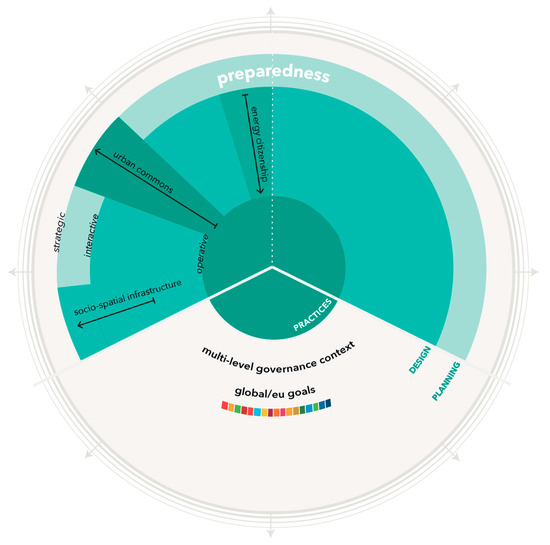
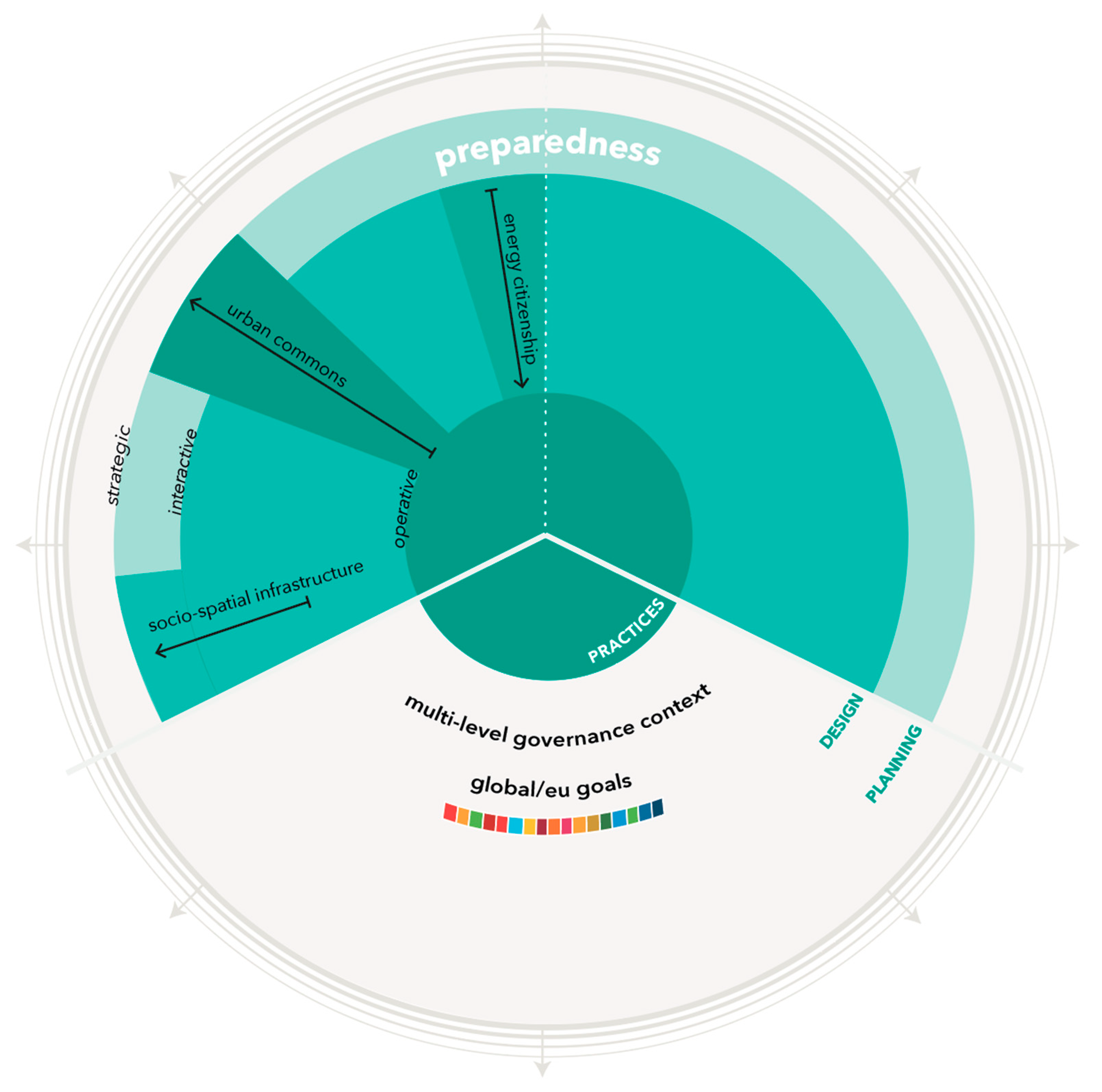

Disclaimer/Publisher’s Note: The statements, opinions and data contained in all publications are solely those of the individual author(s) and contributor(s) and not of MDPI and/or the editor(s). MDPI and/or the editor(s) disclaim responsibility for any injury to people or property resulting from any ideas, methods, instructions or products referred to in the content. |
© 2025 by the author. Licensee MDPI, Basel, Switzerland. This article is an open access article distributed under the terms and conditions of the Creative Commons Attribution (CC BY) license (https://creativecommons.org/licenses/by/4.0/).