Article

Drivers of Engineering Procurement and Construction Model Adoption Behavior by Public Construction Owners in China


1
School of Management, Xi’an University of Architecture and Technology, No. 13 Yanta Road, Beilin District, Xi’an 710055, China
2
School of Civil & Architecture Engineering, East China University of Technology, Nanchang 300033, China
*
Author to whom correspondence should be addressed.
Sustainability 2023, 15(15), 11996; https://doi.org/10.3390/su151511996
Submission received: 10 July 2023 / Revised: 30 July 2023 / Accepted: 2 August 2023 / Published: 4 August 2023
(This article belongs to the Section Sustainable Management)

Abstract

The promotion of the EPC model in public construction projects is a priority for reform in the Chinese construction industry. This study integrates the push–pull–mooring (PPM) model with the stimulus-organism-response (SOR) framework to explore the influencing factors and action mechanisms of adopting the EPC model of the owners of public construction projects in China. An online questionnaire was sent to public construction project owners who have participated in EPC projects. Partial least squares-structural equation modeling (PLS-SEM) was employed to analyze the survey data. The results identified that the push factors for public construction project owners to the adoption of the EPC model include owners’ management ability, owner’s knowledge about EPC, and the matching degree between the owner’s management philosophy and EPC model; the pull factor is the performance pressure of the project; and the mooring factors include subjective norms, the maturity degree of the EPC, and the support environment. In addition, perceived usefulness, cognitive, and adoption attitude play a mediating role in the relationship between external stimuli and adoption behavior. Overall, this study enhances the understanding of Chinese public project owners’ behavior in adopting the EPC model and provides a theoretical basis for policy recommendations to promote the adoption of the EPC model by public construction project owners in China.

1. Introduction

As society evolves and technology progresses, technologies such as prefabricated building, building information models (BIM), lean architecture, and other technologies conducive to enhancing sustainable development are rapidly advancing in the field of the construction industry, and the corresponding, integrated, and efficient project delivery models (PDM) are also sought after by the construction industry worldwide [1,2]. Among them, the Design–Build (DB) model is highly respected worldwide because it overcomes the fragmentation that can result from the design–bid–build (DBB) model [3]. The engineering, procurement, and construction (EPC) model is a conceptual variation of the DB model that strives to coordinate all project phases, disciplines, and stakeholders [4]. The EPC model refers to a PDM in which the construction unit, as the owner, contracts the construction project to a general contractor, who undertakes the design, procurement, and construction of the entire construction project and is fully responsible for the quality, safety, schedule, and cost of the contracted construction project [5]. Studies have shown that the EPC model has become very common worldwide and is widely used in various types of projects such as industrial, water conservancy, transportation, complex, residential building, etc. [6,7].
In recent years, in order to improve the construction management of engineering projects and promote the high-quality and sustainable development of the construction industry, the Chinese government is actively promoting the EPC model as one of the important tasks of China’s construction industry reform [8]. In 2016, the Ministry of Housing and Urban-Rural Development issued “Several Opinions on Further Promoting the Development of General Engineering Contracting”, which clearly proposed that the owners of public construction projects should actively promote and adopt the EPC model. However, this change is not easy for the owners of public construction projects. Wang et al. [8] pointed out that owners need to overcome the path dependence on the DBB model when adopting the EPC model. In addition, data from the China tendering and bidding public service platform (CTABPSP) show that the proportion of projects adopting the EPC model increased from 0.12% in 2014 to 2.35% in 2022, which is not an ideal development trend. Therefore, there is an urgent need to identify the driving factors that drive the adoption of the EPC model by public building project owners in China, which is important to properly understand the adoption behavior of the EPC model and promoting its sustainable development.
Much of the literature has studied the influencing factors of PDM adoption and summarized them as project characteristics and objectives, owner characteristics and demands, and external environment. Unfortunately, the current research is based on the rational decision framework, which is to study the theory of what decision makers should do, and a series of decision models have been developed for this purpose, such as hierarchical analysis, knowledge systems, fuzzy decision making, and so on. These studies have neglected the importance of the decision-making process and the motivation of public construction project owners in adopting the EPC model. In other words, there is a lack of research from the perspective of behavioral decision theory, that is, focusing on how decision makers make decisions and the reasons for making them. Therefore, existing studies cannot adequately explain why public construction project owners choose the EPC model and there is also a lack of in-depth theoretical understanding of the factors influencing the adoption of the EPC model by owners of public construction projects. The existing studies have also failed to reveal the underlying mechanism of cognitive, psychological, and environmental factors in influencing the adoption of the EPC model, making it difficult to accurately understand the decision-making motives and preferences behind the adoption of EPC models by owners.
Currently, within the realm of engineering management, scholars are increasingly focusing on elucidating the mechanisms underlying human behavior. However, there remains a dearth of attention directed towards comprehending the behavioral mechanisms associated with owners’ adoption of the EPC model in public construction projects. This study is conducted from the perspective of a behavioral decision paradigm, focusing on owners’ motivation and decision process, and attempts to investigate the adoption behavior of the EPC model of public construction owners in China by integrating PPM and SOR models, hoping to contribute to the adoption behavior research in the field of PDM so as to promote the development of the related research. Many scholars have used PPM or SOR models to study this behavior in different fields. For example, Guo et al. [9] used the PPM model to study the switching behavior of smartphone users. Yoon and Lim [10] used the PPM model to study the customers’ intention to switch from traditional Internet banking services to Internet-only banking services in Korea. Tian et al. [11] used the SOR theory to study the influence mechanism of mobile short video ads on young people’s consumption behavior. Xu et al. [12] used SOR theory to explore how consumers’ driving experience affects their EV adoption behavior. Therefore, this study aims to answer the following questions by integrating PPM and SOR models: What factors are external stimuli for EPC model adoption by public construction project owners in China, and what role do they play in the push, pull, and mooring effects? Do these external stimuli trigger the owners’ psychological state to adopt the EPC model and indirectly influence their adoption behavior? To do so, data were collected using an online questionnaire from 708 Chinese public construction project owners who have participated in or been in contact with the EPC model. The theoretical model was tested using partial least squares structural equation model (PLS-SEM).
This paper investigates the drivers behind the adoption of the EPC model from a behavioral decision-making perspective, and the findings provide a theoretical basis for the design of countermeasures by the Chinese government to promote the adoption of the EPC model by owners of public construction projects. Additionally, this study provides valuable reference and guidance for promoting the sustainable development of the EPC model in China. The remainder of this paper is organized as follows. Section 2 introduces the theoretical foundation and research hypotheses. Section 3 is research methodology, including instrument development, data collection procedures, and statistical analysis. Section 4 presents the results and findings, including the evaluation of the measurement model, the evaluation of the structural model, the mediating effect analysis, a predictive power assessment, and the importance–performance map. Section 5 discusses the key findings, theoretical implications, and managerial implications. In addition, the limitations of this study are discussed along with directions for future research in Section 5.

2. Theoretical Foundation and Hypotheses

2.1. Push–Pull–Mooring (PPM) Model

The PPM model originated from the push–pull theory explaining individual migration decision-making processes in population studies [13]. Later, Moon [14] and other scholars introduced the “mooring” effect into the push–pull theory, which formed a research idea of analyzing the three-dimensional effects of “push”, “pull”, and “mooring”. This model is also widely used in sociology, psychology, tourism, psychology, management, and many other fields. According to the PPM model, this study classifies the drivers of EPC-adoption behavior into the following three categories. First, the factors that prompt owners to abandon the adoption of the DBB model are divided into pull factors, such as insufficient management ability, high level of EPC knowledge, and the conformity of the owners’ management philosophy to the EPC model; second, the factors that attract owners to adopt the EPC model are categorized as pull factors, such as the high matching of project characteristics to the EPC model and high pressure on project performance; third, the factors that promote owners to switch from adopting the DBB model to adopt the EPC model are grouped as the mooring effect, which is usually composed of personal, social, or cultural forces, such as subjective norms, the maturity of the EPC model, and a supportive environment.

2.2. Stimulus-Organism-Response (SOR) Framework

The well-known SOR framework is often used to explain that an individual’s behavior is induced by an external stimulus that stimulates emotions within the body, which in turn causes the body to produce a corresponding behavior [12]. Many scholars have applied the SOR framework to the study of behavior characteristics. In the SOR framework, stimulus S represents the external environmental factors that individuals are exposed to, organism O mainly refers to some intrinsic cognition or feelings of individuals, and reaction R refers to the reaction behavior of individuals. In addition to being influenced by the stimuli, the owner’s adoption behavior of the EPC model is also shaped by the organism’s response in conjunction with many complex psychological changes in the individual, from which the corresponding adoption behavioral is made. Therefore, the SOR framework can correlate and adapt the drivers of the owner’s EPC model-adoption behavior and analyze the action mechanisms of drivers more rationally.
In summary, both the PPM model and the SOR framework focus on the driving factors and mechanisms of individual behavioral decision-making, providing different levels and perspectives of explanation and analysis. In this paper, we constructed a comprehensive conceptual model for EPC model-adoption behavior (Figure 1), the factors under the three effects of “push”, “pull”, and “mooring” based on the PPM model are considered as stimulus variables under the SOR framework to observe their effects on cognition of the EPC, perceived usefulness, and adoption attitude, as well as the behavioral responses of the owners in adopting the EPC model. By combining the PPM model with the SOR framework, a more comprehensive understanding and explanation of the complexity of owners’ decisions regarding EPC model-adoption behavior, as well as the influence of external stimuli, intrinsic cognitive and emotional states on EPC-adoption behavior can be developed. This combination enhances the explanatory power of EPC model-adoption behavior and helps to provide a more accurate, comprehensive, and scientific framework and basis for analysis.

2.3. Stimulus: Push Factors

Owner’s management ability (MA): The owner using the EPC model only needs to sign a contract with the EPC general contractor, and does not need to sign contracts with the designer and the constructor, respectively [15]. Therefore, the EPC model and the DBB model have different requirements for the owner’s staffing, professional capacity, and resource inputs. The EPC general contractor takes full responsibility for the cost, quality, progress, and safety of the project, which greatly reduces the workload and the requirements for the owner’s management capability. In other words, when the owner’s project management capability is insufficient, it will be more necessary to choose the EPC model to achieve integrated project management, enhance the level of project management through the professional capability of the EPC contractor, and reduce the corresponding risk taking, thus increasing the perceived usefulness of the EPC model. Therefore, the following hypothesis is proposed in this paper:
H1. 
The owner’s management ability negatively affects the perceived usefulness of EPC model.
Owner’s knowledge about EPC (OK): The existing literature research has proved that cognitive-knowledge factors are important variables affecting individual behavior. According to the responsible environment theory, knowledge-cognitive factors have a greater impact on behavioral intention [16]. The theory of planned behavior also holds that when the actors master more relevant knowledge, they will significantly promote the generation and implementation of behavior [17]. Obviously, if an owner has more knowledge about EPC, it will inevitably increase the perception of the effectiveness of the EPC model. Based on this, the following hypothesis is proposed in this paper:
H2. 
The knowledge about EPC positively affects the owner’s cognition of the EPC model.
The conformity of the owners’ management philosophy to the EPC model (MP): The EPC model fully fulfills the professional capabilities of the EPC general contractor, who is responsible for the design and construction of the project. The EPC general contractor can optimize resource allocation from the perspective of the whole project, enabling the combination of design and construction but also reducing the owner’s control over project details of the engineering. Under the DBB model, the owner usually needs to deal with issues such as the hostile relationship between the designer and the constructor, engineering changes and claims, or design review. Studies in the literature also show that the influence of management philosophy such as management culture and leadership style is also an important factor influencing behavioral intention [18]. Therefore, this paper proposes the following hypothesis:
H3. 
The conformity of the owner’s management philosophy to the EPC model positively affects the owner’s attitude towards the adopt of EPC model.

2.4. Stimulus: Pull Factors

The matching degree between project characteristics and the EPC (PC): Research has shown that project characteristics are an important factor influencing the adoption of PDM [1]. Compared with the DBB model, the EPC model requires the project scope to be clarified at the early stage of the project. If the scope is unclear or uncertain, and may lead to design or construction changes, the DBB model is more appropriate. In addition, the EPC model is more suitable for items of standard design, whereas the DBB model is more suitable for items of complex design [15]. In general, there is a tendency to use PDMs that are more appropriate to the project characteristics. Based on this, this paper proposes the following hypothesis:
H4. 
The matching degree of project characteristics positively affects the perceived usefulness of the EPC model.
Performance pressure of the project (PP): Project performance is also an important factor influencing the adoption of PDMs. The EPC model generally employs fixed price contracts, and the project investment can be determined in the pre-project period, and thus is more suitable for budget-tight projects [19]. In addition, in the EPC model, the construction can be involved in the design stage. The constructability of the design scheme increases the flexibility of the schedule, allows for faster delivery, prevents construction delay as much as possible, and also improves the quality level of the engineering. In summary, the EPC model is more likely to show better performance than the DBB model [5]. In other words, when the performance pressure is stressful, people will try to seek help from the EPC model. Therefore, this paper proposes the following hypothesis:
H5. 
Performance pressure of project positively affects the perceived usefulness of the EPC model.

2.5. Stimulus: Mooring Factors

Subjective norms (SN): Subjective norms refer to the pressures that individuals perceive from important people or social organizations surrounding them in terms of whether or not to perform specific behaviors. Rational behavior theory and planned behavior theory consider that subjective norms are important antecedent variables that influence individual behavior intention, and hence individual behavior [20]. Therefore, this paper proposes the following hypothesis:
H6. 
Subjective norms positively affects the adoption behavior of the EPC model.
Maturity degree of EPC (MD): As China is at the early stage of promoting the EPC model, the EPC model is relatively immature, which increases the risk of using the EPC model and further affects the adoption intention and behavior of the EPC model for the owners. Therefore, this paper proposes the following hypothesis:
H7. 
The maturity degree of EPC positively affects the adoption behavior of the EPC model.
Supportive environment (SE): At present, the adoption of the EPC model still faces many constraints, such as the law and the market [5]. Social cognitive theory believes that individual behavior is affected by external environmental factors [21]. The attitude–context–behavior theory also emphasizes that individual behavior is influenced both by the attitudes of the individual toward implementing a particular behavior and by the external environment [22]. Therefore, this paper proposes the following hypothesis:
H8. 
A supportive environment positively affects the adoption behavior of the EPC model.

2.6. Organism

Perceived usefulness (PU): Perceived usefulness refers to the degree to which users subjectively think that their work performance will be improved when they use a specific system. In the context of this study, the adoption of EPC is linked to the perceived benefits of adopting the EPC model. In the technology acceptance model, perceived usefulness has proved to be an important psychological variable of behavior [23,24]. Therefore, the following hypothesis is proposed in this paper:
H9. 
Perceived usefulness positively affects the adoption behavior of the EPC model.
Cognition of EPC (CO): Cognition is seen as an important factor in understanding human behavior [25]. It is a process in which individuals screen, organize, and understand the information they have obtained. According to the social cognitive theory (SCT) of behavioral economics, the degree of individual cognition directly affects their behavioral preferences or intentions [26]. The adoption behavior of the EPC model of the owners of public construction projects will be affected by their cognition. In this study, the cognition of the EPC model includes the cognition of performance levels in terms of cost, schedule, quality, etc. Although the EPC model is not absolutely superior to the DBB model in project performance, most studies show that the EPC model has better performance. Therefore, the higher the level of cognition about the EPC model, the more likely the owner will adopt the EPC model. Therefore, the following hypothesis is proposed in this paper:
H10. 
The cognitive level positively affects the adoption behavior of the EPC model.
Adoption Attitude (AA): Behavioral attitude mainly refers to the attitude formed after the conceptualization of the individual’s prediction and estimation of the implementation of a certain behavior, their own positive or negative feelings, and the individual’s evaluation and definition of a specific behavior. The positive impact of behavioral attitude on behavioral intention has been confirmed by scholars, especially in the theory of planned behavior, which takes behavioral attitude as an important predictor of behavior [27]. Based on this, this paper proposes the following hypothesis:
H11. 
Behavior attitude positively affects the adoption behavior of the EPC model.

2.7. Response

Adoption behavior (AB): Adoption intention refers to the degree to which individuals tend to certain behaviors. In this study, it refers to whether the owners of public construction projects will give priority to the EPC model, increase the number of times they adopt the EPC model, and the extent to which they are willing to recommend the EPC model to others.
Additionally, the SOR theory emphasizes that the organism plays a mediating role between stimuli and individual responses, and the external stimulus indirectly influences the response through the organism [28,29,30,31]. Therefore, this paper proposes the following hypotheses:
H12. 
Perceived usefulness has a mediating role in influencing the owner’s management ability on the adoption behavior of the EPC model.
H13. 
Cognition has a mediating role in influencing the owner’s knowledge about EPC on the adoption behavior of the EPC model.
H14. 
Adopting attitude has a mediating role in influencing the matching degree of management philosophy on the adoption behavior of the EPC model.
H15. 
Perceived usefulness has a mediating role in influencing the matching degree of project characteristics on the adoption behavior of the EPC model.
H16. 
Perceived usefulness has a mediating role in influencing the performance pressure of the project on the adoption behavior of the EPC model.
Research in recent years has shown that stimuli can also directly predict individual responses without considering the mediating role of organisms. Several studies have confirmed this [12,30]. Therefore, this paper hypothesizes that stimuli can also directly influence adoption behavior and forms the following hypotheses.
H17 
The owner’s management ability negatively affects the adoption behavior of the EPC model.
H18. 
Knowledge about EPC positively affects the adoption behavior of the EPC model.
H19. 
The conformity of the owner’s management philosophy to the EPC model positively affects the adoption behavior of the EPC model.
H20. 
The matching degree of the project characteristics positively affects the adoption behavior of the EPC model.
H21. 
The performance pressure of the project positively affects the adoption behavior of the EPC model.

3. Research Methodology

3.1. Instrument Development

This study conducted a self-survey through a well-designed questionnaire, obtained relevant data, and validated the research model. After a thorough investigation of the existing literature and hypotheses, a comprehensive scale was developed for the investigation. This paper draws on previous research by making appropriate modifications to the scale for full accuracy in the context of EPC-adoption behavior. The questionnaire consisted of two parts: demographic variables and main scales. The demographic section consists of age, gender, educational background, professional background, and years of employment. A seven-point Likert scale was used to design the questions for each of the variables, ranging from strongly disagree to strongly agree. Table 1 presents the key elements of the survey questionnaire including 12 variables and 45 items.

3.2. Data Collection Procedures

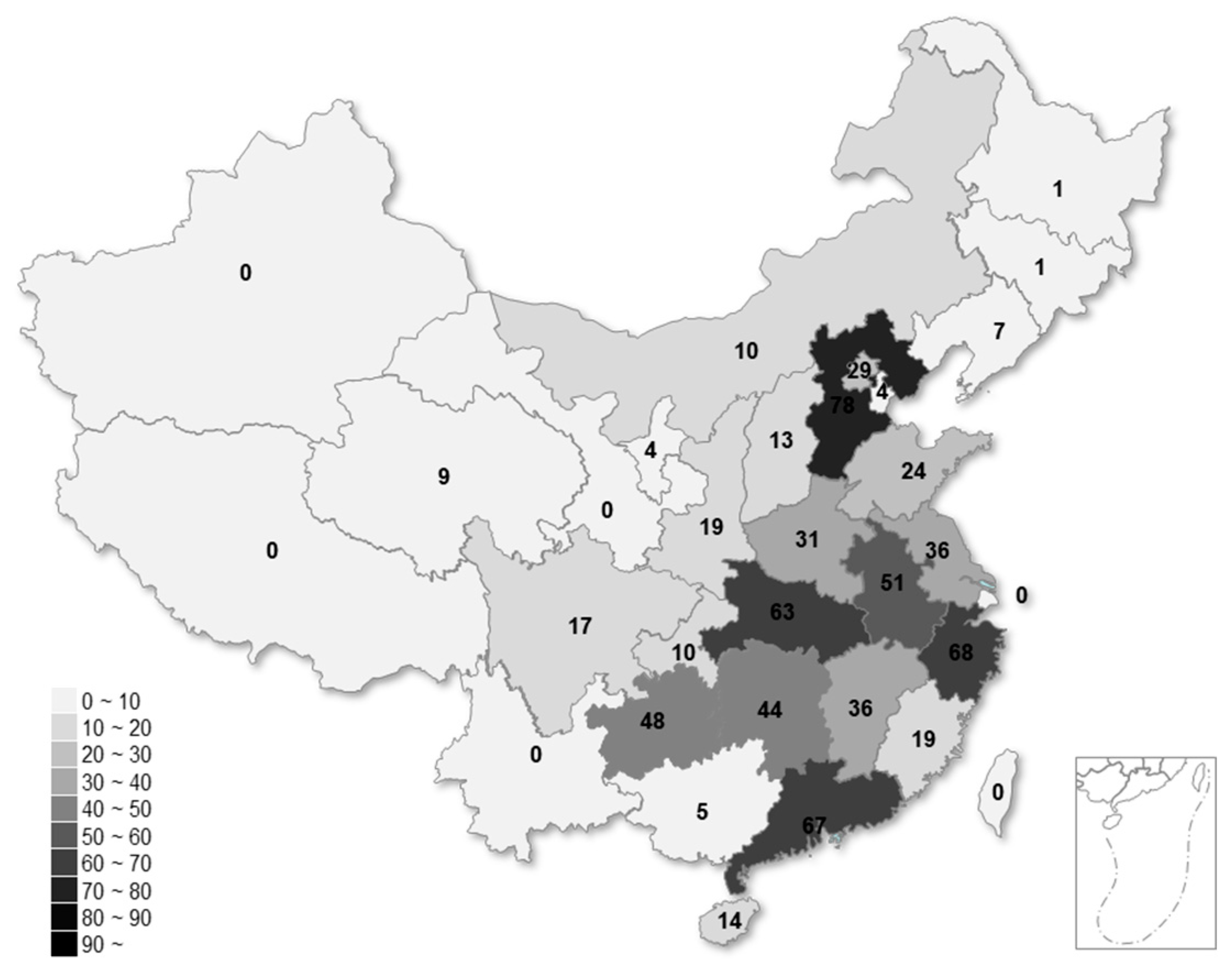
To collect data, an online questionnaire was created through wenjuanxing (https://www.wjx.cn) (accessed on 24 February 2022), one of the largest online survey platforms in China. A cross-sectional survey was employed in this study. Respondents covered most of China’s provinces, municipalities, and autonomous regions from March to August 2022. Questionnaires were purposively sampled because this method is considered to be effective in obtaining valid responses that can provide information relevant to the research [8]. In this study, the questionnaire was distributed to the owners of public construction projects in China, and selected respondents who had participated in or been in contact with EPC projects. After excluding the incomplete and unqualified questionnaires, 708 valid questionnaires were finally obtained, covering most areas of China (Figure 2). Table 2 shows the demographic distribution of the valid response sample. Among them, the majority of respondents are male (84.6%), among which 95.5% are over 30 years old, 79.2% have middle or senior professional title, 88.7% have university degree or above, and 39.4% are public construction project owners with engineering management backgrounds. The analysis of the demographic characteristics of the sample shows that the performance of the sample is in line with the social situation, so it has a good representation.

3.3. Statistical Analysis

Two types of statistical software were used to analyze the data in this study. First, the statistical software SPSS 25 was used to check the common method variance (CMV) [8]. Subsequently, based on the exploratory nature of the study objectives, partial least squares-structural equation modeling (PLS-SEM) using SmartPLS 4 was employed to examine the hypothesized relationships. This is due to partial least square path modeling having a higher statistical power in comparison with covariance-based structural equation modeling [44,45,46].

4. Results and Findings

4.1. Evaluation of the Measurement Model

Anderson and Gerbing [47] stated that the structural properties of a conceptualized model can only be tested when the reliability and validity are confirmed. Therefore, we conducted reliability and validity tests. Cronbach’s α is one of the most commonly used reliability coefficients. When α ≥ 0.7, the data reliability is ideal. The α values of all the structures in this study were greater than 0.7 by the SPSS 25 (Table 3), so the stability of the scale is completely acceptable. To assess the composite reliability (CR) of the research model, the item’s factor loadings must exceed 0.70. All outer loadings of the reflective constructs were well above the minimum threshold value of 0.727 and the constructs had high levels of internal consistency and reliability, according to the CR values. The convergent validity is determined using the Average Variance Extracted (AVE), and the AVE values were well above the minimum level of 0.50, implying the convergent validity of the research constructs. Table 3 reports the measurement model assessment statistics.
The heterotrait–monotrait ratio of correlations (HTMT) is a new method for assessing discriminant validity in PLS-SEM [48]. It has been proved to have a higher specificity and sensitivity than cross-loading criterion and Fornell–Lacker [44]. Table 4 shows the discriminant validity of all the constructs. In all cases, an indicator loading on its own construct was higher than all of its cross-loadings with the other constructs. The HTMT ratio of correlation showed that all the values were below the threshold of 0.85, thereby establishing the discriminant validity of the reflective constructs.
Since all the data were collected from a single source, common method variance (CMV) could exist. Variance inflationary factor (VIF) and Harman’s single-factor analysis were carried out to address social desirability-related issues derived from the single survey in this study [49]. If the collinearity problem in the model is not queued or ignored improperly, it will easily lead to errors in the interpretation of the model. Therefore, when evaluating the model, it was necessary to confirm that the collinearity problem had been eliminated. The CMV could be severe if the variance-inflated factor (VIF) value was higher than 3.3 [50]. Table 3 showed that the VIF values ranged from 1.722 to 3.142, indicating that CMV was not an issue in the study. According to the outcome of Harman’s single-factor analysis, the explanatory variation of the first factor was 16.499%; because it was less than 50%, there were no serious common method biases.

4.2. Evaluation of the Structural Model

The statistical technique of structural equations based on variance was used to verify the hypotheses raised in this investigation using SmartPLS 4. The bootstrapping procedure was employed with 5000 sub-samples. The hypotheses were evaluated and the significance of the path coefficients was estimated using the criteria provided in the PLS-SEM literature. The results of the proposed structural model are presented in Table 5.
Concerning the path coefficients, there was a significant, positive relationship between perceived usefulness (PU) and adoption behavior (AB) (β = 0.200, t = 6.357, p < 0.001), between adoption attitude (AA) and adoption behavior (AB) (β = 0.150, t = 4.773, p < 0.001), and between cognition of EPC (CO) and adoption behavior (AB) (β = 0.227, t = 7.182, p < 0.001), providing support for H9, H10, and H11. In addition, the model showed a significant, positive relationship between the performance pressure of the project (PP) and perceived usefulness (PU) (β = 0.267, t = 7.990, p < 0.001) and a significant, negative relationship between the owner’s management ability (MA) and perceived usefulness (PU) (β = −0.317, t = 9.338, p < 0.001). Hence, H5 and H1 were supported. However, the matching degree between project characteristics and EPC (PC) did not exert a significant, positive effect on perceived usefulness (PU) (β = 0.041, t = 1.161, p = 0.246), therefore not providing support for H4. Additionally, we found a significant, positive relationship between the maturity degree of EPC (MD) and adoption behavior (AB) (β = 0.118, t = 3.464, p = 0.001), between a supportive environment (SE) and adoption behavior (AB) (β = 0.146, t = 4.690, p < 0.001), and between subjective norms (SN) and adoption behavior (AB) (β = 0.184, t = 5.598, p < 0.001), providing support for H6, H7, and H8. What is more, there was a significant, positive relationship between the conformity of the owner’s management philosophy to the EPC model (MP) and adoption attitude (AA) (β = 0.300, t = 8.795, p < 0.001), and between the owner’s knowledge about EPC (OK) and the cognition of EPC (CO) (β = 0.352, t = 10.849, p < 0.001). Hence, H3 and H2 were supported. The model also showed a significant negative relationship between the owner’s management ability (MA) and adoption behavior (AB) (β = −0.101, t = 3.127, p = 0.002), a significant positive relationship between the conformity of the owners’ management philosophy to the EPC model (MP) and adoption behavior (AB) (β = 0.135, t = 4.470, p < 0.001), and a significant positive relationship between the performance pressure of the project (PP) and adoption behavior (AB) (β = 0.099, t = 3.328, p = 0.001), providing support for H17, H18, and H21. However, there was no significant positive effect between the owner’s knowledge about EPC (OK) and adoption behavior (AB) (β = 0.054, t = 1.828, p = 0.068) and the matching degree between project characteristics and EPC (PC) and adoption behavior (AB) (β = 0.028, t = 0.954, p = 0.340). Thus, H19 and H20 were not supported.

4.3. Mediating Effect Analysis

For the mediating effects, perceived usefulness (PU) played a partial mediating role in the relationship between the effects of the owner’s management ability (MA) and adoption behavior (AB), with indirect effects of −0.064 (p < 0.001), direct effects of −0.101 (p = 0.002), and the total effect of 0.180 (p < 0.001). Cognition of EPC (CO) played a completely mediating role in the relationship between the effects of the owner’s knowledge about EPC (OK) and adoption behavior (AB), with indirect effects of 0.080 (p < 0.001), direct effects of 0.054 (p = 0.068), and the total effect of 0.153 (p < 0.001). Adoption attitude (AA) played a partial mediating role in the relationship between the effects of the conformity of the owner’s management philosophy to the EPC model (MP) and adoption behavior (AB), with indirect effects of 0.045 (p < 0.001), direct effects of 0.135 (p < 0.001), and the total effect of −0.164 (p < 0.001). Perceived usefulness (PU) played a completely mediating role in the relationship between the effects of the performance pressure of the project (PP) and adoption behavior (AB), with indirect effects of 0.054 (p < 0.001), direct effects of 0.099 (p = 0.001), and the total effect of 0.036 (p < 0.001). On the other hand, perceived usefulness (PU) did not play a significant mediating role between the matching degree between project characteristics and EPC (PC) and adoption behavior (AB), with indirect effects of 0.008 (p = 0.265), direct effects of 0.028 (p = 0.340), and the total effect of 0.134 (p = 0.231). Therefore, H12, H13, H14, and H16 were established and the H15 was not valid, as shown in Table 6.

4.4. Predictive Power Assessment

Firstly, to measure the predictive power of the structural model, we analyzed the coefficient of determination (R2) [51]. This value indicates the amount of variance of a construct that is explained by the predictive variables of the said endogenous construct in the model [52]. According to the values of R2, the model explained 40.4% of adoption behavior (AB), 14.6% of perceived usefulness (PU), 12.4% of cognition of EPC (CO), and 9% of adoption attitude (AA). It showed a moderate explanatory ability for adoption behavior (AB) and a slightly weak explanatory ability for perceived usefulness (PU), cognition of EPC (CO), and adoption attitude (AA). We have also analyzed the effect size through f2. This test measures the degree to which an exogenous construct helps explain a specific endogenous construct in terms of R2 [52]. According to the values of f2, we found the antecedents explain a small amount of the outcome variables (f2 < 0.15) [53].
Secondly, to evaluate the predictive relevance of the structural model we used the analysis of Q2 (cross-validated redundancy index). The PLS-predict procedure was used to assess the predictive power in terms of predicting the outcome variables. As shown in Table 5, Q2 Predict values were greater than zero, indicating a high predictive power of the PLS model [54].

4.5. Model Fit Indices

Goodness-of-fit (GoF) is one of the earliest proposed indices of model fit indices that can determine how well the hypothesized model structure fits the empirical data, thus helping to identify model mismatches. Although Hair et al. [54] advised against using these statistics in the context of PLS-SEM, as researchers may try to sacrifice predictive power for a better “fit”, however, scholars will still assess the goodness of fit appropriately in their studies. Mohamad et al. [33] reported the GOF comprehensively, and this approach is adopted in this paper (Table 7).
Based on Table 7, the Standardized Root Mean Square Residual (SRMR) value for this study framework is 0.037, and the results indicated that this model fulfils the criterion of SRMR < 0.08 [33]. The values of the saturated model and the estimated model for the squared Euclidean distance (d-ULS) and the geodesic distance (d_G) should be close for a good fit of the model [55,56]. An NFI close to 1 means a good fit. Therefore, the model fit test was passed.

4.6. The Importance-Performance Map

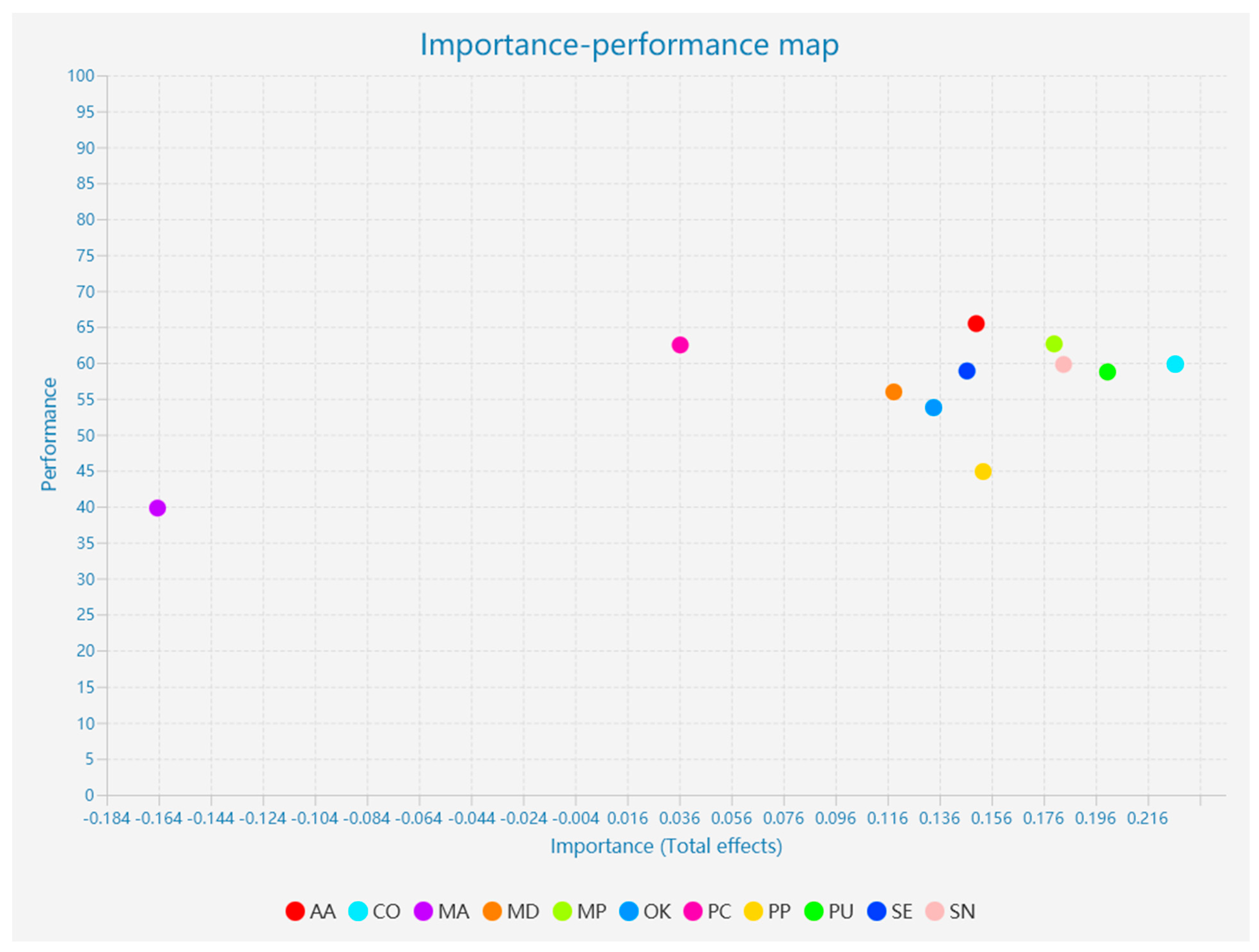
The importance–performance map analysis (IPMA) is also a useful method for generating additional findings and conclusions for managerial actions [56]. According to the IPMA results shown in Figure 3, cognition of EPC (CO) was a much more critical construct, whereas adoption attitude (AA) was substantial in performance. As a result, marketers should focus on cognition of EPC (CO) as an essential construct and adoption attitude (AA) as performance to enhance the adoption behavior (AB).

5. Discussion and Conclusions

5.1. Key Findings

This paper explored the mechanisms of EPC model-adoption behavior from the perspective of behavioral decision theory, which can facilitate the understanding of EPC model-adoption behavior and better understand the drivers of EPC model-adoption behavior among owners of public construction projects in China. For this purpose, we collected data from public construction project owners who have participated in EPC projects in China and developed a comprehensive model to explain the mechanisms of the EPC model-adoption behavior.
It was found that the mediating effect of organisms was verified in this study, and the stimuli can not only directly affect the individual response, but also indirectly affect the individual response by acting on the psychological activities of organisms. However, the empirical results of the theoretical framework presented in this study showed that stimulus factors have a moderate predictive power for adoption behavior, and a weaker predictive power for perceived usefulness, cognitive, and adoption attitudes.
Specifically, owners’ management ability and project performance pressure have a positive impact on perceived usefulness. Owners’ management ability has a negative correlation with perceived usefulness, while project performance pressure has a positive correlation with perceived usefulness. Meanwhile, perceived usefulness has a significant positive correlation with adoption behavior. Therefore, the lower the management ability of the owner, the greater the pressure of project performance, and the stronger the perceived usefulness of the owner of the EPC model, thus increasing the adoption of the EPC model. Previous studies have corroborated such findings. For example, Zhong et al. [2] argued that owners may be promoted to adopt the EPC model when they have insufficient capacity and owners may also be more inclined to adopt the EPC model when there are strict milestones or deadlines, the need for early cost determination, the need to ensure the constructability of the project design, etc.
Unfortunately, the matching degree between project characteristics and the EPC model does not significantly affect owners’ perceived usefulness of the EPC model, nor does it significantly affect the adoption behavior of the EPC model. This suggests that although previous studies have shown that the matching degree between project characteristics and the EPC model is an influential factor in the EPC model-adoption behavior [57], its impact on the EPC-adoption behavior is low compared with other factors. The possible reason is that China is currently in the early stage of promoting the EPC model, and whether public project owners adopt the EPC model is influenced more by policies and owner characteristics than by project characteristics. This confirms to some extent the view of Liu et al. [58] that owner characteristics and requirements are more important than project characteristics when owners choose PDM.
This study also confirmed that owners’ knowledge about EPC has a positive impact on cognition, and cognition also has a positive correlation with the adoption behavior of the EPC model. This result can be interpreted as follows: owners who have learned or understood the EPC model have a higher cognition of the EPC model, and this will increase their adoption intention of the EPC model. This may be a relatively novel finding, as the knowledge factor has rarely been mentioned in previous studies. The reason is that previous studies are mostly based in countries where the EPC model is well developed and the EPC model is usually well known by the owners. In China, which is in the early stage of promoting the EPC model, knowledge of it is generally low, and owners who do not have the knowledge of the EPC model usually will not adopt the EPC model. In addition, the matching degree between an owner’s management philosophy and the EPC model has a positive impact on the adoption attitude of the EPC model, and the adoption attitude also has a positive correlation with the adoption behavior of the EPC model. This result can be interpreted as follows: owners whose management philosophies are more consistent with the EPC model have a strong adoption attitude, and thus have a high adoption behavior of the EPC model. Previous studies have shown that owners will prefer the EPC model when there is a desire to allocate less risk, enhance the integration of design and construction phases, be less involved in the project, and seek to achieve maximum project value, among other characteristics [39].
The anchoring effect of the mooring factors was also demonstrated in this paper, and subjective norms, the maturity of the EPC model, and a support environment all showed a significant positive correlation with the adoption intention of the EPC model. Among them, the largest path coefficient is the subjective norm, which is consistent with the conclusion that subjective norms are often taken as important antecedent variables of behavioral intention in previous studies. Therefore, the suggestions of surrounding colleagues and experts in adopting the EPC model, and the actual practices of similar engineering programs in adopting the EPC model will have a greater impact on the EPC-adoption behavior of the project owner.

5.2. Theoretical Implications

The results of this study have certain theoretical contributions. First, they provide a new perspective for the study of PDMs. Although the adoption of PDMs has always been a hot topic in the field of engineering management, most of the current research focuses on the rational decision-making paradigm in making reasonable adoption decisions for PDMs and lack in-depth research on the behavioral mechanism of the adoption of PDMs. Based on the behavioral theory paradigm, this study establishes a comprehensive model to explain the adoption behavior mechanism of the EPC model, and expands the research scope of the adoption behavior of PDMs.
Secondly, the effectiveness of the SOR framework and PPM model in revealing the behavior mechanism of EPC model-adoption is confirmed. By introducing an SOR framework and PPM theory, this study explores the factors that influence the adoption behavior of the EPC model by owners of public construction projects in China. The empirical research results show that the push factors driving the adoption of the EPC model by public construction projects’ owners include the owner’s management ability, the owner’s knowledge about EPC, and the conformity between the owner’s management philosophy and the EPC model; the pull factor is the performance pressure of the project; and the mooring factors include subjective norms, the maturity degree of the EPC model, and a support environment. In addition, perceived usefulness, cognitive, and adoption attitudes play a mediating role in the relationship between external stimuli and adoption behavior. These conclusions provide a reasonable explanation for the mechanism of the factors influencing the adoption of the EPC model by the owners of public construction projects.
Therefore, this study contributes to the enrichment of the knowledge system in the field of engineering management by revealing the influencing factors of EPC model-adoption behavior by public project owners in China and the driving mechanism of the influencing factors on EPC model-adoption behavior.

5.3. Managerial Implications

This study collected data from owners of public construction projects who have participated in EPC projects, who are required to actively adopt the EPC model in the construction of engineering projects in the context of the strong promotion of the EPC model by the construction industry in China. These samples can best reflect the formation mechanisms of the EPC model-adoption behavior of owners of public construction projects in China, and help to reveal the influencing factors of the adoption of EPC model. Therefore, the findings of this study are of great significance in helping to understand the EPC model-adoption behaviors of public construction project owners in China, and in providing concrete recommendations and practical guidance to promote the adoption and sustainable development of the EPC model.
According to the findings of this study, the perceived usefulness of the EPC model by owners can be enhanced by increasing the pressure on project performance, thus promoting its adoption. For this reason, the government can increase the requirements and standards for project performance to promote the adoption of the EPC model by owners. In addition, improving owners’ knowledge of EPC can increase their cognizance of the EPC model and promote its adoption. To achieve this goal, the government and relevant agencies can organize industry publicity, training, and education activities, encourage owners of successful cases to exchange and share their experiences, enhance owners’ knowledge and recognition of the EPC model, help them understand and adjust to the management philosophy of the EPC model, and promote their adoption of the EPC model. This study also found that the extent to which owners’ management philosophy matches the EPC model positively affects their attitude towards adopting the EPC model. Therefore, the government can formulate appropriate policy documents to guide and promote the standardization of the EPC model to ensure that owners are able to adopt management philosophies that are consistent with the model. The findings also indicate that EPC maturity, subjective norms, and supportive environments all positively influence EPC-adoption behavior. Therefore, the government can support experts in the field to provide professional advice to owners and improve relevant laws and regulations to improve the policy environment of the EPC model. In addition, the transformation and development of building construction enterprises to EPC general contractors should be vigorously promoted to enhance the market environment and further promote the adoption of the EPC model.
In summary, applying these findings to specific policy recommendations can promote the adoption of the EPC model more widely by owners of public construction projects in China and promote the sustainable development of the EPC model in China. In addition, the adoption of the EPC model is conducive to improving the efficiency and quality of public construction projects, achieving the goal of sustainable development, and promoting the transformation and upgrading of construction enterprises and the sustainable development of the construction industry.

5.4. Limitations and Future Research

Several limitations of this study point the way for further research. First, this study only focused on Chinese public construction project owners, and the differences in the development of different countries must be considered as an important factor. However, the basic principles of the behavior theory paradigm can also be applied in a more general sense to understand adoption behavior in other contexts. Significantly, this study focuses on the public construction industry in China, but the insights and implications provided may have broader applicability. Secondly, due to the concentrated survey time, only the thoughts and behaviors of the respondents at that time can be reflected. Follow-up studies are also needed with the rapid promotion and development of the EPC model. Thirdly, only SEM is used for quantitative analysis, which may not necessarily comprehensively reflect the adopting intention of the EPC model. A hybrid approach is desirable in future studies.

Author Contributions

Conceptualization, S.W.; Methodology, S.W.; Software, S.W.; Validation, S.W.; Formal analysis, W.S.; Investigation, S.W.; Resources, S.W.; Data curation, S.W.; Writing—original draft preparation, S.W.; Supervision, X.L.; Project administration, X.L. All authors have read and agreed to the published version of the manuscript.

Funding

This research received no external funding.

Institutional Review Board Statement

Not applicable.

Informed Consent Statement

Not applicable.

Data Availability Statement

Some or all data, models, or code that support the findings of this study are available from the corresponding author upon reasonable request.

Conflicts of Interest

The authors declare no conflict of interest.

References

  1. Demetracopoulou, V.; O’Brien, W.J.; Khwaja, N.; Feghaly, J.; Elasmar, M. A critical review and analysis of decision-support processes and tools for project delivery method selection. Eng. Constr. Archit. Manag. 2022; ahead-of-print. [Google Scholar] [CrossRef]
  2. Zhong, Q.; Tang, H.; Chen, C.; Igor, M. A comprehensive appraisal of the factors impacting construction project delivery method selection: A systematic analysis. J. Asian Archit. Build. Eng. 2023, 22, 802–820. [Google Scholar] [CrossRef]
  3. Ramy, K.; Islam, H.E. Identifying design-build decision-making factors and providing future research guidelines social network and association rule analysis. J. Constr. Eng. Manag. 2023, 149, 4022151. [Google Scholar]
  4. Alberto, D.M.; Carlo, R.; Muhammad, J.T. Dynamic management of risk contingency in complex design-build projects. J. Constr. Eng. Manag. 2016, 142, 0001052. [Google Scholar]
  5. Wang, S.; Liu, X. Development of EPC model in Chinese public projects: Evolutionary game among stakeholders. J. Asian Archit. Build. Eng. 2021, 5, 2095–2113. [Google Scholar] [CrossRef]
  6. Franz, B.; Molenaar, K.R.; Roberts, B.A.M. Revisiting Project Delivery System Performance from 1998 to 2018. J. Constr. Eng. Manag. 2020, 146, 04020100. [Google Scholar] [CrossRef]
  7. Feghaly, J.; ELAsmar, M.; Ariaratnam, S.T. A comparison of project delivery method performance for water infrastructure capital projects. Can. J. Civ. Eng. 2021, 48, 691–701. [Google Scholar] [CrossRef]
  8. Wang, S.; Liu, X.; Liu, N. How to alter path dependency and promote the use of EPC model in public projects of China? PLoS ONE 2022, 17, e0266957. [Google Scholar] [CrossRef]
  9. Guo, J.; Shan, S.; Wang, Y.; Khan, Y.A. Analyzing Chinese customers’ switching intention of smartphone brands: Integrating the push-pull-mooring framework. Discret. Dyn. Nat. Soc. 2021, 2021, 6660340. [Google Scholar] [CrossRef]
  10. Yoon, C.; Lim, D. Customers’ intentions to switch to internet-only banks: Perspective of the push-pull-mooring model. Sustainability 2021, 13, 8062. [Google Scholar] [CrossRef]
  11. Tian, K.; Xuan, W.; Hao, L.; Wei, W.; Li, D.; Zhu, L. Exploring youth consumer behavior in the context of mobile short video advertising using an extended stimulus-organization-response model. Front. Psychol. 2022, 13, 933542. [Google Scholar] [CrossRef]
  12. Xu, G.; Wang, S.; Zhao, D. Transition to sustainable transport: Understanding the antecedents of consumer’s intention to adopt electric vehicles from the emotional research perspective. Environ. Sci. Pollut. Res. 2021, 28, 20362–20374. [Google Scholar] [CrossRef]
  13. Liu, Q.; Xue, B.; Huang, S. Investigating users switching intention for mobile map services: An extension of the push-pull-mooring model. Int. J. Mob. Commun. 2021, 19, 99–120. [Google Scholar] [CrossRef]
  14. Moon, B. Paradigms in migration research: Exploring “moorings” as a schema. Prog. Hum. Geogr. 1995, 4, 504–524. [Google Scholar] [CrossRef] [PubMed]
  15. Touran, A.; Dransberg, D.D.; Molenaar, K.R.; Ghavamifar, K.; Mason, D.J.; Fithian, L.A. A Guidebook for the Evaluation of Project Delivery Methods; The National Academies Press: Washington, DC, USA, 2009. [Google Scholar]
  16. Tang, H.; Ma, Y.; Ren, J. Influencing factors and mechanism of tourists’ pro-environmental behavior-empirical analysis of the CAC-MOA integration model. Front. Psychol. 2022, 13, 1060404. [Google Scholar] [CrossRef]
  17. Wu, L.; Zhu, Y.; Zhai, J. Understanding waste management behavior among university students in China: Environmental knowledge personal norms, and the theory of planned behavior. Front. Psychol. 2022, 13, 12771723. [Google Scholar] [CrossRef]
  18. Park, S.; Kim, B.; Park, J.; Exchange, K. Impacts of information security culture and management leadership styles on information security behaviors. J. Korea Inst. Inf. Secur. Cryptol. 2022, 2, 355–370. [Google Scholar]
  19. Ahmed, S.; El-Sayegh, S. Critical review of the evolution of project delivery methods in the construction industry. Buildings 2021, 11, 11. [Google Scholar] [CrossRef]
  20. Ajzen, I.; Fisbbein, M. Factors influencing intentions and the intention-behavior relation. Hum. Relat. 1974, 1, 1–15. [Google Scholar] [CrossRef]
  21. Lee, C. On cognitive theories and causation in human behavior. J. Behav. Ther. Exp. Psychiatry 1992, 4, 257–268. [Google Scholar] [CrossRef]
  22. Guagnano, G.A.; Stern, P.C.; Dietz, T. Influences on attitude-behavior relationships: A natural experiment with curbside recycling. Environ. Behav. 1995, 5, 699–718. [Google Scholar] [CrossRef]
  23. Caldeira, T.A.; Ferreira, J.B.; Freitas, A.; Falcäo, R.P.D.Q. Adoption of mobile payments in Brazil: Technology readiness 2021trust and perceived quality. BBR Braz. Bus. Rev. 2021, 18, 415–432. (In Portuguese) [Google Scholar]
  24. Muchenje, T.; Botha, R. Consumer-centric factors for the implementation of smart meters in South Africa. S. Afr. Comput. J. 2021, 33, 17–54. [Google Scholar] [CrossRef]
  25. Lim, X.; Ngew, P.; Cheah, J.; Cham, T.H.; Liu, Y. Go digital: Can the money-gift function promote the use of e-wallet apps? Internet Res. 2022, 32, 1806–1831. [Google Scholar] [CrossRef]
  26. Kim, M.; Chai, S. The role of agility in responding to uncertainty: A cognitive perspective. Adv. Prod. Eng. Manag. 2022, 17, 57–74. [Google Scholar] [CrossRef]
  27. Ajzen, I. From intentions to actions: A theory of planned behavior. In Action Control: From Cognition to Behavior; Springer: Berlin/Heidelberg, Germany, 1985; pp. 11–39. [Google Scholar]
  28. Wang, J.; Wang, S.; Xue, H.; Wang, Y.; Li, J. Green image and consumers’ word-of-mouth intention in the green hotel industry: The moderating effect of millennials. J. Clean. Prod. 2018, 181, 426–436. [Google Scholar] [CrossRef]
  29. Mason, M.C.; Zamparo, G.; Marini, A.; Ameen, N. Glued to your phone? generation z’s smartphone addiction and online compulsive buying. Comput. Hum. Behav. 2022, 136, 107404. [Google Scholar] [CrossRef]
  30. Wang, J.; Zhang, L.; Sun, Y.; Lu, G.; Chen, Y.; Zhang, S. Exploring the impacts of urban community leisure on subjective well-being during COVID-19: A mixed methods case study. Int. J. Environ. Res. Public Health 2022, 19, 8514. [Google Scholar] [CrossRef]
  31. Li, X.; Yin, Y.; Zhang, R. Examining the impact of relationship-related and process-related factors on project success: The paradigm of stimulus-organism-response. J. Asian Archit. Build. Eng. 2022, 21, 93–109. [Google Scholar] [CrossRef]
  32. Ye, D.; Cho, D.; Liu, F.; Xu, Y.; Jia, Z.; Chen, J. Investigating the impact of virtual tourism on travel intention during the post-COVID-19 era: Evidence from China. Univers. Access Inf. Soc. 2022. [Google Scholar] [CrossRef]
  33. Mohamad, M.A.; Radzi, S.M.; Hanafiah, M.H. Understanding tourist mobile hotel booking behaviour: Incorporating perceived enjoyment and perceived price value in the modified technology acceptance model. Tour. Manag. Stud. 2021, 17, 19–30. [Google Scholar] [CrossRef]
  34. Yuan, H.; Yang, Y.; Xue, X. Promoting owners’ BIM adoption behaviors to achieve sustainable project management. Sustainability 2019, 11, 3905. [Google Scholar] [CrossRef]
  35. Leclercq-Machado, L.; Alvarez-Risco, A.; Gómez-Prado, R.; Cuya-Velásquez, B.B.; Esquerre-Botton, S.; Morales-Ríos, F.; Almanza-Cruz, C.; Castillo-Benancio, S.; Anderson-Seminario, M.D.L.M.; Del-Aguila-Arcentales, S.; et al. Sustainable fashion and consumption patterns in Peru: An environmental-attitude-intention-behavior analysis. Sustainability 2022, 14, 9965. [Google Scholar] [CrossRef]
  36. Zhu, X.; Meng, X.; Chen, Y. A novel decision-making model for selecting a construction project delivery system. J. Civ. Eng. Manag. 2020, 26, 635–650. [Google Scholar] [CrossRef]
  37. Khwaja, N.; Brien WJ, O.; Martinez, M.; Sankaran, B.; Connor, J.T.O.; Hale, W.B. Innovations in project delivery method selection approach in the Texas department of transportation. J. Manag. Eng. 2018, 6, 05018010. [Google Scholar] [CrossRef]
  38. Alam, I.; Ramirez, K.; Semsar, K.; Corwin, L.A. Predictors of scientific civic engagement (PSCE) survey: A multidimensional instrument to measure undergraduates’ attitudes knowledge, and intention to engage with the community using their science skills. Cbe-Life Sci. Educ. 2023, 22, ar3. [Google Scholar] [CrossRef]
  39. Liu, B.; Huo, T.; Shen, Q.; Yang, Z.; Meng, J.; Xue, B. Which owner characteristics are key factors affecting project delivery system decision making empirical analysis based on the rough set theory. J. Manag. Eng. 2015, 31, 05014018. [Google Scholar] [CrossRef]
  40. Lou, S.; Zhang, X.; Zhang, D. What influences urban residents’ intention to sort waste?: Introducing Taoist cultural values into TPB. J. Clean. Prod. 2022, 371, 133540. [Google Scholar] [CrossRef]
  41. Demetracopoulou, V.; Brien WJ, O.; Khwaja, N. Lessons learned from selection of project delivery methods in highway projects: The Texas experience. J. Leg. Aff. Disput. Resolut. Eng. Constr. 2020, 12, 04519040. [Google Scholar] [CrossRef]
  42. Liu, B.; Xue, B.; Huo, T.; Shen, G.; Fu, M. Project external environmental facorts affecting project delivery systems selection. J. Civ. Eng. Manag. 2019, 25, 276–286. [Google Scholar] [CrossRef]
  43. Xia, B.; Chan, A.P.C. Identification of selection criteria for operational variations of the design-build system: A delphi study in China. J. Civ. Eng. Manag. 2012, 18, 173–183. [Google Scholar] [CrossRef][Green Version]
  44. Henseler, J.; Ringle, C.M.; Sinkovics, R.R. The use of partial least squares path modeling in international marketing. In Advanced Methods for Modeling Markets; Emerald Group Publishing Limited: Bingley, UK, 2009. [Google Scholar]
  45. Ahmad, W.; Zhang, Q. Green purchase intention: Effects of electronic service quality and customer green psychology. J. Clean. Prod. 2020, 267, 122053. [Google Scholar] [CrossRef]
  46. Ahmad, B.; Da, L.; Asif, M.H.; Irfan, M.; Ali, S.; Akbar, M.I.U.D. Understanding the antecedents and consequences of service-sales ambidexterity: A motivation-opportunity-ability (MOA) framework. Sustainability 2021, 13, 9675. [Google Scholar] [CrossRef]
  47. Anderson, J.C.; Gerbing, D.W. Structural equation modeling in practice: A review and recommended two-step approach. Psychol. Bull. 1988, 103, 411–423. [Google Scholar] [CrossRef]
  48. Wang, S.; Ye, Y.; Ning, B.; Cheah, J.; Lim, X. Why do some consumers still prefer in-store shopping? an exploration of online shopping cart abandonment behavior. Front. Psychol. 2022, 12, 829696. [Google Scholar] [CrossRef] [PubMed]
  49. Shahzalal, M.; Adnan, H.M. Attitude self-control, and prosocial norm to predict intention to use social media responsibly: From scale to model fit towards a modified theory of planned behavior. Sustainability 2022, 14, 9822. [Google Scholar] [CrossRef]
  50. Ngah, A.H.; Anuar, M.M.; Rozar, N.N.; Ariza-Montes, A.; Araya-Castillo, L.; Kim, J.J. Online sellers’ reuse behaviour for third-party logistics services: An innovative model development and e-commerce. Sustainability 2021, 13, 7679. [Google Scholar] [CrossRef]
  51. Hu, H.; Deng, X.; Mahmoudi, A. A cognitive model for understanding fraudulent behavior in construction industry. Eng. Constr. Archit. Manag. 2023, 30, 1423–1443. [Google Scholar] [CrossRef]
  52. Valdez-Juárez, L.E.; Gallado-Vázquez, D.; Ramos-Escobar, E.A. Organizational learning and corporate social responsibility drivers of performance in SMEs in Northwestern Mexico. Sustainability 2019, 11, 5655. [Google Scholar] [CrossRef]
  53. Cohen, J. Statistical Power Analysis for the Behavioral Sciences; Lawrence Erlbaum: Mahwah, NJ, USA, 1988. [Google Scholar]
  54. Hair, J.F.; Hult GT, M.; Ringle, C.M.; Sarstedt, M. A Primer on Partial Least Squares Structural Equation Modeling (PLS-SEM); SAGE Publications: Los Angeles, CA, USA, 2022. [Google Scholar]
  55. Dijkstraa, T.K.; Henseler, J. Consistent and asymptotically normal PLS estimators for linear structural equations. Comput. Stat. Data Anal. 2015, 81, 10–23. [Google Scholar] [CrossRef]
  56. Sohaib, O.; Kang, K.; Nurunnabi, M. Gender-based iTrust in e-commerce: The moderating role of cognitive innovativeness. Sustainability 2019, 11, 175. [Google Scholar] [CrossRef]
  57. Meshref, A.N.; Elkasaby, E.A.; Wageh, O. Identifying Innovative Reliable Criteria Governing the Selection of Infrastructures Construction Project Delivery Systems. Open Eng. 2021, 11, 269–280. [Google Scholar] [CrossRef]
  58. Liu, B.; Fu, M.; Shen, G.; Tai, S.; Zhang, S. Research on Factors Influencing Project Delivery System selection for Construction Projects. In Proceedings of the International Conference on Construction and Real Estate Management, Guangzhou, China, 11 October 2017; pp. 292–302. [Google Scholar]
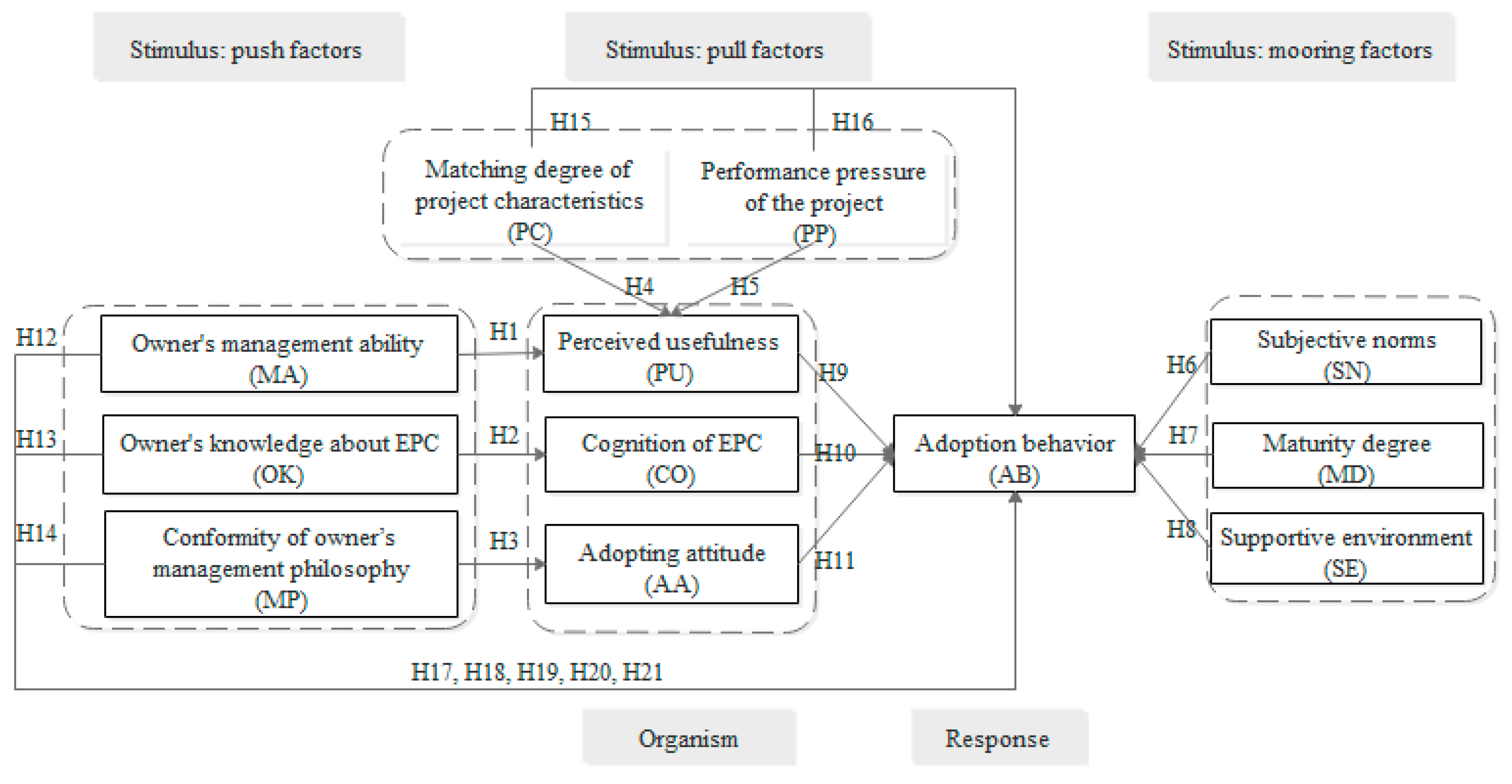
Figure 1. Research model.
Sustainability 15 11996 g001
Figure 2. Geographical distribution of valid samples.
Sustainability 15 11996 g002
Figure 3. The importance–performance map.
Sustainability 15 11996 g003
Table 1. Measurement items and descriptive analysis.
CategoryVariablesItemsReference
ResponseABAB1: I will increase the frequency of using EPC model. [32]
AB2: I would like to recommend others to use EPC model.
AB3: I will give priority to using EPC model.
OrganismPUPU1: I think the EPC model can help me improve the management level of the project.[33]
PU2: I think the EPC model can reduce the pressure from project management.
PU3: I think EPC model is more in line with the needs of project characteristics.
COCO1: EPC model can design while construction, promote early procurement, and accelerate the progress of the project.[34]
CO2: EPC model can control the cost within the scope of the budget estimate and reduce the overspend.
CO3: EPC model can save project investment.
CO4: EPC model of project quotation is more competitive in the market.
CO5: EPC model can achieve the lowest life-cycle cost.
CO6: EPC model can improve project quality and reduce the occurrence of rework.
CO7: EPC model can increase the rationality and constructability of the design scheme.
AAAA1: The EPC model should be promoted and used.[35]
AA2: The EPC model is effective.
AA3: I am more satisfied with projects that use the EPC model.
Stimulus: pull factorsPCPC1: The project is of low complexity and does not require complex design and construction.[2]
PC2: The end-user needs of the project are clear, and the construction scope of the project is clearly defined.
PC3: The project is subject to uncertainty that may drive design or construction changes.
PPPP1: There are clear milestones for the project to be completed as soon as possible.[36]
PP2: The project has a strict budget and we hope to determine the total investment as soon as possible.
PP3: The project has high requirements in quality, safety and environmental protection.
Stimulus: push factorsMAMA1: There is not enough staffing.[37]
MA2: No rich experience and professional ability.
MA3: The workload is heavy, requiring overtime or other work.
OKOK1: Have studied or trained in EPC related knowledge.[38]
OK2: Understand the policy related to EPC.
OK3: Always pay attention to EPC related topics.
MPMP1: Hope to achieve integrated management, reduce the hostile relationship between design and construction.[39]
MP2: Want to take the least risk.
MP3: I want to reduce bureaucracy and uphold the idea that professional people do professional things.
MP4: Maximize the value of your project, not your own.
MP5: Hope to increase the flexibility of engineering change.
MP6: Want to reduce the degree of involvement in the project.
Stimulus: mooring
factors
SNSN1: The suggestions of my colleagues and friends greatly influenced my adoption of EPC model. [40]
SN2: The advice of professionals has a great influence on my adoption of EPC model.
SN3: Suggestions from superiors or leaders have a great influence on my adoption of EPC model.
SN4: The popular social atmosphere and practices have a great influence on my adoption of EPC model.
SN5: The practice of similar engineering projects has a great influence on my adoption of EPC model.
MDMD1: Compared with other models, EPC model can be used more easily.[41]
MD2: The maturity of the development of EPC model.
MD3: The project is located in a rapidly developing EPC model, with more and more EPC projects.
SESE1: The project is located in a construction market with a sufficient number of EPC contractors.[42,43]
SE2: The EPC contractor in the location of the project has good professional competence, market reputation, service level and performance.
SE3: The project location has a great promotion of EPC, and the use of EPC will be subsidized or preferential policies.
Table 2. Demographic statistics.
ItemsParticularsFrequencyPercent
GenderMale59984.6
Female10915.4
AgeUnder the age of 2540.6
26 to 30 years old284
31 to 40 years old20128.4
41 to 50 years old25035.3
50 years of age or older22531.8
TitlePrimary14720.8
Intermediate36952.1
Senior19227.1
EducationHigh school degree or below8011.3
College38454.2
Graduate24434.5
Professional relevanceStrongly irrelevant23132.6
Not relevant11616.4
Less relevant8211.6
Commonly10815.3
Relatively relevant7811
Relevant517.2
Strongly relevant425.9
Table 3. Measurement model statistics.
ConstructsItemsMeanStd. DOuter LoadingCronbach’s αCRAVEVIF
ABAB15.069 1.471 0.878 0.855 0.856 0.775 2.124
AB24.932 1.555 0.900 2.365
AB35.030 1.520 0.864 1.977
PUPU14.532 1.300 0.869 0.865 0.867 0.788 2.060
PU24.566 1.466 0.899 2.346
PU34.477 1.265 0.894 2.380
COCO15.106 1.400 0.798 0.905 0.905 0.636 2.090
CO25.004 1.328 0.787 2.010
CO34.250 1.475 0.786 1.971
CO44.483 1.512 0.816 2.169
CO54.421 1.485 0.801 2.084
CO64.463 1.510 0.794 2.027
CO74.390 1.392 0.801 2.098
AAAA14.992 1.489 0.848 0.815 0.820 0.730 1.772
AA24.900 1.531 0.832 1.722
AA34.891 1.496 0.883 1.980
PCPC14.886 1.416 0.842 0.847 0.863 0.765 1.911
PC24.847 1.451 0.897 2.113
PC34.521 1.413 0.883 2.158
PPPP13.921 1.547 0.901 0.884 0.897 0.811 2.526
PP23.565 1.415 0.922 2.721
PP33.619 1.412 0.877 2.324
MAMA13.393 1.690 0.908 0.893 0.900 0.823 2.477
MA23.394 1.784 0.921 3.142
MA33.374 1.773 0.892 2.592
OKOK14.263 1.556 0.870 0.849 0.852 0.768 2.085
OK24.103 1.523 0.886 2.117
OK34.323 1.575 0.873 2.001
MPMP14.362 1.597 0.821 0.889 0.892 0.645 2.796
MP24.888 1.506 0.851 2.553
MP34.823 1.521 0.763 1.906
MP44.983 1.495 0.789 1.961
MP54.657 1.507 0.727 1.904
MP64.794 1.549 0.858 3.127
SESE14.501 1.382 0.875 0.844 0.848 0.762 1.978
SE24.514 1.386 0.861 2.008
SE34.576 1.293 0.882 2.070
MDMD14.340 1.108 0.879 0.851 0.853 0.771 2.140
MD24.350 1.105 0.868 1.999
MD34.380 1.120 0.887 2.133
SNSN14.636 1.384 0.841 0.885 0.890 0.686 2.137
SN24.794 1.368 0.792 2.034
SN34.465 1.271 0.854 3.002
SN44.517 1.343 0.798 1.956
SN54.517 1.285 0.854 3.106
Note: N = 708.
Table 4. HTMT statistics.
AAABCOMAMDMPOKPCPPPUSESN
AA
AB0.301
CO0.062 0.388
MA0.028 0.250 0.041
MD0.130 0.426 0.157 0.127
MP0.350 0.402 0.145 0.100 0.253
OK0.042 0.235 0.401 0.047 0.074 0.190
PC0.065 0.162 0.111 0.167 0.074 0.090 0.204
PP0.076 0.113 0.048 0.212 0.021 0.037 0.030 0.023
PU0.055 0.364 0.034 0.308 0.120 0.083 0.034 0.099 0.235
SE0.074 0.391 0.131 0.118 0.337 0.312 0.095 0.049 0.056 0.077
SN0.170 0.475 0.177 0.199 0.550 0.266 0.090 0.095 0.058 0.125 0.342
Table 5. Path coefficients and research hypothesis testing results.
PathPath CoefficientT Valuep ValueR2f2Q295%
CILL
95%
CIUL
Hypothesis
Testing Results
MA → PU−0.3179.3380.0000.1460.1110.111−0.385−0.251H1 establish
OK → CO0.35210.8490.0000.1240.1420.0780.2890.417H2 establish
MP → AA0.3008.7950.0000.0900.0990.0640.2340.368H3 establish
PC → PU0.0411.1610.2460.1460.0020.111−0.0290.111H4 not valid
PP → PU0.2677.9900.0000.1460.0810.1110.2010.332H5 establish
SN → AB0.1845.5980.0000.4400.0430.3320.1220.248H6 establish
MD → AB0.1183.4640.0010.4400.0180.3320.0500.186H7 establish
SE → AB0.1464.6900.0000.4400.0320.3320.0860.207H8 establish
PU → AB0.2006.3570.0000.4400.0610.3320.1370.263H9 establish
CO → AB0.2277.1820.0000.4400.0780.3320.1650.289H10 establish
AA → AB0.1504.7730.0000.4400.0360.3320.0890.211H11 establish
MA → AB−0.1013.1270.0020.4400.0150.332−0.164−0.039H17 establish
MP → AB0.1354.4700.0000.4400.0260.3320.0750.193H18 establish
OK → AB0.0541.8280.0680.4400.0040.332−0.0030.112H19 not valid
PC → AB0.0280.9540.3400.4400.0010.332−0.0290.087H20 not valid
PP → AB0.0993.3280.0010.4400.0160.3320.0400.158H21 establish
Table 6. Mediating effects.
PathIndirect
Effect Value
Indirect
Effect
p Value
Direct Effect ValueDirect Effect
p Value
Total Effect ValueTotal Effect
p Value
Hypothesis
Testing Results
MA → PU → AB−0.0640.000−0.1010.0020.1800.000H12 establish
OK → CO → AB0.0800.0000.0540.0680.1530.000H13 establish
MP → AA → AB0.0450.0000.1350.000−0.1640.000H14 establish
PC → PU → AB0.0080.2650.0280.3400.1340.231H15 not valid
PP → PU → AB0.0540.0000.0990.0010.0360.000H16 establish
Table 7. Goodness of fit (GoF).
Saturated ModelEstimated Model
SRMR0.0370.05
d_ULS1.442.565
d_G0.680.685
Chi-square2897.1172882.562
NFI0.8380.839
Disclaimer/Publisher’s Note: The statements, opinions and data contained in all publications are solely those of the individual author(s) and contributor(s) and not of MDPI and/or the editor(s). MDPI and/or the editor(s) disclaim responsibility for any injury to people or property resulting from any ideas, methods, instructions or products referred to in the content.