Article

Parental Perspectives on Prenatal Diagnosis and Termination of Pregnancy in Families Affected by β-Thalassemia in Pakistan: A Qualitative Study

1
Punjab Thalassaemia & Other Genetic Disorders Prevention and Research Institute, Bahawalpur Victoria Hospital, Bahawalpur 63100, Pakistan
2
Department of Statistics, The Islamia University Bahawalpur, Bahawalpur 63100, Pakistan
*
Author to whom correspondence should be addressed.
Thalass. Rep. 2026, 16(2), 9; https://doi.org/10.3390/thalassrep16020009 (registering DOI)
Submission received: 30 January 2026 / Revised: 21 April 2026 / Accepted: 27 April 2026 / Published: 9 May 2026
(This article belongs to the Section Conventional Treatment of Thalassemia)

Abstract

Background: Advances in medical genetics and prenatal diagnosis have improved the detection of fetal abnormalities during pregnancy. The findings may lead some couples to consider termination of pregnancy (TOP). This study aimed to explore parental perspectives on prenatal diagnosis and termination of pregnancy among families in which both parents were β-thalassemia carriers and had at least one previously affected child. Methods: A qualitative study was conducted using semi-structured interviews with 30 participants (15 fathers and 15 mothers) recruited from Bahawal Victoria Hospital, Bahawalpur, Pakistan, between November 2024 and February 2025. Eligible couples were registered for chorionic villus sampling (CVS)-based prenatal diagnosis; both parents had confirmed β-thalassemia carrier status, and each family had at least one previously affected child with β-thalassemia major or intermedia. Interview data were analyzed using thematic analysis. Results: Religious beliefs, financial burden, prior experience with affected children, and partner support emerged as major influences on reproductive decision-making. Many parents viewed prenatal diagnosis as important for preparation and informed decision-making. Mothers more often described emotional conflict, stress, and reliance on support, whereas some fathers expressed greater acceptance of termination in the context of severe disease burden. Conclusions: Religious beliefs, prior disease experience, family dynamics, and socioeconomic pressures were important and interrelated influences on decisions about prenatal diagnosis and termination within this study population. Our findings underscore the importance of culturally sensitive, non-directive genetic counseling in low-resource settings. The study was limited by its small sample, single-center design, the use of joint spousal interviews, and the possibility that pre-interview counseling influenced participants’ responses.

1. Introduction

Advances in genetic technology have identified numerous pathogenic variants [1]. These advancements have improved our ability to detect genetic disorders, aiding in informed decision-making for families. Genetic disorders pose significant psychosocial challenges for prospective parents. These conditions often result in considerable morbidity and mortality [2].
Prenatal diagnosis (PND) provides definitive information about fetal health through invasive procedures, such as chronic villus sampling (CVS) or amniocentesis [3]. In contrast, non-invasive prenatal testing (NIPT), which analyzes cell-free fetal DNA (cff-DNA) in maternal blood, has emerged as a valuable prenatal screening procedure. While CVS remains the preferred prenatal diagnosis test, especially in the first trimester (10–13 weeks of gestation), NIPT has recently gained recognition for its safety and accuracy [4,5]. If a fetal anomaly is identified and a diagnosis subsequently confirmed prenatally, parents may face complex decisions, including pregnancy continuation or termination [6,7]. Parents with a limited understanding of the mode of transmission and nature of genetic disorders can influence parental engagement in these options. This underscores the critical need for timely counseling and support.
In many cultural settings, religious beliefs influence perceptions of prenatal diagnosis and termination of pregnancy [8,9]. In Islamic bioethical discussions, some scholars interpret fetal development as occurring in three successive 40-day stages, with ensoulment commonly understood to occur at around 120 days’ gestation, although interpretations vary across traditions [10,11]. These interpretations may shape how Muslim parents view the permissibility of termination in cases of severe fetal conditions.
A study conducted in the UK found that the attitudes of Pakistani women with children affected by β-thalassemia major were shaped by complex factors, including cultural and religious considerations, but were not determined by these beliefs alone [12]. Understanding these influences is crucial for providing culturally sensitive counseling.
Thalassemia, a recessively inherited blood disorder, remains one of the most prevalent genetic conditions worldwide [13,14,15]. Its high prevalence underscores the importance of understanding parental perspectives regarding carrier screening and reproductive choices. This study aims to explore these perspectives, particularly how cultural and religious factors influence decisions about pregnancy management when fetal anomalies are detected.
Barriers such as access to health information, lack of awareness of community health, and inadequate healthcare infrastructure are present, especially in economically constrained regions [16,17]. Furthermore, religious and socio-cultural influences shape health practices, affecting the uptake of screening and diagnosis services [18].
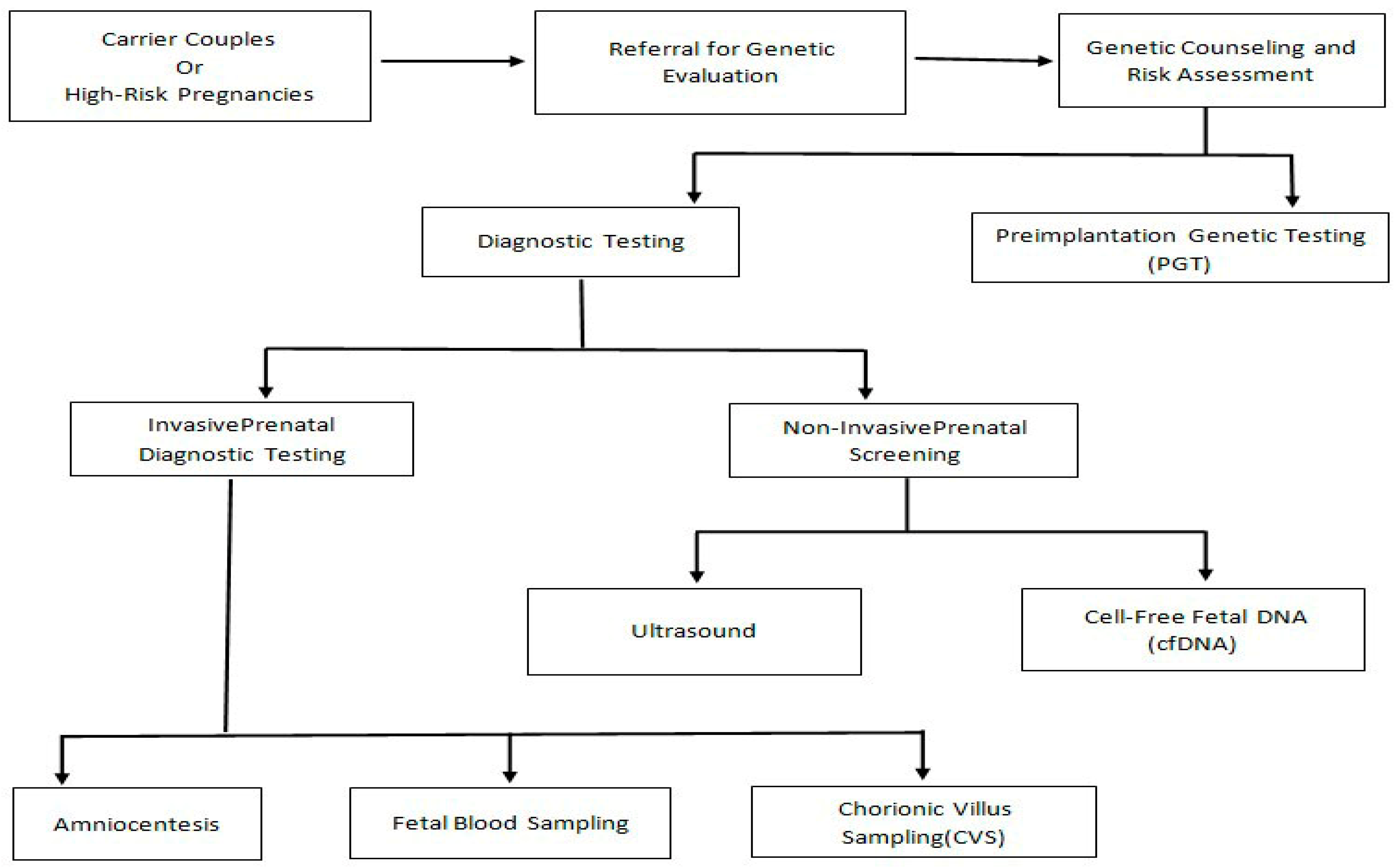
Over recent decades, technological advances have enhanced prenatal monitoring capabilities [19]. Carrier screening and diagnosis procedures are now available for many genetic disorders, including Mendelian and chromosomal anomalies [20,21]. Reproductive genetic testing strategies or options use during pregnancy are summarized in Figure 1.
There is limited understanding of how couples with previously affected children view prenatal diagnosis and termination of pregnancy in low-resource settings, particularly where religious and cultural considerations are highly influential. This study aimed to explore parental perspectives on prenatal diagnosis and termination of pregnancy among families affected by β-thalassemia in Pakistan. It also explored how prior experience with affected children, financial strain, partner support, and religious beliefs shaped these decisions within the study context.

2. Methodology

2.1. Study Design

This study used a qualitative design based on semi-structured interviews to explore parental perspectives on prenatal diagnosis and termination of pregnancy among couples at risk of having a child affected by β-thalassemia. The study was conducted in the Thalassaemia Department of Bahawal Victoria Hospital, Bahawalpur, Pakistan, a public healthcare facility that provides prenatal genetic services to financially vulnerable families.

2.2. Recruitment

Participants were pregnant couples registered for CVS-based prenatal diagnosis at Bahawal Victoria Hospital between November 2024 and February 2025. Eligibility for free prenatal genetic testing was based on institutional low-income criteria; specifically, families with a monthly income below 50,000 PKR were eligible for free services. Low-income status was defined according to the hospital’s eligibility criteria for free prenatal genetic testing and was not inferred from occupation or educational attainment. Eligible couples were those in which both parents had confirmed β-thalassemia carrier status and at least one previously affected child with transfusion-dependent β-thalassemia major or β-thalassemia intermedia who had a history of regular monthly blood transfusions. Families in which parents were carriers only, or which had no history of a previously affected transfusion-dependent child, were excluded from the study.
Purposive sampling was used to recruit information-rich participants who met these criteria. The final sample comprised 15 couples selected through purposive sampling, all of whom met the low-income criteria and had confirmed β-thalassemia carrier status. All women were pregnant at the time of the interviews and were in their third trimester. Data on each couple were obtained from the hospital registration officer.
Initially, 75 couples were invited to participate after receiving telephone counseling sessions about prenatal diagnosis, the inheritance pattern of β-thalassemia, and the purpose of the study. Only those who provided informed consent after the initial counseling session were scheduled for an interview. Appointments for interviews were scheduled over multiple weeks, with 4 to 7 couples invited per week. Data collection continued until thematic saturation was judged to have been reached, indicated by the absence of new themes or subthemes in later interviews.

2.3. Data Collection

Data were collected through semi-structured interviews using a pilot-tested interview guide developed by the research team and informed by prior literature onthalassemia, prenatal diagnosis, and parental reproductive decision-making [7,12,22]. To ensure the confidentiality of all participants, interviews were conducted in a private room within the department. Both spouses were interviewed together by a trained genetic counselor (IJ) and psychiatrist (SZ) using a pilot-tested interview guide. Interviews lasted between 30 and 60 min and every participant provided consent. The use of a standardized guide ensured consistency across interviews. Responses were coded through a deductive approach, utilizing criteria derived from an existing theoretical framework and prior research. Subjective responses were coded using predefined criteria to reduce bias. Each couple was provided with another follow-up short counseling session before the interviews.
Before the interview, participants received a follow-up counseling session, during which Islamic rulings on abortion, specifically the concept of ensoulment at 120 days, were explained. Couples were advised that termination might be permissible before ensoulment in cases of severe fetal abnormality, according to national fatwas.
The interview guide included standardized open- and closed-ended across three sections: The first section collected demographic data, including the age and gender of the couples’ children, employment status, and level of education. The second section explored couples’ perspectives on prenatal diagnosis and their opinions toward non-invasive prenatal testing (NIPT). The last section explored the couples’ attitude towards TOP if they are informed with positive reports.

2.4. Data Analysis

Interview recordings were transcribed and analyzed using thematic analysis following Braun and Clarke [23]. Analysis was primarily inductive, while remaining attentive to issues central to the study aims, including prior experience with affected children, religious beliefs, financial burden, and gendered decision-making.
Two researchers, IJ and SZ, independently reviewed the transcripts, generated initial codes, and met regularly to compare interpretations and refine the coding framework. A third researcher, MF, reviewed the coded transcripts and thematic interpretations to enhance consistency and help resolve discrepancies. Both IJ and MF had prior clinical experience relevant to pregnancy-related care, which was agreed. Themes were refined iteratively until a coherent final thematic structure was agreed upon. Descriptive counts from closed-ended interview items were used only to summarize participant characteristics and broad response patterns. These counts were not treated as statistical tests or as evidence of generalizable associations. To improve transparency in reporting, the study was described with attention to established qualitative reporting standards.

3. Results

We conducted interviews with 30 participants (15 couples), with fathers predominantly employed as laborers and educated at High School level or below. All mothers were housewives, most with a High School education. Furthermore, couples with two or more affected children often expressed more favorable views towards prenatal diagnosis and, in some cases, termination of pregnancy, reflecting the psychological and practical challenges associated with repeated disease experience within the family. The age of mothers ranged from 21 to 40 years (M = 30.2 years), and the ages of fathers ranged from 23 to 45 years (M = 33.5 years). Details of participants are summarized in Table 1.

Naive Reading

The naive reading revealed that most couples shared a range of opinions and experiences with affected children towards PGT and TOP. They struggled with decision-making, and various factors influenced their opinions, including demographic characteristics, employment status, education levels, and religious beliefs. The first theme characterizes attitudinal responses toward prenatal diagnosis, while the second theme relates to attitudinal responses toward the termination of pregnancy.
Theorem 1.
Attitudinal Responses Toward Prenatal Diagnosis.
  • Desire for Early Diagnosis
Couples expressed a strong desire to ascertain early whether their unborn children would inherit a genetic disorder. Most parents took the initiative to seek prenatal diagnosis to prepare them for the potential financial and emotional strain. The mother described how a child with a disorder would be painful for parents:
C1M1: “Observing my son, I reflect on his lack of confidence, social isolation, and pitying looks from others causes significant emotional anguish, fostering a longing for timely diagnosis to alleviate these ongoing difficulties.”
2.
Emotional Stress and Anxiety
For most parents, receiving a prenatal diagnosis of a fetal abnormality is typically the commencement of a highly challenging and stressful period due to social stigma. Parents expressed that following a prenatal diagnosis and making informed decisions about continuing or terminating their pregnancy would have psychological effects on them.
A 27-year-old mother reported that:
C8M8: “I feel persistent psychological stress from such issues leads to fatigue and disrupts sleep patterns. I want to do prenatal diagnosis (PND) to better prepare for potential outcomes.”
3.
Impact on Mental Health
Maternal depression may develop more rapidly in women because of high levels of emotional stress associated with pregnancy. This is particularly evident in women who manage challenges related to prenatal diagnosis and express feelings of guilt and hopelessness.
C2M2: “Despite societal expectations of maternal fulfillment, I feel guilt and shame over perceived inadequacies in my maternal role. The fear of not meeting my child’s needs causes emotional distress, as I believe she deserves a better quality of life.”
4.
Lack of partner support
Uncertainty surrounding the pregnancy led to deliberation regarding whether to pursue a prenatal diagnosis. Mothers who had prior experience with similar situations, particularly when their first child was unwell, along with a supportive partner, often exhibited greater confidence in their diagnostic testing. A 29-year-old mother stated that:
C4M4: “I intend to undergo prenatal diagnostic testing but am reluctant what if abnormalities are detected. Having previously lost a child with thalassemia. My spouse’s lack of empathy exacerbates my anxiety, and the possibility of recurring emotional trauma and the weight of this decision cause fear and sorrow.”
Receiving emotional support and messages of hope during the session appeared to have a positive influence on parents’ experiences, whereas feeling like a passive recipient of information and encountering complex medical terminology hurt parents.
Theorem 2.
Attitudinal Responses Toward the Termination of Pregnancy.
  • Learning from experience
Parents who reported greater acceptance of pregnancy termination had prior experiences with it. A father who had two children with thalassemia disorder expressed his feelings that:
C7F7: “We have decided to terminate the pregnancy. Having lost two daughters to thalassemia, I understand the challenges of raising chronically ill children. We terminated our previous pregnancy upon discovering the fetus was affected, and I agree with taking the same action now.”
2.
Religious and Ethical Beliefs
The father presented the researcher with a folder containing numerous reports of their deceased children and became emotional. He stated:
C6F6: “I explored all possible treatment options for both of our children, seeking care at every available center, but was met only with disappointment.”
Another religious father explained:
C10F10: “We consulted our Imam, who advised that termination is permissible if the child’s prognosis is poor and the soul is not transferred yet. However, this decision remains profoundly difficult, balancing religious principles with the desire to prevent our child’s suffering.”
3.
Financial Burden
This study also found that couples with a lower socioeconomic level showed higher acceptance rates of pregnancy termination. A mother who had previously undergone a pregnancy termination expressed that.
C3M3: “We thoroughly discussed this matter, with careful consideration of the financial burden that it imposes on our two affected children. Terminating the pregnancy benefits us, do not want him (child) to suffer in poor health.”
4.
Gender Differences in Decision-Making
According to our studies, women with a history of abortion and unsupportive husbands have anxiety disorders and decide to terminate independently.
C12M14: “I always strive to support my spouse, but this support is not reciprocated. He neglects his parental duties, even though we know that a child with this condition requires extra care. I cannot provide this care due to my mental and physical stress.”
Similarly, another mother described her anxiety disorder and showed an emotional state:
C1M1: “My husband is abusive and demonstrates indifference regarding the health status of the fetus. I will not be able to make an autonomous decision alone and will proceed with the termination if the report indicates the presence of the disease in the fetus.”
A 45-year-old father stated:
C12F12: “I cannot conceive of witnessing my child’s suffering. Therefore, I would prefer termination even soul is transferred if I were informed that my child would have a poor quality of life. However, it is exceedingly difficult to accept.”
C2F2: “I didn’t want to do risky CVS tests that might cause misscariage, but I’ve seen what genetic disease does, I agreed to termination. It wasn’t easy, but it felt necessary and it break my heart.”

4. Discussion

This study explored how parents in families affected by β-thalassemia in Pakistan understood prenatal diagnosis and termination of pregnancy within a specific clinical, cultural, and religious context.
The findings suggest that reproductive decision-making was shaped by the interaction of prior experience with genetic disease, perceived financial burden, partner support, and religious interpretation rather than by any single factor alone [24,25,26]. These findings are consistent with previous literature showing that attitudes towards prenatal diagnosis and termination are often shaped by overlapping medical, ethical, social, and contextual concerns rather than by any single demographic or religious factor.
Many parents in this study valued prenatal diagnosis not only as a medical procedure in pregnancy, but also as a means of avoiding further emotional suffering and practical preparation for the birth of an affected child. This interpretation is consistent with past research indicating that prenatal diagnosis information may be significant for planning, counseling, and anticipating decision-making, even when termination is not chosen [27,28]. The findings also align with studies showing that parents’ views toward prenatal diagnosis are influenced by their expectations about disease burden, future quality of life, and perceived value of genetic testing information [24,29,30].
A notable finding of this study was that prior experience with affected or deceased children appeared to make the consequences of β-thalassemia more immediate and concrete for parents. This suggests that lived experience with severe genetic disease may shape reproductive attitudes more strongly than abstract knowledge alone, particularly in settings where families have already faced repeated caregiving, grief, and treatment demands [24,25,26]. For example, a father with two children who had succumbed to thalassemia stated, “We decided to terminate the pregnancy, understanding the challenges of raising a chronically ill child.” In our study sample, more fathers than mothers expressed support for termination after the perceived enrolment threshold. In this respect, the present findings extend existing work by showing how previous family experience can intensify decision-making in subsequent pregnancies.
Religious beliefs were highly salient in participants’ narratives, but they did not appear to operate in isolation [27]. Rather, religious interpretation appeared to be weighed alongside family responsibilities, previous losses, and the practical realities of caring for a child with a severe inherited disorder. This pattern is consistent with prior research from Pakistan and other contexts showing that attitudes towards termination cannot be reduced to religion alone, even where religion remains an important moral framework [22,25,27,28]. More broadly, ethical decision-making in genetic counseling is shaped by the intersection of religious values, judgments about harm, and parental responsibility toward the future child and family, rather than by religion alone [29,30]. Financial strains also emerged as an important factor in decision-making. Participants frequently linked reproductive choices to the long-term cost of treatment, repeated blood transfusions, and the emotional and material burden of raising affected children. This is unsurprising in light of evidence that barriers to prenatal diagnosis and genetic counseling in low-resource settings are often compounded by structural inequalities, limited access to specialist services, and the cumulative burden of chronic disease management [28,31,32,33]. At the same time, this aspect of the findings should be interpreted cautiously. Because the sample was drawn from families who met the institutional low-income eligibility criteria for free prenatal testing, the study does not support comparisons across socioeconomic groups; rather, it indicates that financial hardship was a prominent contextual condition within which decisions were made.
The findings also highlighted the importance of gender and partner dynamics. Mothers often described emotional distress, guilt, and uncertainty when discussing prenatal testing and pregnancy continuation, which is consistent with the literature emphasizing the psychological burden associated with reproductive decision-making in the context of fetal abnormality [34,35]. Mothers in this study more often expressed emotional distress and guilt, particularly where partner support was limited. However, in instances of unsupportive partners, women were compelled to make independent decisions. One mother disclosed, “My husband is abusive and demonstrates indifference regarding the health status of the fetus. I will not be able to make an autonomous decision alone and will proceed with the termination if the report indicates the presence of the disease in the fetus.” Fathers, in contrast, sometimes framed decisions more explicitly in terms of suffering, practical burden, and family responsibilities. Nevertheless, the findings are consistent with the literature suggesting that reproductive decision-making often unfolds within unequal relational contexts, where partner support and communication patterns between partners shape how options are considered. Our study suggests that reproductive decision-making is not simply individual but negotiated within couple relationships that may be supportive or strained.
Our study suggests that culturally sensitive genetic counseling and a robust support system are necessary to address these disparities. Previous work has emphasized that parents’ understanding of genetic risk, reproductive choices, and testing procedures can be shaped by social expectations, health literacy, and ethically responsive or non-directive counseling [35]. Furthermore, government interventions may also help strengthen healthcare infrastructure and ensure equitable access. Future research should examine how the quality, timing, and framing of counseling, including counselors’ approaches to ethical and religious issues, may shape parental understanding and reproductive decision-making [35].
This study has many limitations. It involved a small sample recruited from a single hospital setting, which limits generalizability. The relatively low educational levels among participants may also have influenced comprehension and responses. In addition, all couples were interviewed together after receiving counseling that included a discussion of religious considerations related to termination; therefore, participants’ responses may have been shaped by partner presence and by the counseling context itself. Finally, the study was qualitative and was not designed to support formal comparison across demographic or socioeconomic groups.

5. Conclusions

Parents who met the institutional low-income eligibility criteria often expressed support for prenatal diagnosis and termination, despite having lower levels of education. These findings underscore the need for culturally sensitive, non-directive counseling that accounts for gender roles and decision-making dynamics within families. To translate these insights into practice, policymakers in LMICs should invest in training healthcare professionals in genetic counseling, ensure equitable access to prenatal testing, and implement community education programs. Strengthening public health systems in this way can support informed reproductive decision-making and reduce disparities in genetic healthcare. Religious beliefs were one important influence on decisions regarding termination of pregnancy, alongside prior disease experience, family dynamics, and socioeconomic pressures. Additionally, prenatal diagnosis can help parents prepare for the challenges of caring for a child with a disorder, even if they choose not to terminate the pregnancy.

6. Relevance of Clinical Practice

In low-resource settings, access to timely prenatal counseling and appropriate diagnostic services remains essential for families at risk of severe genetic disorders. For β-thalassemia, definitive prenatal diagnosis continues to rely on established procedures such as chorionic villus sampling, while screening technologies may support earlier risk assessment but do not replace confirmatory testing [4,8,32,33,36]. The present study suggests that clinical practice should move beyond the simple provision of biomedical information and instead address the emotional, relational, religious, and socioeconomic concerns that shape prenatal decision-making. Genetic counselors and other healthcare professionals should therefore focus on providing non-directive counseling that addresses parents’ specific beliefs, socioeconomic challenges, and prior experiences with genetic disorders [3,8,37]. Strengthening counseling capacity in this way may improve informed decision-making and help reduce inequities in access to genetic healthcare [37].

Author Contributions

Conceptualization, I.J. and M.A.; methodology, M.A.; software, M.A.; validation, I.J., M.A. and M.M.H.; formal analysis, M.A.; investigation, I.J.; resources, M.A.; data curation, I.J.; writing—original draft preparation, I.J.; writing—review and editing, M.A. and M.M.H.; visualization, M.A.; supervision, M.A.; project administration, M.A.; funding acquisition, M.M.H. All authors have read and agreed to the published version of the manuscript.

Funding

No funding received for this project.

Institutional Review Board Statement

All subjects gave their informed consent for inclusion before they participated in the study. The study was conducted in accordance with the Declaration of Helsinki, and the protocol was approved by the Ethics Committee of Ethical Review Committee of Bahawal Victoria Hospital, Bahawalpur, Pakistan (731/BVH) on 12 September 2024.

Informed Consent Statement

Informed consent was obtained from all subjects involved in the study.

Data Availability Statement

The data that support the findings of this study are available from the corresponding author upon reasonable request.

Conflicts of Interest

The authors declare no conflicts of interest.

References

  1. Bamshad, M.J.; Nickerson, D.A.; Chong, J.X. Mendelian Gene Discovery: Fast and Furious with No End in Sight. Am. J. Hum. Genet. 2019, 105, 448–455. [Google Scholar] [CrossRef]
  2. Wojcik, M.H.; Schwartz, T.S.; Thiele, K.E.; Paterson, H.; Stadelmaier, R.; Mullen, T.E.; VanNoy, G.E.; Genetti, C.A.; Madden, J.A.; Gubbels, C.S.; et al. Infant mortality: The contribution of genetic disorders. J. Perinatol. Off. J. Calif. Perinat. Assoc. 2019, 39, 1611–1619. [Google Scholar] [CrossRef] [PubMed]
  3. Ghosh, K.; Colah, R.; Choudhry, V.; Das, R.; Manglani, M.; Madan, N.; Saxena, R.; Jain, D.; Marwaha, N.; Mohanty, D.; et al. Guidelines for screening, diagnosis and management of hemoglobinopathies. Indian J. Hum. Genet. 2014, 20, 101–119. [Google Scholar] [CrossRef]
  4. Carlson, L.M.; Vora, N.L. Prenatal Diagnosis: Screening and Diagnostic Tools. Obstet. Gynecol. Clin. N. Am. 2017, 44, 245–256. [Google Scholar] [CrossRef]
  5. Zhang, H.; Denona, B. Noninvasive Prenatal Testing Test Versus Chorionic Villus Sampling, Where Are We Now? Matern.-Fetal Med. 2024, 6, 128–130. [Google Scholar] [CrossRef]
  6. Jafri, H.; Hewison, J.; Sheridan, E.; Ahmed, S. Acceptability of prenatal testing and termination of pregnancy in Pakistan. J. Community Genet. 2015, 6, 29–37. [Google Scholar] [CrossRef] [PubMed][Green Version]
  7. Kalra, R.; Kaur, D.; Sodhi, M.; Kaur, J. Knowledge, attitude and practice in parents of chronically transfused Thalassemic patients regarding Thalassemia in Thalassemia day care unit in government medical college, Amritsar, Punjab, India. Int. J. Contemp. Pediatr. 2019, 6, 2469–2475. [Google Scholar] [CrossRef][Green Version]
  8. Zhong, A.; Darren, B.; Dimaras, H. Ethical, social, and cultural issues related to clinical genetic testing and counseling in low- and middle-income countries: Protocol for a systematic review. Syst. Rev. 2017, 6, 140. [Google Scholar] [CrossRef]
  9. Al Sabbah, H.; Khan, S.; Hamadna, A.; Abu Ghazaleh, L.; Dudin, A.; Karmi, B.A. Factors associated with continuing emergence of β-thalassemia major despite prenatal testing: A cross-sectional survey. Int. J. Women’s Health 2017, 9, 673–679. [Google Scholar] [CrossRef]
  10. Naseem, S.; Ahmed, S.; Vahidy, F. Impediments to prenatal diagnosis for beta Thalassemia: Experiences from Pakistan. Prenat. Diagn. 2008, 28, 1116–1118. [Google Scholar] [CrossRef] [PubMed]
  11. Ghaly, M. The beginning of human life: Islamic bioethical perspectives. Zygon 2012, 47, 175–213. [Google Scholar] [CrossRef]
  12. Ahmed, S.; Green, J.M.; Hewison, J. Attitudes towards prenatal diagnosis and termination of pregnancy for thalassemia in pregnant Pakistani women in the North of England. Prenat. Diagn. 2006, 26, 248–257. [Google Scholar] [CrossRef] [PubMed]
  13. Kiani, R.A.; Anwar, M.; Waheed, U.; Asad, M.; Abbasi, S.; Zaheer, H.A. Epidemiology of Transfusion Transmitted Infection among Patients with-Thalassemia Major in Pakistan. J. Blood Transfus. 2016, 2016, 8135649. [Google Scholar] [CrossRef]
  14. Lo, Y.M.; Chan, K.C.; Sun, H.; Chen, E.Z.; Jiang, P.; Lun, F.M.; Zheng, Y.W.; Leung, T.Y.; Lau, T.K.; Cantor, C.R.; et al. Maternal plasma DNA sequencing reveals the genome-wide genetic and mutational profile of the fetus. Sci. Transl. Med. 2010, 2, 61ra91. [Google Scholar] [CrossRef]
  15. Antonarakis, S.E.; Lyle, R.; Dermitzakis, E.T.; Reymond, A.; Deutsch, S. Chromosome 21 and down syndrome: From genomics to pathophysiology. Nat. Rev. Genet. 2004, 5, 725–738. [Google Scholar] [CrossRef]
  16. Allen-Meares, P.; Lowry, B.; Estrella, M.L.; Mansuri, S. Health Literacy Barriers in the Health Care System: Barriers and Opportunities for the Profession. Health Soc. Work. 2020, 45, 62–64. [Google Scholar] [CrossRef] [PubMed]
  17. Gibney, S.; Bruton, L.; Ryan, C.; Doyle, G.; Rowlands, G. Increasing Health Literacy May Reduce Health Inequalities: Evidence from a National Population Survey in Ireland. Int. J. Environ. Res. Public Health 2020, 17, 5891. [Google Scholar] [CrossRef] [PubMed]
  18. Maheen, H.; Malik, F.; Siddique, B.; Qidwai, A. Assessing parental knowledge about thalassemia in a thalassemia center of Karachi, Pakistan. J. Genet. Couns. 2015, 24, 945–951. [Google Scholar] [CrossRef]
  19. Hashiloni-Dolev, Y. Between mothers, fetuses and society: Reproductive genetics in the Israeli-Jewish context nashim. A J. Jew. Women’s Stud. Gend. Issues 2006, 12, 129–150. [Google Scholar]
  20. ACOG Committee on Practice Bulletins. ACOG Practice Bulletin No. 77: Screening for fetal chromosomal abnormalities. Obs. Gynecol. 2007, 109, 217–227. [Google Scholar] [CrossRef]
  21. ACOG Committee on Obstetrics. ACOG Practice Bulletin No. 78: Hemoglobinopathies in pregnancy. Obstet. Gynecol. 2007, 109, 229–237. [Google Scholar] [CrossRef]
  22. Even-Zohar Gross, N.; Geva-Eldar, T.; Pollak, Y.; Hirsch, H.J.; Gross, I.; Gross-Tsur, V. Attitudes toward prenatal genetic testing and therapeutic termination of pregnancy among parents of offspring with Prader-Willi syndrome. Eur. J. Med. Genet. 2017, 60, 205–211. [Google Scholar] [CrossRef]
  23. Braun, V.; Clarke, V.; Terry, G.; Hayfield, G. Thematic analysis. In Handbook of Research Methods in Health and Social Sciences; Liamputtong, P., Ed.; Springer: Berlin/Heidelberg, Germany, 2018; pp. 843–860. [Google Scholar]
  24. van Manen, M. Researching Lived Experience: Human Science for an Action Sensitive Pedagogy; SUNY Press: Albany, NY, USA, 1990. [Google Scholar]
  25. Law, W.K.; Yaremych, H.E.; Ferrer, R.A.; Richardson, E.; Wu, Y.P.; Turbitt, E. Decision-making about genetic health information among family dyads: A systematic literature review. Health Psychol. Rev. 2022, 16, 412–429. [Google Scholar] [CrossRef] [PubMed]
  26. Centers for Disease Control and Prevention (CDC). Update on overall prevalence of major birth defects–Atlanta, Georgia, 1978–2005. MMWR Morb. Mortal. Wkly. Rep. 2008, 57, 1–5. [Google Scholar]
  27. Myers, S.; Johns, S.E. Postnatal depression is associated with detrimental life-long and multi-generational impacts on relationship quality. PeerJ 2018, 6, e4305. [Google Scholar] [CrossRef] [PubMed]
  28. Korenromp, M.J.; Page-Christiaens, G.C.; Bout, J.v.D.; Mulder, E.J.; Visser, G.H. Adjustment to termination of pregnancy for fetal anomaly: A longitudinal study in women at 4, 8, and 16 months. Am. J. Obstet. Gynecol. 2009, 201, 160.e1–160.e7. [Google Scholar] [CrossRef]
  29. Clarke, A.J.; Wallgren-Pettersson, C. Ethics in genetic counselling. J. Community Genet. 2019, 10, 3–33. [Google Scholar] [CrossRef]
  30. Rauch, E.R.; Smulian, J.C.; DePrince, K.; Ananth, C.V.; Marcella, S.W. Pregnancy interruption after second trimester diagnosis of fetal structural anomalies: The New Jersey Fetal Abnormalities Registry. Am. J. Obstet. Gynecol. 2005, 193, 1492–1497. [Google Scholar] [CrossRef]
  31. Beulen, L.; Grutters, J.P.; Faas, B.H.; Feenstra, I.; Groenewoud, H.; van Vugt, J.M.; Bekker, M.N. Women’s and healthcare professionals’ preferences for prenatal testing: A discrete choice experiment. Prenat. Diagn. 2015, 35, 549–557. [Google Scholar] [CrossRef]
  32. Wright, M.L.; Newhall, K.; Barcelona, V.; Taylor, J.Y. African American mothers’ attitudes towards genetic testing in the InterGEN study. J. Community Genet. 2020, 11, 285–290. [Google Scholar] [CrossRef] [PubMed]
  33. Mulat, A.; Bayu, H.; Mellie, H.; Alemu, A. Induced second trimester abortion and associated factors in Amhara region referral hospitals. BioMed Res. Int. 2015, 2015, 256534. [Google Scholar] [CrossRef] [PubMed]
  34. Rasch, V.; Gammeltoft, T.; Knudsen, L.B.; Tobiassen, C.; Ginzel, A.; Kempf, L. Induced abortion in Denmark: Effect of socio-economic situation and country of birth. Eur. J. Public Health 2008, 18, 144–149. [Google Scholar] [CrossRef]
  35. Taft, A.J.; Watson, L.F. Termination of pregnancy: Associations with partner violence and other factors in a national cohort of young Australian women. Aust. N. Z. J. Public Health 2007, 31, 135–142. [Google Scholar] [CrossRef] [PubMed]
  36. Hunt, T.K.A.; Slack, K.S.; Berger, L.M. Adverse childhood experiences and behavioral problems in middle childhood. Child Abus. Negl. 2017, 67, 391–402. [Google Scholar] [CrossRef]
  37. Alsulaiman, A.; Abu-Amero, K.K. Parent’s attitude toward prenatal diagnosis and termination of pregnancy could be influenced by other factors rather than by the severity of the condition. Prenat. Diagn. 2013, 33, 257–261. [Google Scholar] [CrossRef] [PubMed]
Figure 1. Reproductive genetic testing pathway from risk identification to prenatal diagnosis.
Thalassrep 16 00009 g001
Table 1. Sociodemographic characteristics of participants and their views on prenatal testing and termination of pregnancy.
Participant
ID
ParentLiving Affected
Children (n)
Deceased Affected Children (n)Age (Years)EmploymentEducationBelieved NIPT Was SufficientOpposed PNDReligious Beliefs Influenced TOPAccepted TOP
C1M1Mother1022HousewifeBachelor’s degree YesNoYesYes
C1F1Father1023BusinessMaster’s degree YesNoYesNo
C2M2Mother1027HousewifeHigh SchoolYesNoYesNo
C2F2Father1025LaborHigh SchoolYesYesYesYes
C3M3Mother2035HousewifeHigh SchoolYesYesYesNo
C3F3Father2043LaborN/AYesYesYesYes
C4M4Mother3129HousewifeHigh SchoolYesYesYesNo
C4F4Father3131LaborN/AYesNoYesNo
C5M5Mother2022HousewifeN/AYesYesYesYes
C5F5Father2022LaborN/AYesYesYesYes
C6M6Mother2233HousewifeHigh SchoolYesNoYesYes
C6F6Father2237LaborHigh SchoolYesYesYesYes
C7M7Mother3231HousewifeN/AYesYesYesYes
C7F7Father3238LaborN/AYesYesYesYes
C8M8Mother1027HousewifeHigh SchoolYesNoYesNo
C8F8Father1029TeacherBachelor’s degreeYesNoYesNo
C9M9Mother1037HousewifeHigh SchoolYesNoYesYes
C9F9Father1041LaborN/AYesNoYesNo
C10M10Mother1036HousewifeHigh SchoolYesNoYesNo
C10F10Father1043TeacherMaster’s degreeYesNoYesNo
C11M11Mother2133HousewifeHigh SchoolYesNoYesYes
C11F11Father2136Private jobBachelor’s degree YesNoYesYes
C12M12Mother1040HousewifeHigh SchoolYesNoYesYes
C12F12Father1045BusinessHigh SchoolYesNoYesYes
C13M13Mother1021HousewifeHigh SchoolYesNoYesNo
C13F13Father1023LaborHigh SchoolYesNoYesYes
C14M14Mother1034HousewifeN/AYesNoYesNo
C14F14Father1037Private jobDiplomaYesNoYesNo
C15M15Mother1024HousewifeHigh SchoolYesNoYesNo
C15F15Father1024LaborHigh SchoolYesNoYesYes
Note. NIPT = Non-invasive prenatal testing; PND = Prenatal diagnosis; TOP = Termination of pregnancy; N/A = Not available.
Disclaimer/Publisher’s Note: The statements, opinions and data contained in all publications are solely those of the individual author(s) and contributor(s) and not of MDPI and/or the editor(s). MDPI and/or the editor(s) disclaim responsibility for any injury to people or property resulting from any ideas, methods, instructions or products referred to in the content.