
Article

Real-Time Fluorescence Imaging Platform for Screening Arbuscular Mycorrhizal Fungi by Hyphal Transport Kinetics

1
The National Engineering Research Center for Wheat, Henan Agricultural University, Zhengzhou 450046, China
2
Department of Crop and Soil Sciences, North Carolina State University, Raleigh, NC 27695, USA
3
College of Resources and Environment, Henan Agricultural University, Zhengzhou 450046, China
4
The State Key Laboratory of High-Efficiency Production of Wheat-Maize Double Cropping, Henan Agricultural University, Zhengzhou 450046, China
*
Authors to whom correspondence should be addressed.
Microbiol. Res. 2026, 17(5), 96; https://doi.org/10.3390/microbiolres17050096 (registering DOI)
Submission received: 22 March 2026 / Revised: 6 May 2026 / Accepted: 12 May 2026 / Published: 19 May 2026
(This article belongs to the Topic New Challenges on Plant–Microbe Interactions)

Abstract

Arbuscular mycorrhizal (AM) fungi form mutualistic symbioses with about 80% of land plants and play a key role in improving host inorganic phosphate (Pi), nitrogen, and water acquisition. Traditional AM fungi research relies on field trials, compartmented cultivation, and pot cultures—methods that are time-consuming (taking months to years) and unable to monitor dynamic transport, thus limiting efficient strain screening. We developed a real-time fluorescence imaging platform integrating sterile symbiotic microchambers with photodiode array detection. This system enables the non-invasive, quantitative tracking of hyphal cytoplasmic streaming and transport kinetics at the plant–fungal interface. Distinct AM fungi strains exhibit significant differences in fluorescence kinetics—such as accumulation rate and peak intensity—providing measurable indicators of transport efficiency. Our method overcomes the temporal and technical limitations of conventional AM fungi screening approaches. By enabling simultaneous real-time monitoring, it shortens screening cycles and provides new insights for the (1) precise screening of AM fungi strains for efficient nutrient transport; (2) investigation of nutrient exchange mechanisms; (3) development of sustainable microbial inoculants.

1. Introduction

Arbuscular mycorrhizal (AM) fungi form mutualistic symbioses with approximately 80% of land plant species, playing a crucial role in enhancing host mineral nutrient acquisition [1,2]. This obligate symbiotic relationship is based on a bidirectional exchange: plants provide lipids (fatty acids) and sugars to AM fungi, which lack fatty acid synthase and depend entirely on host-derived carbon, while AM fungi enhance host uptake of inorganic phosphate (Pi), nitrogen, and micronutrients via hyphal networks [3,4,5,6]. Moreover, AM fungi hyphae recruit beneficial rhizosphere microbes to synergistically enhance the host acquisition of inorganic phosphate (Pi), the best-documented nutritional benefit of AM symbiosis [7,8,9,10].
The primary site of nutrient exchange is the arbuscule—a highly branched structure formed within root cortical cells that greatly expands the symbiotic interface [11,12,13]. Moreover, efficient nutrient transport relies on cytoplasmic streaming within the hyphae, which enables both intrahyphal diffusion and long-distance translocation of nutrients [14,15,16,17]. Nutrients are released across the periarbuscular membrane for plant assimilation [18], underscoring the fundamental role of cytoplasmic streaming in symbiotic efficiency [19].
Conventional methods for studying AM fungi symbiosis, such as field trials and compartmented cultivation systems, face significant limitations. These approaches rely on endpoint measurements and cannot capture the real-time kinetics of hyphal transport and symbiotic nutrient flux [20]. Moreover, non-axenic conditions increase the risk of microbial contamination, and soil variability often compromises experimental reproducibility [21,22]. For perennial plants, these methods can require months to years to yield results, greatly restricting the capacity for high-throughput strain screening.
To address these challenges, we developed a microchamber system integrated with real-time fluorescence monitoring. This platform enables (1) sterile axenic co-culture; (2) in situ tracking of hyphal cytoplasmic streaming and transport kinetics using fluorescent tracers; (3) quantitative analysis of transport dynamics via spatiotemporal fluorescence profiling. This platform sheds new light on AM fungi-mediated nutrient acquisition mechanisms and facilitates the quantitative evaluation of hyphal transport capacity in diverse AM fungi strains. This advancement supports ongoing efforts to improve crop nutrient use efficiency and promote sustainable agriculture practices [4,23].

2. Materials and Methods

2.1. Plant Material and Hairy Root Induction

To ensure consistent biomass production, transgenic hairy roots were induced in carrot (Daucus carota L.) explants using Agrobacterium rhizogenes strain ACCC10060 [24]. These axenic hairy roots were subsequently co-cultivated with surface-sterilized AM fungi spores to establish symbiotic samples. The procedure involved the following steps:

2.1.1. Preparation of Agrobacterium rhizogenes Inoculum

(i)
A single bacterial colony was inoculated into YEB broth (Yeast Extract Broth; Coolaber, Beijing, China) and cultured at 28 °C with agitation at 200 rpm until an OD600 of 1.0 was reached.
(ii)
A 2 mL aliquot of this pre-culture was transferred to 100 mL of fresh YEB broth and incubated under identical conditions until the OD600 reached 0.6.
(iii)
The pellet was resuspended in MS liquid medium supplemented with 100 μM acetosyringone (Solarbio, Beijing, China; dissolved in DMSO) to prepare the inoculum for the root induction experiment.

2.1.2. Hairy Root Induction

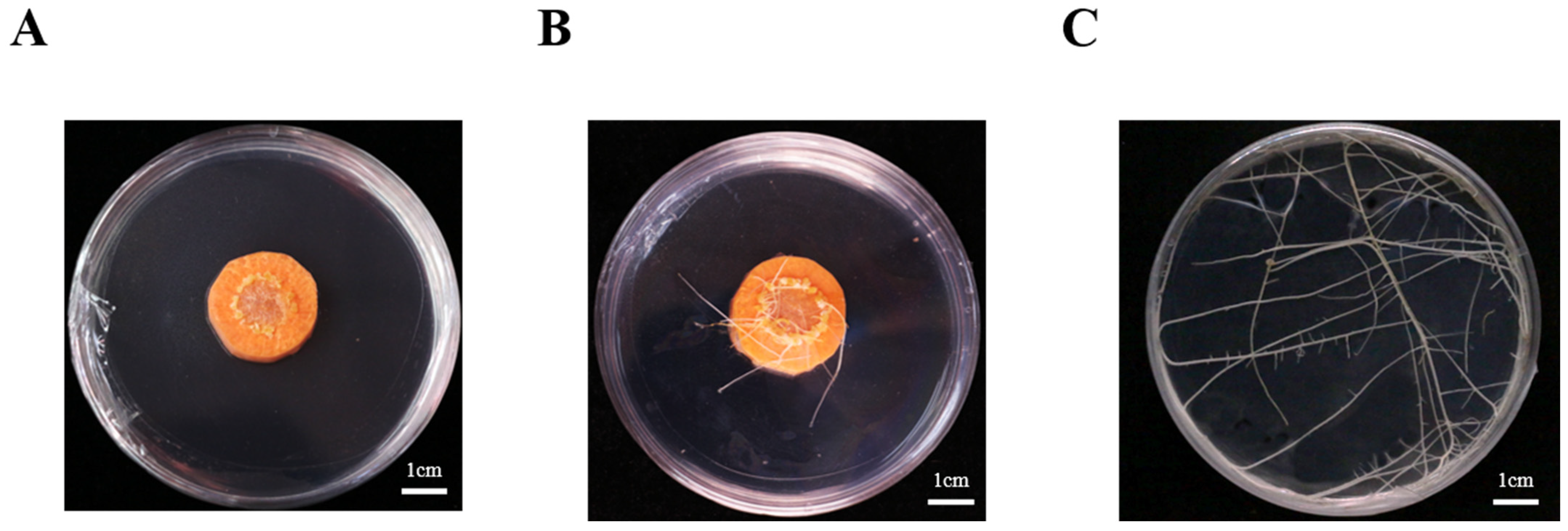
Carrot (Daucus carota L.) taproots were subjected to sequential surface sterilization as follows (Figure 1):
(i)
Rinse the carrots with distilled water.
(ii)
Remove epidermal tissues.
(iii)
Cut the carrots into round slices about 0.5 cm thick.
(iv)
Immerse the slices in 75% (v/v) ethanol for 30 s.
(v)
Treat them with 1% (v/v) sodium hypochlorite for 10–20 min.
Explants were co-cultured for 3 days in darkness at 25–28 °C.
Decontamination was performed using medium I (1% [w/v] agar supplemented with 400 mg/L Timentin (Coolaber, Beijing, China). Roots were maintained on hormone-free full-strength MS medium (hopebiol, Qingdao, China) at 26 ± 1 °C.

2.2. AM Fungal Spore Isolation and Sterilization

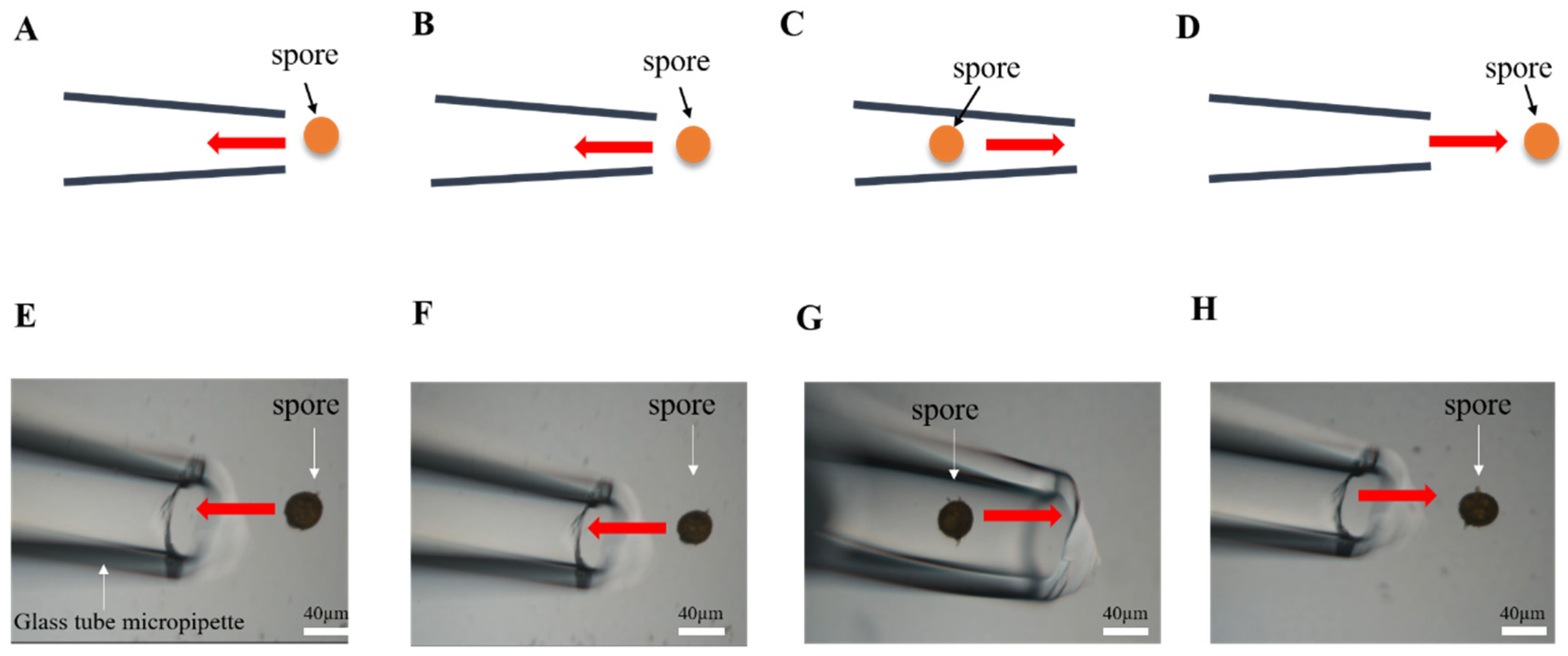
Individual spores of Glomus versiforme and Rhizophagus irregularis (Figure 2) were isolated from soil (Supplement Video S1) samples using a micropipette puller (Model P-97, Sutter Instrument, Novato, CA, USA). Surface sterilization was performed as follows:
  • Spore ultrasonic cleaning: 40 kHz, 100 W, for 2 min in sterile water (KQ-3200DE, Kunshan Ultrasonic Instruments, Kunshan, China).
  • Spore chemical sterilization: 10 min in Solution A (2% [w/v] chloramine-T (Coolaber, Beijing, China) + 0.01% [v/v] Tween-20 (Coolaber, Beijing, China)).
  • Spore surface antibiotic treatment: 10 min in Solution B (200 μg/mL streptomycin + 100 μg/mL gentamicin (both from Solarbio, Beijing, China)).
Sterilized spores were rinsed five times with sterile water prior to inoculation.

2.3. Symbiotic Co-Culture

Approximately 20 surface-sterilized spores were used to inoculate 1–2 cm carrot hairy roots in modified Strullu–Romand (MSR) agar medium [25]. Chambers were sealed and incubated at 25–28 °C in darkness. Symbiosis was confirmed at 40–60 days post-inoculation (dpi) by observing hyphal penetration under an Olympus BX63 microscope (Olympus, Tokyo, Japan).

2.4. Symbiotic Microchamber Construction

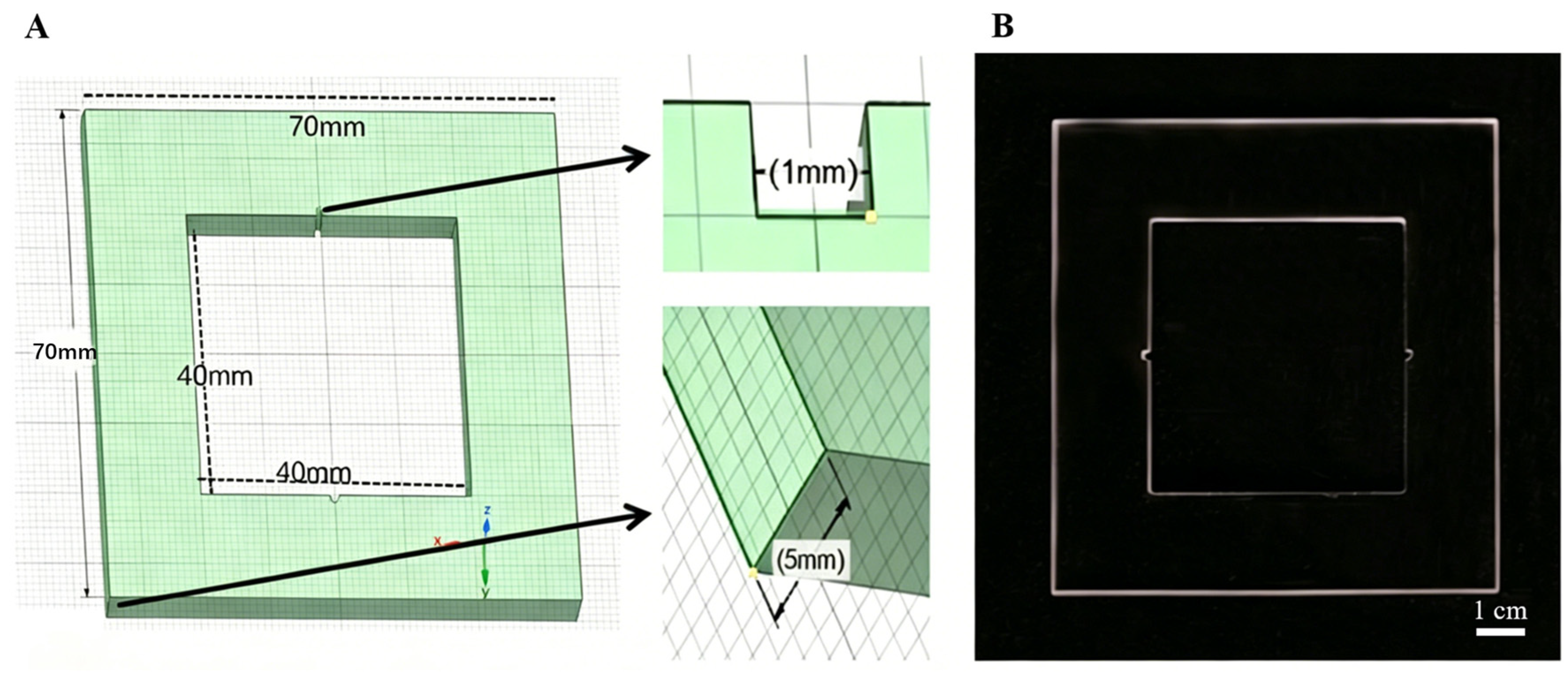
A sealed microfluidic culture chamber was constructed using quartz glass (Figure 3), consisting of custom-made hollow quartz plates and cover slips. The chamber has overall external dimensions of 70 × 70 × 5 mm (L × W × H) and an internal cavity measuring 40 × 40 × 5 mm. Two centrally located alignment grooves (1 × 1 × 5 mm) along opposite edges of the cavity allow precise compartmentalization. A sterile nylon membrane (30 µm pore size; UV-treated and permeable only to AM fungi hyphae) divides the chamber into separate plant and hyphal compartments. Cover slips (50 × 50 mm) were sealed to the chamber base using high-vacuum silicone grease (Dow Corning, Midland, MI, USA), followed by autoclave sterilization (121 °C, 30 min, 15 psi) to ensure sterility.

2.5. Fluorescence Detection System

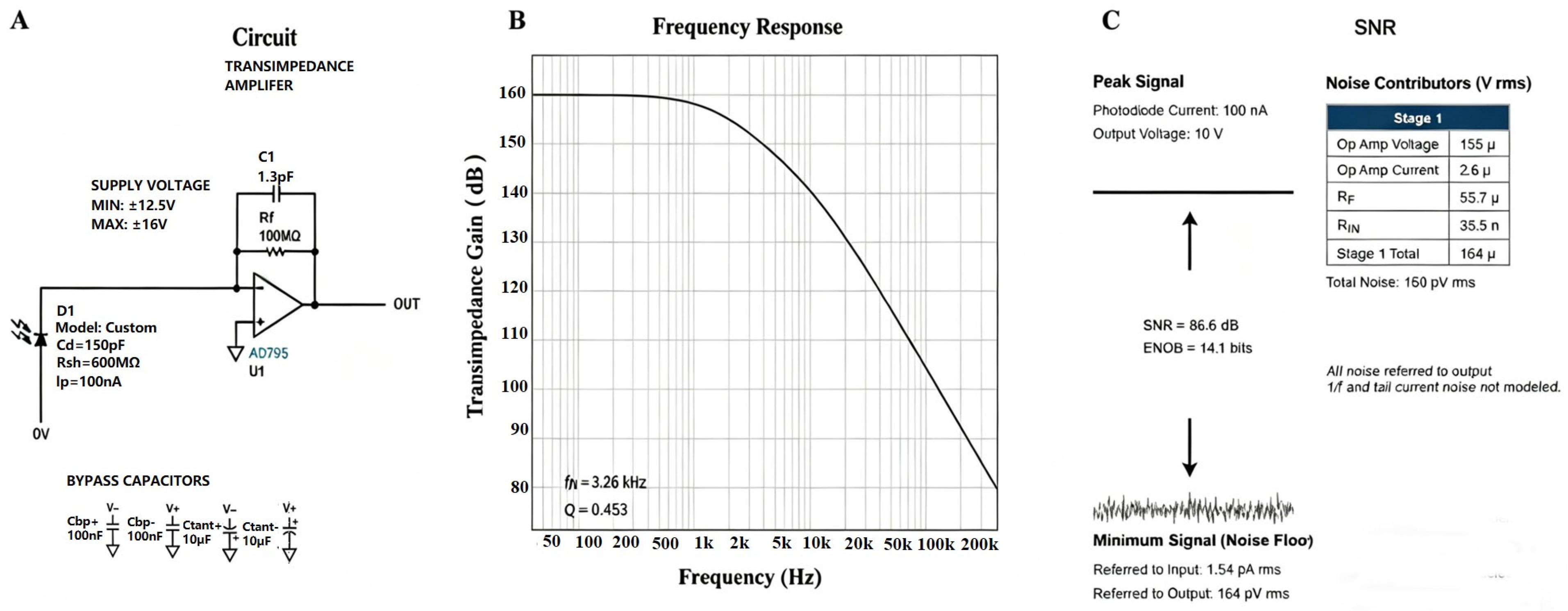
A high-sensitivity transimpedance amplifier (TIA) circuit (Figure 4) was developed for detecting weak bioluminescent signals. The system consists of three optimized subsystems:

2.5.1. Power Filtering

A symmetrical power filtering network using parallel 100 nF ceramic capacitors (X7R) and 10 μF tantalum capacitors per supply rail (±12.5 V to ±18 V) to suppress multi-frequency power noise, achieving μV-level ripple essential for nanoampere-level signal integrity.

2.5.2. Photodiode

A custom photodiode operating at zero reverse bias (Vr = 0 V) with a junction capacitance (Cd) of 150 pF and shunt resistance (Rsh) of 600 MΩ, eliminating dark current-induced shot noise while maximizing photon collection area for a peak photocurrent (Ip) of 100 nA.

2.5.3. TIA Core

A single-stage TIA utilizing an AD795 operational amplifier with ultra-low input voltage noise (1.2 nV/√Hz). A 100 MΩ thin-film feedback resistor (Rf) provides a gain of 108 V/A. A strategically selected 1.3 pF compensation capacitor (Cf) stabilizes the high-impedance node by damping the resonance peak (Q = 0.453), extending the bandwidth to 3.26 kHz—significantly beyond the theoretical limit of 1/(2πRfCd) ≈ 10.6 Hz—without compromising the 190 μs rise time. The total output noise is 164 μV RMS (1.64 pA RMS referred to input), predominantly contributed by the op-amp’s voltage noise (94.5%). The design achieves an SNR of 86.6 dB (ENOB = 14.1 bits), enabling reliable detection of sub-picoampere bioluminescent signals within the target bandwidth of 1 kHz.

2.6. Optoelectronic Assembly

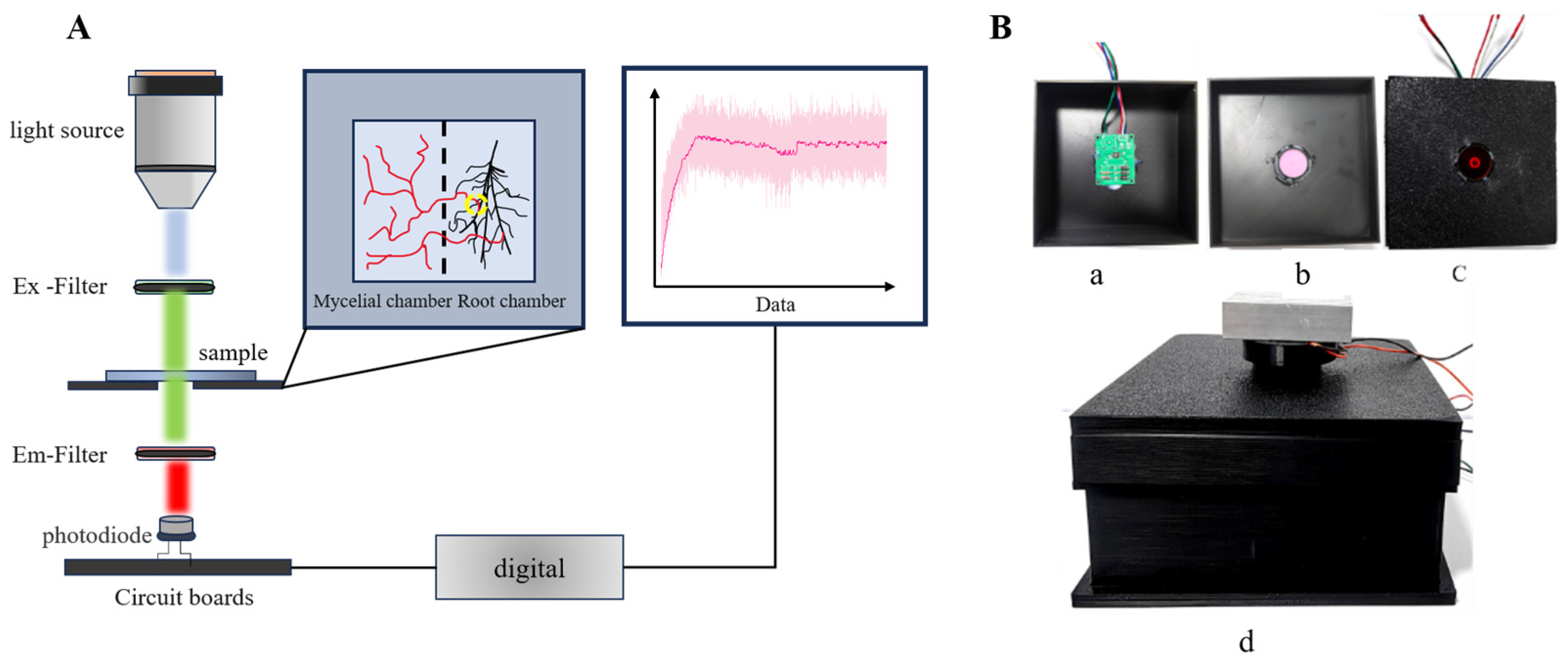
The fluorescence detection module (Figure 5) integrates four components: an X-Cite 120Q excitation lamp (Exelitas Technologies, Pittsburgh, PA, USA), an excitation filter (Ex-filter; #86-977, Edmund, Shenzhen, China), an emission filter (Em-filter; #86-979, Edmund), and a photodiode(S1336-44BQ, Hamamatsu Photonics, Hamamatsu, Japan); data acquisition was performed using an NI USB-6210 interface (National Instruments, Austin, TX, USA). In this configuration, the excitation source and Ex-filter are positioned above the plant compartment, while the Em-filter and photodiode are optically aligned below. The excitation source delivers targeted illumination to the plant samples. When fluorophore-labeled nutrients enter the detection zone, they emit fluorescence upon excitation. The emitted light passes through the Em-filter to remove stray light before being converted into photocurrent by the photodiode.

2.6.1. Fluorescence Detection Procedure

Carrot hairy roots cultured in-house and surface-sterilized AM fungi spores were used in the experiments. Hairy roots were inoculated in the plant compartment and spores in the hyphal compartment, both containing modified Strullu–Romand (MSR) medium. Sealed microchambers were incubated in darkness at 25–28 °C. After AM fungi hyphal germination and penetration through the nylon membrane to establish symbiosis, co-culture continued for 40–60 days until extensive hyphal networks developed. The upper lid was gently removed, and FM4-64 (10 μM; Thermo Fisher Scientific, Waltham, MA, USA) fluorescent dye was applied to the hyphal compartment to label hyphae for cytoplasmic streaming quantification. The root–hyphal junction was positioned over the photodiode detector and enclosed within the detection module. Excitation was then initiated for real-time monitoring of fluorescence dynamics.

2.6.2. Data Acquisition and Analysis

The photodiode converted low-amplitude fluorescence signals into current signals, which were processed by a transimpedance amplifier (TIA) and filter, yielding analog voltage signals. These were digitized at 250 kS/s via an NI USB-6210 data acquisition interface (National Instruments). Raw data were collected with a custom LabVIEW program.
Data acquisition was performed at 250 kS/s using LabVIEW 2023 (National Instruments). Fluorescence kinetics were analyzed using custom MATLAB 2022b scripts (MathWorks, Natick, MA, USA).

2.6.3. Statistical Analysis and Reproducibility

Data are presented as the means ± SD of three biological replicates. Significance was determined using a two-tailed t-test (p < 0.05, p < 0.01).

3. Results

3.1. Real-Time Visualization of Cytoplasmic Streaming Dynamics

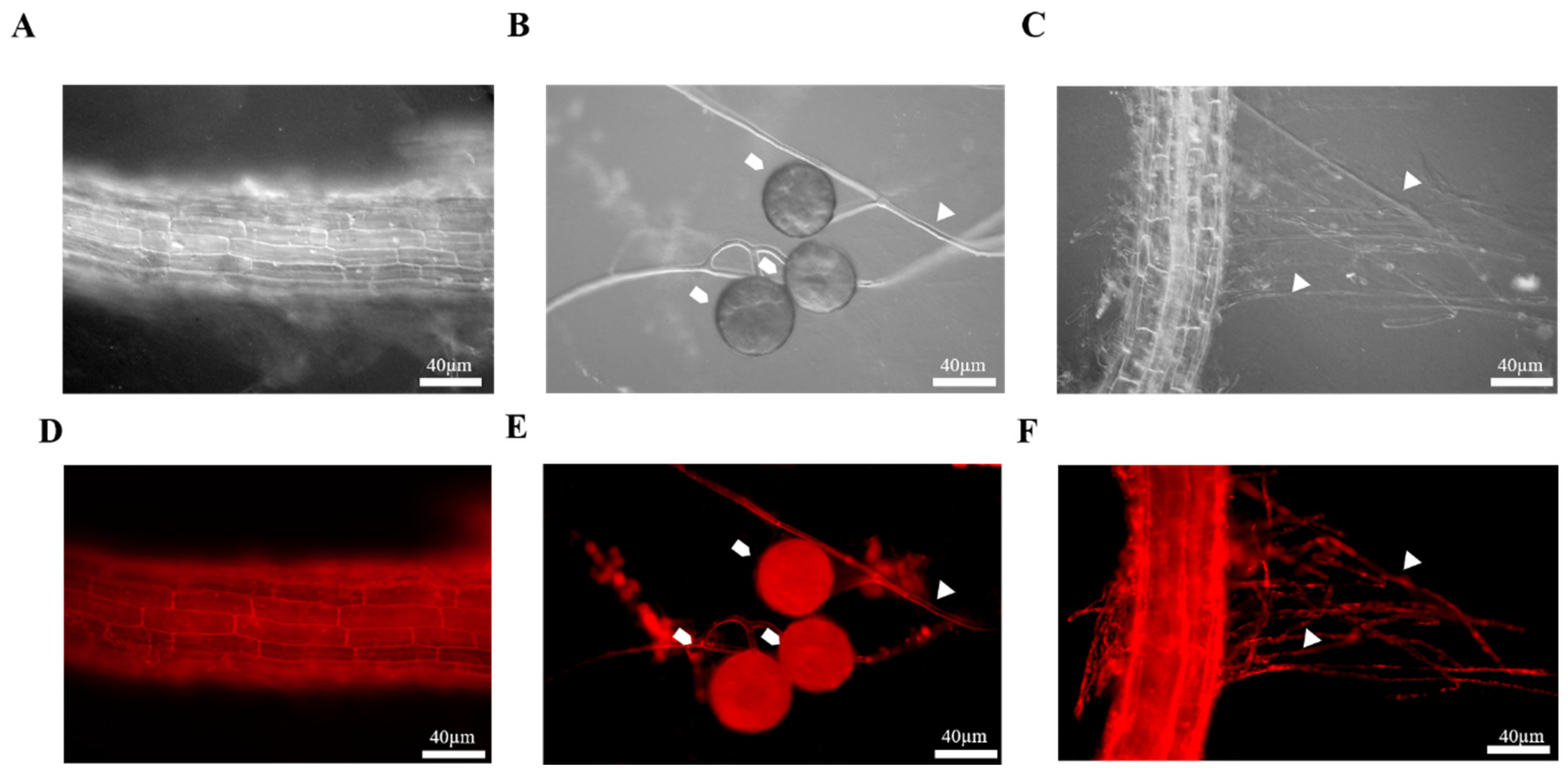
Extraradical hyphae of AM fungi form extensive networks that facilitate nutrient acquisition through cytoplasmic streaming to arbuscules [26]. However, in situ monitoring of nutrient flux remains challenging due to soil heterogeneity. To address this, we developed a real-time imaging platform using the membrane-selective fluorophore FM4-64 (10 μM; see Figure 6). This dye effectively labeled live root tissues, intraradical hyphae, and spores within sterile microchambers. Using fluorescence microscopy (Olympus BX63; 560/640 nm, 5 fps), we quantified directional transport of fluorescent signals, establishing cytoplasmic streaming as a direct proxy for nutrient flux.

3.2. Strain-Specific Kinetics of Cytoplasmic Streaming

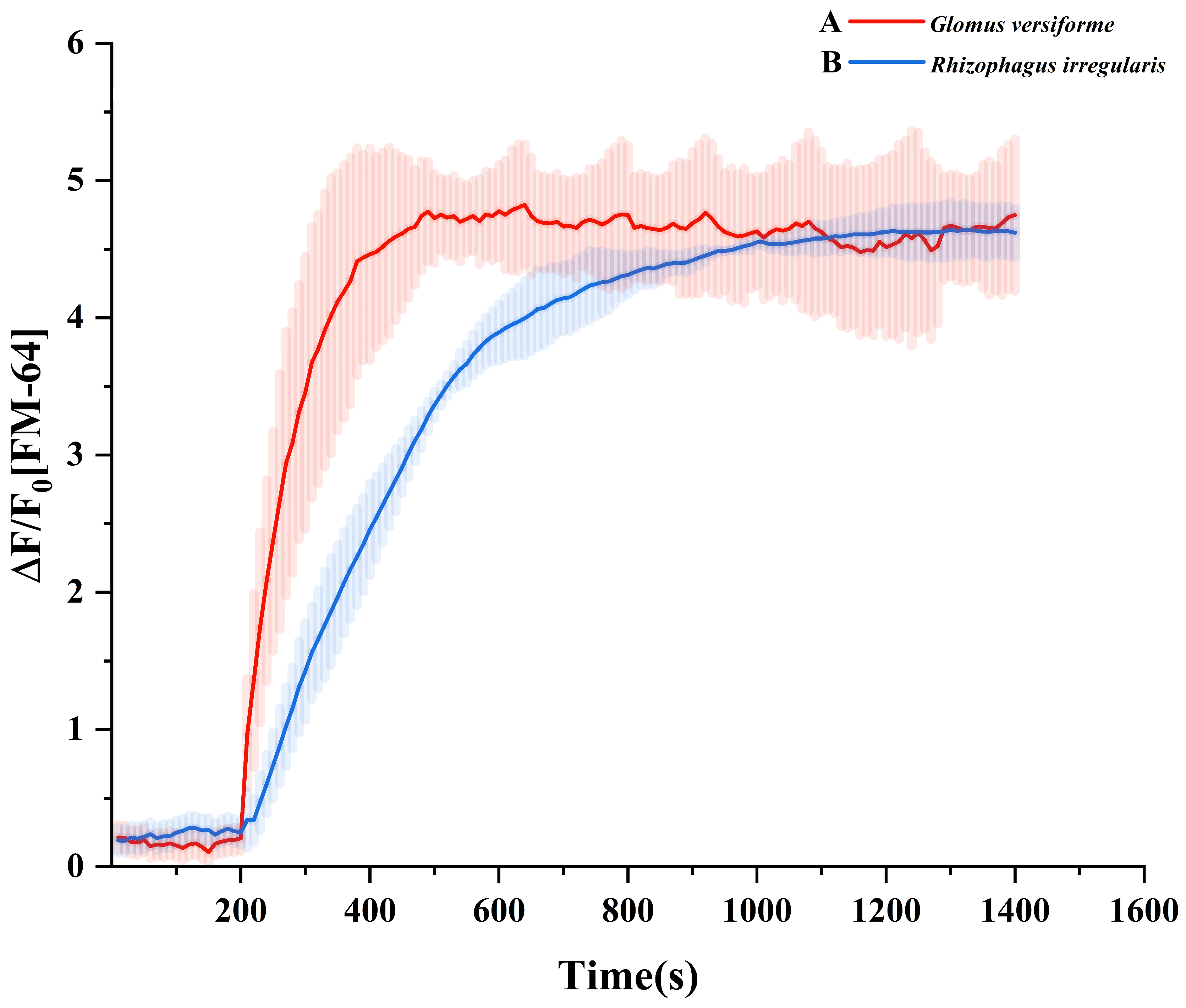
Our imaging platform tracked the transport of FM4-64 from distal hyphal tips (applied 1 cm from detection zones) to symbiotic interfaces (Figure 7). Quantitative analysis revealed distinct kinetics profiles between AM fungi strains:
Glomus versiforme exhibited rapid fluorescence accumulation (200–500 s: slope = 0.01506 ± 0.0008 ΔF/F0·s−1, p < 0.01), reaching a plateau at 500 s (peak ΔF/F0 = 0.0007 ± 0.0027).
Rhizophagus irregularis showed sustained increases up to 800 s (slope = 0.0052 ± 0.0003 ΔF/F0·s−1), with a lower peak intensity (ΔF/F0 = 0.0014 ± 0.0007; p = 0.008 vs. G. versiforme; Figure 7). These findings indicate efficient tracer delivery to symbiotic regions, with G. versiforme demonstrating superior transport kinetics.

3.3. Quantitative Comparison of Hyphal Transport Capacity

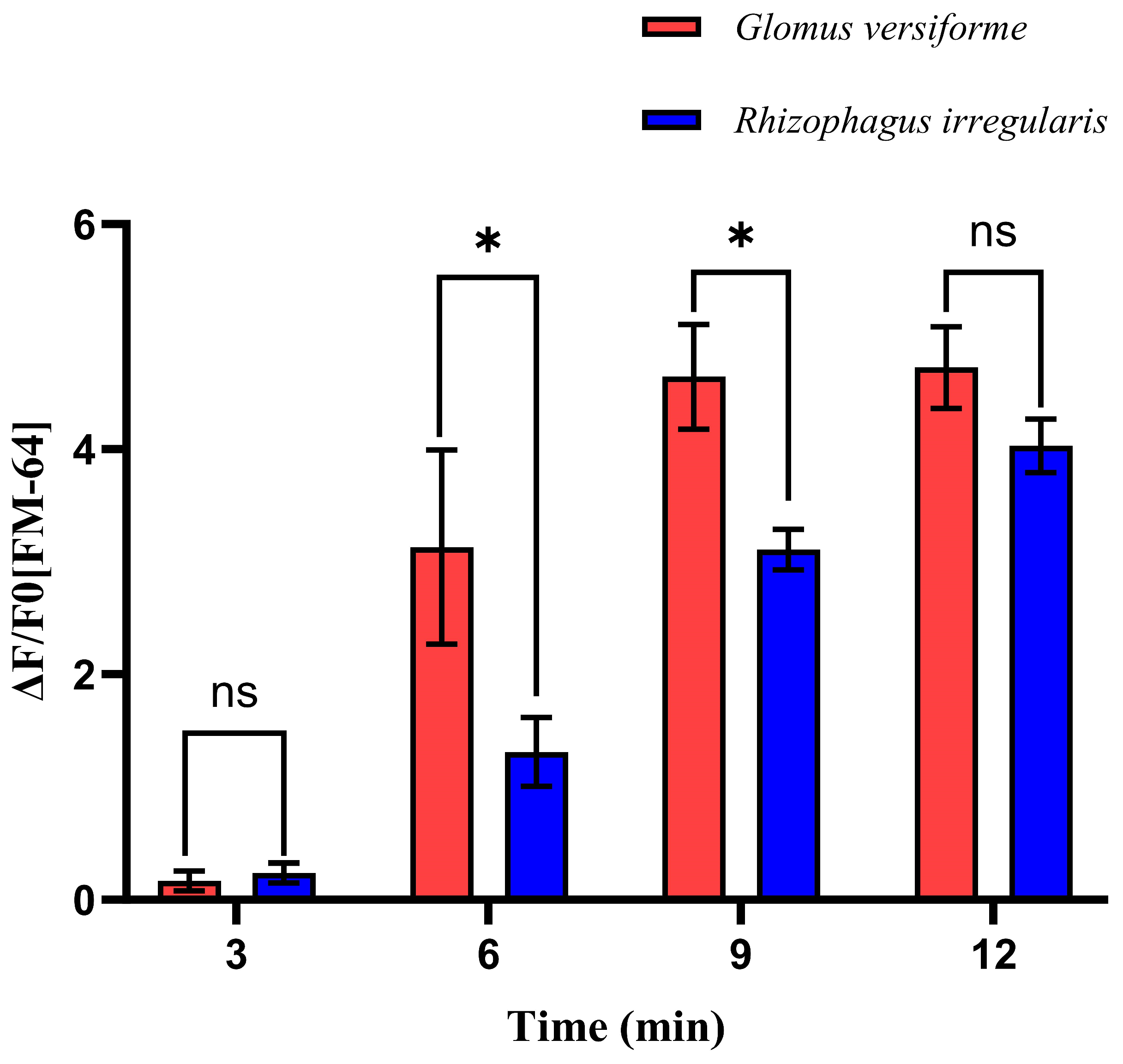
We quantified interspecific variation by analyzing fluorescence dynamics over a 12 min period (Figure 8): G. versiforme achieved a 2.3-fold-higher initial transport rate (3–6 min: 3.131 ± 0.864 vs. 1.311 ± 0.305 ΔF/F0·min−1 in R. irregularis, p < 0.05) and reached peak intensity at 9 min (ΔF/F0 = 4.645 ± 0.465). R. irregularis exhibited a delayed peak at 12 min (ΔF/F0 = 4.029 ± 0.238; not significant vs. G. versiforme after 9 min; see Figure 8).
Statistical analysis (n = 3 biological replicates) confirmed the superior transport capacity of G. versiforme (p < 0.05 at 6 and 9 min), highlighting functional divergence in AM fungi symbiotic efficiency.

4. Discussion

Based on the self-established real-time fluorescence tracing system in microchambers, this study employed two AM fungal species, Rhizophagus irregularis and Glomus versiforme, and successfully achieved the dynamic quantification of substance transport kinetics within the AM fungi symbiotic system. The distinct characteristics of different AM fungi strains in terms of transport rate, signal peak, and transport persistence were clearly identified. The findings not only verify the feasibility of the axenic microchamber system for monitoring the AM fungi transport process but also provide novel methods and indicators for the rapid screening of highly efficient symbiotic strains. Integrated with the existing mycorrhizal symbiosis theories and the data from this study, the core discoveries, scientific implications, and research limitations are discussed as follows:

4.1. Differences in Substance Transport Kinetics Among AM Fungi Strains and Their Symbiotic Significance

This study revealed that the fluorescence tracing signal of G. versiforme was transported more rapidly with an earlier peak, whereas R. irregularis exhibited the characteristics of steady transport and a longer duration (Figure 7 and Figure 8). These results indicate that there exist stable genotypic differences in the efficiency of substance transport among AM fungi strains, and such differentiation directly determines their functional preferences in forming symbiotic systems with host plants. From the perspective of symbiotic function, strains with faster transport rates are more conducive to the rapid acquisition of resources by plants under nutrient stress [27], while strains with stable transport are more beneficial for long-term symbiosis and continuous nutrient supply. The above results confirm that AM fungi’s symbiotic efficiency is closely related to the substance transport capacity of mycelia, providing new evidence for explaining the differential field performance of various strains.
For a long time, the core function of the AM fungi symbiotic system has been established on the basis of bidirectional nutrient exchange: host plants transfer lipids and carbohydrates to the fungi, and the fungi in turn enrich mineral nutrients and water for the plants [28]. The FM4-64 fluorescent probe adopted in this study is a tracing dye for cell membrane and cytoplasmic streaming, and its tracing results mainly reflect the rate of cytoplasmic streaming and membrane-associated substance transport in mycelia [29], rather than directly labeling mineral nutrients. The differences in transport kinetics revealed in this study essentially reflect the strain-specific variations in the efficiency of intracellular substance transport in mycelia. This process provides the structural and dynamic basis for nutrient transport and is a key link in the efficient operation of the symbiotic system.
Notably, the reliability of these strain-specific transport kinetic differences—central to our understanding of AM fungal symbiotic efficiency—can be further underscored by the methodological advantages of our experimental platform, which distinguishes it from the most recent state-of-the-art studies. Compared to the most recent state-of-the-art studies—such as microfluidic root chip systems used for short-term nutrient flux tracking or confocal-based cytoplasmic streaming assays [30] that are limited to ex vivo hyphal segments—our platform achieves significant advances [31,32]. This is achieved by integrating axenic long-term co-culture (up to 60 days) with real-time photodiode-based fluorescence detection, which is not feasible in open microfluidic devices that suffer from rapid evaporation or contamination [33,34]. Importantly, whereas previous studies focused on signal detection, material transport, or growth monitoring, this paper reports a dynamic kinetic analysis of hyphal transport for specific strains—an indicator directly related to symbiotic efficiency [35].

4.2. Technical Advantages and Scientific Value of the Microchamber Tracing System

Traditional AM fungi studies mostly rely on endpoint measurements of colonization rate, hyphal density, or nutrient content, which makes it difficult to achieve continuous in situ and in vivo observations. The microchamber system established in this study breaks through the spatiotemporal limitations of conventional methods and realizes the visual and dynamic monitoring of AM fungi growth and substance transport processes [36,37]. The isolation design of the 30 μm nylon mesh (Figure 3) [38] effectively eliminates the interference of free dye diffusion, ensures the directional transport of fluorescent signals along the hyphae, and makes the observation results more reliable.
The establishment of this system solves the problems of long screening cycles and difficult phenotype quantification for AM fungi, reducing the symbiotic efficiency evaluation that traditionally takes several years to dynamic monitoring completed within hours. From an applied perspective, the three indicators provided in this study—transport rate, peak time, and signal stability—can be directly used for high-throughput screening of high-efficiency strains, providing a standardized and precise evaluation method for the research and development of mycorrhizal bioagents.
The observed divergence in transport kinetics between Glomus versiforme and Rhizophagus irregularis can be mechanistically explained by differences in fungal architecture and cytoplasmic streaming regulation. G. versiforme exhibits a more rapid fluorescence accumulation (slope of 0.015 vs. 0.005 in R. irregularis), which may reflect a higher density of motile vacuoles and tubular structures per unit hyphal length [39]. Alternatively, the strain-specific expression of motor proteins (e.g., kinesins and myosins) could drive faster mass flow [40,41,42,43]. For R. irregularis, the lower peak but longer-lasting signal (up to 800 s) suggests a more balanced resource allocation strategy, favoring sustained nutrient delivery under chronic limited conditions. This functional specialization—rapid surge vs. steady supply—mirrors the ecological trade-off between “colonization priority” and “long-term mutualistic stability”.

4.3. Responses to Core Criticisms and Clarification of Scientific Boundaries

The FM4-64 probe used in this study is mainly employed to trace cytoplasmic streaming and membrane transport dynamics in hyphae, rather than directly labeling the transport of mineral ions such as phosphorus and nitrogen (Figure 6) [44]. Its results reflect the intracellular substance transport capacity of hyphae, not nutrient transfer itself. This probe selection is more suitable for kinetic observations rather than specific nutrient tracing. Meanwhile, this study eliminates the interference of transmembrane dye diffusion through physical isolation and signal localization (Figure 4). The fluorescent signal is only enriched at the hypha–root symbiotic interface, confirming its directional transport along the hyphal structure.
Regarding the relationship between cytoplasmic streaming and nutrient transport, existing studies have confirmed that hyphal cytoplasmic streaming is the core driving force for AM fungi to achieve long-distance substance transport [45]. The fluorescent transport rates observed in this study are highly correlated with hyphal viability and symbiotic structure development, indirectly proving the supporting role of cytoplasmic streaming in symbiotic function at the cytological level. As the research objective focuses on method construction and dynamic monitoring, this study did not conduct verification of subcellular transport pathways, and the relevant mechanisms still need to be further improved by combining specific probes and super-resolution imaging.

4.4. Research Limitations and Future Prospects

This study still has certain limitations. First, only two AM fungi strains were used for method validation, and the universality of the conclusions needs to be further confirmed with an expanded number of strains. Second, the FM4-64 probe cannot directly reflect mineral nutrient transport; in the future, phosphorus- and nitrogen-specific fluorescent probes can be coupled to achieve simultaneous observation of bidirectional nutrient exchange [46]. Third, although the microchamber system allows long-term cultivation, conditions such as ventilation and nutrient supply still need optimization to better simulate the natural soil environment [47,48]. Fourth, this study focused on the observation of transport processes without an in-depth investigation of gene expression and protein regulation mechanisms; the molecular basis underlying transport differences remains to be elucidated.
Future research can be expanded in three aspects: first, establish a standardized evaluation system covering multiple strains and multiple hosts; second, construct a multi-probe combined tracing platform for simultaneous observation of lipids, carbohydrates, and mineral nutrients; third, link indoor dynamic indicators with field symbiotic efficiency, promoting the practical application of the microchamber screening system.

5. Conclusions

In summary, the microchamber-based real-time fluorescence tracing method established in this study can effectively quantify the kinetic characteristics of substance transport in AM fungi hyphae, revealing significant differences between Glomus versiforme and Rhizophagus irregularis in transport rate, signal peak, and stability. The results revise the understanding of the direction of AM fungi’s bidirectional nutrient exchange, clarify the scientific boundaries of probe tracing, and address key issues, including methodological rationality, experimental evidence, and mechanistic relevance. This study not only provides new evidence for the mechanism of AM fungi symbiotic transport but also offers a rapid, accurate, and non-invasive novel method for screening high-efficiency functional strains, which is of important theoretical and practical value for promoting the application of mycorrhizal biotechnology in sustainable agriculture.

Supplementary Materials

The following supporting information can be downloaded at https://www.mdpi.com/article/10.3390/microbiolres17050096/s1. Video S1: Video of single spore isolation.

Author Contributions

Conceptualization, B.Y., Y.W. and G.Z.; methodology, B.Y. and G.Z.; software, B.Y. and G.Z.; validation, G.Z. and X.W.; formal analysis, L.Y., Y.Z., X.Z., R.C., X.W. and L.Z.; resources, X.W. and Z.W.; data curation, L.Y.; writing—original draft preparation, G.Z.; writing—review and editing, B.Y., Y.W. and G.Z.; visualization, L.Y. and L.Z.; supervision, B.Y.; project administration, B.Y. and Y.W.; funding acquisition, B.Y. and Y.W. All authors have read and agreed to the published version of the manuscript.

Funding

This research was funded by the China Huanghuai Sea High-yield Key Cultivation Technology Innovation and Integration Demonstration (Grant No. 2023YFD2300204), the National Natural Science Foundation of China (32401739) and the China Agriculture Research System (CARS-03).

Institutional Review Board Statement

Not applicable.

Informed Consent Statement

Not applicable.

Data Availability Statement

All data needed to evaluate the conclusions in the paper are present in the paper and/or the Supplementary Materials. Further inquiries can be directed to the corresponding authors.

Conflicts of Interest

The authors declare no conflicts of interest.

References

  1. Oldroyd, G.E.D.; Leyser, O. A plant’s diet, surviving in a variable nutrient environment. Science 2020, 368, 1207. [Google Scholar] [CrossRef]
  2. Das, D.; Paries, M.; Hobecker, K.; Gigl, M.; Dawid, C.; Lam, H.-M.; Zhang, J.; Chen, M.; Gutjahr, C. PHOSPHATE STARVATION RESPONSE transcription factors enable arbuscular mycorrhiza symbiosis. Nat. Commun. 2022, 13, 1206. [Google Scholar] [CrossRef]
  3. Zhang, Q.; Wang, S.; Xie, Q.; Xia, Y.; Lu, L.; Wang, M.; Wang, G.; Long, S.; Cai, Y.; Xu, L.; et al. Control of arbuscule development by a transcriptional negative feedback loop in Medicago. Nat. Commun. 2023, 14, 5743. [Google Scholar] [CrossRef]
  4. Rich, M.K.; Vigneron, N.; Libourel, C.; Keller, J.; Xue, L.; Hajheidari, M.; Radhakrishnan, G.V.; Le Ru, A.; Diop, S.I.; Potente, G.; et al. Lipid exchanges drove the evolution of mutualism during plant terrestrialization. Science 2021, 372, 864–868. [Google Scholar] [CrossRef]
  5. Wang, Z.; Zhang, S.; Liang, J.; Chen, H.; Jiang, Z.; Hu, W.; Tang, M. Rhizophagus irregularis regulates RiCPSI and RiCARI expression to influence plant drought tolerance. Plant Physiol. 2024, 197, kiae645. [Google Scholar] [CrossRef] [PubMed]
  6. Duan, S.; Feng, G.; Limpens, E.; Bonfante, P.; Xie, X.; Zhang, L. Cross-kingdom nutrient exchange in the plant–arbuscular mycorrhizal fungus–bacterium continuum. Nat. Rev. Microbiol. 2024, 22, 773–790. [Google Scholar] [CrossRef]
  7. Zhang, L.; Zhou, J.; George, T.S.; Limpens, E.; Feng, G. Arbuscular mycorrhizal fungi conducting the hyphosphere bacterial orchestra. Trends Plant Sci. 2022, 27, 402–411. [Google Scholar] [CrossRef]
  8. Rozmoš, M.; Bukovská, P.; Hršelová, H.; Kotianová, M.; Dudáš, M.; Gančarčíková, K.; Jansa, J. Organic nitrogen utilisation by an arbuscular mycorrhizal fungus is mediated by specific soil bacteria and a protist. ISME J. 2022, 16, 676–685. [Google Scholar] [CrossRef] [PubMed]
  9. Genre, A.; Lanfranco, L.; Perotto, S.; Bonfante, P. Unique and common traits in mycorrhizal symbioses. Nat. Rev. Microbiol. 2020, 18, 649–660. [Google Scholar] [CrossRef]
  10. Duan, S.; Declerck, S.; Feng, G.; Zhang, L. Hyphosphere interactions between Rhizophagus irregularis and Rahnella aquatilis promote carbon–phosphorus exchange at the peri-arbuscular space in Medicago truncatula. Environ. Microbiol. 2023, 25, 867–879. [Google Scholar] [CrossRef]
  11. Etesami, H.; Jeong, B.R.; Glick, B.R. Contribution of Arbuscular Mycorrhizal Fungi, Phosphate–Solubilizing Bacteria, and Silicon to P Uptake by Plant. Front. Plant Sci. 2021, 12, 699618. [Google Scholar] [CrossRef]
  12. Bhupenchandra, I.; Chongtham, S.K.; Devi, A.G.; Dutta, P.; Sahoo, M.R.; Mohanty, S.; Kumar, S.; Choudhary, A.K.; Devi, E.L.; Sinyorita, S.; et al. Unlocking the Potential of Arbuscular Mycorrhizal Fungi: Exploring Role in Plant Growth Promotion, Nutrient Uptake Mechanisms, Biotic Stress Alleviation, and Sustaining Agricultural Production Systems. J. Plant Growth Regul. 2025, 44, 6802–6840. [Google Scholar] [CrossRef]
  13. Wang, Q.; Liu, M.; Wang, Z.; Li, J.; Liu, K.; Huang, D. The role of arbuscular mycorrhizal symbiosis in plant abiotic stress. Front. Microbiol. 2024, 14, 1323881. [Google Scholar] [CrossRef]
  14. Iida, H. Cytoplasmic streaming of symbiotic algae in the ciliate Stentor pyriformis. Protist 2025, 176, 126086. [Google Scholar] [CrossRef] [PubMed]
  15. Bowman, B. Distribution and dynamics of hyphal organelles. Fungal Genet. Biol. 2025, 178, 103982. [Google Scholar] [CrossRef]
  16. Sepúlveda, C.S.; Goles, E.; Wilson, M.R.; Adamatzky, A.I. Exploring the Dynamics of Fungal Cellular Automata. arXiv 2022, arXiv:2210.14615. [Google Scholar] [CrossRef]
  17. Money, N.P. Action and inertia in the study of hyphal growth. Fungal Biol. Rev. 2022, 41, 24–30. [Google Scholar] [CrossRef]
  18. Lee, S.-J.; Wang, L.; Orlovskis, Z. Harnessing plant-to-plant signalling via common mycorrhizal networks for enhanced community-level resistance in crops. J. Exp. Bot. 2026. [Google Scholar] [CrossRef] [PubMed]
  19. Schuster, M.; Kilaru, S.; Wösten, H.A.B.; Steinberg, G. Secretion and endocytosis in subapical cells support hyphal tip growth in the fungus Trichoderma reesei. Nat. Commun. 2025, 16, 4402. [Google Scholar] [CrossRef]
  20. Wang, S.; Chen, A.; Xie, K.; Yang, X.; Luo, Z.; Chen, J.; Zeng, D.; Ren, Y.; Yang, C.; Wang, L.; et al. Functional analysis of the OsNPF4.5 nitrate transporter reveals a conserved mycorrhizal pathway of nitrogen acquisition in plants. Proc. Natl. Acad. Sci. USA 2020, 117, 16649–16659. [Google Scholar] [CrossRef]
  21. Wani, A.K.; Qadir, F.; Elboughdiri, N.; Rahayu, F.; Saefudin; Pranowo, D.; Martasari, C.; Kosmiatin, M.; Suhara, C.; Sudaryono, T.; et al. Metagenomics and plant-microbe symbioses: Microbial community dynamics, functional roles in carbon sequestration, nitrogen transformation, sulfur and phosphorus mobilization for sustainable soil health. Biotechnol. Adv. 2025, 82, 108580. [Google Scholar] [CrossRef]
  22. Kumor, A.; Borówka, J.; Noszczyńska, M. Interspecific dance: How bacteria, fungi, and plants interact to survive in polluted soils. Appl. Soil Ecol. 2025, 213, 106238. [Google Scholar] [CrossRef]
  23. Zeng, Q.; Hu, H.W.; Ge, A.H.; Xiong, C.; Zhai, C.C.; Duan, G.L.; Han, L.L.; Huang, S.Y.; Zhang, L.M. Plant–microbiome interactions and their impacts on plant adaptation to climate change. J. Integr. Plant Biol. 2025, 67, 826–844. [Google Scholar] [CrossRef]
  24. Bécard, G.; Fortin, J.A. Early events of vesicular–arbuscular mycorrhiza formation on Ri T-DNA transformed roots. New Phytol. 2006, 108, 211–218. [Google Scholar] [CrossRef]
  25. Fortin, J.A.; Bécard, G.; Declerck, S.; Dalpé, Y.; St-Arnaud, M.; Coughlan, A.P.; Piché, Y. Arbuscular mycorrhiza on root-organ cultures. Can. J. Bot. 2002, 80, 1–20. [Google Scholar] [CrossRef]
  26. Zhang, Y.; Lv, X.; Wang, Y.; Chen, X.; Zhang, J.; Su, D. Recent advances in self-immobilizing fluorescent probes for in vivo imaging. Smart Mol. 2024, 2, e20240031. [Google Scholar] [CrossRef]
  27. Duan, S.; Jin, Z.; Zhang, L.; Declerck, S. Mechanisms of cooperation in the plants-arbuscular mycorrhizal fungi-bacteria continuum. ISME J. 2025, 19, wraf023. [Google Scholar] [CrossRef] [PubMed]
  28. Salmeron-Santiago, I.A.; Martínez-Trujillo, M.; Valdez-Alarcón, J.J.; Pedraza-Santos, M.E.; Santoyo, G.; Pozo, M.J.; Chávez-Bárcenas, A.T. An Updated Review on the Modulation of Carbon Partitioning and Allocation in Arbuscular Mycorrhizal Plants. Microorganisms 2021, 10, 75. [Google Scholar] [CrossRef] [PubMed]
  29. Hanaki, Y.; Suzuki, H.; Nakamura, S.; Nakagawa, S.; Tada, K.; Matsumoto, H.; Kimata, Y.; Sato, Y.; Ueda, M. A simple and versatile plasma membrane staining method for visualizing living cell morphology in reproductive tissues across diverse plant species. Plant Methods 2025, 21, 149. [Google Scholar] [CrossRef] [PubMed]
  30. Zhang, Y.; Zhao, Y.; Sun, Z.; Jiang, Y.; Zhao, X.; Tang, Y.; Zhai, N.; Sun, L. A Newly Established Micro-Millifluidic Chip for Real-Time Monitoring of Arabidopsis Root Responses to Salinity Stress. Plant Cell Environ. 2025, 48, 7017–7019. [Google Scholar] [CrossRef]
  31. Chevalier, L.; Pinar, M.; Le Borgne, R.; Durieu, C.; Peñalva, M.A.; Boudaoud, A.; Minc, N. Cell wall dynamics stabilize tip growth in a filamentous fungus. PLoS Biol. 2023, 21, e3001981. [Google Scholar] [CrossRef]
  32. Money, N.P. Physical forces supporting hyphal growth. Fungal Genet. Biol. 2025, 177, 103961. [Google Scholar] [CrossRef]
  33. He, H.; Ma, L.; Chen, L.; Wu, Q.; Lubsandorzhiev, S.; Lubsandorzhiev, B.; Qian, S. The Detectors based on PMTs. J. Instrum. 2025, 20, C06013. [Google Scholar] [CrossRef]
  34. Richter, F.; Calonne-Salmon, M.; van der Heijden, M.G.A.; Declerck, S.; Stanley, C.E. AM fungi-SporeChip provides new insights into arbuscular mycorrhizal fungal asymbiotic hyphal growth dynamics at the cellular level. Lab Chip 2024, 24, 1930–1946. [Google Scholar] [CrossRef] [PubMed]
  35. Grünberger, A.; Schöler, K.; Probst, C.; Kornfeld, G.; Hardiman, T.; Wiechert, W.; Kohlheyer, D.; Noack, S. Real-time monitoring of fungal growth and morphogenesis at single-cell resolution. Eng. Life Sci. 2017, 17, 86–92. [Google Scholar] [CrossRef]
  36. Mulyadi; Jiang, L. Combined Application of Arbuscular Mycorrhizal Fungi (AM fungi) and Nitrogen Fertilizer Alters the Physicochemical Soil Properties, Nitrogen Uptake, and Rice Yield in a Polybag Experiment. Agriculture 2023, 13, 1364. [Google Scholar] [CrossRef]
  37. Weber, S.E.; Bascompte, J.; Kahmen, A.; Niklaus, P.A. AM fungi diversity promotes plant community phosphorus acquisition and reduces carbon costs per unit of phosphorus. New Phytol. 2025, 248, 886–896. [Google Scholar] [CrossRef]
  38. Liu, Y.-W.; Guan, D.-X.; Qiu, L.-X.; Luo, Y.; Liu, F.; Teng, H.H.; Kuzyakov, Y.; Ma, L.Q. Spatial dynamics of phosphorus mobilization by mycorrhiza. Soil Biol. Biochem. 2025, 206, 109797. [Google Scholar] [CrossRef]
  39. Pope, R.E.; Prade, R.A. Vesicle-driven endomembrane systems in fungi. Microbiol. Mol. Biol. Rev. 2025, 90, e00297-224. [Google Scholar] [CrossRef]
  40. Tan, Q.-R.; Yao, L.-L.; Yuan, M.; Sun, S.; Li, X.-d. Endocytosis in Fusarium graminearum requires coordination of the motor domain and two tail homology domains of myosin-1. Microb. Pathog. 2025, 206, 107841. [Google Scholar] [CrossRef]
  41. Oakley, B.; Peñalva, M.A. The roles of the cytoskeleton in fungal tip growth: Insights from Aspergillus nidulans. Fungal Genet. Biol. 2025, 180, 104018. [Google Scholar] [CrossRef]
  42. Tan, Q.-R.; Li, X.-d. Fungal myosin-1 homologs as key molecular motors at the membrane–cytoskeleton interface. Fungal Biol. Rev. 2023, 45, 100318. [Google Scholar] [CrossRef]
  43. Trofimova, D.; Doubleday, C.; Hunter, B.; Serrano Arevalo, J.D.; Davison, E.; Wen, E.; Munro, K.; Allingham, J.S. Fungal kinesin-8 motors dimerize by folding their proximal tail domain into a compact helical bundle. Structure 2025, 33, 2122–2132.e4. [Google Scholar] [CrossRef]
  44. Chow, F.; Mohammad, E.; McFarlane, H.E. Protocol for detecting intracellular aggregations in Arabidopsis thaliana cell wall mutants using FM4-64 staining. STAR Protoc. 2025, 6, 103665. [Google Scholar] [CrossRef]
  45. Ashford, A.E.; Allaway, W.G. The role of the motile tubular vacuole system in mycorrhizal fungi. Plant Soil 2002, 244, 177–187. [Google Scholar] [CrossRef]
  46. Lewis, M.W.; Robalino, I.V.; Keyhani, N.O. Uptake of the fluorescent probe FM4-64 by hyphae and haemolymph-derived in vivo hyphal bodies of the entomopathogenic fungus Beauveria bassiana. Microbiology 2009, 155, 3110–3120. [Google Scholar] [CrossRef] [PubMed]
  47. Li, J.; Zhou, W.; Yang, R.; Wang, H.; Zhang, D.; Li, Y.; Qi, Z.; Lin, W. Evaluating the Effect on Cultivation of Replacing Soil with Typical Soilless Growing Media: A Microbial Perspective. Agronomy 2022, 13, 6. [Google Scholar] [CrossRef]
  48. Marilleau, N.; Cambier, C.; Drogoul, A.; Chotte, J.L.; Perrier, E.; Blanchart, E. Multiscale MAS modelling to simulate the soil environment: Application to soil ecology. Simul. Model. Pract. Theory 2008, 16, 736–745. [Google Scholar] [CrossRef]
Figure 1. Hairy roots induced in carrot using Agrobacterium rhizogenes strain ACCC10060. (A) Carrot explants 10 days post-infection; (B) emergence of hairy roots at 15 days post-infection; (C) extensive root development at 30 days. Scale bars: 1 cm.
Microbiolres 17 00096 g001
Figure 2. Isolation of individual AM fungi spores. (AD) Schematic diagram of the spore separation procedure; (EH) physical representation of individual spore separation. Scale bar: 40 µm, (The red arrow represents the direction of spore movement).
Microbiolres 17 00096 g002
Figure 3. Compartmentalized symbiotic microchamber. (A) Schematic. (B) Physical prototype. Scale bar: 1 cm.
Microbiolres 17 00096 g003
Figure 4. Fluorescent signal acquisition board. (A) Circuit schematic: TIA with 100 MΩ feedback resistor; (B) noise spectrum (bandwidth: 3.26 kHz); (C) signal detection output.
Microbiolres 17 00096 g004
Figure 5. Spatiotemporal hyphal transport Kinetics flux quantification system. (A) Schematic diagram (Dashed line: Nylon mesh 30 µm pore size; Red curve: Mycelium; Black curve: Root system; Yellow dashed circle: Mycelium invasion point; Pink curve: Fluorescence signal changes under real-time detection). (B) Physical item pictures: (a) circuit boards; (b) Ex-filter; (c) Em-filter; (d) spatiotemporal hyphal transport kinetics flux quantification system model machine.
Microbiolres 17 00096 g005
Figure 6. Fluorescent staining patterns of hyphae, roots, and spores. (A) Unstained roots; (B,C) long arrows indicate spores and short arrows indicate hyphae before staining. (D) Stained roots; (E,F) long arrows indicate fluorescently stained spores and short arrows indicate stained hyphae. Scale bar: 40 µm.
Microbiolres 17 00096 g006
Figure 7. Real-time fluorescence kinetics in symbiotic regions. (A) Kinetics of G. versiforme (red). (B) Kinetics of R. irregularis (blue). Data are presented as means ± SD (n = 3).
Microbiolres 17 00096 g007
Figure 8. Comparison of hyphal transport capacity between Glomus versiforme (red) and Rhizophagus irregularis (blue) across time points. Data represent mean intensity ± SD (n = 3 biological replicates); Statistical significance: p < 0.05 (*), p > 0.05 not significant (ns).
Microbiolres 17 00096 g008
Disclaimer/Publisher’s Note: The statements, opinions and data contained in all publications are solely those of the individual author(s) and contributor(s) and not of MDPI and/or the editor(s). MDPI and/or the editor(s) disclaim responsibility for any injury to people or property resulting from any ideas, methods, instructions or products referred to in the content.