Article

Molecular Epidemiology, Hematobiochemical Alterations, and Oxidative Stress-Induced Genotoxicity of Equine Trypanosomiasis in Pakistan


1
Department of Pathology, Faculty of Veterinary Sciences, University of Veterinary and Animal Sciences, Lahore 54000, Pakistan
2
Livestock and Dairy Development Department, Government of the Punjab, Lahore 54000, Pakistan
3
Al-Shifa Institute of Health Sciences, Narowal 51600, Pakistan
4
Faculty of Pharmacy, The University of Lahore, Lahore 54000, Pakistan
5
Department of Pharmacology, Riphah College of Veterinary Sciences, Riphah International University, Lahore 54000, Pakistan
6
Department of Allied Health Sciences, The Superior University, Lahore 54000, Pakistan
7
Sialkot College of Physical Therapy, Sialkot 51310, Pakistan
8
Department of Pharmacology and Toxicology, Faculty of Veterinary and Animal Sciences, The Islamia University of Bahawalpur, Bahawalpur 63100, Pakistan
9
Higher Education Department, Government of the Punjab, Lahore 54000, Pakistan
*
Authors to whom correspondence should be addressed.
Microbiol. Res. 2026, 17(5), 86; https://doi.org/10.3390/microbiolres17050086 (registering DOI)
Submission received: 28 February 2026 / Revised: 8 April 2026 / Accepted: 19 April 2026 / Published: 27 April 2026

Abstract

Trypanosoma evansi (T. evansi) infection poses a significant health threat to equines. This study was aimed to assess the prevalence, risk factors, hematobiochemical alterations, and oxidative stress-mediated genotoxicity associated with equine trypanosomiasis in the Rahim Yar Khan District. This cross-sectional study was conducted on 384 equines from October 2024 to September 2025. Blood samples were collected for thin blood film microscopy and PCR assay using RoTat 1.2 primers. Hematological indices were analyzed with an automated hematology analyzer; serum biochemical parameters were quantified via standard assays. Oxidative stress markers, including malondialdehyde (MDA), catalase (CAT), superoxide dismutase (SOD), and reduced glutathione (GSH), were also measured. Genotoxicity was evaluated using the alkaline comet assay. Statistical analyses included the chi-square test, logistic regression, and independent t-tests. T. evansi was detected in 5.99% of samples by microscopy and 10.16% by PCR, with no significant association with species, age, or sex. Infected equines exhibited significant reductions in hemoglobin (5.4 ± 0.6 vs. 10.8 ± 0.5 g/dL; p < 0.0001), total serum protein (2.1 ± 0.3 vs. 5.8 ± 0.2 g/dL; p < 0.0001), albumin, and globulin, alongside elevated hepatic enzymes, blood urea nitrogen, and creatinine (all p < 0.01). Oxidative stress was confirmed by increased MDA (p < 0.0001) and decreased CAT activity (p < 0.001). Genotoxicity was significantly higher in infected animals (genetic damage index; 1.12 ± 0.08 vs. 0.40 ± 0.01; p < 0.01). This study provides the first integrated assessment of molecular epidemiology and oxidative stress-mediated genotoxicity in equines in this region, suggesting the pathogenic impact of the infection and targeted diagnostics for disease management strategies.

1. Introduction

T. evansi is a member of the subgenus Trypanozoon, which is responsible for causing “Surra”. Trypanosomiasis is an important protozoal disease that affects wild and domestic animals across tropical and subtropical regions across Africa, Asia, and Latin America [1].
T. evansi infection leads to substantial economic losses due to reductions in meat and milk yields, it causes anemia, weight loss, impaired fertility, and abortions, while also presenting zoonotic risk. The economic burden from trypanosomiasis, only in cattle, exceeds 1.0 billion US dollars per year, while the disease causes the death of 3 million animals and requires the use of more than 35 million doses trypanocidal drugs [2]. The disease is primarily transmitted mechanically through hematophagous insects. The duration between the entry of the parasite and its identification in tissue fluids or blood through direct examination is known as the prepatent period. The clinical presentation of the infection shows different severity levels between different host species [3]. The infection follows two separate phases during its course. During the acute phase, trypomastigotes reach high levels in the blood while clinical symptoms become prominent. The chronic phase shows low parasitemia levels and weight loss together with non-specific signs. In the later stages, the infected animals serve as a reservoir for the parasite [4]. In cattle and water buffaloes, T. evansi is typically manifested as chronic illness, abortion, weight loss, and neurological disturbances [5]. However, sheep and goats often remain asymptomatic carriers, since there are no specific clinical signs, and the clinical symptoms alone are insufficient to confirm the infection. Therefore, laboratory confirmation is necessary for the definitive diagnosis [6].
Hematocrit, hemoglobin concentrations, and red blood cell counts are significantly decreased in infected animals [3]. Prior studies have shown that trypanosomiasis damages several vital organs in addition to blood cells [7]. Interestingly, the parasite also induces oxidative stress in equines, and it is considered as a primary underlying mechanism in the pathophysiology [3,8]. Numerous studies have indicated that infection with T. evansi promotes oxidative injury within the blood cells, hepatocytes, and heart of the affected animals. Hydroxyl radicals, hydrogen peroxide, and superoxide radicals are among the harmful free radicals (reactive oxygen species: ROS) produced by T. evansi infection [7,9]. These free radicals cause essential biomolecules, such as proteins, lipids, and, particularly, DNA, to malfunction and ultimately cause cell death [8,10]. More than 100 different kinds of DNA adducts involving pyrimidine and purine bases, as well as the deoxyribose backbone, have been found as a result of DNA strand break due to oxidative stress, which is a major cause of genetic mutations [9].
The primary methods for controlling such diseases are the development of serological surveys such as ELISA along with molecular detection [2]. Surveys are required to be conducted in both endemic and disease-free areas [11]. Various diagnostic methods are available for detecting trypanosomes, and the choice of a diagnostic test often depends more on the resources available in the field or laboratory [12]. Of these, parasitological techniques involve directly observing parasites under a light microscope. These techniques are cost-effective and convenient; however, their sensitivity is low [12]. As a result, they are primarily effective during the acute phase of the infection when the parasitemia load is high [3]. Microscopy is commonly used for the initial diagnosis but has a low sensitivity in cases of low parasitemia. Serological methods improve detection by identifying antibodies or antigens, though specificity may be limited. Therefore, molecular techniques such as PCR are employed for their high sensitivity and specificity, enabling detection even at low parasite levels [12,13,14].
During recent years, numerous primers have been developed, targeting repetitive nucleotide sequences in the DNA to enhance diagnostic accuracy. For example, TBR 1/2 primers target chromosomal minisatellite monomeric repeat units of trypanosomes [15]; ESAG 6/7 primers focus on multicopy genes encoding the heterodimeric transferrin receptor complex [16]. Meanwhile, ITS-1 primers identify trypanosomes through targeting the internal transcribed spacer regions of the ribosomal DNA [17]. This study aimed to determine the prevalence and associated risk factors of T. evansi infection in equines of Rahim Yar Khan, Pakistan. In addition, the study investigated the hematobiochemical alterations and oxidative stress-mediated genotoxicity associated with the infection.

2. Materials and Methods

2.1. Study Site and Sampling Design

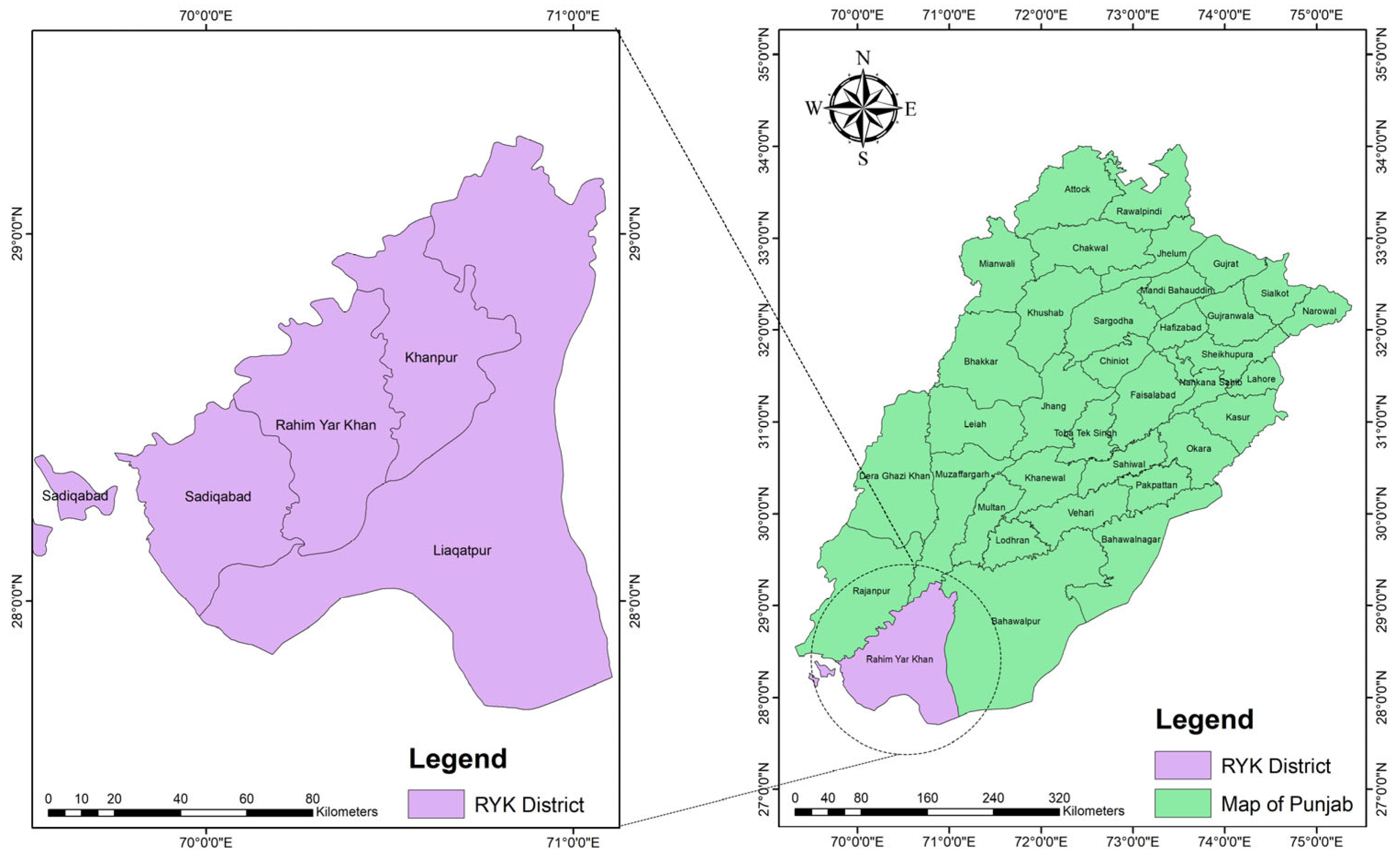
The present study was performed in Rahim Yar Khan District of Punjab province (Pakistan). Rahim Yar Khan District borders Sindh province and is located at the southernmost point of Punjab province. It covers 11,880 square kilometers [17]. The district has four subdivisions designated as “tehsil”: Rahim Yar Khan, Sadiqabad, Khanpur, and Liaquatpur (Figure 1). This cross-sectional study was conducted on trypanosomiasis in equines from October 2024 to September 2025 through random sampling technique. The sample size of 384 was estimated by using the formula described by Thrusfield [18]:
n = 1.96 2 × 0.5 × 0.5 0.05 2
where n = sample size, Z = 1.96 at 95% confidence interval, expected prevalence (p) = 0.50, q = 1 − p, and standard error was taken as 5%. A total of 5 mL of blood samples was drawn from marginal ear veins and collected in both EDTA (1 mg/mL)-added and plain glass tubes, respectively. Serum samples were harvested from the samples without EDTA and stored at −20 °C. Data regarding demographic variables was also recorded.

2.2. Identification and Confirmation of T. evansi

For microscopic identification of T. evansi, thin blood films were prepared from fresh blood, air dried, fixed in absolute ethanol, and subjected to staining using both Field’s stain A (methylene blue and azure in phosphate-buffered solution) and stain B (eosin Y), according to the standard protocol [19]. Microscopy was performed under oil immersion lens at 1000× magnification (Olympus CX-23, Olympus Corporation, Tokyo, Japan) [3].
PCR assay was performed using previously described RoTat 1.2 primer set. Genomic DNA was extracted using Thermo Scientific (Waltham, MA, USA) GeneJET Genomic DNA Purification Kit (Catalog No. K0721). Details about the primers are provided in Table 1.
The reaction was performed in Thermal Cycler (Veriti 96-Well, Applied Biosystems™, Carlsbad, CA, USA) following the previously described cycling condition [16]. The amplified products were subjected to gel electrophoresis on 1% agarose. A 100 bp molecular marker (Thermo Scientific®, Waltham, MA, USA) was employed to determine the size of amplified products, which were visualized through the Gel Documentation System (Omega FlourPlus, San Francisco, CA, USA).

2.3. Phylogenetic Analysis

Six PCR-amplified samples were sequenced by 1st BASE DNA Sequencing Services (Seri Kembangan, Selangor Darul Ehsan, Malaysia) and edited using BioEdit (v7.2.5) for Windows. Consensus sequences were generated from forward and reverse reads, followed by BLAST (v2.17.0) searches. Global sequences from the NCBI database were subjected to multiple sequence alignment against the study sequences using CLUSTAL W implemented in MEGA 11, followed by phylogenetic reconstruction employing the Neighbor-Joining approach with 1000 bootstrap replicates [21].

2.4. Hematobiochemical Analysis

Veterinary Hematology Analyzer Microsemi LC-712G (Horiba, Ltd., Kyoto, Japan) was used for examining the blood specimens obtained in EDTA-added tubes for hematological indices [22]. Specimens collected without anticoagulant were subjected to centrifugation at 3000× g for fifteen minutes and subsequently kept at −20 °C for biochemical analyses [23]. The assays included total serum protein (TSP) [6], albumin [24], alanine aminotransferase (ALT) [25], aspartate aminotransferase (AST) [26], gamma-glutamyl transferase (GGT), blood urea nitrogen (BUN), and creatinine, all measured using a Microlab 300 (Vital Scientific, Dieren, Gelderland, the Netherlands) chemistry analyzer. Globulin levels were calculated by subtracting albumin from TSP [23]. Additionally, plasma antioxidant markers including reduced glutathione (GSH), superoxide dismutase (SOD), and catalase (CAT) were quantified using commercial kits (Sigma Aldrich, St. Louis, MO, USA; Catalog # 38185-1KT, 19160-1KT-F, CAT100-1KT, respectively). The plasma levels of malondialdehyde (MDA) were assessed through thiobarbituric acid method [27,28].

2.5. Evaluation of Genotoxicity

Peripheral blood lymphocytes that had been purified from the anticoagulant-added whole blood samples were subjected to comet assay analysis by using the alkaline technique [29]. The genetic damage index (GDI) was calculated according to the previously outlined formula [30].
GDI = No . of   cells   in   class   I + 2 × No . of   cells   in   class   II + 3 × No . of   cells   in   class   III + 4 × No . of   cells   in   class   IV No . of   cells   in   class   0 + No . of   cells   in   class   I + No . of   cells   in   class   II + No . of   cells   in   class   III + No . of   cells   in   class   IV

2.6. Statistical Testing

Results concerning the infection status were shown as descriptive statistics. Chi-square test was used to assess the association of the infection status with demographic variables. Kappa coefficient was calculated to determine the degree of agreement among the diagnostic tests. The binary logistic regression model was used to determine the adjusted odds ratio and 95% confidence interval (95% CI). An independent t-test was used to compare the values of the GDI and the hematobiochemical parameters. RStudio (version 2024.9.0.375) was used for the data analysis, and GraphPad Prism 10.3 (GraphPad Software, LLC, Boston, MA, USA) was used to create the graphs. A p-value of less than 0.05 was considered indicative of statistical significance.

3. Results

3.1. Prevalence and Associated Risk Factors

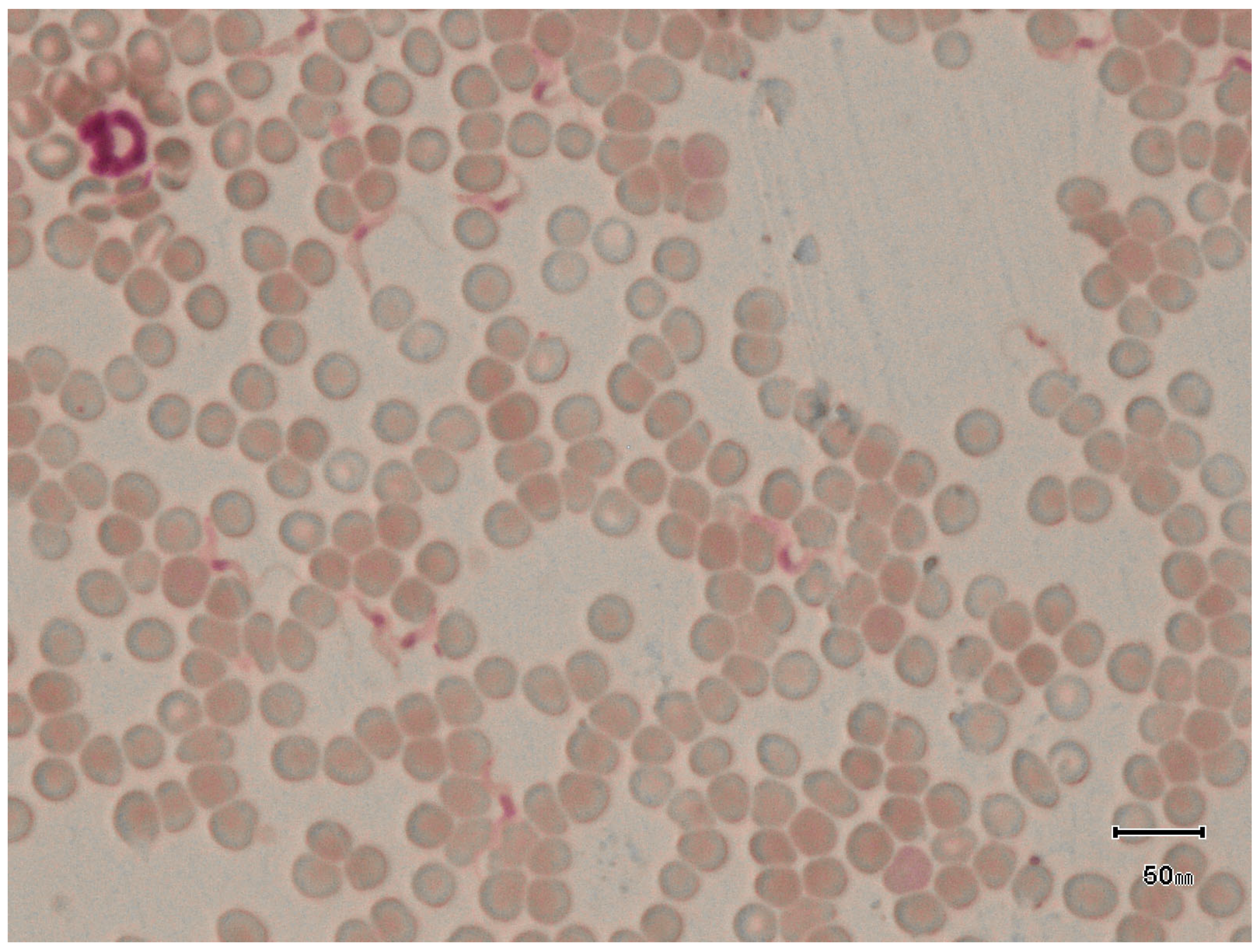
Out of 384 samples, T. evansi was detected in 23 (5.99%, 95% CI; 4.02–8.83%) equines through Field’s-stained smear microscopy (FSM) (Figure 2).
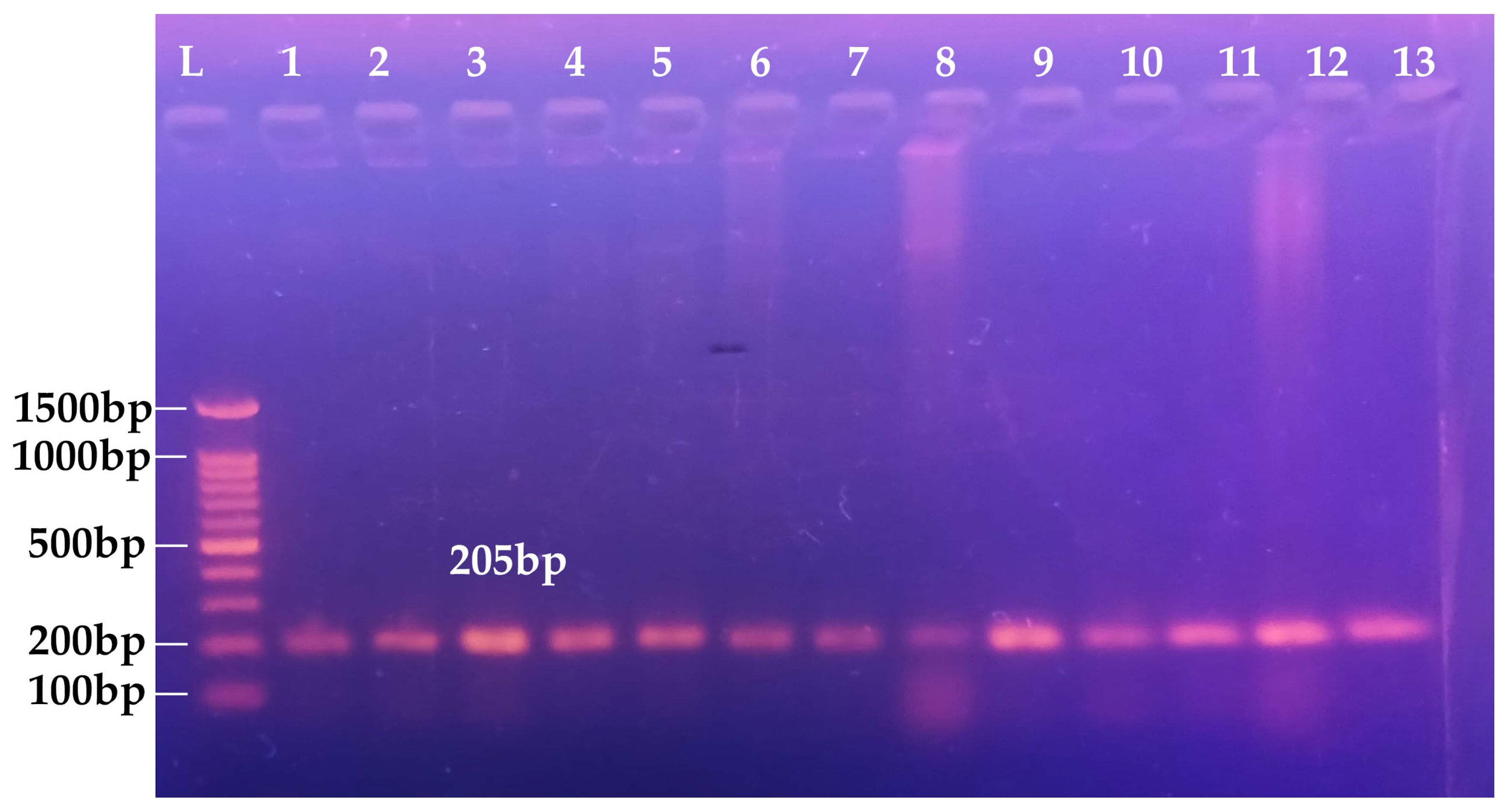
An overall prevalence of 10.16% (95% CI; 7.52–13.58%, n = 39) was recorded through PCR identification based on RoTat 1.2 primers. Conversely, three hundred and forty-five animals were found negative for infection. A distinct 205 bp amplicon was observed for the RoTat 1.2 gene among the positive samples (Figure 3). Additionally, a substantial inter-observer agreement was recorded, with a weighted κ of 0.72 (SE = 0.07; 95% CI: 0.59–0.85).
Analysis of demographic variables showed no significant differences in infection rates with respect to gender or age (p > 0.05). However, female animals had slightly higher infection rates (10.71%) compared to male animals (9.57%). The animals aged above two years also had a higher infection rate (11.95%) compared with younger animals (age < 2 years; 6.77%) (Table 2).

3.2. Phylogenetic Analysis

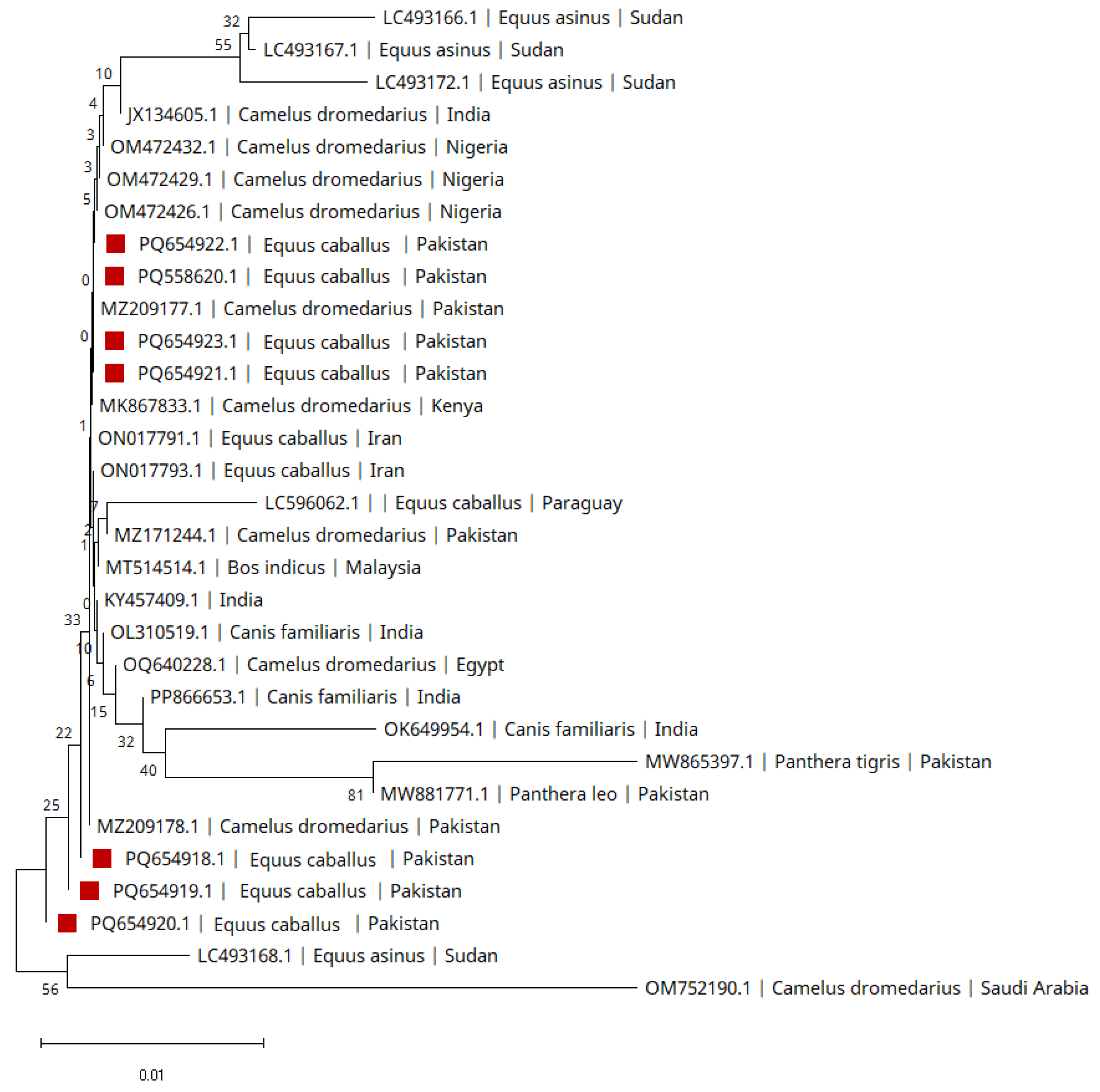
The phylogenetic analysis showed that the isolates including accession numbers PQ5586620 and PQ654923 identified in the present study revealed a close genetic relationship with previously reported Pakistani isolates (MZ209177), which were identified from camels. Additionally, isolates having the accession number PQ654921 were closely related to the Kenyan isolate from camels (MK867833) and with Iranian equine isolates (accession number: ON017791, ON017793), while our isolate, having the accession number PQ654922, was closely related to Nigerian T. evansi (OM472426), which was also isolated from camels. Moreover, PQ654918, PQ654919, and PQ654920 showed genetic similarity with the previously reported Pakistani T. evansi isolate from camels and with Sudanese isolates (LC493168) identified from donkeys (Figure 4).

3.3. Hematobiochemical Analysis

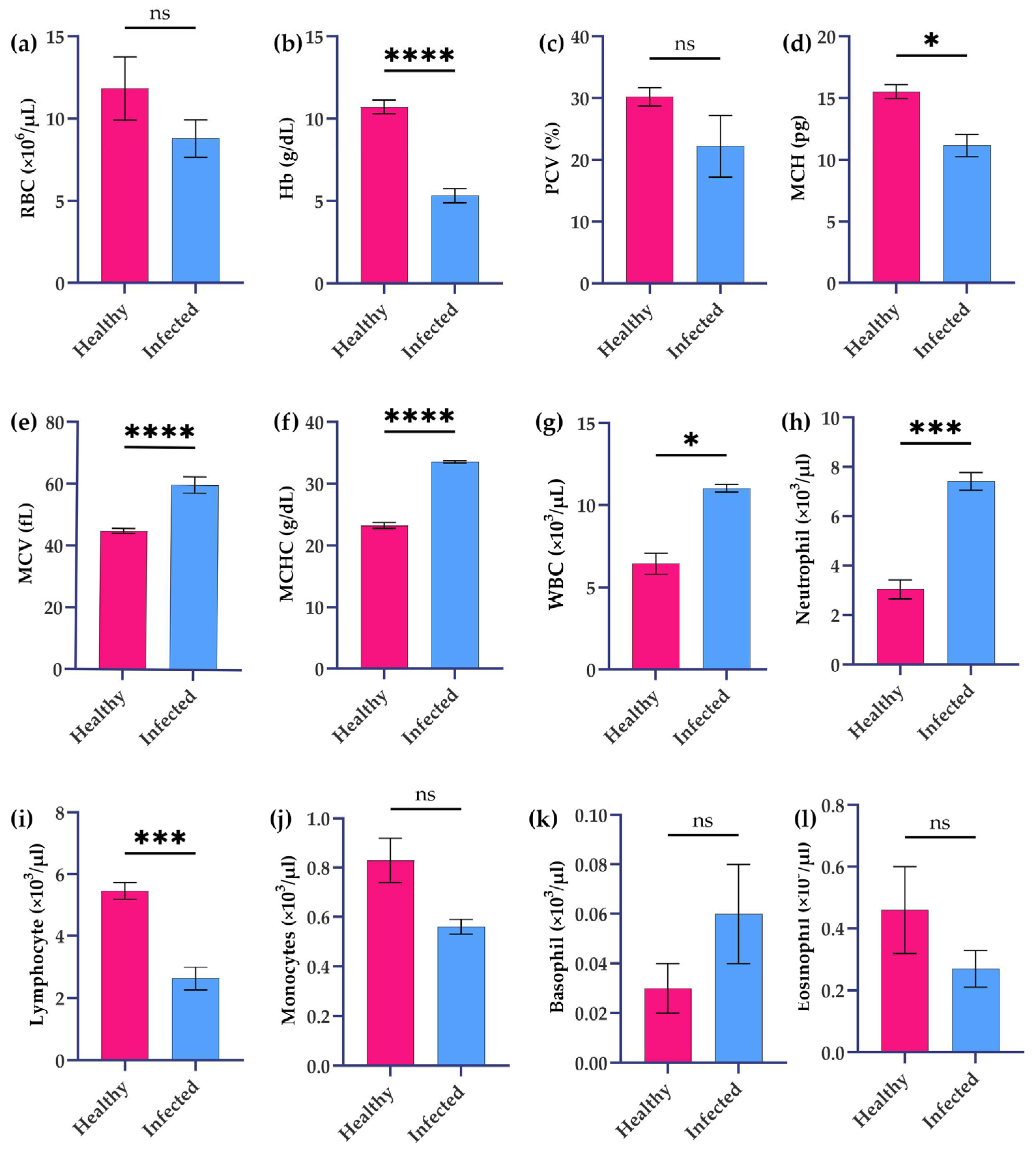
Comparison of hematological parameters between healthy and infected horses revealed statistically substantial (p < 0.05) differences in red cell indices. RBC counts were comparatively low in infected horses compared with healthy controls; however, the difference was not significant (p > 0.05). In contrast, the hemoglobin concentration was markedly reduced in infected animals (5.4 ± 0.6 vs. 10.8 ± 0.5 g/dL; p < 0.0001). MCH was significantly decreased in the infected group (11.16 ± 0.9 pg, p = 0.0332), whereas the mean corpuscular volume (59.99 ± 2.65 fL) and mean corpuscular hemoglobin concentration were significantly elevated (33.56 ± 1.25 g/dL, p < 0.0001). Total leukocyte counts (11.04 ± 0.23 × 10³/µL) were higher in infected horses compared with their healthy counterparts (p < 0.05), along with a marked increase in neutrophil counts (7.42 ± 0.36 × 10³/µL, p < 0.001). Monocyte, basophil, and eosinophil counts showed no statistically significant differences between the two groups (Figure 5).
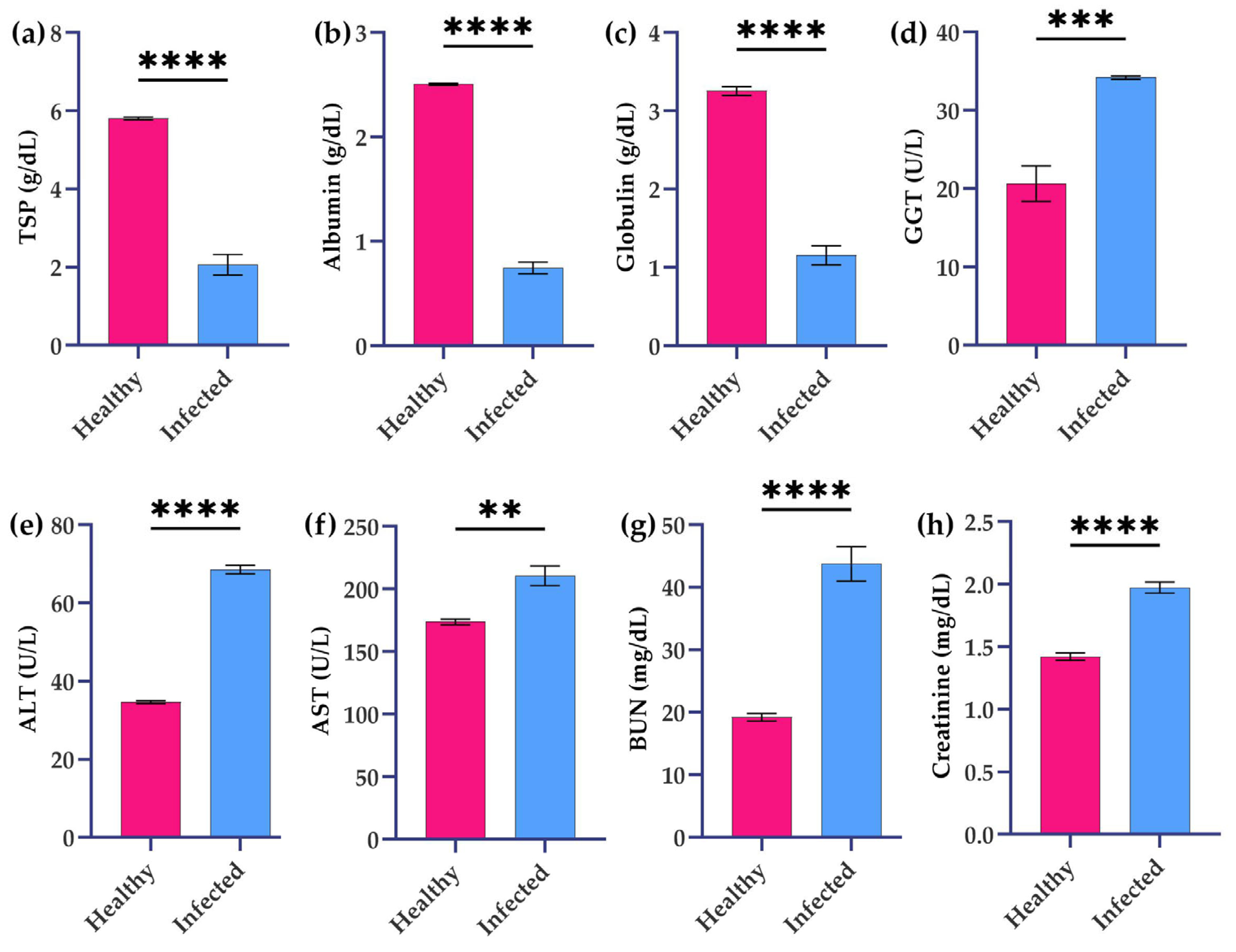
Total serum protein was markedly reduced in infected animals (2.1 ± 0.3 g/dL) relative to the healthy controls (5.8 ± 0.2 g/dL). Significant reduction in albumin (0.8 ± 0.1 vs. 2.5 ± 0.1 g/dL; p < 0.0001) and globulin concentrations (1.2 ± 0.2 vs. 3.3 ± 0.1 g/dL; p < 0.0001) were also recorded in infected animals. Infected horses also exhibited significantly elevated hepatic enzyme activities, including higher GGT (34 ± 1.2 vs. 21 ± 2.1 U/L; p < 0.0001), ALT (69 ± 2.0 vs. 35 ± 1.1 U/L; p < 0.0001), and AST levels (210 ± 8.5 vs. 175 ± 3.0 U/L; p < 0.01) compared with healthy controls. BUN and serum creatinine concentrations were significantly (p < 0.0001) higher in infected horses compared to healthy controls (BUN: 44 ± 3.5 vs. 19 ± 1.0 mg/dL; creatinine: 2.0 ± 0.1 vs. 1.4 ± 0.1 mg/dL) (Figure 6).

3.4. Oxidative Stress Markers

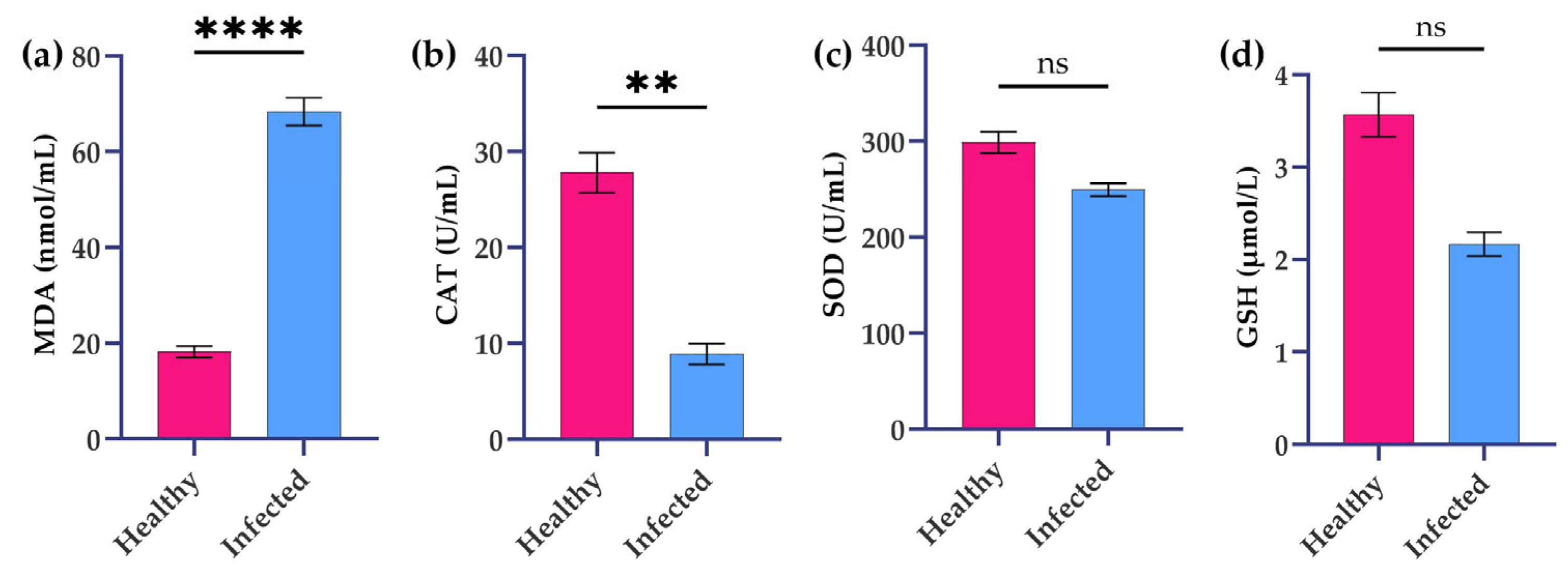
MDA levels were markedly higher in infected horses than in healthy controls (p < 0.0001). In contrast, CAT activity was markedly reduced in the infected group relative to the healthy animals (p < 0.001). SOD activity and GSH levels showed no statistically significant differences between the groups (Figure 7).

3.5. Evaluation of Genotoxicity

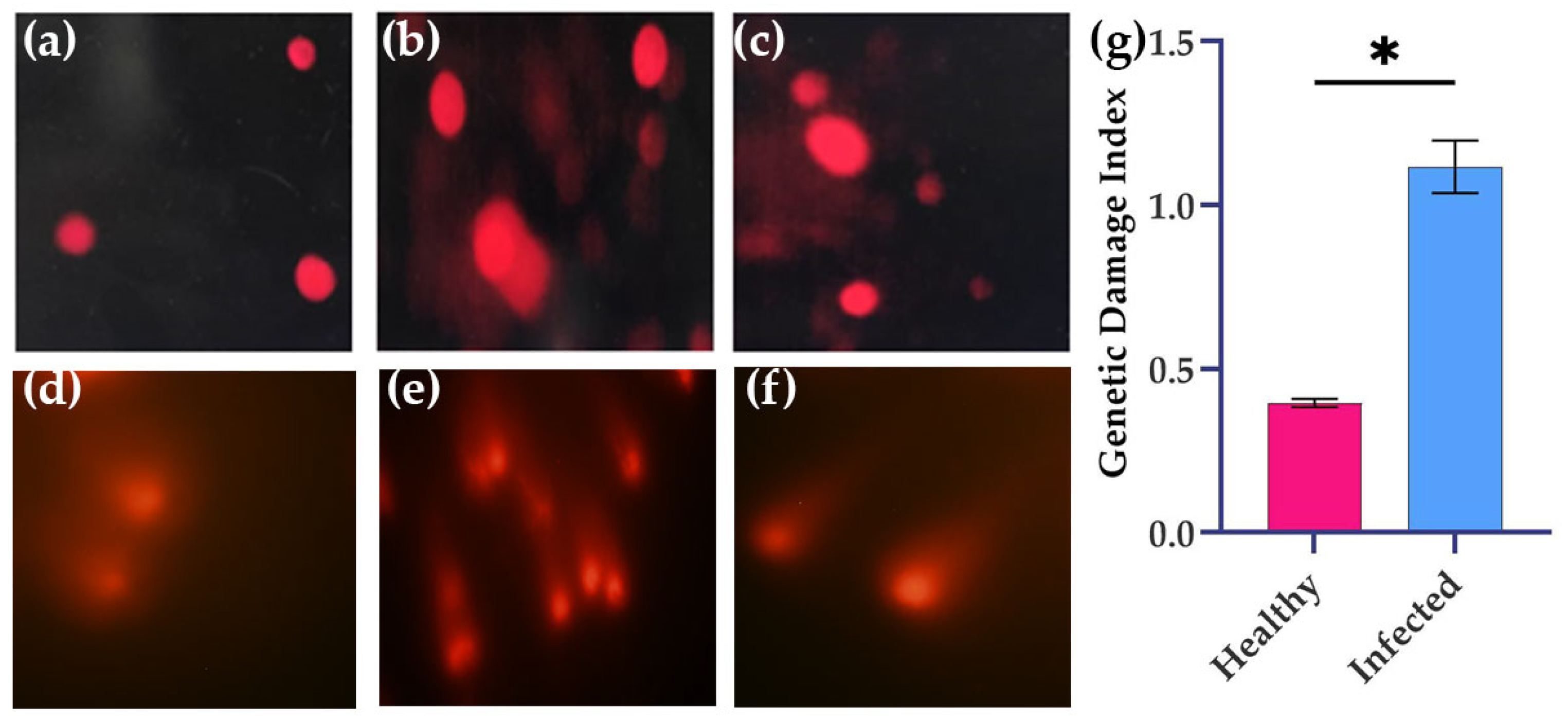
Results of the comet assay indicated that infected animals had a higher proportion of cells in Class 1 (33%, 95% CI: 24.56–42.69) and Class 2 (37%, 95% CI: 28.18–46.78), along with a lower proportion of cells in Class 0 (17%, 95% CI: 10.89–25.55). Healthy animals predominantly exhibited Class 0 cells (69.39%, 95% CI: 59.68–77.64). Higher-grade classes (Class 3 and Class 4) were more frequent in infected animals than in healthy animals (p < 0.001) (Table 3).
Overall, the genotoxicity damage index was recorded as being significantly (p < 0.01) higher in infected animals (1.12 ± 0.08) compared with healthy animals (0.40 ± 0.01) (Figure 8).

4. Discussion

Trypanosomiasis affects a wide range of wild and domesticated animals throughout the world [6]. Reports from different Asian countries, including India [5], Pakistan [31], Iran [32], Saudi Arabia [13], Malaysia [33], Thailand [34], Indonesia [35], and Iraq [36], have documented the animal trypanosomiasis caused by T. evansi. Various studies indicate that animal trypanosomiasis is endemic in Pakistan [6,31]. The thin blood film microscopy technique facilitates a comprehensive morphological evaluation and the detection of the Trypanosoma subgenus. However, its sensitivity is limited [12], because the host must exhibit parasitemia levels exceeding 1 × 10⁵ trypomastigotes per milliliter of blood [37]. Additionally, the chronic cases of parasitemia in the case of T. evansi infections frequently go undetected in the blood smears of microscopic examinations due low parasitemia counts [38]. However, despite the limited sensitivity, the traditional parasitological techniques are still being widely used due to their affordability [20]. But the precise detection of T. evansi could be made through PCR [12]. The RoTat 1.2 VSG gene found in T. evansi serves as a diagnostic marker to distinguish this species from other subgenus Trypanozoon members [39]. Research on T. evansi isolates without the RoTat 1.2 gene has not been reported from Pakistan to date. The non-RoTat 1.2 variants contain type B minicircles as their defining characteristic [40,41]. In our study, the prevalence of Rotat 1.2 T. evansi isolates ranged from 8.98% through microscopy to 10.18% with PCR. The reason for higher infection rates observed in the present study may be the substandard veterinary practices and fluctuating environmental conditions that facilitate the spread of trypanosome infections [42].
In the present study, T. evansi isolates showed a close similarity with previously reported camel-derived Pakistani isolates, while some exhibit genetic ties to isolates from Kenya, Iran, and Nigeria, suggesting the transboundary transmission or shared vectors. Furthermore, the genetic similarity of PQ654918, PQ654919, and PQ654920 to previously reported Pakistani camel isolates and Sudanese donkey isolates (LC493168) shows the broad host range of T. evansi. Notably, the RoTat 1.2 gene encodes for the VSG, which shows high mutation rates due to antigenic variations that are reflected in the greater genetic diversity across the isolates. In contrast, the ITS-1 is a more conserved region among the trypanosomes, with lower mutations rates being recorded in this region [43], and the sequence serves as a more stable marker among the isolates from various geographical regions.
Leukocyte numbers were significantly increased (p < 0.05) in horses affected by infection. This observation is consistent with earlier reports describing elevated white blood cell counts in animals suffering from trypanosomiasis. Blood leukocytes possess membranes enriched with unsaturated fatty acids, a composition that renders them particularly susceptible to oxidative injury [44]. During infection, oxidative stress may exert a dual effect on immune cells; while moderate levels can contribute to pathogen clearance, excessive oxidative stress disrupts membrane integrity and impairs the cells’ protective functions, thereby reducing their ability to counter invading pathogens [45]. In addition to membrane-associated damage, prior investigations have demonstrated that parasitic infections, including those caused by Toxoplasma gondii, Trypanosoma cruzi, and Leishmania chagasi, are associated with the induction of DNA damage within host cells [46,47,48,49,50,51]. Importantly, this investigation represents the first evidence demonstrating an association between genotoxic effects and T. evansi-infected horses. The results demonstrated pronounced DNA damage in the lymphocytes of infected horses. The DNA is recognized as a major cellular target during events of oxidative injury [52], as reactive free radicals can directly interact with genetic material, producing a spectrum of lesions ranging from base and sugar modifications to strand breaks and DNA–protein cross-links [53]. The coexistence of enhanced DNA damage with inadequate repair capacity is a common pathological feature of many infectious conditions [54].
During infection, inflammatory processes stimulate immune sentinels that activate multiple oxidant-producing enzymes, including cholinesterase, whose activity increases in response to infection [54]. This process is further intensified by the release of pro-inflammatory cytokines such as IL-1, TNF-α, IL-4, IL-6, and IFN-γ [55]. Consistent with this mechanism, a study has reported increased levels of these cytokines in murine subjected to experimental infection of T. evansi [7]. Excessive cytokine signaling subsequently enhances the activity of enzymes responsible for generating free radicals, including ROS, NO, H2O2, and O2 [56]. Although these molecules contribute to parasite control, their overproduction can exacerbate tissue injury and promote DNA damage in the affected cells [57].
The present investigation demonstrated a substantial decline (p < 0.05) in erythrocytes and hemoglobin levels in infected animals. Anemia is a well-recognized and consistent feature of trypanosomiasis across diverse host species [3]. The development of anemia in this condition is multifactorial, with several mechanisms acting either independently or in combination. One proposed pathway involves direct erythrocyte injury associated with trypanosome flagellar activity, recurrent febrile episodes, platelet aggregation, parasite-derived toxins and metabolites, and lipid peroxidation, as well as nutritional deficiencies collectively contributing to hemolytic anemia [58]. In addition, oxidative stress-mediated lipid peroxidation compromises erythrocyte membrane stability, ultimately leading to red blood cell destruction [59]. Within this framework, MDA is widely employed as an indicator of lipid peroxidation [60]. Consistent with this mechanism, the current study recorded significantly higher MDA concentrations in infected buffaloes compared with the healthy controls, which is in agreement with previous reports. Such increased MDA levels may play a further role in the development of macrocytic hypochromic anemia [3]. Another mechanisms underlying anemia in trypanosomiasis is the action of sialidase enzymes produced by T. evansi, which facilitate extravascular hemolysis through the mononuclear phagocyte system [61].
Furthermore, the marked increases in the activities of several enzymes detected in infected horses may likewise be linked to enhanced oxidative stress, a condition capable of inducing cellular injury, promoting tissue hypoxia, and contributing to centrilobular degeneration within the liver [62]. The observed elevation in hepatic enzymes (ALT, AST, and GGT) in infected animals suggests hepatocellular injury and possible liver dysfunction associated with T. evansi infection. This may be attributed to oxidative stress-induced lipid peroxidation and cellular damage within hepatic tissues, leading to the leakage of these enzymes into the bloodstream [5,63,64,65]. Similar findings have been reported in trypanosome-infected animals, where liver damage is considered a key pathological feature of the disease [3]. Furthermore, the significant increase in blood urea nitrogen (BUN) and creatinine levels in infected horses indicates impaired renal function. This may result from reduced renal perfusion, immune-mediated damage, or the accumulation of toxic metabolites during infection [3].
Early and accurate diagnosis is critical for controlling equine trypanosomiasis in endemic regions. The use of routine screening, together with more sensitive diagnostic approaches such as molecular and serological techniques, in addition to conventional parasitological methods, can improve the early detection of subclinical infections and reduce transmission. Strengthening the surveillance and diagnostic capacity in field settings is therefore essential for limiting disease prevalence.

5. Conclusions

In conclusion, equine trypanosomiasis in the study area was associated with significant hematological alterations, including changes in red cell indices, the leukocyte profile, and neutrophil response, along with evidence of oxidative stress-related genetic damage. The findings highlight that infection induces both inflammatory and oxidative mechanisms that contribute to host pathophysiology. Importantly, the presence of these changes underscores the need for timely and accurate diagnosis using a combination of conventional and advanced diagnostic approaches to support early detection and disease management. Strengthening the surveillance and diagnostic capacity in endemic regions is therefore essential for the effective control of the disease.

Author Contributions

Conceptualization, W.A. and N.R.; methodology, W.A., U.B.N. and T.F.; software, W.A.; validation, N.R., M.A. (Muhammad Azeem), and Z.A.; formal analysis, W.A.; investigation, U.B.N., T.F. and Z.A.; resources, N.R. and M.A. (Mehmood Ahmad); data curation, U.B.N. and T.F.; writing—original draft preparation, W.A.; writing—review and editing, Q.u.A., N.R., M.A. (Mehmood Ahmad), Z.A., U.A. and M.Y.T.; visualization, W.A.; supervision, M.Y.T. All authors have read and agreed to the published version of the manuscript.

Funding

This research received no external funding.

Institutional Review Board Statement

This study was conducted following approval from the Institutional Ethical Review Committee of the University of Veterinary and Animal Sciences, Lahore, Pakistan (No. DR. 430, dated 26 September 2023), in accordance with the Declaration of Helsinki for animals.

Informed Consent Statement

Not applicable.

Data Availability Statement

All data is present in the manuscript.

Acknowledgments

During the preparation of this manuscript, the authors used Grammarly (Desktop App (Windows), version 1.163.x, https://app.grammarly.com/) and ChatGPT (version 5.4-pro, https://chatgpt.com/) for the purposes of language refinement, grammar correction, and paraphrasing assistance. The authors have reviewed and edited the output and take full responsibility for the content of this publication.

Conflicts of Interest

The authors declare no conflicts of interest.

Abbreviations

The following abbreviations are used in this manuscript:
ALTAlanine aminotransferase
ASTAspartate aminotransferase
aORAdjusted odds ratio
BUNBlood urea nitrogen
CATCatalase
CIConfidence interval
DNADeoxyribonucleic acid
EDTAEthylenediaminetetraacetic acid
FSMField’s-stained smear microscopy
GDIGenetic damage index
GGTGamma-glutamyl transferase
GSHReduced glutathione
IFN-γInterferon-gamma
ILInterleukin
ITS-1Internal transcribed spacer 1
κ (Kappa)Kappa coefficient
MCHMean corpuscular hemoglobin
MCHCMean corpuscular hemoglobin concentration
MCVMean corpuscular volume
MDAMalondialdehyde
NCBINational Center for Biotechnology Information
NONitric oxide
PCRPolymerase chain reaction
RBCRed blood cell
ROSReactive oxygen species
SODSuperoxide dismutase
T. evansiTrypanosoma evansi
TBRTrypanosome brucei repeat
TSPTotal serum protein
VSGVariable surface glycoprotein

References

  1. Aregawi, W.G.; Agga, G.E.; Abdi, R.D.; Büscher, P. Systematic review and meta-analysis on the global distribution, host range, and prevalence of Trypanosoma evansi. Parasites Vectors 2019, 12, 67. [Google Scholar] [CrossRef]
  2. Ata, E.B.; Abdel-Aziz, T.H.; Abdel-Ghany, H.S.M.; Elsawy, B.S.M.; Abdullah, H.H.A.M.; Abouelsoued, D.; Ashry, H.M.; Hassan, M.R.; Shapaan, R.M.; Nasr, S.M.; et al. Molecular and serological diagnosis of the circulating Trypanosoma evansi in Egyptian livestock with risk factors assessment. Microb. Pathog. 2024, 197, 107073. [Google Scholar] [CrossRef] [PubMed]
  3. Hussain, R.; Khan, A.; Qayyum, A.; Abbas, T.; Ahmad, M.; Mohiuddin, M.; Mehmood, K. Clinico-hematological and oxidative stress status in Nili Ravi buffaloes infected with Trypanosoma evansi. Microb. Pathog. 2018, 123, 126–131. [Google Scholar] [CrossRef]
  4. Pereira, S.H.; Alves, F.P.; Teixeira, S.M.R. Animal Trypanosomiasis: Challenges and Prospects for New Vaccination Strategies. Microorganisms 2024, 12, 2575. [Google Scholar] [CrossRef] [PubMed]
  5. Singh, B.; Singla, L.; Kaur, P. Clinical features and management of Trypanosoma evansi infection in buffaloes. Indian J. Anim. Sci. 2024, 94, 778–781. [Google Scholar] [CrossRef]
  6. Durrani, A.Z.; Bashir, Z.; Mehmood, K.; Avais, M.; Akbar, H.; Ahmad, W.; Azeem, M. Use of physiological biomarkers in diagnosis along with field trials of different trypanisidal drugs in camels of Cholistan desert. Microb. Pathog. 2017, 108, 1–5. [Google Scholar] [CrossRef] [PubMed]
  7. Baldissera, M.D.; Sagrillo, M.R.; de Sá, M.F.; Grando, T.H.; Souza, C.F.; de Brum, G.F.; da Luz, S.C.; Oliveira, S.S.; De Mello, A.L.; Nascimento, K.; et al. Relationship between DNA damage in liver, heart, spleen and total blood cells and disease pathogenesis of infected rats by Trypanosoma evansi. Exp. Parasitol. 2016, 161, 12–19. [Google Scholar] [CrossRef]
  8. Machado-Silva, A.; Cerqueira, P.G.; Grazielle-Silva, V.; Gadelha, F.R.; de Figueiredo Peloso, E.; Teixeira, S.M.R.; Machado, C.R. How Trypanosoma cruzi deals with oxidative stress: Antioxidant defence and DNA repair pathways. Mutat. Res. Rev. Mutat. Res. 2016, 767, 8–22. [Google Scholar] [CrossRef]
  9. Cadet, J.; Davies, K.J. Oxidative DNA damage & repair: An introduction. Free Radic. Biol. Med. 2017, 107, 2–12. [Google Scholar]
  10. Paiva, C.N.; Medei, E.; Bozza, M.T. ROS and Trypanosoma cruzi: Fuel to infection, poison to the heart. PLoS Pathog. 2018, 14, e1006928. [Google Scholar] [CrossRef]
  11. van Andel, M.; Tildesley, M.J.; Gates, M.C. Challenges and opportunities for using national animal datasets to support foot-and-mouth disease control. Transbound. Emerg. Dis. 2021, 68, 1800–1813. [Google Scholar] [CrossRef] [PubMed]
  12. Sadek, A.; El-Khabaz, K.; El-Genedy, S.; El-Gioushy, M. Comparative diagnostic performance of microscopic examination, polyclonal antigen-elisa, and polymerase chain reaction for the detection of Trypanosoma evansi in camels (Camelus dromedarius). Adv. Anim. Vet. Sci. 2021, 9, 1004–1011. [Google Scholar] [CrossRef]
  13. Metwally, D.M.; Al-Turaiki, I.M.; Altwaijry, N.; Alghamdi, S.Q.; Alanazi, A.D. Molecular identification of Trypanosoma evansi isolated from arabian camels (Camelus dromedarius) in Riyadh and Al-Qassim, Saudi Arabia. Animals 2021, 11, 1149. [Google Scholar] [CrossRef] [PubMed]
  14. Ferreira, A.V.; Garcia, G.C.; de Araüjo, F.F.; Nogueira, L.M.; Bittar, J.F.F.; Bittar, E.R.; Pandolfi, I.A.; Martins-Filho, O.A.; Galdino, A.S.; Silva Araüjo, M.S. Methods applied to the diagnosis of cattle Trypanosoma vivax Infection: An overview of the current state of the art. Curr. Pharm. Biotechnol. 2023, 24, 355–365. [Google Scholar] [CrossRef]
  15. Dewair, A.W.; Labn, N.I.; Abdullah, S.M.; Henidy, S.A. Detection of Molecular Markers of Drug-Resistance in Trypanosoma evansi From Camels in Egypt. Egypt. J. Vet. Sci. 2024, 56, 1–10. [Google Scholar] [CrossRef]
  16. Suprihati, E.; Suwanti, L.T.; Yudhana, A.; Kusumaningrum, A.I. Comparison of ITS-1 and TBR-1/2 primer sensitivity for the detection of Trypanosoma evansi local isolates in experimental rats using a polymerase chain reaction. Vet. World 2022, 15, 1772. [Google Scholar] [CrossRef]
  17. Riaz, H.F.; Mannan, S.; Malik, S. Consanguinity and its socio-biological parameters in Rahim yar Khan district, Southern Punjab, Pakistan. J. Health Popul. Nutr. 2016, 35, 14. [Google Scholar] [CrossRef]
  18. Thrusfield, M. What Sample Size Should Be Selected; Blackwell Science Ltd.: Oxford, UK, 2007; p. 232. [Google Scholar]
  19. Ekoka Mbassi, F.A.; Mombo-Ngoma, G.; Ndoumba, W.N.; Yovo, E.K.; Eberhardt, K.A.; Ekoka Mbassi, D.; Adegnika, A.A.; Agnandji, S.T.; Bouyou-Akotet, M.K.; Ramharter, M.; et al. Performance of Field’s Stain Compared with Conventional Giemsa Stain for the Rapid Detection of Blood Microfilariae in Gabon. Am. J. Trop. Med. Hyg. 2022, 107, 383–387. [Google Scholar] [CrossRef]
  20. Abou El-Naga, T.; Barghash, S.; Mohammed, A.; Ashour, A.; Salama, M.S. Evaluation of (Rotat 1. 2-PCR) assays for identifying Egyptian Trypanosoma evansi DNA. Acta Parasitol. Glob. 2012, 3, 1–6. [Google Scholar]
  21. Newman, L.; Duffus, A.L.; Lee, C. Using the free program MEGA to build phylogenetic trees from molecular data. Am. Biol. Teach. 2016, 78, 608–612. [Google Scholar] [CrossRef]
  22. Asghar, T.; Mohiuddin, M.; Din, A.M.; Kamal, T.; Mansoor, M.K.; Siddique, A.; Habib, M.; Hussain, R.; Ghori, M.T.; Hameed, H. Hemato-biochemical changes, molecular characterization and phylogenetic analysis of the 2022 Lumpy Skin Disease (LSD) outbreak in Cholistan, Pakistan. Asian. J. Agric. Biol. 2024, 4, 10.35495. [Google Scholar]
  23. Ahmad, F.; Mahmood, M.S.; Hussain, R.; Rahman, S.U.; Abbas, R.Z. Investigation of patho-bacteriological, serum bio-hematological, oxidative stress and antioxidant biomarkers due to pneumonic pasteurellosis caused by Pasteurella multocida in cattle. Asian J. Agric. Biol. 2024, 2024, 1–13. [Google Scholar]
  24. Drupt, F. Colorimetric method for determination of albumin. Pharm. Biol. 1974, 9, 777–779. [Google Scholar]
  25. Reitman, S.; Frankel, S. Colorimetric method for determination of serum transaminase activity. Am. J. Clin. Pathol. 1975, 28, 56–68. [Google Scholar] [CrossRef]
  26. Kid, P.; King, E. Colorimetric determination of alkaline phosphatase activity. J. Clin. Pathol. 1954, 6, 322. [Google Scholar]
  27. Nishikimi, M.; Rao, N.A.; Yagi, K. The occurrence of superoxide anion in the reaction of reduced phenazine methosulfate and molecular oxygen. Biochem. Biophys. Res. Commun. 1972, 46, 849–854. [Google Scholar] [CrossRef]
  28. Mahmood, Y.; Ijaz, N.; Maheen, A.; Mustafa, G.; Bafail, D.; Qamar, M.; Ahsan, M.; Masood, N.; Rajeh, N.; Mohiuddin, M. Multi-biomarker approach to assess oxidative stress and antioxidants profile in male albino rats exposed to ZnO nanoparticles. Asian J. Agric. Biol. 2024, 4, 2024115. [Google Scholar]
  29. Tice, R.R.; Agurell, E.; Anderson, D.; Burlinson, B.; Hartmann, A.; Kobayashi, H.; Miyamae, Y.; Rojas, E.; Ryu, J.C.; Sasaki, Y. Single cell gel/comet assay: Guidelines for in vitro and in vivo genetic toxicology testing. Environ. Mol. Mutagen. 2000, 35, 206–221. [Google Scholar] [CrossRef]
  30. Marković, A.; Živković Radojević, M.; Milošević-Djordjević, O. Level of DNA damage in peripheral blood mononuclear cells in endometrial cancer patients according to histological type and tumor differentiation. Mol. Biol. Rep. 2026, 53, 128. [Google Scholar] [CrossRef] [PubMed]
  31. Tehseen, S.; Jahan, N.; Qamar, M.F.; Desquesnes, M.; Shahzad, M.I.; Deborggraeve, S.; Büscher, P. Parasitological, serological and molecular survey of Trypanosoma evansi infection in dromedary camels from Cholistan Desert, Pakistan. Parasites Vectors 2015, 8, 415. [Google Scholar] [CrossRef]
  32. Javanshir, A.; Tavassoli, M.; Esmaeilnejad, B. Morphological, serological, molecular detection, and phylogenetic analysis of Trypanosoma evansi in horses of different regions in Iran. Parasitol. Res. 2023, 122, 1873–1881. [Google Scholar] [CrossRef] [PubMed]
  33. Mohd Rajdi, N.Z.I.; Mohamad, M.A.; Tan, L.P.; Choong, S.S.; Reduan, M.F.H.; Hamdan, R.H.; CW Zalati, C.S. First case report on the occurrence of Trypanosoma evansi in a Siam B Mare in Kelantan, Malaysia. Vet. Med. Sci. 2021, 7, 303–309. [Google Scholar] [CrossRef] [PubMed]
  34. Klinbumrung, K.; Prakhammin, K.; Japa, O. Molecular prevalence of Toxoplasma gondii and Trypanosoma evansi in recently calved female cattle from Phayao, Thailand. Vet. World 2024, 17, 756. [Google Scholar] [CrossRef] [PubMed]
  35. Setiawan, A.; Nurcahyo, W.; Priyowidodo, D.; Budiati, R.T.; Susanti, D.S.R. Genetic and parasitological identification of Trypanosoma evansi infecting cattle in South Sulawesi, Indonesia. Vet. World 2021, 14, 113. [Google Scholar] [CrossRef]
  36. Alsaad, K.M.; Jarad, A.; Lafta, M.H. Trypanosomiasis evansi of buffalo at Basrah, Iraq-clinico-hematobiochemical and diagnostic studies. Biochem. Cell. Arch. 2021, 21, 2035–2042. [Google Scholar]
  37. Selim, A.; Alafari, H.A.; Attia, K.; AlKahtani, M.D.; Albohairy, F.M.; Elsohaby, I. Prevalence and animal level risk factors associated with Trypanosoma evansi infection in dromedary camels. Sci. Rep. 2022, 12, 8933. [Google Scholar] [CrossRef]
  38. Shirale, S.; Palampalle, H.; Meshram, P.; Pawankar, K.; Vaidya, M.; Dhenge, S.; Suryawanshi, R. Clinico-biochemical and chemotherapeutic evaluation in bubaline trypanosomosis. Int. J. Adv. Biochem. Res. 2024, 8, 203–207. [Google Scholar] [CrossRef]
  39. Amer, S.; Ryu, O.; Tada, C.; Fukuda, Y.; Inoue, N.; Nakai, Y. Molecular identification and phylogenetic analysis of Trypanosoma evansi from dromedary camels (Camelus dromedarius) in Egypt, a pilot study. Acta Trop. 2011, 117, 39–46. [Google Scholar] [CrossRef]
  40. Ngaira, J.; Olembo, N.; Njagi, E.; Ngeranwa, J. The detection of non-RoTat 1.2 Trypanosoma evansi. Exp. Parasitol. 2005, 110, 30–38. [Google Scholar] [CrossRef]
  41. Claes, F.; Radwanska, M.; Urakawa, T.; Majiwa, P.A.; Goddeeris, B.; Büscher, P. Variable surface glycoprotein RoTat 1.2 PCR as a specific diagnostic tool for the detection of Trypanosoma evansi infections. Kinetoplastid Biol. Dis. 2004, 3, 3. [Google Scholar] [CrossRef]
  42. Meyer, A.; Holt, H.R.; Selby, R.; Guitian, J. Past and ongoing tsetse and animal trypanosomiasis control operations in five African countries: A systematic review. PLoS Negl. Trop. Dis. 2016, 10, e0005247. [Google Scholar] [CrossRef]
  43. Verma, R.; Punia, V.; Das, G.; Kumar, S.; Nath, S.; Swamy, M. Assessment of genetic diversity of Trypanosoma evansi in the domestic animal populations through ITS-1 gene sequence analysis. Parasitol. Res. 2024, 123, 2. [Google Scholar] [CrossRef] [PubMed]
  44. Gwozdzinski, K.; Pieniazek, A.; Gwozdzinski, L. Reactive oxygen species and their involvement in red blood cell damage in chronic kidney disease. Oxidative Med. Cell. Longev. 2021, 2021, 6639199. [Google Scholar] [CrossRef] [PubMed]
  45. Ammendolia, D.A.; Bement, W.M.; Brumell, J.H. Plasma membrane integrity: Implications for health and disease. BMC Biol. 2021, 19, 71. [Google Scholar] [CrossRef] [PubMed]
  46. Zhuang, H.; Yao, C.; Zhao, X.; Chen, X.; Yang, Y.; Huang, S.; Pan, L.; Du, A.; Yang, Y. DNA double-strand breaks in the Toxoplasma gondii-infected cells by the action of reactive oxygen species. Parasites Vectors 2020, 13, 490. [Google Scholar] [CrossRef]
  47. Rojas-Barón, L.; Hermosilla, C.; Taubert, A.; Velásquez, Z.D. Toxoplasma gondii infection-induced host cellular DNA damage is strain-dependent and leads to the activation of the ATM-dependent homologous recombination pathway. Front. Cell. Infect. Microbiol. 2024, 14, 1374659. [Google Scholar] [CrossRef]
  48. Taherimoghaddam, M.; Bahmanzadeh, M.; Maghsood, A.H.; Fallah, M.; Tapak, L.; Foroughi-Parvar, F. Toxoplasma gondii induced sperm DNA damage on the experimentally infected rats. J. Parasit. Dis. 2021, 45, 351–358. [Google Scholar] [CrossRef]
  49. Florentino, P.T.; Mendes, D.; Vitorino, F.N.L.; Martins, D.J.; Cunha, J.P.; Mortara, R.A.; Menck, C.F. DNA damage and oxidative stress in human cells infected by Trypanosoma cruzi. PLoS Pathog. 2021, 17, e1009502. [Google Scholar] [CrossRef]
  50. Rose, E.; Carvalho, J.L.; Hecht, M. Mechanisms of DNA repair in Trypanosoma cruzi: What do we know so far? DNA Repair 2020, 91, 102873. [Google Scholar] [CrossRef]
  51. Kiral, F.; Sekkin, S.; Pasa, S.; Ertabaklar, H.; Ulutas, P.A.; Asici, G.S.E. Investigation of DNA damage and protein damage caused by oxidative stress in canine visceral leishmaniasis. Med. Weter. 2021, 77, 407–412. [Google Scholar] [CrossRef]
  52. Nian, L.; Xiaohua, L.; Rongcheng, L.; Song-Bai, L. Types of DNA damage and research progress. Nucleosides Nucleotides Nucleic Acids 2023, 43, 881–890. [Google Scholar] [CrossRef]
  53. Nastasi, C.; Mannarino, L.; D’Incalci, M. DNA damage response and immune defense. Int. J. Mol. Sci. 2020, 21, 7504. [Google Scholar] [CrossRef]
  54. Cipriani, D.S.; Borges, G.K.; Povaluk, A.P.; Stipp, M.C.; Casagrande, R.A.; Vogel, C.I.G.; Miletti, L.C.; Bastos-Pereira, A.L. Experimental Trypanosoma evansi infection induces pain along with oxidative stress, prevented by COX-2 inhibition. Exp. Parasitol. 2023, 247, 108477. [Google Scholar] [CrossRef]
  55. Vitenberga-Verza, Z.; Pilmane, M.; Šerstņova, K.; Melderis, I.; Gontar, Ł.; Kochański, M.; Drutowska, A.; Maróti, G.; Prieto-Simón, B. Identification of inflammatory and regulatory cytokines IL-1α-, IL-4-, IL-6-, IL-12-, IL-13-, IL-17A-, TNF-α-, and IFN-γ-producing cells in the milk of dairy cows with subclinical and clinical mastitis. Pathogens 2022, 11, 372. [Google Scholar] [CrossRef] [PubMed]
  56. Checa, J.; Aran, J.M. Reactive oxygen species: Drivers of physiological and pathological processes. J. Inflamm. Res. 2020, 13, 1057–1073. [Google Scholar] [CrossRef] [PubMed]
  57. Yehia, S.A.; Badr, A.M.; Bashtar, A.-R.; Ibrahim, M.A.-A.; Mousa, M.R.; Mostafa, N.A. Immune response, oxidative stress, and histological changes of Wistar rats after being administered with Parascaris equorum antigen. Sci. Rep. 2024, 14, 18069. [Google Scholar] [CrossRef]
  58. Ogbu, C.; Nwachukwu, E.; Kalla, D.; Ukwu, H.; Ezea, J.; Onoja, S.; Onyeabor, A. Trypanosome infection in indigenous cattle breeds and their crossbred genotypes: Effect on haematological variables and assessment of trypanotolerance. Niger. J. Anim. Sci. 2023, 25, 56–77. [Google Scholar]
  59. Pawłowska, M.; Mila-Kierzenkowska, C.; Szczegielniak, J.; Woźniak, A. Oxidative stress in parasitic diseases—Reactive oxygen species as mediators of interactions between the host and the parasites. Antioxidants 2023, 13, 38. [Google Scholar] [CrossRef]
  60. Shoraba, M.; Shoulah, S.A.; Arnaout, F.; Selim, A. Equine trypanosomiasis: Molecular detection, hematological, and oxidative stress profiling. Vet. Med. Int. 2024, 2024, 6550276. [Google Scholar] [CrossRef]
  61. Stijlemans, B.; De Baetselier, P.; Magez, S.; Van Ginderachter, J.A.; De Trez, C. African trypanosomiasis-associated anemia: The contribution of the interplay between parasites and the mononuclear phagocyte system. Front. Immunol. 2018, 9, 218. [Google Scholar] [CrossRef]
  62. Hussain, R.; Mehmood, K.; Abbas, R.Z.; Khan, I.; Siddique, A.B.; Masood, S.; Qadir, M.S.; Ishaq, H.M.; Akram, R.; Ghori, M.T. Epidemiology and patho-physiological studies in Trypanosoma evansi infected camels and buffaloes in Pakistan. Pak. J. Agric. Sci. 2021, 58, 711–718. [Google Scholar]
  63. Khan, W.; Hafeez, M.A.; Lateef, M.; Awais, M.; Wajid, A.; Shah, B.A.; Ali, S.; Asif, Z.; Ahmed, M.; Kakar, N.; et al. Parasitological, molecular, and epidemiological investigation of Trypanosoma evansi infection among dromedary camels in Balochistan province. Parasitol. Res. 2023, 122, 1833–1839. [Google Scholar] [CrossRef]
  64. Fritzen, A.; de Vitt, M.G.; Deolindo, G.L.; Signor, M.H.; Correa, N.G.; Ribeiro, B.G.; Marques, J.; das Neves, G.B.; Miletti, L.C.; da Silva, A.S. Outbreak of Trypanosoma vivax in Dairy Cows: Hematologic, Immunological and Antioxidant Responses Before and After Treatment with Isometamidium Chloride. Pathogens 2025, 14, 143. [Google Scholar] [CrossRef]
  65. Augusto, A.; Costa, I.; Conceição, J.; Cristiano, M.L. Targeting Trypanothione Synthetase and Trypanothione Reductase: Development of Common Inhibitors to Tackle Trypanosomatid Disease. Pharmaceuticals 2025, 18, 1182. [Google Scholar] [CrossRef]
Figure 1. Study area map showing the geographic location of Rahim Yar Khan District, Punjab, Pakistan, and its subdivisions. Map was created using ArcMap 10.7.
Microbiolres 17 00086 g001
Figure 2. Field-stained thin blood smear of an infected equine showing T. evansi trypomastigotes among red blood cells with visible hypochromia. Image acquired at ×1000 magnification (oil immersion), and the scale bar represents 50 µm.
Microbiolres 17 00086 g002
Figure 3. Gel electrophoresis images showing PCR amplification of T. evansi-specific RoTat 1.2 gene. Lane 1 to 12 shows amplification of RoTat 1.2 gene with a 205 bp product in positive samples; Lane 13 shows positive control and L: 100 bp DNA ladder (Gene Direx, Taoyuan, Taiwan, Cat No. DM001-R500; range: 100–1500 bp; 11 bands; concentration: 100 μg/mL).
Microbiolres 17 00086 g003
Figure 4. Neighbor-Joining phylogenetic tree based on RoTat 1.2 sequences, depicting the genetic relationships of T. evansi isolates. The red squares indicate isolates from the present study identified from equines in Pakistan. Bootstrap values are shown at the nodes. The scale bar represents the genetic distance.
Microbiolres 17 00086 g004
Figure 5. Comparison of hematological parameters between healthy and Trypanosoma evansi-infected horses. Panels depict (a) RBC count, (b) hemoglobin, (c) packed cell volume, (d) mean corpuscular hemoglobin, (e) mean corpuscular volume, (f) mean corpuscular hemoglobin concentration, (g) total leukocyte count, (h) neutrophils, (i) lymphocytes, (j) monocytes, (k) basophils, and (l) eosinophils. Data are presented as mean ± SEM. Statistical significance is indicated as ns (p ≥ 0.05), * (p < 0.05), *** (p < 0.001), and **** (p < 0.0001).
Microbiolres 17 00086 g005
Figure 6. Serum biochemical parameters of healthy and Trypanosoma evansi-infected horses. Panels show (a) total serum protein, (b) serum albumin, (c) serum globulin, (d) gamma-glutamyl transferase, (e) alanine aminotransferase, (f) aspartate aminotransferase, (g) blood urea nitrogen, and (h) serum creatinine. Values are expressed as mean ± SEM. Statistical significance is indicated as ** (p < 0.01), *** (p < 0.001), and **** (p < 0.0001).
Microbiolres 17 00086 g006
Figure 7. Comparative analysis of oxidative stress and antioxidant parameters in healthy and Trypanosoma evansi-infected horses. Bar graphs represent (a) malondialdehyde (MDA), (b) catalase (CAT), (c) superoxide dismutase (SOD), and (d) reduced glutathione (GSH) levels in both groups. Data are presented as mean ± SEM, with statistical significance indicated as ns (not significant), ** (p < 0.01), and **** (p < 0.0001).
Microbiolres 17 00086 g007
Figure 8. Representative comet assay images and genetic damage index (GDI). Panels (ac) show typical nucleoids from healthy animals with intact nuclei and minimal DNA migration, whereas panels (df) illustrate nucleoids from infected horses displaying elongated comet tails indicative of increased DNA damage. Panel (g) presents the comparative analysis of GDI between healthy and infected groups, shown as mean and SEM. Statistical significance is indicated by an asterisk (“*”) corresponding to p-values less than 0.05.
Microbiolres 17 00086 g008
Table 1. Details of T. evansi-specific primers used in PCR.
Target GenePrimer SequenceProduct Size (bp)Reference
RoTat 1.2Forward: 5′-GCGGGGTGTTTAAAGCAATA-3′205[20]
Reverse: 5′-ATTAGTGCTGCGTGTGTTCG-3′
Table 2. Bivariate analysis showing the association of species, gender, and age with infection status. Data are presented as the number of positives/negatives, corresponding percentages with 95% confidence intervals (CIs), and adjusted odds ratios (aORs) with 95% CI; reference categories are indicated, against which the adjusted odds ratio were calculated.
Positive (n)Percentage (95% CI)Negative (n)Percentage
(95% CI)
aOR (95% CI)p-Value
Gender
Male189.57%
(6.14–14.63%)
17090.43%
(85.37–93.86%)
Reference0.738
Female2110.71%
(7.12–15.82%)
17589.29%
(84.18–92.88%)
0.88
(0.45–1.71)
Age
1–2 years96.77%
(3.6–12.36%)
12493.23%
(87.64–96.4%)
Reference0.159
>2 years3011.95%
(8.5–16.55%)
22188.05%
(83.45–91.5%)
1.77
(0.81–3.83)
Table 3. Distribution of cells in Classes (0–4) in infected and healthy horses, shown as percentages with 95% confidence intervals.
Class 0 CellsClass 1 CellsClass 2 CellsClass 3 CellsClass 4 Cellsp-Value
Infected17%
(10.89–25.55)
33%
(24.56–42.69)
37%
(28.18–46.78)
10%
(5.52–17.44)
3%
(0.82–8.45)
0.0005
Healthy69.39%
(59.68–77.64)
19.39%
(12.78–28.31)
8.16%
(4.19–15.29)
3.06%
(0.83–8.62)
0%
(0–3.77)
Disclaimer/Publisher’s Note: The statements, opinions and data contained in all publications are solely those of the individual author(s) and contributor(s) and not of MDPI and/or the editor(s). MDPI and/or the editor(s) disclaim responsibility for any injury to people or property resulting from any ideas, methods, instructions or products referred to in the content.