


Abstract
Although overall colorectal cancer (CRC) incidence and mortality have declined with widespread screening, early-onset CRC (EOCRC), defined as diagnosis before age 50, continues to rise. EOCRC partially differs from late-onset CRC (LOCRC) in clinical presentation, molecular features, polyp characteristics, and patterns of modifiable risk factors; however, the extent to which these differences reflect distinct underlying biology remains uncertain. Despite updated recommendations from the 2018 American Cancer Society and 2021 U.S. Preventive Services Task Force to initiate average-risk screening at age 45, fewer than 21% of eligible adults aged 45–49 years old were up to date with screening in 2021, highlighting a substantial gap in uptake. Emerging data on epidemiologic patterns, molecular features, and risk modifiers offer opportunities to refine personalized risk prediction tools and optimize early detection. This review synthesizes current evidence on EOCRC biology and risk factors, evaluates evolving screening guidelines across professional societies, and examines barriers to screening, including access disparities, limited awareness, and psychosocial factors, thus emphasizing the urgent need to improve implementation and risk-based prevention strategies.
1. Introduction
Colorectal cancer (CRC) ranks as the third most common cancer and the second leading cause of cancer-related mortality worldwide [1]. Although overall colorectal cancer incidence and mortality have declined by nearly 2% annually due to screening efforts, early-onset colorectal cancer (EOCRC), defined as colorectal cancer diagnosed in patients younger than 50 years, continues to rise [2]. EOCRC accounts for 10–14% of colorectal cancer diagnoses in the United States, with this percentage rising each year [3,4,5]. The highest incidence rates occur among individuals aged 45–49 years, while the steepest increases are seen in those younger than 40 years [6,7]. The rise in EOCRC is not limited to the United States. In an analysis of population-based cancer registry data from 50 countries and territories, EOCRC incidence has increased in 27 countries during the most recent decade, with the increase occurring either exclusively or more rapidly in younger adults than in older adults in 20 of these countries [8]. The highest EOCRC incidence rates were observed in Australia, Puerto Rico, New Zealand, the United States, and South Korea, while the fastest annual increases occurred in New Zealand, Chile, Puerto Rico, and England. Importantly, increasing EOCRC incidence was also observed across parts of Latin America, Asia, and Eastern Europe, indicating that this trend is no longer confined to high-income Western countries [8]. Alarmingly, EOCRC incidence is projected to more than double by 2030, with the greatest increases expected in the youngest age group, 20–34 years [9].
These concerning trends prompted both the American Cancer Society (ACS) in 2018 and the U.S. Preventive Services Task Force (USPSTF) in 2021 to lower their screening recommendations from age 50 to age 45. However, despite expanded screening efforts, CRC has become the leading cause of cancer-related death among individuals younger than 50 in the United States. Between 1990 and 2023, overall cancer mortality in this age group declined substantially, yet CRC mortality increased steadily at approximately 1% per year since 2005, surpassing deaths from lung cancer, breast cancer, and leukemia [10].
While some EOCRC cases are hereditary, the majority are sporadic, and the underlying reasons for this rise remain unclear. EOCRC has been reported to differ from later-onset colorectal cancer (LOCRC) in aspects of clinical presentation, molecular features, polyp patterns, and risk-factor associations, although the magnitude and consistency of these differences vary across studies and populations. Moreover, the impact of the recent ACS and USPSTF screening guideline changes has not been adequately evaluated. This review therefore aims to summarize the latest evidence on EOCRC and assess current CRC screening rates, the use of personalized risk scores, disparities in screening accessibility, and varying professional society recommendations in response to rising EOCRC incidence.
Given the timeliness and rapidly evolving screening landscape surrounding EOCRC, this review will join several others in examining the general epidemiology and molecular biology of EOCRC. However, this manuscript aims to fill gaps in the literature by comparing guidelines across global regions, highlighting emerging risk-assessment approaches for screening, and emphasizing barriers to implementation. Additionally, this review synthesizes a structured assessment of evidence strength for EOCRC risk factors and screening modalities which is intended to serve as an initial framework for future systematic synthesis. Taken together, this work aims to provide healthcare systems and clinicians with strategies to optimize risk-stratified and equitable screening, as well as recommendations for future investigation.
Methods
This narrative review was developed through a PubMed literature search. The final search was conducted on 3 September 2026. No formal date restrictions were applied; however, because EOCRC is a rapidly evolving field, publications from 2021 to 2026 were prioritized, with earlier landmark studies, major guidelines, and foundational epidemiologic or mechanistic studies included when relevant. Search terms included combinations of “early-onset colorectal cancer,” “young-onset colorectal cancer,” and terms related to epidemiology and risk factors, molecular and genomic characteristics, precursor lesions, risk prediction and stratification, screening guidelines and uptake, emerging technologies, and screening disparities. Articles were selected narratively based on relevance to the listed search topics. Priority was given to original research studies, systematic reviews, meta-analyses, population-based studies, and professional society guidelines. Additional references were identified from the bibliographies of selected articles. Non-English articles, case reports, conference abstracts without full-text manuscripts, and opinion pieces were generally excluded. Because this was a narrative review, duplicate title, abstract or full-text screening, a formal risk-of-bias assessment, a standardized study-quality assessment, or quantitative synthesis and meta-analysis was not performed. These methodological choices make study selection and interpretation more dependent on reviewer judgment than in a systematic review, which may introduce selection bias, limit reproducibility, and preclude pooled estimates of effect.
A structured narrative assessment of evidence strength was performed to categorize evidence on proposed EOCRC risk factors and CRC screening modalities. Findings are summarized in the evidence strength tables below. Two authors independently reviewed the available evidence and determined the strength of evidence as low, moderate, or high through a structured narrative assessment. Classification was based on evidence consistency and clinical relevance. For CRC screening modalities, demonstrated mortality and clinical applicability were also considered. Discrepancies between category assignments were adjudicated by a third author.
2. Clinical Presentation and Epidemiology of EOCRC
Available studies report age-associated differences in the clinical presentation and anatomic distribution of CRC, although these patterns are not uniform across cohorts and should not be interpreted as evidence of a distinct EOCRC phenotype. Younger patients with EOCRC typically present with hematochezia (41–45%), abdominal pain or bloating (35–40%), and altered bowel habits including constipation or diarrhea (27%), whereas LOCRC more commonly manifests with iron deficiency anemia [2,7]. Notably, younger patients report higher symptom severity compared to their older counterparts, emphasizing the importance of accurate clinical screening and management [11]. These symptomatic differences also correlate with anatomic distribution patterns. EOCRC demonstrates a predominantly left-sided distribution, with 75–80% of cases involving the distal colon and rectum compared to only 60% in LOCRC [12]. Conversely, LOCRC exhibits a more balanced distribution between proximal and distal sites, with older adults showing an increased propensity for right-sided tumors [12,13].
2.1. Diagnostic Delays and Disease Stage
Despite prominent symptom presentation, EOCRC is paradoxically diagnosed at more advanced stages, typically stage III/IV, while LOCRC is more often detected earlier through established screening programs [13]. This diagnostic delay reflects multiple factors including lower screening rates in younger populations, delayed symptom recognition by both patients and providers, and longer intervals to diagnosis. A case–control study by Fritz et al. identified red-flag symptoms, including rectal bleeding, iron-deficiency anemia, abdominal pain, and diarrhea, which may appear up to 18 months before diagnosis, with risk increasing substantially when multiple symptoms cluster [14]. Despite this early symptom onset, many patients in this study experienced prolonged diagnostic delays (median of 9 months), underscoring missed opportunities for earlier detection in individuals younger than the routine screening age [14]. Furthermore, the higher proportion of advanced disease in EOCRC is also attributable to its aggressive pathologic characteristics, including higher rates of poor differentiation, mucinous and signet-ring cell histology, and increased lymphovascular and perineural invasion [15]. These associations may contribute to observed stage differences, but they do not establish uniformly more aggressive biology across all EOCRC tumors.
2.2. Sex and Race-Based Epidemiologic Patterns
EOCRC demonstrates notable sex-based disparities in incidence and anatomic distribution. Overall, men experience higher rates of EOCRC than women, with a male-to-female incidence rate ratio of 1.20 (95% CI, 1.18–1.22) in the United States [16], and these sex differences vary by tumor location [16]. Using age-standardized incidence rates calculated from the US Cancer Statistics Database, Petrick et al. found sex-based differences with men having 16% higher overall rates of EOCRC compared to women, with differences attributable to higher visceral adiposity and higher red meat, alcohol, and tobacco consumption [17]. In their findings, an important age-specific exception emerged: among individuals aged 25–44 years, women exhibited higher rates of distal colon EOCRC than men.
Furthermore, this study found that there are sex- and race-based patterns in anatomic distribution of EOCRC. Among men, rectal cancer accounted for the largest proportion of EOCRCs (42.3%), with a notable exception in non-Hispanic Black (NHB) men, in whom EOCRC occurred equally in the rectum and proximal colon (35.7% each). Similarly, rectal cancer represented the largest proportion of EOCRCs among women overall (38.7%). However, NHB women showed a distinct pattern, with the highest proportion of EOCRC arising in the proximal colon (36.1%) [17]. The male-to-female incidence rate ratios across race, ethnicity, and anatomic subsite are summarized in Table 1.
Table 1.
Male-to-Female Incidence Rate Ratios (IRRs) for Early-Onset Colorectal Cancer by Race/Ethnicity and Anatomic Subsite [17].
3. Molecular Genetics of EOCRC
EOCRC is a molecularly heterogeneous disease with both hereditary and sporadic components. A consistent finding across studies is that germline pathogenic variants are more common in EOCRC than in LOCRC, particularly among patients diagnosed at very young ages. However, most EOCRC cases remain sporadic, with approximately 75–84% occurring without a clearly identifiable hereditary syndrome [2,15,18]. Thus, while diagnosis at a young age should prompt careful family history assessment and germline evaluation, inherited predisposition alone does not explain the rising incidence of EOCRC.
This distinction has direct clinical relevance. The higher prevalence of germline pathogenic variants and Lynch syndrome-associated mismatch repair deficiency in EOCRC supports broad germline testing in patients diagnosed before age 50, particularly when tumors are microsatellite instability-high/deficient mismatch repair (MSI-high/dMMR) or when there is a suggestive personal or family history. However, MSI prevalence alone does not fully account for EOCRC risk, because most EOCRC tumors are microsatellite stable. Therefore, germline testing should be viewed as clinically important for identifying hereditary cancer syndromes and guiding cascade testing, but not as a complete explanation for the increasing EOCRC burden [2,15,18,19].
3.1. Mutational Landscape and Molecular Pathways
Several studies suggest that EOCRC differs from LOCRC in its somatic mutation profile, although findings are not entirely consistent across cohorts. Some analyses report fewer APC, KRAS, BRAF, and canonical Wnt pathway alterations in EOCRC, raising the possibility that a subset of early-onset tumors develops through nonclassical tumorigenic pathways [20,21]. Other studies demonstrate substantial overlap between EOCRC and LOCRC, with molecular differences varying by patient age, tumor site, MSI status, tumor mutational burden (TMB), race/ethnicity, and sequencing platform [19,22].
Taken together, current studies support molecular heterogeneity within EOCRC and suggest age-associated differences in some molecular subgroups, but they do not establish a single EOCRC-specific molecular phenotype. Li et al. analyzed 17,133 colorectal cancer samples from eight countries, including 4983 EOCRC tumors, and found that EOCRC demonstrated a TMB-stratified bimodal pattern [22]. In hypermutated tumors, EOCRC had higher TMB than LOCRC and higher mutation frequencies in APC, KRAS, CTNNB1, and TCF7L2, but lower frequencies of BRAF and RNF43. In contrast, among non-hypermutated tumors, TP53 was the only gene more frequently mutated in EOCRC, while BRAF, KRAS, and several other genes were less frequently mutated [22]. These findings help reconcile prior inconsistencies. Studies that evaluate EOCRC as a single group may obscure biologically meaningful subtypes, whereas TMB-stratified analyses suggest that hypermutated and non-hypermutated EOCRC may follow different molecular trajectories. The lower frequency of BRAF alterations in EOCRC is among the more consistent observations, whereas the relative enrichment or depletion of APC, KRAS, CTNNB1, TP53, and Wnt pathway alterations remains context-dependent [19,20,21,22].
At present, TP53 and CTNNB1 alterations are primarily biologic and prognostic markers rather than directly actionable findings in routine EOCRC care. TP53 enrichment in non-hypermutated EOCRC may reflect greater genomic instability or aggressive tumor biology, but there is no established TP53-directed standard therapy in colorectal cancer. Similarly, CTNNB1 and Wnt pathway alterations may suggest alternative tumorigenic pathways and are relevant to translational research, but they do not currently guide standard treatment selection outside clinical trials [19,22].
3.2. Epigenetic Alterations
Epigenetic dysregulation is an emerging mechanism that may link environmental exposures to early colorectal carcinogenesis. EOCRC has been associated with altered DNA methylation patterns, including hypermethylation of cancer-related genes and global hypomethylation markers such as reduced LINE-1 methylation, which may contribute to chromosomal instability and adverse tumor biology [15,18,19]. Some studies report age-associated differences in the causes of MSI-high CRC: MSI-high tumors in younger patients are more often related to Lynch syndrome, whereas MSI-high tumors in older patients are more commonly associated with sporadic MLH1 hypermethylation and BRAF V600E mutations [2,19].
However, many epigenetic findings remain hypothesis-generating rather than practice-changing. Joo et al. identified EOCRC-associated DNA methylation signatures and evidence of accelerated epigenetic aging in normal colonic mucosa, suggesting that methylomic drift may contribute to early carcinogenesis independent of chronological age [23]. Terradas et al. further reported rare constitutional epimutations involving genes such as LTBP4 and BRCA1, raising the possibility that nonsequence-based inherited or mosaic epigenetic alterations may contribute to EOCRC susceptibility in select patients [24]. These observations are biologically important, but their prevalence, penetrance, and clinical utility require validation in larger and more diverse cohorts.
3.3. Consensus Molecular Subtypes and Therapeutic Implications
Consensus molecular subtype (CMS) analyses suggest possible age-associated variation within EOCRC, although findings remain cohort-dependent. Immune-enriched and hypermutated subtypes, including CMS1, appear more common among very young patients, whereas metabolic and mesenchymal subtypes may be more frequent among patients diagnosed closer to age 50 [19]. In broader colorectal cancer literature, CMS1 is associated with MSI, immune activation, and potential immunotherapy sensitivity, while CMS4 is associated with mesenchymal features, stromal infiltration, and poorer prognosis. However, CMS classification is not currently used as a standard determinant of treatment selection in EOCRC.
The question of whether EOCRC responds differently to immunotherapy remains incompletely answered. Current evidence supports immunotherapy primarily for MSI-high/dMMR or selected TMB-high colorectal cancers, regardless of age. Because EOCRC includes a subset of MSI-high, hypermutated, and immune-enriched tumors, some younger patients may be strong candidates for immune checkpoint blockade. However, there is insufficient evidence that EOCRC independently predicts immunotherapy response after accounting for MSI/MMR status, TMB, and other tumor features. Li et al. suggested that hypermutated EOCRC may have biologic features relevant to immunotherapy, but treatment and outcome data are still needed to determine whether these molecular differences translate into differential therapeutic response [22].
Overall, the clearest current clinical implications of EOCRC molecular genetics are germline testing, tumor MSI/MMR assessment, and identification of established actionable biomarkers. In contrast, TP53/CTNNB1 alterations, methylation signatures, constitutional epimutations, and CMS distributions remain largely investigational. Future studies should determine whether these molecular features can improve EOCRC risk prediction, screening strategies, treatment selection, or surveillance beyond existing biomarker-driven approaches. Furthermore, these molecular observations should be interpreted as evidence of heterogeneity and possible age-associated differences rather than proof that EOCRC constitutes a biologically distinct disease from LOCRC.
4. Colorectal Polyps in Younger Adults and Patients with EOCRC
4.1. Polyp Characteristics in Younger Adults
Most available evidence describes colorectal polyps detected in younger adults undergoing colonoscopy rather than precursor lesions specifically identified in patients with EOCRC. Shen et al. evaluated patients aged <45 years undergoing polypectomy and found that most lesions were small, sessile, and distally located. Among 2776 polyps, 87.3% measured <10 mm and approximately 85% were sessile, with the sigmoid colon and rectum representing the most common locations. Tubular adenomas were the predominant neoplastic histology, while hyperplastic polyps were the most common non-neoplastic lesion. Advanced histologic features were identified in 5.3% of polyps; notably, 30.4% of advanced adenomas measured <10 mm and 69.6% were located in the distal colorectum [25]. These findings indicate that small distal lesions in younger adults may still harbor advanced pathology.
Age-stratified data further demonstrate that colorectal neoplasia becomes increasingly prevalent before age 50. In a nationally representative colonoscopy registry, Trivedi et al. found that among individuals aged 45–49 years, 32% had any colorectal neoplasia, 7.5% had advanced premalignant lesions, and 0.58% had CRC. Rates were only modestly lower among individuals aged 40–44 years [26]. These findings support the presence of clinically significant colorectal neoplasia before the traditional screening age while providing evidence for screening initiation at age 45.
4.2. Anatomic and Histologic Patterns in Younger Adults
Conventional adenomas and serrated lesions demonstrate different age-related and anatomic patterns. Vithayathil et al. found that early-onset conventional adenomas were more frequently located in the distal colon and rectum than late-onset conventional adenomas (51.8% vs. 43.4%), whereas the distribution of sessile serrated lesions (SSLs) was similar between younger and older adults [27]. High-risk SSLs were predominantly proximal and were particularly enriched in the ascending colon. The prevalence of high-risk conventional adenomas increased with age, whereas high-risk SSL prevalence remained relatively stable from age 40 onward [27].
These findings should not be interpreted as defining a specific EOCRC precursor phenotype. Rather, they characterize neoplastic lesions encountered during colonoscopy in younger populations and reinforce the importance of complete examination of both the distal and proximal colon.
4.3. Postpolypectomy Outcomes in Younger Adults
Evidence regarding subsequent neoplasia also primarily concerns younger adults with previously detected polyps rather than patients with EOCRC. Nagpal et al. studied adults younger than 40 years who had undergone polypectomy and found that 7% developed metachronous advanced neoplasia compared with 12.2% of adults aged ≥50 years, a difference that was not statistically significant [28]. Although younger adults had fewer high-risk polyps on follow-up, the presence of a baseline SSL was associated with increased risk of metachronous advanced neoplasia [28]. These findings suggest that surveillance in young adults should be guided primarily by baseline polyp number, size, and histology rather than younger age alone. Importantly, Nagpal et al. excluded patients with a history of CRC. Therefore, these data should not be interpreted as describing recurrence patterns among patients with EOCRC.
4.4. Synchronous Neoplasia in Patients with EOCRC
A distinct question is whether patients who have already developed EOCRC demonstrate different patterns of synchronous precursor lesions. Emiloju et al. directly addressed this issue by evaluating neoplasia detected at the time of CRC diagnosis [29]. Among patients with colon cancer, synchronous advanced adenomas were more frequent in early-onset than average-onset disease (41% vs. 13%), with early-onset cases also demonstrating larger adenomas and more frequent advanced histologic features [29]. However, this relationship was not consistent across tumor sites. Among patients with rectal cancer, the overall prevalence of synchronous advanced adenomas did not significantly differ between early- and average-onset groups. These findings suggest that synchronous neoplasia may differ according to primary tumor location and should not be generalized across all EOCRC.
4.5. Clinical Implications
Current evidence therefore addresses two related but distinct populations. Studies of young adults undergoing colonoscopy demonstrate that clinically important adenomas and SSLs occur before age 50, that conventional adenomas in younger adults are relatively more distal, and that high-risk SSLs remain predominantly proximal. These findings inform screening quality and post polypectomy surveillance but do not establish that these lesions represent a unique precursor phenotype for EOCRC. In contrast, limited evidence from patients with established EOCRC suggests that synchronous advanced adenomas may be more frequent in early-onset colon cancer than in average-onset colon cancer. Further studies directly examining precursor lesions in patients who subsequently develop EOCRC are needed before a characteristic EOCRC polyp phenotype can be defined. Key findings for polyp characteristics across younger adults undergoing colonoscopy and patients with established EOCRC are summarized in Table 2.
Table 2.
Colorectal Polyp Characteristics in Younger Adults and Synchronous Neoplasia in Early-Onset Colorectal Cancer.
5. EOCRC Risk Factors
EOCRC risk is multifactorial and likely reflects interactions among early-life adiposity, diet, metabolic dysfunction, sedentary lifestyle, inflammation, tobacco and alcohol exposure, antibiotic use, and the gut microbiome. Many of these factors overlap with LOCRC, but their timing may be particularly relevant in EOCRC because exposures during childhood, adolescence, and early adulthood may influence colorectal carcinogenesis decades before diagnosis [8,30,31]. Across the current literature, obesity, metabolic dysfunction, smoking, and alcohol use have the most consistent epidemiologic support. In contrast, microbiome alterations and antibiotic exposure are biologically plausible but remain less clearly causal. The evidence strength and key interpretations for risk factors are summarized in Table 3. Risk factors and proposed mechanisms are illustrated in Figure 1.
Figure 1.
Risk factors associated with EOCRC. The Western Diet, gut microbiome, BMI, obesity, tobacco use and antibiotic usage are factors that potentially contribute to the pathogenesis of EOCRC. Arrows indicate the proposed mechanism by which these factors contribute to EOCRC. “Risk factors associated with EOCRC” by G. Graziosi (2026) created in BioRender (https://BioRender.com/0qtihbx) is licensed under CC BY 4.0.
5.1. BMI, Obesity, and Sedentary Lifestyle
Obesity is among the most consistently reported modifiable risk factors for EOCRC. Systematic reviews and cohort studies show that higher BMI in adolescence or early adulthood is associated with increased EOCRC risk, with evidence of a dose–response relationship and stronger associations for individuals with obesity compared with normal-weight individuals [32,33]. These findings support the concept that early-life adiposity may contribute to colorectal carcinogenesis before clinical disease becomes apparent. However, obesity literature also requires caution. BMI is an imperfect surrogate for adiposity, and studies vary in the timing of BMI assessment, including whether BMI was measured in adolescence, early adulthood, or closer to diagnosis [34]. Because weight trajectories during childhood, puberty, and young adulthood are dynamic and sex-specific, single time-point BMI measurements may not fully capture duration, timing, or distribution of excess adiposity [34]. Therefore, although the association between obesity and EOCRC is consistent, the precise contribution of early-life BMI trajectories remains an area for further study.
Mechanistically, obesity may promote colorectal carcinogenesis through insulin resistance, compensatory hyperinsulinemia, chronic low-grade inflammation, adipose tissue dysfunction, and altered tumor metabolism [35,36]. Genetic epidemiology studies suggest that diabetogenic pathways characterized by insulin resistance-linked hyperinsulinemia, particularly those related to obesity and adipose tissue dysfunction, are associated with colorectal cancer risk, including early-onset disease [35]. Translational studies further support obesity-related inflammatory and metabolic reprogramming of colon tumors, including adipose-tumor signaling and enrichment of inflammatory pathways [36]. These mechanistic findings strengthen biological plausibility but do not yet identify a single clinically actionable pathway. At present, the clearest clinical implication is prevention-oriented: early-life weight management and reduction of metabolic risk may be important components of EOCRC risk reduction.
Sedentary behavior may also represent a modifiable risk factor for EOCRC. In a prospective cohort of 89,278 women, Nguyen et al. found that more than 14 h per week of television viewing was associated with a 69% higher risk of EOCRC compared with ≤7 h per week, independent of physical activity and obesity; the association was strongest for rectal cancer [37]. Consistent with these findings, a systematic review and meta-analysis by Hua et al. found that sedentary behaviors were associated with a modestly increased risk of EOCRC (pooled OR 1.24, 95% CI 1.05–1.46) [38]. Together, these findings suggest that prolonged sedentary behavior may contribute to EOCRC risk independently of other lifestyle factors.
5.2. Diet and Microbiome
Diet is a plausible contributor to EOCRC risk through obesity, insulin resistance, bile acid metabolism, inflammation, and effects on the gut microbiome. Western-style dietary patterns, including high intake of red or processed meats, refined carbohydrates, saturated fats, and ultra-processed foods, have been associated with colorectal cancer risk and may promote microbial patterns enriched for sulfur-metabolizing bacteria [39,40]. These bacteria can produce hydrogen sulfide and other metabolites with potential genotoxic or pro-inflammatory effects [39,40]. However, dietary associations are difficult to isolate because diet is strongly confounded by BMI, physical activity, socioeconomic status, geography, medication exposure, and other lifestyle factors.
Microbiome studies have reported differences between EOCRC and LOCRC, including altered microbial diversity, enrichment of CRC-associated taxa, and differences in microbial functional pathways related to inflammation, epithelial adhesion, oxidative stress, sulfur metabolism, and host-microbe interaction [41,42,43,44]. These findings suggest that the microbiome may contribute to EOCRC biology and tumor microenvironment remodeling.
Nevertheless, the microbiome evidence remains primarily associative and should be interpreted cautiously. Most available studies are cross-sectional or case-control in design, making reverse causality a major concern. Established tumors can alter local oxygen tension, mucin availability, bleeding, bowel habits, inflammation, immune activity, and diet, all of which may reshape the microbiome. Geographic and dietary confounding is also substantial, as microbiome composition varies by region, diet, race/ethnicity, socioeconomic context, medication exposure, sample handling, and sequencing platform. Differences in stool versus tumor sampling, 16S versus shotgun sequencing, taxonomic classification, and bioinformatic pipelines further limit comparability across studies [41,42,43,44]. Therefore, microbiome signatures in EOCRC should currently be considered hypothesis-generating rather than clinically actionable. Prospective studies using standardized sampling, sequencing methods, and pre-diagnostic biospecimens are needed to determine whether microbial patterns predict EOCRC risk or primarily reflect tumor-associated dysbiosis.
5.3. Tobacco, Alcohol, and Antibiotic Usage
Smoking is a relatively consistent modifiable risk factor for EOCRC. Meta-analyses generally show that current or ever smoking is associated with increased EOCRC risk, with risk increasing according to duration and intensity of exposure [38,45,46,47]. Former smoking appears less consistently associated with EOCRC than current smoking, suggesting that cessation may attenuate risk, although residual confounding and exposure misclassification remain possible [45,47].
Mechanistic studies support biological plausibility. Smoking has been linked to molecular features of colorectal carcinogenesis, including microsatellite instability, BRAF mutations, CpG island methylation phenotype, inflammatory signaling, and microbiome dysbiosis [38,45,46,48,49,50]. Experimental work suggests that cigarette smoke can alter gut microbial composition, change microbial metabolites such as bile acids, impair gut barrier function, and activate oncogenic or pro-inflammatory signaling pathways [49,50]. However, direct human evidence linking smoking-induced dysbiosis specifically to EOCRC remains limited. Clinically, the evidence is sufficient to support smoking cessation as a practical EOCRC prevention message, but microbiome-mediated mechanisms should be framed as biologically plausible rather than proven.
Alcohol consumption is also consistently associated with increased EOCRC risk, with several studies and meta-analyses demonstrating higher risk among moderate to heavy drinkers [38,46,47,51,52,53,54]. The association appears dose-dependent, and some data suggest stronger associations for distal colon and rectal cancers than for proximal colon cancer [51,54]. This anatomic pattern is clinically relevant because EOCRC disproportionately involves left sided and rectal tumors. The biologic plausibility of alcohol-related colorectal carcinogenesis is supported by several mechanisms, including acetaldehyde-mediated DNA damage, oxidative stress, lipid peroxidation, altered folate metabolism, mucosal inflammation, and alcohol-induced gut dysbiosis [55,56,57]. However, some heterogeneity remains across studies regarding risk differences by sex, tumor site, drinking pattern, and population. Alcohol intake is also correlated with other exposures, including smoking, diet, BMI, and socioeconomic factors. Thus, alcohol reduction is a reasonable prevention-oriented recommendation, but EOCRC-specific thresholds and high-risk subgroups require further refinement.
Antibiotic exposure is one of the more controversial proposed EOCRC risk factors. The biologic rationale is plausible: antibiotics can disrupt gut microbial ecology, alter host-microbe interactions, reduce colonization resistance, and promote inflammatory dysbiosis. Several studies have reported positive associations between antibiotic exposure and EOCRC, particularly for colon cancer, broad-spectrum antibiotics, or recurrent exposure [58,59,60,61]. However, findings are inconsistent, and recent large studies have found no conclusive association between adult oral antibiotic use and EOCRC risk [62,63].
The conflicting evidence likely reflects differences in study design, age windows of exposure, antibiotic classification, duration of follow-up, tumor site, confounding by indication, and ability to capture childhood or adolescent antibiotic use. Studies relying on adult prescription data may miss the most biologically relevant exposure periods if microbiome disruption during childhood or adolescence is more important for early carcinogenesis. Conversely, antibiotic prescriptions may reflect underlying infections, inflammatory conditions, healthcare utilization, or symptoms from undiagnosed disease, rather than causal exposure. Although some studies use lag periods to reduce reverse causation, residual confounding remains difficult to eliminate.
Accordingly, antibiotic use should be considered a possible but unconfirmed EOCRC risk factor. Current evidence does not justify withholding clinically indicated antibiotics for EOCRC prevention, but it supports continued antibiotic stewardship and further prospective research. Future studies should evaluate antibiotic timing, spectrum, cumulative exposure, childhood and adolescent use, indication for treatment, microbiome changes, and tumor site-specific outcomes.
5.4. Inflammatory Bowel Disease
Inflammatory bowel disease (IBD) is an established risk factor for colorectal cancer, particularly in patients with longstanding and extensive colonic inflammation. Chronic inflammation may promote carcinogenesis through repeated epithelial injury, altered immune signaling, gut dysbiosis, and disruption of intestinal barrier function [30,31]. Although pediatric-onset IBD may be increasing, established risk factors such as IBD do not fully explain the broader rise in EOCRC incidence [8]. IBD-associated CRC also appears to represent a clinically distinct disease phenotype. A recent systematic review and meta-analysis found that IBD-associated CRC was diagnosed at a younger mean age than sporadic CRC and was associated with a higher prevalence of mucinous tumors and lower overall survival, despite a lower frequency of metastatic disease at diagnosis [64]. These findings support IBD as an important high-risk condition in younger adults while suggesting that it is unlikely to independently account for the population-wide increase in EOCRC.
Table 3.
Evidence strength for proposed EOCRC risk factors.
6. Screening Modalities
Selection of a CRC screening modality for EOCRC requires consideration of test performance, disease prevalence, adherence, access, cost, and downstream colonoscopy use. Available screening strategies include direct visualization with colonoscopy, CT colonography, and flexible sigmoidoscopy, as well as stool-based testing with high-sensitivity guaiac fecal occult blood testing (gFOBT), fecal immunochemical testing (FIT), and multitarget stool DNA testing combined with FIT (mt-sDNA/FIT). Importantly, abnormal results from stool-based testing, CT colonography, or flexible sigmoidoscopy require follow-up colonoscopy for diagnostic confirmation and/or polypectomy. Most diagnostic performance estimates are derived from average-risk screening populations that are older than the typical EOCRC population; therefore, extrapolation to adults younger than 45 years should be made cautiously. A summary of the roles, evidence, limitations, and evidence-strength of each screening modality is provided in Table 4.
6.1. Characteristics of Screening Modalities
Colonoscopy remains the most comprehensive screening modality because it permits full colonic visualization, biopsy, and removal of premalignant lesions during the same procedure. It is typically performed every 10 years in average-risk adults. In the USPSTF evidence review, direct estimates of colonoscopy sensitivity for CRC were limited and imprecise because available studies were underpowered. Accordingly, comparative screening models commonly assumed approximately 95% sensitivity for CRC and 86% specificity. The specificity estimate reflects a modeling assumption rather than direct measurement, as colonoscopy generally serves as the reference standard for evaluating other screening tests. Sensitivity estimates for adenomas were more consistent, ranging from 75 to 93% for adenomas ≥ 6 mm and 89 to 95% for adenomas ≥ 10 mm [65,66]. These findings highlight a lesion-size gradient, with larger cancers and advanced adenomas generally detected more reliably than diminutive or subtle precursor lesions. Colonoscopy performance is also operator-dependent and influenced by bowel preparation quality, cecal intubation, withdrawal time and technique, adenoma detection rate, and recognition of subtle lesions. Tandem colonoscopy data support this limitation. In the J-FUSE randomized trial, standard forward-viewing colonoscopy had a higher adenoma miss rate per patient than full-spectrum endoscopy, particularly for lesions ≤ 5 mm and ascending colon lesions, underscoring the contribution of visualization and technique to lesion detection [67].
CT colonography is a less invasive direct visualization option generally performed every 5 years. In the USPSTF evidence review summarized by ACP, CT colonography sensitivity for CRC with bowel preparation ranged from 0.86 to 1.0, while modeling analyses used sensitivity of 0.84 and specificity of 0.88 [65,66]. However, CT colonography does not allow biopsy or polypectomy at the time of screening, requires follow-up colonoscopy after positive findings, exposes patients to low-dose ionizing radiation, and may identify extracolonic findings of uncertain clinical significance. Unlike gFOBT, flexible sigmoidoscopy, and colonoscopy, CT colonography lacks direct randomized evidence demonstrating CRC mortality reduction.
Stool-based testing offers noninvasive alternatives that may improve uptake, but these tests differ substantially in sensitivity, specificity, testing interval, and follow-up colonoscopy burden. FIT is generally performed annually in USPSTF-recommended strategies and has a pooled sensitivity of approximately 0.74 and specificity of 0.94 for CRC detection. However, FIT is less sensitive for advanced adenomas than for CRC, limiting its ability to identify some premalignant lesions before malignant transformation. High-sensitivity gFOBT has reported CRC sensitivity of approximately 0.50–.75 and specificity of 0.96–0.98 [65,66]. Because stool-based tests do not directly visualize or remove precursor lesions, their preventive benefit depends on repeated adherence and timely colonoscopy after abnormal results.
Mt-sDNA/FIT, commonly known by the commercial test Cologuard, is recommended by the USPSTF as an option every 1–3 years for average-risk adults. Compared with FIT alone, mt-sDNA/FIT has higher sensitivity for CRC but lower specificity. In the USPSTF evidence review, stool DNA-FIT had a pooled sensitivity of 0.93 and specificity of 0.85 for CRC, compared with FIT sensitivity of 0.74 and specificity of 0.94 [65]. This tradeoff is clinically important: higher sensitivity may detect more cancers, but lower specificity increases false-positive results and follow-up colonoscopy use. Real-world data further illustrates this limitation. In a community-based clinical practice study by Rao et al., among patients with a positive mt-sDNA test and complete follow-up colonoscopy data, 4% had CRC, 24% had advanced adenomas, and 73% had neither CRC nor advanced adenoma, corresponding to a low positive predictive value for the primary target lesions [68].
Flexible sigmoidoscopy directly visualizes the distal colon and rectum and has randomized trial evidence supporting reductions in CRC incidence and mortality. Its main limitation is incomplete evaluation of the proximal colon. In a meta-analysis and modeling study, flexible sigmoidoscopy alone had estimated sensitivity of 67% for CRC and 67% for advanced adenomas, while combined flexible sigmoidoscopy and FIT increased estimated sensitivity to 89% for CRC and 75% for advanced adenomas [69]. Although many EOCRC cases are left-sided or rectal, proximal lesions and sessile serrated lesions remain clinically relevant. Therefore, important proximal pathology may be missed when used without stool-based testing or follow-up colonoscopy.
6.2. Application to EOCRC
Disease prevalence is central to interpreting screening test performance across younger age groups. Although EOCRC is defined as CRC diagnosed before age 50 years, disease prevalence differs substantially within this population, particularly between adults aged 45–49 years, who are currently eligible for average-risk screening, and adults younger than 45 years, for whom routine population screening is not recommended. Because positive predictive value depends strongly on underlying disease prevalence, the same test may have substantially different predictive value across these age groups.
Age-stratified FIT data illustrate this distinction. In a study of 38,117 symptomatic adults aged 18–49 years, Barlow et al. reported an overall FIT sensitivity of 92.4% and specificity of 88.5% for CRC, but a positive predictive value (PPV) of only 2.2%. PPV increased with age, from 0.4% among adults aged 18–29 years and 1.2% among those aged 30–39 years to 3.2% among adults aged 40–49 years. FIT performance was therefore strongest in the 40–49-year age group, whereas the lower PPV among adults younger than 40 reflected the substantially lower prevalence of CRC in this population [70]. These findings apply to symptomatic diagnostic evaluation, rather than average-risk population screening, but demonstrate why age-specific prevalence must be considered when interpreting test performance.
The harms of CRC screening arise primarily from colonoscopy, whether performed as the initial screening test or after an abnormal stool test, CT colonography, or flexible sigmoidoscopy. Potential complications include bleeding, perforation, cardiopulmonary events related to sedation or anesthesia, and bowel-preparation-related complications. Modeling studies specifically evaluating average-risk adults beginning screening at age 45 rather than age 50 estimated 22–27 additional life-years gained and 0.9–1 CRC deaths prevented per 1000 screened, but also 161–784 additional colonoscopies and 0.1–2 additional serious gastrointestinal or cardiovascular complications per 1000 screened [66]. These estimates support a favorable population-level balance for screening among adults aged 45–49 years but should not be extrapolated to average-risk adults younger than 45 years.
Cost-effectiveness analyses similarly support the current age-45 threshold. Ladabaum et al. found that initiating average-risk screening at age 45 rather than 50 years was cost-effective across several strategies, with annual FIT estimated at approximately $7700 per quality-adjusted life-year gained compared with approximately $33,900 per QALY for colonoscopy every 10 years [71]. Population-level randomized data also suggest that repeated FIT can achieve higher participation than sigmoidoscopy and may detect comparable or greater numbers of CRCs and advanced adenomas after multiple rounds, although positive tests increase demand for diagnostic colonoscopy [72].
Accordingly, modality selection should be considered separately by age and risk. For average-risk adults aged 45–49 years, screening is guideline-recommended, and test selection should prioritize adherence, access, patient preference, test interval, and timely diagnostic colonoscopy after a positive noninvasive test. For adults younger than 45 years without symptoms or established high-risk conditions, current evidence does not support routine population-wide screening. Evaluation should instead be guided by symptoms, family history, hereditary syndromes, inflammatory bowel disease, prior advanced polyps, and other individualized risk factors.
7. Emerging Screening Tools
Recent advances in cancer diagnostics have led to the development of minimally invasive blood-based strategies aimed at improving early detection of CRC. Traditional screening modalities, including colonoscopy and stool-based tests, remain the cornerstone of current guideline-based screening. However, limitations related to invasiveness, adherence, cost, access, and colonoscopy capacity have driven interest in alternative approaches [71,72]. Emerging technologies such as liquid biopsy, circulating cell-free DNA (cfDNA)-based assays, and multi-cancer early detection (MCED) tests offer the potential to detect tumor-derived molecular signals through peripheral blood sampling. These approaches leverage advances in genomics, epigenetics, fragmentomics, multi-omics integration, and machine-learning methods to identify circulating tumor DNA, DNA methylation patterns, copy-number alterations, fragmentation signatures, and other biomarkers associated with malignancy [72,73,74,75]. Although these technologies may expand screening access, they should currently be viewed as complementary or investigational tools rather than replacements for established CRC screening strategies. Evidence specific to EOCRC remains limited as most validation cohorts have been derived from average-risk populations.
7.1. Liquid Biopsy: ctDNA
Liquid biopsy is a minimally invasive approach that analyzes biological fluids, most commonly peripheral blood, to detect tumor-derived biomarkers such as circulating tumor cells (CTCs), circulating tumor DNA (ctDNA), cfDNA, and extracellular vesicles [73,75]. In CRC, ctDNA has established emerging applications in molecular profiling, minimal residual disease detection, recurrence monitoring, and assessment of treatment response, particularly after diagnosis and during treatment [73,76,77]. In metastatic disease, ctDNA analysis may provide a less invasive and potentially more comprehensive method for capturing tumor heterogeneity than single-site tissue biopsy, supporting individualized treatment selection and longitudinal monitoring [76,77].
However, the use of ctDNA as a primary screening tool remains limited. Early-stage CRC and advanced premalignant lesions often shed low quantities of tumor DNA into the circulation, reducing sensitivity for the lesions most relevant to cancer prevention [72,73,75]. Specificity may also be affected by biologic and technical factors, including clonal hematopoiesis, inflammatory states, age-related genomic alterations, nonmalignant tissue injury, and assay-dependent variability [72,75].
7.2. Liquid Biopsy: cfDNA-Based Assays
cfDNA has emerged as a promising biomarker platform for cancer detection, disease monitoring, and assessment of treatment response. cfDNA consists of fragmented DNA released into circulation by both normal and malignant cells. In cancer detection, cfDNA assays may evaluate somatic mutations, copy-number variation, DNA methylation, fragment size distribution, genomic positioning, nucleosome footprints, and end-motif characteristics [72,74,75]. These fragmentomic and epigenomic features may help distinguish malignant from nonmalignant states and can be integrated with machine-learning or deep-learning models to improve signal detection from low-abundance tumor-derived DNA [72,74].
Reported performance varies substantially by assay design, population, comparator group, and whether the outcome is established CRC or advanced precursor lesions. In a multicenter high-risk/disease-enriched cohort, Chen et al. reported that a cfDNA fragmentomics model achieved an AUC of 0.926, with sensitivity of 91.3% and specificity of 82.3% for CRC detection in validation testing [74]. Luo et al. similarly reviewed multi-omics cfDNA approaches with reported early CRC detection performance as high as AUROC 0.981, sensitivity 92%, and specificity 95%, although these findings reflect model-based or selected-cohort performance rather than population-level screening effectiveness [72].
Despite these advances, several limitations hinder the widespread use of cfDNA-based assays as primary CRC screening tools. Sensitivity is reduced in early-stage disease because circulating tumor burden is low, and tumor DNA shedding varies by tumor stage, location, biology, and vascularity [72,74,75]. Biological specificity also remains a challenge because cfDNA abundance and fragmentation patterns may be influenced by nonmalignant processes, including chronic inflammation, aging, tissue injury, and other non-neoplastic conditions [75].
CRC-specific blood-based screening has begun to enter clinical practice. The FDA-approved Shield blood test detects tumor-associated genomic and epigenomic signals and is approved for CRC screening in average-risk adults aged 45 years and older [78]. In the ECLIPSE validation dataset, Shield demonstrated CRC sensitivity of 83.1% and specificity of 89.6% for advanced neoplasia. However, sensitivity for advanced adenomas was only 13.2%, indicating limited ability to detect the precursor lesions most relevant to CRC prevention [79]. Performance was also lower for stage I CRC than for later-stage disease, and the test did not detect CRC lesions smaller than 10 mm in the reported FDA labeling data [78]. These findings underscore that blood-based testing may improve cancer detection and screening uptake, but it is less effective for prevention if advanced adenomas are missed.
The interpretation of blood-based screening also depends on disease prevalence. In the ECLIPSE validation dataset, CRC prevalence was 0.41% and advanced neoplasia prevalence was 11.2%. At this prevalence, the positive predictive value was 3.03% for CRC and 17.0% for advanced neoplasia [79]. These values illustrate how low disease prevalence can limit positive predictive value, particularly in lower-risk populations. Positive blood-based screening results still require diagnostic colonoscopy for confirmation and treatment, and negative results do not eliminate the need for continued guideline-based screening.
8. Multi-Cancer Early Detection (MCED)
MCED tests are emerging blood-based assays designed to detect cancer-associated signals from multiple tumor types through a single blood draw. These tests analyze circulating cfDNA, DNA methylation or fragmentation patterns, RNA, proteins, immune markers, and other tumor-associated analytes using genomic and machine-learning approaches. Some assays also predict the cancer signal origin (CSO), which may guide subsequent diagnostic evaluation [80]. Their potential role in EOCRC remains uncertain because they do not detect premalignant colorectal lesions and therefore do not provide the cancer-preventive benefit of colonoscopy or stool-based screening.
Current MCED performance data are derived predominantly from populations older than the conventional EOCRC age range, limiting direct application to adults younger than 50 years. In the CCGA validation study, Klein et al. reported 99.5% specificity, 51.5% overall cancer sensitivity, and 88.7% CSO prediction accuracy among true-positive cases [81]. Sensitivity increased markedly with stage, indicating substantially poorer detection of early-stage disease. For colon and rectal cancers, reported sensitivity was 82.0% overall but ranged from 43.3% for stage I to 95.3% for stage IV disease. The cancer and non-cancer cohorts had mean ages of approximately 63 and 56 years, respectively. Therefore, these estimates should not be assumed to represent MCED performance specifically in adults with EOCRC or in adults younger than 45 years.
Prospective evidence is similarly concentrated in older adults. PATHFINDER enrolled 6621 asymptomatic adults aged ≥50 years, rather than an EOCRC-specific population. Schrag et al. reported a cancer signal in 1.4% of participants, with a PPV of 38%, specificity of 99.1%, and NPV of 98.6% [82]. Positive results frequently required additional laboratory testing, imaging, or invasive procedures, and diagnostic resolution took longer after false-positive than true-positive results. Because participants were aged 50 years or older, these predictive values cannot be extrapolated directly to adults younger than 50 years, in whom lower cancer prevalence would be expected to affect PPV.
Matrana et al. likewise reported real-world experience from 111,080 MCED tests in a population with a median age of 58 years. The cancer signal detection rate was 0.91%; among positive tests with completed diagnostic evaluation, 63% were associated with invasive cancer, and the empirical PPV was 49.4% among asymptomatic individuals [83]. These findings demonstrate the feasibility of MCED testing in predominantly older populations but do not establish performance in adults aged 45–49 years, and particularly not in those younger than 45 years, where cancer prevalence is substantially lower.
Despite these findings, MCED testing remains investigational for population-level screening. Its potential value lies in detecting cancers for which no established screening program exists. However, its role in EOCRC remains undefined. Hoffman et al. emphasize that no MCED assay is currently FDA-approved, guideline-endorsed for routine population screening, or proven in randomized trials to reduce cancer-specific morbidity or mortality [80]. Future studies should specifically evaluate performance in adults younger than 50 years, with separate analyses for the guideline-eligible 45–49-year age group and adults younger than 45 years, before MCED testing can be incorporated into EOCRC screening strategies.
9. Role of Artificial Intelligence in CRC Detection
Artificial intelligence (AI) is emerging as an adjunct across the CRC screening pathway, with the strongest current evidence in colonoscopy-based lesion detection. Computer-aided detection (CADe) systems use real-time image analysis to identify suspected polyps during colonoscopy and have been associated with improved adenoma detection rate (ADR), adenomas per colonoscopy (APC), and reduced adenoma miss rates in randomized trials and meta-analyses [84,85,86,87]. In a meta-analysis of randomized controlled trials, CADe-assisted colonoscopy increased relative ADR by approximately 24% and mean APC by approximately 39% compared with standard colonoscopy [87]. These findings suggest that AI may help address known limitations of colonoscopy, including operator variability, visual fatigue, subtle lesion morphology, inadequate mucosal exposure, and challenging anatomic locations [84,85,86].
However, the clinical value of AI-assisted colonoscopy depends not only on increasing lesion detection, but also on the type of lesions detected. Several studies suggest that CADe increases detection primarily by identifying additional small or diminutive adenomas, while the effect on advanced adenoma detection, sessile serrated lesion detection, interval CRC, and CRC mortality remains less certain [84,86,87]. In a prospective comparison of two CADe systems with different false-positive rates, ADR was 44.3% with standard colonoscopy, 43.4% with a higher-false-positive CADe system, and 50.4% with a lower-false-positive CADe system. APC followed a similar pattern, increasing from 0.75 with standard colonoscopy to 0.83 and 0.90 with the two CADe systems, respectively [87]. These data suggest that AI performance is not uniform across platforms and that lower false-positive systems may be more likely to improve clinically relevant detection.
False-positive activations are an important limitation of CADe. Reported false positives may occur frequently, with some studies estimating approximately 27 false-positive activations per colonoscopy; however, most are rapidly recognized by endoscopists, and clinically relevant false positives requiring additional inspection may be closer to 1.6 per colonoscopy [86,87]. Nonetheless, excessive false-positive alerts may contribute to distraction, alarm fatigue, unnecessary inspection time, and potentially unnecessary polypectomy or pathology evaluation [86,87]. Therefore, future evaluations of CADe systems should report not only ADR and APC, but also advanced adenoma detection rate, sessile serrated lesion detection, adenoma miss rate, false positives per colonoscopy, withdrawal time, non-neoplastic resection rates, and downstream surveillance recommendations.
Computer-aided diagnosis (CADx) systems aim to provide real-time optical characterization of detected lesions, potentially distinguishing neoplastic from non-neoplastic polyps and supporting “resect-and-discard” or “diagnose-and-leave” strategies [84,86,87]. If validated in diverse practice settings, CADx could reduce unnecessary polypectomy, pathology costs, and surveillance misclassification. However, CADx performance varies across lesion type, size, location, imaging platform, and operator experience, and remains less mature than CADe for routine clinical deployment [84,86].
AI may also support histopathologic interpretation after biopsy or polypectomy by improving reproducibility of dysplasia grading, polyp classification, and detection of molecular or morphologic features relevant to prognosis and treatment [85,86]. Beyond endoscopy and pathology, machine-learning models may contribute to risk prediction by integrating demographic, clinical, family-history, lifestyle, laboratory, imaging, and molecular data to identify younger adults who may benefit from earlier or more intensive screening [72,74,85].
Despite these potential benefits, AI tools should currently be viewed as adjuncts to established CRC screening strategies. Key barriers include dataset heterogeneity, limited external validation, algorithmic bias, unclear generalizability to community and resource-variable settings, workflow integration, regulatory oversight, model interpretability, and infrastructure requirements [85,86]. Technical factors such as latency, hardware dependence, and sustained real-time frame-rate performance are also relevant for endoscopy deployment [86]. Future studies should evaluate whether AI-assisted screening improves clinically meaningful outcomes, including advanced neoplasia detection, adenoma miss rate, interval CRC, CRC incidence, CRC mortality, cost-effectiveness, and equitable access [84,85,86,87].
Table 4.
Summary of CRC screening modalities.
10. Opportunistic Screening Strategies
Opportunistic screening strategies aim to increase CRC screening participation by identifying and offering screening to eligible individuals during routine healthcare encounters rather than relying solely on scheduled preventive visits or patient-initiated screening [88,89]. These strategies are particularly relevant to EOCRC prevention because many adults aged 45–49 may not recognize themselves as screening-eligible, and individuals younger than 45 with symptoms or risk factors may not be systematically identified [88]. Opportunistic approaches can include EHR-based reminders, best-practice alerts, standing orders for FIT, automatic outreach to overdue patients, mailed FIT programs, patient navigation, pharmacy- or workplace-based screening, and integration of CRC screening prompts into primary care, gynecology, urgent care, and chronic disease visits [88].
The purpose of opportunistic screening is not to replace guideline-based organized screening, but to close implementation gaps among individuals who are unscreened or under-screened [88,89]. FIT-based strategies are especially well suited to opportunistic workflows because they are inexpensive, noninvasive, home-based, and scalable [88,89]. However, their effectiveness depends on completion of the test, repeat testing at recommended intervals, and timely colonoscopy after a positive result [88,89].
Blood-based CRC screening tests may further expand opportunistic screening by allowing testing during routine blood draws, particularly for patients who decline colonoscopy or stool-based testing [72,73,75,80]. These tests may improve participation among hard-to-reach or screening-averse populations, but they should be framed as complementary options rather than replacements for colonoscopy or high-performing stool-based strategies [80,89]. Although blood-based testing may improve screening uptake, current tests remain limited in detecting advanced precancerous lesions [80,89]. Similar to FIT-based studies, the effectiveness of blood-based testing as an opportunistic screening strategy is dependent on timely diagnostic follow-up, with colonoscopies still being required after abnormal screening results [80,88,89].
Opportunistic strategies also carry potential risks. False-positive results can increase colonoscopy demand, false-negative results may provide reassurance despite persistent symptoms or risk factors, and incomplete follow-up after abnormal noninvasive tests can undermine screening benefit [80,88,89]. Coverage and cost-sharing policies vary by payer and setting, and patients may still face indirect costs such as time off work, transportation, bowel preparation, or charges related to downstream diagnostic or therapeutic procedures [80,88]. Therefore, selection of a CRC screening strategy should be guided by individual risk, local resources, patient preference, and likelihood of completing both the initial test and any required follow-up [88,89]. In practice, the most effective screening strategy is one that is completed, repeated when appropriate, and linked to timely diagnostic colonoscopy when abnormal [88,89].
11. Lowering the Screening Age
Colorectal cancer screening for average-risk individuals in the United States initially began at age 50 based on early 1990s recommendations [7]. The U.S. Multi-Society Task Force noted that the incidence in 50-year-olds in 1992 approximated current rates in those aged 45–49 [7]. Given rising EOCRC incidence, the American Cancer Society recommended lowering the screening age to 45 in 2018 [90], with the United States Preventive Services Task Force endorsing this change in 2021 [91]. This decision was based on increased CRC incidence among individuals aged 45–49, particularly in Black, Hispanic, and American Indian/Alaska Native populations, as well as modeling studies demonstrating that detection benefits outweigh harms, emerging data on advanced neoplasia rates, and acceptable cost-effectiveness ratios [7]. Lowering the screening age alone may not improve outcomes if adherence remains low among newly eligible adults. Despite these guideline changes, implementation remains inconsistent due to barriers in insurance coverage, healthcare infrastructure, and patient awareness. Efforts should therefore focus on identifying barriers specific to adults aged 45–49, improving access to FIT and follow-up colonoscopy, training clinicians to consistently recommend screening at the updated age threshold, and expanding education for patients, physicians, and community leaders. By addressing both awareness gaps and structural barriers, this approach may help translate earlier eligibility into actual screening completion [92].
12. Screening Guidelines
Current CRC screening guidelines differ in their recommendations for average-risk adults, particularly regarding the age at which screening should begin. In the United States, the ACS and USPSTF recommend initiating average-risk CRC screening at age 45, reflecting rising CRC incidence among adults younger than 50 and modeling studies suggesting a favorable balance of benefit and harm when screening begins before age 50 [91]. The U.S. Multi-Society Task Force on Colorectal Cancer, representing the American Gastroenterological Association, American College of Gastroenterology, and American Society for Gastrointestinal Endoscopy, has similarly endorsed initiating screening at age 45 for average-risk individuals [7]. The American College of Gastroenterology (ACG) similarly supports earlier screening. Shaukat et al. recommend initiating CRC screening at age 45 in average-risk adults, while noting that the evidence supporting screening between ages 45 and 49 is less robust than that for adults aged 50 years and older [93]. The National Comprehensive Cancer Network (NCCN) also recommends beginning average-risk CRC screening at age 45. In the 2024 NCCN Guidelines Insights, Ness et al. reaffirmed this starting age while emphasizing individualized consideration of risk factors and appropriate screening modality selection [94].
In contrast, the American College of Physicians (ACP) continues to recommend screening initiation at age 50 for asymptomatic, average-risk adults and advises clinicians to consider not screening average-risk adults aged 45–49 years. The ACP cites the absence of direct clinical trial evidence limited to adults younger than 50, uncertainty regarding diagnostic test performance and predictive value in this lower-prevalence group, and concern that screening expansion could increase colonoscopy use, harms, costs, and resource strain [66]. Rather than representing a purely contradictory recommendation, the ACP position reflects a more conservative interpretation of the same evidence base, with greater emphasis on uncertainty, opportunity costs, and the smaller absolute benefit expected in ages 45–49 compared with ages 50–75.
European screening policy has historically emphasized organized, population-based screening beginning at age 50. Earlier European programs were shaped by the 2003 Council of the European Union recommendation, which supported CRC screening for adults generally within the 50–74 age range, most commonly using fecal occult blood testing followed by colonoscopy after positive results [95,96]. Zavoral et al. described substantial variation across European countries in screening organization, eligibility age, and modality, with some countries using national or regional population-based programs, others relying on opportunistic or non-population-based screening, and screening modalities ranging from gFOBT and FIT to flexible sigmoidoscopy or colonoscopy [96]. This variation reflected differences in national health systems, insurance structures, endoscopy capacity, funding, and screening infrastructure.
More recent European guidance continues to emphasize organized, population-based screening rather than broad lowering of the starting age. The 2022 Council Recommendation replaced the 2003 recommendation and identifies quantitative FIT as the preferred screening test for referral to follow-up colonoscopy among individuals aged 50–74, while allowing endoscopy to be used as a primary tool within combined strategies [95]. This approach reflects both the evidence base for stool-based screening and the practical need to balance population coverage with endoscopy capacity. The European experience therefore illustrates that screening policy is shaped not only by disease incidence, but also by implementation feasibility, quality assurance, participation, and equitable access to follow-up colonoscopy.
The Asia-Pacific region similarly illustrates the need for regional adaptation. Although increasing CRC incidence among adults younger than 50 has been reported in several Asia-Pacific countries, regional recommendations have generally not endorsed routine screening below age 50 for all average-risk adults. Instead, available consensus guidance has emphasized FIT-based screening, locally validated risk assessment, and colonoscopy for higher-risk individuals, including those with family history of CRC or advanced adenomas [97]. This approach reflects the fact that screening policy must account for population risk distribution, endoscopy availability, workforce capacity, and competing health-system priorities.
In Australia, updated national guidance similarly supports CRC screening beginning at age 45. The Australian Government Department of Health and Aged Care lowered eligibility for the National Bowel Cancer Screening Program from age 50 to age 45 beginning 1 July 2024 [98].
Taken together, existing guidelines do not reflect a single global consensus on screening initiation before age 50. U.S. and Australian organizations increasingly support starting average-risk screening at age 45, whereas ACP, European guidance, and Asia-Pacific recommendations place greater emphasis on uncertainty in younger average-risk adults and on population-level feasibility. These differences should not be interpreted solely as inconsistency, but rather as differing assessments of epidemiologic trends, absolute benefit, harms, cost-effectiveness, and implementation capacity. For EOCRC prevention, future guideline development may benefit from risk-stratified approaches that identify younger adults most likely to benefit from earlier screening while preserving broad, high-quality, population-based screening for adults in established screening age ranges.
13. Screening Rates
Despite USPSTF guidelines recommending CRC screening beginning at age 45 in 2021, adherence among 45–49-year-olds has remained low. Only 21% of eligible adults, approximately 4 million of 19 million, were up to date with recommended screening, highlighting a substantial gap in uptake following the guideline change [99]. Screening prevalence varied widely by insurance status, with only 7.6% of uninsured individuals screened, compared to 21.4% of those with private insurance and 22% of public insurance beneficiaries. Educational attainment also influenced screening rates, with individuals without a high school diploma achieving only 15.4% compliance, whereas 23% of college graduates were up to date. Additionally, screening uptake among first-degree relatives of patients with early-onset colorectal cancer remains suboptimal. Current guidelines recommend initiation of screening at age 40 years or 10 years prior to the age at diagnosis of the affected relative. In a retrospective study conducted by Almanzar et al., only 44% of first-degree relatives of patients with EOCRC had completed screening for colon cancer, highlighting a critical gap in adherence and supporting the need for targeted interventions to improve screening awareness and access among high-risk groups [100].
The COVID-19 pandemic further disrupted CRC screening through temporary suspension of elective procedures, reallocation of healthcare resources, and reduced patient engagement with preventive care. Mazidimoradi et al. found that CRC screening declined by 28–100% across different settings during the pandemic, with substantial reductions in colonoscopy referrals, surveillance procedures, and completed examinations [101]. Harber et al. similarly reported marked reductions in CRC screening following the suspension of nonurgent procedures, raising concern for delayed detection and more advanced disease at diagnosis [102]. These disruptions were global. Kopel et al. reported that CRC screening decreased by approximately 90% early in the pandemic, while routine colonoscopy rates remained below pre-pandemic levels even after services began to recover [103]. Together, these findings demonstrate how healthcare system disruptions can further reduce screening uptake and reinforce the need for resilient screening strategies, including greater use of noninvasive stool-based testing when access to colonoscopy is limited.
Racial and ethnic disparities were also evident, with 22% of White adults and 23.7% of Black adults having undergone screening, compared with 16.1% of Hispanic adults and 13.1% of Asian adults. Interestingly, Black adults had the highest screening prevalence, likely reflecting the longstanding recommendation by the American College of Gastroenterology (ACG) to begin CRC screening at age 45 for Black individuals since 2005 [104]. This trend offers hope that, with the recent lowering of the recommended screening age for all adults, similar improvements in adherence may be observed across other populations. These findings underscore persistent barriers to early CRC detection, emphasizing the need to address disparities in access, awareness, and insurance coverage to improve screening rates among younger adults.
14. Socioeconomic Disparities in Access to Screening
Socioeconomic disparities in EOCRC outcomes reflect barriers across the full screening and diagnostic care cascade, including access to preventive care, completion of screening, timely colonoscopy after abnormal stool-based testing, stage at diagnosis, treatment access, and survivorship care. Therefore, screening effectiveness should not be evaluated solely by test availability or guideline recommendations, but also by whether patients can complete each downstream step of care.
Poverty and rurality are important structural determinants of EOCRC survival. Tsai et al. found that EOCRC patients living in both poverty and rural areas face a 1.1- to 1.5-fold increased risk of death, which may reflect higher rates of late-stage diagnosis, underinsurance, transportation barriers, limited access to gastroenterology services, and reduced availability of timely oncology care in rural and persistently impoverished settings [105]. These findings emphasize that disparities in EOCRC do not solely reflect patient-level differences, but also broader health system barriers.
Racial and ethnic disparities further compound these access barriers. Five-year survival rates have been reported to be lowest among Black patients (64.8%), American Indian/Alaska Native patients (69.7%), and Hispanic patients (70.6%), compared with higher survival rates among Asian/Pacific Islander patients (72.4%) and non-Hispanic White patients (73.4%) [106]. These differences likely reflect multiple interacting structural factors, including insurance status, socioeconomic disadvantage, access to primary care, screening uptake, delays in diagnostic evaluation, comorbidity burden, and treatment access. Therefore, racial and ethnic differences in EOCRC outcomes should be interpreted as markers of structural inequity rather than biological differences in screening benefit.
A major implementation gap is follow-up colonoscopy after a positive stool-based screening test. Stool-based tests may expand screening access because they are noninvasive and scalable, but their benefit depends on timely diagnostic colonoscopy after a positive result. Mohl et al. found that follow-up colonoscopy completion after a positive stool-based test varied by race, ethnicity, insurance status, health care organization factors, and stool test type [107]. Thus, expanding stool-based screening without ensuring diagnostic colonoscopy capacity may fail to reduce disparities and could widen gaps if underserved patients are less able to complete follow-up evaluation.
These findings have direct implications for screening implementation. Programs aimed at reducing EOCRC disparities should include insurance expansion, patient navigation, transportation support, culturally responsive outreach, centralized tracking of abnormal stool-based tests, and health-system accountability for colonoscopy completion. Health systems should monitor not only screening initiation, but also completion of diagnostic follow-up after abnormal results. In resource-limited settings, stool-based screening may be a practical way to expand reach, but it must be paired with reliable referral pathways and sufficient colonoscopy capacity. Internationally, disparities may differ depending on whether screening is opportunistic, insurance-based, or organized through population-level programs. Therefore, US-based disparity findings should be interpreted within their health-system context.
15. Personalized Risk Assessment Tools
Personalized risk assessment has been proposed as a strategy to identify individuals who may benefit from earlier or more intensive colorectal cancer screening than age-based guidelines alone would recommend. This approach is particularly relevant to EOCRC because many affected patients are younger than the standard screening age and lack a recognized hereditary syndrome or first-degree family history. However, current tools vary substantially in population studied, predictors included, validation status, and clinical readiness.
Clinical risk models generally incorporate demographic, lifestyle, and medical factors such as age, sex, BMI, tobacco use, alcohol use, family history, and medication exposures. The Asia-Pacific Colorectal Screening Score, for example, uses patient age greater than or equal to 50, male sex, current or past tobacco use, and family history of a first-degree relative with CRC to identify higher-risk individuals for early colonoscopy, potentially reducing colonoscopy burden by triaging patients according to risk [108]. However, this model was developed largely for screening-age adults rather than younger EOCRC populations.
Similarly, the QCancer-10 model was developed in England using the QResearch linked primary care database, which included nearly 5 million adults aged 25–84 years registered at participating practices between 1998 and 2013 [109]. The model estimates 15-year CRC risk using routinely available demographic, lifestyle, and clinical factors, including age, ethnicity, family history, smoking and alcohol use, and selected medical conditions, with BMI and socioeconomic deprivation additionally included in men. In a UK Biobank analysis, QCancer-10 demonstrated useful risk stratification among adults younger than 50 years, with modest improvement when combined with a polygenic risk score [109]. Although the PRS was not developed specifically for EOCRC, its added predictive value in younger adults suggests that combining clinical and genetic risk information may help identify individuals at elevated CRC risk who could benefit from earlier screening or diagnostic evaluation. However, prospective validation is needed before QCancer-10 or PRS-enhanced models can be routinely used to guide EOCRC-specific screening.
In contrast, the Cleveland Clinic EOCRC prediction model developed by Wehbe et al. focused specifically on adults younger than 45 years undergoing colonoscopy and identified BMI, family history of CRC, and current or former tobacco use as predictors of advanced colorectal neoplasia [110]. Although this model is directly relevant to EOCRC prevention, it was internally validated within a single-center colonoscopy population and demonstrated only moderate discrimination. Therefore, external validation in broader, more diverse, average-risk populations is required before routine implementation. Table 5 summarizes each society’s guideline recommendation for CRC screening initiation and Table 6 summarizes how personalized risk assessment tools differ from traditional age-based CRC screening guidelines by incorporating individualized clinical, lifestyle, and genetic risk factors.
Table 5.
Traditional CRC screening initiation guidelines.
Table 6.
Personalized CRC risk assessment tools.
Polygenic risk scores (PRS) may further enhance personalized risk assessment by capturing inherited susceptibility from multiple common genetic variants rather than relying only on family history or high-penetrance germline mutations. Archambault et al. found that a PRS based on 95 CRC-associated variants was more strongly associated with early-onset than late-onset CRC, particularly among individuals without a first-degree family history of CRC [111]. This suggests that PRS may identify inherited risk not captured by traditional family-history-based screening criteria. Similarly, Wang et al. found that a colon cancer-specific PRS was associated with colon cancer risk in both European- and African-ancestry groups, although predictive improvement was modest and stronger among individuals of European ancestry [112]. Liu et al. further suggested that higher PRS may be associated with earlier age at onset across several complex diseases, including colon cancer [113]. Together, these findings support PRS as a promising but still investigational tool for EOCRC risk stratification. A model framework for personalized ECORC risk assessment involving potential components is presented in Figure 2.
Figure 2.
Potential components of personalized EOCRC risk assessment. Combining factors from the Asia-Pacific Colorectal Screening Score, QCancer, and the US Cleveland Clinic model can inform an initial framework for personal EOCRC risk assessment. “Potential components of personalized EOCRC risk assessment” by G. Graziosi created in BioRender (https://BioRender.com/c2zourc) is licensed under CC-BY 4.0.
The main limitation of personalized risk assessment is that improved risk prediction does not automatically translate into improved clinical outcomes. Before incorporation into screening protocols, PRS-based and clinical risk models require external validation, adequate calibration, and demonstration of clinically meaningful improvement over existing criteria [110,111,112]. Clinical implementation is additionally limited by incomplete EHR data, the need for genotyping access, interpretation standards, counseling, and predefined thresholds for clinical action. Generalizability also remains a major concern. Many PRS discovery cohorts are enriched for individuals of European ancestry, and PRS performance may be weaker or less consistent in underrepresented populations if models are applied without ancestry-specific validation [112].
Risk-based screening before age 45 must also account for low absolute disease prevalence. In low-prevalence populations, models with moderate discrimination may still have limited positive predictive value, increasing false-positive risk classification, unnecessary colonoscopies, cost, anxiety, and endoscopy burden. Therefore, personalized risk assessment is best viewed as a complement to current screening guidelines. Its near-term role may be to identify younger adults with combinations of family history, obesity, tobacco exposure, metabolic risk, and elevated polygenic susceptibility who warrant individualized counseling or earlier screening discussion [110,111,113]. Future use will require prospective validation, cost-effectiveness studies, assessment of over-screening harms, standardized action thresholds, and workflow integration without worsening disparities [110,112].
16. Limitations
This review should be interpreted with consideration of certain limitations. As a narrative review, this study did not include duplicate title/abstract or full-text screening, a formal risk-of-bias assessment, a standardized study-quality assessment, or quantitative synthesis/meta-analysis. These limitations increase reliance on author judgment in study selection and evidence interpretation, creating potential for selection bias and making the review less reproducible than a systematic review. They also prevent pooled estimates and limit the certainty with which differences across studies can be attributed to EOCRC itself. Moreover, the available evidence is heterogenous with respect to study design, patient populations, screening modalities and outcome definitions, limiting direct comparison across studies. Additionally, publication bias and the rapidly evolving nature of AI-based screening technologies may influence the apparent magnitude of benefit. Many personalized risk-assessment tools and AI-assisted approaches remain insufficiently validated in large prospective trials, and evidence demonstrating improvements in colorectal cancer incidence and mortality is lacking.
17. Conclusions
The rise in early-onset colorectal cancer has prompted significant changes in screening guidelines, the development of personalized risk assessment tools, and a heightened awareness of the barriers to screening faced by socioeconomically disadvantaged populations. Available evidence suggests that there are age-associated differences in tumor location, selected molecular alterations, polyp patterns, and environmental or lifestyle exposures between some EOCRC and LOCRC cohorts. However, these findings are heterogeneous and often observational, and they do not establish EOCRC as a uniformly or independently biologically distinct disease entity. Rather, they support continued investigation of whether specific molecular or clinical subgroups have implications for prevention, risk stratification, and early detection. A summary of the emerging risk factors, biological heterogeneity of EOCRC, personalized risk approaches, and gaps in screening is illustrated in Figure 3.
Figure 3.
Overview of Early-Onset Colorectal Cancer. EOCRC is characterized by rising incidence and reported age-associated variation in molecular and clinicopathologic features compared with LOCRC. Metabolic, lifestyle, microbiome, and environmental factors have been associated with EOCRC, but their causal contribution and interaction with molecular alterations remain incompletely defined. Despite updated screening guidelines lowering the screening age to 45 years, uptake remains limited, contributing to delayed diagnosis. Integration of biologic insights with risk-stratified screening strategies is needed to improve early detection and reduce disparities. The molecular and risk-factor differences illustrated are intended to summarize reported associations and should not be interpreted as establishing EOCRC as biologically distinct from LOCRC. Pink and purple arrows represent factors that may contribute to the development of EOCRC. The blue arrow represents outcomes associated with EOCRC. The orange arrow represents the integration of personalized risk assessments that may inform EOCRC screening. The teal arrows represents polyp characteristics that if missed may contribute to missed detection opportunities in young adults. “Overview of Early-Onset Colorectal Cancer” by G. Graziosi, created in BioRender (https://BioRender.com/e5gv437) licensed under CC-BY 4.0.
While the landscape for CRC screening continues to evolve with new information on EOCRC, several strategies can be employed in clinical practice today. Guideline-concordant screening should be performed for individuals starting at age 45, and prompt diagnostic work-up should be pursued based on alarm symptoms, regardless of screening eligibility. Additionally, the use of genetic assessment is well supported for individuals diagnosed with EOCRC before the age of 50. Although direct causation has not been established, the association of modifiable risk factors such as tobacco use, alcohol use, obesity, and sedentary behavior with EOCRC risk supports continued attention to these factors in general preventive practices.
Other strategies remain promising but require further study to establish their clinical utility. Validated personalized risk prediction models may help refine screening strategies by identifying younger individuals at elevated risk who fall outside of traditional age-based criteria. Emerging technologies, such as AI-assisted screening, liquid biopsy approaches including cfDNA analysis, and MCED testing warrant further prospective validation as tools to potentially enhance early detection. Expanding opportunistic screening strategies during routine healthcare encounters may also improve screening uptake among individuals who might otherwise remain unscreened, although further prospective evaluation is needed to establish their clinical value. Continued investigation is needed to determine whether proposed EOCRC-associated mechanisms—including early-life exposures and differences in gut microbiome—represent causal pathways, age-related associations, or tumor-associated changes before they can inform targeted prevention or therapeutic strategies.
Although lowering the recommended screening age to 45 represents an important change in screening policy, emerging data suggest that guideline changes alone are insufficient to ensure meaningful improvements in early detection. Persistent disparities in screening uptake by insurance status, education level, race and ethnicity, and geographic location highlight structural barriers that continue to limit access to preventive care among younger adults. Future efforts should focus on standardizing screening guidelines to provide clear and consistent recommendations, expanding the use of personalized risk assessments in clinical practice, and implementing strategies to overcome the socioeconomic barriers to screening. Through the integration of innovative technologies, personalized screening approaches, and equitable implementation efforts, we can enhance early detection efforts, reduce the burden of CRC, and improve outcomes for all individuals, regardless of their socioeconomic status.
Author Contributions
Conceptualization, V.L. and M.T.; investigation, V.L., F.X., G.G., T.P., E.R.; writing—original draft preparation, V.L., F.X., G.G., T.P., E.R.; writing—review and editing, V.L., F.X., G.G., T.P., E.R., M.T.; visualization, G.G.; supervision, M.T. All authors have read and agreed to the published version of the manuscript.
Funding
This research received no external funding.
Institutional Review Board Statement
Not applicable.
Informed Consent Statement
Not applicable.
Data Availability Statement
No new data were created or analyzed in this study. Data sharing is not applicable to this article.
Conflicts of Interest
The authors declare no conflicts of interest.
References
- Bray, F.; Laversanne, M.; Sung, H.; Ferlay, J.; Siegel, R.L.; Soerjomataram, I.; Jemal, A. Global cancer statistics 2022: GLOBOCAN estimates of incidence and mortality worldwide for 36 cancers in 185 countries. CA Cancer J. Clin. 2024, 74, 229–263. [Google Scholar] [CrossRef] [Scilit] [PubMed]
- Gandini, A.; Taieb, J.; Blons, H.; Netter, J.; Laurent-Puig, P.; Gallois, C. Early-Onset colorectal Cancer: From the laboratory to the clinic. Cancer Treat. Rev. 2024, 130, 102821. [Google Scholar] [CrossRef] [Scilit] [PubMed]
- Sinicrope, F.A. Increasing Incidence of Early-Onset Colorectal Cancer. N. Engl. J. Med. 2022, 386, 1547–1558. [Google Scholar] [CrossRef] [Scilit] [PubMed]
- Stoffel, E.M.; Murphy, C.C. Epidemiology and Mechanisms of the Increasing Incidence of Colon and Rectal Cancers in Young Adults. Gastroenterology 2020, 158, 341–353. [Google Scholar] [CrossRef] [Scilit] [PubMed]
- Virostko, J.; Capasso, A.; Yankeelov, T.E.; Goodgame, B. Recent trends in the age at diagnosis of colorectal cancer in the US National Cancer Data Base, 2004–2015. Cancer 2019, 125, 3828–3835. [Google Scholar] [CrossRef] [Scilit] [PubMed]
- Jayakrishnan, T.; Ng, K. Early-Onset Gastrointestinal Cancers: A Review. J. Am. Med. Assoc. 2025, 334, 1373–1385. [Google Scholar] [CrossRef] [Scilit] [PubMed]
- Patel, S.G.; May, F.P.; Anderson, J.C.; Burke, C.A.; Dominitz, J.A.; Gross, S.A.; Jacobson, B.C.; Shaukat, A.; Robertson, D.J. Updates on Age to Start and Stop Colorectal Cancer Screening: Recommendations from the U.S. Multi-Society Task Force on Colorectal Cancer. Am. J. Gastroenterol. 2022, 117, 57–69, Erratum in Am. J. Gastroenterol. 2022, 117, 1175. https://doi.org/10.14309/ajg.0000000000001806. [Google Scholar] [CrossRef] [Scilit] [PubMed]
- Sung, H.; Siegel, R.L.; Laversanne, M.; Jiang, C.; Morgan, E.; Zahwe, M.; Cao, Y.; Bray, F.; Jemal, A. Colorectal cancer incidence trends in younger versus older adults: An analysis of population-based cancer registry data. Lancet Oncol. 2025, 26, 51–63. [Google Scholar] [CrossRef] [Scilit] [PubMed]
- Pan, C.-W.; Villaroman, A.; Cuartas, M.C.; Gupta, S. Rising trend of early-onset colorectal cancer in the US: Incidence and projections to 2030. J. Clin. Oncol. 2024, 42, e15523. [Google Scholar] [CrossRef] [Scilit]
- Siegel, R.L.; Wagle, N.S.; Jemal, A. Leading Cancer Deaths in People Younger Than 50 Years. J. Am. Med. Assoc. 2026, 335, 632–634. [Google Scholar] [CrossRef] [Scilit] [PubMed]
- Liao, C.-K.; Hsu, Y.-J.; Chern, Y.-J.; Yu, Y.-L.; Lin, Y.-C.; Hsieh, P.-S.; Chiang, J.-M.; You, J.-F. Differences in characteristics and outcomes between early-onset colorectal cancer and late-onset colorectal cancers. Eur. J. Surg. Oncol. 2024, 50, 108687. [Google Scholar] [CrossRef] [Scilit] [PubMed]
- Tom, C.M.; Mankarious, M.M.; Jeganathan, N.A.; Deutsch, M.; Koltun, W.A.; Berg, A.S.; Scow, J.S. Characteristics and Outcomes of Right- Versus Left-Sided Early-Onset Colorectal Cancer. Dis. Colon Rectum 2023, 66, 498–510. [Google Scholar] [CrossRef] [Scilit] [PubMed]
- Marx, O.; Mankarious, M.; Yochum, G. Molecular genetics of early-onset colorectal cancer. World J. Biol. Chem. 2023, 14, 13–27. [Google Scholar] [CrossRef] [Scilit] [PubMed]
- Fritz, C.D.L.; Otegbeye, E.E.; Zong, X.; Demb, J.; Nickel, K.B.; Olsen, M.A.; Mutch, M.; Davidson, N.O.; Gupta, S.; Cao, Y. Red-flag signs and symptoms for earlier diagnosis of early-onset colorectal cancer. JNCI J. Natl. Cancer Inst. 2023, 115, 909–916. [Google Scholar] [CrossRef] [Scilit] [PubMed]
- Ullah, F.; Pillai, A.B.; Omar, N.; Dima, D.; Harichand, S. Early-Onset Colorectal Cancer: Current Insights. Cancers 2023, 15, 3202. [Google Scholar] [CrossRef] [Scilit] [PubMed]
- Siegel, R.L.; Wagle, N.S.; Cercek, A.; Smith, R.A.; Jemal, A. Colorectal cancer statistics, 2023. CA Cancer J. Clin. 2023, 73, 233–254. [Google Scholar] [CrossRef] [Scilit] [PubMed]
- Petrick, J.L.; Barber, L.E.; Warren Andersen, S.; Florio, A.A.; Palmer, J.R.; Rosenberg, L. Racial Disparities and Sex Differences in Early- and Late-Onset Colorectal Cancer Incidence, 2001–2018. Front. Oncol. 2021, 11, 734998. [Google Scholar] [CrossRef] [Scilit] [PubMed]
- Saraiva, M.R.; Rosa, I.; Claro, I. Early-onset colorectal cancer: A review of current knowledge. World J. Gastroenterol. 2023, 29, 1289–1303. [Google Scholar] [CrossRef] [Scilit] [PubMed]
- Willauer, A.N.; Liu, Y.; Pereira, A.A.L.; Lam, M.; Morris, J.S.; Raghav, K.P.S.; Morris, V.K.; Menter, D.; Broaddus, R.; Meric-Bernstam, F.; et al. Clinical and molecular characterization of early-onset colorectal cancer. Cancer 2019, 125, 2002–2010. [Google Scholar] [CrossRef] [Scilit] [PubMed]
- Puccini, A.; Lenz, H.-J.; Marshall, J.L.; Arguello, D.; Raghavan, D.; Korn, W.M.; Weinberg, B.A.; Poorman, K.; Heeke, A.L.; Philip, P.A.; et al. Impact of Patient Age on Molecular Alterations of Left-Sided Colorectal Tumors. Oncologist 2019, 24, 319–326. [Google Scholar] [CrossRef] [Scilit] [PubMed]
- Garrett, C.; Steffens, D.; Ackland, S.; Solomon, M.; Koh, C. Risk factors, histopathological landscape, biomarkers, treatment patterns and survival of early-onset colorectal cancer: A narrative review. Asia-Pac. J. Clin. Oncol. 2024, 20, 444–449. [Google Scholar] [CrossRef] [Scilit] [PubMed]
- Li, J.; Pan, Y.; Guo, F.; Wang, C.; Liang, L.; Li, P.; Liang, W.; Lian, P.; Chen, Y.; Yang, Y.; et al. Patterns in genomic mutations among patients with early-onset colorectal cancer: An international, multicohort, observational study. Lancet Oncol. 2025, 26, 1055–1066. [Google Scholar] [CrossRef] [Scilit] [PubMed]
- Joo, J.E.; Clendenning, M.; Wong, E.M.; Rosty, C.; Mahmood, K.; Georgeson, P.; Winship, I.M.; Preston, S.G.; Win, A.K.; Dugué, P.-A.; et al. DNA Methylation Signatures and the Contribution of Age-Associated Methylomic Drift to Carcinogenesis in Early-Onset Colorectal Cancer. Cancers 2021, 13, 2589. [Google Scholar] [CrossRef] [Scilit] [PubMed]
- Terradas, M.; Mur, P.; Morón-Duran, F.D.; Mengod, P.; Löffler, C.M.L.; Helderman, N.C.; Terlouw, D.; Sanjuán, X.; Bousquets-Muñoz, P.; Viana-Errasti, J.; et al. Constitutional epimutations in LTBP4, a component of the TGF-β signaling, and in BRCA1, as potential drivers of early-onset colorectal cancer. Clin. Epigenet. 2025, 17, 183. [Google Scholar] [CrossRef] [Scilit] [PubMed]
- Shen, Y.Q.; Di, M.Y.; Deng, Y.F.; Xu, M.Q.; Xue, Z.Y. Profile of colorectal polyps in young patients: A retrospective study. Medicine 2025, 104, e42475. [Google Scholar] [CrossRef] [Scilit] [PubMed]
- Trivedi, P.D.; Mohapatra, A.; Morris, M.K.; Thorne, S.A.; Smith, S.C.; Ward, A.M.; Schroy, P.; Hampel, H.; Jandorf, L.; Popp, J.W.; et al. Prevalence and Predictors of Young-Onset Colorectal Neoplasia: Insights from a Nationally Representative Colonoscopy Registry. Gastroenterology 2022, 162, 1136–1146.e5. [Google Scholar] [CrossRef] [Scilit] [PubMed]
- Vithayathil, M.; Smith, S.; Song, M. Epidemiology of overall and early-onset serrated polyps versus conventional adenomas in a colonoscopy screening cohort. Int. J. Cancer 2023, 152, 1085–1094. [Google Scholar] [CrossRef] [Scilit] [PubMed]
- Nagpal, S.J.S.; Mukhija, D.; Sanaka, M.; Lopez, R.; Burke, C.A. Metachronous colon polyps in younger versus older adults: A case-control study. Gastrointest. Endosc. 2018, 87, 657–665. [Google Scholar] [CrossRef] [Scilit] [PubMed]
- Emiloju, O.E.; Saberzadeh-Ardestani, B.; Sinicrope, F.A. Synchronous Neoplasia Rates at Colonoscopic Diagnosis of Early-Onset vs Average-Onset Colorectal Cancer. JAMA Netw. Open 2023, 6, e2324038. [Google Scholar] [CrossRef] [Scilit] [PubMed]
- REACCT Collaborative; Zaborowski, A.M.; Abdile, A.; Adamina, M.; Aigner, F.; d’Allens, L.; Allmer, C.; Álvarez, A.; Anula, R.; Andric, M.; et al. Characteristics of Early-Onset vs Late-Onset Colorectal Cancer: A Review. JAMA Surg. 2021, 156, 865, Correction in JAMA Surg. 2021, 156, 894. https://doi.org/10.1001/jamasurg.2021.4077. [Google Scholar] [CrossRef] [Scilit] [PubMed]
- Ahmad Kendong, S.M.; Raja Ali, R.A.; Nawawi, K.N.M.; Ahmad, H.F.; Mokhtar, N.M. Gut Dysbiosis and Intestinal Barrier Dysfunction: Potential Explanation for Early-Onset Colorectal Cancer. Front. Cell. Infect. Microbiol. 2021, 11, 744606. [Google Scholar] [CrossRef] [Scilit] [PubMed]
- Li, H.; Boakye, D.; Chen, X.; Hoffmeister, M.; Brenner, H. Association of Body Mass Index with Risk of Early-Onset Colorectal Cancer: Systematic Review and Meta-Analysis. Am. J. Gastroenterol. 2021, 116, 2173–2183. [Google Scholar] [CrossRef] [Scilit] [PubMed]
- Li, H.; Boakye, D.; Chen, X.; Jansen, L.; Chang-Claude, J.; Hoffmeister, M.; Brenner, H. Associations of Body Mass Index at Different Ages with Early-Onset Colorectal Cancer. Gastroenterology 2022, 162, 1088–1097.e3. [Google Scholar] [CrossRef] [Scilit] [PubMed]
- Hawwash, N.; Martin, G.P.; Sperrin, M.; Renehan, A.G. Link Between Obesity and Early-Onset Colorectal Cancers (EOCRC): Importance of Accounting for BMI Trajectories in Early Life. Am. J. Gastroenterol. 2022, 117, 812. [Google Scholar] [CrossRef] [Scilit] [PubMed]
- Zhou, X.; Sevilla-Gonzalez, M.; Phipps, A.I.; Udler, M.; Castellví-Bel, S.; Chan, A.T.; Pellatt, A.J.; Schoen, R.E.; Giovannucci, E.; Gunter, M.J.; et al. Diabetogenic processes for insulin resistance-linked hyperinsulinaemia are associated with colorectal cancer. Diabetologia 2025, 69, 942–952. [Google Scholar] [CrossRef] [Scilit] [PubMed]
- Glenny, E.M.; Lin, T.; Bandera, V.M.; Mirminachi, B.; Khumukcham, S.S.; Gigic, B.; Warby, C.A.; Aksonova, O.; Coleman, M.F.; Carpanese, A.; et al. Obesity promotes conserved inflammatory and metabolic transcriptional programs in colon tumors: Evidence from mouse models and the ColoCare Study Patient Cohort. Am. J. Clin. Nutr. 2025, 122, 1545–1556. [Google Scholar] [CrossRef] [Scilit] [PubMed]
- Nguyen, L.H.; Liu, P.-H.; Zheng, X.; Keum, N.; Zong, X.; Li, X.; Wu, K.; Fuchs, C.S.; Ogino, S.; Ng, K.; et al. Sedentary Behaviors, TV Viewing Time, and Risk of Young-Onset Colorectal Cancer. JNCI Cancer Spectr. 2018, 2, pky073. [Google Scholar] [CrossRef] [Scilit] [PubMed]
- Hua, H.; Jiang, Q.; Sun, P.; Xu, X. Risk factors for early-onset colorectal cancer: Systematic review and meta-analysis. Front. Oncol. 2023, 13, 1132306. [Google Scholar] [CrossRef] [Scilit] [PubMed]
- Wang, Y.; Nguyen, L.H.; Mehta, R.S.; Song, M.; Huttenhower, C.; Chan, A.T. Association Between the Sulfur Microbial Diet and Risk of Colorectal Cancer. JAMA Netw. Open 2021, 4, e2134308. [Google Scholar] [CrossRef] [Scilit] [PubMed]
- Pimenta, A.I.; Bernardino, R.M.; Pereira, I.A.C. Role of sulfidogenic members of the gut microbiota in human disease. In Advances in Microbial Physiology; Elsevier: Amsterdam, The Netherlands, 2024; pp. 145–200. Available online: https://linkinghub.elsevier.com/retrieve/pii/S0065291124000067 (accessed on 15 February 2026).
- Gomes De Sousa, R.; Guerreiro, C.S.; Santos, I.; Cravo, M. The Knowledge Gap in Gut Microbiome Characterization in Early-Onset Colorectal Cancer Patients: A Systematic Scoping Review. Cancers 2025, 17, 1863. [Google Scholar] [CrossRef] [Scilit] [PubMed]
- Xiong, H.; Wang, J.; Chang, Z.; Hu, H.; Yuan, Z.; Zhu, Y.; Hu, Z.; Wang, C.; Liu, Y.; Wang, Y.; et al. Gut microbiota display alternative profiles in patients with early-onset colorectal cancer. Front. Cell. Infect. Microbiol. 2022, 12, 1036946. [Google Scholar] [CrossRef] [Scilit] [PubMed]
- Peng, T.; Zhan, Q. Single-cell integration analysis reveals molecular signatures of the tumor microenvironment in early-onset colorectal cancer. npj Precis. Oncol. 2025, 9, 360. [Google Scholar] [CrossRef] [Scilit] [PubMed]
- Adnan, D.; Trinh, J.Q.; Sharma, D.; Alsayid, M.; Bishehsari, F. Early-onset Colon Cancer Shows a Distinct Intestinal Microbiome and a Host–Microbe Interaction. Cancer Prev. Res. 2024, 17, 29–38. [Google Scholar] [CrossRef] [Scilit] [PubMed]
- Li, Q.; Weitz, J.; Li, C.; Schardey, J.; Weiss, L.; Wirth, U.; Zimmermann, P.; Bazhin, A.V.; Werner, J.; Kühn, F. Smoking as a risk factor for colorectal neoplasms in young individuals? A systematic meta-analysis. Int. J. Color. Dis. 2023, 38, 114. [Google Scholar] [CrossRef] [Scilit] [PubMed]
- Laskar, R.S.; Murphy, N.; Ferrari, P.; Brennan, P.; Cross, A.J.; Guevara, M.; Pala, V.; Smith-Byrne, K.; Tjønneland, A.; Fortner, R.T.; et al. A prospective investigation of early-onset colorectal cancer risk factors–pooled analysis of three large-scale European cohorts. Br. J. Cancer 2026, 134, 781–789. [Google Scholar] [CrossRef] [Scilit] [PubMed]
- Wieser, J.; Hoffmeister, M.; Brenner, H.; Mons, U. Associations of Alcohol Use and Smoking with Early-Onset Colorectal Cancer—A Systematic Review and Meta-Analysis. Clin. Color. Cancer 2025, 24, 331–340.e15. [Google Scholar] [CrossRef] [Scilit] [PubMed]
- Imade, E.E.; Obayagbona, N.O. Impact of cigarette smoking on gut microbial dysbiosis: A structured literature review. Gut. Microb. 2024, 5, e13. [Google Scholar] [CrossRef] [Scilit] [PubMed]
- Sharma, P.; Jain, T.; Sorgen, A.; Iyer, S.; Tarique, M.; Roy, P.; Kurtom, S.; Sethi, V.; Bava, E.P.; Gutierrez-Garcia, A.K.; et al. Smoking-induced gut microbial dysbiosis mediates cancer progression through modulation of anti-tumor immune response. iScience 2025, 28, 112002. [Google Scholar] [CrossRef] [Scilit] [PubMed]
- Bai, X.; Wei, H.; Liu, W.; Coker, O.O.; Gou, H.; Liu, C.; Zhao, L.; Li, C.; Zhou, Y.; Wang, G.; et al. Cigarette smoke promotes colorectal cancer through modulation of gut microbiota and related metabolites. Gut 2022, 71, 2439–2450. [Google Scholar] [CrossRef] [Scilit] [PubMed]
- Huang, S.; Yu, L.; Xiong, F.; Zhang, B.; Ruan, S. Alcohol consumption and risk of early onset colorectal cancer: A systematic review and meta-analysis. Color. Dis. 2025, 27, e70046. [Google Scholar] [CrossRef] [Scilit] [PubMed]
- Archambault, A.N.; Lin, Y.; Jeon, J.; Harrison, T.A.; Bishop, D.T.; Brenner, H.; Casey, G.; Chan, A.T.; Chang-Claude, J.; Figueiredo, J.C.; et al. Nongenetic Determinants of Risk for Early-Onset Colorectal Cancer. JNCI Cancer Spectr. 2021, 5, pkab029. [Google Scholar] [CrossRef] [Scilit] [PubMed]
- Chen, X.; Li, H.; Guo, F.; Hoffmeister, M.; Brenner, H. Alcohol consumption, polygenic risk score, and early- and late-onset colorectal cancer risk. eClinicalMedicine 2022, 49, 101460. [Google Scholar] [CrossRef] [Scilit] [PubMed]
- Jin, E.H.; Han, K.; Shin, C.M.; Lee, D.H.; Kang, S.J.; Lim, J.H.; Choi, Y.J. Sex and Tumor-Site Differences in the Association of Alcohol Intake with the Risk of Early-Onset Colorectal Cancer. J. Clin. Oncol. 2023, 41, 3816–3825. [Google Scholar] [CrossRef] [Scilit] [PubMed]
- Johnson, C.H.; Golla, J.P.; Dioletis, E.; Singh, S.; Ishii, M.; Charkoftaki, G.; Thompson, D.C.; Vasiliou, V. Molecular Mechanisms of Alcohol-Induced Colorectal Carcinogenesis. Cancers 2021, 13, 4404. [Google Scholar] [CrossRef] [Scilit] [PubMed]
- Rossi, M.; Jahanzaib Anwar, M.; Usman, A.; Keshavarzian, A.; Bishehsari, F. Colorectal Cancer and Alcohol Consumption—Populations to Molecules. Cancers 2018, 10, 38. [Google Scholar] [CrossRef] [Scilit] [PubMed]
- Bishehsari, F.; Magno, E.; Swanson, G.; Desai, V.; Voigt, R.M.; Forsyth, C.B.; Keshavarzian, A. Alcohol and Gut-Derived Inflammation. Alcohol Res. Curr. Rev. 2017, 38, 163. [Google Scholar] [CrossRef] [Scilit] [PubMed]
- Jiang, F.; Boakye, D.; Sun, J.; Wang, L.; Yu, L.; Zhou, X.; Zhao, J.; Bian, Z.; Song, P.; He, Y.; et al. Association between antibiotic use during early life and early-onset colorectal cancer risk overall and according to polygenic risk and FUT2 genotypes. Int. J. Cancer 2023, 153, 1602–1611. [Google Scholar] [CrossRef] [Scilit] [PubMed]
- McDowell, R.; Perrott, S.; Murchie, P.; Cardwell, C.; Hughes, C.; Samuel, L. Oral antibiotic use and early-onset colorectal cancer: Findings from a case-control study using a national clinical database. Br. J. Cancer 2022, 126, 957–967. [Google Scholar] [CrossRef] [Scilit] [PubMed]
- Nguyen, L.H.; Cao, Y.; Batyrbekova, N.; Roelstraete, B.; Ma, W.; Khalili, H.; Song, M.; Chan, A.T.; Ludvigsson, J.F. Antibiotic Therapy and Risk of Early-Onset Colorectal Cancer: A National Case-Control Study. Clin. Transl. Gastroenterol. 2022, 13, e00437. [Google Scholar] [CrossRef] [Scilit] [PubMed]
- Chao, C.R.; Xu, L.; Wu, B.U.; Figueiredo, J.C.; Getahun, D.; Cannavale, K.L.; Gilfillan, A.D.; Chubak, J. Association between Broad-Spectrum Antibiotic Use and Risk of Early-Onset Colorectal Cancer. Cancer Epidemiol. Biomark. Prev. 2026, 35, 637–646. [Google Scholar] [CrossRef] [Scilit] [PubMed]
- Kane, K.J.; Jensen, C.D.; Yang, J.; Dong, H.; Merchant, S.A.; Koripella, P.; Li, X.; Hendel, J.M.; Corley, D.A.; Lee, J.K. Oral Antibiotic Use in Adulthood and Risk of Early-Onset Colorectal Cancer: A Case-Control Study. Clin. Gastroenterol. Hepatol. 2025, 23, 1440–1447.e5. [Google Scholar] [CrossRef] [Scilit] [PubMed]
- Ben-Aharon, I.; Rotem, R.; Melzer-Cohen, C.; Twig, G.; Cercek, A.; Half, E.; Goshen-Lago, T.; Chodik, G.; Kelsen, D. Pharmaceutical Agents as Potential Drivers in the Development of Early-Onset Colorectal Cancer: Case-Control Study. JMIR Public Health Surveill. 2023, 9, e50110. [Google Scholar] [CrossRef] [Scilit] [PubMed]
- Fuschillo, G.; Nardone, O.M.; Calabrese, G.; Martí-Gallostra, M.; Selvaggi, F.; Espín-Basany, E.; Pellino, G.; Perea, J. Comparative analysis of sporadic, IBD-associated, early-onset and late-onset colorectal cancer: A systematic review and meta-analysis. Ther. Adv. Gastroenterol. 2025, 18, 17562848251379961. [Google Scholar] [CrossRef] [Scilit] [PubMed]
- Lin, J.S.; Perdue, L.A.; Henrikson, N.B.; Bean, S.I.; Blasi, P.R. Screening for Colorectal Cancer: Updated Evidence Report and Systematic Review for the US Preventive Services Task Force. J. Am. Med. Assoc. 2021, 325, 1978, Correction in J. Am. Med. Assoc. 2021, 326, 279. https://doi.org/10.1001/jama.2021.10417. [Google Scholar] [CrossRef] [Scilit] [PubMed]
- Qaseem, A.; Harrod, C.S.; Crandall, C.J.; Wilt, T.J.; Clinical Guidelines Committee of the American College of Physicians; Wilt, T.J.; Crandall, C.J.; Balk, E.M.; Cooney, T.G.; Cross, J.T.; et al. Screening for Colorectal Cancer in Asymptomatic Average-Risk Adults: A Guidance Statement from the American College of Physicians (Version 2). Ann. Intern. Med. 2023, 176, 1092–1100. [Google Scholar] [CrossRef] [Scilit] [PubMed]
- Kudo, T.; Saito, Y.; Ikematsu, H.; Hotta, K.; Takeuchi, Y.; Shimatani, M.; Kawakami, K.; Tamai, N.; Mori, Y.; Maeda, Y.; et al. New-generation full-spectrum endoscopy versus standard forward-viewing colonoscopy: A multicenter, randomized, tandem colonoscopy trial (J-FUSE Study). Gastrointest. Endosc. 2018, 88, 854–864. [Google Scholar] [CrossRef] [Scilit] [PubMed]
- Rao, A.K.; Kalra, S.; Tran, D.; Patel, A.; Al-Saadi, I.; Diggins, L.C.; Rockey, D.C.; Van Leer-Greenberg, B. The Utility of Multitarget Stool DNA Testing in Community-Based Clinical Practice. Am. J. Gastroenterol. 2026, 121, 441–445. [Google Scholar] [CrossRef] [Scilit] [PubMed]
- Niedermaier, T.; Weigl, K.; Hoffmeister, M.; Brenner, H. Diagnostic performance of flexible sigmoidoscopy combined with fecal immunochemical test in colorectal cancer screening: Meta-analysis and modeling. Eur. J. Epidemiol. 2017, 32, 481–493. [Google Scholar] [CrossRef] [Scilit] [PubMed]
- Barlow, M.; Messenger, D.; Preece, R.; Prowse, A.; Abel, G.; Hamilton, W.; Merriel, S.W.; Chambers, A.; Bailey, S.E. The diagnostic accuracy of the faecal immunochemical test for the detection of early-onset colorectal cancer: An age-stratified analysis in South West England. Br. J. Cancer 2025, 133, 1170–1177. [Google Scholar] [CrossRef] [Scilit] [PubMed]
- Ladabaum, U.; Mannalithara, A.; Meester, R.G.S.; Gupta, S.; Schoen, R.E. Cost-Effectiveness and National Effects of Initiating Colorectal Cancer Screening for Average-Risk Persons at Age 45 Years Instead of 50 Years. Gastroenterology 2019, 157, 137–148. [Google Scholar] [CrossRef] [Scilit] [PubMed]
- Luo, X.; Xie, S.; Hong, F.; Li, X.; Wei, Y.; Zhou, Y.; Su, W.; Yang, Y.; Tang, L.; Dao, F.; et al. From multi-omics to deep learning: Advances in cfDNA-based liquid biopsy for multi-cancer screening. Biomark. Res. 2025, 14, 3. [Google Scholar] [CrossRef] [Scilit] [PubMed]
- Galoș, D.; Gorzo, A.; Balacescu, O.; Sur, D. Clinical Applications of Liquid Biopsy in Colorectal Cancer Screening: Current Challenges and Future Perspectives. Cells 2022, 11, 3493. [Google Scholar] [CrossRef] [Scilit] [PubMed]
- Chen, J.; Zheng, Z.; Zhang, L.; Lam, W.; Xie, Q.; Xu, L.; Zhou, J.; Zheng, G.; Zhu, F.; Wang, K.; et al. A multi-center study for colorectal cancer early detection in high-risk disease patients using cell-free fragmentomics assay. Cancer Cell Int. 2025, 25, 382. [Google Scholar] [CrossRef] [Scilit] [PubMed]
- Zhu, H.; Li, Z.; Xie, K.; Kassim, S.H.; Cao, C.; Huang, K.; Lu, Z.; Ma, C.; Li, Y.; Jiang, K.; et al. Liquid Biopsy in Early Screening of Cancers: Emerging Technologies and New Prospects. Biomedicines 2026, 14, 158. [Google Scholar] [CrossRef] [Scilit] [PubMed]
- Mauri, G.; Vitiello, P.P.; Sogari, A.; Crisafulli, G.; Sartore-Bianchi, A.; Marsoni, S.; Siena, S.; Bardelli, A. Liquid biopsies to monitor and direct cancer treatment in colorectal cancer. Br. J. Cancer 2022, 127, 394–407. [Google Scholar] [CrossRef] [Scilit] [PubMed]
- Garcia-Pelaez, J.; Yáñez, Y.; Aupí, M.; Lázaro, M.; Molero, M.; Oliver-Tos, M.; Rausell, L.; Calabria, I. Clinical Applications of Liquid Biopsy in Colorectal Cancer: A Focus on Registered Clinical Trials. Genes 2026, 17, 500. [Google Scholar] [CrossRef] [Scilit] [PubMed]
- U.S. Food and Drug Administration. Summary of Safety and Effectiveness Data (SSED); U.S. Food and Drug Administration: Silver Spring, MD, USA, 2014. Available online: https://www.accessdata.fda.gov/cdrh_docs/pdf11/P110027b.pdf (accessed on 2 September 2026).
- Chung, D.C.; Gray, D.M.; Singh, H.; Issaka, R.B.; Raymond, V.M.; Eagle, C.; Hu, S.; Chudova, D.I.; Talasaz, A.; Greenson, J.K.; et al. A Cell-free DNA Blood-Based Test for Colorectal Cancer Screening. N. Engl. J. Med. 2024, 390, 973–983. [Google Scholar] [CrossRef] [Scilit] [PubMed]
- Hoffman, R.M.; Wolf, A.M.D.; Raoof, S.; Guerra, C.E.; Church, T.R.; Elkin, E.B.; Etzioni, R.D.; Shih, Y.T.; Skates, S.J.; Manassaram-Baptiste, D.; et al. Multicancer early detection testing: Guidance for primary care discussions with patients. Cancer 2025, 131, e35823. [Google Scholar] [CrossRef] [Scilit] [PubMed]
- Klein, E.A.; Richards, D.; Cohn, A.; Tummala, M.; Lapham, R.; Cosgrove, D.; Chung, G.; Clement, J.; Gao, J.; Hunkapiller, N.; et al. Clinical validation of a targeted methylation-based multi-cancer early detection test using an independent validation set. Ann. Oncol. 2021, 32, 1167–1177. [Google Scholar] [CrossRef] [Scilit] [PubMed]
- Schrag, D.; Beer, T.M.; McDonnell, C.H.; Nadauld, L.; Dilaveri, C.A.; Reid, R.; Marinac, C.R.; Chung, K.C.; Lopatin, M.; Fung, E.T.; et al. Blood-based tests for multicancer early detection (PATHFINDER): A prospective cohort study. Lancet 2023, 402, 1251–1260. [Google Scholar] [CrossRef] [Scilit] [PubMed]
- Matrana, M.; Shukla, V.; Kingsbury, D.; Poliak, M.; Lipton, J.; McMillin, M.; Malinow, L.B.; Venn, O.; Beausang, J.F.; Stanley, G.; et al. Real-world data and clinical experience from over 100,000 multi-cancer early detection tests. Nat. Commun. 2025, 16, 9625. [Google Scholar] [CrossRef] [Scilit] [PubMed]
- Young, E.; Edwards, L.; Singh, R. The Role of Artificial Intelligence in Colorectal Cancer Screening: Lesion Detection and Lesion Characterization. Cancers 2023, 15, 5126. [Google Scholar] [CrossRef] [Scilit] [PubMed]
- Singh, A.; Williams, R.; Singh, N.; Shah, A.; Subbiah, V. Can Artificial Intelligence Revolutionize Colorectal Cancer Screening and Diagnosis? AI Precis. Oncol. 2026, 3, 1–9. [Google Scholar] [CrossRef] [Scilit]
- Al Zaabi, A.; Al Maashri, A.; Bourdoucen, H.; Al-Busafi, A.S. Emerging Endorobotic and AI Technologies in Colorectal Cancer Screening: A Review of Design, Validation, and Translational Pathways. Diagnostics 2026, 16, 421. [Google Scholar] [CrossRef] [Scilit] [PubMed]
- Chung, G.E.; Lee, J.; Lim, S.H.; Kang, H.Y.; Kim, J.; Song, J.H.; Yang, S.Y.; Choi, J.M.; Seo, J.Y.; Bae, J.H. A prospective comparison of two computer aided detection systems with different false positive rates in colonoscopy. npj Digit. Med. 2024, 7, 366. [Google Scholar] [CrossRef] [Scilit] [PubMed]
- Han, A.; Maratt, J.; Kahi, C. Colorectal Cancer Screening Decisions in the Opportunistic Setting. Gastrointest. Endosc. Clin. N. Am. 2020, 30, 413–422. [Google Scholar] [CrossRef] [Scilit] [PubMed]
- Ladabaum, U.; Weinberg, D.S.; Castells, A. Can Colonoscopy Still Be Promoted as the Best Choice for Colorectal Cancer Screening? Gastroenterology 2026, 170, 456–462. [Google Scholar] [CrossRef] [Scilit] [PubMed]
- Wolf, A.M.D.; Fontham, E.T.H.; Church, T.R.; Flowers, C.R.; Guerra, C.E.; LaMonte, S.J.; Etzioni, R.; McKenna, M.T.; Oeffinger, K.C.; Shih, Y.T.; et al. Colorectal cancer screening for average-risk adults: 2018 guideline update from the American Cancer Society. CA Cancer J. Clin. 2018, 68, 250–281. [Google Scholar] [CrossRef] [Scilit] [PubMed]
- US Preventive Services Task Force; Davidson, K.W.; Barry, M.J.; Mangione, C.M.; Cabana, M.; Caughey, A.B.; Davis, E.M.; Donahue, K.E.; Doubeni, C.A.; Krist, A.H.; et al. Screening for Colorectal Cancer: US Preventive Services Task Force Recommendation Statement. J. Am. Med. Assoc. 2021, 325, 1965–1977, Correction in J. Am. Med. Assoc. 2021, 326, 773. https://doi.org/10.1001/jama.2021.12404. [Google Scholar] [CrossRef] [Scilit] [PubMed]
- Aleissa, M.; Drelichman, E.R.; Mittal, V.K.; Bhullar, J.S. Barriers in early detection of colorectal cancer and exploring potential solutions. World J. Clin. Oncol. 2024, 15, 811–817. [Google Scholar] [CrossRef] [Scilit] [PubMed]
- Shaukat, A.; Kahi, C.J.; Burke, C.A.; Rabeneck, L.; Sauer, B.G.; Rex, D.K. ACG Clinical Guidelines: Colorectal Cancer Screening 2021. Am. J. Gastroenterol. 2021, 116, 458–479. [Google Scholar] [CrossRef] [Scilit] [PubMed]
- Ness, R.M.; Llor, X.; Abbass, M.A.; Bishu, S.; Chen, C.T.; Cooper, G.; Early, D.S.; Friedman, M.; Fudman, D.; Giardiello, F.M.; et al. NCCN Guidelines® Insights: Colorectal Cancer Screening, Version 1.2024: Featured Updates to the NCCN Guidelines. J. Natl. Compr. Cancer Netw. 2024, 22, 438–446. [Google Scholar] [CrossRef] [Scilit] [PubMed]
- Gini, A.; Jansen, E.E.L.; Zielonke, N.; Meester, R.G.S.; Senore, C.; Anttila, A.; Segnan, N.; Mlakar, D.N.; De Koning, H.J.; Lansdorp-Vogelaar, I.; et al. Impact of colorectal cancer screening on cancer-specific mortality in Europe: A systematic review. Eur. J. Cancer 2020, 127, 224–235. [Google Scholar] [CrossRef] [Scilit] [PubMed]
- Zavoral, M.; Suchanek, S.; Zavada, F.; Dusek, L.; Muzik, J.; Seifert, B.; Fric, P. Colorectal cancer screening in Europe. World J. Gastroenterol. 2009, 15, 5907. [Google Scholar] [CrossRef] [Scilit] [PubMed]
- Sung, J.J.Y.; Chiu, H.-M.; Lieberman, D.; Kuipers, E.J.; Rutter, M.D.; Macrae, F.; Yeoh, K.-G.; Ang, T.L.; Chong, V.H.; John, S.; et al. Third Asia-Pacific consensus recommendations on colorectal cancer screening and postpolypectomy surveillance. Gut 2022, 71, 2152–2166. [Google Scholar] [CrossRef] [Scilit] [PubMed]
- Cancer Council Australia. Clinical Practice Guidelines for the Prevention, Early Detection, and Management of Colorectal Cancer: Population Screening; Cancer Council Australia: Victoria, Australia, 2026; Available online: https://files.magicapp.org/guideline/38804b66-a0b5-49cc-9d68-279bb9046739/published_guideline_11244-1_5.pdf (accessed on 1 September 2026).
- Star, J.; Siegel, R.L.; Minihan, A.K.; Smith, R.A.; Jemal, A.; Bandi, P. Colorectal cancer screening test exposure patterns in US adults 45 to 49 years of age, 2019–2021. JNCI J. Natl. Cancer Inst. 2024, 116, 613–617. [Google Scholar] [CrossRef] [Scilit] [PubMed]
- Almanzar, A.; Dahmani, S.L.; Shoucair, S.; Alnajjar, S.R.; Zheng, K.H.; Gupta, V.K.; Lisle, D.M. Low Rates of Colorectal Cancer Screening in First-Degree Relatives of Our Patients: Are We Failing Them? Dis. Colon Rectum 2024, 67, 903–910. [Google Scholar] [CrossRef] [Scilit] [PubMed]
- Mazidimoradi, A.; Tiznobaik, A.; Salehiniya, H. Impact of the COVID-19 Pandemic on Colorectal Cancer Screening: A Systematic Review. J. Gastrointest. Cancer 2022, 53, 730–744. [Google Scholar] [CrossRef] [Scilit] [PubMed]
- Harber, I.; Zeidan, D.; Aslam, M.N. Colorectal Cancer Screening: Impact of COVID-19 Pandemic and Possible Consequences. Life 2021, 11, 1297. [Google Scholar] [CrossRef] [Scilit] [PubMed]
- Kopel, J.; Ristic, B.; Brower, G.L.; Goyal, H. Global Impact of COVID-19 on Colorectal Cancer Screening: Current Insights and Future Directions. Medicina 2022, 58, 100. [Google Scholar] [CrossRef] [Scilit] [PubMed]
- Agrawal, S.; Bhupinderjit, A.; Bhutani, M.S.; Boardman, L.; Nguyen, C.; Romero, Y.; Srinvasan, R.; Figueroa-Moseley, C. Colorectal Cancer in African Americans. Am. J. Gastroenterol. 2005, 100, 515–523. [Google Scholar] [CrossRef] [Scilit] [PubMed]
- Tsai, M.-H.; Coughlin, S.S.; Cortes, J.; Thompson, C.A. Intersection of Poverty and Rurality for Early-Onset Colorectal Cancer Survival. JAMA Netw. Open 2024, 7, e2430615. [Google Scholar] [CrossRef] [Scilit] [PubMed]
- Tsai, M.-H.; Shahsavari, D.; Chen, J.; Moazzami, B.; Sridhar, S. Racial/Ethnic Disparities in Early-Onset Colorectal Cancer Outcomes. J. Racial Ethn. Health Disparities 2025, 13, 2695–2704. [Google Scholar] [CrossRef] [Scilit] [PubMed]
- Mohl, J.T.; Ciemins, E.L.; Miller-Wilson, L.-A.; Gillen, A.; Luo, R.; Colangelo, F. Rates of Follow-up Colonoscopy After a Positive Stool-Based Screening Test Result for Colorectal Cancer Among Health Care Organizations in the US, 2017–2020. JAMA Netw. Open 2023, 6, e2251384. [Google Scholar] [CrossRef] [Scilit] [PubMed]
- Chiu, H.-M.; Ching, J.Y.L.; Wu, K.C.; Rerknimitr, R.; Li, J.; Wu, D.-C.; Goh, K.L.; Matsuda, T.; Kim, H.-S.; Leong, R.; et al. A Risk-Scoring System Combined with a Fecal Immunochemical Test Is Effective in Screening High-Risk Subjects for Early Colonoscopy to Detect Advanced Colorectal Neoplasms. Gastroenterology 2016, 150, 617–625.e3. [Google Scholar] [CrossRef] [Scilit] [PubMed]
- Briggs, S.E.W.; Law, P.; East, J.E.; Wordsworth, S.; Dunlop, M.; Houlston, R.; Hippisley-Cox, J.; Tomlinson, I. Integrating genome-wide polygenic risk scores and non-genetic risk to predict colorectal cancer diagnosis using UK Biobank data: Population based cohort study. Br. Med. J. 2022, 379, e071707. [Google Scholar] [CrossRef] [Scilit] [PubMed]
- Wehbe, S.; Thomas, R.J.; Bolwell, J.; Butler, R.; Burke, C.A.; Liska, D.; Macaron, C. A Score to Predict Advanced Colorectal Neoplasia in Adults Younger than Age 45. Dig. Dis. Sci. 2025, 70, 1511–1520. [Google Scholar] [CrossRef] [Scilit] [PubMed]
- Archambault, A.N.; Su, Y.-R.; Jeon, J.; Thomas, M.; Lin, Y.; Conti, D.V.; Win, A.K.; Sakoda, L.C.; Lansdorp-Vogelaar, I.; Peterse, E.F.P.; et al. Cumulative Burden of Colorectal Cancer–Associated Genetic Variants Is More Strongly Associated with Early-Onset vs Late-Onset Cancer. Gastroenterology 2020, 158, 1274–1286.e12. [Google Scholar] [CrossRef] [Scilit] [PubMed]
- Wang, L.; Desai, H.; Verma, S.S.; Le, A.; Hausler, R.; Verma, A.; Judy, R.; Doucette, A.; Gabriel, P.E.; Abecasis, G.; et al. Performance of polygenic risk scores for cancer prediction in a racially diverse academic biobank. Genet. Med. 2022, 24, 601–609. [Google Scholar] [CrossRef] [Scilit] [PubMed]
- Liu, Y.; Yan, Y.; Jiang, Y.; Wang, X.; Lin, H.; Chen, K.; Zhang, S.; Guan, F.; Zhang, P.; Wang, T.; et al. A comprehensive exploration of the impact and contribution of polygenic risk score on age at onset of 30 complex diseases. Public Health 2025, 244, 105754. [Google Scholar] [CrossRef] [Scilit] [PubMed]
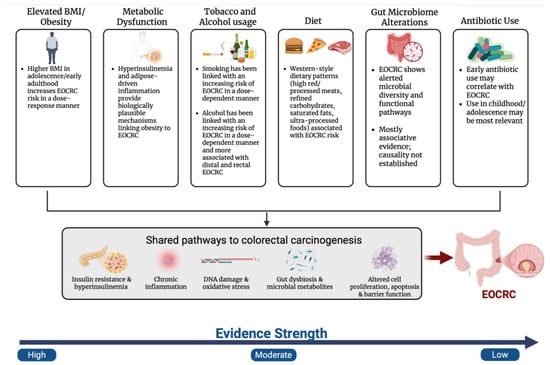
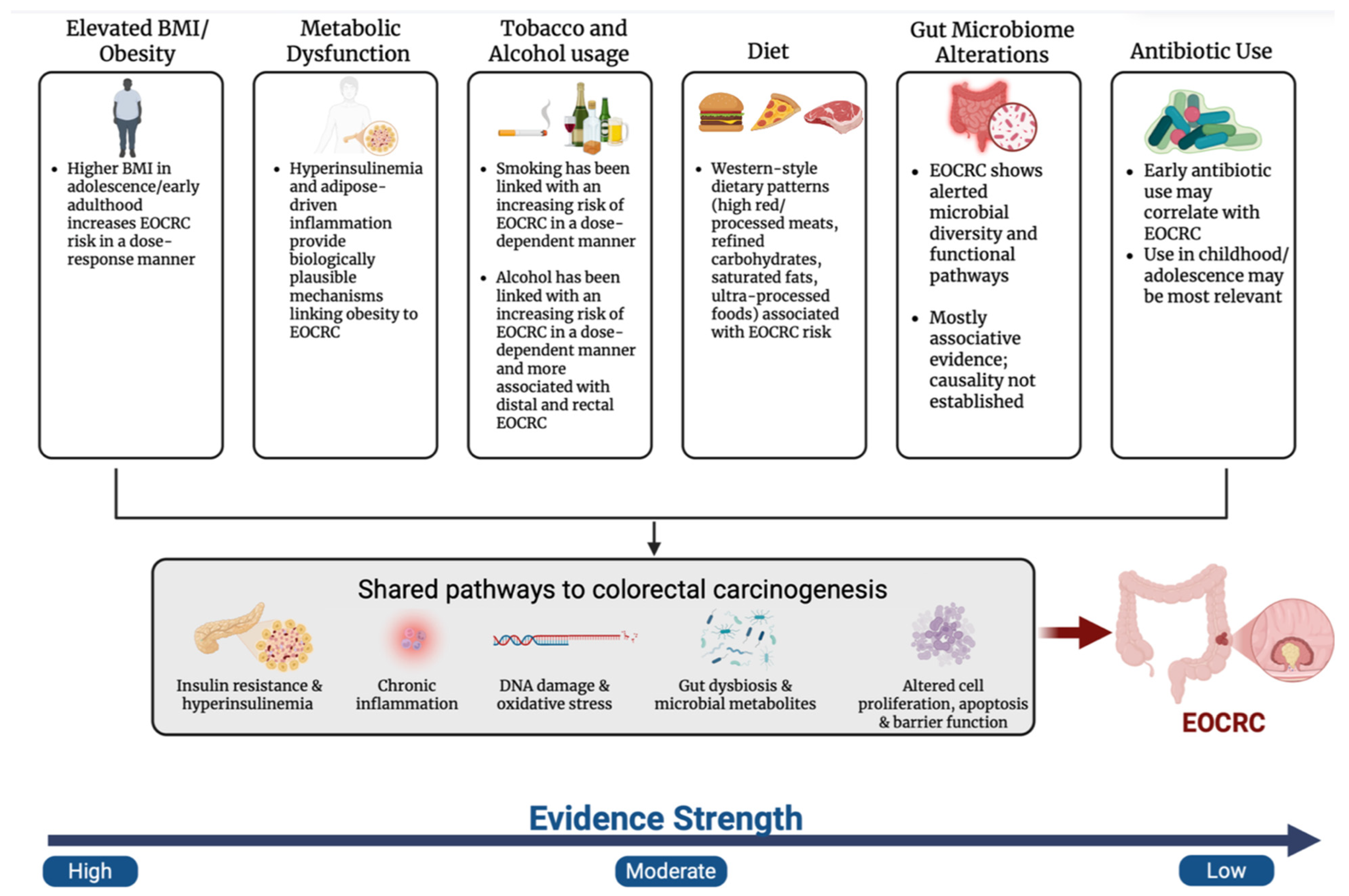
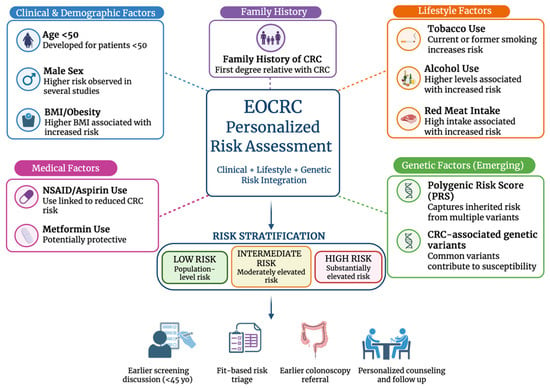
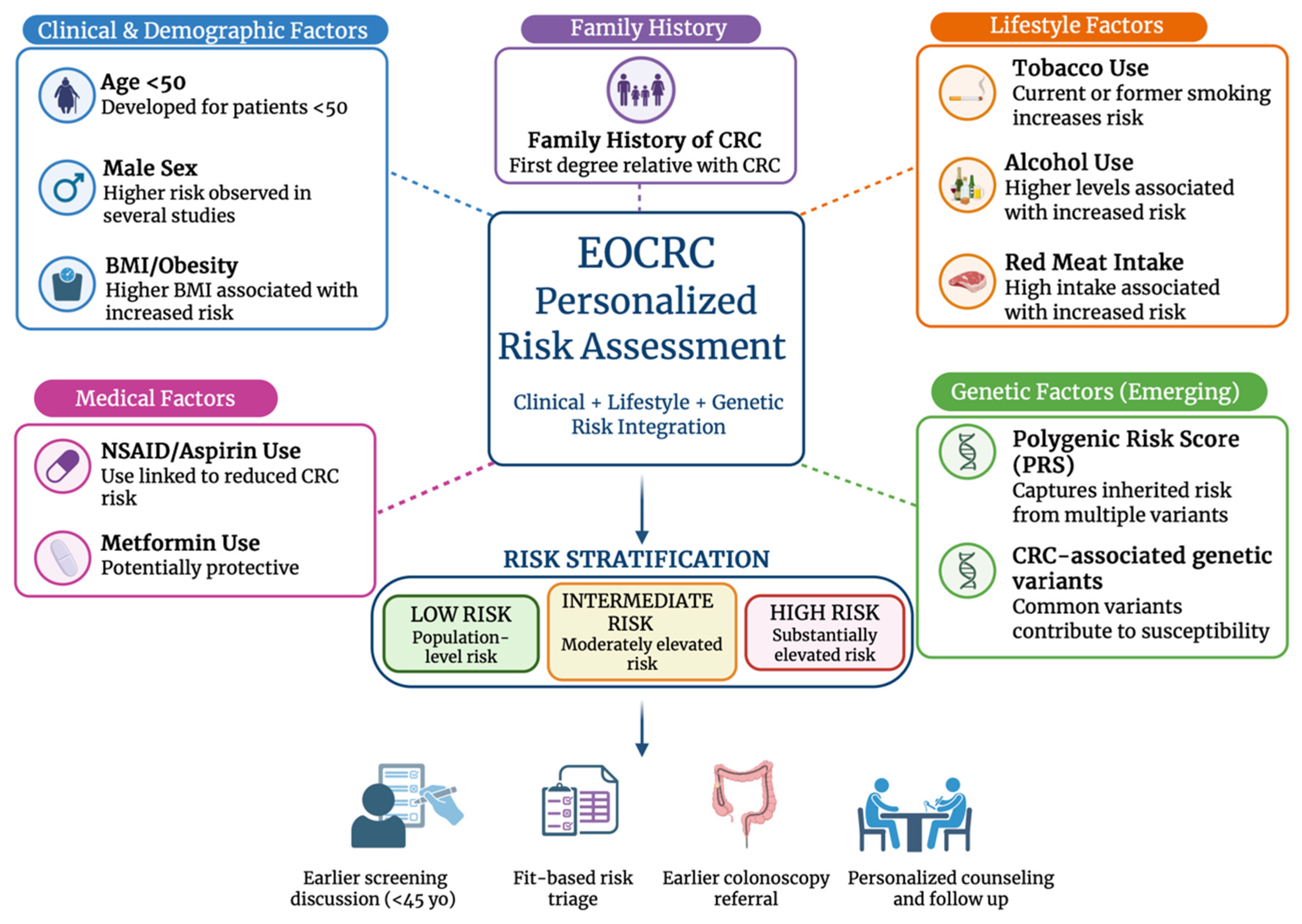
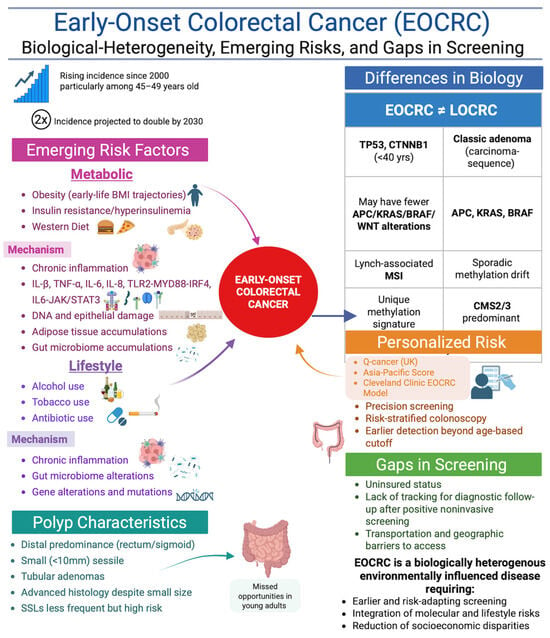
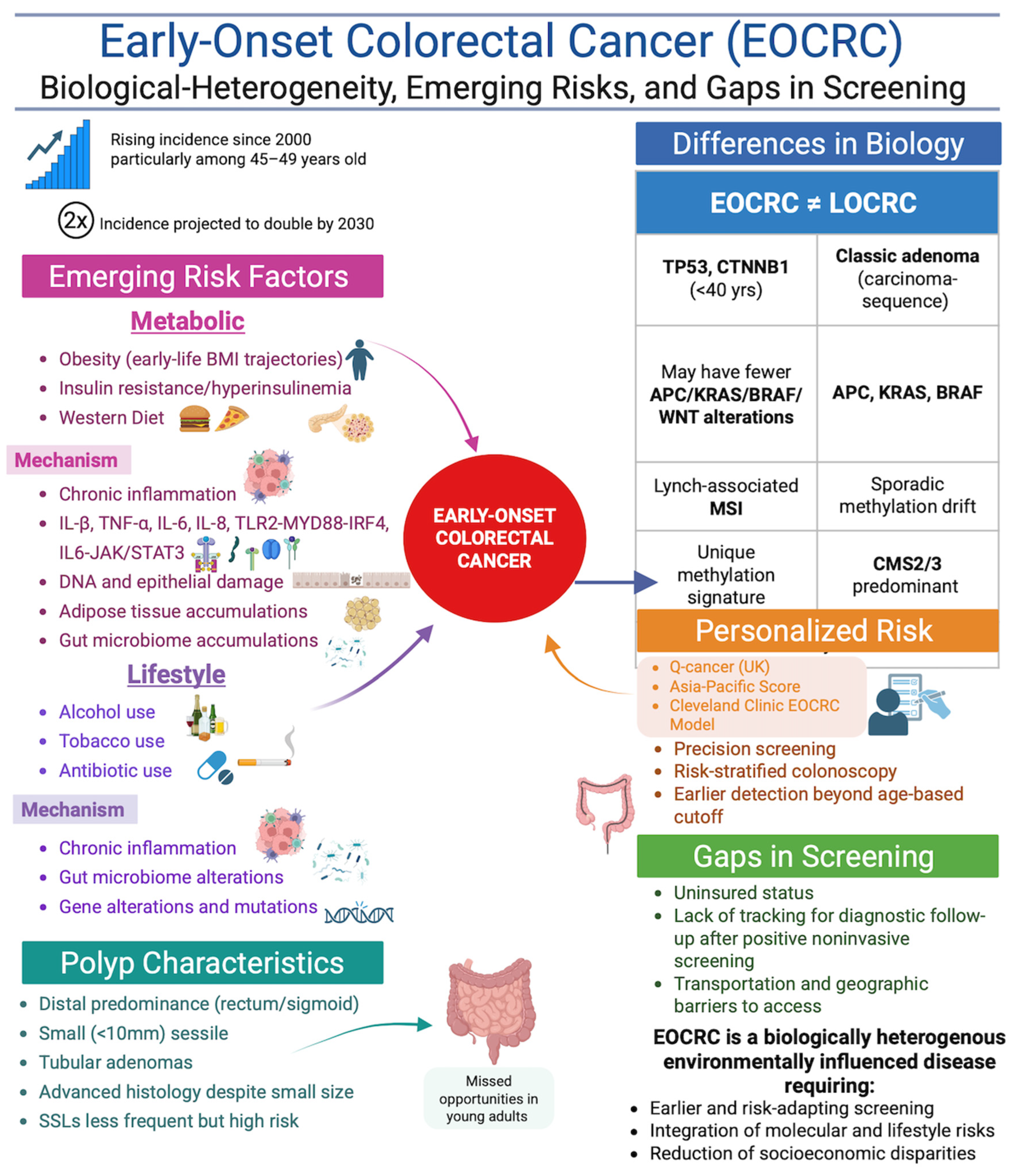

Disclaimer/Publisher’s Note: The statements, opinions and data contained in all publications are solely those of the individual author(s) and contributor(s) and not of MDPI and/or the editor(s). MDPI and/or the editor(s) disclaim responsibility for any injury to people or property resulting from any ideas, methods, instructions or products referred to in the content. |
© 2026 by the authors. Licensee MDPI, Basel, Switzerland. This article is an open access article distributed under the terms and conditions of the Creative Commons Attribution (CC BY) license.