1. Introduction
The convergence of electric mobility and energy systems has emerged as a critical field of research, driven by the global transition towards sustainable energy and decarbonized transport [
1,
2,
3,
4]. Integrating electric vehicles into existing and future energy infrastructures presents both significant opportunities and complex challenges, ranging from technological requirements to systemic integration and regulatory adaptation [
1,
5,
6,
7]. Previous bibliometric reviews have similarly highlighted rapid growth in e-mobility research, focusing on themes such as smart charging, vehicle-to-grid systems, and infrastructure integration [
8,
9] and the evolution of e-mobility clusters including charging networks, grid interaction, and energy origin [
10,
11]. The preceding study, “On the Convergence of Electric Mobility and Energy Systems—Potentials and Challenges”, identified five key domains shaping this convergence: (A) central energy management systems; (B) renewable energy sources, clean hydrogen production and large-scale energy storage systems; (C) industrial plants and applications; (D) smart energy communities, virtual power plants and vehicle-to-X applications; (E) urban high-power charging parks with battery energy storage systems [
12].
While technological advances in these areas are accelerating, a systematic, quantitative assessment of the scientific landscape remains absent. Bibliometric analysis offers a robust approach to mapping research activity, uncovering collaboration networks, and identifying thematic trends across these domains [
13,
14]. Such an approach enables a deeper understanding of how research in electric mobility and energy systems has evolved, and where critical gaps or emerging topics may lie.
This study addresses the following research question: How has the scientific landscape on the convergence of electric mobility and energy systems evolved across five key technological domains, and what trends, collaboration patterns, and thematic developments can be identified through bibliometric analysis?
This study builds directly on the five domains identified in the earlier work, systematically collecting and analyzing scientific publications over the past decade. Using bibliometric techniques, the research examines annual publications regarding the five domains and an analysis of keyword interconnection. The results provide a dual contribution: first, they offer stakeholders, including researchers, industry actors, and policymakers, data-driven insights into the state and direction of research in this interdisciplinary field; second, they establish insights for continuous monitoring of developments in the convergence of electric mobility and energy systems.
The integration of electric mobility into modern energy systems has become a central pillar in the global transition towards sustainable energy and decarbonized transport [
15,
16]. Electric vehicles are increasingly regarded not merely as transportation assets but as active components within a broader energy ecosystem, dynamically interacting with generation, storage, and distribution infrastructures [
7,
17,
18,
19]. This development is closely linked to the rapid expansion of renewable energy generation, the decentralization of power grids, and the ongoing digitalization of energy management [
20,
21]. As a result, research on the convergence of electric mobility and energy systems has become inherently interdisciplinary, drawing on expertise from electrical engineering, energy economics, information technology, and policy studies.
Building on the framework established in the preceding study “On the Convergence of Electric Mobility and Energy Systems—Potentials and Challenges”, five interrelated domains have been identified as pivotal to the integration of electric vehicles within future energy landscapes [
7]. The first domain, central energy management systems, encompasses the monitoring, control, and optimization of energy flows across electricity and other potential energy carriers such as hydrogen. The ability to maintain grid stability through real-time monitoring and digital control of distributed assets is becoming a critical skill for grid operators in increasingly decentralized networks. The second domain, renewable energy sources and large-scale energy storage, focuses on the anticipated dominance of wind and solar power, supported by large-scale battery energy storage systems and clean hydrogen production. The inherent intermittency of these sources presents challenges for grid integration, requiring advanced forecasting and flexibility solutions.
The third domain addresses industrial plants and applications, which can exert significant influence on grid stability due to their high and often variable demand. Effective integration strategies, such as demand response and flexible load management, offer both challenges and opportunities for grid operators and plant managers. The fourth domain covers smart energy communities, virtual power plants, and vehicle-to-X concepts, which enable decentralized energy generation, storage, and consumption at the community or regional scale. Virtual power plants aggregate diverse resources, including bidirectionally chargeable electric vehicles, into market-relevant capacities, while vehicle-to-X technologies connect electric vehicles with homes, grids, and devices, providing new flexibility options. Finally, the fifth domain concerns urban high-power charging parks with battery storage, which are essential to support growing electric vehicle adoption. The combination of high-power charging stations with local battery energy storage systems enables peak shaving, reduces grid stress, and can defer costly infrastructure upgrades.
Existing bibliometric studies on electric mobility and energy systems typically focus on specific subfields, such as charging infrastructure, vehicle-to-grid technologies, or battery systems. While these studies provide valuable insights into individual research areas, they often adopt a fragmented perspective and do not capture the broader system-level interactions between mobility and energy domains.
As a result, a comprehensive and comparative analysis that integrates multiple technological domains within a unified framework remains limited. This lack of an integrated perspective makes it difficult to fully understand cross-domain linkages, thematic overlaps, and the overall development of the research landscape.
This study contributes to the existing literature in three main ways. First, it provides a structured and comparative bibliometric analysis across five systematically defined domains, enabling a more integrated perspective on the convergence of electric mobility and energy systems. Second, it goes beyond single-topic analyses by explicitly capturing cross-domain linkages and thematic overlaps, thereby reflecting the interdisciplinary nature of the field. Third, it identifies emerging and underrepresented areas, offering insights into current research gaps and future research directions.
The remainder of this paper is structured as follows.
Section 2 details the methodology of bibliometric analysis, including data sources, search strategies, and analytical tools.
Section 3 presents the results, highlighting publication trends, geographical distributions, collaboration networks, and thematic clusters across the five domains.
Section 4 discusses the implications of these findings, outlines potential research gaps, and
Section 5 provides an outlook for future studies in the convergence of electric mobility and energy systems.
2. Method
The aim of this bibliometric study is to map and quantify the scientific landscape at the intersection of electric mobility and energy systems across five domains—central energy management systems; renewable energy sources and large-scale energy storage (incl. clean hydrogen); industrial plants and applications; smart energy communities, virtual power plants, and vehicle-to-X; and urban high-power charging parks with battery storage. Bibliometrics offers a systematic, replicable approach to assess research productivity, impact, collaboration, and thematic structure [
15]. Accordingly, a multi-stage process was conducted comprising database selection, query design, data retrieval and cleaning, domain assignment, and science-mapping analyses.
Two multidisciplinary citation indexes with strong coverage in engineering, energy, and information systems were queried: Web of Science Core Collection (WoS) and Scopus. To capture the rise of smart grids and electric-mobility integration, we set the temporal window to 2000–2025 (inclusive). The window can potentially be tightened in robustness checks; all parameters are documented for reproducibility.
To ensure a consistent focus on the intersection of electric mobility and energy systems, all domain-specific search strings were combined with electric mobility-related terms using Boolean AND operators, with the truncation symbol (*) applied where appropriate to capture relevant word variations. These terms included “electric mobility”, “electromobility”, “electric vehicle*”, and “EV”, thereby ensuring that only publications explicitly addressing the mobility–energy nexus were captured. While some keywords, such as “smart grid”, are not inherently specific to electric mobility, their combination with mobility-related terms ensures contextual relevance. This approach allows capturing system-level interactions while maintaining a consistent analytical scope across domains.
The searches were conducted using the topic field in WoS and the TITLE-ABS-KEY field in Scopus, allowing for a comprehensive yet comparable retrieval of relevant publications across both databases.
The selection of keywords was guided by the conceptual framework established in the preceding study and aimed to ensure both thematic relevance and comparability across the five domains. The keywords were chosen to reflect central technological components and research streams within each domain while maintaining a consistent analytical structure. This approach allows for a systematic comparison across domains within a unified framework.
For clarity and readability, the electric mobility constraints are not fully displayed in
Table 1 but were applied uniformly across all queries. To ensure the robustness of the search strategy, the queries were iteratively refined through exploratory searches and adjusted to balance coverage and specificity. Initial test queries with broader keyword combinations resulted in a higher number of publications but included a substantial share of thematically less relevant records. The final search strings were therefore selected to ensure conceptual precision and relevance to the mobility–energy nexus.
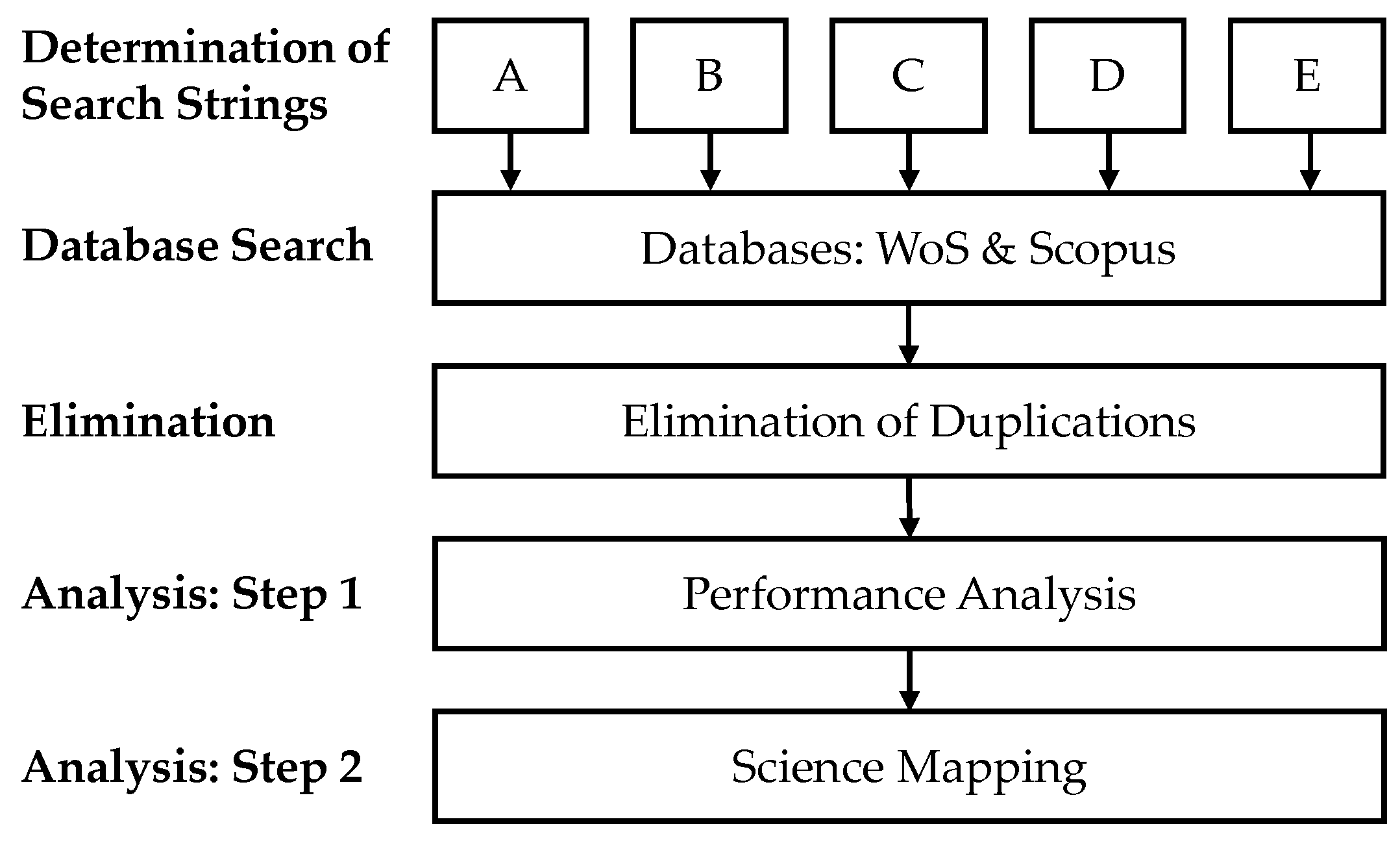
Searches were restricted to English-language records and document types commonly used in bibliometric performance and science-mapping studies: articles and reviews. The raw hits per domain and database were recorded and duplicates were eliminated. After this step, 6704 hits for domain A, 6728 hits for domain B, 6 hits for domain C, 236 hits for domain D and 12 hits for domain E remained. The methodological approach is represented in
Figure 1.
For the remaining sample, performance analysis and science mapping were combined to examine the research landscape. In terms of performance analysis, the focus was exclusively on annual publication counts to capture the temporal dynamics of the field. Science mapping, by contrast, was applied to uncover the intellectual and thematic structure through keyword co-occurrence analysis and overlay visualizations. These visualizations were generated using VOSviewer (version 1.6.20), a software tool designed to construct and display bibliometric networks. For the keyword co-occurrence analysis, a minimum occurrence threshold of 5 was applied. This means that only keywords appearing at least five times in the dataset were included in the network. The selection of this threshold directly influences the resulting clusters, as it determines which terms are considered sufficiently relevant for inclusion in the visualization. A lower threshold would increase the number of included terms but may reduce interpretability, while a higher threshold would focus on more dominant themes.
3. Results
Based on the final dataset derived from Web of Science and Scopus, the following section presents the outcomes of the bibliometric analysis. The results are structured along two complementary perspectives: first, the performance analysis, which highlights the temporal development of research activity in terms of annual publication output across the five domains; and second, the science mapping, which uncovers the thematic structure and intellectual linkages within the field through keyword co-occurrence networks and overlay visualizations. This dual approach allows us to capture both the quantitative growth and the qualitative orientation of research at the intersection of electric mobility and energy systems.
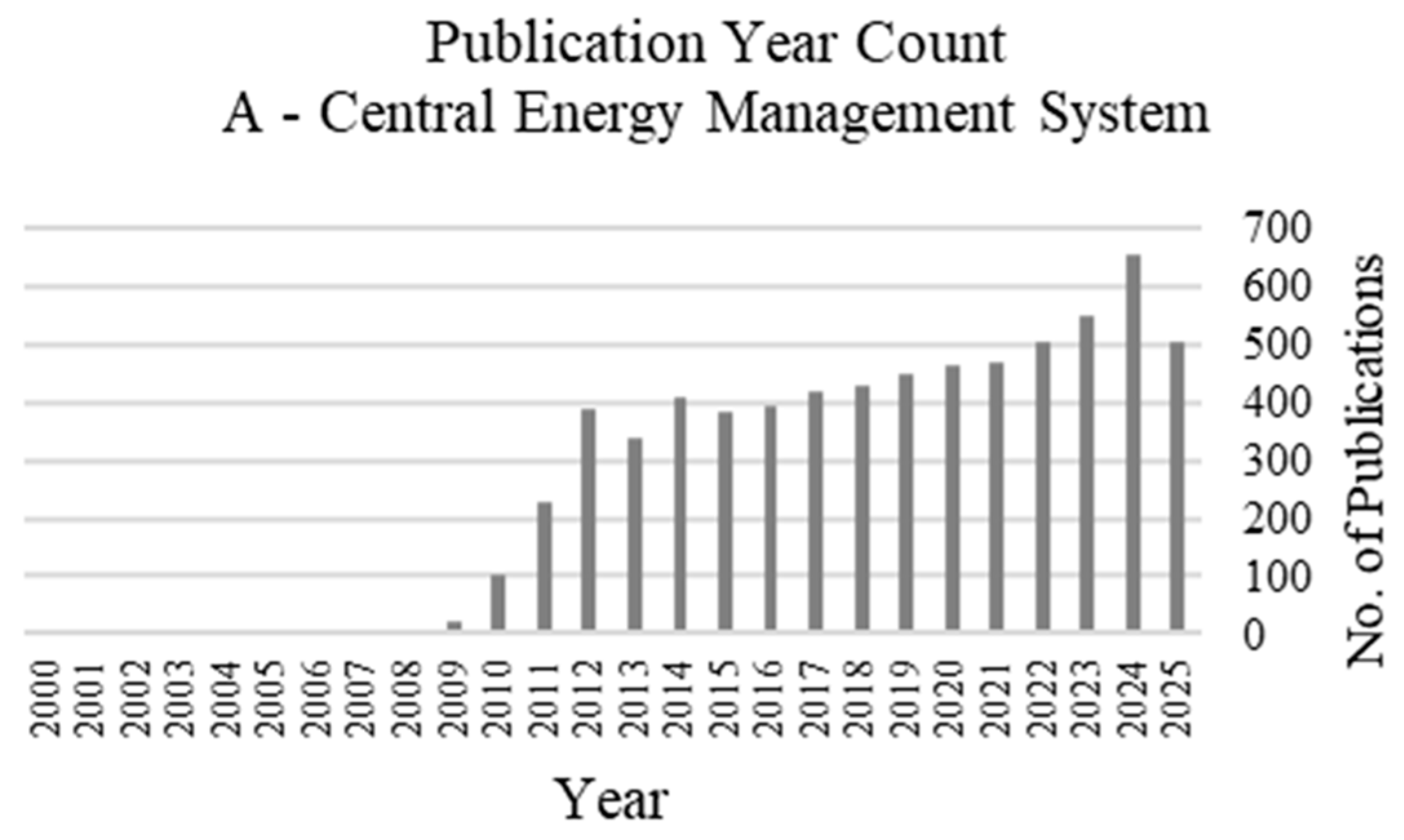
Figure 2 illustrates the annual publication output for the domain A—Central Energy Management System between 2000 and 2025. The data reveal a very limited number of publications before 2010, followed by a clear and steady increase from 2011 onwards. Publication activity reached a first noticeable peak around 2014, after which the output stabilized at a consistently high level. From 2020 onwards, a renewed upward trend can be observed, culminating in a sharp rise in 2023 and 2024, where publication numbers exceeded 600 contributions. The data for 2025 show a decline, which is likely attributable to the incomplete coverage of the current year rather than a real decrease in research activity. Overall, the trend demonstrates a strong and growing research interest in central energy management systems, reflecting their increasing importance for the integration of electric mobility and energy systems.
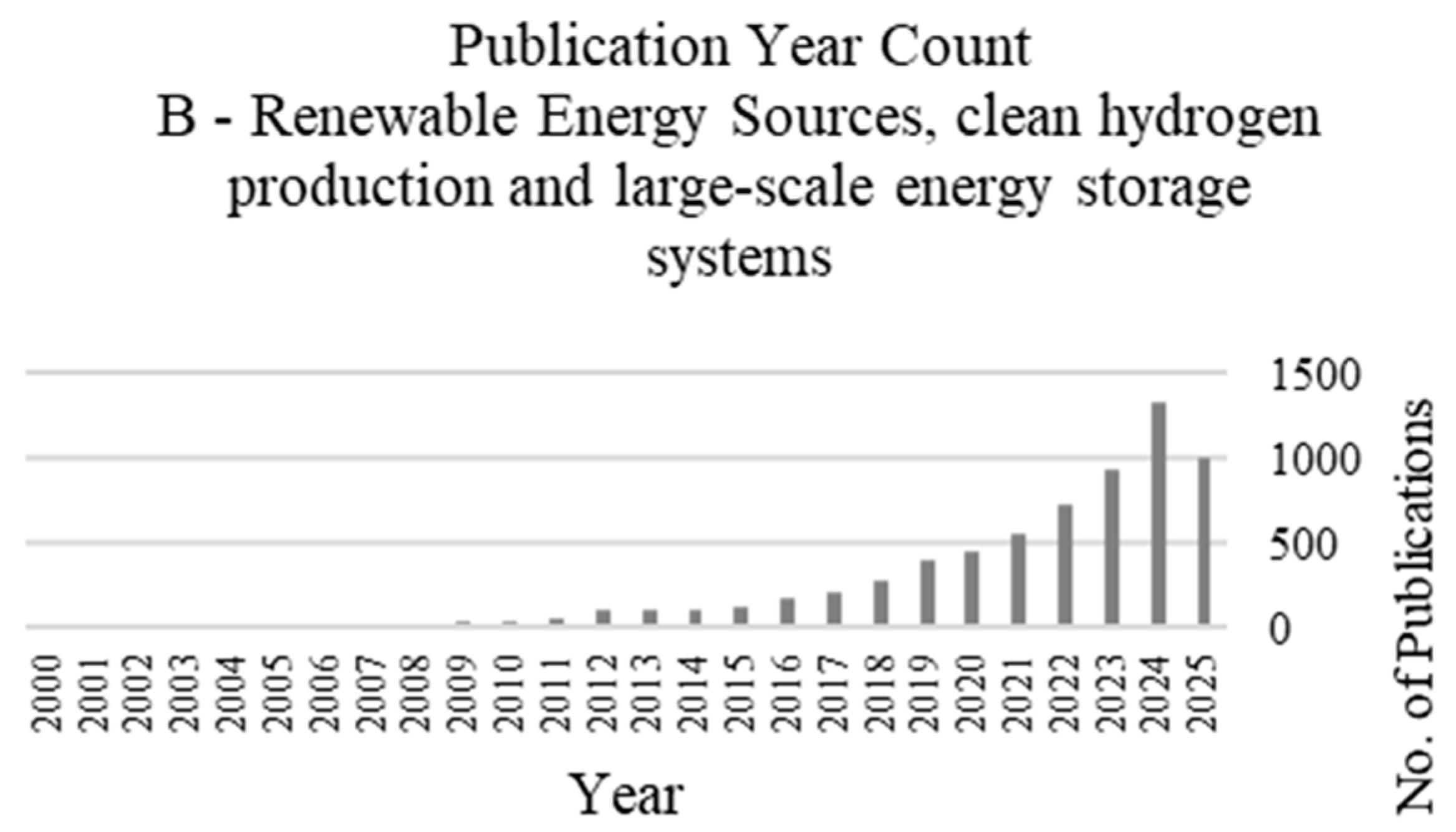
Figure 3 presents the annual publication output for domain B between 2000 and 2025. Until 2010, publication activity was negligible, with only isolated contributions. From 2011 onwards, the field began to attract increasing attention, though at relatively modest levels. A notable acceleration occurred from 2017 onwards, with a steep upward trajectory visible particularly from 2019. Research activity peaked in 2024, with more than 1200 publications, before a slight decline in 2025, which is again likely attributable to incomplete coverage for the current year. The sharp increase in publication output underscores the rapidly growing scientific and societal relevance of renewable energy integration, clean hydrogen production, and large-scale energy storage as indispensable building blocks for decarbonized transport and energy systems.
In contrast to other domains, publication activity in domain C remains extremely limited, with only six contributions recorded in total over the entire period. Isolated publications can be observed in 2017, 2021, 2022, 2023, and 2024. No continuous growth trend is apparent, suggesting that the integration of industrial plants into electric mobility–energy system convergence remains an underexplored research area. This limited scientific engagement may reflect both the high complexity of industrial energy integration and a relative lack of targeted research funding in this domain. Nevertheless, the sporadic publications highlight emerging recognition of industrial flexibility as a potential lever for system stability and efficiency.
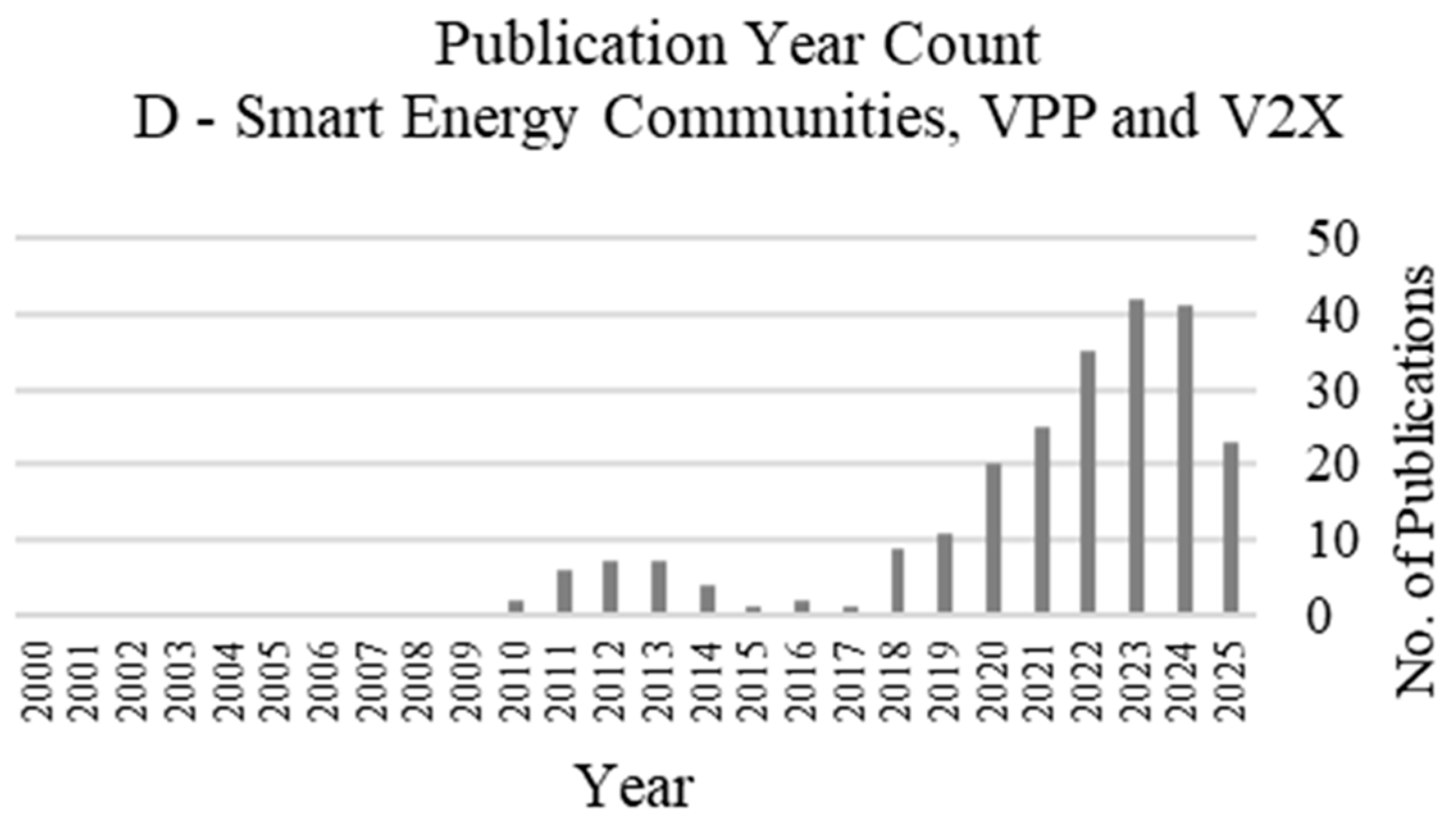
Figure 4 shows the annual publication output for domain D. The data reveal only marginal activity until around 2017, followed by a gradual increase in publications. From 2018 onwards, research interest grew steadily, reaching a clear upward trend after 2020. The observed increase in publication counts in 2023 and 2024, with more than 40 publications per year, indicates a growing interest among researchers in this domain over time. The decline in 2025 is most likely due to incomplete data coverage. Overall, the trajectory reflects the increasing importance of decentralized energy solutions, local energy markets, and bidirectional charging concepts as cornerstones for integrating electric mobility into broader energy systems.
Research in domain E only emerged very recently, with the first contributions appearing in 2019. Since then, publication activity has remained at a low but stable level, with two to three annual publications between 2021 and 2025. Although the numbers are modest compared to other domains, the emergence of this research niche aligns with the rapid expansion of high-power charging infrastructure in urban contexts. The integration of local battery storage in charging hubs is still at an early stage of scientific exploration, but the consistent activity suggests a growing recognition of its potential to alleviate grid stress and enable sustainable large-scale charging solutions.
In addition to publication trends, science mapping was conducted to uncover the thematic and intellectual structure of research on the convergence of electric mobility and energy systems. Keyword co-occurrence networks were generated for each of the five domains, revealing both shared foundations and distinctive thematic orientations. Thereby, in the following figures, the size of the circles represents the relative frequency of the respective elements, while the colors indicate different thematic groupings.
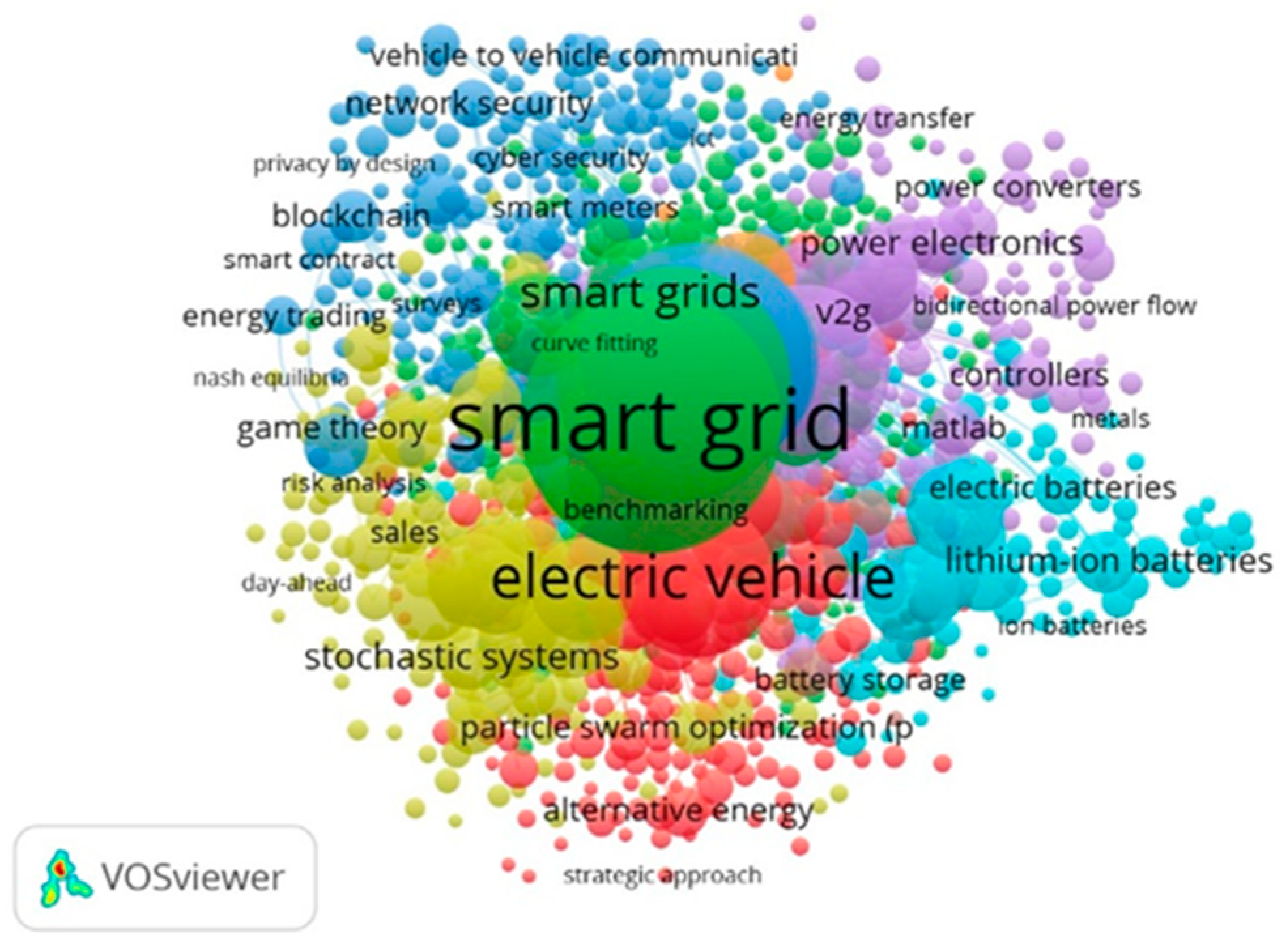
The science mapping for domain A reveals “smart grid” as the most dominant and interconnected keyword in the entire dataset (cf.
Figure 5). Surrounding clusters include “smart meters”, “power electronics”, and “electric vehicle”, highlighting the pivotal role of digitalized grid management in bridging energy and mobility systems. The presence of “cybersecurity”, “privacy by design”, and “blockchain” underscores the socio-technical challenges of trust and data security in increasingly decentralized infrastructures. In parallel, terms such as “energy trading”, “game theory”, and “stochastic systems” reflect the growing importance of algorithmic optimization and market-based coordination mechanisms.
Together, these clusters confirm that central energy management systems act as the connective tissue across all domains, enabling both technical integration and systemic coordination.
In domain B, “electric vehicle”, “photovoltaics”, and “battery energy storage systems” form the thematic core. Closely connected keywords include “renewable energy”, “optimization”, and “photovoltaic system”, emphasizing the central role of solar power and storage in enabling decarbonized transport. The network illustrates strong co-occurrence between energy storage and mobility integration, while hydrogen, though less prominent, appears increasingly linked to storage and renewable technologies. This indicates that clean hydrogen is an emerging, but not yet dominant, research strand within this domain.
By contrast, domain C shows only a very sparse keyword network. A handful of terms such as “electric vehicle”, “smart grid”, “electric power transmission”, and “vehicle-to-grid” appear, but with very limited interconnections. This reflects the extremely small publication base identified in the performance analysis and suggests that research on industrial flexibility and integration into mobility–energy convergence remains underdeveloped. The scattered nature of the terms implies that the field has yet to establish a coherent thematic agenda, leaving ample space for future research.
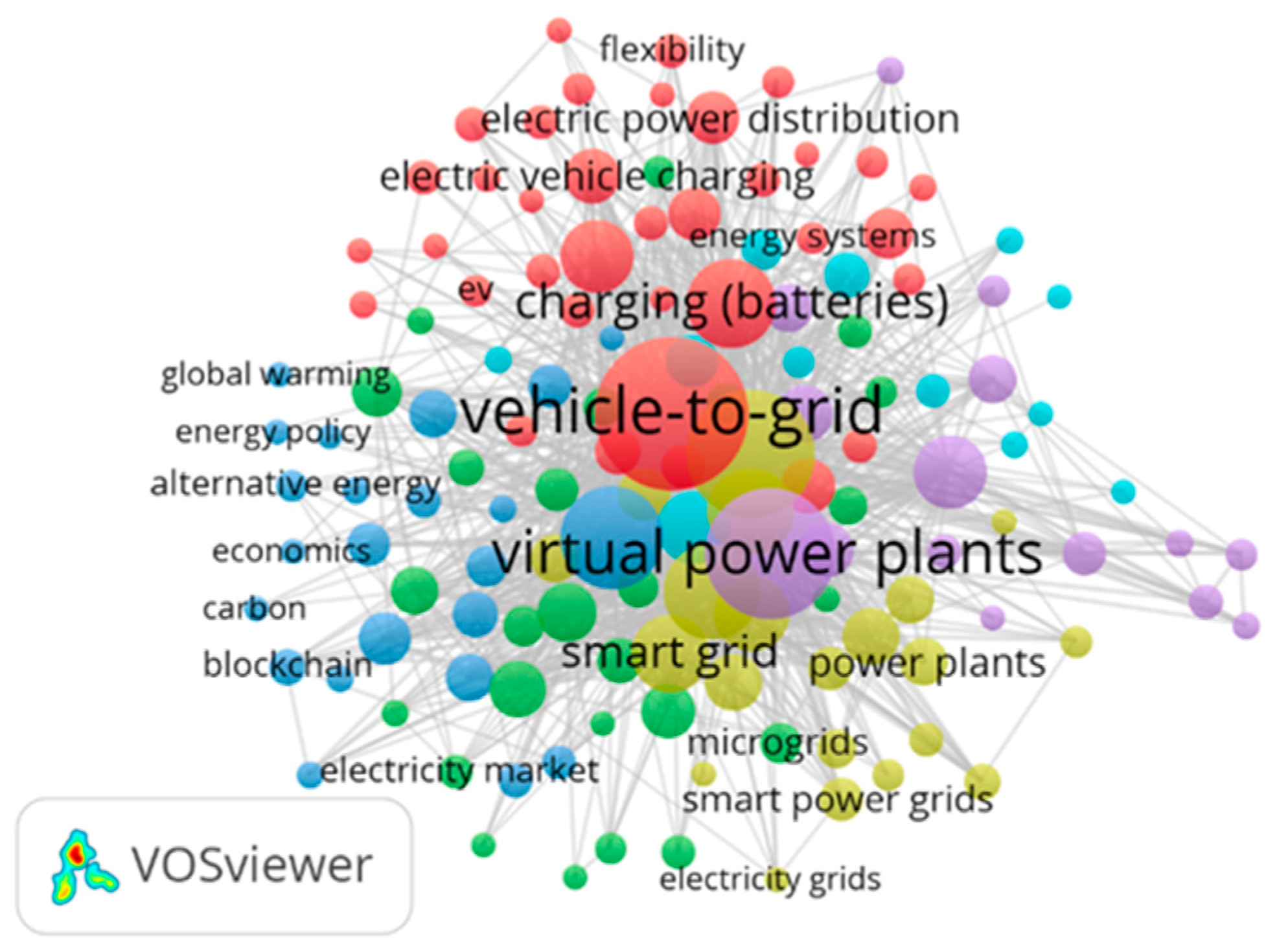
The co-occurrence network for domain D (cf.
Figure 6) is dense and highly interconnected. “Vehicle-to-grid” and “virtual power plants” dominate the map, surrounded by clusters such as “smart grid”, “charging (batteries)”, “microgrids”, and “electricity markets”. In addition to these technical clusters, terms like “flexibility”, “energy policy”, and “blockchain” emerge, pointing to the interplay between innovation, governance, and market design. This structure aligns with the strong upward trend in publication activity and highlights decentralized coordination and bidirectional charging as central research themes for integrating electric mobility into energy systems.
Domain E reveals a small and specialized cluster, primarily consisting of “fast charging stations” and “charging (batteries)”. The limited number of co-occurring terms reflects the early stage of this research domain, which has only recently emerged in line with the rollout of high-power charging hubs. While thematically narrow, this cluster captures a highly practical research frontier: the combination of local storage and charging infrastructure to mitigate grid stress in urban environments.
Taken together, the science mapping results show that research on the convergence of electric mobility and energy systems is structured around two central axes: (1) smart grids and electric vehicles as the technological backbone, and (2) virtualized, decentralized solutions such as V2G and virtual power plants as emerging systemic approaches. Other domains—particularly industrial applications and urban charging hubs—remain underdeveloped but represent promising areas for future expansion, especially as deployment challenges shift from concept to practice.
4. Discussion
This study examined the evolution of research at the intersection of electric mobility and energy systems across five analytical domains, combining bibliometric performance analysis with science mapping to capture both quantitative developments and thematic orientations. The results show that central energy management systems and smart grids constitute the conceptual core of the field, closely connected to electric vehicles, power electronics, and data-driven coordination mechanisms. A second major research cluster emerges around renewable energy integration, clean hydrogen, and large-scale storage, with strong links to photovoltaics and battery energy storage systems, while hydrogen-related research is beginning to gain visibility but has not yet reached comparable maturity.
The very low number of publications identified in domain C, compared to other domains, may partly be attributed to the specificity of the applied search strategy. In particular, the combination of industrial-related terms with electric mobility constraints using Boolean AND operators result in a highly focused but potentially restrictive query. While this approach ensures conceptual consistency across all domains, it may lead to conservative estimates in areas where terminology is less standardized or where the intersection with electric mobility is not explicitly stated in publications. Consequently, the results for domain C should be interpreted with caution and understood as indicative rather than exhaustive representations of research activity in this area.
In contrast, industrial applications remain only weakly structured within the scientific landscape, characterized by fragmented contributions rather than a consolidated research stream. By comparison, smart energy communities, virtual power plants, and vehicle-to-X concepts form a dense and highly interconnected body of research, reflecting their growing relevance for decentralized coordination and flexibility provision. Urban high-power charging parks with local storage appear as an emerging topic, indicating increasing attention to practical infrastructure challenges associated with large-scale electrification.
Beyond the observed publication trends, the differences across domains can be linked to broader technological and systemic developments. The strong growth in domains related to smart grids, renewable integration, and decentralized energy systems reflects the increasing need for flexibility and coordination in energy systems with high shares of intermittent renewable energy. At the same time, concepts such as vehicle-to-grid and virtual power plants are gaining attention due to their potential to provide distributed storage and grid stabilization services [
22,
23]. In contrast, the comparatively limited representation of industrial applications may be explained by the higher complexity of integrating industrial processes with electric mobility systems, as well as less standardized terminology and fewer dedicated research streams. Similarly, research on urban high-power charging infrastructure is still emerging [
24,
25], reflecting its relatively recent development and the ongoing transition from conceptual exploration to large-scale deployment. These patterns suggest that research activity is closely aligned with both technological maturity and practical implementation challenges across the different domains. These developments indicate that the evolution of research across the domains is driven by broader technological and systemic developments, including increasing penetration of renewable energy, the decentralization of energy systems, and the rising importance of flexibility solutions such as vehicle-to-grid and virtual power plants.
From a methodological perspective, the combination of performance analysis and keyword-based science mapping proved suitable for capturing both the scale and internal structure of this interdisciplinary field. This approach may include a small number of broadly related publications; however, it enables a more comprehensive representation of system-level integration processes. At the same time, several limitations must be considered. Bibliometric analyses depend on database coverage and classification decisions, which may underrepresent emerging topics and complicate domain allocation. Furthermore, incomplete indexing for the most recent year limits temporal completeness. Additionally, the interpretation of publication dynamics is based on absolute publication counts. While this allows for a clear representation of temporal trends, it does not account for relative growth rates or normalization across domains. Therefore, the results should be interpreted as indicative of general trends rather than precise comparative growth patterns. Future research could therefore complement bibliometric approaches with citation-based analyses and qualitative and longitudinal analyses to further refine insights into evolving research dynamics.
Overall, the results reveal an uneven development across domains. While smart grids, storage solutions, and decentralized coordination mechanisms have evolved into established research pillars, industrial integration and urban charging infrastructures remain comparatively early-stage areas, highlighting important opportunities for future research.
5. Conclusions
The convergence of electric mobility and energy systems has developed into a dynamic and increasingly interdisciplinary research field shaped by rapid technological progress and evolving policy frameworks. Compared to existing bibliometric studies that typically focus on isolated aspects such as charging or vehicle-to-grid systems, this study provides a more integrated perspective across multiple domains. The analysis shows that smart grids and decentralized flexibility solutions currently form the central foundation of the research landscape, while renewable integration and storage technologies continue to expand its scope. At the same time, significant gaps remain, particularly regarding industrial applications and scalable urban charging solutions, where further investigation is required to enable systemic implementation.
Looking ahead, projected growth in global electric vehicle adoption, emerging interoperability standards, and large-scale vehicle-to-grid demonstrations suggest that the field is entering a transition from conceptual exploration toward system-level deployment. The increasing role of digital intelligence, including artificial intelligence and secure data infrastructures, further reinforces the need for integrated and cross-sectoral perspectives.
By providing a structured overview of research developments and thematic trajectories, this study offers a foundation for identifying future research priorities and supporting strategic decision making. Advancing the sustainable integration of mobility and energy systems will ultimately depend on aligning technological innovation with regulatory frameworks, market design, and coordinated stakeholder collaboration.