1. Introduction
Exponential growth in data traffic, driven primarily by the proliferation of high-definition (HD) and ultra-high-definition (UHD) video services, places unprecedented demands on telecommunications networks [
1]. These services require considerable bandwidth, low latency, and high quality of service (QoS)—critical aspects to ensure smooth experiences in real-time video streaming, augmented reality, and other emerging applications [
2]. Issues such as latency variability and the inefficient utilization of network resources significantly impair the end-user experience, leading to interruptions and loss of quality of service [
3]. The PON emerges as a key technological solution, offering high-speed, low-latency, and energy-efficient broadband connectivity, making it a suitable foundation for next-generation access networks [
3]. The continued growth in data traffic shows that PONs alone are insufficient to meet today’s users’ demands for mobility and flexibility. This reality has driven the convergence of optical and wireless networks, paving the way for hybrid architectures—one promising solution for integrating RoF into PON systems [
4]. RoF technology enables the transmission of radio-frequency signals over optical fibers, leveraging the low attenuation and high bandwidth of fibers to extend wireless coverage and enhance network capacities. This convergence creates a robust infrastructure that supports both high-capacity applications and mobility services [
5].
The experimental transmission of a 40 Gbps mmWave signal in the 100 GHz band over a hybrid link combining a single-mode fiber (SMF) and optical wireless communication (OWC) is reported in [
6]. The setup consists of a 20 km SMF segment and a 1 m OWC span, evaluated using metrics such as the error vector magnitude (EVM) and received constellations. Although the OWC-mmWave link is limited to 1 m due to environmental constraints, the results suggest that enhanced optical coupling and focusing techniques could extend this reach.
Regarding hybrid network deployment, integrating RoF with PONs presents technical and operational challenges that must be addressed. One of the main challenges is the coexistence of optical PON signals with optically modulated RoF signals, where problems associated with chromatic dispersion and optical nonlinearities arise [
7]. Likewise, properly managing optical and RF powers is crucial because excessive amplification can saturate photodetectors, while insufficient levels compromise the receiver’s sensitivity. In addition, transmitting modulated LTE signals over RoF introduces impairments such as phase noise, intensity fluctuations, and nonlinear distortions caused by modulators and amplifiers. These impairments impact signal recovery and video quality. Another limitation is the added latency introduced by electro-optical conversion and receiver-side processing in the RoF segment, critical for delay-sensitive applications such as real-time video transmission. Furthermore, the use of RF and optical amplifiers increases energy consumption, highlighting the need to optimize the efficiency of these systems to ensure sustainable and economically viable networks.
The RoF–PON architecture combines the high-capacity, low-latency characteristics of optical access networks with the flexibility and mobility support of radio transmission. In a typical configuration, the optical line terminal (OLT) at the central office distributes signals through a passive optical splitter to multiple optical network units (ONUs). By integrating RoF, the optical signal is modulated with radio-frequency carriers and transported transparently over SMF. At the ONU or remote antenna unit, the optical signal is converted back to RF and radiated wirelessly. This architecture eliminates the need for baseband processing at remote sites, reduces equipment complexity, and leverages the low attenuation and large bandwidth of fibers to extend wireless coverage. However, the joint transport of optical and RF signals introduces design challenges, such as managing chromatic dispersion, mitigating nonlinearities, and optimizing optical and RF power levels to prevent receiver saturation while ensuring sufficient sensitivity. These aspects make PON–RoF a promising yet demanding solution for next-generation converged access networks.
Recent advances in RoF and PONs have focused on supporting the stringent requirements of 5G and beyond. Flexible RoF architectures have been proposed to enable multiservice and multiband operation, while ensuring scalability and reconfigurability through centralized management. For example, ref. [
8] presented a flexible and scalable RoF architecture capable of simultaneously handling conventional wireless services (WiFi, WiMAX) and mm-wave transmission at 60 GHz, while leveraging software-defined networking (SDN) for dynamic resource management. Their work highlights the roles of reconfigurable nodes such as the central office (CO), remote node (RN), and remote access unit (RAU) in optimizing optical resource distribution and extending the applicability of RoF systems for diverse 5G deployments.
In parallel, ref. [
9] experimentally demonstrated the potential of multiplexed 5G signals over PONs, validating the simultaneous transmission of 4-PAM, UF-OFDM, and FBMC signals with an aggregate data rate of 6 Gbps. Their results showed that advanced multicarrier formats, such as FBMC and UF-OFDM, outperform conventional OFDM by providing higher spectral efficiency and lower out-of-band emissions, making them strong candidates for future converged wired–wireless access networks. Despite these advances, most works emphasize either architectural flexibility or innovations in modulation and multiplexing [
8,
9]. However, limited experimental research has focused on integrating LTE-based video services in hybrid RoF–PON environments, particularly when analyzing trade-offs between RF amplification, coverage, and transmission quality metrics (BER, EVM, BLER).
Building upon the previous discussion of PON–RoF integration challenges, several studies have investigated potential solutions from different perspectives. For instance, ref. [
10] demonstrated through simulations that the integration of analog radio over fiber (ARoF) and wavelength division multiplexing passive optical networks (WDM–PON) offers a cost-effective and high-performance approach to supporting 5G and high-speed internet services. However, these contributions primarily emphasize theoretical analyses and numerical simulations, often overlooking experimental validation under real video transmission conditions. Similarly, ref. [
3] examined latency behavior in passive optical networks (PONs) for 4K video services but did not address the impact of RoF integration—particularly in terms of the received optical power and receiver sensitivity. Furthermore, ref. [
11] explored the convergence between 5G and PON technologies, but without including experimental evaluations of key performance indicators such as the block error rate (BLER) in video streaming scenarios.
The selection of LTE-based video transmission as the test scenario is motivated by its practical relevance and stringent quality requirements. Video accounts for more than 70% of the current mobile traffic (Cisco Annual Internet Report, 2018–2023; Ericsson Mobility Report, 2023). In LTE, the maximum tolerable BLER for transport block decoding is (0.1%) (3GPP TS 36.101; 3GPP TS 36.104), which ensures reliable decoding and an acceptable video quality of experience (QoE). This strict threshold makes the BLER a sensitive and representative performance metric for evaluating hybrid PON–RoF links. By contrast, in new radio (NR), the 3GPP standards (3GPP TS 38.331; 3GPP TS 38.133) define BLER thresholds of 10% (out-of-sync) and 2% (in-sync) for radio link monitoring, which are operational limits used to assess link stability rather than service-level QoE. Furthermore, transmitting LTE video over PON–RoF architectures introduces additional challenges compared with traditional PON deployments, including the need to jointly manage optical and RF power budgets, mitigate phase noise and nonlinear distortions from modulators and amplifiers, and avoid photodetector saturation. These aspects make LTE video transmission a suitable but demanding benchmark for validating the feasibility of hybrid PON–RoF systems in next-generation access networks.
Unlike our previous works, which focused mainly on simulations and analytical studies of dispersion compensation, bias voltage optimization, and service convergence in PONs, this paper provides comprehensive experimental validation of LTE-based video transmission over a hybrid PON–RoF system. The study uniquely combines BLER, BER, and EVM evaluation with a coverage and sensitivity analysis under RF amplification trade-offs, offering practical design insights for next-generation optical–wireless networks.
The central contribution of this work lies in the experimental demonstration of a hybrid PON–RoF link for LTE video transmission, validating its feasibility under realistic optical–wireless integration conditions. In addition, an analysis of the trade-offs associated with RF amplification at the photodiode output is presented, highlighting its impact in terms of cost, coverage, and power consumption and showing that amplification can extend the coverage to approximately 100 m compared to the ∼4 m achieved without it. The system was rigorously characterized through a comprehensive set of performance metrics, including the BLER, ensuring a robust evaluation of the transmission quality. Finally, precise clarification of the coverage distances is provided through Friis-based extrapolation, supported by experimental measurements at ∼3 m and corroborated by a graphical analysis of the received power as a function of the distance, thus providing solid evidence for more realistic estimates of the system’s range.
Therefore, this work focuses on the experimental evaluation and design optimization of a hybrid PON–RoF architecture for video transmission over LTE, using the BLER as a primary performance metric. By leveraging laboratory-based testing, we demonstrate that integrating RoF into PONs enables scalable and energy-efficient video transmission, making it suitable for next-generation access networks. Moreover, we highlight design insights that emphasize the sufficient performance of internal RF gain Universal Software Radio Peripheral (USRP)-based receivers, eliminating the need for external amplification and reducing system complexity and energy consumption. These findings provide concrete design guidelines for the development of future hybrid optical–wireless infrastructures.
Notably, unlike the previous works cited in this section, which mainly focused on flexible and reconfigurable architectures (WiFi, WiMAX, mmWave, SDN) 5G signal multiplexing (UF–OFDM, FBMC), or theoretical analyses and simulations of ARoF–WDM-PON integration, the central contribution of this study is to provide experimental evidence under real conditions of LTE video transmission in a hybrid PON–RoF architecture. In particular, a comparative analysis of scenarios with and without RF amplification is presented, both in the optical segment and in the wireless link, quantifying their impacts on the receiver sensitivity and BLER.
This practical approach demonstrates that the internal gain of USRP may be sufficient to maintain quality of service within the thresholds established by 3GPP, eliminating the need for external amplifiers and thus reducing the cost, complexity, and energy consumption of the system. Therefore, this work complements the existing literature by offering design guidelines applicable to real deployments of optical–wireless networks oriented towards video services, differing from previous research that was more focused on simulation or architectural proposals without experimental validation.
Radio over fiber and passive optical networks are well established in the literature, and the hybridization of these two technologies has been previously introduced. Hence, the contribution of this work does not lie in presenting a new physical-layer architecture but in providing experimental evidence and deployment guidelines for the joint operation of these systems under realistic LTE video transmission conditions. In particular, we quantify the trade-offs between operating with and without external RF amplification, analyzing their impacts on receiver sensitivity and BLER performance. Unlike prior works that remain simulation-oriented, the results reported here are derived from a reproducible laboratory testbed, which enables a practical understanding of when the internal SDR-based gain is sufficient to guarantee video quality without incurring the additional cost and energy consumption of external amplification. This perspective positions the present study as a practical complement to existing theoretical frameworks, offering valuable insights for the design and optimization of future optical–wireless access infrastructures.
The remainder of this paper is organized as follows.
Section 2 describes the experimental setup and methodology.
Section 3 presents and discusses the results, including the BLER and coverage analysis with and without RF amplification.
Section 4 discusses the limitations of the proposed techniques. Finally,
Section 5 concludes the paper and outlines potential directions for future research.
2. Experimental Setup
In this section, we describe the experimental setup.
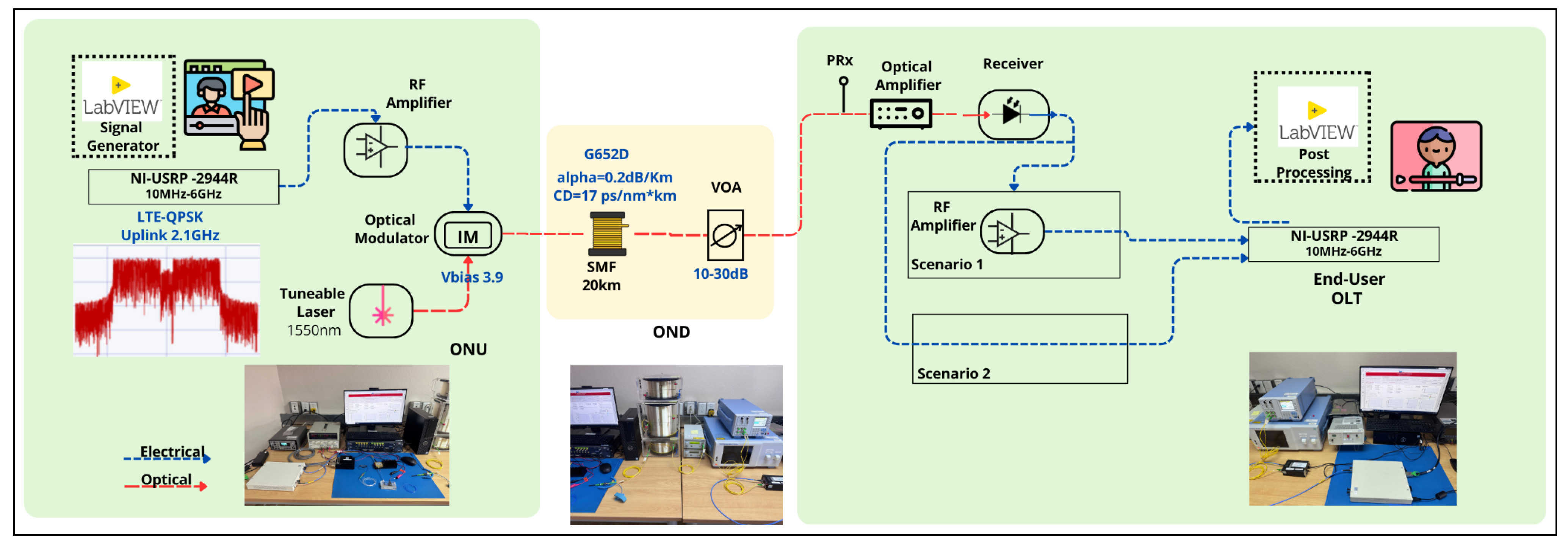
Figure 1 shows the RoF link configuration for LTE video transmission over a 20 km fiber optic link. The PON consists of the central office (CO), where the optical line terminal (OLT) is located, and is responsible for sending optical signals through the distribution network (ODN) to the optical network unit (ONU). Initially, the performance of the RoF network is evaluated without including the wireless link, and two operating scenarios are considered. Scenario 1 uses an RF amplifier before the USRP input to improve the optical domain’s signal-to-noise ratio (SNR) and transmission quality. Meanwhile, in Scenario 2, RF amplification is not used before the USRP, allowing the impact of signal attenuation on the transmission quality in the optical link to be evaluated. Subsequently, the remote access wireless link is integrated, as shown in
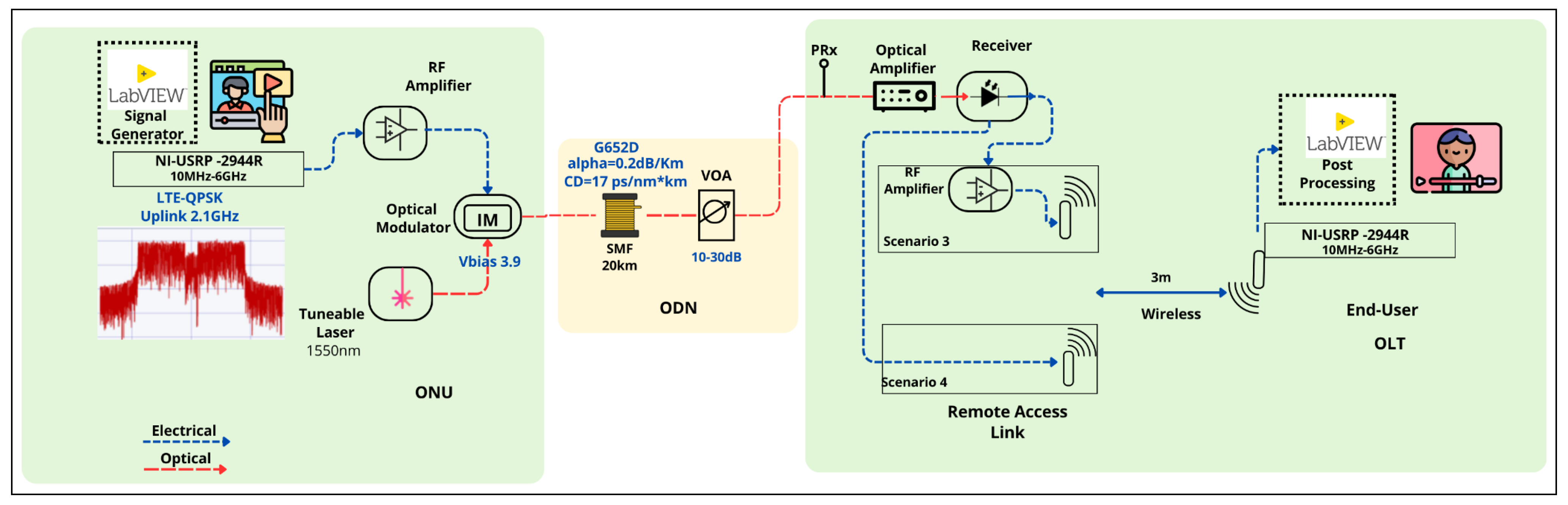
Figure 2, to analyze its impact on the optical reception power and BLER based on two additional scenarios (Scenario 3 and Scenario 4).
The following optical link configuration is used for testing. In this work, the term hybrid PON–RoF link refers specifically to a two-stage configuration: (i) fiber transmission of radio over fiber (RoF) signals over 20 km of single-mode fiber and (ii) subsequent wireless transmission of the recovered RF signals via an antenna. It does not imply the parallel transmission of GPON signals and RoF signals in the same fiber but rather the integration of a PON optical transport segment with an RoF-based wireless access extension.
2.1. Transmitter
The LTE signal was generated using the National Instruments LTE Application Framework, implemented in the LabVIEW Communications System Design Suite, which enables the real-time generation and transmission of LTE-compliant signals through USRP-2944R, (National Instruments, Austin, TX, USA) ensuring full compatibility with 3GPP standards.
The application-layer content consisted of a publicly available HD video clip used as the source stream for transmission tests, which was downloaded and re-encoded into H.264/AVC format (MP4 container) at pixels and 30 fps, with a constant bitrate of ∼3 Mbps. The clip included both static and dynamic scenes to stress the transmission chain. The video stream was encapsulated in RTP/UDP/IP and delivered to the eNodeB host running the NI LTE Application Framework in the LabVIEW Communications System Design Suite through a PCI Express Generation 1 bus connection via an MXI Express four-lane cable.
The SDR device (USRP-2944R) generates the LTE signal for real-time video transmission. Each radio frame has a duration of 10 ms and is divided into 10 subframes of 1 ms each, with 30,720 complex baseband samples per subframe, sampled at 30.72 MS/s in a 20 MHz LTE system. The transmission employs QPSK modulation, in line with the LTE standard, where the Physical Downlink Control Channel (PDCCH) uses QPSK to ensure robustness against channel degradations and to allow the reliable detection of control information by the user equipment (UE) (3GPP TS 36.211). In ideal conditions, QPSK constellations exhibit four well-defined points; however, in our experimental measurements, additional dispersed symbols appeared near the origin due to noise, interference, or synchronization impairments. These effects, along with the RF power of −5.89 dBm in transmission, as configured in the measurement and channel effects, increase the BLER during the decoding of control information.
The choice of QPSK ensures robustness under degraded transmission conditions and low received optical power levels (–18 dBm at the PIN photodiode). Although LTE supports higher-order modulations, such as 16-QAM and 64-QAM, these schemes are more susceptible to channel degradation and require higher SNR conditions in the range of 9 dB to 22 dB [
12,
13]. In this work, the PDSCH transmission was configured with MCS (2) (QPSK) and a code rate of ≈0.19, corresponding to spectral efficiency of approximately
. The transport block size (TBS) for the allocation of 7 PRBS (≈1.26 MHz) was determined according to the 3GPP TS36.213 specification, associated with the TBS index for MCS (2). The MCS configuration and PRBS allocation were defined at the host and transferred to the FPGA upon enabling downlink transmission.
The LTE signal was transmitted with a carrier frequency of 2.1 GHz and an RF power of −5.89 dBm in transmission, as configured in the LabVIEW Communications LTE Application Framework. Subsequently, the LTE signal was sent to a 29 dB gain RF amplifier. This signal was transmitted in the passband within 20 km of the SMF using an intensity modulator configured with an operating voltage of 3.9 V, a value within the linear working region, to avoid signal clipping [
14,
15].
A DFB laser generated the optical signal with an optical power of 6 dBm at a wavelength of 1550 nm. However, this power is attenuated to 0 dBm at the SMF input to avoid overloading the optical link. The half-wave voltage of the intensity modulator, which is 3.2 V, is used to determine the optimal RF signal transmission power. In addition, the gain of the RF amplifier located at the modulator input is 29 dB. This gain, expressed linearly, corresponds to a voltage amplification factor of 28.18. The combination of these parameters enables us to properly adjust the power of the RF signal before modulation, thereby optimizing the system performance.
Applying Equation (
1), the USRP-2944R output voltage (
) was calculated as
for the LTE signal, using the parameters described in the previous section. This value represents the voltage magnitude in volts (V). For reference, in radio-frequency terms, it can be expressed in microvolts and converted to a logarithmic scale using Equation (
2), resulting in 101.1 dB
where
is the output voltage of the USRP-2944R;
is the half-wave voltage of the optical modulator ();
is the gain of the RF amplifier, expressed in decibels.
Subsequently, the equivalent power level was obtained considering a
reference impedance, as shown in Equation (
3), which converts voltage levels in dB
V to power levels in dBm by subtracting
, a standard conversion constant for a
system:
The resulting power of confirms that the transmission level is correctly adjusted, ensuring that the optical modulator operates within its linear region and preserving the signal integrity in the PON link.
The constant 107 dB arises from the fundamental relationship between the voltage and power for a
system, where
Substituting yields . This conversion ensures consistency between voltage and power scales referenced to 1 mW, as commonly adopted in RF instrumentation and communication measurements.
2.2. Transmitter Configuration and Modulator Drive Equation
The voltage generated by the USRP-2944R at the modulator input was derived from the modulation index (
m) and the half-wave voltage (
) of the Mach–Zehnder modulator (MZM). Considering the RF amplifier gain (
) and the system attenuations (
), the USRP-2944R output voltage can be expressed as
This formulation ensures consistency between electrical and optical parameters, as it explicitly relates the generated voltage to the modulator characteristics and the system’s gain and loss configuration. Applying the experimental parameters (
,
,
,
), the resulting USRP-2944R output voltage is
, consistent with the value used for LTE signal excitation. This value ensures that the transmission power is correctly adjusted, keeping the modulator within its linear operating region and optimizing the link performance. The modulation index (
m) quantifies the ratio between the RF driving voltage and the half-wave voltage (
) of the Mach–Zehnder modulator. For a sinusoidal drive, the optical output power of the MZM can be expressed as
where
is the total voltage applied to the modulator, with
as the DC bias voltage and
as the amplitude of the RF signal. In the small-signal (linear) regime (
), the modulation index is defined as
For the experimental configuration used in this work, the electrical drive voltage at the modulator input results from the amplified USRP-2944R output, considering the RF amplifier gain (
) and the total system losses (
):
Substituting this relationship into Equation (
7), the modulation index becomes
Using the experimental parameters
,
,
, and
, the corresponding modulation index is
This value confirms that the system operates within the linear region of the Mach–Zehnder modulator, ensuring proportionality between the input voltage and the optical modulation depth and maintaining the signal integrity throughout the link. Applying Equation (
5) ensures that the generated voltage remains within the linear transmission boundary of the Mach–Zehnder modulator, as reported in [
16]. This condition, corresponding to
, keeps the RF drive well below the switching voltage
, avoiding harmonic distortion while maintaining proportional optical modulation.
2.3. Optical Channel
The signal was transmitted over a 20 km G652-D single-mode optical fiber, with an attenuation constant of 0.22 dB/km and chromatic dispersion of 17 ps/(nm·km). A variable optical attenuator (VOA) is incorporated into the optical link to simulate the maximum load conditions, allowing us to see the impact of the number of connected users. Furthermore, this analysis will identify the operational limit, ensuring the channel’s integrity before it reaches its critical point, where interference would occur in video transmission.
2.4. Receiver
The optical receiver consists of a semiconductor optical amplifier (EDFA) and an RF amplifier with a gain of 29 dB at the photodetector output. The LTE signal is recovered by a PIN photodiode with responsivity of 0.8 A/W and sent to the USRP-2944R for further processing. In the LabVIEW Communications LTE Application Framework v3.5 environment, signal and video recovery begins with synchronization to set the frequency to 2.1 GHz. The signal is then subjected to a fast Fourier transform (FFT) to extract the carriers and equalize the channel. The optical amplification stage employed in the receiver, a commercial erbium-doped fiber amplifier (EDFA; Thorlabs, Model EDFA100S, Newton, NJ, USA) was employed, operating in the C-band (1530–1565 nm). The amplifier was biased at 100% pump current using a 980 nm pump laser diode, providing a small-signal gain greater than 30 dB (for a input) and a saturated output power exceeding 20 dBm for a 3 dBm input signal. The input dynamic range extended from to , with a typical optical noise figure below 5 dB. The amplified spontaneous emission (ASE) output power could reach approximately 30 mW, and the input–output latency was below 100 ns. Considering the ASE contribution, the optical noise power can be estimated as , where is the spontaneous emission factor, is the photon energy, G is the linear gain (approximately 250 for 24 dB), and B is the optical bandwidth at the photodiode input (12.5 GHz). The resulting ASE-induced optical signal-to-noise ratio (SNR) degradation was below 1 dB, leading to an error vector magnitude (EVM) penalty under 2%. Therefore, the EDFA operated in a regime where ASE noise had a negligible impact on the measured system performance.
Data decoding is performed on the PDCCH (control) and PDSCH (user) channels, where the MAC layer reassembles the packets and delivers them in RTP/UDP format or as a transport stream. Finally, the video is decoded using codecs such as H.264/H.265, applying error correction and buffering mechanisms to improve the transmission quality. QPSK symbols are recovered, and the BLER associated with the video stream is calculated. To achieve this, the LTE signal is first received and processed by applying synchronization and equalization to minimize errors. The data extracted from the PDSCH channel are verified using a cyclic redundancy check (CRC). If a transport block contains errors after decoding, it is marked as failed; otherwise, it is acknowledged with an ACK signal. The BLER is obtained by dividing the number of erroneous blocks by the total number of transmitted blocks. Importantly, all BLER results reported in this work correspond to the pre-HARQ BLER, since the NI LabVIEW Communications LTE Application Framework v3.5 employed does not implement HARQ retransmissions for the PDSCH [
15].
The BLER is measured using the LabVIEW Communications LTE environment, which integrates advanced tools for real-time LTE signal generation, transmission, and analysis. This environment enables us to conduct an accurate evaluation of system performance under various power conditions and link configurations. To ensure the statistical validity of the results, measurements are performed by carefully tuning the transmission and reception parameters, ensuring optical channel stability using a VOA. This attenuator allows the network to simulate various system loads and analyze their impacts on the transmission quality.
After the PON link’s configuration and activation, a wireless link is incorporated to analyze and compare the performance of two network configurations: (a) a conventional PON optical link and (b) a hybrid RoF–PON network that integrates LTE wireless transmission within the passive optical infrastructure.
Figure 2 shows a hybrid RoF over a PON designed to support the transmission of LTE radio signals within a passive optical infrastructure. This integration enhances the system capacity by increasing the energy spectral efficiency without modifying existing network components, ensuring compliance with GPON standards. The design leverages the conventional PON network infrastructure by adapting the wireless transmission. As shown in
Figure 2, on the OLT side in the remote unit relays (RURs) photodiodes convert the optical signal into radio frequency for subsequent wireless transmission. The wireless interface employs an omnidirectional triband antenna. For the link budget at the operating RF of
, we use the manufacturer-specified gain of
at
. The E-plane pattern at
is near-omnidirectional (∼
), while the H-plane exhibits the typical donut-shaped elevation response (vertical polarization). Note that the previously mentioned
–
range corresponds to the measurement sweep used to rule out spurious responses [
17]. To analyze the impact of RF amplification on system performance, two approaches are considered.
Use of an RF amplifier: This approach corresponds to Scenario 1 and Scenario 3. As shown in
Figure 1 and
Figure 2, the amplifier is included before the transmission, either wired (
Figure 1) or wireless (
Figure 2).
Direct connection: The signal is transmitted directly to the end-user side (USRP-2944R), either wired (
Figure 1) or wireless (
Figure 2), allowing the effects of signal attenuation and link performance to be analyzed.
3. Results
Two experimental tests are conducted to analyze the video transmission performance. The first test examines the behavior of the conventional PON link, while the second explores the hybrid RoF–PON network. All BLER curves are referenced to a single optical measurement plane corresponding to the received optical power at the photodiode input ( in dBm). This reference ensures a consistent comparison across all test conditions and isolates the optical performance from any subsequent electrical amplification or processing.
The USRP-2944R hardware does not include an internal analog AGC circuit; however, the LTE Application Framework v3.5 used in this work implements a digital automatic gain control (AGC) loop in the receiver processing chain. This software-based AGC continuously monitors the received signal power and adjusts the RX front-end gains to maintain the ADC within its optimal dynamic range, thereby preventing overdrive. Therefore, the receiver operated with AGC enabled throughout all tests, ensuring stable input levels during the measurements.
Therefore, variations in the RF amplification primarily affect the ADC headroom and linearity rather than the optical reference power used for the BLER curves. In this context, although the RF amplifier exhibits a nominal gain of 29 dB, the effective gain observed in the measurements is approximately 20 dB due to compression effects and the limited dynamic range of the USRP-2944R receiver. The optical power was measured using an OPM Fitel/Falfl Noyes optical power meter connected through a 1 × 2 optical tap coupler positioned immediately before the photodiode, as shown in
Figure 2. Each BLER data point represents the mean ± standard deviation (
), obtained from ten independent transmission measurements under identical optical power conditions. This statistical treatment provides a quantitative depiction of the variability and ensures the repeatability of the experimental results.
This behavior can be further explained by the action of the digital automatic gain control (AGC) implemented in the LTE Application Framework. This software-based AGC continuously monitors the received signal power and dynamically adjusts the RX front-end gain to keep the input level within the optimal range of the USRP-2944R ADC. Without the external RF amplifier, the AGC maintains sufficient headroom (typically 6–10 dB below full-scale), preventing overflow and ensuring that BER degradation is dominated by noise. In contrast, when the external amplifier is used, the additional 29 dB of nominal gain drives the ADC input closer to saturation, exceeding the AGC’s attenuation capabilities. This condition triggers overflow events and pre-clipping behavior, which directly increase the BLER despite the similar received optical powers. Therefore, the sensitivity improvement observed without the external amplifier is attributed to the proper operation of the digital AGC and the avoidance of ADC saturation.
3.1. Test 1: Analysis of the Conventional PON Link
In this analysis, the ODN attenuation was measured to be 16 dB, which corresponds to a Class C distribution network, as per ITU-T G.982. It is essential to note that G.982 defines the optical budget of the ODN and not the receiver sensitivity. The minimum sensitivity values for GPON/XG(S)-PON receivers are instead specified in ITU-T G.984.2 and G.9807.1. For reference, the typical downstream sensitivity ranges are –27 dBm for Class B+, –30 dBm for Class C+, and –31 dBm for Class C++. In our measurements, the operating point was adjusted to −5.89 dBm at the transmitter to ensure the linear operation of the RF amplifier stage. The BLER curves presented in
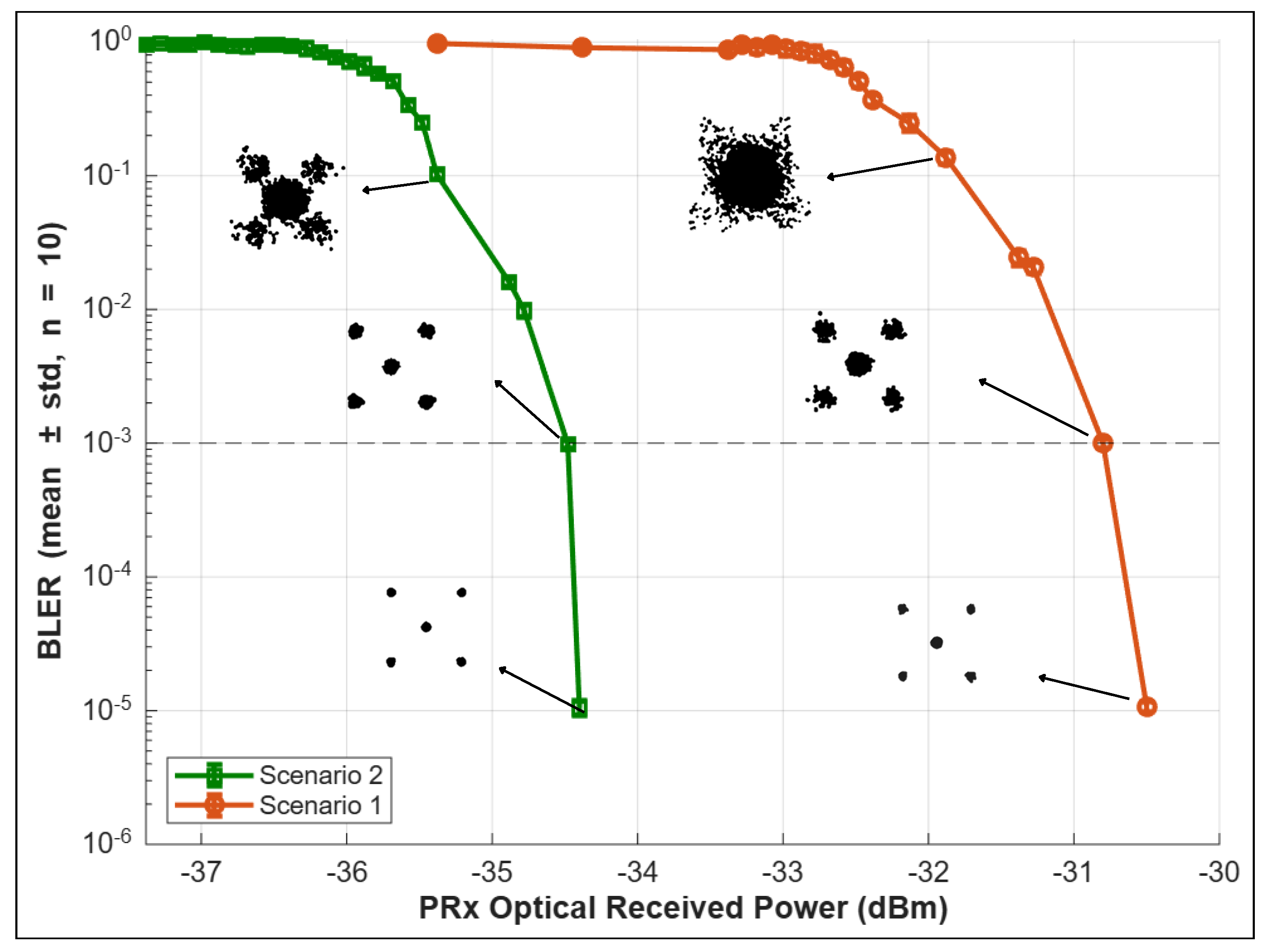
Figure 3 show receiver operation down to –34.48 dBm. This value is below the standardized GPON sensitivity windows. It should therefore be interpreted as an experimental result of the laboratory testbed, enabled by the internal gain of the USRP-2944R receiver, rather than as compliance with GPON specifications.
Figure 3 presents the BLER characteristic as a function of the received power. In Scenario 1, which includes an RF amplification stage, a minimum receiving optical power of −30.8 dBm (represented by the orange curve) is required to achieve a BLER of
. On the other hand, in Scenario 2, where the RF amplifier is eliminated, it is observed that the power required to achieve the same BER level is −34.48 dBm, as indicated by the green curve. The dotted line in
Figure 3 marks the
threshold, using it as a reference for comparing both scenarios. Furthermore, the constellation diagram shows progressive degradation along the curves as the link load increases, directly impacting the transmission quality.This behavior highlights how RF amplification helps maintain stability under demanding conditions.
These results indicate that, in conventional PON links, the internal gain of the SDR-based receiver is sufficient to sustain LTE video transmission within the BLER threshold of
. From a practical perspective, this means that external RF amplification is unnecessary for short- and medium-reach deployments, thereby reducing the equipment costs, energy consumption, and the risk of photodetector saturation. Such findings are relevant for real-world operators aiming to minimize CAPEX and OPEX while maintaining service quality. Previous studies, such as those by [
10] have highlighted through simulations the cost-effectiveness of RoF–PON integration; however, experimental confirmation under video traffic conditions is lacking. Likewise, ref. [
3] examined latency performance in PONs for 4K video but did not assess BLER sensitivity or the role of amplification. Our measurements complement these works by experimentally validating that amplifier-free operation can be a robust and energy-efficient option in conventional PON scenarios.
In
Figure 3, a 4.04 dB improvement is observed in the absence of the amplifier compared to the use of the RF post-amplification stage, where at least −30.8 dBm was required at the receiver to reach the same BLER threshold of
, as evidenced by the left shift in the receiver sensitivity. This improvement results from the USRP-2944R’s internal gain stage, which boosts signal strength before processing. However, when the amplification is excessive, the signal can saturate the receiver, negatively affecting the system’s performance.
In the hybrid PON–RoF configuration, the observed 16 dB enhancement in receiver sensitivity provides direct insights for energy-aware network design. Higher sensitivity enables operation at lower transmit powers, which not only extends the service coverage but also reduces the overall energy footprint of distributed units—an aspect that is particularly relevant for dense urban deployments and green networking initiatives. Nevertheless, the experimental results also reveal that RF amplification may induce nonlinear distortion at elevated input levels, emphasizing the need for precise power management in hybrid optical–wireless infrastructures.
In contrast to [
3], who primarily analyzed latency behavior in PON systems, the present work focuses on receiver sensitivity and BLER thresholds as key design parameters that govern the reliability of RoF integration. Moreover, while [
10] proposed cost-efficient hybrid architectures through simulation studies, our contribution lies in providing real-world experimental validation of amplifier trade-offs, bridging theoretical and practical design in hybrid PON–RoF environments.
3.2. Test 2: Analysis of the RoF–PON Hybrid Link
As an alternative to the conventional PON link, the hybrid RoF–PON network is evaluated. The focus is on integrating the wireless link into the passive optical infrastructure to assess the BLER and transmission power between the optical and wireless transmission and to determine the link stability at a distance of 3 m between the remote access link and the end user.
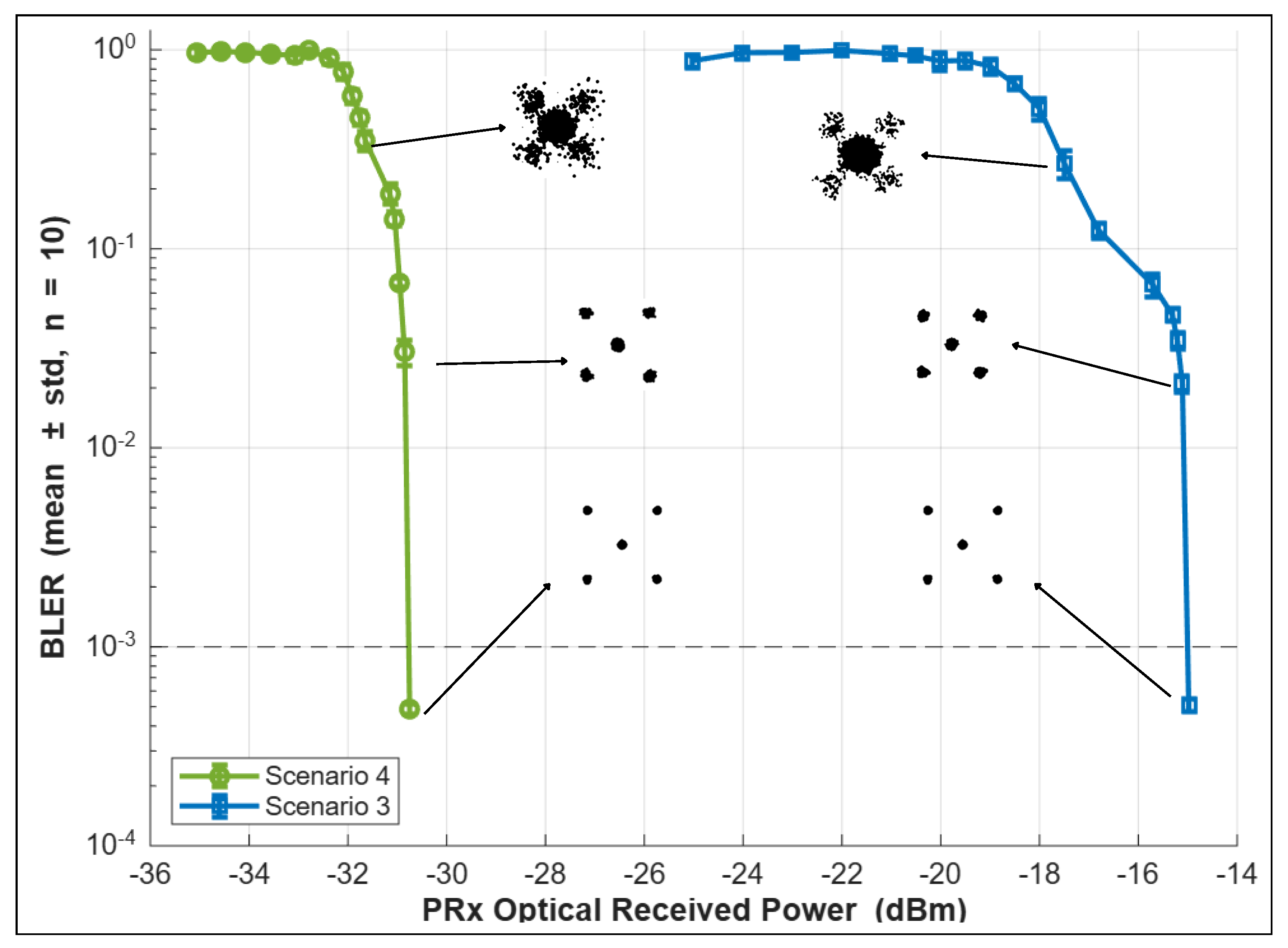
Figure 4 presents the characteristic curves of the BLER versus the received power in the hybrid RoF–PON network. For Scenario 4, where an RF amplifier is incorporated before the antenna, a minimum receiving power of −31.5 dBm is required to achieve a BLER of
, represented by the green curve. For Scenario 3, represented by the blue line, the RF amplifier is eliminated, and the antenna is connected directly to the PIN photodiode output. In this case, the receiving power required to achieve the same BLER is reduced to −15.5 dBm, which implies a 16 dB penalty in sensitivity and, from another perspective, an improvement in energy efficiency, since less optical power is needed to maintain transmission quality. These results highlight the system’s sensitivity and the importance of amplification for transmission quality [
18]. The absence of the RF amplification stage significantly impacts network performance, as reflected in the shifted curves in
Figure 4.
The receiver sensitivity improved by 4.04 dB in the PON link and by 16 dB in the hybrid RoF link, a result that is relevant for current network deployments. Increased sensitivity enables the network to operate at lower transmit power levels, thereby reducing power consumption and expanding coverage without the need to increase the transmitter power. This condition of operation also translates into greater spectral and energy efficiency, extending the lifetime of optical and electronic components. Moreover, reducing the minimum required to receive power improves link robustness under adverse conditions, such as fluctuations in optical channel attenuation or interference in the radio-frequency section. In dense urban environments or long-range deployments, this enhanced sensitivity enables greater flexibility in network design, optimizes resource allocation, and ensures a better user experience in high-demand video applications.
In the analyzed scenarios, the measured receiving power values are consistent with the GPON sensitivity and overload ranges (typically −28 to −30 dBm) defined for Class B+/C+ optical receivers. However, notably the present setup operates in continuous mode (no burst-mode OLT/ONT optics, DBA, or ranging); therefore, these results should be interpreted as reflecting feasibility under controlled point-to-point conditions and not full GPON compliance [
18], ensuring the link’s viability for high-speed, low-BER applications. However, in commercial networks, modern OLTs include error correction algorithms and dynamic power adjustment mechanisms to mitigate the effects of attenuation, thus ensuring stable transmission. However, in scenarios where RF amplification is excessive, the signal can saturate the ONT receiver, degrading its performance and limiting system efficiency. This highlights the importance of adequately calibrating the amplification levels in hybrid RoF–PON networks, ensuring a balance between optical power, signal quality, and link stability.
These findings complement previous studies [
10] proposed the simulation-based integration of ARoF and WDM–PON as a cost-effective solution for 5G services; however, their results did not include experimental validation under video transmission conditions. Similarly, ref. [
3] analyzed latency in PONs for 4K video, without considering the additional impairments introduced by RoF integration or the impact of amplifier placement. Our experimental measurements extend this body of work by providing real-world BLER characterization and by highlighting the amplifier trade-offs that directly affect network design. Thus, the results presented here bridge the gap between theoretical models and practical design guidelines for next-generation optical–wireless access networks.
3.3. Analysis of Scenarios with and Without RF Amplification in RoF–PON
The analysis of scenarios with and without RF amplification in the RoF–PON system was conducted by distributing radio signals over optical fibers to remote units in a hybrid RoF–PON network. Two implementation options were considered for the wireless link: (1) with RF gain applied at the photodiode output, and (2) without it. Both cases were analyzed in terms of cost, coverage, and power consumption, highlighting their respective advantages and disadvantages. Data collection was performed at a fixed distance of 3 m, which represented the physical span of the laboratory wireless setup. To ensure a clear interpretation of the results, the analysis is divided into two complementary parts: (i) optical receiver sensitivity shifts—these were quantified in terms of [dBm], defined at the photodiode input and measured at ; this parameter represents the required optical sensitivity to achieve the target decoding performance; (ii) wireless-hop coverage implications—these were separately derived from the corresponding received RF power using the Friis free-space model, which translates the measured sensitivity levels into equivalent coverage distances under line-of-sight conditions.
Using these measured received powers (−42.59 dBm with amplification and −71.59 dBm without) corresponding to the required sensitivity at
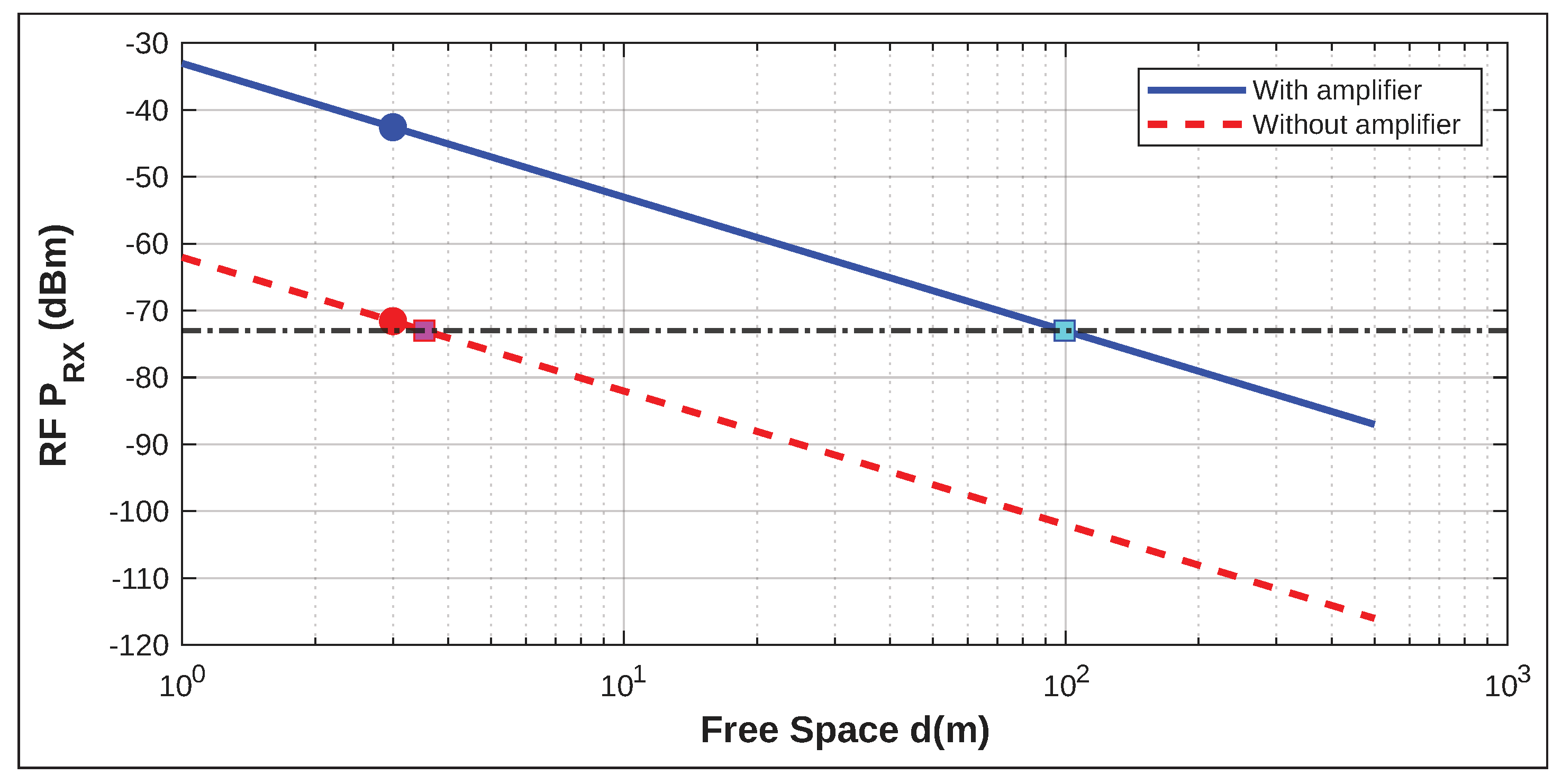
as anchor points, the Friis free-space transmission equation at 2.1 GHz was applied to extrapolate the effective coverage. The results demonstrate that the maximum achievable coverage extends up to approximately 100 m with RF amplification and is limited to about 4 m without amplification, assuming an effective receiver margin of +10 dB. These outcomes are summarized in
Table 1, while
Figure 5 shows the received power as a function of distance. The blue solid curve represents the amplified scenario, remaining above the LTE sensitivity threshold up to 100 m. Conversely, the red dashed curve represents the non-amplified case, which falls below the threshold, limiting the coverage to 4 m. The black dashed horizontal line shows the LTE sensitivity threshold (−63 dBm). The circular markers at 3 m indicate the experimental anchor points used for extrapolation. In contrast, the square markers denote the theoretical maximum distances (dmax) at which each curve intersects with the threshold, thereby validating the extrapolated coverage limits.
Therefore, all coverage estimations presented in this work are referenced to the required sensitivity at , clearly distinguishing optical receiver performance from wireless-hop propagation effects.
3.4. Cost (Hardware and Maintenance for the Hybrid RoF–PON Network)
Scenario 3: Incorporating an RF amplifier entails additional hardware and possibly installation (power supply, conditioning system) and maintenance costs. However, this extra cost in picocell applications (up to 100 m) tends to be relatively low. One study indicates that the added cost of an RF amplifier is marginal because picocells require low power and, therefore, low-gain amplifiers [
19]. For example, while a high-power amplifier can cost up to USD 3000, a small amplifier suitable for a picocell incurs a significantly lower cost [
19]. In practical terms, the cost of incorporating an RF amplifier represents approximately 5% of the total RF system cost, which is estimated at around USD 60,000. Thus, the additional investment for the amplifier is modest relative to the overall infrastructure. Nonetheless, operational costs should not be overlooked, as active components like amplifiers require on-site power (including electrical cabling or backup power), introducing added complexity and long-term maintenance considerations.
Scenario 4: Eliminating amplification means fewer hardware components at the remote end and lower initial costs. A pure PON architecture avoids active elements between the central office and remote ends, reducing the equipment costs and maintenance complexity. A 100% passive design utilizes only components such as photodetectors and optical splitters, making network expansion more cost-effective and enabling the addition of new remote ends. Moreover, there is no need to provide power at the remote end, which saves costs regarding power cable runs and batteries.
3.5. Linearity and Noise Figure Budget
A cascaded linearity and noise figure budget is constructed considering three main stages of the receiver chain: the photodiode/TIA, the optional SHF S126A broadband amplifier, and the USRP-2944R front-end. Manufacturer datasheets and previously logged measurements are used to extract the gain, noise figure (NF), output 1 dB compression point (
), and third-order intercept points (IIP3/OIP3). The cascaded noise figure is calculated using Friis’ equation:
where
and
denote the noise factor and linear gain of the
i-th stage, respectively. The equivalent noise figure is obtained as
.
The overall IIP3 was estimated as
and the output intercept point is given by
.
Table 2 summarizes the main results for the two configurations analyzed.
Without the external amplifier, the chain exhibits approximately of total gain and an effective noise figure (NF) of , with an input-referred of about . Under these conditions, the USRP-2944R ADC operates with sufficient headroom, allowing the AGC to keep the signal within its linear region. In contrast, when the SHFS126A amplifier is inserted (gain , NF –, ), the cascaded gain increases to approximately , while the overall input-referred compression point drops to around . Consequently, the ADC operates near its full-scale range, exceeding the AGC’s attenuation capabilities and resulting in overflow events and pre-clipping distortion.
It should be noted that the nominal gain of the RF amplifier is 29 dB. However, the effective gain observed in the experimental measurements is approximately 20 dB. This difference arises from compression effects and the limited dynamic range of the USRP-2944R ADC when external amplification is applied. Consequently, the signal level increase does not exactly match the nominal amplifier gain, ensuring consistency between the hardware behavior and the measured results.
Therefore, although the cascaded NF improves slightly with external amplification, the overall linearity of the chain is degraded, which explains the observed increase in the BLER. Removing the amplifier restores normal AGC operation, prevents ADC saturation, and provides a causal explanation for the observed improvement in sensitivity.
3.6. Coverage
In Scenario 3, the presence of an RF amplifier improves the wireless-hop coverage, while the optical receiver sensitivity remains defined at
. The coverage analysis is therefore based on the RF sensitivity level
required to maintain the same BLER threshold. By amplifying the RF signal, the power to users is increased. This enables coverage of a larger area or the possibility of reaching more distant users with sufficient signal quality. In [
19], the authors indicate that an active remote unit (with an amplifier) could reach up to 100 m, while a passive mode could reach up to 40 m. Likewise, cell coverage increases because the amplifier can compensate for optical losses. The separation between optical receiver sensitivity (measured at the photodiode input) and wireless-hop coverage (estimated from the RF link budget) ensures consistency across performance metrics and avoids conflating the optical and radio domains.
In Scenario 4, the lack of RF amplification significantly reduces the system’s effective range. USRP-2944R are designed to operate in test environments and are not optimized for wide coverage without the use of external amplifiers. The transmitted LTE signal only covers a small cell without an amplifier, making it impossible to compete with commercial solutions. On the uplink, this limitation becomes even more critical. The signal transmitted by user devices must reach the photodetector and the USRP-2944R with a maximum power of −15 dBm, corresponding to the USRP’s nominal sensitivity. In an unamplified environment, this condition severely restricts the maximum connection distance, as any additional attenuation, whether optical or during wireless propagation, can reduce the signal below the detection threshold.
3.7. Energy Consumption
Using amplifiers increases each remote unit’s consumption by 7.2 W, as observed in Scenario 3. These RF amplifiers require electrical power, increasing the node’s power requirements. In general, low-power amplifiers (picocell repeaters) consume around 5 to 15 W, comparable to a WiFi router. Higher-power amplifiers consume between 20 and 50 W, depending on their gain and target coverage. Although the range of 5–15 W is not very high, with many remote units, it can impact the total network consumption. Furthermore, a conventional PON is appreciated for not requiring power in the optical distribution; when introducing active elements, part of the energy efficiency of the passive system is lost. Nonetheless, employing low-power (5.4 W) amplifiers keeps the additional energy demand per node negligible, preserving most of the PON’s inherent energy efficiency.
However, in Scenario 4, the absence of an amplifier contributes to a reduction in the remote unit’s power consumption, which aligns with the PON model [
20]. The net benefit corresponds to greater energy efficiency per node and a network with lower power consumption and heat dissipation. This results in a reduction in the carbon footprint and a decrease in the operating costs associated with the power supply. The fact that there are fewer active components reduces the likelihood of power-related failures.
This study evaluates parameters that are fundamentally linked to the quality and reliability of LTE video transmission over hybrid PON–RoF links. Specifically, we analyze the block error rate (BLER) and optical receiver sensitivity, as these metrics dictate whether the system satisfies the stringent performance thresholds for video services (e.g., for LTE). Enhancements in these parameters directly contribute to greater robustness against noise, improved energy efficiency, and reduced dependence on external RF amplification, which are crucial for achieving scalable and cost-effective optical–wireless convergence.
Looking ahead, advancements in terahertz (THz) transistor technologies will be decisive for the evolution of RoF systems. Devices operating at cutoff frequencies () and maximum oscillation frequencies () beyond several hundred GHz will enable the realization of ultra-broadband, low-noise, and highly linear RF front-ends. Such progress is essential for supporting 6G and beyond wireless systems that require carrier frequencies exceeding 100 GHz while maintaining energy efficiency. Although the present work focuses on LTE bands, the experimental design principles and methodological framework developed here are conceptually extendable to next-generation hybrid PON–RoF systems, where THz devices will play a pivotal role in overcoming the current bandwidth and linearity limitations.




 and
and