Andrographolide-Loaded Gold Carbon Quantum Dots and Their Doped Derivatives for Enhanced Hydrophilicity in a Drug Delivery System

 ,
,  , , and
Abstract
1. Introduction
2. Materials and Methods
2.1. Chemicals
2.2. Synthesis of CBQDs and D-CBQDs
2.3. Synthesis of Au-CBQDs and Au-D-CBQDs Nanocomposites
2.4. Coupling of ADG with Au-CBQDs and Au-D-CBQDs Nanocomposites
2.5. Partition Coefficient Studies
2.6. General Solubility Equation (GSE) Calculations
2.7. Cytotoxicity Studies in PC3 Cancer Cells
2.8. Statistical Method
2.9. Model Fitting
2.10. Normalization and IC50 Determination
2.11. Confocal Microscopy in PC3 Cancer Cells
2.12. Morphological Studies in Human Red Blood Cells
2.13. Red Blood Cell Hemolysis Assay
2.14. Instrumentation
3. Results
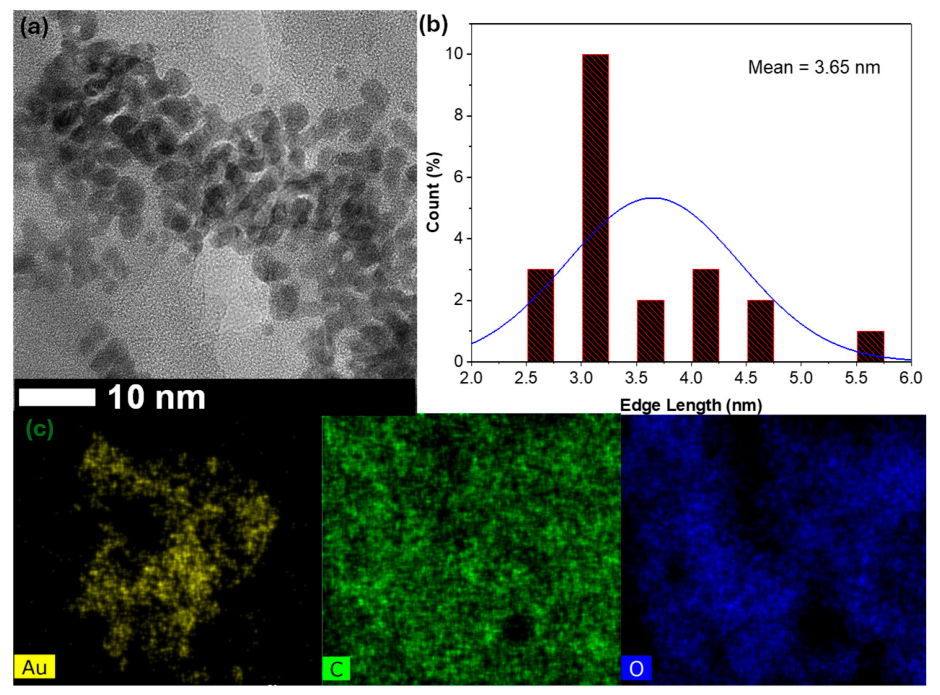
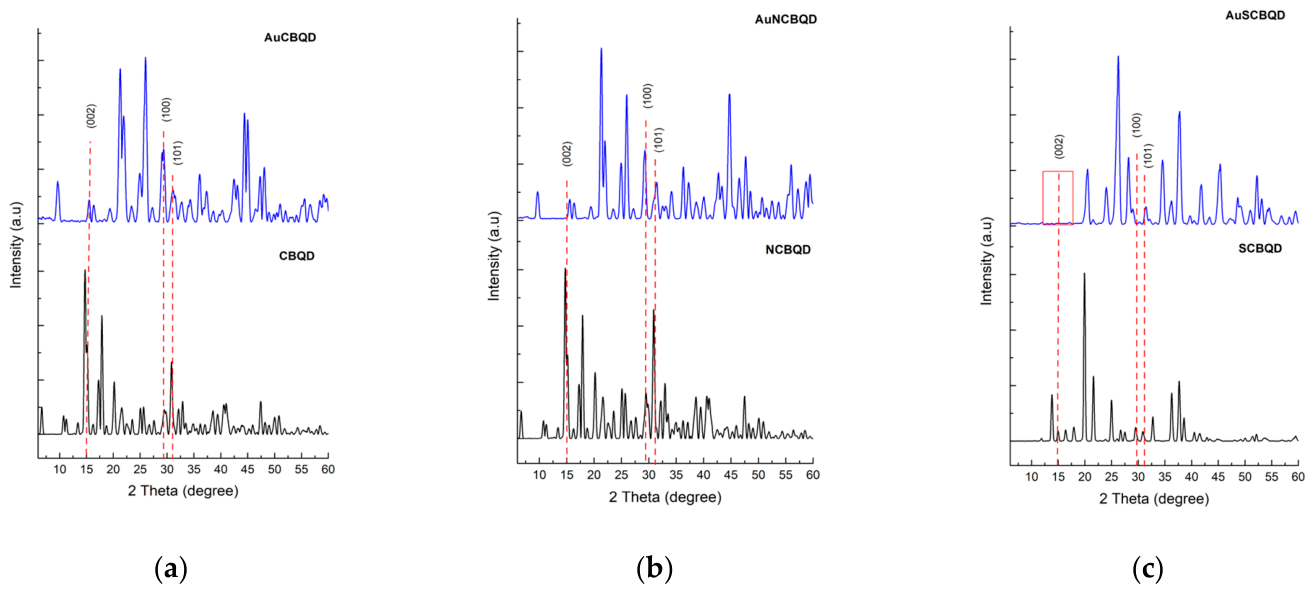
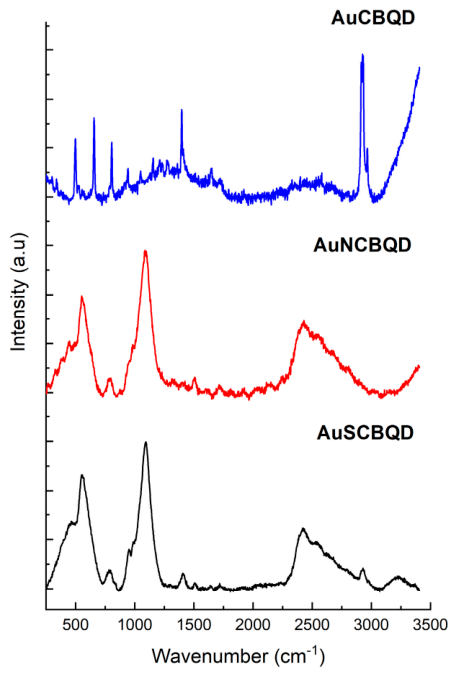
3.1. Synthesis and Characterization of Gold–Carbon Quantum Dots and Doped Derivatives
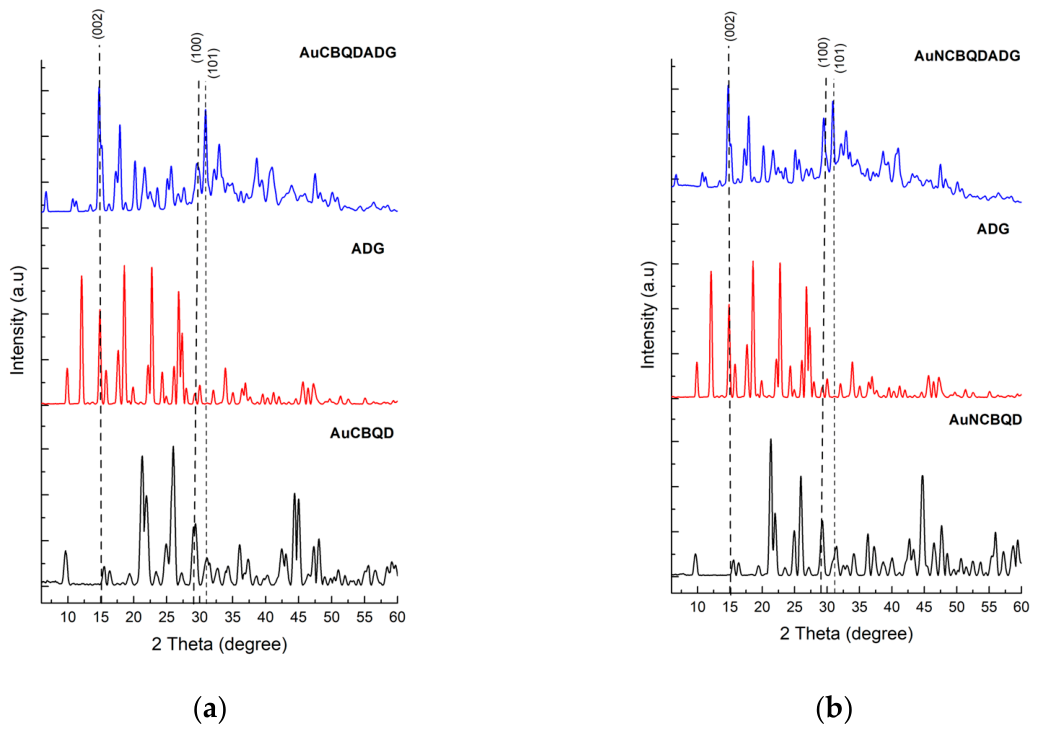
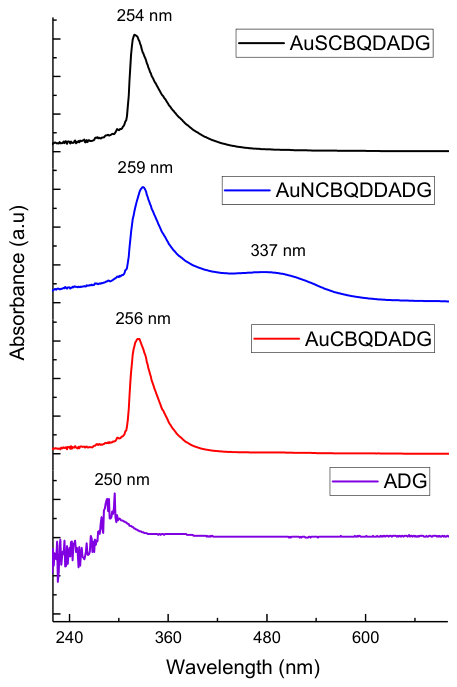
3.2. Synthesis and Characterization of Andrographolide-Coated Gold–Carbon Quantum Dots and Their Doped Derivatives
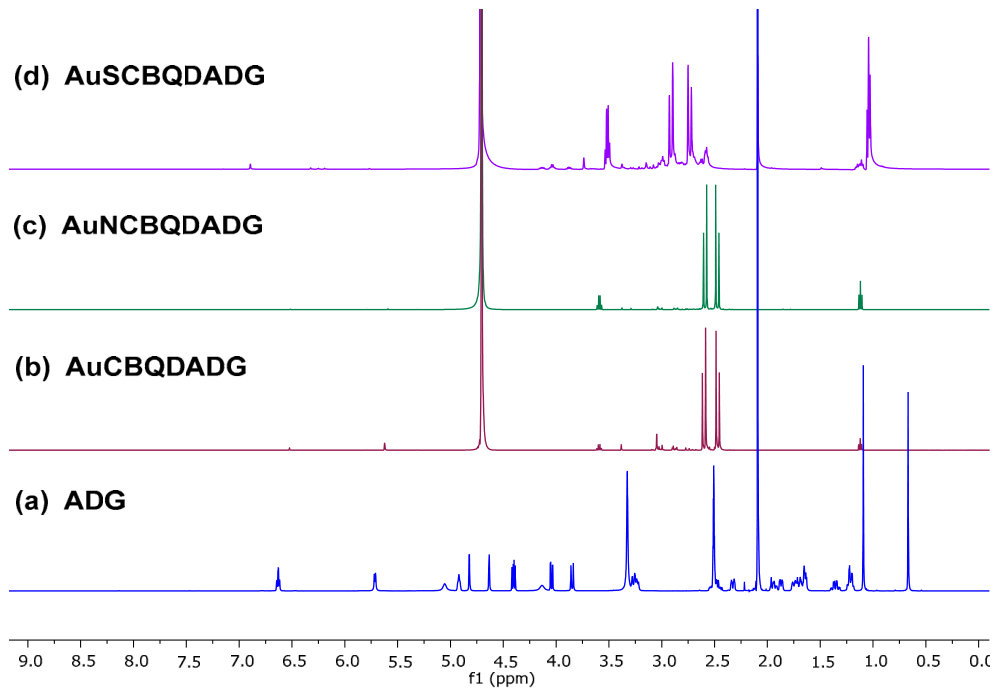
3.3. NMR Studies
3.4. Partition Coefficients Results and General Solubility Equation (GSE) Studies
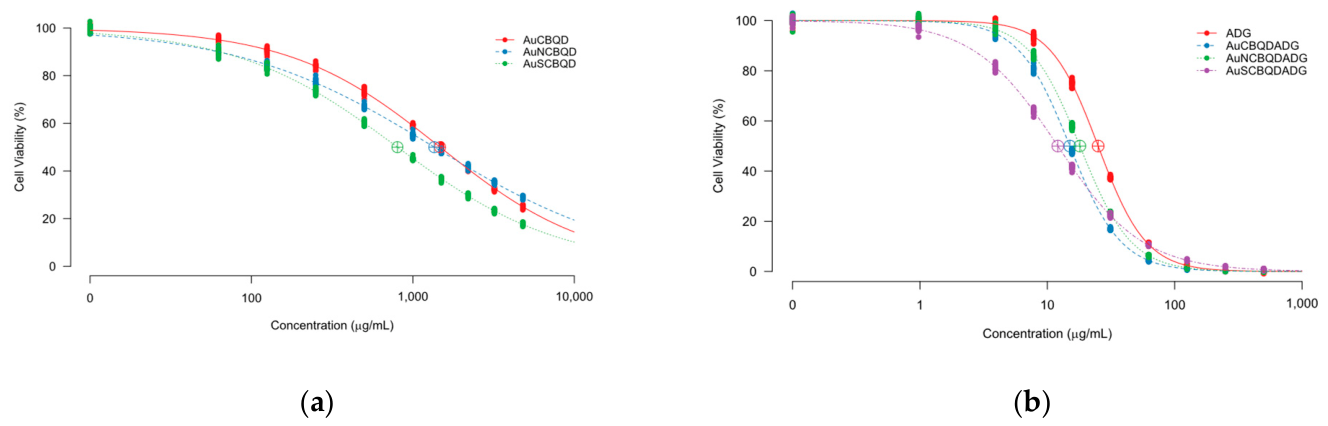
3.5. Cytotoxicity Assays
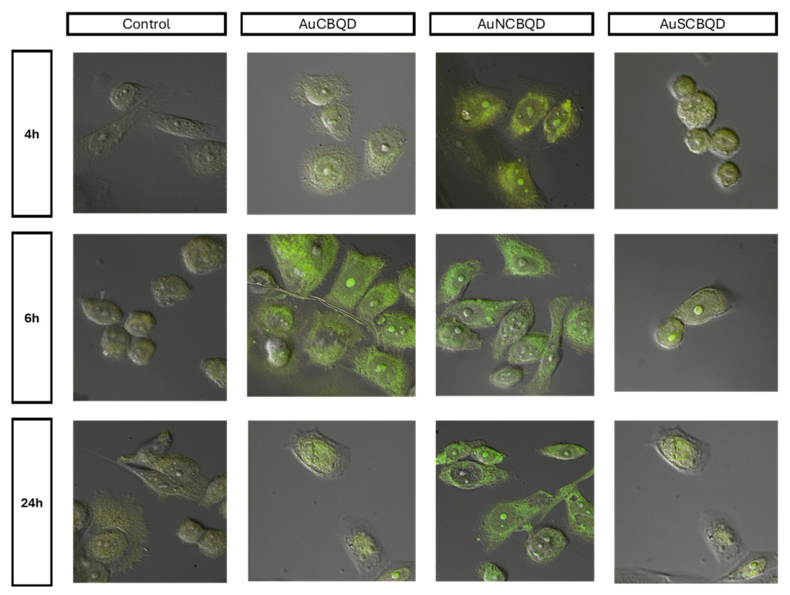
3.6. Confocal Microscopy
3.7. Morphological Studies in Human Red Blood Cells (RBCs)
4. Discussion
5. Conclusions
Supplementary Materials
Author Contributions
Funding
Institutional Review Board Statement
Informed Consent Statement
Data Availability Statement
Acknowledgments
Conflicts of Interest
Abbreviations
| CBQDs | Carbon-based quantum dots |
| D-CBQDs | Doped-CBQDs |
| AuNPs | Gold nanoparticles |
| LSPR | Localized surface plasmon resonance |
| ADG | Andrographolide |
| AuCBQDs | Gold–carbon quantum dots |
| AuD-CBQDs | Gold-doped carbon quantum dots |
| NMR | Nuclear magnetic resonance |
| RBCs | Human red blood cells |
| Log P | Partition coefficient |
| GSE | General solubility equation |
| Sw | Molar aqueous solubility |
| AuCBQD | Gold nanoparticle covered with carbon-based quantum dots |
| AuNCBQD | Gold nanoparticle covered with nitrogen-doped carbon-based quantum dots |
| AuSCBQD | Gold nanoparticle covered with sulfur-doped carbon-based quantum dots |
| MTS assay | 3-(4,5-dimethylthiazol-2-yl)-5-(3-carboxymethoxyphenyl)-2-(4-sulfophenyl)-2H-tetrazolium assay |
| IC50 | Half-maximal inhibitory concentration |
References
- Vargason, A.M.; Anselmo, A.C.; Mitragotri, S. The evolution of commercial drug delivery technologies. Nat. Biomed. Eng. 2021, 5, 951–967. [Google Scholar] [CrossRef]
- Ezike, T.C.; Okpala, U.S.; Onoja, U.L.; Nwike, C.P.; Ezeako, E.C.; Okpara, O.J.; Okoroafor, C.C.; Eze, S.C.; Kalu, O.L.; Odoh, E.C.; et al. Advances in drug delivery systems, challenges and future directions. Heliyon 2023, 9, e17488. [Google Scholar] [CrossRef]
- Gao, J.; Karp, J.M.; Langer, R.; Joshi, N. The Future of Drug Delivery. Chem. Mater. 2023, 35, 359–363. [Google Scholar] [CrossRef]
- Li, X.; Peng, X.; Zoulikha, M.; Boafo, G.F.; Magar, K.T.; Ju, Y.; He, W. Multifunctional nanoparticle-mediated combining therapy for human diseases. Sig. Transduct. Target Ther. 2024, 9, 1. [Google Scholar] [CrossRef]
- Bai, R.G.; Muthoosamy, K.; Manickam, S. Chapter 12—Nanomedicine in Theranostics. In Nanotechnology Applications for Tissue Engineering; Thomas, S., Grohens, Y., Ninan, N., Eds.; Elsevier Inc.: Amsterdam, The Netherlands, 2015; pp. 195–213. [Google Scholar]
- Guan, X.; Li, Z.; Geng, X.; Lei, Z.; Karakoti, A.; Wu, T.; Kumar, P.; Yi, J.; Vinu, A. Emerging Trends of Carbon-Based Quantum Dots: Nanoarchitectonics and Applications. Small 2023, 19, 2207181. [Google Scholar] [CrossRef] [PubMed]
- Pechnikova, N.A.; Domvri, K.; Porpodis, K.; Istomina, M.S.; Iaremenko, A.V.; Yaremenko, A.V. Carbon Quantum Dots in Biomedical Applications: Advances, Challenges, and Future Prospects. Aggregate 2025, 6, e707. [Google Scholar] [CrossRef]
- Kong, J.; Wei, Y.; Zhou, F.; Shi, L.; Zhao, S.; Wan, M.; Zhang, X. Carbon Quantum Dots: Properties, Preparation, and Applications. Molecules 2024, 29, 2002. [Google Scholar] [CrossRef] [PubMed]
- Sen, B.; Sarma, H. Carbon quantum dots as multifunctional nanomaterials for sustainable optoelectronic biosensing and green photonics. Commun. Mater. 2026, 7, 47. [Google Scholar] [CrossRef]
- Nozaki, T.; Kakuda, T.; Pottathara, Y.B.; Kawasaki, H. A nanocomposite of N-doped carbon dots with gold nanoparticles for visible light active photosensitisers. Photochem. Photobiol. Sci. 2019, 18, 1235–1241. [Google Scholar] [CrossRef]
- Sethulekshmi, A.S.; Aparna, A.; Parvathi, P.; Pathak, R.; Punetha, V.D.; Selvaraj, M.; Saritha, A. Advances in doped carbon quantum dots: Synthesis, mechanisms, and applications in sensing technologies. Chem. Eng. J. 2025, 514, 163262. [Google Scholar] [CrossRef]
- Nafiujjaman, M.; Joon, H.; Kwak, K.S.; Lee, Y. Synthesis of Nitrogen- and Chlorine-Doped Graphene Quantum Dots for Cancer Cell Imaging. J. Nanosci. Nanotechnol. 2018, 18, 3793–3799. [Google Scholar] [CrossRef] [PubMed]
- Fu, Q.; Li, N.; Lu, K.; Dong, Z.; Yang, Y. The emerging development of nitrogen and sulfur co-doped carbon dots: Synthesis methods, influencing factors and applications. Mater. Today Chem. 2025, 37, 102032. [Google Scholar] [CrossRef]
- Ruan, Z.; Xu, Z.; Liu, T.; Chen, L.; Liu, X.; Chen, K.; Zhao, C. Multifunctional nitrogen-sulfur codoped carbon quantum dots: Determining reduced glutathione, broad-spectrum antibacterial activity, and cell imaging. Heliyon 2024, 10, e38177. [Google Scholar] [CrossRef]
- Somaraj, G.; Mathew, S.; Abraham, T.; Ambady, K.G.; Mohan, C.; Mathew, B. Nitrogen and Sulfur Co-Doped Carbon Quantum Dots for Sensing Applications: A Review. ChemistrySelect 2022, 7, e202200473. [Google Scholar] [CrossRef]
- Gao, D.; Zhao, P.; Lyu, B.; Li, Y.; Hou, Y.; Ma, J. Carbon Quantum Dots Decorated on ZnO Nanoparticles: An Efficient Visible-Light Responsive Antibacterial Agents. Appl. Organomet. Chem. 2020, 34, e5665. [Google Scholar] [CrossRef]
- Zhang, J.; Mou, L.; Jiang, X. Surface chemistry of gold nanoparticles for health-related applications. Chem. Sci. 2020, 11, 923–936. [Google Scholar] [CrossRef]
- Mehdi, J.; Ansari, V.A.; Singh, A. A Review of Gold Nanoparticles: Synthesis Methods and Biomedical Applications. Biomed. Mater. Devices. 2025, 4, 3903–3919. [Google Scholar] [CrossRef]
- Kesharwani, P.; Ma, R.; Sang, L.; Fatima, M.; Sheikh, A.; Abourehab, M.A.S.; Gupta, N.; Chen, Z.S.; Zhou, Y. Gold nanoparticles and gold nanorods in the landscape of cancer therapy. Mol. Cancer. 2023, 22, 98. [Google Scholar] [CrossRef]
- Amaral, M.N.; Kumar, P.; Faísca, P.; Ferreira, H.A.; Coelho, J.M.P.; Gaspar, M.M.; Reis, C.P. Gold nanoparticle-mediated photothermal therapy: Expanding the frontiers of cancer treatment and theragnostics. Biomed. Pharmacother. 2025, 190, 118399. [Google Scholar] [CrossRef]
- Petrucci, R.; Bortolami, M.; Di Matteo, P.; Curulli, A. Gold Nanomaterials-Based Electrochemical Sensors and Biosensors for Phenolic Antioxidants Detection: Recent Advances. Nanomaterials 2022, 12, 959. [Google Scholar] [CrossRef]
- Gul, M.; Kashift, M.; Muhammand, S.; Azizi, S.; Sun, H. Various Methods of Synthesis and Applications of Gold-Based Nanomaterials: A Detailed Review. Cryst. Growth Des. 2025, 25, 2227–2266. [Google Scholar] [CrossRef]
- Assad, N.; Laila, M.B.; Hassan, M.N.U.; Rehman, M.F.U.; Ali, L.; Mustaqeem, M.; Ullah, B.; Khan, M.N.; Iqbal, M.; Ercişli, S.; et al. Eco-friendly synthesis of gold nanoparticles using Equisetum diffusum D. Don. with broad-spectrum antibacterial, anticancer, antidiabetic, and antioxidant potentials. Sci. Rep. 2025, 15, 19246. [Google Scholar] [CrossRef] [PubMed]
- Schulte, B.; König, M.; Escher, B.I.; Wittenburg, S.; Proj, M.; Wolf, V.; Lemke, C.; Schnakenburg, G.; Sosič, I.; Streeck, H.; et al. Andrographolide Derivatives Target the KEAP1/NRF2 Axis and Possess Potent Anti-SARS-CoV-2 Activity. ChemMedChem 2022, 17, e202100732. [Google Scholar] [CrossRef] [PubMed]
- Porcacchia, A.S.; Camara, D.A.D.; Andersen, M.L.; Tufik, S. Sleep disorders and prostate cancer prognosis: Biology, epidemiology, and association with cancer development risk. Eur. J. Cancer. Prev. 2022, 31, 178–189. [Google Scholar] [CrossRef] [PubMed]
- Takayama, K. Splicing Factors Have an Essential Role in Prostate Cancer Progression and Androgen Receptor Signaling. Biomolecules 2019, 9, 131. [Google Scholar] [CrossRef]
- Sekhoacha, M.; Riet, K.; Motloung, P.; Gumenku, L.; Adegoke, A.; Mashele, S. Prostate Cancer Review: Genetics, Diagnosis, Treatment Options, and Alternative Approaches. Molecules 2022, 27, 5730. [Google Scholar] [CrossRef]
- Huang, F.; Li, K.; Shevach, J.W.; Wang, Q. Emerging therapies to overcome antiandrogen resistance and beyond in lethal prostate cancer. J. Natl. Cancer Cent. 2026, 6, 42–57. [Google Scholar] [CrossRef]
- Su, S.; Kang, P.M. Recent Advances in Nanocarrier-Assisted Therapeutics Delivery Systems. Pharmaceutics 2020, 12, 837. [Google Scholar] [CrossRef]
- Kirana, R.M.; Asasutjarit, R.; Haruna, L.A.; Purnama, L.O.M.J.; Malaka, M.H.; Ruslin, R.; Fristiohady, A. Recent Advances in Formulations for Andrographolide Delivery System. Biointerface Res. Appl. Chem. 2025, 15, 19. [Google Scholar] [CrossRef]
- Nguyen, V.H.; Pham, A.H.N. Current nanocarriers in therapeutic improvement of Andrographolide. Vietnam. J. Sci. Technol. Eng. 2022, 64, 62–68. [Google Scholar] [CrossRef]
- Haq, S.A.; Banjare, N.; Kumar, D.; Dhiman, S.; Viz, B.; Nandi, U.; Ahmed, Z.; Gupta, P.N. Self-emulsifying formulation of andrographolide: Development, characterization and investigation on pharmacokinetics and pharmacological profile. J. Drug Deliv. Sci. Technol. 2025, 112, 107290. [Google Scholar] [CrossRef]
- Tipduangta, P.; Chansakaow, S.; Tansakul, P.; Meungjai, R.; Dilokthornsakul, P. Polymer Matrix and Manufacturing Methods in Solid Dispersion System for Enhancing Andrographolide Solubility and Absorption: A Systematic Review. Pharmaceutics 2024, 16, 688. [Google Scholar] [CrossRef] [PubMed]
- Zhang, S.; Wei, P.; Qu, X.; Fu, H.; Liu, H. Dissolved black carbon mediated photo-reductive formation of colloidal-stable gold nanoparticles. J. Environ. Chem. Eng. 2024, 12, 2213–3437. [Google Scholar] [CrossRef]
- Metin, C.O.; Baran, J.R.; Nguyen, Q.P. Adsorption of surface functionalized silica nanoparticles onto mineral surfaces and decane/water interface. J. Nanoparticle Res. 2012, 14, 1246. [Google Scholar] [CrossRef]
- Medina-Berríos, N.; Pantoja-Romero, W.; Flores, A.L.; Vélez, S.C.D.; Guadalupe, A.C.M.; Mulero, M.T.T.; Kisslinger, K.; Martínez-Ferrer, M.; Morell, G.; Weiner, B.R. Synthesis and Characterization of Carbon-Based Quantum Dots and Doped Derivatives for Improved Andrographolide’s Hydrophilicity in Drug Delivery Platforms. ACS Omega 2024, 9, 12575–12584. [Google Scholar] [CrossRef]
- Giri, A.; Tamgadge, S. Red Blood Cells in Health and Disease. J. Microsc. Ultrastruct. 2024, 13, 130–136. [Google Scholar] [CrossRef]
- Bannison Bani, S.; Quaye, L.A.; Dapare, P.P.M.; Adams, Y.; Banyeh, M.; Gandau, B.B.B.; Nkansah, C.; Mensah, K.; Kwasi Appiah, S.; Boakye, K.; et al. Assessing Haemoglobin Concentration and Red Cell Morphology in Stored Blood Units. IJR2H 2022, 5, 248–257. [Google Scholar]
- Cumming, H.; Rücker, C. Octanol–Water Partition Coefficient Measurement by a Simple 1H NMR Method. ACS Omega 2017, 2, 6244–6249. [Google Scholar] [CrossRef]
- Ran, Y.; He, Y.; Yang, G.; Johnson, J.L.H.; Yalkowsky, S.H. Estimation of aqueous solubility of organic compounds by using the general solubility equation. Chemosphere 2002, 48, 487–509. [Google Scholar] [CrossRef] [PubMed]
- Tsantili-Kakoulidou, A.; Demopoulos, V.J. Drug-like Properties and Fraction Lipophilicity Index as a combined metric. ADMET DMPK 2021, 9, 177–190. [Google Scholar] [CrossRef] [PubMed]
- Hill, A.P.; Young, R.J. Getting physical in drug discovery: A contemporary perspective on solubility and hydrophobicity. Drug Discov. Today 2010, 15, 648–655. [Google Scholar] [CrossRef]
- Jarantow, S.W.; Pisors, E.D.; Chiu, M.L. Introduction to the Use of Linear and Nonlinear Regression Analysis in Quantitative Biological Assays. Curr. Protoc. 2023, 3, e801. [Google Scholar] [CrossRef]
- Rothen-Rutishauser, B.; Kuhn, D.A.; Ali, Z.; Gasser, M.; Amin, F.; Parak, W.J.; Vanhecke, D.; Fink, A.; Gehr, P.; Brandenberger, C. Quantification of gold nanoparticle cell uptake under controlled biological conditions and adequate resolution. Nanomedicine 2014, 9, 607621. [Google Scholar] [CrossRef]
- Chen, W.; Shen, J.; Chen, S.; Yan, J.; Zhang, N.; Zheng, K.; Liu, X. Synthesis of Graphene Quantum Dot-Stabilized Gold Nanoparticles and Their Application. RSC Adv. 2019, 9, 21215–21219. [Google Scholar] [CrossRef] [PubMed]
- Aromal, S.A.; Babu, K.V.D.; Philip, D. Characterization and catalytic activity of gold nanoparticles synthesized using ayurvedic arishtams. Spectrochim. Acta A Mol. Biomol. Spectrosc. 2012, 96, 1025–1030. [Google Scholar] [CrossRef] [PubMed]
- Wolff, N.; Beuck, C.; Schaller, T.; Epple, M. Possibilities and limitations of solution-state NMR spectroscopy to analyze the ligand shell of ultrasmall metal nanoparticles. Nanoscale Adv. 2024, 6, 3285–3298. [Google Scholar] [CrossRef] [PubMed]
- Das, S.; Halder, A.; Mandala, S.; Mazumder, M.; Bera, T.; Mukherjeed, A.; Roy, P. Andrographolide engineered gold nanoparticle to overcome drug resistantvisceral leishmaniasis. Artif. Cells Nanomed. Biotechnol. 2018, 46, S751–S762. [Google Scholar] [CrossRef]
- Carvalho, A.P.G.; Alegria, E.C.B.A.; Fantoni, A.; Ferraria, A.M.; Do Rego, A.M.B.; Ribeiro, A.P.C. Effect of Graphene vs. Reduced Graphene Oxide in Gold Nanoparticles for Optical Biosensors—A Comparative Study. Biosensors 2022, 12, 163. [Google Scholar] [CrossRef]
- Bindumadhavan, K.; Chang, P.-Y.; Doong, R.-A. Silver Nanoparticles Embedded Boron-Doped Reduced Graphene Oxide as Anode Material for High Performance Lithium Ion Battery. Electrochem. Acta 2017, 243, 282–290. [Google Scholar] [CrossRef]
- Wu, J.; Shi, W.; Chopra, N. Optical Properties of Gold/Multilayer-Graphene/Carbon Nanotube Hybrid Materials. Carbon 2014, 68, 708–717. [Google Scholar] [CrossRef]
- Uddin, J.; Rahman, A.; Rahman, A.K.; Ghann, W.; Kang, H. Terahertz Multispectral Imaging for the Analysis of Gold Nanoparticles’ Size and the Number of Unit Cells in Comparison with Other Techniques. Int. J. Biosens. Bioelectron. 2018, 4, 159–164. [Google Scholar] [CrossRef]
- Biris, A.R.; Pruneanu, S.; Pogacean, F.; Lazar, M.D.; Borodi, G.; Ardelean, S.; Dervishi, E.; Watanabe, F.; Biris, A.S. Few-Layer Graphene Sheets with Embedded Gold Nanoparticles for Electrochemical Analysis of Adenine. Int. J. Nanomed. 2013, 8, 1429–1438. [Google Scholar] [CrossRef]
- Yaraki, M.T.; Chen, D.; Aarti; Kuschnerus, I.C.; Tukova, A.; Venkatesan, K.; Li, Q.; Wang, Y. Carbon Dot-Enhanced Charge Transfer in Surface-Enhanced Raman Scattering Active Hybrid Systems. Adv. Opt. Mater. 2022, 13, e00592. [Google Scholar] [CrossRef]
- Zhou, L.; Huang, Q.; Xia, Y. Plasmon-Induced Hot Electrons in Nanostructured Materials: Generation, Collection, and Application to Pho-tochemistry. Chem. Rev. 2024, 124, 8597–8619. [Google Scholar] [CrossRef] [PubMed]
- Nocito, G.; Zribi, R.; Chelly, M.; Pulvirenti, L.; Nicotra, G.; Bongiorno, C.; Arrigo, A.; Fazio, B.; Neri, G.; Nastasi, F.; et al. Photochemical synthesis, characterization, and electrochemical sensing properties of CD–AuNP nanohybrids. Nanoscale 2024, 16, 3571–3582. [Google Scholar] [CrossRef] [PubMed]
- Zhao, Q.; Zhang, Z.; Yan, T.; Guo, L.; Yang, C.; Gao, G.; Wang, Y.; Fu, F.; Xu, B.; Wang, D. Synergism of carbon quantum dots and Au nanoparticles with Bi2MoO6 for activity-enhanced photocatalytic oxidative degradation of phenol. RSC Adv. 2021, 11, 28674–28684. [Google Scholar] [CrossRef]
- Hafid, A.F.; Rifai, B.; Tumewu, L.; Widiastuti, E.; Dachliyati, L.; Primaharinastiti, R.; Widyawaruyanti, A. Andrographolide determination of Andrographis paniculata extracts, ethyl acetate fractions and tablets by thin layer chromatography. J. Chem. Pharm. Res. 2015, 7, 557–561. [Google Scholar]
- Yang, F.; Bao, W.; Liu, T.; Zhang, B.; Huang, S.; Yang, W.; Li, Y.; Li, N.; Wang, C.; Pan, C.; et al. Nitrogen-Doped Graphene Quantum Dots Prepared by Electrolysis of Nitrogen-Doped Nanomesh Graphene for the Fluorometric Determination of Ferric Ions. Microchim. Acta 2020, 187, 322. [Google Scholar] [CrossRef]
- Hens, Z.; Martins, J.C. A Solution NMR Toolbox for Characterizing the Surface Chemistry of Colloidal Nanocrystals. Chem. Mater. 2013, 25, 1211–1221. [Google Scholar] [CrossRef]
- Guo, C.; Yarger, J.L. Characterizing Gold Nanoparticles by NMR Spectroscopy. Magn. Reson. Chem. 2018, 56, 1074–1082. [Google Scholar] [CrossRef]
- Ong, Q.; Luo, Z.; Stellacci, F. Characterization of Ligand Shell for Mixed-Ligand Coated Gold Nanoparticles. Acc. Chem. Res. 2017, 50, 1911–1919. [Google Scholar] [CrossRef]
- Li, B.; Wang, Y.; Huang, L.; Qu, H.; Han, Z.; Wang, Y.; Kipper, M.J.; Belfiore, L.A.; Tang, J. Review of Performance Improvement Strategies for Doped Graphene Quantum Dots for Fluorescence-Based Sensing. Synth. Met. 2021, 276, 116758. [Google Scholar] [CrossRef]
- Chen, S.; Hai, X.; Xia, C.; Chen, X.W.; Wang, J.H. Preparation of Excitation-Independent Photoluminescent Graphene Quantum Dots with Visible-Light Excitation/Emission for Cell Imaging. Chem. A Eur. J. 2013, 19, 15918–15923. [Google Scholar] [CrossRef]
- Anh, N.T.N.; Doong, R.A. One-Step Synthesis of Size-Tunable Gold@Sulfur-Doped Graphene Quantum Dot Nanocomposites for Highly Selective and Sensitive Detection of Nanomolar 4-Nitrophenol in Aqueous Solutions with Complex Matrix. ACS Appl. Nano Mater. 2018, 1, 2153–2163. [Google Scholar] [CrossRef]
- Yu, B.; Wang, X.; Ding, L.; Han, M.; Guo, Y. Hydrophilic Natural Polylysine as Drug Nanocarrier for Preparation of Helical Delivery System. Pharmaceutics 2022, 14, 2512. [Google Scholar] [CrossRef] [PubMed]
- Sun, J.; Chen, Y.; Xu, J.; Song, X.; Wan, Z.; Du, Y.; Ma, W.; Li, X.; Zhang, L.; Li, S. High Loading of Hydrophobic and Hydrophilic Agents via Small Immunostimulatory Carrier for Enhanced Tumor Penetration and Combinational Therapy. Theranostics 2020, 10, 1136–1150. [Google Scholar] [CrossRef] [PubMed]
- Ortega-Muñoz, M.; Vargas-Navarro, P.; Plesselova, S.; Giron-Gonzalez, M.D.; Iglesias, G.R.; Salto-Gonzalez, R.; Hernandez-Mateo, F.; Delgado, A.V.; Lopez-Jaramillo, F.J.; Santoyo-Gonzalez, F. Amphiphilic-like Carbon Dots as Antitumoral Drug Vehicles and Phototherapeutical Agents. Mater. Chem. Front. 2021, 5, 8151–8160. [Google Scholar] [CrossRef]
- Wang, X.; Feng, Y.; Dong, P.; Huang, J. A Mini Review on Carbon Quantum Dots: Preparation, Properties, and Electrocatalytic Application. Front. Chem. 2019, 7, 671. [Google Scholar] [CrossRef]
- Mourya, A.; Pingle, P.; Babu, C.K.; Veerabomma, H.; Jyothi, V.G.S.; Novak, J.; Pathak, P.; Grishina, M.; Verma, A.; Kumar, R.; et al. Computational and experimental therapeutic efficacy analysis of andrographolide phospholipid complex self-assembled nanoparticles against Neuro2a cells. Biochim. Biophys. Acta Gen. Subj. 2023, 1867, 130283. [Google Scholar] [CrossRef]
- Katz, D.; Fike, K.; Longenberger, J.; Placko, S.; Philippe-Venec, L.; Chervenak, A. AlphaLogD Determination: A New Generation Reversed-Phase HPLC Method to Measure Lipophilicity on Neutral and Basic Small and Beyond-Rule-of-Five Compounds. J. Chromatogr. A 2021, 1674, 463146. [Google Scholar] [CrossRef]
- Liu, W.; Cheng, M.; Yuan, F.; He, J.; Feng, Y.; Jin, Y.; Feng, J.; Yang, S.; Tu, L. Enhancing oral bioavailability of andrographolide via sodium dodecyl sulfate and D-α-Tocopherol polyethylene glycol 1000 succinate copolymer modified nanocrystals. J. Drug Deliv. Sci. Technol. 2023, 79, 104006. [Google Scholar] [CrossRef]
- Libánská, A.; Špringer, T.; Peštová, L.; Kotalík, K.; Konefał, R.; Šimonová, A.; Křížek, T.; Homola, J.; Randárová, E.; Etrych, T. Using surface plasmon resonance, capillary electrophoresis and diffusion-ordered NMR spectroscopy to study drug release kinetics. Commun. Chem. 2023, 6, 180. [Google Scholar] [CrossRef] [PubMed]
- McClements, D.J. Encapsulation, protection, and release of hydrophilic active components: Potential and limitations of colloidal delivery systems. Adv. Colloid Interface Sci. 2015, 219, 27–53. [Google Scholar] [CrossRef]
- Pandey, G.; Rao, C. Andrographolide: Its Pharmacology, Natural Bioavailability and Current Approaches to Increase Its Content in Andrographispaniculata. Int. J. Complement. Alt. Med. 2018, 11, 355. [Google Scholar] [CrossRef]
- Yen, C.-C.; Chen, Y.-C.; Wu, M.-T.; Wang, C.-C.; Wu, Y.-T. Nanoemulsion as a Strategy for Improving the Oral Bioavailability and Anti-Inflammatory Activity of Andrographolide. Int. J. Med. 2018, 13, 669–680. [Google Scholar] [CrossRef]
- Tai, S.; Sun, Y.; Squires, J.M.; Zhang, H.; Oh, W.K.; Liang, C.Z.; Huang, J. PC3 is a cell line characteristic of prostatic small cell carcinoma. Prostate 2011, 71, 1668–1679. [Google Scholar] [CrossRef]
- Wang, W.; Epstein, J.I. Small cell carcinoma of the prostate: A morphologic and immunohistochemical study of 95 cases. Am. J. Surg. Pathol. 2008, 32, 65–71. [Google Scholar] [CrossRef] [PubMed]
- Yadav, P.K.; Chandra, S.; Kumar, V.; Kumar, D.; Hasan, S.H. Carbon quantum dots: Synthesis, structure, properties, and catalytic applications for organic synthesis. Catalysts 2023, 13, 422. [Google Scholar] [CrossRef]
- He, X.; Xiong, S.; Sun, Y.; Zhong, M.; Xiao, N.; Zhou, Z.; Wang, T.; Tang, Y.; Xie, J. Recent progress of rational modified nanocarriers for cytosolic protein delivery. Pharmaceutics 2023, 15, 1610. [Google Scholar] [CrossRef] [PubMed]
- Maan, J.S.; Santhosh, M.K.; Lee, S.J.X.; Leow, N.Z.Y.; Adli, A.S.M.B.; Tai, C.J.Q.; Lim, J.H.; Muniandy, Y.; Mai, C.-W.; Tan, T.L.; et al. Carbon Quantum Dots as Versatile Nanosystems for Biomedical Innovation: Mechanisms, Applications, and Translational Prospects. Br. J. Biomed. Sci. 2026, 83, 15960. [Google Scholar] [CrossRef]
- Surapaneni, S.K.; Bashir, S.; Tikoo, K. Gold nanoparticles-induced cytotoxicity in triple negative breast cancer involves different epigenetic alterations depending upon the surface charge. Sci. Rep. 2018, 8, 2295. [Google Scholar] [CrossRef]
- Tamames-Tabar, C.; Cunha, D.; Imbuluzqueta, E.; Ragon, F.; Serre, C.; Blanco-Prieto, M.; Horcajada, P. Cytotoxicity of nanoscaled metal–organic frameworks. J. Mater. Chem. B 2014, 2, 262–271. [Google Scholar] [CrossRef]
- Forestier-Román, I.S.; López-Rivas, A.; Sánchez-Vázquez, M.M.; Rohena-Rivera, K.; Nieves-Burgos, G.; Ortiz-Zuazaga, H.; Torres-Ramos, C.A.; Martínez-Ferrer, M. Andrographolide induces DNA damage in prostate cancer cells. Oncotarget 2019, 10, 1085–1101. [Google Scholar] [CrossRef] [PubMed]
- Kim, C.S.; Li, X.; Jiang, Y.; Yan, B.; Tonga, G.Y.; Ray, M.; Solfiell, D.J.; Rotello, V.M. Cellular imaging of endosome entrapped small gold nanoparticles. Methods X 2015, 2, 306–315. [Google Scholar] [CrossRef] [PubMed]
- Trono, J.D.; Mizuno, K.; Yusa, N.; Matsukawa, T.; Yokoyama, K.; Uesaka, M. Size, concentration and incubation time dependence of gold nanoparticle uptake into pancreas cancer cells and its future application to X-Ray drug delivery system. J. Radiat. Res. 2011, 52, 103–109. [Google Scholar] [CrossRef]
- Chithrani, B.D.; Ghazani, A.A.; Chan, W.C. Determining the Size and Shape Dependence of Gold Nanoparticle Uptake into Mammalian Cells. Nano Lett. 2006, 6, 662–668. [Google Scholar] [CrossRef] [PubMed]
- Pakravanan, K.; Bazzurro, V.; Salerno, M.; Diaspro, A. Uptake of gold nanoparticles in HeLa cells observed by confocal microscopy shows dependency on particle size and shape. Eur. Biophys. J. 2026, 55, 229–240. [Google Scholar] [CrossRef]
- Wang, M.J.; Petersen, N.O. Lipid-coated gold nanoparticles promote lamellar body formation in A549 cells. Biochim. Biophys. Acta Mol. Cell Biol. Lipids. 2013, 1831, 1089–1097. [Google Scholar] [CrossRef]
- Akhtar, S.; Zuhaira, F.; Nawaz, M.; Khan, F.A. Green synthesis, characterization, morphological diversity, and colorectal cancer cytotoxicity of gold nanoparticles. RSC Adv. 2024, 14, 36576–36592. [Google Scholar] [CrossRef]
- Villa, C.H.; Anselmo, A.C.; Mitragotri, S.; Muzykantov, V. Red blood cells: Supercarriers for drugs, biologicals, and nanoparticles and inspiration for advanced delivery systems. Adv. Drug Deliv. Rev. 2016, 106, 88–103. [Google Scholar] [CrossRef]
- Jensen, F.B. The dual roles of red blood cells in tissue oxygen delivery: Oxygen carriers and regulators of local blood flow. J. Exp. Biol. 2009, 212, 3387–3393. [Google Scholar] [CrossRef]
- Ahn, S.; Jung, S.Y.; Seo, E.; Lee, S.J. Gold nanoparticle-incorporated human red blood cells (RBCs) for X-ray dynamic imaging. Biomaterials 2011, 32, 7191–7199. [Google Scholar] [CrossRef]
- Zhao, Y.; Sun, X.; Zhang, G.; Trewyn, B.G.; Slowing, I.I.; Lin, V.S. Interaction of mesoporous silica nanoparticles with human red blood cell membranes: Size and surface effects. ACS Nano 2011, 5, 1366–1375. [Google Scholar] [CrossRef]
- Cho, W.S.; Thielbeer, F.; Duffin, R.; Johansson, E.M.; Megson, I.L.; MacNee, W.; Bradley, M.; Donaldson, K. Surface functionalization affects the zeta potential, coronal stability and membranolytic activity of polymeric nanoparticles. Nanotoxicology 2014, 8, 202–211. [Google Scholar] [CrossRef] [PubMed]
- Kim, J.; Lee, H.; Shin, S. Advances in the measurement of red blood cell deformability: A brief review. J. Cell. Biotechnol. 2015, 1, 63–79. [Google Scholar] [CrossRef]
- Shin, S.; Yang, Y.; Suh, J.S. Measurement of erythrocyte aggregation in a microchip stirring system by light transmission. Clin. Hemorheol. Microcirc. 2009, 41, 197–207. [Google Scholar] [CrossRef] [PubMed]
- ISO 10993-4:2017; Biological Evaluation of Medical Devices—Part 4: Selection of Tests for Interactions with Blood. ISO: Geneva, Switzerland, 2017.
- ASTM F756-17; Standard Practice for Assessment of Hemolytic Properties of Materials. ASTM International: West Conshohocken, PA, 2017.
- Gao, W.; Che-Ming, J.; Ronnie, H.; Fang, H.; Luk, B.; Su, J.; Zhang, L. Surface Functionalization of Gold Nanoparticles with Red Blood Cell Membranes. Adv. Mater. 2013, 25, 3549–3553. [Google Scholar] [CrossRef]
- Kim, J.; Nafiujjaman, M.; Nurunnabi, M.; Lee, Y.-K.; Park, H.-K. Hemorheological characteristics of red blood cells exposed to surface functionalized graphene quantum dots. Food Chem. Toxicol. 2016, 97, 346–353. [Google Scholar] [CrossRef]





| Sample Name | Log P () | SD |
|---|---|---|
| CBQD | −0.193 | 0.026 |
| AuCBQD | −0.152 | 0.008 |
| NCBQD | 0.759 | 0.158 |
| AuNCBQD | 1.008 | 0.027 |
| SCBQD | −0.614 | 0.104 |
| AuSCBQD | −0.276 | 0.024 |
| Sample Name | Log P () | SD |
|---|---|---|
| ADG | 1.106 | 0.018 |
| AuCBQDADG | −0.104 | 0.006 |
| AuNCBQDADG | 0.123 | 0.002 |
| AuSCBQDADG | −0.095 | 0.005 |
| Material | Sw (µg/mL) | Ratio (Sw Gold-Nanocomposites Coupled ADG/Sw ADG) |
|---|---|---|
| ADG | 22.52 [44] | N/A |
| AuCBQDADG | 12,289 | 545 |
| AuNCBQDADG | 7261 | 322 |
| AuSCBQDADG | 12,027 | 534 |
| Material | IC50 (µg/mL) |
|---|---|
| AuCBQD | 1474 ± 5 |
| AuCBQDADG | 15.03 ± 0.04 |
| AuNCBQD | 1357 ± 5.6 |
| AuNCBQDADG | 18.0 ± 0.04 |
| AuSCBQD | 802.02 ± 5.6 |
| AuSCBQDADG | 12.08 ± 0.04 |
| Materials at Different Concentrations (µg/mL) | Discocytes (%) | Stomatocytes (%) | Echinocytes (%) | Dumbbells (%) | Hemolysis (%) |
|---|---|---|---|---|---|
| ADG a | 11.3 | 78.5 | 10.2 | 0 | 4.04 |
| ADG b | 13.0 | 78.6 | 9.24 | 0 | 2.80 |
| ADG c | 5.78 | 90.1 | 3.77 | 0 | 3.33 |
| AuCBQDADG a | 11.9 | 85.6 | 2.03 | 0.37 | 2.70 |
| AuCBQDADG b | 7.27 | 91.2 | 1.23 | 0.22 | 9.11 |
| AuCBQDADG c | 6.11 | 92.3 | 0.82 | 6.90 | 6.12 |
| AuNCBQDADG a | 10.9 | 85.4 | 3.40 | 0.15 | 4.18 |
| AuNCBQDADG b | 8.49 | 90.1 | 0.93 | 0.44 | 1.77 |
| AuNCBQDADG c | 8.80 | 88.4 | 1.86 | 0.90 | 1.86 |
| AuSCBQDADG a | 10.4 | 85.8 | 2.89 | 0.12 | 3.39 |
| AuSCBQDADG b | 8.56 | 92.6 | 1.83 | 0.37 | 2.90 |
| AuSCBQDADG c | 9.05 | 91.7 | 0.98 | 0.24 | 2.41 |
Disclaimer/Publisher’s Note: The statements, opinions and data contained in all publications are solely those of the individual author(s) and contributor(s) and not of MDPI and/or the editor(s). MDPI and/or the editor(s) disclaim responsibility for any injury to people or property resulting from any ideas, methods, instructions or products referred to in the content. |
© 2026 by the authors. Licensee MDPI, Basel, Switzerland. This article is an open access article distributed under the terms and conditions of the Creative Commons Attribution (CC BY) license.
Share and Cite
Pantoja-Romero, W.; Lavín Flores, A.; Lozada-Jerez, A.; Perez-Salvá, M.; Rosa-Suárez, F.; Quesada, O.; Martínez-Ferrer, M.; Morell, G.; Weiner, B.R. Andrographolide-Loaded Gold Carbon Quantum Dots and Their Doped Derivatives for Enhanced Hydrophilicity in a Drug Delivery System. Pharmaceutics 2026, 18, 647. https://doi.org/10.3390/pharmaceutics18060647
Pantoja-Romero W, Lavín Flores A, Lozada-Jerez A, Perez-Salvá M, Rosa-Suárez F, Quesada O, Martínez-Ferrer M, Morell G, Weiner BR. Andrographolide-Loaded Gold Carbon Quantum Dots and Their Doped Derivatives for Enhanced Hydrophilicity in a Drug Delivery System. Pharmaceutics. 2026; 18(6):647. https://doi.org/10.3390/pharmaceutics18060647
Chicago/Turabian StylePantoja-Romero, Wenndy, Alexis Lavín Flores, Alejandro Lozada-Jerez, MiaSara Perez-Salvá, Fabiola Rosa-Suárez, Orestes Quesada, Magaly Martínez-Ferrer, Gerardo Morell, and Brad R. Weiner. 2026. "Andrographolide-Loaded Gold Carbon Quantum Dots and Their Doped Derivatives for Enhanced Hydrophilicity in a Drug Delivery System" Pharmaceutics 18, no. 6: 647. https://doi.org/10.3390/pharmaceutics18060647
APA StylePantoja-Romero, W., Lavín Flores, A., Lozada-Jerez, A., Perez-Salvá, M., Rosa-Suárez, F., Quesada, O., Martínez-Ferrer, M., Morell, G., & Weiner, B. R. (2026). Andrographolide-Loaded Gold Carbon Quantum Dots and Their Doped Derivatives for Enhanced Hydrophilicity in a Drug Delivery System. Pharmaceutics, 18(6), 647. https://doi.org/10.3390/pharmaceutics18060647