Reprogramming Rotavirus: Reverse Genetics-Driven Design of Viral Vector Platforms

 ,
,
Abstract
1. Introduction
2. Biological Foundations of Rotavirus as a Vector Platform
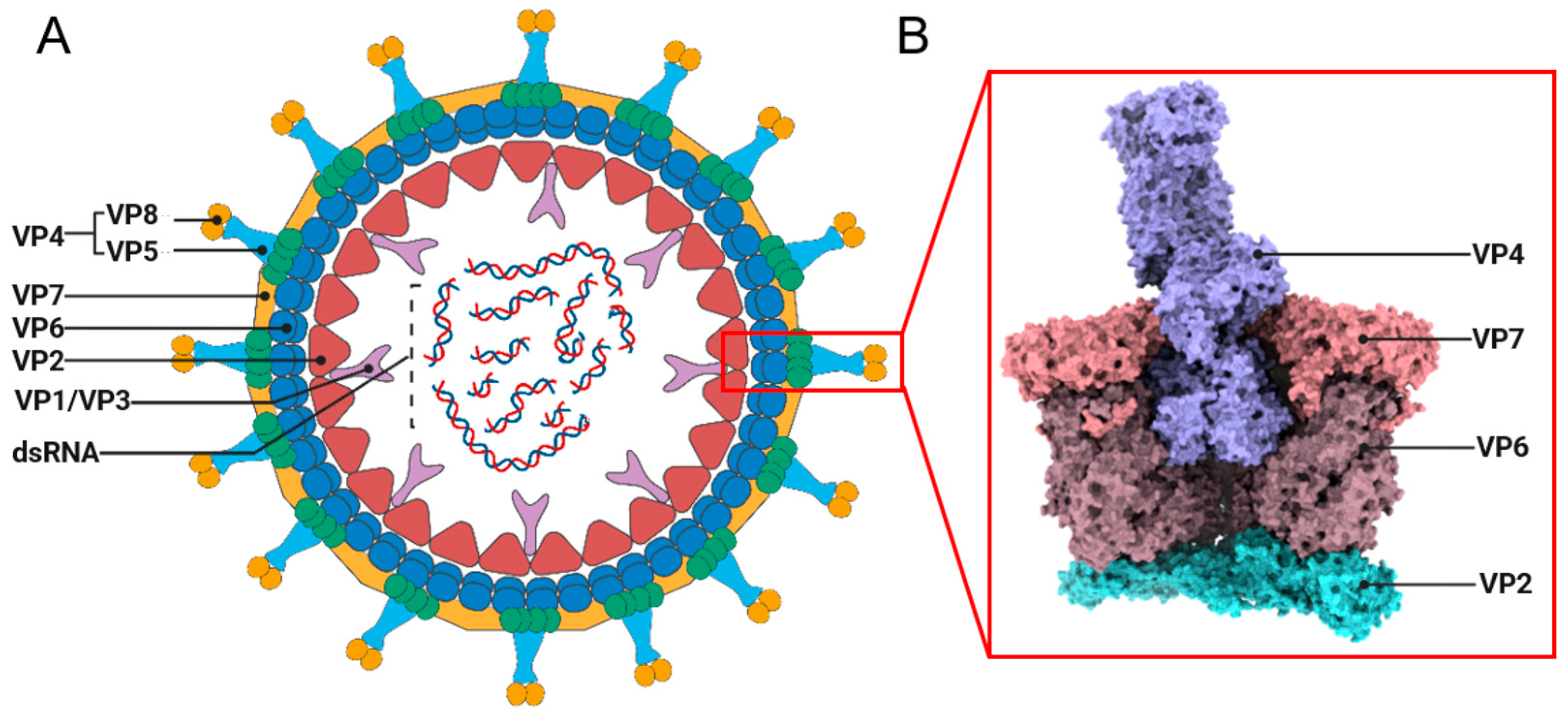
2.1. Virion Architecture and Structural Organization
2.2. Genome Organization and Functional Segmentation
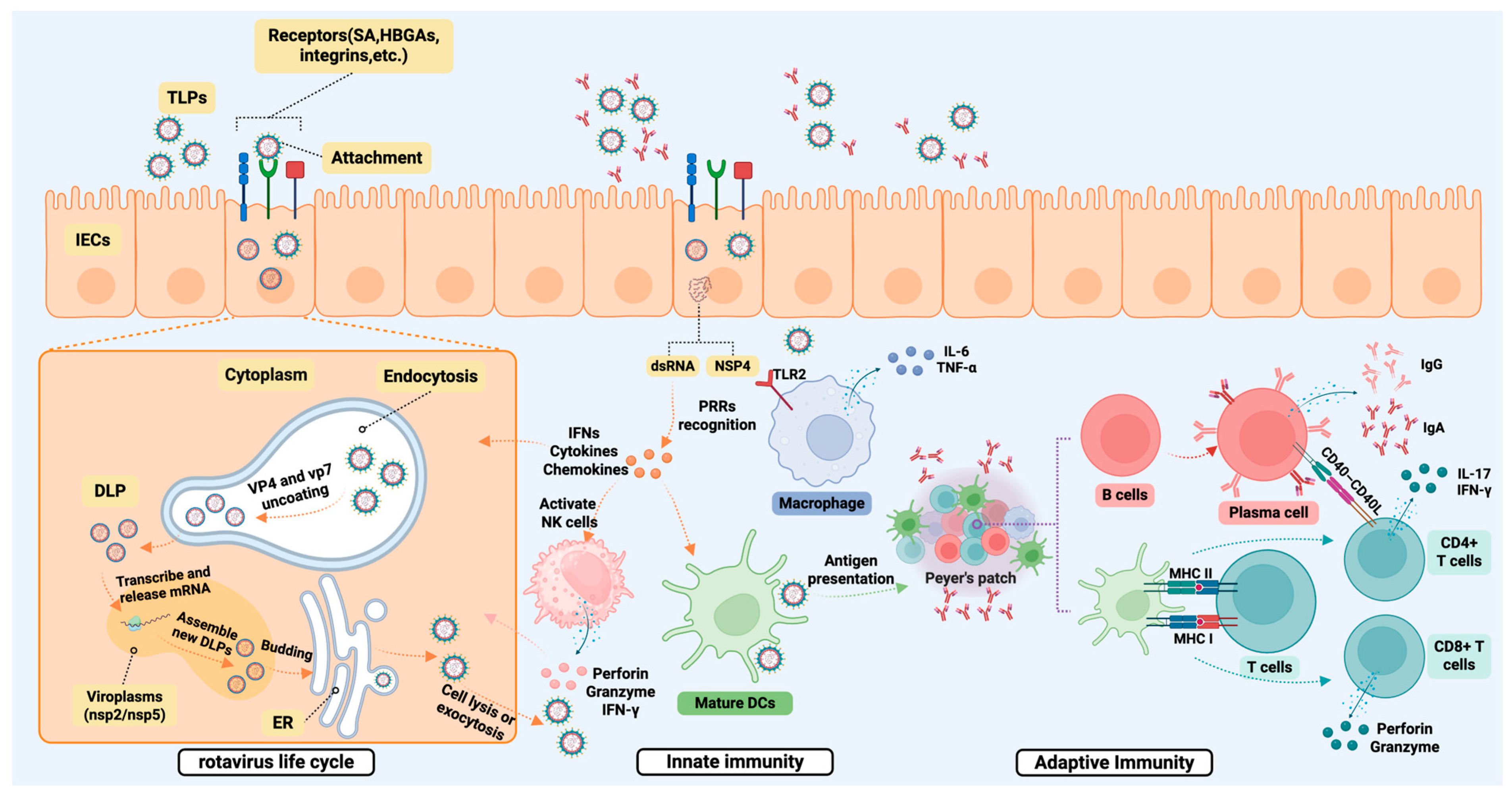
2.3. Cell Entry, Replication Cycle, and Host Interactions
3. Immunological Basis for Rotavirus-Based Vaccine Design
3.1. Innate Immune Responses to Rotavirus Infection
3.2. Humoral Immunity and Mucosal IgA Responses
3.3. Cellular Immunity and T Cell-Mediated Protection
4. Evolution of Rotavirus Reverse Genetics Systems
4.1. Helper-Dependent Reverse Genetics Systems
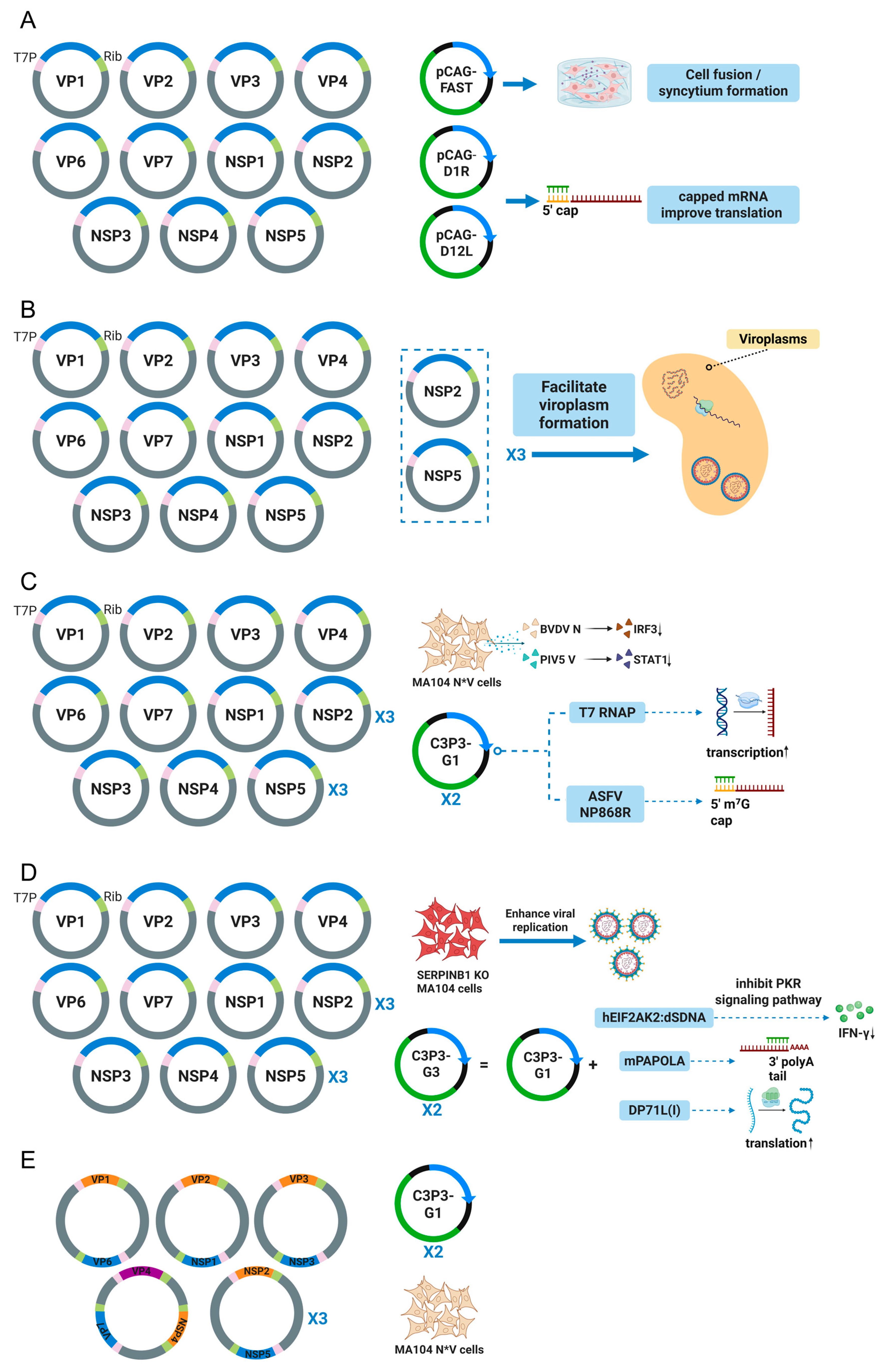
4.2. Evolution of Fully Plasmid-Based Reverse Genetics and Optimization Strategies
5. Engineering Rotavirus as a Viral Vector
5.1. NSP1 as a Flexible Platform for Foreign Gene Insertion
5.2. NSP3-Based Bicistronic Expression Systems
5.3. Alternative Engineering Strategies Beyond NSP1/NSP3
6. Key Challenges
- Genetic Stability of Inserted Long Sequences. Foreign fragments approaching or exceeding 1.5–2.0 kb are prone to deletion or expression attenuation during passaging. Stability and expression can be enhanced through virus-like codon and GC content optimization, truncation into stable domains/epitopes, strict preservation of 5′/3′ UTRs and terminal secondary structures, and the introduction of signal peptides and glycosylation sites for secreted proteins.
- Enhancement of Immunogenicity. Expression levels directly restrict immunogenicity, and baseline differences between NSP3/NSP1 can amplify or limit the effects. It is recommended to enhance antigen accessibility and expression, balance immunogenicity and stability during fragment selection, and synchronously fortify systemic and mucosal immunity through oral multi-dose homologous boosting or oral-intramuscular heterologous prime-boost regimens.
- Animal Model Limitations. Suckling mice are convenient but have limited clinical relevance, and adult mice are naturally tolerant to RV. It is recommended to use gnotobiotic pigs as the core model for viral challenge and immunological evaluation. This can serve as a hard endpoint to determine “protective efficacy” and provide a benchmark for expanding this platform to other enteric pathogens.
7. Future Perspectives
Author Contributions
Funding
Data Availability Statement
Conflicts of Interest
Abbreviations
| RVs | Rotaviruses |
| dsRNA | double-stranded RNA |
| DLPs | double-layered particles |
| UTRs | untranslated regions |
| RdRp | RNA-dependent RNA polymerase |
| IFN | interferon |
| IRF | interferon regulatory factors |
| NTPase | nucleoside triphosphatase |
| RTPase | RNA triphosphatase |
| NDPK | nucleoside diphosphate kinase |
| PABP | poly(A)-binding protein |
| ER | endoplasmic reticulum |
| TLPs | triple-layered particles |
| IECs | intestinal epithelial cells |
| SA | sialic acid |
| HBGAs | histo-blood group antigens |
| Hsc70 | heat shock cognate protein 70 |
| PRRs | pattern recognition receptors |
| TLR | Toll-like receptor |
| RIG-I | retinoic acid-inducible gene I |
| MDA5 | melanoma differentiation-associated protein 5 |
| PAMP | pathogen-associated molecular pattern |
| IL | Interleukin |
| TNF-α | Tumor Necrosis Factor-α |
| DCs | dendritic cells |
| NK | natural killer |
| GALT | gut-associated lymphoid tissue |
| sIgA | secretory immunoglobulin A |
| RG | Reverse genetics |
| ts | temperature-sensitive |
| Nluc | NanoLuc |
| LLR | Lanzhou lamb rotavirus |
References
- Desselberger, U. Rotaviruses. Virus Res. 2014, 190, 75–96. [Google Scholar] [CrossRef]
- Troeger, C.; Khalil, I.A.; Rao, P.C.; Cao, S.; Blacker, B.F.; Ahmed, T.; Armah, G.; Bines, J.E.; Brewer, T.G.; Colombara, D.V.; et al. Rotavirus Vaccination and the Global Burden of Rotavirus Diarrhea Among Children Younger Than 5 Years. JAMA Pediatr. 2018, 172, 958–965. [Google Scholar] [CrossRef]
- Troeger, C.E.; Khalil, I.A.; Blacker, B.F.; Biehl, M.H.; Albertson, S.B.; Zimsen, S.R.; Rao, P.C.; Abate, D.; Ahmadi, A.; brahim Ahmed, M.L.C. Quantifying risks and interventions that have affected the burden of diarrhoea among children younger than 5 years: An analysis of the Global Burden of Disease Study 2017. Lancet Infect. Dis. 2020, 20, 37–59. [Google Scholar] [CrossRef]
- Lestari, F.B.; Vongpunsawad, S.; Wanlapakorn, N.; Poovorawan, Y. Rotavirus infection in children in Southeast Asia 2008–2018: Disease burden, genotype distribution, seasonality, and vaccination. J. Biomed. Sci. 2020, 27, 66. [Google Scholar] [CrossRef]
- Cates, J.E.; Tate, J.E.; Parashar, U. Rotavirus vaccines: Progress and new developments. Expert Opin. Biol. Ther. 2022, 22, 423–432. [Google Scholar] [CrossRef] [PubMed]
- Zou, W.; Yu, Q.; Liu, Y.; Li, Q.; Chen, H.; Gao, J.; Shi, C.; Wang, Y.; Chen, W.; Bai, X.; et al. Genotype analysis of rotaviruses isolated from children during a phase III clinical trial with the hexavalent rotavirus vaccine in China. Virol. Sin. 2023, 38, 889–899. [Google Scholar] [CrossRef] [PubMed]
- Yen, C.; Healy, K.; Tate, J.E.; Parashar, U.D.; Bines, J.; Neuzil, K.; Santosham, M.; Steele, A.D. Rotavirus vaccination and intussusception–science, surveillance, and safety: A review of evidence and recommendations for future research priorities in low and middle income countries. Hum. Vaccines Immunother. 2016, 12, 2580–2589. [Google Scholar] [CrossRef] [PubMed]
- Diebold, O.; Gonzalez, V.; Venditti, L.; Sharp, C.; Blake, R.A.; Tan, W.S.; Stevens, J.; Caddy, S.; Digard, P.; Borodavka, A.; et al. Using Species a Rotavirus Reverse Genetics to Engineer Chimeric Viruses Expressing SARS-CoV-2 Spike Epitopes. J. Virol. 2022, 96, e0048822. [Google Scholar] [CrossRef]
- Philip, A.A.; Patton, J.T. Rotavirus as an Expression Platform of Domains of the SARS-CoV-2 Spike Protein. Vaccines 2021, 9, 449. [Google Scholar] [CrossRef]
- Kanai, Y.; Komoto, S.; Kawagishi, T.; Nouda, R.; Nagasawa, N.; Onishi, M.; Matsuura, Y.; Taniguchi, K.; Kobayashi, T. Entirely plasmid-based reverse genetics system for rotaviruses. Proc. Natl. Acad. Sci. USA 2017, 114, 2349–2354. [Google Scholar] [CrossRef]
- Lasaro, M.O.; Ertl, H.C. New insights on adenovirus as vaccine vectors. Mol. Ther. J. Am. Soc. Gene Ther. 2009, 17, 1333–1339. [Google Scholar] [CrossRef]
- Volz, A.; Sutter, G. Modified Vaccinia Virus Ankara: History, Value in Basic Research, and Current Perspectives for Vaccine Development. Adv. Virus Res. 2017, 97, 187–243. [Google Scholar] [CrossRef]
- Kawamura, Y.; Komoto, S.; Fukuda, S.; Kugita, M.; Tang, S.; Patel, A.; Pieknik, J.R.; Nagao, S.; Taniguchi, K.; Krause, P.R.; et al. Development of recombinant rotavirus carrying herpes simplex virus 2 glycoprotein D gene based on reverse genetics technology. Microbiol. Immunol. 2024, 68, 56–64. [Google Scholar] [CrossRef]
- Kawagishi, T.; Sánchez-Tacuba, L.; Feng, N.; Costantini, V.P.; Tan, M.; Jiang, X.; Green, K.Y.; Vinjé, J.; Ding, S.; Greenberg, H.B. Mucosal and systemic neutralizing antibodies to norovirus induced in infant mice orally inoculated with recombinant rotaviruses. Proc. Natl. Acad. Sci. USA 2023, 120, e2214421120. [Google Scholar] [CrossRef] [PubMed]
- Bishop, R.F.; Davidson, G.P.; Holmes, I.H.; Ruck, B.J. Virus particles in epithelial cells of duodenal mucosa from children with acute non-bacterial gastroenteritis. Lancet 1973, 2, 1281–1283. [Google Scholar] [CrossRef] [PubMed]
- Crawford, S.E.; Ramani, S.; Tate, J.E.; Parashar, U.D.; Svensson, L.; Hagbom, M.; Franco, M.A.; Greenberg, H.B.; O’Ryan, M.; Kang, G.; et al. Rotavirus infection. Nat. Rev. Dis. Primers 2017, 3, 17083. [Google Scholar] [CrossRef] [PubMed]
- de Sautu, M.; Herrmann, T.; Scanavachi, G.; Jenni, S.; Harrison, S.C. The rotavirus VP5*/VP8* conformational transition permeabilizes membranes to Ca2. PLoS Pathog. 2024, 20, e1011750. [Google Scholar] [CrossRef]
- Li, E.; Zang, R.; Kawagishi, T.; Zhang, W.; Iyer, K.; Hou, G.; Zeng, Q.; Meganck, R.M.; Ross, S.R.; Wang, X.; et al. Fatty acid 2-hydroxylase facilitates rotavirus uncoating and endosomal escape. Proc. Natl. Acad. Sci. USA 2025, 122, e2511911122. [Google Scholar] [CrossRef]
- International Committee on Taxonomy of Viruses (ICTV). Virus Taxonomy: ICTV Master Species List (Current Release). Available online: https://ictv.global/taxonomy (accessed on 2 June 2026).
- Deol, P.; Kattoor, J.J.; Sircar, S.; Ghosh, S.; Bányai, K.; Dhama, K.; Malik, Y.S. Avian Group D Rotaviruses: Structure, Epidemiology, Diagnosis, and Perspectives on Future Research Challenges. Pathogens 2017, 6, 53. [Google Scholar] [CrossRef]
- Díaz Alarcón, R.G.; Salvatierra, K.; Gómez Quintero, E.; Liotta, D.J.; Parreño, V.; Miño, S.O. Complete Genome Classification System of Rotavirus alphagastroenteritidis: An Updated Analysis. Viruses 2025, 17, 211. [Google Scholar] [CrossRef]
- Arnold, M.M. The Rotavirus Interferon Antagonist NSP1: Many Targets, Many Questions. J. Virol. 2016, 90, 5212–5215. [Google Scholar] [CrossRef]
- Barro, M.; Patton, J.T. Rotavirus NSP1 inhibits expression of type I interferon by antagonizing the function of interferon regulatory factors IRF3, IRF5, and IRF7. J. Virol. 2007, 81, 4473–4481. [Google Scholar] [CrossRef]
- Criglar, J.M.; Crawford, S.E.; Estes, M.K. Plasmid-based reverse genetics for probing phosphorylation-dependent viroplasm formation in rotaviruses. Virus Res. 2021, 291, 198193. [Google Scholar] [CrossRef] [PubMed]
- Hu, L.; Crawford, S.E.; Hyser, J.M.; Estes, M.K.; Prasad, B.V. Rotavirus non-structural proteins: Structure and function. Curr. Opin. Virol. 2012, 2, 380–388. [Google Scholar] [CrossRef]
- Contin, R.; Arnoldi, F.; Campagna, M.; Burrone, O.R. Rotavirus NSP5 orchestrates recruitment of viroplasmic proteins. J. Gen. Virol. 2010, 91, 1782–1793. [Google Scholar] [CrossRef]
- Gratia, M.; Sarot, E.; Vende, P.; Charpilienne, A.; Baron, C.H.; Duarte, M.; Pyronnet, S.; Poncet, D. Rotavirus NSP3 Is a Translational Surrogate of the Poly(A) Binding Protein-Poly(A) Complex. J. Virol. 2015, 89, 8773–8782. [Google Scholar] [CrossRef]
- Jensen, D.; Schekman, R. COPII-mediated vesicle formation at a glance. J. Cell Sci. 2011, 124, 1–4. [Google Scholar] [CrossRef] [PubMed]
- Crawford, S.E.; Criglar, J.M.; Liu, Z.; Broughman, J.R.; Estes, M.K. COPII Vesicle Transport Is Required for Rotavirus NSP4 Interaction with the Autophagy Protein LC3 II and Trafficking to Viroplasms. J. Virol. 2019, 94, e01341-19. [Google Scholar] [CrossRef] [PubMed]
- Ball, J.M.; Tian, P.; Zeng, C.Q.; Morris, A.P.; Estes, M.K. Age-dependent diarrhea induced by a rotaviral nonstructural glycoprotein. Science 1996, 272, 101–104. [Google Scholar] [CrossRef]
- López, S.; Arias, C.F. Multistep entry of rotavirus into cells: A Versaillesque dance. Trends Microbiol. 2004, 12, 271–278. [Google Scholar] [CrossRef]
- Amimo, J.O.; Raev, S.A.; Chepngeno, J.; Mainga, A.O.; Guo, Y.; Saif, L.; Vlasova, A.N. Rotavirus Interactions With Host Intestinal Epithelial Cells. Front. Immunol. 2021, 12, 793841. [Google Scholar] [CrossRef] [PubMed]
- Dormitzer, P.R.; Sun, Z.Y.; Blixt, O.; Paulson, J.C.; Wagner, G.; Harrison, S.C. Specificity and affinity of sialic acid binding by the rhesus rotavirus VP8* core. J. Virol. 2002, 76, 10512–10517. [Google Scholar] [CrossRef] [PubMed]
- Ciarlet, M.; Ludert, J.E.; Iturriza-Gómara, M.; Liprandi, F.; Gray, J.J.; Desselberger, U.; Estes, M.K. Initial Interaction of Rotavirus Strains with N-Acetylneuraminic (Sialic) Acid Residues on the Cell Surface Correlates with VP4 Genotype, Not Species of Origin. J. Virol. 2002, 76, 4087–4095. [Google Scholar] [CrossRef]
- Isa, P.; Arias, C.F.; López, S. Role of sialic acids in rotavirus infection. Glycoconj. J. 2006, 23, 27–37. [Google Scholar] [CrossRef]
- Ramani, S.; Hu, L.; Venkataram Prasad, B.V.; Estes, M.K. Diversity in Rotavirus-Host Glycan Interactions: A “Sweet” Spectrum. Cell. Mol. Gastroenterol. Hepatol. 2016, 2, 263–273. [Google Scholar] [CrossRef]
- Xu, S.; Ahmed, L.U.; Stuckert, M.R.; McGinnis, K.R.; Liu, Y.; Tan, M.; Huang, P.; Zhong, W.; Zhao, D.; Jiang, X.; et al. Molecular basis of P[II] major human rotavirus VP8* domain recognition of histo-blood group antigens. PLoS Pathog. 2020, 16, e1008386. [Google Scholar] [CrossRef]
- Zárate, S.; Cuadras, M.A.; Espinosa, R.; Romero, P.; Juárez, K.O.; Camacho-Nuez, M.; Arias, C.F.; López, S. Interaction of rotaviruses with Hsc70 during cell entry is mediated by VP5. J. Virol. 2003, 77, 7254–7260. [Google Scholar] [CrossRef] [PubMed]
- Gutiérrez, M.; Isa, P.; Sánchez-San Martin, C.; Pérez-Vargas, J.; Espinosa, R.; Arias, C.F.; López, S. Different rotavirus strains enter MA104 cells through different endocytic pathways: The role of clathrin-mediated endocytosis. J. Virol. 2010, 84, 9161–9169. [Google Scholar] [CrossRef]
- Arias, C.F.; Silva-Ayala, D.; López, S. Rotavirus entry: A deep journey into the cell with several exits. J. Virol. 2015, 89, 890–893. [Google Scholar] [CrossRef]
- Trask, S.D.; McDonald, S.M.; Patton, J.T. Structural insights into the coupling of virion assembly and rotavirus replication. Nat. Rev. Microbiol. 2012, 10, 165–177. [Google Scholar] [CrossRef]
- Papa, G.; Borodavka, A.; Desselberger, U. Viroplasms: Assembly and Functions of Rotavirus Replication Factories. Viruses 2021, 13, 1349. [Google Scholar] [CrossRef] [PubMed]
- Asensio-Cob, D.; Rodríguez, J.M.; Luque, D. Rotavirus particle disassembly and assembly in vivo and in vitro. Viruses 2023, 15, 1750. [Google Scholar] [CrossRef]
- Jourdan, N.; Maurice, M.; Delautier, D.; Quero, A.M.; Servin, A.L.; Trugnan, G. Rotavirus is released from the apical surface of cultured human intestinal cells through nonconventional vesicular transport that bypasses the Golgi apparatus. J. Virol. 1997, 71, 8268–8278. [Google Scholar] [CrossRef]
- Hou, G.; Son, J.; Gomez Castro, M.F.; Kawagishi, T.; Ren, X.; Roth, A.N.; Antia, A.; Zeng, Q.; DeVeaux, A.L.; Feng, N.; et al. Innate immune sensing of rotavirus by intestinal epithelial cells leads to diarrhea. Cell Host Microbe 2025, 33, 408–419.e408. [Google Scholar] [CrossRef] [PubMed]
- Ge, Y.; Mansell, A.; Ussher, J.E.; Brooks, A.E.; Manning, K.; Wang, C.J.; Taylor, J.A. Rotavirus NSP4 Triggers Secretion of Proinflammatory Cytokines from Macrophages via Toll-Like Receptor 2. J. Virol. 2013, 87, 11160–11167. [Google Scholar] [CrossRef] [PubMed]
- Nutsford, A.; Chau, T.H.; Wang, C.; Sargent, A.; Cullen, C.; Reilly, T.; Thaysen-Andersen, M.; Brooks, A.E.S.; Taylor, J.A. A novel glycoform of the rotavirus outer capsid protein VP7 is secreted from polarized cells and activates innate immune cells. J. Virol. 2026, 100, e0189825. [Google Scholar] [CrossRef]
- Sen, A.; Rothenberg, M.E.; Mukherjee, G.; Feng, N.; Kalisky, T.; Nair, N.; Johnstone, I.M.; Clarke, M.F.; Greenberg, H.B. Innate immune response to homologous rotavirus infection in the small intestinal villous epithelium at single-cell resolution. Proc. Natl. Acad. Sci. USA 2012, 109, 20667–20672. [Google Scholar] [CrossRef]
- Coombes, J.L.; Powrie, F. Dendritic cells in intestinal immune regulation. Nat. Rev. Immunol. 2008, 8, 435–446. [Google Scholar] [CrossRef]
- Deal, E.M.; Jaimes, M.C.; Crawford, S.E.; Estes, M.K.; Greenberg, H.B. Rotavirus structural proteins and dsRNA are required for the human primary plasmacytoid dendritic cell IFNα response. PLoS Pathog. 2010, 6, e1000931. [Google Scholar] [CrossRef]
- Lopatin, U.; Blutt, S.E.; Conner, M.E.; Kelsall, B.L. Lymphotoxin alpha-deficient mice clear persistent rotavirus infection after local generation of mucosal IgA. J. Virol. 2013, 87, 524–530. [Google Scholar] [CrossRef]
- Lopez-Guerrero, D.V.; Meza-Perez, S.; Ramirez-Pliego, O.; Santana-Calderon, M.A.; Espino-Solis, P.; Gutierrez-Xicotencatl, L.; Flores-Romo, L.; Esquivel-Guadarrama, F.R. Rotavirus infection activates dendritic cells from Peyer’s patches in adult mice. J. Virol. 2010, 84, 1856–1866. [Google Scholar] [CrossRef]
- Blutt, S.E.; Conner, M.E. The gastrointestinal frontier: IgA and viruses. Front. Immunol. 2013, 4, 402. [Google Scholar] [CrossRef]
- Blutt, S.E.; Miller, A.D.; Salmon, S.L.; Metzger, D.W.; Conner, M.E. IgA is important for clearance and critical for protection from rotavirus infection. Mucosal Immunol. 2012, 5, 712–719. [Google Scholar] [CrossRef]
- Angel, J.; Franco, M.A.; Greenberg, H.B. Rotavirus immune responses and correlates of protection. Curr. Opin. Virol. 2012, 2, 419–425. [Google Scholar] [CrossRef]
- Desselberger, U. Differences of Rotavirus Vaccine Effectiveness by Country: Likely Causes and Contributing Factors. Pathogens 2017, 6, 65. [Google Scholar] [CrossRef]
- Angel, J.; Steele, A.D.; Franco, M.A. Correlates of protection for rotavirus vaccines: Possible alternative trial endpoints, opportunities, and challenges. Hum. Vaccines Immunother. 2014, 10, 3659–3671. [Google Scholar] [CrossRef]
- Song, Y.; Mehl, F.; Zeichner, S.L. Vaccine strategies to elicit mucosal immunity. Vaccines 2024, 12, 191. [Google Scholar] [CrossRef]
- Pietrzak, B.; Tomela, K.; Olejnik-Schmidt, A.; Mackiewicz, A.; Schmidt, M. Secretory IgA in intestinal mucosal secretions as an adaptive barrier against microbial cells. Int. J. Mol. Sci. 2020, 21, 9254. [Google Scholar] [CrossRef]
- Franco, M.A.; Greenberg, H.B. Role of B cells and cytotoxic T lymphocytes in clearance of and immunity to rotavirus infection in mice. J. Virol. 1995, 69, 7800–7806. [Google Scholar] [CrossRef]
- Malm, M.; Hyöty, H.; Knip, M.; Vesikari, T.; Blazevic, V. Development of T cell immunity to norovirus and rotavirus in children under five years of age. Sci. Rep. 2019, 9, 3199. [Google Scholar] [CrossRef]
- Smiley, K.L.; McNeal, M.M.; Basu, M.; Choi, A.H.-C.; Clements, J.D.; Ward, R.L. Association of gamma interferon and interleukin-17 production in intestinal CD4+ T cells with protection against rotavirus shedding in mice intranasally immunized with VP6 and the adjuvant LT (R192G). J. Virol. 2007, 81, 3740–3748. [Google Scholar] [CrossRef]
- McNeal, M.M.; Rae, M.N.; Ward, R.L. Evidence that resolution of rotavirus infection in mice is due to both CD4 and CD8 cell-dependent activities. J. Virol. 1997, 71, 8735–8742. [Google Scholar] [CrossRef]
- Muleta, K.G.; Ulmert, I.; Hamza, K.H.; van Dijl, S.; Nakawesi, J.; Lahl, K. Rotavirus-induced expansion of antigen-specific CD8 T cells does not require signaling via TLR3, MyD88 or the type I interferon receptor. Front. Immunol. 2022, 13, 814491. [Google Scholar] [CrossRef]
- De Lorenzo, G.; Drikic, M.; Papa, G.; Eichwald, C.; Burrone, O.R.; Arnoldi, F. An Inhibitory Motif on the 5′UTR of Several Rotavirus Genome Segments Affects Protein Expression and Reverse Genetics Strategies. PLoS ONE 2016, 11, e0166719. [Google Scholar] [CrossRef]
- Komoto, S.; Sasaki, J.; Taniguchi, K. Reverse genetics system for introduction of site-specific mutations into the double-stranded RNA genome of infectious rotavirus. Proc. Natl. Acad. Sci. USA 2006, 103, 4646–4651. [Google Scholar] [CrossRef]
- Troupin, C.; Dehée, A.; Schnuriger, A.; Vende, P.; Poncet, D.; Garbarg-Chenon, A. Rearranged genomic RNA segments offer a new approach to the reverse genetics of rotaviruses. J. Virol. 2010, 84, 6711–6719. [Google Scholar] [CrossRef]
- Trask, S.D.; Taraporewala, Z.F.; Boehme, K.W.; Dermody, T.S.; Patton, J.T. Dual selection mechanisms drive efficient single-gene reverse genetics for rotavirus. Proc. Natl. Acad. Sci. USA 2010, 107, 18652–18657. [Google Scholar] [CrossRef]
- Komoto, S.; Fukuda, S.; Ide, T.; Ito, N.; Sugiyama, M.; Yoshikawa, T.; Murata, T.; Taniguchi, K. Generation of Recombinant Rotaviruses Expressing Fluorescent Proteins by Using an Optimized Reverse Genetics System. J. Virol. 2018, 92, e00588-18. [Google Scholar] [CrossRef]
- Sánchez-Tacuba, L.; Feng, N.; Meade, N.J.; Mellits, K.H.; Jaïs, P.H.; Yasukawa, L.L.; Resch, T.K.; Jiang, B.; López, S.; Ding, S.; et al. An Optimized Reverse Genetics System Suitable for Efficient Recovery of Simian, Human, and Murine-Like Rotaviruses. J. Virol. 2020, 94, e01294-20. [Google Scholar] [CrossRef]
- Zhu, Y.; Sullender, M.E.; Campbell, D.E.; Wang, L.; Lee, S.; Kawagishi, T.; Hou, G.; Dizdarevic, A.; Jais, P.H.; Baldridge, M.T.; et al. CRISPR/Cas9 screens identify key host factors that enhance rotavirus reverse genetics efficacy and vaccine production. npj Vaccines 2024, 9, 211. [Google Scholar] [CrossRef]
- Liu, X.; Yu, J.; Li, S.; Chai, P.; Xie, Z.; Pang, L.; Li, J.; Zhu, W.; Ren, W.; Duan, Z. An improved reverse genetics system for rotavirus vaccine strain LLR using five plasmid vectors. J. Gen. Virol. 2025, 106, 2064. [Google Scholar] [CrossRef]
- Ensinger, M.J.; Martin, S.A.; Paoletti, E.; Moss, B. Modification of the 5′-terminus of mRNA by soluble guanylyl and methyl transferases from vaccinia virus. Proc. Natl. Acad. Sci. USA 1975, 72, 2525–2529. [Google Scholar] [CrossRef]
- Fabbretti, E.; Afrikanova, I.; Vascotto, F.; Burrone, O.R. Two non-structural rotavirus proteins, NSP2 and NSP5, form viroplasm-like structures in vivo. J. Gen. Virol. 1999, 80, 333–339. [Google Scholar] [CrossRef]
- Jaïs, P.H.; Decroly, E.; Jacquet, E.; Le Boulch, M.; Jaïs, A.; Jean-Jean, O.; Eaton, H.; Ponien, P.; Verdier, F.; Canard, B.; et al. C3P3-G1: First generation of a eukaryotic artificial cytoplasmic expression system. Nucleic Acids Res. 2019, 47, 2681–2698. [Google Scholar] [CrossRef]
- Eaton, H.E.; Kobayashi, T.; Dermody, T.S.; Johnston, R.N.; Jais, P.H.; Shmulevitz, M. African Swine Fever Virus NP868R Capping Enzyme Promotes Reovirus Rescue during Reverse Genetics by Promoting Reovirus Protein Expression, Virion Assembly, and RNA Incorporation into Infectious Virions. J. Virol. 2017, 91, e02416-16. [Google Scholar] [CrossRef] [PubMed]
- Precious, B.L.; Carlos, T.S.; Goodbourn, S.; Randall, R.E. Catalytic turnover of STAT1 allows PIV5 to dismantle the interferon-induced anti-viral state of cells. Virology 2007, 368, 114–121. [Google Scholar] [CrossRef] [PubMed]
- Seago, J.; Hilton, L.; Reid, E.; Doceul, V.; Jeyatheesan, J.; Moganeradj, K.; McCauley, J.; Charleston, B.; Goodbourn, S. The Npro product of classical swine fever virus and bovine viral diarrhea virus uses a conserved mechanism to target interferon regulatory factor-3. J. Gen. Virol. 2007, 88, 3002–3006. [Google Scholar] [CrossRef]
- Jais, P. Artificial Eukaryotic Expression System with Enhanced Performances. Patent WO2022029142A1, 3 August 2021. [Google Scholar]
- Liu, X.; Li, S.; Yu, J.; Chai, P.; Xie, Z.; Pang, L.; Li, J.; Zhu, W.; Ren, W.; Duan, Z. Establishment of a reverse genetics system for rotavirus vaccine strain LLR and developing vaccine candidates carrying VP7 gene cloned from human strains circulating in China. J. Med. Virol. 2024, 96, e70065. [Google Scholar] [CrossRef]
- Fu, C.; He, Q.; Xu, J.; Xie, H.; Ding, P.; Hu, W.; Dong, Z.; Liu, X.; Wang, M. Effectiveness of the Lanzhou lamb rotavirus vaccine against gastroenteritis among children. Vaccine 2012, 31, 154–158. [Google Scholar] [CrossRef]
- Wei, J.; Radcliffe, S.; Pirrone, A.; Lu, M.; Li, Y.; Cassaday, J.; Newhard, W.; Heidecker, G.J.; Rose Ii, W.A.; He, X.; et al. A Novel Rotavirus Reverse Genetics Platform Supports Flexible Insertion of Exogenous Genes and Enables Rapid Development of a High-Throughput Neutralization Assay. Viruses 2023, 15, 2034. [Google Scholar] [CrossRef]
- Barro, M.; Patton, J.T. Rotavirus nonstructural protein 1 subverts innate immune response by inducing degradation of IFN regulatory factor 3. Proc. Natl. Acad. Sci. USA 2005, 102, 4114–4119. [Google Scholar] [CrossRef]
- Hua, J.; Patton, J.T. The carboxyl-half of the rotavirus nonstructural protein NS53 (NSP1) is not required for virus replication. Virology 1994, 198, 567–576. [Google Scholar] [CrossRef] [PubMed]
- Kanai, Y.; Kawagishi, T.; Nouda, R.; Onishi, M.; Pannacha, P.; Nurdin, J.A.; Nomura, K.; Matsuura, Y.; Kobayashi, T. Development of Stable Rotavirus Reporter Expression Systems. J. Virol. 2019, 93, e01774-1. [Google Scholar] [CrossRef]
- Hatazawa, R.; Fukuda, S.; Kumamoto, K.; Matsushita, F.; Nagao, S.; Murata, T.; Taniguchi, K.; Matsui, T.; Komoto, S. Strategy for generation of replication-competent recombinant rotaviruses expressing multiple foreign genes. J. Gen. Virol. 2021, 102, 1587. [Google Scholar] [CrossRef]
- Kanai, Y.; Onishi, M.; Yoshida, Y.; Kotaki, T.; Minami, S.; Nouda, R.; Yamasaki, M.; Enoki, Y.; Kobayashi, T. Genetic engineering strategy for generating a stable dsRNA virus vector using a virus-like codon-modified transgene. J. Virol. 2023, 97, e0049223. [Google Scholar] [CrossRef]
- Philip, A.A.; Patton, J.T. Expression of Separate Heterologous Proteins from the Rotavirus NSP3 Genome Segment Using a Translational 2A Stop-Restart Element. J. Virol. 2020, 94, e00959-20. [Google Scholar] [CrossRef]
- Philip, A.A.; Patton, J.T. Generation of Recombinant Rotaviruses Expressing Human Norovirus Capsid Proteins. J. Virol. 2022, 96, e0126222. [Google Scholar] [CrossRef] [PubMed]
- Zhu, Y.; Sánchez-Tacuba, L.; Hou, G.; Kawagishi, T.; Feng, N.; Greenberg, H.B.; Ding, S. A recombinant murine-like rotavirus with Nano-Luciferase expression reveals tissue tropism, replication dynamics, and virus transmission. Front. Immunol. 2022, 13, 911024. [Google Scholar] [CrossRef]
- Philip, A.A.; Hu, S.; Dai, J.; Patton, J.T. Recombinant rotavirus expressing the glycosylated S1 protein of SARS-CoV-2. J. Gen. Virol. 2023, 104, 1899. [Google Scholar] [CrossRef] [PubMed]
- Liu, X.F.; Ren, H.W.; Li, X.; Yu, J.J.; Zhu, W.Y.; Duan, Z.J. Rescue and Identification of the Recombinant rLLR/NSP3-CoV-2/RBD Expressing SARS-CoV-2 RBD Based on LLR Backbone. Chin. J. Virol. 2024, 40, 952–960. [Google Scholar] [CrossRef]
- Wang, J.; Chang, J.; Jiang, Z.; Deng, H.; Jia, Q.; Li, K.; Zhao, J.; Xiang, H.; Yang, F.; Qin, S.; et al. An oral rotavirus-vectored vaccine confers protection against Clostridium perfringens and rotavirus. J. Virol. 2026, 100, e0017826. [Google Scholar] [CrossRef]
- Cheng, X.; Deng, H.; Bian, X.; Wang, J.; Wang, C.; Han, N.; Zhou, J.; Zhu, X.; Zhang, X.; Yang, X.; et al. Simultaneous expression of three G genotypes of VP7 proteins in a recombinant porcine rotavirus confers protective immunity against multiple rotavirus infections. J. Virol. 2026, 100, e0201525. [Google Scholar] [CrossRef]
- Philip, A.A.; Perry, J.L.; Eaton, H.E.; Shmulevitz, M.; Hyser, J.M.; Patton, J.T. Generation of Recombinant Rotavirus Expressing NSP3-UnaG Fusion Protein by a Simplified Reverse Genetics System. J. Virol. 2019, 93, e01616-19. [Google Scholar] [CrossRef]
- Kotaki, T.; Kanai, Y.; Onishi, M.; Sakai, Y.; Motooka, D.; Chen, Z.; Enoki, Y.; Komatsu, S.; Hirai, K.; Minami, S. Single-round infectious rotaviruses with deletions of VP7 or VP4 genes, based on SA11 and WC3 strain backbones, and their potential use as viral vectors. PLoS Pathog. 2025, 21, e1013484. [Google Scholar] [CrossRef] [PubMed]



| Year & Author | System Type | Cell Line | Key Innovations |
|---|---|---|---|
| 2006, Komoto et al. [66] | Helper virus-dependent system | COS-7 and MA104 | First helper virus-dependent plasmid system. |
| 2017, Kanai et al. [10] | 14-plasmid system | BHK-T7 and MA104 | First completely helper-virus-free system (11 RV + 3 helper plasmids: FAST, D1R, D12L). |
| 2018, Komoto et al. [69] | 11-plasmid system | BHK-T7 and MA104 | Helper-plasmid-free system (achieved via 3-fold increase in NSP2/NSP5 plasmids). |
| 2020, Sánchez-Tacuba et al. [70] | 12-plasmid system | BHK-T7 and MA104 N*V cells | Enhanced rescue efficiency using C3P3-G1 and MA104 N*V cells. |
| 2024, Zhu et al. [71] | 12-plasmid system | BHK-T7 and MA104 SERPINB1 KO cells | Optimized rescue using C3P3-G3 and SERPINB1 KO MA104 cells. |
| 2025, Liu et al. [72] | 5-plasmid system | BHK-T7 and MA104 N*V cells | Streamlined 5-plasmid system (with 3-fold increase in combined NSP2/NSP5 plasmid). |
| Year & Author | Strain | Insertion Site | Inserted Gene (bp) | Genetic Stability | Key Innovations |
|---|---|---|---|---|---|
| 2017, Kanai et al. [10] | SA11 | NSP1 ORF | NLuc (516) | ≥P5 | First fully plasmid-based RG with reporter insertion |
| 2019, Kanai et al. [85] | SA11 | NSP1 ORF | NLuc (516), ZsGreen1 (753), AsRed2 (678) | ≥P10 (by NSP1 truncation) | Stable reporter system established |
| 2020, Philip et al. [88] | SA11 | NSP3 C-terminus | UnaG (699), mRuby (678), mKate (711), TagBFP (~720) | ≥P10 | First use of NSP3-2A for heterologous protein expression |
| 2021, Hatazawa & Fukuda et al. [86] | SA11 | NSP1 ORF | NLuc (516), EGFP (717), mCherry (711); three-gene cassette total 2160 bp | ≥P10 (by NSP1 truncation) | First multi-gene expression in a single segment |
| 2021, Philip et al. [9] | SA11 | NSP3 C-terminus | RBD (636), ExRBD (~900), S2-CR (~1100), NTD (~900), S1 (2274) | RBD/ExRBD/S2-CR ≥ P10; NTD P3–P5; S1 P2 | Demonstrated CoV-2 antigens; strong length constraint |
| 2022, Philip et al. [89] | SA11 | NSP3 C-terminus | HuNoV VP1 (1620), P (~1100), P2 (~840) | P/P2 ≥ P5; VP1 deletion/rearrangement on passage | Expression of human norovirus antigens |
| 2022, Zhu Y et al. [90] | rD6/2-2g | NSP3 C-terminus | NLuc (516) | ≥P8 | Defined tissue tropism, replication dynamics, transmission |
| 2022, Diebold et al. [8] | RF | NSP3 C-terminus | RBD (636), RBM (204) | RBD partially unstable; RBM ≥ P10 | Epitope-level antigens show long-term stability |
| 2023, Kanai et al. [87] | SA11 | NSP1 ORF | NLuc (516), EGFP (717), mCherry (711), AsRed2 (678) | Optimized ≥P10 | Introduced virus-like codon optimization strategy |
| 2023, Philip et al. [91] | SA11 | NSP3 C-terminus | SARS-CoV-2 S1 (2274) | ≥P5 | First stable expression of glycosylated S1 |
| 2023, Kawagishi et al. [14] | RRV | NSP3 C-terminus | HuNoV VP1 (1620) | P3 | Oral inoculation in infant mice induced NoV-neutralizing antibodies |
| 2024, Kawamura et al. [13] | SA11 | NSP1 ORF | HSV-2 gD2 (~1185) | - | First expression of HSV-2 antigen in RV |
| 2024, Liu et al. [92] | LLR | NSP3 C-terminus | SARS-CoV-2 RBD (636) | ≥P5 | First CoV-2 antigen expression on the LLR vaccine backbone |
| 2026, Wang J et al. [93] | LLR | NSP3 C-terminus | CPA-CTD (372) | ≥P12 | First bacterial antigen expression |
| 2026, Cheng X et al. [94] | G9P [6] | NSP1/3 C-terminus | G4-VP7-CDS (981), G5-VP7-CDS (981) | ≥P7 | Constructed multivalent vaccines via dual-site (NSP1/NSP3) insertion |
Disclaimer/Publisher’s Note: The statements, opinions and data contained in all publications are solely those of the individual author(s) and contributor(s) and not of MDPI and/or the editor(s). MDPI and/or the editor(s) disclaim responsibility for any injury to people or property resulting from any ideas, methods, instructions or products referred to in the content. |
© 2026 by the authors. Licensee MDPI, Basel, Switzerland. This article is an open access article distributed under the terms and conditions of the Creative Commons Attribution (CC BY) license.
Share and Cite
Li, K.; Wei, X.; Ouyang, X.; Liu, X.; Chai, P.; Bai, Y.; Duan, Z. Reprogramming Rotavirus: Reverse Genetics-Driven Design of Viral Vector Platforms. Viruses 2026, 18, 655. https://doi.org/10.3390/v18060655
Li K, Wei X, Ouyang X, Liu X, Chai P, Bai Y, Duan Z. Reprogramming Rotavirus: Reverse Genetics-Driven Design of Viral Vector Platforms. Viruses. 2026; 18(6):655. https://doi.org/10.3390/v18060655
Chicago/Turabian StyleLi, Ke, Xiao Wei, Xuanze Ouyang, Xiafei Liu, Pengdi Chai, Yu Bai, and Zhaojun Duan. 2026. "Reprogramming Rotavirus: Reverse Genetics-Driven Design of Viral Vector Platforms" Viruses 18, no. 6: 655. https://doi.org/10.3390/v18060655
APA StyleLi, K., Wei, X., Ouyang, X., Liu, X., Chai, P., Bai, Y., & Duan, Z. (2026). Reprogramming Rotavirus: Reverse Genetics-Driven Design of Viral Vector Platforms. Viruses, 18(6), 655. https://doi.org/10.3390/v18060655