Article

Identification and Transcriptional Expression of the WRKY Transcription Factor Family in Robinia pseudoacacia and Its Association with Heartwood Formation

1
School of Life Sciences, Qufu Normal University, Qufu 273165, China
2
Shandong Key Laboratory of Wetland Ecology and Biodiversity Conservation in the Lower Yellow River, Qufu 273165, China
3
Shandong Zhongrenxin Agricultural Technology Co., Ltd., Jining 272000, China
4
Guilin Saraya Biotech Co., Ltd., Guilin 541001, China
*
Author to whom correspondence should be addressed.
These authors contributed equally to this work.
Forests 2026, 17(5), 609; https://doi.org/10.3390/f17050609
Submission received: 3 April 2026 / Revised: 7 May 2026 / Accepted: 15 May 2026 / Published: 18 May 2026
(This article belongs to the Special Issue Forest Tree Breeding: Genomics and Molecular Biology)

Abstract

Background: As a transcription factor superfamily unique to plants, WRKY plays broad roles in both secondary development and secondary metabolic processes. Robinia pseudoacacia is renowned for its durable and naturally durable heartwood, which holds significant commercial value. However, their potential association with heartwood formation remains largely unexplored. Results: Leveraging published genomic data from Robinia pseudoacacia, we conducted a comprehensive bioinformatics analysis that identified 85 WRKY transcription factors. An uneven distribution across 11 chromosomes was observed for the RpWRKY genes, which were systematically named RpWRKY1 to RpWRKY85 according to their genomic locations, as determined by chromosomal localization. By conducting a phylogenetic comparison between RpWRKY and AtWRKY (from Arabidopsis thaliana), the RpWRKY family was categorized into three primary clades (I, II, and III), wherein group II was additionally partitioned into subgroups designated IIa through IIe. Conserved structural features and motif patterns were observed among members of each subgroup. Purifying selection was suggested by collinearity analysis as the primary evolutionary driver of RpWRKY, leading to structural and functional diversification. Finally, four candidate genes (RpWRKY78, RpWRKY45, RpWRKY50, RpWRKY80) potentially involved in heartwood formation regulation were identified through analysis of xylem tissue-specific expression patterns. Conclusions: For this economically important tree species, the present study not only provides the first systematic characterization of RpWRKY but also identifies potential regulators of heartwood development. Thus, the present study lays the groundwork for subsequent research aimed at uncovering the molecular processes that regulate heartwood development.

1. Introduction

Robinia pseudoacacia L. has been globally cultivated as a key silvicultural species owing to its rapid growth rate and broad ecological adaptability. As a member of the Robinia genus, this species is ecologically significant for windbreak, sand stabilization, and soil amelioration, while its dense wood with prominent grain patterns renders it highly valuable for construction and furniture industries [1]. Compared to sapwood, the heartwood of R. pseudoacacia exhibits a deeper color, denser structure, and higher utilization value due to its enrichment in secondary metabolites. In recent years, with the continuous improvement of the R. pseudoacacia genome, systematic exploration of the secondary metabolic regulatory network has become feasible at the whole-genome level [2]. Moreover, R. pseudoacacia is characterized by a large heartwood proportion and is rich in phenolic compounds such as flavonoids, which are not only the primary source of its coloration and decay resistance but also position it as a model tree species for studying secondary metabolite accumulation in xylem. Current research on heartwood formation in trees has addressed key processes including the spatiotemporal accumulation of phenolic and flavonoid secondary metabolites, the regional deposition of lignin, and programmed cell death of xylem parenchyma cells [3]. Nevertheless, the specific regulatory mechanisms underlying heartwood formation in R. pseudoacacia remain poorly understood and are still in the early stages of investigation. Therefore, leveraging the unique advantages of R. pseudoacacia—large heartwood area, well-established genomic resources, and abundant flavonoids—to elucidate the physiological processes and regulatory pathways of heartwood formation holds significant theoretical value and practical promise for the targeted improvement in wood quality and enhancement in resource utilization efficiency.
In complex gene regulatory networks, transcription factors (TFs) act as pivotal controllers, modulating the expression of downstream targets and impacting plant growth, development, and the biosynthesis of secondary metabolites. Among these regulators, the WRKY family—one of the most abundant transcription factor families in plants—performs critical functions across these processes [4]. Each WRKY transcription factor contains either one or two evolutionarily conserved WRKY domains, typically composed of about 60 amino acid residues. These domains are defined by a well-conserved WRKYGQK motif at the N-terminal end, responsible for DNA binding, and a C-terminal region featuring either a C2H2 or a C2HC zinc finger structure [5]. The classification of WRKY transcription factors into three main types depends on the number of WRKY domains and the type of zinc finger motif present. Type I possesses two WRKY domains and a C2H2 zinc finger motif (C-X4-5-C-X22-23-H-X1-H). In contrast, Types II and III each harbor a single WRKY domain; Type II carries a C2H2 zinc finger, whereas Type III contains a variant C2HC motif (C-X7-C-X23-H-X1-C) [6]. Based on variations in the zinc finger region, Type II is further subdivided into subgroups IIa to IIe. Among these three groups, Group I is considered the ancestral form. Group II likely emerged following the loss of one WRKY domain, and subsequent mutations within the C-terminal zinc finger structure of Group II gave rise to Group III [7].
Research indicates that WRKY transcription factors play broad roles in plant growth and developmental processes, responses to environmental stress, and the control of secondary metabolic pathways [8]. In terms of secondary metabolism, WRKYs directly regulate the biosynthesis of flavonoids, anthocyanins, terpenoids, and other products. In Malus domestica, MdWRKY11 and MdWRKY40 promote anthocyanin biosynthesis by binding to the promoters of UDP-flavonoid 3-O-glycosyltransferase (UFGT) and anthocyanidin synthase (MdANS), respectively [9]. In A. thaliana, the transcription factor AtWRKY41 acts as a negative regulator of anthocyanin biosynthesis through transcriptional repression of AtMYB75, AtMYB111, AtMYBD, and AtGSTF12 [10]. In Gossypium hirsutum, GhWRKY41 establishes a positive feedback regulatory circuit that boosts defense responses against Verticillium dahliae via modulation of phenylpropanoid metabolism [11]. In Solanum lycopersicum, SlWRKY14 recognizes the W-box element in the SlPAL4 promoter, activates its expression, and subsequently enhances flavonoid accumulation [12]. Involvement of WRKY transcription factors in stress responses has been documented. Under drought stress, ZmWRKY106 in maize lowers ROS levels via increased antioxidant enzyme activity [13]. In Populus trichocarpa, PtWRKY39 and PsnWRKY70 are also important for coping with saline–alkali stress [14]. Thus, the WRKY family holds potential important functions in the formation of traits related to forest tree adaptability and wood quality. During heartwood formation, the accumulation of secondary metabolites such as flavonoids is a key event, and WRKY transcription factors are important regulators of such metabolic pathways. Therefore, the WRKY family is likely involved in the regulatory network underlying heartwood formation in R. pseudoacacia. However, the composition of WRKY family members, their evolutionary characteristics, and their expression patterns during xylem development remain unclear, which limits in-depth investigation into the functions of this family and its association with heartwood formation.
Using bioinformatics approaches and the published genome data of R. pseudoacacia [2], this study aims to address the above issues. The specific objectives were as follows: (1) identify the WRKY gene family members in R. pseudoacacia, including their physicochemical properties and conserved domains; (2) determine the phylogenetic relationships and functional predictions of RpWRKY; (3) analyze the expression patterns of RpWRKY in different xylem regions (sapwood, outer transition zone, and inner transition zone), with particular emphasis on elucidating their potential roles in wood formation.

2. Materials and Methods

2.1. Identification of the WRKY Gene Family Within R. pseudoacacia

The genome sequence files, annotation data, protein sequences, and coding sequences (CDSs) were acquired from the repository located at https://figshare.com/articles/dataset/Genome_of_Robinia_pseudoacacia/23301668 (accessed on 5 April 2025). From the Pfam database (http://pfam.xfam.org/), we retrieved the Hidden Markov Model (HMM) profile representing the WRKY domain (PF03106). To identify potential WRKY family members, a search was conducted using HMMER with an E-value threshold set to <10−5. Redundant hits were then manually eliminated. For further validation, the candidate WRKY sequences were submitted to Pfam, SMART (http://smart.embl.de/), and the NCBI CDD online tool (https://www.ncbi.nlm.nih.gov/Structure/bwrpsb/bwrpsb.cgi, accessed on 5 April 2025). This step ensured the integrity of the conserved domains within the protein sequences and helped remove false positives. Based on their positions along the chromosomes, the confirmed RpWRKY genes were given sequential names. Their physicochemical characteristics—such as molecular weight, isoelectric point, and protein instability index—were determined using the ExPASy web platform (https://web.expasy.org/). Subcellular localization predictions were carried out using the WoLF PSORT web server (https://wolfpsort.hgc.jp/).

2.2. Gene Structure and Conserved Motif Distribution of RpWRKY Genes

Using the MEME (https://meme-suite.org/meme/tools/meme, accessed on 5 April 2025) online website, 10 motifs were set and other parameters were defaulted. The NWK file of RpWRKY genes was obtained by MEGA11 (Mega Limited, Auckland, New Zealand), and the gene structure of exons/introns and the conserved motifs were visualized and analyzed at the same time by using the Gene Structure View function of TBtools-II v2.441 (South China Agricultural University, Guangzhou, China) [15].

2.3. Phylogenetic Evolution and Classification of RpWRKY Genes

Employing the AtWRKY protein sequences obtained from TAIR (The Arabidopsis Information Resource, https://www.Arabidopsis.org) as a reference, multiple sequence alignment of all identified RpWRKY and AtWRKY members was performed using ClustalW embedded in MEGA 11. An initial neighbor-joining (NJ) phylogenetic tree was constructed with 1000 bootstrap replicates, a Poisson model, and pairwise deletion of gap sites. To meet the rigorous requirements of phylogenetic analysis and improve the topological reliability, we further validated the evolutionary relationships using the Maximum Likelihood (ML) method implemented in IQ-TREE. The best-fit substitution model was selected automatically by ModelFinder, and ultrafast bootstrap (UFBoot) with 1000 replicates was used to evaluate branch support. The topological structure and grouping pattern were highly consistent between the NJ and ML trees, confirming the reliability of the phylogenetic classification. The final phylogenetic tree was visualized and graphically refined using the iTOL web server (http://itol.embl.de/).

2.4. Chromosomal Mapping, Syntenic Relationships, and Duplication Events of RpWRKY Family Members

Using the genome database as a reference, the positions of RpWRKY genes on chromosomes were established, and their distribution was subsequently plotted with TBtools software. Tandem and segmental duplication events were detected via the MCScanX (Multiple Covariance Scanning Toolkit) program. For synteny comparison, the complete genome sequences along with gene structure annotation (GFF) files for Arabidopsis thaliana and Populus trichocarpa were obtained from the Ensembl Plants repository (http://plants.ensembl.org/index.html, accessed on 7 April 2025). Following this, syntenic associations were analyzed and graphically represented using TBtools [15].

2.5. Characteristics of Cis-Acting Regulatory Elements Located in the Promoter Sequences Upstream of RpWRKY Genes

In order to predict the categories and spatial arrangement of cis-regulatory elements located in the upstream promoter regions of RpWRKY genes, the 2000 base pair sequences immediately preceding the transcription start sites were retrieved from the genomic database and then uploaded to the PlantCARE platform (http://bioinformatics.psb.ugent.be/webtools/plantcare/html/, accessed on 7 April 2025). Following this, the locations of the recognized cis-acting motifs within these promoter regions were displayed and quantitatively assessed using TBtools software.

2.6. Transcriptional Analysis and RT-qPCR Validation of RpWRKY Genes in Different Xylem Regions of R. pseudoacacia

Total RNA was separately extracted from three xylem tissues, including the outer sapwood, inner sapwood, and transition zone, using an RNA extraction kit. All qualified RNA samples were subsequently sent to Genesky Biotechnology Corporation for high-throughput RNA-seq sequencing. The relative expression profiles of RpWRKY genes across the three different tissues were visualized as a heatmap using TBtools software.
To confirm the observed expression profiles, real-time quantitative PCR (qRT-PCR) was carried out. Using Premier 5.0 (Premier Biosoft, Palo Alto, CA, USA) for primer design. All primer pairs were synthesized by Genewiz, Suzhou, China, and 18S rRNA was used as the internal reference gene. Reverse transcription reactions were performed employing the Evo M-MLV RT Mix Kit incorporating gDNA Clean for qPCR Ver.2, while qRT-PCR amplification was conducted using the SYBR Green Pro Taq HS Premixed qPCR Kit III. For each sample, three biological replicates alongside three technical replicates were prepared. Relative transcript abundances of the target genes were derived via the 2−ΔΔCT method, followed by a normalization step [16]. All primer sequences and qPCR reaction conditions used in this study are listed in Tables S4–S6.
All qRT-PCR expression data were calculated and processed in Microsoft Excel 2021. The relative expression levels are presented as mean ± standard deviation (SD) to reflect data variability. One-way analysis of variance (one-way ANOVA) was used for statistical analysis.

3. Results

3.1. Complete Identification of RpWRKY Gene Family

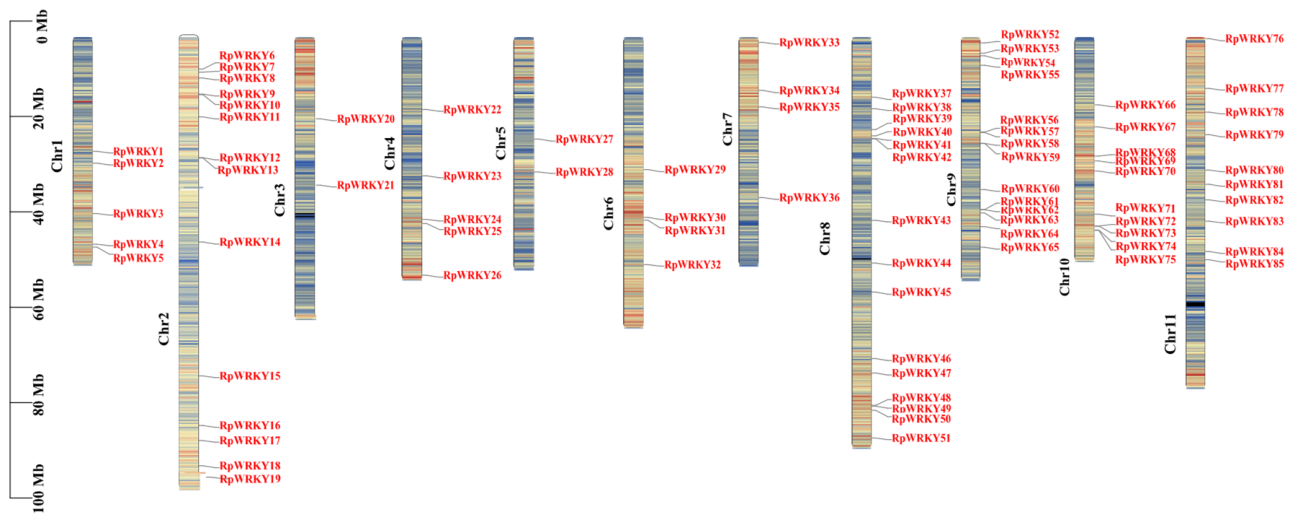
Following HMMER-based screening, 93 candidate sequences were retrieved. These putative targets were then subjected to analysis using SMART and CDD to confirm the presence of conserved WRKY structural domains. A total of 85 final members were identified through structural domain identification and removal of repetitive sequences. Based on their chromosomal positions, the genes were systematically named RpWRKY1 through RpWRKY85 (Figure 1). The results revealed that the 85 genes were unevenly distributed across 11 chromosomes. Chromosome 8 harbored the highest number of RpWRKY genes (14 members), whereas chromosomes 3 and 5 contained the fewest (two members each).
Using the ProtParam web tool, the biochemical characteristics of the WRKY family members were evaluated. Their lengths ranged from 135 residues (found in RpWRKY21) to 761 residues (observed in RpWRKY40). Their isoelectric points (pI) ranged from 4.31 (RpWRKY21) to 9.81 (RpWRKY19), and their molecular weights spanned 15,424.46 Da (RpWRKY21) to 83,146.1 Da (RpWRKY40). Additionally, the instability indices ranged between 38.4 (RpWRKY45) and 67.03 (RpWRKY48). Subcellular localization predictions showed that, aside from RpWRKY1, RpWRKY17, RpWRKY9 (which are located in chloroplasts), RpWRKY33 (present in the cytoplasm), and RpWRKY85 (attached to the cell membrane), the majority of WRKY proteins are situated within the nucleus (details are shown in Table S1).

3.2. Phylogenetic Analysis of the RpWRKY Genes

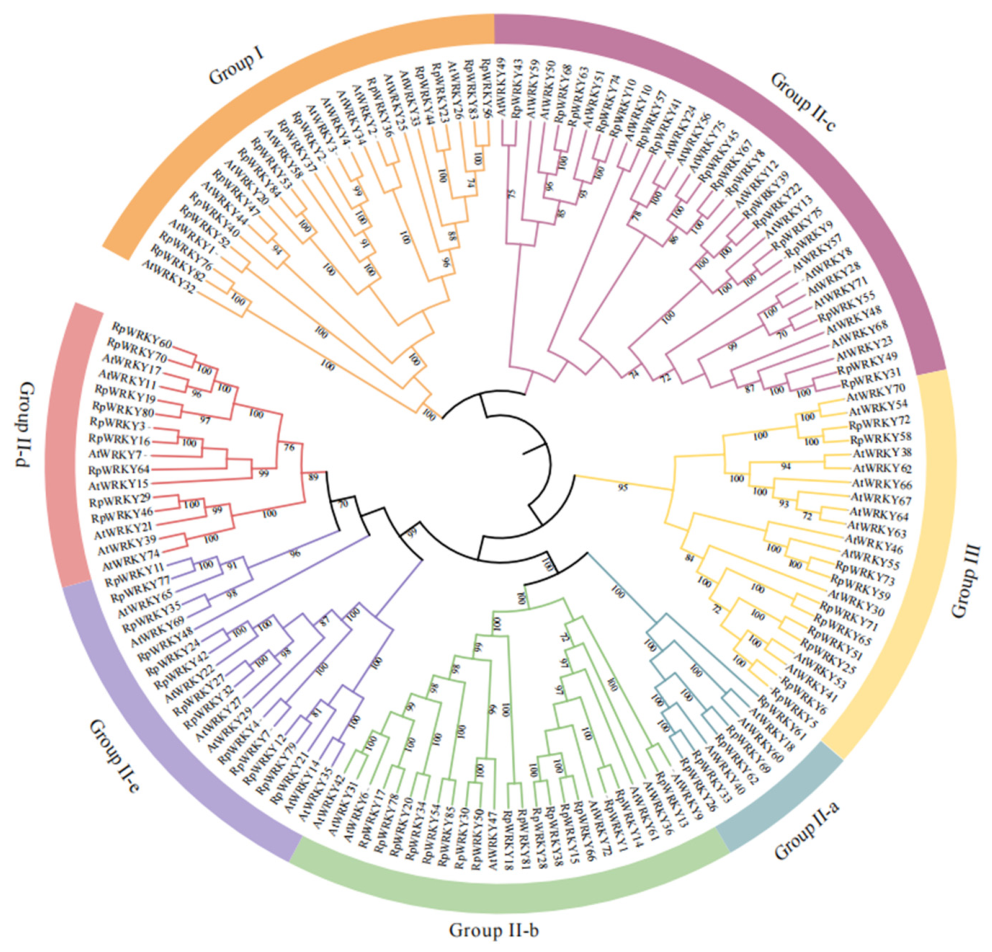
Because Arabidopsis thaliana serves as a well-established and widely recognized model organism in plant evolutionary research, AtWRKY proteins were selected as reliable reference sequences and outgroup controls for phylogenetic tree reconstruction. To systematically investigate the evolutionary classification and potential functional roles of the RpWRKY gene family, multiple sequence alignment was performed using 85 identified RpWRKY proteins together with 72 AtWRKY proteins. Based on both the NJ tree in MEGA 11 and the validated ML tree generated by IQ-TREE, the consistent phylogenetic topology indicated that all RpWRKY members could be clearly categorized according to the classical classification criteria of AtWRKYs. All RpWRKY proteins were clustered into three major conserved groups. Among them, Group I contained 14 RpWRKY members, whereas Group II included 61 members and was further divided into five distinct subgroups, namely IIa, IIb, IIc, IId, and IIe, containing 5, 17, 17, 9, and 13 members, respectively (Figure 2). The remaining 10 RpWRKY members were unambiguously assigned to Group III.

3.3. Conserved Structural Domains and Gene Structure of RpWRKY Genes

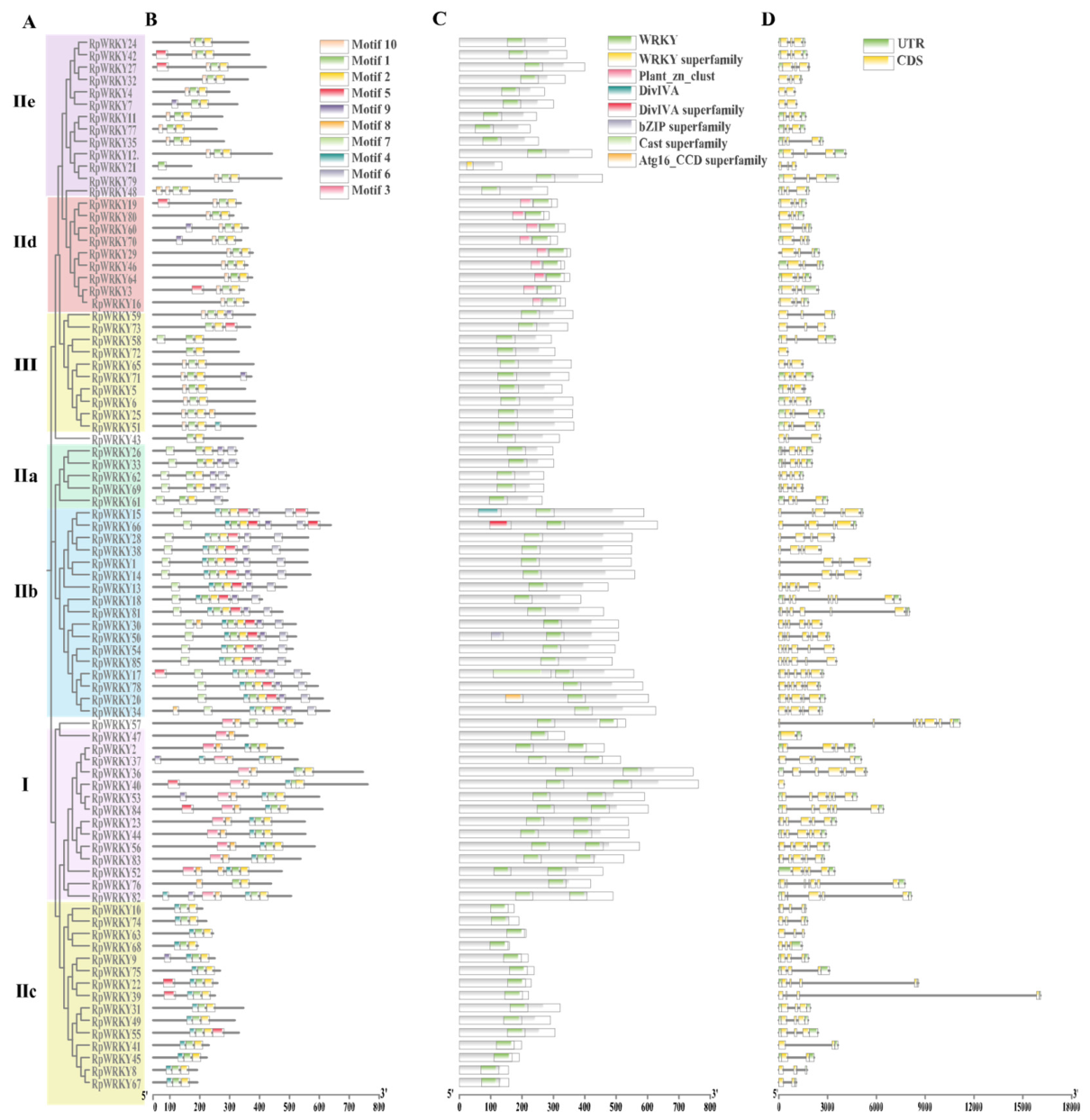
The analysis of 85 RpWRKY genes conserved structural domains by using the online website MEME, and the results (Figure 3) showed that there are 10 conserved motifs Motif1~Motif10 in RpWRKY (Figures S1 and S2), with amino acid lengths ranging from 8 to 42, and Motif1 and Motif3 are the WRKYGQK conserved motifs, which are the core motifs of the WRKY transcription factor family. According to the motif analysis conducted on RpWRKY, the majority of members belonging to the same subgroup share one or more common motifs located outside the WRKY conserved domain. This observation suggests that these members may carry out related functions within their respective subgroups, while also providing further evidence for the classification and evolutionary relationships of the RpWRKY family. However, there are considerable differences between subfamilies and further evidence for functional differentiation of WRKY proteins.
For better identification of phylogenetic links, gene structure (introns/exons) was used to understand structural evolution by determining the CDS of each gene. All WRKY genes except RpWRKY72 contain varying numbers of introns. The most common pattern of intron structure consists of three exons and two introns, and this pattern is particularly prevalent in Group IId and IIc subgroups. Intron counts vary between one and six, while exon numbers span from one to eight. Within the same evolutionary group or subgroup, genes generally exhibit comparable intron–exon distribution patterns. For instance, RpWRKY members belonging to Group IIb frequently contain five introns, whereas those in Group IIc typically possess only two introns. This preserved architectural similarity suggests that genes falling into the same group or subgroup may share both evolutionary histories and functional characteristics.

3.4. Localization of RpWRKY Promoters on Chromosomes and Analysis of Their Cis-Regulatory Elements

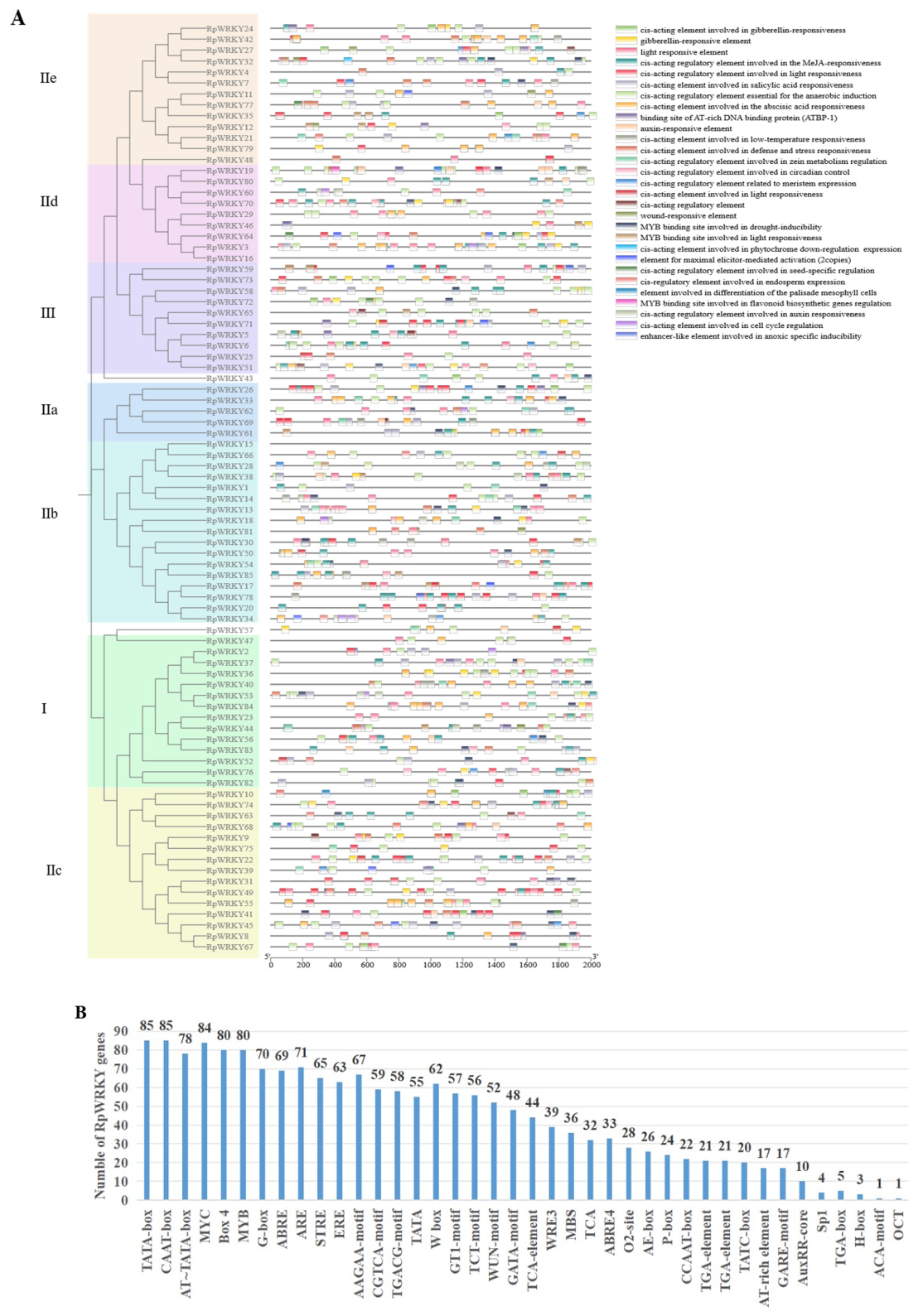
Cis-regulatory elements located in promoter regions play key functional roles in controlling gene expression, primarily through their interaction with transcription factors. The biological function of the WRKY gene can be approximated and predicted by analyzing the functional elements on its promoter. To identify cis-acting elements and analyze their possible regulatory roles, the 2000 bp sequences upstream of the RpWRKY genes were submitted to PlantCARE software. Within the promoter region, a diverse array of cis-regulatory sequences was identified, displaying considerable variation and associating primarily with growth and developmental processes, hormonal responses, stress adaptation, and light-responsive motifs (Figure 4). Statistical analysis showed that anaerobic induction, light responsiveness, and methyl jasmonate (MeJA)-related elements were the most widely distributed, covering 71, 70 and 59 RpWRKY genes, respectively. Hormone and stress-related elements, such as abscisic acid, salicylic acid, drought, gibberellin, low temperature, and defense response elements, occupied the second largest proportion. In addition, multiple elements associated with auxin response, meristem activity, cell cycle, seed specificity, circadian rhythm, palisade mesophyll cell differentiation and wound response were also detected. Collectively, these findings suggest that RpWRKY members play broad roles in the hierarchical control of hormonal pathways, responses to environmental challenges, and plant growth and developmental processes.

3.5. Synteny Analysis of RpWRKY Genes

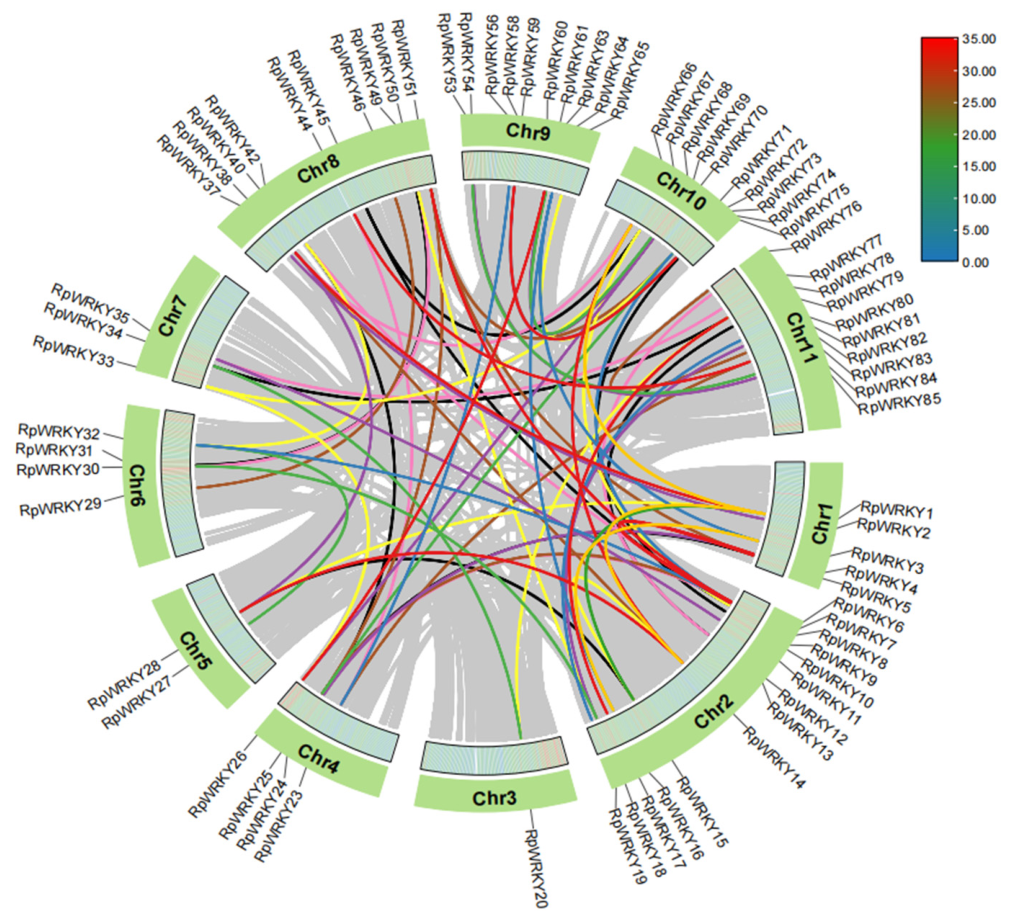
The covariance analysis revealed 75 gene pairs with covariance in the genome (Figure 5). An intrachromosomal duplication event was observed in the R. pseudoacacia genome, with one tandem duplication event each in chromosomes 11 and 2. We calculated the ratio of non-synonymous (Ka) to synonymous (Ks) substitution rates (Ka/Ks) to examine the evolutionary drive of tandemly duplicated genes. A Ka/Ks ratio below 1 reflects a negative selective effect during evolution, which suggests that the gene is under purifying selection. The results showed that the vast majority of genes with covariance had a greater ratio of synonymous mutations than non-synonymous mutations (Ka/Ks < 1) (Table 1 and Table S3), suggesting that the evolution of RpWRKY genes is mainly driven by purifying selection, and that this type of selection is the most common form of gene evolution under functional constraints.
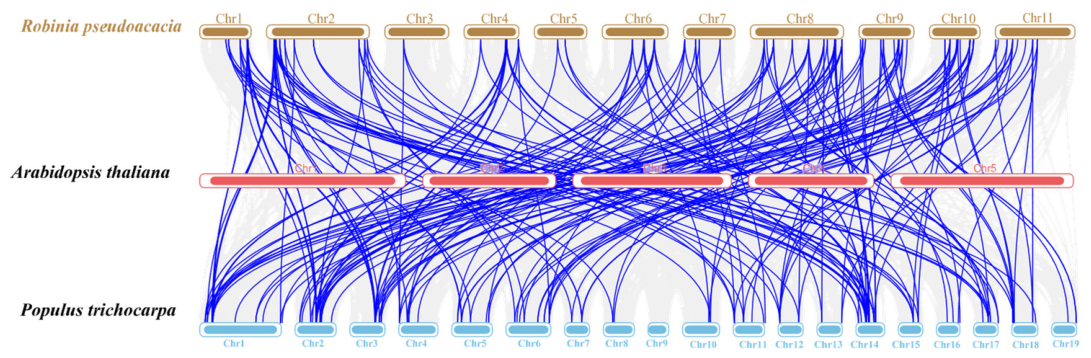
Gene evolution analysis was not only limited to within the R. pseudoacacia genome, but we also performed cross-species comparisons and analyzed the homologous gene relationships within R. pseudoacacia, A. thaliana and P. trichocarpa. As shown in Figure 6, we detected 217 pairs of homologous genes between R. pseudoacacia and P. trichocarpa, but only 77 pairs between R. pseudoacacia and A. thaliana. Consequently, R. pseudoacacia and P. trichocarpa possess a greater degree of covariance and are evolutionarily closer to each other than to A. thaliana.

3.6. Expression Analysis of RpWRKY Genes in Different Regions of Xylem

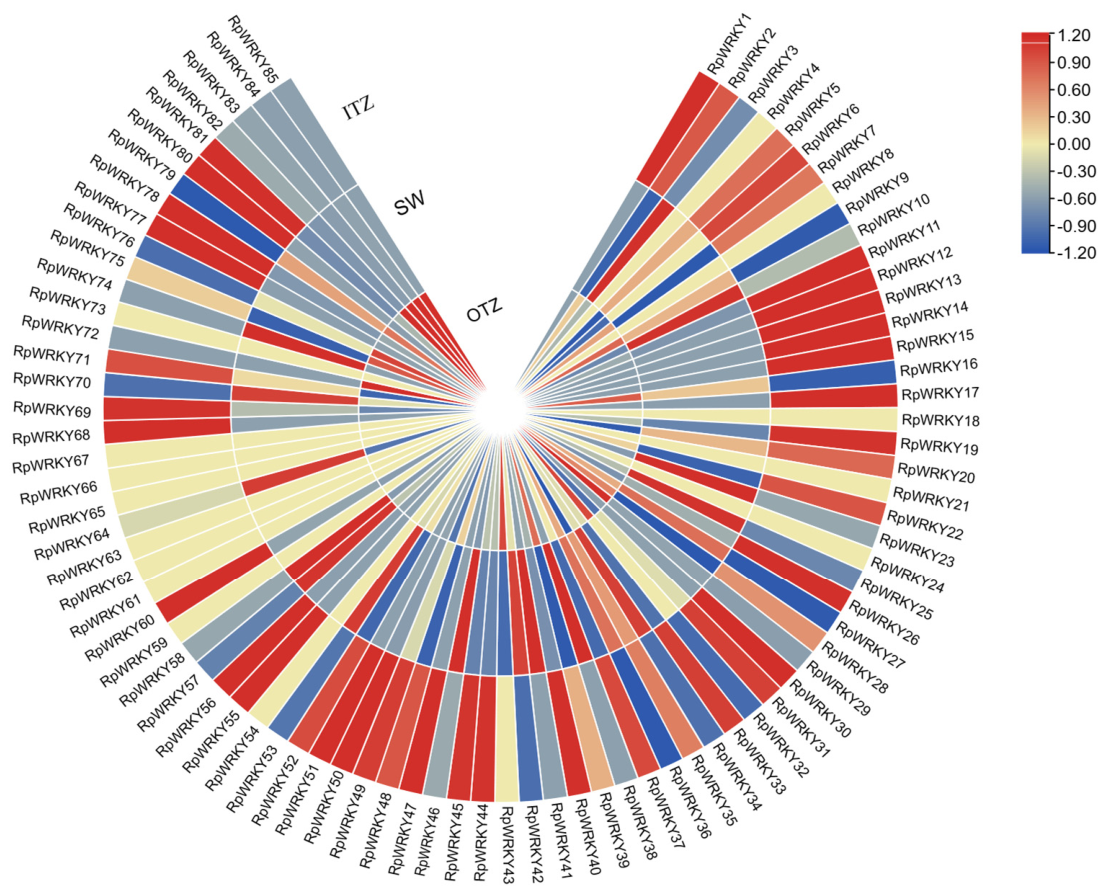
Using transcriptome data collected from three xylem regions (SW, OTZ, and ITZ), we analyzed the tissue-specific expression patterns of WRKY genes and explored their molecular functions, with the goal of further understanding how RpWRKY contributes to heartwood formation (Figure 7, Table S2).
A total of 14 RpWRKY genes were found to be unexpressed according to the results. Compared with sapwood and the outer transition zone, 13 genes (RpWRKY6/11/17/26/40/44/45/50/55/56/77/78/80) were up-regulated, and four genes (RpWRKY25/36/42/70) were down-regulated in the inner transition zone (FC > 2, FDR < 0.05). In the sapwood, two genes (RpWRKY10/25) were up-regulated, while five genes (RpWRKY22/28/39/45/48) were down-regulated (FC > 2, FDR < 0.05). In the outer transition zone, three genes (RpWRKY83/84/85) were up-regulated. In the inner transition zone, RpWRKY11/17/45/50/55/77/78/80 were differentially expressed genes, and their relative expression levels were higher than those in sapwood and the outer transition zone (FC > 2, FDR < 0.05). The genes up-regulated in the inner transition zone may be involved in xylem heartwood formation.
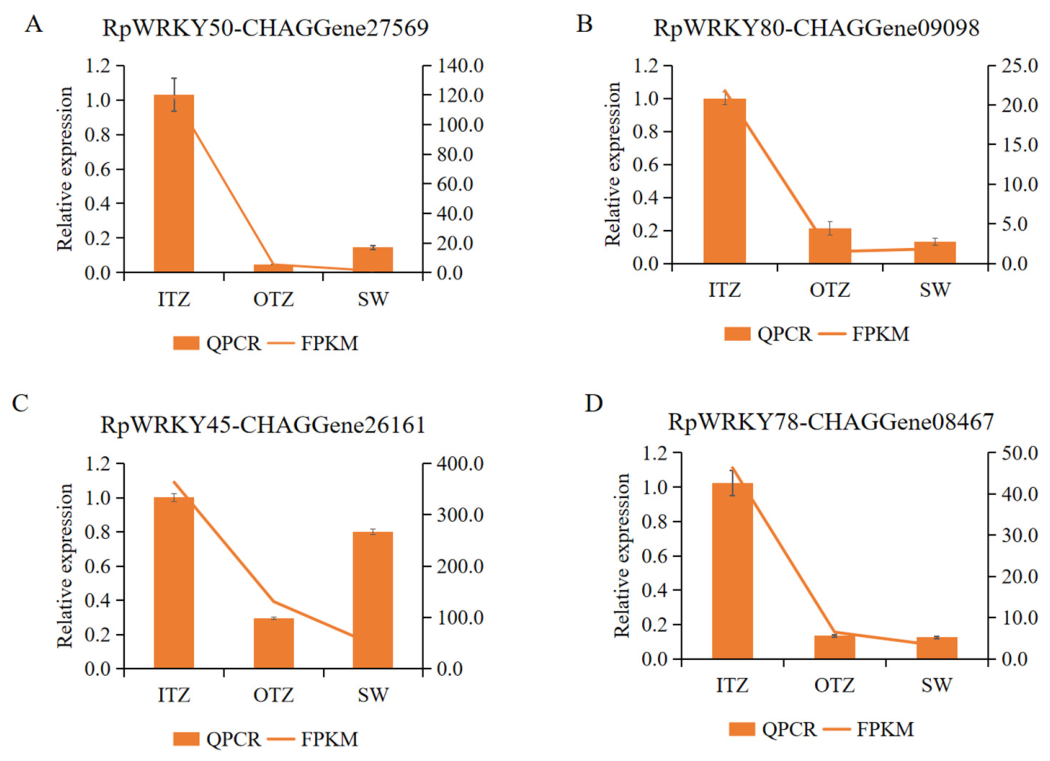
RT-PCR results showed that RpWRKY50 (CHAGGene27569), RpWRKY80 (CHAGGene09098), RpWRKY45 (CHAGGene26161), and RpWRKY78 (CHAGGene08467) were all up-regulated in inner transition zone, which was consistent with the transcriptomic results (Figure 8).

4. Discussion

With the advantages of fast growth and strong resistance, R. pseudoacacia is an excellent pioneer species for afforestation. The high-density acacia heartwood is a high-quality hardwood; at the same time, it is rich in flavonoids (e.g., acacin, apigenin), which give the wood properties such as decay resistance and antibacterial resistance [17]. To identify the key WRKY transcription factors controlling heartwood formation in R. pseudoacacia, the present study used publicly available genomic data together with transcriptome sequencing results to perform an extensive and systematic examination of the RpWRKY gene family. This investigation covered gene family identification, structural profiling, chromosomal localization, phylogenetic reconstruction, synteny analysis, conserved motif detection, cis-regulatory element prediction, and expression pattern characterization. By conducting transcriptomic analyses in three xylem regions—specifically, the inner transition layer, the outer transition layer, and the sapwood—a foundation was provided for subsequent in-depth exploration of RpWRKY gene functions and the mechanisms governing heartwood formation.
The RpWRKY gene family consists of 85 members, which is an intermediate number compared to other reported plant species. For example, Cannabis sativa [18], Oryza sativa [19], and Glycine max [20] contain 48, 109, and 197 WRKY genes, respectively. Gene duplication ranks as the foremost mechanism driving evolutionary change in species, covering three major forms—whole-genome duplication, segmental duplication, and tandem duplication—while also playing a significant part in generating functional diversity among genes [21]. Our analysis revealed two tandem duplication events and 75 segmental duplication events within the RpWRKY gene set, indicating that gene duplication contributes significantly to the proliferation of this family. In addition, tandem duplicated genes are usually distributed in clusters on chromosomes, which may enhance the rapid response capacity to specific environmental stresses (e.g., drought or pathogenic bacterial infections) through synergistic regulation. Phylogenetic analysis further classified the RpWRKY genes into three primary clades (I, II, and III). Group II was subsequently subdivided into five distinct lineages (IIa through IIe), with the largest numbers of genes observed in subgroups IIb and IIc. This pattern closely matches earlier classification results for WRKY families in model species such as A. thaliana [22] and O. sativa, suggesting a high degree of evolutionary conservation across the WRKY gene family. Introns, which constitute an essential feature of eukaryotic gene architecture, play a key part in controlling gene expression and driving evolutionary change [23]. They are not only involved in alternative splicing to increase protein diversity, but also affect the evolutionary rate and functional differentiation of genes [24]. WRKY gene family members of the same subclade have similar intron–exon distribution patterns. In addition, conserved motif analysis further supports this idea. However, despite the similar intron distribution pattern, the sequence lengths of the exons differed significantly among different RpWRKY genes, and this difference may have led to functional differentiation among WRKY members. Similar intron distribution and exon length variation phenomena were also observed in other plant species, such as A. thaliana and C. sativa [25,26], suggesting that the WRKY gene family may have followed a certain conserved mechanism.
Cis-acting elements are DNA sequence modules that are specifically bound by transcription factors, and their sequence characteristics dictate that they can only be bound by specific transcription factors, forming signaling pathways and thus precisely regulating the spatiotemporal expression patterns of genes. These elements are highly conserved in plants [27]. Involved in phytohormone responses, stress responses, and growth- and development-related processes, many cis-acting elements were found, indicating that RpWRKY genes may regulate a wide range of biological activities. The initial class consists of elements that respond to phytohormones, such as those associated with abscisic acid (ABA), auxin, and methyl jasmonate (MeJA). Within this group, ABA-responsive elements (ABREs) serve a central function in ABA signal transduction, reactions to abiotic stresses (for instance, drought, high salinity, and low temperature), and seed dormancy and germination. The MeJA-responsive motifs (CGTCA/TGACG) regulate insect defense, wound response, and secondary metabolite biosynthesis. Notably, they induce key lignin biosynthesis genes, such as phenylalanine ammonia-lyase (PAL) and peroxidase (POD), enhancing cell wall lignification and thereby influencing heartwood hardness and durability [28]. The second category is stress-responsive elements, including anaerobic induction elements that mediate hypoxia adaptation (e.g., flooding and waterlogging) and drought/cold stress-responsive elements. The third category is growth and development-related elements, such as light-responsive elements involved in photosynthesis and circadian rhythm regulation, as well as endosperm-specific regulatory elements.
The expression of WRKY gene is tissue-specific. Based on RNA-seq data and qRT-PCR experimental results, RpWRKY genes exhibited differential expression in different tissues of the xylem, suggesting that they may play key roles during heartwood formation. Sapwood is a region of the xylem with active physiological activities, where parenchyma cells are responsible for water and nutrient transport and storage. Most RpWRKY genes exhibited relatively high expression levels in sapwood. As an example, RpWRKY42 shares homology with AtWRKY22, which functions as a defense-associated transcriptional regulator in A. thaliana and modulates the crosstalk between the salicylic acid (SA) and jasmonic acid (JA) signaling cascades when the plant encounters both biotic and abiotic challenges [29]. RpWRKY42 showed an approximately 18-fold up-regulation in outer sapwood. It is speculated that RpWRKY42 may potentially possess analogous functions in response to adverse environmental stresses. In addition, RpWRKY84 exhibited high expression levels in the outer transition zone. Its homolog in Arabidopsis, AtWRKY20, acts as an upstream regulator of sucrose-responsive genes and mediates sucrose-stimulated starch synthesis via WRKY proteins [30]. RpWRKY84 was up-regulated 15-fold in the outer transition zone. It is hypothesized that RpWRKY84 might potentially modulate starch granule dynamics by regulating sugar metabolism, which could preliminarily provide carbon resources for subsequent heartwood formation.
The inner transition zone serves as a critical hub for the conversion of sapwood to heartwood. In this region, programmed cell death (PCD) of parenchyma cells occurs, accompanied by substantial accumulation of secondary metabolites such as flavonoids and lignin, which collectively drive heartwood formation. Based on transcriptomic and quantitative real-time PCR analyses, we identified two significantly up-regulated WRKY transcription factors—RpWRKY50 and RpWRKY80—within the inner transition zone of R. pseudoacacia and dissected their potential functions. In the inner transition zone, RpWRKY50 transcript levels were found to increase by 90-fold. A homologous counterpart has been shown to directly promote the transcriptional activation of several genes associated with programmed cell death (PCD), namely SAG, BFN1, and MC6 [31]. Therefore, we infer that RpWRKY50 is involved in regulating PCD of parenchyma cells in the transition zone, thereby providing cellular space and a metabolic environment for the deposition of secondary metabolites during heartwood formation. Meanwhile, RpWRKY80 was also significantly up-regulated (12-fold) in the inner transition zone. Its homologs AtWRKY17 and PoWRKY17 have been experimentally demonstrated to activate the gene encoding caffeoyl coenzyme A O-methyltransferase (CCoAOMT), a key catalytic enzyme in the lignin biosynthesis pathway, by targeting the W-box element in response to drought stress [32]. Accordingly, RpWRKY80 likely activates key lignin biosynthetic enzyme genes in the R. pseudoacacia transition zone through a similar mechanism, promoting localized lignin deposition in the xylem, which would reinforce the cell wall and assist in heartwood structural formation. In addition, the inner transition zone exhibits marked flavonoid accumulation, which is the primary chemical basis for heartwood coloration and decay resistance [33,34]. Although it remains unclear whether RpWRKY50 or RpWRKY80 directly regulate flavonoid metabolic pathways, previous studies have shown that WRKY family members are extensively involved in regulating the expression of flavonoid biosynthetic genes (e.g., CHS, F3H) [35,36,37]. In addition, transcriptome data revealed that RpWRKY78 and RpWRKY45 were also significantly up-regulated in inner transition zone, which was validated by qRT-PCR, suggesting that they may play regulatory roles during heartwood formation. However, no reports on the specific functions of these two genes are currently available in the literature. In summary, four WRKY transcription factors—RpWRKY80, RpWRKY78, RpWRKY45, and RpWRKY50—are important candidate regulators involved in heartwood formation. This discovery deepens the understanding of the molecular mechanisms underlying heartwood formation.
Based on the four core candidate RpWRKY transcription factors identified in this study, subsequent research can further explore the molecular regulatory mechanisms underlying heartwood formation. At the functional verification level of genes, the overexpression and silencing assays of target genes will be performed based on the genetic transformation system of R. pseudoacacia, to systematically characterize the biological functions of RpWRKY50, RpWRKY80, RpWRKY78, and RpWRKY45 in heartwood differentiation, parenchyma cell programmed cell death, and lignin secondary metabolism biosynthesis. At the molecular mechanism analysis level, focusing on the typical W-box cis-acting elements of the WRKY family, the yeast one-hybrid assay, luciferase activity detection, and EMSA will be combined to verify the targeted binding relationships between candidate transcription factors and key target genes related to CCoAOMT and PCD. Meanwhile, protein interaction technologies will be applied to screen upstream and downstream interacting regulatory proteins, so as to systematically dissect the specific transcriptional regulatory network governing heartwood development and enrich the key genetic resources for wood quality improvement of commercial timber forests.

5. Conclusions

Using genomic data, the present study conducted a genome-wide identification and evolutionary assessment of the WRKY transcription factor family. A total of 85 RpWRKY genes were detected, which were found to be unevenly distributed across eleven chromosomes. Synteny analysis identified 75 pairs of colinear WRKY genes within the genome, with segmental duplications representing the predominant mechanism responsible for the expansion of this gene family. Moreover, Ka/Ks analysis suggested that the family underwent purifying selection over the course of its evolution, a finding consistent with what has been observed in most plant WRKY families. Phylogenetic studies placed the RpWRKY genes into three main categories—Group I, Group II (further divided into subgroups IIa through IIe), and Group III—spanning a total of seven subfamilies, among which subgroups IIb and IIc contained the greatest number of members. Notably, RpWRKY45, RpWRKY78, RpWRKY50, and RpWRKY80 may have significant roles in either stress responses or the formation of heartwood.

Supplementary Materials

The following supporting information can be downloaded at https://www.mdpi.com/article/10.3390/f17050609/s1. Figure S1 presents an alignment of amino acid sequences from the conserved domains of RpWRKY and AtWRKY. In this figure, the labels “N” and “C” denote the amino-terminal and carboxyl-terminal ends of the conserved WRKY domains, respectively. Figure S2 shows the results of amino acid sequence comparisons for the conserved structural regions of RpWRKY. Table S1 provides detailed characteristics of all WRKY proteins examined in this investigation. Table S2 lists transcript expression levels of WRKY genes across different xylem tissues of Robinia pseudoacacia L. Table S3 summarizes tandem and segmental duplication events involving WRKY members in R. pseudoacacia. Table S4 contains primer sequence information for both target and reference genes. Table S5 describes the configuration of the 20 μL qPCR reaction mixture. Table S6 specifies the thermal cycling conditions used for qPCR.

Author Contributions

Conceptualization, B.L., Q.W., L.Z., X.G. and R.M.; Software, B.L., Q.W. and X.G.; Investigation, Q.W., L.Z., X.G., R.M. and B.L.; Writing—Original Draft Preparation, B.L., Q.W., X.G. and R.M.; Writing—Review and Editing, B.L., T.T., P.Z. and R.M.; Visualization, Q.W., L.Z., X.G. and R.M.; Funding Acquisition, B.L. and R.M. All authors have read and agreed to the published version of the manuscript.

Funding

This research was supported by the Natural Science Foundation of Shandong province (ZR2023MC190), and the Doctoral Start-up Fund of Qufu Normal University.

Institutional Review Board Statement

Not applicable.

Informed Consent Statement

Not applicable.

Data Availability Statement

The original contributions presented in the study are included in the article/Supplementary Materials. Further inquiries can be directed at the corresponding authors.

Conflicts of Interest

Ping Zhou is employed by Shandong Zhongrenxin Agricultural Technology Co., Ltd., his employer’s company was not involved in this study, and there is no relevance between this research and their company. Tao Tao is employed by Guilin Saraya Biotech Co., Ltd., his employer’s company was not involved in this study, and there is no relevance between this research and their company. The remaining authors declare that the research was conducted in the absence of any commercial or financial relationships that could be construed as a potential conflict of interest. The funders had no role in the design of the study; in the collection, analyses, or interpretation of data; in the writing of the manuscript; or in the decision to publish the results.

References

  1. Cardoso, S.; Pereira, H. Characterization of Douglas-fir grown in Portugal: Heartwood, sapwood, bark, ring width and taper. Eur. J. For. Res. 2017, 136, 597–607. [Google Scholar] [CrossRef]
  2. Wang, Z.; Zhang, X.; Lei, W.; Zhu, H.; Wu, S.; Liu, B.; Ru, D. Chromosome-level genome assembly and population genomics of Robinia pseudoacacia reveal the genetic basis for its wide cultivation. Commun. Biol. 2023, 6, 797. [Google Scholar] [CrossRef] [PubMed]
  3. Eulgem, T.; Rushton, P.J.; Schmelzer, E.; Hahlbrock, K.; Somssich, I.E. Early nuclear events in plant defence signalling: Rapid gene activation by WRKY transcription factors. EMBO J. 1999, 18, 4689–4699. [Google Scholar] [CrossRef] [PubMed]
  4. Qu, R.; Cao, Y.; Tang, X.; Sun, L.; Wei, L.; Wang, K. Identification and expression analysis of the WRKY gene family in Isatis indigotica. Gene 2021, 783, 145561. [Google Scholar] [CrossRef]
  5. Eulgem, T.; Rushton, P.J.; Robatzek, S.; Somssich, I.E. The WRKY superfamily of plant transcription factors. Trends Plant Sci. 2000, 5, 199–206. [Google Scholar] [CrossRef] [PubMed]
  6. Zhang, Y.; Wang, L. The WRKY transcription factor superfamily: Its origin in eukaryotes and expansion in plants. BMC Evol. Biol. 2005, 5, 1. [Google Scholar] [CrossRef]
  7. Kumar, S.; Pandey, A.K. Chemistry and biological activities of flavonoids: An overview. Sci. World J. 2013, 2013, 162750. [Google Scholar] [CrossRef]
  8. Wang, N.; Liu, W.; Zhang, T.; Jiang, S.; Xu, H.; Wang, Y.; Zhang, Z.; Wang, C.; Chen, X. Transcriptomic Analysis of Red-Fleshed Apples Reveals the Novel Role of MdWRKY11 in Flavonoid and Anthocyanin Biosynthesis. J. Agric. Food Chem. 2018, 66, 7076–7086. [Google Scholar] [CrossRef]
  9. Liu, W.; Wang, Y.; Yu, L.; Jiang, H.; Guo, Z.; Xu, H.; Jiang, S.; Fang, H.; Zhang, J.; Su, M.; et al. MdWRKY11 Participates in Anthocyanin Accumulation in Red-Fleshed Apples by Affecting MYB Transcription Factors and the Photoresponse Factor MdHY5. J. Agric. Food Chem. 2019, 67, 8783–8793. [Google Scholar] [CrossRef]
  10. Duan, S.; Wang, J.; Gao, C.; Jin, C.; Li, D.; Peng, D.; Du, G.; Li, Y.; Chen, M. Functional characterization of a heterologously expressed Brassica napus WRKY41-1 transcription factor in regulating anthocyanin biosynthesis in Arabidopsis thaliana. Plant Sci. 2018, 268, 47–53. [Google Scholar] [CrossRef]
  11. Xiao, S.; Ming, Y.; Hu, Q.; Ye, Z.; Si, H.; Liu, S.; Zhang, X.; Wang, W.; Yu, Y.; Kong, J.; et al. GhWRKY41 forms a positive feedback regulation loop and increases cotton defence response against Verticillium dahliae by regulating phenylpropanoid metabolism. Plant Biotechnol. J. 2023, 21, 961–978. [Google Scholar] [CrossRef] [PubMed]
  12. Li, Y.; Meng, F.; You, H.; Shao, Z.; Xu, C.; Li, Y.; Li, S.; Liu, L.; Wang, Q. SlWRKY14 integrates carotenoid and flavonoid biosynthetic pathways to regulate coloration and quality of tomato fruits. Cell Rep. 2025, 44, 116369. [Google Scholar] [CrossRef]
  13. Wang, W.; Bai, X.-D.; Chen, K.; Zhang, X.-Y.; Gu, C.-R.; Jiang, J.; Yang, C.-P.; Liu, G.-F. PsnWRKY70 Negatively Regulates NaHCO3 Tolerance in Populus. Int. J. Mol. Sci. 2022, 23, 13086. [Google Scholar] [CrossRef]
  14. Chen, C.J.; Chen, H.; Zhang, Y.; Thomas, H.R.; Frank, M.H.; He, Y.H.; Xia, R. TBtools: An integrative toolkit developed for interactive analyses of big biological data. Mol. Plant 2020, 13, 1194–1202. [Google Scholar] [CrossRef]
  15. Huang, M.; Chen, L.; Ma, J.; Mo, J.; He, L.; Liang, Q.; Peng, G.; Tan, Z. Biological functions of endophytic bacteria in Robinia pseudoacacia ‘Hongsen’. Front. Microbiol. 2023, 14, 1128727. [Google Scholar] [CrossRef]
  16. Jozefczuk, J.; Adjaye, J. Quantitative real-time PCR-based analysis of gene expression. Methods Enzymol. 2011, 500, 99–109. [Google Scholar] [CrossRef] [PubMed]
  17. Zhao, X.; Yang, J.; Li, G.; Sun, Z.; Hu, S.; Chen, Y.; Guo, W.; Hou, H. Genome-wide identification and comparative analysis of the WRKY gene family in aquatic plants and their response to abiotic stresses in giant duckweed (Spirodela polyrhiza). Genomics 2021, 113, 1761–1777. [Google Scholar] [CrossRef]
  18. Wang, C.-T.; Ru, J.-N.; Liu, Y.-W.; Li, M.; Zhao, D.; Yang, J.-F.; Fu, J.-D.; Xu, Z.-S. Maize WRKY Transcription Factor ZmWRKY106 Confers Drought and Heat Tolerance in Transgenic Plants. Int. J. Mol. Sci. 2018, 19, 3046. [Google Scholar] [CrossRef]
  19. Wu, K.L.; Guo, Z.J.; Wang, H.H.; Li, J. The WRKY family of transcription factors in rice and Arabidopsis and their origins. DNA Res. 2005, 12, 9–26. [Google Scholar] [CrossRef] [PubMed]
  20. Schmutz, J.; Cannon, S.B.; Schlueter, J.; Ma, J.; Mitros, T.; Nelson, W.; Hyten, D.L.; Song, Q.; Thelen, J.J.; Cheng, J.; et al. Genome sequence of the palaeopolyploid soybean. Nature 2010, 463, 178–183. [Google Scholar] [CrossRef]
  21. Ulker, B.; Somssich, I.E. WRKY transcription factors: From DNA binding towards biological function. Curr. Opin. Plant Biol. 2004, 7, 491–498. [Google Scholar] [CrossRef]
  22. Spicer, R.; Holbrook, N.M. Parenchyma cell respiration and survival in secondary xylem: Does metabolic activity decline with cell age? Plant Cell Environ. 2007, 30, 934–943. [Google Scholar] [CrossRef]
  23. Porras-Tobias, A.L.; Caldera, A.; Castro-Piedras, I. Intron Retention: A Reemerging Paradigm in RNA Biology and Post-Transcriptional Gene Regulation. Genes 2025, 16, 986. [Google Scholar] [CrossRef]
  24. Laxa, M. Intron-Mediated Enhancement: A Tool for Heterologous Gene Expression in Plants? Front. Plant Sci. 2017, 7, 1977. [Google Scholar] [CrossRef]
  25. Rashid, A.; Khajuria, M.; Ali, V.; Faiz, S.; Jamwal, S.; Vyas, D. Genome-wide identification and expression profiling of WRKY family suggest their potential role in cannabinoid regulation in Cannabis sativa L. Ind. Crops Prod. 2023, 206, 117706. [Google Scholar] [CrossRef]
  26. Wang, Q.; Wang, M.; Zhang, X.; Hao, B.; Kaushik, S.K.; Pan, Y. WRKY gene family evolution in Arabidopsis thaliana. Genetica 2011, 139, 973–983. [Google Scholar] [CrossRef]
  27. Peng, Q.; Shrestha, A.; Zhang, Y.; Fan, J.; Yu, F.; Wang, G. How lignin biosynthesis responds to nitrogen in plants: A scoping review. Plant Biol. 2024, 26, 881–895. [Google Scholar] [CrossRef] [PubMed]
  28. Yoon, J.; Cho, L.H.; Tun, W.; Jeon, J.S.; An, G. Sucrose signaling in higher plants. Plant Sci. 2021, 302, 110703. [Google Scholar] [CrossRef] [PubMed]
  29. Kloth, K.J.; Wiegers, G.L.; Busscher-Lange, J.; van Haarst, J.C.; Kruijer, W.; Bouwmeester, H.J.; Dicke, M.; Jongsma, M.A. AtWRKY22 promotes susceptibility to aphids and modulates salicylic acid and jasmonic acid signalling. J. Exp. Bot. 2016, 67, 3383–3396. [Google Scholar] [CrossRef] [PubMed]
  30. Nagata, T.; Hara, H.; Saitou, K.; Kobashi, A.; Kojima, K.; Yuasa, T.; Ueno, O. Activation of ADP-Glucose Pyrophosphorylase Gene Promoters by a WRKY Transcription Factor, AtWRKY20, in Arabidopsis thaliana L. and Sweet Potato (Ipomoea batatas Lam.). Plant Prod. Sci. 2012, 15, 10–18. [Google Scholar] [CrossRef]
  31. Cui, X.; Fan, X.; Xu, S.; Wang, S.; Niu, F.; Zhao, P.; Yang, B.; Liu, W.; Guo, X.; Jiang, Y.-Q. WRKY47 transcription factor modulates leaf senescence through regulating PCD-associated genes in Arabidopsis. Plant Physiol. Biochem. 2024, 213, 108805. [Google Scholar] [CrossRef]
  32. Luan, Y.; Chen, Z.; Meng, J.; Tao, J.; Zhao, D. PoWRKY17 promotes drought tolerance in Paeonia ostii by modulating lignin accumulation. Ind. Crops Prod. 2023, 204, 117228. [Google Scholar] [CrossRef]
  33. Zhang, R.; Zhang, Z.; Yan, C.; Chen, Z.; Li, X.; Zeng, B.; Hu, B. Comparative physiological, biochemical, metabolomic, and transcriptomic analyses reveal the formation mechanism of heartwood for Acacia melanoxylon. BMC Plant Biol. 2024, 24, 308. [Google Scholar] [CrossRef] [PubMed]
  34. Zan, N.L.; Lu, Z.H.; Wang, X.Y.; Wang, R.-Y.; Liang, N.-Y.; Huo, H.-X.; Zhao, Y.-F.; Song, Y.-L.; Tu, P.-F.; Zheng, J.; et al. Anti-inflammatory flavonoid derivatives from the heartwood of Dalbergia odorifera T. Chen. Nat. Prod. Res. 2023, 37, 928–935. [Google Scholar] [CrossRef] [PubMed]
  35. Wang, Y.; Wang, X.; Fang, J.; Yin, W.; Yan, X.; Tu, M.; Liu, H.; Zhang, Z.; Li, Z.; Gao, M.; et al. VqWRKY56 interacts with VqbZIPC22 in grapevine to promote proanthocyanidin biosynthesis and increase resistance to powdery mildew. New Phytol. 2023, 237, 1856–1875. [Google Scholar] [CrossRef]
  36. Alabd, A.; Ahmad, M.; Zhang, X.; Gao, Y.; Peng, L.; Zhang, L.; Ni, J.; Bai, S.; Teng, Y. Light-responsive transcription factor PpWRKY44 induces anthocyanin accumulation by regulating PpMYB10 expression in pear. Hortic. Res. 2022, 9, uhac199. [Google Scholar] [CrossRef]
  37. Zhang, J.; Wang, Y.; Mao, Z.; Liu, W.; Ding, L.; Zhang, X.; Yang, Y.; Wu, S.; Chen, X.; Wang, Y. Transcription factor McWRKY71 induced by ozone stress regulates anthocyanin and proanthocyanidin biosynthesis in Malus crabapple. Ecotoxicol. Environ. Saf. 2022, 232, 113274. [Google Scholar] [CrossRef] [PubMed]
Figure 1. Chromosome localization map of RpWRKY genes. Vertical coordinates indicate chromosome length; Chr1–11 represent chromosome numbers.
Forests 17 00609 g001
Figure 2. A phylogenetic tree was constructed based on the WRKY protein sequences from A. thaliana and R. pseudoacacia. This analysis divided the sequences into seven subfamilies, where the previously defined groups—Group I, Group II (further subdivided into subgroups IIa through IIe), and Group III—were used to indicate the subgroup assignment.
Forests 17 00609 g002
Figure 3. Phylogenetic relationships, conserved motifs, gene structure and structural domain composition of RpWRKY genes. (A) Phylogenetic tree of RpWRKY protein sequences constructed by MEGA11; different colors represent different subfamilies. (B) Analysis of the RpWRKY genes using MEME software revealed ten conserved motifs, which are depicted as boxes in distinct colors. (C) Conserved structural domains of the RpWRKY family; different colored boxes represent different conserved structural domains. (D) Conserved RpWRKY family intron and exon distribution; gray lines indicate introns.
Forests 17 00609 g003
Figure 4. Analysis of cis-acting elements in the promoters of RpWRKY genes. (A) Using PlantCARE software, cis-acting elements were detected, and different colored boxes denote specific element types as well as their positions on each RpWRKY gene promoter. (B) A statistical summary shows how many RpWRKY genes contain each type of cis-acting element, where the horizontal coordinate corresponds to the element type and the vertical coordinate corresponds to the number of WRKY family members.
Forests 17 00609 g004
Figure 5. Duplication and collinearity of RpWRKY genes. Throughout the genome, tandem duplication pairs are indicated by gray lines, whereas segmental gene duplications are denoted by colored lines.
Forests 17 00609 g005
Figure 6. Relationship of the RpWRKY genes to the WRKY gene. Collinearity of WRKY of R. pseudoacacia, A. thaliana and P. trichocarpa. Genome-wide covariate gene pairs are represented by gray lines, whereas covariate gene pairs belonging to the WRKY gene family are depicted in blue.
Forests 17 00609 g006
Figure 7. Expression heatmap of RpWRKY genes in different parts of the xylem. SW represents sapwood, OTZ represents the outer transition zone, and ITZ represents the inner transition zone.
Forests 17 00609 g007
Figure 8. RT-PCR validation of RpWRKY gene expression. The relative expression levels of RpWRKY50 (A), RpWRKY80 (B), RpWRKY45 (C), and RpWRKY78 (D) were detected by RT-qPCR across three tissues (ITZ, OTZ, SW). Orange bars represent RT-qPCR results, and orange lines represent FPKM values from RNA-seq. Data are presented as means ± standard error (SE).
Forests 17 00609 g008
Table 1. Tandem repeats of RpWRKY genes and Ka and Ks values.
Tandem-Duplicated Gene PairsKaKsKa/Ks
RpWRKY76 match RpWRKY820.1799907730.5381711540.334448942
RpWRKY14 match RpWRKY150.4630817931.7921643990.258392474
Disclaimer/Publisher’s Note: The statements, opinions and data contained in all publications are solely those of the individual author(s) and contributor(s) and not of MDPI and/or the editor(s). MDPI and/or the editor(s) disclaim responsibility for any injury to people or property resulting from any ideas, methods, instructions or products referred to in the content.