Article

Earthworms, Soil Porosity, and Infiltration Rates in Pine Plantation Forests in Java, Indonesia

1
Research Group Tropical Agroforestry, Department Soil Science, Faculty of Agriculture, Universitas Brawijaya, Malang 65145, Indonesia
2
Agro-Eco-Technology Study Program, Faculty of Agriculture, Universitas Brawijaya, Malang 65145, Indonesia
3
Centre for International Forestry Research and World Agroforestry (CIFOR-ICRAF), Jl. Cifor, Situ Gede, Sindang Barang, Bogor 16115, Indonesia
*
Author to whom correspondence should be addressed.
Forests 2026, 17(5), 565; https://doi.org/10.3390/f17050565
Submission received: 9 March 2026 / Revised: 23 April 2026 / Accepted: 25 April 2026 / Published: 5 May 2026

Abstract

Pine plantations on volcanic slopes in Indonesia are considered to be forests and are managed for wood production and slope protection. Logging practices followed by replanting may affect soil health. Existing agroforestry management contracts allow farmers to intercrop with vegetables in young plantations and grow fodder grasses in older ones. However, critical data on hydrological functions in such systems are scarce, while concerns over heavy rainfall and floods increase. We explored the relationships between soil cover, soil carbon, earthworms, soil porosity and infiltration rates in relation to slope class in second-rotation pine plantations around two years of age (intercropped) and at ten-year old pine-grass stages. Five slope classes (0%–8%, 8%–15%, 15%–25%, 25%–45%, and >45%) were compared with three measurement points each. Basic soil chemical and physical characteristics were measured for the 0–10, 10–20 and 20–30 cm layers. Remnant natural forest was available as a historical reference only on the steepest slope class. Organic soil carbon (COrg) divided by a texture-based reference level was 1.12, 0.32 and 0.49 for natural forest, young and old agroforestry on very steep slopes, respectively. Within pine-based agroforestry relative decline with slope class (1–5) was pronounced in earthworms (biomass −3.46, population −4.18) and infiltration rates (−2.35) while bulk density increased (0.49); for soil carbon (COrg), nitrogen, available phosphorus and exchangeable Mg effects in the −1.26 to −1.68 range indicated a loss of functional topsoil. Differences with age of the agroforestry systems were much smaller but included a decreasing earthworm population but an increase in mean earthworm weight and partial recovery of the COrg/CRef ratio. Pine-based agroforestry on very steep soils had only 10%–14% of the earthworm biomass and 35% of the infiltration rate of reference natural forest. Understory vegetation biomass and litter layer necromass were more than five-fold higher in the natural forest. Across all samples a higher COrg and higher earthworm biomass were associated with complementary positive changes in infiltration rates and soil porosity. Regression analysis suggests equal skill of tree cover, soil COrg, porosity, aggregate stability and earthworms to predict infiltration rates while explanatory variables were strongly correlated. Management of the pine plantations may have to achieve a closer approximation of the conditions in natural forests to effectively protect upper watersheds.

1. Introduction

Two decades after a major challenge to the prevailing forest-flood debate [1,2,3,4], public debate after every flood event in a country like Indonesia still tends to focus on the fate and condition of forests [5]. The common but overgeneralized expectation that all types of forests take care of all hydrological functions ignores the wide variation in above- and below-ground conditions in what can be called ‘forest’ [6]. Hydrological functions of tropical forests depend on the soil on which the remaining forests grow and on the impact management practices have on soil health [7]. Although research has shown that terraced fields used for rice cultivation can provide downstream flood prevention at a level comparable with existing forests on Java [8], infiltration rates at the field scale remain the single most distinguishing parameter between land cover types. However, given the strong dependence of infiltration rates on soil texture and slope, quantification of effects of land use requires statistical controls before differences in measured values can be attributed to land use, rather than to pre-existing variation [9,10]. Specific questions remain on the impacts of conversion of natural forests to plantation crops such as oil palm [11,12], rubber [13] or industrial timber [14]. Continued empirical studies have shown difficulties in dealing with the various confounding factors in more aggregated scales [15].
Deforestation and forest degradation are politically and emotionally loaded terms that refer to changes across and within the broad categories of a forest-nonforest dichotomy [16], interacting with a range of watershed functions, tradeoffs and associated metrics [17,18]. Tree planting is still in public discussions, expected to be a universal remedy to any lack of watershed functions, but evidence is mixed [19]. Reduced soil health in plantation forests compared to natural forests justifies the use of the term ‘forest degradation’ [14], despite increased wood production. As landscapes are shaped by the specific history of land uses across topography and soils, functionally relevant soil properties vary in space and time, but their association with land cover may be based on a two-way causality: land use impacts on key soil ecological processes can be hard to distinguish (in survey-type studies) from soil properties that (socially) determine land use patterns. Experiments with truly randomized allocations of land use systems are scarce. Where the deepest and most productive soils are usually prioritized for agriculture, forests remain in less fertile locations but may yet be the preferred land cover on sloping land [20]. Survey-type empirical data address the specific context in which they were collected, making overgeneralization of forest-water relations a risk. Legal categories and designations may be too coarse for the nuanced ecological relationships involved.
In Indonesia’s forestry law, designated forests (‘kawasan hutan’) are categorized by primary function as production, watershed protection or biodiversity conservation forests. In the production forest category, diverse natural forests can be replaced by monocultural plantations, despite the impacts this conversion has on aboveground biodiversity and soil functions [4]. However, production forests still have to maintain minimum levels of environmental functionality, such as infiltration of rainfall, avoidance of surface runoff and erosion. Hydrological properties of planted forests in a first or subsequent production cycle depend strongly on the practices used in clear-felling and replanting, with possible recovery during the next cycle. Monocultural plantations of Pinus merkusii Junghuhn et de Vriese for 30–40 year rotations occupy around 0.16 M ha on Java, with about half the area used for resin tapping to provide income to surrounding villages [21]. Given the complex history of plantation forests on the volcanic slopes of densely populated Java (Indonesia) [22], some of them have been terraced before trees were planted, others not. While Indonesia has many examples of farmer-managed forest analogs known as ‘agroforests’ that structurally and functionally resemble natural forests [23], other forms of ‘agroforestry’ have monocultural plantations as stating point, where farmers are allowed to manage agricultural crops (or fodder grasses) as long as these do not interfere with the trees managed by a forest authority [24]. In mosaics of remnant forests, agroforestry, open field agriculture and settlements, agricultural intensification reduces both aboveground biomass and indicators of soil quality [25]. Managing the hydrological impacts of these systems depends on the way structure and function are understood, rather than reliance on a simple forest/nonforest dichotomy.
Tall trees in monocultural tree stands without a protective litter layer were found to face serious erosion risks as water drips falling from the canopy had more energy than the rainfall [26,27]. The brown leaves decaying on the forest floor as a litter layer may be as important for ‘forest functions’ as the green leaves in the canopy [28]. The standing litter (necromass) layer can be estimated from annual input and mean residence time, with the latter depending on nitrogen content, lignin and polyphenolics [29]. Litter layers interact with earthworms, providing both food and habitat (shelter) for these ‘ecosystem engineers’ [30]. Functionally, different earthworm species and ecological groups may interact differently with soil conditions, calling for taxonomic identification in empirical studies [31,32,33]. Compared to natural forests, earthworms in agroforestry systems may involve shifts in species composition, population densities, sizes, pore formation and soil mixing activities [34,35]. Soil organisms such as earthworms can both reduce soil loss by improving porosity and increase it by diminishing soil stability as a result of their mixing activities [36]. Where the quantitative relationship between point-level infiltration measurements and subcatchment level stormflow depends on spatial heterogeneity within a field [37], changes in mean infiltration rates can be interpreted qualitatively for different slope classes, where slope decreases the time available for infiltration before runoff occurs. ‘Infiltration-friendly’ forms of agroforestry were identified on the basis of small runoff plots, as well as soil porosity measurements [38]. Elsewhere, grasslands were found to have large earthworm populations and high infiltration rates with an initial decline after conversion to agroforestry [39]. On volcanic soils, earthworm activity has been linked to coffee production in pine-based agroforestry [40], while episodes of volcanic ash deposition influence vegetation, litterfall, earthworm activity and the regeneration of soil porosity and infiltration rates [41]. As volcanic ash can have hydrophobic properties, infiltration rates can be affected [42].
As specific research questions for pine plantations in the production forest zone of volcanoes on Java, we targeted:
  • How close can pine plantations with agroforestry management approximate a reference natural forest in terms of infiltration rates?
  • How do slope class and plantation age under prevailing agroforestry management influence soil health indicators?
  • Are earthworms active agents in restoring water infiltration that deserve to be promoted by specific interventions?

2. Materials and Methods

2.1. Study Area

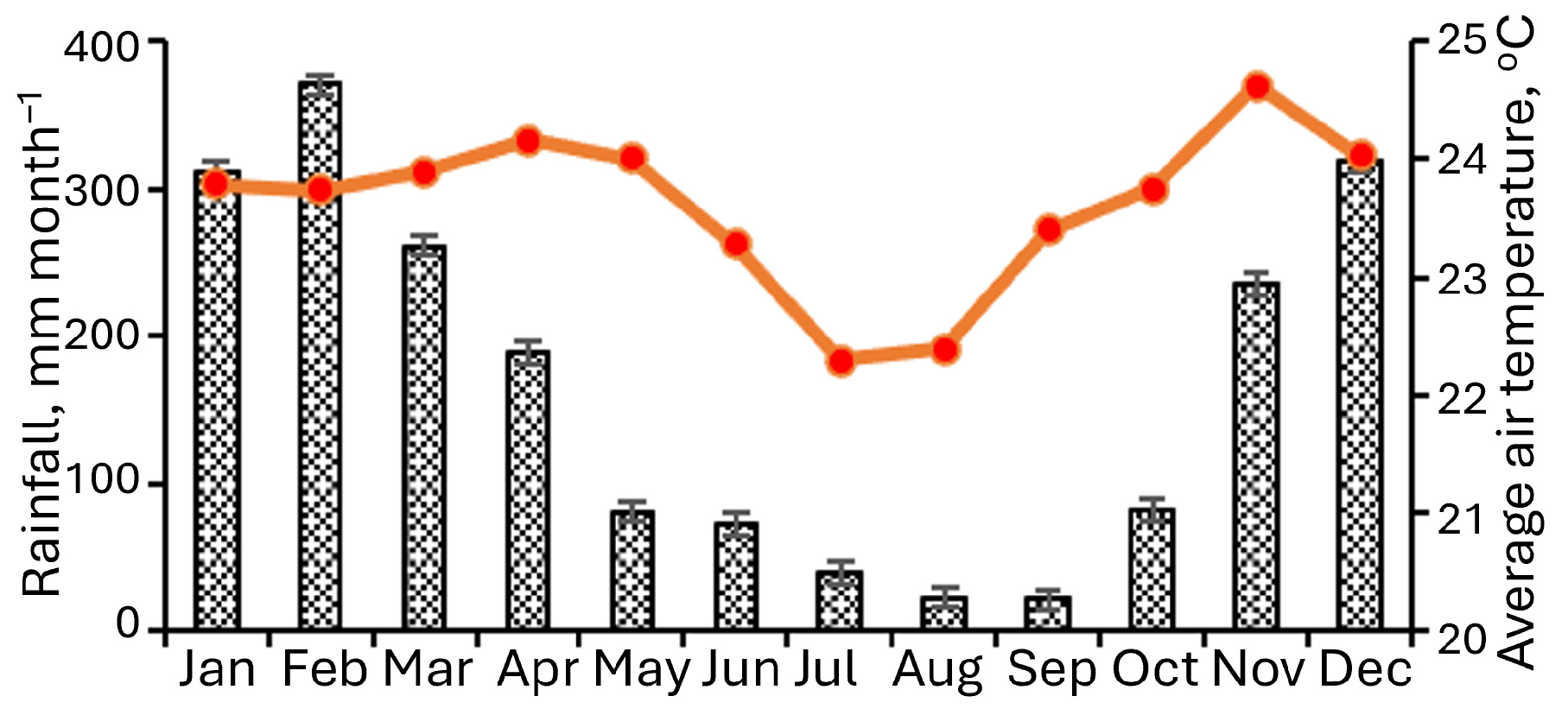
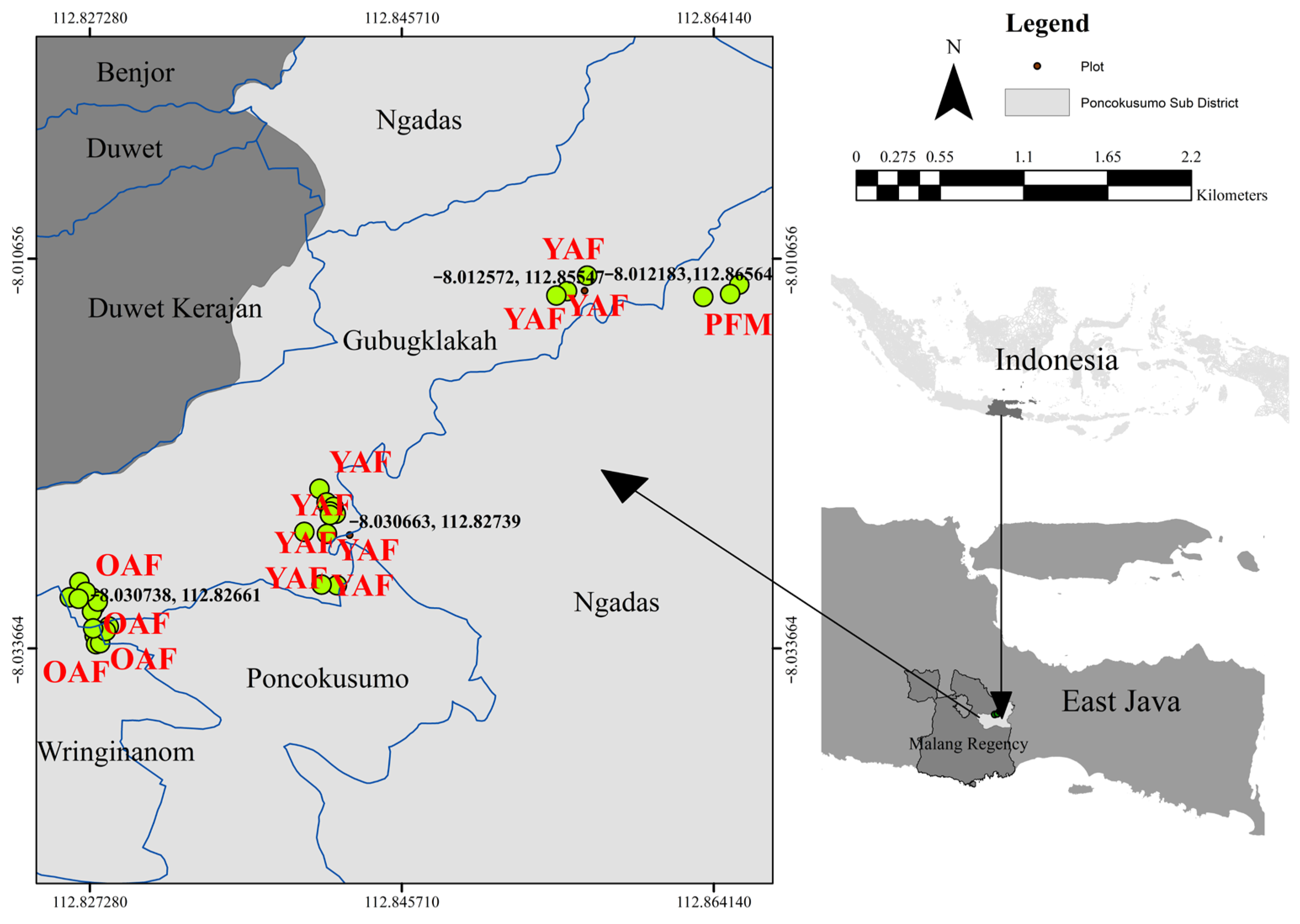
The research was conducted from January 2023 to August 2023 in and around the Bromo-Semeru massif, which includes Java’s highest volcano, with a national park (National Park Bromo Tengger Semeru or TNBTS) core surrounded by ‘watershed protection’ and ‘production’ forests, including P. merkusii plantations (introduced from Sumatra to Java in the 1920s during the Dutch colonial era) managed by Perum Perhutani (State Forestry Public Corporation in Java and Madura Island). Sites were selected in the Poncokusumo District, Malang Regency (Figure 1), Latitude 8°01′–8°03′ S and Longitude 112°82′–112°87′ E. The average annual rainfall over the past 10 years measured at the study site is 2170 mm, with an average air temperature of 24 °C (Figure 2). Soil sampling and earthworm observations were conducted towards the end of the rainy season (April–May 2023).
The history of plantation management in large blocks constrained our choice of sampling sites for an age × slope interaction test. Possible confounding of age with inherent soil properties was tested by comparing basic soil properties. The soil in all locations is considered to be geologically young with limited horizon development and classified as Inceptisol according to Soil Taxonomy criteria [43,44], probably as Andic Eutrudepts [45]. It has layers with andic (volcanic ash soil) properties with a strong influence of volcanic amorphous material, so that its physical structure is crumbly loose, low soil bulk density (typically <1.0 g cm−3), and highly porous, which has implications for high water-holding capacity. With standard dispersion methods, the texture is mostly sand, through strong bonding of microaggregates. Soil chemistry of andisols is characterized by a relatively high organic C content (around 7%, [46]), high exchangeable cation concentrations and a high P retention (P fixation potential).

2.2. Research Design and Sampling Strategy

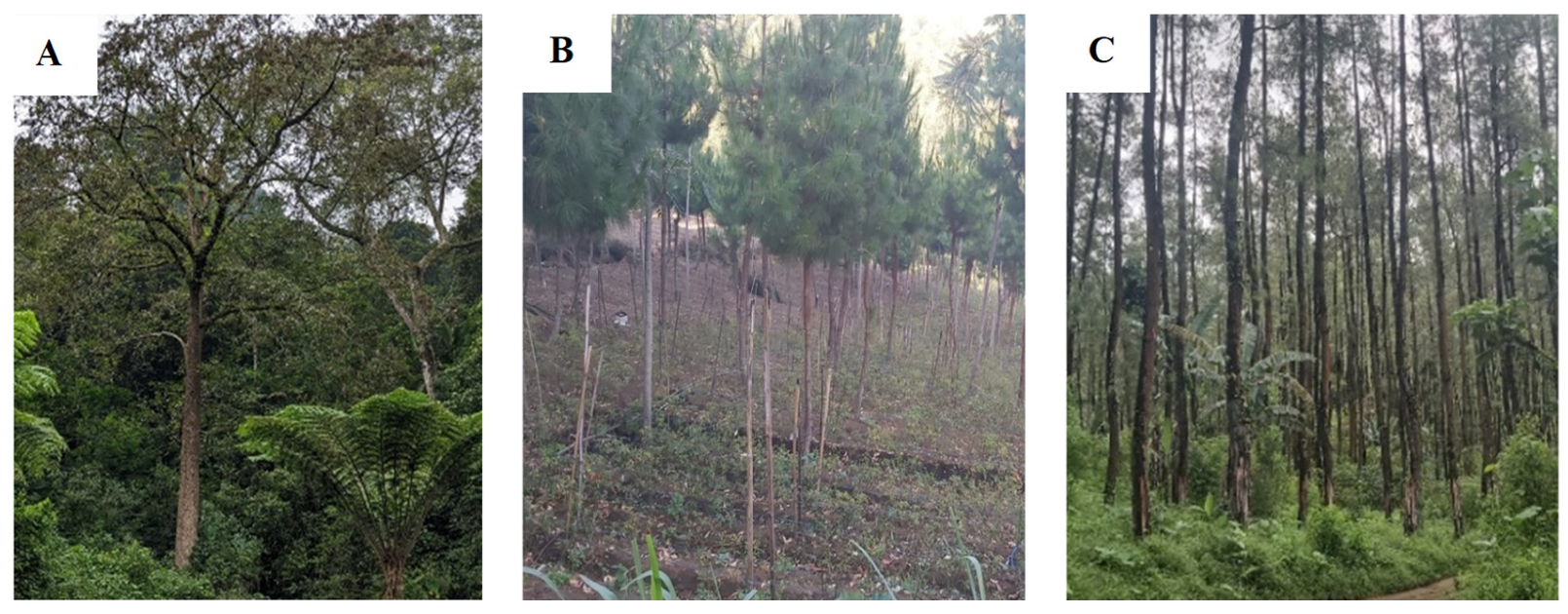
After a survey of the area and the forest management data, sites were purposely selected to match the survey design. A factorial design was used for the survey with land use type as first factor at three levels: (YAF) = Young agroforestry system (Pine-horticulture: age around 2 years); (OAF) = Old Agroforestry System (Pine-Grass: age around 10 years); (PFM) = Protection Forest Management, and within YAF and OAF slope class as second factor with five levels: 0%–8%, ‘Flat’; 8%–15%, ‘Sloping’; 15%–25%, ‘Rather Steep’; 25%–45%, ‘Steep’; >45%, ’Very Steep’. Given the land-use history, PFM was only observable in the very steep class at slope > 45%. Ten-year-old agroforestry was sampled in Wringinanom village, and two-year-old systems in Gubugklakah Village, both part of the Ngadas Forest Management Unit (Figure 3). The protected forest was measured inside the TNBTS in the Ngadas village. Within the constraints of what was available in the landscape, three replicate sampling points were selected for each factorial combination (Table A1). All sites appeared in the field to be on the same soil type, and intrinsic similarity was confirmed by soil sampling of the 0–30 cm layer and analysis in the laboratory.
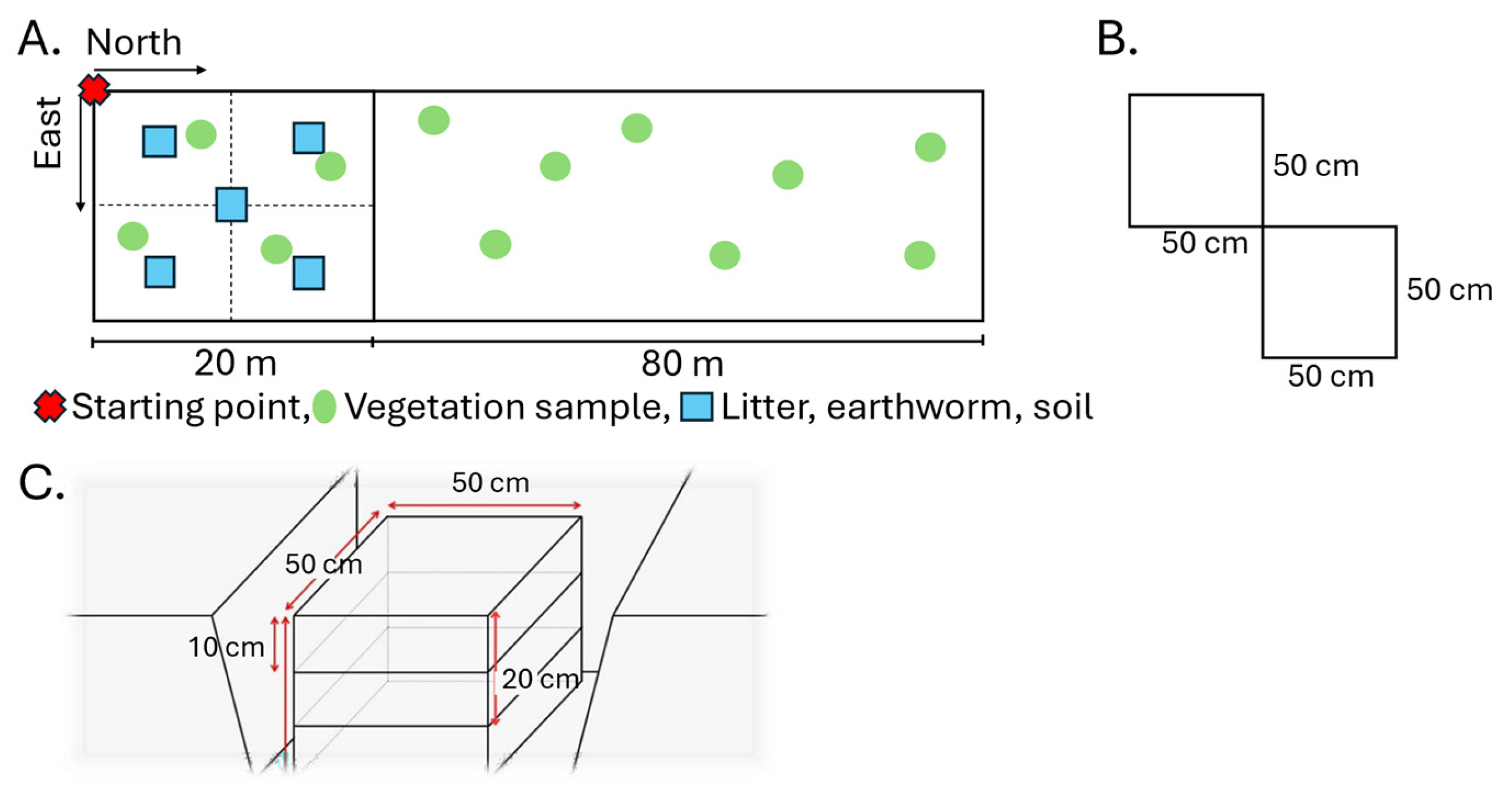
At each designated land location, the determination of the observation plot began by randomly throwing a token to determine the starting point for a plot measuring 100 m to the north and 20 m to the east (Figure 4A; [47]). In this plot, diameters at 1.3 m above the ground of all trees with a diameter of more than 5 cm were recorded for calculation of tree population (ha−1), total basal area (m2 ha−1), and basal area of the dominant tree species.
The large plot was subdivided into 20 m × 20 m subplots, with 4 quadrants each. Within each subplot, five points were established to assess tree canopy density, understory vegetation with less than 5 cm stem diameter and the litter layer (Section 2.3). Soil infiltration measurements were carried out at one point in the middle of each quadrant (Section 2.5), avoiding prior compaction. Next, earthworm populations (Section 2.6) were sampled, before soil samples were collected for further soil physical (Section 2.4) and soil chemical (Section 2.5) analysis of disturbed soil samples (five per subplot) were taken of the 0–30 cm layer and composited.

2.3. Aboveground Vegetation Characteristics

In a 20 m × 100 m plot (2000 m2 = 0.2 ha), trees were divided into two sizes: medium trees with a DBH (diameter at breast height) of 5–30 cm and large trees with a DBH of >30 cm. Tree population (tree density) was calculated as the number of individual trees recorded divided by plot size (0.2 ha). Within each large plot, DBH measurements were taken on each tree at a height of 1.3 m above ground level. DBH was measured using a diameter tape to determine the total Basal Area (BA) for trees with DBH > 5 cm using the following equation:
B A total ( m 2 h a ) = π ( D B H i 2 ) 2 0.2
Tree canopy measurements were performed for each land use type to determine canopy density based on differences in land use to illustrate canopy cover and canopy openness on the land. Canopy observations were conducted using the Canopy App (University of New Hampshire version 1.0.3 downloadable at https://apps.apple.com/us/app/canopyapp/id926943048, accessed on 24 April 2026) looking upwards in a horizontally held cell phone at 1 m above the soil surface (or above understory vegetation). Canopy observations were made in five quadrants of small-plot locations (20 m × 20 m) to represent variations in stand conditions. The results for the percentage canopy cover extracted from the Canopy App were averaged to produce plot-level values.
Litter thickness, litter necromass, and understory biomass measurements were conducted at five sample points within a 20 m × 20 m subplot located as part of the 100 m × 20 m main plot following [31]. At each observation point, a 50 × 50 cm double frame was placed (Figure 4B). Litter thickness above the mineral soil was measured after mildly compressing it at five points in each frame. For litter necromass, all litter in the quadrat was collected and weighed (wet weight). Then, a representative subsample was taken, dried in an oven at 80 °C for 48 h (until the weight was constant), and used to convert wet weight to dry biomass. Dry litter necromass was calculated using the following equation:
N e c r o m a s s   T o t a l   ( M g   h a 1 ) = [ B B t o t a l × ( B K s u b B B s u b ) A ] × 10
where:
  • B B t o t a l = total wet weight of sample in quadrant (kg = 10−3 Mg);
  • B B s u b = sub-sample wet weight (g);
  • B K s u b = sub-sample wet weight (g; dried till constant weight);
  • A = square area (m2) is 0.5 m × 0.5 m → A = 0.25 × 10⁻⁴ ha.
Understory biomass was measured by destructively harvesting all understory vegetation within the quadrat (cut at ground level), weighing it (wet weight), taking subsamples, oven-drying to constant weight, and then calculating dry biomass using the same formula. Biomass values were expressed per quadrat area and converted to Mg ha−1, then averaged across five points to obtain subplot values.

2.4. Soil Physical Parameters

Soil physical properties were analyzed to understand soil structure and water transport capacity within the forest system. Most characteristics were measured separately for the 0–10, 10–20 and 20–30 cm depth layers, but are reported here for the 0–30 cm layer only. Particle size distribution (particles < 2 mm) was determined using the pipette method. This method is based on Stokes’ Law regarding the sedimentation rate of particles in suspension, which allows for accurate separation of fractions based on particle size [48]. As standard ring samples are difficult to insert in the presence of tree roots, bulk density ( ρ b ) was measured using the block-sized (20 cm × 20 cm × 10 cm = 4000 cm) samples [49] collected in field moisture conditions. Particle density ( ρ p ) was measured by the pycnometer method. Total soil porosity ( Ø ), the percentage of the total soil volume that is not filled by solid (soil) particles [50], was calculated [51] from bulk density data and particle density using the following equation:
Ø = 1 ρ b ρ p × 100 %
Soil structural characteristics were further analyzed through aggregate stability, measured using the wet sieving method. Aggregate resistance to water-damaging forces was expressed through the Mean Weight Diameter (MWD) value, where a higher MWD value indicates a more stable soil structure and resistance to erosion [52].
In addition to static characteristics, the soil’s ability to absorb water vertically, or infiltrate, was measured in the field using the double-ring infiltrometer method [53]. Steady-state infiltrability was derived as in (Horton equation) [54]
F(t) = Fc + (Fo − Fc) e−kt
where:
  • F(t) = infiltration rate (cm hour−1);
  • Fo = initial infiltration rate (cm hour−1);
  • Fc = steady rate infiltration (cm hour −1);
  • k = empirical constant (hour−1);
  • t = time (hour).

2.5. Soil Chemical Parameters

Standard soil chemical properties were analyzed to evaluate the fertility status and nutrient availability in the forest system. Soil acidity parameters were determined by measuring soil pH (H2O) and pH(KCl) using an electrometric method with a pH meter on a soil and water suspension or a 1 M KCl solution with a soil: solution ratio of 1:1 [55]. Furthermore, the soil organic carbon content was determined using the wet oxidation method [56], in which carbon is oxidized with potassium dichromate in concentrated sulfuric acid [57]. A texture, pH, elevation and layer-depth (between Dup and DLow) dependent reference value (Cref) was calculated for comparison with measured Corg results, as in [58]
Cref = 0.9  ×  (DLow0.705 − DUp0.705)/(0.705 × (DLow − DUp)) × EXP(A)
with
A = 1.333  +  0.00994  ×  Clay% + 0.00699  ×  Silt% − 0.156  × pH(KCl) +
+ 0.000427  ×  Elev + 0.834  ×  Andisol? + 0.363  ×  Wetland?
“Andisol?” and “Wetland?” are categorical variables with values 0 or 1. As the soils in the study area are not classified as Andisols, despite having the same andic properties, the Cref may be an underestimate of what long-term natural forests can achieve in this environment.
For soil total nitrogen parameters, analysis was carried out using the Kjeldahl method, which includes the stages of destruction, distillation, and titration to measure the accumulation of nitrogen in the form of ammonium [59]. Meanwhile, the availability of soil phosphorus (available P) was extracted using the Bray 1 method, which is particularly relevant for soils with acidic pH, and its color intensity was measured using a spectrophotometer at specific wavelengths [60]. The characteristics of the soil cation exchange complex were analyzed using the 1 N NH4OAc extraction method at pH 7.0. Exchangeable base cations, including potassium (K exchangeable), sodium (Na exchangeable), calcium (Ca exchangeable), and magnesium (Mg exchangeable), were determined using a spectrophotometer (Flame Photometer) [61]. The same ammonium acetate extraction method was also used to determine the Cation Exchange Capacity (CEC) value, which reflects the soil’s ability to absorb and provide cations to plants. Finally, the Base Saturation was calculated through the ratio of the total amount of base cations to the CEC value.

2.6. Earthworm Characteristics

Ecologically, earthworms are grouped into three groups: epigeic, endogeic, and anecic. These three ecological groups are distinguished based on their morphology and coloration. Earthworm sampling was carried out using the monolith method standardized by the Tropical Soil Biology and Fertility Program (TSBF). Earthworm samples were taken from a 20 × 20 m subplot. Sampling was carried out using a frame size of 50 cm × 50 cm × 10 cm. Earthworms were taken at three depths for each monolith from three depths (0–10 cm, 10–20 cm, and 20–30 cm). (Figure 4C). The worms were separated from the soil samples directly in the field using the hand-sorting method (manual). The earthworms were then cleaned in water and counted [62]. The worms were then placed in bottles containing 5% formalin for preservation, and their weight was determined and measured in the laboratory.

2.7. Data Analysis

The data obtained in this study were analyzed by analysis of variance (ANOVA) using the F test at the 5% probability level using the GenStat Discovery (18.1) program. If a difference between groups (or ‘apparent effect’) was unlikely due to random variation (p < 0.05), a further test was applied at the 5% LSD level. Correlation and regression tests were carried out to determine the direction of the relationship between variables and the level of association.

3. Results

3.1. Aboveground Vegetation

The results for above-ground vegetation (Table 1) confirmed impressions in the field of effects of slope and stand age. On steep slopes, canopy density increased with age of the pine plantations under agroforestry management from YAF to OAF but remained 1.38 times lower than was measured at the natural forest comparator PFM (Table 1). This increase in canopy cover was accompanied by changes in stand structure and ground surface components: tree population in AF was 0.89 times higher than in PFM, while total basal area increased but was 1.13 times lower than PFM, and accumulation of understory and ground components increased, indicated by significantly increased understory biomass, litter necromass, and litter thickness, which were 2.34, 1.84, and 1.84, respectively, compared to PFM. When the effect of age was compared across slope classes, the main pattern remained the same: canopy density in OAF increased significantly compared to YAF, while tree population did not differ, total basal area increased, understory biomass did not differ, and litter components showed a strengthening of accumulation processes with significantly increased litter necromass and litter thickness. On the other hand, the influence of land slope within the AFS shows a clear negative gradient: the steeper the slope, the greater the decrease in canopy density, tree population, total basal area, understory biomass, litter necromass, and litter thickness, indicating that steeper slope conditions limit the development of canopy structure and reduce the capacity for accumulation of biomass and litter above the ground surface.

3.2. Soil Physical Conditions

Data on texture confirmed the homogeneity of basic soil properties in the area (Table 2). Variation in sand, silt, and clay content between PFM, YAF, and OAF observation sites was as expected under a no-difference null-hypothesis. With a very low between-replicate variance, small differences in silt and clay content in the AF slope and age comparison were statistically significant (Table 2). The high sand content in the measurements may be due to incomplete (using standard laboratory methods) sample dispersion of the strongly bound aggregates in a soil with andic properties. Therefore, sand here is a ‘pseudo-sand’. Variation in inherent soil properties such as texture between the PFM, YAF, and OAF observation sites was not likely to be a major factor in subsequent analysis of other soil properties, but small differences could still be compensated in the Cref calculation.
More dynamic soil physical properties showed consistent differences across cover types and slopes (Table 2). In PFM, the soil had a significantly lower bulk density and particle density and higher porosity compared to YAF. It was similar to values for OAF for bulk density and porosity, while specific gravity still showed differences. Internal comparisons of agroforestry showed no significant differences between YAF and OAF in bulk density and porosity, while soil particle density was higher for YAF than for OAF. The effect of land slope showed a tendency that steeper slopes had higher bulk density and lower porosity, while specific gravity showed no clear pattern.
The Mean Weight Diameter as an indicator of structural aggregate stability was higher in PFM than either YAF or OAF, while aggregate stability was not significantly different between YAF and OAF, even when compared across slope classes.
Infiltration rates varied in the range of 1–3 cm h−1, which is relevant under high rainfall intensities that occur in this landscape. On steep slopes, soil infiltration was significantly higher in PFM than in YAF and OAF. When comparing YAF and OAF, the age of the agroforestry did not result in significant changes in infiltration. On steeper slopes (where it matters more, as surface runoff is faster), the soil infiltration rates were lower.

3.3. Soil Chemical Conditions

On steep slopes, soil pH in PFM was not significantly different from that in YAF and OAF (Table 3). Similarly, differences in slope in AF land did not significantly affect soil pH, but YAF land was significantly more acidic than OAF land. The analysis results showed that the organic C (C-org) content in YAF land was not significantly different from that of OAF. However, when organic C was expressed as an indicator relative to reference conditions (COrg/CRef ratio), a more sensitive difference was observed: the COrg/CRef ratio in YAF was significantly lower than in OAF. Differences in soil pH and slight variation in texture were reflected in the CRef values. The COrg/CRef ratio in PFM was above 1.0, which can be attributed to the andic properties, as noted. In YAF and OAF, both COrg and the COrg/CRef ratio were significantly lower than in PFM, while they decreased with increasing slope.
Total soil nitrogen in PFM was significantly higher than that in YAF and OAF (Table 3). With increasing AFS ages, total soil nitrogen decreased significantly (as fertilized annual food crops were replaced by non-fertilized and regularly cut perennial grasses). Total soil nitrogen in AFS decreased significantly with increasing slope. Available P was also significantly higher in PFM than in OAF, but not significantly different in YAF. In the AF system, available P in YAF was significantly higher than in OAF. The same pattern as Total Soil Nitrogen, available P significantly decreased with increasing slope, except on rather steep land, where it was lower than on steep land.
On very steep land, exchangeable K in PFM was significantly higher than in YAF and OAF (Table 3). In the agroforestry system, exchangeable K in YAF was significantly higher than in OAF. Conversely, exchangeable Na in PFM was significantly lower than in YAF and OAF. In the agroforestry system, exchangeable Na in YAF was significantly higher than in OAF. Exchangeable K in YAF was significantly higher than in OAF. Conversely, exchangeable Ca in PFM was significantly similar to YAF, but higher than in OAF. In the agroforestry system, exchangeable Ca in YAF was significantly higher than in OAF. Exchangeable Mg in PFM, YAF, and OAF were not significantly different. There was a similar pattern that exchangeable K and Mg decreased with increasing slope. There was a similar pattern that exchangeable Na and Ca increased with increasing slope. In the agroforestry system, Base saturation in PFM was significantly higher than in YAF and OAF. In the overall AF system, base saturation in YAF is the same as in OAF. Base saturation decreases significantly with increasing slope, except on steeper slopes.

3.4. Earthworms

On very steep slopes, the biomass and population of earthworms in PFM were significantly higher than those in YAF and OAF, while the average size of earthworms in YAF was the smallest (Table 4). Agroforestry land in YAF had a high population of earthworms but low biomass, resulting in a smaller average worm size than in OAF. Earthworm biomass and population significantly decreased with increasing slope, while the average worm size increased. Earthworm diversity was also significantly higher in PFM than in YAF and OAF. Earthworm diversity in YAF was higher than in OAF. Earthworm diversity also significantly decreased with increasing slope. In the land with a stable ecosystem in PFM, epigeic and anecic worms dominated, and endogeic worms were absent (Table 5). Epigeic, anecic, and endogeic worms were all found in YAF and OAF, but in general, the number of epigeic worms increased, and the number of anecic and endogeic worms decreased in OAF compared to YAF (Table 5).

3.5. Accounting for Differences in Infiltration

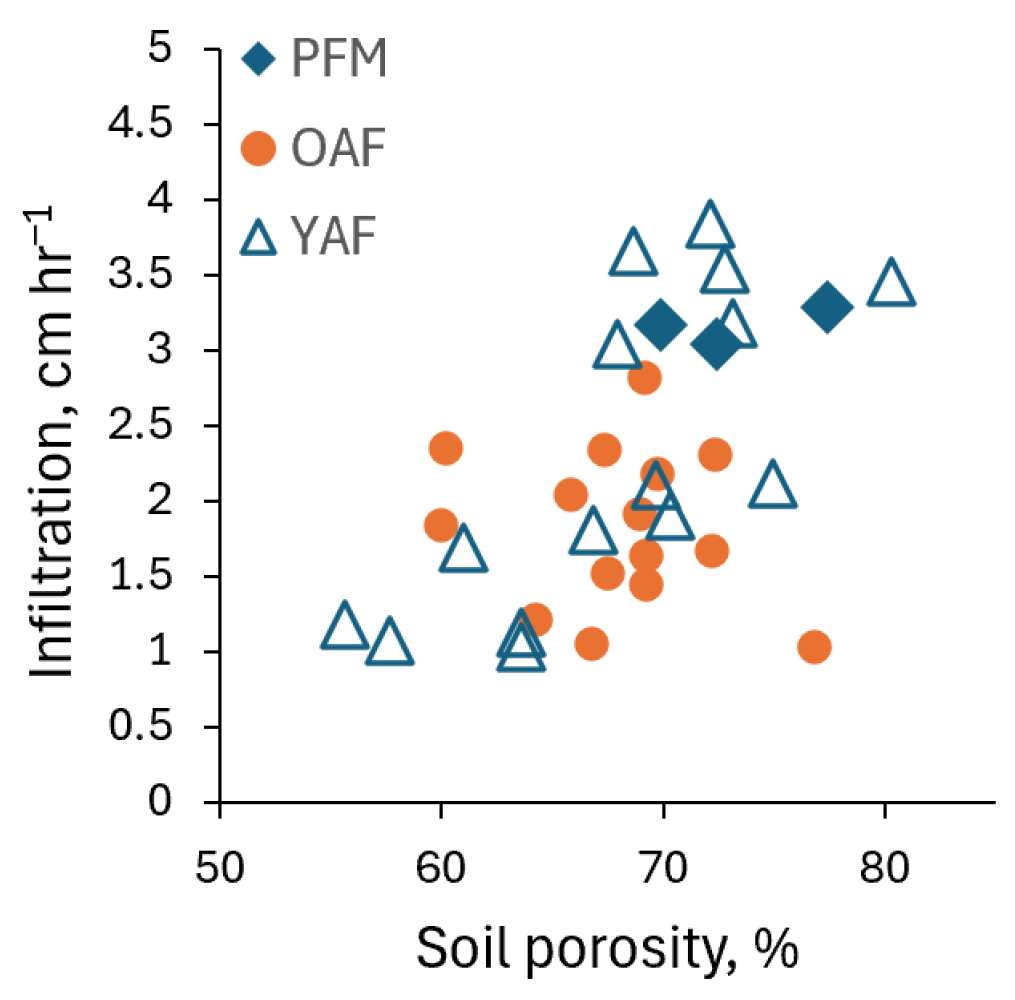
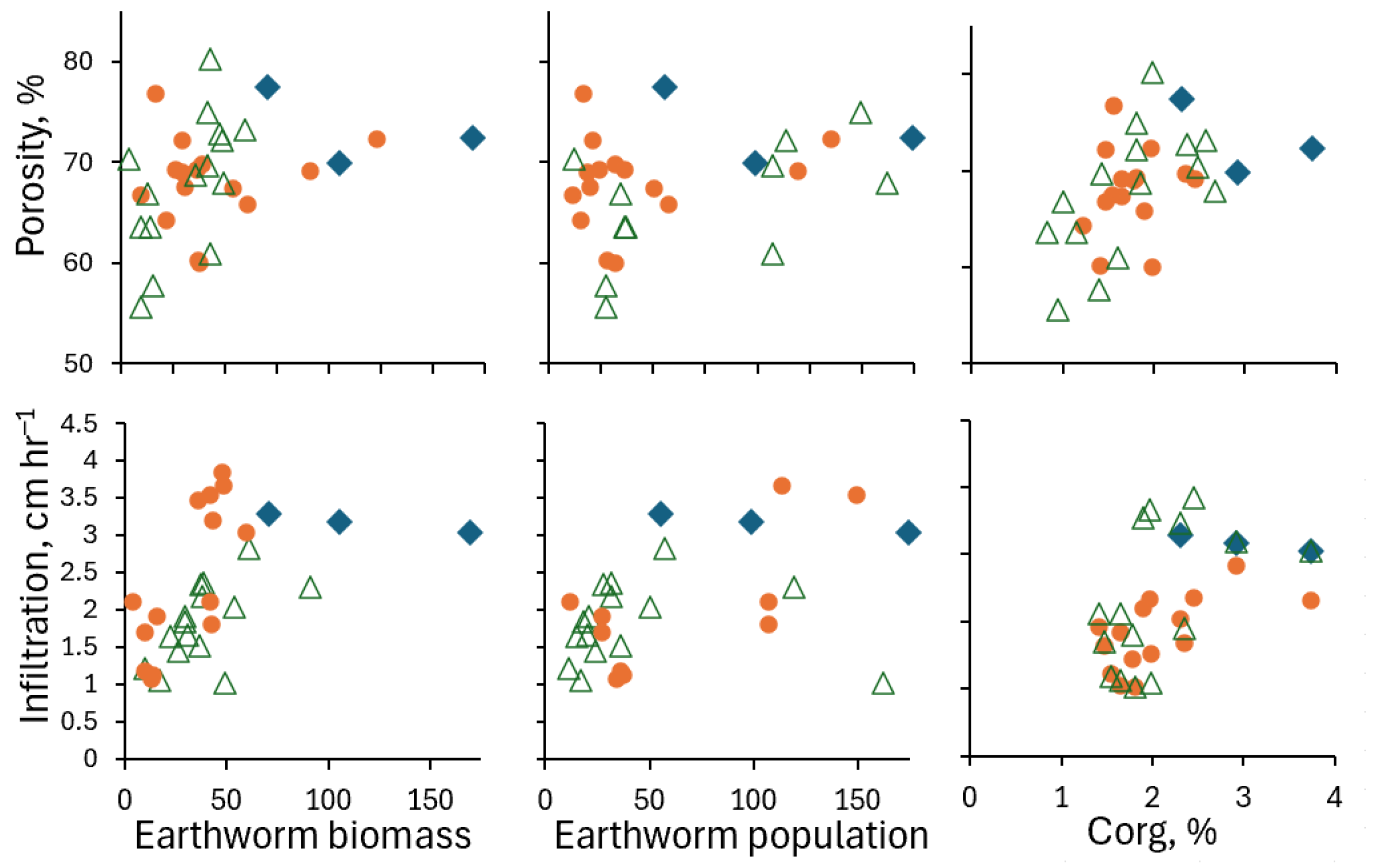
The analysis results show a positive relationship between soil porosity and soil infiltration rate (Figure 5), confirming that increasing pore space in the soil is followed by an increase in the soil’s ability to conduct water into the soil profile. Variations in both properties are primarily controlled by biological factors and soil quality, namely earthworm population, earthworm biomass, and soil organic matter content (Figure 6), which play an important role in biopore formation, improving soil structure, and increasing pore continuity.
As a single variable, variation in Canop Cover, Corg and earthworm populations has similar ‘explanatory’ skill in predicting variation in infiltration rates (Table 6). For soil porosity, soil aggregate stability and earthworm biomass, the explanatory skill is somewhat limited. However, all these ‘explanatory variables’ are highly correlated, and a multiple regression involving various factors accounts for only slightly more variation than either of the best single parameters. The easiest-to-use predictor of infiltration rates is, surprisingly, the percentage canopy cover. When variables are expressed relative to their mean value for the dataset. Variation in Mean Weight Diameter (aggregate stability) has the strongest effect on infiltration rates (last row in Table 6).

4. Discussion

Before discussing the answers we obtained to the three questions raised in the introduction, we reiterate that the data presented here were ‘survey’ data, rather than derived from randomized treatment allocations. Thus, any variation and apparent differences observed can be due to a priori conditions and variations in plot history, as well as to the current land cover at the time of sampling. A recent meta-analysis study [63] of 125 studies explored how agroforestry practices influence soil quality across different climate zones (tropical, temperate, and Mediterranean). However, the ‘apparent effect’ sizes for many properties, including aggregate stability and soil water regulation where similar to recorded differences in texture. In the absence of plausible causal mechanisms that change texture at the relevant time scales, differences in texture in observational data are warnings of confounding factors. As existing land use is usually not random with respect to soil quality, texture-corrected comparisons are probably more meaningful. A similar problem of effect sizes that are similar to observed texture differences can also be noted in a meta-analysis of deforestation studies [64]. In our data, uniformity of texture and pH (Table 1 and Table 2) gives some confidence in the validity of comparisons, but plot-level land cover history is not available at the level of detail that is desirable.
The first question, on the functional equivalence of pine plantations (with current agroforestry management) and remnant natural forest with a watershed protection forest status, had a very clear answer. The obvious aboveground differences in tree canopy cover, understory vegetation and litter layer are directly related to differences in soil organic carbon, aggregate stability, porosity, earthworms (biomass, population, and diversity) and infiltration rates. A caveat is that this comparison could only be made on the steepest slope class, as easily accessible places had been converted to agriculture and subsequent pine plantations, and agroforestry management in their second cycle. Attributing the observed differences to specific events in this and the use history is challenging. However, for the measured attributes, the pine plantations on the lowest slope class still could not match the remnant forest on the steepest slopes. On the basis of the formal criteria for forest classification, it may be hard to explain why a ‘production forest’ classification is possible on the steepest slope class, but local forest and land use history probably provides explanations [11,13]. On Eudic Eutrandepts, close to and probably similar to the soils of our study sites, a comparison across six land use types [65] found that the average bulk density of remnant natural forests was 0.74 g cm−3 and porosity 66%, while for upland crops, pine plantations and brushland it was in the 0.94–1.04 and 49%–57% ranges, respectively. Pine plantations were closer to remnant natural forest in aggregate stability and Corg than they were to dryland farms and (previously cropped) brushland. Our results for the natural forest—pine plantation comparison are similar (Table 2). A caveat for interpreting our data for field conditions is that, along with the soil physical properties measured here, root systems, animal activity, cracks, and stones affect soil infiltration capacity and preferential flow pathways along hillslopes [66].
The second question, a comparison of slope and age as factors in functional soil properties, had clear answers with regard to slope cases as a factor within the two age categories, and weaker evidence for the age comparisons as such, with more likelihood that confounding factors existed in different land use histories. Soils on steeper slopes had fewer ‘functional topsoil’ characteristics, and this can be due to both loss of topsoil by erosion, downhill movement of litter and organic inputs to soil health, and interaction with less understory vegetation and surface litter, and less protection from the direct influences of radiation and rainfall. Steeper soils had lower infiltration rates, while there is less time available for surface ponding and subsequent infiltration, both because of slope and the lower litter necromass conditions that can provide surface roughness. While specific data on the impact of current agroforestry management practices, as regulated in the contracts between the forest management authority and local communities, is desirable, the current research cannot tease apart which activities (between past harvest-related compaction, post-logging degradation and current management) are most important for the current status of the soil. A major part of the literature compares agroforestry with monoculture food crops on sloping land, rather than with remnant forest, and comes to positive conclusions. For example, experiments with agroforestry with fruit trees, contour grass strips and maize or coffee on sloping land in northwest Vietnam showed that such practices, in comparison with monoculture maize, reduced soil (and carbon and nutrient) losses through terrace formation [67]. Agroforestry practices within the pine plantations in our study did not include support for terrace formation or their maintenance, where they had been part of the cropping history before reforestation took place.
The third question provided multiple perspectives on answers. While earthworm data (biomass, population, diversity) were significantly correlated with variation in infiltration rates, the linkage between porosity and infiltration rate was not as tight as expected, while alternative explanatory variables (soil organic carbon, aggregate stability) had equal ‘explanatory skill’, and no single factor was more powerful than the simple canopy cover metric. A data set like we currently have cannot tease apart how multiple and interactive causative pathways work: direct protection of the topsoil by litter, the response of tree root systems and soil biota (including earthworms) to the way aboveground vegetation is managed, and the balance between soil structure regeneration and compaction by human activities.
Quantitative studies of infiltration in forest plantations tend to have positive conclusions where agricultural land use is the comparator [68,69,70], although the time course of recovery may be counted in decades rather than years [37,71] and negative or contested results where natural forests are the comparator [72,73,74]. Shifts from mono-specific to mixed stands are generally positive for infiltration rates [75], but neutral results have also been documented [76]. Detailed attribution of changed infiltration to roots, earthworms or other soil engineers remains scarce [77]. The relevant literature broadly agrees that the earthworm community activity serves as a valuable indicator of soil quality and health, particularly in response to various management practices or ecosystem disturbances [78]. Earthworm populations and biomass are typically higher in deciduous forests than in evergreen forests, such as pine plantations. A recent meta-study of earthworm population density and biomass compared undisturbed ecosystems (i.e., undisturbed grassland, primary forest) as controls against agricultural land-use treatments, with data extracted from 113 publications across 44 countries [79] found that arable cropland had significantly lower earthworm density (−18%), biomass (−15%), and species richness (−27%) compared to undisturbed sites. However, earthworm density, biomass and species richness that were higher than those in undisturbed sites were observed in pastures, sites under agroforestry, crop management with fallow periods and crop–livestock integration. A comparison of the saturated hydraulic conductivity in three forest stands (pine (Pinus taeda), oak (Quercus acutissima), and bamboo (Phyllostachys edulis) forests in Jiangsu (a subtropical coastal Chinese province north of Shanghai) that total soil porosity (and associated saturated water capacity) was the simplest predictor of differences in infiltration rates, with the Pine forests the best performing, sand content negatively and soil C positively correlated. Bamboo forests had the poorest water infiltration properties [80,81]. Studies in agroforestry systems elsewhere with Quercus suber as the dominant species concluded that earthworm abundance (three species of Aporrectodea, mostly anecic) increased aggregate stability irrespective of litter quality [82]. In a microcosm experiment, soil saturated hydraulic conductivity (Ks) showed little difference between different treatments due to the horizontal and high–branched burrows of the anecic earthworm Eissenia fetida, although higher burrowing activities were found in wetter soil and aggregate stability increased with worm abundance [83].
While the impacts of changed infiltration rates in these volcanic landscapes can be site-specific and complex [84,85], a closer ‘mimicking’ by plantation forestry of remnant natural forests is desirable for these mountain landscapes. Increased rainfall variability under climate change [86]. Testing of ‘restoration’ interventions with randomized treatment allocation will be needed to support ongoing negotiations with farmers, forest and watershed stakeholders. The overall significance of the research is that our data support the urgency of increased soil conservation measures where pine-based agroforestry practices are used on steep and very steep soils.

5. Conclusions

Pine-based agroforestry on very steep soils had only 35% of the infiltration rate of reference remnant natural forest plots, despite having 83%–95% of the soil porosity. Reduced earthworm biomass (only 10%–14% of the forest values) and compaction (23%–55% increased bulk density) probably represent two steps in the cause-and-effect chains. Understory vegetation and litter layer were more than fivefold higher in the natural forest. Where recent discussions after the floods in Sumatra do not differentiate between plantations and natural forest, conclusions may well be overgeneralized.
Within pine-based agroforestry, relative decline with slope class was pronounced in earthworm indicators (biomass −3.46 and population −4.18) and infiltration rates (−2.35) while bulk density increased (0.49). Soil chemical changes (COrg −1.45, NTot −1.26, PBray −1.68, and exchangeable Mg −1.45) indicated a loss of topsoil. Differences with age of the agroforestry systems were much smaller and included a decreasing earthworm population density but an increase in mean earthworm weight.
Across all samples, a higher Corg and higher earthworm biomass were associated with complementary positive changes in infiltration rates and soil porosity.

Author Contributions

Conceptualization, D.S. and M.v.N.; methodology, K.H. and D.S.; software, D.S. and A.F.; validation, D.S., M.v.N. and K.H.; formal analysis, D.S.; investigation, A.F., M.A.-F. and D.W.R.; resources, I.N., K.H. and D.S.; data curation, D.S.; writing—original draft preparation, D.S.; writing—review and editing, M.v.N.; visualization, D.S., K.H. and A.F.; supervision, M.v.N.; project administration, I.N.; funding acquisition, D.S., I.N. and K.H. All authors have read and agreed to the published version of the manuscript.

Funding

This research was funded by the Professor Research Grant from the Faculty of Agriculture, Brawijaya University, grant number 03641.8/UN10.F0401/B/KS/2024 and 08254.12/UN10.F0401/B/KS/2025.

Data Availability Statement

Basic data are available on request to the first author.

Acknowledgments

The authors would like to express appreciation to farmers in Poncokusumo, Perum Perhutani (State Forestry Company), KPH Malang and the National Park of Bromo Tengger-Semeru for allowing the use of their sites for this research. We also thank the Department of Soil Science, Faculty of Agriculture, University of Brawijaya and the Research Group of Tropical Agroforestry for their support of the research. Thanks are also extended to Cahyo Prayogo for his assistance in analyzing the data.

Conflicts of Interest

The authors declare no conflicts of interest.

Abbreviations

The following abbreviations are used in this manuscript:
AFAgroforestry
PFMProtection Forest Management
OAFPine-Grass Agroforestry System (age around 10 years)
YAFPine-horticulture agroforestry system (age around 2 years)
LSDFisher’s Least Significant Difference Test

Appendix A

Table A1. Coordinates of field observation and soil sampling locations.
Land UseSlope (%)Replication
123
Latitude (S)–Longitude (E)
PFM>408.012183–112.8656438.012739–112.8651128.012909–112.863519
YAF0–88.024245–112.8408528.029940–112.8418788.029904–112.840970
8–158.011655–112.8566648.012572–112.8554748.012827–112.854841
15–258.025211–112.8413398.025588–112.8416828.025718–112.841810
25–458.025050–112.8412738.025309–112.8416758.025586–112.841476
>458.025791–112.8414758.026906–112.8412928.026790–112.839951
OAF0–88.032908–112.8275678.033420–112.8276568.031129–112.827596
8–158.030663–112.8273908.030913–112.8277118.031490–112.827411
15–258.029752–112.8266688.030903–112.8277528.033359–112.827898
25–458.030334–112.8270438.030648–112.8260998.030738–112.826619
>458.032381–112.8284028.032647–112.8282258.032488–112.827479

References

  1. Enters, T.; Durst, P.B.; Facon, T. Questioning Perceived Links Between Forests and Floods. Regional Office of the Food and Agriculture Organization, Bangkok. 2004. Available online: https://www.uf.a.u-tokyo.ac.jp/~kuraji/BR/iufro/IUFRO-2.pdf (accessed on 2 March 2026).
  2. FAO; CIFOR. Forests and Floods—Drowning in Fiction or Thriving on Facts? Food and Agriculture Organization of the United Nations: Bangkok, Thailand; Center for International Forestry Research: Bogor, Indonesia, 2005. [Google Scholar]
  3. Calder, I.R.; Aylward, B. Forest and floods: Moving to an evidence-based approach to watershed and integrated flood management. Water Int. 2006, 31, 87–99. [Google Scholar] [CrossRef]
  4. Laurance, W.F. Forests and floods. Nature 2007, 449, 409–410. [Google Scholar] [CrossRef] [PubMed]
  5. van Noordwijk, M.; Leimona, B.; Agus, F.; Abdurrahim, A.Y.; Ekadinata, A. Flood Risk, Landscapes and Adaptive Capacity; White Paper, 2026; CIFOR-ICRAF: Bogor, Indonesia, 2026. [Google Scholar]
  6. Creed, I.F.; van Noordwijk, M. (Eds.) Forest and Water on a Changing Planet: Vulnerability, Adaptation and Governance Opportunities; A Global Assessment Report; IUFRO: Vienna, Austria, 2018. [Google Scholar]
  7. Bruijnzeel, L.A. Hydrological functions of tropical forests: Not seeing the soil for the trees? Agric. Ecosyst. Environ. 2004, 104, 185–228. [Google Scholar] [CrossRef]
  8. Agus, F.; Irawan, I.; Suganda, H.; Wahyunto, W.; Setiyanto, A.; Kundarto, M. Environmental multifunctionality of Indonesian agriculture. Paddy Water Environ. 2006, 4, 181–188. [Google Scholar] [CrossRef]
  9. Alila, Y.; Kuraś, P.K.; Schnorbus, M.; Hudson, R. Forests and floods: A new paradigm sheds light on age-old controversies. Water Resour. Res. 2009, 45, W08416. [Google Scholar] [CrossRef]
  10. Bathurst, J.C.; Fahey, B.; Iroumé, A.; Jones, J. Forests and floods: Using field evidence to reconcile analysis methods. Hydrol. Process. 2020, 34, 3295–3310. [Google Scholar] [CrossRef]
  11. Lubis, M.I.; Linkie, M.; Lee, J.S.H. Tropical forest cover, oil palm plantations, and precipitation drive flooding events in Aceh, Indonesia, and hit the poorest people hardest. PLoS ONE 2024, 19, e0311759. [Google Scholar] [CrossRef]
  12. Tan-Soo, J.S.; Adnan, N.; Ahmad, I.; Pattanayak, S.K.; Vincent, J.R. Econometric evidence on forest ecosystem services: Deforestation and flooding in Ma-laysia. Environ. Resour. Econ. 2016, 63, 25–44. [Google Scholar] [CrossRef]
  13. Merten, J.; Stiegler, C.; Hennings, N.; Purnama, E.S.; Röll, A.; Agusta, H.; Dippold, M.A.; Fehrmann, L.; Gunawan, D.; Hölscher, D.; et al. Flooding and land use change in Jambi Province, Sumatra: Integrating local knowledge and scientific inquiry. Ecol. Soc. 2020, 25, 1–29. [Google Scholar] [CrossRef]
  14. Widyati, E.; Nuroniah, H.S.; Tata, H.L.; Mindawati, N.; Lisnawati, Y.; Darwo; Abdulah, L.; Lelana, N.E.; Mawazin; Octavia, D.; et al. Soil degradation due to conversion from natural to plantation forests in Indonesia. Forests 2022, 13, 1913. [Google Scholar] [CrossRef]
  15. Truong, N.C.Q.; Khoi, D.N.; Nguyen, H.Q.; Kondoh, A. Impact of forest conversion to agriculture on hydrologic regime in the large basin in Vietnam. Water 2022, 14, 854. [Google Scholar] [CrossRef]
  16. van Noordwijk, M.; Dewi, S.; Minang, P.A.; Harrison, R.D.; Leimona, B.; Ekadinata, A.; Burgers, P.; Slingerland, M.; Sassen, M.; Watson, C.; et al. Beyond imperfect maps: Evidence for EUDR-compliant agroforestry. People Nat. 2025, 7, 1713–1723. [Google Scholar] [CrossRef]
  17. van Noordwijk, M.; Kim, Y.S.; Leimona, B.; Hairiah, K.; Fisher, L.A. Metrics of water security, adaptive capacity, and agroforestry in Indonesia. Curr. Opin. Environ. Sustain. 2016, 21, 1–8. [Google Scholar] [CrossRef]
  18. Chazdon, R.L.; Brancalion, P.H.; Laestadius, L.; Bennett-Curry, A.; Buckingham, K.; Kumar, C.; Moll-Rocek, J.; Vieira, I.C.G.; Wilson, S.J. When is a forest a forest? Forest concepts and definitions in the era of forest and landscape restoration. Ambio 2016, 45, 538–550. [Google Scholar] [CrossRef]
  19. Carrick, J.; Abdul Rahim, M.S.A.B.; Adjei, C.; Ashraa-Kalee, H.H.H.; Banks, S.J.; Bolam, F.C.; Campos-Luna, I.M.; Clark, B.; Cowton, J.; Domingos, I.F.N.; et al. Is planting trees the solution to reducing flood risks? J. Flood Risk Man. 2019, 12, e12484. [Google Scholar] [CrossRef]
  20. Tanika, L.; Sari, R.R.; Hakim, A.L.; van Noordwijk, M.; Peña-Claros, M.; Leimona, B.; Purwanto, E.; Speelman, E.N. The H2Ours game to explore water use, resources and sustainability: Connecting issues in two landscapes in Indonesia. Hydrol. Earth Syst. Sci. 2024, 28, 3807–3835. [Google Scholar] [CrossRef]
  21. Indrajaya, Y. Joint production of wood, resin, and carbon from pine plantation forest in Java. In IOP Conference Series: Earth and Environmental Science; IOP Publishing: Bristol, UK, 2020; Volume 487, p. 012021. [Google Scholar]
  22. Suprayogo, D.D.; Hairiah, K.; Hafidzianor Rahayu, S. Agroforestri khas Pegunungan Nusantara: Jendela Jawa Timur [Mountain Agroforestry in East Java]. World Agroforestry, Bogor. 2023. Available online: https://www.cifor-icraf.org/publications/pdf/books/AFN-vol-3.pdf (accessed on 2 March 2026).
  23. Mulyoutami, E.; Tata, H.L.; Silvianingsih, Y.A.; van Noordwiik, M. Agroforests as the intersection of instrumental and relational values of nature: Gendered, culture-dependent perspectives? Curr. Opin. Environ. Sustain. 2023, 62, 101293. [Google Scholar] [CrossRef]
  24. Rowe, R.L.; Prayogo, C.; Oakley, S.; Hairiah, K.; van Noordwijk, M.; Wicaksono, K.P.; Kurniawan, S.; Fitch, A.; Cahyono, E.D.; Suprayogo, D.; et al. Improved coffee management by farmers in state forest plantations in Indonesia: An experimental platform. Land 2022, 11, 671. [Google Scholar] [CrossRef]
  25. Hadi, A.P.; Suprayogo, D.; Hairiah, K.; Prayogo, C. Effect of land management intensity on soil quality of Andisol in the Upper Brantas Watershed, Batu, Indonesia. J. Water Land Dev. 2025, 67, 138–155. [Google Scholar] [CrossRef]
  26. Wiersum, K.F. Effects of various vegetation layers in an Acacia auriculiformis forest plantation on surface erosion in Java, Indonesia. In Soil Erosion and Conservation; El Swaify, S.A., Moldenhauer, W.C., Lo, A., Eds.; Soil Conservation Society of America: Ankeny, IA, USA, 1985; pp. 79–89. [Google Scholar]
  27. Park, A.; Cameron, J.L. The influence of canopy traits on throughfall and stemflow in five tropical trees growing in a Pana-manian plantation. For. Ecol. Manag. 2008, 255, 1915–1925. [Google Scholar] [CrossRef]
  28. Hairiah, K.; Sulistyani, H.; Suprayogo, D.; Purnomosidhi, P.; Widodo, R.H.; van Noordwijk, M. Litter layer residence time in forest and coffee agroforestry systems in Sumberjaya, West Lampung. For. Ecol. Manag. 2006, 224, 45–57. [Google Scholar] [CrossRef]
  29. Sari, R.R.; Rozendaal, D.M.; Saputra, D.D.; Hairiah, K.; Roshetko, J.M.; van Noordwijk, M. Balancing litterfall and decomposition in cacao agroforestry systems. Plant Soil 2022, 473, 251–271. [Google Scholar] [CrossRef]
  30. Le Bayon, R.C.; Bullinger-Weber, G.; Schomburg, A.; Turberg, P.; Schlaepfer, R.; Guenat, C. Earthworms as ecosystem engineers: A review. In Earthworms: Types, Roles and Research; Horton, C.G., Ed.; Nova Publishers: Hauppauge, NY, USA, 2017; pp. 129–178. [Google Scholar]
  31. Pelíšek, I. Investigation of soil water infiltration at a scale of individual earthworm channels. Soil Water Res. 2018, 13, 1–10. [Google Scholar] [CrossRef]
  32. Capowiez, Y.; Sammartino, S.; Keller, T.; Bottinelli, N. Decreased burrowing activity of endogeic earthworms and effects on water infiltration in response to an increase in soil bulk density. Pedobiologia 2021, 85, 150728. [Google Scholar] [CrossRef]
  33. Pham, Q.V.; Nguyen, T.T.; Lam, D.H.; Capowiez, Y.; Nguyen, A.D.; Jouquet, P.; Tran, T.M.; Bottinelli, N. Using morpho-anatomical traits to predict the effect of earthworms on soil water infiltration. Geoderma 2023, 429, 116245. [Google Scholar] [CrossRef]
  34. Mulia, R.; Hoang, S.V.; Dinh, V.M.; Duong, N.B.T.; Nguyen, A.D.; Lam, D.H.; Thi Hoang, D.T.; van Noordwijk, M. Earthworm diversity, forest conversion and agroforestry in Quang Nam province, Vietnam. Land 2021, 10, 36. [Google Scholar] [CrossRef]
  35. Hairiah, K.; Aldini, L.S.; Putra, A.D.; Ardiansyah, N.; Pradani, A.Q.P.; Mardiani, M.O.; Paramitha, A.; Hadi, A.P.; Sari, R.R.; Saputra, D.D.; et al. Regenerative oil palm agroforestry in Indonesia: Enhancing earthworms and soil microbial biomass through food or habitat? SSRN 2025. [Google Scholar] [CrossRef]
  36. Orgiazzi, A.; Panagos, P. Soil biodiversity and soil erosion: It is time to get married: Adding an earthworm factor to soil erosion modelling. Glob. Ecol. Biogeogr. 2018, 27, 1155–1167. [Google Scholar] [CrossRef]
  37. Cheng, Z.; Zhang, J.; Yu, B.; Chappell, N.A.; van Meerveld, H.J.; Bruijnzeel, L.A. Stormflow response and “effective” hydraulic conductivity of a degraded tropical Imperata grassland catchment as evaluated with two infiltration models. Water Resour. Res. 2023, 59, e2022WR033625. [Google Scholar] [CrossRef]
  38. Suprayogo, D.; van Noordwijk, M.; Hairiah, K.; Meilasari, N.; Rabbani, A.L.; Ishaq, R.M.; Widianto, W. Infiltration-friendly agroforestry land uses on volcanic slopes in the Rejoso Watershed, East Java, Indonesia. Land 2020, 9, 240. [Google Scholar] [CrossRef]
  39. Hairiah, K.; Burgers, P.; Farida, A.; Kusumawati, I.A.; Mardiani, M.O.; Saputra, D.D.; Sari, R.R.; Aldini, L.S.; Ardiansyah, N.; Putra, A.D.; et al. Soil health indicators, farmer concepts and carbon market standards in agrofor-estation of underutilized lands in West Sumatra (Indonesia). Soil Adv. 2025, 4, 100051. [Google Scholar] [CrossRef]
  40. Suprayogo, D.; Hakim, A.L.; Fadillah, B.R.; Prajnaparamita, I.K.; Kusumawati, I.A.; Prayogo, C.; Rowe, R.L.; McNamara, N.P. Litter layer and earthworms as an indicator of coffee production in the coffee and pine-based agroforestry system. IOP Conf. Ser. Earth Environ. Sci. 2022, 950, 012036. [Google Scholar] [CrossRef]
  41. Saputra, D.D.; Sari, R.R.; Hairiah, K.; Widianto Suprayogo, D.; van Noordwijk, M. Recovery after volcanic ash deposition: Veg-etation effects on soil organic carbon, soil structure and infiltration rates. Plant Soil 2022, 474, 163–179. [Google Scholar] [CrossRef]
  42. Saputra, D.D.; Sari, R.R.; Sari, I.N.; Suprayogo, D.; van Noordwijk, M. Water repellency by volcanic ash interacting with organic matter: Incubation response and effect on infiltration. Geoderma 2023, 436, 116535. [Google Scholar] [CrossRef]
  43. USDA—Natural Resources Conservation Service. Soil Survey Staff, Keys to Soil Taxonomy, 12th ed.; USDA—Natural Resources Conservation Service: Washington, DC, USA, 2014.
  44. Di Iorio, E.; Circelli, L.; Lorenzetti, R.; Costantini, E.A.; Egendorf, S.P.; Colombo, C. Estimation of andic properties from Vis-NIR diffuse reflectance spectroscopy for volcanic soil classification. Catena 2019, 182, 104109. [Google Scholar] [CrossRef]
  45. Azizah, F.R.; Prayogo, C.; Kurniawan, S.; Rowe, R.L. Microbial biomass and soil respiration response to pruning and fertiliza-tion practices in coffee-pine agroforestry. J. Ecol. Eng. 2023, 24, 329–342. [Google Scholar] [CrossRef]
  46. Habib, F.; Prabowo, A.M.; Rayes, M.L. Study of Soil Development and Classification on the South Slope of Mount Pucung, Bumiaji Kodya Batu District. Contrib. Cent. Res. Inst. Agric. 2022, 16, 96–103. [Google Scholar]
  47. Hairiah, D.K.; Sitompul, S.M.; Palm, C.A.; van Noordwij, M. Methods of Sampling Carbon Stocks Above and Below Ground: Effects of Forest Conversion and Options for ‘Clean Development’ Activities; ICRAF: Bogor, Indonesia, 2001. [Google Scholar]
  48. Gee, G.W.; Or, D. Particle-size analysis. In Methods of Soil Analysis: Part 4 Physical Methods; Soil Science Society of America Book Series; Soil Science Society of America: Madison, WI, USA, 2002; Volume 5, pp. 255–293. [Google Scholar]
  49. Ellison, D.; Wang-Erlandsson, L.; van der Ent, R.J.; van Noordwijk, M. Upwind forests: Managing moisture recycling for na-ture-based resilience. Unasylva 2019, 251, 13–26. [Google Scholar]
  50. Nimmo, J.R. Porosity and pore size distribution. In Encyclopedia of Soils in the Environment; Hillel, D., Ed.; Elsevier: London, UK, 2004; pp. 295–303. [Google Scholar]
  51. Jacobs, S.R.; Timbe, E.; Weeser, B.; Rufino, M.C.; Butterbach-Bahl, K.; Breuer, L. Assessment of hydrological pathways in East Af-rican montane catchments under dierent land use. Hydrol. Earth Syst. Sci. 2018, 22, 4981–5000. [Google Scholar] [CrossRef]
  52. Le Bissonnais, Y.; Prieto, I.; Roumet, C.; Nespoulous, J.; Metayer, J.; Huon, S.; Villatoro, M.; Stokes, A. Soil aggregate stability in Mediterranean and tropical agro-ecosystems: Effect of plant roots and soil characteristics. Plant Soil 2018, 424, 303–317. [Google Scholar] [CrossRef]
  53. Bouwer, H. Intake rate: Cylinder infiltrometer. In Methods of Soil Analysis: Part 1 Physical and Mineralogical Methods; Wiley: Hoboken, NJ, USA, 1986; Volume 5, pp. 825–844. [Google Scholar]
  54. Toebes, C. A note on the use of infiltration equations in infiltration analysis. J. Hydrol. 1962, 1, 36–44. [Google Scholar]
  55. McCauley, A.; Jones, C.; Jacobsen, J. Soil pH and organic matter. Nutr. Manag. Modul. 2009, 8, 1–12. [Google Scholar]
  56. Walkley, A.; Black, I.A. An examination of the Degtjareff method for determining soil organic matter, and a proposed modification of the chromic acid titration method. Soil Sci. 1934, 37, 29–38. [Google Scholar] [CrossRef]
  57. Nelson, D.W.; Sommers, L.E. Total carbon, organic carbon, and organic matter. In Methods of Soil Analysis: Part 2 Chemical and Microbiological Properties; Wiley: Hoboken, NJ, USA, 1982; Volume 9, pp. 539–579. [Google Scholar]
  58. Hairiah, K.; van Noordwijk, M.; Sari, R.R.; Saputra, D.D.; Suprayogo, D.; Kurniawan, S.; Prayogo, C.; Gusli, S. Soil carbon stocks in Indonesian (agro) forest transitions: Compaction conceals lower carbon concentrations in standard accounting. Agric. Ecosyst. Environ. 2020, 294, 106879. [Google Scholar] [CrossRef]
  59. Bremner, J.M.; Mulvaney, C.S. Nitrogen—Total. In Methods of Soil Analysis: Part 2 Chemical and Microbiological Properties; Wiley: Hoboken, NJ, USA, 1982; Volume 9, pp. 595–624. [Google Scholar]
  60. Sims, J.T. Soil test phosphorus: Principles and methods. In Methods of Phosphorus Analysis for Soils, Sediments, Residuals and Waters, 2nd ed.; Southern Cooperative Series Bulletin; Virginia Tech University: Blacksburg, VA, USA, 2009; Volume 408, pp. 9–19. [Google Scholar]
  61. Robertson, G.P. (Ed.) Standard Soil Methods for Long-Term Ecological Research; Oxford University Press: Oxford, UK, 1999; Volume 2. [Google Scholar]
  62. Mardiani, M.O.; Kusumawati, I.A.; Purnamasari, E.; Prayogo, C.; van Noordwijk, M.; Hairiah, K. Local ecological knowledge of coffee agroforestry farmers on earth-worms and their relation to soil quality in East Java (Indonesia). Biodivers. J. Biol. Divers. 2022, 23, 3344–3354. [Google Scholar] [CrossRef]
  63. Ngaba, M.J.Y.; Mgelwa, A.S.; Gurmesa, G.A.; Uwiragiye, Y.; Zhu, F.; Qiu, Q.; Fang, Y.; Hu, B.; Rennenberg, H. Meta-analysis unveils differential effects of agroforestry on soil properties in different zonobiomes. Plant Soil 2024, 496, 589–607. [Google Scholar] [CrossRef]
  64. Mgelwa, A.S.; Ngaba, M.J.Y.; Hu, B.; Gurmesa, G.A.; Mwakaje, A.G.; Nyemeck, M.P.B.; Zhu, F.; Qiu, Q.; Song, L.; Wang, Y.; et al. Meta-analysis of 21st century studies shows that deforestation induces profound changes in soil characteristics, particularly soil organic carbon accumulation. For. Ecosyst. 2025, 12, 100257. [Google Scholar] [CrossRef]
  65. Kusuma, Z.; Wicaksono, K.S. Impact of Land Use on Soil Water Retention in Inceptisols of the Upper Konto Watershed. J. Trop. Soils 2024, 29, 167–177. [Google Scholar] [CrossRef]
  66. Chen, C.; Zou, X.; Singh, A.K. Effects of hillslope position on soil water infiltration and preferential flow in tropical forest in southwest China. J. Environ. Manag. 2021, 299, 113672. [Google Scholar] [CrossRef]
  67. La, N.; Bergkvist, G.; Dahlin, A.S.; Mulia, R.; Nguyen, V.T.; Öborn, I. Agroforestry with contour planting of grass contributes to terrace formation and conservation of soil and nutrients on sloping land. Agric. Ecosyst. Environ. 2023, 345, 108323. [Google Scholar] [CrossRef]
  68. Ilstedt, U.; Malmer, A.; Verbeeten, E.; Murdiyarso, D. The effect of afforestation on water infiltration in the tropics: A systematic review and meta-analysis. For. Ecol. Manag. 2007, 251, 45–51. [Google Scholar] [CrossRef]
  69. Sun, D.; Yang, H.; Guan, D. The effects of land use change on soil infiltration capacity in China: A meta-analysis. Sci. Total Environ. 2018, 626, 1394–1401. [Google Scholar] [CrossRef]
  70. Lozano-Baez, S.E.; Cooper, M.; Meli, P.; Ferraz, S.F.; Rodrigues, R.R.; Sauer, T.J. Land restoration by tree planting in the tropics and subtropics improves soil infiltration, but some critical gaps still hinder conclusive results. For. Ecol. Manag. 2019, 444, 89–95. [Google Scholar] [CrossRef]
  71. Zwartendijk, B.W.; Leistert, H.; Bruijnzeel, L.A.; Teuling, A.J.; Weiler, M.; Van Meerveld, H.J. Simulation of the effects of land cover, soil degradation, and rainfall on runoff from a small tropical catchment using a minimally calibrated distributed model. J. Hydrol. 2026, 672, 135259. [Google Scholar] [CrossRef]
  72. Rowe, L.K.; Pearce, A.J. Hydrology and related changes after harvesting native forest catchments and establishing Pinus radiata plantations. Part 2. The native forest water balance and changes in streamflow after harvesting. Hydrol. Process. 1994, 8, 281–297. [Google Scholar] [CrossRef]
  73. Meason, D.F.; Griffiths, J.; McWilliams, V.; Corbett-Lad, P. New insights into forest hydrology with Forest Flows Programme–radiata pine catchments’ water use and release. NZ J. For. 2025, 70, 25. [Google Scholar]
  74. Bruijnzeel, L.A.; Ghimire, C.; Whitehead, D. Comment on New Insights into Forest Hydrology with Forest Flows Programme-Radiata Pine Catchments’ Water Use and Release by DF Meason et al. NZ J. For. 2026, 70, 34–40. [Google Scholar]
  75. Seiwa, K.; Kunii, D.; Masaka, K. Hardwood mixture enhances soil water infiltration in a conifer plantation. For. Ecol. Manag. 2021, 498, 119508. [Google Scholar] [CrossRef]
  76. Francis, J.R.; Wuddivira, M.N.; Farrick, K.K. Reforesting degraded hillslopes with exotic pines in Trinidad and Tobago: In-filtration, repellency and implications for runoff and recharge. J. Hydrol. 2023, 622, 129650. [Google Scholar] [CrossRef]
  77. Huang, Y.; Xiong, T.; Zhao, M. Influence of soil properties and near-surface roots on soil infiltration process in short-rotation eucalyptus plantations in southern subtropical China. Catena 2024, 234, 107606. [Google Scholar] [CrossRef]
  78. Kooch, Y.; Heydari, M.; Parsapour, M.K.; Vaiko, O. Earthworm: A keystone species of soil quality, health and functions. Acta Oecol. 2025, 128, 104106. [Google Scholar] [CrossRef]
  79. Betancur-Corredor, B.; Zaitsev, A.; Russell, D.J. The impact of multiple agricultural land uses in sustaining earthworm communities in agroecosystems A global meta-analysis. Sci. Rep. 2024, 14, 30160. [Google Scholar] [CrossRef]
  80. Wang, D.; Chen, J.; Tang, Z.; Zhang, Y. Effects of soil physical properties on soil infiltration in forest ecosystems of Southeast China. Forests 2024, 15, 1470. [Google Scholar] [CrossRef]
  81. Zwartendijk, B.W.; Bruijnzeel, L.A.; Ghimire, C.P.; Pde, F.; Mulligan, M.; Zhang, J. Effects of (assisted) natural regeneration on infiltrability and preferential flow pathways in the Khasi Hills (Meghalaya, NE India). Land Degrad. Dev. 2025, 36, 1564–1578. [Google Scholar] [CrossRef]
  82. Reis, F.; Nascimento, E.; Cruz, C.; Dias, T.; Hedlund, K.; Briones, M.J.; Berg, M.P.; Sousa, J.P.; da Silva, P.M. Earthworm abundance increases aggregate stability: A field study in a Mediterranean agroforestry system. Appl. Soil Ecol. 2025, 206, 105903. [Google Scholar] [CrossRef]
  83. Wen, S.; Shao, M.A.; Wang, J. Earthworm burrowing activity and its effects on soil hydraulic properties under different soil moisture conditions from the Loess Plateau, China. Sustainability 2020, 12, 9303. [Google Scholar] [CrossRef]
  84. Toulier, A.; Baud, B.; de Montety, V.; Lachassagne, P.; Leonardi, V.; Pistre, S.; Dautria, J.M.; Hendrayana, H.; Fajar, M.H.M.; Muhammad, A.S.; et al. Multidisciplinary study with quantitative analysis of isotopic data for the assess-ment of recharge and functioning of volcanic aquifers: Case of BromoTengger volcano, Indonesia. J. Hydrol. Reg. Stud. 2019, 26, 100634. [Google Scholar] [CrossRef]
  85. Purnama, S.; Cahyadi, A.; Sekaranom, A.B. Aquifer characteristics and groundwater potential for domestic requirements in Kediri Regency, Indonesia. J. Degrad. Min. Lands Manag. 2023, 10, 4081–4092. [Google Scholar] [CrossRef]
  86. IPCC. Climate Change 2023: Synthesis Report. Contribution of Working Groups I, II and III to the Sixth Assessment Report of the Intergovernmental Panel on Climate Change; IPCC: Geneva, Switzerland, 2023. [Google Scholar]
Figure 1. Research location within East Java province (Indonesia).
Forests 17 00565 g001
Figure 2. Rainfall distribution and air temperature in the study area.
Forests 17 00565 g002
Figure 3. The three types of forest compared: (A) natural forest reference in Ngadas, (B) young agroforestry system (YAF) in Gubugklakah, and (C) old agroforestry system (OAF) in Wringinanom.
Forests 17 00565 g003
Figure 4. Sampling methods: (A) plots for vegetation description, litter and earthworm samples, (B) details of litter plots, and (C) details of earthworm sampling.
Forests 17 00565 g004
Figure 5. Relationship between soil porosity and infiltration rate across the three land cover types (PFM = remnant natural forest, OAF = old agroforest, YAF = young agroforest).
Forests 17 00565 g005
Figure 6. Relationship between soil porosity (upper panels) and infiltration rate (lower panels) and earthworm biomass, earthworm population of COrg across the three land cover types (land use legend as in Figure 5).
Forests 17 00565 g006
Table 1. Aboveground properties of the vegetation of plots in the survey.
Canopy Density (%)Tree Population (ha−1)Basal Area Total (m2 ha−1)Understory Biomass
(Mg ha−1)
Litter Necromass (Mg ha−1)Litter Thickness (cm)
Land use on very steep slopes:
 Protection forest management76.1 c201.7 a65.2 c5.39 b2.362.13
 Young agroforestry (YAF)15.1 a722.0 b12.2 a0.38 a0.280.27
 Old agroforestry (OAF)27.7 b568.3 b34.2 b0.55 a0.540.48
Relative difference 11.38−0.891.132.341.841.84
t-test (PFM vs. AF, 2-sided)**********
 ANOVA result*********
 LSD11.48355.113.32.880.790.51
Age effect (YAF vs. OAF):
 Young AF (YAF)17.1 a713.912.8 a0.84 0.50 a0.54
 Old AF (OAF)40.0 b704.339.8 b0.97 1.41 b0.60
Relative age effect 20.80−0.011.030.140.950.10
 ANOVA result**NS**NS**NS
 LSD4.4107.13.320.260.400.11
Slope (in YAF, OAF only)
 A. Flat (0%–8%)34.5 b843.0 b29.7 b1.56 c1.40 b0.82 c
 B. Sloping (8%–15%)28.3 ab757.8 ab24.3 a0.98 b1.28 b0.64 b
 C. Rather steep (15%–25%)30.2 b704.5 ab26.4 ab1.02 b0.84 ab0.54 ab
 D. Steep (25%–45%)28.3 ab595.0 a27.9 ab0.50 a0.87 ab0.50 ab
 E. Very steep (>45%)21.4 a645.2 a23.2 a0.47 a0.41 a0.37 a
Relative slope effect 3−0.93−0.79−0.36−2.96−2.49−1.79
 ANOVA result*******
 LSD7.0169.35.250.410.630.18
Notes: 1 Dimensionless Relative difference = 0.5 × (2 × PFM-YAF-OAF)/AVERAGE(PFM, YAF, OAF); 2 Relative apparent age effect = 2 × (OAF − YAF)/(OAF + YAF); 3 Dimensionless Relative apparent slope effect = (2 × E+ D − B − 2 × A)/Average (A…E); statistical tests: NS = non-significant (p > 0.05), * = 0.05 > p > 0.01, ** = p < 0.01; values followed by a same letter are not statistically distinguishable in an LSD (least significant difference) test.
Table 2. Basic soil physical properties of the 0–30 cm topsoil and three contrasts in relative values.
Sand (%)Silt (%)Clay (%)Bulk Density (g cm−3)Particle Density (g cm−3)Soil Porosity (%)Mean Weight Diam (mm)Soil Infiltration (cm h−1)
Land use on very steep slopes:
 Protection forest management (PFM)59.324.216.50.68 a2.54 a73.2 b0.899 b3.16 b
 Young agroforestry (YAF)64.419.516.11.06 b2.72 b60.9 a0.555 a1.11 a
 Old agroforestry (OAF)58.126.613.90.84 a2.71 b69.3 b0.629 a1.09 a
Relative difference 1−0.030.050.10−0.31−0.070.120.441.15
t-test (PFM vs. AF, 2-sided)NSNSNS***NS****
 ANOVA resultNSNSNS******
 LSD9.538.877.130.210.067.70.150.28
Age effect (YAF vs. OAF):
 Young AF (YAF)61.222.7 a16.30.872.71 b67.90.6382.31 b
 Old AF (OAF)60.425.1 b14.30.822.57 a67.90.5671.82 a
Relative age effect 2−0.010.10−0.13−0.05−0.050.00−0.12−0.24
 ANOVA resultNS**NS**NSNS**
 LSD1.41.81.70.080.053.30.0780.16
Slope (in YAF, OAF only)
 A. Flat (0%–8%)59.6 a25.7 b15.20.78 a2.72 b71.4 b0.6302.81 d
 B. Sloping (8%–15%)62.2 b23.6 ab14.30.80 a2.57 a68.5 ab0.6292.98 d
 C. Rather steep (15%–25%)61.3 ab22.7 a16.00.81 a2.67 b69.3 ab0.5581.92 c
 D. Steep (25%–45%)59.5 a24.4 ab16.10.88 ab2.51 a65.2 a0.6041.53 b
 E. Very steep (>45%)61.2 ab23.1 ab15.00.95 b2.72 b65.1 a0.5921.10 a
Relative slope effect 30.01−0.180.090.49−0.02−0.23−0.17−2.35
 ANOVA result**NS****NS**
 LSD2.22.82.70.120.085.20.120.25
Notes: 1 Relative difference = 0.5 × (2 × PFM-YAF-OAF)/AVERAGE(PFM, YAF, OAF); 2 Relative apparent age effect = 2 × (OAF − YAF)/(OAF + YAF); 3 Relative apparent slope effect = (2 × E+ D − B − 2 × A)/Average (A…E); statistical tests: NS = non-significant (p > 0.05), * = 0.05 > p > 0.01, ** = p < 0.01; values followed by a same letter are not statistically distinguishable in an LSD (least significant difference) test.
Table 3. Basic soil chemical properties of the 0–30 cm topsoil and three contrasts in relative values.
COrg (%)COrg/
CRef
NTot (mg/kg) P_Bray, (mg/kg)Exchangeable Cations (mMolc/kg) Base Saturation (%)
pH_
H2O
K+Na+Ca++Mg++
Land use on very steep slopes:
 Protection forest management (PFM)6.582.99 b1.12 b0.343 c17.2 b1.73 c0.12 a10.1 ab0.6883.89 c
 Young agroforestry (YAF)6.030.98 a0.32 a0.172 b17.1 b0.79 a0.23 c10.6 b0.4246.24 a
 Old agroforestry (OAF)5.901.42 a0.49 a0.102 a10.7 a1.14 b0.18 b9.4 a0.4465.99 b
Relative difference 10.101.001.111.000.220.63−0.470.010.490.42
t-test (PFM vs. AF, 2-sided)NS*****NS****NSNS**
 ANOVA resultNS************NS**
 LSD0.731.140.240.021.340.110.010.890.496.76
Age effect (YAF vs. OAF):
 Young AF (YAF)6.20 b1.730.52 a0.178 b21.4 b0.94 a0.21 b10.5 b0.5369.33
 Old AF (OAF)5.90 a1.750.77 b0.158 a16.5 a1.02 b0.15 a8.9 a0.6068.92
Relative age effect 2−0.050.010.39−0.12−0.260.08−0.37−0.160.12−0.01
 ANOVA result*NS************NSNS
 LSD0.240.120.090.0110.50.030.0030.230.087.08
Slope (in YAF, OAF only)
 A. Flat (0%–8%)6.052.26 d0.85 d0.202 c25.4 c1.03 c0.15 a9.5 b0.74 b68.74 bc
 B. Sloping (8%–15%)5.861.91 cd0.72 cd0.206 c25.2 c1.23 d0.17 b8.8 a0.65 ab76.64 cd
 C. Rather steep (15%–25%)6.231.83 bc0.66 bc0.170 b13.9 a0.92 b0.18 c8.8 a0.53 ab58.01 ab
 D. Steep (25%–45%)6.161.50 ab0.57 b0.124 a16.5 b0.76 a0.20 d11.4 d0.47 a86.13 d
 E. Very steep (>45%)5.971.20 a0.41 a0.137 a13.9 a0.96 b0.21 d10.0 c0.43 a56.11 a
Relative slope effect 30.02−1.45−1.62−1.26−1.68−0.620.780.36−1.45−0.23
 ANOVA resultNS*****************
 LSD0.380.190.140.1760.80.050.0050.370.120.75
Notes: 1 Relative difference = 0.5 × (2 × PFM-YAF-OAF)/AVERAGE(PFM, YAF, OAF); 2 Relative apparent age effect = 2 × (OAF − YAF)/(OAF + YAF); 3 Relative apparent slope effect = (2 × E+ D − B − 2 × A)/Average (A…E); statistical tests: NS = non-significant (p > 0.05), * = 0.05 > p > 0.01, ** = p < 0.01; values followed by a same letter are not statistically distinguishable in an LSD (least significant difference) test.
Table 4. Earthworm data for the 0–30 cm topsoil layer.
Biomass (g m−2) Population (m−2) Average Size (g) Diversity (Shannon)
Land use on very steep slopes:
Protection forest management115.2 b110 b1.04 a1.50 b
Young agroforestry (YAF)11.5 a33 ab0.35 b0.87 a
Old agroforestry (OAF)16.5 a14 a1.18 a0.63 a
Relative difference 12.843.401.050.27
t-test (PFM vs. AF, 2-sided)2.030.941.150.79
ANOVA result******
LSD65.1830.650.39
Age effect (YAF vs. OAF):
 Young AF (YAF)31.9 a110 b0.29 a1.04 b
 Old AF (OAF)43.1 b41 a1.05 b0.67 a
Relative age effect 2−0.300.69−1.050.44
 ANOVA result*******
 LSD10.8290.510.24
Slope (in YAF, OAF only)
 A. Flat (0%–8%)71.2 c149 b0.48 b1.19 b
 B. Sloping (8%–15%)43.8 b106 b0.41 b0.93 ab
 C. Rather steep (15%–25%)30.9 ab57 a0.54 ab0.68 a
 D. Steep (25%–45%)27.7 ab42 a0.66 a0.72 a
 E. Very steep (>45%)14.0 a24 a0.58 ab0.75 a
Relative slope effect 32.843.400.271.05
 ANOVA result******
 LSD17.0450.810.37
Notes: 1 Relative difference = 0.5 × (2 × PFM-YAF-OAF)/AVERAGE(PFM, YAF, OAF); 2 Relative apparent age effect = 2 × (OAF − YAF)/(OAF + YAF); 3 Relative apparent slope effect = (2 × E+ D − B − 2 × A)/Average (A…E); statistical tests: * = 0.05 > p > 0.01, ** = p < 0.01; values followed by a same letter are not statistically distinguishable in an LSD (least significant difference) test.
Table 5. Morphospecies identified in the various plots.
LUSPFMYAFOAF
Slope classEABCDEABCDE
Morphospecies:
 Epigeics:
  Methaphire javanica40
  Amynthas sp. (2)332323 8858
  Amynthas sp.4823243255476295115137102
 Anecics:
  Pheretima sp.444838 165
  Pheretima sp. (2)364343384449
 Endogeics:
  Pontoscolex corethrurus 62621301011043442856398
Table 6. Multiple regression models for infiltration. In the last row, all variables are replaced by their value relative to the mean for the current dataset.
Explanatory VariablesRegression Models for Infiltration (I)r
Single variables
Canopy CoverI = 1.38 + 0.02 Canopy Cover0.69
Soil C-Organic I = 0.84 + 0.74 Soil C-Organic 0.68
Earthworm populationI = 1.65 + 0.01 Earthworm population0.68
Soil PorosityI = −4.22 + 0.10 Soil Porosity0.61
Soil aggregate stabilityI = 0.26 + 3.10 Soil Aggregate stability0.61
Earthworm biomassI = 1.75 + 0.01 Earthworm biomass0.60
Multiple variablesI = −1.9689 + 0.2232 × Soil C-Org + 0.0401 × Soil Porosity + 0.0055 × Earthworm population − 0.0034 × Earthworm biomass + 0.6165 × Soil Aggregate stability + 0.0098 × Canopy Cover0.73
I = 2.167 × (0.979 × RelMeanWeightDiam + 0.121 × RelC-Org + 0.00059 × RelPorosity + 0.0000070 × RelEarthworm_pop − 0.000076 × RelEarthworm_Biom + 0.000298 × RelCanCover −0.908)0.73
Disclaimer/Publisher’s Note: The statements, opinions and data contained in all publications are solely those of the individual author(s) and contributor(s) and not of MDPI and/or the editor(s). MDPI and/or the editor(s) disclaim responsibility for any injury to people or property resulting from any ideas, methods, instructions or products referred to in the content.