Article

Tree Rings of Pinus greggii Engelm. as Biomonitoring Proxies of Urban Heavy Metal Pollution in the Mexico City Metropolitan Area


by
Carmina Cruz-Huerta
1,
Tomás Martínez-Trinidad
1,*,
Arian Correa-Díaz
2,*,
José Villanueva-Díaz
3,
Laura E. Beramendi-Orosco
4,
Armando Gómez-Guerrero
1 and
J. Jesús Vargas-Hernández
1
1
Postgrado en Ciencias Forestales, Colegio de Postgraduados Campus Montecillo, Km. 36.5 Carretera México-Texcoco, Montecillo, Texcoco 56230, Mexico
2
CENID COMEF, Instituto Nacional de Investigaciones Forestales Agrícolas y Pecuarias, Coyoacán 04010, Mexico
3
CENID RASPA, Instituto Nacional de Investigaciones Forestales Agrícolas y Pecuarias, Durango 35140, Mexico
4
Laboratorio Nacional de Geoquímica y Mineralogía, Instituto de Geología, Universidad Nacional Autónoma de México, Ciudad Universitaria, Ciudad de México 04510, Mexico
*
Authors to whom correspondence should be addressed.
Forests 2026, 17(5), 536; https://doi.org/10.3390/f17050536
Submission received: 13 March 2026 / Revised: 23 April 2026 / Accepted: 26 April 2026 / Published: 29 April 2026

Abstract

Tree rings record environmental conditions and can serve as long-term biomonitors of urban pollution. This study evaluated the radial growth and chemical composition of Pinus greggii wood in three urban green areas of Mexico City: San Juan de Aragón Park (SJA), Sierra de Guadalupe State Park (GUAD), and Vivero Coyoacán National Park (COY). Tree ring chemical elements were analyzed at annual resolution for the period 2002 to 2022, and their relationships with atmospheric pollutant concentrations, including nitrogen oxides (NOx), carbon monoxide (CO), ozone (O3), and particulate matter (PM), of medium size or smaller than 10 µm, including the fractions PM2.5 and PM10, were assessed using a spatial scaling approach. Elemental concentrations were determined using X-ray fluorescence (XRF). Statistical analyses included analysis of variance (ANOVA), Theil–Sen trend estimation, and Pearson correlation with lag analysis (up to 3 years). The oldest trees were recorded in COY (52 years), while the youngest were recorded in GUAD (13 years). Distinct temporal patterns in elemental concentrations were detected among sites; for instance, peak concentrations of Fe (307 ppm), Cu (11 ppm), and Zn (51 ppm) occurred in GUAD in 2021, while Pb concentrations declined during 2019–2020 across all three sites. Significant correlations (p < 0.05) were identified between Cu, Fe, Zn, and Pb and the atmospheric pollutants (NOx, PM2.5, PM10, O3). Notably, O3 showed significant positive correlations with Fe at SJA (up to r = 0.80) and GUAD (up to r = 0.46) with lags ranging from 0 to 3 years, suggesting delayed responses between atmospheric pollution and elemental deposition in tree rings. These findings highlight the sensitivity of P. greggii to urban atmospheric pollution and support its potential as a long-term biomonitoring tool, as well as its importance for informing policies aimed at improving air quality and promoting the sustainable management of urban green spaces.

1. Introduction

The concentrations of heavy metals and greenhouse gases in urban environments have increased in recent decades due to population growth, industrial expansion, and high levels of urbanization, leading to environmental degradation and pollution [1,2]. Previous studies have reported the accumulation of heavy metals in vegetation, soil, and water in megacities such as Mexico City [3,4]. For example, in earlier work, Guzmán-Morales et al. [5] used Ficus benjamina L. leaves as biomonitors of metals such as vanadium (V), chromium (Cr), cobalt (Co), nickel (Ni), copper (Cu), zinc (Zn), antimony (Sb), and lead (Pb), finding that concentrations varied with urban location. The results suggested that pollutant sources are diverse and site-specific for each area analyzed. However, the number of existing studies remains limited, and a more comprehensive understanding of the temporal variability of contaminant deposition, particularly as recorded in tree rings, is still required. Advancing this knowledge would enable more robust spatial and temporal monitoring of environmental pollution [6].
Biomonitoring of pollutants has been studied mainly in tree species due to the movement of chemical elements through the vascular system and their subsequent accumulation in the biomass, which reflects contamination conditions in water, soil, and atmosphere [3,4,5,6,7]. Inorganic and non-volatile contaminants, as well as their non-volatile tracers (i.e., compounds that do not readily evaporate and remain in their original state for long periods), are incorporated into the wood during its formation, a process that forms the basis of dendrochemical analysis [8]. However, the accumulation of contaminants in tree rings depends on several factors that influence the amount incorporated into the xylem. For example, the lower the solubility of contaminants or the larger their molecular size, the less likely they are to be absorbed through the roots [9]. In addition, groundwater depth and its level of contamination limit root access, and physiological differences among tree species, ages, and site-specific environmental conditions affect contaminant accumulation [10].
Dendrochemistry is the branch of dendrochronology (i.e., the study of tree rings dated to the exact year of their formation) that uses chemical analysis of elements present in the xylem, reflecting the ecological conditions under which the tree developed. Consequently, this discipline has the potential to correlate and explain soil, water, and atmospheric contamination derived from multiple sources and different chemical compounds once they are assimilated into the wood [8,9,10,11]. For example, high concentrations of heavy metals originating from mining activities have been detected in tree wood, as well as in trees growing in areas with high atmospheric emissions in urban environments [12,13,14]. In this context, the chemical analysis of heavy metals in tree rings represents an effective approach for understanding the historical impact of air, soil, and water pollution [15]. In urban environments, certain contaminants (Pb, Cd, Cu, Cr, Ni, Zn, Fe, As, and Br) have been detected in tree rings, providing valuable information on contaminant concentrations resulting from human activities in the region [16,17].
Previous studies [6,17] indicated that species-specific physiological differences, such as wood density and xylem anatomy, influence contaminant recording in tree rings and that radial translocation between rings may occur, particularly within the sapwood. This translocation process can alter the distribution of contaminants across tree rings and complicate the direct interpretation of dendrochemical data, as contaminants may be redistributed within the tree, thereby affecting the accuracy of temporal pollution trends [18]. Therefore, all dendrochemical studies must consider the various factors that can affect tree-ring chemistry depending on the species under study, particularly those related to physiological processes such as xylem sap transport and the translocation and storage of nutrients, as well as environmental influences [12]. This approach is essential for proposing mitigation measures based on dendrochemical results [19].
The Metropolitan Area of the Valley of Mexico (MAVM) experiences high demographic pressure combined with complex topography (as a basin surrounded by mountains), which slows pollutant dispersion and enhances deposition, creating favorable conditions for their accumulation [20]. Previous studies on contaminant accumulation in tree rings have demonstrated the dendrochemical potential of tree species belonging to the genera Abies, Pinus, Prosopis, and Taxodium in Mexico [6,17]. For instance, several studies have focused on the accumulation of platinum group elements in the tree rings of Taxodium mucronatum Ten. [17]. These studies revealed trends associated with intense vehicular and industrial activity in Mexico City, reporting a marked increase in platinum (Pt), palladium (Pd), and rhodium (Rh) concentrations since the mid-1990s. Similarly, analyses of heavy metals in Pinus montezumae Lamb and Abies religiosa (Kunth) Schltdl. et Cham. showed that Fe and Zn concentrations were associated with the eruption of the Popocatépetl volcano in 2000 [21]. In addition, evaluations of heavy metals such as Cu, Pb, and Zn in the tree rings of Prosopis juliflora (Sw.) DC indicated that correlations among metals can help infer the main sources of contamination in the study area [6]. These studies highlight the usefulness of trees as bioindicators of pollution but also point to certain limitations, suggesting the need for analysis at tree level to identify increases or decreases in specific elements.
Considering the above, and in order to characterize the overall behavior of the chemical elements present in the tree rings of Pinus greggii located in three urban parks at MAVM, the objectives of this study were (i) to compare radial growth trends of P. greggii across three parks in Mexico City and evaluate their relationship with local climatic conditions; (ii) to compare Fe, Cu, Zn, and Pb concentrations across the studied parks and assess their temporal variation in tree rings; and (iii) to evaluate the relationships between metal concentrations in tree rings and atmospheric levels of NOx, CO, O3, PM2.5, and PM10. Our hypotheses were (i) local climatic conditions drive differences in radial growth among sites, (ii) element concentrations exhibit intra-annual variability while also displaying long-term trends; and (iii) there is a positive correlation between heavy metal concentrations in tree rings and atmospheric pollutant levels (NOx, CO, O3, PM2.5, and PM10).

2. Materials and Methods

2.1. Study Area

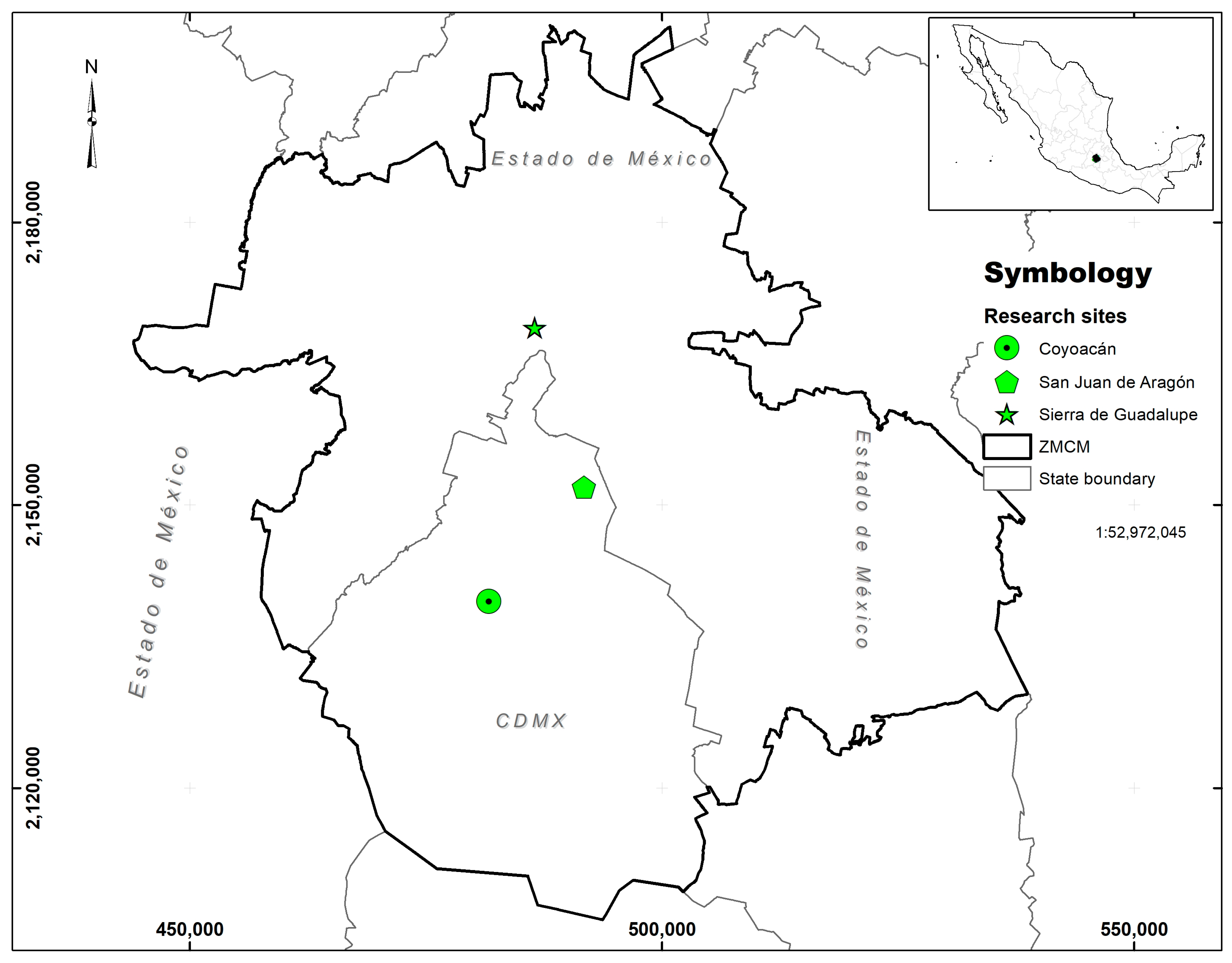
The study area included three urban parks—San Juan de Aragón Park (SJA), Sierra de Guadalupe State Park (GUAD), and Vivero Coyoacán National Park (COY)—distributed across the Metropolitan Area of the Valley of Mexico along an atmospheric pollution gradient defined by NOx, O3, PM2.5, and PM10 [22] (Figure 1).
San Juan de Aragón Park (SJA) is one of the main public green areas in the northeastern part of Mexico City. The park covers 162 ha and is located at an average elevation of 2240 m a.s.l., with slopes ranging from 0% to 4%. The mean annual temperature is 17.1 °C, and the average annual precipitation ranges between 600 and 800 mm. Tree species belonging to the genera Cupressus, Eucalyptus, Fraxinus, and Pinus are present and receive occasional irrigation [23]. The soils are classified as Solonchaks, which are characterized by high concentrations of soluble salts [24].
Sierra de Guadalupe State Park (GUAD) is in the northern part of Mexico City (Figure 1) and has no irrigation system. The park covers 1251.60 ha and has an average elevation of 2600 m a.s.l., a mean annual temperature of 16.7 °C, and a total annual precipitation of approximately 700 mm. The main ecosystems include oak forest, xerophytic scrub, grassland, and induced forest dominated by Pinus greggii, Schinus molle L., and Eucalyptus spp. The predominant soil types are Phaeozems and Lithosols, which present low to moderate concentrations of soluble salts [25].
Viveros de Coyoacán National Park (COY) is in central Mexico City (Figure 1) at an elevation of 2240 m a.s.l. and has occasional irrigation. The park covers an area of 42 ha, with a mean annual temperature of 17 °C and an average annual precipitation of approximately 800 mm [26]. The predominant soil types are Phaeozems and Lithosols. Tree species present in this area include Alnus acuminata Kunth, Casuarina cunninghamiana Miéll, Cupressus lusitanica Mill, Eucalyptus globulus Labill, Fraxinus uhdei Wenz, Pinus strobiformes Engelm, P. greggii, Pinus oocarpa Schiede ex Schltdl, and Ulmus parvifolia Jacq [27].

2.2. Tree Ring Analysis

Given the common presence of P. greggii across all parks, sampling efforts were focused on this species. Pinus greggii is a drought-tolerant tree species, adapted to harsh conditions, and widely used in ecological reforestation projects in different countries [28,29]. Therefore, in late 2022, ten dominant and vigorous trees, showing no visible damage, were selected in each park. From each tree, two increment cores were extracted at a diameter at breast height (DBH, 1.30 m above ground level) using a Pressler increment borer with an internal diameter of 5.1 mm [30]. In total, a sample size of 60 increment cores was obtained across the three sites. After each extraction, the increment borer was cleaned with alcohol and water to prevent cross-contamination between samples [31]. The samples were stored in perforated plastic straws to facilitate ventilation and drying, thereby preventing fungal growth [30]. Finally, the samples were air-dried at room temperature and then mounted on wooden holders, where they were sanded using progressively finer grit sandpaper (220, 320, and 600) to clearly define the boundaries of the annual tree rings [30].

2.3. Cross-Dating and Dendrochronological Analysis

Cross-dating and ring-width measurements were conducted at the National Dendrochronology Laboratory of INIFAP CENID-RASPA in Durango, Mexico, following standard dendrochronological techniques [32]. Tree rings were counted using a high-resolution trinocular stereomicroscope Leica Model A60F made in Singapure with a 5× to 30× resolution, considering the outermost ring as the year 2022. Due to growth irregularities typical of disturbed environments such as urban parks, a total of 14 cores were successfully dated for SJA, 10 increment cores for the GUAD site, and 10 cores plus two cross-sections for COY.
The quality of cross-dating was verified using the COFECHA program [33], which calculates cross-correlations in 50-year segments with 25-year overlaps among individual tree-ring series. Dating was considered significant and reliable (p < 0.01) when interseries correlation values exceeded 0.3281 [34]. Subsequently, tree ring series were standardized using a negative exponential model with the dplR package in R (version 4.2.0, R Foundation for Statistical Computing, Vienna, Austria) to remove age-related trends and geometric growth effects, among other sources of noise [35]. This standardization procedure generates a time series known as the ring-width index (RWI), which has a mean value of 1.0 and homogeneous variance, allowing comparisons among trees of different ages, species, and sites [36].

2.4. Climatic Variables and Tree Growth Response

Monthly temperature (maximum, minimum, and mean) and precipitation data were compiled from the meteorological stations closest to the study parks. Climate datasets were obtained from climatological stations of the National Meteorological Service (SMN) and from the Rapid Climate Information Extractor (SIG ERIC version 1.0) [37]. For the COY site, records covered the period from 1978 to 2021, whereas for GUAD and SJA, data spanned from 1964 to 2021 and from 1982 to 2021, respectively.
Climate data from each station were averaged to construct a site-specific dataset and subsequently associated with the RWI. Pearson’s correlation coefficients were calculated between the RWI and monthly climatic variables for each site, starting in September of the previous year through October of the current year, using R software and the treeclim package, with a significance level of α = 0.05 [38].

2.5. Dendrochemical Analysis of Tree Rings

Chemical analysis was conducted for each annual ring, focusing on the period 2002 to 2022, with four trees per site. Trees with well-defined ring boundaries and sufficient wood for the analysis (0.1 g) were selected. Total tree ring material (earlywood and latewood) was powdered using a micro dental drill (Micromotor Lab, Foshan, China), which was cleaned with alcohol between samples to prevent cross-contamination. The sawdust, collected by year, was placed in labeled 0.2 mL centrifuge tubes.
The concentrations of chemical elements in the sawdust were determined using X-ray fluorescence (XRF) [12]. Direct analysis was carried out using the XRF SANDRA system (Non-Destructive X-ray Analysis System) at the Laboratorio Nacional de Ciencias para la Investigación y Conservación del Patrimonio Cultural (LANCIC) of the Institute of Physics, at the National Autonomous University of Mexico (Mexico city, Mexico) [39]. For this analysis, a custom sample holder was designed to contain 1 mm of sawdust between two Mylar films, each 3 µm thick.
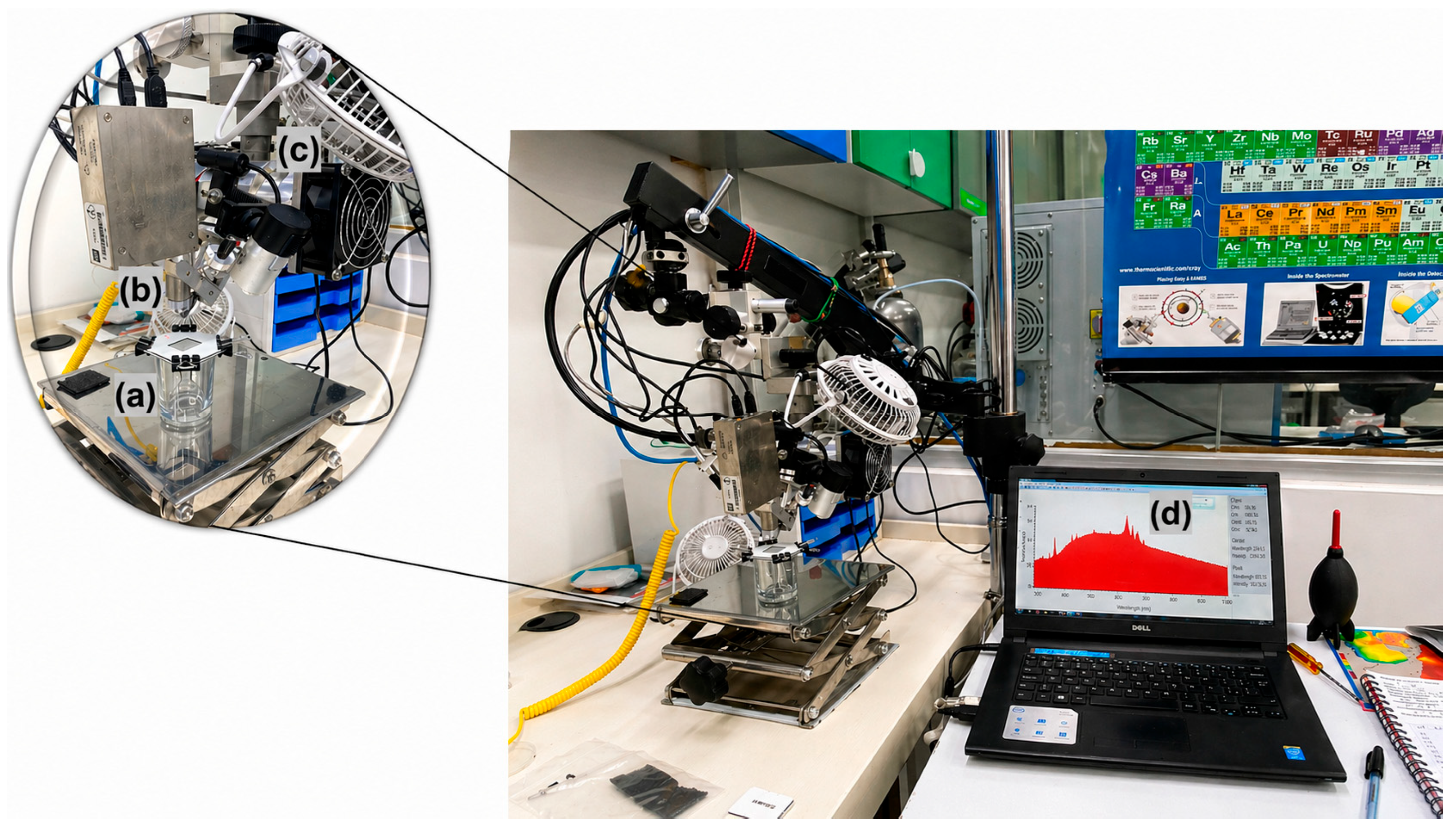
In this study, the elements iron (Fe), copper (Cu), zinc (Zn), and lead (Pb) were quantified using XRF analysis. The system employed a 4 mm collimator at 45 keV and 0.3 mA in the X-ray tube, with each irradiation lasting approximately 10 min, and two repetitions from each ring. X-ray detection was carried out with an SDD detector (Thermo Fisher Scientific, Waltham, MA, USA)positioned at 45° relative to the primary X-ray beam and perpendicular to the sample surface (Figure 2). Instrument calibration was performed using certified reference materials: NIST SRM 157a (tomato leaves), IAEA 16 (chard), IAEA 132 (algae), IAEA 336 (lichen), and IAEA 396 (coll. soil). X-ray intensities were measured using the AXIL software integrated into the SANDRA XRF system [40]. The system’s uncertainties and detection limits for each element are presented in Table 1. Quantitative analysis was conducted following the procedure described by Rousseau et al. [41], using empirical calibration curves that relate measured intensities to element concentrations. It should be noted that spectral analysis of X-ray fluorescence allows the identification of characteristic signatures of the various chemical elements in the periodic table [42].

2.6. Statistical Analysis of Chemical Elements in Tree Rings

An analysis of variance (ANOVA) was conducted to determine whether statistically significant differences existed in the concentrations of Fe, Cu, Zn, and Pb among the urban parks. In addition, a temporal trend analysis was performed using the non-parametric Theil–Sen estimator to evaluate changes in metal concentrations over time and to estimate the magnitude of these trends in a manner robust to outliers. Finally, to assess the association between atmospheric pollutants and tree rings’ element concentration, Pearson correlation coefficients were calculated between annual heavy metal concentrations in tree rings (Fe, Cu, Zn, and Pb) and atmospheric pollutant concentrations (NOx, CO, O3, PM10, and PM2.5) for the period 2002–2021. In the correlation analysis, the current year and lags of up to 3 years previous were considered, since the effects of pollutants may not be immediate and can manifest in trees several years later [43].
Annual pollution concentration maps for 2002 and 2021 were generated using support vector machines (SVM) based on the dataset reported by Cruz-Huerta et al. [22]. These maps were derived from atmospheric monitoring data and spatial predictors as described in that study. Annual data extraction from the resulting pollution maps (80 points per site) was carried out using the terra package in R [44], which extracts values from raster images. This procedure enabled the creation of a site-, year-, and pollutant-specific dataset for the evaluation of temporal trends.

3. Results and Discussion

3.1. Dendrochronological Information

The oldest P. greggii trees were found in COY, with an age of 52 years (1970–2022), while the youngest trees were in GUAD (13 years) (Table 2). The site with the highest interseries correlation was GUAD (0.87), followed by SJA (0.45) and COY (0.41). This is likely related to the fact that the younger trees from a reforestation in GUAD allowed for a clearer identification of a single growth pattern due to the short length of the series [25]. Regarding dendrochronological sensitivity, GUAD showed the highest mean value (0.27), indicating a stronger response of radial growth to environmental variability. In contrast, lower values were observed at SJA (0.19) and COY (0.15), which may reflect more stable climatic conditions, differences in irrigation regimes (GUAD: no irrigation; SJA and COY: occasional irrigation), or more disturbance. This behavior is consistent with Correa-Díaz et al. [45], who showed that disturbance levels and irrigation influence tree growth and climatic sensitivity in annual ring widths.
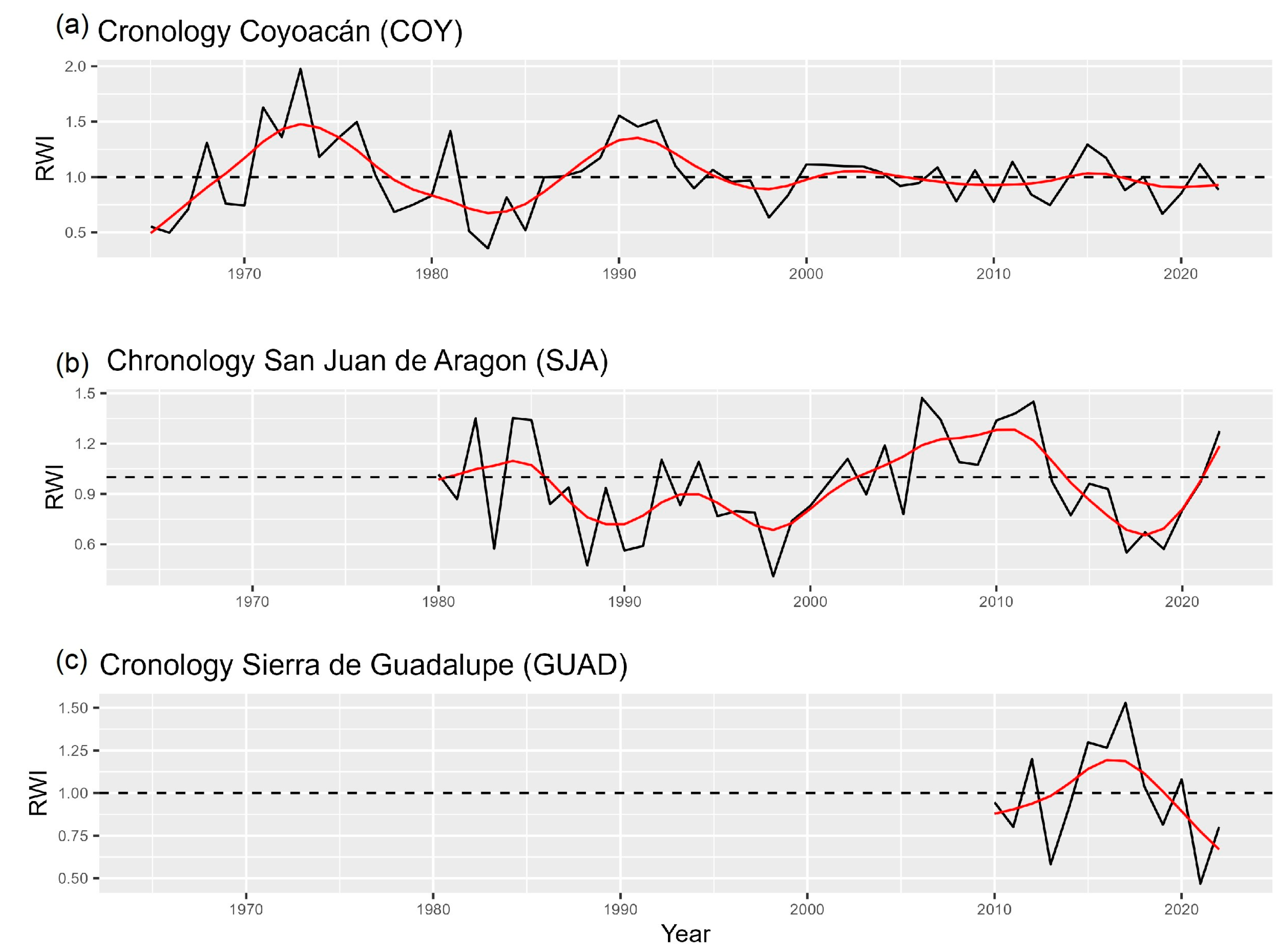
According to the RWI data, several periods of low growth were identified in the COY chronology (Figure 3), specifically in 1965, 1970, 1978, 1983, 1985, 1997, and 2019, as well as two periods of maximum growth, occurring from 1971–1977 and 1989–1993. In SJA, a period of low growth was observed from 1985 to 2000, followed by a peak of maximum growth between 2005 and 2012 (Figure 3). In GUAD, two periods of reduced growth were recorded in 2013 and 2019, and a period of high growth occurred in 2014–2015. The low-growth periods at SJA and COY are probably associated with climatic anomalies characterized by below-average precipitation and above-normal temperatures. For instance, during 1998, the maximum temperatures were up to 33.9 °C in the area, along with a lack of precipitation [46]. These observations are consistent with a drought period that affected northern and central Mexico during the period 1994–2005 [45,47].

3.2. Effect of Climatic Variables on Pinus greggii Growth

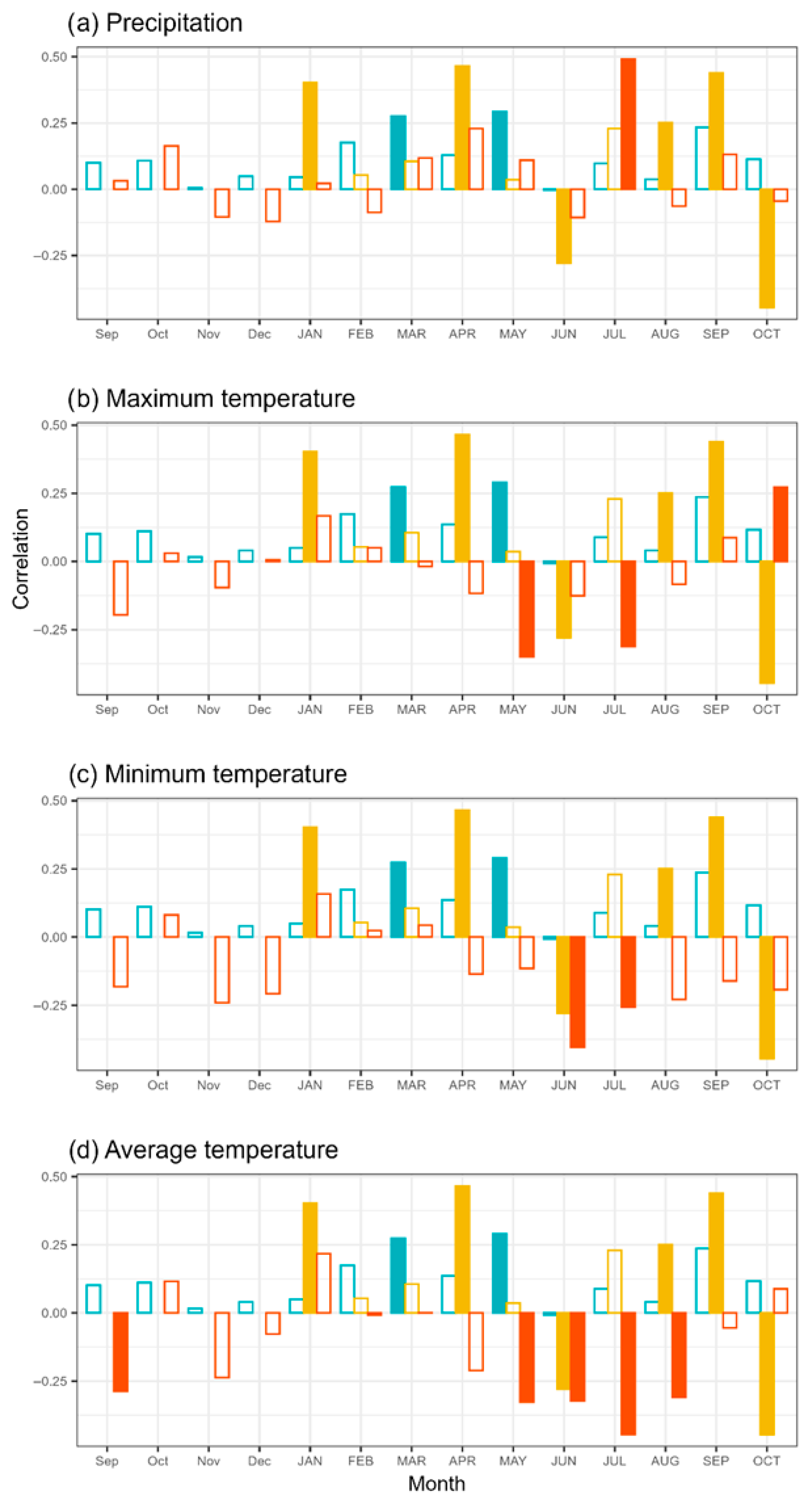
Overall, the annual radial growth of P. greggii at the three study sites was associated with mean annual precipitation. Precipitation during January, April, August, and September exhibited a positive correlation with increases in RWI (Figure 4a) at the GUAD site, suggesting that moisture availability during both the early and late portions of the growing season enhanced cambial activity and radial increment. Mendoza-Villa et al. [48] reported that winter–spring precipitation (January to May) was positively associated with the radial growth of P. greggii in central Mexico. In contrast, precipitation in June and October showed a negative correlation with RWI, suggesting that higher rainfall during these months may be associated with reduced radial growth at this site. These results highlight the seasonal dependence of radial growth responses and underscore the importance of precipitation timing, rather than total annual precipitation alone, in regulating growth dynamics at this site [49]. In COY, negative correlations were observed during March and April, while at SJA, July precipitation was positively associated with RWI.
At SJA, a negative correlation was identified with mean temperature (Figure 4b) for the previous September and for May, June, July, and August of the current growth year. At GUAD, mean temperatures in January, April, August, and September were positively correlated with RWI, but June and October temperatures showed negative correlations. A similar pattern occurred at COY, where mean temperatures in February and May favored radial growth. In addition, minimum (Figure 4c) and maximum temperatures (Figure 4d) at the three sites during January, March, April, May, August, and September generally promoted radial growth, but it was the opposite for June and July at SJA and October at GUAD.
Radial growth of P. greggii in the parks was associated with temperature variations in May (maximum), June, July, and August (mean), as well as with mean precipitation in June and October. This is consistent with previous studies [50,51], which indicated that annual radial growth is influenced by climatic limitations such as precipitation and temperature. Generally, conifers respond more strongly to winter and spring precipitation, while growth limitations are more closely related to maximum temperatures during the growing season, as these increase atmospheric vapor pressure deficit, accelerate evapotranspiration, and reduce available soil moisture.

3.3. Heavy Metal Accumulation in Tree Rings

The site-averaged concentrations in the wood do not exceed the reported limits and requirements for different tree species (Table 3). For instance, both mean and maximum values were below the reported thresholds for Cu (<20 ppm) and Zn (<100 ppm) [52]. However, for Fe, the average values are below the reported requirement (<200 ppm), but the maximum values at GUAD exceeded this limit [53,54]. For Pb, as it is not an essential nutrient, Kabata-Pendias [52] suggested that concentrations exceeding 5 ppm indicate contaminated environments, particularly in forested areas near anthropogenic pollution sources. Considering this threshold, the concentrations in the analyzed samples were lower than this; nevertheless, Pb is regarded as a highly toxic and non-essential element for plants [55,56].

3.4. Temporal Trends in the Concentrations of Heavy Metals Fe, Cu, Zn, and Pb in Tree Rings and Their Relationship with Atmospheric Pollutants

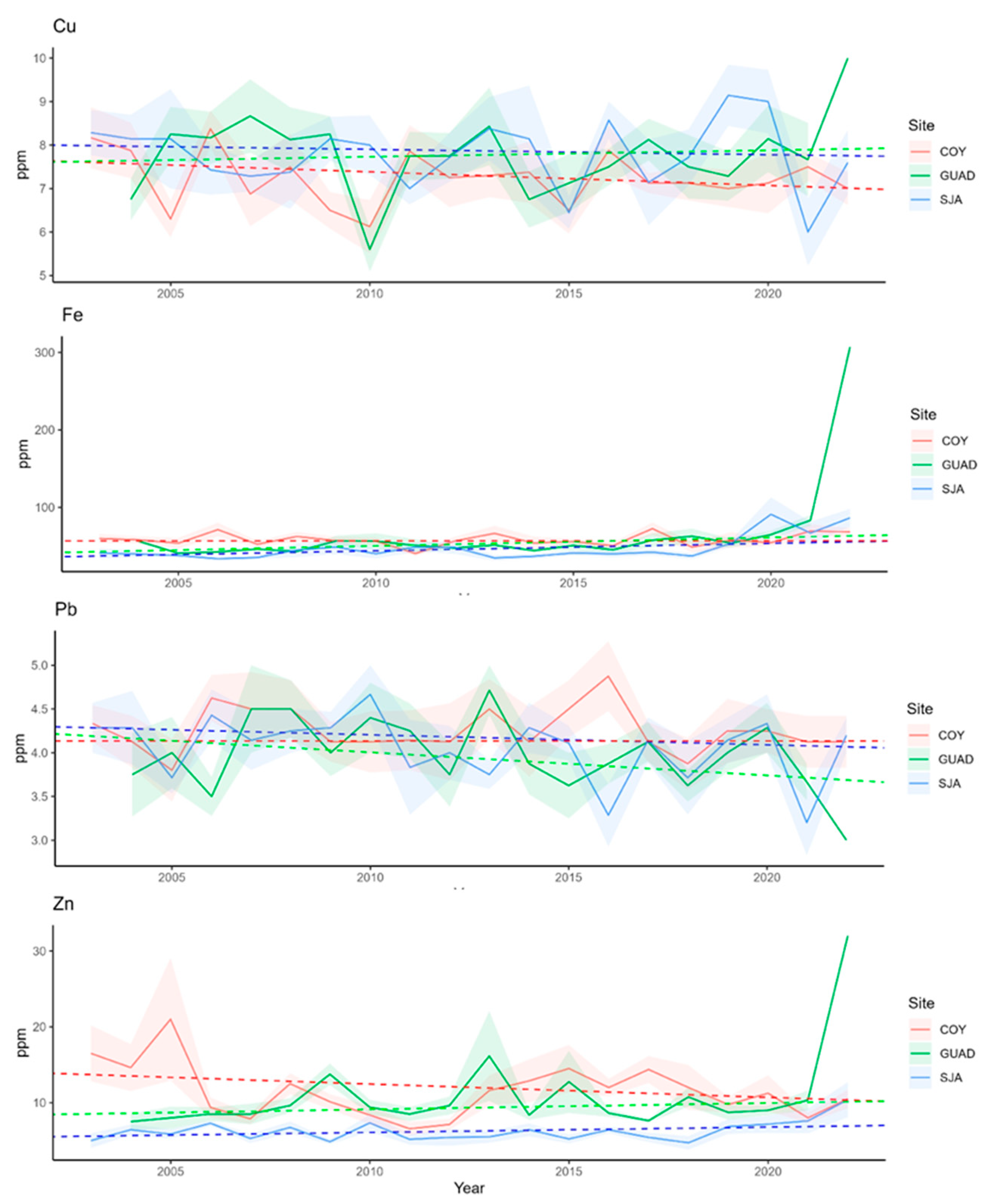
The analysis revealed high-frequency variability in the concentrations of Fe, Pb, Cu, and Zn in tree rings. For instance, at least one park exhibited a statistically significant difference in mean concentrations compared to the others for Cu, Fe, and Zn (p < 0.05), and a marginally significant difference for Pb (p = 0.051) (Table 4). Comparative analysis across sites showed that Pb, Fe, Zn, and Cu concentrations were significantly higher at SJA than at COY (p < 0.05). No significant differences were observed between GUAD and COY for Pb, Fe, and Zn (p > 0.05). In contrast, when comparing GUAD and SJA, only Zn showed a statistically significant difference (p < 0.05).
We did not find statistically significant temporal linear trends as determined by the Thiel-Sen method (p > 0.05) at any site. However, we observed a clear interannual variability among elements and sites. For instance, we observed a peak concentration of Cu, Fe, and Zn in 2021 at GUAD (Figure 5). This peak may be related to the formation of the annual ring corresponding to the year 2022. Higher concentration of nutrients in the rings close to the cambium may be associated with the high demand for nutrients of the living cells [57]. Gavrikov et al. [58] reported that Fe is preferentially accumulated in earlywood, whereas Zn is predominantly found in latewood, indicating that these concentration patterns likely reflect intrinsic physiological processes in trees. This distribution may be influenced by soil Zn concentrations at the study sites (SJA = 25.15 ppm, GUAD = 18.15 ppm, and COY = 22.72 ppm) [59], which facilitate root uptake and subsequent translocation through the vascular system, ultimately resulting in the accumulation of these metals in the most recently formed tissues [60]. Importantly, the presence of Fe and Zn in the rings does not necessarily imply environmental contamination; rather, it may reflect the natural genesis of the soil or, in certain cases, the enrichment of these elements in the upper soil horizons due to anthropogenic inputs [59,60].
Lead (Pb) exhibited interannual variability throughout the analyzed period across all sites. Although no significant temporal trend was detected (p > 0.05), some sites, such as GUAD, showed a progressive decrease, particularly after 2010 (Figure 5), which may be associated with the implementation of the emission reduction program published in the DOF on 19 May 2010. This program established the environmental contingency program for the Mexico City Metropolitan Area (MCMA) [61]. However, an increase in Pb was observed at COY in 2016, while a decrease occurred at SJA in the same year, suggesting that local factors modulated Pb concentrations within tree rings. Copper (Cu) exhibited a marked decrease in 2010 at COY and GUAD, followed by a return to previous levels in 2011, consistent with Morton-Bermea et al. [62], who reported a similar pattern in Cu concentrations in PM10 particles. Comparisons among sites (SJA, GUAD, and COY) revealed significant differences (p < 0.05) for all elements except Zn.
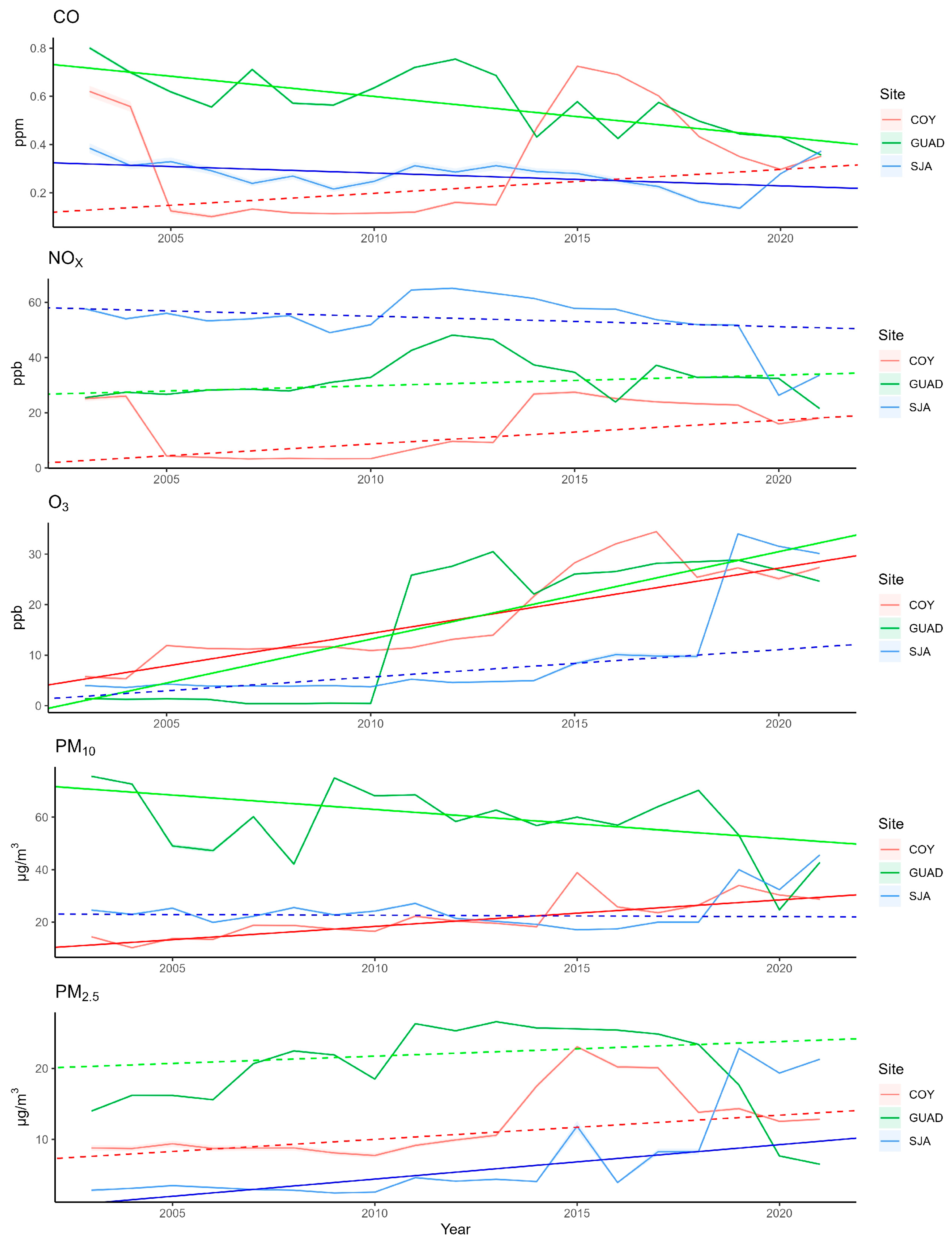
On the other hand, the temporal behavior of atmospheric pollutants at the same sites showed annual variation as well as differences between sites (Figure 6). These variations are attributed to site-specific emission sources, as well as fluctuations in local climatic and topographic conditions [63]. In particular, a decrease in NOX, PM2.5, PM10, and O3 levels was observed in 2020. This decline may be associated with the restrictions implemented during the COVID-19 pandemic in the Metropolitan Area of Mexico Valley (ZMVM), where confinement measures and the reduction of industrial and vehicular activities led to a notable improvement in air quality, highlighting the significant influence of human activity on atmospheric pollution [64,65,66].

3.5. Correlation of Cu, Fe, Pb, and Zn in Tree Rings with Atmospheric Pollutants

The results showed that, at the SJA site, Fe exhibited a strong negative correlation with NOX (r = −0.69, p < 0.001), while Zn showed a weaker but still significant negative correlation (r = −0.43, p < 0.05) (Table 5). These relationships suggest that higher atmospheric NOX levels may be associated with lower Fe and Zn concentrations recorded in the tree rings at this site. In contrast, the correlations observed at the GUAD and COY sites were weaker and, in some cases, positive, indicating that the behavior of these metals in tree rings may vary depending on the environmental and edaphic conditions of each location. One possible explanation is that atmospheric NOX participates in reactions that generate acid rain when combined with sulfur oxides, carbon oxides, water, and sunlight. Acid deposition can modify soil pH after reaching ecosystems; as acidic water infiltrates the soil, it increases hydrogen ion availability and lowers soil pH, which may influence the mobility and uptake of certain elements by plants [67,68].
Iron (Fe) is mainly absorbed through fine roots, which is consistent with the high Fe concentrations previously reported at COY (7574.41 ppm) and GUAD (7431.70 ppm), values that exceed the permissible limits reported for plants [57]. Iron showed a significant positive correlation with PM10 at the SJA site (r = 0.64, p < 0.001) and at Lag 1 (r = 0.80, p < 0.001). Zn also exhibited a weaker but significant positive correlation with PM10 (r = 0.44, p < 0.05). These results suggest that higher particulate matter concentrations may be associated with increased Fe and Zn deposition recorded in the tree rings at this site. In contrast, at other locations such as COY, the relationships between particulate matter and metals were weaker, particularly for Pb and Zn, whereas at GUAD, the correlations were lower and, in some cases, negative. A similar trend was observed for PM2.5, which showed strong associations with Fe at SJA, GUAD, and COY, while relationships with Pb remain weaker or negative. These results are consistent with previous studies [65], which reported a significant decrease in Pb concentrations associated with PM10 in the Metropolitan Area of the Valley of Mexico. Nevertheless, despite this reduction, Pb remains an important pollutant due to its persistence and toxic effects on human health and ecosystems.
Iron showed significant positive correlations with O3 at the SJA and GUAD sites across several temporal lags (Lag 0 to Lag 3), suggesting a persistent temporal association between O3 exposure and Fe concentrations recorded in tree rings. In contrast, Zn and Pb displayed weak or negative correlations with O3. These patterns may indicate that O3 exposure influences physiological processes related to nutrient uptake and translocation in trees, potentially affecting Fe dynamics within plant tissues. Ozone-induced oxidative stress can alter root activity and nutrient transport mechanisms, which may modify Fe allocation and accumulation within the trunk [69].
In contrast, Fe exhibited significant negative correlations with CO at several lags, particularly at SJA, where Lag 2 showed a strong inverse relationship (r = −0.77, p < 0.001). This delayed association suggests that Fe concentrations in tree rings may reflect atmospheric conditions with a temporal lag of approximately two years. Such a pattern may be related to physiological stress responses in trees, where antioxidant defense mechanisms are activated under pollutant exposure and require micronutrients such as Fe [70]. Consequently, Fe may be redistributed within the plant to support metabolic and protective processes, potentially resulting in lower concentrations recorded in the annual rings. This interpretation is consistent with the averages reported in Table 5, where mean Fe concentrations at SJA were the lowest among the sites studied.
Finally, it is evident that correlations vary considerably between sites and metals. For example, Zn showed positive correlations with PM10 and O3 in certain cases, but it can also have negative relationships with other pollutants depending on the site and lag. These patterns suggest that there is no direct causal relationship between them and that correlations may depend on multiple factors, such as the emission source or site-specific conditions.

4. Conclusions

The annual radial growth of Pinus greggii at the three urban parks was influenced by climatic factors, particularly precipitation and mean, minimum, and maximum temperatures from January to July. However, the magnitude of this response varied among sites due to local climatic conditions and park management practices. Although heavy metal concentrations (Cu, Fe, Pb, and Zn) in tree rings remained within recommended limits, they exhibited clear intra-annual variability and site-specific differences. These patterns likely reflect changes in atmospheric pollution and metal deposition over time. In particular, Pb concentrations showed a partial decreasing trend after 2010 (Sierra de Guadalupe State Park- GUAD), likely associated with emission control policies, although a partial increase was observed at Vivero Coyoacán National Park (COY) in 2016. Overall, the results demonstrate that Pinus greggii is a sensitive bioindicator of urban environmental contamination and can record both temporal (annual) and spatial variability in metal deposition. Further studies at the individual-tree level are needed to better evaluate the radial mobility of elements and to confirm the reliability of tree rings as a long-term monitoring tool for atmospheric pollution in urban environments.

Author Contributions

Conceptualization, C.C.-H., A.C.-D., T.M.-T. and A.G.-G.; methodology, C.C.-H., A.C.-D. and A.G.-G.; validation, C.C.-H., J.V.-D., L.E.B.-O. and A.G.-G.; formal analysis, C.C.-H., A.C.-D., A.G.-G. and L.E.B.-O.; investigation, C.C.-H., A.C.-D., J.J.V.-H., A.G.-G. and J.V.-D.; writing—original draft preparation, C.C.-H., T.M.-T. and A.G.-G.; writing—review and editing, C.C.-H., T.M.-T., A.C.-D., J.V.-D., L.E.B.-O., A.G.-G. and J.J.V.-H.; visualization, C.C.-H. and A.C.-D.; supervision, T.M.-T., A.C.-D. and A.G.-G.; project administration, C.C.-H. and T.M.-T.; funding acquisition C.C.-H. and T.M.-T. All authors have read and agreed to the published version of the manuscript.

Funding

This work received partial funding from the Research Line “Structural and Functional Improvement of Forest Ecosystems” (Línea de Generación y Aplicación del Conocimiento, LGAC) of the Colegio de Postgraduados, México.

Data Availability Statement

All data supporting the results presented in this research are included in the manuscript.

Acknowledgments

The authors would like to thank the Consejo Nacional de Humanidades, Ciencias y Tecnologías (CONAHCYT) for the graduate scholarship granted to the first author. The authors also acknowledge the authorities and staff of San Juan de Aragón Park, Viveros de Coyoacán Park, and Sierra de Guadalupe State Park for the facilities and logistical support provided during data collection.

Conflicts of Interest

The authors declare that they have no conflicts of interest.

References

  1. Sidor, C.G.; Cuciurean, C.I.; Camarero, J.J.; Badea, O. Heavy metal concentrations in deciduous tree rings reflects changes in temporal dynamic of industrial air pollution. Atmos. Pollut. Res. 2026, 17, 102716. [Google Scholar] [CrossRef]
  2. Tang, S.; Wang, C.; Song, J.; Ihenetu, S.C.; Li, G. Advances in Studies on Heavy Metals in Urban Soil: A Bibliometric Analysis. Sustainability 2024, 16, 860. [Google Scholar] [CrossRef]
  3. Delgado, C.; Bautista, F.; Gogichaishvili, A.; Cortés, J.L.; Quintana, P.; Aguilar, D.; Cejudo, R. Identificación de las zonas contaminadas con metales pesados en el polvo urbano de la Ciudad de México. Rev. Int. Contam. Ambient. 2019, 35, 81–100. [Google Scholar]
  4. Morton-Bermea, O. Contenido de metales pesados en suelos superficiales de la Ciudad de México. Tip. Rev. Espec. Cienc. Químico-Biológicas 2006, 9, 45–47. [Google Scholar]
  5. Guzmán-Morales, J.; Morton-Bermea, O.; Alvarez-Hernandez, E.; Salazar, M.T.d.J.; García, M.; Tapia-Cruz, V. Assessment of Atmospheric Metal Pollution in the Urban Area of Mexico City, Using Ficus benjamina as Biomonitor. Bull. Environ. Contam. Toxicol. 2011, 86, 495–500. [Google Scholar] [CrossRef]
  6. Beramendi-Orosco, L.; Rodriguez-Estrada, M.L.; Morton-Bermea, O.; Romero, F.; Hernández, G.; Alvarez-Hernandez, E. Correlations between metals in tree-rings of Prosopis julifora as indicators of sources of heavy metal contamination. Appl. Geochem. 2013, 39, 78–84. [Google Scholar] [CrossRef]
  7. Monaci, F.; Baroni, D. Leaves and Tree Rings as Biomonitoring Archives of Atmospheric Mercury Deposition: An Ecophysiological Perspective. Plants 2025, 14, 1275. [Google Scholar] [CrossRef]
  8. Binda, G.; Di Iorio, A.; Monticelli, D. The what, how, why, and when of dendrochemistry: (paleo)environmental information from the chemical analysis of tree rings. Sci. Total Environ. 2021, 758, 143672. [Google Scholar] [CrossRef]
  9. Balouet, J. Pollution Investigation by Trees (PIT) Methodological Guide; Michel CHALOT; Université de Lorraine: Nancy, France; Université de Franche-Comté: Besançon, France, 2015; 72p. [Google Scholar]
  10. Doucette, W.J.; Bugbee, B.G.; Smith, S.C.; Pajak, C.J.; Ginn, J.S. Uptake, Metabolism, and Phytovolatilization of Trichloroethylene by Indigenous Vegetation: Impact of Precipitation. Phytoremediation 2003, 561–588. [Google Scholar] [CrossRef]
  11. Canning, C.M.; Laroque, C.P.; Muir, D. Critical Analysis of the Past, Present, and Future of Dendrochemistry: A Systematic Literature Review. Forests 2023, 14, 1997. [Google Scholar] [CrossRef]
  12. Cuciurean, C.I.; Sidor, C.G.; Camarero, J.J.; Buculei, A.; Badea, O. Detecting changes in industrial pollution by analyzing heavy metal concentrations in tree-ring wood from Romanian conifer forests. Environ. Res. 2024, 252, 118884. [Google Scholar] [CrossRef]
  13. Scanlon, T.; Riscassi, A.; Demers, J.; Camper, T.D.; Lee, T.; Druckenbrod, D. Mercury Accumulation in Tree Rings: Observed Trends in Quantity and Isotopic Composition in Shenandoah National Park, Virginia. J. Geophys. Res. Biogeosci. 2020, 125, e2019JG005445. [Google Scholar] [CrossRef]
  14. Turkyilmaz, A.; Sevik, H.; Isinkaralar, K.; Cetin, M. Use of tree rings as a bioindicator to observe atmospheric heavy metal deposition. Environ. Sci. Pollut. Res. 2019, 26, 5122–5130. [Google Scholar] [CrossRef]
  15. Sevik, H.; Çetin, M.; Ozel, H.; Akarsu, H.; Zeren Cetin, İ. Analyzing of usability of tree-rings as biomonitors for monitoring heavy metal accumulation in the atmosphere in urban area: A case study of cedar tree (Cedrus sp.). Environ. Monit. Assess. 2019, 192, 23. [Google Scholar] [CrossRef] [PubMed]
  16. Barrales, C.C.; Bauer, L.; Santos, A.T.; González, R.C. Cadmio, plomo, níquel y zinc en suelos del Parque Desierto de los Leones. Terra Latinoam. 2007, 25, 95–103. [Google Scholar]
  17. Morton-Bermea, O.; Beramendi-Orosco, L.; Martínez-Reyes, Á.; Alvarez-Hernandez, E.; Hernández, G. Increase in platinum group elements in Mexico City as revealed from growth rings of Taxodium mucronatum Ten. Environ. Geochem. Health 2015, 38, 195–202. [Google Scholar] [CrossRef]
  18. Taylor, A.; Gartner, B.; Morrell, J. Heartwood formation and natural durability—A review. Wood Fiber Sci. 2002, 34, 587–611. [Google Scholar]
  19. Peckham, M.; Gustin, M.; Weisberg, P. Assessment of the Suitability of Tree Rings as Archives of Global and Regional Atmospheric Mercury Pollution. Environ. Sci. Technol. 2019, 53, 3663–3671. [Google Scholar] [CrossRef]
  20. Carbajal, G.; Benitez, G.; Ángel, C.; Cuevas, T. Monitoreo y análisis de la contaminación en la ciudad de México, con imágenes del satélite meteorológico GOES8. In Proceedings of the OMMAC XII Congreso Nacional de Meteorología, Cancún, Mexico, 23–25 October 2002. [Google Scholar]
  21. Calva-Vázquez, G.; Razo-Angel, G.; Rodríguez-Fernández, L.; Ruvalcaba-Sil, J. Study of Z > 18 elements concentration in tree rings from surroundings forests of the Mexico Valley using external beam PIXE. Nucl. Instrum. Methods Phys. Res. Sect. B Beam Interact. Mater. At. 2006, 249, 588–591. [Google Scholar] [CrossRef]
  22. Cruz-Huerta, C.; Martínez-Trinidad, T.; Correa-Díaz, A.; Gómez-Guerrero, A.; Vargas-Hernández, J.J.; Villanueva-Díaz, J.; Beramendi-Orosco, L.E. Modelado espacial y temporal de contaminantes atmosféricos en la Zona Metropolitana de la Ciudad de México. Rev. Chapingo Ser. Cienc. For. Ambiente 2024, 30, 1–18. [Google Scholar] [CrossRef]
  23. Mijangos-Hernández, I.; Rojas-García, F.; Benavides, H. Estimación del contenido y captura de carbono en la biomasa arbórea del Bosque de San Juan de Aragón, Distrito Federal. In Estado Actual del Conocimiento del Ciclo del Carbono y sus Interacciones en México: Síntesis a 2014; Programa Mexicano del Carbono (PMC): Texcoco de Mora, Mexico, 2014; pp. 165–170. [Google Scholar]
  24. Saavedra-Romero, L.d.L.; Hernández-de la Rosa, P.; Alvarado-Rosales, D.; Martínez-Trinidad, T.; Villa-Castillo, J. Diversidad, estructura arbórea e índice de valor de importancia en un bosque urbano de la Ciudad de México. Polibotánica 2019, 47, 25–37. [Google Scholar] [CrossRef]
  25. Flores-Armillas, O.; Bustamante, C.; Murillo, E.; Palma, A. Programa de Adaptación Basado en Ecosistemas Para el Parque Estatal Sierra de Guadalupe. Proyecto Cuencas Verdes: Adaptándonos al Futuro; Pronatura México A.C.: Ciudad de México, Mexico, 2021; Available online: https://pronatura.org.mx/pdf/AbE/Sierra_Guadalupe.pdf (accessed on 28 August 2023).
  26. Gobierno de la CDMX. Parque Nacional Viveros de Coyoacán. Available online: https://www.gob.mx/semarnat/acciones-y-programas/vivero-coyoacan (accessed on 3 February 2016).
  27. Muñoz Gutiérrez, L.; Pérez Miranda, R.; Reséndiz Martínez, J.F.; Reyes Robles, R. Caracterización de árboles de riesgo en el Parque Nacional Viveros de Coyoacán, Ciudad de México. Rev. Mex. Cienc. For. 2022, 13, 201–222. [Google Scholar]
  28. Gómez-Romero, M.; Soto-Correa, J.C.; Blanco-García, J.A.; Sáenz-Romero, C.; Villegas, J.; Lindig-Cisneros, R. Estudio de especies de pino para restauración de sitios degradados. Agrociencia 2012, 46, 795–807. [Google Scholar]
  29. Kanzler, A.; Payn, K.; Nel, A. Performance of two Pinus patula hybrids in southern Africa. South. For. A J. For. Sci. 2012, 74, 19–25. [Google Scholar] [CrossRef]
  30. Stokes, M.A.; Smiley, T.L. An Introduction to Tree-Ring Dating; University of Chicago: Chicago, IL, USA, 1968. [Google Scholar]
  31. Martin, A.; Hassan Loni, Y.; Fichtner, A.; Péron, O.; David, K.; Chardon, P.; Larrue, S.; Gourgiotis, A.; Sachs, S.; Arnold, T.; et al. An integrated approach combining soil profile, records and tree ring analysis to identify the origin of environmental contamination in a former uranium mine (Rophin, France). Sci. Total Environ. 2020, 747, 141295. [Google Scholar] [CrossRef] [PubMed]
  32. Villanueva-Díaz, J.; Paredes, J.; Stahle, D.; Therrell, M.; Cleaveland, M.; Sánchez-Cohen, I. Elementos Básicos de la Dendrocronología y sus Aplicaciones en México; INIFAP Folleto Técnico: Zacatecas, Mexico, 2004. [Google Scholar]
  33. Holmes, R.L. COFECHA. In The International Tree-Ring Data Bank Program Library Version 2.0 User’s Manual; Grissino-Mayer, H.D., Holmes, R.L., Fritts, H.C., Eds.; Laboratory of Tree-Ring Research, University of Arizona: Tucson, AZ, USA, 1996; pp. 48–55. [Google Scholar]
  34. Holmes, R.L. Computer-Assisted Quality Control in Tree-Ring Dating and Measurement; Laboratory of Tree-Ring Research, University of Arizona: Tucson, AZ, USA, 1983. [Google Scholar]
  35. Bunn, A.G. A dendrochronology program library in R (dplR). Dendrochronologia 2008, 26, 115–124. [Google Scholar] [CrossRef]
  36. Fritts, H.C. Chapter 1—Dendrochronology and Dendroclimatology. In Tree Rings and Climate; Fritts, H.C., Ed.; Academic Press: New York, NY, USA, 1976; pp. 1–54. [Google Scholar]
  37. IMTA. Sistema de Información Geográfica del Extractor Rápido de Información Climatológica; SIG ERIC versión 1.0; El Instituto Mexicano de Tecnología del Agua (IMTA): Jiutepec, Mexico, 2016. [Google Scholar]
  38. Zang, C.; Biondi, F. treeclim: An R package for the numerical calibration of proxy-climate relationships. Ecography 2015, 38, 431–436. [Google Scholar] [CrossRef]
  39. Ruvalcaba, J.L.; Miranda, D.; Aguilar-Melo, V.; Picazo, F. SANDRA: Portable XRF system for the study of Mexican cultural heritage. X-Ray Spectrom. 2010, 39, 338–345. [Google Scholar] [CrossRef]
  40. Cervantes, L.; Avila, O.; Ruvalcaba, J.L.; Miranda, J.; Muñoz, R. The use of biomonitors and PIXE analysis in the study of air pollution in Mexico City. X-Ray Spectrom. 2008, 37, 156–162. [Google Scholar] [CrossRef]
  41. Rousseau, R.M.; Willis, J.P.; Duncan, A.R. Practical XRF calibration procedures for major and trace elements. X-Ray Spectrom. 1996, 25, 179–189. [Google Scholar] [CrossRef]
  42. Baettig, R.; Perré, P.; Rémond, R. Aplicación de espectrometría de rayos X para el estudio de la madera: Algunos resultados iniciales. Maderas. Cienc. Tecnol. 2007, 9, 271–283. [Google Scholar] [CrossRef]
  43. Rojas-Jimenez, K. Ciencia de Datos Para Ciencias Naturales. 2022. Available online: https://bookdown.org/keilor_rojas/CienciaDatos/ (accessed on 25 April 2026).
  44. R Core Team. A Language and Environment for Statistical Computing; R Foundation for Statistical Computing: Vienna, Austria, 2021; Available online: http://www.R-project.org (accessed on 25 April 2026).
  45. Correa-Díaz, A.; Gómez-Guerrero, A.; Villanueva-Díaz, J.; Castruita-Esparza, L.U.; Martínez-Trinidad, T.; Cervantes-Martínez, R. Dendroclimatic analysis of baldcypress (Taxodium mucronatum Ten.) in central Mexico. Agrociencia 2014, 48, 537–551. [Google Scholar]
  46. SMN. Base de Datos Climatológica Servicio Meteorológico Nacional. 2023. Available online: https://smn.conagua.gob.mx/es/climatologia/informacion-climatologica/informacion-estadistica-climatologica (accessed on 25 April 2026).
  47. Stahle, D.W.; Cook, E.R.; Burnette, D.J.; Villanueva, J.; Cerano, J.; Burns, J.N.; Griffin, D.; Cook, B.I.; Acuna, R.; Torbenson, M.C.; et al. The Mexican Drought Atlas: Tree-ring reconstructions of the soil moisture balance during the late pre-Hispanic, colonial, and modern eras. Quat. Sci. Rev. 2016, 149, 34–60. [Google Scholar] [CrossRef]
  48. Mendoza-Villa, O.N.; Cambrón-Sandoval, V.H.; Cerano-Paredes, J.; Cervantes-Martínez, R.; Soto-Correa, J.C. Reconstruction of historical precipitation (1877–2014) for the southwest of the Sierra Gorda Biosphere Reserve, Querétaro, Mexico. Rev. Chapingo Ser. Cienc. For. Ambiente 2018, 24, 371–386. [Google Scholar] [CrossRef]
  49. Pompa-García, M.; Camarero, J.J.; Vivar-Vivar, E.D. Contrasting climate drivers of seasonal growth in western vs. eastern Mexican mountain conifer forests. For. Ecosyst. 2023, 10, 100091. [Google Scholar] [CrossRef]
  50. Gutierrez-García, G.; Ricker, M. Influencia del clima en el crecimiento radial en cuatro especies de coníferas en la sierra de San Antonio Peña Nevada (Nuevo León, México). Rev. Mex. Biodivers. 2019, 90, e902676. [Google Scholar] [CrossRef]
  51. Villanueva-Díaz, J.; Rubio-Camacho, E.; Chávez-Durán, Á.; Zavala-Aguirre, J.; Paredes, J.; Martínez-Sifuentes, A. Respuesta climática de Pinus oocarpa Schiede Ex Schetol en el Bosque La Primavera, Jalisco. Madera Bosques 2017, 24, e2411464. [Google Scholar] [CrossRef]
  52. Kabata-Pendias, A. Trace Elements in Soils and Plants, 4th ed.; CRC Press: Boca Raton, FL, USA, 2010; pp. 1–520. [Google Scholar]
  53. Adriano, D.C. Trace Elements in Terrestrial Environments: Biogeochemistry, Bioavailability, and Risks of Metals; Springer: New York, NY, USA, 2001; Volume 860. [Google Scholar]
  54. Alcalá, J.; Manuel, S.; Myriam, M.; Rodríguez-Ortiz, J.; Quintana, C.; César, T.; Oved, R. Metales pesados en suelo urbano como un indicador de la calidad ambiental: Ciudad de Chihuahua, México. Multequina 2009, 18, 53–69. [Google Scholar]
  55. Gupta, M.; Dwivedi, V.; Kumar, S.; Patel, A.; Niazi, P.; Yadav, V.K. Lead toxicity in plants: Mechanistic insights into toxicity, physiological responses of plants and mitigation strategies. Plant Signal. Behav. 2024, 19, 2365576. [Google Scholar] [CrossRef]
  56. Rahman, S.U.; Qin, A.; Zain, M.; Mushtaq, Z.; Mehmood, F.; Riaz, L.; Naveed, S.; Ansari, M.J.; Saeed, M.; Ahmad, I. Pb uptake, accumulation, and translocation in plants: Plant physiological, biochemical, and molecular response: A review. Heliyon 2024, 10, e27724. [Google Scholar] [CrossRef] [PubMed]
  57. Wang, Y.T.; Zhang, J.Z.; Liu, J.J.; Wang, L.J.; Li, Y.L. Research progress on cambium activity and radial growth dynamics monitoring of coniferous species. Ying Yong Sheng Tai Xue Bao 2024, 35, 1223–1232. [Google Scholar] [CrossRef]
  58. Gavrikov, V.L.; Fertikov, A.I.; Sharafutdinov, R.A.; Tang, Z.; Vaganov, E.A. Early-Wood vs. Late-Wood in Scots Pine: Finding Stable Relationships in Elemental Distribution. Sci 2024, 6, 4. [Google Scholar]
  59. Cruz-Huerta, C.; Martinez-Trinidad, T.; Correa-Diaz, A.; Vargas-Hernandez, J.; Gomez-Guerrero, A.; Villanueva-Diaz, J.; Beramendi-Orosco, L. Temporal analysis of pollutant metals in trees of three parks in Mexico City’s Metropolitan Area. Iforest-Biogeosci. For. 2025, 18, 138–145. [Google Scholar] [CrossRef]
  60. Yang, Y.; Chen, S.; Liu, H.; Chen, H.; Lu, Z.; Qiao, G.; Xu, J.; Qiu, W.; Zhuo, R.; Han, X. Plant ZIP transporter: Functional analysis on metal uptake, transport, and homeostasis. Plant Physiol. Biochem. 2025, 229, 110336. [Google Scholar] [CrossRef] [PubMed]
  61. SEMARNAT (Secretaría del Medio Ambiente y Recursos Naturales). Programa de Reducción de Emisiones Contaminantes a la Atmósfera; DOF: Ciudad de México, Mexico, 2010; Available online: https://www.dof.gob.mx/nota_detalle.php?codigo=5143329&fecha=19/05/2010#gsc.tab=0 (accessed on 25 April 2026).
  62. Morton-Bermea, O.; Hernández-Alvarez, E.; Almorín-Ávila, M.A.; Ordoñez-Godínez, S.; Bermendi-Orosco, L.; Retama, A. Historical trends of metals concentration in PM10 collected in the Mexico City metropolitan area between 2004 and 2014. Environ. Geochem. Health 2021, 43, 2781–2798. [Google Scholar] [CrossRef]
  63. Méndez-Astudillo, J.; Caetano, E.; Pereyra-Castro, K. Air Quality in Mexico City after Mayor Public Policy Intervention. In Air Pollution—Latest Status and Current Developments; IntechOpen: Rijeka, Croatia, 2023. [Google Scholar]
  64. Hernández-Paniagua, I.Y.; Valdez, S.I.; Almanza, V.; Rivera-Cárdenas, C.; Grutter, M.; Stremme, W.; García-Reynoso, A.; Ruiz-Suárez, L.G. Impact of the COVID-19 Lockdown on Air Quality and Resulting Public Health Benefits in the Mexico City Metropolitan Area. Front. Public Health 2021, 9, 642630. [Google Scholar] [CrossRef]
  65. Peralta, O.; Ortínez-Alvarez, A.; Torres-Jardón, R.; Suárez-Lastra, M.; Castro, T.; Ruíz-Suárez, L.G. Ozone over Mexico City during the COVID-19 pandemic. Sci. Total Environ. 2021, 761, 143183. [Google Scholar] [CrossRef] [PubMed]
  66. Vera-Valdés, J.E.; Rodriguez-Caballero, V. Air Pollution and Mobility in the Mexico City Metropolitan Area in Times of COVID-19. Atmósfera 2021, 36, 343–354. [Google Scholar] [CrossRef]
  67. Chen, S.; Yao, Q.; Chen, X.; Liu, J.; Chen, D.; Ou, T.; Liu, J.; Dong, Z.; Zheng, Z.; Fang, K. Tree-ring recorded variations of 10 heavy metal elements over the past 168 years in southeastern China. Elem. Sci. Anth. 2021, 9, 00075. [Google Scholar]
  68. Xie, D.; Ge, X.; Duan, L.; Mulder, J. Effects of acid deposition control in China: A review based on responses of subtropical forests. Front. Environ. Sci. Eng. 2024, 18, 77. [Google Scholar] [CrossRef]
  69. Nowroz, F.; Hasanuzzaman, M.; Siddika, A.; Parvin, K.; Caparros, P.G.; Nahar, K.; Prasad, P.V.V. Elevated tropospheric ozone and crop production: Potential negative effects and plant defense mechanisms. Front. Plant Sci. 2024, 14, 1244515. [Google Scholar] [CrossRef]
  70. Gupta, R.; Verma, N.; Tewari, R.K. Micronutrient deficiency-induced oxidative stress in plants. Plant Cell Rep. 2024, 43, 213. [Google Scholar] [CrossRef] [PubMed]
Figure 1. Location of the three urban parks, distributed along a latitudinal gradient in the Metropolitan Area of the Valley of Mexico (MAVM).
Forests 17 00536 g001
Figure 2. X-ray fluorescence analysis using sawdust from an annual growth ring of Pinus greggii. (a) Sample, (b) Laser, (c) X-ray detector, and (d) Laptop computer used to record element concentrations.
Forests 17 00536 g002
Figure 3. Ring-width index (RWI) chronologies of Pinus greggii: (a) Vivero Coyoacán National Park (COY), (b) San Juan de Aragón Park (SJA), and (c) Sierra de Guadalupe State Park (GUAD). The red and black dashed lines represent the spline curve and the mean value of 1.0, respectively.
Forests 17 00536 g003
Figure 4. Monthly correlations between (a) precipitation, (b) maximum temperature, (c) minimum temperature, and (d) average temperature, with ring width index (RWI). Solid-colored bars indicate significance (p < 0.05), whereas hollow bars are not statistically significant (p > 0.05). Orange: San Juan de Aragón Park (SJA), yellow: Sierra de Guadalupe State Park (GUAD), and blue: Vivero Coyoacán National Park (COY). Lowercase months correspond to the previous year, and uppercase months correspond to the current growth year.
Forests 17 00536 g004
Figure 5. Average annual trend of heavy metals in tree rings of trees analyzed at each sampled site: SJA, San Juan de Aragón Park; GUAD, Sierra de Guadalupe State Park; COY, Vivero Coyoacán National Park. Dashed lines indicate non-significant temporal linear trends as determined by Thiel-Sen (p < 0.05). The shaded area represents the standard error of the sample (n = 4) per site.
Forests 17 00536 g005
Figure 6. Annual concentrations and temporal trends of atmospheric pollutants at the sampled sites: SJA, San Juan de Aragón Park; GUAD, Sierra de Guadalupe State Park; and COY, Vivero Coyoacán National Park. Solid lines indicate significant temporal linear trends, whereas dashed lines indicate non-significant temporal linear trends as determined by Thiel-Sen (p < 0.05). The shaded area represents the standard error of the site concentrations.
Forests 17 00536 g006
Table 1. Detection Limits and Uncertainty for Each Analyzed Chemical Element.
ElementODL (ppm)Uncertainty (ppm)
Fe50.7
Cu51
Zn20.4
Pb30.6
ppm: parts per million, ODL: optimal detection limit.
Table 2. Dendrochronological parameters of Pinus greggii series sampled in the Metropolitan Area of Mexico City.
SitePeriodMean AgeMaximum AgeNumber of CoresInterseries CorrelationFirst-Order AutocorrelationMean Sensitivity
SJA1980–202226.340140.450.4790.198
GUAD2010–202212.113100.870.4000.274
COY1970–202228.155100.410.5620.158
SJA: San Juan de Aragón Park, GUAD: Sierra de Guadalupe State Park, COY: Vivero Coyoacán National Park.
Table 3. Site-specific average, minimum, and maximum values for the elements (Cu, Zn, Pb, and Fe) measured in tree rings. The average values include their standard error.
SJAGUADCOY
ElementAverage
(ppm)
Min (ppm)Max (ppm)Average
(ppm)
Min (ppm)Max (ppm)Average
(ppm)
Min (ppm)Max (ppm)
Cu7.79 ± 0.163147.68 ± 0.153117.21 ± 0.12311
Fe46.11 ± 1.972318955.06 ± 2.513130758.43 ± 1.5429126
Pb4.06 ± 0.07264.02 ± 0.07264.25 ± 0.0726
Zn6.15 ± 0.2121610.13 ± 0.5125111.63 ± 0.68389
ppm: parts per million, SJA: San Juan de Aragón Park, GUAD: Sierra de Guadalupe State Park, COY: Vivero Coyoacán National Park, ± standar error.
Table 4. Site effect on the heavy metals Fe, Cu, Zn, and Pb. The significance indicates that at least one park has a mean concentration that is statistically different from the others.
Elementp-ValueSignificance 1
Cu0.002**
Fe<0.001***
Pb0.051
Zn<0.001***
1p < 0.001: Highly significant (***), p < 0.01: Very significant (**), p < 0.10: Marginally significant (¶).
Table 5. Correlation of heavy metals (Fe, Cu, Zn, and Pb) concentrations in tree rings with atmospheric pollutants (NOX, CO, O3, PM10, PM2.5) at SJA: San Juan de Aragón Park; GUAD: Sierra de Guadalupe State Park; and COY: Vivero Coyoacán National Park.
ContaminantsFeCuZnPb
SJAGUADCOYSJAGUADCOYSJAGUADCOYSJACOYGUAD
NOX−0.69 ***NSNSNSNSNS−0.43 *NSNSNSNS0.45 *
Lag 1NSNSNS0.40 *NSNSNSNS0.59 **NSNSNS
Lag 2−0.54 **NSNS0.34NSNSNSNSNSNSNSNS
Lag 3NSNSNSNSNSNSNSNSNSNSNSNS
PM100.64 ***NSNSNSNSNS0.44 *NSNSNSNSNS
Lag 10.80 ***−0.52 *NSNSNSNS0.41 *NSNSNSNS0.49 *
Lag 2NSNSNS−0.41 *NSNSNSNSNS0.41 *NSNS
Lag 3NSNSNSNSNSNSNSNSNSNS0.61 **NS
PM2.50.66 **−0.64 **NSNSNSNSNSNSNSNSNS0.53 *
Lag 10.74 ***−0.48 *NSNSNSNSNSNSNSNSNS−0.43 *
Lag 20.47 *NSNSNSNSNS0.44 *NSNSNSNSNS
Lag 3NSNSNSNSNSNSNSNSNSNS−0.44 *NS
O30.72 ***NSNSNSNSNS0.40 *NSNSNSNSNS
Lag 10.80 ***0.40 *NSNSNSNS0.43 *NSNSNSNSNS
Lag 20.43 *0.45 *NSNSNSNSNSNSNS−0.51 *NS−0.47 *
Lag 30.60 **0.46 *NSNSNSNSNSNSNSNS−0.46 *−0.63 **
CONS−0.49 *NSNSNSNSNSNSNSNSNS0.66 **
Lag 1−0.56 **−0.50 *NSNSNSNSNSNS0.59 **NSNSNS
Lag 2−0.77 ***−0.57 **NSNSNSNSNSNSNSNSNSNS
Lag 3−0.63 ***−0.56 *NSNSNSNSNSNSNSNSNSNS
Lag 1: one-year lag; Lag 2: two-year lag; Lag 3: three-year lag; p < 0.001: Highly significant (***); p < 0.01: Very significant (**); p < 0.05: Significant (*); NS: Not significant.
Disclaimer/Publisher’s Note: The statements, opinions and data contained in all publications are solely those of the individual author(s) and contributor(s) and not of MDPI and/or the editor(s). MDPI and/or the editor(s) disclaim responsibility for any injury to people or property resulting from any ideas, methods, instructions or products referred to in the content.