Article

Regeneration of Pyrophilic Sand Pine (Pinus clausa (Chapm. ex Engelm.) Vasey ex Sarg.) in Fragmented Fire-Suppressed Scrub, South Florida, USA

Palm Beach State College, 4200 South Congress Avenue, Lake Worth, FL 33461, USA
Retired.
Forests 2026, 17(4), 504; https://doi.org/10.3390/f17040504
Submission received: 17 March 2026 / Revised: 13 April 2026 / Accepted: 13 April 2026 / Published: 19 April 2026

Abstract

Pinus clausa var. clausa (Chapm. ex Engelm.) Vasey ex Sarg., sand pine, is the dominant tree of biorich but ecologically compromised Southeast Florida scrub. Scrub habitats and P. clausa have dwindled due to habitat reduction and fragmentation, regional development, and fire suppression. The purpose of the present article was to seek correlates of P. clausa establishment under present unnatural development-impacted conditions using 428 field measurements at four sites to determine spatial positioning preferences relative to vegetation edges, then adding 120 measurements at a single site aimed at evaluating several potential predictors of P. clausa establishment. Potential establishment predictors were adjacency to other woody plants, depth to hard sand horizon, seed tree distance and direction, light-intensity, soil-core color, soil pH and soil surface firmness. Comparing frequency distributions of juvenile P. clausa locations with frequency distributions of random spots within the same perimeters, juvenile pines tended toward adjacency to other woody plants (chi2 p < 0.0001), toward shallow hard horizons (Kolmogorov–Smirnov p = 0.0006), toward soft soil surfaces (K–S p = 0.007), and toward proximity to seed trees (K–S p = 0.004). Additionally, juvenile P. clausa were often clustered under groves of Quercus geminata Small with comparatively thin canopies. Bayesian logistic regression showed adjacency to woody plants as a strong predictor of P. clausa establishment. When alongside other plants, P. clausa establishment was mostly on the north or east side of neighboring plant edges. Overall conclusions were that juvenile Pinus clausa in SE Florida scrub fragments is sensitive to positioning relative to other woody plants, and is associated with soil surface softness, soil depth to hard horizon, and light levels, except as seedlings.

1. Introduction

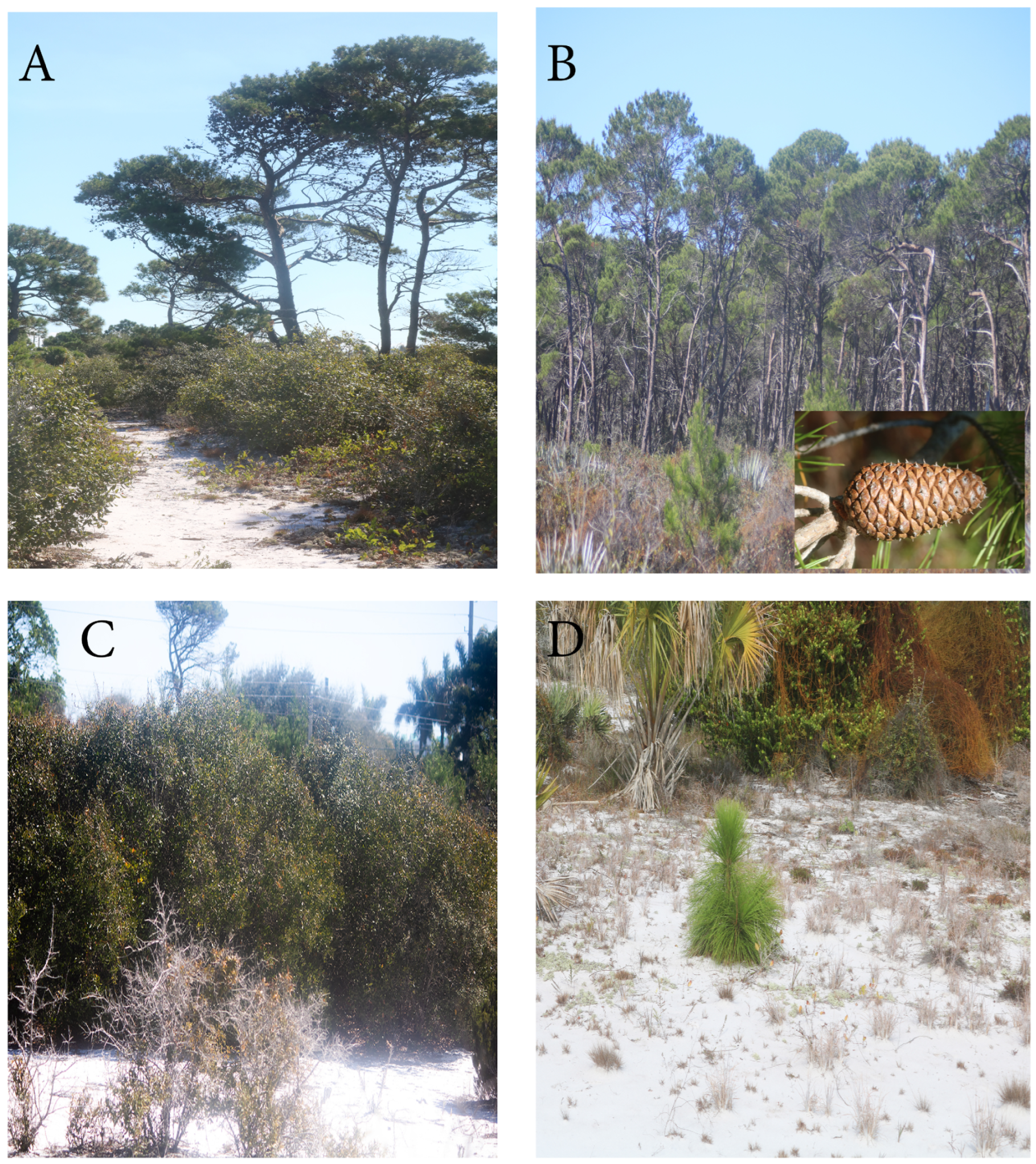
Florida scrub (Figure 1A) occupies relatively elevated past shorelines and maritime white sand deposits surrounded by lowlands. Its ancient and insular history coupled with nutrient-poor, excessively drained and xeric edaphic conditions make the habitat an ecologically unique concentration of biodiversity, including numerous endemic or rare plant and animal species. As the subject of the present study, sand pine (Pinus clausa (Chapm. ex Engelm.) Vasey ex Sarg., Pinaceae, Figure 1A,B) is the dominant tree of Southeast Florida scrub.
Scrub patches dot the Southeast Florida coastal ridge, which is valued upland in an otherwise lowland region and thus the backbone for the development and transportation corridors. Most local scrub sites have rolling dune and swale topography, although some are nearly flat. Sand pine dominates in the company of sand live oak (Quercus geminata Small, Fagaceae), myrtle oak (Q. myrtifolia Willd.), saw palmetto (Serenoa repens (W. Bartram) Small, Arecaceae), Florida-rosemary (Ceratiola ericoides Michx., Ericaceae), and assorted less-prevalent largely xeromorphic woody and herbaceous species. Quercus geminata and Q. myrtifolia both occur as stunted trees, and additionally with a different aspect: as rhizomatous shrubby thickets (Figure 1A,C), then often mixed with each other or with less abundant shrub species.
Two pine species are native to South Florida, both occurring on the present study sites, slash pine (Pinus elliottii Engelm., Pinaceae, Figure 1D) and P. clausa var. clausa. Broad in tolerances, P. elliottii ranges from a minor scrub presence to dominating mesic-to-wet woodlands and marshy savannas. Traditionally, although with disagreement (e.g., [1]), Pinus clausa has been divided into two disjunct varieties or subspecies. Pinus clausa var. immuginata D. B. Ward, limited to North Florida and Alabama, differs mainly from P. clausa var. clausa (the “Ocala Race”) by having non-serotinous cones, in contrast with inconsistent serotiny in P. clausa var. clausa [2]. Pinus clausa var. clausa is endemic to scrub and similar habitats in peninsular Florida, expanded adventively to Texas [3]. References below to the varietal name imply no taxonomic opinion.
Brendenmuehl [4] gave an overview of P. clausa with habitat details, morphology, phenology, and general biology. The species has commercial value as pulpwood and cultivated Christmas trees, and potentially as biomass and sawtimber beyond its natural range [4,5]. Pinus clausa var. clausa favors coastal and interior excessively drained, acidic, nutrient-poor, edaphically xeric white sand scrub where it is usually the dominant tree when trees are present, and in places forms extensive monospecific stands (Figure 1B). Kurz [6] (p. 114) observed, “In some places the tree forms dense groves barring almost all plant life from its understory.”
Prior authors have stressed the importance of fire in P. clausa var. clausa regeneration. Parker et al. [7] predicted that the absence of fire is likely to result in hardwood succession, and Parker et al. [8] concluded that crown fires (and/or hurricanes in coastal populations) are usually “essential” for P. clausa var. clausa sustainability. Severe disturbance, according to Conway et al. [9], was necessary for self-replacement. In the same vein, Cooper et al. [10] (p. 35) studied serotinous cone opening and seed dynamics for P. clausa var. clausa and mentioned that “natural seed fall from standing trees is meager unless the trees are killed by fire,” and that seed viability diminishes as unopened cones age.
Although sparse, information on seed tolerances is clear. Seed predation, dry soil surface, and solar heat (specifically 52 °C) hindered regeneration according to Cooper et al. [10]. Somewhat similarly, Myers et al. [11], after a seed-releasing fire, attributed 91% seedling mortality to dry soil. The early stages of the present work found seedlings to be remarkably rare at all sites.
Studies on shade and the roles of associated oaks in relation to P. clausa establishment have been contradictory and disjointed, mostly resulting in broad generalizations under varied conditions. Shade favored germination and establishment in Cooper et al.’s [10] tests on seeds in an experimental setting. Conway et al. [9], using hemispherical lens photography on one closed-canopy and one open burned P. clausa var. clausa stand, found shade to inhibit regeneration, and light to favor establishment. Mattson and Putz [12], (p. 378) found crowded vs. open young regrowth around P. clausa var. clausa to have no effect on seedling distributions, concluding that sand pine seedlings apparently, “do not preferentially grow under the cover of other plants.” Revealing a more complex picture, in a review of older literature, Parker et al. [7] discussed conflicting reports of P. clausa regeneration under evergreen oaks, including apparent facilitation, a topic revisited below.
The inconsistently reported [7] cases of P. clausa regenerating under oaks raises the possibility of oaks facilitating the pines as nurse trees. Facilitation in harsh environments prompts consideration of the stress gradient hypothesis. Attention to facilitative ecological relationships has expanded substantially (with a review in Brooker et al. 2008 [13]). One outcome of this expansion, spurred by Bertness and Callaway (1994) [14], is a generalized awareness that facilitation tends to be most prevalent in harsh conditions. After a series of related publications, this has become known as the stress gradient hypothesis (SGH). Diverse tests of the SGH have generated mixed and contradictory results (Brooker et al. 2008 [13]). The present study can be viewed through the lens of the SGH.
This study is concerned with natural regeneration in the fire-suppressed fragmented stands characteristic of SE Florida, for which no-to-little targeted research exists. Conservation is the chief focus. As long ago as 1990, Brendemuehl [4] observed the species to be in decline. Parker et al. [7] encountered a SE Florida stand of P. clausa with no seedlings. The fates of the pine, of the local scrub habitat, and of its flora, fauna, and ecological relationships are intertwined. Within the present SE Florida study region, these are declining collectively from development-related disturbance, fragmentation, fire suppression, and pollution. In Palm Beach County, the site of the present work, only about 5% of the original scrub remained as of 1989 [15], suffering continued sprawl and development since then. Although the author is aware of no published acreage of local scrub later than 1989, census data give the 1990 population of the surrounding coastal town of Jupiter, Florida as 24,968, more than doubling to 61,215 from 1990 to 2024 [16].
Parker et al. [7] (p. 31) helped foreshadow the present effort, saying, “the shade tolerance of Ocala sand pine and the successional pathways that ensue with continued fire exclusion from sand pine-dominated scrub merit further examination.” Overall then, with an eye to prior vague contradictions in the literature, to absences of juveniles at some local adult P. clausa sites, to local fire suppression, to seed(ling) mortality from heat and drying in an era of global warming and urban heat islands, and to aggressive coastal development, this study asked the following research question: what are the present local site-scale situational correlates for P. clausa establishment?
The study had two phases: 1. An exploratory survey of juvenile Pinus clausa and neighboring species at multiple scrub sites. 2. Extension primarily to a single site. The approach was a field survey measuring potential predictors of juvenile P. clausa (JPC) presence, including sand pH and color, depth to hard sand horizon, sand surface firmness, distance and direction to seed trees, and JPC placement relative to surrounding non-pine vegetation.

2. Materials and Methods

2.1. Study Sites

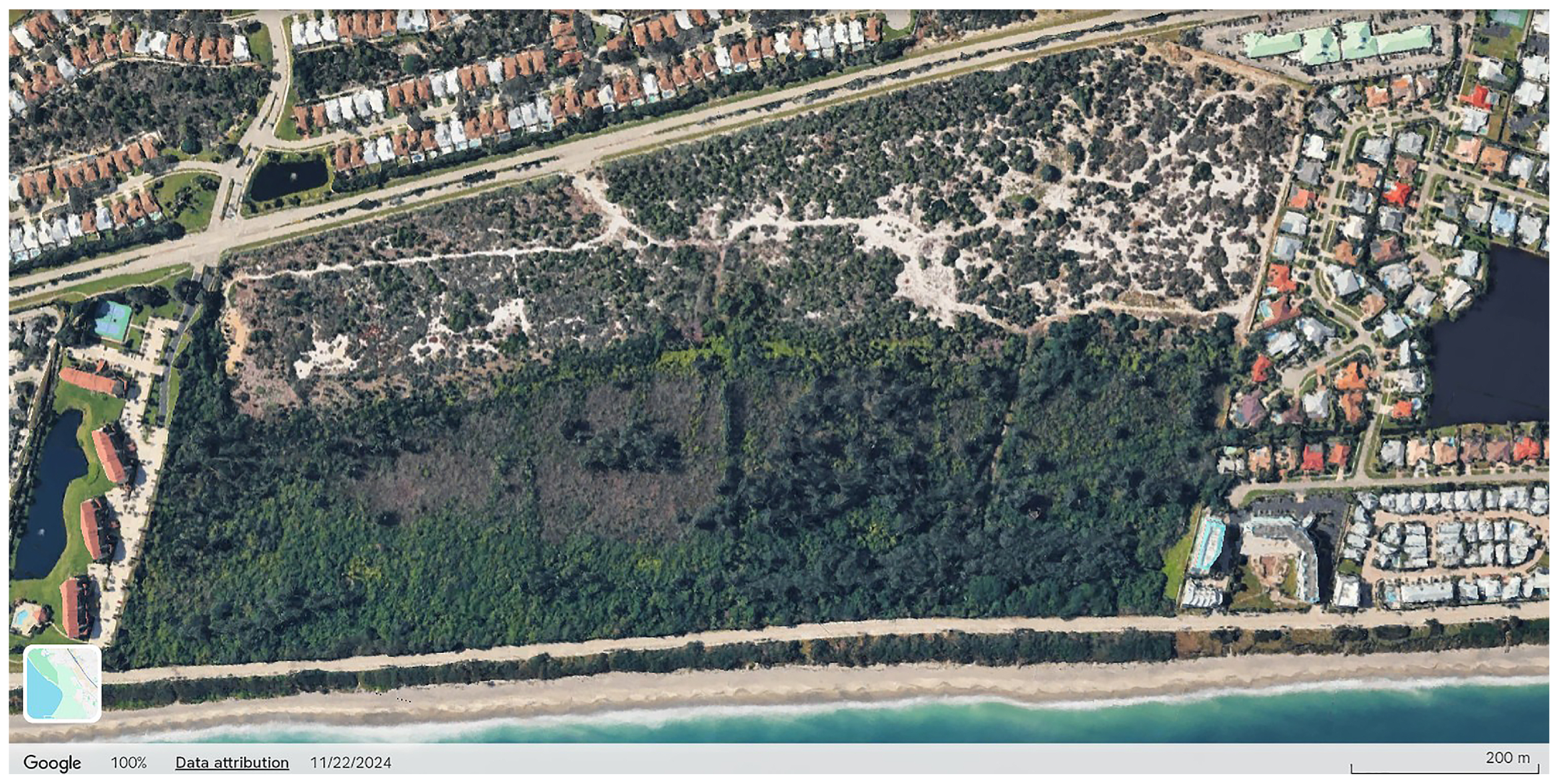
The study sites are listed in Table 1. The featured Karen Marcus Natural Area (KM, Figure 2) has been free of recent clearing except at specific spotty work sites ignored in the present study. Although this and the other sites have not been burned recently (except for a small portion of Jupiter Ridge), and contain stands of mature pines, there are signs of past fire. Fire intervals of 40–60 years are reported for P. clausa in other settings [7]. The KM site is locally unusual but not unique in being nearly flat. Whether this has resulted from historical sand removal is not known, and could be relevant to comparison to other sites with rolling topography. The Soil Survey of Palm Beach County Area, Florida [17] describes the soil at KM and nearby as Palm Beach Urban Land Canaveral: nearly level to sloping, excessively drained (to somewhat poorly drained, sandy throughout, mostly in urban use). At a more detailed level, the site is covered with Pomello fine sand and Paola sand, described in detail in the soil survey available online. The climate is subtropical, as reported by Weatherspark (www.weatherspark.com). The mean high temperature in the hottest month, August, is 32 degrees C, and the coldest month is January, with a mean temperature of 23 degrees C. Mean precipitation the wettest month, September, is 147 mm, and 46 mm in December, the driest month.
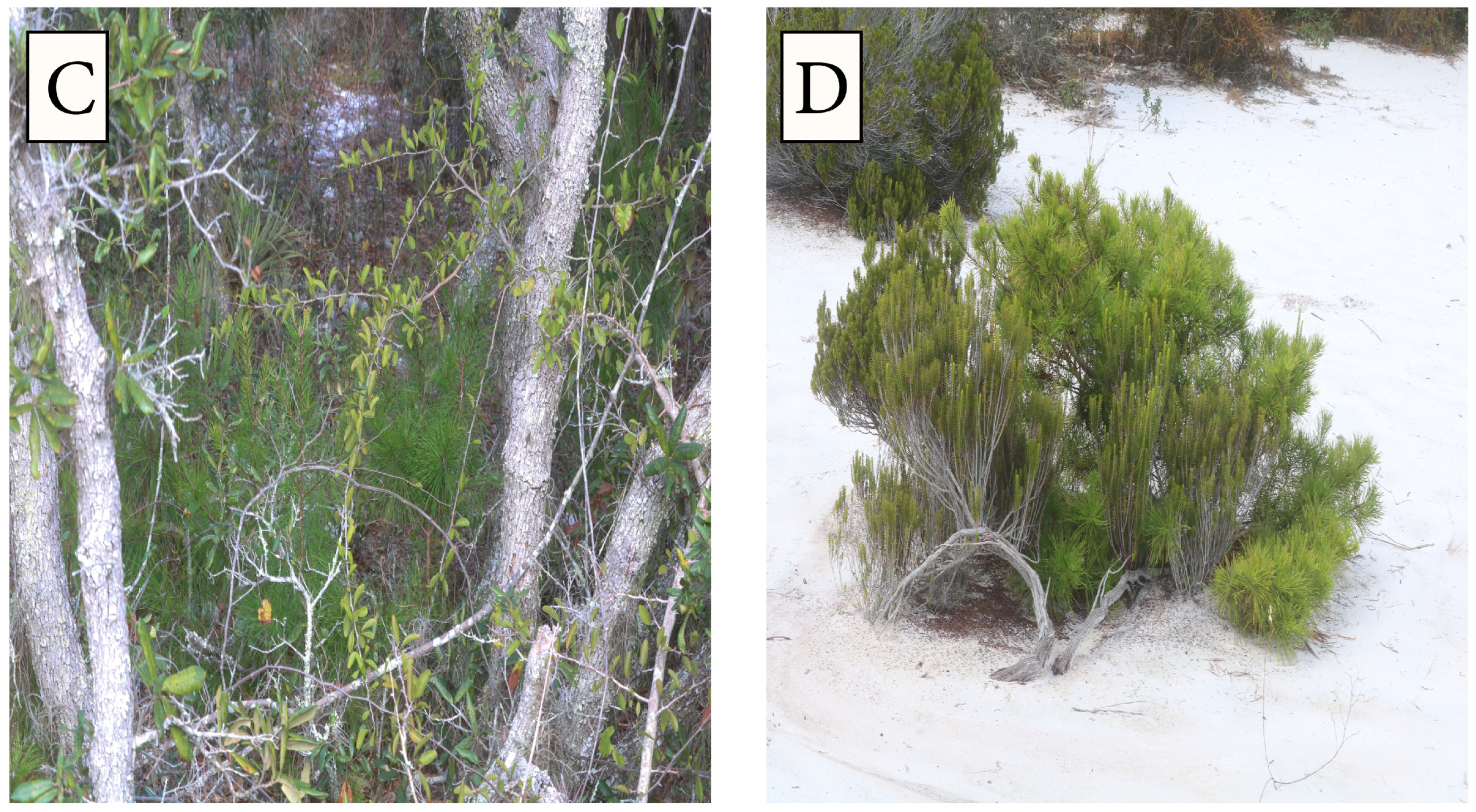
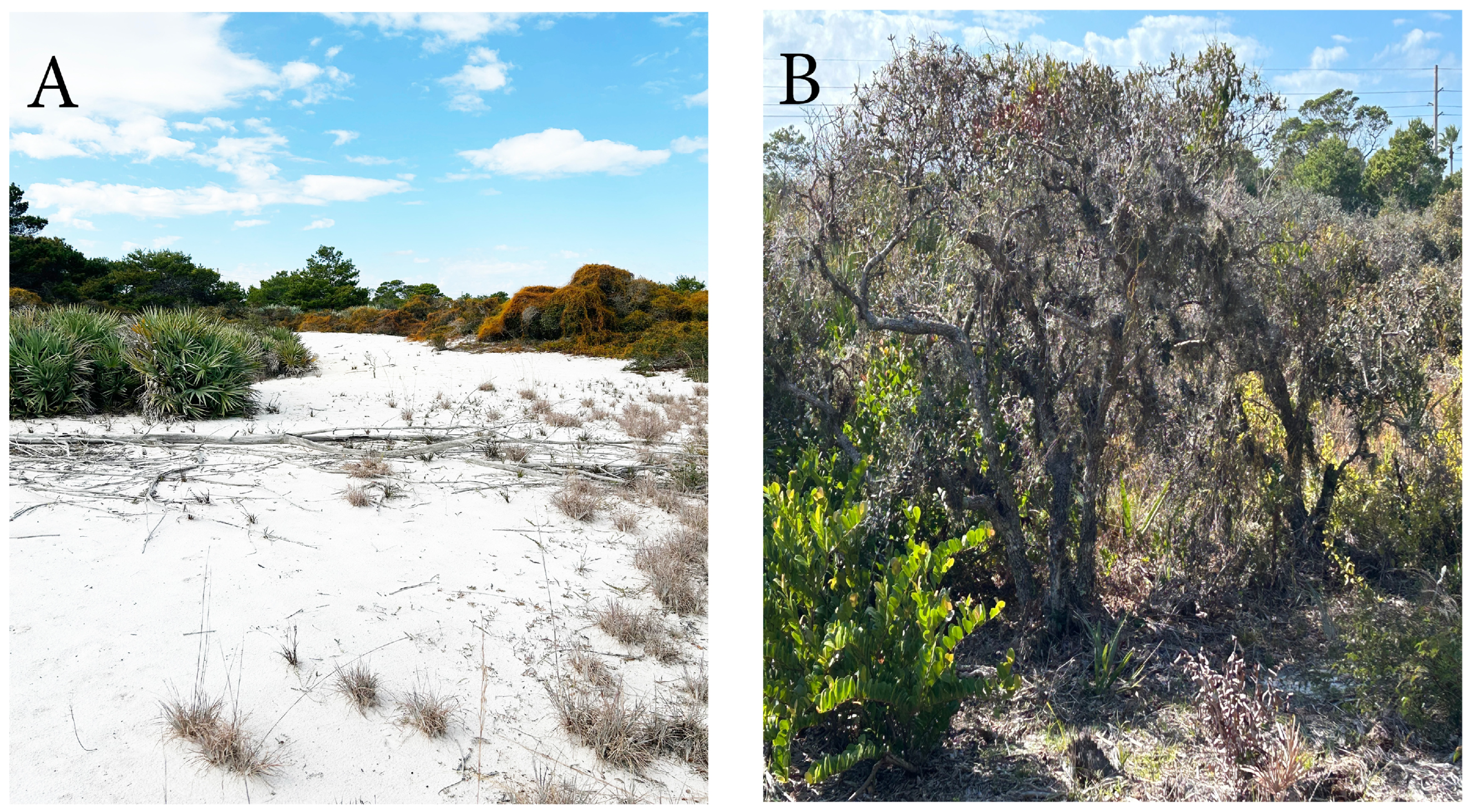
The scrub portion at KM is a patchwork of mature P. clausa stands, shrubby oak thickets, expanses of open sand (Figure 3A), scattered mature and juvenile P. elliottii (Figure 1D), occasional groves of dwarfed Q. geminatatrees (Figure 3B,C), and associated less-prevalent vegetation. With minor exceptions due to the constraints mentioned below, every juvenile P. clausa (to 1.5 m tall), every juvenile P. elliottii, and every Q. geminata grove hosting JPCs were tallied.

2.2. Selection of Predictor Values

The multisite phase centered on the positions of JPCs and of random spots in relation to non-pine woody vegetation edges. The KM research phase initially considered 11 potential predictors of P. clausa var. clausa establishment (Table 2). Choices of predictors stemmed from site examination and the author’s past local fieldwork, combined with the practical limitations of equipment and personal expertise. The studied predictors were thus essentially every possibility perceived to be reasonably suspected and feasible. Soil pH, soil color, and direction to seed trees were set aside from further consideration after preliminary data failed to show discernible patterns within the site context.

2.3. Measurements

Sampling in the natural areas was constrained by impassable Serenoa repens thickets, by an unauthorized transient encampment, and by maintenance worksites. These constraints entailed little bias or loss of information, as the avoided encampment was small, the work areas too were small and cleared, and Serenoa thickets are free of pine juveniles. Juvenile P. clausa was nearly absent also from stands of mature P. clausa thickets. Within these limitations, the approach to sampling was to walk along designated pathways and along additional passable areas, seeking out every P. clausa shorter than 1.5 m, performed exhaustively at KM. Species diversity for all sites including KM was determined by measuring linear coverage along tape transects of 60 m (or shorter as dictated by conditions) initiated at trailheads and trail junctions. In other words, a tape passing through a shrub clump would result in an entry of the extent of that clump along the transect line. Directions were determined randomly using a spinner, tabulating 158 measurements.
At KM, P. clausa juveniles were encountered under two different circumstances. The first circumstance consisted of 39 JPCs clustered under six small groves of stunted Quercus geminata trees (Figure 3C). The variables measured for those juveniles were JPC size and overtopping canopy density assessed at ground level. Canopy densities were measured with a Lemmon (Rapid City, SD, USA) model-A spherical densiometer, recording the total number of its 96 points in reflective grid cells showing at least 50 percent canopy coverage. These readings are in the tables as “densiometer units,” or “d.u.”). Each densiometer data point used in calculations and graphics is the mean of five readings from under-canopy spots assigned using a spinner for direction and a narrow rod tossed under the canopy blindly like a small javelin for distance. Canopy densities were measured for all six of the groves hosting JPCs, and, for comparison, eight groves of similar height in KM with no young pines.
The second JPC circumstance at KM comprised 60 JPCs unassociated with Q. geminata groves. The following methods apply to these, with the pine spot readings taken within a ca. 1 m radius of the pine base (or at the dripline for light). Soil pH samples were measured on soil cores extracted 36 cm deep, mixed as two parts distilled water: one part soil by volume. Measurement was with an Analytical Instruments (Kelilong Electron Co. Ltd., Fu’an, Fujian, China) PH-012 Portable pH Meter (accuracy 0.05 pH) calibrated at each measurement spot with pH 7.0 buffer. After 20 measurements (10 JPC, 10 random spots), no appreciable difference was observed (means 5.94, 5.51 respectively), so this parameter was discontinued. Soil-core colors at 36 cm were compared using a PPG Paints (Pittsburgh, PA, USA) off-white color palette (https://www.ppgpaints.com/ppg-color-families/off-whites, accessed on 12 January 2026). Soil color was set aside as it showed no detected differences.
Depth to hard sand horizon was measured by pushing a pointed 8 mm diam. fiberglass rod vertically into the sand until encountering a hard horizon. Potentially confounding roots and other hard debris stopped penetration distinctly abruptly, as opposed to the firm sand horizon manifesting with penetrability “grinding” to a distinctive stop over a vertical distance of ca. 1–2 cm. An excavation to one typical hard horizon depth of 39 cm revealed the sand at that depth hardened even with the overlying sand removed. Each data point used for calculations was the median reading for five penetrations at each test spot. Surface sand firmness was measured using a Humboldt (Elgin, IL, USA) Proctor H-4139 penetrometer tipped with a 3 cm diam. horizontal metal disk pushed into the sand surface to a depth of 4.2 cm. Readings (in mm of spring compression) are meaningful only comparatively; higher readings = firmer sand. Each data point was the median of five penetrations per sampling spot. As a separate secondary check on surface firmness, the same penetrometer was fitted with an 8 mm diam. pointed probe inserted to a depth of 22 cm, with five readings per sample point, taking the median data point. The sample size for this secondary check was 22 JPC and 22 random spots.
Light readings in lux were taken for full unblocked exposure, for brightest ground-level dripline exposure (JPCs), and brightest ground-level (random spots) with a Urceri MT-912 light meter (Shenzhen Huanhui Co., Shenzhen, China). These were evaluated as lux at ground level/above-canopy lux ratios. Compass directions and latitudinal/longitudinal coordinates were recorded, and random spinner directions determined using iPhone 14 apps.

2.4. Random Spots

To compare spots with JPC presence with random spots without JPCs, measurements were recorded at random spots pinpointed as follows. The random spots were assigned by walking the same paths and openings used to access JPCs. While walking these routes, at every 30 paces (ca. 0.8 m/pace), a random number (−10 to +10) was drawn to indicate the number of meters from the pathway directly left or right to take the random spot measurements. If a spot was inaccessible, the closest accessible spot was substituted. Excluded spots were in pathways, under Sereona repens thickets, on tortoise burrows, in the transient encampment, and at maintenance worksites.

2.5. Statistics and Software

All calculations and graphics were generated with R version 4.5.1, using the packages cited below. Permuted t-tests (RVAideMemoire package) were determined for means of JPCs vs. random spots, although the questions of interest were generally more concerned with differences in frequency distributions than with differences in means. Histograms (ggplot2 package) allowed for intuitive views of distributions, while Kolmogorov–Smirnov (K–S, stats package), and Cramér–von Mises tests (twosamples package), applied commonly to comparing paired distributions, were used to determine significance. K–S evaluates the maximum difference between two cumulative distributions, whereas CvM integrates the overall distributions. The semi-redundant use of both was intended as a double-check from different perspectives. A Rayleigh test (circular package) was applied to the combined KM and Jupiter Ridge JPC compass-based directional data.
Bayesian logistic regression was included because the article is concerned with the perception of trends. This approach allows for estimation of the relative importance of the tested predictors, and generates comparative overlapping posterior probability density distributions. This was carried out using the R rstarm package based on the standardized KM data, applying a standardized priors dataset collected at the nearby Jupiter Ridge Natural Area for prior coefficients, and using Gelman default 2.5 for scale.

3. Results

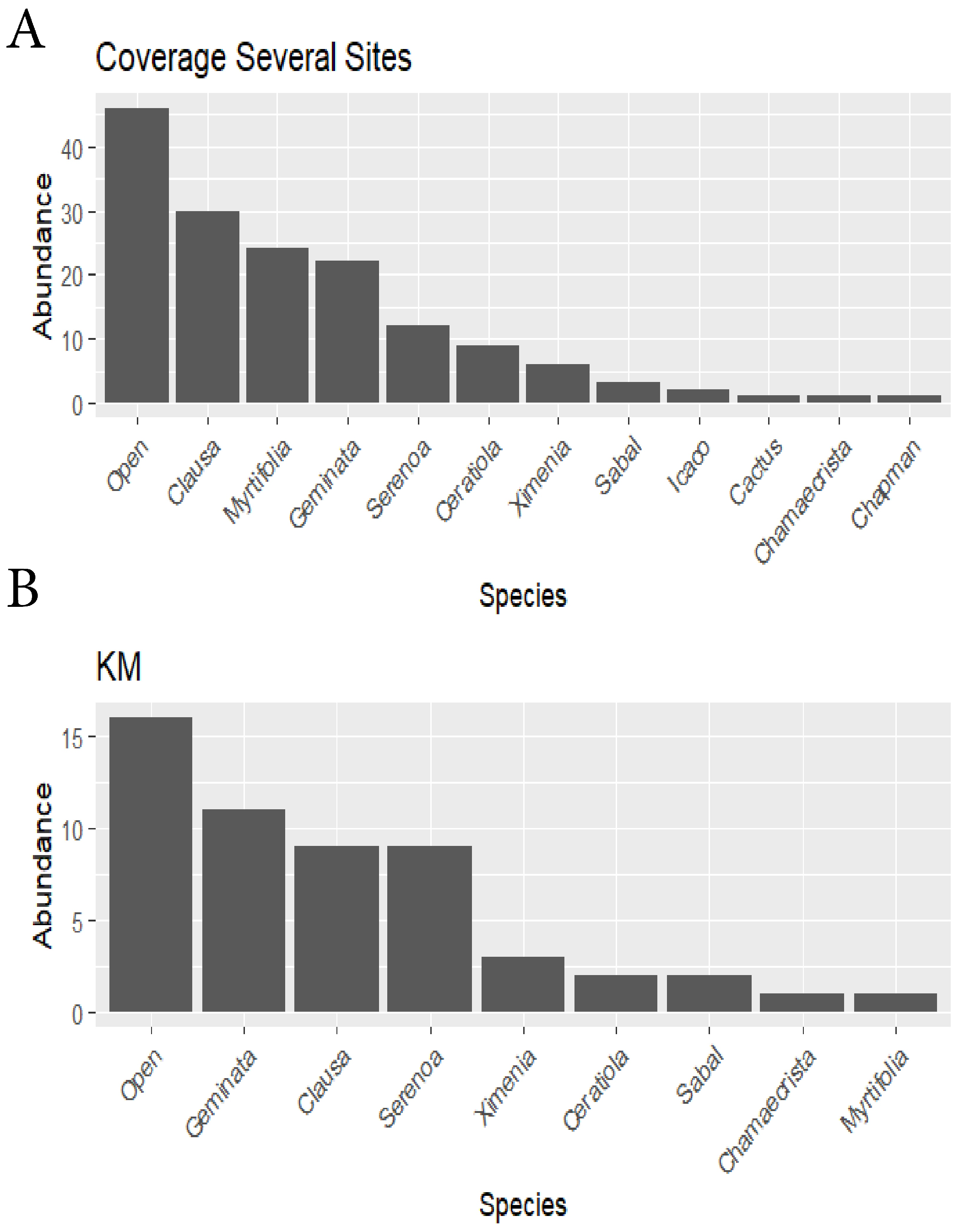
All data are in the data available online, summarized in Table 3. Overall study sizes were: total juvenile P. clausa all sites (203), total random spots all sites (225), all sites nearest neighbor and species diversity (158), KM JPCs under oak groves (39), KM JPCs not under groves (60), KM random spots (60), and KM + Jupiter Ridge directional data (104). Transect-based species coverage data from all sites are shown in Figure 4A, with data for KM shown in Figure 4B. Notably, juveniles were sparse overall, and seedlings rare. The searched scrub portion of the KM site was approx. 230,000 m2. The total number of JPCs (<1.5 m tall) was 99 at that site, with an average density of approx. four JPCs/hectare. Seedlings (<25 cm tall) were exceedingly rare in KM (two individuals) and similarly rare to absent at other local P. clausa sites (in the tables and graphics referring to all four sites, a small number of seedlings are included; in KM, the two seedlings are not included in the tables and graphs).

3.1. Multisite Results

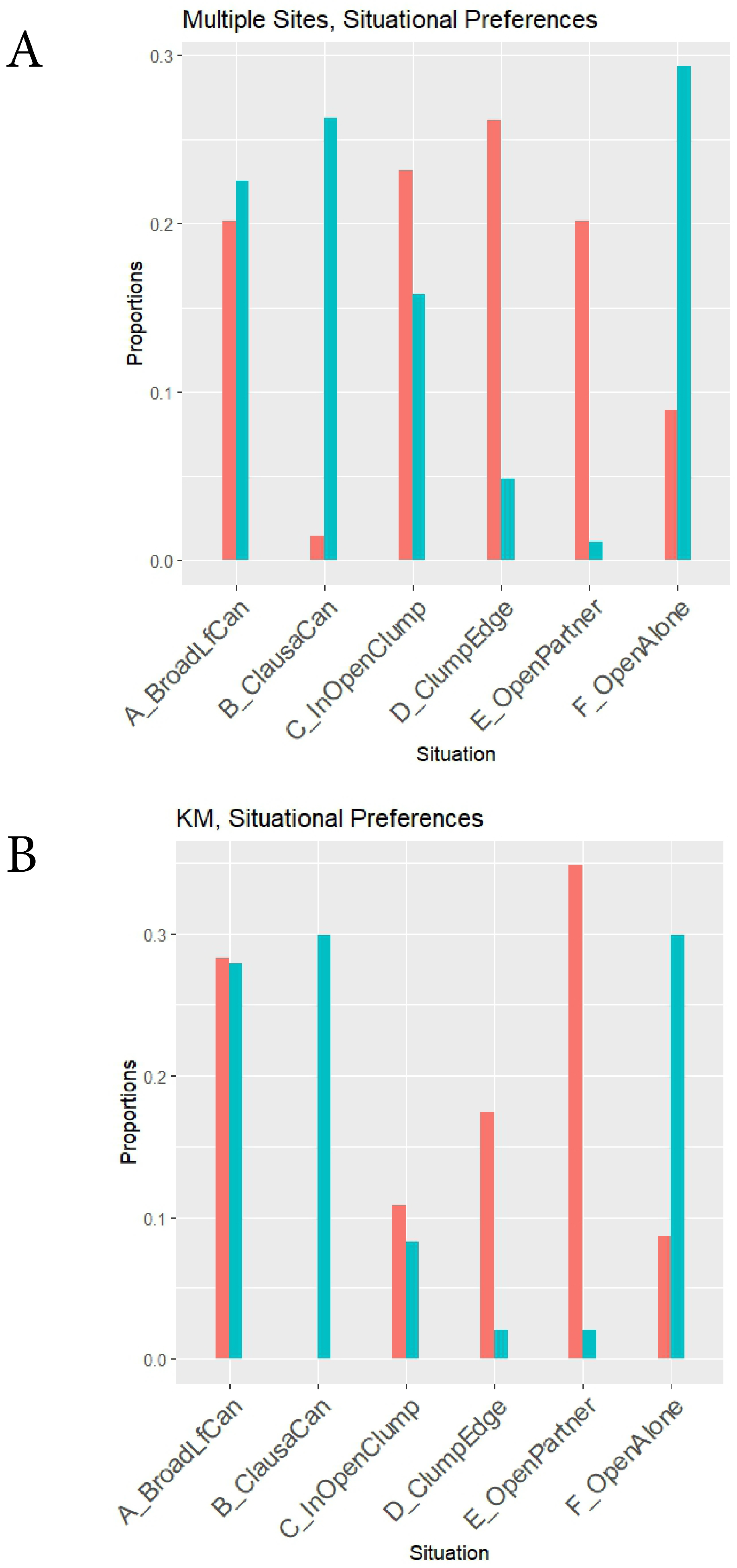
A particularly salient result is that the multisite study of JPC positioning relative to other woody plants revealed a substantial difference in situational preference for JPCs compared with random spots (Table 3, Figure 5A, KM data are in Figure 5B). JPCs occurred disproportionately adjacent to (as opposed to either nestled among or isolated from) other vegetation in the multisite study and at KM. Although usually oaks, single partners were also often Ceratiola ericoides (Figure 3D). Across all sites, the mean distance of JPCs from the nearest neighbor plant was significantly closer for JPCs compared with random spots (Table 3). The Paw Paw and Botanica sites, with routine foot traffic and limited maintenance but no recent burning or roller chopping within study zones, had only adult trees devoid of juveniles or seedlings.

3.2. Depth to Hard Sand Horizon

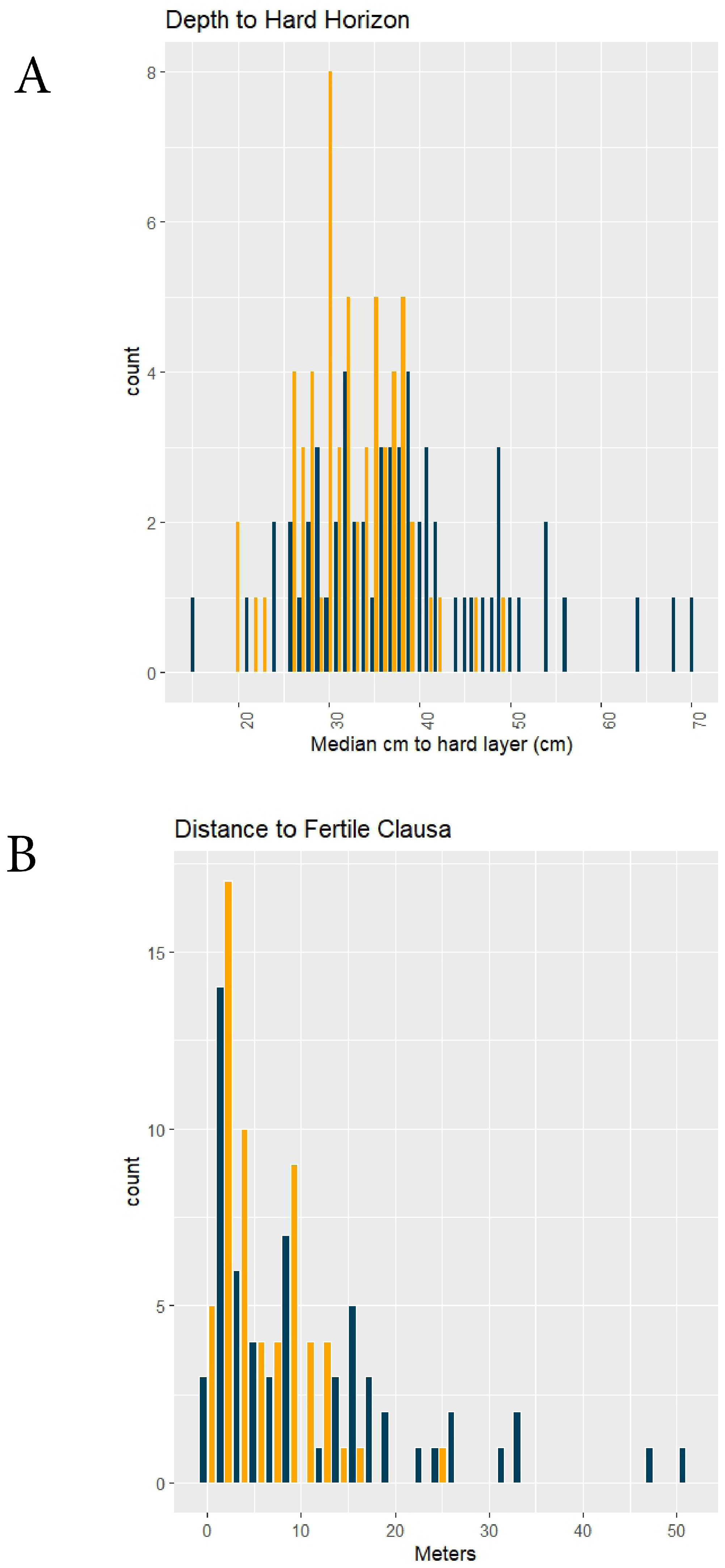
Juvenile P. clausa occurrence in the KM area showed significant negative correspondence with hard horizon depth (Table 3, Figure 6A, K–S = 0.0006).

3.3. Distance to Seed Tree

Juvenile P. clausa tended significantly to be nearer seed trees than random spots were (Table 3, Figure 6B, K–S = 0.004).

3.4. Sand Surface Firmness

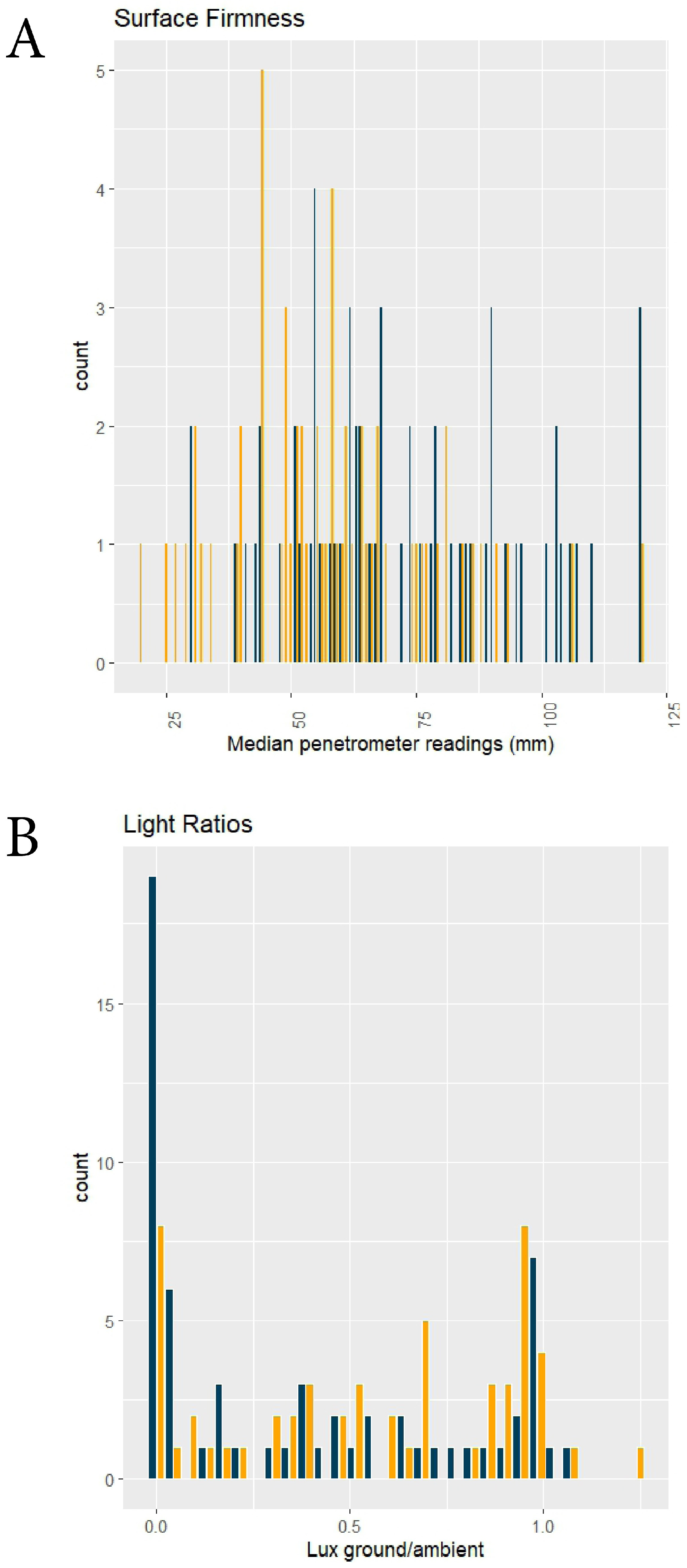
JPCs tended slightly yet significantly to be on softer surfaces than random spots did (Table 3, Figure 7A, K–S = 0.007). (In the small secondary confirmatory check, JPC mean penetrometer reading = softer 26.7 mm vs. random spots = 34.0 mm).

3.5. Light Levels

The results for light measurements showed JPCs to tend significantly on average toward brighter circumstances than the average for random spots (Table 3, Figure 7B, K–S = 0.03).

3.6. Oak Grove Canopy Density

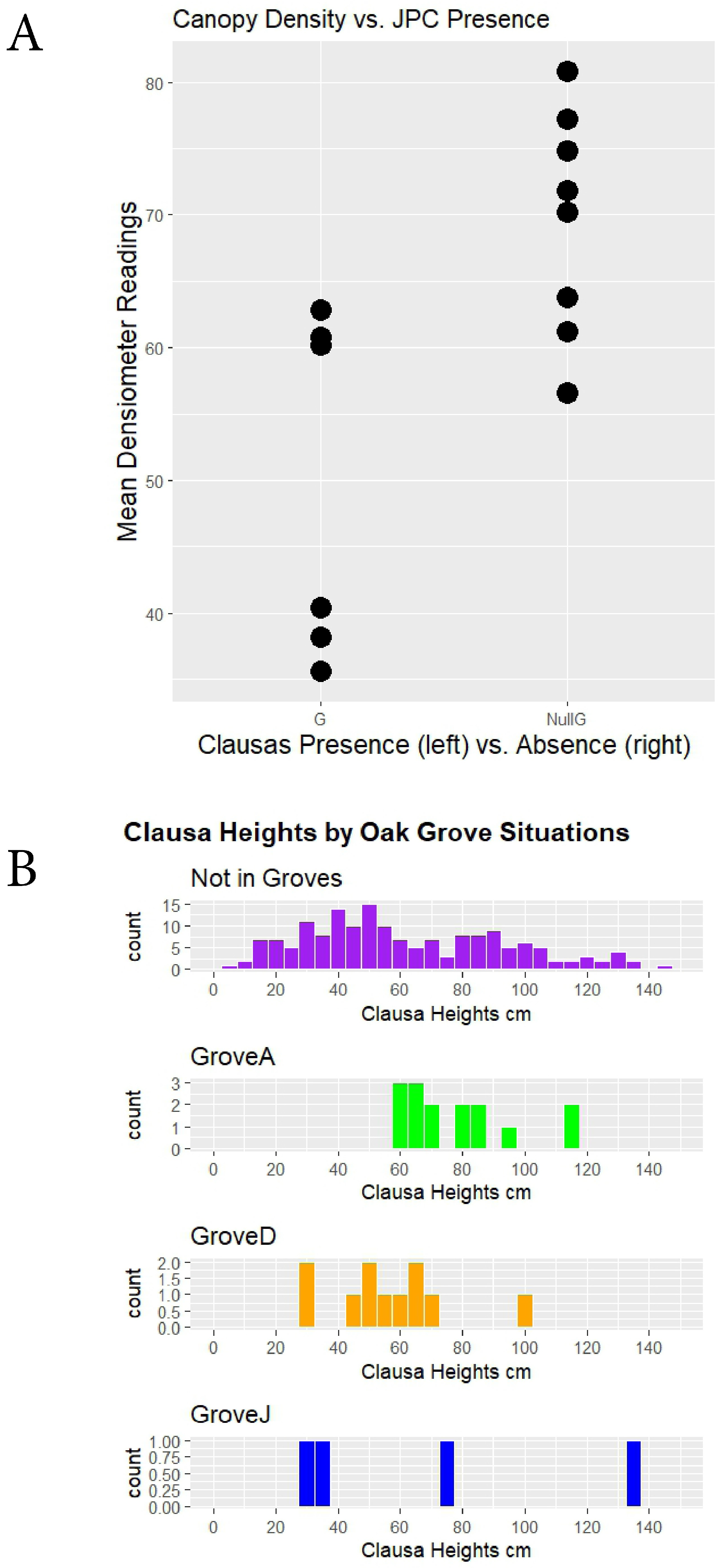
A prominent tendency at KM was clustering of juveniles under oak (Quercus geminata) groves (Figure 3B,C). Of the 99 JPCs present, 39 were in oak groves (observations span the end of the wet season into the middle of the drier season, September 2025–February 2026, essentially peak reported timing for establishment [7]). Most oak groves at KM are devoid of JPCs, with six groves having JPC clusters beneath. The small sample revealed a slightly significant (Table 3) difference between JPC-covering and JPC-absent groves to be relatively sparse canopy coverage of groves with JPCs (Figure 8A, Table 3). JPC height distribution in the groves was heterogeneous, suggesting continuous establishment rather than isolated pulses (Figure 8B).

3.7. Directionality of Establishment (KM and Jupiter Ridge)

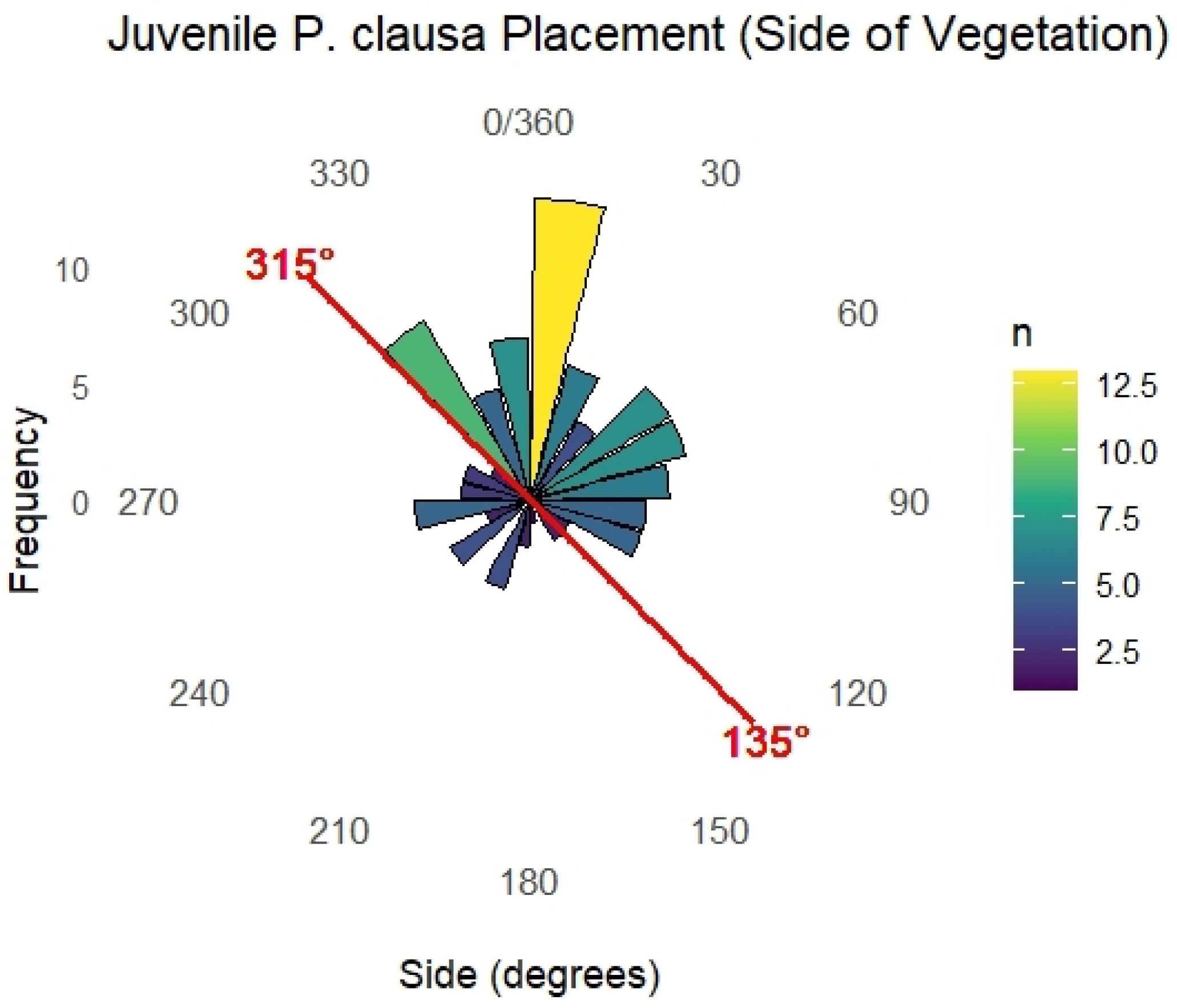
The multisite and the KM data both revealed JPCs tending to occur alongside either a single plant partner (Figure 3D) or adjoining a thicket (Table 3, Figure 5A,B). As a first finding of directionality of association, 50 JPCs in KM were adjacent to other woody plants. Dividing the compass into four quadrants centered at 360, 90, 180, and 270 degrees, 33/50 (66%) JPCs were on the NE side of a line running across the compass 315 to 135 degrees (Table 3). Because this prominent outcome came from the small limited database available for KM and was only marginally significant (as chi-square based on counts in four quadrants p = 0.03), the study was repeated with completely fresh data (n = 104) based on KM and the nearby Jupiter Ridge site. Interestingly, the 315–135 degree line in the repeat study appeared again as essentially the maximal-separation (Figure 9). The outcome was highly significant, as determined by a Rayleigh test (Table 3, p < 0.0001).

3.8. Microtopography

Although the KM site is mostly flat, in the few cases where dips and rises were apparent, JPCs were more associated, albeit insignificantly, with rises than were random spots (JPCs rises/dips = 8/5, random spots = 4/11).

3.9. Logistic Regression

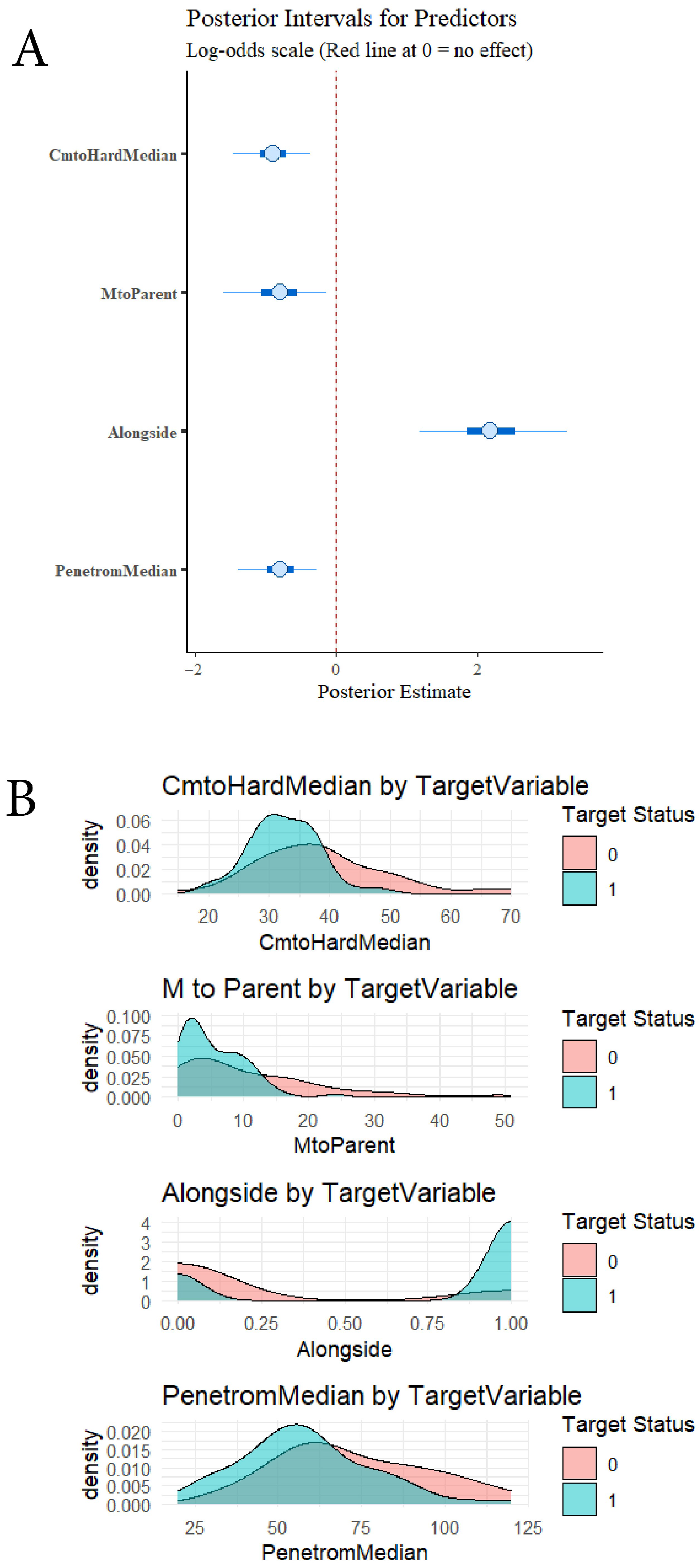
Bayesian logistic regression results are shown in Table 3 and Figure 10. Adjacency to other plants had strong effect on the presence or absence of JPCs. Depth to the hard layer, distance to seed tree, and surface sand firmness had negative associations. Broad variation in light level ratios (lux at ground level/above-canopy lux) rendered that predictor insignificant in the regression.

4. Discussion

Pinus clausa seedlings were scarce, and sparse juveniles were not distributed randomly in the unburned local scrub areas. Notably, finding two sites (Table 1) with no juveniles or seedlings despite ostensibly healthy seed-producing adult populations was curious. In this regard, it should be mentioned that Parker et al. [7] also found a non-regenerating stand near the present study area, aging but bearing seeds. General weather patterns fail to explain sites with no juveniles, as they are all located in the same vicinity.
Despite the scarcity of young P. clausa, in KM, the six oak groves housed 39 out of 99 total JPCs there while occupying only a small portion of the total area. Possible shelter under the oaks is consistent with the reports noted above ([9,10]). The small number of oak groves prevented statistical analysis of the canopy coverage data, which tentatively suggested that JPCs tend toward thinner canopies (Figure 8A, Table 3).
Beyond clustering under oak groves, close proximity to other woody plants was a key predictor of JPC occurrence. The reluctance of JPCs to establish themselves nestled in similar-sized shrub masses (Figure 5) agrees with a similar observation by Mattson and Putz [12]. The preference for establishing on approximately the NE side of adjacent vegetation (Figure 9, see the 135–315 degree dividing line) is consistent with Cooper’s [10] report of lethal heating and that of fatal drying by Myers et al. [11].
The clustering under oak canopies and the directional preference for JPC establishment is an apparent example of the stress gradient hypothesis in the severely exposed, windy, excessively drained, sterile local scrub habitat. As Choler et al. [18] demonstrated, facilitation is strongest for species occurring near the edge of their physiological tolerance. In this regard, the study area lies near the southern limit of the P. clausa var. clausa SE Florida distribution. Young P. clausa eventually rise above the oak groves into full sun, consistent with the uncoupled juvenile and adult requirements described by Shipley et al. [19]. Showing changing pine needs with age, in Nevada, Urza et al. [20] examined the seed-to-adult relationship of Pinus monophylla Torr. & Frém. with Artemisia tridentata Nutt. nurse shrubs, documenting weak facilitation at the seed stage, strong facilitation during seedling and early juvenile stages, and eventual neutrality with continued growth.
That depth to the hard sand horizon showed a negative association with JPC establishment is contrary to the intuitive expectation that hardened soil layers impede robust root development [21,22]. However, P. clausa occupies an exceptional habitat. According to Brendenmuehl [4] (p. 298), probably referring to very young specimens, P. clausa has, “greater development of lateral roots than is typical of other southern pines.” This suggests a fixed or facultative response to shallow growth. In a non-pine Namibian context, Bennett et al. [23] stressed root phenotypic plasticity as key to accessing shallowly available water. Blocked access to deep penetration and reliance on frequent shallow recharge is conceivably a benefit of the hard layer retaining water (and nutrients [24]) in otherwise excessively drained sterile deep sand scrub soils.
Reasons why JPCs on average tended to be associated with relatively soft surface sand are unclear, and possibilities are not mutually exclusive. Perhaps the vegetation edges associated with many JPCs coincidentally catch loose wind-blown sand with no positive effect on the pine seedlings, or possibly also catch seeds and beneficial organic matter. As an answer with evidence to this question, assuming drifted windblown soil to be relatively small-particled, for Ponderosa Pine (Pinus ponderosa Dougl. ex Laws.), Puhlick et al. [25] found soil particle size to have a strong negative relationship to seedling establishment.
Turning to unknowns for future study, the near-absence of young P. clausa under conspecific canopies may be influenced by an unknown mix of light levels, natural pine needle mulch, or allelopathy. The P. clausa habitat may offer opportunities to look further into the SGH along gradients. Mycorrhizae are suspected key players in this community, known to be critical for pine establishment [26]. Mycorrhizal influence on the spatial pattern of P. clausa is unknown, although carbon transfer between pines and oaks has been demonstrated [27]. Culbertson [28] found 35 species of ectomycorrhizas associated with Pinus clausa var. immuginata. Rua [29] compared the ectomycorrhizal communities on Pinus clausa var. immuginata vs. var. clausa. Their data hints that proximity to oaks was not crucial to ECM colonization in the pines, although that was ancillary to their research. A convergence with the tendency of JPC seedling rarity in scrub fragments is human-mediated concentration of protected Gopher Tortoises (Gopherus polyphemus) in shrinking scrub fragment sites. Whether the tortoises consume or damage pine seedlings is not known. A more pressing question is that, given lethal seed heat and drying sensitivity, is a combination of urban heat island effect and global warming likely to continue the diminishment of P. clausa in Southeast Florida?

5. Conclusions

To summarize the main findings, in unburned, disturbed, fragmented sites in Southeast Florida, P. clausa seedlings are spotty, extremely rare, and sometimes surprisingly absent. The most salient findings were a tendency for juveniles to cluster under oak groves, but perhaps only those with relatively thin canopies, and a strong and directional association of juveniles with other woody plant vegetation edges. Additional associations were with soil surface softness, inverse depth to hard sand horizon, and proximity to seed trees. Brighter than average light is generally favorable for juveniles, but only within limits and probably after a developmental threshold.

Funding

This research received no external funding.

Data Availability Statement

Data are available at 10.6084/m9.figshare.31741939.

Acknowledgments

The Palm Beach County Dept. of Environmental Resource Management granted a research permit for the Karen Marcus, and additional sites. The staff at the KM site are particularly thanked for advice and hospitality. William Wilkerson of Palm Beach County Environmental Research Management kindly provided historic information concerning the study sites.

Conflicts of Interest

The author declares there are no commercial relationships nor conflicts of interest.

References

  1. Kral, R. Pinus. In Flora of North America North of Mexico; Oxford University Press: New York, NY, USA; Oxford, UK, 1993; Volume 2, pp. 373–398. [Google Scholar]
  2. Peeler, J.; Menges, E. Effects of fire history, tree age, and canopy seed bank size on serotiny of Ocala sand pine (Pinus clausa var. clausa) in Florida scrub. Fla. Sci. 2018, 81, 3–11. [Google Scholar]
  3. Singhurst, J.; Mink, J.; Holmes, W. Pinus clausa (Pinaceae) adventitious in Texas. Phytoneuron 2012, 24, 1–5. [Google Scholar]
  4. Brendenmuehl, R. Conifers. In Silvics of North America; Burns, R., Honkala, B., Eds.; USDA Forest Service: Washington, DC, USA, 1990; Volume 1. [Google Scholar]
  5. Rockwood, D.; Conde, L.; Brendenmuehl, R. Biomass Production of Closely Spaced Choctawhatchee Sand Pines; Report SE-293; USDA Forest Service: Washington, DC, USA, 1980; pp. 1–6.
  6. Kurz, H. Florida dunes and scrub, vegetation and geology. Bull. Fla. Geol. Surv. 1942, 23, 1–154. [Google Scholar]
  7. Parker, K.; Parker, A.; Beaty, R.; Fuller, M.; Faust, T. Population structure and spatial pattern of two coastal populations of Ocala sand pine (Pinus clausa (Chapm. ex Engelm.) Vasey ex Sarg. var. clausa DB Ward). J. Torrey Bot. Soc. 1997, 124, 22–33. [Google Scholar] [CrossRef]
  8. Parker, A.; Parker, K.; McCay, D. Disturbance-mediated variation in stand structure between varieties of Pinus clausa (Sand Pine). Ann. Assoc. Am. Geogr. 2001, 91, 28–47. [Google Scholar] [CrossRef]
  9. Conway, D.; Parker, A.; Parker, C. Understory Light Regime, Shrub Layer and Sand Pine (Pinus clausa) Regeneration in Four Scrub Stands. Am. Midl. Nat. 1997, 138, 84–96. [Google Scholar] [CrossRef]
  10. Cooper, R.; Schopmeyer, C.; McGregor, W. Sand Pine Regeneration on the Ocala National Forest; Report 30; USDA: Washington, DC, USA, 1959; pp. 1–42.
  11. MyersMyers, R.; Boettcher, S.; Tuck, H. Sand pine seeding response following fire. Bull. Assoc. Southeast. Biologists. 1987, 34, 68–69. [Google Scholar]
  12. Mattson, K.; Putz, F. Sand pine (Pinus clausa) seedling distribution and biomechanics in relation to microsite conditions and proximity to potential nurse plants. For. Ecol. Manag. 2008, 255, 3778–3782. [Google Scholar] [CrossRef]
  13. Brooker, R.W.; Maestre, F.T.; Callaway, R.M.; Lortie, C.L.; Cavieres, L.A.; Kunstler, G.; Liancourt, P.; Tielbörger, K.; Travis, J.M.J.; Anthelme, F.; et al. Facilitation in plant communities: The past, the present, and the future. J. Ecol. 2008, 96, 18–34. [Google Scholar] [CrossRef]
  14. Bertness, M.D.; Callaway, R. Positive interactions in communities. Trends Ecol. Evol. 1994, 9, 191–193. [Google Scholar] [CrossRef]
  15. Fernald, R. Coastal Xeric Scrub Communities of the Treasure Coast Region, Florida; Florida Game and Fresh Water Fish Commission: Tallahassee, FL, USA, 1989. [Google Scholar]
  16. Palm Beach County Planning, Zoning and Building Department. Palm Beach County Profile; Palm Beach County Planning Division: West Palm Beach, FL, USA, 2026.
  17. McCollum, S. Soil Survey of Palm Beach County Area, Florida; USDA Soil Conservation Service: Washington, DC, USA, 1978.
  18. Choler, P.; Michalet, R.; Callaway, R.M. Facilitation and competition on gradients in alpine plant communities. Ecology 2001, 82, 3295–3308. [Google Scholar] [CrossRef]
  19. Shipley, B.; Keddy, P.; Moore, D.; Lemky, K. Regeneration and establishment strategies of emergent macrophytes. J. Ecol. 1989, 77, 1093–1110. [Google Scholar] [CrossRef]
  20. Urza, A.K.; Weisberg, P.J.; Chambers, J.C.; Sullivan, B.W. Shrub facilitation of tree establishment varies with ontogenetic stage across environmental gradients. New Phytol. 2019, 223, 1795–1808. [Google Scholar] [CrossRef]
  21. Pracilio, G.; Smettem, K.R.; Bennett, D.; Harper, R.J.; Adams, M.L. Site assessment of a woody crop where a shallow hardpan soil layer constrained plant growth. Plant Soil 2006, 288, 113–125. [Google Scholar] [CrossRef]
  22. Andivia, E.; Zuccarini, P.; Grau, B.; de Herralde, F.; Villar-Salvador, P.; Savé, R. Rooting big and deep rapidly: The ecological roots of pine species distribution in southern Europe. Trees 2019, 33, 293–303. [Google Scholar] [CrossRef]
  23. Bennett, J.J.; Bera, B.K.; Ferré, M.; Yizhaq, H.; Getzin, S.; Meron, E. Phenotypic plasticity: A missing element in the theory of vegetation pattern formation. Proc. Natl. Acad. Sci. USA 2023, 120, e2311528120. [Google Scholar] [CrossRef] [PubMed]
  24. Mulvania, M. Ecological survey of a Florida scrub. Ecology 1931, 12, 528–540. [Google Scholar] [CrossRef]
  25. Puhlick, J.J.; Laughlin, D.C.; Moore, M.M.; Sieg, C.H.; Overby, S.T.; Shaw, J.D. Soil properties and climate drive ponderosa pine seedling presence in the southwestern USA. For. Ecol. Manag. 2021, 486, 118972. [Google Scholar] [CrossRef]
  26. Karlsen-Ayala, E.; Jusino, M.; Gazis, R.; Smith, M. Habitat matters: The role of spore bank fungi in early seedling establishment of Florida slash pines. Fungal Ecol. 2023, 62, 101210. [Google Scholar] [CrossRef]
  27. Cahanovitc, R.; Livne-Luzon, S.; Angel, R.; Klein, T. Ectomycorrhizal fungi mediate belowground carbon transfer between pines and oaks. ISME J. 2022, 16, 1420–1429. [Google Scholar] [CrossRef]
  28. Culbertson, J. Sandy Symbionts: How Tree Identity Shapes Ectomycorrhizal Fungus. Bachelor’s Thesis, University of Mississippi, Oxford, MS, USA, 2015. [Google Scholar]
  29. Rúa, M.A. Characterizing Ectomycorrhizal Fungal Community Structure and Function of Two Varieties of Pinus clausa That Differ in Disturbance History. Forests 2021, 12, 219. [Google Scholar] [CrossRef]
Figure 1. Local scrub vegetation. (A) Pinus clausa with oak-dominated shrub thickets in Karen Marcus Natural Area (KM). (B) Relatively mature stand of P. clausa in adjoining Jupiter Ridge Natural Area (JR), inset = serotinous cone. (C) Oak thicket in JR. (D) Juvenile Pinus elliottii on open sand in KM.
Forests 17 00504 g001
Figure 2. Karen Marcus Natural Area. Top half is the scrub study area. Bottom half (dark green) is mixed woodland not involved in the study. Bottom margin is Atlantic Ocean. From Google Earth 22 November 2024.
Forests 17 00504 g002
Figure 3. Scrub habitats at KM. (A) Open sand. (B) Grove of stunted Quercus geminata. (C) Cluster of juvenile P. clausa under Q. geminata grove. (D) Foreground (stem showing): Ceratiola ericoides. Immediately behind and shifted to the right: Pinus clausa.
Forests 17 00504 g003aForests 17 00504 g003b
Figure 4. (A) Species abundances over four sites. (B) Species abundances at KM only. In (A,B): Cactus (Opuntia stricta), Ceratiola (Ceratiola ericoides), Chamaecrista (Chamaecrista fasciculata), Chapman (Quercus chapmanii), Clausa (Pinus clausa), Geminata (Q. geminata), Icaco (Chrysobalanus icaco), Myrtifolia (Q. myrtifolia), Open (open sand), Sabal (Sabal palmetto), Serenoa (Serenoa repens), Ximenia (Ximenia americana).
Forests 17 00504 g004
Figure 5. Situational preferences for P. clausa vs. random spots. (A) Situational preferences at all sites. (B) Situational preferences at KM. Blue bars = random spots. Orange bars = JPCs. BroadLCan = broadleaf canopy, ClausaCan = P. clausa canopy, InOpenClump = within low thicket not under canopy, ClumpEdge = alongside vegetation clump or thicket, OpenPartner = in open sand and alongside a single woody companion (e.g., Figure 3D), OpenAlone = isolated in open sand (e.g., Figure 1D).
Forests 17 00504 g005
Figure 6. Distributional frequency comparisons of P. clausa spots with random spots for (A) depth to hard soil layer and (B) distance to seed tree. Orange bars = P. clausa juveniles. Black bars = random spots.
Forests 17 00504 g006
Figure 7. Distributional frequency comparisons of P. clausa spots with random spots for surface firmness (A), ratio of lux at ground level to above-canopy lux (B). Orange bars = P. clausa juveniles. Black bars = random spots.
Forests 17 00504 g007
Figure 8. Pinus clausa occurrence in oak groves. (A) Mean densiometer readings beneath Q. geminata clumps where juvenile P. clausa (JPCs) were present (left) or absent (right). (B) Height distributions of JPCs. The top (purple) histogram shows all sites combined (height limit = 150 cm). This included a small number of seedlings. Lower panels show JPC height distributions for individual Q. geminata groves. Seedlings were absent from these canopies.
Forests 17 00504 g008
Figure 9. Distribution of P. clausa juvenile positions at KM and Jupiter Ridge relative to adjacent vegetation edges. The red line compares this data with the prior database discussed in the text.
Forests 17 00504 g009
Figure 10. Graphic summary of Bayesian regression. (A) Posterior predictors (standardized data, log-odds ratios). (B) Posterior density distributions. Target Status: 0 = random spots. 1 = juvenile P. clausa. Surface firmness (PenetromMedian), meters to seed tree (MtoParent), and depth to hard horizon (CmtoHardMedian).
Forests 17 00504 g010
Table 1. Pinus clausa site conditions and disturbance summary. “Dense mature” refers to stands scattered within sites, not the entire sites.
SiteSE Corner (DMS)AcresFire HistoryP. clausa StatusMain Disturbance
Karen Marcus26°54′48″; 80°3′48″154None recent; past evidenceDense mature; P. elliottii mixedDevelopment; possible historic sand removal; squatting
Jupiter Ridge26°59′87″; 80°4′8″275Patchy/mixed managementDense mature; open sandPatchy management
Jupiter Inlet26°56′55″; 80°4′50″120No recent burningDense mature; open sandHistoric navigational station; buildings removed
Delaware26°56′3″; 80°06′45″16No recent burningDense mature; open sandSurrounding development
Paw Paw26°50′46″; 80°3′43″3.2No recent burningLarge mature; no seedlingsPossible historical sand removal
Botanica26°55′10.5″; 80°5′41.6″60No recent burningP. elliottii mixed; no seedlingsClearing; tortoises crowded; trash dumping
Table 2. Summary of variables evaluated for potentially continued analysis.
VariableContinued After Preliminary Data?Comments
Canopy densities under tree-sized Q. geminata grovesYesSix groves had JPCs
Soil color at 36 cm depthNo76 measurements, no discernible pattern
Depth to hard sand horizonYes
Direction to potential seed treeNo>100 measurements, no detected pattern; confounded by abundance of adults
Distance to potential seed treeYesDespite abundance of adults
Lux at ground level/above-canopy luxYesWith wide variations
MicrotopographyYesSite too flat for adequate data
Soil pH at 36 cm depthNo10 clausa and 10 random spots, no differences
Placement relative to other woody plantsYesMultiple sites
Proximity to oaksYesMultiple sites
Surface firmnessYesWith added small, confirmatory second study
Table 3. Statistical summary of results for studied predictors. Abbreviations: cs = chi-squared p-value; coef = Bayesian logistic regression coefficient exponentiated; crs = JPC/random-spot data values; CvM = Cramér–von Mises test p-value; d.u. = densiometer units; K–S = Kolmogorov–Smirnov test p-value (D-value); NA = not applicable; NE = northeast; NN = nearest neighbor; Perm.t = permuted t-test p-value; ray = Rayleigh test p-value; SD = study data available online; SW = southwest.
PredictorNSDPerm.tK–SCvMOther
Alongside, four-sites (binary)428All-AreasNANANAcs = 0.0001; crs 89 (44%)/12 (5.4%)
Alongside, KM120KMDataNANANAcs = 0.0001; coef = 8.9; crs 45 (75%)/13 (22%)
Direction (SW/NE), preliminary KM50TextNANANAcs = 0.03; crs NE 33/SW 17
Direction (SW/NE), KM and Jupiter Ridge104TextNANANAray < 0.0001
m to NN (all sites)158NNData0.014NANAcrs 29.3 m/50.6 m
cm to hard horizon (KM)120KMData0.00050.0006 (0.35)0.0002coef = 0.41; crs 32.5 cm/38.6 cm
m to seed tree (KM)120KMData0.0010.004 (0.32)0.006coef = 0.45; crs 5.6 m/11.1 m
Surface firmness (KM)120KMData0.00050.007 (0.3)0.001coef = 0.45; crs 58.4 mm/72.8 mm
Lux at ground level/above-canopy lux (KM)109KMData0.020.03 (0.27)0.003NA; crs 0.56/0.38
Canopy density groves (KM)6 + 8ClumpData0.03NANANA; crs mean 52 d.u./70 d.u.
Disclaimer/Publisher’s Note: The statements, opinions and data contained in all publications are solely those of the individual author(s) and contributor(s) and not of MDPI and/or the editor(s). MDPI and/or the editor(s) disclaim responsibility for any injury to people or property resulting from any ideas, methods, instructions or products referred to in the content.