1. Introduction
Engineered timber manufactured through finger-jointing has become a fundamental material in both load-bearing and non-load-bearing wood components. By connecting short lamellas into longer members, this technology enables improved resource efficiency while also enhancing dimensional stability and mechanical performance. The structural reliability of such products, however, depends primarily on the quality of the bondline, which is governed by a complex interaction between joint geometry, material properties, adhesive characteristics, and surface preparation. Consequently, predicting the behavior of finger-jointed timber has required the integration of experimental observations with fracture mechanics concepts, numerical simulations, and advanced analytical modeling [
1,
2,
3,
4,
5].
While softwoods have been extensively researched, hardwoods like beech (
Fagus sylvatica L.) and oak (
Quercus robur L.) present unique challenges due to their high density and complex anatomical structures. Beech, as a diffuse-porous species, and oak, as a ring-porous species, offer a critical contrast for evaluating how wood anatomy influences adhesive penetration and stress distribution in finger joints. Advances in automated machining and adhesive application have significantly increased manufacturing precision, shifting attention toward geometric parameters of the finger profile as dominant performance-controlling variables. Characteristics such as finger length, pitch, slope, and tip thickness directly influence stress transfer along the joint and therefore determine efficiency. Current European standards regulating structural finger-jointed timber specify strict production and testing requirements, emphasizing repeatable geometry and reliable adhesive performance under tensile and bending loading conditions [
6,
7,
8].
In recent years, experimental research has broadened the understanding of joint behavior under diverse service scenarios. Investigations conducted under elevated temperatures demonstrated that both wood species and adhesive formulation strongly influence bondline resistance when exposed to extreme environments [
9]. Other mechanical testing programs clarified how joint configuration governs crack initiation and failure progression in both tension and bending [
10]. Structural applications using engineered hardwood lamellas further confirmed that finger-jointing can provide sufficient load-bearing capacity when material properties and joint design are appropriately matched [
11]. Additionally, hybrid solutions combining timber and fiber-reinforced composites have shown considerable potential for enhancing stiffness and reducing crack development near the joint [
12].
Adhesive selection remains one of the most critical factors controlling performance. Comparative studies involving different bonding systems have shown that density, surface roughness, and wettability—particularly across the grain—play a decisive role in determining bond strength under both dry and wet conditions [
13]. For high-density hardwoods, certain adhesive systems achieve satisfactory mechanical performance only when combined with adequate finger length, while durability may still deteriorate significantly under moisture exposure [
5]. Reinforcement techniques using composite materials have been demonstrated to offset some limitations associated with wood anatomy or adhesive behavior by improving stress distribution along the joint [
14,
15,
16].
Material anatomy introduces an additional level of complexity. The penetration of adhesive into the cellular structure depends strongly on species-specific characteristics, affecting bondline formation and fracture behavior. Experimental analyses employing non-destructive evaluation methods have confirmed that anatomical structure, density, and surface morphology govern adhesion quality [
17]. Mismatches between adhesive properties and wood microstructure can substantially reduce wet-condition shear strength [
18]. Moreover, increasing finger length and optimizing the number of teeth generally improve joint efficiency, although the magnitude of improvement varies among species [
19]. Long-term durability investigations involving cyclic loading, moisture variation, and temperature changes further demonstrate that performance retention depends on the combined interaction of processing parameters, adhesive system, and wood species [
20].
From a mechanical perspective, the geometry of the finger profile plays a decisive role in stiffness and failure mode development. Experimental and numerical studies consistently indicate that a higher number of fingers increases elastic stiffness under axial loading [
21]. Full-field strain measurements combined with finite-element analysis have revealed that stress concentrations and crack initiation zones are highly sensitive to bondline geometry, suggesting that optimized configurations can significantly improve performance [
3]. Modern research tools—including digital image correlation, computed tomography, X-ray scanning, and data-driven prediction models—have enabled detailed visualization and forecasting of internal stresses and failure mechanisms [
10]. Machine-learning-based approaches further contribute to predicting failure loads using material, environmental, and geometric parameters [
22,
23].
Although the fundamental mechanics of finger-jointed timber are well understood, industrial production increasingly requires reliable predictive frameworks and precise parameter control. Existing research predominantly addresses softwood materials and conventional strength-based evaluation criteria. In contrast, systematic experimental data for hardwood finger joints—particularly evaluated using energy-related tensile performance measures under industrially relevant geometries—remain scarce. Direct species-to-species comparisons performed under identical joint configurations are especially limited.
To address this deficiency, the present study experimentally evaluates the tensile behavior of finger-jointed beech (Fagus sylvatica L.) and oak (Quercus robur L.) manufactured with two industrially representative finger lengths while maintaining constant adhesive and geometric conditions. The analysis considers both maximum tensile resistance and energy-based parameters, including work to failure and fracture energy, in order to complement traditional strength-oriented metrics.
The aim is therefore to examine how wood species and finger length influence tensile response under controlled laboratory conditions. Owing to the restricted range of geometric variation, the findings are intended to reveal comparative behavioral tendencies rather than provide generalized design.
2. Materials and Methods
2.1. Materials
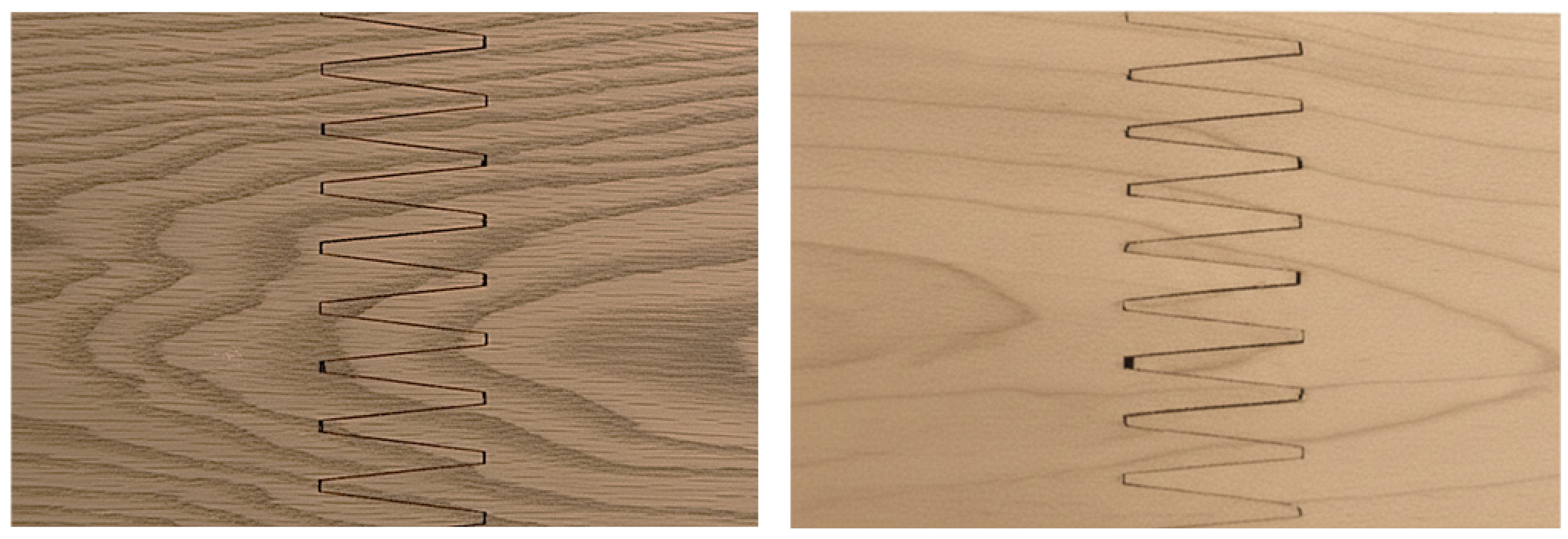
In this study, beech (
Fagus sylvatica L.) and oak (
Quercus robur L.) specimens applied for lengthening solid wood elements using finger-joint connections (
Figure 1). Prior to testing, density and moisture content were determined in accordance with ISO 13061-1:2014 [
24] and ISO 13061-2:2017 [
25]. The average density (ρ
12) was 755 ± 35 kg/m
3 for beech and 779 ± 52 kg/m
3 for oak, at a reference moisture content of 12.1 ± 0.8% and 11.9 ± 0.7%, respectively. The oven-dry method was used for moisture content determination, and density was calculated based on the mass and volume at the current moisture level, consistent with the requirements of these standards. Timber originated from industrially processed logs sourced from Vrbas, Banja Luka, within the same geographical region to minimize site-related variability. All specimens were sawn with their longitudinal axis parallel to the grain and were predominantly tangential-cut to ensure uniformity across the test groups. The materials were visually inspected to ensure they were free from knots, checks, anatomical irregularities, and other macroscopic defects.
The experimental design was intentionally limited to a narrowly defined joint geometry to enable a focused comparative analysis of material-related effects.
2.2. Finger-Joint Geometry and Adhesive
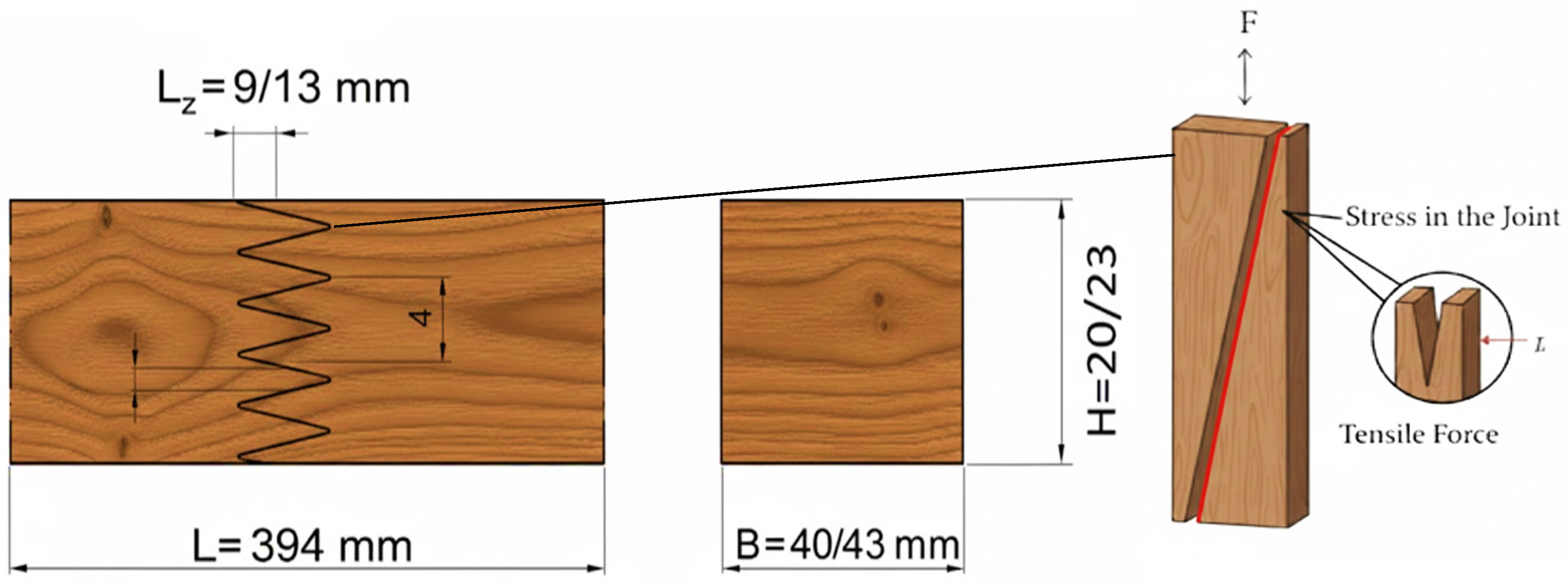
The specimens were manufactured using wedge-shaped mini-tooth finger joints. Two finger-joint geometries were applied, defined by the finger (tooth) length
Lz, which was 9 mm and 13 mm, while the finger pitch
P (tooth width) was kept constant at 4 mm for all samples. The selection of these specific finger lengths (9 mm and 13 mm) is based on common industrial standards for hardwood products, 9 mm joints are widely preferred in the furniture industry for their esthetic subtlety, while 13 mm joints are typically utilized for components requiring higher load-bearing capacity. All specimen dimensions were measured using a digital caliper with an accuracy of ±0.01 mm (
Figure 2).
A commercial PVAc adhesive was used for all finger joints. According to the manufacturer’s specifications, the adhesive has a density of approximately 1.05 g/cm3, a viscosity of 12,000–15,000 mPa·s at 20 °C, and an open time of approximately 8–10 min. The use of a single adhesive type was intended to isolate the influence of finger length and wood species; however, this represents a limitation of the study, as other structural adhesives may exhibit different mechanical behavior.
Each specimen had a total length of L = 394 mm, while cross-sectional dimensions varied slightly depending on the wood species. Beech and oak samples were prepared with widths of B = 40 mm and 43 mm, and thicknesses of H = 21 mm and 23 mm, with fifteen specimens tested for each dimensional combination.
Adhesive bonding was performed mechanically using a one-component PVAc dispersion adhesive (Kleiberit 300, Weingarten, Germany; density ≈ 1.10 g/cm3). The adhesive was applied in accordance with EN 204, at a consumption of 150–200 g/m2. Bonding was carried out under controlled conditions, with wood moisture maintained at 12 ± 1% to ensure stable and reliable adhesion.
Only two finger lengths (9 mm and 13 mm) were investigated in this study. These values were chosen to represent commonly used industrial finger-joint geometries for hardwood applications. All other geometric parameters—including tooth pitch, flank angle, number of fingers, and tip geometry—were deliberately kept constant to isolate the influence of finger length and wood species on tensile performance. This limited factorial design constrains the generalizability of the results and is therefore suitable for comparative analysis rather than comprehensive joint optimization.
2.3. Mechanical Testing
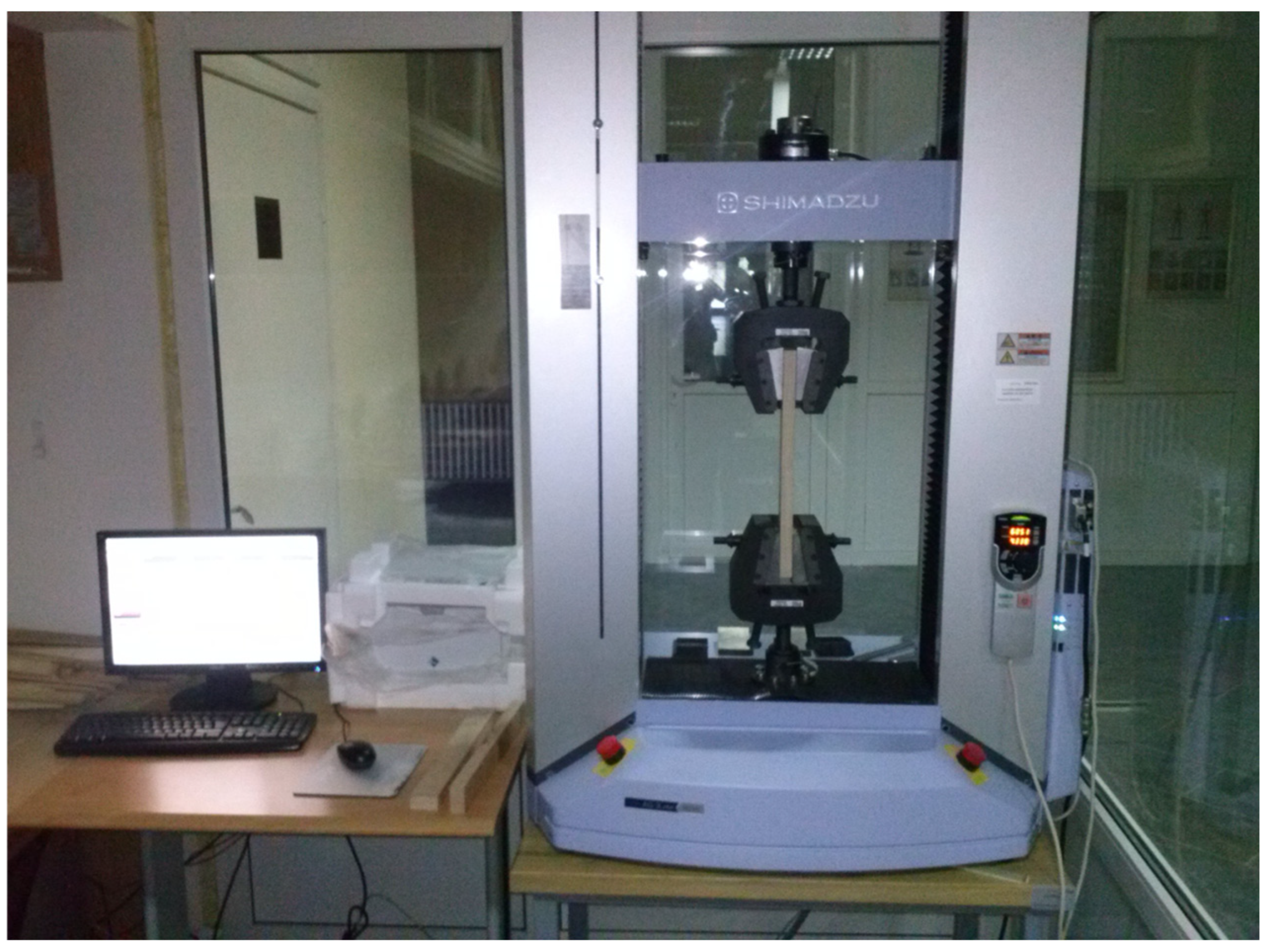
The mechanical properties of the finger-jointed specimens were evaluated using a universal testing machine SIL-50KNAG (Shimadzu, Kyoto, Japan) (
Figure 3). During testing, the lower clamp was held fixed, while the upper crosshead moved upward to apply a tensile load along the longitudinal axis of the specimen. The loading rate was set to 1 mm/min, in accordance with commonly employed procedures for testing finger-jointed wood elements. For each finger-joint configuration, five independent measurements were carried out to ensure statistical reliability. The following parameters were analyzed.
2.3.1. Cohesive Strength
This parameter represents the maximum tensile stress that the specimen can withstand before failure occurs within the adhesive bondline or the adjacent wooden substrate. It reflects the internal integrity of the joint, indicating how effectively the adhesive and wood interact under load. Higher cohesive strength values generally indicate more uniform stress distribution within the joint and improved bonding performance.
where
is the maximum tensile force (N), and B and H are the cross-sectional dimensions of the specimen (mm).
The cohesive stress (σc) was calculated as a nominal stress value by dividing the maximum tensile force by the gross cross-sectional area of the joint. This simplified formulation assumes uniform axial stress distribution and does not account for the complex multiaxial stress state present in finger joints, including shear stresses, tension perpendicular to grain, and stress concentrations at finger roots. Consequently, σc should be interpreted as a comparative indicator rather than a physically representative local stress parameter.
2.3.2. Work to Failure ()
It is calculated as the integral of the area under the force–displacement curve for predefined displacement limits of 0.5 mm, 1.0 mm, and 2.0 mm. This parameter, ex-pressed in Joules (J), represents the amount of mechanical energy absorbed by the specimen before reaching the selected displacement. Higher values indicate a greater capacity of the finger-jointed connection to absorb energy and resist deformation, providing insight into the joint’s ductility and overall performance under tensile loading.
2.3.3. Fracture Energy )
The parameter
Gc represents the fracture energy, defined as the energy required to initiate and propagate a crack along the adhesive bondline. It provides a measure of joint toughness, reflects the combined influence of adhesive properties, wood substrate behavior, and stress distribution within the bonded interface. Higher values of
Gc indicate a more resistant adhesive joint capable of sustaining greater energy before fracture.
where
is the work to failure at displacement x;
is the effective bonded area (mm2);
quantifies the energy required to initiate and propagate the fracture along the adhesive line.
This method provides a systematic determination of key mechanical parameters of finger-jointed specimens, including cohesive strength, work to failure, and fracture energy. The fracture energy () reported in this study was derived from the integration of the global force–displacement response normalized by the bonded area. As the experimental approach does not involve controlled crack initiation, crack path definition, or crack propagation monitoring, the obtained values do not represent intrinsic fracture toughness in a fracture-mechanics sense. Instead, they are interpreted as energy-based performance indicators describing the overall resistance of the joint to tensile loading.
2.4. Data Analysis
Statistical analysis was performed primarily to support comparative interpretation of the results. Due to the limited sample size (n = 15 per group), the analysis is considered exploratory. Where applicable, analysis of variance (ANOVA) was applied to identify general trends; however, results are discussed descriptively to avoid over-interpretation of statistical significance. A sample sufficiency analysis was con-ducted for the selected mechanical parameter using Student’s t-distribution (α = 0.05, degrees of freedom = 4). Based on experimentally obtained coefficients of variation, the sample size was deemed sufficient for detecting comparative trends with a relative accuracy of 5%, while accounting for the inherent variability of wood as a natural material.
3. Results
In this study, beech (Fagus sylvatica L.) and oak (Quercus robur L.) specimens with different finger-joint configurations were tested. Each specimen had precisely measured dimensions, including joint length (L), width (B), height (H), finger pitch (P), and effective finger length (Lz). These parameters are critical, as they directly influence the bonding surface and the mechanical transfer of forces within the joint.
In most cases, higher values of
Lz resulted in an increased effective adhesive area, which is theoretically associated with more favorable stress distribution along the joint [
1,
26]. Differences between beech and oak were also evident in the geometric parameters—oak exhibited slightly greater dimensional variability, whereas beech specimens were more uniform, which may influence the interpretation of the mechanical results.
3.1. Maximum Tensile Force
The maximum tensile force represents a key indicator of the quality of finger-joint connections, as it directly shows how much load the joint can withstand before failure. This parameter provides insight into the overall strength of the joint and allows comparison of the performance of different geometric configurations and wood species. For a clearer mutual comparison, the relative differences between finger lengths were additionally expressed in percentage terms based on average values. Increasing the finger length from 9 mm to 13 mm resulted in an average increase in maximum tensile force of approximately 10.6% for beech specimens and 21.1% for oak specimens. When comparing wood species at the same finger length, beech exhibited on average 8.1% higher tensile force than oak for Lz = 9 mm, while for Lz = 13 mm the values were comparable, with oak showing approximately 1.3% higher average tensile force.
Analysis of the mean values shows that beech (Fagus sylvatica L.) exhibits average maximum forces ranging from 18,232 N to 21,320 N, while oak (Quercus robur L.) shows a mean range of 16,517 N to 21,631 N. Beech (Fagus sylvatica L.) exhibits average maximum forces ranging from 18,232 N to 21,320 N, with a lower standard deviation compared to oak. In contrast, oak exhibits greater variability, reflecting its characteristic ring-porous structure, where the alternation between earlywood and latewood within the joint area leads to a broader distribution of force values. Furthermore, when compared to the average tensile strength of solid wood (approx. 110–135 MPa), the tested finger joints achieved roughly 55%–65% of the base material capacity, which is typical for hardwood finger-joint efficiency in non-structural applications. Beech has a lower standard deviation (SD), indicating a more homogeneous wood structure and reliable joint performance, whereas oak shows greater variability, likely due to its ring-porous anatomical structure and the reduced cross-section of the specimens. These factors enhance stress concentrations at the finger-joint tips, leading to a broader distribution of maximum force values. The relatively low standard deviation (SD) observed, particularly in beech specimens, can be attributed to the rigorous visual grading of the lamellas, which ensured the absence of knots and grain deviations in the joint area, thus minimizing natural variability in the test results.
Sample dimensions also play an important role. Beech samples mostly had a width
B = 43 mm and a height
H of 21–23 mm, while oak samples were slightly narrower and lower (
B = 40–43 mm,
H = 21–23 mm). Considering these basic dimensions allows a more accurate understanding of stress distribution and joint behavior. It was also observed that longer finger lengths (
Lz = 13 mm) significantly increase the mean maximum tensile force for both wood species, confirming the importance of joint geometry in achieving optimal mechanical performance. Integrating all these factors—wood species, sample dimensions, and joint geometry—provides a complete picture of finger-joint behavior and their resistance to failure.
Table 1 presents the mean values of maximum tensile force, standard deviation, and basic dimensions (
B and
H) for each sample group.
Statistical analysis using the t-test showed that increasing the finger length from 9 mm to 13 mm resulted in a statistically significant increase in maximum tensile force for beech (t = 2.34–3.05, p = 0.006–0.023), whereas for oak the significance depended on the sample dimensions (t = 1.71–2.21, p = 0.039–0.101). These results indicate that the effect of finger length is particularly pronounced for beech, while oak exhibits greater variability and lower reliability in the measurements. The t-values reflect the relative magnitude of the differences compared to the variability within the samples, and the p-values indicate the probability that the observed differences occurred by chance, further emphasizing the importance of joint geometry and wood species in achieving optimal mechanical performance.
Including the mean values and standard deviations provides a clear visualization of differences between wood species, effective finger length, and sample dimensions, which is important for interpreting finger-joint performance. Beech provides a more stable and predictable response, whereas oak, although sometimes reaching high forces, exhibits greater variability among samples. Longer fingers and a larger effective bonding area are confirmed as key factors for increasing the maximum tensile force.
The comparison of maximum tensile forces is intended as a relative performance indicator under identical specimen geometry and testing conditions. Although force-based comparison does not account for local stress distribution within the finger joint, it provides a consistent basis for comparative assessment within the investigated parameter range.
3.2. Stress in the Joint
The analysis of
σc values of finger-joint specimens reveals significant differences between beech and oak, as well as between shorter and longer finger lengths. The interpretation of these stress values is fundamentally linked to the failure mechanisms observed during testing. As detailed later in
Section 3.4 the transition from adhesive-dominated failure to cohesive wood failure significantly dictates the maximum load-bearing capacity. Beech (
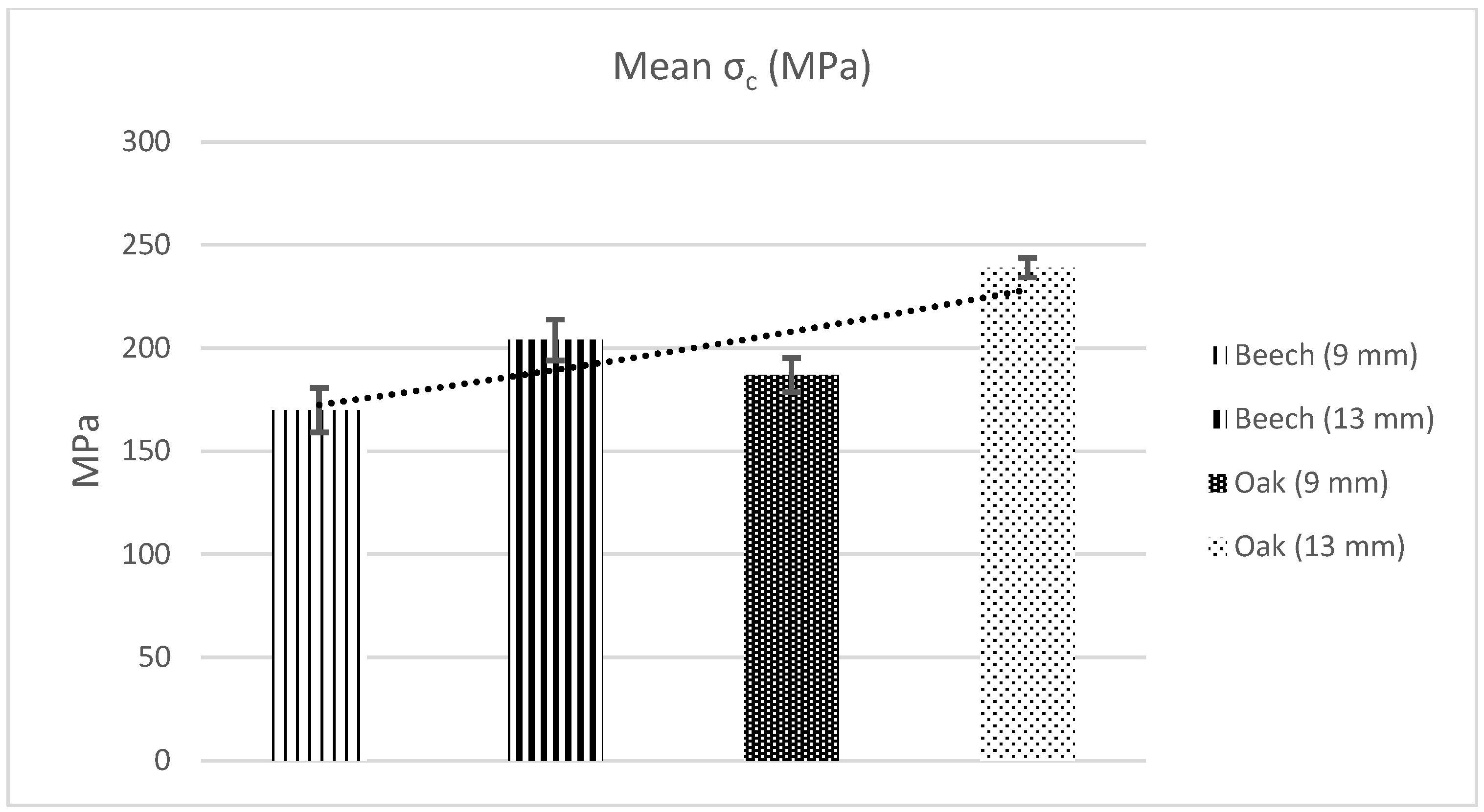
Fagus sylvatica L.) exhibits more stable and predictable stress values, with an average
σc of 170 MPa for specimens with shorter fingers (
Lz = 9 mm) and 204 MPa for specimens with longer fingers (
Lz = 13 mm). The standard deviation is lower in both cases, indicating the homogeneity of the wood and the uniform distribution of stress within the joint. Even with minor variations in specimen dimensions (
H = 21–23 mm), the stress remains relatively consistent, highlighting the reliability of beech for structural applications.
Oak (Quercus robur L.), in contrast, shows greater variability in σc values. The average stress for specimens with shorter fingers (Lz = 9 mm) is 187 MPa, while for specimens with longer fingers (Lz = 13 mm) it increases to 239 MPa. The larger spread in results for oak is attributed to its anatomical heterogeneity and variations in the dimensions B and H among individual specimens.
Figure 4 illustrates the mean
σc values for both wood species, including the standard deviations for each group. The graphical representation was optimized to improve readability and to facilitate comparison between wood species and finger lengths.
The results confirm that longer fingers increase the effective bonding area, reduce localized stress, and improve the predictability of σc. Considering the dimensions B and H in the analysis provides a more complete understanding of the mechanical behavior of the joint and allows for optimized finger-joint geometry for structural purposes.
3.3. Energy Absorption and Fracture Toughness (W and Gc)
Deformation energy (
W) and fracture energy (
Gc) are essential indicators of the toughness of finger-joint connections, representing the joint’s ability to absorb mechanical energy before failure. These parameters provide a deeper understanding of the mechanical performance of finger-joints by considering both the wood material behavior and the efficiency of the adhesive bond, as summarized in
Table 2. Energy absorption (
W) and fracture toughness (
Gc) values reflect the work required to propagate a crack through either the adhesive interface or the wood fibers. These parameters are directly categorized based on the failure mode classifications presented in
Section 3.4.
For beech (Fagus sylvatica L.), the mean deformation energy at small displacements (0.5 mm) was approximately 19 J, with a relatively low standard deviation (SD = 1.2 J), indicating a stable and predictable response under initial loading. The corresponding mean fracture energy was around 0.036 N/mm (SD = 0.003 N/mm), reflecting uniform adhesive performance. Increasing the finger length to Lz = 13 mm slightly improved both W and Gc, demonstrating that a larger effective bonding area enhances the energy absorption capacity of the joint. These results suggest that beech finger-joints maintain a consistent mechanical behavior under small deformations, which is desirable for applications requiring reliable and predictable performance.
In contrast, oak (
Quercus robur L.) samples exhibited higher mean deformation energy at larger displacements (1–2 mm), ranging from 23 to 25 J, accompanied by a higher standard deviation (
SD = 3.1 J), indicating a more ductile and variable failure behavior. The mean fracture energy for oak was approximately 0.050 N/mm (
SD ≈ 0.008 N/mm), but noticeable variability among samples was observed due to the heterogeneous anatomical structure of oak and minor differences in dimensions
B and
H, consistent with previous studies emphasizing the influence of wood heterogeneity on joint toughness [
27,
28].
Overall, these results demonstrate that beech finger-joints respond more uniformly under small deformations, making them suitable for structural applications that require predictable and stable mechanical performance. Oak finger-joints, however, are capable of absorbing higher energy under larger deformations but exhibit increased variability due to anatomical inhomogeneity. This emphasizes the importance of selecting the appropriate wood species and finger length (Lz) to optimize energy absorption and fracture resistance in finger-joint connections.
Statistical analysis using independent
t-tests revealed that for beech, increasing the finger length from 9 mm to 13 mm resulted in a statistically significant increase in deformation energy (
W) for beech (
t = −3.28,
p = 0.0028), while the corresponding change in fracture energy (
Gc) was not statistically significant (
t = −1.68,
p = 0.10). For oak, neither
W (
t = −1.71,
p = 0.098) nor
Gc (
t = −0.73,
p = 0.47) showed significant differences between the two finger lengths. These results indicate that the effect of finger length is particularly pronounced for beech, which exhibits a stable and predictable response, whereas oak shows greater variability in both energy absorption and fracture resistance. The
t-values reflect the magnitude of the differences relative to sample variability, and the
p-values indicate the likelihood that the observed differences occurred by chance, further emphasizing the role of both wood species and finger length in optimizing mechanical performance.
Table 2 presents the mean values of deformation energy (
W) and fracture energy (
Gc) along with their standard deviations for both wood species and different finger lengths, providing a clear overview of the joint performance.
3.4. Failure Mode Analysis
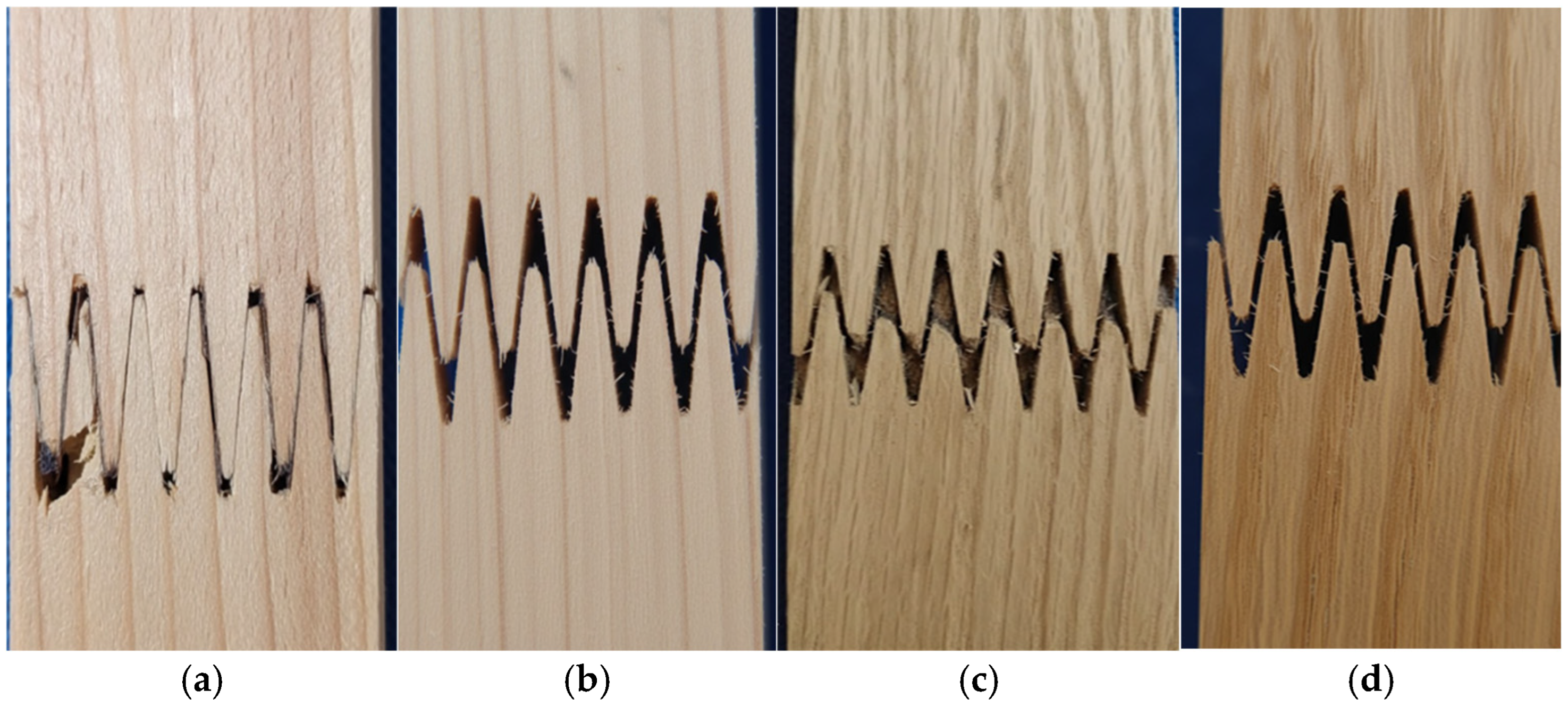
It is important to note that all failure events occurred within the finger-joint area and not in the solid wood component of the specimens. Visual inspection of fracture surfaces revealed differences in failure modes depending on finger length and wood species. Specimens with longer fingers (Lz = 13 mm) predominantly exhibited cohesive wood failure, corresponding to higher deformation energy (W) and fracture energy (Gc), as observed in both beech and oak specimens. Shorter finger joints, on the other hand, showed a higher proportion of mixed adhesive–wood failure, which is consistent with the slightly lower W and Gc values measured in these specimens.
These observations highlight the relationship between finger length, energy absorption, and the predominant failure mechanism, providing a more comprehensive understanding of joint performance. The correlation between mechanical measurements (W and Gc) and visual failure modes confirms that longer finger joints not only improve energy absorption but also promote more predictable and uniform fracture behavior, particularly in beech. Oak, while exhibiting higher energy absorption at large deformations, shows greater variability in both fracture energy and failure mode due to its heterogeneous anatomical structure.
The failure mode analysis (
Section 3.4.) provides a clear explanation of the mechanical trends observed in previous sections. In beech specimens, the predominance of failure within the wood structure correlates with the higher energy absorption (
W) and fracture toughness (
Gc) reported in
Section 3.3. In contrast, the occurrence of failures at the adhesive interface in some oak configurations explains the greater variability and lower predictability of tensile stress values. These results indicate that, in cases where failure occurs in the wood rather than at the bond line, the joint performance is governed by the strength of the base material, confirming the effectiveness of the finger-joint geometry and bonding quality.
4. Discussion
A comparative analysis of finger-joint connections made from beech (
Fagus sylvatica L.) and oak (
Quercus robur L.) reveals significant differences in mechanical behavior arising from the wood’s anatomical structure, joint geometry, and adhesive properties [
28,
29,
30]. The maximum tensile force for beech was relatively stable, ranging from 16.746 N to 23.757 N, whereas for oak it varied between 9.294 N and 25.056 N, indicating higher heterogeneity and unpredictability in oak. Beech exhibits a more homogeneous stress distribution and a more stable joint response under tensile loading. The pronounced variability observed in oak specimens can be primarily attributed to its ring-porous anatomical structure. Oak is characterized by distinct earlywood and latewood zones with pronounced differences in vessel size, density, and stiffness, resulting in non-uniform stress distribution within the finger-joint region. These anatomical features promote localized stress concentrations and contribute to increased scatter in mechanical performance. In contrast, beech exhibits a diffuse-porous and more homogeneous anatomical structure, leading to more uniform load transfer, reduced variability, and a more predictable joint response.
The percentage-based comparison further emphasizes the practical relevance of the observed trends. While both wood species benefited from increased finger length, the relative improvement was more pronounced for oak, which exhibited more than twice the percentage increase compared to beech. However, given the limited sample size and the restricted range of investigated joint geometries, these relative differences should be interpreted as indicative trends rather than absolute performance values or optimization guidelines.
The stress in the joint (σc) further confirms these trends. Beech shows more stable and higher σc values across all configurations, whereas oak exhibits lower mean σc values and significantly higher standard deviation.
The analysis of deformation energy (W) and fracture energy (Gc) further highlights differences between the wood species. Beech demonstrates higher energy absorption at small displacements (0.5 mm), with relatively low variability (SD = 1.185 J), indicating a stable and predictable joint response. The fracture energy (Gc) was also stable (SD = 0.00289 N/mm), confirming uniform load transfer through the adhesive layer. In oak, W and Gc were higher at larger deformations (1–2 mm), but with greater variability (SD = 3.142 J and SD = 0.00812 N/mm), reflecting a more ductile failure mechanism and higher energy absorption capacity, albeit with lower predictability.
The higher energy absorption observed in oak specimens, despite the greater variability, can be linked to its ring-porous anatomical structure. During tensile loading, the large earlywood vessels in oak act as sites for micro-crack initiation, but the dense latewood fibers provide substantial resistance to crack propagation. This creates a more tortuous fracture path compared to the relatively more homogenous diffuse-porous structure of beech. Consequently, oak exhibits a more ‘ductile’ failure mode with higher work to failure (
W), whereas beech shows a more linear-elastic and brittle response, which explains its lower but more consistent fracture energy (
Gc) values. These findings are consistent with the studies by Serrano et al. [
31] and Ayarkwa [
32], who emphasized that in finger-jointed hardwoods, the efficiency of stress transfer across the adhesive bond is heavily influenced by the stiffness mismatch between earlywood and latewood. Our results further confirm that for oak, the anatomical inhomogeneity leads to a complex multiaxial stress state at the finger tips, increasing the plastic deformation zone and thus the total energy absorbed before final separation. This mechanistic difference is further illustrated by the force–displacement behavior presented in
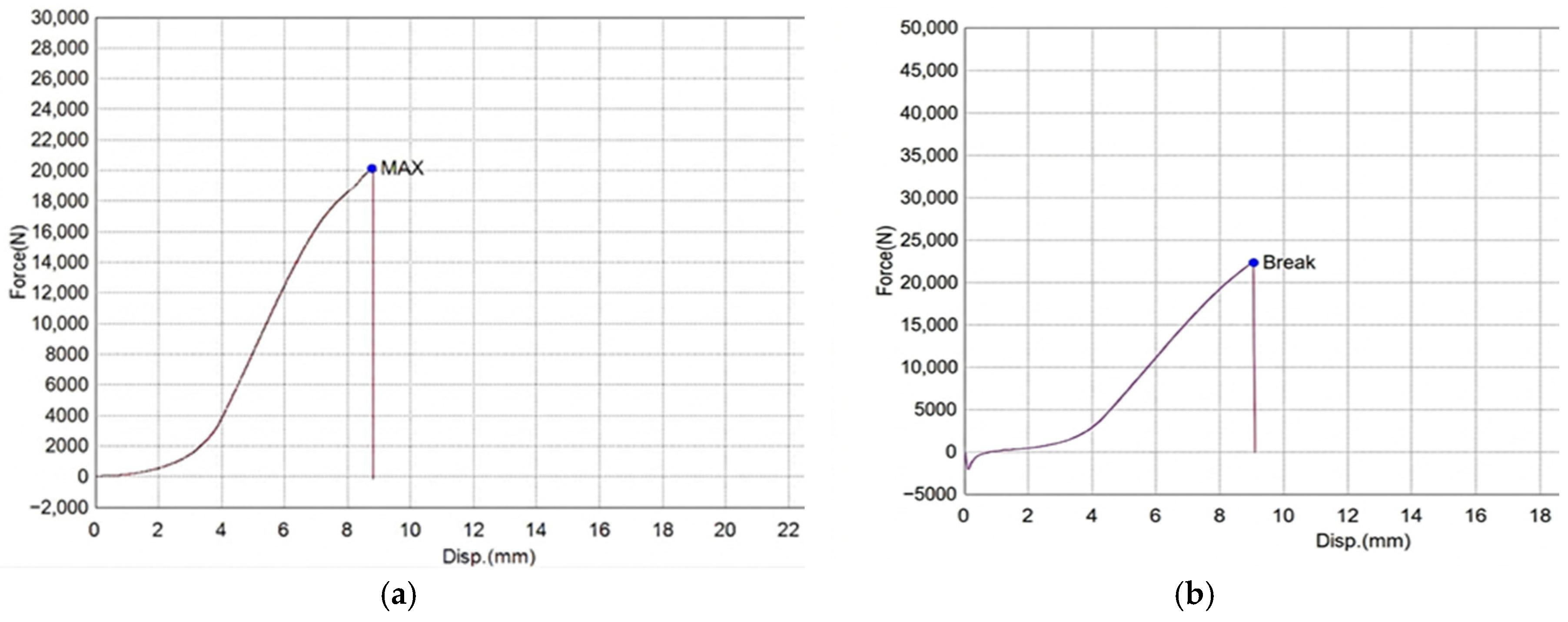
Figure 5, where oak displays a more extended non-linear region compared to the steeper, more linear ascent of beech.
The experimental findings are further validated by the failure mode analysis (
Section 3.4). The observed transition from adhesive-dominated failure in shorter joints to cohesive wood failure in longer configurations (
Figure 6) explains the shift in energy absorption (
W) and fracture toughness (
Gc). This physical evidence confirms that the mechanical performance indicators are intrinsically linked to the fracture morphology of the species studied.
The limited number of specimens per test series (n = 15) represents a methodological constraint of this study. Due to the natural heterogeneity of wood, especially in hardwood species, the observed variability may influence the reproducibility of the results. Nevertheless, the applied experimental design allows for a comparative assessment of the investigated finger-joint configurations under identical material, adhesive, and testing conditions. The findings should therefore be interpreted as indicative trends rather than absolute performance values.
Ductility and effective finger length also play a significant role. Longer fingers (Lz = 13 mm) increase the average maximum tensile force and enhance energy absorption in both wood species, but oak is more sensitive to variations in dimensions (B and H). Beech, on the other hand, exhibits a more stable geometric effect, making it more suitable for joints under constant or predictable loading, whereas oak offers advantages in ductility and energy absorption under larger deformations.
Overall, the choice of wood species and joint geometry critically affects the mechanical performance of finger-joint connections. Beech is ideal for applications requiring stability and uniformity, while oak provides greater flexibility and resistance to higher loads, albeit with increased variability in joint behavior [
28,
30].
5. Conclusions
The analysis of finger-joint connections made from beech (Fagus sylvatica L.) and oak (Quercus robur L.) confirmed that both wood species and joint geometry significantly influence mechanical performance. Beech exhibited stable and predictable joint behavior, characterized by more uniformly distributed stress and consistent maximum tensile force. These properties make beech particularly suitable for industrial applications requiring high precision and uniformity, such as furniture manufacturing, wooden panels, and interior construction elements. Oak, in contrast, demonstrated higher ductility and greater energy absorption capacity at larger deformations, indicating its suitability for structural applications subjected to dynamic loading or requiring increased flexibility, such as beams and load-bearing elements exposed to variable forces. The results further highlight the importance of appropriate joint design, particularly the selection of finger length (Lz), for optimizing mechanical performance. Longer fingers generally increased the mean maximum tensile force and energy absorption capacity, while variations in joint dimensions (B and H) showed a more pronounced influence on oak joints. This study provides practical guidance for the industrial application of finger-joint connections by demonstrating how wood species selection and joint geometry can be adapted to specific structural requirements. Future research should address additional influencing factors, such as adhesive type, wood moisture content, and temperature conditions, to assess their effects on long-term joint stability and durability.