Article

The Color of Wood Related to Its Structure in Silver Fir Trees from Old-Growth Carpathian Forests


by
Florin Dinulică
1,
Mariana Domnica Stanciu
2 and
Emilia-Adela Manea Salca
3,*
1
Faculty of Silviculture and Forest Engineering, Transilvania University of Brasov, 1 Sirul Bethoven, 500123 Brasov, Romania
2
Department of Mechanical Engineering, Transilvania University of Brașov, B-dul Eroilor 29, 500036 Brasov, Romania
3
Faculty of Furniture Design and Wood Engineering, Transilvania University of Brasov, 500036 Brasov, Romania
*
Author to whom correspondence should be addressed.
Forests 2026, 17(4), 472; https://doi.org/10.3390/f17040472
Submission received: 3 March 2026 / Revised: 3 April 2026 / Accepted: 10 April 2026 / Published: 12 April 2026
(This article belongs to the Special Issue Phenomenon of Wood Colour—2nd Edition)

Abstract

In healthy wood, color variations can betray structural changes that substantially affect the quality of the raw material. In the case of silver fir (Abies alba), compression wood is a very common structural anomaly. The material used for this study originates from centenary trees and serves to verify how the color of the wood responds to structural changes caused by the formation of compression wood. The color changes were tracked in the CIELab color space for different types of wood structures, such as normal wood, mild, moderate and severe compression wood. They occur in all directions of the wood, under the influence of compression stress and the cambium age, and they are discussed in relation to fluctuations in chemical composition at the tree level. Results of this study revealed that the color redness and yellowness react promptly to structural changes, and reveal the intensity levels of compression wood (mild, moderate, and severe). It was noticed that lightness is slightly sensitive to the onset of compression wood. Clear trends in wood color change along the trees were observed. The chromatic specificity of compression wood and its relationship with the environment could allow historical reconstruction and monitoring of tree life conditions through wood color.

1. Introduction

As it is well known, the structure of wood at different scales is the primary determinant of wood color. At the coarsest level, macrostructure has the most visible impact on color. Sapwood and heartwood divide the color [1]. The appearance of heartwood is an essential process of structural maturation [2], and thus of trees. The color changes from sapwood to heartwood, which can be abrupt or gradual to almost imperceptible, closely follow the distribution of chromophore extractives [3,4,5]. Furthermore, the alternation of earlywood and latewood can give the wood a striated appearance [6]. The natural color contrast of healthy wood is enhanced by strips, streaks and veins, which are usually independent of the geometry of the annual rings. Going deeper, the cell walls, through their layered structure and heterogeneity at the nanoscale, control light transmittance, haze and scattering [7]. The contribution of structure to wood color has been studied in detail at the level of chemical composition [8,9]. Environmental conditions interact significantly in the relationship between chemical architecture and wood color [10]. Tree age is the primary physiological determinant of changes in color space. The contribution of age is manifested by the evolution of the duramenification process, and therefore the accumulation of secondary metabolites [11,12,13], but also by the structural and ultrastructural changes that occur with the transition from juvenile wood to mature wood [14].
Silver fir (Abies alba Mill.) is the second most important coniferous tree in the Romanian Carpathians [15] and the species with the best site index. Fir forests in Romania are managed until old age, so raw material/timber inevitably contains a lot of abnormal colorations, associated with wet heartwood, mistletoe attack, or fungal infections [16]. In fact, fir logs present the most extensive abnormal colorations of all the wood harvested in Romania [17]. In recent decades, fir has also experienced several crises in Romania [18], which have skewed age classes and endangered the species’ biological and genetic stability.
Silver fir wood is, like most conifers, variegated. The variegated character is accentuated by the particular conditions in which the trees grow, and which can stimulate the formation of compression wood. Compression wood is a modification of the normal structure of wood in response to the frequent and intense stress on the xylem in formation under compression parallel to the fibers. Silver firs typically avoid sites with conditions that could cause extreme stress on the wood, such as steep slopes and windy ridges [18]. Thus, compression wood, which is often plentiful in tree trunks, ensures their straightness [19]. Fir is, in fact, the second species after pine in terms of compression wood size among all Romanian woods [20].
Structural changes characteristic of compression wood manifested at all levels of xylem architecture, from macroscopic to nanoscale [21]. Of interest for the perceptible color of wood are the changes in the latewood/earlywood size ratio, in the transition from earlywood to latewood, and in the dominant chemical components. In fir, compression wood is distinguished by the hypertrophy of latewood and the prolongation of the transition from earlywood [22]. Lignin also gains a significant lead over cellulose [23]. Considering the contribution of these macromolecules to the color of softwood [24], a distancing of compression wood from wood with normal structure is expected.
Fir trees are particularly sensitive to changes in living conditions, which are reflected in the oscillations of the annual ring structure [25] and in the color of the wood. The instability of the color of fir standing timber is thus a symptom of the degradation of the conditions in which the trees grow.
Fir wood is a raw material of great importance all around its geographical area [26]. Structural accidents that occur during the trees’ lifespans have serious consequences for the raw material use value. Compression wood, for example, causes numerous problems in wood drying [27,28,29], in the manufacture of boards [30], and in the preparation of cellulose pulp [31].
In this context, the objective of the work is to evaluate the influence that the wood structure has on the chroma metrics of material originating from declining fir forests, in the process of exploitation. For this purpose, the change in the chromatic coordinates of the wood structure, such as wood with normal structure and wood with mild, moderate and severe compression, was examined in CIELab color space. The evolution of the wood color along and across fibers was also evaluated, along with the color changes’ visual perceptibility.

2. Materials and Methods

2.1. Source of the Material

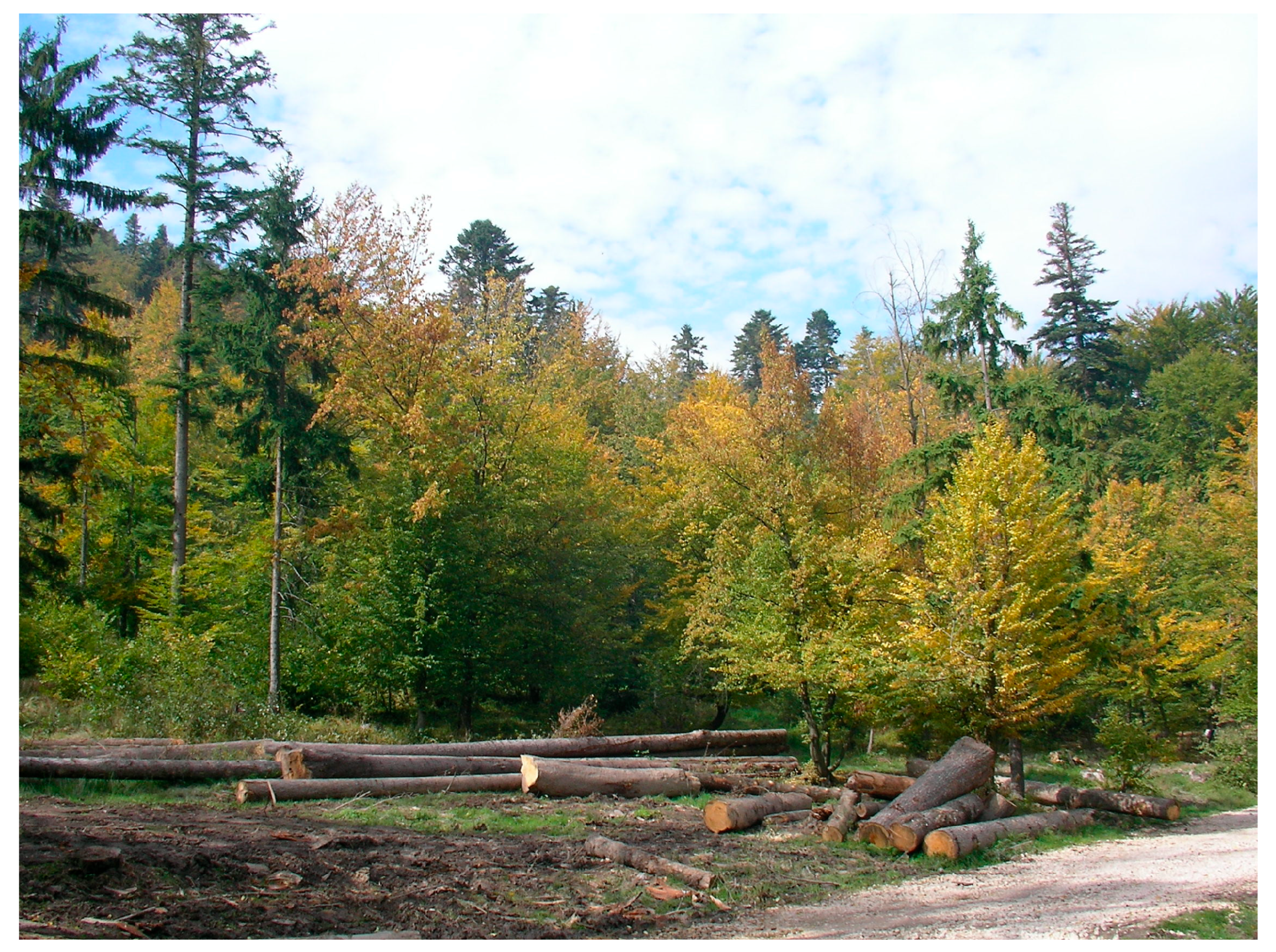
The fir wood (Abies alba) used in this study originates from mixed forests of fir, beech, and spruce in central Romania (Figure 1). Foresters have managed these forests since 1879 [32], and since 1979, they have been uneven-aged designed through selection fellings [33]. The frequent logging of these forests with these fellings injured the trees and reduced their resistance to wind. As a result, structural defects multiplied. In thinned stands, the radial growth of fir trees became increasingly exposed to the vagaries of the environment [22]. As a result, the annual rings became unbalanced both in the radial and tangential directions. For this reason, it was necessary to follow the relationship between wood color and structure on several rays. The fir trees used for this study have diameters at breast height ranging from 48 to 83 cm, total heights between 26.2 and 44.0 m, ages between 110 and 210 years, and the weight of compression wood ranging from 15.1% to 30% of the cross-sectional area. The trees grew on lands with weak or at most moderate inclination, but were prone to the formation of compression wood as individual and group resistance to wind weakened. The soils, stagni-albic luvisol and dystric gleyosol, frequently saturated with water, also contributed to this instability [34].

2.2. Sample Acquisition

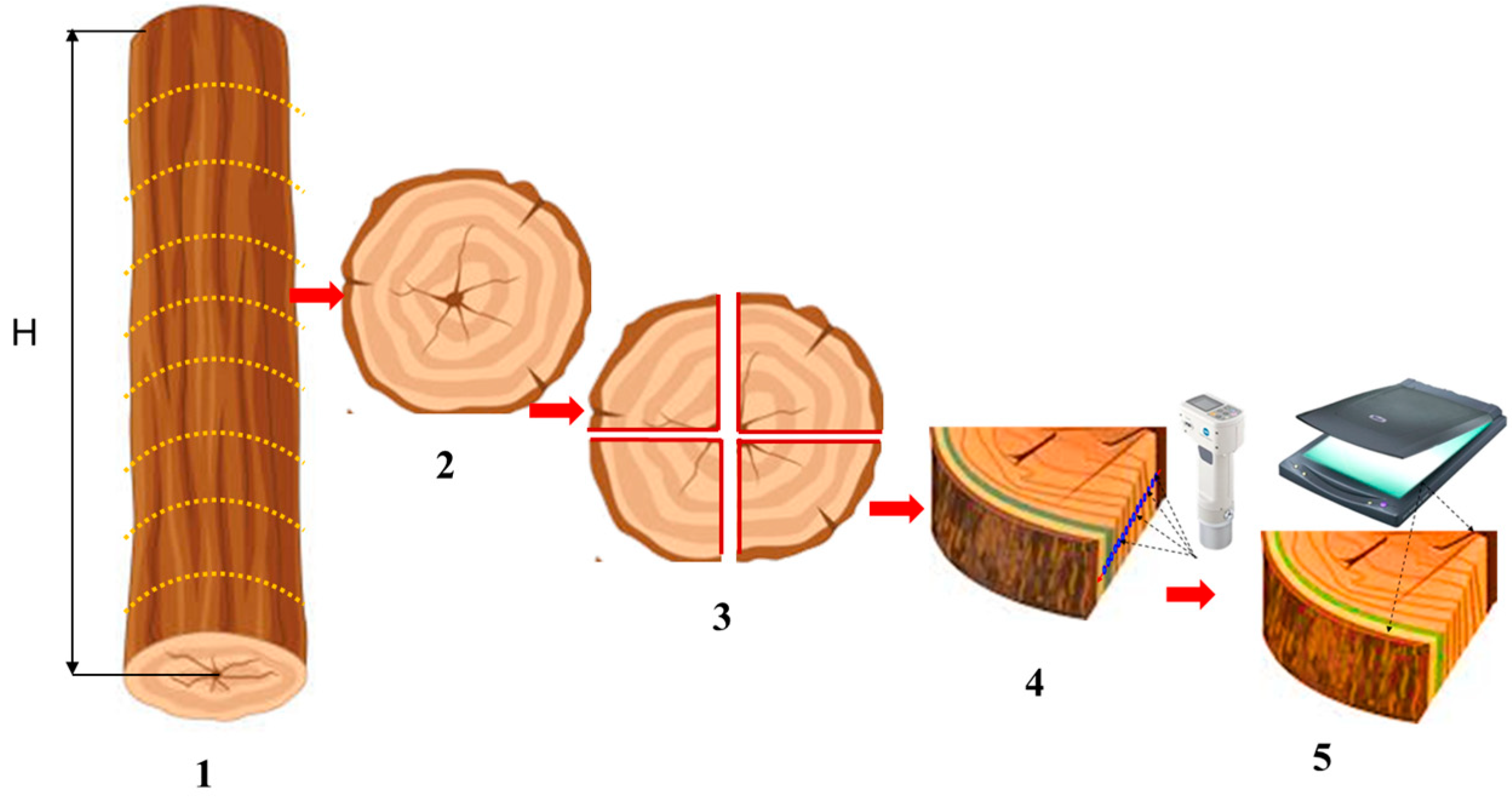
The samples (disks) were harvested from the ends of roundwood resulting from the harvesting of fir trees. The disks are 5–10 cm thick and were marked for identification, including the distance from the ground. The disks were seasoned for 6 months, after which they were sanded on one of the transverse faces to measure the annual rings. A total of 13 disks without obvious discoloration (blue stain or red stain), from 11 trees, were kept for measurements. The disks were cut from the trunks at heights ranging from 4 to 20 m. Then they were sectioned in the direction of 2 perpendicular diameters, starting with the largest diameter, as can be seen in Figure 2. Color measurements were taken on the radial section of the resulting four quarters. To prevent photodegradation, the color of the wood was measured shortly after sectioning, after preliminary vacuuming of dust. At the time of measurement, the samples had a moisture content of 11% ± 1.5%, measured with HM9-WS5 Merlin wood moisture meter

2.3. Measurement of the Samples

Annual rings were automatically measured and digitized by employing the WinDENDRO Density system (Regent Instruments 2007, Québec City, QC, Canada, 2007). For each ring, 5 variables were measured and calculated, with a 0.001 mm accuracy: tree ring width, earlywood width and proportion, and latewood width and proportion.
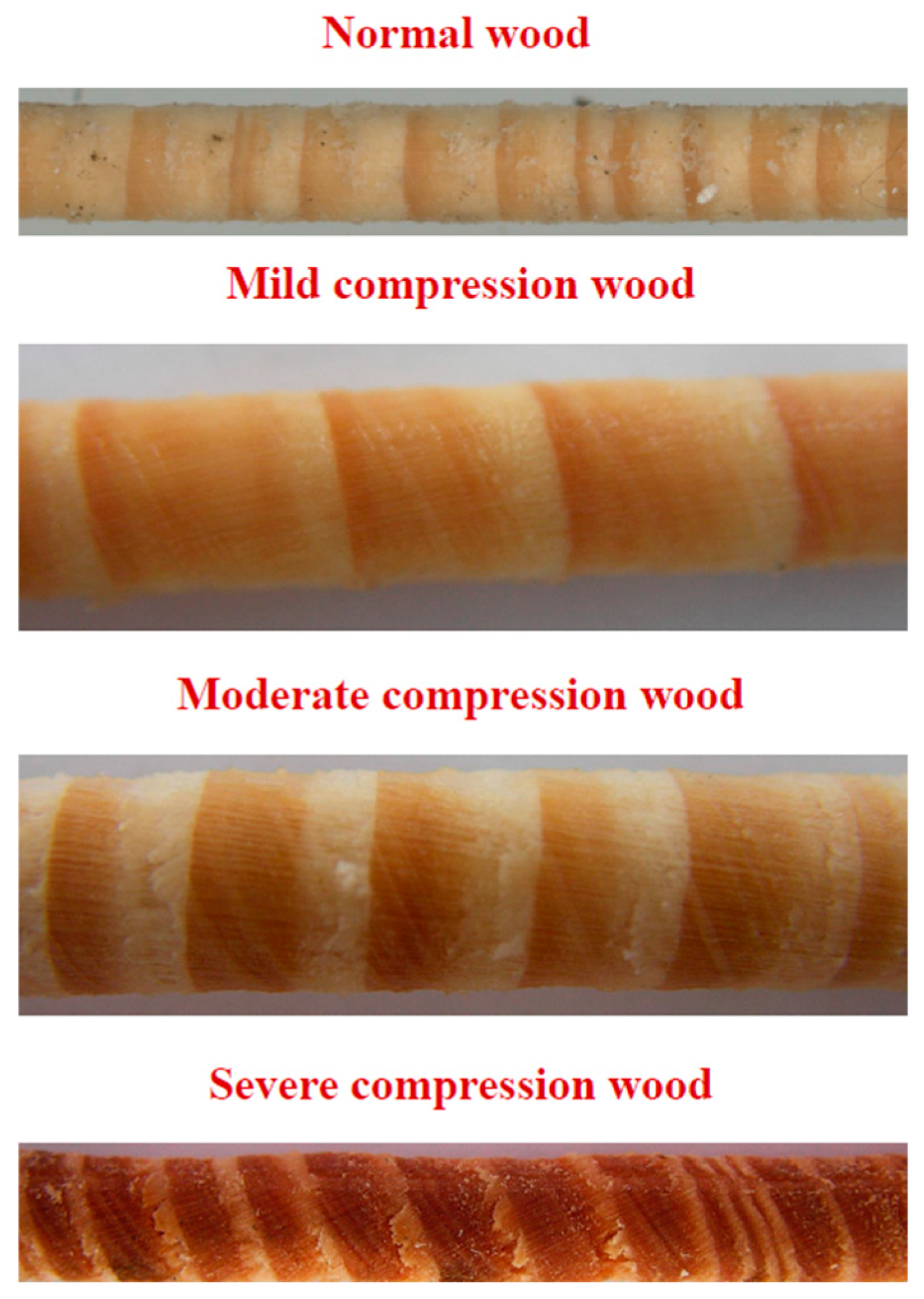
The annual rings on the radial side of the quarters resulting from the disk sectioning were grouped according to the type of structure to which they belong. The following types of structure produced by the occurrence of this anomaly were defined (Table 1). Their macroscopic description was inspired by Warensjo and Lundgren [35] and Harris [36].
In each group of annual rings (with a variable number of 2 to 10) 4 gridded color measurements were performed. The CR-400 Konica-Minolta portable colorimeter CR-400, with the diameter of the measurement window of 8 mm was used (Konica-Minolta 2007, Tokyo, Japan). Three consecutive exposures at the same point were recorded according to the ISO 7724-2 standard [37].
The three-dimensional CIELab color space was used to describe the color [38]. Its advantage is the perceptual uniformity; the numerical differences correspond to the visual differences [39]. The CIELab color space is defined by: L*: lightness (with values from 0%, for black, to 100% for white), a*: redness (for positive values)/greenness (for negative values), and b*: yellowness (for positive values)/blueness (for negative values). Using the two color coordinates, the hue angle of the color was calculated as h* = arctan(b*/a*).
A total of 278 plots were measured for color on all radial sections, respectively, with an average of 21 measurements/disk. The color measurements were classified according to the type of wood structure they refer to (Figure 3). Since compression wood is the most common structural defect in fir wood [22].
Also, the magnitudes of the individual absolute deviations δ of the color parameters of the compression wood compared to the color of the normal wood (correspondingly, δ L , δ a , δ b ) were calculated. These deviations were used to calculate the color differences E * with the formula, where δ L is a change in lightness, δ a and δ b are changes in the chromatic coordinates:
E * = ( δ L ) 2 + ( δ a ) 2 + ( δ b ) 2 ,

2.4. Statistical Data Processing

Wood chromatic parameters (L*, a*, b*) were considered from a statistical point of view as continuous variables and wood cambial age was considered a continuous predictive variable. To test the significance of the color differences between the described structure types (discrete variable), the normality of the distributions of the chromatic variables was previously verified with the Shapiro–Wilk test. The appropriate significance test was chosen. The chromatic variables with the capacity to distinguish the structure types were identified with discriminant analysis. The effect of structure type on wood color variation was reanalyzed after controlling for the effect of cambial age, through analysis of covariance. To visualize the structural continuum between normal wood and the final stage of compression wood in terms of wood color, principal component analysis was employed, using the type of structure as the labeling variable. The evolution of the size of the chromatic variables along the tree stem was verified with the help of mathematical correlation. The mathematical processing of the data was performed with STATISTICA 8.0 [40].

3. Results and Discussion

3.1. Does the Color of Silver Fir Wood Differ According to Its Type of Structure?

A percentage of 70.5% of the 278 wood plots in which wood color was measured, presented normal structure, while the rest had compression wood at different intensities (most cases being moderate compression wood).
Since the hypothesis of normality of the chromatic variables cannot be accepted (W from Shapiro–Wilk test = 0.965–0.989, p ˂ 0.05), non-parametric statistical verification methods were used. All chromatic variables statistically significantly distinguish the types of structure (H from Kruskal–Wallis test = 54.3–68.7, p ˂ 0.001). The multiple comparison matrix associated with this test shows that the differences are mostly due to the last two intensity levels of the compression wood.
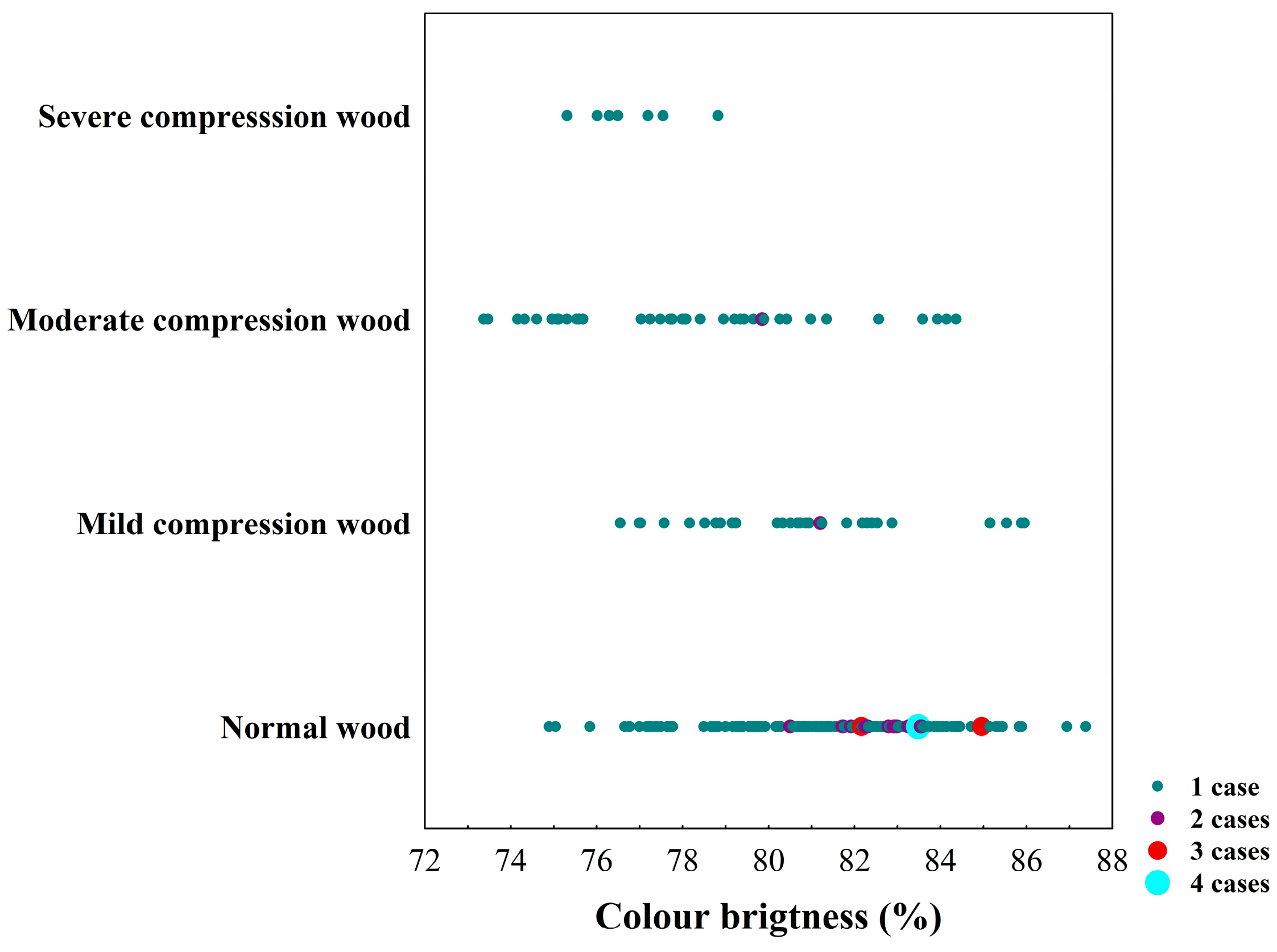
In normal wood, most lightness values range between 82% and 86% (Figure 4). Values lower than 80% are due to either 1) the high density of the annual rings—there are more areas of late wood in the narrow rings per unit area; 2) the particular pinkish hue of the normal wood; or 3) wetwood, apparently colorless, which dried during sample preparation. If compression wood appears, the degree of lightness decreases progressively with increasing intensity (Figure 4). On average, compared to normal wood, the lightness of mild compression wood is 1.1% lower, that of moderate compression wood is 4.5% lower, and that of severe compression wood is 6.5% lower.
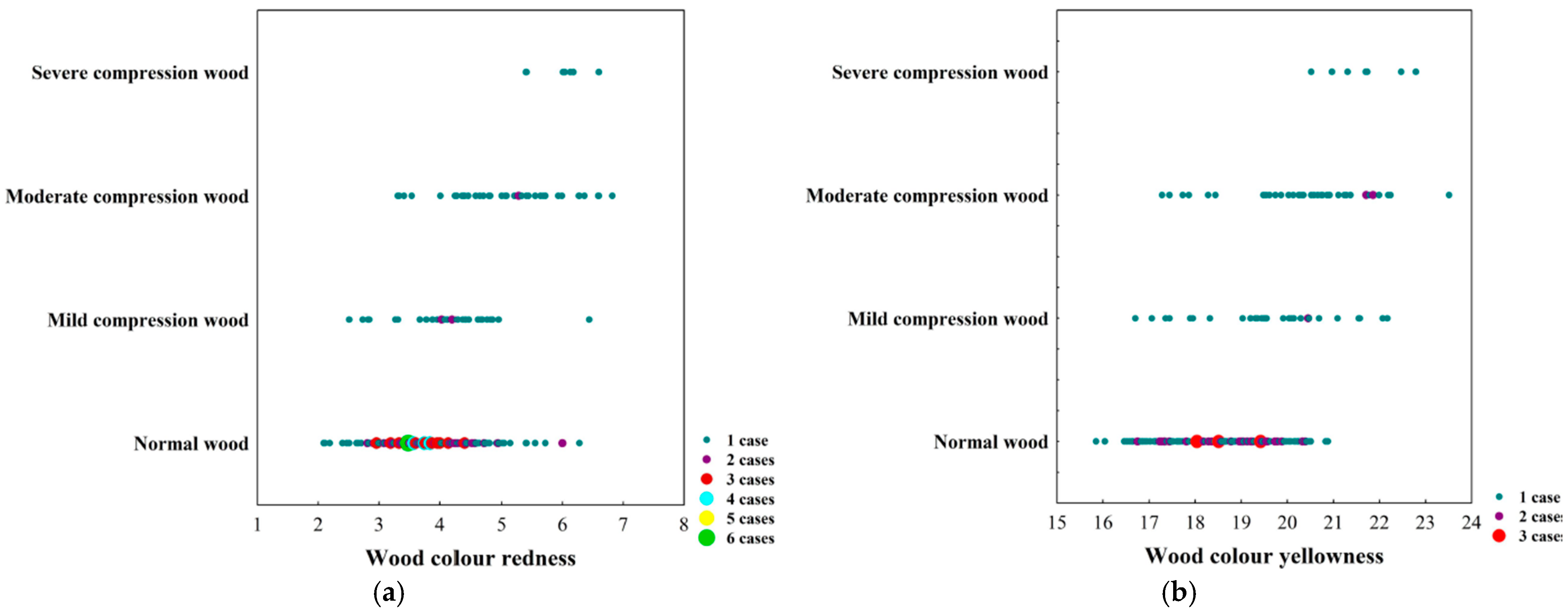
A similar variation is also shown by the chromaticity coordinates a* and b*. Redness, for example, is 7.7% higher in mild compression wood than in normal wood, 32.6% higher in moderate compression wood, and 56.4% higher in severe compression wood. Their range of variation narrows considerably towards severe compression wood (Figure 5).
Discriminant analysis reveals that color redness, yellowness and hue can differentiate the structural classes of fir wood, but not color brightness (Table 2). The discriminant model is statistically significant, F(12,701) = 19.34, p ˂ 0.0001, so the chromatic variables in the model differentiate well the structural types. Tolerance is high, which indicates high collinearity, i.e., a strong correlation between the chromatic variables, normal for the CIELab chromatic system.
Then, we included cambial age as a covariate in the analysis of the effect of structure type on color space components. It turned out that changes in structure type strongly impacted both color brightness and color redness (F from ANCOVA = 13.19 and 7.94, respectively, p ˂ 0.005). By contrast, color yellowness appears to be unrelated to the type of structure (F = 1.07, p = 0.30).
Wood lightness is influenced by the porosity of the wood and the degree of light diffusion in the lumen of the tracheids [41,42]. Since this chromatic variable fails to separate the types of structure, it follows that for fir wood, local differences in the latewood/earlywood ratio and, implicitly, in the density of the wood do not modify the total amount of reflected light, i.e., it is equally bright for all types of structure.
Wood lightness is actually the consequence of the fact that cellulose and hemicelluloses in the chemical architecture of wood do not absorb visible light, but reflect it [43]. In fact, the contribution of cellulose to the reflectance of wood is due to its crystallinity [44,45], which in compression wood is lower [46,47,48,49]. Even if the oscillations of the L* chromaticity in relation to the types of structure are not statistically validated (Table 2), the change in the averages from one type of structure to another can be attributed to the decrease in the cellulose content in compression wood and the changes in its micellar structure. In addition, in fir, the cellulose content of the wood decreases with the width of the annual rings [50], and the compression wood presents wider annual rings than normal wood.
Lignin and extractives, on the other hand, absorb wavelengths below 500 nm [51] and reflect spectral components in the red-yellow zone, captured by the a* and b* chromatic coordinates of the CIELab system.
The discriminative capacity of the chromatic a*, b*, and h in relation to the types of structure (Table 2, Figure 5) shows that structural variations modify the spectrum of reflected light, even though they do not significantly affect the reflectance of the wood. Compression wood has thicker cell walls [52,53,54], contains more lignin [55], and consequently, reflects more in the yellow and red areas.
Indeed, the substantial changes in the chemical structure and the share of lignin with the transition to compression wood cannot remain without an effect on color redness. In spruce, for example, color parameters are very responsive to lignin chromophores [24].
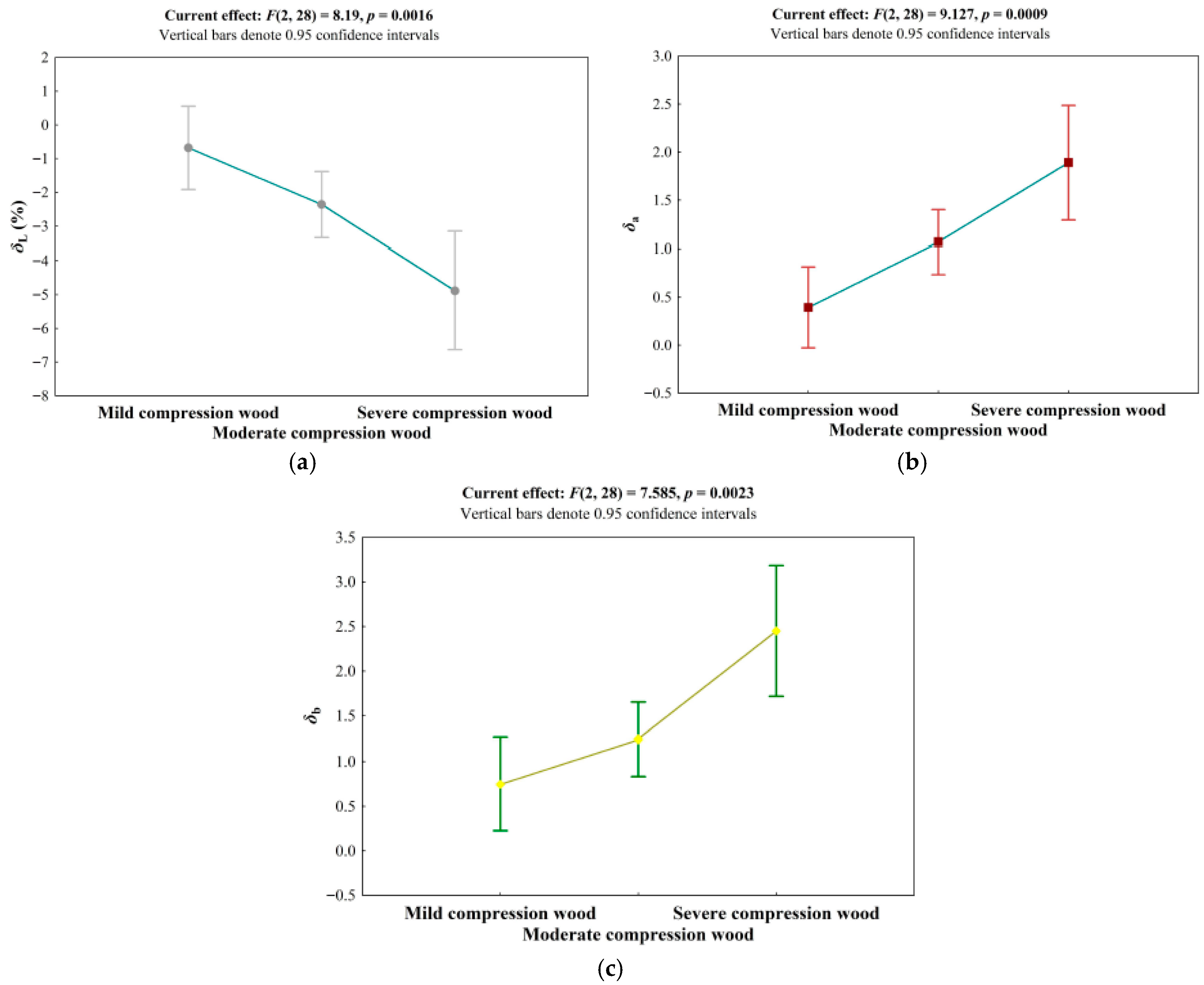
The chromatic differentiation of the structure types was also monitored using the individual absolute deviations δ of the chromaticities of the compression wood intensities compared to the chromaticities of the normal wood. These deviations are normally distributed. As a result, to check whether these δ deviations differ from the compression wood intensities, analysis of variance was used. One-way ANOVA shows a firm delimitation of the intensity steps of the compression wood, especially of the severe compression wood, compared to the normal wood (Figure 6).
The color lightness deviations of compression wood are mostly negative, especially in moderate and severe compression wood. In mild compression wood, some of the δ L deviations are positive, probably due to its much wider rings (the maximum deviation recorded is 2.1). In severe compression wood, the δ L deviations drop to −4.9. With a few exceptions, the δ a and δ b deviations are positive. Their values are again maximum in severe compression wood (Figure 6).
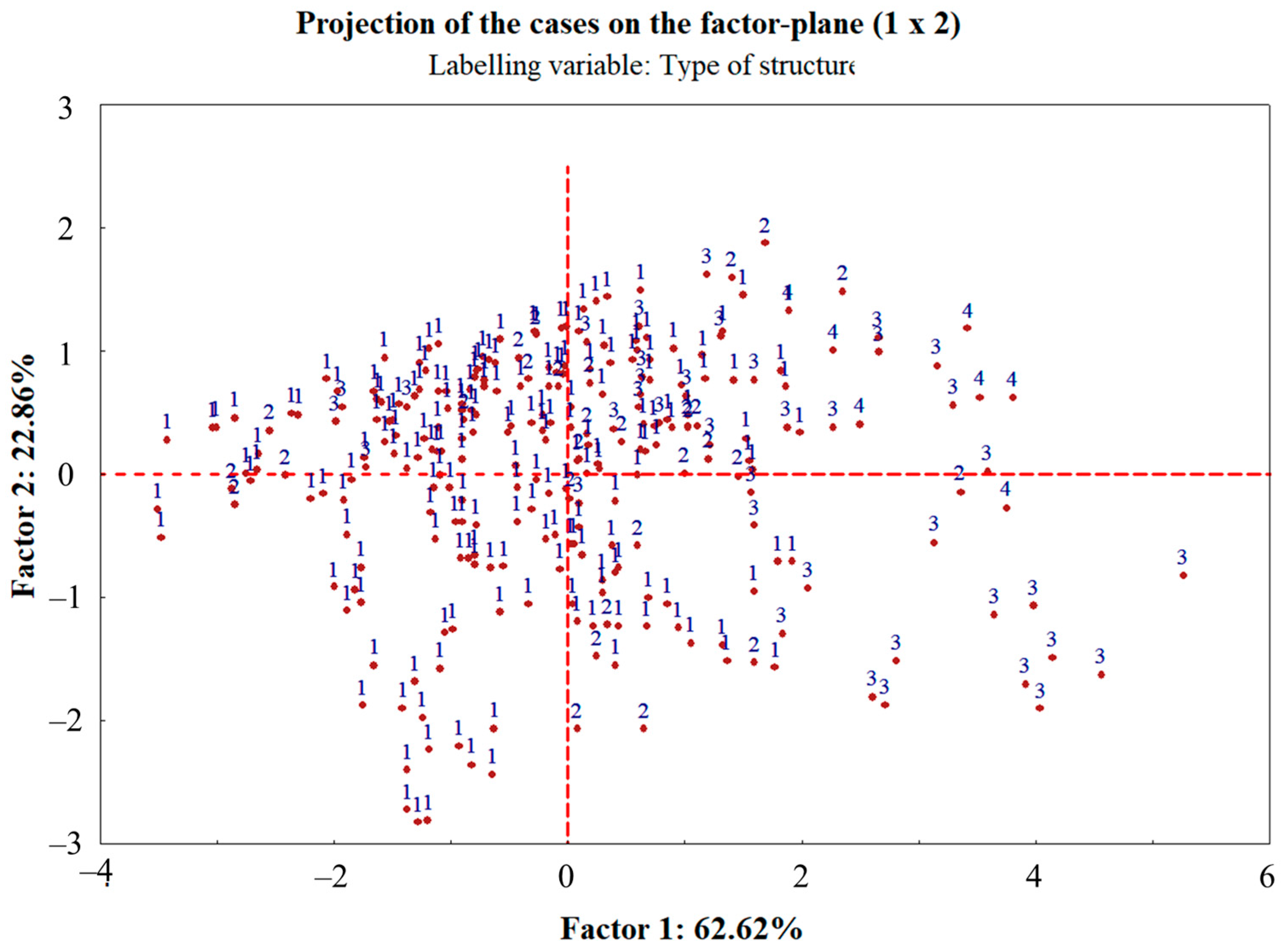
The first two principal components in the PCA together account for over 85% of the total variance (Figure 7). Thus, the two-component sectioning plan keeps most of the interactions between color variables, annual ring age, and structure type. As Figure 7 shows, only the plots of moderate and severe compression wood are discernibly clustered. Normal wood cases strongly interfere with moderate compression wood cases.

3.2. Chromatic Definition of Fir Wood Structure Types

Figure 4 and Figure 5 show that the chromatic values are polarized depending on the type of wood structure. The spectrum of variation in these chromatics was divided between the types of structure using the lower and upper quartiles (Table 3). Color yellowness has the greatest influence in distinguishing the structural types of fir wood investigated. For example, mild compression wood is distinguished from the rest only by yellowness. The transition from normal wood to compression wood is marked by an increase in yellowness. The differentiation of the levels of compression wood is further achieved by means of redness.
Based on these results, we recommend the following threshold values for the chromatic parameters in timber grading: a maximum of 4.4 for color redness, a minimum of 80% for color brightness, and a minimum of 78° for hue angle.

3.3. Is There a Visual Perception of the Differences in Color Between the Types of Fir Wood Structure?

Differences between the types of structure with respect to chromatic variables are therefore statistically detectable. The ability of the human eye to perceive these differences, however, depends on their size. Regarding lightness, Nelson et al. [56] showed that the eye becomes sensitive to a lightness variation in only 3%. Under these conditions, 10% of the number of δ L deviations found in this study between mild compression wood and normal wood, plus 37.5% of the number of δ L deviations of moderate compression wood and 100% of the deviations of severe compression wood could be detected with the naked eye. The same indication is given by the color difference E * , the resultant of the differences in lightness, redness and yellowness. Minemura and Umehara [57] established a correspondence between the size of E * and the visual appreciation of color differences. Using the interpretation grid proposed by these authors, it was determined to what extent the color differences between compression wood and normal wood are visually perceptible (Table 4).
Therefore, the color difference between compression wood and normal wood is sufficiently pronounced to be perceived. Most of the E * color differences in the sample under evaluation are rated at the “appreciable” level of visual significance (Table 4).

3.4. Color Change in the Depth of the Wood

Upon closer inspection, even though theoretically healthy fir wood is unicolor, it exhibits color variations along the radius, which were highlighted spectro-photo-colorimetrically. The color dynamics from bark to pith were analyzed separately for samples with exclusively normal structure and for those with compression wood interspersed with normal wood.
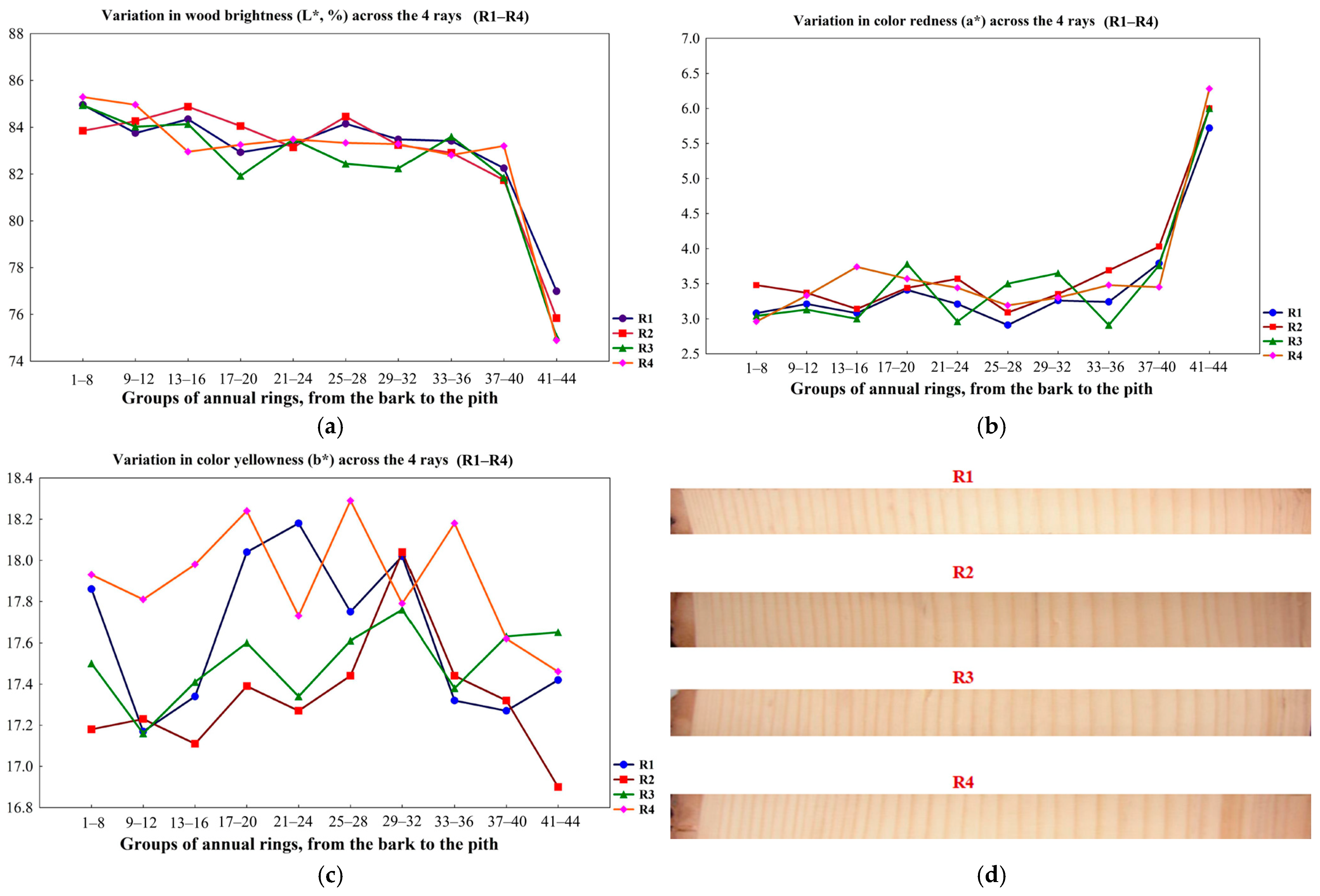
Lightness and redness show clear trends along the radius (Figure 8); in the rings near the pith the lightness drops sharply to the same extent as the redness increases. Yellowness shows oscillations from one radius to another of the wood cross-section, without having a clear trend along the radius (Figure 8).
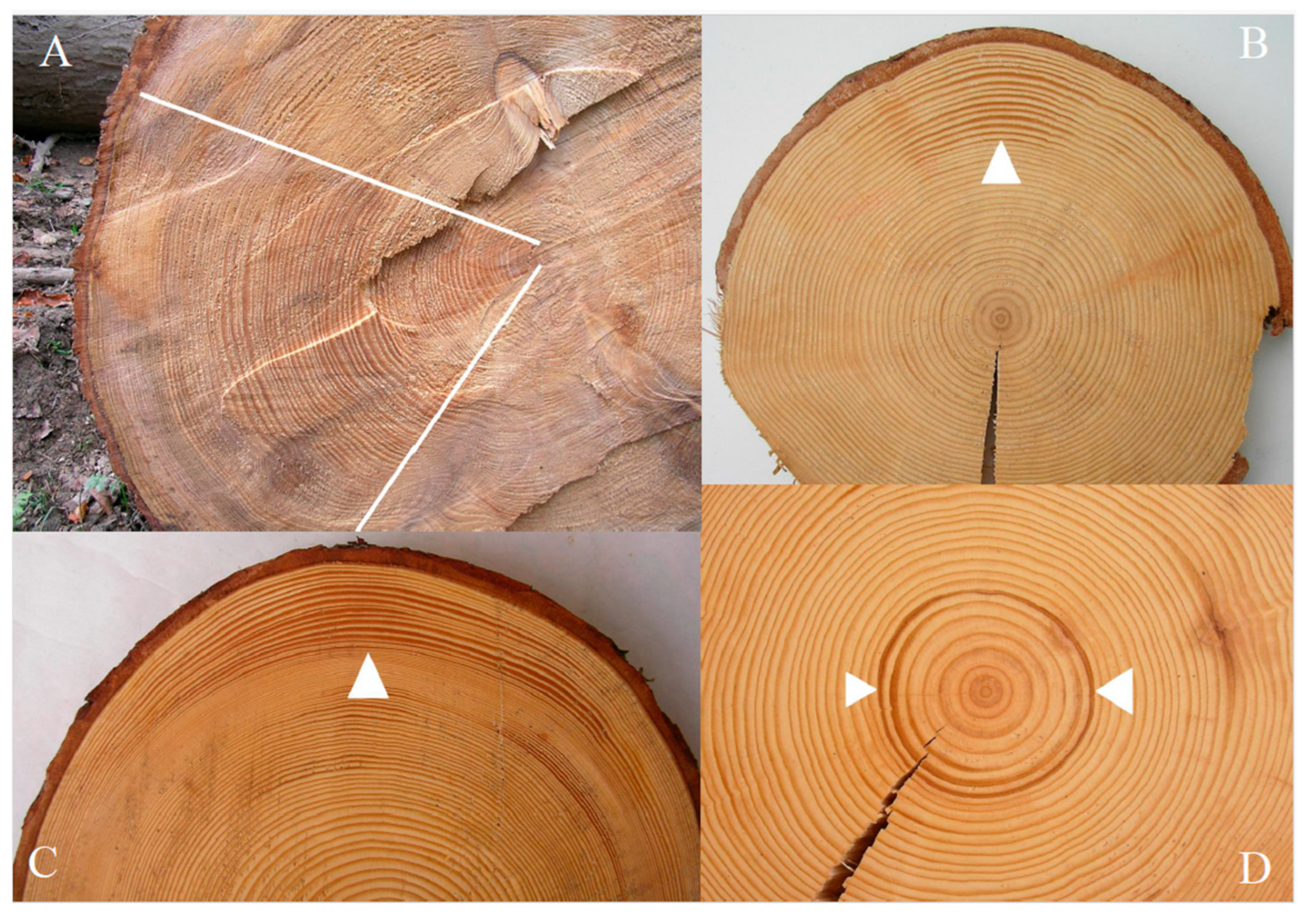
In the sampled trees, the development of the compression wood is, in most cases, unidirectional. In this case, the transverse surfaces of the compression wood are mainly circular sectors, circular sickles, or areas delimited by two internally tangent circles (Figure 9). There are many samples in which the compression wood radiates in several directions or repeatedly changes its direction of development. In these cases, the transverse surfaces of the compression wood are dispersed in fragments of circular sectors or isolated arcs of a circle. Near the pith, the compression wood forms circular crowns (Figure 8).
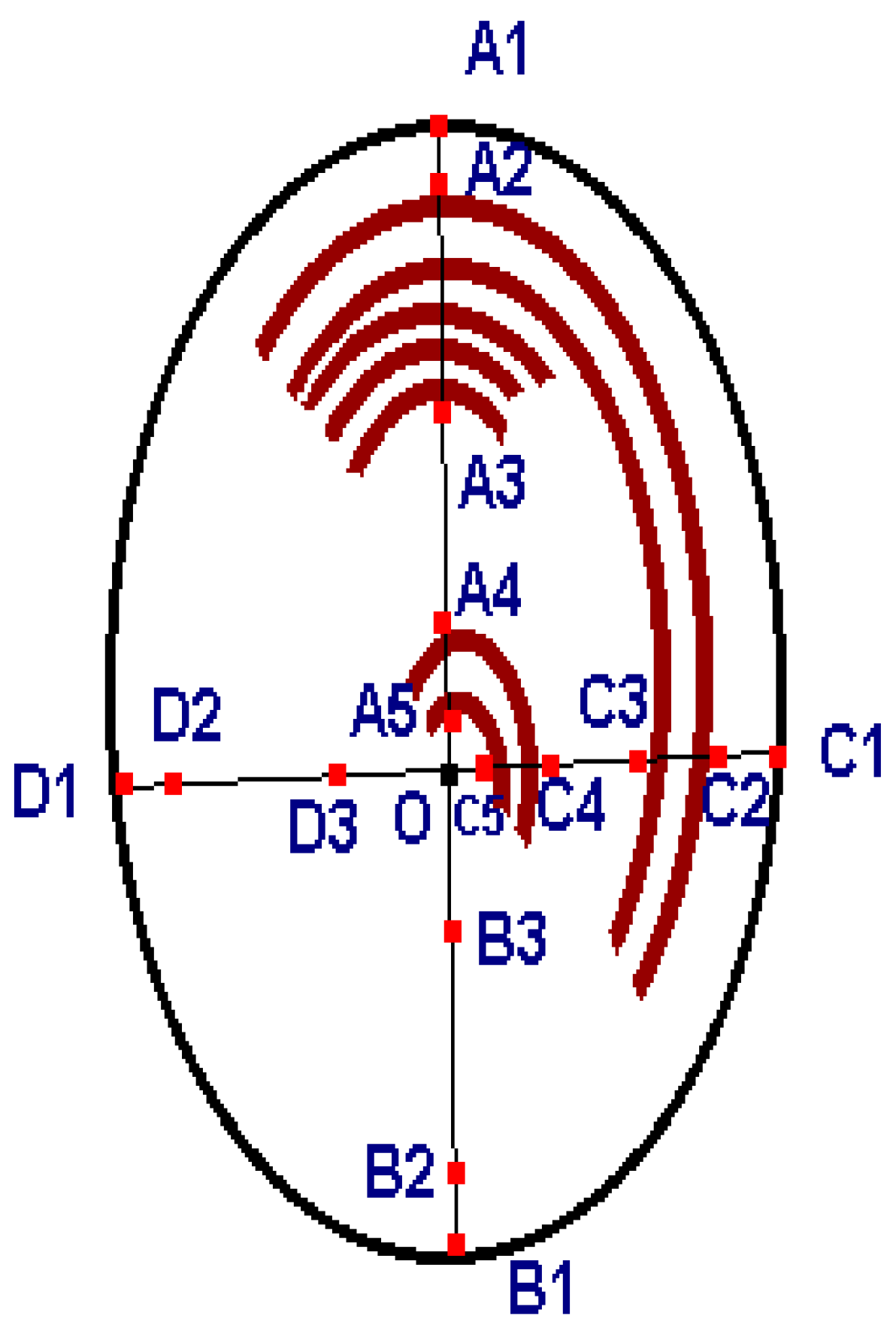
In most disks, compression wood was found on both sectioning diameters of the disks, on one of their rays, where it does not form compact zones, but dispersed segments. As a result, the radial sections of the disks were zoned according to the alternation of normal wood with compression wood. The color measurements were grouped according to these zones and reveal the color dynamics when passing to and from compression wood to the normal structure (Table 5), which correlated with the distribution shown in Figure 10.
Comparing these wood sectors according to the size of the chromaticity, the following can be observed:
Normal wood that intercalates compression wood on its radius presents different values of the chromatic components compared to normal wood that is formed on rays without compression wood. This normal wood has a lower lightness and a higher redness.
Compression wood that appears on rays of normal wood or wood subjected to traction presents different chromaticities on the radius where it is dominant (especially higher brightness).
In normal mature wood, the lightness is higher, and the redness is lower than in juvenile wood.
Outer narrow rings present different chromaticities from the other rings of mature wood, regardless of the directions in which they are located.
This dynamic probably follows the change in the quantitative ratio between cellulose and lignin with the age of the cambium and with the appearance of compression wood. Future research is needed to verify this connection.
The color differences between juvenile and mature wood are statistically significant only for the amount of red hue (F from ANOVA = 6.554, p ˂ 0.05). In other words, the differences between the color of compression wood and the color of normal wood as recorded by age are statistically significant only at the level of red hue.

3.5. The Timeline of Wood Color

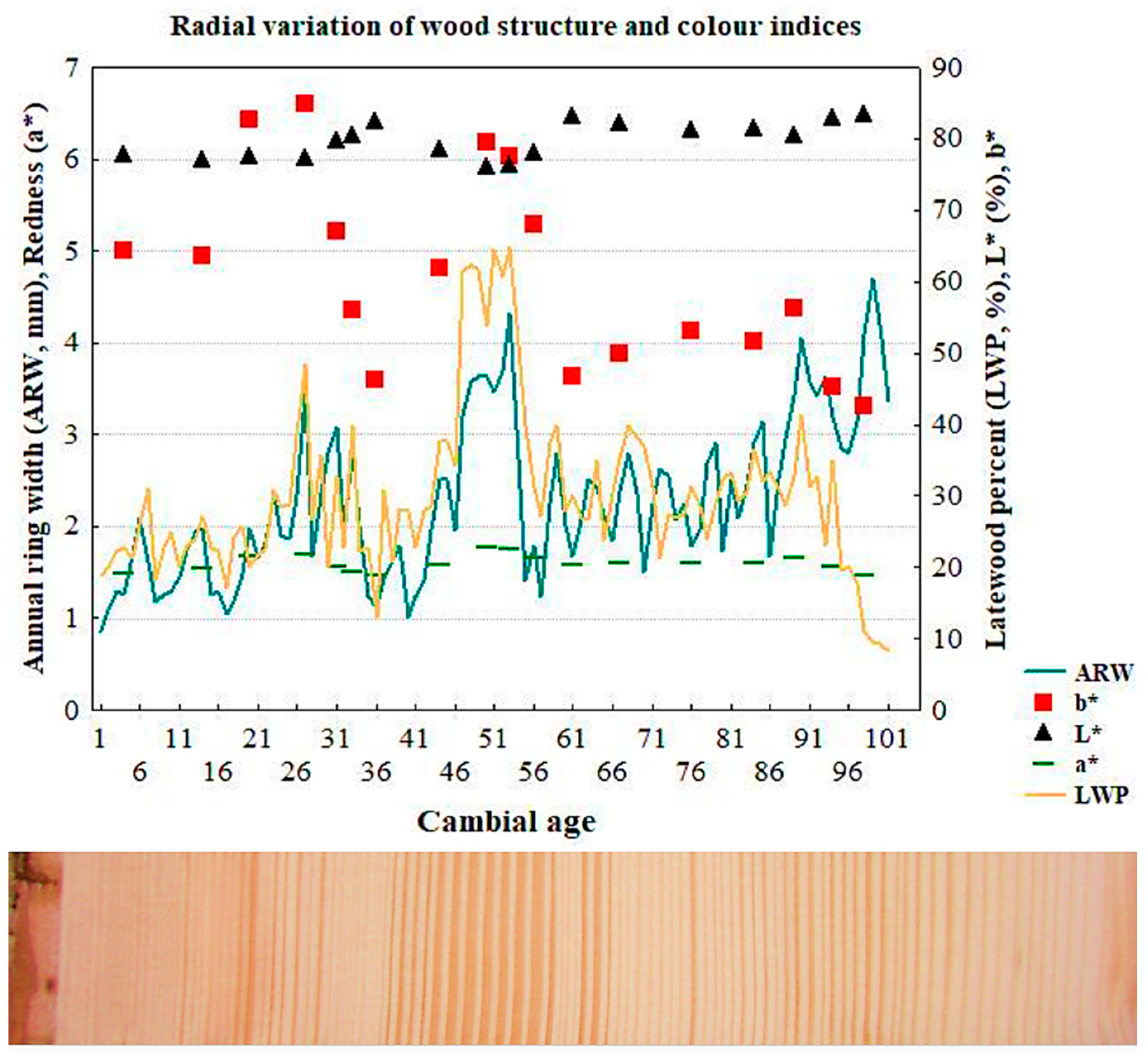
Color changes in relation to cambium age, tree ring metrics, and compression wood formation were monitored individually for each disk. Such a case study, representative of the tree sample analyzed, is presented in Figure 11.
The xylem begins with seven rings of normal juvenile wood with an average width of 3.9 mm and 11.1% latewood percentage. The average lightness was 83.5%, and the chromatic coordinates a* and b* were 3.3 and 18.9, respectively.
At the age of the cambium of 8 years, mild compression wood appears, in which the width of the rings decreases sharply by 32.2%, and the share of latewood gradually increases from 20.5% to 35%. In parallel, a slight decrease in brightness and an increase in redness occur.
At the age of 12, moderate compression wood is established, in which radial growth is reinvigorated (3.4 mm width), and the latewood percentage stabilizes at 32%, while the lightness of the color is further reduced and the redness increases substantially. The formation of moderate compression wood is disturbed between the ages of 28 and 39, when the width of the rings is slightly reduced, and the share of latewood drops to 20%–28%; the wood in these rings presents chromatic and structural characters intermediate to the mild and moderate forms. At the age of 40 and for only 3 years, normal wood is reestablished. During this interval, the width of the rings does not undergo significant changes, but the proportion of latewood drops from 34% to 27%. The lightness of the wood gradually increases to 83.1% (the maximum value recorded in mature wood), and the redness and yellowness values decrease. Rings 40–43 are the only island of normal wood in the middle of mature compression wood.
At 44 years, compression wood is reinstalled, the structure of which continues to develop up to the sapwood area, with a single interruption at the ages of 64–67 years. The width of the rings increases constantly up to 4.3 mm, in the 51st ring, and the rate of late wood reaches 61%. The only disturbance in this dynamic occurs in the calendar years 1943–1949, in which the width of the rings decreases suddenly to 1.4–1.7 mm, probably due to the drought that affected a large part of the territory of Romania at that time. The color components vary proportionally with the changes in the structure, by reducing the lightness to 76% and amplifying the red hue to 6.2 and the yellow hue to 22.8. The peak of these transformations is recorded in rings 50–56, in which both the size of the color components and the morphological appearance of the annual rings indicate the severe form of compression wood. From the age of 64, normal wood returns through the mild compression wood (lightness improves, redness and yellowness decrease).
At 68 years old, there is a transition back to compression wood, first through five rings of mild compression wood, followed by seven rings of moderate compression wood. During this time, the redness reaches its maximum value (6.60).
From the 80th year, there is a new transition to normal wood through mild compression wood. The width of the rings gradually decreases to 1.9 mm, and the proportion of latewood to 20%. The color variations after this age no longer keep up with the changes in the structure of the annual rings. The last 19 underbark rings have the characteristics of normal wood, which differs in color from the previous rings only by the yellowness, which is substantially reduced.
From the chronological analysis of individual disks, it can be concluded that:
  • redness is the chromaticity that most faithfully reproduces the transition from normal wood to compression wood;
  • the brightness of the color changes radically only at the appearance of severe compression wood and at the return of normal wood after a sequence of severe compression wood;
  • yellowness is quite stable year-to-year;
  • if the rings are narrow, mature wood is evidenced only by the color yellow-ness.
The transition to and from compression wood is primarily represented by mutations that occur in the ultrastructure of the wood [58]. The way in which these mutations manifest themselves, possibly cumulatively, produces the differentiation of the intensity levels of compression wood. With increasing intensity, the roundness of the tracheids, the cracks, and helical ornamentation in the secondary wall, as well as the latewood darkness, are accentuated [58].
The changes that compression wood brings to the normal wood structure occur primarily in the latewood. The differences between the intensities of the defect, however, are primarily recorded in the earlywood: the first two intensities of compression wood are manifested only in the latewood, while in severe compression wood the effect extends to the earlywood as well [36].

3.6. Variations in Wood Color Along the Tree Trunk

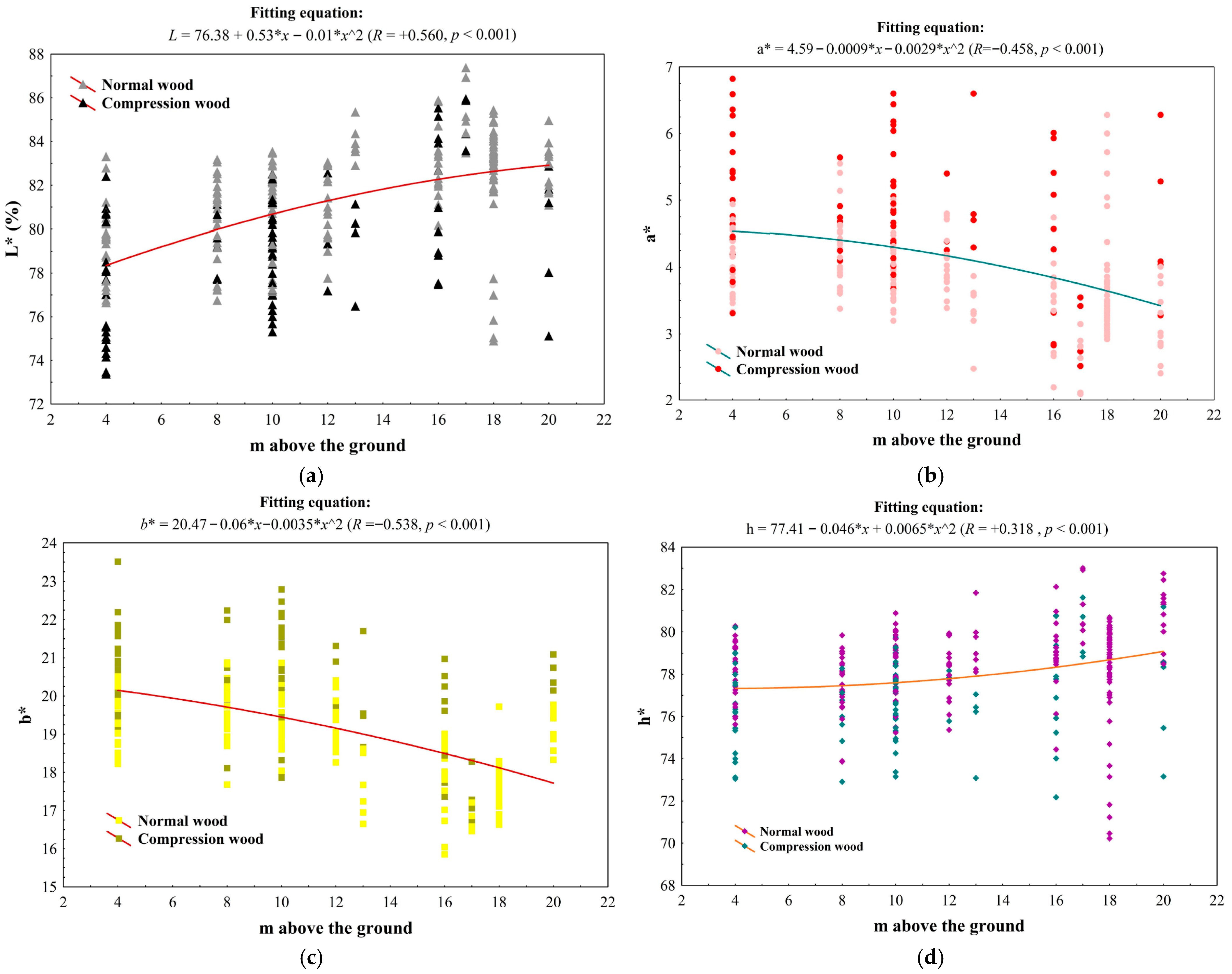
The same trends in wood color with distance from the ground are observed in both normal-structured and compression wood. The correlations are of moderate intensity, but the degree of significance is high.
In normal wood, however, the nonparametric correlations with height are somewhat stronger than in compression wood. Specifically, with distance from ground, lightness and hue h* increase, and redness and yellowness decrease (Figure 12).
These wood color trends could follow changes in wood chemical composition along the stem. Thus, the increase in color lightness could be the consequence of the improvement in cellulose content with increasing sampling position [59], and the reduction in color redness and yellowness could be in tandem with the slight reduction in lignin content of softwoods along the stem [60,61].

3.7. Microstructural Specificity of Compression Wood in Silver Fir

The classification of compression wood intensity grades, which was compared with colorimetric data, was based only on macroscopic traits.
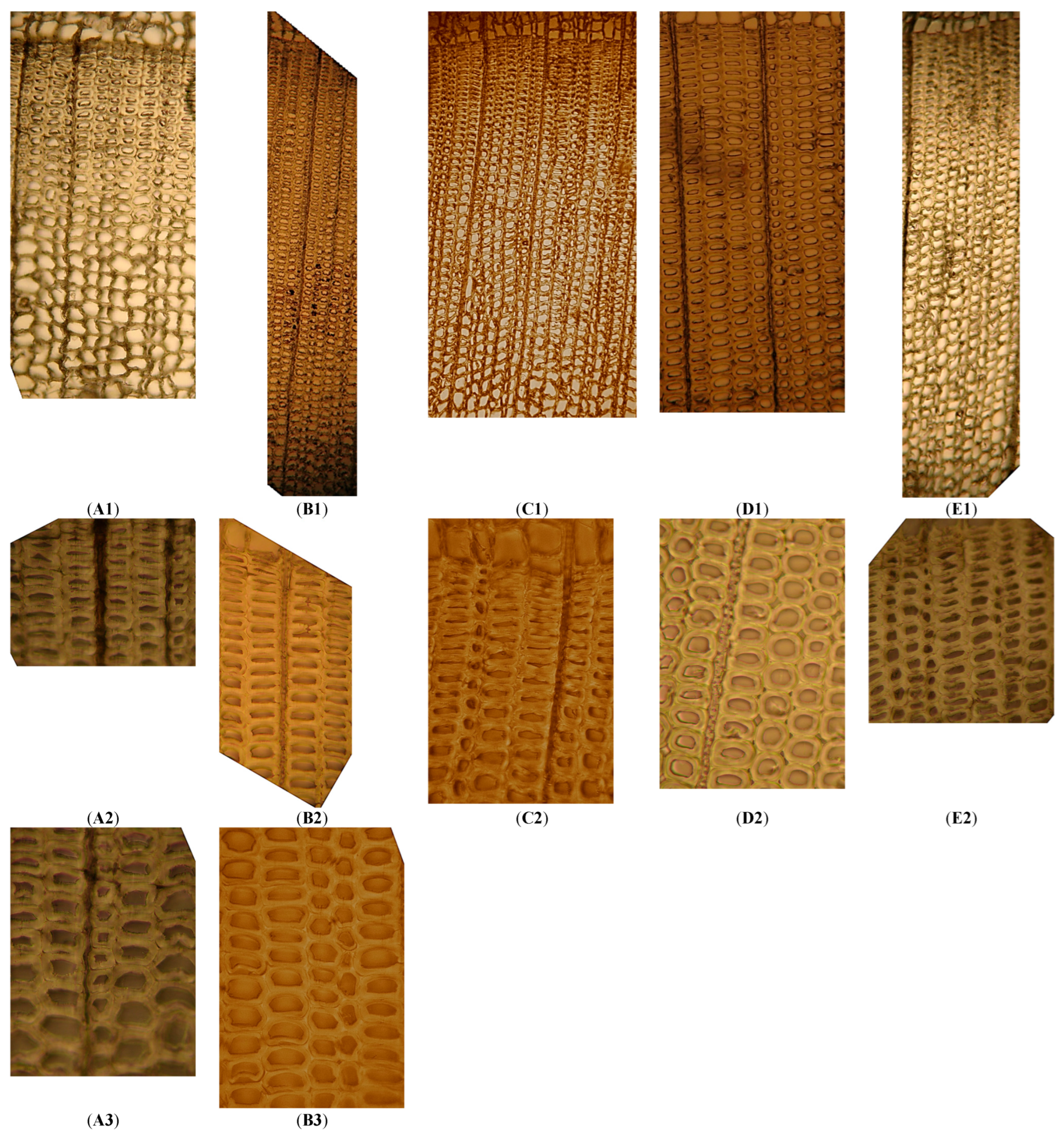
Microscopic examination showed that the differences between compression wood intensities are not clear-cut. However, they are significant when compared to normal wood. In fact, electron microscopic examination also does not provide clues for the reliable differentiation of compression wood intensities [55].
Comparisons of structural types at the microscopic level (Figure 13) revealed that:
-
the transition to latewood is significantly more gradual in mild and moderate compression wood, but is abrupt in both normal wood and severe compression wood;
-
cell walls are substantially thicker in severely compressed wood compared to normal wood (the ratio of total tracheid diameter to lumen diameter is much smaller in severely compressed wood compared to normal wood);
-
tracheids have rounded outlines only in severely and moderately compressed wood (in severely compressed wood, the entire latewood has tracheids with rounded outlines, while in moderately compressed wood, only the inner half does);
-
at the outer edge of the ring, the tracheids exhibit the same anatomy regardless of the type of structure;
-
the intercellular spaces gradually increase toward the severely compressed wood;
-
the transition from normal wood to compression wood is particularly evident in the way the transition from earlywood to latewood occurs;
-
mild compression wood is difficult to distinguish microscopically from normal wood.

4. Conclusions

The response of fir trees to the persistent stress of the xylem to compression consists of modifying the wood structure at all levels. The changes at the macroscopic level make it stand out, due to the latewood, whose color distinguishes several intensity steps of the trees’ response to compression. The present research analyzed and characterized how the numerical parameters of the color evolve in the presence of compression wood across and along fiber, and to what extent this evolution is visually perceptible. The results can be summarized in the following conclusions:
  • Compression wood is an important presence in the structure of fir wood in centenary trees, both in terms of frequency of cases and as a distinctive chromaticity.
  • In the CIELab color space, both chromaticity coordinates (a* and b*) distinguish the rings of compression wood from normal wood. However, the differences in lightness compared to normal wood are evident only for severe compression wood.
  • The color differences between compression wood and normal wood are appreciable as a level of visual perception.
  • The transition from normal wood to compression wood produces mutations in the yellow color area. Once compression wood appears, its intensities differ from each other, especially in the red color area.
  • The rings of normal wood that appear in the direction of compression wood formation have different chromaticity from the rings that appear in the other directions.
  • The color of normal wood and compression wood depends on the age of the cambium.
  • The trends of wood color with distance from the ground are similar in normal wood and compression wood. They consist of increasing brightness and reducing chromaticity coordinates.
The chromatic specificity of compression wood and its relationship with the environment could allow historical reconstruction and monitoring of tree life conditions through wood color.

Author Contributions

Conceptualization, F.D., E.-A.M.S. and M.D.S.; methodology, F.D.; software, F.D.; validation, E.-A.M.S. and M.D.S.; formal analysis, F.D., investigation, F.D., resources, F.D.; data curation, F.D.; writing—original draft preparation, F.D. and M.D.S.; writing—review and editing, E.-A.M.S.; visualization, M.D.S.; supervision, F.D. All authors have read and agreed to the published version of the manuscript.

Funding

This research received no external funding.

Data Availability Statement

The original contributions presented in this study are included in the article. Further inquiries can be directed to the corresponding author.

Conflicts of Interest

The authors declare no conflicts of interest.

References

  1. Wagenführ, R. Wood Anatomy with Special Reference to Wood Technology; VEB Fachbuchverlag: Leipzig, Germany, 1989. [Google Scholar]
  2. Hillis, W.E. Heartwood formation and its influence on utilization. Wood Sci. Technol. 1968, 2, 260–267. [Google Scholar] [CrossRef]
  3. Imamura, H. Contribution of Extractives to Wood Characteristics. In Natural Products of Woody Plants; Rowe, J.W., Ed.; Springer Series in Wood Science; Springer: Berlin/Heidelberg, Germany, 1989. [Google Scholar] [CrossRef]
  4. Burtin, P.; Jay-Allemand, C.; Charpentier, J.P.; Janin, G. Natural wood colouring process in Juglans sp. (J. nigra, J. regia and hybrid J. nigra 23 × J. regia) depends on native phenolic compounds accumulated in the transition zone between sapwood and heartwood. Trees 1998, 12, 258–264. [Google Scholar] [CrossRef]
  5. Moya, R.; Fallas, R.S.; Bonilla, P.J.; Tenorio, C. Relationship Between Wood Color Parameters Measured by the CIELab System and Extractive and Phenol Content in Acacia mangium and Vochysia guatemalensis from Fast-Growth Plantations. Molecules 2012, 17, 3639–3652. [Google Scholar] [CrossRef] [PubMed]
  6. Ruffinatto, F.; Negro, F.; Crivellaro, A. The Macroscopic Structure of Wood. Forests 2023, 14, 644. [Google Scholar] [CrossRef]
  7. Chen, H.; Montanari, C.; Shanker, R.; Marcinkevicius, S.; Berglund, L.A.; Sychugov, I. Photon Walk in Transparent Wood: Scattering and Absorption in Hierarchically Structured Materials. Adv. Opt. Mater. 2022, 10, 2102732. [Google Scholar] [CrossRef]
  8. Atik, C.; Balaban Ucar, M. Relation between CIE lab color values and the lignin content of kraft pulps during bleaching. Cellul. Chem. Technol. 2003, 37, 385–389. [Google Scholar]
  9. Shikinaka, K.; Suzuki, A.; Otsuka, Y. Substituent Effect on Physical Properties of Whitening Lignin. ChemistrySelect 2024, 9, e202400046. [Google Scholar] [CrossRef]
  10. Traoré, M.; Cortizas, A.M. Color and Chemical Composition of Timber Woods (Daniellia oliveri, Isoberlinia doka, Khaya senegalensis, and Pterocarpus erinaceus) from Different Locations in Southern Mali. Forests 2023, 14, 767. [Google Scholar] [CrossRef]
  11. Phelps, J.E.; McGinnes, E.A.; Garrett, H.E.; Cox, G.S. Growth-quality evaluation of black walnut wood. Part II—Color analyses of veneer produced on different sites. Wood Fiber Sci. 1983, 15, 177–185. [Google Scholar]
  12. Klumpers, J.; Janin, G.; Becker, M.; Lévy, G. The influences of age, extractive content and soil water on wood color in oak: The possible genetic determination of wood color. In Annales des Sciences forestières; EDP Sciences: London, UK, 1993; Volume 50, pp. 403s–409s. [Google Scholar]
  13. Silva, G.; Curvo, K.; Oliveira, A.; Neto, P.; Vasconcelos, L.; Márcia, A.; da Silva, M.; Natalino, R.; Pereira, B. Effect of Age on Heartwood Proportion, Color, Chemical Composition, and Biological Resistance of Teakwood. BioResources 2023, 18, 4116–4131. [Google Scholar] [CrossRef]
  14. Zobel, B.J.; Sprague, J.R. Use of Juvenile Wood. In Juvenile Wood in Forest Trees; Springer Series in Wood Science; Springer: Berlin/Heidelberg, Germany, 1998. [Google Scholar] [CrossRef]
  15. Barbu, I.; Barbu, C. Silver Fir (Abies alba Mill.) în Romania; Tehnică Silvică Publishing House: Câmpulung Moldovenesc, Romania, 2005. (In Romanian) [Google Scholar]
  16. Barbu, I. Moartea Bradului, Symptom al Degradării Mediului; Ceres Publishing House: Bucharest, Romania, 1991. (In Romanian) [Google Scholar]
  17. Pavelescu, I.M. Cercetări în legătură cu posibilitățile de îmbunătățire a sistemului de sortare a lemnului brut. Stud. Și Cercet. 1969, 27, 7–79. (In Romanian) [Google Scholar]
  18. Şofletea, N.; Curtu, L. Dendrology; Pentru Viață Publishing House: Braşov, Romania, 2007; pp. 18–26. (In Romanian) [Google Scholar]
  19. Dinulică, F. Researches on the Influencing Factors on Silver Fir Compression Wood Formation. Ph.D. Thesis, Transilvania University of Brașov, Brașov, Romania, 2008. (In Romanian) [Google Scholar]
  20. Ionescu, A.; Marcu, G.; Tocan, M.; Secuiu, G. Pulping properties of Silver fir grown outside its natural range. In Cercetări Privind Extinderea Culturii Bradului în R.S. România; Marcu, G., Ed.; Ceres Publishing House: Bucharest, Romania, 1980; pp. 219–230. (In Romanian) [Google Scholar]
  21. Timell, T.E. Compression Wood in Gymnosperms; Springer: Berlin/Heidelberg, Germany, 1986. [Google Scholar]
  22. Dinulică, F. Compression Wood in Silver Fir; Ceres Publishing House: Bucharest, Romania, 2012. (In Romanian) [Google Scholar]
  23. Timell, T.E. Recent progress in the chemistry and topochemistry of compression wood. Wood Sci. Technol. 1982, 16, 83–122. [Google Scholar] [CrossRef]
  24. Kučerová, V.; Hrčka, R.; Hýrošová, T. Relation of Chemical Composition and Colour of Spruce Wood. Polymers 2022, 14, 5333. [Google Scholar] [CrossRef] [PubMed]
  25. Dinulică, F.; Marcu, V.; Borz, S.A.; Vasilescu, M.M.; Petrițan, I.C. Wind contribution to yearly silver fir (Abies alba Mill.) compression wood development in the Romanian Carpathians. Iforest 2016, 9, 927–936. [Google Scholar] [CrossRef]
  26. Mauri, A.; de Rigo, D.; Caudullo, G. Abies alba in Europe: Distribution, habitat, usage and threats. In European Atlas of Forest Tree Species; San-Miguel-Ayanz, J., de Rigo, D., Caudullo, G., Houston Durrant, T., Mauri, A., Eds.; Publication Office of the European Union: Luxembourg, 2016; pp. 47–49. [Google Scholar]
  27. Sanberg, D. Radially sawn timber. The influence of annual ring orientation on crack formation in water-soaked pine (Pinus sylvestris L.) and spruce (Picea abies Karst) timber. Holz Als Roh Und Werkst. 1997, 55, 175–182. [Google Scholar]
  28. Öhman, M. Correspondences between manually estimated compression wood in Norway spruce and the warp of the sawn timber. Holz Als Roh Und Werkst. 1999, 57, 391–396. [Google Scholar] [CrossRef]
  29. Donaldson, L.A.; Turner, J.C.P. The influence of compression wood and microfibril angle on the occurrence of distorsion in window frames made from radiata pine (Pinus radiata). Holz Als Roh Und Werkst. 2001, 59, 163–168. [Google Scholar] [CrossRef]
  30. Akbulut, T.; Ayrilmis, N.; Koc, E. Influence of compression wood on physical and mechanical properties of medium density fiberboard. Wood Res. Slovak For. Prod. Res. Inst. 2004, 49, 17–23. [Google Scholar]
  31. Panshin, A.J.; de Zeeuw, C. Textbook of Wood Technology, 3rd ed.; McGraw-Hill Book Company: New York, NY, USA, 1970; Volume I. [Google Scholar]
  32. ICAS. Amenajamentul U.P. V Noua (O.S.Braşov); ICAS: Braşov, Romania, 1994. (In Romanian) [Google Scholar]
  33. Florescu, I.I.; Spârchez, G.H.; Leahu, I. Posibilităţile tratamentului codrului grădinărit de ameliorare a compoziţiei amestecurilor de fag cu răşinoase. Rev. Pădurilor 1979, 94, 272–277. (In Romanian) [Google Scholar]
  34. Şofletea, N. Cercetări de Genetică Ecologică în Păduri de Brad Afectate de Fenomenul de Uscare. Ph.D. Thesis, Transilvania University of Braşov, Braşov, Romania, 1994. (In Romanian) [Google Scholar]
  35. Warensjö, M.; Lundgren, C.H. Samband Mellan Tjurved Och Formfel Hos Gran—En Studie Vid Limmarends Sågverk (Impact of Compression Wood on Deformation of Sawn Wood of Spruce); The Swedish University of Agricultural Sciences, Department of Forest Products: Umeå, Sweden, 1998; 38p. [Google Scholar]
  36. Harris, J.M. Shrinkage and density of radiata pine compression wood in relation to its anatomy and mode of formation. New Zeeland J. For. Sci. 1977, 7, 91–106. [Google Scholar]
  37. ISO 7724-2:1984; Paints and Varnishes—Colourimetry—Part 2: Colour Measurement. International Organization for Standardization: Geneva, Switzerland, 1984.
  38. Janin, G. Mesure de la couleur du bois. Intérêt forestier et industriel. Ann. For. Sci. 1987, 44, 455–472. [Google Scholar] [CrossRef]
  39. Hunt, R.W.G. Measuring Colour, 3rd ed.; Fountain Press: Kingston-upon-Thames, UK, 1998. [Google Scholar]
  40. STATISTICA, version 8.0; Data Analysis Software System; StatSoft: Tulsa, OK, USA, 2007. Available online: https://statistica.software.informer.com/8.0/ (accessed on 28 January 2026).
  41. Li, Y.; Fu, Q.; Yang, X.; Berglund, L. Transparent wood for functional and structural applications. Philos. Trans. A Math. Phys. Eng. Sci. 2018, 376, 20170182. [Google Scholar] [CrossRef] [PubMed] [PubMed Central]
  42. Boivin, J.; Froehly, L.; Teyssieux, D.; Girardon, S.; Denaud, L. Optical Characterization of Wood Properties Using the Tracheid Effect; SPIE Optical Systems Design: Strasbourg, France, 2024. [Google Scholar]
  43. Hon, D.N.-S.; Minemura, N. Color and discoloration. In Wood and Cellulosic Chemistry; David, N.S., Ed.; Marcel Dekker Inc.: New York, NY, USA; Basel, Switzerland, 2001; pp. 385–442. [Google Scholar]
  44. Andersson, S.; Serimaa, R.; Paakkari, T.; Saranpää, P.; Pesonen, E. Crystallinity of wood and the size of cellulose crystallites in Norway spruce (Picea abies). J. Wood Sci. 2003, 49, 531–537. [Google Scholar] [CrossRef]
  45. Stanciu, M.D.; Teodorescu, H.D.; Vlase, S.; Mihalcica, M.; Cosnită, M.; Savin, A. Multiscale assessment of artificial aging treatment of polysaccharides from tonewood species. Int. J. Biol. Macromol. 2024, 274, 133310. [Google Scholar] [CrossRef]
  46. Kollmann, F.F.P.; Cóté, W.A., Jr. Principles of Wood Science and Technology. I: Solid Wood; Springer: Berlin/Heidelberg, Germany, 1968; 592p. [Google Scholar]
  47. Tanaka, F.; Koshijima, T. Characterisation of cellulose in compression and opposite woods of a Pinus densiflora tree grown under the influence of strong wind. Wood Sci. Technol. 1981, 15, 267–273. [Google Scholar] [CrossRef]
  48. Andersson, S.; Serimaa, R.; Torkkeli, M.; Paakari, T.; Seranpää, P.; Personen, E. Microfibril angle of Norway spruce [Picea abies (L.) Karst.] compression wood: Comparison of measuring techniques. J. Wood Sci. 2000, 46, 343–349. [Google Scholar] [CrossRef]
  49. Andersson, S.; Wikberg, H.; Pesonen, E.; Maunu, S.L.; Serimaa, R. Studies of crystallinity of Scots pine and Norway spruce cellulose. Trees 2004, 18, 346–353. [Google Scholar] [CrossRef]
  50. Damian, M. Cercetări Privind Variabilitatea Bradului (Abies alba Mill.) Din România în Vederea Extinderii în Cultură a Provenienţelor Valoroase. Ph.D. Thesis, Transilvania University of Brașov, Brașov, Romania, 1978. (In Romanian) [Google Scholar]
  51. Pew, J.C.; Connors, W.J. Color of coniferous lignin. Tappi 1971, 54, 245–251. [Google Scholar]
  52. Kocoń, J. Structure and ultrastructure of reaction wood of the Polish larch (Larix polonica Rac.) investigated with the electron microscopy and X ray diffraction. Ann. Warsaw Agricult. Univ. SGGW-AR For. Wood Technol. 1990, 40, 67–70. [Google Scholar]
  53. Donaldson, L.A.; Grace, J.; Downes, G.M. Within-tree variation in anatomical properties of compression wood in radiata pine. IAWA J. 2004, 25, 253–271. [Google Scholar] [CrossRef]
  54. Zhan, T.; Lyu, J.; Eder, M. In situ observation of shrinking and swelling of normal and compression Chinese fir wood at the tissue, cell and cell wall level. Wood Sci. Technol. 2021, 55, 1359–1377. [Google Scholar] [CrossRef]
  55. Kukkola, E.; Saranpää, P.; Fagerstedt, K. Juvenile and Compression Wood Cell Wall Layers Differ in Lignin Structure in Norway Spruce and Scots Pine. IAWA J. 2008, 29, 47–57. [Google Scholar] [CrossRef]
  56. Nelson, N.D.; Meaglin, R.R.; Wahlgren, H.E. Relationships of black walnut wood color to soil properties and site. Wood Fiber 1969, 1, 29–37. [Google Scholar]
  57. Minemura, N.; Umehara, K. Color improvement of wood (report 1): Photoinduced discoloration and its control. J. Hokkaïdo For. Prod. Res. Inst. 1979, 54, 92–145. [Google Scholar]
  58. Shelbourne, C.J.A.; Ritchie, K. Relationship between degree of compression wood development and specific gravity and tracheid characteristics in loblolly pine (Pinus taeda L.). Holzforschung 1968, 22, 185–190. [Google Scholar] [CrossRef]
  59. Čabalová, I.; Bélik, M.; Kučerová, V.; Jurczyková, T. Chemical and Morphological Composition of Norway Spruce Wood (Picea abies, L.) in the Dependence of Its Storage. Polymers 2021, 13, 1619. [Google Scholar] [CrossRef] [PubMed]
  60. Topaloglu, E.; Erisir, E. Longitudinal variation in selected wood properties of oriental beech and caucasian fir. Maderas Cienc. Tecnol. 2018, 20, 403–416. [Google Scholar] [CrossRef]
  61. Gülsoy, S. Effect of Stem Height on the Chemical Composition of Wood: A Literature Review. In Theory and Research in Agriculture, Forestry and Aquaculture Sciences October; Serüven Yayınevi: Ankara, Turkey, 2022; pp. 13–45. [Google Scholar]
Figure 1. Felled trees, the source for the study material. The originating forest of the material had a crown layer dominated by silver fir, and the next layer by beech (Fagus Sylvatica).
Forests 17 00472 g001
Figure 2. Scheme of sampling used for the experiment. Legend: 1—the log; 2—the disks; 3—quarters cut according to maximum diameter and orthogonal diameter; 4—color measurements; 5—wood scan.
Forests 17 00472 g002
Figure 3. Types of growth ring structures in Fir wood (green or refreshed).
Forests 17 00472 g003
Figure 4. The lightness of fir wood for different wood structures.
Forests 17 00472 g004
Figure 5. The redness (a) and yellowness (b) of fir wood for different wood structures.
Forests 17 00472 g005
Figure 6. Deviations of the compression wood color from the normal color: (a) deviations of lightness δ L ; (b) deviations of redness δ a ; (c) deviations of yellowness δ b .
Forests 17 00472 g006
Figure 7. The spread of wood color plots in the CIELab color space, along with cambial age, in relation to structural type (1—normal wood, 2—mild compression wood, 3—moderate compression wood, 4—severe compression wood), through PCA.
Forests 17 00472 g007
Figure 8. Radial variation in wood color in a section without compression wood from a height of 18 m: (a) lightness L*; (b) redness a*; (c) yellowness b*; (d) corresponding samples to the four rays.
Forests 17 00472 g008
Figure 9. The shape of the surfaces with compression wood in the examined material, highlighted with white lines and triangles areas: (A)—sector of a circle originating in the pith; (B)—sequence of circular sectors; (C)—circular sickle; (D)—circular crown.
Forests 17 00472 g009
Figure 10. Compression wood distribution pattern. (Legend—notations in the figure are presented in Table 5).
Forests 17 00472 g010
Figure 11. Year-to-year variation in wood color along the direction of compression wood formation in relation to tree ring metrics, at 10 m height, of one of the sampled trees.
Forests 17 00472 g011
Figure 12. Evolution of chromatic coordinates of fir wood with distance from the ground, in normal wood and compression wood, respectively: (a) lightness L* (grey triangles—for normal wood, black triangles—for compression wood); (b) redness a* (pink circles—for normal wood, red circles—for compression wood); (c) yellowness b* (yellow squares—for normal wood, khaki squares—for compression wood); (d) hue angle h* (purple diamonds—for normal wood, turquoise diamonds—for compression wood).
Forests 17 00472 g012
Figure 13. Comparative microscopic structure of fir wood. (A)—normal mature wood: (A1)—whole ring (×100); (A2)—latewood detail (×400); (A3)—detail of transition from early wood to late wood (×400); (B)—mild compression wood in mature wood: (B1)—whole ring (×100); (B2)—latewood detail (×400); (B3)—detail of transition from early wood to late wood (×400); (C)—moderate compression wood in mature wood: (C1)—whole ring (×100); (C2)—latewood detail (×400); (D)—severe compression wood in mature wood: (D1)—Whole ring (×100); (D2)—latewood detail (×400); (E)—normal juvenile wood: (E1)—whole ring (×100); (E2)—latewood detail (×400).
Forests 17 00472 g013
Table 1. Identification of wood structure types in the material.
Type of StructureOutline
Normal woodLatewood is more yellowish than earlywood
Mild compression woodThe color of latewood varies from light orange to yellowish red
Moderate compression woodThe latewood is yellowish-red-brown
Severe compression woodThe latewood varies from yellowish-reddish brown to dark brown and occupies more than ½ of the ring width
Table 2. Multifactorial discriminant analysis of fir wood color in relation to structural classes.
Chromatic VariablesWilks’—LambdaPartial—LambdaF-Remove—(3, 265)p-LevelTolerance1-Tolerance
L*0.470.991.030.380.260.71
a*0.610.7628.01˂0.00010.010.99
b*0.550.8514.96˂0.00010.050.95
h*0.590.8022.59˂0.00010.010.99
Table 3. A colorimetric approach to the classification of different types of fir wood.
Chromatic
Variable
Normal WoodMild Compression WoodModerate Compression WoodSevere Compression Wood
L* (%)80.5 *…83.3 **78.9…82.375.5…79.976.0…77.5
a*3.4…4.23.8…4.64.4…5.75.4…6.2
b*17.7…19.519.0…20.519.6…21.421.0…22.5
h* (°)77.6…79.777.3…79.375.3…77.874.0…75.2
* Lower quartile ** Upper quartile.
Table 4. Relative percentage frequency of cases in the examined fir wood in relation to color differences and visual assessment.
E * Level of Visual AppreciationRelative Percentage Frequency of Cases in the Examined Fir Wood (%)
0–0.50weak0
0.51–1.50slight22.6
1.51–3.00notable25.8
3.01–6.00appreciable38.7
6.01–12.00important12.0
>12very important0
Table 5. Variation in wood chromaticity in radial and tangential direction (arithmetic mean/standard deviation) (Legend: O: pith position; OA1: ray oriented in the direction and in the main direction of compression wood formation; OB1: ray oriented in the direction, but in the opposite direction to compression wood formation; OC1 + OD1: normal wood, with average features).
Sectors and Type of StructureL*a*b*
Normal wood in peripheral rings, in the direction of compression wood formationA1A278.53/1.434.70/0.6018.71/0.75
Compression wood in mature woodA2A379.40/2.214.84/0.6719.99/2.46
Normal wood in the middle 1/3 of the radiusA3A481.53/1.603.91/0.7119.18/1.38
Compression wood in juvenile woodA4A581.14/2.464.17/0.9618.61/3.02
Normal juvenile woodA5O81.70/2.403.84/0.8618.54/1.10
Normal wood in peripheral rings, in the opposite direction of compression wood formationB1B282.64/1.963.53/0.5718.28/0.90
Normal wood in inner mature woodB2B381.90/2.703.71/0.9618.67/1.62
Normal juvenile woodB3O81.25/2.054.21/0.7715.81/7.39
Normal wood in peripheral rings, in the direction of the minor axis of ovalityC1C2 + D1D281.14/3.153.99/0.8618.57/1.02
Normal wood in inner mature woodC2C380.86/2.794.04/0.7718.91/0.99
Compression wood in inner mature woodC3C4 + D2D383.48/6.163.85/0.618.86/0.83
Compression wood in juvenile woodC4C579.58/1.994.52/0.6520.70/0.92
Normal juvenile woodC5O + D3O81.89/1.753.91/0.7518.41/1.33
Disclaimer/Publisher’s Note: The statements, opinions and data contained in all publications are solely those of the individual author(s) and contributor(s) and not of MDPI and/or the editor(s). MDPI and/or the editor(s) disclaim responsibility for any injury to people or property resulting from any ideas, methods, instructions or products referred to in the content.