Integrating Sentinel-2 and MODIS BRDF Imagery to Invert Canopy Fractional Vegetation Cover for Forests and Analyze the Corresponding Spatio-Temporal Evolution


 , , ,
, , ,
Abstract
1. Introduction
2. Materials and Methods
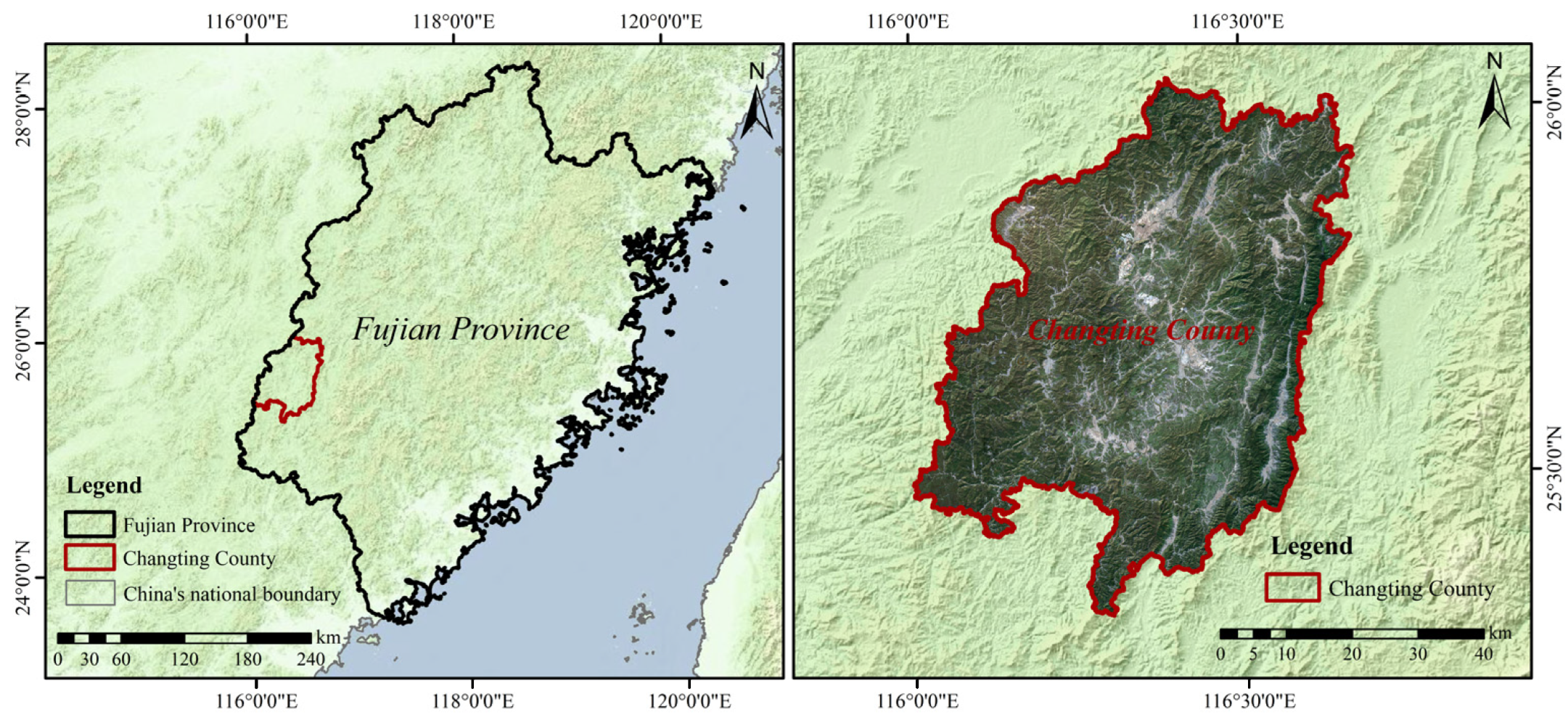
2.1. Study Area and Data Sources
2.2. FVCc Remote Sensing Inversion Method
2.2.1. Calculation of Background Reflectance
2.2.2. Estimation of Shrub-Herb Fractional Vegetation Cover (FVCs)
2.2.3. Estimation of Total Fractional Vegetation Cover (FVCt)
2.2.4. Empirical Model Inversion of Canopy Fractional Vegetation Cover
2.2.5. Accuracy Evaluation
2.3. Spatio-Temporal Variation Analysis
3. Results
3.1. Accuracy Verification
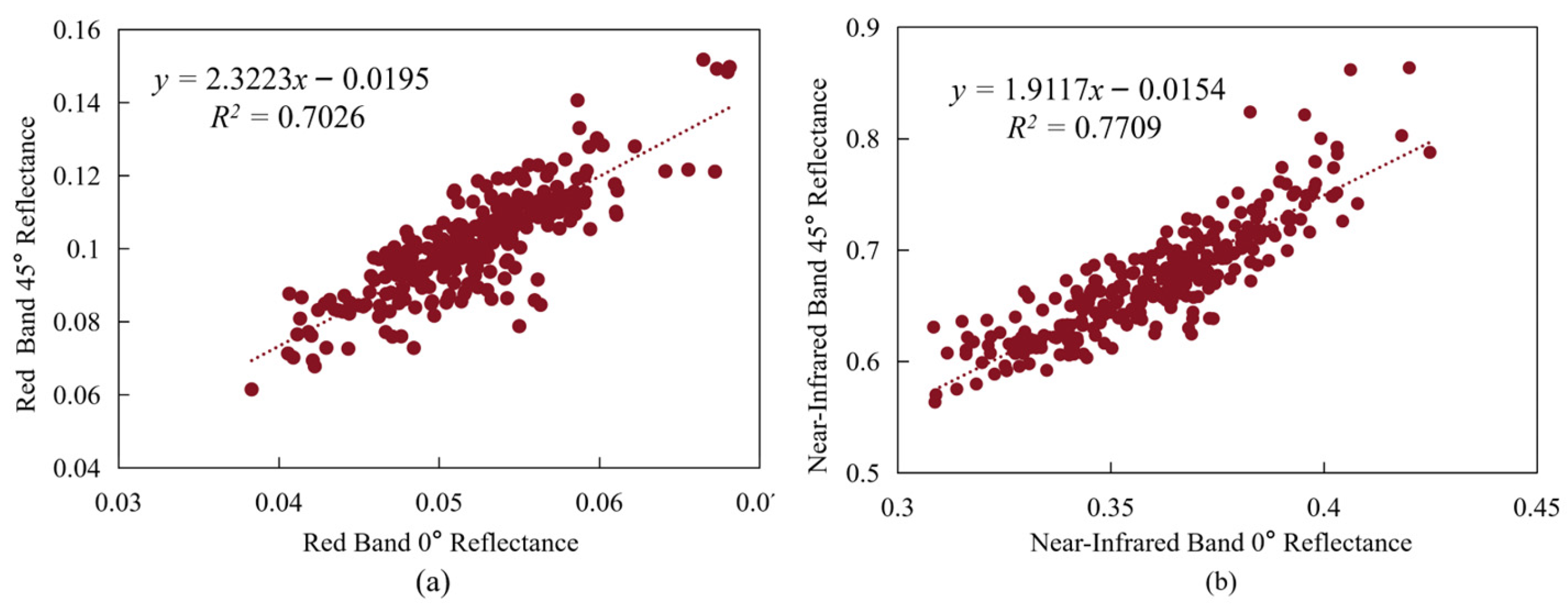
3.1.1. Reflection Angle Relationship Model
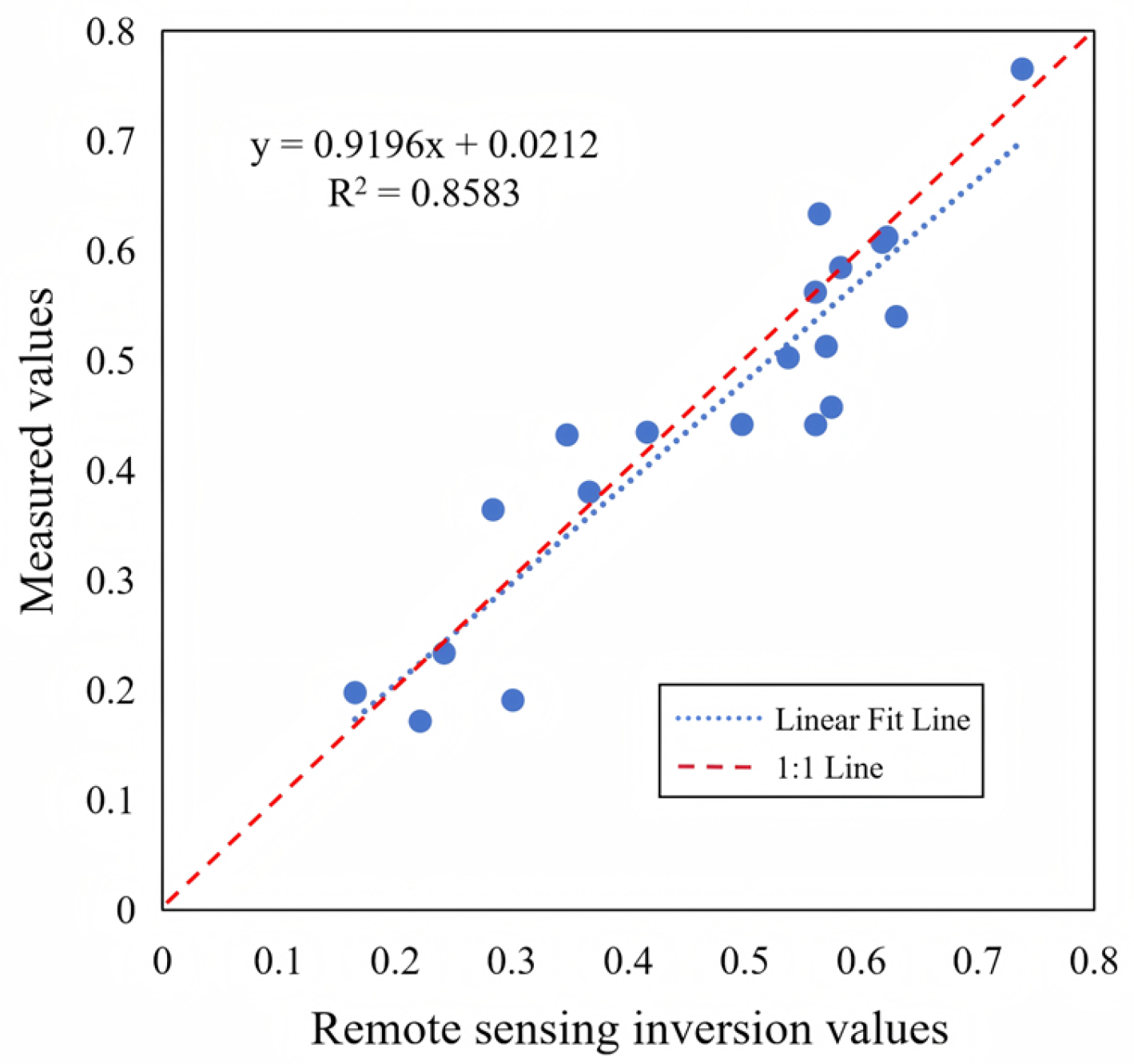
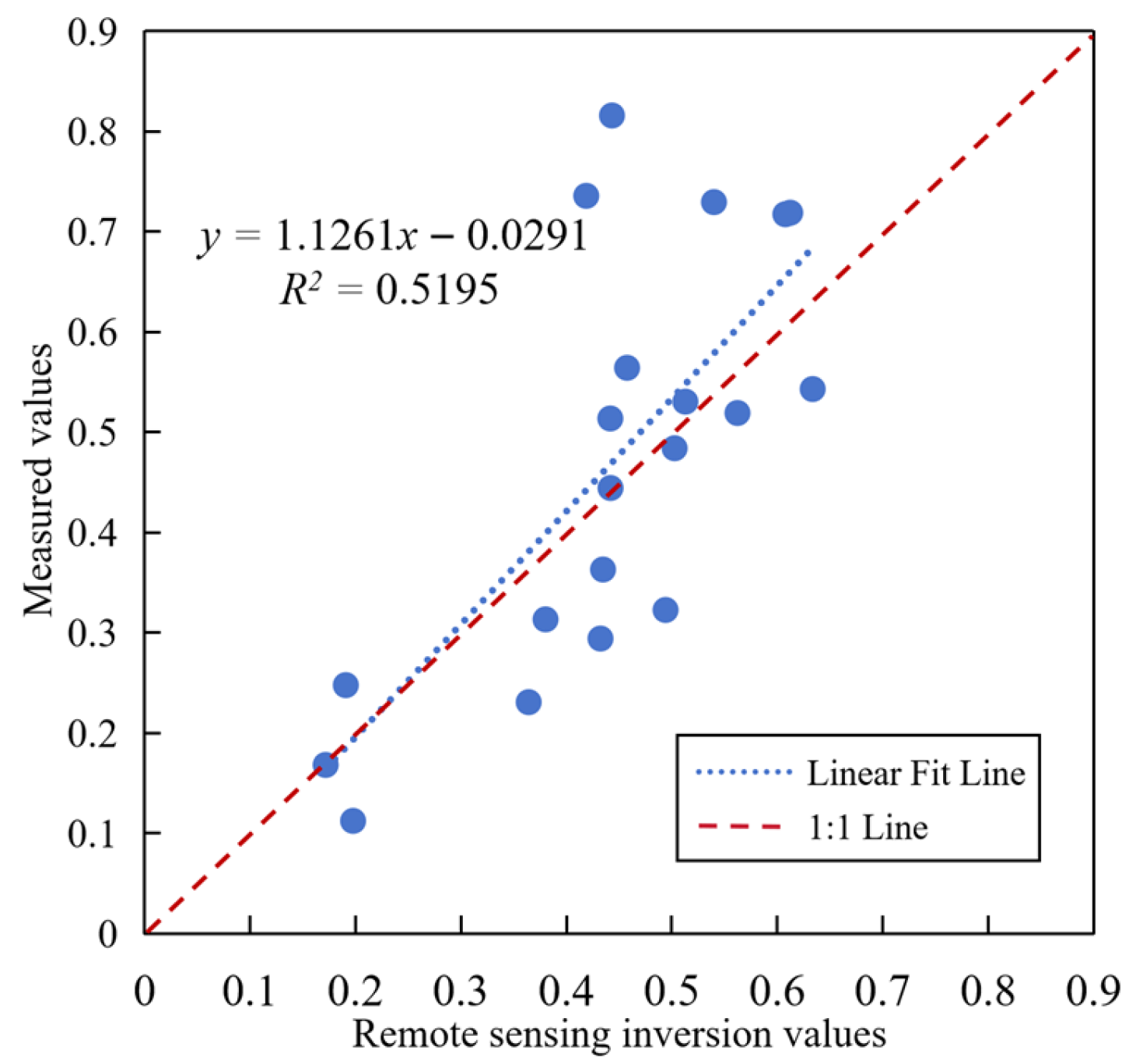
3.1.2. Verification of Inversion Result Accuracy
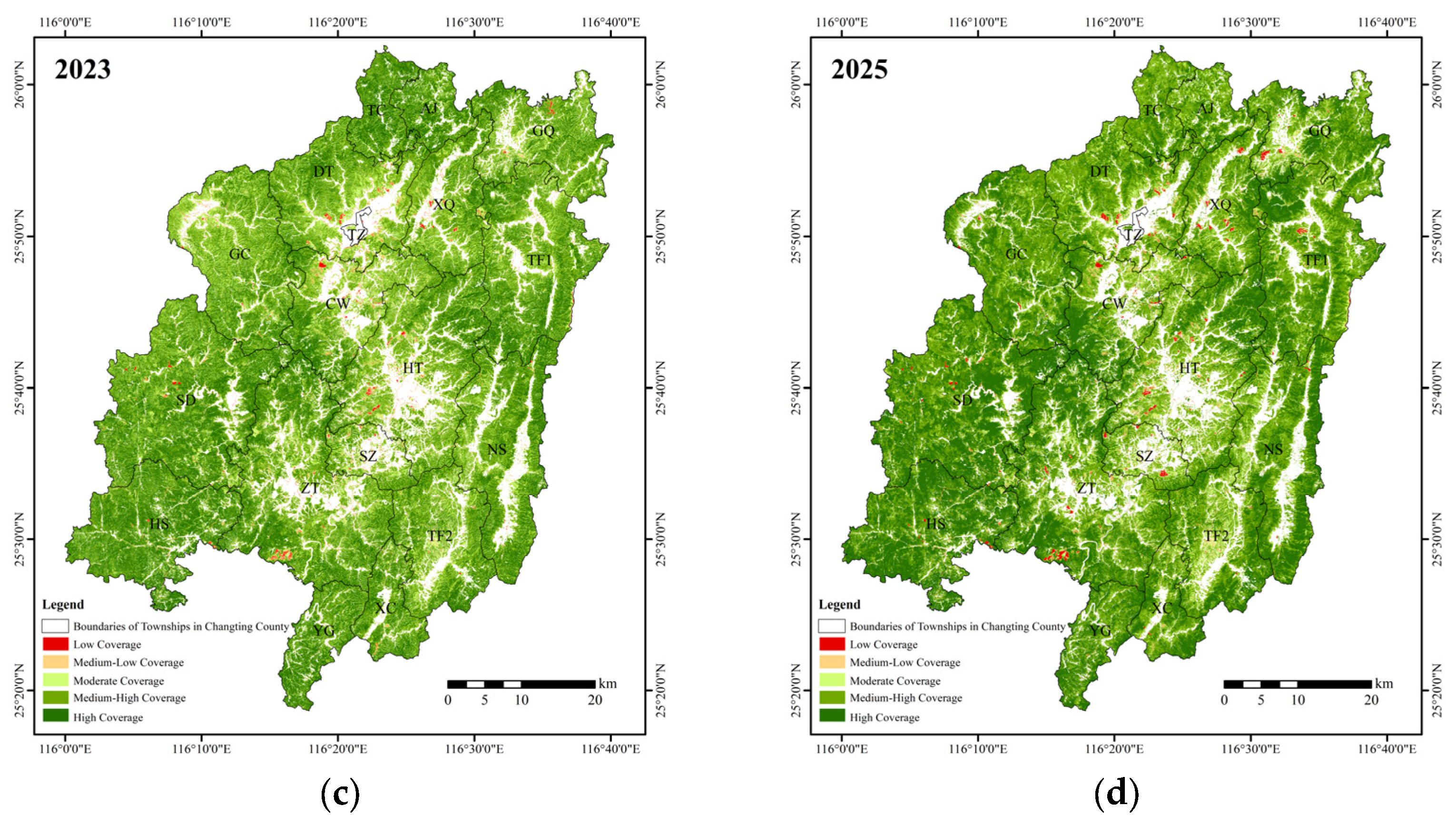
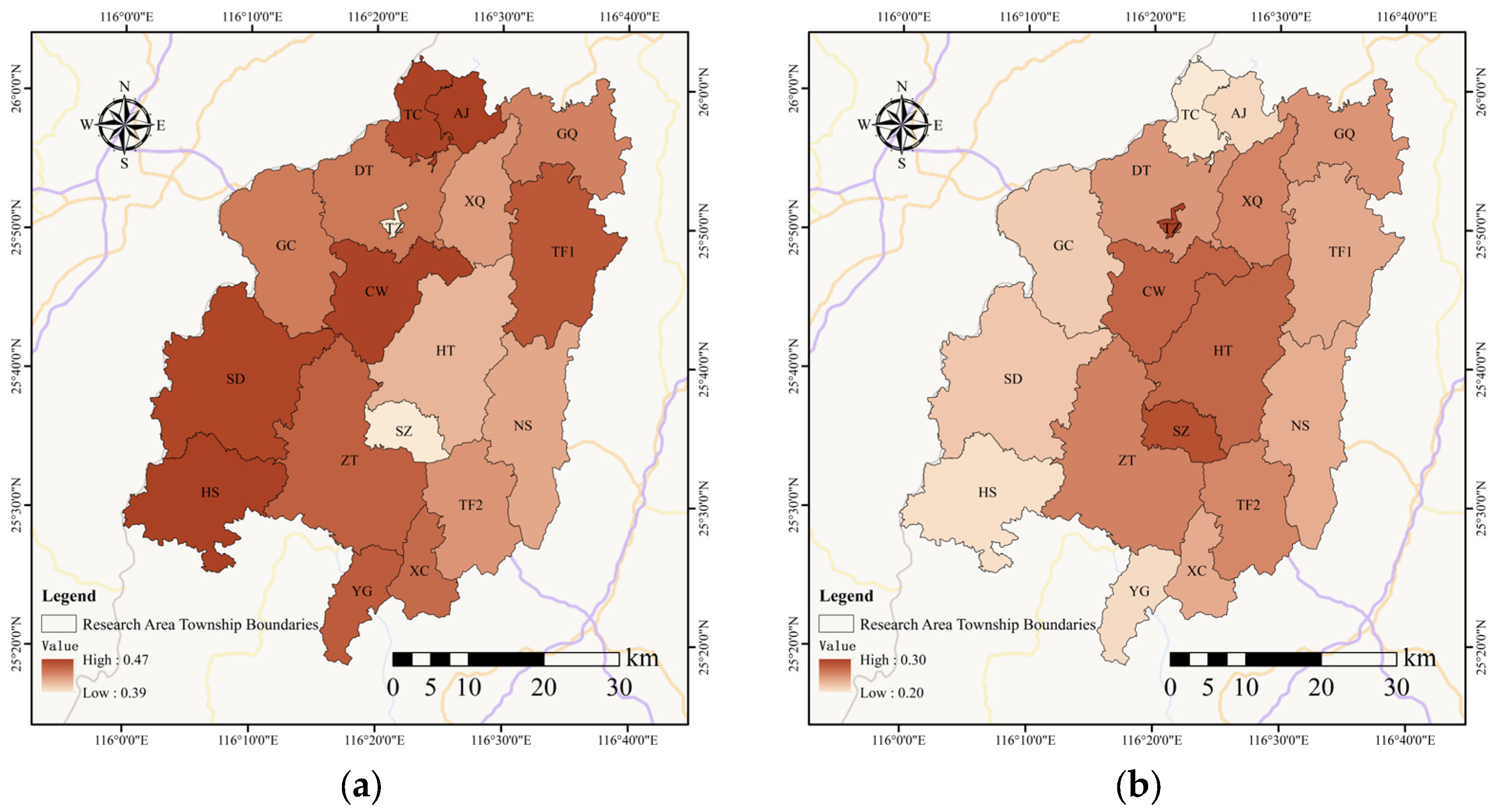
3.2. FVCc Spatial Variation Analysis
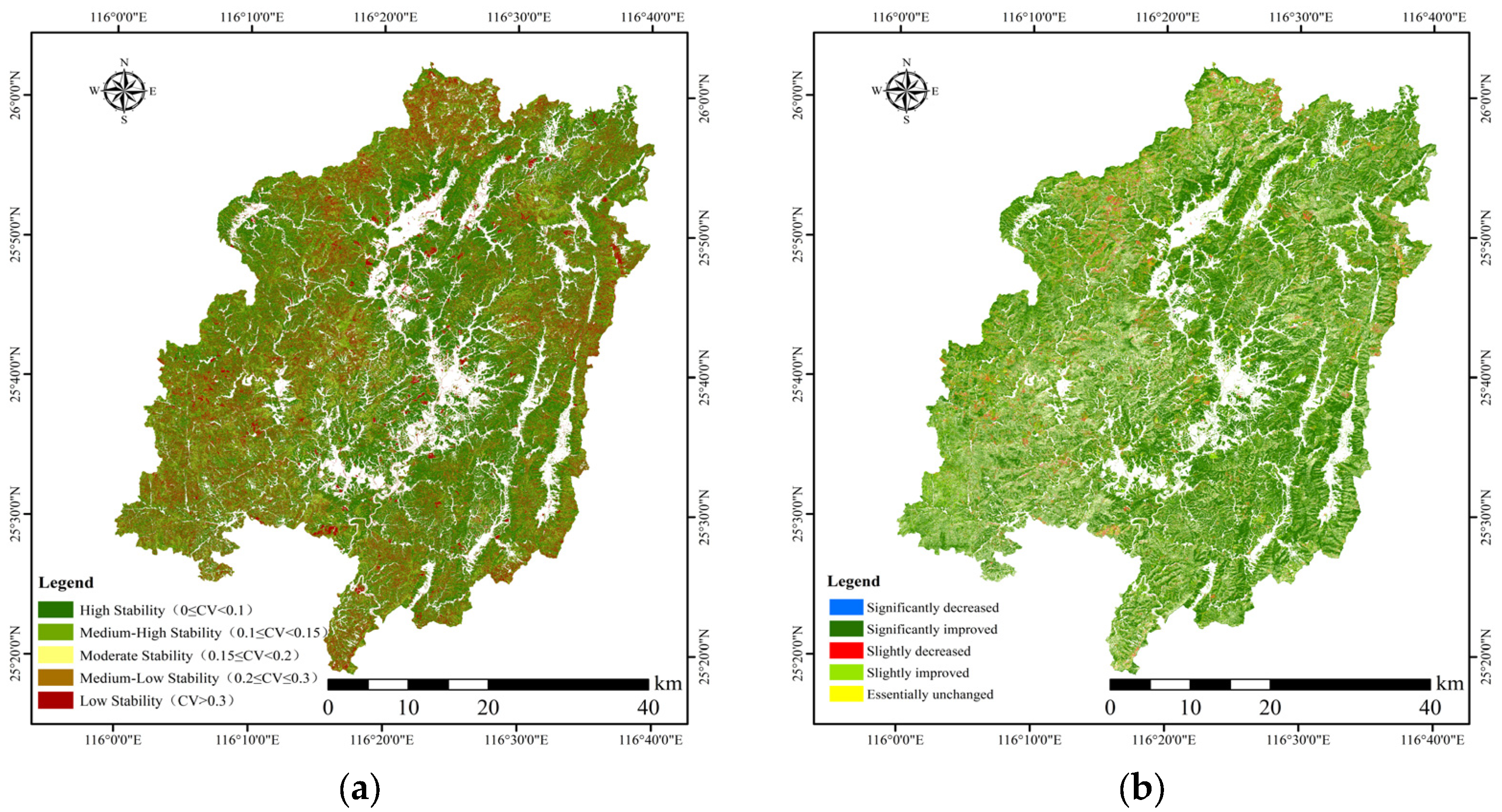
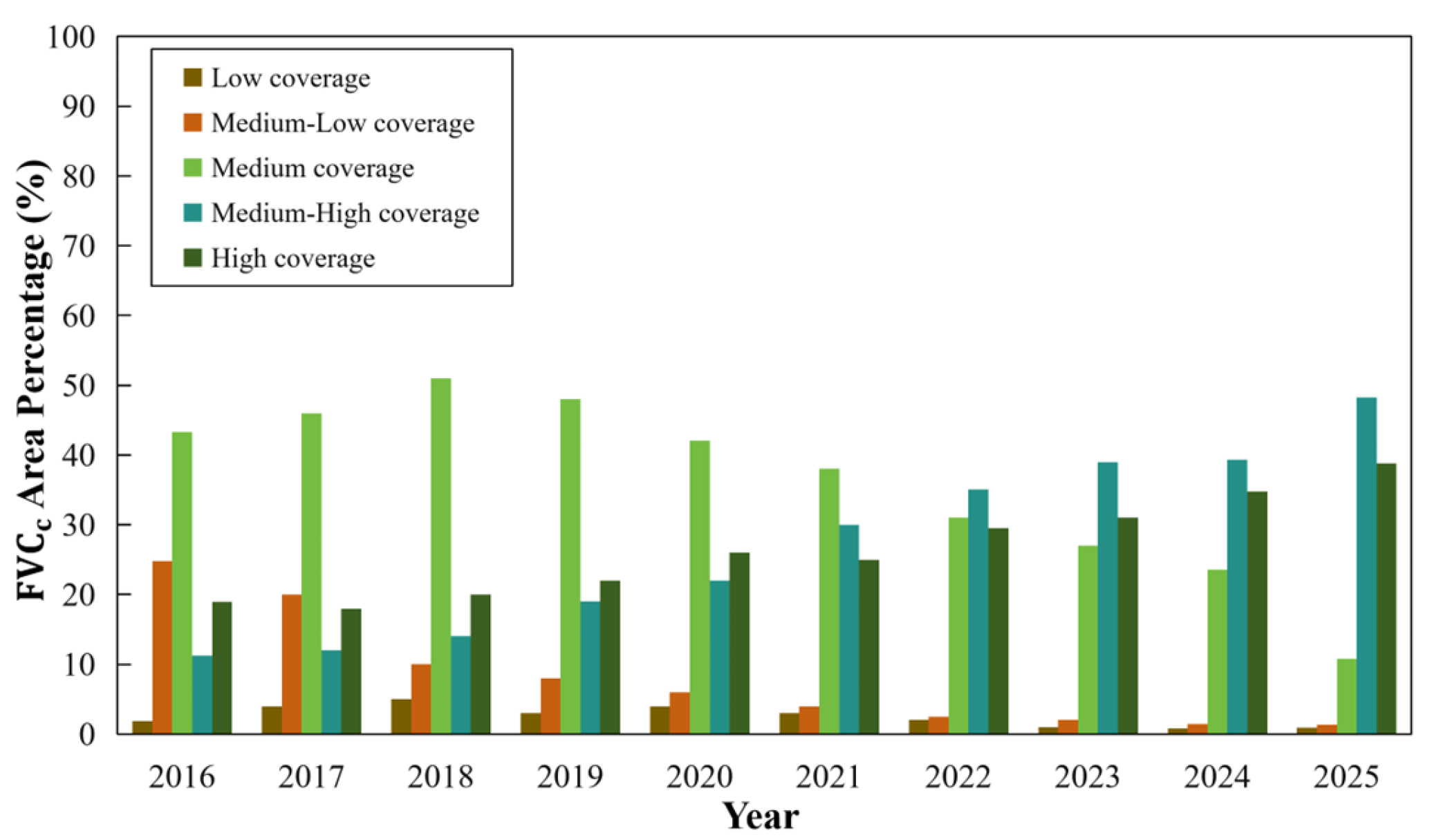
3.3. FVCc Temporal Variation Analysis
4. Discussion
4.1. Comparison with Existing Inversion Methods
4.2. Spatio-Temporal Variation Characteristics and Causal Analysis
5. Conclusions
Author Contributions
Funding
Data Availability Statement
Conflicts of Interest
Abbreviations
| FVC | Fractional Vegetation Cover |
| FVCc | Canopy Fractional Vegetation Cover |
| FVCt | Total fractional vegetation cover |
| FVCs | Shrub-grass Fractional Vegetation Cover |
References
- Chen, C.R.; Xu, Z.H. Forest ecosystem responses to environmental changes: The key regulatory role of biogeochemical cycling. J. Soils Sediments 2010, 10, 210–214. [Google Scholar] [CrossRef][Green Version]
- Cardinale, B.J.; Duffy, J.E.; Gonzalez, A.; Hooper, D.U.; Perrings, C.; Venail, P.; Narwani, A.; Mace, G.M.; Tilman, D.; Wardle, D.A.; et al. Biodiversity loss and its impact on humanity. Nature 2012, 486, 59–67. [Google Scholar] [CrossRef]
- Zhang, X.; Liu, L.Y.; Chen, X.D.; Gao, Y.; Xie, S.; Mi, J. GLC_FCS30: Global land-cover product with fine classification system at 30 m using time-series Landsat imagery. Earth Syst. Sci. Data 2021, 13, 2753–2776. [Google Scholar] [CrossRef]
- Meng, P.Y.; Wang, H.; Qin, S.H.; Li, X.N.; Song, Z.L.; Wang, Y.C.; Yang, Y.; Gao, J. Health assessment of plantations based on LiDAR canopy spatial structure parameters. Int. J. Digit. Earth 2022, 15, 712–729. [Google Scholar] [CrossRef]
- Toda, M.; Knohl, A.; Luyssaert, S.; Hara, T. Simulated effects of canopy structural complexity on forest productivity. For. Ecol. Manag. 2023, 538, 120978. [Google Scholar] [CrossRef]
- Jennings, S.B.; Brown, N.D.; Sheil, D. Assessing forest canopies and understorey illumination: Canopy closure, canopy cover and other measures. Forestry 1999, 72, 59–74. [Google Scholar] [CrossRef]
- Obata, K.; Yoshioka, H. Relationships Between Errors Propagated in Fraction of Vegetation Cover by Algorithms Based on a Two-Endmember Linear Mixture Model. Remote Sens. 2010, 2, 2680–2699. [Google Scholar] [CrossRef]
- Liu, Y.; Liu, R.G.; Pisek, J.; Chen, J.M. Separating overstory and understory leaf area indices for global needleleaf and deciduous broadleaf forests by fusion of MODIS and MISR data. Biogeosciences 2017, 14, 1093–1110. [Google Scholar] [CrossRef]
- Verstraete, M.M.; Pinty, B.; Myneni, R.B. Potential and limitations of information extraction on the terrestrial biosphere from satellite remote sensing. Remote Sens. Environ. 1996, 58, 201–214. [Google Scholar] [CrossRef]
- Qi, J.; Chehbouni, A.; Huete, A.R.; Kerr, Y.H.; Sorooshian, S. A modified soil adjusted vegetation index. Remote Sens. Environ. 1994, 48, 119–126. [Google Scholar] [CrossRef]
- Chen, R.; Yin, G.F.; Xu, B.D.; Liu, G.X. Topographic Effects on Optical Remote Sensing: Simulations by PLC Model. IEEE J. Sel. Top. Appl. Earth Observ. Remote Sens. 2023, 16, 9977–9988. [Google Scholar] [CrossRef]
- Dechant, B.; Kattge, J.; Pavlick, R.; Schneider, F.D.; Sabatini, F.M.; Moreno-Martínez, Á.; Butler, E.E.; van Bodegom, P.M.; Vallicrosa, H.; Kattenborn, T.; et al. Intercomparison of global foliar trait maps reveals fundamental differences and limitations of upscaling approaches. Remote Sens. Environ. 2024, 311, 114276. [Google Scholar] [CrossRef]
- Bateson, C.A.; Asner, G.P.; Wessman, C.A. Endmember bundles: A new approach to incorporating endmember variability into spectral mixture analysis. IEEE Trans. Geosci. Remote Sens. 2000, 38, 1083–1094. [Google Scholar] [CrossRef]
- Uezato, T.; Yokoya, N.; He, W. Illumination Invariant Hyperspectral Image Unmixing Based on a Digital Surface Model. IEEE Trans. Image Process. 2020, 29, 3652–3664. [Google Scholar] [CrossRef]
- Zhang, C.S.; Ma, L.; Chen, J.; Rao, Y.H.; Zhou, Y.; Chen, X.H. Assessing the impact of endmember variability on linear Spectral Mixture Analysis (LSMA): A theoretical and simulation analysis. Remote Sens. Environ. 2019, 235, 111471. [Google Scholar] [CrossRef]
- Höhl, A.; Obadic, I.; Fernández-Torres, M.-Á.; Najjar, H.; Oliveira, D.A.B.; Akata, Z.; Dengel, A.; Zhu, X.X. Opening the Black Box: A systematic review on explainable artificial intelligence in remote sensing. IEEE Geosci. Remote Sens. Mag. 2024, 12, 261–304. [Google Scholar] [CrossRef]
- Zhou, W.W.; Shu, Q.T.; Xia, C.F.; Xu, L.; Xiang, Q.; Fu, L.J.; Yang, Z.D.; Wang, S.W. Forest canopy closure estimation in mountainous southwest China using multi-source remote sensing data. Front. Plant Sci. 2025, 16, 1629146. [Google Scholar] [CrossRef]
- Yu, Z.Y.; Idna, I.M.Y.; Wang, H.; Wang, P.; Chen, J.Y.; Wang, K. From physics to foundation models: A review of AI-driven quantitative remote sensing inversion. arXiv 2025, arXiv:2507.09081. [Google Scholar] [CrossRef]
- Borsoi, R.A.; Imbiriba, T.; Bermudez, J.C.M.; Richard, C.; Chanussot, J.; Drumetz, L. Spectral variability in hyperspectral data unmixing: A comprehensive review. IEEE Geosci. Remote Sens. Mag. 2021, 9, 223–270. [Google Scholar] [CrossRef]
- Wei, Q.H.; Luo, W.F.; Tang, K.F. Spectral unmixing method considering endmember variability of vegetation. Natl. Remote Sens. Bull. 2023, 27, 456–470. [Google Scholar]
- Ali, A.A.Y.; Juszczak, R. Challenges and limitations of remote sensing applications in northern peatlands: Present and future prospects. Remote Sens. 2024, 16, 591. [Google Scholar]
- Peltoniemi, J.I.; Kaasalainen, S.; Näränen, J.; Rautiainen, M.; Stenberg, P.; Smolander, H.; Smolander, S.; Voipio, P. BRDF measurement of understory vegetation in pine forests: Dwarf shrubs, lichen, and moss. Remote Sens. Environ. 2005, 94, 343–354. [Google Scholar] [CrossRef]
- Eriksson, H.M.; Eklundh, L.; Kuusk, A.; Nilson, T. Impact of understory vegetation on forest canopy reflectance and remotely sensed LAI estimates. Remote Sens. Environ. 2006, 103, 408–418. [Google Scholar] [CrossRef]
- Gobron, N.; Pinty, B.; Verstraete, M.M.; Martonchik, J.V. Potential of multiangular spectral measurements to characterize land surfaces: Conceptual approach and exploratory application. J. Geophys. Res. Atmos. 2000, 105, 17539–17547. [Google Scholar] [CrossRef]
- Dalagnol, R.; Galvão, L.S.; Wagner, F.H.; de Moura, Y.M.; Gonçalves, N.; Wang, Y.; Lyapustin, A.; Yang, Y.; Saatchi, S.; Aragão, L.E.O.C. AnisoVeg: Anisotropy and nadir-normalized MODIS multi-angle implementation atmospheric correction (MAIAC) datasets for satellite vegetation studies in South America. Earth Syst. Sci. Data 2023, 15, 345–358. [Google Scholar] [CrossRef]
- Cheng, J.; Wen, J.; Xiao, Q.; Wu, S.; Hao, D.; Liu, Q. Extending the GOSAILT Model to Simulate Sparse Woodland Bi-Directional Reflectance with Soil Reflectance Anisotropy Consideration. Remote Sens. 2022, 14, 1001. [Google Scholar] [CrossRef]
- Kimes, D.S.; Ranson, K.J.; Sun, G.; Blair, J.B. Predicting lidar measured forest vertical structure from multi-angle spectral data. Remote Sens. Environ. 2006, 100, 503–511. [Google Scholar] [CrossRef]
- Gao, F.; Schaaf, C.B.; Strahler, A.H.; Jin, Y.; Li, X. Detecting vegetation structure using a kernel-based BRDF model. Remote Sens. Environ. 2003, 86, 198–205. [Google Scholar] [CrossRef]
- Pisek, J.; Chen, J.M.; Miller, J.R.; Freemantle, J.R.; Peltoniemi, J.I.; Simic, A. Mapping Forest Background Reflectance in a Boreal Region Using Multiangle Compact Airborne Spectrographic Imager Data. IEEE Trans. Geosci. Remote Sens. 2010, 48, 499–510. [Google Scholar] [CrossRef]
- Hansen, M.C.; DeFries, R.S.; Townshend, J.R.G.; Carroll, M.; Dimiceli, C.; Sohlberg, R.A. Global Percent Tree Cover at a Spatial Resolution of 500 Meters: First Results of the MODIS Vegetation Continuous Fields Algorithm. Earth Interact. 2003, 7, 1–15. [Google Scholar] [CrossRef]
- Su, L.; Chopping, M.J.; Rango, A.; Martonchik, J.V.; Peters, D.P.C. Differentiation of semi-arid vegetation types based on multi-angular observations from MISR and MODIS. Int. J. Remote Sens. 2007, 28, 1419–1424. [Google Scholar] [CrossRef]
- Pisek, J.; Chen, J.M.; Kobayashi, H.; Rautiainen, M.; Schaepman, M.E.; Karnieli, A.; Sprinstin, M.; Ryu, Y.; Nikopensius, M.; Raabe, K. Retrieval of seasonal dynamics of forest understory reflectance from semiarid to boreal forests using MODIS BRDF data. J. Geophys. Res. Biogeosci. 2016, 121, 855–863. [Google Scholar] [CrossRef]
- Lu, D.S.; Batistella, M.; Moran, E.; Hetrick, S.; Alves, D.S.; Brondizio, E.S. Fractional forest cover mapping in the Brazilian Amazon with a combination of MODIS and TM images. Int. J. Remote Sens. 2011, 32, 7131–7149. [Google Scholar] [CrossRef]
- Zhang, X.; Wang, Y.; Ye, F.; Peng, Z.; Fu, T.; Wang, Z. Accuracy Evaluation of Fine-Scale BRDF Archetype Inversion Considering Vegetation Structure Clustering Based on the LESS 3-D Simulations at Forest Scenes. IEEE Trans. Geosci. Remote Sens. 2025, 63, 1–15. [Google Scholar] [CrossRef]
- Jin, D.; Qi, J.; Huang, H.; Li, L. Combining 3D Radiative Transfer Model and Convolutional Neural Network to Accurately Estimate Forest Canopy Cover from Very High-Resolution Satellite Images. IEEE J. Sel. Top. Appl. Earth Obs. Remote Sens. 2021, 14, 10953–10963. [Google Scholar] [CrossRef]
- Wu, X.Y.; Zhu, C.L.; Yu, J.B.; Zhai, L.; Zhang, H.X.; Yang, K.J.; Hou, X.L. Ecological vulnerability in the red soil erosion area of Changting under continuous ecological restoration: Spatiotemporal dynamic evolution and prediction. Forests 2022, 13, 2136. [Google Scholar] [CrossRef]
- Chen, J.M.; Lin, G.F.; Chen, Z.B. Effect of topographic factors on ecological environment quality in the red soil region of southern China: A case from Changting County. Sustainability 2025, 17, 1501. [Google Scholar] [CrossRef]
- Lucht, W.; Schaaf, C.B.; Strahler, A.H. An algorithm for the retrieval of albedo from space using semiempirical BRDF models. IEEE Trans. Geosci. Remote Sens. 2000, 38, 977–998. [Google Scholar] [CrossRef]
- Pisek, J.; Erb, A.; Korhonen, L.; Biermann, T.; Carrara, A.; Cremonese, E.; Cuntz, M.; Fares, S.; Gerosa, G.; Grünwald, T.; et al. Retrieval and validation of forest background reflectivity from daily Moderate Resolution Imaging Spectroradiometer (MODIS) bidirectional reflectance distribution function (BRDF) data across European forests. Biogeosciences 2021, 18, 621–635. [Google Scholar] [CrossRef]
- Chen, H.; Lin, X.; Sun, Y.; Wen, J.; Wu, X.; You, D.; Cheng, J.; Zhang, Z.; Zhang, Z.; Wu, C.; et al. Performance Assessment of Four Data-Driven Machine Learning Models: A Case to Generate Sentinel-2 Albedo at 10 Meters. Remote Sens. 2023, 15, 2684. [Google Scholar] [CrossRef]
- Fagua, J.C.; Jantz, P.; Burns, P.; Jantz, S.M.; Kilbride, J.B.; Goetz, S.J. Maps of forest vertical structure for Colombia, a megadiverse country. Sci. Data 2026, 13, 1. [Google Scholar] [CrossRef]
- Chen, J.M.; Leblanc, S.G. A four-scale bidirectional reflectance model based on canopy architecture. IEEE Trans. Geosci. Remote Sens. 1997, 35, 1316–1337. [Google Scholar] [CrossRef]
- White, H.P.; Miller, J.R.; Chen, J.M. Four-Scale Linear Model for Anisotropic Reflectance (FLAIR) for plant canopies. I. Model description and partial validation. IEEE Trans. Geosci. Remote Sens. 2001, 39, 1072–1083. [Google Scholar] [CrossRef]
- Li, F.; Chen, W.; Zeng, Y.; Zhao, Q.J.; Wu, B.F. Improving estimates of grassland fractional vegetation cover based on a pixel dichotomy model: A case study in Inner Mongolia, China. Remote Sens. 2014, 6, 4705–4722. [Google Scholar] [CrossRef]
- Gu, Z.J.; Zeng, Z.Y.; Shi, X.Z.; Li, L.; Weindorf, D.C.; Zha, Y.; Yu, D.S.; Liu, Y.M. A model for estimating total forest coverage with ground-based digital photography. Pedosphere 2010, 20, 318–325. [Google Scholar] [CrossRef]
- Wing, B.M.; Ritchie, M.W.; Boston, K.; Cohen, W.B.; Gitelman, A.; Olsen, M.J. Prediction of understory vegetation cover with airborne lidar in an interior ponderosa pine forest. Remote Sens. Environ. 2012, 124, 730–741. [Google Scholar] [CrossRef]
- Zhang, C.; Xu, H.Q.; Zhang, H.; Tang, F.; Lin, Z.L. Fractional Vegetation Cover Change and Its Ecological Effect Assessment in a Typical Reddish Soil Region of Southeastern China: Changting County, Fujian Province. J. Nat. Resour. 2015, 30, 917–928. [Google Scholar]
- Wei, X.D.; Yang, J.; Luo, P.P.; Lin, L.G.; Lin, K.L.; Guan, J.M. Assessment of the variation and influencing factors of vegetation NPP and carbon sink capacity under different natural conditions. Ecol. Indic. 2022, 138, 108834. [Google Scholar] [CrossRef]
- Gutiérrez-Hernández, O.; García, L.V. Robust trend analysis in environmental remote sensing: A case study of cork oak forest decline. Remote Sens. 2024, 16, 3886. [Google Scholar] [CrossRef]
- Franch, B.; Vermote, E.; Skakun, S.; Roger, J.-C.; Masek, J.; Ju, J.C.; Villaescusa-Nadal, J.L.; Santamaria-Artigas, A. A method for Landsat and Sentinel 2 (HLS) BRDF normalization. Remote Sens. 2019, 11, 632. [Google Scholar] [CrossRef]
- Roy, D.P.; Li, Z.B.; Zhang, H.K. Adjustment of Sentinel-2 Multi-Spectral Instrument (MSI) Red-Edge Band Reflectance to Nadir BRDF Adjusted Reflectance (NBAR) and Quantification of Red-Edge Band BRDF Effects. Remote Sens. 2017, 9, 1325. [Google Scholar] [CrossRef]
- Roujean, J.L.; Leroy, M.; Deschamps, P.-Y. A bidirectional reflectance model of the Earth’s surface for the correction of remote sensing data. J. Geophys. Res. Atmos. 1992, 97, 20455–20468. [Google Scholar] [CrossRef]
- Zhang, H.; Fromont, E.; Lefevre, S.; Avignon, B. Multispectral Fusion for Object Detection with Cyclic Fuse-and-Refine Blocks. In Proceedings of the 2020 IEEE International Conference on Image Processing (ICIP); IEEE: Abu Dhabi, United Arab Emirates, 2020; pp. 276–280. [Google Scholar]
- Wang, X.Q.; Liu, Y.D.; Zhou, W.D.; Lin, J.L. Research on Temporal and Spatial Variation of Fractional Vegetation Cover in Changting County Based on TAVI. Trans. Chin. Soc. Agric. Mach. 2016, 47, 289–296. [Google Scholar]
- Dawa, Z.X.; Wang, J.; Zhang, Z.M.; Xiu, C.; Zhao, X.L.; Wang, J.L.; Zhou, W.Q. Impact of Urbanization of Plateau Valley on Vegetation Coverage. Acta Ecol. Sin. 2020, 40, 6025–6036. [Google Scholar] [CrossRef]
- Li, L.Y.; Tian, M.R.; Liang, H.; Chen, Y.M.; Feng, C.Y.; Qu, K.Y.; Qian, J.P. Spatial and Temporal Changes of Vegetation Coverage and Influencing Factors in Hulun Buir Grassland During 2000–2016. J. Ecol. Rural Environ. 2018, 34, 584–591. [Google Scholar]
- Chen, H.Y.; Wang, Y.; Huang, Y.M.; Wu, B.W.; Lai, W.T. Evaluation of Regional Ecosystem Services Coupling Ecological Carrying Capacity and Gross Ecosystem Product—A Case Study of Changting County, Fujian Province. J. Soil Water Conserv. 2021, 35, 150–160. [Google Scholar]
- Neeti, N.; Eastman, J.R. A Contextual Mann-Kendall Approach for the Assessment of Trend Significance in Image Time Series. Trans. GIS 2011, 15, 599–611. [Google Scholar] [CrossRef]
- Gutiérrez-Hernández, O.; García, L.V. False Discovery Rate Estimation and Control in Remote Sensing: Reliable Statistical Significance in Spatially Dependent Gridded Data. Remote Sens. Lett. 2025, 16, 537–548. [Google Scholar] [CrossRef]





| Trend Characteristics | ||
|---|---|---|
| 0 | > 1.96 | Significant Deterioration |
| 1.96 | Mild Degeneration | |
| 0 | > 1.96 | Significant Improvement |
| 1.96 | Mild Improvement |
Disclaimer/Publisher’s Note: The statements, opinions and data contained in all publications are solely those of the individual author(s) and contributor(s) and not of MDPI and/or the editor(s). MDPI and/or the editor(s) disclaim responsibility for any injury to people or property resulting from any ideas, methods, instructions or products referred to in the content. |
© 2026 by the authors. Licensee MDPI, Basel, Switzerland. This article is an open access article distributed under the terms and conditions of the Creative Commons Attribution (CC BY) license.
Share and Cite
Gu, Z.; Liu, J.; Fu, Q.; Yue, X.; Liao, G.; Wu, J.; He, Y.; Mai, X.; He, Q.; Lin, Q. Integrating Sentinel-2 and MODIS BRDF Imagery to Invert Canopy Fractional Vegetation Cover for Forests and Analyze the Corresponding Spatio-Temporal Evolution. Forests 2026, 17, 426. https://doi.org/10.3390/f17040426
Gu Z, Liu J, Fu Q, Yue X, Liao G, Wu J, He Y, Mai X, He Q, Lin Q. Integrating Sentinel-2 and MODIS BRDF Imagery to Invert Canopy Fractional Vegetation Cover for Forests and Analyze the Corresponding Spatio-Temporal Evolution. Forests. 2026; 17(4):426. https://doi.org/10.3390/f17040426
Chicago/Turabian StyleGu, Zhujun, Jia Liu, Qinghua Fu, Xiaofeng Yue, Guanghui Liao, Jiasheng Wu, Yanzi He, Xianzhi Mai, Qiuyin He, and Quanman Lin. 2026. "Integrating Sentinel-2 and MODIS BRDF Imagery to Invert Canopy Fractional Vegetation Cover for Forests and Analyze the Corresponding Spatio-Temporal Evolution" Forests 17, no. 4: 426. https://doi.org/10.3390/f17040426
APA StyleGu, Z., Liu, J., Fu, Q., Yue, X., Liao, G., Wu, J., He, Y., Mai, X., He, Q., & Lin, Q. (2026). Integrating Sentinel-2 and MODIS BRDF Imagery to Invert Canopy Fractional Vegetation Cover for Forests and Analyze the Corresponding Spatio-Temporal Evolution. Forests, 17(4), 426. https://doi.org/10.3390/f17040426