
Scalable Bayesian–XAI Framework for Multi-Objective Decision-Making in Uncertain Dynamic Systems



Abstract
1. Introduction
- RQ1: How can a Bayesian–XAI framework integrate probabilistic inference and stochastic control for multi-objective optimisation in dynamic systems?
- RQ2: What is the impact of the framework on decision quality, adaptability, and interpretability?
- RQ3: How effective is the framework in supporting scalable and real-time decision-making?
2. Literature Review
2.1. Explainable Artificial Intelligence and Multicriteria Decision-Making
2.2. Methodological Contribution to MODMC
2.3. Research Gap and Motivation
3. System Design and Architecture
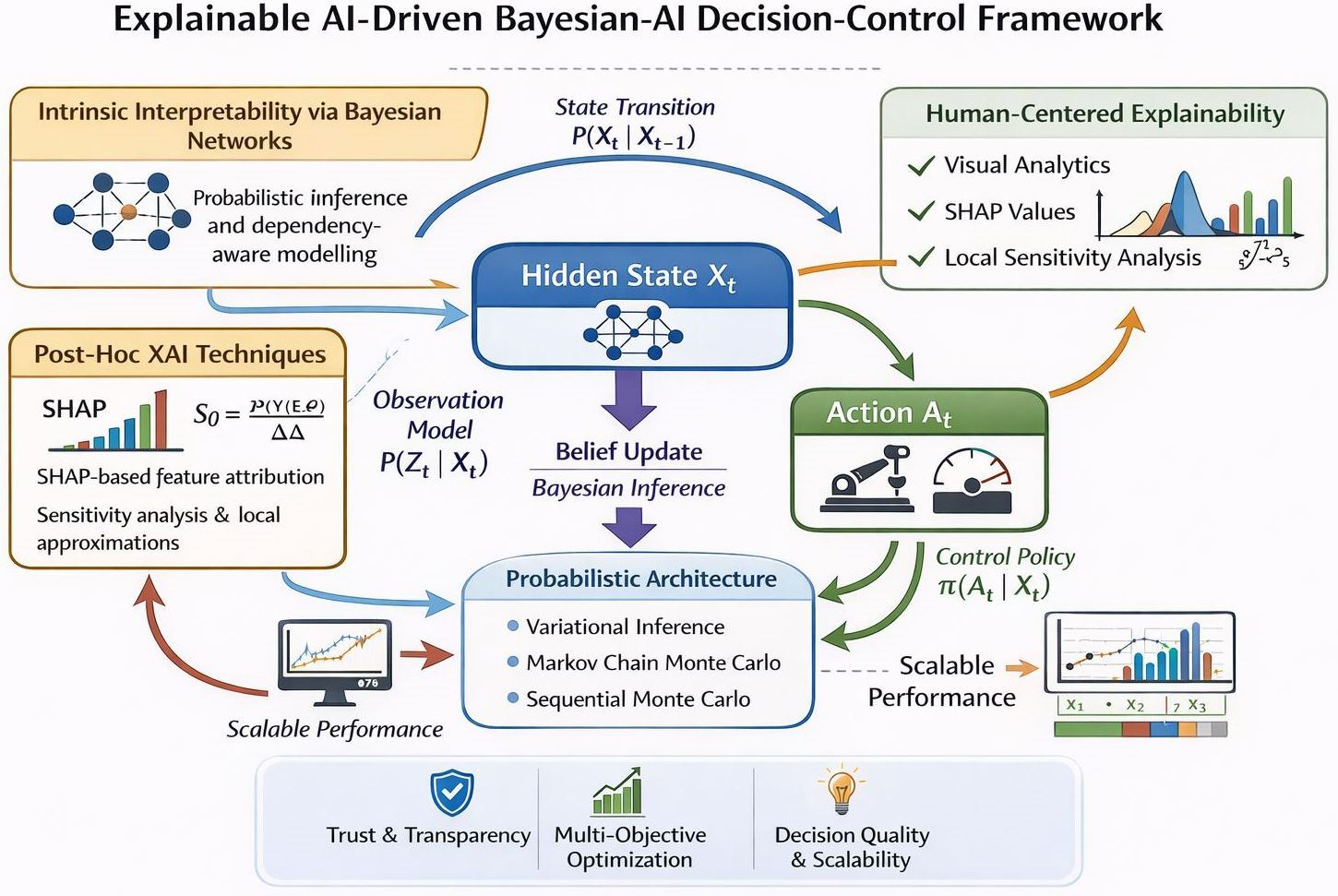
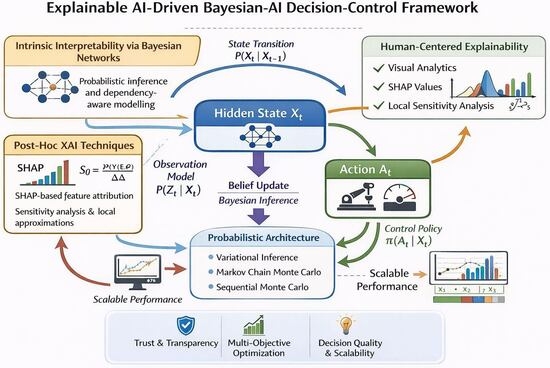
3.1. Bayesian–XAI Decision Framework
3.2. User Input and Uncertainty Handling
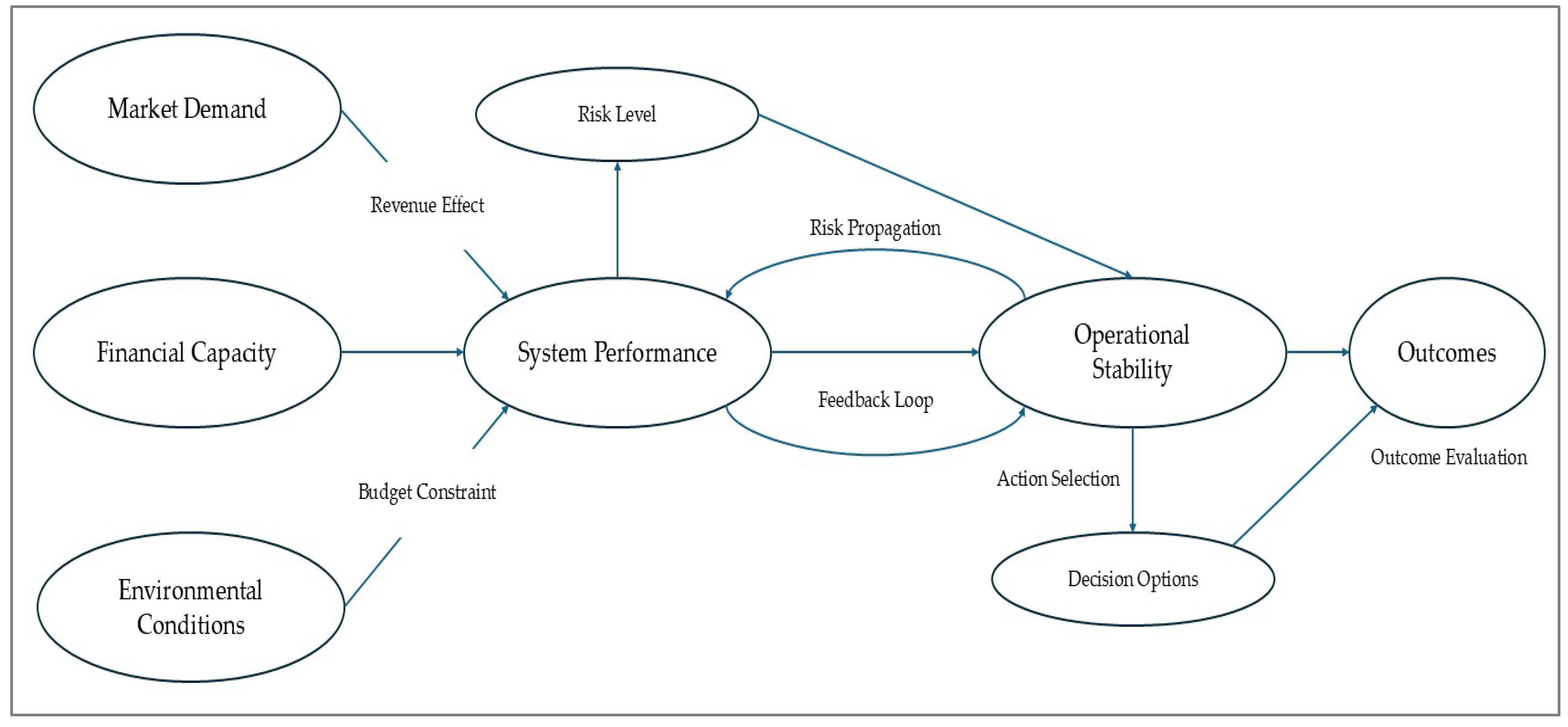
3.3. Variable Selection and DAG Construction
3.4. Decision Optimisation and XAI Processing
3.5. Bayesian Networks as Signal-Processing Models
3.6. Multi-Objective Decision and Control Formulation
3.7. Intrinsic Explainability via Bayesian Networks
4. MODMC Framework
5. Simulation Validation
5.1. Simulation Scenario and Problem Formulation
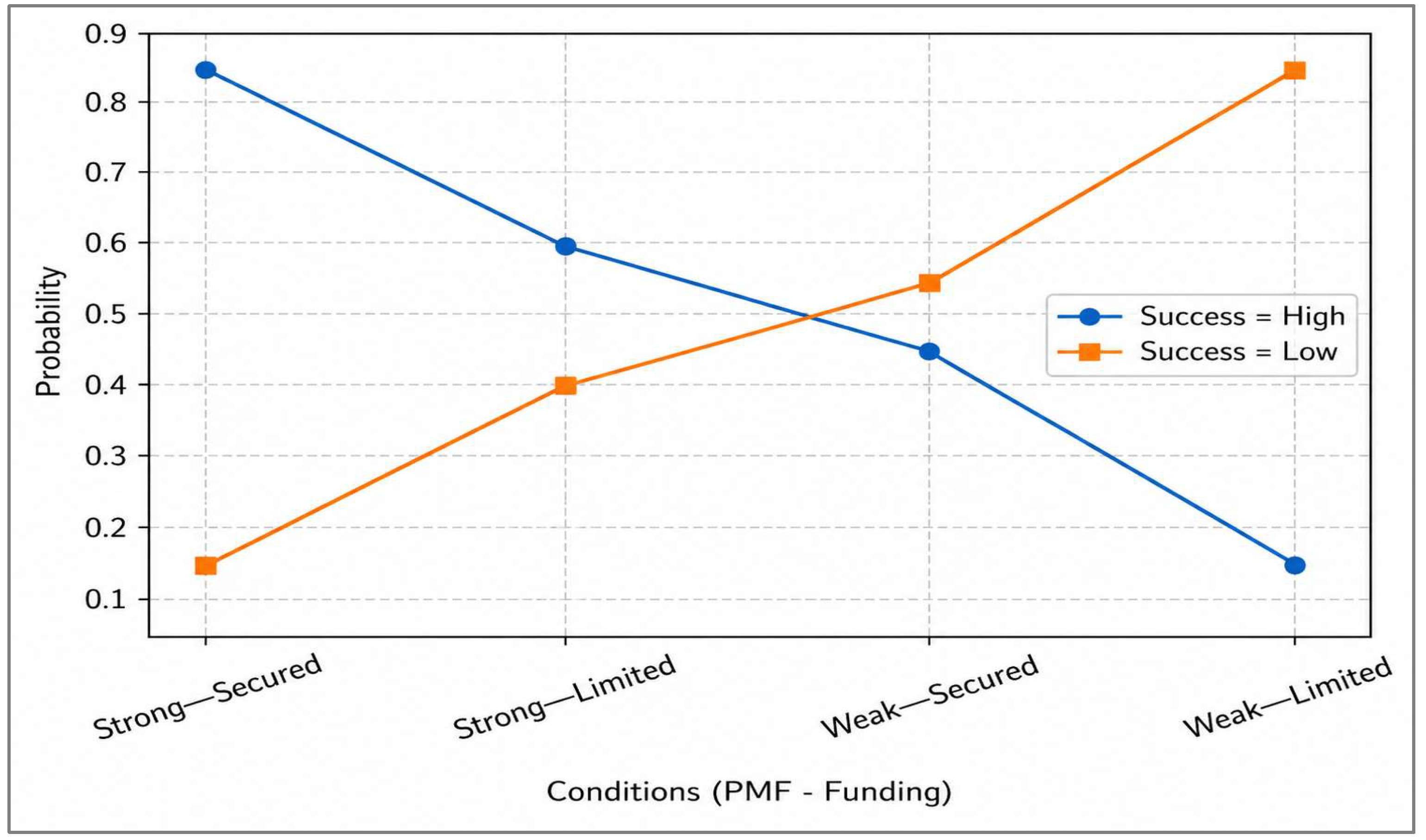
5.2. Bayesian Network–Based Dynamic Inference
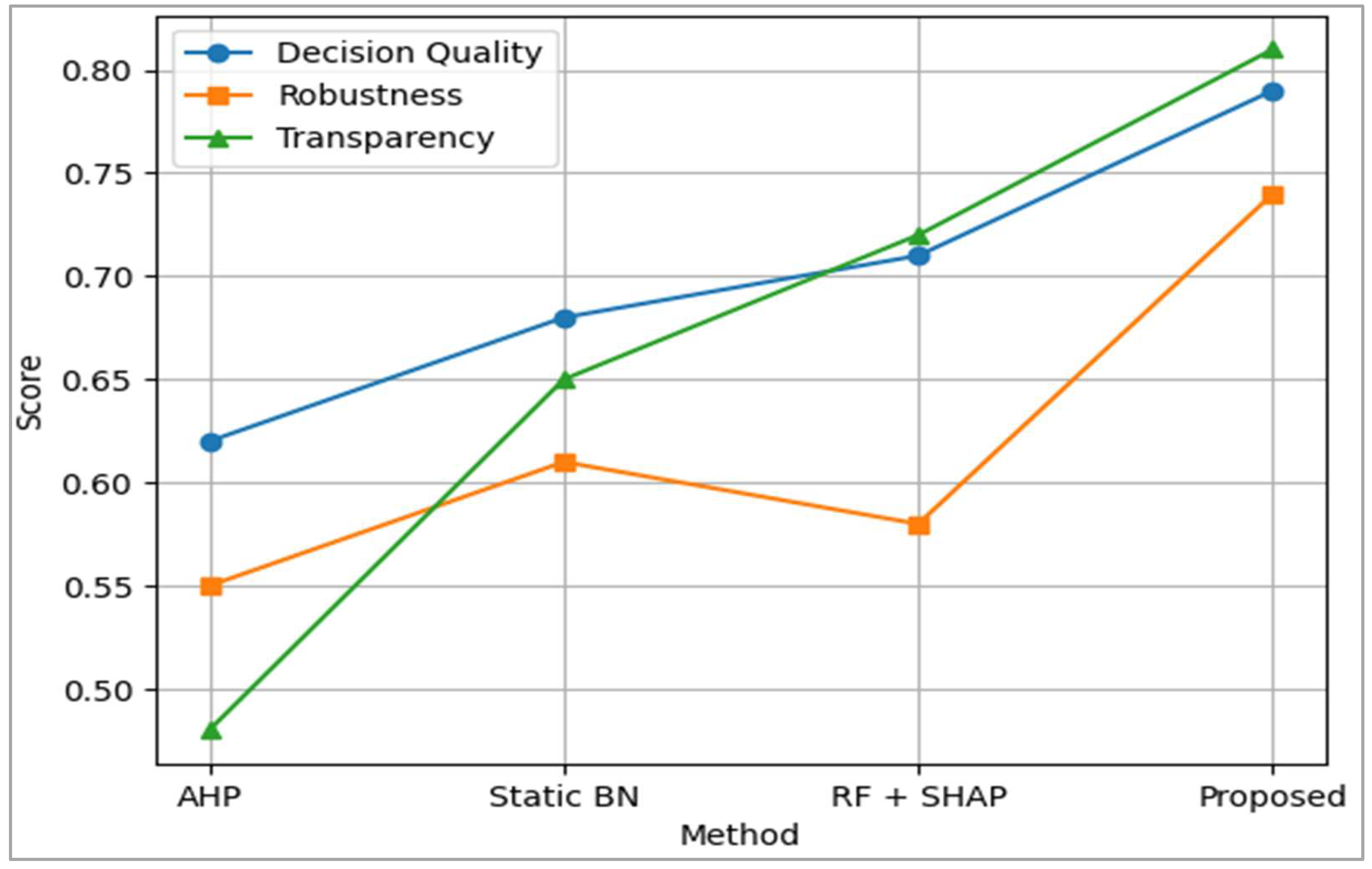
5.3. Real-Time Updating and Decision Optimisation
5.4. System Architecture and Processing Pipeline
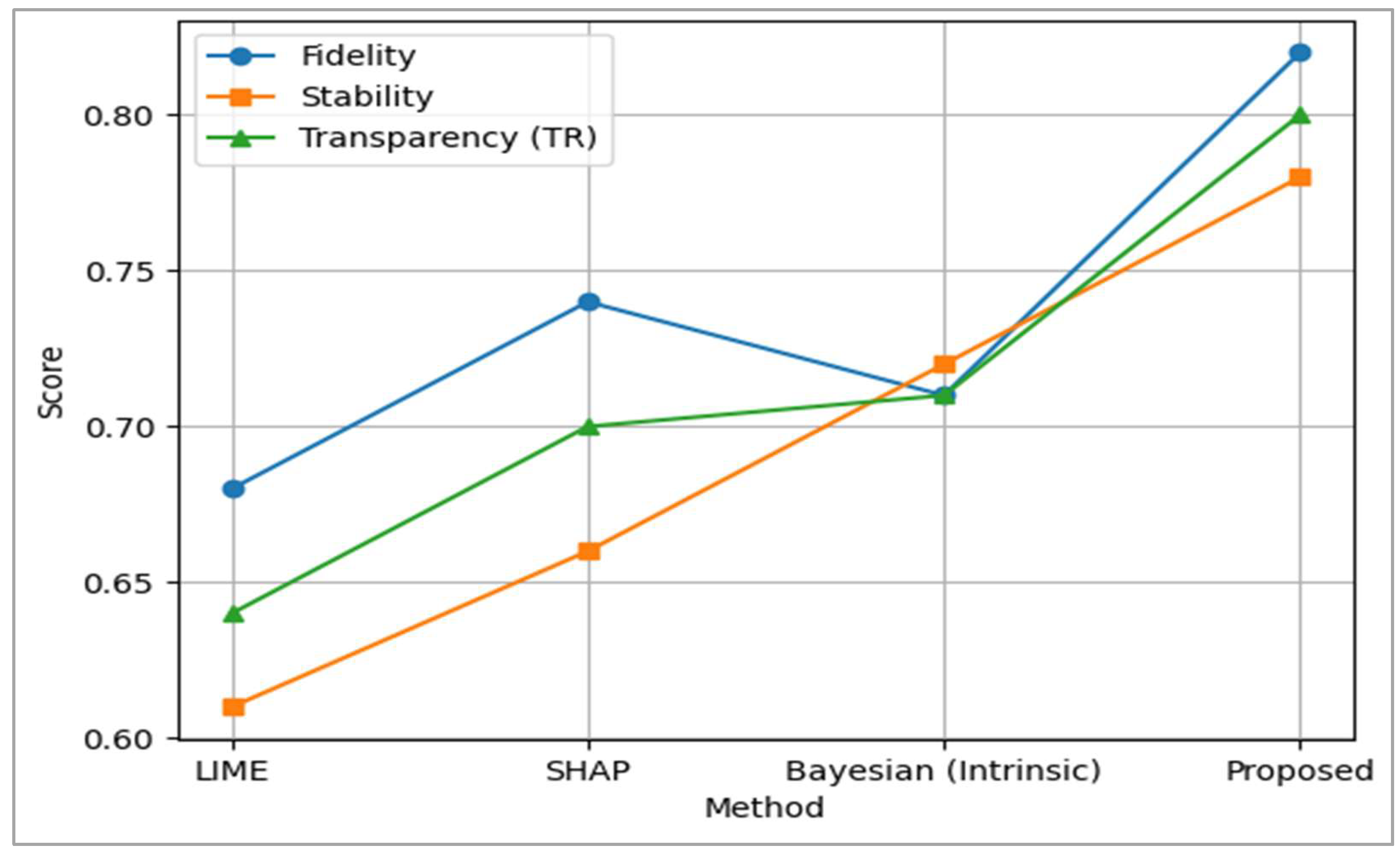
5.5. Explainability Evaluation Metrics
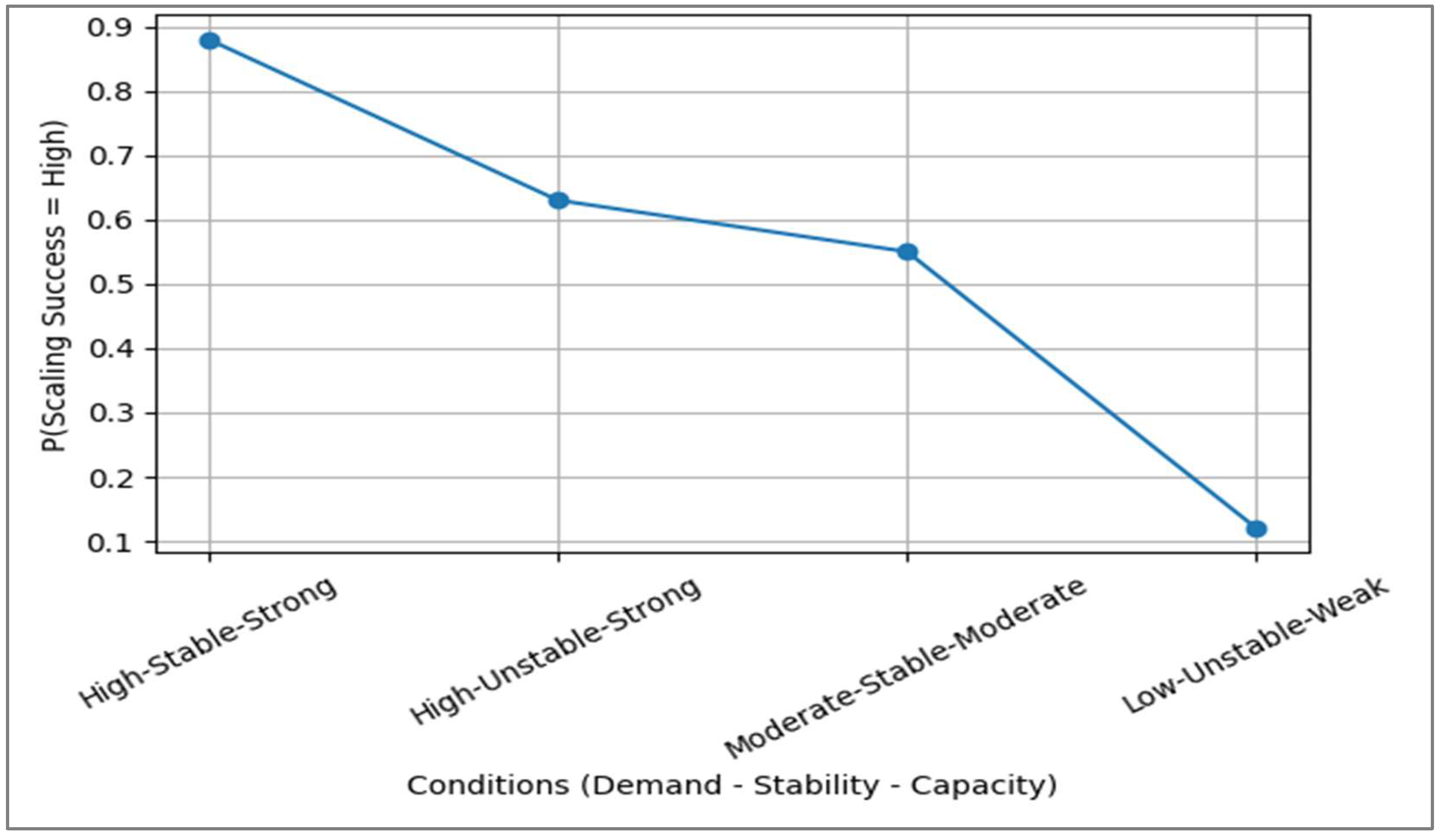
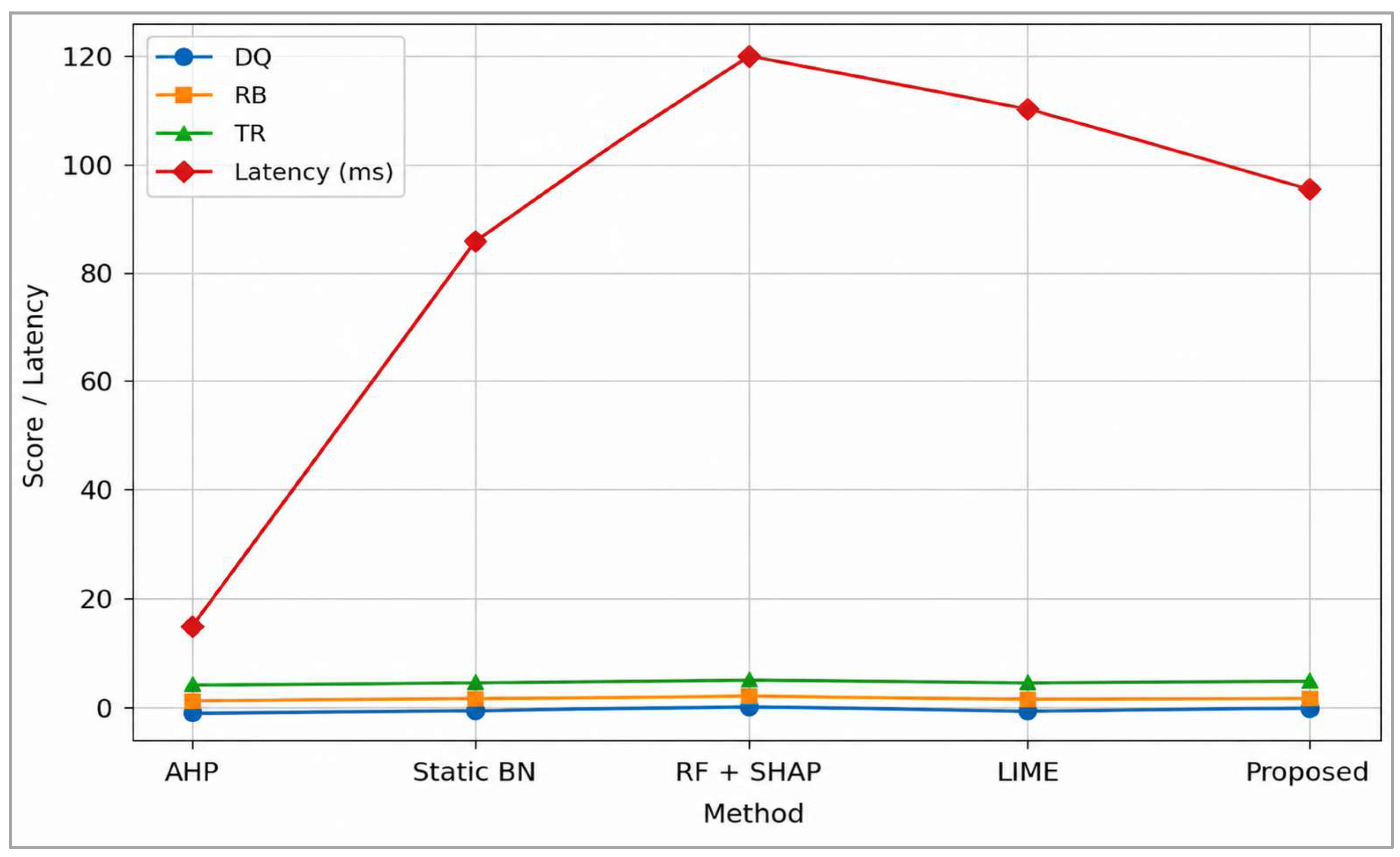
5.6. Real-Time Performance and Scalability Analysis
6. Limitations and Benefits
6.1. Benefits
6.2. Limitations
6.3. Ethical and Trust Considerations in XAI
7. Conclusions
8. Future Research Directions
Author Contributions
Funding
Institutional Review Board Statement
Informed Consent Statement
Data Availability Statement
Acknowledgments
Conflicts of Interest
References
- Bonczek, R.H.; Holsapple, C.W.; Whinston, A.B. Foundations of Decision Support Systems; Academic Press: San Diego, CA, USA, 2014. [Google Scholar]
- Gupta, S.; Modgil, S.; Bhattacharyya, S.; Bose, I. Artificial intelligence for decision support systems in the field of operations research: Review and future scope of research. Ann. Oper. Res. 2022, 308, 215–274. [Google Scholar] [CrossRef]
- Shepherd, D.A.; Williams, T.A.; Patzelt, H. Thinking About Entrepreneurial Decision Making: Review and Research Agenda. J. Manag. 2015, 41, 11–46. [Google Scholar] [CrossRef]
- Jones, M.V.; Casulli, L. International Entrepreneurship: Exploring the Logic and Utility of Individual Experience through Comparative Reasoning Approaches. Entrep. Theory Pract. 2014, 38, 45–69. [Google Scholar] [CrossRef]
- Bilal, M.; Alzahrani, A.K.; Aljahdali, A.K. A Stochastic Fractional Fuzzy Tensor Framework for Robust Group Decision-Making in Smart City Renewable Energy Planning. Fractal Fract. 2026, 10, 6. [Google Scholar] [CrossRef]
- Zhang, R.; Li, H.; Meng, H.; Zhan, J.; Gan, H.; Lee, Y.-C. The Dark Side of AI Companionship: A Taxonomy of Harmful Algorithmic Behaviors in Human-AI Relationships. In Proceedings of the 2025 CHI Conference on Human Factors in Computing Systems, Yokohama, Japan, 26 April–1 May 2025; p. 13. [Google Scholar]
- Abatecola, G.; Cristofaro, M.; Giannetti, F.; Kask, J. How can biases affect entrepreneurial decision making? Toward a behavioral approach to unicorns. Int. Entrep. Manag. J. 2022, 18, 693–711. [Google Scholar] [CrossRef]
- Alrohaeem, N.; Gallage, N.G.; Islam, S. The impact of behavioural economics on entrepreneurial decision-making: A systematic literature review. J. Entrep. Emerg. Econ. 2025, 18, 1–43. [Google Scholar] [CrossRef]
- Hassija, V.; Chamola, V.; Mahapatra, A.; Singal, A.; Goel, D.; Huang, K.; Scardapane, S.; Spinelli, I.; Mahmud, M.; Hussain, A. Interpreting Black-Box Models: A Review on Explainable Artificial Intelligence. Cogn. Comput. 2024, 16, 45–74. [Google Scholar] [CrossRef]
- Kim, C.; Gadgil, S.U.; Lee, S.-I. Transparency of medical artificial intelligence systems. Nat. Rev. Bioeng. 2026, 4, 11–29. [Google Scholar] [CrossRef]
- Heckerman, D. A tutorial on learning with Bayesian networks. Learn. Graph. Model. 1998, 89, 301–354. [Google Scholar]
- Salem, M.A. Infusing Gen Z’s Pro-Ecological Intentions: From AI Hallucinations to the Ethical Governance of Green Digital Footprints. Educ. Sci. 2026, 16, 431. [Google Scholar] [CrossRef]
- Karki, U.; Bhatia, V.; Sharma, D. A systematic literature review on overconfidence and related biases influencing investment decision making. Econ. Bus. Rev. 2024, 26, 130–150. [Google Scholar] [CrossRef]
- Schmitt, M. Automated machine learning: AI-driven decision making in business analytics. Intell. Syst. Appl. 2023, 18, 200188. [Google Scholar] [CrossRef]
- Polotskaya, K.; Muñoz-Valencia, C.S.; Rabasa, A.; Quesada-Rico, J.A.; Orozco-Beltrán, D.; Barber, X. Bayesian Networks for the Diagnosis and Prognosis of Diseases: A Scoping Review. Mach. Learn. Knowl. Extr. 2024, 6, 1243–1262. [Google Scholar] [CrossRef]
- Cebesoy, M.; Tuncer Şakar, C.; Yet, B. Multicriteria decision support under uncertainty: Combining outranking methods with Bayesian networks. Ann. Oper. Res. 2025, 355, 2971–2998. [Google Scholar] [CrossRef]
- Razaghzadeh Bidgoli, M.; Raeesi Vanani, I.; Goodarzi, M. Predicting the success of startups using a machine learning approach. J. Innov. Entrep. 2024, 13, 80. [Google Scholar] [CrossRef]
- Ferreira-da-Silva, R.; Cruz-Correia, R.; Ribeiro, I. Beyond black boxes: Using explainable causal artificial intelligence to separate signal from noise in pharmacovigilance. Int. J. Clin. Pharm. 2025, 48, 677–681. [Google Scholar] [CrossRef]
- Li, G.; Li, S.; Li, S.; Qin, Y.; Cao, D.; Qu, X.; Cheng, B. Deep reinforcement learning enabled decision-making for autonomous driving at intersections. Automot. Innov. 2020, 3, 374–385. [Google Scholar] [CrossRef]
- Zhang, Z.; Li, H.; Chen, T.; Sze, N.N.; Yang, W.; Zhang, Y.; Ren, G. Decision-making of autonomous vehicles in interactions with jaywalkers: A risk-aware deep reinforcement learning approach. Accid. Anal. Prev. 2025, 210, 107843. [Google Scholar] [CrossRef] [PubMed]
- Yan, D.; Guan, Q.; Ou, B.; Yan, B.; Zhu, Z.; Cao, H. A Deep Reinforcement Learning-Based Decision-Making Approach for Routing Problems. Appl. Sci. 2025, 15, 4951. [Google Scholar] [CrossRef]
- Rizehvandi, A.; Azadi, S.; Eichberger, A. Decision-Making Policy for Autonomous Vehicles on Highways Using Deep Reinforcement Learning (DRL) Method. Automation 2024, 5, 564–577. [Google Scholar] [CrossRef]
- Fu, Y.; Li, C.; Yu, F.R.; Luan, T.H.; Zhang, Y. A Decision-Making Strategy for Vehicle Autonomous Braking in Emergency via Deep Reinforcement Learning. IEEE Trans. Veh. Technol. 2020, 69, 5876–5888. [Google Scholar] [CrossRef]
- Wang, Q.-A.; Chen, J.; Ni, Y.; Xiao, Y.; Liu, N.; Liu, S.; Feng, W. Application of Bayesian networks in reliability assessment: A systematic literature review. Structures 2025, 71, 108098. [Google Scholar] [CrossRef]
- Yu, W.; Zheng, Y.; Lin, D.; Wang, S.; Zhang, Q. A Bayesian filtering network for state estimation with unknown system dynamics. Signal Process. 2025, 240, 110365. [Google Scholar] [CrossRef]
- Fenton, N.; Neil, M. Risk Assessment and Decision Analysis with BAYESIAN Networks; CRC Press: Boca Raton, FL, USA, 2018. [Google Scholar]
- Phillips-Wren, G.E.; Ferreiro, O.M.; Forgionne, G.; Desai, H. Adoption of Decision Support Systems (DSS) in a Developing Country. J. Decis. Syst. 2007, 16, 425–449. [Google Scholar] [CrossRef]
- Bruno, M.G.; Marcelo, G. Sequential Monte Carlo Methods for Nonlinear Discrete-Time Filtering; Springer Nature: Berlin/Heidelberg, Germany, 2022. [Google Scholar]
- Koller, D.; Friedman, N. Probabilistic Graphical Models: Principles and Techniques; MIT Press: Cambridge, MA, USA, 2009. [Google Scholar]
- Pearl, J. Probabilistic Reasoning in Intelligent Systems: Networks of Plausible Inference; Elsevier: Amsterdam, The Netherlands, 2014. [Google Scholar]
- Sharda, R.; Delen, D.; Turban, E. Analytics, Data Science, & Artificial Intelligence: Systems for Decision Support; Pearson: London, UK, 2021. [Google Scholar]
- Wakker, P.P. Additive Representations of Preferences: A New Foundation of Decision Analysis; Springer Science & Business Media: Berlin/Heidelberg, Germany, 2013. [Google Scholar]
- Bertsimas, D.; Kallus, N. From predictive to prescriptive analytics. Manag. Sci. 2020, 66, 1025–1044. [Google Scholar] [CrossRef]
- Salem, M.A.; Khalil, Z.A. An Interpretable Hybrid RF–ANN Early-Warning Model for Real-World Prediction of Academic Confidence and Problem-Solving Skills. Math. Comput. Appl. 2025, 30, 140. [Google Scholar] [CrossRef]
- Howard, R.A. Information value theory. IEEE Trans. Syst. Sci. Cybern. 1966, 2, 22–26. [Google Scholar] [CrossRef]
- Doucet, A.; de Freitas, N.; Gordon, N. An Introduction to Sequential Monte Carlo Methods. In Sequential Monte Carlo Methods in Practice; Doucet, A., de Freitas, N., Gordon, N., Eds.; Springer: New York, NY, USA, 2001; pp. 3–14. [Google Scholar]
- Association, W.M. Declaration of Helsinki: World Medical Association. Ethical Princ. Med. Res. Hum. Beings 2004, 64, 2013. [Google Scholar]



| Framework Type | Intrinsic Explainability | Post hoc XAI | Dynamic Control | Key Limitation |
|---|---|---|---|---|
| Bayesian Networks | Provided through probabilistic structure and CPTs | Not supported | Limited or static | No local feature attribution |
| POMDP/Bayesian Control | Provided through probabilistic reasoning | Not supported | Fully supported | Limited interpretability depth |
| Black-box ML + SHAP | Not provided | Provided through feature attribution (e.g., SHAP) | Not supported | No structural transparency |
| Hybrid BN + MCDM | Provided | Not supported | Partially supported | Limited adaptability |
| Deep Reinforcement Learning | Not provided | Limited | Fully supported | Black-box, data-intensive, low interpretability |
| Proposed Framework | Fully provided through a Bayesian structure | Fully integrated (e.g., SHAP, sensitivity analysis) | Fully supported | Higher computational complexity |
Disclaimer/Publisher’s Note: The statements, opinions and data contained in all publications are solely those of the individual author(s) and contributor(s) and not of MDPI and/or the editor(s). MDPI and/or the editor(s) disclaim responsibility for any injury to people or property resulting from any ideas, methods, instructions or products referred to in the content. |
© 2026 by the authors. Licensee MDPI, Basel, Switzerland. This article is an open access article distributed under the terms and conditions of the Creative Commons Attribution (CC BY) license.
Share and Cite
Salem, M.A.; Khalil, Z.A. Scalable Bayesian–XAI Framework for Multi-Objective Decision-Making in Uncertain Dynamic Systems. Algorithms 2026, 19, 340. https://doi.org/10.3390/a19050340
Salem MA, Khalil ZA. Scalable Bayesian–XAI Framework for Multi-Objective Decision-Making in Uncertain Dynamic Systems. Algorithms. 2026; 19(5):340. https://doi.org/10.3390/a19050340
Chicago/Turabian StyleSalem, Mostafa Aboulnour, and Zeyad Aly Khalil. 2026. "Scalable Bayesian–XAI Framework for Multi-Objective Decision-Making in Uncertain Dynamic Systems" Algorithms 19, no. 5: 340. https://doi.org/10.3390/a19050340
APA StyleSalem, M. A., & Khalil, Z. A. (2026). Scalable Bayesian–XAI Framework for Multi-Objective Decision-Making in Uncertain Dynamic Systems. Algorithms, 19(5), 340. https://doi.org/10.3390/a19050340