1. Introduction
Energy, as the driving force and primary engine of economic and social development [
1], critically shapes a region’s potential for sustainable development and modernization [
2]. Despite concerted global efforts to combat climate change, fossil fuels continue to dominate the energy consumption structure in most economies. This high-carbon energy utilization pattern not only accelerates resource depletion but also results in substantially elevated emissions, posing a severe threat to the ecological environment [
2,
3,
4]. As the world’s leading energy consumer [
5], China accounted for 26.5% of the world’s total energy consumption in 2023, with an annual growth rate of 6.6% [
6]. Coal consumption constituted 55.3% of total energy consumption, while clean energy consumption represented 26.4%. This underscores an urgent need to improve energy efficiency and curb over-dependence on fossil fuels. The International Energy Agency (IEA) continues to emphasize that energy efficiency is the cornerstone for achieving global climate goals and building an energy security system, as well as an effective pathway to fulfilling the Paris Agreement [
7]. Consequently, enhancing energy efficiency and facilitating a green, low-carbon transition have become shared strategic objectives for nations worldwide. Particularly for China, under the dual carbon goals, exploring pathways to enhance energy efficiency has become an urgent priority [
3,
8,
9,
10].
At this critical juncture, the wave of the digital economy has emerged as a transformative force. It brings new opportunities for high-quality social development [
11] and opens fresh avenues for resolving energy challenges [
12]. According to the Global Digital Economy Development Research Report (2024), the digital economy demonstrates strong resilience and vitality. It has become a key growth driver for the global economy, with its development momentum continuously strengthening. In major economies like the United States, China, Germany, and Japan, the digital economy is expanding rapidly and now accounts for approximately 60% of their GDP. As the core vehicle for new-quality productive forces, the digital economy is fundamentally transforming the operation of energy systems through technological innovation and industrial restructuring. Consequently, it is widely regarded as an effective tool for conserving energy, reducing emissions [
13] and improving energy efficiency [
14]. Therefore, systematically elucidating the mechanisms through which the digital economy impacts energy efficiency, thus identifying its key driving pathways, has become a critical issue of significant strategic importance.
Existing studies have confirmed the positive role of the digital economy in improving energy efficiency, primarily from the perspectives of green finance [
15], industrial structure [
16], technological progress [
5], and resource allocation [
1]. While this body of work provides a foundation for understanding their relationship, it has notable limitations. Most research employs traditional econometric models, which struggle to capture the complex, dynamic, and nonlinear connections between the digital economy and energy efficiency. Consequently, the underlying mechanisms of influence have not been fully elucidated.
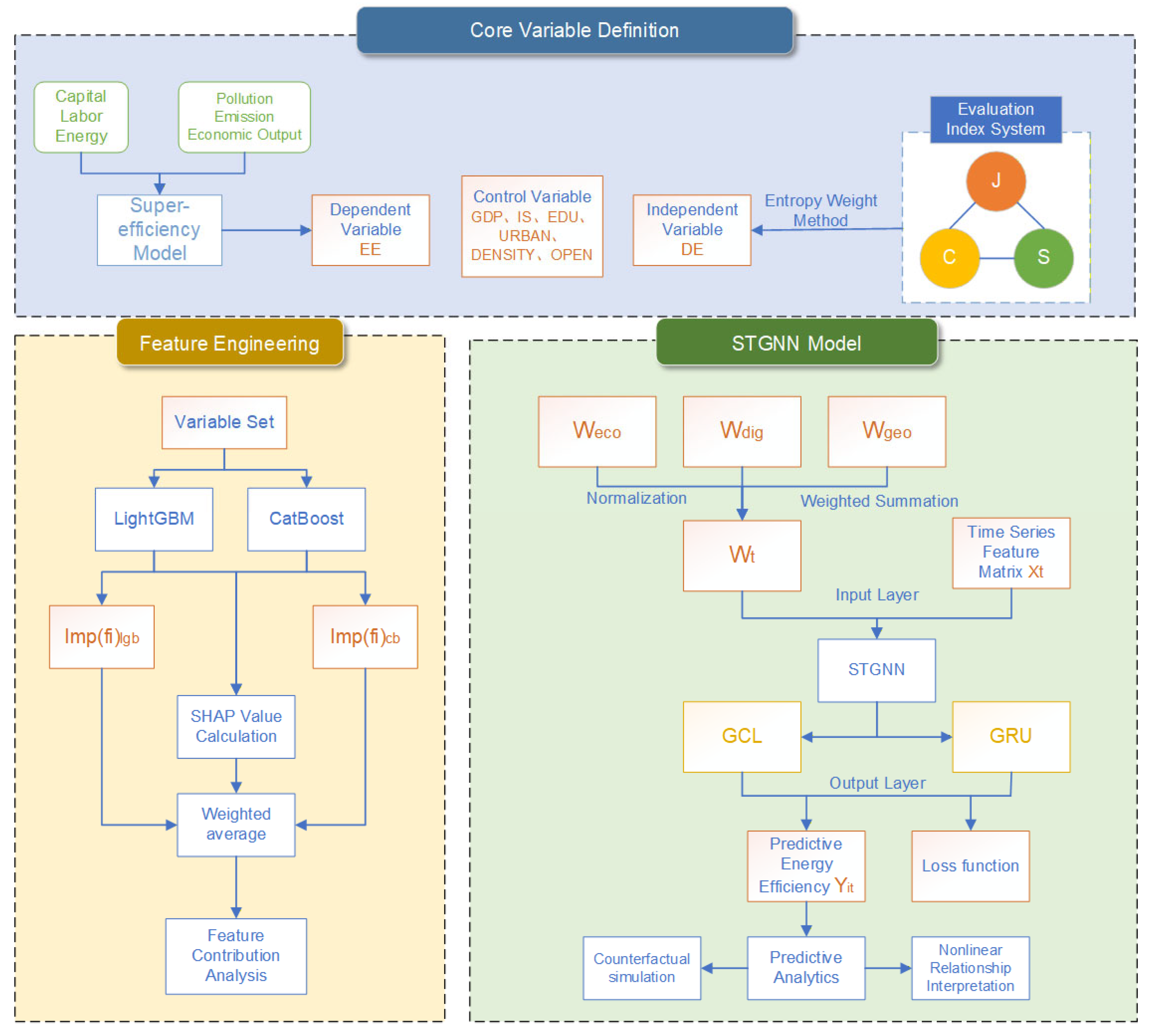
Based on this, this study constructs a two-stage analytical framework that integrates feature engineering, spatio-temporal graph neural networks (STGNN), and counterfactual simulation. Focusing on 30 Chinese provinces, we quantify the contribution of different dimensions of the digital economy to energy efficiency, clarify the impact mechanisms through which the digital economy influences energy efficiency, and assess its spatial correlation patterns. The primary contributions of this study are threefold. (1) Establishing a comprehensive digital economy evaluation system that encompasses three dimensions: infrastructure development, industrial digitization, and digital industrialization. An integrated LightGBM-CatBoost machine learning approach is introduced, and SHAP analysis is applied to identify the key drivers from multi-dimensional feature data. (2) To overcome the shortcomings of conventional spatial matrices, we develop a novel three-dimensional dynamic spatial adjacency matrix that incorporates geographic proximity, economic distance, and similarity in digital economic development levels. Based on this matrix, we establish a spatio-temporal graph structure. (3) Moving beyond the linear assumptions of traditional models, this study employs a STGNN model to capture the complex relationship between the digital economy and energy efficiency. It reveals the nonlinear patterns of influence and spatiotemporal evolution, providing scientific decision-making support for differentiated strategies.
2. Literature Review
As a key engine of global economic growth, the digital economy significantly contributes to stimulating consumption [
17], reducing carbon emissions and pollution [
18], and fostering inclusive green growth [
19]. Its interactive effects with energy systems have consequently become a frontier research topic of common interest to both academia and policymakers. Although the existing literature has explored this nexus, limitations in measurement methods, model assumptions, and analytical depth leave room for advancement. Systematic breakthroughs are urgently needed across three dimensions: comprehensive evaluation, spatial interconnections, and nonlinear mechanisms.
Accurately measuring and comprehensively evaluating the digital economy remains a central focus in academic research [
20]. Early studies predominantly employed single indicators. This approach is simple and intuitive, but it struggles to fully capture the multidimensional and complex nature of the digital economy. Subsequently, the composite index method has become the mainstream approach in this field [
21,
22,
23]. The Organisation for Economic Co-operation and Development (OECD) has established a three-dimensional framework encompassing infrastructure, digital transformation, and social impact. Similarly, the China Academy of Information and Communications Technology has released an evaluation system for “digital industrialization, industrial digitalization, and digital governance,” providing crucial reference for subsequent research. However, most comprehensive indicator systems have failed to achieve data-driven identification of feature importance from a predictive perspective.
In the field of feature selection and variable screening, traditional econometrics often relies on theoretical priors or stepwise regression methods, making it susceptible to subjective biases and multicollinearity issues. In recent years, machine learning methods have provided novel approaches for high-dimensional feature selection. Models like random forests and gradient-boosted trees have demonstrated superior performance by evaluating feature importance through the calculation of splitting gains in decision trees [
14]. Explainable Artificial Intelligence (XAI) is a critical branch within the field of artificial intelligence. As machine learning technologies advance, AI model algorithms commonly face the black-box dilemma, unable to provide interpretable information that reveals the underlying logic behind their outputs. This hinders the extraction of value from data analysis. Zhou et al. demonstrated the significant practical utility of XAI in digital finance and consumption upgrades [
24], while Sun et al. highlighted SHAP as a crucial tool for analyzing influencing factors [
25]. Clearly, the application of XAI offers new possibilities for identifying key digital economic characteristics that impact EE.
Accurately characterizing spatial relationships is another critical but underdeveloped aspect of regional energy efficiency research. Early studies primarily relied on a single geographic adjacency matrix, which could only capture physical spatial proximity while neglecting spatial dependencies in non-geographic dimensions such as economics and technology. Subsequent research expanded to include economic distance matrices [
26] and spatial economic geography nesting matrices [
2]. However, these frameworks still do not account for “digital development similarity,” a key relational dimension in the digital economy era. Consequently, they remain incapable of reflecting technological spillovers and synergistic effects within the digital economy. Spatio-temporal graph models provide a promising alternative for modeling such complex dependencies. In economics, graph neural networks have been applied to market price forecasting [
27] and industrial classification [
28]. Nevertheless, research integrating geographical, economic, and digital three-dimensional proximity into dynamic graph structures for analyzing spatial correlation patterns in the digital economy remains unexplored.
The existing literature broadly acknowledges that the digital economy profoundly impacts energy efficiency via technological innovation, industrial upgrading, and optimized resource allocation, with its underlying mechanisms being complex and multidimensional. On one hand, the digital economy serves as a key driver for enhancing energy efficiency [
21]. It directly enhances production-side energy utilization through information technology advances [
16] and infrastructure development [
4]. Concurrently, digital industry agglomeration [
9] and the leadership of green finance [
15] propel industrial restructuring toward low-carbon, high-efficiency transformation and upgrading, thereby elevating overall energy efficiency [
29]. On the other hand, the digital economy’s high energy consumption characteristics have created new energy pressures. This partially offsets its energy-saving potential and can lead to complex outcomes such as the “rebound effect” [
30,
31]. As Liu et al. noted, while digital technological innovations can significantly reduce carbon emissions, it also generate energy rebound effects that partially diminish the impact of emission reductions [
32].
Although research on the relationship between DE and EE has made progress, most existing studies rely on conventional methodological frameworks. Common approaches include using econometric models to test their basic correlation [
4,
33], DEA to calculate energy efficiency [
15], mediation models to examine transmission pathways [
22,
34], and PSTR models to reveal their nonlinear characteristics [
23]. For example, Gao et al. employed a dynamic panel data model to validate the impact of digitalization on green total factor energy efficiency (GTFEE) [
16]. Notably, the spatial Durbin model has emerged as the mainstream approach for investigating the spatial spillover effects of the DE on EE [
2]. However, econometric models possess limited capacity to capture complex nonlinear relationships, making it challenging to accurately represent the dynamic and nonlinear nature of the relationship between the digital economy and energy efficiency.
To overcome the limitations of traditional models, some cutting-edge research has begun incorporating advanced computational methods and machine learning models. This includes integrating network technology and artificial intelligence with conventional econometric models to propose novel green computing approaches [
35]; employing Random forest, XGBoost regression, and backpropagation neural networks to identify key factors influencing energy intensity [
14]; and utilizing artificial neural networks to investigate the nonlinear relationship between the digital economy and energy productivity [
25]. Meanwhile, recent research has achieved breakthroughs in explainable artificial intelligence. Jiao et al. innovatively coupled SHAP analysis with machine learning models to evaluate the synergistic effect of renewable energy and the digital economy on energy intensity, yielding fresh insights into complex variable interactions [
14]. Yu et al. demonstrated that the interpretability of SHAP models holds significant value for analyzing variable relationships [
36].
STGNN is a deep learning model that combines graph neural networks with various temporal learning networks to capture dynamic features across spatial and temporal dimensions [
37]. Owing to its strength in modeling complex spatial dependencies and temporal evolution simultaneously, STGNN has been widely applied in recent years in diverse domains including traffic flow prediction [
38], energy forecasting [
39], and economic indicator assessment [
40]. However, research applying STGNN to dissect the “digital economy–energy efficiency” mechanism remains scarce, particularly lacking in-depth deconstruction of the influencing pathways.
In summary, this study achieves systematic innovation in the following ways: First, it constructs a three-dimensional comprehensive evaluation system for the digital economy, integrating the model advantages of LightGBM and CatBoost while combining the SHAP interpretability framework to enable key feature selection; Second, breaking free from the constraints of traditional spatial matrices, we construct a three-dimensional dynamic adjacency matrix that integrates geographic, economic, and digital similarity. This serves as the foundation for building a spatio-temporal graph structure that more closely aligns with reality. Finally, we introduce a spatio-temporal graph neural network model to precisely capture the spatiotemporal effects of the digital economy on energy efficiency. This approach effectively overcomes the inherent limitations of traditional econometric and machine learning methods in the context of this study.
5. Results Analysis
5.1. Spatio-Temporal Evolution Characteristics of DE and EE
China’s 30 provinces are grouped into 7 major regions: North China: Beijing, Tianjin, Hebei, Shanxi, Inner Mongolia; Northeast China: Liaoning, Jilin, Heilongjiang; East China: Shanghai, Jiangsu, Zhejiang, Anhui, Fujian, Jiangxi, Shandong; Central China: Henan, Hubei, Hunan; South China: Guangdong, Guangxi, Hainan; Southwest China: Chongqing, Sichuan, Guizhou, Yunnan; and Northwest China: Shaanxi, Gansu, Qinghai, Ningxia, Xinjiang.
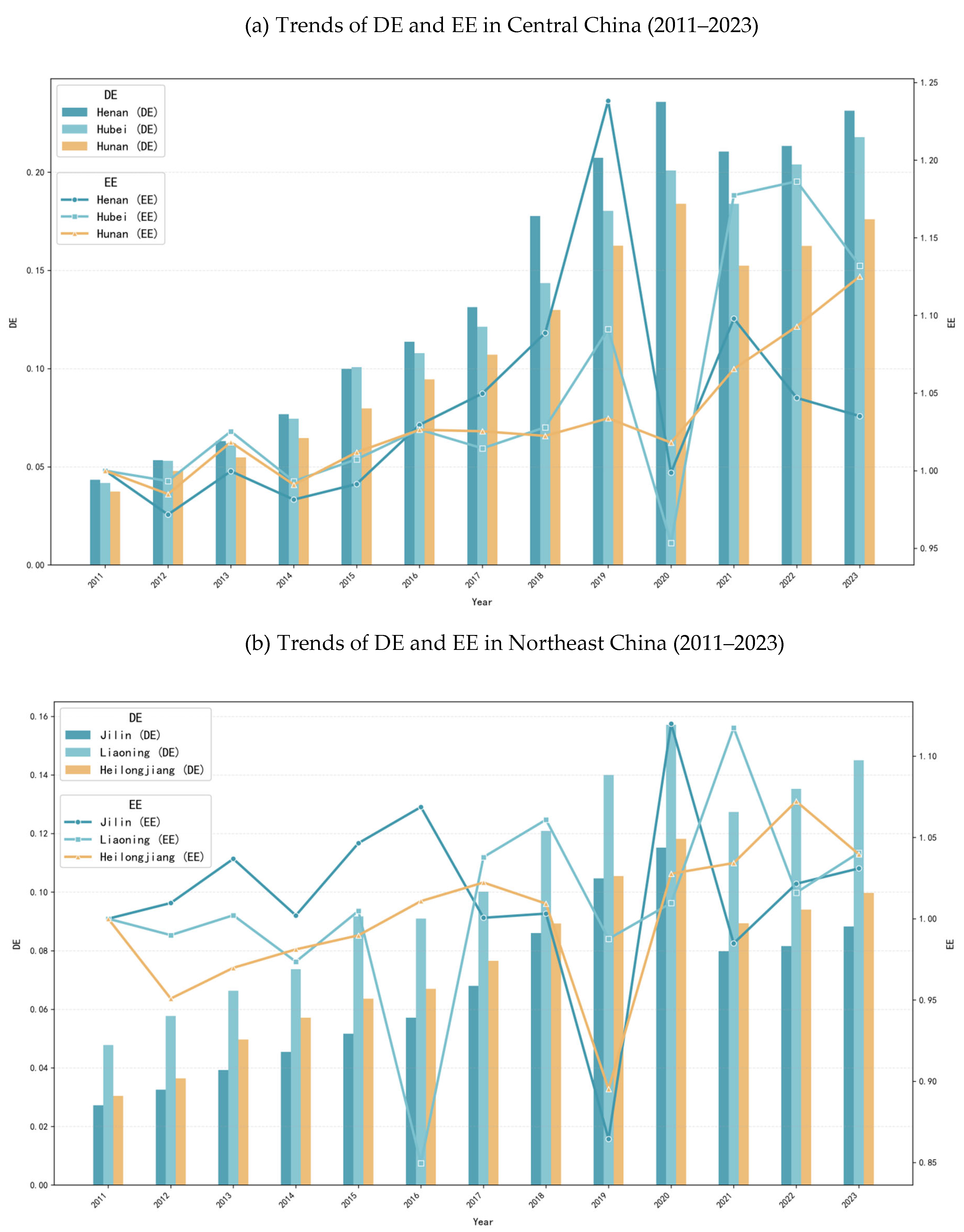
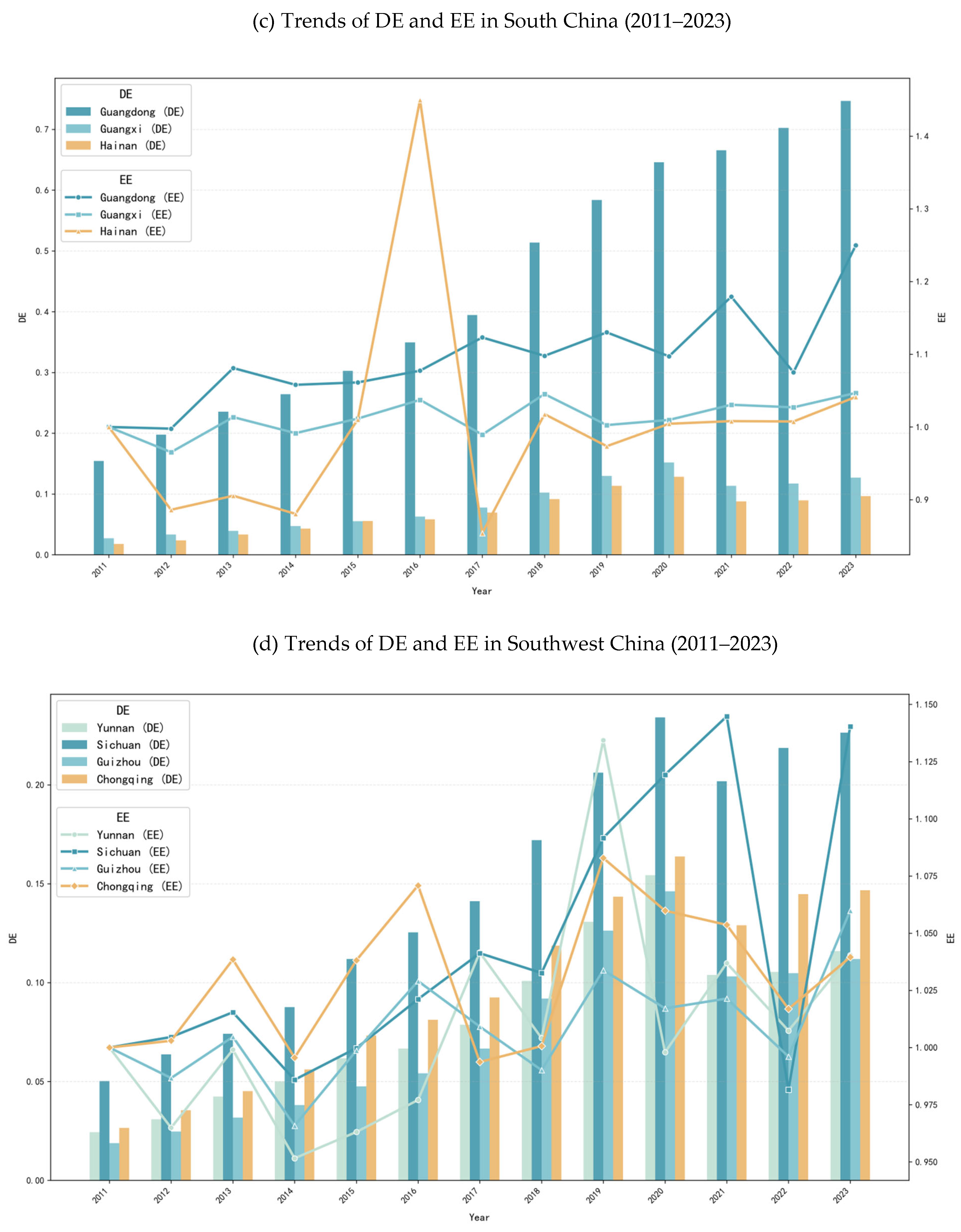
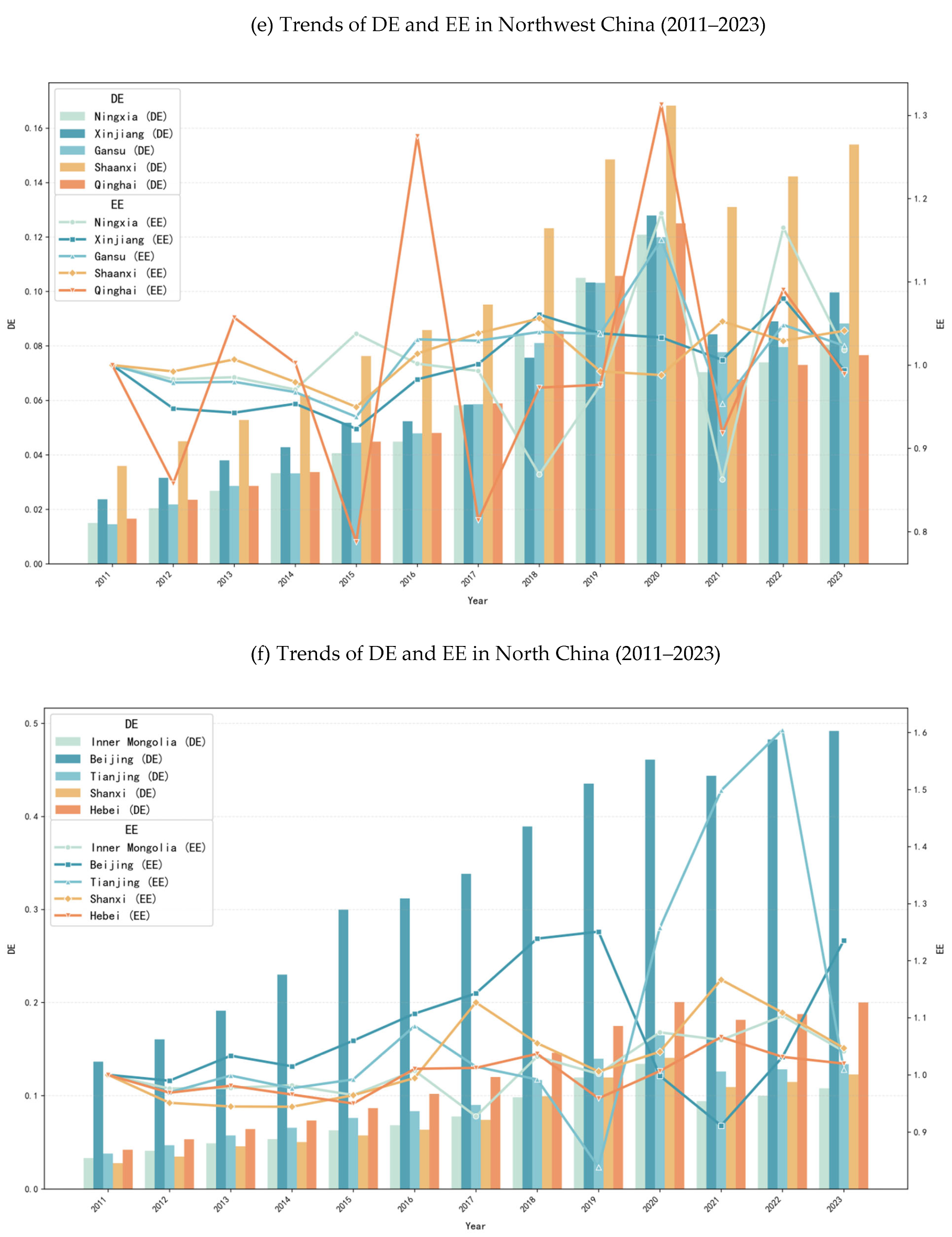
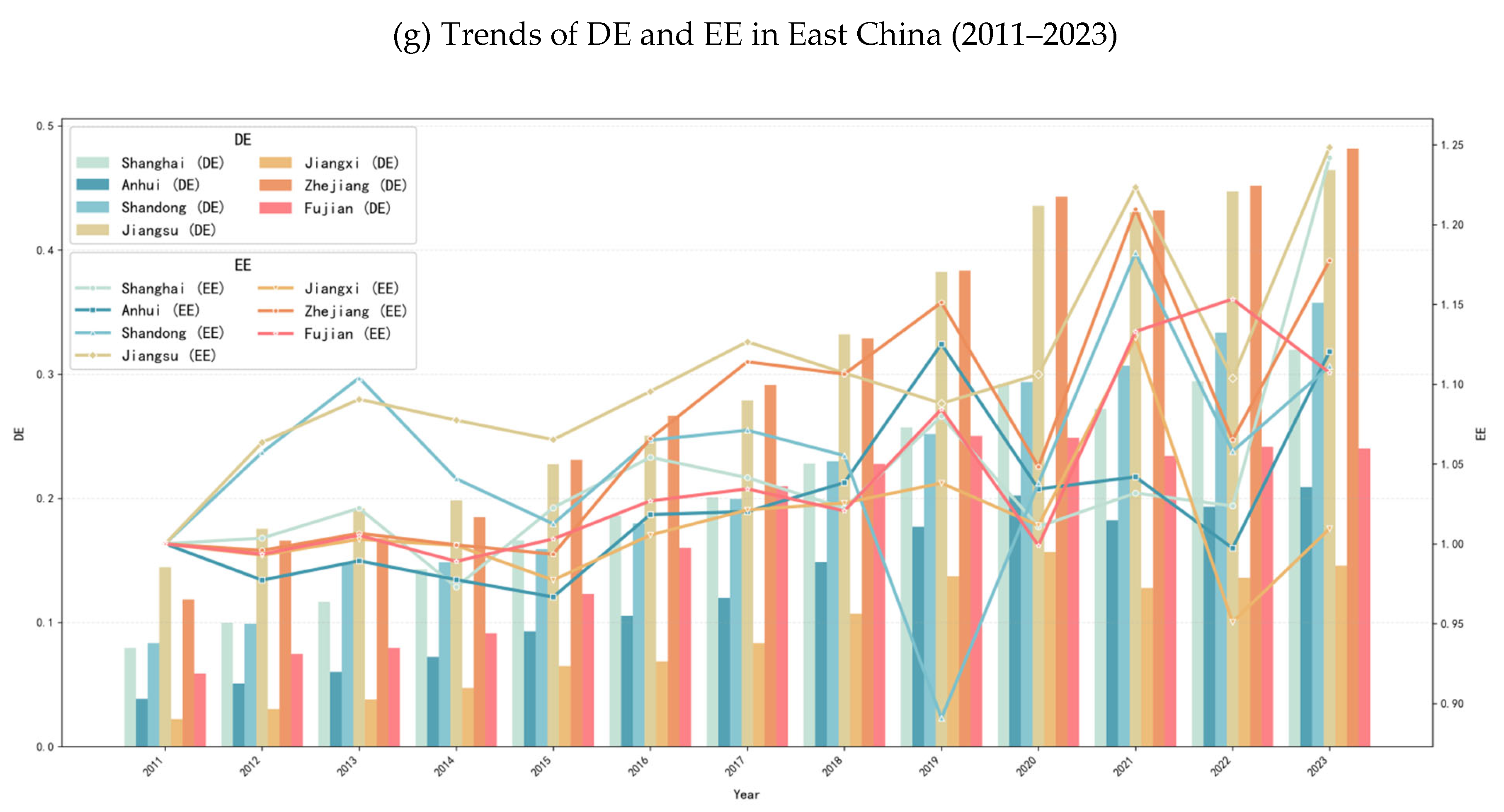
Figure A1 in the
Appendix A depicts the evolving trends of the digital economy (DE) and energy efficiency (EE) across China’s 30 provinces, grouped into 7 major regions, from 2011 to 2023. The results reveal a clear upward trajectory in DE across all provinces over this period, suggesting that its development momentum is becoming increasingly strong. Notably, eastern provinces show markedly higher growth rates and absolute levels of DE compared to central and western regions. In contrast, EE does not follow a uniform, unidirectional trend nationwide. While showing an overall positive trajectory, it is characterized by pronounced interannual fluctuations, with significant divergence in EE trends across different regions and time periods. Visually, the long-term rise in DE does not correspond to a linear synchronous change in EE at the provincial level, but presents complex time-phased synchronization and deviation characteristics, with notable differences across regions. The specific associational patterns between DE and EE will be systematically verified and deconstructed through the model analysis in subsequent sections.
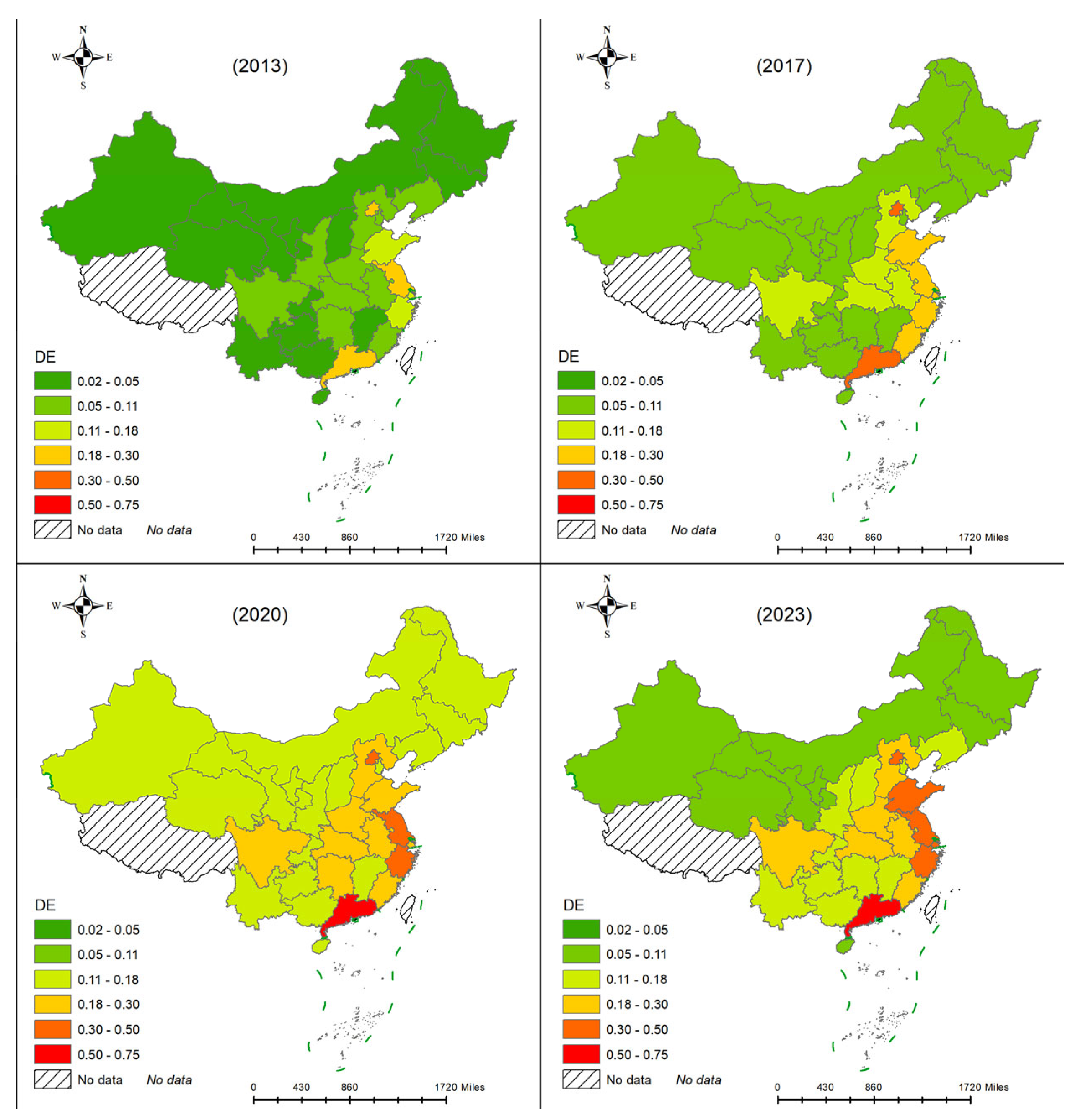
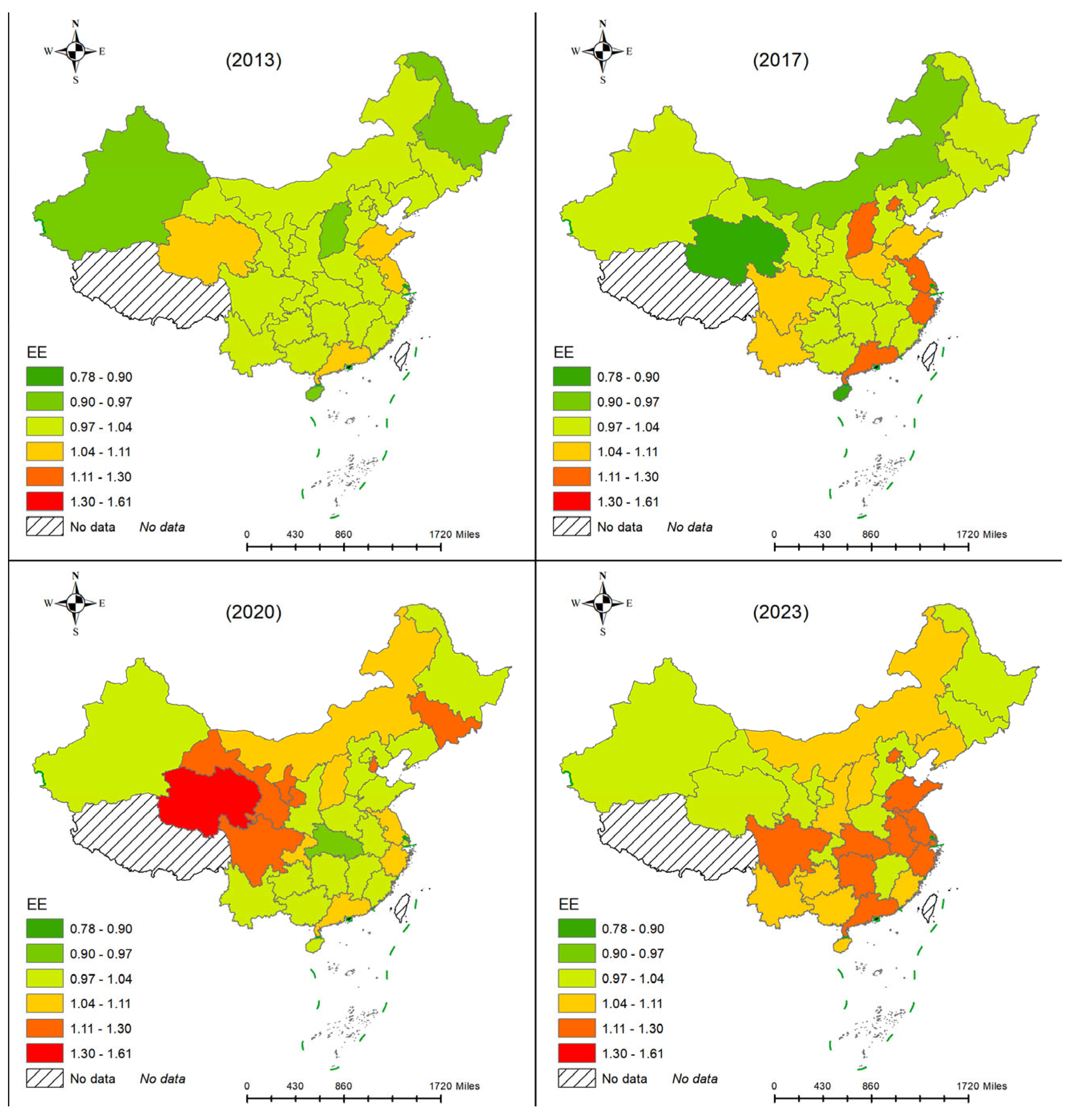
Figure 2 and
Figure 3 present a comparative analysis of energy efficiency and digital economic development levels across four specific years from 2011 to 2023, revealing an overall upward shift in the range between different years.
The higher the Digital Economy Development Index (DE) value, the more advanced the development level. The evolution of China’s provincial digital economy development from 2011 to 2023 reveals an overall steady upward trend, marked regional disparities, and a gradual expansion of high-value clusters.
In 2013, the overall level remained relatively low, with over 80% of provinces concentrated in the low-value range (represented by deep and light green areas). Only a few developed coastal provinces in eastern China fell into the high-value category. With the release of the Broadband China Strategy and Implementation Plan, the nationwide broadband speed-up, cost-reduction, and coverage initiative has been launched. The digital economy was in its nascent stage across the country, with resources highly concentrated in the eastern coastal regions. Central and western areas remained largely at low levels, resulting in pronounced regional disparities. In 2017, after the digital economy was elevated to a national strategy, its overall level increased, serving as a core engine for high-quality economic development, while high-value regions expanded locally. The lowest range increased from 0.03 to 0.06, though development levels remained concentrated in the low-to-medium range. Beijing, Guangzhou, Jiangsu, Zhejiang, and Shanghai accelerated their digital industry deployments, expanding the high-value DE range to 0.33–0.39.In 2020, the designation of six provinces and municipalities—Hebei (Xiong’an New Area), Zhejiang, Fujian, Guangdong, Chongqing, and Sichuan—as National Digital Economy Innovation and Development Pilot Zones spurred a significant rise in the overall level and accelerated the diffusion of digital resources toward central regions. In 2023, the East Data West Computing initiative accelerated the transfer of digital resources to central and western regions while mandating the deep integration of digital technologies with green development. The minimum DE index for central and western regions stabilized at 0.08, with more provinces entering the 0.21–0.34 range. Meanwhile, eastern regions benefited from the Digital China master plan, achieving a high DE index exceeding 0.75 and solidifying a stable pattern of “eastern leadership and central-western catch-up.”
From 2011 to 2023, China’s overall energy efficiency has steadily converged toward the “green production frontier,” while regional disparities have narrowed. High-efficiency zones expanded from scattered areas in the eastern region in 2013 to gradually encompass core areas in central and western China. Their spatial distribution pattern closely mirrors the evolution trajectory of DE.
In 2013, energy efficiency exhibited substantial spatial disparities, with most provinces experiencing efficiency losses. Only a few eastern provinces reached frontier efficiency ( ≥ 1). Deep green, light green, and yellow regions ( < 1) covered most western and central provinces, indicating energy efficiency losses, characterized by excessive energy inputs and higher pollution emissions. Among these, western regions (such as Xinjiang) in the 0.91–0.95 range, reflecting relatively severe losses. The Air Pollution Prevention and Control Action Plan has driven emissions reductions in energy-intensive industries across eastern China. A few provinces, including Shandong and Jiangsu, entered the high-value range (red, 1.06–1.1), revealing an uneven pattern of “eastern leadership with central-western lag.” In 2017, the front-running areas expanded, but localized energy efficiency losses intensified. In several northwestern regions, efficiency losses worsened relative to 2013, accompanied by more pronounced energy waste and pollution emissions. Orange and red zones ( > 1) expanded from eastern to central core provinces, with more regions achieving synergistic efficiency in “energy–economy–environment” and green production models beginning to spread. Following the introduction of the dual-carbon goals in 2020, efficiency losses were substantially mitigated, moving the country closer to the green frontier. Most central provinces have achieved extremely minimal energy efficiency losses, with energy inputs and pollution emissions nearing optimal levels. The 14th Five-Year Plan for Green Industrial Development (2023) further accelerated the green and low-carbon transformation of China’s industrial sector. By 2023, the country has largely entered the green production frontier, with a few eastern provinces reaching the ultra-high value range, exhibiting a balanced pattern characterized by “High level overall with local leadership.”
5.2. Feature Contribution Based on SHAP
5.2.1. Feature Importance Analysis
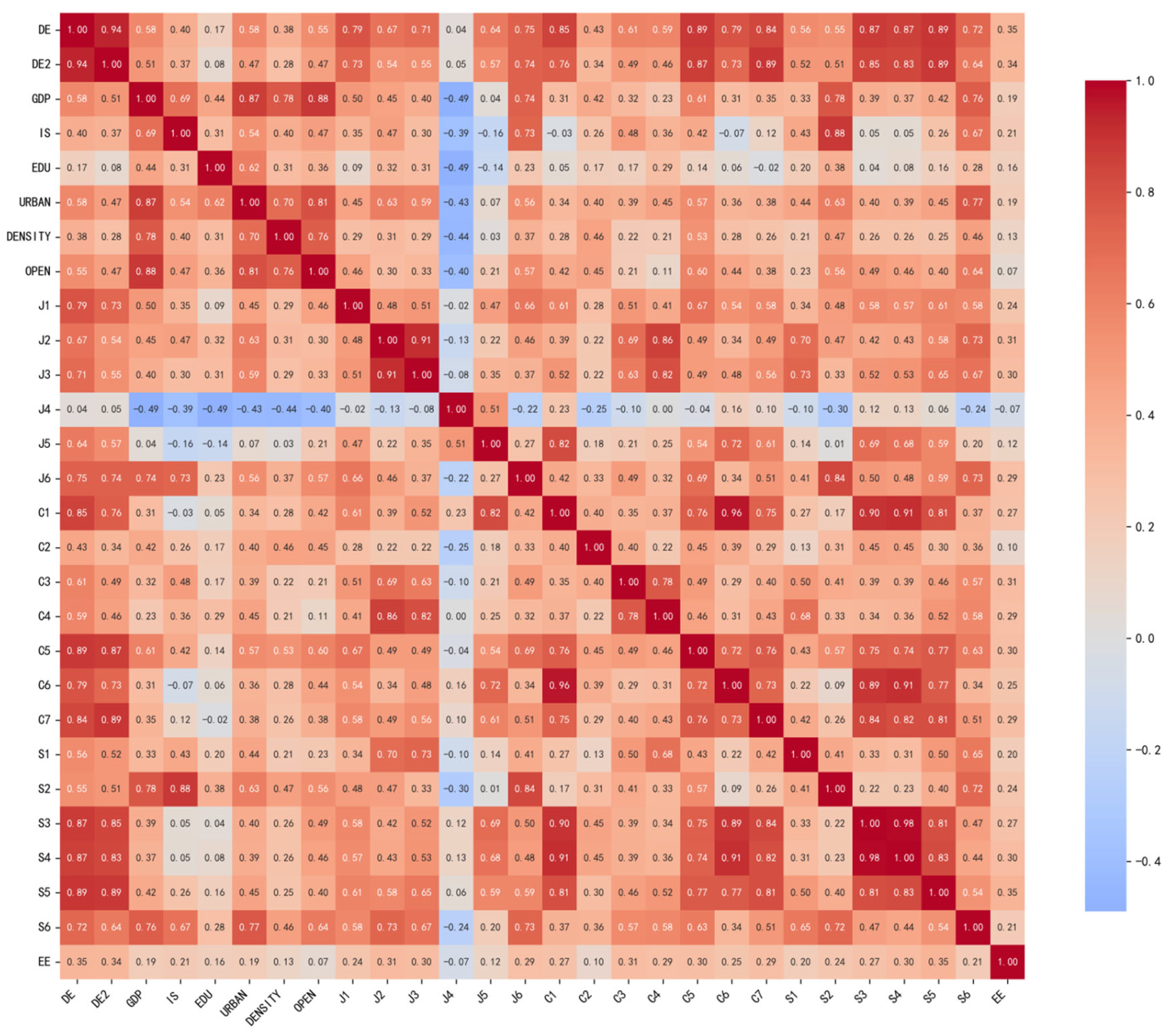
Figure 4 displays a heatmap of Pearson correlation coefficients, reflecting the strength of linear associations between variables. EE shows positive correlations with most variables and a weak negative correlation with the length of long-distance optical cable lines (J4). Overall, the correlation strengths are modest, with most coefficients ranging between 0.2 and 0.35. Among the digital-economy-related variables, 11 show correlation coefficients with EE exceeding 0.28. Notably, S5 (0.3510), DE (0.3476), and its squared term (DE
2, 0.3412) rank in the top three, all indicating moderate positive correlations. The positive correlation between the DE composite index and EE (r = 0.347) is consistent with the observation that provinces with higher digital economy development levels on average show higher energy efficiency on average. Meanwhile, the comparable magnitude of the correlation coefficient for the squared term (DE
2) hints at potential nonlinearity in the bivariate relationship. The most prominent factors within the sub-dimensions are S5, J2, and C3, suggesting that the scale of the digital industry, infrastructure coverage, and corporate digital participation are the digital economy facets most closely associated with EE in terms of linear covariation. All control variables display relatively weak correlations with EE. Among these, industrial structure (0.2116) showed the strongest correlation, which is consistent with the pattern that a shift toward a service-oriented industrial structure is often accompanied by improved energy efficiency. The degree of openness to foreign investment (0.0689) exhibits the lowest correlation. This finding suggests that, in this sample, the introduction of foreign investment did not produce the expected “green technology spillover” effect.
Table 8 reports the feature importance rankings derived from the LightGBM (LGB) and CatBoost (CB) models. Among the top 10 most important features, nine belong to the digital economy dimension. Specifically, three are from the industrial digitalization (C) dimension, four from the digital industrialization (S) dimension, and two from the digital infrastructure (J) dimension. This indicates that, within the predictive framework of these models, digital economy features exhibit substantially higher relevance to EE prediction than conventional development indicators. Features such as C3, EDU, S5, and J2 rank consistently high in both models, demonstrating stable predictive utility across different ensemble architectures. The importance of control variables, however, varied considerably. Educational attainment (EDU) ranked second overall and performed exceptionally well in both models, which is consistent with the interpretation that highly skilled talent plays an important role in energy management. Notably, economic development level (GDP) ranked last in importance. Against the backdrop of the digital economy, GDP growth alone shows a weaker association with energy efficiency improvements. Instead, the quality of economic development—particularly the depth and breadth of digital transformation—has taken center stage.
The two models yield divergent results in feature importance analysis. The mobile phone facility scale (J5) ranks 3rd in importance in the CatBoost model, while it ranks 23rd in importance in the LightGBM model. This discrepancy can be attributed to J5’s high correlation with other digital infrastructure features. CatBoost mitigates multicollinearity through adaptive weight adjustment, isolating J5’s independent contribution. Conversely, LightGBM’s histogram-based feature merging process may weaken this independent contribution, diluting its effect into more strongly correlated features and consequently lowering J5’s importance ranking. As a core ICT component, the energy-saving effect of mobile infrastructure is highly contingent on interactions with other variables, forming a complex, nonlinear relationship. In the short term, increased base station construction directly raises energy consumption. Over the long term, indirect energy-saving effects gradually outweigh direct energy consumption, creating a dynamic pattern of “short-term negative impact, long-term positive impact.” Meanwhile, the significance of the overall level of digital economic development (DE) and its squared term (DE2) is lower than that of specific digitalization indicators. This indicates that the digital economy influences EE mainly through sector-specific digitalization, rather than through a simple linear association with the overall digital economy level.
5.2.2. SHAP Contribution Factors
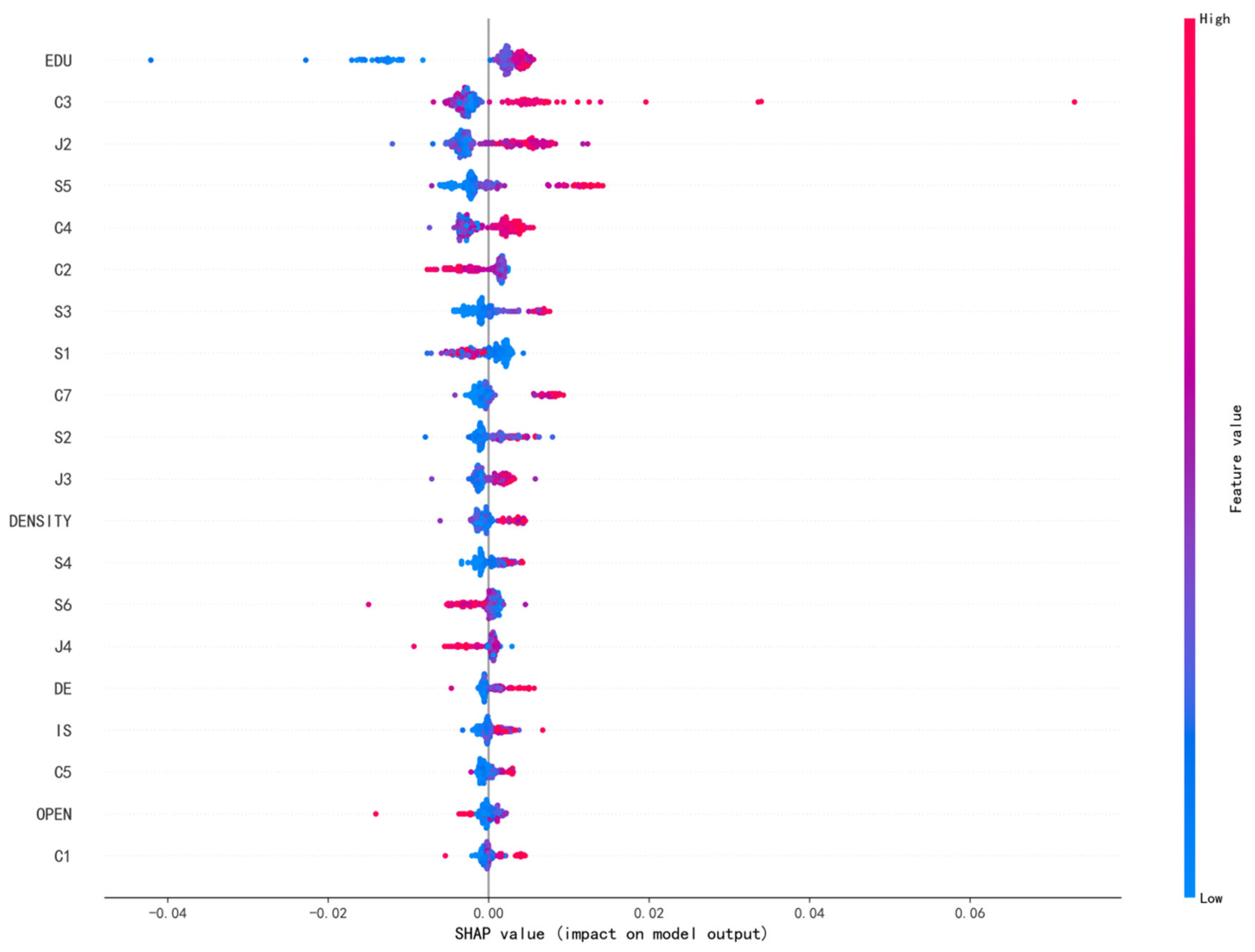
Figure 5 presents the SHAP summary plot derived from the combined LightGBM and CatBoost ensemble models, illustrating the magnitude and direction of each feature’s contribution to the predicted value of energy efficiency. The plot further reveals the nonlinear and heterogeneous patterns of these predictive contributions across different feature value ranges. The horizontal axis represents the SHAP value: a positive value indicates that the feature contributes positively to the model’s prediction, while a negative value indicates a downward contribution. The vertical axis ranks features by their overall impact on the model (top = highest combined SHAP value across both models). Colors represent the magnitude of the feature’s value: red indicates a high value, while blue indicates a low value. It is important to note that SHAP scores quantify how each feature influences the model’s output, rather than measuring its causal effect on actual energy efficiency.
In the integrated model, the core characteristics of the digital economy are positively correlated with EE predictions. Among these factors, the proportion of enterprises engaged in e-commerce activities (C3) emerges as the feature with the highest predictive contribution. Most SHAP values fall above zero, with higher values (red) indicating a more concentrated positive contribution. In the model’s predictions, higher e-commerce adoption by enterprises is positively associated with energy efficiency, suggesting that industrial digitization is a highly relevant dimension for predicting EE. The Internet broadband penetration rate (J2) also shows a high overall SHAP contribution. When J2 values are high (red), the SHAP values are mostly positive; conversely, low values (blue) are associated with negative SHAP contributions. This pattern is consistent with the presence of threshold characteristics in the relationship between J2 and EE: digital technology advances may translate into positive EE associations only when broadband penetration reaches a certain level. Below that level, inadequate digital infrastructure is associated with weaker or even negative predicted effects on EE. The SHAP values for the number of legal entities in the information services sector (S5) are largely positive, suggesting that digital–industry clustering facilitates technology diffusion and application, thereby extending the reach of energy conservation and emission reduction.
Compared to the characteristics of the digital economy, the SHAP values for other control variables are scattered, contribute little, and lack stability. The SHAP values for educational attainment (EDU) also exhibit a broad distribution in the negative range. This phenomenon does not imply that education itself inhibits EE; rather, it is consistent with the interpretation that there may be a mismatch between the existing talent pool and the practical application of digital and energy-saving technologies within the model’s predictions. Educational resources show limited direct association with energy efficiency gains, necessitating integration with digital economy scenarios to achieve meaningful results.
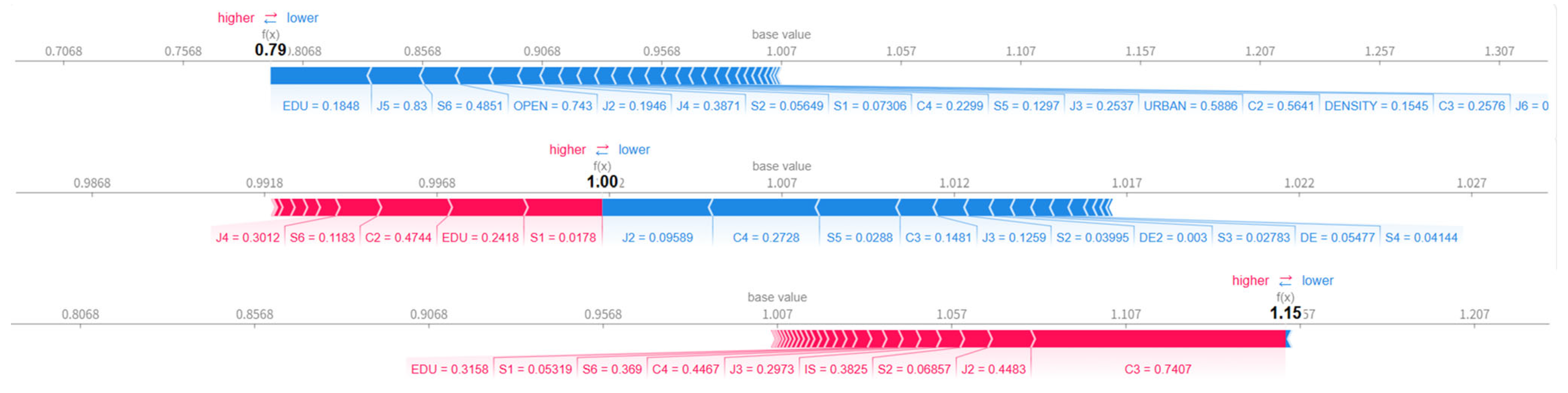
Figure 6 illustrates the feature contribution decomposition of energy efficiency prediction values across different samples, based on eigenvalue magnitude and direction of contribution. The horizontal axis represents the predicted EE values. The Base Value (model baseline) is 1.007, corresponding to the sample average. Red indicates high-value features that increase predicted values, while blue indicates low-value features that decrease predicted values. The length of each color block represents the degree of contribution. This study primarily selected three typical sample types for analysis: high predicted values, median values, and low predicted values.
The low-efficiency sample (prediction f(x) = 0.79) falls well below the baseline. Here, digital economy features take relatively low values and are associated with predominantly negative SHAP contributions. Infrastructure-related features (J5, J2, J4, etc.) appear blue, exerting a pronounced negative pull on the predicted value. This pattern suggests that, within the fitted ensemble model, lower levels of digital infrastructure coverage tend to co-occur with lower predicted energy efficiency. The medium-efficiency sample (f(x) = 1.00) exhibits an equilibrium pattern dominated by digital economy characteristics. Telecommunications services per capita (S1) emerges as the primary positive driver, highlighting the pivotal role of digital industrialization in this range. Concurrently, the digital financial inclusion index (C4) and proportion of enterprises engaged in e-commerce activities (C3) made positive contributions to the predicted values, consistent with the view that the industrial digitization dimension is closely linked to higher predicted energy efficiency. Educational attainment (EDU) and broadband penetration (J2) show positive but weak contributions, reflecting diminishing marginal returns on these inputs. High-efficiency samples (f(x) = 1.15) exhibit significantly higher predicted values than the baseline, with high digital economy characteristics driving the positive contribution. The proportion of enterprises with e-commerce activities (C3) appears in red, indicating that this high-value range is associated with a significant upward revision of the predicted EE value. When core elements of the digital economy reach advanced levels, they can optimize supply chains and production processes, which is linked to improved energy efficiency. This represents the key to how high-efficiency samples achieve “low energy consumption, low pollution, and high output.”
5.3. The Nonlinear Relationship Between DE and EE
5.3.1. Spatial Distribution Characteristics and Typical Provinces
This study uses a trained STGNN model to extract the nonlinear curves of DE versus EE for each province. A rolling window approach is employed. With the DE value from the last period of the window as the x-axis variable and the corresponding EE value from the next period of the window as the y-axis variable, a provincial DE-EE time-series scatter plot is constructed, and ordinary least squares (OLS) is used to estimate a quadratic polynomial fitting equation.
The impact of the digital economy on energy efficiency can be categorized into three nonlinear patterns: U-shaped effects, inverted U-shaped effects, and weakly correlated patterns.
Specifically, if the coefficient of the quadratic term (a) is significantly positive at the 5% statistical significance level, the adjusted R2 of the fitted equation is ≥0.20, and the amplitude of the curve’s response is no less than 3.2 times the standard deviation of the fitted values, this indicates a U-shaped pattern. When a is significantly negative at the 5% statistical level, the adjusted R2 of the fitted equation is ≥0.20, and the amplitude of the curve’s response is no less than 0.8 times the standard deviation of the fitted values, this indicates an inverted U-shaped pattern. All other cases are classified as weak correlations. Given the limited effective sample size of the annual provincial panel data and the tendency for boundary observations to cause significant fluctuations in the location of inflection points, this study does not treat “the inflection point falling within the sample observation range” as a strict exclusion criterion. Instead, it is used only as supplementary explanatory information for pattern characteristics to avoid result biases caused by overclassification.
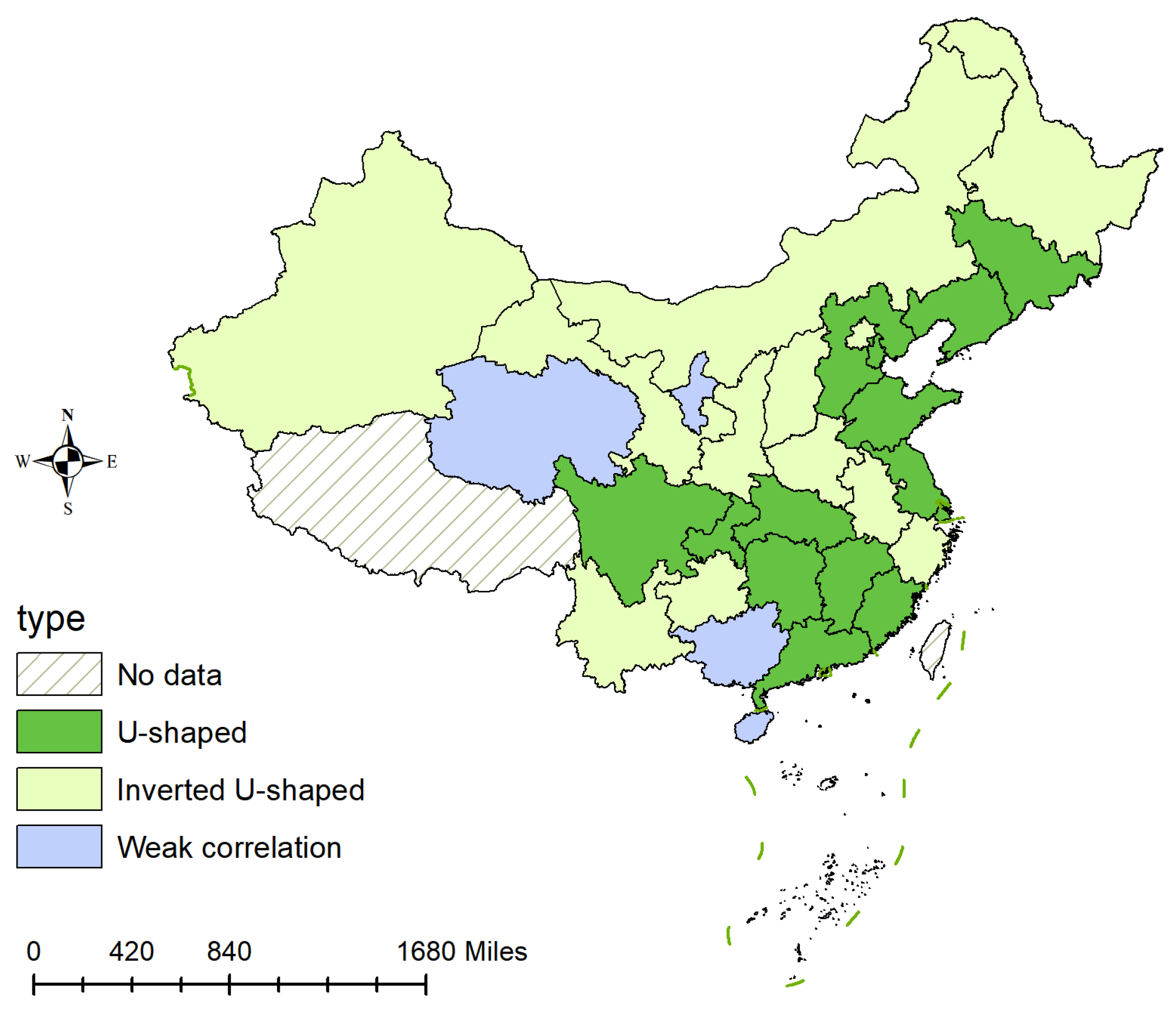
Figure 7 illustrates the spatial distribution of the impact types of the DE on EE at the provincial level nationwide, revealing pronounced regional clustering patterns. The southeastern region exhibits a dominant U-shaped pattern, while the central and western regions concentrate in an inverted U-shaped distribution.
The U-shaped pattern (dark green) is concentrated in China’s eastern coastal regions, the Yangtze River Delta, the Pearl River Delta, and the core industrial belt of Central China. These areas exhibit a high degree of alignment between China’s digital economy and its industrial foundation. Their economies tend to be centered on high-end manufacturing or modern services. The fitted response curves indicate that, during the early stages of DE development, higher DE levels are initially associated with relatively lower predicted EE. The infrastructure investments and equipment upgrades led to short-term increases in energy consumption. However, once a critical threshold is surpassed, the synergistic effects of industrial digitalization and the integration of core digital economy models are unleashed. This drives cost reduction and efficiency gains, leading to sustained improvements in energy efficiency. This inflection in the response curve suggests a transition of digital technologies from an “initial energy-investment phase” to an “energy-saving effect release phase.” Meanwhile, industrial structure upgrading and green technological innovation serve as key drivers of the U-shaped effect. Provinces in this category show significantly higher shares of high-end manufacturing and greater innovation technology investment compared to other provincial types. This suggests that industrial restructuring and green technological innovation are factors closely linked to energy efficiency. In addition, provinces exhibiting a U-shaped pattern tend to cluster spatially, suggesting that geographical proximity may help facilitate technology sharing and synergies.
The inverted U-shaped pattern (light green) is observed in 12 provinces, primarily located in the Northeast’s old industrial bases, the energy-dependent regions of the Northwest, and resource-rich provinces in the Southwest. These provinces have industrial structures dominated by energy extraction and traditional heavy chemical industries. In the fitted response curves for these provinces, the relationship between the level of digitalization (DE) and predicted energy efficiency (EE) typically rises initially and then declines. This pattern is consistent with the potential impact of the energy rebound effect and constraints on capacity expansion. Specifically, in these resource-rich provinces, as digital transformation deepens, the initial gains in energy efficiency resulting from the adoption of digital technologies may be partially offset by the expansion of energy-intensive production capacity. The resulting increase in energy consumption outweighed the energy-saving effects of digital technologies, leading to a net decline in EE. Meanwhile, the relatively low level of human capital also serves as a key factor undermining the long-term energy-saving effects in these provinces. In Anhui and Zhejiang, the pattern differs slightly: initial growth is followed by a stabilization phase. At moderate levels of digitalization, supply chain optimization is closely linked to improvements in energy efficiency; however, at higher levels, the marginal relationship between further increases in digitalization and improvements in energy efficiency weakens, leading to a plateau in energy efficiency rather than a sustained upward trend.
The weak-correlation pattern (light blue) is observed only in Guangxi, Hainan, Qinghai, and Ningxia. These provinces exhibit a relatively monolithic industrial structure, with lagging indicators for industrial digitization and digital industrialization. They have achieved only preliminary coverage of digital technologies, exerting minimal influence on energy efficiency. The association between EE and DE is weak, indicating a lack of industrial-level digital transformation. Consequently, energy-saving effects are unstable, owing to the insufficient depth of DE intervention in EE. Inadequate investment in digital factors and lack of industrial adaptability result in insignificant correlation.
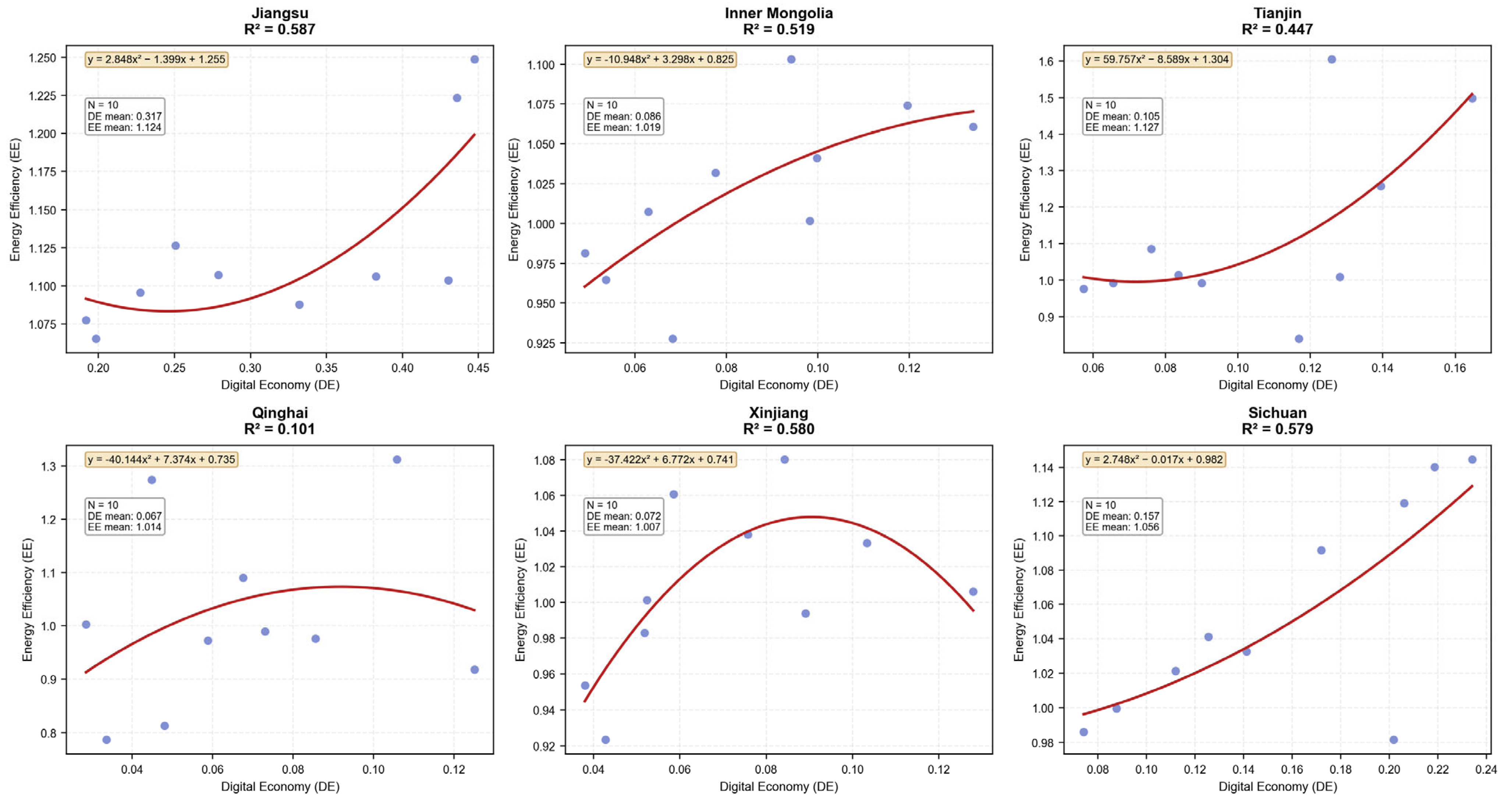
Figure 8 presents the STGNN quadratic fitting results for DE and energy efficiency EE across six representative provinces—Xinjiang, Inner Mongolia, Tianjin, Qinghai, Jiangsu, and Sichuan—illustrating the distinct conditional associations between DE and predicted EE that emerge under different industrial characteristics and levels of digital integration. Inner Mongolia, a typical energy-dependent province with a large coal and thermal power sector, displays an inverted U-shaped pattern in which EE initially rises and then stabilizes, not yet reaching the threshold for decline. Digital technologies have been accompanied by a shift from expanding traditional energy production capacity to promoting energy efficiency in the new energy sector. However, due to the industry’s high dependence on energy, there remains a risk of declining energy efficiency in the future. Xinjiang exhibits pronounced inverted-U characteristics, with digital technologies driving large-scale expansion of the energy sector and amplifying energy consumption in high-energy-intensive industries. In Qinghai, DE has long remained below 0.15, and R&D investment is only about 2% of the national average. The province faces a shortage of digital elements, while its pillar industries lack sufficient scope for digital transformation, rendering them unable to exert an effective influence on EE. Sichuan Province exhibits a strong positive correlation driven by a U-shaped pattern. As the level of digital economic development increases, predicted energy efficiency shows a steady upward trend. The deepening integration of digital technologies with the real economy allows the digital economy to promote efficient energy use through optimized resource allocation and enhanced production efficiency. Tianjin and Jiangsu, both high-end manufacturing regions, display a U-shaped relationship between DE and predicted EE, suggesting that digital elements are linked to tangible EE gains in the model’s predictions. During the early stages of DE development, both regions invested heavily in energy to build industrial internet infrastructure and upgrade production equipment, leading to a short-term decline in energy consumption. Following the implementation of industrial digital transformation, energy savings were achieved in high-energy-consuming industries.
5.3.2. Stability Testing
To verify that the aforementioned nonlinear classification results were not merely random outputs caused by random model initialization, this study kept the dataset partitioning, model architecture, and training process constant, and the STGNN model was trained repeatedly using 30 different random seeds. After each training run, the nonlinear patterns for each province were re-evaluated according to a uniform set of rules, and the frequency and stability of the classification results for each province were statistically analyzed. The key statistical results are presented in
Table 9.
The results show that the average number of identified patterns for the U-shaped and inverted U-shaped models were 13.70 and 13.87, respectively, accounting for a combined 91.9% of the total sample. The core conclusion—that a significant nonlinear relationship exists between the digital economy and energy efficiency—is highly robust and does not depend on specific random initialization conditions. It should be noted that classification results still exhibit some fluctuation at the provincial level, with provinces oscillating between the U-shaped and inverted U-shaped patterns. This is primarily due to the transitional characteristics at the boundaries of the two patterns: for provinces where the digital economy is near an inflection point, the sign of the quadratic term coefficient in the DE-EE curve is highly sensitive to model initialization.
5.4. Spatial Correlation Patterns: Model-Implied Associations from Counterfactual Simulations
5.4.1. Counterfactual Simulation
This section conducts counterfactual simulation analyses using the trained STGNN model, with Jiangsu and Guangdong provinces as the target regions. These two provinces are at the forefront of China’s digital economy development, serving as the core growth poles of the Yangtze River Delta and Pearl River Delta, respectively. They boast well-developed digital infrastructure and rank among the nation’s leaders in terms of the depth of industrial digitization, making them representative examples of the radiating and driving effects of digital economic development.
While holding all other characteristics constant, we apply an exogenous positive shock solely to the level of digital economic development in the target provinces and use the STGNN model to predict the counterfactual values of energy efficiency following the shock. Following mainstream macroeconomic conventions, we set the baseline positive development (DE) shock to +0.5 standard deviations (SD). The post-shock DE value falls within the observed sample range (with a maximum of 0.75) and correspond to the level of growth under the national average over 2 to 3 years under current policies. Meanwhile,
Section 5.4.2 reports sensitivity tests of ±0.25 standard deviation and ±0.75 standard deviation.
The counterfactual simulation results for Jiangsu Province after a 0.5 standard deviation increase in DE are shown in
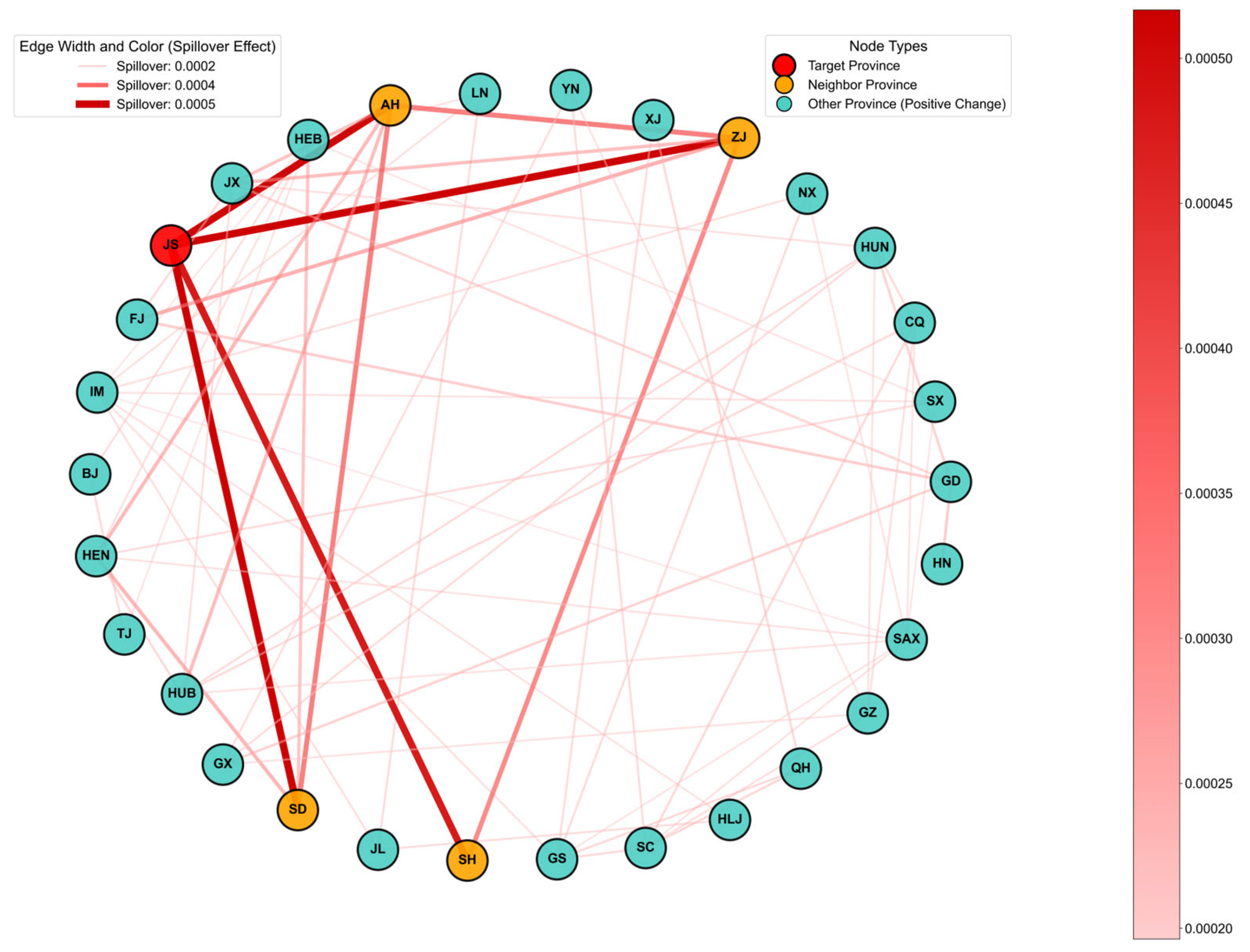
Table 10. Overall, the findings suggest a pattern of pronounced direct associations, spatial propagation in model predictions, and clear geographic attenuation. Benefiting from its large-scale digital economy and advanced infrastructure, Jiangsu possesses robust capabilities for technology diffusion and industrial linkage effects. Key quantitative indicators show that the simulated increase in DE is correlated with a positive adjustment in Jiangsu Province’s projected EE (0.00112 units, accounting for approximately 0.10% of the baseline value). At the same time, through spatial linkages, this adjustment spreads to neighboring provinces, leading to positive projected changes in their energy efficiency (EE) values. The average absolute increase in the predicted EE across four neighboring provinces was 0.000455 units, representing a relative increase of 0.045%. The magnitude of the neighboring-province response reached about 40.6% of the adjustment predicted for Jiangsu. In terms of response magnitude rankings, Anhui > Shandong > Zhejiang > Shanghai. This pattern aligns closely with regional economic interconnections. Anhui and Shandong exhibit the strongest predicted responses, followed closely by Zhejiang. As a top-tier city, Shanghai possesses a high baseline in digital economy and energy efficiency, resulting in a weaker predicted marginal association from Jiangsu’s simulated increase. In contrast, Anhui and Shandong remain in the mid-stage of digital transformation, making them show stronger conditional associations with Jiangsu’s radiating influence.
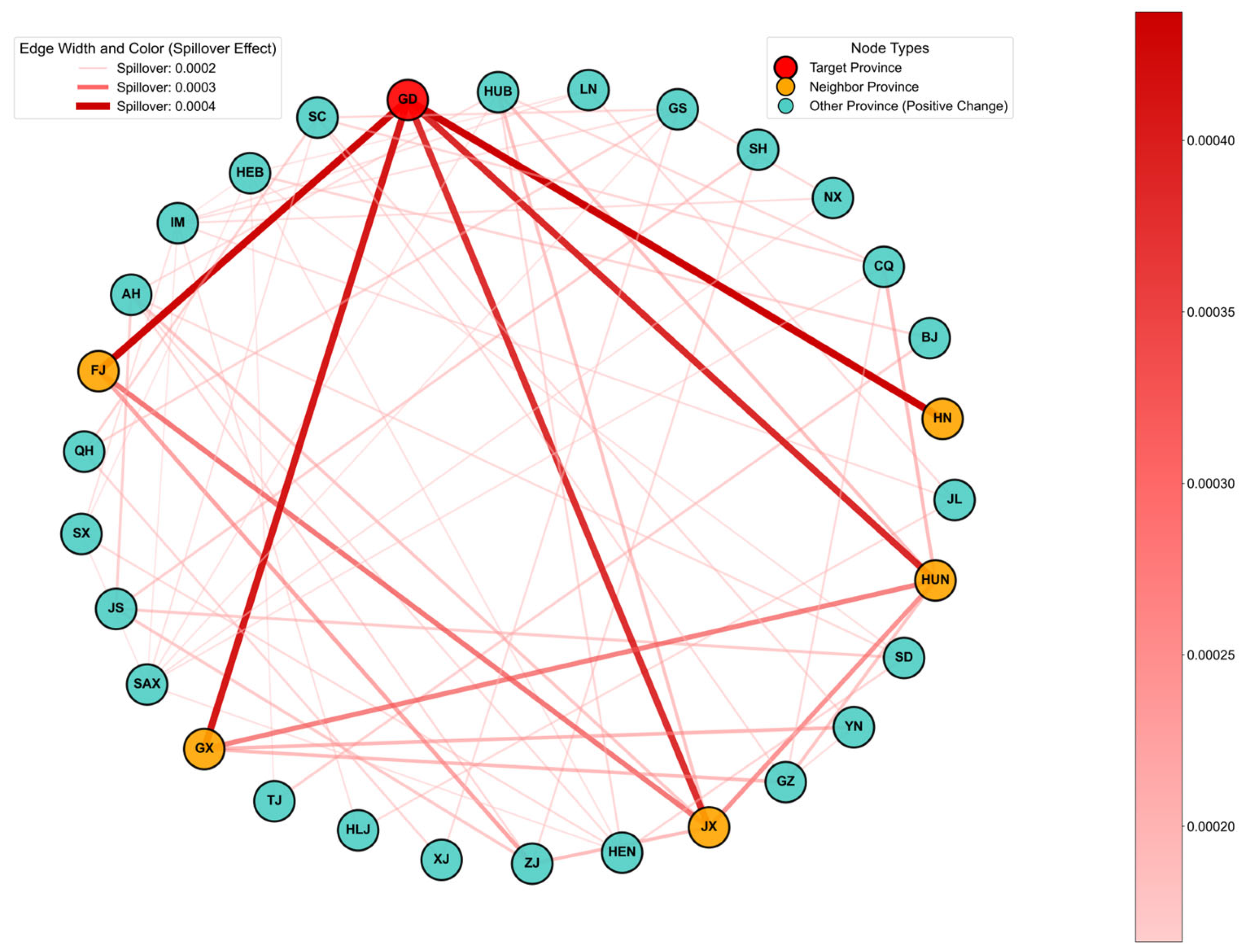
Table 11 presents the counterfactual simulation results for Guangdong Province following a 0.5 standard deviation increase in DE, yielding a pattern generally consistent with that observed for Jiangsu. The simulated growth in DE for Guangdong Province is associated with a positive adjustment in its projected energy efficiency—an adjustment that is slightly smaller than the projected value for Jiangsu. Nevertheless, the model predicts that this adjustment will still have a significant ripple effect on neighboring provinces. Multiple neighboring provinces benefit synergistically, achieving an average energy efficiency (EE) improvement of 0.00040 units, representing a relative increase of 0.038%. This model-implied spatial association ratio in Guangdong Province accounts for 43.36% of its own impact, slightly exceeding that of Jiangsu Province. This is consistent with Guangdong’s status as the hub of the digital economy in South China and its radiating influence. Unlike Jiangsu and its neighboring provinces, which primarily focus on manufacturing collaboration, Guangdong and its neighboring provinces leverage their diversified industrial structures to build regional industrial collaboration networks by harnessing complementary advantages. The extent of the impact on neighboring provinces is closely linked to the level of connectivity in factor markets and the development of digital infrastructure. Specifically, the projected changes in Hunan and Jiangxi provinces are relatively moderate, which is consistent with the high proportion of traditional industries in their economies.
The spatial network diagram (
Figure 9 and
Figure 10) further illustrates the spatial propagation patterns reflected by the model’s predictions. Connecting edges between target provinces and neighboring provinces are thicker and darker in color, indicating that the model predicts stronger cross-province adjustments for geographically adjacent units than for non-neighboring provinces. At the same time, the magnitude of the predicted changes diminishes as spatial distance increases, a pattern consistent with the law of spatial decay. Geographical proximity is associated with lower marginal costs of digital technology diffusion and information transmission, and is further linked to stronger predicted effects through pathways such as industrial synergy and cross-regional factor mobility. In contrast, the model shows that remote provinces exhibit a weaker response to the economic growth driven by core cities, which is consistent with transaction costs and barriers to factor mobility caused by geographical distance.
5.4.2. Robustness Testing for Multi-Gradient Shocks
To verify that the baseline findings are not dependent on the magnitude of a specific shock, this study further conducts multi-gradient shock simulations using 0.25 and 0.75 standard deviations; the results are shown in
Table 12.
Under the full-gradient shock scenario, both the absolute change and relative increase in model-predicted EE within Jiangsu and Guangdong provinces expanded in tandem with the increase in the magnitude of the DE shock, with no reversal in direction observed. The simulated DE increase in both provinces shows a positive model-implied spatial association with the predicted EE of neighboring provinces, with the Model-implied spatial association ratio remaining stable within the range of 39–45%. No negative siphoning effect was observed in the model predictions, and the core conclusion regarding the spatial associational pattern is not affected by the magnitude of the shock.
5.5. Heterogeneous Impacts of Different Aspects of DE on EE
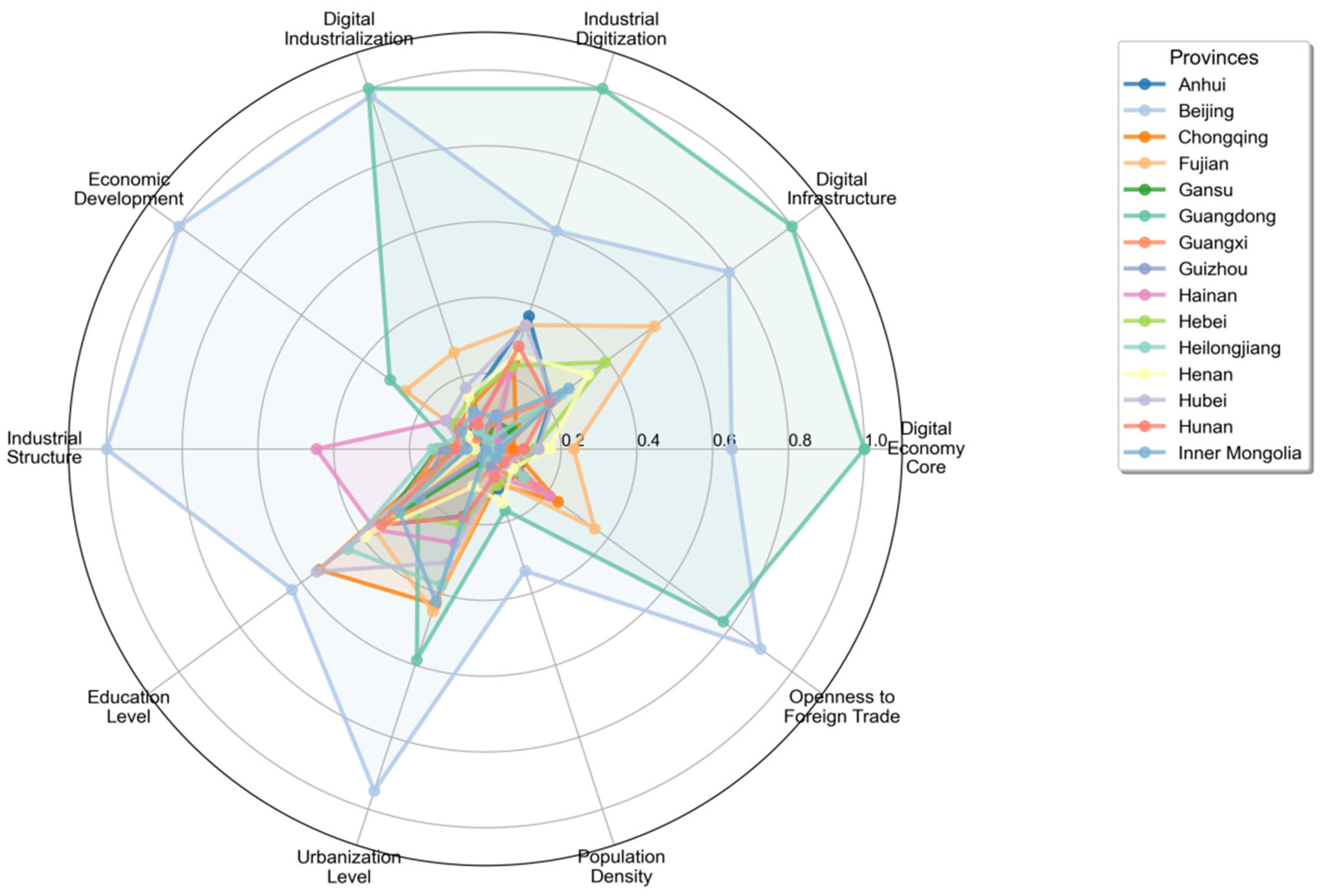
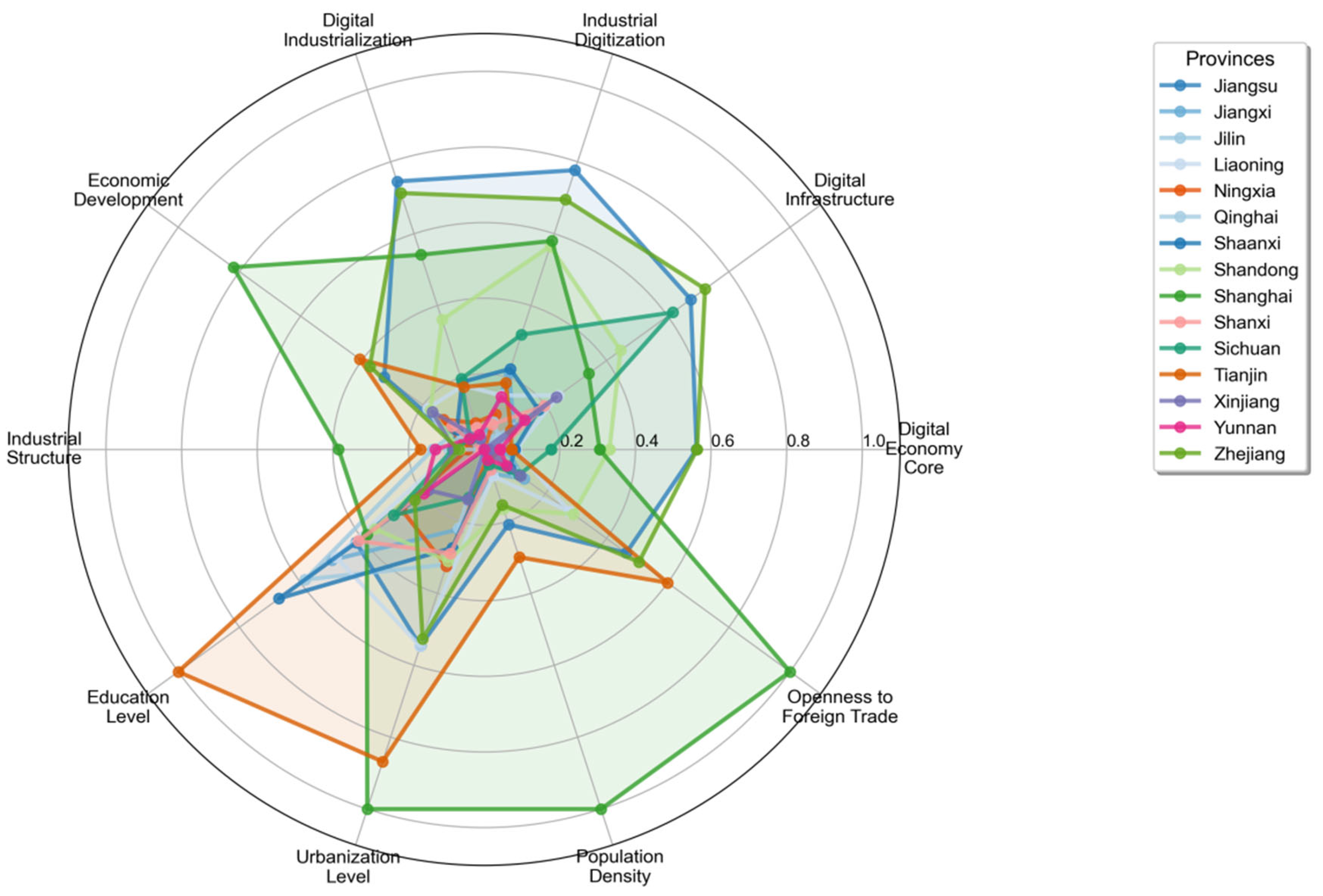
Figure 11 and
Figure 12 illustrate the importance distribution of the “digital economy dimension” (including digital industrialization, industrial digitalization, digital infrastructure, and core digital economy) and the “traditional development dimension” (including industrial structure, economic development level, education level, urbanization level, degree of external development, and population density) for energy efficiency across different provinces. This visually reflects the heterogeneity in the impacts of different dimensions on energy efficiency.
China’s regional economy is characterized by a development gradient decreasing from east to west, accompanied by significant disparities in digital economic advancement. Coastal developed regions, represented by Shanghai, Jiangsu, Guangdong, Beijing, and Shandong, have achieved significantly higher levels of digital economic development compared to other provinces, consistent with their economic foundations, policy support, and locational advantages. In these regions, the digital economy shows a stronger association with energy efficiency in the model’s predictions. In central and western provinces such as Sichuan and Chongqing, digital infrastructure exhibits higher predictive importance than dimensions such as industrial digitization and digital industrialization. Digital infrastructure—represented by broadband networks and data centers—is more prominently associated with the enabling efficiency of the digital economy in these regions, suggesting a supporting role in the model. However, deep applications of industrial digitization remain relatively scarce, and the clustering effects of core digital economy industries have not yet fully materialized, leaving overall potential largely untapped. Constrained by geographical and economic conditions, western provinces such as Yunnan, Ningxia, Guangxi, and Xinjiang score below 0.3 across all dimensions of the digital economy. Their performance shows lower values compared to traditional indicators like industrial structure and urbanization levels. Their development is characterized by a continued reliance on traditional manufacturing, and the digital economy in these underdeveloped regions shows a weak conditional association with energy efficiency in the model’s predictions.
Different dimensions show different associations with energy efficiency, which is consistent with the idea of differentiated pathways of various elements within the digital economy in relation to energy efficiency. The potential for energy conservation and efficiency improvement is more pronounced when specific sub-dimensions of the digital economy align with the local industrial foundation. For provinces relying on high-end manufacturing and modern services, the deep integration of industrial digitalization is associated with overcoming the energy input constraints during the early stages of the digital economy. This pattern corresponds to their energy efficiency curves shifting beyond the inflection point, followed by a trajectory of sustained improvement. The predicted pathways of digital infrastructure are primarily evident in the early stages of formative influence. Energy efficiency gradually improves as digital infrastructure matures, but has not yet entered a phase of rapid advancement. As exemplified by Guangdong Province, digital industrialization is associated with energy efficiency though optimizing technologies to reduce consumption within the digital sector itself, thereby indirectly influencing regional efficiency. This mechanism shows stronger associations only in provinces where the digital industry has achieved a substantial scale.
6. Discussion, Conclusions and Suggestions
6.1. Discussion
Based on provincial-level panel data nationwide and the STGNN fitting method, this study reveals three nonlinear patterns of the digital economy’s impact on energy efficiency: U-shaped, inverted U-shaped, and weak correlation. It further identifies regional clustering characteristics—U-shaped in the southeast and inverted U-shaped in the northwest—along with the heterogeneity of digital factor allocation and spatial relationships.
The three nonlinear patterns identified in this study represent theoretical extensions and morphological variations of the EKC theory within the digital economy era. The U-shaped pattern exhibits a “depression followed by recovery” characteristic, forming an inverse correlation with the “recovery followed by depression” pattern of the EKC. This finding aligns with scholarly research confirming that “the digital economy more readily accelerates the arrival of the carbon emission reduction inflection point” [
59,
60]. The inverted U-shaped pattern stems from the “rebound effect” observed in expanding digital industries [
30], where digital-enabled production growth offsets energy-saving gains, reflecting management challenges due to imbalanced resource allocation. The weak correlation pattern underscores that technological empowerment requires dual conditions: a robust digital foundation and suitability for industrial scenarios. As a new type of production factor, the digital economy’s impact on energy efficiency fundamentally reflects differences in factor allocation across various dimensions. These variations generate distinct influence pathways driven by differing marginal output efficiencies, aligning with the core logic of factor allocation theory [
2,
6,
61]. Given the complexity of the digital economy’s impact on energy efficiency, a single metric cannot capture its full scope, making structural deconstruction essential.
It should be noted that the choice of the STGNN model in this study is driven by clear methodological necessity. As the mainstream method in the field of spatial econometrics, the traditional Spatial Durbin Model (SDM) is based on three fundamental assumptions: linear parameterization, serial stationarity, and spatial homogeneity [
62,
63,
64]. Consequently, it struggles to capture the nonlinear, dynamic, and multidimensional spatial structures driven by the digital economy [
65,
66]. Regional spatial relationships in the digital economy era constitute complex network interactions involving multiple overlapping dimensions. Spillover effects between regions exhibit significant heterogeneity, which contradicts the SDM’s core assumption of “homogeneous spatial spillover coefficients.” The preliminary results from this study indicate that the SDM based on a single geographic adjacency matrix fails to yield statistically significant spatial spillover coefficients; meanwhile, the SDM based on a three-dimensional weighted matrix suffers from multicollinearity among variables, resulting in coefficient signs that contradict theoretical expectations and insufficient statistical significance. This further confirms that linear spatial econometric models are ill-suited to the research subjects and data characteristics of this study. Therefore, this study employs a nonlinear spatio-temporal graph neural network to conduct spatial correlation analysis, serving as a supplement and optimization to traditional spatial econometric methods in the context of digital economy research.
Although the test-set R2 of the STGNN model is approximately 0.25, this level of predictive performance is reasonable and informative for provincial panel analysis in energy economics, where outcomes are jointly determined by numerous economic, technological, institutional, and regional factors. A value of 0.25 indicates that the model captures meaningful and stable predictive signals from digital economy development and spatial interactions, rather than merely fitting noise. Importantly, this modeling framework is a predictive rather than a causal identification strategy. It aims to uncover robust spatio-temporal patterns, nonlinear relationships, and model-implied spatial associations rather than to estimate strict causal effects. Thus, the results provide reliable empirical evidence for understanding energy efficiency dynamics under digital transformation, while causal interpretation requires further identification strategies.
Compared with the existing literature, this study aligns with prior findings while also introducing significant breakthroughs. Constrained by model specifications, many traditional studies typically identify only a single inverted U-shaped or U-shaped relationship. In contrast, the deep learning framework employed in this study reveals the coexistence of three distinct patterns. Traditional research often faces challenges in mitigating multicollinearity and accounting for complex interaction effects. By employing feature engineering and counterfactual simulation, this study can clearly isolate the independent contributions and interactions of each dimension while holding other factors constant. This approach offers a more reliable identification of dimensional heterogeneity and spatial correlation.
Although this study makes advances in methodology and findings, it still has limitations. (1) The reliance on provincial-level panel data prevents disaggregation to the prefecture-level city or industry level, thereby obscuring variations in digital factor allocation within cities or across specific sectors. (2) This study covers only 13 years of data from 30 provinces, representing a relatively small sample size that may impact the model’s generalization ability. (3) Furthermore, the analysis of digital economy heterogeneity relies on dimensions such as “digital industrialization and industrial digitalization,” without incorporating specific subcategories of digital technologies, which may undermine the precision of the underlying mechanisms. (4) The STGNN framework adopted in this study is a predictive rather than causal identification strategy. The model-implied spatial associations from STGNN-based counterfactual simulations only quantify the associational relationship between the two variables and do not constitute a strict econometric causal effect estimate.
6.2. Conclusions
This study analyzes the relationship between the level of digital economic development and energy efficiency, characterizing the nonlinear association between DE and EE. It tests three hypotheses, with the core conclusions as follows:
- (1)
The digital economy shows a positive association with energy efficiency, with the fitted relationship exhibiting three types of nonlinear patterns and pronounced spatial clustering characteristics.
- (2)
The contributions of different digital economy dimensions to predicted energy efficiency vary. Digital infrastructure serves as a foundational element. Industrial digitalization corresponds to the most substantial direct improvements in model predictions by optimizing production processes. Digital industrialization is associated with indirect contributions via technological innovation and knowledge diffusion.
- (3)
The digital economy displays significant spatial associations with energy efficiency and, through complex networks, a positive conditional correlation emerges in neighboring regions. Moreover, these spatial patterns vary across provinces.
6.3. Suggestions
Based on the above research findings, the following policy implications are suggested to better support the synergistic development of the digital economy and the green transition of energy:
- (1)
Pursue regionally differentiated digital economic development strategies. In provinces exhibiting a U-shaped fitted pattern, policy support may be directed toward the deep integration of digital technology and energy systems to accelerate development beyond the threshold and strengthen energy-saving effects. In provinces with an inverted U-shaped pattern, attention to upgrading data centers and optimizing industry layouts could help to limit high-energy expansion associated with rebound effects. In weakly connected areas, priority could be given to inclusive digital infrastructure. Leverage local industrial strengths to cultivate application scenarios and solidify the foundation for energy efficiency.
- (2)
Emphasize targeted measures across digital economy dimensions. With industrial digitalization as a central focus, a unified governance platform can deepen collaboration. Facilitate the digital transformation of traditional industries via big data and IoT. Improving infrastructure sharing mechanisms and advancing the “East Data, West Computing” project can help optimize computing power distribution. Increased R&D investment in energy-saving technologies within digital industrialization, particularly in smart energy management, may strengthen technological supply capabilities.
- (3)
Foster a new pattern of coordinated development for the digital economy. Strengthening core nodes as hubs for digital innovation and green technology diffusion, as well as enhancing connectivity and data sharing with surrounding regions, can support inter-city cooperation, improved public services, and accelerated digital transformation in underdeveloped areas.