


Abstract
The demand for computing power has increased at a rate never seen before due to the quick development of artificial intelligence (AI) technologies and applications. Consequently, AI data centers, referring to computing facilities specifically designed for large-scale artificial intelligence workloads, have become one of the fastest-growing electricity consumers globally. Therefore, it is essential to understand the load characteristics of AI data centers and their impact on the grid. This paper provides a comprehensive review of the evolving energy landscape of AI data centers. Specifically, this paper (i) presents the energy consumption structure in AI data centers and analyzes the key workload features and patterns in four stages, emphasizing how high power density, temporal variability, and cooling requirements shape total energy use, (ii) examines the impacts of AI data centers for power systems, including impacts on grid stability, reliability and power quality, electricity markets and pricing, economic dispatch and reserve scheduling, and infrastructure planning and coordination, (iii) presents key technological, operational and sustainability challenges for AI data centers, including renewable energy integration, waste heat utilization, carbon-neutral operation, and water–energy nexus constraints, (iv) evaluates emerging solutions and opportunities, spanning grid-side measures, data-center-side strategies, and user-side demand-flexibility mechanisms, (v) identifies future research priorities and policy directions to enable the sustainable co-evolution of AI infrastructure and electric power systems. The review aims to support utilities, system operators, and researchers in maintaining reliable, resilient, and sustainable grid operation in the context of the rapid development of AI data centers.
1. Introduction
Over the past decade, computing has entered a new phase shaped by the rapid progress of generative AI. Although AI has been studied for decades, transformer-based large language models (LLMs) [1] (e.g., ChatGPT [2]) have marked a clear inflection point. Compared with earlier analytical AI systems that primarily classify, predict, or optimize within narrowly defined tasks, modern generative models can synthesize novel content and support complex behaviors such as reasoning and code generation. This capability expansion has shifted the frontier of innovation from algorithm design alone toward large-scale training and deployment, making computational infrastructure a first- order constraint.
This shift has basically changed the demand for computational resources. The scaling laws of deep learning indicate that model performance will be enhanced if the model size, dataset size, and the computation part used for training increase [3]. Consequently, the amount of computing power needed to train advanced models has been doubling roughly every six months, a rate that significantly outpaces Moore’s Law [4]. This explosion in demand has triggered a hardware arms race. In the past, the Central Processing Unit (CPU) [5] was used for computing. Following the increasing demand for computing and development of the semiconductor industry, Graphics Processing Units (GPUs) [6] and Tensor Processing Units (TPUs) [7] have become more popular for massive parallel processing. Consequently, the expansion of AI capabilities is closely tied to the growth of high-performance computing facilities and data center infrastructure.
As the digital economy scales, its physical footprint becomes increasingly visible, particularly through electricity demand and associated emissions [8]. Training large models can require substantial electricity and generate significant carbon footprints [9]. Importantly, training is only one component of lifecycle energy use: for widely deployed models, the cumulative energy consumed by inference, such as serving billions of queries over time, can dominate total energy demand [10]. At the global level, data centers, cryptocurrencies, and AI consumed approximately 460 TWh of electricity in 2022 (about 2% of global electricity demand), and this consumption could rise sharply by 2026 to roughly the entire electricity consumption of Germany [11].
This trend creates a conflict between the potential of AI to support energy-system optimization and the energy consumption of AI computing. In regions with high concentrations of data centers, such as Northern Virginia in the United States or Ireland, data centers already consume a substantial portion of the available grid capacity, reaching approximately 16% of total electricity demand in Ireland as of 2022 [12]. This places the AI industry on a collision course with global sustainability goals. As the world strives to decarbonize, the surging energy appetite of AI creates a paradoxical tension between the potential of AI to optimize energy systems and its immediate reality as a voracious consumer of power.
Understanding and managing this challenge requires distinguishing between traditional enterprise data centers and the emerging AI data centers. Treating them as a single category can obscure the distinct engineering limitations and grid impacts caused by AI workloads. Traditional data centers for cloud storage, web hosting, and standard enterprise applications typically operate at power densities of 5 to 10 kilowatts (kW) per rack [13]. In contrast, AI data centers are purpose-built AI factories to support high-performance clusters where thousands of GPUs operate together with distinct characteristics, including:
- High Density: AI data centers typically require rack power densities exceeding 40 kW, and some liquid-cooled equipment can have rack power densities of more than 100 kW [14].
- Utilization Rates: Unlike web servers that may idle during off-peak hours, AI training clusters often run at near 100% utilization for weeks or months at a time, creating a flat but extremely high load profile [15].
- Thermal Management: The high-density racks’ thermal output makes conventional air cooling ineffective or impossible. It requires a change to immersion cooling or direct-to-chip liquid cooling technologies [16].
The rapid scaling and expansion of AI data centers are posing unprecedented challenges to the planning, operation, and resilience of power systems. To sustainably support the development of a power grid in an AI data center environment, it is essential to systematically analyze the energy consumption characteristics of AI workloads and their impacts on the power grid, and to develop corresponding technical and management frameworks.
Motivated by these developments, a growing literature has examined the electricity demand of AI data centers and its implications for the power sector [11,17,18,19]. Prior work has analyzed facility-level energy consumption patterns, including IT load, cooling, and auxiliary systems, to inform efficiency improvements and load management [18,20]. Other studies have proposed characterization frameworks for AI workloads to capture their high power density and operational variability [21]. In parallel, substantial research has considered the co-location and integration of renewable energy resources such as photovoltaics and wind to reduce indirect emissions from electricity-intensive computing [22], and software-level approaches such as AI workload scheduling have been explored to exploit temporal flexibility for peak shaving and cost reduction [23]. They remain largely fragmented across disciplines and are often centered on the data center itself rather than on the power system.
Despite this progress, existing reviews [24,25] focus only on the technical challenges of integrating AI data centers into power grids and the energy and climate impacts of deploying AI infrastructure, and ignore the impact of AI data center workload flexibility. This paper jointly connects (i) AI workload energy profiles, (ii) grid impacts arising from large AI data center clusters, and (iii) the resulting technological and operational challenges and solution pathways from the grid perspective. As AI infrastructure scales, such an integrated view becomes more necessary for utilities, system operators, policymakers, and researchers.
With a road map shown in Figure 1, this paper provides a structured review along four dimensions: the energy profiles of AI workloads, their impacts on power grids, power-system-level challenges posed by AI data centers, and emerging solutions viewed from the grid perspective. The main contributions are summarized as follows:
Figure 1.
The organization of this review connects the four key dimensions—Energy Profiles, Grid Impacts, Technical and Operational Challenges, and Emerging Solutions.
- This paper dissects AI workloads into four distinct operational stages—preparation, model training, parameter fine-tuning, and online reasoning. It characterizes the unique temporal variability, power density, and ramp-rate profiles associated with each stage.
- A multi-dimensional framework is proposed to evaluate the impact of AI data centers on power systems. This includes a detailed analysis of physical stability risks, electricity market price volatility, economic dispatch challenges, and long-term infrastructure planning constraints.
- Emerging solutions across three coordinated layers are identified and categorized: grid-side measures (e.g., enhanced forecasting), data-center-side strategies (e.g., flexible scheduling), and user-side mechanisms (e.g., delay-tolerant inference). This synthesis highlights the necessity of co-optimizing software, hardware, and grid operations.
The remainder of this paper is organized as follows: Section 2 analyzes the energy consumption structure, efficiency metrics, and AI computing workload characteristics in four phases, followed by a case study of GPT-2. Section 3 examines the power grid impacts of AI data centers, focusing on grid stability, reliability, power quality risks, electricity markets, economic dispatch, infrastructure planning and case studies on grid integration. Section 4 investigates the key technological, operational and sustainability challenges, including renewable energy integration, carbon neutrality, water–energy nexus and waste heat utilization. Section 5 reviews emerging solutions and opportunities across the grid, data center, and user sides. Finally, Section 6 concludes the review and proposes a prioritized operational framework to address the challenges. A comprehensive overview of the grid challenges and emerging solutions discussed in this review is illustrated in Figure 2.
Figure 2.
Grid challenges and solutions of AI data centers.
By synthesizing insights from recent research, industry reports, and technological case studies, this review aims to provide utilities, system operators, policymakers, and researchers with a roadmap for ensuring reliable, resilient, and sustainable grid operation in the context of the rapid development of AI data centers.
Review Methodology
To ensure a comprehensive and systematic analysis of the energy impacts of AI data centers, this study adopted a structured literature review approach. The methodology for selecting and analyzing sources is outlined below:
- Data Sources: A comprehensive search is conducted across major academic databases, including IEEE Xplore, ScienceDirect, MDPI, and Google Scholar. Given the rapid evolution of generative AI, we also included high-quality preprints from arXiv and industry technical reports (e.g., from EPRI, IEA, and major cloud providers) to capture the latest developments that have not yet appeared in traditional journals.
- Search Strategy and Keywords: The search focused on the intersection of artificial intelligence workloads and power systems. Primary search keywords included combinations of “AI data center”, “Large Language Model (LLM) energy consumption”, “grid impact of AI”, “data center demand response”, and “power quality in AI clusters”.
- Time Interval: Considering that the surge in power demand discussed in this paper is largely driven by the recent explosion of transformer-based models (e.g., GPT series), the literature search primarily covered the period from 2018 to early 2026. Older foundational papers were included only when necessary to provide historical context.
- Inclusion: Studies were selected if they provided quantitative data on AI energy profiles, analyzed grid-level impacts (stability, planning, markets), or proposed specific technical solutions for integration.
- Exclusion: Articles focusing solely on internal computer architecture optimization without addressing energy or grid implications, as well as non-English publications, were excluded to maintain the specific scope of this review.
2. Energy Profiles of AI Data Centers
2.1. Energy Consumption Structure and Efficiency Metrics
Historically, data center electricity consumption has remained relatively stable despite rising digital demand, largely due to hardware efficiency gains and the consolidation of facilities into hyperscale data centers. In the “AI era”, this coupling has weakened. The IEA projects that electricity consumption from data centers, AI, and the cryptocurrency sector could double by 2026, exceeding 1000 TWh—approximately the annual electricity consumption of Japan [11]. In major innovation hubs, this growth is already obvious. For example, the U.S. AI data centers’ power demand is projected to increase by about 10% per year through 2030, driven primarily by the high power-density requirements of AI acceleration hardware [17]. Unlike conventional cloud workloads, which often scale roughly linearly with user traffic, AI compute demand has increased at a superexponential pace. As noted in [26], the compute used to train the largest models doubled approximately every 3.4 months, which exceeds typical infrastructure efficiency improvements.
To identify where energy is expended, a data center can be represented as a composite system. Following [27], its energy profile is commonly partitioned into two categories:
- IT equipment: servers, storage, and network switches.
- Infrastructure/auxiliaries: cooling systems, power distribution units, lighting, and other supporting loads.
Traditional facilities are designed for general-purpose computing, primarily handling tasks such as web hosting, database management, and enterprise applications. These workloads rely heavily on CPUs. In contrast, AI data centers are engineered specifically for high-performance computing tasks utilizing dense clusters of GPUs and TPUs, categorized into model training and inference [28]. This architectural distinction results in differences in both rack power density and overall campus capacity. While traditional data centers typically operate within a rack power density range of 5 kW to 15 kW, allowing for standard infrastructure designs, AI workloads fundamentally disrupt this standard [28]. The deployment of high-performance GPU clusters drives AI rack densities to between 30 kW and 100 kW per rack, with some next-generation configurations exceeding this limit [29,30]. Consequently, the scale of power provisioning has shifted; whereas a traditional cloud campus might require a capacity of 10 MW to 50 MW, modern AI data centers are entering the “Gigawatt era”, with single campuses frequently planned to exceed 100 MW or even 1 GW to satisfy the immense energy appetite of AI training clusters [29,31].
The operational behavior of these facilities also differs significantly regarding utilization rates and load ramp rates. Traditional cloud workloads often exhibit “bursty” traffic patterns with significant peaks and valleys, leading to lower average utilization rates that are managed via virtualization [32,33]. Conversely, AI model training requires continuous, full-load operations, resulting in utilization rates approaching 100% for weeks or months at a time [28]. Furthermore, AI workloads present unique challenges to power quality due to their load ramp rates. Unlike the relatively smooth load transitions in traditional clouds, AI clusters generate extreme transient spikes and high di/dt (rate of change of current) events during computational synchronization, imposing severe stress on electrical infrastructure [31,34].
In modern AI clusters, as illustrated in Figure 3, IT equipment typically accounts for approximately 40–50% of total electricity consumption and thus constitutes the principal demand driver. Cooling infrastructure commonly consumes about 30–40% to maintain safe operating temperatures for high-density hardware. The remaining auxiliary components (e.g., power supplies, security systems, and lighting) typically account for about 10–30% [18].
Figure 3.
Energy consumption structure by different components of a data center (for data, refer to [18]).
To estimate the facility-level energy efficiency, a standard metric called power usage effectiveness (PUE) is defined as [35]:
Traditional centers predominantly rely on air cooling technologies, such as computer room air conditioning (CRAC) and computer room air handler (CRAH) units and raised floors, often resulting in a Power Usage Effectiveness (PUE) ranging from 1.2 to 1.6 [28,32]. However, air cooling is physically insufficient for the heat flux of AI chips. AI data centers are increasingly adopting liquid cooling solutions—such as direct-to-chip or immersion cooling—which handle higher thermal loads more efficiently [30]. This transition offers the potential to lower PUE to below 1.2 [36]. PUE primarily quantifies infrastructure efficiency rather than computational efficiency. Thus, a facility can achieve a near-optimal PUE while still consuming gigawatts on redundant or inefficient computations at the workload level. Consequently, while PUE remains useful for facility management, understanding the workload itself—i.e., the model lifecycle—is necessary to characterize the true energy profile.
While PUE is the industry standard for energy efficiency, it is increasingly insufficient for characterizing the holistic environmental impact of AI data centers. To address the water–energy nexus and carbon footprint, metrics such as Water Usage Effectiveness (WUE) and Carbon Usage Effectiveness (CUE) are becoming critical, which are defined as:
Regarding water and carbon metrics, while traditional centers often sacrifice Water Usage Effectiveness (WUE) via evaporative cooling to lower energy costs—typically resulting in water consumption of 1.8 to 2.5 L/kWh—AI centers moving toward closed-loop liquid cooling can achieve near-zero operational water use, often driving WUE down to <0.30 L/kWh or even 0 L/kWh [37,38]. Similarly, to address the massive carbon footprint (CUE), which can exceed 0.50 kgCO2/kWh in grid-dependent traditional facilities, AI operators are aggressively pursuing direct renewable energy sourcing (such as nuclear or wind PPA) to decouple their exponential energy growth from carbon emissions, targeting a CUE of <0.05 kgCO2/kWh [39,40]. A summary of comparison between traditional data centers and AI data center is given in Table 1.
Table 1.
Comparison of Key Parameters: Traditional Cloud vs. AI Data Centers.
2.2. AI Computing Workload Characteristics at Each Stage
Since AI computing often accounts for the majority of overall data center electricity expenditure, this section characterizes the power consumption behavior of AI tasks across the model lifecycle. The discussion covers four links—preparation, model training, parameter fine-tuning, and online reasoning [41]. A summary of the distinct load characteristics, duration, and scale for each stage is provided in Table 2.
Table 2.
Summary of AI Computing Workload Characteristics at Each Stage.
2.2.1. Preparation Stage
The preparation stage precedes formal training and targets two objectives: architectural configuration and data readiness [41]. Operationally, it can be separated into (i) model preparation (architecture design, parameter initialization, and early testing) and (ii) data acquisition and engineering. For modern LLMs, the latter is often particularly resource intensive, requiring aggregation of terabyte-scale corpora from heterogeneous sources such as Wikipedia [42], GitHub code, BookCorpus [43], and other datasets [1]. Prior to training, these raw inputs must be processed through cleaning, tokenization, and normalization to produce training-compatible formats [44].
Although frequently overshadowed by training, preparation can impose a substantial computational load. Extract–Transform–Load (ETL) pipelines for massive corpora rely on distributed clusters and therefore generate a significant initial power footprint. However, this up-front cost can reduce downstream energy demand. Empirical evidence indicates that data-centric adjustments, including deduplication and feature selection, can reduce subsequent training energy consumption by over 90%, highlighting the role of this stage in “Green AI” [45]. At the same time, load patterns of the preparation stage are difficult to generalize: unlike the relatively structured matrix operations in training, preparation workloads are fragmented and tool-dependent, varying with the pipeline design, infrastructure, and software stack [46].
2.2.2. Model Training Stage
Model training is typically the most energy-intensive component of the lifecycle, especially for LLMs. This load pattern results from sustained near-peak utilization of computational hardware over long horizons—often weeks to months—to process large datasets [47]. For example, training BLOOM (176B parameters) consumed approximately 433 MWh and required continuous execution on 384 GPUs for more than three months [48]. With scaling, energy demand rises sharply; Google’s PaLM (540B parameters) required an estimated floating-point operations [49]. More broadly, modern foundation-model development by organizations such as NVIDIA and Anthropic increasingly relies on tens of thousands of accelerators, pushing electricity consumption for a single training run into the GWh range [9].
The training-stage electrical profile commonly exhibits four temporal features: (i) Initial ramp-up: As datasets are staged and devices transition into steady computation, utilization increases over a short period [50]. (ii) Sustained peak operation: Once the training loop stabilizes, hardware operates near saturation for extended durations [51]. (iii) Dynamic load volatility: The high baseline includes rapid, large-amplitude fluctuations driven by alternation between compute-intensive matrix operations and lower-energy inter-node communication [52]. Additional transients arise from checkpointing, Input/Output(I/O) bursts, and fault-recovery events [50]. (iv) High cooling demand: Sustained high IT load produces substantial heat, requiring elevated cooling power and potentially increasing effective facility overhead [53].
These patterns depend strongly on model architecture, batch size, and numerical precision. Accordingly, efficiency improvements span hardware and algorithmic layers. At the hardware level, GPU power capping can constrain peak wattage; prior studies report roughly 15% energy reduction with only modest training-time increases [54]. At the algorithmic level, strategies such as dynamic parameter adjustment and early stopping reduce redundant computation after convergence plateaus [46].
2.2.3. Parameter Fine-Tuning Stage
This stage specializes a pre-trained model for downstream tasks (e.g., financial sentiment analysis or code generation). Because it reuses learned representations, its total compute requirement is typically orders of magnitude smaller than pre-training. Empirical assessments suggest that the energy cost of pre-training a single LLM can be comparable to thousands of fine-tuning runs, depending on task scope and configuration [55]. Nevertheless, fine-tuning often exhibits a volatile load profile. In contrast to sustained saturation during pre-training, fine-tuning is frequently characterized by intermittent utilization spikes caused by smaller batch sizes, frequent validation, and iterative hyperparameter searches, which together produce fluctuating rather than continuous power demand [53].
Overall, the fine-tuning load profile can be summarized by: (i) moderate average power, (ii) bursty volatility induced by intermittent gradient updates and validation cycles, and (iii) corresponding fluctuations in cooling demand. Although an individual session is relatively low-energy, fine-tuning is performed repeatedly across organizations and products, yielding a large cumulative footprint that can dominate lifecycle energy when aggregated. To reduce this burden, parameter-efficient methods such as Low-Rank Adaptation (LoRA) freeze base weights and add trainable low-rank matrices, reducing energy consumption by up to 70% relative to full fine-tuning while maintaining output quality [56]. Model choice is similarly consequential: evaluations of small language models (SLMs), such as TinyLlama, indicate that fine-tuning compact architectures can achieve competitive task performance while cutting energy use by more than 50% relative to 7B+ parameter baselines [57].
2.2.4. Online Reasoning Stage
Online reasoning (inference) is the operational phase in which models process user inputs and generate outputs. For a single request, inference is typically the least energy-intensive stage. However, due to continuous, high-volume traffic, cumulative inference energy often exceeds training energy. Measurements in hyperscale settings suggest that inference accounts for roughly 60% of total AI energy consumption, largely due to the request volume in billion-user services [58]. More recent projections indicate that inference may exceed 90% of lifecycle energy as deployment horizons extend [59].
Inference power demand is also highly heterogeneous, depending on model size, prompt length, and task complexity. Benchmarks illustrate the magnitude of this spread: a keyword search may consume about 0.3 Wh [19], whereas a long, complex prompt processed by a large generative model (e.g., DeepSeekR1) is estimated at Wh (10 k input/1.5 k output). For the same prompt, more optimized models such as O3 and GPT-4.1 are reported at Wh and Wh, respectively, highlighting the effect of model design and system optimization [59]. Modality further shifts the profile: generating one image with Stable Diffusion XL has been reported to require energy comparable to fully charging a smartphone, whereas simpler tasks such as text classification consume comparatively little [60].
Relative to the sustained high-load structure of training, inference behaves as a stochastic workload with pronounced volatility. Unpredictable user arrivals and heterogeneous prompts produce bursty compute demand. Consequently, inference is characterized by (i) large cumulative energy despite low per-query cost, (ii) instantaneous power spikes for complex requests, and (iii) diurnal patterns aligned with user activity (e.g., business-hour peaks) [53]. Supporting these dynamics requires elastic infrastructure that can scale resources quickly to meet low latency constraints without over-provisioning. Optimization therefore proceeds along two tracks. Hardware efficiency is improved by domain-specific accelerators (e.g., NPUs) that reduce energy-intensive data movement. Algorithmically, techniques such as speculative decoding and KV-cache quantization reduce memory bandwidth demand and lower energy per token [61]. However, Retrieval-Augmented Generation (RAG) can increase total energy by coupling generation with vector-database retrieval operations [62]. Despite these complexities, evidence suggests a sub-linear scaling trend: although parameter counts can increase rapidly, inference energy tends to grow more slowly, with studies often reporting that a tenfold increase in model size yields only about a threefold increase in inference energy [10].
2.2.5. Case Study
As mentioned above, empirical breakdowns indicate that inference can account for approximately 60% of total energy, with training comprising about 40% [58]. These shares correspond to distinct temporal load profiles across phases. Figure 4 summarizes representative power traces for key compute phases (excluding preparation, whose energy footprint is more diffuse), based on measurements from GPT-2 execution [21].
Figure 4.
GPT-2 load profiles during training, online reasoning, and parameter tuning (data source: [21]; for experimental settings and underlying data, see Figures 9, 13, 15, and Table III) of [21].
Across all phases, a rapid ramp-up occurs at initiation as processing units transition into active operation. Stage-specific differences then dominate. Training sustains a high baseline and exhibits intermittent large-amplitude swings as well as persistent high-frequency micro-variations arising from algorithm–hardware interactions [21]. Fine-tuning shows high-frequency, high-magnitude oscillations after initiation, with oscillation frequency gradually decaying while moderate volatility persists. Online reasoning occurs over shorter horizons and, because request arrivals are inherently uncertain, exhibits highly stochastic bursty consumption with abrupt spikes and drops. Given these heterogeneous load characteristics, data center design and grid-integration strategies should be stage-aware. In particular, power-aware scheduling frameworks are required to balance performance, sustainability, and system reliability against the distinct physical demands of each lifecycle stage.
3. Grid Impact of AI Data Center
The explosive growth of massive AI data centers is putting enormous pressure on electricity grids worldwide. These facilities combine very high energy consumption with large-magnitude, fast transient fluctuations, thereby introducing new operational stresses. This review adopts a mechanism-driven perspective. To systematically analyze these impacts, four functional dimensions are considered: (i) physical grid stability and reliability constraints, (ii) electricity markets and price, (iii) economic dispatch and operating reserve scheduling, and (iv) infrastructure planning and coordination. This multidimensional structure clarifies how AI workloads reshape power-grid operation and management.
3.1. Impact on Grid Stability, Reliability and Power Quality
On short time scales, loads of large AI data centers can significantly influence power-system stability and reliability. From a physical standpoint, these facilities behave primarily as power-electronics-interfaced loads rather than traditional inductive demands. Accordingly, their transient response is determined by the coupled dynamics of high-frequency converter control loops and the abrupt, stochastic variations produced by computational workload scheduling [63].
A core reliability issue is grid-disturbance ride-through capability. AI data centers interface with the grid through power-electronics converters. However, these interfaces may be sensitive to brief voltage sags and frequency shifts at the coupling point. In the absence of robust fault ride-through (FRT) logic, such disturbances can activate internal protection functions that disconnect the facility to protect sensitive equipment (e.g., GPUs). If disconnection occurs during an ongoing grid fault, the resulting sudden load shedding can exacerbate the disturbance by inducing voltage swells and frequency spikes. In areas with high data-center density, this mechanism creates a systemic risk of “sympathetic tripping”, in which the loss of one facility increases the likelihood of cascading disconnections of neighboring loads [64].
Closely associated with grid stability and reliability is power quality degradation, a critical grid impact induced by the unique load characteristics of AI data centers [65]. Unlike traditional industrial loads, AI data centers rely heavily on GPU clusters, server power supplies, and advanced cooling systems—all power-electronic devices that generate significant harmonics (3rd, 5th, and 7th harmonics are most prevalent, with total harmonic distortion (THD) often exceeding 5%). This harmonic distortion not only degrades power quality within the facility (e.g., causing overheating of internal transformers) but also propagates to the distribution network, affecting neighboring users (e.g., triggering malfunctions in precision manufacturing equipment [66]). Voltage sags and flicker are additional prominent issues: AI data centers exhibit abrupt load changes (e.g., 10–20 MW power spikes in <1 s during inference [67]), which induce voltage fluctuations of ±5%–±10% in weak distribution networks [65]. Power factor degradation further compounds the problem: AI workloads’ dynamic power demand causes the power factor to drop to 0.75–0.85 (lagging), increasing the reactive power burden and reducing grid transmission efficiency by 10%–15% [68].
Grid disruptions can trigger cascading power quality issues. For example, during voltage sags, power-electronic interfaces and uninterruptible power supplies (UPS) in AI data centers may disconnect from the grid to protect hardware, leading to sudden load loss. In high-density areas (e.g., Northern Virginia, USA), simultaneous disconnection of multiple facilities can exacerbate frequency deviations (±0.5 Hz) and complicate system restoration [69]. Moreover, uncoordinated UPS switching between grid supply and battery backup generates inrush currents (up to 3× rated current), further distorting voltage waveforms [70].
Mitigation requires technical and operational coordination. At the facility level, active power filters (APFs) and static var generators (SVGs) can reduce harmonic THD to <3% [68], while firmware constraints on GPU ramp rates limit voltage flicker. At the system level, grid codes should mandate AI data centers to maintain a power factor of 0.95 or higher and comply with FRT requirements [71]—a strategy validated by Fan et al.’s [68] multilayer voltage control approach, which reduced voltage deviations by 71.95% through coordinated regulation of power energy production-consumption units (PECUs) and vehicle-to-grid (V2G) technology.
Beyond disturbance ride-through and power quality, rapid power fluctuations constitute a primary threat to local and regional stability. Such transients arise from cold starts, maintenance-related shutdowns, and fault-induced interruptions, each of which imposes steep ramp rates. During large-scale model training, synchronized operation of thousands of GPUs can create an oscillatory load signature, alternating between high-intensity computation and lower-power communication phases. In practice, these power-electronics-based facilities can increase demand by several megawatts in less than a second. This extreme variability stresses frequency stability and can induce voltage flicker at the point of common coupling. In addition, interactions between fast-acting load controls and grid regulation mechanisms may inadvertently excite unstable modes. For example, technical analyses report cases in which aggregate switching behavior of server power supply units interacts with grid impedance to produce high-frequency harmonic resonances, distorting voltage waveforms and threatening equipment safety [70]. These effects may be amplified when AI data centers exhibit comparatively higher internal impedance than the surrounding transmission network, creating conditions favorable for resonance amplification.
Risk mitigation is therefore developing along multiple layers. At the facility level, proposed measures include software-based load smoothing (e.g., injecting dummy workloads during idle intervals), firmware constraints that limit GPU ramp rates, and rack-level battery energy storage systems to buffer short-duration surges [52]. At the system level, maintaining reliability requires improved modeling of AI load dynamics and tighter coordination between transmission operators and data center operators. Moreover, UPS management needs careful attention: improper synchronization during transitions between grid supply and battery backup can cause severe reconnection inrush currents and may trigger secondary protection trips [18].
3.2. Electricity Market and Price Impact
The rapid deployment of AI data centers is also altering electricity-market outcomes, primarily by increasing long-term capacity adequacy requirements and capacity-market clearing prices. As peak-demand forecasts are revised upward to account for these loads, system operators must procure larger reserve margins, which increases costs. This effect is illustrated by the Midcontinent ISO (MISO) 2024 Planning Resource Auction results for Zone 5 (Missouri). While broader regional prices remained comparatively stable, localized capacity scarcity—driven by rising demand and generation retirements—pushed clearing prices to the Cost of New Entry of $719.81/MW-day in the Fall and Spring seasons, demonstrating how regional constraints can yield extreme price outcomes [72]. Comparable signals appear in the UK Capacity Market, where the February 2024 T-4 auction cleared at a record £65/kW, reflecting a higher premium for ensuring resource adequacy under tightening margins [73].
Beyond capacity procurement, the large and relatively inelastic demand of data centers can increase marginal generation costs in wholesale energy markets. To supply this baseload-like consumption, operators may dispatch higher-cost mid-merit thermal units more frequently, thereby raising system-wide prices [74]. In addition, AI workload dynamics can amplify day-ahead and real-time price volatility. This is particularly evident in ERCOT (Texas), where transmission bottlenecks in high-density areas constrain power flows. Under such conditions, sudden load ramps can cause Locational Marginal Prices to diverge from system averages, creating localized “price islands” in which prices exceed regional hub levels during stressed intervals [75].
3.3. Economic Dispatch and Operating Reserve Scheduling Impact
A fundamental objective of power-system operation is maintaining real-time balance between generation and demand. Conventionally, this objective is addressed through unit commitment (UC) and economic dispatch (ED), which schedule resources based on historically predictable daily load patterns [76]. The growth of AI data centers introduces a large stochastic component that weakens this baseline assumption. Unlike many steady industrial loads, AI workloads—including synchronized matrix computations during training and irregular bursts during inference—produce high-magnitude fluctuations that deviate from standard demand profiles.
This volatility directly challenges deterministic dispatch models. Although enhanced short-term forecasting is increasingly important, accurate prediction remains difficult because training schedules are proprietary and because GPU allocation is dynamic and non-periodic [47]. As a result, systems experience more frequent and less predictable ramp events. To reduce the probability of frequency deviations during these load swings, operators are compelled to maintain larger operating-reserve margins. This shift requires increased procurement of both spinning and non-spinning reserves, increases operational costs, and strengthens the need for fast-response flexibility resources, such as battery energy storage systems, to preserve reliability at interval time scales [77,78].
3.4. Infrastructure Planning and Coordination Impact
Over multi-decadal horizons, the expansion of AI-driven data centers implies substantial capital investment in generation adequacy and transmission capacity to maintain reliability. Recent projections suggest that growth may be strongly non-linear. For example, EPRI estimates that data centers could consume up to 9% of total U.S. electricity generation by 2030, roughly doubling current levels due largely to AI adoption [18]. At the same time, a pronounced timing mismatch exists between rapid AI hardware deployment and slower grid modernization. Data centers can often be constructed within two years, whereas major high-voltage transmission upgrades typically require 5–10 years for planning, permitting, and construction. Consequently, interconnection queues have become binding constraints; Lawrence Berkeley National Laboratory reports that average interconnection waiting times have increased substantially, leaving hundreds of gigawatts delayed in administrative backlogs [79].
These pressures are not geographically uniform and are intensified by the tendency of data centers to cluster in regions with favorable land costs, water access, and tax incentives. In 2023, approximately 80% of U.S. data center load was concentrated in 15 states—notably Virginia, Texas, and California—creating large localized demand spikes [18], as shown in Figure 5. Such spatial concentration exacerbates regional congestion and converts a broad adequacy challenge into acute, local infrastructure constraints.
Figure 5.
The top fifteen states in the United States for data center loads in 2023 (for data, refer to [18]’s Table A1).
From a grid-integration perspective, mitigating these constraints motivates coordinated co-planning that aligns data-center siting with transmission and generation expansion. By incorporating the spatial concentration and temporal variability of AI workloads into planning models, such joint optimization can reduce capital expenditures and relieve congestion. Although joint optimization of data centers and power systems has been explored in prior work [80,81,82,83], planning frameworks that explicitly represent the extreme power density and stochastic behavior of modern AI clusters remain comparatively under-developed.
Complementing grid-side measures, a user-side siting strategy has emerged that emphasizes co-location with generation resources. By placing data centers adjacent to power plants, developers can reduce interconnection delays and secure high-capacity supply while limiting additional loading on the public transmission network. This proximity-based approach is accelerating in practice, particularly for nuclear generation. For example, Microsoft recently reported a 20-year agreement associated with restarting Three Mile Island Unit 1, allocating approximately 835 MW of carbon-free baseload power to AI operations [84]. Similarly, Oracle has proposed supporting a gigawatt-scale compute cluster using three small modular reactors, illustrating the shift toward high-density, localized energy supply for large AI deployments [85].
3.5. Case Studies on Grid Integration
Case I: Systemic Frequency Instability (Ireland): Ireland serves as a critical testbed for high-penetration data center integration. EirGrid, the transmission system operator, reported that data centers have introduced significant risks to system inertia and stability. Specifically, “silent exits”—where clustered data centers disconnect simultaneously during voltage dips—have led to instantaneous losses of hundreds of megawatts. In several documented events, these sympathetic trippings exacerbated minor grid faults, contributing to severe frequency excursions. Consequently, EirGrid imposed a moratorium on new data center connections in the Dublin area to prevent potential blackouts, highlighting the trade-off between digital growth and grid reliability [86].
Case II: Subsynchronous Oscillations (Virginia, USA): In the Dominion Energy service territory (Northern Virginia), known as “Data Center Alley”, field measurements revealed a novel stability threat involving inverter-based resources. High-frequency switching dynamics of server power supply units were found to interact with the grid impedance, exciting a subsynchronous oscillation mode at approximately 14.7 Hz. This resonance phenomenon threatened grid equipment safety and required emergency tuning of control parameters. This case demonstrates that apart from steady-state load demand, the fast-transient behavior of AI data center power electronics can introduce unforeseen dynamic instabilities [69].
Case III: Distribution Capacity Constraints (West London, UK) Beyond stability, the sheer magnitude of AI data center power demand can exhaust regional distribution capacity. In 2022, the Greater London Authority noted that new housing developments in West London faced delays of over a decade for electricity connections. This bottleneck was driven by the rapid proliferation of hyperscale data centers along the M4 corridor, which consumed all available transmission headroom. This case underscores the conflict between AI data center expansion and residential energy equity, necessitating urgent upgrades to transmission infrastructure [87].
4. Grid Technological, Operational, and Sustainability Challenges of AI Data Centers
The rapid growth of data centers brings about a series of technical and operational challenges, which extend well beyond those encountered in traditional data center operations. Unlike traditional ICT facilities, data centers designed for AI feature extremely high power density, rapidly varying load profiles, and heavy cooling requirements [88,89]. Consequently, new concerns arise about the integration of renewable energy, energy quality, energy efficiency, carbon neutrality, and the sustainable use of natural resources [90]. These challenges underscore the need to reassess the role of data centers not merely as passive electricity consumers, but as active and impactful parts of modern energy systems. This section analyzes these challenges from a system-level viewpoint and discusses how they affect both data center operators and stakeholders in power systems [21].
4.1. Integration of Renewable Energy
Incorporating renewable energy sources into AI data center operations is widely regarded as a critical pathway toward decarbonization. However, aligning variable renewable generation with the unique load characteristics of AI data centers is still a major challenge in real-world applications, as shown by recent surveys into data center architectures and resource management that use renewable energy [22]. AI-related works, particularly those associated with large-scale model training and high-throughput inference, require an enormous amount of power and have limited tolerance for disruptions. In contrast, renewable energy sources such as solar and wind are by nature intermittent and stochastic in their output. This inherent temporal mismatch between power supply and demand complicates directly pairing on-site renewable energy generation with the load of AI data centers. Even when a sufficient capacity of renewable energy facilities is installed, periods of low energy production may overlap with peaks in computational demand. This forces data centers to rely on grid electricity or backup power resources to maintain operations. As AI workloads grow larger in scale and more urgent in execution requirements, this supply-demand mismatch will become increasingly prominent. This trend diminishes the effectiveness of simply expanding renewable energy capacity as an autonomous strategy to reduce carbon emissions.
This challenge is further intensified by forecasting uncertainty [91]. Although renewable generation forecasting has improved considerably in recent years, prediction errors remain non-negligible, especially over short timescales. At the same time, AI workloads may change rapidly according to user behavior, task scheduling, or algorithmic requirements. The combination of uncertain renewable supply and dynamically fluctuating demand introduces extra complexity for both grid operators and data center energy management systems. Spatial mismatch represents another important constraint. Large AI data centers are often located based on considerations such as land availability, connectivity, and cooling conditions. However, these factors do not necessarily coincide with regions rich in renewable resources. Delivering renewable electricity over long distances increases transmission losses and places additional pressure on transmission infrastructure. Moreover, the concentration of multiple data centers within the same region may swiftly saturate local renewable hosting capacity, limiting the extent to which renewables can be directly utilized. As a result, issues with renewable integration are becoming more prevalent at the regional system level rather than at the facility level. Consequently, achieving high levels of renewable penetration in AI data center operations requires a series of complementary measures, including energy storage, demand-side flexibility, and hybrid energy procurement strategies [92,93]. Although these approaches are effective, they introduce additional costs and operational complexity. This highlights the need for coordinated planning among data center operators, utilities, and power system planners.
4.2. Waste Heat Utilization and Energy Efficiency
A significant portion of the electrical energy used in AI data centers is converted into heat, mostly by high-performance processors and related power-electronic devices. Waste heat recovery has long been suggested as a way to increase overall energy efficiency, but there are significant practical and technical obstacles to its widespread use in AI data centers [94]. This is also seen in recent reviews of green data center practices that look at intelligent energy management frameworks and waste heat recovery [95]. A fundamental challenge lies in the relatively low temperature level of waste heat. AI data center cooling systems are designed to maintain equipment within narrow thermal limits, resulting in waste heat, which is not suitable for direct use in district heating or industrial applications without further upgrading. While heat pumps can elevate the temperature to usable levels, they introduce additional energy consumption and capital costs, which may offset the expected efficiency gains.
System integration poses another major obstacle. Retrofitting existing facilities for heat recovery requires extensive modifications to cooling architectures, heat exchangers, and thermal distribution networks. For hyperscale AI data centers, the scale and complexity of such modifications can be prohibitive. Moreover, economically viable heat recovery depends on the presence of nearby and sufficiently stable heat demand, which is often constrained by geographic location and seasonal variation. These spatial and temporal constraints significantly limit the general applicability of waste heat utilization strategies. The utilization of waste heat is made more difficult by operational variability, which has prompted recent attempts to enhance system-level coordination through sophisticated control techniques and the integration of heat pumps and thermal storage [96]. AI workloads can fluctuate significantly over time, leading to corresponding variations in heat output. Aligning this variable heat supply with relatively inflexible heat demand systems introduces control and planning challenges, reducing the reliability of downstream heating applications.
As a result, despite its theoretical potential, waste heat utilization in AI data centers remains limited in practice [97]. Overcoming these barriers will require advances in cooling technologies, thermal energy storage, and integrated approaches to urban energy planning.
4.3. Carbon Neutrality and Sustainability Targets
Achieving carbon neutrality has become a central objective for many AI data center operators, driven by regulatory requirements, corporate sustainability commitments, and growing public scrutiny [25,53]. However, translating these ambitions into genuinely net-zero operation remains challenging.
One key issue concerns indirect carbon emissions [98]. Although data centers may procure renewable electricity through power purchase agreements or renewable energy certificates, the actual generation mix at the time of electricity consumption may still include a significant share of fossil-based resources. This temporal disconnect between renewable procurement and real-time electricity use raises questions about the effectiveness of current carbon accounting practices. Early studies [91] have explored the use of flexible workload and multi-energy scheduling schemes to better align data center electricity demand with variable renewable generation, such as wind power, thereby reducing curtailment and improving renewable utilization. Lifecycle emissions further complicate sustainability assessments. The manufacturing of servers, GPUs, power-electronic components, and cooling equipment involves energy-intensive processes and substantial embodied carbon [99]. These upstream emissions are often excluded from operational carbon metrics, yet they can represent a non-negligible share of the total environmental footprint of AI data centers. As hardware refresh cycles accelerate, embodied emissions are becoming an increasingly important component of total lifecycle impacts.
Reliability requirements also pose challenges for decarbonization. The continued reliance on diesel generators for backup power undermines carbon reduction efforts, even if such generators are used infrequently. Emissions from testing and emergency operation contribute to both carbon output and local air pollution. Although low-carbon alternatives such as battery-based systems or hydrogen generation are being explored, they face technical, economic, and regulatory hurdles. Additionally, the integration of distributed energy resources (DERs) and V2G technology—proven to enhance power system resilience while reducing emissions [100,101]—can provide a dual benefit for AI data centers by replacing diesel backups and enabling carbon-aware energy procurement.
Together, these factors highlight the gap between nominal carbon neutrality claims and actual system-wide emissions. Bridging this gap will require more comprehensive carbon accounting frameworks, improved real-time emissions tracking, and deeper integration of low-carbon technologies throughout the data center lifecycle.
4.4. Water–Energy Nexus Challenges
Water consumption has emerged as an increasingly important sustainability concern for AI data centers, particularly those employing advanced cooling technologies [102]. High-performance computing equipment generates intense heat loads, necessitating efficient thermal management solutions that often rely on significant water use [103]. Evaporative and liquid cooling systems can substantially improve thermal performance and energy efficiency relative to traditional air cooling. However, recent studies highlight significant trade-offs among water consumption, energy use, carbon emissions, and cost that vary strongly across regions and climate conditions [104].
The interdependence between water and energy further amplifies these challenges. Water treatment, pumping, and circulation require additional energy input, while electricity generation itself often depends on water for cooling. This feedback loop complicates efforts to optimize resource use and reduce overall environmental impact. Water availability is also becoming more uncertain due to climate change [105,106]. Increasingly frequent droughts, heatwaves, and shifts in precipitation patterns threaten the reliability of water supplies for data center cooling, introducing new operational risks. Enhancing resilience under such conditions may require alternative cooling approaches, water recycling systems, or even relocation of facilities, each involving trade-offs among cost, efficiency, and sustainability.
The key challenges faced by AI data centers are systematically analyzed, including renewable energy integration, waste heat utilization, carbon neutrality, and water-energy nexus issues. A comparative summary of these challenges is presented in Table 3.
Table 3.
Comparative Analysis of Key Challenges for AI Data Centers.
Summary of Challenges
In summary, AI data centers face a set of interconnected technological and operational challenges encompassing energy supply, power quality and reliability, thermal management, carbon emissions, and water resources. These challenges are inherently interdependent and span multiple scales, from device-level power electronics to regional energy and water systems. Addressing them will require coordinated technological innovation, system-level planning, and supportive policy frameworks to ensure the sustainable growth of AI infrastructure in the years ahead.
5. Emerging Solutions and Opportunities
The quick growth of data centers has prompted extensive investigation into technical, operational, and regulatory solutions that can support their sustainable integration into modern power systems [89]. A growing body of literature suggests that isolated interventions are insufficient, and that coordinated actions across grid operation, data center infrastructure, AI service design, and policy frameworks are required [107,108]. In particular, emerging solutions increasingly emphasize multi-timescale coordination, in which short-term operational flexibility, medium-term infrastructure adaptation, and long-term planning strategies are jointly considered to address the scale and volatility of AI-related electricity demand.
5.1. Grid-Side Solutions
5.1.1. Advanced Load Forecasting and AI-Assisted Grid Operation
AI data centers exhibit load characteristics that differ fundamentally from traditional industrial and commercial consumers, including high peak demand and fast ramping behavior [90]. These characteristics challenge conventional load forecasting approaches that rely primarily on historical consumption patterns [21].
Recent studies emphasize the need for advanced forecasting models that explicitly incorporate data center operational telemetry, workload scheduling behavior, and cooling demand dynamics [109,110]. Building on improved forecasting, AI-assisted grid operation has emerged as a promising approach for managing the increasing uncertainty associated with large AI loads [89]. By integrating machine learning techniques with optimization-based dispatch and congestion management, grid operators can better anticipate operational stress and proactively adjust control strategies [108]. Beyond point forecasts, recent work highlights the importance of probabilistic and scenario-based forecasting frameworks that capture extreme ramping events and correlated behavior among geographically clustered data centers. Such approaches are particularly relevant for AI workloads, where recent resilience enhancement strategies for multi-microgrids have leveraged deep reinforcement learning with hindsight experience replay to improve convergence and scalability in managing extreme weather events and EV integration. These can be adapted for AI data center clusters to enhance grid responsiveness under volatile load conditions.
5.1.2. Dynamic Modeling and Enhanced Grid Codes for Large Data Center Loads
Accurate representation of AI data centers in power system studies requires dynamic modeling frameworks that move beyond static or aggregated load assumptions [111]. The widespread use of power-electronics-based interfaces, uninterruptible power supplies, and tightly coupled cooling systems introduces complex dynamic behaviors that can affect voltage stability, frequency response, and power quality [23].
Several recent analyses argue that existing grid codes and interconnection standards are not fully equipped to address these emerging load characteristics [71]. Policy-oriented reports further emphasize the need for enhanced requirements related to ramp-rate limits, reactive power capability, harmonic emissions, and provisions for load flexibility [112]. Such measures are increasingly discussed as necessary steps toward reliable grid integration of large AI data centers [89]. From a system perspective, incorporating dynamic load models that explicitly represent converter controls, protection logic, and electro-thermal coupling is essential for accurately assessing transient responses and preventing adverse interactions between AI data centers and grid protection schemes.
5.2. Data Center-Side Solutions
5.2.1. Flexible Workload Scheduling in Time and Space
Flexible workload scheduling, the process of allocating AI computing tasks across time or geographical resources to optimize for cost, efficiency, or grid support, represents one of the most effective mechanisms for mitigating the grid impacts of AI data centers [23]. Empirical analyses of large-scale AI services indicate that a substantial fraction of workloads, such as batch inference, model retraining, and background analytics, are inherently delay-tolerant [113].
Spatial flexibility further expands this opportunity by enabling workload migration across geographically distributed computing resources [114]. Studies on hierarchical cloud–edge–device workload allocation demonstrate that intelligent task placement can balance performance, energy consumption, and resource utilization across diverse environments, including latency-sensitive applications [115]. When extended to geographically distributed data center fleets, these principles support scheduling strategies that respond to regional electricity prices, carbon intensity, and grid congestion [23,116]. When combined with grid-aware signals, such as locational marginal prices or real-time carbon intensity indicators, spatio-temporal scheduling can function as an implicit demand response mechanism, reducing peak loads and alleviating localized grid stress without compromising service-level objectives.
5.2.2. On-Site Energy Storage and Participation in Ancillary Services
On-site energy storage systems provide an additional layer of decoupling between computational demand and grid supply [107]. Technical studies highlight the potential for data centers to leverage battery and thermal storage to smooth demand profiles and provide ancillary services such as frequency regulation and reserve support [117]. Policy reports further emphasize that coordinated control of storage assets and flexible loads can enhance grid reliability.
Despite demonstrated technical feasibility, large-scale adoption remains constrained by regulatory and market barriers [108]. Existing compensation mechanisms often fail to adequately value flexibility services provided by data centers, limiting incentives for investment and participation [117]. Moreover, the integration of thermal energy storage within advanced cooling systems offers a complementary pathway for demand shaping, allowing a portion of cooling-related electricity consumption to be shifted across time without relying exclusively on electrochemical batteries.
5.2.3. Energy-Efficient AI Algorithms and Hardware–Software Co-Design
Reducing the baseline energy intensity of AI workloads complements flexibility-based strategies and enhances overall system efficiency [118]. Hardware–software co-design approaches, particularly those based on in-memory computing (IMC) and memristor-based accelerators, have demonstrated substantial reductions in energy consumption by minimizing data movement and exploiting analog computation paradigms [119].
System-level investigations show that combining IMC architectures with variation-aware training, workload-aware mapping, and algorithmic optimization can significantly improve energy–delay trade-offs for deep neural network inference [118,120]. In parallel, instruction-set and accelerator co-design approaches further illustrate the benefits of cross-layer optimization for energy-efficient AI execution across edge and high-performance platforms [113]. Importantly, lower per-operation energy consumption also reduces instantaneous thermal stress and power ramping requirements, indirectly easing power quality challenges and cooling constraints at the facility level.
5.3. User-Side Demand Flexibility
5.3.1. Demand-Aware AI Service Design and Delay-Tolerant Inference
User-side demand flexibility emerges when AI services are designed to explicitly expose trade-offs between latency, energy consumption, and carbon intensity [23]. Rather than treating all inference requests as equally latency-critical, recent system designs distinguish between interactive and delay-tolerant workloads that can be deferred, batched, or rescheduled [121]. This paradigm shift reframes AI services from rigid, always-on demand sources into adaptive consumers capable of responding to external energy system conditions. In practice, user-facing applications such as recommendation systems, content generation, data analytics, and background optimization tasks often exhibit substantial tolerance to latency at the scale of seconds to minutes, or even longer for non- interactive services.
Carbon-aware AI inference systems demonstrate that exploiting such flexibility can yield substantial reductions in operational emissions while maintaining service-level objectives. Complementary evidence from edge, mobile, and resource-constrained environments further supports the prevalence of delay tolerance across a wide range of AI applications, including medical, embedded, and spaceborne systems [114,115,122]. From a power system perspective, exposing and aggregating this latent flexibility enables AI workloads to participate indirectly in demand response programs, smoothing net load profiles and reducing the need for peaking generation. However, realizing these benefits requires careful service design to ensure transparency, user acceptance, and predictable performance degradation under flexible operation modes.
5.3.2. Pricing and Incentive Mechanisms for AI Demand Response
Economic incentives are essential for translating technical flexibility into system-level benefits. Policy analyses emphasize that time-varying electricity prices and carbon-aware tariffs can encourage flexible operation of large computing loads [108]. Market studies further highlight the importance of transparent incentive mechanisms and standardized participation models for AI data centers [123]. For user-facing AI services, appropriately designed pricing signals can influence both service providers and end users, encouraging voluntary deferral of non-urgent requests or selection of energy-efficient service tiers. Such mechanisms parallel existing demand response programs in the electricity sector but must be adapted to the digital service context, where latency, quality of service, and perceived fairness play a critical role.
Despite their potential, current electricity market designs rarely account for the unique characteristics of AI demand, including its high degree of controllability and rapid response capability. Developing pricing frameworks that explicitly recognize AI-driven demand flexibility remains an open research and policy challenge, particularly in aligning incentives across utilities, data center operators, service providers, and end users.
5.4. Integrated Future Research and Policy Directions
5.4.1. Integrated Planning of Power Systems and AI Infrastructure
Future research should focus on integrated planning frameworks that jointly consider power system expansion and AI infrastructure deployment [89]. Existing approaches often treat computational demand growth as exogenous, overlooking interactions between grid constraints, workload flexibility, and data center siting decisions [113]. Co-optimization models that capture these interdependencies are essential for improving long-term efficiency and sustainability, particularly under increasing penetration of renewable energy and large-scale AI-driven loads. Incorporating AI workload characteristics into long-term planning models allows planners to distinguish between inflexible baseline demand and flexible, schedulable components, thereby reducing overinvestment in generation and transmission capacity. Such integrated approaches also support more informed siting decisions by quantifying trade-offs among land availability, grid strength, renewable resource proximity, and cooling constraints.
5.4.2. Cross-Disciplinary Cyber–Physical Modeling and Standardization Needs
AI data centers are inherently cyber–physical systems in which computation, communication, cooling, and power flows interact across multiple time scales [124]. Developing modeling tools that bridge power system dynamics, workload scheduling, hardware behavior, and networking effects remains an important research challenge. Such integrated modeling capabilities are necessary to accurately assess grid impacts, operational risks, and power quality concerns associated with large AI data center deployments. Without unified modeling abstractions, stakeholders risk underestimating transient interactions and cascading effects, particularly in scenarios involving high-density AI clusters and weak grid connections.
These modeling challenges are closely linked to the absence of standardized interconnection requirements for large AI data centers, which introduces uncertainty into both grid planning and project development [88]. Policy reports consistently highlight the need for harmonized standards addressing power quality, ramp-rate limits, flexibility provision, and grid-support capabilities [125,126]. Standardization efforts that explicitly define the responsibilities and capabilities of AI data centers as grid-connected entities are critical for ensuring predictable behavior under both normal operation and contingency conditions.
5.4.3. Policy Incentives for Sustainable AI Development
Policy incentives play a critical role in enabling the deployment of sustainable AI technologies. Although technical studies demonstrate the feasibility of energy-efficient hardware, flexible operation, and on-site storage, large-scale adoption is often constrained by regulatory and market barriers [108]. Existing compensation mechanisms frequently fail to adequately value flexibility services provided by AI data centers. This misalignment discourages investment in solutions that could otherwise deliver system-wide benefits, such as flexible scheduling, advanced cooling control, and participation in ancillary service markets. Targeted policy incentives including support for energy-efficient hardware innovation, compensation schemes for flexible operation and ancillary services, and programs promoting transparency in energy and carbon reporting, can accelerate the adoption of sustainable AI practices [127,128]. Aligning regulatory frameworks with emerging technical capabilities is therefore essential for translating research advances into practical system-level benefits. Ultimately, coherent policy design must balance innovation incentives, grid reliability requirements, and environmental objectives to guide the sustainable co-evolution of AI infrastructure and electric power systems.
Emerging solutions are reviewed and categorized to these challenges from three dimensions: grid-side, data-center-side, and user-side perspectives. A comprehensive evaluation of these solutions is provided in Table 4.
Table 4.
Comparative Evaluation of Emerging Solutions for AI Data Center Grid Integration.
6. Conclusions
This review systematically examines the critical coupling between AI infrastructure and modern power systems. A comparative summary of AI data center workload types, grid impacts, and performance metrics is shown in Table 5. Our analysis identifies that AI data centers constitute a distinct load class fundamentally different from traditional hyperscale facilities. Specifically, the transition from linear enterprise workloads to AI-specific operations creates two divergent load profiles: the sustained, high-power saturation of model training and the stochastic, bursty volatility of online reasoning. These characteristics impose distinct physical stresses on power grids, ranging from transient frequency instability to long-term resource adequacy constraints.
Table 5.
Comparative summary of AI data center workload types, grid impacts, and performance metrics.
To address these challenges, a prioritized operational framework is proposed for utilities, operators, and policymakers: The most urgent requirement is the modernization of grid codes and interconnection standards. Existing regulations must be updated to mandate specific ramp-rate limits and harmonic filtering requirements to mitigate the risks of “sympathetic tripping” caused by the rapid switching of power-electronic interfaces. Simultaneously, system operators should integrate AI-enhanced load forecasting that explicitly incorporates data center operational telemetry to better anticipate the non-periodic fluctuations of inference workloads. Future infrastructure development must shift from reactive expansion to integrated co-planning. It is essential to align data center siting with renewable resource availability and transmission capacity to prevent localized congestion. Technically, the standard deployment of on-site energy storage and the adoption of flexible workload scheduling strategies are recommended. These measures allow AI facilities to decouple their computational demand from grid supply, transforming them from passive consumers into active, grid-stabilizing assets. Ultimately, the sustainable scaling of AI requires a redesign of market incentives. Policymakers should prioritize the development of flexibility markets that financially compensate AI data centers for providing ancillary services, such as frequency regulation and demand response. By operationalizing these technical and regulatory strategies, the power grid can evolve from a potential bottleneck into a resilient enabler of the AI revolution.
Author Contributions
Conceptualization, Y.S., C.Z. and Q.W.; methodology, Y.S. and C.Z.; software, Y.S. and C.Z.; validation, Z.Z., H.X. and J.W.; formal analysis, Y.S., C.Z. and S.B.; investigation, Y.S., C.Z., R.W. and J.Y.; resources, Q.W.; data curation, Y.S. and C.Z.; writing—original draft preparation, Y.S. and C.Z.; writing—review and editing, Z.Z. and Q.W.; visualization, Y.S. and C.Z.; supervision, Q.W.; project administration, Q.W.; funding acquisition, Q.W. All authors have read and agreed to the published version of the manuscript.
Funding
This research was supported by the Alibaba Group with the Hong Kong Polytechnic University under contract number PCBA2WHZ17202524757/BA288251000354.
Data Availability Statement
No new data were created or analyzed in this study.
Conflicts of Interest
The authors declare no conflicts of interest.
References
- Zhao, W.X.; Zhou, K.; Li, J.; Tang, T.; Wang, X.; Hou, Y.; Min, Y.; Zhang, B.; Zhang, J.; Dong, Z.; et al. A Survey of Large Language Models. arXiv 2025, arXiv:2303.18223. [Google Scholar] [PubMed]
- Open AI; Achiam, J.; Adler, S.; Agarwal, S.; Ahmad, L.; Akkaya, I.; Aleman, F.L.; Almeida, D.; Altenschmidt, J.; Altman, S.; et al. GPT-4 Technical Report. arXiv 2024, arXiv:2303.08774. [Google Scholar]
- Kaplan, J.; McCandlish, S.; Henighan, T.; Brown, T.B.; Chess, B.; Child, R.; Gray, S.; Radford, A.; Wu, J.; Amodei, D. Scaling Laws for Neural Language Models. arXiv 2020, arXiv:2001.08361. [Google Scholar] [CrossRef] [Scilit]
- Sevilla, J.; Heim, L.; Ho, A.; Besiroglu, T.; Hobbhahn, M.; Villalobos, P. Compute Trends Across Three Eras of Machine Learning. In Proceedings of the 2022 International Joint Conference on Neural Networks (IJCNN), Padua, Italy, 18–23 July 2022; pp. 1–8. [Google Scholar] [CrossRef] [Scilit]
- Rotem, E.; Yoaz, A.; Rappoport, L.; Robinson, S.J.; Mandelblat, J.Y.; Gihon, A.; Weissmann, E.; Chabukswar, R.; Basin, V.; Fenger, R.; et al. Intel Alder Lake CPU Architectures. IEEE Micro 2022, 42, 13–19. [Google Scholar] [CrossRef] [Scilit]
- Choquette, J.; Gandhi, W.; Giroux, O.; Stam, N.; Krashinsky, R. NVIDIA A100 Tensor Core GPU: Performance and Innovation. IEEE Micro 2021, 41, 29–35. [Google Scholar] [CrossRef] [Scilit]
- Jouppi, N.P.; Kurian, G.; Li, S.; Ma, P.; Nagarajan, R.; Nai, L.; Patil, N.; Subramanian, S.; Swing, A.; Towles, B.; et al. TPU v4: An Optically Reconfigurable Supercomputer for Machine Learning with Hardware Support for Embeddings. arXiv 2023, arXiv:2304.01433. [Google Scholar] [CrossRef] [Scilit]
- Zhu, Z.; Wang, R.; Bu, S.; Guglielmi, R. Two-Stage Real-Time Carbon Emission Monitoring for Low-Carbon Power System Operation: A Graph Neural Network-Based Approach. Prot. Control Mod. Power Syst. 2025, 10, 166–183. [Google Scholar] [CrossRef] [Scilit]
- Strubell, E.; Ganesh, A.; McCallum, A. Energy and Policy Considerations for Deep Learning in NLP. arXiv 2019, arXiv:1906.02243. [Google Scholar] [CrossRef] [Scilit]
- Desislavov, R.; Martínez-Plumed, F.; Hernández-Orallo, J. Trends in AI inference energy consumption: Beyond the performance-vs-parameter laws of deep learning. Sustain. Comput. Inform. Syst. 2023, 38, 100857. [Google Scholar] [CrossRef] [Scilit]
- International Energy Agency. Electricity 2024: Analysis and Forecast to 2026. Technical Report, International Energy Agency, Paris. 2024. Available online: https://www.iea.org/reports/electricity-2024 (accessed on 17 December 2025).
- EirGrid Group and SONI. Generation Capacity Statement 2023–2032. Technical Report, EirGrid Group. 2024. Available online: https://cms.eirgrid.ie/sites/default/files/publications/19035-EirGrid-Generation-Capacity-Statement-Combined-2023-V5-Jan-2024.pdf (accessed on 17 December 2025).
- Uptime Institute. Global Data Center Survey 2022. Technical Report, Uptime Institute. 2022. Available online: https://uptimeinstitute.com/resources/research-and-reports/uptime-institute-global-data-center-survey-results-2022 (accessed on 17 December 2025).
- NVIDIA Corporation. NVIDIA H100 GPU Whitepaper. Technical Report, NVIDIA Corporation. 2023. Available online: https://resources.nvidia.com/en-us-hopper-architecture/nvidia-h100-tensor-c (accessed on 17 December 2025).
- SemiAnalysis. AI Datacenter Energy Dilemma—Race for AI Datacenter Space. 2024. Available online: https://semianalysis.com/2024/03/13/ai-datacenter-energy-dilemma-race/ (accessed on 17 December 2025).
- IEEE Spectrum. Data Center Liquid Cooling: The AI Heat Solution. 2025. Available online: https://spectrum.ieee.org/data-center-liquid-cooling (accessed on 17 December 2025).
- Sachs, G. AI, Data Centers and the Coming US Power Demand Surge. Technical Report, Goldman Sachs Research. 2024. Available online: https://www.goldmansachs.com/insights/goldman-sachs-research/generational-growth-ai-data-centers-and-the-coming-us-power-demand-surge (accessed on 17 December 2025).
- Aljbour, J.; Wilson, T.; Patel, P. Powering Intelligence: Analyzing Artificial Intelligence and Data Center Energy Consumption. Technical Report 3002028905, Electric Power Research Institute (EPRI). 2024. Available online: https://www.epri.com/research/products/3002028905 (accessed on 26 December 2025).
- de Vries, A. The growing energy footprint of artificial intelligence. Joule 2023, 7, 2191–2194. [Google Scholar] [CrossRef] [Scilit]
- Dayarathna, M.; Wen, Y.; Fan, R. Data Center Energy Consumption Modeling: A Survey. IEEE Commun. Surv. Tutor. 2016, 18, 732–794. [Google Scholar] [CrossRef] [Scilit]
- Li, Y.; Mughees, M.; Chen, Y.; Li, Y.R. The Unseen AI Disruptions for Power Grids: LLM-Induced Transients. arXiv 2024, arXiv:2409.11416. [Google Scholar]
- Rostirolla, G.; Grange, L.; Minh-Thuyen, T.; Stolf, P.; Pierson, J.; Da Costa, G.; Baudic, G.; Haddad, M.; Kassab, A.; Nicod, J.; et al. A survey of challenges and solutions for the integration of renewable energy in datacenters. Renew. Sustain. Energy Rev. 2022, 155, 111787. [Google Scholar] [CrossRef] [Scilit]
- Li, S.; Tong, L.; Mount, T.D. Energy Management for Renewable-Colocated Artificial Intelligence Data Centers. arXiv 2025, arXiv:2507.08011. [Google Scholar]
- Ginzburg, E.; Lifshits, P.; Machlev, R.; Belikov, J.; Krieger, Z.; Levron, Y. Technical Challenges of AI Data Center Integration into Power Grids—A Survey. Energies 2025, 19, 137. [Google Scholar] [CrossRef] [Scilit]
- Lal, A.; You, F.; Taylor, A. Advances and challenges in energy and climate alignment of AI infrastructure expansion. Adv. Appl. Energy 2025, 20, 100243. [Google Scholar] [CrossRef] [Scilit]
- Amodei, D.; Hernandez, D. AI and Compute. OpenAI Blog. 2018. Available online: https://openai.com/index/ai-and-compute/ (accessed on 17 December 2025).
- Agency, I.E. Energy and AI. Technical Report, IEA, Paris. 2025. Available online: https://www.iea.org/reports/energy-and-ai (accessed on 18 December 2025).
- Red Engineering. What’s the Difference Between AI Data Centres vs. Traditional Data Centres? Red Engineering Insights. 2025. Available online: https://www.red-eng.com/insights/knowledge-base/whats-the-difference-between-ai-data-centres-vs-traditional-data-centres (accessed on 23 January 2026).
- Hanwha Data Centers. AI Data Centers vs. Traditional: A Comparison. 2025. Available online: https://www.hanwhadatacenters.com/blog/ai-data-centers-vs-traditional-data-centers (accessed on 23 January 2026).
- Schneider Electric and Uptime Institute. Direct Liquid Cooling System Challenges in Data Centers. Technical Report SPD_WP210_EN, Schneider Electric, 2025. Available online: https://www.se.com/ww/en/download/document/SPD_WP210_EN/ (accessed on 23 January 2026).
- Hitachi Energy. AI load Impact on Data Centers: Adapting to the Future of Infrastructure. 2025. Available online: https://www.hitachienergy.com/us/en/news-and-events/blogs/2025/03/ai-load-impact-on-data-centers-adapting-to-the-future-of-infrastructure (accessed on 23 January 2026).
- Huawei Digital Power. Understanding PUE Data Center Metrics: Boost Energy Efficiency and Cut Costs. 2025. Available online: https://digitalpower.huawei.com/en/blogs/pue-data-center (accessed on 23 January 2026).
- JLL. 2026 Global Data Center Outlook. Technical Report. 2026. Available online: https://www.jll.com/en-us/insights/market-outlook/data-center-outlook (accessed on 30 December 2025).
- Flex. Power Quality: The Unseen Phenomenon Behind Some of the Biggest Data Center Challenges. 2025. Available online: https://flex.com/resources/power-quality-the-unseen-phenomenon-behind-some-of-the-biggest-data-center-challenges (accessed on 30 December 2025).
- Avelar, V.; Azevedo, D.; French, A. PUE: A Comprehensive Examination of the Metric. Technical Report, The Green Grid. 2012. Available online: https://www.thegreengrid.org/en/resources/library-and-tools/20-PUE%3A-A-Comprehensive-Examination-of-the-Metric (accessed on 18 December 2025).
- Equinix. What Is Water Usage Effectiveness (WUE) in Data Centers? Equinix Blog. 2024. Available online: https://blog.equinix.com/blog/2024/11/13/what-is-water-usage-effectiveness-wue-in-data-centers (accessed on 30 December 2025).
- Sustainability Magazine. How Are Companies Pioneering Data Centre Zero Water Cooling? 2025. Available online: https://sustainabilitymag.com/news/how-are-companies-pioneering-data-centre-zero-water-cooling (accessed on 30 December 2025).
- Data Centre Magazine. How Are Data Centres Shifting to Zero-Water Cooling Tech? 2025. Available online: https://datacentremagazine.com/news/how-are-companies-pioneering-data-centre-zero-water-cooling (accessed on 30 December 2025).
- Ministry of Investment, Trade and Industry (MITI). Guidelines for Sustainable Development of Data Centre. Technical Report, Ministry of Investment, Trade and Industry. 2024. Available online: https://www.miti.gov.my/miti/resources/Media%20Release/Final_Guidelines_for_Sustainable_Data_Centre.pdf (accessed on 30 December 2025).
- CtrlS. Data Center Sustainability: How PUE, WUE & CUE Can Drive Green Operations. 2025. Available online: https://www.ctrls.com/blogs-green-datacenter-metrics-pue-wue-cue (accessed on 30 December 2025).
- DeepSeek-AI.; Liu, A.; Feng, B.; Xue, B.; Wang, B.; Wu, B.; Lu, C.; Zhao, C.; Deng, C.; Zhang, C.; et al. DeepSeek-V3 Technical Report. arXiv 2025, arXiv:2412.19437. [Google Scholar]
- Wikipedia Contributors. Wikipedia. Available online: https://en.wikipedia.org/wiki/Main_Page (accessed on 21 December 2025).
- Zhu, Y.; Kiros, R.; Zemel, R.; Salakhutdinov, R.; Urtasun, R.; Torralba, A.; Fidler, S. Aligning Books and Movies: Towards Story-like Visual Explanations by Watching Movies and Reading Books. arXiv 2015, arXiv:1506.06724. [Google Scholar] [CrossRef] [Scilit]
- Dodge, J.; Prewitt, T.; Combes, R.T.D.; Odmark, E.; Schwartz, R.; Strubell, E.; Luccioni, A.S.; Smith, N.A.; DeCario, N.; Buchanan, W. Measuring the Carbon Intensity of AI in Cloud Instances. arXiv 2022, arXiv:2206.05229. [Google Scholar] [CrossRef] [Scilit]
- Lee, K.; Ippolito, D.; Nystrom, A.; Zhang, C.; Eck, D.; Callison-Burch, C.; Carlini, N. Deduplicating Training Data Makes Language Models Better. arXiv 2022, arXiv:2107.06499. [Google Scholar] [CrossRef] [Scilit]
- Schwartz, R.; Dodge, J.; Smith, N.A.; Etzioni, O. Green AI. arXiv 2019, arXiv:1907.10597. [Google Scholar] [CrossRef] [Scilit]
- Patterson, D.; Gonzalez, J.; Le, Q.; Liang, C.; Munguia, L.M.; Rothchild, D.; So, D.; Texier, M.; Dean, J. Carbon Emissions and Large Neural Network Training. arXiv 2021, arXiv:2104.10350. [Google Scholar] [CrossRef] [Scilit]
- Luccioni, A.S.; Viguier, S.; Ligozat, A.L. Estimating the Carbon Footprint of BLOOM, a 176B Parameter Language Model. arXiv 2022, arXiv:2211.02001. [Google Scholar] [CrossRef] [Scilit]
- Chowdhery, A.; Narang, S.; Devlin, J.; Bosma, M.; Mishra, G.; Roberts, A.; Barham, P.; Chung, H.W.; Sutton, C.; Gehrmann, S.; et al. PaLM: Scaling Language Modeling with Pathways. arXiv 2022, arXiv:2204.02311. [Google Scholar] [CrossRef] [Scilit]
- Mughees, M.; Li, Y.; Chen, Y.; Li, Y.R. Short-Term Load Forecasting for AI-Data Center. arXiv 2025, arXiv:2503.07756. [Google Scholar]
- Li, Y.; Li, Y. AI Load Dynamics–A Power Electronics Perspective. arXiv 2025, arXiv:2502.01647. [Google Scholar]
- Choukse, E.; Warrier, B.; Heath, S.; Belmont, L.; Zhao, A.; Khan, H.A.; Harry, B.; Kappel, M.; Hewett, R.J.; Datta, K.; et al. Power Stabilization for AI Training Datacenters. arXiv 2025, arXiv:2508.14318. [Google Scholar] [CrossRef] [Scilit]
- Wu, C.J.; Raghavendra, R.; Gupta, U.; Acun, B.; Ardalani, N.; Maeng, K.; Chang, G.; Behram, F.A.; Huang, J.; Bai, C.; et al. Sustainable AI: Environmental Implications, Challenges and Opportunities. arXiv 2022, arXiv:2111.00364. [Google Scholar] [CrossRef] [Scilit]
- McDonald, J.; Li, B.; Frey, N.; Tiwari, D.; Gadepally, V.; Samsi, S. Great Power, Great Responsibility: Recommendations for Reducing Energy for Training Language Models. In Proceedings of the Findings of the Association for Computational Linguistics: NAACL 2022, Abu Dhabi, United Arab Emirates, 7–11 December 2022; Association for Computational Linguistics: Stroudsburg, PA, USA, 2022. [Google Scholar] [CrossRef] [Scilit]
- Wang, X.; Na, C.; Strubell, E.; Friedler, S.; Luccioni, S. Energy and Carbon Considerations of Fine-Tuning BERT. In Proceedings of the Findings of the Association for Computational Linguistics: EMNLP 2023, Singapore, 6–10 December 2023; Association for Computational Linguistics: Stroudsburg, PA, USA, 2023; pp. 9058–9069. [Google Scholar] [CrossRef] [Scilit]
- Hu, E.J.; Shen, Y.; Wallis, P.; Allen-Zhu, Z.; Li, Y.; Wang, S.; Wang, L.; Chen, W. LoRA: Low-Rank Adaptation of Large Language Models. arXiv 2021, arXiv:2106.09685. [Google Scholar]
- Zhang, P.; Zeng, G.; Wang, T.; Lu, W. TinyLlama: An Open-Source Small Language Model. arXiv 2024, arXiv:2401.02385. [Google Scholar]
- Patterson, D.; Gonzalez, J.; Hölzle, U.; Le, Q.; Liang, C.; Munguia, L.M.; Rothchild, D.; So, D.; Texier, M.; Dean, J. The Carbon Footprint of Machine Learning Training Will Plateau, Then Shrink. arXiv 2022, arXiv:2204.05149. [Google Scholar] [CrossRef] [Scilit]
- Jegham, N.; Abdelatti, M.; Koh, C.Y.; Elmoubarki, L.; Hendawi, A. How Hungry is AI? Benchmarking Energy, Water, and Carbon Footprint of LLM Inference. arXiv 2025, arXiv:2505.09598. [Google Scholar] [CrossRef] [Scilit]
- Luccioni, S.; Jernite, Y.; Strubell, E. Power Hungry Processing: Watts Driving the Cost of AI Deployment? In Proceedings of the The 2024 ACM Conference on Fairness Accountability and Transparency, FAccT ’24, Rio de Janeiro, Brazil, 3–6 June 2024; pp. 85–99. [Google Scholar] [CrossRef] [Scilit]
- Leviathan, Y.; Kalman, M.; Matias, Y. Fast Inference from Transformers via Speculative Decoding. arXiv 2023, arXiv:2211.17192. [Google Scholar] [CrossRef] [Scilit]
- Fan, W.; Ding, Y.; Ning, L.; Wang, S.; Li, H.; Yin, D.; Chua, T.S.; Li, Q. A Survey on RAG Meeting LLMs: Towards Retrieval-Augmented Large Language Models. arXiv 2024, arXiv:2405.06211. [Google Scholar] [CrossRef] [Scilit]
- Jimenez-Ruiz, A.; Milano, F. Data Center Model for Transient Stability Analysis of Power Systems. arXiv 2025, arXiv:2505.16575. [Google Scholar] [CrossRef] [Scilit]
- Kwon, K.B.; Mukherjee, S.; Adetola, V. Operational Risks in Grid Integration of Large Data Center Loads: Characteristics, Stability Assessments, and Sensitivity Studies. arXiv 2025, arXiv:2510.05437. [Google Scholar] [CrossRef] [Scilit]
- Ramani, G.; Hussain, Z.; Brown, W.; Alsafasfeh, Q. Challenges with Modern Data Centers, Design Considerations and Recommended Power System Studies. In Proceedings of the 2025 IEEE/IAS 61st Industrial and Commercial Power System Technical Conference (I&CPS), Montreal, QC, Canada, 11–14 May 2025; pp. 1–7. [Google Scholar] [CrossRef] [Scilit]
- Eslami, A.; Negnevitsky, M.; Franklin, E.; Lyden, S. Review of AI Applications in Harmonic Analysis in Power Systems. Renew. Sustain. Energy Rev. 2022, 154, 111897. [Google Scholar] [CrossRef] [Scilit]
- Peivandizadeh, A. A Theoretical Framework for Virtual Power Plant Integration with Gigawatt-Scale AI Data Centers: Multi-Timescale Control and Stability Analysis. arXiv 2025, arXiv:2506.17284. [Google Scholar] [CrossRef] [Scilit]
- Fan, P.; Yang, J.; Ke, S.; Wen, Y.; Ding, L.; Liu, X.; Ullah, T. A multilayer voltage intelligent control strategy for distribution networks with V2G and power energy production-consumption units. Int. J. Electr. Power Energy Syst. 2024, 159, 110055. [Google Scholar] [CrossRef] [Scilit]
- Mishra, C.; Vanfretti, L.; Delaree, J.; Purcell, T.; Jones, K.D. Understanding the inception of 14.7 Hz oscillations emerging from a data center. Sustain. Energy Grids Netw. 2025, 43, 101735. [Google Scholar] [CrossRef] [Scilit]
- Sun, J.; Xu, M.; Cespedes, M.; Kauffman, M. Data Center Power System Stability—Part I: Power Supply Impedance Modeling. CSEE J. Power Energy Syst. 2022, 8, 403–419. [Google Scholar] [CrossRef] [Scilit]
- Murdan, A.; Jahmeerbacus, I.; Sayed Hassen, S.Z. Challenges of Existing Grid Codes and the Call for Enhanced Standards. Clean Technol. Recycl. 2023, 3, 241–256. [Google Scholar] [CrossRef] [Scilit]
- Midcontinent Independent System Operator (MISO). 2024/2025 Planning Resource Auction (PRA) Results. Technical Report, MISO. 2024. Available online: https://cdn.misoenergy.org/2024%20PRA%20Results%20Posting%2020240425632665.pdf (accessed on 27 December 2025).
- National Grid ESO. Provisional Auction Results: T-4 Capacity Market Auction for Delivery Year 2027/28. Technical Report, Electricity System Operator. 2024. Available online: https://www.emrdeliverybody.com/Capacity%20Markets%20Document%20Library/T-4%20DY%202027-28%20Final%20Results%20Report%20v1.pdf (accessed on 27 December 2025).
- Bloomberg News. How AI Data Centers Are Sending Your Power Bill Soaring. 2025. Available online: https://www.bloomberg.com/graphics/2025-ai-data-centers-electricity-prices/ (accessed on 27 December 2025).
- Potomac Economics. 2023 State of the Market Report for the ERCOT Electricity Markets. Technical Report, Independent Market Monitor for ERCOT. 2024. Available online: https://www.potomaceconomics.com/wp-content/uploads/2024/05/2023-State-of-the-Market-Report_Final_060624.pdf (accessed on 27 December 2025).
- Wood, A.J.; Wollenberg, B.F.; Sheblé, G.B. Power Generation, Operation, and Control, 3rd ed.; John Wiley & Sons: Hoboken, NJ, USA, 2013. [Google Scholar]
- Terraflow Energy. The AI Data Center Power Crisis: A Looming Grid Challenge. Industry Insight Report. 2025. Available online: https://terraflowenergy.com/the-ai-data-center-power-crisis/ (accessed on 27 December 2025).
- Clayton, D.; Jansen van Rensburg, N. Load Smoothing in AI Data Centers: The Case for Batteries and Integrated Electrical System Design. Pipeline Gas J. 2025. Available online: https://pgjonline.com/news/2025/november/load-smoothing-in-ai-data-centers-the-case-for-batteries-and-integrated-electrical-system-design (accessed on 27 December 2025).
- Rand, J.; Manderlink, N.; Zhang, S.; Talley, C.; Gorman, W.; Wiser, R.H.; Seel, J.; Mulvaney Kemp, J.; Jeong, S.; Kahrl, F. Queued Up: 2025 Edition, Characteristics of Power Plants Seeking Transmission Interconnection As of the End of 2024. Technical Report, Lawrence Berkeley National Laboratory. 2025. Available online: https://emp.lbl.gov/queues (accessed on 27 December 2025).
- Shao, Z.; Yu, N.; Wong, D. Stochastic Long-Term Joint Decarbonization Planning for Power Systems and Data Centers: A Case Study in PJM. arXiv 2025, arXiv:2510.25118. [Google Scholar] [CrossRef] [Scilit]
- Grange, L.; Stolf, P.; Da Costa, G.; Renaud-Goud, P. Multi-Objective and Cooperative Power Planning for Datacenter with On-Site Renewable Energy Sources. IEEE Access 2022, 10, 104067–104092. [Google Scholar] [CrossRef] [Scilit]
- Chen, H.; Gao, P.; Liu, K.; Chen, L.; Huang, W. Joint expansion planning for data centers and distribution networks based on conditional value-at-risk theory considering low carbon characteristics. Electr. Power Syst. Res. 2024, 229, 110162. [Google Scholar] [CrossRef] [Scilit]
- Lin, L.; Wijayawardana, R.; Rao, V.; Nguyen, H.; GNIBGA, E.W.; Chien, A.A. Exploding AI Power Use: An Opportunity to Rethink Grid Planning and Management. In Proceedings of the The 15th ACM International Conference on Future and Sustainable Energy Systems. e-Energy ’24, Singapore, 4–7 June 2024; pp. 434–441. [Google Scholar] [CrossRef] [Scilit]
- Constellation Energy. Constellation to Launch Crane Clean Energy Center, Restoring Jobs and Carbon-Free Power to The Grid. Corporate Press Release. 2024. Available online: https://www.constellationenergy.com/newsroom/2024/Constellation-to-Launch-Crane-Clean-Energy-Center-Restoring-Jobs-and-Carbon-Free-Power-to-The-Grid.html (accessed on 27 December 2025).
- Butler, G. Oracle to Build Nuclear SMR-Powered Gigawatt Data Center. Data Center Dynamics. 2024. Available online: https://www.datacenterdynamics.com/en/news/oracle-to-build-nuclear-smr-powered-gigawatt-data-center/ (accessed on 27 December 2025).
- EirGrid and SONI. All-Island Generation Capacity Statement 2022–2031. Technical Report, EirGrid Group. 2022. Available online: https://www.soni.ltd.uk/media/documents/EirGrid_SONI_2022_Generation_Capacity_Statement_2022-2031.pdf (accessed on 27 December 2025).
- London Assembly Planning and Regeneration Committee. Gridlocked: How Planning Can Ease London’s Electricity Constraints. Technical Report, Greater London Authority. 2025. Available online: https://www.london.gov.uk/sites/default/files/2025-12/Planning%20Regeneration%20Committee%20-%20Energy%20Infrastructure%20Report%20FINAL.pdf (accessed on 30 December 2025).
- Ahrabi, R.R.; Mousavi, A.; Mohammadi, E.; Wu, R.; Chen, A.K. AI-Driven Data Center Energy Profile, Power Quality, Sustainable Siting, and Energy Management: A Comprehensive Survey. In Proceedings of the 2025 IEEE Conference on Technologies for Sustainability (SusTech), Los Angeles, CA, USA, 20–23 April 2025; pp. 1–8. [Google Scholar] [CrossRef] [Scilit]
- Chen, X.; Wang, X.; Colacelli, A.; Lee, M.; Xie, L. Electricity Demand and Grid Impacts of AI Data Centers: Challenges and Prospects. arXiv 2025, arXiv:2509.07218. [Google Scholar] [CrossRef] [Scilit]
- Noland, J.K.; Hjelmeland, M.; Korpas, M. Will Energy-Hungry AI Create a Baseload Power Demand Boom? IEEE Access 2024, 12, 110353–110360. [Google Scholar] [CrossRef] [Scilit]
- Wang, P.; Cao, Y.; Ding, Z. Flexible Multi-Energy Scheduling Scheme for Data Center to Facilitate Wind Power Integration. IEEE Access 2020, 8, 88876–88891. [Google Scholar] [CrossRef] [Scilit]
- Katiraei, F.; Morovati, S.; Chuangpishit, S.; Ghorashi, S.A. Virtual Power Plant Empowerment in the Next Generation of Data Centers: Outlining the Challenges. IEEE Electrif. Mag. 2023, 11, 35–44. [Google Scholar] [CrossRef] [Scilit]
- Lavillotti, M. Impacts of Construction Timelines on Generation Availability. Clim. Energy 2025, 41, 8–14. [Google Scholar] [CrossRef] [Scilit]
- Li, H.; Hou, J.; Hong, T.; Ding, Y.; Nord, N. Energy, Economic, and Environmental Analysis of Integration of Thermal Energy Storage into District Heating Systems Using Waste Heat from Data Centres. Energy 2021, 219, 119582. [Google Scholar] [CrossRef] [Scilit]
- Boscariol, M.; Cacciaguerra, E.; Gasbarri, P.; Accardo, D.; Meschini, S.; Tagliabue, L.C. A Review of Current Practices and Challenges in Green Data Centers: Renewable Energy Sources, Waste Heat Recovery, and Intelligent Management Systems. In Proceedings of the 33rd Euromicro International Conference on Parallel, Distributed and Network-Based Processing (PDP), Turin, Italy, 12–14 March 2025; pp. 478–485. [Google Scholar] [CrossRef] [Scilit]
- Shen, R.; Zheng, R. An Improved Control Method of District Heating System Based on Waste Heat Utilization in Data Center. J. Phys. Conf. Ser. 2025, 2975, 012004. [Google Scholar] [CrossRef] [Scilit]
- Monsalves, J.J.; Bergaenztlé, C.; Keles, D. Economic Feasibility of Data Center Waste-Heat Integration into District Heating: What Does It Require? In Proceedings of the 2023 19th International Conference on the European Energy Market (EEM), Lappeenranta, Finland, 6–8 June 2023; pp. 1–6. [Google Scholar] [CrossRef] [Scilit]
- Liu, H.; Zhai, J. Carbon Emission Modeling for High-Performance Computing-Based AI in New Power Systems with Large-Scale Renewable Energy Integration. Processes 2025, 13, 595. [Google Scholar] [CrossRef] [Scilit]
- Falk, S.; van Wynsberghe, A.; Biber-Freudenberger, L. The Attribution Problem of a Seemingly Intangible Industry. Environ. Chall. 2024, 16, 101003. [Google Scholar] [CrossRef] [Scilit]
- Fan, P.; Yang, J.; Ke, S.; Wen, Y.; Ding, L.; Liu, X.; Ullah, T. A multi-layer intelligent control strategy for multi-regional power system with electric vehicles: A deep reinforcement learning approach. J. Energy Storage 2024, 103, 114381. [Google Scholar] [CrossRef] [Scilit]
- Fan, P.; Li, S.; Bu, S.; Wen, Y.; Chung, C. Resilient Power Systems against Wildfire Risks: Towards a Human-Centric and Secure Future. CSEE J. Power Energy Syst. 2025, 11, 2553–2575. [Google Scholar] [CrossRef] [Scilit]
- Kılkış, Ş.; Krajačić, G.; Duić, N.; Rosen, M.A.; Al-Nimr, M.A. Sustainable Development of Energy, Water and Environment Systems in the Critical Decade for Climate Action. Energy Convers. Manag. 2023, 296, 117644. [Google Scholar] [CrossRef] [Scilit]
- Li, P.; Islam, M.J.; Ren, S. A Case Study of Environmental Footprints for Generative AI Inference: Cloud versus Edge. Perform. Eval. Rev. 2025, 53, 21–26. [Google Scholar] [CrossRef] [Scilit]
- Gnioga, W.E.; Chien, A.A.; Blavette, A.; Cécile, A. FlexCoolDC: Datacenter Cooling Flexibility for Harmonizing Water, Energy, Carbon, and Cost Trade-offs. In Proceedings of the 15th ACM International Conference on Future and Sustainable Energy Systems (e-Energy ’24), Singapore, 4–7 June 2024; pp. 108–122. [Google Scholar] [CrossRef] [Scilit]
- Karimi, L.; Yacuel, L.; Degraft-Johnson, J.; Ashby, J.; Green, M.; Renner, M.; Bergman, A.; Norwood, R.; Hickenbottom, K.L. Water-Energy Tradeoffs in Data Centers: A Case Study in Hot-Arid Climates. Resour. Conserv. Recycl. 2022, 181, 106194. [Google Scholar] [CrossRef] [Scilit]
- Siddik, M.A.B.; Shehabi, A.; Marston, L. The Environmental Footprint of Data Centers in the United States. Environ. Res. Lett. 2021, 16, 064017. [Google Scholar] [CrossRef] [Scilit]
- Kirchstetter, T.W.; Smith, S.J.; Shehabi, A.; Sartor, D.A. DOE Data Center Load Flexibility Workshop Summary. Technical Report, eScholarship, University of California. 2025. Available online: https://escholarship.org/uc/item/6df4t391 (accessed on 31 December 2025).
- Andrade, B. (Ed.) The Sustainable Power Grid: Challenges, Applications, and Case Studies, 1st ed.; Elsevier: Amsterdam, The Netherlands, 2025. [Google Scholar]
- Sala-Cardoso, E.; Delgado-Prieto, M.; Kampouropoulos, K.; Romeral, L. Predictive Chiller Operation: A Data-Driven Loading and Scheduling Approach. Energy Build. 2020, 208, 109639. [Google Scholar] [CrossRef] [Scilit]
- Shoukourian, H.; Kranzlmüller, D. Forecasting Power-Efficiency Related Key Performance Indicators for Modern Data Centers Using LSTMs. Future Gener. Comput. Syst. 2020, 112, 362–382. [Google Scholar] [CrossRef] [Scilit]
- Lin, Y.; Tang, J.; Guo, J.; Wu, S.; Li, Z. Advancing AI-Enabled Techniques in Energy System Modeling: A Review of Data-Driven, Mechanism-Driven, and Hybrid Modeling Approaches. Energies 2025, 18, 845. [Google Scholar] [CrossRef] [Scilit]
- Ghaljehei, M.; Khorsand, M. Day-Ahead Operational Scheduling With Enhanced Flexible Ramping Product: Design and Analysis. IEEE Trans. Power Syst. 2022, 37, 1842–1856. [Google Scholar] [CrossRef] [Scilit]
- Khasanov, R.; Dietrich, M.; Castrillon, J. Flexible Spatio-Temporal Energy-Efficient Runtime Management. In Proceedings of the 29th Asia and South Pacific Design Automation Conference, Piscataway, NJ, USA, 22–25 January 2024; pp. 777–784. [Google Scholar] [CrossRef] [Scilit]
- Verma, V.; Tracy, T., II; Stan, M.R. EXTREM-EDGE—EXtensions To RISC-V for Energy-Efficient ML Inference at the EDGE of IoT. Sustain. Comput. Inform. Syst. 2022, 35, 100742. [Google Scholar] [CrossRef] [Scilit]
- Hao, T.; Zhan, J.; Hwang, K.; Gao, W.; Wen, X. AI-oriented Medical Workload Allocation for Hierarchical Cloud/Edge/Device Computing. arXiv 2020, arXiv:2002.03493. [Google Scholar]
- Teymourifar, A.; Ozturk, G.; Ozturk, Z.K.; Bahadir, O. Extracting New Dispatching Rules for Multi-objective Dynamic Flexible Job Shop Scheduling with Limited Buffer Spaces. Cogn. Comput. 2020, 12, 195–205. [Google Scholar] [CrossRef] [Scilit]
- Khoshjahan, M.; Baembitov, R.; Kezunovic, M. Informed Prosumer Aggregator Bidding Strategy via Incorporating Distribution Grid Outage Risk Predictions. IEEE Access 2023, 11, 3259225. [Google Scholar] [CrossRef] [Scilit]
- Krishnan, G. Energy-Efficient In-Memory Acceleration of Deep Neural Networks Through a Hardware-Software Co-Design Approach. Ph.D. Thesis, Arizona State University, Tempe, AZ, USA, 2022. [Google Scholar]
- Huang, Y.; Ando, T.; Sebastian, A.; Chang, M.F.; Yang, J.J.; Xia, Q. Memristor-based Hardware Accelerators for Artificial Intelligence. Nat. Rev. Electr. Eng. 2024, 1, 286–299. [Google Scholar] [CrossRef] [Scilit]
- Yousuf, O. Memristive Neural Networks: Modeling, Prototyping, and Hardware-Software Co-Design. Ph.D. Thesis, The George Washington University, Washington, DC, USA, 2025. [Google Scholar]
- Mendoza, D.; Romero, F.; Li, Q.; Yadwadkar, N.J.; Kozyrakis, C. Interference-Aware Scheduling for Inference Serving. In Proceedings of the 1st Workshop on Machine Learning and Systems, New York, NY, USA,, 21–23 October 2021; pp. 80–88. [Google Scholar] [CrossRef] [Scilit]
- Pasandi, H.B. WiP: Orbital Edge Intelligence: Real-Time Foundation Model Inference for Earth Observation. In Proceedings of the 2nd InternationalWorkshop on Edge and Mobile Foundation Models, New York, NY, USA, 4–8 November 2025; pp. 59–62. [Google Scholar] [CrossRef] [Scilit]
- Xu, G.; Kong, D.L.; Zhangs, K.; Xu, S.; Cao, Y.; Mao, Y.; Duan, J.; Kang, J.; Chen, X.B. A Model Value Transfer Incentive Mechanism for Federated Learning With Smart Contracts in AIoT. IEEE Internet Things J. 2025, 12, 2530–2544. [Google Scholar] [CrossRef] [Scilit]
- Wang, J.; Li, F.; Fang, X.; Cui, H.; She, B.; Shuai, H.; Zhang, Q.; Tomsovic, K.L. Dynamics-Incorporated Modeling Framework for Stability Constrained Scheduling Under High-Penetration of Renewable Energy. IEEE Trans. Sustain. Energy 2025, 16, 1673–1685. [Google Scholar] [CrossRef] [Scilit]
- Rebollal, D.; Carpintero-Rentería, M.; Santos-Martín, D.; Chinchilla, M. Microgrid and Distributed Energy Resources Standards and Guidelines Review: Grid Connection and Operation Technical Requirements. Energies 2021, 14, 523. [Google Scholar] [CrossRef] [Scilit]
- Wu, D.; Seo, G.S.; Xu, L.; Su, C.; Kocewiak, L.; Sun, Y.; Qin, Z. Grid Integration of Offshore Wind Power: Standards, Control, Power Quality and Transmission. IEEE Open J. Power Electron. 2024, 5, 583–604. [Google Scholar] [CrossRef] [Scilit]
- Tabbakh, A.; Al Amin, L.; Islam, M.; Mahmud, G.M.I.; Chowdhury, I.K.; Mukta, M.S.H. Towards Sustainable AI: A Comprehensive Framework for Green AI. Discov. Sustain. 2024, 5, 408. [Google Scholar] [CrossRef] [Scilit]
- Zhao, D.; Frey, N.C.; McDonald, J.; Hubbell, M.; Bestor, D.; Jones, M. A Green(er) World for A.I. In Proceedings of the 2022 IEEE International Parallel and Distributed Processing Symposium Workshops (IPDPSW), Virtually, 30 May–3 June 2022; pp. 742–750. [Google Scholar] [CrossRef] [Scilit]
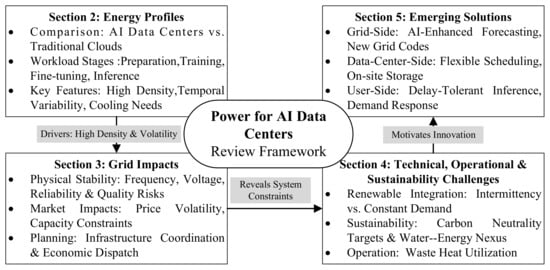
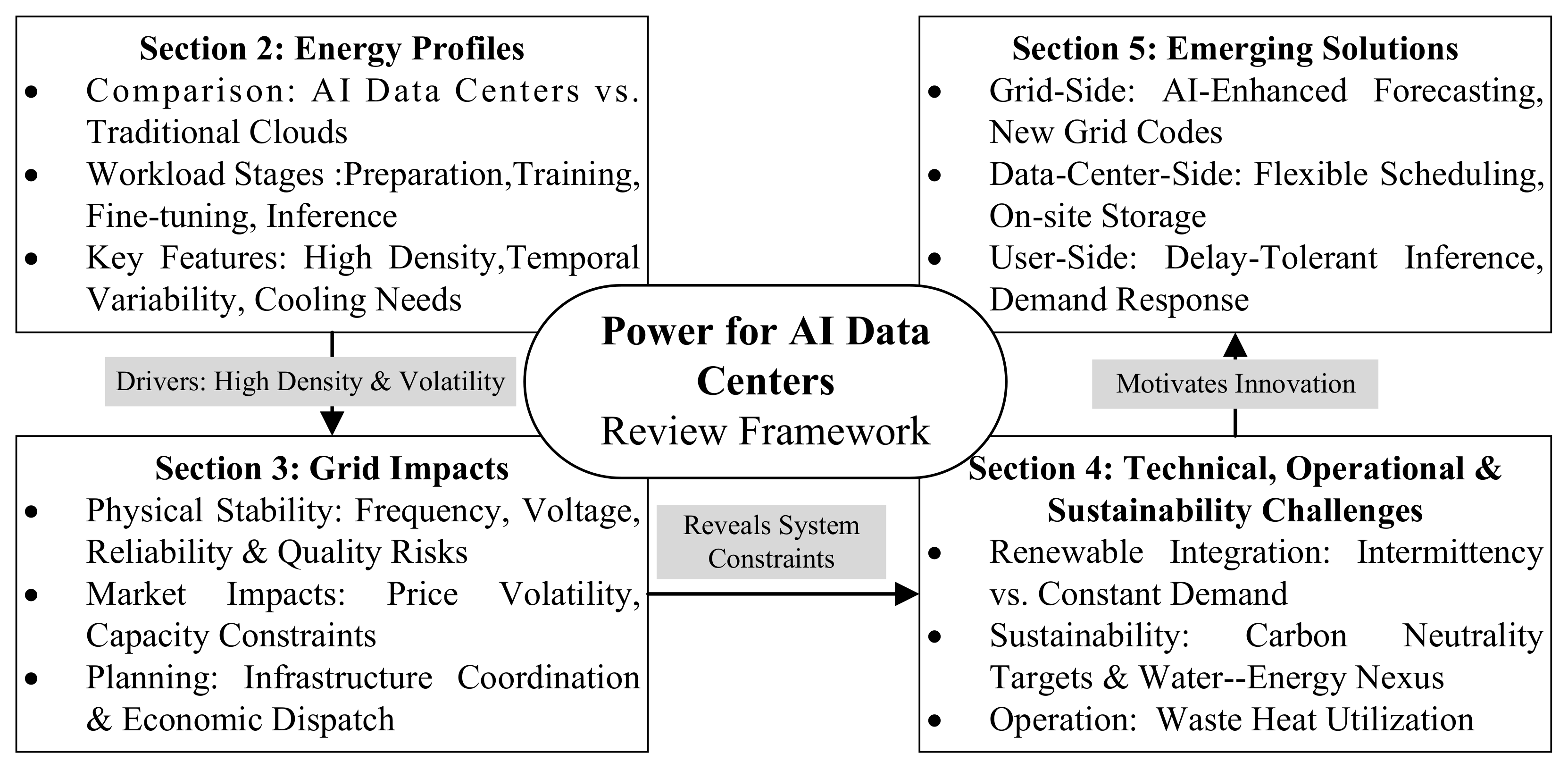
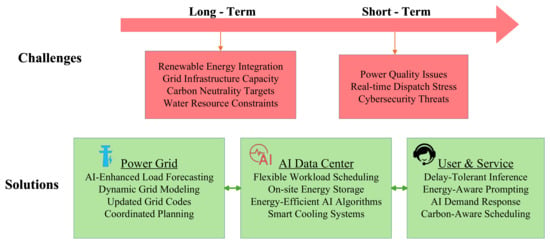
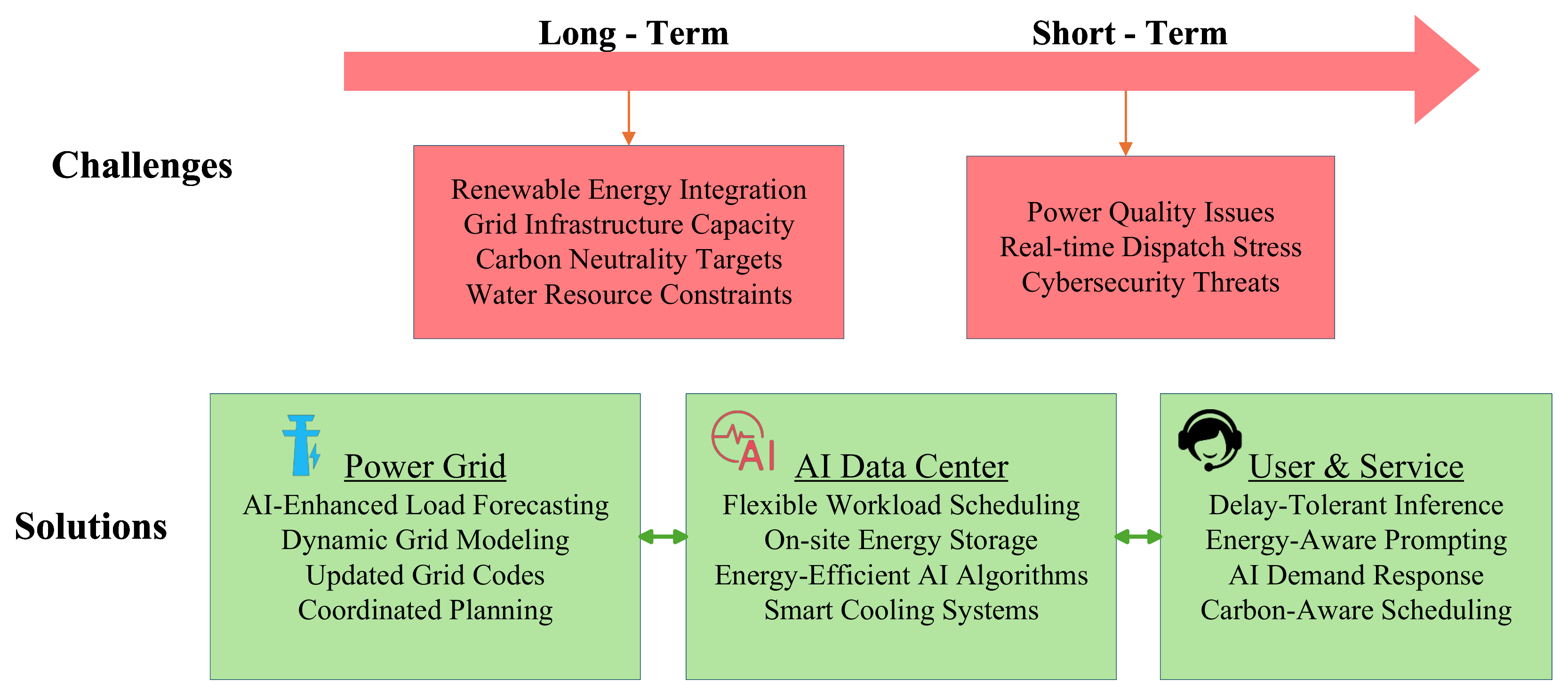
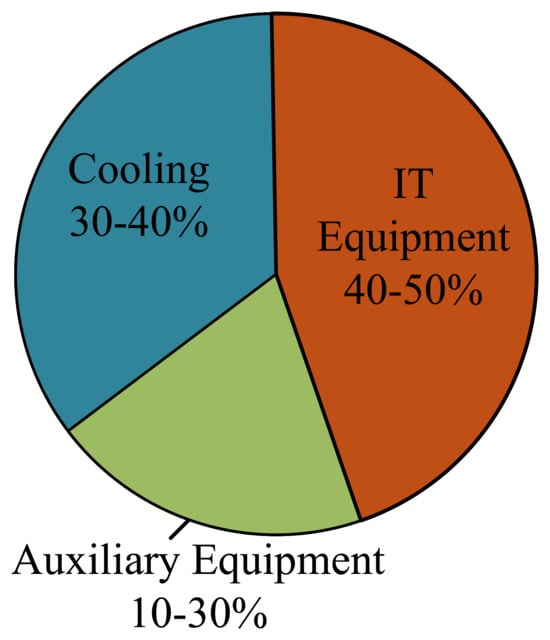
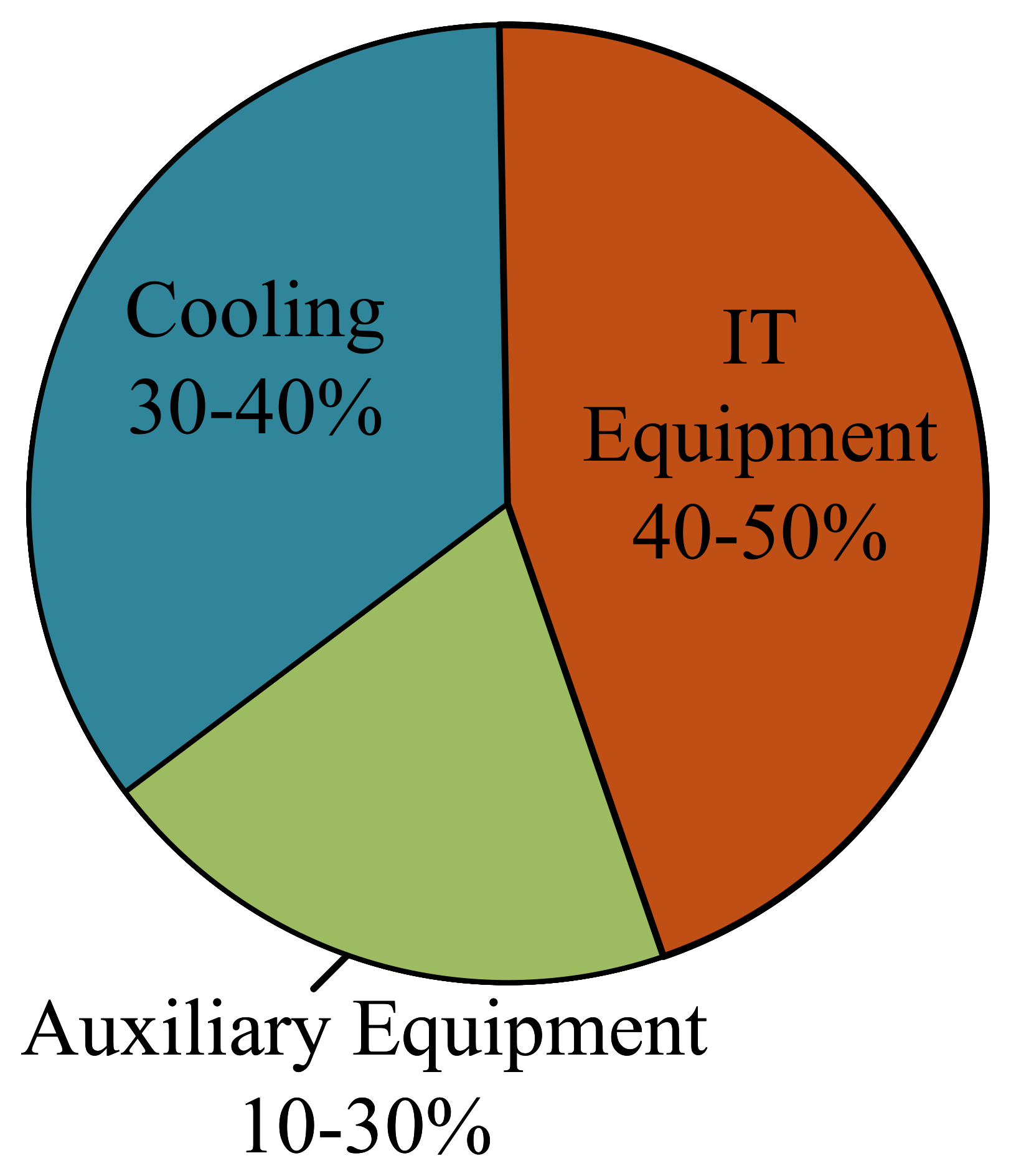
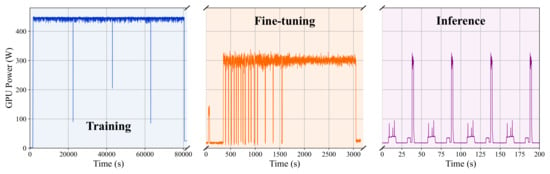
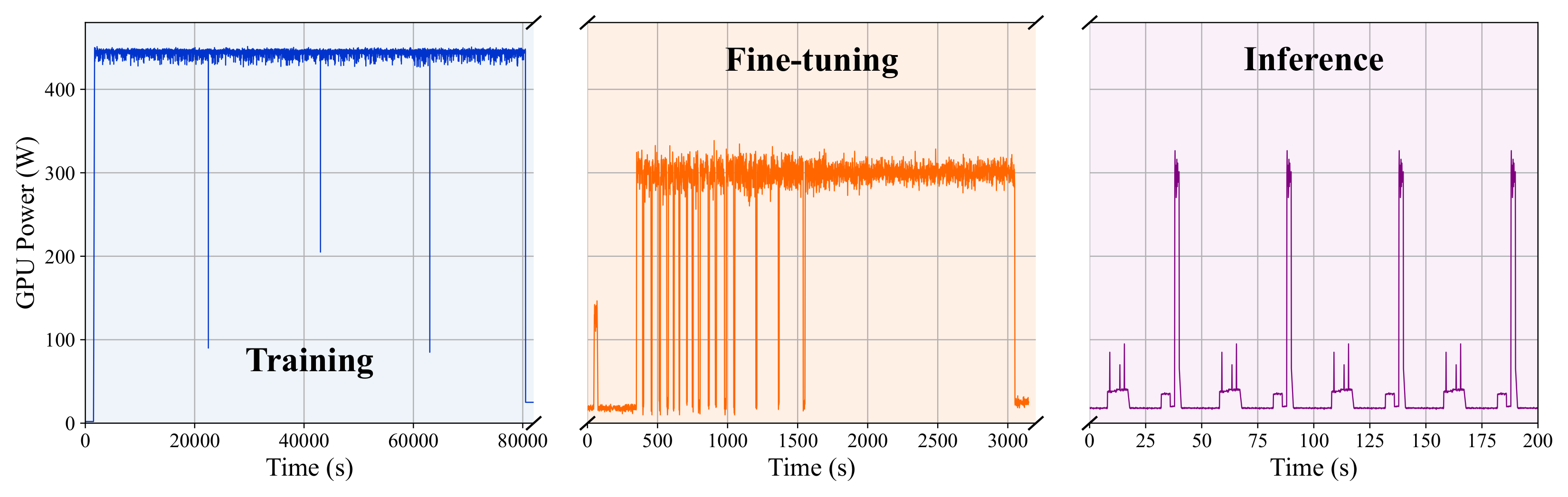
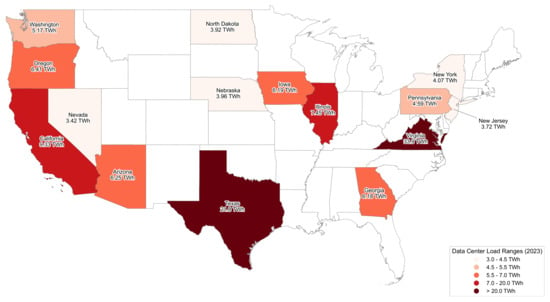
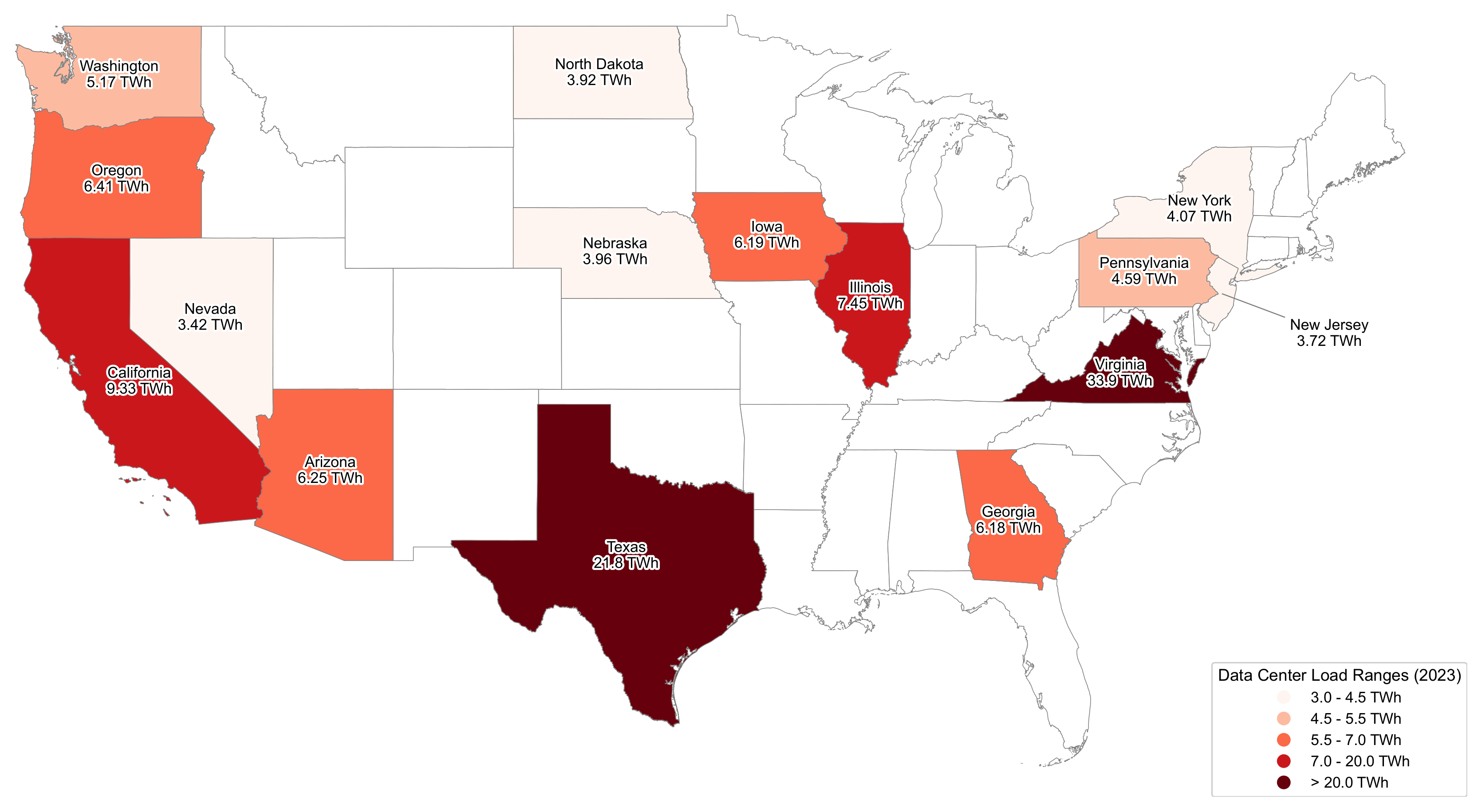

Disclaimer/Publisher’s Note: The statements, opinions and data contained in all publications are solely those of the individual author(s) and contributor(s) and not of MDPI and/or the editor(s). MDPI and/or the editor(s) disclaim responsibility for any injury to people or property resulting from any ideas, methods, instructions or products referred to in the content. |
© 2026 by the authors. Licensee MDPI, Basel, Switzerland. This article is an open access article distributed under the terms and conditions of the Creative Commons Attribution (CC BY) license.