Carbon–Electricity–Heat Coupling Process for Full Unit Carbon Capture: A 1000 MW Case in China

 ,
,
Abstract
1. Introduction
2. Materials and Methods
2.1. Mechanism Characterization
2.2. Logic Flowchart
2.3. Mathematical Equations
- (1)
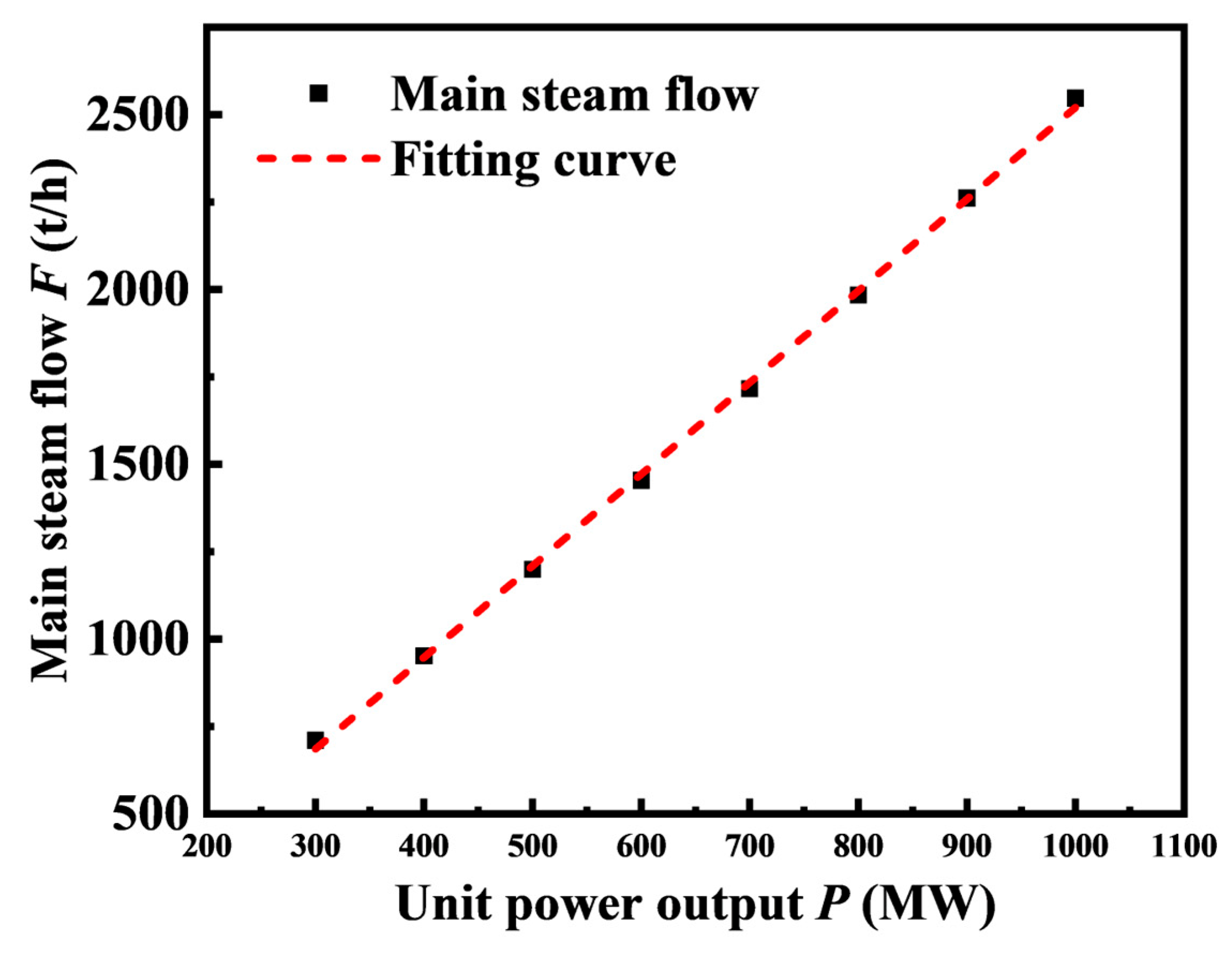
- We develop the mathematical model based on the aforementioned mechanisms and their logical relationships. The relationship between the main steam mass flow rate (, t/h) and unit power output (, MW) is as follows:
- (2)
- The relationship between the captured CO2 flow rate (, tCO2/h), , and carbon capture ratio (%) is as follows:
- (3)
- Steam allocation balances extraction for power generation with consumption for carbon capture:
- (4)
- The dependence of (post-extraction power output in MW) on , , and is as follows:
- (5)
- The electric demand (MW) of the carbon capture system as a function of and is as follows:
- (6)
- The unit power output (MW) is a function of and as follows:
- (7)
- Determination of the usable capacity (m3) of the thermal storage tank is as follows:
- (8)
- The usable capacity (m3) of the solvent storage tank is determined as follows:
3. Results and Discussion
3.1. Engineering Model Equations
3.1.1. as a Function of
3.1.2. as a Function of and
3.1.3. as a Function of , , and
3.1.4. as a Function of and
3.2. Direct Coupling Results of Thermal Power Unit and Carbon Capture System
3.2.1. Load-Dependent Performance of Carbon Capture on Power Output
3.2.2. Mechanism of Carbon Capture Ratio Affecting Power Generation Performance
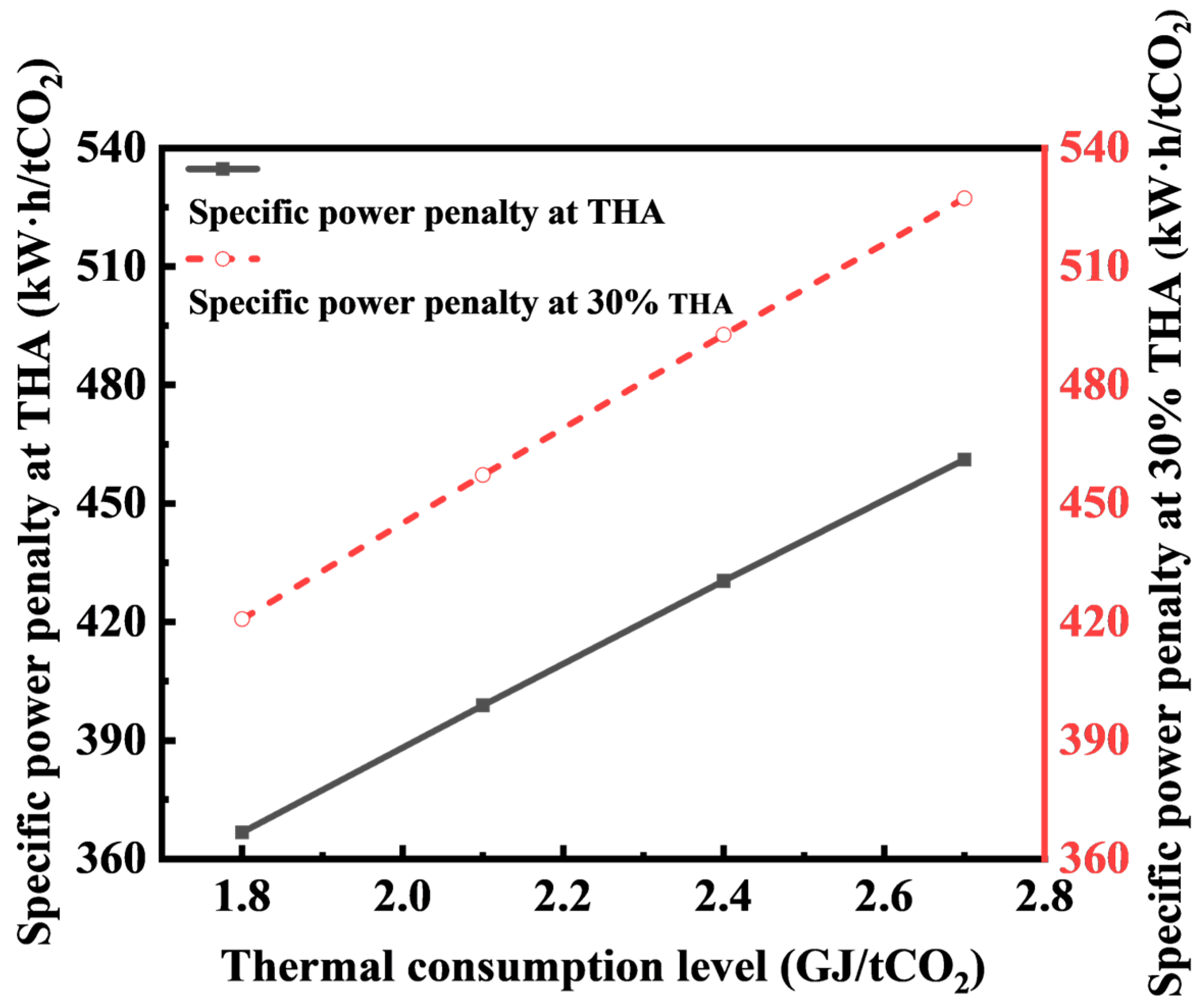
3.2.3. Impact of Carbon Capture on Power Generation Under Different Thermal Consumption Levels
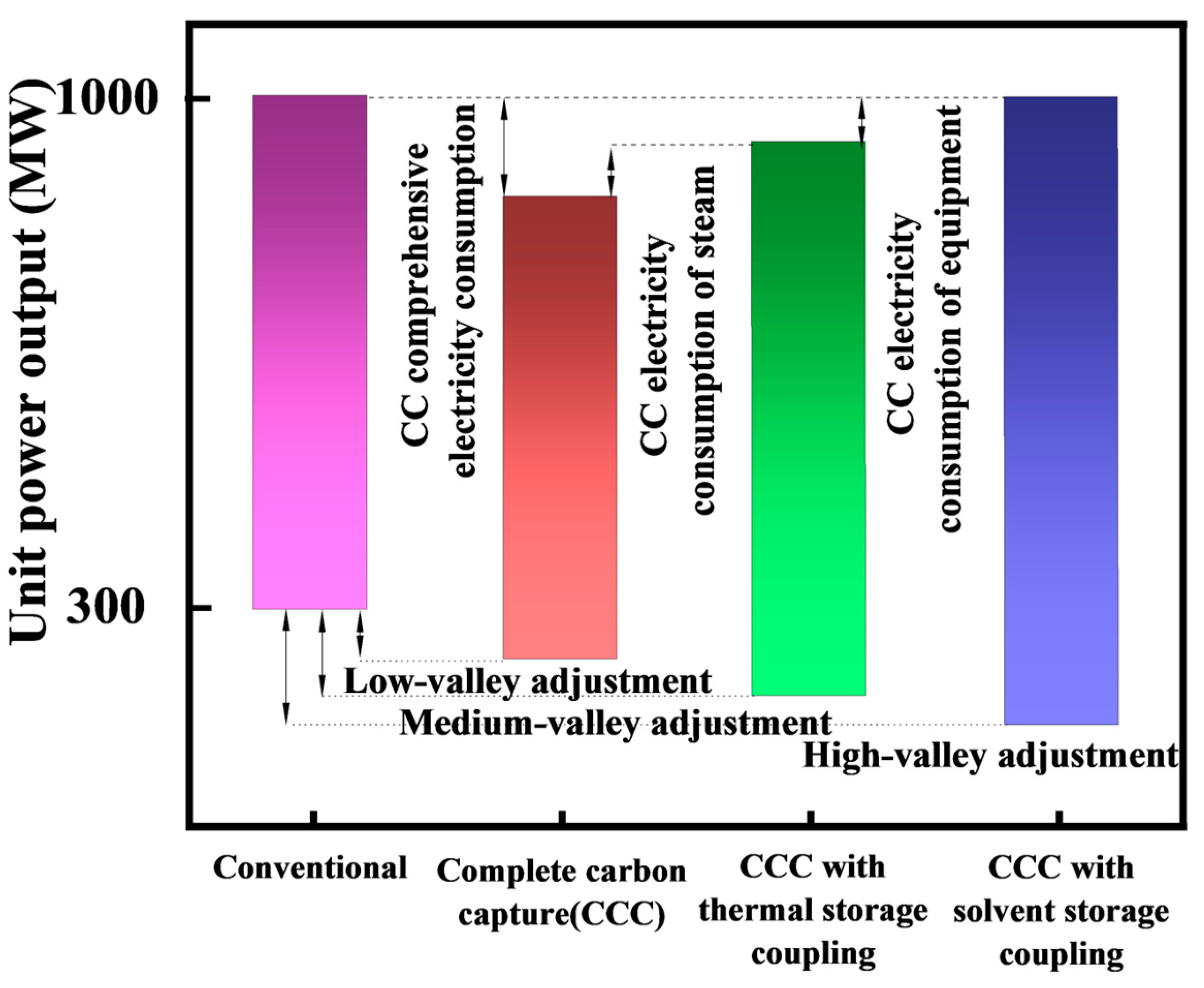
3.3. Comparative Analysis of Coupling Modes for Carbon Capture Integration
3.4. Operational Decision-Making Framework
3.4.1. Optimization of the Unit’s Role Positioning
3.4.2. Economic Break-Even of Carbon Capture System Operation
3.4.3. Determination of the System Safety Operation Boundaries
4. Conclusions
- (1)
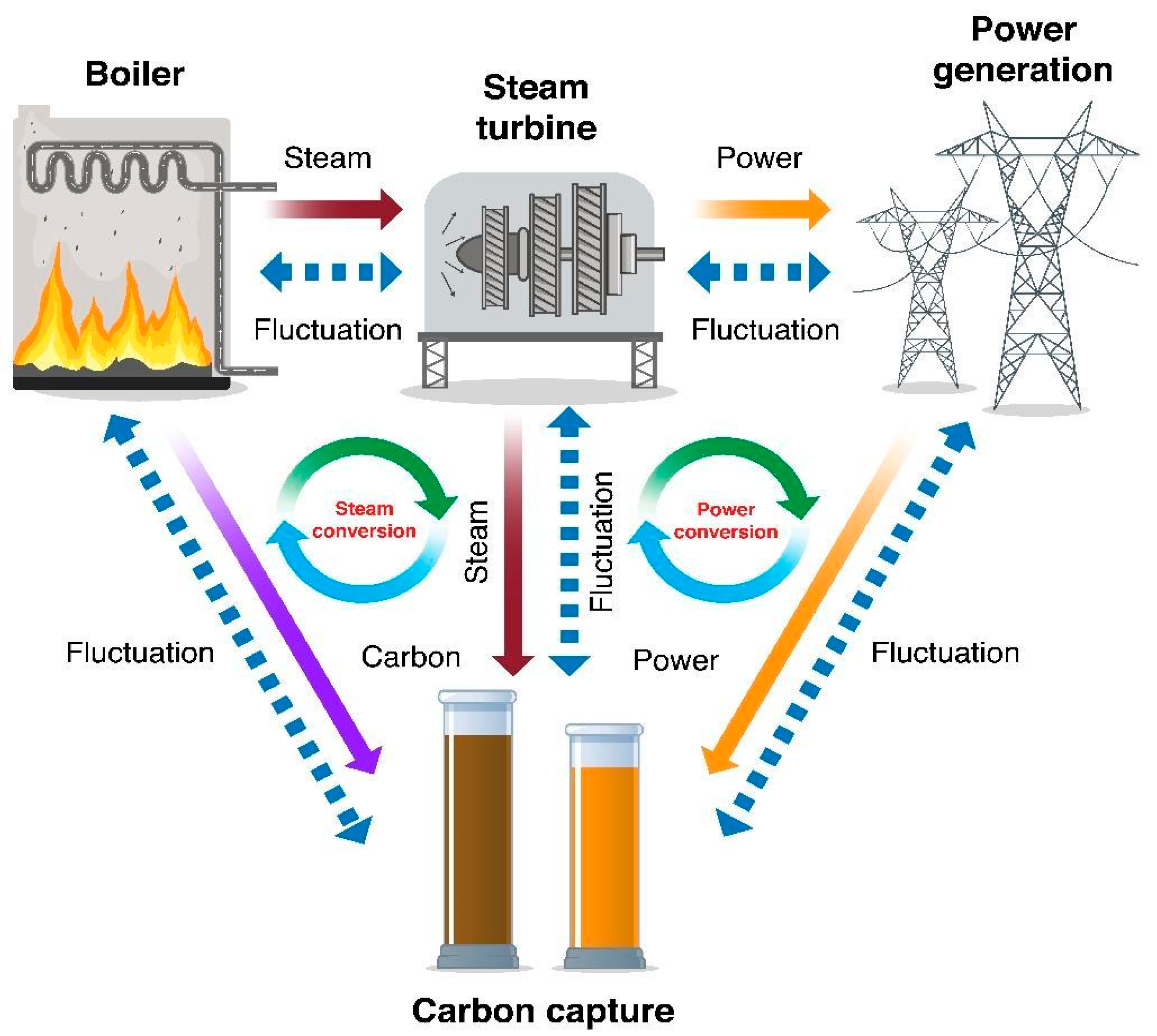
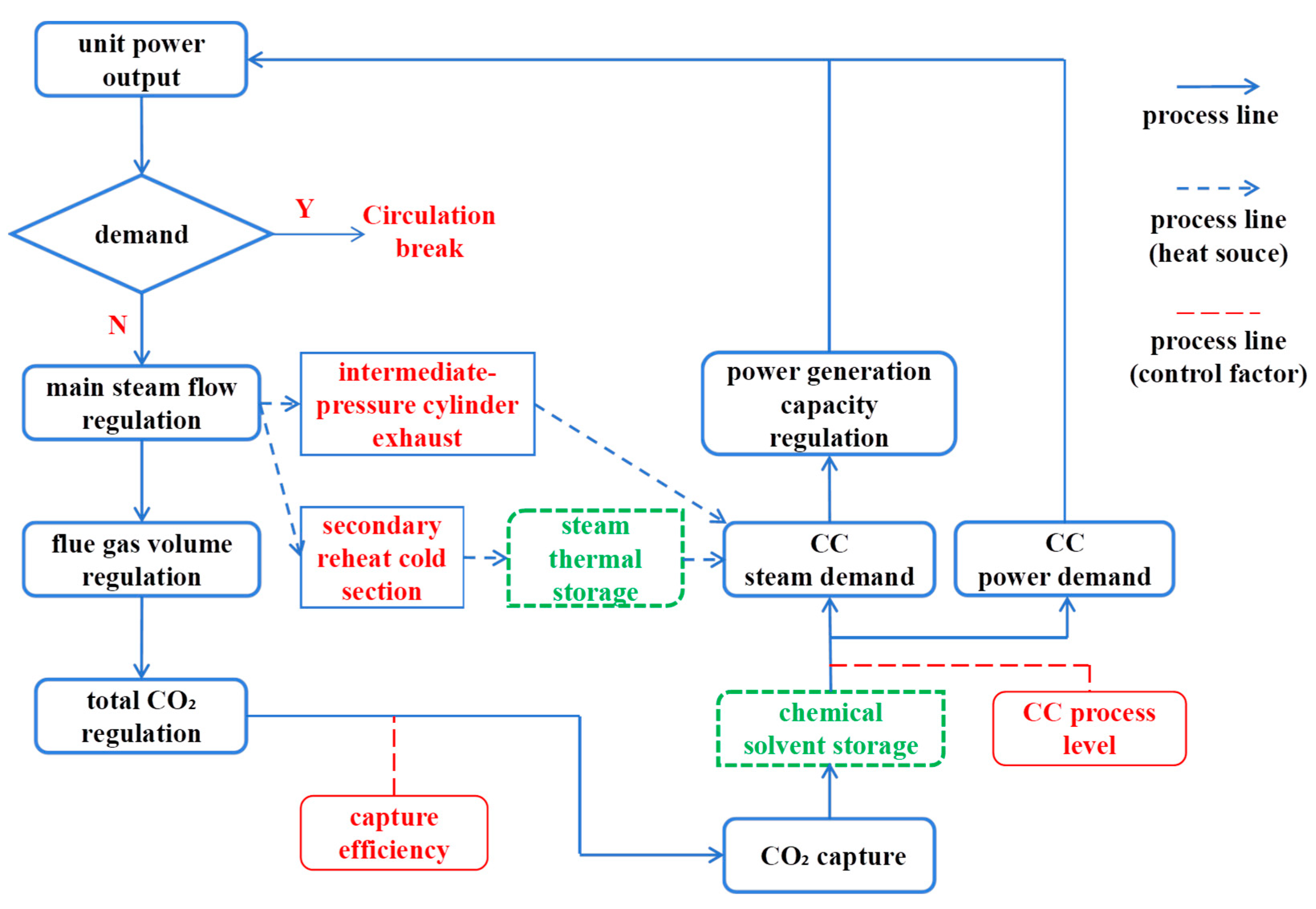
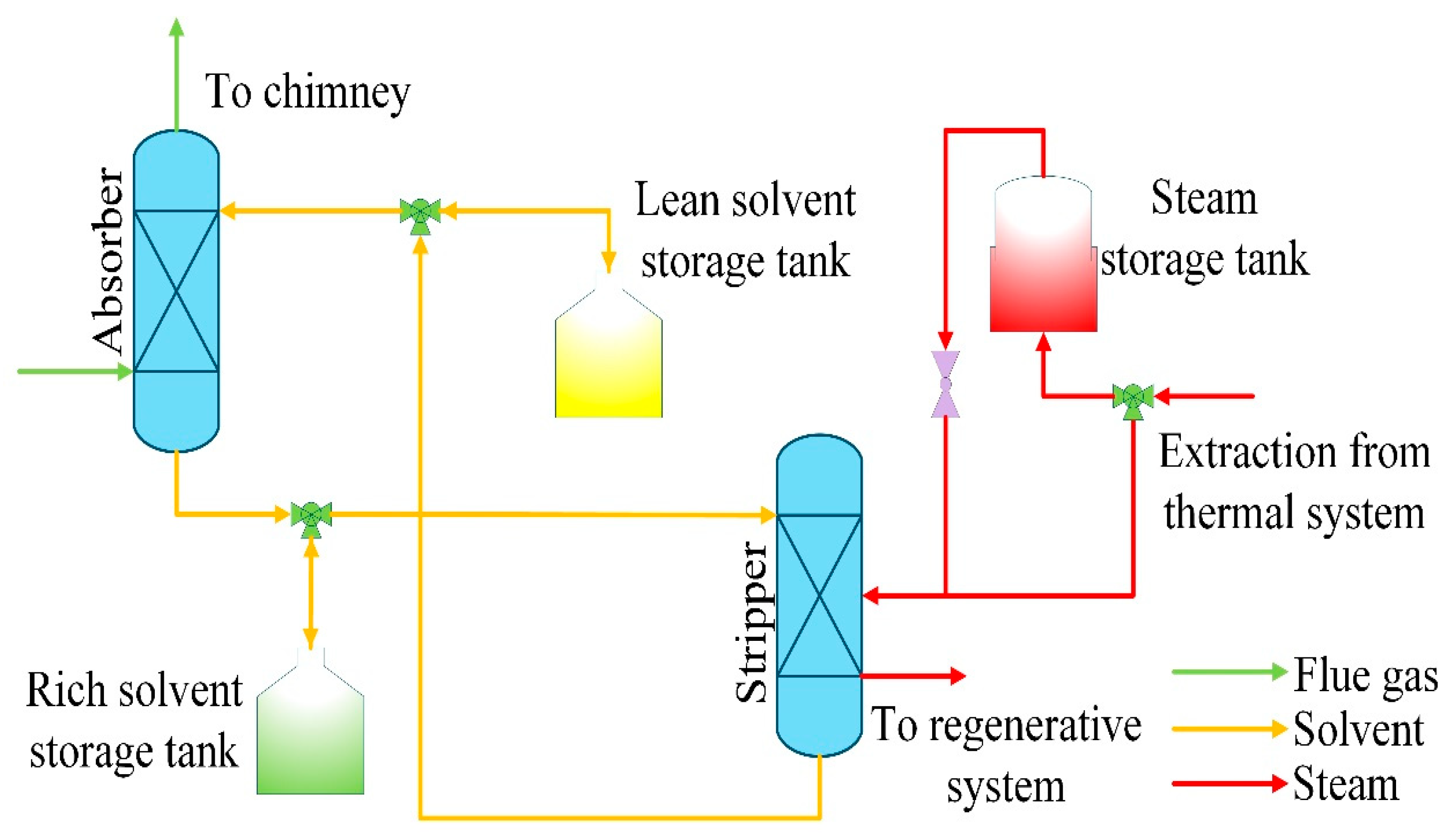
- A dual-element coupling convergence mechanism of “steam” and “power generation” exists between the carbon capture and thermal power systems to achieve dynamic equilibrium. The specific thermal storage capacity of saturated water and the CO2 storage capacity of the rich solvent are the key parameters reflecting the volumetric storage capacity in the steam thermal storage and chemical solvent storage coupling modes, respectively.
- (2)
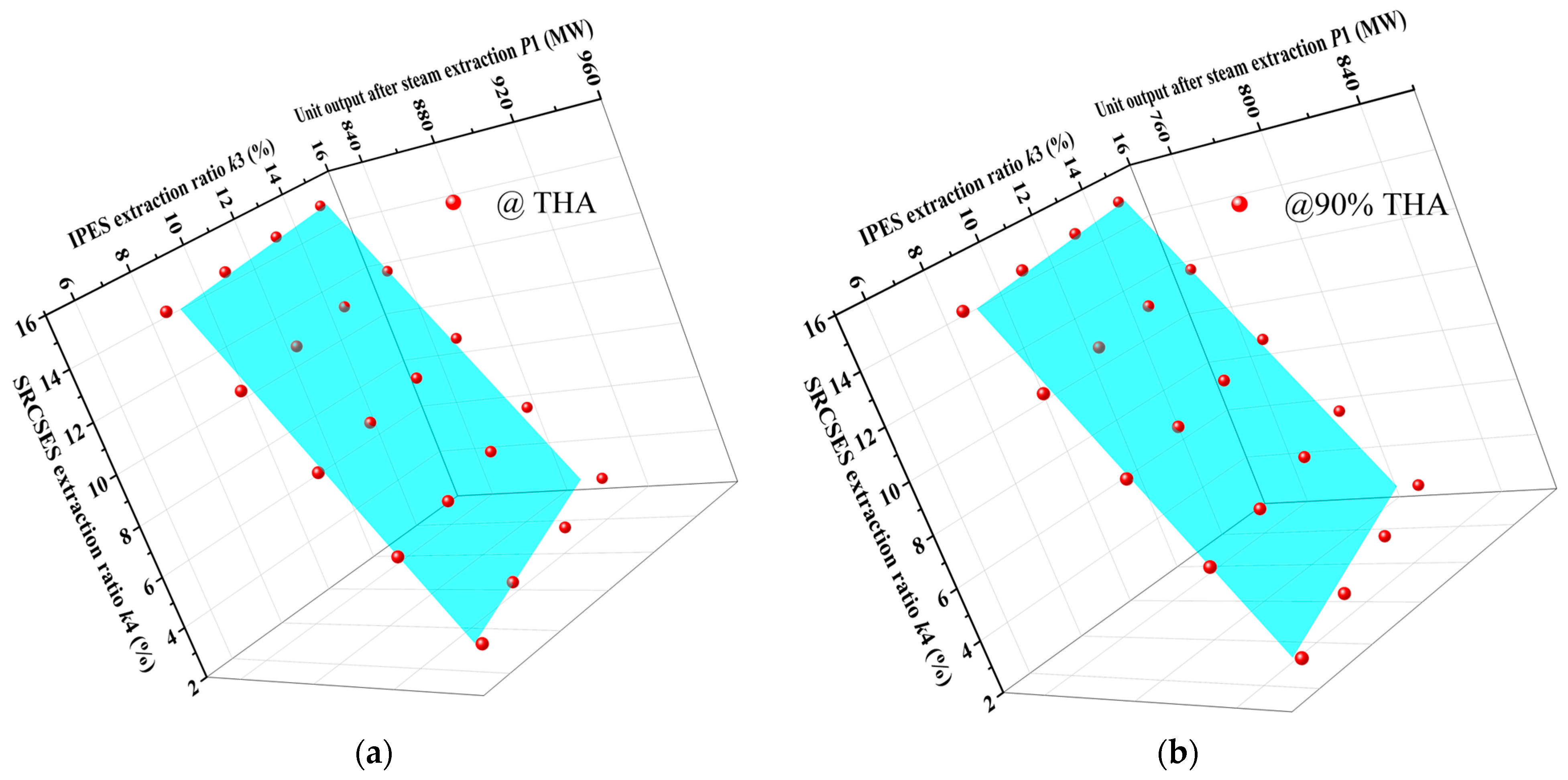
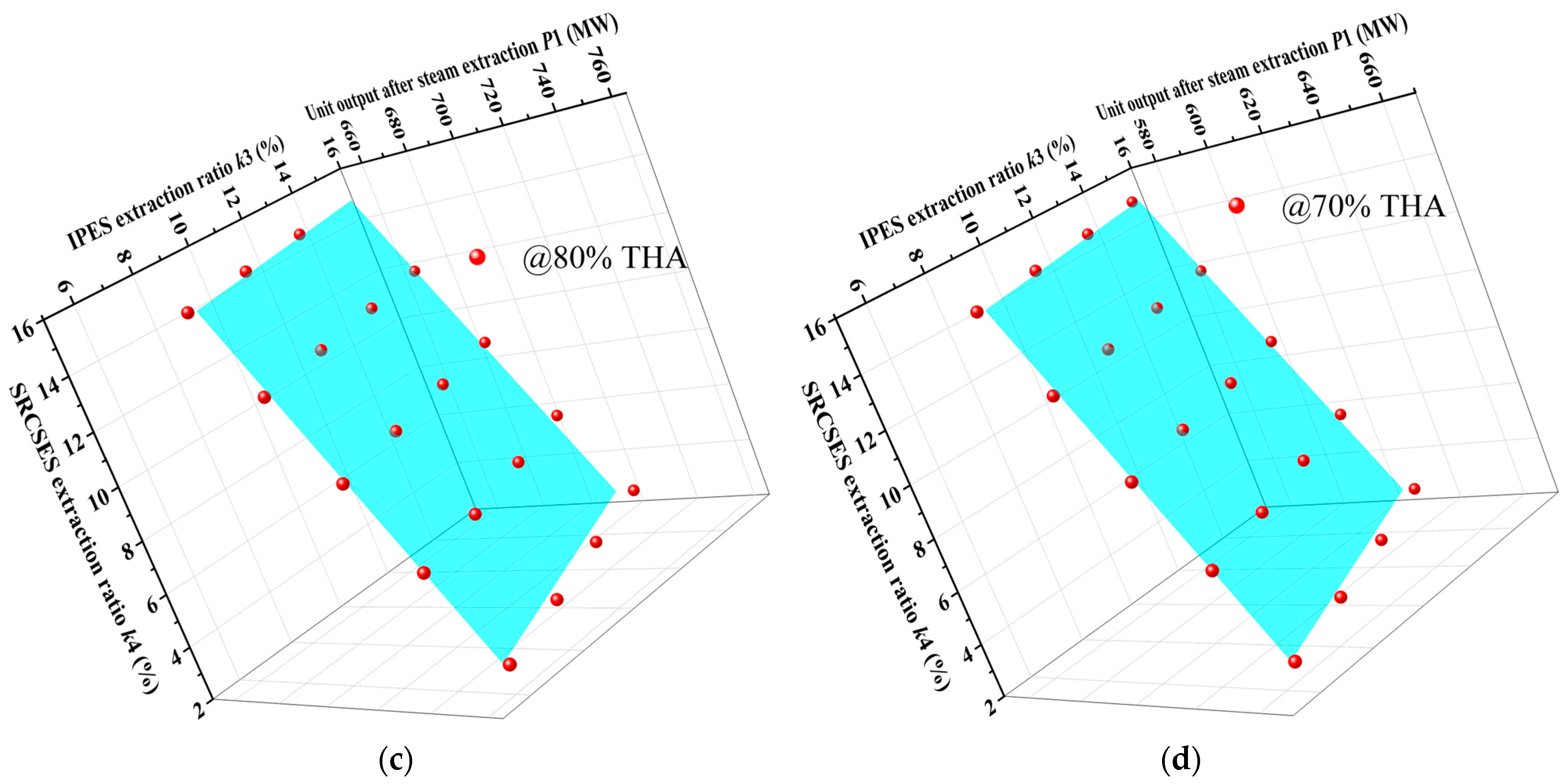
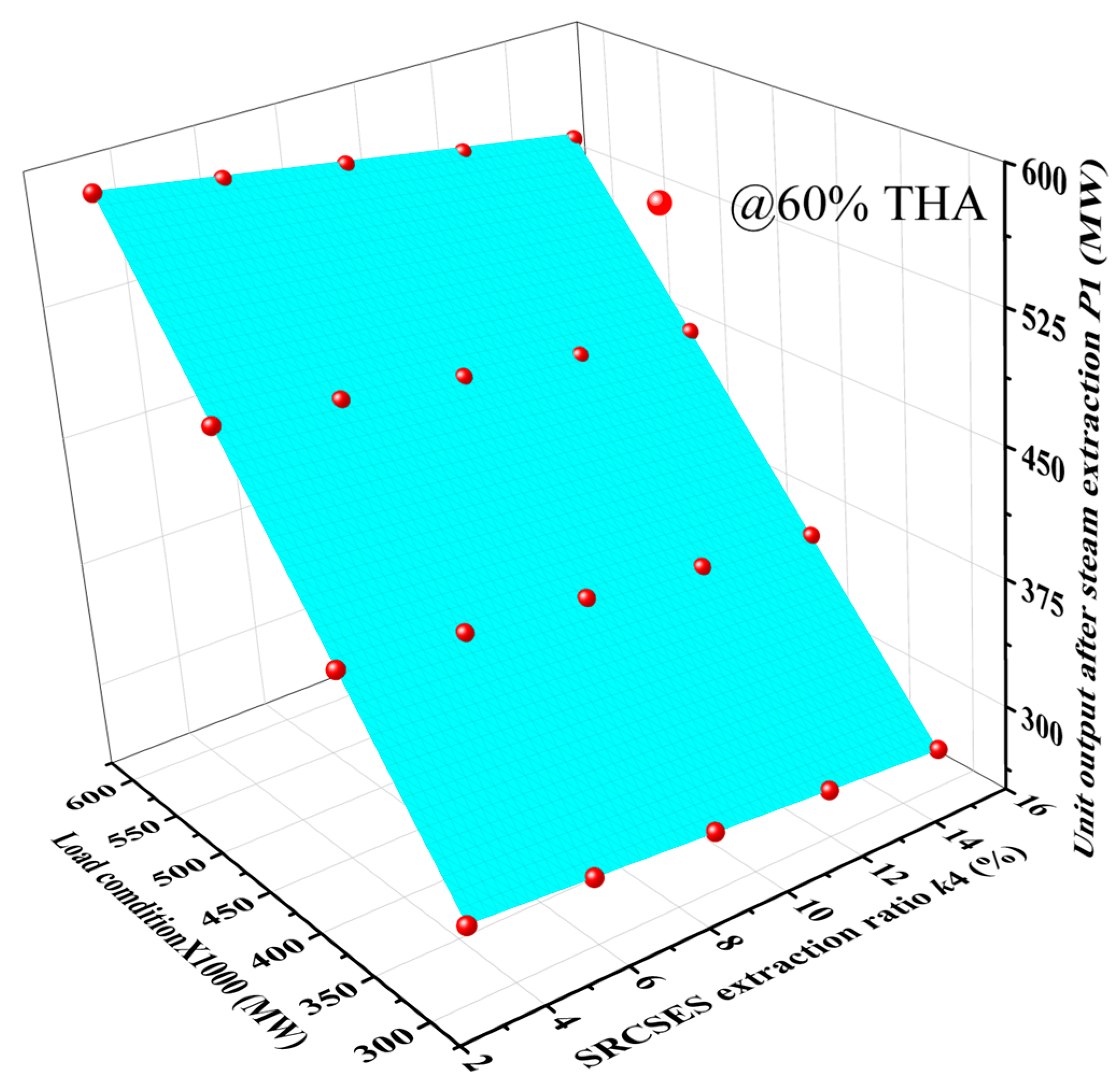
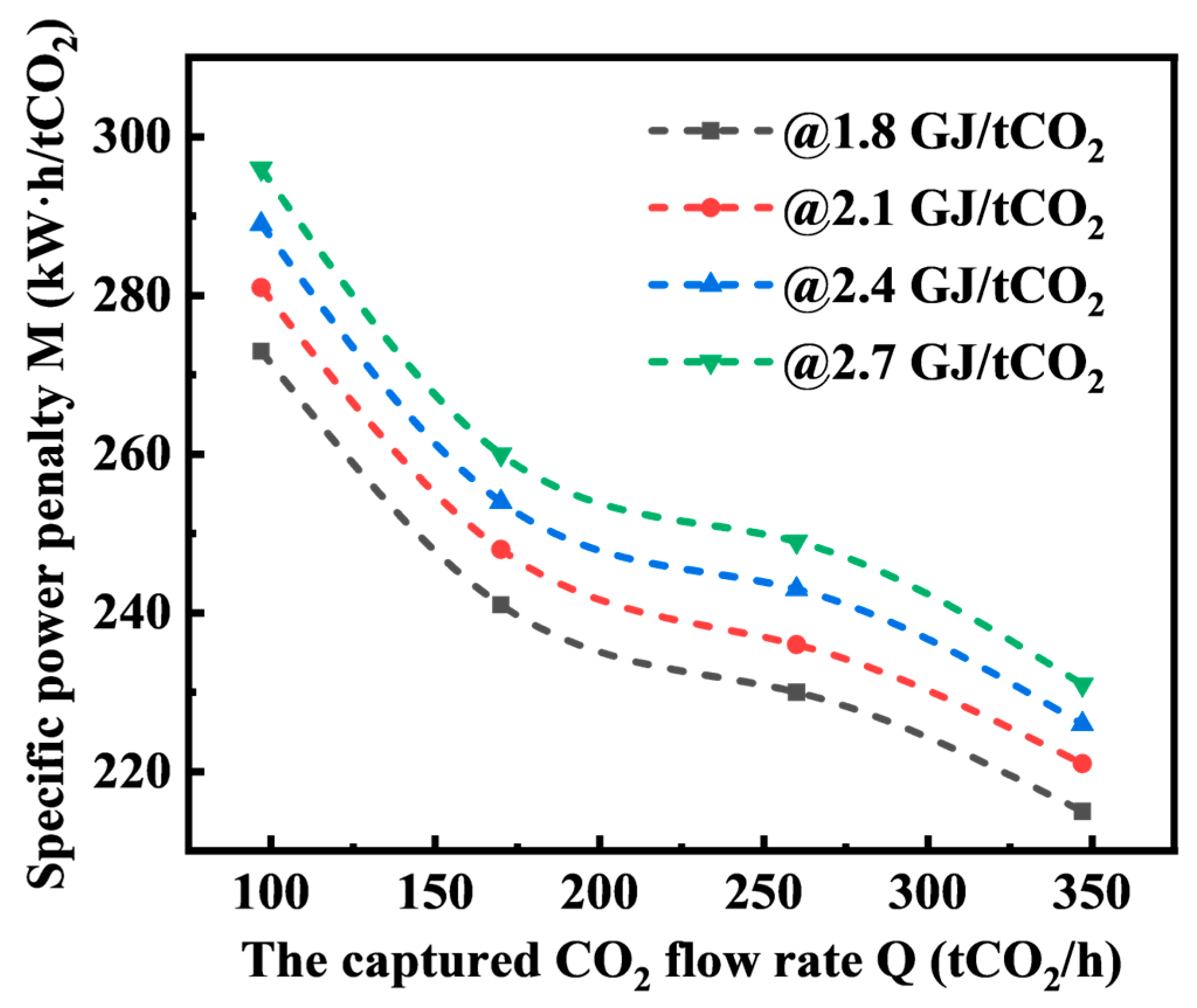
- The higher thermal parameters of the secondary reheat cold section steam account for its greater linear impact on power generation, as evidenced by the coefficient comparison A = 0.53 < B = 0.61. The coefficient C = 0.1 reflects the coupling interaction between the two extraction streams and their nonlinear effects. The unit specific power penalties at different thermal consumption levels exhibits similar nonlinear variation patterns, reflecting the inherent nonlinear physical characteristics of the specific power penalty of the carbon capture system.
- (3)
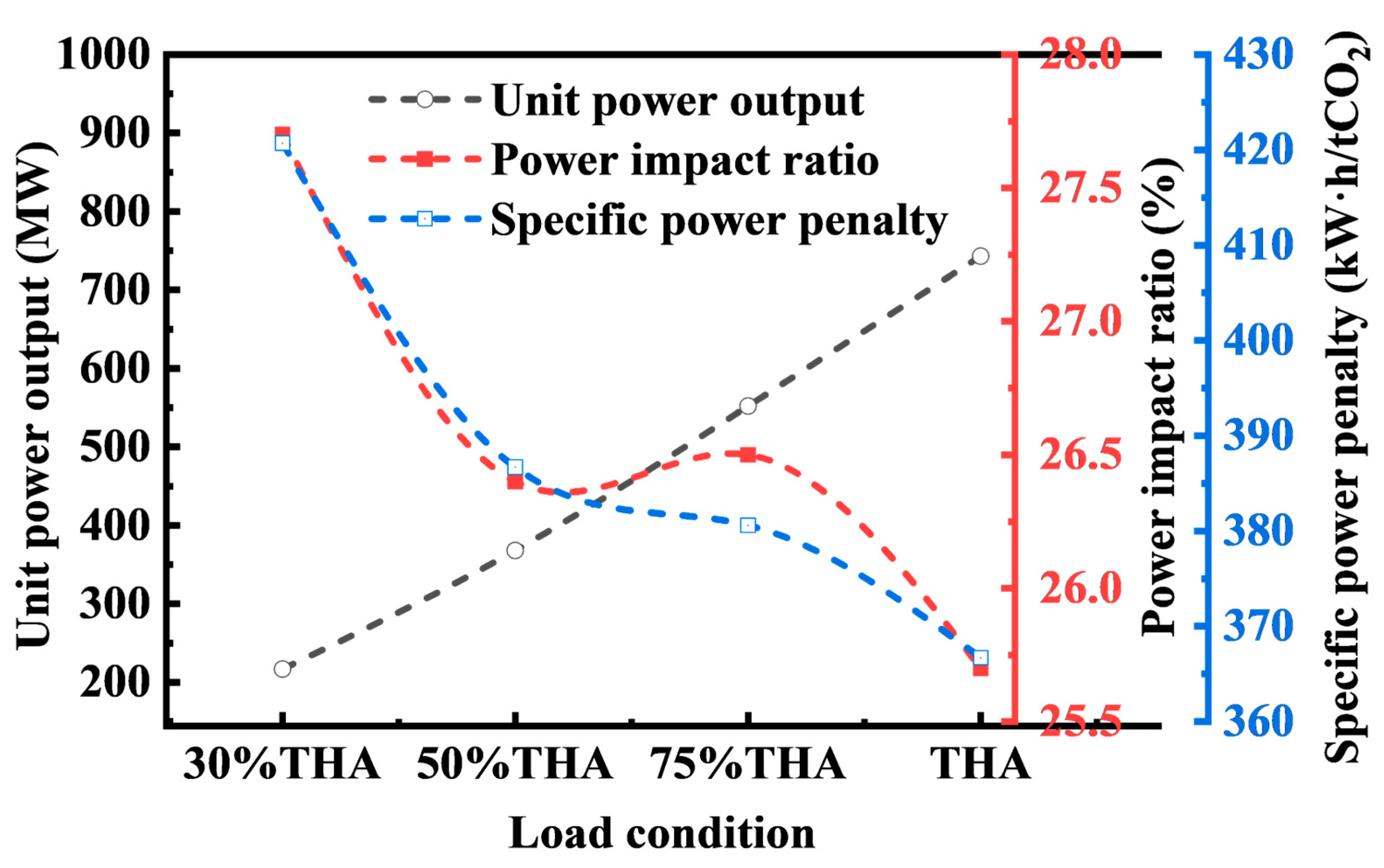
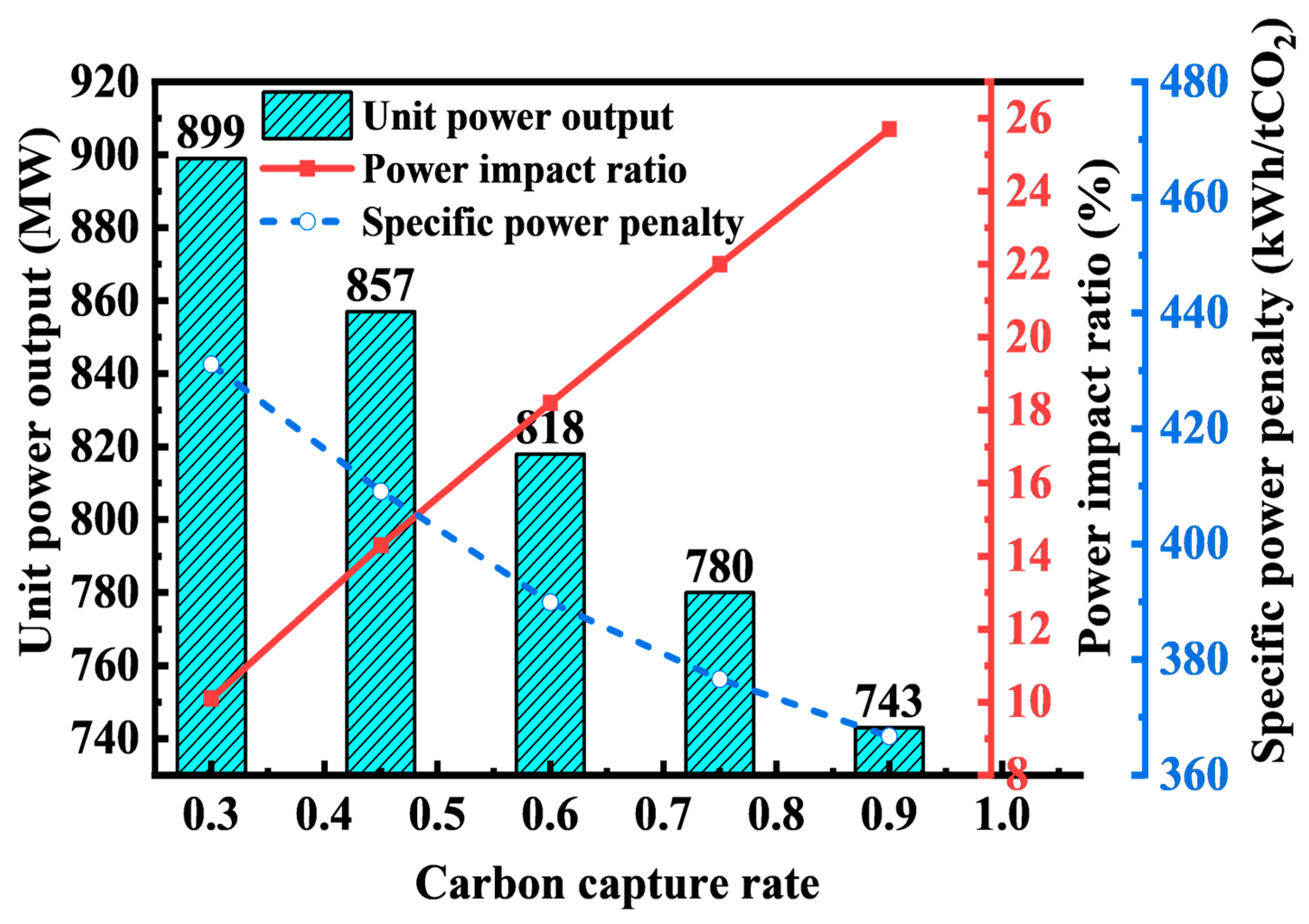
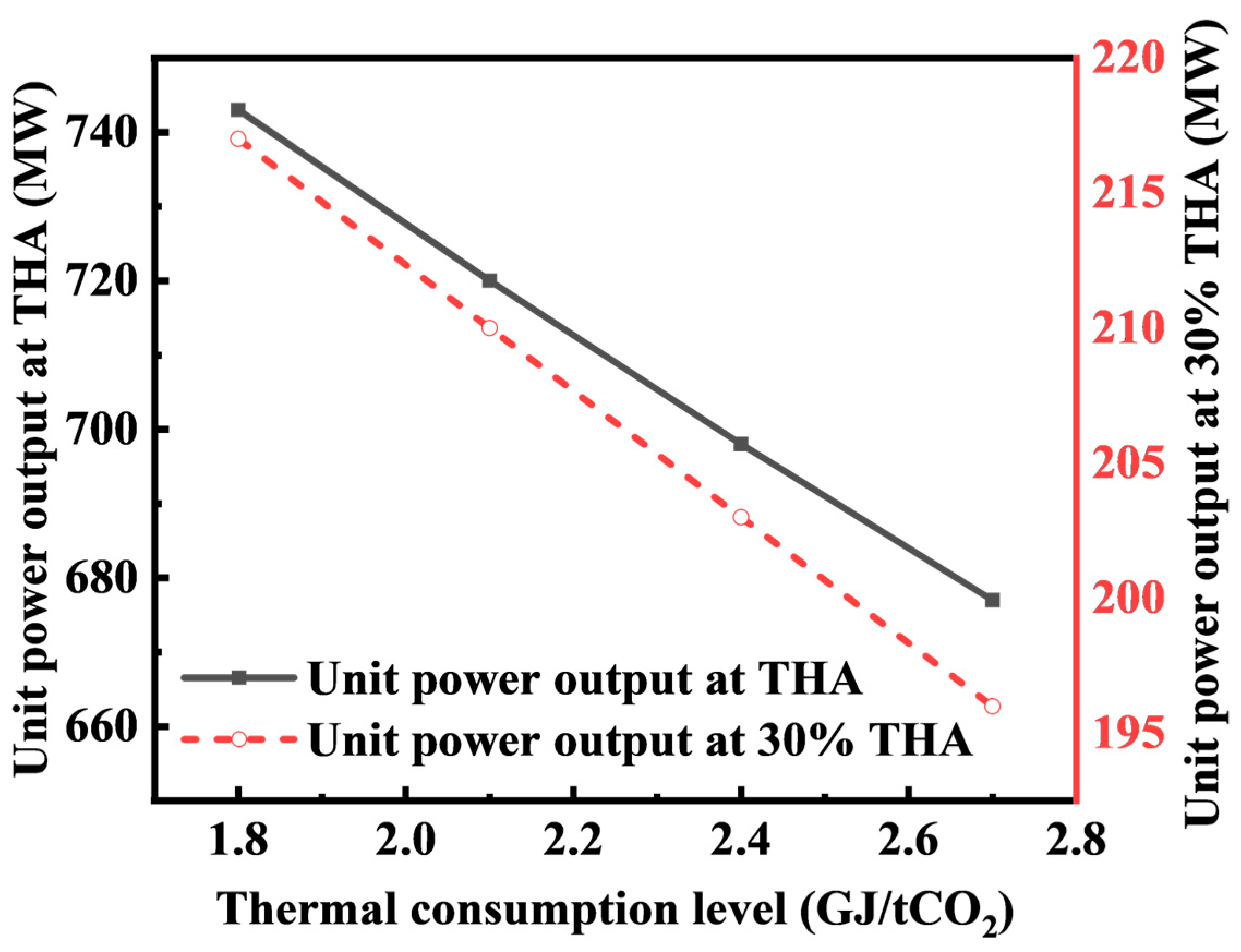
- The direct coupling results between the thermal unit and carbon capture system show that under full flue gas carbon capture conditions, the power generation impact rate reaches 27.7% at 30% THA, which is 2% higher than that under the THA condition. The impacts under the 50% and 75% THA conditions were almost identical. The specific power penalty peaked at 420.7 kW·h/tCO2 under 30% THA while reaching its minimum of 366.7 kW·h/tCO2 under THA conditions. When the carbon capture ratio increased from 30% to 90%, the reduction in specific power penalty reached 64.4 kW·h/tCO2 (14.94%). To minimize power loss, the carbon capture system should maintain a high capture rate.
- (4)
- Compared with conventional 1000 MW units, full flue gas carbon capture units exhibit reduced maximum power output capacity but generate significant deep peak-shaving effects. For instance, valley load levels can decrease by approximately 1/3 (based on a 300 MW baseline). Compared with standard full flue gas carbon capture units, the steam thermal storage coupling mode reduces the power consumption associated with steam usage, expands the peak power generation capacity, and further enhances the low-load operational capability. The chemical storage mode, which allows CO2 absorption without regeneration during peak periods, minimizes the impact on peak power generation while maintaining full flue gas capture capacity. This ensures the highest grid security, enables increased regeneration demand during off-peak periods, and achieves an optimal deep peak-shaving performance.
- (5)
- In terms of dispatch, this study can guide the optimal load distribution for “carbon–power–heat” synergy in future. Economically, this aids in determining the optimal operating conditions and profit margins for carbon capture. Operational security defines the stable operating boundaries and guides the adoption of safer coupling modes. This study is applicable only to large units; recalibration may be required when applying to other scenarios. Future work should optimize real-time scheduling schemes and validate findings using large-scale CCUS operational data.
Author Contributions
Funding
Data Availability Statement
Conflicts of Interest
Nomenclature
| MW | unit power output | |
| MW | unit output after steam extraction | |
| t/h | main steam flow rate | |
| tCO2/h | the captured CO2 flow rate | |
| % | carbon capture ratio | |
| % | the solvent storage impact rate | |
| GJ/tCO2 | the specific thermal consumption level | |
| % | IP cylinder exhaust steam extraction ratio | |
| % | secondary reheat cold section steam extraction ratio | |
| the heat-to-steam conversion coefficient | ||
| % | the volumetric ratio of the steam extracted from the secondary reheat cold section after being desuperheated and depressurized to the target parameters | |
| % | the steam flow rate for the thermal storage system, defined as a percentage of the unit’s main steam flow | |
| MW | ||
| m3 | the usable capacity of the thermal storage tank | |
| t/m3 | the thermal energy storage per unit volume of saturated water | |
| m3 | the usable capacity of the solvent storage tank | |
| tCO2/m3 | the CO2 storage capacity of the rich solvent | |
| MW | the electric demand |
References
- Alalaiwat, D.; Khan, E. Current status and future scenarios of carbon capture from power plants emission: A review. Rev. Environ. Sci. Biotechnol. 2023, 22, 799–822. [Google Scholar] [CrossRef]
- Raza, A.; Gholami, R.; Rezaee, R.; Rasouli, V.; Rabiei, M. Significant aspects of carbon capture and storage—A review. Petroleum 2019, 5, 335–340. [Google Scholar] [CrossRef]
- Mac Dowell, N.; Fennell, P.S.; Shah, N.; Maitland, G.C. The role of CO2 capture and utilization in mitigating climate change. Nat. Clim. Change 2017, 7, 243–249. [Google Scholar] [CrossRef]
- Li, J.J.; Tian, Y.J.; Deng, Y.L.; Zhang, Y.; Xie, K. Improving the estimation of greenhouse gas emissions from the Chinese coal-to-electricity chain by a bottom-up approach. Resour. Conserv. Recycl. 2021, 167, 105237. [Google Scholar] [CrossRef]
- Liu, Z.; Guan, D.B.; Wei, W.; Davis, S.J.; Ciais, P.; Bai, J.; Peng, S.; Zhang, Q.; Hubacek, K.; Marland, G.; et al. Reduced carbon emission estimates from fossil fuel combustion and cement production in China. Nature 2015, 524, 335–338. [Google Scholar] [CrossRef] [PubMed]
- Yang, L.; Wei, N.; Lv, H.D.; Zhang, X. Optimal deployment for carbon capture enables more than half of China’s coal-fired power plant to achieve low-carbon transformation. iScience 2022, 25, 105664. [Google Scholar] [CrossRef] [PubMed]
- Vega, F.; Baena-Moreno, F.M.; Gallego Fernández, L.M.G.; Portillo, E.; Navarrete, B.; Zhang, Z. Current status of CO2 chemical absorption research applied to CCS: Towards full deployment at industrial scale. Appl. Energy 2020, 260, 114313. [Google Scholar] [CrossRef]
- Leung, D.Y.C.; Caramanna, G.; Maroto-Valer, M.M. An overview of current status of carbon dioxide capture and storage technologies. Renew. Sustain. Energy Rev. 2014, 39, 426–443. [Google Scholar] [CrossRef]
- Wang, P.; Liu, Z.M.; Pan, Z.; González-Arias, J.; Shang, L.; Wang, Y.; Zhang, Z. Advances in life cycle assessment of chemical absorption-based carbon capture technologies. Sep. Purif. Technol. 2024, 346, 127252. [Google Scholar] [CrossRef]
- Shyam, A.; Ahmed, K.R.A.; Kumar, J.P.N.; Iniyan, S.; Goic, R. Path of carbon dioxide capture technologies: An overview. Next Sustain. 2025, 6, 100118. [Google Scholar] [CrossRef]
- Ochedi, F.O.; Yu, J.L.; Yu, H.; Liu, Y.; Hussain, A. Carbon dioxide capture using solvent absorption methods: A review. Environ. Chem. Lett. 2021, 19, 77–109. [Google Scholar] [CrossRef]
- Rochelle, G.T. Thermal degradation of amines for CO2 capture. Curr. Opin. Chem. Eng. 2012, 1, 183–190. [Google Scholar] [CrossRef]
- Vu, T.T.; Lim, Y.I.; Song, D.; Mun, T.Y.; Moon, J.H.; Sun, D.; Hwang, Y.T.; Lee, J.G.; Park, Y.C. Techno-economic analysis of ultra-supercritical power plants using air- and oxy-combustion circulating fluidized bed with and without CO2 capture. Energy 2020, 194, 116855. [Google Scholar] [CrossRef]
- Li, Y.; Wang, N.N.; Guan, H.J.; Jia, Z.; Zhang, Y.; Zhao, G.; Gao, M. Optimization study of CO2 capture unit for subcritical coal-fired power generation unit based on Ebsilon and Aspen plus. Energy Convers. Manag. 2022, 269, 116111. [Google Scholar] [CrossRef]
- Lucquiaud, M.; Gibbins, J. Effective retrofitting of post-combustion CO2 capture to coal-fired power plants and insensitivity of CO2 abatement costs to base plant efficiency. Int. J. Greenh. Gas Control 2011, 5, 427–438. [Google Scholar] [CrossRef]
- Liu, L.B.; Gao, S.W.; Xu, S.S. Analysis on system integration between carbon capture and coal-fired power plant. Proc. CSEE 2014, 34, 3843–3848. [Google Scholar] [CrossRef]
- Akachuku, A.; Osei, P.A.; Decardi-Nelson, B.; Srisang, W.; Pouryousefi, F.; Ibrahim, H.; Idem, R. Experimental and kinetic study of the catalytic desorption of CO2 from CO2-loaded monoethanolamine (MEA) and blended monoethanolamine—Methyl-diethanolamine (MEA-MDEA) solutions. Energy 2019, 179, 475–489. [Google Scholar] [CrossRef]
- Bravo, J.; Drapanauskaite, D.; Sarunac, N.; Romero, C.; Jesikiewicz, T.; Baltrusaitis, J. Optimization of energy requirements for CO2 post-combustion capture process through advanced thermal integration. Fuel 2021, 283, 118940. [Google Scholar] [CrossRef]
- Liu, Z.; Wang, C.; Fan, J.; Liu, M.; Xing, Y.; Yan, J. Enhancing the flexibility and stability of coal-fired power plants by optimizing control schemes of throttling high-pressure extraction steam. Energy 2024, 288, 129756. [Google Scholar] [CrossRef]
- Obi, D.; Onyekuru, S.; Orga, A. Review of recent process developments in the field of carbon dioxide (CO2) capture from power plants flue gases and the future perspectives. Int. J. Sustain. Energy 2024, 43, 2317137. [Google Scholar] [CrossRef]
- Skjervold, V.T.; Nord, L.O. Thermal energy storage integration for increased flexibility of a power plant with post-combustion CO2 capture. Appl. Therm. Eng. 2024, 246, 122907. [Google Scholar] [CrossRef]
- Guo, L.; Ding, Y.; Liao, Q.; Zhu, X.; Wang, H. A new heat supply strategy for CO2 capture process based on the heat recovery from turbine exhaust steam in a coal-fired power plant. Energy 2022, 239, 121817. [Google Scholar] [CrossRef]
- Ploumen, P.; Stienstra, G.; Kamphuis, H. Reduction of CO2 emissions of coal fired power plants by optimizing steam water cycle. Energy Procedia 2011, 4, 2074–2081. [Google Scholar] [CrossRef][Green Version]
- Goto, K.; Yogo, K.; Higashii, T. A review of efficiency penalty in a coal-fired power plant with post-combustion CO2 capture. Appl. Energy 2013, 111, 710–720. [Google Scholar] [CrossRef]
- Isogai, H.; Nakagaki, T. Power-to-heat amine-based post-combustion CO2 capture system with solvent storage utilizing fluctuating electricity prices. Appl. Energy 2024, 368, 123519. [Google Scholar] [CrossRef]
- Huang, Y.; Liu, W.; Zhang, X.; Wang, T.; Fang, M.; Gonzalez-Diaz, A.; Jiang, L. Flexibility analysis on absorption-based carbon capture integrated with energy storage. Fuel 2024, 372, 132279. [Google Scholar] [CrossRef]
- Han, Y.; Zhou, L.F.; Wang, Y.K.; Jian, C.; Yu, Y.L.; Duan, L.B. Concept Design and Performance Investigation on Coal-fired Power Plant Using a Novel MEA-based Process for Peak-shaving. Proc. CSEE 2021, 41, 3722–3730. [Google Scholar]
- Wang, W.; Zhao, Y.Q.; Zeng, D.L. Modeling and analysis of electricity-carbon coordinated characteristics in a carbon capture power plant. J. Chin. Soc. Power Eng. 2022, 42, 1107–1113+1153. [Google Scholar]
- Wang, J.; Sun, T.; Zeng, X.; Fu, J.; Zhao, J.; Deng, S.; Li, K. Feasibility of solar-assisted CO2 capture power plant with flexible operation: A case study in China. Appl. Therm. Eng. 2021, 182, 116096. [Google Scholar] [CrossRef]
- Fu, W.F.; Wang, L.J.; Yang, Y.P. Optimal design for double reheat coal-fired power plants with post-combustion CO2 capture: A novel thermal system integration with a carbon capture turbine. Energy 2021, 221, 119838. [Google Scholar] [CrossRef]



| Parameter | Load | Design Value | Simulation Value | Relative Error |
|---|---|---|---|---|
| Main steam temperature (°C) | 100%THA | 600 | 600 | 0.00% |
| 90%THA | 600 | 600 | 0.00% | |
| 75%THA | 600 | 600 | 0.00% | |
| 50%THA | 600 | 600 | 0.00% | |
| 40%THA | 600 | 600 | 0.00% | |
| 30%THA | 600 | 600 | 0.00% | |
| Reheat steam mass flow (kg/s) | 100%THA | 643.95 | 645.00 | 0.16% |
| 90%THA | 568.63 | 575.35 | 1.17% | |
| 75%THA | 467.48 | 473.52 | 1.28% | |
| 50%THA | 309.01 | 311.01 | 0.64% | |
| 40%THA | 249.42 | 248.65 | 0.31% | |
| 30%THA | 190.77 | 186.30 | 2.40% | |
| Reheat steam temperature (°C) | 100%THA | 600 | 600 | 0.00% |
| 90%THA | 600 | 600 | 0.00% | |
| 75%THA | 600 | 600 | 0.00% | |
| 50%THA | 600 | 600 | 0.00% | |
| 40%THA | 600 | 600 | 0.00% | |
| 30%THA | 600 | 600 | 0.00% | |
| Power output (MPa) | 100%THA | 1001.51 | 1000 | 0.00% |
| 90%THA | 913.01 | 900 | 0.15% | |
| 75%THA | 758.94 | 750 | 1.19% | |
| 50%THA | 505.22 | 500 | 1.04% | |
| 40%THA | 406.82 | 400 | 1.71% | |
| 30%THA | 311.53 | 300 | 3.84% |
| Mathematical Relationship | P1 = P × (1 – A × k3 – B × k4 – C × k3 × k4) |
|---|---|
| P1, P | unit output after steam extraction (MW), unit power output (MW) |
| A | linear loss coefficient induced by intermediate-pressure exhaust steam extraction; A = 0 as low load condition |
| B | linear loss coefficient induced by secondary reheat cold section exhaust steam extraction |
| C | steam extraction interaction term coefficient; C = 0 as low load condition |
| k3 | IP cylinder exhaust steam extraction ratio (%); (calculated as a decimal value) |
| k4 | secondary reheat cold section steam extraction ratio (%); (calculated as a decimal value) |
| Mathematical Relationship | P1 = P × (1 − 0.53 × k3 − 0.61 × k4 − 0.1 × k3 × k4) |
|---|---|
| determination coefficient at THA | R2 = 0.982 |
| determination coefficient at 90% THA | R2 = 0.983 |
| determination coefficient at 80% THA | R2 = 0.989 |
| determination coefficient at 70% THA | R2 = 0.993 |
| determination coefficient at 60% THA and lower | R2 = 0.999 |
| Thermal Consumption Level GJ/tCO2 | M = a × (1 + Q)b | ||
|---|---|---|---|
| Coefficient a | Coefficient b | Determination Coefficient R2 | |
| 1.8 | 627.1 | 0.183 | 0.976 |
| 2.1 | 651.0 | 0.184 | 0.979 |
| 2.4 | 676.9 | 0.187 | 0.971 |
| 2.7 | 696.4 | 0.188 | 0.969 |
Disclaimer/Publisher’s Note: The statements, opinions and data contained in all publications are solely those of the individual author(s) and contributor(s) and not of MDPI and/or the editor(s). MDPI and/or the editor(s) disclaim responsibility for any injury to people or property resulting from any ideas, methods, instructions or products referred to in the content. |
© 2026 by the authors. Licensee MDPI, Basel, Switzerland. This article is an open access article distributed under the terms and conditions of the Creative Commons Attribution (CC BY) license.
Share and Cite
Chu, J.; Yang, Y.; Zhang, L.; Wang, C.; Yang, J.; Xu, D.; Wei, X.; Cheng, H.; Wang, T. Carbon–Electricity–Heat Coupling Process for Full Unit Carbon Capture: A 1000 MW Case in China. Energies 2026, 19, 423. https://doi.org/10.3390/en19020423
Chu J, Yang Y, Zhang L, Wang C, Yang J, Xu D, Wei X, Cheng H, Wang T. Carbon–Electricity–Heat Coupling Process for Full Unit Carbon Capture: A 1000 MW Case in China. Energies. 2026; 19(2):423. https://doi.org/10.3390/en19020423
Chicago/Turabian StyleChu, Jingchun, Yang Yang, Liang Zhang, Chaowei Wang, Jinning Yang, Dong Xu, Xiaolin Wei, Heng Cheng, and Tao Wang. 2026. "Carbon–Electricity–Heat Coupling Process for Full Unit Carbon Capture: A 1000 MW Case in China" Energies 19, no. 2: 423. https://doi.org/10.3390/en19020423
APA StyleChu, J., Yang, Y., Zhang, L., Wang, C., Yang, J., Xu, D., Wei, X., Cheng, H., & Wang, T. (2026). Carbon–Electricity–Heat Coupling Process for Full Unit Carbon Capture: A 1000 MW Case in China. Energies, 19(2), 423. https://doi.org/10.3390/en19020423