Particle-Transport Mechanisms and Distribution in Typical Tortuous Wedge-Shaped Interwoven Fractures of Deep Coal Seams: A CFD–DEM Study

Abstract
1. Introduction
2. Theory and Methods
2.1. Assumptions
- (I)
- A 2 wt% KCl solution is selected as the injection fluid and is assumed to be incompressible.
- (II)
- A no-slip boundary condition is imposed on the fracture walls.
- (III)
- Proppants are rigid spherical particles.
- (IV)
- Fluid filtration from the fracture into the reservoir is not considered.
2.2. Computational Fluid Dynamics Method
2.3. Discrete Element Method
2.4. Numerical Algorithms
3. Results and Discussion
3.1. Geometric Models and Simulation Parameter Settings
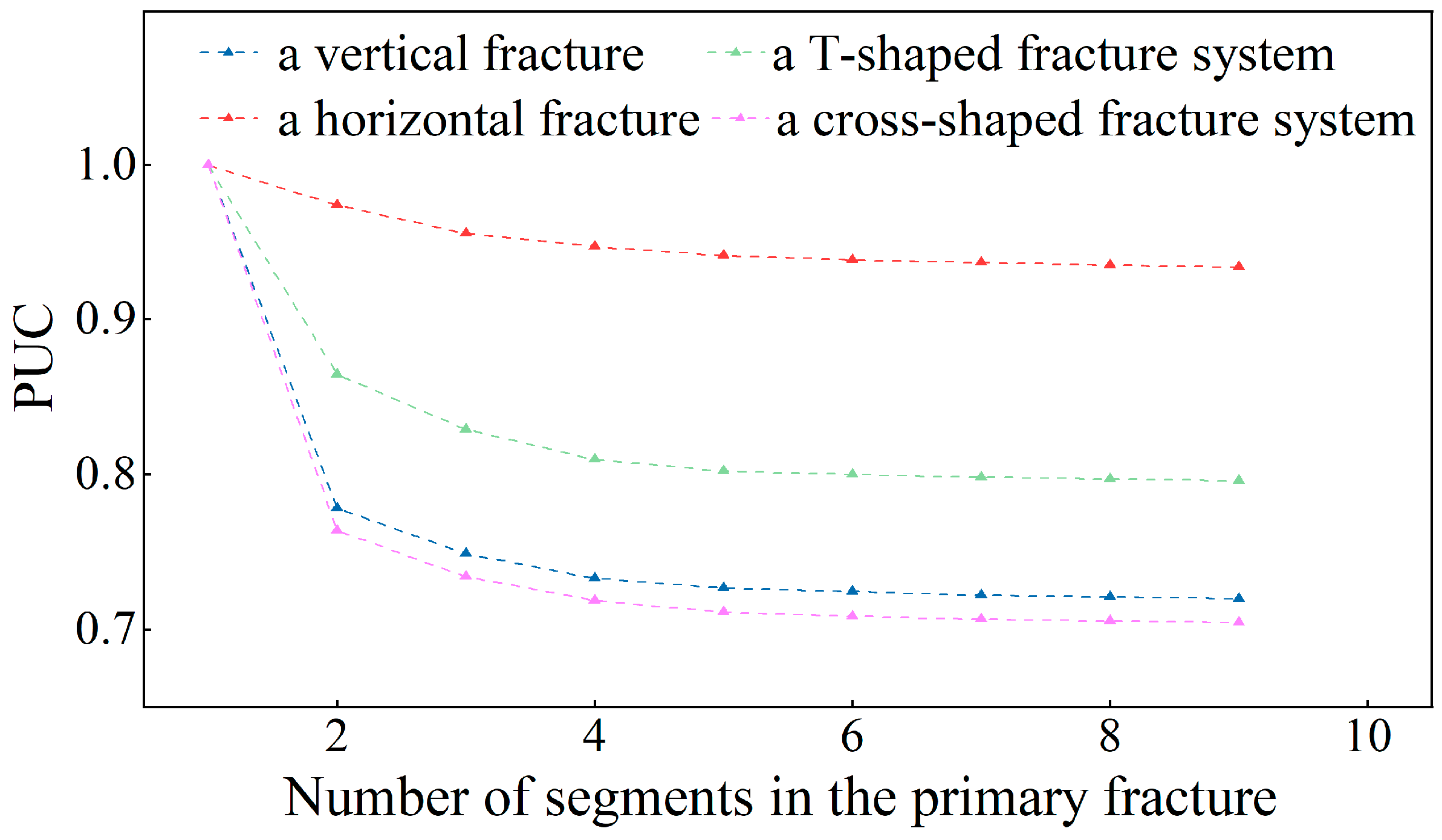
3.2. Particle-Transport Mechanisms and Distribution in Tortuous Wedge-Shaped Fractures with Different Geometries
3.3. Parametric Effects and Sensitivity Analysis of Proppant Placement Efficiency
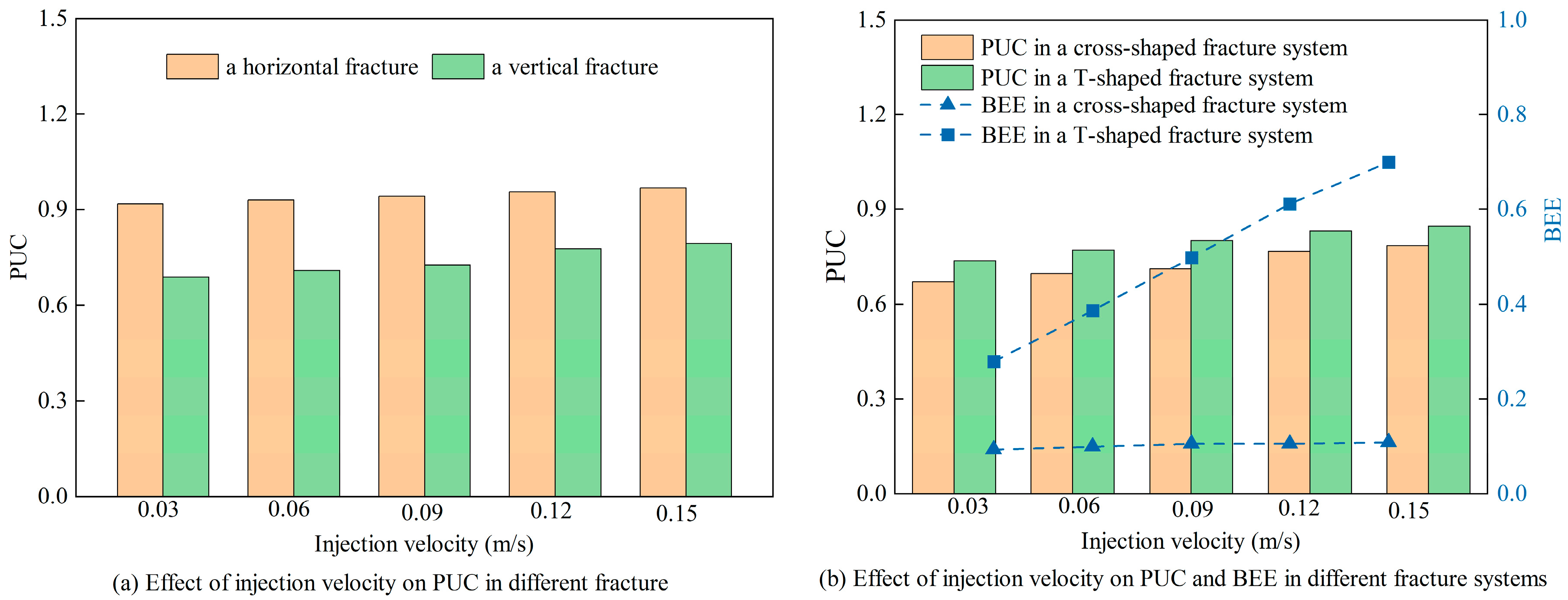
3.3.1. Effect of Injection Velocity on Particle Migration and Distribution in Tortuous Wedge-Shaped Fractures
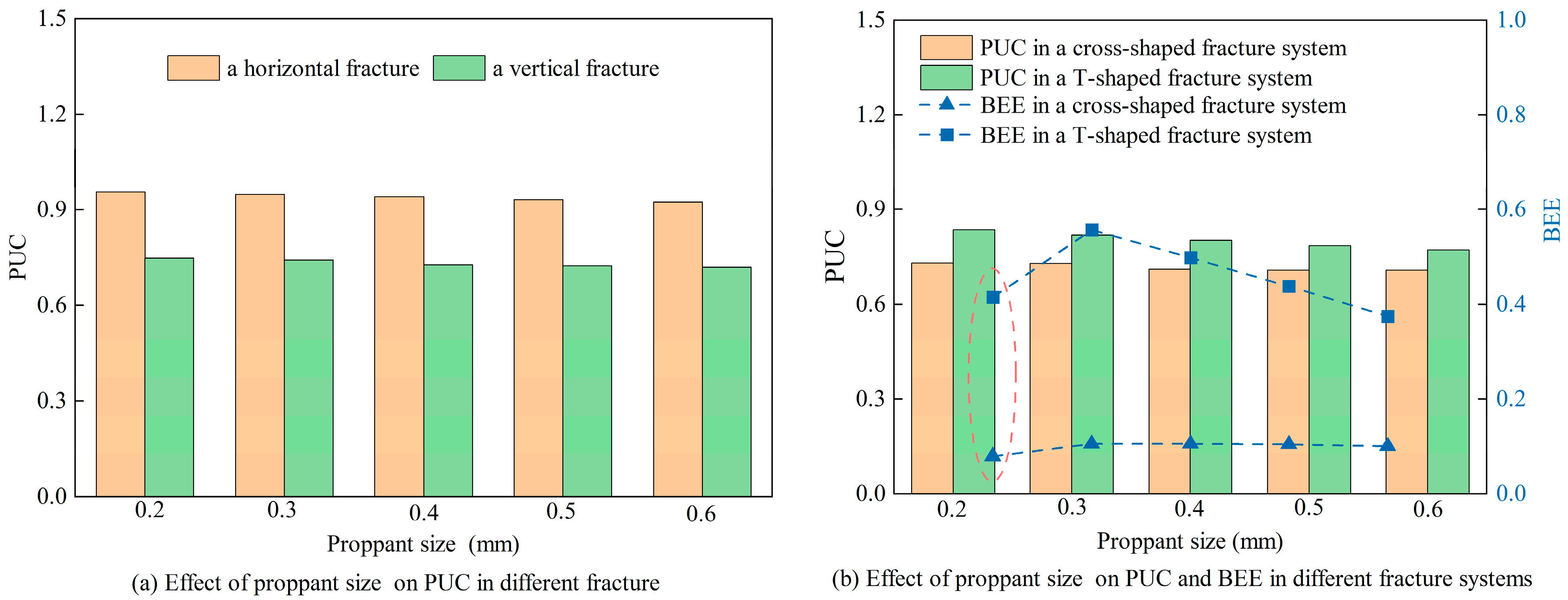
3.3.2. Effect of Proppant Size on Particle Migration and Distribution in Tortuous Wedge-Shaped Fractures
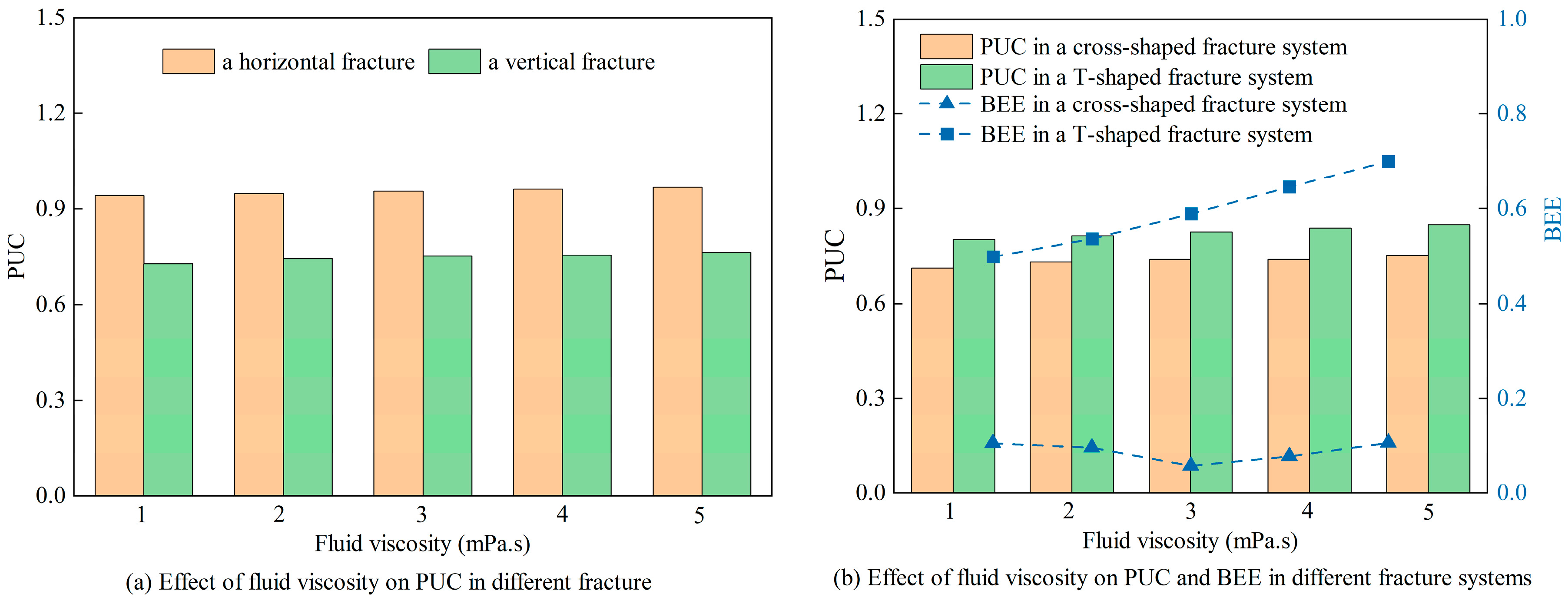
3.3.3. Effect of Fluid Viscosity on Particle Migration and Distribution in Tortuous Wedge-Shaped Fractures
3.4. Validation of the Model
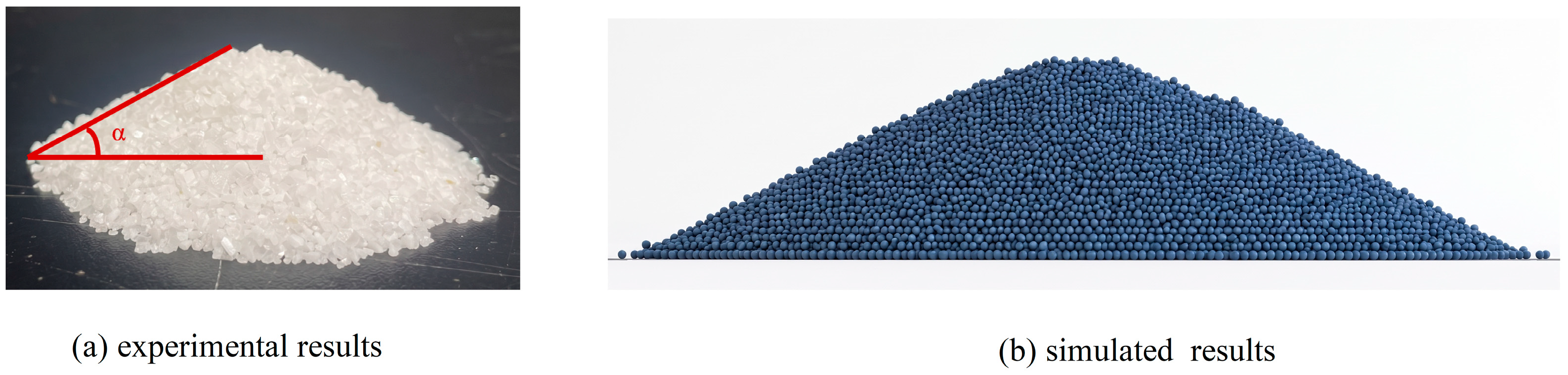
3.4.1. Experimental Validation Using the Angle of Repose
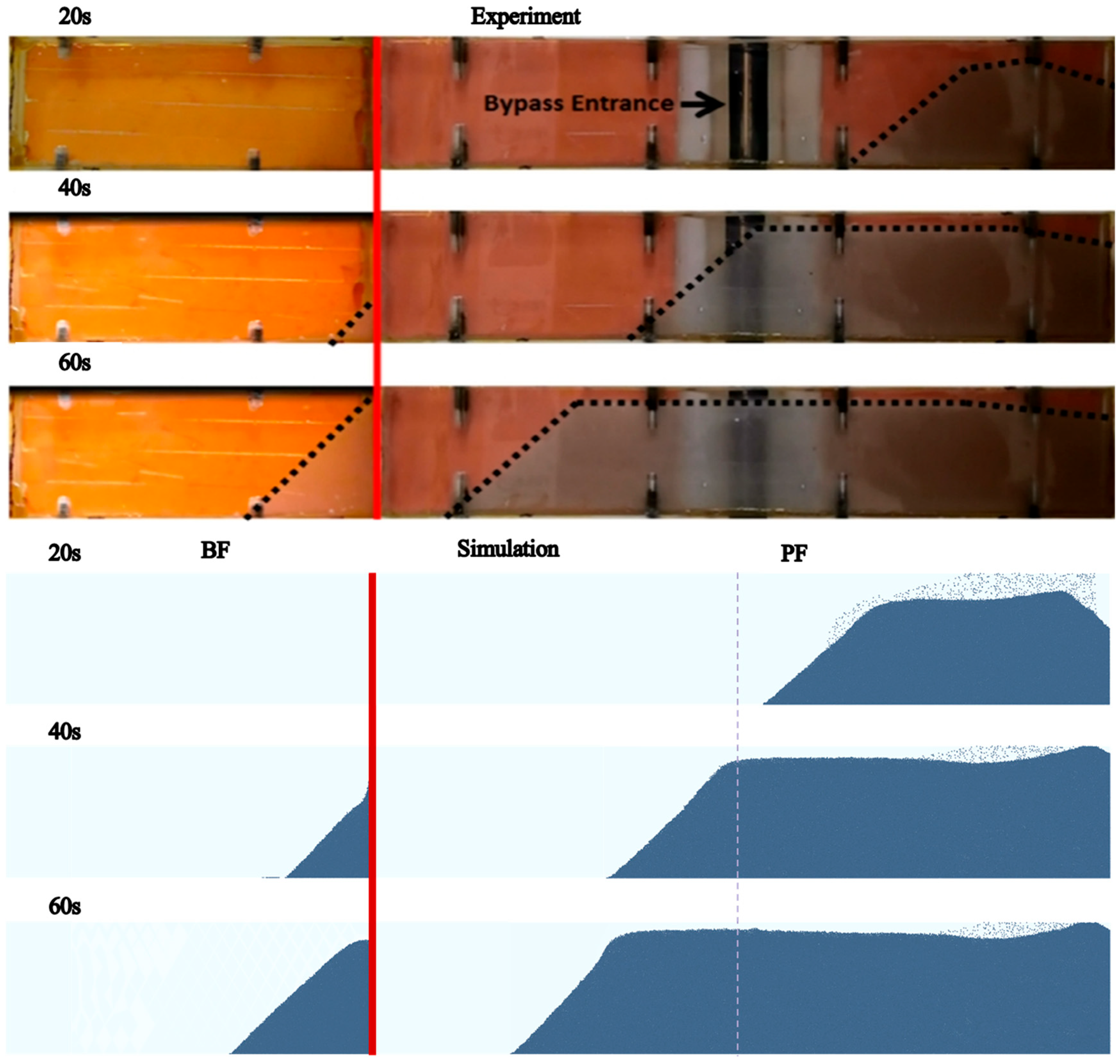
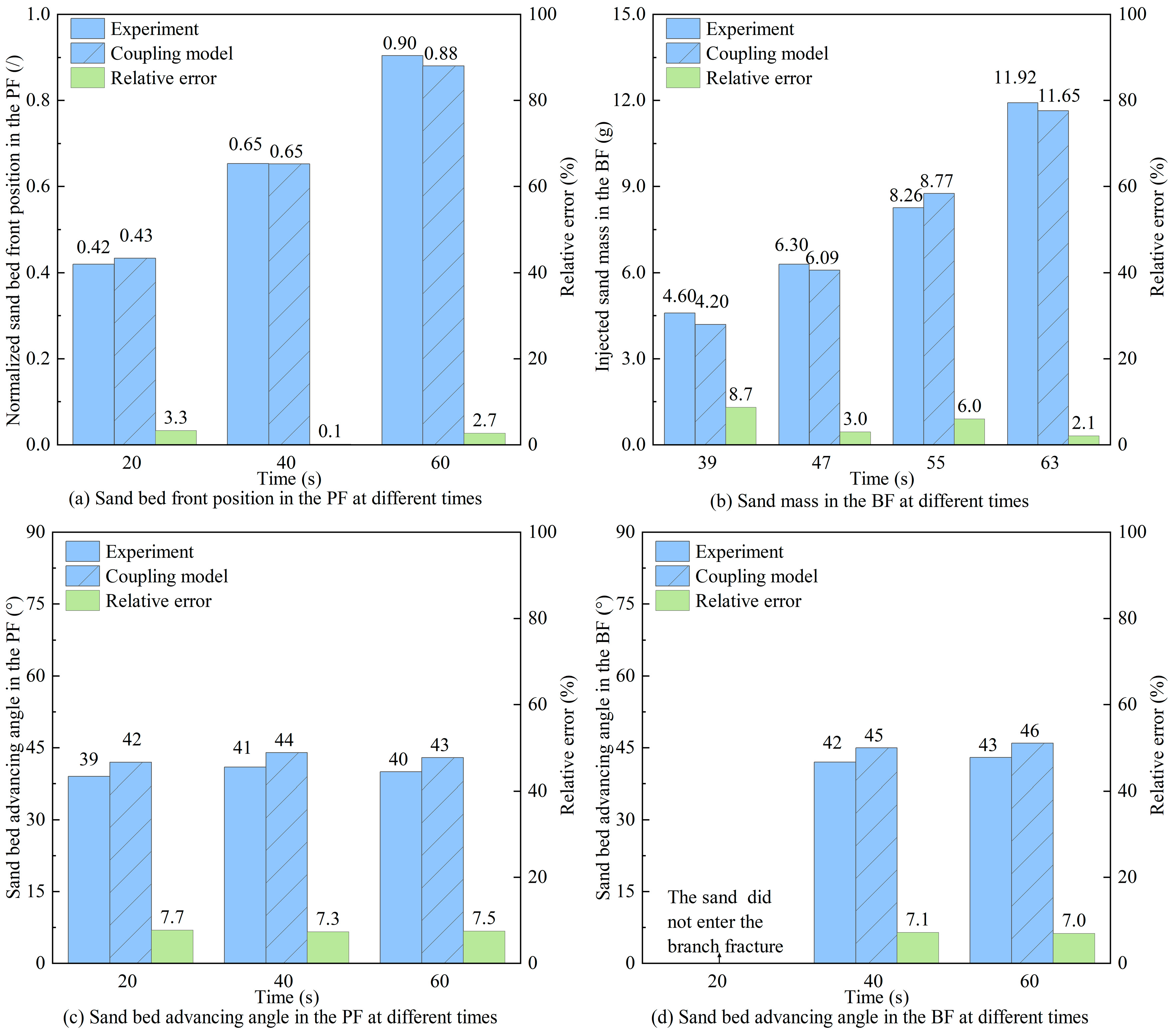
3.4.2. Experimental Validation of Proppant Transport in Intersecting Fractures
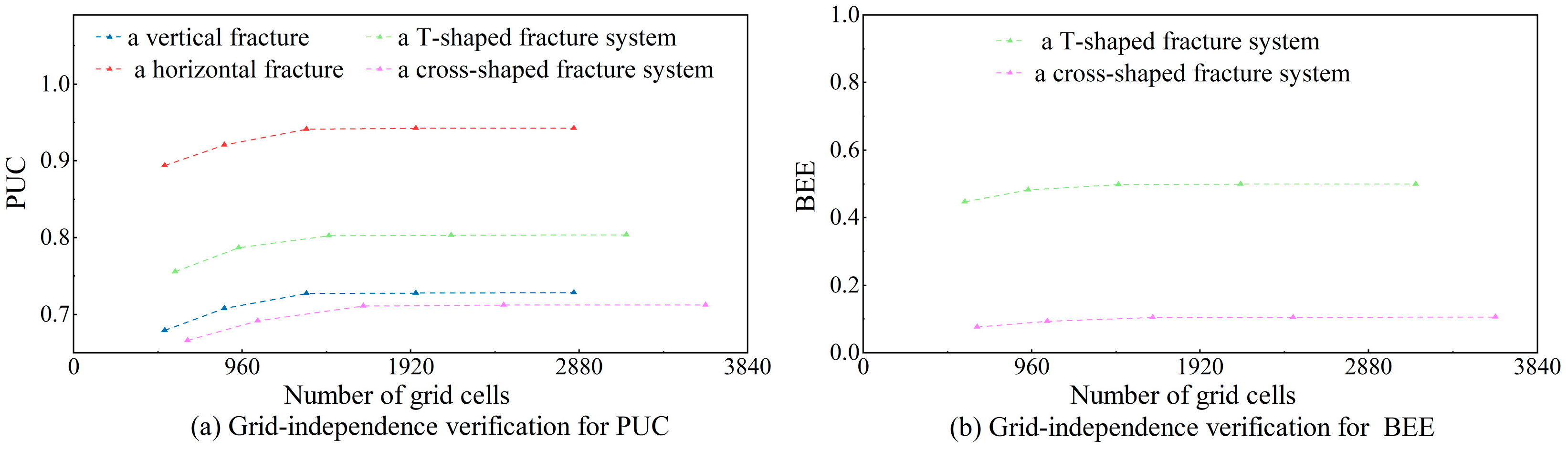
3.4.3. Grid-Independence Verification
3.4.4. Comparison of Previous Simulation Studies on Particle-Transport Modeling
4. Conclusions
- (1)
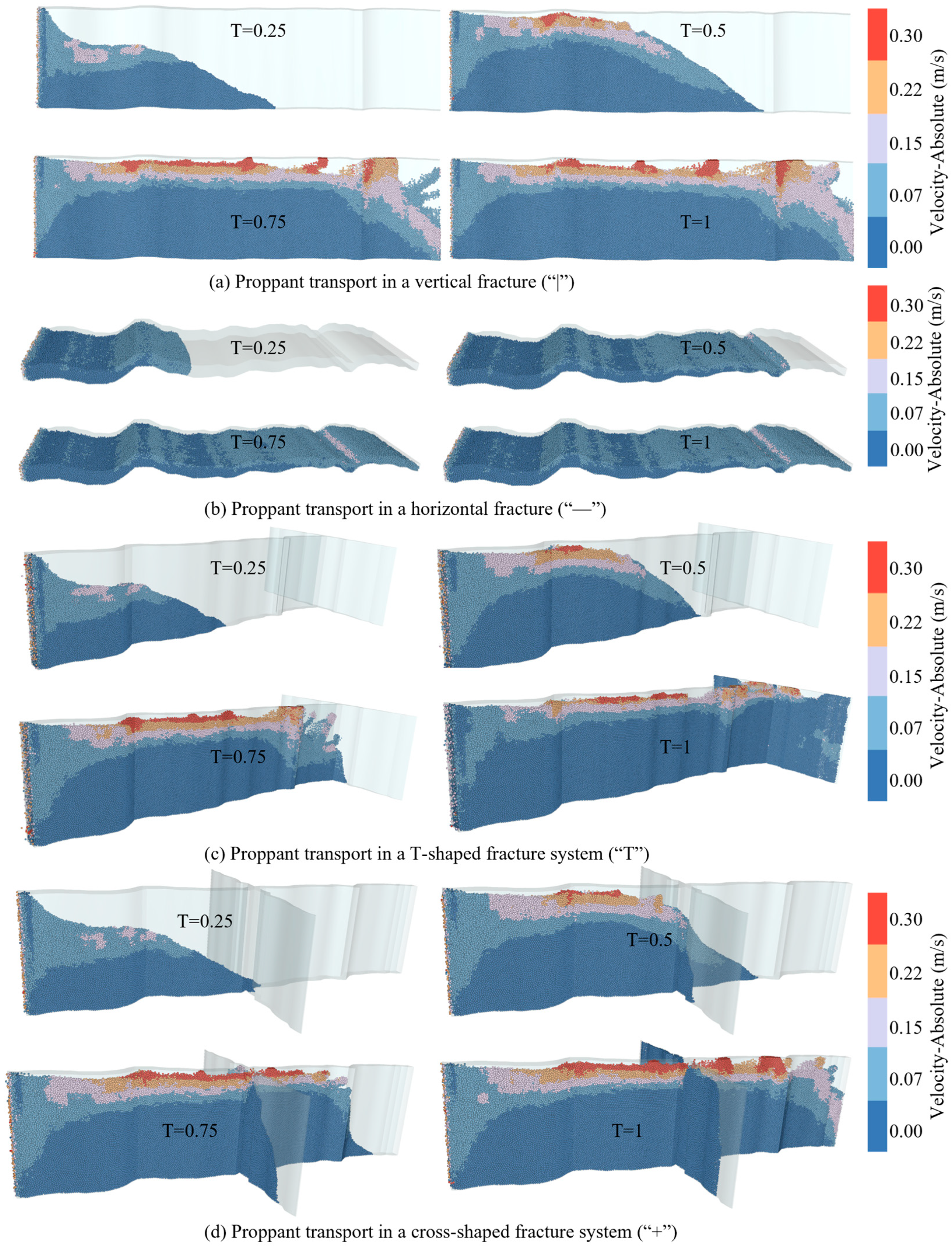
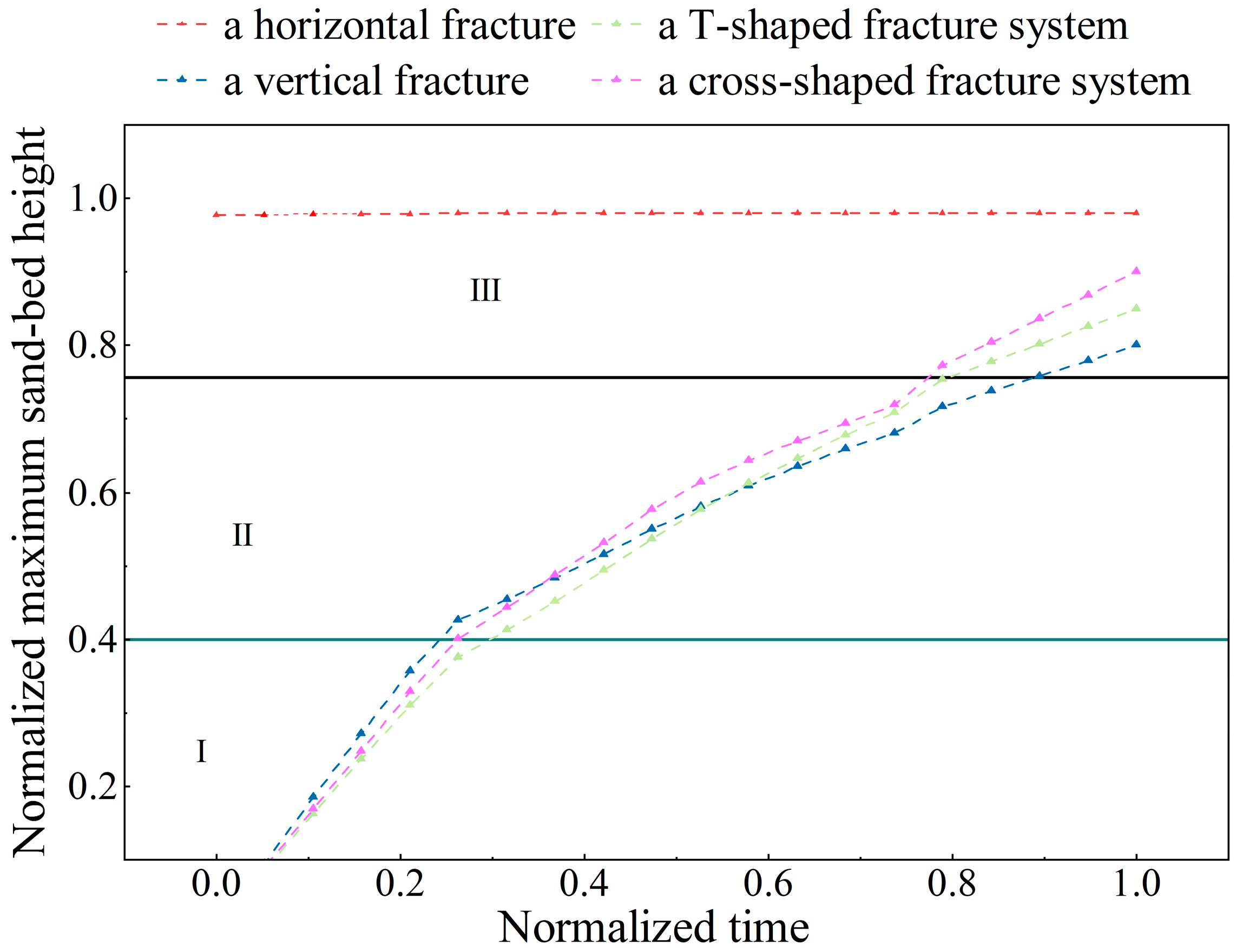
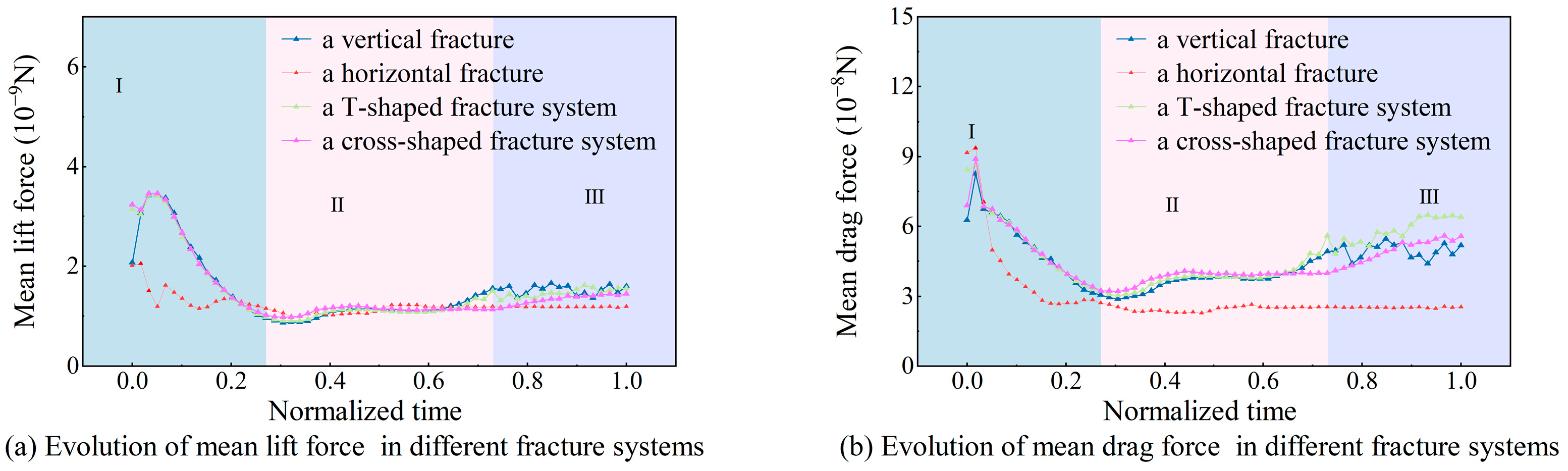
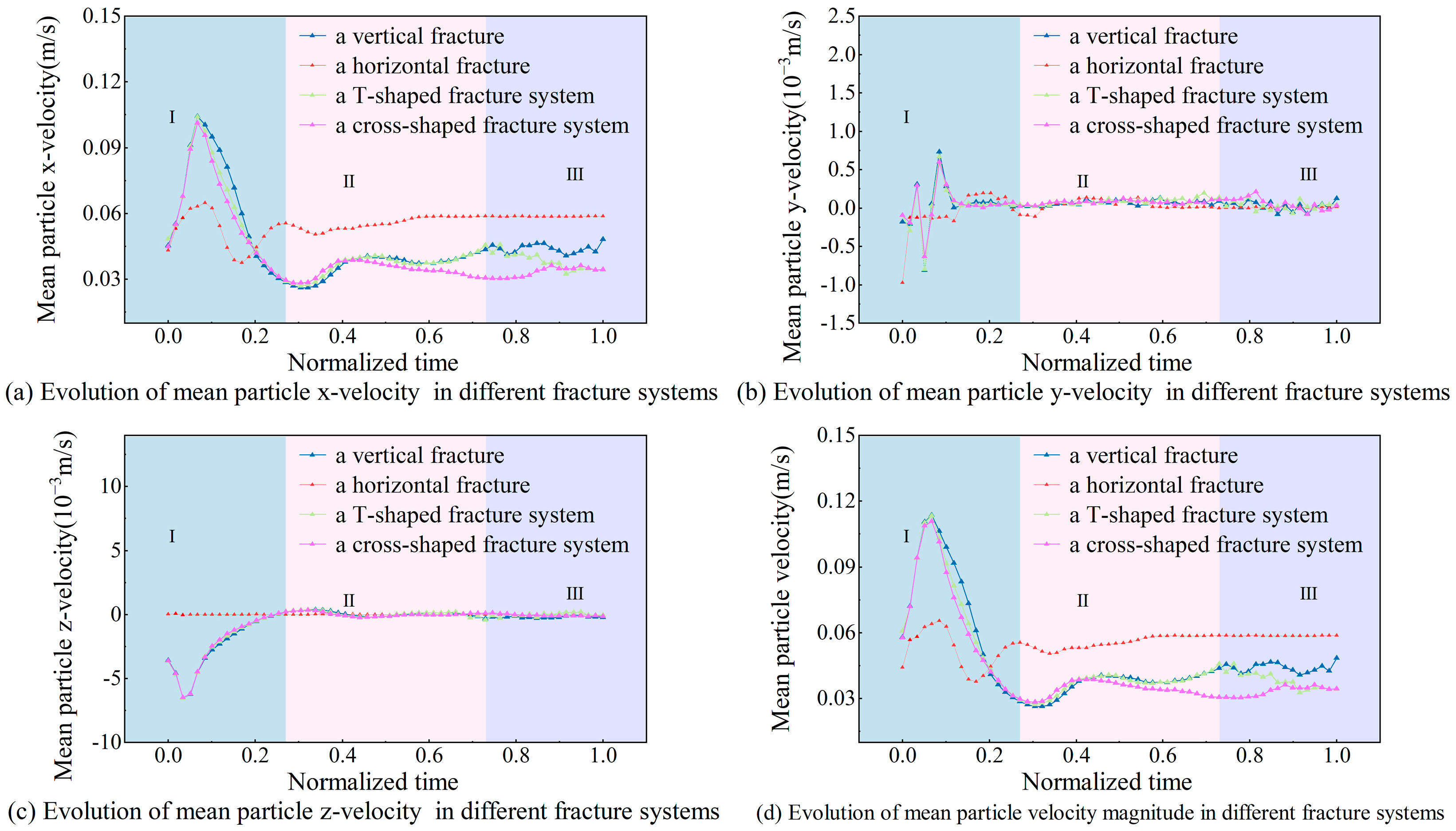
- Fracture geometry exerts a significant influence on proppant transport behavior and placement performance. Proppant transport in the “|”-shaped fracture, “T”-shaped fracture, and “+”-shaped fracture exhibits distinct stage-dependent characteristics and can be divided, according to the dominant forces, into three stages: rapid start-up, stratified transport, and front advancement. In contrast, the “—”-shaped fracture remains almost entirely in a regime of orderly front advancement and exhibits the best overall placement performance.
- (2)
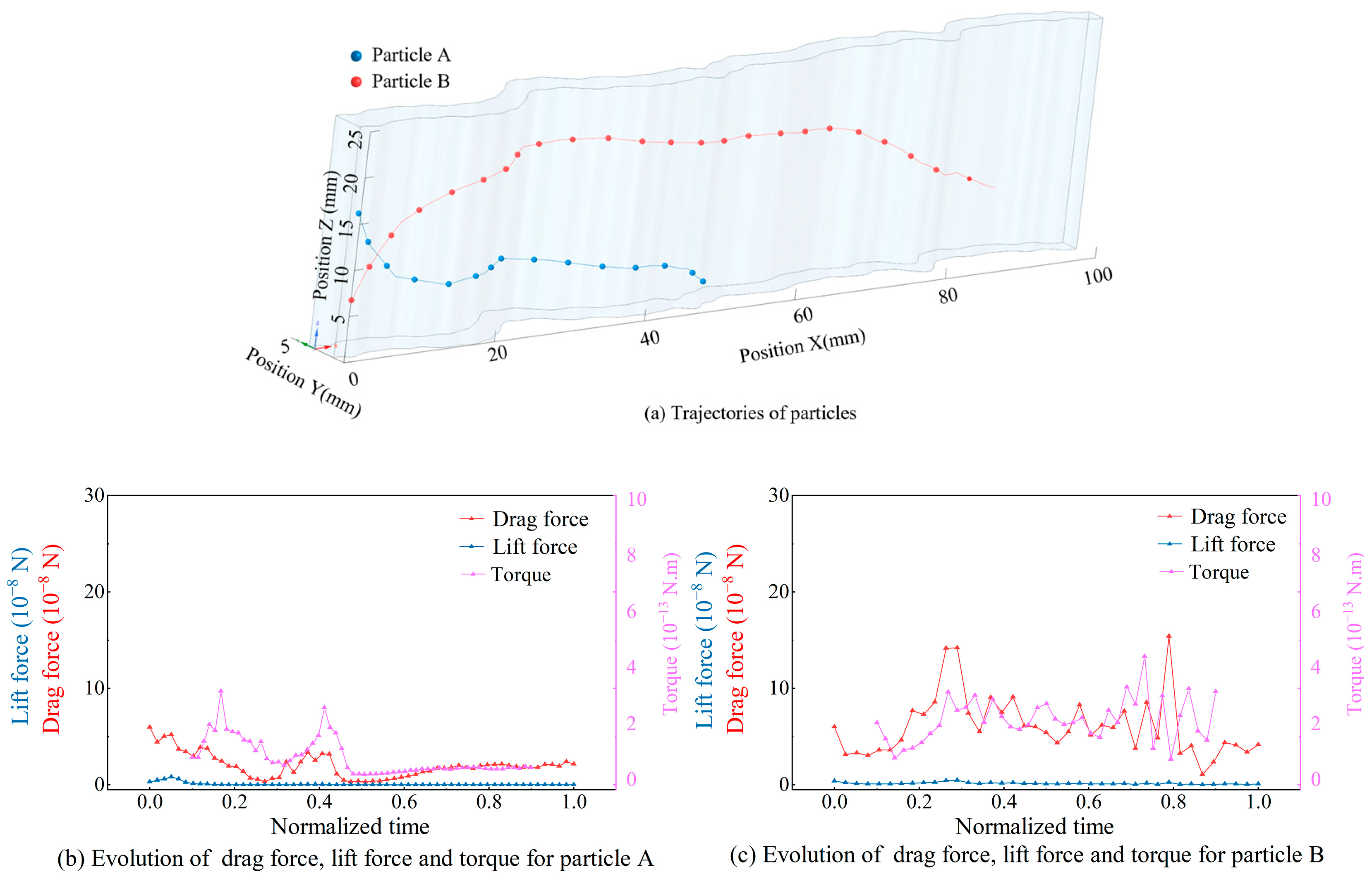
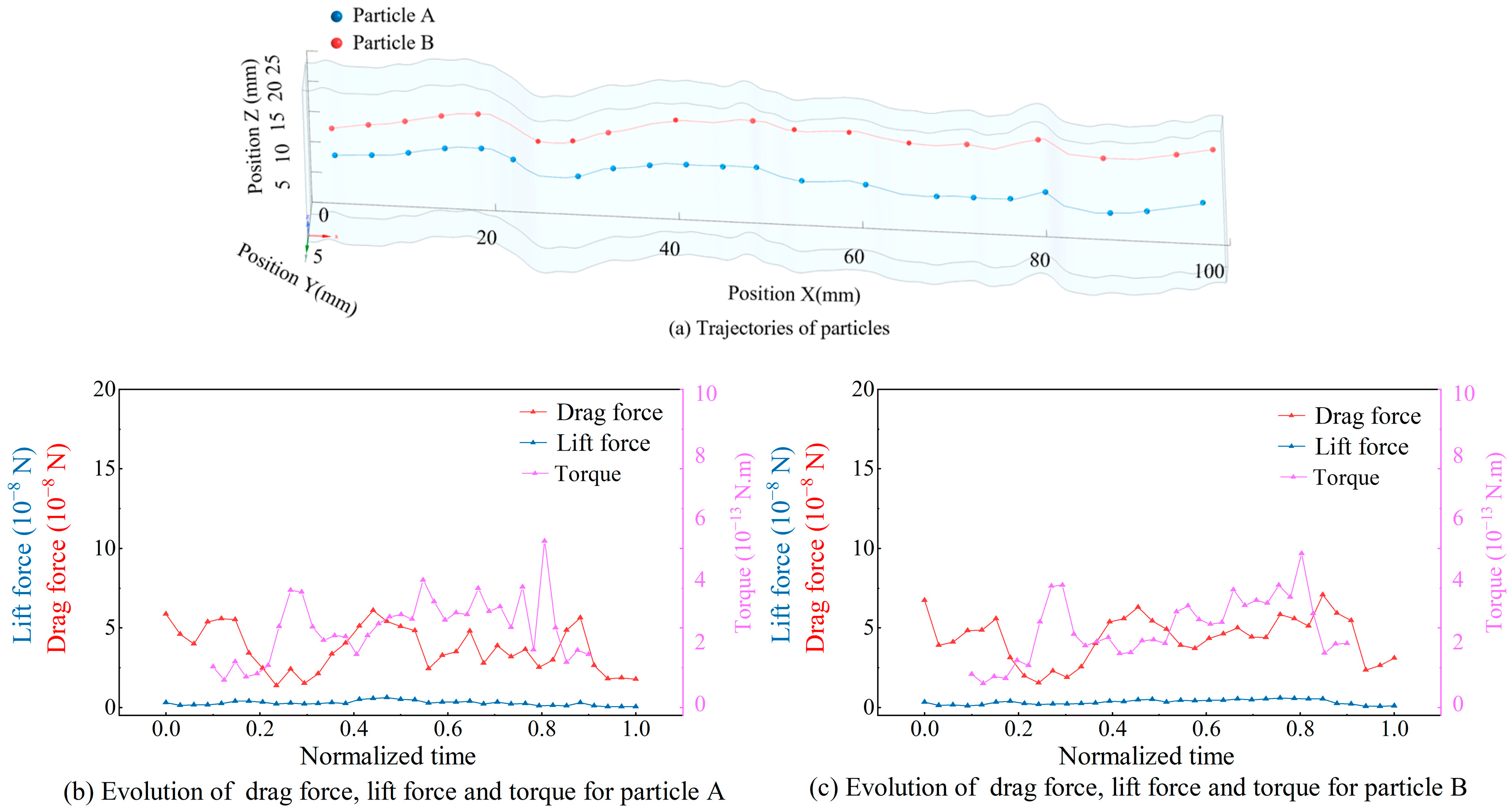
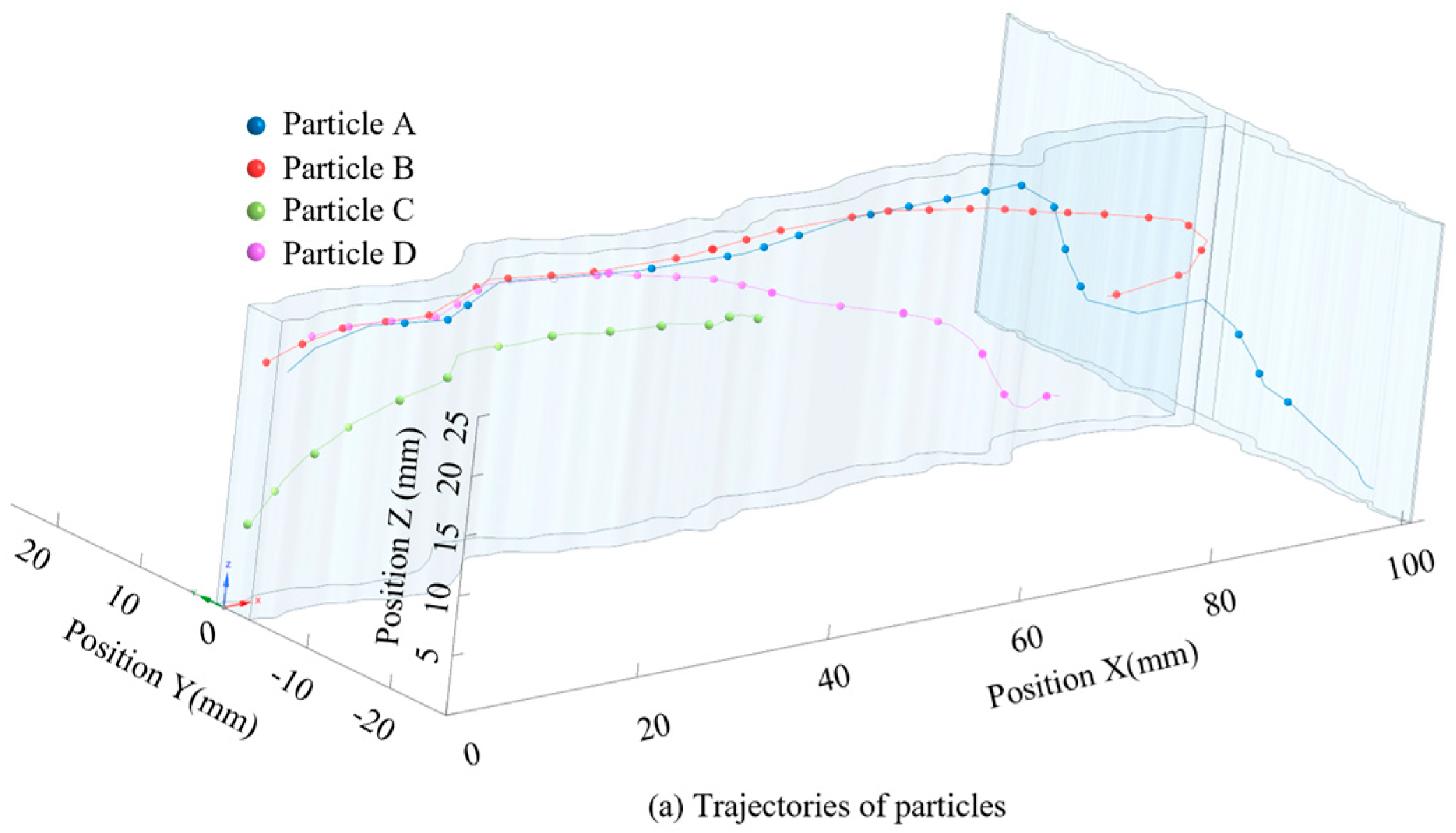
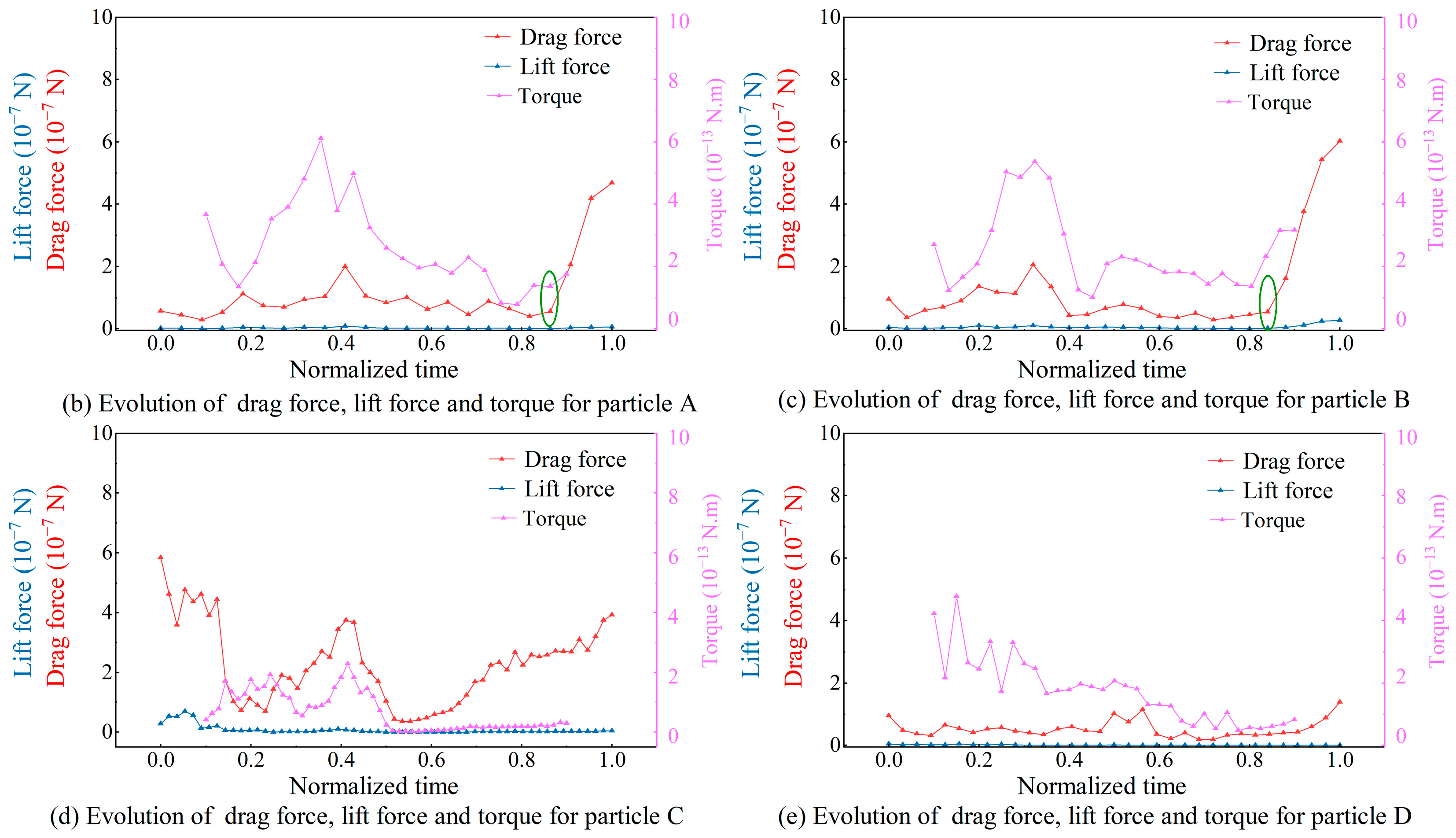
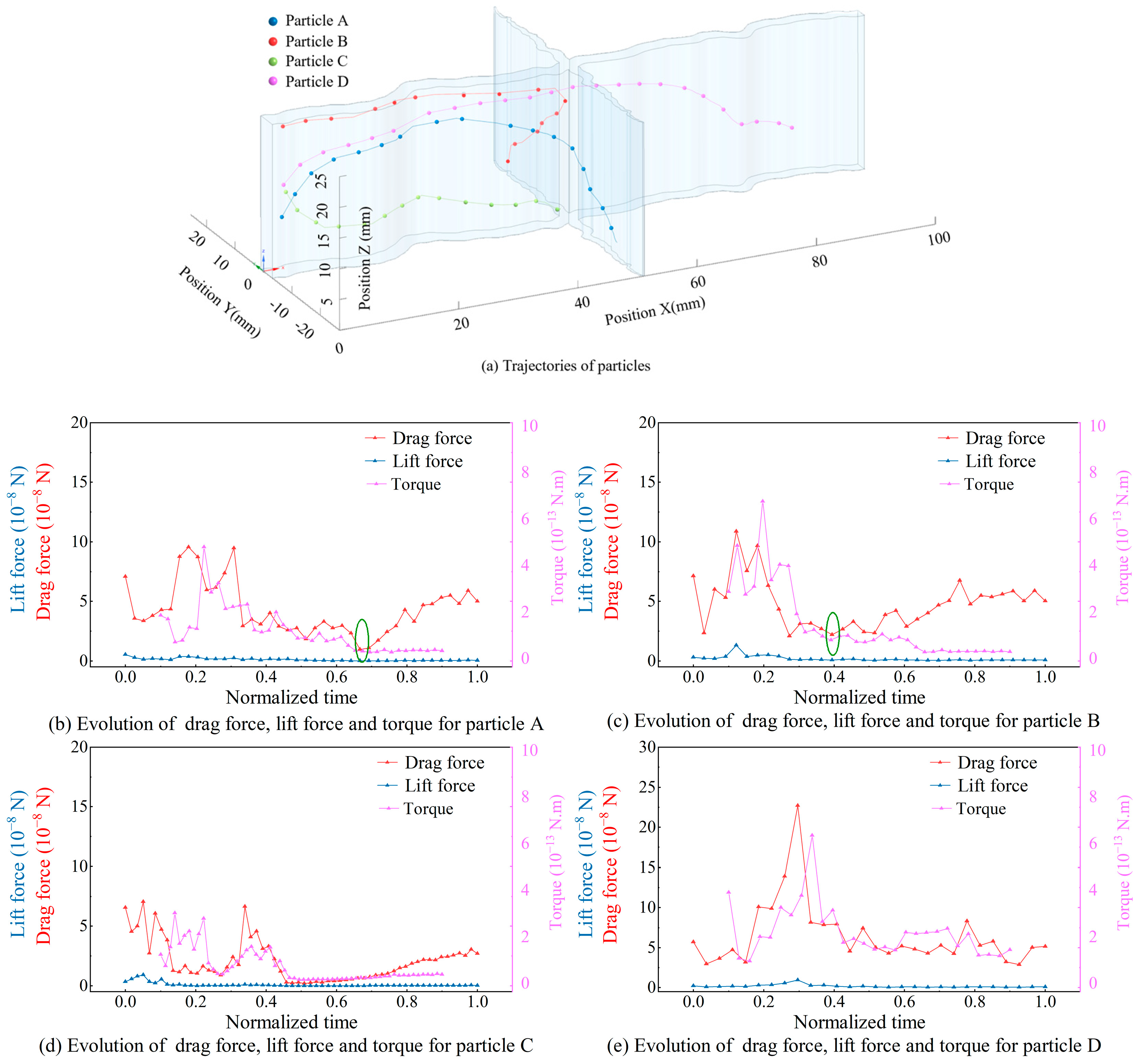
- Fracture geometry significantly affects particle-motion stability and local retention by regulating the drag force, lift force, torque, and collision intensity acting on particles. In particular, junctions and turning regions enhance inertia-induced deviation, rotational disturbance, and collision-induced energy dissipation, thereby acting as key control zones responsible for differences in branch entry, local blockage, and heterogeneous placement.
- (3)
- The control of fracture geometry over proppant placement uniformity is highly stable. Under different injection velocities, particle sizes, and fluid viscosities, the placement performance of the four fracture geometries consistently follows the same order: “—”-shaped fracture > “T”-shaped fracture > “|”-shaped fracture > “+”-shaped fracture.
- (4)
- Increasing the injection velocity can significantly improve proppant placement uniformity and markedly promote branch entry in the T-shaped fracture. When the injection velocity increases from 0.03 m/s to 0.15 m/s, the PUC values of the “—”-shaped fracture, “|”-shaped fracture, “T”-shaped fracture, and “+”-shaped fracture increase by approximately 5.5%, 16.2%, 16.4%, and 18.2%, respectively. Meanwhile, the BEE of the “T”-shaped fracture increases from approximately 0.28 to 0.70, whereas the BEE of the “+”-shaped fracture remains essentially around 0.10.
- (5)
- An increase in fluid viscosity is generally beneficial for improving proppant placement uniformity, although the branch-entry response differs markedly among fracture geometries. When the fluid viscosity increases from 1 mPa·s to 5 mPa·s, the PUC values of the “—”-shaped fracture, “|”-shaped fracture, “T”-shaped fracture, and “+”-shaped fracture increase by approximately 3.2%, 5.6%, 6.3%, and 7.1%, respectively. Among them, the BEE of the “T”-shaped fracture increases from approximately 0.50 to 0.70, whereas that of the “+”-shaped fracture fluctuates only within a narrow range of approximately 0.06–0.11 and exhibits a trend of first decreasing and then increasing.
Author Contributions
Funding
Data Availability Statement
Conflicts of Interest
Abbreviations
| CFD–DEM | Computational fluid dynamics and discrete element method |
| CBM | Coalbed methane |
| DEM | Discrete element method |
| CFD | Computational fluid dynamics |
| DDPM | Dense discrete phase method |
| MP–PIC | Multiphase particle-in-cell method |
| PUC | Placement uniformity coefficient |
| BEE | Branch-entry efficiency |
| PF | Primary fracture |
| BF | Branch fracture |
References
- Meng, Y.; Tang, D.; Xu, H.; Qu, Y.; Li, Y.; Zhang, W. Division of coalbed methane desorption stages and its significance. Pet. Explor. Dev. 2014, 41, 671–677. [Google Scholar] [CrossRef]
- Wan, Y.; Liu, W.; Ouyang, W.; Liu, W.; Han, G. Desorption area and pressure-drop region of wells in a homogeneous coalbed. J. Nat. Gas Sci. Eng. 2016, 28, 1–14. [Google Scholar] [CrossRef]
- Sun, S.; Zhang, Q.; Yang, F.; Wu, X.; Zheng, Y. Research progress on regulation of hydraulic fracture propagation in coal seams. Coal Sci. Technol. 2026, 54, 303–319. [Google Scholar] [CrossRef]
- Jiang, C.; Yang, Y.; Liu, H.; Guo, J.; Fu, Y.; Wu, J. Study on influence of natural fractures on initiation and propagation of hydraulic fracturing coal. Coal Sci. Technol. 2024, 52, 92–101. [Google Scholar] [CrossRef]
- Li, H.; Jiang, Z.; Shu, J.; Fan, Y.; Du, T. Numerical simulation of layer-crossing propagation behavior of hydraulic fractures at coal–rock interface. Coal Geol. Explor. 2020, 48, 106–113. [Google Scholar] [CrossRef]
- Huang, L.; Zhao, H.; Sheng, G.; Ruan, J.; Chen, J. A study on the bidirectional coupling mechanism between multiple fracture propagation and proppant transport in complex natural fracture systems. Rock Mech. Rock Eng. 2026. [Google Scholar] [CrossRef]
- Zhao, H.; Liu, C.; Xiong, Y.; Zhen, H.; Li, X. Experimental research on hydraulic fracture propagation in group of thin coal seams. J. Nat. Gas Sci. Eng. 2022, 103, 104614. [Google Scholar] [CrossRef]
- Yan, J.; Ni, X.; Liu, X.; Heng, S. Experimental research into the initiation and propagation of hydraulic fractures in coal combinations with different strengths. J. Energy Eng. 2025, 151, 04025019. [Google Scholar] [CrossRef]
- Zhao, H.; Li, W.; Wang, L.; Fu, J.; Xue, Y.; Zhu, J.; Li, S. The influence of the distribution characteristics of complex natural fracture on the hydraulic fracture propagation morphology. Front. Earth Sci. 2022, 9, 784931. [Google Scholar] [CrossRef]
- Xiao, H.; Wang, H.; He, T.; Yuan, C.; Zhang, H. Propagation laws of complex fracture networks in cleated thin-layer coal rocks. Phys. Fluids 2025, 37, 083366. [Google Scholar] [CrossRef]
- Li, J.; Zhong, Y.; Yan, Y.; Huang, T.; Mou, Q.; Yang, B. Mechanism of hydraulic fracture propagation and the uneven propagation behavior of multiple clusters in shale oil reservoirs. Fuel 2025, 395, 135241. [Google Scholar] [CrossRef]
- Jiang, T.; Zhang, J.; Huang, G. Experimental study of fracture geometry during hydraulic fracturing in coal. Rock Soil Mech. 2018, 39, 3677–3684. [Google Scholar] [CrossRef]
- Tong, S.; Mohanty, K.K. Proppant transport study in fractures with intersections. Fuel 2016, 181, 463–477. [Google Scholar] [CrossRef]
- Qu, H.; Hong, J.; Liu, Y.; Zeng, Z.; Liu, X.; Chen, X.; Guo, R. Experiment and simulation of slurry flow in irregular channels to understand proppant transport in complex fractures. Particuology 2023, 83, 194–211. [Google Scholar] [CrossRef]
- Wang, T.; Zhong, P.; Li, G.; Sheng, M.; Wen, H.; Tian, S. Transport pattern and placement characteristics of proppant in different rough fractures. Transp. Porous Media 2023, 149, 251–269. [Google Scholar] [CrossRef]
- Skopintsev, A.M.; Dontsov, E.V.; Kovtunenko, P.V.; Baykin, A.N.; Golovin, S.V. The coupling of an enhanced pseudo-3D model for hydraulic fracturing with a proppant transport model. Eng. Fract. Mech. 2020, 236, 107177. [Google Scholar] [CrossRef]
- Dontsov, E.V.; Peirce, A.P. Proppant transport in hydraulic fracturing: Crack tip screen-out in KGD and P3D models. Int. J. Solids Struct. 2015, 63, 206–218. [Google Scholar] [CrossRef]
- Kern, L.R.; Perkins, T.K.; Wyant, R.E. The mechanics of sand movement in fracturing. J. Pet. Technol. 1959, 11, 55–57. [Google Scholar] [CrossRef]
- Sahai, R.; Moghanloo, R.G. Laboratory results of proppant transport in complex fracture systems. In SPE Hydraulic Fracturing Technology Conference; Society of Petroleum Engineers: The Woodlands, TX, USA, 2014. [Google Scholar] [CrossRef]
- Ray, B.; Lewis, C.; Martysevich, V.; Shetty, D.A.; Walters, H.G.; Bai, J.; Ma, J. An investigation into proppant dynamics in hydraulic fracturing. In SPE Hydraulic Fracturing Technology Conference and Exhibition; Society of Petroleum Engineers: The Woodlands, TX, USA, 2017; p. SPE-184829-MS. [Google Scholar] [CrossRef]
- Huang, F.; Dong, C.; Shang, X.; You, Z. Effects of proppant wettability and size on transport and retention of coal fines in saturated proppant packs: Experimental and theoretical studies. Energy Fuels 2021, 35, 11976–11991. [Google Scholar] [CrossRef]
- Wen, Z.; Zhang, L.; Tang, H.; Zeng, J.; He, X.; Yang, Z.; Zhao, Y. A review on numerical simulation of proppant transport: Eulerian–Lagrangian views. J. Pet. Sci. Eng. 2022, 217, 110902. [Google Scholar] [CrossRef]
- Bandara, K.M.A.S.; Ranjith, P.G.; Rathnaweera, T.D. Improved understanding of proppant embedment behavior under reservoir conditions: A review study. Powder Technol. 2019, 352, 170–192. [Google Scholar] [CrossRef]
- Ding, Y.; Yang, D.; Huang, H.; Wang, H. Numerical simulation of proppant transport and placement in hydraulic fractures with the hybrid Perkins-Kern-Nordgren-Carter (PKN-C) model and particle tracking algorithm. SPE J. 2022, 27, 3914–3937. [Google Scholar] [CrossRef]
- Siddhamshetty, P.; Yang, S.; Kwon, J.S.-I. Modeling of hydraulic fracturing and designing of online pumping schedules to achieve uniform proppant concentration in conventional oil reservoirs. Comput. Chem. Eng. 2018, 114, 306–317. [Google Scholar] [CrossRef]
- Wang, Q.; Yang, Y.; Zhao, J.; Zhuang, W.; Xu, Y.; Hou, J.; Zhang, Y.; Hu, Y.; Wang, Y.; Li, X. Simulation of proppant transport in complex fracture networks based on the multiphase particle-in-cell method. Pet. Explor. Dev. 2026, 53, 213–222. [Google Scholar] [CrossRef]
- Wu, J.; He, Y.; Zeng, B.; Huang, H.; Gui, J.; Guo, Y. Numerical simulation study on the ultimate injection concentration and injection strategy of a proppant in hydraulic fracturing. Front. Energy Res. 2024, 12, 1370970. [Google Scholar] [CrossRef]
- Mao, S.; Zhang, Z.; Chun, T.; Wu, K. Field-scale numerical investigation of proppant transport among multicluster hydraulic fractures. SPE J. 2021, 26, 307–323. [Google Scholar] [CrossRef]
- Mao, S.; Zeng, J.; Wu, K.; Zhang, D. Lagrangian numerical simulation of proppant transport in channel fracturing. SPE J. 2023, 28, 1369–1386. [Google Scholar] [CrossRef]
- Wen, Z.; Tang, H.; Zhang, L.; Zhao, Y.; Zeng, J.; Zhang, J. Simulations of proppant transport in propagating multiple hydraulic fractures using the multi-phase particle-in-cell method. Powder Technol. 2025, 464, 121218. [Google Scholar] [CrossRef]
- Zheng, Y.; Wang, H.; Huang, H.; Ni, J.; Wang, B.; Yang, B.; Zhang, W. CFD–DEM simulation of proppant transport under variable injection strategies in rough fracture network with supercritical CO2. Powder Technol. 2025, 457, 120856. [Google Scholar] [CrossRef]
- Yan, P.; Wang, Z. Proppant migration and distribution simulation in tortuous fractures with gradually narrowing walls. In Proceedings of the 58th US Rock Mechanics/Geomechanics Symposium; American Rock Mechanics Association: Golden, CO, USA, 2024; p. ARMA 24-69. [Google Scholar] [CrossRef]
- Luo, S.; Zhang, C.; Fu, J.; Ding, H.; Xu, Y.; Yan, J. Study on proppant transport characteristics in rough fractures of fracture-network fracturing in Bohai low-permeability reservoirs. J. Southwest Pet. Univ. (Sci. Technol. Ed.) 2026, 48, 61–70. [Google Scholar] [CrossRef]
- Hu, X.; Li, X.; Zhou, F.; Bai, Y.; Chen, C.; Zhang, P. Simulation study on proppant transport in a horizontal wellbore considering perforation erosion. Geoenergy Sci. Eng. 2023, 231, 212282. [Google Scholar] [CrossRef]
- Bahri, A.; Miskimins, J.; Hill, A.D.; Zhu, D. The effect of fracture wall surface roughness on proppant transport. SPE J. 2024, 29, 5976–5992. [Google Scholar] [CrossRef]
- Yin, B.; Zhang, C.; Wang, Z.; Sun, B.; Gao, Y.; Wang, X.; Bi, C.; Zhang, Q.; Wang, J.; Shi, J. Proppant transport in rough fractures of unconventional oil and gas reservoirs. Pet. Explor. Dev. 2023, 50, 712–721. [Google Scholar] [CrossRef]
- Li, J.; Wu, M.; Zhou, L.; He, S. A new proppant type fully coupled fiber-proppant and its property evaluation for unconventional reservoirs. J. Pet. Sci. Eng. 2022, 208, 109573. [Google Scholar] [CrossRef]
- Alajmei, S. Prediction of proppant distribution as a function of perforation orientations. J. Pet. Explor. Prod. Technol. 2024, 14, 609–621. [Google Scholar] [CrossRef]
- Bahri, A.; Alajmei, S.; Miskimins, J. Particle dune height prediction. Arab. J. Sci. Eng. 2025, 50, 4853–4868. [Google Scholar] [CrossRef]
- Jumaa, M.; Alajmei, S.; Hassan, A.; Bahri, A. Artificial neural network (ANN) based prediction of proppant settling in horizontal wellbores during hydraulic fracturing. Sci. Rep. 2025, 15, 42390. [Google Scholar] [CrossRef]
- Yan, P.; Wang, Z. Evolution and prediction of deep coal–rock fracture conductivity with energy-based breakage criterion of proppant. Processes 2026, 14, 866. [Google Scholar] [CrossRef]
- Wang, D.; Wang, Z. 3D lattice Boltzmann method–discrete-element method with immersed moving boundary scheme numerical modeling of microparticles migration carried by a fluid in fracture. SPE J. 2022, 27, 2841–2862. [Google Scholar] [CrossRef]
- Barton, N.; Choubey, V. The shear strength of rock joints in theory and practice. Rock Mech. 1977, 10, 1–54. [Google Scholar] [CrossRef]
- Barton, N.; Wang, C.; Yong, R. Advances in joint roughness coefficient (JRC) and its engineering applications. J. Rock Mech. Geotech. Eng. 2023, 15, 3352–3379. [Google Scholar] [CrossRef]
- Bokane, A.; Jain, S.; Deshpande, Y.; Crespo, F. Transport and distribution of proppant in multistage fractured horizontal wells: A CFD simulation approach. In SPE Annual Technical Conference and Exhibition; Society of Petroleum Engineers: New Orleans, LA, USA, 2013; p. SPE-166096-MS. [Google Scholar] [CrossRef]
- Zeng, J.; Li, H.; Zhang, D. Numerical simulation of proppant transport in propagating fractures with the multi-phase particle-in-cell method. Fuel 2019, 245, 316–335. [Google Scholar] [CrossRef]
- Garagash, I.A.; Osiptsov, A.A.; Boronin, S.A. Dynamic bridging of proppant particles in a hydraulic fracture. Int. J. Eng. Sci. 2019, 135, 86–101. [Google Scholar] [CrossRef]
- Gong, Y.; Mehana, M.; El-Monier, I.; Viswanathan, H. Proppant placement in complex fracture geometries: A computational fluid dynamics study. J. Nat. Gas Sci. Eng. 2020, 79, 103295. [Google Scholar] [CrossRef]
- Vega, F.G.; Carlevaro, C.M.; Sánchez, M.; Pugnaloni, L.A. Stability and conductivity of proppant packs during flowback in unconventional reservoirs: A CFD–DEM simulation study. J. Pet. Sci. Eng. 2021, 201, 108381. [Google Scholar] [CrossRef]



| Parameters | Value | Unit |
|---|---|---|
| Primary fracture length/height | 110/25 | mm |
| Branch fracture length/height | 55/25 | mm |
| Primary fracture width | 2.25–4 | mm |
| Branch fracture width | 0.25–2 | mm |
| Proppant density | 2650 | kg/m3 |
| Proppant diameter | 0.2–0.6 | mm |
| Proppant Poisson’s ratio | 0.32 | / |
| Fluid density | 998.2 | kg/m3 |
| Fluid viscosity | 1 | mPa·s |
| Inlet velocity | 0.03–0.15 | m/s |
| Restitution coefficient | 0.3 | / |
| Static friction coefficient | 0.3 | / |
| Dynamic friction coefficient | 0.05 | / |
| CFD time step | 1 × 10⁻⁵ | s |
| DEM time step | 1 × 10⁻⁶ | s |
| Case | Fracture Geometry | Inlet Velocity (m/s) | Particle Diameter (mm) | Fluid Viscosity (mPa·s) |
|---|---|---|---|---|
| 1 | | | 0.09 | 0.2, 0.3, 0.4, 0.5, 0.6 | 1 |
| 2 | — | 0.09 | 0.2, 0.3, 0.4, 0.5, 0.6 | 1 |
| 3 | T | 0.09 | 0.2, 0.3, 0.4, 0.5, 0.6 | 1 |
| 4 | + | 0.09 | 0.2, 0.3, 0.4, 0.5, 0.6 | 1 |
| 5 | | | 0.03, 0.06, 0.09, 0.12, 0.15 | 0.4 | 1 |
| 6 | — | 0.03, 0.06, 0.09, 0.12, 0.15 | 0.4 | 1 |
| 7 | T | 0.03, 0.06, 0.09, 0.12, 0.15 | 0.4 | 1 |
| 8 | + | 0.03, 0.06, 0.09, 0.12, 0.15 | 0.4 | 1 |
| 9 | | | 0.09 | 0.4 | 1, 2, 3, 4, 5 |
| 10 | — | 0.09 | 0.4 | 1, 2, 3, 4, 5 |
| 11 | T | 0.09 | 0.4 | 1, 2, 3, 4, 5 |
| 12 | + | 0.09 | 0.4 | 1, 2, 3, 4, 5 |
| Parameters | Value | Unit |
|---|---|---|
| Proppant density | 2650 | kg/m3 |
| Proppant diameter | 0.6, 0.45 | mm |
| Proppant Young’s modulus | 9.8 | GPa |
| Proppant Poisson’s ratio | 0.32 | / |
| Wall density | 1500 | kg/m3 |
| Wall Young’s modulus | 4.5 | GPa |
| Wall Poisson’s ratio | 0.34 | / |
| Restitution coefficient (particle–particle) | 0.3 | / |
| Static friction coefficient (particle–particle) | 0.3 | / |
| Dynamic friction coefficient (particle–particle) | 0.05 | / |
| Restitution coefficient (particle–wall) | 0.27 | / |
| Static friction coefficient (particle–wall) | 0.3 | / |
| Dynamic friction coefficient (particle–wall) | 0.12 | / |
| Particle Size (Mesh) | Experimental Value (°) | Simulated Value (°) | Relative Error (%) |
|---|---|---|---|
| 20/40 | 29.1 | 27.8 | 4.46 |
| 30/50 | 29.8 | 28.4 | 4.70 |
| Parameters | Value | Unit |
|---|---|---|
| Primary fracture (PF) length/width/height | 381/2/76.2 | mm |
| Branch fracture (BF) length/width/height | 190.5/2/76.2 | mm |
| Proppant density | 2650 | kg/m3 |
| Proppant diameter | 0.6 | mm |
| Proppant Poisson’s ratio | 0.32 | / |
| Fluid density | 998.2 | kg/m3 |
| Fluid viscosity | 1 | mPa·s |
| Inlet velocity | 0.1 | m/s |
| Restitution coefficient | 0.3 | / |
| Static friction coefficient | 0.3 | / |
| Dynamic friction coefficient | 0.05 | / |
| Model | Method | Tortuosity | Wedge Angle | Branch Fracture | Placement Performance Evaluation |
|---|---|---|---|---|---|
| Bokane et al. (2013) [45] | CFD | × | × | × | √ |
| Zeng et al. (2019) [46] | MP–PIC | × | × | × | √ |
| Garagash et al. (2019) [47] | CFD–DEM | × | × | × | √ |
| Gong et al. (2020) [48] | CFD | √ | × | √ | √ |
| Vega et al. (2021) [49] | CFD–DEM | × | × | × | √ |
| Yan and Wang. (2024) [32] | CFD–DEM | √ | √ | × | × |
| In this paper | CFD–DEM | √ | √ | √ | √ |
Disclaimer/Publisher’s Note: The statements, opinions and data contained in all publications are solely those of the individual author(s) and contributor(s) and not of MDPI and/or the editor(s). MDPI and/or the editor(s) disclaim responsibility for any injury to people or property resulting from any ideas, methods, instructions or products referred to in the content. |
© 2026 by the authors. Licensee MDPI, Basel, Switzerland. This article is an open access article distributed under the terms and conditions of the Creative Commons Attribution (CC BY) license.
Share and Cite
Yan, P.; Wang, Z. Particle-Transport Mechanisms and Distribution in Typical Tortuous Wedge-Shaped Interwoven Fractures of Deep Coal Seams: A CFD–DEM Study. Energies 2026, 19, 2739. https://doi.org/10.3390/en19122739
Yan P, Wang Z. Particle-Transport Mechanisms and Distribution in Typical Tortuous Wedge-Shaped Interwoven Fractures of Deep Coal Seams: A CFD–DEM Study. Energies. 2026; 19(12):2739. https://doi.org/10.3390/en19122739
Chicago/Turabian StyleYan, Pengyin, and Zhiming Wang. 2026. "Particle-Transport Mechanisms and Distribution in Typical Tortuous Wedge-Shaped Interwoven Fractures of Deep Coal Seams: A CFD–DEM Study" Energies 19, no. 12: 2739. https://doi.org/10.3390/en19122739
APA StyleYan, P., & Wang, Z. (2026). Particle-Transport Mechanisms and Distribution in Typical Tortuous Wedge-Shaped Interwoven Fractures of Deep Coal Seams: A CFD–DEM Study. Energies, 19(12), 2739. https://doi.org/10.3390/en19122739