Article

Comparative Assessment of Kaolin Addition and Acid Washing for Fouling Mitigation in Alkali-Rich Kenaf Biomass

1
Department of Energy Systems Research, Ajou University, Suwon 16499, Republic of Korea
2
Clean Energy Conversion Research Center, Institute for Advanced Engineering, Yongin 17180, Republic of Korea
*
Author to whom correspondence should be addressed.
Energies 2026, 19(11), 2491; https://doi.org/10.3390/en19112491
Submission received: 21 April 2026 / Revised: 18 May 2026 / Accepted: 19 May 2026 / Published: 22 May 2026

Abstract

Herbaceous biomass is a promising renewable energy resource, but its use in thermochemical systems is often limited by severe fouling and ash agglomeration resulting from alkali-rich ash chemistry. This study directly compares two practical fouling mitigation strategies, kaolin addition and acid washing, for alkali-rich torrefied kenaf biomass under identical experimental conditions. The study quantitatively distinguishes aluminosilicate-based alkali stabilization from pretreatment-based alkali removal as two distinct pathways for controlling ash transformation. Kenaf exhibited severe ash agglomeration and contained high levels of K2O (17.38 wt.%), CaO (31.52 wt.%), MgO (14.98 wt.%), SO3 (9.43 wt.%), and P2O5 (6.90 wt.%). Kaolin addition progressively shifted the ash composition toward a SiO2–Al2O3-rich system. From KA-10 to KA-30, SiO2 increased from 22.86 to 33.58 wt.%, while Al2O3 increased from 7.65 to 15.43 wt.%. X-ray diffraction (XRD) analysis further showed that increasing kaolin addition suppressed alkali-salt phases and promoted the formation of aluminum-silicate phases. In contrast, acid washing directly reduced alkali species, decreasing K2O to 5.66–7.83 wt.% and eliminating detectable Na2O. The acid-washed samples were characterized by calcium-rich sulfate and silicate phases, indicating a distinct ash transformation pathway. Kaolin addition primarily reduced fouling by promoting aluminosilicate-based alkali stabilization, whereas acid washing reduced alkali–metal contents before thermal treatment. This distinction clarifies the different roles of additive-based and pretreatment-based strategies for fouling control in alkali-rich herbaceous biomass.

1. Introduction

The global energy sector remains heavily dependent on fossil fuels, which contribute substantially to greenhouse gas emissions, environmental degradation, and energy security concerns. In response, biomass has emerged as an important renewable energy resource because it can be converted into heat, power, and fuels through various thermochemical pathways, thereby supporting carbon-neutral energy systems [1]. Among biomass resources, herbaceous crops such as kenaf have attracted increasing attention owing to their rapid growth, high biomass productivity, and potential as lignocellulosic bioenergy feedstocks [2,3]. However, the efficient use of herbaceous biomass in combustion, gasification, and co-firing systems is often limited by ash-related operational problems, including fouling, slagging, corrosion, and ash agglomeration [4,5,6].
These issues primarily stem from the inorganic chemistry of herbaceous biomass ash. Relative to woody biomass, herbaceous feedstocks typically contain higher concentrations of alkali metals, especially potassium (K), along with alkaline earth metals, phosphorus (P), sulfur (S), chlorine (Cl), and silica-containing species [4,5,7]. During high-temperature thermochemical conversion, these elements can volatilize, react, and condense to form low-melting alkali salts, sulfates, phosphates, and silicate eutectics [4,5,8]. Potassium-containing species are especially significant because they promote the formation of viscous molten phases, increase particle adhesion, and accelerate deposit accumulation on heat-transfer surfaces [4,5,6]. Consequently, controlling the transformation of alkali-rich ash is essential to enhance the operational reliability of herbaceous biomass conversion systems.
Kenaf (Hibiscus cannabinus L.), a fast-growing annual herbaceous crop in the Malvaceae family, has been widely investigated as a versatile lignocellulosic biomass resource [2,3]. Traditionally, its favorable fiber properties have enabled its use in products such as fiber, pulp and paper, textiles, biocomposites, absorbents, and other industrial materials [2]. Beyond its material applications, kenaf is also considered a promising bioenergy feedstock due to its rapid growth cycle, high dry-matter yield, and lignocellulosic composition [3]. Nevertheless, the use of kenaf in thermochemical energy systems is constrained by its ash chemistry. In particular, kenaf ash is rich in K-, Ca-, Mg-, P-, and S-containing compounds that lower ash-melting temperatures and promote particle coalescence and agglomeration during thermal conversion. Although interest in kenaf as a renewable biomass resource is growing, few studies have systematically evaluated strategies to control its alkali-rich ash behavior under comparable experimental conditions.
Several strategies have been proposed to mitigate ash-related issues in biomass conversion systems. Additive-based approaches, particularly those employing aluminosilicate materials such as kaolin, seek to capture or immobilize potassium by promoting the formation of thermally stable potassium aluminosilicate phases [9,10,11,12]. Recent studies highlight that aluminosilicate clay minerals, particularly kaolin, can mitigate slagging, fouling, ash deposition, chlorine-related ash issues, and high-temperature corrosion during biomass and waste conversion [10,11]. This mechanism lowers the mobility and reactivity of alkali species, thereby suppressing the formation of low-melting potassium salts. In contrast, washing or leaching pretreatments remove alkali metals and other reactive inorganic constituents from the biomass before thermal conversion [13,14,15,16]. Acid washing effectively dissolves water-soluble and acid-soluble inorganic components, thereby modifying the initial ash composition and decreasing the availability of fouling-prone species. Although kaolin addition and acid washing are both recognized fouling-control strategies, they have been investigated in isolation or under differing fuel and thermal conditions. As a result, their relative effectiveness and the mechanistic distinctions between additive-based alkali stabilization and pretreatment-based alkali removal remain insufficiently defined, particularly for alkali-rich kenaf biomass.
This study aims to directly compare kaolin addition and acid washing, two practical strategies for mitigating fouling in alkali-rich torrefied kenaf biomass, under identical experimental conditions. Specifically, kaolin was added at 10, 20, and 30 wt.%, and acid washing was performed using HCl, H2SO4, and HNO3 solutions to examine their effects on ash agglomeration behavior, oxide composition, crystalline phase formation, surface elemental distribution, and fouling tendency. This comparison delineates two mitigation pathways: aluminosilicate stabilization via kaolin addition and source-level alkali removal via acid washing. By integrating ash agglomeration tests, bulk chemical, mineralogical, and surface-composition analyses, a SiO2–K2O–Al2O3 ternary composition diagram, and calculated fouling and slagging indices, the study provides a consistent experimental basis for directly comparing the two strategies and for identifying effective ash-control methods for alkali-rich herbaceous biomass.

2. Materials and Methods

2.1. Sample Preparation

Kenaf was chosen as the representative alkali-rich herbaceous biomass. In Korea, the crop has been widely studied as a high-yield feedstock, particularly on reclaimed land such as the Saemangeum area of Jeollabuk-do, where multiple cultivation trials have been reported [2,17]. For this study, the kenaf was supplied as torrefied pellets, a thermal pretreatment known to alter the thermal and kinetic behavior of the fuel during conversion [18]. The torrefaction treatment was performed at 250 °C for 1 h. The resulting torrefied pellets were ground, sieved to <300 μm, and oven-dried at 105 °C for 24 h to remove residual moisture. Two fouling-mitigation strategies were then applied: kaolin addition and acid-washing pretreatment. For the additive approach, kaolin was physically blended with the torrefied kenaf powder at loadings of 10, 20, and 30 wt.% on a dry basis. The 10 wt.% sample contained 90 wt.% kenaf and 10 wt.% kaolin, whereas the 20 wt.% and 30 wt.% samples contained 80/20 and 70/30 wt.% kenaf/kaolin, respectively. All powders were homogenized in a horizontal rotary mixer at room temperature for 30 min at 12–13 rpm. For the acid-washing pretreatment, hydrochloric acid (HCl, 35%; Matsunoen Chemicals Ltd., Osaka, Japan), sulfuric acid (H2SO4, special grade; Junsei Chemical Co., Ltd., Tokyo, Japan), and nitric acid (HNO3, 60%; Matsunoen Chemicals Ltd., Osaka, Japan) were used without further purification. The untreated torrefied sample was designated as Kenaf. Kaolin-treated samples containing 10, 20, and 30 wt.% kaolin were labeled KA-10, KA-20, and KA-30, respectively. Acid-washed samples treated with HCl, H2SO4, and HNO3 were labeled HAWK, SAWK, and NAWK, respectively.

2.2. Ash Agglomeration Test in a Muffle Furnace

Ash agglomeration behavior was evaluated in a muffle furnace to compare the thermal responses of Kenaf, KA-10, KA-20, KA-30, HAWK, SAWK, and NAWK under identical conditions. For each run, 2 g of the prepared sample was placed in an alumina crucible (10 mL; 30 mm diameter × 30 mm height). The furnace temperature was ramped to 800 °C over 5 h and then held at that temperature for 1 h under ambient atmosphere. After cooling the crucibles to room temperature, the residual ash was collected and weighed. Mass loss was calculated as the difference between the sample masses before and after thermal treatment. This value served as a straightforward indicator of overall thermal conversion, volatilization, and ash transformation during the muffle furnace experiment. In addition to mass loss, the post-treatment morphology of the residues was visually examined to assess ash agglomeration. Agglomeration was assessed visually by noting ash consolidation, particle coalescence, partial fusion, shrinkage, fragmentation, and the presence of powder-like or brittle residues. Photographs taken before and after thermal treatment enabled comparison of morphological changes among the Kenaf control, the KA-series, and the acid-washed samples.

2.3. Acid Washing Pretreatment

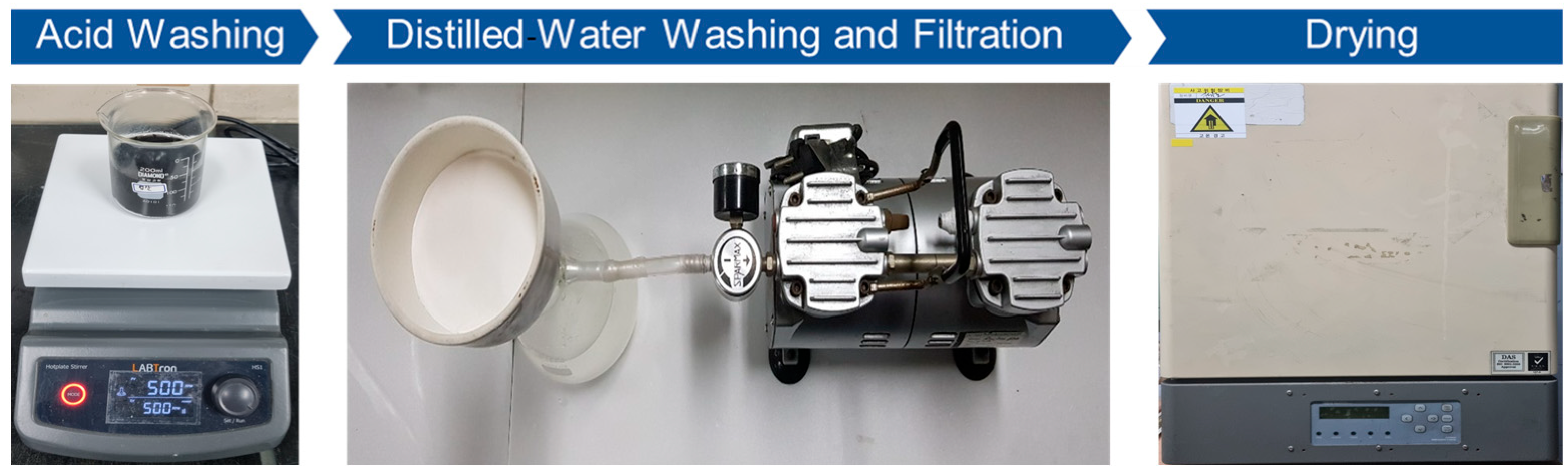
Acid washing was performed with 0.2 mol·L−1 solutions of HCl, H2SO4, and HNO3. The main steps of the acid-washing pretreatment, including acid washing, distilled-water washing and filtration, and drying, are shown in Figure 1. For each acid-washing treatment, a 10 g biomass sample was mixed with 100 mL of acid (liquid-to-solid ratio = 10 mL·g−1) and stirred continuously for 2 h at room temperature. After treatment, the samples were rinsed thoroughly with distilled water to remove residual acid and dissolved inorganic species, then filtered and oven-dried at 105 °C for 24 h. Pretreatment conditions were selected from previous studies on alkali removal and ash transformation control in biomass systems [14,15,16]. Using different acids allowed assessment of variations in the extraction of alkali, phosphorus, and sulfur species and their subsequent effects on ash chemistry.

2.4. Ash Characterization and Analytical Methods

Ash samples generated after thermal treatment were characterized to evaluate changes in bulk chemical composition, crystalline phases, surface morphology, and local elemental distributions resulting from kaolin addition and acid washing. Because biomass ash is inherently heterogeneous, each sample was thoroughly homogenized before analysis to ensure representative measurements.
Bulk chemical composition was determined by wavelength-dispersive X-ray fluorescence spectroscopy (WD-XRF; hereafter referred to as XRF) using a ZSX Primus IV instrument (Rigaku, Tokyo, Japan). Ash residues were finely ground, homogenized, and analyzed as representative powders. Elemental concentrations were converted to their corresponding oxides (SiO2, Al2O3, P2O5, Fe2O3, MgO, CaO, SO3, Na2O, and K2O), normalized, and then used for compositional comparison, SiO2–K2O–Al2O3 ternary-composition analysis, and calculation of fouling and slagging indices.
Mineralogical characteristics were examined by X-ray diffraction (XRD) using a D/max-2500V/PC diffractometer (Rigaku, Tokyo, Japan). XRD analysis was performed to identify crystalline phases associated with alkali salts, sulfates, silicates, and aluminosilicate compounds formed during thermal treatment. Diffraction patterns were collected over a 2θ range of 20–50° and compared with standard references to assign crystalline phases. Particular attention was given to potassium-containing salts, quartz, calcium sulfate, calcium silicate, and aluminosilicate phases because they are closely linked to ash melting, alkali stabilization, and fouling mitigation.
Surface morphology and local elemental composition were characterized using field-emission scanning electron microscopy–energy-dispersive X-ray spectroscopy (SEM–EDS; JSM-7900F, JEOL, Tokyo, Japan). Ash particles were mounted on conductive carbon tape and imaged to assess surface structure and agglomeration features, while the EDS component of SEM–EDS was used to assess local inorganic elemental distributions. For each sample, EDS measurements were taken at five distinct locations, and the averaged values were treated as the representative surface composition. The EDS data were converted to oxide-based compositions to allow direct comparison with the XRF results. Because SEM–EDS provides local rather than bulk information, these findings were interpreted in conjunction with the XRF and XRD data to clarify the relationships among bulk ash chemistry, crystalline phase formation, and surface-related fouling behavior.

2.5. Calculation of Fouling and Slagging Indices

Fouling and slagging tendencies were quantified using ash-based indices widely reported in the literature. Each index was calculated from oxide compositions determined by XRF analysis, following established methodologies for biomass ash assessment [19,20,21]. All oxide contents were normalized to weight percent before calculation. The base-to-acid ratio (B/A) was calculated as follows:
B/A = (Fe2O3 + CaO + MgO + Na2O + K2O)/(SiO2 + Al2O3)
In addition, a modified base-to-acid ratio including phosphorus, denoted as B/A(+P), was calculated. This index was included because kenaf, the herbaceous biomass examined in this study, contains a relatively high phosphorus content, and phosphorus-containing compounds significantly affect ash melting behavior and slag formation during herbaceous biomass combustion [4,8]. The B/A(+P) ratio was calculated according to Equation (2):
B/A(+P) = (Fe2O3 + CaO + MgO + Na2O + K2O + P2O5)/(SiO2 + Al2O3)
The iron-to-calcium ratio (Fe/Ca) was calculated according to Equation (3):
Fe/Ca = Fe2O3/CaO
The silica percentage (Sp) was calculated according to Equation (4):
Sp (%) = [SiO2/(SiO2 + Fe2O3 + CaO + MgO)] × 100
The fouling index (Rf) was calculated according to Equation (5):
Rf = (B/A) × (Na2O + K2O)
The total alkali (TA) content was calculated according to Equation (6):
TA = Na2O + K2O
All indices were calculated for the untreated, kaolin-treated, and acid-washed samples using identical procedures to allow direct comparison.

3. Results

3.1. Ash Agglomeration Behavior

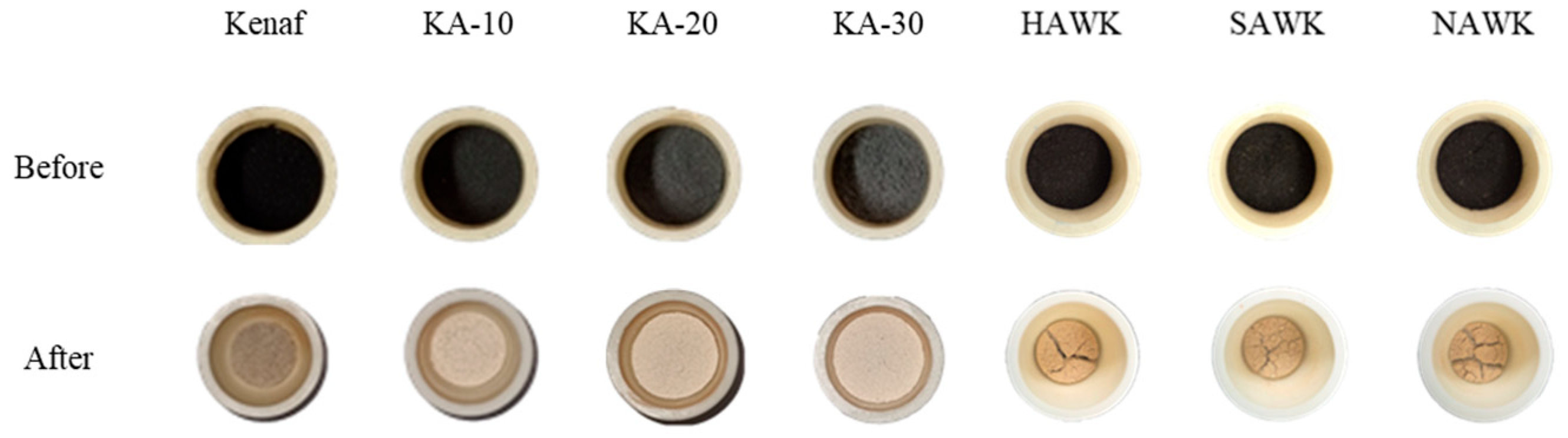
The ash agglomeration behavior of Kenaf, KA-10, KA-20, KA-30, HAWK, SAWK, and NAWK was evaluated using mass loss and post-treatment morphology (Figure 2). Mass loss was determined as the difference between the sample mass before and after thermal treatment and was used as an auxiliary indicator of thermal conversion and ash transformation. However, because mass loss can be affected by volatilization, decomposition, and changes in inorganic composition, ash agglomeration was primarily assessed from the morphology of the residues after thermal treatment.
Kenaf exhibited pronounced agglomeration after thermal treatment at 800 °C. The residue was highly consolidated within the crucible and showed a partially fused structure, indicating significant ash softening, particle coalescence, and partial melting. The mass loss of Kenaf was approximately 1.30 g. This behavior is characteristic of alkali-rich herbaceous biomass and is primarily attributed to potassium-containing compounds that form low-melting phases and promote ash adhesion during high-temperature conversion [4]. KA-10, KA-20, and KA-30 exhibited progressively less ash agglomeration as the kaolin dosage increased. Compared with Kenaf, KA-series residues were less consolidated and more fragmented. Notably, KA-30 produced a relatively loose and powder-like residue, indicating reduced ash fusion and agglomeration. Mass losses for KA-10, KA-20, and KA-30 were approximately 0.68, 0.58, and 0.42 g, respectively, all lower than that observed for Kenaf. This decreasing trend indicates that kaolin modified ash transformation, thereby limiting the formation of fused residues. The mitigation is likely due to reactions between alkali species and the aluminosilicate supplied by kaolin, which favor the formation of thermally stable potassium aluminosilicate phases. These phases immobilize potassium and inhibit the formation of low-melting alkali salts, thereby reducing ash softening and agglomeration [11,12,22,23]. In contrast, HAWK, SAWK, and NAWK exhibited post-treatment behaviors distinct from those of Kenaf and the KA-series samples. The acid-washed residues displayed shrinkage, cracking, and irregular brittle structures rather than dense, fused agglomerates. Mass losses for HAWK, SAWK, and NAWK were approximately 1.68, 1.69, and 1.73 g, respectively, which were higher than those of Kenaf. The higher mass losses do not indicate increased ash agglomeration. Rather, they indicate that acid washing altered the inorganic composition and thermal behavior by reducing the contents of alkali metals and other soluble inorganic species before thermal treatment. Despite their higher mass losses, the acid-washed samples showed no clear evidence of sticky molten ash or strongly consolidated agglomerates.
These findings indicate that KA-series and acid-washed samples mitigate ash agglomeration through different mechanisms. KA-10, KA-20, and KA-30 suppressed agglomeration mainly by stabilizing alkali species through aluminosilicate formation, with the effect becoming more pronounced at higher kaolin addition ratios. In contrast, HAWK, SAWK, and NAWK limited agglomeration by reducing the contents of alkali metals and other reactive inorganic species during pretreatment, which curtailed the formation of low-melting eutectic compounds during thermal conversion [13,15,16,24,25]. Although both kaolin addition and acid washing reduced the formation of dense, fused ash residues relative to untreated Kenaf, their effects on mass loss and residue morphology differed.

3.2. Ash Composition and Mineral Characteristics

The effects of fouling control strategies on ash chemistry and mineralogy were investigated using XRF, XRD, and SEM–EDS analyses, and the corresponding results are presented in Table 1 and Figure 3 and Figure 4. Kenaf ash exhibited an alkali-rich composition typical of herbaceous biomass, with relatively high contents of K2O (17.38 wt.%), CaO (31.52 wt.%), MgO (14.98 wt.%), SO3 (9.43 wt.%), and P2O5 (6.90 wt.%). These constituents readily form low-melting alkali salts and eutectic compounds during high-temperature conversion [4,5,8]. In particular, the high K2O content indicates a strong potential for potassium-driven ash softening and agglomeration, whereas the presence of Ca-, Mg-, P-, and S-containing species suggests that complex sulfate, phosphate, and silicate phases also influence ash transformation. Kaolin addition progressively shifted the ash composition toward a SiO2–Al2O3-rich system. As the dosage increased from KA-10 to KA-30, K2O decreased from 14.89 to 10.99 wt.%, while Al2O3 increased from 7.65 to 15.43 wt.%, and SiO2 increased from 22.86 to 33.58 wt.%. Similar decreasing trends were also observed for CaO, MgO, SO3, and P2O5. These compositional changes demonstrate that kaolin addition dilutes the relative abundance of alkali and alkaline-earth oxides while enriching the ash in refractory aluminosilicate constituents. Consequently, increasing the kaolin dosage shifted the ash composition from alkali-rich to a more thermally stable SiO2–Al2O3-rich system. Acid washing caused a more direct reduction in alkali content. The K2O content decreased markedly from 17.38 wt.% in Kenaf to 6.45, 7.83, and 5.66 wt.% in HAWK, SAWK, and NAWK, respectively. In addition, Na2O was undetectable in all acid-washed samples, indicating that the pretreatment substantially reduced water-soluble alkali species. The P2O5 content also decreased to 1.98–2.62 wt.%, indicating partial removal of phosphorus-containing species. However, the relative CaO content increased substantially in the acid-washed samples, reaching 44.30–51.80 wt.%. This increase is mainly attributed to the relative enrichment of calcium-containing inorganic species after reductions in alkali metals and other soluble components. Among the acid-washed samples, NAWK exhibited the lowest K2O and SO3 concentrations, indicating that HNO3 washing was most effective in reducing alkali- and sulfur-related ash components under the present conditions.
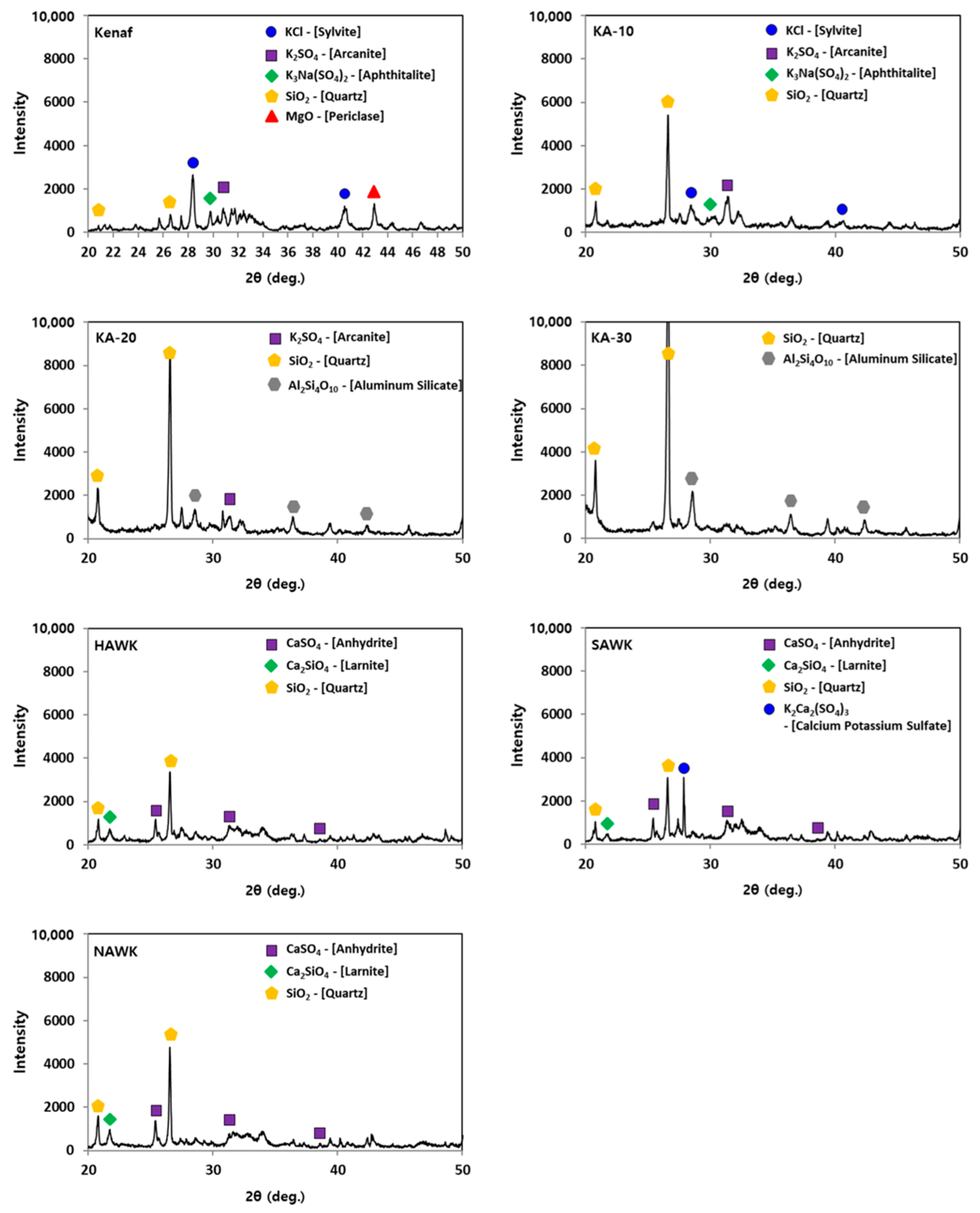
The XRD patterns corroborated these compositional changes. Kenaf ash contained crystalline alkali-salt phases such as KCl, K2SO4, and K3Na(SO4)2, along with SiO2 and MgO. These phases are consistent with the high K2O, Na2O, SO3, and MgO contents observed in the XRF results and help explain the strong ash agglomeration tendency of Kenaf. In KA-10, alkali-salt phases were still observed, indicating that 10 wt.% kaolin did not fully suppress the formation of potassium-containing crystalline salts. However, with increasing kaolin dosage, the intensity and prevalence of alkali-salt peaks decreased, while quartz and aluminosilicate phases became more prominent. In particular, KA-20 and KA-30 both exhibited aluminum-silicate phases, indicating that kaolin addition shifted the ash chemistry toward aluminosilicate mineral structures. These findings support the view that kaolin mitigates fouling mainly by stabilizing alkali species and increasing the refractory aluminosilicate fraction [22,23]. The acid-washed samples exhibited different mineralogical characteristics from the kaolin-treated samples. HAWK and NAWK primarily showed crystalline phases associated with CaSO4, Ca2SiO4, and SiO2, while SAWK contained CaSO4, Ca2SiO4, SiO2, and K2Ca2(SO4)3. The formation of CaSO4-related phases is consistent with the high CaO content in the acid-washed samples and the remaining sulfur-containing species. The presence of Ca2SiO4 further suggests that calcium-containing species reacted with silicate components during thermal treatment. Although acid washing substantially reduced alkali–metal contents, some sulfate-based phases remained, particularly in HAWK and SAWK [13,14]. These results indicate that acid washing changes the dominant ash chemistry from potassium-rich alkali salts to calcium-rich sulfate and silicate phases.
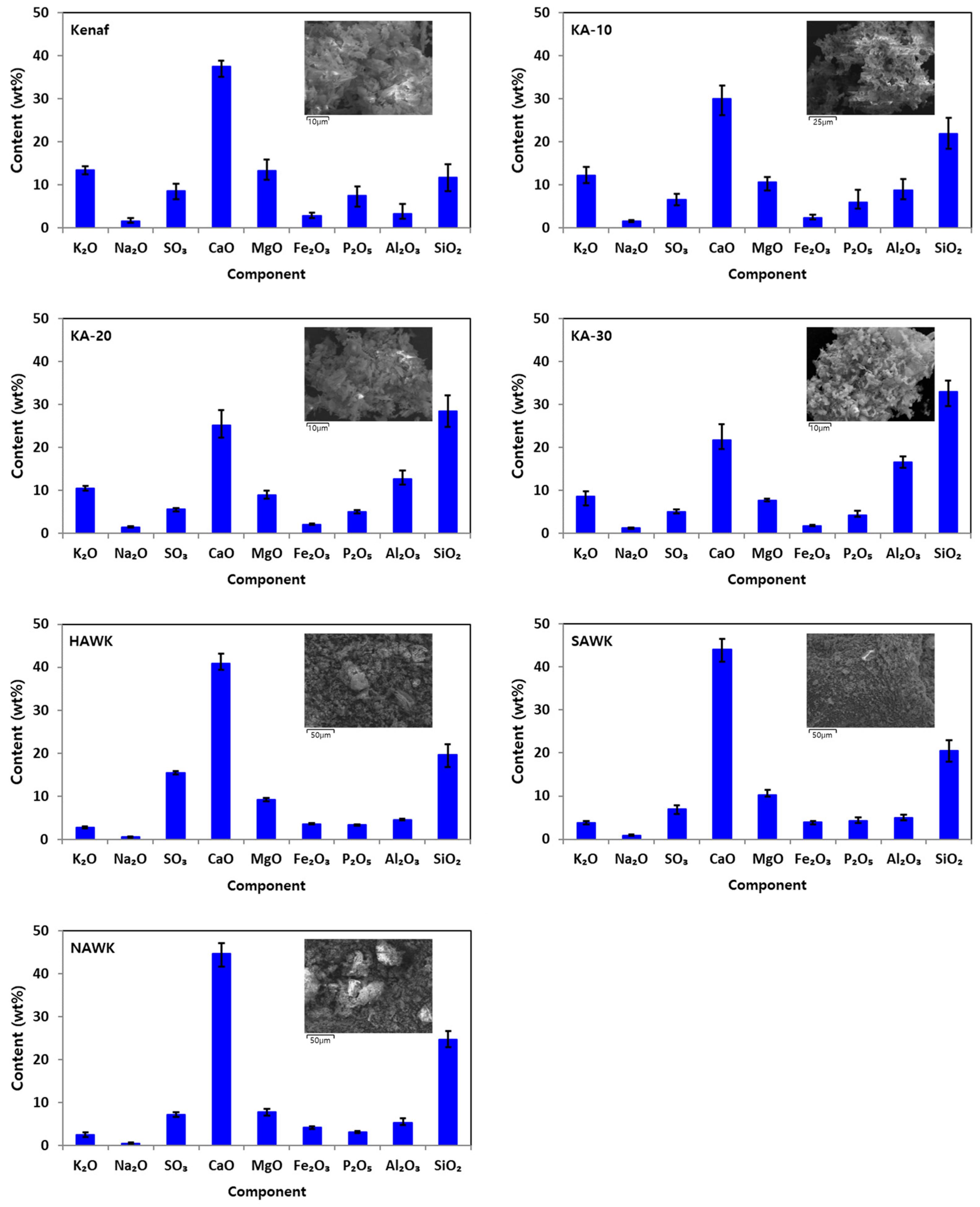
SEM–EDS analysis provided additional insight into the surface composition of the ash samples. The surface of Kenaf remained rich in K-, Ca-, Mg-, P-, and S-containing species, which promote the formation of low-melting surface phases during thermal treatment. As kaolin loading increased in the KA-series samples, surface concentrations of K-, Ca-, Mg-, P-, and S-containing species decreased, while Al- and Si-rich species increased. This trend is consistent with the XRF and XRD results and indicates that kaolin addition altered both the bulk ash composition and the surface chemistry of the ash particles. The enrichment of Al2O3 and SiO2 on the ash surface is expected to reduce the formation of sticky alkali-rich melts and enhance thermal stability. In the acid-washed samples, SEM–EDS analysis showed substantially lower surface K2O levels than in either Kenaf or the KA-series samples. The K2O contents of HAWK, SAWK, and NAWK were 2.78, 3.84, and 2.53 wt.%, respectively, indicating a substantial reduction in surface-associated alkali species. In contrast, CaO and SiO2 dominated the surface composition, particularly in NAWK, which exhibited a relatively high SiO2 level. These findings indicate that acid washing effectively alters surface chemistry by reducing alkali species and enriching calcium- and silicate-based components. This transformation is important because ash melting and particle adhesion typically originate at the particle surface.
XRF, XRD, and SEM–EDS analyses show that kaolin addition and acid washing reduce fouling through different ash transformation pathways. Kaolin addition progressively shifts the ash toward an aluminosilicate-rich composition and promotes the formation of refractory aluminum-silicate phases. In contrast, acid washing substantially reduces alkali–metal contents and redirects the dominant ash chemistry toward calcium-rich sulfate and silicate phases. These contrasting mechanisms are consistent with the reduced ash agglomeration behavior observed in Section 3.1 and the fouling index trends discussed in Section 3.4.

3.3. Assessment of Ash Compositional Shifts Using a Ternary Composition Diagram

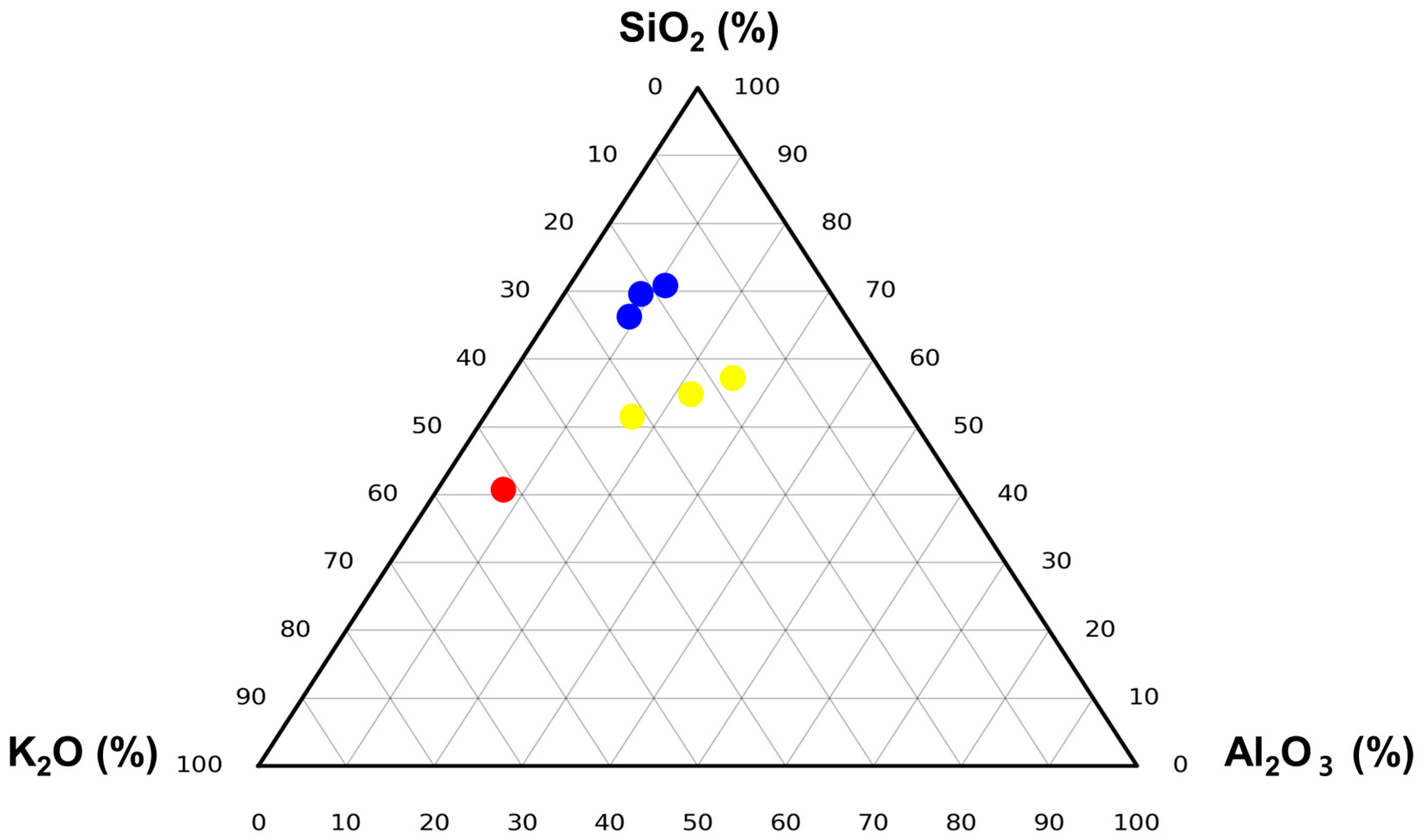
The ash compositional shifts of Kenaf, KA-10, KA-20, KA-30, HAWK, SAWK, and NAWK were assessed using a SiO2–K2O–Al2O3 ternary composition diagram (Figure 5). The relative proportions of SiO2, K2O, and Al2O3 fractions derived from the XRF data were normalized and plotted to highlight the compositional shifts produced by kaolin addition and acid washing. Although biomass ash also contains Ca-, Mg-, P-, and S-containing species, this ternary diagram effectively reveals alkali-related changes in ash chemistry, especially the balance between potassium-rich compositions and refractory aluminosilicate-forming oxides.
Kenaf was located in the K2O-rich region of the ternary diagram. This location reflects potassium-dominated ash chemistry, which typically leads to the formation of low-melting potassium silicates and other potassium-rich phases. This composition is consistent with the severe ash agglomeration described in Section 3.1 and the high K2O content identified by XRF in Section 3.2. Therefore, the position of Kenaf on the ternary diagram is consistent with its high propensity for ash softening and deposit formation during thermal conversion. As kaolin was added, the ash composition gradually shifted from the K2O-rich region toward the SiO2–Al2O3 side of the diagram. The progression from KA-10 to KA-20 and KA-30 illustrates a gradual decrease in the relative K2O fraction, accompanied by corresponding increases in SiO2 and Al2O3. This trend indicates that kaolin addition modifies ash chemistry by increasing the refractory aluminosilicate fraction and suppressing the relative influence of potassium-containing components. Among the kaolin-treated samples, KA-30 was positioned furthest from Kenaf, indicating that the highest kaolin dosage most effectively shifted the ash composition toward a more thermally stable aluminosilicate system. This observation is consistent with the XRD results, which show that increasing the kaolin dosage suppresses alkali-salt phases and promotes the formation of aluminum-silicate phases. The acid-washed samples also shifted away from the K2O-rich region, but their movement followed a somewhat different pathway from that of the kaolin-treated samples. HAWK, SAWK, and NAWK were located in the SiO2-enriched region of the ternary diagram, indicating a substantial decrease in the relative K2O fraction after acid washing. This displacement shows that acid washing reduces alkali species before thermal treatment rather than introducing aluminosilicate material. Consequently, the acid-washed samples were positioned away from the composition range associated with potassium-dominated ash behavior. The positions of HAWK, SAWK, and NAWK were distinctly separated from Kenaf, supporting the interpretation that acid washing reduced the influence of potassium-rich ash chemistry on fouling tendency.
The ternary diagram indicates that both kaolin addition and acid washing shift the ash composition away from the K2O-rich region, thereby reducing the influence of potassium-rich ash chemistry on fouling tendency. However, the underlying compositional pathways differ. Kaolin addition shifts the ash composition toward the SiO2–Al2O3 axis by enriching aluminosilicates, whereas acid washing moves the composition primarily by decreasing the relative proportion of potassium-containing species. This compositional shift is consistent with the reduced agglomeration behavior observed in Section 3.1 and the XRF, XRD, and SEM–EDS results discussed in Section 3.2.

3.4. Quantitative Evaluation of Fouling and Slagging Behavior

Table 2 summarizes the ash-based indices used to quantify the fouling and slagging tendencies of Kenaf, KA-10, KA-20, KA-30, HAWK, SAWK, and NAWK. These indices clarify how kaolin addition and acid washing influence ash basicity, alkali-related fouling propensity, and the compositional shift toward refractory ash systems.
Kenaf exhibited the highest base-to-acid ratio (B/A) of 4.28 and modified base-to-acid ratio including phosphorus [B/A(+P)] of 4.72, indicating that its ash is dominated by basic oxides such as K2O, CaO, and MgO. Such an ash composition typically yields low melting temperatures and a high tendency for slagging. The higher B/A(+P) relative to B/A indicates that phosphorus-containing species further promote the formation of low-melting compounds with alkali and alkaline earth metals [4,8]. In addition, Kenaf exhibited the highest fouling index (Rf = 83.07) and total alkali content (TA = 19.40), indicating a strong alkali-related fouling propensity. In contrast, HAWK, SAWK, and NAWK showed much lower TA values of 6.45, 7.83, and 5.66, respectively, indicating that acid washing effectively reduced alkali–metal contents before thermal treatment. Consequently, the Rf values decreased sharply to 17.61, 23.23, and 16.80 for HAWK, SAWK, and NAWK, respectively. Among the acid-washed samples, NAWK exhibited the lowest TA and Rf values, indicating that HNO3 washing was particularly effective at reducing alkali-related fouling under the present experimental conditions. However, the B/A values for HAWK, SAWK, and NAWK remained relatively high (2.73–2.97), likely because the reduction of soluble alkali and other inorganic species enriched the ash in CaO and other basic oxides.
KA-10, KA-20, and KA-30 also displayed significant reductions in fouling and slagging indices, but their trends differed from those of the acid-washed samples. As the kaolin dosage increased, the B/A ratio decreased from 1.84 for KA-10 to 1.18 for KA-20 and 0.84 for KA-30. Similarly, B/A(+P) decreased from 2.03 in KA-10 to 1.29 in KA-20 and 0.93 in KA-30, while the silica percentage (Sp) increased from 36.69% (KA-10) to 46.46% (KA-20) and 53.75% (KA-30). These results indicate that increasing kaolin addition progressively shifted the ash composition toward a SiO2–Al2O3-rich system, which is typically associated with more refractory ash behavior. Consequently, the Rf value decreased from 30.81 for KA-10 to 17.07 for KA-20 and 10.46 for KA-30. Although KA-30 exhibited the lowest Rf value among all treated samples, its TA value remained relatively high at 12.41 compared with HAWK, SAWK, and NAWK.
These results indicate that kaolin addition and acid washing reduce fouling propensity through distinct mechanisms. KA-10, KA-20, and KA-30 reduced B/A and Rf primarily by increasing refractory aluminosilicate components and stabilizing alkali species within aluminosilicate-rich phases. In contrast, HAWK, SAWK, and NAWK primarily reduced TA by reducing the contents of alkali metals and other soluble inorganic constituents during pretreatment. The Fe/Ca ratio remained low for all samples (0.06–0.18), indicating that iron played only a minor role in the fouling and slagging behavior of Kenaf ash. Therefore, fouling in this system appears to be mainly associated with alkali reactions and the balance between basic oxides and refractory SiO2–Al2O3 components, whereas iron-related slagging is comparatively minor. The quantitative indices indicate that both kaolin addition and acid washing reduced the fouling propensity of Kenaf ash, though through different ash transformation pathways.

4. Discussion

This study examined whether fouling and ash agglomeration in alkali-rich torrefied kenaf biomass can be mitigated by stabilizing alkali species through kaolin-derived aluminosilicate formation or by reducing those species via acid washing before thermal conversion. The findings indicate that both strategies reduced ash agglomeration, but each operated through a distinct ash transformation pathway.
Kenaf exhibited severe ash agglomeration after thermal treatment, resulting in a dense, partially fused residue. This outcome aligns with its ash composition, which contained high levels of K2O, CaO, MgO, SO3, and P2O5. Previous studies have shown that herbaceous biomass rich in alkali and alkaline earth metals tends to form low-melting salts, eutectic compounds, and sticky ash phases during high-temperature conversion [4,8]. In this study, the high K2O content in Kenaf (17.38 wt.%) combined with P- and S-containing species likely promoted ash softening and particle coalescence, resulting in pronounced agglomeration.
Kaolin addition mainly mitigated ash agglomeration by shifting the composition toward a refractory aluminosilicate-rich system. As the kaolin loading increased from KA-10 to KA-30, SiO2 increased from 22.86 to 33.58 wt.%, Al2O3 from 7.65 to 15.43 wt.%, and K2O decreased from 14.89 to 10.99 wt.%. The XRD results further showed that as kaolin loading increased, alkali-salt phases were suppressed and aluminum-silicate phases became more prominent, corroborating earlier findings that aluminosilicate additives capture potassium and reduce the formation of low-melting alkali salts [22,23]. The B/A ratio decreased from 1.84 for KA-10 to 0.84 for KA-30, while Rf decreased from 30.81 to 10.46, indicating that kaolin addition effectively reduced the calculated fouling tendency by enriching the refractory SiO2–Al2O3 fraction.
In contrast, acid washing mitigated fouling primarily by reducing alkali species before thermal treatment. HAWK, SAWK, and NAWK showed significantly lower K2O contents of 6.45, 7.83, and 5.66 wt.%, respectively, and Na2O was no longer detected. Their TA values also decreased substantially relative to Kenaf, indicating that acid washing substantially reduced soluble alkali species before thermal treatment. Despite higher mass losses than Kenaf, the acid-washed samples did not form dense and fused agglomerates. Instead, shrinkage, cracking, and brittle irregular structures were observed. This indicates that the higher mass loss reflects the altered thermal conversion behavior introduced by acid washing rather than more intense ash fusion. XRD analysis showed that the dominant ash chemistry shifted from potassium-rich alkali salts to calcium-rich sulfate and silicate phases, notably CaSO4 and Ca2SiO4.
The comparison of the two mitigation strategies shows that effectiveness cannot be gauged by a single index. KA-30 showed the lowest Rf value, indicating a lower calculated fouling tendency associated with aluminosilicate enrichment. However, its TA value remained relatively high, indicating that alkali species were stabilized and compositionally diluted rather than directly reduced before thermal treatment. In contrast, acid washing produced much lower TA values, particularly for NAWK, but the B/A values remained relatively high because CaO and other basic oxides became enriched. Thus, this study distinguishes between additive-based alkali stabilization and pretreatment-based alkali removal as two distinct pathways for controlling ash transformation in kenaf biomass.
From a practical perspective, kaolin addition offers a simple dry treatment that can be applied without wastewater generation, but it increases the inorganic content of the fuel and can complicate ash handling. In contrast, acid washing reduces alkali–metal contents more effectively at the source, but it requires liquid handling, treatment of wash water, and careful process optimization. Future research should therefore explore combined strategies, such as mild acid washing followed by optimized kaolin addition, to balance alkali removal, ash stabilization, and process feasibility. Further studies should also extend the current muffle furnace evaluation to long-term combustion, co-firing, deposit probe testing, corrosion assessments, gaseous emission analyses, and techno-economic evaluations of washing solution recovery, especially because recent research on pretreated kenaf has shown that alkali removal improves ash fusion behavior and decreases slagging and fouling in solid fuel boiler applications [26].

5. Conclusions

This study directly compared kaolin addition and acid washing as strategies for mitigating fouling and ash agglomeration in alkali-rich torrefied kenaf biomass. Kenaf showed severe ash agglomeration after heating, with a mass loss of approximately 1.30 g and an ash composition rich in K2O, CaO, MgO, SO3, and P2O5. These results indicate that Kenaf ash readily forms low-melting phases and dense fused residues.
Kaolin addition progressively reduced ash agglomeration as the dosage increased. Mass loss decreased from approximately 0.68 g for KA-10 to 0.42 g for KA-30, and the residue became less consolidated and more powder-like. XRF, XRD, and ternary diagram analyses showed that kaolin addition shifted the ash composition toward a SiO2–Al2O3-rich system and promoted the formation of aluminum-silicate phases. KA-30 exhibited the lowest B/A and Rf values, indicating effective fouling mitigation through aluminosilicate-based stabilization.
Acid washing mitigated fouling through a different pathway. HAWK, SAWK, and NAWK showed higher mass losses of approximately 1.68–1.73 g, but their residues did not form dense fused agglomerates. Acid washing substantially reduced K2O to 5.66–7.83 wt.% and removed detectable Na2O, indicating substantial alkali reduction before thermal treatment. Among the acid-washed samples, NAWK recorded the lowest K2O, TA, and Rf values, indicating the greatest reduction in alkali-related fouling tendency within the acid-washing group.
Kaolin addition and acid washing both reduced fouling propensity, but their mechanisms were different. Kaolin addition mainly stabilized and diluted the relative contribution of alkali species by enriching the ash with refractory aluminosilicate components, whereas acid washing reduced the contents of alkali metals and other soluble inorganic species before thermal conversion. These findings provide guidance for selecting suitable ash control strategies for alkali-rich herbaceous biomass. Future research should include long-term combustion tests, combined pretreatment and additive approaches, corrosion assessments, and process-level evaluations of acid-washing effectiveness and wastewater management.

Author Contributions

Conceptualization, J.C.P.; methodology, J.C.P.; investigation, J.C.P.; data curation, J.C.P.; writing—original draft preparation, J.C.P.; visualization, J.C.P.; writing—review and editing, T.-J.K. and S.-P.Y.; supervision, S.-P.Y. All authors have read and agreed to the published version of the manuscript.

Funding

This work was supported by the Technology Innovation Program (Industrial Strategic Technology Development Program) funded by the Ministry of Trade, Industry & Energy (MI, Korea) (No. RS-2022-KP002474).

Data Availability Statement

The data presented in this study are available from the corresponding author upon reasonable request.

Conflicts of Interest

The authors declare that this study received funding from Ministry of Trade, Industry & Energy. The funders had no role in the design of the study, in the collection, analysis, or interpretation of data; in the writing of the manuscript, or in the decision to publish the results.

References

  1. Wang, Y.; Wu, J.J. Thermochemical conversion of biomass: Potential future prospects. Renew. Sustain. Energy Rev. 2023, 187, 113754. [Google Scholar] [CrossRef]
  2. Lee, I.S.; Choi, Y.R.; Kim, J. Kenaf is the key to go green in the era of environmental crisis: A review. Korean J. Plant Res. 2022, 35, 820–824. [Google Scholar] [CrossRef]
  3. Park, H.; Park, S.U.; Jang, B.; Chung, Y.S. Germplasm evaluation of Kenaf (Hibiscus cannabinus) for alternative biomass for cellulosic ethanol production. GCB Bioenergy 2021, 13, 201–210. [Google Scholar] [CrossRef]
  4. Abioye, K.J.; Harun, N.Y.; Sufian, S.; Yusuf, M.; Jagaba, A.H.; Ekeoma, B.C.; Kamyab, H.; Sikiru, S.; Waqas, S.; Ibrahim, H. A review of biomass ash related problems: Mechanism, solution, and outlook. J. Energy Inst. 2024, 112, 101490. [Google Scholar] [CrossRef]
  5. Luan, J.; Wang, Q.; Shao, D.; Cui, B.; Han, P.; He, Q. Research progress on influencing factors and control methods of slagging in biomass combustion. Front. Energy Res. 2025, 13, 1634354. [Google Scholar] [CrossRef]
  6. Dula, M.; Kraszkiewicz, A. A review: Problems related to ash deposition and deposit formation in low-power biomass-burning heating devices. Front. Energy Res. 2025, 13, 1652415. [Google Scholar] [CrossRef]
  7. Maj, I.; Niesporek, K.; Płaza, P.; Maier, J.; Łój, P. Biomass ash: A review of chemical compositions and management trends. Sustainability 2025, 17, 4925. [Google Scholar] [CrossRef]
  8. Puri, L.; Havukainen, J.; Berg, A.; Konttinen, J. Critical review of the role of ash content and composition in biomass pyrolysis. Front. Fuels 2024, 2, 1378361. [Google Scholar] [CrossRef]
  9. Mörtenkötter, H.; Kulkarni, M.; Fuchs, L.; Kerscher, F.; Fendt, S.; Spliethoff, H. Effects of aluminosilicate-based additives on potassium release and ash melting during biomass combustion. Fuel 2024, 374, 132471. [Google Scholar] [CrossRef]
  10. Maj, I.; Matus, K. Aluminosilicate clay minerals: Kaolin, bentonite, and halloysite as fuel additives for thermal conversion of biomass and waste. Energies 2023, 16, 4359. [Google Scholar] [CrossRef]
  11. Maj, I.; Niesporek, K.; Matus, K.; Miccio, F.; Mazzocchi, M.; Łój, P. The impact of aluminosilicate additives upon the chlorine distribution and melting behavior of poultry litter ash. Energies 2024, 17, 1854. [Google Scholar] [CrossRef]
  12. Hashemi, H.; Wang, G.; Jensen, P.A.; Wu, H.; Frandsen, F.J.; Sander, B.; Glarborg, P. Modeling potassium capture by aluminosilicate, Part 1: Kaolin. Energy Fuels 2021, 35, 13984–13998. [Google Scholar] [CrossRef]
  13. Lee, Y.J.; Choi, J.W.; Park, J.H.; Namkung, H.; Song, G.S.; Park, S.J.; Lee, D.W.; Kim, J.G.; Jeon, C.H.; Choi, Y.C. Techno-economical method for the removal of alkali metals from agricultural residue and herbaceous biomass and its effect on slagging and fouling behavior. ACS Sustain. Chem. Eng. 2018, 6, 13056–13065. [Google Scholar] [CrossRef]
  14. Mu, L.; Li, T.; Wang, Z.; Shang, Y.; Yin, H. Influence of water/acid washing pretreatment of aquatic biomass on ash transformation and slagging behavior during co-firing with bituminous coal. Energy 2021, 234, 121286. [Google Scholar] [CrossRef]
  15. Javanmard, A.; Wan Daud, W.M.A.; Abdul Patah, M.F. The good, the bad, the advantage of washing pretreatment in reducing slagging and fouling index during the torrefaction process. Process Saf. Environ. Prot. 2023, 176, 852–866. [Google Scholar] [CrossRef]
  16. Hidayat, H.; Fausiah; Anam, A.; Sudono; Destian, E.F.; Noor, I.; Ghofar, A.; Rosjidi, M.; Harmadi, R.; Islam Nuswantoro, D.B.; et al. Oil palm biomass ash removal for boiler fuel optimization: A case study. Case Stud. Chem. Environ. Eng. 2025, 11, 101049. [Google Scholar] [CrossRef]
  17. Kang, C.-H.; Choi, W.-Y.; Yoo, Y.-J.; Choi, K.-H.; Kim, H.-J.; Song, Y.-J.; Kim, C.-K. The growth phase and yield difference of kenaf (Hibiscus cannabinus L.) on soil salinity in reclaimed land. Korean J. Crop Sci. 2014, 59, 511–520. [Google Scholar] [CrossRef]
  18. Lee, B.-H.; Trinh, V.T.; Jeon, C.-H. Effect of torrefaction on thermal and kinetic behavior of kenaf during its pyrolysis and CO2 gasification. ACS Omega 2021, 6, 9920–9927. [Google Scholar] [CrossRef] [PubMed]
  19. Lachman, J.; Baláš, M.; Lisý, M.; Lisá, H.; Milčák, P.; Elbl, P. An overview of slagging and fouling indicators and their applicability to biomass fuels. Fuel Process. Technol. 2021, 217, 106804. [Google Scholar] [CrossRef]
  20. Ovčačíková, H.; Vlček, J.; Klárová, M.; Topinková, M. Corrosive effect of wood ash produced by biomass combustion on refractory materials in a binary Al–Si system. Materials 2022, 15, 5796. [Google Scholar] [CrossRef]
  21. Ghazidin, H.; Suyatno; Prayoga, M.Z.E.; Putra, H.P.; Priyanto, U.; Prismantoko, A.; Darmawan, A.; Hariana. A comprehensive evaluation of slagging and fouling indicators for solid fuel combustion. Therm. Sci. Eng. Prog. 2023, 40, 101769. [Google Scholar] [CrossRef]
  22. Clery, D.S.; Mason, P.E.; Rayner, C.M.; Jones, J.M. The effects of an additive on the release of potassium in biomass combustion. Fuel 2018, 214, 647–655. [Google Scholar] [CrossRef]
  23. Roberts, L.J.; Mason, P.E.; Jones, J.M.; Gale, W.F.; Williams, A.; Hunt, A.; Ashman, J. The impact of aluminosilicate-based additives upon the sintering and melting behaviour of biomass ash. Biomass Bioenergy 2019, 127, 105284. [Google Scholar] [CrossRef]
  24. Namkung, H.; Lee, Y.J.; Park, J.H.; Song, G.S.; Choi, J.W.; Kim, J.G.; Park, S.J.; Park, J.C.; Kim, H.T.; Choi, Y.C. Influence of herbaceous biomass ash pre-treated by alkali metal leaching on the agglomeration/sintering and corrosion behaviors. Energy 2019, 187, 115950. [Google Scholar] [CrossRef]
  25. Wang, D.; Wang, Y.; Xiao, W.; Guo, S.; Guo, S.; Zhao, Y. Study on water wash pretreatment and Al–Si additives to relieve the sintering behavior of fungus bran combustion ash. Molecules 2024, 29, 4675. [Google Scholar] [CrossRef]
  26. Noh, Y.H.; Lee, D.G.; Park, J.H.; Song, G.S.; Kim, J.S.; Park, S.J.; Choi, J.W.; Song, K.H.; Choi, Y.C.; Lee, Y.J. Ashless herbaceous biomass for slagging and fouling reduction in solid-fuel boiler: Combustion and ash fusion characterizations. Fuel 2025, 379, 132957. [Google Scholar] [CrossRef]
Figure 1. Photographic overview of the acid-washing pretreatment, including acid washing, distilled-water washing and filtration, and drying.
Energies 19 02491 g001
Figure 2. Ash agglomeration behavior after thermal treatment for Kenaf, KA-10, KA-20, KA-30, HAWK, SAWK, and NAWK.
Energies 19 02491 g002
Figure 3. XRD patterns for ash residues from Kenaf, KA-10, KA-20, KA-30, HAWK, SAWK, and NAWK.
Energies 19 02491 g003
Figure 4. SEM–EDS analysis results for ash samples of Kenaf, KA-10, KA-20, KA-30, HAWK, SAWK, and NAWK.
Energies 19 02491 g004
Figure 5. SiO2–K2O–Al2O3 ternary composition diagram illustrating compositional shifts in Kenaf (red circle), KA-series samples (yellow circles: KA-10, KA-20, and KA-30), and acid-washed samples (blue circles: HAWK, SAWK, and NAWK).
Energies 19 02491 g005
Table 1. Chemical composition (wt.%) of Kenaf and treated samples (KA-10, KA-20, KA-30, HAWK, SAWK, and NAWK).
K2ONa2OSO3CaOMgOFe2O3P2O5Al2O3SiO2
Kenaf17.382.029.4331.5214.981.936.902.4413.40
KA-1014.891.847.6825.7912.021.645.617.6522.86
KA-2012.871.646.5521.8310.151.474.7311.7329.03
KA-3010.991.425.6018.818.751.334.0715.4333.58
HAWK6.45-14.7044.303.307.012.002.6719.70
SAWK7.83-6.0149.103.318.092.622.8320.20
NAWK5.66-5.0751.802.979.071.983.2120.20
- not detected.
Table 2. Fouling and slagging indices for Kenaf and treated samples (KA-10, KA-20, KA-30, HAWK, SAWK, and NAWK).
B/AB/A(+P)Fe/CaSpRfTA
Kenaf4.284.720.0621.6783.0719.40
KA-101.842.030.0636.6930.8116.73
KA-201.181.290.0746.4617.0714.51
KA-300.840.930.0753.7510.4612.41
HAWK2.732.820.1626.5117.616.45
SAWK2.973.080.1625.0323.237.83
NAWK2.973.050.1824.0416.805.66
Disclaimer/Publisher’s Note: The statements, opinions and data contained in all publications are solely those of the individual author(s) and contributor(s) and not of MDPI and/or the editor(s). MDPI and/or the editor(s) disclaim responsibility for any injury to people or property resulting from any ideas, methods, instructions or products referred to in the content.