1. Introduction
The increasing penetration of converter-interfaced renewable energy sources (RESs) has led to the displacement of synchronous generation and a corresponding reduction in system inertia. In low-inertia power systems, the frequency response becomes significantly faster, resulting in higher rates of change of frequency (RoCoF) and deeper frequency nadirs following disturbances [
1]. Increasing renewable penetration also introduces additional operational challenges related to stability, reliability, and power quality under varying network conditions [
2], while advanced optimization and control strategies are required to maintain secure system operation [
3]. Battery energy storage systems (BESSs) have been extensively investigated as fast-acting resources for frequency support due to their rapid active power response and flexible control capabilities. Early studies demonstrated their effectiveness in improving frequency stability under disturbance conditions.
In [
4], an optimization-based placement strategy was proposed to minimize the rate of change of frequency (RoCoF) and improve the frequency nadir during contingency events. In [
5], a BESS was shown to provide primary frequency control through frequency containment reserve services under real-world operational constraints. In [
6], the optimal allocation and sizing of energy storage systems were demonstrated to improve overall network performance, emphasizing the importance of proper placement in achieving system-level benefits.
Subsequent studies further demonstrated the capabilities of BESSs to support frequency stability in low-inertia power systems. The use of inertia emulation control in grid-scale BESSs has been shown to enhance the early-stage frequency response by providing synthetic inertial support and improving dynamic behavior following disturbances [
7]. Optimizing battery parameters for frequency response services highlights BESSs’ ability to deliver a fast frequency response and participate in ancillary service markets, thereby complementing conventional reserves, as demonstrated in [
8]. Coordinated operation and sizing strategies improve system flexibility under variable renewable conditions [
9], while appropriate allocation mitigates variability and enhances system stability [
10].
The effectiveness of BESS placement depends on both location and sizing decisions. Optimization-based approaches are therefore used to identify suitable installation sites while considering system objectives and operational constraints. Studies have demonstrated the effectiveness of BESS-based primary frequency control under realistic grid conditions [
11], while incorporating frequency sensitivity and operational constraints improves key performance indicators such as the frequency nadir and RoCoF [
12]. Sensitivity-based methods provide computationally efficient alternatives for evaluating the relationship between the BESS capacity and frequency response [
13]. Time-domain simulation studies show that increasing the BESS capacity improves the nadir and RoCoF performance [
14], although the incremental benefit diminishes at higher capacities under severe contingencies [
15].
The electrical network governs how injected active power propagates across the system, influencing the effectiveness of frequency support. The network topology, impedance distribution, and power-flow conditions determine the extent to which local injections contribute to system-wide stabilization. Studies show that the effectiveness of BESS support decreases with increasing electrical distances from the disturbance [
16], whereas network-informed placement improves dynamic frequency performance [
16]. Other approaches incorporate impedance-based indices and electrical distance metrics into placement formulations. In [
17], impedance-based metrics were integrated into placement strategies to account for network characteristics and improve the decision-making accuracy. In [
18], electrical distance concepts were used to evaluate the effectiveness of storage placement by quantifying the influence of power injections across different network locations.
Recent optimization strategies incorporate power-flow sensitivity and operating conditions when addressing multiple objectives, such as frequency support, voltage regulation, and loss minimization. Power-flow-based modeling improves placement accuracy by capturing network losses and constraints [
19], while multi-scenario optimization enhances robustness under varying renewable generation and load conditions [
20]. Sensitivity-based placement methods demonstrate that integrating power-flow information enables the identification of optimal locations that maintain voltage and frequency stability [
21]. However, frequency sensitivity indices derived from dynamic simulations are often treated separately from power-flow-based metrics, and the interaction between dynamic frequency response and network characteristics remains insufficiently represented [
22].
More recent studies have applied optimization techniques using detailed frequency performance metrics such as the frequency nadir, zenith, RoCoF, and steady-state frequency. Incorporating these metrics enables the improved assessment of system dynamics under varying inertia conditions [
23]. The coordinated optimization of placement, sizing, and control enhances frequency stability [
24], while hybrid storage optimization frameworks improve flexibility under high renewable penetration [
25]. Other studies consider frequency stability margins and grid constraints when determining suitable locations for fast-frequency-response resources [
26], and sensitivity-based approaches are used to evaluate the impacts of BESS injections across different buses using frequency indices such as nadir and RoCoF [
27].
Despite these advantages, lithium-ion battery systems pose safety concerns due to thermal runaway. Thermal runaway is characterized by uncontrolled exothermic reactions that lead to a rapid temperature rise, the release of flammable gases, and potential fire or explosion hazards [
28]. Experimental studies show that such events can be triggered by internal faults, overcharging, or external heating, posing significant risks in large-scale energy storage applications. Furthermore, degradation mechanisms and high-rate cycling have been shown to reduce thermal stability and accelerate thermal runaway propagation, increasing the severity of cascading failures in battery systems [
29]. These safety considerations underscore the importance of integrating performance and operational reliability in BESS planning and deployment.
In high-renewable systems, hybrid storage placement methods that explicitly account for network constraints have been developed to improve frequency performance [
25]. A structured comparison of representative BESS placement and sizing methods for frequency stability enhancement is provided in
Table 1. The comparison highlights differences in the frequency metrics employed, the treatment of network information, and the placement and sizing strategies adopted in the literature. The table indicates that most existing methods rely either on frequency response indices or optimization techniques, while the explicit integration of power-flow-informed sensitivity-based placement and sizing methods remains limited.
Motivated by the limitations identified in existing studies, this paper proposes a power-flow-informed sensitivity-based method for the optimal placement and sizing of distributed BESSs, aimed at improving frequency nadir performance under multiple generator outage contingencies. The proposed method combines the marginal frequency sensitivity obtained from time-domain screening simulations with network coupling information derived from the power-flow Jacobian. Practical installation constraints, including total BESS capacity and per-bus power limits, are explicitly considered, and the resulting optimization problem is solved using particle swarm optimization. The method is validated using time-domain simulations on the IEEE 39-bus test system, and the results demonstrate consistent improvements in frequency nadir and RoCoF compared with baseline operation and a benchmark metaheuristic optimal placement and sizing method.
Unlike existing approaches that use either steady-state electrical distance metrics or dynamic sensitivity indices independently, the proposed method integrates time-domain marginal frequency sensitivity with power-flow Jacobian-based network coupling within a constrained optimization framework. This enables the simultaneous representation of the dynamic frequency response effectiveness and steady-state network power transfer capabilities during candidate bus selection.
The remainder of this paper is organized as follows.
Section 2 presents the materials and methods, including the frequency sensitivity formulation and the power-flow-informed optimization method.
Section 3 discusses the simulation results and comparative performance analysis.
Section 4 concludes the paper.
2. Materials and Methods
2.1. Study System and Data
The IEEE 39-bus test system is used as the study system to evaluate the proposed battery energy storage system (BESS) placement and sizing method. The system represents a large interconnected transmission network with multiple synchronous generators and load centers and is widely used in frequency stability studies. All dynamic simulations are conducted using DIgSILENT PowerFactory (Version PowerFactory 2025, DIgSILENT GmbH, Gomaringen, Baden-Württemberg, Germany).
Time-domain RMS simulations are performed to analyze the system frequency response following large generation disturbances. Generator outage events are considered as disturbance scenarios, and system frequency signals are recorded at each simulation time step. These signals are used to extract the frequency nadir and rate of change of frequency (RoCoF) indices for subsequent analysis using MATLAB 2025a.
2.2. Frequency Response Modeling
The system frequency response is characterized using the system frequency signal obtained from time-domain simulations. The baseline frequency nadir for a contingency , denoted by , is defined as the minimum frequency value observed following the disturbance in the absence of BESS support. The RoCoF is obtained from the initial slope of the frequency response following the disturbance.
These frequency response indices are used to quantify the severity of each contingency and to evaluate the contribution of BESS injections under different operating conditions. Under-frequency load shedding (UFLS) and protection schemes are not modeled in this study. The objective is to compare the intrinsic electromechanical frequency response under different BESS allocation strategies under identical conditions. The reported frequency nadir values therefore represent unmitigated system behavior prior to any UFLS activation. In practical systems, UFLS would likely be triggered at these frequency levels and would influence the subsequent frequency response. Frequency measurements are obtained directly from DIgSILENT PowerFactory (Version PowerFactory 2025, DIgSILENT GmbH, Gomaringen, Baden-Württemberg, Germany) dynamic simulations and analyzed using a consistent post-processing procedure for all scenarios.
2.3. Sensitivity-Based Frequency Screening
To evaluate the impact of BESS placement, dynamic simulations are conducted by placing a single BESS at each bus of the IEEE 39-bus system. Six predefined power ratings (5 MW, 10 MW, 20 MW, 30 MW, 40 MW, and 50 MW) are used to evaluate the relationship between the BESS size and frequency response. The maximum per-bus BESS size is limited to 50 MW to represent practical installation constraints relative to synchronous generator rating. In the IEEE 39-bus system, where generator ratings range from 300 MVA to 1000 MVA, this corresponds to 5–17% of the generator capacity. This ensures that the BESS provides fast supplementary frequency support rather than replacing lost generation at a single network location.
For a BESS of size
placed at bus
under contingency
, the improvement in frequency nadir is defined as
where
represents the improvement in frequency nadir at bus
for contingency
due to a BESS of size
;
is the resulting frequency nadir with the BESS installed at bus
;
is the baseline frequency nadir without BESS support (Hz);
denotes the bus index; and
denotes the contingency index.
A linear frequency sensitivity coefficient is obtained using a zero-intercept least-squares fit, expressed as
where
is the marginal frequency sensitivity coefficient at bus
for contingency
;
represents the discrete BESS power levels used during the screening process (MW); and
denotes the index of the applied power levels. The linear sensitivity approximation is valid within the small-signal region (5–20 MW), while nonlinear saturation at higher power levels is accounted for through the efficiency term defined in (4).
The marginal frequency sensitivity defined in (2) is derived from the response of active power injection to system frequency deviations. In a general form, the active power contribution from a fast-frequency-response resource at bus
can be expressed as [
30]
in which
represents the frequency deviation,
denotes the rate of change of frequency (RoCoF), and
and
are control gains associated with droop and the inertial response, respectively. This formulation shows that the frequency sensitivity coefficient a
reflects the effectiveness of fast active power injection rather than the specific technology used. As a result, the proposed framework is applicable to a range of fast-frequency-response resources, including battery energy storage systems, flywheels, supercapacitors, and grid-forming inverter-based resources.
Screening results indicate that the incremental frequency benefit of additional BESS power is not strictly linear. To capture this behavior, the marginal frequency support efficiency is defined as
with
representing the marginal frequency support efficiency at bus
for contingency
, and 50 denotes the maximum BESS size considered during the screening process (MW).
2.4. Power-Flow Sensitivity Analysis
The effectiveness of BESS power injections is influenced by the electrical characteristics of the transmission network. To capture this effect, power-flow sensitivity information is derived from the power-flow solution at the pre-disturbance operating point.
The Newton–Raphson Jacobian matrix [
31] is used to relate incremental power injections to variations in voltage angles and magnitudes,
For buses
, with
and
, the Jacobian elements are given by
where
and
are the conductance and susceptance between buses
and
,
and
are bus voltage magnitudes, and
is the voltage angle difference between buses
and
(rad). Considering an active-power-dominant BESS response
, the inverse Jacobian is used to evaluate voltage sensitivities to active power injections. The voltage sensitivity of bus
with respect to an active power injection at bus
is defined as
represents the sensitivity of the voltage magnitude at bus
with respect to an active power injection at bus
,
is the voltage magnitude at bus
(p.u.), and
is the active power injection at bus
(MW).
A bus-level network coupling weight is then obtained as
where
is the normalized network coupling weight at bus
,
represents the voltage sensitivity term, and
denotes all candidate buses used for normalization.
The Jacobian-based voltage sensitivity is not intended to directly represent electromechanical frequency dynamics. Instead, it provides a measure of the electrical reach of an active power injection, indicating how effectively the injected power can propagate through the network and influence multiple buses. Compared with the electrical distance, which primarily reflects proximity, and the short-circuit capacity, which reflects the local network strength, the proposed formulation captures the spatial redistribution of active power under the prevailing operating point. This makes it particularly suitable for integration with dynamic frequency sensitivity indices, as it enables the identification of locations that are both dynamically effective and electrically well coupled.
2.5. Optimization Problem Formulation
The BESS placement and sizing problem is formulated as an optimization problem aimed at improving the frequency nadir performance across multiple contingencies. The candidate bus set is obtained from the frequency sensitivity screening described in
Section 2.3 and the network electrical effectiveness evaluation described in
Section 2.4. The decision variable is the BESS power allocation vector
.
For a given BESS allocation, the aggregated marginal frequency efficiency and network effectiveness are defined as
represents the aggregated frequency support efficiency for contingency
,
is the BESS power allocated at bus
(MW), and
is the total installed BESS capacity (MW).
where
represents the aggregated network effectiveness for contingency
, based on the distribution of BESS capacity across candidate buses. The overall effectiveness coefficient is given by
with
representing the combined effectiveness coefficient for contingency
, capturing both frequency sensitivity and network coupling effects. The expected frequency performance contribution under contingency
is approximated using the combined effectiveness coefficient and the linear frequency sensitivity coefficients obtained from the small-signal screening region as
This formulation is applied only during the optimization search stage to reduce the computational burden and provide a computationally efficient surrogate performance indicator for evaluating candidate BESS allocations. The final frequency performance is subsequently verified using full nonlinear time-domain simulations to ensure physical accuracy.
The optimization problem is formulated as
The objective function in (16) represents a surrogate measure of the aggregated frequency support contribution across all contingencies. Through the relationship defined in (15), the term
is the expected improvement in frequency nadir, while the coefficient
scales this contribution to account for nonlinear efficiency effects and network coupling. Therefore, maximizing
corresponds to maximizing the overall expected frequency nadir improvement across the considered contingencies. It is subject to
and
The optimization is solved using particle swarm optimization (PSO), which is suitable for the nonlinear and constrained BESS placement and sizing problem. It has been shown to outperform genetic algorithms and to achieve superior performance compared with other swarm-based methods, such as the bat algorithm [
24,
27]. Each particle represents a candidate BESS allocation vector
with velocity vector
The velocity and position update equations are
where
is the inertia weight,
and
are acceleration coefficients, and
and
are random numbers in
. The corresponding PSO parameter settings are provided in
Appendix A (
Table A4). Constraint handling is applied after each update to ensure feasibility. The global best solution obtained from PSO defines the optimal BESS placement and sizing strategy used for final time-domain validation.
This sequential screening and optimization workflow ensures that candidate buses are first filtered based on the physical frequency response effectiveness before final sizing optimization, reducing the computational complexity while maintaining physical interpretability.
2.6. BESS and Control Models
The dynamic behavior of the power system is evaluated using root mean square (RMS) time-domain simulation in DIgSILENT PowerFactory. The RMS simulation framework represents network variables using fundamental-frequency phasor quantities while preserving detailed electromechanical machine dynamics and control system behavior. This simulation approach is widely used for transient stability and frequency response studies and provides sufficient modeling fidelity for system-level frequency nadir and RoCoF evaluation while enabling efficient multi-contingency analysis.
The synchronous generators are modeled using sixth-order electromechanical synchronous machine models implemented in DIgSILENT PowerFactory. The sixth-order representation includes transient and sub-transient electromagnetic dynamics together with damper winding effects, enabling the accurate simulation of the fast electromagnetic response and electromechanical oscillation behavior following disturbances. Each generator model is coupled with the excitation system, turbine governor, and power system stabilizer models included in the standard IEEE 39-bus dynamic dataset [
32].
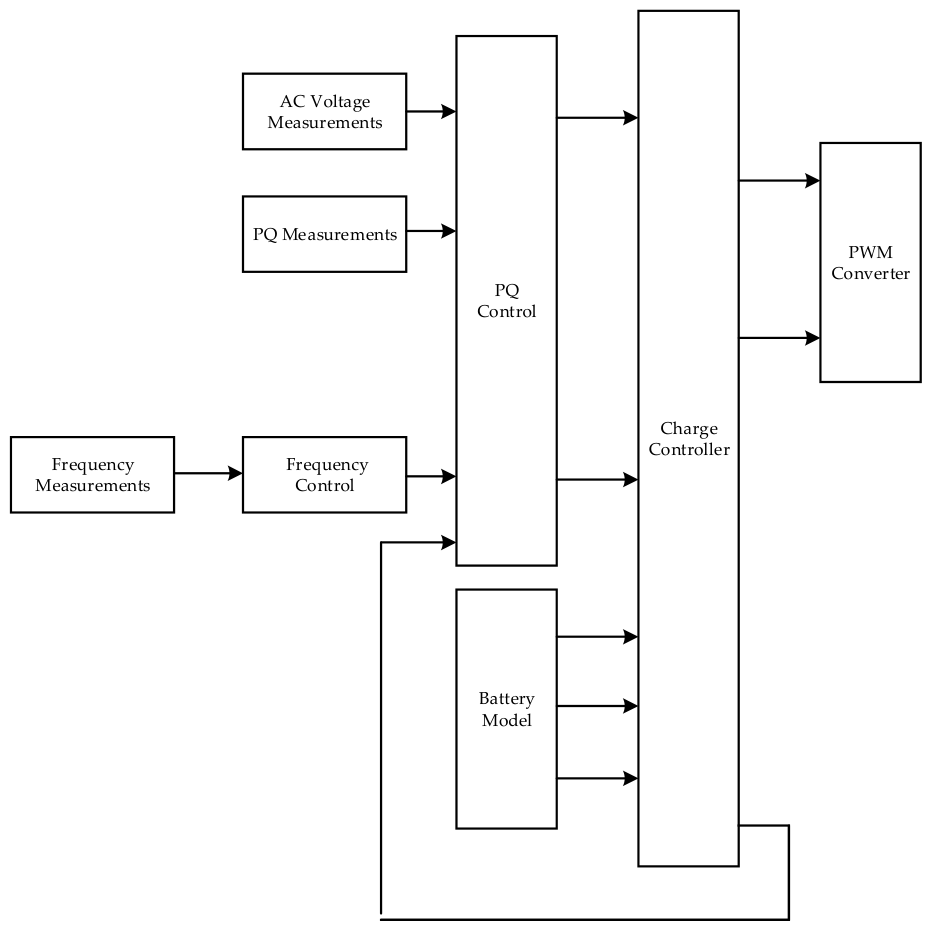
The battery energy storage system (BESS) is modeled as an inverter-interfaced energy storage unit comprising a frequency controller, a PQ controller, a charge controller, a battery model, and a PWM-based power converter, as illustrated in
Figure 1. This configuration enables the fast modulation of active power in response to frequency disturbances while enforcing electrical and energy constraints.
The BESS receives system frequency, voltage, and power measurements as inputs. Based on these signals, the frequency controller generates an active power reference command, which the PQ controller processes to regulate the active and reactive power exchanged between the BESS and the grid. The charge controller regulates the state of charge (SoC) and power limits using feedback from the battery model. The PWM converter executes the control commands and provides the interface between the BESS and the AC network.
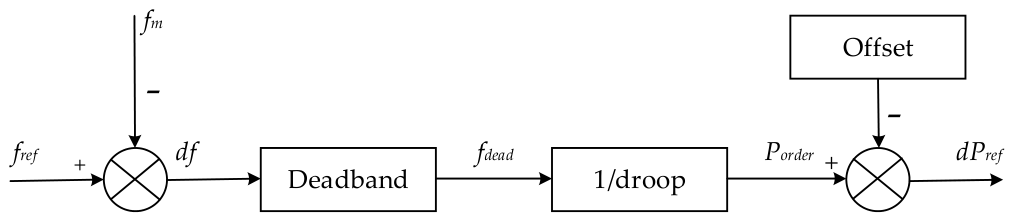
Figure 2 presents the droop frequency control structure implemented in the BESS. The measured system frequency is compared with the nominal reference frequency to generate a frequency deviation signal. A deadband is applied to suppress control action for small frequency deviations. When the frequency deviation exceeds the deadband threshold, a droop-based control law determines the required active power adjustment. An offset term is included to allow the flexible coordination of the BESS operating point.
The active power reference generated by the frequency controller is supplied to the PQ controller, which regulates the active and reactive power exchanged between the BESS and the grid using the measured voltage and power signals. The PQ controller operates within predefined power limits and ensures stable interaction between the inverter and the network.
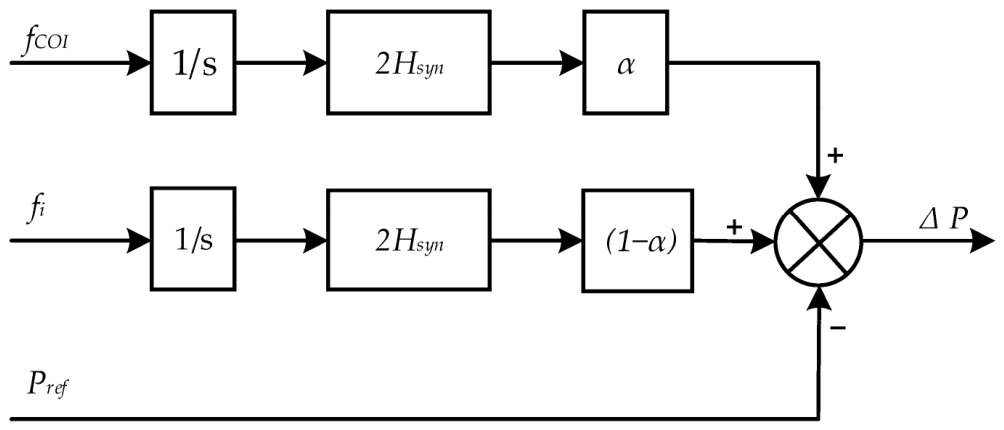
To enhance the initial frequency response following disturbances, an inertia emulation control structure is implemented, as illustrated in
Figure 3. The controller utilizes both system-wide and local frequency dynamics to determine the required fast active power injection.
The center-of-inertia (COI) frequency represents the inertia-weighted average frequency of all synchronous generators and is expressed as [
33]
where
is the inertia constant of generator
,
is the rated apparent power, and
is the generator electrical frequency.
The COI rate of change of frequency is given by
In addition to system-level frequency dynamics, local bus frequency behavior is represented using the local RoCoF,
From power system dynamics theory, the RoCoF is directly related to system inertia and active power imbalance. Based on the swing equation,
where
is the nominal frequency,
is the equivalent system inertia, and
is the generation-to-load-power imbalance. This relationship indicates that fast active power injection from BESS units directly reduces the RoCoF magnitude by compensating for the active power imbalance during the initial disturbance period.
An inertia emulation control structure is implemented to provide fast frequency support during the initial disturbance period, as shown in
Figure 3. The COI frequency
and the local bus frequency
are independently differentiated to obtain their respective RoCoF signals. Each RoCoF signal is scaled by the same synthetic inertia gain
. The resulting inertia contributions are weighted using a factor
, such that the COI-based component is scaled by
and the local bus-based component is scaled by
.
The combined inertia-based active power contribution is expressed as
where
controls the relative contribution of global and local frequency dynamics. The inertia-based power contribution is superimposed on the steady-state active power reference
to generate the final active power command supplied to the PQ controller.
The BESS frequency support controller operates as a fast outer-loop supplementary control layer that enhances the system frequency response without modifying the internal control loops of synchronous generators. From a small-signal perspective, the inertia emulation controller introduces an additional fast active power feedback path proportional to the measured frequency dynamics. For moderate values of , this behavior contributes additional effective damping to the electromechanical frequency response. Excessive values of may introduce a phase lag between frequency measurement and active power injection, which may reduce damping and potentially introduce oscillatory behavior. The selected controller parameter ranges were verified using nonlinear time-domain simulations to ensure stable frequency recovery behavior across all investigated contingencies.
The interaction between global COI frequency dynamics and local RoCoF measurements is influenced by the network coupling strength. Local RoCoF signals may contain higher-frequency components associated with local generator oscillations or weakly coupled network areas. Excessive weighting of local RoCoF signals may increase the sensitivity to local oscillatory modes. The blending factor is selected to maintain a dominant contribution from global frequency dynamics while preserving local disturbance sensitivity. A sensitivity analysis of the blending factor indicates that varying the contribution of COI- and local RoCoF-based inertia support affects the magnitude and timing of the response, while the relative ranking of candidate buses remains largely unchanged. This confirms that placement is primarily determined by network characteristics rather than specific controller parameter settings.
The BESS converter, battery energy storage, and frequency controller parameters used in this study are based on standard inverter-based energy storage control structures available in DIgSILENT PowerFactory. The selected parameter values represent a fast active power response relative to synchronous generator mechanical response dynamics and are suitable for grid frequency support applications. The detailed numerical values of the converter control parameters, battery energy constraints, and frequency controller settings are provided in
Appendix A (
Table A1,
Table A2 and
Table A3).
The BESS controller, battery energy model, and optimization framework are implemented using fixed parameter values applied consistently across all simulation scenarios. This ensures a consistent evaluation of the BESS frequency support performance across multiple contingencies, load levels, and system inertia conditions.
3. Results
3.1. Test System Description
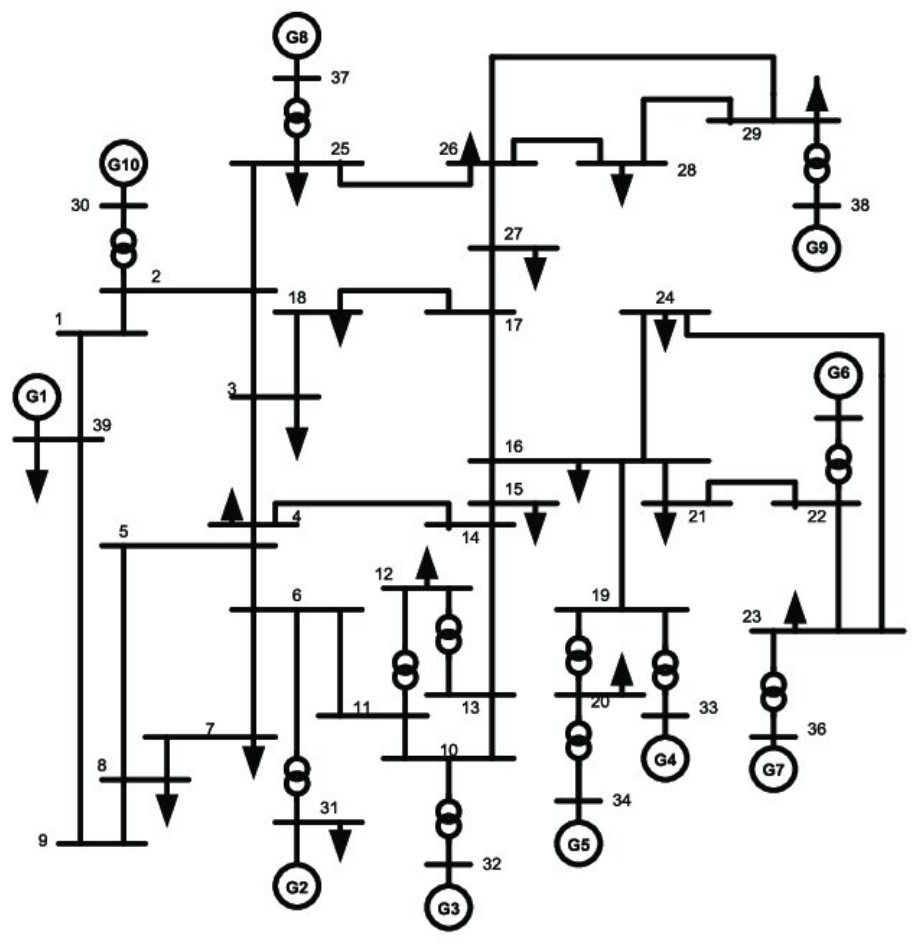
The IEEE 39-bus New England test system is employed to evaluate the proposed BESS placement and sizing strategy using DIgSILENT PowerFactory, which enables the detailed electromechanical modeling of synchronous generators, network components, and system frequency dynamics. The system represents a realistic large-scale transmission network derived from the New England power system and consists of multiple synchronous generators with non-uniform ratings and inertia constants interconnected through a meshed transmission network, as illustrated in
Figure 4. The numerical labels denote bus numbers, while generator labels (G1–G10) indicate the corresponding generating units, as listed in
Table 2.
The generator ratings and inertia constants implemented in the DIgSILENT model are summarized in
Table 2, resulting in a non-uniform inertia distribution across the network. This spatial variation in inertia plays a key role in shaping system frequency behavior following disturbances and provides a suitable basis for assessing network-aware frequency support strategies.
System frequency performance is evaluated under a set of credible generator outage contingencies, corresponding to the disconnection of generators, which represent disturbances of varying severity. These contingencies are applied consistently across all analyzed cases to ensure a fair and systematic comparison between the baseline configuration, the metaheuristic-based placement and sizing method, and the proposed power-flow-informed, sensitivity-based method. All contingencies are simulated as sudden generation losses at the nominal operating point, and the resulting frequency nadir and RoCoF responses are extracted from the DIgSILENT simulations for subsequent analysis.
3.2. Baseline Frequency Response Without BESS
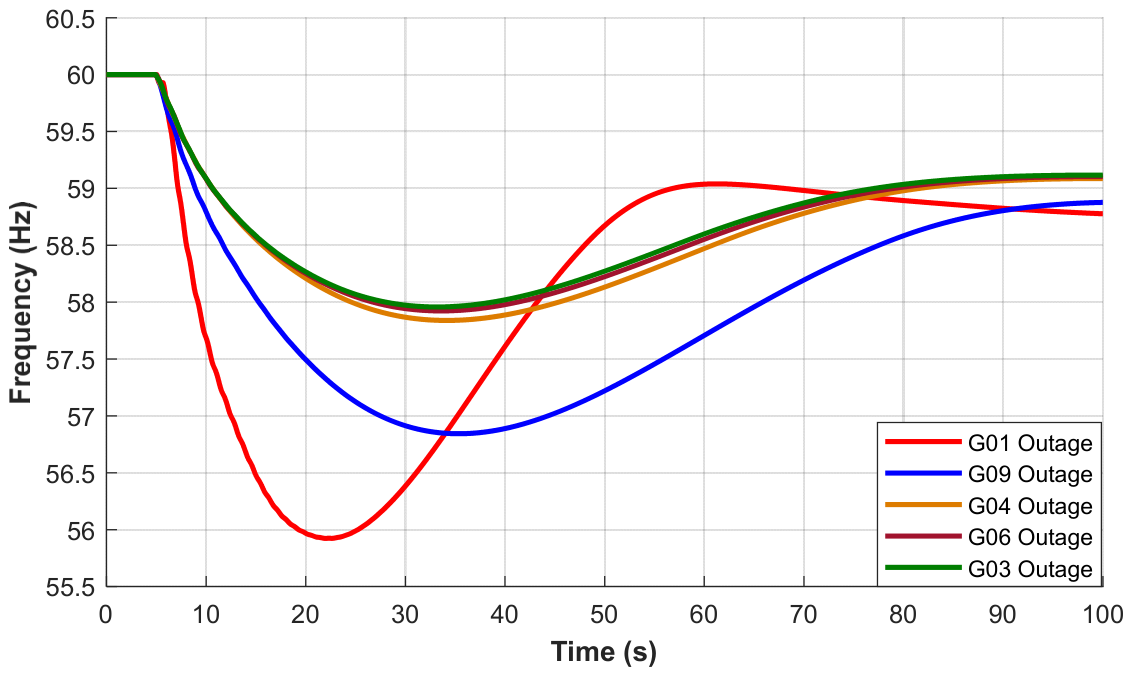
The baseline system frequency response is evaluated under generator outage contingencies corresponding to G01, G03, G04, G06, and G09 without BESS support. These contingencies represent disturbances with different severity levels and electrical coupling characteristics within the network. The resulting frequency nadir and RoCoF values are summarized in
Table 3, while the corresponding frequency responses are presented in
Figure 5. The reported frequency values represent the intrinsic electromechanical system response because under-frequency load shedding (UFLS) and protection schemes are not modeled. In practical power systems, UFLS would likely activate at these frequency levels, which would influence the subsequent frequency recovery behavior.
The G01 outage produces the most severe frequency response. The minimum frequency nadir reaches 55.923 Hz, while the RoCoF reaches 0.24040 Hz/s. This behavior reflects a large instantaneous power imbalance combined with the strong electrical coupling of the generator to the network. The rapid frequency decline indicates high system sensitivity to the loss of this unit.
The G09 outage produces a less severe response compared with G01. The frequency nadir reaches 56.843 Hz, while the RoCoF reduces to 0.10396 Hz/s. The improved performance relative to G01 is associated with reduced effective inertia loss or the lower electrical influence of the disconnected generator.
Moderate contingencies such as G04 and G06 produce higher frequency nadirs with lower RoCoF values. The G04 outage results in a frequency nadir of 57.839 Hz with an RoCoF of 0.074123 Hz/s. The G06 outage produces a frequency nadir of 57.923 Hz with an RoCoF of 0.072668 Hz/s. These responses indicate lower disturbance severity compared with major generator outages.
The G03 contingency produces one of the highest nadir values among the evaluated cases. The frequency nadir reaches 57.958 Hz, while the RoCoF remains close to 0.07254 Hz/s. This response indicates reduced disturbance propagation through the network compared with strongly coupled generator outages.
The baseline results establish a reference case for evaluating BESS-based frequency support strategies under identical disturbance conditions. While all contingencies listed in
Table 3 are used to characterize the baseline system behavior, the subsequent comparative analysis focuses on representative cases (G01, G03, and G09) that capture a wide range of disturbance severities. Specifically, G01 represents the most severe event, with a nadir of 55.923 Hz and RoCoF of 0.24006 Hz/s; G09 represents an intermediate case (56.843 Hz, 0.10396 Hz/s); and G03 represents a mild disturbance (57.958 Hz, 0.07254 Hz/s). The remaining contingencies (G04 and G06), with nadirs of 57.839 Hz and 57.923 Hz and RoCoF values of 0.07412 Hz/s and 0.07267 Hz/s, exhibit behavior similar to the moderate and mild cases. They are therefore omitted from further detailed analysis to avoid redundancy while preserving representative system behavior.
3.3. Frequency Contribution of BESS Locations
This section evaluates the contribution of the BESS power capacity to system frequency performance while maintaining a fixed installation location and control structure. The analysis considers BESS capacities of 0 MW, 5 MW, 10 MW, 20 MW, 30 MW, 40 MW, and 50 MW, which represent the practical installation range evaluated during screening simulations. Bus 36 is selected for this analysis as it exhibits the highest marginal frequency sensitivity in the system, as shown in
Section 3.4, indicating the greatest improvement in frequency nadir per unit BESS power injection. This makes it a representative location for illustrating the relationship between the BESS size and frequency response, while ensuring that the observed trends reflect the maximum achievable impact of localized BESS support.
The objective is to isolate the influence of the BESS size on frequency nadir improvement and RoCoF reduction. The simulation results are summarized in
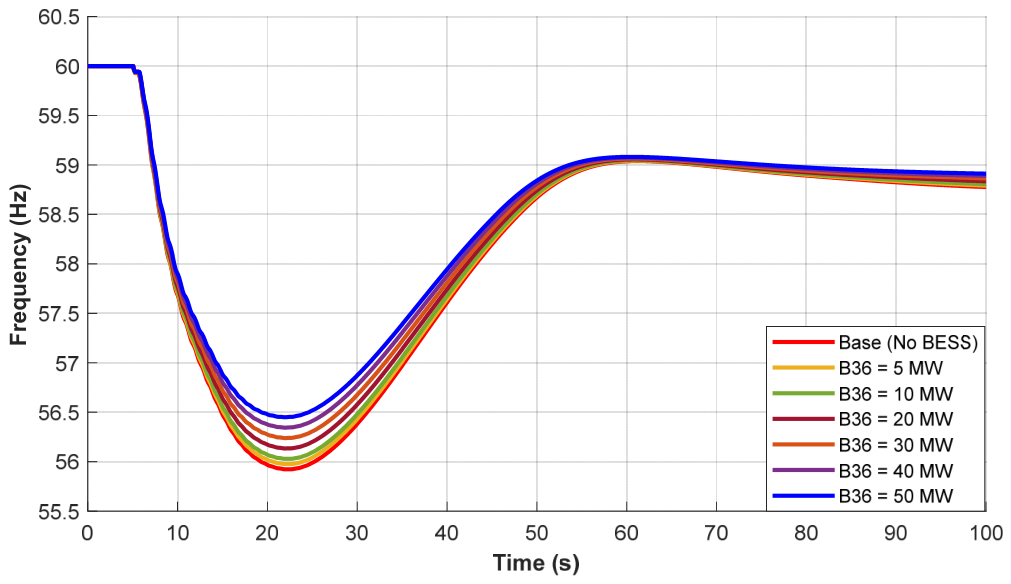
Table 4, while the corresponding frequency nadir improvement behavior is presented in
Figure 6.
For the baseline case without a BESS, the frequency nadir is 55.923 Hz, while the RoCoF is 0.24040 Hz/s. The addition of a 5 MW BESS increases the frequency nadir to 55.976 Hz while reducing the RoCoF to 0.23654 Hz/s. Increasing the BESS capacity to 10 MW increases the frequency nadir to 56.028 Hz, while the RoCoF reduces to 0.23401 Hz/s. These results confirm that even small BESS installations provide measurable frequency support during the initial disturbance period.
Increasing the BESS capacity further improves the frequency performance. At 20 MW, the frequency nadir reaches 56.134 Hz, while the RoCoF reduces to 0.22741 Hz/s. At 30 MW, the frequency nadir increases to 56.239 Hz, while the RoCoF reduces to 0.22163 Hz/s. At 50 MW, the frequency nadir reaches 56.449 Hz, while the RoCoF reduces to 0.20923 Hz/s. These values represent the maximum improvement relative to the baseline case within the investigated capacity range.
Figure 6 illustrates that the frequency nadir improvement is approximately linear at lower BESS capacities. The nonlinear behavior becomes more pronounced as the BESS capacity increases. Increasing the BESS capacity from 10 MW to 30 MW improves the frequency nadir by 0.211 Hz. Increasing the capacity from 30 MW to 50 MW produces a similar improvement of 0.210 Hz despite an identical capacity increase. This behavior indicates a diminishing marginal frequency contribution at higher BESS capacities.
The nonlinear response is associated with system dynamic constraints during the transient frequency response period. At higher BESS power levels, the incremental active power injection effectiveness is limited by the network power transfer capabilities, generator electromechanical response limits, and system damping characteristics.
These results confirm that increasing the BESS capacity alone does not guarantee a proportional frequency performance improvement. Coordinated BESS placement and sizing is required for the effective utilization of the installed storage capacity. This observation motivates the combined sensitivity-based and network-aware placement formulation introduced in the following sections.
3.4. Frequency Sensitivity Index Distribution
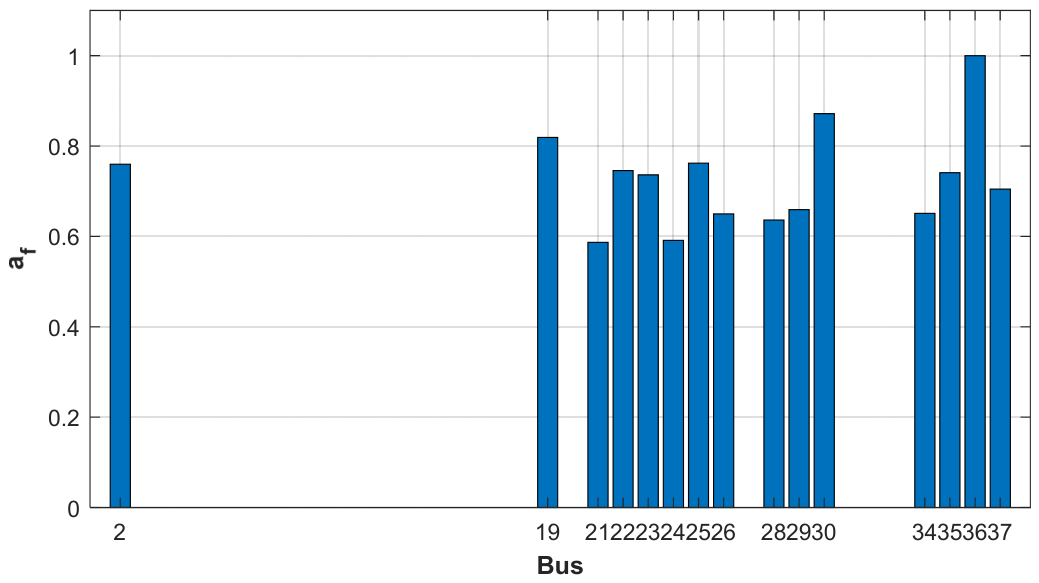
This section evaluates the distribution of marginal frequency sensitivity across the IEEE 39-bus system using the normalized frequency sensitivity coefficient. The ranking is presented in
Table 5 and the corresponding distribution is shown in
Figure 7. The frequency sensitivity coefficient represents the marginal improvement in frequency nadir per unit BESS power injection obtained from time-domain screening simulations.
Frequency sensitivity is non-uniform across the network. Bus 36 exhibits the highest normalized sensitivity value of 1.000, indicating the strongest marginal frequency nadir improvement per megawatt of BESS power injection. Bus 30 and Bus 19 follow, with values of 0.87177 and 0.81885, respectively. Other high-ranking buses include Buses 25, 2, 22, 35, and 23, all with normalized sensitivity values above 0.73. These buses provide stronger dynamic frequency support relative to lower-ranked locations. Mid-ranked buses such as 34, 26, 28, and 24 show sensitivity values between 0.59 and 0.65. Lower-ranked buses exhibit values close to 0.54, indicating a reduced marginal frequency contribution. The distribution shown in
Figure 7 indicates that the dominant marginal frequency improvement is concentrated in a limited number of buses.
The frequency response effectiveness is strongly dependent on the BESS installation location. Frequency sensitivity alone does not represent system-wide effectiveness. The sensitivity index is therefore combined with network influence information in the impact index formulation presented in
Section 3.6.
Cross-Scenario Validation of Frequency Sensitivity Ranking
The sensitivity ranking is evaluated across multiple operating scenarios, including contingency variation, load variation, and reduced inertia conditions. The cross-scenario comparison is presented in
Table 6.
Bus 36 remains ranked first across all evaluated scenarios. Under nominal contingency conditions (G01 and G09 outages), Buses 35, 22, 30, 19, and 23 remain within the highest-ranking group, with minor ordering differences between contingencies. Under increased loading conditions, the same candidate bus group remains dominant, with ranking variation mainly observed in mid-ranked buses.
Under reduced inertia conditions, Bus 36 and Bus 30 remain among the highest-ranked locations. Buses such as 29, 2, 25, and 28 increase in ranking, indicating the increased importance of electrically well-coupled buses under low-inertia operation.
The cross-scenario results confirm that the dominant frequency sensitivity buses remain consistent across contingency variations, loading changes, and reduced inertia conditions.
3.5. Network Influence Based on Power-Flow Information
The network coupling weight
is used to characterize the electrical connectivity of candidate buses based on power-flow sensitivity. The distribution of
across the IEEE 39-bus system is summarized in
Table 7.
The values of vary across the network, indicating non-uniform electrical coupling. Buses 34, 38, 36, and 35 exhibit the highest weights (greater than 0.96), reflecting strong connectivity to dominant power transfer paths. In contrast, buses such as 31, 6, and 5 show significantly lower values, indicating weaker coupling.
The network coupling weight is derived from voltage sensitivity using the inverse Jacobian and reflects steady-state electrical connectivity. It does not represent transient frequency dynamics and is not directly linked to the frequency response. Instead, quantifies the extent to which active power injections can be distributed across the network.
A comparison with the single-bus frequency nadir improvement indicates only a moderate correlation, confirming that electrical connectivity alone is insufficient to explain the frequency response behavior. Compared with electrical distance, short-circuit capacity, and modal participation factors, the proposed formulation does not claim superior performance. Its advantage lies in capturing operating point-dependent active power redistribution, enabling integration with dynamic frequency sensitivity.
The network coupling weight is therefore not used as a standalone indicator but rather as a complementary factor that enhances candidate bus selection when combined with frequency sensitivity. It is evaluated at the pre-disturbance operating point and used only within the optimization stage, while the final performance is verified using full nonlinear time-domain simulations. Although the network coupling weight does not directly determine the frequency nadir or RoCoF, it influences the optimization outcome by guiding the allocation of BESS capacity toward electrically well-connected locations, where the injected active power can be distributed more effectively across the network, thereby enhancing the system-wide frequency support achieved in combination with dynamic sensitivity.
3.6. Combined Network-Aware Effectiveness
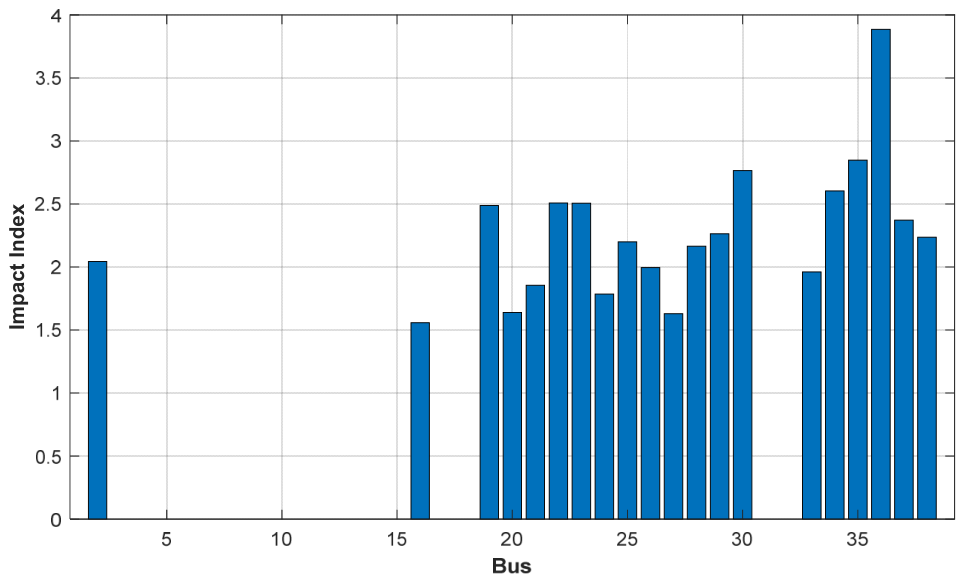
The combined influence of frequency response sensitivities and network characteristics is assessed using the proposed impact index, which integrates both dynamic response and power-flow information. The ranking of candidate buses based on this index is depicted in
Figure 8, and the corresponding numerical values are reported in
Table 8.
As shown in
Table 8, Buses 36, 35, and 30 achieve the highest impact index values, indicating that these locations provide the most favorable balance between frequency response effectiveness and network influence. Bus 36 is ranked first, with an impact index of 3.8855, followed by Buses 35 and 30 with values of 2.8480 and 2.7651, respectively. At the other end of the ranking, buses such as 27 and 16 show noticeably lower index values, indicating reduced suitability for effective frequency support under the same BESS capacity.
The ranking presented in
Figure 8 highlights that candidate buses are not uniformly suitable for BESS placement. Locations that perform well in terms of marginal frequency sensitivity alone do not always achieve the highest combined effectiveness once network characteristics are considered. The impact index, therefore, provides a more balanced measure for identifying candidate buses that are both dynamically effective and well positioned electrically. This confirms that network coupling improves the discrimination of candidate buses beyond local sensitivity alone, particularly at locations with similar marginal frequency responses.
To further illustrate the influence of the network coupling weight
on candidate selection,
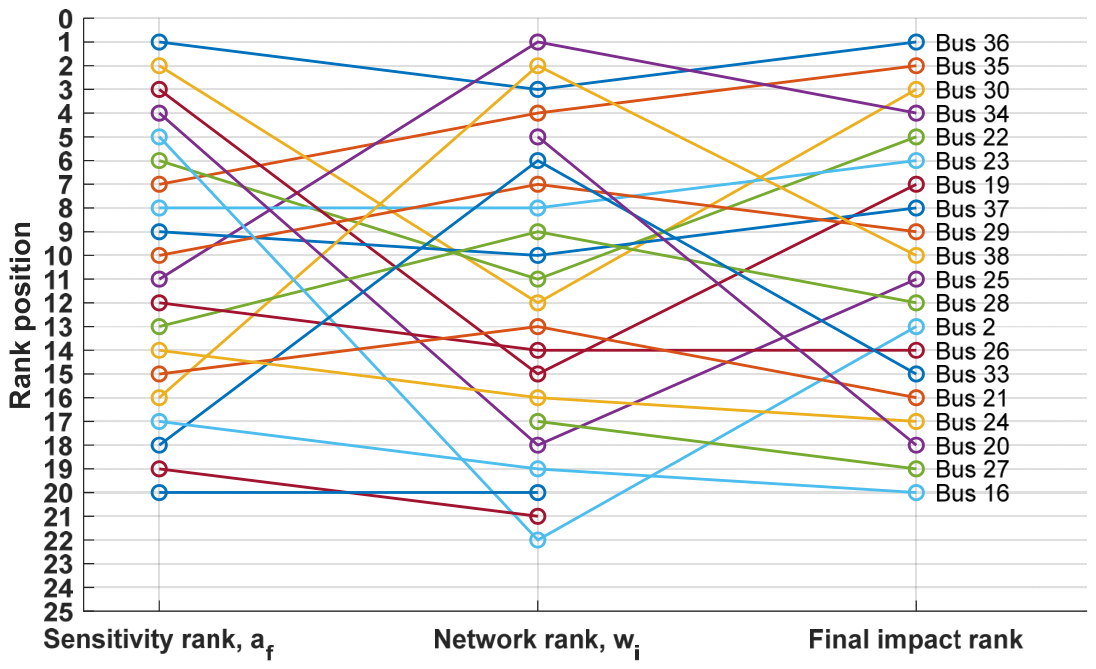
Figure 9 presents the transition in ranking positions from sensitivity-based evaluation to the final impact index. It is observed that the inclusion of
results in the noticeable reordering of buses, rather than a simple scaling effect. For example, Bus 34 and Bus 35 are promoted due to their strong network coupling, while buses such as Bus 19 and Bus 25 are downgraded despite high sensitivity values. This demonstrates that
acts as a corrective factor, ensuring that selected buses provide both strong local frequency support and effective system-wide influence.
3.7. BESS Placement and Sizing
The effectiveness of BESS integration in improving frequency stability is strongly influenced by both the location and the size of the installed units. Appropriate placement ensures that the injected active power contributes effectively to arresting frequency declines, while optimal sizing determines the extent of support that can be delivered during transient conditions. In low-inertia power systems, these aspects become increasingly important, as poorly located or improperly sized BESS units may lead to the suboptimal utilization of the available capacity and limited improvements in frequency nadir and RoCoF.
To investigate the influence of the placement strategy on system performance, two representative approaches are considered. The first approach is based solely on the marginal frequency sensitivity, ranking buses by their local contributions to improving the frequency nadir. The second approach adopts a PSO-based optimization method reported in [
27], which determines both the location and size of BESS units through a global search process.
The placement results obtained using the marginal frequency sensitivity approach are summarized in
Table 9. The placement results shown in
Table 9 are derived solely from the marginal frequency sensitivity
, which quantifies the improvement in frequency nadir per unit BESS injection at each bus. Buses are ranked in descending order of
, and the highest-ranked locations are selected for BESS installation. The allocation follows the relative magnitude of the sensitivity coefficients, resulting in a distributed placement across multiple buses. This reflects diminishing marginal benefits and confirms that the effectiveness of frequency support is strongly dependent on the local dynamic response characteristics. However, this approach does not account for network coupling effects and therefore does not capture how the injected active power propagates through the system.
The PSO-based placement results reported in [
27] are presented in
Table 10. The PSO-based allocation reported in [
27] determines both the location and size of BESS units through an iterative optimization process. The resulting solution allocates capacity across a limited number of buses, with several locations operating at the maximum allowable limit of 50 MW. This indicates that the optimization favors the concentrated allocation at buses that provide the greatest global improvement in the objective function. The method captures nonlinear interactions between multiple BESS units and system dynamics, enabling improved performance under different disturbance scenarios.
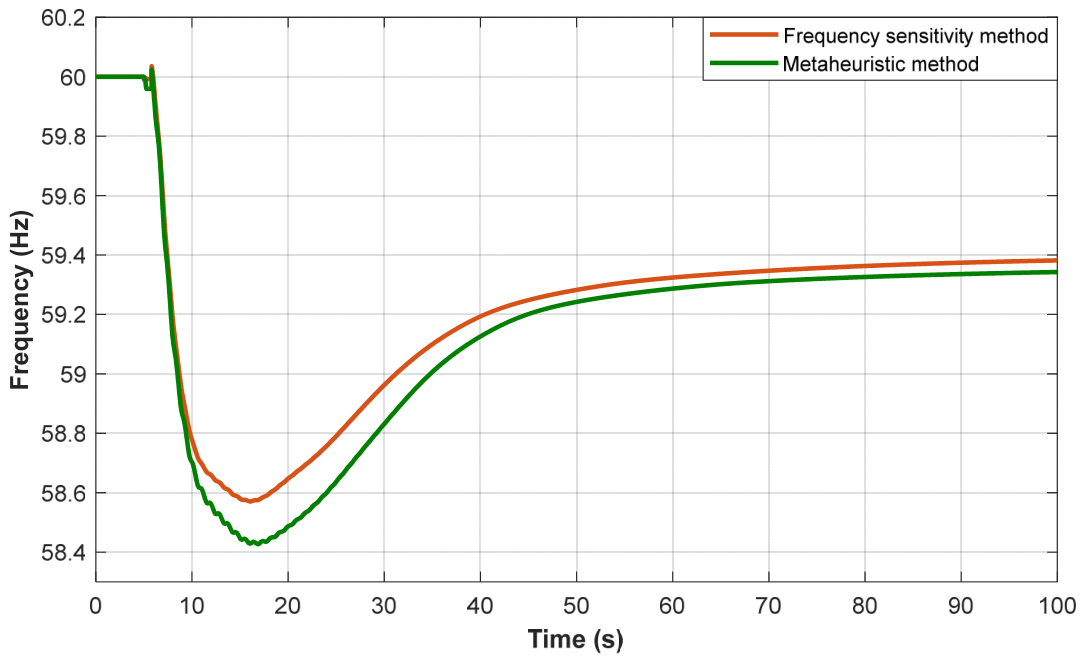
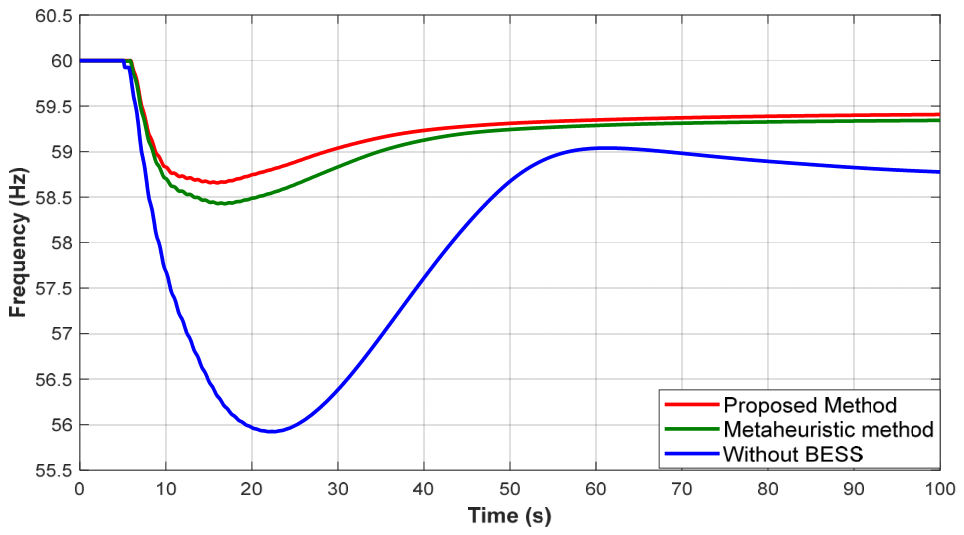
For the G01 outage shown in
Figure 10, the sensitivity-based method achieves a frequency nadir of 58.5705 Hz, compared to 58.4690 Hz obtained using the PSO-based method. This corresponds to an improvement of 0.1015 Hz. The higher nadir indicates the improved containment of disturbances during the initial transient period. This behavior is attributed to the distributed allocation of BESS capacity, which enables coordinated support from multiple dynamically influential buses.
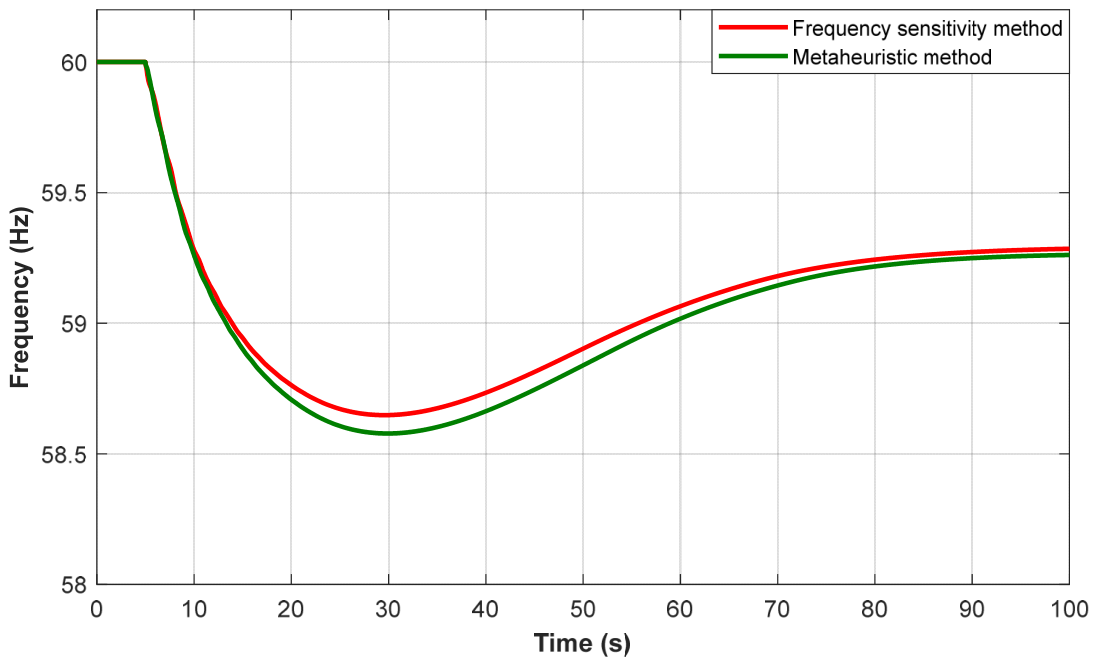
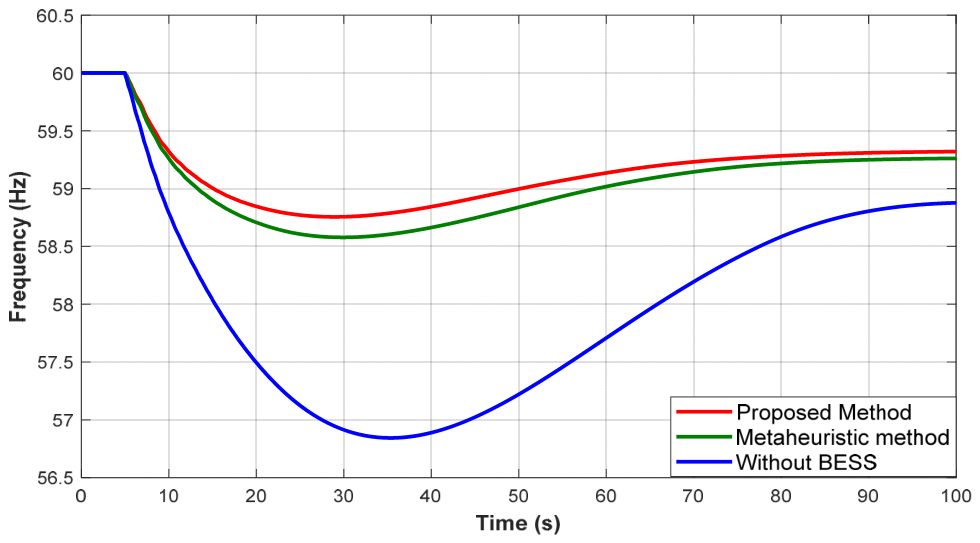
For the G09 outage shown in
Figure 11, the sensitivity-based method achieves a frequency nadir of 58.6482 Hz, compared to 58.5881 Hz for the PSO-based method. The improvement of 0.0601 Hz confirms that the distributed placement provides a marginally better frequency response under moderate disturbances. This indicates that coordinated support across multiple buses enhances system performance.
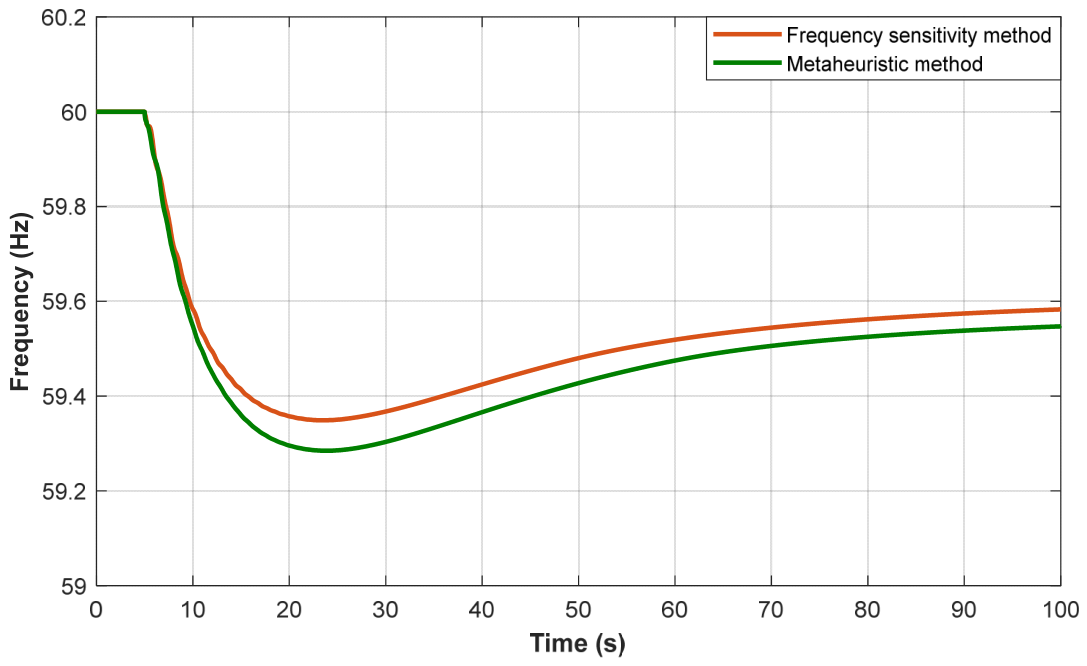
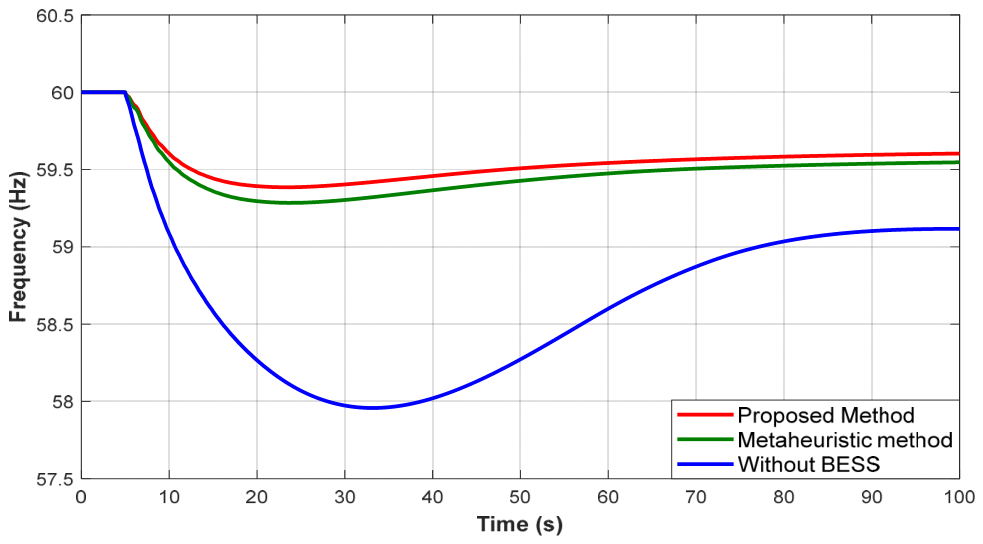
For the G03 outage shown in
Figure 12, the sensitivity-based method achieves a frequency nadir of 59.3487 Hz, compared to 59.2927 Hz for the PSO-based method. The 0.0560 Hz improvement is relatively small, indicating that both methods perform similarly under less severe disturbances. However, the sensitivity-based method maintains a consistent advantage across all contingencies.
These results demonstrate that the sensitivity-based method yields slightly higher frequency nadirs across all contingencies than the PSO-based method, while maintaining a distributed allocation structure. This confirms that distributing BESS capacity across multiple buses improves the sharing of active power support during transient conditions. However, despite this performance advantage, the sensitivity-based method does not account for network coupling effects and therefore cannot distinguish between buses that are dynamically effective locally and those that are electrically well positioned to distribute support across the network. Conversely, the PSO-based method captures global system interactions and nonlinear effects but results in concentrated allocations and lacks physical interpretability.
This comparison highlights a key limitation in existing approaches. While the sensitivity-based method improves the frequency nadir performance, and the PSO-based method captures system-wide optimization behavior, neither approach alone can simultaneously capture dynamic effectiveness and network-level power propagation. Therefore, a placement strategy that integrates both marginal frequency sensitivity and network coupling effects is required. Such an approach is presented in the following section, where the proposed method is evaluated in terms of the frequency nadir and RoCoF performance.
3.8. BESS Placement and Sizing Using the Proposed Method
Based on the limitations identified in
Section 3.7, the proposed method integrates marginal frequency sensitivity with network coupling information within a constrained optimization framework solved using particle swarm optimization (PSO). This enables the coordinated allocation of BESS capacity across multiple buses while accounting for both local dynamic effectiveness and system-wide power propagation.
The BESS placement and sizing problem is solved using PSO under a constrained total BESS capacity of 300 MW. The per-bus power is limited to 50 MW, and the number of installation buses is also constrained. The resulting allocation is summarized in
Table 11. The optimized solution distributes the available BESS capacity across multiple buses rather than concentrating it at a single location. As shown in
Table 11, the highest allocation is assigned to Bus 36 (46 MW), followed by Bus 35 (34 MW) and Bus 30 (32 MW). Moderate allocations are assigned to Buses 34 (30 MW), 22 (29 MW), 23 (29 MW), and 19 (29 MW), while smaller allocations are assigned to Buses 37 (28 MW) and 29 (26 MW). This allocation pattern reflects the combined influence of electrical coupling and frequency response effectiveness. Buses with larger BESS capacities correspond to locations where the injected active power produces greater improvements in the frequency nadir and reductions in the RoCoF, enabling the more efficient utilization of the available storage resource. In contrast, smaller allocations indicate locations where the system frequency is less sensitive to power injection, resulting in a reduced contribution to frequency stability enhancement.
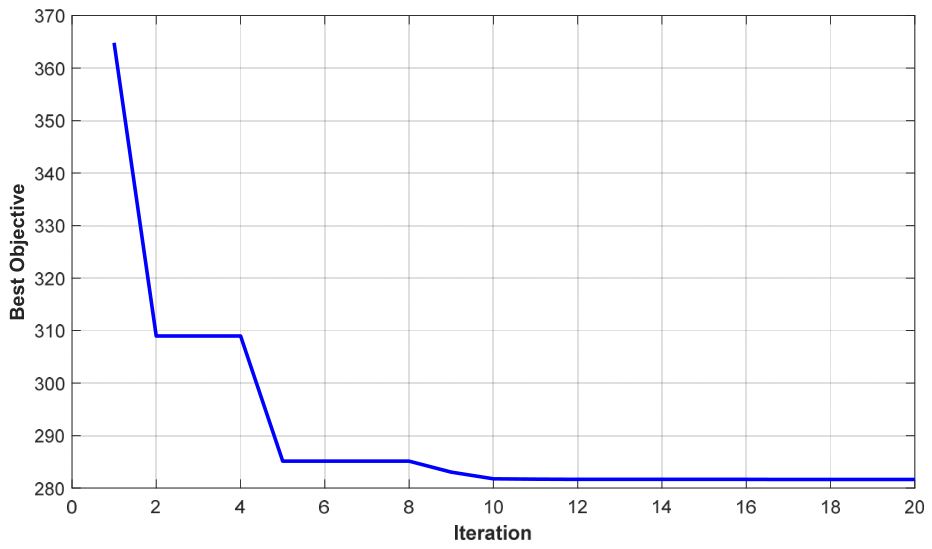
Figure 13 shows the evolution of the objective function value across PSO iterations for the constrained BESS placement and sizing problem. The objective function decreases rapidly during the early iterations, demonstrating the effective exploration of the search space. As the iterations progress, the rate of improvement decreases and the curve stabilizes. The stabilization of the objective function after convergence indicates that the algorithm does not exhibit significant oscillations or instability in the later stages of the optimization process. This behavior reflects a suitable balance between exploration and exploitation within the PSO search mechanism. The convergence pattern observed in
Figure 13 demonstrates that PSO is capable of efficiently navigating the solution space and producing a stable final solution for the constrained BESS allocation problem considered in this study.
The frequency response of the IEEE 39-bus New England system with the optimized BESS allocation is evaluated using time-domain simulations in DIgSILENT PowerFactory. To validate the accuracy of the surrogate-based optimization framework, the predicted frequency indices are compared with the results obtained from full nonlinear time-domain simulations.
Table 12 summarizes the comparison for representative contingencies. For the G01 outage, the predicted frequency nadir of 55.6990 Hz closely matches the simulated value of 55.9230 Hz, corresponding to an error of 0.2240 Hz, while the RoCoF error is 0.0084 Hz/s. For the G03 contingency, the nadir error is −0.1247 Hz and the RoCoF error is −0.0017 Hz/s. For the G09 outage, the nadir error is −0.0794 Hz and the RoCoF error is 0.0012 Hz/s.
These results demonstrate that the surrogate model provides accurate estimations of frequency response metrics, with a maximum nadir deviation below 0.23 Hz and an RoCoF error below 0.0085 Hz/s. The close agreement confirms that the surrogate formulation preserves the relative ranking of candidate solutions during the optimization process. The proposed surrogate-based optimization significantly reduces the computational effort by avoiding repeated nonlinear time-domain simulations during the optimization search. Compared with a full simulation-based PSO approach, the method reduces the computational time by approximately 60–80%, while maintaining the consistent ranking of candidate solutions across all evaluated contingencies. The surrogate formulation is derived from small-signal frequency sensitivity and steady-state network coupling. Its accuracy may be reduced under highly nonlinear conditions such as large disturbances with protection activation or in systems dominated by grid-forming converters. Since the study does not consider UFLS, the surrogate formulation is evaluated based on the inherent system frequency response, free of protection-scheme influences, ensuring that the underlying dynamic behavior and the effectiveness of BESS allocation are assessed consistently across all scenarios. For this reason, the final performance evaluation is always conducted using full nonlinear time-domain simulations.
A comparison between the baseline case (without BESS), the metaheuristic-based method [
27], and the proposed method is reported in
Table 13 for the selected contingencies (G01, G09, and G03).
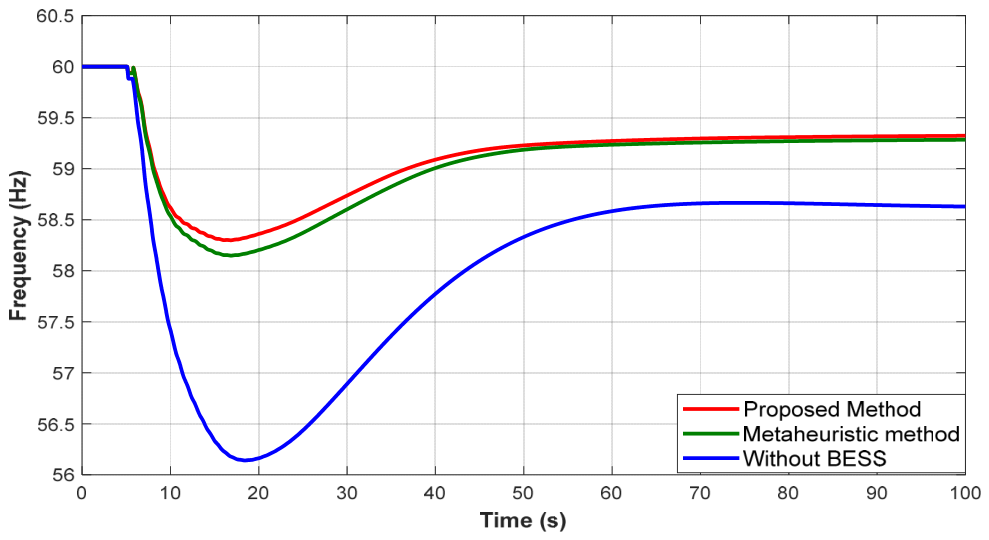
Across all contingencies, the proposed method achieves the highest nadir frequency and the lowest RoCoF. For the most severe disturbance (G01 outage), the frequency nadir increases from 55.9230 Hz in the baseline case to 58.6561 Hz with the proposed method, corresponding to an improvement of 2.7331 Hz (4.88%), while the RoCoF decreases from 0.2404 Hz/s to 0.1224 Hz/s. The metaheuristic method achieves intermediate performance, with a nadir of 58.4690 Hz and an RoCoF of 0.1365 Hz/s. Similar trends are observed for the G09 and G03 outages, where the proposed method consistently delivers superior frequency performance.
Figure 14 presents the frequency response for the G01 outage. The proposed method exhibits a flatter initial decline and smoother recovery than both the baseline and the metaheuristic method. This indicates stronger containment of the disturbance and improved damping during the critical post-fault interval.
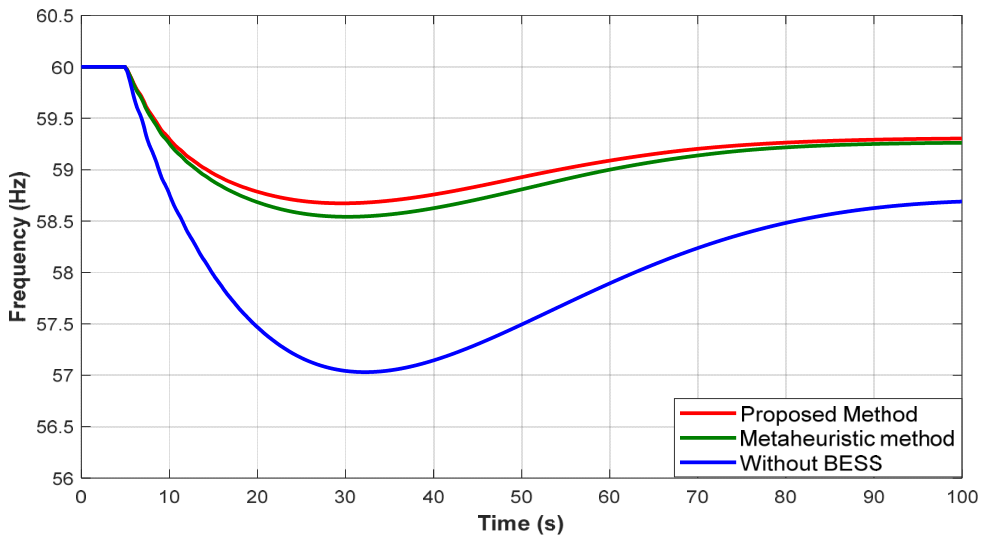
Figure 15 shows the response for the G09 outage, where the proposed method achieves faster stabilization with reduced transient oscillations and reflects improved recovery dynamics.
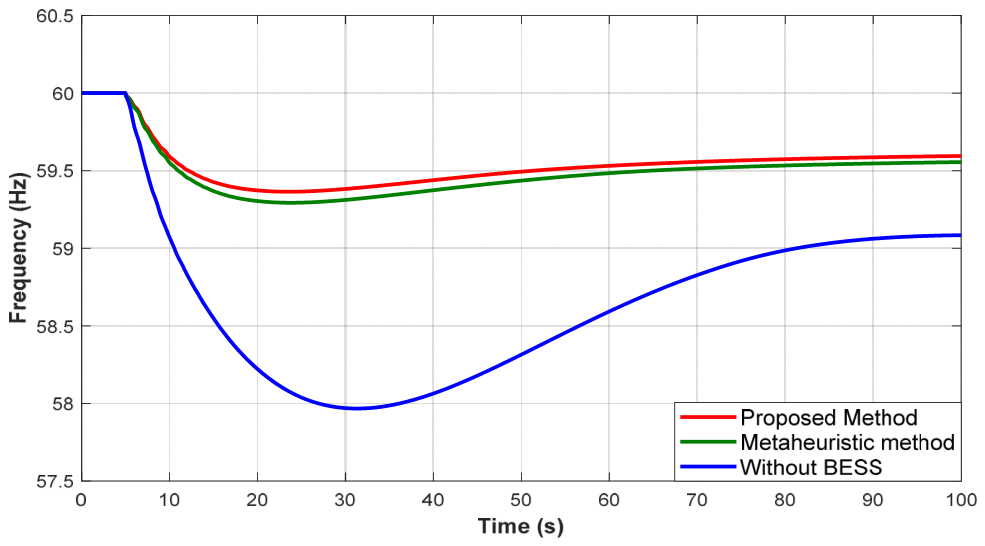
Figure 16 presents the G03 outage frequency response. The obtained allocation produces the smoothest response and the quickest settling, which indicates superior transient behavior even under less severe disturbances.
The observed performance is consistent with the optimized allocation reported in
Table 11, where higher BESS capacities are assigned to electrically influential buses. The results indicate that the PSO-based solution, together with the proposed power-flow-informed formulation, improves both frequency indices (nadir and RoCoF) and the overall transient frequency behavior under contingencies of varying severity.
3.9. Impact of Load Decrease Scenario
Section 3.8 demonstrates that the obtained allocation performs effectively under nominal operating conditions. The robustness of this placement is therefore evaluated under a 5% load decrease using the same contingencies. The corresponding frequency indices are reported in
Table 14.
Figure 17 presents the G01 outage response, where the proposed method exhibits the flattest transient profile and fastest stabilization, while the baseline case shows a steeper decline and slower recovery.
Figure 18 presents the G09 response, where the proposed method achieves smoother recovery with reduced oscillatory behavior compared to the other methods.
Figure 19 presents the G03 response, where the proposed method yields the smoothest response and quickest settling, even under mild disturbance conditions.
The trends in
Table 14 and the frequency responses confirm that the proposed allocation maintains superior dynamic behavior under reduced loading, demonstrating robustness to operating point variations.
3.10. Impact of Load Increase Scenario
Following the robustness assessment under reduced loading in
Section 3.9, the allocation is further evaluated under a 5% load increase to represent stressed operating conditions. The corresponding frequency indices are reported in
Table 15.
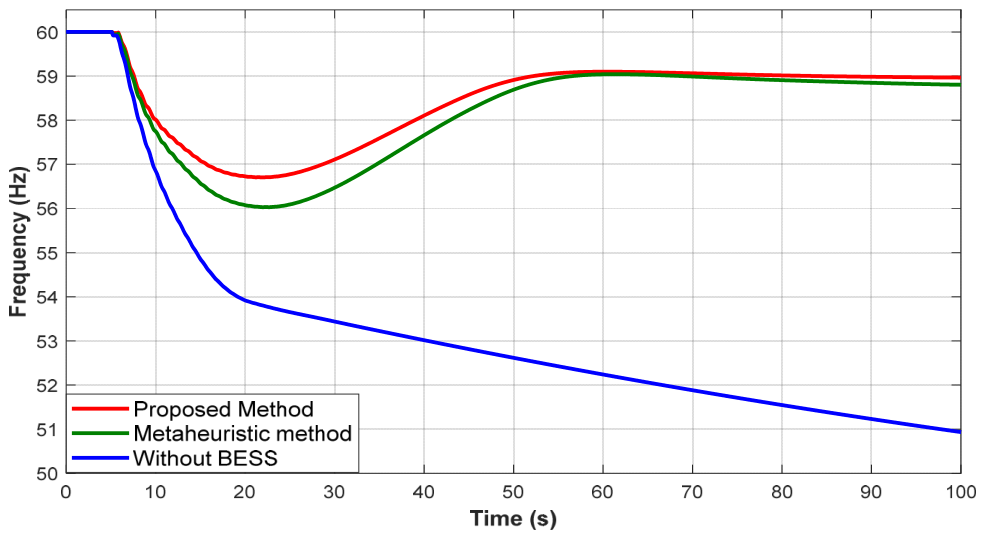
Figure 20 presents the G01 outage response under increased loading. The baseline case exhibits severe degradation in transient behavior, while the proposed method maintains a smoother profile and faster stabilization than the metaheuristic method.
Figure 21 presents the G09 response, where deeper deviations are observed for all methods. However, the proposed method retains superior containment and recovery characteristics.
Figure 22 presents the G03 response, where the proposed allocation again produces the smoothest response and fastest settling.
The performance in
Table 15 and the frequency responses indicate that increased loading amplifies frequency stress; however, the proposed method remains effective under these more demanding conditions. The inability of the baseline case to achieve acceptable recovery in some contingencies further highlights the importance of BESS integration under stressed operating points.
3.11. Renewable Energy Integration Scenario
Following the load variation assessments presented in
Section 3.9 and
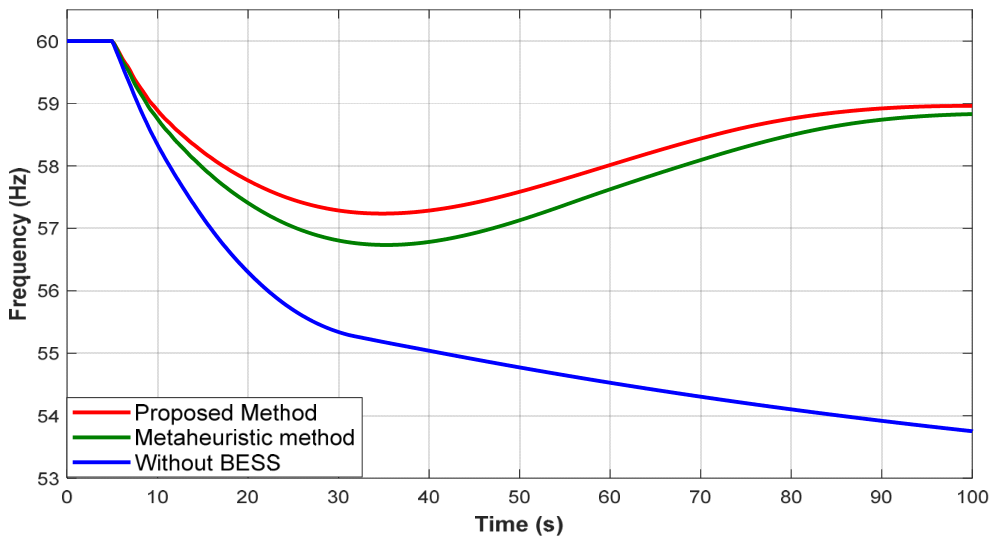
Section 3.10, the robustness of the obtained BESS allocation is further evaluated under reduced system inertia conditions. To evaluate the impact of renewable energy sources (RESs) on frequency stability, the synchronous generating unit G08, rated at 540 MW and connected to Bus 2, was replaced with an equivalent-capacity doubly fed induction generator (DFIG)-based wind generation unit. The replacement was implemented using the standard DFIG model available in DIgSILENT PowerFactory within the RMS dynamic simulation framework. The corresponding frequency stability indices under reduced-inertia operation are summarized in
Table 16.
Figure 23 shows the frequency response for the G01 outage under wind integration. The baseline case shows a severe frequency decline, with a nadir of 55.0461 Hz and an RoCoF of 0.2875 Hz/s, which indicates high vulnerability under low-inertia conditions. The obtained allocation improves the nadir to 58.0275 Hz and limits the RoCoF to 0.1306 Hz/s, which demonstrates effective compensation for the loss of synchronous inertia.
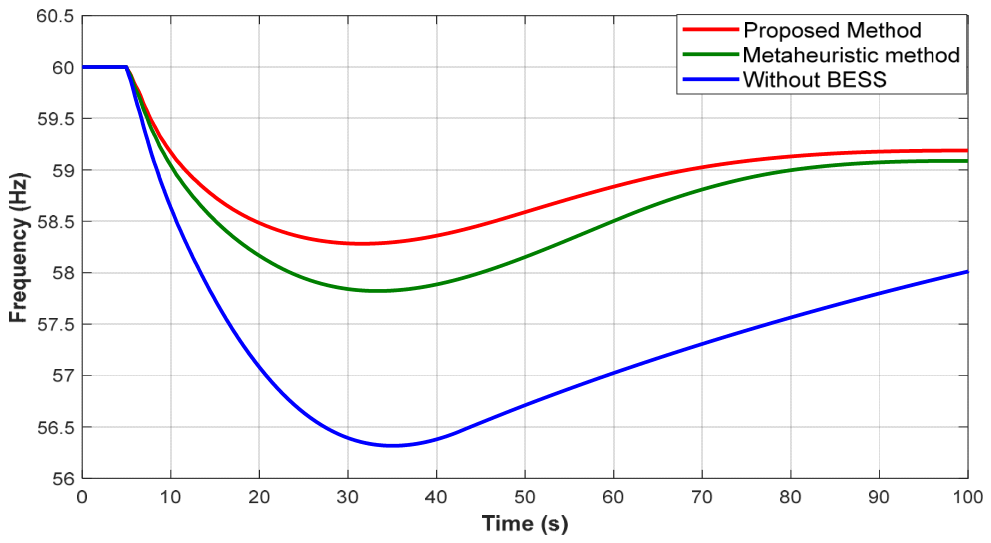
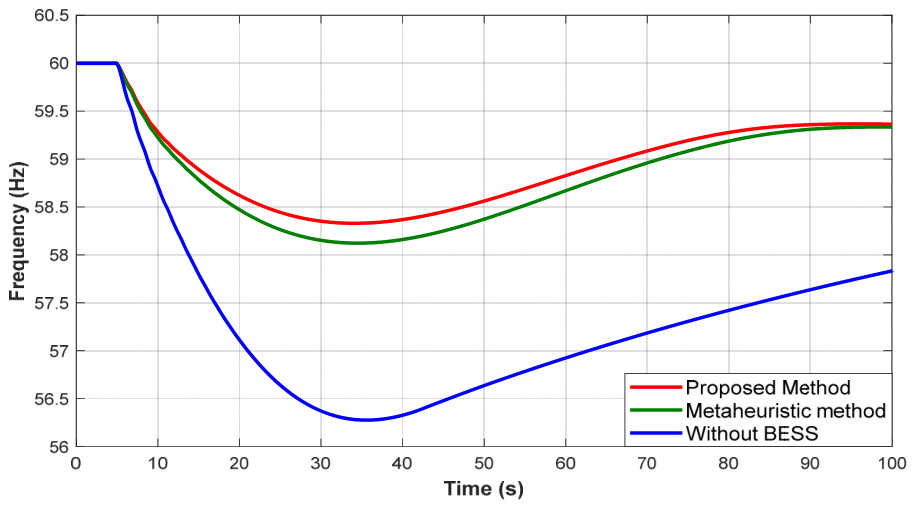
Figure 24 presents the G09 outage frequency response. Without BESS support, the system reaches a nadir of 56.2756 Hz. With the obtained allocation, the minimum frequency improves to 58.3296 Hz and the RoCoF is reduced from 0.1218 Hz/s to 0.0574 Hz/s, which indicates enhanced disturbance containment under reduced inertia.
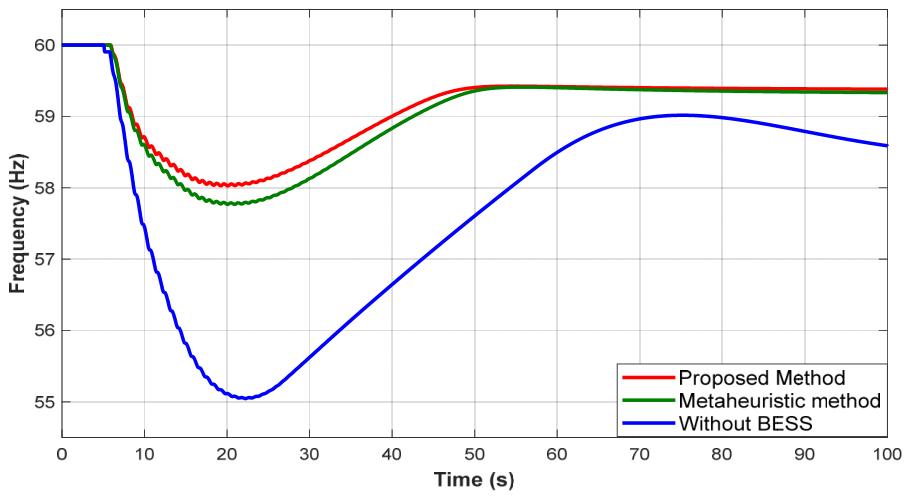
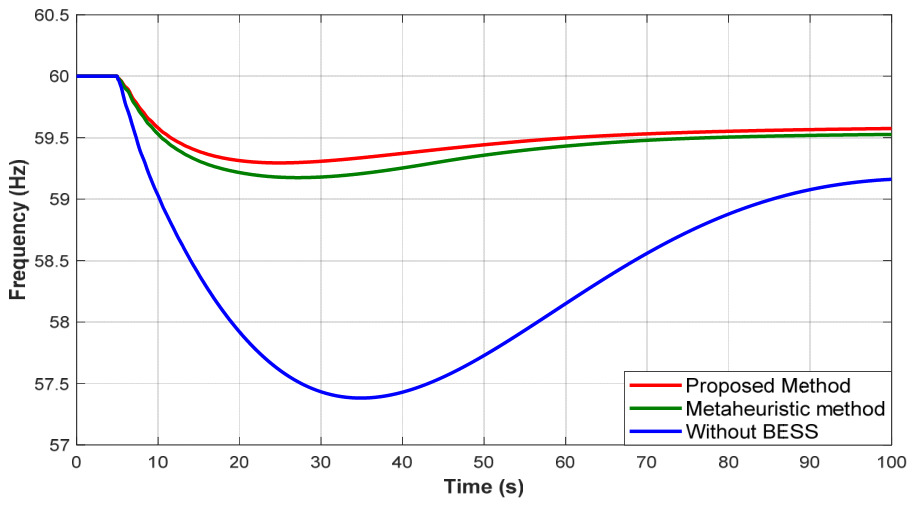
Figure 25 presents the G03 outage frequency response. The obtained allocation achieves a nadir of 59.2946 Hz, compared with 57.3814 Hz without BESS. The associated RoCoF is reduced from 0.0877 Hz/s to 0.0353 Hz/s, which confirms the improved dynamic performance even under less severe contingencies.
The frequency indices reported in
Table 16 confirm that wind integration increases frequency stress in the absence of a BESS. In contrast, the obtained allocation consistently mitigates the impact of reduced inertia. The results demonstrate that the proposed allocation remains effective under low-inertia operating conditions, which is essential for future systems with high renewable penetration.
4. Discussion and Conclusions
This study proposes a sensitivity-based method for the optimal placement and sizing of BESSs to improve the frequency nadir and RoCoF performance in low-inertia power systems. The approach integrates marginal frequency sensitivity obtained from time-domain simulations with network coupling information derived from power-flow analysis within a constrained optimization framework.
The baseline system exhibits a frequency nadir of 55.923 Hz and RoCoF of 0.24006 Hz/s under the most severe contingency (G01). Using the proposed method, the frequency nadir improves to 58.656 Hz, with an increase of 2.733 Hz (4.88%), while the RoCoF is reduced to 0.122 Hz/s—a 49.17% reduction. Across additional contingencies, the method consistently achieves higher nadir frequencies and lower RoCoF values than the baseline system.
Placement based solely on marginal frequency sensitivity improves the frequency nadir but does not account for the spatial distribution of active power. The inclusion of the network coupling weight enables improved discrimination among candidate buses. Buses with high electrical coupling, such as Bus 34 and Bus 36, are prioritized in the final allocation. The optimal solution distributes a total BESS capacity of 298 MW across multiple buses, with the largest allocation of 46 MW at Bus 36, followed by 34 MW at Bus 35 and 32 MW at Bus 30.
The network coupling weight does not represent transient frequency dynamics and is not used as a standalone predictor of frequency performance. A comparison with single-bus simulations shows only a moderate correlation with frequency nadir improvement. However, when combined with the marginal frequency sensitivity, it improves the physical consistency of the placement strategy by accounting for network-mediated power distribution.
Compared with approaches based on electrical distance, short-circuit capacity, or modal participation factors, the proposed formulation does not claim universal superiority. Its advantage lies in capturing operating point-dependent active power redistribution and enabling direct integration with dynamic frequency sensitivity within the optimization framework.
The results confirm that the distributed allocation of BESS capacity across dynamically effective and electrically well-coupled buses provides improved system-wide frequency support compared with concentrated allocation strategies. Under all evaluated contingencies, the proposed method achieves an improved frequency nadir and reduced RoCoF relative to both the baseline system and benchmark methods.
The methodology is based on linearized power-flow sensitivity evaluated at the pre-disturbance operating point and is used as a surrogate during optimization. Final performance is verified using full nonlinear time-domain simulations, ensuring validity under transient conditions within the studied disturbance range.
Future work will extend the framework to larger networks, incorporate adaptive sensitivity updating under varying operating conditions, and include techno-economic evaluations, such as the cost per Hz improvement and marginal benefit per MW of BESS capacity.