Next Article in Journal
Imaging of Digital Neuromas
Previous Article in Journal
Factors Associated With Pedal Ulceration in Patients With Diabetes Mellitus
 
 
Journal of the American Podiatric Medical Association is published by MDPI from Volume 116 Issue 1 (2026). Previous articles were published by another publisher in Open Access under a CC-BY (or CC-BY-NC-ND) licence, and they are hosted by MDPI on mdpi.com as a courtesy and upon agreement with American Podiatric Medical Association.
Article

Management of Painful Diabetic Neuropathy. A Treatment Algorithm

by
Jeffrey C. Page
and
Eric Y. Chen
Department of Podiatric Medicine, California College of Podiatric Medicine, San Francisco, USA
J. Am. Podiatr. Med. Assoc. 1997, 87(8), 370-379; https://doi.org/10.7547/87507315-87-8-370
Published: 1 August 1997

Abstract

Peripheral neuropathy manifests as a painful syndrome in a significant number of individuals suffering from diabetes mellitus. Painful diabetic neuropathy may interfere with sleep, work, and activities of daily living. Patients and practitioners alike often view this challenging disorder as incurable. A broad spectrum of therapeutic alternatives and physiologic approaches to this complex clinical problem are available. Careful assessment and a rational approach based on the nature and location of pain will lead to success. The authors review the etiology, clinical presentation, and diagnosis of diabetic peripheral neuropathy. Available therapeutic alternatives are emphasized and an original treatment algorithm is presented.

The management of painful diabetic peripheral sensory neuropathy is a difficult clinical challenge. The symptoms may be mild, moderate, or incapacitating and are often progressive. Although different therapies have been recommended, none has been universally effective. While a substantial number of diabetic patients suffering from painful neuropathy can receive relief, the successful control of diabetic neuropathic pain often remains an elusive goal [1].
The distal symmetrical sensory polyneuropathy that accompanies diabetes mellitus is by far the most common form of peripheral neuropathy in industrialized nations, and is a major contributor to the overall morbidity associated with diabetes [2,3,4,5]. The various clinical manifestations of diabetic neuropathy may be classified into diffuse (distal symmetrical sensory and motor polyneuropathy and autonomic neuropathy), which are predominantly symmetrical, and focal (mononeuropathy simplex, mononeuropathy multiplex, radiculopathy, and entrapments), which are predominantly asymmetrical [6]. Proximal neuropathy is most often asymmetrical and may involve both motor and sensory nerves. Distal and proximal manifestations of neuropathy often coexist. Axonal and demyelinative lesions similar to those found in distal disease are present in proximal nerves in mild disease. Nerve ischemia, inflammatory infiltration, and vasculitis are encountered in severe forms of proximal neuropathy [7]. Diabetic autonomic neuropathy is thought to occur in 70% of all diabetic patients. It most often coexists with distal symmetric polyneuropathy and may be a further progression of symmetric polyneuropathy [8]. Any of the above-mentioned types of neuropathy may present with painful symptoms.
The actual frequency of painful diabetic neuropathy is not known. The prevalence of painful peripheral neuropathy among Finnish noninsulin-dependent diabetic patients at diagnosis was found to be 8.3%. The prevalence increased to 16.7% after 5 years and climbed to 41.9% in the same cohort of patients after 10 years [9]. A prospective trial by Pirart [10] demonstrated an increase in the prevalence of painful peripheral neuropathy among diabetics from 7.5% at diagnosis to 50% after 25 years. In another study of noninsulindependent diabetic patients, 15.2% demonstrated abnormalities in conduction velocity at the time of diagnosis, but only 2.3% of these patients had observable clinical signs, and an even smaller 1.5% had symptomatic polyneuropathy at diagnosis [11]. The prevalence of symptomatic peripheral neuropathy in type I diabetics was reported by Boulton et al. [12] to be 10.7%. Painful symptoms are not uncommon in diabetic neuropathy, irrespective of the presence or absence of foot ulceration, and can occur at any stage of the disease [13].

Etiology

Numerous factors have been discussed as potential causes of diabetic peripheral neuropathy, but the exact pathogenesis is not well understood. Furthermore, it is unclear why some patients with diabetes experience pain while others simply experience an asymptomatic, progressive loss of peripheral nerve function. Proposed etiologic factors include chronic and acute hyperglycemia, microvascular abnormalities, lipid disorders, nitric oxide deficiency, reduced insulin, and insulin-like growth factor activity, genetic and environmental variables, and nerve compression [14,15,16,17,18,19,20,21,22,23,24,25].
The pathogenesis is no doubt multifactorial. However, recent evidence confirms that microvascular disease is one of the major factors. Pathologic changes in the endoneurial capillaries cause endoneurial ischemia and appear to correlate with the severity of neuropathy [26,27,28].
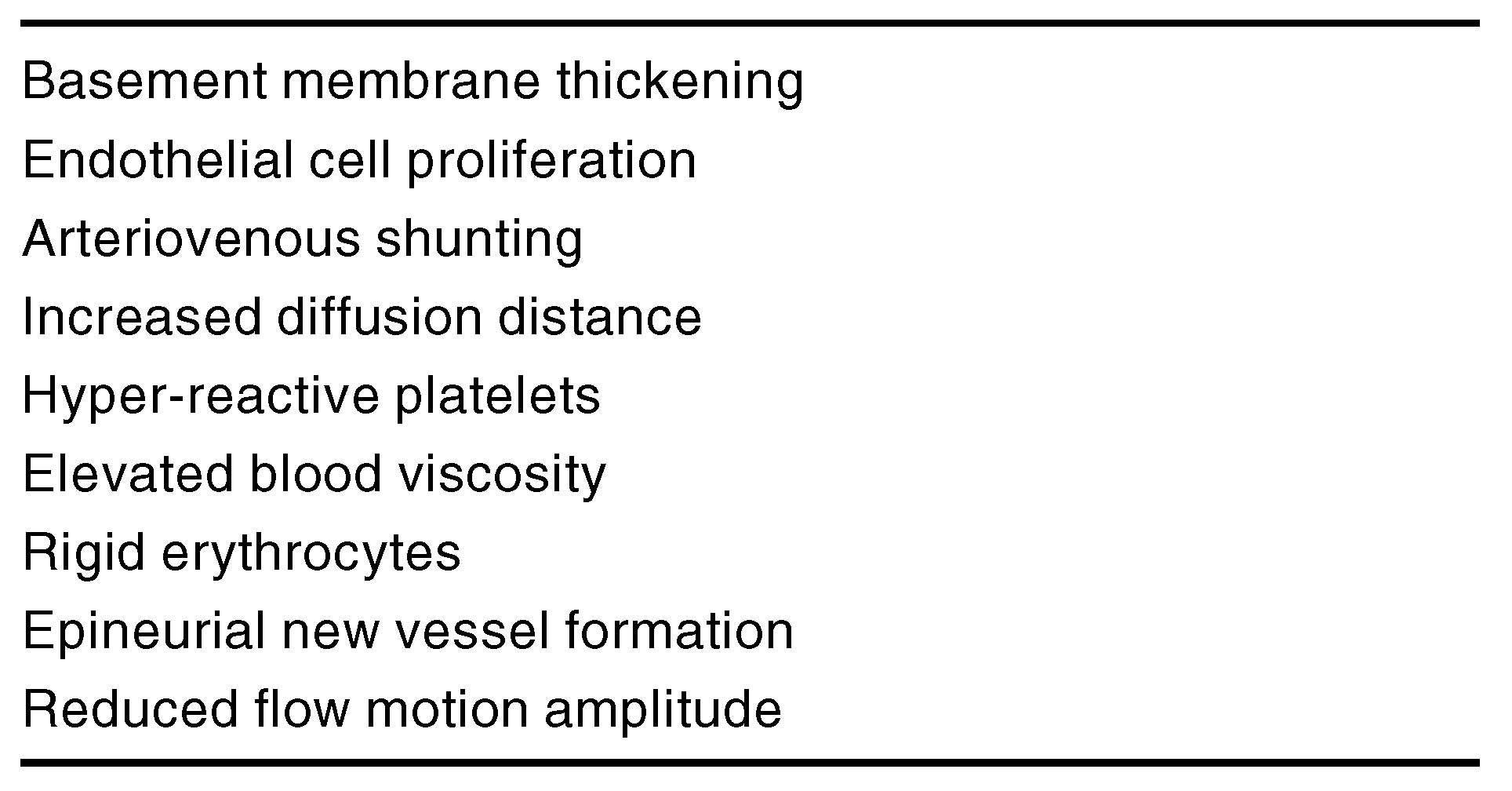
Demonstrated microvascular abnormalities include arteriovenous shunting, increased adherence of erythrocytes to the endothelial lining, hyperviscosity of the blood, decreased deformability of red cells, and platelet and fibrin plugging [29,30,31]. Flow motion is the cyclical variation in blood flow resulting from the natural rhythmical opening and closing of arterioles. Flow motion amplitude is reduced in diabetic peripheral neuropathy (Table 1) [32]. However, a study of 1,175 patients by Pirart [33] showed that a majority of neuropathic patients had no arterial obliteration and work by Archer et al. [34] shows incidents of increased blood flow.
Table 1. Potential Vascular Causes of Peripheral Neuropathy.
Japma 87 00370 g002
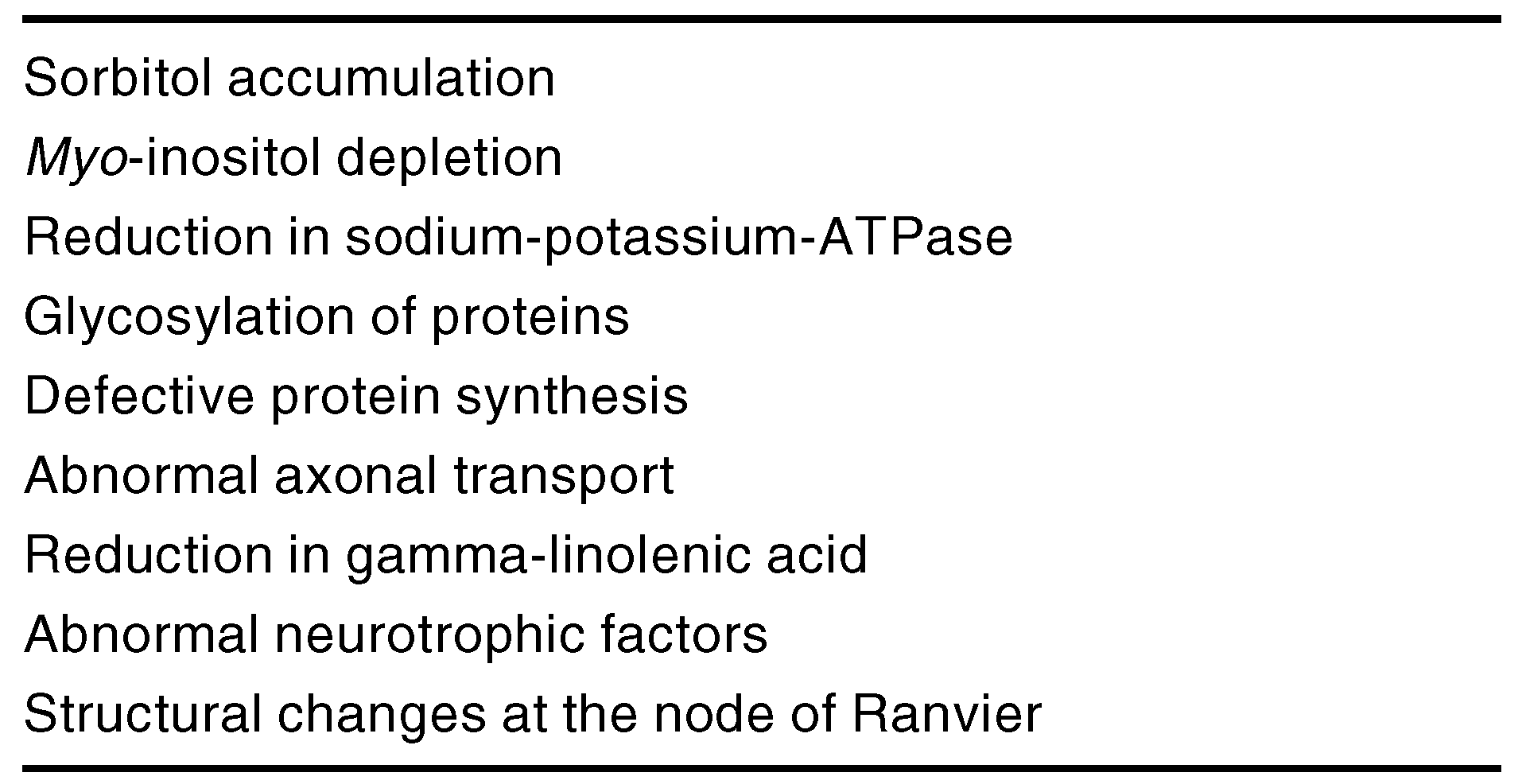
Hyperglycemia appears to be a primary event. Clinical experience has shown that acute hyperglycemia can cause exacerbations of neuropathic pain. Chronic hyperglycemia is associated with various alterations in lipids, alcohol sugars, and myo-inositol. Both acute and chronic hyperglycemia result in an increase in the polyol pathway activity within the peripheral nerve [35]. Investigators have identified the increased conversion of glucose to sorbitol by the enzyme aldose reductase as a mediating pathway for peripheral neuropathy [36,37,38]. Because endoneurium is impermeable to the sorbitol, the accumulation of sorbitol appears to cause an osmotic swelling that may be involved in the thickening of the basement membrane or a physical stretching of neural structures [39,40]. This has significance because the degree of basement membrane thickening in endoneurial microvessels is associated with the severity of neuropathic abnormality in human diabetic polyneuropathy [41]. Increased levels of sorbitol lead to a decrease in myo-inositol tissue concentration. The decrease in tissue levels of myo-inositol is believed to alter axolemmal sodium permeability and to cause structural alteration at the node of Ranvier [42,43,44,45]. Myo-inositol administration appears to correct the reduced tissue myo-inositol levels without influencing nerve sorbitol concentration and yet, at the same time, normalizes diabetic nerve function (Table 2) [35].
Table 2. Potential Metabolic Causes for Peripheral Neuropathy.
Japma 87 00370 g003
Insulin neuritis, also known as acute painful neuropathy of rapid glycemic control, is well recognized but not well understood [46,47,48,49]. Such acute neuropathic symptoms may offer clues as to the exact etiology of diabetic neuropathy. The term “insulin neuritis” is a misnomer in that the condition can develop following the administration of oral hypoglycemic agents as well. The fact that epineurial vessel anatomy is abnormal in patients with insulin neuritis supports the importance of vascular factors [50].

Diagnosis

While several different parameters should be considered during the evaluation of the neuropathic patient to determine extent and etiology, the authors believe that symptomatology is the most useful factor in the clinical setting. The patients tend to give a common pattern of complaints that can be used as a guide in the selection of a treatment regimen. Pain quality is often described with adjectives such as burning, tingling, aching, grabbing, stinging, stabbing, cold, or numb. Some patients complain of allodynia wherein a light touch from an ordinarily nonnoxious stimulus such as bedding causes an unpleasant sensation. The pain is most often worst at night and can cause sleep disturbances [4]. In the worst cases, wearing shoes may become impossible and the pain may interfere with employment and avocations. It occurs symmetrically in a stocking or glove pattern.
The patient will often describe these pains in vague terms with some difficulty in localization and, in most cases, the pain waxes and wanes. Patients with disabling pain may be reassured that their most severe symptoms may improve spontaneously in less than a year and may subsequently resolve altogether [18]. A group of patients remains whose symptoms are less dramatic, but nonetheless disagreeable, and they report pain over many years [51,52]. Many patients progress from painful feet to frankly insensitive feet over time. Diabetic peripheral neuropathy has also been known to trigger restless legs syndrome [53]. Diabetic patients with peripheral neuropathy also demonstrate a relative inability to maintain posture as evidenced by exaggerated body sway [54].
Based on the basic hypothesis of Asbury and Fields [55], Pfeifer et al. [40] described a neuropathophysiologic model consisting of three distinct types of pain referred to as superficial, deep, or muscular. According to this model, a superficial dysesthetic type of pain (burning, tingling, and allodynia) may be attributable to increased firing of damaged or excitable nociceptive fibers, particularly regenerating fibers, in a cutaneous or subcutaneous distribution.
A second type of pain associated with diabetic polyneuropathy is deeper in presentation and may be electrical or knife-like in quality or described as numbness. This deep pain may result from several different etiologies, including damaged dorsal root ganglia, loss of segmental inhibition, ectopic impulses, and physiologic stimulation of afferents that innervate the nerve sheaths themselves (nervi nervorum) from endoneurial swelling.
A third type of pain can be called muscular pain. This may be described as cramping, aching, grabbing, or muscle tenderness, and may be attributed to injured motor nerves or a reflex loop through the spinal cord. Ectopic impulses to the muscle generated from demyelinated nerves cause muscle spasm and pain. Many patients and physicians fail to connect the muscular complaints with diabetes and consider only the more common metabolic or biomechanical causes. Patients may present with only one type of pain complaint, either superficial, deep, or muscular, but often more than one type of complaint coexist.
Certainly a good history is helpful here, but sometimes the patients will give these symptoms without a positive diabetic history. Indeed, painful neuropathy may be the presenting symptom at diagnosis. Nevertheless, it is always important that a differential diagnostic approach be used as there are many other causes of neuropathy.
More than one potential cause may be present in a given patient. In addition to diabetes, the most common cause of peripheral neuropathy, neuropathy may result from toxic exposure, infection, heredity, neoplasm, structural deformity, and other metabolic disorders.
Some causes of toxic neuropathies include: 1) drugs (allopurinol, diphenylhydantoin, hydralazine); 2) heavy metals (arsenic, lead, mercury); 3) industrial toxins (acrylamide, carbon tetrachloride, insecticides); and 4) ethanol. Alcoholic neuropathy is believed to be the second most common cause of peripheral neuropathy.
Infectious neuropathies include disorders such as Hansen’s disease, Guillain-Barré syndrome, infectious mononucleosis, syphilis, and AIDS. Other metabolic neuropathies may include pernicious anemia, acute intermittent porphyria, hypothyroidism, and uremia. Neoplastic neuropathies may include carcinoma, lymphoma, and leukemia, while structural neuropathies include spinal cord tumors, spinal dysraphisms, and spondylosis.
The characteristic signs of sensory neuropathy include symmetrical decrease of light touch and pain sensation in a stocking distribution. This may be accompanied by decreased or absent Achilles tendon reflexes and decreased vibratory sensations. Loss of proprioception is often a late finding. Involvement of the hands is also a late finding [56].
The patient’s history and clinical signs are often sufficient to establish the diagnosis of diabetic neuropathy. However, objective testing can be used to confirm the clinical suspicions. Nerve conduction velocities are slowed in the presence of diabetic neuropathy. The use of a Semmes-Weinstein monofilament will often reveal a loss of protective threshold. The Biothesiometer® (Biomedical Instrument Co, Newbury, OH) establishes vibration perception threshold and the Neurometer® (Minimed Technologies, Sylmar, CA) monitors current perception threshold. All of the above tests can be used to monitor the progression of the disease.

Treatment

As stated previously, no one treatment modality helps all patients with painful neuropathy, and there are some patients for whom nothing seems to help. In the experience of the authors, approximately 80% of diabetic patients can expect to receive considerable, and in many cases, total relief of their painful symptoms caused by diabetic peripheral neuropathy with appropriate therapy. The use of physical modalities, medication, and surgery may all be required to achieve satisfactory relief. Because many of the drugs used to treat painful diabetic peripheral neuropathy may have far-reaching physiologic effects, the clinician must work closely with the patient’s primary care physician or diabetologist to avoid complications. A knowledge of these medications’ potential interactions with the patient’s individual pharmacologic profile is essential.
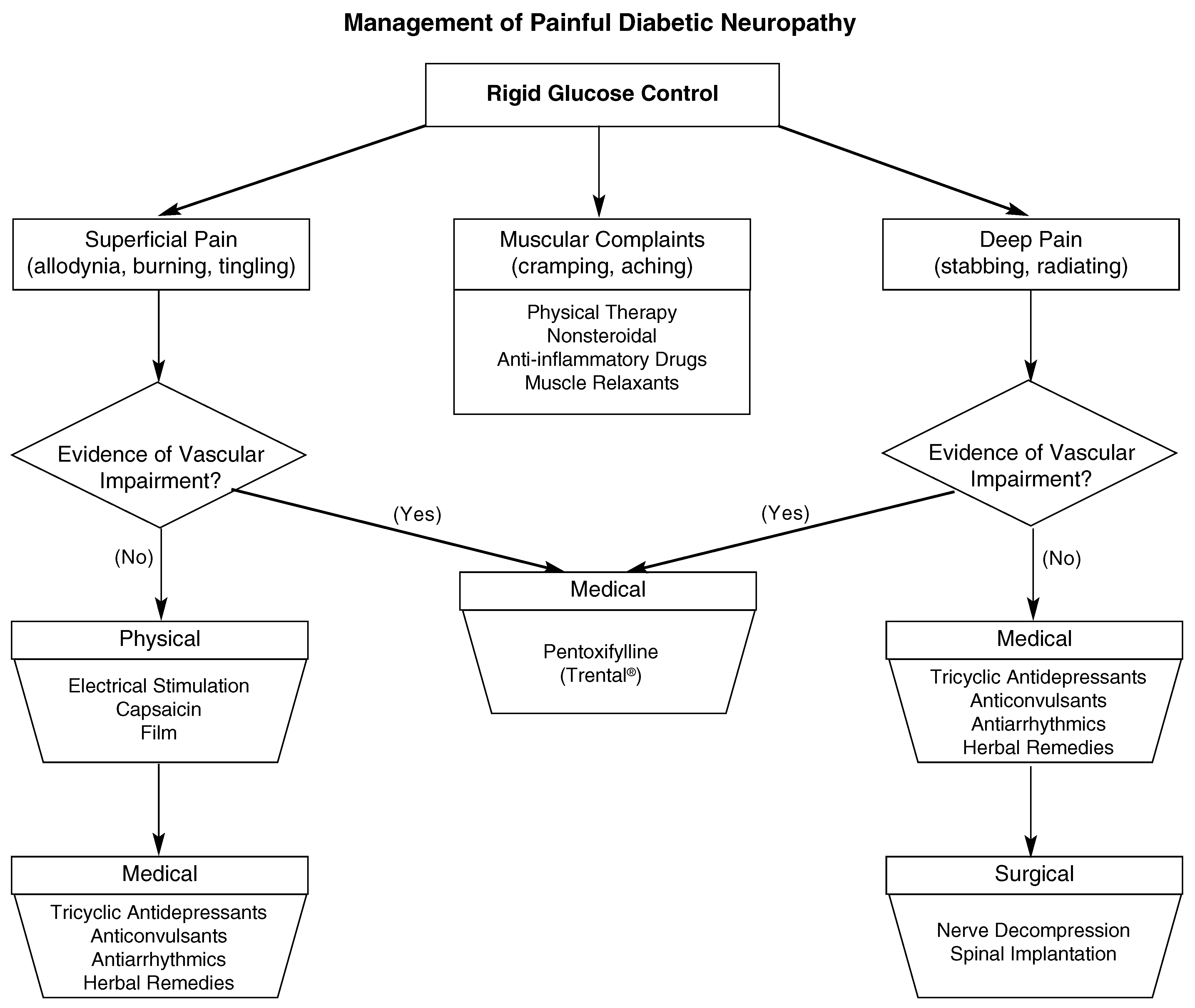
The treatment of peripheral neuropathy may involve concentrating on either the symptoms or the cause of neuropathy. To be consistently successful, however, both must be dealt with. An approach focused on the nature and location of pain will guide the clinician. A suggested algorithm is seen in Figure 1.
Rigid Glucose Control. Both personal experience and elegant research have demonstrated the crucial importance of tight control of the blood glucose. Many diabetic patients relate exacerbations of their neuropathic symptoms when blood glucose is higher than usual. Enhanced control will often ameliorate the symptoms. Continuous infusion of insulin through an insulin pump helps to control diabetic neuropathy [57].
One of the lessons learned from the unprecedented Diabetes Control and Complications Trial is that intensive glucose management dramatically reduces the incidence and progression of diabetic complications, including peripheral neuropathy [58]. Every patient with symptomatic diabetic neuropathy should be strongly encouraged to use frequent selfmonitoring of blood glucose and to carefully follow, where possible, an intensive program of glucose management.
Tricyclic Antidepressants. Tricyclic antidepressants are, without question, the most widely used pharmacologic approach to this problem at the present time. Those that have received the most attention are amitriptyline, nortriptyline, imipramine, desipramine, and trazodone. These all work by affecting the neurotransmitter systems responsible for pain relief. Amitriptyline is the most widely studied medication for managing neuropathy. Antidepressants such as amitriptyline are often limited by their side effects. Because of their multiple sites of action, patients usually experience an anticholinergic response to these drugs [59]. If the patients can tolerate these side effects, they usually do very well. Common anticholinergic responses include dry mouth, tiredness, headache, constipation, insomnia, orthostatic symptoms, palpitations, increased sweating, and lightheadedness.
A study that compared amitriptyline, desipramine, and fluoxetine found desipramine and amitriptyline to be equal in their ability to relieve neuropathic pain. However, the anticholinergic effects were fewer with patients taking desipramine because of its more selective action. Fluoxetine proved to be no more effective than a placebo, most likely because it only inhibits the reuptake of serotonin [60].
Anticonvulsants. There are several medications in this class that are relatively unrelated structurally and have varying degrees of success [61,62,63]. None of these are first-line drugs, although many neurologists have used carbamazepine as their mainstay for neuropathic problems. Not all reports have supported claims of effectiveness [64]. A newer anticonvulsant with an entirely different mode of action, gabapentin (Neurontin® (Parke-Davis, Morris Plains, NJ)), has demonstrated effectiveness as an antiepileptic with low toxicity and a low rate of side effects [65,66]. Some anecdotal reports indicate its effectiveness in the management of painful neuropathy, reflex sympathetic dystrophy, trigeminal neuralgia, and migraine headaches [67,68,69,70,71,72]. Gabapentin is currently undergoing placebo-controlled studies in these disorders. The effective therapeutic dose for treatment of chronic pain is often less than the dose required for the control of epilepsy. Diphenylhydantoin and clonazepam also have been prescribed for neuropathic symptoms. Because of a significant risk of hepatitis and pancytopenia with the use of carbamazepine, liver function tests and a complete blood count should be performed every 3 months. Anticonvulsants need to be progressively dosed and their potentiation well understood.
Local Anesthetics. Unlike carbamazepine, mexiletine is relatively safe with few side effects [73]. It was originally developed as an anticonvulsant. Its common use today is as an antiarrhythmic because it is a close structural analogue of lidocaine. It has been found that intravenous lidocaine has a significant symptom-relieving effect on painful diabetic neuropathy that may last for 3 to 21 days after a single infusion [74,75,76]. Both lidocaine and mexiletine have a sodium channel-blocking effect, which is the electrophysiologic basis for their antiarrhythmic action. By blocking the sodium ions, the small afferent myelinated nerves are unable to depolarize, thus decreasing pain detection [65].
Hemorrheologic Agents. Pentoxifylline, a trisubstituted xanthine derivative, is the first of the hemorrheologic agents to be approved by the US Food and Drug Administration and is indicated for the treatment of intermittent claudication. Pentoxifylline has multiple effects that alter the viscosity and flow of blood. These effects include increased red and white cell deformability, reduced plasma viscosity, decreased plasma fibrinogen concentrations, and reduced platelet and red cell aggregation [77,78].
The beneficial therapeutic effects of pentoxifylline on painful peripheral neuropathy have been noted in diabetic patients with measurable impairment in arterial supply [79,80,81]. In a study of 21 patients with diabetic neuropathy, Cohen and Harris [80] noted that although pain was decreased after the administration of pentoxifylline and clonazepam for 12 weeks, the alleviation of pain was not significant when compared with the placebo group [82]. In a study by Cohen and Mathews [83], there was no difference in motor and sensory examinations in type II diabetic patients without evidence of peripheral vascular disease after treatment with pentoxifylline when compared with the placebo group. Pentoxifylline has an overall low incidence of side effects, with gastrointestinal discomfort and dizziness being the most common complaints. Pentoxifylline should not be used in patients with intolerance to methylxanthines such as caffeine, theophylline, and theobromine.
Herbal Remedies. Evening primrose oil and borage oil are herbal remedies that have been used successfully for many years to manage the symptoms of painful diabetic neuropathy. Each contains the active ingredient gamma-linolenic acid. In diabetes, the first step in the metabolism of linoleic acid to linolenic acid is impaired [84,85]. It is therefore theorized that the administration of gamma-linolenic acid is beneficial because it bypasses the impaired metabolic step [86,87,88]. There is now strong evidence that di-linolein mono-γ-linolenate is an ingredient that plays a significant role, which further suggests that correction of nerve dysfunction requires vascular action [89]. Several studies have shown that gamma-linolenic acid can be effective in relieving the pain of diabetic neuropathy [15,90,91,92].
Topical Counterirritants. Capsaicin is an effective topical counterirritant known to exert its effect by depleting substance P from the terminals and central connections of the C-type nerve fibers [93,94,95,96,97]. Endogenous neurotransmitters such as substance P are important mediators of nociception in the peripheral nervous system. Capsaicin is especially effective in the treatment of more superficial symptoms such as allodynia, burning, and tingling and is often used in combination with oral modalities.
Capsaicin causes an unpleasant burning sensation in some patients, which limits its use. If patients can persist with the application through the initial period of burning, it usually subsides after a few days. Analgesic balms containing camphor, menthol, or methylsalicylate can also provide brief periods of pain relief.
Physical Therapy. Physical therapy can relieve peripheral neuropathic pain for a few weeks to several months. Both stretching and massage can be helpful in the relief of muscle cramping and leg aches. In the authors’ experience, electrical stimulation, especially microcurrent, has been most efficacious in the relief of burning and tingling. A minimum of three treatments each week for 3 weeks will be necessary in most cases. Several modalities are available. Some, such as H-wave® (Electronic Wave Forms, Los Angeles), have home units available to facilitate daily treatments.
Surgery. Surgical options for the management of recalcitrant pain from diabetic neuropathy include the implantation of spinal electrodes and decompression of the posterior tibial nerve. The implantation of electrodes in the thoracic and lumbar epidural space can provide immediate pain relief with persistent relief at 3 months [98]. Exercise tolerance is also improved with this technique. Posterior tibial nerve decompression has been shown to relieve the pain of diabetic neuropathy in the majority of treated patients [99]. Return of other sensory function was also noted. In this study, internal neurolysis was not performed, but varicosities were ligated. A positive Tinel’s sign was present preoperatively in most of the patients evaluated but preoperative and postoperative nerve conduction velocities did not vary markedly in any patient. Standard electrodiagnostic studies are not helpful in defining patients who will benefit from decompression. However, identification of viable nerve by using the Tinel’s sign has excellent prognostic capabilities [100,101]. Only patients with prolonged incapacitating pain unresponsive to physical and medical therapies should be considered for surgical intervention.
Other Treatment Alternatives. Phenothiazines are rarely used by themselves anymore but may be combined with a tricyclic antidepressant such as amitriptyline. Triavil® (Merck & Co, West Point, PA), for example, is a combination of a phenothiazine with carbamazepine and is used for the treatment of neurologic disorders. Muscle relaxants such as baclofen and metaxalone have both been studied as analgesic treatments for painful diabetic neuropathy [40,102]. It is appropriate to use muscle relaxants when the muscular type of pain is present with cramping or grabbing sensations. Nonsteroidal anti-inflammatory drugs may give symptomatic relief of muscular-type complaints. Opiate analgesics are not usually effective in the management of painful diabetic neuropathy [103].
Deficiencies of thiamine, pyridoxine, or cobalamin may result in burning pain and peripheral neuropathy. Each of the above-mentioned vitamins and B-complex vitamins have been tried in the attempt to ameliorate the symptoms of diabetic neuropathy. After a review of conflicting reports about thiamine by Thompson [104], he concluded that there was no biochemical evidence that thiamine deficiency was a factor in the etiology of diabetic neuropathy. Several controlled studies have failed to show any greater relief with pyridoxine than with placebo [105,106,107]. Horiuchi et al. [108] and Beckett and Matthews [109] found no evidence of B12 deficiency in diabetic neuropathic patients. Two clinical trials reporting clinical improvement with vitamin B12 were poorly controlled and a third showed B12 to be ineffective when given for a few weeks [110,111]. Because of the lack of evidence of clinical efficacy, vitamins cannot be recommended for the treatment of painful diabetic neuropathy. Peripheral neuropathy can actually be caused by the prolonged ingestion of high doses of multivitamins [112].
Aldose reductase inhibitors have been a promising target for direct pharmacologic intervention because of their unique ability to partially reverse some of the damage done to the nerve by hyperglycemia [39,44,113]. However, clinical trials of aldose reductase inhibitors have shown equivocal relief of clinical symptoms [114,115,116]. Because of troublesome adverse effects with sorbinil, an early version, the drug is no longer under investigation. Tolrestat, a carboxylic acid, is currently undergoing clinical trials for retinopathy [117,118]. A subset of patients who describe their pain as sharp and shooting may respond to the antihypertensive clonidine [119].
Japanese and European studies of prostaglandin E1, an intravenous medication, as a treatment of ischemic lower extremity ulcers have shown improvement in neuropathic symptoms [120,121].
Another physical modality, polyurethane films, may relieve superficial complaints in diabetic neuropathy. These very thin, transparent sheets were developed for use in surgery and for dressing wounds. The films contain an adhesive on one side and are applied to the most symptomatic areas of the neuropathic patient. The film is kept in place around the clock and may be worn for several days without changing. It has been theorized that the films help relieve neuropathic symptoms by acting as a barrier to extraneous stimuli. It may also stimulate the light touch afferent fibers to control pain acting in a way similar to transcutaneous electrical stimulation [122].

Treatment Algorithm

An ordered, stepwise approach to the management of painful diabetic neuropathy will give the best results. The focus must be on the nature and location of symptoms. A recommended algorithm for treatment is depicted in Figure 1. The foundation of management is the rigid control of glucose for all patients. Superficial allodynia may be relieved with the use of topical agents or film. Muscular complaints will respond to physical therapy and muscle relaxants. Deep complaints should be treated first with physical modalities. If these fail to provide lasting relief, a number of oral medications are available. If evidence of vascular impairment is present, the patient may respond to the use of pentoxifylline. If clinical evidence does not confirm significant vascular disease, antidepressants, anticonvulsants, mexiletine, or gamma linolenic acid may be effective. If the oral remedies have been exhausted without satisfactory results, surgery may be appropriate. The implantation of spinal electrodes and posterior tibial decompression give relief.

Conclusions

A substantial number of diabetic patients with painful neuropathy suffer for years without hope of relief. The practitioner must follow these patients with careful records and be persistent in order to achieve consistent results. Through an accurate interpretation of the clinical signs, patient symptoms, and confirmatory diagnostic studies, morbidity and mortality associated with peripheral neuropathy may be delayed, if not prevented [123].

References

  1. WATKINS PJ: Natural history of the diabetic neuropathies. Q J Med 1990, 77, 1209. [CrossRef] [PubMed]
  2. THOMAS, PK; ELLASSON, SG. “Diabetic Neuropathy,” in Peripheral Neuropathy, 2nd Ed; Dyck, PJ, Thomas, PK, Lambert, EH, et al., Eds.; WB Saunders: Philadelphia, 1984. [Google Scholar]
  3. THOMAS, PK. “Animal Models of Metabolic Neuropathies,” in Peripheral Neuropathy, 2nd Ed; Dyck, PJ, Thomas, PK, Lambert, EH, et al., Eds.; WB Saunders: Philadelphia, 1984. [Google Scholar]
  4. JUNG, SJ; PFEIFER, MA. Persons with diabetes and neuropathic symptoms have poor psychosocial adjustments. Diabetes 1986, 35 (suppl), 123. [Google Scholar]
  5. BROWNLEE, M; VLASSARA, H; CERAMI, A. Nonenzymatic glycosylation and the pathogenesis of diabetic complications. Ann Intern Med 1984, 101, 537. [Google Scholar] [CrossRef] [PubMed]
  6. GREENE, DA; SIMA, AFF; ALBERS, JW. ET AL: “Diabetic Neuropathy,” in Diabetes Mellitus Theory and Practice, 4th Ed; Rifkin, H, Porte, D, Eds.; Elsevier: New York, 1990. [Google Scholar]
  7. SAID, G; GOULON-GOEAU, C; LACROIX, C. ET AL: Nerve biopsy findings in different patterns of proximal diabetic neuropathy. Ann Neurol 1994, 35, 559. [Google Scholar] [CrossRef]
  8. CLEMENTS, RS; BELL, DS. Diabetic neuropathy: peripheral and autonomic syndromes. Postgrad Med 1982, 71, 50. [Google Scholar] [CrossRef]
  9. PARTANEN, J; NISKANEN, L; LEHTINEN, J; et al. Natural history of peripheral neuropathy in patients with non-insulin dependent diabetes mellitus. N Engl J Med 1995, 333, 89. [Google Scholar] [CrossRef]
  10. PIRART J: Diabète et complications dégénératives: présentation d’une étude prospective portant sur 4,400 cas observés entre 1947 et 1973. première partie. Diabete Metab 1977, 3, 97.
  11. LEHTINEN, JM; UUSITUPA, M; SIITONEN, O; et al. Prevalence of neuropathy in newly diagnosed NIDDM and nondi-abetic control subjects. Diabetes 1989, 38, 1307. [Google Scholar] [CrossRef] [PubMed]
  12. BOULTON, AM; KNIGHT, G; DRURY, J; et al. The prevalence of symptomatic diabetic neuropathy in an insulin treated population. Diabetes Care 1985, 8, 125. [Google Scholar] [CrossRef] [PubMed]
  13. VEVES, A; MANES, C; MURRAY, HJ; et al. Painful neuropathy and foot ulceration in diabetic patients. Diabetes Care 1993, 16, 1187. [Google Scholar] [CrossRef]
  14. TOOKE JE: Perspectives in diabetes: microvascular function in human diabetes, a physiological perspective. Diabetes 1995, 44, 721. [CrossRef]
  15. JULU PO: Essential fatty acids prevent slowed nerve conduction in streptozotocin diabetes. J Diabet Complications 1988, 2, 185. [CrossRef]
  16. OMAWARI, N; DEWHUST, M. VO P: Deficient nitric oxide responsible for reduced nerve blood flow in diabetic rats: effects of L-NAME, L-argenine, sodium nitroprusside and evening primrose oil. Br J Pharmacol 1996, 118, 186. [Google Scholar] [CrossRef] [PubMed][Green Version]
  17. ISHII D: Implication of insulin-like growth factors in the pathogenesis of diabetic neuropathy. Brain Res Rev 1995, 20, 47. [CrossRef] [PubMed]
  18. ARCHER, AG; WATKINS, PJ; THOMAS, PK; et al. The natural history of acute painful neuropathy in diabetes mellitus. J Neurol Neurosurg Psych 1983, 46, 491. [Google Scholar] [CrossRef]
  19. GREENE, DA; LATTIMER, SA; ULBRECHT, J; et al. Glucose induced alterations in nerve metabolism: current perspective on the pathogenesis of diabetic neuropathy and future directions for research and therapy. Diabetes Care 1985, 8, 290. [Google Scholar] [CrossRef] [PubMed]
  20. JULSRUD ME: Diabetic neuropathy. JAPA 1981, 71, 318.
  21. JOHNSON, PC; DOLL, SC; CROMEY, DW. Pathogenesis of diabetic neuropathy. Ann Neurol 1986, 19, 450. [Google Scholar] [CrossRef]
  22. SIMA AFF: Can the BB-rat help to unravel diabetic neuropathy? Neuropathol Appl Neurobiol 1985, 11, 253. [CrossRef]
  23. MELTON, LJ. DYCK PJ: “Epidemiology,” in Diabetic Neuropathy; Dyck, PJ, Thomas, PK, Asbury, AK, et al., Eds.; WB Saunders: Philadelphia, 1987. [Google Scholar]
  24. DELLON, AL; DELLON, ES; SEILER, WA. IV: Effect of tarsal tunnel decompression in the streptozotocin-induced diabetic rat. Microsurgery 1994, 15, 265. [Google Scholar] [CrossRef]
  25. DELLON, ES; DELLON, AL. Functional assessment of neurologic impairment: track analysis in diabetic and compression neuropathies. Plast Reconstr Surg 1990, 88, 686. [Google Scholar] [CrossRef]
  26. CAMERON, NE; COTTER, M; LOW, P. Nerve blood flow in early experimental diabetes in rats: relation to conduction deficits. Am J Physiol 1991b, 261, E1. [Google Scholar] [CrossRef]
  27. NEWRICK, PG; WILSON, AJ; JAKUBOWSKI, JA; et al. Sural nerve oxygen tension in diabetes. Br J Med 1986, 293, 1053. [Google Scholar] [CrossRef]
  28. TUCK, RR; SCHMELZER, JD; LOW, PA. Endoneurial blood flow and oxygen tension in the sciatic nerves of rats with experimental diabetic neuropathy. Brain 1984, 107, 935. [Google Scholar] [CrossRef]
  29. TESFAYE, S; HARRIS, N; JAKUBOWSKI, J; et al. Impaired blood flow and arterio-venous shunting in human diabetic neuropathy: a novel technique of nerve photography and fluorescein angiography. Diabetologia 1993, 36, 1266. [Google Scholar] [CrossRef] [PubMed]
  30. BOULTON, AJM; SCARPELLO, JHB; WARD, JD. Venous oxygenation in the diabetic neuropathic foot: evidence of arterio-venous shunting. Diabetologia 1982, 22, 6. [Google Scholar] [CrossRef]
  31. BAYS HE, PFEIFER MA: Peripheral diabetic neuropathy. Med Clin North Am 1988, 72, 1439. [CrossRef] [PubMed]
  32. BENBOW, SJ; PRYCE, DW; NOBLETT, K; et al. Flow motion in peripheral diabetic neuropathy. Clin Sci 1995, 88, 191. [Google Scholar] [CrossRef] [PubMed]
  33. PIRART J: Diabetic neuropathy: a metabolic or vascular disease? Diabetes 1965, 14, 1.
  34. ARCHER, AG; ROBERTS, VC; WATKINS, PJ. Blood flow patterns in painful diabetic neuropathy. Diabetologia 1984, 27, 563. [Google Scholar] [CrossRef]
  35. FINEGOLD D: Polyol pathway activity and myo-inositol metabolism. Diabetes 1983, 32, 988. [CrossRef] [PubMed]
  36. GREENE, DA; GREGERSEN, G; ZIMMERMAN, BR. “Metabolic Control,” in Diabetic Neuropathy; Dyck, PJ, Thomas, PK, Asbury, AK, et al., Eds.; WB Saunders: Philadelphia, 1987. [Google Scholar]
  37. DVORNIK, D; PORTE, D. Aldose Reductase Inhibition: An Approach to the Prevention of Diabetic Complications; McGraw-Hill: New York, 1987. [Google Scholar]
  38. Judzewwitsch, RG; Jaspan, JB; Polonsky, KS. : Aldose reductase inhibition improves nerve conduction velocity in diabetic patients. N Engl J Med 1983, 308, 119. [Google Scholar] [CrossRef]
  39. DYCK, PJ; ZIMMERMAN, BR; VILEN, TH; et al. Nerve glucose, fructose, sorbitol, myo-inositol, and fiber degeneration and regeneration in diabetic neuropathy. N Engl J Med 1983, 319, 544. [Google Scholar]
  40. PFEIFER, MA; ROSS, DR; SCHRAGE, JP; et al. A highly successful and novel model for treatment of chronic painful diabetic peripheral neuropathy. Diabetes Care 1993, 16, 1103. [Google Scholar] [CrossRef] [PubMed]
  41. YASUDA, H; DYCK, PJ. Abnormalities of endoneurial microvessels and sural nerve pathology in diabetic neuropathy. Neurology 1987, 37, 20. [Google Scholar] [CrossRef]
  42. GREENE, DA; LEWIS, RA; LATTIMER, SA; et al. Selective effects of myo-inositol on impaired peripheral motor nerve conduction velocity in acute streptozotocin diabetes. J Clin Invest 1975, 55, 1326. [Google Scholar] [CrossRef]
  43. GREENE, DA; LEWIS, RA; LATTIMER, SA; et al. Selective effects of myo-inositol administration on sciatic and tibial motor nerve conduction parameters in the streptozotocin-diabetic rat. Diabetes 1982, 31, 573. [Google Scholar] [CrossRef]
  44. MAYER, JH; TOMLINSON, DR. The influence of aldose reductase inhibition and nerve myo-inositol on axonal transport and nerve conduction velocity in rats with experimental diabetes. J Physiol 1983, 340, 25. [Google Scholar]
  45. SIMA, AFF; BRIL, V; NATHANIEL, V; et al. Regeneration and repair of myelinated fibers in sural nerve biopsy spec-imens from patients with diabetic neuropathy treated with sorbinil. N Engl J Med 1988, 317, 548. [Google Scholar] [CrossRef]
  46. CARAVATI, CM. Insulin neuritis: a case report. Va Med Mon 59, 745, 1933.
  47. ELLENBERG, M. Diabetic neuropathy precipitating after institution of diabetic control. Am J Med Sci 1958, 236, 466. [Google Scholar] [CrossRef] [PubMed]
  48. KRENTZ, AJ. Acute symptomatic diabetic neuropathy associated with normalisation of haemoglobin A1. J Ro Soc Med 1989, 82, 767. [Google Scholar] [CrossRef] [PubMed]
  49. LLEWELYN, JG; THOMAS, PK; FONSECA, V; et al. Acute painful diabetic neuropathy precipitated by strict glycaemic control. Acta Neuropathol 1986, 72, 157. [Google Scholar] [CrossRef]
  50. TESFAYE, S; MALIK, R; WARD, JD. Vascular factors in diabetic neuropathy. Diabetologia 1994, 37, 847. [Google Scholar] [CrossRef] [PubMed]
  51. Boulton, AJM; Scarpello, JHB; Armstrong, WD. : The natural history of painful diabetic neuropathy: a 4-year study. Postgrad Med J 1983, 59, 566. [Google Scholar] [CrossRef]
  52. YOUNG, RJ; EWING, DJ; CLARKE, BF. Chronic and remitting painful diabetic polyneuropathy: correlations with clinical features and subsequent changes in neurophysiology. Diabetes Care 1988, 11, 34. [Google Scholar] [CrossRef]
  53. WALTERS, AS; HICKEY, K; MALTZMAN, J; et al. A questionnaire study of 138 patients with restless legs syndrome: the night-walkers’ survey. Neurology 1996, 46, 92. [Google Scholar] [CrossRef]
  54. UCCIOLI, L; GIACOMINI, PG; MONTICONE, G; et al. Body sway in diabetic neuropathy. Diabetes Care 1995, 18, 339. [Google Scholar] [CrossRef]
  55. ASBURY, AK. FIELDS HL: Pain due to peripheral nerve damage: an hypothesis. Neurology 1984, 34, 1587. [Google Scholar] [CrossRef]
  56. CLEMENTS, R; BELL, DS. Diagnostic, pathogenetic, and therapeutic aspects of diabetic neuropathy. Spec Top Endocrinol Metab 1982, 3, 1. [Google Scholar]
  57. BOULTON, AJM; DRURY, J; CLARKE, B; et al. Continuous subcutaneous insulin infusion in the management of painful diabetic neuropathy. Diabetes Care 1982, 5, 386. [Google Scholar] [CrossRef]
  58. SANTIAGO JV: Lessons from the diabetes control and complications trial. Diabetes 1993, 42, 1549. [CrossRef]
  59. RICHELSON, E. Antidepressants: Pharmacology and Clinical Use. In American Psychiatric Association Task Force on Treatments of Psychiatric Disorders: Treatments of psychiatric disorders; American Psychiatric Association: Washington, DC, 1989; Vol 3. [Google Scholar]
  60. MAX MB: Effect of desipramine, amitriptyline and fluoxetine on pain in diabetic neuropathy. N Engl J Med 1992, 326, 1250. [CrossRef]
  61. ELLENBERG M: Treatment of diabetic neuropathy with diphenylhydantoin. N Y J Med 1968, 68, 2653.
  62. SANDEK, CD; WERNS, S; REIDENBERG, MM. Phenytoin in the treatment of diabetic symmetrical polyneuropathy. Clin Pharmacol Ther 1977, 22, 196. [Google Scholar]
  63. KANNAN, K; DASH, RJ; RASTOGI, GK. Evaluation of treatment of painful diabetic neuropathy with diphenylhydantoin. J Diabetes Assoc India 1978, 18, 199. [Google Scholar]
  64. Rull, JA; Quibera, R; Gonzales-Millan, H. Symptomatic treatment of peripheral diabetic neuropathy with carbamazepine (Tegretol): double-blind crossover trials. Diabetologia 1969, 5, 215. [Google Scholar] [CrossRef] [PubMed]
  65. GEE, NS; BROWN, JP; DISSANAYAKE, VU; ET, AL. The novel anticonvulsant drug, gabapentin (Neurontin), binds to the alpha2delta subunit of a calcium channel. J Biol Chem 1996, 271, 5768. [Google Scholar] [CrossRef]
  66. KONDO, T; FROMM, GH. SCHMIDT B: Comparison of gabapentin with other antiepileptic and GABAergic drugs. Epilepsy Res 1991, 8, 226. [Google Scholar] [CrossRef] [PubMed]
  67. MELLICK, GA; MELLICK, LB. Gabapentin in the management of reflex sympathetic dystrophy. J Pain Symptom Manage 1995, 10, 265. [Google Scholar] [CrossRef]
  68. MELLICK, LB; MELLICK, GA. Successful treatment of reflex sympathetic dystrophy with gabapentin. Am J Emerg Med 1995, 13, 96. [Google Scholar] [CrossRef]
  69. MELLICK, GA; SENG, ML. The use of gabapentin in the treatment of reflex sympathetic dystrophy and a phobic disorder. Am J Pain Management 1995, 5, 7. [Google Scholar]
  70. SEGAL, AZ; RORDORF, G. Gabapentin as a novel treatment for postherapetic neuralgia. Neurology 1996, 46, 1175. [Google Scholar] [CrossRef]
  71. ROSNER, H; RUBIN, L; KESTENBAUM, A. Gabapentin adjunctive therapy in neuropathic pain states. Clin J Pain 1996, 12, 56. [Google Scholar] [CrossRef]
  72. MATHER, NT; LUCKER, C. Gabapentin in migraine prophylaxis: a perliminary open label study. Neurology 1996, 46, A169. [Google Scholar]
  73. DEJGARD, A; PETERSEN, P; KASTRUP, J. Mexiletine for treatment of chronic painful diabetic neuropathy. Lancet 1988, 2, 9. [Google Scholar] [CrossRef]
  74. KASTRUP, J; ANGELO, HR; PETERSON, P; et al. Treatment of chronic painful diabetic neuropathy with intravenous lidocaine infusion (abstract). Br Med J 1986, 292, 173. [Google Scholar] [CrossRef]
  75. KASTRUP, J; PETERSON, P; DEJGARD, A; et al. Intravenous lidocaine infusion: a new treatment of chronic painful diabetic neuropathy? Pain 1987, 28, 69. [Google Scholar] [CrossRef]
  76. BACH, FW; JENSEN, TS; KASTRUP, J; et al. The effect of intravenous lidocaine on nociceptive processing in diabetic neuropathy. Pain 1990, 40, 29. [Google Scholar] [CrossRef]
  77. WARD, A; CLISSOLD, SP. Pentoxifylline: a review of its pharmacodynamic and pharmacokinetic properties, and its therapeutic efficacy. Drugs 1987, 34, 50. [Google Scholar] [CrossRef] [PubMed]
  78. PREGO, MA; SERGIO, G; ARTALE, F; et al. Haemorrheological improvement by pentoxifylline in patients with peripheral arterial occlusive disease. Curr Med Res Opin 1986, 10, 135. [Google Scholar] [CrossRef] [PubMed]
  79. SCHUBOTZ R: Double-blind trial of pentoxifylline in diabetes with peripheral vascular disorders. Pharmatherapeutica 1976, 1, 172.
  80. COHEN, KL; HARRIS, S. Pentoxifylline and diabetic neuropathy (letter). Ann Intern Med 1987, 107, 600. [Google Scholar] [CrossRef]
  81. KALMANSOHN, RB; MARKHAM, CH; SCHIFF, DL. Treatment of diabetic neuropathy with pentoxifylline: case report. Angiology 1988, 39, 371. [Google Scholar] [CrossRef] [PubMed]
  82. COHEN, KL; LUCIBELLO, FE; CHOMIAK, M. Lack of effect of clonidine and pentoxifylline in shortterm therapy of diabetic peripheral neuropathy. Diabetes Care 1990, 13, 1074. [Google Scholar] [CrossRef]
  83. COHEN, SM; MATHEWS, T. Pentoxifylline in the treatment of distal diabetic neuropathy. Angiology 1991, 42, 741. [Google Scholar] [CrossRef]
  84. MERCURI, O; PELUFFO, RO; BRENNER, RR. Depression of microsomal desaturation of linoleic to gammalinolenic acid in the alloxan diabetic rat. Biochem Biophys Acta 1996, 116, 409. [Google Scholar] [CrossRef]
  85. FAAS, FH; CARTER, WJ. Altered fatty acid desaturation and microsomal fatty acid composition in streptozotocin diabetic rat. Lipids 1980, 15, 953. [Google Scholar] [CrossRef]
  86. HARROBIN, DF. The roles of essential fatty acids in the development of diabetic neuropathy and other complications of diabetes mellitus. Prostaglandins Leukot Essent Fatty Acids 1988, 31, 181. [Google Scholar]
  87. JULU PO: Latency of neuroactivity and optimum period of treatment with evening primrose oil in diabetic rats. J Lipid Mediat Cell Signal 1996, 13, 99. [CrossRef] [PubMed]
  88. JULU, PO; GOW, JW; JAMA, GA. Endogenous cyclo-oxygenase substrates mediate the neuroactivity of evening primrose oil in rats. J Lipid Mediat Cell Signal 1996, 13, 115. [Google Scholar]
  89. DINES, KC; CAMERON, NE; COTTER, MA. Comparison of the effects of evening primrose oil and triglycerides containing gamma-linolenic acid on nerve conduction and blood flow in diabetic rats. J Pharmacol Exp Ther 1995, 273, 49. [Google Scholar] [CrossRef] [PubMed]
  90. JAMAL, GA; CARMICHAEL, H. The effect of gamma-linolenic acid on human diabetic peripheral neuropathy: a double blind placebo controlled trial. Diabet Med 1990, 7, 319. [Google Scholar] [CrossRef] [PubMed]
  91. KEEN, H; PAYAN, J; ALLAWI, J. Treatment of diabetic neuropathy with gamma-linolenic acid. Diabetes Care 1993, 16, 8. [Google Scholar] [CrossRef] [PubMed]
  92. CAMERON, NE; COTTER, MA; ROBERTSON, S. Essential fatty acid diet supplementation: effects on peripheral nerve and skeletal muscle function and capillarisation in streptozotocin-induced diabetic rats. Diabetes 1991, 40, 532. [Google Scholar] [CrossRef]
  93. JESSELL, TM. Pain. Lancet 1982, 2, 1084. [Google Scholar] [CrossRef]
  94. LEMBECK, F; DONNERER, J; CALPAERT, FC. Increase of substance P in primary afferent nerves during chronic pain. Neuropeptides 1981, 1, 175. [Google Scholar] [CrossRef]
  95. LEMBECK, F; GAMSE, R; JUAN, H. “Substance P and Sensory Nerve Endings,” in Substance P; von Euler, US, Pernow, B, Eds.; Raven Press: New York, 1977. [Google Scholar]
  96. FITZGERALD M: Capsaicin and sensory neurones: a review. Pain 1983, 15, 109. [CrossRef]
  97. SCHEFFLER, NM; SHEITEL, PL; LIPTON, MN. Treatment of painful diabetic neuropathy with capsaicin 0.075%. JAPMA 1991, 81, 288. [Google Scholar] [CrossRef]
  98. HICKS, DR; KRAM, LM; CAYEN, MN; et al. Tolrestat kinetics. Clin Pharmacol Ther 1984, 36, 493. [Google Scholar] [CrossRef]
  99. ITOH, H; HORIE, H; NAMBA, M; et al. Therapeutic effect of prostaglandin E1 on diabetic neuropathy. J Jpn Diabetes Society 1986, 29 (suppl), 88. [Google Scholar]
  100. HOSHI, K; MIZASHIMA, Y; KIYOKAWA, S; et al. Prostaglandin E1, incorporated in lipid micropheres in the treatment of peripheral vascular diseases and diabetic neuropathy. Drugs Exp Clin Res 1986, 12, 681. [Google Scholar]
  101. TESFAYE, S; WATT, J; BENBOW, SJ; et al. Electrical spinalcord stimulation for painful diabetic peripheral neuropathy. Lancet 1996, 348, 1698. [Google Scholar] [CrossRef]
  102. TERRENCE, CF; FROMM, GH; TENICELA, R. Baclofen as an analgesic in chronic peripheral nerve disease. Eur Neurol 1985, 24, 380. [Google Scholar] [CrossRef] [PubMed]
  103. THOMPSON, RHS. Biochemical Aspects of Diabetic Neuropathy. In Biochemical Aspects of Neurological Disorders; Cummings, JN, Kremer, M, Eds.; 2nd Series: Oxford, England, 1965. [Google Scholar]
  104. MCCANN, VJ; DAVIS, RE. Pyridoxine and diabetic neuropathy and a double blind controlled study. Diabetes Care 1983, 6, 102. [Google Scholar] [CrossRef] [PubMed]
  105. TSIGOS, C; GIBSON, S; CROSBY, SR; et al. Cerebrospinal fluid levels of beta endorphin in painful and painless diabetic polyneuropathy. J Diabetes Complications 1995, 9, 92. [Google Scholar] [CrossRef]
  106. LEVIN, ER; HANSCOM, TA; FISHER, M; et al. The influence of pyridoxine in diabetic peripheral neuropathy. Diabetes Care 1987, 4, 606. [Google Scholar] [CrossRef] [PubMed][Green Version]
  107. COHEN, KL; GORECK, GA; SILVERSTEIN, SB; et al. Effect of pyridoxine (vitamin B6) on diabetic patients with peripheral neuropathy. JAPA 1984, 74, 394. [Google Scholar] [CrossRef]
  108. HORIUCHI, A; KOGURE, K; TANAKA, N; et al. “Relation of Partial Deficiency of Cobalamins to Occurrence of Diabetic Neuropathy,” in Diabetic Neuropathy; Amsterdam, G, Goto, Y, Horiuchi, A, et al., Eds.; Excerpta Medica: Amsterdam, 1982. [Google Scholar]
  109. BECKETT, AG; MATTHEWS, DM. Vitamin B12 in diabetes mellitus. Clin Sci 1962, 23, 361. [Google Scholar]
  110. SANCETTA, SM; AYRES, PR; SCOTT, RW. The use of vitamin B12 in the management of the neurological manifestations of diabetes mellitus with notes on the administration of massive doses. Ann Intern Med 1951, 35, 1028. [Google Scholar] [CrossRef]
  111. HORIUCHI, A; KOGURE, K; YAMADA, K; et al. “Treatment of Diabetic Peripheral Neuropathy with Methylcobalamin,” in Diabetic Neuropathy; Amsterdam, G, Goto, Y, Horiuchi, A, et al., Eds.; Excerpta Medica: Amsterdam, 1982. [Google Scholar]
  112. DUBNER, R; BENNETT, GJ. Spinal and trigeminal mechanisms of nociception. Ann Rev Neurosci 1983, 6, 381. [Google Scholar] [CrossRef] [PubMed]
  113. YOUNG, RJ; EWING, DJ. CLARKE BF: A controlled trial of sorbinil, an aldose reductase inhibitor in chronic painful diabetic neuropathy. Diabetes 1983, 32, 938. [Google Scholar] [CrossRef] [PubMed]
  114. MORRA, M; PHILIPSZOON, HD; D’ANDREA, G; et al. Sensory and motor neuropathy caused by excessive ingestion of vitamin B6: a case report. Funct Neurol 1993, 8, 429. [Google Scholar]
  115. FAGIUS, J; BRATTBERG, A; JAMESON, S; et al. Limited benefit of treatment of diabetic polyneuropathy with an aldose reductase inhibitor: a 24-week controlled trial. Diabetologia 1985, 28, 323. [Google Scholar] [CrossRef]
  116. HANDELSMAN, DJ; TURTLE, JR. Clinical trial of an aldose reductase inhibitor in diabetic neuropathy. Diabetes 1981, 30, 459. [Google Scholar] [CrossRef] [PubMed]
  117. RASKIN, P; ROSENSTOCK, J; CHALLIS, P; et al. Effect of tolrestat on red blood cell sorbitol levels in patients with diabetes. Clin Pharmacol Ther 1985, 38, 625. [Google Scholar] [CrossRef] [PubMed]
  118. WIEMAN, JT; PATEL, VG. Treatment of hyperesthetic neuropathic pain in diabetes: decompression of the tarsal tunnel. Ann Surgery 1995, 221, 660. [Google Scholar] [CrossRef] [PubMed]
  119. BYAS-SMITH, MG; MAX, MB; MUIR, J; et al. Transdermal clonidine compared to placebo in painful diabetic neuropathy using a two-stage enriched enrollment design. Pain 1995, 60, 267. [Google Scholar] [CrossRef]
  120. DELLON, AL; MACKINNON, SE; SEILER, WA, IV. Susceptibility of the diabetic nerve to chronic compression. Ann Plast Surg 1988, 20, 117. [Google Scholar] [CrossRef]
  121. DELLON, AL. Treatment of symptomatic diabetic neuropathy by surgical decompression of multiple peripheral nerves. Plast Reconstr Surg 1991, 89, 689. [Google Scholar] [CrossRef]
  122. FOSTER, AVM; EATON, DO; AL, MCCONVILLE; et al. Application of OpSite film: a new and effective treatment of painful diabetic neuropathy. Diabet Med 1994, 11, 768. [Google Scholar] [CrossRef] [PubMed]
  123. WEBER, GA; CARDILE, MA. Diabetic neuropathies. Clin Podiatr Med Surg 1990, 7, 1. [Google Scholar] [CrossRef] [PubMed]
Figure 1. This treatment algorithm builds on a foundation of optimum glucose management and focuses on the nature and location of pain. Superficial pain should be addressed with physical modalities. If physical modalities are ineffective, oral medication may be prescribed. Muscular complaints usually respond to physical therapy and muscle relaxants. Pain arising from vascular compromise may respond to pentoxifylline. Deep complaints in patients without significant vascular compromise can be addressed through medical or surgical means.
Japma 87 00370 g001