Foot burns involve a specialized area of function, and although they involve a small total body surface area (3.5%), they can cause a significant degree of morbidity because the foot often requires prolonged bed rest. Time lost from work along with the length of hospitalization and high risk of complications result in a high financial as well as emotional cost to the individual.[
1,
2] Burns to the feet occur at all ages, in both children and the elderly, and result in disability.[
3] Burns to children's feet are often caused by sandals and hot water because an infant's skin is thinner and, hence, more susceptible to a full-thickness injury.[
4,
5]
Patients with foot burns often experience pain and disturbance of gait, causing them to limit the duration of walking. The cause of joint pain is a biomechanical change in walking causing pain in the area of joints and muscles. The patient’s effort to protect the affected limb from loading results in the development of pathologic gait. The patient tries to compensate the developed situation by redistributing the load, and with this the healthy limb takes on the function of the affected limb to decrease asymmetry. There is not much literature concerning the study of support-motor function of the foot in burn trauma.
Methods of evaluation of the results, including direct clinical observations, laboratory tests, and analysis of follow-up results, provide significant completeness of information and make it possible to study the methods of treatment to evaluate the problems and contents of surgical rehabilitation.[
6–9] However, despite the high frequency of burn injuries of the feet, their clinical features and course of rehabilitation have been studied insufficiently.
The aim of the present study was to assess support-motor foot functions in healthy persons and in patients with early terms after getting burned (eschar, granulating wound) during the first week after regeneration of skin covering and follow-up terms and based on the findings to suggest prognostic criteria of volume and restorative terms of support-motor function of the foot.
Materials and Methods
During a 10-year period (2000–2009), 104 patients with burn trauma of the foot with various degrees of severity and localization were treated at the burn department of the Republican Scientific Centre of Urgent Medical Aid (RSCUMA) and Inter-Regional Burn Center, Samarkand, Uzbekistan.
The criteria for patient selection were as follows: 1) second- to fourth-degree foot burns, 2) index of damage severity of no more than 60 conditional units, 3) absence of information in the anamnesis about comorbid diseases of other causes and aggravated by premorbid background (organic pathology, diabetes type 1), and 4) aged 8 to 55 years.
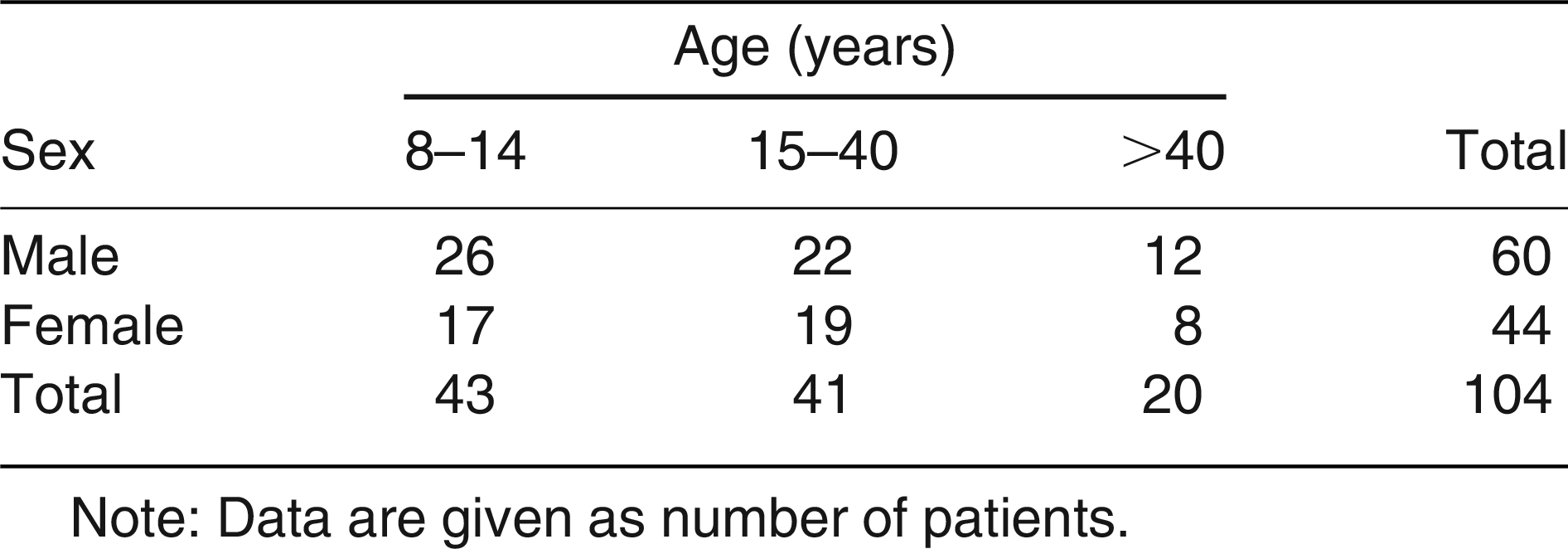
The distribution of the patients according to age and sex is presented in
Table 1, and the causes of the burns are presented in
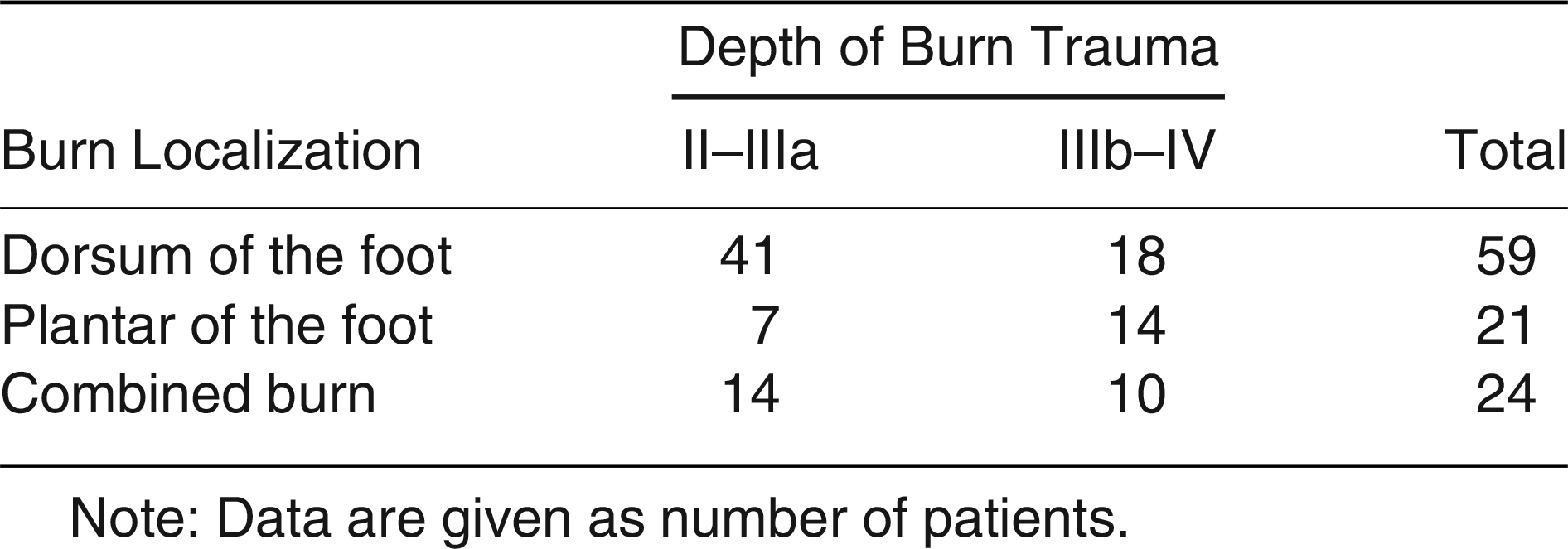
Table 2. In the pathology studied herein, the body weight is of great significance because this factor considerably affects the tactics and results of treatment. The body weight of the studied sample ranged from 28 to 100 kg. It is known that the severity of burn trauma of the foot and its consequences are associated with two main problems: depth and localization on the foot (
Table 3).
Table 1.
Distribution of Patients According to Sex and Age
Table 1.
Distribution of Patients According to Sex and Age
Table 2.
Causes of Foot Burns in the 104 Study Patients
Table 2.
Causes of Foot Burns in the 104 Study Patients
Table 3.
Distribution of Patients According to the Depth of Burn Trauma and Its Localization
Table 3.
Distribution of Patients According to the Depth of Burn Trauma and Its Localization
The study was performed at various terms: the moment of incurring the trauma, 1 to 2 days after receiving burns, during the development of burn eschar and granulating wound, on discharge, and at follow-up (2–6 months).
For objective evaluation of disturbances in support-motor function of the foot, the following patient examination methods were used as described herein: clinical, kinesiological (plantography), and biomechanical.
For measuring the anatomical length of the limb, the distance from the bony prominence of the greater trochanter of the proper hip to the internal ankle joint condoyle determined with subjective criteria was estimated by means of a unified questionnaire completed by the patient with the help of the attending physician.
Clinical Aspect
Support ability is one of the main functions of the lower extremities. It depends on the functional ability of the nervous muscular apparatus and is distinguished by two features: strength of muscles and their tolerance. So, having established the strength or tolerance of muscles, we can objectively judge the support ability of extremities. Measuring of the force and tolerance of the support-motor apparatus of the foot was performed in healthy persons. The investigations revealed that it was equal to a mean ± SD of 145 ± 25 kg, for the right foot and 135 ± 23 kg for the left foot. These readings were compared with supporting values in 48 patients with deep burns of the foot.
The study was performed by torso dynamometer in which the crosspiece for support of the feet is changed for a special metal area with a hook. The patient is lying on his or her back and holding the handle plants, with one foot against the area with a foam covering in the form of a foot connected with the dynamometer. During the dynamometer extension its hand moves away from zero point and shows the pressure strength of the extremities. By comparing this value between people with burns and people with healthy extremities, we can judge the approximate degree of disturbance and dynamics of support ability recovery.
Support ability can also be measured by means of long standing on one foot. Normally a person can stand on one foot for 3 to 20 min. This method is the most comfortable to determine support ability in order to compare the indications in patients with burns because it is simple, does not require a special apparatus, and can be used in any conditions.
Fifty-five patients with deep foot burns of various terms were studied for support ability. flexion of 50°, and extension of 35°. According to the amplitude of these movements, the degree of joint dysfunction can be objectively determined and efficacy of proper treatment can be appreciated.
Plantography
To reveal pathologic changes in gait, plantography is performed using 5% iodine tincture. We used the given method in deep burns of the foot in 76 patients at the burn department. We also used Vishnevsky ointment, which is usually applied to burns instead of 5% iodine tincture. The plantar surface is covered with Vishnevsky ointment. In adequate measures, the length of a pace and the degree of stability in walking can be determined. In adults, a pace length is approximately 66 cm.
With 1- to 3-cm differences in length between the left and right foot, in usual walking is 3 cm and the angle of foot turn is 8 to 18 cm. Thirty-three patients were studied according to this method, with 19 in various terms after burns.
Biomechanical Aspect
Analysis of supporting biomechanical features was performed with the Dia Step Scan apparatus (MANUFACTURER NAME AND LOCATION). One method that gives information concerning is podography, or the registration of support time on separate foot areas on walking. Usually, electrocontact methods were used for it. The main aim in characterizing the function of is to study the duration of participation in barefoot walking of the anterior and posterior foot areas. The reliability of this study is high because it excludes the effect of footwear.
Results
The clinical results of foot support ability at various localizations of foot burns are presented in
Table 4. The support ability of the foot is not severely injured on the first day after receiving a burn. The patient can walk at this time and stand without difficulties. However, from the moment of demarcation development and rejection of the crust (accompanied by pain) and during the whole period of granulating wound persistence, support ability sharply decreases to 15% to 20% of normal. At that time, patients cannot walk, and they stay in bed until recovery of the dermal integument. After elimination of burn wounds (first 1–2 weeks), the support ability of the extremities increases to 30% of normal so that the victim can stand independently and get around on crutches and sometimes without them. One to 2 months later, after complete recovery of the dermal integument, the support ability of the feet increases to 50%.
Table 4.
Clinical Results of Foot Support Ability in Various Localizations of Foot Burns
Table 4.
Clinical Results of Foot Support Ability in Various Localizations of Foot Burns
The results of the support ability study are shown in
Table 5. During the first days after receiving a burn, ankle joint mobility decreased approximately from 30% to 50%, especially in plantar surface burns. The main causes of mobility limitation during this period are burn crust and edema of soft tissues. During the period of granulating, extension of wounds decreases from 20% to 30%.
Table 5.
Results of the Support Ability Study
Table 5.
Results of the Support Ability Study
The test for standing was performed in 62 patients. The first 1 - 2 days after burn (burn crust) the support ability of the foot is insignificantly disturbed. Patients can stand on one foot for 1 - 3 min. Disturbance of gait is not clearly marked. As the burn crust is rejected and granulating wounds develop, the support ability of the lower extremities is sharply disturbed. Most victims lose support ability of the damaged extremity due to pain and bleeding from wounds and have to stay in bed and only those who have limited burns can stand on the injured foot from a few seconds to 2 min. If support ability is 1 to 2 min it is considered to be satisfactory, and more than 3 min is considered to be good (
Table 6).
Table 6.
Tolerance of Foot Burns Support Ability in Minutes in Different Groups of Patients
Table 6.
Tolerance of Foot Burns Support Ability in Minutes in Different Groups of Patients
Analysis of supporting biomechanical features was performed with the Dia Step Scan apparatus. The degree of parameter deviations characterizing interaction of feet with the surface depends on the condition of the supportive surface covering. The study of static and dynamic weightbearing on the feet using the apparatus makes it possible to receive objective information about the distribution of weightbearing at the initial stage of the rehabilitation.
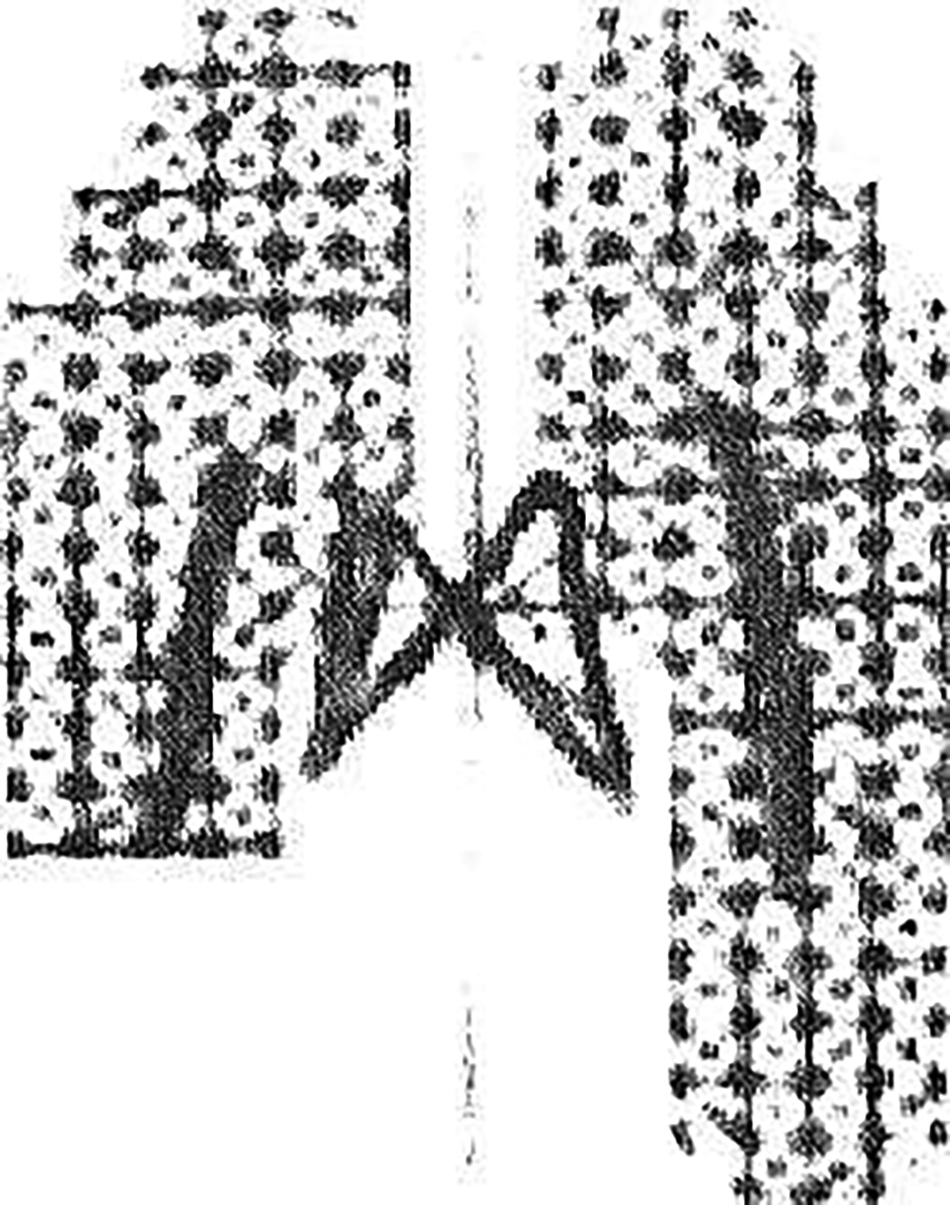
Pressure sensor insoles (up to 190 sensors are put into the patients’ shoes) send the information about pressure into a computer. The display screen reflects a real scale the following indices: distribution of pressure under the feet, trajectory of instant center of pressure for the left and right feet and jointly for both feet, and charts of integral weightbearing on the left and right feet and on various areas of the foot (
Fig. 1).
Figure 1.
Graphic results of the study according to the Dia Step Scan system.
Figure 1.
Graphic results of the study according to the Dia Step Scan system.
Discussion
There are 486,000 people treated for burn injuries annually in the United States, leading to 40,000 hospital admissions.[
10] Although the feet involve only a small percentage of the total body surface area, they play an important role in daily life because of their motion and weightbearing function.[
3,
10] Children, elderly individuals, and patients with diabetes and neurologic disorders form risk groups for foot burn injuries.[
11]
In the literature there is not enough information about treatment of burns of the foot when as a result of deep injuries disturbances of support-motor function develop as well as loss of working ability and invalidity, and 70% of patients with deep burns need rehabilitation.[
12]
It is established that loss of dermal covering without a primary effect of a neuromuscular or osteoarticular apparatus results in disturbance of support-motor function of the foot. With this in the early terms after burns (eschar, granulated wound) support function is damaged to a greater degree than is motor function in the ankle joint.
Insufficient coverage of this problem in the scientific literature and frequent postburn complications that result in disabilities impelled us, staff members of the burn department of RSCUMA and Inter-Regional Burn Center, to conduct this study. That is why the number of invalids due to deep and extensive foot burns presents a complicated social and economic problem on the one hand and brings up a variety of probes to improve the organization and methods of rehabilitation on the other hand.
Analogical data are given in investigations of the treatment of neurotrophic diabetic ulcers and correction of gait disturbances.[
13] Quantitatively significant experience in the treatment of 104 patients with foot burn injuries makes the basis of the present study. Early hospitalization of most of the patients made it possible to begin specialized treatment in good time according to a single scheme that contributed to unification of observations and increased reliability of investigations. Informative medical records including more than 100 clinical and laboratory alternative signs made it possible to collect information of real value concerning every patient.
Conclusions
Support-motor function of the foot is always affected in skin damage. The severity of the disturbances increases with damage to muscles, tendons, joints, and bones. The study of support-motor function of the foot after getting a deep burn by means of simultaneous registration of mechanograms of ankle join mobility in various terms made it possible to reveal considerable walking disturbances manifested in short-term support ability of various foot parts compared with normal. Deviations in podograms are clearly marked during the first weeks after elimination of burn wounds, especially the duration of support ability of the plantar surface. The study in separate terms after elimination of burn injury showed that the function of feet begins to regenerate in 3 to 4 months in people with deep foot burns.