Article

Short-Term Methylcobalamin Supplementation Is Associated with Changes in Anaerobic and Cognitive Performance in Amateur Cyclists: A Randomized Crossover Trial


by
Francisco Javier Martínez-Noguera
1,*,
Pedro E. Alcaraz
1,
Francisco Jesús González Blanc
1,2,
Thomas G. Huyghe
1 and
Cristian Marín-Pagán
1
1
Research Center for High-Performance Sport, Catholic University of Murcia, Campus de los Jerónimos, Guadalupe, 30107 Murcia, Spain
2
Hospital General Universitario Santa Lucía, 30202 Cartagena, Spain
*
Author to whom correspondence should be addressed.
Nutraceuticals 2026, 6(2), 35; https://doi.org/10.3390/nutraceuticals6020035 (registering DOI)
Submission received: 13 February 2026 / Revised: 11 May 2026 / Accepted: 14 May 2026 / Published: 23 May 2026

Abstract

Introduction: Vitamin B12 (VB12), particularly its active form methylcobalamin (MeB12), contributes to neuromuscular function and energy metabolism, which may be relevant for sports performance. However, evidence on the acute effects of MeB12 supplementation in athletes remains limited. Objective: To evaluate the effects of short-term (3-day) MeB12 supplementation on anaerobic and cognitive performance in amateur cyclists. Methods: A randomized, triple-blind, placebo-controlled crossover clinical trial was conducted in 18 amateur cyclists. Participants received formulations containing MeB12 (1 mg/day; MecobalActive®, HTBA, Murcia, Spain) or placebo for three consecutive days. Anaerobic performance was assessed using a repeated Wingate protocol, and cognitive performance was evaluated using a light-based mental agility/reaction test system. Biochemical analyses included serum VB12 concentrations. Primary outcomes included peak power output (absolute and relative), fatigue index across repeated sprints, and cognitive response time. Results: Compared with placebo, MeB12 supplementation was associated with higher peak power output, with increases in absolute maximal power (PMAX: +4.1%, p = 0.016) and relative maximal power (PMAXREL: +4.4%, p = 0.013). MeB12 supplementation was associated with a smaller decline in performance across repeated sprints, with a smaller drop in fatigue index from the first to the fifth sprint (p = 0.012). Pre-exercise cognitive performance improved, with a shorter total reaction test time (−4.9%, p < 0.001) versus placebo. Serum VB12 concentrations increased by 16.8% following MeB12 supplementation. Conclusions: A brief, 3-day intervention with methylcobalamin (1 mg/day) was associated with positive changes, when compared with placebo, in selected markers of anaerobic performance (peak power and fatigue-related decline) and pre-exercise cognitive performance in recreationally trained amateur cyclists, suggesting a possible involvement of peripheral and central mechanisms.

1. Introduction

Nutrition plays a fundamental role in sports performance, as it influences energy production, muscle recovery and injury prevention [1]. Within the essential micronutrients for athletes, vitamin B12 (VB12) has gained special interest due to its role in DNA synthesis, red blood cell formation and neuromuscular function [2]. Deficiency of this vitamin can compromise oxygen transport, increase fatigue, and reduce recovery capacity, factors that directly affect athletic performance [3].
VB12, also known as cobalamin, is a water-soluble vitamin found in foods of animal origin, such as meats, eggs, dairy products and seafood [4]. Its absorption in the body depends on the presence of intrinsic factor, a glycoprotein produced in the stomach, which means that its bioavailability can be affected by various medical conditions or dietary habits [5], although it can also be absorbed via passive diffusion across the gastrointestinal mucosa, including the oral cavity. In this context, vegetarian and vegan athletes are at an increased risk of deficiency, which could have a negative impact on their performance [6]. In fact, studies have shown that up to 62% of vegans and up to 86% of vegetarians may have suboptimal VB12 levels, depending on supplementation practices [7]. In addition, individuals with VB12 deficiency increase with age, gastrointestinal disorders or different medical treatments, like metformin, H2 antagonists or chronic intake of proton pump inhibitors [8,9,10]. Older adults and individuals with malabsorption syndromes may require higher doses or alternative routes of administration to maintain adequate levels [5].
Vitamin B12 exists in several forms, including cyanocobalamin, methylcobalamin (MeB12), hydroxocobalamin, and adenosylcobalamin [11]. Cyanocobalamin is a synthetic form of VB12, commonly used in supplements and fortified foods due to its stability and lower cost. Among the natural forms, adenosylcobalamin and MeB12 are biologically active, while hydroxocobalamin is a natural form that can be converted into either active form. Adenosylcobalamin functions as a cofactor of methylmalonyl Co-A mutase in mitochondria, whereas MeB12 serves as a cofactor for methionine synthase in the cytosol. Although cyanocobalamin and hydroxocobalamin are not active coenzymes themselves, they can be converted into the biologically active forms within the body. The human body, however, does not directly use VB12; instead, it has to be converted into its active coenzyme forms, MeB12 or adenosylcobalamin [11]. Compared to cyanocobalamin, MeB12 has a methyl group in place of the cyanide ligand [12]. It is a cofactor necessary for the methylation cycle, which methylates proteins or DNA, to produce methionine from homocysteine [13,14]. This biochemical pathway is also linked to the regulation of neurotransmitter synthesis and mood, which may be relevant for psychological resilience during competition [15]. MeB12 has been reported to exhibit the best absorption rate by neuronal subcellular organelles when compared to other forms. Studies using radiolabeled MeB12 in both rats and humans demonstrated that its absorption is comparable to that of cyanocobalamin; however, urinary excretion is about one-third that of cyanocobalamin, and liver uptake was greater with MeB12 [16]. Consequently, MeB12 may offer superior therapies for neurological conditions by means of efficient systemic or local administration [11,17].
The effects of VB12 on athletic performance have been extensively studied. It has been found that its deficit can lead to megaloblastic anemia, fatigue, muscle weakness, and impaired cognitive function, which together may decrease endurance and responsiveness to physical exertion [18]. Furthermore, inadequate VB12 levels may compromise mitochondrial energy production, a critical factor for both aerobic and anaerobic performance [19]. Moreover, subclinical VB12 deficiency in certain population groups may go unrecognized and generate negative effects in the long term [2].
Despite the importance of VB12 in sports physiology, currently, the research conducted to evaluate its influence on the sports performance of athletes is very limited and with little scientific evidence [20,21,22]. Furthermore, these studies only evaluated the effect of one form of VB12 such as hydroxocobalamin, with limited data evaluating the active form MeB12 on exercise performance. Therefore, as there is limited evidence on the efficacy of VB12 supplementation on physical exercise performance, it is necessary to continue investigating this relationship. The main objective of this exploratory study was to investigate the effect of short-term (3 days) intake of MeB12 on anaerobic performance and cognitive variables in amateur cyclists. Our hypothesis is that acute intake of MeB12 may improve markers of physical and cognitive performance.

2. Methodology

2.1. Study Design

A randomized, triple-blind, placebo-controlled crossover and clinical trial was conducted. The random assignment sequence was generated by an independent researcher using random number generation software (Random 4.0): assign participants to 2 groups: methylcobalamin (MeB12) and placebo (PLA). A simple 1:1 allocation was used in this two-period crossover design. The allocation code was concealed in a sealed document and was not accessible to the research team until completion of data analysis. Neither the investigator responsible for enrollment nor those assigning participants to the intervention conditions had to the random allocation sequence. The study followed a triple-blind design. Participants, investigators conducting performance assessments, laboratory personnel analyzing blood samples, and data analysis were blinded to the intervention allocation throughout the study. Participants took sublingual tablets MeB12 (1 mg/day) or placebo formulation for 3 consecutive days: days −2 and −1, and a final dose ~5 h before testing on day 0. A washout period of 7 days was carried out between treatments. The product administered, whether active or placebo, was a proprietary formulation prepared at Farmacia Daya Nueva C.B. (Alicante, Spain), being matched in appearance and composition. The active ingredient methylcobalamin (MecobalActive®) was manufactured by HTBA (Murcia, Spain). The study was submitted for evaluation and approved by the Ethics Committee of the Catholic University of Murcia (UCAM) on 31 May 2024 (CE052416). The trial was conducted in accordance with the Declaration of Helsinki for human research [23]. All eligible participants provided informed consent before participating in the study. This study was registered in ClinicalTrials.gov with ID: NCT06639789 (Registry name: Effect of a New Formulation of Vitamin B12 on Physical and Mental (PERB12), and registration date: 10 November 2024). This randomized, triple-blind, placebo-controlled crossover trial was conducted and reported according to the CONSORT 2025 guidelines and the CONSORT extension for crossover trials to ensure methodological transparency and completeness of reporting. A completed CONSORT checklist indicating the corresponding sections of the manuscript for each reporting item is provided in the Supplementary Materials (Table S1) [24].

2.2. Participants

The sample consisted of a total of 18 well-trained male amateur cyclists (Table 1), whose enrolment criteria were: age between 18 and 45 years, training 4–6 days per week, no pathology incompatible with the evaluations to be performed, not presenting any condition that contraindicates vitamin B12 supplementation, not competing at a professional level and not taking any supplements or medications one month before or during the study period. This specifically included medications know to interfere with vitamin B12 absorption or metabolism, such as metformin and proton pump inhibitors.

2.3. Procedures

The participants visited the laboratory 3 times (1 time per week). Visit 1: the informed consent to participate in the study was signed, a blood sample for a general health analysis, anthropometry, diet questionnaire and familiarization with cognitive tests were completed. Visits 2 and 3: In both visits the study protocol was executed in the randomly assigned condition order (product–placebo/placebo–product). The assessment consisted of blood analysis, cognitive test, fatigue protocol (5 × Wingate 30″/3′ of rest period) and repetition of cognitive test and blood analysis. All subjects who participated in our study performed tests at the same time to avoid interference of circadian rhythms in the results. No interim analyses were planned or conducted due to the short duration of the intervention and the crossover design. Given the brief supplementation period (3 days per condition), the established safety profile of MeB12, and the low-risk nature of the procedures, no formal stopping guidelines were defined. The study was completed as planned for all enrolled participants.

2.4. Assessments

2.4.1. Blood Analysis

A total of 5 blood samples were taken for subsequent analysis, being a general health analysis (general biochemistry and hemogram) at visit 1 and four VB12 blood analyses at pre- and post-fatigue times during visits 2 and 3 (2 samples per day).
A duly accredited nursing professional performed the venous blood draw, collecting two tubes: a 3 mL tube with EDTA anticoagulant (BD Vacutainer®, Becton Dickinson, Franklin Lakes, NJ, USA) for the hemogram, and a 3.5 mL tube made of polyethylene terephthalate (PET) (BD Vacutainer®, Becton, Dickinson and Company, 1 Becton Drive, Franklin Lakes, NJ 07417-1880, USA) for general health studies. Red blood cell analysis was performed using a Cell-Dyn 3700 automated analyzer (Abbott Diagnostics, Chicago, IL, USA), under a quality control system that included internal controls (Cell-Dyn 22, Abbott Laboratories, Lake Forest, IL, USA) and external controls provided by the Program of Excellence for Medical Laboratories (PEML). This instrument estimated the levels of erythrocytes, hemoglobin, hematocrit and hematometric parameters. The hematological values of the participants can be found in the “Supplementary Materials, Table S2”, where all were deemed eligible to participate in the study.

2.4.2. Anthropometry

Anthropometric assessments were carried out by a researcher certified at ISAK Level 1. For measuring height and body weight, a clinical-grade digital scale with an integrated stadiometer (SECA 780; Vogel & Halke GmbH & Co., Hamburg, Germany) was used. Skinfold measurements were obtained using Holtain Skinfold Calipers (Holtain, Ltd., Crymych, Pembrokeshire, UK), following the standardized procedures outlined by the International Society for the Advancement of Kinanthropometry [25]. Body fat percentage was estimated using the Faulkner equation [26], while muscle mass percentage was derived from a modified version of the Matiegka equation [27]. Additionally, the sum of eight specific skinfold sites (triceps, subscapular, biceps, iliac crest, supraspinale, abdominal, thigh, and calf) was calculated.

2.4.3. Cognitive Response Test

The cognitive response test was carried out with a reaction light system (Lummic®, Pitk Pelotas SL, Navarra, Spain), which has 6 devices placed in series at a distance of 15 cm (from center to center of each device). The system consists of LED-based wireless light modules equipped with proximity sensors, allowing precise detection of hand contact and automatic recording of reaction times with millisecond resolution. The devices were indoor lighting conditions to minimize external visual interference.
The participant was seated on a chair 30 cm from the table with the palms of the hands resting on the thighs and he had to react to the lights to turn them off with the dominant hand, returning to the starting position (palm on the thigh) before switching off the next light. Participants were instructed to respond as quickly and accurately as possible to each visual stimulus while maintaining the standardized starting position. No anticipatory movements were allowed, and any trial with incorrect execution (e.g., failure to return to the starting position) was repeated.
The test consisted of completing 3 sets of 40 lights with 1 min of recovery between sets. The variables recorded were mean reaction time and the total time of each series. During the familiarization session (visit 1), a complete series was performed to familiarize the participant with the operation, protocol and position. All participants completed the same familiarization procedure to reduce potential learning effects and improve test reliability. Data were automatically recorded by the system application, which communicated to the photocell via Bluetooth with a smartphone. The data acquisition system (Lummic® app, version 1.0.14, compatible with iOS/Android) stored all responses in real time, ensuring synchronization between stimuli presentation and response detection.

2.4.4. Repeated Wingate Test

The fatigue protocol consisted of 5 sets of the Wingate test (30 s all out) separated by 3 min of recovery. The load was estimated based on the body weight of each participant following the standardized formula for this test (load = 0.075 · body weight). The test was performed seated, and instructions were given to perform the test at maximum from the first second. A warm-up of 5 min at 50 W at 75–85 rpm had been performed previously. During each series of the test, the maximum power, maximum relative power, mean power, mean relative power and fatigue index (IF%) were recorded. The IF% was calculated as the percentage decrease in power from the maximum peak to the minimum recorded during each set. During recovery, active pedaling without load was performed for 2 min, followed by 30 s of stop and 30 s of pre-test reactivation (50 W at 75–85 rpm).

2.4.5. Diet Questionnaires

Participants were instructed to consume a standardized breakfast two hours prior to testing, which included 0.41 g of protein, 1.35 g of carbohydrates, and 0.53 g of fat per kilogram of body mass. Diet questionnaires were carried out by means of a personal interview, in which all the dietary intake in 72 h was collected. This survey should always include 2 weekdays (M-F) and 1 weekend or holiday. Once the information was collected, it was analyzed with analysis software (Dietowin® 11.0, Dietowin S.L., La Garriga, Barcelona, Spain) to obtain macronutrients (fats, carbohydrates and proteins) and caloric intake. The data were analyzed to corroborate that there were no substantial modifications in the diet during the study.

2.4.6. Vitamin B12

Serum vitamin B12 concentration was determined by electrochemiluminescence immunoassay (ECLIA), using the Cobas-e automated system (Roche Diagnostics; Sandhofer Strasse 116, D-68305 Mannheim, Germany), specifically the Elecsys Vitamin B12 II test. This assay, based on a competitive principle, employs intrinsic factor as the specific binding protein for vitamin B12. The serum sample (9 μL) was subjected to a first incubation with pretreatment reagents that release bound vitamin B12, followed by a second incubation with ruthenium-labeled intrinsic factor, which forms a complex whose amount is inversely proportional to the concentration of B12 in the sample. Subsequently, in a third incubation, streptavidin-coated microparticles and biotin-labeled vitamin B12 were added, forming a stable complex that was fixed to a solid phase by biotin-streptavidin interaction. Finally, the mixture was transferred to the measuring cell where, under electric current, a chemiluminescent signal proportional to the amount of analyte was produced, detected by a photomultiplier. The results were calculated with a specific calibration curve generated by a two-point calibration and a master curve supplied by the Cobas link system. Blinding was achieved by using identically appearing formulations of methylcobalamin and placebo (1 tablet), matched for color, taste, texture, and packaging. Both supplements were prepared and coded by an external pharmacist to ensure indistinguishability between conditions.
Adverse events were systematically monitored throughout the study. Participants were screened before each visit and asked to report any symptoms. No adverse events were observed in either condition. All participants adhered 100% to the supplementation guidelines. Adherence was monitored by counting capsules, with 100% compliance achieved. This high level of adherence supports the internal validity of the study.

2.4.7. Statistical Analysis

The JAMOVI software (Jamovi v 2.6. Jamovi.org, Sydney, Australia) was used for statistical analysis. The homogeneity and normality of the data were tested with the Levene and Shapiro–Wilk tests, respectively. Given the crossover design, comparisons between MeB12 and placebo conditions were performed using a paired t-test for the variables of the Wingate test, mental agility and biochemical markers. Statistical analyses comparing PLA and MeB12 conditions were performed using paired statistical procedures, allowing each participant to serve as his own control and reducing inter-individual variability. Individual data points displayed in the figures were connected to visually represent within-subject responses across experimental conditions. The effect size (ES) was calculated for the comparison of all variables analyzed (performance, fatigue, cognitive and biochemical outcome) to quantify the magnitude of the differences between conditions. The following thresholds were used for ES and were applied consistently across all variables: ≤0.20, no effect; 0.21–0.49, small effect; 0.50–0.79, moderate effect; ≥0.80, large effect. The significance level was set at p < 0.05. The Pearson correlation coefficient (r) was used to assess the linear relationships between POST_VB12 concentrations and performance variables (CHANGE_PMAX, DIF_PMAX, and MEAN_%IF) under both placebo and VB12 conditions. Prior to analysis, the normality of the data distribution was verified using the Shapiro–Wilk test. The strength of the correlation was interpreted according to standard thresholds: small (>0.2), moderate (>0.5) and large (>0.8). In addition, the variables from the 3-day food record—calories, carbohydrates, protein, fat, and vitamin B12—were analyzed using a paired t-test. Reliability was assessed using intraclass correlation coefficients (ICC).
The sample size was determined a priori using G*Power software (version 3.1; Heinrich Heine University, Düsseldorf, Germany) based on the primary outcome variable of maximum peak power output obtained during the repeated Wingate sprint protocol. The calculation considered a crossover repeated-measured design with compared comparison, assuming an expected moderate within-subject effect size (Cohen’s d = 0.60), derived from previous literature investigating acute nutritional ergogenic interventions and accounting for the lower inter-individual variability associated the crossover design. A two-tailed alpha level of 0.05 and a statistical power (1 − β) of 0.80 were selected, resulting in a required minimum sample size of 18 participants. This sample size was considered sufficient to detect physiologically meaningful changes in performance-related outcomes while maintaining adequate statistical sensitivity for within-subject comparisons.

3. Results

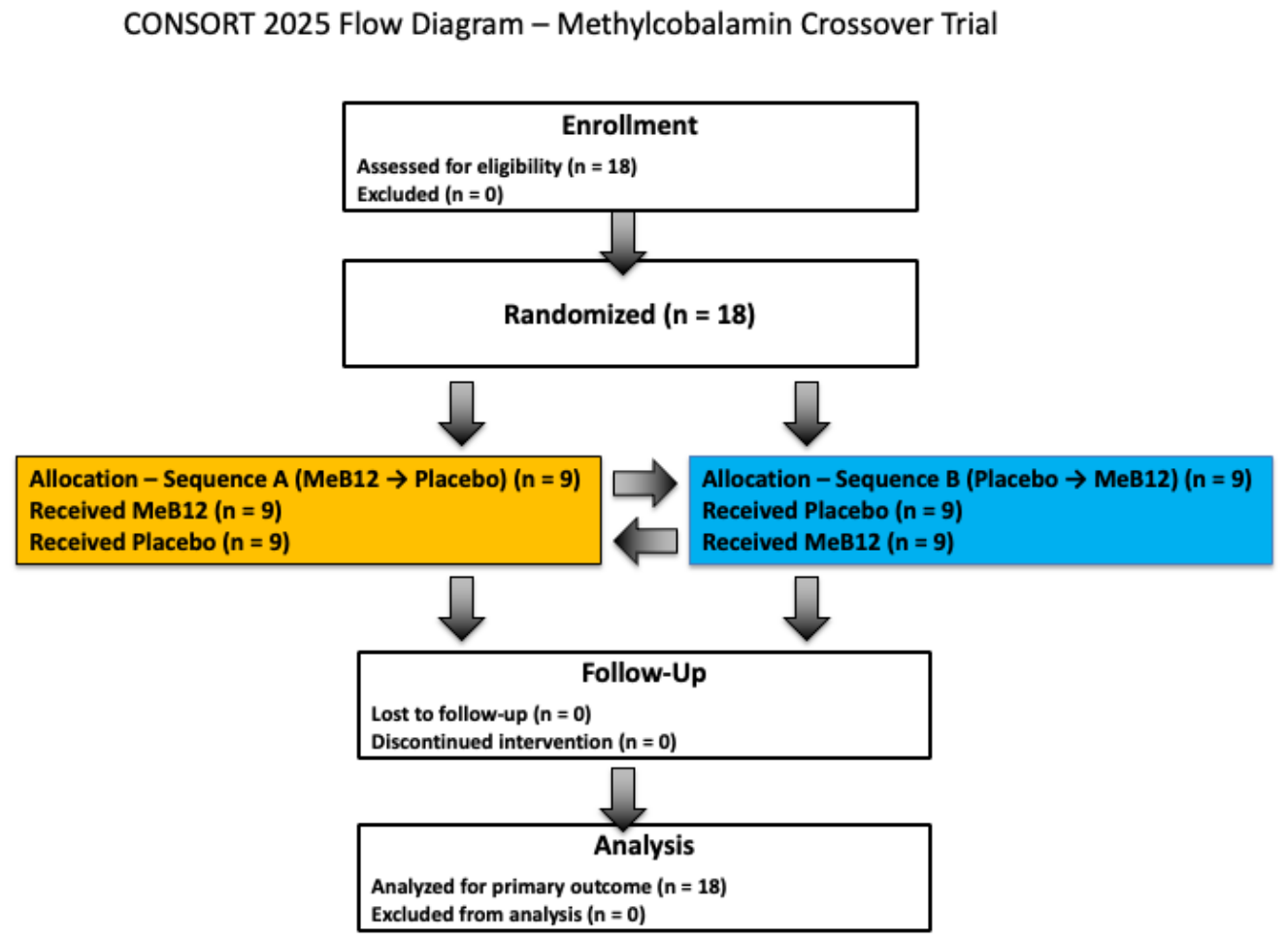
A total of 18 amateur cyclists were assessed for eligibility and randomized into one of two intervention sequences in a 1:1 ratio (MeB12-PLA or PLA-MeB12). All participants received the allocated intervention in both periods of the crossover design and completed the study protocol (Figure 1). All 18 participants were included in the analysis of the primary outcomes (peak power output, IF%, and cognitive performance). No participants were lost to follow-up or excluded after randomization. All randomized participants completed both intervention conditions and were included in the final statistical analyses. The results of the three-day recall (mean ± standard deviation) were as follows: PLA: energy 1675 ± 254 kcal; carbohydrates 175 ± 38.3 g; protein 106 ± 31.9 g; and fat 58.7 ± 16.2 g; vitamin B12 8.4 ± 0.6 µg; VB12: energy 1610 ± 273 kcal; carbohydrates 171 ± 50.7 g; protein 104 ± 33.7 g; and fat 54.6 ± 14.4 g; vitamin B12 8.2 ± 0.7 µg. No significant differences were found between groups for any of the variables analyzed using a paired t-test.
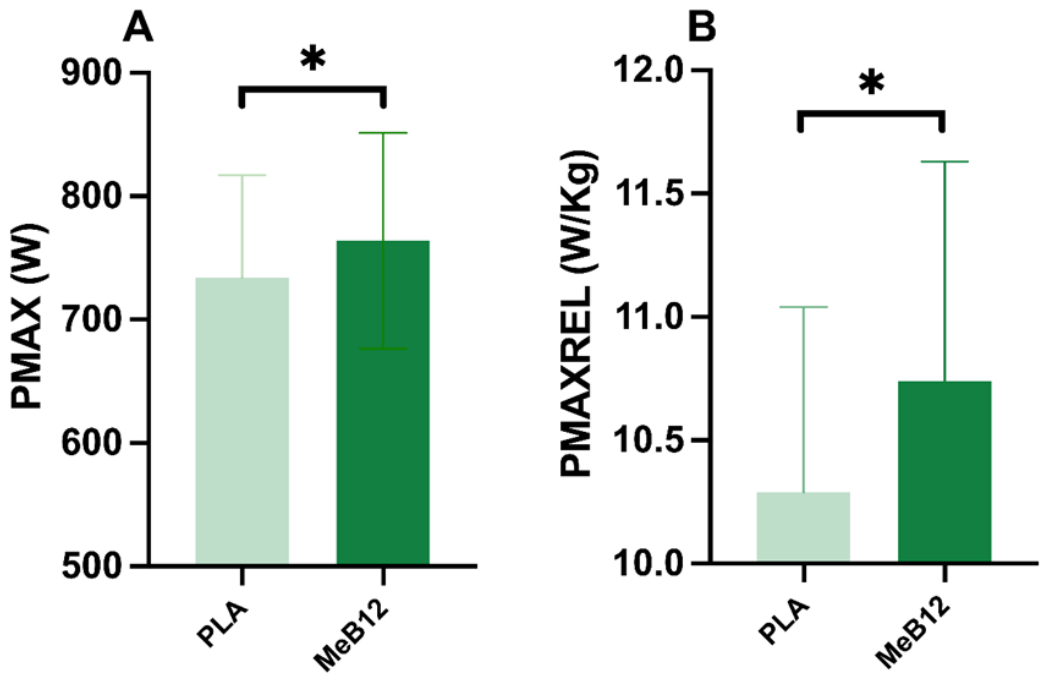
Compared with placebo, the MeB12 group showed greater maximum peak power (PMAX) (764.1 ± 87.38 W; ICC = 0.780) than the placebo (PLA) (734.2 ± 83.12 W; ICC = 0.803) (p = 0.016; ES = 0.628) after performing the 5 sprints of the Wingate test (Figure 2A). Furthermore, in maximum relative power (PMAXREL) we found that MeB12 recorded higher PMAXREL values (10.74 ± 0.89 W/kg; ICC = 0.727) than PLA (10.29 ± 0.75 W/kg; ICC = 0.678) (p = 0.013; ES = 0.655) following the same protocol (Figure 2B).
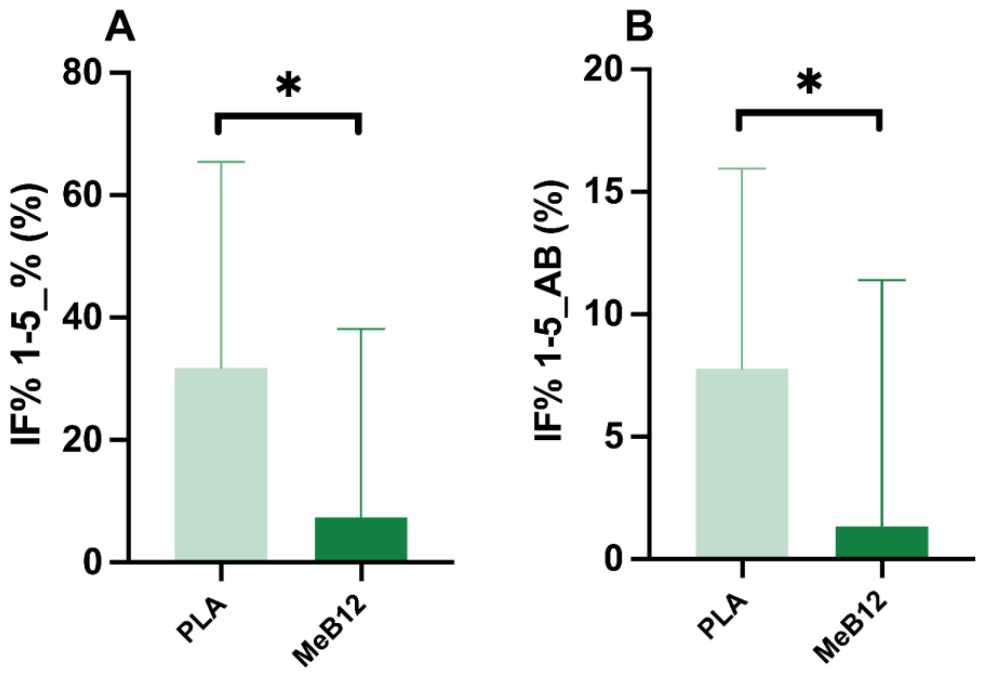
We also analyzed the difference between the 1st and 5th sprint (1–5) of the Wingate test for the percentage change and for the absolute value (AB) of the IF%. Results indicated that MeB12 intake decreased in percentage IF% between the 1st and 5th effort of the Wingate test IF% 1–5_B12 (7.39 ± 30.76%; ICC = 0.729) compared to PLA IF% 1–5_PLA (31.80 ± 33.60%; ICC = 0.775) (p = 0.012; ES = 0.664) (Figure 3A), and similarly in absolute values in IF% 1–5 AB_B12 (1.33 ± 10.05%) and IF% 1–5 AB_PLA (7.78 ± 8.16%) compared to PLA (p = 0.022; ES = 0.594) (Figure 3B).
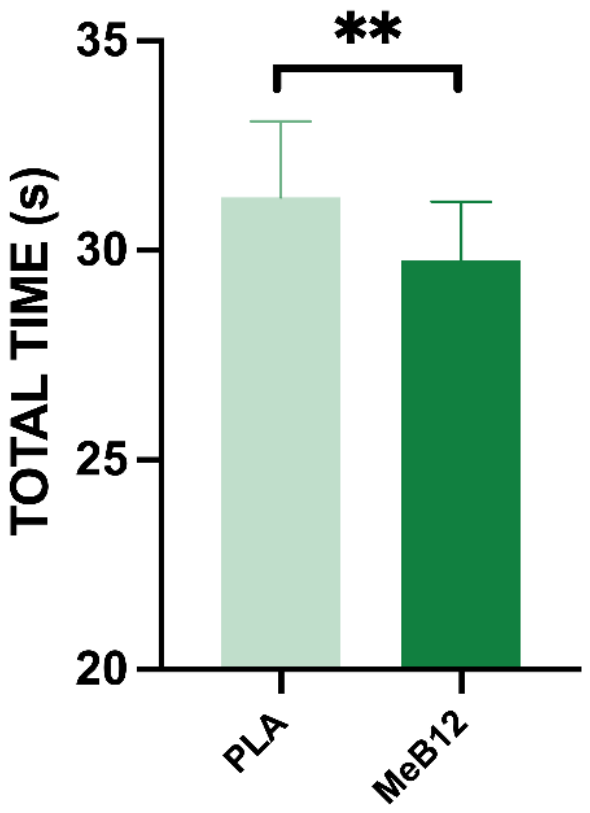
Statistical analysis of the mental agility test data revealed that the total time recorded before the Wingate test was significantly lower in MeB12 (29.75 ± 1.42 s: ICC = 0.721) compared to the PLA (31.27 ± 1.82 s; ICC = 0.690) (p < 0.001; ES = 0.459) (Figure 4). These findings suggest that a 3-day supplementation with MeB12 can improve cognitive performance, as reflected by faster completion times in the mental agility test under resting conditions, compared to placebo.
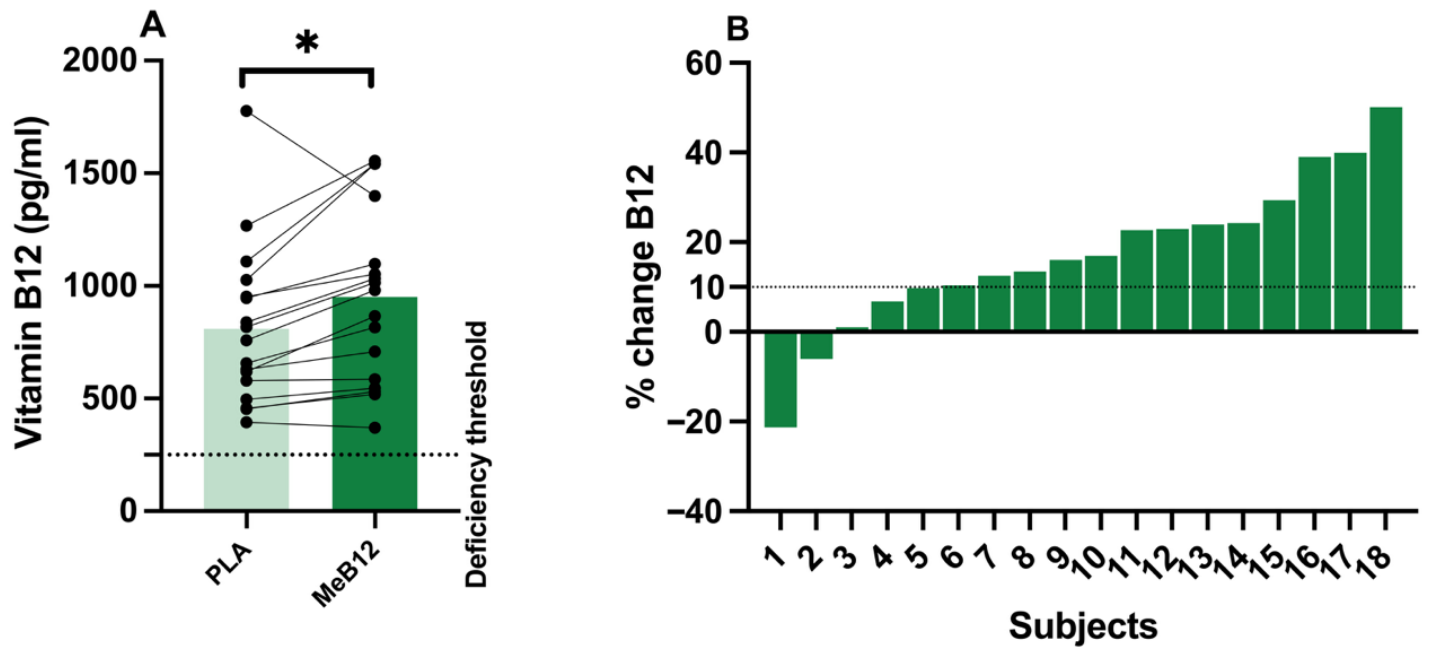
The analysis of VB12 values before the Wingate test showed that the group supplemented with MeB12 increased serum VB12 levels (924 ± 378 pg/mL) compared to PLA (804 ± 343 pg/mL) (p = 0.008; ES = 0.706). After 3 days of MeB12 supplementation, it increased by 16.8% from its basal levels (PLA), considering the values before performing the Wingate test (Figure 5A). 13 of the 18 subjects increased serum VB12 concentrations by more than 10% after 3 days of supplementation compared to their baseline values (PLA), taking into account the values before performing the Wingate test (resting conditions) (Figure 5B).
Although detecting vitamin B12 deficiency was not an objective of this study, after analyzing the data, no participant had serum concentrations below 250 pg/mL, which is a criterion for determining the presence of vitamin B12 deficiency (Figure 5A).
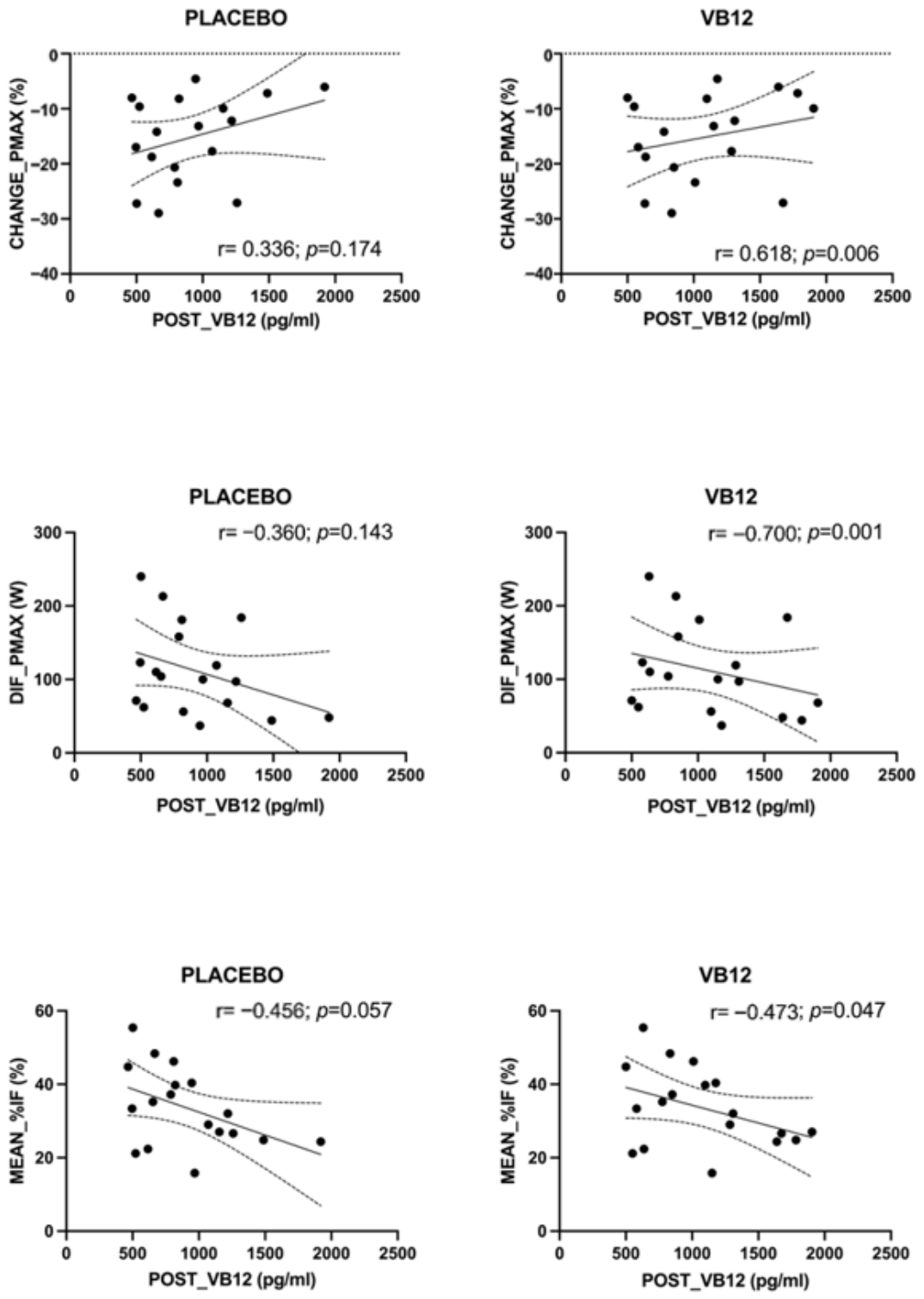
Pearson’s correlation analysis revealed different patterns of association between POST_VB12 concentrations and performance-related variables, depending on the experimental condition (Figure 6). In the placebo condition, no statistically significant correlations were observed. Specifically, POST_VB12 showed a non-significant positive correlation with CHANGE_PMAX (%) (r = 0.336; p = 0.174), and non-significant negative correlations with DIF_PMAX (W) (r = −0.360; p = 0.143) and MEAN_%IF (%) (r = −0.456; p = 0.057), with the latter approaching statistical significance. In contrast, significant associations were identified in the VB12 condition. POST_VB12 correlated positively with CHANGE_PMAX (%) (r = 0.618; p = 0.006), indicating that higher VB12 concentrations were associated with greater improvements in maximum power. Furthermore, significant negative correlations were found between POST_VB12 and DIF_PMAX (W) (r = −0.700; p = 0.001), as well as with MEAN_%IF (%) (r = −0.473; p = 0.047), suggesting that higher VB12 levels were associated with smaller fatigue-related declines in performance.
No adverse events, side effects, or unintended health changes were reported during either supplementation period. No clinically relevant alterations were observed in general health parameters assessed at baseline. All participants completed both intervention conditions, and no discontinuations occurred due to adverse events.
No pre-specified subgroup or sensitivity analyses were conducted. All analyses were performed according to the primary statistical plan using within-subject comparisons in the crossover design. No post hoc exploratory subgroup analyses were undertaken.

4. Discussion

The main findings after completion of this intervention were that acute intake (3 days) of an active form of VB12 (MeB12) resulted in higher PMAX and PMAXREL, and lower IF% (between 1st and 5th sprint) compared to PLA during the Wingate test in amateur cyclists. In addition, we observed a cognitive improvement with MeB12 supplementation, as the total time to complete a mental agility task was decreased compared to PLA. Finally, acute supplementation with this active VB12 form increased serum VB12 concentrations by 16.8%.
After supplementation with MeB12 amateur cyclists had higher peak power output (PMAX: +30 W, +4.1%) and relative peak power (PMAXREL: +0.45 W/kg, +4.4%) during the Wingate test compared to PLA. In contrast, Mya-Tu et al. [22] evaluated the effects of administering 1 mg cyanocobalamin injections 3 times per week over 6 weeks in healthy male students on aerobic capacity performance (incremental test to exhaustion). They found that cyanocobalamin did not improve aerobic performance, since no improvements in maximal oxygen consumption (VO2MAX) were found. Differences between cyanocobalamin and MeB12 activity and bioavailability may explain their different effects. Conversely, Lee et al. [28] found an improvement in endurance performance (25% increase in time to exhaustion) and a decrease in fatigue-related biomarkers (decrease in lactate and ammonia) derived from exercise, after 28 days supplementation with a B-vitamin complex (36 mg B1; 10 mg B2; 50 mg B6 and 750 µg B12) in non-athletes. Notably, there are methodological differences between their study and ours, since they used an exercise protocol with a high aerobic component and we used one with a high anaerobic component. In addition, they did not use an isolated molecule, and the intake was long term.
Potential mechanisms by which MeB12 have contributed to improve performance in a Wingate test may be derived from a cognitive or central nervous system improvement. It has been shown that MeB12 supplementation can reduce diabetic peripheral neuropathic pain and associated leg symptomatology such as burning paresthesia and spontaneous pain [29,30] and improving the distance of neurogenic claudication [31]. On the other hand, it has been shown that the administration of MeB12 can improve nerve conduction velocity mediated by the recovery of myelin that promotes nerve regeneration, suppresses spontaneous ectopic discharges of peripheral primary sensory neurons in neuropathic pain conditions and restores neuromuscular functioning in peripheral hyperalgesia and allodynia [11]. Therefore, the intake of MeB12 could improve performance in the Wingate test through a reduced perception of effort. Since, as it is characteristic in this type of test, the effort is maximal, and the perception of effort is a determining factor in maintaining a high-power output. These neuromuscular effects may partly explain the observed improvements in repeated sprint performance.
Furthermore, in vitro models have reported that VB12 promotes indirect antioxidant activity, as it can increase the expression of superoxide dismutase and catalase enzymes responsible for degrading reactive oxygen species [32]. As is well known, reactive species can be a factor in anticipating fatigue [33]. Additionally, it has been demonstrated that administering VB12 (more especially, MeB12) to melanocytes can enhance nuclear factor erythroid 2-related factor 2 (NRF2) activation, which in turn stimulates the transcription of the target genes catalase and superoxide dismutase and reduces the oxidative stress caused by hydrogen peroxide [34]. Likewise improved Wingate test results may be related to a potential enhancement of the antioxidant system following supplementation.
In addition, acute supplementation with MeB12 decreased the total time (–4.9%) to complete a mental agility test before performing the Wingate test compared to placebo. In line with our results, Zhou et al. [35] after administering VB12 (cobamamide 0.25 mg/d and methylcobalamin 0.50 mg/d) for six months in middle-aged and elderly patients with cognitive impairment, found that they improved attention, calculation and visual- constructive ability compared to PLA. In addition, van Asselt et al. [36] evaluated intramuscular administration of hydroxocobalamin for five months (1000 g weekly for 4 weeks and 1000 g monthly for 4 months) on cognitive performance and brain function in elderly subjects with low cobalamin concentrations but no cognitive dysfunction. This author found that hydroxocobalamin administration decreased homocysteine and improved performance on the verbal word learning test and verbal fluency, and the quantitative electroencephalograph showed more fast activity and less slow activity. In addition, increased fast activity and decreased slow activity was associated with improved performance on word learning and verbal fluency tasks [36]. Therefore, supplementation with MeB12 may decrease the time in performing the mental agility test due to an improvement in attentional or psychomotor components of cognitive function. To determine the cause of the performance and cognitive enhancement triggered by MeB12 supplementation, more clinical research is required.
The findings in this study are consistent, as the improvements in both performance and cognitive level occurred in amateur cyclists where their VB12 levels prior to MeB12 supplementation were in the normal range (mean ± sd: 804 ± 333 pg/mL). Despite this, the three-day supplementation with MeB12 formulation increases serum VB12 levels by 16.8%, and in 72% of the subjects, it raises VB12 concentrations by more than 10%. This indicates a high efficacy in increasing VB12 levels in a short period of time of intake. In some studies, the efficacy of VB12 has been demonstrated in relation to cognitive function, but with subjects where there was a previous deficiency of VB12 [35,36]. This adds power to our results, since previously the positive effects after VB12 intake or administration had occurred in subjects with VB12 deficiency and never in subjects with normal levels.
A key factor that may explain the inconsistency in the literature regarding the effects of vitamin B12 supplementation on functional outcomes is the participants’ baseline nutritional status. In the present study, vitamin B12 status was determined prior to the intervention through serum measurements, confirming that all participants had levels within the normal physiological range. However, participants were not stratified according to their B12 status, as the crossover design allows each subject to serve as their own control, reducing interindividual variability and potential bias in the interpretation of results. Previous evidence indicates that the functional and clinical benefits of vitamin B12 supplementation are more evident in populations with deficiency or subclinical status, while the effects in individuals with adequate levels are less consistent [5,37]. However, our findings demonstrate that acute intake of high doses of VB12 can improve anaerobic performance.
Another important factor contributing to the variability in results across studies is the chemical form of vitamin B12 used. In the present study, methylcobalamin (MeB12) was administered, a biologically active coenzyme form with high affinity for neural tissue. In contrast, cyanocobalamin and hydroxocobalamin require intracellular conversion into active forms (methylcobalamin and adenosylcobalamin) before exerting physiological effects. Differences in bioavailability, metabolic activation, and tissue distribution among these forms may partly explain the heterogeneous results described in the literature [17,38,39,40].
Vitamin B12 does not have an established tolerable upper intake level (UL) due to its low toxicity and water-soluble nature. Data from the Institute of Medicine indicate that “no adverse effects have been associated with excessive intake of vitamin B12 from food or supplements in healthy individuals,” and therefore, an UL has not been established [4]. This safety profile is largely explained by the limited intestinal absorption of cobalamin and the efficient renal excretion of excess amounts.
Circulating concentrations above ~1000 pg/mL are generally considered elevated; however, such values are not indicative of toxicity per se, but may reflect recent supplementation or, in some cases, underlying clinical conditions (e.g., hepatic or hematological disorders) [41]. It is important to note that elevated serum levels alone do not imply adverse physiological effects.
In this context, the concentrations observed in the present study (~1500 pg/mL) remain within a range that has not been associated with toxic effects. In fact, even significantly higher serum levels (>2000 pg/mL) resulting from supplementation have not been linked to clinical toxicity, which reinforces the wide safety margin of vitamin B12 [42].
Furthermore, acute supplementation protocols are unlikely to pose any health risk. Due to the saturable absorption mechanism of vitamin B12 (intrinsic factor-mediated transport), only a small fraction of high oral doses is absorbed, while the remainder is excreted [41]. This mechanism further limits the risk of acute toxicity, even when high doses are administered for short periods. Therefore, the acute supplementation strategy employed in the present study, despite transiently elevating circulating vitamin B12 concentrations, is not expected to induce adverse physiological effects and can be considered safe in the context of current scientific evidence.
This study has several limitations that should be considered when interpreting the results. Firstly, although the statistical power was sufficient to detect within-subject differences, future studies with larger samples are needed to confirm these results. Secondly, the study design focused on short-term supplementation (3 days), providing valuable insight into immediate effects, though it limits the possibility of assessing long-term outcomes or sustainability of the observed improvements. Another limitation of the present study is the use of serum VB12 as the sole biomarker of VB12 status. While commonly used, it mainly reflects circulating levels and recent intake and may not accurately represent functional or intracellular status. Indeed, normal serum VB12 values do not exclude metabolic deficiency, which can be better assessed through biomarkers such as methylmalonic acid (MMA) or holotranscobalamin. However, their assessment was beyond the scope of this study, focused on ergogenic effects. Future research should include these markers to improve the evaluation of VB12 status. Finally, potential confounding variables such as sleep quality, stress or micronutritional status, which could modulate performance and cognitive outcomes, were not assessed.
One of the main strengths of this study is the use of a randomized, placebo-controlled, crossover design, and triple-blind conditions, which minimizes interindividual variability and reinforces the reliability of the observed effects. The inclusion of multiple outcome measures, such as anaerobic power output (PMAX, PMAXREL), IF%, cognitive performance (mental agility test), and serum VB12 levels, allows for a comprehensive assessment of both physical and neurocognitive responses to supplementation. In addition, the use of MeB12, a biologically active form of vitamin B12 with high neuronal affinity, provides mechanistic relevance to the findings and distinguishes this study from others using less bioavailable VB12 forms such as cyanocobalamin.
Given the limited sample size and short intervention period, further well-powered studies are required to confirm these observations, explore underlying mechanisms, and determine their relevance across different populations and exercise modalities.

5. Conclusions

This study suggests that short-term (3 days) supplementation with a formulation containing methylcobalamin (MecobalActive®, HTBA) is associated with changes in selected markers of anaerobic performance and cognitive response in amateur cyclists. Compared with placebo, supplementation was associated with higher absolute and relative peak power during a repeated Wingate protocol, a smaller decline in IF% across sprints, and shorter completion times in a reaction-based cognitive task. Short-term intake was also associated with increased serum vitamin B12 concentrations, including in participants with baseline values within the normal range. Taken together, these findings suggest that short-term methylcobalamin supplementation may be associated with changes in selected performance and cognitive measures under high-intensity exercise conditions in recreationally trained individuals. Given the exploratory nature, small sample size, and short intervention period, these results warrant confirmation in larger and longer-term studies.

Supplementary Materials

The following supporting information can be downloaded at: https://www.mdpi.com/article/10.3390/nutraceuticals6020035/s1. CONSORT 2025 checklist of information and Hematological values of the study participants.

Author Contributions

Conceptualization, F.J.M.-N., P.E.A. and C.M.-P.; methodology, F.J.M.-N., P.E.A. and C.M.-P.; software, F.J.M.-N. and C.M.-P.; validation, F.J.M.-N., P.E.A. and C.M.-P.; formal analysis, F.J.M.-N. and C.M.-P.; investigation, F.J.M.-N., F.J.G.B., T.G.H. and C.M.-P.; resources, F.J.M.-N., T.G.H. and C.M.-P.; data curation, F.J.M.-N., F.J.G.B., T.G.H. and C.M.-P.; writing—original draft preparation, F.J.M.-N.; writing—review and editing, F.J.M.-N., P.E.A., F.J.G.B., T.G.H. and C.M.-P.; visualization, F.J.M.-N. and C.M.-P.; supervision, F.J.M.-N. and C.M.-P.; project administration, F.J.M.-N. and C.M.-P.; funding acquisition, P.E.A. All authors have read and agreed to the published version of the manuscript.

Funding

This research was funded by HealthTech BioActives S.L.U. (Murcia, Spain).

Institutional Review Board Statement

The study was conducted in accordance with the Declaration of Helsinki and approved by the Ethics Committee of the Catholic University of Murcia (protocol code CE052416 and 31 May 2024).

Informed Consent Statement

Informed consent was obtained from all subjects involved in the study.

Data Availability Statement

The data presented in this study are available on request from the corresponding author (specify the reason for the restriction).

Acknowledgments

This study was supported by Research Center in High Performance Sport of the Catholic University of Murcia. We thank Javier Zaragozá Santamaría (Farmacia Daya Nueva C.B.) for his contribution to the product formulation.

Conflicts of Interest

The authors declare no conflicts of interest. This research was funded by HealthTech BioActives S.L.U. (Murcia, Spain). The funder had no role in the study design; in the collection, analyses, or interpretation of data; in the writing of the manuscript; or in the decision to publish the results.

References

  1. Rodriguez, N.R.; Di Marco, N.M.; Langley, S. American College of Sports Medicine position stand. Nutrition and athletic performance. Med. Sci. Sports Exerc. 2009, 41, 709–731. [Google Scholar] [CrossRef]
  2. Thomas, D.T.; Erdman, K.A.; Burke, L.M. Position of the Academy of Nutrition and Dietetics, Dietitians of Canada, and the American College of Sports Medicine: Nutrition and athletic performance. J. Acad. Nutr. Diet. 2016, 116, 501–528. [Google Scholar] [CrossRef]
  3. Woolf, K.; Manore, M.M. B-vitamins and exercise: Does exercise alter requirements? Int. J. Sport Nutr. Exerc. Metab. 2006, 16, 453–484. [Google Scholar] [CrossRef] [PubMed]
  4. Institute of Medicine, Food and Nutrition Board; Subcommittee on Upper Reference Levels of Nutrients; Standing Committee on the Scientific Evaluation of Dietary Reference Intakes and its Panel on Folate, Other B Vitamins, and Choline. Dietary Reference Intakes for Thiamin, Riboflavin, Niacin, Vitamin B(6), Folate, Vitamin B(12), Pantothenic Acid, Biotin, and Choline; National Academies Press: Washington, DC, USA, 1998; National Academy of Sciences. [Google Scholar]
  5. O’Leary, F.; Samman, S. Vitamin B12 in health and disease. Nutrients 2010, 2, 299–316. [Google Scholar] [CrossRef]
  6. Craig, W.J. Health effects of vegan diets. Am. J. Clin. Nutr. 2009, 89, 1627s–1633s. [Google Scholar] [CrossRef] [PubMed]
  7. Pawlak, R.; Lester, S.E.; Babatunde, T. The prevalence of cobalamin deficiency among vegetarians assessed by serum vitamin B12: A review of literature. Eur. J. Clin. Nutr. 2016, 70, 866. [Google Scholar] [CrossRef] [PubMed]
  8. Palacios, G.; Sola, R.; Barrios, L.; Pietrzik, K.; Castillo, M.J.; González-Gross, M. Algorithm for the early diagnosis of vitamin B12 deficiency in elderly people. Nutr. Hosp. 2013, 28, 1447–1452. [Google Scholar] [CrossRef]
  9. Battat, R.; Kopylov, U.; Szilagyi, A.; Saxena, A.; Rosenblatt, D.S.; Warner, M.; Bessissow, T.; Seidman, E.; Bitton, A. Vitamin B12 deficiency in inflammatory bowel disease: Prevalence, risk factors, evaluation, and management. Inflamm. Bowel Dis. 2014, 20, 1120–1128. [Google Scholar] [CrossRef]
  10. Salinas, M.; Flores, E.; López-Garrigós, M.; Leiva-Salinas, C. Vitamin B12 deficiency and clinical laboratory: Lessons revisited and clarified in seven questions. Int. J. Lab. Hematol. 2018, 40, 83–88. [Google Scholar] [CrossRef]
  11. Zhang, M.; Han, W.; Hu, S.; Xu, H. Methylcobalamin: A potential vitamin of pain killer. Neural Plast. 2013, 2013, 424651. [Google Scholar] [CrossRef]
  12. McDowell, L.R. Vitamins in Animal and Human Nutrition; John Wiley & Sons: Hoboken, NJ, USA, 2000. [Google Scholar] [CrossRef]
  13. Pfohl-Leszkowicz, A.; Keith, G.; Dirheimer, G. Effect of cobalamin derivatives on in vitro enzymatic DNA methylation: Methylcobalamin can act as a methyl donor. Biochemistry 1991, 30, 8045–8051. [Google Scholar] [CrossRef]
  14. Toohey, J.I. Vitamin B12 and methionine synthesis: A critical review. Is nature’s most beautiful cofactor misunderstood? Biofactors 2006, 26, 45–57. [Google Scholar] [CrossRef]
  15. Kennedy, D.O. B Vitamins and the Brain: Mechanisms, Dose and Efficacy—A Review. Nutrients 2016, 8, 68. [Google Scholar] [CrossRef]
  16. Okuda, K.; Yashima, K.; Kitasaki, T.; Takara, I. Intestinal absorption of methylcobalamin and concurrent chemichal changes of mehylcobalamin. J. Lab. Clin. Med. 1973, 81, 557–567. [Google Scholar] [PubMed]
  17. Paul, C.; Brady, D.M. Comparative bioavailability and utilization of particular forms of B12 supplements with potential to mitigate B12-related genetic polymorphisms. Integr. Med. A Clin. J. 2017, 16, 42–49. [Google Scholar]
  18. Maughan, R.J.; Burke, L.M.; Dvorak, J.; Larson-Meyer, D.E.; Peeling, P.; Phillips, S.M.; Rawson, E.S.; Walsh, N.P.; Garthe, I.; Geyer, H.; et al. IOC consensus statement: Dietary supplements and the high-performance athlete. Br. J. Sports Med. 2018, 52, 439–455. [Google Scholar] [CrossRef]
  19. Janssen, J.J.E.; Grefte, S.; Keijer, J.; de Boer, V.C.J. Mito-Nuclear Communication by Mitochondrial Metabolites and Its Regulation by B-Vitamins. Front. Physiol. 2019, 10, 78. [Google Scholar] [CrossRef]
  20. Lukaski, H.C. Vitamin and mineral status: Effects on physical performance. Nutrition 2004, 20, 632–644. [Google Scholar] [CrossRef] [PubMed]
  21. Read, M.H.; McGuffin, S. The effect of B-complex supplementation on endurance performance. J. Sports Med. Phys. Fit. 1983, 23, 178–184. [Google Scholar]
  22. Mya-Tu, M. The effect of vitamin B12 on physical performance capacity. Br. J. Nutr. 1978, 40, 269–273. [Google Scholar] [CrossRef][Green Version]
  23. World Medical Association. World Medical Association Declaration of Helsinki: Ethical principles for medical research involving human subjects. JAMA 2013, 310, 2191–2194. [Google Scholar] [CrossRef]
  24. Hopewell, S.; Chan, A.W.; Collins, G.S.; Hróbjartsson, A.; Moher, D.; Schulz, K.F.; Tunn, R.; Aggarwal, R.; Berkwits, M.; A Berlin, J.; et al. CONSORT 2025 Statement: Updated guideline for reporting randomised trials. BMJ 2025, 388, e081123. [Google Scholar] [CrossRef] [PubMed]
  25. Stewart, A.; Marfell-Jones, M.; Olds, T.; De Ridder, H.J. International Society for advancement of Kinanthropometry. Int. Stand. Anthr. Assess. 2011, 115, 50–53. [Google Scholar]
  26. Faulkner, J.A. Physiology of Swimming. Res. Q. Am. Assoc. Health Phys. Educ. Recreat. 1966, 37, 41–54. [Google Scholar] [CrossRef]
  27. Norton, K.I. Standards for anthropometry assessment. In Kinanthropometry and Exercise Physiology; Routledge: Abingdon, UK, 2018; pp. 68–137. [Google Scholar]
  28. Lee, M.C.; Hsu, Y.J.; Shen, S.Y.; Ho, C.S.; Huang, C.C. A functional evaluation of anti- fatigue and exercise performance improvement following vitamin B complex supplementation in healthy humans, a randomized double-blind trial. Int. J. Med. Sci. 2023, 20, 1272–1281. [Google Scholar] [CrossRef]
  29. Li, G. Effect of mecobalamin on diabetic neuropathies. Beijing Methycobal Clinical Trial Collaborative Group. Zhonghua Nei Ke Za Zhi 1999, 38, 14–17. [Google Scholar]
  30. Ide, H.; Fujiya, S.; Asanuma, Y.; Tsuji, M.; Sakai, H.; Agishi, Y. Clinical usefulness of intrathecal injection of methylcobalamin in patients with diabetic neuropathy. Clin. Ther. 1987, 9, 183–192. [Google Scholar]
  31. Waikakul, W.; Waikakul, S. Methylcobalamin as an adjuvant medication in conservative treatment of lumbar spinal stenosis. J. Med. Assoc. Thai. 2000, 83, 825–831. [Google Scholar]
  32. Theiss, E.L.; Griebsch, L.V.; Lauer, A.A.; Janitschke, D.; Erhardt, V.K.J.; Haas, E.C.; Kuppler, K.N.; Radermacher, J.; Walzer, O.; Portius, D.; et al. Vitamin B12 Attenuates Changes in Phospholipid Levels Related to Oxidative Stress in SH-SY5Y Cells. Cells 2022, 11, 2574. [Google Scholar] [CrossRef]
  33. Cheng, A.J.; Yamada, T.; Rassier, D.E.; Andersson, D.C.; Westerblad, H.; Lanner, J.T. Reactive oxygen/nitrogen species and contractile function in skeletal muscle during fatigue and recovery. J. Physiol. 2016, 594, 5149–5160. [Google Scholar] [CrossRef]
  34. An, R.; Li, D.; Dong, Y.; She, Q.; Zhou, T.; Nie, X.; Pan, R.; Deng, Y. Methylcobalamin Protects Melanocytes from H(2)O(2)-Induced Oxidative Stress by Activating the Nrf2/HO-1 Pathway. Drug Des. Devel Ther. 2021, 15, 4837–4848. [Google Scholar] [CrossRef]
  35. Zhou, L.; Bai, X.; Huang, J.; Tan, Y.; Yang, Q. Vitamin B12 supplementation improves cognitive function in middle aged and elderly patients with cognitive impairment. Nutr. Hosp. 2023, 40, 724–731. [Google Scholar] [CrossRef]
  36. van Asselt, D.Z.; Pasman, J.W.; van Lier, H.J.; Vingerhoets, D.M.; Poels, P.J.; Kuin, Y.; Blom, H.J.; Hoefnagels, W.H. Cobalamin supplementation improves cognitive and cerebral function in older, cobalamin-deficient persons. J. Gerontol. A Biol. Sci. Med. Sci. 2001, 56, M775–M779. [Google Scholar] [CrossRef]
  37. Green, R.; Allen, L.H.; Bjørke-Monsen, A.L.; Brito, A.; Guéant, J.L.; Miller, J.W.; Molloy, A.M.; Nexo, E.; Stabler, S.; Toh, B.H.; et al. Vitamin B12 deficiency. Nat. Rev. Dis. Primers 2017, 20, 17040. [Google Scholar] [CrossRef]
  38. Devi, S.; Pasanna, R.M.; Shamshuddin, Z.; Bhat, K.; Sivadas, A.; Mandal, A.K.; Kurpad, A.V. Measuring vitamin B-12 bioavailability with [13C]-cyanocobalamin in humans. Am. J. Clin. Nutr. 2020, 112, 1504–1515. [Google Scholar] [CrossRef]
  39. Kwok, T.; Wu, Y.; Lee, J.; Lee, R.; Yung, C.Y.; Choi, G.; Lee, V.; Harrison, J.; Lam, L.; Mok, V. A randomized placebo-controlled trial of using B vitamins to prevent cognitive decline in older mild cognitive impairment patients. Clin. Nutr. 2020, 39, 2399–2405. [Google Scholar] [CrossRef] [PubMed]
  40. Sil, A.; Kumar, H.; Mondal, R.D.; Anand, S.S.; Ghosal, A.; Datta, A.; Sawant, S.V.; Kapatkar, V.; Kadhe, G.; Rao, S. A randomized, open labeled study comparing the serum levels of cobalamin after three doses of 500 mcg vs. a single dose methylcobalamin of 1500 mcg in patients with peripheral neuropathy. Korean J. Pain 2018, 31, 183–190. [Google Scholar] [CrossRef] [PubMed]
  41. Cappello, S.; Cereda, E.; Rondanelli, M.; Klersy, C.; Cameletti, B.; Albertini, R.; Magno, D.; Caraccia, M.; Turri, A.; Caccialanza, R. Elevated Plasma Vitamin B12 Concentrations Are Independent Predictors of In-Hospital Mortality in Adult Patients at Nutritional Risk. Nutrients 2016, 9, 1. [Google Scholar] [CrossRef]
  42. Berger, M.M.; Shenkin, A.; Schweinlin, A.; Amrein, K.; Augsburger, M.; Biesalski, H.K.; Bischoff, S.C.; Casaer, M.P.; Gundogan, K.; Lepp, H.-L.; et al. ESPEN micronutrient guideline. Clin. Nutr. 2022, 41, 1357–1424. [Google Scholar] [CrossRef] [PubMed]
Figure 1. CONSORT 2025 flow diagram. A flow chart showing the stages of a two-group randomized experiment (enrollment, intervention allocation, follow-up, and data analysis). CONSORT = Consolidated Standards of Reporting Trials.
Nutraceuticals 06 00035 g001
Figure 2. (A) Differences in the highest maximum power (PMAX) between the group supplemented with methylcobalamin (MeB12) and placebo (PLA) obtained after the 5 sprints of the Wingate test. (B) Differences in the highest maximum power relative to body mass (PMAXREL) between the group supplemented with methylcobalamin (MeB12) and placebo (PLA) obtained after the 5 sprints of the Wingate test. * = p < 0.05.
Nutraceuticals 06 00035 g002
Figure 3. (A) Differences in fatigue index (IF%) in percentage change (IF% 1–5%) between the 1st and 5th (1–5) sprint of the Wingate test between the group supplemented with Methylcobalamin (MeB12) and placebo (PLA). (B) Differences in fatigue index (IF%) in absolute value (IF% 1–5 AB) between the 1st and 5th sprint of the Wingate test between the group supplemented with Methylcobalamin (MeB12) and placebo (PLA). AB = absolute values. * = p < 0.05.
Nutraceuticals 06 00035 g003
Figure 4. Difference in the total time to perform the mental agility test before performing the Wingate test in the Methylcobalamin (MeB12) group vs. placebo PLA. ** = p < 0.001.
Nutraceuticals 06 00035 g004
Figure 5. (A) Difference in VB12 serum concentrations in the methylcobalamin (MeB12) group versus placebo (PLA). Individual participant responses are connected by lines to represent the within-subject repeated-measures crossover design and paired nature of the comparisons between PLA and MeB12 conditions. Statistical differences between conditions were evaluated using paired-sample analyses. (B) Percentage changes in vitamin B12 concentrations in each study subject after 3 days of intake of MeB12. * = p < 0.05.
Nutraceuticals 06 00035 g005
Figure 6. Correlations between vitamin B12 (VB12) concentrations and the per-centage difference between the highest and lowest maximum power (CHANCE_PMAX), the absolute difference between the highest and lowest maximum power (DIF_PMAX) following the 5 sprints of the Wingate test, and the average fatigue index of the 5 sprints of the Wingate test (MEAN_%IF). VB12 = vitamin B12 concentrations; POST_VB12 = vitamin B12 concentrations after the Wingate test; CHANCE_PMAX = percentage difference between the highest and lowest maximum power output of the 5 sprints in the Wingate test; DIF_PMAX = absolute difference in watts between the highest and lowest maximum power output of the 5 sprints in the Wingate test; MEAN_%IF = average fatigue index as a percentage change across the 5 Wingate test sprints. The dashed lines in the figures represent the confidence intervals.
Nutraceuticals 06 00035 g006
Table 1. General Characteristics of participants. Mean (standard deviation).
AgeHeightBM% FMFM% MMMM
32.2
(9.49)
167.1
(5.37)
67.3
(6.73)
11.0
(2.78)
8.1
(2.75)
47.7
(1.21)
34.2
(3.01)
BM = body mass, FM = fat mass, MM = muscle mass.
Disclaimer/Publisher’s Note: The statements, opinions and data contained in all publications are solely those of the individual author(s) and contributor(s) and not of MDPI and/or the editor(s). MDPI and/or the editor(s) disclaim responsibility for any injury to people or property resulting from any ideas, methods, instructions or products referred to in the content.