

Marine Antimicrobial Peptide as a Promising Alternative to Polymyxin B

 , , , , , , ,
  , , , , and
Abstract
1. Introduction
2. Results
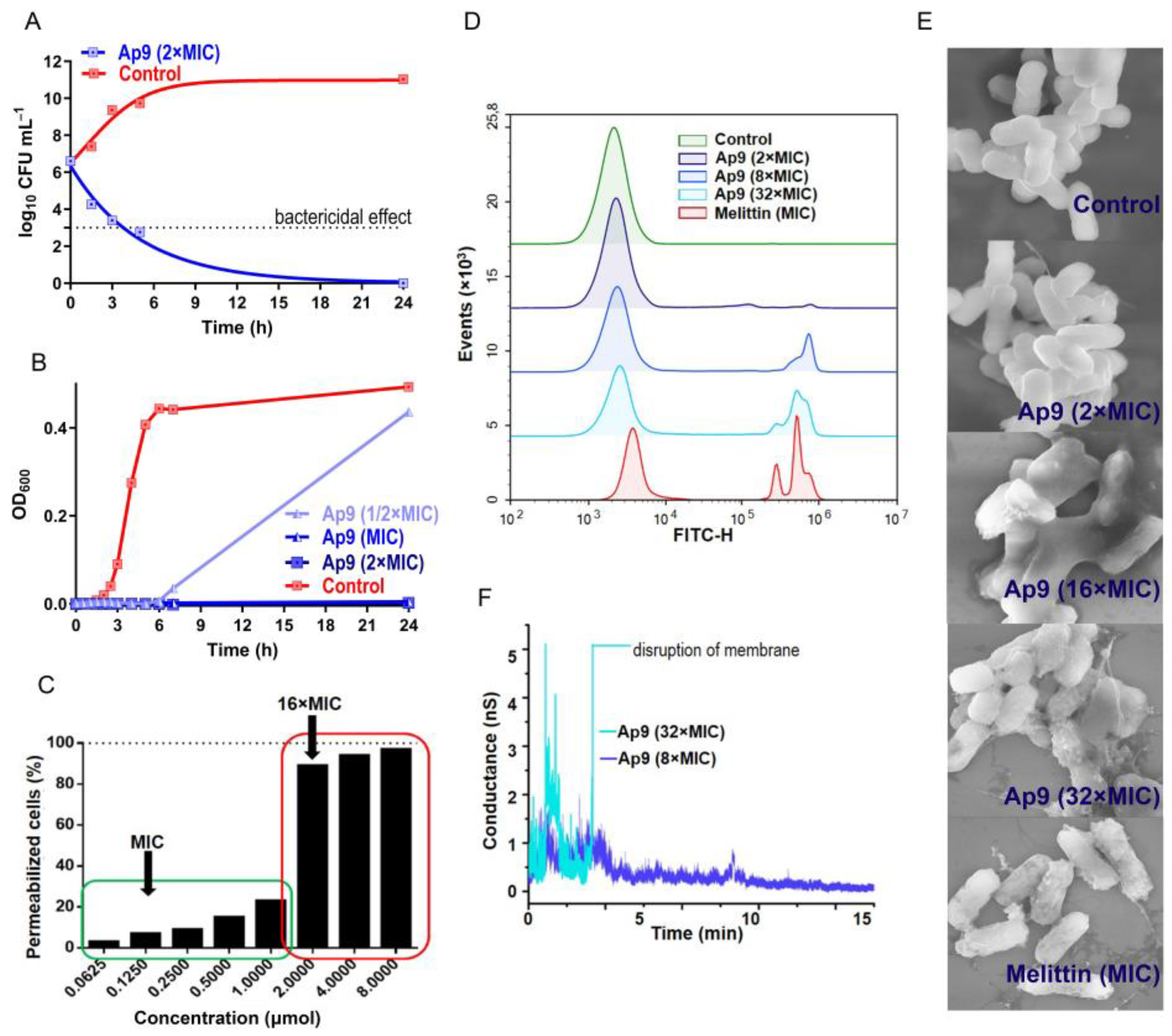
2.1. Ap9 Exerts Membranotropic Activity Without Inducing Stable Pore Formation or Complete Membrane Disruption at Concentrations Exceeding the MIC
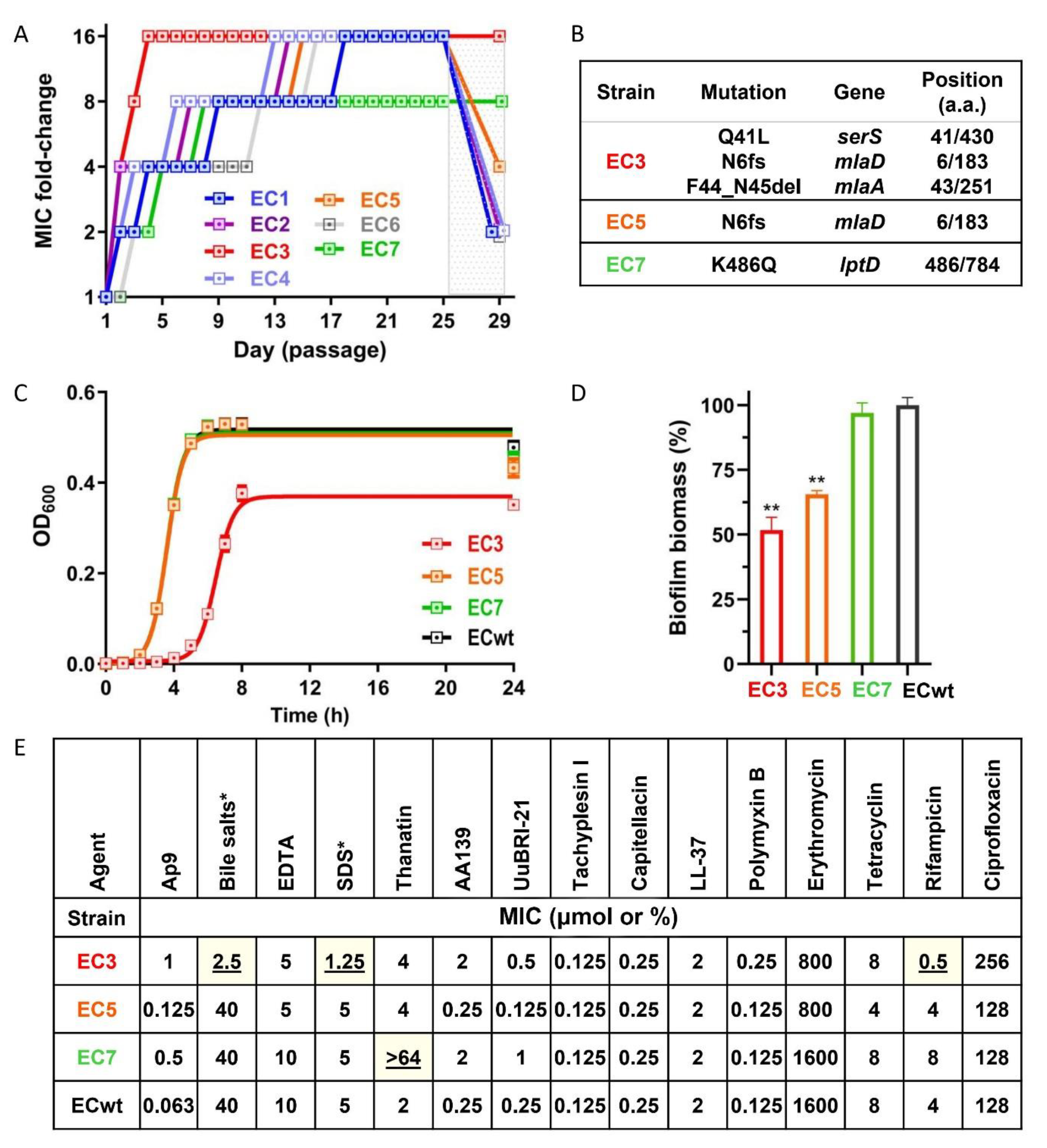
2.2. Resistance to Ap9 Is Linked to Specific Genetic Alterations
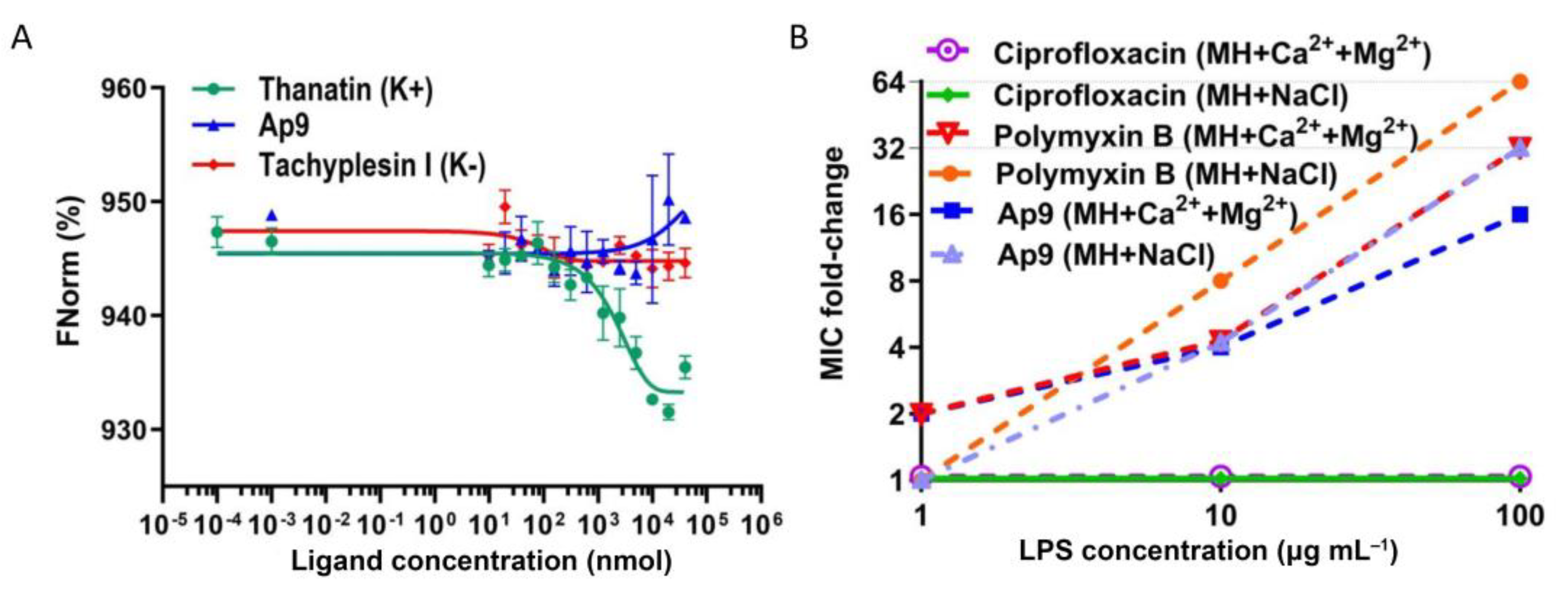
2.3. Ap9 Likely Interacts with LPS
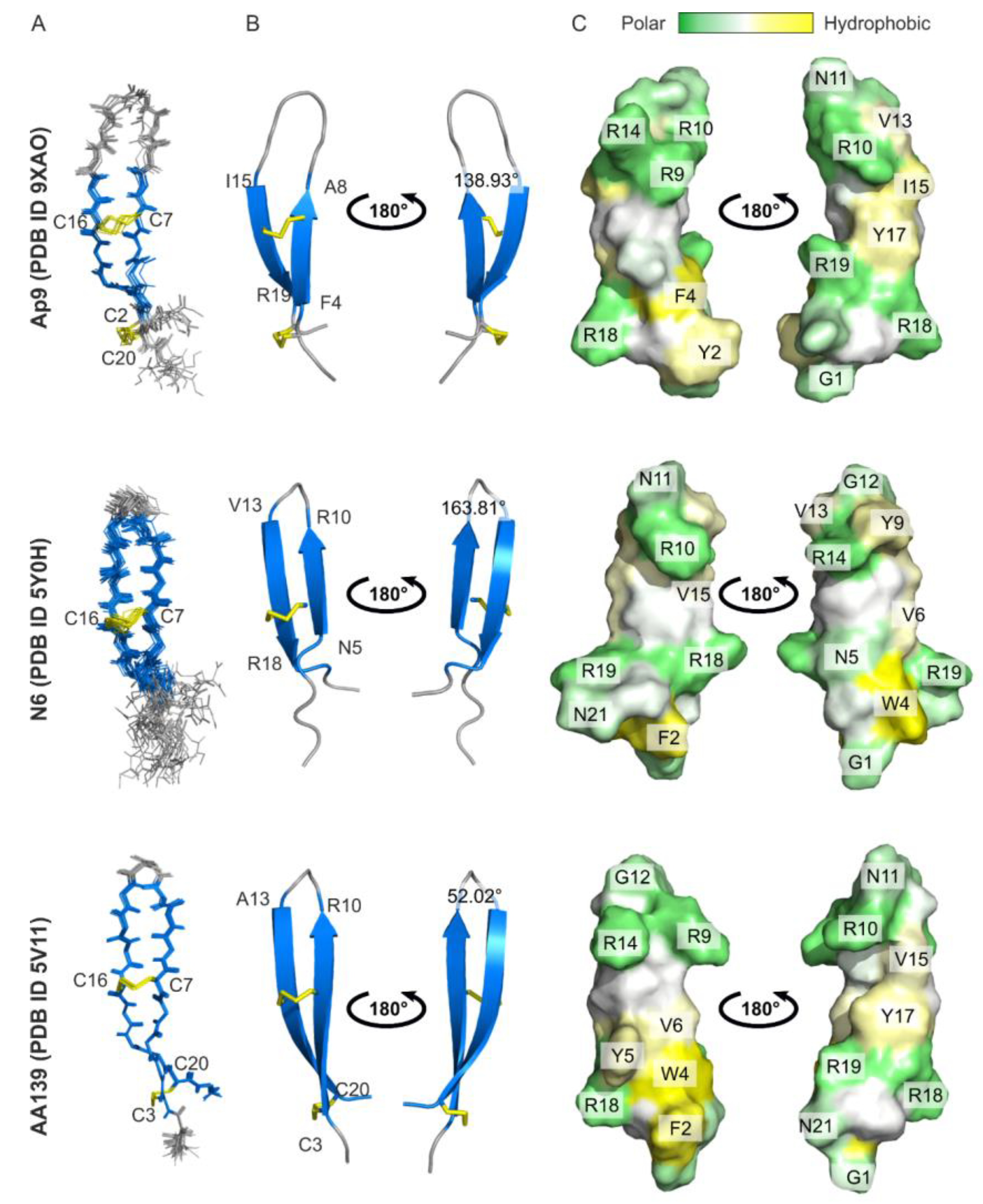
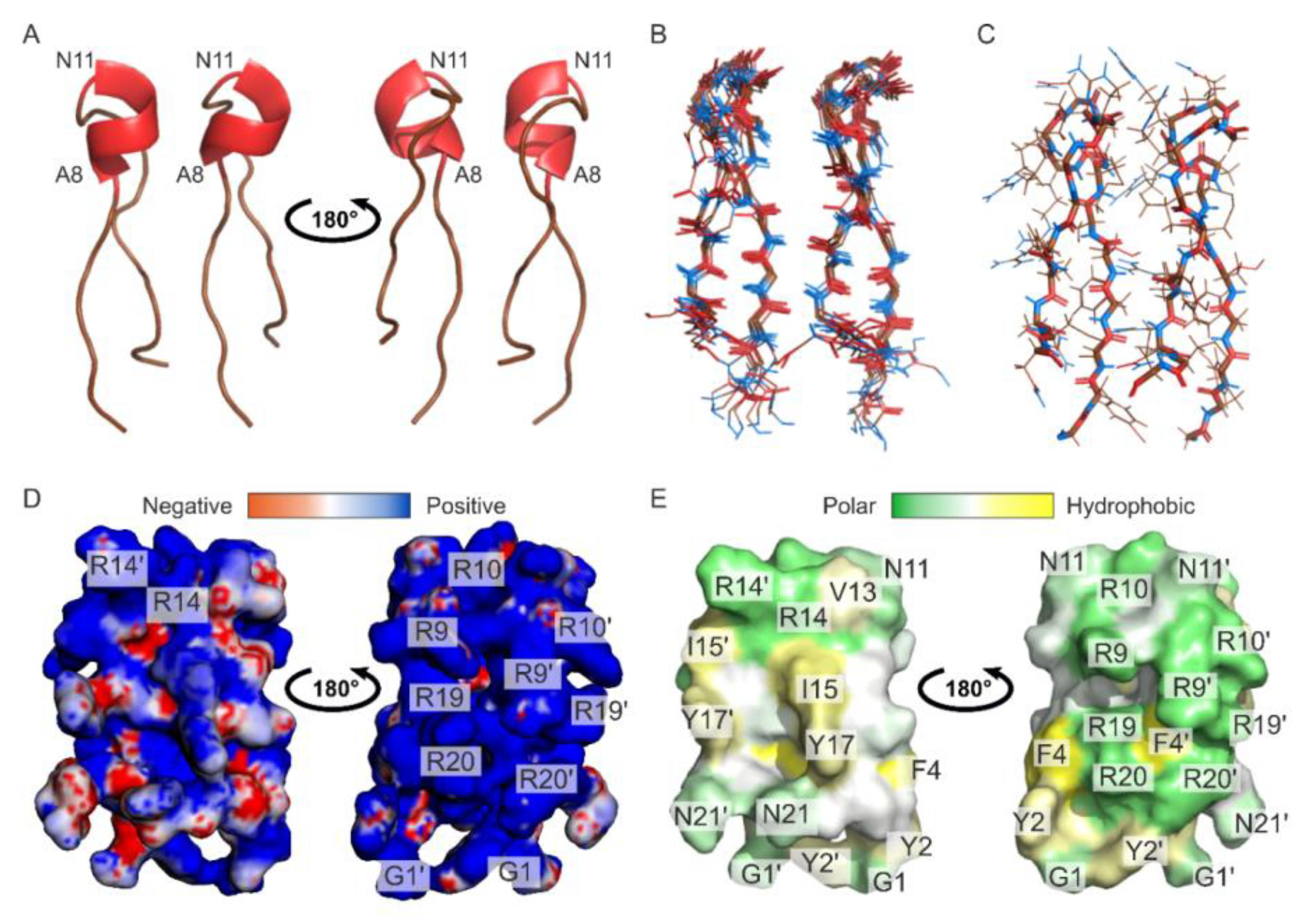
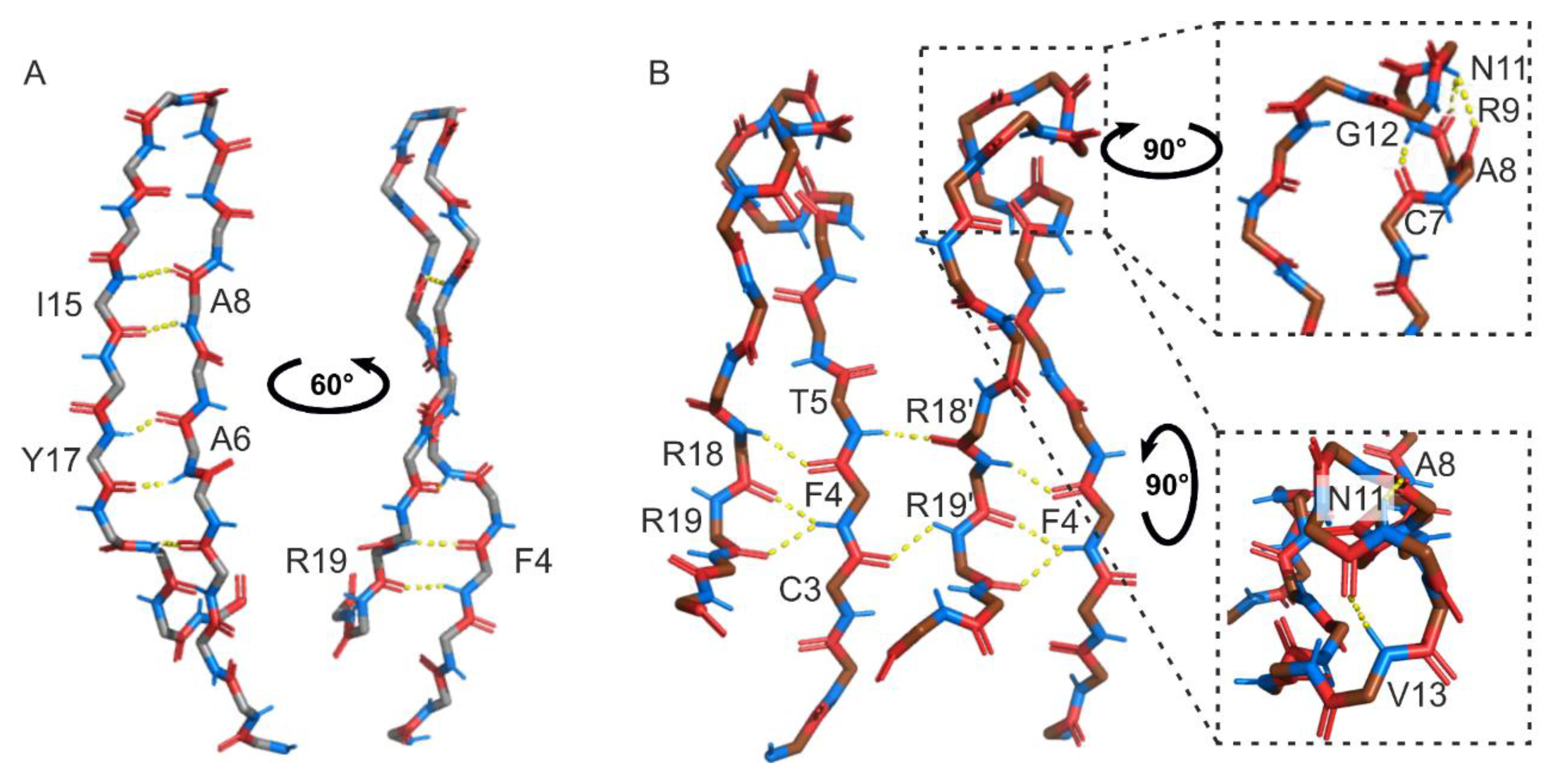
2.4. Ap9 Undergoes Dimerization and Conformational Change in the Presence of LPS
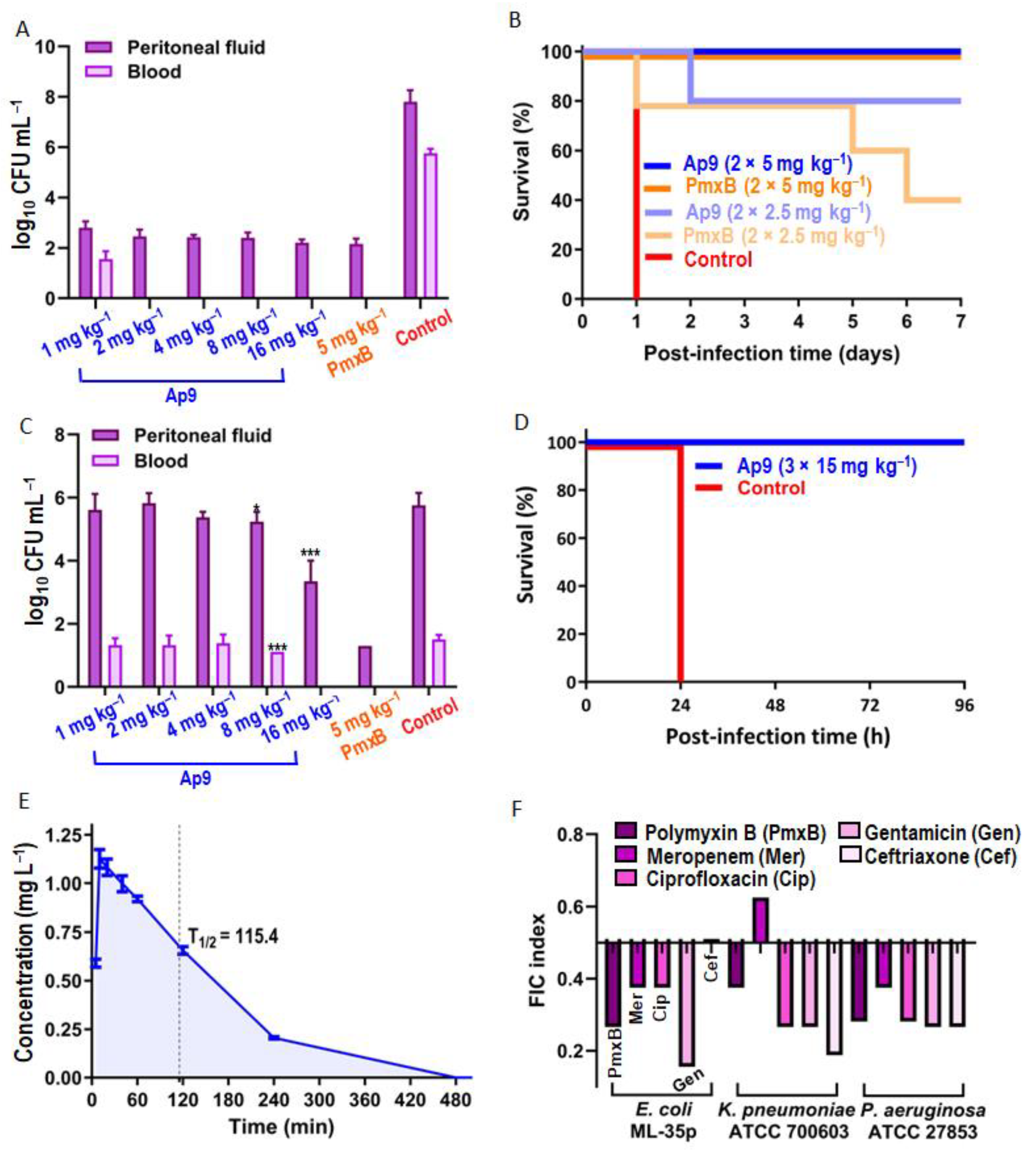
2.5. Ap9 Is Well-Tolerated and Efficacious in Murine Models of P. aeruginosa and Polymyxin-Resistant E. coli Infections and Has a Favorable In Vivo Stability
2.6. Ap9 Exhibits a Pronounced Synergism with Conventional Antibiotics When Acting on ESKAPEE Bacteria
3. Discussion
4. Materials and Methods
4.1. Recombinant Production of AMPs
4.2. Antibacterial Activity
4.3. Time-Kill Assay
4.4. Growth Inhibition Kinetics
4.5. Outer Membrane Permeability Assay
4.6. Inner Membrane Permeability Assays
4.7. Scanning Electron Microscopy (SEM)
4.8. BLM Measurements
4.9. Resistance Induction Assay
4.10. Determination of Growth Rate
4.11. Biofilm Assay
4.12. Checkerboard Assay
4.13. Production of LptD/LptE Complex
4.14. MST Experiment
4.15. NMR Spectroscopy
4.16. Spatial Structure Calculations
4.17. Peritonitis Model with Virulent E. coli 3421E/19
4.18. Peritonitis Model with P. aeruginosa PAO1
4.19. Survival Model with P. aeruginosa PAO1
4.20. Survival Model with Uropathogenic E. coli U10 (mcr-1-Mediated Resistance)
4.21. Pharmacokinetic Study
4.22. Statistics
5. Conclusions
Supplementary Materials
Author Contributions
Funding
Institutional Review Board Statement
Data Availability Statement
Acknowledgments
Conflicts of Interest
Abbreviations
| AMP | Antimicrobial peptide |
| LPS | Lipopolysaccharide |
| MIC | Minimum inhibitory concentration |
| MST | Microscale thermophoresis |
| PBS | Phosphate-buffered saline |
| BSA | Bovine serum albumin |
| SEM | Scanning electron microscopy |
| GFP | Green fluorescent protein |
| ONPG | O-nitrophenyl-β-D-galactopyranoside |
| BLM | Planar bilayer lipid membranes |
| FICI | Fractional inhibitory concentration index |
References
- Krul, D.; Negoseki, B.R.D.S.; Siqueira, A.C.; Tomaz, A.P.D.O.; Dos Santos, É.M.; De Sousa, I.; Vasconcelos, T.M.; Marinho, I.C.R.; Arend, L.N.V.S.; Mesa, D.; et al. Spread of Antimicrobial-Resistant Clones of the ESKAPEE Group: From the Clinical Setting to Hospital Effluent. Sci. Total Environ. 2025, 973, 179124. [Google Scholar] [CrossRef] [PubMed]
- WHO. Bacterial Priority Pathogens List 2024: Bacterial Pathogens of Public Health Importance, to Guide Research, Development, and Strategies to Prevent and Control Antimicrobial Resistance, 1st ed.; World Health Organization: Geneva, Switzerland, 2024; ISBN 978-92-4-009346-1. [Google Scholar]
- Yin, Y.; Qiu, L.; Wang, G.; Guo, Z.; Wang, Z.; Qiu, J.; Li, R. Emergence and Transmission of Plasmid-Mediated Mobile Colistin Resistance Gene Mcr-10 in Humans and Companion Animals. Microbiol. Spectr. 2022, 10, e02097–22. [Google Scholar] [CrossRef] [PubMed]
- Materon, I.C.; Palzkill, T. Structural Biology of MCR-1-Mediated Resistance to Polymyxin Antibiotics. Curr. Opin. Struct. Biol. 2023, 82, 102647. [Google Scholar] [CrossRef]
- Shahzad, S.; Willcox, M.D.P.; Rayamajhee, B. A Review of Resistance to Polymyxins and Evolving Mobile Colistin Resistance Gene (Mcr) among Pathogens of Clinical Significance. Antibiotics 2023, 12, 1597. [Google Scholar] [CrossRef]
- Moffatt, J.H.; Harper, M.; Boyce, J.D. Mechanisms of Polymyxin Resistance. In Polymyxin Antibiotics: From Laboratory Bench to Bedside; Li, J., Nation, R.L., Kaye, K.S., Eds.; Advances in Experimental Medicine and Biology; Springer International Publishing: Cham, Switzerland, 2019; Volume 1145, pp. 55–71. ISBN 978-3-030-16371-6. [Google Scholar]
- Safronova, V.N.; Bolosov, I.A.; Kruglikov, R.N.; Korobova, O.V.; Pereskokova, E.S.; Borzilov, A.I.; Panteleev, P.V.; Ovchinnikova, T.V. Novel β-Hairpin Peptide from Marine Polychaeta with a High Efficacy against Gram-Negative Pathogens. Mar. Drugs 2022, 20, 517. [Google Scholar] [CrossRef]
- Elliott, A.G.; Huang, J.X.; Neve, S.; Zuegg, J.; Edwards, I.A.; Cain, A.K.; Boinett, C.J.; Barquist, L.; Lundberg, C.V.; Steen, J.; et al. An Amphipathic Peptide with Antibiotic Activity against Multidrug-Resistant Gram-Negative Bacteria. Nat. Commun. 2020, 11, 3184. [Google Scholar] [CrossRef] [PubMed]
- Yang, N.; Liu, X.; Teng, D.; Li, Z.; Wang, X.; Mao, R.; Wang, X.; Hao, Y.; Wang, J. Antibacterial and Detoxifying Activity of NZ17074 Analogues with Multi-Layers of Selective Antimicrobial Actions against Escherichia coli and Salmonella enteritidis. Sci. Rep. 2017, 7, 3392. [Google Scholar] [CrossRef]
- Panteleev, P.V.; Bolosov, I.A.; Balandin, S.V.; Ovchinnikova, T.V. Design of Antimicrobial Peptide Arenicin Analogs with Improved Therapeutic Indices: Design of Arenicin Analogs with Improved Therapeutic Indices. J. Pept. Sci. 2015, 21, 105–113. [Google Scholar] [CrossRef]
- Panteleev, P.V.; Ovchinnikova, T.V. Improved Strategy for Recombinant Production and Purification of Antimicrobial Peptide Tachyplesin I and Its Analogs with High Cell Selectivity. Biotech. App. Biochem. 2017, 64, 35–42. [Google Scholar] [CrossRef]
- Clinical and Laboratory Standards Institute. Methods for Determining Bactericidal Activity of Antimicrobial Agents; CLSI: Wayne, PA, USA, 1999. [Google Scholar]
- Kondrashov, O.V.; Volovik, M.V.; Denieva, Z.G.; Gifer, P.K.; Galimzyanov, T.R.; Kuzmin, P.I.; Batishchev, O.V.; Akimov, S.A. Dialectics of Antimicrobial Peptides II: Theoretical Models of Pore Formation and Membrane Protection. Langmuir 2025, 41, 19003–19022. [Google Scholar] [CrossRef]
- Volovik, M.V.; Denieva, Z.G.; Kondrashov, O.V.; Akimov, S.A.; Batishchev, O.V. Dialectics of Antimicrobial Peptides I: Common Mechanisms of Offensive and Protecting Roles of the Peptides. Langmuir 2025, 41, 18986–19002. [Google Scholar] [CrossRef]
- Komp Lindgren, P.; Karlsson, A.; Hughes, D. Mutation Rate and Evolution of Fluoroquinolone Resistance in Escherichia coli Isolates from Patients with Urinary Tract Infections. Antimicrob. Agents Chemother. 2003, 47, 3222–3232. [Google Scholar] [CrossRef]
- Spohn, R.; Daruka, L.; Lázár, V.; Martins, A.; Vidovics, F.; Grézal, G.; Méhi, O.; Kintses, B.; Számel, M.; Jangir, P.K.; et al. Integrated Evolutionary Analysis Reveals Antimicrobial Peptides with Limited Resistance. Nat. Commun. 2019, 10, 4538. [Google Scholar] [CrossRef] [PubMed]
- Vincent, C.; Borel, F.; Willison, J.C.; Laberman, R.; Härtlein, M. Seryl-tRNA Synthetase from Escherichia coli: Functional Evidence for Cross-Dimer tRNA Binding during Aminoacylation. Nucl. Acids Res. 1995, 23, 1113–1118. [Google Scholar] [CrossRef] [PubMed]
- Malinverni, J.C.; Silhavy, T.J. An ABC Transport System That Maintains Lipid Asymmetry in the Gram-Negative Outer Membrane. Proc. Natl. Acad. Sci. USA 2009, 106, 8009–8014. [Google Scholar] [CrossRef] [PubMed]
- Sutterlin, H.A.; Shi, H.; May, K.L.; Miguel, A.; Khare, S.; Huang, K.C.; Silhavy, T.J. Disruption of Lipid Homeostasis in the Gram-Negative Cell Envelope Activates a Novel Cell Death Pathway. Proc. Natl. Acad. Sci. USA 2016, 113, E1565–E1574. [Google Scholar] [CrossRef]
- Abellón-Ruiz, J.; Kaptan, S.S.; Baslé, A.; Claudi, B.; Bumann, D.; Kleinekathöfer, U.; Van Den Berg, B. Structural Basis for Maintenance of Bacterial Outer Membrane Lipid Asymmetry. Nat. Microbiol. 2017, 2, 1616–1623. [Google Scholar] [CrossRef]
- Wang, Z.; Yang, N.; Teng, D.; Hao, Y.; Li, T.; Han, H.; Mao, R.; Wang, J. Resistance Response to Arenicin Derivatives in Escherichia coli. Appl. Microbiol. Biotechnol. 2022, 106, 211–226. [Google Scholar] [CrossRef]
- Yoon, Y.; Song, S. Structural Insights into the Lipopolysaccharide Transport (Lpt) System as a Novel Antibiotic Target. J. Microbiol. 2024, 62, 261–275. [Google Scholar] [CrossRef]
- Chng, S.-S.; Ruiz, N.; Chimalakonda, G.; Silhavy, T.J.; Kahne, D. Characterization of the Two-Protein Complex in Escherichia coli Responsible for Lipopolysaccharide Assembly at the Outer Membrane. Proc. Natl. Acad. Sci. USA 2010, 107, 5363–5368. [Google Scholar] [CrossRef]
- Vetterli, S.U.; Zerbe, K.; Müller, M.; Urfer, M.; Mondal, M.; Wang, S.-Y.; Moehle, K.; Zerbe, O.; Vitale, A.; Pessi, G.; et al. Thanatin Targets the Intermembrane Protein Complex Required for Lipopolysaccharide Transport in Escherichia coli. Sci. Adv. 2018, 4, eaau2634. [Google Scholar] [CrossRef]
- Panteleev, P.V.; Safronova, V.N.; Kruglikov, R.N.; Bolosov, I.A.; Ovchinnikova, T.V. Genomic Insights into Bacterial Resistance to Proline-Rich Antimicrobial Peptide Bac7. Membranes 2023, 13, 438. [Google Scholar] [CrossRef]
- Safronova, V.N.; Panteleev, P.V.; Sukhanov, S.V.; Toropygin, I.Y.; Bolosov, I.A.; Ovchinnikova, T.V. Mechanism of Action and Therapeutic Potential of the β-Hairpin Antimicrobial Peptide Capitellacin from the Marine Polychaeta Capitella teleta. Mar. Drugs 2022, 20, 167. [Google Scholar] [CrossRef]
- Huang, L.; Zhang, C. Microscale Thermophoresis (MST) to Detect the Interaction Between Purified Protein and Small Molecule. In Plant Chemical Genomics; Hicks, G.R., Zhang, C., Eds.; Methods in Molecular Biology; Springer US: New York, NY, USA, 2021; Volume 2213, pp. 187–193. ISBN 978-1-0716-0953-8. [Google Scholar]
- El Deeb, S.; Al-Harrasi, A.; Khan, A.; Al-Broumi, M.; Al-Thani, G.; Alomairi, M.; Elumalai, P.; Sayed, R.A.; Ibrahim, A.E. Microscale Thermophoresis as a Powerful Growing Analytical Technique for the Investigation of Biomolecular Interaction and the Determination of Binding Parameters. Methods Appl. Fluoresc. 2022, 10, 042001. [Google Scholar] [CrossRef] [PubMed]
- Scheinpflug, K.; Nikolenko, H.; Komarov, I.; Rautenbach, M.; Dathe, M. What Goes around Comes Around—A Comparative Study of the Influence of Chemical Modifications on the Antimicrobial Properties of Small Cyclic Peptides. Pharmaceuticals 2013, 6, 1130–1144. [Google Scholar] [CrossRef]
- Hedegaard, S.F.; Derbas, M.S.; Lind, T.K.; Kasimova, M.R.; Christensen, M.V.; Michaelsen, M.H.; Campbell, R.A.; Jorgensen, L.; Franzyk, H.; Cárdenas, M.; et al. Fluorophore Labeling of a Cell-Penetrating Peptide Significantly Alters the Mode and Degree of Biomembrane Interaction. Sci. Rep. 2018, 8, 6327. [Google Scholar] [CrossRef] [PubMed]
- Romano, K.P.; Warrier, T.; Poulsen, B.E.; Nguyen, P.H.; Loftis, A.R.; Saebi, A.; Pentelute, B.L.; Hung, D.T. Mutations in pmrB Confer Cross-Resistance between the LptD Inhibitor POL7080 and Colistin in Pseudomonas aeruginosa. Antimicrob. Agents Chemother. 2019, 63, e00511–19. [Google Scholar] [CrossRef] [PubMed]
- Clifton, L.A.; Skoda, M.W.A.; Le Brun, A.P.; Ciesielski, F.; Kuzmenko, I.; Holt, S.A.; Lakey, J.H. Effect of Divalent Cation Removal on the Structure of Gram-Negative Bacterial Outer Membrane Models. Langmuir 2015, 31, 404–412. [Google Scholar] [CrossRef]
- Velkov, T.; Thompson, P.E.; Nation, R.L.; Li, J. Structure−Activity Relationships of Polymyxin Antibiotics. J. Med. Chem. 2010, 53, 1898–1916. [Google Scholar] [CrossRef]
- Lindner, B.; Wiese, A.; Brandenburg, K.; Seydel, U.; Dalhoff, A. Lack of Interaction of Fluoroquinolones with Lipopolysaccharides. Antimicrob. Agents Chemother. 2002, 46, 1568–1570. [Google Scholar] [CrossRef]
- Sinha, S.; Zheng, L.; Mu, Y.; Ng, W.J.; Bhattacharjya, S. Structure and Interactions of A Host Defense Antimicrobial Peptide Thanatin in Lipopolysaccharide Micelles Reveal Mechanism of Bacterial Cell Agglutination. Sci. Rep. 2017, 7, 17795. [Google Scholar] [CrossRef]
- Roberts, K.D.; Zhu, Y.; Azad, M.A.K.; Han, M.-L.; Wang, J.; Wang, L.; Yu, H.H.; Horne, A.S.; Pinson, J.-A.; Rudd, D.; et al. A Synthetic Lipopeptide Targeting Top-Priority Multidrug-Resistant Gram-Negative Pathogens. Nat. Commun. 2022, 13, 1625. [Google Scholar] [CrossRef]
- Bush, K.; Bradford, P.A. β-Lactams and β-Lactamase Inhibitors: An Overview. Cold Spring Harb. Perspect. Med. 2016, 6, a025247. [Google Scholar] [CrossRef]
- Krause, K.M.; Serio, A.W.; Kane, T.R.; Connolly, L.E. Aminoglycosides: An Overview. Cold Spring Harb. Perspect. Med. 2016, 6, a027029. [Google Scholar] [CrossRef] [PubMed]
- Yang, Z.; Choi, H.; Weisshaar, J.C. Melittin-Induced Permeabilization, Re-Sealing, and Re-Permeabilization of E. coli Membranes. Biophys. J. 2018, 114, 368–379. [Google Scholar] [CrossRef]
- Panteleev, P.V.; Safronova, V.N.; Duan, S.; Komlev, A.S.; Bolosov, I.A.; Kruglikov, R.N.; Kombarova, T.I.; Korobova, O.V.; Pereskokova, E.S.; Borzilov, A.I.; et al. Novel BRICHOS-Related Antimicrobial Peptides from the Marine Worm Heteromastus filiformis: Transcriptome Mining, Synthesis, Biological Activities, and Therapeutic Potential. Mar. Drugs 2023, 21, 639. [Google Scholar] [CrossRef] [PubMed]
- Yasir, M.; Dutta, D.; Willcox, M.D.P. Mode of Action of the Antimicrobial Peptide Mel4 Is Independent of Staphylococcus aureus Cell Membrane Permeability. PLoS ONE 2019, 14, e0215703. [Google Scholar] [CrossRef]
- Wang, X.; Teng, D.; Mao, R.; Yang, N.; Hao, Y.; Wang, J. Combined Systems Approaches Reveal a Multistage Mode of Action of a Marine Antimicrobial Peptide against Pathogenic Escherichia coli and Its Protective Effect against Bacterial Peritonitis and Endotoxemia. Antimicrob. Agents Chemother. 2017, 61, e01056–16. [Google Scholar] [CrossRef]
- Panteleev, P.V.; Pichkur, E.B.; Kruglikov, R.N.; Paleskava, A.; Shulenina, O.V.; Bolosov, I.A.; Bogdanov, I.V.; Safronova, V.N.; Balandin, S.V.; Marina, V.I.; et al. Rumicidins Are a Family of Mammalian Host-Defense Peptides Plugging the 70S Ribosome Exit Tunnel. Nat. Commun. 2024, 15, 8925. [Google Scholar] [CrossRef] [PubMed]
- Güntert, P. Automated NMR Structure Calculation with CYANA. In Protein NMR Techniques; Humana Press: Totowa, NJ, USA, 2004; Volume 278, pp. 353–378. ISBN 978-1-59259-809-0. [Google Scholar]



| AMP | Sequence | Charge | GRAVY (a) |
|---|---|---|---|
| Abarenicin (A. pacifica) | GYCFTACYMRNGVRICYRRCN | +4 | −0.248 |
| Ap9 | GYCFTACARRNGVRICYRRCN | +5 | −0.405 |
| Arenicin-3 (A. marina) | GFCWYVCVYRNGVRVCYRRCN | +4 | −0.048 |
| AA139 | GFCWYVCARRNGARVCYRRCN | +5 | −0.429 |
| N1(NZ17074) | GFCWNVCVYRNGVRVCHRRCN | +4 | −0.243 |
| N6 | GFAWNVCVYRNGVRVCHRRAN | +4 | −0.310 |
Disclaimer/Publisher’s Note: The statements, opinions and data contained in all publications are solely those of the individual author(s) and contributor(s) and not of MDPI and/or the editor(s). MDPI and/or the editor(s) disclaim responsibility for any injury to people or property resulting from any ideas, methods, instructions or products referred to in the content. |
© 2026 by the authors. Licensee MDPI, Basel, Switzerland. This article is an open access article distributed under the terms and conditions of the Creative Commons Attribution (CC BY) license.
Share and Cite
Safronova, V.N.; Lushpa, V.A.; Shipunova, V.O.; Volovik, M.V.; Dobrochaeva, K.L.; Kruglikov, R.N.; Bolosov, I.A.; Dashevskii, D.E.; Mishin, A.V.; Batishchev, O.V.; et al. Marine Antimicrobial Peptide as a Promising Alternative to Polymyxin B. Mar. Drugs 2026, 24, 154. https://doi.org/10.3390/md24050154
Safronova VN, Lushpa VA, Shipunova VO, Volovik MV, Dobrochaeva KL, Kruglikov RN, Bolosov IA, Dashevskii DE, Mishin AV, Batishchev OV, et al. Marine Antimicrobial Peptide as a Promising Alternative to Polymyxin B. Marine Drugs. 2026; 24(5):154. https://doi.org/10.3390/md24050154
Chicago/Turabian StyleSafronova, Victoria N., Vladislav A. Lushpa, Victoria O. Shipunova, Marta V. Volovik, Kira L. Dobrochaeva, Roman N. Kruglikov, Ilia A. Bolosov, Dmitrii E. Dashevskii, Alexey V. Mishin, Oleg V. Batishchev, and et al. 2026. "Marine Antimicrobial Peptide as a Promising Alternative to Polymyxin B" Marine Drugs 24, no. 5: 154. https://doi.org/10.3390/md24050154
APA StyleSafronova, V. N., Lushpa, V. A., Shipunova, V. O., Volovik, M. V., Dobrochaeva, K. L., Kruglikov, R. N., Bolosov, I. A., Dashevskii, D. E., Mishin, A. V., Batishchev, O. V., Korobova, O. V., Borzilov, A. I., Slashcheva, G. A., Dyachenko, I. A., Bocharov, E. V., Panteleev, P. V., & Ovchinnikova, T. V. (2026). Marine Antimicrobial Peptide as a Promising Alternative to Polymyxin B. Marine Drugs, 24(5), 154. https://doi.org/10.3390/md24050154