Network Pharmacology Analysis Reveals Multi-Target Hepatoprotective Mechanisms of a Multi-Component Pharmacopuncture Against Ephedra-Associated Liver Injury with Implications for Mitochondrial Quality Control


Abstract
1. Introduction
2. Materials and Methods
2.1. Identification of Chemical Constituents of VP
2.2. Physicochemical and ADME Profiling
2.3. Compound–Target Interaction Analysis and Literature Integration
2.4. Identification of Liver Injury–Related Genes
2.5. Protein–Protein Interaction (PPI) Network Construction
2.6. Functional and Pathway Enrichment Analysis
2.7. Clinical Motivation and Comparative Herbal Reference Analysis
3. Results
3.1. Identification and Standardization of Bioactive Compounds
3.1.1. Compound Library Construction Through Database Retrieval and Literature Curation
3.1.2. Target Prediction and Evidence-Guided Refinement of the Pharmacological Network
3.2. Comparative Network Analysis: Therapeutic Specificity of V-Pharmacopuncture
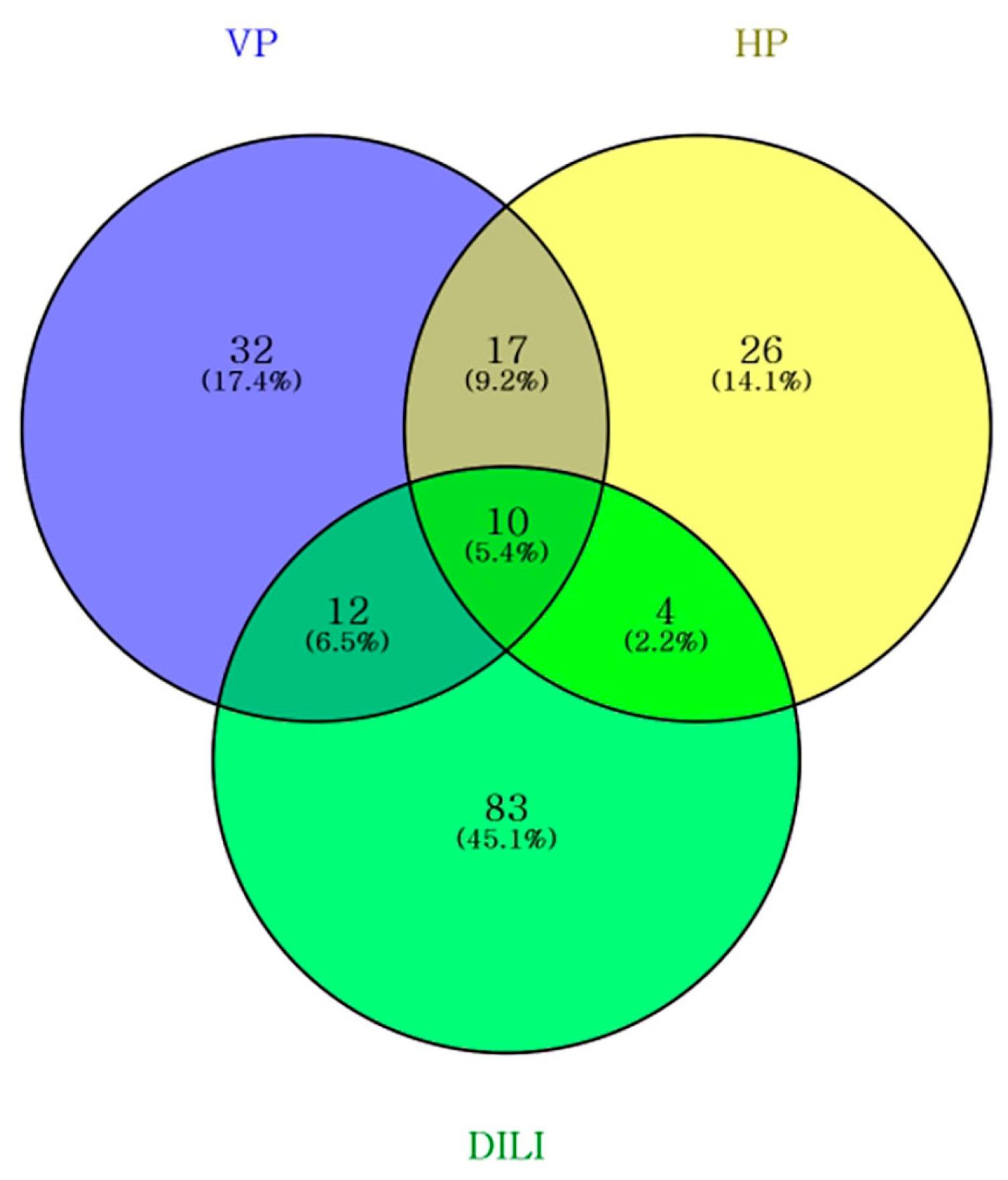
3.2.1. Landscape of Target Overlap Among VP, Hepatoprotective Formulae, and DILI
- (1)
- Shared Core Targets (VP ∩ HP ∩ DILI).
- (2)
- VP–DILI Specific Targets (VP ∩ DILI\HP)
- (3)
- VP-Exclusive Targets
- (4)
- VP–HP Specific targets
- (5)
- HP–DILI Shared targets
3.2.2. Functional Interpretation of DILI-Aligned Targets
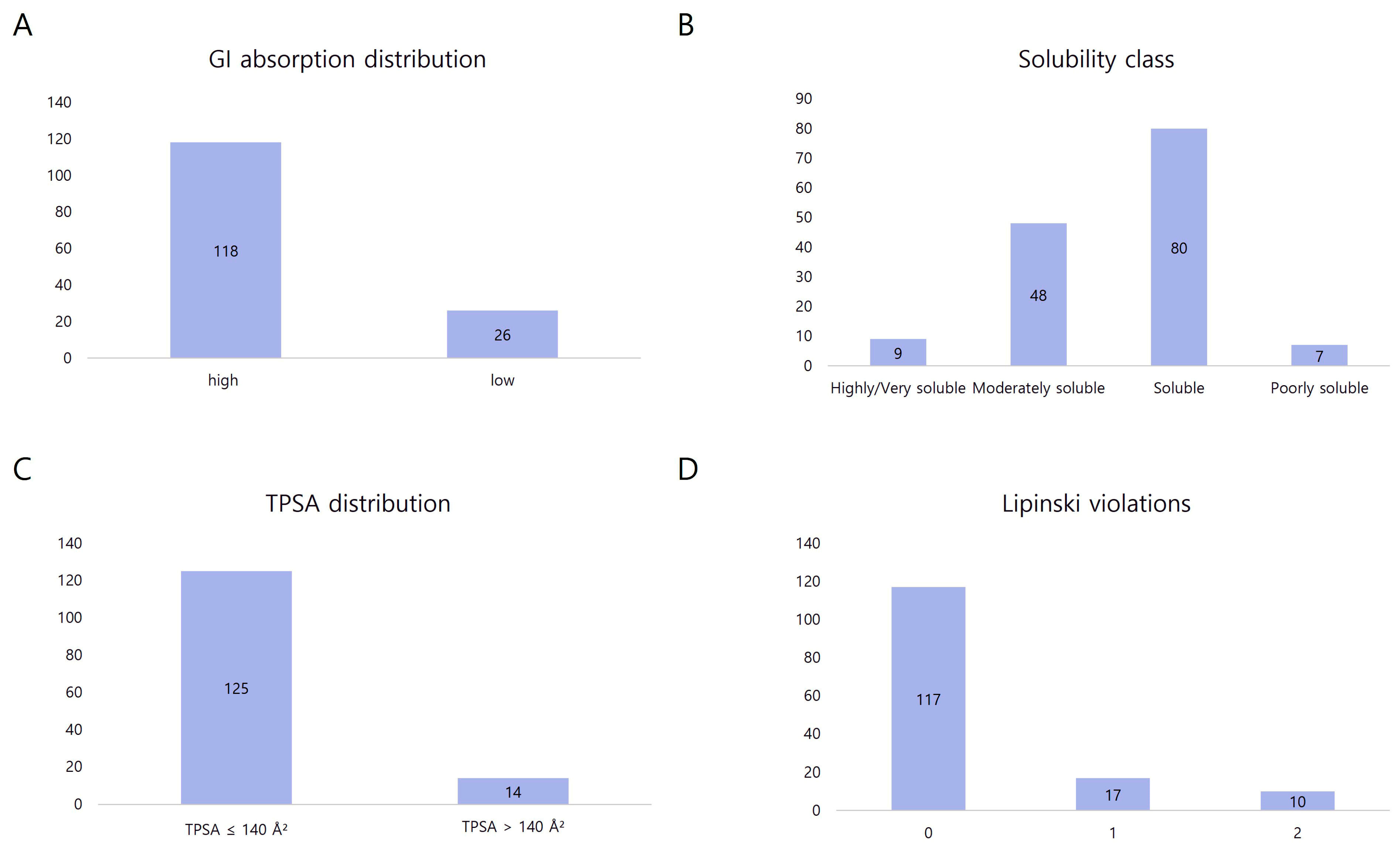
3.3. Physicochemical and ADME Characteristics of the VP Library
- (1)
- Gastrointestinal absorption and solubility
- (2)
- Membrane permeability (TPSA distribution)
- (3)
- Drug-likeness evaluation (Lipinski’s Rule of Five)
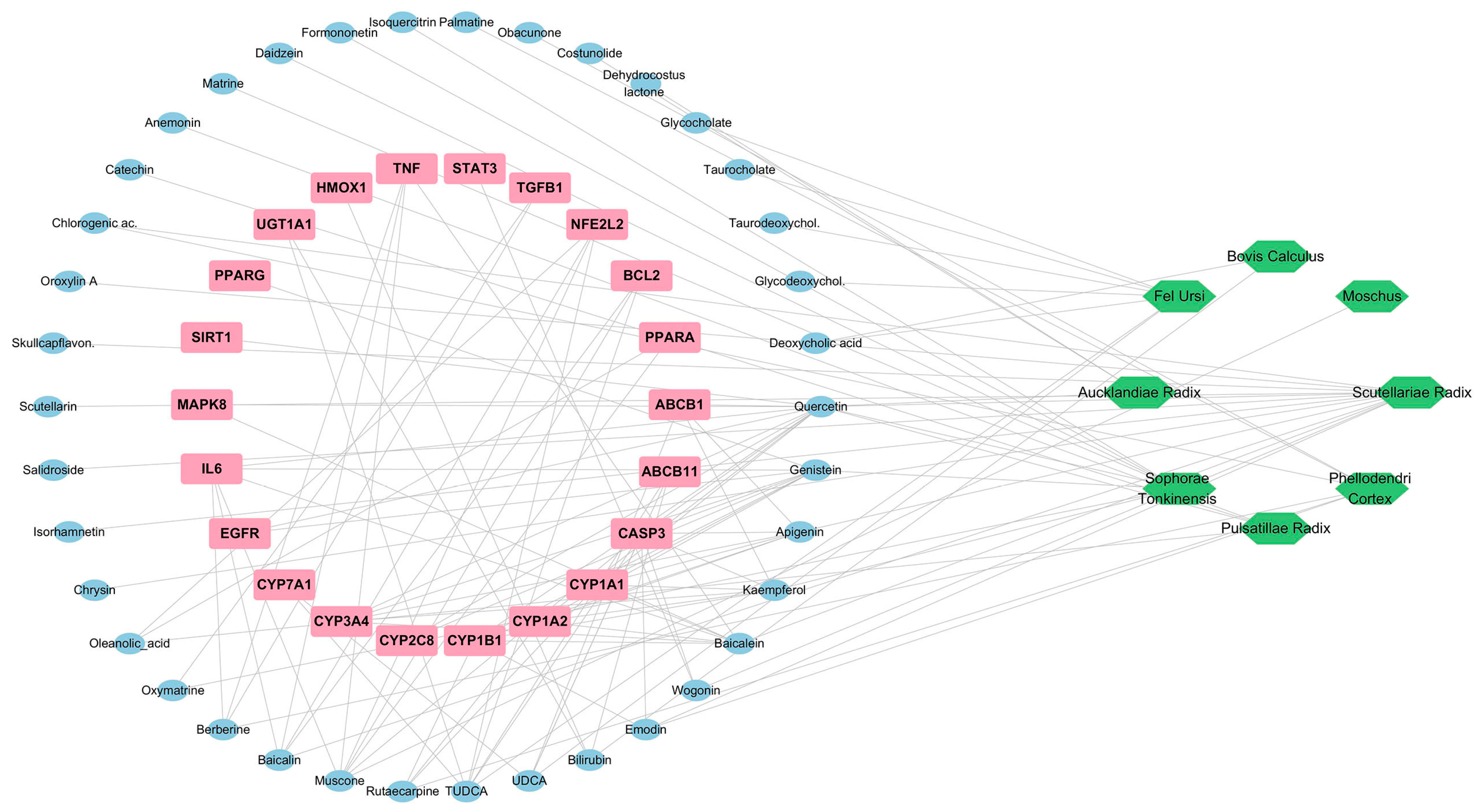
3.4. Herb–Compound–Target Interaction Network Analysis
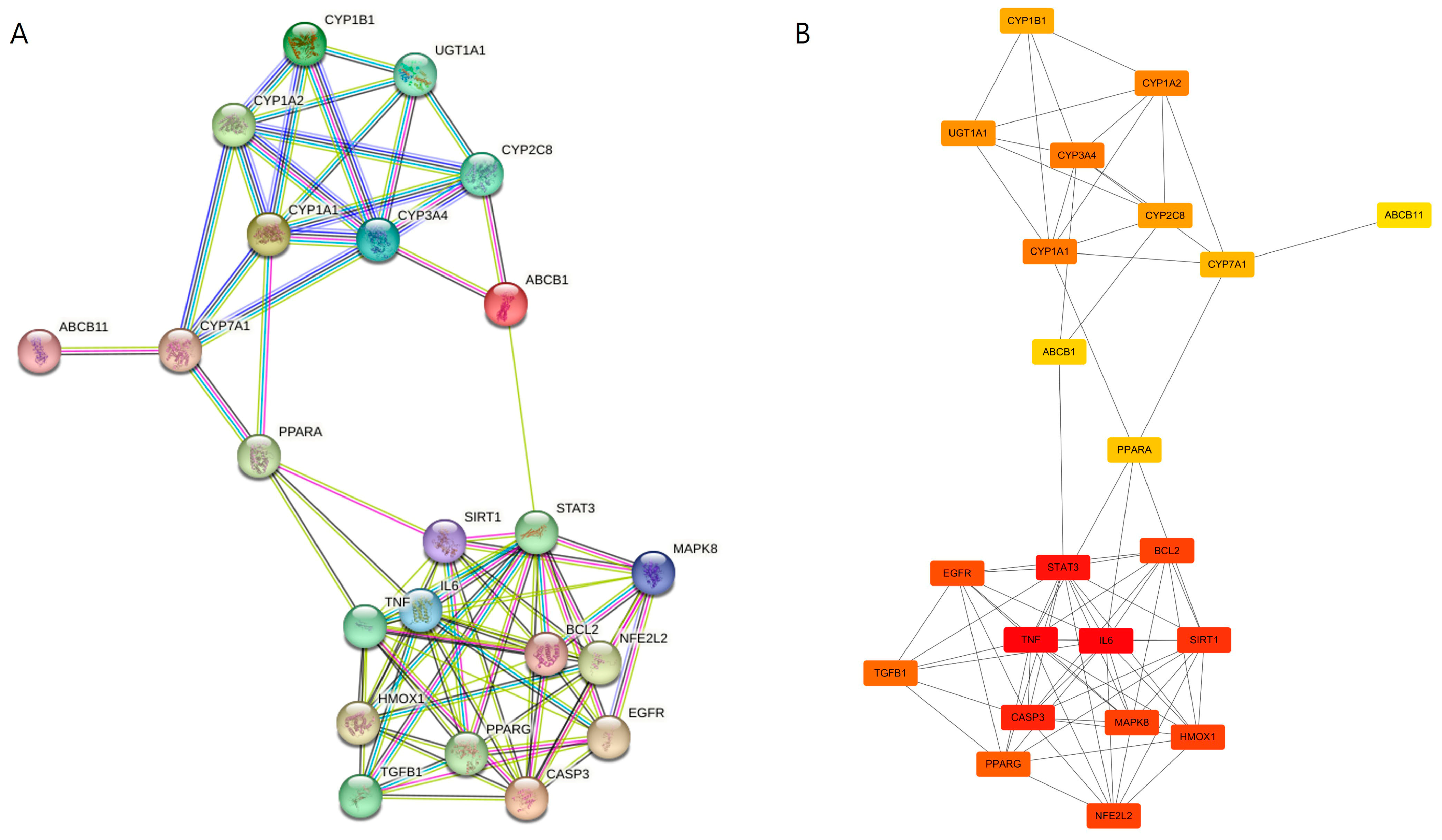
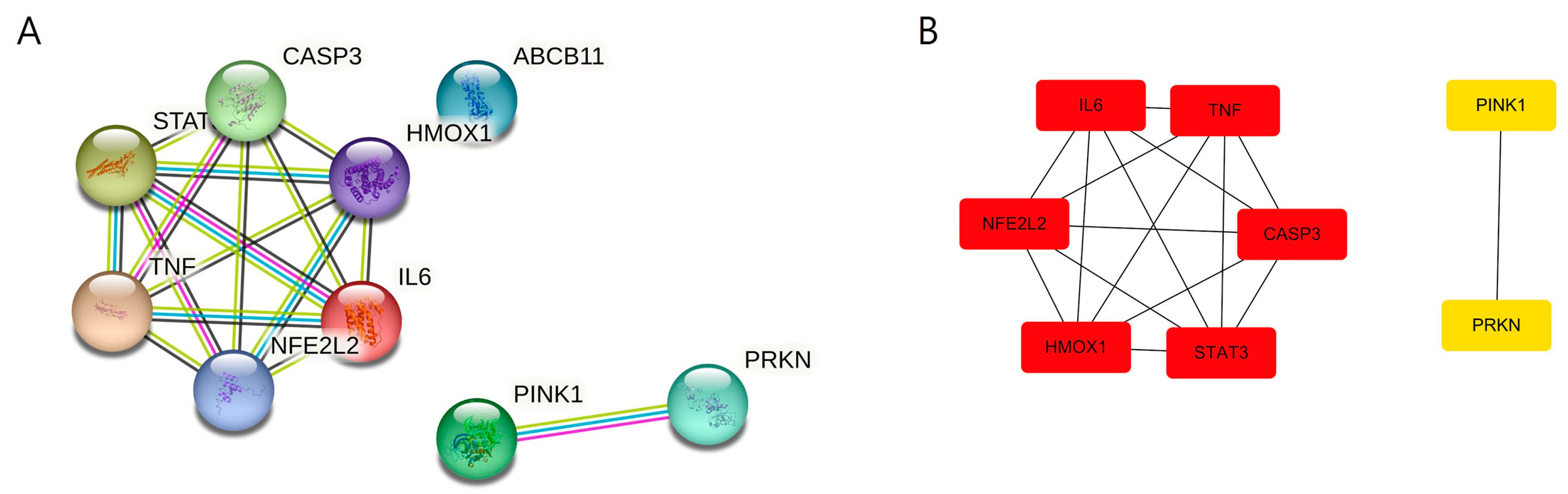
3.5. PPI Network Analysis and Hub Gene Identification of VP–DILI Overlapping Targets
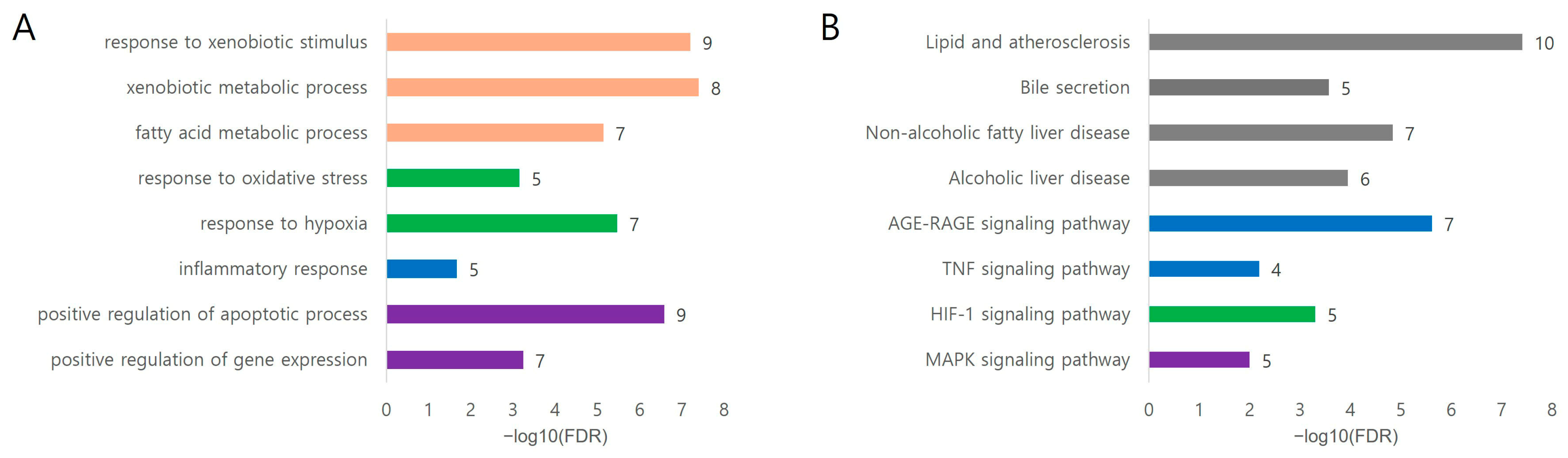
3.6. Functional Enrichment Analysis of VP-DILI Overlapping Targets
3.6.1. GO Biological Process Enrichment
3.6.2. KEGG Pathway Enrichment
3.7. Ephedra-Specific Mechanistic Analysis Based on the Focused Gene Module
3.7.1. Functional Enrichment Analysis of the Ephedra-Focused Module
3.7.2. PPI Network Characteristics of the Ephedra-Focused Module
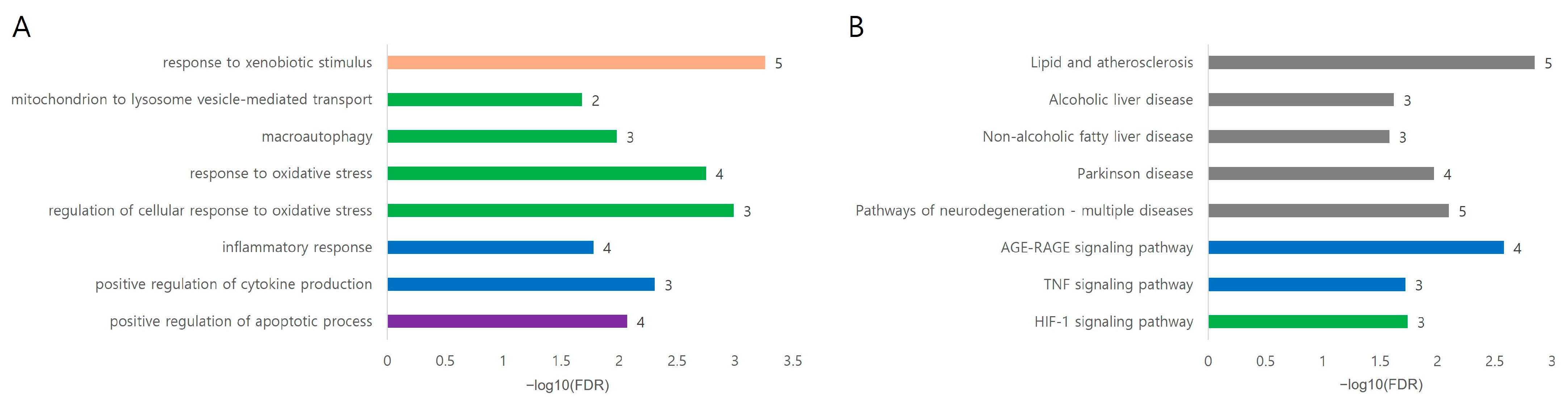
3.7.3. Functional Enrichment Analysis of the Focused Nine-Gene Module
3.7.4. Clinical Contextualization (Case-Based Interpretation)
3.7.5. Integrated Mechanistic Interpretation
4. Discussion
4.1. Multi-Target Pharmacological Architecture of VP
4.2. Mitochondrial Quality Control and Ephedra-Associated Hepatotoxicity
4.3. Bile Acid Transport and Metabolic Adaptation
4.4. Contribution of Bioactive Compounds in VP
4.5. Clinical Relevance and Biological Plausibility
4.6. Limitations and Future Perspectives
5. Conclusions
Supplementary Materials
Author Contributions
Funding
Institutional Review Board Statement
Informed Consent Statement
Data Availability Statement
Acknowledgments
Conflicts of Interest
Abbreviations
| DILI | Drug-induced liver injury |
| HILI | Herb-induced liver injury |
| PPI | Protein–protein interaction |
| GO | Gene Ontology |
| KEGG | Kyoto Encyclopedia of Genes and Genomes |
| TCMSP | Traditional Chinese Medicine Systems Pharmacology |
| VP | V-pharmacopuncture |
| ES | Ephedra sinica |
| UDCA | Ursodeoxycholic acid |
| TUDCA | Tauroursodeoxycholic acid |
References
- David, S.; Hamilton, J.P. Drug-induced Liver Injury. US Gastroenterol. Hepatol. Rev. 2010, 6, 73–80. [Google Scholar]
- Lee, W.-J.; Kim, H.-W.; Lee, H.-Y.; Son, C.-G. Systematic review on herb-induced liver injury in Korea. Food Chem. Toxicol. 2015, 84, 47–54. [Google Scholar] [CrossRef]
- Fontana, R.J.; Liou, I.; Reuben, A.; Suzuki, A.; Fiel, M.I.; Lee, W.; Navarro, V. AASLD practice guidance on drug, herbal, and dietary supplement–induced liver injury. Hepatology 2023, 77, 1036–1065. [Google Scholar] [CrossRef] [PubMed]
- European Association for the Study of the Liver. EASL Clinical Practice Guidelines: Drug-induced liver injury. J. Hepatol. 2019, 70, 1222–1261. [Google Scholar] [CrossRef] [PubMed]
- Kobayashi, T.; Iwaki, M.; Nogami, A.; Yoneda, M. Epidemiology and Management of Drug-induced Liver Injury: Importance of the Updated RUCAM. J. Clin. Transl. Hepatol. 2023, 11, 1239–1245. [Google Scholar] [CrossRef]
- Shin, H.K.; Huang, R.; Chen, M. In silico modeling-based new alternative methods to predict drug and herb-induced liver injury: A review. Food Chem. Toxicol. 2023, 179, 113948. [Google Scholar] [CrossRef]
- Łupina, K.; Nowak, A.; Jabłońska, A.; Potaczek, A.; Salacha, J.; Ilkiewicz, Ł.; Kalisz, A.; Janczura, J. Herb-Induced Liver Injury. Livers 2025, 5, 55. [Google Scholar] [CrossRef]
- Tang, S.; Ren, J.; Kong, L.; Yan, G.; Liu, C.; Han, Y.; Sun, H.; Wang, X.-J. Ephedrae Herba: A Review of Its Phytochemistry, Pharmacology, Clinical Application, and Alkaloid Toxicity. Molecules 2023, 28, 663. [Google Scholar] [CrossRef] [PubMed]
- LiverTox: Clinical and Research Information on Drug-Induced Liver Injury [Internet]. Bethesda (MD): National Institute of Diabetes and Digestive and Kidney Diseases; 2012—Ephedra. [Updated 10 February 2018]. Available online: https://www.ncbi.nlm.nih.gov/books/NBK548711/ (accessed on 23 April 2026).
- Lee, A.Y.; Jang, Y.; Hong, S.H.; Chang, S.H.; Park, S.; Kim, S.; Kang, K.S.; Kim, J.E.; Cho, M.H. Ephedrine-induced mitophagy via oxidative stress in human hepatic stellate cells. J. Toxicol. Sci. 2017, 42, 461–473. [Google Scholar] [CrossRef]
- Lee, A.Y. Hepatotoxic Mechanisms of Ephedrine and Dihydroceramide Through Impaired Autophagy. Ph.D. Dissertation, Seoul National University, Seoul, Republic of Korea, 2018. [Google Scholar]
- LiverTox: Clinical and Research Information on Drug-Induced Liver Injury [Internet]. Bethesda (MD): National Institute of Diabetes and Digestive and Kidney Diseases; 2012—Clinical Course and Diagnosis of Drug Induced Liver Disease. [Updated 4 May 2019]. Available online: https://www.ncbi.nlm.nih.gov/books/NBK548733/ (accessed on 23 April 2026).
- Ashby, K.; Zhuang, W.; González-Jimenez, A.; Alvarez-Alvarez, I.; Lucena, M.I.; Andrade, R.J.; Aithal, G.P.; Suzuki, A.; Chen, M. Elevated bilirubin, alkaline phosphatase at onset, and drug metabolism are associated with prolonged recovery from DILI. J. Hepatol. 2021, 75, 333–341. [Google Scholar] [CrossRef]
- Hwang, J.H.; Jung, H.W.; Jung, C. Evaluation of the Single-Dose Toxicity of TA Pharmacopuncture in Rats. J. Pharmacopunct. 2019, 22, 171–175. [Google Scholar] [CrossRef] [PubMed]
- Hwang, J.H.; Jaseung, K.; Chul, J. Evaluation of the Single-Dose Toxicity of Capsaicin Pharmacopuncture in Rats. J. Acupunct. Res. 2020, 37, 167–172. [Google Scholar] [CrossRef]
- Lee, K.-J.; Yoon, H.-C.; Lee, J.-S.; Kwon, K.-R. A Literary Study on Moschus. J. Pharmacopunct. 2005, 8, 71–77. [Google Scholar] [CrossRef]
- Beuers, U.; Trauner, M.; Jansen, P.; Poupon, R. New paradigms in the treatment of hepatic cholestasis: From UDCA to FXR, PXR and beyond. J. Hepatol. 2015, 62, S25–S37. [Google Scholar] [CrossRef]
- Kong, B.; Wang, L.; Chiang, J.Y.; Zhang, Y.; Klaassen, C.D.; Guo, G.L. Mechanism of tissue-specific farnesoid X receptor in suppressing the expression of genes in bile-acid synthesis in mice. Hepatology 2012, 56, 1034–1043. [Google Scholar] [CrossRef]
- Rodrigues, C.M.; Sola, S.; Nan, Z.; Castro, R.E.; Ribeiro, P.S.; Low, W.C.; Steer, C.J. Tauroursodeoxycholic acid reduces apoptosis and protects against neurological injury after acute hemorrhagic stroke in rats. Proc. Natl. Acad. Sci. USA 2003, 100, 6087–6092. [Google Scholar] [CrossRef]
- Kong, W.J.; Wei, J.; Zuo, Z.Y.; Wang, Y.M.; Song, D.Q.; You, X.F.; Zhao, L.X.; Pan, H.N.; Jiang, J.D. Combination of simvastatin with berberine improves the lipid-lowering efficacy. Metabolism 2008, 57, 1029–1037. [Google Scholar] [CrossRef]
- Yang, J.Y.; Li, M.; Zhang, C.L.; Liu, D. Pharmacological properties of baicalin on liver diseases: A narrative review. Pharmacol. Rep. 2021, 73, 1230–1239. [Google Scholar] [CrossRef] [PubMed]
- Garzel, B.; Yang, H.; Zhang, L.; Huang, S.M.; Polli, J.E.; Wang, H. The role of bile salt export pump gene repression in drug-induced cholestatic liver toxicity. Drug Metab. Dispos. 2014, 42, 318–322. [Google Scholar] [CrossRef]
- Li, X.; Wei, S.; Niu, S.; Ma, X.; Li, H.; Jing, M.; Zhao, Y. Network pharmacology prediction and molecular docking-based strategy to explore the potential mechanism of Huanglian Jiedu Decoction against sepsis. Comput. Biol. Med. 2022, 144, 105389. [Google Scholar] [CrossRef]
- Ru, J.; Li, P.; Wang, J.; Zhou, W.; Li, B.; Huang, C.; Li, P.; Guo, Z.; Tao, W.; Yang, Y.; et al. TCMSP: A database of systems pharmacology for drug discovery from herbal medicines. J. Cheminform. 2014, 6, 13. [Google Scholar] [CrossRef]
- Kim, S.; Chen, J.; Cheng, T.; Gindulyte, A.; He, J.; He, S.; Li, Q.; Shoemaker, B.A.; Thiessen, P.A.; Yu, B.; et al. PubChem 2023 update. Nucleic Acids Res. 2023, 51, D1373–D1380. [Google Scholar] [CrossRef] [PubMed]
- Daina, A.; Michielin, O.; Zoete, V. SwissADME: A free web tool to evaluate pharmacokinetics, drug-likeness and medicinal chemistry friendliness of small molecules. Sci. Rep. 2017, 7, 42717. [Google Scholar]
- Szklarczyk, D.; Santos, A.; von Mering, C.; Jensen, L.J.; Bork, P.; Kuhn, M. STITCH 5: Augmenting protein–chemical interaction networks with tissue and affinity data. Nucleic Acids Res. 2015, 44, D380–D384. [Google Scholar] [CrossRef]
- Stelzer, G.; Rosen, N.; Plaschkes, I.; Zimmerman, S.; Twik, M.; Fishilevich, S.; Stein, T.I.; Nudel, R.; Lieder, I.; Mazor, Y.; et al. The GeneCards Suite: From Gene Data Mining to Disease Genome Sequence Analyses. Curr. Protoc. Bioinform. 2016, 54, 1.30.1–1.30.33. [Google Scholar] [CrossRef]
- Szklarczyk, D.; Gable, A.L.; Nastou, K.C.; Lyon, D.; Kirsch, R.; Pyysalo, S.; Doncheva, N.T.; Legeay, M.; Fang, T.; Bork, P.; et al. The STRING database in 2021: Customizable protein–protein networks, and functional characterization of user-uploaded gene/measurement sets. Nucleic Acids Res. 2020, 49, D605–D612. [Google Scholar] [CrossRef] [PubMed]
- Shannon, P.; Markiel, A.; Ozier, O.; Baliga, N.S.; Wang, J.T.; Ramage, D.; Amin, N.; Schwikowski, B.; Ideker, T. Cytoscape: A software environment for integrated models of biomolecular interaction networks. Genome Res. 2003, 13, 2498–2504. [Google Scholar] [CrossRef]
- Chin, C.-H.; Chen, S.-H.; Wu, H.-H.; Ho, C.-W.; Ko, M.-T.; Lin, C.-Y. cytoHubba: Identifying hub objects and sub-networks from complex interactome. BMC Syst. Biol. 2014, 8, S11. [Google Scholar] [CrossRef] [PubMed]
- Choi, H.-S.; Jung, T.-Y. One Case of Drug-Induced Liver Injury Treated with Saenggangeonbi-tang. J. Intern. Korean Med. 2004, 25, 207–211. [Google Scholar]
- Seo, H.S.; Kim, H.G.; Joo, H.; Kwon, J.; Cho, J.H. Injinoryeong-San attenuates metabolic dysfunction-associated steatohepatitis via regulation of YAP/TAZ-signaling pathway. J. Ethnopharmacol. 2025, 353, 120292. [Google Scholar] [CrossRef]
- Park, J.; Kim, H.; Lee, I.S.; Kim, K.H.; Kim, Y.; Na, Y.C.; Lee, J.H.; Jang, H.J. The therapeutic effects of Yongdamsagan-tang on autoimmune hepatitis models. Biomed. Pharmacother. 2017, 94, 244–255. [Google Scholar] [CrossRef]
- Lv, S.; Lei, Z.; Yan, G.; Shah, S.A.; Ahmed, S.; Sun, T. Chemical compositions and pharmacological activities of natural musk (Moschus) and artificial musk: A review. J. Ethnopharmacol. 2021, 267, 114799. [Google Scholar]
- Chu, Z.; Chen, Y.; Xie, D.; Song, C.; Yang, L.; Qin, T.; Zhai, Z.; Cao, Z.; Xu, Y.; Sun, T. Ethanol extract of Moschus attenuates glutamate-induced cytotoxicity in HT22 cells by regulating the Nrf2 and MAPK pathways. J. Ethnopharmacol. 2025, 348, 119879. [Google Scholar] [CrossRef] [PubMed]
- Liu, Y.; Binz, J.; Numerick, M.J.; Dennis, S.; Luo, G.; Desai, B.; MacKenzie, K.I.; Mansfield, T.A.; Kliewer, S.A.; Goodwin, B.; et al. Hepatoprotection by the farnesoid X receptor agonist GW4064 in rat models of intra- and extrahepatic cholestasis. J. Clin. Investig. 2003, 112, 1678–1687. [Google Scholar] [CrossRef]
- Sherman, B.T.; Hao, M.; Qiu, J.; Jiao, X.; Baseler, M.W.; Lane, H.C.; Imamichi, T.; Chang, W. DAVID: A web server for functional enrichment analysis and functional annotation of gene lists (2021 update). Nucleic Acids Res. 2022, 50, W216–W221. [Google Scholar] [CrossRef]
- Narendra, D.P.; Youle, R.J. The role of PINK1–Parkin in mitochondrial quality control. Nat. Cell Biol. 2024, 26, 1639–1651. [Google Scholar]
- Pickrell, A.M.; Youle, R.J. The roles of PINK1, parkin, and mitochondrial fidelity in Parkinson’s disease. Neuron 2015, 85, 257–273. [Google Scholar] [CrossRef] [PubMed]
- Danan, G.; Teschke, R. RUCAM in Drug and Herb Induced Liver Injury: The Update. Int. J. Mol. Sci. 2015, 17, 14. [Google Scholar] [CrossRef] [PubMed]
- Sohail, M.I.; Dönmez-Cakil, Y.; Szöllősi, D.; Stockner, T.; Chiba, P. The Bile Salt Export Pump: Molecular Structure, Study Models and Small-Molecule Drugs for the Treatment of Inherited BSEP Deficiencies. Int. J. Mol. Sci. 2021, 22, 784. [Google Scholar] [CrossRef]
- Wang, J.; Zhao, X.; Chen, J.; Liu, Y.; Guo, Z.; Lan, Y.; Wu, Q. Investigation of muscone as transdermal penetration enhancer: Enhancing activity and molecular mechanisms. J. Drug Deliv. Sci. Technol. 2021, 64, 102495. [Google Scholar] [CrossRef]
- Wang, J.; Xing, H.; Qin, X.; Ren, Q.; Yang, J.; Li, L. Pharmacological effects and mechanisms of muscone. J. Ethnopharmacol. 2020, 262, 113120. [Google Scholar] [CrossRef] [PubMed]
- Qi, N.; Duan, W.; Gao, D.; Ma, N.; Zhang, J.; Feng, J.; Li, A. “Guide” of muscone modification enhanced brain-targeting efficacy and anti-glioma effect of lactoferrin modified DTX liposomes. Bioeng. Transl. Med. 2023, 8, e10393. [Google Scholar] [CrossRef]
- Zhou, X.; Seto, S.W.; Chang, D.; Kiat, H.; Razmovski-Naumovski, V.; Chan, K.; Bensoussan, A. Synergistic Effects of Chinese Herbal Medicine: A Comprehensive Review of Methodology and Current Research. Front. Pharmacol. 2016, 7, 201. [Google Scholar] [CrossRef] [PubMed]
- Hong, M.; Li, S.; Tan, H.Y.; Cheung, F.; Wang, N.; Huang, J.; Feng, Y. A Network-Based Pharmacology Study of the Herb-Induced Liver Injury Potential of Traditional Hepatoprotective Chinese Herbal Medicines. Molecules 2017, 22, 632. [Google Scholar] [CrossRef] [PubMed]



| Step | Category | Item | Number | Selection Rationale |
|---|---|---|---|---|
| 1 | Compound identification | Raw candidate pool (TCMSP) | 148 | Initial retrieval from botanical databases (after removing 6 duplicates) |
| Literature-curated markers | 10 | Inclusion of animal-derived (e.g., UDCA, Muscone) and key botanical markers | ||
| Total candidate compounds | 158 | Integrated pool for standardization (InChIKey obtained) | ||
| 2 | Physicochemical profiling | ADME-analyzable compounds | 144 | Compounds with retrievable SMILES structures |
| 3 | Target prediction | Mapped unique compounds | 133 | Compounds successfully identified and mapped in STITCH (25 unmapped excluded) |
| STITCH-derived targets | 57 | Combined score ≥ 0.400 | ||
| Literature-supported targets | 14 | Experimentally validated hepatoprotective mechanisms | ||
| Total VP targets | 71 | Integrated pharmacological target set | ||
| 4 | Disease alignment | VP–DILI overlapping targets | 22 | Mechanistic prioritization |
| 5 | Focused module | Ephedra-focused gene module | 9 | Toxin-specific mechanistic integration |
Disclaimer/Publisher’s Note: The statements, opinions and data contained in all publications are solely those of the individual author(s) and contributor(s) and not of MDPI and/or the editor(s). MDPI and/or the editor(s) disclaim responsibility for any injury to people or property resulting from any ideas, methods, instructions or products referred to in the content. |
© 2026 by the authors. Published by MDPI on behalf of the Lithuanian University of Health Sciences. Licensee MDPI, Basel, Switzerland. This article is an open access article distributed under the terms and conditions of the Creative Commons Attribution (CC BY) license.
Share and Cite
Hwang, J.H.; Jung, C. Network Pharmacology Analysis Reveals Multi-Target Hepatoprotective Mechanisms of a Multi-Component Pharmacopuncture Against Ephedra-Associated Liver Injury with Implications for Mitochondrial Quality Control. Medicina 2026, 62, 849. https://doi.org/10.3390/medicina62050849
Hwang JH, Jung C. Network Pharmacology Analysis Reveals Multi-Target Hepatoprotective Mechanisms of a Multi-Component Pharmacopuncture Against Ephedra-Associated Liver Injury with Implications for Mitochondrial Quality Control. Medicina. 2026; 62(5):849. https://doi.org/10.3390/medicina62050849
Chicago/Turabian StyleHwang, Ji Hye, and Chul Jung. 2026. "Network Pharmacology Analysis Reveals Multi-Target Hepatoprotective Mechanisms of a Multi-Component Pharmacopuncture Against Ephedra-Associated Liver Injury with Implications for Mitochondrial Quality Control" Medicina 62, no. 5: 849. https://doi.org/10.3390/medicina62050849
APA StyleHwang, J. H., & Jung, C. (2026). Network Pharmacology Analysis Reveals Multi-Target Hepatoprotective Mechanisms of a Multi-Component Pharmacopuncture Against Ephedra-Associated Liver Injury with Implications for Mitochondrial Quality Control. Medicina, 62(5), 849. https://doi.org/10.3390/medicina62050849