Neuromodulatory Effects of Substantia Nigra Pars Reticulata Deep Brain Stimulation (SNr-DBS) in the 6-Hydroxydopamine Rat Model of Parkinson’s Disease


 ,
,
Abstract
1. Introduction
2. Materials and Methods
2.1. Subjects and Experimental PD Model
Parkinsonian Model Validation
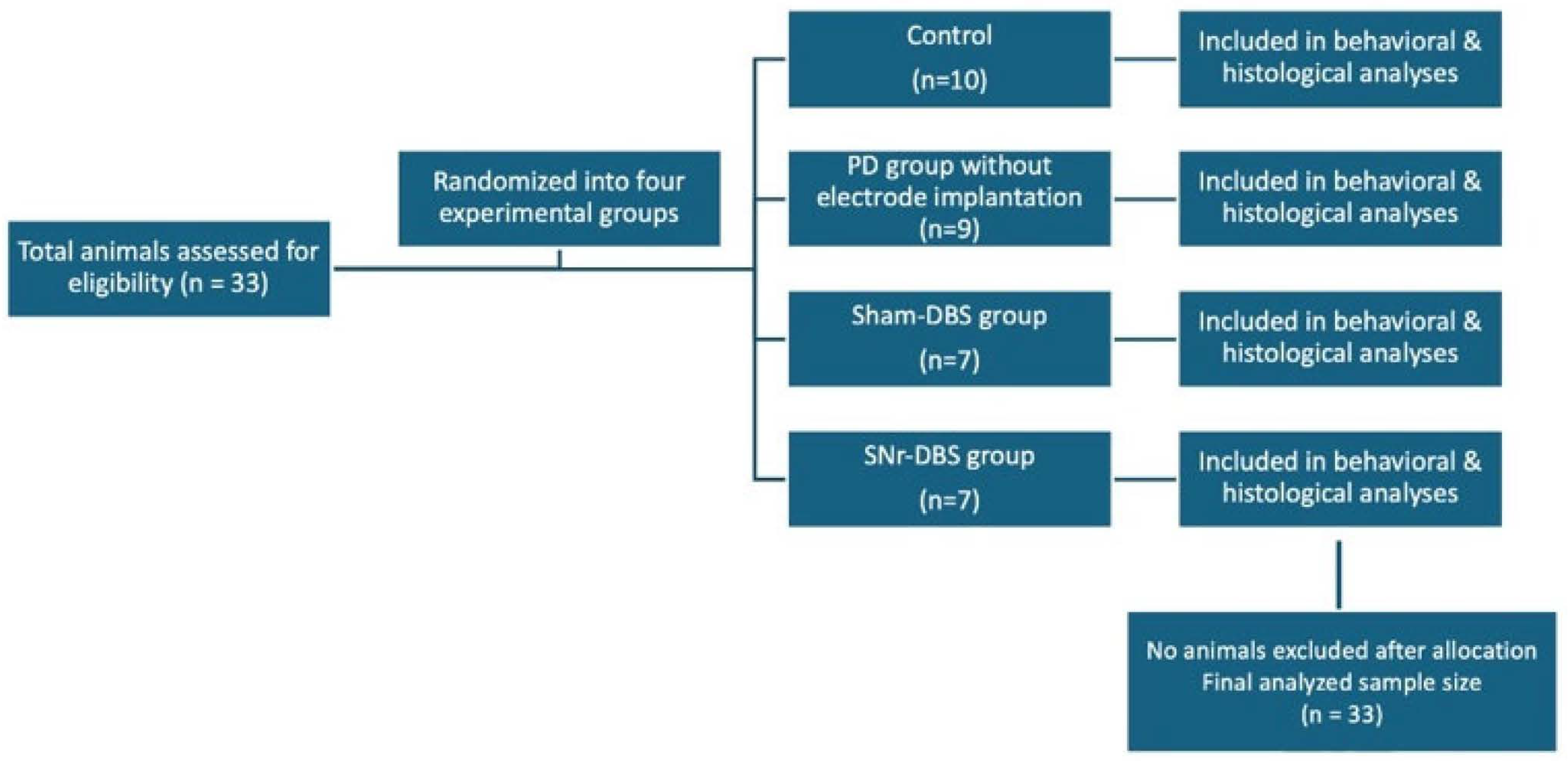
2.2. Experimental Groups
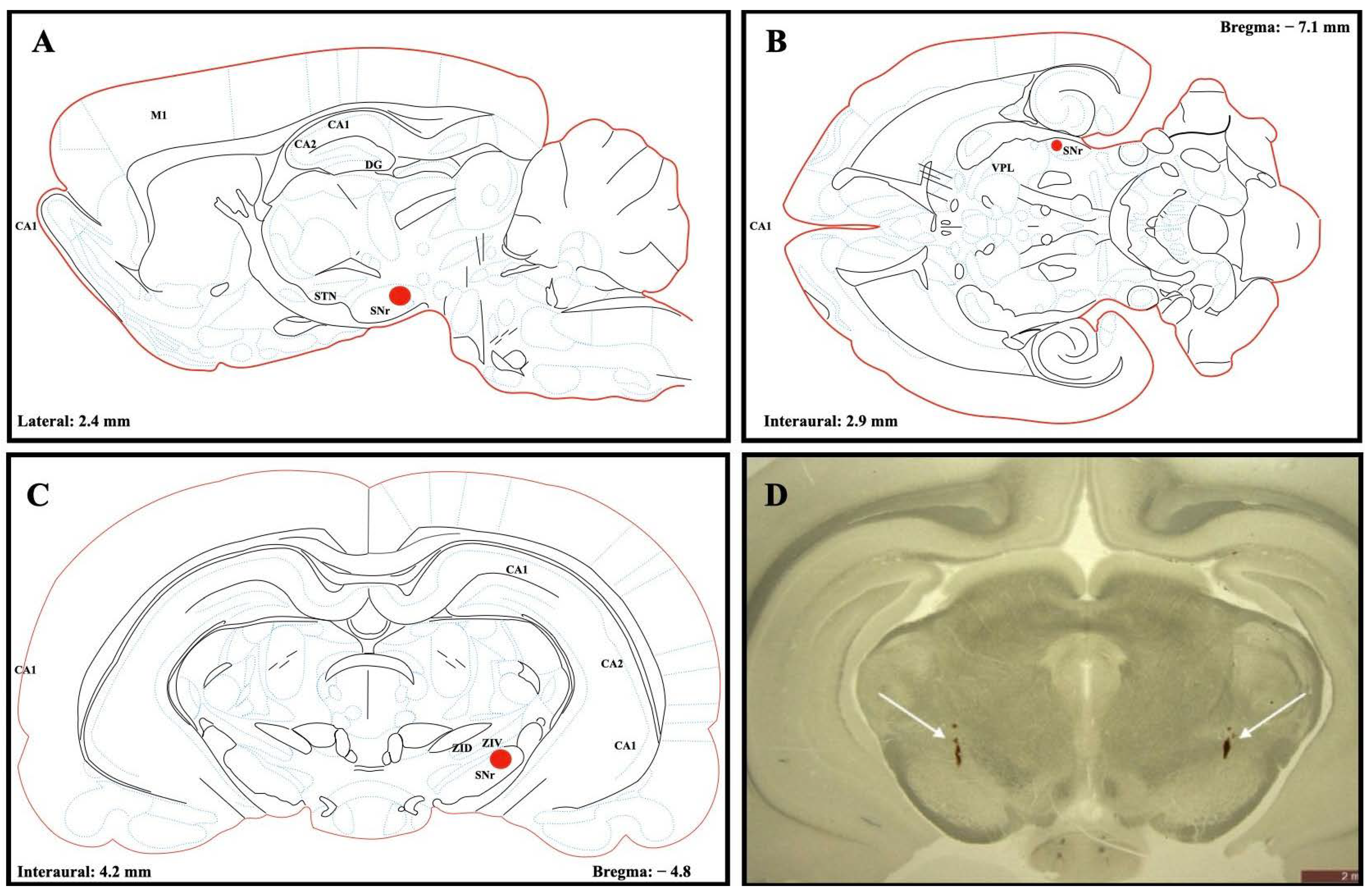
2.3. Electrode Placement in the SN and DBS Protocol
2.4. Behavioral Experiments
2.4.1. Locomotor Activity
2.4.2. Gait Analysis
2.4.3. Rotarod Test
2.5. Histological Analyses
2.5.1. Tissue Tracking for Paraffin Embedding
2.5.2. Immunohistochemical Labeling
2.5.3. ImageJ Analysis
2.6. Statistical Analysis
3. Results
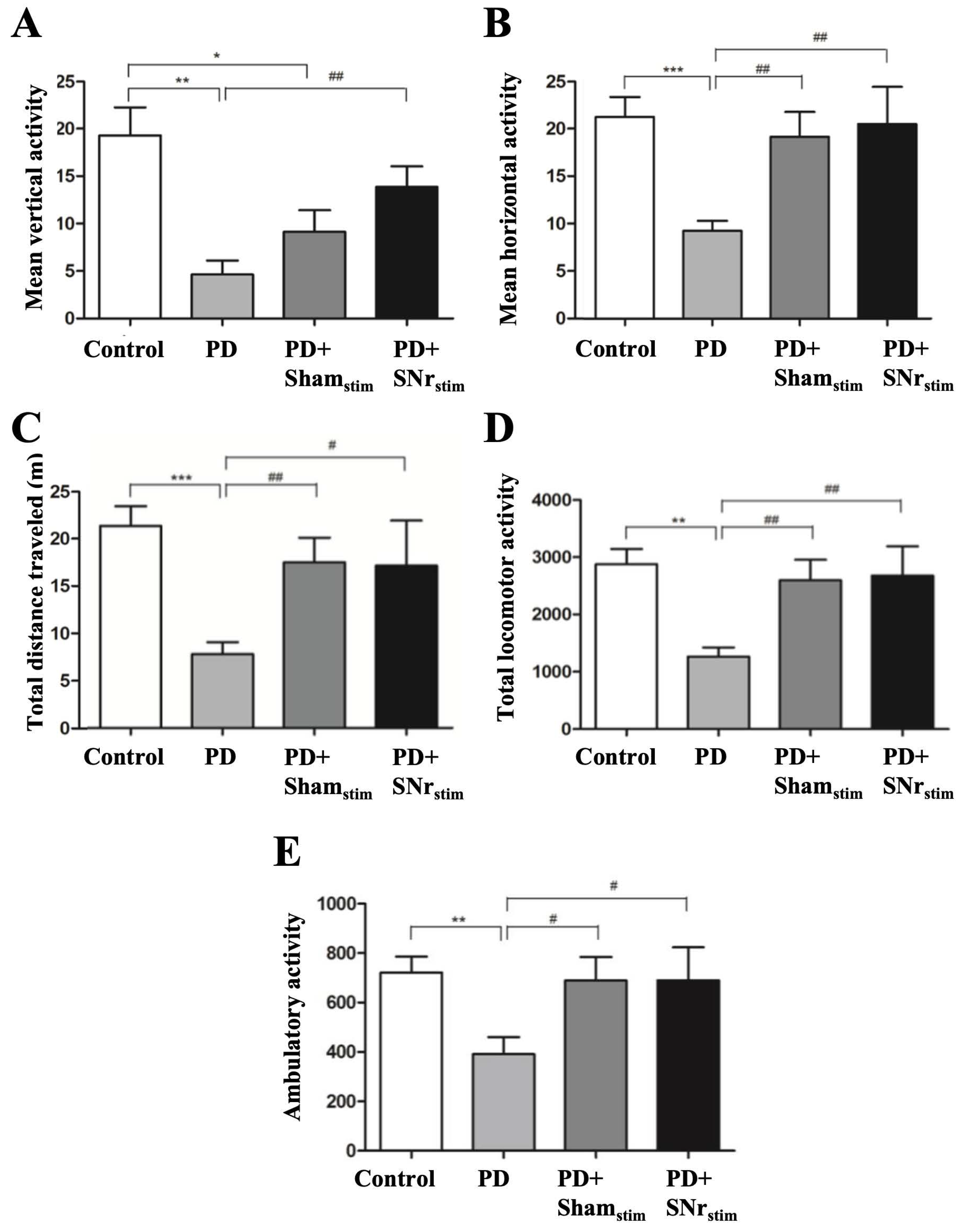
3.1. SNr-DBS Restored Activity
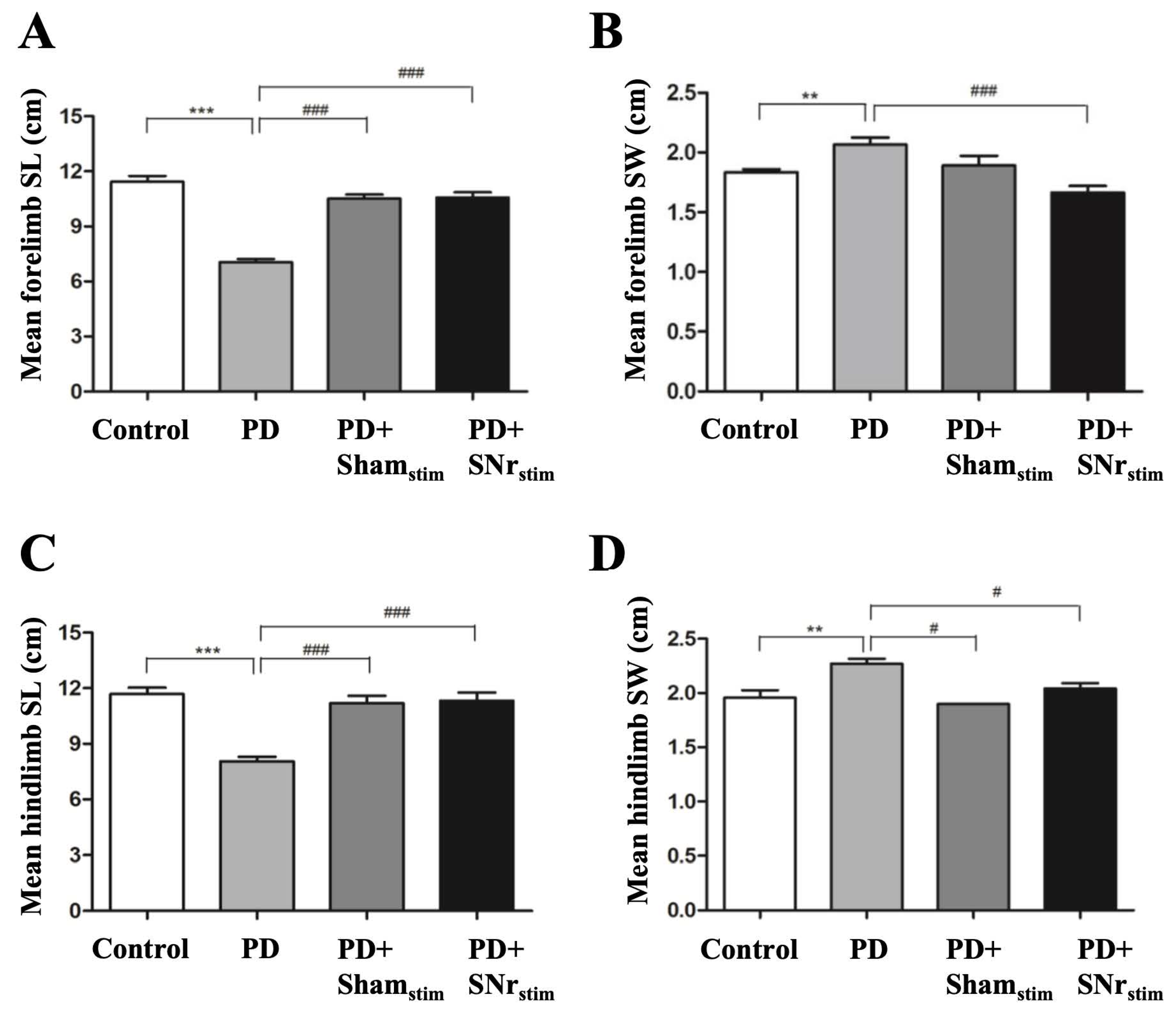
3.2. SNr-DBS Improved Gait Parameters
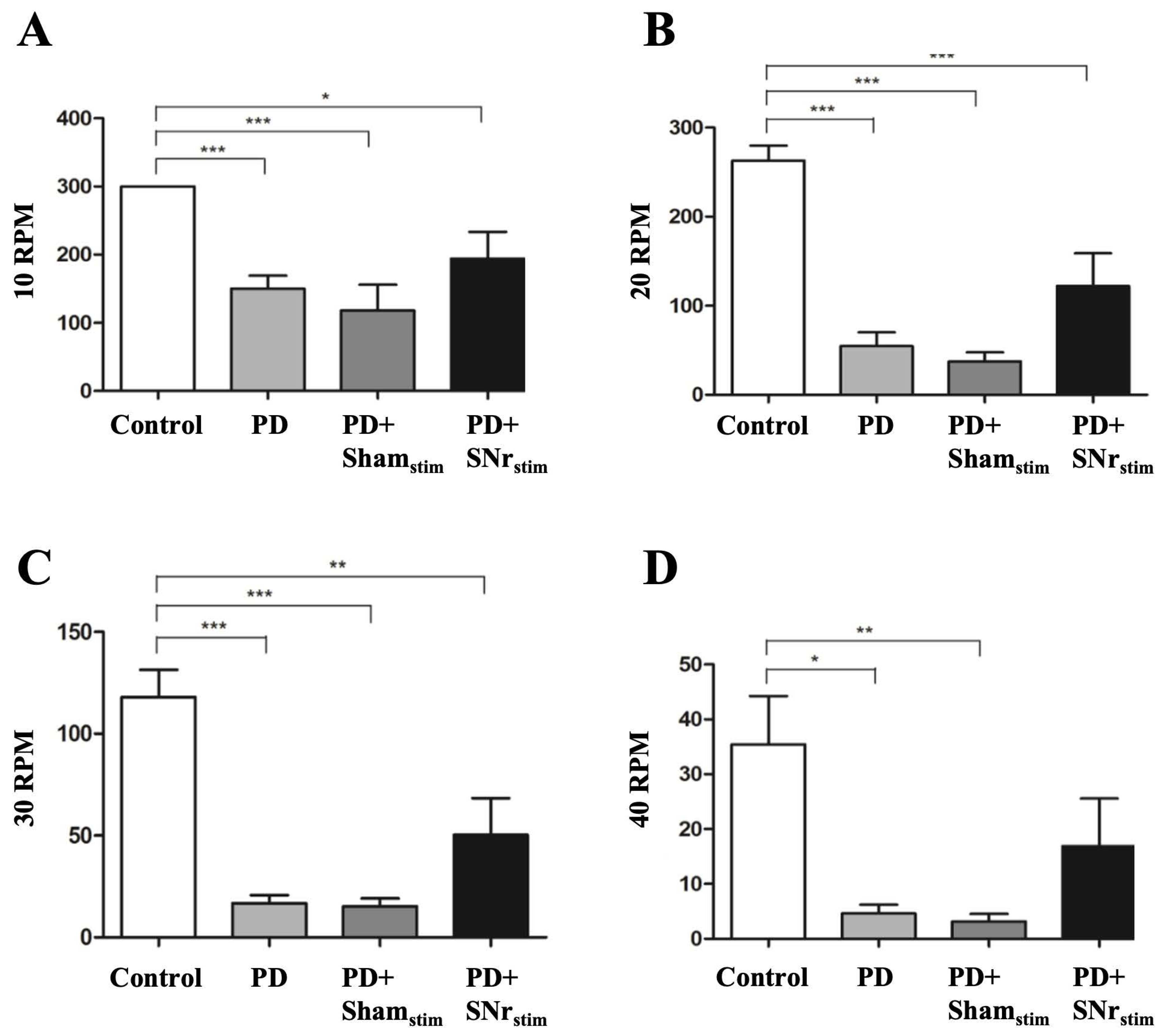
3.3. SNr-DBS Tended to Enhance Balance and Coordination
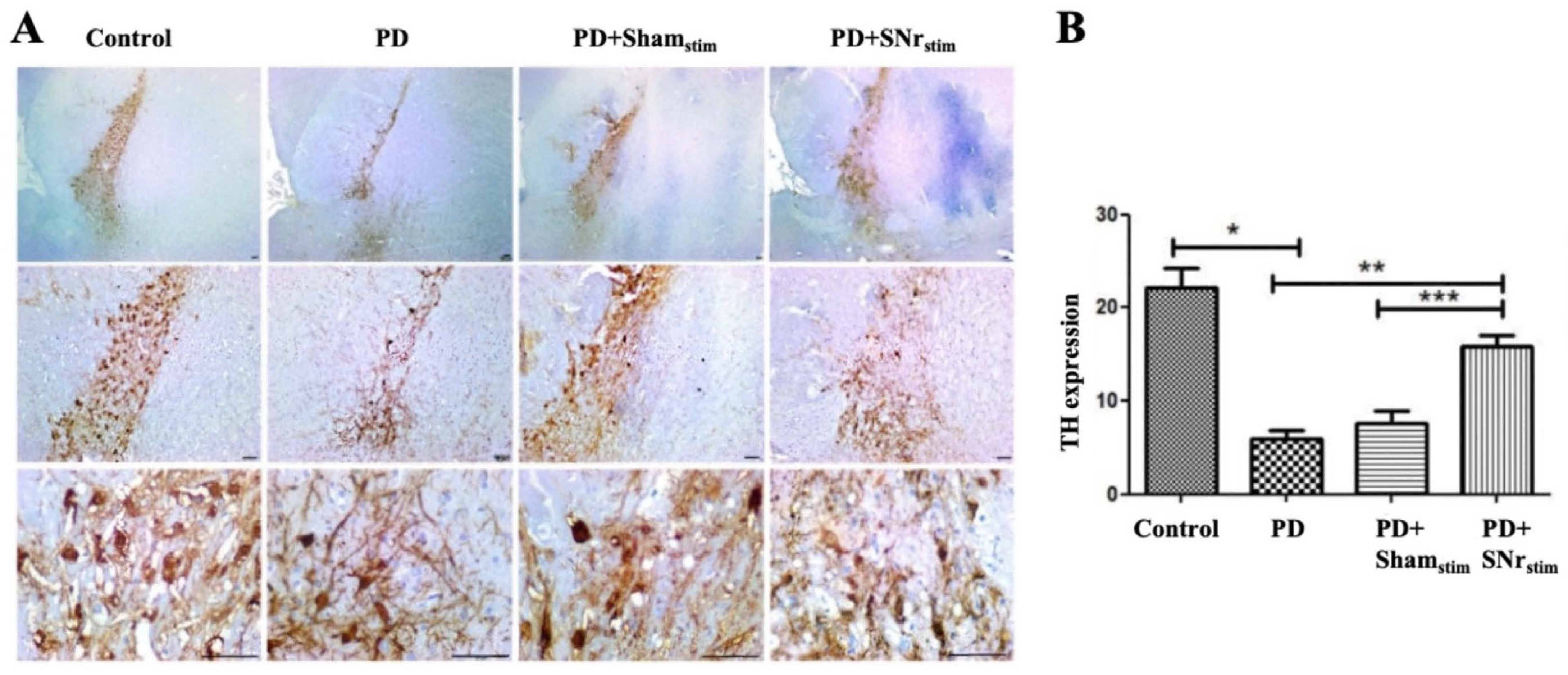
3.4. SNr-DBS Restored Diminished TH Immunoreactivity in SNc
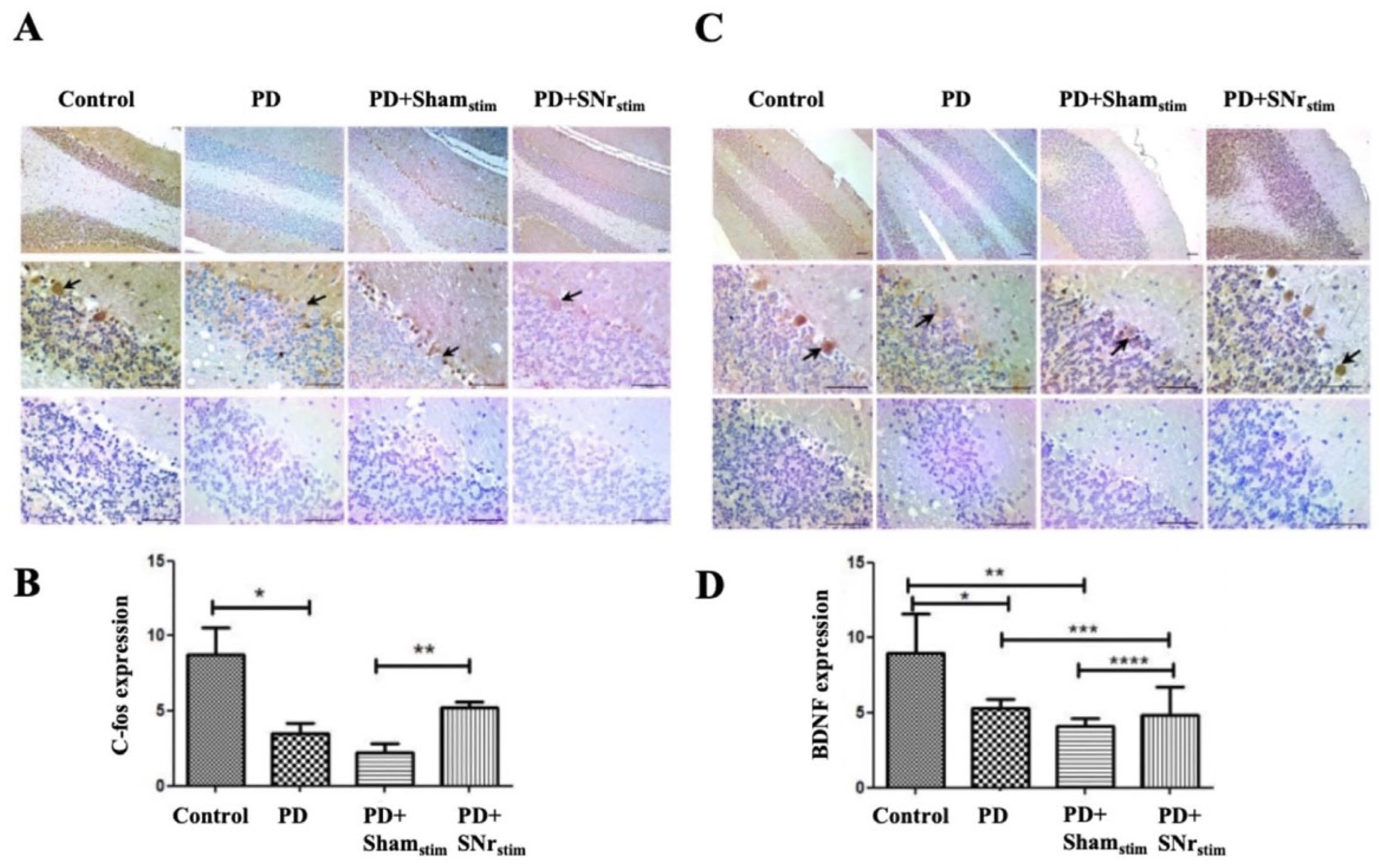
3.5. SNr-DBS Reactivated c-Fos and BDNF Expression in Cerebellar Layers and Purkinje Cells in Parkinsonian Rats
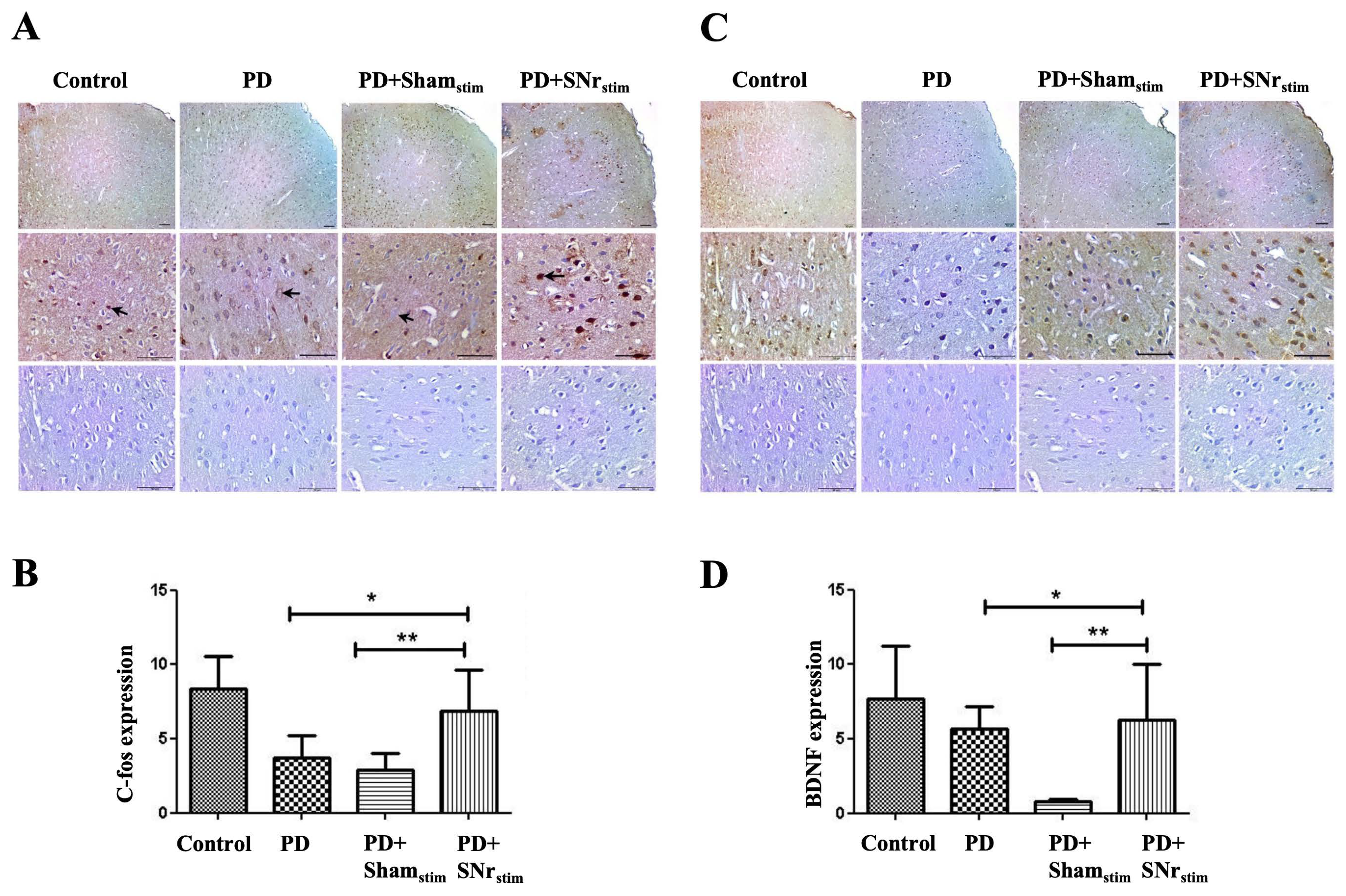
3.6. SNr-DBS Restored c-Fos and BDNF Expression in the Motor Cortex
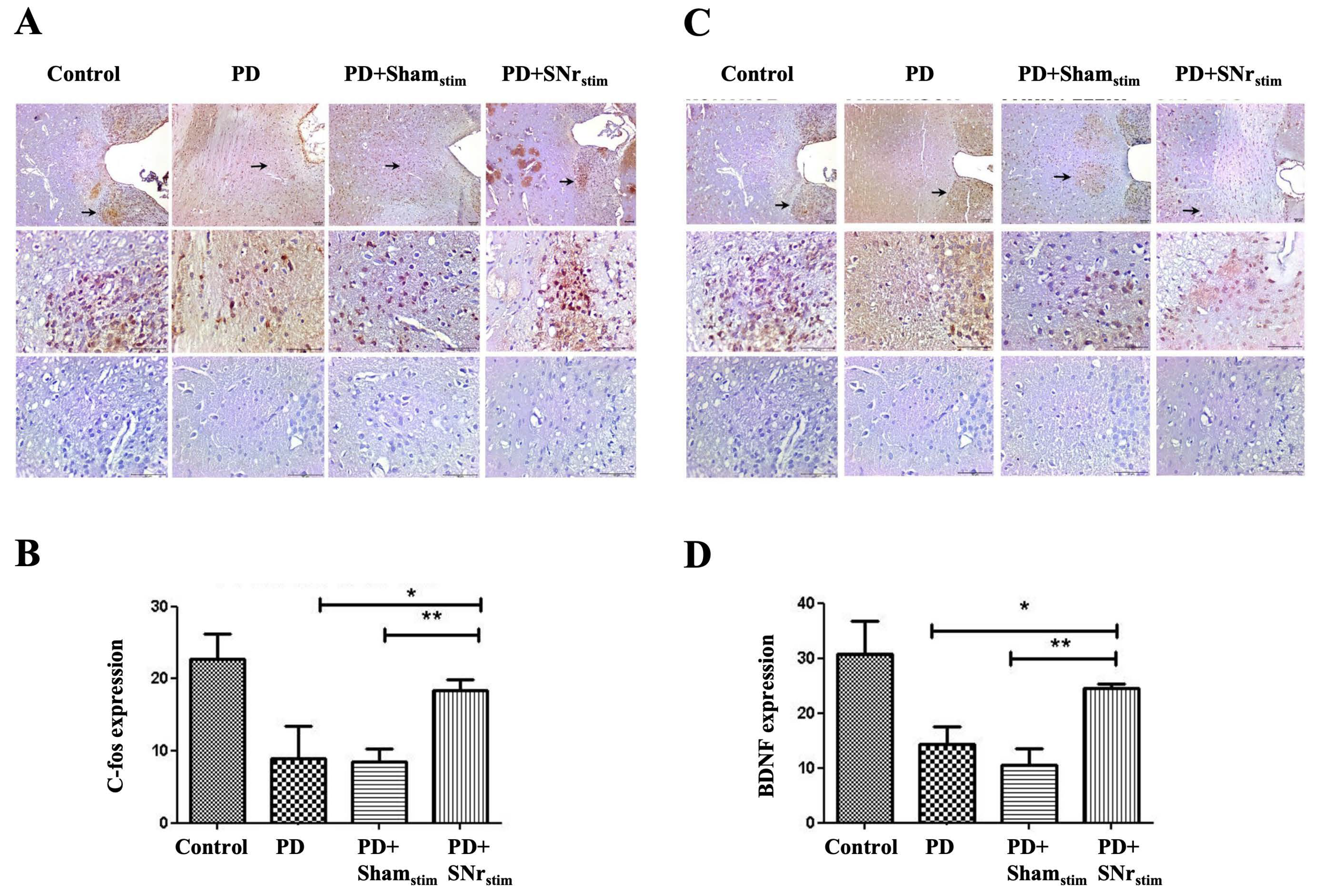
3.7. DBS Recovered Diminished c-Fos and BDNF Expression in the Ventrolateral Thalamus
4. Discussion
5. Conclusions
Author Contributions
Funding
Institutional Review Board Statement
Informed Consent Statement
Data Availability Statement
Conflicts of Interest
Abbreviations
| 6-OHDA | 6-Hydroxydopamine |
| BDNF | Brain-derived Neurotrophic Factor |
| DBS | Deep Brain Stimulation |
| GPi | Internal Globus Pallidus |
| PFC | Prefrontal Cortex |
| PD | Parkinson’s Disease |
| SNc | Substantia Nigra Pars Compacta |
| SNr | Substantia Nigra Pars Reticulata |
| STN | Subthalamic Nucleus |
| TH | Tyrosine Hydroxylase |
References
- Álvarez, F.J. Parkinson’s disease, antiparkinson medicines, and driving. Expert Rev. Neurother. 2016, 16, 1023–1032. [Google Scholar] [CrossRef] [PubMed]
- Samii, A.; Nutt, J.G.; Ransom, B.R. Parkinson’s disease. Lancet 2004, 363, 1783–1793. [Google Scholar] [CrossRef] [PubMed]
- Pahwa, R.; Factor, S.A.; Lyons, K.E.; Ondo, W.G.; Gronseth, G.; Bronte-Stewart, H.; Hallett, M.; Miyasaki, J.; Stevens, J.; Weiner, W.J.; et al. Practice Parameter: Treatment of Parkinson disease with motor fluctuations and dyskinesia (an evidence-based review): Report of the Quality Standards Subcommittee of the American Academy of Neurology. Neurology 2006, 66, 983–995. [Google Scholar] [CrossRef] [PubMed]
- Armstrong, M.J.; Okun, M.S. Diagnosis and Treatment of Parkinson Disease: A Review. JAMA 2020, 323, 548–560. [Google Scholar] [CrossRef] [PubMed]
- Follett, K.A.; Weaver, F.M.; Stern, M.; Hur, K.; Harris, C.L.; Luo, P.; Marks, W.J.; Rothlind, J.; Sagher, O.; Moy, C.; et al. Pallidal versus subthalamic deep-brain stimulation for Parkinson’s disease. N. Engl. J. Med. 2010, 362, 2077–2091. [Google Scholar] [CrossRef] [PubMed]
- Odekerken, V.J.J.; van Laar, T.; Staal, M.J.; Mosch, A.; Hoffmann, C.F.E.; Nijssen, P.C.G.; Beute, G.N.; van Vugt, J.P.P.; Lenders, M.W.P.M.; Contarino, M.F.; et al. Subthalamic nucleus versus globus pallidus bilateral deep brain stimulation for advanced Parkinson’s disease (NSTAPS study): A randomised controlled trial. Lancet Neurol. 2013, 12, 37–44. [Google Scholar] [CrossRef] [PubMed]
- Anderson, V.C.; Burchiel, K.J.; Hogarth, P.; Favre, J.; Hammerstad, J.P. Pallidal vs subthalamic nucleus deep brain stimulation in Parkinson disease. Arch. Neurol. 2005, 62, 554–560. [Google Scholar] [CrossRef] [PubMed]
- Kocabicak, E.; Yildiz, O.; Aygun, D.; Temel, Y. Effects of Deep Brain Stimulation of the Subthalamic Nucleus on the Postoperative Levodopa Response: One Year Follow Up. Turk. Neurosurg. 2021, 31, 88–92. [Google Scholar] [CrossRef] [PubMed]
- Zhang, J.; Li, J.; Chen, F.; Liu, X.; Jiang, C.; Hu, X.; Ma, L.; Xu, Z. STN versus GPi deep brain stimulation for dyskinesia improvement in advanced Parkinson’s disease: A meta-analysis of randomized controlled trials. Clin. Neurol. Neurosurg. 2021, 201, 106450. [Google Scholar] [CrossRef] [PubMed]
- Kocabicak, E.; Tan, S.K.H.; Temel, Y. Deep brain stimulation of the subthalamic nucleus in Parkinson’s disease: Why so successful? Surg. Neurol. Int. 2012, 3, S312–S314. [Google Scholar] [CrossRef] [PubMed] [PubMed Central]
- Hamani, C.; Richter, E.; Schwalb, J.M.; Lozano, A.M. Bilateral subthalamic nucleus stimulation for Parkinson’s disease: A systematic review of the clinical literature. Neurosurgery 2005, 56, 1313–1321; discussion 1321–1324. [Google Scholar] [CrossRef] [PubMed]
- Nassehi, B.; Assadnejad, T.; Yildiz, O.; Aygun, D.; Kocabicak, E. Subthalamic Nucleus Deep Brain Stimulation in a Patient with Severe Axial Symptoms and Suboptimal Levodopa Responsive Parkinson’s Disease. Turk. Neurosurg. 2022, 32, 513–516. [Google Scholar] [CrossRef] [PubMed]
- Koeglsperger, T.; Palleis, C.; Hell, F.; Mehrkens, J.H.; Bötzel, K. Deep Brain Stimulation Programming for Movement Disorders: Current Concepts and Evidence-Based Strategies. Front. Neurol. 2019, 10, 410. [Google Scholar] [CrossRef] [PubMed] [PubMed Central]
- França, C.; Barbosa, E.R.; Iglesio, R.; Teixeira, M.J.; Cury, R.G. Interleaving Stimulation in Parkinson Disease: Interesting to Whom? World Neurosurg. 2019, 130, e786–e793. [Google Scholar] [CrossRef] [PubMed]
- Xie, T.; Padmanaban, M.; Bloom, L.; MacCracken, E.; Bertacchi, B.; Dachman, A.; Warnke, P. Effect of low versus high frequency stimulation on freezing of gait and other axial symptoms in Parkinson patients with bilateral STN DBS: A mini-review. Transl. Neurodegener. 2017, 6, 13. [Google Scholar] [CrossRef] [PubMed] [PubMed Central]
- Paxinos, G.; Watson, C. The Rat Brain in Stereotaxic Coordinates, 7th ed.; Elsevier Science & Technology: Chantilly, France, 2013; ISBN 978-0-12-415752-1. [Google Scholar]
- Temel, Y. Deep brain stimulation in animal models. Handb. Clin. Neurol. 2013, 116, 19–25. [Google Scholar] [CrossRef] [PubMed]
- Shannon, R.V. A model of safe levels for electrical stimulation. IEEE Trans. Biomed. Eng. 1992, 39, 424–426. [Google Scholar] [CrossRef] [PubMed]
- Fang, X.; Sugiyama, K.; Akamine, S.; Namba, H. Improvements in motor behavioral tests during deep brain stimulation of the subthalamic nucleus in rats with different degrees of unilateral parkinsonism. Brain Res. 2006, 1120, 202–210. [Google Scholar] [CrossRef] [PubMed]
- Temel, Y.; Visser-Vandewalle, V.; Kaplan, S.; Kozan, R.; Daemen, M.A.R.C.; Blokland, A.; Schmitz, C.; Steinbusch, H.W.M. Protection of nigral cell death by bilateral subthalamic nucleus stimulation. Brain Res. 2006, 1120, 100–105. [Google Scholar] [CrossRef]
- Spieles-Engemann, A.L.; Steece-Collier, K.; Behbehani, M.M.; Collier, T.J.; Wohlgenant, S.L.; Kemp, C.J.; Cole-Strauss, A.; Levine, N.D.; Gombash, S.E.; Thompson, V.B.; et al. Subthalamic nucleus stimulation increases brain derived neurotrophic factor in the nigrostriatal system and primary motor cortex. J. Park. Dis. 2011, 1, 123–136. [Google Scholar] [CrossRef] [PubMed] [PubMed Central]
- Kayir, H.; Uzbay, I.T. Evidence for the role of nitric oxide in caffeine-induced locomotor activity in mice. Psychopharmacology 2004, 172, 11–15. [Google Scholar] [CrossRef] [PubMed]
- Benabid, A.L. Deep brain stimulation for Parkinson’s disease. Curr. Opin. Neurobiol. 2003, 13, 696–706. [Google Scholar] [CrossRef] [PubMed]
- Chiken, S.; Nambu, A. Mechanism of Deep Brain Stimulation: Inhibition, Excitation, or Disruption? Neuroscientist 2016, 22, 313–322. [Google Scholar] [CrossRef] [PubMed] [PubMed Central]
- Hamani, C.; Dubiela, F.P.; Soares, J.C.K.; Shin, D.; Bittencourt, S.; Covolan, L.; Carlen, P.L.; Laxton, A.W.; Hodaie, M.; Stone, S.S.D.; et al. Anterior thalamus deep brain stimulation at high current impairs memory in rats. Exp. Neurol. 2010, 225, 154–162. [Google Scholar] [CrossRef] [PubMed]
- Le Jeune, F.; Vérin, M.; N’Diaye, K.; Drapier, D.; Leray, E.; Du Montcel, S.T.; Baup, N.; Pelissolo, A.; Polosan, M.; Mallet, L.; et al. Decrease of Prefrontal Metabolism After Subthalamic Stimulation in Obsessive-Compulsive Disorder: A Positron Emission Tomography Study. Biol. Psychiatry 2010, 68, 1016–1022. [Google Scholar] [CrossRef]
- Hamani, C.; Temel, Y. Deep Brain Stimulation for Psychiatric Disease: Contributions and Validity of Animal Models. Sci. Transl. Med. 2012, 4, 142rv8. [Google Scholar] [CrossRef]
- Jakobs, M.; Fomenko, A.; Lozano, A.M.; Kiening, K.L. Cellular, molecular, and clinical mechanisms of action of deep brain stimulation—A systematic review on established indications and outlook on future developments. EMBO Mol. Med. 2019, 11, e9575. [Google Scholar] [CrossRef]
- Eser, P.; Kocabicak, E.; Bekar, A.; Temel, Y. Insights into neuroinflammatory mechanisms of deep brain stimulation in Parkinson’s disease. Exp. Neurol. 2024, 374, 114684. [Google Scholar] [CrossRef]
- Cersosimo, M.G.; Raina, G.B.; Benarroch, E.E.; Piedimonte, F.; Alemán, G.G.; Micheli, F.E. Micro lesion effect of the globus pallidus internus and outcome with deep brain stimulation in patients with Parkinson disease and dystonia. Mov. Disord. 2009, 24, 1488–1493. [Google Scholar] [CrossRef] [PubMed]
- Lange, S.F.; Kremer, N.I.; van Laar, T.; Lange, F.; Steendam-Oldekamp, T.E.; Oterdoom, D.L.M.; Absalom, A.R.; van Dijk, J.M.C.; Drost, G. The Intraoperative Microlesion Effect Positively Correlates With the Short-Term Clinical Effect of Deep Brain Stimulation in Parkinson’s Disease. Neuromodul. Technol. Neural Interface 2023, 26, 459–465. [Google Scholar] [CrossRef]
- Aygun, D.; Dere, U.A.; Yildiz, O.; Temel, Y.; Kocabicak, E. Characterizing the Intraoperative Microelectrode Recording-Induced Microlesion Effect on Motor Symptoms in Patients with Parkinson’s Disease Undergoing Deep Brain Stimulation of the Subthalamic Nucleus. Turk. Neurosurg. 2019, 29, 430–433. [Google Scholar] [CrossRef] [PubMed]
- Jech, R.; Mueller, K.; Urgošík, D.; Sieger, T.; Holiga, Š.; Růžička, F.; Dušek, P.; Havránková, P.; Vymazal, J.; Růžička, E. The Subthalamic Microlesion Story in Parkinson’s Disease: Electrode Insertion-Related Motor Improvement with Relative Cortico-Subcortical Hypoactivation in fMRI. PLoS ONE 2012, 7, e49056. [Google Scholar] [CrossRef] [PubMed]
- Chang, S.-Y.; Shon, Y.M.; Agnesi, F.; Lee, K.H. Microthalamotomy effect during deep brain stimulation: Potential involvement of adenosine and glutamate efflux. In Proceedings of the 2009 Annual International Conference of the IEEE Engineering in Medicine and Biology Society, Minneapolis, MN, USA, 3-6 September 2009; IEEE: New York, NY, USA, 2009; Volume 2009, pp. 3294–3297. [Google Scholar] [CrossRef] [PubMed] [PubMed Central]
- Tykocki, T.; Nauman, P.; Koziara, H.; Mandat, T. Microlesion effect as a predictor of the effectiveness of subthalamic deep brain stimulation for Parkinson’s disease. Ster. Funct. Neurosurg. 2013, 91, 12–17. [Google Scholar] [CrossRef] [PubMed]
- McIntyre, C.C.; Anderson, R.W. Deep brain stimulation mechanisms: The control of network activity via neurochemistry modulation. J. Neurochem. 2016, 139, 338–345. [Google Scholar] [CrossRef]
- Chastan, N.; Westby, G.W.M.; Yelnik, J.; Bardinet, E.; Do, M.C.; Agid, Y.; Welter, M.L. Effects of nigral stimulation on locomotion and postural stability in patients with Parkinson’s disease. Brain 2009, 132, 172–184. [Google Scholar] [CrossRef] [PubMed]
- Weiss, D.; Milosevic, L.; Gharabaghi, A. Deep brain stimulation of the substantia nigra for freezing of gait in Parkinson’s disease: Is it about stimulation frequency? Park. Relat. Disord. 2019, 63, 229–230. [Google Scholar] [CrossRef] [PubMed]
- Weiss, D.; Walach, M.; Meisner, C.; Fritz, M.; Scholten, M.; Breit, S.; Plewnia, C.; Bender, B.; Gharabaghi, A.; Wächter, T.; et al. Nigral stimulation for resistant axial motor impairment in Parkinson’s disease? A randomized controlled trial. Brain 2013, 136, 2098–2108. [Google Scholar] [CrossRef] [PubMed] [PubMed Central]
- Moro, E.; Hamani, C.; Poon, Y.-Y.; Al-Khairallah, T.; Dostrovsky, J.O.; Hutchison, W.D.; Lozano, A.M. Unilateral pedunculopontine stimulation improves falls in Parkinson’s disease. Brain 2010, 133, 215–224. [Google Scholar] [CrossRef] [PubMed]
- Hariz, M.; Blomstedt, P. Deep brain stimulation for Parkinson’s disease. J. Intern. Med. 2022, 292, 764–778. [Google Scholar] [CrossRef] [PubMed] [PubMed Central]
- Weiss, D.; Breit, S.; Wächter, T.; Plewnia, C.; Gharabaghi, A.; Krüger, R. Combined stimulation of the substantia nigra pars reticulata and the subthalamic nucleus is effective in hypokinetic gait disturbance in Parkinson’s disease. J. Neurol. 2011, 258, 1183–1185. [Google Scholar] [CrossRef] [PubMed]
- Scholten, M.; Klemt, J.; Heilbronn, M.; Plewnia, C.; Bloem, B.R.; Bunjes, F.; Krüger, R.; Gharabaghi, A.; Weiss, D. Effects of Subthalamic and Nigral Stimulation on Gait Kinematics in Parkinson’s Disease. Front. Neurol. 2017, 8, 543. [Google Scholar] [CrossRef] [PubMed] [PubMed Central]
- Heilbronn, M.; Scholten, M.; Schlenstedt, C.; Mancini, M.; Schöllmann, A.; Cebi, I.; Pötter-Nerger, M.; Gharabaghi, A.; Weiss, D. Anticipatory postural adjustments are modulated by substantia nigra stimulation in people with Parkinson’s disease and freezing of gait. Park. Relat. Disord. 2019, 66, 34–39. [Google Scholar] [CrossRef] [PubMed]
- Sutton, A.C.; Yu, W.; Calos, M.E.; Smith, A.B.; Ramirez-Zamora, A.; Molho, E.S.; Pilitsis, J.G.; Brotchie, J.M.; Shin, D.S. Deep brain stimulation of the substantia nigra pars reticulata improves forelimb akinesia in the hemiparkinsonian rat. J. Neurophysiol. 2013, 109, 363–374. [Google Scholar] [CrossRef] [PubMed]
- Cury, R.G.; Pavese, N.; Aziz, T.Z.; Krauss, J.K.; Moro, E. Neuromodulation of Gait Study Group from Movement Disorders Society Gaps and roadmap of novel neuromodulation targets for treatment of gait in Parkinson’s disease. NPJ Park. Dis. 2022, 8, 8. [Google Scholar] [CrossRef] [PubMed] [PubMed Central]
- Artusi, C.A.; Ledda, C.; Gallo, S.; Rinaldi, D.; Campisi, C.; Rousseau, V.; Thalamas, C.; Barbosa, R.; Ory-Magne, F.; Brefel-Courbon, C.; et al. Subthalamic and nigral stimulation for freezing of gait in Parkinson’s disease: Randomized pilot trial. J. Park. Dis. 2024, 14, 1602–1613. [Google Scholar] [CrossRef] [PubMed]
- Valldeoriola, F.; Muñoz, E.; Rumià, J.; Roldán, P.; Cámara, A.; Compta, Y.; Martí, M.J.; Tolosa, E. Simultaneous low-frequency deep brain stimulation of the substantia nigra pars reticulata and high-frequency stimulation of the subthalamic nucleus to treat levodopa unresponsive freezing of gait in Parkinson’s disease: A pilot study. Park. Relat. Disord. 2019, 60, 153–157. [Google Scholar] [CrossRef] [PubMed]
- Amende, I.; Kale, A.; McCue, S.; Glazier, S.; Morgan, J.P.; Hampton, T.G. Gait dynamics in mouse models of Parkinson’s disease and Huntington’s disease. J. Neuroeng. Rehabil. 2005, 2, 20. [Google Scholar] [CrossRef] [PubMed] [PubMed Central]
- Haavik, J.; Toska, K. Tyrosine hydroxylase and Parkinson’s disease. Mol. Neurobiol. 1998, 16, 285–309. [Google Scholar] [CrossRef] [PubMed]
- Tan, S.K.; Vlamings, R.; Lim, L.; Sesia, T.; Janssen, M.L.; Steinbusch, H.W.; Visser-Vandewalle, V.; Temel, Y. Experimental deep brain stimulation in animal models. Neurosurgery 2010, 67, 1073–1079; discussion 1080. [Google Scholar] [CrossRef]
- Helf, C.; Kober, M.; Markert, F.; Lanto, J.; Overhoff, L.; Badstübner-Meeske, K.; Storch, A.; Fauser, M. Subthalamic nucleus deep brain stimulation induces nigrostriatal dopaminergic plasticity in a stable rat model of Parkinson’s disease. Neuroreport 2023, 34, 506–511. [Google Scholar] [CrossRef] [PubMed] [PubMed Central]
- Mirdamadi, J.L. Cerebellar role in Parkinson’s disease. J. Neurophysiol. 2016, 116, 917–919. [Google Scholar] [CrossRef] [PubMed] [PubMed Central]
- Lewis, M.M.; Galley, S.; Johnson, S.; Stevenson, J.; Huang, X.; McKeown, M.J. The role of the cerebellum in the pathophysiology of Parkinson’s disease. Can. J. Neurol. Sci. 2013, 40, 299–306. [Google Scholar] [CrossRef] [PubMed] [PubMed Central]
- O’Shea, I.M.; Popal, H.S.; Olson, I.R.; Murty, V.P.; Smith, D.V. Distinct alterations in cerebellar connectivity with substantia nigra and ventral tegmental area in Parkinson’s disease. Sci. Rep. 2022, 12, 3289. [Google Scholar] [CrossRef]
- Borghammer, P.; Østergaard, K.; Cumming, P.; Gjedde, A.; Rodell, A.; Hall, N.; Chakravarty, M.M. A deformation-based morphometry study of patients with early-stage Parkinson’s disease. Eur. J. Neurol. 2010, 17, 314–320. [Google Scholar] [CrossRef] [PubMed]
- Devi, L.; Raghavendran, V.; Prabhu, B.M.; Avadhani, N.G.; Anandatheerthavarada, H.K. Mitochondrial Import and Accumulation of α-Synuclein Impair Complex I in Human Dopaminergic Neuronal Cultures and Parkinson Disease Brain. J. Biol. Chem. 2008, 283, 9089–9100. [Google Scholar] [CrossRef] [PubMed]
- Takakusaki, K. Functional Neuroanatomy for Posture and Gait Control. J. Mov. Disord. 2017, 10, 1–17. [Google Scholar] [CrossRef]
- Müller, M.L.T.M.; Bohnen, N.I. Cholinergic dysfunction in Parkinson’s disease. Curr. Neurol. Neurosci. Rep. 2013, 13, 377. [Google Scholar] [CrossRef]
- Lang, A.E.; Lozano, A.M. Parkinson’s disease. First of two parts. N. Engl. J. Med. 1998, 339, 1044–1053. [Google Scholar] [CrossRef] [PubMed]
- Lang, A.E.; Lozano, A.M. Parkinson’s disease. Second of two parts. N. Engl. J. Med. 1998, 339, 1130–1143. [Google Scholar] [CrossRef] [PubMed]
- Kocabıcak, E.; Sen, S.; Uzun, H.; Ozturk, S.; Yildiz, M.O.; Tuzun, E.; Taskin, O.; Aygun, D.; Temel, Y. Peripheral cytokine levels in patients with idiopathic parkinson’s disease undergoing subthalamic nucleus deep brain stimulation. Sci. Rep. 2025, 15, 36719. [Google Scholar] [CrossRef] [PubMed] [PubMed Central]
- Bathina, S.; Das, U.N. Brain-derived neurotrophic factor and its clinical implications. Arch. Med. Sci. 2015, 11, 1164–1178. [Google Scholar] [CrossRef] [PubMed] [PubMed Central]
- Scalzo, P.; Kümmer, A.; Bretas, T.L.; Cardoso, F.; Teixeira, A.L. Serum levels of brain-derived neurotrophic factor correlate with motor impairment in Parkinson’s disease. J. Neurol. 2010, 257, 540–545. [Google Scholar] [CrossRef] [PubMed]
- Fischer, D.L.; Kemp, C.J.; Cole-Strauss, A.; Polinski, N.K.; Paumier, K.L.; Lipton, J.W.; Steece-Collier, K.; Collier, T.J.; Buhlinger, D.J.; Sortwell, C.E. Subthalamic Nucleus Deep Brain Stimulation Employs trkB Signaling for Neuroprotection and Functional Restoration. J. Neurosci. 2017, 37, 6786–6796. [Google Scholar] [CrossRef] [PubMed] [PubMed Central]
- Miller, K.M.; Patterson, J.R.; Kochmanski, J.; Kemp, C.J.; Stoll, A.C.; Onyekpe, C.U.; Cole-Strauss, A.; Steece-Collier, K.; Howe, J.W.; Luk, K.C.; et al. Striatal Afferent BDNF Is Disrupted by Synucleinopathy and Partially Restored by STN DBS. J. Neurosci. 2021, 41, 2039–2052. [Google Scholar] [CrossRef] [PubMed] [PubMed Central]


Disclaimer/Publisher’s Note: The statements, opinions and data contained in all publications are solely those of the individual author(s) and contributor(s) and not of MDPI and/or the editor(s). MDPI and/or the editor(s) disclaim responsibility for any injury to people or property resulting from any ideas, methods, instructions or products referred to in the content. |
© 2026 by the authors. Published by MDPI on behalf of the Lithuanian University of Health Sciences. Licensee MDPI, Basel, Switzerland. This article is an open access article distributed under the terms and conditions of the Creative Commons Attribution (CC BY) license.
Share and Cite
Turgut, E.; Parlak, H.; Eser, P.; Temel, Y.; Jahanshahi, A.; Sarıkcıoglu, L.; Tanrıover, G.E.; Ucar, T.; Kocabicak, E.; Agar, A. Neuromodulatory Effects of Substantia Nigra Pars Reticulata Deep Brain Stimulation (SNr-DBS) in the 6-Hydroxydopamine Rat Model of Parkinson’s Disease. Medicina 2026, 62, 714. https://doi.org/10.3390/medicina62040714
Turgut E, Parlak H, Eser P, Temel Y, Jahanshahi A, Sarıkcıoglu L, Tanrıover GE, Ucar T, Kocabicak E, Agar A. Neuromodulatory Effects of Substantia Nigra Pars Reticulata Deep Brain Stimulation (SNr-DBS) in the 6-Hydroxydopamine Rat Model of Parkinson’s Disease. Medicina. 2026; 62(4):714. https://doi.org/10.3390/medicina62040714
Chicago/Turabian StyleTurgut, Eylem, Hande Parlak, Pinar Eser, Yasin Temel, Ali Jahanshahi, Levent Sarıkcıoglu, Gamze Erguler Tanrıover, Tanju Ucar, Ersoy Kocabicak, and Aysel Agar. 2026. "Neuromodulatory Effects of Substantia Nigra Pars Reticulata Deep Brain Stimulation (SNr-DBS) in the 6-Hydroxydopamine Rat Model of Parkinson’s Disease" Medicina 62, no. 4: 714. https://doi.org/10.3390/medicina62040714
APA StyleTurgut, E., Parlak, H., Eser, P., Temel, Y., Jahanshahi, A., Sarıkcıoglu, L., Tanrıover, G. E., Ucar, T., Kocabicak, E., & Agar, A. (2026). Neuromodulatory Effects of Substantia Nigra Pars Reticulata Deep Brain Stimulation (SNr-DBS) in the 6-Hydroxydopamine Rat Model of Parkinson’s Disease. Medicina, 62(4), 714. https://doi.org/10.3390/medicina62040714