1. Introduction
Immune checkpoint blockade has revolutionized the landscape of cancer therapy; however, a substantial proportion of patients either fail to respond to treatment or develop acquired resistance. This clinical dilemma underscores the urgent need to target alternative inhibitory immune pathways to improve therapeutic outcomes [
1]. Lymphocyte Activation Gene-3 (LAG-3, CD223) has emerged as a pivotal co-inhibitory receptor in this context. Originally identified on activated human T cells and natural killer (NK) cells, LAG-3 is now recognized as a key mediator of T-cell exhaustion and is widely expressed on various immune cells within the tumor microenvironment (TME) [
2,
3]. Structurally, LAG-3 belongs to the immunoglobulin superfamily (IgSF) and shares significant sequence homology with CD4. A distinctive structural feature is an additional loop within its membrane-distal D1 domain, which advanced structural analyses have recently identified as indispensable for high-affinity ligand binding and subsequent immune regulation [
4,
5]. The clinical relevance of LAG-3 is highlighted by its frequent upregulation on tumor-infiltrating lymphocytes (TILs) in multiple malignancies, including non-small-cell lung cancer (NSCLC). In such cancers, LAG-3 expression is closely associated with the suppressed effector function of TILs and poor clinical prognosis in patients [
6,
7].
The immunosuppressive function of LAG-3 is mediated through its interactions with multiple ligands. The classical ligand, MHC-II, binds to LAG-3 with a significantly higher affinity than it does to CD4. Recent mechanistic studies have elucidated that this interaction is highly conformation-dependent, enabling LAG-3 to competitively inhibit CD4-mediated T-cell co-stimulation and directly transduce inhibitory intracellular signals, thereby dampening T-cell activation and proliferation [
8,
9]. A transformative discovery in LAG-3 biology identified fibrinogen-like protein 1 (FGL1), a hepatocyte-secreted soluble factor, as a major high-affinity ligand of LAG-3 [
10]. The FGL1-binding site on LAG-3 has been precisely mapped through mutagenesis studies that identified amino acid mutations altering hLAG-3 affinity for FGL1 [
11]. The FGL1-LAG-3 signaling axis functions independently of the MHC-II-LAG-3 pathway and has been functionally validated as a key mechanism underlying tumor immune escape in multiple preclinical cancer models [
12,
13]. The existence of these two distinct ligand-binding pathways highlights the complex biological regulation of LAG-3 and presents unique therapeutic opportunities for targeted intervention.
Clinically, targeting LAG-3 has proven to be a viable and effective therapeutic strategy, as exemplified by the US Food and Drug Administration (FDA) approval of relatlimab—a human monoclonal antibody that inhibits LAG-3 binding to both MHC-II and FGL1—in combination with nivolumab for the treatment of metastatic melanoma [
14]. Despite this clinical success, conventional monoclonal antibodies (mAbs) possess inherent limitations, including a large molecular weight (~150 kDa) that hinders penetration into solid tumor tissues, complex and costly manufacturing processes, and potential immunogenicity in patients. These drawbacks have driven extensive research into next-generation antibody formats with improved properties [
15,
16]. Single-domain antibodies (sdAbs, also known as nanobodies) represent a promising alternative platform for developing robust immune checkpoint inhibitors [
17,
18], owing to their unique advantages such as a small molecular weight (~15 kDa), superior tissue and tumor penetration, high thermal and structural stability, and ease of genetic engineering and manufacturing. Developing high-affinity sdAbs that specifically block LAG-3-ligand interactions may therefore yield potent therapeutic agents with favorable pharmacological properties for cancer immunotherapy.
In this study, we panned a naïve phage display library against the human LAG-3 protein to isolate specific sdAbs. Positive clones were subsequently evaluated using competitive binding assays to assess their ability to block LAG-3 interactions with FGL1 and MHC-II, and their capacity to restore T-cell function was measured via IL-2 secretion and CD69 expression assays [
19]. Finally, the in vivo anti-tumor efficacy of the lead candidate 2H-G7 was evaluated in a PBMC-humanized mouse model of NSCLC. Our results demonstrate that 2H-G7 is a novel and potent LAG-3 antagonist with great potential for the development of next-generation LAG-3-targeted cancer immunotherapies.
2. Materials and Methods
2.1. Cell Lines
Cell lines used for functional assays were obtained and cultured as follows: Raji (human Burkitt’s lymphoma, Cat: TCHu 44) cell lines were purchased from the Cell Bank of the Chinese Academy of Sciences (Shanghai, China) and cultured in RPMI-1640 medium (Gibco, Thermo Fisher Scientific, Waltham, MA, USA, Cat: 11875093) supplemented with 10% fetal bovine serum (FBS, NCM biotech, Shanghai, China, Cat: C9500). The A549 (Jinyuan Biotechnology, Shanghai, China, Cat: JY135) human non-small-cell lung cancer cell line was maintained in RPMI-1640 medium containing 10% FBS. Expi293F human cells (Thermo Fisher Scientific, Waltham, MA, USA, Cat: A14527CN) were cultured in OPM-293 CD05 Medium (OPM Biosciences, Shanghai, China, Cat: 81075-001). The HEK-293T (Jinyuan Biotechnology, Shanghai, China, Cat: JY759) cell line was cultured in DMEM (Shanghai Zhong Qiao Xin Zhou Biotechnology, Shanghai, China, Cat: ZQ-100) containing 10% FBS. The HEK-LAG3-EGFP cell line was generated in-house by stably transfecting parental HEK-293T cells with an LAG3-EGFP expression construct. Primary human peripheral blood mononuclear cells (PBMCs) were obtained from Shanghai Miaoshun Biotech Co., Ltd, Shanghai, China. The human PBMC samples used in this study were approved by the Ethics Committee of Shanghai Liquan Hospital Institutional Review Board (Approval No.: 2021-01), and all donors provided written informed consent. The CHO-K1 (Chinese hamster ovary, Jinyuan Biotechnology, Shanghai, China, Cat: JY210) cell line was cultured in F-12K medium (Gibco, Thermo Fisher Scientific, Waltham, MA, USA, Cat: 21127022) supplemented with 10% FBS (NCM biotech, Shanghai, China, Cat: C9500). All cell lines were incubated at 37 °C in a humidified atmosphere containing 5% CO2 for all functional assays.
2.2. Phage Panning
Recombinant human LAG-3-mFc protein (Sino Biological, Beijing, China, Cat: 16498-H05H) was immobilized on microtiter plates for phage library selection. A naïve sdAb phage display library was incubated with the immobilized LAG-3-mFc antigen, followed by extensive washing with PBST (PBS containing 0.05% Tween-20) to remove non-specifically bound phages. Specifically bound phages were eluted with 0.2 M glycine-HCl (pH 2.2), and the eluate was immediately neutralized with 1 M Tris-HCl (pH 8.0). The neutralized eluate was used to infect TG1 (Lucigen, LGC Biosearch Technologies, Novato, CA, USA, Cat: 605021) competent Escherichia coli cells for phage propagation and amplification. A total of three rounds of phage panning were performed, with the washing stringency gradually increased in subsequent rounds to enrich for high-affinity binders. Enriched phages from the final panning round were amplified in 2× YT medium containing ampicillin (Beyotime, Shanghai, China, Cat:ST005) and helper phages (NEB, Ipswich, MA, USA, Cat: N0315S). Individual phage clones were then screened for specific LAG-3 binding by enzyme-linked immunosorbent assay (ELISA). Plates were coated with LAG-3-mFc or bovine serum albumin (BSA, Biosharp, Beijing, China, Cat: BS114, as a negative control), blocked to eliminate non-specific binding, and incubated with phage supernatants from individual clones. Specific phage binding was detected using an anti-M13 monoclonal antibody (Sino Biological, Beijing, China, Cat: 11973-MM05T-H) and 3,3′,5,5′-tetramethylbenzidine (TMB, NCM biotech, Shanghai, China, Cat: M30100) chromogenic substrate. Positive clones with specific LAG-3-binding activity were sequenced to obtain their sdAb nucleotide sequences for further protein expression and functional characterization.
2.3. ELISA for Antibody Binding Assay
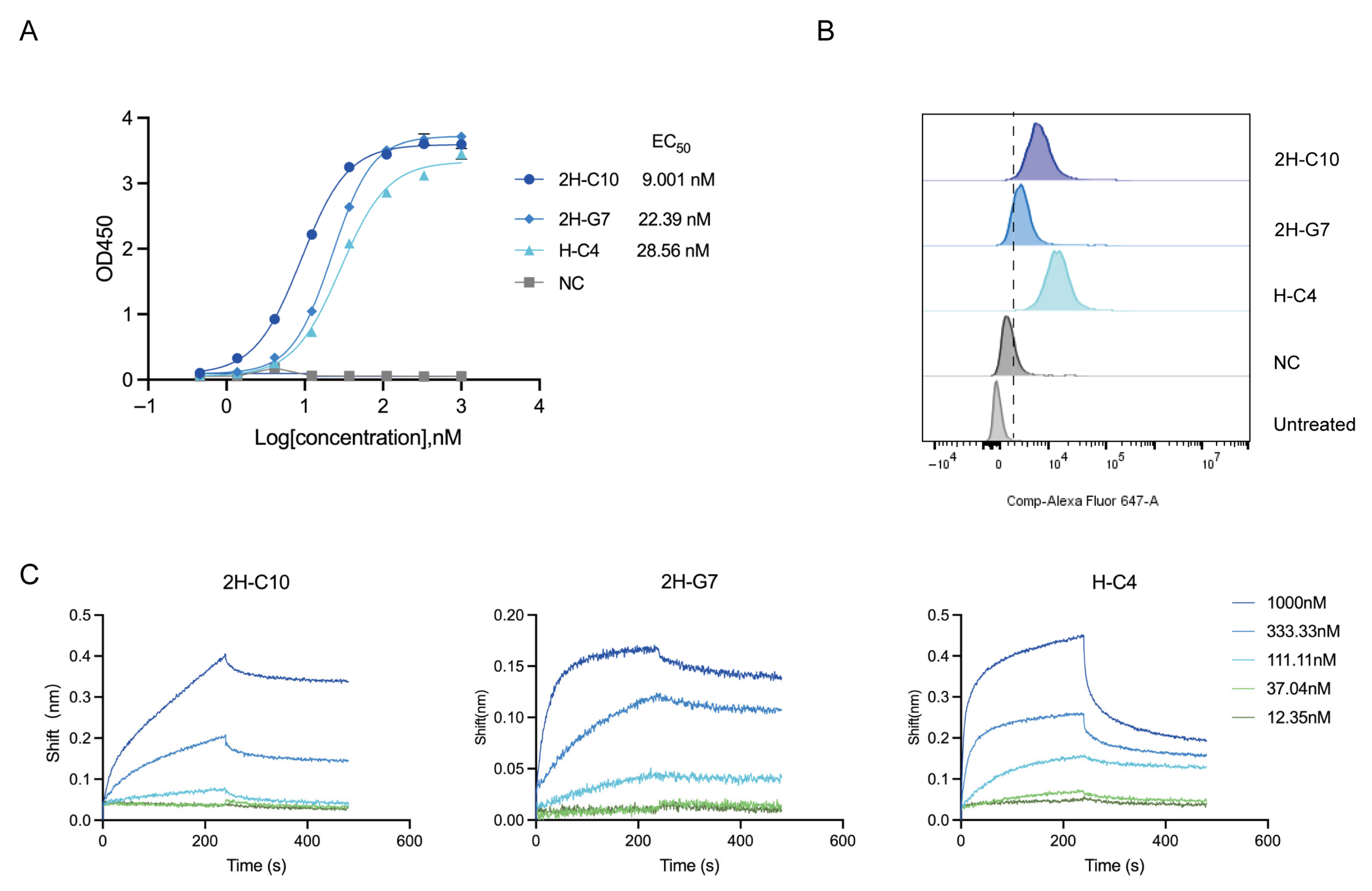
To quantitatively assess the binding of selected sdAbs to LAG-3, an indirect ELISA was performed. ELISA plates were coated with 100 μL/well of recombinant human LAG3-Fc protein (Sino Biological, Beijing, China, Cat: 16498-H02H) diluted to a concentration of 1 μg/mL in PBS and incubated at 4 °C overnight. After three washes with PBST, non-specific binding sites were blocked with 3% Blotting-Grade Blocker (Bio-Rad, Hercules, CA, USA, Cat: 1706404) in PBS at 37 °C for 60 min. Purified sdAbs were serially diluted 3-fold from an initial concentration of 1000 nM across eight gradients, added to the coated plates, and incubated at 37 °C for 60 min. Following five washes with PBST, HRP-conjugated anti-FLAG secondary antibody (GenScript, Nanjing, China, Cat: A01428) was added to each well and incubated for 1 h at 37 °C. After a final round of five washes with PBST, TMB substrate was added for color development at 37 °C for 15 min, and the chromogenic reaction was terminated by adding 2 M HCl. The absorbance of each well was measured at 450 nm using a microplate reader (Agilent, BIOTEK SYNERGY, Santa Clara, CA, USA). An irrelevant non-LAG3-binding antibody (Sino Biological, Beijing, China, Cat: 10004-MM01) was used as the negative control in all assays.
2.4. Flow Cytometry Assay
To verify the binding of sdAbs to cell surface-expressed LAG-3, a flow cytometry assay was performed. HEK293 cells were transiently transfected with a pcDNA3.1-based expression vector containing the full-length human LAG3 gene to generate HEK-LAG3-EGFP cells, and transfection efficiency was confirmed by EGFP fluorescence at 48 h post-transfection. Transfected HEK-LAG3-EGFP cells were harvested, and cell suspensions (5 × 10⁵ cells per sample in 100 μL PBS) were incubated with test sdAbs at a final concentration of 1 μM on ice for 2 h. Cells were then washed twice with cold PBS and incubated with Alexa-488-conjugated anti-FLAG secondary antibody (GenScript, Nanjing, China, Cat: A01809) on ice for 1 h in the dark to avoid fluorescence quenching. After two additional washes with cold PBS, cells were resuspended in 100 μL PBS, and the mean fluorescence intensity (MFI) was measured using a flow cytometer (Cytek, Northern Lights, Wuxi, China). Untransfected HEK293 cells served as the blank control, an irrelevant non-LAG3 antibody (Sino Biological, Beijing, China, Cat: 10004-MM01) as the negative control, and relatlimab-scFv expressed by our lab as the positive control.
2.5. Biolayer Interferometry (BLI)
The binding kinetics and affinity of selected sdAbs to LAG-3 were quantitatively analyzed using a BLI system (Gator Plus, Gator Bio, Suzhou, China). Recombinant human LAG3-mFc protein (Sino Biological, Beijing, China, Cat: 16498-H05H) was immobilized onto anti-human Fc capture biosensor tips (Gator Bio, Suzhou, China, Cat: 20-5036) for 120 s to form a stable antigen coating. Purified sdAbs were serially diluted 3-fold from an initial concentration of 1000 nM across five concentrations and used as analytes to assess binding to the immobilized LAG3-mFc. The association phase and dissociation phase of the antigen–antibody interaction were each monitored for 300 s. All BLI experiments were performed at 25 °C with constant shaking. The obtained binding sensorgrams were fitted to a 1:1 Langmuir binding model using the Gator Bio analysis software (version 2.18.7.0718) to calculate the equilibrium dissociation constant (KD), association rate constant (ka), and dissociation rate constant (kd).
2.6. Competitive ELISA for LAG3-FGL1 Blockade Assay
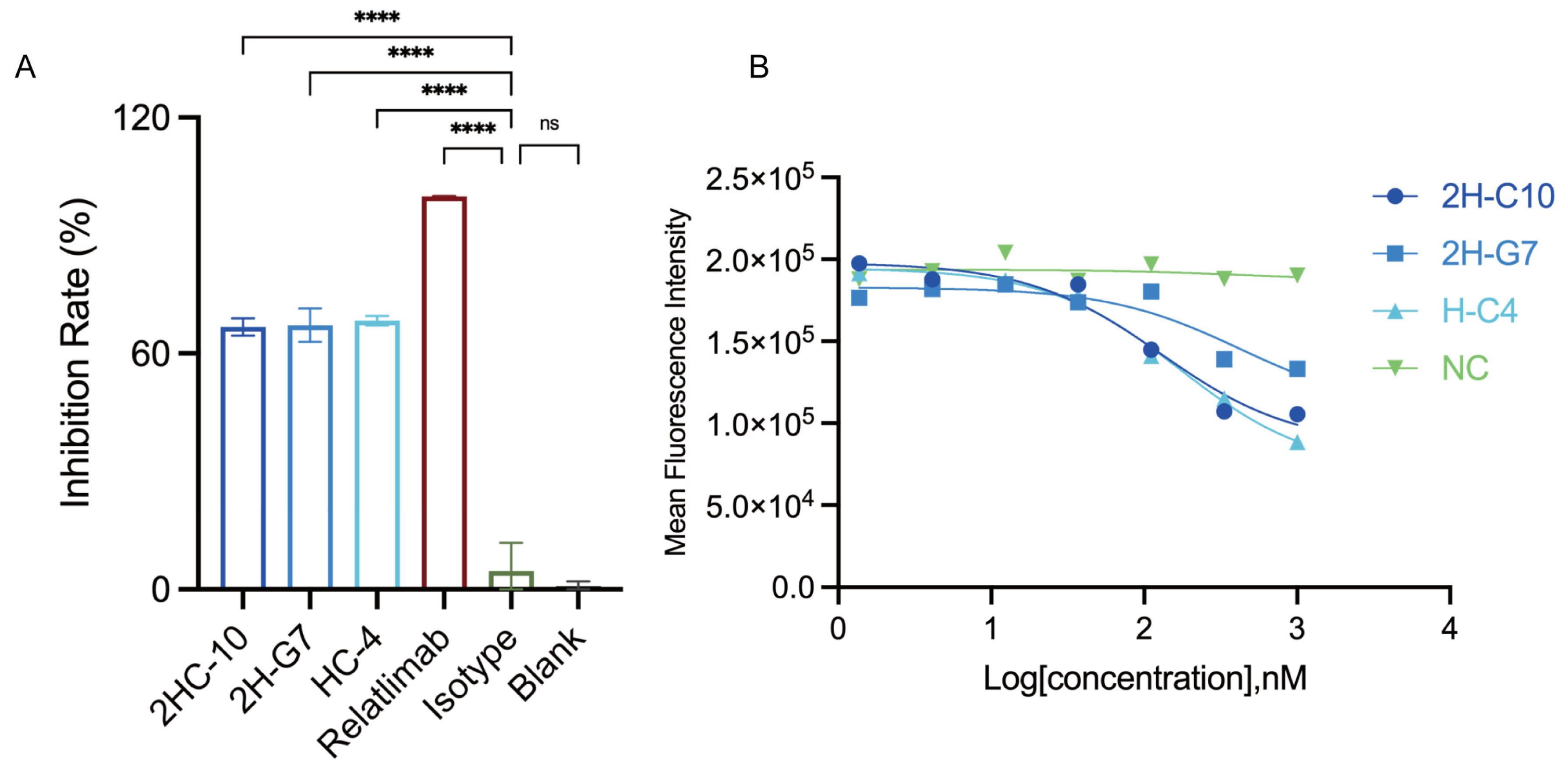
A competitive ELISA was established to assess the ability of sdAbs to block the interaction between LAG-3 and FGL1. 96-well ELISA plates were coated overnight at 4 °C with 100 μL/well of recombinant human FGL1 protein (Sino Biological, Beijing, China, Cat: 13484-H08B) diluted to 1 μg/mL in PBS. After coating, plates were blocked with 5% BSA in PBS at 37 °C for 60 min and washed three times with PBST. Test sdAbs (at a final concentration of 1000 nM) were pre-mixed with recombinant LAG3-mFc protein (at a final concentration of 100 nM), and the mixture was added to the FGL1-coated plates and incubated at 37 °C for 60 min. Plates were then washed five times with PBST to remove unbound proteins, and HRP-conjugated AffiniPure Goat Anti-Mouse IgG (H + L) (Jackson Immuno Research, West Grove, PA, USA, Cat: 115-035-003) was added and incubated at 37 °C for 45 min. After five additional washes with PBST, TMB substrate was added for color development at 37 °C for 15 min, the reaction was stopped with 2 M HCl, and absorbance was measured at 450 nm. The inhibition of LAG3-FGL1 binding by sdAbs was calculated by comparing the absorbance of test samples with that of the negative control group.
2.7. Competitive Flow Cytometry for LAG3-MHC-II Blockade Assay
A competitive flow cytometry assay was used to evaluate the ability of sdAbs to block the interaction between LAG-3 and MHC-II. Raji cells, which endogenously express high levels of MHC-II (Cell Bank of the Chinese Academy of Sciences, Shanghai, China, Cat: TCHu 44), were collected by centrifugation and resuspended at a density of 3 × 10⁵ cells per sample in 100 μL cold PBS. Test sdAbs were serially diluted 3-fold from an initial concentration of 1 μM and pre-incubated with the Raji cell suspension on ice for 1 h. After two washes with cold PBS to remove unbound antibodies, recombinant human LAG3-mFc protein (diluted to 200 nM) was added to the antibody-pre-incubated cells and further incubated on ice for 1 h. Cells were then washed twice with cold PBS and stained with Alexa-647-conjugated anti-mouse Fc secondary antibody (BioLegend, San Diego, CA, USA, Cat: 405322) on ice for 1 h in the dark. Following two final washes with cold PBS, cells were resuspended in 200 μL PBS, and the MFI was analyzed by flow cytometry. An irrelevant non-LAG3 antibody (Sino Biological, Beijing, China, Cat: 10004-MM01) was used as the negative control, and the inhibition of LAG3-MHC-II binding was determined by comparing the MFI of test groups with that of the negative control group.
2.8. T Cell Activation Assay
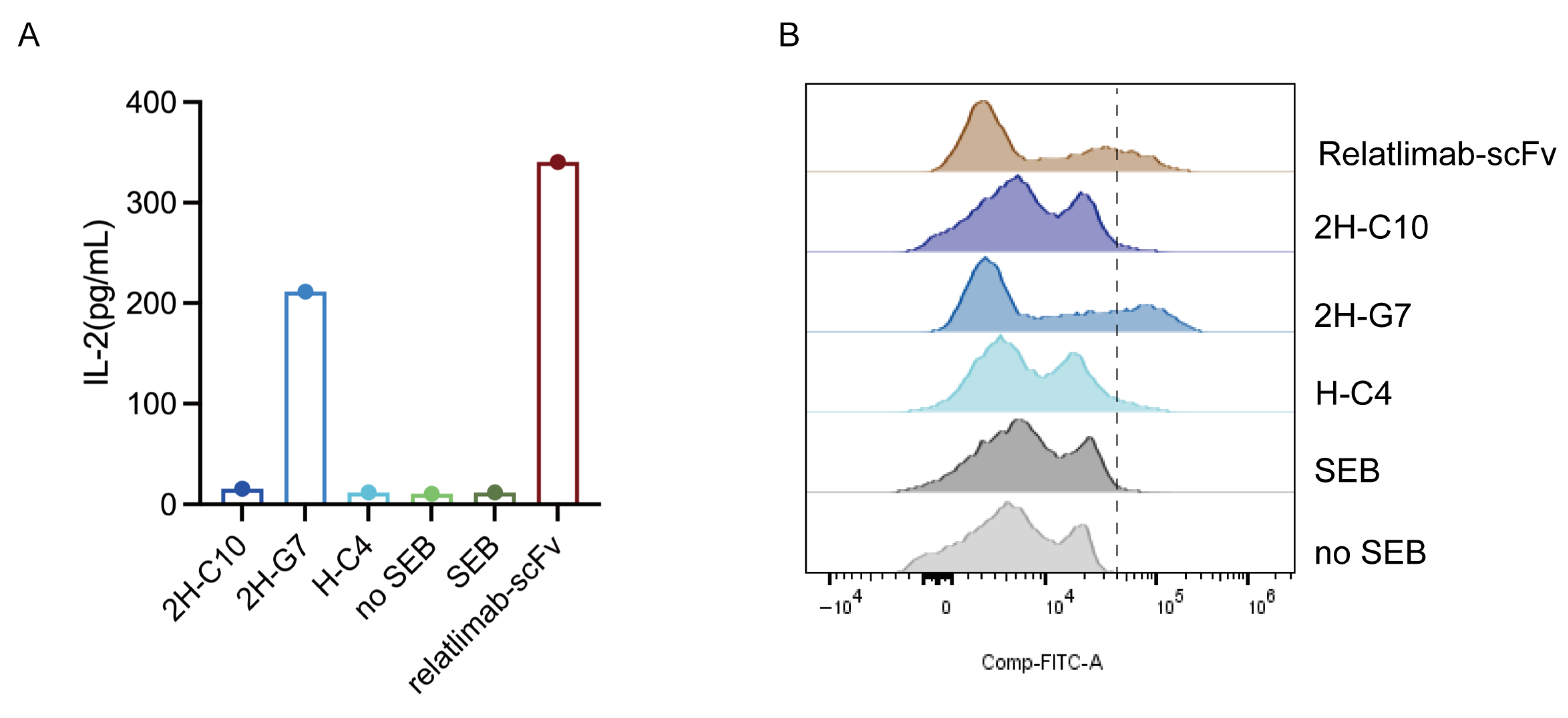
The biological activity of anti-LAG3 sdAbs was evaluated by measuring their ability to restore T-cell activation, as assessed by IL-2 secretion and CD69 expression in staphylococcal enterotoxin B (SEB, Toxin Technology, Sarasota, FL, USA, Cat: BT202)-stimulated primary human PBMCs. Human PBMCs were isolated from fresh peripheral blood samples using density gradient centrifugation and resuspended in complete RPMI-1640 medium containing SEB (a T-cell mitogen). The PBMC suspension was seeded into 24-well plates, and murine anti-LAG3 sdAbs or the positive control antibody relatlimab-scFv were diluted to a target concentration of 1 μM in complete RPMI1640 medium and added to the corresponding wells. Plates were then incubated at 37 °C in a 5% CO2 atmosphere for 5 days. After incubation, cell culture supernatants were collected by centrifugation, and the concentration of IL-2 in the supernatants was quantified using a commercial ELISA kit (Beyotime, Shanghai, China, Cat: PI580) according to the manufacturer’s instructions. Additionally, PBMCs were harvested from the wells, washed with cold PBS, and stained with FITC anti-human CD69 Antibody (BioLegend, San Diego, CA, USA, Cat: 310904) for flow cytometry analysis to determine the expression of CD69.
2.9. Epitope Mapping
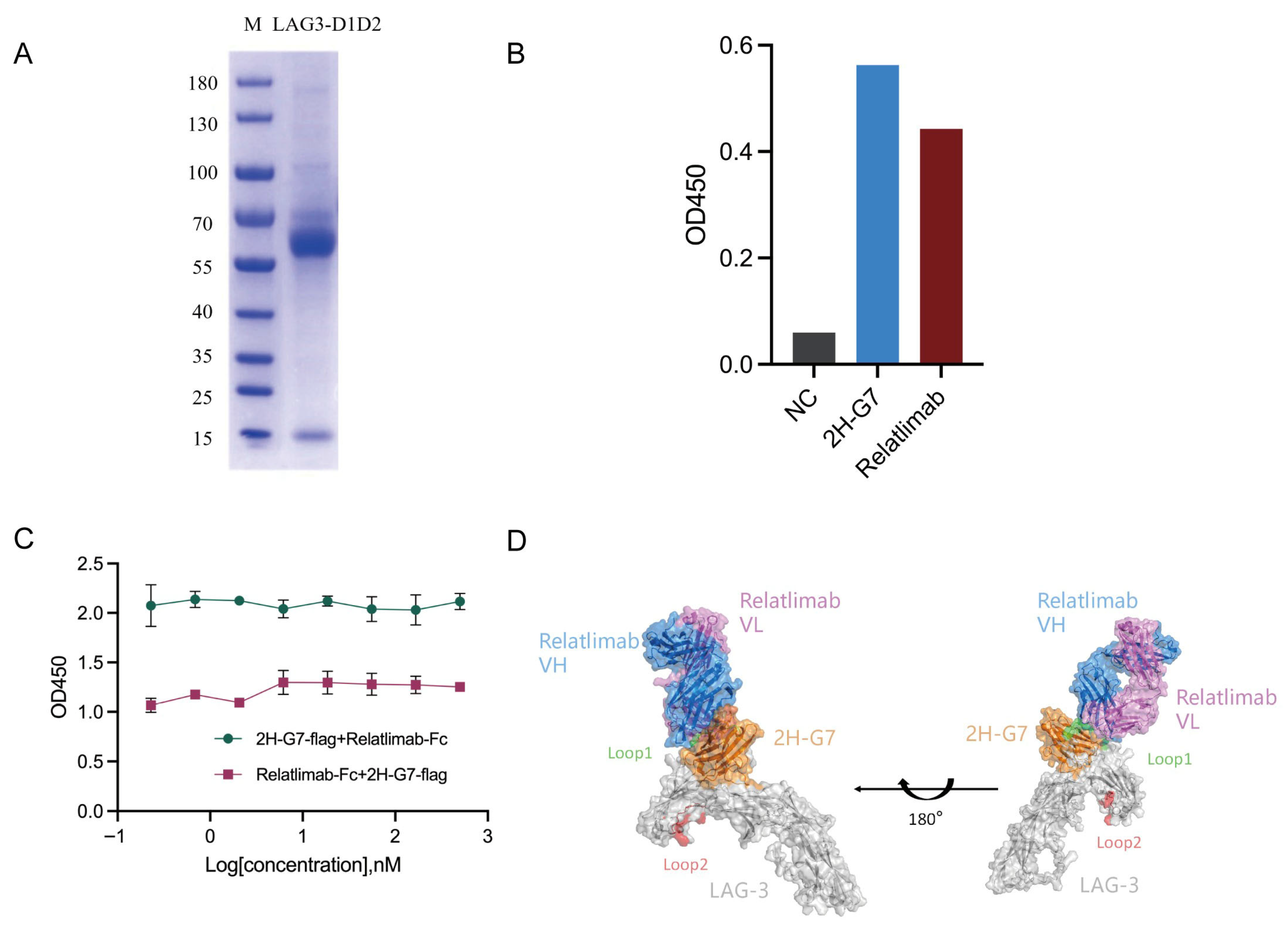
To identify the binding epitope of the lead sdAb 2H-G7 on LAG-3, truncated forms of LAG-3 containing extracellular domain D1D2 were constructed, heterologously expressed, and purified. The purity and molecular weight of the truncated LAG-3 proteins were verified by SDS-PAGE. An indirect ELISA was then performed to assess the binding of 2H-G7 and a positive control anti-LAG3 antibody to the truncated protein LAG3-D1D2. Plates were coated with the various LAG-3 proteins, blocked, and incubated with 2H-G7 or the positive control antibody. Specific binding was detected with HRP-conjugated anti-human IgG (AlpVHHs, Chengdu, China, Cat: 023-112-005) or anti-DYKDDDDK tag (AlpVHHs, Chengdu, China,, Cat: 016-303-005) secondary antibody and TMB substrate, and absorbance was measured at 450 nm. The binding epitope of 2H-G7 was inferred based on the binding activity of the sdAb to the different LAG-3 truncation mutants.
2.10. Competitive ELISA for 2H-G7 to Relatlimab Binding to LAG-3
A competitive ELISA was established to assess the ability of 2H-G7 to block the interaction between LAG-3 and relatlimab. 96-well ELISA plates were coated overnight at 4 °C with 100 ng/well of recombinant human LAG-3-His protein (Sino Biological, Beijing, China, Cat: 16498-H08H). After coating, plates were blocked with 5% BSA in PBS at 37 °C for 60 min and washed three times with PBST. 2H-G7 (Flag tag) was serially diluted 3-fold from an initial concentration of 500 nM and pre-mixed with 3 nM relatlimab (Fc tag), and the mixture was added to the LAG-3-coated plates and incubated at 37 °C for 60 min. Plates were then washed five times with PBST to remove unbound proteins, and HRP-conjugated anti-human IgG antibody (AlpVHHs, Chengdu, China, Cat: 023-112-005) was added and incubated at 37 °C for 45 min. On the contrary, relatlimab (Fc tag) was serially diluted 3-fold from an initial concentration of 500 nM were pre-mixed with 500 nM 2H-G7 (Flag tag), and the mixture was added to the LAG-3-coated plates and incubated at 37 °C for 60 min. Plates were then washed five times with PBST to remove unbound proteins, and HRP-conjugated anti-Flag antibody (GenScript, Nanjing, China, Cat: A01428) was added and incubated at 37 °C for 45 min. After five additional washes with PBST, TMB substrate was added for color development at 37 °C for 15 min, the reaction was stopped with 2 M HCl, and absorbance was measured at 450 nm.
2.11. Protein–Protein Docking Between Human LAG3 and 2HG7
Protein–protein docking between human LAG3 and 2HG7 was performed using the HADDOCK2.4 web server [
20]. Based on the existing X-ray structure of LAG3 together with the AlphaFold3-predicted structure, surface-exposed candidate epitope residues within the D1 and D2 regions of LAG3 were designated as active or passive residues. 2HG7 residues located within the VH complementarity-determining regions (CDRs) were defined as active residues, and neighboring surface-accessible residues were assigned as passive residues. After these inputs were provided, HADDOCK2.4 automatically generated interaction restraints and performed docking according to the default workflow. Upon completion of docking, the resulting models were clustered following the standard HADDOCK2.4 procedure, and the clusters were ranked according to HADDOCK score. The candidate conformation with the best HADDOCK score was selected and superimposed with the X-ray structure of relatlimab (PDB:7UM3) based on the shared LAG-3 region for visual comparison of their potential binding sites and spatial relationships.
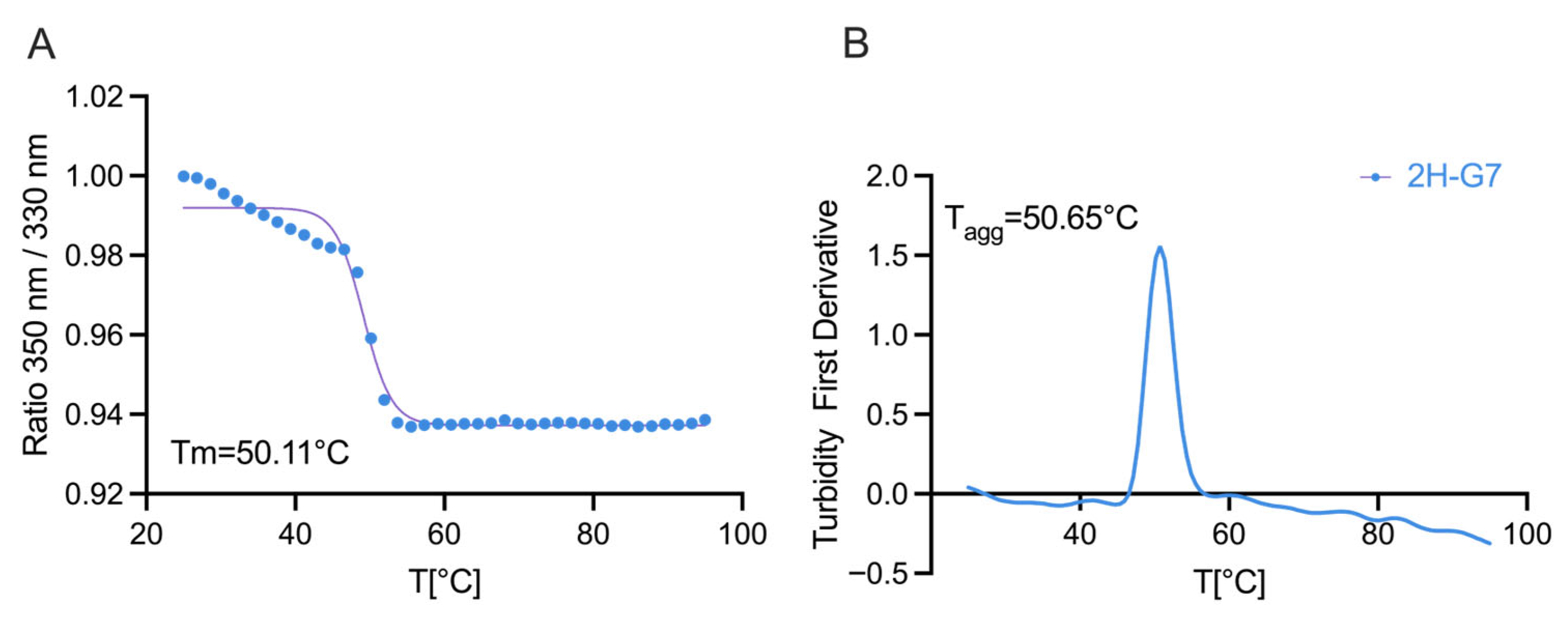
2.12. Antibody Stability Analysis
The stability of antibodies was assessed using Prometheus Panta (NANOTEMPER, Munich, Germany). The antibody concentration was adjusted to 1 mg/mL, loaded into capillaries, and measured in triplicate. The thermal unfolding experiment was initiated at 25 °C, increasing at a rate of 2 °C/min until reaching 100 °C. Fluorescence intensities at wavelengths of 330 nm and 350 nm were simultaneously recorded throughout the heating process. Additionally, back-reflection measurements were performed to monitor sample turbidity changes. All data were collected and subsequently analyzed using the PR.Panta analysis software (version 1.8) to determine the melting temperature (Tm) and the onset temperature of turbidity (Tturbidity).
2.13. Animal Experiments
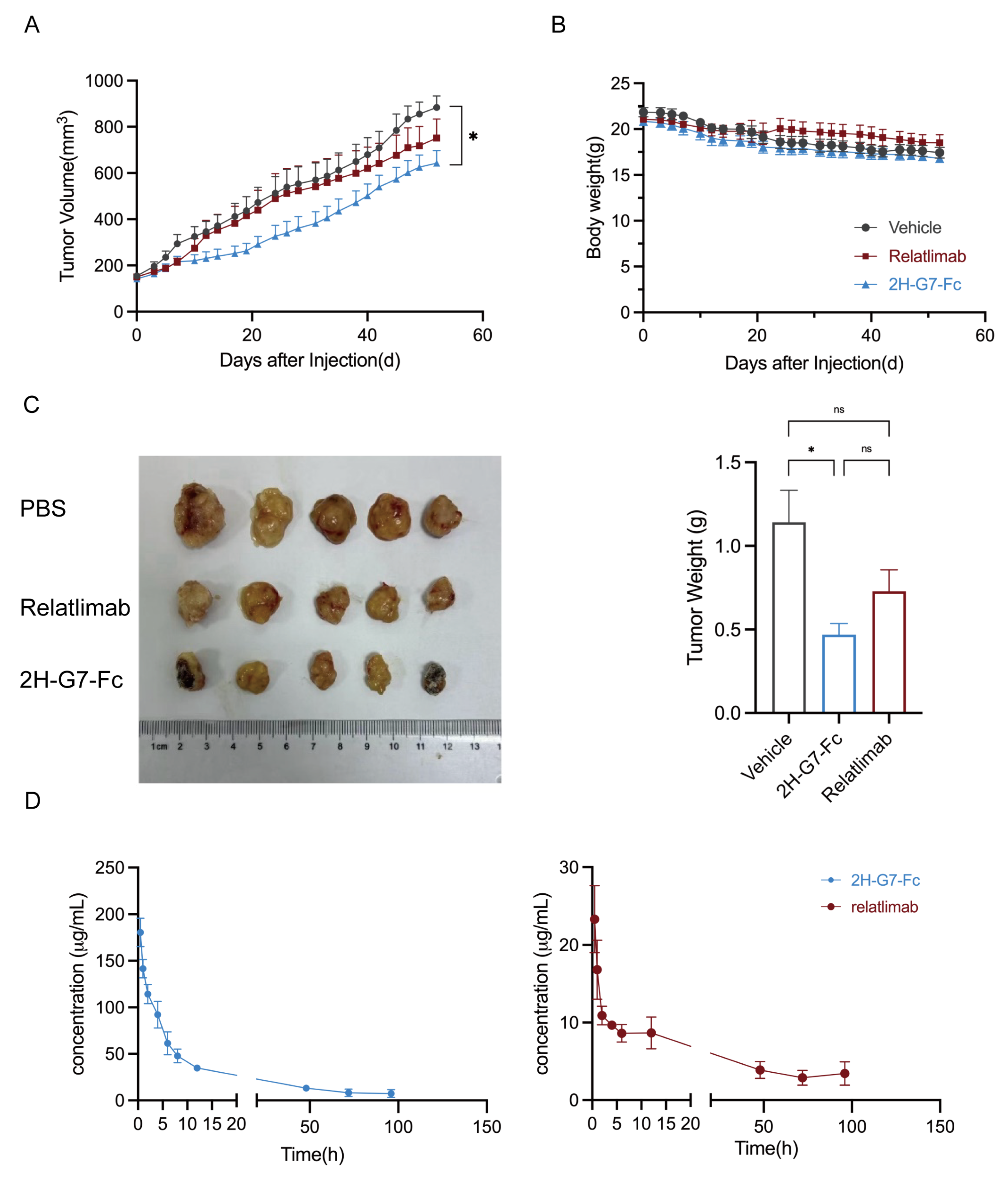
A humanized immunodeficient mouse model was established to evaluate the in vivo anti-tumor efficacy of 2H-G7. Four- to six-week-old female huPBMC-NOG-dKO immunodeficient mice (15, Beijing Vital River, Beijing, China) were subcutaneously inoculated in the right posterior flank with 5 × 10⁶ A549 NSCLC cells suspended in 100 μL of serum-free medium. One week after tumor cell inoculation, 5 × 10⁶ human PBMCs were administered to each mouse via tail vein injection to reconstitute a humanized immune system. Successful engraftment of human PBMCs was confirmed by flow cytometric analysis of peripheral blood collected two weeks post-PBMC injection. When subcutaneous tumor volumes reached 100–150 mm3, mice were randomly assigned into three experimental groups (n = 5 mice per group) to ensure uniform initial tumor sizes across groups. Mice were then treated via tail vein injection with 2H-G7-Fc, the reference antibody relatlimab (Sino biological, Beijing, China, Cat: 68142-H001), or PBS (vehicle control) every four days for a total duration of 8 weeks. Tumor dimensions (length and width) were measured weekly using a digital caliper, and tumor volume was calculated using the formula: V = (length × width2)/2. Body weight and survival status of the mice were monitored weekly to assess treatment-related toxicity and perform survival analysis, respectively. Mice were euthanized at the experimental endpoint, and subcutaneous tumors were excised, weighed, and processed for subsequent analyses including snap-freezing in liquid nitrogen, histopathological examination, and cryopreservation for further molecular studies. Animal experimental protocols were approved by the Institute Ethics Committee of the Shanghai Institute of Pharmaceutical Industry (A-2024-10-01), and all procedures strictly followed the approved protocols.
2.14. Analysis of Tumor-Infiltrating Effector T Cells
At the study endpoint, tumors were excised, mechanically dissociated into 1–3 mm3 fragments, and enzymatically digested to prepare single-cell suspensions. Cell suspensions were passed through a 70 μm nylon mesh filter before staining. Cells were incubated with anti-CD45-APC (Sino biological, Beijing, China, Cat: 10086-MM05-A), anti-CD4-488 (Thermo Fisher, Waltham, MA, USA, Cat: 53-0049-42), and anti-CD8-PE (Sino biological, Beijing, China, Cat: 10980-MM48-P) antibodies for 30 min on ice in the dark, followed by three washes with PBS supplemented with 2% FBS. Flow cytometric data were acquired on a flow cytometer, and CD45+ leukocytes were gated before analysis of CD4+ and CD8+ T-cell populations. Data were analyzed using FlowJo v10.
2.15. Pharmacokinetic (PK) Analysis
To evaluate the in vivo pharmacokinetic (PK) profiles of the antibodies, Balb/C mice (n = 3 per group) received a single intravenous injection of 2H-G7-Fc or relatlimab (Sino biological, Beijing, China, Cat: 68142-H001) at 10 mg/kg. Peripheral blood samples were collected at 0.5, 1, 2, 4, 6, 8, 12, 48, 72, and 96 h after administration, and serum was isolated for subsequent antibody quantification. Serum antibody concentrations were determined by ELISA. Briefly, individual wells of a 96-well half-area immunoplate were coated with 100 ng/well recombinant human LAG-3 antigen. After blocking with 3% BSA in PBS, serially diluted standards and serum samples were added and incubated for binding. Bound antibodies were detected using an HRP-conjugated anti-human Fc (AlpVHHs, Chengdu, China, Cat: 023-112-005) secondary antibody, and serum concentrations at each time point were calculated based on the corresponding standard curve. Pharmacokinetic parameters, including serum half-life (t1/2), were subsequently calculated using a noncompartmental analysis (NCA) model.
2.16. Statistical Analysis
All experimental data are presented as the mean ± standard deviation (SD) unless otherwise specified. Normality of data distribution was assessed using the Shapiro–Wilk test prior to statistical testing. For comparisons between two groups, an unpaired Student’s t-test was used if data were normally distributed; otherwise, a nonparametric Mann–Whitney U test was applied. For multiple group comparisons, one-way analysis of variance (ANOVA) followed by post hoc tests was used for normally distributed data, while the Kruskal–Wallis test was used for non-normally distributed data. A p value < 0.05 was considered statistically significant for all analyses. All statistical tests were performed using GraphPad Prism software (Version 9.0).
4. Discussion
The development of immune checkpoint inhibitors (ICIs) has marked a paradigm shift in the clinical treatment of cancer, providing durable therapeutic responses for a subset of patients with advanced malignancies. However, the clinical benefits of current ICIs remain limited, with a large proportion of patients exhibiting primary or acquired resistance, underscoring the urgent need for novel ICI agents with differentiated mechanisms of action and improved pharmacological properties [
1]. In this study, we report the development of a panel of single-domain antibodies (sdAbs) targeting LAG-3—a critical co-inhibitory immune checkpoint receptor—and identify 2H-G7 as a high-affinity lead candidate with potent functional activity and superior in vivo anti-tumor efficacy. Our findings demonstrate that 2H-G7 not only exhibits robust
in vitro and in vivo activity but also leverages the intrinsic advantages of the sdAb platform, highlighting its potential as a novel agent for next-generation LAG-3-targeted tumor immunotherapy.
The sdAb platform itself confers distinct pharmacological advantages that may translate into improved clinical efficacy compared with conventional monoclonal antibodies (mAbs). Conventional mAbs have a large molecular weight (~150 kDa), which severely limits their penetration into solid tumor tissues and their ability to reach tumor-infiltrating lymphocytes (TILs) within the TME—a major barrier to the efficacy of current ICIs in solid tumors. In contrast, sdAbs such as 2H-G7 have a small molecular weight (~15 kDa), which enables superior tissue and tumor penetration, allowing the antibody to efficiently reach TILs and exert its blocking effect within the TME. Additionally, sdAbs exhibit high thermal and structural stability, excellent solubility, and low immunogenicity in humans, owing to their fully human sequence in our study. They are also amenable to modular genetic engineering, enabling the construction of bispecific antibodies, antibody–cytokine fusion proteins, or other novel formats to further enhance their anti-tumor activity. In this study, we fused 2H-G7 to a human IgG1 Fc fragment to generate 2H-G7-Fc, a pragmatic modification to prolong the serum half-life of the sdAb and enhance its in vivo stability [
22]. Notably, the core binding moiety of 2H-G7 retains all the favorable biophysical properties of the sdAb format, providing a versatile scaffold for further engineering and optimization to generate next-generation therapeutic formats.
A key strategic innovation of our study is the successful development of an sdAb that concurrently blocks both the FGL1-LAG-3 and MHC-II-LAG-3 signaling axes. The identification of FGL1 as a major high-affinity ligand of LAG-3 has redefined our understanding of LAG-3-mediated immune suppression [
10]. However, most clinical-stage LAG-3-blocking antibodies, including the FDA-approved relatlimab, were initially developed and characterized based on their ability to block the MHC-II-LAG-3 interaction, with FGL1 blockade as a secondary property [
21,
23]. Notably, the binding sites of MHC-II and FGL1 on LAG-3 are both located within the D1D2 extracellular domains, adjacent but structurally distinct, with partially overlapping functional interfaces rather than fully coincident pockets; MHC-II primarily engages the Loop1 region of D1, while FGL1 binds the neighboring Loop2 region, and these interactions can be genetically separated by site-directed mutagenesis [
11]. Relatlimab binds an epitope on D1 near Loop1 that directly overlaps with the MHC-II interface and sterically or allosterically interferes with FGL1 binding, thereby achieving dual blockade of both ligands. In contrast, our sdAbs were selected through a functional screening strategy that prioritizes the inhibition of both LAG-3-ligand interactions, and our results confirm that 2H-G7 potently blocks both the FGL1-LAG-3 and MHC-II-LAG-3 interactions
in vitro. Importantly, 2H-G7 and relatlimab showed no mutual competition in binding to LAG-3, yet both antibodies potently blocked the interactions of LAG-3 with MHC-II and FGL1. This observation is mechanistically consistent and reliable with the structural topology of LAG-3: 2H-G7 recognizes a unique epitope on D1D2 distinct from that of relatlimab, yet positioned to simultaneously disrupt both ligand-binding interfaces. This dual-blockade profile is of significant clinical importance, as both FGL1 and MHC-II are widely expressed within the complex tumor microenvironment (TME) of most solid malignancies, including NSCLC. Concurrent blockade of both signaling axes by 2H-G7 may therefore achieve a more comprehensive disruption of LAG-3-mediated immune suppression, leading to more robust restoration of anti-tumor T cell function compared with antibodies targeting only a single LAG-3-ligand interaction. Our findings thus identify 2H-G7 as a structurally differentiated LAG-3 inhibitor with a dual-blockade mechanism independent of relatlimab, supporting its potential as a novel candidate for tumor immunotherapy.
Remarkably, in vivo studies demonstrated that 2H-G7-Fc exhibited superior antitumor efficacy compared with the clinically approved anti-LAG-3 antibody relatlimab in a humanized NSCLC mouse model, as evidenced by significantly reduced tumor volume and weight without obvious treatment-related toxicity. The enhanced therapeutic effect of 2H-G7-Fc can be attributed to multiple complementary mechanisms. First, 2H-G7 binds to the D1D2 domains of LAG-3 with high affinity and simultaneously blocks both the FGL1–LAG-3 and MHC-II–LAG-3 signaling axes, thereby more effectively relieving LAG-3-mediated T-cell inhibition and restoring antitumor immune responses. Second, the smaller molecular size of 2H-G7-Fc relative to full-length IgG antibodies such as relatlimab enables more uniform distribution and deeper penetration into solid tumor tissues, promoting more efficient target engagement with LAG-3-expressing tumor-infiltrating lymphocytes in the tumor microenvironment. Third, the high stability and low immunogenicity inherent to the single-domain antibody format support prolonged in vivo activity and an improved safety profile, further enhancing its therapeutic index. Fourth, pharmacokinetic analysis revealed that despite a shorter terminal half-life (32.14 h vs. 52.75 h for relatlimab), 2H-G7-Fc achieved markedly higher peak serum concentration (Cmax) and total systemic exposure (AUC), which likely contributed directly to its enhanced antitumor activity. Collectively, the superior performance of 2H-G7-Fc against a clinically validated benchmark antibody highlights its promising therapeutic potential and validates our functional screening strategy for identifying optimized anti-LAG-3 single-domain antibodies.
Despite the promising findings of this study, several limitations warrant further investigation. First, the in vivo anti-tumor efficacy of 2H-G7 was evaluated in a single humanized NSCLC mouse model; future studies will assess its activity in additional preclinical models of different malignancies, including melanoma and colorectal cancer, to confirm its broad anti-tumor activity. Despite the promising anti-tumor efficacy of 2H-G7-Fc observed in this humanized model, several critical limitations related to species differences in LAG-3 biology and sdAb pharmacokinetic characteristics should be noted for future clinical translation. Interspecies variations in immune checkpoint structure, ligand binding affinity, and tissue distribution can significantly affect the predictive value of preclinical animal models for human outcomes. Although human LAG-3 was targeted in this study, the mouse tumor microenvironment exhibits inherent differences in immune cell composition, cytokine milieu, and LAG-3 expression regulation compared with human patients, which may lead to discrepancies between preclinical efficacy and clinical responses. Second, the molecular mechanisms underlying the superior anti-tumor efficacy of 2H-G7 require further elucidation, including detailed analyses of its effects on T cell subsets, immune cell infiltration into the TME, and the expression of other immune checkpoint molecules. Third, while 2H-G7-Fc exhibits favorable in vivo activity, further engineering of 2H-G7 into novel formats—such as bispecific antibodies targeting LAG-3 and PD-1/PD-L1, or antibody–cytokine fusion proteins integrating IL-15 or IL-2—may further enhance its anti-tumor activity by combining LAG-3 blockade with additional immunostimulatory effects [
24]. Fourth, single-domain antibodies (sdAbs) are known to display rapid systemic clearance and short serum half-life in rodents due to their small molecular size and lack of neonatal Fc receptor (FcRn) recycling in some mouse strains, whereas pharmacokinetic profiles in non-human primates and humans are often more favorable [
25]. Therefore, the in vivo efficacy and exposure data obtained from the current mouse model may not fully reflect the pharmacokinetic behavior and therapeutic window of 2H-G7-Fc in humans. Finally, systematic preclinical pharmacokinetic and toxicological studies of 2H-G7 in higher species are warranted to support its advancement into clinical development.
In conclusion, this study reports the development and characterization of 2H-G7, a novel high-affinity single-domain antibody targeting the D1D2 domains of LAG-3 with potent dual blockade activity against both FGL1-LAG-3 and MHC-II-LAG-3 interactions. 2H-G7 effectively restores T cell activation in vitro and exhibits superior in vivo anti-tumor efficacy compared with the clinical benchmark antibody relatlimab in a humanized NSCLC mouse model, with no detectable treatment-related toxicity. The unique combination of potent dual-ligand blockade activity and the inherent pharmacological advantages of the sdAb platform makes 2H-G7 a promising lead candidate for the development of next-generation LAG-3-targeted tumor immunotherapies. Future work will focus on optimizing the therapeutic format of 2H-G7 and advancing it through preclinical development for potential clinical translation.