AI-Driven Combination Therapy for Counteracting Dysregulated Genes in Lung Adenocarcinoma: Contribution-Aware Metaheuristic for Drug Repurposing


Abstract
1. Introduction
1.1. Drug Repurposing Landscape
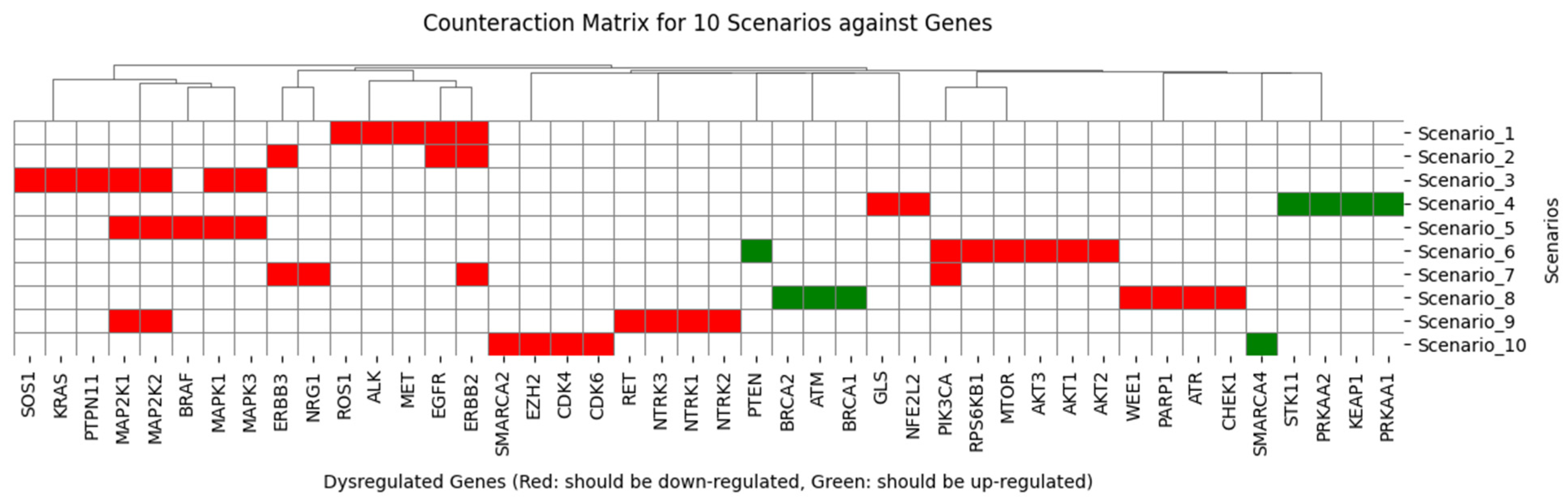
1.2. LUAD and Scenarios for Counteraction
1.3. Scenario Reproduction Policies
2. Results and Discussion
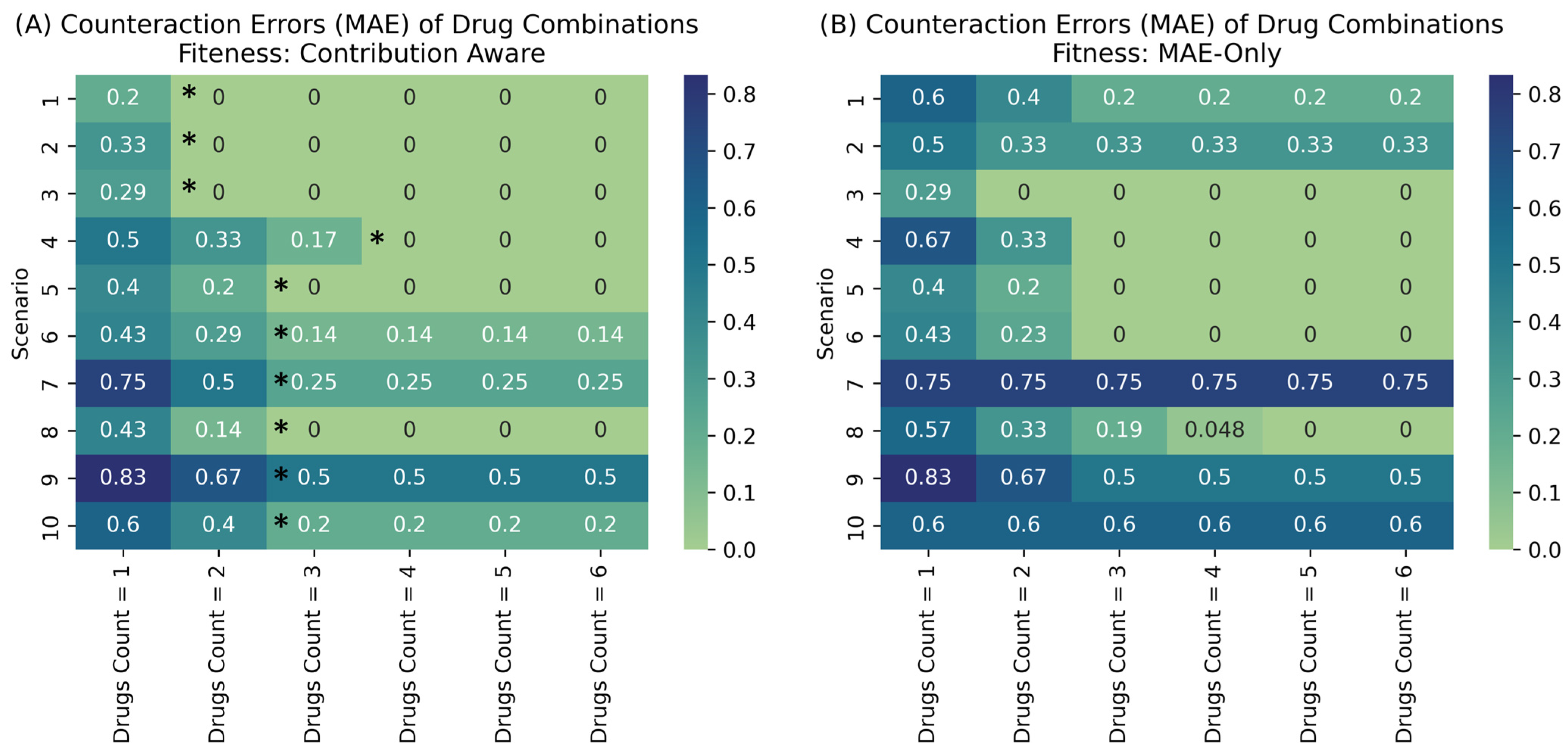
2.1. Hypothetical Drug Combinations
2.2. Hypothesis-Generating Reference
3. Materials and Methods
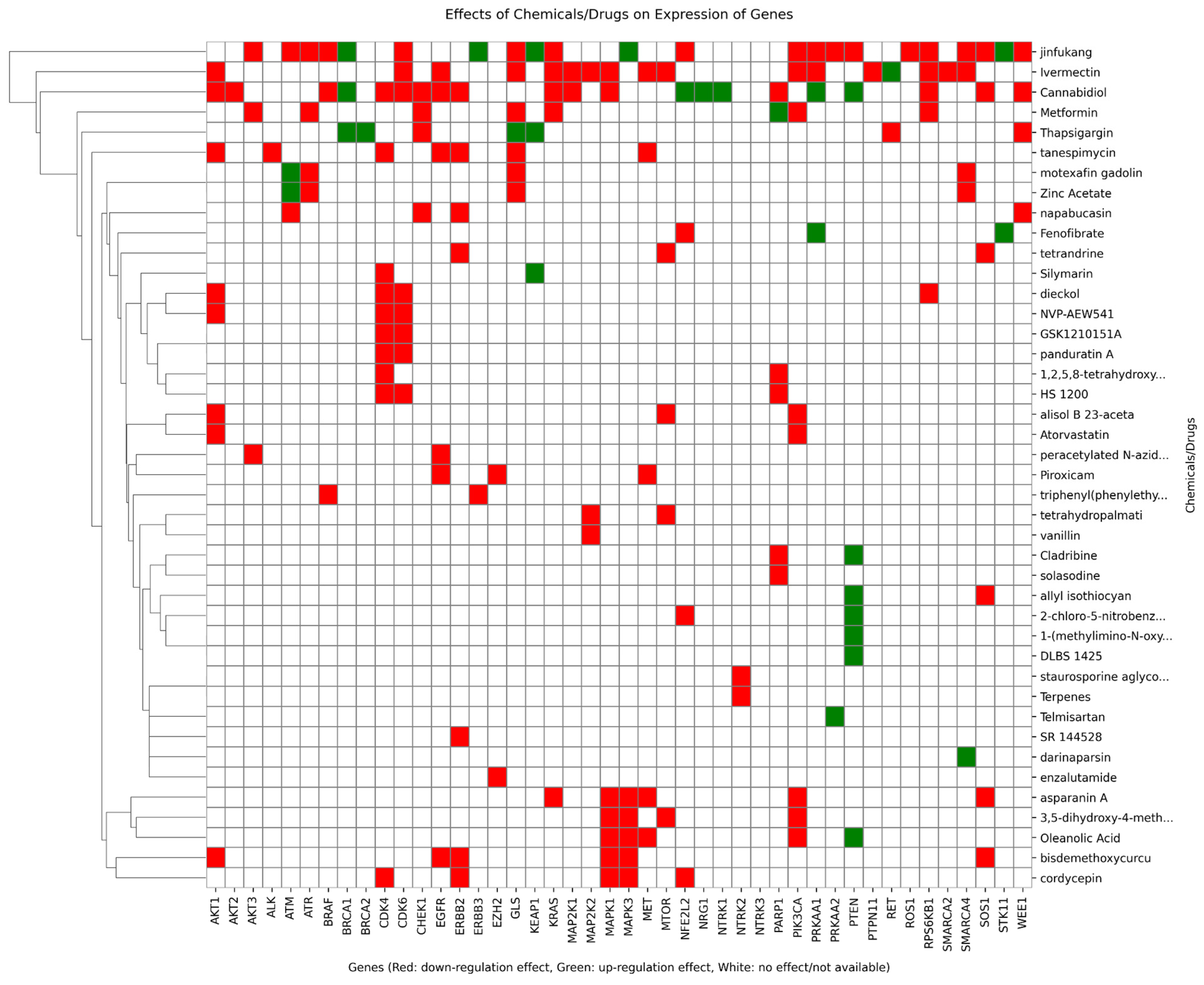
3.1. Drug–Gene Interaction Data
- increases^expression
- increases^stability
- increases^abundance
- decreases^degradation
- decreases^ubiquitination
- decreases^expression
- decreases^stability
- increases^degradation
- decreases^abundance
- increases^ubiquitination
3.2. Toxicity/Carcinogenic Cost Management
- The International Agency for Research on Cancer (IARC) Monographs for carcinogenicity [28] (Supplementary File S1).
- The NTP Report on Carcinogens and the European Chemical Agency (ECHA) harmonized classification and labelling [29] (Supplementary File S2).
- The PAN International consolidated list of banned pesticides [30] (Supplementary File S3).
- We also annotated withdrawn status and clinical phase from ChEMBL [31] (Supplementary File S4).
3.3. Connectivity Map for External Validation
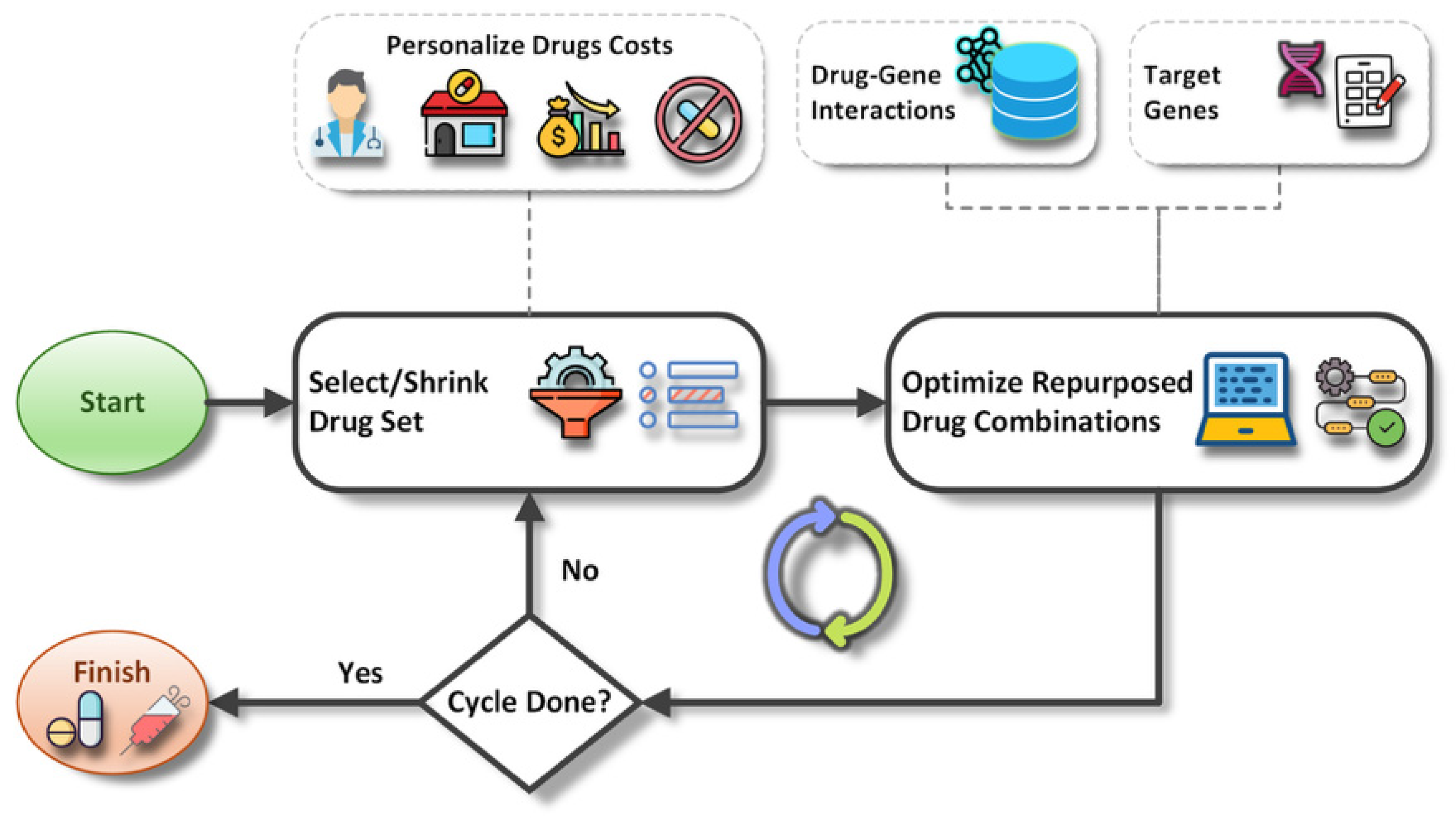
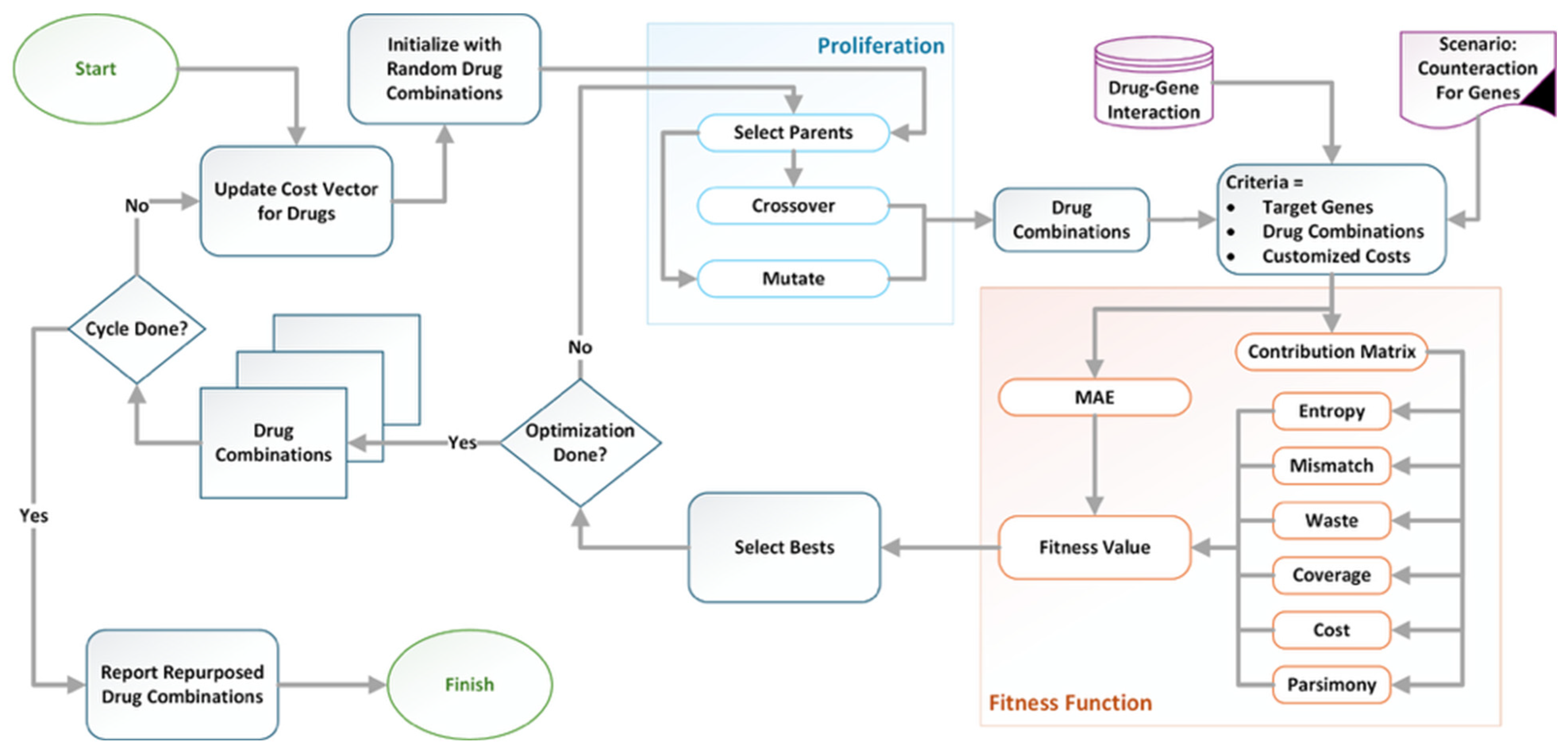
3.4. Methodology
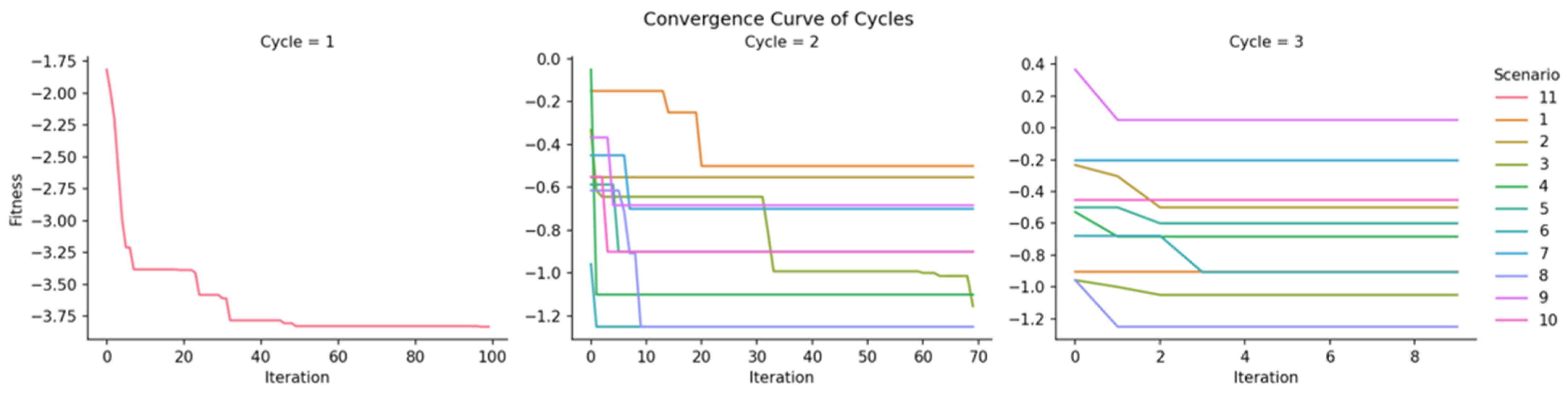
3.5. Metaheuristic Optimizer
3.6. Fitness Function
3.7. Parameterization
3.8. Orthogonal Computational Validation
4. Conclusions
4.1. Limitations
4.2. Future Directions
Supplementary Materials
Author Contributions
Funding
Institutional Review Board Statement
Informed Consent Statement
Data Availability Statement
Conflicts of Interest
Appendix A
Appendix A.1. Scenario 1. Receptor Tyrosine Kinase (RTK)
Appendix A.2. Scenario 2. EGFR Exon 20 Insertion
Appendix A.3. Scenario 3. KRAS Pathway Activation
Appendix A.4. Scenario 4. STK11 and KEAP1 Co-Alterations
Appendix A.5. Scenario 5. BRAF-MAPK Pathway Activation
Appendix A.6. Scenario 6. PI3K/AKT/mTOR Axis Activation
Appendix A.7. Scenario 7. ERBB3-NRG1 Pathway Activation and HER3-Directed ADCs
Appendix A.8. Scenario 8. DNA Damage Response Dysfunction (DDR) with ATR Dependency
Appendix A.9. Scenario 9. RET and NTRK Kinase Fusions
Appendix A.10. Scenario 10. SMARCA4-Deficient
Appendix B
References
- Siegel, R.L.; Giaquinto, A.N.; Jemal, A. Cancer Statistics, 2024. CA Cancer J. Clin. 2024, 74, 12–49. [Google Scholar] [CrossRef]
- Soria, J.-C.; Ohe, Y.; Vansteenkiste, J.; Reungwetwattana, T.; Chewaskulyong, B.; Lee, K.H.; Dechaphunkul, A.; Imamura, F.; Nogami, N.; Kurata, T.; et al. Osimertinib in Untreated EGFR-Mutated Advanced Non–Small-Cell Lung Cancer. N. Engl. J. Med. 2018, 378, 113–125. [Google Scholar] [CrossRef] [PubMed]
- Reck, M.; Rodríguez-Abreu, D.; Robinson, A.G.; Hui, R.; Csőszi, T.; Fülöp, A.; Gottfried, M.; Peled, N.; Tafreshi, A.; Cuffe, S.; et al. Pembrolizumab versus Chemotherapy for PD-L1–Positive Non–Small-Cell Lung Cancer. N. Engl. J. Med. 2016, 375, 1823–1833. [Google Scholar] [CrossRef]
- Skoulidis, F.; Li, B.T.; Dy, G.K.; Price, T.J.; Falchook, G.S.; Wolf, J.; Italiano, A.; Schuler, M.; Borghaei, H.; Barlesi, F.; et al. Sotorasib for Lung Cancers with KRAS p.G12C Mutation. N. Engl. J. Med. 2021, 384, 2371–2381. [Google Scholar] [CrossRef] [PubMed]
- Gálffy, G.; Morócz, É.; Korompay, R.; Hécz, R.; Bujdosó, R.; Puskás, R.; Lovas, T.; Gáspár, E.; Yahya, K.; Király, P.; et al. Targeted Therapeutic Options in Early and Metastatic NSCLC-Overview. Pathol. Oncol. Res. 2024, 30, 1611715. [Google Scholar] [CrossRef]
- Lamb, J.; Crawford, E.D.; Peck, D.; Modell, J.W.; Blat, I.C.; Wrobel, M.J.; Lerner, J.; Brunet, J.-P.; Subramanian, A.; Ross, K.N.; et al. The Connectivity Map: Using Gene-Expression Signatures to Connect Small Molecules, Genes, and Disease. Science 2006, 313, 1929–1935. [Google Scholar] [CrossRef]
- Tortora, G.; Bianco, R.; Daniele, G.; Ciardiello, F.; McCubrey, J.A.; Ricciardi, M.R.; Ciuffreda, L.; Cognetti, F.; Tafuri, A.; Milella, M. Overcoming Resistance to Molecularly Targeted Anticancer Therapies: Rational Drug Combinations Based on EGFR and MAPK Inhibition for Solid Tumours and Haematologic Malignancies. Drug Resist. Updates 2007, 10, 81–100. [Google Scholar] [CrossRef] [PubMed]
- Krishnamurthy, N.; Grimshaw, A.A.; Axson, S.A.; Choe, S.H.; Miller, J.E. Drug Repurposing: A Systematic Review on Root Causes, Barriers and Facilitators. BMC Health Serv. Res. 2022, 22, 970. [Google Scholar] [CrossRef]
- Nematzadeh, S.; Karaul, A. Advances in Computational Drug Repurposing, Driver Genes, and Therapeutics in Lung Adenocarcinoma. Biomolecules 2025, 15, 1373. [Google Scholar] [CrossRef]
- Parisi, D.; Adasme, M.F.; Sveshnikova, A.; Bolz, S.N.; Moreau, Y.; Schroeder, M. Drug Repositioning or Target Repositioning: A Structural Perspective of Drug-Target-Indication Relationship for Available Repurposed Drugs. Comput. Struct. Biotechnol. J. 2020, 18, 1043–1055. [Google Scholar] [CrossRef]
- Foucquier, J.; Guedj, M. Analysis of Drug Combinations: Current Methodological Landscape. Pharmacol. Res. Perspect. 2015, 3, e00149. [Google Scholar] [CrossRef] [PubMed]
- Barrett, T.; Troup, D.B.; Wilhite, S.E.; Ledoux, P.; Evangelista, C.; Kim, I.F.; Tomashevsky, M.; Marshall, K.A.; Phillippy, K.H.; Sherman, P.M.; et al. NCBI GEO: Archive for Functional Genomics Data Sets—10 Years On. Nucleic Acids Res. 2011, 39, D1005–D1010. [Google Scholar] [CrossRef]
- Subramanian, A.; Narayan, R.; Corsello, S.M.; Peck, D.D.; Natoli, T.E.; Lu, X.; Gould, J.; Davis, J.F.; Tubelli, A.A.; Asiedu, J.K.; et al. A Next Generation Connectivity Map: L1000 Platform and the First 1,000,000 Profiles. Cell 2017, 171, 1437–1452.e17. [Google Scholar] [CrossRef] [PubMed]
- Gaulton, A.; Bellis, L.J.; Bento, A.P.; Chambers, J.; Davies, M.; Hersey, A.; Light, Y.; McGlinchey, S.; Michalovich, D.; Al-Lazikani, B.; et al. ChEMBL: A Large-Scale Bioactivity Database for Drug Discovery. Nucleic Acids Res. 2012, 40, D1100–D1107. [Google Scholar] [CrossRef]
- Lee, K.; Lee, S.; Park, S.; Kim, S.; Kim, S.; Choi, K.; Tan, A.C.; Kang, J. BRONCO: Biomedical Entity Relation ONcology COrpus for Extracting Gene-Variant-Disease-Drug Relations. Database 2016, 2016, baw043. [Google Scholar] [CrossRef]
- Lanjanian, H.; Hosseini, S.; Narimani, Z.; Meknatkhah, S.; Riazi, G.H. A Knowledge-Based Protein-Protein Interaction Inhibition (KPI) Pipeline: An Insight from Drug Repositioning for COVID-19 Inhibition. J. Biomol. Struct. Dyn. 2023, 41, 11700–11713. [Google Scholar] [CrossRef]
- Guney, E.; Menche, J.; Vidal, M.; Barábasi, A.L. Network-Based in Silico Drug Efficacy Screening. Nat. Commun. 2016, 7, 10331. [Google Scholar] [CrossRef]
- Barabási, A.L.; Gulbahce, N.; Loscalzo, J. Network Medicine: A Network-Based Approach to Human Disease. Nat. Rev. Genet. 2011, 12, 56–68. [Google Scholar] [CrossRef] [PubMed]
- Vamathevan, J.; Clark, D.; Czodrowski, P.; Dunham, I.; Ferran, E.; Lee, G.; Li, B.; Madabhushi, A.; Shah, P.; Spitzer, M.; et al. Applications of Machine Learning in Drug Discovery and Development. Nat. Rev. Drug Discov. 2019, 18, 463–477. [Google Scholar] [CrossRef] [PubMed]
- Zitnik, M.; Agrawal, M.; Leskovec, J. Modeling Polypharmacy Side Effects with Graph Convolutional Networks. Bioinformatics 2018, 34, i457–i466. [Google Scholar] [CrossRef]
- Ianevski, A.; Giri, A.K.; Aittokallio, T. SynergyFinder 2.0: Visual Analytics of Multi-Drug Combination Synergies. Nucleic Acids Res. 2020, 48, W488–W493. [Google Scholar] [CrossRef] [PubMed]
- Yadav, B.; Wennerberg, K.; Aittokallio, T.; Tang, J. Searching for Drug Synergy in Complex Dose–Response Landscapes Using an Interaction Potency Model. Comput. Struct. Biotechnol. J. 2015, 13, 504–513. [Google Scholar] [CrossRef] [PubMed]
- Potts, M.B.; Cameron, S. Cell Lineage and Cell Death: Caenorhabditis Elegans and Cancer Research. Nat. Rev. Cancer 2011, 11, 50–58. [Google Scholar] [CrossRef]
- Sebé-Pedrós, A.; Ballaré, C.; Parra-Acero, H.; Chiva, C.; Tena, J.J.; Sabidó, E.; Gómez-Skarmeta, J.L.; Di Croce, L.; Ruiz-Trillo, I. The Dynamic Regulatory Genome of Capsaspora and the Origin of Animal Multicellularity. Cell 2016, 165, 1224–1237. [Google Scholar] [CrossRef]
- Paul, S.M.; Mytelka, D.S.; Dunwiddie, C.T.; Persinger, C.C.; Munos, B.H.; Lindborg, S.R.; Schacht, A.L. How to Improve R&D Productivity: The Pharmaceutical Industry’s Grand Challenge. Nat. Rev. Drug Discov. 2010, 9, 203–214. [Google Scholar] [CrossRef]
- MotieGhader, H.; Tabrizi-Nezhadi, P.; Deldar Abad Paskeh, M.; Baradaran, B.; Mokhtarzadeh, A.; Hashemi, M.; Lanjanian, H.; Jazayeri, S.M.; Maleki, M.; Khodadadi, E.; et al. Drug Repositioning in Non-Small Cell Lung Cancer (NSCLC) Using Gene Co-Expression and Drug–Gene Interaction Networks Analysis. Sci. Rep. 2022, 12, 9417. [Google Scholar] [CrossRef]
- Wiegers, T.C.; Davis, A.P.; Wiegers, J.; Sciaky, D.; Barkalow, F.; Wyatt, B.; Strong, M.; McMorran, R.; Abrar, S.; Mattingly, C.J. Integrating AI-Powered Text Mining from PubTator into the Manual Curation Workflow at the Comparative Toxicogenomics Database. Database 2025, 2025, baaf013. [Google Scholar] [CrossRef]
- Agents Classified by the IARC Monographs, Volumes 1–140—IARC Monographs on the Identification of Carcinogenic Hazards to Humans. Available online: https://monographs.iarc.who.int/agents-classified-by-the-iarc (accessed on 21 November 2025).
- Harmonised Classification and Labelling (CLH)—ECHA. Available online: https://echa.europa.eu/regulations/clp/harmonised-classification-and-labelling (accessed on 21 November 2025).
- PAN International Consolidated List of Banned Pesticides. PAN International. Available online: https://pan-international.org/pan-international-consolidated-list-of-banned-pesticides/ (accessed on 21 November 2025).
- ChEMBL Data Web Services. ChEMBL Interface Documentation. Available online: https://chembl.gitbook.io/chembl-interface-documentation/web-services/chembl-data-web-services (accessed on 21 November 2025).
- Tomuleasa, C.; Tigu, A.B.; Munteanu, R.; Moldovan, C.S.; Kegyes, D.; Onaciu, A.; Gulei, D.; Ghiaur, G.; Einsele, H.; Croce, C.M. Therapeutic Advances of Targeting Receptor Tyrosine Kinases in Cancer. Signal Transduct. Target. Ther. 2024, 9, 201. [Google Scholar] [CrossRef] [PubMed]
- Wolf, J.; Hochmair, M.; Han, J.Y.; Reguart, N.; Souquet, P.J.; Smit, E.F.; Orlov, S.V.; Vansteenkiste, J.; Nishio, M.; de Jonge, M.; et al. Capmatinib in MET Exon 14-Mutated Non-Small-Cell Lung Cancer: Final Results from the Open-Label, Phase 2 GEOMETRY Mono-1 Trial. Lancet Oncol. 2024, 25, 1357–1370. [Google Scholar] [CrossRef]
- Solomon, B.J.; Liu, G.; Felip, E.; Mok, T.S.K.; Soo, R.A.; Mazieres, J.; Shaw, A.T.; De Marinis, F.; Goto, Y.; Wu, Y.L.; et al. Lorlatinib Versus Crizotinib in Patients with Advanced ALK—Positive Non-Small Cell Lung Cancer: 5-Year Outcomes from the Phase III CROWN Study. J. Clin. Oncol. 2024, 42, 3400–3409. [Google Scholar] [CrossRef]
- Drilon, A.; Camidge, D.R.; Lin, J.J.; Kim, S.-W.; Solomon, B.J.; Dziadziuszko, R.; Besse, B.; Goto, K.; de Langen, A.J.; Wolf, J.; et al. Repotrectinib in ROS1 Fusion–Positive Non–Small-Cell Lung Cancer. N. Engl. J. Med. 2024, 390, 118–131. [Google Scholar] [CrossRef]
- Ferrari, G.; Del Rio, B.; Novello, S.; Passiglia, F. HER2-Altered Non-Small Cell Lung Cancer: A Journey from Current Approaches to Emerging Strategies. Cancers 2024, 16, 2018. [Google Scholar] [CrossRef] [PubMed]
- Zhou, C.; Tang, K.-J.; Cho, B.C.; Liu, B.; Paz-Ares, L.; Cheng, S.; Kitazono, S.; Thiagarajan, M.; Goldman, J.W.; Sabari, J.K.; et al. Amivantamab plus Chemotherapy in NSCLC with EGFR Exon 20 Insertions. N. Engl. J. Med. 2023, 389, 2039–2051. [Google Scholar] [CrossRef]
- Bai, Q.; Wang, J.; Zhou, X. EGFR Exon20 Insertion Mutations in Non-Small Cell Lung Cancer: Clinical Implications and Recent Advances in Targeted Therapies. Cancer Treat. Rev. 2023, 120, 102605. [Google Scholar] [CrossRef]
- Chen, H.; Hu, S.; Patterson, A.V.; Smaill, J.B.; Ding, K.; Lu, X. Structural Mechanism and Inhibitors Targeting EGFR Exon 20 Insertion (Ex20ins) Mutations. J. Med. Chem. 2023, 66, 11656–11671. [Google Scholar] [CrossRef] [PubMed]
- Wang, M.; Fan, Y.; Sun, M.; Wang, Y.; Zhao, Y.; Jin, B.; Hu, Y.; Han, Z.; Song, X.; Liu, A.; et al. Sunvozertinib for Patients in China with Platinum-Pretreated Locally Advanced or Metastatic Non-Small-Cell Lung Cancer and EGFR Exon 20 Insertion Mutation (WU-KONG6): Single-Arm, Open-Label, Multicentre, Phase 2 Trial. Lancet Respir. Med. 2024, 12, 217–224. [Google Scholar] [CrossRef]
- Piotrowska, Z.; Passaro, A.; Nguyen, D.; Ruiter, G.; Soo, R.A.; Ho-Fun Lee, V.; Velcheti, V.; Shao-Weng Tan, D.; Lee, S.H.; Kim, S.H.; et al. Zipalertinib in Patients with Epidermal Growth Factor Receptor Exon 20 Insertion-Positive Non–Small Cell Lung Cancer Previously Treated with Platinum-Based Chemotherapy with or without Amivantamab. J. Clin. Oncol. 2025, 43, 2387–2397. [Google Scholar] [CrossRef]
- Hong, L.; Patel, S.; Drusbosky, L.M.; Xiong, Y.; Chen, R.; Geng, R.; Heeke, S.; Nilsson, M.; Wu, J.; Heymach, J.V.; et al. Molecular Landscape of ERBB2 Alterations in 3000 Advanced NSCLC Patients. npj Precis. Oncol. 2024, 8, 217. [Google Scholar] [CrossRef]
- Boongird, A.; Lekcharoensombat, N.; Jinawath, A.; Theparee, T.; Jittapiromsak, N.; Shuangshoti, S.; Thorner, P.S.; Teerapakpinyo, C. Glioblastoma with Novel EGFR Mutations (T790M and Exon 20 Insertion) yet Unresponsive to Osimertinib: A Case Report. Genes Chromosomes Cancer 2023, 62, 423–429. [Google Scholar] [CrossRef] [PubMed]
- de Langen, A.J.; Johnson, M.L.; Mazieres, J.; Dingemans, A.M.C.; Mountzios, G.; Pless, M.; Wolf, J.; Schuler, M.; Lena, H.; Skoulidis, F.; et al. Sotorasib versus Docetaxel for Previously Treated Non-Small-Cell Lung Cancer with KRASG12C Mutation: A Randomised, Open-Label, Phase 3 Trial. Lancet 2023, 401, 733–746. [Google Scholar] [CrossRef]
- Barlesi, F.; Yao, W.; Duruisseaux, M.; Doucet, L.; Martínez, A.A.; Gregorc, V.; Juan-Vidal, O.; Lu, S.; De Bondt, C.; de Marinis, F.; et al. Adagrasib versus Docetaxel in KRASG12C-Mutated Non-Small-Cell Lung Cancer (KRYSTAL-12): A Randomised, Open-Label, Phase 3 Trial. Lancet 2025, 406, 615–626. [Google Scholar] [CrossRef]
- Oya, Y.; Imaizumi, K.; Mitsudomi, T. The Next-Generation KRAS Inhibitors…What Comes after Sotorasib and Adagrasib? Lung Cancer 2024, 194, 107886. [Google Scholar] [CrossRef]
- Miyashita, H.; Kato, S.; Hong, D.S. KRAS G12C Inhibitor Combination Therapies: Current Evidence and Challenge. Front. Oncol. 2024, 14, 1380584. [Google Scholar] [CrossRef]
- Anastasiou, P.; Moore, C.; Rana, S.; Tomaschko, M.; Pillsbury, C.E.; de Castro, A.; Boumelha, J.; Mugarza, E.; de Carné Trécesson, S.; Mikolajczak, A.; et al. Combining RAS(ON) G12C-Selective Inhibitor with SHP2 Inhibition Sensitises Lung Tumours to Immune Checkpoint Blockade. Nat. Commun. 2024, 15, 8146. [Google Scholar] [CrossRef]
- Kim, D.; Herdeis, L.; Rudolph, D.; Zhao, Y.; Böttcher, J.; Vides, A.; Ayala-Santos, C.I.; Pourfarjam, Y.; Cuevas-Navarro, A.; Xue, J.Y.; et al. Pan-KRAS Inhibitor Disables Oncogenic Signalling and Tumour Growth. Nature 2023, 619, 160–166. [Google Scholar] [CrossRef] [PubMed]
- Skoulidis, F.; Araujo, H.A.; Do, M.T.; Qian, Y.; Sun, X.; Cobo, A.G.; Le, J.T.; Montesion, M.; Palmer, R.; Jahchan, N.; et al. CTLA4 Blockade Abrogates KEAP1/STK11-Related Resistance to PD-(L)1 Inhibitors. Nature 2024, 635, 462–471. [Google Scholar] [CrossRef] [PubMed]
- Ricciuti, B.; Garassino, M.C. Precision Immunotherapy for STK11/KEAP1-Mutant NSCLC. J. Thorac. Oncol. 2024, 19, 877–882. [Google Scholar] [CrossRef] [PubMed]
- Chen, F.; Xiao, M.; Hu, S.; Wang, M. Keap1-Nrf2 Pathway: A Key Mechanism in the Occurrence and Development of Cancer. Front. Oncol. 2024, 14, 1381467. [Google Scholar] [CrossRef]
- Lu, W.; Cui, J.; Wang, W.; Hu, Q.; Xue, Y.; Liu, X.; Gong, T.; Lu, Y.; Ma, H.; Yang, X.; et al. PPIA Dictates NRF2 Stability to Promote Lung Cancer Progression. Nat. Commun. 2024, 15, 4703. [Google Scholar] [CrossRef]
- Planchard, D.; Sanborn, R.E.; Negrao, M.V.; Vaishnavi, A.; Smit, E.F. BRAFV600E-Mutant Metastatic NSCLC: Disease Overview and Treatment Landscape. npj Precis. Oncol. 2024, 8, 90. [Google Scholar] [CrossRef]
- Dankner, M.; Maxwell, J.; Rose, A.A.N. The Evolving Treatment Landscape for BRAF-Mutated Non-Small Cell Lung Cancer. Transl. Lung Cancer Res. 2024, 13, 930–935. [Google Scholar] [CrossRef] [PubMed]
- Fan, Y.; Zhou, J.; Zhao, Y.; Yu, Y.; Yang, N.; Li, J.; Wang, J.; Zhao, J.; Wang, Z.; Chen, J.; et al. Efficacy, Safety, and Quality of Life of Dabrafenib plus Trametinib Treatment in Chinese Patients with BRAFV600E Mutation-Positive Metastatic Non-Small Cell Lung Cancer. Transl. Lung Cancer Res. 2024, 13, 3382–3391. [Google Scholar] [CrossRef]
- Subbiah, V.; Kreitman, R.J.; Wainberg, Z.A.; Gazzah, A.; Lassen, U.; Stein, A.; Wen, P.Y.; Dietrich, S.; de Jonge, M.J.A.; Blay, J.Y.; et al. Dabrafenib plus Trametinib in BRAFV600E-Mutated Rare Cancers: The Phase 2 ROAR Trial. Nat. Med. 2023, 29, 1103–1112. [Google Scholar] [CrossRef]
- Qiang, M.; Chen, Z.; Liu, H.; Dong, J.; Gong, K.; Zhang, X.; Huo, P.; Zhu, J.; Shao, Y.; Ma, J.; et al. Targeting the PI3K/AKT/MTOR Pathway in Lung Cancer: Mechanisms and Therapeutic Targeting. Front. Pharmacol. 2025, 16, 1516583. [Google Scholar] [CrossRef]
- Sementino, E.; Hassan, D.; Bellacosa, A.; Testa, J.R. AKT and the Hallmarks of Cancer. Cancer Res. 2024, 84, 4126–4139. [Google Scholar] [CrossRef]
- Cokpinar, S.; Erdogdu, I.H.; Orenay-Boyacioglu, S.; Boyacioglu, O.; Kahraman-Cetin, N.; Meteoglu, I. PIK3CA Mutations and Co-Mutations in Operated Non-Small Cell Lung Carcinoma. J. Clin. Med. 2024, 13, 7472. [Google Scholar] [CrossRef]
- Exposito, F.; Redrado, M.; Houry, M.; Hastings, K.; Molero-Abraham, M.; Lozano, T.; Solorzano, J.L.; Sanz-Ortega, J.; Adradas, V.; Amat, R.; et al. PTEN Loss Confers Resistance to Anti–PD-1 Therapy in Non–Small Cell Lung Cancer by Increasing Tumor Infiltration of Regulatory T Cells. Cancer Res. 2023, 83, 2513–2526. [Google Scholar] [CrossRef] [PubMed]
- Subbiah, V.; Coleman, N.; Piha-Paul, S.A.; Tsimberidou, A.M.; Janku, F.; Rodon, J.; Pant, S.; Dumbrava, E.E.I.; Fu, S.; Hong, D.S.; et al. Phase I Study of MTORC1/2 Inhibitor Sapanisertib (CB-228/TAK-228) in Combination with Metformin in Patients with MTOR/AKT/PI3K Pathway Alterations and Advanced Solid Malignancies. Cancer Res. Commun. 2024, 4, 378–387. [Google Scholar] [CrossRef] [PubMed]
- Friedlaender, A.; Perol, M.; Banna, G.L.; Parikh, K.; Addeo, A. Oncogenic Alterations in Advanced NSCLC: A Molecular Super-Highway. Biomark. Res. 2024, 12, 24. [Google Scholar] [CrossRef]
- Liu, X.; Mei, W.; Zhang, P.; Zeng, C. PIK3CA Mutation as an Acquired Resistance Driver to EGFR-TKIs in Non-Small Cell Lung Cancer: Clinical Challenges and Opportunities. Pharmacol. Res. 2024, 202, 107123. [Google Scholar] [CrossRef]
- Turner, N.C.; Oliveira, M.; Howell, S.J.; Dalenc, F.; Cortes, J.; Moreno, H.L.G.; Hu, X.; Jhaveri, K.; Krivorotko, P.; Loibl, S.; et al. Capivasertib in Hormone Receptor–Positive Advanced Breast Cancer. N. Engl. J. Med. 2023, 388, 2058–2070. [Google Scholar] [CrossRef]
- Yu, H.A.; Baik, C.; Kim, D.W.; Johnson, M.L.; Hayashi, H.; Nishio, M.; Yang, J.C.H.; Su, W.C.; Gold, K.A.; Koczywas, M.; et al. Translational Insights and Overall Survival in the U31402-A-U102 Study of Patritumab Deruxtecan (HER3-DXd) in EGFR-Mutated NSCLC. Ann. Oncol. 2024, 35, 437–447. [Google Scholar] [CrossRef]
- Steuer, C.E.; Hayashi, H.; Su, W.C.; Nishio, M.; Johnson, M.L.; Kim, D.W.; Massarelli, E.; Felip, E.; Gold, K.A.; Murakami, H.; et al. Patritumab Deruxtecan (HER3-DXd; MK-1022) in Non-Small Cell Lung Cancer after Platinum-Based Chemotherapy and Immunotherapy. J. Clin. Oncol. 2025, 43, 2816–2826. [Google Scholar] [CrossRef] [PubMed]
- Schram, A.M.; Goto, K.; Kim, D.-W.; Macarulla, T.; Hollebecque, A.; O’Reilly, E.M.; Ou, S.-H.I.; Rodon, J.; Rha, S.Y.; Nishino, K.; et al. Efficacy of Zenocutuzumab in NRG1 Fusion–Positive Cancer. N. Engl. J. Med. 2025, 392, 566–576. [Google Scholar] [CrossRef] [PubMed]
- Mao, X.; Lee, N.K.; Saad, S.E.; Fong, I.L. Clinical Translation for Targeting DNA Damage Repair in Non-Small Cell Lung Cancer: A Review. Transl. Lung Cancer Res. 2024, 13, 375–397. [Google Scholar] [CrossRef]
- Besse, B.; Pons-Tostivint, E.; Park, K.; Hartl, S.; Forde, P.M.; Hochmair, M.J.; Awad, M.M.; Thomas, M.; Goss, G.; Wheatley-Price, P.; et al. Biomarker-Directed Targeted Therapy plus Durvalumab in Advanced Non-Small-Cell Lung Cancer: A Phase 2 Umbrella Trial. Nat. Med. 2024, 30, 716–729. [Google Scholar] [CrossRef]
- Hardaker, E.L.; Sanseviero, E.; Karmokar, A.; Taylor, D.; Milo, M.; Michaloglou, C.; Hughes, A.; Mai, M.; King, M.; Solanki, A.; et al. The ATR Inhibitor Ceralasertib Potentiates Cancer Checkpoint Immunotherapy by Regulating the Tumor Microenvironment. Nat. Commun. 2024, 15, 1700. [Google Scholar] [CrossRef]
- Dillon, M.T.; Guevara, J.; Mohammed, K.; Patin, E.C.; Smith, S.A.; Dean, E.; Jones, G.N.; Willis, S.E.; Petrone, M.; Silva, C.; et al. Durable Responses to ATR Inhibition with Ceralasertib in Tumors with Genomic Defects and High Inflammation. J. Clin. Investig. 2024, 134, e175369. [Google Scholar] [CrossRef]
- Zhou, C.; Solomon, B.; Loong, H.H.; Park, K.; Pérol, M.; Arriola, E.; Novello, S.; Han, B.; Zhou, J.; Ardizzoni, A.; et al. First-Line Selpercatinib or Chemotherapy and Pembrolizumab in RET Fusion–Positive NSCLC. N. Engl. J. Med. 2023, 389, 1839–1850. [Google Scholar] [CrossRef] [PubMed]
- Pérol, M.; Solomon, B.J.; Goto, K.; Park, K.; Nadal, E.; Bria, E.; Martin, C.; Bar, J.; Williams, J.N.; Puri, T.; et al. CNS Protective Effect of Selpercatinib in First-Line RET Fusion-Positive Advanced Non-Small Cell Lung Cancer. J. Clin. Oncol. 2024, 42, 2500–2505. [Google Scholar] [CrossRef]
- Gautschi, O.; Park, K.; Solomon, B.J.; Tomasini, P.; Loong, H.H.; De Braud, F.; Goto, K.; Peterson, P.; Barker, S.; Liming, K.; et al. Selpercatinib in RET Fusion–Positive Non–Small Cell Lung Cancer: Final Safety and Efficacy, Including Overall Survival, From the LIBRETTO-001 Phase I/II Trial. J. Clin. Oncol. 2025, 43, 1758–1764. [Google Scholar] [CrossRef]
- Repetto, M.; Chiara Garassino, M.; Loong, H.H.; Lopez-Rios, F.; Mok, T.; Peters, S.; Planchard, D.; Popat, S.; Rudzinski, E.R.; Drilon, A.; et al. NTRK Gene Fusion Testing and Management in Lung Cancer. Cancer Treat. Rev. 2024, 127, 102733. [Google Scholar] [CrossRef]
- Lucibello, F.; Gounant, V.; Aldea, M.; Duruisseaux, M.; Perol, M.; Chouaid, C.; Bennouna, J.; Fallet, V.; Renault, A.; Guisier, F.; et al. Real-World Outcomes of Pralsetinib in RET Fusion-Positive NSCLC. JTO Clin. Res. Rep. 2025, 6, 100743. [Google Scholar] [CrossRef] [PubMed]
- Kim, J.H.; Woo, J.H.; Lim, C.Y.; An, T.; Han, J.; Chung, M.J.; Cha, Y.K. SMARCA4-Deficient Non-Small Cell Lung Carcinoma: Clinicodemographic, Computed Tomography, and Positron Emission Tomography-Computed Tomography Features. J. Thorac. Dis. 2024, 16, 1753–1764. [Google Scholar] [CrossRef] [PubMed]
- Wang, G.; Zhou, G.; Han, W.; Jiang, H. The Role of SMARCA4 in Lung Cancer. Sci. Rep. 2025, 15, 28605. [Google Scholar] [CrossRef]
- Manolakos, P.; Boccuto, L.; Ivankovic, D.S. A Critical Review of the Impact of SMARCA4 Mutations on Survival Outcomes in Non-Small Cell Lung Cancer. J. Pers. Med. 2024, 14, 684. [Google Scholar] [CrossRef]
- Kotagiri, S.; Blazanin, N.; Xi, Y.; Han, Y.; Qudratullah, M.; Liang, X.; Wang, Y.; Pandey, P.; Mazhar, H.; Lam, T.N.; et al. Enhancer Reprogramming Underlies Therapeutic Utility of a SMARCA2 Degrader in SMARCA4 Mutant Cancer. Cell Chem. Biol. 2024, 31, 2069–2084.e9. [Google Scholar] [CrossRef]
- Lee, E.C.Y.; Reichl, K.D.; Gopalsamy, A. Synthetic Lethality: Targeting the SMARCA2 Bromodomain for Degradation in SMARCA4-Deficient Tumors–a Review of Patent Literature from 2019–June 2023. Expert Opin. Ther. Pat. 2024, 34, 211–229. [Google Scholar] [CrossRef]
- Dong, J.; Zhang, J.; Pan, H.; Wang, C.; Sheng, J. SMARCA4-Deficient NSCLC Treated with First-Line Tislelizumab and Fruquintinib Achieved Remarkable Tumor Regression: Case Report and Literature Review. Front. Immunol. 2025, 16, 1521828. [Google Scholar] [CrossRef]
- Meng, L.Q.; Liu, C.; Luo, Y.H.; Piao, X.J.; Wang, Y.; Zhang, Y.; Wang, J.R.; Wang, H.; Xu, W.T.; Liu, Y.; et al. Quinalizarin Exerts an Anti-Tumour Effect on Lung Cancer A549 Cells by Modulating the Akt, MAPK, STAT3 and P53 Signalling Pathways. Mol. Med. Rep. 2018, 17, 2626–2634. [Google Scholar] [CrossRef] [PubMed]
- Zang, Y.Q.; Feng, Y.Y.; Luo, Y.H.; Zhai, Y.Q.; Ju, X.Y.; Feng, Y.C.; Sheng, Y.N.; Wang, J.R.; Yu, C.Q.; Jin, C.H. Quinalizarin Induces ROS-mediated Apoptosis via the MAPK, STAT3 and NF-κB Signaling Pathways in Human Breast Cancer Cells. Mol. Med. Rep. 2019, 20, 4576–4586. [Google Scholar] [CrossRef] [PubMed]
- Ilkar Erdagi, S.; Ngwabebhoh, F.A.; Yildiz, U. Pickering Stabilized Nanocellulose-Alginate: A Diosgenin-Mediated Delivery of Quinalizarin as a Potent Cyto-Inhibitor in Human Lung/Breast Cancer Cell Lines. Mater. Sci. Eng. C 2020, 109, 110621. [Google Scholar] [CrossRef]
- Kapetanovic, I.M.; Lyubimov, A.V.; Kabirova, E.V.; Kabirov, K.K.; Rasay, L.; Swezey, R.; Green, C.; Kopelovich, L. Effects of Bacterial and Presystemic Nitroreductase Metabolism of 2-Chloro-5-Nitro-N-Phenylbenzamide on Its Mutagenicity and Bioavailability. Chem. Biol. Interact. 2012, 197, 16–22. [Google Scholar] [CrossRef]
- Xiong, M.; Liu, D.; Wang, X.; Ren, H.; Chi, W.; Xiu, B.; Zhang, Q.; Zhang, J.; Zhang, L.; Wang, Z.; et al. PPARG Activation of Fatty Acid Metabolism Drives Resistance to Anti-HER2 Therapies in HER2-Positive Breast Cancer. Int. J. Biol. Sci. 2025, 21, 2396–2414. [Google Scholar] [CrossRef]
- Wang, L.; Wei, L.; Chen, X.; Xiong, J. Arachidonic Acid Suppresses Lung Cancer Cell Growth and Modulates Lipid Metabolism and the ERK/PPARγ Signaling Pathway. Lipids Health Dis. 2025, 24, 114. [Google Scholar] [CrossRef]
- Yamaguchi, M.; Yosiike, K.; Watanabe, H.; Watanabe, M. The Marine Factor 3,5-Dihydroxy-4-Methoxybenzyl Alcohol Suppresses Growth, Migration and Invasion and Stimulates Death of Metastatic Human Prostate Cancer Cells: Targeting Diverse Signaling Processes. Anticancer Drugs 2022, 33, 424–436. [Google Scholar] [CrossRef]
- Yamaguchi, M.; Yoshiike, K.; Watanabe, H.; Watanabe, M. The Potent Antioxidant 3,5-Dihydroxy-4-Methoxybenzyl Alcohol Reveals Anticancer Activity by Targeting Several Signaling Pathways in Bone Metastatic Human Breast Cancer MDA-MB-231 Cells. Chem. Biol. Drug Des. 2025, 105, e70074. [Google Scholar] [CrossRef]
- Liu, Y.; Xia, X.C.; Meng, L.Y.; Wang, Y.; Li, Y.M. Alisol B 23-acetate Inhibits the Viability and Induces Apoptosis of Non-small Cell Lung Cancer Cells via PI3K/AKT/MTOR Signal Pathway. Mol. Med. Rep. 2019, 20, 1187–1195. [Google Scholar] [CrossRef]
- Chen, Y.; Lu, J.; Xie, Z.; Tang, J.; Lian, X.; Li, X. The Mechanism of Alisol B23 Acetate Inhibiting Lung Cancer: Targeted Regulation of CD11b/CD18 to Influence Macrophage Polarization. Drug Des. Devel. Ther. 2022, 16, 3677–3689. [Google Scholar] [CrossRef] [PubMed]
- Tripathi, K.; Hussein, U.K.; Anupalli, R.; Barnett, R.; Bachaboina, L.; Scalici, J.; Rocconi, R.P.; Owen, L.B.; Piazza, G.A.; Palle, K.; et al. Allyl Isothiocyanate Induces Replication-Associated DNA Damage Response in NSCLC Cells and Sensitizes to Ionizing Radiation. Oncotarget 2015, 6, 5237–5252. [Google Scholar] [CrossRef] [PubMed]
- Rakariyatham, K.; Yang, X.; Gao, Z.; Song, M.; Han, Y.; Chen, X.; Xiao, H. Synergistic Chemopreventive Effect of Allyl Isothiocyanate and Sulforaphane on Non-Small Cell Lung Carcinoma Cells. Food Funct. 2019, 10, 893–902. [Google Scholar] [CrossRef]
- Liu, W.; Huang, X.F.; Qi, Q.; Dai, Q.S.; Yang, L.; Nie, F.F.; Lu, N.; Gong, D.D.; Kong, L.Y.; Guo, Q.L. Asparanin A Induces G2/M Cell Cycle Arrest and Apoptosis in Human Hepatocellular Carcinoma HepG2 Cells. Biochem. Biophys. Res. Commun. 2009, 381, 700–705. [Google Scholar] [CrossRef] [PubMed]
- Zhang, F.; Zhang, Y.Y.; Ma, R.H.; Thakur, K.; Han, J.; Hu, F.; Zhang, J.G.; Wei, Z.J. Multi-Omics Reveals the Anticancer Mechanism of Asparagus Saponin-Asparanin A on Endometrial Cancer Ishikawa Cells. Food Funct. 2021, 12, 614–632. [Google Scholar] [CrossRef] [PubMed]
- Wu, H.; Tu, S.; Zhuo, Z.; Jiang, R.; Zeng, R.; Yang, Q.; Lian, Q.; Sha, W.; Chen, H. Investigating the Mechanisms of Bisdemethoxycurcumin in Ulcerative Colitis: Network Pharmacology and Experimental Verification. Molecules 2023, 28, 68. [Google Scholar] [CrossRef]
- Qiu, C.; Liu, K.; Zhang, S.; Gao, S.; Chen, W.; Li, D.; Huang, Y. Bisdemethoxycurcumin Inhibits Hepatocellular Carcinoma Proliferation Through Akt Inactivation via CYLD-Mediated Deubiquitination. Drug Des. Devel. Ther. 2020, 14, 993–1001. [Google Scholar] [CrossRef]
- Misri, S.; Kaul, K.; Mishra, S.; Charan, M.; Verma, A.K.; Barr, M.P.; Ahirwar, D.K.; Ganju, R.K. Cannabidiol Inhibits Tumorigenesis in Cisplatin-Resistant Non-Small Cell Lung Cancer via TRPV2. Cancers 2022, 14, 1181. [Google Scholar] [CrossRef]
- Jeon, Y.; Kim, T.; Kwon, H.; Park, Y.N.; Kwon, T.H.; Hong, M.; Choi, K.C.; Ham, J.; Kim, Y.J. Cannabidiol Potentiates P53-Driven Autophagic Cell Death in Non-Small Cell Lung Cancer Following DNA Damage: A Novel Synergistic Approach beyond Canonical Pathways. Exp. Mol. Med. 2025, 57, 979–989. [Google Scholar] [CrossRef] [PubMed]
- Seltzer, E.S.; Watters, A.K.; Mackenzie, D.; Granat, L.M.; Zhang, D. Cannabidiol (CBD) as a Promising Anti-Cancer Drug. Cancers 2020, 12, 3203. [Google Scholar] [CrossRef]
- FDA Regulation of Cannabis and Cannabis-Derived Products, Including Cannabidiol (CBD). FDA. Available online: https://www.fda.gov/news-events/public-health-focus/fda-regulation-cannabis-and-cannabis-derived-products-including-cannabidiol-cbd (accessed on 20 November 2025).
- Bryson, H.M.; Sorkin, E.M.; Carson, D.A.; Damasio, E.E.; Hoffbrand, A.V.; Juliusson, G. Cladribine. Drugs 1993, 46, 872–894. [Google Scholar] [CrossRef]
- Kadia, T.M.; Reville, P.K.; Wang, X.; Rausch, C.R.; Borthakur, G.; Pemmaraju, N.; Daver, N.G.; Dinardo, C.D.; Sasaki, K.; Issa, G.C.; et al. Phase II Study of Venetoclax Added to Cladribine Plus Low-Dose Cytarabine Alternating with 5-Azacitidine in Older Patients with Newly Diagnosed Acute Myeloid Leukemia. J. Clin. Oncol. 2022, 374, 33. [Google Scholar] [CrossRef]
- Mendez-Hernandez, A.; Moturi, K.; Hanson, V.; Andritsos, L.A. Hairy Cell Leukemia: Where Are We in 2023? Curr. Oncol. Rep. 2023, 25, 833–840. [Google Scholar] [CrossRef] [PubMed]
- Tao, X.; Ning, Y.; Zhao, X.; Pan, T. The Effects of Cordycepin on the Cell Proliferation, Migration and Apoptosis in Human Lung Cancer Cell Lines A549 and NCI-H460. J. Pharm. Pharmacol. 2016, 68, 901–911. [Google Scholar] [CrossRef]
- Khan, M.A.; Tania, M. Cordycepin and Kinase Inhibition in Cancer. Drug Discov. Today 2023, 28, 103481. [Google Scholar] [CrossRef]
- Liao, X.Z.; Gao, Y.; Zhao, H.W.; Zhou, M.; Chen, D.L.; Tao, L.T.; Guo, W.; Sun, L.L.; Gu, C.Y.; Chen, H.R.; et al. Cordycepin Reverses Cisplatin Resistance in Non-Small Cell Lung Cancer by Activating AMPK and Inhibiting AKT Signaling Pathway. Front. Cell Dev. Biol. 2021, 8, 609285. [Google Scholar] [CrossRef]
- Min, Y.; Ding, Y.; Huang, Q.; Xu, Y.; Li, J. Cordycepin Inhibited the Retinoblastoma Cell Proliferation, Migration, and Invasion as Well as Lung Metastasis via Modulating c-Myc/Cyclin D1 Pathway. Chem. Biol. Drug Des. 2023, 101, 605–613. [Google Scholar] [CrossRef]
- Mann, K.K.; Wallner, B.; Lossos, I.S.; Miller, W.H. Darinaparsin: A Novel Organic Arsenical with Promising Anticancer Activity. Expert Opin. Investig. Drugs 2009, 18, 1727–1734. [Google Scholar] [CrossRef] [PubMed]
- Tsimberidou, A.M.; Camacho, L.H.; Verstovsek, S.; Ng, C.; Hong, D.S.; Uehara, C.K.; Gutierrez, C.; Daring, S.; Stevens, J.; Komarnitsky, P.B.; et al. A Phase I Clinical Trial of Darinapars in in Patients with Refractory Solid Tumors. Clin. Cancer Res. 2009, 15, 4769–4776. [Google Scholar] [CrossRef]
- Camacho, L.H.; Senzer, N.N.; Harb, W.A.; Barrett, J.A.; Korth, C.C.; Astl, D.; Jac, J.; Youssoufian, H. A Phase I Study of Oral Darinaparsin in Patients (Pts) with Advanced Solid Tumors (AST). J. Clin. Oncol. 2012, 30, e13040. [Google Scholar] [CrossRef]
- Cao, G.-Z.; Ma, L.-Y.; Zhang, Z.-H.; Wang, X.-L.; Hua, J.-H.; Zhang, J.-H.; Lv, Y.; Zhang, S.-B.; Ou, J.; Lin, W.-C. Darinaparsin (ZIO-101) enhances the sensitivity of small-cell lung cancer to PARP inhibitors. Acta Pharmacol. Sin. 2022, 44, 841–852. [Google Scholar] [CrossRef]
- Xu, J.W.; Yan, Y.; Wang, L.; Wu, D.; Ye, N.K.; Chen, S.H.; Li, F. Marine Bioactive Compound Dieckol Induces Apoptosis and Inhibits the Growth of Human Pancreatic Cancer Cells PANC-1. J. Biochem. Mol. Toxicol. 2021, 35, e22648. [Google Scholar] [CrossRef] [PubMed]
- Dai, W.; Dai, Y.G.; Ren, D.F.; Zhu, D.W. Dieckol, a natural polyphenolic drug, inhibits the proliferation and migration of colon cancer cells by inhibiting PI3K, AKT, and mTOR phosphorylation. J. Biochem. Mol. Toxicol. 2023, 37, e23313. [Google Scholar] [CrossRef]
- Shin, H.C.; Kim, Y.; Choi, J.; Kang, H.B.; Han, S.Y.; Park, K.; Hwang, H.J. Regioselective Synthesis of 6-O-Acetyl Dieckol and Its Selective Cytotoxicity against Non-Small-Cell Lung Cancer Cells. Mar. Drugs 2022, 20, 683. [Google Scholar] [CrossRef] [PubMed]
- Tandrasasmita, O.M.; Lee, J.S.; Baek, S.H.; Tjandrawinata, R.R. Induction of Cellular Apoptosis in Human Breast Cancer by DLBS1425, a Phaleria Macrocarpa Compound Extract, via Downregulation of PI3-Kinase/AKT Pathway. Cancer Biol. Ther. 2010, 10, 814–823. [Google Scholar] [CrossRef]
- Agarwal, N.; Azad, A.A.; Carles, J.; Fay, A.P.; Matsubara, N.; Heinrich, D.; Szczylik, C.; De Giorgi, U.; Young Joung, J.; Fong, P.C.C.; et al. Talazoparib plus Enzalutamide in Men with First-Line Metastatic Castration-Resistant Prostate Cancer (TALAPRO-2): A Randomised, Placebo-Controlled, Phase 3 Trial. Lancet 2023, 402, 291–303. [Google Scholar] [CrossRef] [PubMed]
- Wang, A.R.; Baschnagel, A.M.; Ni, Z.; Brennan, S.R.; Newton, H.K.; Buehler, D.; Kendziorski, C.; Kimple, R.J.; Iyer, G. Network Analyses: Inhibition of Androgen Receptor Signaling Reduces Inflammation in the Lung through AR-MAF-IL6 Signaling Axes. Genes Dis. 2024, 11, 101072. [Google Scholar] [CrossRef]
- Altavilla, A.; Casadei, C.; Lolli, C.; Menna, C.; Ravaglia, G.; Gurioli, G.; Farolfi, A.; Brighi, N.; Conteduca, V.; Burgio, S.L.; et al. Enzalutamide for the Treatment of Nonmetastatic Castration-Resistant Prostate Cancer. Expert Opin. Pharmacother. 2020, 21, 2091–2099. [Google Scholar] [CrossRef] [PubMed]
- Piwowarczyk, K.; Kwiecień, E.; Sośniak, J.; Zimoląg, E.; Guzik, E.; Sroka, J.; Madeja, Z.; Czyż, J. Fenofibrate Interferes with the Diapedesis of Lung Adenocarcinoma Cells through the Interference with Cx43/EGF-Dependent Intercellular Signaling. Cancers 2018, 10, 363. [Google Scholar] [CrossRef]
- Goncalves, M.D.; Hwang, S.K.; Pauli, C.; Murphy, C.J.; Cheng, Z.; Hopkins, B.D.; Wu, D.; Loughran, R.M.; Emerling, B.M.; Zhang, G.; et al. Fenofibrate Prevents Skeletal Muscle Loss in Mice with Lung Cancer. Proc. Natl. Acad. Sci. USA 2018, 115, E743–E752. [Google Scholar] [CrossRef]
- Lai, J.; Liu, Z.; Zhao, Y.; Ma, C.; Huang, H. Anticancer Effects of I-BET151, an Inhibitor of Bromodomain and Extra-Terminal Domain Proteins. Front. Oncol. 2021, 11, 716830. [Google Scholar] [CrossRef]
- Gao, Z.; Yuan, T.; Zhou, X.; Ni, P.; Sun, G.; Li, P.; Cheng, Z.; Wang, X. Targeting BRD4 Proteins Suppresses the Growth of NSCLC through Downregulation of EIF4E Expression. Cancer Biol. Ther. 2018, 19, 407–415. [Google Scholar] [CrossRef]
- Shorstova, T.; Foulkes, W.D.; Witcher, M. Achieving Clinical Success with BET Inhibitors as Anti-Cancer Agents. Br. J. Cancer 2021, 124, 1478–1490. [Google Scholar] [CrossRef] [PubMed]
- Liu, H.; Qin, C.K.; Han, G.Q.; Xu, H.W.; Ren, W.H.; Qin, C.Y. Synthetic Chenodeoxycholic Acid Derivative, HS-1200, Induces Apoptosis of Human Hepatoma Cells via a Mitochondrial Pathway. Cancer Lett. 2008, 270, 242–249. [Google Scholar] [CrossRef]
- Xu, M.; Zhao, Q.; Shao, D.; Liu, H.; Qi, J.; Qin, C. Chenodeoxycholic Acid Derivative HS-1200 Inhibits Hepatocarcinogenesis and Improves Liver Function in Diethylnitrosamine-Exposed Rats by Downregulating MTH1. BioMed Res. Int. 2017, 2017, 1465912. [Google Scholar] [CrossRef]
- Jang, J.Y.; Im, E.; Choi, Y.H.; Kim, N.D. Mechanism of Bile Acid-Induced Programmed Cell Death and Drug Discovery against Cancer: A Review. Int. J. Mol. Sci. 2022, 23, 7184. [Google Scholar] [CrossRef] [PubMed]
- Li, M.Y.; Zhang, J.; Lu, X.; Zhou, D.; Deng, X.F.; Liu, Q.X.; Dai, J.G.; Zheng, H. Ivermectin Induces Nonprotective Autophagy by Downregulating PAK1 and Apoptosis in Lung Adenocarcinoma Cells. Cancer Chemother. Pharmacol. 2023, 93, 41–54. [Google Scholar] [CrossRef]
- Hayashi, A.; Kamio, K.; Miyanaga, A.; Yoshida, K.; Noro, R.; Matsuda, K.; Tozuka, T.; Omori, M.; Hirao, M.; Fukuizumi, A.; et al. Ivermectin Enhances Paclitaxel Efficacy by Overcoming Resistance Through Modulation of ABCB1 in Non-Small Cell Lung Cancer. Anticancer Res. 2024, 44, 5271–5282. [Google Scholar] [CrossRef]
- Zheng, X.; Wang, W.; Wang, G.; Liu, S. Could Jinfukang Alleviate the Chemotherapy-Related Adverse Effects in Non-Small Cell Lung Cancer Patients?: A Protocol for a Double-Blind, Randomized Controlled Trial. Medicine 2021, 100, E25002. [Google Scholar] [CrossRef]
- Que, Z.J.; Yao, J.L.; Zhou, Z.Y.; Yu, P.; Luo, B.; Li, H.G.; Liu, J.X.; Xu, H.X.; Tian, J.H. Jinfukang Inhibits Lung Cancer Metastasis by Upregulating CX3CL1 to Recruit NK Cells to Kill CTCs. J. Ethnopharmacol. 2021, 275, 114175. [Google Scholar] [CrossRef] [PubMed]
- Ki, Y.K.; Jin, H.A.; Hyae, G.C. Apoptotic Action of Peroxisome Proliferator-Activated Receptor-γ Activation in Human Non–Small-Cell Lung Cancer Is Mediated via Proline Oxidase-Induced Reactive Oxygen Species Formation. Mol. Pharmacol. 2007, 72, 674–685. [Google Scholar] [CrossRef]
- Kim, K.R.; Lee, J.H.; Kim, S.J.; Rhee, S.D.; Jung, W.H.; Yang, S.D.; Kim, S.S.; Ahn, J.H.; Cheon, H.G. KR-62980: A Novel Peroxisome Proliferator-Activated Receptor γ Agonist with Weak Adipogenic Effects. Biochem. Pharmacol. 2006, 72, 446–454. [Google Scholar] [CrossRef]
- Ma, R.; Yi, B.; Riker, A.I.; Xi, Y. Metformin and Cancer Immunity. Acta Pharmacol. Sin. 2020, 41, 1403–1409. [Google Scholar] [CrossRef]
- Hua, Y.; Zheng, Y.; Yao, Y.; Jia, R.; Ge, S.; Zhuang, A. Metformin and Cancer Hallmarks: Shedding New Lights on Therapeutic Repurposing. J. Transl. Med. 2023, 21, 403. [Google Scholar] [CrossRef]
- Brancher, S.; Ribeiro, A.E.; Toporcov, T.N.; Weiderpass, E. The Role of Metformin on Lung Cancer Survival: The First Systematic Review and Meta-Analysis of Observational Studies and Randomized Clinical Trials. J. Cancer Res. Clin. Oncol. 2021, 147, 2819–2836. [Google Scholar] [CrossRef]
- Tsakiridis, T.; Pond, G.R.; Wright, J.; Ellis, P.M.; Ahmed, N.; Abdulkarim, B.; Roa, W.; Robinson, A.; Swaminath, A.; Okawara, G.; et al. Metformin in Combination with Chemoradiotherapy in Locally Advanced Non–Small Cell Lung Cancer: The OCOG-ALMERA Randomized Clinical Trial. JAMA Oncol. 2021, 7, 1333–1341. [Google Scholar] [CrossRef]
- Yu, O.H.Y.; Suissa, S. Metformin and Cancer: Solutions to a Real-World Evidence Failure. Diabetes Care 2023, 46, 904–912. [Google Scholar] [CrossRef]
- Magda, D.; Miller, R.A. Motexafin Gadolinium: A Novel Redox Active Drug for Cancer Therapy. Semin. Cancer Biol. 2006, 16, 466–476. [Google Scholar] [CrossRef] [PubMed]
- Hashemy, S.I.; Ungerstedt, J.S.; Zahedi Avval, F.; Holmgren, A. Motexafin Gadolinium, a Tumor-Selective Drug Targeting Thioredoxin Reductase and Ribonucleotide Reductase. J. Biol. Chem. 2006, 281, 10691–10697. [Google Scholar] [CrossRef] [PubMed]
- Mehta, M.P.; Shapiro, W.R.; Phan, S.C.; Gervais, R.; Carrie, C.; Chabot, P.; Patchell, R.A.; Glantz, M.J.; Recht, L.; Langer, C.; et al. Motexafin Gadolinium Combined with Prompt Whole Brain Radiotherapy Prolongs Time to Neurologic Progression in Non–Small-Cell Lung Cancer Patients with Brain Metastases: Results of a Phase III Trial. Int. J. Radiat. Oncol. 2009, 73, 1069–1076. [Google Scholar] [CrossRef]
- Meyers, C.A.; Smith, J.A.; Bezjak, A.; Mehta, M.P.; Liebmann, J.; Illidge, T.; Kunkler, I.; Caudrelier, J.M.; Eisenberg, P.D.; Meerwaldt, J.; et al. Neurocognitive Function and Progression in Patients with Brain Metastases Treated with Whole-Brain Radiation and Motexafin Gadolinium: Results of a Randomized Phase III Trial. J. Clin. Oncol. 2004, 22, 157–165. [Google Scholar] [CrossRef]
- Qiu, L.; Zhang, F.; Shi, Y.; Bai, Z.; Wang, J.; Li, Y.; Lee, D.; Ingraham, C.; Feng, X.; Yang, X. Gliomas: Motexafin Gadolinium-Enhanced Molecular MR Imaging and Optical Imaging for Potential Intraoperative Delineation of Tumor Margins. Radiology 2015, 279, 400–409. [Google Scholar] [CrossRef] [PubMed][Green Version]
- Han, D.; Yu, T.; Dong, N.; Wang, B.; Sun, F.; Jiang, D. Napabucasin, a Novel STAT3 Inhibitor Suppresses Proliferation, Invasion and Stemness of Glioblastoma Cells. J. Exp. Clin. Cancer Res. 2019, 38, 289. [Google Scholar] [CrossRef]
- Shao, Z.; Wang, H.; Ren, H.; Sun, Y.; Chen, X. The Anticancer Effect of Napabucasin (BBI608), a Natural Naphthoquinone. Molecules 2023, 28, 5678. [Google Scholar] [CrossRef] [PubMed]
- García-Echeverría, C.; Pearson, M.A.; Marti, A.; Meyer, T.; Mestan, J.; Zimmermann, J.; Gao, J.; Brueggen, J.; Capraro, H.G.; Cozens, R.; et al. In Vivo Antitumor Activity of NVP-AEW541—A Novel, Potent, and Selective Inhibitor of the IGF-IR Kinase. Cancer Cell 2004, 5, 231–239. [Google Scholar] [CrossRef] [PubMed]
- Yang, K.; Hu, Y.; Feng, Y.; Li, K.; Zhu, Z.; Liu, S.; Lin, Y.; Yu, B. IGF-1R Mediates Crosstalk between Nasopharyngeal Carcinoma Cells and Osteoclasts and Promotes Tumor Bone Metastasis. J. Exp. Clin. Cancer Res. 2024, 43, 46. [Google Scholar] [CrossRef]
- Liu, D.; Jin, X.; Yu, G.; Wang, M.; Liu, L.; Zhang, W.; Wu, J.; Wang, F.; Yang, J.; Luo, Q.; et al. Oleanolic Acid Blocks the Purine Salvage Pathway for Cancer Therapy by Inactivating SOD1 and Stimulating Lysosomal Proteolysis. Mol. Ther. Oncolytics 2021, 23, 107–123. [Google Scholar] [CrossRef] [PubMed]
- Castrejón-Jiménez, N.S.; Leyva-Paredes, K.; Baltierra-Uribe, S.L.; Castillo-Cruz, J.; Campillo-Navarro, M.; Hernández-Pérez, A.D.; Luna-Angulo, A.B.; Chacón-Salinas, R.; Coral-Vázquez, R.M.; Estrada-García, I.; et al. Ursolic and Oleanolic Acids Induce Mitophagy in A549 Human Lung Cancer Cells. Molecules 2019, 24, 3444. [Google Scholar] [CrossRef]
- Yun, J.M.; Kwon, H.; Hwang, J.K. In Vitro Anti-Inflammatory Activity of Panduratin A Isolated from Kaempferia Pandurata in RAW264.7 Cells. Planta Med. 2003, 69, 1102–1108. [Google Scholar] [CrossRef]
- Wang, Y.; Wen, J.; Liu, F.; Peng, X.; Xu, G.; Zhang, M.; Huang, Z. Traditional Usages, Chemical Metabolites, Pharmacological Activities, and Pharmacokinetics of Boesenbergia Rotunda (L.) Mansf.: A Comprehensive Review. Front. Pharmacol. 2025, 16, 1527210. [Google Scholar] [CrossRef]
- Techapichetvanich, P.; Tangpanithandee, S.; Supannapan, K.; Wongwiwatthananukit, S.; Chang, L.C.; Khemawoot, P. Oral Sub-Chronic Toxicity of Fingerroot (Boesenbergia Rotunda) Rhizome Extract Formulation in Wistar Rats. Toxicol. Rep. 2024, 12, 224–233. [Google Scholar] [CrossRef]
- Pan, P.W.; Zhang, Q.; Hou, J.; Liu, Z.; Bai, F.; Cao, M.R.; Sun, T.; Bai, G. Cell Surface Glycoprotein Profiling of Cancer Cells Based on Bioorthogonal Chemistry. Anal. Bioanal. Chem. 2012, 403, 1661–1670. [Google Scholar] [CrossRef]
- Parle, D.R.; Bulat, F.; Fouad, S.; Zecchini, H.; Brindle, K.M.; Neves, A.A.; Leeper, F.J. Metabolic Glycan Labeling of Cancer Cells Using Variably Acetylated Monosaccharides. Bioconjug. Chem. 2022, 33, 1467–1473. [Google Scholar] [CrossRef] [PubMed]
- Ren, T.; Zhang, Y.; Tong, Y.; Zhang, Q.; Wang, T.; Wang, Y.; Yang, C.; Xu, Z. FRET Imaging of GlycoRNA on Small Extracellular Vesicles Enabling Sensitive Cancer Diagnostics. Nat. Commun. 2025, 16, 3391. [Google Scholar] [CrossRef]
- Lewandowska, P.; Szczuka, I.; Bednarz-Misa, I.; Szczęśniak-Sięga, B.M.; Neubauer, K.; Mierzchała-Pasierb, M.; Zawadzki, M.; Witkiewicz, W.; Krzystek-Korpacka, M. Modulating Properties of Piroxicam, Meloxicam and Oxicam Analogues against Macrophage-Associated Chemokines in Colorectal Cancer. Molecules 2021, 26, 7375. [Google Scholar] [CrossRef]
- Ralph, S.J.; Pritchard, R.; Rodríguez-Enríquez, S.; Moreno-Sánchez, R.; Ralph, R.K. Hitting the Bull’s-Eye in Metastatic Cancers—NSAIDs Elevate ROS in Mitochondria, Inducing Malignant Cell Death. Pharmaceuticals 2015, 8, 62–106. [Google Scholar] [CrossRef]
- AlKhalil, M.; Al-Hiari, Y.; Kasabri, V.; Arabiyat, S.; Al-Zweiri, M.; Mamdooh, N.; Telfah, A. Selected Pharmacotherapy Agents as Antiproliferative and Anti-Inflammatory Compounds. Drug Dev. Res. 2020, 81, 470–490. [Google Scholar] [CrossRef]
- Srinivasan, S.; Mohanprasanth, A.; Nadeem, A.; Saravanan, M. Exploring the Anti-Cancer and Antimetastatic Effect of Silymarin against Lung Cancer. Toxicol. Rep. 2024, 13, 101746. [Google Scholar] [CrossRef]
- Zhang, J.; Zhang, K.; Li, J.; Zhang, J.; Cui, X. The Role of Silymarin and MAPK Pathway in the Regulation of Proliferation and Invasion of Non-Small Cell Lung Cancer Cells. Cell. Mol. Biol. 2024, 70, 62–66. [Google Scholar] [CrossRef] [PubMed]
- Sharma, U.; Sahni, P.K.; Sharma, B.; Gupta, M.; Kaur, D.; Mathkor, D.M.; Haque, S.; Khatoon, S.; Tuli, H.S.; Mishra, A.; et al. Silymarin: A Promising Modulator of Apoptosis and Survival Signaling in Cancer. Discov. Oncol. 2025, 16, 66. [Google Scholar] [CrossRef]
- Shen, K.H.; Hung, J.H.; Chang, C.W.; Weng, Y.T.; Wu, M.J.; Chen, P.S. Solasodine Inhibits Invasion of Human Lung Cancer Cell through Downregulation of MiR-21 and MMPs Expression. Chem. Biol. Interact. 2017, 268, 129–135. [Google Scholar] [CrossRef]
- Su, K.; Yao, X.; Guo, C.; Qian, C.; Wang, Y.; Ma, X.; Wang, X.; Yang, Y. Solasodine Suppresses the Metastasis of Gastric Cancer through Claudin-2 via the AMPK/STAT3/NF-ΚB Pathway. Chem. Biol. Interact. 2023, 379, 110520. [Google Scholar] [CrossRef] [PubMed]
- Olea-Herrero, N.; Vara, D.; Malagarie-Cazenave, S.; Díaz-Laviada, I. Inhibition of Human Tumour Prostate PC-3 Cell Growth by Cannabinoids R(+)-Methanandamide and JWH-015: Involvement of CB2. Br. J. Cancer 2009, 101, 940–950. [Google Scholar] [CrossRef]
- Olea-Herrero, N.; Vara, D.; Malagarie-Cazenave, S.; Díaz-Laviada, I. The Cannabinoid R+Methanandamide Induces IL-6 Secretion by Prostate Cancer PC3 Cells. J. Immunotoxicol. 2009, 6, 249–256. [Google Scholar] [CrossRef]
- Ravi, J.; Elbaz, M.; Wani, N.A.; Nasser, M.W.; Ganju, R.K. Cannabinoid Receptor-2 Agonist Inhibits Macrophage Induced EMT in Non-Small Cell Lung Cancer by Downregulation of EGFR Pathway. Mol. Carcinog. 2016, 55, 2063–2076. [Google Scholar] [CrossRef] [PubMed]
- Horton, P.A.; Longley, R.E.; McConnell, O.J.; Ballas, L.M. Staurosporine Aglycone (K252-c) and Arcyriaflavin A from the Marine Ascidian,Eudistoma Sp. Experientia 1994, 50, 843–845. [Google Scholar] [CrossRef]
- Tran, T.D.; Cartner, L.K.; Bokesch, H.R.; Henrich, C.J.; Wang, X.W.; Mahidol, C.; Ruchirawat, S.; Kittakoop, P.; O’Keefe, B.R.; Gustafson, K.R. NMR Characterization of Rearranged Staurosporine Aglycone Analogues from the Marine Sponge Damiria Sp. Magn. Reson. Chem. 2021, 59, 534–539. [Google Scholar] [CrossRef] [PubMed]
- Erlichman, C. Tanespimycin: The Opportunities and Challenges of Targeting Heat Shock Protein 90. Expert Opin. Investig. Drugs 2009, 18, 861–868. [Google Scholar] [CrossRef] [PubMed]
- Rastogi, S.; Joshi, A.; Sato, N.; Lee, S.; Lee, M.J.; Trepel, J.B.; Neckers, L. An Update on the Status of HSP90 Inhibitors in Cancer Clinical Trials. Cell Stress Chaperones 2024, 29, 519–539. [Google Scholar] [CrossRef]
- Zhang, S.; Wang, Y. Telmisartan Inhibits NSCLC A549 Cell Proliferation and Migration by Regulating the PI3K/AKT Signaling Pathway. Oncol. Lett. 2018, 15, 5859–5864. [Google Scholar] [CrossRef] [PubMed]
- Rasheduzzaman, M.; Moon, J.H.; Lee, J.H.; Nazim, U.M.; Park, S.Y. Telmisartan Generates ROS-Dependent Upregulation of Death Receptor 5 to Sensitize TRAIL in Lung Cancer via Inhibition of Autophagy Flux. Int. J. Biochem. Cell Biol. 2018, 102, 20–30. [Google Scholar] [CrossRef]
- Bouzas, A.; Gómez de Cedrón, M.; Colmenarejo, G.; Laparra-Llopis, J.M.; Moreno-Rubio, J.; Montoya, J.J.; Reglero, G.; Casado, E.; Tabares, B.; Sereno, M.; et al. Phenolic Diterpenes from Rosemary Supercritical Extract Inhibit Non-Small Cell Lung Cancer Lipid Metabolism and Synergise with Therapeutic Drugs in the Clinic. Front. Oncol. 2022, 12, 1046369. [Google Scholar] [CrossRef]
- Kamran, S.; Sinniah, A.; Abdulghani, M.A.M.; Alshawsh, M.A. Therapeutic Potential of Certain Terpenoids as Anticancer Agents: A Scoping Review. Cancers 2022, 14, 1100. [Google Scholar] [CrossRef]
- Ye, H.; Zhang, H.; Chen, H.; Dai, P.; Wang, Y.; Liu, B.; Tang, Y. Structural and Functional Insights into Targeting HTERT G-Quadruplex by Levo-Tetrahydropalmatine in the Non-Small Cell Lung Cancer. Bioorg. Med. Chem. 2025, 131, 118411. [Google Scholar] [CrossRef]
- Du, Q.; Meng, X.; Wang, S. A Comprehensive Review on the Chemical Properties, Plant Sources, Pharmacological Activities, Pharmacokinetic and Toxicological Characteristics of Tetrahydropalmatine. Front. Pharmacol. 2022, 13, 890078. [Google Scholar] [CrossRef]
- Tan, Y.; Yang, M.; Li, D.; Tan, Y.; Zhu, Q.; Yang, M.; Yang, F.; Jiang, Z.; Li, D.; Tan, Y.; et al. Tetrandrine Activates STING/TBK1/IRF3 Pathway to Potentiate Anti-PD-1 Immunotherapy Efficacy in Non-Small Cell Lung Cancer. Pharmacol. Res. 2024, 207, 107314. [Google Scholar] [CrossRef] [PubMed]
- Jiang, H.; Tang, C.; Wen, Y.; Zhao, Q.; Xu, M.; Fan, J.; Wang, Z.; Wang, L.; Xu, H.; Chen, G. Enhanced Antitumor Efficacy of Novel Biomimetic Platelet Membrane-Coated Tetrandrine Nanoparticles in Nonsmall Cell Lung Cancer. Mol. Pharm. 2023, 20, 5463–5475. [Google Scholar] [CrossRef]
- Wang, F.; Liu, D.Z.; Xu, H.; Li, Y.; Wang, W.; Liu, B.L.; Zhang, L.Y. Thapsigargin Induces Apoptosis by Impairing Cytoskeleton Dynamics in Human Lung Adenocarcinoma Cells. Sci. World J. 2014, 2014, 619050. [Google Scholar] [CrossRef] [PubMed]
- Jaskulska, A.; Janecka, A.E.; Gach-Janczak, K. Thapsigargin—From Traditional Medicine to Anticancer Drug. Int. J. Mol. Sci. 2021, 22, 4. [Google Scholar] [CrossRef]
- Khurram, I.; Khan, M.U.; Ibrahim, S.; Ghani, M.U.; Amin, I.; Falzone, L.; Herrera-Bravo, J.; Setzer, W.N.; Sharifi-Rad, J.; Calina, D. Thapsigargin and Its Prodrug Derivatives: Exploring Novel Approaches for Targeted Cancer Therapy through Calcium Signaling Disruption. Med. Oncol. 2025, 42, 7. [Google Scholar] [CrossRef]
- Cheng, X.; Feng, D.; Lv, J.; Cui, X.; Wang, Y.; Wang, Q.; Zhang, L. Application Prospects of Triphenylphosphine-Based Mitochondria-Targeted Cancer Therapy. Cancers 2023, 15, 666. [Google Scholar] [CrossRef] [PubMed]
- Tsuji, K.; Kida, Y.; Koshikawa, N.; Yamamoto, S.; Shinozaki, Y.; Watanabe, T.; Lin, J.; Nagase, H.; Takenaga, K. Suppression of Non-Small-Cell Lung Cancer A549 Tumor Growth by an MtDNA Mutation-Targeting Pyrrole-Imidazole Polyamide-Triphenylphosphonium and a Senolytic Drug. Cancer Sci. 2022, 113, 1321–1337. [Google Scholar] [CrossRef]
- Lirdprapamongkol, K.; Kramb, J.P.; Suthiphongchai, T.; Surarit, R.; Srisomsap, C.; Dannhardt, G.; Svasti, J. Vanillin Suppresses Metastatic Potential of Human Cancer Cells through PI3K Inhibition and Decreases Angiogenesis in Vivo. J. Agric. Food Chem. 2009, 57, 3055–3063. [Google Scholar] [CrossRef]
- Yousuf, M.; Shamsi, A.; Queen, A.; Shahbaaz, M.; Khan, P.; Hussain, A.; Alajmi, M.F.; Rizwanul Haque, Q.M.; Imtaiyaz Hassan, M. Targeting Cyclin-Dependent Kinase 6 by Vanillin Inhibits Proliferation of Breast and Lung Cancer Cells: Combined Computational and Biochemical Studies. J. Cell. Biochem. 2021, 122, 897–910. [Google Scholar] [CrossRef]
- Chang, W.; Li, H.; Ou, W.; Wang, S.Y. A Novel Zinc Metabolism-Related Gene Signature to Predict Prognosis and Immunotherapy Response in Lung Adenocarcinoma. Front. Immunol. 2023, 14, 1147528. [Google Scholar] [CrossRef] [PubMed]
- Bendellaa, M.; Lelièvre, P.; Coll, J.L.; Sancey, L.; Deniaud, A.; Busser, B. Roles of Zinc in Cancers: From Altered Metabolism to Therapeutic Applications. Int. J. Cancer 2024, 154, 7–20. [Google Scholar] [CrossRef] [PubMed]
- Kocdor, H.; Ates, H.; Aydin, S.; Cehreli, R.; Soyarat, F.; Kemanli, P.; Harmanci, D.; Cengiz, H.; Kocdor, M.A. Zinc Supplementation Induces Apoptosis and Enhances Antitumor Efficacy of Docetaxel in Non-Small-Cell Lung Cancer. Drug Des. Devel. Ther. 2015, 9, 3899–3909. [Google Scholar] [CrossRef] [PubMed]



| Scenario | Biological Axis | Representative Genes in Module | Desired Counteraction |
|---|---|---|---|
| 1 | RTK activation | EGFR, ERBB2, MET, ALK, ROS1 | Suppress activated RTK signaling |
| 2 | EGFR exon 20 insertion | EGFR, ERBB2, ERBB3 | Suppress ERBB signaling in exon 20-driven tumors |
| 3 | KRAS pathway activation | KRAS, PTPN11, SOS1, MAP2K1, MAP2K2, MAPK1, MAPK3 | Suppress KRAS–MAPK signaling |
| 4 | STK11/KEAP1 co-alteration | STK11, PRKAA1, PRKAA2, KEAP1, NFE2L2, GLS | Restore STK11/AMPK and KEAP1; suppress NRF2/GLS-associated adaptation |
| 5 | BRAF–MAPK activation | BRAF, MAP2K1, MAP2K2, MAPK1, MAPK3 | Suppress BRAF–MAPK signaling |
| 6 | PI3K/AKT/mTOR activation | PIK3CA, AKT1, AKT2, AKT3, MTOR, RPS6KB1, PTEN | Suppress PI3K/AKT/mTOR; restore PTEN |
| 7 | ERBB3–NRG1 activation | ERBB3, ERBB2, NRG1, PIK3CA | Suppress HER3-centered escape signaling |
| 8 | DDR dysfunction with ATR dependency | ATR, CHEK1, WEE1, PARP1, ATM, BRCA1, BRCA2 | Suppress checkpoint rescue; restore major DDR functions |
| 9 | RET/NTRK fusions | RET, NTRK1, NTRK2, NTRK3, MAP2K1, MAP2K2 | Suppress fusion-driven kinase signaling |
| 10 | SMARCA4-deficient LUAD | SMARCA4, SMARCA2, EZH2, CDK4, CDK6 | Restore SMARCA4-related function; suppress compensatory dependencies |
| Scenario | Reg | Gene Cluster | Drug Alternatives | Group |
|---|---|---|---|---|
| 1 | Down | ROS1 |
| A |
| Down | ERBB2, ALK, MET, EGFR |
| B | |
| 2 | Down | ERBB2 EGFR |
| A |
| Down | ERBB3 |
| B | |
| 3 | Down | MAP2K2, MAP2K1, PTPN11, KRAS, MAPK1 |
| A |
| Down | MAPK3, SOS1, MAPK1 |
| B | |
| 4 | Down | NFE2L2 |
| A |
| Up | PRKAA1, STK11 | |||
| Down | GLS |
| B | |
| Up | KEAP1 |
| C | |
| Up | PRKAA2 |
| D | |
| 5 | Down | MAPK1, MAPK3 |
| A |
| Down | MAP2K2, MAP2K1, MAPK1 |
| B | |
| Down | BRAF |
| C | |
| 6 | Down | MTOR, PIK3CA, AKT1, RPS6KB1 |
| A |
| Down | AKT3 |
| B | |
| Up | PTEN |
| C | |
| 7 | Down | PIK3CA |
| A |
| Down | ERBB2 |
| B | |
| Down | ERBB3 |
| C | |
| 8 | Down | PARP1 |
| A |
| Down | WEE1, CHEK1 |
| B | |
| Up | BRCA2, BRCA1 | |||
| Down | ATR |
| C | |
| Up | ATM | |||
| 9 | Down | RET |
| A |
| Down | NTRK2 |
| B | |
| Down | MAP2K2 |
| C | |
| 10 | Down | EZH2 |
| A |
| Down | CDK4, CDK6 |
| B | |
| Up | SMARCA4 |
| C |
| CLUE Support Category Count | Compounds | Basis of Support |
|---|---|---|
| Strong 14 | Direct CLUE match: Atorvastatin, Cladribine, Darinaparsin, Enzalutamide, Ivermectin, Metformin, NVP-AEW541, Piroxicam, Tanespimycin, Telmisartan, Thapsigargin. Mapped representative: Bisdemethoxycurcumin (curcumin), Staurosporine aglycone (staurosporine), Terpenes (betulinic acid). | Strong orthogonal transcriptomic reversal support was observed either from direct CLUE perturbagen matches or from closely related mapped representatives. |
| Moderate 6 | Direct CLUE match: Cordycepin, Fenofibrate, Oleanolic Acid, SR 144528, Tetrahydropalmatine. Mapped representative: 2-Chloro-5-nitrobenzanilide (GW-9662). | Moderate orthogonal transcriptomic reversal support was observed, although the signal was less strong or less consistent than in the strong-support group. |
| Weak 1 | Tetrandrine | Limited negative transcriptomic reversal support was observed under the current ranking framework. |
| Not supported 21 | No usable direct CLUE match under current mapping: KR-62980, DHMBA, Alisol B 23-acetate, Allyl isothiocyanate, Asparanin A, Cannabidiol, Dieckol, GSK1210151A, HS 1200, Motexafin gadolinium, Napabucasin, Solasodine, Triphenyl(phenylethynyl)phosphonium, Vanillin. Extract/mixture/formulation-level entities: DLBS 1425, Jinfukang, Silymarin. Candidate equivalent existed but no usable filtered support was retained: Panduratin A, Ac4ManNAz, Zinc Acetate. Related representative only: 1,2,5,8-Tetrahydroxy anthraquinone. | No usable orthogonal CLUE-based support was assigned under the current mapping and filtering framework; this does not necessarily indicate a lack of biological activity. |
Disclaimer/Publisher’s Note: The statements, opinions and data contained in all publications are solely those of the individual author(s) and contributor(s) and not of MDPI and/or the editor(s). MDPI and/or the editor(s) disclaim responsibility for any injury to people or property resulting from any ideas, methods, instructions or products referred to in the content. |
© 2026 by the authors. Licensee MDPI, Basel, Switzerland. This article is an open access article distributed under the terms and conditions of the Creative Commons Attribution (CC BY) license.
Share and Cite
Nematzadeh, S.; Karaul, A. AI-Driven Combination Therapy for Counteracting Dysregulated Genes in Lung Adenocarcinoma: Contribution-Aware Metaheuristic for Drug Repurposing. Pharmaceuticals 2026, 19, 748. https://doi.org/10.3390/ph19050748
Nematzadeh S, Karaul A. AI-Driven Combination Therapy for Counteracting Dysregulated Genes in Lung Adenocarcinoma: Contribution-Aware Metaheuristic for Drug Repurposing. Pharmaceuticals. 2026; 19(5):748. https://doi.org/10.3390/ph19050748
Chicago/Turabian StyleNematzadeh, Sajjad, and Arzu Karaul. 2026. "AI-Driven Combination Therapy for Counteracting Dysregulated Genes in Lung Adenocarcinoma: Contribution-Aware Metaheuristic for Drug Repurposing" Pharmaceuticals 19, no. 5: 748. https://doi.org/10.3390/ph19050748
APA StyleNematzadeh, S., & Karaul, A. (2026). AI-Driven Combination Therapy for Counteracting Dysregulated Genes in Lung Adenocarcinoma: Contribution-Aware Metaheuristic for Drug Repurposing. Pharmaceuticals, 19(5), 748. https://doi.org/10.3390/ph19050748