1. Introduction
Hydrogen (H
2) is, currently, a significant part of many initiatives for the transition to cleaner energy vectors and sources. Just recently, in the context of COP29, in Azerbaijan, 62 countries pledged to speed up the production of low-carbon hydrogen and include it in their national energy and climate programs, through the “COP29 Hydrogen Declaration” [
1]. This is happening in recognition of several advantageous characteristics of H
2—namely, its unparalleled energy density and the lack of environmentally harmful combustion byproducts [
2]. A key point of the above-mentioned initiatives is the widespread construction and repurposing of gas infrastructure for H
2, with tens of thousands of kilometers of pipelines planned to enter operation by 2030 [
3]. Together with other structures such as refueling posts or storage tanks, these result in a growing demand for solutions that can ensure safety and maintain public trust.
Due to hydrogen’s wide flammability range (4–75 vol.%) and low ignition energy, this will require adequate monitoring of concentration and quick detection of leaks at any number of points [
4]. For leaks in particular, signaling the presence of H
2 as fast as possible to prevent fires and explosions is a priority, rather than determining an exact concentration. There is a wide variety of available sensing methods—resistive, electrochemical, catalytic, etc.—but optical sensors have emerged as advantageous for these applications in large part due to the possibility of avoiding the presence of electronics at the point of detection, eliminating the risk of ignition due to sparks or discharges [
5]. The use of optical fibers and industry-standard technologies, specifically single-mode fibers (SMFs) and C-band wavelengths (1530–1565 nm), makes other beneficial features such as remote detection or immunity to EM interference possible, while lowering overall costs. Methods employing fibers show a great variety, including intensity measurement, the use of gratings (FBGs), those based on the surface plasmon resonance phenomenon (SPR) [
6] or interferometric techniques. Simple configurations like the “micro-mirror” approach can be easily fabricated using physical vapor deposition techniques, requiring little more than guiding optical power to a structure on the tip of a fiber and measuring the reflected intensity.
The use of metal hydrides as micro-mirrors in optical fiber hydrogen sensors has already been shown, for example, by Butler [
7], Slaman et al. [
8], Yi et al. [
9] or more recently, by Verhoeff et al. [
10]. In particular, Slaman et al. present a sensitive structure that includes thin films of magnesium (Mg) alloys, such as Mg-Ti or Mg-Ni. Magnesium is considered to have the most drastic variation in optical properties when undergoing its phase transition to a hydride state, compared to other metal hydrides [
11], thus providing a larger response amplitude in sensors with intensity measurements, which usually lack the sensitivity of more complex interrogation methods.
Direct hydrogenation of a Mg film does not, however, occur at ambient temperature and pressure. The use of a thin palladium (Pd) catalyst layer above the film can promote dissociation and adsorption of H
2 molecules while also protecting from oxidation [
12]. There is also the issue of reversibility: magnesium hydride (MgH
2) is highly stable, and efficient dehydrogenation usually requires high pressures and/or temperatures well above ambient conditions [
13].
While the use of the aforementioned alloys is known to offer improved desorption kinetics and reversibility, the fabrication of these alloys with specific optimal compositions may present financial or technical hurdles to the large-scale implementation or adoption of Mg-based sensors. Meanwhile, the use of simple Pd-capped Mg films has not been investigated enough regarding their applicability in fast sensors for the presence of H
2. Furthermore, the measurement of very small response times (on the order of a few seconds) specifically for micro-mirror H
2 sensors that use these materials is rarely reported in the literature. Apart from a few examples, such as Yi et al. with a 6 s loading time, Slaman et al. with 12.5 s, or Liu et al. [
14] with a t
90 of 200s at 4 vol.%, these metrics are usually omitted or not measured due to the lack of an appropriate setup (as mentioned by Verhoeff et al., for example). Even when a faster response is obtained, the amplitude of signal variation may be small, making detection more difficult and increasing interrogation equipment costs.
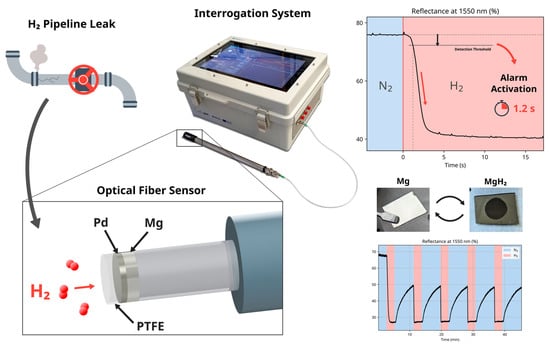
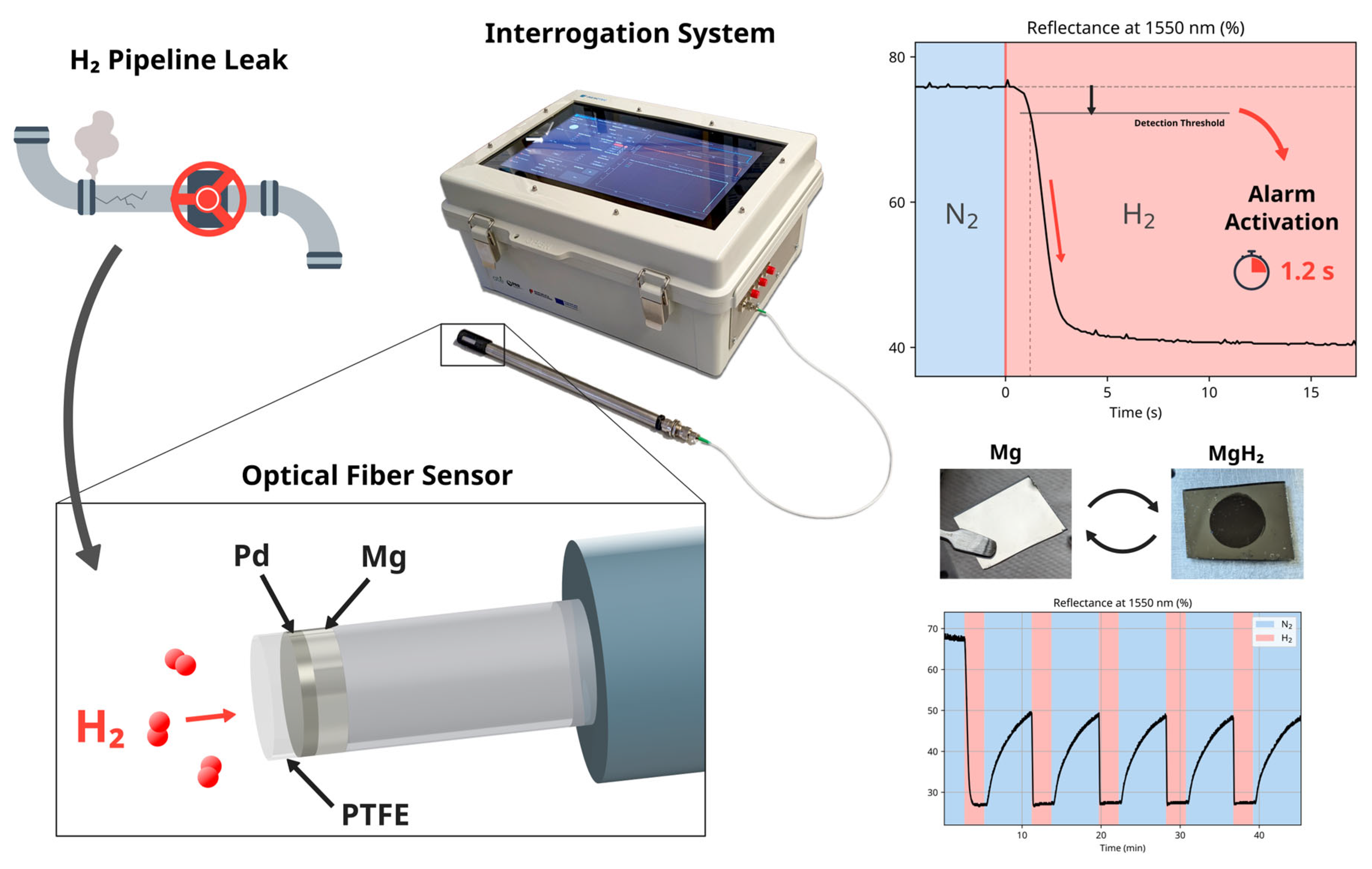
In this work, we demonstrate the feasibility of quick H2 detection with Pd-capped Mg thin films, and show how such micro-mirror devices can be fabricated on SMFs using scalable methods, obtaining structures capable of signaling the presence of H2 extremely quickly, with an easily detectable variation in the optical signal. Additionally, a standalone interrogation unit prototype is presented, providing a proof-of-concept for a remote and multi-point leak detection system.
2. Materials and Methods
The optical behavior of thin film structures consisting of Pd-capped Mg layers (on glass substrates) was simulated using the Transfer Matrix Method (TMM), with the variation in reflectance between the metallic and the hydride phase being calculated using refractive index data from Palm et al. [
11]. This result was used to determine an optimal range of layer sizes for Mg and Pd, maximizing optical contrast while maintaining an overall low thickness, for quickly reaching a higher degree of hydrogenation in the structure.
2.1. Fabrication
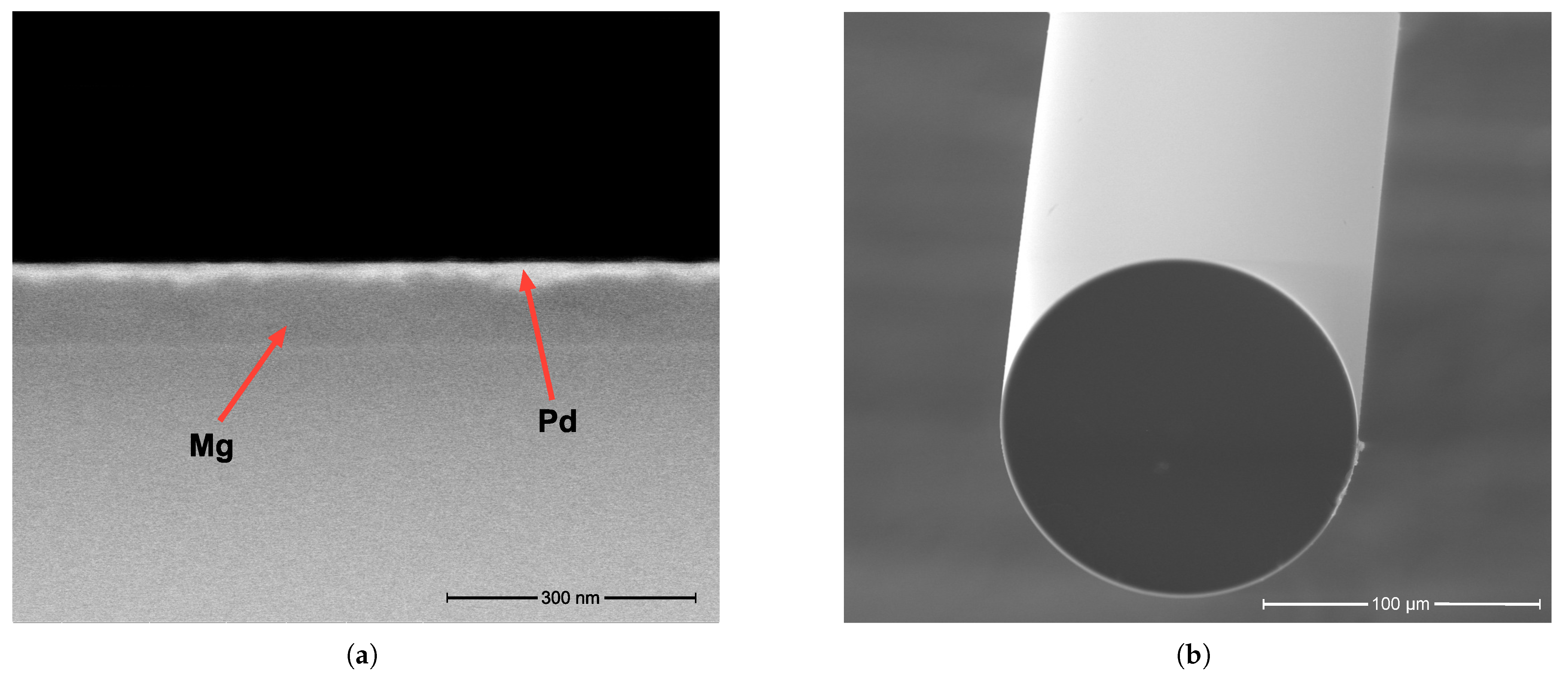
Initially, the hydrogenation at ambient conditions of Pd-capped Mg films, of thicknesses around 100 nm, was verified using planar glass substrates. The samples were fabricated via RF Magnetron Sputtering, using a custom-built setup which allowed for the deposition of protective polymer layers. The use of a multi-target system proved necessary due to the quick oxidation of the Mg film between vacuum cycles, blocking hydrogen diffusion. Then, 20 nm Mg films capped with 10 nm of Pd were deposited on the tips of Corning SMF-28 single-mode fibers. This was repeated with the addition of a 30 nm polytetrafluoroethylene (PTFE) protective layer to investigate its impact on the sensor’s performance. In all instances, deposition of Mg, Pd, and PTFE was carried out with applied RF powers of 12 W, 12 W, and 20 W, respectively, with film thickness being monitored using a high-resolution quartz microbalance.
2.2. Characterization
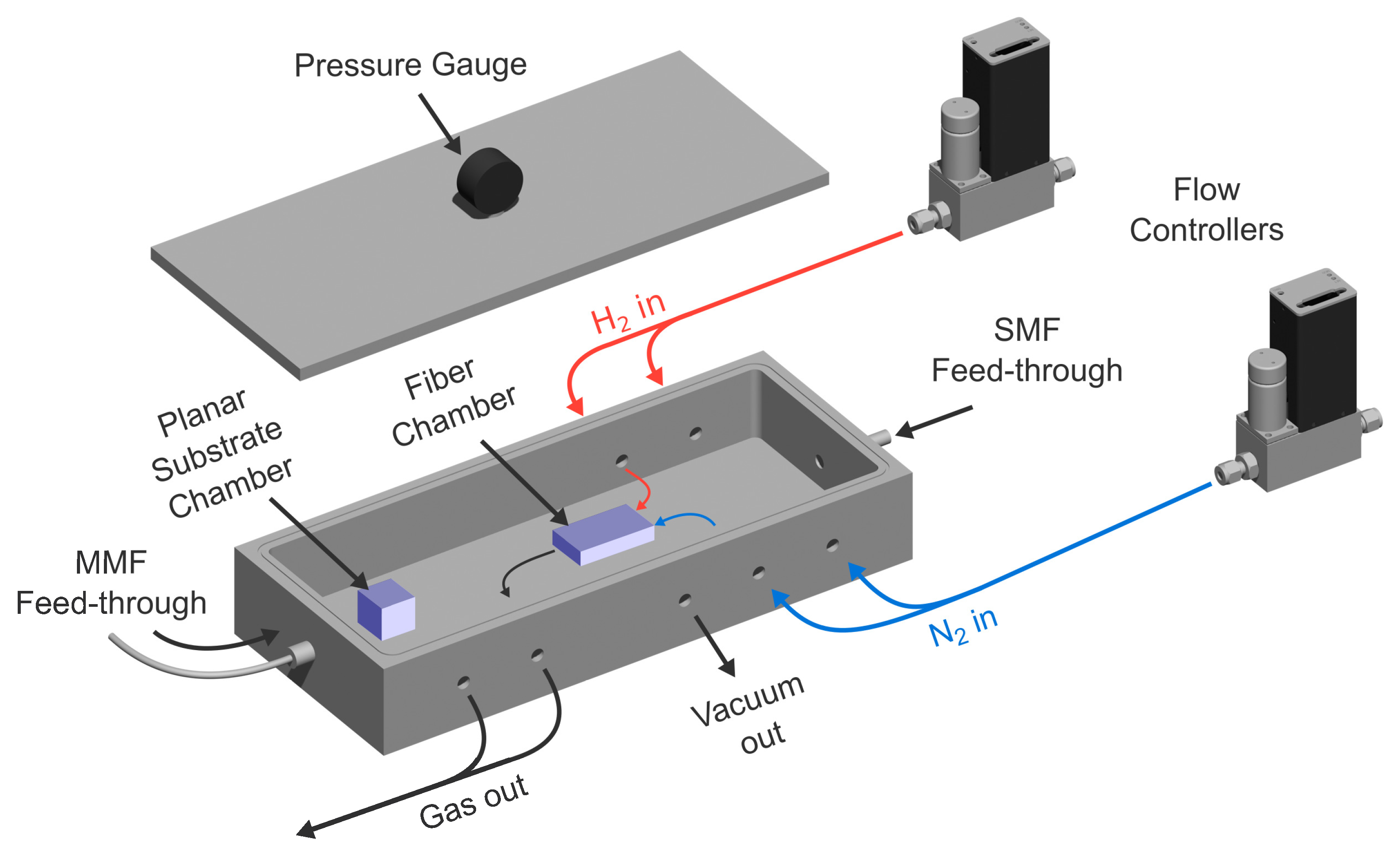
All samples were characterized at room temperature and ambient pressure in a controlled gas flow setup (
Figure 1), which includes a sealed chamber with gas inlets/outlets, optical fiber feed-throughs, and a pressure gauge. Gas flows are routed into the chamber using mass flow controllers, which are managed via computer with custom-built software developed for this purpose.
For planar substrates, substrate-side reflectance spectra were monitored by inserting samples into a smaller inner chamber, placed inside the outer chamber. This allowed light coming from a multi-mode (MM) fiber feed-through to hit the substrate and be reflected back, while gas was made to flow across the sample’s top side by connecting outer chamber inlets to holes in the inner chamber’s top piece. An O-ring, tightly pressed against the sample, avoided leakage of this flow into the surroundings. The sample’s top side was exposed to a 4 vol.% H
2 flow after a few minutes of a 100% N
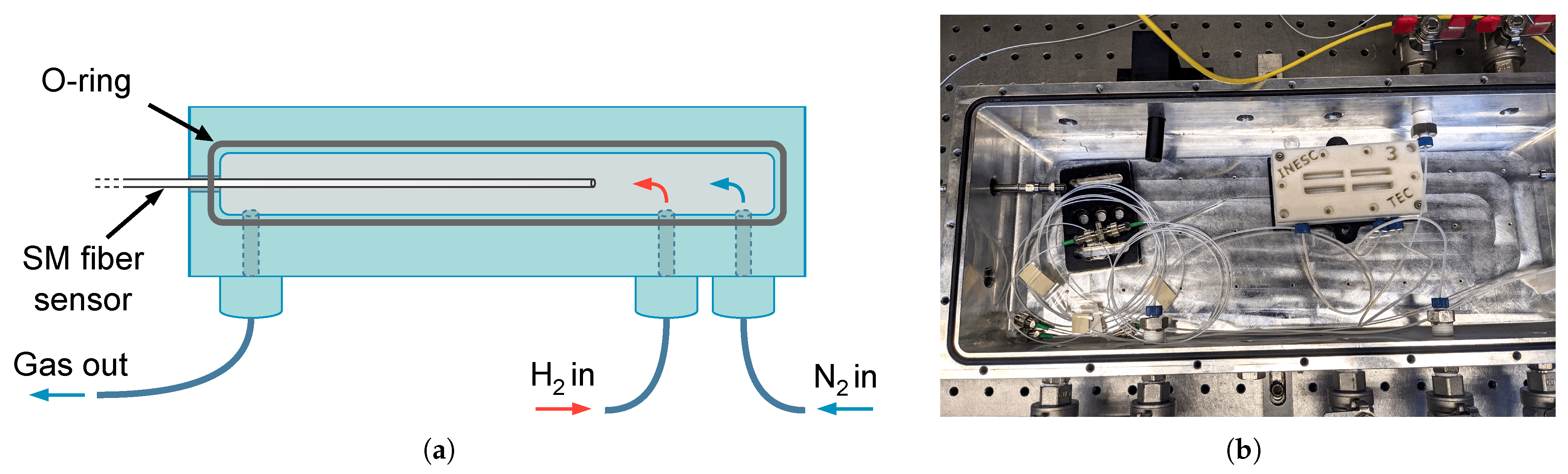
2 flow. As for the fiber samples, a different setup was used (
Figure 2). The fiber tips were inserted into a different inner chamber along which the gas is made to flow, covered with a glass slide which is pressed against an O-ring with a screwed-on lid. The inner chambers were placed inside the large sealed outer chamber depicted in
Figure 1 for safety reasons, preventing leakage of test gases into the surrounding environment.
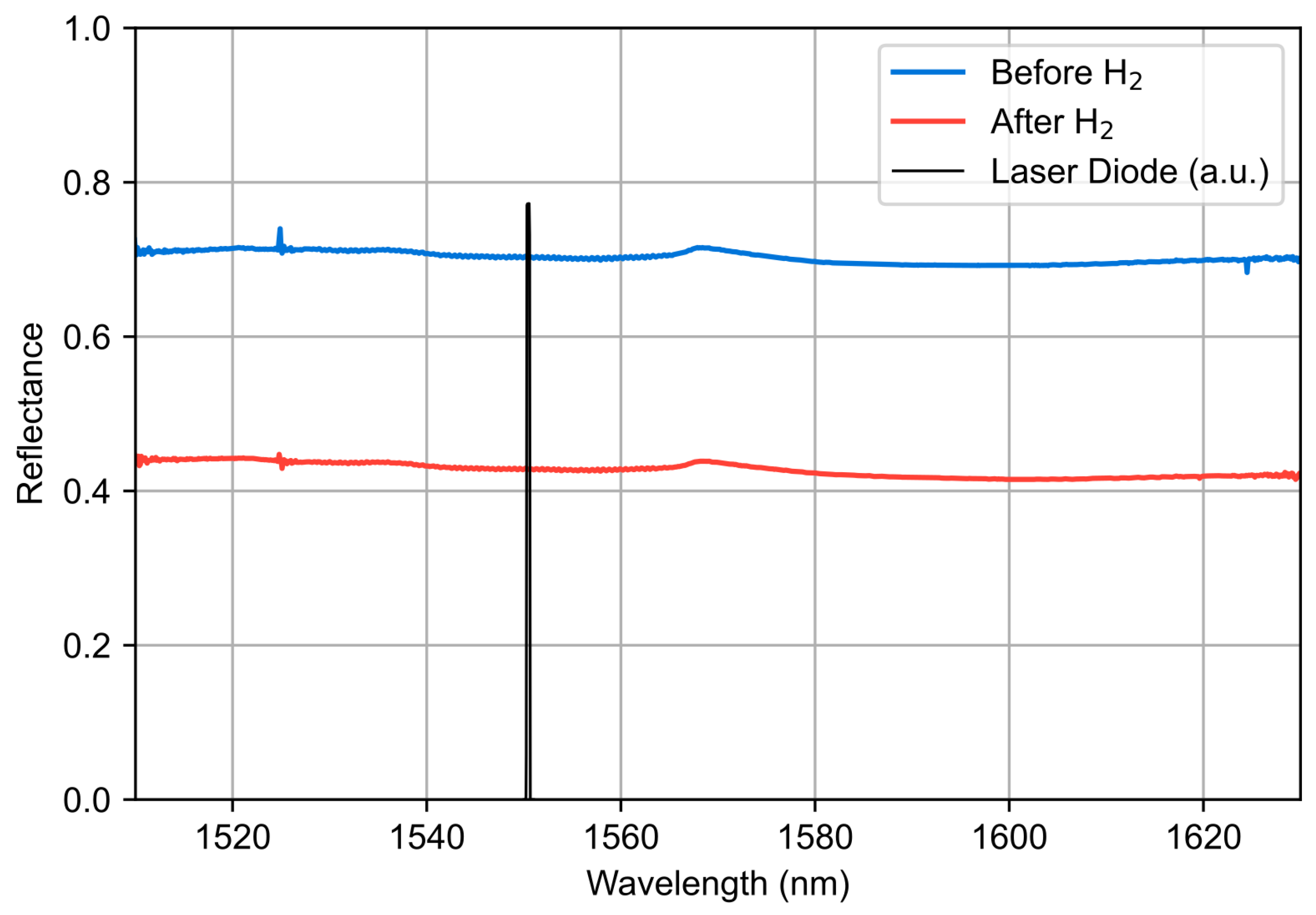
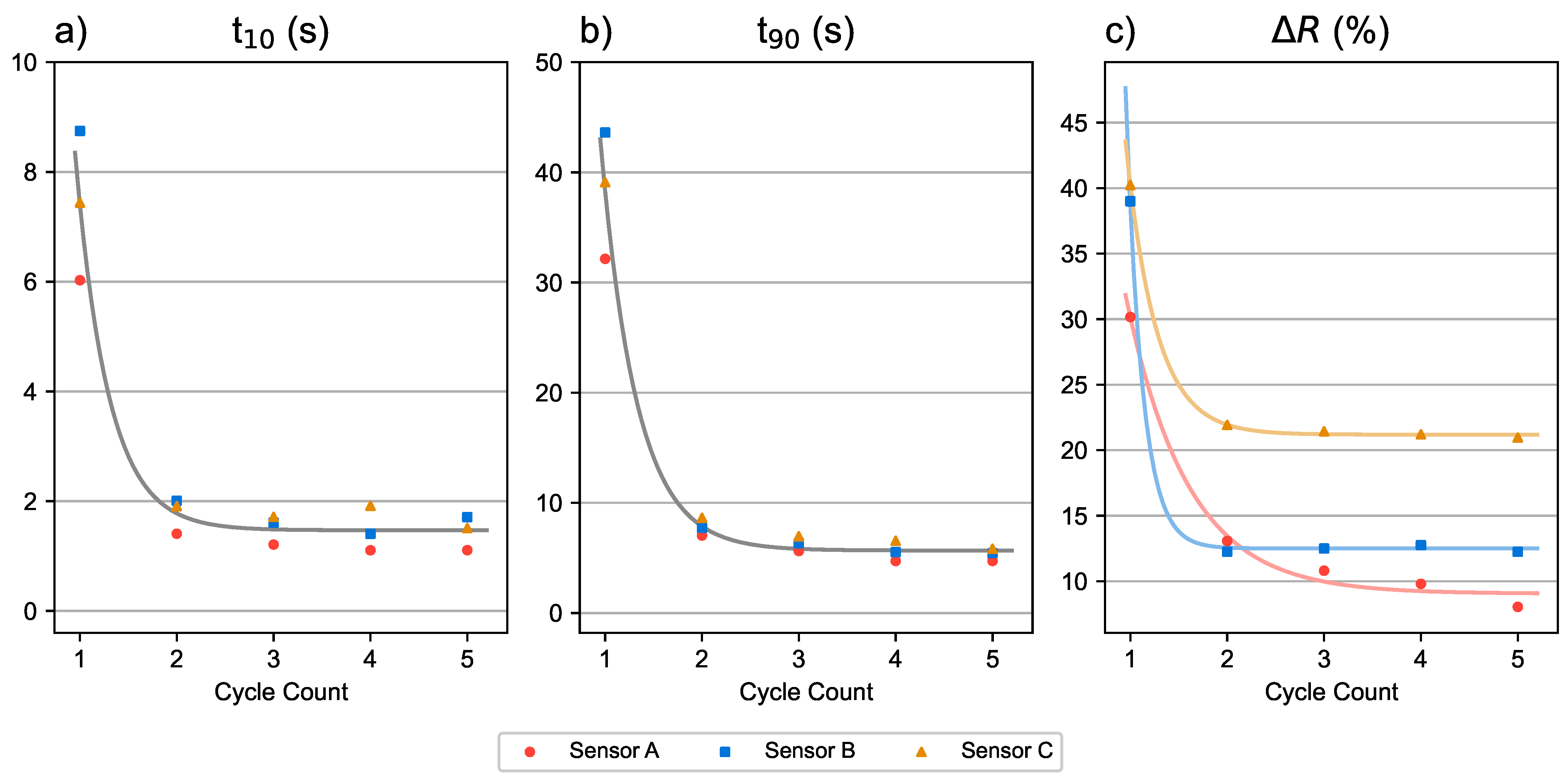
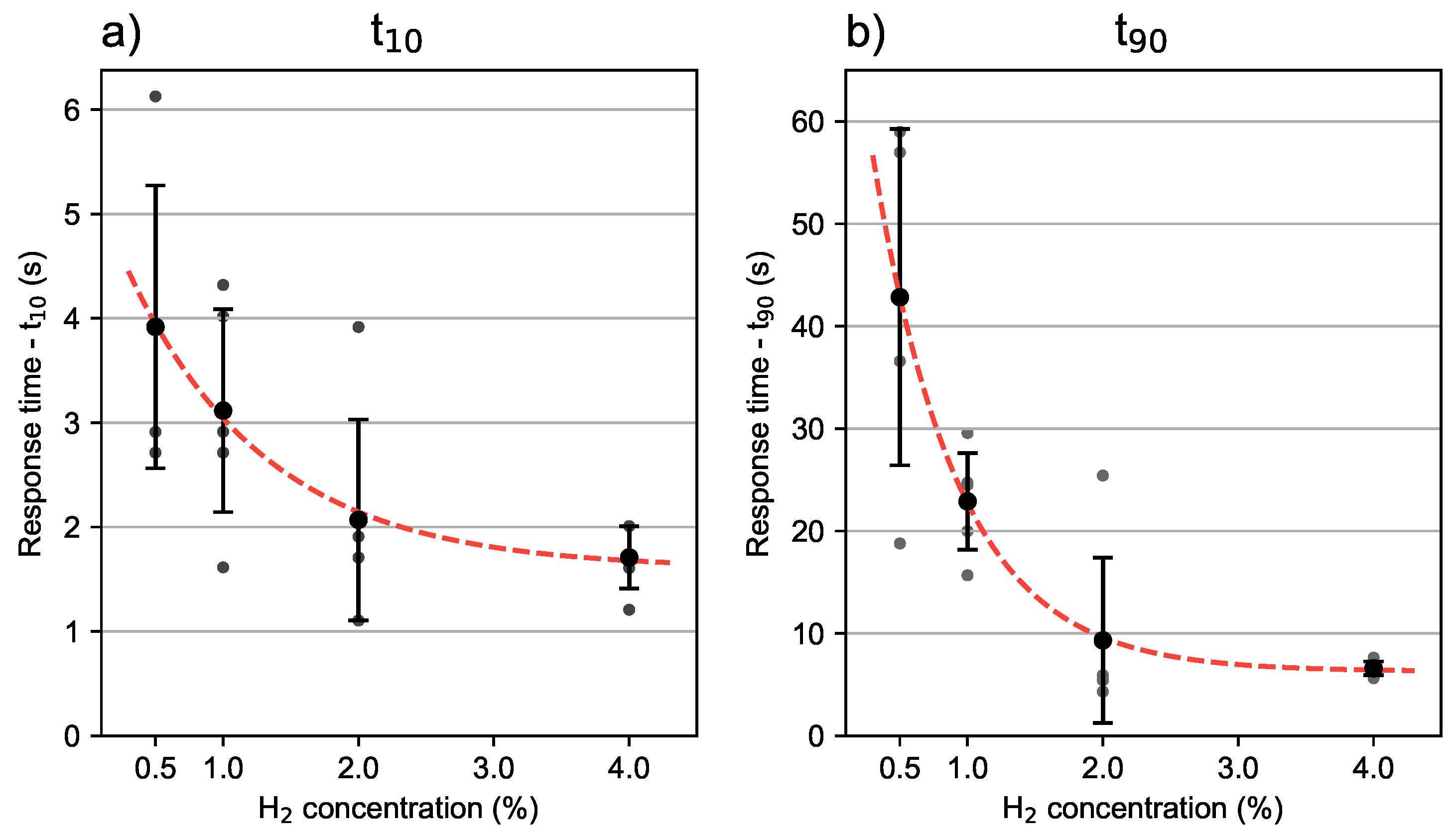
In order for measurements of very low response times to be possible, H2 and N2 flows of 300 mL/min are routed separately and fed directly to the fiber tip, minimizing the delay between the change in flow at the mass flow controllers and the actual exposure of the sensing structure to hydrogen. After accounting for the volume of tubing and the error introduced from electronic noise, an upper bound of 300 ms was calculated for the error in the determination of the response times. IR reflectance spectra were recorded using an optical spectrum analyzer, while all time-domain reflectance measurements for fiber samples were made using the interrogation system specifically developed for this work, which employs a 1550 nm fiber-coupled laser diode as a source.
2.3. Interrogation System
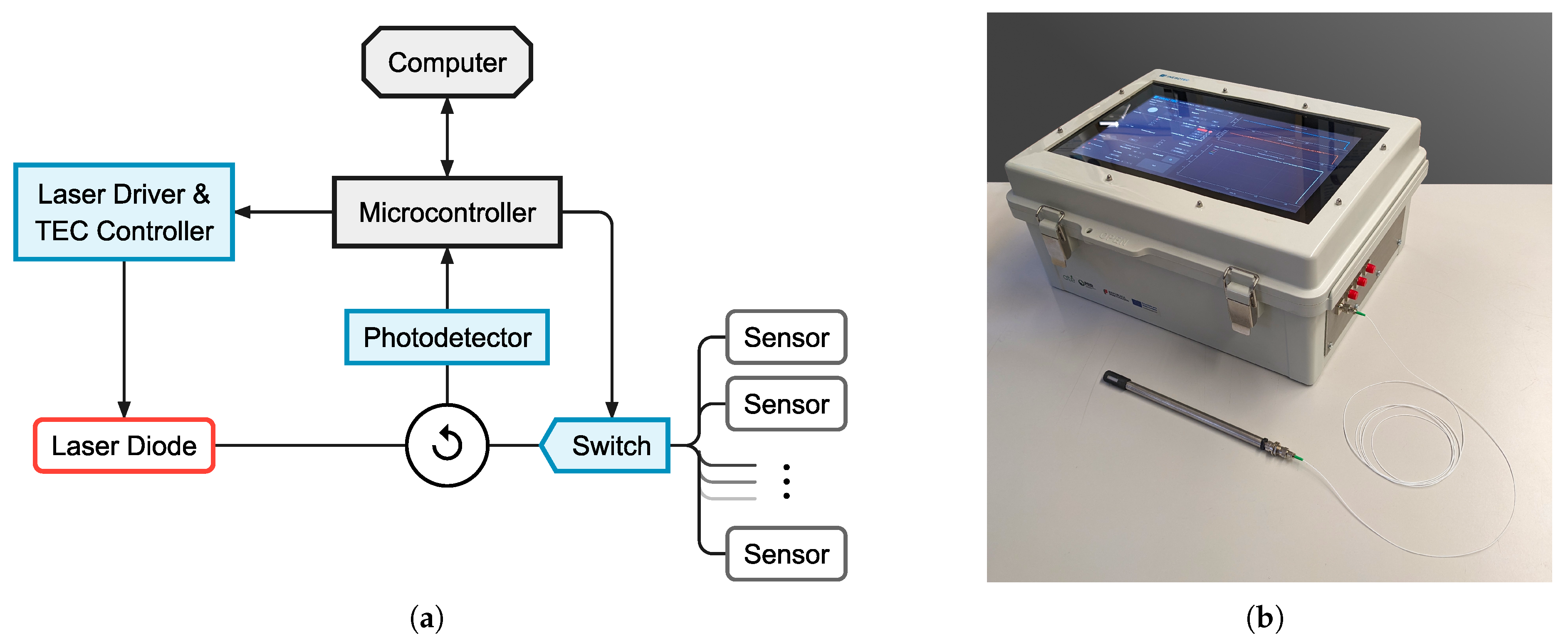
A working prototype for a standalone interrogation system was developed, encompassing a 1550 nm laser diode (XYT Sharetop CWDM TEC Pigtail Laser Diode) with built-in thermoelectric temperature control, a laser driver (Wavelength Electronics LDTC0520) capable of setting the diode’s current and temperature, an InGaAs PIN photodiode (EPM 606LL) and a MEMS optical switch (Optosun 1 × 4 Mini Size). A microcontroller unit controls these devices and acquires the photodetector’s signal, communicating with a computer. Finally, a circulator distributes the optical power from the laser diode to the optical switch, being reflected at one of the several detector fiber tips that can be connected and routed back to the photodetector. This architecture is shown in
Figure 3a.
The computer, embedded into the prototype, can acquire data and monitor the system at a rate of up to 25 Hz. A custom-built software application was specifically developed to control the laser output and channel switching, while providing real-time visualization and the possibility of saving data. It is also able to detect quick decreases in the incoming signals and show alarm warnings based on configurable thresholds.
An enclosure for the sensitive fiber tips was designed, consisting of a hollow steel tube with evenly distributed slits on one of its ends. A similarly slitted cap covers this area, with a sheet of micro-porous mesh underneath. The mesh, with a hole size of 15 μm, protects the fiber from dust, mechanical and chemical damage, without restricting airflow. On the opposite end, a connectorized SMF pigtail is spliced to the fiber, providing an easy connection method.
Figure 3b shows the prototype, with a detection probe, connected to one of the outputs.
4. Conclusions
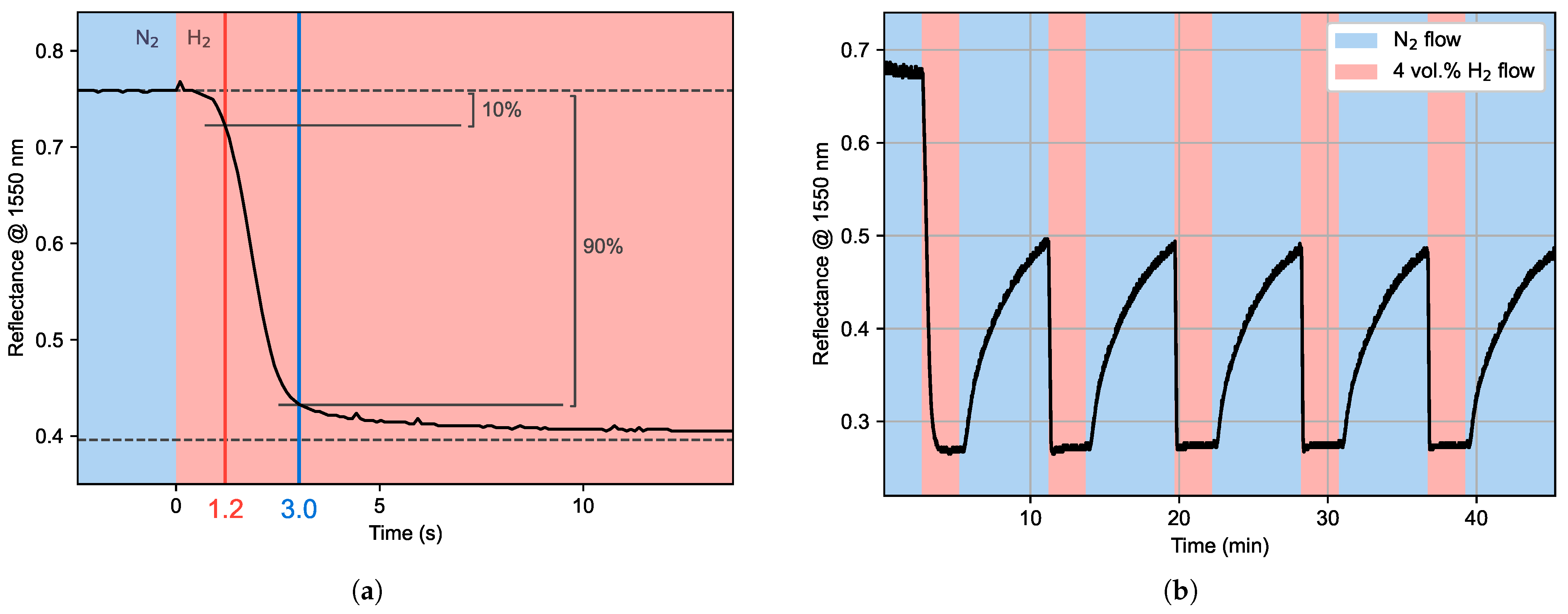
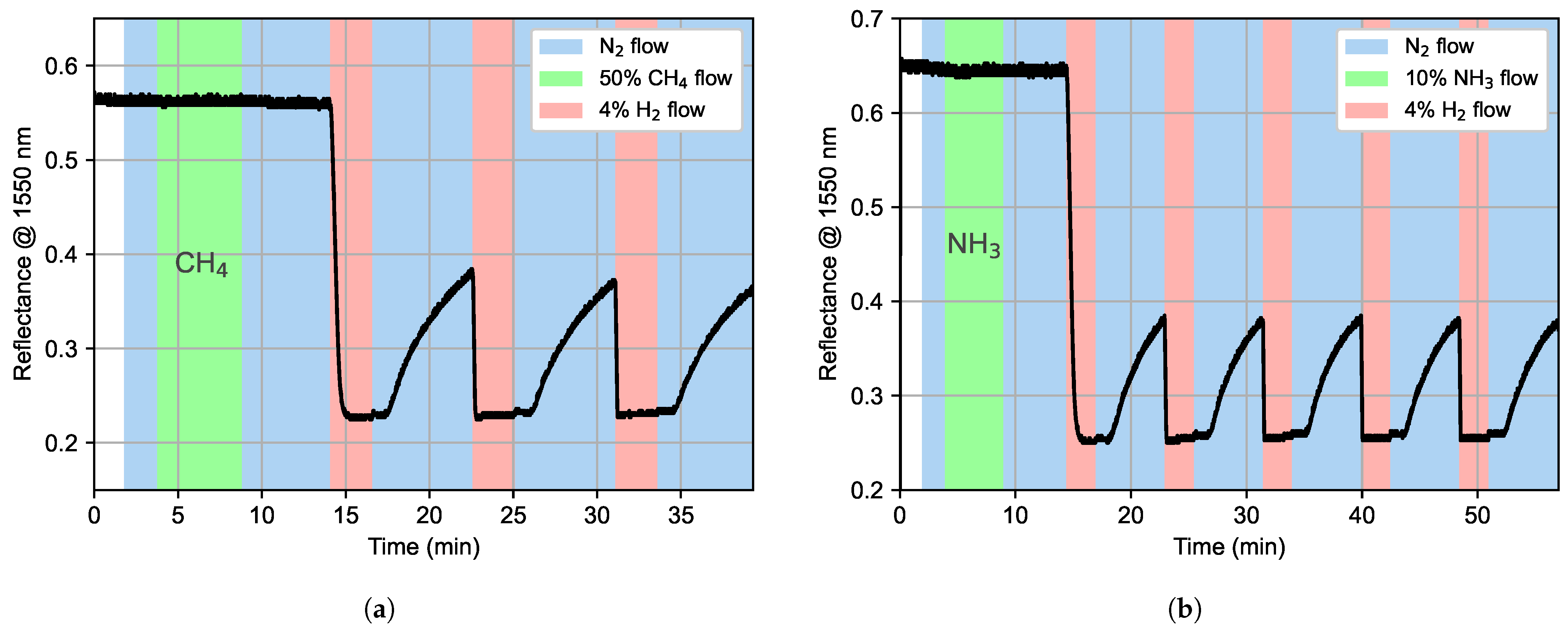
As shown in this work, Pd-capped Mg thin films can provide a very fast yet ample optical variation that can enable near-second detection of the presence of H2. While it is not feasible to extract information about the environment’s hydrogen concentration using these materials and techniques, this method nevertheless provides a solution to the demand for faster H2 monitoring. This is particularly relevant in contexts where one could expect the absence of hydrogen during normal, correct operation, as is the case for leaks in infrastructure. Additionally, interrogation is not restricted to particular wavelength ranges, meaning that single-mode fibers and standard C-band wavelengths can be used, making implementation easier and less expensive, while enabling remote detection.
This type of device is, however, inherently ill-suited for repeated detection, due to poor unloading. For situations where exposure to hydrogen should be infrequent, it allows the use of a simple intensity-based interrogation technique, while the fabrication process itself is potentially quite cost-effective and highly scalable. Thus, the downside of requiring a replacement of sensing probes following the hopefully rare event of infrastructure malfunction may be offset by the ease and lower-cost of manufacturing them. For the purposes of demonstrating the sensor’s functionality, and with field testing in the near-future in mind, an interrogation system was developed and used in the characterization of all fiber-based samples in this work, showing a path for the application of this technology. It is able to monitor several detectors simultaneously, making multi-point detection possible for coverage of large infrastructure. In future work, the thicknesses of the sensitive layers could be further optimized, mainly by reducing the Pd layer while still ensuring an homogeneous film.




 ,
,