

Advanced Signal Processing Methods for Partial Discharge Analysis: A Review

 , ,
, ,
Abstract
1. Introduction
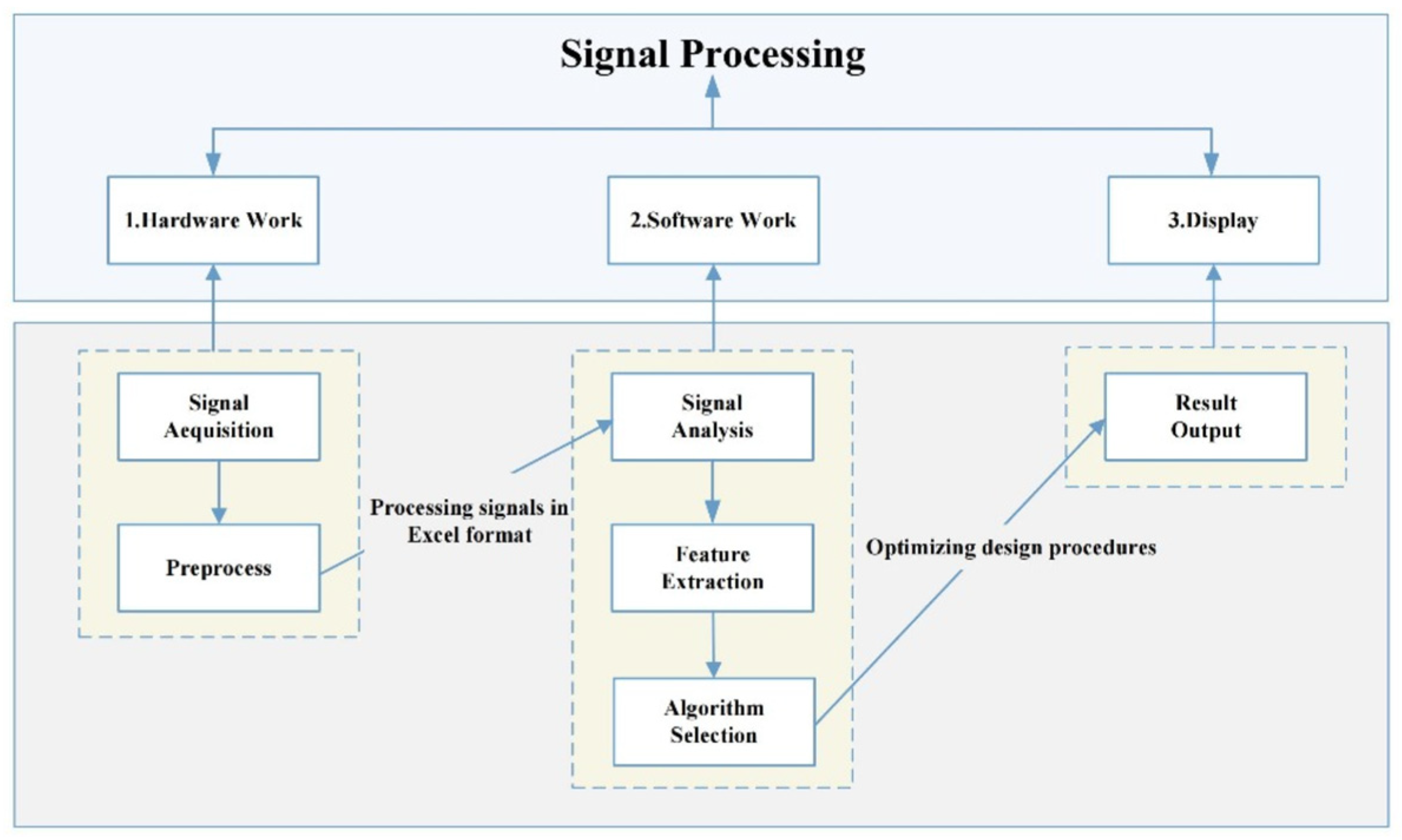
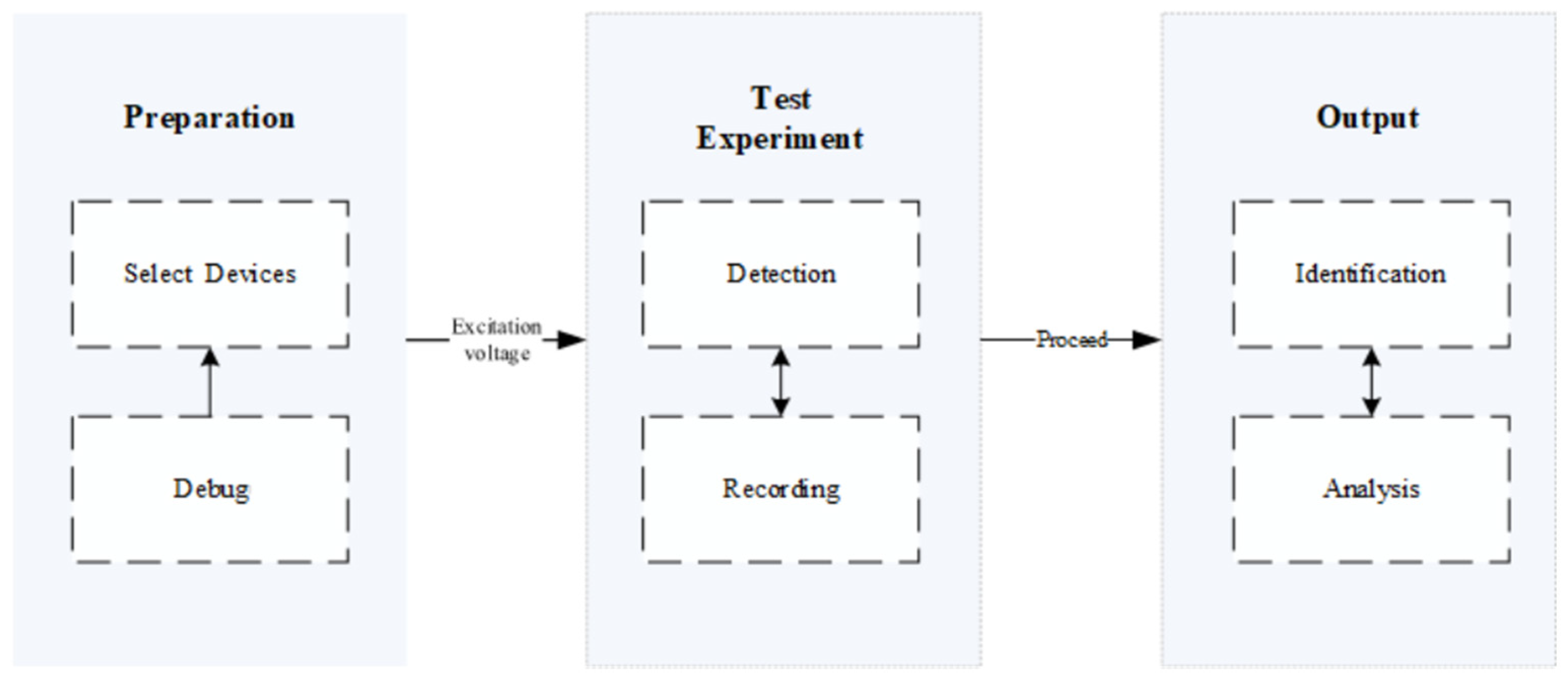
- First, select appropriate partial discharge detection equipment based on the type and requirements of the tested equipment, and ensure that the tested equipment is in normal working condition during the testing process.
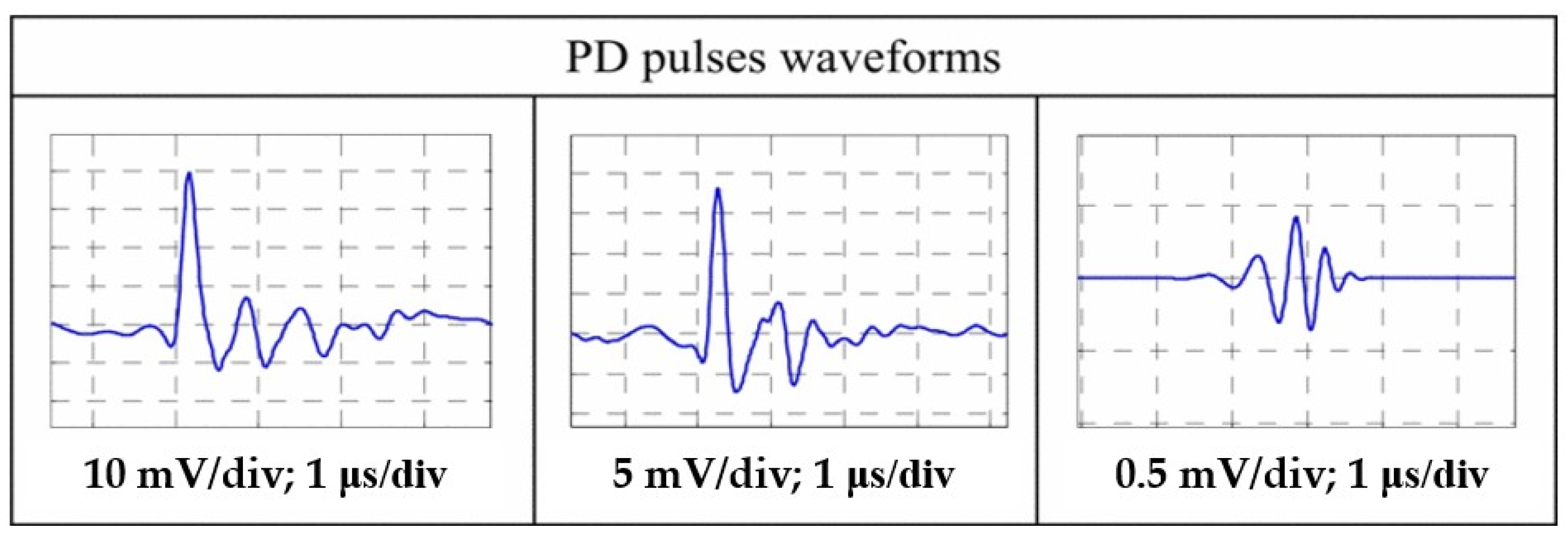
- Then apply excitation voltage, gradually increase the voltage to the rated level, observe whether there is partial discharge phenomenon, that is, monitor the partial discharge signal in real time through detection equipment, usually including amplitude, phase, and frequency, and then record the data.
- Then perform some specific processing on the signal data, such as filtering, denoising, etc. Then analyze and determine the discharge type to obtain the health status of the equipment insulation.
- Finally, generate a test report for technical personnel to use.
Research Contributions
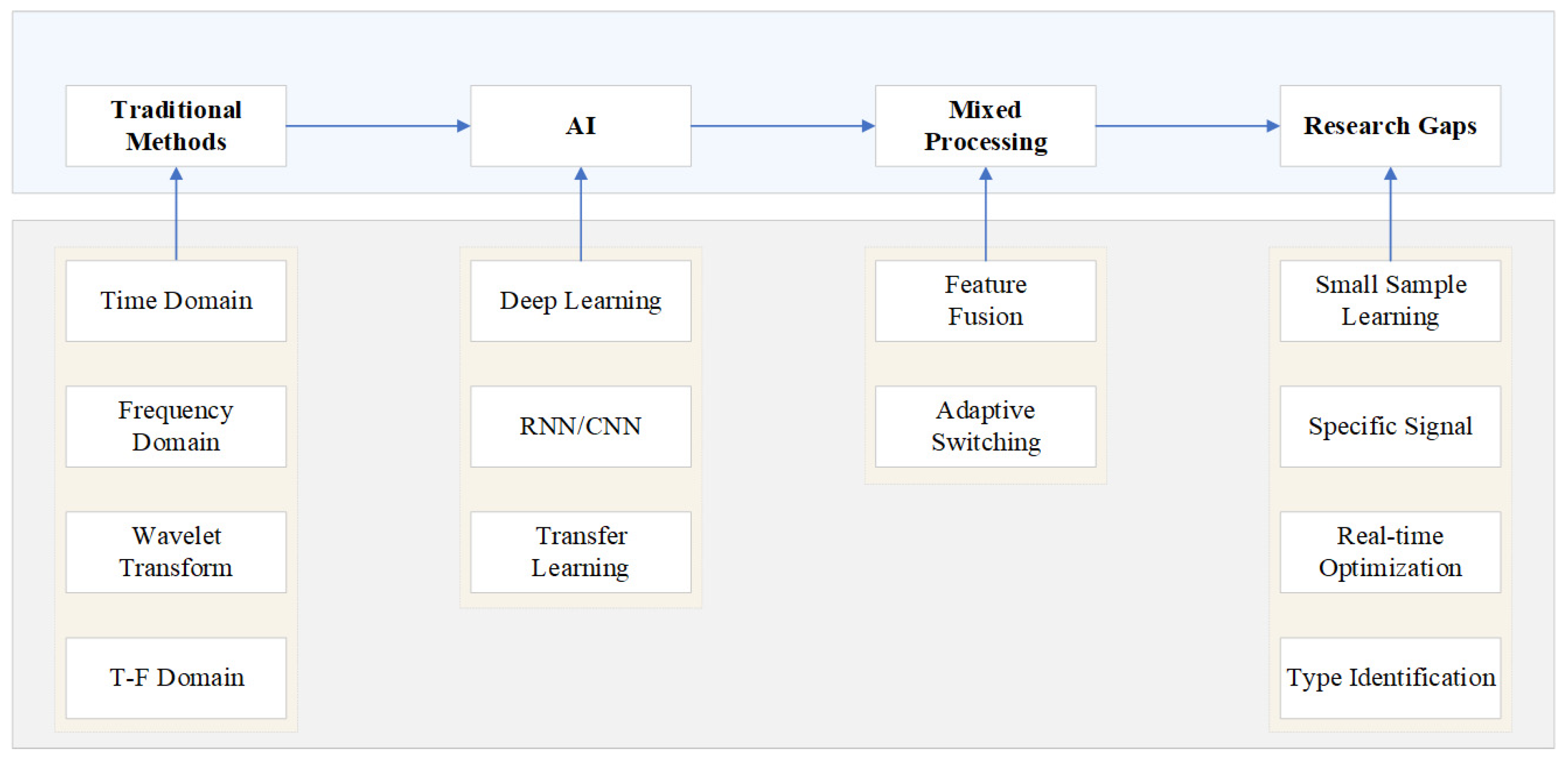
- A Unified Comparison Framework: Moving beyond sequential descriptions, we propose a structured, multi-dimensional comparison framework for PD signal processing methods. This framework categorizes methods based on core engineering objectives, providing practical guidance for method selection in specific scenarios.
- An evolutionary path analysis: We critically synthesize the development of these methods, which is not a simple timeline, but an evolutionary process driven by the practical limitations of previous methods. This explains why the field has evolved from Fourier to wavelets, adaptive decomposition, and ultimately to AI.
- A forward-looking perspective on embedded intelligence: We identify and analyze the key gap between the high precision of AI and the need for real-time embedded deployments. Our contribution lies in proposing a specific gap analysis and a practical selection framework (Section Unified PD Signal Processing Technology Selection Framework) that prioritizes the development of physically embedded, lightweight, and interpretable AI solutions for edge devices—an area not fully covered by previous reviews.
2. Partial Discharge Types
- Corona Partial Discharge: It occurs when the electric field strength exceeds the dielectric strength of air, resulting in ionization around the conductor.
- Internal Partial Discharge: It usually occurs inside electrical equipment, especially inside the insulation of electrical equipment, such as transformers, switchgear, insulation materials, etc. Internal discharge may cause partial discharge due to aging, cracks or defects in insulation materials, which may cause equipment failure.
- Surface Partial Discharge: It occurs when discharge occurs on the surface of an insulator or between a conductor and an insulator. Surface discharge often occurs when the insulation surface is stained, damp, or aged. It can degrade the insulation performance of electrical equipment and, in severe cases, lead to equipment failure.
- Gap discharge: Gap discharge occurs when the electric field strength in a gas, vacuum, or other insulating medium is high enough to cause the dielectric (such as air) to break down, leading to discharge. This phenomenon typically occurs in air gaps or gaps between insulators within electrical equipment. Gap discharge requires a certain voltage (i.e., the breakdown voltage), and once it occurs, it can damage the equipment.
3. Review Methodology
3.1. Database and Retrieval Strategies
3.2. Literature Screening Criteria
- Publication Time: The search focuses on literature published between 1990 and 2024, with a particular emphasis on foundational research from the 1990s to the 2000s, and significant advancements since 2010, especially the AI-based research boom since 2022.
- Document Type: Peer-reviewed journal articles, conference papers, and high-quality review articles are prioritized. Books, patents, and non-peer-reviewed technical reports are excluded.
- Technical Focus: Literature primarily researching novel or critically applicable PD signal processing algorithms is included. Articles focusing solely on sensor design, without signal processing, or purely commercial application reports lacking methodological insights are excluded.
- Application Background: To provide a balanced perspective, this review covers research based on laboratory-simulated PD (using common defect models such as pin-plate, air gap, and surface discharge) and field measurements (from critical power equipment such as transformers, gas-insulated switchgear (GIS), and power cables). At the same time, signals obtained through mainstream sensing technologies such as high-frequency current transformers (HFCTs), ultra-high frequency (UHF) sensors, and acoustic emission sensors were also considered.
3.3. Scope and Balance Description
4. Methods
4.1. Time Domain Analysis
4.1.1. Core Time Domain Characteristic Parameters
4.1.2. Method Corresponding to the Parameter
4.2. Fourier Transform (FT)
4.2.1. Method Overview and Evolution
4.2.2. Performance Comparison and Application Scenarios
4.3. Wavelet Transform (WT)
- Excellent noise removal capabilities: Wavelet transform can selectively retain signal components and suppress noise through wavelet filter design and threshold processing based on Pareto optimization. Its performance is superior to traditional time-domain methods or filtering techniques, especially under low signal-to-noise ratio conditions [51,52,53,54]. By optimizing wavelet families such as Daubechies, Symlets, and Coiflets, the signal-to-noise ratio (SNR) can be significantly improved, thereby enhancing the detection performance of PD signals in high-noise environments [52,54,55].
- Excellent time-frequency localization capability: The wavelet transform can provide both time-domain and frequency-domain information of a signal, making it ideal for analyzing non-stationary transient signals such as PD, as well as signals whose statistical characteristics vary over time. This dual-domain analysis capability gives it a strong advantage in transient event detection, overcoming the limitation of the traditional Fourier transform, which loses time-domain details [50,56].
- Flexibility and adaptability: The flexibility of the wavelet transform lies in the ability to select the most appropriate wavelet basis function based on the characteristics of a specific PD signal, thereby achieving more targeted analysis and improving detection accuracy. Unlike traditional methods, it even allows for custom wavelet bases to better match signal characteristics [52,55].
Wavelet Packet Transform (WPT)
- Enhanced signal decomposition and noise reduction capabilities: The more detailed signal decomposition provided by WPT enables better noise separation and signal clarity. This is particularly beneficial for distinguishing PD pulses with similar frequency characteristics to noise [59,60]. Research has shown that improved WPT methods can effectively extract PD signals from complex noisy environments, such as power cables, and exhibit excellent noise reduction performance [59].
- Synergistic integration with other technologies: Combining it with principal component analysis (PCA) can effectively suppress noise while preserving key PD features [61]. Combined with singular value decomposition (SVD), it can specifically eliminate periodic narrowband interference [60]. A combined Kalman filter and WPT denoising method has been shown to significantly improve the signal-to-noise ratio while reducing waveform distortion [62].
4.4. Empirical Mode Decomposition (EMD) and Hilbert–Huang Transform (HHT)
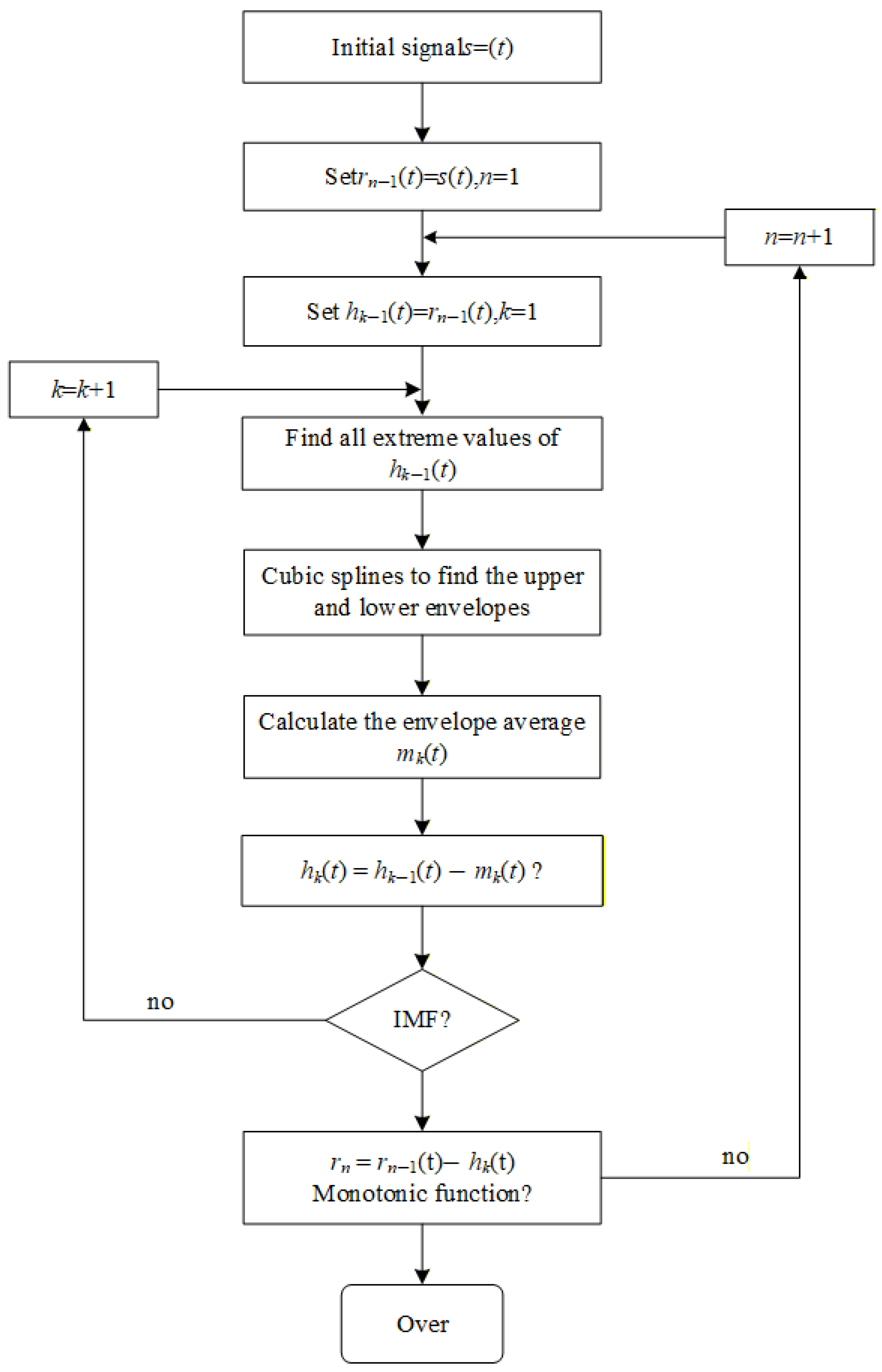
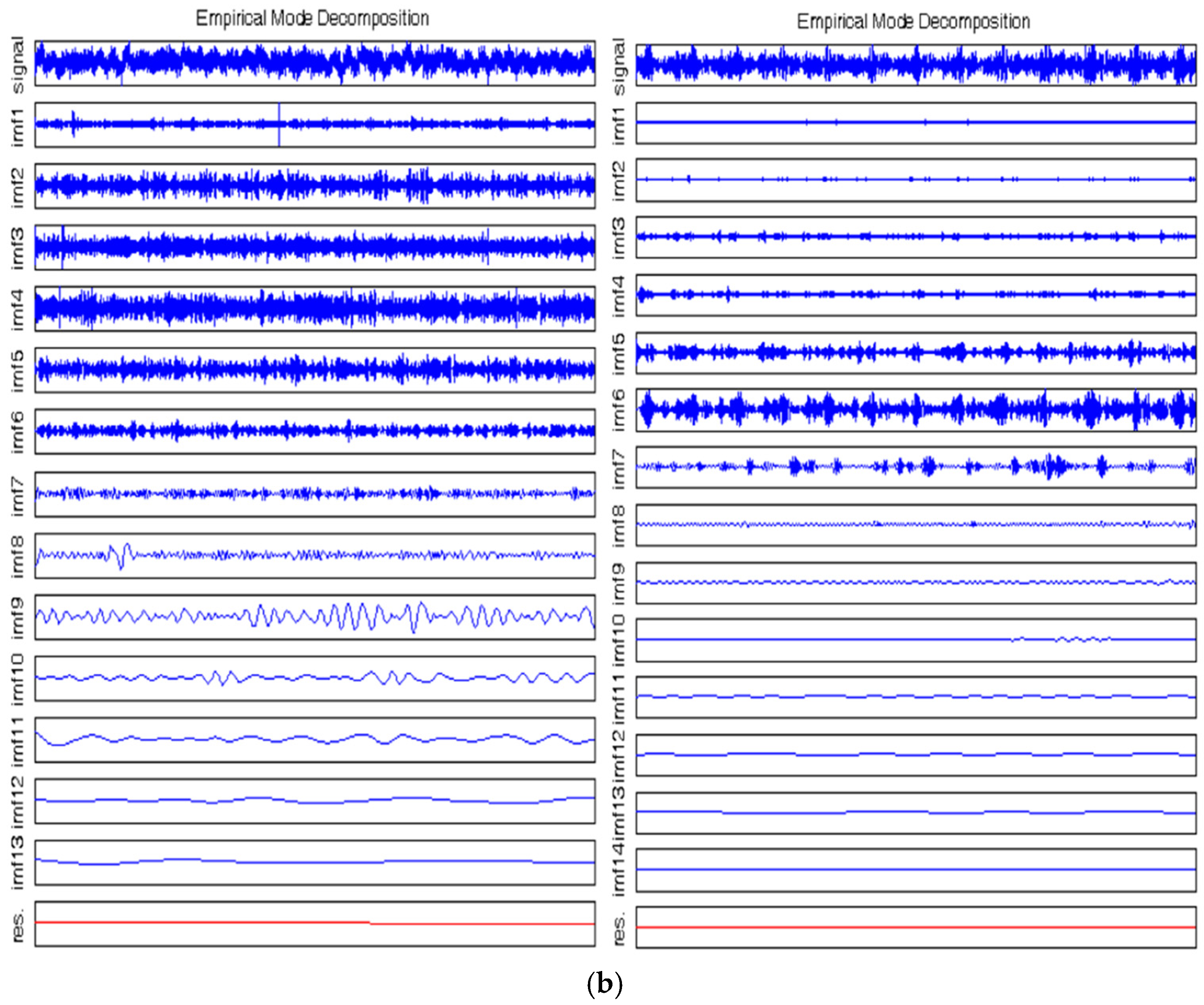
4.4.1. Empirical Mode Decomposition (EMD) Process
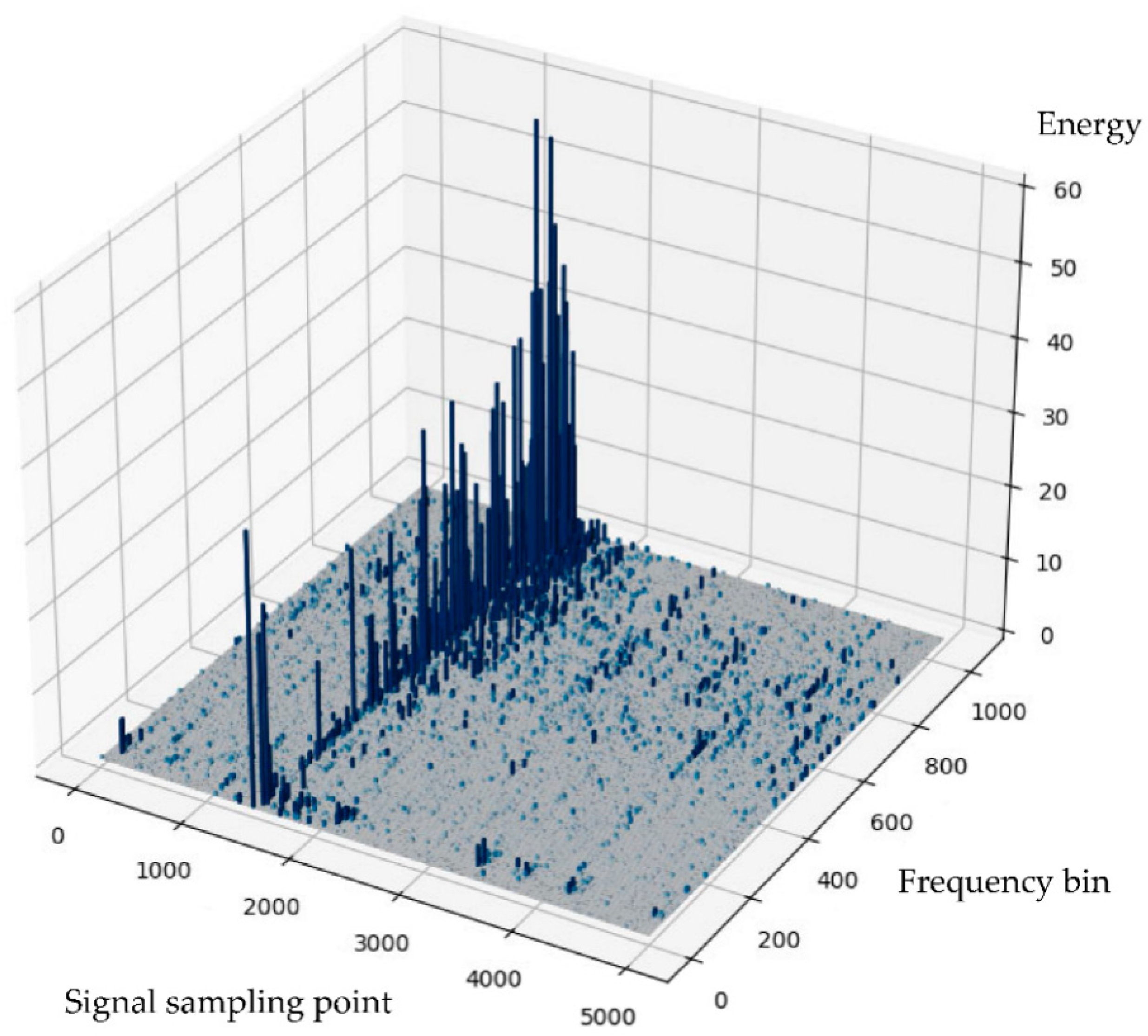
4.4.2. From EMD to Hilbert Spectrum
4.4.3. Improved Algorithms and Developments of EMD
4.5. Comprehensive Comparison and Selection Guide for Time-Frequency Analysis Methods
4.6. Signal Processing Based on Artificial Intelligence
4.6.1. Compression and Data Management
4.6.2. Classification and Detection
4.6.3. Real-Time Monitoring and Diagnostics
4.6.4. Performance Comparison and Limitations
4.6.5. Emerging Frontiers: Edge AI and Embedded Detection
- Hardware-Software Co-Design: System-on-Chip (SoC)-based solutions tightly integrate optimized AI models with hardware, enabling automatic generation of partial discharge (PD) alerts and long-term monitoring without human intervention [101].
- Microcontroller Deployment: Using dedicated tool chains such as STM32Cube. AI, models such as convolutional neural networks (CNNs) can be extremely lightweight and deployed on resource-constrained microcontrollers. This enables highly accurate, real-time PD identification on end devices, even under varying operating conditions [102].
4.7. Hybrid Partial Discharge (PD) Signal Processing Technology
5. Comparison
Unified PD Signal Processing Technology Selection Framework
- Diagnostic Accuracy Demand: Assess the required level of fault discrimination.
- 2.
- Computational Complexity Constraint: Evaluate the available computing resources and real-time requirements.
- 3.
- Implementation Robustness Requirement: Assess the severity and complexity of the signal environment.
6. Gap Analysis and Future Prospects
6.1. Key Research Gaps
6.2. Discussion and Recommendation
- Develop embedded, interpretable feature engineering based on physics mechanisms: Abandoning the single-minded “end-to-end black box” approach, we instead design a lightweight feature extraction front-end that incorporates prior physics knowledge of PD. For example, feature vectors of atomic or physical information in the time-frequency domain strongly associated with specific discharge types are computed in real time on the embedded side and then fed into a small classifier. This not only improves the model’s interpretability for classifying specific PD sources but also significantly reduces computing resource requirements, directly addressing the challenge of “intelligent feature extraction and decoupling.”
- Build specialized lightweight network architectures for embedded classification: Explore asymmetric neural network architectures, spiking neural networks, or attention-based dynamic inference networks optimized for PD signal classification. These models should dynamically allocate computing resources based on the complexity of the input signal, prioritizing the ability to distinguish key PD types. This approach achieves an optimal balance between accuracy and efficiency within the strict constraints of embedded platforms, resolving the core challenge of high-precision, real-time classification on embedded devices.
- Establish an open benchmark and simulation-measurement closed loop for embedded PD classification: Create an open-source, large-scale embedded PD classification benchmark dataset (e.g., Emb-PD-1.0) containing multi-source PD signals from different devices, sampling settings, and noise levels. Simultaneously, develop embedded hardware-in-the-loop simulation technology to allow algorithms to be fully tested and validated in a virtual embedded environment before deployment. This will form a rapid, iterative “design-simulation-deployment” closed loop, accelerating the maturity of high-performance embedded classification solutions. This initiative will directly address the lack of standardized datasets and benchmarks.
7. Conclusions
Author Contributions
Funding
Acknowledgments
Conflicts of Interest
Abbreviations
| AI | Artificial Intelligence |
| AORGK | Adaptive Optimal Radial Gaussian Kernel |
| BPNN | Back-Propagation Neural Network |
| CEEMDAN | Complete ensemble EMD with adaptive noise |
| CNN | Convolutional Neural Network |
| CWD | Choi–Williams Distribution |
| DWT | Discrete Wavelet Transform |
| EEMD | Ensemble Empirical Mode Decomposition |
| EMD | Empirical Mode Decomposition |
| FFT | Fast Fourier Transform |
| FKNN | fuzzy k-nearest neighbor |
| FRFT | Fractional Fourier transform |
| FT | Fourier Transform |
| GAN | Generative Adversarial Network |
| HHT | Hilbert–Huang Transform |
| IMF | Intrinsic Mode Functions |
| LPFT | Local polynomial Fourier transform |
| PD | Partial Discharge |
| RNN | Recurrent Neural Network |
| STFT | Short-time Fourier transform |
| SVD | Singular Value Decomposition |
| VMD | Variational Mode Decomposition |
| WPT | Wavelet Packet Transform |
| WT | Wavelet Transform |
References
- Govindarajan, S.; Morales, A.; Ardila-Rey, J.A.; Purushothaman, N. A review on partial discharge diagnosis in cables: Theory, techniques, and trends. Measurement 2023, 216, 112882. [Google Scholar] [CrossRef]
- Choudhary, M.; Kiitam, I.; Palu, I. Electrical aging and lifetime study of nomex insulation influenced by partial discharges. Electr. Power Syst. Res. 2025, 249, 112000. [Google Scholar] [CrossRef]
- Ayubi, B.I.; Zhang, L.; Wang, G.; Wang, Y.; Zhou, S. Molecular dynamics and finite element analysis of partial discharge mechanisms in polyimide under high-frequency electric stress. Polym. Degrad. Stab. 2025, 234, 111252. [Google Scholar] [CrossRef]
- Fahmi, D.; Asfani, D.A.; Hernanda, I.G.N.S.; Septianto, B.; Negara, I.M.Y.; Illias, H.A. Partial discharge characteristics from polymer insulator under various contaminant. Electr. Power Syst. Res. 2024, 236, 110978. [Google Scholar] [CrossRef]
- Freitas-Gutierres, L.F.; Maresch, K.; Morais, A.M.; Nunes, M.V.A.; Correa, C.H.; Martins, E.F.; Fontoura, H.C.; Schmidt, M.V.F.; Soares, S.N.; Cardoso, G.; et al. Framework for decision-making in preventive maintenance: Electric field analysis and partial discharge diagnosis of high-voltage insulators. Electr. Power Syst. Res. 2024, 233, 110447. [Google Scholar] [CrossRef]
- Li, J.; Tian, J.; Banerjee, A.; Zhai, X.; Wang, S. Gradient balanced selective mixture-of-experts for gas insulated switchgear partial discharge diagnosis. Measurement 2025, 256, 118139. [Google Scholar] [CrossRef]
- Saha, T.K.; Purkait, P. Advanced Signal Processing Techniques for Partial Discharge Measurement; Wiley: Hoboken, NJ, USA, 2017. [Google Scholar]
- Senthil Kumar, S. PD data analysis and evaluation of partial discharge patterns for uniform characterisation. IEEE Proc.-Sci. Meas. Technol. 2004, 151, 278–284. [Google Scholar] [CrossRef]
- Shim, I.; Soraghan, J.J.; Siew, W.H. Detection of PD utilizing digital signal processing methods. Part 3: Open-loop noise reduction. IEEE Electr. Insul. Mag 2001, 17, 6–13. [Google Scholar] [CrossRef]
- Carminati, E.; Lazzaroni, M. Analysis of PD signal by wavelet transform. In Proceedings of the 17th IEEE Instrumentation and Measurement Technology Conference (IMTC), Baltimore, MD, USA, 1–4 May 2000; pp. 1081–1085. [Google Scholar]
- Ouyang, M.; Du, B.; Wei, G. Application of wavelet transform in acoustic signal extraction of partial discharge. Proc. Electr. Power Syst. Autom. 2004, 16–19. [Google Scholar]
- Li, H.; Wang, Y.; Ma, Y. Ensemble empirical mode decomposition and Hilbert-Huang transform applied to bearing fault diagnosis. In Proceedings of the 2010 3rd International Congress on Image and Signal Processing, Yantai, China, 16–18 October 2010; pp. 3413–3417. [Google Scholar]
- Qahmash, A.; AlQahtani, B.M. Towards Early Diagnosis Of Parkinson’s Disease Through Speech Signals’ Analysis Based on Advanced Deep Learning Techniques. In Proceedings of the 2024 IEEE 7th International Conference on Advanced Technologies, Signal and Image Processing (ATSIP), Chengdu, China, 15–17 December 2024; pp. 116–121. [Google Scholar]
- Szirtes, M.; Cselko, R.; Nemeth, B. Investigating the Emitted Signals of Partial Discharges for Diagnostic Applications in High Voltage Equipment. In Proceedings of the 2020 IEEE Conference on Electrical Insulation and Dielectric Phenomena (CEIDP), Virtual, 18–30 October 2020; pp. 527–530. [Google Scholar]
- Zhao, Y.; Zheng, S.; Yan, X.; Kong, J. Study on the Electromagnetic Characteristics of two Different Types of Partial Discharge at the Initial Stage. In Proceedings of the 2023 IEEE 6th International Electrical and Energy Conference (CIEEC), Guangzhou, China, 12–14 May 2023; pp. 944–948. [Google Scholar]
- Chen, Z.; Li, J.; Qian, Y.; Xu, Z.; Pan, C.; Sheng, G. Partial Discharge Feature Selection and Classification Recognition Based on Maximal Information Coefficient. In Proceedings of the 2024 10th International Conference on Condition Monitoring and Diagnosis (CMD), Gangneung, Republic of Korea, 20–24 October 2024; pp. 465–468. [Google Scholar]
- Li, Z.; Li, Y.; Du, J.; Gao, J.; Zhang, X.; Liu, T.; Wang, G.; Li, R.; Liu, Z.; Wang, J. Classification of different types of partial discharge based on acoustic emission techniques. In Proceedings of the 2013 2nd International Conference on Measurement, Information and Control, Harbin, China, 16–18 August 2013; pp. 1118–1121. [Google Scholar]
- Almehdhar, A.; Prochazka, R. Robust Classification of PD Sources Using Deep Learning and Signal Processing Techniques. In Proceedings of the 2024 International Conference on Diagnostics in Electrical Engineering (Diagnostika), Pilsen, Czech Republic, 3–5 September 2024; pp. 1–5. [Google Scholar]
- Banjare, H.K.; Sahoo, R.; Karmakar, S. Study and Analysis of Various Partial Discharge Signals Classification Using Machine Learning Application. In Proceedings of the 2022 IEEE 6th International Conference on Condition Assessment Techniques in Electrical Systems (CATCON), Chennai, India, 9–11 November 2022; pp. 52–56. [Google Scholar]
- Gonçalves Júnior, A.M.; de Paula, H.; do Couto Boaventura, W. Practical partial discharge pulse generation and location within transformer windings using regression models adjusted with simulated signals. Electr. Power Syst. Res. 2018, 157, 118–125. [Google Scholar] [CrossRef]
- Alvarez, F.; Ortego, J.; Garnacho, F.; Sanchez-Uran, M. A clustering technique for partial discharge and noise sources identification in power cables by means of waveform parameters. IEEE Trans. Dielectr. Electr. Insul. 2016, 23, 469–481. [Google Scholar] [CrossRef]
- Xu, C.L.; Yu, H.; Du, B.Q.; Li, J.; Liu, Z.K.; He, Y.H. Application of a New Kind of Wavelet Threshold De-Noising Method in Partial Discharge Signals. Adv. Mater. Res. 2014, 889, 780–785. [Google Scholar]
- Zhong, Z.; Li, X.; Thong, K.; Zhou, J. Characterization of partial discharge signals. In Proceedings of the 2010 IEEE/ASME International Conference on Mechatronic and Embedded Systems and Applications, Viña del Mar, Chile, 14–17 March 2010; pp. 392–397. [Google Scholar]
- Janani, H.; Shahabi, S.; Kordi, B. Separation and classification of concurrent partial discharge signals using statistical-based feature analysis. IEEE Trans. Dielectr. Electr. Insul. 2020, 27, 1933–1941. [Google Scholar] [CrossRef]
- Du, J.; Mi, J.; Jia, Z.; Mei, J. Feature extraction and pattern recognition algorithm of power cable partial discharge signal. Int. J. Pattern Recognit. Artif. Intell. 2023, 37, 2258010. [Google Scholar] [CrossRef]
- Rajendran, A.; Thirumurthy; Meena, K. Pattern recognition of partial discharges on power cable systems. In Proceedings of the International Symposium on High Voltage Engineering, Budapest, Hungary, 28 November 2019; pp. 510–520. [Google Scholar]
- Wu, X.; Ye, H. Statistical Methods Based on Parameters Applied to the Partial Discharge Pattern Recognition in Power Devices. In Proceedings of the 2017 10th International Symposium on Computational Intelligence and Design (ISCID), Hangzhou, China, 9–10 December 2017; pp. 365–368. [Google Scholar]
- Mishra, S.; Singh, P.P.; Kiitam, I.; Shafiq, M.; Palu, I.; Bordin, C. Diagnostics analysis of partial discharge events of the power cables at various voltage levels using ramping behavior analysis method. Electr. Power Syst. Res. 2024, 227, 109988. [Google Scholar] [CrossRef]
- Shafiq, M.; Kiitam, I.; Taklaja, P.; Hussain, A.; Kütt, L.; Kauhaniemi, K. Characterization of corona and internal partial discharge under increasing electrical stress using time domain analysis. In Proceedings of the 2020 IEEE Electrical Insulation Conference (EIC), Virtual Event, 22 June–03 July 2020; pp. 217–220. [Google Scholar]
- Shengyou, G.; Deheng, Z.; Kexiongl, T. Signal processing technique for on-line partial discharge monitoring of power transformers. J. Tsinghua Univ. (Sci. Tech.) 2003, 43, 1181–1183. [Google Scholar]
- Ambikairajah, R.; Phung, B.; Ravishankar, J.; Blackburn, T.; Liu, Z. Detection of partial discharge signals in high voltage XLPE cables using time domain features. In Proceedings of the 2011 Electrical Insulation Conference (EIC), Annapolis, MD, USA, 5–8 June 2011; pp. 364–367. [Google Scholar]
- Perpiñán, O.; Sánchez-Urán, M.; Álvarez, F.; Ortego, J.; Garnacho, F. Signal analysis and feature generation for pattern identification of partial discharges in high-voltage equipment. Electr. Power Syst. Res. 2013, 95, 56–65. [Google Scholar] [CrossRef]
- Khayam, U.; Surandaka, Y.A. Design, implementation, and testing of partial discharge signal processing system. In Proceedings of the 2016 2nd International Conference of Industrial, Mechanical, Electrical, and Chemical Engineering (ICIMECE), Yogyakarta, Indonesia, 4–5 October 2016; pp. 175–179. [Google Scholar]
- Cheng, W.; Guo, Y.; Wang, J.; Li, T.; Wu, X.; Wei, J. Application of Fast Fourier Transform and Generalized Morphological Filter in Suppression of Narrow-Band Interference in Partial Discharge Signal. POWER Syst. Technol. BEIJING 2008, 32, 94. [Google Scholar]
- Xu, J.; Huang, C. Research on improved fast Fourier transform algorithm applied in suppression of discrete spectral interference in partial discharge signals. Power Syst. Technol. Bejing 2004, 28, 80–83. [Google Scholar]
- Fang, H.; Yuan, Z.; Zhang, T.; Cao, T.; Zhang, H.; Ma, D. Research on Partial Discharge Pattern Recognition of Small Samples Based on STFT and CNN-SVM. In Proceedings of the 2025 2nd International Conference on Electrical Technology and Automation Engineering (ETAE), Xi’an, China, 23–25 May 2025; pp. 258–263. [Google Scholar]
- Ren, Z.; Dong, M.; Wu, L.-Y.; Ren, M.; Si, W.-R. Analysis of partial discharge in GIS under impulse voltage by using quadratic short-time Fourier transform. Electr. Power 2013, 46, 48–53. [Google Scholar]
- Rojas, H.E.; Cortés, C.A.; Román, F.J. Time-frequency features of lightning-generated electric fields appliying the Local Polynomial Fourier Transform (LPFT). In Proceedings of the 2016 33rd International Conference on Lightning Protection (ICLP), Estoril, Portugal, 25–30 September 2016; pp. 1–6. [Google Scholar]
- Rojas, H.; Forero, M.; Cortes, C. Application of the local polynomial Fourier transform in the evaluation of electrical signals generated by partial discharges in distribution transformers. IEEE Trans. Dielectr. Electr. Insul. 2017, 24, 227–236. [Google Scholar] [CrossRef]
- Bernal, M.A.C.; Gómez, B.A.; Cubides, H.E.R. Application of the Fractional Fourier Transform for Detection and Analysis of Partial Discharge Signatures in Distribution Transformers. In Proceedings of the Simposio Internacional sobre la Calidad de la Energía Eléctrica-SICEL, Manchester, UK, 18–22 June 2017; Volume 9. [Google Scholar]
- Gu, F.-C.; Chen, H.-C.; Chen, B.-Y. A fractional Fourier transform-based approach for gas-insulated switchgear partial discharge recognition. J. Electr. Eng. Technol. 2019, 14, 2073–2084. [Google Scholar] [CrossRef]
- Chang, X.; Si, W.; Li, Y.; Zhang, Z.; Yu, J.; Liu, C.; Yang, L. A Classification-Guided Adaptive VMD-Wavelet Denoising Algorithm for Cable Partial Discharge Signal Processing. In Proceedings of the 2025 7th International Conference on Energy Systems and Electrical Power (ICESEP), Changsha, China, 18–20 April 2025; pp. 1255–1265. [Google Scholar]
- Guo, C.; Yong, M.; Xu, M.; Li, Q.; Yao, L.; Qian, Y.; Huang, C.; Jiang, X. Application of S transform for time-frequency analysis of partial discharge signals in power cables. Diangong Jishu Xuebao (Trans. China Electrotech. Soc.) 2010, 25, 9–14. [Google Scholar]
- Xie, D.; Xue, L.; Ren, X.; Song, Y.; Ren, Z.; Guo, D. Application of Wavelet Package Transform and Generalized Morphological Filters to Partial Discharge Monitoring. Electr. Meas. Instrum. 2011, 48, 6–9. [Google Scholar]
- Forero, M.; Rojas, H. Study of partial discharge based on time-frequency analysis using local polynomial Fourier transform. In Proceedings of the VIII International Symposium on Power Quality (SICEL 2015), Valparaiso, Chile, 18–20 November 2015; pp. 1–6. [Google Scholar]
- Boczar, T.; Zmarzły, D. Application of the short time Fourier transform in evaluation of the acoustic emission signals generated by partial discharges. Mol. Quantum Acoust. 2004, 25, 45–67. [Google Scholar]
- Sun, X.; Li, H.; Zhang, W.; Zhou, J.; Zhou, J.; Wang, C. On-line monitoring partial discharge signal acquisition technology of high-voltage cable based on DS-STFT technology. In Proceedings of the 2022 4th International Conference on Electrical Engineering and Control Technologies (CEECT), Chengdu, China, 13–16 May 2022; pp. 536–539. [Google Scholar]
- Yan, Y.; Trinchero, R.; Stievano, I.S.; Li, H.; Xie, Y.Z. An Automatic Tool for Partial Discharge De-Noising via Short-Time Fourier Transform and Matrix Factorization. IEEE Trans. Instrum. Meas. 2022, 71, 1–12. [Google Scholar] [CrossRef]
- Cunha, C.F.F.C.; Carvalho, A.T.; Petraglia, M.R.; Lima, A.C.S. A new wavelet selection method for partial discharge denoising. Electr. Power Syst. Res. 2015, 125, 184–195. [Google Scholar] [CrossRef]
- Antonova, L. The Wavelet Filters Recognising of Partial Discharge Location. In Proceedings of the 2018 10th Electrical Engineering Faculty Conference (BulEF), Sozopol, Bulgaria, 11–14 September 2018; pp. 1–3. [Google Scholar]
- Rauscher, A.; Hufnagel, M.; Endisch, C. Pareto optimization of wavelet filter design for partial discharge detection in electrical machines. Measurement 2022, 205, 112163. [Google Scholar] [CrossRef]
- Pan, J.; Wang, M.; Hu, Q.; Li, C. A Detection Method of Partial Discharge Signal Based on Wavelet. In Proceedings of the 2022 7th International Conference on Integrated Circuits and Microsystems (ICICM), Shanghai, China, 28–31 October 2022; pp. 626–630. [Google Scholar]
- Sagar, S.R.; Amarnath, J.; Narasimham, S.V.L. Wavelet Transform Technique for Denoising of UHF PD Signals in GIS. In Proceedings of the 2008 IEEE Region 10 and the Third international Conference on Industrial and Information Systems, Kharagpur, India, 8–10 December 2008; pp. 1–4. [Google Scholar]
- Vippala, S.R.; Punekar, G.S.; Chemmangat, K.; Tangella, B. A search for suitable mother wavelet in discrete wavelet transform based analysis of acoustic emission partial discharge signals. Serbian J. Electr. Eng. 2024, 21, 163–185. [Google Scholar] [CrossRef]
- Vidya, H.A.; Krishnan, V.; Mallikarjunappa, K. A wavelet transform technique for de-noising partial discharge signals. In Proceedings of the 2008 International Conference on Condition Monitoring and Diagnosis, Beijing, China, 21–24 April 2008; pp. 1104–1107. [Google Scholar]
- Su, M.-S.; Chen, J.-F.; Lin, Y.-H. Phase determination of partial discharge source in three-phase transmission lines using discrete wavelet transform and probabilistic neural networks. Int. J. Electr. Power Energy Syst. 2013, 51, 27–34. [Google Scholar] [CrossRef]
- Rodrigo Mor, A.; Muñoz, F.A.; Wu, J.; Castro Heredia, L.C. Automatic partial discharge recognition using the cross wavelet transform in high voltage cable joint measuring systems using two opposite polarity sensors. Int. J. Electr. Power Energy Syst. 2020, 117, 105695. [Google Scholar] [CrossRef]
- Lin, M.Y.; Tai, C.C.; Tang, Y.W.; Su, C.C. Partial discharge signal extracting using the empirical mode decomposition with wavelet transform. In Proceedings of the 2011 7th Asia-Pacific International Conference on Lightning, Chengdu, China, 1–4 November 2011; pp. 420–424. [Google Scholar]
- Jayakrishnan, M.; Rao, B.N. Application of modified wavelet packet transform for de-noising during partial discharge measurement on power cables. In Proceedings of the 2017 3rd International Conference on Condition Assessment Techniques in Electrical Systems (CATCON), Chennai, India, 16–18 November 2017; pp. 253–258. [Google Scholar]
- Sri, K.B.; Chandrasekaran, K. Partial Discharge Signal Denoising Analysis Using Wavelet Transformation with Singular Value Decomposition Method. In Proceedings of the 2023 3rd International Conference on Intelligent Technologies (CONIT), Hubballi, India, 23–25 June 2023; pp. 1–7. [Google Scholar]
- Chan Phooi M’ng, J.; Mehralizadeh, M. Forecasting East Asian indices futures via a novel hybrid of wavelet-PCA denoising and artificial neural network models. PLoS ONE 2016, 11, e0156338. [Google Scholar] [CrossRef]
- Wang, J.; Hou, D.; Qin, Y.; Song, F.; Yang, G.; Xu, M. Research on partial discharge signal denoising based on Kalman-WPT. J. Phys. Conf. Ser. 2024, 2797, 012047. [Google Scholar] [CrossRef]
- Macedo, E.; Araujo, D.; Da Costa, E.; Freire, R.; Lopes, W.; Torres, I.; de Souza Neto, J.; Bhatti, S.; Glover, I. Wavelet transform processing applied to partial discharge evaluation. J. Phys. Conf. Ser. 2012, 364, 012054. [Google Scholar] [CrossRef]
- Zaeni, A.; Kasnalestari, T.; Khayam, U. Application of Wavelet Transformation Symlet Type and Coiflet Type For Partial Discharge Signals Denoising. In Proceedings of the 2018 5th International Conference on Electric Vehicular Technology (ICEVT), Surakarta, Indonesia, 30–31 October 2018; pp. 78–82. [Google Scholar]
- Gu, F.C.; Chen, H.C.; Chao, M.H. Application of improved Hilbert-Huang transform to partial discharge signal analysis. IEEE Trans. Dielectr. Electr. Insul. 2018, 25, 668–677. [Google Scholar] [CrossRef]
- Ning, H.; Zhuo, D. Partial discharge signal feature extraction based on Hilbert-Huang transform. In Proceedings of the 2011 International Conference on Transportation, Mechanical, and Electrical Engineering (TMEE), Changchun, China, 16–18 December 2011; pp. 2398–2401. [Google Scholar]
- Chen, H.-C. Hilbert–Huang Transform Based Partial Discharge Signal Analysis. In Proceedings of the Informatics and Management Science III, London, UK, 25–27 March 2013; pp. 49–55. [Google Scholar]
- Wang, X.; Li, B.; Liu, Z.; Roman, H.T.; Russo, O.L.; Chin, K.K.; Farmer, K.R. Analysis of partial discharge signal using the Hilbert-Huang transform. IEEE Trans. Power Deliv. 2006, 21, 1063–1067. [Google Scholar] [CrossRef]
- Kumar, C.; Dey, D.; Ganguly, B.; Chatterjee, S. A Denoising Method of Partial Discharge Signals Employing Wavelet Kernel-Aided Deep Learning Framework. In Proceedings of the 2023 IEEE 3rd Applied Signal Processing Conference (ASPCON), Haldia, India, 24–25 November 2023; pp. 200–205. [Google Scholar]
- Zang, H.; Li, Q. Application of improved EMD method on extraction of partial discharge signal. Proc. Chin. Soc. Univ. Electr. Power Syst. Autom. 2014, 26, 78–81. [Google Scholar]
- Yang, F.; Sheng, G.; Xu, Y.; Qian, Y.; Jiang, X. Application of EEMD and high-order singular spectral entropy to feature extraction of partial discharge signals. IEEJ Trans. Electr. Electron. Eng. 2017, 13, 1002–1010. [Google Scholar] [CrossRef]
- Tang, Y.-W.; Tai, C.-C.; Su, C.-C.; Chen, C.-Y.; Chen, J.-F. A correlated empirical mode decomposition method for partial discharge signal denoising. Meas. Sci. Technol. 2010, 21, 085106. [Google Scholar] [CrossRef]
- Liu, S.; Lu, C.; Yu, J.; Wang, L. Application of Hilbert-Huang transform in pattern recognition for partial discharge of transformers. Zhongguo Dianji Gongcheng Xuebao/Proc. Chin. Soc. Electr. Eng. 2008, 28, 114–119. [Google Scholar]
- Gu, F.C.; Chang, H.C.; Kuo, C.C. Gas-insulated switchgear PD signal analysis based on Hilbert-Huang transform with fractal parameters enhancement. IEEE Trans. Dielectr. Electr. Insul. 2013, 20, 1049–1055. [Google Scholar] [CrossRef]
- Gu, F.; Chen, H.; Chao, M. Application of improved Hilbert–Huang transform to partial discharge defect model recognition of power cables. Appl. Sci. 2017, 7, 1021. [Google Scholar] [CrossRef]
- Calvo, M.S.; Lee, H.S. Enhanced complete ensemble EMD with superior noise handling capabilities: A robust signal decomposition method for power systems analysis. Eng. Rep. 2024, 6, e12862. [Google Scholar] [CrossRef]
- Shang, H.; Li, Y.; Xu, J.; Qi, B.; Yin, J. A Novel Hybrid Approach for Partial Discharge Signal Detection Based on Complete Ensemble Empirical Mode Decomposition with Adaptive Noise and Approximate Entropy. Entropy 2020, 22, 1039. [Google Scholar] [CrossRef]
- Sun, K.; Zhang, J.; Shi, W.; Guo, J. Extraction of Partial Discharge Pulses from the Complex Noisy Signals of Power Cables Based on CEEMDAN and Wavelet Packet. Energies 2019, 12, 3242. [Google Scholar] [CrossRef]
- Dhandapani, R.; Mitiche, I.; McMeekin, S.; Mallela, V.S.; Morison, G. Enhanced partial discharge signal denoising using dispersion entropy optimized variational mode decomposition. Entropy 2021, 23, 1567. [Google Scholar] [CrossRef]
- Shi, F.; Yan, Y.; Zhao, Y.; Jin, L.; Wang, T. Accurate Estimation of Time-of-Arrival of Partial Discharge Pulses Based on Empirical Mode Decomposition and Energy Criterion Method. In Proceedings of the 2022 7th International Conference on Power and Renewable Energy (ICPRE), Xi’an, China, 23–26 September 2022; pp. 103–106. [Google Scholar]
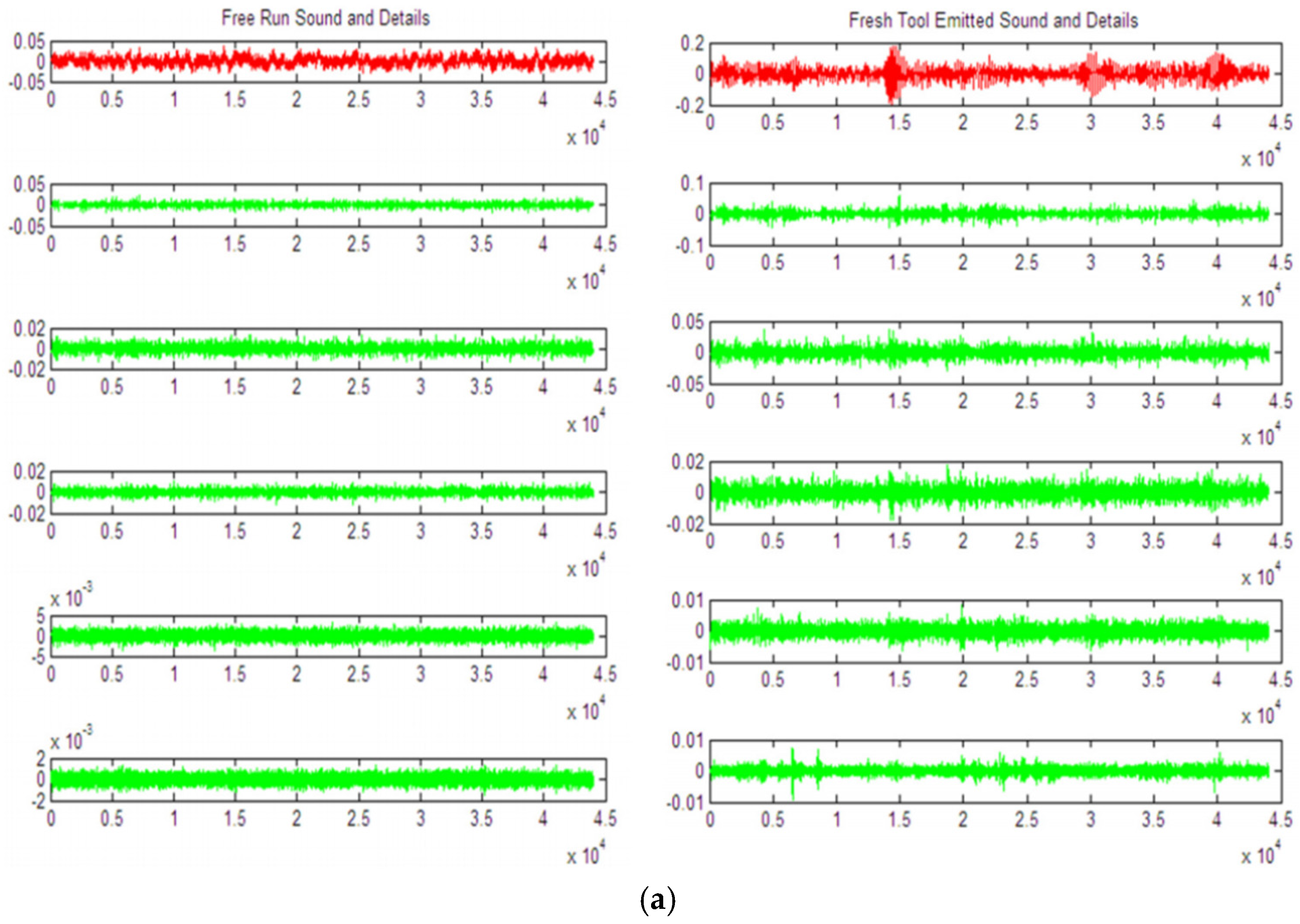
- Joseph, E.R.; Jakir, H.; Thangavel, B.; Nor, A.; Lim, T.L.; Mariathangam, P.R. Tool-Emitted Sound Signal Decomposition Using Wavelet and Empirical Mode Decomposition Techniques—A Comparison. Symmetry 2024, 16, 1223. [Google Scholar] [CrossRef]
- Wang, Y.; Chiang, H.-d.; Dong, N. Power-Line Partial Discharge Recognition with Hilbert–Huang Transform Features. Energies 2022, 15, 6521. [Google Scholar] [CrossRef]
- Lumba, L.S.; Khayam, U.; Maulana, R. Design of pattern recognition application of partial discharge signals using artificial neural networks. In Proceedings of the 2019 International Conference on Electrical Engineering and Informatics (ICEEI), Bandung, Indonesia, 9–10 July 2019; pp. 239–243. [Google Scholar]
- Ziegler, S.; Shekhar, S.; Scherle, D.; Peña, M. Deep learning signal waveform characterization of partial discharge for underground power cable conditions. In Proceedings of the 2023 IEEE Power & Energy Society General Meeting (PESGM), Orlando, FL, USA, 16–20 July 2023; pp. 1–5. [Google Scholar]
- Marungsri, B.; Boonpoke, S. Applications of simplified fuzzy ARTMAP to partial discharge classification and pattern recognition. WSEAS Trans. Syst 2011, 10, 69–80. [Google Scholar]
- Klein, L.; Dvorský, J.; Seidl, D.; Prokop, L. Novel lossy compression method of noisy time series data with anomalies: Application to partial discharge monitoring in overhead power lines. Eng. Appl. Artif. Intell. 2024, 133, 108267. [Google Scholar] [CrossRef]
- Zhao, S.; Zhao, H.; Ma, L.; Qu, Y.; Ren, H. Partial discharge signal compression reconstruction method based on transfer sparse representation and dual residual ratio threshold. IET Sci. Meas. Technol. 2023, 17, 230–242. [Google Scholar] [CrossRef]
- True, P.; Gräf, T.; Menge, M. Implementation of an AI-based Compression Method for Current Waveforms of Partial Discharges in AC and DC High Voltage Systems. In Proceedings of the 2024 IEEE International Conference on High Voltage Engineering and Applications (ICHVE), Shanghai, China, 18–22 August 2024; pp. 1–4. [Google Scholar]
- Li, S.; Song, P.; Wei, Z.; Li, X.; Tang, Q.; Meng, Z.; Li, J.; Liu, S.; Wang, Y.; Li, J. Partial Discharge Detection and Defect Location Method in GIS Cable Terminal. Energies 2023, 16, 413. [Google Scholar] [CrossRef]
- Du, X.; Qi, J.; Kang, J.; Sun, Z.; Wang, C.; Xie, J. Partial Discharge Data Augmentation and Pattern Recognition Method Based on DAE-GAN. Algorithms 2024, 17, 487. [Google Scholar] [CrossRef]
- Sahnoune, M.A.; Zegnini, B.; Seghier, T.; Chakkem, I. Deep Learning for Partial Discharge Classification: A CNN-Based Approach. In Proceedings of the 2024 International Conference on Advances in Electrical and Communication Technologies (ICAECOT), Shanghai, China, 18–20 April 2024; pp. 1–5. [Google Scholar]
- Hussain, G.A.; Hassan, W.; Mahmood, F.; Shafiq, M.; Rehman, H.; Kay, J.A. Review on Partial Discharge Diagnostic Techniques for High Voltage Equipment in Power Systems. IEEE Access 2023, 11, 51382–51394. [Google Scholar] [CrossRef]
- Kim, J.; Jeong, M.; Lee, H.; Kim, Y.; Kang, H. Artificial Intelligence-based Recognition and Classification of PRPD Patterns in Power Cable. In Proceedings of the 2024 10th International Conference on Condition Monitoring and Diagnosis (CMD), Gangneung, Republic of Korea, 20–24 October 2024; pp. 612–615. [Google Scholar]
- Ortego, J.; Jorge, E.; Ortego, J.; Garnacho, F. Deep Learning Tools Analysis for Automatic Partial Discharge Detection Based on PRPD Patterns. In Proceedings of the 2024 IEEE/PES Transmission and Distribution Conference and Exposition (T&D), Shanghai, China, 6–9 May 2024; pp. 1–5. [Google Scholar]
- Wan, Y. Research on Partial Discharge Characteristic Detection of Electrical Equipment Based on Machine Learning Algorithm. In Proceedings of the 2023 International Conference on Distributed Computing and Electrical Circuits and Electronics (ICDCECE), Sanya, China, 29–30 April 2023; pp. 1–5. [Google Scholar]
- Park, J.-Y.; Kim, Y.; Lee, D.-J. On-board switchboard diagnosis system based on AI Algorithm and high-frequency current Conversion Sensor. Trans. Korean Inst. Electr. Eng. 2022, 71, 1881–1889. [Google Scholar] [CrossRef]
- Jiang, L.; Yang, X.; Wang, X.; Qu, Q.; Zhang, Y.; Liu, J. Partial Discharge Signal Analysis Method for Transmission Cables Supported by Deep Learning. In Proceedings of the 2024 IEEE 4th International Conference on Electronic Technology, Communication and Information (ICETCI), Changchun, China, 24–26 May 2024; pp. 1174–1178. [Google Scholar]
- Nguyen, M.-T.; Nguyen, V.-H.; Yun, S.-J.; Kim, Y.-H. Recurrent Neural Network for Partial Discharge Diagnosis in Gas-Insulated Switchgear. Energies 2018, 11, 1202. [Google Scholar] [CrossRef]
- Klein, L.; Fulneček, J.; Seidl, D.; Prokop, L.; Mišák, S.; Dvorský, J.; Piecha, M. A Data Set of Signals from an Antenna for Detection of Partial Discharges in Overhead Insulated Power Line. Sci. Data 2023, 10, 544. [Google Scholar] [CrossRef] [PubMed]
- Klein, L.; Žmij, P.; Krömer, P. Partial Discharge Detection by Edge Computing. IEEE Access 2023, 11, 44192–44204. [Google Scholar] [CrossRef]
- Lu, M.; Ji, J.; Jiang, G.; Zhou, S.; Li, H.; Zheng, Y. SoC Based Application of Smart Automatic Online Realtime Partial Discharge Condition Monitoring System for the Power Grid. In Proceedings of the IECON 2023-49th Annual Conference of the IEEE Industrial Electronics Society, Singapore, 16–19 October 2023; pp. 1–6. [Google Scholar]
- Yan, X.; Bai, Y.; Zhang, W.; Cheng, C.; Liu, J. Partial Discharge Pattern-Recognition Method Based on Embedded Artificial Intelligence. Appl. Sci. 2023, 13, 10370. [Google Scholar] [CrossRef]
- Shi, C.; Si, W.; Zhao, Y.; Ni, H.; Gao, Z. A reconfigurable hybrid digital-analog signal generation system for gas-insulated switchgear partial discharge feature extraction. J. Phys. Conf. Ser. 2025, 3084, 012061. [Google Scholar] [CrossRef]
- Carminati, E.; Gandelli, A.; Lazzaroni, M. A fast hybrid system for PD measurement. IEEE Trans. Dielectr. Electr. Insul. 2002, 7, 440–445. [Google Scholar] [CrossRef]
- Zhai, J.; Xu, W.; Hong, N.; Zhao, B.; Zhang, X.; Yun, Q.; Hu, Z. Intelligent de-noising method for UHF partial discharge signals in power equipment based on hybrid wavelet-SVD algorithm. J. Phys. Conf. Ser. 2025, 3110, 012012. [Google Scholar] [CrossRef]
- Chan, J.C.; Ma, H.; Saha, T.K. Hybrid method on signal de-noising and representation for online partial discharge monitoring of power transformers at substations. IET Sci. Meas. Technol. 2015, 9, 890–899. [Google Scholar] [CrossRef]
- Kim, Y.-J.; Lee, K.-C.; Hwang, D.-H.; Park, D.-Y.; Song, S.-O. Hybrid conversion scheme for digital measurement of partial discharge spectra. In Proceedings of the Conference Record of the the 2002 IEEE International Symposium on Electrical Insulation (Cat. No. 02CH37316), Boston, MA, USA, 7–10 April 2002; pp. 5–8. [Google Scholar]
- Mi, J.; Sheng, K.; Gao, Z.; Jia, Z. Partial Discharge Pattern Recognition Based on Improved CWD Spectrum and Hybrid Convolutional Neural Network. In Proceedings of the Eighth Asia International Symposium on Mechatronics, Liuzhou, China, 16–19 December 2021; Springer: Berlin/Heidelberg, Germany, 2022; pp. 1944–1950. [Google Scholar]
- Di Stefano, A.; Candela, R.; Fiscelli, G.; Giaconia, G.C. Partial Discharge Signal Processing Method and Apparatus Employing Neural Network. Australian Patent AU2013389280B2, 21 November 2019. [Google Scholar]
- Dai, Y.; Sun, B.; Wan, Z.; Zhang, Z.; Wang, F. Partial discharge pattern recognition based on WOA-PSO optimization of BP neural network. J. Phys. Conf. Ser. 2025, 3110, 012030. [Google Scholar] [CrossRef]
- Huang, C.; Ding, S.; Li, S.; Liu, R. LMFE: Learning-based multiscale feature engineering in partial discharge detection. IEEE Trans. Neural Netw. Learn. Syst. 2022, 35, 5848–5856. [Google Scholar] [CrossRef] [PubMed]





| Partial Discharge Type | Signal Characteristics | Corresponding Treatment Methods |
|---|---|---|
| Corona Partial Discharge | With different time-frequency characteristics | It can be used for effective filtering and identification [14,15]. |
| Internal Partial Discharge | It has a stronger low-frequency component, a longer duration and a wider spectrum. | Bandpass filtering reduces interference, and then wavelet transform is used to extract time-frequency features, and finally recognition is performed [16]. |
| Surface Partial Discharge | Its frequency center is approximately between 30 MHz and 800 MHz. | Acoustic emission technology and wavelet transform are usually used for analysis to perform effective classification [15,17]. |
| Gap discharge | Usually high frequency and random | Advanced signal processing techniques such as wavelet analysis and machine learning are required for accurate recognition [18,19]. |
| Parameter Category | Characteristic Parameters | Advantage | Disadvantage |
|---|---|---|---|
| Basic amplitude characteristics | Peak—The maximum amplitude of a pulse (voltage or current) in the time domain. Average Amplitude—The arithmetic average of the amplitudes of all sampling points within a pulse or a signal. |
|
|
| Pulse morphology characteristics | Rise Time—The time required for a pulse to rise from 10% to 90% of its peak value. Fall Time—The time required for a pulse to fall from 90% to 10% of its peak value. Pulse Width—The full width of the pulse at 50% of its peak value. Overshoot and Ringing—The amplitude of the reverse peak following the main peak of the pulse or the presence of decaying ringing. |
|
|
| Statistical distribution characteristics | Skewness describes the asymmetry of the pulse amplitude distribution. A positive skewness indicates a longer tail on the right (high amplitude) side. Kurtosis describes the steepness of the distribution of pulse amplitudes. A higher kurtosis means the distribution is more concentrated and has more prominent tails. |
|
|
| Method | Parameter | Application | Reference |
|---|---|---|---|
| Amplitude threshold method |
| The adaptive amplitude thresholding method based on wavelet coefficients can automatically determine the optimal threshold using the background noise signal before PD occurs as a reference. Hard thresholding effectively suppresses noise interference while preserving the amplitude characteristics of PD pulses. | [22,23] |
| Pulse waveform identification method |
| Based on the feature extraction of time-domain pulse waveform and its probability distribution, clustering and classification diagnosis of local discharge sources can be achieved. | [24,25] |
| Statistical feature extraction |
| In power cable systems, statistical parameters such as mean, skewness, and kurtosis are used to plot PD fingerprints, which help in identifying different types of defects. | [26,27] |
| Category | Principle | Advantage | Disadvantage | Application/Reference |
|---|---|---|---|---|
| FFT | Globally transform the entire signal from the time domain to the frequency domain. |
|
| Noise cancelation and signal filtering [33]. Suppression of narrowband and discrete spectral interference [34,35]. Time-frequency analysis and signal characterization [45]. Integration with advanced technologies [40]. Limitations and complementary approaches [40,45]. |
| STFT | By sliding a fixed time window, FFT is performed on the signal segments to provide time-frequency analysis. |
|
| Time-frequency analysis [36,46]. Signal processing and noise reduction [36,42]. Comparative analysis with other technologies [43,45]. Online monitoring system for high voltage cables [47]. |
| LPFT | An extension of the STFT that improves time-frequency aggregation through polynomial modeling. |
|
| Enhanced frequency component detection [+–45]. Application in distribution transformers [39]. Applications in various signal processing scenarios [44]. |
| FRFT | A generalized form of the Fourier transform that transforms a signal into the fractional domain between time and frequency. |
|
| The spectral decomposition of the partial discharge measurement signal is performed by jointly applying short-time Fourier transform (STFT) and singular value decomposition (SVD) [48]. |
| Feature Dimension | EMD | EEMD | CEEMDAN |
|---|---|---|---|
| Principle | An adaptive signal decomposition method that decomposes a complex signal into a series of intrinsic mode functions (IMFs) through a “sieving” process. | By adding Gaussian white noise to the original signal multiple times and performing EMD, the influence of noise is eliminated by ensemble averaging to suppress modal aliasing. | Based on EEMD, specific white noise is adaptively added during each order of IMF decomposition, and the residual is calculated by ensemble averaging, which can better reconstruct the signal and reduce the noise residue. |
| Advantage | Fully adaptive, no basis functions required. Highest computational efficiency. Suitable for nonstationary and nonlinear signal analysis. | Significantly reduces modal aliasing. More stable than EMD, resulting in more unique results. Preserves the adaptability of EMD. | Almost completely eliminates modal aliasing. Extremely low signal reconstruction error and excellent integrity. Fewer integration steps are required, resulting in higher computational efficiency than EEMD. |
| Disadvantage | The modal aliasing problem is serious and it is sensitive to noise. | The computation is large and there is residual noise. | The computational effort is still greater than that of the original EMD and the algorithm implementation is more complex. |
| Scope of application | Preliminary analysis of PD signals with high signal-to-noise ratio and relatively simple signal components. And preliminary exploration of online monitoring systems with high real-time computing requirements. | Processing PD signals containing complex mixed noise (such as white noise and narrowband interference). Scenarios requiring stable and reliable feature extraction for pattern recognition. | High-precision analysis and complete signal reconstruction are required. It is also suitable for processing weak PD signals or signals with very complex components and similar time scales. |
| Comparison Dimension | Wavelet Transform | EMD | Hilbert–Huang Transform |
|---|---|---|---|
| Core Principles and Basis Functions | Linear projection based on a predefined fixed wavelet basis. | No basis function, adaptive “sieving” decomposition based on the data itself. | EMD + Hilbert transform, adaptive time-frequency representation based on IMF. |
| Decomposition structure and resolution | Regular “pyramid” fixed structure; fixed resolution, constrained by the uncertainty principle. | Irregular, adaptive IMF sequence; adaptive resolution, high temporal resolution at signal drastic changes. | Based on the irregular structure of EMD; output time-frequency spectrum with adaptive high resolution. |
| Robustness and computational efficiency | High. The algorithm is mature and stable, with high computational efficiency and strong noise and modal aliasing resistance. | Moderate. Sensitive to noise and intermittent signals, prone to modal aliasing; moderate computational effort, lacks rigorous theory. | Low. The computational complexity is high, the robustness is limited by the EMD step, and the physical meaning of the instantaneous frequency is controversial. |
| Role and value in PD analysis | Powerful pre-processor/filter: Suitable for online monitoring, real-time noise reduction, and PD pulse extraction and positioning, with advantages in efficiency and stability. | Adaptive signal decomposer: It excels at processing nonlinear and non-stationary signals and is often used as the front end of hybrid methods for exploratory analysis. | Fine-grained feature extractor: Provides high-resolution time-frequency energy distribution, excellent fault classification and diagnosis capabilities, and is suitable for offline in-depth analysis. |
| Model Architecture | Main Input | Reporting Accuracy/Performance | Types-Dataset Used and Key Features | Applicable Scenarios |
|---|---|---|---|---|
| Convolutional Neural Networks (CNNs) | PRPD spectrum, time domain signal waveform. | Accuracy rates as high as 93.8–97.2% [91,93]. | Proprietary Data from Amar Telidji university of Laghouat and HD Hyundai Electric Co., Ltd. and KETEP KOREA-The data combines laboratory and field data, including various defect models such as corona discharge, surface discharge, and internal discharge. | High-precision classification and recognition, especially suitable for processing PRPD spectra with image structure. |
| Recurrent Neural Networks (RNNs/LSTM) | Time domain signal sequence. | Classification accuracy of phase-resolved partial discharge (PRPD) signals in gas-insulated switchgear (GIS) is 96.74% [98]. | Proprietary Data from lab and Korea Electric Power Corporation-GIS equipment-specific field data focuses on capturing timing characteristics related to the phase of power frequency voltage. | Analyze the time evolution of PD pulses and sequence-dependent fault diagnosis. |
| Generative Adversarial Networks (GANs) | A small amount of real PD data. | Successfully generated high-quality samples to improve classification [90]. | Proprietary Data-Small sample laboratory datasets are used to address the problems of data scarcity and class imbalance. | Data augmentation improves model robustness in small-sample learning and imbalanced datasets. |
| Autoencoder | Original PD signal. | Compression ratio up to 25:1 [86,99]. | Public Data-Time series data of noise from overhead transmission lines, including anomalous signals in the real environment. | Data compression and anomaly detection reduce the burden on back-end analysis systems. |
| Hybrid Strategy | Expected Inference Delay | Hardware Limitations and Deployment Feasibility | Key Bottleneck |
|---|---|---|---|
| WT+ Lightweight AI Classifier | Medium to High (~10 ms–100 ms) | The feasibility is relatively high. WT can be implemented on low-end MCUs; lightweight AI (such as SVM, decision tree) or quantized miniature CNNs can be deployed on high-end MCUs (such as ARM Cortex-M7) or edge SoCs (such as Jetson Nano). | The complexity and memory footprint of AI models are the main limitations. Increasing the number of decomposition layers in WT. significantly increases the computational cost. |
| EMD/EEMD + AI Classifier | High (~100 ms–seconds) | Low feasibility. The iterative and interpolation processes of the EMD algorithm are computationally intensive, making it difficult to meet real-time requirements on microcontrollers. It typically needs to run on an embedded CPU (such as the Cortex-A series) or a higher-level processor. | The decomposition process of EMD intrinsic mode function (IMF) is the main source of delay, and its computational complexity increases nonlinearly with signal length and complexity. |
| VMD + AI Classifier | Medium to High (~50 ms–500 ms) | The feasibility is moderate. VMD is generally more computationally efficient than EMD, but it remains complex. It requires the support of a high-performance edge computing platform (such as Jetson TX2, Google Edge TPU). | Optimizing the number of VMD iterations and modalities is crucial for achieving real-time processing. |
| CEEMDAN + Feature Extraction | Very high (seconds and above) | The feasibility is extremely low. CEEMDAN suppresses modal mixing through multiple ensemble averaging, which incurs huge computational overhead and is only suitable for offline cloud analytics. | The number of times the averaging is integrated directly determines the computational cost, which cannot meet the latency requirements of real-time on-site monitoring. |
| Method Category | Core Strengths and Focus | Representative Technologies | Key Performance Indicators | Computational Complexity/Applicable Scenarios |
|---|---|---|---|---|
| Noise suppression and signal enhancement | Extracting and enhancing PD pulses from strong background noise | Wavelet thresholding for noise reduction | Signal-to-noise ratio improvement: 15–25 dB | Low cost/Suitable for online preprocessing and embedded systems |
| Wavelet Packet Transform (WPT) | Signal-to-noise ratio improvement: 20–30 dB | Medium/Suitable for edge computing and fine noise reduction | ||
| CEEMDAN and Approximate Entropy | It can effectively separate PD signals under strong noise background. | High/Suitable for offline analysis and extremely low signal-to-noise ratio scenarios | ||
| High-precision classification and recognition | End-to-end identification of discharge type and fault mode | CNN (PRPD spectral input) | Classification accuracy: 93–97% | Training: Very High Inference: Medium/Cloud or High-Performance Edge Server |
| RNN/LSTM (Time-series signals) | Classification accuracy: 95–97% | Training: Very High Inference: Medium/Cloud or High-Performance Edge Server | ||
| HHT (EMD + Hilbert spectrum) | Classification accuracy: 92–96% | High performance/Suitable for offline diagnosis and feature analysis | ||
| Comprehensive high-performance hybrid | By combining multiple techniques, a globally optimal solution from denoising to classification can be achieved. | WT/EMD + AI Classifier | Classification accuracy: 96–99% (Improved through pre-processing noise reduction) | Medium to high/dependency preprocessing chain, suitable for high reliability diagnostics |
| VMD + Time-Frequency Analysis + CNN | Classification accuracy: >98% | Very high/Suitable for offline, high-precision diagnostic systems |
| Method | Principles/References | Advantages | Limitations/Challenges | Ideal Application Scenarios |
|---|---|---|---|---|
| Time domain analysis | Direct analysis of pulse parameters (amplitude, rise time, statistical moments, etc.). |
|
| Preliminary screening and real-time pulse counting under high signal-to-noise ratio conditions. |
| Fourier transform and variants (FFT, STFT, LPFT, FRFT) | Global (FFT) or windowed (STFT) projection onto sine basis functions. |
|
| Identify stable resonant frequencies (FFT) and analyze quasi-stationary transient signals (STFT/LPFT). |
| Wavelet Transform (WT) | Multiresolution analysis using a scalable and translatable wavelet basis. |
|
| The de facto standard for non-stationary PD pulse denoising and analysis. The preferred method for robust feature extraction. |
| Empirical Mode Decomposition (EMD) and variants (EEMD, CEEMDAN) | Data-driven, adaptive decomposition into intrinsic mode functions (IMFs). |
|
| It can process complex nonlinear signals for which wavelet basis is not applicable. When combined with other methods, it is effective in extremely low signal-to-noise ratio scenarios. |
| Hilbert–Huang transform (HHT) | EMD is followed by Hilbert transform to obtain the instantaneous frequency. |
|
| When detailed time-frequency energy mapping is required for fine pattern analysis and fault diagnosis. |
| Artificial Intelligence/Deep Learning | End-to-end feature learning from raw data or preprocessed input (such as PRPD spectrograms). |
|
| Large-scale condition monitoring systems with massive historical data aim to achieve automated classification and high accuracy. |
| Hybrid methods | The above technologies are strategically integrated to overcome the limitations of a single approach. |
|
| At the forefront of research. Ideal for mission-critical applications, extreme noise environments, and wherever the highest diagnostic confidence is required. |
| Reference | Insights | Core |
|---|---|---|
| [18] | The AI algorithm utilizes the complete PD current waveform combined with advanced compression technology to improve data compression rate, simplify analysis systems, and achieve efficient automatic partial discharge diagnosis in AC and DC high-voltage systems. | This study investigated the compression method of high-resolution partial discharge current waveforms based on artificial intelligence in AC and DC high-voltage systems, achieving significantly higher compression rates and simplifying AI based analysis systems. |
| [86] | This study proposes a lossy compression method for partial discharge in overhead power lines, which effectively compresses PD signals using an autoencoder with skip connections, with a compression ratio of approximately 25, improving remote monitoring and fault diagnosis capabilities. This has laid the foundation for future fault detection. | This article proposes a new lossy compression method that utilizes an autoencoder with skip connections and corrected data to achieve a compression factor of 25 times while retaining the basic characteristics of local discharge monitoring in transmission systems. |
| [88] | This article explores the use of AI based compression methods to achieve high-resolution PD current waveforms in AC and DC high voltage systems. It shows that utilizing the entire waveform has advantages over traditional indicators, improves compression rates, simplifies analysis systems, and enhances the efficiency of automatic partial discharge detection. | This study investigates the compression method of high-resolution partial discharge current waveforms based on artificial intelligence in AC and DC high-voltage systems, achieving significantly higher compression rates and simplifying AI based analysis systems. |
| [90] | The DAE-GAN proposed in this article, combined with an autoencoder, enhances PD pattern recognition by generating real samples in limited and imbalanced data, significantly improving recognition accuracy compared to other algorithms. | The proposed DAE-GAN enhances pattern recognition capability by improving probability distribution fitting and improving recognition accuracy under limited and imbalanced sample conditions, generating more realistic partial discharge samples. |
| [91] | This article proposes a CNN based PD signal classification method, which has achieved an accuracy of 97.2% on corona, surface, and internal PD datasets through preprocessing and architecture optimization, outperforming traditional methods. The excellent performance of indicator analysis and error classification research provides a basis for future improvement. | This study proposes an automatic partial discharge classification method based on CNN, with an accuracy of 97.2% and better performance than traditional methods. It has had an impact on state monitoring and practical applications in high-voltage engineering and power systems. |
| [93] | This study utilized CNN to analyze PRPD images, improving the accuracy of cable partial discharge diagnosis to over 93.8%, demonstrating the potential of AI in predicting maintenance and improving infrastructure reliability. | This study applies artificial intelligence to improve PRPD pattern recognition in power cables, achieving an accuracy of 93.8% through a CNN model. Predictive maintenance is achieved through defect classification and diagnosis, and the operational efficiency of power companies is improved. |
| [94] | This article analyzes a deep learning tool based on PRPD mode for detecting partial discharge, compares the performance of three high-precision models under complex noise and defect conditions, and evaluates their effectiveness in fault recognition and power grid monitoring using critical matrices. | This article explores the application of deep learning tools in automatic partial discharge detection based on PRPD mode. Three data models were implemented and compared using different architectures and training datasets. The characteristics of the model aim to evaluate its performance under practical conditions, including noise mixed with defects and clustering techniques used to separate multiple defects. |
| [95] | The main achievements of this study include extracting features from partial discharge signals, optimizing models to improve accuracy, and performing multimodal recognition across different domains. This study emphasizes the importance of these advances in improving the reliability and safety of power systems, while also pointing out the potential for future development in this field. | In this article, a large amount of experimental data and long-term on-site operational experience indicate that partial discharge (DC) is the main cause of insulation system damage and power outages in electrical equipment. Therefore, strengthening effective detection of local DC is a necessary measure to ensure the safe and reliable operation of power systems. |
| [96] | This article proposes a real-time partial discharge monitoring system for airborne switchboard based on FCM-RBFNN, using HFCT sensors to collect data, and combining PRPS and PRPD analysis to verify the excellent performance of the model in both virtual and real environments. | This article proposes a vehicle mounted switchboard diagnostic system based on the Ai algorithm, with the aim of establishing a real-time partial discharge monitoring and diagnostic system. However, Ai compared twice in total. |
| [97] | This article proposes the use of CNN to analyze partial discharge in transmission cables, based on the MCSG-PD-6016 dataset. The detection accuracy is 81–94%, and the recall rate is 83–96%, demonstrating its stability and potential in cable fault detection and promoting the application of deep learning in power systems. | The accuracy of the model proposed in this study remains stable at a high level, with excellent recall performance, fully demonstrating the effectiveness of deep learning in analyzing cable partial discharge signals. |
Disclaimer/Publisher’s Note: The statements, opinions and data contained in all publications are solely those of the individual author(s) and contributor(s) and not of MDPI and/or the editor(s). MDPI and/or the editor(s) disclaim responsibility for any injury to people or property resulting from any ideas, methods, instructions or products referred to in the content. |
© 2025 by the authors. Licensee MDPI, Basel, Switzerland. This article is an open access article distributed under the terms and conditions of the Creative Commons Attribution (CC BY) license (https://creativecommons.org/licenses/by/4.0/).
Share and Cite
Wen, H.; Abu Talip, M.S.; Othman, M.; Azam, S.M.K.; Mohamad, M.; Ibrahim, M.F.; Arof, H.; Ababneh, A. Advanced Signal Processing Methods for Partial Discharge Analysis: A Review. Sensors 2025, 25, 7318. https://doi.org/10.3390/s25237318
Wen H, Abu Talip MS, Othman M, Azam SMK, Mohamad M, Ibrahim MF, Arof H, Ababneh A. Advanced Signal Processing Methods for Partial Discharge Analysis: A Review. Sensors. 2025; 25(23):7318. https://doi.org/10.3390/s25237318
Chicago/Turabian StyleWen, He, Mohamad Sofian Abu Talip, Mohamadariff Othman, S. M. Kayser Azam, Mahazani Mohamad, Mohd Faisal Ibrahim, Hamzah Arof, and Ahmad Ababneh. 2025. "Advanced Signal Processing Methods for Partial Discharge Analysis: A Review" Sensors 25, no. 23: 7318. https://doi.org/10.3390/s25237318
APA StyleWen, H., Abu Talip, M. S., Othman, M., Azam, S. M. K., Mohamad, M., Ibrahim, M. F., Arof, H., & Ababneh, A. (2025). Advanced Signal Processing Methods for Partial Discharge Analysis: A Review. Sensors, 25(23), 7318. https://doi.org/10.3390/s25237318