Abstract
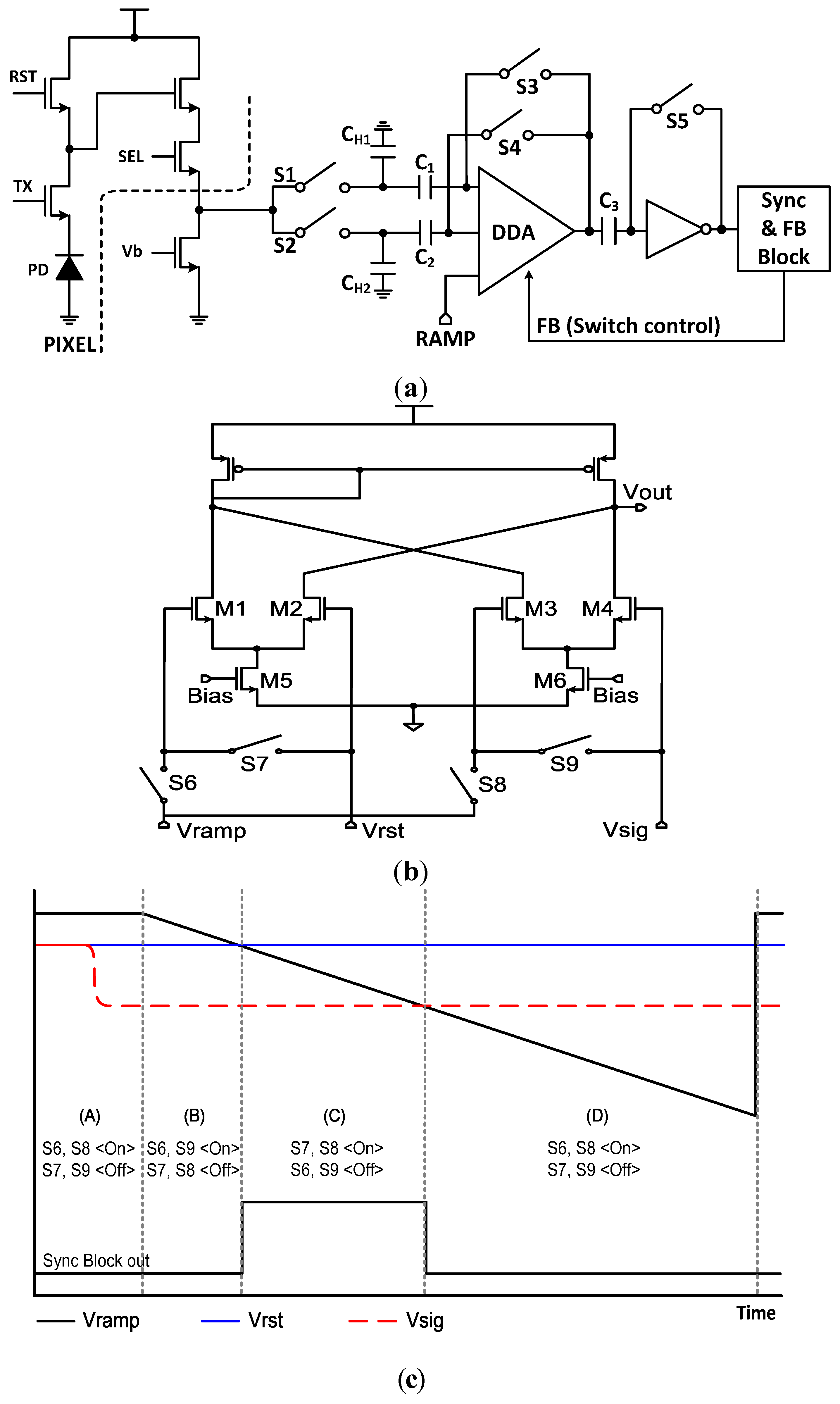
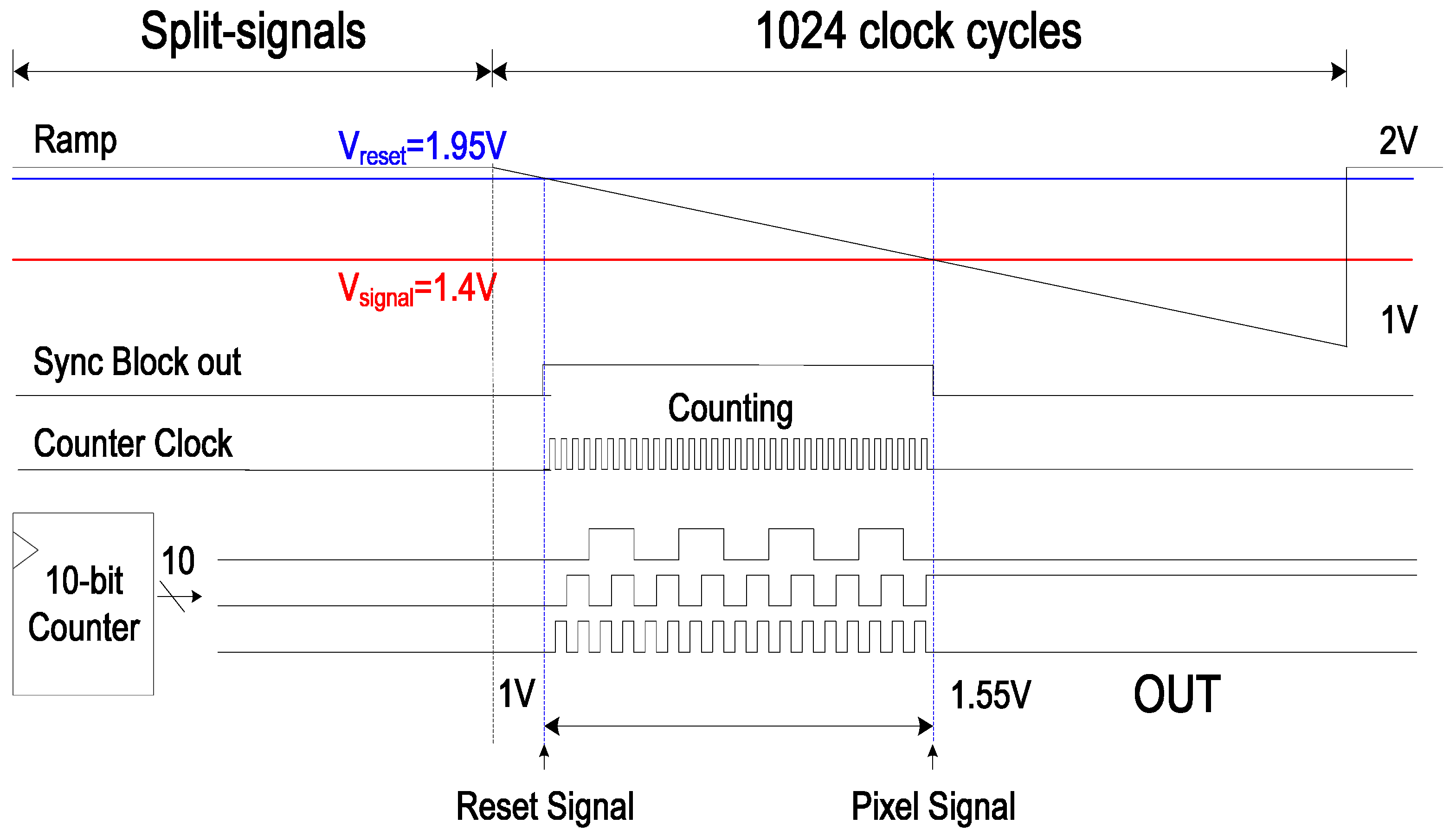
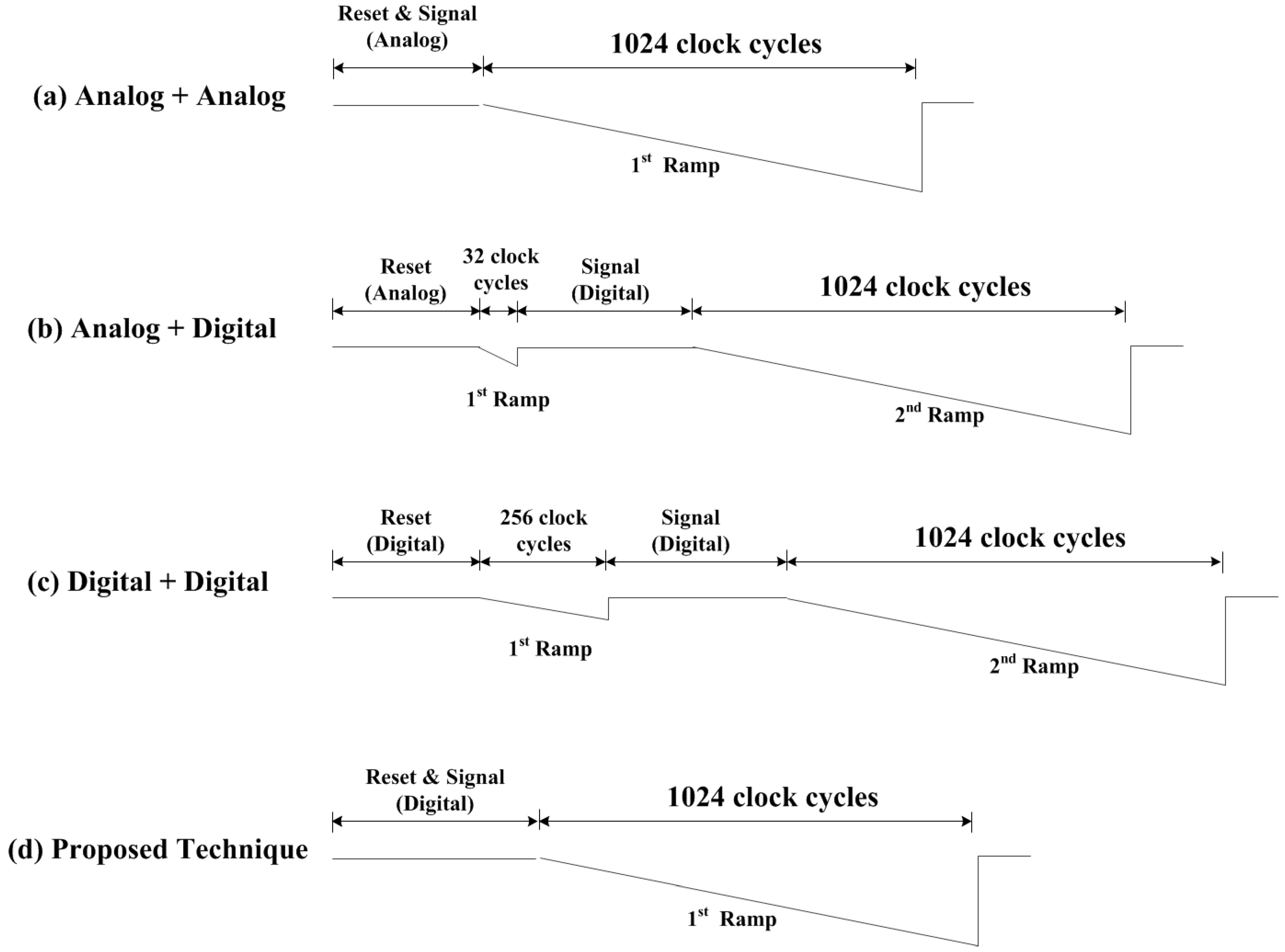
In order to increase the operating speed of a CMOS image sensor (CIS), a new technique of digital correlated double sampling (CDS) is described. In general, the fixed pattern noise (FPN) of a CIS has been reduced with the subtraction algorithm between the reset signal and pixel signal. This is because a single-slope analog-to-digital converter (ADC) has been normally adopted in the conventional digital CDS with the reset ramp and signal ramp. Thus, the operating speed of a digital CDS is much slower than that of an analog CDS. In order to improve the operating speed, we propose a novel digital CDS based on a differential difference amplifier (DDA) that compares the reset signal and the pixel signal using only one ramp. The prototype CIS has been fabricated with 0.13 µm CIS technology and it has the VGA resolution of 640 × 480. The measured conversion time is 16 µs, and a high frame rate of 131 fps is achieved at the VGA resolution.
1. Introduction
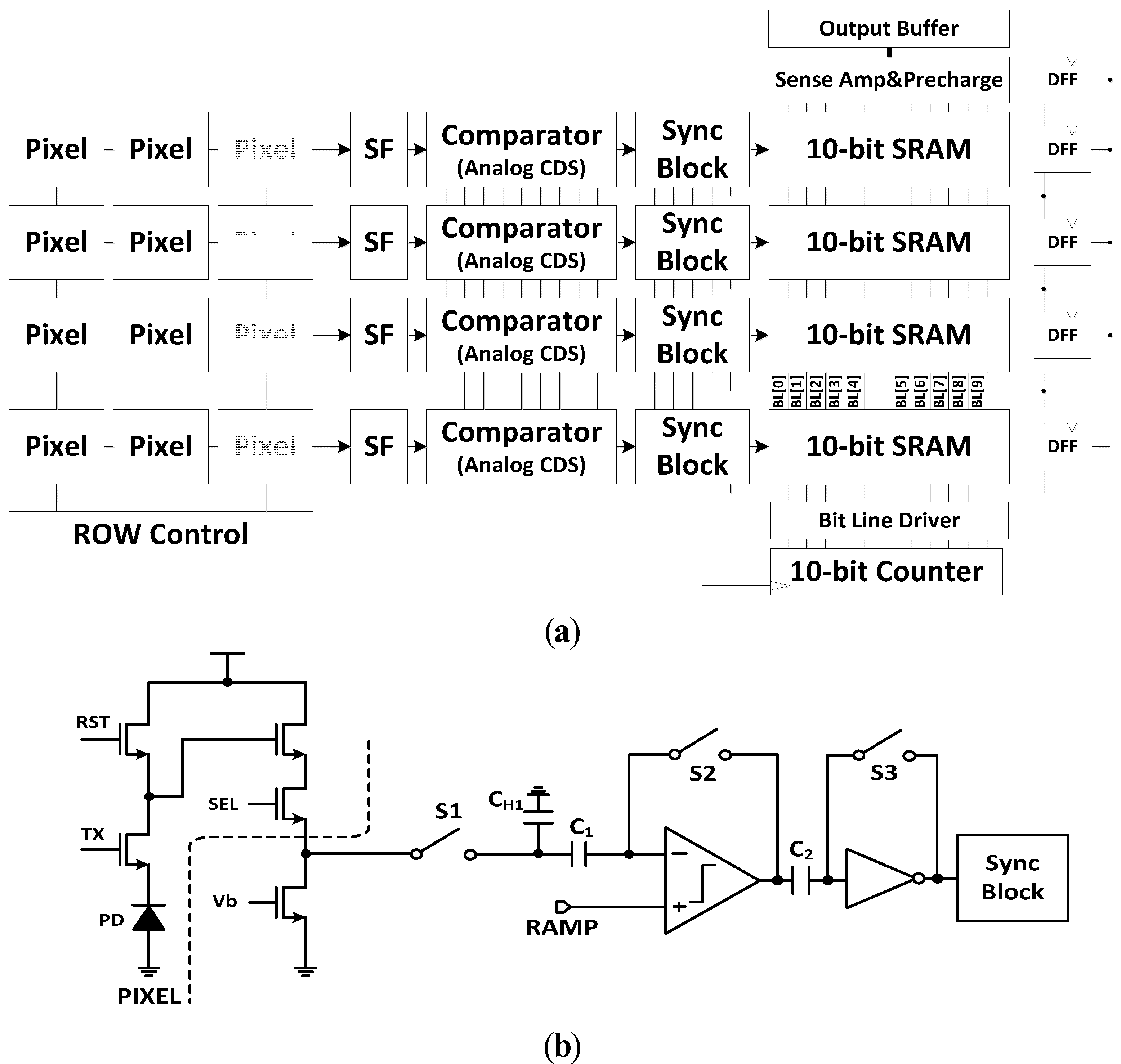
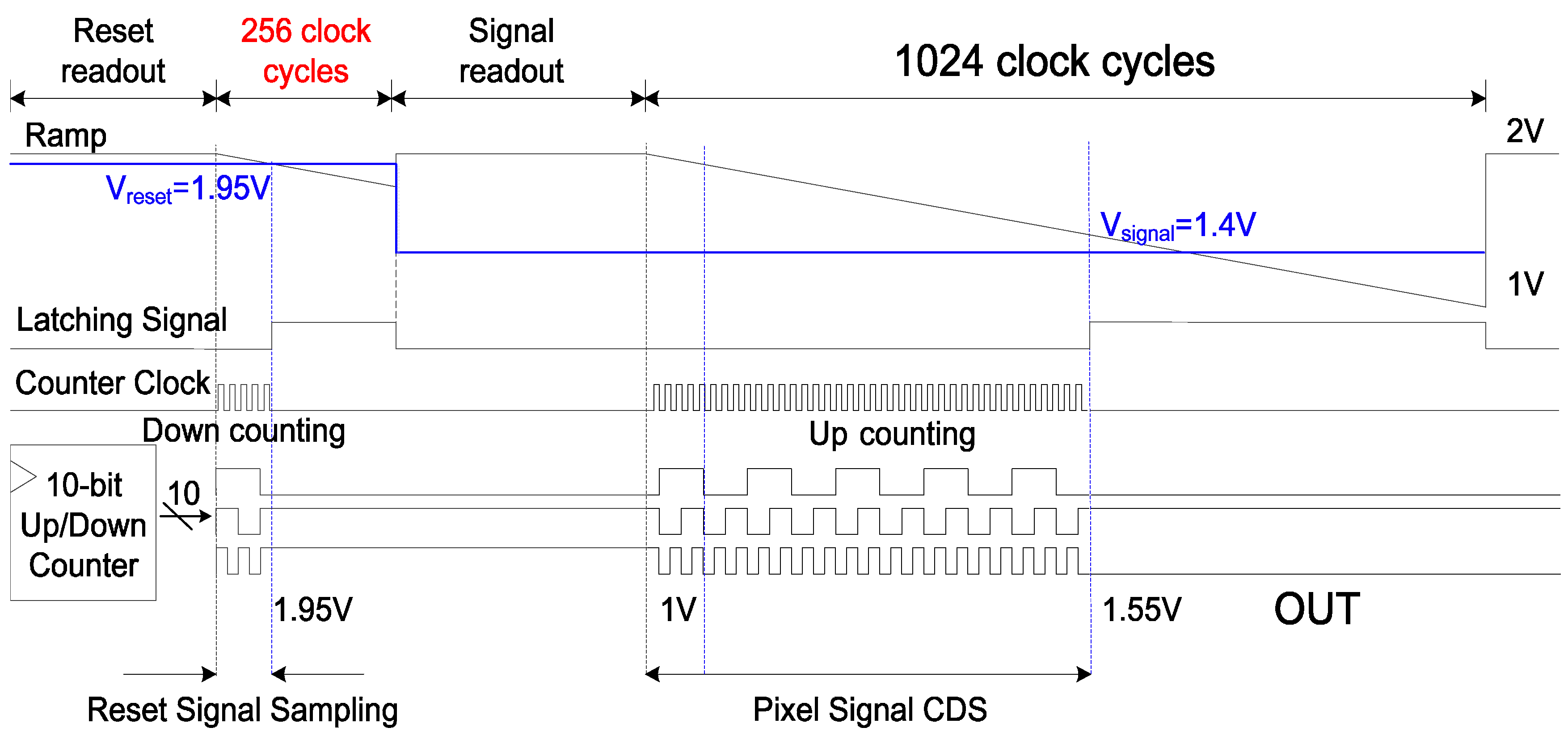
Currently, CMOS image sensors (CIS) are widely used in many areas, including digital cameras, camcorders, CCTV cameras, medical equipment, and so on. In order to improve the image quality of CIS, research and development has focused on developing methods for reducing noise. In CIS, Fixed Pattern Noise (FPN) is a major factor causing the degradation of image quality. FPN is normally generated from the device mismatching errors of pixel circuits such as threshold voltage variations of source follower, fluctuations of MOS transistor size, and so on. To remove the errors, a few analog correlated double sampling (CDS) techniques have been reported [1,2]. However, this requires a large capacitor size to enhance the accuracy. Furthermore, it is difficult to have a high resolution image beyond 8-bit. Nowadays, therefore, many kinds of CISs with a single-slope ADC use a digital CDS to reduce FPN [3,4,5,6,7,8,9,10,11,12,13,14,15,16,17,18]. In the digital CDS, FPN is normally eliminated by comparing the reset signal and the pixel signal through the two ramp signals. Generally, the length of the reset ramp signal is at least about a quarter of the pixel ramp signal. In other words, it means that the A/D conversion time of a digital CDS is much longer rather than that of an analog CDS alone. Even though the digital CDS has a high quality image beyond 10-bit, the operating speed is much slower than that of an analog CDS. In this paper, to improve the speed of CIS, a single ramp signal is used. Further, new techniques using a differential difference amplifier (DDA) and a digital CDS are proposed. Since the digital CDS is composed of a single ramp signal, the operating speed is almost the same as that of the analog CDS, and FPN is also eliminated. The paper is organized as follows: in Section 2, the conventional CDS and a new CDS are discussed. The implementation of CIS is described in Section 3. The experimental results are shown in Section 4, and the conclusions are summarized in Section 5.
3. Circuit Implementation
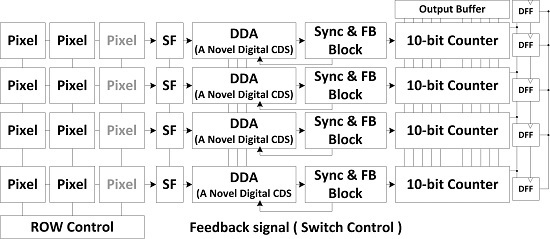
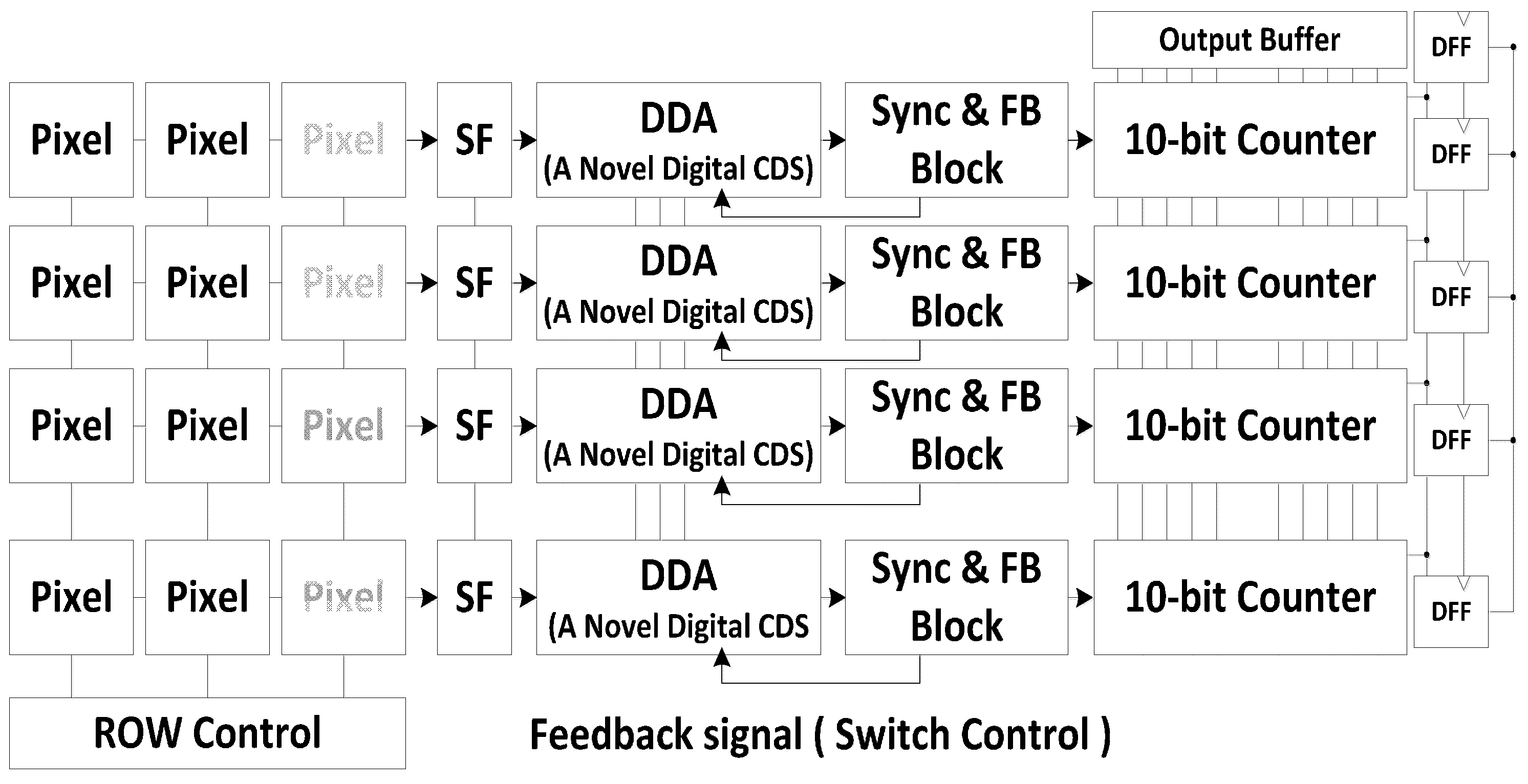
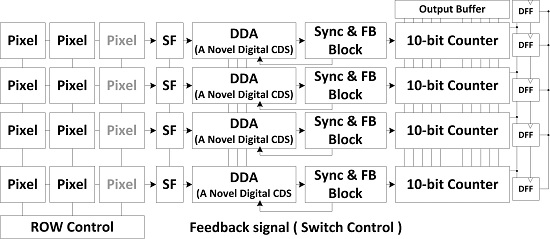
Figure 6 shows the block diagram of a CIS with a 10-bit SS-ADC and the novel digital CDS. The CIS is based on a column-parallel ADC structure with a VGA resolution of 640 × 480, and each pixel uses a 4-TR APS with a size of 5.6 µm × 5.6 µm.
Figure 6.
Block Diagram of a CIS with a 10-bit SS-ADC and the novel digital CDS.
As mentioned above, the CIS uses the novel digital CDS, which compares the reset signal and the pixel signal with only one ramp signal. Thereby, this new method facilitates the digital block with a simple counter. Because of its simple counter, the chip area of the digital block is drastically reduced compared to that of the conventional one. Table 2 shows the comparison of chip size per one column. With 0.13 µm Samsung CIS technology, the total layout size of the proposed one per one column is 470 µm, while that of the conventional one is 450 µm. Thus the total chip area of the proposed CIS is not much bigger than that of the conventional one, even though the novel digital CDS technique uses a larger capacitor size and a differential difference amplifier.
Table 2.
Comparison of chip size per one column.
| Counter | Capacitor | Total | |
|---|---|---|---|
| Conventional one (10-bit) | 330 µm (up-down) | 120 µm (1.5 pF) | 450 µm |
| This work (10-bit) | 230 µm (normal) | 240 µm (3 pF) | 470 µm |
| Column pitch = 11.2 µm, C1 = C2 = 500 fF , CH1 = CH2 = 1 pF Unit capacitor = 50 fF (L = 7 µm, W = 4 µm) | |||
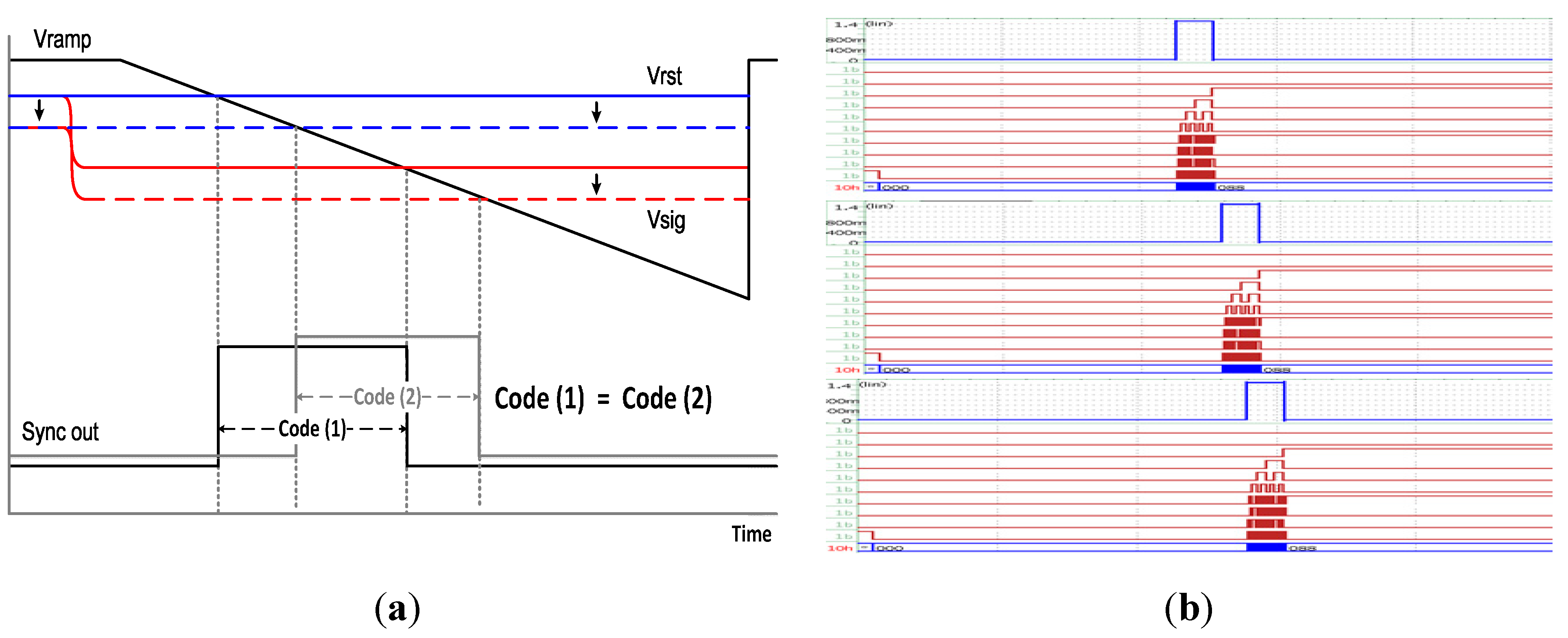
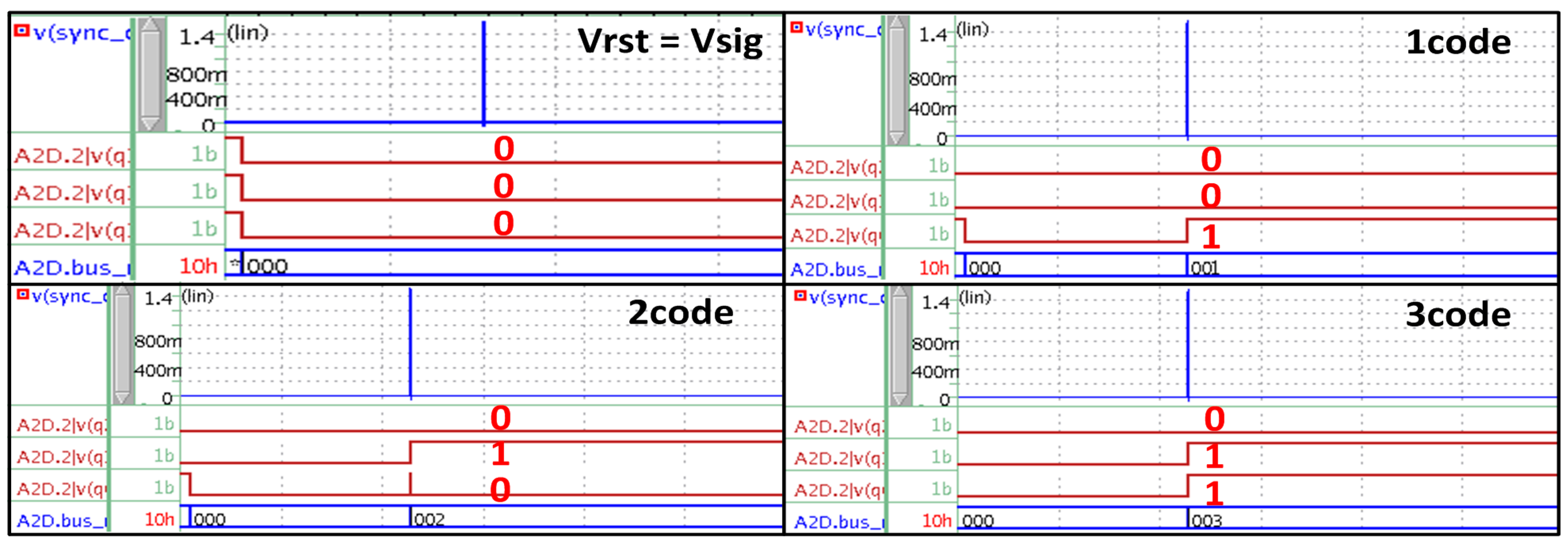
Figure 7 shows the SPICE simulation results when fluctuations of the reset signal and the pixel signal occur. Figure 7a shows the timing diagram for the fluctuations. Normally, the fluctuations occur simultaneously at both the reset signal and the pixel signal from the principle of 4-TR APS. Thus the time duration of sync out keeps its original value, even though there are the fluctuations of the reset signal and the pixel signal. It means that the digital output code is the same. Figure 7b shows the SPICE simulation results for a few cases of the fluctuations. Even though there is a difference between the fluctuation of the reset signal and the fluctuation of the pixel signal, the desired code is obtained with the novel digital CDS.
Figure 7.
SPICE simulation results for the signal fluctuations at the novel digital CDS: (a) fluctuations of the reset signal and pixel signal; (b) the novel digital CDS keeps its original value, even though fluctuations are occurred.
The CDS technique proposed in this paper compares the reset signal and the pixel signal by using only one ramp signal simultaneously. Thus the technique can be operated in a higher frequency, compared to the conventional ones. After the reset signal is compared, the switch starts working to compare the pixel signal at the next step with the feedback digital code from the sync block. In this moment, an error may occur if the feedback signal carries a circuit delay, or the difference between the reset signal and the pixel signal are too small. In order to verify the theory, Figure 8 shows SPICE simulation results for the main clock of 200 MHz. When the difference between the reset signal and the pixel signal is reduced into a very small value, or even though the pixel signal is the same as the reset signal, the desired code can be obtained up to 200 MHz without any problems.
Figure 8.
SPICE results for the novel digital CDS with the main clock of 200 MHz.
4. Experimental Results
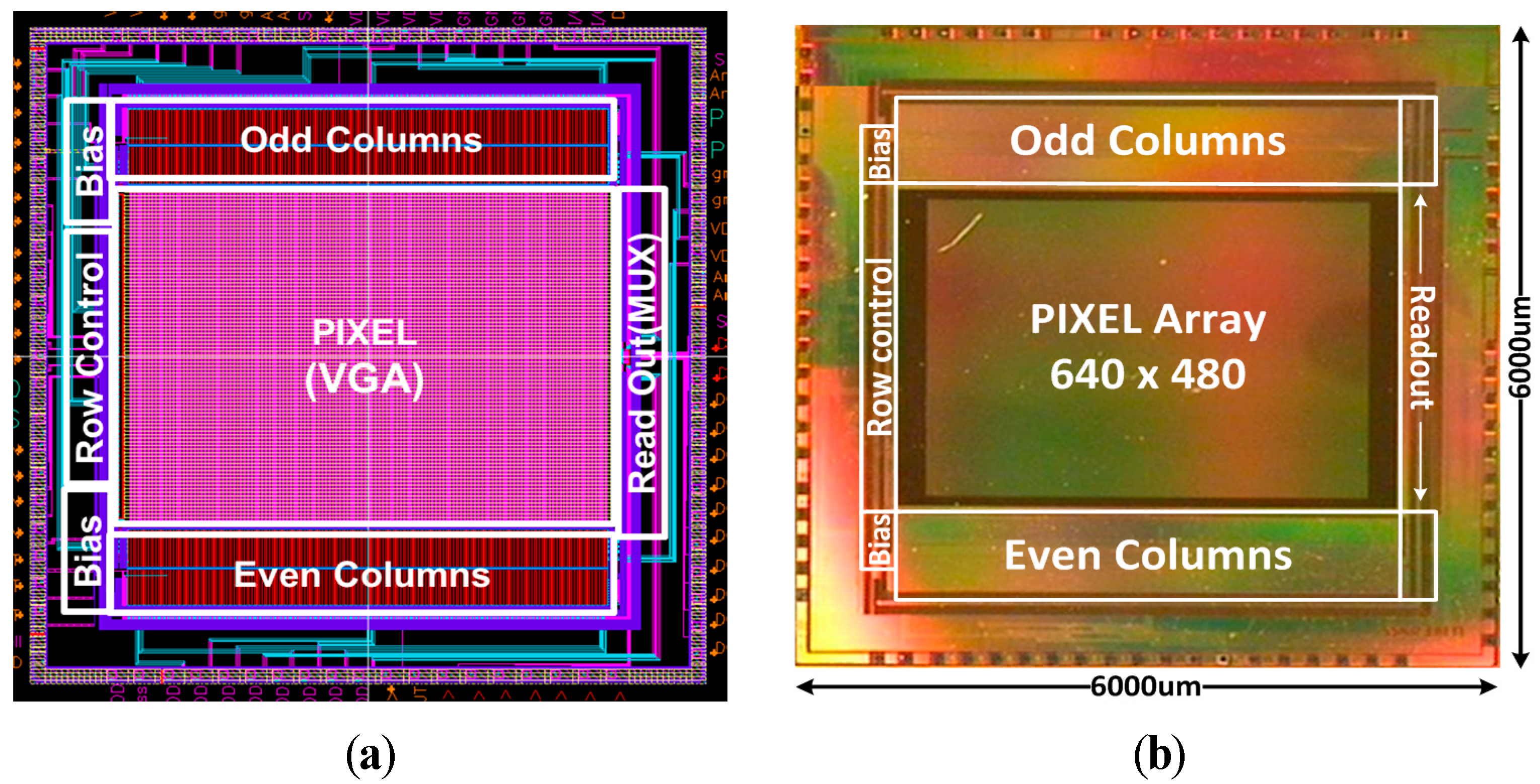
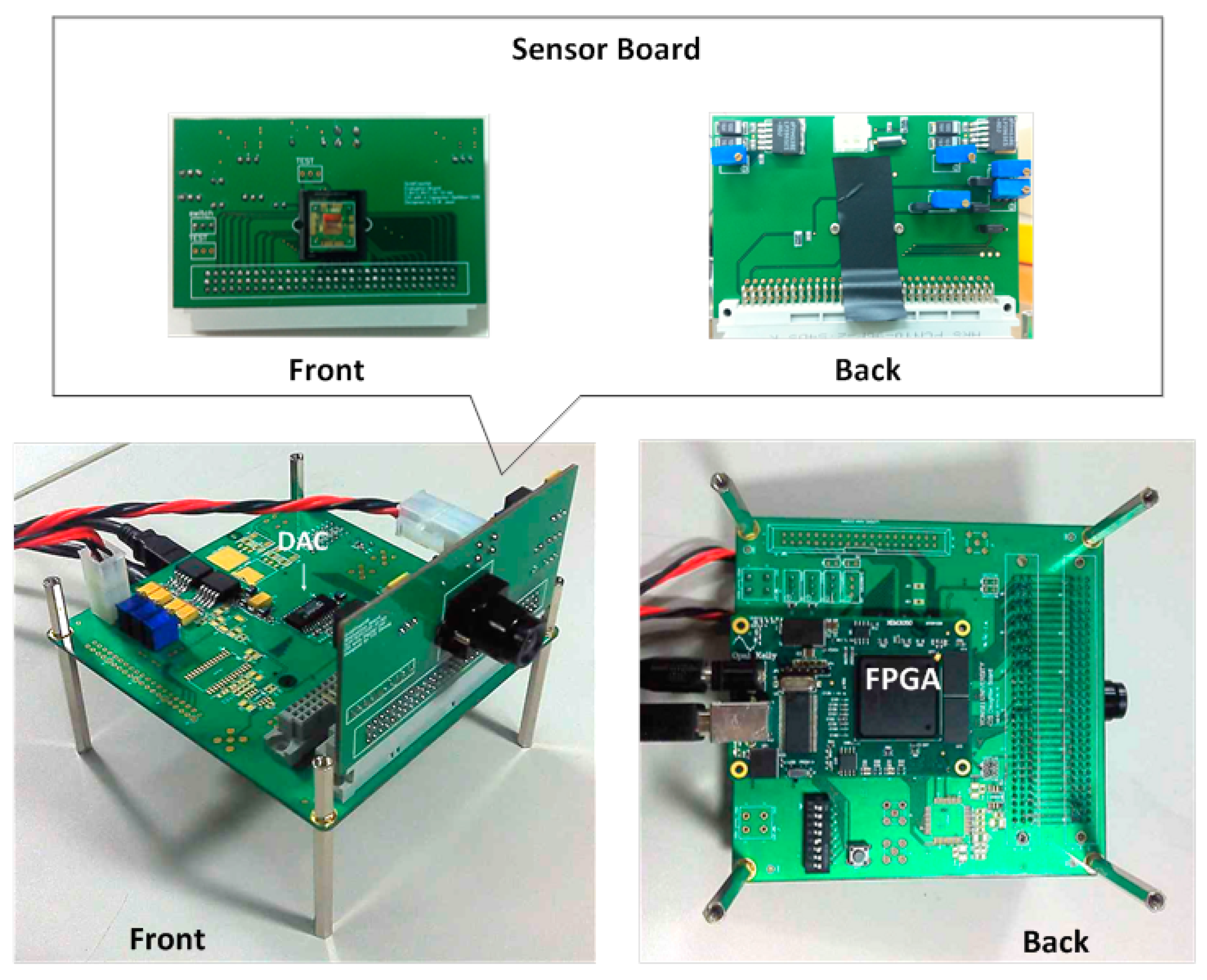
Figure 9 shows the chip layout and microphotograph of the CIS fabricated with Samsung 0.13 µm 1P4M CIS technology. The chip size is 6 mm × 6 mm, and the pixel array conforms to the VGA resolution (640 × 480). Figure 10 shows the photo of a PCB with the encapsulated chip and chip on board (COB). It shows the configuration of the measurement system which is comprised of a board that contains the Xilinx-XEM 3050 FPGA and a test board of the prototype CIS chip. The prototype of CIS chip shown in Figure 9 is controlled by the control signals through an external FPGA. Using such a configuration allows us to establish various test environments for the image sensor, to verify the performance of the CIS and to check the results of various features.
Figure 9.
Chip Layout and Microphotograph the CIS with Samsung 0.13 µm CIS technology: (a) Chip Layout of the CIS with VGA resolution (b) chip microphotograph.
Figure 10.
Photograph of the measurement system with chip on board (COB).
The FPGA plays a role in generating the control signal for the measurements, receiving the output data from the image sensor, and delivering the results to the PC through the USB interface. The transmitted data are handled in the PC, where the real image is processed.
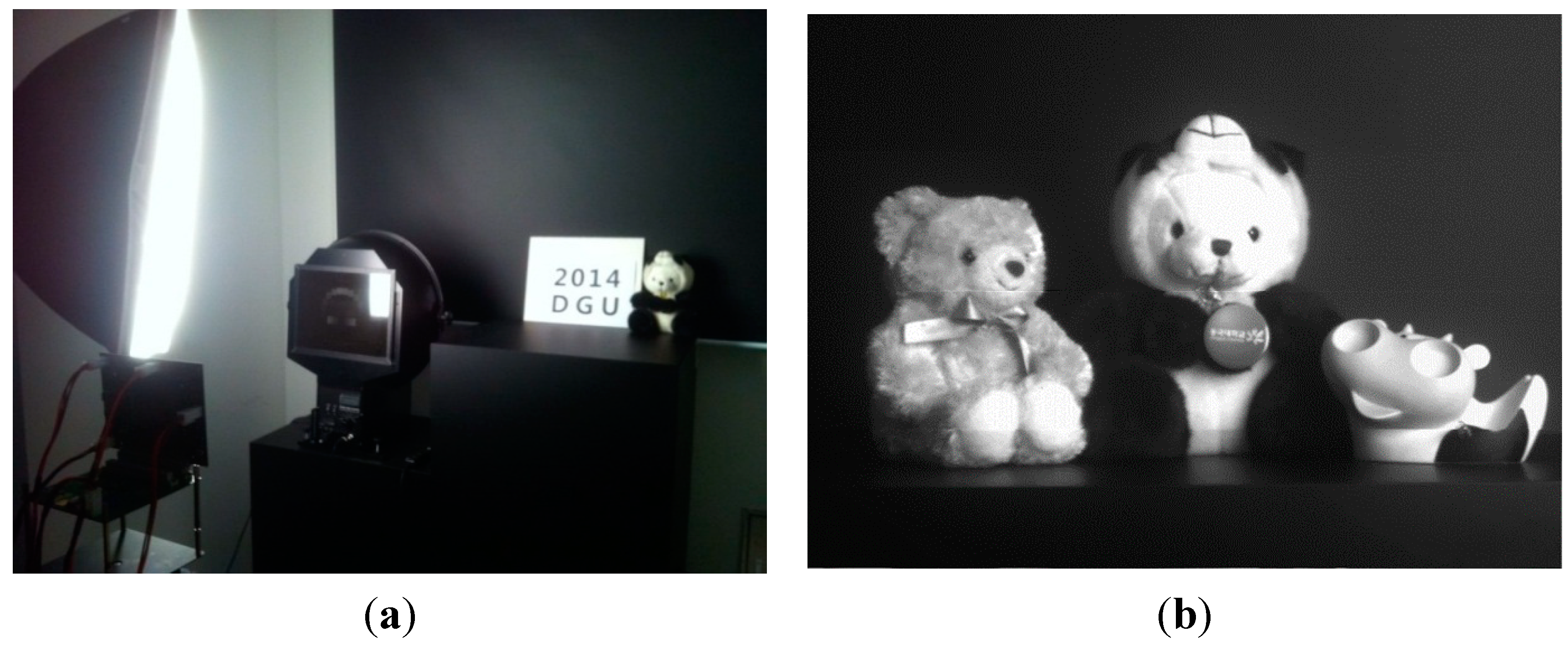
Figure 11a shows the photograph of our dark room used to measure the CIS performance. Figure 11b shows the measured VGA sample image with the frame rates of 131 fps at a main clock speed of 100 MHz. The performance of a CIS is normally measured by the deviations of digital codes, when the same objects are recorded. For example, in a very dark room condition, an object is recorded by a CIS. Then, the same object is also registered by a CIS under the next slightly brighter conditions. In the same way, the light conditions are getting brighter step by step. In our dark room studio shown in Figure 11, the light conditions can be changed up to 58 levels from very dark conditions to the brightest light conditions.
Figure 11.
Measured results for the proposed CIS performance: (a) photograph of our dark room (b) measured VGA sample image with the proposed CIS.
Figure 12.
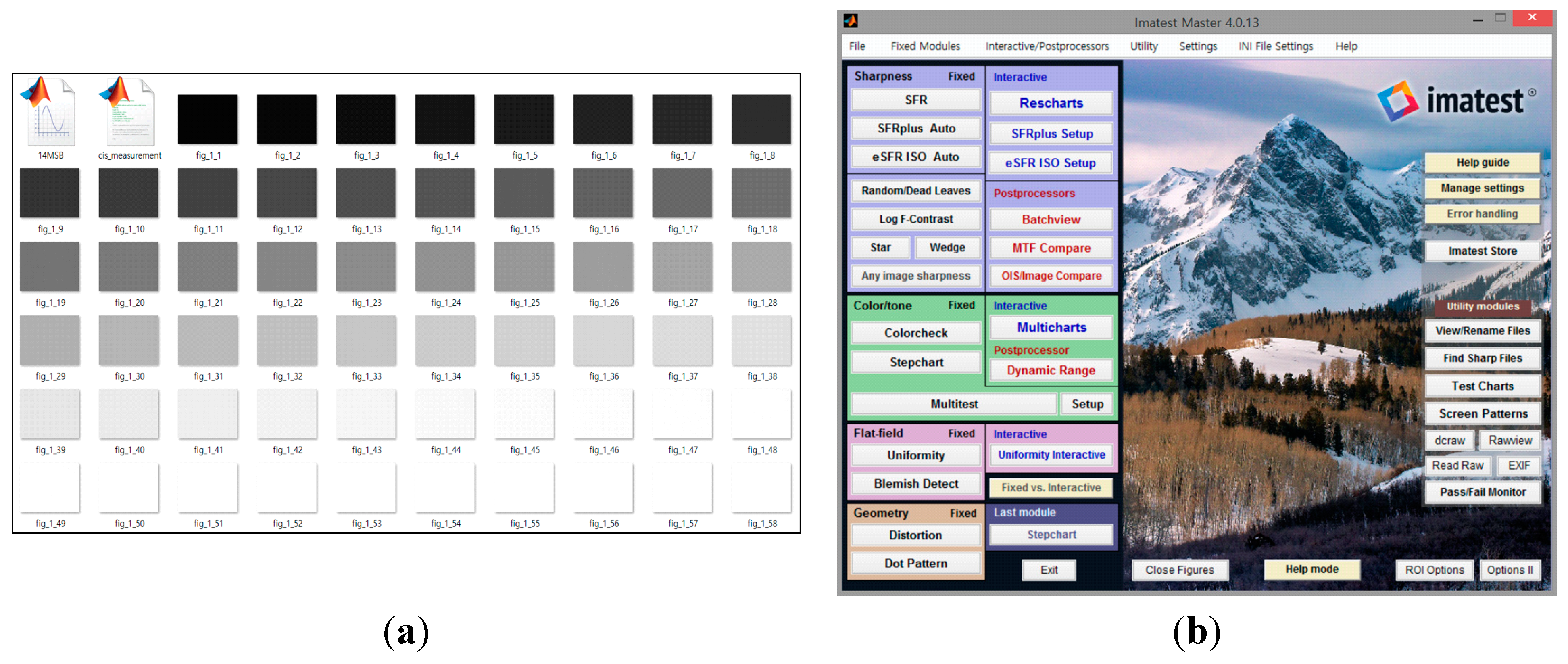
Measured environments for noise performance: (a) captured image dependent on the variation of light intensity (b) software program IMATEST® for noise analysis.
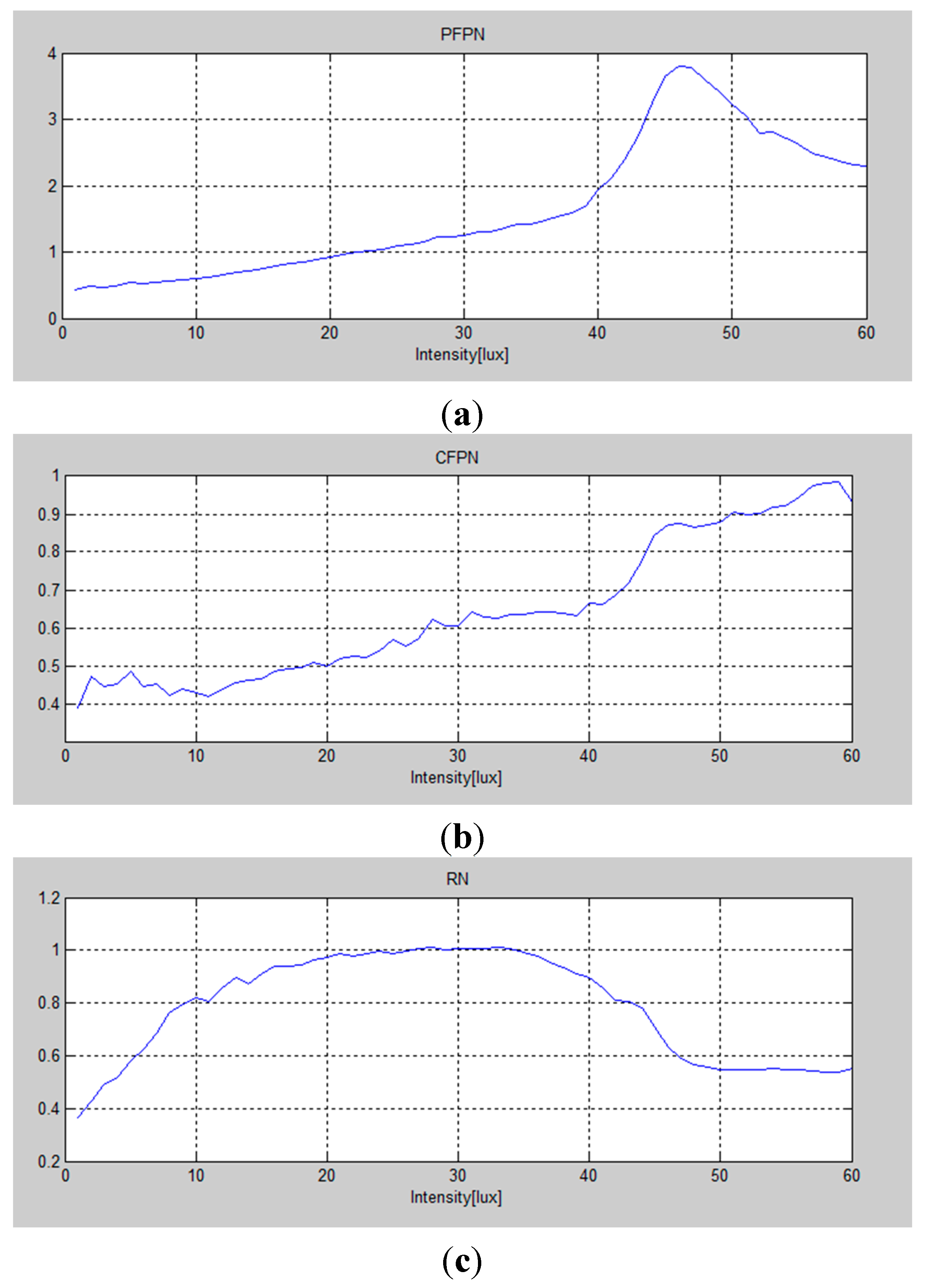
Figure 13.
Measured data dependent on the variation of light intensity: (a) pixel fixed pattern noise (PFPN); (b) column fixed pattern noise (CFPN); (c) random noise (RN).
In case of the fabricated CIS with the proposed technique, 58 photos have been taken from 0.1 lux to 1500 lux. Finally, the error calculations of the fixed pattern noise have been automatically done with the software program IMATEST® (Imatest LLC, Boulder, CO, USA). The measured photos taken by the proposed CIS and the image captured by the software program IMATEST® are shown in Figure 12. Figure 13 shows a few measured data dependent on the variation of light intensity. The measurement uses the TE241-OECF noise test chart and the analysis is performed by using the IMATEST® software program. All of the measured noises such as pixel pattern noise (PFPN), column fixed pattern noise (CFPN), and random noise (RN) are within 1LSB. It means that the measured image has a low noise performance.
5. Conclusions
A high speed CMOS image sensor was discussed. In order to improve the operating speed of the conventional CIS, we described a differential difference amplifier (DDA) and a novel digital CDS that compares the reset signal and the pixel signal using only one ramp. With the technique, the operating speed of the proposed CIS was much faster than that of the conventional one, because only one ramp is adopted. The prototype chip has been fabricated with the Samsung 0.13 µm 1P4M CIS technology. The resolution of the CMOS image sensor was the VGA specifications of 640 × 480, and the pixel size was 5.6 µm with the 4-TR APS. The conversion time of the designed 10-bit SS-ADC using the novel digital CDS satisfied the 16-µs at a main clock speed of 100 MHz. The frame rate of the CIS was of 131 fps at the main clock speed of 100 MHz. Table 3 shows the summary of the measured CIS performance. Table 4 shows the comparison results of the proposed CDS with the previously published works. The proposed CIS has the advantage of high speed frame rate, compared to other ones at the same condition.
Table 3.
Summary of the measured CIS performance.
| Process Technology | 0.13 um 1P4M CIS Process |
|---|---|
| Chip size | 6 mm × 6 mm |
| Core size | 5 mm × 5 mm |
| Number of pixel | 640 × 480 pixels |
| Pixel type | Non-shared 4T (pinned-photodiode) |
| Operating voltage | 2.8 V (pixel)/2.8 V (analog)/1.5 (digital) |
| Frame rate | 131 fps (@100 M Hz) |
| ADC resolution | 10-bit |
| Pixel FPN | 0.48 LSB (@ dark) |
| Column FPN | 0.45 LSB (@ dark) |
| Random Noise | 0.35 LSB (@ dark) |
| Dynamic range | 84 dB |
| Power consumption | 54 µW/column |
| Full well capacity | 23,000 |
| Conversion gain | 43 µV/ |
| Figure of Merit | 41. 4 nJ |
Table 4.
Performance comparison data.
| Reference | [15] | [16] | [17] | [18] | This Work |
|---|---|---|---|---|---|
| Technology | 0.13 um CIS | 0.18 um CIS | 0.13 um CIS | 0.18 um CIS | 0.13 um CIS |
| CDS Type | Analog CDS | Digital CDS | Digital CDS | Analog CDS | Digital CDS |
| ADC Type | Single-slope | Single-slope | Single-slope | TS Cyclic | Single-slope |
| ADC resolution | 11-bit | 10-bit, 12-bit (configurable) | 12-bit, 14-bit (configurable) | 12-bit | 10-bit |
| Pixel size (um) | 2.25 × 2.25 | 3.63 × 3.63 | 4.2 × 4.2 | 2.8 × 2.8 | 5.6 × 5.6 |
| Pixel Array | 640 × 480 | 1920 × 1440 | 8192 × 2160 | 7680 × 4320 | 640 × 480 |
| Frame Rate (fps) | 30 | 180 (10-bit) | 120 (12-bit) | 120 | 131 |
| Power (mW) | 44.1 | 580 | 3000 (120 fps) | 2500 | 39.2 |
Acknowledgments
This research was supported by the Center for Integrated Smart Sensors (CISS) funded by the Ministry of Science, ICT & Future Planning as Global Frontier Project (CISS-2013M3A6A6073718).
Author Contributions
D.K. and J.B. conceived and designed the circuits. J.B. and M.K. performed the experiments and analyzed the data. All authors were involved in the preparation of this manuscript.
Conflicts of Interest
The authors declare no conflict of interest.
References
- Sugiki, T.; Ohsawa, S.; Miura, H.; Sasaki, M.; Nakamura, N.; Inoue, I.; Hoshino, M.; Tomizawa, Y.; Arakawa, T. A 60 mW 10 b CMOS image sensor with column-to-column FPN reduction. In Proceedings of the IEEE Solid-State Circuit Conference Digest Of Technical Papers (ISSCC), San Francisco, CA, USA, 9 February 2000; pp. 108–109.
- Lim, S.; Cheon, J.; Ham, S.; Han, G. A new correlated double sampling and single slope ADC circuit for CMOS image sensors. In Proceedings of the International SoC Design Conference (ISOCC), Seoul, Korea, 26–27 October 2004; pp. 239–241.
- Snoeij, F.; Theuwissen, A.; Makinwa, K.A.; Huijsing, J. Multiple-ramp column-parallel ADC architectures for CMOS image sensors. IEEE J. Solid-State Circuits 2007, 42, 2968–2967. [Google Scholar] [CrossRef]
- Snoeij, F.; Theuwissen, A.; Makinwa, K.A.; Huijsing, J. A CMOS imager with column-level ADC using dynamic column fixed-pattern noise reduction. IEEE J. Solid-State Circuits 2006, 41, 3007–3015. [Google Scholar] [CrossRef]
- Lee, D.; Han, G. High-speed, low-power correlated double sampling counter for column-parallel CMOS imagers. Electron. Lett. 2007, 43, 1362–1364. [Google Scholar] [CrossRef]
- Yamada, T.; Kasuga, S.; Murata, T.; Kato, Y. A 140dB-dynamic-range MOS image sensor with in-pixel multiple-exposure synthesis. In Proceedings of the IEEE International Solid-State Circuits Conference Digest of Technical Papers (ISSCC), San Francisco, CA, USA, 3–7 February 2008; pp. 593–594.
- Ham, S.H.; Lee, Y.H.; Jung, W.K.; Lim, S.H.; Yoo, K.C.; Chae, Y.C.; Cho, J.H.; Lee, D.M.; Han, G.H. CMOS image sensor with analog gamma correction using nonlinear single-slope ADC. In Proceedings of the IEEE International Symposium on Circuits and Systems (ISCAS), Island of Kos, Greece, 21–24 May 2006; pp. 3578–3581.
- Takayanagi, I.; Shirakawa, M.; Mitani, K.; Sugawara, M.; Iversen, S.; Moholt, J.; Nakamura, J.; Fossum, E. A 1.25-inch 60-frames/s 8.3-M-pixel digital-output CMOS image sensor. IEEE J. Solid-State Circuits 2005, 40, 2305–2314. [Google Scholar] [CrossRef]
- Yoshihara, S.; Kikuchi, M.; Ito, Y.; Inada, Y.; Kuramochi, S.; Wakabayashi, H.; Okano, M.; Koseki, K.; Kuriyama, H.; Inutsuka, J.; et al. A 1/1.8-inch 6.4Mpixel 60 frames/s CMOS image sensor with seamless mode change. IEEE J. Solid-State Circuits 2006, 41, 2998–3006. [Google Scholar] [CrossRef]
- Cheon, J.; Han, G. Noise analysis and simulation method for a single-slope ADC with CDS in a CMOS image sensor. IEEE Trans. Circuits Syst. I 2008, 55, 2980–2987. [Google Scholar] [CrossRef]
- Krymski, A.; Bock, N.; Tu, N.; Blerkom, D.; Fossum, E. A high-speed, 240-frames/s, 4.1-Mpixel CMOS sensor. IEEE Trans. Electron Devices 2003, 50, 130–135. [Google Scholar] [CrossRef]
- Yang, W.; Kwon, O.; Lee, J.; Hwang, G.; Lee, S. An integrated 800 × 600 CMOS imaging system. In Proceedings of the IEEE Solid-State Circuit Conference Digest of Technical Papers (ISSCC), San Francisco, CA, USA, 17 February 1999; pp. 304–305.
- Chae, Y.-C.; Cheon, J.-M.; Lim, S.-H.; Kwon, M.-H.; Yoo, K.-S.; Jung, W.-K.; Lee, D.-H.; Ham, S.-H.; Han, G.-H. A 2.1 M pixels, 120 frame/s CMOS image sensor with column-parallel ΔΣ architecture. IEEE J. Solid-State Circuits 2011, 46, 236–247. [Google Scholar] [CrossRef]
- Bae, J.; Kim, D.; Ham, S.; Chae, Y.; Song, M. A two-step A/D conversion and column self-calibration technique for low noise CMOS image sensors. Sensors 2014, 14, 11825–11843. [Google Scholar] [CrossRef] [PubMed]
- Cho, N.; Song, B.; Kim, K.; Burm, J.; Han, S. A VGA CMOS image sensor with 11-bit column parallel single-slope ADCs. In Proceedings of the International SoC Design Conference (ISOCC), Seoul, Korea, 22–23 November 2010; pp. 25–27.
- Nitta, Y.; Muramatsu, Y.; Amano, K.; Toyama, T.; Yamamoto, J.; Mishina, K.; Suzuki, A.; Taura, T.; Kato, A.; Kikuchi, M. High-speed digital double sampling with analog CDS on column parallel ADC architecture for low-noise active pixel sensor. In Proceedings of the IEEE International Solid-State Circuits Conference Digest of Technical Papers (ISSCC), San Francisco, CA, USA, 6–9 February 2006; pp. 2024–2031.
- Toyama, T.; Mishina, K.; Tsuchiya, H.; Ichikawa, T.; Iwaki, H.; Gendai, Y.; Murakami, H.; Takamiya, K.; Shiroshita, H.; Muramatsu, Y.; et al. A 17.7 M pixel 120 fps CMOS image sensor with 34.8 Gb/s readout. In Proceedings of the IEEE International Solid-State Circuits Conference Digest of Technical Papers (ISSCC), San Francisco, CA, USA, 20–24 February 2011; pp. 420–422.
- Watabe, T.; Kitamura, K.; Sawamoto, T.; Kosugi, T.; Akahori, T.; Iida, T.; Isobe, K.; Watanabe, T.; Shimamoto, H.; Ohtake, H.; et al. A 33 M pixel 120 fps CMOS image sensor for UDTV application with two-stage column-parallel cyclic ADCs. In Proceedings of the IEEE International Solid-State Circuits Conference Digest of Technical Papers (ISSCC), San Francisco, CA, USA, 19–23 February 2012; pp. 388–390.
- Cho, K.; Kim, D.; Song, M. A low power dual CDS for a column-parallel CMOS image sensor. J. Semicond. Technol. Sci. 2012, 12, 388–396. [Google Scholar] [CrossRef]
© 2015 by the authors; licensee MDPI, Basel, Switzerland. This article is an open access article distributed under the terms and conditions of the Creative Commons Attribution license (http://creativecommons.org/licenses/by/4.0/).