Article

A Deep Divergence in the Cold: Yagania, a New Genus of Ghost Spider from Isla de Los Estados, Argentina (Araneae: Anyphaenidae) †

by
Martín J. Ramírez
1,*,
Ivan L. F. Magalhaes
1,
María Vanessa Lencinas
2 and
Guillermo J. Martínez Pastur
2
1
División Aracnología, Museo Argentino de Ciencias Naturales “Bernardino Rivadavia”, Consejo Nacional de Investigaciones Científicas y Técnicas (CONICET), Ángel Gallardo 470, Buenos Aires C1405DJR, Argentina
2
Laboratorio de Recursos Agroforestales, Centro Austral de Investigaciones Científicas (CADIC), Consejo Nacional de Investigaciones Científicas y Técnicas (CONICET), Houssay 200, Ushuaia V9410CAB, Argentina
*
Author to whom correspondence should be addressed.
urn:lsid:zoobank.org:pub:F43821C7-EDCF-454D-863D-82E3ACA4076A.
Diversity 2026, 18(6), 346; https://doi.org/10.3390/d18060346
Submission received: 19 May 2026 / Revised: 1 June 2026 / Accepted: 3 June 2026 / Published: 6 June 2026
(This article belongs to the Special Issue 2026 Feature Papers by Diversity's Editorial Board Members)

Abstract

(1) Background: Ghost spiders of the family Anyphaenidae are well represented in Tierra del Fuego, although the evergreen forests of this region are notably understudied. (2) Methods: We based our work on a previous phylogenetic analysis of four markers, studied the morphology using microscopy, and characterized the habitat by vegetation and climate. (3) Results: An undescribed species from Isla de los Estados represents a deeply diverging lineage, which we describe here as Yagania chuanisin n. gen. and n. sp. (4) Conclusions: This species is likely associated with cold and rainy evergreen forests found only in specific areas of Tierra del Fuego Archipelago, where further sampling should be focused to better evaluate the species’ geographic range, as well as its conservation status.

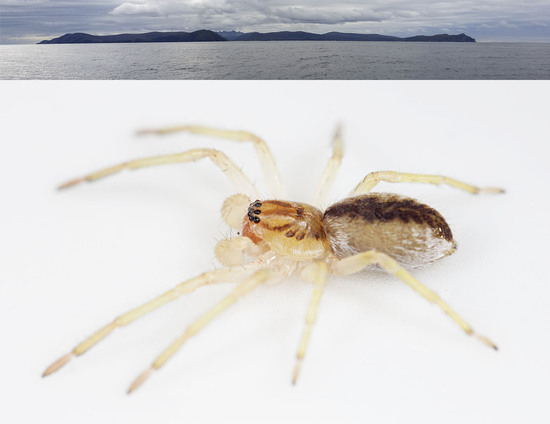
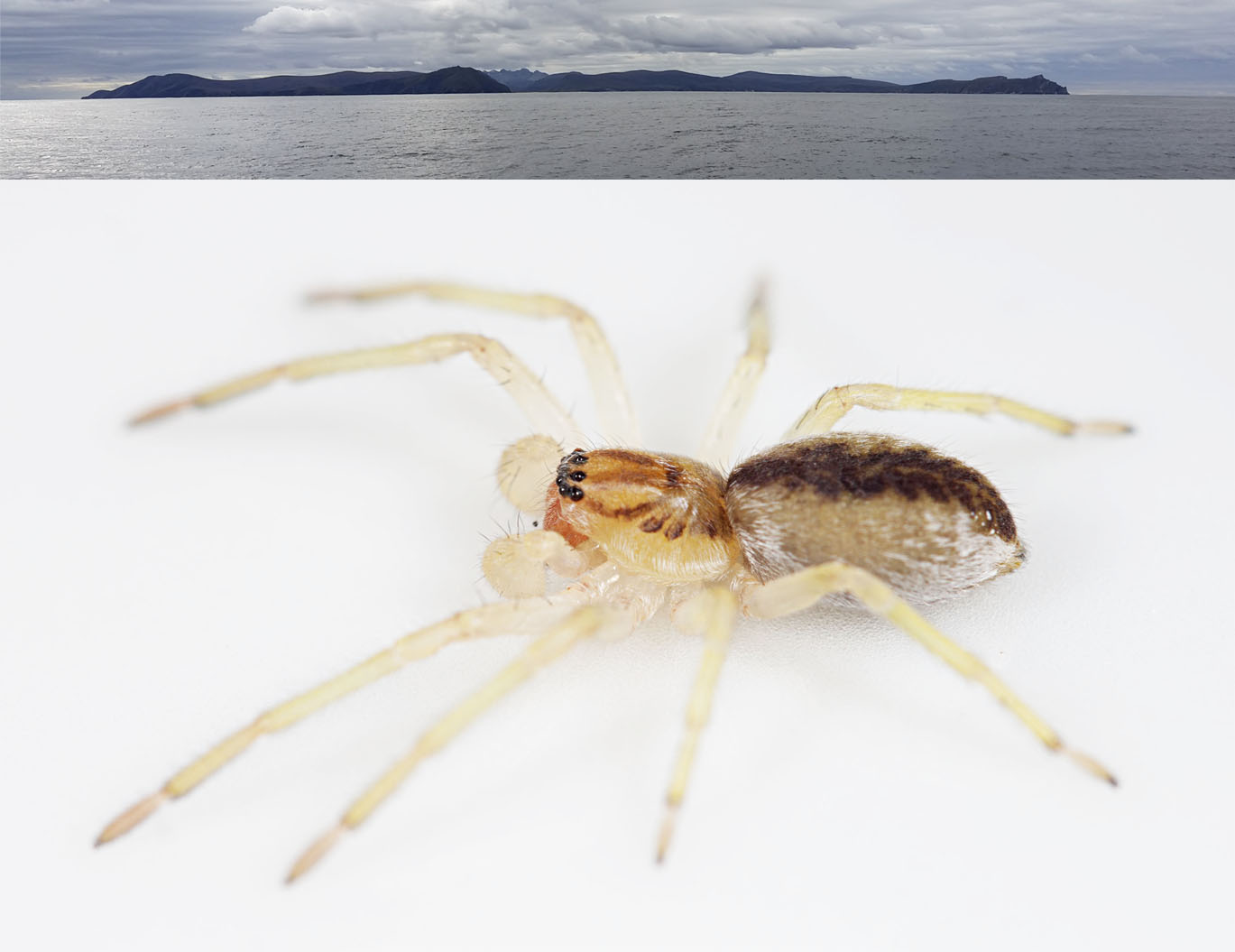
Graphical Abstract

1. Introduction

South America, particularly its southern extreme encompassing Tierra del Fuego Archipelago, is widely recognized as a region of high endemism for terrestrial fauna [1,2,3,4]. Spiders are no exception to this pattern; ghost spiders of the family Anyphaenidae are exceptionally well represented in the Tierra del Fuego and the adjacent areas in Southern Patagonia [5,6]. As noted in the pioneering summary by Merian [7], these spiders account for roughly 25% of all spider species in the region, which otherwise possesses a relatively impoverished spider fauna compared to the more northern Patagonian latitudes.
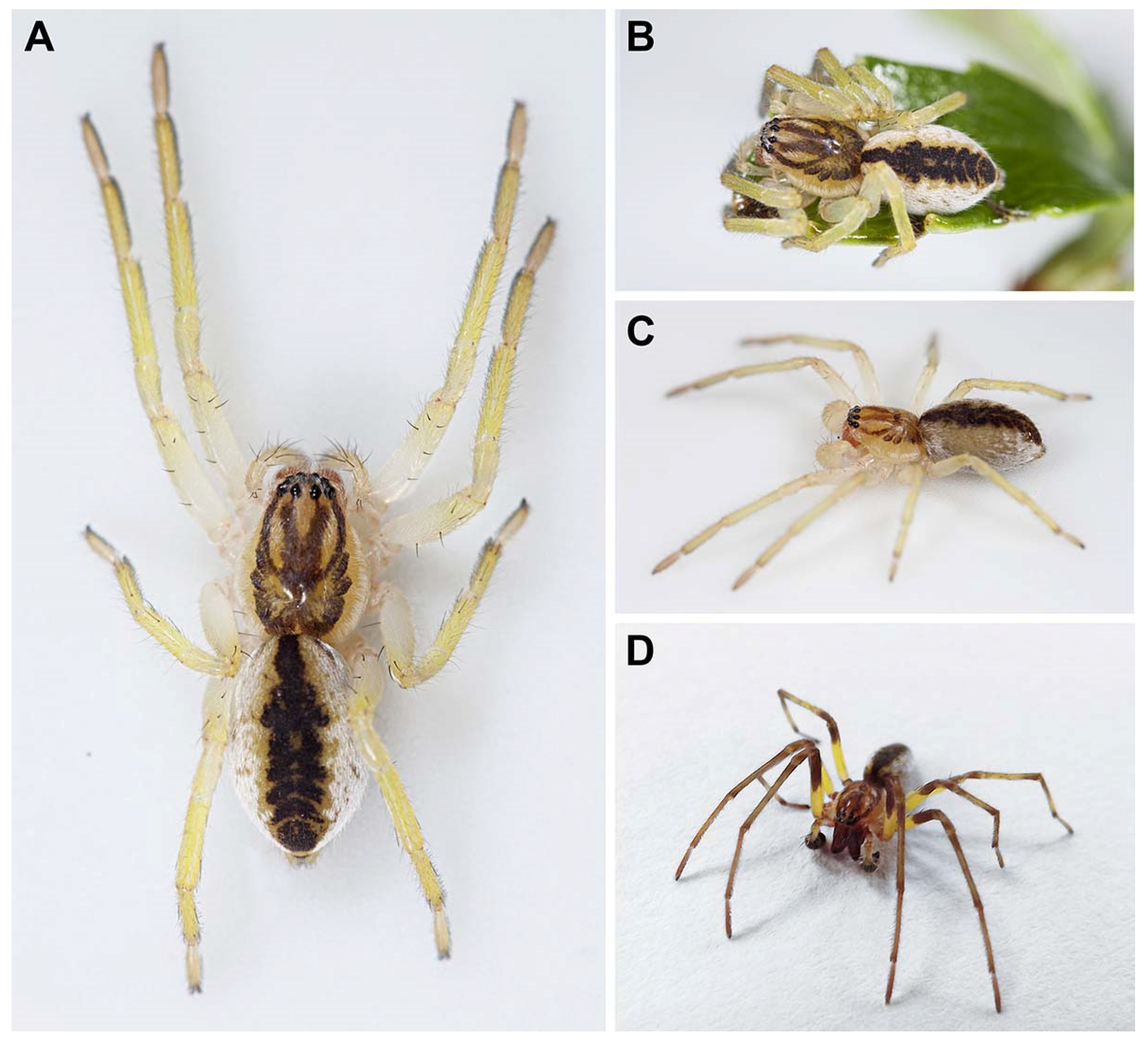
Within Anyphaenidae, the subfamily Amaurobioidinae is primarily distributed in southern South America, with many of its genera strictly endemic to temperate Nothofagus forests of Chile and Argentina [5]. A biogeographic analysis using dated molecular phylogenies demonstrated that many lineages of Amaurobioidinae originated and diversified within the Patagonian region [8]. This study recognized a distinct lineage represented by a yet-unnamed species with contrasting coloration (Figure 1) that is closely related to Gayenna americana Nicolet, 1849, but separated by a notably long phylogenetic branch. The species is so far only known from evergreen forests located on Isla de los Estados (Argentina) (Figure 2 and Figure 3). The purpose of this contribution is to provide a description of this new species, as well as to propose a new genus to accommodate it.

2. Materials and Methods

The specimens examined in this study were deposited in the National Collection of Arachnology (MACN-Ar), Museo Argentino de Ciencias Naturales “Bernardino Rivadavia”, Buenos Aires, Argentina. Fieldwork on Isla de los Estados was conducted during two expeditions: November–December 2014 and March 2017. Localities were visited using the vessel Ocean Tramp (operated by 60 South, https://60-south.com, accessed 4 June 2026) and accessed from the shore. Coordinates were taken in the field with GPS and checked a posteriori using Google Earth. Most specimens were sampled by beating the vegetation with a stick and collected on a white beating tray. Unsuccessful sampling efforts using the same methodology, alongside manual collecting, were conducted during several periods: 3–9 December 2012 and 10–15 December 2023 (20 localities around Ushuaia and Río Grande, Tierra del Fuego), 23 November 2014 and 5 March 2017 (Mitre Peninsula, Tierra del Fuego), and 23–26 January 2023 (13 localities near Punta Arenas, Magallanes, Chile). Among these sites, those that most closely matched the vegetation composition and rainfall regime of Isla de los Estados were the Mitre Peninsula (2 days of collecting), Estancia Moat west of Ushuaia (1 day), the western border of Tierra del Fuego National Park (3 days), and south of Punta Arenas (1 day). In addition to these collection efforts, we previously examined holdings across 11 museums hosting anyphaenid specimens from Tierra del Fuego and Magallanes [5] and analyzed abundant pitfall trap data collected from January to March during 2013–2014 near Ushuaia [13]. Photographs of living specimens were taken with a Canon EOS Rebel T1i (Canon Inc., Tokyo, Japan) using a 60 mm macro lens (for the immature specimens) or a Fujifilm FinePix S3300 (FUJIFILM Corporation, Tokyo, Japan) (for the male). The female genitalia of a penultimate female (i.e., a subadult female that died during the molting process) were examined after removal of the molting cuticle, then clarified in clove oil and drawn with a camera lucida attached to an Olympus BH2 compound microscope (Olympus Corporation, Tokyo, Japan). Incident light images were taken with a Leica M205A stereomicroscope (Leica Microsystems GmbH, Wetzlar, Germany), equipped with a Leica DFC295 digital camera (Leica Microsystems (Switzerland) Ltd., Heerbrugg, Switzerland). Measurements were obtained with a graded ocular and are given in millimeters. The description format follows [5].
We based our systematic conclusions on the phylogenetic analysis of four markers (the barcode fragment cytochrome oxidase I, histone H3, and the ribosomal genes 28s and 16s) made in [8]. We also incorporated evidence for further specimens sequenced for the barcode fragment, as provided in [14]. To further evaluate group support, we calculated the Shimodaira–Hasegawa-like likelihood ratio test (SH-aLRT) with IQTREE 3.0.1 [15] using the maximum-likelihood tree as a fixed topology, as well as the best model, both calculated in [14].
Abbreviations used in figures are detailed in figure legends. The ZooBank Life Science Identifier (LSID) for this publication is urn:lsid:zoobank.org:pub:F43821C7-EDCF-454D-863D-82E3ACA4076A.

3. Results

The phylogenetic analysis published in [8] indicates that the sister group of the genus Gayenna is an unnamed species from Isla de los Estados. The analysis of the barcode fragment by [14] revealed little genetic variation among the sampled individuals. Given its deep divergence with Gayenna and the remarkably different morphology from this and other genera of Amaurobioidinae, we describe this new species and propose the creation of a new genus to accommodate it.

3.1. Systematics

3.1.1. Description of Yagania, New Genus

Family Anyphaenidae Bertkau, 1878
Yagania n. gen.
LSID: urn:lsid:zoobank.org:act:4366F0EF-B942-4E5A-BA35-B2D6CE4FC52F
Type species. Yagania chuanisin, new species.
Etymology. The generic name refers to the Yagán people, indigenous habitants of the Tierra del Fuego Archipelago, who used canoes to navigate the shores and islands across the Tierra del Fuego Archipelago. Feminine in gender.
Diagnosis. Females are similar to other members of the tribe Gayennini in having spherical spermathecae that are readily differentiated from the relatively slender copulatory ducts, but they can be distinguished by the wide, membranous median field of the epigyne. Males are similar to some Tomopisthes Simon, 1884 and Oxysoma Nicolet, 1849 species in possessing a large, projecting paramedian apophysis but can be distinguished by the much larger size of the paramedian apophysis and by the complex conductor with a lamellar branch crossing the embolus. The absence of ventral spines on metatarsus I is also diagnostic within Amaurobioidinae.
Description. Color pale to greenish, body with dark brown dorsal pattern, forming median stripe on dorsum of abdomen. All eyes of about the same diameter, anterior row nearly straight in anterior view, posterior row nearly straight in dorsal view. Chelicerae with three teeth on promargin, two on retromargin; chelicerae of male larger than that in female. Leg spination of tibiae and metatarsi of legs I and II reduced (see description of the type species). Tracheal spiracle closer to spinnerets than to epigastrium. Male palpal tibia longer than wide. Paramedian apophysis massive, anteriorly projecting, with expanded tip. Conductor well separated from anterior margin of tegulum by membranous stripe; retrolateral portion large, protruding over the embolus. Apex of prolateral portion of conductor hook-shaped, smooth. Median apophysis slender, hook-shaped. Embolus long, thick, not closely associated with conductor. Epigyne with lateral lobes separated, forming arches at the sides of the epigyne; median field wide, membranous except for a median pilose stripe. Copulatory ducts short, spermathecae spherical, accessory bulbs with short ducts.
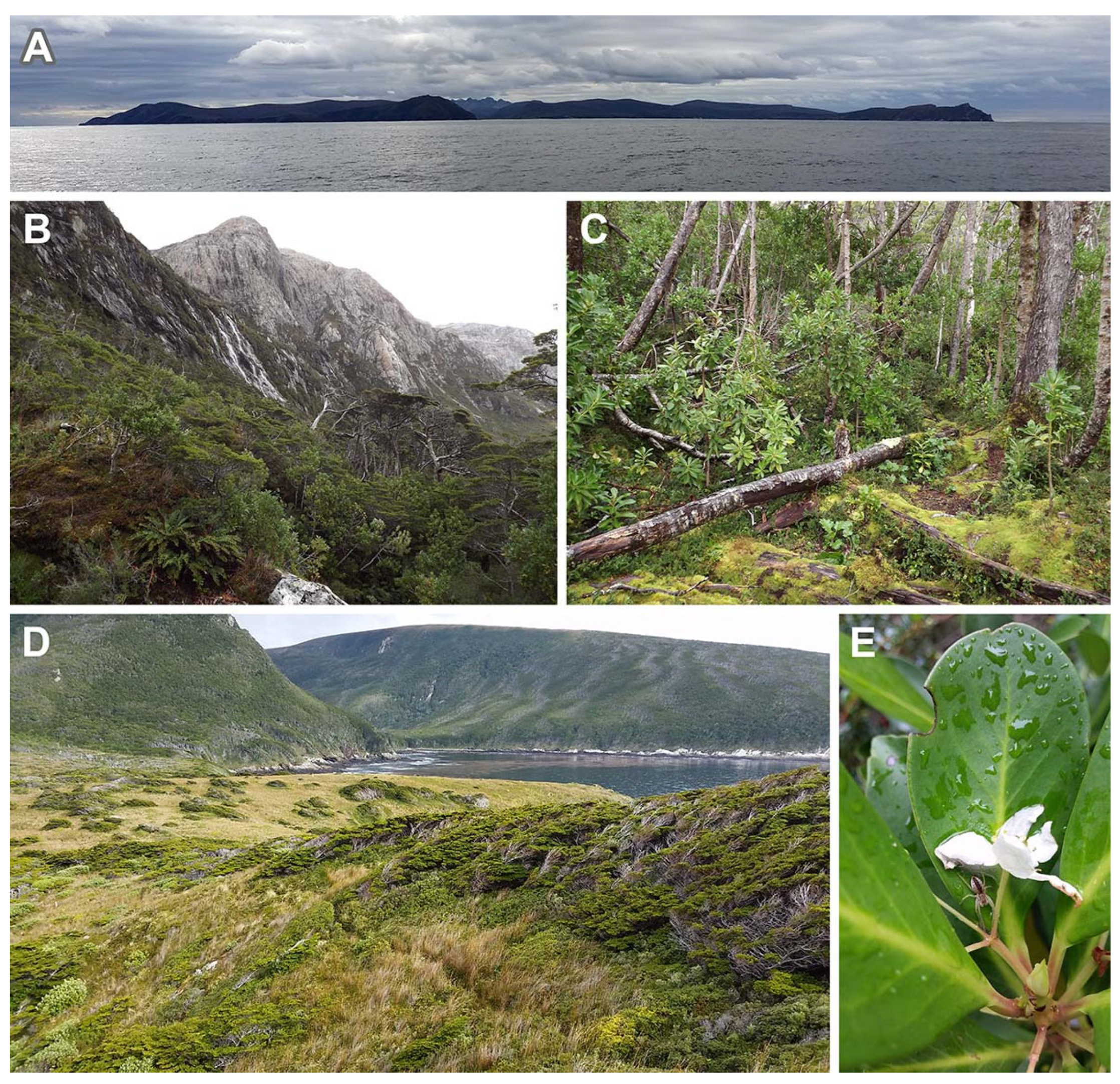
Distribution. Known only from the evergreen wet forests dominated by Nothofagus betuloides trees and accompanied by Drimys winteri as a secondary component on Isla de los Estados, located in Tierra del Fuego Province, Argentina (Figure 2 and Figure 3).
Composition. Yagania chuanisin, new species.

3.1.2. Description of Yagania chuanisin, New Species

Yagania chuanisin, n. sp.
LSID: urn:lsid:zoobank.org:act:A760F186-1A29-403F-A3A0-034ED5904B96
Ngen MACN-Ar 34386: Ceccarelli et al., 2019 [8]: Figure 1.
Gayennini MJR-Is_Estados: Barone et al., 2024 [14]: their Supplementary Materials.
Type material. Holotype male: ARGENTINA: Tierra del Fuego: Isla de Los Estados: Puerto Parry, S54.81319° W64.37043° (GPS, ±500 m), elev. 2 m, 26–27 November 2014, forest of Nothofagus betuloides, beating foliage, I.L.F. Magalhaes, A.O. Porta (MACN-Ar 34382, IFM-2318). Paratypes: Same data as holotype (MACN-Ar 34381 penultimate female with epigyne already formed below molting cuticle MLB-4445, MLB-0969; male MLB-4444, MLB-0968).
Etymology. Chuanisin is the Yagan name for Isla de los Estados, meaning “land of abundance,” in reference to the rich resources the island provided [16]; it is to be treated as a noun in apposition.
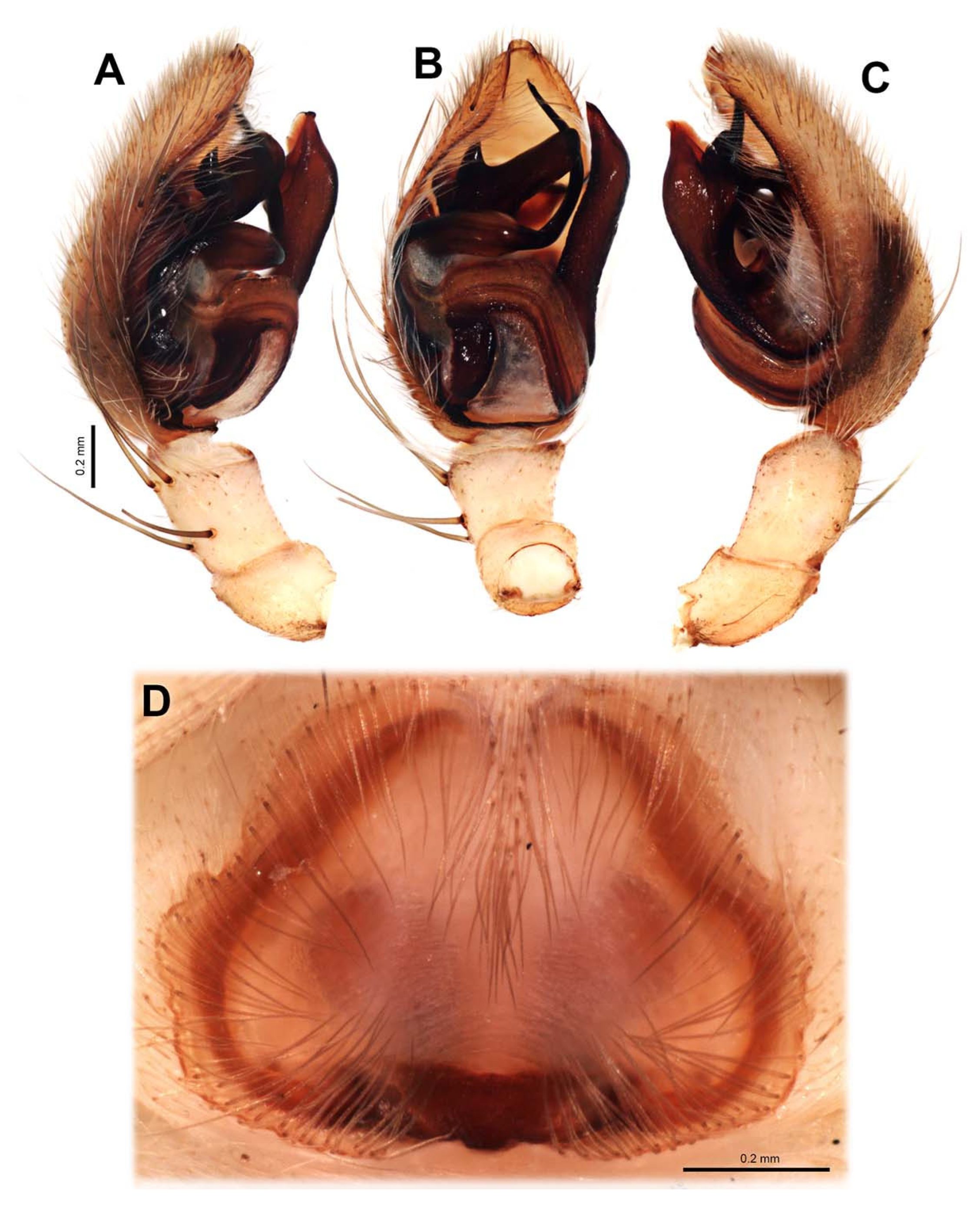
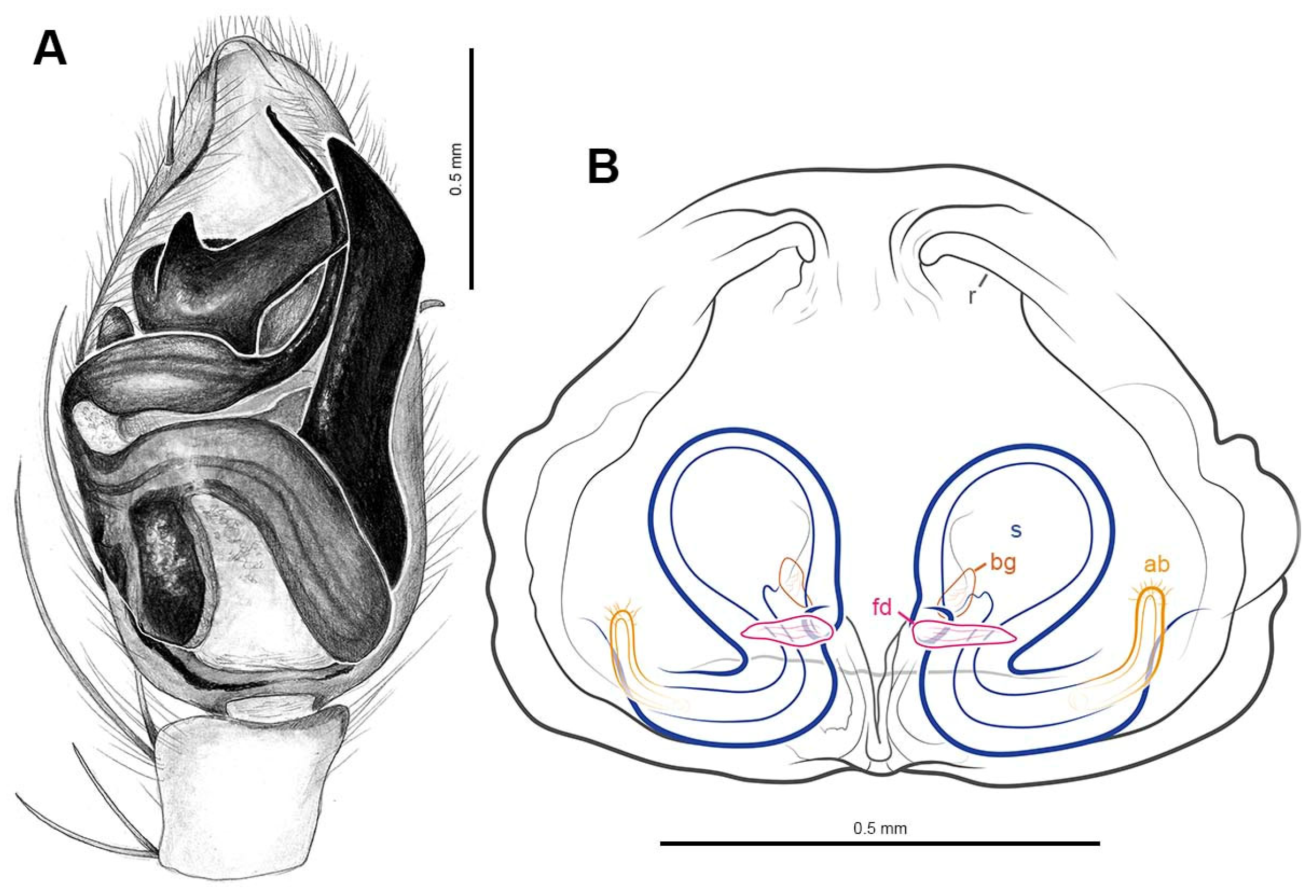
Diagnosis. Males of Yagania chuanisin n. sp. are similar to those of Tomopisthes horrendus (Nicolet, 1849) and Oxysoma saccatum (Tullgren, 1902) in having a large, projecting paramedian apophysis in the male copulatory bulb (Figure 5A–C, Figure 6A and Figure 7) but can be distinguished by the shape of the paramedian apophysis, which is expanded at the tip, and of much larger size. Females resemble those of other Gayennini in having spherical spermathecae but can be distinguished by the wide, membranous area of the epigyne and by the lateral lobes forming narrow arches at the sides (Figure 5D and Figure 8). The reduced spination of legs I and II (i.e., lacking metatarsal spines, lacking a ventral basal pair on tibiae, but with the distal pair present) is also useful to distinguish adults or immatures of this species from all other known Amaurobioidinae (i.e., anyphaenids with the tracheal spiracle closer to the spinnerets than to the epigastrium). In summary, the large paramedian apophysis and conductor of the male copulatory bulb, the wide membranous field of the female epigyne, and the reduced leg spination clearly distinguish this species from any other Amaurobioidinae.
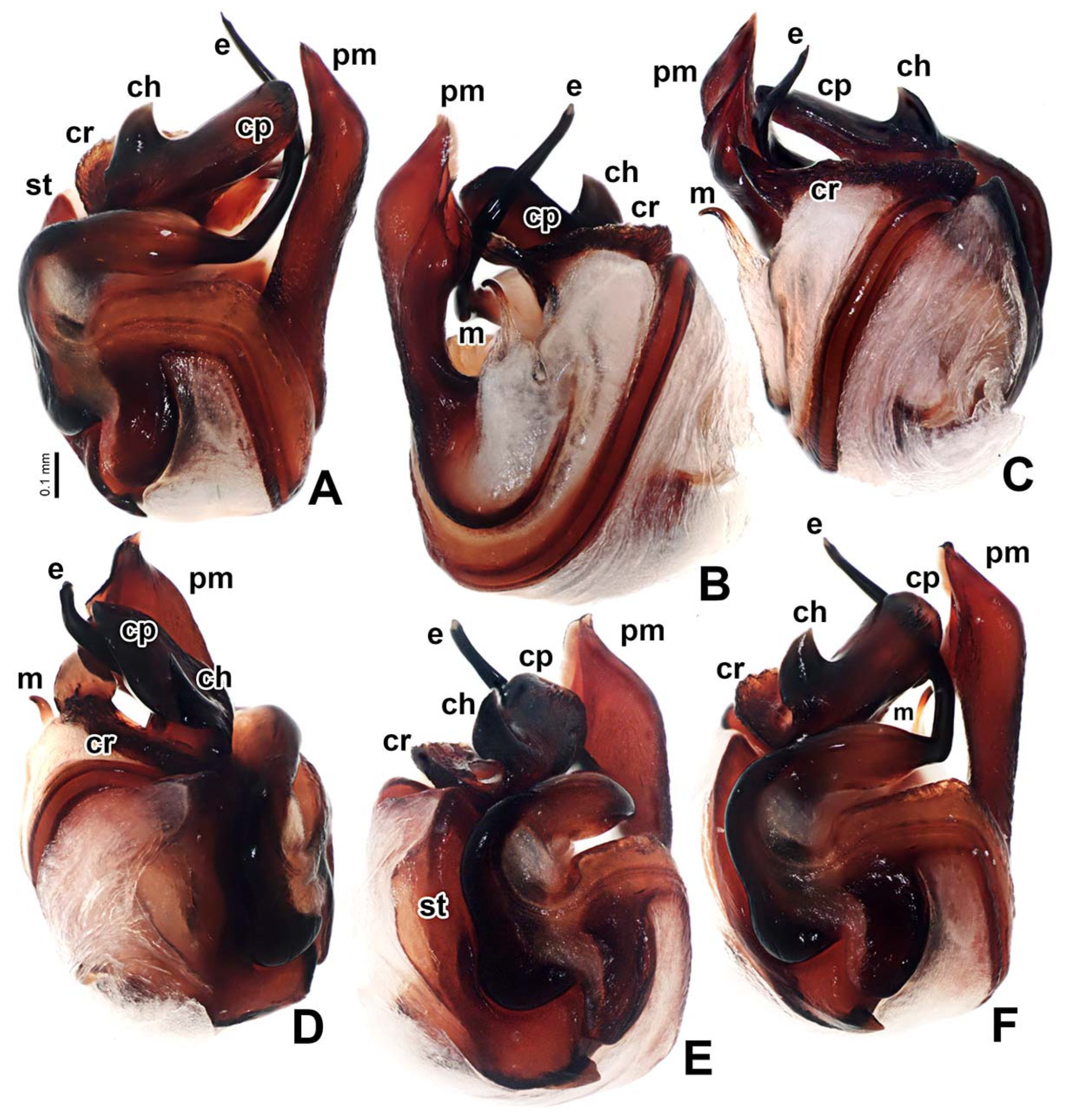
Description. Male (holotype MACN-Ar 34382). Total length 6.23. Carapace length 2.93, width 2.26. Chelicerae elongate, with three teeth on promargin (the two distal large and well-spaced) and two large, well-spaced teeth on retromargin; fang long, with thick base and thinner shaft. Chilum entire. Clypeus height 0.17. Eye diameters: AME 0.16, ALE 0.14, PME 0.13, PLE 0.16. Sternum length 1.40, width 1.10. Appendages. Leg I: tibia (ti) length 3.03, metatarsus (mt) 2.36. II: ti 2.84, mt 2.28. III: ti 1.71, mt 1.68. IV: ti 2.24, mt 2.15. Spines: Leg I, femur d 1-1-1, p 2ap (left) or p d1ap (right); patella 0; tibia v 0-0-2 (left) or 0-r1-2 (right), p 0-1 (left) or 0 (right); metatarsus 0. II, femur d 1-1-1, p d1ap; patella 0; tibia v 0-2-2, p 0 (left) or 0-1 (right); metatarsus r1bas. III, femur d 1-1-1, p and r d1ap; patella r 1; tibia v 0-p1-2, p and r d1-1, d 0; metatarsus v 2-0-2, p and r 0-1-0-1, d 2ap. IV, femur d 1-1-1, p d1ap; patella r 1; tibia v p1-p1-2, p and r d1-1; metatarsus v 2-0-2, p and r 0-1-0-1. Abdomen length 3.42, width 2.09. Spiracle–epigastrium 1.51, spiracle–spinnerets 0.37. Color: Carapace pale brown with dark brown markings; eyes bordered by black rings. Clypeus pale brown. Chelicerae brown with darker markings. Endites and labium brown; sternum pale brown. Coxae to mid-femora pale brown overall (dark rings on distal coxae and trochanters), dark brown stripes and blotches from mid-femora to tibiae (legs I–II) or to patellae (legs III–IV). Abdomen yellowish brown with dark brown dorsal pattern; venter yellowish brown, book lung covers dark brown. Palp (Figure 5A–C, Figure 6A and Figure 7): Cymbium large, with well-defined apical furrow where the embolus fits. Tegulum occupying proximal half of alveolus. Median apophysis small, hook-shaped. Conductor with basal prolateral hook-shaped spike, afterwards bifid, with thick lamellar projection from prolateral side crossing embolus, and projection on retrolateral side below embolus. Paramedian apophysis massive, anteriorly projecting, wider at the tip. Embolus thick, tapering gradually.
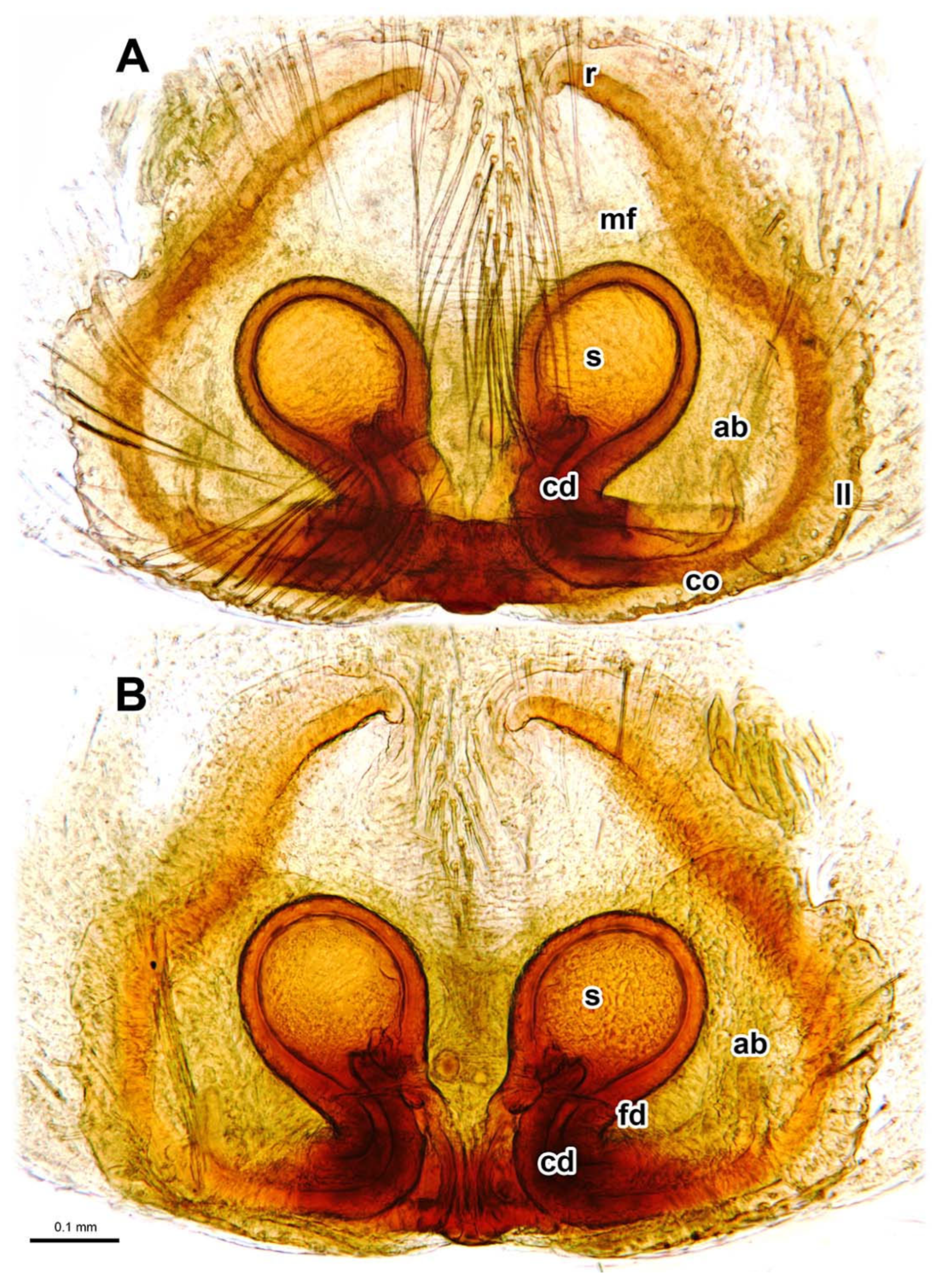
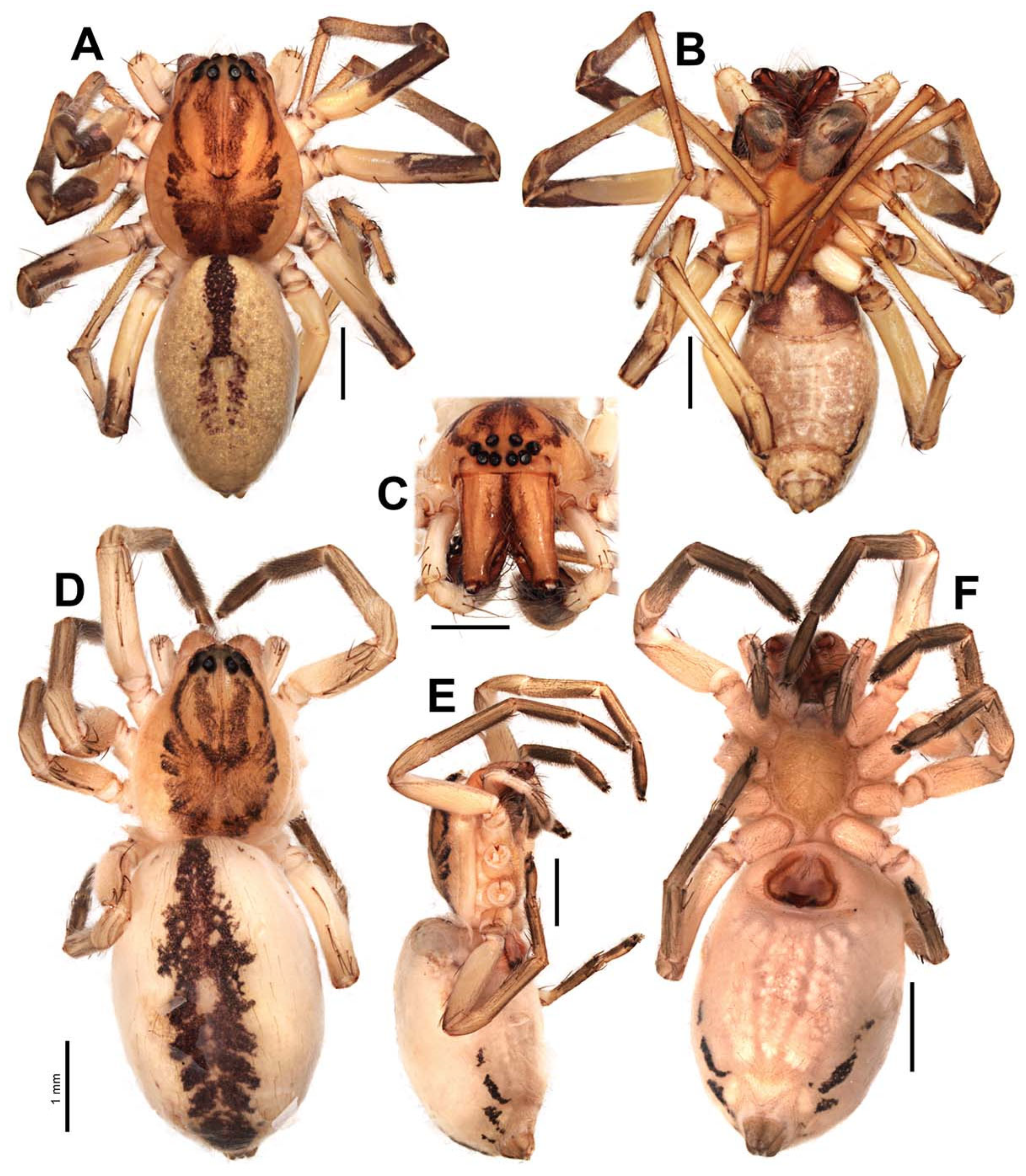
Female (paratype MACN-Ar 34381, pharate, died just before molting; right legs II–III consumed for DNA sequencing). Measurements taken from cuticle of penultimate instar (Figure 4D–F). Total length 5.76. Carapace length 2.29, width 1.80. Clypeus height (not visible). Eye diameters: AME 0.12, ALE 0.11, PME 0.10, PLE 0.12. Chelicerae with three teeth on promargin and two on retromargin. Sternum length 0.41, width 0.33. Appendages. Leg I: tibia (ti) length 1.41, metatarsus (mt) 1.13. II: ti 1.32, mt 1.04. III: ti 0.90, mt 0.77. IV: ti 1.22, mt 1.09. Spines (newly formed spines well visible through molting cuticle, see Figure 4D): Leg I, femur d 1-1-1, p 2ap; patella 0; tibia v 2ap; metatarsus 0. II, femur d 1-1-1, p d1ap; patella 0; tibia v 0-p1-2; metatarsus 0. III, femur d 1-1-1, p and r d1ap; patella 0; tibia v 0-p1-2, p and r 0-1; metatarsus v 2-0-2, p and r 0-1-0-1. IV, femur d 1-1-1, p d1ap; patella r 0 (left) or 1 (right); tibia p1-p1-2 (left) or 0-p1-2 (right), p and r 0-1; metatarsus v 2-0-2, p and r 0-1-0-1. Abdomen length 3.60, width 2.43, spiracle–epigastrium 1.92, spiracle–spinnerets 0.48. Color pattern similar to that in male but lighter in general, legs uniformly pale, abdominal dorsal markings more extended. Epigyne (dissected through molting cuticle, with internal and external structures fully formed and sclerotized, Figure 5D and Figure 8): median field wide, membranous, with median-anterior stripe of hairs, only posterior section sclerotized, triangular, with small anterior depression. Lateral lobes as wide, arched carinae converging anteriorly in well-defined ridges. Spermathecae spherical. Copulatory ducts short. Accessory bulbs with short ducts.
Genetic variation. The 642 base-pair COI fragments of the four specimens sequenced (see [14]) showed nearly identical sequences. Three specimens shared completely identical haplotypes, and one differed by only two substitutions, resulting in a very low intraspecific genetic divergence (0.31%).
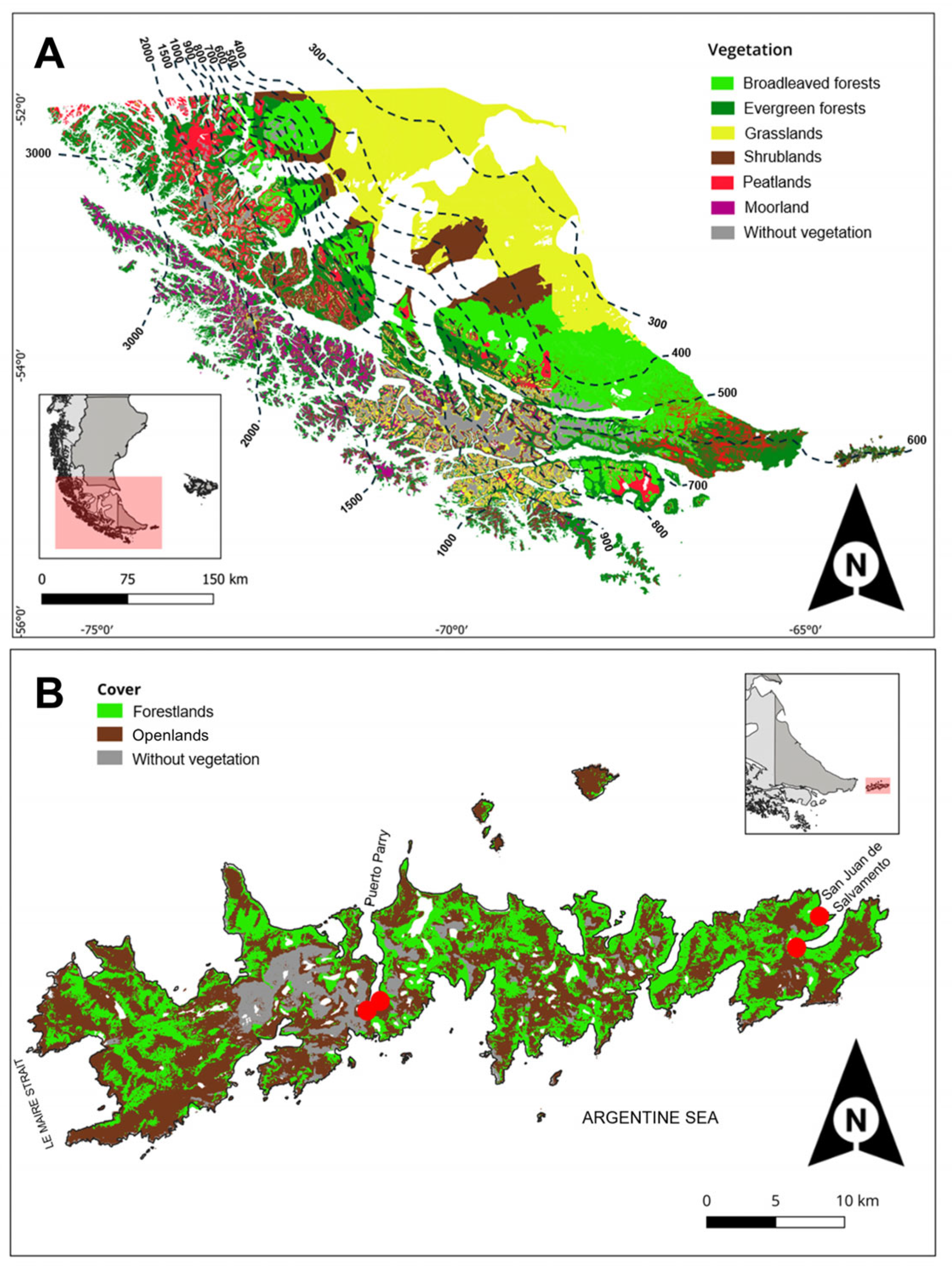
Distribution. Known from only three sampling localities on Isla de los Estados, Tierra del Fuego Province, Argentina, in evergreen wet forests dominated by Nothofagus betuloides trees accompanied by Drimys winteri as a secondary component (Figure 2) [1]. Isla de los Estados lies approximately 40 km east from the western extreme of Isla Grande de Tierra del Fuego; its biota was shaped by geological isolation and a harsh maritime climate (Figure 3). These conditions support a rich mosaic of plant communities across the island’s rugged, mountainous landscape [17] including evergreen forests, moorlands and maritime tussock grasslands [18]. In the evergreen forests, the N. betuloides trees reach the highest part of the canopy, while D. winteri occupies a lower tree stratum. Both species strongly reduce solar radiation reaching the forest floor, allowing the survival of shadow-resistant plant species at the understory level, such as Berberis ilicifolia, Hymenophyllum tortuosum, Luzuriaga marginata and Pernettya mucronata.
Natural history. Specimens of this species have been collected by beating foliage. No further data on their behavior are known. The phenology is unknown due to limited sampling; adult males and a penultimate female were found in November, and penultimate males and large immatures in March.
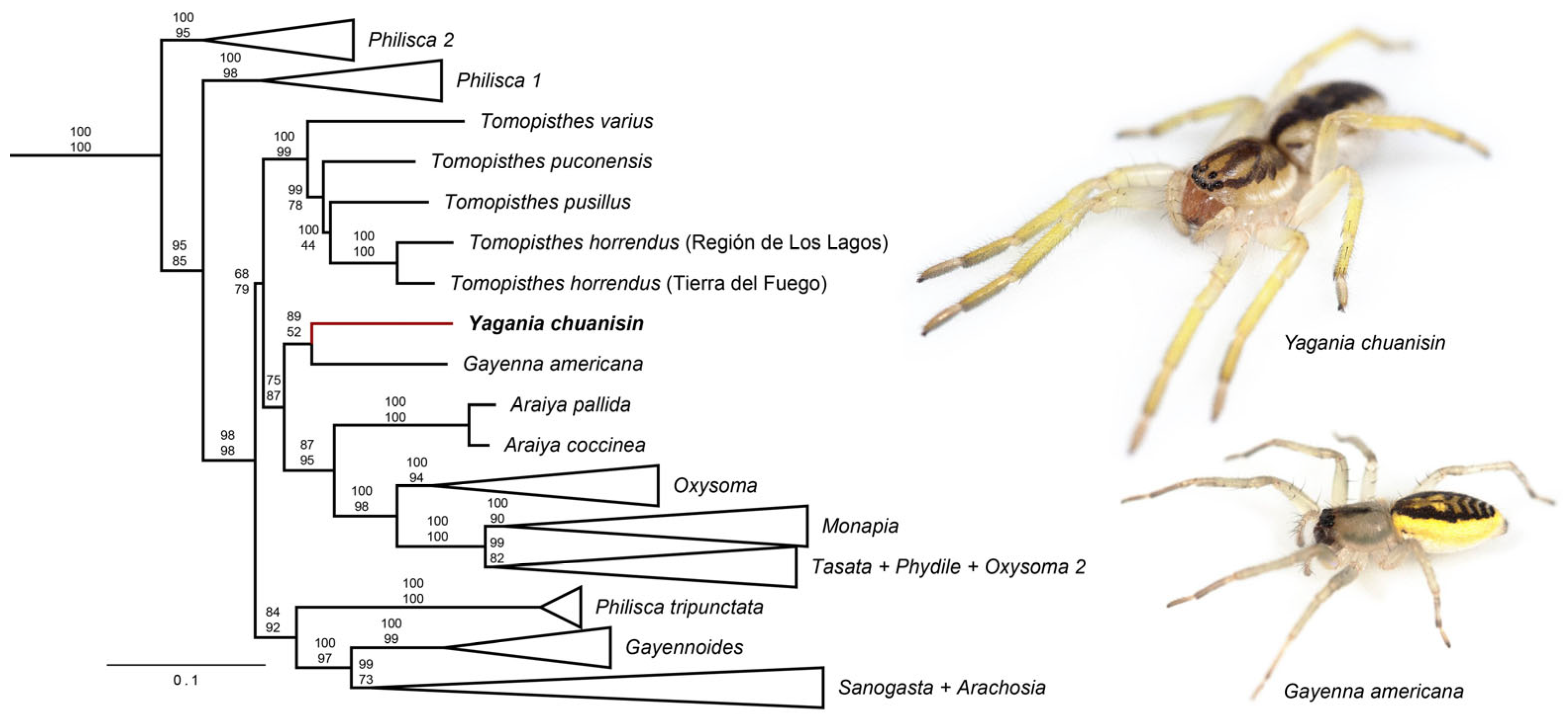
Relationships. The phylogenetic analyses based on four molecular markers from the nuclear (ribosomal 28S RNA and histone H3) and mitochondrial (cytochrome c oxidase subunit 1 and ribosomal 16S RNA) genomes [8,14] implied a sister group relationship between Yagania and Gayenna (Figure 9), but with moderate to low support (ultrafast bootstrap = 0.89, SH-aLRT = 0.52). Based on previous morphological characterizations of the subfamily Amaurobioidinae [5], we were unable to find clear synapomorphies uniting the two genera. Strong support for the neighboring sister genera (Tomopisthes, Araiya, and Oxysoma; each with an ultrafast bootstrap value of 1.0 and SH-aLRT ≥ 0.94) indicates that Yagania is distinct and not nested within them. Furthermore, its genital morphology separates it from all other Amaurobioidinae genera; no other known species possesses such a massive paramedian apophysis, a complex conductor, or a wide membranous epigynal area. Because the genital morphology of this species is highly divergent from that of Gayenna and of other established genera within the tribe, we herein propose a new genus to accommodate it. The divergence time between Yagania and Gayenna americana was estimated as 22.8 Mya (12.3–34.9 Mya 95% HPD) by [8].
Additional material examined. Isla de los Estados: Same locality and data as holotype, sifting litter (1 male MACN-Ar 34,386 MLB-4430, MLB-0975; photos 9784-9796). San Juan de Salvamento, end of bay, S54.75294° W063.88901° (±500 m), elev. 31 m, 1 December 2014, forest of guindo (Nothofagus betuloides), beating foliage, I.L.F. Magalhaes, A.O. Porta (1 male MACN-Ar 35826, DLP-0051, DLP-4051). Puerto Parry, trail to waterfall, S54.81169° W64.37330° (GPS, ±50 m), elev. 50 m, 10 March 2017, wet forest with canelo (Drimys winteri) and guindo (N. betuloides), beating foliage, M.J. Ramírez (5 immatures MACN-Ar 49535). Near lighthouse San Juan del Salvamento, S54.73365° W63.86277° (±200 m), elev. 7 m, 10 March 2017, forest with guindo (N. betuloides) and canelo (D. winteri), beating foliage, M.J. Ramírez (penultimate male, MACN-Ar MJR-1956).

4. Discussion

Given that Gayenna and Yagania are both monotypic genera, and resolved as sister groups in the phylogenetic analysis, one could consider the alternative of including both species in Gayenna. We believe this option is impractical, for two reasons. First, there are no clear morphological synapomorphies that would characterize and diagnose a group combining both species, whereas both Gayenna and Yagania are individually distinguishable by distinct morphological characters. Second, the support values uniting both genera are low, leaving their monophyly uncertain. For these reasons, we prefer to maintain them as two separate genera. Although the only female specimen available did not complete its final molt, the ecdysis process was well advanced. Given the sclerotization of the internal and external genital structures, we consider their morphology to be fully formed and in its definitive shape. Nonetheless, additional specimens should be collected to confirm these distinctive epigynal features.
The new species described herein is the sole representative of an old lineage that diverged at least 12 Ma from the lineage leading to its closer relative, Gayenna americana. The confidence interval for this divergence time is very wide (34.9–12.3 Ma, median 22.8 Ma); during this interval, regional climatic conditions varied considerably, but the frost-tolerant forest composition of Southern Patagonia was already established, including the dominant Nothofagus [19,20]. Tierra del Fuego endured significant cooling at the Oligocene–Miocene transition (24.2–22.8 Ma; [19]), a warmer and wetter period in the Early Miocene (ca. 19 Ma; [21]), and the Patagonian glaciations that began around 6 Ma [22]. All of this paleoclimatic context agrees with an ancestry of Yagania in the Patagonian forests, as inferred in [8].
The restricted geographic distribution of Yagania chuanisin, currently known only from Isla de los Estados, is puzzling, given that anyphaenids are good dispersers and usually exhibit widespread distributions. Other anyphaenid species characteristic of Tierra del Fuego, such as Selknamia minima Ramírez, 2003 and Axyracrus elegans Simon, 1884, occur across a wider geographic range despite their endemism [5] across the Tierra del Fuego Archipelago. Such localized distribution could be an artifact of limited sampling effort in the archipelago’s wettest and most inaccessible forests; however, the peculiar climate and current isolation of the island make true endemism plausible. Isla de los Estados was connected to the continent during the Last Glacial Maximum (ca. 24,000 yrs ago), including areas not covered by ice [23] that could have acted as a refuge for arthropod species during glaciations. Subsequently, intense geographic isolation may have driven genetic divergence, leading to localized endemism adapted to the area’s prevailing climatic conditions. At a local scale, this species may be strictly adapted to cold evergreen forests with a high rain regime, a habitat that only occurs in small areas of Tierra del Fuego Archipelago (Figure 2E and Figure 3). Such cold-tolerant spiders may have difficulty colonizing other habitats with differing climatic conditions. Because these hard-to-reach locations lack sufficient data on foliage arthropods, they are a top priority for future research into this species’ distribution, both within Isla de los Estados and in areas with similar microclimates and vegetation cover along the Tierra del Fuego Archipelago. In summary, the role of Isla de los Estados as the single known locality for Y. chuanisin, as well as the probable narrow endemism of this species, warrants further investigation to evaluate its conservation status in the subantarctic forests.

Supplementary Materials

The following supporting information can be downloaded at: https://doi.org/10.5281/zenodo.20548065.

Author Contributions

Conceptualization, M.J.R., I.L.F.M. and G.J.M.P.; Methodology, M.J.R., I.L.F.M., M.V.L. and G.J.M.P.; Field Work, M.J.R., I.L.F.M. and G.J.M.P.; Resources, M.J.R., M.V.L. and G.J.M.P.; Data Curation and Imaging, M.J.R. and I.L.F.M.; Cartography M.V.L. and G.J.M.P.; Writing—Original Draft Preparation, M.J.R.; Writing—Review and Editing, all authors; Funding Acquisition, M.J.R. All authors have read and agreed to the published version of the manuscript.

Funding

This work was supported by Agencia Nacional de Promoción Científica y Tecnológica Argentina (ANPCyT, grant numbers PICT 2011-1007, PICT 2015-283, PICT-2019-2745).

Institutional Review Board Statement

Not applicable.

Data Availability Statement

The original, unedited images documenting this study are deposited in Zenodo (https://doi.org/10.5281/zenodo.20548065).

Acknowledgments

Collection permits were provided by Secretaría de Desarrollo Sustentable y Ambiente de Tierra del Fuego (570/12 and 3/2017). The Centro Austral de Investigaciones Científicas (CADIC) provided logistic support in Ushuaia. Federico Guerrero and Laura Smith (60 South) generously brought MJR, IFM and GMP to Isla de los Estados in the Ocean Tramp vessel. Andrés Osvaldo Porta helped in the 2014 field expedition. We thank the editorial staff and three anonymous reviewers for their constructive comments and suggestions on early versions of this manuscript.

Conflicts of Interest

The authors declare no conflicts of interest.

Abbreviations

The following abbreviations are used in this manuscript:
ALEanterior lateral eye
AMEanterior median eye
mtmetatarsus
MACN-ArNational Collection of Arachnology, Museo Argentino de Ciencias Naturales “Bernardino Rivadavia”
PLEposterior lateral eye
PMEposterior median eye
titibia

References

  1. Huertas Herrera, A.; Lencinas, M.V.; Martínez Pastur, G. Assessing the effect of environmental gradients as drivers of richness and plant community assemblage in Isla de los Estados at Southern Atlantic Ocean. Community Ecol. 2018, 19, 35–44. [Google Scholar] [CrossRef]
  2. Benítez, J.; Lencinas, M.V.; Huertas Herrera, A.; Martínez Pastur, G. Assessing the conservation value of nature reserves: Terrestrial birds in Isla de los Estados (Staten Island) Provincial Reserve, Tierra del Fuego, Argentina. Community Ecol. 2019, 20, 181–193. [Google Scholar] [CrossRef]
  3. Bauni, V.; Bertonatti, C.; Giacchino, A.; Schivo, F.; Mabragaña, E.; Roesler, I.; Rosso, J.J.; Teta, P.; Williams, J.D.; Abba, A.M.; et al. Biodiversity of vertebrates in Argentina: Patterns of richness, endemism and conservation status. ZooKeys 2022, 1085, 101–127. [Google Scholar] [CrossRef] [PubMed]
  4. Roig-Juñent, S.; Griotti, M.; Miras, D.; Carrara, R. Geadephaga (Insecta: Coleoptera) from the sub-Antarctic Tierra del Fuego archipelago: Species-richness, distribution maps and taxonomic key. Polar Biol. 2024, 47, 1441–1456. [Google Scholar] [CrossRef]
  5. Ramírez, M.J. The spider subfamily Amaurobioidinae (Araneae, Anyphaenidae): A phylogenetic revision at the generic level. Bull. Am. Mus. Nat. Hist. 2003, 277, 1–262. [Google Scholar] [CrossRef]
  6. Lopez, M.E.; Sola, F.J.; Argañaraz, C.I.; Salom, A. Uncovering the terrestrial and aquatic invertebrates of Isla de los Estados, Argentina. In Biodiversity and Conservation of Isla de los Estados (Chuani-sin) A XXI Century Terra Incognita; Raya Rey, A., Balza, U., Eds.; Springer Nature: Cham, Switzerland, 2026; pp. 179–201. [Google Scholar]
  7. Merian, P. Les Araignées de la Terre du Feu et la Patagonie, comme point départ de comparaisons géografiques entre diverses couches faunistiques. Rev. Mus. Plata 1913, 20, 7–100. [Google Scholar]
  8. Ceccarelli, F.S.; Mongiardino Koch, N.; Soto, E.M.; Barone, M.L.; Arnedo, M.A.; Ramírez, M.J. The grass was greener: Repeated evolution of specialized morphologies and habitat shifts in ghost spiders following grassland expansion in South America. Syst. Biol. 2019, 68, 63–77. [Google Scholar] [CrossRef] [PubMed]
  9. Allué, C.; Arranz, J.A.; Bava, J.O.; Beneitez, J.M.; Collado, L.; García-López, J.M. Caracterización y cartografía fitoclimáticas del bosque nativo subantártico en la Isla Grande de Tierra del Fuego (Patagonia, Argentina). For. Syst. 2010, 19, 189–207. [Google Scholar] [CrossRef]
  10. Luebert, F.; Pliscoff, P. Sinopsis Bioclimática y Vegetacional de Chile, 2nd ed.; Editorial Universitaria: Santiago, Chile, 2017. [Google Scholar]
  11. Rodríguez Souilla, J.; Martínez Pastur, G.; Lizarraga, L. Mapa de coberturas de suelo del PN Tierra del Fuego: ¿Qué estamos protegiendo? La Lupa 2025, 15, 27–31. [Google Scholar]
  12. Fick, S.E.; Hijmans, R.J. WorldClim 2: New 1-km spatial resolution climate surfaces for global land areas. Int. J. Climatol. 2017, 37, 4302–4315. [Google Scholar] [CrossRef]
  13. Argañaraz, C.I.; Martínez Pastur, G.J.; Ramírez, M.J.; Grismado, C.J.; Blazina, A.P.; Lencinas, M.V. Ground-dwelling spiders and understory vascular plants on Fuegian austral forests: Community responses to variable retention management and their association to natural ecosystems. For. Ecol. Manag. 2020, 474, 118375. [Google Scholar] [CrossRef]
  14. Barone, M.L.; Wilson, J.D.; Zapata, L.; Soto, E.M.; Haddad, C.R.; Grismado, C.J.; Izquierdo, M.A.; Arias, E.; Pizarro, J.; Briones, R.; et al. Genetic barcodes for species identification and phylogenetic estimation in ghost spiders (Araneae, Anyphaenidae, Amaurobioidinae). Invertebr. Syst. 2024, 38, IS24053. [Google Scholar] [CrossRef] [PubMed]
  15. Wong, T.K.; Ly-Trong, N.; Ren, H.; Demotte, P.; Baños, H.; Roger, A.J.; Susko, E.; Bielow, C.; De Maio, N.; Goldman, N.; et al. IQ-TREE 3: Phylogenomic inference software using complex evolutionary models. Mol. Biol. Evol. 2026, 43, msag117. [Google Scholar] [CrossRef] [PubMed]
  16. Zangrando, A.F.J.; Ávila, S.; Gutiérrez, S.; Landa, C.; Raies, A.; Tivoli, A.M. Human impact on the Isla de los Estados environment. In Biodiversity and Conservation of Isla de los Estados (Chuani-sin) A XXI Century Terra Incognita; Raya Rey, A., Balza, U., Eds.; Springer Nature: Cham, Switzerland, 2026; pp. 25–33. [Google Scholar]
  17. Salom, A.; Cano, J.; Testoni, D.; Mansilla, P.R.; Mestre, L.; Collado, L.; Biganzoli, F. Flora and Vegetation of Isla de los Estados. In Biodiversity and Conservation of Isla de los Estados (Chuani-sin) A XXI Century Terra Incognita; Raya Rey, A., Balza, U., Eds.; Springer Nature: Cham, Switzerland, 2026; pp. 43–78. [Google Scholar]
  18. Moore, D.M. Flora of Tierra del Fuego; Anthony Nelson: Oswestry, UK, 1983; p. 396. [Google Scholar]
  19. Tapia, M.J.; Panti, C.; Fernández, D.A.; Pujana, R.R.; Barreda, V.D.; Palazzesi, L. Response of the Patagonian floras to climatic cooling during Oligocene–Miocene transition and the expansion of Antarctic glaciation. Evol. Earth 2023, 1, 100015. [Google Scholar] [CrossRef]
  20. Vento, B.; Agraín, F.A. Phylogenetic relationships and time-calibration of the South American fossil and extant species of southern beeches (Nothofagus). Acta Palaeontol. Pol. 2018, 63, 815–825. [Google Scholar] [CrossRef]
  21. Sandoval, C.A.; Yabe, A.; Nishida, H.; Hinojosa, L.F. Climate and vegetation of the Miocene of Tierra del Fuego: Filaret Formation. Paleoceanogr. Paleoclimatology 2024, 39, e2023PA004770. [Google Scholar] [CrossRef]
  22. Rabassa, J.; Coronato, A.; Martinez, O. Late Cenozoic glaciations in Patagonia and Tierra del Fuego: An updated review. Biol. J. Linn. Soc. 2011, 103, 316–335. [Google Scholar] [CrossRef]
  23. Ponce, J.F.; Fernández, M. Climatic and Environmental History of Isla de los Estados, Argentina; Springer: Dordrecht, The Netherlands, 2014; p. 128. [Google Scholar]
Figure 1. Living specimens of Yagania chuanisin: (A,B) immature; (C) penultimate male; (D) adult male.
Diversity 18 00346 g001
Figure 2. Habitat of Yagania chuanisin in evergreen forests on Isla de los Estados: (A) Isla de los Estados seen from Le Maire Strait; (B) type locality in Puerto Parry; (C) same place, understory of forest where specimens were collected; (D) open habitat near lighthouse San Juan del Salvamento; (E) same place, penultimate male on leaves of canelo (Drimys winteri).
Diversity 18 00346 g002
Figure 3. (A) Main vegetation formations (based on [9,10,11]) and annual rainfall isolines (based on [12]) of Tierra del Fuego Archipelago. (B) Vegetation cover (forestlands and openlands) of Isla de los Estados identifying capture sites (red dots).
Diversity 18 00346 g003
Figure 4. Somatic morphology of Yagania chuanisin: (A) male holotype, dorsal view; (B) same specimen, ventral view; (C) same specimen, prosoma anterior view; (D) paratype penultimate female, dorsal view (MACN-Ar 34381 MLB-4445); (E) same specimen, lateral view; (F) same specimen, ventral view, molting cuticle removed from epigyne.
Diversity 18 00346 g004
Figure 5. Genitalia of Yagania chuanisin: (A) left male palp, prolateral view (holotype); (B) same specimen, ventral view; (C) same specimen, retrolateral view; (D) epigyne, ventral view (penultimate female paratype MACN-Ar 34381 MLB-4445, molting cuticle removed).
Diversity 18 00346 g005
Figure 6. Genitalia of Yagania chuanisin: (A) left male palp, ventral view (holotype); (B) vulva, dorsal view, schematic (paratype MACN-Ar 34381 MLB-4445). Abbreviations: ab, accessory bulb; bg, Bennet’s glan; fd, fertilization duct; r, ridge; s, spermatheca.
Diversity 18 00346 g006
Figure 7. Left copulatory bulb (paratype MACN-Ar 34381 MLB-4444): (A) ventral view; (B) retrolateral view; (C) apical view; (D) dorsal–prolateral view; (E) prolateral view; (F) prolateral–ventral view. Abbreviations: ch, conductor hook-shaped spike; cp, conductor prolateral projection; cr, conductor rim; e, embolus; m, median apophysis; pm, paramedian apophysis; st, subtegulum.
Diversity 18 00346 g007
Figure 8. Female genitalia of Yagania chuanisin, cleared (penultimate paratype MACN-Ar 34381 MLB-4445, molting cuticle removed): (A) ventral view; (B) same specimen, dorsal view. Abbreviations: ab, accessory bulb; cd, copulatory duct; co, copulatory opening; fd, fertilization duct; ll, lateral lobe; mf, median field; r, ridge; s, spermatheca.
Diversity 18 00346 g008
Figure 9. A phylogenetic tree showing the relationships of Yagania chuanisin with other Gayennini (modified from [14]). The analysis of maximum likelihood was based on four molecular markers. Support values above branches are ultrafast bootstrap percentages (top) and Shimodaira–Hasegawa-like approximate likelihood ratio test values (bottom). Branch lengths are proportional to substitutions per site, as per the scale (bottom left).
Diversity 18 00346 g009
Disclaimer/Publisher’s Note: The statements, opinions and data contained in all publications are solely those of the individual author(s) and contributor(s) and not of MDPI and/or the editor(s). MDPI and/or the editor(s) disclaim responsibility for any injury to people or property resulting from any ideas, methods, instructions or products referred to in the content.