


Abstract
The title compounds have been known for many years and have been widely used to generate alkoxycarbonylnitrenes by α-elimination as well as for other synthetic transformations. Although they have previously been characterised by spectroscopic methods, their X-ray structures are reported here for the first time. They have similar folded molecular structures but, while the ethyl ester forms hydrogen-bonded ribbons consisting of two rows of molecules joined by carbamate N–H⋯O=C hydrogen bonding, the tert-butyl ester forms hydrogen-bonded dimers involving the carbamate N–H and one sulfonyl O=S.
1. Introduction
Ethyl N-(4-nitrobenzenesulfonoxy)carbamate 1 was first described by Lwowski and coworkers over 60 years ago [1,2] when it was found to act as a convenient precursor of ethoxycarbonylnitrene, EtO2C–N:, when treated with triethylamine in solution. In these early studies it was characterised by melting point, IR and 1H NMR spectroscopy and elemental analysis. Sometime later, Seno and coworkers found that the generation of ethoxycarbonylnitrene from 1 could be accomplished under phase-transfer conditions [3]. More recently, the compound has found application in palladium catalysed ortho-amidation of anilides and in this study its 13C NMR spectrum was also reported [4]. The corresponding tert-butyl ester, tert-butyl N-(4-nitrobenzenesulfonoxy)carbamate 2, was first mentioned in 1995 when it allowed the first synthesis of aziridino[60]fullerene [5]. It has subsequently proved to be useful in regioselective functionalisation of alkenes [6] and aromatics [7,8] with characterisation data including melting point, IR and 1H NMR spectra [5] and the 13C NMR spectrum [6]. Despite the significant interest in these compounds over a long period, neither of them has been subjected to X-ray structure determination. They present interesting opportunities for intermolecular hydrogen bonding, and we describe here their molecular and crystal structures as determined by X-ray diffraction.
2. Results and Discussion
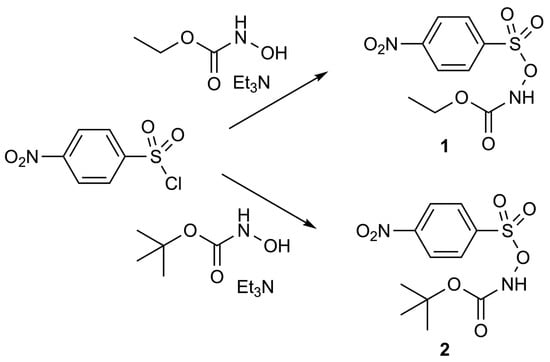
The compounds were readily prepared by treating 4-nitrobenzenesulfonyl chloride with the appropriate N-hydroxy carbamate in the presence of triethylamine in diethyl ether at 0 °C (Scheme 1). They showed melting points and spectroscopic data in good agreement with reported values and were obtained as well-formed crystals suitable for X-ray crystallography by recrystallisation from hexane/ethyl acetate.
Scheme 1.
Synthesis of compounds 1 and 2.
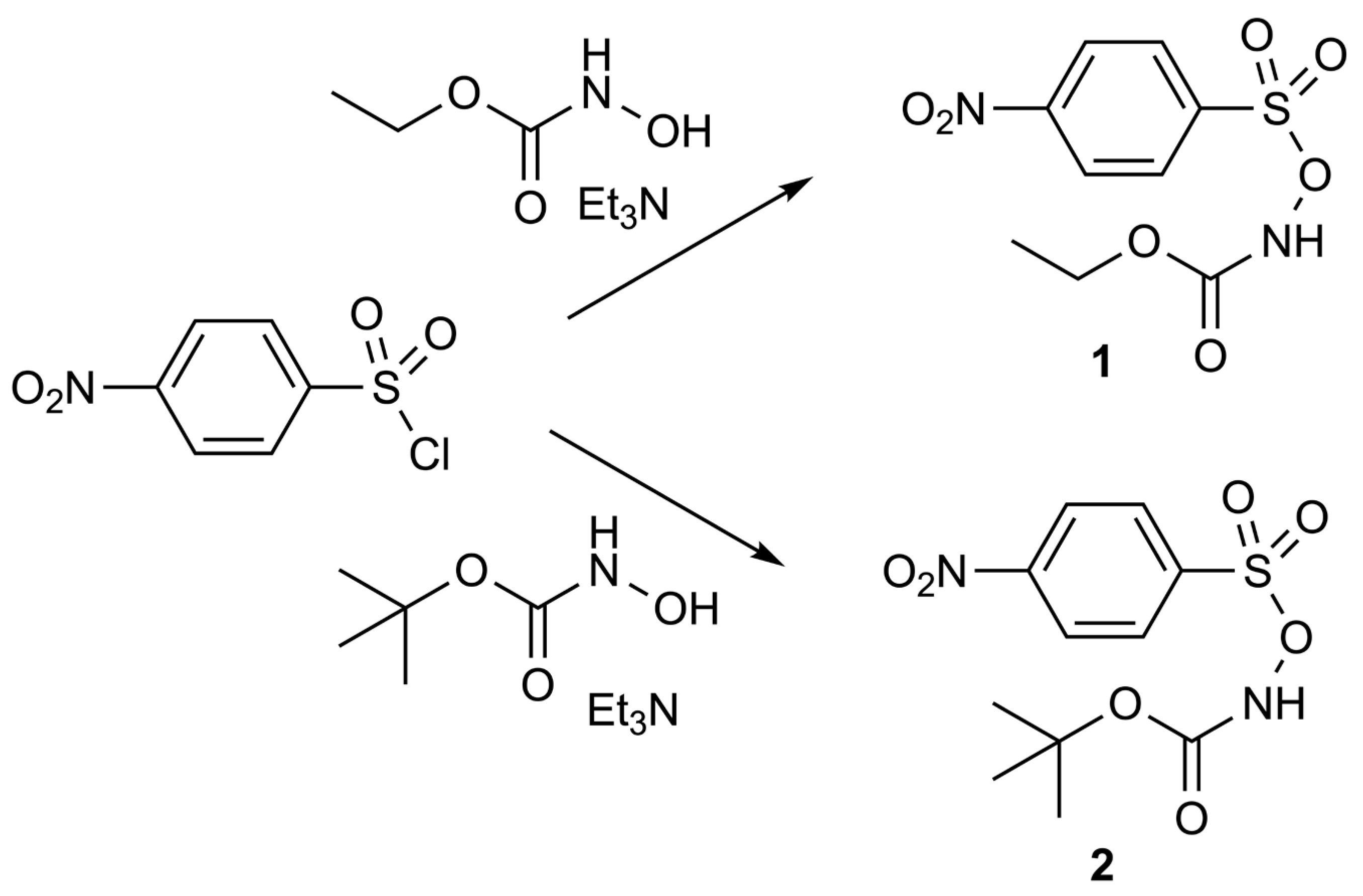
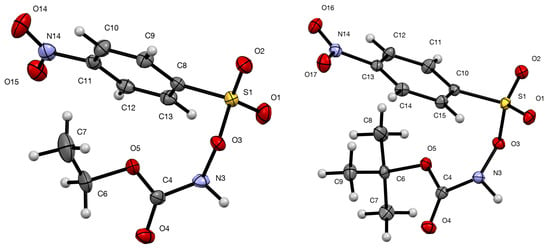
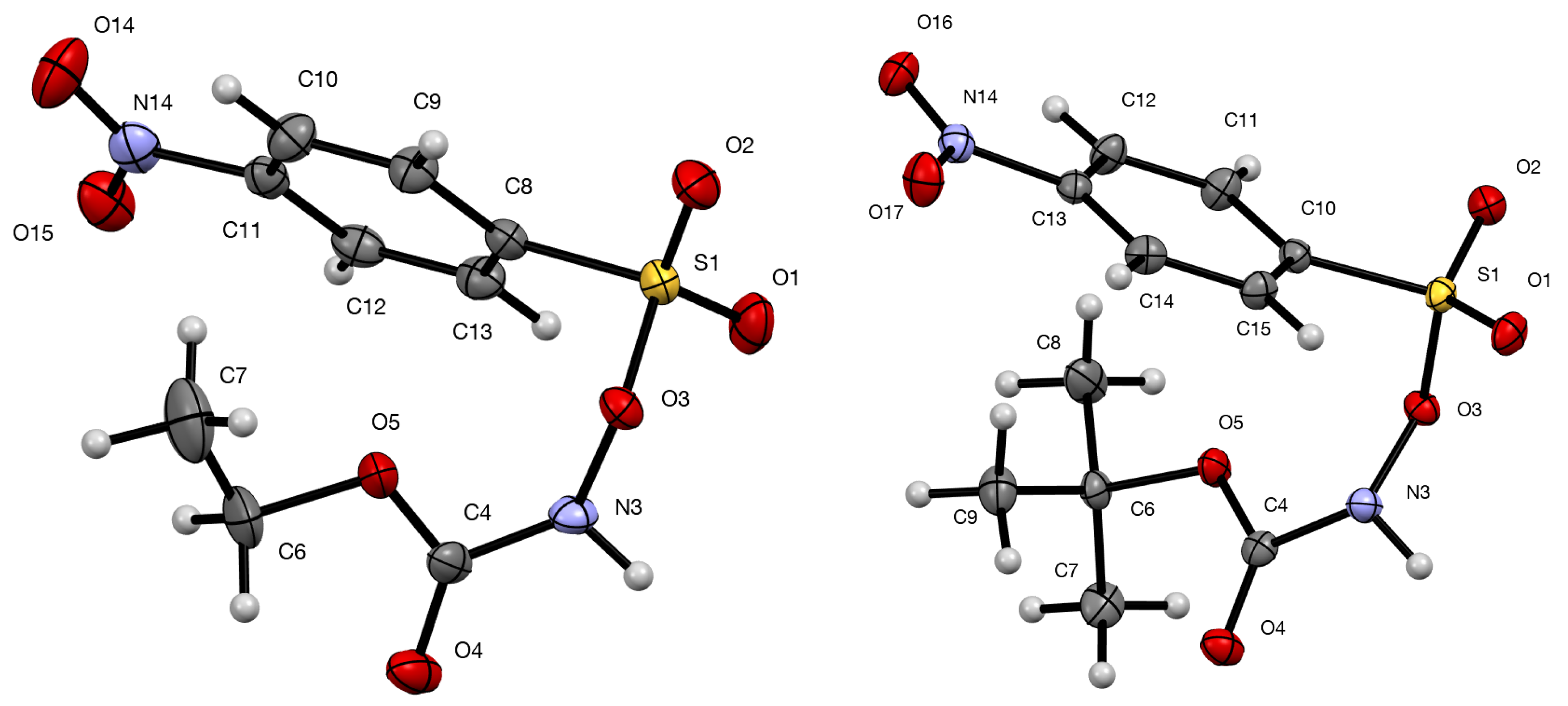
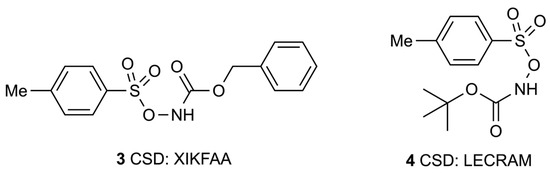
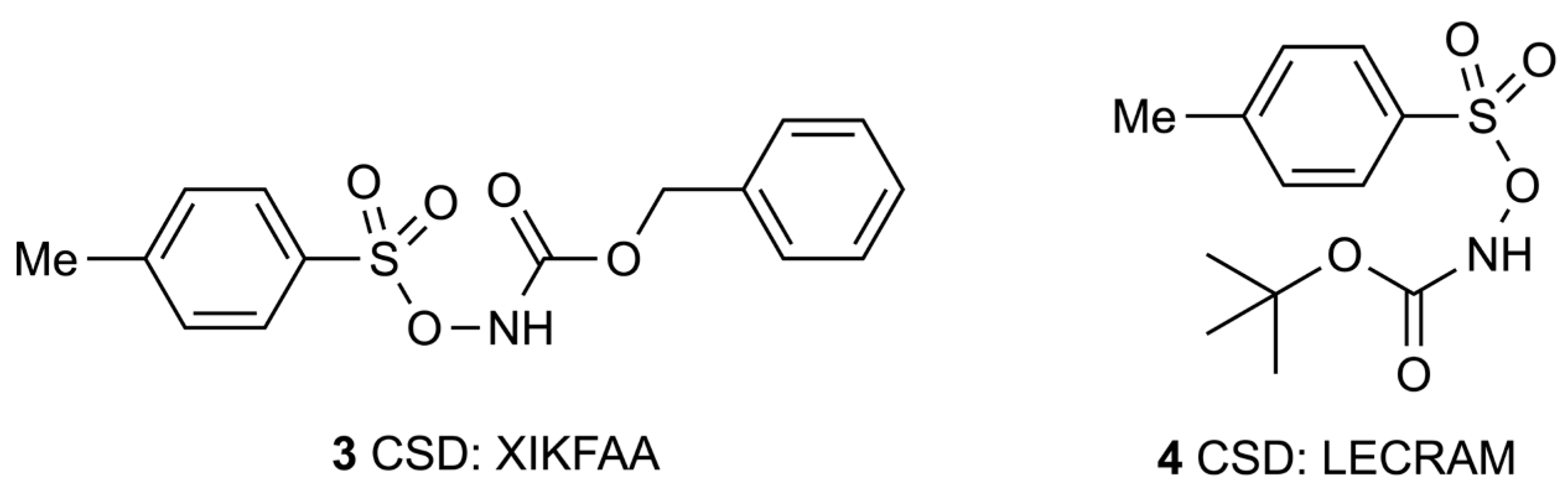
The resulting molecular structures (Figure 1, see Supplementary Materials) show both compounds to adopt a very similar folded conformation with the carbamate function in close proximity to the nitrophenyl group. A search of the Cambridge Crystallographic Database showed very few comparable structures but two N-(4-methylphenylsulfonoxy) carbamates were identified. The benzyl ester 3 [6] adopts a more linear conformation while the tert-butyl ester 4 [9], exactly analogous to 2, adopts the same folded structure (Figure 2).
Figure 1.
Molecular structures of 1 (left) and 2 (right) with anisotropic displacement ellipsoids drawn at the 50% probability level and the numbering system used.
Figure 2.
Structures of comparable sulfonoxycarbamates 3 [6] and 4 [9] with CSD Ref Codes.
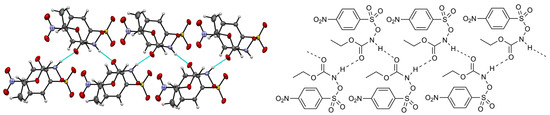
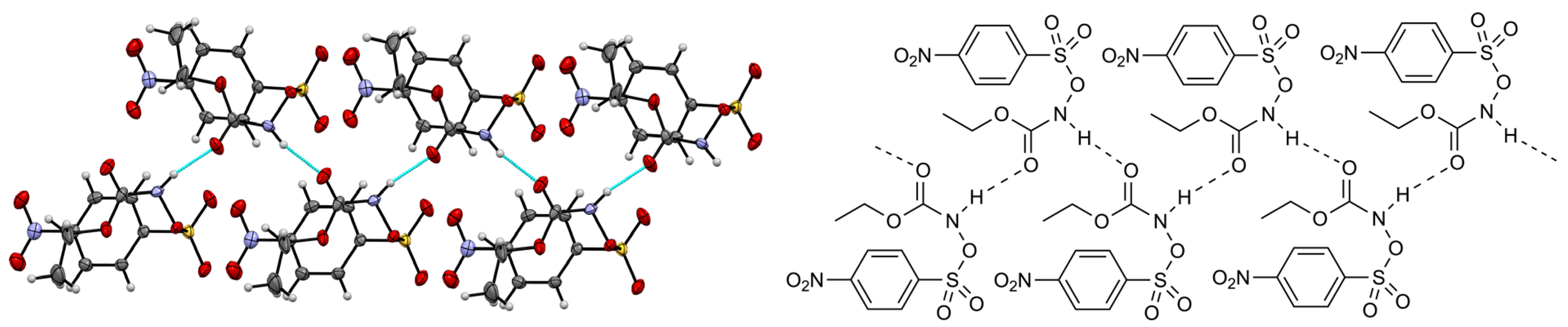
When we consider the crystal structures of 1 and 2, there is intermolecular hydrogen bonding in each case but of a quite different type. The ethyl compound 1 forms ribbons with two rows of molecules having the aromatic rings at the outside and joined in the middle by N–H⋯O=C hydrogen bonds involving the carbamate function (Figure 3). The hydrogen bond parameters (Table 1) are in the normal range.
Figure 3.
Hydrogen-bonding pattern in 1 viewed along the a axis (left) and schematic representation (right).
Table 1.
Hydrogen-bonding parameters for 1–4 (Å, °).
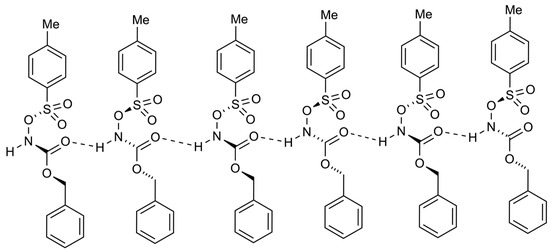
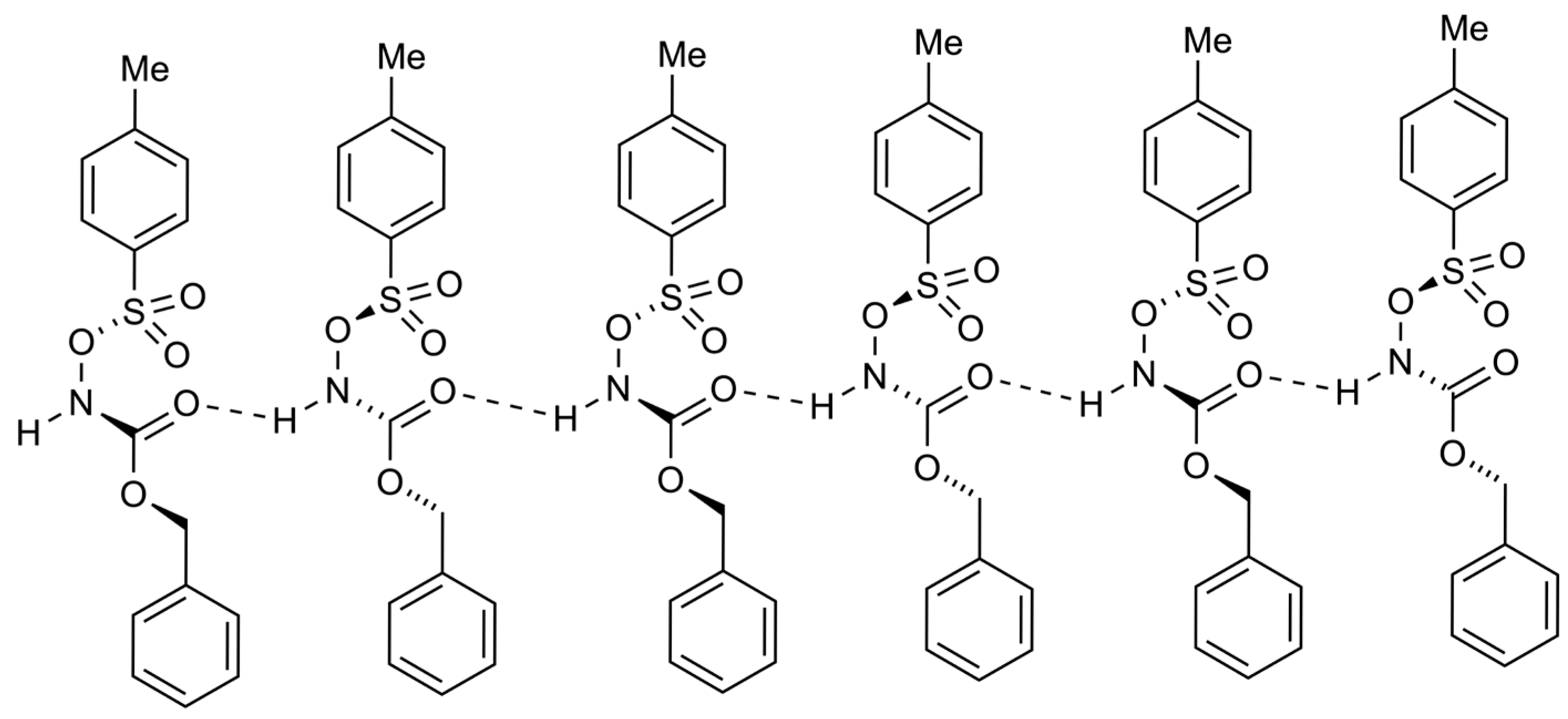
This pattern is in contrast to the hydrogen bonding observed in the structure of 3 [6], where the molecules are also joined by N–H⋯O=C hydrogen bonds involving the carbamate function, but the molecules are arranged in single lines with broadly the same orientation but alternating molecules tilted into and out of the plane (Figure 4). These differences arise from the conformation of the molecule (folded for 1, stretched out for 3), and how this arranges the hydrogen-bonding donors and acceptors.
Figure 4.
Schematic representation of the hydrogen-bonding pattern in 3.
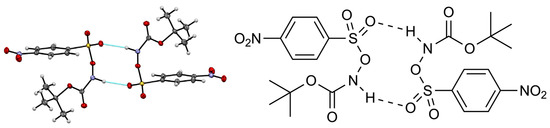
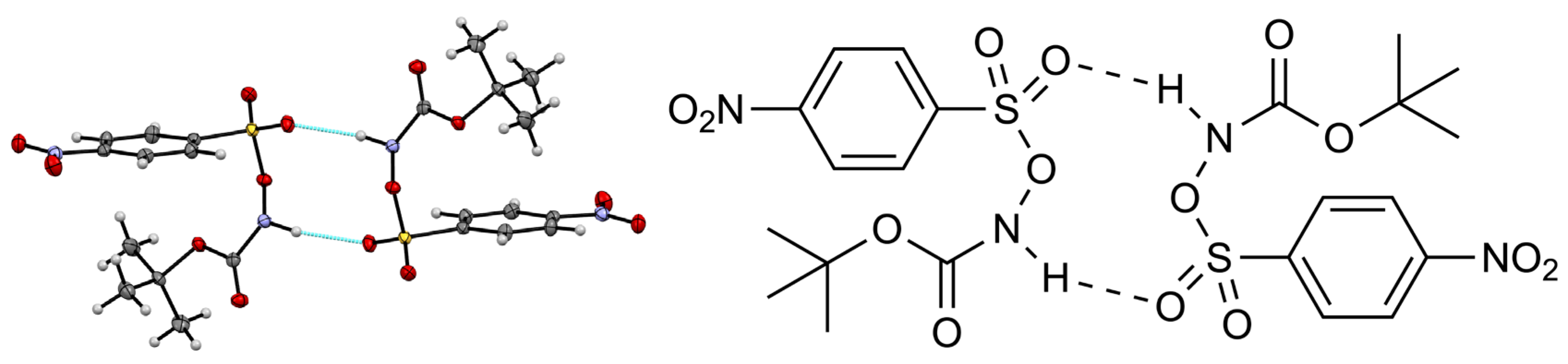
When we come to the tert-butyl compound 2, the hydrogen bonding is between the carbamate N–H and one of the sulfonyl O=S oxygens, resulting in head-to-tail dimers with a central 10-membered ring (Figure 5). The involvement of one S=O in hydrogen bonding is reflected in its increased bond length of 1.431(1) Å as compared to the other S=O at 1.422(1) Å.
Figure 5.
Hydrogen-bonding pattern in 2 viewed along the a axis (left) and schematic representation (right).
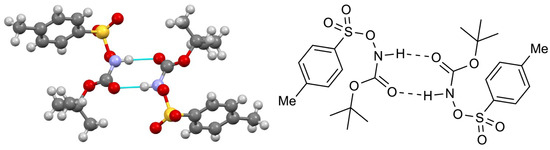
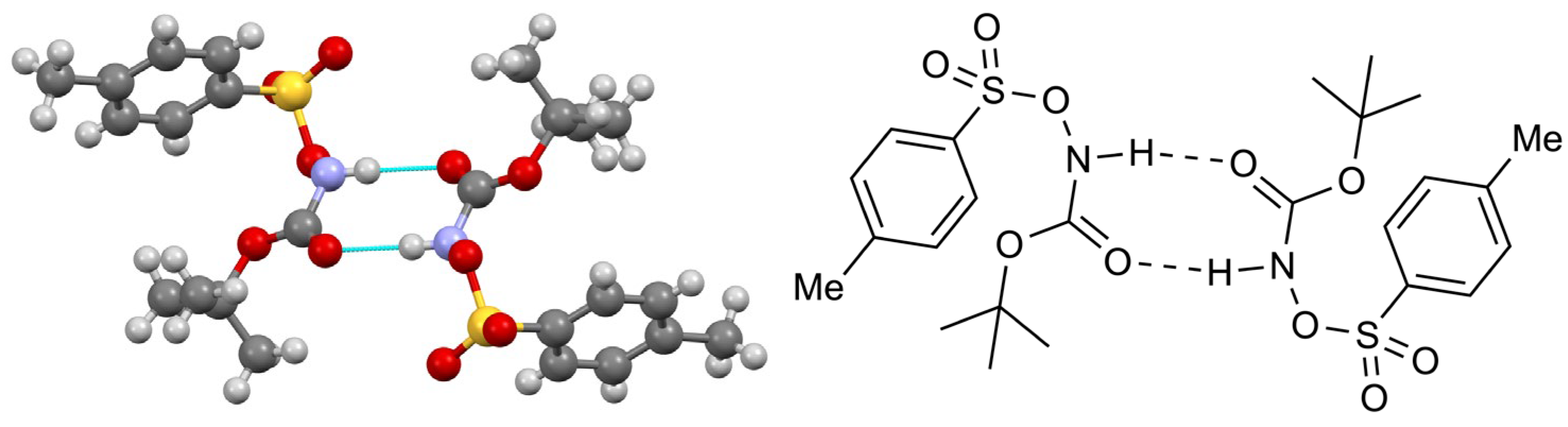
This pattern is in interesting contrast to the very similar compound 4, which only differs by having 4-Me vs. 4-NO2. Its structure also consists of hydrogen-bonded dimers but involving carbamate N–H and O=C forming a central 8-membered ring (Figure 6) [9]. Given the very similar solid-state geometries exhibited by 2 and 4, it is not clear why 2 should adopt such a different hydrogen-bonding mode, particularly involving the more unusual sulfonyl acceptor, rather than the carbonyl.
Figure 6.
Hydrogen-bonding pattern in 4 (left) and schematic representation (right).
In summary, we obtained the X-ray crystal structures of ethyl and tert-butyl N-(4-nitrobenzenesulfonoxy)carbamate for the first time and found that, while the molecular structures are broadly similar, they adopt quite different patterns of hydrogen bonding in the crystal, leading in one case to a double ribbon and in the other to dimers featuring a central 10-membered ring.
3. Experimental
Melting point measurements were made on a Reichert hot-stage microscope (Reichert, Vienna, Austria).
- Ethyl N-(4-nitrobenzenesulfonoxy)carbamate 1
Following the literature procedure [2], p-nitrobenzenesulfonyl chloride (8.42 g, 38 mmol) was added to a solution of ethyl N-hydroxycarbamate [10] (4.00 g, 38 mmol) in ether (50 mL) at 0 °C. A solution of triethylamine (4.40 mL, 3.19 g, 29 mmol) in diethyl ether (10 mL) was subsequently added dropwise while cooling was continued and the reaction was then left to stir for 12 h at room temperature. The precipitate was filtered off and the filtrate evaporated under reduced pressure to yield a dark yellow residue. This residue was dissolved in CH2Cl2 (10 mL) and passed through a silica gel plug to obtain, upon evaporation, the crude product 1 which was recrystallised from hexane/ethyl acetate to produce product 1 (6.43 g, 58%) as fine colourless needles, mp 114–117 °C (lit. [2] 116.4–116.8 °C). 1H and 13C NMR spectral data were in accordance with those previously reported [4].
- tert-Butyl N-(4-nitrobenzenesulfonoxy)carbamate 2
Following the literature procedure [11], p-nitrobenzenesulfonyl chloride (4.88 g, 22 mmol) was added to a solution of t-butyl N-hydroxycarbamate [12] (2.66 g, 20 mmol) in ether (35 mL) at 0 °C. A solution of triethylamine (3.00 mL, 2.18 g, 22 mmol) in diethyl ether (5 mL) was subsequently added dropwise while cooling was continued and the reaction was then left to stir for 12 h at room temperature. The precipitate was filtered off and the filtrate evaporated under reduced pressure to yield a dark yellow residue. This residue was dissolved in CH2Cl2 (10 mL) and passed through a silica gel plug to obtain, upon evaporation, the crude product 2 which was recrystallised from hexane/ethyl acetate to produce product 2 (2.36 g, 37%) as fine yellow needles, mp 84–89 °C (lit. [6] 86–91 °C). 1H [5] and 13C [6] NMR spectral data were in accordance with those previously reported.
- X-ray diffraction study of 1 and 2
X-ray diffraction data for compounds 1 and 2 were collected at 110 K using a Rigaku XtaLAB Synergy-S diffractometer equipped with a HyPix-Arc 100° Hybrid Photon Counting (HPC) detector, PhotonJet-S microfocus sealed-tube X-ray source [Mo Kα radiation (λ = 0.71073 Å)], and MAX optics (Rigaku, Tokyo, Japan). Intensity data for both compounds were collected (using a calculated strategy) and processed (including correction for Lorentz, polarisation and absorption) using CrysAlisPro [13]. Structures were solved by dual-space methods (SHELXT [14]) and refined by full-matrix least-squares against F2 (SHELXL-2025/1 [15]). Non-hydrogen atoms were refined anisotropically, and hydrogen atoms were refined using a riding model, except for the NH hydrogens which were located from the difference Fourier map and refined isotropically subject to a distance restraint. All calculations were performed using the Olex2 [16] interface. Selected crystallographic data are presented in Table 2. CCDC 2591456-2591457 contains the supplementary crystallographic data for this paper. These data can be obtained free of charge from the Cambridge Crystallographic Data Centre via www.ccdc.cam.ac.uk/structures.
Table 2.
Selected crystallographic data.
Supplementary Materials
The following supporting information can be downloaded online, cif files for 1 and 2.
Author Contributions
E.F. prepared the compounds, D.B.C. collected the X-ray data and solved the structures; R.A.A. designed the study, analysed the data, and wrote the paper. All authors have read and agreed to the published version of the manuscript.
Funding
We acknowledge support for the St Andrews Single-Crystal X-Ray Diffraction Service from an EPSRC Core Equipment Grant (UKRI381), and the University of St Andrews Strategic Equipment Fund.
Data Availability Statement
CCDC 2591456-2591457 contain the supplementary crystallographic data. These data can be obtained free of charge from the Cambridge Crystallographic Data Centre via www.ccdc.cam.ac.uk/structures.
Conflicts of Interest
The authors declare no conflicts of interest.
References
- Lwowski, W.; Maricich, T.J.; Mattingly, T.W., Jr. Carbethoxynitrene. J. Am. Chem. Soc. 1963, 85, 1200–1202. [Google Scholar] [CrossRef] [Scilit]
- Lwowski, W.; Maricich, T.J. Carbethoxynitrene by α-elimination. Reactions with hydrocarbons. J. Am. Chem. Soc. 1965, 87, 3630–3637. [Google Scholar] [CrossRef] [Scilit]
- Seno, M.; Namba, T.; Kise, H. Generation of carbethoxynitrene by α-elimination and its reactions with olefins under two-phase conditions. J. Org. Chem. 1978, 43, 3345–3348. [Google Scholar] [CrossRef] [Scilit]
- Ng, K.-H.; Chan, A.S.C.; Yu, W.-Y. Pd catalyzed intermolecular ortho-C–H amidation of anilides by N-nosyloxycarbamate. J. Am. Chem. Soc. 2010, 132, 12862–12864. [Google Scholar] [CrossRef] [Scilit]
- Banks, M.R.; Cadogan, J.I.G.; Gosney, I.; Hodgson, P.K.G.; Langridge-Smith, P.R.R.; Millar, J.A.; Taylor, A. Aziridino [2′,3′:1,2][60]fullerene. Chem. Commun. 1995, 31, 885–886. [Google Scholar] [CrossRef] [Scilit]
- Masruri; Willis, A.C.; McLeod, M.D. Osmium-catalyzed vicinal oxyamination of alkenes by N-(4-toluenesulfonoxy)carbamates. J. Org. Chem. 2012, 77, 8480–8491. [Google Scholar] [CrossRef] [Scilit]
- Morrill, C.; Gillespie, J.E.; Phipps, R.J. An aminative rearrangement of O-(arenesulfonyl)hydroxylamines: Facile access to ortho-sulfonyl anilines. Angew. Chem. Int. Ed. 2022, 61, e202204025. [Google Scholar] [CrossRef] [Scilit]
- Smith, M.J.S.; Tu, W.; Roberson, C.M.; Bower, J.F. Stereospecific aminative cyclizations triggered by intermolecular aza-Prilezhaev alkene aziridination. Angew. Chem. Int. Ed. 2023, 62, e202312797. [Google Scholar] [CrossRef] [Scilit]
- Boche, G.; Boie, C.; Bosold, F.; Harms, K.; Marsch, M. [(N-Lithio-N-mesitylsulfonoxy-tert-butyl carbamate)2•(thf)3]: Crystal structure of a nitrenoid. Angew. Chem. Int. Ed. 1994, 33, 115–117. [Google Scholar] [CrossRef] [Scilit]
- Bhat, J.I.; Clegg, W.; Maskill, H.; Elsegood, M.R.J.; Menneer, I.D.; Miatt, P.C. N-Nitroso-N,O-dialkylhydroxylamines: Preparation, structure, and mechanism of the hydronium ion catalysed solvolytic nitrous oxide extrusion reaction. J. Chem. Soc. Perkin Trans. 2 2000, 29, 1435–1446. [Google Scholar] [CrossRef] [Scilit]
- Gillespie, J.E.; Morrill, C.; Phipps, R.J. Regioselective radical arene amination for the concise synthesis of ortho-phenylenediamines. J. Am. Chem. Soc. 2021, 143, 9355–9360. [Google Scholar] [CrossRef] [Scilit]
- Bach, P.; Bols, M. Synthesis of an 1-azaglucose analogue with ring-oxygen retained. Tetrahedron Lett. 1999, 40, 3461–3464. [Google Scholar] [CrossRef] [Scilit]
- CrysAlisPro, v1.171.44.151a; Rigaku Oxford Diffraction, Rigaku Corporation: Tokyo, Japan, 2025.
- Sheldrick, G.M. SHELXT—Integrated space-group and crystal structure determination. Acta Crystallogr. Sect. A Found. Adv. 2015, 71, 3–8. [Google Scholar] [CrossRef] [Scilit]
- Sheldrick, G.M. Crystal structure refinement with SHELXL. Acta Crystallogr. Sect. C Struct. Chem. 2015, 71, 3–8. [Google Scholar] [CrossRef] [Scilit]
- Dolomanov, O.V.; Bourhis, L.J.; Gildea, R.J.; Howard, J.A.K.; Puschmann, H. OLEX2: A complete structure solution, refinement and analysis program. J. Appl. Crystallogr. 2009, 42, 339–341. [Google Scholar] [CrossRef] [Scilit]

Disclaimer/Publisher’s Note: The statements, opinions and data contained in all publications are solely those of the individual author(s) and contributor(s) and not of MDPI and/or the editor(s). MDPI and/or the editor(s) disclaim responsibility for any injury to people or property resulting from any ideas, methods, instructions or products referred to in the content. |
© 2026 by the authors. Licensee MDPI, Basel, Switzerland. This article is an open access article distributed under the terms and conditions of the Creative Commons Attribution (CC BY) license.