Harnessing Cancer Stem Cells and 3D Organoids in Unravelling Spatial and Cellular Heterogeneity in Cancer

Abstract
1. Introduction
2. Crosstalk Between Cancer Stem Cells and the TME
2.1. Features of CSCs
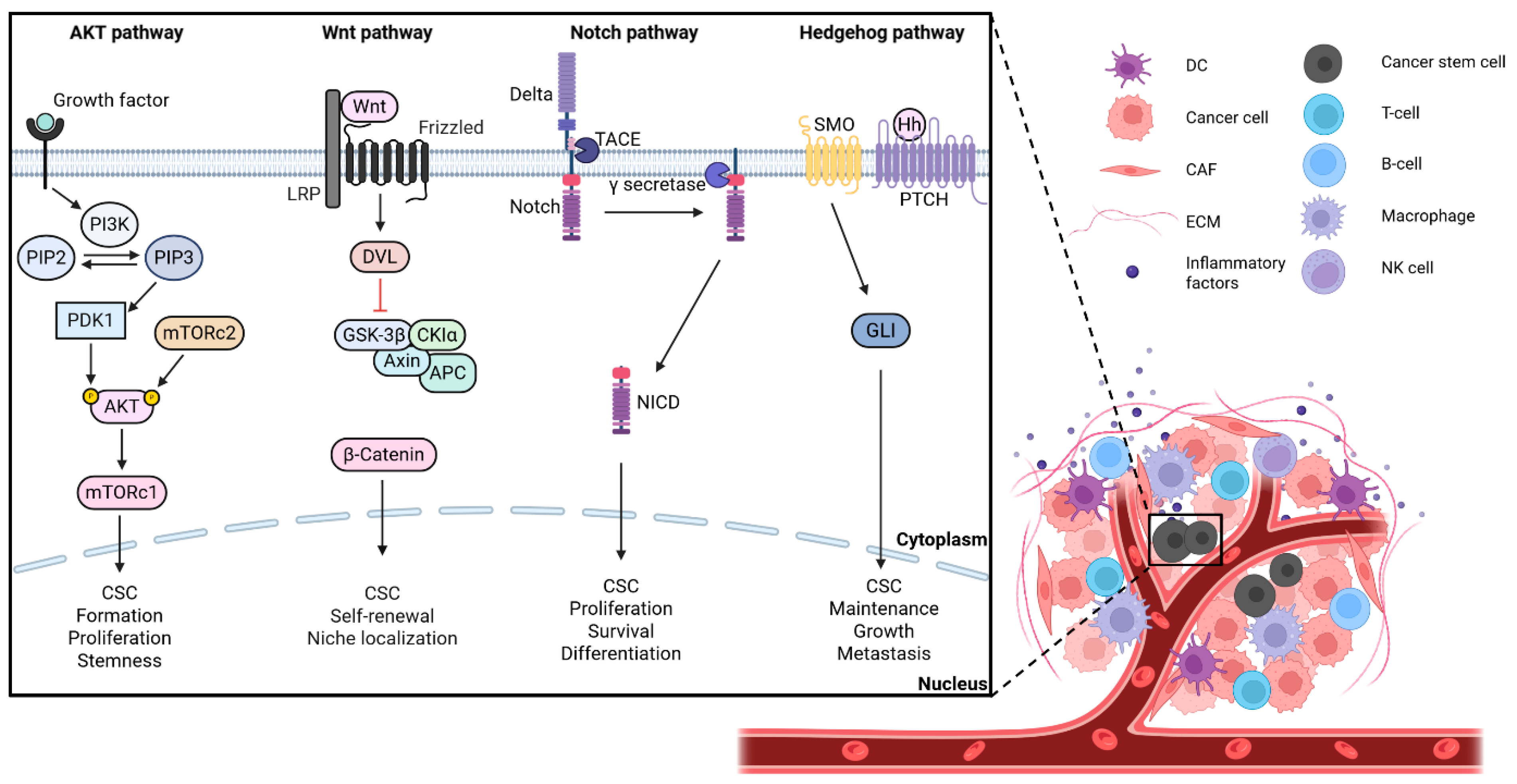
2.2. Signaling Pathways That Regulate CSCs
2.2.1. PI3K/AKT/mTOR Signaling Pathway
2.2.2. Wnt/β-Catenin Signaling Pathway
2.2.3. Notch Signaling Pathway
2.2.4. Hedgehog (Hh) Signaling Pathway
2.3. Niche and TME of CSCs
3. Mechanisms Driving Spatial and Cellular Heterogeneity in Cancer
3.1. Cancer Heterogeneity
3.2. Mechanisms Driving Cancer Heterogeneity
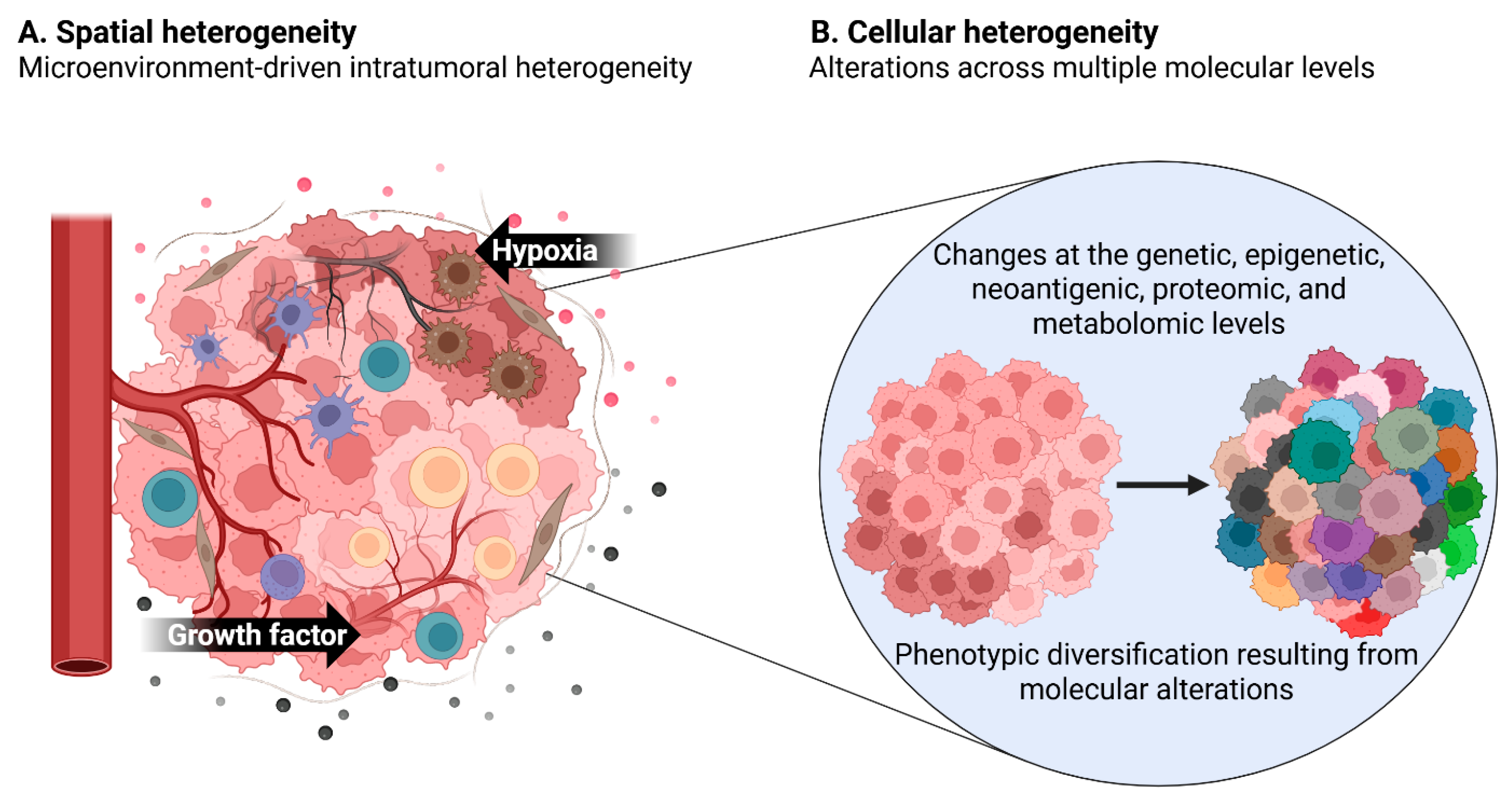
3.3. Spatial and Cellular Heterogeneity
3.3.1. Spatial Heterogeneity
3.3.2. Cellular Heterogeneity
4. 3D Organoid Technology and Its Application in Cancer Research
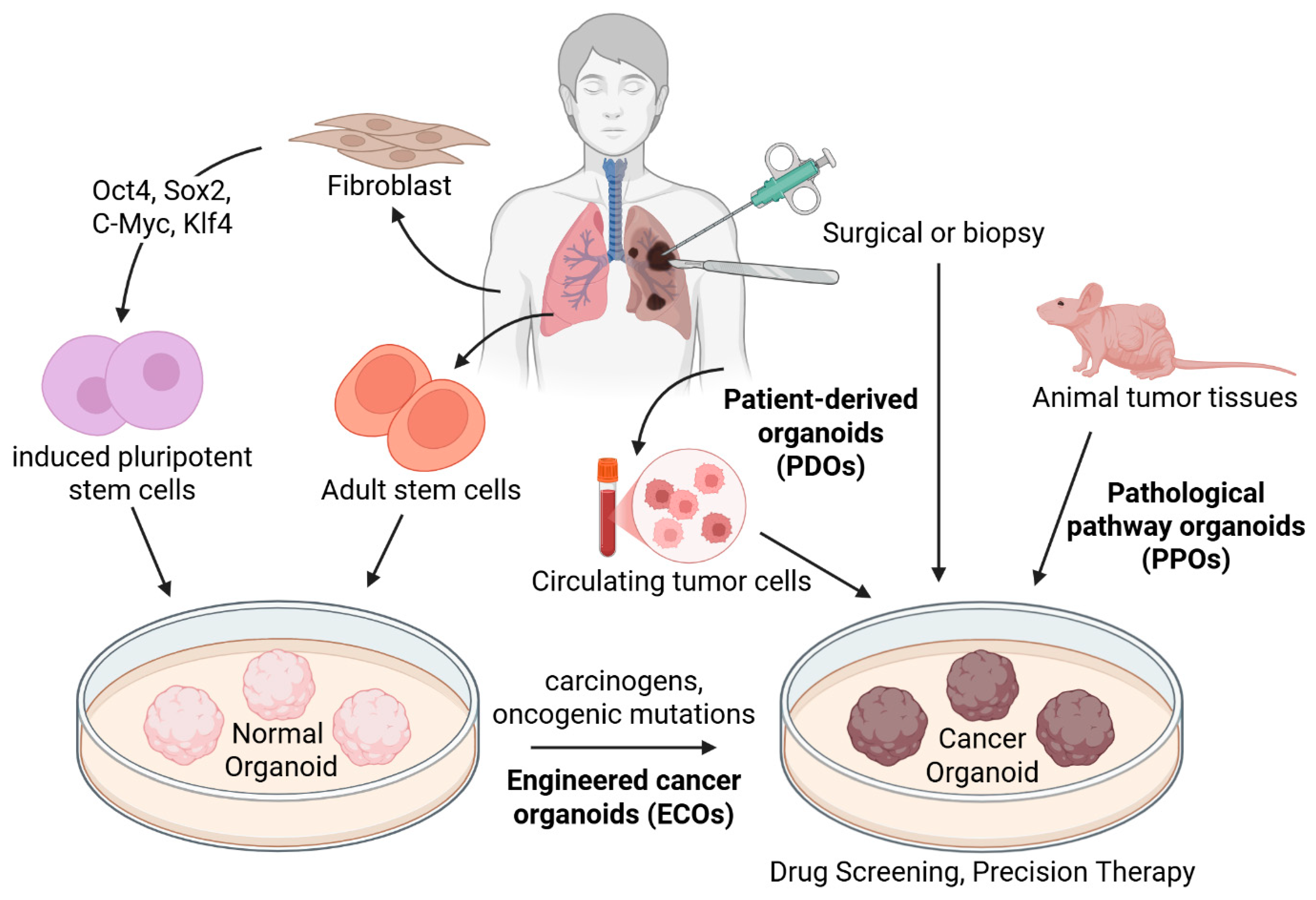
4.1. Introduction to 3D Organoid Technology
4.2. Applications of Organoids in Cancer
5. Overcoming Technical and Biological Barriers in CSC-Derived Organoid Models
5.1. Rarity of CSCs and Difficulty Isolating Them
5.2. Lack of Standardized Culture Conditions for CSCs and Cancer Organoids
5.3. Lack of TME Components Such as Immune Cells and Vasculature
5.4. Limited Predictive Accuracy of CSC-Derived Organoids
5.5. Limitations of CSC-Derived Organoids in Reproducing Tumor Heterogeneity
6. Therapeutic Perspectives: Targeting Heterogeneity Using 3D Cancer Organoid Models
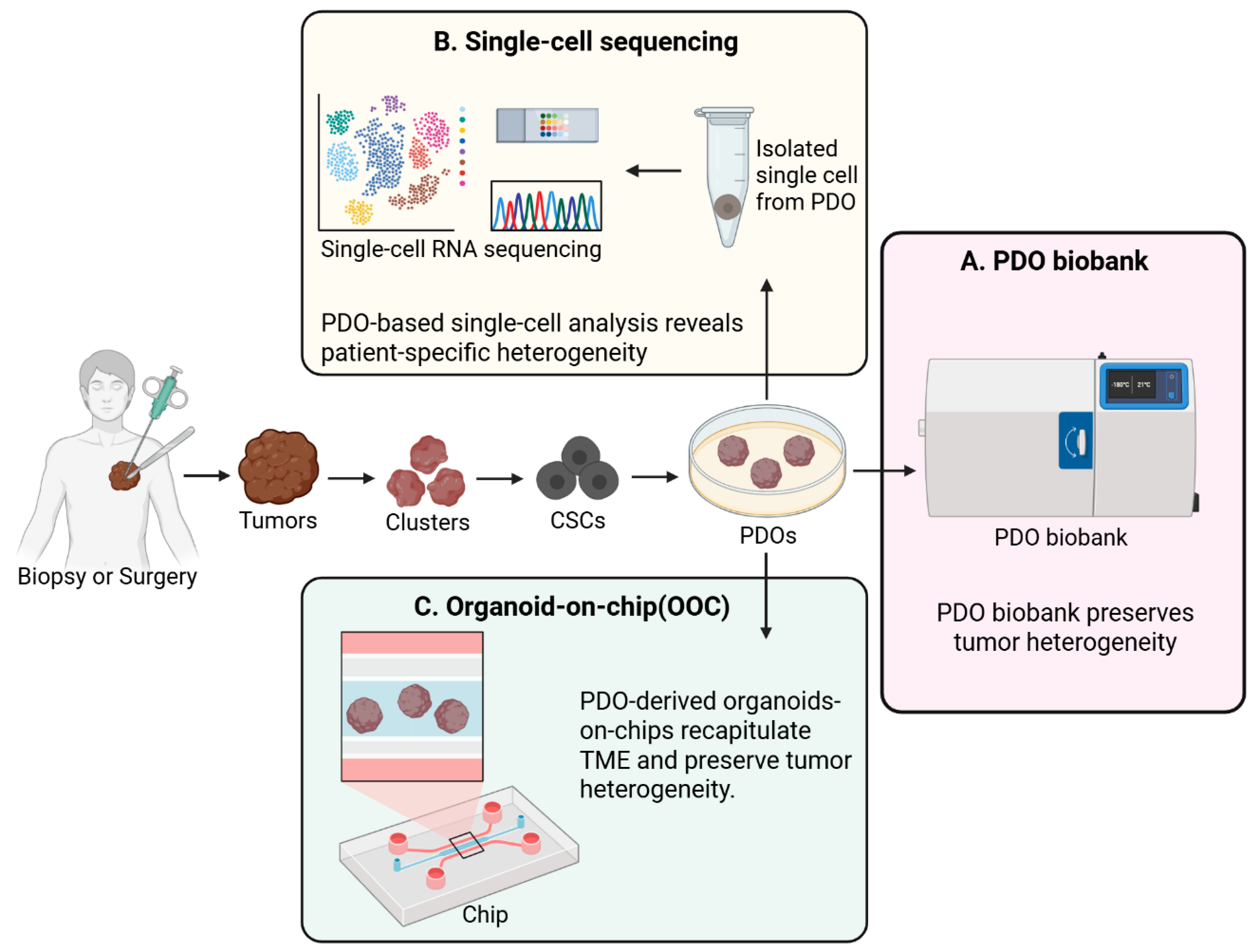
6.1. PDO Biobanks
6.2. Single-Cell Sequencing
6.3. Organoid-on-Chip (OOC) Technologies
7. Conclusions
Author Contributions
Funding
Institutional Review Board Statement
Informed Consent Statement
Data Availability Statement
Conflicts of Interest
References
- El-Sayes, N.; Vito, A.; Mossman, K. Tumor Heterogeneity: A Great Barrier in the Age of Cancer Immunotherapy. Cancers 2021, 13, 806. [Google Scholar] [CrossRef]
- Fu, Y.-C.; Liang, S.-B.; Luo, M.; Wang, X.-P. Intratumoral Heterogeneity and Drug Resistance in Cancer. Cancer Cell Int. 2025, 25, 103. [Google Scholar] [CrossRef] [PubMed]
- Jacquemin, V.; Antoine, M.; Dom, G.; Detours, V.; Maenhaut, C.; Dumont, J.E. Dynamic Cancer Cell Heterogeneity: Diagnostic and Therapeutic Implications. Cancers 2022, 14, 280. [Google Scholar] [CrossRef] [PubMed]
- Cordani, M.; Dando, I.; Ambrosini, G.; González-Menéndez, P. Signaling, Cancer Cell Plasticity, and Intratumor Heterogeneity. Cell Commun. Signal. 2024, 22, 255. [Google Scholar] [CrossRef]
- Goyette, M.-A.; Lipsyc-Sharf, M.; Polyak, K. Clinical and Translational Relevance of Intratumor Heterogeneity. Trends Cancer 2023, 9, 726–737. [Google Scholar] [CrossRef]
- Jing, N.; Gao, W.-Q.; Fang, Y.-X. Regulation of Formation, Stemness and Therapeutic Resistance of Cancer Stem Cells. Front. Cell Dev. Biol. 2021, 9, 641498. [Google Scholar] [CrossRef]
- Kapoor-Narula, U.; Lenka, N. Cancer Stem Cells and Tumor Heterogeneity: Deciphering the Role in Tumor Progression and Metastasis. Cytokine 2022, 157, 155968. [Google Scholar] [CrossRef]
- Pan, Y.; Yuan, C.; Zeng, C.; Sun, C.; Xia, L.; Wang, G.; Chen, X.; Zhang, B.; Liu, J.; Ding, Z. Cancer Stem Cells and Niches: Challenges in Immunotherapy Resistance. Mol. Cancer 2025, 24, 52. [Google Scholar] [CrossRef]
- Xu, H.; Jiao, D.; Liu, A.; Wu, K. Tumor Organoids: Applications in Cancer Modeling and Potentials in Precision Medicine. J. Hematol. Oncol. 2022, 15, 58. [Google Scholar] [CrossRef]
- Marx, V. Closing in on Cancer Heterogeneity with Organoids. Nat. Methods 2024, 21, 551–554. [Google Scholar] [CrossRef] [PubMed]
- Landon-Brace, N.; Li, N.T.; McGuigan, A.P. Exploring New Dimensions of Tumor Heterogeneity: The Application of Single Cell Analysis to Organoid-Based 3D In Vitro Models. Adv. Healthc. Mater. 2023, 12, 2300903. [Google Scholar] [CrossRef]
- Qu, J.; Kalyani, F.S.; Liu, L.; Cheng, T.; Chen, L. Tumor Organoids: Synergistic Applications, Current Challenges, and Future Prospects in Cancer Therapy. Cancer Commun. 2021, 41, 1331–1353. [Google Scholar] [CrossRef] [PubMed]
- Vlachogiannis, G.; Hedayat, S.; Vatsiou, A.; Jamin, Y.; Fernández-Mateos, J.; Khan, K.; Lampis, A.; Eason, K.; Huntingford, I.; Burke, R.; et al. Patient-Derived Organoids Model Treatment Response of Metastatic Gastrointestinal Cancers. Science 2018, 359, 920–926. [Google Scholar] [CrossRef]
- Sachs, N.; de Ligt, J.; Kopper, O.; Gogola, E.; Bounova, G.; Weeber, F.; Balgobind, A.V.; Wind, K.; Gracanin, A.; Begthel, H.; et al. A Living Biobank of Breast Cancer Organoids Captures Disease Heterogeneity. Cell 2018, 172, 373–386.e10. [Google Scholar] [CrossRef]
- Bai, L.; Wu, Y.; Li, G.; Zhang, W.; Zhang, H.; Su, J. AI-Enabled Organoids: Construction, Analysis, and Application. Bioact. Mater. 2024, 31, 525–548. [Google Scholar] [CrossRef] [PubMed]
- Heinzelmann, E.; Piraino, F. AI-Enhanced Patient-Derived Cancer Organoids: Integrating Machine Learning for Precision Oncology. Organoids 2025, 4, 30. [Google Scholar] [CrossRef]
- Yuan, Y.-C.; Xu, B.; McCormack, J.; Huang, X.; Ma, J.; Marshall, T.; Sun, Y.; Singh, H.; Fanelli, A.; Kulkarni, G.; et al. Deep learning-powered scalable cancer organ chip for cancer precision medicine. Adv. Sci. 2026, e16660. [Google Scholar] [CrossRef]
- Chu, X.; Tian, W.; Ning, J.; Xiao, G.; Zhou, Y.; Wang, Z.; Zhai, Z.; Tanzhu, G.; Yang, J.; Zhou, R. Cancer Stem Cells: Advances in Knowledge and Implications for Cancer Therapy. Signal Transduct. Target. Ther. 2024, 9, 170. [Google Scholar] [CrossRef] [PubMed]
- Han, J.; Won, M.; Hyeon Kim, J.; Jung, E.; Min, K.; Jangili, P.; Seung Kim, J. Cancer Stem Cell-Targeted Bio-Imaging and Chemotherapeutic Perspective. Chem. Soc. Rev. 2020, 49, 7856–7878. [Google Scholar] [CrossRef]
- Yang, L.; Shi, P.; Zhao, G.; Xu, J.; Peng, W.; Zhang, J.; Zhang, G.; Wang, X.; Dong, Z.; Chen, F.; et al. Targeting Cancer Stem Cell Pathways for Cancer Therapy. Signal Transduct. Target. Ther. 2020, 5, 8. [Google Scholar] [CrossRef]
- Ju, F.; Atyah, M.M.; Horstmann, N.; Gul, S.; Vago, R.; Bruns, C.J.; Zhao, Y.; Dong, Q.-Z.; Ren, N. Characteristics of the Cancer Stem Cell Niche and Therapeutic Strategies. Stem Cell Res. Ther. 2022, 13, 233. [Google Scholar] [CrossRef]
- Marzagalli, M.; Fontana, F.; Raimondi, M.; Limonta, P. Cancer Stem Cells—Key Players in Tumor Relapse. Cancers 2021, 13, 376. [Google Scholar] [CrossRef] [PubMed]
- Chaudhary, A.; Raza, S.S.; Haque, R. Transcriptional Factors Targeting in Cancer Stem Cells for Tumor Modulation. Semin. Cancer Biol. 2023, 88, 123–137. [Google Scholar] [CrossRef]
- Zeng, Z.; Fu, M.; Hu, Y.; Wei, Y.; Wei, X.; Luo, M. Regulation and Signaling Pathways in Cancer Stem Cells: Implications for Targeted Therapy for Cancer. Mol. Cancer 2023, 22, 172. [Google Scholar] [CrossRef]
- Dianat-Moghadam, H.; Mahari, A.; Salahlou, R.; Khalili, M.; Azizi, M.; Sadeghzadeh, H. Immune Evader Cancer Stem Cells Direct the Perspective Approaches to Cancer Immunotherapy. Stem Cell Res. Ther. 2022, 13, 150. [Google Scholar] [CrossRef] [PubMed]
- Nallasamy, P.; Nimmakayala, R.K.; Parte, S.; Are, A.C.; Batra, S.K.; Ponnusamy, M.P. Tumor Microenvironment Enriches the Stemness Features: The Architectural Event of Therapy Resistance and Metastasis. Mol. Cancer 2022, 21, 225. [Google Scholar] [CrossRef]
- Karami Fath, M.; Ebrahimi, M.; Nourbakhsh, E.; Zia Hazara, A.; Mirzaei, A.; Shafieyari, S.; Salehi, A.; Hoseinzadeh, M.; Payandeh, Z.; Barati, G. PI3K/Akt/mTOR Signaling Pathway in Cancer Stem Cells. Pathol.—Res. Pract. 2022, 237, 154010. [Google Scholar] [CrossRef] [PubMed]
- Miricescu, D.; Balan, D.G.; Tulin, A.; Stiru, O.; Vacaroiu, I.A.; Mihai, D.A.; Popa, C.C.; Papacocea, R.I.; Enyedi, M.; Sorin, N.A.; et al. PI3K/AKT/mTOR Signalling Pathway Involvement in Renal Cell Carcinoma Pathogenesis (Review). Exp. Ther. Med. 2021, 21, 540. [Google Scholar] [CrossRef] [PubMed]
- Glaviano, A.; Foo, A.S.C.; Lam, H.Y.; Yap, K.C.H.; Jacot, W.; Jones, R.H.; Eng, H.; Nair, M.G.; Makvandi, P.; Geoerger, B.; et al. PI3K/AKT/mTOR Signaling Transduction Pathway and Targeted Therapies in Cancer. Mol. Cancer 2023, 22, 138. [Google Scholar] [CrossRef]
- Mortazavi, M.; Moosavi, F.; Martini, M.; Giovannetti, E.; Firuzi, O. Prospects of Targeting PI3K/AKT/mTOR Pathway in Pancreatic Cancer. Crit. Rev. Oncol. Hematol. 2022, 176, 103749. [Google Scholar] [CrossRef]
- Li, Q.; Li, Z.; Luo, T.; Shi, H. Targeting the PI3K/AKT/mTOR and RAF/MEK/ERK Pathways for Cancer Therapy. Mol. Biomed. 2022, 3, 47. [Google Scholar] [CrossRef] [PubMed]
- Sun, E.J.; Wankell, M.; Palamuthusingam, P.; McFarlane, C.; Hebbard, L. Targeting the PI3K/Akt/mTOR Pathway in Hepatocellular Carcinoma. Biomedicines 2021, 9, 1639. [Google Scholar] [CrossRef]
- Ertay, A. Altered PI3K/AKT/mTOR Signaling Pathway and Cancer Stem Cells. In Cancer Stem Cells and Cancer Therapy; Kalkan, R., Ed.; Springer Nature: Cham, Switzerland, 2024; pp. 131–158. ISBN 978-3-031-74842-4. [Google Scholar]
- Wu, B.; Shi, X.; Jiang, M.; Liu, H. Cross-Talk between Cancer Stem Cells and Immune Cells: Potential Therapeutic Targets in the Tumor Immune Microenvironment. Mol. Cancer 2023, 22, 38. [Google Scholar] [CrossRef] [PubMed]
- Katoh, M.; Katoh, M. WNT Signaling and Cancer Stemness. Essays Biochem. 2022, 66, 319–331. [Google Scholar] [CrossRef]
- Xue, C.; Chu, Q.; Shi, Q.; Zeng, Y.; Lu, J.; Li, L. Wnt Signaling Pathways in Biology and Disease: Mechanisms and Therapeutic Advances. Signal Transduct. Target. Ther. 2025, 10, 106. [Google Scholar] [CrossRef]
- Manni, W.; Min, W. Signaling Pathways in the Regulation of Cancer Stem Cells and Associated Targeted Therapy. MedComm 2022, 3, e176. [Google Scholar] [CrossRef]
- Xia, R.; Xu, M.; Yang, J.; Ma, X. The Role of Hedgehog and Notch Signaling Pathway in Cancer. Mol. Biomed. 2022, 3, 44. [Google Scholar] [CrossRef]
- Sachan, N.; Sharma, V.; Mutsuddi, M.; Mukherjee, A. Notch Signalling: Multifaceted Role in Development and Disease. FEBS J. 2024, 291, 3030–3059. [Google Scholar] [CrossRef]
- Borlongan, M.C.; Wang, H. Profiling and Targeting Cancer Stem Cell Signaling Pathways for Cancer Therapeutics. Front. Cell Dev. Biol. 2023, 11, 1125174. [Google Scholar] [CrossRef]
- Iluta, S.; Nistor, M.; Buruiana, S.; Dima, D. Notch and Hedgehog Signaling Unveiled: Crosstalk, Roles, and Breakthroughs in Cancer Stem Cell Research. Life 2025, 15, 228. [Google Scholar] [CrossRef] [PubMed]
- Berrino, C.; Omar, A. Unravelling the Mysteries of the Sonic Hedgehog Pathway in Cancer Stem Cells: Activity, Crosstalk and Regulation. Curr. Issues Mol. Biol. 2024, 46, 5397–5419. [Google Scholar] [CrossRef] [PubMed]
- Lee, H.; Kim, B.; Park, J.; Park, S.; Yoo, G.; Yum, S.; Kang, W.; Lee, J.-M.; Youn, H.; Youn, B. Cancer Stem Cells: Landscape, Challenges and Emerging Therapeutic Innovations. Signal Transduct. Target. Ther. 2025, 10, 248. [Google Scholar] [CrossRef]
- Giron-Michel, J.; Padelli, M.; Oberlin, E.; Guenou, H.; Duclos-Vallée, J.-C. State-of-the-Art Liver Cancer Organoids: Modeling Cancer Stem Cell Heterogeneity for Personalized Treatment. BioDrugs 2025, 39, 237–260. [Google Scholar] [CrossRef]
- Hassan, G.; Afify, S.M.; Kitano, S.; Seno, A.; Ishii, H.; Shang, Y.; Matsusaki, M.; Seno, M. Cancer Stem Cell Microenvironment Models with Biomaterial Scaffolds In Vitro. Processes 2021, 9, 45. [Google Scholar] [CrossRef]
- Li, Y.-R.; Fang, Y.; Lyu, Z.; Zhu, Y.; Yang, L. Exploring the Dynamic Interplay between Cancer Stem Cells and the Tumor Microenvironment: Implications for Novel Therapeutic Strategies. J. Transl. Med. 2023, 21, 686. [Google Scholar] [CrossRef]
- Bożyk, A.; Wojas-Krawczyk, K.; Krawczyk, P.; Milanowski, J. Tumor Microenvironment—A Short Review of Cellular and Interaction Diversity. Biology 2022, 11, 929. [Google Scholar] [CrossRef]
- Bilotta, M.T.; Antignani, A.; Fitzgerald, D.J. Managing the TME to Improve the Efficacy of Cancer Therapy. Front. Immunol. 2022, 13, 954992. [Google Scholar] [CrossRef]
- Wang, Q.; Shao, X.; Zhang, Y.; Zhu, M.; Wang, F.X.C.; Mu, J.; Li, J.; Yao, H.; Chen, K. Role of Tumor Microenvironment in Cancer Progression and Therapeutic Strategy. Cancer Med. 2023, 12, 11149–11165. [Google Scholar] [CrossRef]
- Oshimori, N.; Guo, Y.; Taniguchi, S. An Emerging Role for Cellular Crosstalk in the Cancer Stem Cell Niche. J. Pathol. 2021, 254, 384–394. [Google Scholar] [CrossRef] [PubMed]
- Bejarano, L.; Jordāo, M.J.C.; Joyce, J.A. Therapeutic Targeting of the Tumor Microenvironment. Cancer Discov. 2021, 11, 933–959. [Google Scholar] [CrossRef] [PubMed]
- de Visser, K.E.; Joyce, J.A. The Evolving Tumor Microenvironment: From Cancer Initiation to Metastatic Outgrowth. Cancer Cell 2023, 41, 374–403. [Google Scholar] [CrossRef]
- Simón, L.; Sanhueza, S.; Gaete-Ramírez, B.; Varas-Godoy, M.; Quest, A.F.G. Role of the Pro-Inflammatory Tumor Microenvironment in Extracellular Vesicle-Mediated Transfer of Therapy Resistance. Front. Oncol. 2022, 12, 897205. [Google Scholar] [CrossRef] [PubMed]
- Keyvani-Ghamsari, S.; Khorsandi, K.; Rasul, A.; Zaman, M.K. Current Understanding of Epigenetics Mechanism as a Novel Target in Reducing Cancer Stem Cells Resistance. Clin. Epigenet. 2021, 13, 120. [Google Scholar] [CrossRef]
- Nengroo, M.A.; Verma, A.; Datta, D. Cytokine Chemokine Network in Tumor Microenvironment: Impact on CSC Properties and Therapeutic Applications. Cytokine 2022, 156, 155916. [Google Scholar] [CrossRef]
- Nayak, A.; Warrier, N.M.; Kumar, P. Cancer Stem Cells and the Tumor Microenvironment: Targeting the Critical Crosstalk through Nanocarrier Systems. Stem Cell Rev. Rep. 2022, 18, 2209–2233. [Google Scholar] [CrossRef]
- Duarte Mendes, A.; Freitas, A.R.; Vicente, R.; Vitorino, M.; Vaz Batista, M.; Silva, M.; Braga, S. Adipocyte Microenvironment in Ovarian Cancer: A Critical Contributor? Int. J. Mol. Sci. 2023, 24, 16589. [Google Scholar] [CrossRef]
- Wu, C.; Dong, S.; Huang, R.; Chen, X. Cancer-Associated Adipocytes and Breast Cancer: Intertwining in the Tumor Microenvironment and Challenges for Cancer Therapy. Cancers 2023, 15, 726. [Google Scholar] [CrossRef] [PubMed]
- Sipos, F.; Műzes, G. Cancer Stem Cell Relationship with Pro-Tumoral Inflammatory Microenvironment. Biomedicines 2023, 11, 189. [Google Scholar] [CrossRef]
- Roerden, M.; Spranger, S. Cancer Immune Evasion, Immunoediting and Intratumour Heterogeneity. Nat. Rev. Immunol. 2025, 25, 353–369. [Google Scholar] [CrossRef]
- Shlyakhtina, Y.; Moran, K.L.; Portal, M.M. Genetic and Non-Genetic Mechanisms Underlying Cancer Evolution. Cancers 2021, 13, 1380. [Google Scholar] [CrossRef] [PubMed]
- An, J.; Lu, Y.; Chen, Y.; Chen, Y.; Zhou, Z.; Chen, J.; Peng, C.; Huang, R.; Peng, F. Spatial Transcriptomics in Breast Cancer: Providing Insight into Tumor Heterogeneity and Promoting Individualized Therapy. Front. Immunol. 2024, 15, 1499301. [Google Scholar] [CrossRef]
- Hu, Y.; Shen, F.; Yang, X.; Han, T.; Long, Z.; Wen, J.; Huang, J.; Shen, J.; Guo, Q. Single-Cell Sequencing Technology Applied to Epigenetics for the Study of Tumor Heterogeneity. Clin. Epigenet. 2023, 15, 161. [Google Scholar] [CrossRef]
- Ke, M.; Elshenawy, B.; Sheldon, H.; Arora, A.; Buffa, F.M. Single Cell RNA-Sequencing: A Powerful yet Still Challenging Technology to Study Cellular Heterogeneity. BioEssays 2022, 44, 2200084. [Google Scholar] [CrossRef] [PubMed]
- Zheng, M.; Hu, Z.; Mei, X.; Ouyang, L.; Song, Y.; Zhou, W.; Kong, Y.; Wu, R.; Rao, S.; Long, H.; et al. Single-Cell Sequencing Shows Cellular Heterogeneity of Cutaneous Lesions in Lupus Erythematosus. Nat. Commun. 2022, 13, 7489. [Google Scholar] [CrossRef] [PubMed]
- Dagogo-Jack, I.; Shaw, A.T. Tumour Heterogeneity and Resistance to Cancer Therapies. Nat. Rev. Clin. Oncol. 2018, 15, 81–94. [Google Scholar] [CrossRef]
- Shi, Z.-D.; Pang, K.; Wu, Z.-X.; Dong, Y.; Hao, L.; Qin, J.-X.; Wang, W.; Chen, Z.-S.; Han, C.-H. Tumor Cell Plasticity in Targeted Therapy-Induced Resistance: Mechanisms and New Strategies. Signal Transduct. Target. Ther. 2023, 8, 113. [Google Scholar] [CrossRef]
- Pillai, M.; Hojel, E.; Jolly, M.K.; Goyal, Y. Unraveling Non-Genetic Heterogeneity in Cancer with Dynamical Models and Computational Tools. Nat. Comput. Sci. 2023, 3, 301–313. [Google Scholar] [CrossRef] [PubMed]
- Bhat, G.R.; Sethi, I.; Sadida, H.Q.; Rah, B.; Mir, R.; Algehainy, N.; Albalawi, I.A.; Masoodi, T.; Subbaraj, G.K.; Jamal, F.; et al. Cancer Cell Plasticity: From Cellular, Molecular, and Genetic Mechanisms to Tumor Heterogeneity and Drug Resistance. Cancer Metastasis Rev. 2024, 43, 197–228. [Google Scholar] [CrossRef]
- Bareham, B.; Dibble, M.; Parsons, M. Defining and Modeling Dynamic Spatial Heterogeneity within Tumor Microenvironments. Curr. Opin. Cell Biol. 2024, 90, 102422. [Google Scholar] [CrossRef]
- MacDonald, W.J.; Purcell, C.; Pinho-Schwermann, M.; Stubbs, N.M.; Srinivasan, P.R.; El-Deiry, W.S. Heterogeneity in Cancer. Cancers 2025, 17, 441. [Google Scholar] [CrossRef]
- Jia, Q.; Wang, A.; Yuan, Y.; Zhu, B.; Long, H. Heterogeneity of the Tumor Immune Microenvironment and Its Clinical Relevance. Exp. Hematol. Oncol. 2022, 11, 24. [Google Scholar] [CrossRef] [PubMed]
- Biswas, A.; De, S. Drivers of Dynamic Intratumor Heterogeneity and Phenotypic Plasticity. Am. J. Physiol.-Cell Physiol. 2021, 320, C750–C760. [Google Scholar] [CrossRef]
- Dong, Y.; He, Q.; Chen, X.; Yang, F.; He, L.; Zheng, Y. Extrachromosomal DNA (ecDNA) in Cancer: Mechanisms, Functions, and Clinical Implications. Front. Oncol. 2023, 13, 1194405. [Google Scholar] [CrossRef]
- Pecorino, L.T.; Verhaak, R.G.W.; Henssen, A.; Mischel, P.S. Extrachromosomal DNA (ecDNA): An Origin of Tumor Heterogeneity, Genomic Remodeling, and Drug Resistance. Biochem. Soc. Trans. 2022, 50, 1911–1920. [Google Scholar] [CrossRef] [PubMed]
- Bailey, C.; Pich, O.; Thol, K.; Watkins, T.B.K.; Luebeck, J.; Rowan, A.; Stavrou, G.; Weiser, N.E.; Dameracharla, B.; Bentham, R.; et al. Origins and Impact of Extrachromosomal DNA. Nature 2024, 635, 193–200. [Google Scholar] [CrossRef] [PubMed]
- Zhang, A.; Miao, K.; Sun, H.; Deng, C.-X. Tumor Heterogeneity Reshapes the Tumor Microenvironment to Influence Drug Resistance. Int. J. Biol. Sci. 2022, 18, 3019–3033. [Google Scholar] [CrossRef]
- Casado-Pelaez, M.; Bueno-Costa, A.; Esteller, M. Single Cell Cancer Epigenetics. Trends Cancer 2022, 8, 820–838. [Google Scholar] [CrossRef]
- Crucitta, S.; Cucchiara, F.; Mathijssen, R.; Mateo, J.; Jager, A.; Joosse, A.; Passaro, A.; Attili, I.; Petrini, I.; van Schaik, R.; et al. Treatment-Driven Tumour Heterogeneity and Drug Resistance: Lessons from Solid Tumours. Cancer Treat. Rev. 2022, 104, 102340. [Google Scholar] [CrossRef]
- Peng, X.-C.; Zhang, M.; Meng, Y.-Y.; Liang, Y.-F.; Wang, Y.-Y.; Liu, X.-Q.; Cai, W.-Q.; Zhou, Y.; Wang, X.-W.; Ma, Z.-W.; et al. Cell-cell Fusion as an Important Mechanism of Tumor Metastasis (Review). Oncol. Rep. 2021, 46, 145. [Google Scholar] [CrossRef]
- Zhang, H.; Ma, H.; Yang, X.; Fan, L.; Tian, S.; Niu, R.; Yan, M.; Zheng, M.; Zhang, S. Cell Fusion-Related Proteins and Signaling Pathways, and Their Roles in the Development and Progression of Cancer. Front. Cell Dev. Biol. 2022, 9, 809668. [Google Scholar] [CrossRef]
- Shultes, P.V.; Weaver, D.T.; Tadele, D.S.; Barker-Clarke, R.J.; Scott, J.G. Cell-Cell Fusion in Cancer: The next Cancer Hallmark? Int. J. Biochem. Cell Biol. 2024, 175, 106649. [Google Scholar] [CrossRef] [PubMed]
- Andrade, J.R.; Gallagher, A.D.; Maharaj, J.; McClelland, S.E. Disentangling the Roles of Aneuploidy, Chromosomal Instability and Tumour Heterogeneity in Developing Resistance to Cancer Therapies. Chromosome Res. 2023, 31, 28. [Google Scholar] [CrossRef] [PubMed]
- McPherson, A.; Vázquez-García, I.; Myers, M.A.; Al-Rawi, D.H.; Zatzman, M.; Weiner, A.C.; Freeman, S.; Mohibullah, N.; Satas, G.; Williams, M.J.; et al. Ongoing Genome Doubling Shapes Evolvability and Immunity in Ovarian Cancer. Nature 2025, 644, 1078–1087. [Google Scholar] [CrossRef]
- Naz, F.; Shi, M.; Sajid, S.; Yang, Z.; Yu, C. Cancer Stem Cells: A Major Culprit of Intra-Tumor Heterogeneity. Am. J. Cancer Res. 2021, 11, 5782–5811. [Google Scholar]
- Tu, S.-M.; Zhang, M.; Wood, C.G.; Pisters, L.L. Stem Cell Theory of Cancer: Origin of Tumor Heterogeneity and Plasticity. Cancers 2021, 13, 4006. [Google Scholar] [CrossRef]
- Zheng, X.; Yu, C.; Xu, M. Linking Tumor Microenvironment to Plasticity of Cancer Stem Cells: Mechanisms and Application in Cancer Therapy. Front. Oncol. 2021, 11, 678333. [Google Scholar] [CrossRef]
- Vickman, R.E.; Faget, D.V.; Beachy, P.; Beebe, D.; Bhowmick, N.A.; Cukierman, E.; Deng, W.-M.; Granneman, J.G.; Hildesheim, J.; Kalluri, R.; et al. Deconstructing Tumor Heterogeneity: The Stromal Perspective. Oncotarget 2020, 11, 3621–3632. [Google Scholar] [CrossRef]
- Zhu, L.; Jiang, M.; Wang, H.; Sun, H.; Zhu, J.; Zhao, W.; Fang, Q.; Yu, J.; Chen, P.; Wu, S.; et al. A Narrative Review of Tumor Heterogeneity and Challenges to Tumor Drug Therapy. Ann. Transl. Med. 2021, 9, 1351. [Google Scholar] [CrossRef]
- Mo, C.-K.; Liu, J.; Chen, S.; Storrs, E.; Targino da Costa, A.L.N.; Houston, A.; Wendl, M.C.; Jayasinghe, R.G.; Iglesia, M.D.; Ma, C.; et al. Tumour Evolution and Microenvironment Interactions in 2D and 3D Space. Nature 2024, 634, 1178–1186. [Google Scholar] [CrossRef] [PubMed]
- Gilson, P.; Merlin, J.-L.; Harlé, A. Deciphering Tumour Heterogeneity: From Tissue to Liquid Biopsy. Cancers 2022, 14, 1384. [Google Scholar] [CrossRef]
- Kashyap, A.; Rapsomaniki, M.A.; Barros, V.; Fomitcheva-Khartchenko, A.; Martinelli, A.L.; Rodriguez, A.F.; Gabrani, M.; Rosen-Zvi, M.; Kaigala, G. Quantification of Tumor Heterogeneity: From Data Acquisition to Metric Generation. Trends Biotechnol. 2022, 40, 647–676. [Google Scholar] [CrossRef] [PubMed]
- Vitale, I.; Shema, E.; Loi, S.; Galluzzi, L. Intratumoral Heterogeneity in Cancer Progression and Response to Immunotherapy. Nat. Med. 2021, 27, 212–224. [Google Scholar] [CrossRef]
- Wu, H.-J.; Temko, D.; Maliga, Z.; Moreira, A.L.; Sei, E.; Minussi, D.C.; Dean, J.; Lee, C.; Xu, Q.; Hochart, G.; et al. Spatial Intra-Tumor Heterogeneity Is Associated with Survival of Lung Adenocarcinoma Patients. Cell Genom. 2022, 2, 100165. [Google Scholar] [CrossRef]
- Brady, L.; Kriner, M.; Coleman, I.; Morrissey, C.; Roudier, M.; True, L.D.; Gulati, R.; Plymate, S.R.; Zhou, Z.; Birditt, B.; et al. Inter- and Intra-Tumor Heterogeneity of Metastatic Prostate Cancer Determined by Digital Spatial Gene Expression Profiling. Nat. Commun. 2021, 12, 1426. [Google Scholar] [CrossRef]
- Merz, M.; Merz, A.M.A.; Wang, J.; Wei, L.; Hu, Q.; Hutson, N.; Rondeau, C.; Celotto, K.; Belal, A.; Alberico, R.; et al. Deciphering Spatial Genomic Heterogeneity at a Single Cell Resolution in Multiple Myeloma. Nat. Commun. 2022, 13, 807. [Google Scholar] [CrossRef]
- Mi, H.; Sivagnanam, S.; Betts, C.B.; Liudahl, S.M.; Jaffee, E.M.; Coussens, L.M.; Popel, A.S. Quantitative Spatial Profiling of Immune Populations in Pancreatic Ductal Adenocarcinoma Reveals Tumor Microenvironment Heterogeneity and Prognostic Biomarkers. Cancer Res. 2022, 82, 4359–4372, Erratum in Cancer Res. 2024, 84, 3701. [Google Scholar] [CrossRef]
- Sun, Y.-F.; Wu, L.; Liu, S.-P.; Jiang, M.-M.; Hu, B.; Zhou, K.-Q.; Guo, W.; Xu, Y.; Zhong, Y.; Zhou, X.-R.; et al. Dissecting Spatial Heterogeneity and the Immune-Evasion Mechanism of CTCs by Single-Cell RNA-Seq in Hepatocellular Carcinoma. Nat. Commun. 2021, 12, 4091. [Google Scholar] [CrossRef]
- Wang, F.; Long, J.; Li, L.; Wu, Z.-X.; Da, T.-T.; Wang, X.-Q.; Huang, C.; Jiang, Y.-H.; Yao, X.-Q.; Ma, H.-Q.; et al. Single-Cell and Spatial Transcriptome Analysis Reveals the Cellular Heterogeneity of Liver Metastatic Colorectal Cancer. Sci. Adv. 2023, 9, eadf5464. [Google Scholar] [CrossRef] [PubMed]
- Jeong, H.Y.; Ham, I.-H.; Lee, S.H.; Ryu, D.; Son, S.-Y.; Han, S.-U.; Kim, T.-M.; Hur, H. Spatially Distinct Reprogramming of the Tumor Microenvironment Based on Tumor Invasion in Diffuse-Type Gastric Cancers. Clin. Cancer Res. 2021, 27, 6529–6542. [Google Scholar] [CrossRef]
- Guo, L.; Kong, D.; Liu, J.; Zhan, L.; Luo, L.; Zheng, W.; Zheng, Q.; Chen, C.; Sun, S. Breast Cancer Heterogeneity and Its Implication in Personalized Precision Therapy. Exp. Hematol. Oncol. 2023, 12, 3, Erratum in Exp. Hematol. Oncol. 2024, 13, 7. [Google Scholar] [CrossRef] [PubMed]
- Tavernari, D.; Battistello, E.; Dheilly, E.; Petruzzella, A.S.; Mina, M.; Sordet-Dessimoz, J.; Peters, S.; Krueger, T.; Gfeller, D.; Riggi, N.; et al. Nongenetic Evolution Drives Lung Adenocarcinoma Spatial Heterogeneity and Progression. Cancer Discov. 2021, 11, 1490–1507. [Google Scholar] [CrossRef]
- Li, R.; Ferdinand, J.R.; Loudon, K.W.; Bowyer, G.S.; Laidlaw, S.; Muyas, F.; Mamanova, L.; Neves, J.B.; Bolt, L.; Fasouli, E.S.; et al. Mapping Single-Cell Transcriptomes in the Intra-Tumoral and Associated Territories of Kidney Cancer. Cancer Cell. 2022, 40, 1583–1599.e10. [Google Scholar] [CrossRef] [PubMed]
- Liu, Z.; Chen, J.; Ren, Y.; Liu, S.; Ba, Y.; Zuo, A.; Luo, P.; Cheng, Q.; Xu, H.; Han, X. Multi-Stage Mechanisms of Tumor Metastasis and Therapeutic Strategies. Signal Transduct. Target. Ther. 2024, 9, 270. [Google Scholar] [CrossRef]
- Komin, N.; Skupin, A. How to Address Cellular Heterogeneity by Distribution Biology. Curr. Opin. Syst. Biol. 2017, 3, 154–160. [Google Scholar] [CrossRef]
- McGranahan, N.; Swanton, C. Clonal Heterogeneity and Tumor Evolution: Past, Present, and the Future. Cell 2017, 168, 613–628. [Google Scholar] [CrossRef] [PubMed]
- Jovic, D.; Liang, X.; Zeng, H.; Lin, L.; Xu, F.; Luo, Y. Single-Cell RNA Sequencing Technologies and Applications: A Brief Overview. Clin. Transl. Med. 2022, 12, e694. [Google Scholar] [CrossRef] [PubMed]
- Li, C.; Wu, H.; Guo, L.; Liu, D.; Yang, S.; Li, S.; Hua, K. Single-Cell Transcriptomics Reveals Cellular Heterogeneity and Molecular Stratification of Cervical Cancer. Commun. Biol. 2022, 5, 1208. [Google Scholar] [CrossRef]
- Zhang, C.; Han, X.; Liu, J.; Chen, L.; Lei, Y.; Chen, K.; Si, J.; Wang, T.; Zhou, H.; Zhao, X.; et al. Single-Cell Transcriptomic Analysis Reveals the Cellular Heterogeneity of Mesenchymal Stem Cells. Genom. Proteom. Bioinform. 2022, 20, 70–86. [Google Scholar] [CrossRef]
- Jiang, H.; Yu, D.; Yang, P.; Guo, R.; Kong, M.; Gao, Y.; Yu, X.; Lu, X.; Fan, X. Revealing the Transcriptional Heterogeneity of Organ-Specific Metastasis in Human Gastric Cancer Using Single-Cell RNA Sequencing. Clin. Transl. Med. 2022, 12, e730. [Google Scholar] [CrossRef]
- Nesari, A.M.; MotieGhader, H.; Ghorbian, S. Advances and Challenges in Single-Cell RNA Sequencing Data Analysis: A Comprehensive Review. Brief. Bioinform. 2026, 27, bbaf723. [Google Scholar] [CrossRef]
- Li, Y.; Zhang, D.; Yang, M.; Peng, D.; Yu, J.; Liu, Y.; Lv, J.; Chen, L.; Peng, X. scBridge Embraces Cell Heterogeneity in Single-Cell RNA-Seq and ATAC-Seq Data Integration. Nat. Commun. 2023, 14, 6045. [Google Scholar] [CrossRef] [PubMed]
- Tedesco, M.; Giannese, F.; Lazarević, D.; Giansanti, V.; Rosano, D.; Monzani, S.; Catalano, I.; Grassi, E.; Zanella, E.R.; Botrugno, O.A.; et al. Chromatin Velocity Reveals Epigenetic Dynamics by Single-Cell Profiling of Heterochromatin and Euchromatin. Nat. Biotechnol. 2022, 40, 235–244. [Google Scholar] [CrossRef]
- Qian, M.; Wang, D.C.; Chen, H.; Cheng, Y. Detection of Single Cell Heterogeneity in Cancer. Semin. Cell Dev. Biol. 2017, 64, 143–149. [Google Scholar] [CrossRef]
- Mao, S.; Zhang, C.; Chen, R.; Tang, S.; Fan, X.; Hu, J. Cell Lineage Tracing: Methods, Applications, and Challenges. Quant. Biol. 2025, 13, e70006. [Google Scholar] [CrossRef]
- Yao, M.; Ren, T.; Pan, Y.; Xue, X.; Li, R.; Zhang, L.; Li, Y.; Huang, K. A New Generation of Lineage Tracing Dynamically Records Cell Fate Choices. Int. J. Mol. Sci. 2022, 23, 5021. [Google Scholar] [CrossRef]
- Xue, Y.; Su, Z.; Lin, X.; Ho, M.K.; Yu, K.H.O. Single-Cell Lineage Tracing with Endogenous Markers. Biophys. Rev. 2024, 16, 125–139. [Google Scholar] [CrossRef] [PubMed]
- Yan, K.; Liu, Q.-Z.; Huang, R.-R.; Jiang, Y.-H.; Bian, Z.-H.; Li, S.-J.; Li, L.; Shen, F.; Tsuneyama, K.; Zhang, Q.-L.; et al. Spatial Transcriptomics Reveals Prognosis-Associated Cellular Heterogeneity in the Papillary Thyroid Carcinoma Microenvironment. Clin. Transl. Med. 2024, 14, e1594. [Google Scholar] [CrossRef] [PubMed]
- Lauko, A.; Lo, A.; Ahluwalia, M.S.; Lathia, J.D. Cancer Cell Heterogeneity & Plasticity in Glioblastoma and Brain Tumors. Semin. Cancer Biol. 2022, 82, 162–175. [Google Scholar] [CrossRef]
- Tang, D.G. Understanding and Targeting Prostate Cancer Cell Heterogeneity and Plasticity. Semin. Cancer Biol. 2022, 82, 68–93. [Google Scholar] [CrossRef]
- Zeng, X.; Liu, C.; Yao, J.; Wan, H.; Wan, G.; Li, Y.; Chen, N. Breast Cancer Stem Cells, Heterogeneity, Targeting Therapies and Therapeutic Implications. Pharmacol. Res. 2021, 163, 105320. [Google Scholar] [CrossRef]
- Lai, H.; Cheng, X.; Liu, Q.; Luo, W.; Liu, M.; Zhang, M.; Miao, J.; Ji, Z.; Lin, G.N.; Song, W.; et al. Single-Cell RNA Sequencing Reveals the Epithelial Cell Heterogeneity and Invasive Subpopulation in Human Bladder Cancer. Int. J. Cancer 2021, 149, 2099–2115. [Google Scholar] [CrossRef]
- LeSavage, B.L.; Suhar, R.A.; Broguiere, N.; Lutolf, M.P.; Heilshorn, S.C. Next-Generation Cancer Organoids. Nat. Mater. 2022, 21, 143–159. [Google Scholar] [CrossRef]
- Huo, C.; Zhang, X.; Gu, Y.; Wang, D.; Zhang, S.; Liu, T.; Li, Y.; He, W. Organoids: Construction and Application in Gastric Cancer. Biomolecules 2023, 13, 875. [Google Scholar] [CrossRef]
- Feng, Q.-S.; Shan, X.-F.; Yau, V.; Cai, Z.-G.; Xie, S. Facilitation of Tumor Stroma-Targeted Therapy: Model Difficulty and Co-Culture Organoid Method. Pharmaceuticals 2025, 18, 62. [Google Scholar] [CrossRef]
- Yan, H.H.N.; Chan, A.S.; Lai, F.P.-L.; Leung, S.Y. Organoid Cultures for Cancer Modeling. Cell Stem Cell 2023, 30, 917–937. [Google Scholar] [CrossRef]
- Gunti, S.; Hoke, A.T.K.; Vu, K.P.; London, N.R. Organoid and Spheroid Tumor Models: Techniques and Applications. Cancers 2021, 13, 874. [Google Scholar] [CrossRef] [PubMed]
- Hou, X.; Du, C.; Lu, L.; Yuan, S.; Zhan, M.; You, P.; Du, H. Opportunities and Challenges of Patient-Derived Models in Cancer Research: Patient-Derived Xenografts, Patient-Derived Organoid and Patient-Derived Cells. World J. Surg. Oncol. 2022, 20, 37. [Google Scholar] [CrossRef]
- Tong, L.; Cui, W.; Zhang, B.; Fonseca, P.; Zhao, Q.; Zhang, P.; Xu, B.; Zhang, Q.; Li, Z.; Seashore-Ludlow, B.; et al. Patient-Derived Organoids in Precision Cancer Medicine. Med 2024, 5, 1351–1377. [Google Scholar] [CrossRef] [PubMed]
- Hubert, C.G.; Rivera, M.; Spangler, L.C.; Wu, Q.; Mack, S.C.; Prager, B.C.; Couce, M.; McLendon, R.E.; Sloan, A.E.; Rich, J.N. A Three-Dimensional Organoid Culture System Derived from Human Glioblastomas Recapitulates the Hypoxic Gradients and Cancer Stem Cell Heterogeneity of Tumors Found In Vivo. Cancer Res. 2016, 76, 2465–2477. [Google Scholar] [CrossRef]
- Hakala, S.; Hämäläinen, A.; Sandelin, S.; Giannareas, N.; Närvä, E. Detection of Cancer Stem Cells from Patient Samples. Cells 2025, 14, 148. [Google Scholar] [CrossRef] [PubMed]
- Pan, C.; Wang, X.; Yang, C.; Fu, K.; Wang, F.; Fu, L. The Culture and Application of Circulating Tumor Cell-Derived Organoids. Trends Cell Biol. 2025, 35, 364–380. [Google Scholar] [CrossRef] [PubMed]
- Wu, W.; Li, X.; Yu, S. Patient-Derived Tumour Organoids: A Bridge between Cancer Biology and Personalised Therapy. Acta Biomater. 2022, 146, 23–36. [Google Scholar] [CrossRef] [PubMed]
- Wensink, G.E.; Elias, S.G.; Mullenders, J.; Koopman, M.; Boj, S.F.; Kranenburg, O.W.; Roodhart, J.M.L. Patient-Derived Organoids as a Predictive Biomarker for Treatment Response in Cancer Patients. npj Precis. Oncol. 2021, 5, 30. [Google Scholar] [CrossRef]
- Orrapin, S.; Udomruk, S.; Lapisatepun, W.; Moonmuang, S.; Phanphaisarn, A.; Phinyo, P.; Pruksakorn, D.; Chaiyawat, P. Clinical Implication of Circulating Tumor Cells Expressing Epithelial Mesenchymal Transition (EMT) and Cancer Stem Cell (CSC) Markers and Their Perspective in HCC: A Systematic Review. Cancers 2022, 14, 3373. [Google Scholar] [CrossRef]
- Lan, L.; Behrens, A. Are There Specific Cancer Stem Cell Markers? Cancer Res. 2023, 83, 170–172. [Google Scholar] [CrossRef]
- Ishii, H.; Mimura, Y.; Zahra, M.H.; Katayama, S.; Hassan, G.; Afify, S.M.; Seno, M. Isolation and Characterization of Cancer Stem Cells Derived from Human Glioblastoma. Am. J. Cancer Res. 2021, 11, 441–457. [Google Scholar]
- Razmi, M.; Ghods, R.; Vafaei, S.; Sahlolbei, M.; Saeednejad Zanjani, L.; Madjd, Z. Clinical and Prognostic Significances of Cancer Stem Cell Markers in Gastric Cancer Patients: A Systematic Review and Meta-Analysis. Cancer Cell Int. 2021, 21, 139. [Google Scholar] [CrossRef]
- Dzobo, K.; Ganz, C.; Thomford, N.E.; Senthebane, D.A. Cancer Stem Cell Markers in Relation to Patient Survival Outcomes: Lessons for Integrative Diagnostics and Next-Generation Anticancer Drug Development. OMICS J. Integr. Biol. 2021, 25, 81–92. [Google Scholar] [CrossRef]
- Huang, J.L.; Oshi, M.; Endo, I.; Takabe, K. Clinical Relevance of Stem Cell Surface Markers CD133, CD24, and CD44 in Colorectal Cancer. Am. J. Cancer Res. 2021, 11, 5141–5154. [Google Scholar] [PubMed]
- Izycka, N.; Rucinski, M.; Andrzejewska, M.; Szubert, S.; Nowak-Markwitz, E.; Sterzynska, K. The Prognostic Value of Cancer Stem Cell Markers (CSCs) Expression—ALDH1A1, CD133, CD44—For Survival and Long-Term Follow-Up of Ovarian Cancer Patients. Int. J. Mol. Sci. 2023, 24, 2400. [Google Scholar] [CrossRef]
- Huang, B.; Miao, L.; Liu, J.; Zhang, J.; Li, Y. A Promising Antitumor Method: Targeting CSC with Immune Cells Modified with CAR. Front. Immunol. 2022, 13, 937327. [Google Scholar] [CrossRef] [PubMed]
- Chico, M.A.; Mesas, C.; Doello, K.; Quiñonero, F.; Perazzoli, G.; Ortiz, R.; Prados, J.; Melguizo, C. Cancer Stem Cells in Sarcomas: In Vitro Isolation and Role as Prognostic Markers: A Systematic Review. Cancers 2023, 15, 2449. [Google Scholar] [CrossRef]
- Li, X.; Huang, J.; Kang, Y.; Cheng, X.; Yan, Q.; Zhang, L.; Fan, J.; Xu, H. Cancer Stem Cell Biomarkers in the Nervous System. Front. Biosci.-Landmark 2023, 28, 362. [Google Scholar] [CrossRef]
- Calibasi-Kocal, G.; Sever, T.; Canda, A.E.; Kadioglu, L.E.; Ates, H.; Basbinar, Y.; Ellidokuz, E. Impact of Enzymatic Isolation on the Propagation Efficiency of Patient-Derived Colorectal Cancer Organoids. Sci. Rep. 2025, 15, 13452. [Google Scholar] [CrossRef]
- Ren, J.; Liu, M.; Rong, M.; Zhang, X.; Wang, G.; Liu, Y.; Li, H.; Duan, S. The Pros and Cons of Mechanical Dissociation and Enzymatic Digestion in Patient-Derived Organoid Cultures for Solid Tumor. Cell Organoid 2025, 1, 9410009. [Google Scholar] [CrossRef]
- Zhou, C.; Wu, Y.; Wang, Z.; Liu, Y.; Yu, J.; Wang, W.; Chen, S.; Wu, W.; Wang, J.; Qian, G.; et al. Standardization of Organoid Culture in Cancer Research. Cancer Med. 2023, 12, 14375–14386. [Google Scholar] [CrossRef] [PubMed]
- Zhao, Z.; Chen, X.; Dowbaj, A.M.; Sljukic, A.; Bratlie, K.; Lin, L.; Fong, E.L.S.; Balachander, G.M.; Chen, Z.; Soragni, A.; et al. Organoids. Nat. Rev. Methods Primer 2022, 2, 94. [Google Scholar] [CrossRef]
- Yang, R.; Wang, S.; Li, Z.; Yin, C.; Huang, W.; Huang, W. Patient-Derived Organoid Co-Culture Systems as next-Generation Models for Bladder Cancer Stem Cell Research. Cancer Lett. 2025, 625, 217793. [Google Scholar] [CrossRef] [PubMed]
- Yuan, J.; Li, X.; Yu, S. Cancer Organoid Co-Culture Model System: Novel Approach to Guide Precision Medicine. Front. Immunol. 2023, 13, 1061388. [Google Scholar] [CrossRef]
- Veninga, V.; Voest, E.E. Tumor Organoids: Opportunities and Challenges to Guide Precision Medicine. Cancer Cell 2021, 39, 1190–1201. [Google Scholar] [CrossRef]
- Gu, Z.; Wu, Q.; Shang, B.; Zhang, K.; Zhang, W. Organoid Co-Culture Models of the Tumor Microenvironment Promote Precision Medicine. Cancer Innov. 2024, 3, e101. [Google Scholar] [CrossRef]
- Magré, L.; Verstegen, M.M.A.; Buschow, S.; van der Laan, L.J.W.; Peppelenbosch, M.; Desai, J. Emerging Organoid-Immune Co-Culture Models for Cancer Research: From Oncoimmunology to Personalized Immunotherapies. J. Immunother. Cancer 2023, 11, e006290. [Google Scholar] [CrossRef]
- Muliawan, G.K.; Lee, T.K.-W. The Roles of Cancer Stem Cell-Derived Secretory Factors in Shaping the Immunosuppressive Tumor Microenvironment in Hepatocellular Carcinoma. Front. Immunol. 2024, 15, 1400112. [Google Scholar] [CrossRef]
- Zou, Z.; Lin, Z.; Wu, C.; Tan, J.; Zhang, J.; Peng, Y.; Zhang, K.; Li, J.; Wu, M.; Zhang, Y. Micro-Engineered Organoid-on-a-Chip Based on Mesenchymal Stromal Cells to Predict Immunotherapy Responses of HCC Patients. Adv. Sci. 2023, 10, 2302640. [Google Scholar] [CrossRef]
- Zhang, J.; Tavakoli, H.; Ma, L.; Li, X.; Han, L.; Li, X. Immunotherapy Discovery on Tumor Organoid-on-a-Chip Platforms That Recapitulate the Tumor Microenvironment. Adv. Drug Deliv. Rev. 2022, 187, 114365. [Google Scholar] [CrossRef]
- Yang, Q.; Li, M.; Xiao, Z.; Feng, Y.; Lei, L.; Li, S. A New Perspective on Precision Medicine: The Power of Digital Organoids. Biomater. Res. 2025, 29, 0171. [Google Scholar] [CrossRef]
- BEHAV3D: An Imaging and Transcriptomics Platform That Unravels T Cell Antitumor Activity. Nat. Biotechnol. 2023, 41, 31–32. [CrossRef]
- Song, M.-H.; Park, J.W.; Kim, M.J.; Shin, Y.-K.; Kim, S.-C.; Jeong, S.-Y.; Ku, J.-L. Colon Cancer Organoids Using Monoclonal Organoids Established in Four Different Lesions of One Cancer Patient Reveal Tumor Heterogeneity and Different Real-Time Responsiveness to Anti-Cancer Drugs. Biomed. Pharmacother. 2022, 152, 113260. [Google Scholar] [CrossRef]
- Kim, S.-C.; Park, J.W.; Seo, H.-Y.; Kim, M.; Park, J.-H.; Kim, G.-H.; Lee, J.O.; Shin, Y.-K.; Bae, J.M.; Koo, B.-K.; et al. Multifocal Organoid Capturing of Colon Cancer Reveals Pervasive Intratumoral Heterogenous Drug Responses. Adv. Sci. 2022, 9, 2103360. [Google Scholar] [CrossRef]
- Jeong, N.; Kim, S.-C.; Park, J.W.; Park, S.G.; Nam, K.-H.; Lee, J.O.; Shin, Y.-K.; Bae, J.M.; Jeong, S.-Y.; Kim, M.J.; et al. Multifocal Organoids Reveal Clonal Associations between Synchronous Intestinal Tumors with Pervasive Heterogeneous Drug Responses. npj Genomic Med. 2022, 7, 42. [Google Scholar] [CrossRef]
- Fillioux, L.; Gontran, E.; Cartry, J.; Mathieu, J.; Bedja, S.; Boilève, A.; Cournède, P.-H.; Jaulin, F.; Christodoulidis, S.; Vakalopoulou, M. Spatio-Temporal Analysis of Patient-Derived Organoid Videos Using Deep Learning for the Prediction of Drug Efficacy. In Proceedings of the IEEE/CVF International Conference on Computer Vision (ICCV) Workshops, Paris, France, 2 October 2023; pp. 3932–3941. [Google Scholar]
- Park, K.; Lee, J.Y.; Lee, S.Y.; Jeong, I.; Park, S.-Y.; Kim, J.W.; Nam, S.A.; Kim, H.W.; Kim, Y.K.; Lee, S. Deep Learning Predicts the Differentiation of Kidney Organoids Derived from Human Induced Pluripotent Stem Cells. Kidney Res. Clin. Pract. 2023, 42, 75–85. [Google Scholar] [CrossRef]
- Wang, X.; Wu, C.; Zhang, S.; Yu, P.; Li, L.; Guo, C.; Li, R. A Novel Deep Learning Segmentation Model for Organoid-Based Drug Screening. Front. Pharmacol. 2022, 13, 1080273. [Google Scholar] [CrossRef]
- Takagi, K.; Takagi, M.; Hiyama, G.; Goda, K. A Deep-Learning Model for Characterizing Tumor Heterogeneity Using Patient-Derived Organoids. Sci. Rep. 2024, 14, 22769. [Google Scholar] [CrossRef]
- Huang, K.; Li, M.; Li, Q.; Chen, Z.; Zhang, Y.; Gu, Z. Image-Based Profiling and Deep Learning Reveal Morphological Heterogeneity of Colorectal Cancer Organoids. Comput. Biol. Med. 2024, 173, 108322. [Google Scholar] [CrossRef]
- Lee, M.R.; Kang, S.; Lee, J.; Kong, S.-Y.; Kim, Y.; Lee, Y.-S.; Shon, H.W.; Kang, G.; Lee, J.; Youn, S.M.; et al. Organoid Morphology-Guided Classification for Oral Cancer Reveals Prognosis. Cell Rep. Med. 2025, 6, 102129. [Google Scholar] [CrossRef]
- Bergin, C.J.; Benoit, Y.D. Protocol for Serial Organoid Formation Assay Using Primary Colorectal Cancer Tissues to Evaluate Cancer Stem Cell Activity. STAR Protoc. 2022, 3, 101218. [Google Scholar] [CrossRef]
- Warrier, N.M.; Kelkar, N.; Johnson, C.T.; Govindarajan, T.; Prabhu, V.; Kumar, P. Understanding Cancer Stem Cells and Plasticity: Towards Better Therapeutics. Eur. J. Cell Biol. 2023, 102, 151321. [Google Scholar] [CrossRef]
- Herreros-Pomares, A. Identification, Culture and Targeting of Cancer Stem Cells. Life 2022, 12, 184. [Google Scholar] [CrossRef]
- Jiang, X.; Oyang, L.; Peng, Q.; Liu, Q.; Xu, X.; Wu, N.; Tan, S.; Yang, W.; Han, Y.; Lin, J.; et al. Organoids: Opportunities and Challenges of Cancer Therapy. Front. Cell Dev. Biol. 2023, 11, 1232528. [Google Scholar] [CrossRef]
- Wang, Q.; Yuan, F.; Zuo, X.; Li, M. Breakthroughs and Challenges of Organoid Models for Assessing Cancer Immunotherapy: A Cutting-Edge Tool for Advancing Personalised Treatments. Cell Death Discov. 2025, 11, 222. [Google Scholar] [CrossRef]
- Benboubker, V.; Ramzy, G.M.; Jacobs, S.; Nowak-Sliwinska, P. Challenges in Validation of Combination Treatment Strategies for CRC Using Patient-Derived Organoids. J. Exp. Clin. Cancer Res. 2024, 43, 259. [Google Scholar] [CrossRef] [PubMed]
- Li, H.; Liu, H.; Chen, K. Living Biobank-Based Cancer Organoids: Prospects and Challenges in Cancer Research. Cancer Biol. Med. 2022, 19, 965–982. [Google Scholar] [CrossRef]
- Yang, R.; Qi, Y.; Zhang, X.; Gao, H.; Yu, Y. Living Biobank: Standardization of Organoid Construction and Challenges. Chin. Med. J. 2024, 137, 3050. [Google Scholar] [CrossRef]
- Choi, W.; Kim, Y.-H.; Woo, S.M.; Yu, Y.; Lee, M.R.; Lee, W.J.; Chun, J.W.; Sim, S.H.; Chae, H.; Shim, H.; et al. Establishment of Patient-Derived Organoids Using Ascitic or Pleural Fluid from Cancer Patients. Cancer Res. Treat. 2023, 55, 1077–1086. [Google Scholar] [CrossRef]
- Kang, S.; Lee, M.R.; Choi, W.; Kong, S.-Y.; Kim, Y.-H. Protocol for Generation and Utilization of Patient-Derived Organoids from Multimodal Specimen. STAR Protoc. 2025, 6, 104039. [Google Scholar] [CrossRef] [PubMed]
- Yang, H.; Cheng, J.; Zhuang, H.; Xu, H.; Wang, Y.; Zhang, T.; Yang, Y.; Qian, H.; Lu, Y.; Han, F.; et al. Pharmacogenomic Profiling of Intra-Tumor Heterogeneity Using a Large Organoid Biobank of Liver Cancer. Cancer Cell 2024, 42, 535–551.e8. [Google Scholar] [CrossRef]
- Zhou, Z.; Cong, L.; Cong, X. Patient-Derived Organoids in Precision Medicine: Drug Screening, Organoid-on-a-Chip and Living Organoid Biobank. Front. Oncol. 2021, 11, 762184. [Google Scholar] [CrossRef]
- Xie, X.; Li, X.; Song, W. Tumor Organoid Biobank-New Platform for Medical Research. Sci. Rep. 2023, 13, 1819. [Google Scholar] [CrossRef]
- Yang, H.; Zhang, N.; Liu, Y.-C. An Organoids Biobank for Recapitulating Tumor Heterogeneity and Personalized Medicine. Chin. J. Cancer Res. 2020, 32, 408–413. [Google Scholar] [CrossRef] [PubMed]
- Li, Y.; Tang, S.; Wang, H.; Zhu, H.; Lu, Y.; Zhang, Y.; Guo, S.; He, J.; Li, Y.; Zhang, Y.; et al. A Pancreatic Cancer Organoid Biobank Links Multi-Omics Signatures to Therapeutic Response and Clinical Evaluation of Statin Combination Therapy. Cell Stem Cell 2025, 32, 1369–1389.e14. [Google Scholar] [CrossRef]
- Fujino, S.; Ito, A.; Yasui, M.; Matsuda, C.; Ohue, M.; Horie, M.; Yachida, S.; Doki, Y.; Eguchi, H.; Miyoshi, N. Abstract 892: Single-Cell RNA Sequencing of Patient-Derived Organoid Reveals Treatment-Induced Tumor Resistance through Cancer Stem Cells. Cancer Res. 2022, 82, 892. [Google Scholar] [CrossRef]
- Dini, A.; Barker, H.; Piki, E.; Sharma, S.; Raivola, J.; Murumägi, A.; Ungureanu, D. A Multiplex Single-Cell RNA-Seq Pharmacotranscriptomics Pipeline for Drug Discovery. Nat. Chem. Biol. 2025, 21, 432–442. [Google Scholar] [CrossRef]
- Saeki, S.; Kumegawa, K.; Takahashi, Y.; Yang, L.; Osako, T.; Yasen, M.; Otsuji, K.; Miyata, K.; Yamakawa, K.; Suzuka, J.; et al. Transcriptomic Intratumor Heterogeneity of Breast Cancer Patient-Derived Organoids May Reflect the Unique Biological Features of the Tumor of Origin. Breast Cancer Res. 2023, 25, 21. [Google Scholar] [CrossRef] [PubMed]
- Zhu, J.; Zhang, K.; Chen, Y.; Ge, X.; Wu, J.; Xu, P.; Yao, J. Progress of Single-Cell RNA Sequencing Combined with Spatial Transcriptomics in Tumour Microenvironment and Treatment of Pancreatic Cancer. J. Transl. Med. 2024, 22, 563. [Google Scholar] [CrossRef]
- Zhang, Z.; Wu, D.; Chen, R.; Zhai, M.; Yang, F.; Wang, J.; Guo, L.; Liu, L.; Ying, J.; Yang, L.; et al. Single-Cell Spatial Transcriptomics Reveals Tumor Microenvironment Heterogeneity in Primary and Lymph Node-Metastatic Small Cell Lung Cancer. Cell Rep. Med. 2026, 7, 102713. [Google Scholar] [CrossRef] [PubMed]
- Zheng, F.; Xiao, Y.; Liu, H.; Fan, Y.; Dao, M. Patient-Specific Organoid and Organ-on-a-Chip: 3D Cell-Culture Meets 3D Printing and Numerical Simulation. Adv. Biol. 2021, 5, e2000024. [Google Scholar] [CrossRef]
- Papamichail, L.; Koch, L.S.; Veerman, D.; Broersen, K.; van der Meer, A.D. Organoids-on-a-Chip: Microfluidic Technology Enables Culture of Organoids with Enhanced Tissue Function and Potential for Disease Modeling. Front. Bioeng. Biotechnol. 2025, 13, 1515340. [Google Scholar] [CrossRef]
- Zhao, H.; Yan, F. Retinal Organoids: A Next-Generation Platform for High-Throughput Drug Discovery. Stem Cell Rev. Rep. 2024, 20, 495–508. [Google Scholar] [CrossRef] [PubMed]
- Bonnet, V.; Angelidakis, E.; Sart, S.; Baroud, C.N. Microfluidic and Organ-on-a-Chip Approaches to Model the Tumor Microenvironment. Curr. Opin. Biomed. Eng. 2025, 35, 100606. [Google Scholar] [CrossRef]
- Liu, K.; Chen, X.; Fan, Z.; Ren, F.; Liu, J.; Hu, B. From Organoids to Organoids-on-a-Chip: Current Applications and Challenges in Biomedical Research. Chin. Med. J. 2025, 138, 792–807. [Google Scholar] [CrossRef]
- Strelez, C.; Perez, R.; Chlystek, J.S.; Cherry, C.; Yoon, A.Y.; Haliday, B.; Shah, C.; Ghaffarian, K.; Sun, R.X.; Jiang, H.; et al. Integration of Patient-Derived Organoids and Organ-on-Chip Systems: Investigating Colorectal Cancer Invasion within the Mechanical and GABAergic Tumor Microenvironment. bioRxiv 2023, 2023.09.14.557797. [Google Scholar] [CrossRef]
- Xia, M.; Wu, G.; Wu, D.; Hu, W.; Deng, H.; Wang, S. Organoids, Organ-on-a-Chip, and Microtumors: Biomimetic 3D Tumor Models Advancing Drug Development and Precision Medicine. Acta Pharm. Sin. B 2026, in press. [Google Scholar] [CrossRef]
- Liu, L.; Wang, H.; Chen, R.; Song, Y.; Wei, W.; Baek, D.; Gillin, M.; Kurabayashi, K.; Chen, W. Cancer-on-a-Chip for Precision Cancer Medicine. Lab. Chip 2025, 25, 3314–3347. [Google Scholar] [CrossRef]
- Du, Y.; Wang, Y.-R.; Bao, Q.-Y.; Xu, X.-X.; Xu, C.; Wang, S.; Liu, Q.; Liu, F.; Zeng, Y.-L.; Wang, Y.-J.; et al. Personalized Vascularized Tumor Organoid-on-a-Chip for Tumor Metastasis and Therapeutic Targeting Assessment. Adv. Mater. 2025, 37, 2412815. [Google Scholar] [CrossRef] [PubMed]
- Kim, H.; Cho, S.; Kim, H.N. Vascularized Tumor-on-a-Chip Model as a Platform for Studying Tumor-Microenvironment-Drug Interaction. Macromol. Biosci. 2025, 25, e00240. [Google Scholar] [CrossRef]
- Xue, Y.; Seiler, M.J.; Tang, W.C.; Wang, J.Y.; Delgado, J.; McLelland, B.T.; Nistor, G.; Keirstead, H.S.; Browne, A.W. Retinal Organoids On-a-Chip: A Micro-Millifluidic Bioreactor for Long-Term Organoid Maintenance. Lab. Chip 2021, 21, 3361–3377. [Google Scholar] [CrossRef]
- Song, J.; Bang, S.; Choi, N.; Kim, H.N. Brain Organoid-on-a-Chip: A next-Generation Human Brain Avatar for Recapitulating Human Brain Physiology and Pathology. Biomicrofluidics 2022, 16, 061301. [Google Scholar] [CrossRef] [PubMed]
- Elfatimi, E.; Lekbach, Y.; Prakash, S.; Karan, S.; Dorotta, J.C.; Garcia, A.; Suoth, B.S.; Maurya, C.; Omorogieva, E.Y.; Ng, S.X.L.; et al. Artificial Intelligence-, Organoid-, and Organ-on-Chip-Powered Models to Improve Pre-Clinical Animal Testing of Vaccines and Immunotherapeutics: Potential, Progress, and Challenges. Front. Artif. Intell. 2025, 8, 1681106. [Google Scholar] [CrossRef] [PubMed]



| Mechanism | Function |
|---|---|
| TME | The TME contributes to spatial and temporal heterogeneity within tumors and significantly influences prognosis and therapeutic response [1,72,73]. |
| ecDNA | ecDNA serves as a major carrier of amplified oncogenes, promoting tumor progression and heterogeneity by enabling certain cancer cells to harbor numerous oncogenic drivers that contribute to intratumoral diversity and drug resistance [74,75,76]. |
| Clonal evolution | As cancer progresses, cells accumulate genetic and epigenetic alterations, giving rise to new clones with distinct characteristics such as therapy resistance and invasiveness, which drive tumor heterogeneity [77,78,79]. |
| Cell–cell fusion | Tumor cells can fuse with other cell types, generating hybrid cells that contribute to increased tumor heterogeneity and phenotypic variability [80,81,82]. |
| CIN | CIN leads to the persistent generation of heterogeneous aneuploid states, thereby enhancing tumor heterogeneity [83,84]. |
| CSCs | CSCs possess phenotypic and functional plasticity, which contributes to intratumoral heterogeneity by giving rise to diverse cellular subpopulations. Both CSCs and their supportive niches exacerbate this heterogeneity within the tumor [7,85,86,87]. |
| Limitation | Description | Proposed Strategy |
|---|---|---|
| Rarity of CSCs and difficulty isolating them | CSCs make up only 0.05–3% of tumor cells [19], making their isolation and organoid establishment technically challenging. | 1. Use CSC surface markers (e.g., CD24, CD44, CD133, EpCAM) and apply FACS, MACS, or FCM [135,136,137,138,139,140,141,142,143,144] 2. Optimize enzymatic digestion to improve CSC viability [145,146]. |
| Lack of standardized culture conditions | CSC and cancer organoid culture conditions, including cytokines and TME factors, are not standardized, causing variability [147,148]. | Standardize protocols based on CSC niche and self-renewal factors [147,148]. |
| Absence of TME components | Current models lack immune cells, fibroblasts, vascular endothelial cells, and ECM, limiting tumor-like cellular interactions [149,150]. | 1. Apply co-culture systems with T cells, TAMs and endothelial cells [149,150,151,152,153,154,155,156]. 2. Use organoid-on-chip technologies [149,150,151,152,153,154,155,156]. |
| Inaccurate treatment prediction | CSC-derived PDOs show promising treatment predictability, but fail to fully match clinical outcomes [134]. | 1. Develop digital organoids integrated with deep learning [157]. 2. Utilize 3D imaging-based platforms (e.g., BEHAV3D) [10,158]. |
| Limited modeling of tumor heterogeneity | Organoids derived from a single tumor region or a limited number of clones are unable to fully recapitulate the genetic and phenotypic diversity observed within tumors [147]. | 1. Employ clonal organoid systems [159,160,161]. 2. Generate multifocal organoids from diverse tumor sites [159,160,161]. 3. Apply AI-based methods to identify and classify tumor heterogeneity [162,163,164,165,166,167] |
Disclaimer/Publisher’s Note: The statements, opinions and data contained in all publications are solely those of the individual author(s) and contributor(s) and not of MDPI and/or the editor(s). MDPI and/or the editor(s) disclaim responsibility for any injury to people or property resulting from any ideas, methods, instructions or products referred to in the content. |
© 2026 by the authors. Licensee MDPI, Basel, Switzerland. This article is an open access article distributed under the terms and conditions of the Creative Commons Attribution (CC BY) license.
Share and Cite
Kwak, E.; Kim, H.; Kim, E. Harnessing Cancer Stem Cells and 3D Organoids in Unravelling Spatial and Cellular Heterogeneity in Cancer. Int. J. Mol. Sci. 2026, 27, 3790. https://doi.org/10.3390/ijms27093790
Kwak E, Kim H, Kim E. Harnessing Cancer Stem Cells and 3D Organoids in Unravelling Spatial and Cellular Heterogeneity in Cancer. International Journal of Molecular Sciences. 2026; 27(9):3790. https://doi.org/10.3390/ijms27093790
Chicago/Turabian StyleKwak, Eunsong, Haneul Kim, and Eunhye Kim. 2026. "Harnessing Cancer Stem Cells and 3D Organoids in Unravelling Spatial and Cellular Heterogeneity in Cancer" International Journal of Molecular Sciences 27, no. 9: 3790. https://doi.org/10.3390/ijms27093790
APA StyleKwak, E., Kim, H., & Kim, E. (2026). Harnessing Cancer Stem Cells and 3D Organoids in Unravelling Spatial and Cellular Heterogeneity in Cancer. International Journal of Molecular Sciences, 27(9), 3790. https://doi.org/10.3390/ijms27093790