N-Acetylcysteine in Neurological Disorders: A Systematic Review of Clinical and Translational Evidence Across Seven Disorders
 ,
,  ,
,  and
and
Abstract
1. Introduction
2. Methods
2.1. Study Design and Protocol
2.2. Search Strategy
2.3. Eligibility Criteria
- Population: Adult or pediatric patients with confirmed diagnosis of: (a) TBI; (b) Alzheimer’s disease; (c) Parkinson’s disease; (d) MS; (e) ALS; (f) migraine; (g) epilepsy. More than 5 patients per study were required. Exclusion criteria included: major comorbidities potentially confounding the effect of NAC (severe hepatic failure, terminal cancer, severe renal failure), epileptic seizures secondary to acute pathologies, and secondary Parkinsonism.
- Concept: NAC as monotherapy, adjuvant therapy, or as a component of nutraceutical/antioxidant formulations. Any dosage and any route of administration were accepted. The inclusion of combination therapies was a deliberate methodological choice to capture the full scope of available clinical evidence on NAC in neurological disorders; however, these studies are clearly identified in the results, and the limitations of attributing effects to NAC specifically are discussed. Excluding these studies could have resulted in the omission of a significant body of evidence, thereby limiting the capacity of the systematic review to map the existing literature.
- Context: Any clinical setting. Study design: Randomized controlled trials (RCTs), non-randomized interventional studies and observational studies with complete datasets were included. Case reports and case series with 5 or less patients per group were excluded. This threshold was established to balance the need to capture the limited clinical evidence for rare conditions (such as ALS) or understudied disorders while excluding isolated case reports or small case series which are more susceptible to bias and offer limited generalizability.
2.4. Study Selection and Data Extraction
- Study characteristics: authors, publishing years, country, design.
- Population characteristics: number of participants, age, diagnosis, disease staging.
- Intervention description: NAC dose, route of administration, duration of treatment, co-interventions.
- Comparator characteristics.
- Results: Primary and secondary outcomes, biomarkers, adverse events.
2.5. Risk of Bias Assessment
2.6. Data Synthesis and Presentation
3. Results
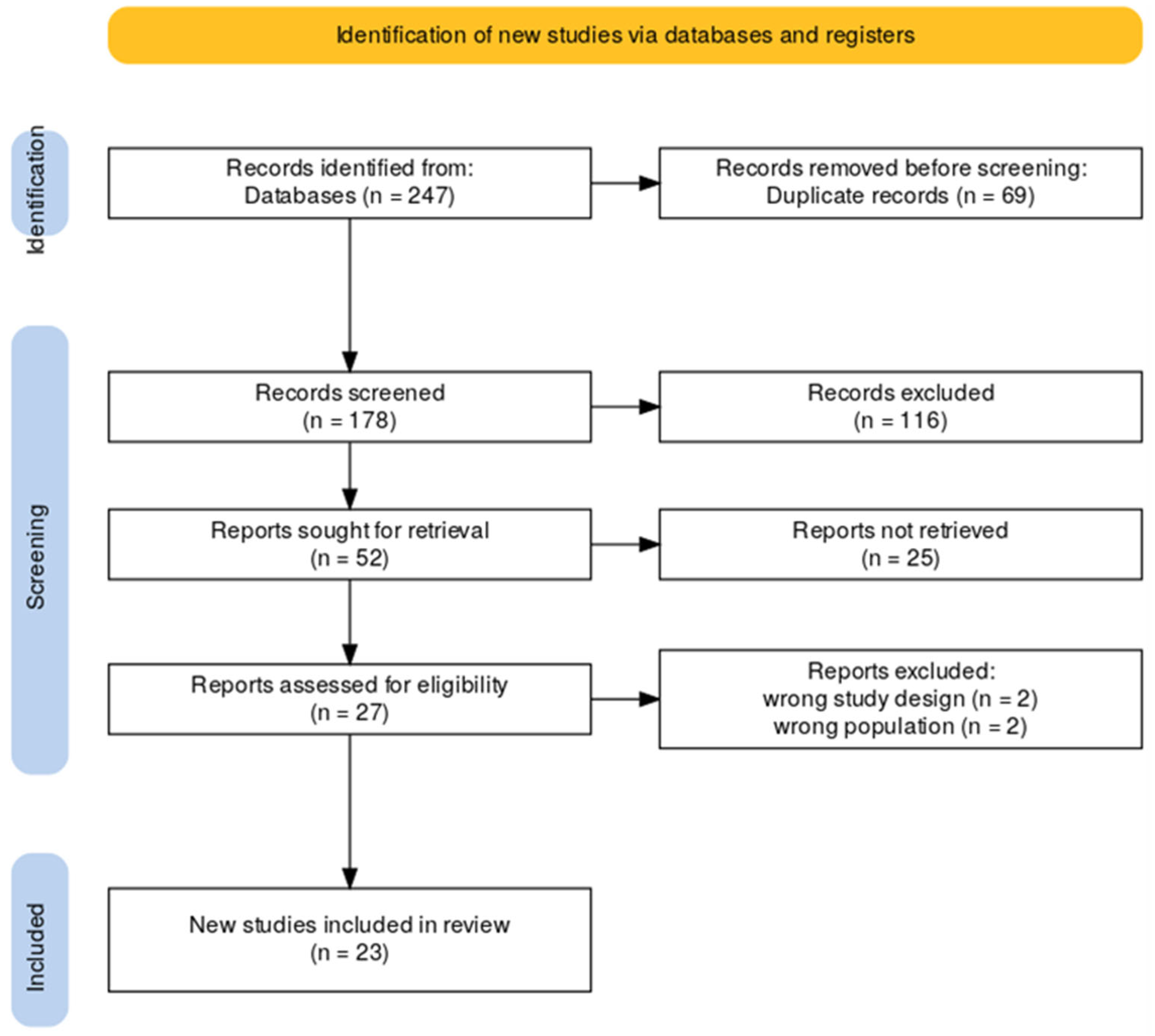
3.1. Study Selection
3.2. Overview of Evidence
3.3. Risk of Bias Assessment
3.4. NAC in Traumatic Brain Injury
3.4.1. Clinical and Neuroimaging Outcomes
3.4.2. Biomarkers
3.4.3. Adverse Effects
3.5. NAC in Alzheimer’s Disease
3.5.1. Clinical and Neuroimaging Outcomes
3.5.2. Biomarkers
3.5.3. Adverse Effects
3.6. NAC in Parkinson’s Disease
3.6.1. Clinical and Neuroimaging Outcomes
3.6.2. Biomarkers
3.6.3. Adverse Effects
3.7. NAC in Multiple Sclerosis
3.7.1. Clinical and Neuroimaging Outcomes
3.7.2. Biomarkers
3.7.3. Adverse Effects
3.8. NAC in Amyotrophic Lateral Sclerosis
3.8.1. Clinical and Neuroimaging Outcomes
3.8.2. Biomarkers
3.8.3. Adverse Effects
3.9. NAC in Migraine
3.9.1. Clinical and Neuroimaging Outcomes
3.9.2. Biomarkers
3.9.3. Adverse Effects
3.10. NAC in Epilepsy
4. Discussion
4.1. Summary of Evidence
4.2. Molecular Mechanisms and Biomarker Evidence
4.3. Evidence Gap Map and Critical Research Needs
4.4. Route of Administration and Pharmacokinetic Considerations
4.5. Comparison with Existing Reviews
4.6. Limitations
4.7. Implications for Clinical Practice and Research
5. Conclusions
Supplementary Materials
Author Contributions
Funding
Institutional Review Board Statement
Informed Consent Statement
Data Availability Statement
Conflicts of Interest
Abbreviations
| 4-HNE | 4-hydroxynonenal |
| 8-epiPGF2α | 8-epi-prostaglandin F2α |
| AD | Alzheimer’s disease |
| ADCS-ADL | Alzheimer’s Disease Cooperative Study—Activities of Daily Living |
| ADL | Activities of Daily Living |
| AE | adverse event |
| ALCAR | acetyl-L-carnitine |
| ALS | amyotrophic lateral sclerosis |
| ARE | antioxidant response element |
| BPSD | behavioral and psychological symptoms of dementia |
| CI | confidence interval |
| CLOX | Clock Drawing Test |
| CMA | combined metabolic activators |
| CNS | central nervous system |
| CSF | cerebrospinal fluid |
| DAT | dopamine transporter |
| DaTscan | dopamine transporter scan |
| DMSA | meso-2,3-dimercaptosuccinic acid |
| DNA | deoxyribonucleic acid |
| DRS | Dementia Rating Scale |
| DTE | dithioerythritol |
| DTT | dithiothreitol |
| FDG PET | fluorodeoxyglucose positron emission tomography |
| fMRI | functional magnetic resonance imaging |
| FVC | forced vital capacity |
| GA | glatiramer acetate |
| GCS | Glasgow Coma Scale |
| GSH | glutathione |
| GSSG | oxidized glutathione |
| HADS | Hospital Anxiety and Depression Scale |
| HADS-A | Hospital Anxiety and Depression Scale—Anxiety |
| HC | healthy controls |
| HR | hazard ratio |
| IL-6 | interleukin-6 |
| IU | International Units |
| IV | intravenous |
| MACF | Microcog Assessment of Cognitive Functioning |
| MDA | malondialdehyde |
| MDS-UPDRS | Movement Disorder Society—Unified Parkinson’s Disease Rating Scale |
| MeSH | Medical Subject Headings |
| MFIS | Modified Fatigue Impact Scale |
| MMSE | Mini-Mental State Examination |
| MoCA | Montreal Cognitive Assessment |
| MRC | Medical Research Council |
| MRI | magnetic resonance imaging |
| MRS | magnetic resonance spectroscopy |
| MS | multiple sclerosis |
| mTBI | mild traumatic brain injury |
| NAC | N-acetylcysteine |
| NAM | N-acetylmethionine |
| NEC | N-acetylcysteine + vitamin E + vitamin C |
| NF | nutraceutical formulation |
| NF-κB | nuclear factor kappa-light-chain-enhancer of activated B cells |
| NO | nitric oxide |
| NPI | Neuropsychiatric Inventory |
| NR | nicotinamide riboside |
| Nrf2 | nuclear factor erythroid 2-related factor 2 |
| NS | not significant |
| NSE | neuron-specific enolase |
| OR | odds ratio |
| PCC | Population, Concept, Context |
| PD | Parkinson’s disease |
| PET | positron emission tomography |
| PRISMA | Preferred Reporting Items for Systematic Reviews and Meta-Analyses |
| RCT | randomized controlled trial |
| RoB 2.0 | Risk of Bias tool version 2 |
| ROBINS-I | Risk Of Bias In Non-randomized Studies—of Interventions |
| ROS | reactive oxygen species |
| RRMS | relapsing–remitting multiple sclerosis |
| rs-fMRI | resting-state functional magnetic resonance imaging |
| S100B | S100 calcium-binding protein B |
| SAM | S-adenosyl methionine |
| sig. | statistically significant |
| SOD1 | superoxide dismutase 1 |
| SPECT | single-photon emission computed tomography |
| TBI | traumatic brain injury |
| TID | three times daily |
| UPDRS | Unified Parkinson’s Disease Rating Scale |
| VAS | visual analog scale |
| WMS | Wechsler Memory Scale |
References
- Feigin, V.L.; Nichols, E.; Alam, T.; Bannick, M.S.; Beghi, E.; Blake, N.; Culpepper, W.J.; Dorsey, E.R.; Elbaz, A.; Ellenbogen, R.G.; et al. Global, Regional, and National Burden of Neurological Disorders, 1990–2016: A Systematic Analysis for the Global Burden of Disease Study 2016. Lancet Neurol. 2019, 18, 459–480. [Google Scholar] [CrossRef]
- Halliwell, B. Oxidative Stress and Neurodegeneration: Where Are We Now? J. Neurochem. 2006, 97, 1634–1658. [Google Scholar] [CrossRef]
- Mattson, M.P.; Camandola, S. NF-kappaB in Neuronal Plasticity and Neurodegenerative Disorders. J. Clin. Investig. 2001, 107, 247–254. [Google Scholar] [CrossRef]
- Aldini, G.; Altomare, A.; Baron, G.; Vistoli, G.; Carini, M.; Borsani, L.; Sergio, F. N-Acetylcysteine as an Antioxidant and Disulphide Breaking Agent: The Reasons Why. Free Radic. Res. 2018, 52, 751–762. [Google Scholar] [CrossRef]
- Oka, S.; Kamata, H.; Kamata, K.; Yagisawa, H.; Hirata, H. N-Acetylcysteine Suppresses TNF-induced NF-κB Activation through Inhibition of IκB Kinases. FEBS Lett. 2000, 472, 196–202. [Google Scholar] [CrossRef]
- Samuni, Y.; Goldstein, S.; Dean, O.M.; Berk, M. The Chemistry and Biological Activities of N-Acetylcysteine. Biochim. Biophys. Acta BBA—Gen. Subj. 2013, 1830, 4117–4129. [Google Scholar] [CrossRef]
- Page, M.J.; McKenzie, J.E.; Bossuyt, P.M.; Boutron, I.; Hoffmann, T.C.; Mulrow, C.D.; Shamseer, L.; Tetzlaff, J.M.; Akl, E.A.; Brennan, S.E.; et al. The PRISMA 2020 Statement: An Updated Guideline for Reporting Systematic Reviews. BMJ 2021, 372, n71. [Google Scholar] [CrossRef] [PubMed]
- Hoffer, M.E.; Balaban, C.; Slade, M.D.; Tsao, J.W.; Hoffer, B. Amelioration of Acute Sequelae of Blast Induced Mild Traumatic Brain Injury by N-Acetyl Cysteine: A Double-Blind, Placebo Controlled Study. PLoS ONE 2013, 8, e54163. [Google Scholar] [CrossRef] [PubMed]
- Gouda, A.R.; El-Bassiouny, N.A.; Salahuddin, A.; Hamouda, E.H.; Kassem, A.B. Repurposing of High-Dose N-Acetylcysteine as Anti-Inflammatory, Antioxidant and Neuroprotective Agent in Moderate to Severe Traumatic Brain Injury Patients: A Randomized Controlled Trial. Inflammopharmacology 2025, 33, 3307–3316. [Google Scholar] [CrossRef] [PubMed]
- Vedaei, F.; Newberg, A.B.; Alizadeh, M.; Zabrecky, G.; Navarreto, E.; Hriso, C.; Wintering, N.; Mohamed, F.B.; Monti, D. Treatment Effects of N-Acetyl Cysteine on Resting-State Functional MRI and Cognitive Performance in Patients with Chronic Mild Traumatic Brain Injury: A Longitudinal Study. Front. Neurol. 2024, 15, 1282198. [Google Scholar] [CrossRef]
- Clark, R.S.B.; Empey, P.E.; Bayır, H.; Rosario, B.L.; Poloyac, S.M.; Kochanek, P.M.; Nolin, T.D.; Au, A.K.; Horvat, C.M.; Wisniewski, S.R.; et al. Phase I Randomized Clinical Trial of N-Acetylcysteine in Combination with an Adjuvant Probenecid for Treatment of Severe Traumatic Brain Injury in Children. PLoS ONE 2017, 12, e0180280. [Google Scholar] [CrossRef]
- Hagos, F.T.; Empey, P.E.; Wang, P.; Ma, X.; Poloyac, S.M.; Bayir, H.; Kochanek, P.M.; Bell, M.J.; Clark, R.S.B. Exploratory Application of Neuropharmacometabolomics in Severe Childhood Traumatic Brain Injury*. Crit. Care Med. 2018, 46, 1471–1479. [Google Scholar] [CrossRef] [PubMed]
- Amen, D.G.; Wu, J.C.; Taylor, D.; Willeumier, K. Reversing Brain Damage in Former NFL Players: Implications for Traumatic Brain Injury and Substance Abuse Rehabilitation. J. Psychoact. Drugs 2011, 43, 1–5. [Google Scholar] [CrossRef] [PubMed]
- Adair, J.C.; Knoefel, J.E.; Morgan, N. Controlled Trial of N-Acetylcysteine for Patients with Probable Alzheimer’s Disease. Neurology 2001, 57, 1515–1517. [Google Scholar] [CrossRef]
- Chan, A.; Paskavitz, J.; Remington, R.; Rasmussen, S.; Shea, T.B. Efficacy of a Vitamin/Nutriceutical Formulation for Early-Stage Alzheimer’s Disease: A 1-Year, Open-Label Pilot Study with an 16-Month Caregiver Extension. Am. J. Alzheimers Dis. Dement. 2009, 23, 571–585. [Google Scholar] [CrossRef]
- Remington, R.; Chan, A.; Paskavitz, J.; Shea, T.B. Efficacy of a Vitamin/Nutriceutical Formulation for Moderate-Stage to Later-Stage Alzheimer’s Disease: A Placebo-Controlled Pilot Study. Am. J. Alzheimers Dis. Dement. 2009, 24, 27–33. [Google Scholar] [CrossRef]
- Remington, R.; Bechtel, C.; Larsen, D.; Samar, A.; Doshanjh, L.; Fishman, P.; Luo, Y.; Smyers, K.; Page, R.; Morrell, C.; et al. A Phase II Randomized Clinical Trial of a Nutritional Formulation for Cognition and Mood in Alzheimer’s Disease. J. Alzheimers Dis. 2015, 45, 395–405. [Google Scholar] [CrossRef]
- Remington, R.; Bechtel, C.; Larsen, D.; Samar, A.; Page, R.; Morrell, C.; Shea, T.B. Maintenance of Cognitive Performance and Mood for Individuals with Alzheimer’s Disease Following Consumption of a Nutraceutical Formulation: A One-Year, Open-Label Study. J. Alzheimer’s Dis. 2016, 51, 991–995. [Google Scholar] [CrossRef]
- Monti, D.A.; Zabrecky, G.; Kremens, D.; Liang, T.-W.; Wintering, N.A.; Cai, J.; Wei, X.; Bazzan, A.J.; Zhong, L.; Bowen, B.; et al. N-Acetyl Cysteine May Support Dopamine Neurons in Parkinson’s Disease: Preliminary Clinical and Cell Line Data. PLoS ONE 2016, 11, e0157602. [Google Scholar] [CrossRef] [PubMed]
- Monti, D.A.; Zabrecky, G.; Kremens, D.; Liang, T.; Wintering, N.A.; Bazzan, A.J.; Zhong, L.; Bowens, B.K.; Chervoneva, I.; Intenzo, C.; et al. N-Acetyl Cysteine Is Associated with Dopaminergic Improvement in Parkinson’s Disease. Clin. Pharmacol. Ther. 2019, 106, 884–890. [Google Scholar] [CrossRef]
- Holmay, M.J.; Terpstra, M.; Coles, L.D.; Mishra, U.; Ahlskog, M.; Öz, G.; Cloyd, J.C.; Tuite, P.J. N-Acetylcysteine Boosts Brain and Blood Glutathione in Gaucher and Parkinson Diseases. Clin. Neuropharmacol. 2013, 36, 103–106. [Google Scholar] [CrossRef]
- Coles, L.D.; Tuite, P.J.; Öz, G.; Mishra, U.R.; Kartha, R.V.; Sullivan, K.M.; Cloyd, J.C.; Terpstra, M. Repeated-Dose Oral N-Acetylcysteine in Parkinson Disease: Pharmacokinetics and Effect on Brain Glutathione and Oxidative Stress. Control. Clin. Trial 2019, 58, 158–167. [Google Scholar]
- Yulug, B.; Altay, O.; Li, X.; Hanoglu, L.; Cankaya, S.; Velioglu, H.A.; Lam, S.; Yang, H.; Coskun, E.; Idil, E.; et al. Multi-Omics Characterization of Improved Cognitive Functions in Parkinson’s Disease Patients After the Combined Metabolic Activator Treatment: A Randomized, Double-Blinded, Placebo-Controlled Phase II Trial. Brain Commun. 2024, 7, fcae478. [Google Scholar] [CrossRef]
- Schipper, H.M.; Arnold, D.; Grand’Maison, F.; Melmed, C.; Moore, F.; Levental, M.; Su, H.; Constantin, M.; Stril, J.-L.; Godin, J. Tolerability and Safety of Combined Glatiramer Acetate and N-Acetylcysteine in Relapsing-Remitting Multiple Sclerosis. Clin. Neuropharmacol. 2015, 38, 127–131. [Google Scholar] [CrossRef]
- Monti, D.A.; Zabrecky, G.; Leist, T.P.; Wintering, N.; Bazzan, A.J.; Zhan, T.; Newberg, A.B. N-Acetyl Cysteine Administration Is Associated with Increased Cerebral Glucose Metabolism in Patients with Multiple Sclerosis: An Exploratory Study. Front. Neurol. 2020, 11, 88. [Google Scholar] [CrossRef] [PubMed]
- Krysko, K.M.; Bischof, A.; Nourbakhsh, B.; Henry, R.G.; Revirajan, N.; Manguinao, M.; Nguyen, K.; Akula, A.; Li, Y.; Waubant, E. A Pilot Study of Oxidative Pathways in MS Fatigue: Randomized Trial of N-acetyl Cysteine. Ann. Clin. Transl. Neurol. 2021, 8, 811–824. [Google Scholar] [CrossRef] [PubMed]
- Mohseni, G.K.; Hosseini, S.A.; Majdinasab, N.; Cheraghian, B. Effects of N-acetylcysteine on Oxidative Stress Biomarkers, Depression, and Anxiety Symptoms in Patients with Multiple Sclerosis. Neuropsychopharmacol. Rep. 2023, 43, 382–390. [Google Scholar] [CrossRef]
- Louwerse, E.S.; Weverling, G.J.; Bossuyt, P.M.M.; Meyjes, F.E.P.; De Jong, J.M.B.V. Randomized, Double-Blind, Controlled Trial of Acetylcysteine in Amyotrophic Lateral Sclerosis. Arch. Neurol. 1995, 52, 559–564. [Google Scholar] [CrossRef]
- Vyth, A.; Timmer, J.G.; Bossuyt, P.M.M.; Louwerse, E.S.; De Jong, J.M.B.V. Survival in Patients with Amyotrophic Lateral Sclerosis, Treated with an Array of Antioxidants. J. Neurol. Sci. 1996, 139, 99–103. [Google Scholar] [CrossRef] [PubMed]
- Visser, E.J.; Drummond, P.D.; Lee-Visser, J.L.A. Reduction in Migraine and Headache Frequency and Intensity with Combined Antioxidant Prophylaxis (N-acetylcysteine, Vitamin E, and Vitamin C): A Randomized Sham-Controlled Pilot Study. Pain Pract. 2020, 20, 737–747. [Google Scholar] [CrossRef]
- Dewan, M.C.; Rattani, A.; Gupta, S.; Baticulon, R.E.; Hung, Y.-C.; Punchak, M.; Agrawal, A.; Adeleye, A.O.; Shrime, M.G.; Rubiano, A.M.; et al. Estimating the Global Incidence of Traumatic Brain Injury. J. Neurosurg. 2019, 130, 1080–1097. [Google Scholar] [CrossRef] [PubMed]
- Freire, M.A.M.; Rocha, G.S.; Bittencourt, L.O.; Falcao, D.; Lima, R.R.; Cavalcanti, J.R.L.P. Cellular and Molecular Pathophysiology of Traumatic Brain Injury: What Have We Learned So Far? Biology 2023, 12, 1139. [Google Scholar] [CrossRef] [PubMed]
- Khatri, N.; Thakur, M.; Pareek, V.; Kumar, S.; Sharma, S.; Datusalia, A.K. Oxidative Stress: Major Threat in Traumatic Brain Injury. CNS Neurol. Disord.—Drug Targets 2018, 17, 689–695. [Google Scholar] [CrossRef]
- Roy, R.G.; Mandal, P.K.; Maroon, J.C. Oxidative Stress Occurs Prior to Amyloid Aβ Plaque Formation and Tau Phosphorylation in Alzheimer’s Disease: Role of Glutathione and Metal Ions. ACS Chem. Neurosci. 2023, 14, 2944–2954. [Google Scholar] [CrossRef] [PubMed]
- Bavarsad Shahripour, R.; Harrigan, M.R.; Alexandrov, A.V. N-Acetylcysteine (NAC) in Neurological Disorders: Mechanisms of Action and Therapeutic Opportunities. Brain Behav. 2014, 4, 108–122. [Google Scholar] [CrossRef]
- Perry, T.L.; Godin, D.V.; Hansen, S. Parkinson’s Disease: A Disorder Due to Nigral Glutathione Deficiency? Neurosci. Lett. 1982, 33, 305–310. [Google Scholar] [CrossRef]
- Walton, C.; King, R.; Rechtman, L.; Kaye, W.; Leray, E.; Marrie, R.A.; Robertson, N.; La Rocca, N.; Uitdehaag, B.; Van Der Mei, I.; et al. Rising Prevalence of Multiple Sclerosis Worldwide: Insights from the Atlas of MS, Third Edition. Mult. Scler. J. 2020, 26, 1816–1821. [Google Scholar] [CrossRef]
- Adamczyk, B.; Adamczyk-Sowa, M. New Insights into the Role of Oxidative Stress Mechanisms in the Pathophysiology and Treatment of Multiple Sclerosis. Oxid. Med. Cell. Longev. 2016, 2016, 1973834. [Google Scholar] [CrossRef]
- Choi, I.-Y.; Lee, S.-P.; Denney, D.; Lynch, S. Lower Levels of Glutathione in the Brains of Secondary Progressive Multiple Sclerosis Patients Measured by 1H Magnetic Resonance Chemical Shift Imaging at 3 T. Mult. Scler. J. 2011, 17, 289–296. [Google Scholar] [CrossRef]
- Wolfson, C.; Gauvin, D.E.; Ishola, F.; Oskoui, M. Global Prevalence and Incidence of Amyotrophic Lateral Sclerosis: A Systematic Review. Neurology 2023, 101, e613–e623. [Google Scholar] [CrossRef]
- Chiò, A.; Logroscino, G.; Hardiman, O.; Swingler, R.; Mitchell, D.; Beghi, E.; Traynor, B.G.; on behalf of the Eurals Consortium. Prognostic Factors in ALS: A Critical Review. Amyotroph. Lateral Scler. 2009, 10, 310–323. [Google Scholar] [CrossRef]
- Abati, E.; Bresolin, N.; Comi, G.; Corti, S. Silence Superoxide Dismutase 1 (SOD1): A Promising Therapeutic Target for Amyotrophic Lateral Sclerosis (ALS). Expert Opin. Ther. Targets 2020, 24, 295–310. [Google Scholar] [CrossRef]
- Neri, M.; Frustaci, A.; Milic, M.; Valdiglesias, V.; Fini, M.; Bonassi, S.; Barbanti, P. A Meta-Analysis of Biomarkers Related to Oxidative Stress and Nitric Oxide Pathway in Migraine. Cephalalgia 2015, 35, 931–937. [Google Scholar] [CrossRef]
- Iyengar, S.; Johnson, K.W.; Ossipov, M.H.; Aurora, S.K. CGRP and the Trigeminal System in Migraine. Headache J. Head Face Pain 2019, 59, 659–681. [Google Scholar] [CrossRef]
- Ngugi, A.K.; Bottomley, C.; Kleinschmidt, I.; Sander, J.W.; Newton, C.R. Estimation of the Burden of Active and Life-time Epilepsy: A Meta-analytic Approach. Epilepsia 2010, 51, 883–890. [Google Scholar] [CrossRef] [PubMed]
- Shin, E.-J.; Jeong, J.H.; Chung, Y.H.; Kim, W.-K.; Ko, K.-H.; Bach, J.-H.; Hong, J.-S.; Yoneda, Y.; Kim, H.-C. Role of Oxidative Stress in Epileptic Seizures. Neurochem. Int. 2011, 59, 122–137. [Google Scholar] [CrossRef] [PubMed]
- Sharma, S.; Jain, S.K.; Gupta, P. Piyush Kumar Therapeutic Potential of N-Acetylcysteine in Epilepsy: A Systematic Review. Neurol. Asia 2025, 30, 707–720. [Google Scholar] [CrossRef]
- Borgström, L.; Kågedal, B.; Paulsen, O. Pharmacokinetics of N-Acetylcysteine in Man. Eur. J. Clin. Pharmacol. 1986, 31, 217–222. [Google Scholar] [CrossRef] [PubMed]
- Deepmala; Slattery, J.; Kumar, N.; Delhey, L.; Berk, M.; Dean, O.; Spielholz, C.; Frye, R. Clinical Trials of N-Acetylcysteine in Psychiatry and Neurology: A Systematic Review. Neurosci. Biobehav. Rev. 2015, 55, 294–321. [Google Scholar] [CrossRef]
- Tardiolo, G.; Bramanti, P.; Mazzon, E. Overview on the Effects of N-Acetylcysteine in Neurodegenerative Diseases. Molecules 2018, 23, 3305. [Google Scholar] [CrossRef]


| Database | TBI | AD | PD | MS | ALS | Migraine | Epilepsy | Total |
|---|---|---|---|---|---|---|---|---|
| PUBMED | 17 | 27 | 7 | 9 | 8 | 39 | 8 | 115 |
| Cochrane Library | 25 | 40 | 17 | 18 | 7 | 3 | 22 | 132 |
| Included studies | 6 | 5 | 5 | 4 | 2 | 1 | 0 | 23 |
| Study | Design | N | Intervention | Duration | Primary Outcome |
|---|---|---|---|---|---|
| Traumatic brain injury | |||||
| Hoffer et al. [8] | RCT double-blind | 81 | NAC oral 4 g/day for 4 days followed by 3 g/day | 7 days | Symptom resolution at day 7 |
| Gouda et al. [9] | RCT open-label | 40 | NAC oral or enteral high-dose (150 mg/kg load + 50 mg/kg/4 h) | 7 days | Biomarkers, GCS |
| Vedaei et al. [10] | Longitudinal controlled | 50 | NAC IV 50 mg/kg/wk + oral 1000 mg/day | 3 months | rs-fMRI metrics, cognition |
| Clark et al. [11] | RCT Phase I double-blind | 14 | NAC oral + probenecid | 72 h | CSF pharmacokinetics |
| Hagos et al. [12] | RCT metabolomics substudy | 12 + 5 | NAC oral + probenecid | 24 h | CSF metabolomics |
| Amen et al. [13] | Open-label pragmatic | 30 | NAC in complex supplement * | 6 months | Cognition (MACF), SPECT |
| Alzheimer’s disease | |||||
| Adair et al. [14] | RCT double-blind | 43 (23/20) | NAC 50 mg/kg/day oral | 6 months | MMSE, ADL |
| Chan et al. [15] | Open-label pilot | 14 | NF (folate, B12, vit E, SAM, NAC 600 mg, ALCAR) | 12 month + 16 months extension | DRS, CLOX, NPI, ADL |
| Remington et al. [16] | Placebo-controlled pilot | 12 (6/6) | NF (folate, B12, vit E, SAM, NAC 600 mg, ALCAR) | 9 months | DRS, CLOX-1, NPI, ADL |
| Remington et al. [17] | RCT Phase II double-blind multicenter | 106 (62/44) | NF (folate, B12, vit E, SAM, NAC 600 mg, ALCAR) | 3–6 months + open-label extension | DRS, CLOX-1, NPI, ADL |
| Remington et al. [18] | Open-label | 24 | NF (as above) | 12 months | DRS, CLOX, NPI, ADL |
| Parkinson’s disease | |||||
| Monti et al. [19] | Pilot RCT | 23 (12/11) | NAC IV 50 mg/kg/week + oral 600 mg × 2/day | 3 months | DaTscan (DAT binding), UPDRS |
| Monti et al. [20] | RCT | 42 (21/21) | NAC IV 50 mg/kg/week + oral 500 mg × 2/day | 3 months | DaTscan (DaT binding), UPDRS |
| Holmay et al. [21] | Open-label | 3 PD + 3 HC | NAC IV 150 mg/kg single dose | 2 h | Cerebral GSH (MRS 7T), blood GSH/GSSG |
| Coles et al. [22] | Open-label | 5 PD + 3 HC | NAC 6000 mg/day oral | 4 weeks | Cerebral GSH (MRS 3T/7T), UPDRS |
| Yulug et al. [23] | RCT phase II | 64 (32/32) | CMA × 2/day (NAC 2.55 gr/dose + L-serine +NR + L-carnitine tartrate) | 84 days | MoCA, MDS-UPDRS, fMRI |
| Multiple sclerosis | |||||
| Schipper et al. [24] | Open-label pilot | 7 | NAC 5 g/day oral + GA 20 mg/day | 36 weeks | Safety, tolerability |
| Monti et al. [25] | RCT waitlist-controlled | 24 | NAC IV 50 mg/kg/wk + oral 500 mg × 2/day | 2 months | FDG PET glucose metabolism |
| Krysko et al. [26] | RCT double-blind | 15 | NAC 1250 mg TID oral | 4 weeks | Fatigue (MFIS), safety |
| Khalatbari Mohseni et al. [27] | RCT double-blind | 42 | NAC 600 mg × 2/day oral | 8 weeks | Oxidative markers, HADS |
| Amyotrophic lateral sclerosis | |||||
| Louwerse et al. [28] | Placebo-controlled double-blind RCT | 110 (54 NAC vs. 56 Placebo) | NAC 50 mg/kg/day subcutaneous (monotherapy) | 12 months | Survival at 12 months |
| Vyth et al. 1996 [29] | Open-label with historic controls | 143 (36 treated vs. 107 historic controls) | NAC + Vit C/E + NAM + DTT/DTE ± DMSA (combination) | ~2.9 years | Survival from diagnosis |
| Migraine | |||||
| Visser et al. [30] | RCT double-blind | 35 (19/16) | NEC oral (NAC 600 mg + Vit E 250 IU + Vit C 500 mg) × 2/day | 3 months | Headache frequency, migraine days, VAS pain score |
| Pathology | Total Studies | RCTs | NAC Monotherapy | NAC in Combination | Motor/ Clinical Outcomes | Cognitive Outcomes | Biomarkers of Oxidative Stress | Brain GSH (MRS) | Neuroimaging | Safety Data | Overall Evidence Strength |
|---|---|---|---|---|---|---|---|---|---|---|---|
| TBI | 6 | 2 | 2 (Hoffer et al. [8], Gouda et al. [9]) | 4 | GCS, symptoms (sig. acute mTBI) | Cognitive tests (sig. chronic) | MDA, IL-6, NSE, S100B (sig.) | CSF metabolomics (enriched pathways) | SPECT, rs-fMRI (sig.) | Reported (excellent profile) | Moderate (strongest for acute mTBI) |
| AD | 5 | 2 | 1 (Adair et al. [14]) | 4 (NF studies) | ADL assessed (mixed results) | DRS, MMSE, CLOX NPI (positive trends) | Peripheral markers (1 study, NS) | Not measured | Not performed | Reported (well tolerated) | Low–moderate (combo therapy, same group) |
| PD | 5 | 3 | 2 (Monti et al. [19,20]) | 3 | UPDRS (2/3 sig.) | MoCA (sig. with CMA) | Blood GSH, catalase (sig. oral) | 7T MRS (IV: +55%; oral: NS) | DaTscan SPECT (sig. 3–8%), rs-fMRI | Reported (well tolerated) | Moderate (consistent DaTscan, but small n) |
| MS | 4 | 2 | 1 (Krysko et al. [26]) | 3 | Fatigue (NS), anxiety (sig.), MRI (NS) | Self-reported cognition (sig.) | MDA (sig.), GSSG/GSH (trend) | 7T MRS (1 study, NS) | FDG PET (sig.), MRI (NS) | Reported (well tolerated) | Low (small studies, heterogeneous) |
| ALS | 2 | 1 | 1 (Louwerse et al. [28]) | 1 (Vyth et al. [29]) | Survival, MRC, FVC, Barthel (no sig. benefit) | Not assessed | Not measured | Not measured | Not performed | Reported (well tolerated) | Very low (dated studies, n = 2, since 1996) |
| Migraine | 1 | 1 | None | 1 (NEC, Visser et al. [30]) | Frequency, VAS, medication use (significant) | Not assessed | Not measured | Not measured | Not performed | Reported (no AEs) | Very low (single study, combo therapy) |
| Epilepsy | 0 | 0 | None | None | No studies | No studies | No studies | No studies | No studies | No studies | No evidence (critical gap) |
| Study | Instrument | Overall Assessment (Risk) | Main Concern |
|---|---|---|---|
| Traumatic brain injury | |||
| Hoffer et al. 2013 [8] | RoB 2.0 | Some concerns | Partially subjective outcomes, main evaluator was the same for all the patients |
| Gouda et al. [9] | RoB 2.0 | High | Significant attrition, open-label |
| Vedaei et al. [10] | ROBINS-I | Serious | Non-randomized, no mention of allocation method, no blinding, self-reported clinical measures |
| Clark et al. [11] | RoB 2.0 | Some concerns | Small sample, significant attrition |
| Hagos et al. [12] | RoB 2.0 | Some concerns | Small sample, exploratory study |
| Amen et al. [13] | ROBINS-I | Critical risk | No control group, multicomponent intervention |
| Alzheimer’s disease | |||
| Adair et al. [14] | RoB 2.0 | Some concerns | Small study without registered protocol |
| Chan et al. [15] | ROBINS-I | Serious | Lack of control group, open-label, comparison with historic placebo |
| Remington et al. [16] | RoB 2.0 | High | Pilot study with few participants, loss of placebo group |
| Remington et al. [17] | RoB 2.0 | High | Changes in the protocol based on preliminary results |
| Remington et al. [18] | ROBINS-I | Serious | Open-label, auto-selection, lack of control |
| Parkinson’s disease | |||
| Monti et al. [19] | RoB 2.0 | High | Open-label, lack of placebo |
| Monti et al. [20] | RoB 2.0 | High | Open-label, no blinding, lack of placebo group |
| Holmay et al. [21] | ROBINS-I | Serious | Small sample size, lack of control group |
| Coles et al. [22] | ROBINS-I | Serious | Small sample size, lack of control group |
| Yulug et al. [23] | RoB 2.0 | Some concerns | Positive results only from a secondary outcome |
| Multiple sclerosis | |||
| Schipper et al. [24] | ROBINS-I | Serious | Open-label, one arm, small sample size, no randomization |
| Monti et al. [25] | RoB 2.0 | High | Open-label, lack of placebo, lack of blinding |
| Krysko et al. [26] | RoB 2.0 | Some concerns | Small sample size, significant difference between groups’ baseline age |
| Khalatbari Mohseni et al. [27] | RoB 2.0 | Some concerns | High dropout rate |
| Amyotrophic lateral sclerosis | |||
| Louwerse et al. [28] | RoB 2.0 | Some concerns | Mainly due to the differential rate of treatment discontinuation |
| Vyth et al. [29] | ROBINS-I | Serious | Dominated by the selection bias, immortal time bias, confounding bias |
| Migraine | |||
| Visser et al. [30] | RoB 2.0 | High | Small sample size, massive attrition |
Disclaimer/Publisher’s Note: The statements, opinions and data contained in all publications are solely those of the individual author(s) and contributor(s) and not of MDPI and/or the editor(s). MDPI and/or the editor(s) disclaim responsibility for any injury to people or property resulting from any ideas, methods, instructions or products referred to in the content. |
© 2026 by the authors. Licensee MDPI, Basel, Switzerland. This article is an open access article distributed under the terms and conditions of the Creative Commons Attribution (CC BY) license.
Share and Cite
Mîndreanu, R.; Chiș, I.C.; Sevastre-Berghian, A.; Login, C.; Stan, A.; Stan, T.; Clichici, S.; Suciu, Ș. N-Acetylcysteine in Neurological Disorders: A Systematic Review of Clinical and Translational Evidence Across Seven Disorders. Int. J. Mol. Sci. 2026, 27, 3076. https://doi.org/10.3390/ijms27073076
Mîndreanu R, Chiș IC, Sevastre-Berghian A, Login C, Stan A, Stan T, Clichici S, Suciu Ș. N-Acetylcysteine in Neurological Disorders: A Systematic Review of Clinical and Translational Evidence Across Seven Disorders. International Journal of Molecular Sciences. 2026; 27(7):3076. https://doi.org/10.3390/ijms27073076
Chicago/Turabian StyleMîndreanu, Robert, Irina Camelia Chiș, Alexandra Sevastre-Berghian, Cezar Login, Adina Stan, Teodora Stan, Simona Clichici, and Șoimița Suciu. 2026. "N-Acetylcysteine in Neurological Disorders: A Systematic Review of Clinical and Translational Evidence Across Seven Disorders" International Journal of Molecular Sciences 27, no. 7: 3076. https://doi.org/10.3390/ijms27073076
APA StyleMîndreanu, R., Chiș, I. C., Sevastre-Berghian, A., Login, C., Stan, A., Stan, T., Clichici, S., & Suciu, Ș. (2026). N-Acetylcysteine in Neurological Disorders: A Systematic Review of Clinical and Translational Evidence Across Seven Disorders. International Journal of Molecular Sciences, 27(7), 3076. https://doi.org/10.3390/ijms27073076